EP3144818A1 - Ip-festplatte und speichersystem sowie datenbetriebsverfahren dafür - Google Patents
Ip-festplatte und speichersystem sowie datenbetriebsverfahren dafür Download PDFInfo
- Publication number
- EP3144818A1 EP3144818A1 EP15812329.9A EP15812329A EP3144818A1 EP 3144818 A1 EP3144818 A1 EP 3144818A1 EP 15812329 A EP15812329 A EP 15812329A EP 3144818 A1 EP3144818 A1 EP 3144818A1
- Authority
- EP
- European Patent Office
- Prior art keywords
- hard disk
- virtual storage
- target virtual
- storage partition
- data
- Prior art date
- Legal status (The legal status is an assumption and is not a legal conclusion. Google has not performed a legal analysis and makes no representation as to the accuracy of the status listed.)
- Ceased
Links
Images



Classifications
-
- G—PHYSICS
- G06—COMPUTING OR CALCULATING; COUNTING
- G06F—ELECTRIC DIGITAL DATA PROCESSING
- G06F3/00—Input arrangements for transferring data to be processed into a form capable of being handled by the computer; Output arrangements for transferring data from processing unit to output unit, e.g. interface arrangements
- G06F3/06—Digital input from, or digital output to, record carriers, e.g. RAID, emulated record carriers or networked record carriers
- G06F3/0601—Interfaces specially adapted for storage systems
- G06F3/0628—Interfaces specially adapted for storage systems making use of a particular technique
- G06F3/0646—Horizontal data movement in storage systems, i.e. moving data in between storage devices or systems
- G06F3/0647—Migration mechanisms
-
- G—PHYSICS
- G06—COMPUTING OR CALCULATING; COUNTING
- G06F—ELECTRIC DIGITAL DATA PROCESSING
- G06F12/00—Accessing, addressing or allocating within memory systems or architectures
- G06F12/02—Addressing or allocation; Relocation
- G06F12/08—Addressing or allocation; Relocation in hierarchically structured memory systems, e.g. virtual memory systems
-
- G—PHYSICS
- G06—COMPUTING OR CALCULATING; COUNTING
- G06F—ELECTRIC DIGITAL DATA PROCESSING
- G06F3/00—Input arrangements for transferring data to be processed into a form capable of being handled by the computer; Output arrangements for transferring data from processing unit to output unit, e.g. interface arrangements
- G06F3/06—Digital input from, or digital output to, record carriers, e.g. RAID, emulated record carriers or networked record carriers
- G06F3/0601—Interfaces specially adapted for storage systems
- G06F3/0602—Interfaces specially adapted for storage systems specifically adapted to achieve a particular effect
- G06F3/0604—Improving or facilitating administration, e.g. storage management
-
- G—PHYSICS
- G06—COMPUTING OR CALCULATING; COUNTING
- G06F—ELECTRIC DIGITAL DATA PROCESSING
- G06F3/00—Input arrangements for transferring data to be processed into a form capable of being handled by the computer; Output arrangements for transferring data from processing unit to output unit, e.g. interface arrangements
- G06F3/06—Digital input from, or digital output to, record carriers, e.g. RAID, emulated record carriers or networked record carriers
- G06F3/0601—Interfaces specially adapted for storage systems
- G06F3/0602—Interfaces specially adapted for storage systems specifically adapted to achieve a particular effect
- G06F3/062—Securing storage systems
- G06F3/0622—Securing storage systems in relation to access
-
- G—PHYSICS
- G06—COMPUTING OR CALCULATING; COUNTING
- G06F—ELECTRIC DIGITAL DATA PROCESSING
- G06F3/00—Input arrangements for transferring data to be processed into a form capable of being handled by the computer; Output arrangements for transferring data from processing unit to output unit, e.g. interface arrangements
- G06F3/06—Digital input from, or digital output to, record carriers, e.g. RAID, emulated record carriers or networked record carriers
- G06F3/0601—Interfaces specially adapted for storage systems
- G06F3/0628—Interfaces specially adapted for storage systems making use of a particular technique
- G06F3/0655—Vertical data movement, i.e. input-output transfer; data movement between one or more hosts and one or more storage devices
- G06F3/0659—Command handling arrangements, e.g. command buffers, queues, command scheduling
-
- G—PHYSICS
- G06—COMPUTING OR CALCULATING; COUNTING
- G06F—ELECTRIC DIGITAL DATA PROCESSING
- G06F3/00—Input arrangements for transferring data to be processed into a form capable of being handled by the computer; Output arrangements for transferring data from processing unit to output unit, e.g. interface arrangements
- G06F3/06—Digital input from, or digital output to, record carriers, e.g. RAID, emulated record carriers or networked record carriers
- G06F3/0601—Interfaces specially adapted for storage systems
- G06F3/0668—Interfaces specially adapted for storage systems adopting a particular infrastructure
- G06F3/067—Distributed or networked storage systems, e.g. storage area networks [SAN], network attached storage [NAS]
-
- H—ELECTRICITY
- H04—ELECTRIC COMMUNICATION TECHNIQUE
- H04L—TRANSMISSION OF DIGITAL INFORMATION, e.g. TELEGRAPHIC COMMUNICATION
- H04L41/00—Arrangements for maintenance, administration or management of data switching networks, e.g. of packet switching networks
- H04L41/08—Configuration management of networks or network elements
- H04L41/085—Retrieval of network configuration; Tracking network configuration history
-
- H—ELECTRICITY
- H04—ELECTRIC COMMUNICATION TECHNIQUE
- H04L—TRANSMISSION OF DIGITAL INFORMATION, e.g. TELEGRAPHIC COMMUNICATION
- H04L61/00—Network arrangements, protocols or services for addressing or naming
- H04L61/45—Network directories; Name-to-address mapping
-
- H—ELECTRICITY
- H04—ELECTRIC COMMUNICATION TECHNIQUE
- H04L—TRANSMISSION OF DIGITAL INFORMATION, e.g. TELEGRAPHIC COMMUNICATION
- H04L61/00—Network arrangements, protocols or services for addressing or naming
- H04L61/50—Address allocation
- H04L61/5007—Internet protocol [IP] addresses
-
- H—ELECTRICITY
- H04—ELECTRIC COMMUNICATION TECHNIQUE
- H04L—TRANSMISSION OF DIGITAL INFORMATION, e.g. TELEGRAPHIC COMMUNICATION
- H04L63/00—Network architectures or network communication protocols for network security
- H04L63/10—Network architectures or network communication protocols for network security for controlling access to devices or network resources
-
- H—ELECTRICITY
- H04—ELECTRIC COMMUNICATION TECHNIQUE
- H04L—TRANSMISSION OF DIGITAL INFORMATION, e.g. TELEGRAPHIC COMMUNICATION
- H04L67/00—Network arrangements or protocols for supporting network services or applications
- H04L67/01—Protocols
- H04L67/10—Protocols in which an application is distributed across nodes in the network
- H04L67/1097—Protocols in which an application is distributed across nodes in the network for distributed storage of data in networks, e.g. transport arrangements for network file system [NFS], storage area networks [SAN] or network attached storage [NAS]
-
- H—ELECTRICITY
- H04—ELECTRIC COMMUNICATION TECHNIQUE
- H04L—TRANSMISSION OF DIGITAL INFORMATION, e.g. TELEGRAPHIC COMMUNICATION
- H04L69/00—Network arrangements, protocols or services independent of the application payload and not provided for in the other groups of this subclass
- H04L69/06—Notations for structuring of protocol data, e.g. abstract syntax notation one [ASN.1]
-
- H—ELECTRICITY
- H04—ELECTRIC COMMUNICATION TECHNIQUE
- H04L—TRANSMISSION OF DIGITAL INFORMATION, e.g. TELEGRAPHIC COMMUNICATION
- H04L69/00—Network arrangements, protocols or services independent of the application payload and not provided for in the other groups of this subclass
- H04L69/12—Protocol engines
-
- H—ELECTRICITY
- H04—ELECTRIC COMMUNICATION TECHNIQUE
- H04L—TRANSMISSION OF DIGITAL INFORMATION, e.g. TELEGRAPHIC COMMUNICATION
- H04L69/00—Network arrangements, protocols or services independent of the application payload and not provided for in the other groups of this subclass
- H04L69/16—Implementation or adaptation of Internet protocol [IP], of transmission control protocol [TCP] or of user datagram protocol [UDP]
-
- H—ELECTRICITY
- H04—ELECTRIC COMMUNICATION TECHNIQUE
- H04L—TRANSMISSION OF DIGITAL INFORMATION, e.g. TELEGRAPHIC COMMUNICATION
- H04L69/00—Network arrangements, protocols or services independent of the application payload and not provided for in the other groups of this subclass
- H04L69/16—Implementation or adaptation of Internet protocol [IP], of transmission control protocol [TCP] or of user datagram protocol [UDP]
- H04L69/161—Implementation details of TCP/IP or UDP/IP stack architecture; Specification of modified or new header fields
-
- H—ELECTRICITY
- H04—ELECTRIC COMMUNICATION TECHNIQUE
- H04L—TRANSMISSION OF DIGITAL INFORMATION, e.g. TELEGRAPHIC COMMUNICATION
- H04L69/00—Network arrangements, protocols or services independent of the application payload and not provided for in the other groups of this subclass
- H04L69/16—Implementation or adaptation of Internet protocol [IP], of transmission control protocol [TCP] or of user datagram protocol [UDP]
- H04L69/166—IP fragmentation; TCP segmentation
Definitions
- the present invention relates to the field of network technologies, and in particular, to an IP hard disk and a storage system, and data operation methods therefor.
- an access node and multiple IP hard disks are configured in a distributed storage system, and the access node and the multiple IP hard disks form a cluster for storage of data.
- An IP hard disk is provided with an Ethernet interface and can be connected to the access node. The access node writes data into the IP hard disks or reads data from the IP hard disks.
- data is usually stored in a key-value form, that is, primary keys plus data.
- a key-value form that is, primary keys plus data.
- an access node needs to deliver an operation instruction with respect to a primary key to an IP hard disk in a cluster, so as to implement the operation on the key value.
- the access node when massive key values need to be operated, the access node needs to deliver massive operation instructions to IP hard disks. Consequently, bandwidth resources of the access node are occupied, which reduces work efficiency of the access node.
- Embodiments of the present invention provide an IP hard disk and a storage system, and data operation methods therefor, which can improve work efficiency of an access node.
- a data operation method for an IP hard disk is provided, where the method is applied to a storage system, the storage system includes an access node and at least two IP hard disks, and the method includes:
- the reading, by the first IP hard disk, data in the target virtual storage partition according to the identifier of the target virtual storage partition includes:
- an IP hard disk including:
- the migration unit is specifically configured to:
- a data operation method for an IP hard disk is provided, where the method is applied to a storage system, the storage system includes an access node and an IP hard disk, and the method includes:
- the performing, by the IP hard disk, an operation on data in the target virtual storage partition according to the identifier of the target virtual storage partition, where the operation corresponds to the data operation instruction includes:
- a data operation method for a storage system is provided, applied to a storage system that includes an access node and at least two IP hard disks, and including:
- the access node stores a correspondence between the identifier of the target virtual storage partition and the IP hard disk; and after the writing, by the first IP hard disk, the data in the target virtual storage partition into the second IP hard disk, the method further includes:
- the sending, by the access node, a data migration instruction to a first IP hard disk specifically includes:
- the reading, by the first IP hard disk, the data in the target virtual storage partition according to the identifier of the target virtual storage partition includes:
- a storage system includes an access node and at least two IP hard disks, where the access node is configured to send a data migration instruction to a first IP hard disk, where the data migration instruction includes an identifier of a target virtual storage partition, the data migration instruction is used to instruct data in the target virtual storage partition of the first IP hard disk to be migrated to a second IP hard disk, and the first IP hard disk includes the target virtual storage partition; and the first IP hard disk reads the data in the target virtual storage partition according to the identifier of the target virtual storage partition, and writes the data in the target virtual storage partition into the second IP hard disk.
- the access node stores a correspondence between the identifier of the target virtual storage partition and the first IP hard disk; and the access node is further configured to change the correspondence between the identifier of the target virtual storage partition and the first IP hard disk to a correspondence between the identifier of the target virtual storage partition and the second IP hard disk.
- the access node is specifically configured to: determine, according to the correspondence between the identifier of the target virtual storage partition and the IP hard disk, that an IP hard disk in which the target virtual storage partition is located is the first IP hard disk, and send the data migration instruction to the first IP hard disk.
- the first IP hard disk is specifically configured to: perform matching between the identifier of the target virtual storage partition and key values stored by the first IP hard disk; and obtain and read the data in the target virtual storage partition, where the key value includes a primary key that uses the identifier of the target virtual storage partition as a prefix.
- a data operation method for a storage system is provided, applied to a storage system that includes an access node and an IP hard disk, and including:
- the access node stores a correspondence between the identifier of the target virtual storage partition and the IP hard disk; and after the performing, by the IP hard disk, an operation on data in the target virtual storage partition, where the operation corresponds to the data operation instruction, the method further includes:
- the sending, by the access node, a data operation instruction to the IP hard disk specifically includes:
- the performing, by the IP hard disk, an operation on data in the target virtual storage partition according to the identifier of the target virtual storage partition, where the operation corresponds to the data operation instruction includes:
- a storage system including an access node and an IP hard disk, where the access node is configured to send a data operation instruction to the IP hard disk, where the data operation instruction includes an identifier of a target virtual storage partition, the data operation instruction includes a delete data instruction, a read data instruction, or a write data instruction, and the IP hard disk includes the target virtual storage partition; and the IP hard disk is configured to: receive the data operation instruction and perform an operation on data in the target virtual storage partition according to the identifier of the target virtual storage partition, where the operation corresponds to the data operation instruction.
- the access node stores a correspondence between the identifier of the target virtual storage partition and the IP hard disk; the access node is specifically configured to update the correspondence between the identifier of the target virtual storage partition and the IP hard disk.
- the access node is specifically configured to: determine, according to the correspondence between the identifier of the target virtual storage partition and the IP hard disk, an IP hard disk in which the target virtual storage partition is located, and send the data operation instruction to the IP hard disk.
- the IP hard disk is specifically configured to: perform matching between the identifier of the target virtual storage partition and key values of the IP hard disk; and perform an operation on a key value in the target virtual storage partition according to the data operation instruction, where the key value includes a primary key that uses the identifier of the target virtual storage partition as a prefix.
- a first IP hard disk receives a data migration instruction sent by an access node, reads data in a target virtual storage partition at a time according to an identifier of the target virtual storage partition carried in the data migration instruction, and writes the data at a time into a second IP hard disk.
- the first IP hard disk can acquire an operation instruction with respect to multiple key values in the virtual storage partition at a time, so as to reduce a quantity of times an operation instruction needs to be delivered by the access node during data operations, and further reduce an amount of communication between the access node and IP hard disks and occupied resources of the access node, and improve work efficiency of the access node.
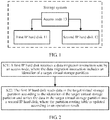
- a storage system to which the present invention is applied includes at least two IP (Internet Protocol, Internet Protocol) hard disks (a first IP hard disk 11 and a second IP hard disk 12) and an access node 13.
- the multiple IP hard disks and the access node 13 form a cluster, and the access node 13 is in communication connection with the IP hard disks.
- the storage system may include at least one cluster.
- the storage system to which the present invention is applied belongs to a network storage system and is configured to store data in a network. In the storage system, data transmission may be performed between the IP hard disks under control of the access node 13, or the IP hard disks may transmit data outwards under control of the access node 13.
- the IP hard disk refers to a hard disk in the network storage system, and works based on the IP protocol. In the network storage system, an IP hard disk is identified by using an IP address or a MAC (Media Access Control, Media Access Control) address.
- IP hard disk is a so-called smart hard disk or Ethernet-interface hard disk.
- Embodiment 1 provides a data operation method for an IP hard disk, including:
- the first IP hard disk refers to an IP hard disk that is a part of a storage system; correspondingly, a second IP hard disk refers to another IP hard disk that is different from the first IP hard disk and that is a part of the storage system.
- a key value includes a primary key, a partition identifier of a virtual storage partition, and data stored in the virtual storage partition.
- the primary key may be a character string, each key value has a different primary key, and a primary key is used to identify a different key value.
- the virtual storage partition refers to a storage block obtained by means of logical partitioning on a physical IP hard disk, and each virtual storage partition includes multiple key values used as data storage units.
- partition identifier and the primary keys are bound in the key values.
- a partition identifier is added to a conventional key-value (that is, a primary key plus data) form to form the key-value form described in the present invention (that is, a partition identifier plus a primary key plus data), where the partition identifier may be set to be a prefix of the primary key.
- the partition identifier may not only be used as a prefix of the primary key, but also be set to be in another location of the conventional key-value form, provided that the partition identifier can be read by the IP hard disk.
- the partition identifier is preferably set to be a prefix of the primary key; in this way, higher efficiency can be achieved in a key-value migration, deletion, or reading process.
- a partition routing table needs to be virtually stored in the access node.
- a correspondence between an IP hard disk and a virtual storage partition in the IP hard disk is stored in the partition routing table.
- the access node can learn of a virtual storage partition included in an IP hard disk by using the partition routing table. Therefore, when needing to perform a data operation, the access node can learn an IP hard disk that the virtual storage partition is located in, and an operation can be performed with respect to a key value in the virtual storage partition.
- the partition identifier of the virtual storage partition may be a set partition number, or may be an identifier in another form.
- the IP hard disk may be identified by using an IP (Internet Protocol, Internet Protocol) address, or may be identified by using a MAC (Media Access Control, Media Access Control) address.
- the first IP hard disk receives the data migration instruction sent by the access node, where the data migration instruction includes the identifier of the target virtual storage partition, and the first IP hard disk includes the target virtual storage partition.
- the access node sends the data migration instruction to the first IP source IP hard disk
- the first IP hard disk receives the data migration instruction and performs a migration operation in step S22 on several key values included in the target virtual storage partition according to the data migration instruction.
- the first IP hard disk reads data in the target virtual storage partition according to the identifier of the target virtual storage partition and writes the data in the target virtual storage partition into a second IP hard disk, where the partition routing table is updated according to an operation result.
- the first IP hard disk that receives the data migration instruction can perform matching between the identifier of the target virtual storage partition and key values stored by the first IP hard disk, that is, virtual storage partition identifiers of the key values stored by the first IP hard disk are searched according to the identifier of the target virtual storage partition, so as to determine a key value corresponding to the identifier of the target virtual storage partition.
- the first IP hard disk obtains and reads the data in the target virtual storage partition, where the key value includes a primary key that uses the identifier of the target virtual storage partition as a prefix.
- Embodiment 1 after an IP hard disk performs a data migration operation on a virtual storage partition according to a partition routing table, a relationship between the virtual storage partition and the corresponding IP hard disk may change.
- the access node needs to adjust a correspondence between the virtual storage partition and the IP hard disk, that is, updating the partition routing table.
- the correspondence between the virtual storage partition and the IP hard disk also needs to be adjusted if an operation such as delete or write is performed on data.
- the virtual storage partition when a virtual storage partition of an IP hard disk needs to be migrated to another IP hard disk, the virtual storage partition does not exist in the original IP hard disk because the virtual storage partition has been migrated to the another IP hard disk. In this case, the IP hard disk corresponding to the virtual storage partition is changed to the IP hard disk in which the virtual storage partition is located after the migration. Therefore, a correspondence between an IP hard disk and a virtual storage partition can be maintained so as to maintain management of data in a cluster.
- a first IP hard disk receives a data migration instruction sent by an access node, reads data in a target virtual storage partition at a time according to an identifier of the target virtual storage partition carried in the data migration instruction, and writes the data at a time into a second IP hard disk.
- the first IP hard disk can acquire an operation instruction with respect to multiple key values in the virtual storage partition at a time, so as to reduce a quantity of times an operation instruction needs to be delivered by the access node during data operations, and further reduce an amount of communication between the access node and IP hard disks and occupied resources of the access node, and improve work efficiency of the access node.
- Embodiment 2 of the present invention provides an IP hard disk.
- the IP hard disk 30 includes:
- a first IP hard disk can read data in a target virtual storage partition at a time according to an identifier of the target virtual storage partition carried in a data migration instruction, and writes the data at a time into a second IP hard disk.
- the first IP hard disk can acquire an operation instruction with respect to multiple key values in the virtual storage partition at a time, so as to reduce a quantity of times an operation instruction needs to be delivered by the access node during data operations, and further reduce an amount of communication between the access node and IP hard disks and occupied resources of the access node, and improve work efficiency of the access node.
- a data operation method for an IP hard disk provided by Embodiment 3 is applied to a storage system, where the storage system includes an access node and an IP hard disk. As shown in FIG. 4 , the method includes:
- the data operation instruction includes a delete data instruction, a read data instruction, or a write data instruction
- the IP hard disk includes the target virtual storage partition.
- the data operation instruction includes at least an operation type and a partition identifier of a to-be-operated virtual storage partition.
- the IP hard disk acquires a data operation instruction, where the data operation instruction also includes a partition identifier of the virtual storage partition. Then, the IP hard disk may scan for all key values that include the partition identifier according to the partition identifier, and perform different partition operations according to different instructions.
- Types of the partition operations herein include at least delete, read, and write, and certainly, another data operation instruction for batch processing may also be included, which is not limited herein.
- the IP hard disk performs an operation on data in the target virtual storage partition according to the identifier of the target virtual storage partition, where the operation corresponds to the data operation instruction.
- the data operation instruction is a delete data instruction
- the data operation instruction is a read data instruction
- the data operation instruction is a write data instruction
- the IP hard disk receives the delete data instruction delivered by the access node and deletes several key values included in the target virtual storage partition one by one according to the delete data instruction.
- the access node updates the partition routing table according to an operation result, that is, deleting a correspondence between the target virtual storage partition and the IP hard disk in the partition routing table.
- the access node sends the delete data instruction, so that the IP hard disk scans for key values in the target virtual storage partition according to the delete data instruction, and deletes the key values in the virtual storage partition one by one, which avoids a need of delivering operation instructions one by one to enable the IP hard disk to complete data deletion, and thereby reduces occupied resources of the access node and improves reliability of operations on data in the IP hard disk.
- the access node when the access node reads data in the IP hard disk, to reduce data communication between the access node and the IP hard disk, in another possible implementation manner of Embodiment 3, the access node sends the read data instruction to the IP hard disk, and the IP hard disk receives the read data instruction and sends several key values included in the target virtual storage partition to a target device one by one according to the read data instruction. Then, the access node updates the partition routing table according to an operation result, that is, maintaining a correspondence between the target storage partition and the IP hard disk in the partition routing table.
- the access node When reading data in the IP hard disk, the access node sends one read data instruction, so that the IP hard disk scans for all data keys in the target virtual storage partition and sends all the data to the access node piece by piece, and further, the access node can forward the received key values to the target device. In this way, there is no need for the access node to deliver a read instruction with respect to each key value, which decreases operation instructions that need to be delivered by the access node during data reading and reduces occupied resources of the access node.
- the target device is normally a terminal used by a user, but may also be another access node. This is because the access node needs to be used when another access node needs to call a key value in an IP hard disk managed by the access node. In this case, the another access node becomes a target device when the access node sends the key value.
- the key value may still be maintained in the IP hard disk; therefore, the access node does not need to update the partition routing table.
- the access node when the access node writes data into the IP hard disk, to reduce data communication between the access node and the IP hard disk, in another possible implementation manner of Embodiment 3, the access node sends the write data instruction to the IP hard disk, and the IP hard disk receives the write data instruction and writes several key values into the target virtual storage partition one by one according to the write data instruction. Then, the access node updates the partition routing table according to an operation result, that is, maintaining a correspondence between the target storage partition and the IP hard disk in the partition routing table.
- a key value that includes a primary key and a partition identifier of a virtual storage partition is formed, and the key value is written into a corresponding virtual storage partition of the IP hard disk.
- the key value that includes the partition identifier of the virtual storage partition and the primary key is formed when data is written, so as to achieve an objective of performing a batch operation on the data that is newly written, thereby reducing occupied resources of the access node.
- an IP hard disk can perform, according to an identifier of a target virtual storage partition carried in a data operation instruction, a corresponding operation such as delete, read, or write at a time on data corresponding to the target virtual storage partition.
- the IP hard disk can acquire an operation instruction with respect to multiple key values in the virtual storage partition at a time, so as to reduce a quantity of times an operation instruction needs to be delivered by the access node during data operations, and further reduce an amount of communication between the access node and IP hard disks and occupied resources of the access node, and improve work efficiency of the access node.
- Embodiment 4 further provides a data operation method for a storage system, which is applied to the storage system shown in FIG. 1 that includes an access node and at least two IP hard disks.
- the IP hard disk includes several virtual storage partitions, and each virtual storage partition is provided with a partition identifier; each virtual storage partition stores several key values; each key value includes at least a primary key and a partition identifier that is set for a virtual storage partition that stores the key value.
- the method includes:
- the data migration instruction is used to instruct data in the target virtual storage partition of the first IP hard disk to be migrated to a second IP hard disk, where the first IP hard disk includes the target virtual storage partition.
- the access node may determine, according to a correspondence between the identifier of the target virtual storage partition and an IP hard disk, that an IP hard disk in which the target virtual storage partition is located is the first IP hard disk, and send the data migration instruction to the first IP hard disk.
- the correspondence between the identifier of the target virtual storage partition and an IP hard disk is stored in the access node in a form of a partition routing table.
- the partition identifier of the virtual storage partition may be a set partition number, or may be an identifier in another form.
- the IP hard disk may be identified by using an IP address, or may be identified by using a MAC address.
- the first IP hard disk receives the data migration instruction, reads data in the target virtual storage partition according to the identifier of the target virtual storage partition, and writes the data in the target virtual storage partition into the second IP hard disk.
- the first IP hard disk receives the data migration instruction, where the data migration instruction also includes a partition identifier of a virtual storage partition. Then, the IP hard disk may scan for all key values that include the partition identifier according to the partition identifier, and perform data migration operations according to different instructions. Specifically, the first IP hard disk performs matching between the identifier of the target virtual storage partition and key values stored by the first IP hard disk; and obtains and reads the data in the target virtual storage partition, where the key value includes a primary key that uses the identifier of the target virtual storage partition as a prefix.
- the method further includes: changing, by the access node, a correspondence between the identifier of the target virtual storage partition and the first IP hard disk to a correspondence between the identifier of the target virtual storage partition and the second IP hard disk.
- a first IP hard disk receives a data migration instruction sent by an access node, reads data in a target virtual storage partition at a time according to an identifier of the target virtual storage partition carried in the data migration instruction, and writes the data at a time into a second IP hard disk.
- the first IP hard disk can acquire an operation instruction with respect to multiple key values in the virtual storage partition at a time, so as to reduce a quantity of times an operation instruction needs to be delivered by the access node during data operations, and further reduce an amount of communication between the access node and IP hard disks and occupied resources of the access node, and improve work efficiency of the access node.
- an IP hard disk may include one or more virtual storage partitions, and the present invention does not limit a quantity of virtual storage partitions in one IP hard disk.
- Embodiment 5 further provides a storage system.
- the storage system includes an access node 13 and at least two IP hard disks, that is, including at least a first IP hard disk 11 and a second IP hard disk 12.
- the access node 13 is configured to send a data migration instruction to the first IP hard disk 11, where the data migration instruction includes an identifier of a target virtual storage partition, the data migration instruction is used to instruct data in the target virtual storage partition of the first IP hard disk 11 to be migrated to the second IP hard disk 12, and the first IP hard disk 11 includes the target virtual storage partition.
- the access node 13 may determine, according to a correspondence between the identifier of the target virtual storage partition and the IP hard disk, that an IP hard disk in which the target virtual storage partition is located is the first IP hard disk 11, and send the data migration instruction to the first IP hard disk 11.
- the first IP hard disk 11 is configured to: read the data in the target virtual storage partition according to the identifier of the target virtual storage partition, and write the data in the target virtual storage partition into the second IP hard disk.
- the first IP hard disk 11 is specifically configured to: perform matching between the identifier of the target virtual storage partition and key values stored by the first IP hard disk 11; and obtain and read the data in the target virtual storage partition, where the key value includes a primary key that uses the identifier of the target virtual storage partition as a prefix.
- a first IP hard disk receives a data migration instruction sent by an access node, reads data in a target virtual storage partition at a time according to an identifier of the target virtual storage partition carried in the data migration instruction, and writes the data at a time into a second IP hard disk.
- the first IP hard disk can acquire an operation instruction with respect to multiple key values in the virtual storage partition at a time, so as to reduce a quantity of times an operation instruction needs to be delivered by the access node during data operations, and further reduce an amount of communication between the access node and IP hard disks and occupied resources of the access node, and improve work efficiency of the access node.
- the access node 13 is specifically configured to: after the first IP hard disk writes the data in the target virtual storage partition into the second IP hard disk, change a correspondence between the identifier of the target virtual storage partition and the first IP hard disk to a correspondence between the identifier of the target virtual storage partition and the second IP hard disk.
- Embodiment 6 further provides a data operation method for a storage system, which is applied to a storage system that includes an access node and an IP hard disk. As shown in FIG. 6 , the method includes:
- the first IP hard disk performs matching between the identifier of the target virtual storage partition and key values of the first IP hard disk; and performs an operation on a key value in the target virtual storage partition according to the data operation instruction, where the key value includes a primary key that uses the identifier of the target virtual storage partition as a prefix.
- an IP hard disk performs, according to an identifier of a target virtual storage partition carried in a data operation instruction, a corresponding operation such as delete, read, or write at a time on data corresponding to the target virtual storage partition.
- the IP hard disk can acquire an operation instruction with respect to multiple key values in the virtual storage partition at a time, so as to reduce a quantity of times an operation instruction needs to be delivered by the access node during data operations, and further reduce an amount of communication between the access node and IP hard disks and occupied resources of the access node, and improve work efficiency of the access node.
- the access node stores a correspondence between the identifier of the target virtual storage partition and the IP hard disk; after the IP hard disk performs the operation on the data in the target virtual storage partition, where the operation corresponds to the data operation instruction, the method further includes: updating, by the access node, the correspondence between the identifier of the target virtual storage partition and the IP hard disk.
- Embodiment 7 further provides a storage system.
- the storage system includes an IP hard disk 11 and an access node 13, where there may be one or more IP hard disks.
- FIG. 7 is described by using an example in which there may be one IP hard disk.
- the access node 13 is configured to send a data operation instruction to the IP hard disk 11, where the data operation instruction includes an identifier of a target virtual storage partition.
- the data operation instruction includes a delete data instruction, a read data instruction, or a write data instruction
- the IP hard disk includes the target virtual storage partition.
- the access node 13 is specifically configured to: determine, according to a correspondence between an identifier of a target virtual storage partition and an IP hard disk, an IP hard disk in which the target virtual storage partition is located, and send a data operation instruction to the IP hard disk.
- the IP hard disk 11 is configured to: receive the data operation instruction and perform an operation on data in the target virtual storage partition according to the identifier of the target virtual storage partition, where the operation corresponds to the data operation instruction.
- the IP hard disk 11 performs matching between the identifier of the target virtual storage partition and key values of the IP hard disk 11; and performs an operation on a key value in the target virtual storage partition according to the data operation instruction, where the key value includes a primary key that uses the identifier of the target virtual storage partition as a prefix.
- an IP hard disk performs, according to an identifier of a target virtual storage partition carried in a data operation instruction, a corresponding operation such as delete, read, or write at a time on data corresponding to the target virtual storage partition.
- the IP hard disk can acquire an operation instruction with respect to multiple key values in the virtual storage partition at a time, so as to reduce a quantity of times an operation instruction needs to be delivered by the access node during data operations, and further reduce an amount of communication between the access node and IP hard disks and occupied resources of the access node, and improve work efficiency of the access node.
- the access node 13 stores a correspondence between the identifier of the target virtual storage partition and the IP hard disk; and the access node 13 is specifically configured to update the correspondence between the identifier of the target virtual storage partition and the IP hard disk.
- a data operation method for an IP hard disk includes:
- the first IP hard disk When receiving the data migration instruction delivered by an access node, the first IP hard disk first learns from the data migration instruction that a partition operation type is migrate and acquires an identifier, for example, the foregoing IP address or the foregoing MAC address, of a target IP hard disk from the data migration instruction. Then, the first IP hard disk sends a communication request to the target IP hard disk according to the data migration instruction.
- the target IP hard disk provides a feedback for the communication request after receiving the communication request. When the first IP hard disk receives the feedback, it indicates that a communication channel can be established for performing data migration. When the first IP hard disk receives no feedback within a preset time interval, it indicates that a communication channel cannot be established, and in this case, the first IP hard disk needs to feed back, to the access node, that a partition migration operation cannot be completed.
- the delivered data migration instruction may be used to ensure that communication can be automatically established between the two IP hard disks by establishing a communication channel, and data migration is performed in a unit of a virtual storage partition. Therefore, there is no need for the access node to deliver migration instructions one by one. After the communication channel is established and data migration starts, there is no need for the access node to retain a communication connection to the IP hard disks to complete delivery of a data operation instruction; and data migration can be completed only over the communication channel between the first IP hard disk and the target IP hard disk, which reduces occupied resources of the access node and improves work efficiency of the access node.
- the first IP hard disk and the target IP hard disk establish communication automatically, there is no need to occupy a network resource of the access node for transfer of migrated data, which further reduces consumption of resources of the access node and improves efficiency of data migration.
- a data operation method for an IP hard disk includes:
- the IP hard disk receives the delete data instruction delivered by an access node, then, scans for the key values in the target virtual storage partition according to the delete data instruction, and deletes the key values in the virtual storage partition one by one, which avoids a need of delivering operation instructions one by one to enable the IP hard disk to complete data deletion, and thereby reduces occupied resources of the access node and improves reliability of operations on data in the IP hard disk.
- the data operation method for an IP hard disk includes:
- the IP hard disk When the IP hard disk receives an instruction from an access node for reading data in the IP hard disk, the IP hard disk scans for all data in the target virtual storage partition according to the delivered read data instruction and sends all the data to the access node piece by piece, so that the access node can forward a received key value to a target device. In this way, there is no need for the access node to deliver a read instruction with respect to each key value, which decreases operation instructions that need to be delivered by the access node during data reading and reduces occupied resources of the access node.
- the target device is normally a terminal used by a user, but may also be another access node. This is because the access node needs to be used when another access node needs to call a key value in an IP hard disk managed by the access node. In this case, the another access node becomes a target device when the access node sends the key value.
- the key value may still be maintained in the IP hard disk; therefore, the access node does not need to update a partition routing table.
- the data operation method for an IP hard disk includes:
- the primary key and a partition identifier of the virtual storage partition are allocated by an access node to data, and a to-be-written key value is formed according to the partition identifier and the primary key.
- a key value that includes a primary key and a partition identifier of a virtual storage partition is formed, and the key value is written into a corresponding virtual storage partition of the IP hard disk.
- the key value that includes the partition identifier of the virtual storage partition and the primary key is formed when data is written, so as to achieve an objective of performing a batch operation on the data that is newly written, thereby reducing occupied resources of the access node.
- a cluster includes an access node, a first IP hard disk, and a second IP hard disk, where the first IP hard disk includes a first virtual storage partition, a second virtual storage partition, and a third virtual storage partition.
- a partition routing table stores a correspondence between the first virtual storage partition, the second virtual storage partition and the third virtual storage partition, and the first IP hard disk.
- a virtual storage partition may also be configured in the second IP hard disk, and the partition routing table also stores a correspondence between the second IP hard disk and the virtual storage partition.
- the virtual storage partition configured in the second IP hard disk is not shown in FIG. 3 .
- a data operation method for an IP hard disk includes:
- step S93 needs to be performed in which the first IP hard disk notifies the access node of the exception.
- step S94 is performed.
- the data operation method for an IP hard disk includes:
- the data operation method for an IP hard disk further includes:
- Sending one read data instruction can enable an IP hard disk obtain, by scanning, all key values that include a partition identifier of a target virtual storage partition, without a need to send read data instructions one by one, which decreases a quantity of operation instructions sent by the access node to the IP hard disk and reduces occupied resources of the access node.
- the data operation method for an IP hard disk includes:
- the access node allocates a partition identifier of a virtual storage partition and a primary key to the data, to enable the IP hard disk to write data into a corresponding partition. Further, the IP hard disk is enabled to support a batch data operation, so as to improve reliability of data operations and improve data operation efficiency of the access node.
- the present invention further provides an access node 130, which is applied to a cluster that includes an IP hard disk, as shown in FIG. 13 .
- the IP hard disk includes several virtual storage partitions, each virtual storage partition is provided with a partition identifier; each virtual storage partition stores several key values; each key value includes at least a primary key and a partition identifier that is set for a virtual storage partition that stores the key value; the access node stores a partition routing table, and a correspondence between a virtual storage partition and an IP hard disk is stored in the partition routing table.
- the access node 130 includes:
- a partition routing table is used to manage a correspondence between a virtual storage partition and an IP hard disk, so that the access node sends an operation instruction that is with respect to one virtual storage partition and that enables, based on an association between a virtual storage partition and a primary key that are included in a key value, an IP hard disk to obtain multiple key values in the one virtual storage partition, thereby reducing a quantity of operation instructions delivered by the access node during data operations, reducing an amount of communication between the access node and the IP hard disk and occupied resources of the access node, and improving work efficiency of the access node.
- the sending unit 132 includes:
- the sending unit 132 includes:
- the sending unit 132 includes:
- the access node 130 further includes:
- the present invention further provides an IP hard disk, which is applied to a cluster.
- the IP hard disk includes several virtual storage partitions, and each virtual storage partition is provided with a partition identifier; each virtual storage partition stores several key values; each key value includes at least a primary key and a partition identifier that is set for a virtual storage partition that stores the key value.
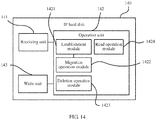
- the IP hard disk 140 includes:
- the receiving unit 141 is specifically configured to receive a data migration instruction with respect to the target virtual storage partition; and the operation unit 142 includes:
- the receiving unit 141 is specifically configured to receive a delete data instruction with respect to the target virtual storage partition; and the operation unit 142 includes:
- the receiving unit 141 is specifically configured to receive a read data instruction with respect to the target virtual storage partition; and the operation unit 142 includes:
- the IP hard disk 140 further includes:
- the present invention further provides an access node 150, which is applied to a cluster that includes an IP hard disk.
- the IP hard disk includes several virtual storage partitions, and each virtual storage partition is provided with a partition identifier; each virtual storage partition stores several key values; each key value includes at least a primary key and a partition identifier that is set for a virtual storage partition that stores the key value.
- the access node 150 includes:
- a partition routing table is used to manage a correspondence between a virtual storage partition and an IP hard disk, so that the access node sends an operation instruction that is with respect to one virtual storage partition and that enables, based on an association between a virtual storage partition and a primary key that are included in a key value, an IP hard disk to obtain multiple key values in the one virtual storage partition, thereby reducing a quantity of operation instructions delivered by the access node during data operations, reducing an amount of communication between the access node and the IP hard disk and occupied resources of the access node, and improving work efficiency of the access node.
- the sender 152 is specifically configured to deliver a data migration instruction to the first IP hard disk, so that the first IP hard disk establishes a communication channel with a target IP hard disk according to the data migration instruction and migrates several key values included in the target virtual storage partition to the target IP hard disk one by one.
- the processor 151 is specifically configured to change, in the partition routing table, the first IP hard disk corresponding to the target virtual storage partition to the target IP hard disk.
- the sender 152 is specifically configured to deliver a delete data instruction to the first IP hard disk, so that the first IP hard disk deletes, one by one according to the delete data instruction, several key values included in the target virtual storage partition.
- the processor 151 is specifically configured to delete a correspondence between the target virtual storage partition and the first IP hard disk from the partition routing table.
- the access node 150 further includes a receiver 154.
- the sender 152 is specifically configured to deliver a read data instruction to the first IP hard disk, so that the first IP hard disk sends, one by one according to the read data instruction, several key values included in the target virtual storage partition to a target device.
- the receiver 154 is configured to receive one by one the several key values that are included in the target virtual storage partition and that are sent by the first IP hard disk according to the read data instruction.
- the sender 152 is further configured to send the received several key values to the target device.
- the processor 151 is specifically configured to maintain a correspondence between the target storage partition and the first IP hard disk in the partition routing table.
- the receiver 154 is further configured to receive data that needs to be written into a to-be-written-into IP hard disk.
- the processor 151 is further configured to allocate, to the data, a primary key and a to-be-written-into partition identifier corresponding to the primary key, to form a to-be-written key value that includes the primary key and the to-be-written-into partition identifier.
- the sender 152 is further configured to send the to-be-written key value to the to-be-written-into IP hard disk, so that the to-be-written-into IP hard disk writes the to-be-written key value into a virtual storage partition corresponding to the to-be-written-into partition identifier.
- the present invention further provides an IP hard disk 160, which is applied to a cluster that includes an IP hard disk.
- the IP hard disk includes several virtual storage partitions, and each virtual storage partition is provided with a partition identifier; each virtual storage partition stores several key values; each key value includes at least a primary key and a partition identifier that is set for a virtual storage partition that stores the key value.
- the IP hard disk 160 includes:
- a partition routing table is used to manage a correspondence between a virtual storage partition and an IP hard disk, so that an access node sends an operation instruction that is with respect to one virtual storage partition and that enables, based on an association between a virtual storage partition and a primary key that are included in a key value, an IP hard disk to obtain multiple key values in the one virtual storage partition, thereby reducing a quantity of operation instructions delivered by the access node during data operations, reducing an amount of communication between the access node and the IP hard disk and occupied resources of the access node, and improving work efficiency of the access node.
- the IP hard disk 160 further includes a sender 164.
- the receiver 162 is specifically configured to receive a data migration instruction with respect to the target virtual storage partition.
- the processor 163 is configured to establish, according to the data migration instruction, a communication channel with a target IP hard disk by using the sender 164 and the receiver 162.
- the processor 163 is specifically configured to scan, according to the partition identifier of the target virtual storage partition, for several key values included in the target virtual storage partition.
- the sender 164 is further configured to send the several key values obtained by scanning to the target IP hard disk one by one.
- the receiver 162 is specifically configured to receive a delete data instruction with respect to the target virtual storage partition.
- the processor 163 is specifically configured to delete, one by one according to the partition identifier of the target virtual storage partition, the several key values that are obtained by scanning and that are included in the target virtual storage partition.
- the receiver 162 is specifically configured to receive a read data instruction with respect to the target virtual storage partition.
- the processor 163 is specifically configured to scan, according to the partition identifier of the target virtual storage partition, for several key values included in the target virtual storage partition.
- the sender 164 is specifically configured to send the key values obtained by scanning to a target device.
- the receiver 162 is further configured to receive a to-be-written key value, where the to-be-written key value includes a primary key and a to-be-written-into partition identifier corresponding to the primary key.
- the processor 163 is further configured to write, according to the to-be-written-into partition identifier and the primary key, the to-be-written key value into a virtual storage partition corresponding to the to-be-written-into partition identifier.
Landscapes
- Engineering & Computer Science (AREA)
- Theoretical Computer Science (AREA)
- Physics & Mathematics (AREA)
- General Engineering & Computer Science (AREA)
- General Physics & Mathematics (AREA)
- Human Computer Interaction (AREA)
- Information Retrieval, Db Structures And Fs Structures Therefor (AREA)
Applications Claiming Priority (2)
| Application Number | Priority Date | Filing Date | Title |
|---|---|---|---|
| CN201410286947.3A CN104077239B (zh) | 2014-06-24 | 2014-06-24 | Ip硬盘与存储系统,及其数据操作方法 |
| PCT/CN2015/072813 WO2015196815A1 (zh) | 2014-06-24 | 2015-02-11 | Ip硬盘与存储系统,及其数据操作方法 |
Publications (2)
| Publication Number | Publication Date |
|---|---|
| EP3144818A1 true EP3144818A1 (de) | 2017-03-22 |
| EP3144818A4 EP3144818A4 (de) | 2017-07-05 |
Family
ID=51598506
Family Applications (1)
| Application Number | Title | Priority Date | Filing Date |
|---|---|---|---|
| EP15812329.9A Ceased EP3144818A4 (de) | 2014-06-24 | 2015-02-11 | Ip-festplatte und speichersystem sowie datenbetriebsverfahren dafür |
Country Status (4)
| Country | Link |
|---|---|
| US (1) | US9965213B2 (de) |
| EP (1) | EP3144818A4 (de) |
| CN (1) | CN104077239B (de) |
| WO (1) | WO2015196815A1 (de) |
Families Citing this family (11)
| Publication number | Priority date | Publication date | Assignee | Title |
|---|---|---|---|---|
| CN104077239B (zh) | 2014-06-24 | 2017-04-26 | 华为技术有限公司 | Ip硬盘与存储系统,及其数据操作方法 |
| CN104461378B (zh) * | 2014-10-30 | 2017-09-26 | 华为技术有限公司 | 将数据对象写入ip硬盘的方法、装置及系统 |
| CN104461817B (zh) * | 2014-11-26 | 2017-08-11 | 华为技术有限公司 | 一种检测键的方法和服务器 |
| CN105988804B (zh) * | 2015-02-12 | 2020-01-14 | Oppo广东移动通信有限公司 | 一种软件转移方法及终端 |
| CN106487841A (zh) * | 2015-08-27 | 2017-03-08 | 阿里巴巴集团控股有限公司 | 一种数据迁移方法及设备 |
| CN105407137B (zh) * | 2015-10-22 | 2019-07-23 | 华为技术有限公司 | 一种数据迁移方法、ip硬盘、ip盘网关及存储系统 |
| CN105700823A (zh) * | 2015-12-23 | 2016-06-22 | 华为技术有限公司 | 一种ip硬盘之间传输数据的方法和装置 |
| CN107656705B (zh) * | 2017-10-25 | 2020-10-23 | 苏州浪潮智能科技有限公司 | 一种计算机存储介质和一种数据迁移方法、装置及系统 |
| CN109189326B (zh) * | 2018-07-25 | 2020-09-08 | 华为技术有限公司 | 分布式集群的管理方法和装置 |
| CN110287197B (zh) * | 2019-06-28 | 2022-02-08 | 微梦创科网络科技(中国)有限公司 | 一种数据存储方法、迁移方法及装置 |
| CN113468140B (zh) * | 2021-06-30 | 2023-04-07 | 上海掌门科技有限公司 | 数据迁移处理方法、电子设备及计算机可读存储介质 |
Family Cites Families (11)
| Publication number | Priority date | Publication date | Assignee | Title |
|---|---|---|---|---|
| CN1340765A (zh) * | 2000-08-29 | 2002-03-20 | 廖瑞民 | 使一个硬盘分割为多个完全独立分区的方法 |
| US7313614B2 (en) * | 2000-11-02 | 2007-12-25 | Sun Microsystems, Inc. | Switching system |
| JP3944449B2 (ja) * | 2002-12-19 | 2007-07-11 | 株式会社日立製作所 | 計算機システム、磁気ディスク装置、および、ディスクキャッシュ制御方法 |
| US7676587B2 (en) * | 2004-12-14 | 2010-03-09 | Emc Corporation | Distributed IP trunking and server clustering for sharing of an IP server address among IP servers |
| US8321854B1 (en) * | 2007-12-18 | 2012-11-27 | EMC Corporations | Client with flexible grammar-base syntax |
| CN101442548B (zh) * | 2008-12-17 | 2012-09-05 | 成都市华为赛门铁克科技有限公司 | 一种固态硬盘的操作方法和固态硬盘 |
| US20120303912A1 (en) * | 2011-05-23 | 2012-11-29 | Microsoft Corporation | Storage account migration between storage stamps |
| CN103186350B (zh) * | 2011-12-31 | 2016-03-30 | 北京快网科技有限公司 | 混合存储系统及热点数据块的迁移方法 |
| JP2016529575A (ja) * | 2013-05-20 | 2016-09-23 | 華為技術有限公司Huawei Technologies Co.,Ltd. | ハードディスクおよびデータ処理方法 |
| CN103905335B (zh) * | 2014-04-15 | 2017-03-08 | 华为技术有限公司 | 流量控制方法及装置 |
| CN104077239B (zh) * | 2014-06-24 | 2017-04-26 | 华为技术有限公司 | Ip硬盘与存储系统,及其数据操作方法 |
-
2014
- 2014-06-24 CN CN201410286947.3A patent/CN104077239B/zh not_active Expired - Fee Related
-
2015
- 2015-02-11 EP EP15812329.9A patent/EP3144818A4/de not_active Ceased
- 2015-02-11 WO PCT/CN2015/072813 patent/WO2015196815A1/zh not_active Ceased
-
2016
- 2016-12-21 US US15/386,364 patent/US9965213B2/en active Active
Also Published As
| Publication number | Publication date |
|---|---|
| CN104077239A (zh) | 2014-10-01 |
| EP3144818A4 (de) | 2017-07-05 |
| CN104077239B (zh) | 2017-04-26 |
| US20170102900A1 (en) | 2017-04-13 |
| US9965213B2 (en) | 2018-05-08 |
| WO2015196815A1 (zh) | 2015-12-30 |
Similar Documents
| Publication | Publication Date | Title |
|---|---|---|
| US9965213B2 (en) | IP hard disk and storage system, and data operation methods therefor | |
| CN109343963B (zh) | 一种容器集群的应用访问方法、装置及相关设备 | |
| CN109688235B (zh) | 虚拟网络业务处理方法、装置和系统,控制器,存储介质 | |
| US9854045B2 (en) | Generic cloud enabling of stateful applications | |
| US9571569B2 (en) | Method and apparatus for determining virtual machine migration | |
| KR102376713B1 (ko) | 복합 파티션 함수 제공 기법 | |
| US20150113218A1 (en) | Distributed Data Processing Method and Apparatus | |
| US10986065B1 (en) | Cell-based distributed service architecture with dynamic cell assignment | |
| EP3160084A1 (de) | Konfigurationsverfahren und -vorrichtung für faserkanalspeicherbereichsnetzwerk | |
| CN102316043B (zh) | 端口虚拟化方法、交换机及通信系统 | |
| CN110727738B (zh) | 基于数据分片的全局路由系统、电子设备及存储介质 | |
| CN112486860A (zh) | 管理存储系统的地址映射的方法、设备和计算机程序产品 | |
| CN110019125A (zh) | 数据库管理的方法和装置 | |
| WO2021109750A1 (zh) | 节点管理方法、装置、设备、存储介质和系统 | |
| CN107094238B (zh) | 智能电视的按键分配处理方法及智能电视 | |
| CN106878052B (zh) | 一种用户迁移方法和装置 | |
| WO2019129033A1 (zh) | 传送网子切片管理方法和装置 | |
| CN104506654A (zh) | 云计算系统及动态主机配置协议服务器备份方法 | |
| US20250362946A1 (en) | Method and apparatus for migrating virtual machine, device, and storage medium | |
| CN111669355B (zh) | 一种批量处理nginx网络隔离空间的方法及nginx服务器 | |
| US20210006488A1 (en) | Information collecting system and information collecting method | |
| CN108781189B (zh) | 一种负载均衡的方法及相关设备 | |
| US11444998B2 (en) | Bit rate reduction processing method for data file, and server | |
| US20240361930A1 (en) | Method, electronic device, and computer program product for expanding storage device cluster | |
| CN116860166A (zh) | 数据迁移方法、装置、电子设备及存储介质 |
Legal Events
| Date | Code | Title | Description |
|---|---|---|---|
| PUAI | Public reference made under article 153(3) epc to a published international application that has entered the european phase |
Free format text: ORIGINAL CODE: 0009012 |
|
| 17P | Request for examination filed |
Effective date: 20161215 |
|
| AK | Designated contracting states |
Kind code of ref document: A1 Designated state(s): AL AT BE BG CH CY CZ DE DK EE ES FI FR GB GR HR HU IE IS IT LI LT LU LV MC MK MT NL NO PL PT RO RS SE SI SK SM TR |
|
| AX | Request for extension of the european patent |
Extension state: BA ME |
|
| A4 | Supplementary search report drawn up and despatched |
Effective date: 20170608 |
|
| RIC1 | Information provided on ipc code assigned before grant |
Ipc: G06F 3/06 20060101ALI20170601BHEP Ipc: G06F 12/08 20160101AFI20170601BHEP |
|
| DAX | Request for extension of the european patent (deleted) | ||
| 17Q | First examination report despatched |
Effective date: 20180220 |
|
| REG | Reference to a national code |
Ref country code: DE Ref legal event code: R003 |
|
| STAA | Information on the status of an ep patent application or granted ep patent |
Free format text: STATUS: THE APPLICATION HAS BEEN REFUSED |
|
| 18R | Application refused |
Effective date: 20190207 |