EP3144827A1 - Dispositif d'identification d'organisations et de surveillance de l'activité d'un site web d'une organisation à partir de journaux de visite - Google Patents
Dispositif d'identification d'organisations et de surveillance de l'activité d'un site web d'une organisation à partir de journaux de visite Download PDFInfo
- Publication number
- EP3144827A1 EP3144827A1 EP15306452.2A EP15306452A EP3144827A1 EP 3144827 A1 EP3144827 A1 EP 3144827A1 EP 15306452 A EP15306452 A EP 15306452A EP 3144827 A1 EP3144827 A1 EP 3144827A1
- Authority
- EP
- European Patent Office
- Prior art keywords
- identifier
- association
- cookie
- organization
- browser
- Prior art date
- Legal status (The legal status is an assumption and is not a legal conclusion. Google has not performed a legal analysis and makes no representation as to the accuracy of the status listed.)
- Withdrawn
Links
Images



Classifications
-
- H—ELECTRICITY
- H04—ELECTRIC COMMUNICATION TECHNIQUE
- H04L—TRANSMISSION OF DIGITAL INFORMATION, e.g. TELEGRAPHIC COMMUNICATION
- H04L67/00—Network arrangements or protocols for supporting network services or applications
- H04L67/01—Protocols
- H04L67/02—Protocols based on web technology, e.g. hypertext transfer protocol [HTTP]
-
- G—PHYSICS
- G06—COMPUTING OR CALCULATING; COUNTING
- G06F—ELECTRIC DIGITAL DATA PROCESSING
- G06F11/00—Error detection; Error correction; Monitoring
- G06F11/30—Monitoring
-
- G—PHYSICS
- G06—COMPUTING OR CALCULATING; COUNTING
- G06F—ELECTRIC DIGITAL DATA PROCESSING
- G06F11/00—Error detection; Error correction; Monitoring
- G06F11/30—Monitoring
- G06F11/34—Recording or statistical evaluation of computer activity, e.g. of down time, of input/output operation ; Recording or statistical evaluation of user activity, e.g. usability assessment
- G06F11/3438—Recording or statistical evaluation of computer activity, e.g. of down time, of input/output operation ; Recording or statistical evaluation of user activity, e.g. usability assessment monitoring of user actions
-
- G—PHYSICS
- G06—COMPUTING OR CALCULATING; COUNTING
- G06F—ELECTRIC DIGITAL DATA PROCESSING
- G06F11/00—Error detection; Error correction; Monitoring
- G06F11/30—Monitoring
- G06F11/34—Recording or statistical evaluation of computer activity, e.g. of down time, of input/output operation ; Recording or statistical evaluation of user activity, e.g. usability assessment
- G06F11/3466—Performance evaluation by tracing or monitoring
- G06F11/3495—Performance evaluation by tracing or monitoring for systems
-
- G—PHYSICS
- G06—COMPUTING OR CALCULATING; COUNTING
- G06F—ELECTRIC DIGITAL DATA PROCESSING
- G06F16/00—Information retrieval; Database structures therefor; File system structures therefor
- G06F16/90—Details of database functions independent of the retrieved data types
- G06F16/95—Retrieval from the web
- G06F16/958—Organisation or management of web site content, e.g. publishing, maintaining pages or automatic linking
-
- G—PHYSICS
- G06—COMPUTING OR CALCULATING; COUNTING
- G06Q—INFORMATION AND COMMUNICATION TECHNOLOGY [ICT] SPECIALLY ADAPTED FOR ADMINISTRATIVE, COMMERCIAL, FINANCIAL, MANAGERIAL OR SUPERVISORY PURPOSES; SYSTEMS OR METHODS SPECIALLY ADAPTED FOR ADMINISTRATIVE, COMMERCIAL, FINANCIAL, MANAGERIAL OR SUPERVISORY PURPOSES, NOT OTHERWISE PROVIDED FOR
- G06Q30/00—Commerce
- G06Q30/02—Marketing; Price estimation or determination; Fundraising
-
- G—PHYSICS
- G06—COMPUTING OR CALCULATING; COUNTING
- G06Q—INFORMATION AND COMMUNICATION TECHNOLOGY [ICT] SPECIALLY ADAPTED FOR ADMINISTRATIVE, COMMERCIAL, FINANCIAL, MANAGERIAL OR SUPERVISORY PURPOSES; SYSTEMS OR METHODS SPECIALLY ADAPTED FOR ADMINISTRATIVE, COMMERCIAL, FINANCIAL, MANAGERIAL OR SUPERVISORY PURPOSES, NOT OTHERWISE PROVIDED FOR
- G06Q30/00—Commerce
- G06Q30/02—Marketing; Price estimation or determination; Fundraising
- G06Q30/0201—Market modelling; Market analysis; Collecting market data
-
- G—PHYSICS
- G06—COMPUTING OR CALCULATING; COUNTING
- G06Q—INFORMATION AND COMMUNICATION TECHNOLOGY [ICT] SPECIALLY ADAPTED FOR ADMINISTRATIVE, COMMERCIAL, FINANCIAL, MANAGERIAL OR SUPERVISORY PURPOSES; SYSTEMS OR METHODS SPECIALLY ADAPTED FOR ADMINISTRATIVE, COMMERCIAL, FINANCIAL, MANAGERIAL OR SUPERVISORY PURPOSES, NOT OTHERWISE PROVIDED FOR
- G06Q30/00—Commerce
- G06Q30/02—Marketing; Price estimation or determination; Fundraising
- G06Q30/0241—Advertisements
- G06Q30/0251—Targeted advertisements
- G06Q30/0255—Targeted advertisements based on user history
-
- H—ELECTRICITY
- H04—ELECTRIC COMMUNICATION TECHNIQUE
- H04L—TRANSMISSION OF DIGITAL INFORMATION, e.g. TELEGRAPHIC COMMUNICATION
- H04L43/00—Arrangements for monitoring or testing data switching networks
- H04L43/04—Processing captured monitoring data, e.g. for logfile generation
-
- H—ELECTRICITY
- H04—ELECTRIC COMMUNICATION TECHNIQUE
- H04L—TRANSMISSION OF DIGITAL INFORMATION, e.g. TELEGRAPHIC COMMUNICATION
- H04L43/00—Arrangements for monitoring or testing data switching networks
- H04L43/08—Monitoring or testing based on specific metrics, e.g. QoS, energy consumption or environmental parameters
-
- H—ELECTRICITY
- H04—ELECTRIC COMMUNICATION TECHNIQUE
- H04L—TRANSMISSION OF DIGITAL INFORMATION, e.g. TELEGRAPHIC COMMUNICATION
- H04L67/00—Network arrangements or protocols for supporting network services or applications
- H04L67/50—Network services
- H04L67/535—Tracking the activity of the user
-
- H—ELECTRICITY
- H04—ELECTRIC COMMUNICATION TECHNIQUE
- H04L—TRANSMISSION OF DIGITAL INFORMATION, e.g. TELEGRAPHIC COMMUNICATION
- H04L67/00—Network arrangements or protocols for supporting network services or applications
- H04L67/50—Network services
- H04L67/54—Presence management, e.g. monitoring or registration for receipt of user log-on information, or the connection status of the users
-
- G—PHYSICS
- G06—COMPUTING OR CALCULATING; COUNTING
- G06F—ELECTRIC DIGITAL DATA PROCESSING
- G06F11/00—Error detection; Error correction; Monitoring
- G06F11/30—Monitoring
- G06F11/34—Recording or statistical evaluation of computer activity, e.g. of down time, of input/output operation ; Recording or statistical evaluation of user activity, e.g. usability assessment
- G06F11/3466—Performance evaluation by tracing or monitoring
- G06F11/3476—Data logging
-
- G—PHYSICS
- G06—COMPUTING OR CALCULATING; COUNTING
- G06F—ELECTRIC DIGITAL DATA PROCESSING
- G06F2201/00—Indexing scheme relating to error detection, to error correction, and to monitoring
- G06F2201/865—Monitoring of software
Definitions
- the invention relates to a web activity monitoring device for generating visit logs of organizations.
- US2011106920 discloses a computer-implemented method for associating an organizational entity with a network address.
- An idea at the basis of the invention is to provide a system for generating visit logs of visiting organizations on a monitored website.
- An aspect of the invention is to allow identifying a communication device of a visiting organization even if the communication device is not registered or even if the IP address of the communication device changes.
- the invention provides a web activity monitoring device for generating visit logs of organizations on a monitored website having a webpage, the web monitoring device comprising:
- the monitored website can access to the history of the visits of organizations on its webpages.
- such a web activity monitoring device may comprise one or more of the features below.
- the monitored website comprises a plurality of webpages and the visit logging module is further configured to, when the input interface receives a request:
- the visit logging module is further configured to:
- the browser identifier is a browser fingerprint comprising an element or a combination of elements in the group consisting of:
- the request is a hypertext transfer protocol (HTTP) request whose header comprises the browser fingerprint.
- HTTP hypertext transfer protocol
- the browser identifier is a cookie identifier
- the request comprises a cookie comprising the cookie identifier
- the browser association is a cookie association, the cookie association linking the cookie identifier to the organization identifier, and:
- a web client device of a visiting organization can be identified regardless of the network localization of the web client device when the web client device visits a webpage of a monitored website.
- the request is a hypertext transfer protocol (HTTP) request whose header comprises the cookie.
- HTTP hypertext transfer protocol
- the network address is an Internet Protocol (IP) address
- the network association is an IP association.
- the web activity monitoring device further comprises a matching module comprising:
- the request from the web client device is a hypertext transfer protocol (HTTP) request whose header comprises the network address which is a source IP address, and the network association is an IP association.
- HTTP hypertext transfer protocol
- the external content is an element or a combination of elements selected in the group consisting of:
- the external content is stored in the matching data repository in association with the candidate organization identifier.
- the external content is a combination of elements, wherein each element has a value selected between different values such that the external content related to the request is a n-tuple of values,
- the association processor module is further configured to operate a classification tree algorithm, the classification tree algorithm being configured to predict for a n-tuple of values a probability of association of the browser identifier with the candidate organization identifier.
- the probability is calculated as a function of external content associated to a plurality of browser identifiers in order to determine schemes of association of any browser identifier with any candidate organization identifier.
- the web activity monitoring device further comprises a scoring module configured to:
- the function of the external content in order to determine the candidate organization identifier is a machine learning function and/or a "big data" analysis function.
- the network score for the network association is a function of reliability weights, wherein a reliability weight is a function of the reliability of correlation of an external content.
- the network score is an IP score.
- the web server is further configured to send the cookie to the web client device when the network score is above a threshold.
- the reliability of the network association is further analyzed by a machine learning function taking into account the history of the visits of an organization in correlation with the external content associated to the candidate organization identifier, in order to modify the network score. Thanks to these features, the use of cookies further enables to cross check or correlate information from various sources in order to increase the reliability of the network scores.
- the web activity monitoring device is further configured to:
- the organization identifier is selected in the group consisting of:
- the invention provides a computer-implemented method for generating visit logs of organizations on a webpage hosted in a web server, comprising:
- the request comprises a cookie comprising the browser identifier, the browser identifier being a cookie identifier, and the browser association being a cookie association, wherein the cookie association links a cookie identifier to an organization identifier, the method further comprising :
- the invention also provides a computer program comprising computer-executable instructions that perform the above-mentioned method when executed, and a computer that comprises said computer program.
- the invention provides an application for generating visit logs of visitors on the monitored website of a company.
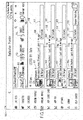
- Figure 1 illustrates an interface display 100 for enabling a monitored company to access the visit log of visiting companies on the monitored website of the monitored company.
- a visitor from a visiting company uses a visiting communication device for sending a request to a web server in order to get back a website page of the monitored website of the company.
- the request is registered as a visit and the visiting communication device from the visiting company is identified in order to generate the visit log of the monitored website for each visiting company.
- a list of names of visiting companies is displayed on predefined boxes 101, 102, 103 and 104: Company A, Company B, Company C, and Company D.
- a corresponding location is also displayed in a predefined box 124, 105, 106 and 107.
- the last visit date or delay is also displayed in a predefined box 108, 109, 110 and 111.
- a visitor of the Company D from Chicago, have been connected to the monitored website 4 minutes ago.
- the interface display has a number of functionalities for enabling the monitored company to select relevant information about visit log. For example, the number of visiting companies visiting the website in the last hour is displayed on a box 112, the total number of visiting companies visiting the website per day is displayed on a box 113, the number of first time visiting companies per day is displayed on a box 115. Relevant visiting companies may be saved by clicking on buttons 116 or excluded by clicking on button 117. The number of relevant selected visiting companies per day is displayed on a box 114.
- a setting button 116 enables to select all the previous information to be displayed on a per-day basis or a per-week basis or on a per-month basis.
- a zoom button 118 is also provided, in order to open a window on which a visit log of a visiting company is displayed in detail, as it will be further described with reference to Figure 2 .
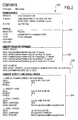
- Figure 2 represents a display 200 of a visit log of the visiting company whose name is Company A.
- the display comprises the following fields:
- the visit logs enable to efficiently target companies in marketing campaigns. For example, a visiting company which has visited a few times a pricing webpage on the monitored website is likely to answer positively to a call of a marketing employee of the company of the monitored website.
- the web activity monitoring device 300 comprises a Company ID module 301 configured to:
- the web activity monitoring device 300 also comprises three databases as follows:
- the Company ID module 301 is connected to all the databases in order to:
- the Company ID module 301 is connected to, or is part of, a host web server of the monitored website, as it will be further described with reference to Figure 5 .
- the Company ID module 301 can communicate with computers and communication devices connected to the Internet through the network interfaces of the host web server.
- the instructions that the web activity monitoring device 300 is configured to perform will now be described for a visit of a visiting communication device 306 on a monitored website.
- the web activity monitoring device 300 is configured to perform firstly an identification of the visiting communication device 306. Then, the web activity monitoring device 300 is configured to generate a visit log of the visits of the visiting communication device 306 on the monitored website.
- a visitor of the visiting company connects to the monitored website thanks to a visiting communication device 306.
- the Company ID module 301 in the web activity monitoring device 300 receives a request 307 from the visiting communication device 306 of the visitor from the visiting company Company A.
- the request 307 is an HTTP request whose header comprises the IP address of the visiting communication device 306. Therefore, the Company ID module 301 receives the source IP address of the visiting communication device 306.
- the Company ID module 301 queries the IP database 303 and the Company database 304 for retrieving a company identifier which is associated to the source IP address, in the case where the source IP address is registered in the IP database 303.
- the source IP address of the communication device 306 is registered in the IP database 303.
- the visitor which uses the visiting communication device 306 connects to the monitored website from the corporate source IP address, for example from the corporate building of the company Company A.
- the visiting communication device 306 is for example a laptop.
- the Company ID module 301 is configured to generate a cookie 311 for the visiting communication device 306
- the cookie 311 is a string of characters which is sent from the host web server of the monitored website to the browser of the visiting communication device 306, and is stored in the browser in order to be returned unchanged to the web server when the visiting communication device 306 connects again.
- the cookie 311 used for identifying the company Company A:
- the Company ID module 301 sends a response 308 to the visiting communication device 306.
- the response 308 is an HTTP request whose header comprises the above described cookie 311 intended to the visiting communication device 306.
- the cookie 311 is saved in the cookie database 305, as represented by arrow 309.
- the visiting communication device 306 then disconnects from the monitored website.
- the visiting communication device 306 connects again to the monitored website, or to another monitored website handled by the Company ID module 301.
- the visiting communication device 306 sends an HTTP request 310 to the host web server of the website.
- the visiting communication device 306 uses another source IP address than the source IP address which is registered in the IP database 303 in association with the company identifier of the company Company A. So the Company ID module 301 cannot identify the visiting company thanks to the source IP address.
- the Company ID module 301 identifies the visiting communication device 306 as a communication device of the company Company A.
- the Company ID module 301 comprises a visit logging module for generating history of the visits of the company Company A on the monitored website.
- the visit logging module comprises a visit history repository in which are stored visit records of the company Company A on the webpages of the monitored website.
- the visit logging module also comprises a record counter of the visit records.
- the visit logging module is configured to increment the record counter when receiving an HTTP request from the visiting communication device 306, either by identifying the visiting communication device 306 thanks to the source IP address or thanks to the cookie 311. Therefore, the record counter is incremented when the Company ID module 301 receives the request 307 and incremented again when the Company ID module 301 receives the request 310.
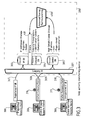
- Figure 5 represents a plurality of host web servers 504, 505 and 506 which host monitored websites X, Y, Z and W.
- the monitored websites are all equipped with a tag manager 500 which is part of the Company ID module 301.
- visiting communication devices 306, 507, 508 and 509 are represented.
- the visiting communication devices 306, 507 and 509 belongs to visitors of the company Company A and the visiting communication device 508 belongs to a visitor of the company Company C.
- Three different geographical locations are represented by dotted-lined circles 501, 502 and 503.
- a visiting communication device 507 connects to the monitored website through the tag manager 500, as represented by arrow 510.
- Another communication device 508 connects to the monitored website Y through the tag manager 500 of the monitored website, as represented by arrow 511.
- the tag manager is an interface between the company ID module 301 and the web activity monitoring device 300.
- arrow 512 shows the tag manager 500 of the monitored website Y sending a cookie 513 to the visiting communication device 508.
- the web activity monitoring device 300 first identifies the visiting company for each visiting communication device and then collects two visit records of visits on the monitored website Y.
- the first visit record is a record of the visit of the company Company A and the second visit record is a record of the visit of the company Company C.
- the visiting communication device 306 connects to the monitored website X through the tag manager 500, as represented by arrow 307.
- Another visiting communication device 507 connects to the monitored website Y through the tag manager 500 of the monitored website Y, as represented by arrow 510.
- a last visiting communication device 509 connects to the monitored website W through the tag manager 500 of the monitored website W.
- the three visiting communication devices 306, 507 and 509 are all communication devices of visitors from the company Company A.
- the web activity monitoring device 300 comprises distributed parts of the host web servers which host the monitored websites.
- the distributed parts are the tag managers 500.
- the respective tag manager 500 of the three monitored websites X, Y and W enable the web activity monitoring device 300 to collect visit records of visits of the company Company A on the respective monitored website X, Y and W.
- Each respective monitored website disposes of a respective visit record of the respective visiting communication device which connects to the respective monitored website.
- the web activity monitoring device 300 comprises an access to the host web servers of each monitored website.
- the visit records are all collected and stored in the web activity monitoring device 300 in order to enrich the IP database 303 and the company database 304, as it will now be described with reference to Figure 4 .
- FIG 4 represents the databases of the web activity monitoring device 300. The elements which are similar to those of Figure 3 are referenced by the same numerals. The generation of the databases will now be described.
- the web activity monitoring device 300 searches for external content in a plurality of different sources:
- the monitored website is equipped with a tracking pixel in order to enable interaction between the visiting communication device 306 of the visiting company and the web activity monitoring device 300.
- the tracking pixel is a script that retrieves all fingerprints information of the visiting communication device 306.
- the script may be written as follows:
- the Company ID module 301 of the web activity monitoring device 300 further comprises an IP matching module 406 for extracting from the external content of the first, second and third sources 402, 403 and 404 the identity of a visiting company when receiving a request of the visiting company.
- the IP matching module 406 analyzes the source IP address of the request in order to determine the visiting company identity. Namely, the IP matching module 406 is configured to:
- All these information from external content are collected and stored in the databases 303, 304 and 305, as shown by arrows 408, 409 and 410. More precisely, when a source IP address is identified as the source IP address of a visiting company, the source IP address is stored in the IP database 303, as shown by the arrow 408, and the identity of the visiting company is stored in the company database 304, as shown by arrow 409. Moreover, an association is created between the source IP address and the identity of the visiting company, as shown by the arrow 411.
- a second case represented by the box 401 by contrast with the first case the identity of the visiting company corresponding to the source IP address is uncertain. Indeed, the source IP address and the identity of the visiting company are not already associated in the Third party data sources 404. In this case, the information are stored in the cookie database 305, as shown by arrow 410, and further analyzed by a data analysis and machine learning engine 400 in order to determine which identity of the visiting company is to be associated to the source IP address and to score the reliability of the association, as it will be further described with reference to Figure 7 .
- the Company ID module 301 of the web activity monitoring device 300 also comprises a cookie matching module for identifying the visiting company identity by analyzing a received cookie.
- the received cookie is a fourth source of external content which consists of Application cookies database 311.
- the cookies received by the web activity monitoring device 300 comprise information about the visit date and the visiting company, but also information about the visitor, which is supposed to be an employee of the visiting company using the visiting communication device.
- the web activity monitoring device 300 further comprises a data analysis and machine learning engine 400 connected to the cookie database 305 in which are stored the previously described various external content.
- the connection is represented by an arrow 413.
- the data analysis and machine learning engine 400 operates by building a model from example inputs in order to make data-driven predictions or decisions.
- the data analysis and machine learning engine 400 analyses data patterns of the external content in relation with the source IP address of the visiting communication device and calculates the likelihood that the source IP address is an IP address used by a visiting company.
- the likelihood is a score calculated and stored in the databases 303 and 304 in association with the IP address and the companies
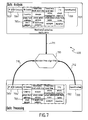
- the data analysis and machine learning engine 400 comprises a decision tree algorithm which is generated in a first step 711 and applied in a second step 710.
- identified visits dataset 701 are analyzed in order to generate an algorithm.
- the visits dataset 701 comprises a plurality of visit records from the databases 303, 304 and 305.
- Each visit record comprises a source IP record 703, an identity of a candidate visiting company 704, a detailed visit record 705 and a score 700.
- the score 700 is also referred to as a classification, i.e. a quantification of the level of confidence that a source IP address belongs to the recorded candidate visiting company.
- the detailed visit record 705 comprises a plurality of information about the visit.
- the detailed visit record 705 comprises:
- the source IP addresses 703 are retrieved from the IP database 303, the identifiers 704 of the visiting companies are retrieved from the company database 304 and the visit details 705 are retrieved from the cookie database 305.
- the visits dataset 701 are used as a data sample in order to retrieve data schemes, or patterns for elaborating a classification algorithm.
- a data scientist analyses the identified visits data in order to build a decision tree algorithm 713 for classifying the associations of source IP addresses and identities of candidate visiting companies.
- a decision tree is a predictive model which maps observations about an item to conclusions about the item's target value.
- the decision tree algorithm 713 is a model that predicts the value of a target variable, i.e. the score 700 given to an association of the source IP address to an identifier of a company, based on several input variables, i.e. the content of the detailed visit record 705.
- the decision tree algorithm 713 comprises edges 900, 901, 902 and 903 to children for each of the possible values of an input variable, for example the input variable 920.
- the input variable 920 represents timestamp possible values.
- Each leaf represents a value 905, 906, 907 and 908 of the target variable given the values of the input variables represented by the path from the root to the leaf.
- Each leaf of the tree is labeled with a class or a probability distribution 909, 910, 911, 912 over the classes.
- the data analysis and machine learning engine 400 is configured to apply to incoming visit records 702 the decision tree algorithm 713 which has been defined in the first step.
- Incoming visit records 702 are retrieved from the databases 303, 304 and 305. These visit records 702 are scored by the decision tree algorithm 713, as represented by the arrow 712, and the calculated score 700 is further recorded in the cookie database 305.
- a source IP address 800 is unknown from the database 303.
- the record of the visits details 705 recorded in association with the source IP address is analyzed by the algorithm.
- the algorithm determines a first result 802 in which the source IP address is an address belonging to a company for business to business purpose, with a score 801 associated to the result 802.
- the algorithm determines a second result 803 in which the source IP address is not an address belonging to any company, with a score 803 associated to the result 804.
- the algorithm selects between the first result 802 and the second result 803 as a function of the timestamp.
- FIG. 9 illustrates the decision tree algorithm 713 defined as described with reference to Figure 7 .
- An unknown IP address 904 is analyzed, and the decision tree algorithm 713 associates the IP address to different candidate visiting companies as follows:
- the scores are recorded and the identifier of the company having the best score, i.e. in this example Company A, is saved in association with the source IP address 904.
- a source IP address from which a visiting communication device visits a monitored website out of office hours is not a source IP address of a company. Therefore, the score associated to the association between a candidate company and the source IP address is low.
- Figure 6 illustrates a computing device 601 which can be used for implementing any of the following: visiting communication devices, data analysis and machine learning engine 400, web activity monitoring device 300, company ID module 301 etc.
- the computing device 601 comprises a data repository 602 connected to a processing unit 603 and to a communication interface 607.
- the computing device 601 also comprises an input device 604, an output device 605 and an analog-to-digital and/or digital-to-analog converter 606.
- the input device 604 is a mouse, a joystick, a touch screen, a voice recorder etc.
- the output device 605 is a display device such as a two-dimensional screen or a three-dimensional screen.
- the output device 605 is a loudspeaker, or a Braille computer display, speech synthesizer etc.
- the communication interface 607 is connected to other devices and/or to the internet in various possible manners, in a wired manner and/or in a wireless manner, e.g. Wifi, Bluetooth, etc.
- the visiting communication devices hereinabove described may any of the following: laptops, personal computers, digital tablets, smartphones, etc.
- the invention may be implemented by means of hardware as well as software.
- the same item of hardware may represent several modules.
- the visiting communication devices, data analysis and machine learning engine 400, web activity monitoring device 300, Company ID module 301 described hereinabove may be implemented through the use of dedicated hardware as well as hardware capable of executing software in association with appropriate software.
- the corresponding functions may be provided by a single dedicated processor, by a single shared processor, or by a plurality of individual processors, some of which may be shared.
- processor or “controller” should not be construed to refer exclusively to hardware capable of executing software, and may implicitly include, without limitation, central processing unit (CPU), digital signal processor (DSP) hardware, network processor, application specific integrated circuit (ASIC), field programmable gate array (FPGA), read-only memory (ROM) for storing software, random access memory (RAM), and non-volatile storage. Other hardware, conventional and/or custom, may also be included.
- CPU central processing unit
- DSP digital signal processor
- ASIC application specific integrated circuit
- FPGA field programmable gate array
- ROM read-only memory
- RAM random access memory
- non-volatile storage Other hardware, conventional and/or custom, may also be included.
- the visiting communication devices, data analysis and machine learning engine 400, web activity monitoring device 300, Company ID module 301 described hereinabove may be implemented in a unitary manner or in a distributed manner.
Landscapes
- Engineering & Computer Science (AREA)
- Theoretical Computer Science (AREA)
- Business, Economics & Management (AREA)
- General Engineering & Computer Science (AREA)
- Computer Networks & Wireless Communication (AREA)
- Signal Processing (AREA)
- Physics & Mathematics (AREA)
- General Physics & Mathematics (AREA)
- Finance (AREA)
- Strategic Management (AREA)
- Development Economics (AREA)
- Accounting & Taxation (AREA)
- Data Mining & Analysis (AREA)
- Entrepreneurship & Innovation (AREA)
- Databases & Information Systems (AREA)
- Computer Hardware Design (AREA)
- General Business, Economics & Management (AREA)
- Marketing (AREA)
- Economics (AREA)
- Game Theory and Decision Science (AREA)
- Quality & Reliability (AREA)
- Environmental & Geological Engineering (AREA)
- Information Transfer Between Computers (AREA)
Priority Applications (2)
| Application Number | Priority Date | Filing Date | Title |
|---|---|---|---|
| EP15306452.2A EP3144827A1 (fr) | 2015-09-17 | 2015-09-17 | Dispositif d'identification d'organisations et de surveillance de l'activité d'un site web d'une organisation à partir de journaux de visite |
| US15/265,943 US20170085450A1 (en) | 2015-09-17 | 2016-09-15 | Device for Identifying Organizations and Monitoring Organization's Website Activity from Visit Logs |
Applications Claiming Priority (1)
| Application Number | Priority Date | Filing Date | Title |
|---|---|---|---|
| EP15306452.2A EP3144827A1 (fr) | 2015-09-17 | 2015-09-17 | Dispositif d'identification d'organisations et de surveillance de l'activité d'un site web d'une organisation à partir de journaux de visite |
Publications (1)
| Publication Number | Publication Date |
|---|---|
| EP3144827A1 true EP3144827A1 (fr) | 2017-03-22 |
Family
ID=54150362
Family Applications (1)
| Application Number | Title | Priority Date | Filing Date |
|---|---|---|---|
| EP15306452.2A Withdrawn EP3144827A1 (fr) | 2015-09-17 | 2015-09-17 | Dispositif d'identification d'organisations et de surveillance de l'activité d'un site web d'une organisation à partir de journaux de visite |
Country Status (2)
| Country | Link |
|---|---|
| US (1) | US20170085450A1 (fr) |
| EP (1) | EP3144827A1 (fr) |
Cited By (1)
| Publication number | Priority date | Publication date | Assignee | Title |
|---|---|---|---|---|
| CN109688210A (zh) * | 2018-12-14 | 2019-04-26 | 平安城市建设科技(深圳)有限公司 | 追踪用户信息的方法、装置、服务器及存储介质 |
Families Citing this family (2)
| Publication number | Priority date | Publication date | Assignee | Title |
|---|---|---|---|---|
| CN113239308B (zh) * | 2021-05-26 | 2023-07-18 | 杭州安恒信息技术股份有限公司 | 一种页面访问方法、装置、设备及存储介质 |
| CN114465829B (zh) * | 2022-04-12 | 2022-10-28 | 深圳竹云科技股份有限公司 | 访问时间管理方法、装置、电子设备及存储介质 |
Citations (3)
| Publication number | Priority date | Publication date | Assignee | Title |
|---|---|---|---|---|
| WO2003010685A1 (fr) * | 2001-07-24 | 2003-02-06 | Interquest Oy | Procede d'analyse de l'ecoulement de trafic |
| US20040225687A1 (en) * | 2003-05-07 | 2004-11-11 | Magnus Larsson | Method, device and computer program product for identifying visitors of websites |
| US20110106920A1 (en) | 2009-11-02 | 2011-05-05 | Demandbase, Inc. | Mapping Network Addresses to Organizations |
Family Cites Families (4)
| Publication number | Priority date | Publication date | Assignee | Title |
|---|---|---|---|---|
| US7461120B1 (en) * | 2002-07-09 | 2008-12-02 | Vignette Corporation | Method and system for identifying a visitor at a website server by requesting additional characteristic of a visitor computer from a visitor server |
| US10380634B2 (en) * | 2008-11-22 | 2019-08-13 | Callidus Software, Inc. | Intent inference of website visitors and sales leads package generation |
| US8688806B2 (en) * | 2010-06-11 | 2014-04-01 | Tellabs Operations, Inc. | Procedure, apparatus, system, and computer program for collecting data used for analytics |
| US8898290B2 (en) * | 2011-05-11 | 2014-11-25 | Google Inc. | Personally identifiable information independent utilization of analytics data |
-
2015
- 2015-09-17 EP EP15306452.2A patent/EP3144827A1/fr not_active Withdrawn
-
2016
- 2016-09-15 US US15/265,943 patent/US20170085450A1/en not_active Abandoned
Patent Citations (3)
| Publication number | Priority date | Publication date | Assignee | Title |
|---|---|---|---|---|
| WO2003010685A1 (fr) * | 2001-07-24 | 2003-02-06 | Interquest Oy | Procede d'analyse de l'ecoulement de trafic |
| US20040225687A1 (en) * | 2003-05-07 | 2004-11-11 | Magnus Larsson | Method, device and computer program product for identifying visitors of websites |
| US20110106920A1 (en) | 2009-11-02 | 2011-05-05 | Demandbase, Inc. | Mapping Network Addresses to Organizations |
Cited By (1)
| Publication number | Priority date | Publication date | Assignee | Title |
|---|---|---|---|---|
| CN109688210A (zh) * | 2018-12-14 | 2019-04-26 | 平安城市建设科技(深圳)有限公司 | 追踪用户信息的方法、装置、服务器及存储介质 |
Also Published As
| Publication number | Publication date |
|---|---|
| US20170085450A1 (en) | 2017-03-23 |
Similar Documents
| Publication | Publication Date | Title |
|---|---|---|
| US12223525B2 (en) | System and method of providing a platform for managing data content campaign on social networks | |
| US10841323B2 (en) | Detecting robotic internet activity across domains utilizing one-class and domain adaptation machine-learning models | |
| EP3417405B1 (fr) | Techniques non intrusives permettant de découvrir et d'utiliser des relations organisationnelles | |
| US10748157B1 (en) | Method and system for determining levels of search sophistication for users of a customer self-help system to personalize a content search user experience provided to the users and to increase a likelihood of user satisfaction with the search experience | |
| US11900320B2 (en) | Utilizing machine learning models for identifying a subject of a query, a context for the subject, and a workflow | |
| US20200177608A1 (en) | Ontology Based Persistent Attack Campaign Detection | |
| CN113924563A (zh) | 通过网站跟踪识别因特网服务提供商的机器学习分类器 | |
| US12321958B2 (en) | Utilizing a knowledge graph to implement a digital survey system | |
| US20140101134A1 (en) | System and method for iterative analysis of information content | |
| JP2019510320A (ja) | 問題予測方法及びシステム | |
| US20150161555A1 (en) | Scheduling tasks to operators | |
| US11625450B1 (en) | Automated predictive virtual assistant intervention in real time | |
| US20160358259A1 (en) | Aggregating account information obtained from multiple institutions | |
| US12284199B2 (en) | Method and computing device for detection of malicious web resource | |
| US20150278748A1 (en) | Routing trouble tickets to proxy subject matter experts | |
| SG11202112145PA (en) | Method and system for malware or cybercriminal infrastructure detection | |
| Okewu et al. | Design of a learning analytics system for academic advising in Nigerian universities | |
| Abbasi et al. | A social network system for analyzing publication activities of researchers | |
| US20170085450A1 (en) | Device for Identifying Organizations and Monitoring Organization's Website Activity from Visit Logs | |
| JP7473723B1 (ja) | 情報処理装置、情報処理方法、およびプログラム | |
| US20230319062A1 (en) | System and method for predicting investigation queries based on prior investigations | |
| US20250284893A1 (en) | Machine learning systems for virtual assistants | |
| US20190286671A1 (en) | Algorithmic computation of entity information from ip address | |
| US12307495B2 (en) | System for extracting and comparing information accessible by queries from merchant computer servers | |
| WO2020185565A1 (fr) | Caractérisation d'utilisation de dispositif au niveau d'opérateurs de réseau |
Legal Events
| Date | Code | Title | Description |
|---|---|---|---|
| PUAI | Public reference made under article 153(3) epc to a published international application that has entered the european phase |
Free format text: ORIGINAL CODE: 0009012 |
|
| AK | Designated contracting states |
Kind code of ref document: A1 Designated state(s): AL AT BE BG CH CY CZ DE DK EE ES FI FR GB GR HR HU IE IS IT LI LT LU LV MC MK MT NL NO PL PT RO RS SE SI SK SM TR |
|
| AX | Request for extension of the european patent |
Extension state: BA ME |
|
| 17P | Request for examination filed |
Effective date: 20170919 |
|
| RBV | Designated contracting states (corrected) |
Designated state(s): AL AT BE BG CH CY CZ DE DK EE ES FI FR GB GR HR HU IE IS IT LI LT LU LV MC MK MT NL NO PL PT RO RS SE SI SK SM TR |
|
| 17Q | First examination report despatched |
Effective date: 20180207 |
|
| STAA | Information on the status of an ep patent application or granted ep patent |
Free format text: STATUS: THE APPLICATION HAS BEEN WITHDRAWN |
|
| 18W | Application withdrawn |
Effective date: 20180504 |