EP3144860A2 - Subjektschätzungssystem zur schätzung des subjekts eines dialogs - Google Patents
Subjektschätzungssystem zur schätzung des subjekts eines dialogs Download PDFInfo
- Publication number
- EP3144860A2 EP3144860A2 EP16187517.4A EP16187517A EP3144860A2 EP 3144860 A2 EP3144860 A2 EP 3144860A2 EP 16187517 A EP16187517 A EP 16187517A EP 3144860 A2 EP3144860 A2 EP 3144860A2
- Authority
- EP
- European Patent Office
- Prior art keywords
- topic
- dependent
- dialog
- word
- convolution
- Prior art date
- Legal status (The legal status is an assumption and is not a legal conclusion. Google has not performed a legal analysis and makes no representation as to the accuracy of the status listed.)
- Withdrawn
Links
Images







Classifications
-
- G—PHYSICS
- G06—COMPUTING OR CALCULATING; COUNTING
- G06V—IMAGE OR VIDEO RECOGNITION OR UNDERSTANDING
- G06V30/00—Character recognition; Recognising digital ink; Document-oriented image-based pattern recognition
- G06V30/10—Character recognition
- G06V30/32—Digital ink
- G06V30/36—Matching; Classification
-
- G—PHYSICS
- G10—MUSICAL INSTRUMENTS; ACOUSTICS
- G10L—SPEECH ANALYSIS TECHNIQUES OR SPEECH SYNTHESIS; SPEECH RECOGNITION; SPEECH OR VOICE PROCESSING TECHNIQUES; SPEECH OR AUDIO CODING OR DECODING
- G10L15/00—Speech recognition
- G10L15/08—Speech classification or search
- G10L15/16—Speech classification or search using artificial neural networks
-
- G—PHYSICS
- G06—COMPUTING OR CALCULATING; COUNTING
- G06F—ELECTRIC DIGITAL DATA PROCESSING
- G06F40/00—Handling natural language data
- G06F40/30—Semantic analysis
-
- G—PHYSICS
- G06—COMPUTING OR CALCULATING; COUNTING
- G06N—COMPUTING ARRANGEMENTS BASED ON SPECIFIC COMPUTATIONAL MODELS
- G06N3/00—Computing arrangements based on biological models
- G06N3/02—Neural networks
- G06N3/04—Architecture, e.g. interconnection topology
- G06N3/045—Combinations of networks
-
- G—PHYSICS
- G06—COMPUTING OR CALCULATING; COUNTING
- G06N—COMPUTING ARRANGEMENTS BASED ON SPECIFIC COMPUTATIONAL MODELS
- G06N3/00—Computing arrangements based on biological models
- G06N3/02—Neural networks
- G06N3/04—Architecture, e.g. interconnection topology
- G06N3/0464—Convolutional networks [CNN, ConvNet]
-
- G—PHYSICS
- G06—COMPUTING OR CALCULATING; COUNTING
- G06N—COMPUTING ARRANGEMENTS BASED ON SPECIFIC COMPUTATIONAL MODELS
- G06N3/00—Computing arrangements based on biological models
- G06N3/02—Neural networks
- G06N3/08—Learning methods
- G06N3/0895—Weakly supervised learning, e.g. semi-supervised or self-supervised learning
-
- G—PHYSICS
- G06—COMPUTING OR CALCULATING; COUNTING
- G06N—COMPUTING ARRANGEMENTS BASED ON SPECIFIC COMPUTATIONAL MODELS
- G06N3/00—Computing arrangements based on biological models
- G06N3/02—Neural networks
- G06N3/08—Learning methods
- G06N3/09—Supervised learning
-
- G—PHYSICS
- G06—COMPUTING OR CALCULATING; COUNTING
- G06V—IMAGE OR VIDEO RECOGNITION OR UNDERSTANDING
- G06V10/00—Arrangements for image or video recognition or understanding
- G06V10/40—Extraction of image or video features
- G06V10/44—Local feature extraction by analysis of parts of the pattern, e.g. by detecting edges, contours, loops, corners, strokes or intersections; Connectivity analysis, e.g. of connected components
- G06V10/443—Local feature extraction by analysis of parts of the pattern, e.g. by detecting edges, contours, loops, corners, strokes or intersections; Connectivity analysis, e.g. of connected components by matching or filtering
- G06V10/449—Biologically inspired filters, e.g. difference of Gaussians [DoG] or Gabor filters
- G06V10/451—Biologically inspired filters, e.g. difference of Gaussians [DoG] or Gabor filters with interaction between the filter responses, e.g. cortical complex cells
- G06V10/454—Integrating the filters into a hierarchical structure, e.g. convolutional neural networks [CNN]
-
- G—PHYSICS
- G10—MUSICAL INSTRUMENTS; ACOUSTICS
- G10L—SPEECH ANALYSIS TECHNIQUES OR SPEECH SYNTHESIS; SPEECH RECOGNITION; SPEECH OR VOICE PROCESSING TECHNIQUES; SPEECH OR AUDIO CODING OR DECODING
- G10L15/00—Speech recognition
- G10L15/06—Creation of reference templates; Training of speech recognition systems, e.g. adaptation to the characteristics of the speaker's voice
- G10L15/063—Training
-
- G—PHYSICS
- G06—COMPUTING OR CALCULATING; COUNTING
- G06V—IMAGE OR VIDEO RECOGNITION OR UNDERSTANDING
- G06V30/00—Character recognition; Recognising digital ink; Document-oriented image-based pattern recognition
- G06V30/10—Character recognition
- G06V30/28—Character recognition specially adapted to the type of the alphabet, e.g. Latin alphabet
- G06V30/287—Character recognition specially adapted to the type of the alphabet, e.g. Latin alphabet of Kanji, Hiragana or Katakana characters
-
- G—PHYSICS
- G10—MUSICAL INSTRUMENTS; ACOUSTICS
- G10L—SPEECH ANALYSIS TECHNIQUES OR SPEECH SYNTHESIS; SPEECH RECOGNITION; SPEECH OR VOICE PROCESSING TECHNIQUES; SPEECH OR AUDIO CODING OR DECODING
- G10L15/00—Speech recognition
- G10L15/06—Creation of reference templates; Training of speech recognition systems, e.g. adaptation to the characteristics of the speaker's voice
- G10L15/063—Training
- G10L2015/0635—Training updating or merging of old and new templates; Mean values; Weighting
Definitions
- the present disclosure relates to a subject estimation system, a subject estimation method, and a non-transitory recording medium having a computer program stored thereon, the system, method, and program estimating a subject of a dialog.
- Patent Document 1 discloses a typical method for pattern recognition using a convolutional neural network.
- Non-Patent Document 1 discloses a method for classifying a sentence by using a convolutional neural network made to perform learning using a known data set.
- One non-limiting and exemplary embodiment provides a subject estimation system, a subject estimation method, and a non-transitory recording medium having a computer program stored thereon, the system, method, and program making it possible to more accurately estimate a subject of a dialog even when the amount of learning data is not sufficient.
- the techniques disclosed here feature a subject estimation system for estimating a subject label of a dialog.
- the subject estimation system includes: a processor; and a memory having a computer program stored thereon.
- the computer program causes the processor to execute a convolution neural network.
- the convolution neural network includes: a convolutional layer including one or more topic-dependent convolutional layers and one topic-independent convolutional layer, each of the one or more topic-dependent convolutional layers performing, on an input of a word-string vector sequence corresponding to dialog text transcribed from a dialog, a convolution operation dependent on a topic, and the topic-independent convolutional layer performing, on the input of the word-string vector sequence, a convolution operation not dependent on the topic; a pooling layer that performs pooling processing on outputs of the convolutional layer; and a fully connected layer that performs full connection processing on outputs of the pooling layer.
- a dialog-subject estimation task envisaged in the present disclosure is a task for estimating what is the subject of a dialog, which is a natural language communication basically between two parties regardless of whether they are humans or machines.
- a word string in a dialog is input, and what is the subject in the dialog is estimated using, as one unit, a segment of the word string recognized as being relevant to one topic.
- learning of the convolutional neural network is performed using learning data, and evaluation thereof is performed using evaluation data.
- a finite number of topics are defined, and a finite number of subjects desired to be obtained as outputs are also defined. Also, what is a topic is given to the subject estimation system in conjunction with a word string in a segment.
- a subject estimation system for estimating a subject label of a dialog.
- the subject estimation system includes: a processor; and a memory having a computer program stored thereon, the computer program causes the processor to execute a convolution neural network.
- the convolution neural network includes: a convolutional layer including one or more topic-dependent convolutional layers and one topic-independent convolutional layer, each of the one or more topic-dependent convolutional layers performing, on an input of a word-string vector sequence corresponding to dialog text transcribed from a dialog, a convolution operation dependent on a topic, and the topic-independent convolutional layer performing, on the input of the word-string vector sequence, a convolution operation not dependent on the topic; a pooling layer that performs pooling processing on outputs of the convolutional layer; and a fully connected layer that performs full connection processing on outputs of the pooling layer.
- one topic-independent convolutional layer that is learned for each topic and that has high accuracy when the amount of learning data is large and one or more topic-dependent convolutional layers that are learned independently of a topic and that have high accuracy when the amount of learning data is small are integrated together at the higher tiers, thus providing subject estimation performance that is high even when the amount of learning data is small.
- the convolutional neural network may estimate a subject label of the dialog with respect to the input by solving the input as a two-class classification problem.
- each of the one or more topic-dependent convolutional layers may be made to learn first weights so as to perform a corresponding convolution operation dependent on each topic on which the topic-dependent convolutional layer is dependent, and the topic-independent convolutional layer may be made to learn second weights so as to perform a convolution operation not dependent on the topic on which the topic-dependent convolutional layer is dependent.
- each of the one or more topic-dependent convolutional layers may be made to learn the first weights so as to perform a convolution operation dependent on the topic on which the topic-dependent convolutional layer is dependent; and in response to an input of the word-string vector sequence corresponding to the learning dialog text, the topic-independent convolutional layer may be made to learn the second weights so as to perform a convolution operation not dependent on the topic on which the topic-dependent convolutional layer is dependent.
- a subject estimation method is directed to a computer-implemented method for estimating a subject label of a dialog.
- the method causes a processor to execute a convolution neural network.
- the convolution neural network includes: performing, on an input of a word-string vector sequence corresponding to dialog text transcribed from a dialog, topic-dependent convolution processing including a convolution operation dependent on a topic; performing, on the input, topic-independent convolution processing including a convolution operation not dependent on the topic; performing pooling processing on outputs of the topic-dependent convolution processing and outputs of the topic-independent convolution processing; and performing full connection processing on outputs of the pooling processing.
- a convolution operation between the word-string vector sequence and first weights (A) triggered by a specific word indicating a topic on which the topic-dependent convolution processing is dependent may be performed.
- a convolution operation between the word-string vector sequence and second weights triggered by a word indicating a topic other than the topic on which the topic-dependent convolution processing is dependent may be performed.
- a computational operation for extracting maximum values in a time direction from the outputs of the topic-dependent convolution processing and the outputs of the topic-independent convolution processing may be performed.
- a result of the weighted addition may be represented with a probability distribution to perform the full connection processing.
- the subject estimation method may further include estimating a subject label of the dialog by comparing the probability distribution of the outputs of the pooling processing with a threshold, and outputting the subject label.
- the subject estimation method may further include: inputting the word-string vector sequence corresponding to the dialog text.
- the dialog text may be text transcribed from a dialog in a time series, and the word-string vector sequence may be obtained by calculating vectors of words in a word string included in the dialog text by using a predetermined method.
- the subject estimation method may further include: making the convolutional neural network learn the first weights so as to perform a convolution operation dependent on a topic on which the topic-dependent convolution processing is dependent, by using, as learning data, learning dialog text that is transcribed from a dialog and in which time-series text of the dialog is pre-divided into segments for respective topics and labels for the corresponding topics are pre-given to the respective divided segments; and making the convolutional neural network learn the second weights so as to perform, in the topic-independent convolution processing, a convolution operation not dependent on the topic on which the topic-dependent convolution processing is dependent, by using the learning dialog text.
- the convolutional neural network may be made to learn the first weights by using a word-string vector sequence that is included in word-string vector sequences corresponding to the learning dialog text and that is relevant to the topic on which the topic-dependent convolution processing is dependent; and in the learning of the second weights, the convolutional neural network may be made to learn the second weights by using a word-string vector sequence that is included in the word-string vector sequences corresponding to the learning dialog text and that is relevant to a topic other than the topic on which the topic-dependent convolution processing is dependent.
- dialog text that is relevant to the first topic and is obtained through web searching may be used as semi-supervised data of the learning data to perform the learning of the first weights and the learning of the second weights.
- the present disclosure realized as a device, but also the present disclosure can be realized as an integrated circuit having processing means included in such a device, can be realized as a method for implementing the processing means included in the device as processes, can be realized a program for causing a computer to execute the processes, and can be realized as information, data, or signals indicating the program.
- the program, information, data, and signals may be delivered via recording media, such as a compact disc read-only memory (CD-ROM), or communication media, such as the Internet.
- CD-ROM compact disc read-only memory
- a description will be given of a subject estimation system that has a convolutional neural network and that estimates a subject label of a dialog.
- the architecture and so on of a convolutional neural network utilized by a subject estimation system in a comparative example is first described below with reference to FIG. 1 , and then the architecture and so on of a convolutional neural network utilized by a subject estimation system in the present embodiment is described with reference to FIG. 3 .
- FIG. 1 is a diagram illustrating the architecture of a convolutional neural network 80 utilized by the subject estimation system in the comparative example.
- the convolutional neural network 80 illustrated in FIG. 1 includes input features 81, a convolutional layer 82, a pooling layer 83, and a fully connected layer 84.
- the input features 81 converts an input word string into a vector sequence by using a predetermined method.
- the convolutional layer 82 clips a vector sequence of one to several adjacent words and then performs a convolution operation by using a learned weighting matrix.
- the pooling layer 83 performs a computational operation for determining maximum values in a time direction.
- the fully connected layer 84 multiplies outputs of the pooling layer 83 for respective output elements of the fully connected layer 84 by a connection weight, adds up the resulting outputs, and lastly converts the result of the addition into a probability distribution by using a softmax function.
- a weight on a portion that is included in a word string in a dialog and that is highly relevant to the subject thereof increases through learning using learning data, thus making it possible to estimate a specific subject when a specific linguistic expression is included.
- FIG. 1 illustrates two types of time window, that is, a time window for one word and a time window for two words. These time windows are shifted along the time direction from the beginning to the end of a vector sequence obtained by converting the input word string, and a convolution operation and nonlinear processing are performed for each time window to obtain output values. Output elements that hold these output values are represented by squares denoted by thick lines in the convolutional layer 82.
- a convolution operation utilizing the convolutional neural network 80 is also referred to as "filter processing".
- the number of output elements in the convolutional layer 82 is determined by multiplication of the total number of filters by the number of shifts of the time windows.
- the output elements in the fully connected layer 84 correspond to all subject labels, respectively, and thus the number of output elements in the fully connected layer 84 is determined by the number of all subject labels. Accordingly, in the subject estimation system utilizing the convolutional neural network 80 in the comparative example, a problem (subject estimation) is solved as a multi-class classification problem.
- FIG. 2 is a diagram for explaining that the convolutional neural network 80 in the comparative example does not support a multi-label output.
- FIGS. 2(a) and 2(b) illustrate a case in which the same word "rate” exists in word strings in dialogs, and the subject estimation system utilizing the convolutional neural network 80 estimates the subjects of dialog sentences having different topics. More specifcally, FIG. 2(a) illustrates a subject label "pricerange” estimated by the subject estimation system utilizing the convolutional neural network 80 in the comparative example, when the topic is "accommodation”, and the word string in the dialog is "The room rate is twenty dollars.” FIG. 2(b) illustrates a subject label "pricerange” estimated by the subject estimation system utilizing the convolutional neural network 80 in the comparative example, when the topic is "attraction”, and the word string in the dialog is "So kids have to pay the same rate as adults.”
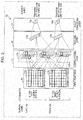
- FIG. 3 is a diagram illustrating the architecture of a convolutional neural network utilized by the subject estimation system in the present embodiment.
- a convolutional neural network 10 illustrated in FIG. 3 includes input features 11, a convolutional layer 12, a pooling layer 13, and a fully connected layer 14. Although details are described below, depending on a topic, the input features 11 is connected to one of topic-dependent convolutional layers and to a topic-independent convolutional layer, the convolutional layers being included in the convolutional layer 12. Also, depending on the topic, the pooling layer 13 is connected to one of the topic-dependent convolutional layers and to the topic-independent convolutional layer. Additionally, the fully connected layer 14 is connected to the pooling layer 13, depending on the topic.
- the input features 11 converts the input word string into a vector sequence by using a predetermined method.
- Vector sequences obtained by converting a word string by a predetermined method may be input to the input features 11. That is, a word-string vector sequence corresponding to dialog text transcribed from a dialog may be input to the input features 11. More specifically, a word-string vector sequence obtained (converted) by calculating vectors of words in a word string included in dialog text by using a predetermined method, the dialog text being text transcribed from a dialog in a time series, may be input to the input features 11.
- the input features 11 is connected to one of the topic-dependent convolutional layers and to the topic-independent convolutional layer (described below), included in the convolutional layer 12, depending on the topic of a vector sequence of one to several adjustment words clipped using time windows, the vector sequence being included in the input vector sequence.
- a word-string vector sequence 11a corresponding to dialog text "if you take a dorm bed per" transcribed from a dialog regarding topic #a is first input to the input features 11. Thereafter, a word-string vector sequence 11b corresponding to dialog text "if you want to buy a special " transcribed from a dialog regarding topic #b is input to the input features 11.
- frames denoted by thick lines in the input features 11 in FIG. 3 are time windows.
- FIG. 3 illustrates two types of time window, that is, a time window for one word and a time window for two words, as in FIG. 1 .
- the convolutional layer 12 is constituted by one or more topic-dependent convolutional layers that each perform, on an input of a word-string vector sequence, a convolution operation dependent on a topic and one topic-independent convolutional layer that performs, on the input of the word-string vector sequence, a convolution operation not dependent on the topic.
- Each topic-dependent convolutional layer performs a convolution operation between the word-string vector sequence and first weights triggered by a specific word indicating the topic on which the topic-dependent convolutional layer is dependent.
- Each topic-independent convolutional layer also performs a convolution operation between the word-string vector sequence and second weights triggered by a word indicating a topic other than the topic on which the topic-dependent convolutional layer is dependent (i.e., a word indicating a topic not dependent on the topic on which the topic-dependent convolutional layer is dependent).
- the convolutional layer 12 has topic-dependent convolutional layers associated with topics and a topic-independent convolutional layer that is not associated with the topics.
- the input features 11 is connected to one of the topic-dependent convolutional layers and to the topic-independent convolutional layer, depending on the topic.
- topic #a there are two types of topic, that is, topic #a and topic #b. It goes without saying that the number of types of topic is not limited to two.
- the convolutional layer 12 is constituted by three parts, that is, a topic-dependent convolutional layer 12a that performs a convolution operation dependent on topic #a, a topic-dependent convolutional layer 12b that performs a convolution operation dependent on topic #b, and a topic-independent convolutional layer 12z that performs a convolution operation not dependent on these topics.
- the topic-dependent convolutional layer 12a performs a convolution operation between a vector sequence of one to several adjacent words, the vector sequence being clipped from the word-string vector sequence 11a, and a learned weighting matrix (the first weights) triggered by a specific word indicating topic #a.
- the topic-dependent convolutional layer 12b performs a convolution operation between a vector sequence of one to several adjacent words, the vector sequence being clipped from the word-string vector sequence 11 b, and the learned weighting matrix (the first weights) triggered by a specific word indicating topic #b.
- the topic-independent convolutional layer 12z performs a convolution operation between the vector sequence of one to several adjacent words, the vector sequence being clipped from the word-string vector sequence 11a, and a learned weighting matrix (the second weights) triggered by a word indicating a topic other than topics #a and #b and a convolution operation between the vector sequence of one to several adjacent words, the vector sequence being clipped from the word-string vector sequence 11b, and the learned weighting matrix (the second weights).
- the pooling layer 13 performs pooling processing on outputs of the convolutional layer 12. More specifically, the pooling layer 13 performs a computational operation for extracting maximum values in the time direction from outputs of the topic-dependent convolutional layers and outputs of the topic-independent convolutional layer.
- a pooling layer 13a is connected to the topic-dependent convolutional layer 12a and the topic-independent convolutional layer 12z.
- the pooling layer 13a performs a computational operation for extracting maximum values in the time direction from the outputs of the topic-dependent convolutional layer 12a and the topic-independent convolutional layer 12z.
- a pooling layer 13b is connected to the topic-dependent convolutional layer 12b and the topic-independent convolutional layer 12z.
- the pooling layer 13b performs a computational operation for extracting maximum values in the time direction from the outputs of the topic-dependent convolutional layer 12b and the topic-independent convolutional layer 12z.
- the fully connected layer 14 performs full connection processing on outputs of the pooling layer 13. More specifically, the fully connected layer 14 performs weighted addition on the outputs of the pooling layer 13, the weighted addition using a connection weight, and then converts the result of the addition into a probability distribution. In the present embodiment, the fully connected layer 14 multiplies the outputs of the pooling layer 13 for the respective output elements by a connection weight, adds up the resulting outputs, and lastly represents the results of the addition with probability distributions by using the softmax function.
- the pooling layer 13a and a fully connected layer 14a are connected to each other.
- the fully connected layer 14a multiplies outputs of the pooling layer 13a by a connection weight, adds up the resulting outputs, and lastly represents the result of the addition with a probability distribution by using the softmax function.
- the word-string vector sequence 11b is input to the input features 11, the pooling layer 13b and a fully connected layer 14b are connected to each other.
- the fully connected layer 14b multiplies outputs of the pooling layer 13b by a connection weight, adds up the resulting outputs, and lastly represents the result of the addition with a probability distribution by using the softmax function.
- the fully connected layer 14 compares the probability distributions in the outputs of the pooling layer 13 with a threshold to estimate a subject label of the dialog and outputs the estimated subject label.
- the convolutional neural network 10 estimates a dialog subject label for the input.
- the output elements in the fully connected layer 84 in the comparative example described above and illustrated in FIG. 1 correspond to all subject labels, respectively, to solve (learn) a problem as a multi-class classification problem.
- the subject estimation system utilizing the convolutional neural network 10 in the present embodiment has topic-dependent convolutional layers that are specific to respective subjects (topics) and a topic-independent convolutional layer that is not specific to the topics, as described above. Accordingly, a problem with respect to the subject label "pricerange" can be solved (learned) as a two-class classification problem as to whether the subject label is pricerange or not pricerange (NOT pricerange), as illustrated in FIG. 3 .
- dialog text for learning (herein referred to as "learning dialog text") is used as learning data (training data).
- This learning dialog text is text that was transcribed from a dialog and in which time-series text of the dialog is pre-divided into segments for respective topics and labels for the corresponding topics are pre-given to the respective divided segments.
- a data set in Dialog State Tracking Challenge 4 (DSTC4) may be used as the learning dialog text.
- each of the one or more topic-dependent convolutional layers 12a and 12b is made to learn the first weights so as to perform a convolution operation dependent on each topic on which the topic-dependent convolutional layer is dependent
- the topic-independent convolutional layer 12z is made to learn the second weights so as to perform a convolution operation not dependent on the topic on which the topic-dependent convolutional layer is dependent.
- each of the one or more topic-dependent convolutional layers learns the first weights so as to perform a convolution operation dependent on the topic.
- the topic-independent convolutional layer 12z learns the second weights so as to perform a convolution operation not dependent on the topic on which the topic-dependent convolutional layer is dependent.
- the convolution weights (the first weights and the second weights) in the convolutional layer 12 and the connection weight in the fully connected layer 14 are learned based on a difference (error) between a desirable output and an actual output.
- Stochastic gradient descent (SGD) and so on are known as learning algorithms for performing learning based on a difference (error) between a desirable output and an actual output. Since the learning algorithm may be a known algorithm, a description thereof is not given herein.
- Such learning processing is performed on each of the topic-dependent convolutional layer 12a, the topic-dependent convolutional layer 12b, and the topic-independent convolutional layer 12z included in the convolutional layer 12.
- a connection is made to specific linguistic expressions depending on a topic, and the amount of dialog sentences for the topic on which each of the topic-dependent convolutional layer 12a and 12b is dependent, the dialog sentences being included in learning data, is limited.
- the amount of learning data becomes relatively small.
- the topic-independent convolutional layer 12z a connection is made to linguistic expressions not dependent on a topic, and thus the amount of learning data becomes relatively large.
- Both are configured so as to connect to each other at the subsequent stages (the pooling layer 13 and the fully connected layer 14), as illustrated in FIG. 3 .
- a balance is achieved through learning. That is, the connection weight for the topic-dependent convolutional layers 12a and 12b and the topic-independent convolutional layer 12z is adjusted for both a topic for which the amount of learning data is large and a topic for which the amount of learning data is small.
- the topic-dependent convolutional layer 12a or 12b and the topic-independent convolutional layer 12z are configured so as to connect to each other at the higher tiers (the pooling layer 13 and the fully connected layer 14), as illustrated in FIG. 3 , a problem as described above with reference to FIG. 2 does not occur. That is, the subject estimation system in the present embodiment including the convolutional neural network 10 can estimate a multi-domain dialog subject by using the convolutional neural network.
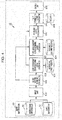
- FIG. 4 is a block diagram illustrating a functional configuration during discrimination in the subject estimation system in the present embodiment.
- the convolutional neural network 10 utilized by the subject estimation system is illustrated in a functional block diagram.
- the subject estimation system in the present embodiment illustrated in FIG. 4 includes an input unit 110, a word vector sequence controller 111, a topic-dependent convolutional layer calculator 121, a topic-independent convolutional layer calculator 123, a pooling layer calculator 131, a fully connected layer calculator 141, and an output unit 150.
- This subject estimation system further includes a storage unit 122 in which weights A (the first weights) are stored, a storage unit 124 in which weights Z (the second weights) are stored, and a storage unit 142 in which a weight f is stored.
- the input unit 110 and the word vector sequence controller 111 have the functional configuration of the above-described input features 11.
- the topic-dependent convolutional layer calculator 121, the storage unit 122, the topic-independent convolutional layer calculator 123, and the storage unit 124 have the functional configuration of the above-described convolutional layer 12.
- the pooling layer calculator 131 has the functional configuration of the above-described pooling layer 13, and the fully connected layer calculator 141 and the storage unit 142 have the functional configuration of the above-described fully connected layer 14.
- Input information 50 including word string information 51 and topic information 52 is input to the subject estimation system illustrated in FIG. 4 .
- the input unit 110 receives a word string from the word string information 51 and simultaneously receives a topic from the topic information 52.
- the word vector sequence controller 111 converts the word string into a vector sequence by using a predetermined method. For converting a word string into vectors, various methods, such as a method called bag-of-words and a method using compressed dimensions thereof, have been proposed, and any of those known methods may be used as the aforementioned predetermined method.
- the topic-dependent convolutional layer calculator 121 performs a convolution operation by using a word-string vector sequence and the weights A (the first weights).
- the number of weights A (the first weights) is equal to the total number of filters for the respective topics.
- the topic-independent convolutional layer calculator 123 performs a convolution operation by using a word-string vector sequence and the weights Z (the second weights).
- the number of weights Z (the second weight) is equal to the number of topic-independent filters.
- the pooling layer calculator 131 extracts maximum values, viewed in the direction direction, of outputs of the topic-dependent convolutional layer calculator 121 and the topic-independent convolutional layer calculator 123, the outputs corresponding to the respective filters.
- the fully connected layer calculator 141 multiplies outputs corresponding to the filters for respective output elements by the weight f, adds up the resulting outputs, and lastly represents the results of the addition with probability distributions by using the softmax function. For example, when the subjects of outputs are "pricerange” and "NOT pricerange", as in the example illustrated in FIG. 3 , the outputs of two elements are adjusted by the softmax function so that they are each 0 or more and the sum thereof is 1.
- the output unit 150 compares the result of the fully connected layer calculator 141 with a threshold (e.g., 0.5) and outputs a subject with which the probability distribution exceeds the threshold.
- a threshold e.g., 0.5
- FIG. 5 is a diagram illustrating one example of the hardware configuration of a computer needed to implement the subject estimation system.
- the computer that implements the subject estimation system includes a central processing unit (CPU) 1001, a memory 1002, an external storage device 1003, a network interface 1004, an output device 1006, and an input device 1007. These elements are connected through a bus.
- the CPU 1001 All computational operations in this subject estimation system are performed by the CPU 1001, and values (such as the weights) that need to be updated and programs are stored in the memory 1002.
- the network interface 1004 is used to access data on the Internet 1005 to externally receive learning data.
- the output device 1006 and the input device 1007 are also required as user interfaces.
- the input device 1007 serves as a user interface, including input buttons, a touch pad, or a touch panel display, and receives a user' operation.
- FIG. 6 is a flowchart illustrating operations in the subject estimation system during discrimination illustrated in FIG. 4 .
- the input unit 110 receives an input word string and a topic label (S101).
- the word vector sequence controller 111 performs calculation on individual words of the input word string to obtain a vector sequence of the words (a word string) by using a predetermined method (S102).
- the topic-dependent convolutional layer calculator 121 performs a convolution operation (a topic-dependent convolution operation) between the vector sequence of the words and the weights A (the first weights) stored in the storage unit 122 (S103).
- the topic-independent convolutional layer calculator 123 performs a convolution operation (a topic-independent convolution operation) between the vector sequence of the words and the weights Z (the second weights) stored in the storage unit 124 (S104).
- the pooling layer calculator 131 performs pooling processing for extracting maximum values of the respective filters from outputs of the topic-dependent convolutional layer calculator 121 and outputs of the topic-independent convolutional layer calculator 123 (S105).
- the fully connected layer calculator 141 performs full connection processing on outputs of the pooling layer calculator 131 (S106). More specifically, the fully connected layer calculator 141 assigns the weight f stored in the storage unit 122 to the outputs of the pooling layer calculator 131 and adds up the resulting outputs. After performing the weighted addition to all output labels, the fully connected layer calculator 141 represents the results thereof with probability distributions. Lastly, by comparing the probability distributions for the output labels with a threshold, the output unit 150 determines an output label (S107).
- the subject estimation system illustrated in FIG. 4 may perform the process in S103 and the process in S104 in parallel and integrate the results of the processes together at the subsequent stages. The same also applies to the processing during learning described below.
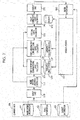
- FIG. 7 is a block diagram illustrating a functional configuration for learning in the subject estimation system in the present embodiment. Elements that are the same as or similar to those in FIG. 4 are denoted by the same reference numerals, and detailed descriptions thereof are not given.
- the subject estimation system during learning illustrated in FIG. 7 is implemented by a computer having a hardware configuration as described above and illustrated in FIG. 5 , as in the subject estimation system during discrimination illustrated in FIG. 4 .
- the functional configuration diagram during learning illustrated in FIG. 7 differs in learning data 60, an error determiner 160, and a weight updater 161.
- Word string information 61 and topic information 62 are input to the subject estimation system during learning as learning data (training data).
- the learning data 60 includes subject information 63 that corresponds to the word string information 51 and the topic information 52 input to the subject estimation system during learning and that is desirable as outputs.
- the error determiner 160 compares the probability distribution for the subject label output from the output unit 150 with a probability distribution when the probability of a desirable subject label obtained from the subject information 63 is set to 1.0 and the probability of other labels is set to 0.0 and outputs the difference between the probability distributions as an error.
- the weight updater 161 determines the respective amounts of update of the weights A (the first weights), the weights Z (the second weights), and the weight f, on the basis of the value of the error output from the error determiner 160, and then executes the update of the weights A, Z, and f.
- Such weight update is repeatedly executed on the entire learning data, while varying a learning coefficient.
- FIG. 8 is a flowchart illustrating operations in the subject estimation system during learning illustrated in FIG. 7 . Since the processing in S201 to S207 is analogous to the processing in S101 to S107 illustrated in FIG. 6 , a description thereof is not given hereinafter.
- the subject estimation system during learning estimates a probability distribution for a subject label on the basis of the input word string and the topic.
- the error determiner 160 obtains a desirable subject from the subject information 63, sets a desirable value (probability) of the probability distribution for the subject label, and calculates a difference between the set value and the estimated probability distribution for the subject label as an error (S208).
- the weight updater 161 updates the weights A (the first weights) used by the topic-dependent convolutional layer calculator 121, the weights Z (the first weights) used by the topic-independent convolutional layer calculator 123, and the weight f that is relevant to the current topic and that is used by the fully connected layer calculator 141 (S209).
- a finish determination is made as to whether or not the learning satisfies a preset finish condition (S210), and the learning is repeated until the finish condition is satisfied.
- the finish condition in the finish determination may be a condition that no error is addressed even when the update of the weights is performed or a condition that the amount of error reaches a threshold or smaller.
- the subject estimation system utilizing the convolutional neural network 10 in the present embodiment can more accurately estimate the subject of a dialog even when the amount of learning data is not sufficient.
- the subject estimation system can also estimate a multi-domain dialog subject.
- the convolutional layer 12 in the convolutional neural network 10 is constituted by the topic-dependent convolutional layers dependent on topics and the topic-independent convolutional layer not dependent on the topics, outputs thereof are merged in the pooling layer, and the outputs from the topic-dependent convolutional layers and the outputs from the topic-independent convolutional layer are balanced in the fully connected layer.
- the convolutional layer 12 in the convolutional neural network 10 is constituted by the topic-dependent convolutional layers dependent on topics and the topic-independent convolutional layer not dependent on the topics, outputs thereof are merged in the pooling layer, and the outputs from the topic-dependent convolutional layers and the outputs from the topic-independent convolutional layer are balanced in the fully connected layer.
- FIG. 9 is a table illustrating a result of experimental verification of the subject estimation system in the present embodiment.
- the result illustrated in FIG. 9 is a result of comparison of the accuracy of subject estimation performed by the subject estimation system in the comparative example between the accuracy of subject estimation performed by the subject estimation system in the present embodiment when a dialog corpus in Dialog State Tracking Challenge 4 (DSTC4) is used.
- the DSTC4 dialog corpus includes dialogs in five domains (attraction, accommodation, food, shopping, and transportation). Although, in each domain, a total of 54 types of subject, including pricerange, preference, exhibit, and so on, can be estimated for dialog sections, FIG. 9 illustrates a result when the dialog subject label is "pricerange". Also, (42/30) in "Accommodation (42/30)" illustrated in FIG. 9 means that the number of pieces of learning data is 42 and the number of pieces of test data is 30.
- the general model in the comparative example is, for instance, a subject estimation system that utilizes the convolutional neural network 80 illustrated in FIG. 1 and that was made to learn all topics by using the single convolutional neural network 80.
- the topic-specific model in the comparative example means a case in which a subject estimation system is configured for each domain, such as a subject estimation system utilizing the neural network that learns only dialogs in the domain of attraction. That is, the topic-specific model in the comparative example means a case in which a neural network in an independent subject estimation system is made to perform learning for each topic.
- the multi-topic model means the subject estimation system in the present embodiment, the subject estimation system utilizing the convolutional neural network 10 illustrated in FIG. 3 .
- the multi-topic model has higher rates of correct solutions in all of the domains in the case in which the dialog subject label is "pricerange” than those in the comparative examples.
- the experimental result also shows that, with respect to an F value (overall) indicating the estimation accuracy, the multi-topic model is also improved over the two comparative examples.
- the estimation accuracy for all dialog subject labels by using the DSTC4 dialog corpus was 48% for the multi-topic model, the estimation accuracy was 43% for the general model, and the estimation accuracy was 43% for the topic-specific model, and and this also shows that the estimation accuracy for the multi-topic model is improved over the two comparative examples.
- the amount of learning data for the topic-dependent convolutional layers tends to decrease, as described above.
- a case in which the subject estimation system utilizing the convolutional neural network 10 described above in the first embodiment utilizes semi-supervised learning in order to compensate for a deficiency in the amount of learning data will be described with reference to a functional configuration diagram and an operation diagram.
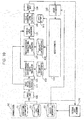
- FIG. 10 is a block diagram illustrating a functional configuration during additional learning in the subject estimation system in the present embodiment. Elements that are the same as or similar to those in FIG. 7 are denoted by the same reference numerals, and descriptions thereof are not given hereinafter.
- the subject estimation system during additional learning illustrated in FIG. 10 is implemented by a computer having a hardware configuration as described above and illustrated in FIG. 5 , as in the subject estimation system during learning illustrated in FIG. 7 .
- an external data acquirer 170 is further added to the functional configuration diagram during learning illustrated in FIG. 7 .
- the external data acquirer 170 acquires, as semi-supervised data of the learning data, dialog text that is relevant to the certain topic and that is obtained through web searching.
- the external data acquirer 170 acquires text information related to travelling from a travel word-of-mouth website on the Internet as unsupervised learning data.
- correct solution labels for subject information have not been given to information in word-of-mouth travel websites, unlike the case of the above-described learning data (supervised learning data) using a known data set. Topic labels have not been given to the information in the word-of-mouth travel websites, either.
- the subject estimation system in the present embodiment gives correct solution labels to such information (which is unsupervised learning data) in the word-of-mouth travel website in a pseudo manner, to thereby increase the supervised learning data.
- This makes it possible to increase the supervised learning data for a topic for which the amount of learning data is small.
- the subject estimation system illustrated in FIG. 10 estimates a subject by performing operations during discrimination (i.e., by performing discrimination processing in S101 to S107 illustrated in FIG. 6 ). All labels for topics of the information in the word-of-mouth travel website are sequentially input to the subject estimation system illustrated in FIG. 10 .
- a topic label and a subject label are given by limiting to those for which the thus-obtained subject estimation probability of an output of the fully connected layer calculator 141, the probability corresponding each topic, is larger than a preset threshold.
- the subject estimation system illustrated in FIG. 10 performs the operations during learning (i.e., performs the learning processing in S201 to S210 illustrated in FIG. 8 ) again by using the information in the word-of-mouth travel website, the topic labels and the subject labels being given to the information, thereby repeating the discrimination processing on the information in the word-of-mouth travel website and the learning processing.
- the threshold may be set high initially and be reduced gradually.
- the external data acquirer 170 can acquire supervised learning data corresponding to a predetermined useful dialog subject, by acquiring external unsupervised data, such as review sentences in a word-of-mouth travel website, and excluding, from the acquired unsupervised learning data, data irrelevant to the dialog subject by using a keyword.
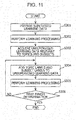
- FIG. 11 is a flowchart illustrating operations in the subject estimation system during additional learning illustrated in FIG. 10 .
- supervised learning data is prepared (S301).
- This supervised learning data is obtained by, for example, recording data of a dialog between humans and manually transcribing the dialog data.
- the supervised learning data is obtained by chatting through keyboard input and storing text thereof.
- annotation for specifying what is a topic from where to where in a dialog is manually performed. Crowdsourcing can be used for the annotation. However, since such work requires cost and is thus, in many cases, not sufficient to learn data for learning.
- the subject estimation system in the present embodiment performs the learning processing in S201 to S210, by using the obtained supervised learning data (S302).
- the external data acquirer 170 acquires unsupervised learning data relevant to topics and subjects (S303). Specifically, as described above, rather than acquiring data through refinement using a granularity, such as merely a word-of-mouth travel website, the external data acquirer 170 acquires, as unsupervised learning data (word strings), data obtained through finer refinement by utilizing titles and other headings through use of vocabulary relevant to labels for topics and subjects.
- unsupervised learning data word strings
- the subject estimation system in the present embodiment estimates topic labels and subject labels of the unsupervised learning data by using the convolutional neural network 10 that performed the learning in the learning process in S302 and adds the estimated topic labels and subject labels to the unsupervised learning data (S304).
- the subject estimation system in the present embodiment performs the learning processing in S201 to S210 again (S305). Since the weights (the first and second weights) in the convolutional neural network 10 vary between the result of the learning in S302 and the result of the learning in S305, the topic labels and the subject labels estimated in S304 also vary correspondingly.
- the subject estimation system in the present embodiment makes a finish determination based on the amount of change in update of the weights and so on (S306). If a finish condition is not satisfied, S304 and S305 are repeated.
- the subject estimation system utilizing the convolutional neural network 10 in the present embodiment can increase the amount of supervised learning data to a sufficient level by performing discrimination processing on unsupervised learning data, giving correct solution labels thereto in a pseudo manner, and repeating learning processing. By doing so, the subject estimation system in the present embodiment can more accurately estimate a subject of a dialog.
- FIG. 12 is a graph depicting a result of experimental verification of the subject estimation system in the present embodiment.
- FIG. 12 illustrates an advantage of semi-supervised learning processing performed by the subject estimation system in the present embodiment when a dialog corpus in DSTC4 is used.
- the main bodies and devices in which the individual processes are executed are not particularly limiting.
- the processes may also be executed by a processor or the like (described below) incorporated into a particular device that is locally provided.
- the processes may be executed by a cloud server or the like provided at a place different from that of a local device.
- the present disclosure further encompasses cases as described below.
- the computer program or the digital signals may be transmitted over a telecommunication channel, a wireless or wired communication channel, a network typified by the Internet, data broadcasting, or the like.
- the present disclosure may be realized by a computer system including a microprocessor and a memory, the memory may store the computer program, and the microprocessor may operate in accordance with the computer program.
- the present disclosure may also be implemented by another independent computer system by transporting the storage medium on which the program or the digital signals are recorded or transferring the program or the digital signals over the network or the like.
- the present disclosure is applicable to a subject estimation system and a subject estimation method that performs a task for estimating what is the subject of a dialog, which is a communication of a natural language basically between two parties, regardless of whether they are humans or machines.
Landscapes
- Engineering & Computer Science (AREA)
- Physics & Mathematics (AREA)
- Theoretical Computer Science (AREA)
- Artificial Intelligence (AREA)
- Health & Medical Sciences (AREA)
- Computational Linguistics (AREA)
- General Physics & Mathematics (AREA)
- General Health & Medical Sciences (AREA)
- Evolutionary Computation (AREA)
- General Engineering & Computer Science (AREA)
- Molecular Biology (AREA)
- Life Sciences & Earth Sciences (AREA)
- Biomedical Technology (AREA)
- Audiology, Speech & Language Pathology (AREA)
- Multimedia (AREA)
- Biophysics (AREA)
- Computing Systems (AREA)
- Mathematical Physics (AREA)
- Software Systems (AREA)
- Data Mining & Analysis (AREA)
- Human Computer Interaction (AREA)
- Acoustics & Sound (AREA)
- Computer Vision & Pattern Recognition (AREA)
- Biodiversity & Conservation Biology (AREA)
- Information Retrieval, Db Structures And Fs Structures Therefor (AREA)
- Machine Translation (AREA)
Applications Claiming Priority (2)
| Application Number | Priority Date | Filing Date | Title |
|---|---|---|---|
| US201562219904P | 2015-09-17 | 2015-09-17 | |
| JP2016080684A JP6611053B2 (ja) | 2015-09-17 | 2016-04-13 | 主題推定システム、主題推定方法およびプログラム |
Publications (2)
| Publication Number | Publication Date |
|---|---|
| EP3144860A2 true EP3144860A2 (de) | 2017-03-22 |
| EP3144860A3 EP3144860A3 (de) | 2017-04-05 |
Family
ID=57003331
Family Applications (1)
| Application Number | Title | Priority Date | Filing Date |
|---|---|---|---|
| EP16187517.4A Withdrawn EP3144860A3 (de) | 2015-09-17 | 2016-09-07 | Subjektschätzungssystem zur schätzung des subjekts eines dialogs |
Country Status (3)
| Country | Link |
|---|---|
| US (1) | US9870768B2 (de) |
| EP (1) | EP3144860A3 (de) |
| CN (1) | CN106548124B (de) |
Cited By (5)
| Publication number | Priority date | Publication date | Assignee | Title |
|---|---|---|---|---|
| CN107562718A (zh) * | 2017-07-24 | 2018-01-09 | 科大讯飞股份有限公司 | 文本规整方法及装置、存储介质、电子设备 |
| CN110879934A (zh) * | 2019-10-31 | 2020-03-13 | 杭州电子科技大学 | 一种高效的Wide & Deep深度学习模型 |
| CN111553145A (zh) * | 2020-07-10 | 2020-08-18 | 支付宝(杭州)信息技术有限公司 | 主题生成方法、装置和电子设备 |
| TWI749249B (zh) * | 2017-08-31 | 2021-12-11 | 大陸商中科寒武紀科技股份有限公司 | 芯片裝置、芯片、智能設備以及神經網絡的運算方法 |
| CN115600582A (zh) * | 2022-12-15 | 2023-01-13 | 电子科技大学(Cn) | 一种基于预训练语言模型的可控文本生成方法 |
Families Citing this family (24)
| Publication number | Priority date | Publication date | Assignee | Title |
|---|---|---|---|---|
| US9940539B2 (en) * | 2015-05-08 | 2018-04-10 | Samsung Electronics Co., Ltd. | Object recognition apparatus and method |
| CN107704456B (zh) * | 2016-08-09 | 2023-08-29 | 松下知识产权经营株式会社 | 识别控制方法以及识别控制装置 |
| KR102824640B1 (ko) * | 2016-09-07 | 2025-06-25 | 삼성전자주식회사 | 뉴럴 네트워크에 기초한 인식 장치 및 뉴럴 네트워크의 트레이닝 방법 |
| JP7051704B2 (ja) * | 2016-11-29 | 2022-04-11 | ソニーモバイルコミュニケーションズ株式会社 | 情報処理方法および情報処理装置 |
| US10628737B2 (en) * | 2017-01-13 | 2020-04-21 | Oath Inc. | Identifying constructive sub-dialogues |
| CN107301169B (zh) * | 2017-06-16 | 2021-02-05 | 科大讯飞股份有限公司 | 离题作文检测方法、装置和终端设备 |
| US10847137B1 (en) * | 2017-12-12 | 2020-11-24 | Amazon Technologies, Inc. | Trigger word detection using neural network waveform processing |
| US10657962B2 (en) * | 2018-05-02 | 2020-05-19 | International Business Machines Corporation | Modeling multiparty conversation dynamics: speaker, response, addressee selection using a novel deep learning approach |
| US11100288B1 (en) * | 2018-06-21 | 2021-08-24 | SoundHound Inc. | Factored neural networks for language modeling |
| CN109102798A (zh) * | 2018-06-29 | 2018-12-28 | 厦门快商通信息技术有限公司 | 一种装修事件检测方法、装置、计算机设备及介质 |
| JP2020035502A (ja) | 2018-08-28 | 2020-03-05 | キオクシア株式会社 | 半導体集積回路 |
| CN111563209B (zh) * | 2019-01-29 | 2023-06-30 | 株式会社理光 | 一种意图识别的方法、装置及计算机可读存储介质 |
| CN110717023B (zh) * | 2019-09-18 | 2023-11-07 | 平安科技(深圳)有限公司 | 面试回答文本的分类方法及装置、电子设备、存储介质 |
| CN110717316B (zh) * | 2019-09-24 | 2021-07-30 | 清华大学 | 字幕对话流的主题分割方法及装置 |
| US11238865B2 (en) * | 2019-11-18 | 2022-02-01 | Lenovo (Singapore) Pte. Ltd. | Function performance based on input intonation |
| WO2021214941A1 (ja) | 2020-04-23 | 2021-10-28 | 富士通株式会社 | 機械学習プログラム、機械学習方法および固有表現認識装置 |
| US20220067532A1 (en) | 2020-08-31 | 2022-03-03 | Si Analytics Co., Ltd | Method to Train Model |
| CN112148872B (zh) * | 2020-09-28 | 2024-04-02 | 国家计算机网络与信息安全管理中心广东分中心 | 自然对话主题分析方法、装置、电子设备和存储介质 |
| US11783008B2 (en) * | 2020-11-06 | 2023-10-10 | Adobe Inc. | Machine-learning tool for generating segmentation and topic metadata for documents |
| US12026248B2 (en) * | 2021-06-10 | 2024-07-02 | Armis Security Ltd. | Techniques for securing network environments by identifying device attributes based on string field conventions |
| US12052274B2 (en) | 2021-09-23 | 2024-07-30 | Armis Security Ltd. | Techniques for enriching device profiles and mitigating cybersecurity threats using enriched device profiles |
| US12572846B2 (en) | 2022-03-22 | 2026-03-10 | Armis Security Ltd. | System and method for device attribute identification based on host configuration protocols |
| CN114676254B (zh) * | 2022-03-25 | 2025-12-12 | 青岛科技大学 | 基于主题感知的分层多注意网络的文本分类方法及系统 |
| US12470593B2 (en) | 2022-07-11 | 2025-11-11 | Armis Security Ltd. | Malicious lateral movement detection using remote system protocols |
Citations (1)
| Publication number | Priority date | Publication date | Assignee | Title |
|---|---|---|---|---|
| US20030174881A1 (en) | 2002-03-15 | 2003-09-18 | Simard Patrice Y. | System and method facilitating pattern recognition |
Family Cites Families (7)
| Publication number | Priority date | Publication date | Assignee | Title |
|---|---|---|---|---|
| US5263107A (en) * | 1991-01-31 | 1993-11-16 | Sharp Kabushiki Kaisha | Receptive field neural network with shift-invariant pattern recognition |
| US8504361B2 (en) * | 2008-02-07 | 2013-08-06 | Nec Laboratories America, Inc. | Deep neural networks and methods for using same |
| WO2012106885A1 (zh) * | 2011-07-13 | 2012-08-16 | 华为技术有限公司 | 基于潜在狄利克雷模型的参数推断方法、计算装置及系统 |
| CN103425686B (zh) * | 2012-05-21 | 2016-12-07 | 微梦创科网络科技(中国)有限公司 | 一种信息发布方法和装置 |
| KR20140052266A (ko) * | 2012-10-24 | 2014-05-07 | 에스케이텔레콤 주식회사 | 언어 영역의 자동평가장치, 이를 위한 방법 및 이 방법이 기록된 컴퓨터로 판독 가능한 기록 매체 |
| US9547640B2 (en) * | 2013-10-16 | 2017-01-17 | International Business Machines Corporation | Ontology-driven annotation confidence levels for natural language processing |
| CN104504150B (zh) * | 2015-01-09 | 2017-09-29 | 成都布林特信息技术有限公司 | 新闻舆情监测系统 |
-
2016
- 2016-08-18 CN CN201610685263.XA patent/CN106548124B/zh active Active
- 2016-09-07 EP EP16187517.4A patent/EP3144860A3/de not_active Withdrawn
- 2016-09-12 US US15/262,785 patent/US9870768B2/en active Active
Patent Citations (1)
| Publication number | Priority date | Publication date | Assignee | Title |
|---|---|---|---|---|
| US20030174881A1 (en) | 2002-03-15 | 2003-09-18 | Simard Patrice Y. | System and method facilitating pattern recognition |
Non-Patent Citations (1)
| Title |
|---|
| YOON KIM, CONVOLUTIONAL NEURAL NETWORKS FOR SENTENCE CLASSIFICATION, 29 March 2016 (2016-03-29), Retrieved from the Internet <URL:http://arxiv.org/abs/1408.5882> |
Cited By (7)
| Publication number | Priority date | Publication date | Assignee | Title |
|---|---|---|---|---|
| CN107562718A (zh) * | 2017-07-24 | 2018-01-09 | 科大讯飞股份有限公司 | 文本规整方法及装置、存储介质、电子设备 |
| TWI749249B (zh) * | 2017-08-31 | 2021-12-11 | 大陸商中科寒武紀科技股份有限公司 | 芯片裝置、芯片、智能設備以及神經網絡的運算方法 |
| CN110879934A (zh) * | 2019-10-31 | 2020-03-13 | 杭州电子科技大学 | 一种高效的Wide & Deep深度学习模型 |
| CN110879934B (zh) * | 2019-10-31 | 2023-05-23 | 杭州电子科技大学 | 一种基于Wide&Deep深度学习模型的文本预测方法 |
| CN111553145A (zh) * | 2020-07-10 | 2020-08-18 | 支付宝(杭州)信息技术有限公司 | 主题生成方法、装置和电子设备 |
| CN111553145B (zh) * | 2020-07-10 | 2020-10-16 | 支付宝(杭州)信息技术有限公司 | 主题生成方法、装置和电子设备 |
| CN115600582A (zh) * | 2022-12-15 | 2023-01-13 | 电子科技大学(Cn) | 一种基于预训练语言模型的可控文本生成方法 |
Also Published As
| Publication number | Publication date |
|---|---|
| US20170084269A1 (en) | 2017-03-23 |
| CN106548124B (zh) | 2021-09-07 |
| CN106548124A (zh) | 2017-03-29 |
| EP3144860A3 (de) | 2017-04-05 |
| US9870768B2 (en) | 2018-01-16 |
Similar Documents
| Publication | Publication Date | Title |
|---|---|---|
| US9870768B2 (en) | Subject estimation system for estimating subject of dialog | |
| JP6611053B2 (ja) | 主題推定システム、主題推定方法およびプログラム | |
| US20250315676A1 (en) | Augmenting neural networks with external memory | |
| CN117709426B (zh) | 训练机器学习模型的方法、系统和计算机存储介质 | |
| US11210579B2 (en) | Augmenting neural networks with external memory | |
| KR102170199B1 (ko) | 비교 세트를 사용한 입력 예시들 분류 | |
| CN107690663B (zh) | 白化神经网络层 | |
| US10691997B2 (en) | Augmenting neural networks to generate additional outputs | |
| US11080594B2 (en) | Augmenting neural networks with external memory using reinforcement learning | |
| US11693854B2 (en) | Question responding apparatus, question responding method and program | |
| US11977602B2 (en) | Domain generalized margin via meta-learning for deep face recognition | |
| US10909451B2 (en) | Apparatus and method for learning a model corresponding to time-series input data | |
| US20180107574A1 (en) | Detecting anomalous sensors | |
| US12182711B2 (en) | Generation of neural network containing middle layer background | |
| CN104572614A (zh) | 一种语言模型的训练方法及系统 | |
| WO2016167779A1 (en) | Speech recognition device and rescoring device | |
| WO2017136674A1 (en) | Generating feature embeddings from a co-occurrence matrix | |
| US10733537B2 (en) | Ensemble based labeling | |
| US9348810B2 (en) | Model learning method | |
| US20210049324A1 (en) | Apparatus, method, and program for utilizing language model | |
| US20190147365A1 (en) | Deep vector table machine systems | |
| KR20250026904A (ko) | 확산 확률 모델에서 생성한 잠재 피쳐를 활용한 음성 인식 방법 및 시스템 | |
| Kim et al. | The use of discriminative belief tracking in pomdp-based dialogue systems | |
| EP4703974A1 (de) | Lernvorrichtung, trainingsverfahren und trainingsprogramm | |
| JP7819786B2 (ja) | 話し方ラベル学習装置、話し方ラベル学習方法及びプログラム |
Legal Events
| Date | Code | Title | Description |
|---|---|---|---|
| PUAI | Public reference made under article 153(3) epc to a published international application that has entered the european phase |
Free format text: ORIGINAL CODE: 0009012 |
|
| PUAL | Search report despatched |
Free format text: ORIGINAL CODE: 0009013 |
|
| AK | Designated contracting states |
Kind code of ref document: A2 Designated state(s): AL AT BE BG CH CY CZ DE DK EE ES FI FR GB GR HR HU IE IS IT LI LT LU LV MC MK MT NL NO PL PT RO RS SE SI SK SM TR |
|
| AX | Request for extension of the european patent |
Extension state: BA ME |
|
| AK | Designated contracting states |
Kind code of ref document: A3 Designated state(s): AL AT BE BG CH CY CZ DE DK EE ES FI FR GB GR HR HU IE IS IT LI LT LU LV MC MK MT NL NO PL PT RO RS SE SI SK SM TR |
|
| AX | Request for extension of the european patent |
Extension state: BA ME |
|
| RIC1 | Information provided on ipc code assigned before grant |
Ipc: G06N 3/04 20060101AFI20170301BHEP Ipc: G06F 17/20 20060101ALN20170301BHEP |
|
| 17P | Request for examination filed |
Effective date: 20170626 |
|
| RBV | Designated contracting states (corrected) |
Designated state(s): AL AT BE BG CH CY CZ DE DK EE ES FI FR GB GR HR HU IE IS IT LI LT LU LV MC MK MT NL NO PL PT RO RS SE SI SK SM TR |
|
| 17Q | First examination report despatched |
Effective date: 20180305 |
|
| STAA | Information on the status of an ep patent application or granted ep patent |
Free format text: STATUS: THE APPLICATION HAS BEEN WITHDRAWN |
|
| 18W | Application withdrawn |
Effective date: 20200129 |