EP3145121A1 - Konvergiertes netzwerksystem unabhängig von zugangsschema und verfahren davon - Google Patents
Konvergiertes netzwerksystem unabhängig von zugangsschema und verfahren davon Download PDFInfo
- Publication number
- EP3145121A1 EP3145121A1 EP16188934.0A EP16188934A EP3145121A1 EP 3145121 A1 EP3145121 A1 EP 3145121A1 EP 16188934 A EP16188934 A EP 16188934A EP 3145121 A1 EP3145121 A1 EP 3145121A1
- Authority
- EP
- European Patent Office
- Prior art keywords
- converged
- access
- network
- control
- user equipment
- Prior art date
- Legal status (The legal status is an assumption and is not a legal conclusion. Google has not performed a legal analysis and makes no representation as to the accuracy of the status listed.)
- Granted
Links
Images




Classifications
-
- H—ELECTRICITY
- H04—ELECTRIC COMMUNICATION TECHNIQUE
- H04L—TRANSMISSION OF DIGITAL INFORMATION, e.g. TELEGRAPHIC COMMUNICATION
- H04L41/00—Arrangements for maintenance, administration or management of data switching networks, e.g. of packet switching networks
- H04L41/50—Network service management, e.g. ensuring proper service fulfilment according to agreements
- H04L41/5041—Network service management, e.g. ensuring proper service fulfilment according to agreements characterised by the time relationship between creation and deployment of a service
- H04L41/5054—Automatic deployment of services triggered by the service manager, e.g. service implementation by automatic configuration of network components
-
- H—ELECTRICITY
- H04—ELECTRIC COMMUNICATION TECHNIQUE
- H04L—TRANSMISSION OF DIGITAL INFORMATION, e.g. TELEGRAPHIC COMMUNICATION
- H04L47/00—Traffic control in data switching networks
- H04L47/70—Admission control; Resource allocation
-
- H—ELECTRICITY
- H04—ELECTRIC COMMUNICATION TECHNIQUE
- H04W—WIRELESS COMMUNICATION NETWORKS
- H04W16/00—Network planning, e.g. coverage or traffic planning tools; Network deployment, e.g. resource partitioning or cells structures
- H04W16/18—Network planning tools
-
- H—ELECTRICITY
- H04—ELECTRIC COMMUNICATION TECHNIQUE
- H04L—TRANSMISSION OF DIGITAL INFORMATION, e.g. TELEGRAPHIC COMMUNICATION
- H04L12/00—Data switching networks
- H04L12/66—Arrangements for connecting between networks having differing types of switching systems, e.g. gateways
-
- H—ELECTRICITY
- H04—ELECTRIC COMMUNICATION TECHNIQUE
- H04W—WIRELESS COMMUNICATION NETWORKS
- H04W88/00—Devices specially adapted for wireless communication networks, e.g. terminals, base stations or access point devices
- H04W88/16—Gateway arrangements
Definitions
- the present invention relates to a network system and a method thereof. More particularly, the present invention relates to a converged network system independent of a wired or wireless access scheme capable of converging and accommodating various wired access networks and wireless access networks (for example, an international mobile telecommunication (IMT)-2020 wireless technology (5G), wireless fidelity (WiFi), and the like) on the basis of an Internet protocol (IP), and a method thereof.
- IMT international mobile telecommunication
- 5G wireless fidelity
- IP Internet protocol
- An evolved packet system which is a 3 rd generation partnership project (3GPP) specification-based 4G mobile communication network, consists of long term evolution (LTE) in a wireless domain and evolved packet core (EPC), which is a network after a base station.
- 3GPP 3 rd generation partnership project
- EPC evolved packet core
- GPRS general packet radio service
- GSM global system for mobile communications
- PGW packet data network gateway
- GTP GPRS tunneling protocol
- a node (PGW) through which all traffic generated from user equipment should necessarily pass is present in a 4G mobile core, such that a concentration of the traffic in the network is intensified.
- PGW node
- This is due to a GTP tunneling technology for providing a service similar to that of a circular network on a packet network.
- a data center, a content server, and the like may not be disposed forward toward a subscriber interface due to a GTP tunnel structure in the conventional network, there is a limitation in a data distribution structure.
- a mobility anchor point such as the PGW is required in order to provide mobility.
- a triangular routing route for traffic is generated after handover, such that there are risks of inefficiency and a single point of failure of a traffic transfer route.
- the present invention has been made in an effort to provide a converged network system independent of a wired or wireless access technology and a method thereof having advantages of attempting to optimize provision of various future services in the future and providing efficiency of investment and operation of an infrastructure by accommodating various network access technologies such as an International Mobile Telecommunication (IMT)-2020 wireless technology (5G), wireless fidelity (WiFi), a wired technology, and the like, as All-IP-based converged control technology and introducing a common signaling system and a mobility control system.
- IMT International Mobile Telecommunication
- 5G Fifth Generation
- WiFi wireless fidelity
- An exemplary embodiment of the present invention provides a converged network system for converged accommodation of a multi-access network, including: one or more converged gateways disposed on a converged wired internet protocol (IP) network for transmitting traffic; and a unified control entity managing and controlling the one or more converged gateways, and providing a route of transmitted and received IP flows to the converged gateways so that the converged gateways separate and manage/control traffic for each subscriber or each service and communicate with homogeneous access nodes or two or more kinds of heterogeneous access nodes connected to a backhaul on the basis of IP packets, wherein the unified control entity performs at least one of control functions including user authentication control, access control, user equipment mobility control, service call control for IP flows, mobility control, and quality of service (QoS) control through the one or more converged gateways.
- IP internet protocol
- the converged network system may accommodate the homogeneous access nodes or the heterogeneous access nodes in a converged scheme, accommodate two or more kinds of heterogeneous accesses including different accesses regardless of homogeneous access or wired or wireless access in a converged scheme, and accommodate a new type of service and device, through the converged gateways disposed at edges of the converged wired IP network.
- the converged gateway and the unified control entity may monitor states of heterogeneous resources and use the states of the heterogeneous resources for managing and allocating resources.
- the converged gateways may perform traffic steering to a heterogeneous network having a resource margin on the basis of the monitoring of the states of the heterogeneous resources.
- the converged gateways may split traffic to user equipment simultaneously accessing the multi-access network having a resource margin through each access network on the basis of the monitoring of the states of the heterogeneous resources.
- Interfacing signaling systems between access nodes communicating with user equipment in different access schemes and the unified control entity may have the same structure independent of an access scheme.
- a service providing server may be connected to the converged gateway disposed at an edge on the converged wired IP network so that the service providing server is disposed forward toward a subscriber device regardless of an access scheme.
- the unified control entity may control mobility of user equipment and mobility of IP flows for handover to a second converged gateway so that the user equipment accesses the converged wired IP network in an anchor-free scheme with respect to movement of the user equipment accessing the converged wired IP network through a first converged gateway, while managing the user equipment on the basis of an IP address system in which an identifier (ID) and a locator are separated from each other.
- ID identifier
- the mobility control may include mobility control in homogeneous accesses including mobility control between wireless access-wireless access.
- the mobility control may include mobility control in heterogeneous accesses including mobility control between wireless access-wired access or mobility control between IMT-2020 access-WiFi access.
- the unified control entity may control the converged gateway to determine states of available resources on the basis of converged resource management of heterogeneous access networks and divide traffic of a plurality of IP flows in an IP flow unit to support mobility of the IP flows, with respect to user equipment simultaneously accessing the multi-access network.
- the unified control entity may control the converged gateway to disperse and transmit IP flows including data having a predetermined bandwidth or more to the user equipment through the multi-access network.
- the converged network system may further include edge unified control entities dispersed and disposed at edges of the converged wired IP network and logically performing at least one of the control functions.
- Another exemplary embodiment of the present invention provides a method of operating a converged network system for converged accommodation of a multi-access network, including: providing, by a unified control entity managing and controlling one or more converged gateways disposed on a converged wired IP network for transmitting traffic, a route of transmitted and received IP flows to the converged gateways so that the converged gateways separate and manage/control traffic for each subscriber or each service and communicate with homogeneous access nodes or two or more kinds of heterogeneous access nodes connected to a backhaul on the basis of IP packets; and performing, by the unified control entity, at least one of control functions including user authentication control, access control, user equipment mobility control, service call control for IP flows, mobility control, and QoS control through the one or more converged gateways.
- the converged network system may accommodate the homogeneous access nodes or the heterogeneous access nodes in a converged scheme, accommodate two or more kinds of heterogeneous accesses including different accesses regardless of homogeneous access or wired or wireless access in a converged scheme, and accommodate a new type of service and device, through the converged gateways disposed at edges of the converged wired IP network.
- the converged gateway and the unified control entity may monitor states of heterogeneous resources and use the states of the heterogeneous resources for managing and allocating resources.
- the converged gateways may perform traffic steering to a heterogeneous network having a resource margin on the basis of the monitoring of the states of the heterogeneous resources.
- the converged gateways may split traffic to user equipment simultaneously accessing the multi-access network having a resource margin through each access network on the basis of the monitoring of the states of the heterogeneous resources.
- Interfacing signaling systems between access nodes communicating with user equipment in different access schemes and the unified control entity may have the same structure independent of an access scheme.
- a service providing server may be connected to the converged gateway disposed at an edge on the converged wired IP network so that the service providing server is disposed forward toward a subscriber device regardless of an access scheme.
- the unified control entity may control mobility of user equipment and mobility of IP flows for handover to a second converged gateway so that the user equipment accesses the converged wired IP network in an anchor-free scheme with respect to movement of the user equipment accessing the converged wired IP network through a first converged gateway, while managing the user equipment on the basis of an IP address system in which an identifier (ID) and a locator are separated from each other.
- ID identifier
- the mobility control may include mobility control in homogeneous accesses including mobility control between wireless access-wireless access or mobility control in heterogeneous accesses including mobility control between wireless access-wired access or mobility control between IMT-2020 access-WiFi access.
- the unified control entity may control the converged gateway to determine states of available resources on the basis of converged resource management of heterogeneous access networks and divide traffic of a plurality of IP flows in an IP flow unit to support mobility of the IP flows, with respect to user equipment simultaneously accessing the multi-access network.
- the unified control entity may control the converged gateway to disperse and transmit IP flows including data having a predetermined bandwidth or more to the user equipment through the multi-access network.
- the method of operating a converged network system may further include logically performing at least one of the control functions by edge unified control entities dispersed and disposed at edges of the converged wired IP network.
- an operator disperses and disposes the gateways to accommodate two or more kinds of heterogeneous accesses including different accesses regardless of homogeneous access nodes or wired or wireless access in a converged scheme, thereby making it possible to flexibly accommodate a new type of service and user equipment. Therefore, a network that may be easily expanded may be operated.
- a service provider may dispose an IP-based service providing server at an edge network without using a separate device, thereby providing a low-delay high-capacity data service.
- the operator may manage and control various wired or wireless access networks in a converged scheme.
- network resources may be efficiently utilized through converged radio resource management between access networks to reduce operational cost.
- a seamless service may be provided to the user by providing mobility between various wired or wireless access networks.
- a larger capacity service that may not be provided through a single access network may be provided through convergence of access networks.
- FIG. 1 is a schematic view showing a multi-network structure including a general 3G network, a 4G network, a wireless fidelity (WiFi) network, and a wired network.
- WiFi wireless fidelity
- a wired internet protocol (IP) network 1 for a general Internet accommodates a wired subscriber 2 and a WiFi 3 communication.
- EPS evolved packet system
- eNodeB (eNB) base station 4 to which a long term evolution (LTE) radio interface is applied is connected to an evolved packet core (EPC) 8, which is a 4G core network (CN), and the EPC 8 includes a mobility management entity (MME) 7, a serving gateway (SGW) 5, and a packet data network (PDN) gateway (PGW) 6.
- MME mobility management entity
- SGW serving gateway
- PGW packet data network gateway
- a base station (NodeB (NB)) 9 to which a radio interface is applied is connected to a mobile packet core 13 through a radio network controller (RNC) 10, and the mobile packet core 13 includes a serving general packet radio service (GPRS) support node (SGSN) 11 and a gateway GPRS support node (GGSN) 12.
- GPRS general packet radio service
- SGSN serving general packet radio service
- GGSN gateway GPRS support node
- the WiFi and the 3G core network interwork with each other through a packet data gateway (PDG) 15, and the WiFi and the 4G core network interwork with each other through an enhanced PDG (ePDG) 14.
- PDG packet data gateway
- ePDG enhanced PDG
- the wired IP network 1 and the 3G/4G mobile communication networks 4 and 9 interwork with each other through an internet exchange point (IX) 16.
- IX internet exchange point
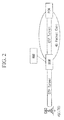
- FIG. 2 is a view showing a structure in which a general packet radio service (GPRS) tunneling protocol (GTP) is used in a general 4G network.
- GPRS general packet radio service
- GTP tunneling protocol
- a tunneling method similar to a traditional line service is applied between a base station (eNB) and a serving gateway (SGW) and between the serving gateway (SGW) and a PDN gateway (PGW) for the purpose of separation of traffic for each subscriber/each service and billing through the separation of the traffic on a 4G packet network.
- eNB base station
- SGW serving gateway
- PGW PDN gateway
- FIG. 3A is an example of a schematic view of a converged network system 100 independent of a wired or wireless access technology according to an exemplary embodiment of the present invention.
- FIG. 3B is another example of a schematic view of a converged network system 100 independent of a wired or wireless access technology according to an exemplary embodiment of the present invention.
- FIG. 3C is a flowchart for describing an operation concept of a converged network system 100 according to an exemplary embodiment of the present invention.
- the converged network system 100 includes a plurality of converged gateways (CGWs) 25 dispersed and disposed at edges 28 on a converged wired IP network 27 including routers for routing of traffic transmission and a unified control entity (UCE) 26 managing the plurality of CGWs 25 through converged signal processing.
- the converged network system 100 may further include a micro data center 29 that may be disposed forward toward a subscriber interface on a network. The micro data center 29 may store and manage predetermined data required for operating a service therein.
- the converged gateway (CGW) 25 accommodates an International Mobile Telecommunication (IMT)-2020 5G base station (5GBS) 20, an access point 21 for WiFi communication, homogeneous access nodes such as wired nodes 23 for communication with wired subscribers, or the like, and two or more kinds of heterogeneous access nodes (irrelative to whether they are wired nodes or wireless nodes) so as to communicate with the IMT-2020 5G base station (5GBS) 20, the access point 21 for WiFi communication, the homogeneous access nodes, and the two or more kinds of heterogeneous access nodes through a backhaul 24 (S110).
- the converged gateway (CGW) 25 may also accommodate a 3G/4G mobile communication network 30 so as to communicate with the 3G/4G mobile communication network 30.
- IP packet-based communication control rather than GTP-based communication control is performed between the IMT-2020 base station (5GBS) 20 and the converged gateway (CGW) 25, similar to between the WiFi access point (APs) (or the access controller (AC)) 21 and the converged gateway (CGW) 25 or between the wired node 23 and the converged gateway (CGW) 25.
- the IP packet-based communication control means that IP flows defining sessions of individual IP layers are directly controlled regardless of a kind of access.
- the converged gateway (CGW) 25 receives a route of IP flows (data) transmitted/received on the network from the unified control entity (UCE) 26 providing a data route through a micro-flow traffic control function (S120).
- the unified control entity (UCE) 26 manages the converged gateways (CGWs) 25, and is in charge of user authentication control, access control, user equipment mobility control, and service call control for the IP flows through the converged gateways (CGWs) 25 (for example, connection/establishment or the like), IP mobility in homogeneous accesses (for example, wireless access-wireless access) and IP mobility between heterogeneous accesses (for example, wired access-wireless access, IMT-2020 access-WiFi access, or the like) controls, quality of service (QoS) control, and the like (S130).
- CGWs converged gateways
- S130 quality of service
- the converged network system 100 includes a plurality of converged gateways (CGWs) 25, a unified control entity (UCE) 26 managing the plurality of CGWs 25 through converged signal processing, and edge unified control entities 45 dispersed at edges and controlling one or more converged gateways 25.
- CGWs converged gateways
- UCE unified control entity
- edge unified control entities 45 dispersed at edges and controlling one or more converged gateways 25.
- edge unified control entities 45 may be logically dispersed and disposed at the edges of the network.
- edge unified control entities (eUCEs) 45 control one or more converged gateways 25, and may transmit and receive required signals to and from the unified control entity (UCE) 26 through communication with the unified control entity 26 to control the unified control entity 26.
- UCE unified control entity
- the present invention provides basic IP packet-based control rather than GTP-based control.
- the unified control entity (UCE) 26 provides a data route of transmission/reception IP flows through a micro-flow traffic control function so that traffic for each subscriber/each service may be separated and managed/controlled in the IMT-2020 base station (5GBS) 20 and the converged gateway (CGW) 25.
- the data route is provided by allowing the traffic for each subscriber/each service to be separated and managed/controlled in an IP layer for signals (data) moving up from a lower layer of IMT-2020 through the micro-flow traffic control function.
- a scheme of securing a data route by mapping a radio bearer identifier (ID) (RBID) and a GTP tunnel endpoint ID (TEID) between eNB-SGW in an eNB 4 of existing 4G is not used.
- the data route is provided by mapping an RBID or a radio channel ID defined in IMT-2020, flow information (5-tuple information) of an IP packet, and information that may define packet flows (IP-flows) instead of the existing scheme described above.
- the converged gateway (CGW) 25 may control/manage traffic for all user equipment (UE) in the same scheme regardless of access of the IMT-2020 base station (5GBS) 20, the WiFi access point 21, the wired node 23, or the like.
- the converged gateway (CGW) 25 performs QoS control on user traffic in the same scheme regardless of an access technology, and performs an additional function for providing IP mobility.
- the converged gateway (CGW) 25 extracts billing information, measurement information, and the like of the user traffic on the basis of the packet flows (IP-flows).
- the user equipment may include wireless user equipment such as a smartphone, a wearable device capable of performing an audio/video call, a tablet personal computer (PC), a laptop PC, and the like, that may access the converged gateway (CGW) 25 through the IMT-2020 base station 20 or the WiFi access point 21, and may include wired user equipment such as a desktop PC, other communication-dedicated user equipment, and the like, that may access the converged gateway (CGW) 25 through the wired node 23 such as a modem or the like.
- wireless user equipment such as a smartphone, a wearable device capable of performing an audio/video call, a tablet personal computer (PC), a laptop PC, and the like
- CGW converged gateway
- wired node 23 such as a modem or the like.
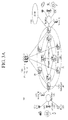
- the respective signaling systems between user equipment-eNB, between MME-user equipment, between MME-eNB, and between MME-SGW are present (see, for example, 3GPP TS24.301, TS39.413, TS29.272, and TS23.401 standards).
- These signaling systems are very different from a control scheme in an existing wired network, such that a separate network depending on an access technology should be built up.
- signaling between user equipment-MME is performed through an interface defined on user equipment-eNB or eNB-MME (see FIG. 4A ). This is dependent on an access technology and a unique network technology, such that a single network independent of the access technology may not be built up.
- a signaling system between user equipment-UCE (corresponding to user equipment-MME in 4G) has a structure in which processing may be performed independent of a specific access technology and network technology regardless of an access scheme such as whether or not an access is homogeneous access, whether an access is wired access or wireless access, or the like, using the same signaling system.
- the interfacing may be performed regardless of an access scheme (independent of the access scheme) using the same signaling system between the intermediate nodes and the unified control entity (UCE) 26.
- a signaling layer of the user equipment includes a control application layer, an IP layer, a packet data convergence protocol (PDCP) layer, a radio link control (RLC) layer - a 5G media access control (MAC) layer, and a 5G physical (PHY) layer, and may interface with the base station (5GBS) by the hierarchical structure as described above.
- the base station (5GBS) and the unified control entity (UCE) 26 interface with each other using the same signaling system (IP- L2-L1), and the unified control entity (UCE) 26 has a control application layer at an upper portion.
- a signaling layer of the user equipment includes a control application layer, an IP layer, a WiFi L2 layer, and a WiFi L1 layer, and may interface with the WiFi access point 21 by the hierarchical structure as described above.
- the WiFi access point 21 and the unified control entity (UCE) 26 interface with each other using the same signaling system (IP- L2-L1), and the unified control entity (UCE) 26 has a control application layer at an upper portion.
- an existing 4G signaling system processes a GTP-control (C) signal for the purpose of GTP tunneling similar to a line service on the IP network, such that the signaling system itself is complicated.
- C GTP-control
- all services have been provided as a line-based service.
- a voice over LTE (VoLTE) service has been generalized in an audio call.
- VoIP voice over LTE
- IoT Internet of things
- a light-weight signaling system for providing a connectionless service may be provided.
- the unified control entity (UCE) 26 which is a central control platform, manages the converged gateway (CGW) 25, and collects used bandwidths per cell, the number of used radio channels per cell, the number of subscribers per cell, the number of subscriber traffic sessions per cell, and the like, from the IMT-2020 region and the WiFi region on the basis of IP packets transmitted/received through this, and manages them in a converged scheme.
- CGW converged gateway
- the converged management of the radio resources is to hand subscribers over to cells (homogeneous cells or heterogeneous cells of the IMT-2020 region and the WiFi region) having many available radio resources depending on utilization of the radio resources of the cells, and this function will be further described later.
- an IP address system separating an identifier (ID) for identifying the user equipment (UE) and a locator for transmitting data from each is introduced.
- ID is used for identification and authentication of the user equipment (UE)
- the locator is used for registration/management of loaction information of the user equipment (UE) and transmission of subscriber traffic.
- FIG. 5A is a view for describing mobility support in an existing mobile communication system.
- a feature of an existing mobility control technology is that a mobility anchor point through which traffic of the user equipment (UE) should always pass, such as a home agent (HA) of a mobile IP technology, is present.
- a mobility anchor point through which traffic of the user equipment (UE) should always pass such as a home agent (HA) of a mobile IP technology.
- HA home agent
- FIG. 5A in a 3GPP specification, even though the user equipment (UE) moves to other serving gateway (SGW) regions in a state in which a mobility specification between PDN gateways (PGWs) is not defined, the user equipment should always access a mobile communication network core network (CN) via an initially accessed PDN gateway (PGW) for the purpose of handover, which is inefficient.
- This mobility providing structure causes a problem in providing a low delay service or the like that will be introduced in the future as well as a waste of network resources due to non-optimization of a traffic route.
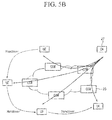
- FIG. 5B is a view for describing anchor-free mobility control through a UCE 26 in a converged network system 100 according to an exemplary embodiment of the present invention.
- an anchoring point is removed in an existing mobility support, and anchor-free mobility in which traffic route optimization is possible so that the UE accesses the network 27 edge-by-edge of the converged gateways (CGWs) is provided.
- the unified control entity 26 of the present invention manages and controls mobility of the user equipment and mobility of IP flows so that the user equipment (UE) accessing the network 27 may be handed over through the converged gateways (CGWs) 25 dispersed and disposed at the edges 28 of the wired IP network 27, while managing the user equipment (UE) on the basis of the IP address system separating the ID and the locator from each other.
- the converged gateways (CGWs) 25 support mobility depending on control of the unified control entity (UCE) 26 interworking with the user equipment (UE) with respect to movement of the user equipment (UE), thereby making it possible to support the user equipment (UE) so that a seamless service may be provided to the user equipment (UE) through a converged gateway that is closest to the user equipment.
- UAE unified control entity
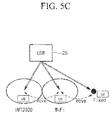
- FIG. 5C is a view for describing wired or wireless Intra-GW mobility control in a converged network system 100 according to an exemplary embodiment of the present invention.
- the converged gateway (CGW) 25 may not only support mobility (Inter-GW mobility) between wireless access networks through control of the unified control entity (UCE) 26 sensing movement of the user equipment (UE), but may also support mobility (Intra-GW mobility) between a wired access network (wired IP) and a wireless access network (IMT-2020/WiFi) with respect to the user equipment (UE) accessing one converged gateway (CGW) 25.
- Inter-GW mobility mobility between wireless access networks through control of the unified control entity (UCE) 26 sensing movement of the user equipment (UE), but may also support mobility (Intra-GW mobility) between a wired access network (wired IP) and a wireless access network (IMT-2020/WiFi) with respect to the user equipment (UE) accessing one converged gateway (CGW) 25.
- IMT-2020 and WiFi wireless access network
- the converged gateway 25 providing the mobility through the control of the unified control entity 26 may be connected to and be controlled by the edge unified control entity 45 as
- the edge unified control entity 45 In the case in which the converged gateway 25 is connected to the edge unified control entity 45, since the Intra-GW mobility is mobility within the converged gateway 25, it is sufficient for the edge unified control entity 45 to perform control. However, in the case in which the converged gateways 25 are connected to different edge unified control entities 45 in order to support mobility between the converged gateways 25(namely Inter-GW mobility), it may also be required for the edge unified control entities 45 and the unified control entity 26 to interwork with each other to perform control.
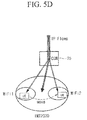
- FIG. 5D is a view for describing a detailed example of a wireless Intra-GW mobility control in a converged network system 100 according to an exemplary embodiment of the present invention.
- the converged gateway (CGW) 25 may determine states of available resources on the basis of converged resource management of heterogeneous access networks depending on control of the unified control entity (UCE) 26, may divide and manage/control traffic of a plurality of IP flows in an IP flow unit, and may support IP flow mobility with respect to movement of the user equipment (UE) simultaneously accessing a multi-access network such as IMT2020, WiFi1/WiFi2, or the like, as described above.
- the unified control entity (UCE) 26 may divide and manage/control traffic of a plurality of IP flows in an IP flow unit, and may support IP flow mobility with respect to movement of the user equipment (UE) simultaneously accessing a multi-access network such as IMT2020, WiFi1/WiFi2, or the like, as described above.
- FIG. 5E is a view for describing dispersion and transmission of IP flows requiring a high bandwidth in a converged network system 100 according to an exemplary embodiment of the present invention.
- the converged gateway (CGW) 25 may also split traffic to the user equipment (UE) while simultaneously accessing a multi-access network such as IMT-2020, WiFi1/WiFi2, or the like, through each access network, with respect to IP flows, such that it is difficult to transmit by one access technology by including data requiring a high bandwidth equal to or larger than a predetermined bandwidth, such as ultra high definition (UHD) or a hologram depending on control of the unified control entity (UCE) 26.
- a multi-access network such as IMT-2020, WiFi1/WiFi2, or the like
- heterogeneous wireless access sections such as IMT-2020, WiFi, or the like are geographically overlapped with each other
- QoS of the user service is affected.
- the user equipment is allowed to access the adjacent cells through a device such as the converged gateway (CGW) 25, the unified control entity (UCE) 26, or the like, such that high-quality service is possible.
- the converged gateway (CGW) 25 determines states of available resources through a converged resource management function depending on control of the unified control entity (UCE) 26 in the converged network as shown in FIG. 3 , and may perform a function of allowing the user equipment to again access the heterogeneous cells on the basis of clustering information of users accessing the corresponding access section and recognition information (a transmission modulation mode, a bandwidth, or the like) on service characteristics for traffic of user equipment.
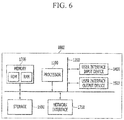
- FIG. 6 is a view for describing an example of a method of implementing a converged network system 100 according to an exemplary embodiment of the present invention.
- the converged gateway (CGW) 25, the unified control entity (UCE) 26, and the like of the converged network system 100 according to an exemplary embodiment of the present invention may be formed of hardware, software, or a combination thereof.
- the converged gateway (CGW) 25, the unified control entity (UCE) 26, and the like may be implemented by a computing system 1000 as shown in FIG. 6 .
- the computing system 1000 may include at least one processor 1100, a memory 1300, a user interface input device 1400, a user interface output device 1500, a storage 1600, and a network interface 1700 connected to one another through a bus 1200.
- the processor 1100 may be a semiconductor device executing processing for instructions stored in a central processing unit (CPU), the memory 1300, and/or the storage 1600.
- the memory 1300 and the storage 1600 may include various types of volatile or non-volatile storage media.
- the memory 1300 may be a read-only memory (ROM) 1310 and a random access memory (RAM) 1320.
- steps of a method or an algorithm described in connection with exemplary embodiments disclosed in the present specification may be directly implemented by a hardware module or a software module directly executed by the processor 1100, or a combination thereof.
- the software module may reside in a storage medium (that is, the memory 1300 and/or the storage 1600) such as a RAM, a flash memory, a ROM, an erasable programmable ROM (EPROM), an electrically erasable programmable ROM (EEPROM), a register, a hard disk, a detachable disk, or a compact disk-ROM (CD-ROM).
- a storage medium that is, the memory 1300 and/or the storage 1600
- An illustrative storage medium is coupled to the processor 1100, and the processor 1100 may read information from the storage medium and write information to the storage medium.
- the storage medium may be formed integrally with the processor 1100.
- the processor and the storage medium may also reside in an application specific integrated circuit (ASIC).
- ASIC application specific integrated circuit
- the ASIC may also reside in user equipment.
- the processor and the storage medium may reside as individual components in user equipment.
- an operator disperses and disposes the converged gateways (CGWs) 25 to accommodate two or more kinds of heterogeneous accesses including different accesses regardless of homogeneous access nodes or a wired or wireless access in a converged scheme, thereby making it possible to flexibly accommodate a new type of service and user equipment/server and other electronic apparatuses in a converged scheme. Therefore, a network that may be easily expanded may be operated.
- CGWs converged gateways
- a service provider may dispose a service providing server connected to the converged gateways (CGWs) 25 of the edges 28 of the wired IP network 27 regardless of an access scheme, thereby providing a low-delay high-capacity data service through the service providing a server disposed forward toward the subscriber (a device such as the user equipment or the like) interface.
- CGWs converged gateways
- the operator may manage and control various wired or wireless access networks in a converged scheme, and may efficiently utilize network resources through converged radio resource management between access networks to reduce an operational cost.
- a seamless service may be provided to the user by providing mobility between various wired or wireless access networks.
- a larger capacity service that may not be provided through a single access network may be provided through convergence of access networks.
- mobility control is possible regardless of wired or wireless access, and heterogeneous accesses are controlled and are accommodated in a converged scheme. Therefore, states (for example, clustering of users between heterogeneous accesses or the like) of heterogeneous resources are monitored and used for management and allocation of resources, thereby making it possible to improve use efficiency of the resources. Since an existing network is a network configured by only a single access technology, it has only to manage and control one resource.
- the unified control entity (UCE) 26 and the converged gateways (CGWs) 25 monitor states of heterogeneous resources depending on various accesses in order to manage and allocate the resources.
- the converged gateway (CGW) 25 may perform traffic steering to a heterogeneous network having a resource margin on the basis of converged management for the states of the heterogeneous resources as described above.
- the converged gateway (CGW) 25 may recognize an application (for example, a bandwidth, video traffic, or the like) to automatically change a route to a heterogeneous network to which a subscriber is connected in cooperation with a control system such as the unified control entity (UCE) 26, or the like.
- a control system such as the unified control entity (UCE) 26, or the like.
- the converged gateways (CGWs) 25 may simultaneously transmit (disperse and transmit) data (for example, data requiring a high bandwidth or the like) required for communication to the heterogeneous accesses. That is, the converged gateways (CGWs) 25 may also split traffic having a high bandwidth to user equipment (UE) simultaneously accessing a multi-access network having a resource margin through each access network on the basis of monitoring of the states of the heterogeneous resources.
- UE user equipment
Landscapes
- Engineering & Computer Science (AREA)
- Computer Networks & Wireless Communication (AREA)
- Signal Processing (AREA)
- Mobile Radio Communication Systems (AREA)
- Data Exchanges In Wide-Area Networks (AREA)
Applications Claiming Priority (2)
| Application Number | Priority Date | Filing Date | Title |
|---|---|---|---|
| KR20150132450 | 2015-09-18 | ||
| KR1020160110303A KR20170034314A (ko) | 2015-09-18 | 2016-08-29 | 액세스 방식에 비종속적인 통합 네트워크 시스템 및 그 방법 |
Publications (2)
| Publication Number | Publication Date |
|---|---|
| EP3145121A1 true EP3145121A1 (de) | 2017-03-22 |
| EP3145121B1 EP3145121B1 (de) | 2020-11-11 |
Family
ID=57103790
Family Applications (1)
| Application Number | Title | Priority Date | Filing Date |
|---|---|---|---|
| EP16188934.0A Active EP3145121B1 (de) | 2015-09-18 | 2016-09-15 | Konvergiertes netzwerksystem unabhängig von zugangsschema und verfahren davon |
Country Status (3)
| Country | Link |
|---|---|
| US (1) | US20170085494A1 (de) |
| EP (1) | EP3145121B1 (de) |
| JP (1) | JP2017060163A (de) |
Cited By (1)
| Publication number | Priority date | Publication date | Assignee | Title |
|---|---|---|---|---|
| CN108834153A (zh) * | 2018-09-27 | 2018-11-16 | 京信通信系统(中国)有限公司 | 一种小区无线覆盖系统及方法 |
Families Citing this family (20)
| Publication number | Priority date | Publication date | Assignee | Title |
|---|---|---|---|---|
| US10327185B2 (en) | 2016-03-18 | 2019-06-18 | Parallel Wireless, Inc. | IuGW architecture with RTP localization |
| EP3430731B1 (de) | 2016-03-18 | 2021-02-17 | Parallel Wireless Inc. | Iugw-architektur |
| WO2018035177A2 (en) * | 2016-08-15 | 2018-02-22 | Parallel Wireless, Inc. | Convergence proxy for core network virtualization |
| US10531356B2 (en) | 2016-08-15 | 2020-01-07 | Parallel Wireless, Inc. | VoIP and native carrier call integration |
| US11165669B2 (en) * | 2017-05-28 | 2021-11-02 | Drivenets Ltd. | Provisioning of services in a communication network |
| US10863411B2 (en) * | 2017-06-22 | 2020-12-08 | T-Mobile Usa, Inc. | Routing communications in dual-band devices |
| US10917810B2 (en) | 2017-08-24 | 2021-02-09 | Electronics And Telecommunications Research Institute | Method and wireless communication system for traffic mobility between heterogeneous access networks |
| US20190124041A1 (en) * | 2017-10-24 | 2019-04-25 | Tata Communications (America) Inc. | Network-based media content control |
| CN109104650A (zh) * | 2018-09-28 | 2018-12-28 | 北斗天地股份有限公司 | 多网络融合通信系统 |
| US11102658B2 (en) * | 2019-04-01 | 2021-08-24 | Commscope Technologies Llc | Methods and systems for resource planning in a shared spectra |
| US10841844B1 (en) * | 2019-08-14 | 2020-11-17 | Dish Wireless L.L.C. | Anchor point movement in a compound cellular network |
| CN110913394B (zh) * | 2019-11-27 | 2022-09-06 | 成都西加云杉科技有限公司 | 一种业务访问的方法、装置、设备及可读存储介质 |
| KR102593727B1 (ko) | 2020-06-01 | 2023-10-26 | 한국전자통신연구원 | 5g와 atsc 3.0의 통합 코어 네트워크, 제어 평면 엔티티 및 제어 평면 엔티티에서의 멀티미디어 콘텐츠 전송 제어 방법 |
| CN113676968B (zh) * | 2021-08-10 | 2023-11-24 | 北京久华信信息技术有限公司 | 一种基于移动警务融合网络的视频图传系统 |
| CN115426379A (zh) * | 2022-07-25 | 2022-12-02 | 深圳市迈诺电子有限公司 | 一种基于边缘计算的高精度融合定位开放标准服务系统 |
| CN115278940B (zh) * | 2022-07-28 | 2023-03-10 | 深圳市敏行电子有限公司 | 一种无线广域网多系统联网异构网关系统 |
| US12328665B2 (en) | 2022-08-22 | 2025-06-10 | Dish Wireless L.L.C. | Intelligent anchor point movement |
| CN116056043B (zh) * | 2022-12-20 | 2024-02-23 | 中国铁道科学研究院集团有限公司 | 融合多移动网络的安全可信接入平台和接入系统 |
| CN116665509B (zh) * | 2023-06-02 | 2024-02-09 | 广东精天防务科技有限公司 | 伞降模拟训练信息处理系统及伞降模拟训练系统 |
| CN116939519A (zh) * | 2023-07-05 | 2023-10-24 | 中国移动通信集团江苏有限公司 | 数据传输方法、系统、电子设备及存储介质 |
Citations (2)
| Publication number | Priority date | Publication date | Assignee | Title |
|---|---|---|---|---|
| EP1453248A2 (de) * | 2003-02-25 | 2004-09-01 | NTT DoCoMo, Inc. | Vorrichtung und Verfahren zum Kontrollieren eines Netzwerkes, ein Steuergerät, und ein mobiles Enderät |
| US7889693B2 (en) * | 2006-09-29 | 2011-02-15 | Electronics And Telecommunications Research Institute | Method and system for providing QoS in broadband convergence network deploying mobile IP |
Family Cites Families (1)
| Publication number | Priority date | Publication date | Assignee | Title |
|---|---|---|---|---|
| WO2011069092A1 (en) * | 2009-12-04 | 2011-06-09 | Interdigital Patent Holdings, Inc. | Extended local ip access for a converged gateway in a hybrid network |
-
2016
- 2016-09-13 US US15/263,526 patent/US20170085494A1/en not_active Abandoned
- 2016-09-15 JP JP2016180392A patent/JP2017060163A/ja active Pending
- 2016-09-15 EP EP16188934.0A patent/EP3145121B1/de active Active
Patent Citations (2)
| Publication number | Priority date | Publication date | Assignee | Title |
|---|---|---|---|---|
| EP1453248A2 (de) * | 2003-02-25 | 2004-09-01 | NTT DoCoMo, Inc. | Vorrichtung und Verfahren zum Kontrollieren eines Netzwerkes, ein Steuergerät, und ein mobiles Enderät |
| US7889693B2 (en) * | 2006-09-29 | 2011-02-15 | Electronics And Telecommunications Research Institute | Method and system for providing QoS in broadband convergence network deploying mobile IP |
Cited By (1)
| Publication number | Priority date | Publication date | Assignee | Title |
|---|---|---|---|---|
| CN108834153A (zh) * | 2018-09-27 | 2018-11-16 | 京信通信系统(中国)有限公司 | 一种小区无线覆盖系统及方法 |
Also Published As
| Publication number | Publication date |
|---|---|
| EP3145121B1 (de) | 2020-11-11 |
| JP2017060163A (ja) | 2017-03-23 |
| US20170085494A1 (en) | 2017-03-23 |
Similar Documents
| Publication | Publication Date | Title |
|---|---|---|
| EP3145121B1 (de) | Konvergiertes netzwerksystem unabhängig von zugangsschema und verfahren davon | |
| EP3834384B1 (de) | Steuerebenenbasierte konfiguration für zeitkritische vernetzung | |
| EP3718335B1 (de) | Verfahren und netzwerkknoten zur paketaggregation in einer sitzungsverwaltungsfunktion, smf. | |
| US11064388B2 (en) | Traffic distribution method through multi-access network in a network and network entity performing the same | |
| EP3311606B1 (de) | Handhabung einer dienstkette für ein benutzergerät, das sich in einem besuchten netzwerk bewegt | |
| EP3253083B1 (de) | Steuerungsverfahren und -vorrichtung basierend auf mehreren prioritäten in einem drahtloskommunikationssystem | |
| CN114928860B (zh) | 基站和无线段的qos控制方法 | |
| CN106664732B (zh) | 用于具有lte连接的多径tcp的装置和方法 | |
| US20190357294A1 (en) | Traffic distribution method through multi-access network in a network and network entity performing the same | |
| US10750418B2 (en) | SDN based connectionless architecture with dual connectivity and carrier aggregation | |
| US9071927B2 (en) | Collapsed mobile architecture | |
| US20100309881A1 (en) | Mobile communication system and tunnel management method thereof | |
| CN114342467B (zh) | 一种网络间的互操作方法、装置及系统 | |
| BR112013030072B1 (pt) | Sistema de transmissão convergente, nó de descarregamento e convergência de dados e equipamento de usuário | |
| CN102474713A (zh) | 用于支持(e)NodeB的本地IP连通性的系统和方法 | |
| US20190090169A1 (en) | Communication method in handover process and apparatus | |
| US20260019452A1 (en) | Communication method and apparatus | |
| CN103906146A (zh) | 一种WLAN和分组核心网之间的QoS对齐的方法 | |
| EP3178220B1 (de) | Ipv6 interface id filter der eine einzige pdn verbindung benutzt | |
| CN109842956B (zh) | 一种业务数据的路由方法、服务网关及移动管理实体 | |
| KR20170034314A (ko) | 액세스 방식에 비종속적인 통합 네트워크 시스템 및 그 방법 | |
| US20150146723A1 (en) | Apparatus and Methods for Accessing a Data Network | |
| CN109392094A (zh) | 一种非活动状态的辅助方法、设备及系统 | |
| KR20140134998A (ko) | 통신 시스템에서 음성 서비스 성능 향상을 위한 방법 및 장치 | |
| US9491044B2 (en) | Wireless communication system comprising apparatus and methods for accessing a data network |
Legal Events
| Date | Code | Title | Description |
|---|---|---|---|
| PUAI | Public reference made under article 153(3) epc to a published international application that has entered the european phase |
Free format text: ORIGINAL CODE: 0009012 |
|
| STAA | Information on the status of an ep patent application or granted ep patent |
Free format text: STATUS: THE APPLICATION HAS BEEN PUBLISHED |
|
| AK | Designated contracting states |
Kind code of ref document: A1 Designated state(s): AL AT BE BG CH CY CZ DE DK EE ES FI FR GB GR HR HU IE IS IT LI LT LU LV MC MK MT NL NO PL PT RO RS SE SI SK SM TR |
|
| AX | Request for extension of the european patent |
Extension state: BA ME |
|
| STAA | Information on the status of an ep patent application or granted ep patent |
Free format text: STATUS: REQUEST FOR EXAMINATION WAS MADE |
|
| 17P | Request for examination filed |
Effective date: 20170922 |
|
| RBV | Designated contracting states (corrected) |
Designated state(s): AL AT BE BG CH CY CZ DE DK EE ES FI FR GB GR HR HU IE IS IT LI LT LU LV MC MK MT NL NO PL PT RO RS SE SI SK SM TR |
|
| STAA | Information on the status of an ep patent application or granted ep patent |
Free format text: STATUS: EXAMINATION IS IN PROGRESS |
|
| 17Q | First examination report despatched |
Effective date: 20180416 |
|
| GRAP | Despatch of communication of intention to grant a patent |
Free format text: ORIGINAL CODE: EPIDOSNIGR1 |
|
| STAA | Information on the status of an ep patent application or granted ep patent |
Free format text: STATUS: GRANT OF PATENT IS INTENDED |
|
| INTG | Intention to grant announced |
Effective date: 20200518 |
|
| GRAS | Grant fee paid |
Free format text: ORIGINAL CODE: EPIDOSNIGR3 |
|
| GRAA | (expected) grant |
Free format text: ORIGINAL CODE: 0009210 |
|
| STAA | Information on the status of an ep patent application or granted ep patent |
Free format text: STATUS: THE PATENT HAS BEEN GRANTED |
|
| AK | Designated contracting states |
Kind code of ref document: B1 Designated state(s): AL AT BE BG CH CY CZ DE DK EE ES FI FR GB GR HR HU IE IS IT LI LT LU LV MC MK MT NL NO PL PT RO RS SE SI SK SM TR |
|
| REG | Reference to a national code |
Ref country code: GB Ref legal event code: FG4D |
|
| REG | Reference to a national code |
Ref country code: CH Ref legal event code: EP |
|
| REG | Reference to a national code |
Ref country code: AT Ref legal event code: REF Ref document number: 1334491 Country of ref document: AT Kind code of ref document: T Effective date: 20201115 |
|
| REG | Reference to a national code |
Ref country code: DE Ref legal event code: R096 Ref document number: 602016047562 Country of ref document: DE |
|
| REG | Reference to a national code |
Ref country code: IE Ref legal event code: FG4D |
|
| REG | Reference to a national code |
Ref country code: NL Ref legal event code: MP Effective date: 20201111 |
|
| REG | Reference to a national code |
Ref country code: AT Ref legal event code: MK05 Ref document number: 1334491 Country of ref document: AT Kind code of ref document: T Effective date: 20201111 |
|
| PG25 | Lapsed in a contracting state [announced via postgrant information from national office to epo] |
Ref country code: FI Free format text: LAPSE BECAUSE OF FAILURE TO SUBMIT A TRANSLATION OF THE DESCRIPTION OR TO PAY THE FEE WITHIN THE PRESCRIBED TIME-LIMIT Effective date: 20201111 Ref country code: GR Free format text: LAPSE BECAUSE OF FAILURE TO SUBMIT A TRANSLATION OF THE DESCRIPTION OR TO PAY THE FEE WITHIN THE PRESCRIBED TIME-LIMIT Effective date: 20210212 Ref country code: PT Free format text: LAPSE BECAUSE OF FAILURE TO SUBMIT A TRANSLATION OF THE DESCRIPTION OR TO PAY THE FEE WITHIN THE PRESCRIBED TIME-LIMIT Effective date: 20210311 Ref country code: RS Free format text: LAPSE BECAUSE OF FAILURE TO SUBMIT A TRANSLATION OF THE DESCRIPTION OR TO PAY THE FEE WITHIN THE PRESCRIBED TIME-LIMIT Effective date: 20201111 Ref country code: NO Free format text: LAPSE BECAUSE OF FAILURE TO SUBMIT A TRANSLATION OF THE DESCRIPTION OR TO PAY THE FEE WITHIN THE PRESCRIBED TIME-LIMIT Effective date: 20210211 |
|
| PG25 | Lapsed in a contracting state [announced via postgrant information from national office to epo] |
Ref country code: SE Free format text: LAPSE BECAUSE OF FAILURE TO SUBMIT A TRANSLATION OF THE DESCRIPTION OR TO PAY THE FEE WITHIN THE PRESCRIBED TIME-LIMIT Effective date: 20201111 Ref country code: BG Free format text: LAPSE BECAUSE OF FAILURE TO SUBMIT A TRANSLATION OF THE DESCRIPTION OR TO PAY THE FEE WITHIN THE PRESCRIBED TIME-LIMIT Effective date: 20210211 Ref country code: LV Free format text: LAPSE BECAUSE OF FAILURE TO SUBMIT A TRANSLATION OF THE DESCRIPTION OR TO PAY THE FEE WITHIN THE PRESCRIBED TIME-LIMIT Effective date: 20201111 Ref country code: IS Free format text: LAPSE BECAUSE OF FAILURE TO SUBMIT A TRANSLATION OF THE DESCRIPTION OR TO PAY THE FEE WITHIN THE PRESCRIBED TIME-LIMIT Effective date: 20210311 Ref country code: PL Free format text: LAPSE BECAUSE OF FAILURE TO SUBMIT A TRANSLATION OF THE DESCRIPTION OR TO PAY THE FEE WITHIN THE PRESCRIBED TIME-LIMIT Effective date: 20201111 Ref country code: AT Free format text: LAPSE BECAUSE OF FAILURE TO SUBMIT A TRANSLATION OF THE DESCRIPTION OR TO PAY THE FEE WITHIN THE PRESCRIBED TIME-LIMIT Effective date: 20201111 |
|
| REG | Reference to a national code |
Ref country code: LT Ref legal event code: MG9D |
|
| PG25 | Lapsed in a contracting state [announced via postgrant information from national office to epo] |
Ref country code: HR Free format text: LAPSE BECAUSE OF FAILURE TO SUBMIT A TRANSLATION OF THE DESCRIPTION OR TO PAY THE FEE WITHIN THE PRESCRIBED TIME-LIMIT Effective date: 20201111 |
|
| PG25 | Lapsed in a contracting state [announced via postgrant information from national office to epo] |
Ref country code: SK Free format text: LAPSE BECAUSE OF FAILURE TO SUBMIT A TRANSLATION OF THE DESCRIPTION OR TO PAY THE FEE WITHIN THE PRESCRIBED TIME-LIMIT Effective date: 20201111 Ref country code: RO Free format text: LAPSE BECAUSE OF FAILURE TO SUBMIT A TRANSLATION OF THE DESCRIPTION OR TO PAY THE FEE WITHIN THE PRESCRIBED TIME-LIMIT Effective date: 20201111 Ref country code: CZ Free format text: LAPSE BECAUSE OF FAILURE TO SUBMIT A TRANSLATION OF THE DESCRIPTION OR TO PAY THE FEE WITHIN THE PRESCRIBED TIME-LIMIT Effective date: 20201111 Ref country code: EE Free format text: LAPSE BECAUSE OF FAILURE TO SUBMIT A TRANSLATION OF THE DESCRIPTION OR TO PAY THE FEE WITHIN THE PRESCRIBED TIME-LIMIT Effective date: 20201111 Ref country code: SM Free format text: LAPSE BECAUSE OF FAILURE TO SUBMIT A TRANSLATION OF THE DESCRIPTION OR TO PAY THE FEE WITHIN THE PRESCRIBED TIME-LIMIT Effective date: 20201111 Ref country code: LT Free format text: LAPSE BECAUSE OF FAILURE TO SUBMIT A TRANSLATION OF THE DESCRIPTION OR TO PAY THE FEE WITHIN THE PRESCRIBED TIME-LIMIT Effective date: 20201111 |
|
| REG | Reference to a national code |
Ref country code: DE Ref legal event code: R097 Ref document number: 602016047562 Country of ref document: DE |
|
| PG25 | Lapsed in a contracting state [announced via postgrant information from national office to epo] |
Ref country code: DK Free format text: LAPSE BECAUSE OF FAILURE TO SUBMIT A TRANSLATION OF THE DESCRIPTION OR TO PAY THE FEE WITHIN THE PRESCRIBED TIME-LIMIT Effective date: 20201111 |
|
| PLBE | No opposition filed within time limit |
Free format text: ORIGINAL CODE: 0009261 |
|
| STAA | Information on the status of an ep patent application or granted ep patent |
Free format text: STATUS: NO OPPOSITION FILED WITHIN TIME LIMIT |
|
| 26N | No opposition filed |
Effective date: 20210812 |
|
| PG25 | Lapsed in a contracting state [announced via postgrant information from national office to epo] |
Ref country code: NL Free format text: LAPSE BECAUSE OF FAILURE TO SUBMIT A TRANSLATION OF THE DESCRIPTION OR TO PAY THE FEE WITHIN THE PRESCRIBED TIME-LIMIT Effective date: 20201111 Ref country code: AL Free format text: LAPSE BECAUSE OF FAILURE TO SUBMIT A TRANSLATION OF THE DESCRIPTION OR TO PAY THE FEE WITHIN THE PRESCRIBED TIME-LIMIT Effective date: 20201111 Ref country code: IT Free format text: LAPSE BECAUSE OF FAILURE TO SUBMIT A TRANSLATION OF THE DESCRIPTION OR TO PAY THE FEE WITHIN THE PRESCRIBED TIME-LIMIT Effective date: 20201111 |
|
| REG | Reference to a national code |
Ref country code: DE Ref legal event code: R079 Ref document number: 602016047562 Country of ref document: DE Free format text: PREVIOUS MAIN CLASS: H04L0012240000 Ipc: H04L0041000000 |
|
| PG25 | Lapsed in a contracting state [announced via postgrant information from national office to epo] |
Ref country code: ES Free format text: LAPSE BECAUSE OF FAILURE TO SUBMIT A TRANSLATION OF THE DESCRIPTION OR TO PAY THE FEE WITHIN THE PRESCRIBED TIME-LIMIT Effective date: 20201111 Ref country code: SI Free format text: LAPSE BECAUSE OF FAILURE TO SUBMIT A TRANSLATION OF THE DESCRIPTION OR TO PAY THE FEE WITHIN THE PRESCRIBED TIME-LIMIT Effective date: 20201111 |
|
| REG | Reference to a national code |
Ref country code: CH Ref legal event code: PL |
|
| REG | Reference to a national code |
Ref country code: BE Ref legal event code: MM Effective date: 20210930 |
|
| PG25 | Lapsed in a contracting state [announced via postgrant information from national office to epo] |
Ref country code: IS Free format text: LAPSE BECAUSE OF FAILURE TO SUBMIT A TRANSLATION OF THE DESCRIPTION OR TO PAY THE FEE WITHIN THE PRESCRIBED TIME-LIMIT Effective date: 20210311 Ref country code: MC Free format text: LAPSE BECAUSE OF FAILURE TO SUBMIT A TRANSLATION OF THE DESCRIPTION OR TO PAY THE FEE WITHIN THE PRESCRIBED TIME-LIMIT Effective date: 20201111 |
|
| PG25 | Lapsed in a contracting state [announced via postgrant information from national office to epo] |
Ref country code: LU Free format text: LAPSE BECAUSE OF NON-PAYMENT OF DUE FEES Effective date: 20210915 Ref country code: IE Free format text: LAPSE BECAUSE OF NON-PAYMENT OF DUE FEES Effective date: 20210915 Ref country code: FR Free format text: LAPSE BECAUSE OF NON-PAYMENT OF DUE FEES Effective date: 20210930 Ref country code: BE Free format text: LAPSE BECAUSE OF NON-PAYMENT OF DUE FEES Effective date: 20210930 |
|
| PG25 | Lapsed in a contracting state [announced via postgrant information from national office to epo] |
Ref country code: LI Free format text: LAPSE BECAUSE OF NON-PAYMENT OF DUE FEES Effective date: 20210930 Ref country code: CH Free format text: LAPSE BECAUSE OF NON-PAYMENT OF DUE FEES Effective date: 20210930 |
|
| PG25 | Lapsed in a contracting state [announced via postgrant information from national office to epo] |
Ref country code: HU Free format text: LAPSE BECAUSE OF FAILURE TO SUBMIT A TRANSLATION OF THE DESCRIPTION OR TO PAY THE FEE WITHIN THE PRESCRIBED TIME-LIMIT; INVALID AB INITIO Effective date: 20160915 |
|
| PG25 | Lapsed in a contracting state [announced via postgrant information from national office to epo] |
Ref country code: CY Free format text: LAPSE BECAUSE OF FAILURE TO SUBMIT A TRANSLATION OF THE DESCRIPTION OR TO PAY THE FEE WITHIN THE PRESCRIBED TIME-LIMIT Effective date: 20201111 |
|
| P01 | Opt-out of the competence of the unified patent court (upc) registered |
Effective date: 20230625 |
|
| PG25 | Lapsed in a contracting state [announced via postgrant information from national office to epo] |
Ref country code: MK Free format text: LAPSE BECAUSE OF FAILURE TO SUBMIT A TRANSLATION OF THE DESCRIPTION OR TO PAY THE FEE WITHIN THE PRESCRIBED TIME-LIMIT Effective date: 20201111 |
|
| PG25 | Lapsed in a contracting state [announced via postgrant information from national office to epo] |
Ref country code: TR Free format text: LAPSE BECAUSE OF FAILURE TO SUBMIT A TRANSLATION OF THE DESCRIPTION OR TO PAY THE FEE WITHIN THE PRESCRIBED TIME-LIMIT Effective date: 20201111 |
|
| PG25 | Lapsed in a contracting state [announced via postgrant information from national office to epo] |
Ref country code: MT Free format text: LAPSE BECAUSE OF FAILURE TO SUBMIT A TRANSLATION OF THE DESCRIPTION OR TO PAY THE FEE WITHIN THE PRESCRIBED TIME-LIMIT Effective date: 20201111 |
|
| PGFP | Annual fee paid to national office [announced via postgrant information from national office to epo] |
Ref country code: GB Payment date: 20240822 Year of fee payment: 9 |
|
| PGFP | Annual fee paid to national office [announced via postgrant information from national office to epo] |
Ref country code: DE Payment date: 20250820 Year of fee payment: 10 |