EP3145313B1 - Antimikrobielle zusammensetzung zum schutz von holz - Google Patents
Antimikrobielle zusammensetzung zum schutz von holz Download PDFInfo
- Publication number
- EP3145313B1 EP3145313B1 EP15796310.9A EP15796310A EP3145313B1 EP 3145313 B1 EP3145313 B1 EP 3145313B1 EP 15796310 A EP15796310 A EP 15796310A EP 3145313 B1 EP3145313 B1 EP 3145313B1
- Authority
- EP
- European Patent Office
- Prior art keywords
- antimicrobial
- wood
- weight
- antimicrobial composition
- water
- Prior art date
- Legal status (The legal status is an assumption and is not a legal conclusion. Google has not performed a legal analysis and makes no representation as to the accuracy of the status listed.)
- Active
Links
Images



Classifications
-
- A—HUMAN NECESSITIES
- A01—AGRICULTURE; FORESTRY; ANIMAL HUSBANDRY; HUNTING; TRAPPING; FISHING
- A01N—PRESERVATION OF BODIES OF HUMANS OR ANIMALS OR PLANTS OR PARTS THEREOF; BIOCIDES, e.g. AS DISINFECTANTS, AS PESTICIDES OR AS HERBICIDES; PEST REPELLANTS OR ATTRACTANTS; PLANT GROWTH REGULATORS
- A01N47/00—Biocides, pest repellants or attractants, or plant growth regulators containing organic compounds containing a carbon atom not being member of a ring and having no bond to a carbon or hydrogen atom, e.g. derivatives of carbonic acid
- A01N47/08—Biocides, pest repellants or attractants, or plant growth regulators containing organic compounds containing a carbon atom not being member of a ring and having no bond to a carbon or hydrogen atom, e.g. derivatives of carbonic acid the carbon atom having one or more single bonds to nitrogen atoms
- A01N47/10—Carbamic acid derivatives, i.e. containing the group —O—CO—N<; Thio analogues thereof
- A01N47/18—Carbamic acid derivatives, i.e. containing the group —O—CO—N<; Thio analogues thereof containing a —O—CO—N< group, or a thio analogue thereof, directly attached to a heterocyclic or cycloaliphatic ring
-
- A—HUMAN NECESSITIES
- A01—AGRICULTURE; FORESTRY; ANIMAL HUSBANDRY; HUNTING; TRAPPING; FISHING
- A01N—PRESERVATION OF BODIES OF HUMANS OR ANIMALS OR PLANTS OR PARTS THEREOF; BIOCIDES, e.g. AS DISINFECTANTS, AS PESTICIDES OR AS HERBICIDES; PEST REPELLANTS OR ATTRACTANTS; PLANT GROWTH REGULATORS
- A01N25/00—Biocides, pest repellants or attractants, or plant growth regulators, characterised by their forms, or by their non-active ingredients or by their methods of application, e.g. seed treatment or sequential application; Substances for reducing the noxious effect of the active ingredients to organisms other than pests
- A01N25/02—Biocides, pest repellants or attractants, or plant growth regulators, characterised by their forms, or by their non-active ingredients or by their methods of application, e.g. seed treatment or sequential application; Substances for reducing the noxious effect of the active ingredients to organisms other than pests containing liquids as carriers, diluents or solvents
- A01N25/04—Dispersions, emulsions, suspoemulsions, suspension concentrates or gels
-
- A—HUMAN NECESSITIES
- A01—AGRICULTURE; FORESTRY; ANIMAL HUSBANDRY; HUNTING; TRAPPING; FISHING
- A01N—PRESERVATION OF BODIES OF HUMANS OR ANIMALS OR PLANTS OR PARTS THEREOF; BIOCIDES, e.g. AS DISINFECTANTS, AS PESTICIDES OR AS HERBICIDES; PEST REPELLANTS OR ATTRACTANTS; PLANT GROWTH REGULATORS
- A01N43/00—Biocides, pest repellants or attractants, or plant growth regulators containing heterocyclic compounds
- A01N43/64—Biocides, pest repellants or attractants, or plant growth regulators containing heterocyclic compounds having rings with three nitrogen atoms as the only ring hetero atoms
- A01N43/647—Triazoles; Hydrogenated triazoles
- A01N43/653—1,2,4-Triazoles; Hydrogenated 1,2,4-triazoles
-
- A—HUMAN NECESSITIES
- A01—AGRICULTURE; FORESTRY; ANIMAL HUSBANDRY; HUNTING; TRAPPING; FISHING
- A01N—PRESERVATION OF BODIES OF HUMANS OR ANIMALS OR PLANTS OR PARTS THEREOF; BIOCIDES, e.g. AS DISINFECTANTS, AS PESTICIDES OR AS HERBICIDES; PEST REPELLANTS OR ATTRACTANTS; PLANT GROWTH REGULATORS
- A01N47/00—Biocides, pest repellants or attractants, or plant growth regulators containing organic compounds containing a carbon atom not being member of a ring and having no bond to a carbon or hydrogen atom, e.g. derivatives of carbonic acid
- A01N47/08—Biocides, pest repellants or attractants, or plant growth regulators containing organic compounds containing a carbon atom not being member of a ring and having no bond to a carbon or hydrogen atom, e.g. derivatives of carbonic acid the carbon atom having one or more single bonds to nitrogen atoms
- A01N47/10—Carbamic acid derivatives, i.e. containing the group —O—CO—N<; Thio analogues thereof
- A01N47/12—Carbamic acid derivatives, i.e. containing the group —O—CO—N<; Thio analogues thereof containing a —O—CO—N< group, or a thio analogue thereof, neither directly attached to a ring nor the nitrogen atom being a member of a heterocyclic ring
-
- B—PERFORMING OPERATIONS; TRANSPORTING
- B27—WORKING OR PRESERVING WOOD OR SIMILAR MATERIAL; NAILING OR STAPLING MACHINES IN GENERAL
- B27K—PROCESSES, APPARATUS OR SELECTION OF SUBSTANCES FOR IMPREGNATING, STAINING, DYEING, BLEACHING OF WOOD OR SIMILAR MATERIALS, OR TREATING OF WOOD OR SIMILAR MATERIALS WITH PERMEANT LIQUIDS, NOT OTHERWISE PROVIDED FOR; CHEMICAL OR PHYSICAL TREATMENT OF CORK, CANE, REED, STRAW OR SIMILAR MATERIALS
- B27K3/00—Impregnating wood, e.g. impregnation pretreatment, for example puncturing; Wood impregnation aids not directly involved in the impregnation process
- B27K3/34—Organic impregnating agents
- B27K3/343—Heterocyclic compounds
-
- B—PERFORMING OPERATIONS; TRANSPORTING
- B27—WORKING OR PRESERVING WOOD OR SIMILAR MATERIAL; NAILING OR STAPLING MACHINES IN GENERAL
- B27K—PROCESSES, APPARATUS OR SELECTION OF SUBSTANCES FOR IMPREGNATING, STAINING, DYEING, BLEACHING OF WOOD OR SIMILAR MATERIALS, OR TREATING OF WOOD OR SIMILAR MATERIALS WITH PERMEANT LIQUIDS, NOT OTHERWISE PROVIDED FOR; CHEMICAL OR PHYSICAL TREATMENT OF CORK, CANE, REED, STRAW OR SIMILAR MATERIALS
- B27K3/00—Impregnating wood, e.g. impregnation pretreatment, for example puncturing; Wood impregnation aids not directly involved in the impregnation process
- B27K3/34—Organic impregnating agents
- B27K3/36—Aliphatic compounds
-
- B—PERFORMING OPERATIONS; TRANSPORTING
- B27—WORKING OR PRESERVING WOOD OR SIMILAR MATERIAL; NAILING OR STAPLING MACHINES IN GENERAL
- B27K—PROCESSES, APPARATUS OR SELECTION OF SUBSTANCES FOR IMPREGNATING, STAINING, DYEING, BLEACHING OF WOOD OR SIMILAR MATERIALS, OR TREATING OF WOOD OR SIMILAR MATERIALS WITH PERMEANT LIQUIDS, NOT OTHERWISE PROVIDED FOR; CHEMICAL OR PHYSICAL TREATMENT OF CORK, CANE, REED, STRAW OR SIMILAR MATERIALS
- B27K3/00—Impregnating wood, e.g. impregnation pretreatment, for example puncturing; Wood impregnation aids not directly involved in the impregnation process
- B27K3/34—Organic impregnating agents
- B27K3/50—Mixtures of different organic impregnating agents
-
- C—CHEMISTRY; METALLURGY
- C09—DYES; PAINTS; POLISHES; NATURAL RESINS; ADHESIVES; COMPOSITIONS NOT OTHERWISE PROVIDED FOR; APPLICATIONS OF MATERIALS NOT OTHERWISE PROVIDED FOR
- C09D—COATING COMPOSITIONS, e.g. PAINTS, VARNISHES OR LACQUERS; FILLING PASTES; CHEMICAL PAINT OR INK REMOVERS; INKS; CORRECTING FLUIDS; WOODSTAINS; PASTES OR SOLIDS FOR COLOURING OR PRINTING; USE OF MATERIALS THEREFOR
- C09D5/00—Coating compositions, e.g. paints, varnishes or lacquers, characterised by their physical nature or the effects produced; Filling pastes
- C09D5/02—Emulsion paints including aerosols
- C09D5/024—Emulsion paints including aerosols characterised by the additives
-
- C—CHEMISTRY; METALLURGY
- C09—DYES; PAINTS; POLISHES; NATURAL RESINS; ADHESIVES; COMPOSITIONS NOT OTHERWISE PROVIDED FOR; APPLICATIONS OF MATERIALS NOT OTHERWISE PROVIDED FOR
- C09D—COATING COMPOSITIONS, e.g. PAINTS, VARNISHES OR LACQUERS; FILLING PASTES; CHEMICAL PAINT OR INK REMOVERS; INKS; CORRECTING FLUIDS; WOODSTAINS; PASTES OR SOLIDS FOR COLOURING OR PRINTING; USE OF MATERIALS THEREFOR
- C09D5/00—Coating compositions, e.g. paints, varnishes or lacquers, characterised by their physical nature or the effects produced; Filling pastes
- C09D5/02—Emulsion paints including aerosols
- C09D5/024—Emulsion paints including aerosols characterised by the additives
- C09D5/025—Preservatives, e.g. antimicrobial agents
-
- C—CHEMISTRY; METALLURGY
- C09—DYES; PAINTS; POLISHES; NATURAL RESINS; ADHESIVES; COMPOSITIONS NOT OTHERWISE PROVIDED FOR; APPLICATIONS OF MATERIALS NOT OTHERWISE PROVIDED FOR
- C09D—COATING COMPOSITIONS, e.g. PAINTS, VARNISHES OR LACQUERS; FILLING PASTES; CHEMICAL PAINT OR INK REMOVERS; INKS; CORRECTING FLUIDS; WOODSTAINS; PASTES OR SOLIDS FOR COLOURING OR PRINTING; USE OF MATERIALS THEREFOR
- C09D5/00—Coating compositions, e.g. paints, varnishes or lacquers, characterised by their physical nature or the effects produced; Filling pastes
- C09D5/14—Paints containing biocides, e.g. fungicides, insecticides or pesticides
-
- C—CHEMISTRY; METALLURGY
- C09—DYES; PAINTS; POLISHES; NATURAL RESINS; ADHESIVES; COMPOSITIONS NOT OTHERWISE PROVIDED FOR; APPLICATIONS OF MATERIALS NOT OTHERWISE PROVIDED FOR
- C09D—COATING COMPOSITIONS, e.g. PAINTS, VARNISHES OR LACQUERS; FILLING PASTES; CHEMICAL PAINT OR INK REMOVERS; INKS; CORRECTING FLUIDS; WOODSTAINS; PASTES OR SOLIDS FOR COLOURING OR PRINTING; USE OF MATERIALS THEREFOR
- C09D7/00—Features of coating compositions, not provided for in group C09D5/00; Processes for incorporating ingredients in coating compositions
- C09D7/40—Additives
- C09D7/60—Additives non-macromolecular
- C09D7/63—Additives non-macromolecular organic
-
- B—PERFORMING OPERATIONS; TRANSPORTING
- B27—WORKING OR PRESERVING WOOD OR SIMILAR MATERIAL; NAILING OR STAPLING MACHINES IN GENERAL
- B27K—PROCESSES, APPARATUS OR SELECTION OF SUBSTANCES FOR IMPREGNATING, STAINING, DYEING, BLEACHING OF WOOD OR SIMILAR MATERIALS, OR TREATING OF WOOD OR SIMILAR MATERIALS WITH PERMEANT LIQUIDS, NOT OTHERWISE PROVIDED FOR; CHEMICAL OR PHYSICAL TREATMENT OF CORK, CANE, REED, STRAW OR SIMILAR MATERIALS
- B27K2240/00—Purpose of the treatment
- B27K2240/20—Removing fungi, molds or insects
-
- B—PERFORMING OPERATIONS; TRANSPORTING
- B27—WORKING OR PRESERVING WOOD OR SIMILAR MATERIAL; NAILING OR STAPLING MACHINES IN GENERAL
- B27K—PROCESSES, APPARATUS OR SELECTION OF SUBSTANCES FOR IMPREGNATING, STAINING, DYEING, BLEACHING OF WOOD OR SIMILAR MATERIALS, OR TREATING OF WOOD OR SIMILAR MATERIALS WITH PERMEANT LIQUIDS, NOT OTHERWISE PROVIDED FOR; CHEMICAL OR PHYSICAL TREATMENT OF CORK, CANE, REED, STRAW OR SIMILAR MATERIALS
- B27K3/00—Impregnating wood, e.g. impregnation pretreatment, for example puncturing; Wood impregnation aids not directly involved in the impregnation process
- B27K3/34—Organic impregnating agents
-
- C—CHEMISTRY; METALLURGY
- C08—ORGANIC MACROMOLECULAR COMPOUNDS; THEIR PREPARATION OR CHEMICAL WORKING-UP; COMPOSITIONS BASED THEREON
- C08K—Use of inorganic or non-macromolecular organic substances as compounding ingredients
- C08K5/00—Use of organic ingredients
- C08K5/0008—Organic ingredients according to more than one of the "one dot" groups of C08K5/01 - C08K5/59
- C08K5/0058—Biocides
Definitions
- the present application is directed to an antimicrobial composition for protecting wood. More specifically, the present application is directed to a multifunctional broad spectrum antimicrobial composition which can be incorporated into a wood preservative, or can be used as an antimicrobial additive in water-based wood and wood composite coatings.
- Wood surfaces such as those on buildings and other structures which are exposed to the environment, are susceptible to attack by microbes such as fungi or bacteria and other pests.
- microbes such as fungi or bacteria and other pests.
- mold growth on attic roof components especially on wood framing and sheathing, can occur because of roof leaks or water vapor condensation.
- initial mold culture can become established and later proliferate into large colonies. Attempts to prevent the significant condensation problem in such areas by re-designing roofs have not so far successfully addressed the issue.
- Coatings and preservatives for such wood surfaces therefore often include antimicrobial compounds to protect the wood from damage caused by such microbes.
- antimicrobial compounds A wide variety of antimicrobial compounds are known to be used in such wood preservatives and coatings. However, in many cases, such antimicrobial compounds are less effective against some species than others, and may need to be present at relatively high levels to have broad spectrum effectiveness against an adequate range of microbes. Alternatively, combinations of individual antimicrobial products, each of which individually has effectiveness against a specific species or groups of species, may be necessary to achieve broad spectrum effectiveness against the desired range of microbes. Wozniak E et al.
- US 2011/0280961 discloses an antimicrobial composition consisting essentially of an iodopropynyl compound in combination with a benzimidazole and a metal borate for protecting industrial systems and substrates such as wood against microbial growth.
- antimicrobial compounds For some applications of wood coatings, it is desirable that such antimicrobial compounds be present at low levels or absent. Many such antimicrobial compounds can be harmful to humans or animals. Thus, if it is likely that humans or animals will come into contact with a coated wood surface, it is desirable to prevent or minimize exposure to potentially harmful levels of antimicrobial compounds caused by such contact. Furthermore, in some cases, wood surfaces may not be exposed to an environment where attack by microbes is a substantial risk, and therefore would not need a high level of antimicrobial protection. In such cases, there would be no need to risk exposing users to high levels of antimicrobial compounds during application of a coating. Thus, manufacturers who wish to provide a choice of coatings to their customers must develop a number of different antimicrobial or non-antimicrobial formulations at additional effort and cost.
- an antimicrobial composition which can be conveniently stored and diluted as needed to provide a wood preservative, or which can be added to wood preservative and wood coating formulations so as to provide the formulations with antimicrobial properties as desired.
- coating manufacturers can readily achieve alternative antimicrobial protection for existing coatings without the need for costly or time-intensive research.
- non-antimicrobial coatings such as interior paints and stains, could be readily adapted for applications requiring antimicrobial properties.
- an antimicrobial composition which has antimicrobial activity against a range of wood-attacking microbes, so as to reduce the need for treatment with multiple products, each containing individual antimicrobial agents.
- the present invention provides an antimicrobial composition, containing from 10% to 25% by weight of 3-iodo-2-propynyl N-butyl carbamate (IPBC), 12% to 20% by weight of propiconazole (PPCZ), 2% to 8% by weight of carbendazim (BCM) and 25% to 70% by weight of a carrier fluid.
- the antimicrobial composition is in the form of a suspoemulsion.
- the antimicrobial composition further contains 7% to 15% by weight of an emulsifier.
- the antimicrobial composition further contains 2% to 4% by weight of a coemulsifier, wherein the co-emulsifier comprises a first non-ionic surfactant being relatively lipophilic and favouring the formation of water-in-oil emulsions and a second non-ionic surfactant being relatively hydrophilic and favouring the formation of oil-in-water emulsions.
- the antimicrobial composition further contains 3% to 14% by weight of an emulsion stabilizer.
- the antimicrobial composition further contains 0.3% to 3% by weight of an antifoaming agent.
- a further aspect of the present invention provides the use of an antimicrobial composition as described herein in the preparation of an antimicrobial wood coating product comprising a water-based wood coating.
- the present invention provides a method of preparing an antimicrobial wood coating product comprising adding the antimicrobial composition as described herein to a water-based wood coating to form a mixture; and agitating the mixture to form the antimicrobial wood coating product.
- Yet another aspect of the present invention provides an antimicrobial wood coating product comprising a water-based wood coating and an antimicrobial composition as described herein.
- an antimicrobial composition for use in protecting wood from attack by microbes such as fungi and bacteria.
- the term "antimicrobial” is intended to mean a compound or mixture of compounds, including but not limited to a microbicide or microbiocide, which is an agent effective to kill, or to reduce or prevent the growth of, or infection by, one or more living microorganisms, including but not limited to bacteria and fungi.
- An antimicrobial substance includes but is not limited to a bactericide, bacteriostat, or antibacterial substance, and a fungicide, fungistat or antifungal substance.
- the antimicrobial composition has a higher concentration of active antimicrobial ingredients than the minimum necessary for antimicrobial effectiveness.
- the antimicrobial composition can be diluted while still retaining antimicrobial efficacy.
- the antimicrobial composition is useful as an additive to water-based wood coatings, so as to provide the wood coating with antimicrobial properties and/or increase the antimicrobial effectiveness of the wood coating.
- the antimicrobial composition can also be formulated as an antimicrobial wood preservative or an antimicrobial wood preservative concentrate as described below.
- the antimicrobial wood preservative concentrate can be diluted with water to prepare an antimicrobial wood preservative formulation having a desired concentration of active ingredients.
- the antimicrobial composition is a stable water-miscible suspoemulsion containing three active antimicrobial ingredients: 3-iodo-2-propynyl N-butyl carbamate (IPBC), propiconazole (PPCZ) and carbendazim (BCM).
- IPBC 3-iodo-2-propynyl N-butyl carbamate
- PPCZ propiconazole
- BCM carbendazim
- the antimicrobial composition has one or more of the following desirable properties: stable, flowable, having low levels of volatile organic compounds (VOC), low foaming, having low odor.
- the antimicrobial composition can be formulated into water-based wood preservatives or water-based wood coatings.
- the antimicrobial composition can be used for antimicrobial protection of wood substrates, including but not limited to wood substrates which are wet or at risk of being wet.
- Suitable wood substrates include but are not limited to green logs, freshly sawn lumber, dried solid wood, previously installed wood, engineered wood, and wood composite products, including but not limited to sheathing materials such as oriented strand board (OSB) or plywood.
- SAB oriented strand board
- Such antimicrobial protection can include prevention of microbial infection of uninfected wood substrates and treatment of sound wood substrates exposed to microbial infection from which damaged, rotten or infected material has been mechanically or physically removed.
- the antimicrobial composition can be used for antimicrobial protection of new wood substrates prior to or immediately after installation.
- the antimicrobial composition can be used for in situ antimicrobial protection of sound wood substrates in existing installations.
- the antimicrobial composition can be used for remedial antimicrobial protection of sound wood substrates in existing installations where the sound wood substrate has been attacked, or is at risk of being attacked, by microbes.
- remedial protection can include mechanical or physical removal of fungal colonies and removal and/or replacement of damaged, rotten or infected wood substrate material in combination with application of the antimicrobial composition to sound and/or new wood substrate.
- the present antimicrobial composition comprises from 10% to 25% by weight of 3-iodo-2-propynyl N-butyl carbamate (IPBC), 12% to 20% by weight of propiconazole and 2% to 8% by weight of carbendazim, as active antimicrobial ingredients.
- the antimicrobial composition comprises from about 15% to about 20% by weight of IPBC, about 13% to about 17% by weight of propiconazole and about 3% to about 5% by weight of carbendazim.
- IPBC has the following structural formula:
- PPCZ Propiconazole
- BCM Carbendazim
- BCM methyl benzimidazole-2-yl carbamate
- the antimicrobial composition contains a ratio by weight of IPBC : PPCZ : BCM of about 20:20:10. In at least one embodiment, the antimicrobial composition contains a ratio by weight of IPBC : PPCZ : BCM of about 19:19:5. In at least one embodiment, the antimicrobial composition contains a ratio by weight of IPBC : PPCZ : BCM of about 15:14:4. In at least one embodiment, the antimicrobial composition contains from about 24% to about 53% by weight of total active antimicrobial ingredients (IPBC, PPCZ and BCM). In at least one embodiment, the antimicrobial composition contains from about 32% to about 40% by weight of total active antimicrobial ingredients.
- the IPBC and BCM are present in solid form and are dispersed in the antimicrobial composition as finite particles.
- the particles have a particle size from about 0.1 pm to about 10 pm. In at least one embodiment, the particles have a particle size from about 10 pm to about 35 pm. In at least one embodiment, the particles have a particle size from about 13 pm to about 20 pm.
- the antimicrobial composition further comprises an emulsion stabilizer being a clay-based mineral, such as kaolin, Laponite TM RD or Laponite TM RDS (Rockwood Specialties), bentonite, or bentonite containing montmorillonite.
- an emulsion stabilizer being a clay-based mineral, such as kaolin, Laponite TM RD or Laponite TM RDS (Rockwood Specialties), bentonite, or bentonite containing montmorillonite.
- the emulsion stabilizer aids in stabilizing the emulsion of the active ingredients in the antimicrobial composition.
- the composition comprises from 3% to 14% by weight of the emulsion stabilizer.
- the composition comprises from about 5% to about 12% by weight of the emulsion stabilizer.
- the antimicrobial composition further comprises an emulsifier.
- the emulsifier is a non-ionic surfactant.
- the non-ionic surfactant is an ethoxylated castor oil.
- the ethoxylated castor oil contains 30 to 40 ethylene oxide units per molecule of castor oil.
- the ethoxylated castor oil has a Hydrophilic-Lipophilic Balance (HLB) of about 10 to about 14.
- the non-ionic surfactant is T-DET TM C-40 or T-DET TM BP-1 (Harcros Chemicals Inc.) or HCO-25 (Ethox Chemicals).
- the emulsifier is an ionic surfactant.
- the ionic surfactant is an anionic surfactant.
- the anionic surfactant is E-Sperse TM 100 (Ethox Chemicals). The person of skill in the art would be aware of other suitable emulsifiers.
- the antimicrobial composition comprises 7% to 15% by weight of the emulsifier. In at least one embodiment, the antimicrobial composition comprises about 10% to about 15% by weight of the emulsifier. In at least one embodiment, the antimicrobial composition comprises about 7% to about 12% by weight of the emulsifier. In at least one embodiment, the antimicrobial composition comprises about 10% by weight of the emulsifier.
- the antimicrobial composition further comprises 2% to 4% by weight of a co-emulsifier. In at least one embodiment, the antimicrobial composition further comprises about 3% to about 3.5% by weight of a co-emulsifier. In at least one embodiment, the co-emulsifier comprises at least one non-ionic surfactant. In at least one embodiment, the co-emulsifier comprises a plurality of non-ionic surfactants.
- the co-emulsifier may comprise a first non-ionic surfactant having a low Hydrophilic-Lipophilic Balance (HLB).
- the first non-ionic surfactant is relatively lipophilic and can favour the formation of water-in-oil emulsions.
- Suitable first non-ionic surfactants include but are not limited to sorbitan oleate, sorbitan monooleate, Span TM 80, Arlacel TM 80, and Emulsifier S80.
- the co-emulsifier may further comprise a second non-ionic surfactant having a high HLB.
- the second nonionic surfactant is relatively hydrophilic and can favour the formation of oil-in-water emulsions.
- Suitable second non-ionic surfactants include but are not limited to polyoxyethylene sorbitan oleate, polyoxyethylene sorbitan monooleate, Polysorbate 80, Tween TM 80, Canarcel TM TW 80, Atlox TM 1087, Alkest TM 80 and Crillet TM 4.
- the ratio by weight of the first non-ionic surfactant to the second non-ionic surfactant is from about 90:10 to about 80:20. In at least one embodiment, the ratio by weight of the first non-ionic surfactant to the second nonionic surfactant is about 90:10. In at least one embodiment, the ratio by weight of the first non-ionic surfactant to the second non-ionic surfactant is about 85:15. In at least one embodiment, the ratio by weight of the first non-ionic surfactant to the second non-ionic surfactant is about 83:17. In at least one embodiment, the co-emulsifier has a combined HLB of from about 4 to about 10. In at least one embodiment, the coemulsifier has a combined HLB of from about 6 to about 9. In at least one embodiment, the co-emulsifier has a combined HLB of from about 6 to about 7.
- the antimicrobial composition further comprises a carrier fluid.
- the carrier fluid is a water-miscible liquid and, in at least one embodiment, is selected from water, glycols and mixtures thereof. Suitable glycols include but are not limited to ethylene glycol, diethylene glycol, triethylene glycol, propylene glycol, dipropylene glycol, tripropylene glycol, and monoethers or polyethers thereof.
- the antimicrobial composition comprises from about 25% to about 70% by weight of the carrier fluid, such that the solid content of the antimicrobial composition is about 30% to about 75% by weight.
- the antimicrobial composition comprises from about 35% to about 65% by weight of the carrier fluid, such that the solid content of the antimicrobial composition is about 35% to about 65% by weight. In at least one embodiment, the antimicrobial composition comprises from about 45% to about 60% by weight of the carrier fluid, such that the solid content of the antimicrobial composition is about 40% to about 55% by weight.
- the antimicrobial composition further comprises a defoaming agent.
- the defoaming agent comprises at least one of silicones and paraffinic mineral oils. Suitable defoaming agents are well known to the skilled person and are available commercially from suppliers including but not limited to BYK Additives and Instruments, Air Products, and the Dow Chemical Company.
- the antimicrobial composition comprises from about 0.3% to about 3% by weight of the defoaming agent. In at least one embodiment, the antimicrobial composition comprises from about 0.3% to about 1% by weight of the defoaming agent.
- the antimicrobial composition is prepared by blending the components to form a stable emulsion, as will be understood by one skilled in the art.
- a mixture of IPBC and BCM, emulsifier, emulsion stabilizer, defoaming agent and water can be emulsified and the resulting emulsion can be blended with a solution of PPCZ in a glycol solvent.
- the co-emulsifier can be added to the solution of PPCZ in a glycol solvent to form a pre-mix, and the pre-mix can be incorporated into the emulsion containing the mixture of IPBC and BCM.
- the glycol solvent is dipropylene glycol monomethyl ether (DPM).
- DPM dipropylene glycol monomethyl ether
- the ratio by weight of the emulsion of IPBC and BCM, emulsifier, emulsion stabilizer, defoaming agent and water to the solution of PPCZ or to the pre-mix of the solution of PPCZ and the co-emulsifier is from about 76:24 to about 60:40.
- the mixture of IPBC and BCM, emulsifier, emulsion stabilizer, defoaming agent and water can contain about 25% to about 40% by weight of the active antimicrobial ingredients, about 10% to about 20% by weight of the emulsifier, about 4% to about 23% by weight of the emulsion stabilizer, about 0.4% to about 5% by weight of the defoaming agent and about 40% to about 60% by weight of water.
- the ratio of IPBC : BCM in the active microbial ingredients can be from about 75:25 to about 85:15.
- the solution of PPCZ can be prepared by diluting 95% to 100% by weight PPCZ (Wocosen TM 95%, Janssen PMP or Preventol TM A 12, Lanxess) with a glycol solvent at a ratio of about 50:50 by weight.
- the glycol solvent is dipropylene glycol monomethyl ether (DPM).
- DPM dipropylene glycol monomethyl ether
- a co-emulsifier is added to the solution of PPCZ to form the pre-mix.
- a first non-ionic surfactant and a second non-ionic surfactant are added individually to the solution of PPCZ to form the pre-mix.
- the pre-mix can contain about 7% to about 8% by weight of the first non-ionic surfactant, about 1% to about 2% by weight of the second non-ionic surfactant and about 43% to about 46% by weight PPCZ.
- the antimicrobial composition is prepared by blending one or more pre-formed antimicrobial components, each containing one or more of the active antimicrobial ingredients.
- one or more of the pre-formed antimicrobial components further contain one or more emulsion stabilizers, one or more emulsifiers or one or more defoaming agents.
- One or more other additives including but not limited to preservatives, antisettling agents, anticaking agents, pH stabilizers and rheology modifiers, can also be present.
- the antimicrobial composition is prepared from a mixture of about 30% to about 50% by weight of an aqueous dispersion containing about 30-50% by weight IPBC and about 5-20% by weight kaolin, about 20% to about 35% by weight of an aqueous dispersion containing about 1-10% by weight IPBC, about 5-20% by weight kaolin and about 10-20% by weight carbendazim, and about 24% to about 40% by weight of a solution containing about 45-50% by weight propiconazole in a glycol solvent.
- the antimicrobial composition further contains about 3.0% to about 3.5% by weight of a co-emulsifier comprising a first non-ionic surfactant and a second non-ionic surfactant.
- the antimicrobial composition is prepared from a mixture of about 37% to about 42% by weight of an aqueous dispersion containing about 40% by weight IPBC and about 5-20% by weight kaolin (Polyphase TM PW 40, Troy Corporation), about 25% to about 30% by weight of an aqueous dispersion containing about 5% by weight IPBC, about 5-20% by weight kaolin and about 15% by weight carbendazim (Polyphase TM P678, Troy Corporation), about 2.2% to about 2.9% by weight of a first non-ionic surfactant (Span TM 80, Croda), about 0.3% to about 0.7% by weight of a second non-ionic surfactant (Tween TM 80, Croda), and about 29% to about 33% by weight of a technical concentrate containing about 45-50% by weight propiconazole in a glycol solvent (Wocosen TM 50TK, Janssen PMP or Preventol TM A 12-TK 50, Lanxess), or
- about 57% to about 61% by weight of Polyphase TM PW 40 and about 39% to about 43% by weight of Polyphase TM P678 can be mixed together to form an emulsion.
- about 90% to about 92% by weight of Preventol TM A 12-TK 50 or a solution of PPCZ prepared by diluting Preventol TM A 12 with DPM at a ratio of about 50:50 can be mixed with about 7% to about 8% by weight of Span TM 80 and about 1% to about 2% by weight of Tween TM 80 to form a pre-mix.
- about 32% to about 36% by weight of the premix can be added to about 64% to about 68% by weight of the emulsion to form the antimicrobial composition.
- the present antimicrobial composition can be diluted with water for application to freshly cut and undried (green) wood surfaces, including but not limited to green lumber or timber, rough cut logs and rough sawn beams and planks. Such application can provide temporary protection to the green wood surfaces during natural drying and before further machining.
- the present antimicrobial composition advantageously contains a co-emulsifier.
- the present antimicrobial composition can be diluted with water at a ratio of antimicrobial composition to water of from about 1:44 (v/v) to about 1:17 (v/v). In at least one embodiment, the ratio of antimicrobial composition to water can be from about 1:37 (w/w) to about 1:14 (w/w). In at least one embodiment, the diluted antimicrobial composition comprises from about 1.0% by weight of active ingredients to about 2.5% by weight of active antimicrobial ingredients.
- a suitable dilution ratio for a particular application depending on factors including but not limited to the dimensions of the wood to be protected, the amount of sapwood or heartwood, the initial moisture content of the wood, the environmental conditions under which the wood is stored, and the time of natural drying or exposure to seasoning.
- large logs or beams intended for construction of cabins or log homes and often containing high proportions of sapwood may require application of a diluted antimicrobial composition containing a concentration of active antimicrobial ingredients as high as 2.5% by weight to prevent attack by deep penetrating blue stain fungi or surface-growing black and green mold fungi which are hard to remove.
- thinner rough sawn lumber intended for further cutting or shaping may be adequately protected by application of a diluted antimicrobial composition containing a concentration of active antimicrobial ingredients as low as 1.0% by weight.
- the present antimicrobial composition can be used in the preparation of an antimicrobial wood preservative.
- the antimicrobial composition can be formulated with one or more additives to prepare an antimicrobial wood preservative concentrate, as will be understood by the skilled person. Suitable additives are well known in the art and include but are not limited to carriers, resins, UV additives to provide protection from UV-induced degradation, water-repellent additives and the like.
- the antimicrobial composition can be incorporated into a pre-formed wood preservative formulation, to prepare an antimicrobial wood preservative or an antimicrobial wood preservative concentrate.
- the antimicrobial wood preservative concentrate contains about 3% to about 5% by weight of total active antimicrobial ingredients (IPBC, PPCZ and BCM).
- the antimicrobial wood preservative concentrate can be diluted with water to prepare the antimicrobial wood preservative, which, in at least one embodiment, is suitable for application to a wood surface to be preserved.
- the ratio of antimicrobial wood preservative concentrate to water in the antimicrobial wood preservative is from 1:4 to 1:25 by volume. In at least one embodiment, the ratio of antimicrobial wood preservative concentrate to water is about 1:6 by volume. In at least one embodiment, the ratio of antimicrobial wood preservative concentrate to water is about 1:9 by volume.
- the skilled person will be able to determine and select a suitable dilution ratio depending on factors including but not limited to the desired or required uptake of preservative into the wood to be treated, the conditions of use (including but not limited to the ease with which the wood absorbs liquids, and the extent of direct contact of the wood with the ground), the seasonal conditions, the extent of exposure of the wood to moderate or harsh conditions, including but not limited to UV exposure, the risk of leaching of active ingredients and the risk of fungal attack to the wood to be treated.
- the antimicrobial wood preservative can be applied to a wood surface to be preserved by any application method known in the art, including but not limited to spraying, dipping or immersion, flooding, or impregnation.
- Dip or immersion treatments can be used to protect green wood or dried construction elements, and include but are not limited to dipping in dipping tanks for 1 to 5 minutes or immersion for 5 to 60 seconds.
- Flood treatments can be used to protect construction and framing wood, shingles, sheathing and wood composite elements.
- Impregnation treatments include but are not limited to impregnation in hermetically closed treating vessels, including but not limited to double vacuum treatment, vacuum-pressure-vacuum treatment and full-cell vacuum-pressure treatment.
- the wood When impregnating wood in a hermetically closed treating vessel, the wood can be treated with an antimicrobial wood preservative prepared by diluting the present antimicrobial wood preservative concentrate with water at a ratio by volume of from about 1:12 to about 1:25, such that about 3 kg to about 12 kg of dried active material is retained per m 3 of wood.
- Double vacuum treatment can be used to treat wood joinery, windows and doors.
- Vacuum-pressure-vacuum treatment can be used to treat construction wood in ground contact.
- Full-cell vacuum-pressure treatment can be used to treat wood exposed to harsh conditions, in humid areas and/or in ground contact, such that about 7 kg to about 12 kg of dried active material is retained per m 3 of wood.
- the person skilled in the art will be able to select and carry out an appropriate application method for the specific conditions.
- the present antimicrobial composition can be incorporated into a compatible water-based wood coating to form an antimicrobial water-based wood coating product.
- a compatible water-based wood coating to form an antimicrobial water-based wood coating product.
- Such water-based coatings are desirable for use because of their lower environmental and health risks, and the ease of cleaning of tools used to apply the coating. It can be difficult to formulate such water-based wood coatings with known antimicrobial compounds, which often have low solubility in water, and therefore are difficult to mix effectively with water-based coatings.
- the present antimicrobial composition is a water-miscible stable emulsion of the active antimicrobial ingredients, it can be easier to formulate and can generally be more readily mixed with water-based coatings.
- compatible water-based wood coating is intended to mean a water-based wood coating into which the antimicrobial composition can be incorporated, such that the resulting antimicrobial wood coating product is suitable for use in coating wood.
- the person of skill in the art can readily determine the compatibility of the antimicrobial composition with other components in the water-based coating.
- incorporation of the antimicrobial composition into the compatible water-based wood coating can take place at any convenient phase of the coating production process, including but not limited to the grinding phase or the letdown phase.
- the antimicrobial composition can be added to the prepared compatible water-based coating once production is complete.
- the antimicrobial composition can be mixed with the wood coating and the mixture agitated or stirred to form the antimicrobial wood coating product.
- the mixture is stirred for at least 5 minutes.
- the wood coating is stirred or agitated prior to addition of the antimicrobial composition, and the antimicrobial composition is mixed with the wood coating in the letdown phase.
- the antimicrobial wood coating product comprises from about 0.25% to about 2.50% by weight of the antimicrobial composition. Such embodiments of the antimicrobial wood coating product can comprise from about 0.06% to about 1.2% by weight of total active antimicrobial ingredients. In at least one embodiment, the antimicrobial wood coating product can comprise from about 0.09% to about 1.0% by weight of total active antimicrobial ingredients.
- the antimicrobial wood coating product comprises from about 0.25% to about 1.00% by weight of the antimicrobial composition. Such embodiments of the antimicrobial wood coating product are useful for application to wood surfaces in interior locations. In at least one embodiment, the antimicrobial wood coating product comprises from about 1.00% to about 2.50% by weight of the antimicrobial composition. Such embodiments of the antimicrobial wood coating product are useful for application to wood surfaces in exterior locations. In at least one embodiment, the antimicrobial wood coating product comprises about 0.25%, about 0.50%, about 1.00%, about 1.50%, about 2.00% or about 2.50% by weight of the antimicrobial composition. The antimicrobial wood coating product can be applied to a wood surface by any application method known to the skilled person.
- the present antimicrobial composition has antifungal or fungicidal properties, and can be used to prepare a fungicidal wood preservative or a fungicidal wood coating product, as described herein.
- the fungicidal wood preservative or wood coating product is effective to kill, or to prevent or reduce growth of or infection by, one or more fungi which infect, damage or otherwise attack wood.
- fungi include but are not limited to surface molds, blue stain fungi and wood rotting fungi.
- the fungicidal wood preservative or wood coating product is effective to kill, or to prevent or reduce growth of or infection by, a plurality of fungi which attack wood.
- the fungicidal wood preservative or wood coating product can have broad spectrum activity against a range of wood attacking fungi.
- Non-limiting examples of wood attacking fungi which can be killed or controlled by antimicrobial wood preservatives and/or wood coating products containing the present antimicrobial composition include wood discoloring organisms, deep penetrating wood staining fungi and surface growing mold fungi, including but not limited to Ceratocystis pilifera, Aureobasidium pullulans, Aspergillus niger, Sclerophoma pityophila, Trichoderma viride, Penicillium citrinum, Alternaria alternata, Alternaria tenuissima, Cladosporium cladosporioides, Cladosporium herbarum, Chaetomium globosum, Stachybotrys chartarum, and Stachybotrys atra; and wood destroying fungi, including white and brown rot species, including but not limited to Coniophora tenuna, Coniophora cerebella, Postia placenta, Serpula lacrymans
- the present antimicrobial composition shows an increased efficacy against one or more species of microorganisms, including but not limited to one or more species of fungi, compared to the efficacy shown by comparable formulations containing one or two of the individual active antimicrobial ingredients, IPBC, BCM or PPCZ, alone.
- the present antimicrobial composition shows an increased efficacy against one or more fungal species compared to the efficacy shown by a comparable formulation of IPBC alone.
- the present antimicrobial composition shows an increased efficacy against one or more fungal species compared to the efficacy shown by a comparable formulation of IPBC and BCM alone.
- the present antimicrobial composition shows an increased efficacy against one or more fungal species compared to the efficacy shown by a comparable formulation of PPCZ alone.
- an antimicrobial wood coating product containing the present antimicrobial composition when at least one embodiment of an antimicrobial wood coating product containing the present antimicrobial composition is applied to a wood surface, the active ingredients can migrate into the wood cells near the surface, preventing microorganisms from growing on the coating film or on the surface of the wood under the coating film.
- the growth of these microorganisms while not necessarily causing decay or structural damage to the wood, can cause an unsightly "blotchy" appearance below the coating film, which can considerably reduce the commercial value of the wooden structure.
- the adhesion of the coating to the wood can be compromised by the microbial growth such that, in some cases, the coating can peel away from the wood.
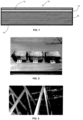
- a wood coating 12 containing the present antimicrobial composition when at least one embodiment of a wood coating 12 containing the present antimicrobial composition is applied to wood 10, the antimicrobial components can penetrate into the wood for some distance (about 0.5 mm to about 2 mm) before the coating film dries. This is believed to provide a protective zone 14 under coating 12, which provides added protection to the coated surface.
- wood staining fungi include but are not limited to species such as Aureobasidium pullulans, which may not cause decay or loss of mechanical strength in the wood, but can cause unsightly discoloration and loss of adhesion of the coating.
- the antimicrobial composition can advantageously prevent or reduce bacterial contamination of a water-based wood coating to which the antimicrobial composition is added, thus providing an antimicrobial wood coating product with improved storage time without the need for additional in-can preservatives.
- Bacteria growing in water-based wood coatings or preservatives can cause problems such as unpleasant or offensive odours, reduction of solid content, a decrease in adhesion of the dried film after application, and degradation of antifungal compounds, with consequent loss of antifungal efficacy.
- the antimicrobial wood coating product in at least one embodiment, can be stored for a longer period of time with reduced or minimal bacterial contamination than a comparable water-based wood coating which does not contain the present antimicrobial composition.
- Antimicrobial wood coating products containing the present antimicrobial composition have been found to show no detectable bacterial growth after extended storage for up to 12 months under normal ambient and increased (for example, 32°C) temperatures.
- An antimicrobial composition according to the present invention was incorporated into a water-repellent, UV resistant wood preservative formulation to provide an antimicrobial wood preservative concentrate comprising 3.33% by weight of active antimicrobial ingredients (IPBC, BCM and PPCZ). A negligible amount of blue pigment was added to facilitate visualization of treated surfaces.
- the concentrate was subsequently diluted with water at ratios of 6:1, 9:1 and 25:1 (water: concentrate, v/v) to provide test formulations A, B and C, respectively.
- test formulations A, B or C Five-inch sapwood sections cut from lodgepole pine 2" x 4" studs (Shelburne Wood Protection Ltd.) were end-sealed to prevent longitudinal penetration, immersed for 10 seconds in one of test formulations A, B or C and allowed to dry for 10 days under ambient conditions (21 °C, 50% relative humidity).
- the sealed ends of the blocks were cut-removed to expose untreated surfaces as a control, and the blocks were exposed to mold species (Aureobasidium pullulans ATCC (American Type Culture Collection) 9348; Aspergillus nigerATCC 6275 and Penicillium sp ATCC 9849) for 12 weeks in a humidity chamber under a controlled environment (28°C-32°C, 95%-98% relative humidity) as described in ASTM Standard D3273-12 (2012), Standard Test Method for Resistance to Growth of Mold on the Surface of interior Coatings in an Environmental chamber, ASTM International, West Conshohocken, PA. Three replicate samples were treated with each test formulation. The results are presented in Table 1 below.
- Table 1 Test formulation Dilution ratio Concentration of active ingredients (%, w/w) Preservative absorption (retention of actives) (g/m 2 ) Average mold growth on wood surfaces (%) A 6:1 0.476 118 (0.562) 0 B 9:1 0.333 123 (0.409) 0 C 25:1 0.128 127 (0.163) 0 untreated N/A N/A 0.00 50
- the average uptake of Product A was 137 g/m 2 , with an average uptake of active antimicrobial ingredients of 0.65 g/m 2 . Uptake values for other products tested (unidentified) varied from 106 to 259 g/m 2 .
- Table 2 Product Mold growth rating 2 weeks 4 weeks 6 weeks 8 weeks Average (standard deviation) Range (max-min) Average (standard deviation) Range (max-min) Average (standard deviation) Range (max-min) Average (standard deviation) Range (max-min) 1 0.0 (0) 0-0 0.8 (0.8) 2-0 2.3 (1.3) 4-1 3.0 (0.8) 4-2 2 0.2 (0.4) 1-0 3.6 (0.7) 4-2 4.0 (0) 4-4 4.0 (0) 4-4 3 0.1 (0.3) 1-0 0.4 (0.5) 1-0 1.1 (1.0) 3-0 2.3 (1.2) 4-1 4 0.0 (0) 0-0 0.9 (0.7) 2-0 3.1 (1.0) 4-1 3.8 (0.4) 4-3 5 0.0 (0) 0-0 1.1 (0.6) 2-0 3.1 (0.9) 4-2 4.0 (0.5) 5-3 6 (Product A) 0.1 (0.3) 1-0 0.1 (0.3) 1-0 1.0 (0.5) 2-0 2.4 (0.7) 3-1 7 0.0 (0) 0-0 0.6 (0.5) 1-0 2.7 (0.7) 4-2
- Product A (table entry 6) showed excellent control of mold growth under the test conditions, and was identified along with the product of table entry 3 (unidentified) as providing the best resistance to mold growth among the products tested.
- the product of table entry 10 is a non-commercial 100% concentrated multi-active formulation developed by the independent organization conducting the test (FPlnnovations, Vancouver, BC, Canada), and was included as a positive control.
- AWPA Standard E24-12 The conditions and apparatus described in AWPA Standard E24-12 were used, with some modification.
- the treated samples were placed in holes cut in an insulated flat roof, rather than being suspended inside the chamber, so that the sapwood-predominant veneer test face of the sample was exposed to the interior of the chamber and the other face was exposed to the outside of the chamber.
- the interior of the chamber was maintained at 100% humidity and 25°C, and the air outside the chamber was conditioned to 16°C to 20°C, so that condensation on the test samples was promoted.
- a fan installed in the chamber could be operated to blow air from the chamber outwards through an 8 cm by 9 cm hole in the chamber wall, and a similar hole at the other end of the chamber allowed entry of air from outside the chamber while the fan was operating. When the fan was not operating, plastic hinged flaps prevented air from entering or leaving the chamber.
- the test samples were exposed to a cycle including a condensation period of three days and a drying period of four days to provide an accelerated simulation of attic conditions.
- the condensation period included a repeated cycle of a 30 minute chamber condition of about 26°C and 96% relative humidity, followed by a 30 minute period where cooler room air was introduced into the chamber by means of the fan, to provide a chamber condition of about 22°C and 75% relative humidity. With entry of cooler air, water inside the chamber was heated to raise the temperature inside the chamber to 26°C once operation of the fan was discontinued. When the three day condensation period had ended, the heater and fan were turned off to allow the chamber to slowly equilibrate to ambient temperature (about 20°C to 22°C) and about 80% to 90% relative humidity over the four day drying period.
- Table 3 Test sample 2 Weeks 4 Weeks 6 Weeks 8 Weeks 12 Weeks Avg* (SD) Max -min Avg* (SD) Max -min Avg* (SD) Max-min Avg* (SD) Max -min Avg* (SD) Max -min Positive control (untreated Douglas fir plywood) 4.0 (0.7) 5-3 4.8 (0.4) 5-4 4.8 (0.4) 5-4 4.8 (0.4) 5-4 4.8 (0.4) 5-4 5.0 (0.0) 5-5 Positive control (untreated Ponderosa pine sapwood) 1.6 (1.8) 4-0 1.6 (1.8) 4-0 2.0 (1.9 4-0 2.6 (2.1) 5-0 Entry 1 0.0 (0.0) 0-0 0.2 (0.4) 1-0 0.2 (0.4) 1-0 0.8 (1.3) 3-0 1.4 (1.5) 3.0 Entry 3 0.6 (0.9) 2-0 0.2 (0.4) 1-0 0.2 (0.4) 1-0 0.0 (0.0) 0-0 0.0 (0.0) 0-0 0-0 0-0 0.8 (1.3) 3-0 1.4 (1.5)
- Product A (entry 6 of Table 2) provided the best control of mold growth of the three products tested, and prevented mold growth under the test conditions for at least 12 weeks.
- An antimicrobial composition according to the present invention was incorporated into a wood preservative formulation to provide an antimicrobial wood preservative concentrate comprising 3.33% by weight of active antimicrobial ingredients (IPBC, BCM and PPCZ).
- the concentrate was diluted with water at a ratio of 12:1 (water: formulation, v/v), to provide test formulation D, containing 0.26% of active antimicrobial ingredients.
- Comparative formulation E containing 0.26% of IPBC was prepared similarly.
- White pine sapwood blocks (20 mm x 10 mm x 6 mm) were immersed for 5 seconds in test formulation D or in the comparative formulation E, and were allowed to dry without contacting each other for 10 days under controlled laboratory conditions (21 °C, 40-50% relative humidity).
- the treated blocks were sterilized by passing briefly through an alcohol based burner flame, and were placed directly on sterile Difco TM culture medium containing 3.5% malt extract agar in plastic culture dishes (100 mm in diameter, 20 mm in height; 5 replicates each).
- the culture medium was inoculated as close to the dish edge as possible with two inocula (approximately 10 mm x 10 mm fragments) of each of three decay fungi, namely Gloeophyllum trabeum GT RR-5 (brown rot fungus), Postia placenta (brown rot fungus) and Trametes versicolor (white rot fungus) (6 inocula in total per plate).
- Gloeophyllum trabeum GT RR-5 was initially isolated from a naturally infected log placed out of ground contact, and the culture was purified by multiple mycelia transfer using beer-based medium (Sansin) containing 3% malt extract, 2% agar and 0.3% food-grade 35% hydrogen peroxide (H 2 O 2 ).
- Sain beer-based medium
- H 2 O 2 hydrogen peroxide
- An antimicrobial composition according to the present invention was incorporated into an alkyd-based, water-dilutable, clear decorative wood stain to provide an antimicrobial wood coating formulation containing 0.28% by weight of active antimicrobial ingredients (IPBC, BCM and PPCZ) (formulation F).
- a comparable wood coating formulation was prepared containing 0.28% of IPBC alone (formulation G).
- White pine sapwood blocks 50 mm x 25 mm x 15 mm
- formulation G dried for 2 days and acclimatized for 7 days at 80% humidity. The thickness of the dry film on coated surfaces was measured at 1 to 1.3 mils.
- the blocks were sterilized by promptly passing the blocks over an alcohol burner flame.
- Ten replicate culture plates were prepared by placing a block treated with formulation F, a block treated with formulation G and a control untreated block on sterile 2 cm x 2 cm plastic supports in each of ten plastic culture dishes (100 mm in diameter, 20 mm in height) containing sterile Difco TM culture medium comprising 3% malt extract agar.
- the dishes were aseptically sprayed with either a spore suspension containing a blend of spores of Aspergillus niger (strain ATTC 6275) and Penicillium funiculosum (strain ATTC 11797), or with a spore suspension containing spores of Aureobasidium pullulans (strain ATTC 9348).
- the plates were incubated at 28°C for four weeks and the growth of fungal mycelia was rated as follows:
- Wood preservative formulations containing an antimicrobial composition according to the present invention were tested (at the Earth Science Center, Faculty of Forestry, University of Toronto) for resistance to wood decay fungi by the NWWDA standard Soil Block Test Method (NWWDA Standard TM1:1994 (R2006) (1994, renewed 2006), National Wood Window and Door Association).
- An antimicrobial composition according to the present invention was incorporated into a ready to use wood preservative formulation to provide an antimicrobial wood preservative formulation comprising 0.46% by weight of active antimicrobial ingredients (IPBC, BCM and PPCZ) (formulation H).
- Formulation H was diluted 5.4 times with water to provide formulation I, containing 0.085% active antimicrobial ingredients (IPBC, BCM and PPCZ).
- Formulation H and formulation I were applied to 19 mm blocks of red pine sapwood and poplar sapwood and the blocks were vacuum treated for 30 minutes as described in section 9 of the NWWDA standard method.
- the average retention (six replicates) for the treated red pine sapwood blocks was 1.8 kg/m 3 (for blocks treated with formulation H) and 0.31 kg/m 3 (for blocks treated with formulation I), and, for the treated poplar sapwood blocks, the average retention was 1.5 kg/m 3 (for blocks treated with formulation H) and 0.29 kg/m 3 (for blocks treated with formulation I).
- a set of treated red pine sapwood blocks were exposed to accelerated leaching as described in Method B of the NWWDA standard method. Untreated blocks were used as a control and each test was carried out with six replicate blocks.
- test blocks After conditioning and weighing, the test blocks were sterilized overnight by exposure to UV light and were placed in glass jars on feeder strips pre-inoculated with brown rot fungus ( Gloeophyllum trabeum ) (red pine sapwood blocks) or white rot fungus ( Trametes versicolor ) (poplar sapwood blocks). The blocks were incubated for 12 weeks, then re-equilibrated and weighed. The results are shown in Table 5.
- brown rot fungus Gloeophyllum trabeum
- white rot fungus Trametes versicolor
- Test fungus Formulation Active (%, w/w) Leaching Weight loss (%) Standard deviation Brown rot fungus ( Gloeophyllum trabeum ) (red pine sapwood) H 0.46 Non-leached -0.1 1.0 H 0.46 Leached 0.6 0.7 I 0.085 Non-leached 5.8 2.7 I 0.085 Leached 2.9 0.3 Untreated 0 Non-leached 38.6 7.8 White rot fungus ( Trametes versicolor ) (poplar sapwood) H 0.46 Non-leached 0.1 1.0 I 0.085 Non-leached 22.9 10.8 Untreated 0 Non-leached 46.0 10.4
- Wooden 2 x 4 studs (Douglas fir, 8 feet in length, green or kiln dried) were flood treated in a test retort by a commercial wood preservation company under industrial conditions with test formulations A, B, C and D, prepared by diluting the antimicrobial wood preservative concentrate of Example 1 comprising 3.33% by weight of active antimicrobial ingredients (IPBC, BCM and PPCZ) with water at ratios of 6:1, 9:1, 25:1 and 12:1, respectively (Examples 1 and 3).
- Five-inch long samples cut from the treated studs were tested for mold resistance using the AWPA E24-2012 test method (Example 2), along with untreated control samples of Southern yellow pine sapwood or black or white spruce. The samples were continuously exposed to mold species for 8 weeks at 95% relative humidity and temperatures of 28°C to 32°C. Mold growth was visually assessed and recorded at 2, 4, 6 and 8 weeks exposure time, and was rated as follows:
- Table 7 Sample number Wood Species and Treatment Test Formulation (dilution) Percentage of sapwood (%) Ratings Two Weeks Four Weeks Six Weeks Eight Weeks I - 19 Southern yellow pine sapwood Untreated control 100 3 3 4 5 I - 20 100 3 4 5 5 I - 21 100 3 3 4 5 Average (standard deviation) 3.0 (0.0) 3.3 (0.6) 4.3 (0.6) 5.0 (0.0) II - 15 Black Spruce Untreated control Unknown 0 0 1 1 II - 16 Unknown 0 0 1 1 II - 17 White Spruce Untreated control Unknown 0 0 2 3 II - 18 Unknown 1 1 2 4 Average (standard deviation) 0.3 (0.5) 0.3 (0.5) 1.5 (0.6) 2.3 (1.5) III - 1 DouglasFir (green) A (6:1) 3 0 0 0 0 III - 2 3 0 0 0 0 III - 3 DouglasFir (kiln dried) 50 0 0 0 0 III - 4 50
- test formulation A containing the antimicrobial wood preservative concentrate at a dilution ratio of 6:1, protected treated stud samples having up to 50% sapwood content completely from mold colonization over an exposure period of 8 weeks.
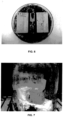
- Figure 9B untreated Southern yellow pine sapwood blocks were extensively colonized by mold under the same conditions.
- the present antimicrobial wood preservative concentrate showed moderate to good protection, even at a dilution of 12:1, against mold growth in studs containing up to 60% sapwood over an exposure period of 8 weeks.
- the stud samples treated with test formulation C (containing the antimicrobial wood preservative concentrate at a 25:1 dilution ratio) showed no mold growth, but contained a very high percentage of heartwood, which is more naturally resistant to mold infection than is sapwood.
- the minimum inhibitory concentration (MIC) of total active ingredients (IPBC, PPCZ and BCM) in an antimicrobial composition according to the present invention (test formulation J) against a number of wood-discoloring or wood-destroying fungi was determined using the Spiral Plater method as known in the art and compared against the MIC of total active ingredients in comparative formulations containing only IPBC (comparative formulation K, Polyphase TM PW 40, Troy Corporation) or a mixture of IPBC and BCM (1:3 ratio by weight, comparative formulation L, Polyphase TM P678, Troy Corporation). The results are shown in Table 8.
- the present antimicrobial composition exhibited MIC values against the fungi tested which are at least comparable to those of comparative formulations K and L, and exhibited MIC values against two commercially important black mold species ( Cladosporium cladosporioides and Aspergillus niger ) and two decay fungi ( Coniophora souna and Trametes versicolor ) which are superior to those of comparative formulation L.
- An antimicrobial composition according to the present invention was incorporated into a water-repellent, UV resistant wood preservative formulation to provide an antimicrobial wood preservative concentrate comprising 3.33% by weight of active antimicrobial ingredients (IPBC, BCM and PPCZ, Example 1).
- the concentrate was subsequently diluted with water at a ratio of 6:1 (water: concentrate, v/v) to provide test formulation M containing 0.476% by weight of total active ingredients (IPBC, PPCZ and BCM).
- test formulation M The biocidal properties of test formulation M were compared to those of comparative formulation N (similar to test formulation M but containing 0.476% by weight of IPBC only), comparative formulation O (similar to test formulation M but containing 0.476% by weight of a mixture of IPBC and BCM at a 1:3 ratio by weight) and comparative formulation P (similar to test formulation M but containing 0.476% by weight of PPCZ only).
- Each of formulations M, N, O and P was further diluted with water to provide test solutions containing 900 ⁇ g/mL, 500 ⁇ g/mL, 250 ⁇ g/mL, 100 ⁇ g/mL, 50 ⁇ g/mL or 12.5 ⁇ g/mL of total active ingredients.
- Table 9 Formulation Dilution (Conc. of total active ingredients) ( ⁇ g/mL) Average retention of active ingredients ( ⁇ g/cm 2 ) Mold growth rating (average of 5 replicates) 2 weeks 4 weeks 6 weeks 8 weeks 10 weeks Untreated controls N/A (0.0) 0.0 2.2 3.4 4.6 4.8 5.0 Test Formulation M 373:1 (12.5) 0.4 0.0 2.8 3.0 3.4 3.4 Comparative Formulation N 0.4 00 2.8 3.2 3.6 3.8 Comparative Formulation O 0.6 0.0 2.6 3.2 3.6 4.0 Comparative Formulation P 0.5 0.0 3.2 3.4 3.6 4.0 Test Formulation M 93:1 (50) 2.5 0.0 2.2 3.0 3.4 3.4 Comparative Formulation N 2.1 0.0 2.4 3.4 3.6 3.8 Comparative Formulation O 1.8 0.0 3.0 3.2 3.4 3.4 Comparative Formulation P 1.8 0.0 2.8 3.2 3.6 3.6 Test Formulation M 47:1 (100) 4.0 0.0 1.4 2.4 2.4 2.4 2.4 2.4 2.4
- test formulation M showed better control of mold growth than any of the comparative formulations N, O or P after 10 weeks of exposure, especially at concentrations of 250 ⁇ g/mL to 900 ⁇ g/mL.
- untreated control samples were completely overgrown by test fungi after this exposure time, as can be seen at the right side of Figure 10B .
Landscapes
- Life Sciences & Earth Sciences (AREA)
- Wood Science & Technology (AREA)
- Engineering & Computer Science (AREA)
- Chemical & Material Sciences (AREA)
- Plant Pathology (AREA)
- Health & Medical Sciences (AREA)
- General Health & Medical Sciences (AREA)
- Agronomy & Crop Science (AREA)
- Pest Control & Pesticides (AREA)
- Dentistry (AREA)
- Zoology (AREA)
- Environmental Sciences (AREA)
- Organic Chemistry (AREA)
- Materials Engineering (AREA)
- Forests & Forestry (AREA)
- Dispersion Chemistry (AREA)
- Toxicology (AREA)
- Agricultural Chemicals And Associated Chemicals (AREA)
Claims (14)
- Eine antimikrobielle Zusammensetzung, umfassend:10 bis 25 Gew.-% 3-lod-2-propinyl-N-butylcarbamat (IPBC);12 bis 20 Gew.-% Propiconazol;2 bis 8 Gew.-% Carbendazim;7 bis 15 Gew.-% eines Emulgators;2 bis 4 Gew.-% eines Coemulgators, wobei der Coemulgator ein erstes nichtionisches Tensid, das relativ lipophil ist und die Bildung von Wasser-in-Öl-Emulsionen begünstigt, und ein zweites nichtionisches Tensid, das relativ hydrophil ist und die Bildung von Öl-in-Wasser-Emulsionen begünstigt, umfasst; und25 bis 70 Gew.-% einer Trägerflüssigkeit;wobei die antimikrobielle Zusammensetzung in Form einer Suspoemulsion vorliegt, wobei das IPBC und das Carbendazim in fester Form vorliegen und in der antimikrobiellen Zusammensetzung als endliche Partikel dispergiert sind und wobei das Propiconazol als Lösung in einem Glykollösungsmittel bereitgestellt wird.
- Die antimikrobielle Zusammensetzung gemäß Anspruch 1, wobei der Emulgator ein anionisches Tensid umfasst.
- Die antimikrobielle Zusammensetzung gemäß Anspruch 1, wobei der Emulgator ein nichtionisches Tensid umfasst.
- Die antimikrobielle Zusammensetzung gemäß einem der Ansprüche 1 bis 3, wobei das Gewichtsverhältnis des ersten nichtionischen Tensids zu dem zweiten nichtionischen Tensid 90:10 bis 80:20 beträgt und der Coemulgator einen kombinierten HLB-Wert von 4 bis 10 aufweist.
- Die antimikrobielle Zusammensetzung gemäß einem der Ansprüche 1 bis 4, die zudem 3 bis 14 Gew.-% eines Emulsionsstabilisators umfasst, der ein Tonbasiertes Mineral ist.
- Die antimikrobielle Zusammensetzung gemäß Anspruch 5, wobei der Emulsionsstabilisator Kaolin ist.
- Die antimikrobielle Zusammensetzung gemäß einem der Ansprüche 1 bis 6, wobei die Trägerflüssigkeit aus Wasser, Glykolen und Mischungen davon ausgewählt ist.
- Die antimikrobielle Zusammensetzung gemäß einem der Ansprüche 1 bis 7, die zudem 0,3 bis 3 Gew.-% eines Entschäumers umfasst.
- Ein antimikrobielles Holzschutzmittel, das die antimikrobielle Zusammensetzung gemäß einem der Ansprüche 1 bis 8 umfasst.
- Verfahren zur Herstellung eines antimikrobiellen Holzbeschichtungsprodukts, wobei das Verfahren umfasst:Zugabe der antimikrobiellen Zusammensetzung gemäß einem der Ansprüche 1 bis 8 zu einer wasserbasierten Holzbeschichtung, um eine Mischung zu bilden; undRühren der Mischung, um das antimikrobielle Holzbeschichtungsprodukt zu bilden.
- Verwendung der antimikrobiellen Zusammensetzung gemäß einem der Ansprüche 1 bis 8 bei der Herstellung eines antimikrobiellen Holzbeschichtungsprodukts, das eine wasserbasierte Holzbeschichtung umfasst.
- Verwendung gemäß Anspruch 11, wobei das antimikrobielle Holzbeschichtungsprodukt 0,25 bis 2,50 Gew.-% der antimikrobiellen Zusammensetzung umfasst.
- Ein antimikrobielles Holzbeschichtungsprodukt, das eine wasserbasierte Holzbeschichtung und die antimikrobielle Zusammensetzung gemäß einem der Ansprüche 1 bis 8 umfasst.
- Das antimikrobielle Holzbeschichtungsprodukt gemäß Anspruch 13, das 0,25 bis 2,50 Gew.-% der antimikrobiellen Zusammensetzung umfasst.
Applications Claiming Priority (2)
| Application Number | Priority Date | Filing Date | Title |
|---|---|---|---|
| CA2852530A CA2852530A1 (en) | 2014-05-21 | 2014-05-21 | Antimicrobial composition for protecting wood |
| PCT/CA2015/000356 WO2015176171A1 (en) | 2014-05-21 | 2015-05-20 | Antimicrobial composition for protecting wood |
Publications (4)
| Publication Number | Publication Date |
|---|---|
| EP3145313A1 EP3145313A1 (de) | 2017-03-29 |
| EP3145313A4 EP3145313A4 (de) | 2018-02-21 |
| EP3145313B1 true EP3145313B1 (de) | 2024-12-04 |
| EP3145313C0 EP3145313C0 (de) | 2024-12-04 |
Family
ID=54545527
Family Applications (1)
| Application Number | Title | Priority Date | Filing Date |
|---|---|---|---|
| EP15796310.9A Active EP3145313B1 (de) | 2014-05-21 | 2015-05-20 | Antimikrobielle zusammensetzung zum schutz von holz |
Country Status (5)
| Country | Link |
|---|---|
| US (1) | US10201160B2 (de) |
| EP (1) | EP3145313B1 (de) |
| CA (2) | CA2852530A1 (de) |
| ES (1) | ES3012842T3 (de) |
| WO (1) | WO2015176171A1 (de) |
Families Citing this family (5)
| Publication number | Priority date | Publication date | Assignee | Title |
|---|---|---|---|---|
| US10779538B2 (en) * | 2014-05-21 | 2020-09-22 | Boss Holdings Inc. | Antimicrobial composition for protecting wood |
| EP3830201B1 (de) | 2018-07-27 | 2022-08-31 | Akzo Nobel Coatings International B.V. | Wasser-in-öl-beschichtung mit hohem wassergehalt |
| US20220161456A1 (en) * | 2019-08-09 | 2022-05-26 | Troy Corporation | Synergistic wood preservative composition comprising polymeric betaine and carbamate |
| CN113105775A (zh) * | 2020-01-10 | 2021-07-13 | 立邦涂料(中国)有限公司 | 新型乳胶漆绿色防腐体系及其在内墙乳胶漆中的应用 |
| CN119372224B (zh) * | 2024-12-31 | 2025-03-07 | 北京林业大学 | 一种桢楠耐腐标记基因PzPLR1及其扩增引物和应用 |
Family Cites Families (23)
| Publication number | Priority date | Publication date | Assignee | Title |
|---|---|---|---|---|
| US4079062A (en) | 1974-11-18 | 1978-03-14 | Janssen Pharmaceutica N.V. | Triazole derivatives |
| US5098472A (en) * | 1983-06-17 | 1992-03-24 | Commonwealth Scientific & Industrial Research Organization | Preservative composition |
| US4732905A (en) | 1987-03-13 | 1988-03-22 | Betz Laboratories, Inc. | Biocidal compositions and use thereof containing a synergistic mixture of 2-bromo-2-nitropropane-1,3-diol and a mixture of 5-chloro-2-methyl-4-isothiazolin-3-one and 2-methyl-4-isothiazolin-3-one |
| DE4113158A1 (de) | 1991-04-23 | 1992-10-29 | Bayer Ag | Mikrobizide wirkstoffkombinationen |
| DE4122868A1 (de) | 1991-07-11 | 1993-01-14 | Bayer Ag | Mikrobizide wirkstoffkombinationen |
| DE4131205A1 (de) | 1991-09-19 | 1993-03-25 | Bayer Ag | Wasserbasierte, loesungsmittel- und emulgatorfreie mikrobizide wirkstoffkombination |
| US5552425A (en) | 1994-04-28 | 1996-09-03 | Isp Chemicals Inc. | Synergistic water soluble preservative compositions of biocidal mixtures |
| US5714507A (en) | 1994-07-01 | 1998-02-03 | Janssen Pharmaceutica, N.V. | Synergistic compositions containing metconazole and another triazole |
| GB9504501D0 (en) | 1995-03-07 | 1995-04-26 | Hickson Int Plc | Method for preserving wood and other substrates |
| DE19834028A1 (de) | 1998-07-28 | 2000-02-03 | Wolman Gmbh Dr | Verfahren zur Behandlung von Holz gegen den Befall durch holzschädigende Pilze |
| US6197805B1 (en) | 1999-05-27 | 2001-03-06 | Troy Technology Corporation, Inc. | Broad spectrum antimicrobial mixtures |
| WO2002008372A1 (en) | 2000-07-21 | 2002-01-31 | Unilever Plc | Antimicrobial compositions |
| US6849664B2 (en) | 2001-10-18 | 2005-02-01 | Chevron U.S.A. Inc. | Process for disposing biocide-containing cooling water |
| AU2004270266B2 (en) * | 2003-09-09 | 2011-02-10 | 3M Innovative Properties Company | Concentrated antimicrobial compositions and methods |
| US20060013847A1 (en) | 2004-07-16 | 2006-01-19 | Isp Investments Inc. | Thermal stabilization of IPBC biocide |
| WO2006038019A1 (en) * | 2004-10-09 | 2006-04-13 | Enviroquest Group Limited | Non-ionic surfactant aggregates |
| US7993756B2 (en) | 2005-05-04 | 2011-08-09 | Viance, Llc | Long-chain quaternary ammonium compounds as wood treatment agents |
| DE102006010199A1 (de) | 2006-03-06 | 2007-09-13 | Lanxess Deutschland Gmbh | Stabilisierung Iod-haltiger Biozide durch spezielle Azolverbindungen |
| US8952081B2 (en) * | 2007-11-30 | 2015-02-10 | Dow Global Technologies Llc | Process for preparing latex paints containing biocides |
| TW200932107A (en) * | 2008-01-18 | 2009-08-01 | Dow Global Technologies Inc | Stable, low VOC, low viscous biocidal formulations and method of making such formulations |
| JP4845225B2 (ja) * | 2008-04-11 | 2011-12-28 | ローム アンド ハース カンパニー | 低融解性殺生物配合物 |
| GB2459691B (en) * | 2008-04-30 | 2013-05-22 | Arch Timber Protection Ltd | Formulations |
| US8772334B2 (en) * | 2008-07-02 | 2014-07-08 | Kamlesh Gaglani | Synergistic antimicrobial mixtures |
-
2014
- 2014-05-21 CA CA2852530A patent/CA2852530A1/en not_active Abandoned
-
2015
- 2015-05-20 US US15/312,549 patent/US10201160B2/en active Active
- 2015-05-20 WO PCT/CA2015/000356 patent/WO2015176171A1/en not_active Ceased
- 2015-05-20 ES ES15796310T patent/ES3012842T3/es active Active
- 2015-05-20 EP EP15796310.9A patent/EP3145313B1/de active Active
- 2015-05-20 CA CA2949274A patent/CA2949274C/en active Active
Also Published As
| Publication number | Publication date |
|---|---|
| WO2015176171A1 (en) | 2015-11-26 |
| CA2949274A1 (en) | 2015-11-26 |
| EP3145313C0 (de) | 2024-12-04 |
| ES3012842T3 (en) | 2025-04-10 |
| CA2852530A1 (en) | 2015-11-21 |
| EP3145313A4 (de) | 2018-02-21 |
| US10201160B2 (en) | 2019-02-12 |
| EP3145313A1 (de) | 2017-03-29 |
| US20170112133A1 (en) | 2017-04-27 |
| CA2949274C (en) | 2021-03-16 |
Similar Documents
| Publication | Publication Date | Title |
|---|---|---|
| US4648988A (en) | Water-dilutable wood-preserving liquids | |
| Clausen et al. | Protecting wood from mould, decay, and termites with multi-component biocide systems | |
| EP3145313B1 (de) | Antimikrobielle zusammensetzung zum schutz von holz | |
| PH27034A (en) | Synergistic compositions containing propiconazole and tebuconazole | |
| Freeman et al. | A critical and comprehensive review of boron in wood preservation | |
| USRE40589E1 (en) | Wood preservative composition | |
| US10779538B2 (en) | Antimicrobial composition for protecting wood | |
| Freeman et al. | Non-arsenical wood protection: alternatives for CCA, creosote, and pentachlorophenol | |
| AU764584B2 (en) | Diffusable antisapstain method and compositions | |
| RU2420962C2 (ru) | Фунгицидные смеси | |
| RU2420395C2 (ru) | Применение анилинопиримидинов для защиты древесины | |
| JP3541975B2 (ja) | 木材保存剤組成物及び木材保存剤の浸透性改善方法 | |
| CZ20011906A3 (cs) | Konzervační prostředek | |
| NO813584L (no) | Tre-beskyttelsesmiddel. | |
| CN1379621A (zh) | 木材处理方法 | |
| DK158570B (da) | Fungicidt middel til beskyttelse af friskskaaret trae mod angreb af blaasplint og skimmelsvampe | |
| EP2700310B1 (de) | Konservierungsmittel zum Schutz gegen Pilze und Algen und Verfahren zum Holzschutz gegen Pilze und Algen unter Verwendung dieser Konservierungsmittel | |
| Kim et al. | Laboratory evaluation of selected anti-stain chemicals for control of fungal staining on Ginkgo sapwood | |
| AU2016100445A4 (en) | A method of treating wood | |
| AU2013202289B2 (en) | A method of treating wood | |
| Clausen et al. | Multi-component biocide protects wood from fungi and insects in UC2 applications | |
| AU2017248458A1 (en) | A method of treating wood | |
| US20180021974A1 (en) | A Method and Formulation for the Treatment of Timber | |
| EP3860344A1 (de) | Holzbehandlungslösungen mit fungiziden und tertiären alkanolaminen und zugehörige verfahren, holzprodukte und mittel zum schutz vor pilzorganismen | |
| PL187568B1 (pl) | Środek do kompleksowej ochrony drewna |
Legal Events
| Date | Code | Title | Description |
|---|---|---|---|
| STAA | Information on the status of an ep patent application or granted ep patent |
Free format text: STATUS: THE INTERNATIONAL PUBLICATION HAS BEEN MADE |
|
| PUAI | Public reference made under article 153(3) epc to a published international application that has entered the european phase |
Free format text: ORIGINAL CODE: 0009012 |
|
| STAA | Information on the status of an ep patent application or granted ep patent |
Free format text: STATUS: REQUEST FOR EXAMINATION WAS MADE |
|
| 17P | Request for examination filed |
Effective date: 20161220 |
|
| AK | Designated contracting states |
Kind code of ref document: A1 Designated state(s): AL AT BE BG CH CY CZ DE DK EE ES FI FR GB GR HR HU IE IS IT LI LT LU LV MC MK MT NL NO PL PT RO RS SE SI SK SM TR |
|
| AX | Request for extension of the european patent |
Extension state: BA ME |
|
| DAV | Request for validation of the european patent (deleted) | ||
| DAX | Request for extension of the european patent (deleted) | ||
| A4 | Supplementary search report drawn up and despatched |
Effective date: 20180123 |
|
| RIC1 | Information provided on ipc code assigned before grant |
Ipc: A01N 43/653 20060101ALI20180117BHEP Ipc: A01N 47/18 20060101AFI20180117BHEP Ipc: A01N 47/12 20060101ALI20180117BHEP Ipc: A01N 25/30 20060101ALI20180117BHEP Ipc: A01N 25/02 20060101ALI20180117BHEP Ipc: A01P 1/00 20060101ALI20180117BHEP Ipc: C09D 5/14 20060101ALI20180117BHEP Ipc: B27K 3/34 20060101ALI20180117BHEP |
|
| STAA | Information on the status of an ep patent application or granted ep patent |
Free format text: STATUS: EXAMINATION IS IN PROGRESS |
|
| 17Q | First examination report despatched |
Effective date: 20190403 |
|
| GRAP | Despatch of communication of intention to grant a patent |
Free format text: ORIGINAL CODE: EPIDOSNIGR1 |
|
| STAA | Information on the status of an ep patent application or granted ep patent |
Free format text: STATUS: GRANT OF PATENT IS INTENDED |
|
| RIC1 | Information provided on ipc code assigned before grant |
Ipc: C09D 7/63 20180101ALI20240618BHEP Ipc: C08K 5/00 20060101ALI20240618BHEP Ipc: C09D 5/02 20060101ALI20240618BHEP Ipc: B27K 3/50 20060101ALI20240618BHEP Ipc: B27K 3/36 20060101ALI20240618BHEP Ipc: C09D 5/14 20060101ALI20240618BHEP Ipc: B27K 3/34 20060101ALI20240618BHEP Ipc: A01P 1/00 20060101ALI20240618BHEP Ipc: A01P 3/00 20060101ALI20240618BHEP Ipc: A01N 47/12 20060101ALI20240618BHEP Ipc: A01N 43/653 20060101ALI20240618BHEP Ipc: A01N 25/30 20060101ALI20240618BHEP Ipc: A01N 25/02 20060101ALI20240618BHEP Ipc: A01N 47/18 20060101AFI20240618BHEP |
|
| INTG | Intention to grant announced |
Effective date: 20240702 |
|
| GRAS | Grant fee paid |
Free format text: ORIGINAL CODE: EPIDOSNIGR3 |
|
| GRAA | (expected) grant |
Free format text: ORIGINAL CODE: 0009210 |
|
| STAA | Information on the status of an ep patent application or granted ep patent |
Free format text: STATUS: THE PATENT HAS BEEN GRANTED |
|
| AK | Designated contracting states |
Kind code of ref document: B1 Designated state(s): AL AT BE BG CH CY CZ DE DK EE ES FI FR GB GR HR HU IE IS IT LI LT LU LV MC MK MT NL NO PL PT RO RS SE SI SK SM TR |
|
| REG | Reference to a national code |
Ref country code: GB Ref legal event code: FG4D |
|
| REG | Reference to a national code |
Ref country code: CH Ref legal event code: EP |
|
| REG | Reference to a national code |
Ref country code: DE Ref legal event code: R096 Ref document number: 602015090568 Country of ref document: DE |
|
| REG | Reference to a national code |
Ref country code: IE Ref legal event code: FG4D |
|
| U01 | Request for unitary effect filed |
Effective date: 20250103 |
|
| U07 | Unitary effect registered |
Designated state(s): AT BE BG DE DK EE FI FR IT LT LU LV MT NL PT RO SE SI Effective date: 20250114 |
|
| REG | Reference to a national code |
Ref country code: ES Ref legal event code: FG2A Ref document number: 3012842 Country of ref document: ES Kind code of ref document: T3 Effective date: 20250410 |
|
| PG25 | Lapsed in a contracting state [announced via postgrant information from national office to epo] |
Ref country code: HR Free format text: LAPSE BECAUSE OF FAILURE TO SUBMIT A TRANSLATION OF THE DESCRIPTION OR TO PAY THE FEE WITHIN THE PRESCRIBED TIME-LIMIT Effective date: 20241204 |
|
| PG25 | Lapsed in a contracting state [announced via postgrant information from national office to epo] |
Ref country code: NO Free format text: LAPSE BECAUSE OF FAILURE TO SUBMIT A TRANSLATION OF THE DESCRIPTION OR TO PAY THE FEE WITHIN THE PRESCRIBED TIME-LIMIT Effective date: 20250304 |
|
| PG25 | Lapsed in a contracting state [announced via postgrant information from national office to epo] |
Ref country code: GR Free format text: LAPSE BECAUSE OF FAILURE TO SUBMIT A TRANSLATION OF THE DESCRIPTION OR TO PAY THE FEE WITHIN THE PRESCRIBED TIME-LIMIT Effective date: 20250305 |
|
| PG25 | Lapsed in a contracting state [announced via postgrant information from national office to epo] |
Ref country code: RS Free format text: LAPSE BECAUSE OF FAILURE TO SUBMIT A TRANSLATION OF THE DESCRIPTION OR TO PAY THE FEE WITHIN THE PRESCRIBED TIME-LIMIT Effective date: 20250304 |
|
| U20 | Renewal fee for the european patent with unitary effect paid |
Year of fee payment: 11 Effective date: 20250523 |
|
| PG25 | Lapsed in a contracting state [announced via postgrant information from national office to epo] |
Ref country code: SM Free format text: LAPSE BECAUSE OF FAILURE TO SUBMIT A TRANSLATION OF THE DESCRIPTION OR TO PAY THE FEE WITHIN THE PRESCRIBED TIME-LIMIT Effective date: 20241204 |
|
| PG25 | Lapsed in a contracting state [announced via postgrant information from national office to epo] |
Ref country code: PL Free format text: LAPSE BECAUSE OF FAILURE TO SUBMIT A TRANSLATION OF THE DESCRIPTION OR TO PAY THE FEE WITHIN THE PRESCRIBED TIME-LIMIT Effective date: 20241204 |
|
| PGFP | Annual fee paid to national office [announced via postgrant information from national office to epo] |
Ref country code: GB Payment date: 20250522 Year of fee payment: 11 Ref country code: ES Payment date: 20250616 Year of fee payment: 11 |
|
| PG25 | Lapsed in a contracting state [announced via postgrant information from national office to epo] |
Ref country code: IS Free format text: LAPSE BECAUSE OF FAILURE TO SUBMIT A TRANSLATION OF THE DESCRIPTION OR TO PAY THE FEE WITHIN THE PRESCRIBED TIME-LIMIT Effective date: 20250404 |
|
| PG25 | Lapsed in a contracting state [announced via postgrant information from national office to epo] |
Ref country code: SK Free format text: LAPSE BECAUSE OF FAILURE TO SUBMIT A TRANSLATION OF THE DESCRIPTION OR TO PAY THE FEE WITHIN THE PRESCRIBED TIME-LIMIT Effective date: 20241204 |
|
| PG25 | Lapsed in a contracting state [announced via postgrant information from national office to epo] |
Ref country code: CZ Free format text: LAPSE BECAUSE OF FAILURE TO SUBMIT A TRANSLATION OF THE DESCRIPTION OR TO PAY THE FEE WITHIN THE PRESCRIBED TIME-LIMIT Effective date: 20241204 |
|
| PLBE | No opposition filed within time limit |
Free format text: ORIGINAL CODE: 0009261 |
|
| STAA | Information on the status of an ep patent application or granted ep patent |
Free format text: STATUS: NO OPPOSITION FILED WITHIN TIME LIMIT |
|
| REG | Reference to a national code |
Ref country code: CH Ref legal event code: L10 Free format text: ST27 STATUS EVENT CODE: U-0-0-L10-L00 (AS PROVIDED BY THE NATIONAL OFFICE) Effective date: 20251015 |
|
| 26N | No opposition filed |
Effective date: 20250905 |
|
| REG | Reference to a national code |
Ref country code: CH Ref legal event code: H13 Free format text: ST27 STATUS EVENT CODE: U-0-0-H10-H13 (AS PROVIDED BY THE NATIONAL OFFICE) Effective date: 20251223 |
|
| PG25 | Lapsed in a contracting state [announced via postgrant information from national office to epo] |
Ref country code: CH Free format text: LAPSE BECAUSE OF NON-PAYMENT OF DUE FEES Effective date: 20250531 |
|
| PG25 | Lapsed in a contracting state [announced via postgrant information from national office to epo] |
Ref country code: MC Free format text: LAPSE BECAUSE OF FAILURE TO SUBMIT A TRANSLATION OF THE DESCRIPTION OR TO PAY THE FEE WITHIN THE PRESCRIBED TIME-LIMIT Effective date: 20241204 |
|
| PG25 | Lapsed in a contracting state [announced via postgrant information from national office to epo] |
Ref country code: IE Free format text: LAPSE BECAUSE OF NON-PAYMENT OF DUE FEES Effective date: 20250520 |