EP3145873B1 - Procédé de traitement de solides et de liquides ainsi que de sols et d'eaux contaminés - Google Patents
Procédé de traitement de solides et de liquides ainsi que de sols et d'eaux contaminés Download PDFInfo
- Publication number
- EP3145873B1 EP3145873B1 EP15723520.1A EP15723520A EP3145873B1 EP 3145873 B1 EP3145873 B1 EP 3145873B1 EP 15723520 A EP15723520 A EP 15723520A EP 3145873 B1 EP3145873 B1 EP 3145873B1
- Authority
- EP
- European Patent Office
- Prior art keywords
- ionic liquid
- separating
- metals
- unit
- metal
- Prior art date
- Legal status (The legal status is an assumption and is not a legal conclusion. Google has not performed a legal analysis and makes no representation as to the accuracy of the status listed.)
- Active
Links
Images
Classifications
-
- B—PERFORMING OPERATIONS; TRANSPORTING
- B09—DISPOSAL OF SOLID WASTE; RECLAMATION OF CONTAMINATED SOIL
- B09B—DISPOSAL OF SOLID WASTE NOT OTHERWISE PROVIDED FOR
- B09B3/00—Destroying solid waste or transforming solid waste into something useful or harmless
- B09B3/70—Chemical treatment, e.g. pH adjustment or oxidation
-
- C—CHEMISTRY; METALLURGY
- C02—TREATMENT OF WATER, WASTE WATER, SEWAGE, OR SLUDGE
- C02F—TREATMENT OF WATER, WASTE WATER, SEWAGE, OR SLUDGE
- C02F1/00—Treatment of water, waste water, or sewage
- C02F1/26—Treatment of water, waste water, or sewage by extraction
-
- B—PERFORMING OPERATIONS; TRANSPORTING
- B09—DISPOSAL OF SOLID WASTE; RECLAMATION OF CONTAMINATED SOIL
- B09B—DISPOSAL OF SOLID WASTE NOT OTHERWISE PROVIDED FOR
- B09B3/00—Destroying solid waste or transforming solid waste into something useful or harmless
- B09B3/10—Destroying solid waste or transforming solid waste into something useful or harmless involving an adsorption step
-
- C—CHEMISTRY; METALLURGY
- C02—TREATMENT OF WATER, WASTE WATER, SEWAGE, OR SLUDGE
- C02F—TREATMENT OF WATER, WASTE WATER, SEWAGE, OR SLUDGE
- C02F1/00—Treatment of water, waste water, or sewage
- C02F1/46—Treatment of water, waste water, or sewage by electrochemical methods
- C02F1/469—Treatment of water, waste water, or sewage by electrochemical methods by electrochemical separation, e.g. by electro-osmosis, electrodialysis, electrophoresis
-
- C—CHEMISTRY; METALLURGY
- C02—TREATMENT OF WATER, WASTE WATER, SEWAGE, OR SLUDGE
- C02F—TREATMENT OF WATER, WASTE WATER, SEWAGE, OR SLUDGE
- C02F11/00—Treatment of sludge; Devices therefor
- C02F11/002—Sludge treatment using liquids immiscible with water
-
- C—CHEMISTRY; METALLURGY
- C22—METALLURGY; FERROUS OR NON-FERROUS ALLOYS; TREATMENT OF ALLOYS OR NON-FERROUS METALS
- C22B—PRODUCTION AND REFINING OF METALS; PRETREATMENT OF RAW MATERIALS
- C22B3/00—Extraction of metal compounds from ores or concentrates by wet processes
- C22B3/20—Treatment or purification of solutions, e.g. obtained by leaching
- C22B3/42—Treatment or purification of solutions, e.g. obtained by leaching by ion-exchange extraction
-
- C—CHEMISTRY; METALLURGY
- C22—METALLURGY; FERROUS OR NON-FERROUS ALLOYS; TREATMENT OF ALLOYS OR NON-FERROUS METALS
- C22B—PRODUCTION AND REFINING OF METALS; PRETREATMENT OF RAW MATERIALS
- C22B7/00—Working up raw materials other than ores, e.g. scrap, to produce non-ferrous metals and compounds thereof; Methods of a general interest or applied to the winning of more than two metals
- C22B7/006—Wet processes
-
- B—PERFORMING OPERATIONS; TRANSPORTING
- B01—PHYSICAL OR CHEMICAL PROCESSES OR APPARATUS IN GENERAL
- B01D—SEPARATION
- B01D11/00—Solvent extraction
- B01D11/04—Solvent extraction of solutions which are liquid
-
- C—CHEMISTRY; METALLURGY
- C02—TREATMENT OF WATER, WASTE WATER, SEWAGE, OR SLUDGE
- C02F—TREATMENT OF WATER, WASTE WATER, SEWAGE, OR SLUDGE
- C02F1/00—Treatment of water, waste water, or sewage
- C02F1/02—Treatment of water, waste water, or sewage by heating
- C02F1/04—Treatment of water, waste water, or sewage by heating by distillation or evaporation
- C02F1/048—Purification of waste water by evaporation
-
- C—CHEMISTRY; METALLURGY
- C02—TREATMENT OF WATER, WASTE WATER, SEWAGE, OR SLUDGE
- C02F—TREATMENT OF WATER, WASTE WATER, SEWAGE, OR SLUDGE
- C02F1/00—Treatment of water, waste water, or sewage
- C02F1/42—Treatment of water, waste water, or sewage by ion-exchange
-
- C—CHEMISTRY; METALLURGY
- C02—TREATMENT OF WATER, WASTE WATER, SEWAGE, OR SLUDGE
- C02F—TREATMENT OF WATER, WASTE WATER, SEWAGE, OR SLUDGE
- C02F1/00—Treatment of water, waste water, or sewage
- C02F1/52—Treatment of water, waste water, or sewage by flocculation or precipitation of suspended impurities
-
- C—CHEMISTRY; METALLURGY
- C02—TREATMENT OF WATER, WASTE WATER, SEWAGE, OR SLUDGE
- C02F—TREATMENT OF WATER, WASTE WATER, SEWAGE, OR SLUDGE
- C02F1/00—Treatment of water, waste water, or sewage
- C02F2001/007—Processes including a sedimentation step
-
- C—CHEMISTRY; METALLURGY
- C02—TREATMENT OF WATER, WASTE WATER, SEWAGE, OR SLUDGE
- C02F—TREATMENT OF WATER, WASTE WATER, SEWAGE, OR SLUDGE
- C02F2101/00—Nature of the contaminant
- C02F2101/006—Radioactive compounds
-
- C—CHEMISTRY; METALLURGY
- C02—TREATMENT OF WATER, WASTE WATER, SEWAGE, OR SLUDGE
- C02F—TREATMENT OF WATER, WASTE WATER, SEWAGE, OR SLUDGE
- C02F2101/00—Nature of the contaminant
- C02F2101/10—Inorganic compounds
- C02F2101/20—Heavy metals or heavy metal compounds
-
- C—CHEMISTRY; METALLURGY
- C02—TREATMENT OF WATER, WASTE WATER, SEWAGE, OR SLUDGE
- C02F—TREATMENT OF WATER, WASTE WATER, SEWAGE, OR SLUDGE
- C02F2103/00—Nature of the water, waste water, sewage or sludge to be treated
- C02F2103/10—Nature of the water, waste water, sewage or sludge to be treated from quarries or from mining activities
-
- C—CHEMISTRY; METALLURGY
- C02—TREATMENT OF WATER, WASTE WATER, SEWAGE, OR SLUDGE
- C02F—TREATMENT OF WATER, WASTE WATER, SEWAGE, OR SLUDGE
- C02F2103/00—Nature of the water, waste water, sewage or sludge to be treated
- C02F2103/16—Nature of the water, waste water, sewage or sludge to be treated from metallurgical processes, i.e. from the production, refining or treatment of metals, e.g. galvanic wastes
-
- C—CHEMISTRY; METALLURGY
- C02—TREATMENT OF WATER, WASTE WATER, SEWAGE, OR SLUDGE
- C02F—TREATMENT OF WATER, WASTE WATER, SEWAGE, OR SLUDGE
- C02F2303/00—Specific treatment goals
- C02F2303/24—Separation of coarse particles, e.g. by using sieves or screens
-
- C—CHEMISTRY; METALLURGY
- C02—TREATMENT OF WATER, WASTE WATER, SEWAGE, OR SLUDGE
- C02F—TREATMENT OF WATER, WASTE WATER, SEWAGE, OR SLUDGE
- C02F2303/00—Specific treatment goals
- C02F2303/26—Reducing the size of particles, liquid droplets or bubbles, e.g. by crushing, grinding, spraying, creation of microbubbles or nanobubbles
-
- C—CHEMISTRY; METALLURGY
- C02—TREATMENT OF WATER, WASTE WATER, SEWAGE, OR SLUDGE
- C02F—TREATMENT OF WATER, WASTE WATER, SEWAGE, OR SLUDGE
- C02F2305/00—Use of specific compounds during water treatment
-
- Y—GENERAL TAGGING OF NEW TECHNOLOGICAL DEVELOPMENTS; GENERAL TAGGING OF CROSS-SECTIONAL TECHNOLOGIES SPANNING OVER SEVERAL SECTIONS OF THE IPC; TECHNICAL SUBJECTS COVERED BY FORMER USPC CROSS-REFERENCE ART COLLECTIONS [XRACs] AND DIGESTS
- Y02—TECHNOLOGIES OR APPLICATIONS FOR MITIGATION OR ADAPTATION AGAINST CLIMATE CHANGE
- Y02P—CLIMATE CHANGE MITIGATION TECHNOLOGIES IN THE PRODUCTION OR PROCESSING OF GOODS
- Y02P10/00—Technologies related to metal processing
- Y02P10/20—Recycling
Definitions
- the invention relates to a method for treating solids and liquids as well as contaminated soil or sand with the aim of cleaning them and recovering therefrom metals or metal compounds.
- starting materials in particular the most polluted soil or wastewater in question, but it can also be solid or liquid industrial waste, recycled materials, etc.
- the invention describes a uniform, technical process and relies on the particular properties of so-called ionic liquids, e.g. their good conductivity and their special solution behavior towards metals and other solids.
- the ionic liquids are not lost in the process.
- the recovered metals and possibly other substances are of high purity and quality. They can then be used and processed like conventional raw materials.
- the patent DE 37 32177 A1 describes, for example, a method of recovering metals from metal-plastic wastes using spent solutions from the electrical engineering industry.
- the metal-plastic waste is heated in a first step, whereby the metal is separated from the plastic.
- the metal is dissolved in etching or washing solutions and then converted into a sulfate. This is done by treatment with ion exchangers.
- the selective deposition of the metals from the solution is carried out electrolytically and the ion exchanger is regenerated to recover the reusable etching solution.
- the in the published patent application DE 602 01 404 T2 described invention is concerned with the recovery of catalytic metal colloids from fluid compositions containing it. According to the invention, this is accomplished by concentrating the metal colloids as a precipitate on a porous metal filter, then removing and solubilizing the precipitate, and recovering the catalytic metals.
- a method for the recovery of, for example, iron or aluminum from sewage sludge describes the published patent application DE 694 15 325 T2 .
- the sludge is first acidified and then treated with an oxidizing agent such as hydrogen peroxide.
- an oxidizing agent such as hydrogen peroxide.
- the thus pretreated sludge is subjected to a liquid-liquid extraction and recovered the iron or aluminum ions from the organic phase in a chemical process.
- ionic liquids refers to liquids that are exclusively composed of ions. These are molten salts of organic compounds or eutectic mixtures of organic and inorganic salts.
- DE 10 2011 080 230 A1 An ionic liquid with a very special structure is disclosed.
- WO 2014/058312 A1 It is known to carry out an extraction of metals from a water with ionic liquids.
- Ionic liquids themselves have a number of excellent properties: they are non-volatile (negligible vapor pressure, such as salts), hardly combustible and thermally stable (up to more than 300 ° C depending on the selected liquid). Most ionic liquids are non-toxic. For industrial applications, their special properties as solvents and their very good electrical conductivity are of particular interest.
- Such compounds are also suitable for certain malls, e.g. Platinum, gold or rhodium dissolve. It is also known from the literature that, for example, by dissolving precious metals such as platinum or rhodium in an ionic liquid, it can be used as a liquid catalyst.
- the invention is based on the object of describing a holistic method by means of which valuable metals or metal compounds can be recovered both from polluted soil and water, as well as from industrial waste and wastewater.
- the initial substrates soil, waste water, etc. are cleaned and can be returned to nature.
- the core idea of the invention is to dissolve the substances that one wishes to recover valuable metals or metal compounds from an aqueous solution or suspension in an ionic liquid and then to separate these from the ionic liquid by an electrolytic process.
- Suitable ionic liquids are, in particular, compounds of the methylimidazilimime (MIM), butymimidazolium (BMIM) ethylmethylimidazoilum (EMIM) ion, etc., such as e.g. Halides, sulfates, triflates, acetates, etc.
- MIM methylimidazilimime
- BMIM butymimidazolium
- EMIM ethylmethylimidazoilum
- other ionic liquid conduction may also be used.
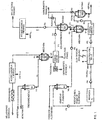
- Fig. 1 a process is shown which is based on the inventive considerations. In the following he will be briefly explained by means of three examples.
- the contaminated water which originates eg from chemical processes, or from mines or other areas, is pretreated in a first step and freed from coarse mechanical impurities (PRE-RETICLE SEPARATION). This can be done by coarse filters or sieves, but also in sink basins, where a density separation takes place.
- the coarse mechanical impurities are separated as waste and sent for disposal.
- oils can be deposited, which form a second phase.
- the resulting liquid is a solution of metal salts or an aqueous suspension of solids having a particle size in the range of a few millimeters, but preferably a few microns, which is passed gravimetrically or by means of the pump P4 in the concentrating unit KE1.
- the main part of the water for example, by heating and evaporation and subsequent condensation by cooling in K1 is removed from the suspension.
- the thus concentrated aqueous liquid is mixed in the mixing vessel MK2 with a suitable ionic liquid (MIXING).
- MIXING ionic liquid
- the metal present in the suspension and possibly adhering to the solid particles passes over into the ionic liquid and we largely dissolve it therein.
- the result is an emulsion ionic liquid / aqueous phase from which the ionic liquid is separated in the DISKING unit 2. Since the ionic liquid does not mix with the aqueous phase, it forms a second phase, e.g. can be separated gravimetrically.
- the aqueous phase is e.g. removed by heating in KE2 and then cooling and condensing in K2 the water. The residue is sent as waste for disposal.
- the ionic liquid which contains the metal in dissolved form, is passed through an ELECTROLYZE CELL.
- the metal is dissociated from the solution at one of the electrodes, wherein the ionic liquid acts as an electrolyte due to its good electrical conductivity.
- the METAL is obtained in its purest form.
- the ionic liquid is freed of any mechanical or chemical impurities (CLEAN IL) and recycled via P3.
- the deposition of the metal from the ionic liquid may also be chemical, e.g. by precipitation followed by filtration. For this, the electrolysis cell would have to be replaced by suitable other vessels. A combination of both possibilities is also conceivable.
- the material to be reprocessed is contaminated soil or sand, it must first be crushed (CRUSHING) and freed of coarse mechanical foreign bodies such as stones, plastics, wood components and unwanted metal pieces (DISCONNECTING TREATING).
- the thus prepared input is then mixed in the mixing chamber MK1 with a special, aqueous mixture containing water in addition to specific separation chemicals, similar to the aforementioned publication DE 601 00 804 T2 described.
- This separation reagent is prepared from a CONCENTRATE by adding WATER in B1 in advance. It primarily causes the separation of any existing organic, oil-containing phases. This is done in CUTTING UNIT 1, into which suspension or emulsion prepared in MK1 passes via V2.
- CUTTING UNIT 1 the mixture is separated into an OXYGEN PHASE and an aqueous phase, and a solid phase, the CLEANED ERDREICH, which is returned to nature after DRYING.
- the separation into the three phases can for example be done gravimetrically.
- the aqueous phase which has a similar nature as described in Example 1 and may also contain fine solid particles, is fed via P1 or gradient to the vessel KE1. Subsequently, the procedure is continued as described in Example 1 with her.
- Solid waste such as e.g. Metal catalvators on support materials
- the supports are structures similar to those used in automotive catalytic converters. Consequently, these may consist of either a non-metal, e.g. a ceramic, or special metal surfaces with a non-metallic coating.
- the input is freed from large foreign bodies as in Example 2. Subsequently, the shredded material comes into the mixing chamber MK1. If the carrier is a ceramic, it can be further comminuted here until grain sizes in the millimeter or micrometer range are formed.
- a special separation reagent which is fed from B1, for example, in the case of a non-metallic coated metallic carrier, the non-metallic portion is washed off the metal. The mixture that results in both cases is then separated in the TRENNEIT 1. Any non-catalytic metals, adhering oils, grease, etc. are removed from the aqueous phase.
- the resulting aqueous phase is basically a solution or suspension of fine solid particles in water, having a similar nature as described in Examples 2 and 1. It is routed via P1 to KE1. Subsequently, the procedure continues as in Example 1 or 2.
- the metals are not removed from the ionic liquid, but that this solution is used further. Is it in the dissolved metal, for example, a precious metal such. Pt, Pd, etc. the as Catalyst should be used, one could use the complete solution as a catalyst. The ionic liquid would then no longer be recycled in the process but sold as a product in its precious metal-enriched form.
Landscapes
- Chemical & Material Sciences (AREA)
- Engineering & Computer Science (AREA)
- Environmental & Geological Engineering (AREA)
- Life Sciences & Earth Sciences (AREA)
- Organic Chemistry (AREA)
- Chemical Kinetics & Catalysis (AREA)
- Water Supply & Treatment (AREA)
- Hydrology & Water Resources (AREA)
- Health & Medical Sciences (AREA)
- General Chemical & Material Sciences (AREA)
- General Life Sciences & Earth Sciences (AREA)
- Mechanical Engineering (AREA)
- Metallurgy (AREA)
- Manufacturing & Machinery (AREA)
- Geology (AREA)
- Materials Engineering (AREA)
- Toxicology (AREA)
- General Health & Medical Sciences (AREA)
- Electrochemistry (AREA)
- Geochemistry & Mineralogy (AREA)
- Molecular Biology (AREA)
- Analytical Chemistry (AREA)
- Manufacture And Refinement Of Metals (AREA)
- Water Treatment By Electricity Or Magnetism (AREA)
Claims (7)
- Procédé pour le traitement de déchets solides ou d'eau contaminée ou de terre ou de sable contaminé(e), ayant pour but de les purifier et d'en récupérer des métaux ou des composés métalliques,
caractérisé en ce que
le procédé comprend les étapes suivantes :- prétraiter le matériau de départ par libération du matériau de départ vis-à-vis des impuretés mécaniques grossières lors du traitement d'eau contaminée ou par fragmentation et libération du matériau de départ vis-à-vis des corps étrangers mécaniques grossiers lors du traitement de déchets solides ou de terre ou de sable contaminé(e) ;- mélanger le matériau de départ avec un liquide de séparation et séparer le mélange obtenu pour donner une phase contenant de l'huile, une phase aqueuse et une phase solide lors du traitement de déchets solides ou de terre ou de sable contaminé(e) ;- concentrer la phase aqueuse du matériau de départ prétraité ;- mélanger la phase aqueuse du matériau de départ prétraité avec un liquide ionique ;- dissoudre les métaux ou les composés métalliques dans le liquide ionique ;- séparer le liquide ionique hors du mélange aqueux ;- déposer ou enlever les métaux ou les composés métalliques hors du liquide ionique à l'aide d'une cellule d'électrolyse ;- purifier le liquide ionique vis-à-vis des impuretés mécaniques et chimiques éventuelles ;- retourner le liquide ionique dans le circuit. - Procédé selon la revendication 1,
caractérisé en ce que
les métaux sont des métaux précieux, en particulier Pt, Au, Ag, Pd. - Procédé selon l'une des revendications 1 à 2,
caractérisé en ce que
le liquide ionique utilisé pour dissoudre ou séparer les métaux ou les composés métalliques est un composé de type A+B- qui contient à titre de cation un ion d'imidazole, en particulier un méthylimidazole ou butylimidazole, et à titre d'anion un halogénure, en particulier Cl- ou Br-, ou un radicale d'acide acétique, en particulier un acétate, ou un anion de triflate de type CF3SO3- ou un mélange de plusieurs liquides ioniques. - Procédé selon la revendication 1 à 3,
caractérisé en ce que
les métaux ou les composés métalliques sont des métaux lourds ou des éléments radioactifs. - Procédé selon la revendication 1 à 4,
caractérisé en ce que
le liquide ionique qui contient le métal ou le composé métallique peut être utilisé tel quel, en particulier à titre de catalyseur ou de solution galvanique. - Installation pour mettre en oeuvre un procédé selon l'une des revendications 1 à 5,
caractérisée en ce que
elle comprend les composants principaux suivants :- une unité de prétraitement [PRÉTRAITER SÉPARER],- une unité pour concentrer la phase aqueuse [KE1],- un récipient de réserve pour le liquide ionique [B2],- une unité de mélange pour la phase aqueuse avec le liquide ionique [MK2],- une unité de séparation pour séparer le liquide ionique [UNITÉ DE SÉPARATION 2],- une cellule d'électrolyse pour déposer un métal ou un composé métallique hors du liquide ionique [CELLULE D'ÉLECTROLYSE],- une unité pour purifier le liquide ionique,l'installation comprenant en outre, pendant le traitement des déchets solides ou de la terre ou du sable contaminé(e):- une unité de fragmentation [FRAGMENTER], et après le prétraitement :- un récipient de réserve pour un liquide de séparation [B1],- une unité de mélange pour des solides [MK1],- une unité de séparation pour un mélange solide-liquide de séparation [UNITÉ DE SÉPARATION 1],- un sécheur pour les solides. - Installation selon la revendication 6,
caractérisée en ce que
l'installation comprend des échangeurs de chaleur [K1, 2 ...] et des pompes [P1,2 ...].
Applications Claiming Priority (2)
| Application Number | Priority Date | Filing Date | Title |
|---|---|---|---|
| DE102014007294.0A DE102014007294A1 (de) | 2014-05-20 | 2014-05-20 | Verfahren und technischer Prozess zum Behandeln von Feststoffen und Flüssigkeiten, sowie belastetem Erdreich und Gewässern |
| PCT/EP2015/061139 WO2015177225A1 (fr) | 2014-05-20 | 2015-05-20 | Procédé et processus technique de traitement de solides et de liquides ainsi que de sols et d'eaux contaminés |
Publications (2)
| Publication Number | Publication Date |
|---|---|
| EP3145873A1 EP3145873A1 (fr) | 2017-03-29 |
| EP3145873B1 true EP3145873B1 (fr) | 2019-09-11 |
Family
ID=53189828
Family Applications (1)
| Application Number | Title | Priority Date | Filing Date |
|---|---|---|---|
| EP15723520.1A Active EP3145873B1 (fr) | 2014-05-20 | 2015-05-20 | Procédé de traitement de solides et de liquides ainsi que de sols et d'eaux contaminés |
Country Status (6)
| Country | Link |
|---|---|
| EP (1) | EP3145873B1 (fr) |
| CN (1) | CN106660829A (fr) |
| DE (1) | DE102014007294A1 (fr) |
| ES (1) | ES2760874T3 (fr) |
| PT (1) | PT3145873T (fr) |
| WO (1) | WO2015177225A1 (fr) |
Families Citing this family (8)
| Publication number | Priority date | Publication date | Assignee | Title |
|---|---|---|---|---|
| CN105880274A (zh) * | 2016-05-17 | 2016-08-24 | 云南民族大学 | 一种去除污染土壤中铅的淋洗体系 |
| FR3065230B1 (fr) * | 2017-04-12 | 2019-06-14 | Commissariat A L'energie Atomique Et Aux Energies Alternatives | Procede de recuperation de l'argent present sur un substrat, par voie electrochimique, en presence d'un liquide ionique |
| CN108620428B (zh) * | 2018-04-08 | 2020-12-18 | 王微静 | 一种基于离子液体的土壤重金属淋洗液及其制备方法 |
| CN108500055A (zh) * | 2018-04-17 | 2018-09-07 | 杨大伟 | 一种基于离子液体的重金属污染土壤修复一体机 |
| CN109877147B (zh) * | 2019-04-10 | 2020-10-09 | 江南大学 | 一种淋洗修复镉污染土壤的方法 |
| CN109834028B (zh) * | 2019-04-10 | 2022-03-29 | 杨大伟 | 一种土壤污染的应急处理方法及装置 |
| CN110607456B (zh) * | 2019-08-27 | 2021-07-27 | 浙江工业大学 | 一种利用离子液体回收废炭载贵金属催化剂中贵金属的方法 |
| CN110980894A (zh) * | 2019-11-25 | 2020-04-10 | 上海第二工业大学 | 一种挥发性有机物的电化学降解方法 |
Family Cites Families (10)
| Publication number | Priority date | Publication date | Assignee | Title |
|---|---|---|---|---|
| DE3732177C2 (de) | 1987-09-24 | 1996-01-18 | Mr Metall Recycling Gmbh | Verfahren zur Rückgewinnung von Metallen aus Metall-Kunststoffabfällen und dergleichen |
| FI97289C (fi) | 1993-08-26 | 1996-11-25 | Kemira Oy | Menetelmä ainakin yhden metallin talteenottamiseksi hapolla käsitellystä jätevesilietteestä |
| GB9719551D0 (en) * | 1997-09-16 | 1997-11-19 | British Nuclear Fuels Plc | Treatment of molten salt reprocessing wastes |
| GB9815168D0 (en) | 1998-07-13 | 1998-09-09 | Eastman Kodak Co | Recovery of metal from solution |
| FR2806939B1 (fr) | 2000-03-30 | 2002-12-06 | Patrice Jean Albert Stengel | Procede et dispositif de depollution des sables ou des terres souilles par des hydrocarbures ou des germes infectieux |
| EP1314788B1 (fr) | 2001-11-21 | 2004-09-29 | Shipley Co. L.L.C. | Procédé de récupération de métaux catalytiques utilisant un filtre en métal poreux |
| US8608950B2 (en) * | 2009-12-30 | 2013-12-17 | Uop Llc | Process for removing metals from resid |
| DE102011080230A1 (de) * | 2011-08-01 | 2013-02-07 | Helmholtz-Zentrum Dresden - Rossendorf E.V. | Extraktion von Edelmetall(ionen) mittels ionischer Flüssigkeiten |
| CN102643988B (zh) * | 2012-04-13 | 2013-07-10 | 西南科技大学 | 一种用离子液体从废弃印刷线路板中浸出金属铜的方法 |
| NL2009584C2 (en) * | 2012-10-08 | 2014-04-14 | Stichting Wetsus Ct Excellence Sustainable Water Technology | Desalination of aqueous media using ionic liquids. |
-
2014
- 2014-05-20 DE DE102014007294.0A patent/DE102014007294A1/de not_active Withdrawn
-
2015
- 2015-05-20 CN CN201580035144.3A patent/CN106660829A/zh active Pending
- 2015-05-20 WO PCT/EP2015/061139 patent/WO2015177225A1/fr not_active Ceased
- 2015-05-20 PT PT157235201T patent/PT3145873T/pt unknown
- 2015-05-20 EP EP15723520.1A patent/EP3145873B1/fr active Active
- 2015-05-20 ES ES15723520T patent/ES2760874T3/es active Active
Non-Patent Citations (1)
| Title |
|---|
| None * |
Also Published As
| Publication number | Publication date |
|---|---|
| CN106660829A (zh) | 2017-05-10 |
| DE102014007294A1 (de) | 2015-11-26 |
| EP3145873A1 (fr) | 2017-03-29 |
| PT3145873T (pt) | 2020-01-06 |
| WO2015177225A1 (fr) | 2015-11-26 |
| ES2760874T3 (es) | 2020-05-18 |
Similar Documents
| Publication | Publication Date | Title |
|---|---|---|
| EP3145873B1 (fr) | Procédé de traitement de solides et de liquides ainsi que de sols et d'eaux contaminés | |
| EP1065170B1 (fr) | Procédé et dispositif pour régler électrolytiquement le ph et le potentiel redox de fluides | |
| EP2933233A1 (fr) | Procédé de récupération de phosphate à partir d'une phase liquide | |
| DE60201404T2 (de) | Verfahren zur Rückgewinnung von Katalysatormetallen unter Verwendung eines Filters aus porösem Metall | |
| Ferraro et al. | Investigation of different ethylenediamine-N, N′-disuccinic acid-enhanced washing configurations for remediation of a Cu-contaminated soil: process kinetics and efficiency comparison between single-stage and multi-stage configurations | |
| DE69303930T2 (de) | Behandlung von mit quecksilber verunreinigtem schlamm | |
| DE10005681A1 (de) | Verfahren und Vorrichtung zur Dekontamination metallhaltiger und/oder radioaktiv belasteter Wässer | |
| DE102009034949A1 (de) | Verfahren zur Aufbereitung einer Suspension | |
| DE102006056017B4 (de) | Verfahren zur Rückgewinnung von Edelmetallen | |
| EP3591082A1 (fr) | Récipient d'électrolyse autoclave destiné à la récupération des plantinoïdes | |
| DE2150344A1 (de) | Verfahren zur Trennung von Metallchloriden aus einer waessrigen Mischung derselben | |
| DE102013105177A1 (de) | Verfahren zur Gewinnung metallischer Anteile sowie von metallabgereichertem Material aus metallhaltigen Materialien | |
| EP2961855B1 (fr) | Procédé hydrométallurgique de récupération de métaux et/ou métalloïdes à partir de déchets contenant des matériaux semi-conducteurs de connexion et/ou des matériaux de contacts arrières et/ou des oxydes électroconducteurs transparents (tco) | |
| DE69811377T2 (de) | Verfahren zum reinigen von mit quecksilber verseuchten böden | |
| DE102015008509A1 (de) | Verfahren und technischer Prozess zur Reinigung von kontaminiertem Erdreich mittels ionischer Flüssigkeiten | |
| EP1533398B1 (fr) | Procédé pour la production d'un électrolyte prêt à utilisation à partir de déchets contenant des ions métalliques | |
| EP1606424A1 (fr) | Procede de raffinage fin de l'or | |
| LU102054B1 (de) | Verfahren zur Gewinnung von Gold und Silber aus Rohstoffen | |
| EP0656669B1 (fr) | Procédé de traitement hydrométallurgique de batteries usagées provenant d'appareils ménager et équipements | |
| Navarro-Tovar et al. | Cadmium and Copper Removal from Cobalt Electrolytes via SuperLig® Molecular Recognition Technology™(MRT™) | |
| DE19506832A1 (de) | Kreislaufverfahren zum Beizen von Kupfer und Kupferlegierungen | |
| AT521253B1 (de) | Verfahren und Anlage zum nasschemischen Gewinnen einer Wertstofffraktion aus einem Schüttgut | |
| DE2542020A1 (de) | Verfahren zum verfeinern bzw. reinigen von silber | |
| WO2022022987A1 (fr) | Procédé d'obtention d'or et d'argent à partir de matières premières | |
| DE1592022B1 (de) | Verfahren zur entfernung von metallionen aus alkali hydroxydloesungen |
Legal Events
| Date | Code | Title | Description |
|---|---|---|---|
| STAA | Information on the status of an ep patent application or granted ep patent |
Free format text: STATUS: THE INTERNATIONAL PUBLICATION HAS BEEN MADE |
|
| PUAI | Public reference made under article 153(3) epc to a published international application that has entered the european phase |
Free format text: ORIGINAL CODE: 0009012 |
|
| STAA | Information on the status of an ep patent application or granted ep patent |
Free format text: STATUS: REQUEST FOR EXAMINATION WAS MADE |
|
| 17P | Request for examination filed |
Effective date: 20161208 |
|
| AK | Designated contracting states |
Kind code of ref document: A1 Designated state(s): AL AT BE BG CH CY CZ DE DK EE ES FI FR GB GR HR HU IE IS IT LI LT LU LV MC MK MT NL NO PL PT RO RS SE SI SK SM TR |
|
| AX | Request for extension of the european patent |
Extension state: BA ME |
|
| DAV | Request for validation of the european patent (deleted) | ||
| DAX | Request for extension of the european patent (deleted) | ||
| STAA | Information on the status of an ep patent application or granted ep patent |
Free format text: STATUS: EXAMINATION IS IN PROGRESS |
|
| 17Q | First examination report despatched |
Effective date: 20180319 |
|
| GRAP | Despatch of communication of intention to grant a patent |
Free format text: ORIGINAL CODE: EPIDOSNIGR1 |
|
| STAA | Information on the status of an ep patent application or granted ep patent |
Free format text: STATUS: GRANT OF PATENT IS INTENDED |
|
| INTG | Intention to grant announced |
Effective date: 20190221 |
|
| GRAS | Grant fee paid |
Free format text: ORIGINAL CODE: EPIDOSNIGR3 |
|
| GRAA | (expected) grant |
Free format text: ORIGINAL CODE: 0009210 |
|
| STAA | Information on the status of an ep patent application or granted ep patent |
Free format text: STATUS: THE PATENT HAS BEEN GRANTED |
|
| AK | Designated contracting states |
Kind code of ref document: B1 Designated state(s): AL AT BE BG CH CY CZ DE DK EE ES FI FR GB GR HR HU IE IS IT LI LT LU LV MC MK MT NL NO PL PT RO RS SE SI SK SM TR |
|
| REG | Reference to a national code |
Ref country code: GB Ref legal event code: FG4D Free format text: NOT ENGLISH |
|
| REG | Reference to a national code |
Ref country code: CH Ref legal event code: EP |
|
| REG | Reference to a national code |
Ref country code: AT Ref legal event code: REF Ref document number: 1178256 Country of ref document: AT Kind code of ref document: T Effective date: 20190915 |
|
| REG | Reference to a national code |
Ref country code: DE Ref legal event code: R096 Ref document number: 502015010321 Country of ref document: DE Ref country code: IE Ref legal event code: FG4D Free format text: LANGUAGE OF EP DOCUMENT: GERMAN |
|
| REG | Reference to a national code |
Ref country code: PT Ref legal event code: SC4A Ref document number: 3145873 Country of ref document: PT Date of ref document: 20200106 Kind code of ref document: T Free format text: AVAILABILITY OF NATIONAL TRANSLATION Effective date: 20191211 |
|
| REG | Reference to a national code |
Ref country code: NL Ref legal event code: FP |
|
| REG | Reference to a national code |
Ref country code: LT Ref legal event code: MG4D |
|
| PG25 | Lapsed in a contracting state [announced via postgrant information from national office to epo] |
Ref country code: FI Free format text: LAPSE BECAUSE OF FAILURE TO SUBMIT A TRANSLATION OF THE DESCRIPTION OR TO PAY THE FEE WITHIN THE PRESCRIBED TIME-LIMIT Effective date: 20190911 Ref country code: LT Free format text: LAPSE BECAUSE OF FAILURE TO SUBMIT A TRANSLATION OF THE DESCRIPTION OR TO PAY THE FEE WITHIN THE PRESCRIBED TIME-LIMIT Effective date: 20190911 Ref country code: NO Free format text: LAPSE BECAUSE OF FAILURE TO SUBMIT A TRANSLATION OF THE DESCRIPTION OR TO PAY THE FEE WITHIN THE PRESCRIBED TIME-LIMIT Effective date: 20191211 Ref country code: BG Free format text: LAPSE BECAUSE OF FAILURE TO SUBMIT A TRANSLATION OF THE DESCRIPTION OR TO PAY THE FEE WITHIN THE PRESCRIBED TIME-LIMIT Effective date: 20191211 Ref country code: HR Free format text: LAPSE BECAUSE OF FAILURE TO SUBMIT A TRANSLATION OF THE DESCRIPTION OR TO PAY THE FEE WITHIN THE PRESCRIBED TIME-LIMIT Effective date: 20190911 Ref country code: SE Free format text: LAPSE BECAUSE OF FAILURE TO SUBMIT A TRANSLATION OF THE DESCRIPTION OR TO PAY THE FEE WITHIN THE PRESCRIBED TIME-LIMIT Effective date: 20190911 |
|
| PG25 | Lapsed in a contracting state [announced via postgrant information from national office to epo] |
Ref country code: RS Free format text: LAPSE BECAUSE OF FAILURE TO SUBMIT A TRANSLATION OF THE DESCRIPTION OR TO PAY THE FEE WITHIN THE PRESCRIBED TIME-LIMIT Effective date: 20190911 Ref country code: GR Free format text: LAPSE BECAUSE OF FAILURE TO SUBMIT A TRANSLATION OF THE DESCRIPTION OR TO PAY THE FEE WITHIN THE PRESCRIBED TIME-LIMIT Effective date: 20191212 Ref country code: AL Free format text: LAPSE BECAUSE OF FAILURE TO SUBMIT A TRANSLATION OF THE DESCRIPTION OR TO PAY THE FEE WITHIN THE PRESCRIBED TIME-LIMIT Effective date: 20190911 Ref country code: LV Free format text: LAPSE BECAUSE OF FAILURE TO SUBMIT A TRANSLATION OF THE DESCRIPTION OR TO PAY THE FEE WITHIN THE PRESCRIBED TIME-LIMIT Effective date: 20190911 |
|
| PG25 | Lapsed in a contracting state [announced via postgrant information from national office to epo] |
Ref country code: PL Free format text: LAPSE BECAUSE OF FAILURE TO SUBMIT A TRANSLATION OF THE DESCRIPTION OR TO PAY THE FEE WITHIN THE PRESCRIBED TIME-LIMIT Effective date: 20190911 Ref country code: EE Free format text: LAPSE BECAUSE OF FAILURE TO SUBMIT A TRANSLATION OF THE DESCRIPTION OR TO PAY THE FEE WITHIN THE PRESCRIBED TIME-LIMIT Effective date: 20190911 Ref country code: RO Free format text: LAPSE BECAUSE OF FAILURE TO SUBMIT A TRANSLATION OF THE DESCRIPTION OR TO PAY THE FEE WITHIN THE PRESCRIBED TIME-LIMIT Effective date: 20190911 |
|
| REG | Reference to a national code |
Ref country code: ES Ref legal event code: FG2A Ref document number: 2760874 Country of ref document: ES Kind code of ref document: T3 Effective date: 20200518 |
|
| PG25 | Lapsed in a contracting state [announced via postgrant information from national office to epo] |
Ref country code: SK Free format text: LAPSE BECAUSE OF FAILURE TO SUBMIT A TRANSLATION OF THE DESCRIPTION OR TO PAY THE FEE WITHIN THE PRESCRIBED TIME-LIMIT Effective date: 20190911 Ref country code: CZ Free format text: LAPSE BECAUSE OF FAILURE TO SUBMIT A TRANSLATION OF THE DESCRIPTION OR TO PAY THE FEE WITHIN THE PRESCRIBED TIME-LIMIT Effective date: 20190911 Ref country code: IS Free format text: LAPSE BECAUSE OF FAILURE TO SUBMIT A TRANSLATION OF THE DESCRIPTION OR TO PAY THE FEE WITHIN THE PRESCRIBED TIME-LIMIT Effective date: 20200224 Ref country code: SM Free format text: LAPSE BECAUSE OF FAILURE TO SUBMIT A TRANSLATION OF THE DESCRIPTION OR TO PAY THE FEE WITHIN THE PRESCRIBED TIME-LIMIT Effective date: 20190911 |
|
| REG | Reference to a national code |
Ref country code: DE Ref legal event code: R097 Ref document number: 502015010321 Country of ref document: DE |
|
| PLBE | No opposition filed within time limit |
Free format text: ORIGINAL CODE: 0009261 |
|
| STAA | Information on the status of an ep patent application or granted ep patent |
Free format text: STATUS: NO OPPOSITION FILED WITHIN TIME LIMIT |
|
| PG2D | Information on lapse in contracting state deleted |
Ref country code: IS |
|
| PG25 | Lapsed in a contracting state [announced via postgrant information from national office to epo] |
Ref country code: DK Free format text: LAPSE BECAUSE OF FAILURE TO SUBMIT A TRANSLATION OF THE DESCRIPTION OR TO PAY THE FEE WITHIN THE PRESCRIBED TIME-LIMIT Effective date: 20190911 Ref country code: IS Free format text: LAPSE BECAUSE OF FAILURE TO SUBMIT A TRANSLATION OF THE DESCRIPTION OR TO PAY THE FEE WITHIN THE PRESCRIBED TIME-LIMIT Effective date: 20200112 |
|
| 26N | No opposition filed |
Effective date: 20200615 |
|
| PG25 | Lapsed in a contracting state [announced via postgrant information from national office to epo] |
Ref country code: SI Free format text: LAPSE BECAUSE OF FAILURE TO SUBMIT A TRANSLATION OF THE DESCRIPTION OR TO PAY THE FEE WITHIN THE PRESCRIBED TIME-LIMIT Effective date: 20190911 |
|
| PG25 | Lapsed in a contracting state [announced via postgrant information from national office to epo] |
Ref country code: MC Free format text: LAPSE BECAUSE OF FAILURE TO SUBMIT A TRANSLATION OF THE DESCRIPTION OR TO PAY THE FEE WITHIN THE PRESCRIBED TIME-LIMIT Effective date: 20190911 |
|
| PG25 | Lapsed in a contracting state [announced via postgrant information from national office to epo] |
Ref country code: IE Free format text: LAPSE BECAUSE OF NON-PAYMENT OF DUE FEES Effective date: 20200520 |
|
| PG25 | Lapsed in a contracting state [announced via postgrant information from national office to epo] |
Ref country code: TR Free format text: LAPSE BECAUSE OF FAILURE TO SUBMIT A TRANSLATION OF THE DESCRIPTION OR TO PAY THE FEE WITHIN THE PRESCRIBED TIME-LIMIT Effective date: 20190911 Ref country code: MT Free format text: LAPSE BECAUSE OF FAILURE TO SUBMIT A TRANSLATION OF THE DESCRIPTION OR TO PAY THE FEE WITHIN THE PRESCRIBED TIME-LIMIT Effective date: 20190911 Ref country code: CY Free format text: LAPSE BECAUSE OF FAILURE TO SUBMIT A TRANSLATION OF THE DESCRIPTION OR TO PAY THE FEE WITHIN THE PRESCRIBED TIME-LIMIT Effective date: 20190911 |
|
| PG25 | Lapsed in a contracting state [announced via postgrant information from national office to epo] |
Ref country code: MK Free format text: LAPSE BECAUSE OF FAILURE TO SUBMIT A TRANSLATION OF THE DESCRIPTION OR TO PAY THE FEE WITHIN THE PRESCRIBED TIME-LIMIT Effective date: 20190911 |
|
| P01 | Opt-out of the competence of the unified patent court (upc) registered |
Effective date: 20230531 |
|
| PGFP | Annual fee paid to national office [announced via postgrant information from national office to epo] |
Ref country code: NL Payment date: 20250526 Year of fee payment: 11 |
|
| PGFP | Annual fee paid to national office [announced via postgrant information from national office to epo] |
Ref country code: DE Payment date: 20250528 Year of fee payment: 11 |
|
| PGFP | Annual fee paid to national office [announced via postgrant information from national office to epo] |
Ref country code: GB Payment date: 20250520 Year of fee payment: 11 Ref country code: ES Payment date: 20250611 Year of fee payment: 11 |
|
| PGFP | Annual fee paid to national office [announced via postgrant information from national office to epo] |
Ref country code: LU Payment date: 20250526 Year of fee payment: 11 Ref country code: BE Payment date: 20250526 Year of fee payment: 11 Ref country code: IT Payment date: 20250522 Year of fee payment: 11 |
|
| PGFP | Annual fee paid to national office [announced via postgrant information from national office to epo] |
Ref country code: PT Payment date: 20250505 Year of fee payment: 11 |
|
| PGFP | Annual fee paid to national office [announced via postgrant information from national office to epo] |
Ref country code: FR Payment date: 20250526 Year of fee payment: 11 |
|
| PGFP | Annual fee paid to national office [announced via postgrant information from national office to epo] |
Ref country code: CH Payment date: 20250601 Year of fee payment: 11 |
|
| PGFP | Annual fee paid to national office [announced via postgrant information from national office to epo] |
Ref country code: AT Payment date: 20250520 Year of fee payment: 11 |