EP3145984B1 - Therapeutische konjugate mit sulfatierten dendrimeren für intrazelluläres targeting - Google Patents
Therapeutische konjugate mit sulfatierten dendrimeren für intrazelluläres targeting Download PDFInfo
- Publication number
- EP3145984B1 EP3145984B1 EP15724286.8A EP15724286A EP3145984B1 EP 3145984 B1 EP3145984 B1 EP 3145984B1 EP 15724286 A EP15724286 A EP 15724286A EP 3145984 B1 EP3145984 B1 EP 3145984B1
- Authority
- EP
- European Patent Office
- Prior art keywords
- dendrimer
- pharmaceutical composition
- group
- composition according
- conjugate
- Prior art date
- Legal status (The legal status is an assumption and is not a legal conclusion. Google has not performed a legal analysis and makes no representation as to the accuracy of the status listed.)
- Active
Links
- 0 CC(C1C)C11C(CCC2CC(C3)C3C2)C*1 Chemical compound CC(C1C)C11C(CCC2CC(C3)C3C2)C*1 0.000 description 4
- SHOXIQHPTOTPRX-UHFFFAOYSA-N CC(C)(CCNC(CCN(C(C=C1)=O)C1=O)=O)OCCC(C)(C)OCCC=O Chemical compound CC(C)(CCNC(CCN(C(C=C1)=O)C1=O)=O)OCCC(C)(C)OCCC=O SHOXIQHPTOTPRX-UHFFFAOYSA-N 0.000 description 2
Images





Classifications
-
- A—HUMAN NECESSITIES
- A61—MEDICAL OR VETERINARY SCIENCE; HYGIENE
- A61K—PREPARATIONS FOR MEDICAL, DENTAL OR TOILETRY PURPOSES
- A61K49/00—Preparations for testing in vivo
- A61K49/001—Preparation for luminescence or biological staining
- A61K49/0013—Luminescence
- A61K49/0017—Fluorescence in vivo
- A61K49/005—Fluorescence in vivo characterised by the carrier molecule carrying the fluorescent agent
- A61K49/0054—Macromolecular compounds, i.e. oligomers, polymers, dendrimers
-
- A—HUMAN NECESSITIES
- A61—MEDICAL OR VETERINARY SCIENCE; HYGIENE
- A61K—PREPARATIONS FOR MEDICAL, DENTAL OR TOILETRY PURPOSES
- A61K31/00—Medicinal preparations containing organic active ingredients
- A61K31/33—Heterocyclic compounds
- A61K31/395—Heterocyclic compounds having nitrogen as a ring hetero atom, e.g. guanethidine or rifamycins
- A61K31/535—Heterocyclic compounds having nitrogen as a ring hetero atom, e.g. guanethidine or rifamycins having six-membered rings with at least one nitrogen and one oxygen as the ring hetero atoms, e.g. 1,2-oxazines
- A61K31/537—Heterocyclic compounds having nitrogen as a ring hetero atom, e.g. guanethidine or rifamycins having six-membered rings with at least one nitrogen and one oxygen as the ring hetero atoms, e.g. 1,2-oxazines spiro-condensed or forming part of bridged ring systems
-
- A—HUMAN NECESSITIES
- A61—MEDICAL OR VETERINARY SCIENCE; HYGIENE
- A61K—PREPARATIONS FOR MEDICAL, DENTAL OR TOILETRY PURPOSES
- A61K31/00—Medicinal preparations containing organic active ingredients
- A61K31/33—Heterocyclic compounds
- A61K31/395—Heterocyclic compounds having nitrogen as a ring hetero atom, e.g. guanethidine or rifamycins
- A61K31/55—Heterocyclic compounds having nitrogen as a ring hetero atom, e.g. guanethidine or rifamycins having seven-membered rings, e.g. azelastine, pentylenetetrazole
- A61K31/553—Heterocyclic compounds having nitrogen as a ring hetero atom, e.g. guanethidine or rifamycins having seven-membered rings, e.g. azelastine, pentylenetetrazole having at least one nitrogen and one oxygen as ring hetero atoms, e.g. loxapine, staurosporine
-
- A—HUMAN NECESSITIES
- A61—MEDICAL OR VETERINARY SCIENCE; HYGIENE
- A61K—PREPARATIONS FOR MEDICAL, DENTAL OR TOILETRY PURPOSES
- A61K38/00—Medicinal preparations containing peptides
-
- A—HUMAN NECESSITIES
- A61—MEDICAL OR VETERINARY SCIENCE; HYGIENE
- A61K—PREPARATIONS FOR MEDICAL, DENTAL OR TOILETRY PURPOSES
- A61K38/00—Medicinal preparations containing peptides
- A61K38/04—Peptides having up to 20 amino acids in a fully defined sequence; Derivatives thereof
- A61K38/10—Peptides having 12 to 20 amino acids
-
- A—HUMAN NECESSITIES
- A61—MEDICAL OR VETERINARY SCIENCE; HYGIENE
- A61K—PREPARATIONS FOR MEDICAL, DENTAL OR TOILETRY PURPOSES
- A61K38/00—Medicinal preparations containing peptides
- A61K38/16—Peptides having more than 20 amino acids; Gastrins; Somatostatins; Melanotropins; Derivatives thereof
- A61K38/17—Peptides having more than 20 amino acids; Gastrins; Somatostatins; Melanotropins; Derivatives thereof from animals; from humans
- A61K38/1767—Peptides having more than 20 amino acids; Gastrins; Somatostatins; Melanotropins; Derivatives thereof from animals; from humans from invertebrates
-
- A—HUMAN NECESSITIES
- A61—MEDICAL OR VETERINARY SCIENCE; HYGIENE
- A61K—PREPARATIONS FOR MEDICAL, DENTAL OR TOILETRY PURPOSES
- A61K38/00—Medicinal preparations containing peptides
- A61K38/16—Peptides having more than 20 amino acids; Gastrins; Somatostatins; Melanotropins; Derivatives thereof
- A61K38/43—Enzymes; Proenzymes; Derivatives thereof
-
- A—HUMAN NECESSITIES
- A61—MEDICAL OR VETERINARY SCIENCE; HYGIENE
- A61K—PREPARATIONS FOR MEDICAL, DENTAL OR TOILETRY PURPOSES
- A61K38/00—Medicinal preparations containing peptides
- A61K38/16—Peptides having more than 20 amino acids; Gastrins; Somatostatins; Melanotropins; Derivatives thereof
- A61K38/43—Enzymes; Proenzymes; Derivatives thereof
- A61K38/46—Hydrolases (3)
- A61K38/465—Hydrolases (3) acting on ester bonds (3.1), e.g. lipases, ribonucleases
-
- A—HUMAN NECESSITIES
- A61—MEDICAL OR VETERINARY SCIENCE; HYGIENE
- A61K—PREPARATIONS FOR MEDICAL, DENTAL OR TOILETRY PURPOSES
- A61K38/00—Medicinal preparations containing peptides
- A61K38/16—Peptides having more than 20 amino acids; Gastrins; Somatostatins; Melanotropins; Derivatives thereof
- A61K38/43—Enzymes; Proenzymes; Derivatives thereof
- A61K38/46—Hydrolases (3)
- A61K38/50—Hydrolases (3) acting on carbon-nitrogen bonds, other than peptide bonds (3.5), e.g. asparaginase
-
- A—HUMAN NECESSITIES
- A61—MEDICAL OR VETERINARY SCIENCE; HYGIENE
- A61K—PREPARATIONS FOR MEDICAL, DENTAL OR TOILETRY PURPOSES
- A61K39/00—Medicinal preparations containing antigens or antibodies
- A61K39/395—Antibodies; Immunoglobulins; Immune serum, e.g. antilymphocytic serum
-
- A—HUMAN NECESSITIES
- A61—MEDICAL OR VETERINARY SCIENCE; HYGIENE
- A61K—PREPARATIONS FOR MEDICAL, DENTAL OR TOILETRY PURPOSES
- A61K47/00—Medicinal preparations characterised by the non-active ingredients used, e.g. carriers or inert additives; Targeting or modifying agents chemically bound to the active ingredient
- A61K47/50—Medicinal preparations characterised by the non-active ingredients used, e.g. carriers or inert additives; Targeting or modifying agents chemically bound to the active ingredient the non-active ingredient being chemically bound to the active ingredient, e.g. polymer-drug conjugates
- A61K47/51—Medicinal preparations characterised by the non-active ingredients used, e.g. carriers or inert additives; Targeting or modifying agents chemically bound to the active ingredient the non-active ingredient being chemically bound to the active ingredient, e.g. polymer-drug conjugates the non-active ingredient being a modifying agent
- A61K47/56—Medicinal preparations characterised by the non-active ingredients used, e.g. carriers or inert additives; Targeting or modifying agents chemically bound to the active ingredient the non-active ingredient being chemically bound to the active ingredient, e.g. polymer-drug conjugates the non-active ingredient being a modifying agent the modifying agent being an organic macromolecular compound, e.g. an oligomeric, polymeric or dendrimeric molecule
- A61K47/59—Medicinal preparations characterised by the non-active ingredients used, e.g. carriers or inert additives; Targeting or modifying agents chemically bound to the active ingredient the non-active ingredient being chemically bound to the active ingredient, e.g. polymer-drug conjugates the non-active ingredient being a modifying agent the modifying agent being an organic macromolecular compound, e.g. an oligomeric, polymeric or dendrimeric molecule obtained otherwise than by reactions only involving carbon-to-carbon unsaturated bonds, e.g. polyureas or polyurethanes
-
- A—HUMAN NECESSITIES
- A61—MEDICAL OR VETERINARY SCIENCE; HYGIENE
- A61K—PREPARATIONS FOR MEDICAL, DENTAL OR TOILETRY PURPOSES
- A61K47/00—Medicinal preparations characterised by the non-active ingredients used, e.g. carriers or inert additives; Targeting or modifying agents chemically bound to the active ingredient
- A61K47/50—Medicinal preparations characterised by the non-active ingredients used, e.g. carriers or inert additives; Targeting or modifying agents chemically bound to the active ingredient the non-active ingredient being chemically bound to the active ingredient, e.g. polymer-drug conjugates
- A61K47/51—Medicinal preparations characterised by the non-active ingredients used, e.g. carriers or inert additives; Targeting or modifying agents chemically bound to the active ingredient the non-active ingredient being chemically bound to the active ingredient, e.g. polymer-drug conjugates the non-active ingredient being a modifying agent
- A61K47/56—Medicinal preparations characterised by the non-active ingredients used, e.g. carriers or inert additives; Targeting or modifying agents chemically bound to the active ingredient the non-active ingredient being chemically bound to the active ingredient, e.g. polymer-drug conjugates the non-active ingredient being a modifying agent the modifying agent being an organic macromolecular compound, e.g. an oligomeric, polymeric or dendrimeric molecule
- A61K47/59—Medicinal preparations characterised by the non-active ingredients used, e.g. carriers or inert additives; Targeting or modifying agents chemically bound to the active ingredient the non-active ingredient being chemically bound to the active ingredient, e.g. polymer-drug conjugates the non-active ingredient being a modifying agent the modifying agent being an organic macromolecular compound, e.g. an oligomeric, polymeric or dendrimeric molecule obtained otherwise than by reactions only involving carbon-to-carbon unsaturated bonds, e.g. polyureas or polyurethanes
- A61K47/60—Medicinal preparations characterised by the non-active ingredients used, e.g. carriers or inert additives; Targeting or modifying agents chemically bound to the active ingredient the non-active ingredient being chemically bound to the active ingredient, e.g. polymer-drug conjugates the non-active ingredient being a modifying agent the modifying agent being an organic macromolecular compound, e.g. an oligomeric, polymeric or dendrimeric molecule obtained otherwise than by reactions only involving carbon-to-carbon unsaturated bonds, e.g. polyureas or polyurethanes the organic macromolecular compound being a polyoxyalkylene oligomer, polymer or dendrimer, e.g. PEG, PPG, PEO or polyglycerol
-
- A—HUMAN NECESSITIES
- A61—MEDICAL OR VETERINARY SCIENCE; HYGIENE
- A61K—PREPARATIONS FOR MEDICAL, DENTAL OR TOILETRY PURPOSES
- A61K49/00—Preparations for testing in vivo
- A61K49/001—Preparation for luminescence or biological staining
- A61K49/0013—Luminescence
- A61K49/0017—Fluorescence in vivo
- A61K49/0019—Fluorescence in vivo characterised by the fluorescent group, e.g. oligomeric, polymeric or dendritic molecules
- A61K49/0021—Fluorescence in vivo characterised by the fluorescent group, e.g. oligomeric, polymeric or dendritic molecules the fluorescent group being a small organic molecule
-
- A—HUMAN NECESSITIES
- A61—MEDICAL OR VETERINARY SCIENCE; HYGIENE
- A61K—PREPARATIONS FOR MEDICAL, DENTAL OR TOILETRY PURPOSES
- A61K49/00—Preparations for testing in vivo
- A61K49/001—Preparation for luminescence or biological staining
- A61K49/0013—Luminescence
- A61K49/0017—Fluorescence in vivo
- A61K49/0019—Fluorescence in vivo characterised by the fluorescent group, e.g. oligomeric, polymeric or dendritic molecules
- A61K49/0021—Fluorescence in vivo characterised by the fluorescent group, e.g. oligomeric, polymeric or dendritic molecules the fluorescent group being a small organic molecule
- A61K49/0032—Methine dyes, e.g. cyanine dyes
-
- A—HUMAN NECESSITIES
- A61—MEDICAL OR VETERINARY SCIENCE; HYGIENE
- A61K—PREPARATIONS FOR MEDICAL, DENTAL OR TOILETRY PURPOSES
- A61K49/00—Preparations for testing in vivo
- A61K49/001—Preparation for luminescence or biological staining
- A61K49/0013—Luminescence
- A61K49/0017—Fluorescence in vivo
- A61K49/0019—Fluorescence in vivo characterised by the fluorescent group, e.g. oligomeric, polymeric or dendritic molecules
- A61K49/0021—Fluorescence in vivo characterised by the fluorescent group, e.g. oligomeric, polymeric or dendritic molecules the fluorescent group being a small organic molecule
- A61K49/0041—Xanthene dyes, used in vivo, e.g. administered to a mice, e.g. rhodamines, rose Bengal
-
- A—HUMAN NECESSITIES
- A61—MEDICAL OR VETERINARY SCIENCE; HYGIENE
- A61K—PREPARATIONS FOR MEDICAL, DENTAL OR TOILETRY PURPOSES
- A61K49/00—Preparations for testing in vivo
- A61K49/001—Preparation for luminescence or biological staining
- A61K49/0013—Luminescence
- A61K49/0017—Fluorescence in vivo
- A61K49/0019—Fluorescence in vivo characterised by the fluorescent group, e.g. oligomeric, polymeric or dendritic molecules
- A61K49/0021—Fluorescence in vivo characterised by the fluorescent group, e.g. oligomeric, polymeric or dendritic molecules the fluorescent group being a small organic molecule
- A61K49/0041—Xanthene dyes, used in vivo, e.g. administered to a mice, e.g. rhodamines, rose Bengal
- A61K49/0043—Fluorescein, used in vivo
-
- A—HUMAN NECESSITIES
- A61—MEDICAL OR VETERINARY SCIENCE; HYGIENE
- A61K—PREPARATIONS FOR MEDICAL, DENTAL OR TOILETRY PURPOSES
- A61K49/00—Preparations for testing in vivo
- A61K49/001—Preparation for luminescence or biological staining
- A61K49/0013—Luminescence
- A61K49/0017—Fluorescence in vivo
- A61K49/005—Fluorescence in vivo characterised by the carrier molecule carrying the fluorescent agent
- A61K49/0056—Peptides, proteins, polyamino acids
-
- A—HUMAN NECESSITIES
- A61—MEDICAL OR VETERINARY SCIENCE; HYGIENE
- A61P—SPECIFIC THERAPEUTIC ACTIVITY OF CHEMICAL COMPOUNDS OR MEDICINAL PREPARATIONS
- A61P29/00—Non-central analgesic, antipyretic or antiinflammatory agents, e.g. antirheumatic agents; Non-steroidal antiinflammatory drugs [NSAID]
-
- A—HUMAN NECESSITIES
- A61—MEDICAL OR VETERINARY SCIENCE; HYGIENE
- A61P—SPECIFIC THERAPEUTIC ACTIVITY OF CHEMICAL COMPOUNDS OR MEDICINAL PREPARATIONS
- A61P3/00—Drugs for disorders of the metabolism
-
- A—HUMAN NECESSITIES
- A61—MEDICAL OR VETERINARY SCIENCE; HYGIENE
- A61P—SPECIFIC THERAPEUTIC ACTIVITY OF CHEMICAL COMPOUNDS OR MEDICINAL PREPARATIONS
- A61P3/00—Drugs for disorders of the metabolism
- A61P3/08—Drugs for disorders of the metabolism for glucose homeostasis
- A61P3/10—Drugs for disorders of the metabolism for glucose homeostasis for hyperglycaemia, e.g. antidiabetics
-
- A—HUMAN NECESSITIES
- A61—MEDICAL OR VETERINARY SCIENCE; HYGIENE
- A61P—SPECIFIC THERAPEUTIC ACTIVITY OF CHEMICAL COMPOUNDS OR MEDICINAL PREPARATIONS
- A61P35/00—Antineoplastic agents
-
- A—HUMAN NECESSITIES
- A61—MEDICAL OR VETERINARY SCIENCE; HYGIENE
- A61P—SPECIFIC THERAPEUTIC ACTIVITY OF CHEMICAL COMPOUNDS OR MEDICINAL PREPARATIONS
- A61P37/00—Drugs for immunological or allergic disorders
- A61P37/02—Immunomodulators
- A61P37/06—Immunosuppressants, e.g. drugs for graft rejection
-
- A—HUMAN NECESSITIES
- A61—MEDICAL OR VETERINARY SCIENCE; HYGIENE
- A61P—SPECIFIC THERAPEUTIC ACTIVITY OF CHEMICAL COMPOUNDS OR MEDICINAL PREPARATIONS
- A61P43/00—Drugs for specific purposes, not provided for in groups A61P1/00-A61P41/00
-
- C—CHEMISTRY; METALLURGY
- C08—ORGANIC MACROMOLECULAR COMPOUNDS; THEIR PREPARATION OR CHEMICAL WORKING-UP; COMPOSITIONS BASED THEREON
- C08G—MACROMOLECULAR COMPOUNDS OBTAINED OTHERWISE THAN BY REACTIONS ONLY INVOLVING UNSATURATED CARBON-TO-CARBON BONDS
- C08G83/00—Macromolecular compounds not provided for in groups C08G2/00 - C08G81/00
- C08G83/002—Dendritic macromolecules
- C08G83/003—Dendrimers
- C08G83/004—After treatment of dendrimers
-
- A—HUMAN NECESSITIES
- A61—MEDICAL OR VETERINARY SCIENCE; HYGIENE
- A61K—PREPARATIONS FOR MEDICAL, DENTAL OR TOILETRY PURPOSES
- A61K39/00—Medicinal preparations containing antigens or antibodies
- A61K2039/505—Medicinal preparations containing antigens or antibodies comprising antibodies
-
- C—CHEMISTRY; METALLURGY
- C12—BIOCHEMISTRY; BEER; SPIRITS; WINE; VINEGAR; MICROBIOLOGY; ENZYMOLOGY; MUTATION OR GENETIC ENGINEERING
- C12Y—ENZYMES
- C12Y301/00—Hydrolases acting on ester bonds (3.1)
- C12Y301/21—Endodeoxyribonucleases producing 5'-phosphomonoesters (3.1.21)
- C12Y301/21001—Deoxyribonuclease I (3.1.21.1)
-
- C—CHEMISTRY; METALLURGY
- C12—BIOCHEMISTRY; BEER; SPIRITS; WINE; VINEGAR; MICROBIOLOGY; ENZYMOLOGY; MUTATION OR GENETIC ENGINEERING
- C12Y—ENZYMES
- C12Y305/00—Hydrolases acting on carbon-nitrogen bonds, other than peptide bonds (3.5)
- C12Y305/01—Hydrolases acting on carbon-nitrogen bonds, other than peptide bonds (3.5) in linear amides (3.5.1)
- C12Y305/01001—Asparaginase (3.5.1.1)
Definitions
- the present invention relates to novel pharmaceutical compositions comprising dendrimer conjugates and their use for treatment of diseases.
- the pharmaceutical compositions comprising the dendrimer conjugates with therapeutically active molecules are delivered into the cell by utilizing transport proteins enabling uptake of the inventive dendrimer conjugates and interaction of these therapeutically active molecules with molecules relevant for disease directly within the cell.
- diagnostic molecules such as fluorescent dyes, contrast agents for Magnetic resonance imaging, CT, and radiochelates for nuclear imaging, are of hydrophilic nature and are not capable to enter the cell, similarly to the above described properties of polypeptides ( van der Molen AJ, Eur. J. Radiol. 2008, 66, 168 ). Thus, there is no general pathway available, which permits to select a diagnostic agent for the purpose to characterize intracellular pathways of disease and detect the interaction of therapeutic molecules with intracellular molecules.
- Electroporation or microinjection usually leads to intracellular delivery in about 20 - 40 % of the treated cells but the reproducibility is very low.
- nanocarriers such as liposomes, self-assembly micellar systems, or polymeric nanoparticles can be used for intracellular delivery of therapeutic proteins ( Du et al., Curr Drug Metab, 2012, 13, 82-92 ). They are able to escape endosomal metabolism but lack specificity to the tumour cell.
- targeting ligands can be used to direct such nanocarriers towards tumour cells.
- liposomal and other nanoparticular formulations carrying therapeutic polypeptides, antibodies, and proteins in combination with targeting ligands van der Meel et al., Adv Drug Deliv Rev.
- the inventors of the present application have surprisingly found a methodology of delivering therapeutic molecules, particularly polypeptides, specifically into cells of disease.
- the solution to the problem is based on a surprising finding that such polypeptides and proteins can be delivered into tumour cells without a pharmaceutical formulation based on nanoparticles, polymers, micelles or liposomes. Instead, it was found that a group of compounds based on defined dendrimers covalently linked to the therapeutic effector is capable of being transported as dendrimer conjugate into the target cell.
- the type of dendrimer carrying a defined plurality of sulfate groups (-OSO 3 - M + ) can act as active transporter moiety, when this dendrimer is covalently connected to the respective therapeutic polypeptide or other type of effector, including therapeutic and diagnostic molecules.
- EP 2 100 621 A1 discloses a polyether polyol dendron conjugate, comprising a) a polyether polyol dendron moiety, b) at least one effector molecule selected from the group of fluorescent dyes or photosensitizers, or a radioactive effector molecule, selected from the group of radiometal complexes or radiometal chelates.
- the dendrons can have different end-groups, including -OSO 3 Na groups.
- WO 2010/000713 A1 discloses polyglycerol dendrons , which are perfect-branched and have a perfectly uniform structure,wherein the end -groups can be also -SO 3 Na groups.
- the present invention discloses a pharmaceutical composition according to claims 1 to 21.
- the present invention discloses also a pharmaceutical composition according to any one of claims 1 to 21 for use (i) in treating a disease selected from the group comprising cancer, inflammation, autoimmune disease, metabolic disease and fibrosis, or (ii) in anti-proliferative, pro-proliferative, anti-apoptotic, pro-apoptotic, anti-fibrotic, pro-fibrotic, anti-lipogenic, anti-diabetic, immune-stimulatory and anti-aging treatment.
- compositions comprising a dendrimer conjugate are provided that enable transmembrane delivery of therapeutically active molecules via transport proteins. It was found that therapeutically active molecules as well as diagnostic molecules that are as single copounds alone not capable of being taken up into cells due to the properties described above, are conveyingly applicable for being transported into cells and exhibiting a therapeutic or diagnostic effect directly within the cell. Moreover, specific targeting to the cells in the organism is enabled by the dendrimer conjugates of the invention.
- the defined dendrimer conjugates enable the improvement of the bioavailability and selectivity of a broad spectrum of therapeutic and diagnostic effector molecules, including polypeptides as well as small molecule therapeutics.
- Therapeutic and diagnostic molecules that are not capable of entering cells are transported into cells utilizing transport proteins. Surprisingly and unexpectedly, this could be achieved by the homogeneity of the molecular weight of each dendrimer within the claimed conjugates, in combination with the covalent conjugation between the effector molecules and sulfated dendrimers.
- a pharmaceutical formulation with the therapeutic molecule physically embedded or encapsulated in a carrier particle or polymer (without covalent bonding to the carrier) has shown the disadvantage that the therapeutic effector molecules can redistribute in the organism by carrier decomposition and/or leakage from the carrier, thereby exhibiting its parent toxicity to the organism. Accordingly, diagnostic molecules can redistribute and thereby generating signals which make the examiner detect the wrong molecular situation not connected with the uptake mechanism.
- the present invention discloses a pharmaceutical composition
- a pharmaceutical composition comprising a conjugate of the formula E-[G-L-D(OSO 3 - M + ) n ] m , wherein E is a therapeutic or diagnostic effector molecule, wherein D(OSO 3 - M + ) n is a dendrimer D carrying a number n of sulfate groups OSO 3 - M + , wherein the number n of sulfate groups is selected from 6, 8, 12, 16, 18, 24,30, 32,36,40, 48, 72 or 96, wherein M is a cationic inorganic or organic counter ion to the anionic sulfate group, wherein L is a linker or spacer between D and E, wherein G is a connecting functional group forming the covalent attachment between L and E, and wherein m is an integer from 1 to 20 and wherein the number n of sulfate groups is the same for each dendrimer D, wherein the linker unit
- each of the dendrimers D of said conjugate has the same molecular weight.
- the dendrimer structures have a defined and unique molecular weight. This means that the resulting conjugate is not composed of many different dendritic molecules each having another structure, branching, size, charge, volume or polarity, which is the result of a polymeric nature.
- WO2011/095311 the use of conjugates of therapeutic proteins with sulfated polyols is described, wherein these sulfated polyols are of polymeric nature with a non-defined molecular weight. They are characterized by an average molecular weight based on polydispersity, with statistical conjugation with therapeutic molecules.
- Endocytotic uptake for polymers becomes predominant above 20 kDa, as also described in WO2011/095311 for sulfated polymers.
- uptake of therapeutic proteins by the endosomal compartment needs to be circumvented for major reasons.
- the endosomal membrane represents a barrier for the translocation of therapeutic effector molecules towards the cytosol.
- therapeutic effector molecules become not available at the therapeutic target molecules in the cytosol.
- many metabolizing and catalytic enzymes may destroy the therapeutic effector molecules before they can be translocated to the cytosol. This aspect is of particular importance for protein therapeutic effector molecules.
- each dendrimer has the same molecular weight, e.g.1H-NMR spectroscopy, 13C-NMR spectroscopy, elementary analysis, mass spectroscopy that are classical techniques of organic chemistry.
- composition comprising a conjugate, wherein the sulfate groups OSO 3 - M + are preferably derived from hydroxyl groups which are converted into sulfate groups (monosters of sulfonic acid) by a sulfation process.
- Preferred agents to conduct a sulfation process of hydroxyl groups are complexes of sulfurtrioxide (such as SO 3 -pyridine complex, SO 3 -triethylamine complex, SO 3 -trimethylamine complex, SO 3 -DMF complex) or sulfamic acid ( Mol JA et al., Carbohydr Res. 2003 338:1397-401 ).
- subject-matter of the present invention is a pharmaceutical composition
- a pharmaceutical composition comprising a conjugate, wherein the repeating units of monomers to build the dendritic structure are selected from the group comprising 1,2-substituted glycerol, 1,3-substituted glycerol, pentaerythritol, glucose, mannose, galactose, lysine, tris(hydroxymethyl)aminomethane, tris(propionic acid)aminomethane, 1,1'-bis(hydroxymethyl)-propionic acid, succinic acid, glutaric acid, maleic acid, glycolic acid, diglycolic acid, adipic acid, lactic acid, citric acid, propionic acid (2-aminoethyl)amide, propyleneimine, ethyleneimine, propyleneoxide, ethyleneoxide.
- the repeating units of monomers to build the dendritic structure are selected from the group comprising 1,2-substituted gly
- subject-matter of the present invention is a pharmaceutical composition
- a pharmaceutical composition comprising a conjugate, wherein the connection of monomers in the dendrimer is based on functional groups selected from ether, thioether, carboxylic ester, sulfonylester, sulfonamide, carboxylamide, amine, carbamate, thiocarbamate, urea, thiourea, hydrazone, imine, disulfide, phosphate, phosphonate, triazole, acetal, ketal.
- the pharmaceutical composition comprises a a conjugate of the formula E-[G-L-D(OSO 3 - M + ) n ] m wherein the dendrimer D contains a central dendrimer core unit (CDCU) with the covalent attachment of the linker unit L to the focal point of the dendrimer D.
- the CDCU can comprise structures selected from pentaerythritol, glycerol, triglycerol, glycerolamine, tris(propionic acid)methyl, tris(hydroxymethyl)methyl, tetraoxaspiro(5.5)undecane, adamantyl.
- CDCU central dendrimer core units
- linker unit comprise structures such as pentaerythritol, glycerol, triglycerol, glycerolamine, tris(propionic acid)methyl and structures as depicted below.
- Subject-matter in another specific embodiment of the present invention is a pharmaceutical composition
- a pharmaceutical composition comprising a conjugate, wherein D contains terminal groups selected from1,2-disulfatoalkyl, 1,3-disulfatoalkyl, N,N'-di(1-sulfatoalkyl)amine, tris(sulfatomethyl)methyl, 1,2,4-trisulfato-3-alkyl, 1,2,3,4,5-pentasulfatoalkyl derived from glucosamine.
- Mono-, di- or oligoglycane moieties are possible, and within these structures, cyclic or open chain (reduced) structures are possible.
- Scope of the invention includes 1,2,3,4,5-pentahydroxyhexyl structures derived from hexose (glucose, galactose, mannose) sugars, such as glucosamine or glucamine. D-glucamine can be used in dendrimer systems leading to 5 sulfate groups per glucamine residue.
- cyclodextrins ( ⁇ , ⁇ or ⁇ -cyclodextrins), which are monofunctionalized (such as 6-deoxy-6-azido-cyclodextrins or other functional groups known to the skilled person; Roux M et al., Eur Biophys J. 2007, 36, 861-7 ) to connect the linker L, and can be modified at each hydroxyl group with glycerol followed by sulfation.
- the dendrimers D have a terminal 1,2,3,4,5-pentasulfato unit, which is derived from sugars, preferably glucosamine, dendrimers D with terminal 1,2-disulfato unit, which is derived from smaller hydroxylated units comprising glycerol structures, dendrimers D with terminal 1,3-disulfato units derived from bis-(hydroxymethyl)alkyl moieties. More preferred as structural entity in D is the 1,2-disulfatoalkyl structure based on a terminal 1-substituted 1,2-disulfatopropyl which is derived from a glycerol unit.
- 1,2-substituted glycerol means that two adjacent hydroxyl groups are forming a connection to the subsequent monomer unit of the next generation shell in the dendrimers structure.
- 1,3-substituted glycerol means that the two outer hydroxyl group form this connection.
- the dendrimer D contains sulfate groups, instead of sulfonate and carboxylate groups which are known to be used in dendritic polymers and dendrimers ( Weinhart et al., Biomacromolecules. 2011, 12, 2502 ).
- sulfonate and carboxylate groups can be introduced into dendrimer molecules by modifying hydroxyl or amino goups with e.g. succinyl anhydride, bromoacetic acid, 1,3-propanesultone, 1,4-butansultone.
- sulfate dendrimers exhibit more efficient cellular uptake (detected with fluorescently labeled conjugates) also for smaller molecular weights (number of anionic group ⁇ 24) compared to carboxylate and sulfonate groups.
- the pharmaceutical composition comprises a conjugate of the formula E-[G-L-D(OSO 3 - M + ) n ] m , wherein L is a C 4-100 -alkyl group.
- subject-matter of the present invention is a pharmaceutical composition
- Another structure which is cleavable under intracellular conditions comprises amino acid sequences of 2 to 10 amino acids.
- the pharmaceutical composition comprises a conjugate of the formula E-[G-L-D(OSO 3 - M + ) n ] m , wherein L comprises structures which exhibit an optical absorption peak in the UV to VIS spectral range within 280 and 650 nm, preferably between 300 and 550 nm.
- the pharmaceutical composition comprises a conjugate of the formula E-[G-L-D(OSO 3 - M + ) n ] m , wherein L comprises structures employing at least two aromatic or bisaromatic moieties, such as biphenyl, naphthyl, dibenzoketone, dansyl, pyrene, perylene, coumarin, 4,4-difluoro-4-bora-3a,4a-diaza-s-indacene, or cyanine dye, prefably indocarbocyanine or monomethine chromophore moieties.
- the spectroscopic quantification allows the determination of dendrimer-to-protein/polypeptide ratios. Examples of UV to VIS detectable structures of L connected to D are described in Example 9 and 10.
- the use of a sulfated dendrimer covalently conjugated with a fluorescent dye is described by Paulus et al. (Macromol. Biosci. 2014, 14, 643-654 ).
- the [G4.0]-dendrimer is derived from a polyol of 64 hydroxy groups, to which statistically a linker is conjugated, followed by sulfation and labelling with a dye. This design yields a non-perfect structure, as the linker moiety cannot be placed exactly in a 1:1 ratio at a desired position.
- the publication shows uptake of these and polymeric polysulfate of lesser branching degree into tumor cells and teaches optimal uptake with a moderate branching degree of 60% (a non-perfect dendrimer structure). There is no information on the mechanism of uptake and whether a transporter-mediated pathway can be utilized to transport therapeutically active molecules in order to make them available for an intracellular interaction with molecular mechanisms of disease.
- the pharmaceutical composition comprises a conjugate of the formula E-[G-L-D(OSO 3 - M + ) n ] m , wherein E is a therapeutic effector molecule.
- the effector molecule comprises substances which may interfere with intracellular mechanisms of proliferation, apoptosis, synthesis of connective tissue material (e.g. collagen, fibronectin), immune function, senescence, or immune defence.
- the interference with intracellular mechanisms of disease comprises a conjugate of sulfated dendrimers and therapeutic molecules for the use in treatment of cells by transporting the conjugate into the cell and thereby localizing the therapeutic effector molecule E within the cell, where this molecule E interacts directly with molecular mechanisms of disease.
- This interaction is based on a direct binding to molecules within the cell thereby inducing disturbance of or changes within biological signal pathways.
- the binding is defined the binding strength or binding affinity which depends on the molecular nature and structure of the therapeutic effector molecule (as further substantiated in sections).
- the pharmaceutical composition comprises a conjugate of sulfated dendrimers and therapeutic molecules for the use in treatment of cells which have uptake mechanisms based on transport proteins from the group of transmembrane solute carriers, that enable transmembrane delivery of therapeutically active molecules via transmembrane solute carriers into cells.
- These transmembrane solute carriers comprise preferably organic anion transporter proteins (OATPs; Liu T et al., J. Drug Target. 2014,22, 14-22 ).
- a preferred embodiment are OATPs with tumor-specific expression, including OATP1B1, OATP1B3 or NTCP ( Buxhofer-Ausch et al., J Drug Deliv. 2013, 863539 ).
- the present invention discloses the pharmaceutical composition according to the present invention for use (i)in treating a disease selected from the group comprising cancer, inflammation, autoimmune disease, metabolic disease and fibrosis, or (ii) in anti-proliferative, pro-proliferative, anti-apoptotic, pro-apoptotic, anti-fibrotic, pro-fibrotic, anti-lipogenic,anti-diabetic, immune-stimulatory and anti-aging treatment.
- the pharmaceutical composition comprises a a conjugate of sulfated dendrimers and therapeutic molecules for the use in treatment and diagnosis of cancer, wherein said conjugates of sulfated dendrimers and therapeutic molecules are directed against molecular targets in cancer cells.
- Cancer cell types comprise preferably high expression of OATP1B1, OATP1B3 or NTCP, for the treatment of cancer such as pancreatic cancer, lung cancer, CNS cancer, melanoma, colon cancer, skin cancer, breast cancer, renal cancer, hepatic cancer.
- Another preferred embodiment is treatment of cancer stem cells which often express high levels of UATP1B1, OATP1B3 or NTCP.
- the pharmaceutical composition comprises a a conjugate of sulfated dendrimers and therapeutic molecules for the use in treatment and diagnosis of disease, wherein said conjugates of sulfated dendrimers and therapeutic molecules are taken up into cells by
- a conjugate of sulfated dendrimers and therapeutic molecules for the use in treatment of cells which have uptake mechanisms based on transport proteins from the group of transmembrane solute carriers and that are otherwise not capable of taking up said therapeutic molecules (see also example 18).
- therapeutic effector molecules can be accumulated or enriched within the target cell based on the mechanism of uptake of the conjugates by transporter proteins what has not been possible before as these therapeutic molecules are not capable to reach the target molecule to which it exhibits a binding affinity.
- the pharmaceutical composition comprises a conjugate of sulfated dendrimers and therapeutic molecules for the use in treatment and diagnosis of disease, wherein said conjugates of sulfated dendrimers and therapeutic molecules are taken up into cells by transporter proteins, interact inside the cell with molecular mechanisms of disease, and accumulate in the cell due to a binding affinity of the therapeutic effector molecule to an intracellular target molecule.
- Intracellular targets are further substantiated below.
- the pharmaceutical composition comprises a a conjugate, wherein the effector molecules are selected from peptides, proteins, glycans, nucleic acids. Preferred are effector molecules of these classes which are not taken up into cells on its own.
- the pharmaceutical composition comprises a conjugate, wherein the small molecule is selected from the group comprising peptide or peptidomimetic structures, including cyclic or open-chain peptides with natural or non-natural structural modifications. It was surprisingly shown that hydrophilic peptides with no uptake into cells can by localized within tumor cells after conjugation to dendrimers of the present invention.
- the pharmaceutical composition comprises a conjugate, wherein the proteins are selected from the group comprising globular proteins, glycoproteins, toxins, enzymes, antibodies, antibody fragments, engineered antibody and protein constructs, including single domain antibodies (sdAb), single chain Fv antibodies (scFv), single chain-Fv-Fc antibodies (scFv-Fc).
- proteins are selected from the group comprising globular proteins, glycoproteins, toxins, enzymes, antibodies, antibody fragments, engineered antibody and protein constructs, including single domain antibodies (sdAb), single chain Fv antibodies (scFv), single chain-Fv-Fc antibodies (scFv-Fc).
- the pharmaceutical composition comprises a conjugate, wherein the proteins are selected from the group comprising antibody mimetics that, like antibodies, can specifically bind antigens, but that are not structurally related to antibodies.
- antibody mimetics selected from the group of affibodies, affilins, avimers, antikallins, Darpins, kunitz domains, fynobodies, polypeptides generated from the type III domain of fibronectin.
- the pharmaceutical composition comprises a conjugate, wherein the nucleic acids include RNA, DNA, siRNA, mRNA, antisense-RNA, microRNA or engineered formats, such as aptamers.
- the pharmaceutical composition comprises a conjugate, wherein E is directed against molecules involved in proliferation and apoptosis of tumor cells. More specifically, these molecules are localized within the tumor cell, preferably within the cytosol of tumor cells.
- the pharmaceutical composition comprises a conjugate, wherein E is selected from the group comprising polypeptides or small molecular effector molecules that bind targets selected from the group consisting of Fox01, HDAC, DP-1, E2F, ABL, AMPK, BRK, BRSK1, BRSK2, BTK, CAMKK1, CAMKK alpha, CAMKK beta, Rb, Suv39H1, SCF, p19INK4D, GSK-3, p18 INK4, myc, cyclin E, CDK2, CDK9, CDG4/6, Cycline D, p16 INK4A, cdc25A, BMI1, SCF, Akt, CHK1/2, CK1 delta, CK1 gamma, CK2, CLK2, CSK, DDR2, DYRK1A/2/3, EF2K, EPH-A2/A4/B1/B2/B3/B4, EIF2AK3, Smad2, Smad3, Smad4, S
- the target catenin exhibits transcriptional activity which is based on the interaction with several cofactors and adaptor proteins in order to form a transcription factor complex.
- the catenin transcription complex represents several protein-protein interactions that can be used as therapeutic targets.
- Peptide motifs derived from the amino acid sequence of interacting protein structures, such as alpha-helices or beta-sheets, can be used as therapeutic lead structures.
- Alpha-helical peptides derived from Bcl9, bcl9/2 or pygopus are preferably used as inhibitors of the catenin transcription complex.
- apoptosis programmed cell death
- members of the bcl-2 family such as blc-2, bcl-xl and mlp-1.
- Induction of apoptosis is regarded as a very attractive approach for tumor therapy. It is known in the literature that interaction of the negative regulators of apoptosis such as bcl-2, bcl-xl and mcl-1 with apoptosis sensitizing proteins such as BIM, BID, NOXA, PUMA may induce apoptosis and tumor cell death.
- Peptide motifs derived from the amino acid sequence of interacting protein structures such as alpha-helices or beta-sheets can be used as therapeutic lead structures.
- Alpha-helical peptides derived from apoptosis sensitizing proteins such as BIM, BID, NOXA, PUMA are preferably used as inhibitors of the proteins which repress apoptosis such as bcl-2, bcl-xl and mcl-1.
- subject-matter of the present invention is a pharmaceutical composition
- a pharmaceutical composition comprising a conjugate of the formula E-[G-L-D(OSO 3 - M + ) n ] m
- E is an enzyme
- the enzyme is a therapeutic enzyme including antitumor enzymes acting by destroying certain amino acids required for tumor growth; enzymes acting by destroying oligonucleotide chains, enzymes for replacement therapy (usually digestive enzymes) for the correction of various insufficiencies of the digestive tract; enzymes for the treatment of lysosomal storage diseases; enzymes for thrombolytic therapy; antibacterial and antiviral enzymes, and hydrolytic and antiinflammatory enzymes.
- subject-matter of the present invention is a pharmaceutical composition
- a pharmaceutical composition comprising a conjugate of the formula E-[G-L-D(OSO 3 - M + ) n ] m , wherein E is a toxin polypeptide from the class of modified plant and bacterial toxins.
- subject-matter of the present invention is a pharmaceutical composition
- a pharmaceutical composition comprising a conjugate of the formula E-[G-L-D(OSO 3 - M + ) n ] m
- E is a toxin polypeptide from the class of modified plant and bacterial toxins, wherein the toxin polypeptides belong to the class of ribosomal inhibiting proteins and structurally derived sequences for inhibition of tumour growth.
- subject-matter of the present invention is a pharmaceutical composition
- a pharmaceutical composition comprising a conjugate of the formula E-[G-L-D(OSO 3 - M + ) n ] m
- E is a toxin polypeptide from the class of modified plant and bacterial toxins, wherein the toxin polypeptides comprise diphtheria toxin, diphtheria toxin lacking receptor-binding activity, pseudomonas exotoxin A; truncated forms of pseudomonas exotoxin that lacks the receptor-binding domain Ia, ricin toxin, saporin, dianthin, gelonin, thricosanthin, pokeweed antiviral protein (PAP), bouganin, anthrax protective antigen, alpha toxin, abrin, apoptosis-inducing polypeptides.
- PAP pokeweed antiviral protein
- subject-matter of the present invention is a pharmaceutical composition
- a pharmaceutical composition comprising a conjugate of the formula E-[G-L-D(OSO 3 - M + ) n ] m
- E comprises proteins selected from wild-type p53, wild-type p21, apoptosis-inducing factor 1 (AIF1), ASK1, apoptosis-inducing protein (AIP), caspase-2, caspase-3, caspase-6, caspases-7, caspase-8, caspase-9, caspase-10, Bax, serine protease, Snac, cytochrome c, Apaf-1, apoptin.
- AIF1 apoptosis-inducing factor 1
- AIP apoptosis-inducing protein
- subject-matter of the present invention is a pharmaceutical composition
- a pharmaceutical composition comprising a conjugate of the formula E-[G-L-D(OSO 3 - M + ) n ] m , wherein E is a polypeptide targeting mechanisms of mitosis for inhibition of tumor growth.
- subject-matter of the present invention is a pharmaceutical composition
- a pharmaceutical composition comprising a conjugate of the formula E-[G-L-D(OSO 3 - M + ) n ] m
- E is a toxic polypeptide selected from the group comprising desoxyribonuclease I (DNase I), desoxyribonuclease II (DNase II), polypeptides targeting alpha-tubulin, polypeptides targeting beta-tubulin, polypeptides targeting dynein, conjugates polypeptides targeting kinesin, polypeptides targeting NEDD1, polypeptides targeting transforming acidic coiled-coil protein TACC, polypeptides targeting colonic hepatic tumor overexpresses gene chTOG.
- toxins that damage the cell by disrupting membrane integrity
- toxins that disrupt the normal electrical activity of the nervous system of the intoxicated organism (3) toxins that disrupt or interfere with cellular processes and may affect the target cells by enzymatic or non-enzymatic activities.
- Some members of the third group are extremely toxic polypeptides that have the capability of self translocation into the cell cytoplasm where they execute their activity that, in most cases, leads to death of the intoxicated cell.
- clinical application of engineered toxins still faces many challenges.
- subject-matter of the present application are conjugates of the formula E-[G-L-D(OSO 3 - M + ) n ] m , with toxic polypeptides or toxins for the treatment of proliferative disease by intracellular delivery of these types of therapeutic effectors.
- subject-matter of the present invention is a pharmaceutical composition
- a pharmaceutical composition comprising a conjugate, wherein the sulfated dendrimers are chemically conjugated to antibodies, antibody fragments or engineered proteins and enable intracellular delivery into proliferative cells such as tumor cells and inflammatory activated cells.
- subject-matter of the present invention is a pharmaceutical composition comprising a conjugate, wherein the therapeutic effector molecules E have a molecular weight equal to or below 100 kDa, more preferred below 80 kDa, even more preferred below 60 kDa, which can be achieved by conjugation of sulfated dendrimers with antibody fragments selected from scFv, scFv 2 , Fab, single domain antibody, minibody, bite antibody, or diabody, and most preferred below 40 kDa, which can be achieved by conjugation of sulfated dendrimers with antibody fragments selected from scFv, single domain antibody, or synthetic small molecular weight peptides.
- the therapeutic effector molecules E have a molecular weight equal to or below 100 kDa, more preferred below 80 kDa, even more preferred below 60 kDa, which can be achieved by conjugation of sulfated dendrimers with antibody fragments selected from scFv, scFv 2
- these are open-chain peptides, cyclic peptides via N/C-terminal cyclization, cyclic peptides via cystein-cystein (disulfide) cyclization and peptides with aliphatic cycles connected via unnatural amino acids (such as stapled peptides) of up to 25 amino acids, preferably up to 20 amino acids, more preferably up to 15 amino acids, most preferably up to 10 amino acids.
- unnatural amino acids such as stapled peptides
- Longer peptides up to 30 to 40 amino acids are also subject of the invention, particularly because additional amino acids can be employed for the purpose of spacing, introducing solubility, and imparting improved stability.
- Another embodiment within the above described synthetic peptides are preferably structure motifs derived from natural binding peptides involved in protein-protein interaction and employing sequences forming specific alpha-helices.
- these alpha-helical peptide sequences are characterized by a certain helicity in solution, thereby generating binding affinity to other proteins.
- the required degree of helicity depends on the peptide structure applied ( Bernal F et al., Methods Mol. Biol. 2014, 1176, 107-14 ), and can be measured by the skilled artisan, e.g. by CD-spectroscopy or H-NMR ( Bonache M ⁇ et al., ACS Comb Sci. 2014, 16, 250-258 ). Helicity is given in [%].
- subject-matter of the present invention is a pharmaceutical composition
- a pharmaceutical composition comprising a conjugate of the formula E-[G-L-D(OSO 3 - M + ) n ] m
- E is an alpha-helical peptide directed against protein-protein interactions or molecules involved in proliferation and apoptosis of tumor cells, wherein the conjugate is localized within the tumor cell, preferably within the cytosol of tumor cells.
- conjugates with m is 1.
- Preferred are synthetic peptides of up to 40 amino acids, preferably up to 30 amino acids, more preferably up to 20 amino acids forming alpha-helix in aqueous solution.
- the alpha-helix can be stabilized by employing non-natural amino acids in the sequence, and/or by forming cyclic peptides (for instance, but not limited to, head-to-tail cyclization, disulfide cyclization, hydrocarbon stapling). Preferred values of helicity of these peptides are above 40%, more preferred above 60%, even more preferred above 80%.
- cyclic peptides for instance, but not limited to, head-to-tail cyclization, disulfide cyclization, hydrocarbon stapling.
- Preferred values of helicity of these peptides are above 40%, more preferred above 60%, even more preferred above 80%.
- Comprised by the instant invention is also the surprising finding regarding the molecular weight of the therapeutic effector molecules, particularly from the group of polypeptides or proteins. It has been surprisingly found that sulfated dendrimers chemically conjugated to antibodies, antibody fragments or engineered proteins enable intracellular delivery into proliferative cells such as tumour cells.
- Antibodies of IgG type are proteins with an average molecular weight of 150 kDa and are usually not able to enter the cytoplasm.
- the degree of intracellular uptake of dendrimer antibody conjugates was investigated in a series of different tumour cell lines and was determined by FACS measurements as well as by fluorescence microscopy. It has been found that already 3 hours after starting incubation of tumour cells with dendrimer IgG conjugates, an intracellular uptake was present. The number of positive cells as well as the total degree of uptake increased by incubation of tumour cells with dendrimer IgG conjugates up to 24 hours. Furthermore, it has been surprisingly observed that the molecular weight of the protein therapeutics is critical in terms of uptake kinetics.
- dendrimer protein conjugates with a total molecular weight lower than 150 kDa demonstrate faster intracellular uptake and a higher degree of positive cells than complete IgG with a molecular weight of 150 kDa.
- Antibody fragments such as (Fab) 2 , scFv-Fc or diabody represent proteins with an average molecular weight of 100 - 120 kDa.
- the strongest intracellular uptake is present with dendrimer protein conjugates with a molecular weight lower than 40 kDa, such as single domain antibodies (15 kDa).
- a skilled person can measure the degree of the intracellular uptake by tumour cells with FACS measurement at different time points after starting incubation (see also Example 15).
- subject-matter of the present invention is a pharmaceutical composition
- a pharmaceutical composition comprising dendrimer conjugates, wherein these dendrimer conjugates are conjugates with bi-, tri- or multi-specific antibodies, antibody fragments or engineered proteins, wherein these proteins are directed to more than one molecular target and can induce therapeutic effects on different disease mechanisms at the same time.
- subject-matter of the present invention is a pharmaceutical composition
- a pharmaceutical composition comprising a conjugate of the formula E-[G-L-D(OSO 3 - M + ) n ] m
- E comprises polypeptides, which comprise one or more nuclear localization sequences (NLS) in their amino acid sequence, which are known to tag the polypeptide thereby enabling the transport into the cell nucleus by nuclear transport, e.g. involving the importin receptor.
- NLS nuclear localization sequences
- composition comprising a conjugate of the formula E-[G-L-D(OSO 3 - M + ) n ] m , wherein E is a small therapeutic effector molecule of the class of antineoplastic agents such as alkylating and alkylating-like antineoplastic agents, e.g.
- cisplatin carboplatin, oxaliplatin, mechlorethamine, cyclophosphamide, ifosfamid, trofosfamid, melphalan, chlorambucil, akylsulfonate, busulfan, treosulfan, carmustin, lomustin, nimustin, estramustin, streptozotocin, procarbazin, dacarbazin, temozolomid, thiotepa, duocarmycin and analogues, centanamycin, adozelesin, bizelesin, carzelesinor, a therapeutic effector molecule of the class of anti-metabolites such as purine analogues (6-thioguanin, pentostatin, azathioprin, 6-mercaptopurin, fludarabin, cladribin) or pyrimidine analogues (gemcitabin, 5-fluouracil) or anti
- subject-matter of the present invention is a pharmaceutical composition
- a pharmaceutical composition comprising a conjugate of the formula E-[G-L-D(OSO 3 - M + ) n ] m , wherein E is a therapeutic effector molecule, wherein the polypeptide effector molecules are antibodies and antibody fragments, which are conjugated to small therapeutic effector molecule of the class of antineoplastic agents.
- subject-matter of the present invention is a pharmaceutical composition comprising a conjugate, wherein the polypeptide effector molecules conjugated to small therapeutic effector molecule of the class of antineoplastic agents are selected from trastuzumab-DM1 (antibody conjugated to maytansine), antibodies or diabodies conjugated to monomethyl auristatin E or F, antibodies conjugated to calicheamicin.
- trastuzumab-DM1 antibody conjugated to maytansine
- antibodies or diabodies conjugated to monomethyl auristatin E or F antibodies conjugated to calicheamicin.
- subject-matter of the present invention is a pharmaceutical composition
- a pharmaceutical composition comprising a conjugate of the formula E-[G-L-D(OSO 3 - M + ) n ] m
- E is a small therapeutic effector molecule of the class of photosensitizers such as tetrapyrroles, porphyrins, sapphyrins, chlorins, tetraphenylporphyrins, tetraphenylchlorins, bacteriochlorins, tetraphenyl-bacteriochlorins, pheophorbides, bacteriopheophorbides, pyropheophorbides, bacteriopyropheophorbides, purpurinimides, bacteriopurpurinimides, benzoporphyrins, phthalocyanines, naphthalocyanines and derivatives thereof.
- the photosensitizer is selected from the group comprising pheophorbide a, pyropheophorbide a, 3-acetylpheophorbide a, 3-acetylpyropheophorbide a, purpurin-18- N -alkylimide, purpurin-18- N -hydroxylimide, 3-acetylpurpurin-18- N -alkylimide, 3-acetylpurpurin-18- N -hydroxylimide, chlorine e6, Sn-chlorine e6, m-tetrahydroxyphenylchlorin (m-THLC) and benzoporphyrin derivative, benzoporphyrin derivative monoacid (BPD-MA, verteporfin).
- pheophorbide a pyropheophorbide a
- 3-acetylpheophorbide a 3-acetylpyropheophorbide a
- purpurin-18- N -alkylimide purpur
- subject-matter of the present invention is a pharmaceutical composition
- a pharmaceutical composition comprising a conjugate of the formula E-[G-L-D(OSO 3 - M + ) n ] m , wherein G is formed by the conjugation reaction between a reactive group at linker L and the therapeutic effector molecule E.
- Reactive groups comprise COOH, activated esters of COOH such as N-hydroxysuccinimidyl ester, N-hydroxysulfosuccinimidyl ester, p-nitrophenyl ester, pentafluorphenyl ester or sulfodichlorophenyl ester; amino, hydrazine, carboxyhydrazino, isothiocyanate, isocyanate, maleimido, tetrazine, vinylsulfonic ester, vinylsulfone amide, bromoacetyl, iodoacetyl, bromoacetyl amide, iodoacetyl amide, carbaldehyde, thiol, pyridyl disulfide, thioacetyl, azido, propargyl, ethinyl, allyl, vinyl, (difluoro)cyclooctynyl, triarylphosphine
- subject-matter of the present invention is a pharmaceutical composition
- a pharmaceutical composition comprising a conjugate, wherein G for the connection comprises an amide bond C(O)NH, which is part of a peptide chain derived from an enzyme ligation reaction.
- composition comprising a conjugate of the formula E-[G-L-D(OSO 3 - M + ) n ] m , wherein the counter ion M + comprises organic and inorganic cations, selected from lysine, meglumine, TRIS, glycine or other amines derived from amino acids, or potassium, sodium, lithium, or mixtures thereof.
- subject-matter of the present invention is a pharmaceutical composition comprising a conjugate according to
- the number of sulfates is also related to its resulting molecular weight composed by the dendritic structure and the sulfate groups including counter ion. It was found that the density of sulfates shall be at a certain level. Thus, the molecular weight of D(OSO 3 - M + ) n is limited for each number n.
- the dendrimers D(OSO 3 - M + ) n are with the following relations between n and molecular weight, given for M + being an alkali ion, preferably sodium.
- number of sulfates (n) Molecular weight of D(OSO 3 - M + ) n not exceeding 6 2000 Da 8 2400 Da 12 4000 Da 16 5500 Da 18 6000 Da 24 8000 Da 30 10000 Da 32 11000 Da 36 12000 Da 40 13000 Da 48 16000 Da 72 24000 Da 96 32000 Da was surprisingly found that a highly sulfated dendrimer coupled to an antibody fragment (50 kDa, fluorescence labeled in the Cy3 range with dye ICC, see example 8) allowed an 3-fold higher detection in tumor cells with a number of sulfates of 24 or 32, compared to an analog conjugate with a number of sulfates of 12 or 16.
- a small molecular effector E (1200 Da
- n 12, 16, 18, 24, 30, 32, 36, 40, 48, 72 or 96 is subject-matter of the present invention in one preferred embodiment.
- n is 12, 18, 24, 32, 36, 40 or 48.
- E stands for a protein of molecular weight above 40 kDa
- n is preferably 24, 32, 36, 40, 48 or greater.
- E stands for a small molecule compound or peptide of approximately 600 to 2000 Da, or a protein of 1200 to 40000 Da
- n is preferably 12, 16, 24 or 32.
- m is 2 or greater, n is preferably 6, 12, 16 or 24.
- the pharmaceutical composition comprises a a conjugate of the general formula E-[G-L-D(OSO 3 - M + ) n ] m , for use in treating a disease by intracellular uptake into activated cells or proliferative cells.
- the pharmaceutical composition comprises a conjugate of formula E-[G-L-D(OSO 3 - M + ) n ] m for use in treating a disease selected from the group comprising cancer, inflammation, autoimmune disease, metabolic disease and fibrosis, as well as for anti-proliferative, pro-proliferative, anti-apoptotic, pro-apoptotic, anti-fibrotic, pro-fibrotic, anti-lipogenic, anti-diabetic, immune-stimulatory and anti-aging treatment.
- a disease selected from the group comprising cancer, inflammation, autoimmune disease, metabolic disease and fibrosis, as well as for anti-proliferative, pro-proliferative, anti-apoptotic, pro-apoptotic, anti-fibrotic, pro-fibrotic, anti-lipogenic, anti-diabetic, immune-stimulatory and anti-aging treatment.
- the pharmaceutical composition comprises a conjugate of sulfated dendrimers and therapeutic molecules for the use in treatment and diagnosis of metabolic diseases, wherein said conjugates of sulfated dendrimers and therapeutic molecules are directed against molecular targets in liver cells such as hepatocytes or hepatic stellar cells.
- the pharmaceutical composition comprises a a conjugate of sulfated dendrimers and therapeutic molecules for the use in diagnosis and treatment of metabolic diseases such as diabetes, alcoholic liver disease, drug-induced or "toxic" liver disease, fatty liver disease (hepatic steatosis), non-alcoholic fatty liver disease, steatohepatitis, secondary cirrhosis, primary biliary cirrhosis, primary sclerosing cholangitis, Budd-Chiari syndrome, hemochromatosis, hereditary amyloidosis, Gilbert's syndrome.
- metabolic diseases such as diabetes, alcoholic liver disease, drug-induced or "toxic" liver disease, fatty liver disease (hepatic steatosis), non-alcoholic fatty liver disease, steatohepatitis, secondary cirrhosis, primary biliary cirrhosis, primary sclerosing cholangitis, Budd-Chiari syndrome, hemochromatosis, hereditary amyloidosis, Gilbert'
- the pharmaceutical composition comprises a a conjugate of sulfated dendrimers and therapeutic molecules for the use in treatment and diagnosis of viral diseases of the liver, wherein said conjugates are directed against viral and non-viral molecular targets in liver cells such as hepatocytes or hepatic stellar cells.
- the pharmaceutical composition comprises a a conjugate of sulfated dendrimers and therapeutic molecules for the use in diagnosis and treatment of metabolic diseases such as hepatitis A, hepatitis B, hepatitis C, hepatitis C, hepatitis D, hepatitis E, Epstein-Barr-virus induced hepatitis, cytomegalie virus induced hepatitis, herpes simplex virus induced hepatitis, rubella virus, mumps virus induced hepatitis, rubella virus induced hepatitis, adeno virus induced hepatitis, yellow fever induced hepatitis.
- metabolic diseases such as hepatitis A, hepatitis B, hepatitis C, hepatitis C, hepatitis D, hepatitis E, Epstein-Barr-virus induced hepatitis, cytomegalie virus induced hepatitis, herpes simplex virus
- subject-matter of the present invention is a pharmaceutical composition
- a pharmaceutical composition comprising a conjugate of sulfated dendrimers and therapeutic molecules for the use in diagnosis and treatment, wherein the therapeutic molecules conjugated with sulfated dendrimers can be selected from the group of deleburir, ledipasvir, lamivudine, adefovir, dipivoxil, televudine, tenafavir, ribavarin, telaprevir, boceprevir, simeprevir, asunaprevir, faldaprevir, sofosbuvir, daclatasvir, vaniprevil, entecavir, ABT-333, ABT-072, BMS-791325, interferon-alpha, pegylated interferon-alpha, VX-950, VX-222, VX-985, ALS-2200, ALS-2158, SIRNA-034, MK-0608, R7227, R7128 (
- subject-matter of the present invention is a pharmaceutical composition, wherein said composition has a unit dosage form, such as tablets, pills, capsules, powder, granulate, sterile parenteral solutions or suspensions.
- subject-matter of the present invention is a pharmaceutical composition, wherein the composition is a solid formulation of the conjugate according to Formula E-[G-L-D(OSO 3 - M + ) n ] m , together with known pharmaceutically acceptable carriers and/or excipients.
- subject-matter of the present invention is a pharmaceutical composition, wherein the pharmaceutical dosage form is a lyophilisate.
- subject-matter of the present invention is a pharmaceutical composition, wherein the route of administration is parenteral, including subcutaneous, intravenous, intraperitoneal, intraocular, intramuscular, intratumoral.
- subject-matter of the present invention is a pharmaceutical composition, wherein the route of administration is selected from an intravenous, subcutaneous or intraperitoneal route of administration, including the multiple dosages of compounds, including daily treatment, treatment every 2 up to 7 days, treatment more than once daily, or time intervals such as treatment in intervals of five days.
- subject-matter of the present invention is a pharmaceutical composition for use in multiple treatment, wherein the multiple treatment of patients comprises a subcutaneous dose of 0.1 mg/kg up to 1000 mg/kg, preferably 0.1 mg/kg to 100 mg/kg, most preferably 1 mg/kg to 10 mg/kg body weight.
- subject-matter of the present invention is a pharmaceutical composition comprising a conjugate according to Formula E-[G-L-D(OSO 3 - M + ) n ] m , wherein the number m can differ depending on the nature of molecule E used according to said formula. Exemplary embodiments are in detail described below in the context of their synthesis. Further subject-matter of the present invention is the use of proteins according to general formula E-[G-L-D(OSO 3 - M + ) n ] m , wherein the conjugation of D via linker L with connecting group G occurs to amino groups of lysines , which is a procedure of statistical conjugation known to the skilled artisan. Examples 11 - 13 demonstrate several possibilities.
- the conjugation occurs statistically depending on the number of accessible amino functions.
- the molar ratio of dendrimer system G-L-D(OSO 3 - M + ) n to the polypeptide is described by the number m, being in average 1 or above.
- Preferred are an average ratio between 1 and 5, more preferred between 1 and 3 for statistical conjugation, wherein each of the dendrimers D has the same molecular weight.
- each sulfated dendrimer conjugated to E has the same molecular weight, but the conjugate can be composed of a mixture of conjugates each having a molar ratio described by one specific value of m, preferably between 1 to 10. This leads to inhomogeneous mixtures based on an average number for m. This average number can be determined analytically by the skilled artian, e.g. by HPLC or photometric analysis.
- subject-matter of the present invention is a pharmaceutical composition
- a pharmaceutical composition comprising a conjugate according to Formula E-[G-L-D(OSO 3 - M + ) n ] m, wherein E comprises thiol, whereby these are thiol groups of internal cysteins which are usually accessible by reduction of disulfide bonds.
- Thiols are preferably labeled with maleimide (e. g. dendrimers d02, d03, d13, d14, d19, d20) forming a thioether, or pyridyldisulfide (e.g. dendrimers d04, d05, d15, d21) forming a disulfide for G.
- subject-matter of the present invention is a pharmaceutical composition
- a pharmaceutical composition comprising a conjugate according to Formula E-[G-L-D(OSO 3 - M + ) n ] m
- the effector molecule E based on polypeptides or small molecules effector molecules can be synthetically modified in order to introduce reactive functional groups which are not present in the parent polypeptide, are not accessible or cause loss of functionality of E, when the respective functional group is covalently conjugated to the sulfated dendrimers, e.g. thiol groups of internal cysteins which were generated by reduction of disulfide bonds.
- reactions of polypeptides to introduce functional groups are reactions with 2-iminothiolane, acetylthiopropionic acid, azidoalkylcarboxylic acids, azido-PEG-alkylcarboxylic acids and others, as known to the skilled artisan ( Bioconjugate Techniques; Greg T. Hermanson; Academic Press, 2008 ).
- subject-matter of the present invention is the use of polypeptides that are biotechnologically engineered to carry structures at defined positions in the polypeptide sequence which have the function of covalent, site-specific conjugation with payloads ( Wang et al., Front Biosci. 2008, 13, 1716 ).
- cystein motifs such as the amino acid sequence GGGCA or GGGCGGG
- azide functions for click labeling encoded via methionine replacement by azidohomoalanine Kiick et al., PNAS 2002, 99, 19-24
- motifs for enzymatic ligation such as the sortase-mediated ligation of the C-terminal sequence LPXTG with a N-terminal glycine motif ( Popp et a1., Nature Chem Biol., 2007, 11, 707 ).
- the polypeptides are accessible via known technology of recombinant production or by solid-phase peptide synthesis.
- the embodiment comprises also a molar ratio m of dendrimer system G-L-D(OSO 3 - M + ) n to the polypeptide being exactly 1 due to site-directed conjugation, in contrary to the statistical conjugation giving average numbers for m, as described above.
- Preferred is the conjugation to thiol group of a cys-tag with maleimide forming a thioether, or pyridyldisulfide forming a disulfide for G, as well as the sortase-mediated enzymatic ligation for the sequence LPXTGG (e.g. with dendrimer d25), and the click-labeling of azides derived from azidohomoalanine.
- subject-matter of the present invention is a conjugate according to Formula E-[G-L-D(OSO 3 - M + ) n ] m , wherein the effector molecule E has a higher molecular weight than the conjugated sulfated dendrimer.
- a preferred embodiment comprises conjugates wherein E is based on a polypeptide which has an up to 20-fold higher molecular weight (in Dalton) related to the sum of molecular weight given by the number n of identical dendrimer units [G-L-D(OSO 3 - M + ) n ] m conjugated to the polypeptide, more preferred an up to 10-fold molecular weight, even more preferred an up to 5-fold molecular weight.
- subject-matter of the present invention is a pharmaceutical composition
- a pharmaceutical composition comprising a conjugate according to Formula E-[G-L-D(OSO 3 - M + ) n ] m
- E is a therapeutic polypeptide from the class of enzymes that abolish indispensible nutrients or factors from the tumour cells cytosol.
- dendrimer L-asparaginase conjugates were surprisingly found to act as strong antiproliferative agent in many tumour cell lines. So far, a skilled person was not able to deliver the therapeutic macromolecule L-asparaginase into the tumour cell cytosol. However, this feature is of utmost importance as the majority of tumour cells can compensate lack of asparagines uptake by intracellular de novo synthesis.
- enzyme proteins as therapeutic effector molecules such as glycosylases, hydrolases, pyruvate kinases, fumurate hydratases, hexokinases, aldolases, enolases, glucose phosphate isomerases.
- subject-matter of the present invention is a pharmaceutical composition comprising a conjugate dendrimer according to
- subject-matter of the present invention is the use of protein A or protein G, which is available in different formats, including those employing a cystag.
- dendrimers are conjugated to rCys-proteinG (example 12c), maintining the binding affinity of protein G to the Fc-structure in murine or human IgG.
- Subject-matter of the invention is therefore a pharmaceutical composition comprising dendrimer conjugates according to Formula E-[G-L-D(OSO 3 - M + ) n ] m , in which the therapeutic effector is an IgG antibody - protein A or protein G complex, with covalent conjugation of the sulfated dendrimer to protein A or G, using conjugation techniques as described above.
- the number m is preferably 1, 2 or 3, using one sulfated dendrimer at the protein A or G, and adjusting the ratio between IgG and dendrimer protein A/G by non-covalent assembly in solution.
- subject-matter of the present invention is a method for treating a disease as described above comprising the use of pharmaceutical compositions comprising conjugates of sulfated dendrimers with therapeutic effector molecules according to Formula E-[G-L-D(OSO 3 - M + ) n ] m , wherein the therapeutic effector E is delivered to the cytosol.
- this method wherein the delivery to the cytosol occurs with linkers L being stable thereby not allowing release/cleavage of the therapeutic effector E from the sulfated dendrimer.
- the measurement of drug release from a carrier molecule can be done by methods known to the skilled person, e.g.
- a preferred method is the herein described application with a stability of disclosed dendrimer conjugates, leading to free drug not more than preferably 10%, more preferably 5% of the conjugated amount (100 %), measured after 24 h incubation in hum aserum at 37°C by HPLC.
- subject-matter of the present invention is a method for treating a disease as described above comprising the use of pharmaceutical compositions comprising conjugates of sulfated dendrimers with therapeutic effector molecules according to E-[G-L-D(OSO 3 - M + ) n ] m , wherein the therapeutic effector E is not applicable as drug alone without conjugation due to plasma and tissue concentrations at levels too toxic to the organism.
- These are preferably maytansine and analogues, auristatin and analogues, and staurosporine and analogues.
- Conjugates of sulfated dendrimers with these therapeutic molecules exhibit much lower toxicity to non-proliferating cells compared to the drug molecules alone. In the organism, low plasma levels of free drug are detected, when using a non-cleavable linker structure for L that stable under physiological conditions in the organism.
- Another aspect of the embodiment regards the therapeutic compounds E with respect to their property to exhibit only limited penetration into the cell without conjugation to sulfated dendrimer.
- These are usually the protein and polypeptide structures as described above, but also hydrophilic synthetic cytotoxic compounds.
- the example 15 shows, that the protein L-asparaginase do not show uptake into tumor cells, whereas L-asparaginase conjugated to sulfated dendrimer shows a substantially enhanced concentration inside tumor cells (table 5). Hence, upon dendrimer conjugation, cellular uptake is enhanced.
- Further subject-matter of the present invention is therefore a method, wherein 3-fold, preferably 5-fold, most preferably above 10-fold enhanced uptake occurs, with respect to the number of conjugate molecules of sulfated dendrimers with therapeutic effector molecules according to Formula E-[G-L-D(OSO 3 - M + ) n ] m localizing within the cell (e.g. measured in FACS using dye-labeled conjugates, see example 15) relative to non-conjugated therapeutic molecules E
- the compounds according to Formula E-[G-L-D(OSO 3 - M + ) n ] m exhibit a cytotoxic effect on tumour cells, as also described within supporting examples.
- This effect can be quantified by an IC 50 value in M [mol/L], as given for several examples.
- polypeptide scaffolds represent polypeptides carrying a rigid natural polypeptide structure that can be used to modify an existing or to implement a new binding site for a molecular target.
- a scaffold is derived from a robust and small soluble monomeric polypeptide (such as the Kunitz inhibitors or the lipocalins) or from a stably folded extramembrane domain of a cell surface receptor (e.g. protein A, fibronectin or the ankyrin repeat).
- these polypeptide scaffolds Compared with antibodies or their recombinant fragments, these polypeptide scaffolds often provide practical advantages including elevated stability and high production yield in microbial expression systems, together with an independent intellectual property situation.
- these binding polypeptide are obtained by means of a biomolecular engineering process in order to achieve tight target-binding activity, they may also be subjected to further selection schemes focused at other desired properties (such as solubility, thermal stability, protease resistance etc.). More than 50 different polypeptide scaffolds have been proposed over the past 10-15 years.
- the most advanced approaches in this field comprise the following polypeptide classes (1) affibodies based on the Z-domain of staphylococcal protein A, a three-helix bundle of 58 residues providing an interface on two of its a-helices, (2) engineered Kunitz domains based on a small (ca. 58 residues) and robust, disulfide-crosslinked serine protease inhibitor, typically of human origin (e.g.
- LACI-D1 which can be engineered for different protease specificities, (3) monobodies or adnectins based on the 10th extracellular domain of human fibronectin III (10Fn3), which adopts an Ig-like b-sandwich fold (94 residues) with 2-3 exposed loops, but lacks the central disulfide bridge, (4) anticalins derived from the lipocalins, a diverse family of eight-stranded b-barrel proteins (ca.
- DARPins designed ankyrin repeat domains (166 residues), which provide a rigid interface arising from typically three repeated b-turns and, finally, a few other binding proteins based on more peculiar folds such as a multimerized LDLR-A module (Avimers or cysteine-rich knottin peptides).
- subject-matter of the present invention are conjugates of sulfated dendrimers and engineered polypeptides, wherein the polypeptides are dendrimer affibody conjugates, dendrimer kunitz conjugates, dendrimer anticalin conjugates, dendrimer affilin conjugates, dendrimer monobody (adnectin) conjugates, dendrimer DARPIN conjugates and dendrimer peptide conjugates.
- subject-matter of the present invention pharmaceutical compositions comprising conjugates of
- dendrimer and engineered proteins which exert high binding affinity to the therapeutic target in the picomolar range and high stability such as DARPins.
- engineered scaffold polypeptides can be synthesized and expressed as dimers or multimers of more than 3 polypeptide chains with target binding to the identical antigen, as well as similar or different antigens.
- Conjugates of dendrimers and dimeric or multiple engineered polypeptides are inventive and not known in the literature.
- subject-matter of the present invention are pharmaceutical compositions comprising conjugates of dendrimers and 2 to 20 repeated polypeptide chains.
- subject-matter of the present invention are conjugates of dendrimers and 2 to 10 repeated polypeptides.
- subject-matter of the present invention are conjugates of dendrimers and multiple repeated polypeptides, wherein the polypeptides are connected by cleavable linker molecules, such as enzymatically cleavable amino acid sequences.
- Another aspect of the invention is related to the molecular binding inhibition of L-selectin, which can be determined as described by Dernedde et al. in PNAS, 2010, 107, 19679-84 .
- polymeric, non-defined polyglycerolsulfate (M n ⁇ 10 kDa) exhibits high capability of L-selectin binding inhibition with an IC 50 of 8 nM, for example, using a polymer with 61 sulfate groups in average.
- the values ( ⁇ 300 nM) are surprisingly higher indicating much weaker L-selectin binding inhibition.
- subject-matterof the present invention is the provision of pharmaceutical compositions comprising conjugates of dendrimers according to formula E-[G-L-D(OSO 3 - M + ) n ] m , which exhibit values for IC 50 of L-selectin binding inhibition of > 30 nM, preferably > 100 nM, more preferably > 300 nM, most preferably > 500 nM, measured according to PNAS, 2010, 107, 19679-84 .
- a conjugate refers to a compound formed by the joining of two or more chemical compounds.
- the term "conjugate” particularly has the meaning of a linked group of compounds having the elements of the formula E-[G-L-D(OSO 3 - M + ) n ] m , in particular the effector molecule E, the connecting functional group G, linker L, dendrimer D, and the n sulfate groups (OSO 3 - M + ), wherein M is a cationic inorganic or organic counter ion, wherein m is an integer from 1 to 20.
- dendrimer D as used herein generally denotes repetitively branched molecules, wherein a dendrimer is typically symmetric around the core, and often adopts a spherical three-dimensional morphology. Dendritic molecules are characterized by structural perfection. Dendrimers are monodisperse and usually highly symmetric, spherical compounds. The field of dendritic molecules can be roughly divided into low-molecular weight and high-molecular weight species. The first category includes dendrimers and dendrons, and the latter includes dendronized polymers, hyperbranched polymers, and the polymer brush.
- dendrimers are dominated by the functional groups on the molecular surface, however, there are examples of dendrimers with internal functionality. Dendritic encapsulation of functional molecules allows for the isolation of the active site, a structure that mimics that of active sites in biomaterials. Also, it is possible to make dendrimers water soluble, unlike most polymers, by functionalizing their outer shell with charged species or other groups. Other controllable properties of dendrimers include toxicity, crystallinity, tecto-dendrimer formation, and chirality.
- D is a dendrimer or dendritic structure which is structurally defined with respect to its molecular weight, being a chemical structure with a single molecular weight.
- D(OSO 3 - M + ) n means that the dendrimer D is highly sulfated carrying a number n of sulfate groups (OSO 3 - M + ).
- the sulfate groups are preferably derived from hydroxyl groups which are converted into sulfate groups (monoesters of sulfonic acid) by a sulfation process (see also examples).
- the dendrimers comprise a certain number of sulfate groups derived from OH groups. These OH groups are preferably located on the surface or outer shell of the dendrimer and are part of the building blocks used to constitute the dendritic polyol structure.
- Dendrimer D consists of repeating units of monomers to built the dendritic structure comprising structures such as 1,2-substituted glycerol, 1,3-substituted glycerol, pentaerythritol, lysine, tris(hydroxymethyl)aminomethane.
- alkyl-carboxylic acid-containing or alkyl-biscarboxylic acid structures such as tris(propionic acid)aminomethane, 1,1'-bis(hydroxymethyl)-propionic acid, succinic acid, glutaric acid, maleic acid, glycolic acid, diglycolic acid, adipic acid, lactic acid, citric acid, propionic acid (2-aminoethyl)amide, as well as alkylamino structures, such as propyleneimine, ethyleneimine, and amino acid building blocks are part of the embodiment.
- monosaccharide structures such as glucose, mannose, galactose are possible repeating units in dendrimers.
- Preferred dendrimers contain 1,2-substituted glycerol and/or 1,3-substituted glycerol. More preferred dendrimers contain 1,2-substituted glycerol and/or 1,3-substituted glycerol, optionally in combination with alkylcarboxlic acid units, allowing preferably connections selected from the functional groups ester, ether and amide.
- dendrimers The synthesis of dendrimers is known to persons skilled in the art.
- the general structure of the dendrimer can be built up by a convergent synthetic pathway or a divergent synthetic pathway (Tomalia, WO2006/115547 ; Medina et al., Chem. Rev. 2009, 109, 3141 ; Crespo et al., Chem. Rev. 2005, 105, 1663 ).
- a preferred embodiment of the synthesis is a synthetic pathway, wherein a core unit (as described above) is modified such that a linker unit or functional group for further prolongation with a further linker unit is established.
- the dendrimer is then built up divergent by adding further shells starting from the core unit.
- the linker attached to the core unit is at the central position as a focal point.
- a combination with convergent synthetic pathways can be followed by adding a further dendrimer unit which has been previously built up by either divergent or convergent pathways to the core unit or shells, thereby creating a further shell.
- a convergently synthesized dendrimer with focal linker attachment can then be further modified by a divergent addition of further shells.
- the embodiment is supported by examples (1 - 11) of synthesis.
- connection of monomers in the dendrimer is based on functional groups selected from ether, thioether, carboxylic ester, sulfonylester, sulfonamide, carboxylamide, amine, carbamate, thiocarbamate, urea, thiourea, hydrazone, imine, disulfide, phosphate, phosphonate, triazole.
- the dendrimer consists of repetitive subunits or shells based on different monomeric units, including but not limited to the examples described herein ( Figures 1-7 ).
- Preferred dendrimers contain 1,2-substituted glycerol and/or 1,3-substituted glycerol, optionally in combination with alkylcarboxlic acid units, allowing preferably connections selected from the functional groups ester, ether and amide.
- dendrimer is used through the embodiments, which is commonly understood as tree-like, branched structure.
- dendron usually describes a dendrimer with a single chemically addressable group called the focal point, but the terms are typically used interchangeably.
- the dendrimer D is composed in a fashion that a linker unit L is covalently attached to it.
- Preferred are structures in which the linker unit L is covalently bound to a central position of the dendrimer, which is also called focal point. From this focal point, the dendrimer is grown to reach its dendritic structure. Representative but not-limiting examples are depicted in Figures 1 to 7 , wherein the "star" illustrates the connection of the linker L to the focal point of the dendrimer.
- a “linker” or “spacer” in accordance with the invention denotes a chemical structure which crosslinks two chemical molecules by forming one covalent bond to the first molecule and another covalent bond to the second molecule.
- a linker usually comprises two reactive groups, which can be identical (homobifunctional linker) or different (heterobifunctional linker).
- the sulfated dendrimer D is the first molecule and the linker forms a covalent bond with the focal point in the dendrimer.
- the therapeutic effector molecule E is the second molecule with a covalent bond formed by the structure G.
- spacer is often used similarly, more with the intention to describe that with this structure a certain distance (“space”) between the two linked molecules is generated.
- a “conjugate” is a molecule which consists two or more different types of molecules which are covalently linked to each other by a linker or spacer, thereby forming a conjugate.
- terminal group in the context of a chemical structure of dendrimer D describes the monomer units of the outer shell, which is the monomer to which no further monomer unit is attached. Most of the chemical properties of the molecule depend on types of terminal groups. The physical properties of the molecules, such as solubility and viscosity are also affected by the terminal groups. Accordingly, the terminal groups within the scope of the present invention provide sulfate groups derived from hydroxyl groups. These sulfate groups determine the biological properties of the inventive dendrimer conjugates with effector molecules, as outlined above.
- Counter ion M + comprise organic and inorganic cations.
- Organic cations comprise lysine, meglumine, TRIS, glycine or other amines derived from amino acids.
- Inorganic cations comprise potassium, sodium, lithium, or mixtures thereof. Preferred is sodium leading to - SO 3 - Na + groups.
- antibody is well known in the art. As used herein, it denotes an immunoglobulin or any functional fragment thereof. It encompasses any polypeptide that has an antigen-binding site. It includes, but is not limited to, monoclonal, polyclonal, monospecific, polyspecific, non-specific, humanized, human, single-chain, chimeric, synthetic, recombinant, hybrid, mutated, grafted, and in vitro generated antibodies.
- antibody encompasses antibody fragments as well such as Fab, F(ab')2, Fv, scFv, Fd, dAb, and any other antibody fragments that retain antigen-binding function. Typically, such fragments would comprise an antigen-binding domain.
- an “antibody” as defined above is preferably characterized by an binding constant of at least 10 -7 - 10 -10 M in accordance with the invention. Further, an “antibody” is a protein that is produced as a reaction to an antigen stimulus and specifically recognizes and binds the antigen producing the stimulus.
- antibody mimetics are organic compounds that, like antibodies, can specifically bind antigens, but that are not structurally related to antibodies. They are usually artificial peptides or proteins with a molar mass of about 3 to 20 kDa. Nucleic acids and small molecules are sometimes considered antibody mimetics as well, but not artificial antibodies, antibody fragments and fusion proteins composed from these. Some types have an antibody-like beta-sheet structure. Common advantages over antibodies are better solubility, tissue penetration, stability towards heat and enzymes, and comparatively low production costs. Antibody mimetics are being developed as therapeutic and diagnostic agents.
- effector refers to an effector molecule that can act as a therapeutic or diagnostic effector molecule.
- a therapeutic effector molecule is usually a molecule that selectively binds to a protein and regulates its biological activity. In this manner, therapeutic effector molecules act as ligands that can increase or decrease enzyme activity, gene expression, or cell signalling. Effector molecules can also directly regulate the activity of some mRNA molecules (riboswitches).
- polypeptides, including proteins and antibodies as described above are considered to function as therapeutic effector molecules, especially in cellular signal transduction cascades.
- diagnostic effector molecule refers to molecules which upon the above mentioned biological interactions provide a detectable or recordable signal permitting quantification or monitoring the presence of this molecule in the target cell.
- This signal can be measured by analytical, chemical or physical techniques, such as ELISA, immunoassays, diagnostic imaging, including the detection of fluorescence, radioactive emission, or magnetic relaxation.
- effector molecules can be labeled with detectable molecules selected from fluorescent dyes, radioactive isotopes, paramagnetic metals.
- transport protein encompasses different terms including transmembrane pump, transporter protein, escort protein, acid transport protein, cation transport protein, or anion transport protein. Accordingly, it is a protein that moves other materials within an organism. Different kinds of transport proteins are known according to their function. These include carrier proteins involved in the movement of ions, small molecules, or macromolecules, such as another protein or a virus, across a biological membrane. Carrier proteins are membrane proteins which means they exist within a membrane across which they transport substances. They also called transmembrane solute carrier proteins assisting in the passive or active transport, also called carrier-mediated transport.
- the product is extracted into dichloromethane, dried over Na 2 SO 4 , and purified by silica chromatography (cyclohexane/ethylacetate) yielding 8.1 g intermediate 10-bromodecyl-triallylpentaerythritol. 8 g (16.8 mmol) of the intermediate is dissolved in DMF (50 mL) and sodium azide (5.6 g, 84 mmol) is added. The mixture is stirred at 80°C for 24 h, followed by filtration and evaporation of the solvent. Chromatographic purification (cyclohexane, then dichloromethane: methanol 95:5 to 1:1) yielded 4.0 g (55%) product as slightly yellow oil.
- Dendrimer generation from 10-azidodecyl-tris(2,3-dihydroxypropyl)pentaerythritol The dendrimer is built of a dendron consisting of glycerol monomers (1,2-subst. pattern) employing 24 hydroxy groups by published methods ( Zieringer et al., Chem. Phys. Chem. 2010, 11, 2617 and Wyszogrodska et al., Eur. J. Org. Chem. 2008, 53 ) in 4 reaction steps of alternating allylation with NaH/allybromide and dihydroxylation. The product is 10-azidodecyl-glycerol(OH 24 ), molecular weight 1873 g/mol, which is sulfated in the next step.
- 10-azidodecyl dendron(OH 24 ) 100 mg (0.053 mmol) 10-azidodecyl dendron(OH 24 ) is dissolved in 0.5 mL dry DMF and heated to 60°C. Under stirring, SO 3 -pyridine complex (245 mg, 1.54 mmol) is added, followed by 5 h stirring at 60°C and 18 h at room temp. The reaction mixture is quenched with water, adjusted to pH 9-10 using 1 mM NaOH, filtrated and subjected to ultrafiltration (MWCO 1000) with water. The product 10-azidodecyl dendron(OSO 3 - Na + ) 24 (150 mg, 65%) is obtained after lyophilisation.
- Elementary analysis revealed complete sulfation. N 0.863, C 21.70, S 17.83, H 3.042, molecular weight 4322 g/mol.
- the example can also be extended to alkane substituents beyond decane, including e.g. the use of 1,6-dibromohexane, 1,8-dibromooctane, 1,11-dibromoundecane, or further dibromoalkanes employing unsaturated, cyclic or substituted moieties according to the description of the linker L in the general formula E-[G-L-D(OSO 3 - M + ) n ] m .
- the linker can be introduced by a PEG-alkane moiety, such as azido-PEG-alkylbromide/iodide (or mesylate, tosylate), such as azido-PEG 3-10 -(CH 2 ) 2-18 -Br.
- a PEG-alkane moiety such as azido-PEG-alkylbromide/iodide (or mesylate, tosylate), such as azido-PEG 3-10 -(CH 2 ) 2-18 -Br.
- the amino group can alternatively be directly converted into an isothiocyanate group.
- 10 mg (2.33 ⁇ mol) of compound d01 is dissolved in 0.5 mL DMF and di(2-pyridyl)-thionocarbonate (1.1 mg, 4.66 ⁇ mol) is added, followed by shaking at 40°C for 6 h.
- the product d10 is isolated as described in example 2a. Conversion is monitored by FTIR (2100 cm -1 ) (MW 4338 g/mol). Table 1: Reactive linkers or groups coupled to d01 and characterization of resulting product.
- dendrimer systems of type d01 should be understood as exemplary and are extendable to the application of other n-numbers as the specific ones here shown, e.g. by doubling the hydroxyl groups via allylation/dihydroxylation giving 48 sulfate groups after sulfation, which give compounds in analogy to d03 - d10 .
- the residue obtained after lyophilisation is suspended in a mixture of dichloromethane (5 mL), trifluoroacetic acid (3 mL) and water (0.1 mL), stirred for 5 h at 40°C to obtain the free carboxylic acid group. After evaporation, the residue is suspended in MeOH and precipitated in diethylether, washed with dichloromethane, and isolated by centrifugation. The residue is dialysed against NaCl and dest. water (reg. cellulose, MWCO 1 kDa), yield 80 mg of carboxy dendrimer (MW 4582 g/mol) after lyophilisation.
- polyglycerol dendrimer systems of type d11 shows that an NHS ester function can be synthesized at polysulfated dendrimers and is not limited to the example and may include other numbers n of sulfate groups, e.g. by doubling the hydroxyl groups via allylation/dihydroxylation giving 48 sulfate groups after sulfation, or other azidoalkylcarboxylic acid derivatives to synthesize NHS esters of sulfated dendrimer systems.
- polyglycerol dendrimer systems with 24 sulfate groups and further reactive linkers is accomplished by using different bifunctional PEG-COOH NHS esters comprising an azido, propargyl, cyclooctinyl, pyridinyldisulfide, thioacetyl, or maleimido group.
- the reaction with compound d01 is conducted according to example 2a/4c (yields 65 - 86%).
- Table 2 summarizes achievable products d13 to d17.
- Table 2 Reactive linkers coupled to d12 and characterization of resulting product.
- polyglycerol dendrimer systems of type d12 is not limited to the Examples and may include other numbers n of sulfate groups, e.g. by doubling the hydroxyl groups via allylation/dihydroxylation giving 64 sulfate groups after sulfation, which give compounds in analogy to d13 - d17.
- Reduction of the nitro group to an amino group is accomplished by dissolving 2.7 g intermediate in 120 mL methanol, to which Pd/C (0.3 g) and ammonium formate (1.27 g, 20 mmol) is added. The mixture is hydrogenated at 5 bar / room temp. for 48 h, followed by filtration over celite, evaporation and RP C-18 chromatography as described above, yield 1.9 g (74%) aminomethyl-tris(propionic acid)-tris(triglycerolamide) as viscous oil.
- Another option is the derivatization of the amino group with anhydrides, such as diglycolic acid anhydride by known methods to introduce a free carboxylic acid (product d22) or conversation of the amino group into an isothiocyanate group (product d23; see also example 2i).
- Table 3 Reactive linkers coupled to d18 and characterization of resulting product. (dotted line indicates bond to amino group in d18 forming an amide) compound Linker structure
- polyglycerol dendrimer systems of type d18 is not limited to the examples and may include other numbers n of sulfate groups, e.g. by doubling the hydroxyl groups via allylation/dihydroxylation giving 48 sulfate groups after sulfation, which give compounds in analogy to d19 - d22.
- Boc-GlyGlyGly-OH (Bachem; 25 mg, 0.085 mmol) and DIPEA (11 mg, 0.17 mmol) are dissolved in 3 mL DMF and HATU (38 mg, 0.1 mmol) is added. After 1 h, compound d18 (95 mg, 0.021 mmol) is added. The mixture is stirred at 50 °C for 48 h. The product is precipitated by the addition of diethylether and collected by filtration. The residue is repeatedly washed with dichloromethane, and then suspended in 5 mL of a mixture of dichloromethane/trifluoroacetic acid 1:1, followed by 5 h stirring at room temp.
- Cyanine dyes for labeling such as Cy3 or ICC, employing different functional groups and substitution patterns, are synthetically accessible according to known literature.
- ICC dye NHS ester
- VIS dye abs/fluoresc. ⁇ 550 nm/575 nm
- ICC NHS ester MiDye550 NHS ester, Iris Biotech., Germany
- the product (ICC- d01 ) is precipitated by addition of dichloromethane, and purified by RP C-18 chromatography (Licroprep) using water/methanol.
- the degree of coupling is determined by spectrophotometry (ICC dye ⁇ max at 550 nm, ⁇ 120.000 L -1 M -1 ) giving 54% degree of coupling.
- the dendrimers d12 and d18 are covalently conjugated with ICC dye NHS ester in analog fashion.
- fluorescent dye NHS esters can be conjugated as described here, such as cyanine dye ITCC NHS ester, Cy3 to Cy7 NHS esters, rhodamine or fluorescein NHS esters. Also, commonly known isothiocyanate (ITC) derivatives of such dyes, such as FITC, can be used.
- ITC isothiocyanate
- Another method for dye conjugation is to use amino dendrimers (e.g. d01, d12, d18 ) in combination with 2-iminithiolane and maleimido dyes (e.g. ICC maleimide) giving, as example, ICC-IT- d01 or ICC-IT- d18 .
- amino dendrimers e.g. d01, d12, d18
- 2-iminithiolane and maleimido dyes e.g. ICC maleimide
- d26 The synthesis of d26 is accomplished in analogy to example 4, using 4,4'-di-(3-bromopropyloxy)benzophenone ( Yan et al., Bioorg. Med. Chem. 2013, 21, 508 ) instead of 1,10-dibromodecane, as linker.
- Dendrimer d26 can then be further modified as described in examples 4c-h to be used for protein conjugation.
- 4,4'-di-(3-bromopropyloxy)benzophenone linkers can be used to built up dendrimers of the type of examples 1-3.
- Compound d27 is an analog to d01 with aminohexyl group and is synthesized according to example 1a-e using 1,6-dibromohexane as starting material; d27 molecular weight 4240 g/mol.
- L-asparaginase is a homotetramer of 4 units of 34 kDa molecular weight, which can be modified at a disulfide bridge in each of the monomer units ( Balan et al., Bioconjugate Chem 2007, 18, 61 ).
- L-asparaginase (10 mg, 0.29 ⁇ mol monomer; L-asparaginase 5000E, Medac, Germany) is dissolved in 2 mL of 50 mM phosphate buffer pH8 / 10 mM EDTA.
- Dithiotreithol (DTT; 80 mg) is added and the solution shaken for 1 h. Excess DTT is removed via SEC (Sephadex G50; phosphate buffer pH8 / 10 mM EDTA). To the resulting solution (approx. 8 mg in 4 mL, as measured by UV), a solution of 2.3 ⁇ mol (8 mol-eq.) of maleimido dendrimer (e.g. d02, dl3, dl9) in approx. 0.2 mL of water is added, followed by incubation for 24 h under gentle shaking. Purification is achieved by ultrafiltration (centriprep flasks, reg. cellulose, MWCO 20.000).
- Table 4 Protein conjugates with dendrimer systems according examples 11 and 12 protein dendrimer conjugate product according to general formula I saporin d02, d13, d19 saporin-d02 saporin-d13 saporin-d19 ovalbumin d02, d03, d20, d28 ova-d02 ova-d03 ova-d20 ova-d28 apoptin d02, d13 apo-d02 apo-d13 diphtheria toxin d02, d13 dph-d02 dph-d13 human serum albumin (HSA) d21 HSA-d21 rCys-Protein G d02, dl3, d19 ProtG-d02 ProtG-d13 ProtG-d19 bevacizumab d10, d11, d13 bev-d11 bev-d23 IgG d22 IgG-d22 d28 IgG-d28 L-
- Protein conjugates with dendrimer systems according to table 4 can be additionally conjugated with fluorescent dyes in order to detect the conjugates in biological systems. Fluorescence labeling is a known procedure and can be accomplished with a variety of reactive fluorophores.
- the dye ICC NHS ester Gröger et al., Bioconjugate Chem 2013, 24, 1507 ) is used in the examples demonstrating results of cellular uptake by FACS and microscopy.
- mc-MMAE Maleimidocaproyl-monomethyl auristatin E
- mc-MMAE can be synthesized according to the literature (Doronina et al., 2006, 17, 114). Conjugation is achieved by dissolving dendrimer d09 (2 mg, 0.43 ⁇ mol) in 0.5 mL of an aqueous 50 mM hydroxylamine solution, followed by adding maleimidocaproyl-monomethyl auristatin E (0.37 mg in 0.5 mL DMF/PBS 1:1). After 18 h incubation at 25°C, the product is precipitated with dichloromethane, followed by HPLC purification (water/methanol) giving MMAE- d09 (1.1 mg).
- dendrimers d01 with auristatin effector molecules which are synthesized according to methods described herein may include:
- Stapled peptide for activation of p53 pathway can be synthesized according to the literature ( Chang et al., PNAS 2013, 110, E3445 ). Conjugation is achieved by dissolving dendrimer d10 (2 mg, 0.46 ⁇ mol) in 0.5 mL 50 mM Phosphate buffer pH8. To this solution, a solution of ⁇ -Alanyl-ATSP-3900 (0.65 mg, 0.40 ⁇ mol) in 0.2 mL DMF is added, followed by reaction at 40°C for 24 h. Purification is achieved by HPLC (water/methanol) giving ATSP3900- d10 conjugate (0.8 mg).
- the peptide sequences P1 to P7 (as C-tenninal amides) were synthesized by common solid-phase peptide synthesis. These peptides carry a N-terminal cystein for conjugation of maleimido dendrimers to the thiol group. Conjugation to dendrimers d02, d03, d13, d14 , d19 was performed. As example, the procedure employing dendrimer d02 is described: 1 mg peptide is dissolved in 200 ⁇ L DMF and further diluted with 50 mM phosphate buffer (up to 500 ⁇ L). To this solution is added 5 mol-eq. of TCEP (stock solution in water) followed by 0.9 mol-eq.
- TCEP stock solution in water
- Staurosporine is a kinase inhibitor which can be conjugated to carrier molecules while maintaining its inhibitory activity.
- Succinoyl-staurosporine is synthesized as described ( Caravatti et al., Bioorg. Med. Chem. Lett. 1994, 4, 399 ) and conjugated to d01 in DMF using HATU/DIPEA coupling conditions.
- N 2' -deacetyl-N 2' -(3-mercapto-1-oxopropyl)-maytansine is a published derivative suited for covalent conjugation to biomolecules via disulfide bonds or maleimido groups ( Erickson et al. Bioconjugate Chem. 2010, 21, 84 ).
- the covalent conjugation to dendrimer systems of types d02, d03, d13, d19 , d20 (maleimides) is possible.
- the human cancer cell lines A2780 and QGP-1 are cultured in RPMI medium, with 10% fetal calf serum (FCS), 2% glutamine, and penicillin/streptomycin added. All cells are seeded into medium at 1 ⁇ 10 5 cells /ml, cultured at 37°C with 5% CO 2 , and split 1:5 two times a week.
- the epithelial human cancer cell lines A549, MCF7, HaCaT, and HepG2 are propagated in DMEM medium (PAN Biotech), with 10% fetal FCS, 2% glutamine, and penicillin/streptomycin.
- Cells are seeded into medium at 1 ⁇ 10 5 cells /ml (37°C with 5% CO 2 , split 1:5 two times a week).
- HT29 cells are cultured in McCoy's medium (PAN biotech), with 10% FCS), 2% glutamine, and penicillin/streptomycin. Cells are seeded into medium at 1 ⁇ 10 5 cells/ml (37°C with 5% CO 2 , split 1:10 two times a week).
- cells are seeded at 2 ⁇ 10 5 cells /ml in a 24-well culture plate on glass coverslips (Sigma), cultured for 24 hours at 37°C, then cultured with medium containing 10 -6 M of ICC- d01 , ICC- d12 , ICC- d18 or respective derivatives with 48 sulfate groups, or dendrimer conjugates with proteins (examples 12 and 13) or 10 -6 M glycerol-ICC (control) for up to 24 hours at 37°C. Afterwards, cells are fixed with cold acetone, rinsed and covered with 4,6-diamidino-2-phenylindole (DAPI, Abcam) for nuclear counterstain.
- DAPI 4,6-diamidino-2-phenylindole
- Fig. 8 A shows an example of intracellular distribution in the cytosolic areas (ICC- d01 , example 8).
- ICC- d01 (example 8) is used to incubate 10 7 SKBR3 tumor cells with 10 -6 M ICC- d01 for 24 h. This amount and time is sufficient to measure the supernatant after pooling and cell lysis with DMSO.
- Figure 8 B shows the resulting absorption spectrum (ICC ext.coeff (559 nm) 150,000 M -1 cm -1 ) giving 10 -17 moles per cell, which corresponds to approx. 5 Mio molecules per cell.
- Table 5 shows examples of FACS analysis. Table 5: Values of uptake measured by FACS, relative to ICC- d01 (range from different cell lines: HT29, HepG2, QGP-1, A431, MCF-7, A2780) after incubation for 24 h. All conjugates were additionally conjugated with ICC NHS ester, and values were corrected by fluorescence due to differing dye-to-protein ratio or dendrimer loading.
- cytotoxicty measurements 2 ⁇ 10 5 cells were incubated with 1 ml culture medium containing increasing concentrations of test substances. After 72 hs treatment, cell number, viability and cell diameter as parameter of apoptotic processes were analyzed in a cell counter and analyzer system (CASY ® , Shurfe Systems). In addition, drug cytotoxicity was assessed in vitro using the MTT assay (cellular reduction of 3-(4,5-dimethylthiazol-2-yl)-2,5-diphenyltetrazolium bromide) as a test for metabolic activity of the cells. 1 ⁇ 10 4 cells per well were seeded in 96-well plates in 100 ⁇ l culture medium containing increasing concentration of the test substance.
- MTT assay cellular reduction of 3-(4,5-dimethylthiazol-2-yl)-2,5-diphenyltetrazolium bromide
- MTT 10 ⁇ l MTT (5 mg/ml inPBS, obtained from Sigma) was added to each well and the plates were incubated for 4 hrs, 24 hrs, 48 hrs or up to 72 h.
- the resulting formazan product was dissolved with acid isopropanol and the absorbance at a wavelength of 570 nm (Ex570) was read on a Microplate Spectrophotometer (Anthos htII, Microsystems).
- medium with test substances was removed after 48 hs, cells were counted and identical cell numbers with new medium without test substances were seeded in new plates. MTT assay was performed after further incubation for 72 hours.
- table 6 shows that conjugates of ribosomal-inhibiting toxins exhibit an increased cytotoxicity due to cellular uptake and intracellular activity. Effects are obtainable by using e.g. compounds Sap -d02, Sap- d13 or Sap- d19 . Similar effects are obtainable in different tumor cells lines, such as HT29 colon tumor cells, HepG2 liver tumor cells, QGP-1 pancreatic tumor cells, A431 epidermoid tumor cells; Table 6: IC 50 values of inhibition of cell proliferation measured by MTT test (range from different cell lines: HT29, HepG2, QGP-1, A431, MCF-7, A2780.
- Table 7 shows results for the different peptide-dendrimer conjugates.
- Table 7 IC 50 values of inhibition of cell proliferation measured by MTT test (range from different cell lines: HT29, HepG2, QGP-1, A431, MCF-7, A2780.
- Compound Asp- d13 is incubated at a concentration of 10 -7 M in QGP-1 tumor cells for 3 h and 6 h. Incubation is done in the presence of one of the following two substrates: (1) 0.1 mM genistein, an inhibitor for endocytotic uptake ( Rejman et al., Mol. Ther. 2005, 12, 468-474 ) or (2) 50 mM rifamycin, an inhibitor of uptake via organic anion transporter proteins (OATP; Bi et al., Drug Metab Dispos. 2012, 40, 1085-92 ).
- OATP organic anion transporter proteins
- saporin conjugate Sap -d02 (example 11) is compared with an analog conjugate using a polyglycerolsulfate of polymeric, nondefined nature with comparable molecular weight (average value at 6000 g/mol; synthesized according to Gröger et al., Bioconjugate Chem 2013, 24, 1507 ).
- This polymer is functionalized with the linker maleimido-PEG(4)-COOH NHS ester as described in example 2a, and further purified via RP chromatography. Conjugation to saporin is accomplished as described in example 11. Comparative cytotoxicity measurements are conducted according to example 16 giving IC 50 values from MTT test in 4 different cell lines (see table 8).
- Table 8 IC 50 values of inhibition of cell proliferation measured by MTT test (range from different cell lines: HT29, HepG2, QGP-1, MCF-7).
- Dendrimers can be conjugated with protein and antibody therapeutics, as well as synthetic peptides, when these polyamino acids are provided with a cystein tag, thereby enabling chemoselective conjugation to cystein with dendrimers carrying maleimido, pyridinyldisulfide or other thiol-selective groups know to the skilled artisan (such as bromoacetyl, vinylsulfone).
- Proteins with N-terminal cystein or cystein surrogates can be fused with other macromolecules employing a thioester moiety by the process of native chemical ligation (NCL) ( Wong CT et al, Mol Biosyst. 2013, 9, 826-33 ).
- NCL native chemical ligation
- sulfated dendrimers can be synthesized as thioesters and enable NCL-type conjugation to proteins with N-terminal cystein.
- the azido group in dendrimer d06 (example 2e) is reduced to the amine by TCEP.
- TCEP a mixture of water/methanol (1:1)
- TCEP 20 mg, 0.067 mmol
- the residue is dialysed against 20% NaCl and dest. water (reg. cellulose, MWCO 1000), yield 45 mg (90%) of compound d30 after lyophilisation (molecular weight 4631 g/mol).
- Dendrimer conjugation is determined by gel electrophoresis, yielding conversion of 50-70% of protein into conjugates (dendrimer-to-protein ratio unknown). Used proteins were ovalbumin, saporin, diphtheria toxin, and an unspecific IgG. Purification is afforded by SEC HPLC. Analysis of dendrimer-to-protein ratio is performed by gel electrophoresis.
- Dendrimer d31 is fused with EMCH ( ⁇ -maleimidocaproic acid hydrazide) according to methods published ( Walker GF et al., Molecular Therapy 2005, 11, 418-425 ).
Landscapes
- Health & Medical Sciences (AREA)
- Life Sciences & Earth Sciences (AREA)
- General Health & Medical Sciences (AREA)
- Veterinary Medicine (AREA)
- Public Health (AREA)
- Animal Behavior & Ethology (AREA)
- Engineering & Computer Science (AREA)
- Chemical & Material Sciences (AREA)
- Epidemiology (AREA)
- Medicinal Chemistry (AREA)
- Pharmacology & Pharmacy (AREA)
- Bioinformatics & Cheminformatics (AREA)
- Immunology (AREA)
- Proteomics, Peptides & Aminoacids (AREA)
- Biomedical Technology (AREA)
- Gastroenterology & Hepatology (AREA)
- Organic Chemistry (AREA)
- Chemical Kinetics & Catalysis (AREA)
- Nuclear Medicine, Radiotherapy & Molecular Imaging (AREA)
- General Chemical & Material Sciences (AREA)
- Diabetes (AREA)
- Polymers & Plastics (AREA)
- Zoology (AREA)
- Hematology (AREA)
- Obesity (AREA)
- Mycology (AREA)
- Microbiology (AREA)
- Endocrinology (AREA)
- Rheumatology (AREA)
- Pain & Pain Management (AREA)
- Emergency Medicine (AREA)
- Transplantation (AREA)
- Medicinal Preparation (AREA)
- Medicines That Contain Protein Lipid Enzymes And Other Medicines (AREA)
- Peptides Or Proteins (AREA)
- Medicines Containing Antibodies Or Antigens For Use As Internal Diagnostic Agents (AREA)
- Pharmaceuticals Containing Other Organic And Inorganic Compounds (AREA)
- Polyethers (AREA)
- Pyridine Compounds (AREA)
- Plural Heterocyclic Compounds (AREA)
Claims (22)
- Pharmazeutische Zusammensetzung, umfassend ein Konjugat der Formel
E-[G-L-D(OSO3 -M+)n]m,
wobei E ein therapeutisches oder diagnostisches Effektormolekül ist,wobei D(OSO3-M+)n ein Dendrimer D ist, das eine Anzahl n von Sulfatgruppen OSO3 -M+ trägt, wobei die Anzahl n der Sulfatgruppen ausgewählt ist aus 6, 8, 12, 16, 18, 24, 30, 32, 36, 40, 48, 72 oder 96,wobei M ein kationisches anorganisches oder organisches Gegenion zu der anionischen Sulfatgruppe ist,wobei L ein Linker oder Spacer zwischen D und E ist,wobei G eine verbindende funktionelle Gruppe ist, die die kovalente Bindung zwischen L und E bildet, und wobei m eine Ganzzahl von 1 bis 20 ist undwobei jedes der Dendrimere D des Konjugats das gleiche Molekulargewicht hat und wobei die Anzahl n der Sulfatgruppen für jedes Dendrimer D gleich ist, wobei die Linkereinheit L an einer Stelle kovalent an den Brennpunkt des Dendrimers D gebunden ist, wobei das Dendrimer von diesem Brennpunkt aus wächst, um seine dendritische Struktur zu erreichen, undwobei die Dendrimere D(OSO3-M+)n die folgenden Beziehungen zwischen n und Molekulargewicht aufweisen, wenn M+ ein Alkali-Ion, vorzugsweise Natrium, ist:Anzahl der Sulfate (n) Molekulargewicht von D(OSO3-M+)n nicht mehr als 6 2000 Da 8 2400 Da 12 4000 Da 16 5500 Da 18 6000 Da 24 8000 Da 30 10000 Da 32 11000 Da 36 12000 Da 40 13000 Da 48 16000 Da 72 24000 Da 96 32000 Da - Pharmazeutische Zusammensetzung nach Anspruch 1, wobei die sich wiederholenden Monomereinheiten zum Aufbau des Dendrimers D ausgewählt sind aus der Gruppe bestehend aus 1,2-substituiertem Glycerin, 1,3-substituiertem Glycerin, Pentaerythrit, Glukose, Mannose, Galaktose, Lysin, Tris(hydroxymethyl)aminomethan, Tris(propionsäure)aminomethan, 1,1'-Bis(hydroxymethyl)-propionsäure, Bernsteinsäure, Glutarsäure, Maleinsäure, Glycolsäure, Diglycolsäure, Adipinsäure, Milchsäure, Zitronensäure, Propionsäure(2-aminoethyl)amid, Propylenimin, Ethylenimin, Propylenoxid und Ethylenoxid.
- Pharmazeutische Zusammensetzung nach einem der Ansprüche 1 oder 2, wobei die Verbindung der Monomere im Dendrimer D auf funktionellen Gruppen basiert, die ausgewählt sind aus Ether, Thioether, Carboxylester, Sulfonylester, Sulfonamid, Carboxylamid, Amin, Carbamat, Thiocarbamat, Harnstoff, Thioharnstoff, Hydrazon, Imin, Disulfid, Phosphat, Phosphonat, Triazol, Acetal und Ketal.
- Pharmazeutische Zusammensetzung nach einem der Ansprüche 1 bis 3, wobei D endständige Gruppen, ausgewählt aus 1,2-Disulfatoalkyl, 1,3-Disulfatoalkyl, 1,2,4-Trisulfato-3-alkyl, N,N'-Di(1-sulfatoalkyl)amin, Tris(sulfatomethyl)methyl und 1,2,3,4,5-Pentasulfatoalkyl enthält.
- Pharmazeutische Zusammensetzung nach Anspruch 1, wobei L eine C4-100-Alkylgruppe ist, die ausgewählt ist aus der Gruppe bestehend aus aliphatischen zyklischen, verzweigten oder linearen Einheiten, in denen eine oder mehrere Methylengruppen unabhängig durch eine Einheit ersetzt sein können, die ausgewählt ist aus der Gruppe bestehend aus O, S, NH, NH-O, C(=O)NH, OC(=O)NH, OC(=O)O, NHC(=O)NH, NHC(=S)NH, C(=NH)NH, C(=O), S(=O)2, S(=O), S(=O2)O, S-S, CH=N, CH=N-NH, C=N-NHC(=O), OP(=O)(O-M+)O, P(=O)(O-M+)O, Arylen, Ethenylen oder Ethinylen und Triazolylen , in denen jedes Wasserstoffatom unabhängig durch Methyl, Ethyl oder Hydroxymethyl ersetzt sein kann.
- Pharmazeutische Zusammensetzung nach Anspruch 1, wobei die Effektormoleküle ausgewählt sind aus der Gruppe bestehend aus Peptiden, Proteinen, Glycanen und Nukleinsäuren.
- Pharmazeutische Zusammensetzung nach einem der Ansprüche 1 oder 6, wobei das Effektormolekül ein therapeutisches Effektormolekül ist, das Substanzen umfasst, die intrazelluläre Mechanismen der Proliferation, Apoptose, Synthese von Bindegewebsmaterial (z. B. Kollagen, Fibronektin), Immunfunktion, Seneszenz oder Immunabwehr stören können.
- Pharmazeutische Zusammensetzung nach Anspruch 1, wobei das Effektormolekül ein Polypeptid oder ein small molecule ist, das an Targets bindet, die ausgewählt sind aus der Gruppe bestehend aus Fox01, HDAC, DP-1, E2F, ABL, AMPK, BRK, BRSK1, BRSK2, BTK, CAMKK1, CAMKK alpha, CAMKK beta, Rb, Suv39H1, SCF, p19INK4D, GSK-3, p18INK4, myc, Cyclin E, CDK2, CDK9, CDG4/6, Cyclin D, p16INK4A, cdc25A, BMI1, SCF, Akt, CHK1/2, CK1 delta, CK1 gamma, CK2, CLK2, CSK, DDR2, DYRK1A/2/3, EF2K, EPH-A2/A4/B1/B2/B3/B4, EIF2AK3, Smad2, Smad3, Smad4, Smad7, p53, p21 Cip1, PAX, Fyn, CAS, C3G, SOS, Tal, Raptor, RACK-1, CRK, Rap1, Rac, KRas, NRas, HRas, GRB2, FAK, PI3K, spred, Spry, mTOR, MPK, LKB1, PAK1/2/4/5/6, PDGFRA, PYK2, Src, SRPK1, PLC, PKC, c-Raf, PKA, PKB alpha/beta, PKC alpha/gamma/zeta, PKD, PLK1, PRAK, PRK2, RIPK2, B-Raf, WAVE-2, TSC2, DAPK1, BAD, IMP, C-TAK1, TAK1, TAO1, TBK1, TESK1, TGFBR1, TIE2, TLK1, TrkA, TSSK1, TTBK1/2, TTK, Tpl2/cotl, MEK1, MEK2, PLD1, Erk1, Erk2, Erk5, Erk8, p90RSK, PEA- 15, SRF, p27 KIP1, TIFla, HMGN1, ER81, MKP-3, c-Fos, FGF-R1, GCK, GSK3 beta, HER4, HIPK1/2/3, IGF-1R, cdc25, UBF, LAMTOR2, Statl, Stat3, CREB, JAK, Src, PTEN, NF-kappaB, HECTH9, Bax, HSP70, HSP90, Apaf-1, Cyto c, BCL-2, Bcl-xL, Smac, XIAP, Caspase-9, Caspase-3, Caspase-6, Caspase-7, CDC37, TAB, IKK, TRADD, TRAF2, RIP1, FLIP, TAK1, JNK1/2/3, Lck, A-Raf, B-Raf, C-Raf, MOS, MLK1/3, MNK1/2, MSK1, MST2/3/4, MPSK1, MEKK1, MEKK4, MELK, ASK1, MINK1, MKK1/2/3/4/6/7, NEK2a/6/7, NUAK1, OSR1, SAPK, STK33, Syk, Lyn, PDK1, PHK, PIM1/2/3, Ataxin-1, mTORC1, MDM2, p21WafI, CyclinD1, Lamin A, Tpl2, Myc, Catenin, Wnt, IKK-beta, IKK-gamma, IKK-alpha, IKK-epsilon, ELK, p65RelA, IRAK1, IRAK2, IRAK4, IRR, FADD, TRAF6, TRAF3, MKK3, MKK6, ROCK2, RSK1/2, SGK1, SmMLCK, SIK2/3, ULK1/2, VEGFR1, WNK1, YES1, ZAP70, MAP4K3, MAP4K5, MAPK1b, MAPKAP-K2/K3, p38 alpha/beta/delta/gamma MAPK, Aurora A, Aurora B, Aurora C, MCAK, Clip, MAPKAPK, FAK, MARK1/2/3/4, Muc1, SHC, CXCR4 und Gap-1.
- Pharmazeutische Zusammensetzung nach Anspruch 1, wobei das Effektormolekül ein Polypeptid ist, das an Targets bindet, die ausgewählt sind aus der Gruppe bestehend aus p19INK4D, GSK-3, myc, p16INK4A, p53, KRas, NRas, Hras, p27KIP1, GSK3 beta, HER4, Src, PTEN, Bcl-2, Bcl-xL, mcl-1, Ataxin-1, Catenin, IRAK1, IRAK2, IRAK4, VEGFR1, ZAP70, Aurora A, Aurora B und Aurora C.
- Pharmazeutische Zusammensetzung nach Anspruch 9, wobei das Effektormolekül ein Polypeptid ist, das an Targets bindet, die ausgewählt sind aus der Gruppe bestehend aus myc, Bcl-2, Bcl-xL, mcl-1, Catenin und p53.
- Pharmazeutische Zusammensetzung nach Anspruch 8, wobei das small molecule ausgewählt ist aus der Gruppe bestehend aus Zytostatika und Peptid- oder Peptidmimetika-Strukturen, einschließlich zyklischer oder offenkettiger Peptide mit natürlichen oder nicht natürlichen Strukturmodifikationen.
- Pharmazeutische Zusammensetzung nach Anspruch 1, wobei das Effektormolekül ein alphahelikales Peptid ist, das von Apoptose sensibilisierenden Proteinen abgeleitet ist, die ausgewählt sind aus der Gruppe bestehend aus BIM, BID, NOXA und PUMA.
- Pharmazeutische Zusammensetzung nach Anspruch 1, wobei das Konjugat ein Maleimid-Dendrimer ist, das mit einem Peptid über die Thiolgruppe eines N-terminalen Cysteins des Peptids verbunden ist,
wobei das Maleimid-Dendrimer ausgewählt ist aus der Gruppe bestehend aus d02, d03, d13, d14 und d19,
wobei das Peptid ausgewählt ist aus der Gruppe bestehend aus P1, P2, P3, P4, P5, P6 und P7, wobei d02 ein Maleimid-Dendrimer mit der folgenden Struktur ist


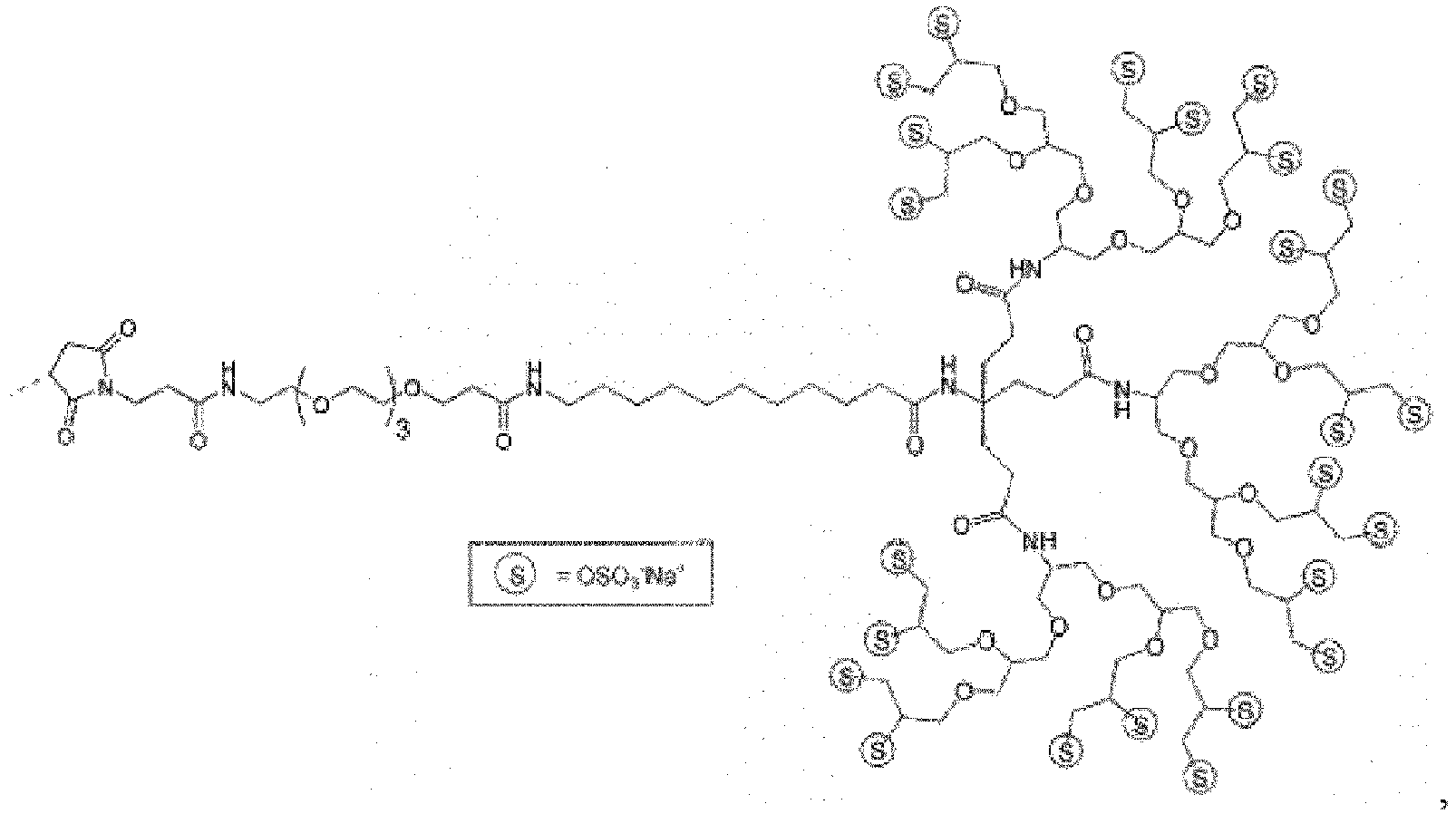
Peptid Synthetisierte Peptidsequenz für die Konjugation P1 CGMRPEIWIAQELRRIGDEFNA P2 CGDMRPEIYI(Aib)QELRRIGD(Aib)Y P3 CGLSQEQLEHRERSLQTLRDIQRMLF P4 CGLSKEQLEHRERSLQTLRDIERLL P5 CGEEQWAREIGAQLRRMADDLNAQYER P6 CGEDIIRNIARHAAQVGASADRSI P7 CPKVVILKKA TAYILSVQAEEQKL. - Pharmazeutische Zusammensetzung nach Anspruch 13, wobei das Konjugat ausgewählt ist aus der Gruppe bestehend aus d02-P1, d02-P2, d02-P3, d03-P3, d02-P4, d03-P4, d02-P5, d02-P6 und d02-P7, und wobei d02, d03, P1, P2, P3, P4, P5, P6 und P7 wie in Anspruch 13 definiert sind.
- Pharmazeutische Zusammensetzung nach Anspruch 1, wobei das Effektormolekül ein Toxin Polypeptid ist, das ausgewählt ist aus der Gruppe bestehend aus Diphtherietoxin, Diphtherietoxin ohne rezeptorbindende Aktivität, Pseudomonas-Exotoxin A, verkürzten Formen von Pseudomonas-Exotoxin, denen die rezeptorbindende Domäne 1a fehlt, Rizin-Toxin, Saporin, Dianthin, Gelonin, Trichosanthin, Phytolacca-Antivirus-Protein (PAP), Bouganin, Anthrax-Schutzantigen, Alpha-Toxin, Abrin, Apoptose-induzierende Polypeptide.
- Pharmazeutische Zusammensetzung nach Anspruch 1, wobei das Effektormolekül ein toxisches Polypeptid ist, das ausgewählt ist aus der Gruppe bestehend aus Desoxyribonuklease I (DNase I), Desoxyribonuklease II (DNase II), Polypeptide, die auf Alpha-Tubulin abzielen, Polypeptide, die auf Beta-Tubulin abzielen, Polypeptide, die auf Dynein abzielen, Konjugaten von Polypeptide, die auf Kinesin abzielen, Polypeptide, die auf NEDD1 abzielen, Polypeptide, die auf das TACC (Transforming Acid Coiled-Coil-Protein) abzielen, Polypeptide, die auf Kolon-/Lebertumoren abzielen, die das Gen chTOG überexprimieren.
- Pharmazeutische Zusammensetzung nach Anspruch 6, wobei die Proteine ausgewählt sind aus der Gruppe bestehend aus globulären Proteinen, Glykoproteinen, Toxinen, Enzymen, Antikörpern, Antikörperfragmenten, manipulierten Antikörper- und Proteinkonstrukten, einschließlich single domain antibodies (sdAb), single chain Fv antibodies (scFv), single chain Fv-Fc antibodies (scFv-Fc).
- Pharmazeutische Zusammensetzung nach Anspruch 6, wobei das Protein IgG ist.
- Pharmazeutische Zusammensetzung nach Anspruch 1, wobei das Effektormolekül ein Protein ist, das ausgewählt ist aus der Gruppe bestehend aus Wildtyp p53, Wildtyp p21, Apoptose-induzierendem Faktor 1 (AIF1), ASK1, Apoptose-induzierendem Protein (AIP), Caspase-2, Caspase-3, Caspase-6, Caspase-7, Caspase-8, Caspase-9, Caspase-10, Bax, Serinprotease, Smac, Cytochrom c, Apaf-1 und Apoptin.
- Pharmazeutische Zusammensetzung nach einem der Ansprüche 1 bis 19, wobei E gegen Moleküle gerichtet ist, die an der Proliferation und Apoptose von Tumorzellen beteiligt sind.
- Pharmazeutische Zusammensetzung nach Anspruch 1, wobei G eine verbindende funktionelle Gruppe ist, die die kovalente Bindung zwischen E und L bildet, ausgewählt aus der Gruppe bestehend aus O, S, NH, NH-O, C(=O)NH, OC(=O)NH, OC(=O)O,
NHC(=O)NH, NHC(=S)NH, C(=NH)NH, C(=O), S(=O)2, S(=O), S(=O2)O, S-S, CH=N, CH=N-NH, C=N-NHC(=O), OP(=O)(O-M+)O, P(=O)(O-M+)O, Arylen, Ethenylen, Ethinylen und Triazolylen. - Pharmazeutische Zusammensetzung nach einem der Ansprüche 1 bis 21 zur Verwendung (i) bei der Behandlung einer Krankheit, ausgewählt aus der Gruppe umfassend Krebs, Entzündungen, Autoimmunkrankheiten, Stoffwechselkrankheiten und Fibrose, oder (ii) bei der anti-proliferativen, pro-proliferativen, anti-apoptotischen, pro-apoptotischen, antifibrotischen, pro-fibrotischen, anti-lipogenen, anti-diabetischen, immunstimulierenden und Anti-Aging-Behandlung.
Priority Applications (2)
| Application Number | Priority Date | Filing Date | Title |
|---|---|---|---|
| PL15724286T PL3145984T3 (pl) | 2014-05-21 | 2015-05-21 | Koniugaty terapeutyczne z siarczanowanymi dendrymerami do celowania wewnątrzkomórkowego |
| EP22158053.3A EP4159795A1 (de) | 2014-05-21 | 2015-05-21 | Therapeutische konjugate mit sulfatierten dendrimeren für intrazelluläres targeting |
Applications Claiming Priority (2)
| Application Number | Priority Date | Filing Date | Title |
|---|---|---|---|
| EP14169362 | 2014-05-21 | ||
| PCT/EP2015/061258 WO2015177279A1 (en) | 2014-05-21 | 2015-05-21 | Therapeutic conjugates with sulfated dendrimers for intracellular targeting |
Related Child Applications (1)
| Application Number | Title | Priority Date | Filing Date |
|---|---|---|---|
| EP22158053.3A Division EP4159795A1 (de) | 2014-05-21 | 2015-05-21 | Therapeutische konjugate mit sulfatierten dendrimeren für intrazelluläres targeting |
Publications (2)
| Publication Number | Publication Date |
|---|---|
| EP3145984A1 EP3145984A1 (de) | 2017-03-29 |
| EP3145984B1 true EP3145984B1 (de) | 2022-02-23 |
Family
ID=50774650
Family Applications (2)
| Application Number | Title | Priority Date | Filing Date |
|---|---|---|---|
| EP15724286.8A Active EP3145984B1 (de) | 2014-05-21 | 2015-05-21 | Therapeutische konjugate mit sulfatierten dendrimeren für intrazelluläres targeting |
| EP22158053.3A Withdrawn EP4159795A1 (de) | 2014-05-21 | 2015-05-21 | Therapeutische konjugate mit sulfatierten dendrimeren für intrazelluläres targeting |
Family Applications After (1)
| Application Number | Title | Priority Date | Filing Date |
|---|---|---|---|
| EP22158053.3A Withdrawn EP4159795A1 (de) | 2014-05-21 | 2015-05-21 | Therapeutische konjugate mit sulfatierten dendrimeren für intrazelluläres targeting |
Country Status (9)
| Country | Link |
|---|---|
| US (1) | US11045560B2 (de) |
| EP (2) | EP3145984B1 (de) |
| JP (2) | JP6634547B2 (de) |
| DK (1) | DK3145984T3 (de) |
| EA (1) | EA036983B1 (de) |
| ES (1) | ES2910550T3 (de) |
| IL (1) | IL249099B (de) |
| PL (1) | PL3145984T3 (de) |
| WO (1) | WO2015177279A1 (de) |
Families Citing this family (14)
| Publication number | Priority date | Publication date | Assignee | Title |
|---|---|---|---|---|
| DK3430031T3 (da) * | 2016-03-15 | 2022-01-17 | Idp Discovery Pharma S L | Peptider med anti-kræftaktivitet |
| CN107353409B (zh) * | 2016-05-05 | 2020-04-24 | 安徽丰原药业股份有限公司 | 树枝状高分子化合物及其制备方法和应用 |
| JP2020533269A (ja) * | 2016-12-14 | 2020-11-19 | デベロップメント センター フォー バイオテクノロジー | 抗体−薬物複合体およびその使用 |
| MA47824A (fr) * | 2017-03-07 | 2020-01-15 | Translate Bio Inc | Administration polyanionique d'acides nucléiques |
| CN107383383B (zh) * | 2017-07-21 | 2020-05-19 | 四川大学 | 一种纯手性树状肽类大分子及其制备方法 |
| EP3694528A4 (de) | 2017-10-13 | 2021-07-28 | The Regents of the University of California | Mtorc1-modulatoren |
| WO2019117604A1 (ko) * | 2017-12-11 | 2019-06-20 | 동성제약주식회사 | 트리소듐 클로린 이식스 광민감제를 이용하여 고지방식으로 유도된 비만과 비알콜성 지방간염의 치료를 위한 약학적 조성물 |
| EP3894397A4 (de) * | 2018-12-10 | 2022-09-28 | Ariel Scientific Innovations Ltd. | Therapeutische konjugate |
| WO2020191011A1 (en) * | 2019-03-18 | 2020-09-24 | The Trustees Of Columbia University In The City Of New York | Non-hydrolyzable, non-cleavable, stable linkers for precision therapeutics and uses thereof |
| US20220313823A1 (en) * | 2019-05-15 | 2022-10-06 | Dong Sung Pharm. Co., Ltd. | Photodynamic therapy method mediated by chlorin e6 photosensitizer composite for treating and preventing obesity |
| CN111020599B (zh) * | 2019-12-02 | 2020-11-24 | 上海复洁环保科技股份有限公司 | 一种软水循环加热/冷却系统缓蚀剂及其制备方法 |
| US20210170040A1 (en) * | 2019-12-04 | 2021-06-10 | Ashvattha Therapeutics, Inc. | Dendrimer compositions and methods for drug delivery |
| WO2021210316A1 (ja) | 2020-04-16 | 2021-10-21 | 株式会社デンソー | 制御装置及び制御プログラム |
| PH12022552818A1 (en) | 2020-04-24 | 2024-03-25 | Ashvattha Therapeutics Inc | Dendrimer compositions and methods for treatment of severe acute respiratory distress syndrome |
Family Cites Families (4)
| Publication number | Priority date | Publication date | Assignee | Title |
|---|---|---|---|---|
| MX2007010402A (es) | 2005-04-20 | 2008-01-22 | Dendritic Nanotechnologies Inc | Polimeros dendriticos con amplificacion mejorada y funcionalidad interior. |
| EP2100621A1 (de) * | 2008-03-10 | 2009-09-16 | mivenion GmbH | Polyether-Polyol-Dendron-Konjugate mit Effektormolekülen für biologisches Targeting |
| DE102008030992A1 (de) | 2008-06-30 | 2010-01-07 | Freie Universität Berlin | Linear-dendritische Polyglycerolverbindungen, Verfahren zu ihrer Herstellung und ihre Verwendung |
| DK2531221T3 (da) * | 2010-02-03 | 2019-06-17 | Nanopet Pharma Gmbh | Polyanioniske multivalente makromolekyler til intracellulær målretning af proliferation og proteinsyntese |
-
2015
- 2015-05-21 EA EA201692376A patent/EA036983B1/ru not_active IP Right Cessation
- 2015-05-21 DK DK15724286.8T patent/DK3145984T3/da active
- 2015-05-21 PL PL15724286T patent/PL3145984T3/pl unknown
- 2015-05-21 EP EP15724286.8A patent/EP3145984B1/de active Active
- 2015-05-21 ES ES15724286T patent/ES2910550T3/es active Active
- 2015-05-21 EP EP22158053.3A patent/EP4159795A1/de not_active Withdrawn
- 2015-05-21 WO PCT/EP2015/061258 patent/WO2015177279A1/en not_active Ceased
- 2015-05-21 US US15/313,084 patent/US11045560B2/en active Active
- 2015-05-21 JP JP2016568808A patent/JP6634547B2/ja active Active
-
2016
- 2016-11-21 IL IL249099A patent/IL249099B/en active IP Right Grant
-
2019
- 2019-10-03 JP JP2019183222A patent/JP6856725B2/ja active Active
Also Published As
| Publication number | Publication date |
|---|---|
| EP3145984A1 (de) | 2017-03-29 |
| JP6856725B2 (ja) | 2021-04-07 |
| WO2015177279A1 (en) | 2015-11-26 |
| IL249099A0 (en) | 2017-01-31 |
| DK3145984T3 (da) | 2022-04-11 |
| JP2020073643A (ja) | 2020-05-14 |
| JP6634547B2 (ja) | 2020-01-22 |
| PL3145984T3 (pl) | 2022-06-06 |
| US20170182193A1 (en) | 2017-06-29 |
| IL249099B (en) | 2021-03-25 |
| EA036983B1 (ru) | 2021-01-22 |
| EA201692376A1 (ru) | 2017-08-31 |
| EP4159795A1 (de) | 2023-04-05 |
| US11045560B2 (en) | 2021-06-29 |
| JP2017524749A (ja) | 2017-08-31 |
| ES2910550T3 (es) | 2022-05-12 |
Similar Documents
| Publication | Publication Date | Title |
|---|---|---|
| EP3145984B1 (de) | Therapeutische konjugate mit sulfatierten dendrimeren für intrazelluläres targeting | |
| Santra et al. | Cell-specific, activatable, and theranostic prodrug for dual-targeted cancer imaging and therapy | |
| Rattan et al. | Nanoparticle-macrophage interactions: A balance between clearance and cell-specific targeting | |
| Zhang et al. | Cellular uptake and cytotoxicity of drug–peptide conjugates regulated by conjugation site | |
| Medina et al. | Dendrimers as carriers for delivery of chemotherapeutic agents | |
| Pinhassi et al. | Arabinogalactan− folic acid− drug conjugate for targeted delivery and target-activated release of anticancer drugs to folate receptor-overexpressing cells | |
| Zong et al. | Bifunctional PAMAM dendrimer conjugates of folic acid and methotrexate with defined ratio | |
| Elzahhar et al. | Bioconjugation in drug delivery: practical perspectives and future perceptions | |
| US8877171B2 (en) | Polyanionic multivalent macromolecules for intracellular targeting of proliferation and protein synthesis | |
| Mekuria et al. | IL-6 antibody and RGD peptide conjugated poly (amidoamine) dendrimer for targeted drug delivery of HeLa cells | |
| US20090092664A1 (en) | Polymer-metal chelator conjugates and uses thereof | |
| Sk et al. | Enhancing the efficacy of Ara-C through conjugation with PAMAM dendrimer and linear PEG: a comparative study | |
| Wang et al. | Design, synthesis, and biological evaluations of asymmetric bow-tie PAMAM dendrimer-based conjugates for tumor-targeted drug delivery | |
| Ge et al. | Rational construction of protein-mimetic nano-switch systems based on secondary structure transitions of synthetic polypeptides | |
| JP2010516625A (ja) | 制御された薬物送達のためのテザー基を有するポリマー−薬物コンジュゲート | |
| Zhou et al. | A linear polyethylenimine (LPEI) drug conjugate with reversible charge to overcome multidrug resistance in cancer cells | |
| Yang et al. | Design and evaluation of a Carrier-Free Prodrug-Based Palmitic–DEVD–Doxorubicin conjugate for targeted cancer therapy | |
| Mahi et al. | Hybrid arborescent polypeptide-based Unimolecular micelles: synthesis, characterization, and drug encapsulation | |
| WO2018038165A1 (ja) | ポリマー、ポリマーの製造方法、及び薬物複合体 | |
| Civril et al. | Engineering polymeric micelles for targeted drug delivery:“click” chemistry enabled bioconjugation strategies and emerging applications | |
| Hu et al. | Sustained-release behavior and the antitumor effect of charge-convertible poly (amino acid) s drug-loaded nanoparticles | |
| Dijkstra et al. | Novel Maleimide Linkers Based on a Piperazine Motif for Strongly Increased Aqueous Solubility | |
| Norouz Dizaji et al. | Fluorescence labelled XT5 modified nano-capsules enable highly sensitive myeloma cells detection | |
| Ibraheem et al. | Prospective effect of linkers type on the anticance r activity of pemetrexed-monoclonal antibody (atezolizumab) conjugates [version 2; peer review: 1 approved, 1 approved | |
| HK40123315A (zh) | 树枝状大分子介导的靶向细胞内crispr/cas系统递送和基因编辑 |
Legal Events
| Date | Code | Title | Description |
|---|---|---|---|
| STAA | Information on the status of an ep patent application or granted ep patent |
Free format text: STATUS: THE INTERNATIONAL PUBLICATION HAS BEEN MADE |
|
| PUAI | Public reference made under article 153(3) epc to a published international application that has entered the european phase |
Free format text: ORIGINAL CODE: 0009012 |
|
| STAA | Information on the status of an ep patent application or granted ep patent |
Free format text: STATUS: REQUEST FOR EXAMINATION WAS MADE |
|
| 17P | Request for examination filed |
Effective date: 20161220 |
|
| AK | Designated contracting states |
Kind code of ref document: A1 Designated state(s): AL AT BE BG CH CY CZ DE DK EE ES FI FR GB GR HR HU IE IS IT LI LT LU LV MC MK MT NL NO PL PT RO RS SE SI SK SM TR |
|
| AX | Request for extension of the european patent |
Extension state: BA ME |
|
| DAV | Request for validation of the european patent (deleted) | ||
| DAX | Request for extension of the european patent (deleted) | ||
| STAA | Information on the status of an ep patent application or granted ep patent |
Free format text: STATUS: EXAMINATION IS IN PROGRESS |
|
| 17Q | First examination report despatched |
Effective date: 20171213 |
|
| RAP1 | Party data changed (applicant data changed or rights of an application transferred) |
Owner name: ICD-THERAPEUTICS GMBH |
|
| GRAP | Despatch of communication of intention to grant a patent |
Free format text: ORIGINAL CODE: EPIDOSNIGR1 |
|
| STAA | Information on the status of an ep patent application or granted ep patent |
Free format text: STATUS: GRANT OF PATENT IS INTENDED |
|
| INTG | Intention to grant announced |
Effective date: 20210301 |
|
| GRAJ | Information related to disapproval of communication of intention to grant by the applicant or resumption of examination proceedings by the epo deleted |
Free format text: ORIGINAL CODE: EPIDOSDIGR1 |
|
| STAA | Information on the status of an ep patent application or granted ep patent |
Free format text: STATUS: EXAMINATION IS IN PROGRESS |
|
| INTC | Intention to grant announced (deleted) | ||
| GRAP | Despatch of communication of intention to grant a patent |
Free format text: ORIGINAL CODE: EPIDOSNIGR1 |
|
| STAA | Information on the status of an ep patent application or granted ep patent |
Free format text: STATUS: GRANT OF PATENT IS INTENDED |
|
| INTG | Intention to grant announced |
Effective date: 20210907 |
|
| GRAS | Grant fee paid |
Free format text: ORIGINAL CODE: EPIDOSNIGR3 |
|
| GRAA | (expected) grant |
Free format text: ORIGINAL CODE: 0009210 |
|
| STAA | Information on the status of an ep patent application or granted ep patent |
Free format text: STATUS: THE PATENT HAS BEEN GRANTED |
|
| AK | Designated contracting states |
Kind code of ref document: B1 Designated state(s): AL AT BE BG CH CY CZ DE DK EE ES FI FR GB GR HR HU IE IS IT LI LT LU LV MC MK MT NL NO PL PT RO RS SE SI SK SM TR |
|
| REG | Reference to a national code |
Ref country code: GB Ref legal event code: FG4D |
|
| REG | Reference to a national code |
Ref country code: CH Ref legal event code: EP |
|
| REG | Reference to a national code |
Ref country code: DE Ref legal event code: R096 Ref document number: 602015077066 Country of ref document: DE |
|
| REG | Reference to a national code |
Ref country code: AT Ref legal event code: REF Ref document number: 1470438 Country of ref document: AT Kind code of ref document: T Effective date: 20220315 |
|
| REG | Reference to a national code |
Ref country code: IE Ref legal event code: FG4D |
|
| REG | Reference to a national code |
Ref country code: DK Ref legal event code: T3 Effective date: 20220405 |
|
| REG | Reference to a national code |
Ref country code: NL Ref legal event code: FP |
|
| REG | Reference to a national code |
Ref country code: SE Ref legal event code: TRGR |
|
| REG | Reference to a national code |
Ref country code: ES Ref legal event code: FG2A Ref document number: 2910550 Country of ref document: ES Kind code of ref document: T3 Effective date: 20220512 |
|
| REG | Reference to a national code |
Ref country code: LT Ref legal event code: MG9D |
|
| PG25 | Lapsed in a contracting state [announced via postgrant information from national office to epo] |
Ref country code: RS Free format text: LAPSE BECAUSE OF FAILURE TO SUBMIT A TRANSLATION OF THE DESCRIPTION OR TO PAY THE FEE WITHIN THE PRESCRIBED TIME-LIMIT Effective date: 20220223 Ref country code: PT Free format text: LAPSE BECAUSE OF FAILURE TO SUBMIT A TRANSLATION OF THE DESCRIPTION OR TO PAY THE FEE WITHIN THE PRESCRIBED TIME-LIMIT Effective date: 20220623 Ref country code: NO Free format text: LAPSE BECAUSE OF FAILURE TO SUBMIT A TRANSLATION OF THE DESCRIPTION OR TO PAY THE FEE WITHIN THE PRESCRIBED TIME-LIMIT Effective date: 20220523 Ref country code: LT Free format text: LAPSE BECAUSE OF FAILURE TO SUBMIT A TRANSLATION OF THE DESCRIPTION OR TO PAY THE FEE WITHIN THE PRESCRIBED TIME-LIMIT Effective date: 20220223 Ref country code: HR Free format text: LAPSE BECAUSE OF FAILURE TO SUBMIT A TRANSLATION OF THE DESCRIPTION OR TO PAY THE FEE WITHIN THE PRESCRIBED TIME-LIMIT Effective date: 20220223 Ref country code: BG Free format text: LAPSE BECAUSE OF FAILURE TO SUBMIT A TRANSLATION OF THE DESCRIPTION OR TO PAY THE FEE WITHIN THE PRESCRIBED TIME-LIMIT Effective date: 20220523 |
|
| REG | Reference to a national code |
Ref country code: HU Ref legal event code: AG4A Ref document number: E058510 Country of ref document: HU |
|
| PG25 | Lapsed in a contracting state [announced via postgrant information from national office to epo] |
Ref country code: LV Free format text: LAPSE BECAUSE OF FAILURE TO SUBMIT A TRANSLATION OF THE DESCRIPTION OR TO PAY THE FEE WITHIN THE PRESCRIBED TIME-LIMIT Effective date: 20220223 Ref country code: GR Free format text: LAPSE BECAUSE OF FAILURE TO SUBMIT A TRANSLATION OF THE DESCRIPTION OR TO PAY THE FEE WITHIN THE PRESCRIBED TIME-LIMIT Effective date: 20220524 Ref country code: FI Free format text: LAPSE BECAUSE OF FAILURE TO SUBMIT A TRANSLATION OF THE DESCRIPTION OR TO PAY THE FEE WITHIN THE PRESCRIBED TIME-LIMIT Effective date: 20220223 |
|
| PG25 | Lapsed in a contracting state [announced via postgrant information from national office to epo] |
Ref country code: IS Free format text: LAPSE BECAUSE OF FAILURE TO SUBMIT A TRANSLATION OF THE DESCRIPTION OR TO PAY THE FEE WITHIN THE PRESCRIBED TIME-LIMIT Effective date: 20220623 |
|
| PG25 | Lapsed in a contracting state [announced via postgrant information from national office to epo] |
Ref country code: SM Free format text: LAPSE BECAUSE OF FAILURE TO SUBMIT A TRANSLATION OF THE DESCRIPTION OR TO PAY THE FEE WITHIN THE PRESCRIBED TIME-LIMIT Effective date: 20220223 Ref country code: RO Free format text: LAPSE BECAUSE OF FAILURE TO SUBMIT A TRANSLATION OF THE DESCRIPTION OR TO PAY THE FEE WITHIN THE PRESCRIBED TIME-LIMIT Effective date: 20220223 Ref country code: EE Free format text: LAPSE BECAUSE OF FAILURE TO SUBMIT A TRANSLATION OF THE DESCRIPTION OR TO PAY THE FEE WITHIN THE PRESCRIBED TIME-LIMIT Effective date: 20220223 |
|
| REG | Reference to a national code |
Ref country code: DE Ref legal event code: R097 Ref document number: 602015077066 Country of ref document: DE |
|
| PG25 | Lapsed in a contracting state [announced via postgrant information from national office to epo] |
Ref country code: AL Free format text: LAPSE BECAUSE OF FAILURE TO SUBMIT A TRANSLATION OF THE DESCRIPTION OR TO PAY THE FEE WITHIN THE PRESCRIBED TIME-LIMIT Effective date: 20220223 |
|
| PLBE | No opposition filed within time limit |
Free format text: ORIGINAL CODE: 0009261 |
|
| STAA | Information on the status of an ep patent application or granted ep patent |
Free format text: STATUS: NO OPPOSITION FILED WITHIN TIME LIMIT |
|
| PG25 | Lapsed in a contracting state [announced via postgrant information from national office to epo] |
Ref country code: MC Free format text: LAPSE BECAUSE OF FAILURE TO SUBMIT A TRANSLATION OF THE DESCRIPTION OR TO PAY THE FEE WITHIN THE PRESCRIBED TIME-LIMIT Effective date: 20220223 Ref country code: LU Free format text: LAPSE BECAUSE OF NON-PAYMENT OF DUE FEES Effective date: 20220521 |
|
| 26N | No opposition filed |
Effective date: 20221124 |
|
| PG25 | Lapsed in a contracting state [announced via postgrant information from national office to epo] |
Ref country code: SI Free format text: LAPSE BECAUSE OF FAILURE TO SUBMIT A TRANSLATION OF THE DESCRIPTION OR TO PAY THE FEE WITHIN THE PRESCRIBED TIME-LIMIT Effective date: 20220223 |
|
| PG25 | Lapsed in a contracting state [announced via postgrant information from national office to epo] |
Ref country code: IE Free format text: LAPSE BECAUSE OF NON-PAYMENT OF DUE FEES Effective date: 20220521 |
|
| P01 | Opt-out of the competence of the unified patent court (upc) registered |
Effective date: 20230508 |
|
| REG | Reference to a national code |
Ref country code: AT Ref legal event code: UEP Ref document number: 1470438 Country of ref document: AT Kind code of ref document: T Effective date: 20220223 |
|
| PG25 | Lapsed in a contracting state [announced via postgrant information from national office to epo] |
Ref country code: MK Free format text: LAPSE BECAUSE OF FAILURE TO SUBMIT A TRANSLATION OF THE DESCRIPTION OR TO PAY THE FEE WITHIN THE PRESCRIBED TIME-LIMIT Effective date: 20220223 Ref country code: CY Free format text: LAPSE BECAUSE OF FAILURE TO SUBMIT A TRANSLATION OF THE DESCRIPTION OR TO PAY THE FEE WITHIN THE PRESCRIBED TIME-LIMIT Effective date: 20220223 |
|
| PG25 | Lapsed in a contracting state [announced via postgrant information from national office to epo] |
Ref country code: MT Free format text: LAPSE BECAUSE OF FAILURE TO SUBMIT A TRANSLATION OF THE DESCRIPTION OR TO PAY THE FEE WITHIN THE PRESCRIBED TIME-LIMIT Effective date: 20220223 |
|
| PGFP | Annual fee paid to national office [announced via postgrant information from national office to epo] |
Ref country code: NL Payment date: 20250521 Year of fee payment: 11 |
|
| PGFP | Annual fee paid to national office [announced via postgrant information from national office to epo] |
Ref country code: PL Payment date: 20250513 Year of fee payment: 11 Ref country code: DE Payment date: 20250521 Year of fee payment: 11 |
|
| PGFP | Annual fee paid to national office [announced via postgrant information from national office to epo] |
Ref country code: ES Payment date: 20250627 Year of fee payment: 11 Ref country code: DK Payment date: 20250526 Year of fee payment: 11 |
|
| PGFP | Annual fee paid to national office [announced via postgrant information from national office to epo] |
Ref country code: HU Payment date: 20250523 Year of fee payment: 11 |
|
| PGFP | Annual fee paid to national office [announced via postgrant information from national office to epo] |
Ref country code: BE Payment date: 20250521 Year of fee payment: 11 Ref country code: IT Payment date: 20250527 Year of fee payment: 11 |
|
| PGFP | Annual fee paid to national office [announced via postgrant information from national office to epo] |
Ref country code: FR Payment date: 20250528 Year of fee payment: 11 |
|
| PGFP | Annual fee paid to national office [announced via postgrant information from national office to epo] |
Ref country code: CH Payment date: 20250601 Year of fee payment: 11 |
|
| PGFP | Annual fee paid to national office [announced via postgrant information from national office to epo] |
Ref country code: AT Payment date: 20250522 Year of fee payment: 11 |
|
| PGFP | Annual fee paid to national office [announced via postgrant information from national office to epo] |
Ref country code: TR Payment date: 20250513 Year of fee payment: 11 Ref country code: SK Payment date: 20250512 Year of fee payment: 11 |
|
| PGFP | Annual fee paid to national office [announced via postgrant information from national office to epo] |
Ref country code: CZ Payment date: 20250514 Year of fee payment: 11 |
|
| PGFP | Annual fee paid to national office [announced via postgrant information from national office to epo] |
Ref country code: SE Payment date: 20250521 Year of fee payment: 11 |
|
| PGFP | Annual fee paid to national office [announced via postgrant information from national office to epo] |
Ref country code: GB Payment date: 20260306 Year of fee payment: 12 |