EP3146689B1 - Modes de retour et indication de des informations de type csi pour les sous-canaux de transmission dans des systèmes de communication de genre ofdma - Google Patents
Modes de retour et indication de des informations de type csi pour les sous-canaux de transmission dans des systèmes de communication de genre ofdma Download PDFInfo
- Publication number
- EP3146689B1 EP3146689B1 EP15808883.1A EP15808883A EP3146689B1 EP 3146689 B1 EP3146689 B1 EP 3146689B1 EP 15808883 A EP15808883 A EP 15808883A EP 3146689 B1 EP3146689 B1 EP 3146689B1
- Authority
- EP
- European Patent Office
- Prior art keywords
- sub
- feedback
- channel
- feedback mode
- channels
- Prior art date
- Legal status (The legal status is an assumption and is not a legal conclusion. Google has not performed a legal analysis and makes no representation as to the accuracy of the status listed.)
- Not-in-force
Links
- 238000000034 method Methods 0.000 claims description 30
- 239000011159 matrix material Substances 0.000 claims description 22
- 230000006978 adaptation Effects 0.000 description 10
- 238000004891 communication Methods 0.000 description 8
- 230000005540 biological transmission Effects 0.000 description 7
- 101100161473 Arabidopsis thaliana ABCB25 gene Proteins 0.000 description 6
- 101100096893 Mus musculus Sult2a1 gene Proteins 0.000 description 6
- 101150081243 STA1 gene Proteins 0.000 description 6
- 230000008569 process Effects 0.000 description 6
- OVGWMUWIRHGGJP-WVDJAODQSA-N (z)-7-[(1s,3r,4r,5s)-3-[(e,3r)-3-hydroxyoct-1-enyl]-6-thiabicyclo[3.1.1]heptan-4-yl]hept-5-enoic acid Chemical compound OC(=O)CCC\C=C/C[C@@H]1[C@@H](/C=C/[C@H](O)CCCCC)C[C@@H]2S[C@H]1C2 OVGWMUWIRHGGJP-WVDJAODQSA-N 0.000 description 3
- 101000988961 Escherichia coli Heat-stable enterotoxin A2 Proteins 0.000 description 3
- 101000752249 Homo sapiens Rho guanine nucleotide exchange factor 3 Proteins 0.000 description 3
- 102100021689 Rho guanine nucleotide exchange factor 3 Human genes 0.000 description 3
- 239000000969 carrier Substances 0.000 description 3
- 230000007246 mechanism Effects 0.000 description 3
- 230000008901 benefit Effects 0.000 description 2
- 238000005562 fading Methods 0.000 description 2
- 230000006870 function Effects 0.000 description 2
- 239000003999 initiator Substances 0.000 description 2
- 230000004044 response Effects 0.000 description 2
- 239000002699 waste material Substances 0.000 description 2
- 238000013459 approach Methods 0.000 description 1
- 238000013461 design Methods 0.000 description 1
- 230000008713 feedback mechanism Effects 0.000 description 1
- 238000012986 modification Methods 0.000 description 1
- 230000004048 modification Effects 0.000 description 1
- 238000013442 quality metrics Methods 0.000 description 1
- 230000011664 signaling Effects 0.000 description 1
- 238000012549 training Methods 0.000 description 1
Images


Classifications
-
- H—ELECTRICITY
- H04—ELECTRIC COMMUNICATION TECHNIQUE
- H04L—TRANSMISSION OF DIGITAL INFORMATION, e.g. TELEGRAPHIC COMMUNICATION
- H04L5/00—Arrangements affording multiple use of the transmission path
- H04L5/003—Arrangements for allocating sub-channels of the transmission path
- H04L5/0053—Allocation of signalling, i.e. of overhead other than pilot signals
- H04L5/0057—Physical resource allocation for CQI
-
- H—ELECTRICITY
- H04—ELECTRIC COMMUNICATION TECHNIQUE
- H04L—TRANSMISSION OF DIGITAL INFORMATION, e.g. TELEGRAPHIC COMMUNICATION
- H04L5/00—Arrangements affording multiple use of the transmission path
- H04L5/003—Arrangements for allocating sub-channels of the transmission path
- H04L5/0048—Allocation of pilot signals, i.e. of signals known to the receiver
-
- H—ELECTRICITY
- H04—ELECTRIC COMMUNICATION TECHNIQUE
- H04B—TRANSMISSION
- H04B17/00—Monitoring; Testing
- H04B17/20—Monitoring; Testing of receivers
- H04B17/24—Monitoring; Testing of receivers with feedback of measurements to the transmitter
-
- H—ELECTRICITY
- H04—ELECTRIC COMMUNICATION TECHNIQUE
- H04L—TRANSMISSION OF DIGITAL INFORMATION, e.g. TELEGRAPHIC COMMUNICATION
- H04L5/00—Arrangements affording multiple use of the transmission path
- H04L5/0001—Arrangements for dividing the transmission path
- H04L5/0003—Two-dimensional division
- H04L5/0005—Time-frequency
- H04L5/0007—Time-frequency the frequencies being orthogonal, e.g. OFDM(A) or DMT
-
- H—ELECTRICITY
- H04—ELECTRIC COMMUNICATION TECHNIQUE
- H04L—TRANSMISSION OF DIGITAL INFORMATION, e.g. TELEGRAPHIC COMMUNICATION
- H04L5/00—Arrangements affording multiple use of the transmission path
- H04L5/0001—Arrangements for dividing the transmission path
- H04L5/0014—Three-dimensional division
- H04L5/0023—Time-frequency-space
Definitions
- the disclosed embodiments relate generally to wireless network communications, and, more particularly, to feedback process in wireless communications systems.
- channel sounding and feedback process is commonly used for channel estimation.
- MIMO systems each channel sounding and feedback process is followed by a series of MIMO frame exchange.
- a transmitting device sends a sounding announcement (e.g., null data packet announcement (NDPA)) followed by a sounding packet (e.g., null data packet (NDP)) to a receiving device (responder) participating in the process.
- NDPA null data packet announcement
- NDP null data packet
- the responder estimates the channel during the preamble portion of the sounding packet.
- the responder then feedbacks the average SNR (signal-to-noise ratio) and CSI (channel state information) to allow the initiator to compute the transmit antenna (precoding) weights for MIMO transmission.
- Feedback packet may also include other channel quality metrics such as MCS, BER, SNR/SINR, and mutual information.
- channel quality information such as SNR and MCS allows the transmitter to make correct decision regarding transmission bandwidth adjustment as well as MCS adaptation to improve system performance.
- channel quality information is provided based on a fixed sub-channel (e.g., the sounding bandwidth) and obtained through a sounding and feedback protocol.
- the channel conditions could be significantly different in different sub-channels due to frequency selective fading.
- OFDMA orthogonal frequency division multiple access
- OFDMA design can benefit from multiuser diversity gain.
- CSI feedback for multiple users are required to achieve multiuser diversity gain.
- the existing CSI/SNR feedback scheme does not work.
- IEEE 802.11ac CSI feedback is only supported for the entire channel of a basic service set (BSS).
- the MCS feedback (MFB) for link adaptation will feedback one MCS for all data subcarriers and one SNR over all data subcarriers. If the sounding signal occupies 40MHz, then the SNR/MCS feedback is provided for 40MHz. The same SNR/MCS feedback is assumed valid for 20MHz sub-channel.
- the transmission bandwidth can range from 160MHz to 20MHz. This is because the channel conditions could be significantly different in different sub-channels due to frequency selective fading.
- OFDMA systems a sub-channel bandwidth is around 2MHz. As a result, there will be 40 sub-channels for 80MHz WLAN wide channel and 80 sub-channels for 160MHz WLAN wide channel.
- the average SNR feedback in MFB is not enough for OFDMA systems because it cannot help transmitter to optimize the sub channel allocation for OFDMA systems.
- the compressed beamforming report will feedback average SNR, per subcarrier (group) SNR and beamforming matrix on the entire channel and have heavy feedback overhead. For 160MHz channel and 8-stream MU-MIMO case, the max VHT compressed beamforming report size will be over 200K bits. The compressed beamforming report for the entire channel may not be necessary for OFDMA systems.
- a solution is sought to provide sub-channel SNR feedback and CSI reporting with reduced overhead, and to provide a mechanism for feedback mode indication in the sounding protocol for OFDMA systems.
- US2013/0223427A1 discloses a method for providing channel feedback, wherein a feedback type can be requested that allows a selection between single user and multi user feedback type.
- EP2741431A2 and WO2014/195050A1 disclose further methods for providing channel feedback that allow a selection of a feedback type.
- a method of indicating feedback mode and providing corresponding sub-channel feedback in OFDMA systems is provided by the methods according to claims 1 and 7.
- a corresponding wireless station is defined in claim 12.
- a transmitting device transmits a sounding announcement frame and a sounding signal to a receiving device in an OFDMA wireless system.
- the sounding signal is transmitted over multiple sub-channels of a wide channel.
- the transmitting device also provides a feedback mode indication.
- the receiving device estimates channel quality information based on the received sounding signal and the feedback mode indication.
- the receiving device then sends feedback information to the transmitting device.
- the feedback information contains the estimated channel quality information of a selected set of sub-channels based on the feedback mode indication.
- the feedback mode indication is contained in a station information (STA Info) field in the sounding announcement frame. In another embodiment, the feedback mode indication is contained in a polling frame.
- the channel quality information comprises a sub-channel ID followed by an average signal to noise ratio (SNR) and a beamforming matrix of each selected sub-channel. In another embodiment, the selected set of sub-channels is predefined or based on a predefined channel quality threshold.
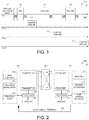
- FIG. 1 illustrates a channel sounding and feedback process with different channel state information feedback modes and indication in a wireless communication system 100 in accordance with one novel aspect.
- Wireless system 100 comprises a transmitting device (e.g., an access point AP) and a plurality of receiving devices (e.g., non-AP stations STA1, STA2, and STA3).
- the transmitting device AP first sends a VHT null data packet announcement (NDPA 101) followed by a sounding packet (e.g., null data packet (NDP) 102) to receiving devices STA1-STA3.
- NDPA 101 VHT null data packet announcement
- NDP null data packet
- NDPA 101 is transmitted first to inform the intended receiving device (e.g., via STA INFO fields) and NDP 102 is then transmitted for the intended receiving devices to estimate the channel.
- the L-STF, L-LTF, L-SIG fields are used for setting up the protection field against legacy devices.
- the signaling information for the NDP signal is carried in the VHT-SIG-A and the channel estimation is performed on the LTFs (long training fields).
- transmitting device AP also sends downlink (DL) data packets to the STAs (not shown).
- DL data packets are sent over a wide channel.
- the DL data packets are sent to multiple users over different sub-channels.
- a sub channel can be defined as a set of subcarriers. It can be a group of contiguous subcarriers or a set of non-contiguous subcarriers. The smallest sub channel is one single subcarrier.
- a group of data subcarriers e.g., 26
- RU resource unit
- Channel sounding and feedback is a procedure to support transmit beamforming and fast link adaptation.
- Feedback on accurate channel quality information such as accurate SNR/MCS information allows the transmitter to make correct decision regarding the transmission bandwidth as well as MCS adaptation to improve system performance.
- CSI channel state information
- the feedback information is provided based on the current channel bandwidth.
- CSI feedback is only supported for the entire channel of a basic service set (BSS).
- the MCS feedback (MFB) for link adaptation will feedback one MCS for all data subcarriers and one SNR averaged over all data subcarriers.
- the average SNR feedback in MFB is not enough for OFDMA systems.
- the compressed beamforming report will feedback average SNR, per subcarrier (group) SNR and beamforming matrix on the entire channel and may have heavy feedback overhead.
- the max VHT compressed beamforming report size will be over 200K bits.
- the compressed beamforming report for the entire channel may not be necessary for OFDMA systems.
- sub-channel SNR feedback is proposed to facilitate and to improve the performance in OFDMA systems.
- the receiver only needs to feedback the SNR and beamforming matrix for good sub-channels.
- the receiver provides SNR and beamforming matrix feedback information for a subset of all the sub-channels based on a predefined condition. As a result, more feedback modes are introduced for OFDMA systems. Furthermore, a mechanism for feedback mode indication in the sounding protocol is provided.
- the AP provides feedback mode indication via sounding announcement NDPA 101 or polling frames 103 and 104, and STA1/STA2/STA3 will feedback the compressed beamforming report to the AP via frames 111, 121, and 131 with the indicated feedback mode, respectively.
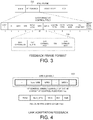
- FIG. 2 illustrates a wireless system 200 with sub-channel SNR feedback in accordance with one novel aspect.
- Wireless system 200 comprises a transmitting device 201 and a receiving device 211 communicating with each other via a wireless SU-MIMO channel 221.
- Transmitting device 201 comprises memory 202, a processor 203, a MIMO encoder 204, a beamformer/precoder 205, a feedback mode indication module 206, and a plurality of transmitters coupled to a plurality of antennas, respectively.
- Receiving device 211 comprises memory 212, a processor 213, a decoder 214, a channel estimation module 215, a sub-channel feedback module 216, and a plurality of receivers coupled to a plurality of antennas, respectively.
- SU-MIMO channel 221 is formed by the plurality of transmitting antennas of transmitting station 201 and the plurality of receiving antennas of receiving station 211.
- SU-MIMO communication promises large gains for both channel capacity and reliability, essentially via the use of spatial-time codes and transmit beamforming (diversity gain oriented) combined with spatial stream multiplexed transmission (rate maximization oriented).
- SU-MIMO channel is illustrated in Figure 2 , the present invention is not limited to SU-MIMO. In OFDMA systems, MU-MIMO over different sub-channels may also be supported.
- the various function modules may be implemented and configured by software, firmware, hardware, and any combination thereof.
- the function modules when executed by the processors (via program instructions contained in the memory), interwork with each other to allow the transmitting and receiving devices to perform certain embodiments of the present invention accordingly.
- transmitting device 201 transmits a sounding signal to receiving device 211 and provides feedback mode indication.
- receiving device 211 decode the sounding signal via decoder 214 and estimates the channel based on the received sounding signal via channel estimation module 215.
- the receiving device 211 then feedbacks the sub-channel SNR (signal-to-noise ratio) and CSI (channel state information) to the transmitting device 201 via a feedback channel 222.
- the feedback information comprises SNR/CSI information for a subset of all the sub-channels based on a predefined condition to reduce overhead.
- the actual feedback mode is indicated by the transmitting device 201 via feedback mode indication module 206.
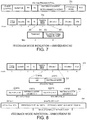
- a MAC frame 300 contains a HT (high throughput) control field, which further contains an MCS request (MRQ) subfield, an MCS sequence identifier (MSI) subfield, an MFB sequence identifier/LSB of Group ID (MFSI/GID-L) subfield, a VHT N_STS, MCS, BW and SNR feedback (MFB) subfield, an MSB of Group ID (GID-H) subfield, coding type of MFB response (Coding Type) subfield, transmission type of MFB response (FB Tx Type) subfield, unsolicited MFB subfield, AC constraint subfield, and RDG/More PPDU subfield.
- the MFB subfield 310 further contains a number of spatial streams (N_STS) subfield, an MCS subfield, a bandwidth (BW) subfield, and an SNR subfield.
- a traditional MFB subfield in 802.11ac contains the number of spatial streams, modulation and coding scheme (MCS), data transmission rate, bandwidth, and SNR information.
- MCS modulation and coding scheme
- the receiving device provides the MFB subfield feedback information for a subset of selected sub-channels of a 160MHz wide channel.
- the MFB subfield 310 contains the sub-channel ID, number of the streams for each sub channel, MCS recommended for each sub channel, and average SNR information for each sub-channel.
- Different sub-channel feedback modes for MCC, SNR and beamforming matrix can be supported.
- FIGs 4 illustrates link adaptation feedback with new feedback modes in an IEEE 802.11ax wireless system.
- the existing MCS feedback only one MFB field in the VHT variant HT control field can only feedback one recommended MCS and one average SNR.
- the SNR is averaged over all data subcarriers and all spatial streams.
- the link adaptation feedback should be able to feedback SNR and MCS for a set of sub channels.
- the new HT control middle subfield of the 11ax variant HT control field includes a sub channel list, the number of streams for each sub channel, the MCS recommended for each sub channel, and the average SNR for each sub channel.
- the MFB sub field 410 includes the number of MFB fields followed by each MFB field.
- Each MFB field includes a resource unit (RU) id followed by a traditional MFB subfield.
- the resource unit refers to a sub channel having a group of predetermined number of data sub carriers.
- Figure 5 illustrates different feedback modes for sub-channel SNR and beamforming matrix feedback.
- each STA feedback the sub-channel SNR and the beamforming matrix for a set of sub channels.
- the selection of the sub-channel set can be a set of sub channels indicated by the AP, a set of sub channels with highest SNR, or a set of sub channels with SNR higher than a predefined threshold.
- the feedback information includes a sub-channel id, the SNR for the sub channel or SNR for each spatial stream on the sub channel, and the beamforming matrix for each sub carrier on the sub channel or each group of sub carriers on the sub channel.
- each STA feedback the sub-channel SNR for a set of sub channels.
- the method of selecting the set of sub channels to feedback is the same as feedback mode #1.
- This mode #2 is suitable for OFDMA without beamforming.
- the feedback information includes a sub-channel id and the SNR for the sub channel for each selected sub channel.
- each STA feedback the average SNR or minimum SNR of a set of sub channels and feedback the sub-channel ID list in this set.
- each STA feedback the ID of a predefined sub-channel set and the SNR for each sub channel in the predefined sub-channel set.
- each STA feedback the ID of a predefined sub-channel set, the SNR and the beamforming matrix for each sub channel in the predefined sub-channel set.
- a feedback mode indication is needed.
- the feedback mode indication can be placed in NDP announcement frame or beamforming report poll frame.
- Figure 6 illustrates a first embodiment of feedback mode indication.
- feedback mode is indicated via a new 802.11ax null data packet announcement (NDPA) frame 610.
- NDPA frame 610 comprises a frame control field, a duration field, an RA field, a TA field, a plurality of station information (STA Info) fields, and FCS.
- STA Info field further comprises a 12-bit AID, a feedback type element indicating SU/MU MIMO feedback, an Nc index for MU-MIMO, and a new feedback mode element.
- the feedback mode element is used to indicate a specific feedback mode for the corresponding STA to provide associated feedback information.
- the feedback mode element further comprises a feedback mode ID and an optional feedback configuration (CONFIG) field if necessary.
- CONFIG optional feedback configuration
- mode ID 2 indicates feedback the SNR for the strongest N sub channels
- CONFIG field can provide the number N of sub channels to feedback or an SNR threshold.
- the NDPA frame has a new frame format for 802.11ax and does not support legacy STAs. The transmitting AP needs to perform the sounding and feedback mechanism separately for legacy STAs and 802.11ax STAs.
- Figure 7 illustrates a second embodiment of feedback mode indication.
- feedback mode is indicated via a new 802.11ax feedback poll frame 710.
- Feedback poll frame 710 comprises a frame control field, a duration field, an RA field, a TA field, a feedback segment retransmission bitmap, a feedback mode field, and FCS.
- the feedback mode field is used to indicate a specific feedback mode for the corresponding STA to provided associated feedback information.
- the feedback mode field further comprises a feedback mode ID and an optional feedback configuration (CONFIG) field if necessary.
- mode ID 2 indicates feedback the SNR for strongest N sub channels
- CONFIG field can provide the number N of sub channels to feedback or an SNR threshold.
- the beamforming poll will not be sent to the first feedback STA.
- the first STA1 provides compressed beamforming feedback 111 right after NDPA 101 and NDP 102.
- the first STA1 does not know which feedback mode to apply if the feedback mode indication is provided only in the subsequent polling frame 103 or polling frame 104. Therefore, while STA2 and STA3 are provided with feedback mode indication via the polling frames, another mechanism is needed for feedback mode indication for the first feedback STA1.
- NDPA frame 720 comprises a sounding dialog token, which further comprises a 2-bit reserved field and a 6-bit sounding dialog token number. If the first STA is a legacy STA or will feedback the compressed beamforming report as defined in 802.11ac, then the reserved bits will be set to 00. If the first STA needs to be indicated its feedback mode, then the reserved bits will be set to other value such as 01. When the reserved bits are set to 01, then the first feedback STA will wait for a feedback poll before it start to feedback.
- the reserved bits in the sounding dialog token can also be used to indicate two most widely used feedback modes. For example, bits "10" indicates feedback SNR for each subcarrier and bits "11" indicates feedback the SNR and beamforming matrix of a set of subcarriers with the highest SNR.
- Figure 8 illustrates a third embodiment of feedback mode indication.
- feedback mode is indicated via an existing null data packet announcement (NDPA) frame 810 and keep backward compatibility.
- NDPA frame 810 comprises a frame control field, a duration field, an RA field, a TA field, a plurality of station information (STA Info) fields, and FCS.
- NDPA frame 810 can be modified to include the feedback mode indication without changing the frame format such that backward compatibility with 802.11ac is achieved. If the STA is a legacy STA, then the STA info field remains the same as defined in 802.11ac (e.g., AID, feedback type, and Nc Index).
- the STA Info field is revised to comprise a 12-bit AID and a 4-bit feedback mode indication, as depicted by STA Info field 820.
- STA Info field 820 For 802.11ax STAs, however, four bits may not be enough for feedback mode indication.
- multiple STA fields can be combined together for feedback mode indication.
- STA info field 830 two STA info fields are combined together for feedback mode indication.
- both AIDs of the two STA info fields are for the same STA1.
- Feedback segment 1 can be feedback type + Nc index, the same as defined in 802.11ac.
- Feedback segment 2 can be feedback mode.
- more STA info field can be combined and there can be a feedback segment 3 to indicate the feedback mode configuration. Because the feedback mode indication is provided in NDPA frame instead of in polling frame, an 802.11ax STA knows the feedback mode earlier and can perform corresponding channel estimation accordingly.
- the STA For example, if the STA only needs to feedback SNR for a predefined subset of sub-channels, then the STA will compute SNR for those sub-channels. On the other hand, if the STA knows the feedback mode upon receiving the polling frame, then the STA needs to perform channel estimation on all sub-channels regardless of the actual feedback mode. However, combining more STA info fields wastes the redundant AID bits.
- multiple 802.11ac STA info fields can be combined as an 802.11ax STA info field 840.
- the 802.11ax STA info field had a total of 32 bits, double the size of an 802.11ac STA info field.
- Bits 0-11 are used for AID
- bits 12-31 are all used for feedback indication, including feedback type, Nc Index, feedback mode ID, and feedback mode configuration.
- bits 16-27 happen to be the same as an AID in the BSS, then this format may have ambiguity.
- a 1-bit format indication can be placed in the 802.11ax STA info field. If bits 16-27 conflict with an AID in the BSS, then set the format indication bit and use the format as depicted by STA info field 830.
- FIG. 9 is a flow chart of a method of providing feedback mode indication by a transmitting device in an OFDMA wireless communication system.
- a transmitting device transmits a sounding announcement frame to a receiving device in an OFDMA wireless system.
- the transmitting device transmits a sounding signal over a wide channel. The sounding signal is transmitted over multiple sub-channels of the wide channel.
- the transmitting device provides a feedback mode indication to the receiving device.
- the transmitting device receives feedback information from the receiving device.
- the feedback information contains estimated channel quality information of a selected set of sub-channels based on the feedback mode indication.
- the feedback mode indication is contained in a station information (STA Info) field in the sounding announcement frame.
- the feedback mode indication is contained in a polling frame.
- FIG 10 is a flow chart of a method of responding to feedback mode indication by a receiving device in an OFDMA wireless communication system.
- a receiving device receives a sounding announcement frame from a transmitting device in an OFDMA wireless system.
- the receiving device receives a sounding signal over a wide channel. The sounding signal is transmitted over multiple sub-channels of the wide channel.
- the receiving device estimates channel quality information based on the received sounding signal and based on a feedback mode indication provided by the transmitting device.
- the receiving device sends feedback information to the transmitting device.
- the feedback information contains estimated channel quality information of a selected set of sub-channels based on the feedback mode indication.
- the channel quality information comprises a sub-channel ID followed by an average signal to noise ratio (SNR) and a beamforming matrix of each selected sub-channel.
- SNR signal to noise ratio
- the selected set of sub-channels is predefined or based on a predefined channel quality threshold.
Landscapes
- Engineering & Computer Science (AREA)
- Signal Processing (AREA)
- Computer Networks & Wireless Communication (AREA)
- Mobile Radio Communication Systems (AREA)
Claims (16)
- Procédé comprenant le fait :a) de transmettre une trame d'annonce de sondage (610) par un dispositif de transmission (201) à un dispositif de réception (211) dans un système sans fil, (200), d'accès multiple par répartition orthogonale de la fréquence, OFDMA ;b) de transmettre un signal de sondage sur un canal large, où le signal de sondage est transmis sur de multiples sous-canaux du canal large ;ledit procédé étant caractérisé par le fait :c) de fournir une indication de mode de rétroaction et une indication de type de rétroaction au dispositif de réception (211), où l'indication de mode de rétroaction comprend un élément de mode de rétroaction pour indiquer un mode de rétroaction spécifique parmi un ou plusieurs modes de rétroaction pour le dispositif de réception (211) pour fournir une information de rétroaction associée ; etd) de recevoir l'information de rétroaction associée depuis le dispositif de réception (211), où l'information de rétroaction contient une information de qualité de canal estimée d'un ensemble sélectionné de sous-canaux en se basant sur l'indication de mode de rétroaction,dans lequel le ou les plusieurs modes de rétroaction comprennent un ou plusieurs ou tous les modes de rétroaction suivants :- un mode de rétroaction où un rapport signal sur bruit, SNR, de sous-canal et une matrice de formation de faisceau pour un ensemble de sous-canaux représentent l'information de rétroaction associée ;- un mode de rétroaction où un SNR de sous-canal pour un ensemble de sous-canaux représente l'information de rétroaction associée ;- un mode de rétroaction où un SNR moyen ou un SNR minimal pour un ensemble de sous-canaux représente l'information de rétroaction associée ;- un mode de rétroaction où un SNR moyen ou un SNR minimal pour un ensemble prédéfini de sous-canaux et une identification de l'ensemble prédéfini de sous-canaux représentent l'information de rétroaction associée,- un mode de rétroaction où une identification d'un ensemble prédéfini de sous-canaux et le SNR pour chaque sous-canal dans l'ensemble prédéfini de sous-canaux représentent l'information de rétroaction associée, et- un mode de rétroaction où une identification d'un ensemble prédéfini de sous-canaux, le SNR et la matrice de formation de faisceau pour chaque sous-canal dans l'ensemble prédéfini de sous-canaux représentent l'information de rétroaction associée.
- Procédé de la revendication 1, dans lequel l'indication de mode de rétroaction est contenue dans un champ d'informations de station, également appelées STA Info, dans la trame d'annonce de sondage (610).
- Procédé de la revendication 2, dans lequel de multiples champs STA Info IEEE 802.11ac sont combinés ensemble pour l'indication de mode de rétroaction, ou les multiples champs STA Info IEEE 802.11ac sont combinés ensemble pour former un nouveau champ STA Info IEEE 802.11ax.
- Procédé de la revendication 1, dans lequel l'indication de mode de rétroaction est contenue dans une trame d'appel (103, 104) et dans lequel un champ réservé d'un jeton de dialogue de sondage dans la trame d'annonce de sondage (610) contient l'indication de mode de rétroaction.
- Procédé de la revendication 1, dans lequel les informations de qualité de canal comprennent une identification de sous-canal, ID, suivie d'un SNR moyen et d'une matrice de formation de faisceau de chaque sous-canal sélectionné.
- Procédé de la revendication 1, dans lequel l'ensemble sélectionné de sous-canaux est soit prédéfini, soit basé sur un seuil prédéfini de qualité de canal.
- Procédé comprenant le fait :a) de recevoir une trame d'annonce de sondage (610) transmise depuis un dispositif de transmission (201) par un dispositif de réception (211) dans un système sans fil (200) d'accès multiple par répartition orthogonale de la fréquence, OFDMA ;b) de recevoir un signal de sondage sur un canal large par le dispositif de réception (211), où le signal de sondage est transmis sur de multiples sous-canaux du canal large ;ledit procédé étant caractérisé par le fait :c) de recevoir une indication de mode de rétroaction et une indication de type de rétroaction transmises depuis le dispositif de transmission (201), où l'indication de mode de rétroaction comprend un élément de mode de rétroaction pour indiquer un mode de rétroaction spécifique parmi un ou plusieurs modes de rétroaction pour le dispositif de réception (211) pour fournir une information de rétroaction associée, et d'estimer une information de qualité de canal en se basant sur le signal de sondage reçu et en se basant sur l'indication de mode de rétroaction fournie par le dispositif de transmission (201) ; etd) d'envoyer une information de rétroaction associée au dispositif de transmission (201), où l'information de rétroaction contient une information de qualité de canal estimée de l'ensemble sélectionné de sous-canaux en se basant sur l'indication de mode de rétroaction,dans lequel le ou les plusieurs modes de rétroaction comprennent un ou plusieurs ou tous les modes de rétroaction suivants :- un mode de rétroaction où un rapport signal sur bruit, SNR, de sous-canal, et une matrice de formation de faisceau pour un ensemble de sous-canaux représentent l'information de rétroaction associée ;- un mode de rétroaction où un SNR de sous-canal pour un ensemble de sous-canaux représente l'information de rétroaction associée ;- un mode de rétroaction où un SNR moyen ou un SNR minimal pour un ensemble de sous-canaux représente l'information de rétroaction associée ;- un mode de rétroaction où un SNR moyen ou un SNR minimal pour un ensemble prédéfini de sous-canaux et une identification de l'ensemble prédéfini de sous-canaux représentent l'information de rétroaction associée,- un mode de rétroaction où une identification d'un ensemble prédéfini de sous-canaux et le SNR pour chaque sous-canal dans l'ensemble prédéfini de sous-canaux représentent l'information de rétroaction associée, et- un mode de rétroaction où une identification d'un ensemble prédéfini de sous-canaux, le SNR et la matrice de formation de faisceau pour chaque sous-canal dans l'ensemble prédéfini de sous-canaux représentent l'information de rétroaction associée.
- Procédé de la revendication 7, dans lequel l'indication de mode de rétroaction est contenue dans un champ d'informations de station, également appelées STA Info, dans la trame d'annonce de sondage (610), ou l'indication de mode de rétroaction est contenue dans une trame d'appel (103, 104).
- Procédé de la revendication 7, dans lequel l'information de qualité de canal comprend une identification de sous-canal, ID, suivie d'un SNR moyen et d'une matrice de formation de faisceau de chaque sous-canal sélectionné.
- Procédé de la revendication 7, dans lequel l'ensemble sélectionné de sous-canaux est soit prédéfini, soit basé sur un seuil prédéfini de qualité de canal.
- Procédé de la revendication 7, dans lequel le dispositif de réception assure également une rétroaction d'informations de schéma de modulation et de codage recommandé, également appelé MCS, pour chacun des sous-canaux sélectionnés.
- Station sans fil (211) comprenant :un récepteur qui reçoit une trame d'annonce de sondage (610), une indication de mode de rétroaction et une indication de type de rétroaction transmises à partir d'un dispositif de transmission (201) dans un système sans fil (200) d'accès multiple par répartition orthogonale de la fréquence, OFDMA, où l'indication de mode de rétroaction comprend un élément de mode de rétroaction pour indiquer un mode de rétroaction spécifique parmi un ou plusieurs modes de rétroaction pour la station sans fil (211) pour fournir une information de rétroaction associée, où le récepteur reçoit également un signal de sondage sur un canal large, et où le signal de sondage est transmis sur de multiples sous-canaux du canal large ;un module d'estimation de canal (215) qui estime une information de qualité de canal en se basant sur le signal de sondage reçu et en se basant sur une indication de mode de rétroaction fournie par le dispositif de transmission (201) ; etun module de rétroaction (216) qui envoie une information de rétroaction associée au dispositif de transmission (201), où l'information de rétroaction contient l'information de qualité de canal estimée d'un ensemble sélectionné de sous-canaux en se basant sur l'indication de mode de rétroaction,dans laquelle le ou les plusieurs modes de rétroaction comprennent un ou plusieurs ou tous les modes de rétroaction suivants :- un mode de rétroaction où un rapport signal sur bruit, SNR, de sous-canal et une matrice de formation de faisceau pour un ensemble de sous-canaux représentent l'information de rétroaction associée ;- un mode de rétroaction où un SNR de sous-canal pour un ensemble de sous-canaux représente l'information de rétroaction associée ;- un mode de rétroaction où un SNR moyen ou un SNR minimal pour un ensemble de sous-canaux représente l'information de rétroaction associée ;- un mode de rétroaction où un SNR moyen ou un SNR minimal pour un ensemble prédéfini de sous-canaux et une identification de l'ensemble prédéfini de sous-canaux représentent l'information de rétroaction associée,- un mode de rétroaction où une identification d'un ensemble prédéfini de sous-canaux et le SNR pour chaque sous-canal dans l'ensemble prédéfini de sous-canaux représentent l'information de rétroaction associée, et- un mode de rétroaction où une identification d'un ensemble prédéfini de sous-canaux, le SNR et la matrice de formation de faisceau pour chaque sous-canal dans l'ensemble prédéfini de sous-canaux représentent l'information de rétroaction associée.
- Station sans fil de la revendication 12, dans laquelle l'indication de mode de rétroaction est contenue dans un champ d'informations de station, également appelées STA Info, dans la trame d'annonce de sondage (610), ou l'indication de mode de rétroaction est contenue dans une trame d'appel (103, 104).
- Station sans fil de la revendication 12, dans laquelle les informations de qualité de canal comprennent une identification de sous-canal, ID, suivie d'un SNR moyen et d'une matrice de formation de faisceau de chaque sous-canal sélectionné.
- Station sans fil de la revendication 12, dans laquelle l'ensemble sélectionné de sous-canaux est soit prédéfini soit basé sur un seuil prédéfini de qualité de canal.
- Station sans fil de la revendication 12, dans laquelle le dispositif de réception assure également une rétroaction d'informations de schéma de modulation et de codage recommandé, également appelé MCS pour chacun des sous-canaux sélectionnés.
Applications Claiming Priority (2)
| Application Number | Priority Date | Filing Date | Title |
|---|---|---|---|
| US201462013616P | 2014-06-18 | 2014-06-18 | |
| PCT/SG2015/050168 WO2015195050A1 (fr) | 2014-06-18 | 2015-06-18 | Modes de retour de csi, et indication de retour de csi de sous-canal dans des systèmes ofdma |
Publications (3)
| Publication Number | Publication Date |
|---|---|
| EP3146689A1 EP3146689A1 (fr) | 2017-03-29 |
| EP3146689A4 EP3146689A4 (fr) | 2018-01-03 |
| EP3146689B1 true EP3146689B1 (fr) | 2019-03-06 |
Family
ID=54870624
Family Applications (1)
| Application Number | Title | Priority Date | Filing Date |
|---|---|---|---|
| EP15808883.1A Not-in-force EP3146689B1 (fr) | 2014-06-18 | 2015-06-18 | Modes de retour et indication de des informations de type csi pour les sous-canaux de transmission dans des systèmes de communication de genre ofdma |
Country Status (3)
| Country | Link |
|---|---|
| US (1) | US20150372795A1 (fr) |
| EP (1) | EP3146689B1 (fr) |
| WO (1) | WO2015195050A1 (fr) |
Families Citing this family (23)
| Publication number | Priority date | Publication date | Assignee | Title |
|---|---|---|---|---|
| WO2015102180A1 (fr) * | 2014-01-06 | 2015-07-09 | 엘지전자 주식회사 | Procédé et appareil de sondage dans un système de communications sans fil |
| EP4293972A3 (fr) * | 2014-06-27 | 2024-03-27 | Samsung Electronics Co., Ltd. | Procédé et dispositif de transmission de données |
| KR102300532B1 (ko) * | 2014-09-05 | 2021-09-13 | 삼성전자주식회사 | 빔 포밍 시스템에서 채널 정보 피드백을 위한 방법 및 장치 |
| KR102406033B1 (ko) * | 2014-11-18 | 2022-06-07 | 뉴라컴 인코포레이티드 | 고효율 무선랜에서 상향링크 다중 사용자 전송을 포함하는 사운딩 과정 |
| CN115189727B (zh) | 2015-07-10 | 2024-06-07 | 交互数字专利控股公司 | 针对ofdma wlan的统一反馈 |
| CN114143895B (zh) | 2015-08-31 | 2024-03-12 | 松下知识产权经营株式会社 | 用于实现通信过程的集成电路 |
| US9860761B2 (en) * | 2015-09-01 | 2018-01-02 | Qualcomm Incorporated | Multi-user multiple-input-multiple-output grouping metrics |
| US9806775B2 (en) | 2015-09-01 | 2017-10-31 | Qualcomm Incorporated | Multi-user multiple-input-multiple-output groupings of stations |
| CN108370298B (zh) * | 2015-10-12 | 2021-03-09 | 纽瑞科姆有限公司 | 用于无线传输的保护方法 |
| US10209340B2 (en) * | 2016-04-07 | 2019-02-19 | Intel IP Corporation | Apparatus, system and method of a one-sided location measurement |
| US10517006B2 (en) * | 2016-04-13 | 2019-12-24 | Qualcomm Incorporated | Techniques for reporting channel feedback in wireless communications |
| MY201372A (en) * | 2016-05-10 | 2024-02-20 | Huawei Tech Co Ltd | Radio frame sending and receiving methods and apparatus |
| JP6729152B2 (ja) * | 2016-08-04 | 2020-07-22 | 富士通オプティカルコンポーネンツ株式会社 | 光伝送システムおよび光送信器 |
| US9961664B2 (en) * | 2016-08-10 | 2018-05-01 | Verizon Patent And Licensing Inc. | Locating customer premises equipment in a narrow beamwidth based radio access network |
| US10135504B2 (en) * | 2016-10-14 | 2018-11-20 | Qualcomm Incorporated | Techniques for MU-MIMO sounding sequence protection |
| WO2018111343A1 (fr) * | 2016-12-15 | 2018-06-21 | Intel IP Corporation | Indication d'annonce de paquet de données vide de séquence de sondage |
| CN108631846B (zh) * | 2017-03-24 | 2024-03-19 | 中兴通讯股份有限公司 | 信息发送、处理方法及装置、网络侧设备、终端 |
| US10687321B2 (en) * | 2017-06-20 | 2020-06-16 | Mediatek Inc. | Network communication link adaptation systems and methods |
| US10911120B2 (en) * | 2017-07-24 | 2021-02-02 | Qualcomm Incorporated | Downlink (DL) coordinated beamforming protocols for WiFi |
| WO2019032139A1 (fr) * | 2017-08-08 | 2019-02-14 | Intel IP Corporation | Accusé de réception dans la gestion de réseau de distribution d'ondes millimétriques |
| CN115515176B (zh) * | 2021-06-07 | 2025-02-28 | 华为技术有限公司 | 通信方法及装置 |
| WO2024065711A1 (fr) * | 2022-09-30 | 2024-04-04 | 华为技术有限公司 | Procédé, dispositif et système de mesure de distance |
| WO2025103568A1 (fr) * | 2023-11-13 | 2025-05-22 | Huawei Technologies Co., Ltd. | Dispositifs et procédés pour une communication fiable dans un réseau sans fil |
Family Cites Families (19)
| Publication number | Priority date | Publication date | Assignee | Title |
|---|---|---|---|---|
| EP1646163B1 (fr) * | 2003-08-06 | 2013-04-24 | Panasonic Corporation | Dispositif et procede de radiocommunication |
| KR100785853B1 (ko) * | 2006-06-05 | 2007-12-14 | 한국전자통신연구원 | 직교 주파수 분할 다중 접속 시스템에서의 자원 할당 방법 |
| US9432977B2 (en) * | 2009-09-30 | 2016-08-30 | Lg Electronics Inc. | Apparatus and method for transmitting uplink control information |
| JP5279677B2 (ja) * | 2009-10-13 | 2013-09-04 | 株式会社日立製作所 | 無線通信システム、無線基地局装置及び無線通信方法 |
| US8412275B2 (en) * | 2009-12-30 | 2013-04-02 | Broadcom Corporation | Method and system for communicating feedback information in a multiple user multiple input multiple output (MU-MIMO) communication system |
| US9337954B2 (en) * | 2010-07-28 | 2016-05-10 | Qualcomm Incorporated | Protocol for channel state information feedback |
| US9088393B2 (en) * | 2010-07-30 | 2015-07-21 | Lg Electronics Inc. | Method and apparatus for reporting channel state information of multi-channel in wireless local area network system |
| US9014024B2 (en) * | 2010-10-04 | 2015-04-21 | Qualcomm Incorporated | Devices for determining a reference subframe and determining a mode |
| WO2012054694A1 (fr) * | 2010-10-21 | 2012-04-26 | Mediatek Singapore Pte. Ltd. | Surveillance et signalisation d'intégrité et de qualité pour sondage et rétroaction réduite |
| US9258070B2 (en) * | 2010-10-22 | 2016-02-09 | Mediatek Singapore Pte. Ltd. | Simultaneous feedback signaling for dynamic bandwidth selection |
| US8804559B2 (en) * | 2010-11-12 | 2014-08-12 | Mediatek Singapore Pte Ltd. | Methods for monitoring channel sounding quality in WLAN devices |
| EP2661939B1 (fr) * | 2011-01-03 | 2019-03-20 | LG Electronics Inc. | Procédé de sondage de canal dans un système de réseau local sans fil et appareil pour sa prise en charge |
| CN102594527B (zh) * | 2011-01-10 | 2018-01-02 | 夏普株式会社 | 用户设备、基站和用于用户设备的方法 |
| US9756612B2 (en) * | 2011-08-07 | 2017-09-05 | Lg Electronics Inc. | Method and apparatus for transmitting and receiving frame on the basis of frequency selection transmission |
| US9781615B2 (en) * | 2011-11-07 | 2017-10-03 | Lg Electronics Inc. | Link adaptation and device in active scanning method |
| US9332449B2 (en) * | 2011-11-24 | 2016-05-03 | Lg Electronics Inc. | Method and apparatus for feedback of channel state information |
| CN104662987B (zh) * | 2012-09-26 | 2018-06-26 | Lg 电子株式会社 | 在无线lan系统中的子信道选择性接入的方法和设备 |
| US9008152B2 (en) * | 2013-08-27 | 2015-04-14 | Nokia Technologies Oy | Method, apparatus, and computer program product for wireless signaling |
| US20150110046A1 (en) * | 2013-10-17 | 2015-04-23 | Qualcomm Incorporated | Methods and apparatus for channel state information feedback |
-
2015
- 2015-06-17 US US14/742,632 patent/US20150372795A1/en not_active Abandoned
- 2015-06-18 WO PCT/SG2015/050168 patent/WO2015195050A1/fr not_active Ceased
- 2015-06-18 EP EP15808883.1A patent/EP3146689B1/fr not_active Not-in-force
Non-Patent Citations (1)
| Title |
|---|
| None * |
Also Published As
| Publication number | Publication date |
|---|---|
| EP3146689A4 (fr) | 2018-01-03 |
| US20150372795A1 (en) | 2015-12-24 |
| EP3146689A1 (fr) | 2017-03-29 |
| WO2015195050A1 (fr) | 2015-12-23 |
Similar Documents
| Publication | Publication Date | Title |
|---|---|---|
| EP3146689B1 (fr) | Modes de retour et indication de des informations de type csi pour les sous-canaux de transmission dans des systèmes de communication de genre ofdma | |
| US9258070B2 (en) | Simultaneous feedback signaling for dynamic bandwidth selection | |
| US10517094B2 (en) | Acknowledgement for multiple user communication in a WLAN | |
| US9699748B2 (en) | Uplink multi-user multiple input multiple output beamforming | |
| TWI808928B (zh) | 存取點、其所執行方法、及接收空資料封包公告的站 | |
| US9629127B2 (en) | Multiple user allocation signaling in a wireless communication network | |
| KR101424368B1 (ko) | 무선랜 시스템에서 링크 적응을 기반으로 한 채널 정보 보고 방법 및 이를 지원하는 장치 | |
| EP3105969B1 (fr) | Rétroaction de sous-canal pour des systèmes ofdma | |
| CA2933598C (fr) | Procede et dispositif destines au transfert de donnees depuis un reseau local sans fil vers une pluralite de stations | |
| EP3231237B1 (fr) | Système et procédé d'utilisation d'accès multiple semi-orthogonal dans des réseaux locaux sans fil | |
| US20180331795A1 (en) | Method and apparatus for transmitting frame on basis of sounding procedure | |
| US20240146469A1 (en) | Method and apparatus for performing signaling for reserved sub-band in wireless communication system | |
| JP2016535953A (ja) | 無線lanにおけるマルチユーザアップリンク受信方法及び装置 | |
| US10306667B2 (en) | Method for transmitting and receiving uplink acknowledgement signal in wireless LAN system and apparatus therefor |
Legal Events
| Date | Code | Title | Description |
|---|---|---|---|
| STAA | Information on the status of an ep patent application or granted ep patent |
Free format text: STATUS: THE INTERNATIONAL PUBLICATION HAS BEEN MADE |
|
| PUAI | Public reference made under article 153(3) epc to a published international application that has entered the european phase |
Free format text: ORIGINAL CODE: 0009012 |
|
| STAA | Information on the status of an ep patent application or granted ep patent |
Free format text: STATUS: REQUEST FOR EXAMINATION WAS MADE |
|
| 17P | Request for examination filed |
Effective date: 20161222 |
|
| AK | Designated contracting states |
Kind code of ref document: A1 Designated state(s): AL AT BE BG CH CY CZ DE DK EE ES FI FR GB GR HR HU IE IS IT LI LT LU LV MC MK MT NL NO PL PT RO RS SE SI SK SM TR |
|
| AX | Request for extension of the european patent |
Extension state: BA ME |
|
| DAV | Request for validation of the european patent (deleted) | ||
| DAX | Request for extension of the european patent (deleted) | ||
| A4 | Supplementary search report drawn up and despatched |
Effective date: 20171206 |
|
| RIC1 | Information provided on ipc code assigned before grant |
Ipc: H04L 5/00 20060101AFI20171130BHEP |
|
| REG | Reference to a national code |
Ref country code: DE Ref legal event code: R079 Ref document number: 602015026017 Country of ref document: DE Free format text: PREVIOUS MAIN CLASS: H04L0027260000 Ipc: H04L0005000000 |
|
| RIC1 | Information provided on ipc code assigned before grant |
Ipc: H04L 5/00 20060101AFI20180723BHEP |
|
| GRAP | Despatch of communication of intention to grant a patent |
Free format text: ORIGINAL CODE: EPIDOSNIGR1 |
|
| STAA | Information on the status of an ep patent application or granted ep patent |
Free format text: STATUS: GRANT OF PATENT IS INTENDED |
|
| INTG | Intention to grant announced |
Effective date: 20180912 |
|
| GRAS | Grant fee paid |
Free format text: ORIGINAL CODE: EPIDOSNIGR3 |
|
| GRAA | (expected) grant |
Free format text: ORIGINAL CODE: 0009210 |
|
| STAA | Information on the status of an ep patent application or granted ep patent |
Free format text: STATUS: THE PATENT HAS BEEN GRANTED |
|
| AK | Designated contracting states |
Kind code of ref document: B1 Designated state(s): AL AT BE BG CH CY CZ DE DK EE ES FI FR GB GR HR HU IE IS IT LI LT LU LV MC MK MT NL NO PL PT RO RS SE SI SK SM TR |
|
| REG | Reference to a national code |
Ref country code: GB Ref legal event code: FG4D |
|
| REG | Reference to a national code |
Ref country code: CH Ref legal event code: EP Ref country code: AT Ref legal event code: REF Ref document number: 1106030 Country of ref document: AT Kind code of ref document: T Effective date: 20190315 |
|
| REG | Reference to a national code |
Ref country code: DE Ref legal event code: R096 Ref document number: 602015026017 Country of ref document: DE |
|
| REG | Reference to a national code |
Ref country code: IE Ref legal event code: FG4D |
|
| REG | Reference to a national code |
Ref country code: NL Ref legal event code: MP Effective date: 20190306 |
|
| REG | Reference to a national code |
Ref country code: LT Ref legal event code: MG4D |
|
| PG25 | Lapsed in a contracting state [announced via postgrant information from national office to epo] |
Ref country code: SE Free format text: LAPSE BECAUSE OF FAILURE TO SUBMIT A TRANSLATION OF THE DESCRIPTION OR TO PAY THE FEE WITHIN THE PRESCRIBED TIME-LIMIT Effective date: 20190306 Ref country code: LT Free format text: LAPSE BECAUSE OF FAILURE TO SUBMIT A TRANSLATION OF THE DESCRIPTION OR TO PAY THE FEE WITHIN THE PRESCRIBED TIME-LIMIT Effective date: 20190306 Ref country code: NO Free format text: LAPSE BECAUSE OF FAILURE TO SUBMIT A TRANSLATION OF THE DESCRIPTION OR TO PAY THE FEE WITHIN THE PRESCRIBED TIME-LIMIT Effective date: 20190606 Ref country code: FI Free format text: LAPSE BECAUSE OF FAILURE TO SUBMIT A TRANSLATION OF THE DESCRIPTION OR TO PAY THE FEE WITHIN THE PRESCRIBED TIME-LIMIT Effective date: 20190306 |
|
| PG25 | Lapsed in a contracting state [announced via postgrant information from national office to epo] |
Ref country code: BG Free format text: LAPSE BECAUSE OF FAILURE TO SUBMIT A TRANSLATION OF THE DESCRIPTION OR TO PAY THE FEE WITHIN THE PRESCRIBED TIME-LIMIT Effective date: 20190606 Ref country code: HR Free format text: LAPSE BECAUSE OF FAILURE TO SUBMIT A TRANSLATION OF THE DESCRIPTION OR TO PAY THE FEE WITHIN THE PRESCRIBED TIME-LIMIT Effective date: 20190306 Ref country code: NL Free format text: LAPSE BECAUSE OF FAILURE TO SUBMIT A TRANSLATION OF THE DESCRIPTION OR TO PAY THE FEE WITHIN THE PRESCRIBED TIME-LIMIT Effective date: 20190306 Ref country code: RS Free format text: LAPSE BECAUSE OF FAILURE TO SUBMIT A TRANSLATION OF THE DESCRIPTION OR TO PAY THE FEE WITHIN THE PRESCRIBED TIME-LIMIT Effective date: 20190306 Ref country code: LV Free format text: LAPSE BECAUSE OF FAILURE TO SUBMIT A TRANSLATION OF THE DESCRIPTION OR TO PAY THE FEE WITHIN THE PRESCRIBED TIME-LIMIT Effective date: 20190306 Ref country code: GR Free format text: LAPSE BECAUSE OF FAILURE TO SUBMIT A TRANSLATION OF THE DESCRIPTION OR TO PAY THE FEE WITHIN THE PRESCRIBED TIME-LIMIT Effective date: 20190607 |
|
| REG | Reference to a national code |
Ref country code: AT Ref legal event code: MK05 Ref document number: 1106030 Country of ref document: AT Kind code of ref document: T Effective date: 20190306 |
|
| PG25 | Lapsed in a contracting state [announced via postgrant information from national office to epo] |
Ref country code: PT Free format text: LAPSE BECAUSE OF FAILURE TO SUBMIT A TRANSLATION OF THE DESCRIPTION OR TO PAY THE FEE WITHIN THE PRESCRIBED TIME-LIMIT Effective date: 20190706 Ref country code: AL Free format text: LAPSE BECAUSE OF FAILURE TO SUBMIT A TRANSLATION OF THE DESCRIPTION OR TO PAY THE FEE WITHIN THE PRESCRIBED TIME-LIMIT Effective date: 20190306 Ref country code: IT Free format text: LAPSE BECAUSE OF FAILURE TO SUBMIT A TRANSLATION OF THE DESCRIPTION OR TO PAY THE FEE WITHIN THE PRESCRIBED TIME-LIMIT Effective date: 20190306 Ref country code: SK Free format text: LAPSE BECAUSE OF FAILURE TO SUBMIT A TRANSLATION OF THE DESCRIPTION OR TO PAY THE FEE WITHIN THE PRESCRIBED TIME-LIMIT Effective date: 20190306 Ref country code: EE Free format text: LAPSE BECAUSE OF FAILURE TO SUBMIT A TRANSLATION OF THE DESCRIPTION OR TO PAY THE FEE WITHIN THE PRESCRIBED TIME-LIMIT Effective date: 20190306 Ref country code: RO Free format text: LAPSE BECAUSE OF FAILURE TO SUBMIT A TRANSLATION OF THE DESCRIPTION OR TO PAY THE FEE WITHIN THE PRESCRIBED TIME-LIMIT Effective date: 20190306 Ref country code: CZ Free format text: LAPSE BECAUSE OF FAILURE TO SUBMIT A TRANSLATION OF THE DESCRIPTION OR TO PAY THE FEE WITHIN THE PRESCRIBED TIME-LIMIT Effective date: 20190306 Ref country code: ES Free format text: LAPSE BECAUSE OF FAILURE TO SUBMIT A TRANSLATION OF THE DESCRIPTION OR TO PAY THE FEE WITHIN THE PRESCRIBED TIME-LIMIT Effective date: 20190306 |
|
| PG25 | Lapsed in a contracting state [announced via postgrant information from national office to epo] |
Ref country code: PL Free format text: LAPSE BECAUSE OF FAILURE TO SUBMIT A TRANSLATION OF THE DESCRIPTION OR TO PAY THE FEE WITHIN THE PRESCRIBED TIME-LIMIT Effective date: 20190306 Ref country code: SM Free format text: LAPSE BECAUSE OF FAILURE TO SUBMIT A TRANSLATION OF THE DESCRIPTION OR TO PAY THE FEE WITHIN THE PRESCRIBED TIME-LIMIT Effective date: 20190306 |
|
| REG | Reference to a national code |
Ref country code: DE Ref legal event code: R097 Ref document number: 602015026017 Country of ref document: DE |
|
| PG25 | Lapsed in a contracting state [announced via postgrant information from national office to epo] |
Ref country code: IS Free format text: LAPSE BECAUSE OF FAILURE TO SUBMIT A TRANSLATION OF THE DESCRIPTION OR TO PAY THE FEE WITHIN THE PRESCRIBED TIME-LIMIT Effective date: 20190706 Ref country code: AT Free format text: LAPSE BECAUSE OF FAILURE TO SUBMIT A TRANSLATION OF THE DESCRIPTION OR TO PAY THE FEE WITHIN THE PRESCRIBED TIME-LIMIT Effective date: 20190306 |
|
| PLBE | No opposition filed within time limit |
Free format text: ORIGINAL CODE: 0009261 |
|
| STAA | Information on the status of an ep patent application or granted ep patent |
Free format text: STATUS: NO OPPOSITION FILED WITHIN TIME LIMIT |
|
| PG25 | Lapsed in a contracting state [announced via postgrant information from national office to epo] |
Ref country code: MC Free format text: LAPSE BECAUSE OF FAILURE TO SUBMIT A TRANSLATION OF THE DESCRIPTION OR TO PAY THE FEE WITHIN THE PRESCRIBED TIME-LIMIT Effective date: 20190306 Ref country code: DK Free format text: LAPSE BECAUSE OF FAILURE TO SUBMIT A TRANSLATION OF THE DESCRIPTION OR TO PAY THE FEE WITHIN THE PRESCRIBED TIME-LIMIT Effective date: 20190306 |
|
| REG | Reference to a national code |
Ref country code: CH Ref legal event code: PL |
|
| 26N | No opposition filed |
Effective date: 20191209 |
|
| PG25 | Lapsed in a contracting state [announced via postgrant information from national office to epo] |
Ref country code: SI Free format text: LAPSE BECAUSE OF FAILURE TO SUBMIT A TRANSLATION OF THE DESCRIPTION OR TO PAY THE FEE WITHIN THE PRESCRIBED TIME-LIMIT Effective date: 20190306 |
|
| REG | Reference to a national code |
Ref country code: BE Ref legal event code: MM Effective date: 20190630 |
|
| PG25 | Lapsed in a contracting state [announced via postgrant information from national office to epo] |
Ref country code: TR Free format text: LAPSE BECAUSE OF FAILURE TO SUBMIT A TRANSLATION OF THE DESCRIPTION OR TO PAY THE FEE WITHIN THE PRESCRIBED TIME-LIMIT Effective date: 20190306 |
|
| PG25 | Lapsed in a contracting state [announced via postgrant information from national office to epo] |
Ref country code: IE Free format text: LAPSE BECAUSE OF NON-PAYMENT OF DUE FEES Effective date: 20190618 |
|
| PG25 | Lapsed in a contracting state [announced via postgrant information from national office to epo] |
Ref country code: CH Free format text: LAPSE BECAUSE OF NON-PAYMENT OF DUE FEES Effective date: 20190630 Ref country code: BE Free format text: LAPSE BECAUSE OF NON-PAYMENT OF DUE FEES Effective date: 20190630 Ref country code: LI Free format text: LAPSE BECAUSE OF NON-PAYMENT OF DUE FEES Effective date: 20190630 Ref country code: LU Free format text: LAPSE BECAUSE OF NON-PAYMENT OF DUE FEES Effective date: 20190618 |
|
| PG25 | Lapsed in a contracting state [announced via postgrant information from national office to epo] |
Ref country code: CY Free format text: LAPSE BECAUSE OF FAILURE TO SUBMIT A TRANSLATION OF THE DESCRIPTION OR TO PAY THE FEE WITHIN THE PRESCRIBED TIME-LIMIT Effective date: 20190306 |
|
| PG25 | Lapsed in a contracting state [announced via postgrant information from national office to epo] |
Ref country code: HU Free format text: LAPSE BECAUSE OF FAILURE TO SUBMIT A TRANSLATION OF THE DESCRIPTION OR TO PAY THE FEE WITHIN THE PRESCRIBED TIME-LIMIT; INVALID AB INITIO Effective date: 20150618 Ref country code: MT Free format text: LAPSE BECAUSE OF FAILURE TO SUBMIT A TRANSLATION OF THE DESCRIPTION OR TO PAY THE FEE WITHIN THE PRESCRIBED TIME-LIMIT Effective date: 20190306 |
|
| PGFP | Annual fee paid to national office [announced via postgrant information from national office to epo] |
Ref country code: DE Payment date: 20210629 Year of fee payment: 7 Ref country code: FR Payment date: 20210625 Year of fee payment: 7 |
|
| PGFP | Annual fee paid to national office [announced via postgrant information from national office to epo] |
Ref country code: GB Payment date: 20210628 Year of fee payment: 7 |
|
| PG25 | Lapsed in a contracting state [announced via postgrant information from national office to epo] |
Ref country code: MK Free format text: LAPSE BECAUSE OF FAILURE TO SUBMIT A TRANSLATION OF THE DESCRIPTION OR TO PAY THE FEE WITHIN THE PRESCRIBED TIME-LIMIT Effective date: 20190306 |
|
| REG | Reference to a national code |
Ref country code: DE Ref legal event code: R119 Ref document number: 602015026017 Country of ref document: DE |
|
| GBPC | Gb: european patent ceased through non-payment of renewal fee |
Effective date: 20220618 |
|
| PG25 | Lapsed in a contracting state [announced via postgrant information from national office to epo] |
Ref country code: FR Free format text: LAPSE BECAUSE OF NON-PAYMENT OF DUE FEES Effective date: 20220630 |
|
| PG25 | Lapsed in a contracting state [announced via postgrant information from national office to epo] |
Ref country code: GB Free format text: LAPSE BECAUSE OF NON-PAYMENT OF DUE FEES Effective date: 20220618 Ref country code: DE Free format text: LAPSE BECAUSE OF NON-PAYMENT OF DUE FEES Effective date: 20230103 |