EP3146735B1 - Verfahren, vorrichtung und system zur bereitstellung von inhalt - Google Patents
Verfahren, vorrichtung und system zur bereitstellung von inhalt Download PDFInfo
- Publication number
- EP3146735B1 EP3146735B1 EP15711235.0A EP15711235A EP3146735B1 EP 3146735 B1 EP3146735 B1 EP 3146735B1 EP 15711235 A EP15711235 A EP 15711235A EP 3146735 B1 EP3146735 B1 EP 3146735B1
- Authority
- EP
- European Patent Office
- Prior art keywords
- communications
- content
- wireless access
- interface
- content item
- Prior art date
- Legal status (The legal status is an assumption and is not a legal conclusion. Google has not performed a legal analysis and makes no representation as to the accuracy of the status listed.)
- Not-in-force
Links
Images




Classifications
-
- H—ELECTRICITY
- H04—ELECTRIC COMMUNICATION TECHNIQUE
- H04L—TRANSMISSION OF DIGITAL INFORMATION, e.g. TELEGRAPHIC COMMUNICATION
- H04L12/00—Data switching networks
- H04L12/02—Details
- H04L12/16—Arrangements for providing special services to substations
- H04L12/18—Arrangements for providing special services to substations for broadcast or conference, e.g. multicast
- H04L12/189—Arrangements for providing special services to substations for broadcast or conference, e.g. multicast in combination with wireless systems
-
- H—ELECTRICITY
- H04—ELECTRIC COMMUNICATION TECHNIQUE
- H04W—WIRELESS COMMUNICATION NETWORKS
- H04W4/00—Services specially adapted for wireless communication networks; Facilities therefor
- H04W4/20—Services signaling; Auxiliary data signalling, i.e. transmitting data via a non-traffic channel
-
- H—ELECTRICITY
- H04—ELECTRIC COMMUNICATION TECHNIQUE
- H04L—TRANSMISSION OF DIGITAL INFORMATION, e.g. TELEGRAPHIC COMMUNICATION
- H04L65/00—Network arrangements, protocols or services for supporting real-time applications in data packet communication
- H04L65/60—Network streaming of media packets
- H04L65/61—Network streaming of media packets for supporting one-way streaming services, e.g. Internet radio
- H04L65/612—Network streaming of media packets for supporting one-way streaming services, e.g. Internet radio for unicast
-
- H—ELECTRICITY
- H04—ELECTRIC COMMUNICATION TECHNIQUE
- H04W—WIRELESS COMMUNICATION NETWORKS
- H04W88/00—Devices specially adapted for wireless communication networks, e.g. terminals, base stations or access point devices
- H04W88/02—Terminal devices
- H04W88/06—Terminal devices adapted for operation in multiple networks or having at least two operational modes, e.g. multi-mode terminals
Definitions
- Modern communications devices are able to perform data communication with a network using a range of different wireless access interfaces with that network.
- These wireless access interfaces include cellular wireless access interfaces, such as those conforming to the Global System for Mobile Communications (GSM) or Long-Term Evolution (LTE) standards. They also include local wireless access interfaces, such as those conforming to the Wi-Fi or Bluetooth standards or those which make use of unlicensed LTE spectrum (LTE-U). They include broadcast wireless access interfaces, such as those conforming to the Digital Video Broadcast -Handheld (DVB-H) or Multimedia Broadcast Multicast Services (MBMS) standards.
- DVD-H Digital Video Broadcast -Handheld
- MBMS Multimedia Broadcast Multicast Services
- each of these types of wireless access interface will be associated with a different cost per unit data. For example, it will generally be cheaper for a communications device to receive data using a local or broadcast wireless access interface than a cellular wireless access interface. Where possible, it is therefore desirable for a user of a communications device to be able to use the cheapest wireless access interface available in order to download data. This is especially true when it comes to downloading large amounts of data such as that associated with music or video content.
- An aim of the present technique is therefore to make improvements to the use of communications resources of wireless access interfaces when downloading content.
- US 2014/011538 A1 discloses a method of predictively caching IP content data for a mobile device.
- US 2014/092730 A1 relates generally to network service, and more particularly to systems and methods for delivering content to wireless devices.
- a first aspect of the present technique provides a content server for delivering a content item on demand to communications devices, comprising: a network interface configured to receive a content request from each of the communications devices and, in response to the received content requests, to transmit the content item to each of the communications devices following the arrival of a predetermined time using a network and one of a plurality of wireless access interfaces, each of the wireless access interfaces being configured to transmit and/or receive signals using a different radio access technology; and a control unit configured to cause the content transmitter to select one of the wireless access interfaces for transmitting the content item based on the number of content requests received prior to the arrival of the predetermined time; wherein the network interface is configured to transmit a signalling message to each of the communications devices signalling the selected wireless access interface prior to transmitting the content item.
- the plurality of wireless access interfaces comprises a cellular wireless access interface, a local wireless access interface and a broadcast wireless access interface.
- control unit is configured to select the broadcast wireless access interface for the transmission of the content item when the number of content requests received prior to the arrival of the predetermined time reaches a predetermined threshold number and to select the cellular or local wireless access interface for transmission of the content item when the number of content requests received prior to the arrival of the predetermined time does not reach the predetermined threshold.
- the network interface when the broadcast wireless access interface is selected, is configured to transmit a broadcast signalling message to each of the communications devices as the signalling message, the broadcast signalling message comprising instructions to be processed by each of the communications devices so as to allow each communications device to receive the broadcast content item, and when the cellular or local wireless access interface is selected, the network interface is configured to transmit a download signalling message to each of the communications devices as the signalling message, the download signalling message indicating to each of the communications devices that the content item is to made available for download from the content server using the cellular or local wireless access interface.
- the cellular wireless access interface conforms to one of the Global System for Mobile Communications (GSM) or Long-Term Evolution (LTE) standards
- the local wireless access interface conforms to one of the Wi-Fi or Bluetooth standards or makes use of unlicensed LTE spectrum (LTE-U)
- the broadcast wireless access interface conforms to one of the Digital Video Broadcast -Handheld (DVB-H) or Multimedia Broadcast Multicast Services (MBMS) standards.
- GSM Global System for Mobile Communications
- LTE Long-Term Evolution
- LTE-U unlicensed LTE spectrum
- the broadcast wireless access interface conforms to one of the Digital Video Broadcast -Handheld (DVB-H) or Multimedia Broadcast Multicast Services (MBMS) standards.
- DVD-H Digital Video Broadcast -Handheld
- MBMS Multimedia Broadcast Multicast Services
- a second aspect of the present technique provides communications device for receiving a content item on demand from a content server, comprising: a plurality of communications interfaces each configured to transmit and/or receive signals with a different wireless access interface using a different radio access technology, wherein a first one of the plurality of communications interfaces is configured to transmit a content request to the content server, a second one of the plurality of communications interfaces is configured to receive the content item from the content server following the arrival of a predetermined time, and a third one of the plurality of communications interfaces is configured to receive a signalling message from the content server prior to the receiving of the content item by the second communications interface, the signalling message signalling which one of the plurality of communications interfaces is to be the second communications interface for receiving the content item; and a control unit configured to select the second communications interface for receiving the content item from the plurality of communications interfaces in accordance with the signalling message.
- the plurality of communications interfaces comprises a cellular communications interface, a local communications interface and a broadcast communications interface, and: the first communications interface is one of the cellular and local communications interfaces; the second communications interface is one of the cellular, local or broadcast communications interfaces; and the third communications interface is one of the cellular and local communications interfaces.
- control unit is configured to select the cellular or local communications interface as the first and/or third communications interface depending on which of the cellular and local communications interfaces are able to communicate with the content server, with preference given to the local communications interface in the case that both the cellular and local communications interfaces are able to communicate with the content server.
- the signalling message is one of a broadcast signalling message and a download signalling message, wherein: when the signalling message is the broadcast signalling message, the control unit is configured to select the broadcast communications interface as the second communications interface, the broadcast signalling message comprising instructions to be processed by the control unit so as to allow the communications device to receive the content item using the broadcast communications interface; and when the signalling message is the download signalling message, the control unit is configured to select one of the cellular and local communications interfaces as the second communications interface, the download signalling message indicating to the control unit that the content item is to be made available for download from the content server using the cellular or local communications interface.
- the cellular or local communications interface is chosen as the second communications interface depending on which of the cellular and local communications interfaces are able to communicate with the content server, with preference given to the local communications interface in the case that both the cellular and local communications interfaces are able to communicate with the content server.
- the cellular communications interface conforms to one of the Global System for Mobile Communications (GSM) or Long-Term Evolution (LTE) standards
- the local communications interface conforms to one of the Wi-Fi or Bluetooth standards or makes use of unlicensed LTE spectrum (LTE-U)
- the broadcast communications interface conforms to one of the Digital Video Broadcast -Handheld (DVB-H) or Multimedia Broadcast Multicast Services (MBMS) standards.
- GSM Global System for Mobile Communications
- LTE Long-Term Evolution
- LTE-U unlicensed LTE spectrum
- the broadcast communications interface conforms to one of the Digital Video Broadcast -Handheld (DVB-H) or Multimedia Broadcast Multicast Services (MBMS) standards.
- DVD-H Digital Video Broadcast -Handheld
- MBMS Multimedia Broadcast Multicast Services
- a third aspect of the present technique provides a method of delivering a content item on demand to communications devices, comprising: receiving a content request from each of the communications devices and, in response to the received content requests, transmitting the content item to each of the communications devices following the arrival of a predetermined time using a network and one of a plurality of wireless access interfaces, each of the wireless access interfaces being configured to transmit and/or receive signals using a different radio access technology; and selecting one of the wireless access interfaces for transmitting the content item based on the number of content requests received prior to the arrival of the predetermined time; wherein a signalling message is transmitted to each of the communications devices signalling the selected wireless access interface prior to transmitting the content item.
- a fourth aspect of the present technique provides a program for controlling a computer to perform a method as provided by the third aspect.
- a fifth aspect of the present technique provides a recording medium storing a program as provided by the fourth aspect.
- a seventh aspect of the present technique provides a program for controlling a computer to perform a method as provided by the sixth aspect.
- the present technique alleviates the above-mentioned problem(s) because the wireless access interface for transmitting the content item is selected based on the number of content requests received prior to the arrival of the predetermined time for transmitting the content item.
- the most cost effective wireless access interface may be chosen in accordance with the demand for the content item.
- the demand for a particular content item prior to the predetermined time for transmitting the content item is used in order to make efficient use of the various wireless access interfaces available for delivering the content item.
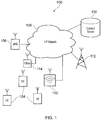
- FIG. 1 schematically illustrates a content distribution system 100 according to an embodiment of the present technique.
- the system 100 comprises a content server 102 for storing content and a plurality of communications devices 104 (also known as user equipment UE) for receiving content from the content server 102.
- the content server 102 and communications devices 104 are in communication via an Internet Protocol (IP) network 106 or alternative.
- IP Internet Protocol
- the network comprises a plurality of wireless access interfaces, each of which is operable to wirelessly transmit and receive signals to and from the communications devices 104.
- Each of the wireless access interfaces is configured to transmit and receive signals using a different radio access technology (RAT). More specifically, a cellular wireless access interface 108 is configured to transmit and receive signals using a cellular radio access technology (such as GSM or LTE), a local wireless access interface 110 is configured to transmit and receive signals using a local radio access technology (such as Wi-Fi, Bluetooth or LTE-U) and a broadcast wireless access interface 112 is configured to transmit and receive signals using a broadcast radio access technology (such as DVB-H or MBMS).
- a further wireless access interface 114 may also be included which uses any other suitable radio access technology for enabling communication with the communications devices 104.
- each of the wireless access interfaces shown in Figure 1 is represented as being implemented via a separate physical entity, two or more wireless access interfaces may be implemented using the same physical entity.
- an LTE cellular wireless access interface and MBMS broadcast wireless access interface (more specifically, an Evolved Multimedia Broadcast Multicast Service (eMBMS) wireless access interface) will, in reality, be implemented using the same physical entity.
- eMBMS Evolved Multimedia Broadcast Multicast Service
- the system 100 allows a content item, such as a film or TV show, to be delivered from the content server 102 to one or more of the communications devices 102 using one of the wireless access interfaces.
- the wireless access interface that is chosen for this delivery is decided by the content server 102 based on the number of communications devices 102 which send a request for a particular content item.
- FIG 2 schematically illustrates a communications device 104 according to an embodiment of the present technique.
- the communications device 104 is a mobile phone comprising a touch screen 200 for displaying content to the user.
- the user is able to use the touch screen 200 to choose and view content that is delivered by the content server 102.
- a content selection screen 202 is displayed on the touch screen 200.
- the content selection screen 202 displays a plurality of content item information windows 204 which each give information about a content item that can be requested by the user and delivered to the communications device 104.
- each window 204 displays the name of the content item ("Content Item 1", “Content Item 2", etc.), a predetermined time for when the content item becomes available (including the time of day and, if necessary, the name of the day) and a virtual request button 206 which allows the user to select a particular content item.
- the user When the user finds a content item that is to be viewed from the content selection screen 202, they activate the virtual button 206 included in the content item information window 204 for the relevant content item. This causes the communications device to send a content request to the content server 102 for the chosen content item.
- the content server 104 chooses the most appropriate wireless access interface for transmitting the chosen content item once the predetermined time has arrived.
- FIG 3 schematically illustrates internal components comprised by the communications device 104 of Figure 2 .
- the communications device 104 comprises a touch screen 200 for displaying information and content to the user and for receiving input from the user.
- the communications device could comprise a non-touch screen (for example, a standard liquid crystal display screen or the like) for displaying information to the user and physical buttons (such as an alphanumeric keypad or the like) for receiving input from the user.
- the communications device 104 also comprises a controller 300 for controlling the operation of the communications device 104, a storage unit 301 for storing content delivered to the communications device 104 and a plurality of communications interfaces 302A-B.
- Each of the communications interfaces 302A-C allow the communications device 104 to communicate with the network 106 through one of the cellular wireless access interface 108, local wireless access interface 110 and broadcast wireless access interface 112. More specifically, cellular communications interface 302A is for communicating using the cellular wireless access interface 108, local communications interface 302B is for communicating using the local wireless access interface 110 and broadcast communications interface 302C is for communicating using the broadcast access interface 112.
- Each of the communications interfaces 302A-C is configured to act as a content receiver.
- each of the communications interfaces 302A-B is configured to act as a content request transmitter and a signalling message receiver.
- the communications interfaces 302A-B are each configured to transmit a content request to the content server 102 following a user selection of a particular content item.
- the communications interfaces 302A-C are each configured to receive the content item from the content server at the predetermined time for the content item.
- the specific wireless access interface actually used for receiving the content item is determined by the content server 102 on the basis of the number of communications devices 104 which have sent a content request for the particular content item prior to the predetermined time for the content item.
- the communications interfaces 302A-B are each configured to receive a signalling message from the content server 102 signalling the wireless access interface to be used for the content item delivery prior to the predetermined time for the content item.
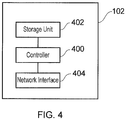
- FIG. 4 schematically illustrates internal components comprised by the content server 102 according to an embodiment of the present technique.
- the content server 102 comprises a storage unit 402 for storing content items, a controller 400 for controlling the operation of the content server 102 and a network interface 404.
- the network interface 404 allows the content server 102 to communicate with the network 106 and, ultimately, with the communications devices 104 through at least one of the cellular wireless access interface 108, local wireless access interface 110 and broadcast wireless access interface 112.
- the network interface 404 is configured to act as a content request receiver, a signalling message transmitter and a content transmitter.
- the network interface 404 is configured to receive a content request from one or more of the communications devices 104.
- the network interface 404 is configured to transmit the content item identified by the content request to the one or more communications devices 104 at the predetermined time for the content item using the network 106 and one of the wireless access interfaces.
- the network interface 404 is configured to transmit a signalling message to the one or more communications devices 104 signalling the selected wireless access interface to be used for the content item delivery prior to the predetermined time for the content item.
- the controller 400 of the content server 102 is configured to select one of the wireless access interfaces for delivering the content item based on the number of content requests received prior to the predetermined time. More specifically, prior to the predetermined time for a particular content item, the controller 400 counts the number of content requests received for that content item. If the number of requests prior to the predetermined time reaches a predetermined threshold number, then the broadcast wireless access interface 112 (which uses, for example, DVB-H or MBMS) is used to deliver the content item to the communications devices 104 at the predetermined time.
- the broadcast wireless access interface 112 which uses, for example, DVB-H or MBMS
- the cellular or local wireless access interfaces 108, 110 (which use, for example, LTE or Wi-Fi, respectively) is used to deliver the content item to the communications devices 104 at the predetermined time.
- the cellular or local wireless access interface 108, 110 is chosen depending on which of these wireless access interfaces is available to each communications device 104 at the predetermined time, with the local wireless access interface 110 generally being preferred.
- the content server makes the requested content item available for download for the communications devices 104.
- This download will be carried out using the cellular or local wireless access interface 108, 110, depending on which of these interfaces is available to each communications device 104. Since the decision as to whether the cellular or local wireless access interface is used is ultimately decided by each individual communications device 104 (depending on network coverage, etc.), the content server 102 effectively considers the cellular and wireless access interfaces 108, 110 as a single cellular or wireless access interface through which signalling messages and content items may be transmitted. The signalling message or content item is simply routed to the each communications device 104 from the content server 102 over the network 106 using the IP address each communications device 104.
- the demand for a particular content item is known because the controller 400 counts the number of content requests received for that content item prior to the predetermined time at which that content item is made available. If the threshold number of received requests reaches the threshold number, then the demand is considered to be sufficient for a broadcast channel to be dedicated to the transmission of the content item. This allows the communications devices to receive the content item using the least costly broadcast wireless access interface 112 once the predetermined time for the content item has arrived. This is particularly advantageous, since if the threshold number of requests is reached prior to the arrival of the predetermined time for the content item, then the more expensive cellular and local wireless access interfaces 108, 110 need never be used in delivering the content item to the communications devices 104, resulting in improved network efficiency and significant cost savings.
- the demand is not considered to be sufficient for a broadcast channel to be dedicated to the transmission of the content item.
- the cellular and local wireless access interfaces 108, 110 there is still a choice between the cellular and local wireless access interfaces 108, 110.
- cost savings can still be achieved if as many communications devices 104 as possible use the local wireless access interface 110.
- Embodiments of the present technique thus use the demand for a particular content item prior to the predetermined time at which it is made available in order to make efficient use of the various wireless access interfaces available for delivering the content item.
- Figure 5 illustrates a flow chart showing a process 500 carried out by the communications device 104 according to an embodiment of the present technique.
- the process 500 is carried out under the control of the controller 300.
- a content request is sent to the content server 102 in response to the selection of a particular content item by the user.
- the content request comprises the IP address of the communications device 104 and identifies the selected content item.
- the content request is transmitted using either the cellular or local wireless access interface 108, 110.
- the content item is associated with a predetermined time at which it is to become available for viewing by the user.
- it is determined as to whether or not the predetermined time has been reached.
- step 508 it is determined as to whether or not the communications device 104 is able to communicate with the network 106 using the local wireless access interface 110. For example, it is determined as to whether or not the communications device 104 is within range of a user's home wireless local area network (WLAN) or within range of a Wi-Fi hotspot. If it is determined that the communications device 104 is not able to communicate using the local wireless access interface 110, then the process returns to the beginning of step 506. On the other hand, if it is determined that the communications device 104 is able to communicate using the local wireless access interface 110, then the process moves onto step 510.
- WLAN wireless local area network
- step 510 it is determined as to whether or not the requested content item is available for an immediate download.
- the content item is associated with a predetermined time at which it is to be made available to the user, it may be the case that the content item becomes available immediately when the user's communications device 104 is in communication with the local wireless access interface 110, thus allowing the user to take advantage of the relatively low cost per unit data associated with the local wireless access interface 110 and to obtain the requested content item more quickly.
- Whether or not a particular content item is available for instant download is decided in advance by the proprietor of the content item.
- the process moves onto step 512, at which point the communications device 104 downloads the content.
- the process returns to the beginning of step 506.
- step 514 it is determined as to whether or not a signalling message indicating that the content item is to be delivered to the communications device 104 using the broadcast wireless access interface 112 has been received from the content server 102. This is referred to as a broadcast signalling message.
- This broadcast signalling message will be received over the network 106 using one of the cellular or local wireless access interfaces 108, 110 if the content server 102 determines that the number of requests for the content item has reached the predetermined threshold number.
- the broadcast signalling message is receivable over the network 106 because it comprises the IP address of the communications device 104 (this being included in the original content request) as the target IP address.
- step 518 it is determined as to whether or not a signalling message indicating that the content item is to be delivered to the communications device 104 using one of the cellular or wireless access interfaces 108, 110 has been received from the content server 102. This is referred to as a download signalling message.
- This download signalling message will be received over the network 106 using one of the cellular or local wireless access interfaces 108, 110 if the content server 102 determines that the number of requests for the content item has not reached the predetermined threshold number.
- the download signalling message is receivable over the network 106 because it comprises the IP address of the communications device 104 (this being included in the original content request) as the target IP address.
- step 520 the process moves onto step 520 in which the content item is downloaded from the content server 102 via one of the cellular and local communications interfaces 302A, 302B, depending on which of the cellular and local wireless access interfaces 108, 110 is available to the communications device 104. Due to the lower cost per unit data, the local wireless access interface is preferred. Thus, if the local wireless access interface 108 is available, then the content item will be downloaded using the local communications interface 302B. If the local wireless access interface 108 is not available, then the cellular wireless access interface 110 will be used, meaning that the content item will be downloaded using the cellular communications interface 302A.
- At least one of the cellular and local wireless access interfaces 108, 110 will be available because, otherwise, it would not have been possible for the communications device to have received the download signalling message at step 518. Once the content item has been downloaded, the process then ends at step 517.
- the communications device 104 may have a different IP address depending on whether the cellular or local wireless access interface 108, 110 is used for communication with the network 106. This is because the cellular and local communications interfaces 302A, 302B represent two different physical connections to the network 106. Thus, a problem may be caused if, for example, the communications device 104 transmits the content request using the cellular wireless access interface 108 (the content request thus comprising a first IP address of the communications device 104) but then, after sending the content request and prior to the predetermined time of the content item, the communications device 104 finds itself in range of a Wi-Fi network and connects to the network 106 using the local wireless access interface 110 (thus establishing a second, different IP address of the communications device 104).
- the broadcast/download message signalling message may not be received by the communications device 104 due to the change in IP address.
- the communications device 104 may transmit a message to the content server 102 alerting it of any change in the IP address of the communications device 104 following transmission of the original content request.
- the content server 102 will then transmit the broadcast/download signalling message to the communications device 104 using the new IP address.
- the communications device 104 may make use of an arrangement such as Dual Stack Mobile IP (DSMIP), which allows the IP address of the communications device 104 to remain consistent even if the connection with the network 106 switches between using the cellular and local wireless access interfaces 108, 110.
- DSMIP Dual Stack Mobile IP
- the broadcast communications interface 302C successively switches between a plurality of channels made available by the broadcast wireless access interface 112 and searches each channel for a packet header identifier of the content item.
- the packet header identifier of the content item is known to the communications device 104 since, for example, it may have been included in the information used to generate the content selection screen 202 and stored in the storage unit 301 of the communications device 104 following selection of the content item by the user.
- step 526 If, at step 526, it is determined that the content item has not been identified, then the process moves onto step 530, in which it is determined as to whether or not a retry time has elapsed.
- the retry time is a time for which the communications device 104 must wait before reattempting to receive the broadcast or download signalling message. This gives the user a chance to relocate the communications device 104 to a location in which cellular or local network access is more reliable, thus improving the chance that the communications device 104 is able to receive the broadcast or download signalling message and thus to receive the content item.
- the retry time may be any suitable time period determined by the skilled person. For example, the retry time may be 10, 20 or 30 seconds or even 1 or 2 minutes.
- the process returns to the beginning of step 530. On the other hand, if the retry time has elapsed, then the process returns to the beginning of step 514.
- the existence of the retry time helps to prevent the communications device 104 from continuously reattempting to receive the broadcast or download signalling messages when the communications device 104 is still likely to be in location with little or no local or cellular network coverage. Thus reduces unnecessary power consumption by the communications device 104.
- all broadcast channels made available by the broadcast wireless access interface 112 may be searched during a single iteration of this step.
- only a portion of the available broadcast channels may be searched during a single iteration. More specifically, in a first iteration of the step, a first portion of the available broadcast channels is searched and then, in a second iteration of the step (occurring if the content item is not identified during the first iteration and if it is still determined that neither a broadcast nor a download signalling message has been received), a second, different portion of the available broadcast channels is searched. This continues with a third, fourth, etc. iteration, as necessary.
- step 524 Searching only a portion of the available channels during each iteration of step 524 takes a shorter time than searching all available channels during each iteration. Thus, over a given time period, the communications device 104 is given a greater number of opportunities to reattempt receiving the broadcast or download signalling message when only a portion of the available channels is searched. This allows the user to receive the broadcast or download signalling message and, as a result, the content item more quickly in the case that cellular and/or local network coverage is restored.
- Steps 522, 524, 526 and 528 are generally only applicable to the use of non-cellular broadcast services such as DVB-H.
- MBMS is used for the broadcast wireless access interface 112
- these steps will be omitted.
- the communications device 104 will simply check again for whether or not a broadcast or download signalling message has been received (after the retry time has elapsed in step 530) and repeat this for as long as necessary. If, after repeated checks, the broadcast signalling message is received, then the broadcast signalling message causes reception of the MBMS broadcast service to be activated at the communications device 104.
- the communications device 104 is within range of the MBMS broadcast wireless interface (for example, if the communications device 104 is within range of the LTE wireless access interface through which the eMBMS service operates), then the communications device 104 is then able to receive the broadcast content item.
- Figure 6 illustrates a flow chart showing a process 600 carried out by the content server 102 according to an embodiment of the present technique.
- the process 600 is carried out under the control of the controller 400.
- the process 600 starts at step 602.
- a content request reception mode of the content server 102 is activated.
- the server 102 is receptive to content requests for a particular content item transmitted from each of the communications devices 104.
- the content item is associated with a predetermined time at which the content item is to be made available for transmission to the communications devices 104.
- step 608 it is determined as to whether or not the threshold number of content requests for the content item has been reached.
- step 610 the process moves onto step 610, in which the content server 102 transmits the broadcast signalling message to each of the communications devices 104 from which a content request has been received.
- the content server 102 knows which of the communication devices 104 to which to transmit the broadcast signalling message because each content request comprises the IP address of the specific communications device 104 from which it was sent.
- the communications device concerned transmits a message to the content server 102 notifying it of the updated IP address prior to the transmission of the broadcast signalling message.
- the broadcast signalling message is transmitted to the communications devices 104 over the network 106 and via one of the cellular or local wireless access interfaces 108, 110 (depending on which network is available to each communications device 104, as previously discussed).
- the broadcast signalling message informs each communications device 104 that the content is to be broadcast and, as already mentioned contains instructions which allow the broadcast communications interface 302C to receive the broadcast content item.
- the content item is then broadcast to the communications devices 104 using the network 106 and broadcast wireless access interface 112 (which is, for example, a DVB-H or MBMS wireless access interface).
- broadcast wireless access interface 112 which is, for example, a DVB-H or MBMS wireless access interface.
- the download signalling message is transmitted to the communications devices 104 over the network 106 and via one of the cellular or local wireless access interfaces 108, 110 (depending on which network is available to each communications device 104, as previously discussed).
- the download signalling message informs each communications device 104 that the content is to be made available for download from the content server 102.
- the content item is then made available for download to the communications devices 104.
- the content item is made available for manual download from the content server 102.
- a user may download the content item to their communications device 104 by visiting a particular website associated with the content server 102 or by using a specific software application (or "app") associated with the content server 102 which is installed on the communications device 104.
- the download signalling message itself may include a hyperlink or the like which, for example, directs the user to a website from which the content item may be downloaded.
- the content item is made available for automatic download from the content server 102.
- the content item may be pushed to each communications device 104 using its known IP address.
- the broadcast/download signalling message will be periodically transmitted for a predetermined time period after the predetermined time for the content item has arrived.
- the broadcast/download signalling message may be periodically transmitted (for example, every 10, 20 or 30 seconds) for the playback duration of the content item (if the content item is a movie or TV show, for example).
- This allows communication devices 104 which are, for example, out of range of the cellular and local wireless access interfaces 108, 110, to receive the broadcast/download signalling message once connection with the cellular or local wireless access interface 108, 110 is re-established.
- the content server 102 may also make the content item available for download at any time. This means that the entire content item may still be made available to users even if they miss the predetermined time at which it is broadcast or if they are within range of a local wireless access interface 110 prior to the predetermined time and the content proprietor has chosen to make the content item available prior to the predetermined time (see steps 508, 510 and 512 of the process 500 of Figure 5 ). Although this may increase the network load, it is expected that the majority of users will still view the broadcast content item, and thus the efficiency of the network is still improved when compared to the situation in which all users view the content item by downloading it. Numerous modifications and variations of the present disclosure are possible in light of the above teachings. It is therefore to be understood that within the scope of the appended claims, the disclosure may be practiced otherwise than as specifically described herein.
- Described embodiments may be implemented in any suitable form including hardware, software, firmware or any combination of these. Described embodiments may optionally be implemented at least partly as computer software running on one or more data processors and/or digital signal processors.
- the elements and components of any embodiment may be physically, functionally and logically implemented in any suitable way. Indeed the functionality may be implemented in a single unit, in a plurality of units or as part of other functional units. As such, the disclosed embodiments may be implemented in a single unit or may be physically and functionally distributed between different units, circuitry and/or processors.
Landscapes
- Engineering & Computer Science (AREA)
- Computer Networks & Wireless Communication (AREA)
- Signal Processing (AREA)
- Multimedia (AREA)
- Mobile Radio Communication Systems (AREA)
Claims (15)
- Inhaltsserver (102) zur Bereitstellung eines Inhaltselements auf Abruf ("on demand") an Kommunikationsgeräte (104), umfassend:eine Netzwerkschnittstelle (404), die konfiguriert ist, um eine Inhaltsanforderung von jedem der Kommunikationsgeräte (104) zu empfangen und in Reaktion auf die empfangenen Inhaltsanforderungen das Inhaltselement nach dem Erreichen einer vorbestimmten Zeit unter Verwendung eines Netzwerks (106) und einer von einer Vielzahl von drahtlosen Zugangsschnittstellen (108, 110, 112) an jedes der Kommunikationsgeräte (104) zu übertragen, wobei jede der drahtlosen Zugangsschnittstellen konfiguriert ist, um die Signale unter Verwendung einer unterschiedlichen Funkzugangstechnologie zu übertragen und/oder zu empfangen; undeine Steuereinheit (400), die konfiguriert ist, um den Inhaltssender zu veranlassen, eine der drahtlosen Zugangsschnittstellen (108, 110, 112) zum Übertragen des Inhaltselements basierend auf der Anzahl der vor dem Erreichen der vorbestimmten Zeit empfangenen Inhaltsanforderungen auszuwählen; wobeidie Netzwerkschnittstelle (404) konfiguriert ist, um an jedes der Kommunikationsgeräte (104) eine Signalisierungsnachricht zu übertragen, die die ausgewählte drahtlose Zugangsschnittstelle (108, 110, 112) vor dem Übertragen des Inhaltselements signalisiert.
- Inhaltsserver (102) nach Anspruch 1, wobei die Vielzahl von drahtlosen Zugangsschnittstellen eine zellulare drahtlose Zugangsschnittstelle (108), eine lokale drahtlose Zugangsschnittstelle (110) und eine drahtlose Rundsendezugangsschnittstelle (112) umfasst.
- Inhaltsserver (102) nach Anspruch 2, wobei die Steuereinheit (400) konfiguriert ist, um die drahtlose Rundsendezugangsschnittstelle (112) für die Übertragung des Inhaltselements auszuwählen, wenn die vor dem Erreichen der vorbestimmten Zeit empfangene Anzahl von Inhaltsanforderungen eine vorbestimmte Schwellenwertzahl erreicht, und die zellulare oder lokale drahtlose Zugangsschnittstelle (108, 110) zur Übertragung des Inhaltselements auszuwählen, wenn die vor dem Erreichen der vorbestimmten Zeit empfangene Anzahl von Inhaltsanforderungen den vorbestimmten Schwellenwert nicht erreicht.
- Inhaltsserver (102) nach Anspruch 3, wobei, wenn die drahtlose Rundsendezugangsschnittstelle (112) ausgewählt wird, die Netzwerkschnittstelle (404) konfiguriert ist, um eine Rundsendesignalisierungsnachricht an jedes der Kommunikationsgeräte (104) als die Signalisierungsnachricht zu übertragen, wobei die Rundsendesignalisierungsnachricht Anweisungen umfasst, die von jedem der Kommunikationsgeräte (104) verarbeitet werden sollen, um so jedem Kommunikationsgerät zu ermöglichen, das rundgesendete Inhaltselement zu empfangen, und wenn die zellulare oder lokale drahtlose Zugangsschnittstelle (108, 110) ausgewählt wird, die Netzwerkschnittstelle konfiguriert ist, um eine Download-Signalisierungsnachricht an jedes der Kommunikationsgeräte (104) als die Signalisierungsnachricht zu übertragen, wobei die Download-Signalisierungsnachricht jedem der Kommunikationsgeräte (104) anzeigt, dass das Inhaltselement zum Herunterladen von dem Inhaltsserver (102) unter Verwendung der zellularen oder lokalen drahtlosen Zugangsschnittstelle (108, 110) verfügbar gemacht werden soll.
- Inhaltsserver (102) nach einem der Ansprüche 2 bis 4, wobei die zellulare drahtlose Zugangsschnittstelle (108) dem Global System for Mobile Communications (GSM)- oder dem Long-Term Evolution (LTE)-Standard entspricht, die lokale drahtlose Zugangsschnittstelle (110) dem Wi-Fi- oder dem Bluetooth-Standard entspricht oder das lizenzfreie LTE-Spektrum (LTE-U) nutzt, und die drahtlose Rundsendezugangsschnittstelle (112) dem Digital Video Broadcast-Handheld (DVB-H) oder dem Multimedia Broadcast Multicast Services (MBMS)-Standard entspricht.
- Kommunikationsgerät (104) zum Empfangen eines Inhaltselements auf Abruf von einem Inhaltsserver (102), umfassend:eine Vielzahl von Kommunikationsschnittstellen (302A-C), die jeweils konfiguriert sind, um Signale mit einer unterschiedlichen drahtlosen Zugangsschnittstelle (108, 110, 112) unter Verwendung einer unterschiedlichen Funkzugangstechnologie zu übertragen und/oder zu empfangen, wobei eine erste der Vielzahl von Kommunikationsschnittstellen (302A-C) konfiguriert ist, um eine Inhaltsanforderung an den Inhaltsserver (102) zu übertragen, eine zweite der Vielzahl von Kommunikationsschnittstellen (302A-C) konfiguriert ist, um das Inhaltselement von dem Inhaltsserver (102) nach dem Erreichen einer vorbestimmten Zeit zu empfangen, und eine dritte der Vielzahl von Kommunikationsschnittstellen (302A-C) konfiguriert ist, um eine Signalisierungsnachricht von dem Inhaltsserver (102) vor dem Empfangen des Inhaltselements durch die zweite Kommunikationsschnittstelle zu empfangen, wobei die Signalisierungsnachricht signalisiert, welche der Vielzahl von Kommunikationsschnittstellen (302A-C) die zweite Kommunikationsschnittstelle zum Empfangen des Inhaltselements sein soll; undeine Steuereinheit (300), die konfiguriert ist, um die zweite Kommunikationsschnittstelle zum Empfangen des Inhaltselements von der Vielzahl von Kommunikationsschnittstellen (302A-C) gemäß der Signalisierungsnachricht auszuwählen.
- Kommunikationsgerät (104) nach Anspruch 6, wobei:die Vielzahl von Kommunikationsschnittstellen eine zellulare Kommunikationsschnittstelle (302A), eine lokale Kommunikationsschnittstelle (302B) und eine Rundsende-Kommunikationsschnittstelle (302C) umfasst;die erste Kommunikationsschnittstelle eine von der zellularen und lokalen Kommunikationsschnittstelle (302A-B) ist;die zweite Kommunikationsschnittstelle eine von der zellularen, lokalen oder Rundsende-Kommunikationsschnittstelle (302A-C) ist; unddie dritte Kommunikationsschnittstelle eine von der zellularen und lokalen Kommunikationsschnittstelle (302A-B) ist.
- Kommunikationsgerät (104) nach Anspruch 7, wobei die Steuereinheit (300) konfiguriert ist, um die zellulare oder lokale Kommunikationsschnittstelle (302A-B) als die erste und/oder dritte Kommunikationsschnittstelle auszuwählen, abhängig davon, welche der zellularen und lokalen Kommunikationsschnittstellen (302A-B) in der Lage ist, mit dem Inhaltsserver (102) zu kommunizieren, wobei der lokalen Kommunikationsschnittstelle (302B) in dem Fall der Vorzug gegeben wird, dass sowohl die zellulare als auch die lokale Kommunikationsschnittstelle in der Lage sind, mit dem Inhaltsserver (102) zu kommunizieren.
- System, umfassend einen Inhaltsserver (102) und ein Kommunikationsgerät (104), wobei der Inhaltsserver (102) ein Inhaltselement auf Abruf für das Kommunikationsgerät (104) bereitstellt, wobei der Inhaltsserver umfasst:eine Netzwerkschnittstelle (404), die konfiguriert ist, um eine Inhaltsanforderung von dem Kommunikationsgerät (104) zu empfangen und in Reaktion auf die empfangenen Inhaltsanforderungen das Inhaltselement nach dem Erreichen einer vorbestimmten Zeit unter Verwendung eines Netzwerks (106) und einer von einer Vielzahl von drahtlosen Zugangsschnittstellen (108, 110, 112) an das Kommunikationsgerät (104) zu übertragen, wobei jede der drahtlosen Zugangsschnittstellen konfiguriert ist, um die Signale unter Verwendung einer unterschiedlichen Funkzugangstechnologie zu übertragen und/oder zu empfangen; undeine Steuereinheit (400), die konfiguriert ist, um den Inhaltssender zu veranlassen, eine der drahtlosen Zugangsschnittstellen (108, 110, 112) zum Übertragen des Inhaltselements basierend auf der Anzahl der vor dem Erreichen der vorbestimmten Zeit empfangenen Inhaltsanforderungen auszuwählen; wobeidie Netzwerkschnittstelle (404) konfiguriert ist, um an das Kommunikationsgerät (104) eine Signalisierungsnachricht zu übertragen, die die ausgewählte drahtlose Zugangsschnittstelle (108, 110, 112) vor dem Übertragen des Inhaltselements signalisiert.
- Verfahren zur Bereitstellung eines Inhaltselements auf Abruf an Kommunikationsgeräte (104), umfassend:Empfangen einer Inhaltsanforderung von jedem der Kommunikationsgeräte (104), und in Reaktion auf die empfangenen Inhaltsanforderungen, Übertragen des Inhaltselements nach dem Erreichen einer vorbestimmten Zeit unter Verwendung eines Netzwerks (106) und einer von einer Vielzahl von drahtlosen Zugangsschnittstellen (108, 110, 112) an jedes der Kommunikationsgeräte (106), wobei jede der drahtlosen Zugangsschnittstellen konfiguriert ist, um die Signale unter Verwendung einer unterschiedlichen Funkzugangstechnologie zu übertragen und/oder zu empfangen; undAuswählen einer der drahtlosen Zugangsschnittstellen (108, 110, 112) zum Übertragen des Inhaltselements basierend auf der Anzahl der vor dem Erreichen der vorbestimmten Zeit empfangenen Inhaltsanforderungen; wobeian jedes der Kommunikationsgeräte (104) eine Signalisierungsnachricht gesendet wird, die die ausgewählte drahtlose Zugangsschnittstelle (108, 110, 112) vor dem Übertragen des Inhaltselements signalisiert.
- Programm zum Steuern eines Computers zum Durchführen eines Verfahrens nach Anspruch 13.
- Aufzeichnungsmedium, das ein Programm nach Anspruch 14 speichert.
- Verfahren zum Empfangen eines Inhaltselements auf Abruf von einem Inhaltsserver (102), umfassend:Übertragen einer Inhaltsanforderung an den Inhaltsserver (102) unter Verwendung einer ersten von einer Vielzahl von Kommunikationsschnittstellen (302A-C), die jeweils konfiguriert sind, um Signale mit einer unterschiedlichen drahtlosen Zugangsschnittstelle (108, 110, 112) unter Verwendung einer unterschiedlichen Funkzugangstechnologie zu übertragen und/oder zu empfangen;Empfangen des Inhaltselements von dem Inhaltsserver (102) nach dem Erreichen einer vorbestimmten Zeit unter Verwendung einer zweiten der Vielzahl von Kommunikationsschnittstellen (302A-C);Empfangen einer Signalisierungsnachricht von dem Inhaltsserver (102) unter Verwendung einer dritten von der Vielzahl von Kommunikationsschnittstellen (302A-C) vor dem Empfangen des Inhaltselements durch die zweite Kommunikationsschnittstelle, wobei die Signalisierungsnachricht signalisiert, welche der Vielzahl von Kommunikationsschnittstellen (302A-C) die zweite Kommunikationsschnittstelle zum Empfangen des Inhaltselements sein soll; undAuswählen der zweiten Kommunikationsschnittstelle zum Empfangen des Inhaltselements von der Vielzahl von Kommunikationsschnittstellen (302A-C) gemäß der Signalisierungsnachricht.
- Programm zum Steuern eines Computers zum Durchführen eines Verfahrens nach Anspruch 13.
- Aufzeichnungsmedium, das ein Programm nach Anspruch 14 speichert.
Applications Claiming Priority (2)
| Application Number | Priority Date | Filing Date | Title |
|---|---|---|---|
| EP14169734 | 2014-05-23 | ||
| PCT/EP2015/056154 WO2015176851A1 (en) | 2014-05-23 | 2015-03-23 | A method, apparatus and system for delivering content |
Publications (2)
| Publication Number | Publication Date |
|---|---|
| EP3146735A1 EP3146735A1 (de) | 2017-03-29 |
| EP3146735B1 true EP3146735B1 (de) | 2018-06-27 |
Family
ID=50792380
Family Applications (1)
| Application Number | Title | Priority Date | Filing Date |
|---|---|---|---|
| EP15711235.0A Not-in-force EP3146735B1 (de) | 2014-05-23 | 2015-03-23 | Verfahren, vorrichtung und system zur bereitstellung von inhalt |
Country Status (3)
| Country | Link |
|---|---|
| US (1) | US10177928B2 (de) |
| EP (1) | EP3146735B1 (de) |
| WO (1) | WO2015176851A1 (de) |
Families Citing this family (2)
| Publication number | Priority date | Publication date | Assignee | Title |
|---|---|---|---|---|
| EP3386242B1 (de) * | 2015-12-24 | 2019-11-06 | Huawei Technologies Co., Ltd. | Verfahren zur bestimmung eines netzwerkstandards in einem drahtloskommunikationsnetzwerk, zugangspunktvorrichtung, endgerätevorrichtung und drahtlosnetzwerksteuerung |
| US10517021B2 (en) | 2016-06-30 | 2019-12-24 | Evolve Cellular Inc. | Long term evolution-primary WiFi (LTE-PW) |
Family Cites Families (15)
| Publication number | Priority date | Publication date | Assignee | Title |
|---|---|---|---|---|
| US6596570B2 (en) | 2001-06-06 | 2003-07-22 | International Business Machines Corporation | SOI device with reduced junction capacitance |
| KR100871255B1 (ko) * | 2002-08-16 | 2008-11-28 | 삼성전자주식회사 | 무선 인터넷을 이용한 정보 제공 시스템 및 그 방법 |
| DE602004002471T2 (de) * | 2004-06-22 | 2007-01-18 | Alcatel | Verfahren und System zur Beteitstellung einer Übertragungsverbindung für Datenstromverkehr |
| US20090185522A1 (en) * | 2005-01-07 | 2009-07-23 | Nortel Networks Limited | Systems and methods for distributing content in wireless networks |
| US7889732B2 (en) * | 2005-12-22 | 2011-02-15 | Alcatel-Lucent Usa, Inc. | Method for converting between unicast sessions and a multicast session |
| US8068821B2 (en) | 2007-03-29 | 2011-11-29 | Alcatel Lucent | Method and apparatus for providing content to users using unicast and broadcast wireless networks |
| JPWO2010050022A1 (ja) * | 2008-10-29 | 2012-03-29 | 富士通株式会社 | 配信システム、代理サーバおよび配信方法 |
| US8150993B2 (en) * | 2009-10-29 | 2012-04-03 | At&T Intellectual Property I, Lp | Synchronization of clients to maximize multicast opportunities |
| US8548465B2 (en) | 2010-04-23 | 2013-10-01 | Apple Inc. | Methods and apparatus for providing dynamic information in a wireless information channel |
| US9820259B2 (en) * | 2012-05-04 | 2017-11-14 | Qualcomm Incorporated | Smooth transition between multimedia broadcast multicast service (MBMS) and unicast service by demand |
| US20130332621A1 (en) * | 2012-06-08 | 2013-12-12 | Ecole Polytechnique Federale De Lausanne (Epfl) | System and method for cooperative data streaming |
| US9136958B2 (en) | 2012-06-22 | 2015-09-15 | Qualcomm Incorporated | Methods and apparatus for providing hybrid unicast broadcast services |
| US8891420B2 (en) | 2012-09-14 | 2014-11-18 | Fujitsu Limited | Fusion of cellular and non-cellular communications |
| US9119087B2 (en) | 2012-09-28 | 2015-08-25 | Intel Corporation | Systems and methods for hybrid wireless content delivery |
| US8825881B2 (en) | 2013-09-12 | 2014-09-02 | Bandwidth.Com, Inc. | Predictive caching of IP data |
-
2015
- 2015-03-23 US US15/303,560 patent/US10177928B2/en active Active
- 2015-03-23 WO PCT/EP2015/056154 patent/WO2015176851A1/en not_active Ceased
- 2015-03-23 EP EP15711235.0A patent/EP3146735B1/de not_active Not-in-force
Non-Patent Citations (1)
| Title |
|---|
| None * |
Also Published As
| Publication number | Publication date |
|---|---|
| US20170041158A1 (en) | 2017-02-09 |
| US10177928B2 (en) | 2019-01-08 |
| EP3146735A1 (de) | 2017-03-29 |
| WO2015176851A1 (en) | 2015-11-26 |
Similar Documents
| Publication | Publication Date | Title |
|---|---|---|
| US9277485B2 (en) | Method of transmitting and accessing network service data | |
| US9088832B2 (en) | System and method for providing interactive mobile content using multiple communication paths | |
| JP4546566B2 (ja) | 受信した放送コンテンツに関連付けられたダウンロード可能なコンテンツにアクセスする方法、コンピュータ・プログラム、通信装置及び移動端末 | |
| JP4146433B2 (ja) | 放送ブックマーク | |
| US8745023B2 (en) | System and method for content browsing using a non-realtime connection | |
| US9674636B2 (en) | System, method and computer software product for providing interactive data using a mobile device | |
| US20050148325A1 (en) | Method of providing service for user equipment and system | |
| CN106899966B (zh) | 网络模式自动选择方法及装置 | |
| US20040230653A1 (en) | Structure for an electronic newsletter subscription system of a multimedia messaging service | |
| EP2418791A1 (de) | Verfahren zur Verwendung verschiedener Übertragungsstandards und Rundfunkempfangsvorrichtung | |
| US8346228B2 (en) | System and method for providing interactive services using a mobile device | |
| EP3146735B1 (de) | Verfahren, vorrichtung und system zur bereitstellung von inhalt | |
| KR20100132153A (ko) | 휴대용 단말기에서 방송 채널 미리 보기 방법 및 장치 | |
| US20100076576A1 (en) | Systems, methods, and devices for providing broadcast media from a selected source | |
| KR100975702B1 (ko) | 디지털 방송 서비스를 제공하는 단말 및 방법과 이를 지원하는 시스템 | |
| EP1879379A1 (de) | Digitales Rundfunkempfangsgerät zum schnellen Umschalten zwischen Kanälen und Verfahren dafür | |
| CN102118203B (zh) | 调频广播接收系统、调频接收终端及处理方法 | |
| EP1929823B1 (de) | Verfahren und vorrichtung zum gleichzeitigen kommunizieren auf einem sprach-kanal und einem rundsende-kanal | |
| US7983700B2 (en) | Broadcast information transmitting apparatus and method for a mobile communication terminal | |
| US8467772B2 (en) | Mobile terminal and teletext information providing system and method using the same | |
| US20130042277A1 (en) | Apparatus, and associated method, for providing media in a radio communication system | |
| EP2557893B1 (de) | Vorrichtungen und Verfahren zur Bereitstellung von Medien in einem Funkkommunikationssystem | |
| KR101613729B1 (ko) | 콘텐츠 서비스 제공 방법 |
Legal Events
| Date | Code | Title | Description |
|---|---|---|---|
| STAA | Information on the status of an ep patent application or granted ep patent |
Free format text: STATUS: THE INTERNATIONAL PUBLICATION HAS BEEN MADE |
|
| PUAI | Public reference made under article 153(3) epc to a published international application that has entered the european phase |
Free format text: ORIGINAL CODE: 0009012 |
|
| STAA | Information on the status of an ep patent application or granted ep patent |
Free format text: STATUS: REQUEST FOR EXAMINATION WAS MADE |
|
| 17P | Request for examination filed |
Effective date: 20161217 |
|
| AK | Designated contracting states |
Kind code of ref document: A1 Designated state(s): AL AT BE BG CH CY CZ DE DK EE ES FI FR GB GR HR HU IE IS IT LI LT LU LV MC MK MT NL NO PL PT RO RS SE SI SK SM TR |
|
| AX | Request for extension of the european patent |
Extension state: BA ME |
|
| DAV | Request for validation of the european patent (deleted) | ||
| DAX | Request for extension of the european patent (deleted) | ||
| GRAP | Despatch of communication of intention to grant a patent |
Free format text: ORIGINAL CODE: EPIDOSNIGR1 |
|
| STAA | Information on the status of an ep patent application or granted ep patent |
Free format text: STATUS: GRANT OF PATENT IS INTENDED |
|
| INTG | Intention to grant announced |
Effective date: 20180110 |
|
| GRAJ | Information related to disapproval of communication of intention to grant by the applicant or resumption of examination proceedings by the epo deleted |
Free format text: ORIGINAL CODE: EPIDOSDIGR1 |
|
| STAA | Information on the status of an ep patent application or granted ep patent |
Free format text: STATUS: REQUEST FOR EXAMINATION WAS MADE |
|
| GRAR | Information related to intention to grant a patent recorded |
Free format text: ORIGINAL CODE: EPIDOSNIGR71 |
|
| GRAS | Grant fee paid |
Free format text: ORIGINAL CODE: EPIDOSNIGR3 |
|
| STAA | Information on the status of an ep patent application or granted ep patent |
Free format text: STATUS: GRANT OF PATENT IS INTENDED |
|
| GRAA | (expected) grant |
Free format text: ORIGINAL CODE: 0009210 |
|
| STAA | Information on the status of an ep patent application or granted ep patent |
Free format text: STATUS: THE PATENT HAS BEEN GRANTED |
|
| INTC | Intention to grant announced (deleted) | ||
| AK | Designated contracting states |
Kind code of ref document: B1 Designated state(s): AL AT BE BG CH CY CZ DE DK EE ES FI FR GB GR HR HU IE IS IT LI LT LU LV MC MK MT NL NO PL PT RO RS SE SI SK SM TR |
|
| INTG | Intention to grant announced |
Effective date: 20180523 |
|
| REG | Reference to a national code |
Ref country code: GB Ref legal event code: FG4D |
|
| REG | Reference to a national code |
Ref country code: AT Ref legal event code: REF Ref document number: 1013387 Country of ref document: AT Kind code of ref document: T Effective date: 20180715 |
|
| REG | Reference to a national code |
Ref country code: IE Ref legal event code: FG4D |
|
| REG | Reference to a national code |
Ref country code: DE Ref legal event code: R096 Ref document number: 602015012727 Country of ref document: DE |
|
| PG25 | Lapsed in a contracting state [announced via postgrant information from national office to epo] |
Ref country code: BG Free format text: LAPSE BECAUSE OF FAILURE TO SUBMIT A TRANSLATION OF THE DESCRIPTION OR TO PAY THE FEE WITHIN THE PRESCRIBED TIME-LIMIT Effective date: 20180927 Ref country code: FI Free format text: LAPSE BECAUSE OF FAILURE TO SUBMIT A TRANSLATION OF THE DESCRIPTION OR TO PAY THE FEE WITHIN THE PRESCRIBED TIME-LIMIT Effective date: 20180627 Ref country code: NO Free format text: LAPSE BECAUSE OF FAILURE TO SUBMIT A TRANSLATION OF THE DESCRIPTION OR TO PAY THE FEE WITHIN THE PRESCRIBED TIME-LIMIT Effective date: 20180927 Ref country code: SE Free format text: LAPSE BECAUSE OF FAILURE TO SUBMIT A TRANSLATION OF THE DESCRIPTION OR TO PAY THE FEE WITHIN THE PRESCRIBED TIME-LIMIT Effective date: 20180627 Ref country code: LT Free format text: LAPSE BECAUSE OF FAILURE TO SUBMIT A TRANSLATION OF THE DESCRIPTION OR TO PAY THE FEE WITHIN THE PRESCRIBED TIME-LIMIT Effective date: 20180627 |
|
| REG | Reference to a national code |
Ref country code: NL Ref legal event code: MP Effective date: 20180627 |
|
| REG | Reference to a national code |
Ref country code: LT Ref legal event code: MG4D |
|
| PG25 | Lapsed in a contracting state [announced via postgrant information from national office to epo] |
Ref country code: LV Free format text: LAPSE BECAUSE OF FAILURE TO SUBMIT A TRANSLATION OF THE DESCRIPTION OR TO PAY THE FEE WITHIN THE PRESCRIBED TIME-LIMIT Effective date: 20180627 Ref country code: HR Free format text: LAPSE BECAUSE OF FAILURE TO SUBMIT A TRANSLATION OF THE DESCRIPTION OR TO PAY THE FEE WITHIN THE PRESCRIBED TIME-LIMIT Effective date: 20180627 Ref country code: GR Free format text: LAPSE BECAUSE OF FAILURE TO SUBMIT A TRANSLATION OF THE DESCRIPTION OR TO PAY THE FEE WITHIN THE PRESCRIBED TIME-LIMIT Effective date: 20180928 Ref country code: RS Free format text: LAPSE BECAUSE OF FAILURE TO SUBMIT A TRANSLATION OF THE DESCRIPTION OR TO PAY THE FEE WITHIN THE PRESCRIBED TIME-LIMIT Effective date: 20180627 |
|
| REG | Reference to a national code |
Ref country code: AT Ref legal event code: MK05 Ref document number: 1013387 Country of ref document: AT Kind code of ref document: T Effective date: 20180627 |
|
| PG25 | Lapsed in a contracting state [announced via postgrant information from national office to epo] |
Ref country code: NL Free format text: LAPSE BECAUSE OF FAILURE TO SUBMIT A TRANSLATION OF THE DESCRIPTION OR TO PAY THE FEE WITHIN THE PRESCRIBED TIME-LIMIT Effective date: 20180627 |
|
| PG25 | Lapsed in a contracting state [announced via postgrant information from national office to epo] |
Ref country code: PL Free format text: LAPSE BECAUSE OF FAILURE TO SUBMIT A TRANSLATION OF THE DESCRIPTION OR TO PAY THE FEE WITHIN THE PRESCRIBED TIME-LIMIT Effective date: 20180627 Ref country code: EE Free format text: LAPSE BECAUSE OF FAILURE TO SUBMIT A TRANSLATION OF THE DESCRIPTION OR TO PAY THE FEE WITHIN THE PRESCRIBED TIME-LIMIT Effective date: 20180627 Ref country code: AT Free format text: LAPSE BECAUSE OF FAILURE TO SUBMIT A TRANSLATION OF THE DESCRIPTION OR TO PAY THE FEE WITHIN THE PRESCRIBED TIME-LIMIT Effective date: 20180627 Ref country code: IS Free format text: LAPSE BECAUSE OF FAILURE TO SUBMIT A TRANSLATION OF THE DESCRIPTION OR TO PAY THE FEE WITHIN THE PRESCRIBED TIME-LIMIT Effective date: 20181027 Ref country code: CZ Free format text: LAPSE BECAUSE OF FAILURE TO SUBMIT A TRANSLATION OF THE DESCRIPTION OR TO PAY THE FEE WITHIN THE PRESCRIBED TIME-LIMIT Effective date: 20180627 Ref country code: RO Free format text: LAPSE BECAUSE OF FAILURE TO SUBMIT A TRANSLATION OF THE DESCRIPTION OR TO PAY THE FEE WITHIN THE PRESCRIBED TIME-LIMIT Effective date: 20180627 Ref country code: SK Free format text: LAPSE BECAUSE OF FAILURE TO SUBMIT A TRANSLATION OF THE DESCRIPTION OR TO PAY THE FEE WITHIN THE PRESCRIBED TIME-LIMIT Effective date: 20180627 |
|
| PG25 | Lapsed in a contracting state [announced via postgrant information from national office to epo] |
Ref country code: SM Free format text: LAPSE BECAUSE OF FAILURE TO SUBMIT A TRANSLATION OF THE DESCRIPTION OR TO PAY THE FEE WITHIN THE PRESCRIBED TIME-LIMIT Effective date: 20180627 Ref country code: IT Free format text: LAPSE BECAUSE OF FAILURE TO SUBMIT A TRANSLATION OF THE DESCRIPTION OR TO PAY THE FEE WITHIN THE PRESCRIBED TIME-LIMIT Effective date: 20180627 Ref country code: ES Free format text: LAPSE BECAUSE OF FAILURE TO SUBMIT A TRANSLATION OF THE DESCRIPTION OR TO PAY THE FEE WITHIN THE PRESCRIBED TIME-LIMIT Effective date: 20180627 |
|
| REG | Reference to a national code |
Ref country code: DE Ref legal event code: R097 Ref document number: 602015012727 Country of ref document: DE |
|
| PLBE | No opposition filed within time limit |
Free format text: ORIGINAL CODE: 0009261 |
|
| STAA | Information on the status of an ep patent application or granted ep patent |
Free format text: STATUS: NO OPPOSITION FILED WITHIN TIME LIMIT |
|
| PG25 | Lapsed in a contracting state [announced via postgrant information from national office to epo] |
Ref country code: DK Free format text: LAPSE BECAUSE OF FAILURE TO SUBMIT A TRANSLATION OF THE DESCRIPTION OR TO PAY THE FEE WITHIN THE PRESCRIBED TIME-LIMIT Effective date: 20180627 |
|
| 26N | No opposition filed |
Effective date: 20190328 |
|
| PG25 | Lapsed in a contracting state [announced via postgrant information from national office to epo] |
Ref country code: SI Free format text: LAPSE BECAUSE OF FAILURE TO SUBMIT A TRANSLATION OF THE DESCRIPTION OR TO PAY THE FEE WITHIN THE PRESCRIBED TIME-LIMIT Effective date: 20180627 |
|
| PG25 | Lapsed in a contracting state [announced via postgrant information from national office to epo] |
Ref country code: MC Free format text: LAPSE BECAUSE OF FAILURE TO SUBMIT A TRANSLATION OF THE DESCRIPTION OR TO PAY THE FEE WITHIN THE PRESCRIBED TIME-LIMIT Effective date: 20180627 |
|
| REG | Reference to a national code |
Ref country code: CH Ref legal event code: PL |
|
| PG25 | Lapsed in a contracting state [announced via postgrant information from national office to epo] |
Ref country code: AL Free format text: LAPSE BECAUSE OF FAILURE TO SUBMIT A TRANSLATION OF THE DESCRIPTION OR TO PAY THE FEE WITHIN THE PRESCRIBED TIME-LIMIT Effective date: 20180627 Ref country code: LU Free format text: LAPSE BECAUSE OF NON-PAYMENT OF DUE FEES Effective date: 20190323 |
|
| REG | Reference to a national code |
Ref country code: BE Ref legal event code: MM Effective date: 20190331 |
|
| PG25 | Lapsed in a contracting state [announced via postgrant information from national office to epo] |
Ref country code: IE Free format text: LAPSE BECAUSE OF NON-PAYMENT OF DUE FEES Effective date: 20190323 Ref country code: LI Free format text: LAPSE BECAUSE OF NON-PAYMENT OF DUE FEES Effective date: 20190331 Ref country code: CH Free format text: LAPSE BECAUSE OF NON-PAYMENT OF DUE FEES Effective date: 20190331 |
|
| PG25 | Lapsed in a contracting state [announced via postgrant information from national office to epo] |
Ref country code: BE Free format text: LAPSE BECAUSE OF NON-PAYMENT OF DUE FEES Effective date: 20190331 |
|
| PG25 | Lapsed in a contracting state [announced via postgrant information from national office to epo] |
Ref country code: TR Free format text: LAPSE BECAUSE OF FAILURE TO SUBMIT A TRANSLATION OF THE DESCRIPTION OR TO PAY THE FEE WITHIN THE PRESCRIBED TIME-LIMIT Effective date: 20180627 |
|
| PG25 | Lapsed in a contracting state [announced via postgrant information from national office to epo] |
Ref country code: PT Free format text: LAPSE BECAUSE OF FAILURE TO SUBMIT A TRANSLATION OF THE DESCRIPTION OR TO PAY THE FEE WITHIN THE PRESCRIBED TIME-LIMIT Effective date: 20181029 Ref country code: MT Free format text: LAPSE BECAUSE OF NON-PAYMENT OF DUE FEES Effective date: 20190323 |
|
| PG25 | Lapsed in a contracting state [announced via postgrant information from national office to epo] |
Ref country code: CY Free format text: LAPSE BECAUSE OF FAILURE TO SUBMIT A TRANSLATION OF THE DESCRIPTION OR TO PAY THE FEE WITHIN THE PRESCRIBED TIME-LIMIT Effective date: 20180627 |
|
| PG25 | Lapsed in a contracting state [announced via postgrant information from national office to epo] |
Ref country code: HU Free format text: LAPSE BECAUSE OF FAILURE TO SUBMIT A TRANSLATION OF THE DESCRIPTION OR TO PAY THE FEE WITHIN THE PRESCRIBED TIME-LIMIT; INVALID AB INITIO Effective date: 20150323 |
|
| PG25 | Lapsed in a contracting state [announced via postgrant information from national office to epo] |
Ref country code: MK Free format text: LAPSE BECAUSE OF FAILURE TO SUBMIT A TRANSLATION OF THE DESCRIPTION OR TO PAY THE FEE WITHIN THE PRESCRIBED TIME-LIMIT Effective date: 20180627 |
|
| PGFP | Annual fee paid to national office [announced via postgrant information from national office to epo] |
Ref country code: FR Payment date: 20230222 Year of fee payment: 9 |
|
| PGFP | Annual fee paid to national office [announced via postgrant information from national office to epo] |
Ref country code: GB Payment date: 20230221 Year of fee payment: 9 Ref country code: DE Payment date: 20230221 Year of fee payment: 9 |
|
| P01 | Opt-out of the competence of the unified patent court (upc) registered |
Effective date: 20230527 |
|
| REG | Reference to a national code |
Ref country code: DE Ref legal event code: R119 Ref document number: 602015012727 Country of ref document: DE |
|
| GBPC | Gb: european patent ceased through non-payment of renewal fee |
Effective date: 20240323 |
|
| PG25 | Lapsed in a contracting state [announced via postgrant information from national office to epo] |
Ref country code: DE Free format text: LAPSE BECAUSE OF NON-PAYMENT OF DUE FEES Effective date: 20241001 |
|
| PG25 | Lapsed in a contracting state [announced via postgrant information from national office to epo] |
Ref country code: GB Free format text: LAPSE BECAUSE OF NON-PAYMENT OF DUE FEES Effective date: 20240323 |
|
| PG25 | Lapsed in a contracting state [announced via postgrant information from national office to epo] |
Ref country code: FR Free format text: LAPSE BECAUSE OF NON-PAYMENT OF DUE FEES Effective date: 20240331 |
|
| PG25 | Lapsed in a contracting state [announced via postgrant information from national office to epo] |
Ref country code: GB Free format text: LAPSE BECAUSE OF NON-PAYMENT OF DUE FEES Effective date: 20240323 Ref country code: FR Free format text: LAPSE BECAUSE OF NON-PAYMENT OF DUE FEES Effective date: 20240331 Ref country code: DE Free format text: LAPSE BECAUSE OF NON-PAYMENT OF DUE FEES Effective date: 20241001 |