EP3147028A1 - Procede et dispositif de separation magnetique de nanobilles - Google Patents
Procede et dispositif de separation magnetique de nanobilles Download PDFInfo
- Publication number
- EP3147028A1 EP3147028A1 EP15186924.5A EP15186924A EP3147028A1 EP 3147028 A1 EP3147028 A1 EP 3147028A1 EP 15186924 A EP15186924 A EP 15186924A EP 3147028 A1 EP3147028 A1 EP 3147028A1
- Authority
- EP
- European Patent Office
- Prior art keywords
- sleeve body
- magnet
- beads
- nano
- fluid
- Prior art date
- Legal status (The legal status is an assumption and is not a legal conclusion. Google has not performed a legal analysis and makes no representation as to the accuracy of the status listed.)
- Granted
Links
Images
Classifications
-
- B—PERFORMING OPERATIONS; TRANSPORTING
- B03—SEPARATION OF SOLID MATERIALS USING LIQUIDS OR USING PNEUMATIC TABLES OR JIGS; MAGNETIC OR ELECTROSTATIC SEPARATION OF SOLID MATERIALS FROM SOLID MATERIALS OR FLUIDS; SEPARATION BY HIGH-VOLTAGE ELECTRIC FIELDS
- B03C—MAGNETIC OR ELECTROSTATIC SEPARATION OF SOLID MATERIALS FROM SOLID MATERIALS OR FLUIDS; SEPARATION BY HIGH-VOLTAGE ELECTRIC FIELDS
- B03C1/00—Magnetic separation
- B03C1/02—Magnetic separation acting directly on the substance being separated
- B03C1/28—Magnetic plugs and dipsticks
- B03C1/286—Magnetic plugs and dipsticks disposed at the inner circumference of a recipient, e.g. magnetic drain bolt
-
- B—PERFORMING OPERATIONS; TRANSPORTING
- B03—SEPARATION OF SOLID MATERIALS USING LIQUIDS OR USING PNEUMATIC TABLES OR JIGS; MAGNETIC OR ELECTROSTATIC SEPARATION OF SOLID MATERIALS FROM SOLID MATERIALS OR FLUIDS; SEPARATION BY HIGH-VOLTAGE ELECTRIC FIELDS
- B03C—MAGNETIC OR ELECTROSTATIC SEPARATION OF SOLID MATERIALS FROM SOLID MATERIALS OR FLUIDS; SEPARATION BY HIGH-VOLTAGE ELECTRIC FIELDS
- B03C1/00—Magnetic separation
- B03C1/005—Pretreatment specially adapted for magnetic separation
- B03C1/01—Pretreatment specially adapted for magnetic separation by addition of magnetic adjuvants
-
- B—PERFORMING OPERATIONS; TRANSPORTING
- B03—SEPARATION OF SOLID MATERIALS USING LIQUIDS OR USING PNEUMATIC TABLES OR JIGS; MAGNETIC OR ELECTROSTATIC SEPARATION OF SOLID MATERIALS FROM SOLID MATERIALS OR FLUIDS; SEPARATION BY HIGH-VOLTAGE ELECTRIC FIELDS
- B03C—MAGNETIC OR ELECTROSTATIC SEPARATION OF SOLID MATERIALS FROM SOLID MATERIALS OR FLUIDS; SEPARATION BY HIGH-VOLTAGE ELECTRIC FIELDS
- B03C1/00—Magnetic separation
- B03C1/02—Magnetic separation acting directly on the substance being separated
- B03C1/025—High gradient magnetic separators
- B03C1/031—Component parts; Auxiliary operations
- B03C1/033—Component parts; Auxiliary operations characterised by the magnetic circuit
- B03C1/0332—Component parts; Auxiliary operations characterised by the magnetic circuit using permanent magnets
-
- B—PERFORMING OPERATIONS; TRANSPORTING
- B03—SEPARATION OF SOLID MATERIALS USING LIQUIDS OR USING PNEUMATIC TABLES OR JIGS; MAGNETIC OR ELECTROSTATIC SEPARATION OF SOLID MATERIALS FROM SOLID MATERIALS OR FLUIDS; SEPARATION BY HIGH-VOLTAGE ELECTRIC FIELDS
- B03C—MAGNETIC OR ELECTROSTATIC SEPARATION OF SOLID MATERIALS FROM SOLID MATERIALS OR FLUIDS; SEPARATION BY HIGH-VOLTAGE ELECTRIC FIELDS
- B03C1/00—Magnetic separation
- B03C1/02—Magnetic separation acting directly on the substance being separated
- B03C1/025—High gradient magnetic separators
- B03C1/031—Component parts; Auxiliary operations
- B03C1/033—Component parts; Auxiliary operations characterised by the magnetic circuit
- B03C1/0335—Component parts; Auxiliary operations characterised by the magnetic circuit using coils
-
- B—PERFORMING OPERATIONS; TRANSPORTING
- B03—SEPARATION OF SOLID MATERIALS USING LIQUIDS OR USING PNEUMATIC TABLES OR JIGS; MAGNETIC OR ELECTROSTATIC SEPARATION OF SOLID MATERIALS FROM SOLID MATERIALS OR FLUIDS; SEPARATION BY HIGH-VOLTAGE ELECTRIC FIELDS
- B03C—MAGNETIC OR ELECTROSTATIC SEPARATION OF SOLID MATERIALS FROM SOLID MATERIALS OR FLUIDS; SEPARATION BY HIGH-VOLTAGE ELECTRIC FIELDS
- B03C1/00—Magnetic separation
- B03C1/02—Magnetic separation acting directly on the substance being separated
- B03C1/28—Magnetic plugs and dipsticks
- B03C1/284—Magnetic plugs and dipsticks with associated cleaning means, e.g. retractable non-magnetic sleeve
-
- B—PERFORMING OPERATIONS; TRANSPORTING
- B03—SEPARATION OF SOLID MATERIALS USING LIQUIDS OR USING PNEUMATIC TABLES OR JIGS; MAGNETIC OR ELECTROSTATIC SEPARATION OF SOLID MATERIALS FROM SOLID MATERIALS OR FLUIDS; SEPARATION BY HIGH-VOLTAGE ELECTRIC FIELDS
- B03C—MAGNETIC OR ELECTROSTATIC SEPARATION OF SOLID MATERIALS FROM SOLID MATERIALS OR FLUIDS; SEPARATION BY HIGH-VOLTAGE ELECTRIC FIELDS
- B03C1/00—Magnetic separation
- B03C1/02—Magnetic separation acting directly on the substance being separated
- B03C1/28—Magnetic plugs and dipsticks
- B03C1/288—Magnetic plugs and dipsticks disposed at the outer circumference of a recipient
-
- B—PERFORMING OPERATIONS; TRANSPORTING
- B03—SEPARATION OF SOLID MATERIALS USING LIQUIDS OR USING PNEUMATIC TABLES OR JIGS; MAGNETIC OR ELECTROSTATIC SEPARATION OF SOLID MATERIALS FROM SOLID MATERIALS OR FLUIDS; SEPARATION BY HIGH-VOLTAGE ELECTRIC FIELDS
- B03C—MAGNETIC OR ELECTROSTATIC SEPARATION OF SOLID MATERIALS FROM SOLID MATERIALS OR FLUIDS; SEPARATION BY HIGH-VOLTAGE ELECTRIC FIELDS
- B03C2201/00—Details of magnetic or electrostatic separation
- B03C2201/18—Magnetic separation whereby the particles are suspended in a liquid
-
- B—PERFORMING OPERATIONS; TRANSPORTING
- B03—SEPARATION OF SOLID MATERIALS USING LIQUIDS OR USING PNEUMATIC TABLES OR JIGS; MAGNETIC OR ELECTROSTATIC SEPARATION OF SOLID MATERIALS FROM SOLID MATERIALS OR FLUIDS; SEPARATION BY HIGH-VOLTAGE ELECTRIC FIELDS
- B03C—MAGNETIC OR ELECTROSTATIC SEPARATION OF SOLID MATERIALS FROM SOLID MATERIALS OR FLUIDS; SEPARATION BY HIGH-VOLTAGE ELECTRIC FIELDS
- B03C2201/00—Details of magnetic or electrostatic separation
- B03C2201/26—Details of magnetic or electrostatic separation for use in medical or biological applications
Definitions
- the present invention relates to a method and a system for the magnetic separation of nano-beads (also micro-beads or nano-beads) from a fluid or a solution, and in particular a method and a system for magnetic separation of nano-beads, each allow a faster and more reliable way of working and a beneficial automation of dealing with nano-beads.
- Magnetic micro- or nano-beads are used as standard in chemistry and biochemistry. These iron-containing beads with partially functionalized surface, e.g. To bind antibodies must be removed at any given time from the respective reaction vessel. These nano-beads are used in the so-called Magnetic Cell Separation, also known as Magnetic Activated Cell Sorting and often abbreviated as MACS, or in water treatment. Cell separation becomes so much easier because you can pull the labeled with beads cells directly from any vessel. In the treatment of water you can not only remove the unwanted substances, you can also very easily take random samples in the flow process. If the beads have not bound any toxins, they can continue to be used, otherwise they will be replaced.
- Magnetic Cell Separation also known as Magnetic Activated Cell Sorting and often abbreviated as MACS
- the prior art uses various magnetic separators which produce a pellet of beads on the bottom or on the side of the reaction vessel. This pellet must be washed so that only the substances bound specifically to the beads (or the nano-beads with the substances) remain there and no nonspecific residues from the respective matrix can disturb the later reactions.
- the nanobeads are initially in a liquid.
- the nano-beads are extracted from the liquid by means of a magnet.
- the magnet is surrounded by a kind of shell. The magnet attracts the nano-beads and collects them on the surface of the shell.
- the magnet is then lifted out of the first fluid, together with the sheath and nano-beads, and into a second fluid, e.g. a wash solution, dipped.
- the magnet is then pulled out of the shell.
- the nano-beads are now no longer held on the shell and get into the wash solution. This process of collection and transfer to another liquid may need to be repeated several times until the nano-beads have been sufficiently washed and e.g. can be further processed or reused.
- the invention is a simple, fast and inexpensive way to gently remove the beads from any sample vessel and clean. Automation is also much easier with the method and apparatus of the present invention. As well as a simple sample preparation with POCT (point of care testing). The separation and washing of the beads by means of a system or method according to the present invention requires only about 10 seconds. This applies to a single sample as well as to eg 96 samples (in parallel processing). For example, ELISA laboratory systems could also be retrofitted with a system according to the present invention.
- Nano-beads are generally all particles which comprise magnetic or magnetizable particles, in particular all iron-, cobalt- or nickel-containing particles.
- the shape does not necessarily have to be round, so it can also have a polygonal shape.
- Their average size is usually between 30 nm and 5 ⁇ m (diameter).
- a method of magnetically separating nano-beads from a first fluid comprising: providing the first fluid having the nano-beads therein; inserting a sleeve body into the first fluid; Sleeve body, a first magnet is arranged, which is displaceable along a longitudinal axis of the sleeve body, collecting nano-beads on the sleeve wall by the force of a first magnetic field of the first magnet, removing the sleeve body with the collected nano-beads from the first fluid, inserting the sleeve body with the collected nano-beads in a second fluid and providing a magnetic field whose magnetic pole alignment opposite to a pole orientation of the first magnet in the sleeve body, so that the first magnet in the sleeve body repelled from the magnetic field and ver in the sleeve body ver is pushed.
- the method further comprises rinsing the sleeve body with the collected nano-beads after the step of removing the sleeve body with the collected nano-beads from the first fluid and before the step of inserting the sleeve body with the collected nano-beads. Beads in the second fluid.
- the sleeve body has a cylindrical hollow central part and the first magnet comprises a bar magnet whose diameter is slightly smaller than the inner diameter of the central part of the sleeve body.
- the second magnetic field is provided by a second magnet which is displaced in a longitudinal axis to the sleeve body with the collected nano-beads in the second fluid.
- the second magnetic field is provided by at least one electromagnet.
- the second magnetic field is provided by a plurality of electromagnets which generate a multipole field rotating about the longitudinal axis of the sleeve body which rotates by cyclically turning on and off individual electromagnets or by rotating the electromagnets about the longitudinal axis of the sleeve body.
- the sleeve body has an elongate shape
- the pole orientation of the first magnet is parallel to the longitudinal axis of the sleeve body
- the nano-beads are collected at a lower end of the sleeve body by one of the poles of the first magnet.
- a system for magnetically separating nano-beads from a first fluid comprising at least one sleeve body in which a first movable magnet is disposed and at least one second magnetic field-providing device, wherein the magnetic pole orientation of the second magnetic field is opposite to the pole orientation of the first magnet in the sleeve body.
- the sleeve body has a cylindrical hollow central portion and the first magnet comprises a bar magnet whose Diameter is slightly smaller than the inner diameter of the central part of the sleeve body.
- the axial length of the central part of the sleeve body is preferably selected so that the first magnet is sufficiently displaceable in the sleeve body, depending on the application of the present invention, for example penetration depth into the fluid and magnetic strength.
- the axial play of the magnet in the central part of the sleeve body is 0.1 cm to 5 cm, more preferably 0.2 cm to 3 cm, and most preferably 0.5 cm to 2 cm.
- the device providing the second magnetic field comprises a second magnet slidable in a longitudinal axis to the sleeve body.
- the device providing the second magnetic field comprises an electromagnet.
- the device providing the second magnetic field comprises a plurality of electromagnets which generate a multipole field rotating about the longitudinal axis of the sleeve body by cyclically turning on and off individual electromagnets or by rotating the electromagnets about the longitudinal axis of the sleeve body rotates.
- the sleeve body has an elongated shape
- the pole orientation of the first magnet is parallel to the longitudinal axis of the sleeve body
- the nano-beads are collected at a lower end of the sleeve body by at least one of the poles of the first magnet, depending on the insertion depth of the sleeve body with the first magnet in the first and second fluid, for example through both poles of the first magnet.
- an automated system for magnetically separating nano-beads from a first fluid comprising: a plurality of systems for magnetically separating nano-beads from a first one Fluid according to a system as described above, wherein the sleeve bodies and the devices providing the second magnetic field are each provided in a holder, a transport means which can move the holder with the sleeve bodies from a first position to a second position wherein the second position is directly above a position of the support with the devices providing the second magnetic field, and a control unit controls the movement of the transport device and the provision of the second magnetic field.
- the magnetic fields are provided not by individual second magnets but by a single second magnet or a number of sufficiently large and strong second magnets that is less than the number of first magnets.
- a computer readable storage medium includes program code that, when executed, performs a method as described above.
- the subject of the invention is a simple, quick and inexpensive way of gently removing nano-beads from any sample vessel and using e.g. to clean or further process. Also, automation is much simpler by the method and apparatus of the present invention and a corresponding automated system is provided by the present invention.
- the separation and washing of the beads by means of a system or method according to the present invention requires only about 10 seconds. This applies to a single sample as well as e.g. 96 samples (parallel processing). If e.g. If 1 billion beads were added to 1000 liters of water and 1 million beads were needed for an analysis, one would normally need to remove and examine one liter of water. But such a large volume is very unwieldy. With the method and system of the present invention, it is only necessary to move the sleeve body with the magnet through the water for a few seconds to bind enough beads.
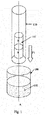
- Fig. 1 is a perspective view of a sleeve body with a magnet according to an embodiment of the present invention.
- a sleeve body 110 is formed substantially cylindrical and closed at the top and bottom, respectively.
- the sleeve body 110 may have a collar at a lower end (at which later the nano-beads are collected), which makes it difficult to collect nano-beads on the side wall of the sleeve body.
- the shape of the sleeve body is not limited herein. Other oblong shapes with polygon cross section (rectangular, square, triangular, pentagonal, etc.) are also possible.
- a magnet 112 is provided in the sleeve body 110.
- the magnet 112 is arranged in the sleeve body along the longitudinal axis A movable or displaceable.
- the magnet 112 is shown as a bar magnet with Polauscardicardi along the longitudinal axis A.
- any other magnetic shape may be used as long as the magnet has opposite magnetic poles with respect to the longitudinal axis A (in FIG Fig. 1 exemplified by "N" and "S", without limitation) and is designed such that the poles can not be reversed.
- the magnet has a diameter which is only slightly smaller than the inner diameter of the sleeve body, so that the magnet can not be reversed and the magnetic poles of the magnet with respect to the longitudinal axis A are aligned.
- the axial length of a central portion of the sleeve body 110, in which the first magnet 112 can move, is preferably selected so that the first magnet 112 is sufficiently displaceable in the sleeve body 110, depending on the application of the present invention, eg penetration depth into the Fluid 152 and magnetic strength of the first and second magnets, respectively.
- the axial play of the first magnet 112 in the central portion of the sleeve body 110 is 0.1 cm to 5 cm, more preferably 0.2 cm to 3 cm, and most preferably 0.5 cm to 2 cm.
- the magnets used here are preferably neodymium bar magnets having a diameter which approximately corresponds to the inner diameter of the sleeve body used.
- the adhesive force of the first magnets 112 is in each case preferably between 250 g and 750 g, particularly preferably between 350 g and 600 g.
- Fig. 1 is indicated by the downward arrow P1 that the sleeve body is immersed in a first step of a method according to the present invention in a first vessel 150 with a first fluid 152.
- first fluid usually a liquid
- nano-beads are distributed.
- nano-beads also nano-beads
- Their size can range from one nm to a few microns in diameter, depending on the application.
- chemistry and biochemistry they are used to selectively bind substances by means of functional surfaces or to attach themselves to surfaces of certain chemical compositions (hybridization reactions).
- the sleeve body 110 e.g. in a manual operation, so far immersed in the fluid 152 that both poles of the first magnet 112 are below the surface of the fluid with the nano-beads.
- the nano-beads then bind at the north pole and the south pole when the sleeve body 110 is immersed deep enough and then form two bands.
- immersion of the sleeve body 110 into the fluid 152 is preferably only to be performed so far that only one pole of the magnet 112 lies below the surface of the fluid 152.
- the nano-beads bind to only one pole of the magnet 112.
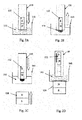
- FIG. 15 are schematic cross-sectional views showing a method according to an embodiment of the present invention.
- FIG. In Fig. 2A the situation is shown in which the sleeve body 110 is immersed with the magnet 112 in the vessel 150 with the first fluid 152. Through the points in the fluid, it is indicated in the drawings that the nano-beads are still distributed in the fluid.
- Fig. 2B The nano-beads are already collected by the magnetic attraction of the magnet 112 on the lower surface of the sleeve body 110, which is represented by a pellet 154.
- the upward arrow in Fig. 2B indicates that the sleeve body 110 can be removed with the bead pellet 154 and the magnet 112 from the first fluid.
- a complete system according to the present invention is shown.
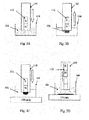
- the sleeve body 110 with the bead pellet 154 and the magnet 112 is in Fig. 2C immersed in a second fluid 162 in a second vessel 160.
- the second fluid is eg a washing solution or a liquid, in which further reactions between substances in the liquid and the nano-beads should proceed.
- a second magnet 120 is shown, which is opposite to the polar orientation of the magnet 112 in its polar alignment and which, as indicated by the upward arrow, is moved in the direction of the second vessel 160.
- the magnet 112 in the sleeve body becomes repulsive by the same poles of the first magnet 112 and the second magnet 120 (here, the N poles, whereupon the magnet) Invention is not limited), as indicated by the narrow arrow in Fig. 2D will be shown.
- the nanobeads are no longer held by the first magnet 112 on the sleeve body wall and can be detached therefrom.
- this solution process is promoted by the attractive effect of the second magnet, so that the nano-beads quickly collect in the lower region of the second vessel 160. This speeds up the process altogether.
- the second magnet 120 may be moved up and down several times so as to create a movement of the nano-beads through the fluid, which may, for example, accelerate rinses.
- the second magnet 120 is simply lowered again, so that the first magnet 112 attracts the nano-beads again and can then be removed from the second fluid (see FIGS. 2A and 2B ).
- each sleeve body 110 in a holder can provide a single second magnet 120 as well as a large-area magnet for the entire holder. In the latter case, disturbing edge effects can be minimized.
- FIG. 15 are schematic cross-sectional views showing a method according to another embodiment of the present invention.
- FIG. This embodiment substantially corresponds to the embodiment of FIG Fig. 2A-2D ,
- the devices and processes in FIGS. 3A-3B are identical to the devices and processes in Fig. 2A-2B ,
- At least one solenoid 130 is provided.
- the electromagnet is simply turned on and off to develop the desired effect on nano-beads and first magnets 112.
- the first magnet 112 and the second magnet 120 and the solenoid 130 are selected and operated so that a sufficient repulsive force (or adhesive force) between the magnet is ensured.
- a single, relatively strong magnet can be chosen as the first magnet for the lower magnet.
- a single electromagnet can also have several electromagnets are provided, which generate a multipole field rotating about the longitudinal axis of the sleeve body, which rotates by cyclically turning on and off of individual electromagnets or by rotating the electromagnets about the longitudinal axis of the sleeve body.
- Such multipole fields can together (with corresponding pole orientation) achieve the same repulsive effect as the field of a single magnet.
- the basic function of the present invention would thus be ensured.
- the locally different magnetic action by the multipole magnet creates potentials in the fluid along which the nano-beads flow. Due to the rotation of these multipole fields, the nano-beads can, after detachment from the sleeve body wall in Fig. 3D additionally be moved by the second fluid, which can promote and accelerate a flushing process.
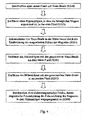
- FIG. 10 is a flowchart of a method according to an embodiment of the present invention.
- FIG. According to Fig. 4
- the first fluid with the nano-beads therein is provided.
- a sleeve body is inserted into the first fluid, wherein in the sleeve body, a magnet is arranged, which is displaceable along a longitudinal axis A of the sleeve body.
- the nano-beads are collected at the sleeve wall by the force of the magnetic field of the magnet.
- the sleeve body is removed with the collected nano-beads from the first fluid.
- the sleeve body is inserted with the collected nano-beads in a second fluid and an electromagnetic field (magnetic field) is provided, the magnetic pole alignment of which is opposite to the polar orientation of the magnet in the sleeve body.
- an electromagnetic field magnetic field
- the sleeve body 110 can be removed from the second fluid 160.
- rinsing may be performed after the step of removing the pod body 110 with the collected nano-beads from the first fluid 150 and before the step of inserting the pod body 110 with the collected nano-beads into the second fluid 160.
- An interesting application is to coat the outside of the sleeve body with antibodies: if e.g. Using two different monoclonal antibodies, each capable of binding to a specific epitope of an antigen (e.g., protein), one can bind the first antibody to the beads and the second antibody to the outside of the sleeve body. Then you give the beads with their bound first antibodies in the sample and wait a few minutes. Then immerse the sleeve body, on the outside of which the second antibodies are in the sample.
- an antigen e.g., protein
- the beads are attracted. After a few seconds, remove the sleeve body from the sample and immerse it in a washing vessel, under the bottom of which there is a magnet with reverse polarity. If the respective antigen was not in the sample, the beads go into solution ( Fig. 2d ); however, if the antigen is in the sample, the antigen-antibody reaction has taken place on the outside of the sheath body and the beads to whose antibodies the antigen is bound remain stuck to the sheath body. The antigen acts as a link between the two antibodies. Depending on the concentration of the antigen remain different amounts of beads stick, the rest goes into solution.
Landscapes
- Apparatus Associated With Microorganisms And Enzymes (AREA)
- Sampling And Sample Adjustment (AREA)
Priority Applications (1)
| Application Number | Priority Date | Filing Date | Title |
|---|---|---|---|
| EP15186924.5A EP3147028B1 (fr) | 2015-09-25 | 2015-09-25 | Procede et dispositif de separation magnetique de nanobilles |
Applications Claiming Priority (1)
| Application Number | Priority Date | Filing Date | Title |
|---|---|---|---|
| EP15186924.5A EP3147028B1 (fr) | 2015-09-25 | 2015-09-25 | Procede et dispositif de separation magnetique de nanobilles |
Publications (2)
| Publication Number | Publication Date |
|---|---|
| EP3147028A1 true EP3147028A1 (fr) | 2017-03-29 |
| EP3147028B1 EP3147028B1 (fr) | 2019-06-19 |
Family
ID=54238274
Family Applications (1)
| Application Number | Title | Priority Date | Filing Date |
|---|---|---|---|
| EP15186924.5A Active EP3147028B1 (fr) | 2015-09-25 | 2015-09-25 | Procede et dispositif de separation magnetique de nanobilles |
Country Status (1)
| Country | Link |
|---|---|
| EP (1) | EP3147028B1 (fr) |
Cited By (1)
| Publication number | Priority date | Publication date | Assignee | Title |
|---|---|---|---|---|
| WO2024175169A1 (fr) | 2023-02-20 | 2024-08-29 | STILLER, Olaf | Procédé permettant de détecter directement la présence d'une substance de test |
Citations (4)
| Publication number | Priority date | Publication date | Assignee | Title |
|---|---|---|---|---|
| US6409925B1 (en) * | 1998-02-06 | 2002-06-25 | Bio-Magnetics Ltd. | Device and system for transfer of material |
| EP1664747A1 (fr) | 2003-09-25 | 2006-06-07 | Constantin Odefey | Procede et dispositif pour identifier de tres petites quantites de particules |
| US20120315639A1 (en) * | 2011-06-08 | 2012-12-13 | Glenn Yaguang Deng | Method and apparatus for single cell isolation and analysis |
| US20140099658A1 (en) * | 2011-02-23 | 2014-04-10 | Thermo Fisher Scientific Oy | Particle processing |
Family Cites Families (1)
| Publication number | Priority date | Publication date | Assignee | Title |
|---|---|---|---|---|
| DE102015218010A1 (de) * | 2015-09-18 | 2017-03-23 | Hamilton Bonaduz Ag | Magnetische Trennvorrichtung mit magnetischer Aktivierung und Deaktivierung |
-
2015
- 2015-09-25 EP EP15186924.5A patent/EP3147028B1/fr active Active
Patent Citations (4)
| Publication number | Priority date | Publication date | Assignee | Title |
|---|---|---|---|---|
| US6409925B1 (en) * | 1998-02-06 | 2002-06-25 | Bio-Magnetics Ltd. | Device and system for transfer of material |
| EP1664747A1 (fr) | 2003-09-25 | 2006-06-07 | Constantin Odefey | Procede et dispositif pour identifier de tres petites quantites de particules |
| US20140099658A1 (en) * | 2011-02-23 | 2014-04-10 | Thermo Fisher Scientific Oy | Particle processing |
| US20120315639A1 (en) * | 2011-06-08 | 2012-12-13 | Glenn Yaguang Deng | Method and apparatus for single cell isolation and analysis |
Cited By (1)
| Publication number | Priority date | Publication date | Assignee | Title |
|---|---|---|---|---|
| WO2024175169A1 (fr) | 2023-02-20 | 2024-08-29 | STILLER, Olaf | Procédé permettant de détecter directement la présence d'une substance de test |
Also Published As
| Publication number | Publication date |
|---|---|
| EP3147028B1 (fr) | 2019-06-19 |
Similar Documents
| Publication | Publication Date | Title |
|---|---|---|
| DE69329135T2 (de) | Verfahren und Vorrichtung zur magnetischen Abscheidung | |
| DE69525465T2 (de) | Trennung von magnetischen mikropartikeln unter einschluss eines vorkonzentrierungsschrites | |
| DE10057396C1 (de) | Verfahren zum Abtrennen eines dispergierten oder gelösten Stoffes und Magnetseparator | |
| EP2033715B1 (fr) | Procédé destiné à suspendre ou resuspendre des particules dans une solution et dispositif adapté | |
| EP1843854B1 (fr) | Procede et dispositif pour separer des particules magnetiques ou magnétisables d'un liquide | |
| DE69420974T2 (de) | Separationsverfahren | |
| DE102005054924B4 (de) | Vorrichtung und Verfahren zum Extrahieren einer Abstrichprobe | |
| DE69926218T2 (de) | Vorrichtung und verfahren zur übertragung magnetischer partikel | |
| EP1420888B1 (fr) | Systeme destine a la separation de particules pouvant etre attirees magnetiquement | |
| DE60207564T2 (de) | Behandlungsverfahren für magnetische teilchen und bioanalyse-apparat mit magnetverwendung | |
| DE4421058A1 (de) | Verfahren zur magnetischen Abtrennung von Flüssigkeitskomponenten | |
| WO2003044537A1 (fr) | Dispositif et procede de traitement de particules magnetiques | |
| EP0995096B1 (fr) | Crayon magnetique pour la concentration et la separation de particules | |
| EP1919625B1 (fr) | Dispositif et procede de separation de particules magnetiques d'un liquide | |
| EP2192987B1 (fr) | Dispositif et procédé de traitement de liquides avec des particules magnétiques | |
| WO2019057345A1 (fr) | Dispositif et procédé pour immobiliser des biomolécules au moyen de particules magnétiques | |
| WO2019096407A1 (fr) | Dispositif et procédé d'immobilisation réversible de biomolécules | |
| EP3147028B1 (fr) | Procede et dispositif de separation magnetique de nanobilles | |
| DE10063984A1 (de) | Vorrichtungen zur magnetischen Abtrennung von Magnetpartikeln | |
| WO2022223566A1 (fr) | Procédé et dispositif de capture d'au moins une cellule contenant un noyau en utilisant au moins une électrode pour un dispositif microfluidique | |
| DE102013100494B4 (de) | Verfahren zur Abtrennung von paramagnetischem Material aus Tropfen auf Anforderung sowie ein System zur Abtrennung von paramagnetischem Material aus Tropfen auf Anforderung | |
| DE112019004459T5 (de) | Anreicherung von proben mittels magnetischer partikel in mikrokanälen | |
| EP2431727B1 (fr) | Dispositif de mise en réseau d'objets | |
| DE102005063572B3 (de) | Vorrichtung und Verfahren zum Extrahieren einer Abstrichprobe | |
| LU101421B1 (de) | Verfahren zum Erzeugen wenigstens eines Musters auf einer Trägeroberfläche eines Trägers |
Legal Events
| Date | Code | Title | Description |
|---|---|---|---|
| PUAI | Public reference made under article 153(3) epc to a published international application that has entered the european phase |
Free format text: ORIGINAL CODE: 0009012 |
|
| STAA | Information on the status of an ep patent application or granted ep patent |
Free format text: STATUS: THE APPLICATION HAS BEEN PUBLISHED |
|
| AK | Designated contracting states |
Kind code of ref document: A1 Designated state(s): AL AT BE BG CH CY CZ DE DK EE ES FI FR GB GR HR HU IE IS IT LI LT LU LV MC MK MT NL NO PL PT RO RS SE SI SK SM TR |
|
| AX | Request for extension of the european patent |
Extension state: BA ME |
|
| STAA | Information on the status of an ep patent application or granted ep patent |
Free format text: STATUS: REQUEST FOR EXAMINATION WAS MADE |
|
| 17P | Request for examination filed |
Effective date: 20170926 |
|
| RBV | Designated contracting states (corrected) |
Designated state(s): AL AT BE BG CH CY CZ DE DK EE ES FI FR GB GR HR HU IE IS IT LI LT LU LV MC MK MT NL NO PL PT RO RS SE SI SK SM TR |
|
| STAA | Information on the status of an ep patent application or granted ep patent |
Free format text: STATUS: EXAMINATION IS IN PROGRESS |
|
| 17Q | First examination report despatched |
Effective date: 20180608 |
|
| GRAP | Despatch of communication of intention to grant a patent |
Free format text: ORIGINAL CODE: EPIDOSNIGR1 |
|
| STAA | Information on the status of an ep patent application or granted ep patent |
Free format text: STATUS: GRANT OF PATENT IS INTENDED |
|
| RIC1 | Information provided on ipc code assigned before grant |
Ipc: B03C 1/28 20060101AFI20181005BHEP Ipc: B03C 1/01 20060101ALI20181005BHEP Ipc: B03C 1/033 20060101ALI20181005BHEP |
|
| INTG | Intention to grant announced |
Effective date: 20181030 |
|
| GRAS | Grant fee paid |
Free format text: ORIGINAL CODE: EPIDOSNIGR3 |
|
| GRAA | (expected) grant |
Free format text: ORIGINAL CODE: 0009210 |
|
| STAA | Information on the status of an ep patent application or granted ep patent |
Free format text: STATUS: THE PATENT HAS BEEN GRANTED |
|
| RAP1 | Party data changed (applicant data changed or rights of an application transferred) |
Owner name: ODEFEY, CONSTANTIN |
|
| RIN1 | Information on inventor provided before grant (corrected) |
Inventor name: ODEFEY, CONSTANTIN |
|
| AK | Designated contracting states |
Kind code of ref document: B1 Designated state(s): AL AT BE BG CH CY CZ DE DK EE ES FI FR GB GR HR HU IE IS IT LI LT LU LV MC MK MT NL NO PL PT RO RS SE SI SK SM TR |
|
| REG | Reference to a national code |
Ref country code: GB Ref legal event code: FG4D Free format text: NOT ENGLISH |
|
| REG | Reference to a national code |
Ref country code: CH Ref legal event code: EP |
|
| REG | Reference to a national code |
Ref country code: IE Ref legal event code: FG4D Free format text: LANGUAGE OF EP DOCUMENT: GERMAN |
|
| REG | Reference to a national code |
Ref country code: DE Ref legal event code: R096 Ref document number: 502015009363 Country of ref document: DE |
|
| REG | Reference to a national code |
Ref country code: AT Ref legal event code: REF Ref document number: 1144821 Country of ref document: AT Kind code of ref document: T Effective date: 20190715 |
|
| REG | Reference to a national code |
Ref country code: NL Ref legal event code: MP Effective date: 20190619 |
|
| PG25 | Lapsed in a contracting state [announced via postgrant information from national office to epo] |
Ref country code: FI Free format text: LAPSE BECAUSE OF FAILURE TO SUBMIT A TRANSLATION OF THE DESCRIPTION OR TO PAY THE FEE WITHIN THE PRESCRIBED TIME-LIMIT Effective date: 20190619 Ref country code: NO Free format text: LAPSE BECAUSE OF FAILURE TO SUBMIT A TRANSLATION OF THE DESCRIPTION OR TO PAY THE FEE WITHIN THE PRESCRIBED TIME-LIMIT Effective date: 20190919 Ref country code: LT Free format text: LAPSE BECAUSE OF FAILURE TO SUBMIT A TRANSLATION OF THE DESCRIPTION OR TO PAY THE FEE WITHIN THE PRESCRIBED TIME-LIMIT Effective date: 20190619 Ref country code: HR Free format text: LAPSE BECAUSE OF FAILURE TO SUBMIT A TRANSLATION OF THE DESCRIPTION OR TO PAY THE FEE WITHIN THE PRESCRIBED TIME-LIMIT Effective date: 20190619 Ref country code: AL Free format text: LAPSE BECAUSE OF FAILURE TO SUBMIT A TRANSLATION OF THE DESCRIPTION OR TO PAY THE FEE WITHIN THE PRESCRIBED TIME-LIMIT Effective date: 20190619 Ref country code: SE Free format text: LAPSE BECAUSE OF FAILURE TO SUBMIT A TRANSLATION OF THE DESCRIPTION OR TO PAY THE FEE WITHIN THE PRESCRIBED TIME-LIMIT Effective date: 20190619 |
|
| REG | Reference to a national code |
Ref country code: LT Ref legal event code: MG4D |
|
| PG25 | Lapsed in a contracting state [announced via postgrant information from national office to epo] |
Ref country code: LV Free format text: LAPSE BECAUSE OF FAILURE TO SUBMIT A TRANSLATION OF THE DESCRIPTION OR TO PAY THE FEE WITHIN THE PRESCRIBED TIME-LIMIT Effective date: 20190619 Ref country code: RS Free format text: LAPSE BECAUSE OF FAILURE TO SUBMIT A TRANSLATION OF THE DESCRIPTION OR TO PAY THE FEE WITHIN THE PRESCRIBED TIME-LIMIT Effective date: 20190619 Ref country code: BG Free format text: LAPSE BECAUSE OF FAILURE TO SUBMIT A TRANSLATION OF THE DESCRIPTION OR TO PAY THE FEE WITHIN THE PRESCRIBED TIME-LIMIT Effective date: 20190919 Ref country code: GR Free format text: LAPSE BECAUSE OF FAILURE TO SUBMIT A TRANSLATION OF THE DESCRIPTION OR TO PAY THE FEE WITHIN THE PRESCRIBED TIME-LIMIT Effective date: 20190920 |
|
| PG25 | Lapsed in a contracting state [announced via postgrant information from national office to epo] |
Ref country code: RO Free format text: LAPSE BECAUSE OF FAILURE TO SUBMIT A TRANSLATION OF THE DESCRIPTION OR TO PAY THE FEE WITHIN THE PRESCRIBED TIME-LIMIT Effective date: 20190619 Ref country code: CZ Free format text: LAPSE BECAUSE OF FAILURE TO SUBMIT A TRANSLATION OF THE DESCRIPTION OR TO PAY THE FEE WITHIN THE PRESCRIBED TIME-LIMIT Effective date: 20190619 Ref country code: SK Free format text: LAPSE BECAUSE OF FAILURE TO SUBMIT A TRANSLATION OF THE DESCRIPTION OR TO PAY THE FEE WITHIN THE PRESCRIBED TIME-LIMIT Effective date: 20190619 Ref country code: NL Free format text: LAPSE BECAUSE OF FAILURE TO SUBMIT A TRANSLATION OF THE DESCRIPTION OR TO PAY THE FEE WITHIN THE PRESCRIBED TIME-LIMIT Effective date: 20190619 Ref country code: EE Free format text: LAPSE BECAUSE OF FAILURE TO SUBMIT A TRANSLATION OF THE DESCRIPTION OR TO PAY THE FEE WITHIN THE PRESCRIBED TIME-LIMIT Effective date: 20190619 Ref country code: PT Free format text: LAPSE BECAUSE OF FAILURE TO SUBMIT A TRANSLATION OF THE DESCRIPTION OR TO PAY THE FEE WITHIN THE PRESCRIBED TIME-LIMIT Effective date: 20191021 |
|
| PG25 | Lapsed in a contracting state [announced via postgrant information from national office to epo] |
Ref country code: IT Free format text: LAPSE BECAUSE OF FAILURE TO SUBMIT A TRANSLATION OF THE DESCRIPTION OR TO PAY THE FEE WITHIN THE PRESCRIBED TIME-LIMIT Effective date: 20190619 Ref country code: SM Free format text: LAPSE BECAUSE OF FAILURE TO SUBMIT A TRANSLATION OF THE DESCRIPTION OR TO PAY THE FEE WITHIN THE PRESCRIBED TIME-LIMIT Effective date: 20190619 Ref country code: ES Free format text: LAPSE BECAUSE OF FAILURE TO SUBMIT A TRANSLATION OF THE DESCRIPTION OR TO PAY THE FEE WITHIN THE PRESCRIBED TIME-LIMIT Effective date: 20190619 Ref country code: IS Free format text: LAPSE BECAUSE OF FAILURE TO SUBMIT A TRANSLATION OF THE DESCRIPTION OR TO PAY THE FEE WITHIN THE PRESCRIBED TIME-LIMIT Effective date: 20191019 |
|
| PG25 | Lapsed in a contracting state [announced via postgrant information from national office to epo] |
Ref country code: TR Free format text: LAPSE BECAUSE OF FAILURE TO SUBMIT A TRANSLATION OF THE DESCRIPTION OR TO PAY THE FEE WITHIN THE PRESCRIBED TIME-LIMIT Effective date: 20190619 |
|
| PG25 | Lapsed in a contracting state [announced via postgrant information from national office to epo] |
Ref country code: DK Free format text: LAPSE BECAUSE OF FAILURE TO SUBMIT A TRANSLATION OF THE DESCRIPTION OR TO PAY THE FEE WITHIN THE PRESCRIBED TIME-LIMIT Effective date: 20190619 Ref country code: PL Free format text: LAPSE BECAUSE OF FAILURE TO SUBMIT A TRANSLATION OF THE DESCRIPTION OR TO PAY THE FEE WITHIN THE PRESCRIBED TIME-LIMIT Effective date: 20190619 |
|
| PG25 | Lapsed in a contracting state [announced via postgrant information from national office to epo] |
Ref country code: IS Free format text: LAPSE BECAUSE OF FAILURE TO SUBMIT A TRANSLATION OF THE DESCRIPTION OR TO PAY THE FEE WITHIN THE PRESCRIBED TIME-LIMIT Effective date: 20200224 Ref country code: MC Free format text: LAPSE BECAUSE OF FAILURE TO SUBMIT A TRANSLATION OF THE DESCRIPTION OR TO PAY THE FEE WITHIN THE PRESCRIBED TIME-LIMIT Effective date: 20190619 |
|
| REG | Reference to a national code |
Ref country code: CH Ref legal event code: PL |
|
| REG | Reference to a national code |
Ref country code: DE Ref legal event code: R097 Ref document number: 502015009363 Country of ref document: DE |
|
| PLBE | No opposition filed within time limit |
Free format text: ORIGINAL CODE: 0009261 |
|
| STAA | Information on the status of an ep patent application or granted ep patent |
Free format text: STATUS: NO OPPOSITION FILED WITHIN TIME LIMIT |
|
| PG2D | Information on lapse in contracting state deleted |
Ref country code: IS |
|
| PG25 | Lapsed in a contracting state [announced via postgrant information from national office to epo] |
Ref country code: LI Free format text: LAPSE BECAUSE OF NON-PAYMENT OF DUE FEES Effective date: 20190930 Ref country code: LU Free format text: LAPSE BECAUSE OF NON-PAYMENT OF DUE FEES Effective date: 20190925 Ref country code: CH Free format text: LAPSE BECAUSE OF NON-PAYMENT OF DUE FEES Effective date: 20190930 Ref country code: IE Free format text: LAPSE BECAUSE OF NON-PAYMENT OF DUE FEES Effective date: 20190925 |
|
| 26N | No opposition filed |
Effective date: 20200603 |
|
| REG | Reference to a national code |
Ref country code: BE Ref legal event code: MM Effective date: 20190930 |
|
| PG25 | Lapsed in a contracting state [announced via postgrant information from national office to epo] |
Ref country code: BE Free format text: LAPSE BECAUSE OF NON-PAYMENT OF DUE FEES Effective date: 20190930 Ref country code: SI Free format text: LAPSE BECAUSE OF FAILURE TO SUBMIT A TRANSLATION OF THE DESCRIPTION OR TO PAY THE FEE WITHIN THE PRESCRIBED TIME-LIMIT Effective date: 20190619 |
|
| PGFP | Annual fee paid to national office [announced via postgrant information from national office to epo] |
Ref country code: FR Payment date: 20200921 Year of fee payment: 6 Ref country code: GB Payment date: 20200923 Year of fee payment: 6 |
|
| PG25 | Lapsed in a contracting state [announced via postgrant information from national office to epo] |
Ref country code: CY Free format text: LAPSE BECAUSE OF FAILURE TO SUBMIT A TRANSLATION OF THE DESCRIPTION OR TO PAY THE FEE WITHIN THE PRESCRIBED TIME-LIMIT Effective date: 20190619 |
|
| PG25 | Lapsed in a contracting state [announced via postgrant information from national office to epo] |
Ref country code: MT Free format text: LAPSE BECAUSE OF FAILURE TO SUBMIT A TRANSLATION OF THE DESCRIPTION OR TO PAY THE FEE WITHIN THE PRESCRIBED TIME-LIMIT Effective date: 20190619 Ref country code: HU Free format text: LAPSE BECAUSE OF FAILURE TO SUBMIT A TRANSLATION OF THE DESCRIPTION OR TO PAY THE FEE WITHIN THE PRESCRIBED TIME-LIMIT; INVALID AB INITIO Effective date: 20150925 |
|
| REG | Reference to a national code |
Ref country code: AT Ref legal event code: MM01 Ref document number: 1144821 Country of ref document: AT Kind code of ref document: T Effective date: 20200925 |
|
| PG25 | Lapsed in a contracting state [announced via postgrant information from national office to epo] |
Ref country code: AT Free format text: LAPSE BECAUSE OF NON-PAYMENT OF DUE FEES Effective date: 20200925 |
|
| GBPC | Gb: european patent ceased through non-payment of renewal fee |
Effective date: 20210925 |
|
| PG25 | Lapsed in a contracting state [announced via postgrant information from national office to epo] |
Ref country code: MK Free format text: LAPSE BECAUSE OF FAILURE TO SUBMIT A TRANSLATION OF THE DESCRIPTION OR TO PAY THE FEE WITHIN THE PRESCRIBED TIME-LIMIT Effective date: 20190619 |
|
| PG25 | Lapsed in a contracting state [announced via postgrant information from national office to epo] |
Ref country code: GB Free format text: LAPSE BECAUSE OF NON-PAYMENT OF DUE FEES Effective date: 20210925 Ref country code: FR Free format text: LAPSE BECAUSE OF NON-PAYMENT OF DUE FEES Effective date: 20210930 |
|
| PGFP | Annual fee paid to national office [announced via postgrant information from national office to epo] |
Ref country code: DE Payment date: 20250929 Year of fee payment: 11 |