EP3147363B1 - Aktivierung von geschmacksrezeptorgenen in säugetierzellen mit hilfe von crispr-cas-9 - Google Patents
Aktivierung von geschmacksrezeptorgenen in säugetierzellen mit hilfe von crispr-cas-9 Download PDFInfo
- Publication number
- EP3147363B1 EP3147363B1 EP15191360.5A EP15191360A EP3147363B1 EP 3147363 B1 EP3147363 B1 EP 3147363B1 EP 15191360 A EP15191360 A EP 15191360A EP 3147363 B1 EP3147363 B1 EP 3147363B1
- Authority
- EP
- European Patent Office
- Prior art keywords
- cluster
- seq
- rna
- taste
- cas9
- Prior art date
- Legal status (The legal status is an assumption and is not a legal conclusion. Google has not performed a legal analysis and makes no representation as to the accuracy of the status listed.)
- Active
Links
Images


Classifications
-
- C—CHEMISTRY; METALLURGY
- C12—BIOCHEMISTRY; BEER; SPIRITS; WINE; VINEGAR; MICROBIOLOGY; ENZYMOLOGY; MUTATION OR GENETIC ENGINEERING
- C12N—MICROORGANISMS OR ENZYMES; COMPOSITIONS THEREOF; PROPAGATING, PRESERVING, OR MAINTAINING MICROORGANISMS; MUTATION OR GENETIC ENGINEERING; CULTURE MEDIA
- C12N15/00—Mutation or genetic engineering; DNA or RNA concerning genetic engineering, vectors, e.g. plasmids, or their isolation, preparation or purification; Use of hosts therefor
- C12N15/09—Recombinant DNA-technology
- C12N15/63—Introduction of foreign genetic material using vectors; Vectors; Use of hosts therefor; Regulation of expression
- C12N15/79—Vectors or expression systems specially adapted for eukaryotic hosts
- C12N15/85—Vectors or expression systems specially adapted for eukaryotic hosts for animal cells
-
- C—CHEMISTRY; METALLURGY
- C07—ORGANIC CHEMISTRY
- C07K—PEPTIDES
- C07K14/00—Peptides having more than 20 amino acids; Gastrins; Somatostatins; Melanotropins; Derivatives thereof
- C07K14/435—Peptides having more than 20 amino acids; Gastrins; Somatostatins; Melanotropins; Derivatives thereof from animals; from humans
- C07K14/705—Receptors; Cell surface antigens; Cell surface determinants
-
- C—CHEMISTRY; METALLURGY
- C12—BIOCHEMISTRY; BEER; SPIRITS; WINE; VINEGAR; MICROBIOLOGY; ENZYMOLOGY; MUTATION OR GENETIC ENGINEERING
- C12N—MICROORGANISMS OR ENZYMES; COMPOSITIONS THEREOF; PROPAGATING, PRESERVING, OR MAINTAINING MICROORGANISMS; MUTATION OR GENETIC ENGINEERING; CULTURE MEDIA
- C12N15/00—Mutation or genetic engineering; DNA or RNA concerning genetic engineering, vectors, e.g. plasmids, or their isolation, preparation or purification; Use of hosts therefor
- C12N15/09—Recombinant DNA-technology
- C12N15/11—DNA or RNA fragments; Modified forms thereof; Non-coding nucleic acids having a biological activity
-
- C—CHEMISTRY; METALLURGY
- C12—BIOCHEMISTRY; BEER; SPIRITS; WINE; VINEGAR; MICROBIOLOGY; ENZYMOLOGY; MUTATION OR GENETIC ENGINEERING
- C12N—MICROORGANISMS OR ENZYMES; COMPOSITIONS THEREOF; PROPAGATING, PRESERVING, OR MAINTAINING MICROORGANISMS; MUTATION OR GENETIC ENGINEERING; CULTURE MEDIA
- C12N15/00—Mutation or genetic engineering; DNA or RNA concerning genetic engineering, vectors, e.g. plasmids, or their isolation, preparation or purification; Use of hosts therefor
- C12N15/09—Recombinant DNA-technology
- C12N15/11—DNA or RNA fragments; Modified forms thereof; Non-coding nucleic acids having a biological activity
- C12N15/113—Non-coding nucleic acids modulating the expression of genes, e.g. antisense oligonucleotides; Antisense DNA or RNA; Triplex- forming oligonucleotides; Catalytic nucleic acids, e.g. ribozymes; Nucleic acids used in co-suppression or gene silencing
- C12N15/1138—Non-coding nucleic acids modulating the expression of genes, e.g. antisense oligonucleotides; Antisense DNA or RNA; Triplex- forming oligonucleotides; Catalytic nucleic acids, e.g. ribozymes; Nucleic acids used in co-suppression or gene silencing against receptors or cell surface proteins
-
- C—CHEMISTRY; METALLURGY
- C12—BIOCHEMISTRY; BEER; SPIRITS; WINE; VINEGAR; MICROBIOLOGY; ENZYMOLOGY; MUTATION OR GENETIC ENGINEERING
- C12N—MICROORGANISMS OR ENZYMES; COMPOSITIONS THEREOF; PROPAGATING, PRESERVING, OR MAINTAINING MICROORGANISMS; MUTATION OR GENETIC ENGINEERING; CULTURE MEDIA
- C12N15/00—Mutation or genetic engineering; DNA or RNA concerning genetic engineering, vectors, e.g. plasmids, or their isolation, preparation or purification; Use of hosts therefor
- C12N15/09—Recombinant DNA-technology
- C12N15/63—Introduction of foreign genetic material using vectors; Vectors; Use of hosts therefor; Regulation of expression
-
- C—CHEMISTRY; METALLURGY
- C12—BIOCHEMISTRY; BEER; SPIRITS; WINE; VINEGAR; MICROBIOLOGY; ENZYMOLOGY; MUTATION OR GENETIC ENGINEERING
- C12N—MICROORGANISMS OR ENZYMES; COMPOSITIONS THEREOF; PROPAGATING, PRESERVING, OR MAINTAINING MICROORGANISMS; MUTATION OR GENETIC ENGINEERING; CULTURE MEDIA
- C12N9/00—Enzymes; Proenzymes; Compositions thereof; Processes for preparing, activating, inhibiting, separating or purifying enzymes
- C12N9/14—Hydrolases (3)
- C12N9/16—Hydrolases (3) acting on ester bonds (3.1)
- C12N9/22—Ribonucleases [RNase]; Deoxyribonucleases [DNase]
-
- C—CHEMISTRY; METALLURGY
- C12—BIOCHEMISTRY; BEER; SPIRITS; WINE; VINEGAR; MICROBIOLOGY; ENZYMOLOGY; MUTATION OR GENETIC ENGINEERING
- C12N—MICROORGANISMS OR ENZYMES; COMPOSITIONS THEREOF; PROPAGATING, PRESERVING, OR MAINTAINING MICROORGANISMS; MUTATION OR GENETIC ENGINEERING; CULTURE MEDIA
- C12N9/00—Enzymes; Proenzymes; Compositions thereof; Processes for preparing, activating, inhibiting, separating or purifying enzymes
- C12N9/14—Hydrolases (3)
- C12N9/16—Hydrolases (3) acting on ester bonds (3.1)
- C12N9/22—Ribonucleases [RNase]; Deoxyribonucleases [DNase]
- C12N9/222—Clustered regularly interspaced short palindromic repeats [CRISPR]-associated [CAS] enzymes
-
- C—CHEMISTRY; METALLURGY
- C07—ORGANIC CHEMISTRY
- C07K—PEPTIDES
- C07K19/00—Hybrid peptides, i.e. peptides covalently bound to nucleic acids, or non-covalently bound protein-protein complexes
-
- C—CHEMISTRY; METALLURGY
- C07—ORGANIC CHEMISTRY
- C07K—PEPTIDES
- C07K2319/00—Fusion polypeptide
-
- C—CHEMISTRY; METALLURGY
- C12—BIOCHEMISTRY; BEER; SPIRITS; WINE; VINEGAR; MICROBIOLOGY; ENZYMOLOGY; MUTATION OR GENETIC ENGINEERING
- C12N—MICROORGANISMS OR ENZYMES; COMPOSITIONS THEREOF; PROPAGATING, PRESERVING, OR MAINTAINING MICROORGANISMS; MUTATION OR GENETIC ENGINEERING; CULTURE MEDIA
- C12N15/00—Mutation or genetic engineering; DNA or RNA concerning genetic engineering, vectors, e.g. plasmids, or their isolation, preparation or purification; Use of hosts therefor
- C12N15/09—Recombinant DNA-technology
- C12N15/11—DNA or RNA fragments; Modified forms thereof; Non-coding nucleic acids having a biological activity
- C12N15/62—DNA sequences coding for fusion proteins
-
- C—CHEMISTRY; METALLURGY
- C12—BIOCHEMISTRY; BEER; SPIRITS; WINE; VINEGAR; MICROBIOLOGY; ENZYMOLOGY; MUTATION OR GENETIC ENGINEERING
- C12N—MICROORGANISMS OR ENZYMES; COMPOSITIONS THEREOF; PROPAGATING, PRESERVING, OR MAINTAINING MICROORGANISMS; MUTATION OR GENETIC ENGINEERING; CULTURE MEDIA
- C12N2310/00—Structure or type of the nucleic acid
- C12N2310/10—Type of nucleic acid
- C12N2310/20—Type of nucleic acid involving clustered regularly interspaced short palindromic repeats [CRISPR]
-
- C—CHEMISTRY; METALLURGY
- C12—BIOCHEMISTRY; BEER; SPIRITS; WINE; VINEGAR; MICROBIOLOGY; ENZYMOLOGY; MUTATION OR GENETIC ENGINEERING
- C12N—MICROORGANISMS OR ENZYMES; COMPOSITIONS THEREOF; PROPAGATING, PRESERVING, OR MAINTAINING MICROORGANISMS; MUTATION OR GENETIC ENGINEERING; CULTURE MEDIA
- C12N2310/00—Structure or type of the nucleic acid
- C12N2310/30—Chemical structure
- C12N2310/35—Nature of the modification
- C12N2310/351—Conjugate
- C12N2310/3519—Fusion with another nucleic acid
-
- C—CHEMISTRY; METALLURGY
- C12—BIOCHEMISTRY; BEER; SPIRITS; WINE; VINEGAR; MICROBIOLOGY; ENZYMOLOGY; MUTATION OR GENETIC ENGINEERING
- C12N—MICROORGANISMS OR ENZYMES; COMPOSITIONS THEREOF; PROPAGATING, PRESERVING, OR MAINTAINING MICROORGANISMS; MUTATION OR GENETIC ENGINEERING; CULTURE MEDIA
- C12N2830/00—Vector systems having a special element relevant for transcription
Definitions
- the present invention belongs to the area of biotechnology and refers to a new approach for activating taste receptor genes in mammalian cells using CRISPR-Cas9.
- High intensity sweeteners are substances, which have no or virtually no calories and a sweetness potency several times higher than sugar. High intensity sweeteners or blends of high intensity sweeteners are used in food and beverages to achieve a sweet taste without adding calories to the products. Most commonly used high intensity sweeteners are not from natural origin; they were discovered accidentally and are chemically synthesized. Most of them have a widespread approval in a large number of countries. Examples are substances such as acesulfame K, alitame, aspartame, cyclamate, neohesperidine dihydrochalcone, neotame, saccharin, and sucralose. However, no high-intensity sweetener matches the taste profile of sugar completely. They differ in characteristics such as sweetness profile, side taste and off-taste characteristics. Therefore a need exists for new high-intensity sweeteners which offer either alone or in blends with existing sweeteners sweetness profiles and flavour characteristics much closer to sugar than the existing products can offer.
- stevia comprising stevioglycosides like Rebaudioside A, which in terms of sweetness is superior by a factor of 300 up to 450 when compared with an aqueous 0.4 % b.w. solution of saccharose.
- stevia is not considered as a full alternative to sugar, since it shows an astringent and bitter aftertaste. Therefore, beverages based on stevia, which have recently been launched, still contain artificial sweeteners in combination with stevioglycosides.
- a biochemical approach to get results in short time with a high degree of objectivity is to prepare cell cultures expressing human sweet receptors like Tas1R2 or Tas1R3 and to stimulate a cell response by adding a candidate as an agonist.
- the cell answers by liberation of more or less calcium ions into the cytoplasm, which can be measured for example either by Ca-imaging or CRE-luciferase assays.
- SILVANA KONERMANN ET AL "Genome-scale transcriptional activation by an engineered CRISPR-Cas9 complex", NATURE, vol. 517, no. 7536, (2014-12-10), pages 583-588 a genome-scale transcriptional activation by an engineered CRISPR-Cas9 complex is described, wherein a synergistic activation mediator based on the combination of sgRNA2.0, NLS-dCas9-VP64 and MS2-p65-HSF1 is disclosed.
- US 2013/210046 A1 describes a method for the identification of a compound that potentiates the sweetness of a sweet tasting compound, comprising transforming a eukaryotic host cell with genetic sequences coding for at least two different G-protein coupled receptors selected from the group consisting of T1R or T2R taste receptors.
- WO 2004/069191 A2 describes a method for identifying a compound that modulates the activity of a T1R or T2R taste receptor.
- the problem underlying the present invention has been providing a method for enhancing the expression of receptor genes in mammalian cells for providing an improved cell based assay for the evaluation of potential sweeteners.
- a first object of the present invention is directed to a method for enhancing the expression of taste related receptor genes encompassing the following steps:
- the sweet receptor domains Tas1R3 was targeted by CRISPR-dCas9VP64, in cells which normally express these receptors on a very low level which is not sufficient to measure for example a response to agonists in a cell based assay.
- the vectors constructed according to the present invention comprising Cas9 in general and dCas9VP64 in particular, specific sgRNA2.0 designed to target specific stretches within the non-coding region of the sweet receptor gene upstream of the start codon, and containing aptamers capable for binding activator proteins and certain transcription activators.
- Activation of T1R3 mRNA ranging from 200 to 1200-fold, was achieved by using particular combination of different T1R3-activating vectors.
- a functional proof of enhanced receptor expression was achieved by stimulating with saccharin after the transfection with T1R3.
- proliferating primary human taste cells (BR-HTC8 1 ) which can be used for detecting bitter tastants and modulators thereof were engineered to express sweet receptor domains TasR3.
- the method according to the present invention is able to increase the Tas1R3 mRNA level in BR-HTC8 by factor of up to 2.5 as compared to wild type cells.
- the functionality of the heterodimeric sweet receptor was shown in a calcium assay using sweeteners as agonists. 1 Hochheimer, A. et al., Chem Senses. 2014 May; 39(4):359-77. "Endogenous gustatory responses and gene expression profile of stably proliferating human taste cells isolated from fungiform papillae"
- the mammalian cell for use in the present invention is selected from the group consisting of human cell lines: primary human taste cells (preferred; e.g. proliferating human taste cells BR-HTC8), HEK293 (Human embryo kidney), Hela (Human Negroid cervix epitheloid carcinoma), MCF-7 (Human breast cancer epithelium), HaCat (human epithlium), G-361 (Human melanoma), COLO-783 (Human melanoma), Cal-33 (Human tongue epithelium), CAKI-1 (Human kidney epithelium), DU-145 (Human prostate carcinoma), HuTu (Human duodenum epithelium), HUVEC (Human umbilical vein), HBSMC-c (Human bronchial epithelium), HT29 (Human Caucasian colon adenocarcinoma grade II), A431 (human squamous carcinoma), A357 (Human skin melanoma), A549
- CRFK (Cat kidney), Fc3Tg (Cat tongue), FL74-UCD-1 (Cat lymphoblast), Fcwf-4 (Cat macrophage), or CRFK (Cat kidney); canine cell lines e.g. MDCK (Dog kidney), D-17 (Dog osteosarcoma), or A-72 (Dog fibroblast); BHK-21 (Hamster fibroblast), CHO-K1 (Hamster Chinese ovary), COS-7 (Monkey African green kidney, SV40 transformed), VERO (Monkey African green fibroblast), S49 (mouse lymphoma), Ltk (Mouse C34/An connective tissue), NG108-15 (Mouse neuroblastoma x Rat glioma hybrid), MB-49 (Mouse bladder carcinoma), B50 (Rat nervous tissue neuronal, ECACC), C6 (Rat glial tumor), BHK (Hamster Syrian kidney), Neuro-2a (Mouse Albino neuroblastoma), V79 (Hamster
- taste related receptors or "taste receptors”, as used herein, relates to receptors embedded in the plasma membrane of taste cells that bind taste molecules including sweet, bitter, salty, sour and umami compounds as well as fatty acids.
- these taste receptors are either G protein-coupled receptors with several transmembrane domains or ion channels.
- taste receptors which triggers signals and signal transduction.
- Perception of basic taste qualities including sweet, bitter, salty, fatty, sour, umami as well as of somatosensory sensory qualities including pungency, temperature, touch, pressure, texture and other tactile stimuli are sensed and brought about by taste GPCRs (sweet, bitter, umami/amino acids, fatty acids) as well as ion channels (e.g. salty and sour taste, pungency, temperature) and molecules involved in transport of taste molecules such as e.g. fatty acid scavengers including CD36.
- GPCRs G-protein coupled receptors
- GPCRs represent the largest family of cell surface receptors with an estimated number of up to 1000 genes within the human genome characterized by a seven-transmembrane configuration as their main feature. (Bockaert and Pin, 1999; Pierce et al., 2002). GPCRs are activated by a multitude of different ligands, including peptides, proteins, lipids, small molecules, ions or even photons. Activated GPCRs alter their conformation allowing it to catalyze the exchange of guanosine diphosphate (GDP) for guanosine triphosphate (GTP) on the -subunit of a heterotrimeric g-protein coupled to the GPCR.
- GDP guanosine diphosphate
- GTP guanosine triphosphate
- the heterodimeric GPCR T1R2/T1R3 functions as a high affinity sugar and artificial sweetener receptor.
- Heterodimeric co-expression of T1 R2 and T1 R3 in host cells results in taste receptors that respond to sweet stimuli like diverse sugars (e. g. glucose and sucrose), artificial sweetener (e. g. acesulfam K, cyclamate, saccharin) and sweet proteins like monellin, thaumatin, brazzein (Li et al., 2002; Nelson et al., 2002; Nelson et al., 2001; Zhao et al., 2002).
- the method of the invention can be applied for taste related receptors selected from the group consisting of taste receptor, type 1, member 3 (T1R3).
- GTP-binding proteins activate heterotrimeric GTP-binding proteins after stimulation with taste molecules.
- bitter receptors can activate the taste-selective G ⁇ subunit, ⁇ -gustducin (GNAT3), and the closely related ⁇ -transducin. T1R3-containing taste receptors may also activate G ⁇ 14 (G ⁇ q).
- GNAT3 taste-selective G ⁇ subunit
- T1R3-containing taste receptors may also activate G ⁇ 14 (G ⁇ q).
- gustducin and transducin are expected to activate a phosphodiesterase (PDE) and decrease intracellular cAMP levels.
- PDE phosphodiesterase
- Cyclic AMP is also decreased in rodent taste tissue in response to umami stimuli.
- sugars increase cAMP levels in taste tissue and the increase is not simply a secondary consequence of Ca 2+ release from intracellular stores.
- GPCRs may have a preference for G ⁇ subunits
- the main binding partners of the G ⁇ subunits appear to be G ⁇ 13 and G ⁇ 1 or G ⁇ 3.
- Ligands binding to GPCR release the G ⁇ subunit (G ⁇ q, G ⁇ i, G ⁇ s) together with the G ⁇ subunits, which subsequently interact with phospholipase PLC ⁇ 2, an isoform that is activated by G ⁇ rather than the more common G ⁇ q family subunits.
- Taste molecules can evoke an increased cytoplasmic Ca 2+ , strong depolarization and release of the taste bud transmitters, for instance ATP using this G ⁇ q/G ⁇ /PLC ⁇ 2 signalling pathway..
- the host cell expresses a functional G-protein, preferably gustducin (e.g. GNAT3), either naturally or by means of genetic alteration of the host cell
- an endogenous G protein like gustducin or G-proteins such as G-alpha15 or G-alpha16 or other promiscuous G proteins or G protein variants, or, or another G-protein that when expressed in association with the GPCR(s) produces a functional read out may be used.
- G-beta and G-gamma proteins may also be used.
- Subvariants of G-alpha 15 and/or G-alpha 16 with modified N-termini are also well known in the art, and can be used accordingly.
- the signalling molecules are selected from the non-limiting group consisting of gustducin, transient receptor potential M5 (TRPM5), phosholipase C beta 2 (PLCb2), inositoltriphosphate receptor 3 (IP3R3), phosholipase C delta 4 (PLCD4), chemokine (C-X-C motif) ligand 14 (CXCL14), adrenergic, alpha-lA-, receptor (ADRA1A), adrenergic, beta-1-, receptor (ADRB1), adenosine A2b receptor (ADORA2B), potassium voltage-gated channel subfamily C member 2 (KCNC2), potassium voltage-gated channel, KQT-like subfamily, member 1 (KCNQ1), potassium voltage-gated channel, subfamily H (eag-related), member 2 (KCNH2), guanine nucleotide binding protein (G protein), gamma 13 (GNG13), guanine
- the process according to the present invention involves a step wherein the cell culture is transfected by a vector or plasmid containing at least one catalytically inactive Cas9 (dCas9) optionally fused to activator domains, e.g. to the tetrameric repeat of the activation domain of the herpes simplex protein VP16, termed VP64 [Beerli et al., 1998; Sadowski et al., 1988], and loaded with sgRNA or in particular loaded with sgRNA2.0 recruiting one or more transcription activator factors to regulatory regions of taste related genes.
- dCas9 catalytically inactive Cas9
- CRISPRs (clustered regularly interspaced palindromic repeats) were described in 1987 first by Japanese researchers as a series of short direct repeats interspaced with short sequences in the genome of Escherichia coli. In 2005 it was found that many spacer sequences within CRISPRs derive from plasmid and viral origins. Together with the finding that CRISPR loci are transcribed and the observation that Cas (CRISPR-associated) genes encode proteins with putative nuclease and helicase domains, it was proposed that CRISPR-Cas is an adaptive defence system that might use antisense RNAs as memory signatures of past invasions. A detailed review of the CRISPR technology and history is provided by Doudna et al. "The new frontier of genome engineering with CRISPR-Cas9" SCIENCE Vol. 364, p1077ff (2014 ).
- RNA-guided nuclease effectors of Class 1 are multi-protein complexes, whereas Class 2 effectors act as single-component.
- Cas9 belongs to Class 2-type II CRISPR system and requires two RNAs, termed CRISPR RNA (crRNA) and trans-activating RNA (tracrRNA).
- crRNA CRISPR RNA
- tracrRNA trans-activating RNA
- a synthetic fusion of parts of the crRNA to parts of tracrRNA resulted in single-guide RNA (sgRNA), which can be used for the modulation of the Cas9 target site (see below).
- Cpf1 Zetsche et al. Cell 163, 1-13, 2015 .
- Cpf1 is a single RNA-guided endonuclease of a class 2-type V CRISPR-Cas system). It is envisioned that in another embodiment of the present invention Cas9 can be replaced by Cpf1 or other class II effectors.
- Jinek et al discovered the CRISPR-Cas9 protein being a dual-RNA-guided-DNA endonuclease using the tracrRNA:crRNA duplex to direct DNA cleavage.
- Cas9 uses its HNH domain for cleaving the DNA strand that is complementary to the 20-nucleotide guide sequence of the crRNA, while the RuvC-like domain of Cas9 cleaves the DNA strand opposite the complementary strand 2 .
- the dual tracrRNA:crRNA as reported above can be engineered as a single guide RNA (sgRNA) retaining two critical features: the 20-nt sequence at the 5' end of the sgRNA determining the DNA target site by Watson-Crick base pairing, and the double-stranded structure at the 3' side of the guide sequence that binds to Cas9.
- sgRNA single guide RNA
- a modified version of sgRNA was described in which two exposed regions were replaced by MS2 aptamers known to bind phage protein MS2.
- the at least one sgRNA is a cluster of sgRNAs and is selected from Cluster 6: SEQ ID NO: 20, _24, _26, _27, Cluster 1: SEQ ID NO: 20, _22, _23, _24, Cluster 5: SEQ ID NO: 22, _23, _25, _26 or Cluster 2: SEQ ID NO: 23, _24, _25, _26.
- the expression cassette comprises one eukaryotic promoter for the transcription of dCas9, optionally fused to activator domains, e.g. VP64, a second eukaryotic promoter for the transcription of MS2-P65-HSTF1 and a third eukaryotic promoter (RNA polymerase III-dependent) for transcription of the sgRNA2.0.
- P65 human NFKB transcription factor
- HSTF1 human heat shock transcription factor 1
- the expression of MS2-P65-HSTF1 is coupled to the expression of Cas9 by e.g.
- the 2A linker comprises about 20 amino acids and is derived from the picornavirus FMDV ( Ryan et al., 1991 J Gen Virol ; Szymczak and Vignali, 2005 Expert Opin Biol Ther ).
- the sgRNA2.0 sequence comprising sgRNA with 2 MS2-binding aptamers corresponds to the sequence published by Konermann et al. (2015). Insertion of new guide sequences occurs by cleavage of the vector with the type IIS restriction enzyme Bbsl and ligation of double-stranded DNA.
- the latter is generated by hybridization of two complementary oligonucleotides containing the guide sequence and the Bbsl overhangs.
- a one-step restriction-ligation protocol has been established allowing rapid insertion of guide sequences into the plasmid vector.
- 12 constructs for T1R3 were created and tested for their ability to activate the transcription of the respective target genes.
- qRT-PCRs quantitative reverse transcription PCRs.
- 160,000 cells were seeded per cavity of a 24 well plate in 500 ⁇ L DMEM-medium containing 10% FCS and 4mM L-glutamine. Cells were counted via Casy-Cell-Counter. 3 Parrott, A.M. et al. Nucleic Acid Res. 28(2), 489 (2000 ); Konermann et al, Nature, Jan 29, 517 (7536), 583-8 (2015)"Genome-scale transcriptional activation by an engineered CRISPR-Cas9 complex "
- the cells were transfected with a mixture of the four plasmid DNAs (500ng DNA in total), 125 ⁇ L Opti-MEM medium and 2.5 ⁇ L Lipofectamin 2000.
- qRT-PCR For qRT-PCR we used 2 ⁇ L of each cDNA diluted in 5.7 ⁇ L of Baker H 2 O. A dilution series from 1:1 to 1:16 in two steps was prepared. qRT-PCR was performed in duplicate. As a "no template control" we used 5.7 ⁇ L Baker H 2 O. Then 1.8 ⁇ L of the specific primer mixture (different primer composition for the different targets) and 7.5 ⁇ L “SsoFastTM EvaGreen ⁇ ® Supermix” (BioRad, 1725200) were added.
- Another object of the present invention is related to a screening method using the method as described above for identifying novel taste modulators. More particularly, said assay encompasses measuring cell response to taste molecules by Fluo-4 fluorescent calcium imaging assay. It was found, that a response of the cells according to the invention to taste molecules leads to an increase in intracellular calcium, which was measured by the Fluo-4 fluorescent calcium imaging assay. Briefly, human taste cells were seeded in 96-well plates and stained with Fluo4-AM. Changes in Ca 2+ -dependent Fluo-4 fluorescence were recorded on a Molecular Devices fluorescence microplate reader. Measurement was started by addition of increasing concentrations of the taste molecules.
- T1R1-, T1R2-, T1R3- and ⁇ -gustducin (GNAT3)-mRNA Transcriptional activation of T1R1-, T1R2-, T1R3- and ⁇ -gustducin (GNAT3)-mRNA by transfection of HEK293 cells with a vector comprising an expression cassette consisting of CRISPR-Cas9, VP64, sgRNA2.0, MS2, p65 and HSF1. 7 to 12 different species of sgRNAs were designed to target specific stretches of the non-coding region of the T1R1, T1R2, T1R3 or ⁇ -gustducin (GNAT3) gene, respectively.
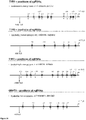
- Figure 1A shows the target location of the sgRNA-sequences in the non-coding upstream region of the indicated genes.
- Transcriptional enhancement was quantified by quantitative RT-PCR as shown in Figure 2A .
- activation of up to 250, 300 or 50-fold increase of T1R1, T1R2 or G-protein gustducin mRNA, respectively could be achieved.
- no significant transcriptional enhancement of the T1R3-mRNA was observed with any of the 12 T1R3-constructs.
- transcript level enhancement of the T1R3-mRNA ranging from 200 to 1200-fold, was obtained by co-transfection of the cells with 4 different T1R3-specific vectors ( Figure 2B ).
- the clusters have the following meaning (numbers refer to Figure 1A ):
- BR-HTC8 Quantitative RT-PCR with human primary taste cells BR-HTC8 ( WO2013/160415 ).
- the mRNA level in wild type cells was defined as 1.
- An increase of T1R3-transcript by a factor of 1.9 and 2.5 was observed after transfection with vector combination 1 and 2.
- BR-HTC8 cells were additionally transfected with sgRNA2.0 specific for gustducin (GNAT3) to enable signal transduction from the heterodimeric sweet receptor to the intracellular calcium level.
- GNAT3 gustducin
Landscapes
- Health & Medical Sciences (AREA)
- Life Sciences & Earth Sciences (AREA)
- Genetics & Genomics (AREA)
- Engineering & Computer Science (AREA)
- Chemical & Material Sciences (AREA)
- Organic Chemistry (AREA)
- Zoology (AREA)
- Biomedical Technology (AREA)
- Bioinformatics & Cheminformatics (AREA)
- Wood Science & Technology (AREA)
- Molecular Biology (AREA)
- Biotechnology (AREA)
- General Engineering & Computer Science (AREA)
- Biochemistry (AREA)
- General Health & Medical Sciences (AREA)
- Microbiology (AREA)
- Biophysics (AREA)
- Plant Pathology (AREA)
- Physics & Mathematics (AREA)
- Medicinal Chemistry (AREA)
- Immunology (AREA)
- Toxicology (AREA)
- Gastroenterology & Hepatology (AREA)
- Cell Biology (AREA)
- Proteomics, Peptides & Aminoacids (AREA)
- Micro-Organisms Or Cultivation Processes Thereof (AREA)
- Measuring Or Testing Involving Enzymes Or Micro-Organisms (AREA)
- Peptides Or Proteins (AREA)
Claims (12)
- Ein Verfahren zur Steigerung der Expression von geschmacksbezogenen Rezeptorgenen, umfassend die folgenden Schritte:(i) Bereitstellen einer Kultur aus Säugetierzellen, wobei das Genom der Zellen mindestens eine Süß-Rezeptordomäne ausgewählt aus TiR3 umfasst;(ii) Entwerfen mindestens eines Typs einer Single-Guide RNA (sgRNA), wobei die 10 bis 30 Nukleotide lange Guide-Sequenz der sgRNA komplementär zu Abschnitten innerhalb der nichtkodierenden und / oder mutmaßlichen regulatorischen Region stromaufwärts des Translationsstartkodons von mindestens einem Süß-Rezeptorgen ist;(iii) Vorbereiten eines Vektors, umfassend eine Expressionskassette einschließend mindestens ein CRISPR-dCas9VP64; und mindestens eine, optional modifizierte, sgRNA enthaltend Aptamerstrukturen zur Bindung von Aktivatorproteinen;(iv) Transfektion der Kultur aus Säugetierzellen mit dem Vektor um im Genom auf die Anwesenheit einer DNA Sequenz, die komplementär zur der 10 bis 30 Nukleotide langen Guide-Sequenz der sgRNA abzuzielen; und(v) Messung der Transkriptionssteigerung der Süß-Rezeptor mRNA über eine quantitative RT-PCR,wobei die mindestend eine sgRNA der Schritte (ii) und (iii) ein Cluster aus sgRNAs ausgewählt aus Cluster 6: SEQ ID NO: 20, 24, 26, 27, Cluster 1: SEQ ID NO: 20, 22, 23, 24, Cluster 5: SEQ ID NO: 22, 23, 25, 26 oder Cluster 2: SEQ ID NO: 23, 24, 25, 26 ist.
- Ein erstes Cluster (Cluster 6) von sgRNA2.0-tlr3 bestehend aus SEQ ID NO: 20, 24, 26, 27.
- Ein zweites Cluster (Cluster 1) von sgRNA2.0-tlr3 bestehend aus SEQ ID NO: 20, 22, 23, 24.
- Ein drittes Cluster (Cluster 5) von sgRNA2.0-tlr3 bestehend aus SEQ ID NO: 22, 23, 25, 26.
- Ein viertes Cluster (Cluster 2) von sgRNA2.0-tlr3 bestehend aus SEQ ID NO: 23, 24, 25, 26.
- Ein Cas9 oder dCas9 Protein beladen mit mindesten einem Cluster von sgRNA2.0 gemäß einem der Ansprüche 2 bis 5.
- Ein Fusionsprotein aus einem Cas9 oder dCas9 Protein und VP64 beladen mit mindestens einem Cluster von sgRNA2.0 gemäß einem der Ansprüche 2 bis 5.
- Eine Expressionskassette umfassend(a) mindestens ein Cas9, modifiziertes Cas9 oder dCas9 und(b) mindesten eine Cluster von sgRNA2.0 gemäß einem der Ansprüche 2 bis 5.
- Die Expressionskassette gemäß Anspruch 8, weiterhin umfassend VP64, MS, p65 und/oder HSF-1.
- Die Expressionskassette gemäß Anspruch 8, weiterhin umfassend T1R2, T1R3 und/oder GNAT3.
- Ein Vektor umfassend oder bestehend aus der Expressionskassette gemäß einem der Ansprüche 8 bis 10.
- Ein Screening-Verfahren zur Identifizierung neuer Geschmacksmodulatoren unter Verwendung des Verfahrens gemäß Anspruch 1.
Priority Applications (3)
| Application Number | Priority Date | Filing Date | Title |
|---|---|---|---|
| US15/762,424 US11459582B2 (en) | 2015-09-26 | 2016-09-23 | Activation of taste receptor genes in mammalian cells using CRISPR-Cas-9 |
| EP16775603.0A EP3353302B1 (de) | 2015-09-26 | 2016-09-23 | Aktivierung von geschmacksrezeptorgenen in säugetierzellen mit crispr-cas-9 |
| PCT/EP2016/072679 WO2017050963A1 (en) | 2015-09-26 | 2016-09-23 | Activation of taste receptor genes in mammalian cells using crispr-cas-9 |
Applications Claiming Priority (1)
| Application Number | Priority Date | Filing Date | Title |
|---|---|---|---|
| EP15187005 | 2015-09-26 |
Publications (3)
| Publication Number | Publication Date |
|---|---|
| EP3147363A2 EP3147363A2 (de) | 2017-03-29 |
| EP3147363A3 EP3147363A3 (de) | 2017-06-14 |
| EP3147363B1 true EP3147363B1 (de) | 2019-10-16 |
Family
ID=54252004
Family Applications (2)
| Application Number | Title | Priority Date | Filing Date |
|---|---|---|---|
| EP15191360.5A Active EP3147363B1 (de) | 2015-09-26 | 2015-10-24 | Aktivierung von geschmacksrezeptorgenen in säugetierzellen mit hilfe von crispr-cas-9 |
| EP16775603.0A Active EP3353302B1 (de) | 2015-09-26 | 2016-09-23 | Aktivierung von geschmacksrezeptorgenen in säugetierzellen mit crispr-cas-9 |
Family Applications After (1)
| Application Number | Title | Priority Date | Filing Date |
|---|---|---|---|
| EP16775603.0A Active EP3353302B1 (de) | 2015-09-26 | 2016-09-23 | Aktivierung von geschmacksrezeptorgenen in säugetierzellen mit crispr-cas-9 |
Country Status (3)
| Country | Link |
|---|---|
| US (1) | US11459582B2 (de) |
| EP (2) | EP3147363B1 (de) |
| WO (1) | WO2017050963A1 (de) |
Families Citing this family (36)
| Publication number | Priority date | Publication date | Assignee | Title |
|---|---|---|---|---|
| JP6261500B2 (ja) | 2011-07-22 | 2018-01-17 | プレジデント アンド フェローズ オブ ハーバード カレッジ | ヌクレアーゼ切断特異性の評価および改善 |
| US20150044192A1 (en) | 2013-08-09 | 2015-02-12 | President And Fellows Of Harvard College | Methods for identifying a target site of a cas9 nuclease |
| US9359599B2 (en) | 2013-08-22 | 2016-06-07 | President And Fellows Of Harvard College | Engineered transcription activator-like effector (TALE) domains and uses thereof |
| US9526784B2 (en) | 2013-09-06 | 2016-12-27 | President And Fellows Of Harvard College | Delivery system for functional nucleases |
| US9388430B2 (en) | 2013-09-06 | 2016-07-12 | President And Fellows Of Harvard College | Cas9-recombinase fusion proteins and uses thereof |
| US9340799B2 (en) | 2013-09-06 | 2016-05-17 | President And Fellows Of Harvard College | MRNA-sensing switchable gRNAs |
| US20150165054A1 (en) | 2013-12-12 | 2015-06-18 | President And Fellows Of Harvard College | Methods for correcting caspase-9 point mutations |
| WO2016022363A2 (en) | 2014-07-30 | 2016-02-11 | President And Fellows Of Harvard College | Cas9 proteins including ligand-dependent inteins |
| GB201418965D0 (de) | 2014-10-24 | 2014-12-10 | Ospedale San Raffaele And Fond Telethon | |
| JP7109784B2 (ja) | 2015-10-23 | 2022-08-01 | プレジデント アンド フェローズ オブ ハーバード カレッジ | 遺伝子編集のための進化したCas9蛋白質 |
| KR102547316B1 (ko) | 2016-08-03 | 2023-06-23 | 프레지던트 앤드 펠로우즈 오브 하바드 칼리지 | 아데노신 핵염기 편집제 및 그의 용도 |
| US11661590B2 (en) | 2016-08-09 | 2023-05-30 | President And Fellows Of Harvard College | Programmable CAS9-recombinase fusion proteins and uses thereof |
| US11542509B2 (en) | 2016-08-24 | 2023-01-03 | President And Fellows Of Harvard College | Incorporation of unnatural amino acids into proteins using base editing |
| EP3526320A1 (de) | 2016-10-14 | 2019-08-21 | President and Fellows of Harvard College | Aav-abgabe von nukleobasen-editoren |
| WO2018119359A1 (en) | 2016-12-23 | 2018-06-28 | President And Fellows Of Harvard College | Editing of ccr5 receptor gene to protect against hiv infection |
| JP2020510038A (ja) | 2017-03-09 | 2020-04-02 | プレジデント アンド フェローズ オブ ハーバード カレッジ | がんワクチン |
| EP3592853A1 (de) | 2017-03-09 | 2020-01-15 | President and Fellows of Harvard College | Unterdrückung von schmerzen durch geneditierung |
| JP2020510439A (ja) | 2017-03-10 | 2020-04-09 | プレジデント アンド フェローズ オブ ハーバード カレッジ | シトシンからグアニンへの塩基編集因子 |
| CA3057192A1 (en) | 2017-03-23 | 2018-09-27 | President And Fellows Of Harvard College | Nucleobase editors comprising nucleic acid programmable dna binding proteins |
| WO2018209320A1 (en) | 2017-05-12 | 2018-11-15 | President And Fellows Of Harvard College | Aptazyme-embedded guide rnas for use with crispr-cas9 in genome editing and transcriptional activation |
| CN107099850B (zh) * | 2017-06-19 | 2018-05-04 | 东北农业大学 | 一种通过酶切基因组构建CRISPR/Cas9基因组敲除文库的方法 |
| WO2019023680A1 (en) | 2017-07-28 | 2019-01-31 | President And Fellows Of Harvard College | METHODS AND COMPOSITIONS FOR EVOLUTION OF BASIC EDITORS USING PHAGE-ASSISTED CONTINUOUS EVOLUTION (PACE) |
| EP3676376B1 (de) | 2017-08-30 | 2025-01-15 | President and Fellows of Harvard College | Hocheffiziente baseneditoren mit gam |
| KR20250107288A (ko) | 2017-10-16 | 2025-07-11 | 더 브로드 인스티튜트, 인코퍼레이티드 | 아데노신 염기 편집제의 용도 |
| WO2019118949A1 (en) | 2017-12-15 | 2019-06-20 | The Broad Institute, Inc. | Systems and methods for predicting repair outcomes in genetic engineering |
| JP7555822B2 (ja) | 2018-04-19 | 2024-09-25 | ザ・リージエンツ・オブ・ザ・ユニバーシテイー・オブ・カリフオルニア | ゲノム編集のための組成物および方法 |
| EP3797160A1 (de) | 2018-05-23 | 2021-03-31 | The Broad Institute Inc. | Baseneditoren und verwendungen davon |
| US12522807B2 (en) | 2018-07-09 | 2026-01-13 | The Broad Institute, Inc. | RNA programmable epigenetic RNA modifiers and uses thereof |
| WO2020092453A1 (en) | 2018-10-29 | 2020-05-07 | The Broad Institute, Inc. | Nucleobase editors comprising geocas9 and uses thereof |
| US12351837B2 (en) | 2019-01-23 | 2025-07-08 | The Broad Institute, Inc. | Supernegatively charged proteins and uses thereof |
| JP7657726B2 (ja) | 2019-03-19 | 2025-04-07 | ザ ブロード インスティテュート,インコーポレーテッド | 編集ヌクレオチド配列を編集するための方法および組成物 |
| US12473543B2 (en) | 2019-04-17 | 2025-11-18 | The Broad Institute, Inc. | Adenine base editors with reduced off-target effects |
| US12435330B2 (en) | 2019-10-10 | 2025-10-07 | The Broad Institute, Inc. | Methods and compositions for prime editing RNA |
| DE112021002672T5 (de) | 2020-05-08 | 2023-04-13 | President And Fellows Of Harvard College | Vefahren und zusammensetzungen zum gleichzeitigen editieren beider stränge einer doppelsträngigen nukleotid-zielsequenz |
| CN112442107B (zh) * | 2020-11-18 | 2023-05-09 | 渤海大学 | 一种苦味抑制肽及其应用 |
| CN118956953A (zh) * | 2024-06-26 | 2024-11-15 | 中南大学湘雅医院 | 一种Kcna1基因敲除导致癫痫猝死动物模型的构建及其应用 |
Family Cites Families (8)
| Publication number | Priority date | Publication date | Assignee | Title |
|---|---|---|---|---|
| IT1303090B1 (it) | 1998-07-28 | 2000-10-30 | Miller Europe Spa | Dispositivo accendigas elettronico integrato con una morsettiera. |
| US7402400B2 (en) | 2001-07-03 | 2008-07-22 | Regents Of The University Of California | Mammalian sweet taste receptors |
| US7368285B2 (en) | 2001-03-07 | 2008-05-06 | Senomyx, Inc. | Heteromeric umami T1R1/T1R3 taste receptors and isolated cells that express same |
| US7335487B2 (en) | 2001-09-18 | 2008-02-26 | Irm Llc | Sweet taste receptors |
| WO2004069191A2 (en) * | 2003-02-03 | 2004-08-19 | Senomyx Inc. | Identification of t1r and t2r modulators |
| EP1865316B1 (de) | 2006-06-07 | 2010-02-24 | Nutrinova Nutrition Specialties & Food Ingredients GmbH | Verfahren zum Screening von Substanzen die die Aktivität von Gpcrs modulieren |
| WO2013160415A1 (en) | 2012-04-25 | 2013-10-31 | B.R.A.I.N. Biotechnology Research And Information Network Ag | Human taste cells capable of continuous proliferation |
| US20140356956A1 (en) * | 2013-06-04 | 2014-12-04 | President And Fellows Of Harvard College | RNA-Guided Transcriptional Regulation |
-
2015
- 2015-10-24 EP EP15191360.5A patent/EP3147363B1/de active Active
-
2016
- 2016-09-23 EP EP16775603.0A patent/EP3353302B1/de active Active
- 2016-09-23 WO PCT/EP2016/072679 patent/WO2017050963A1/en not_active Ceased
- 2016-09-23 US US15/762,424 patent/US11459582B2/en active Active
Non-Patent Citations (1)
| Title |
|---|
| None * |
Also Published As
| Publication number | Publication date |
|---|---|
| EP3147363A2 (de) | 2017-03-29 |
| US20180273976A1 (en) | 2018-09-27 |
| US11459582B2 (en) | 2022-10-04 |
| WO2017050963A1 (en) | 2017-03-30 |
| EP3147363A3 (de) | 2017-06-14 |
| EP3353302A1 (de) | 2018-08-01 |
| EP3353302B1 (de) | 2021-03-31 |
Similar Documents
| Publication | Publication Date | Title |
|---|---|---|
| EP3147363B1 (de) | Aktivierung von geschmacksrezeptorgenen in säugetierzellen mit hilfe von crispr-cas-9 | |
| Huang et al. | The cells and logic for mammalian sour taste detection | |
| US8067236B2 (en) | Optimized human T1R3 nucleic acid molecule | |
| KR101440639B1 (ko) | 핵산, 폴리펩타이드 및 이의 용도 | |
| KR20080110829A (ko) | 단맛 강화 방법 | |
| US7208290B2 (en) | Methods of co-expressing umami taste receptors and chimeric Gα15 variants | |
| US20080026416A1 (en) | Model Taste Cells and Methods of Use for Identifying Modulators of Taste Sensation | |
| Lin-Lee et al. | Differential sensitivities of the MRP gene family and γ-glutamylcysteine synthetase to prooxidants in human colorectal carcinoma cell lines with different p53 status | |
| JP2016523512A (ja) | 苦味を修飾する化合物を特定するアッセイ | |
| US8658383B2 (en) | Sweet taste receptor-expressing construct, cell body expressing the same, and utilization thereof | |
| JP2009544330A (ja) | Rgs21活性の調節物質を同定するための方法、rgs21調節物質を含む組成物、および味覚を調節するためのその使用方法 | |
| EP2985347A1 (de) | Verfahren zum nachweis einer proteinstabilität und verwendungen davon | |
| US20200247859A1 (en) | Construct for expressing g protein-coupled receptor or subunit thereof, and use of said construct | |
| JP6122858B2 (ja) | 苦味を調整する化合物を同定するための検定 | |
| US20130041142A1 (en) | Human sweet taste receptor-acting sweet taste regulating substance to sweet taste substance | |
| KR20090112704A (ko) | 키메라 우마미 미각 수용체, 이를 코딩하는 핵산 및 이의 용도 | |
| US20050085625A1 (en) | Chimeric Galpha 15 variants and their use in the analysis and discovery of modulators of G-protein coupled receptors | |
| WO2025090617A1 (en) | Compositions and methods for the identification of salt alternatives | |
| US20050033021A1 (en) | Chimeric Gatiphal 15 variants and their use in the analysis and discovery of modulators of G-protein coupled receptors | |
| Class et al. | Patent application title: SCREENING METHODS FOR COMPOUNDS THAT MODULATE THE ACTIVITY OF G-PROTEIN COUPLED RECEPTORS Inventors: Michael Krohn (Lorsch, DE, DE) Nutrinova Nutrition Specialties & Food Ingredients Gmbh Holger Zinke (Zwingenberg, DE) Holger Zinke (Zwingenberg, DE) | |
| JP2005511001A (ja) | 信号伝達が変更された受容体を同定するための用量−応答に基づいた方法 |
Legal Events
| Date | Code | Title | Description |
|---|---|---|---|
| PUAI | Public reference made under article 153(3) epc to a published international application that has entered the european phase |
Free format text: ORIGINAL CODE: 0009012 |
|
| STAA | Information on the status of an ep patent application or granted ep patent |
Free format text: STATUS: THE APPLICATION HAS BEEN PUBLISHED |
|
| AK | Designated contracting states |
Kind code of ref document: A2 Designated state(s): AL AT BE BG CH CY CZ DE DK EE ES FI FR GB GR HR HU IE IS IT LI LT LU LV MC MK MT NL NO PL PT RO RS SE SI SK SM TR |
|
| AX | Request for extension of the european patent |
Extension state: BA ME |
|
| PUAL | Search report despatched |
Free format text: ORIGINAL CODE: 0009013 |
|
| AK | Designated contracting states |
Kind code of ref document: A3 Designated state(s): AL AT BE BG CH CY CZ DE DK EE ES FI FR GB GR HR HU IE IS IT LI LT LU LV MC MK MT NL NO PL PT RO RS SE SI SK SM TR |
|
| AX | Request for extension of the european patent |
Extension state: BA ME |
|
| RIC1 | Information provided on ipc code assigned before grant |
Ipc: C12N 9/22 20060101ALI20170509BHEP Ipc: C12N 15/63 20060101ALI20170509BHEP Ipc: C12N 15/113 20100101AFI20170509BHEP Ipc: C12N 15/62 20060101ALN20170509BHEP Ipc: C07K 19/00 20060101ALN20170509BHEP |
|
| STAA | Information on the status of an ep patent application or granted ep patent |
Free format text: STATUS: REQUEST FOR EXAMINATION WAS MADE |
|
| 17P | Request for examination filed |
Effective date: 20171208 |
|
| RBV | Designated contracting states (corrected) |
Designated state(s): AL AT BE BG CH CY CZ DE DK EE ES FI FR GB GR HR HU IE IS IT LI LT LU LV MC MK MT NL NO PL PT RO RS SE SI SK SM TR |
|
| STAA | Information on the status of an ep patent application or granted ep patent |
Free format text: STATUS: EXAMINATION IS IN PROGRESS |
|
| 17Q | First examination report despatched |
Effective date: 20180220 |
|
| GRAP | Despatch of communication of intention to grant a patent |
Free format text: ORIGINAL CODE: EPIDOSNIGR1 |
|
| STAA | Information on the status of an ep patent application or granted ep patent |
Free format text: STATUS: GRANT OF PATENT IS INTENDED |
|
| RIC1 | Information provided on ipc code assigned before grant |
Ipc: C12N 15/63 20060101ALI20190404BHEP Ipc: C12N 9/22 20060101ALI20190404BHEP Ipc: C12N 15/113 20100101AFI20190404BHEP Ipc: C07K 19/00 20060101ALN20190404BHEP Ipc: C12N 15/62 20060101ALN20190404BHEP |
|
| RIC1 | Information provided on ipc code assigned before grant |
Ipc: C07K 19/00 20060101ALN20190412BHEP Ipc: C12N 9/22 20060101ALI20190412BHEP Ipc: C12N 15/62 20060101ALN20190412BHEP Ipc: C12N 15/113 20100101AFI20190412BHEP Ipc: C12N 15/63 20060101ALI20190412BHEP |
|
| INTG | Intention to grant announced |
Effective date: 20190503 |
|
| GRAS | Grant fee paid |
Free format text: ORIGINAL CODE: EPIDOSNIGR3 |
|
| GRAA | (expected) grant |
Free format text: ORIGINAL CODE: 0009210 |
|
| STAA | Information on the status of an ep patent application or granted ep patent |
Free format text: STATUS: THE PATENT HAS BEEN GRANTED |
|
| RIN1 | Information on inventor provided before grant (corrected) |
Inventor name: KROHN, MICHAEL Inventor name: PUL, UEMIT |
|
| AK | Designated contracting states |
Kind code of ref document: B1 Designated state(s): AL AT BE BG CH CY CZ DE DK EE ES FI FR GB GR HR HU IE IS IT LI LT LU LV MC MK MT NL NO PL PT RO RS SE SI SK SM TR |
|
| REG | Reference to a national code |
Ref country code: GB Ref legal event code: FG4D |
|
| REG | Reference to a national code |
Ref country code: CH Ref legal event code: EP |
|
| REG | Reference to a national code |
Ref country code: DE Ref legal event code: R096 Ref document number: 602015039812 Country of ref document: DE |
|
| REG | Reference to a national code |
Ref country code: IE Ref legal event code: FG4D |
|
| REG | Reference to a national code |
Ref country code: AT Ref legal event code: REF Ref document number: 1191283 Country of ref document: AT Kind code of ref document: T Effective date: 20191115 |
|
| REG | Reference to a national code |
Ref country code: NL Ref legal event code: FP |
|
| REG | Reference to a national code |
Ref country code: CH Ref legal event code: NV Representative=s name: VALIPAT S.A. C/O BOVARD SA NEUCHATEL, CH |
|
| REG | Reference to a national code |
Ref country code: LT Ref legal event code: MG4D |
|
| REG | Reference to a national code |
Ref country code: AT Ref legal event code: MK05 Ref document number: 1191283 Country of ref document: AT Kind code of ref document: T Effective date: 20191016 |
|
| PG25 | Lapsed in a contracting state [announced via postgrant information from national office to epo] |
Ref country code: LT Free format text: LAPSE BECAUSE OF FAILURE TO SUBMIT A TRANSLATION OF THE DESCRIPTION OR TO PAY THE FEE WITHIN THE PRESCRIBED TIME-LIMIT Effective date: 20191016 Ref country code: PL Free format text: LAPSE BECAUSE OF FAILURE TO SUBMIT A TRANSLATION OF THE DESCRIPTION OR TO PAY THE FEE WITHIN THE PRESCRIBED TIME-LIMIT Effective date: 20191016 Ref country code: NO Free format text: LAPSE BECAUSE OF FAILURE TO SUBMIT A TRANSLATION OF THE DESCRIPTION OR TO PAY THE FEE WITHIN THE PRESCRIBED TIME-LIMIT Effective date: 20200116 Ref country code: GR Free format text: LAPSE BECAUSE OF FAILURE TO SUBMIT A TRANSLATION OF THE DESCRIPTION OR TO PAY THE FEE WITHIN THE PRESCRIBED TIME-LIMIT Effective date: 20200117 Ref country code: AT Free format text: LAPSE BECAUSE OF FAILURE TO SUBMIT A TRANSLATION OF THE DESCRIPTION OR TO PAY THE FEE WITHIN THE PRESCRIBED TIME-LIMIT Effective date: 20191016 Ref country code: LV Free format text: LAPSE BECAUSE OF FAILURE TO SUBMIT A TRANSLATION OF THE DESCRIPTION OR TO PAY THE FEE WITHIN THE PRESCRIBED TIME-LIMIT Effective date: 20191016 Ref country code: SE Free format text: LAPSE BECAUSE OF FAILURE TO SUBMIT A TRANSLATION OF THE DESCRIPTION OR TO PAY THE FEE WITHIN THE PRESCRIBED TIME-LIMIT Effective date: 20191016 Ref country code: BG Free format text: LAPSE BECAUSE OF FAILURE TO SUBMIT A TRANSLATION OF THE DESCRIPTION OR TO PAY THE FEE WITHIN THE PRESCRIBED TIME-LIMIT Effective date: 20200116 Ref country code: PT Free format text: LAPSE BECAUSE OF FAILURE TO SUBMIT A TRANSLATION OF THE DESCRIPTION OR TO PAY THE FEE WITHIN THE PRESCRIBED TIME-LIMIT Effective date: 20200217 Ref country code: FI Free format text: LAPSE BECAUSE OF FAILURE TO SUBMIT A TRANSLATION OF THE DESCRIPTION OR TO PAY THE FEE WITHIN THE PRESCRIBED TIME-LIMIT Effective date: 20191016 |
|
| PG25 | Lapsed in a contracting state [announced via postgrant information from national office to epo] |
Ref country code: RS Free format text: LAPSE BECAUSE OF FAILURE TO SUBMIT A TRANSLATION OF THE DESCRIPTION OR TO PAY THE FEE WITHIN THE PRESCRIBED TIME-LIMIT Effective date: 20191016 Ref country code: IS Free format text: LAPSE BECAUSE OF FAILURE TO SUBMIT A TRANSLATION OF THE DESCRIPTION OR TO PAY THE FEE WITHIN THE PRESCRIBED TIME-LIMIT Effective date: 20200224 Ref country code: HR Free format text: LAPSE BECAUSE OF FAILURE TO SUBMIT A TRANSLATION OF THE DESCRIPTION OR TO PAY THE FEE WITHIN THE PRESCRIBED TIME-LIMIT Effective date: 20191016 |
|
| PG25 | Lapsed in a contracting state [announced via postgrant information from national office to epo] |
Ref country code: AL Free format text: LAPSE BECAUSE OF FAILURE TO SUBMIT A TRANSLATION OF THE DESCRIPTION OR TO PAY THE FEE WITHIN THE PRESCRIBED TIME-LIMIT Effective date: 20191016 |
|
| REG | Reference to a national code |
Ref country code: DE Ref legal event code: R097 Ref document number: 602015039812 Country of ref document: DE |
|
| PG2D | Information on lapse in contracting state deleted |
Ref country code: IS |
|
| PG25 | Lapsed in a contracting state [announced via postgrant information from national office to epo] |
Ref country code: EE Free format text: LAPSE BECAUSE OF FAILURE TO SUBMIT A TRANSLATION OF THE DESCRIPTION OR TO PAY THE FEE WITHIN THE PRESCRIBED TIME-LIMIT Effective date: 20191016 Ref country code: DK Free format text: LAPSE BECAUSE OF FAILURE TO SUBMIT A TRANSLATION OF THE DESCRIPTION OR TO PAY THE FEE WITHIN THE PRESCRIBED TIME-LIMIT Effective date: 20191016 Ref country code: MC Free format text: LAPSE BECAUSE OF FAILURE TO SUBMIT A TRANSLATION OF THE DESCRIPTION OR TO PAY THE FEE WITHIN THE PRESCRIBED TIME-LIMIT Effective date: 20191016 Ref country code: LU Free format text: LAPSE BECAUSE OF NON-PAYMENT OF DUE FEES Effective date: 20191024 Ref country code: ES Free format text: LAPSE BECAUSE OF FAILURE TO SUBMIT A TRANSLATION OF THE DESCRIPTION OR TO PAY THE FEE WITHIN THE PRESCRIBED TIME-LIMIT Effective date: 20191016 Ref country code: CZ Free format text: LAPSE BECAUSE OF FAILURE TO SUBMIT A TRANSLATION OF THE DESCRIPTION OR TO PAY THE FEE WITHIN THE PRESCRIBED TIME-LIMIT Effective date: 20191016 Ref country code: RO Free format text: LAPSE BECAUSE OF FAILURE TO SUBMIT A TRANSLATION OF THE DESCRIPTION OR TO PAY THE FEE WITHIN THE PRESCRIBED TIME-LIMIT Effective date: 20191016 Ref country code: IS Free format text: LAPSE BECAUSE OF FAILURE TO SUBMIT A TRANSLATION OF THE DESCRIPTION OR TO PAY THE FEE WITHIN THE PRESCRIBED TIME-LIMIT Effective date: 20200216 |
|
| REG | Reference to a national code |
Ref country code: BE Ref legal event code: MM Effective date: 20191031 |
|
| PLBE | No opposition filed within time limit |
Free format text: ORIGINAL CODE: 0009261 |
|
| STAA | Information on the status of an ep patent application or granted ep patent |
Free format text: STATUS: NO OPPOSITION FILED WITHIN TIME LIMIT |
|
| PG25 | Lapsed in a contracting state [announced via postgrant information from national office to epo] |
Ref country code: SM Free format text: LAPSE BECAUSE OF FAILURE TO SUBMIT A TRANSLATION OF THE DESCRIPTION OR TO PAY THE FEE WITHIN THE PRESCRIBED TIME-LIMIT Effective date: 20191016 Ref country code: SK Free format text: LAPSE BECAUSE OF FAILURE TO SUBMIT A TRANSLATION OF THE DESCRIPTION OR TO PAY THE FEE WITHIN THE PRESCRIBED TIME-LIMIT Effective date: 20191016 Ref country code: IT Free format text: LAPSE BECAUSE OF FAILURE TO SUBMIT A TRANSLATION OF THE DESCRIPTION OR TO PAY THE FEE WITHIN THE PRESCRIBED TIME-LIMIT Effective date: 20191016 Ref country code: BE Free format text: LAPSE BECAUSE OF NON-PAYMENT OF DUE FEES Effective date: 20191031 |
|
| 26N | No opposition filed |
Effective date: 20200717 |
|
| PG25 | Lapsed in a contracting state [announced via postgrant information from national office to epo] |
Ref country code: IE Free format text: LAPSE BECAUSE OF NON-PAYMENT OF DUE FEES Effective date: 20191024 |
|
| PG25 | Lapsed in a contracting state [announced via postgrant information from national office to epo] |
Ref country code: SI Free format text: LAPSE BECAUSE OF FAILURE TO SUBMIT A TRANSLATION OF THE DESCRIPTION OR TO PAY THE FEE WITHIN THE PRESCRIBED TIME-LIMIT Effective date: 20191016 |
|
| PG25 | Lapsed in a contracting state [announced via postgrant information from national office to epo] |
Ref country code: CY Free format text: LAPSE BECAUSE OF FAILURE TO SUBMIT A TRANSLATION OF THE DESCRIPTION OR TO PAY THE FEE WITHIN THE PRESCRIBED TIME-LIMIT Effective date: 20191016 |
|
| PG25 | Lapsed in a contracting state [announced via postgrant information from national office to epo] |
Ref country code: MT Free format text: LAPSE BECAUSE OF FAILURE TO SUBMIT A TRANSLATION OF THE DESCRIPTION OR TO PAY THE FEE WITHIN THE PRESCRIBED TIME-LIMIT Effective date: 20191016 Ref country code: HU Free format text: LAPSE BECAUSE OF FAILURE TO SUBMIT A TRANSLATION OF THE DESCRIPTION OR TO PAY THE FEE WITHIN THE PRESCRIBED TIME-LIMIT; INVALID AB INITIO Effective date: 20151024 |
|
| PG25 | Lapsed in a contracting state [announced via postgrant information from national office to epo] |
Ref country code: TR Free format text: LAPSE BECAUSE OF FAILURE TO SUBMIT A TRANSLATION OF THE DESCRIPTION OR TO PAY THE FEE WITHIN THE PRESCRIBED TIME-LIMIT Effective date: 20191016 |
|
| PG25 | Lapsed in a contracting state [announced via postgrant information from national office to epo] |
Ref country code: MK Free format text: LAPSE BECAUSE OF FAILURE TO SUBMIT A TRANSLATION OF THE DESCRIPTION OR TO PAY THE FEE WITHIN THE PRESCRIBED TIME-LIMIT Effective date: 20191016 |
|
| PGFP | Annual fee paid to national office [announced via postgrant information from national office to epo] |
Ref country code: NL Payment date: 20231023 Year of fee payment: 9 |
|
| PGFP | Annual fee paid to national office [announced via postgrant information from national office to epo] |
Ref country code: GB Payment date: 20231025 Year of fee payment: 9 |
|
| PGFP | Annual fee paid to national office [announced via postgrant information from national office to epo] |
Ref country code: FR Payment date: 20231023 Year of fee payment: 9 Ref country code: DE Payment date: 20231018 Year of fee payment: 9 Ref country code: CH Payment date: 20231101 Year of fee payment: 9 |
|
| REG | Reference to a national code |
Ref country code: DE Ref legal event code: R119 Ref document number: 602015039812 Country of ref document: DE |
|
| REG | Reference to a national code |
Ref country code: CH Ref legal event code: PL |
|
| REG | Reference to a national code |
Ref country code: NL Ref legal event code: MM Effective date: 20241101 |
|
| GBPC | Gb: european patent ceased through non-payment of renewal fee |
Effective date: 20241024 |
|
| PG25 | Lapsed in a contracting state [announced via postgrant information from national office to epo] |
Ref country code: DE Free format text: LAPSE BECAUSE OF NON-PAYMENT OF DUE FEES Effective date: 20250501 |
|
| PG25 | Lapsed in a contracting state [announced via postgrant information from national office to epo] |
Ref country code: GB Free format text: LAPSE BECAUSE OF NON-PAYMENT OF DUE FEES Effective date: 20241024 |
|
| PG25 | Lapsed in a contracting state [announced via postgrant information from national office to epo] |
Ref country code: NL Free format text: LAPSE BECAUSE OF NON-PAYMENT OF DUE FEES Effective date: 20241101 |
|
| PG25 | Lapsed in a contracting state [announced via postgrant information from national office to epo] |
Ref country code: FR Free format text: LAPSE BECAUSE OF NON-PAYMENT OF DUE FEES Effective date: 20241031 |
|
| PG25 | Lapsed in a contracting state [announced via postgrant information from national office to epo] |
Ref country code: CH Free format text: LAPSE BECAUSE OF NON-PAYMENT OF DUE FEES Effective date: 20241031 |