EP3148620B1 - Procédé permettant de stocker un vaccin avec adjuvant émulsionné dans un dispositif d'injection médical lubrifié - Google Patents
Procédé permettant de stocker un vaccin avec adjuvant émulsionné dans un dispositif d'injection médical lubrifié Download PDFInfo
- Publication number
- EP3148620B1 EP3148620B1 EP15724671.1A EP15724671A EP3148620B1 EP 3148620 B1 EP3148620 B1 EP 3148620B1 EP 15724671 A EP15724671 A EP 15724671A EP 3148620 B1 EP3148620 B1 EP 3148620B1
- Authority
- EP
- European Patent Office
- Prior art keywords
- emulsion
- vaccine
- lubricant coating
- barrel
- silicone oil
- Prior art date
- Legal status (The legal status is an assumption and is not a legal conclusion. Google has not performed a legal analysis and makes no representation as to the accuracy of the status listed.)
- Active
Links
Images


Classifications
-
- A—HUMAN NECESSITIES
- A61—MEDICAL OR VETERINARY SCIENCE; HYGIENE
- A61M—DEVICES FOR INTRODUCING MEDIA INTO, OR ONTO, THE BODY; DEVICES FOR TRANSDUCING BODY MEDIA OR FOR TAKING MEDIA FROM THE BODY; DEVICES FOR PRODUCING OR ENDING SLEEP OR STUPOR
- A61M5/00—Devices for bringing media into the body in a subcutaneous, intra-vascular or intramuscular way; Accessories therefor, e.g. filling or cleaning devices, arm-rests
- A61M5/178—Syringes
- A61M5/31—Details
- A61M5/3129—Syringe barrels
-
- A—HUMAN NECESSITIES
- A61—MEDICAL OR VETERINARY SCIENCE; HYGIENE
- A61K—PREPARATIONS FOR MEDICAL, DENTAL OR TOILETRY PURPOSES
- A61K39/00—Medicinal preparations containing antigens or antibodies
-
- A—HUMAN NECESSITIES
- A61—MEDICAL OR VETERINARY SCIENCE; HYGIENE
- A61L—METHODS OR APPARATUS FOR STERILISING MATERIALS OR OBJECTS IN GENERAL; DISINFECTION, STERILISATION OR DEODORISATION OF AIR; CHEMICAL ASPECTS OF BANDAGES, DRESSINGS, ABSORBENT PADS OR SURGICAL ARTICLES; MATERIALS FOR BANDAGES, DRESSINGS, ABSORBENT PADS OR SURGICAL ARTICLES
- A61L31/00—Materials for other surgical articles, e.g. stents, stent-grafts, shunts, surgical drapes, guide wires, materials for adhesion prevention, occluding devices, surgical gloves, tissue fixation devices
- A61L31/08—Materials for coatings
-
- A—HUMAN NECESSITIES
- A61—MEDICAL OR VETERINARY SCIENCE; HYGIENE
- A61L—METHODS OR APPARATUS FOR STERILISING MATERIALS OR OBJECTS IN GENERAL; DISINFECTION, STERILISATION OR DEODORISATION OF AIR; CHEMICAL ASPECTS OF BANDAGES, DRESSINGS, ABSORBENT PADS OR SURGICAL ARTICLES; MATERIALS FOR BANDAGES, DRESSINGS, ABSORBENT PADS OR SURGICAL ARTICLES
- A61L31/00—Materials for other surgical articles, e.g. stents, stent-grafts, shunts, surgical drapes, guide wires, materials for adhesion prevention, occluding devices, surgical gloves, tissue fixation devices
- A61L31/08—Materials for coatings
- A61L31/082—Inorganic materials
- A61L31/088—Other specific inorganic materials not covered by A61L31/084 or A61L31/086
-
- A—HUMAN NECESSITIES
- A61—MEDICAL OR VETERINARY SCIENCE; HYGIENE
- A61L—METHODS OR APPARATUS FOR STERILISING MATERIALS OR OBJECTS IN GENERAL; DISINFECTION, STERILISATION OR DEODORISATION OF AIR; CHEMICAL ASPECTS OF BANDAGES, DRESSINGS, ABSORBENT PADS OR SURGICAL ARTICLES; MATERIALS FOR BANDAGES, DRESSINGS, ABSORBENT PADS OR SURGICAL ARTICLES
- A61L31/00—Materials for other surgical articles, e.g. stents, stent-grafts, shunts, surgical drapes, guide wires, materials for adhesion prevention, occluding devices, surgical gloves, tissue fixation devices
- A61L31/14—Materials characterised by their function or physical properties, e.g. injectable or lubricating compositions, shape-memory materials, surface modified materials
-
- A—HUMAN NECESSITIES
- A61—MEDICAL OR VETERINARY SCIENCE; HYGIENE
- A61L—METHODS OR APPARATUS FOR STERILISING MATERIALS OR OBJECTS IN GENERAL; DISINFECTION, STERILISATION OR DEODORISATION OF AIR; CHEMICAL ASPECTS OF BANDAGES, DRESSINGS, ABSORBENT PADS OR SURGICAL ARTICLES; MATERIALS FOR BANDAGES, DRESSINGS, ABSORBENT PADS OR SURGICAL ARTICLES
- A61L31/00—Materials for other surgical articles, e.g. stents, stent-grafts, shunts, surgical drapes, guide wires, materials for adhesion prevention, occluding devices, surgical gloves, tissue fixation devices
- A61L31/14—Materials characterised by their function or physical properties, e.g. injectable or lubricating compositions, shape-memory materials, surface modified materials
- A61L31/16—Biologically active materials, e.g. therapeutic substances
-
- A—HUMAN NECESSITIES
- A61—MEDICAL OR VETERINARY SCIENCE; HYGIENE
- A61M—DEVICES FOR INTRODUCING MEDIA INTO, OR ONTO, THE BODY; DEVICES FOR TRANSDUCING BODY MEDIA OR FOR TAKING MEDIA FROM THE BODY; DEVICES FOR PRODUCING OR ENDING SLEEP OR STUPOR
- A61M5/00—Devices for bringing media into the body in a subcutaneous, intra-vascular or intramuscular way; Accessories therefor, e.g. filling or cleaning devices, arm-rests
- A61M5/178—Syringes
- A61M5/31—Details
-
- B—PERFORMING OPERATIONS; TRANSPORTING
- B65—CONVEYING; PACKING; STORING; HANDLING THIN OR FILAMENTARY MATERIAL
- B65B—MACHINES, APPARATUS OR DEVICES FOR, OR METHODS OF, PACKAGING ARTICLES OR MATERIALS; UNPACKING
- B65B3/00—Packaging plastic material, semiliquids, liquids or mixed solids and liquids, in individual containers or receptacles, e.g. bags, sacks, boxes, cartons, cans, or jars
- B65B3/003—Filling medical containers such as ampoules, vials, syringes or the like
-
- B—PERFORMING OPERATIONS; TRANSPORTING
- B65—CONVEYING; PACKING; STORING; HANDLING THIN OR FILAMENTARY MATERIAL
- B65B—MACHINES, APPARATUS OR DEVICES FOR, OR METHODS OF, PACKAGING ARTICLES OR MATERIALS; UNPACKING
- B65B7/00—Closing containers or receptacles after filling
- B65B7/16—Closing semi-rigid or rigid containers or receptacles not deformed by, or not taking-up shape of, contents, e.g. boxes or cartons
- B65B7/28—Closing semi-rigid or rigid containers or receptacles not deformed by, or not taking-up shape of, contents, e.g. boxes or cartons by applying separate preformed closures, e.g. lids, covers
- B65B7/2821—Closing semi-rigid or rigid containers or receptacles not deformed by, or not taking-up shape of, contents, e.g. boxes or cartons by applying separate preformed closures, e.g. lids, covers applying plugs or threadless stoppers
-
- C—CHEMISTRY; METALLURGY
- C10—PETROLEUM, GAS OR COKE INDUSTRIES; TECHNICAL GASES CONTAINING CARBON MONOXIDE; FUELS; LUBRICANTS; PEAT
- C10M—LUBRICATING COMPOSITIONS; USE OF CHEMICAL SUBSTANCES EITHER ALONE OR AS LUBRICATING INGREDIENTS IN A LUBRICATING COMPOSITION
- C10M107/00—Lubricating compositions characterised by the base-material being a macromolecular compound
- C10M107/50—Lubricating compositions characterised by the base-material being a macromolecular compound containing silicon
-
- C—CHEMISTRY; METALLURGY
- C10—PETROLEUM, GAS OR COKE INDUSTRIES; TECHNICAL GASES CONTAINING CARBON MONOXIDE; FUELS; LUBRICANTS; PEAT
- C10M—LUBRICATING COMPOSITIONS; USE OF CHEMICAL SUBSTANCES EITHER ALONE OR AS LUBRICATING INGREDIENTS IN A LUBRICATING COMPOSITION
- C10M177/00—Special methods of preparation of lubricating compositions; Chemical modification by after-treatment of components or of the whole of a lubricating composition, not covered by other classes
-
- A—HUMAN NECESSITIES
- A61—MEDICAL OR VETERINARY SCIENCE; HYGIENE
- A61K—PREPARATIONS FOR MEDICAL, DENTAL OR TOILETRY PURPOSES
- A61K39/00—Medicinal preparations containing antigens or antibodies
- A61K2039/555—Medicinal preparations containing antigens or antibodies characterised by a specific combination antigen/adjuvant
- A61K2039/55511—Organic adjuvants
- A61K2039/55566—Emulsions, e.g. Freund's adjuvant, MF59
-
- A—HUMAN NECESSITIES
- A61—MEDICAL OR VETERINARY SCIENCE; HYGIENE
- A61L—METHODS OR APPARATUS FOR STERILISING MATERIALS OR OBJECTS IN GENERAL; DISINFECTION, STERILISATION OR DEODORISATION OF AIR; CHEMICAL ASPECTS OF BANDAGES, DRESSINGS, ABSORBENT PADS OR SURGICAL ARTICLES; MATERIALS FOR BANDAGES, DRESSINGS, ABSORBENT PADS OR SURGICAL ARTICLES
- A61L2300/00—Biologically active materials used in bandages, wound dressings, absorbent pads or medical devices
- A61L2300/40—Biologically active materials used in bandages, wound dressings, absorbent pads or medical devices characterised by a specific therapeutic activity or mode of action
- A61L2300/438—Antigens
-
- A—HUMAN NECESSITIES
- A61—MEDICAL OR VETERINARY SCIENCE; HYGIENE
- A61L—METHODS OR APPARATUS FOR STERILISING MATERIALS OR OBJECTS IN GENERAL; DISINFECTION, STERILISATION OR DEODORISATION OF AIR; CHEMICAL ASPECTS OF BANDAGES, DRESSINGS, ABSORBENT PADS OR SURGICAL ARTICLES; MATERIALS FOR BANDAGES, DRESSINGS, ABSORBENT PADS OR SURGICAL ARTICLES
- A61L2300/00—Biologically active materials used in bandages, wound dressings, absorbent pads or medical devices
- A61L2300/40—Biologically active materials used in bandages, wound dressings, absorbent pads or medical devices characterised by a specific therapeutic activity or mode of action
- A61L2300/452—Lubricants
-
- A—HUMAN NECESSITIES
- A61—MEDICAL OR VETERINARY SCIENCE; HYGIENE
- A61L—METHODS OR APPARATUS FOR STERILISING MATERIALS OR OBJECTS IN GENERAL; DISINFECTION, STERILISATION OR DEODORISATION OF AIR; CHEMICAL ASPECTS OF BANDAGES, DRESSINGS, ABSORBENT PADS OR SURGICAL ARTICLES; MATERIALS FOR BANDAGES, DRESSINGS, ABSORBENT PADS OR SURGICAL ARTICLES
- A61L2400/00—Materials characterised by their function or physical properties
- A61L2400/10—Materials for lubricating medical devices
-
- A—HUMAN NECESSITIES
- A61—MEDICAL OR VETERINARY SCIENCE; HYGIENE
- A61L—METHODS OR APPARATUS FOR STERILISING MATERIALS OR OBJECTS IN GENERAL; DISINFECTION, STERILISATION OR DEODORISATION OF AIR; CHEMICAL ASPECTS OF BANDAGES, DRESSINGS, ABSORBENT PADS OR SURGICAL ARTICLES; MATERIALS FOR BANDAGES, DRESSINGS, ABSORBENT PADS OR SURGICAL ARTICLES
- A61L2420/00—Materials or methods for coatings medical devices
- A61L2420/02—Methods for coating medical devices
-
- A—HUMAN NECESSITIES
- A61—MEDICAL OR VETERINARY SCIENCE; HYGIENE
- A61M—DEVICES FOR INTRODUCING MEDIA INTO, OR ONTO, THE BODY; DEVICES FOR TRANSDUCING BODY MEDIA OR FOR TAKING MEDIA FROM THE BODY; DEVICES FOR PRODUCING OR ENDING SLEEP OR STUPOR
- A61M5/00—Devices for bringing media into the body in a subcutaneous, intra-vascular or intramuscular way; Accessories therefor, e.g. filling or cleaning devices, arm-rests
- A61M5/178—Syringes
- A61M5/31—Details
- A61M5/3129—Syringe barrels
- A61M2005/3131—Syringe barrels specially adapted for improving sealing or sliding
-
- C—CHEMISTRY; METALLURGY
- C10—PETROLEUM, GAS OR COKE INDUSTRIES; TECHNICAL GASES CONTAINING CARBON MONOXIDE; FUELS; LUBRICANTS; PEAT
- C10M—LUBRICATING COMPOSITIONS; USE OF CHEMICAL SUBSTANCES EITHER ALONE OR AS LUBRICATING INGREDIENTS IN A LUBRICATING COMPOSITION
- C10M2229/00—Organic macromolecular compounds containing atoms of elements not provided for in groups C10M2205/00, C10M2209/00, C10M2213/00, C10M2217/00, C10M2221/00 or C10M2225/00 as ingredients in lubricant compositions
- C10M2229/02—Unspecified siloxanes; Silicones
- C10M2229/025—Unspecified siloxanes; Silicones used as base material
-
- C—CHEMISTRY; METALLURGY
- C10—PETROLEUM, GAS OR COKE INDUSTRIES; TECHNICAL GASES CONTAINING CARBON MONOXIDE; FUELS; LUBRICANTS; PEAT
- C10N—INDEXING SCHEME ASSOCIATED WITH SUBCLASS C10M RELATING TO LUBRICATING COMPOSITIONS
- C10N2040/00—Specified use or application for which the lubricating composition is intended
- C10N2040/50—Medical uses
Definitions
- the invention relates to a method for storing an emulsion-adjuvanted vaccine in a lubricated medical injection device.
- Vaccines are today widely used to prevent number of diseases such as tuberculosis, poliomyelitis or smallpox and systematic vaccination campaigns have been successfully conducted to eradicate severe diseases in many areas. They usually comprise antigenic material intended to stimulate the immune system, together with adjuvants intended to boost the immune response. Such vaccines are commonly injected under a liquid form with injection devices.
- Such injection devices such as syringes, pens or auto-injectors usually comprise a container intended to receive the vaccine to be injected and a plunger rod intended to move the stopper within the container so as to expel the vaccine therefrom at the time of injection.
- a vaccine can either be stored in a vial and transferred into an injection device by the time of injection, or preferably stored into the injection device, ready to be used.
- pre-filled injection devices are now widespread because they present several advantages, such as preventing contamination of the vaccine during the transfer from the vial and reducing human errors on the volume or the type of vaccine to inject to the patient. Furthermore, pre-filled injection devices are also useful to simplify supply chain by providing a single package, which is particularly valuable during remote immunization campaigns.
- vaccines are made from biological material and are sensitive towards their environment. They can be altered by the storage conditions, in particular temperature, but also by the container itself through interactions with its components. There is therefore a need to find an appropriate container able to maintain the integrity of the vaccines when they are stored for a long time in pre-filled injections devices.
- lubricant coatings in particular made of silicone, are often applied on the inner surface of the container and/or on the surface of the stopper in order to provide lubrication of the injection device and thereby decrease the gliding force to move the stopper within the container by the time of injection.
- some vaccine formulations which are called here "sensitive vaccine formulations” may present some interactions with the silicone of the pre-filled injection device.
- such interactions may happen with adjuvants that are present in the pharmaceutical composition to boost the immune response resulting from the injection and thereby enhance the potency of the vaccine itself.
- Aluminum has been widely used as an adjuvant for this purpose but the concentration allowed in vaccine is now strongly limited by Chapter 21 of the US Code of Federal Regulations [610.15(a)]. With reduced concentration, some aluminum-based adjuvants may not be suitable or sufficiently potent to allow the development of new generation vaccines.
- Such emulsion adjuvants can be classified into either water-in-oil or oil-in-water emulsions.
- emulsion adjuvants currently used for new generation vaccines contain squalene as the oil phase in an oil-in-water emulsion together with non-ionic surfactants as emulsifiers, in order to stabilize the emulsion [1].
- the interaction between the emulsion and the silicone coating may deteriorate the functionality of the lubricant coating, especially its gliding properties.
- the removed silicone from the lubricant coating could lead to non-lubricated areas on the inner surface of the injecting device that result in a difficult injection movement and to an unacceptable risk of injuries during the injection time.
- the integrity of the vaccine, the integrity of the coating and the gliding properties of the medical injection device need to be maintained over time i.e. to be stable for at least the shelf life of the injection device.
- a goal of the invention is thus to improve the compatibility between a lubricant coating and an emulsion-adjuvanted vaccine stored in a medical container comprising said lubricant coating.
- the integrity and the gliding performances provided by the lubricant coating should be maintained even after an extended storage in contact with an emulsion-adjuvanted vaccine.
- Activation force and gliding force should be maintained as low as possible, to offer a safe and comfortable injection, even after an extended storage time of the medical container with a vaccine composition.
- the chemical nature and the emulsion population profile should also be preserved during the extended storage, in order to be injected in the human body in its most efficient form.
- emulsion-adjuvanted vaccine is meant in the present text a vaccine that contains an emulsion-based adjuvant.
- distal end of a component or apparatus must be understood as meaning the end furthest from the hand of the user and the proximal end must be understood as meaning the end closest to the hand of the user, with reference to the injection device intended to be used with said component or apparatus.
- distal direction must be understood as the direction of injection with reference to the injection device, and the proximal direction is the opposite direction, i.e. the direction of the transfer of the product from the vial to the injection device.
- the invention provides a method for storing an emulsion-adjuvanted vaccine in a medical container comprising a lubricant coating, said method comprising:
- This method allows maintaining the stability of the emulsion-adjuvanted vaccine overtime while preserving the integrity of the lubricant coating during storage and transportation.
- a potent vaccine can thus be administered to people with a high level of safety and comfort for the medical staff.
- the emulsion of the emulsion-based adjuvant is advantageously an oil-in-water emulsion and the oil phase may advantageously comprise squalene.
- the barrel of the medical injection device is made of glass.
- the silicone oil has a viscosity between 900 and 1200 centiStokes at 25°C before the plasma treatment.
- the lubricant coating has a thickness between 90 and 400 nm, measured by reflectometry.
- the medical injection device comprises a syringe having an internal volume of 1 ml.
- the silicone oil layer has a weight between 0.1 and 0.4 mg.
- the storing method of the present invention may comprise providing a stopper in gliding engagement with the inner surface of the barrel, and forming a silicone oil layer on at least a part of said stopper that is intended to be in contact with the vaccine and exposing said silicone oil layer to an oxidizing plasma treatment so as to form a lubricant coating on said part of the stopper.
- a stopper lubricated according to this embodiment also contributes to preserve the stability of the emulsion-based adjuvant and very good gliding performances.
- Another aspect of the present invention is a medical injection device comprising a lubricant coating and containing an emulsion-adjuvanted vaccine in contact with said lubricant coating, said medical injection device being directly obtained by the previously described storing method.
- This injection device is particularly valuable for its low level of interaction between the lubricant coating and the emulsion-adjuvanted vaccine. Consequently, the emulsion profile and composition are not altered and the potency of the vaccine is maintained up to the time of injection.
- the lubricant coating integrity and gliding performances are also preserved and permit a safe and smooth injection after extensive storage and transportation.
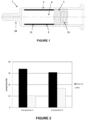
- the injection device 1 comprises a container, such as a barrel 2, and a stopper 3 in gliding engagement within the barrel 2.
- the barrel 2 of the injection device may be made of any kind of glass or plastic suitable for medical applications.
- the stopper 3 may be made of any elastomeric material, e.g. rubber, butyl rubber, silicone rubber, coated or not with an inert film.
- the stopper 3 may be adapted to be connected, for example, to a plunger rod of a syringe or of an injection pump (not illustrated).
- any suitable connecting means e.g. a threaded portion 31, etc.
- the end 20 of the barrel 2 opposed to the stopper 3 may be adapted to be connected to a needle, a cap or a catheter, or may accommodate a staked needle.
- the barrel is intended to contain an emulsion-adjuvanted vaccine 6 as described above.
- the barrel may contain any pharmaceutical or diagnostic compositions containing an emulsion.
- At least the part of the inner wall 21 of the barrel 2 that is in contact with the vaccine is coated with a lubricant coating 5, which results from an oxidizing plasma treatment of a silicone oil layer.
- the storing method of the present invention allows a low level of interaction between an emulsion-based vaccine adjuvant and the medical container.
- the formation of the coating 5 preferably comprises, in a first step, the formation of a silicone oil layer on the inner wall of the barrel.
- the formation of said layer may be accomplished by any suitable technique, e.g. spraying, dipping, spin coating, etc. in order to obtain a layer thickness comprised between 90 and 400 nm, preferably about 150 nm, depending on the nature of the surface but also the material of medical injection device.
- the layer thickness may be measured by reflectometry, for example by a rap.ID Layer Explorer.
- the silicone oil essentially consists in a poly(alkylsiloxane) or a poly(dialkylsiloxane) and preferably the alkyl side chains comprise one to four carbon atoms.
- the alkyl side chains may comprise reactive groups such as hydroxyl, formyl, keto, carbonyl or may include ether or ethyleneglycol.
- the silicone oil essentially consists in poly(dimethylsiloxane) PDMS and in this preferred solution, the viscosity of the PDMS is comprised between 900 and 1200 centiStokes (cSt), at 25°C.
- the silicone oil is a 1000-centiStoke (at 25°C) PDMS, such as PDMS DC-360 from Dow Corning ® .
- the silicone oil is applied so as to cover the major part of the interior wall 21 of the barrel.
- the silicone oil covers at least 90% of the interior surface of the barrel 2.
- a quantity of 0.1 to 0.4 mg of silicone oil, more preferably 0.4 to 0.5 mg, may be used for a 1 ml standard glass syringe.
- the plasma treatment is applied in order to crosslink the silicone oil into a lubricant coating.
- the plasma treatment is preferably applied in an oxidizing atmosphere.
- the atmosphere is a mixture of 15 to 30% of oxygen and 85 to 70% of argon, in term of partial pressures. More preferably, the atmosphere comprises 25% of oxygen and 75% of argon.
- the plasma may be produced by different techniques such as corona discharge, microwave, radio-frequency or any other convenient methods.
- a radio frequency plasma treatment is used, i.e. with a frequency ranging from 10 to 20 MHz, more preferably from 11 to 14 MHz.
- the power applied to generate the plasma may be comprised between 50 and 300 W, preferably between 100 and 250 W and the plasma treatment may be carried out at room temperature (i.e. 25°C) and under a vacuum ranging from 1.33 to 13.3 Pa (10 to 100 mTorr) in absolute value.
- the exposure time of the silicone oil layer to the plasma is typically comprised between 10 to 40 seconds.
- the above parameters depend on the plasma reactor geometry, the surface and volume of the medical device comprising the lubricant coating, the arrangement of the devices inside the plasma reactor, the thickness of the lubricant layer, etc.
- the silicone oil is oxidized and crosslinked to a lubricant coating.
- the preferred conditions of the plasma treatment are:
- This treatment is applied to a syringe containing between 0.4 and 0.5 mg of silicone oil as a layer on the internal barrel surface, which corresponds to a thickness between 90 and 400 nm.
- the stopper is also lubricated in order to further reduce the gliding force.
- the stopper is a rubber stopper covered by a fluoropolymer laminated film, such as the Flurotec ® stopper sold by West Pharmaceutical Services, and further siliconized by PDMS DC-360.
- the plasma treatment applied to the stopper is the same as the treatment described above for the barrel.
- the medical injection device may advantageously be used as a prefilled injection device, i.e. an injection device that is filled with a pharmaceutical composition before being sold or delivered to end-users.
- the injection device can be a syringe filled with a pharmaceutical composition such as a vaccine.
- the vaccines mixed with emulsion adjuvants are pharmaceutical compositions that can be stored in the medical injection devices according to the present invention. More precisely, the emulsion-adjuvanted vaccines can also be placed in a syringe intended to be filled and stored before use.
- the storing method of the present invention allows the storage of the medical injection device in different conditions and positions, even during a long period, as well as transporting it over long distances, without affecting the integrity of the vaccine and the functionality of the lubricant coating, especially because there is a low level of interaction with the emulsion-adjuvanted vaccine.
- An emulsion-adjuvanted vaccine comprises an active agent, e.g. an antigen, and an emulsion acting as an adjuvant of the active agent.
- said emulsion is an oil-in-water emulsion and preferably the oil phase can comprise squalene.
- Other oil phases could be chosen without departing from the scope of the invention, for example such oils can be selected from terpenes, terpenoides or derivatives thereof.
- the invention is not limited to a specific type of active agent and all drugs requiring an emulsion may be stored according to the present invention.
- An emulsifier such as a surfactant, is added to the oil phase in order to stabilize the emulsion while the active agent of the vaccine is contained in the water phase of the emulsion.
- Surfactants may be chosen among all surfactants authorized for medical use, for example sorbitans, fatty acids, tocopherols, polysorbates, fatty alcohols and combinations and derivatives thereof.
- composition of such emulsions-based adjuvant and the corresponding emulsification process are the following:
- compositions Each of these compositions has been diluted with Phosphate Buffer Saline, with the same dilution rate as used when these compositions are mixed with a vaccine antigen.
- This dilution rate is 2 times (2x) for Composition 1 and 1.5 times (1.5x) for Composition 2.
- the storing method of the present invention has been compared with a prior-art storing method using two different emulsion formulations, namely Compositions 1 and 2, as described above.
- PTSi a medical injection device obtained according to the method of the invention
- Prior-art medical injection device comprising a glass barrel and lubricated with pure DC-360 PDMS (1000 cSt), hereinafter noted “Prior-art”.
- the PTSi syringes were 1 ml standard glass syringes siliconized with 0.4 mg of PDMS DC-360 and treated with a plasma process according to the present method. Half of these syringes were filled with Composition 1 and another half with Composition 2. All needles were closed with a standard rigid needle shield (RNS), the syringes were stopped with siliconized 3-rib rubber stoppers and stored 6 weeks at 25°C and 60 % humidity.
- RNS standard rigid needle shield
- Silicone migration has been measured for both emulsion adjuvants, when stored in siliconized syringes according to the prior-art method and compared to a storage realized according to the present invention.
- MIBK MethyllsoButylKetone
- the syringes full of MIBK were placed into an ultrasonic bath VWR ® USC1200D during 15 min at 160W and 45 kHz, the bath temperature being 40 °C.
- the silicone quantity dissolved in MIBK was then measured by Atomic Absorption Spectroscopy (AAS) using an Atomic Analyst 800 from Perkin Elmer ® in Flame mode.
- AAS Atomic Absorption Spectroscopy
- the spectrometer was further provided with a hollow cathode silicone lamp used at a working wavelength of 251.6 nm with a 0.2H bandwidth.
- the lamp was provided with 35 mA power supply.
- the burner of the spectrometer was supplied with a mixture of air and acetylene (18.0 and 2.5 I/min respectively) for about 5 minutes for a proper warming up while air, water and ethanol were sequentially pumped in the analytical circuit.
- the burner was then supplied with a mixture or nitrous oxide and acetylene (16.0 and 5.8 I/min respectively) during 5 minutes while ethanol have been pumped in the analytical circuit.
- a blank was realized with pure MIBK and a calibration curve was performed by successive dilution of a stock solution of 500 ppm PDMS in MIBK (50 mg PDMS DC-360, 1000 cSt, in 200 ml MIBK).
- the quantity of silicone measured by this experiment is the quantity of silicone remaining into the lubricant coating after the storage time.
- the quantity of silicone that migrated in the emulsion is then obtained by difference with the initial quantity of silicone introduced in the syringe barrel.
- the relative quantity of silicone leaching into the emulsion is finally obtained by dividing the quantity of migrated silicone with the initial quantity of silicone, and the results are shown on Figure 2 .
- the thickness variation of the silicone coating along the barrel length has also been measured by reflectometry with a Layer Explorer from rap.ID Particle Systems.
- Figure 3 shows the average thickness (in nm) of the lubricant when Composition 2 is stored according to the present invention (plain line, triangle marker) and according to the prior art method (dotted line, square marker).
- the right portion of the graph corresponds to the distal portion of the barrel while the left position of the graph, referred as 29 mm, corresponds to the proximal part of the barrel.
- the grey region corresponds to the position of the stopper into the syringe barrel.
- This graph shows that a sufficient coating thickness i.e. above 200 nm is preserved after extensive storage with Composition 2 i.e. with a squalene-based adjuvant composition, when the composition is stored according to the present invention.
- the method of the present invention will thus maintain an optimal lubrication between the stopper and the syringe barrel, even after an extensive storage time.
- the silicone layer used as lubricant for the prior-art syringes is partially solubilized by the adjuvant composition and only an insufficient layer thickness remains on the internal surface of the barrel.
- Lubrication of the stopper into the syringe barrel is thus dramatically reduced and patients or medical staff may experience stick/slip phenomenon.
- the stopper may even be blocked into the syringe barrel, therefore leading to a non-functional syringe.
- such consequences could cause injuries during people immunization and diminish immunization campaigns efficiency.
- the activation force has been measured to evaluate the functionality of the injection device when emulsion-adjuvanted vaccines are stored according to the present invention by comparison with the prior-art method.
- the activation force is the force to be applied to the stopper to initiate its sliding movement within the barrel.
- the stopper usually consists of rubber and its usual behavior is a tendency to stick on the barrel surface over time, leading to an increase of the activation force. This phenomenon can be explained by the pressure applied by the stopper onto the lubricated syringe barrel which tends to push the lubricant outside of the interface. The activation force is thus directly linked with the ability of the lubricant to remain at the interface between the stopper and the syringe barrel.
- a great activation force may lead to a non-convenient medical injection device because the user needs to apply a greater effort to move the stopper. It may also lead to injuries at the time of injection, because of uncontrolled movements of the syringe needle into the person's body or accidental pricking of the medical staff.
- syringes For measuring this activation force, syringes have been filled with Composition 1 and Composition 2 according to the previously described protocol (PTSi) and the prior-art method (Prior-art). The filled syringes have been connected to a traction-compression bench (Llyod LRX Plus) to induce gliding of the stopper within the container. This test has been performed immediately after stoppering (T0), after 7 days (T+7) and after 30 days (T+30) of storage time at 25°C and 60 % humidity. Fifteen syringes have been used for each activation force measurement.
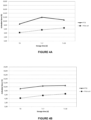
- Figures 4A and 4B show the activation force obtained in the syringes when respectively Composition 1 and Composition 2 are stored according to the method of the invention (plain line, triangle markers) and according to the conventional method (dotted line and square markers).
- the activation force obtained with PTSi syringes is approximately comprised between 9 and 12 N, while the activation force obtained with prior-art syringes remains between 4 and 6N.
- the activation force increases with time, whatever the coating and the emulsion formulation.
- the activation force remains at a reasonable level as compared to prior-art syringes.
- the PTSi coating while not providing the lowest activation force, keeps a substantially stable and predictable activation force over time, which is particularly valuable in the case of prefilled syringes which are usually stored during an extended period of time before injection.
- the syringes prepared according to the present invention hence show a correct activation force for prefilled syringes i.e. below 12 N.
- the gliding force is also a parameter defining functionality of the medical injection device.
- the gliding force is the force to be applied to the stopper to maintain its sliding movement within the barrel, i.e. after the stopper has been set in motion by an activation force.
- This gliding force strongly depends on the lubricant layer conditions and the maximum gliding force is maximum force to apply by a user to sustain the stopper gliding movement.
- a high gliding force may lead to a non-convenient medical injection device because it requires from the user a greater effort to move the stopper within the barrel.
- uncontrolled movement of the needle into the body may also result from a high gliding force.
- Figures 5A and 5B show the maximum gliding force of the stopper (in N) obtained for each of the tested syringes immediately after filling (T0), after 7 days of storage (T+7) and after 30 days of storage (T+30) for Composition 1 and Composition 2, respectively.
- the storage of the syringes was realized at 25°C with 60 % humidity.
- both Composition 1 and Composition 2 show a slight decrease of the maximum gliding force over time. Indeed, the maximum gliding force after 30 days of storage is lower than the maximum gliding force immediately after filling. This phenomenon may be explained by the stabilization over time of the coating
- a syringe filled according to the present method is valuable to maintain a smooth gliding of the stopper into the syringe barrel at the time of injection, in particular after an extended storage. While allowing a comfortable injection for the medical staff, such a smooth movement also allows avoiding injuries that may happen when a high amount of force is required to perform the injection.
- the inventors have identified a destabilization phenomenon of emulsion-adjuvanted vaccines which is avoided by the previously described storing method.
- solubilized silicone is believed to extract and replace the squalene into the emulsion composition because of its high affinity with the squalene and the surfactants used to stabilize the emulsion.
- the adjuvant-based emulsion contaminated by the solubilized silicone, tends to convert into two dissociated phases in order to reduce the surface tension. Then, the emulsion loses its stability, which may affect the potency of the vaccine.
- the emulsion-based adjuvant shows a high stability over time when stored according to the present invention and is not subjected to destabilizing interactions with the silicone lubricant. This is particularly valuable to maintain vaccine potency over time and to decrease the risk of unpredictable side effects among the persons receiving the vaccines.
- the coating keeps its integrity during a long period of time, for example from 12 to 24 months.
- the injection can be realized in a smooth and comfortable way, while reducing the risk of injuries that results from a high gliding force or stick-slip effects.
- Another advantage of a method according to the invention is that no further chemical species is introduced into the medical container, since the only chemical consists in a classic silicone oil, already used and authorized for such use. In particular, this diminishes the risk of unpredictable side effects.
Landscapes
- Health & Medical Sciences (AREA)
- Chemical & Material Sciences (AREA)
- Life Sciences & Earth Sciences (AREA)
- Veterinary Medicine (AREA)
- Public Health (AREA)
- General Health & Medical Sciences (AREA)
- Animal Behavior & Ethology (AREA)
- Heart & Thoracic Surgery (AREA)
- Vascular Medicine (AREA)
- Epidemiology (AREA)
- Engineering & Computer Science (AREA)
- Chemical Kinetics & Catalysis (AREA)
- Organic Chemistry (AREA)
- Oil, Petroleum & Natural Gas (AREA)
- General Chemical & Material Sciences (AREA)
- Biomedical Technology (AREA)
- Medicinal Chemistry (AREA)
- Surgery (AREA)
- Hematology (AREA)
- Anesthesiology (AREA)
- Pharmacology & Pharmacy (AREA)
- Mycology (AREA)
- Microbiology (AREA)
- Immunology (AREA)
- Mechanical Engineering (AREA)
- Inorganic Chemistry (AREA)
- Molecular Biology (AREA)
- Infusion, Injection, And Reservoir Apparatuses (AREA)
- Medicines Containing Antibodies Or Antigens For Use As Internal Diagnostic Agents (AREA)
- Application Of Or Painting With Fluid Materials (AREA)
Claims (14)
- Procédé pour réduire les interactions déstabilisantes entre un revêtement lubrifiant et une émulsion d'un vaccin à adjuvant émulsionné dans un dispositif médical d'injection comprenant un revêtement lubrifiant, ledit procédé étant caractérisé en ce qu'il comprend :(a) fournir un dispositif médical d'injection (1) comprenant un cylindre (2) ayant une surface intérieure (21),(b) former une couche d'huile de silicone sur au moins une partie de la surface intérieure (21) du cylindre qui est destinée à être en contact avec le vaccin,(c) effectuer un traitement plasma oxydant de ladite couche de manière à réticuler au moins une partie de la couche d'huile de silicone et à former un revêtement lubrifiant (5),(d) remplir le cylindre avec le vaccin à adjuvant émulsionné (6), l'émulsion étant une émulsion huile dans eau comprenant une phase huileuse incluant du squalène et une phase aqueuse,dans lequel l'huile de silicone traitée au plasma réduit la déstabilisation du vaccin à adjuvant émulsionné en réduisant la solubilisation de l'huile de silicone en squalène et en réduisant la dissociation des phases huile et eau de l'émulsion par l'huile de silicone solubilisée.
- Procédé selon la revendication 1, dans lequel, à l'étape (a), le cylindre (2) est en verre.
- Procédé selon l'une des revendications 1 à 2, dans lequel, à l'étape (b), l'huile de silicone a une viscosité comprise entre 9 et 12 cm2/s à 25°C.
- Procédé selon l'une des revendications 1 à 3, dans lequel le revêtement (5) formé à l'étape (c) a une épaisseur comprise entre 90 et 400 nm, mesurée par réflectométrie.
- Procédé selon l'une des revendications 1 à 4, dans lequel, à l'étape (a), le dispositif médical d'injection (1) comprend une seringue ayant un volume interne de 1 ml.
- Procédé selon la revendication 5, dans lequel la couche d'huile de silicone a un poids compris entre 0,1 et 0,4 mg.
- Procédé selon l'une des revendications 1 à 6, comprenant en outre la fourniture d'un bouchon (3) en prise glissante avec la surface intérieure du cylindre (2), et la formation d'une couche d'huile de silicone sur au moins une partie dudit bouchon (3) qui est destinée à être en contact avec le vaccin (6) et l'exposition de ladite couche d'huile de silicone à un traitement plasma oxydant de manière à former un revêtement lubrifiant sur ladite partie du bouchon.
- Procédé selon l'une des revendications 1 à 7, dans lequel au moins 90 % de la surface intérieure du cylindre (2) est recouverte dudit revêtement lubrifiant (5).
- Procédé selon l'une des revendications 1 à 8, dans lequel le traitement par plasma oxydant est effectué dans une atmosphère comprenant de l'oxygène et de l'argon.
- Méthode selon la revendication 9, dans laquelle, à l'étape (c), l'atmosphère dudit plasma oxydant contient de l'oxygène et de l'argon avec des pressions partielles respectives comprises entre 15 et 30 % pour l'oxygène et entre 85 et 70 % pour l'argon.
- Procédé selon l'une des revendications 1 à 10, caractérisé par le fait que l'exposition de la couche d'huile de silicone au plasma est réalisée pendant une durée comprise entre 10 et 40 secondes.
- Procédé selon l'une des revendications 1 à 11, dans lequel le plasma oxydant est généré par radiofréquence, avec une puissance comprise entre 50 et 300 W, et sous un vide compris entre 1,33 et 13,3 Pa en valeur absolue.
- Dispositif médical d'injection (1) comprenant un revêtement lubrifiant (5) et contenant un vaccin à adjuvant émulsionné (6) en contact avec ledit revêtement lubrifiant (5), le vaccin comprenant une émulsion huile dans eau comprenant une phase huileuse incluant du squalène et une phase aqueuse, caractérisé en ce que ledit revêtement lubrifiant (5) est obtenu directement par les étapes (a) à (c) du procédé selon l'une des revendications 1 à 12 de manière à réduire les interactions déstabilisantes entre ledit revêtement lubrifiant et l'émulsion du vaccin à adjuvant émulsionné.
- Utilisation d'une huile de silicone traitée au plasma comme revêtement lubrifiant (5) dans un dispositif médical d'injection (1) comprenant un cylindre (2), pour empêcher la migration du silicone dudit revêtement lubrifiant (5) vers un vaccin à adjuvant émulsionné (6) comprenant une émulsion huile dans eau comprenant une phase huileuse incluant du squalène et une phase aqueuse pendant le stockage dudit vaccin dans ledit dispositif médical d'injection de manière à réduire les interactions déstabilisantes entre ledit revêtement lubrifiant et l'émulsion du vaccin à adjuvant émulsionné.
Applications Claiming Priority (2)
| Application Number | Priority Date | Filing Date | Title |
|---|---|---|---|
| EP14305781 | 2014-05-26 | ||
| PCT/EP2015/061594 WO2015181173A1 (fr) | 2014-05-26 | 2015-05-26 | Procédé de stockage de vaccin à adjuvant en émulsion dans un dispositif d'injection médical lubrifié |
Publications (3)
| Publication Number | Publication Date |
|---|---|
| EP3148620A1 EP3148620A1 (fr) | 2017-04-05 |
| EP3148620B1 true EP3148620B1 (fr) | 2025-04-23 |
| EP3148620C0 EP3148620C0 (fr) | 2025-04-23 |
Family
ID=50942234
Family Applications (1)
| Application Number | Title | Priority Date | Filing Date |
|---|---|---|---|
| EP15724671.1A Active EP3148620B1 (fr) | 2014-05-26 | 2015-05-26 | Procédé permettant de stocker un vaccin avec adjuvant émulsionné dans un dispositif d'injection médical lubrifié |
Country Status (10)
| Country | Link |
|---|---|
| US (1) | US20170182252A1 (fr) |
| EP (1) | EP3148620B1 (fr) |
| JP (1) | JP2017519553A (fr) |
| KR (1) | KR20170008296A (fr) |
| CN (1) | CN106413782A (fr) |
| CA (1) | CA2949881A1 (fr) |
| ES (1) | ES3026984T3 (fr) |
| MX (1) | MX2016015241A (fr) |
| RU (1) | RU2684400C2 (fr) |
| WO (1) | WO2015181173A1 (fr) |
Families Citing this family (11)
| Publication number | Priority date | Publication date | Assignee | Title |
|---|---|---|---|---|
| CN107063940B (zh) * | 2016-02-10 | 2019-10-18 | 贝克顿迪金森法国公司 | 用于评价基于蛋白质的制剂的稳定性的方法 |
| US11628257B2 (en) | 2016-07-11 | 2023-04-18 | Becton Dickinson France | Method for reducing an amount of subvisible particles in a pharmaceutical composition |
| EP3697476B1 (fr) | 2017-10-18 | 2023-11-15 | Eli Lilly and Company | Procédé de test accéléré de drainage de silicone dans des seringues |
| CA3097133C (fr) * | 2018-04-24 | 2023-01-17 | W. L. Gore & Associates, Inc. | Dispositifs d'administration medicale a permeation d'oxygene inhibee |
| CN112823813A (zh) * | 2019-11-21 | 2021-05-21 | 肖特股份有限公司 | 用于药物包装的具有渐变的润滑剂层的容器 |
| EP3824926B1 (fr) * | 2019-11-21 | 2024-01-31 | SCHOTT Pharma AG & Co. KGaA | Récipient d'emballage pharmaceutique comportant une couche de lubrifiant graduée |
| EP3824927A1 (fr) * | 2019-11-21 | 2021-05-26 | Schott AG | Récipient d'emballage pharmaceutique ayant un profil d'épaisseur pour une couche de lubrifiant |
| CN215230307U (zh) * | 2019-11-21 | 2021-12-21 | 肖特股份有限公司 | 用于药物包装的容器、套件及组件 |
| EP3875131A1 (fr) * | 2020-03-06 | 2021-09-08 | Schott AG | Réceptacle d'emballage pharmaceutique comportant une couche de lubrifiant pour l'élimination d'une charge |
| EP4144653A1 (fr) * | 2021-09-02 | 2023-03-08 | Steriline S.r.l. | Procédé de commande d'un appareil électromécanique pour installer un élément de bonde d'un récipient pharmaceutique |
| EP4285963A1 (fr) * | 2022-06-02 | 2023-12-06 | SCHOTT Pharma Schweiz AG | Récipient en verre et utilisation d'un revêtement sur le récipient en verre |
Family Cites Families (9)
| Publication number | Priority date | Publication date | Assignee | Title |
|---|---|---|---|---|
| CA1271160A (fr) * | 1985-05-16 | 1990-07-03 | Joel L. Williams | Methode de lubrification au plasma ionisant |
| US5338312A (en) * | 1992-10-02 | 1994-08-16 | Becton, Dickinson And Company | Article having multi-layered lubricant and method therefor |
| FR2800713B1 (fr) * | 1999-11-05 | 2002-01-04 | Biodome | Dispositif de connexion entre un recipient et un contenant et ensemble pret a l'emploi comprenant un tel dispositif |
| EA015817B1 (ru) * | 2006-10-12 | 2011-12-30 | Глаксосмитклайн Байолоджикалс С.А. | Иммуногенная композиция, содержащая адъювант в виде эмульсии "масло в воде" |
| WO2009053947A2 (fr) * | 2007-10-22 | 2009-04-30 | Becton Dickinson France | Revêtement de surface pour empêcher la lixiviation cationique |
| WO2011092536A1 (fr) * | 2010-01-26 | 2011-08-04 | Becton Dickinson France | Conditions différentes de surface intérieure de cartouche de médicament |
| US8802603B2 (en) * | 2010-06-17 | 2014-08-12 | Becton, Dickinson And Company | Medical components having coated surfaces exhibiting low friction and low reactivity |
| EP2760509B1 (fr) * | 2011-09-27 | 2023-04-05 | Becton Dickinson France | Utilisation d'huile de silicone traitée au plasma comme revêtement dans un dispositif médical d'injection |
| ES2897540T3 (es) * | 2012-05-29 | 2022-03-01 | Becton Dickinson France | Revestimiento lubricante y dispositivo médico de inyección que comprende dicho revestimiento |
-
2015
- 2015-05-26 MX MX2016015241A patent/MX2016015241A/es unknown
- 2015-05-26 JP JP2016569632A patent/JP2017519553A/ja active Pending
- 2015-05-26 EP EP15724671.1A patent/EP3148620B1/fr active Active
- 2015-05-26 RU RU2016149370A patent/RU2684400C2/ru active
- 2015-05-26 US US15/312,896 patent/US20170182252A1/en not_active Abandoned
- 2015-05-26 CA CA2949881A patent/CA2949881A1/fr not_active Abandoned
- 2015-05-26 KR KR1020167035796A patent/KR20170008296A/ko not_active Ceased
- 2015-05-26 WO PCT/EP2015/061594 patent/WO2015181173A1/fr not_active Ceased
- 2015-05-26 ES ES15724671T patent/ES3026984T3/es active Active
- 2015-05-26 CN CN201580033298.9A patent/CN106413782A/zh active Pending
Non-Patent Citations (1)
| Title |
|---|
| VIOLA SCHULTZE ET AL: "Safety of MF59(TM) adjuvant", VACCINE, vol. 26, no. 26, 1 June 2008 (2008-06-01), AMSTERDAM, NL, pages 3209 - 3222, XP055536349, ISSN: 0264-410X, DOI: 10.1016/j.vaccine.2008.03.093 * |
Also Published As
| Publication number | Publication date |
|---|---|
| MX2016015241A (es) | 2017-10-11 |
| CA2949881A1 (fr) | 2015-12-03 |
| RU2684400C2 (ru) | 2019-04-09 |
| US20170182252A1 (en) | 2017-06-29 |
| KR20170008296A (ko) | 2017-01-23 |
| RU2016149370A (ru) | 2018-06-26 |
| EP3148620A1 (fr) | 2017-04-05 |
| CN106413782A (zh) | 2017-02-15 |
| JP2017519553A (ja) | 2017-07-20 |
| EP3148620C0 (fr) | 2025-04-23 |
| WO2015181173A1 (fr) | 2015-12-03 |
| ES3026984T3 (en) | 2025-06-12 |
| RU2016149370A3 (fr) | 2018-08-22 |
Similar Documents
| Publication | Publication Date | Title |
|---|---|---|
| EP3148620B1 (fr) | Procédé permettant de stocker un vaccin avec adjuvant émulsionné dans un dispositif d'injection médical lubrifié | |
| RU2728575C1 (ru) | Стабилизированные препараты, содержащие антитела против ngf | |
| EP3409269B1 (fr) | Formulations stabilisées contenant des anticorps anti-récepteur de l'interleukine-6 (il-6r) | |
| CN106170582A (zh) | 药物包装的SiOx 阻隔物和涂布方法 | |
| CN108883057A (zh) | 用于眼科配制品的药物包装 | |
| CA2609810A1 (fr) | Formulations d'analogues de glp-1 | |
| Parenky et al. | Container closure and delivery considerations for intravitreal drug administration | |
| JP2021512670A (ja) | 注射器から少量の用量を装填および送達するためのシステム、キット、および方法 | |
| Ballerini et al. | Counteracting muscle atrophy on Earth and in space via nanofluidics delivery of formoterol | |
| DK2875814T3 (en) | LIQUID COMPOSITION CONTAINING TAXAN-BASED ACTIVE INGREDIENT, PROCEDURE FOR PREPARING IT AND LIQUID PHARMACEUTICAL COMPOSITION | |
| JP7018948B2 (ja) | 注射デバイス用のキャップ | |
| Weeke et al. | A randomized comparison of intranasal and injectable octreotide administration in patients with acromegaly | |
| BR112020009648A2 (pt) | formulações peptídicas de liberação prolongada | |
| RU2782538C1 (ru) | Шприц, предварительно заполненный пероксидом водорода, с превосходным сохранением пероксида водорода благодаря силиконовому маслу, входящему в масляную композицию | |
| NL2037761B1 (en) | New uses of omalizumab | |
| WO2025026821A1 (fr) | Nouvelles utilisations de l'omalizumab | |
| KR20250059989A (ko) | 약물전달용 기구 제조 방법 | |
| DE202024000928U1 (de) | Omalizumab-Spritze | |
| US10143804B2 (en) | Biopolymer-based emulsion lubricants for syringe barrels | |
| HK40003432B (en) | Stabilized formulations containing anti-ngf antibodies | |
| OA19780A (en) | Stabilized formulations containing antiinterleukin-6 receptor (IL-6R) antibodies. | |
| HK40003432A (en) | Stabilized formulations containing anti-ngf antibodies | |
| JP2007191492A (ja) | エルカトニンのプレフィルドシリンジ製剤 |
Legal Events
| Date | Code | Title | Description |
|---|---|---|---|
| STAA | Information on the status of an ep patent application or granted ep patent |
Free format text: STATUS: THE INTERNATIONAL PUBLICATION HAS BEEN MADE |
|
| PUAI | Public reference made under article 153(3) epc to a published international application that has entered the european phase |
Free format text: ORIGINAL CODE: 0009012 |
|
| STAA | Information on the status of an ep patent application or granted ep patent |
Free format text: STATUS: REQUEST FOR EXAMINATION WAS MADE |
|
| 17P | Request for examination filed |
Effective date: 20161221 |
|
| AK | Designated contracting states |
Kind code of ref document: A1 Designated state(s): AL AT BE BG CH CY CZ DE DK EE ES FI FR GB GR HR HU IE IS IT LI LT LU LV MC MK MT NL NO PL PT RO RS SE SI SK SM TR |
|
| AX | Request for extension of the european patent |
Extension state: BA ME |
|
| RIN1 | Information on inventor provided before grant (corrected) |
Inventor name: HAMEL, JEAN-BERNARD Inventor name: JOUFFRAY, SEBASTIEN Inventor name: BRALET, NICOLAS Inventor name: BONHOURE, FABIEN |
|
| DAV | Request for validation of the european patent (deleted) | ||
| DAX | Request for extension of the european patent (deleted) | ||
| STAA | Information on the status of an ep patent application or granted ep patent |
Free format text: STATUS: EXAMINATION IS IN PROGRESS |
|
| 17Q | First examination report despatched |
Effective date: 20190107 |
|
| P01 | Opt-out of the competence of the unified patent court (upc) registered |
Effective date: 20230530 |
|
| GRAP | Despatch of communication of intention to grant a patent |
Free format text: ORIGINAL CODE: EPIDOSNIGR1 |
|
| STAA | Information on the status of an ep patent application or granted ep patent |
Free format text: STATUS: GRANT OF PATENT IS INTENDED |
|
| INTG | Intention to grant announced |
Effective date: 20241114 |
|
| GRAS | Grant fee paid |
Free format text: ORIGINAL CODE: EPIDOSNIGR3 |
|
| GRAA | (expected) grant |
Free format text: ORIGINAL CODE: 0009210 |
|
| STAA | Information on the status of an ep patent application or granted ep patent |
Free format text: STATUS: THE PATENT HAS BEEN GRANTED |
|
| AK | Designated contracting states |
Kind code of ref document: B1 Designated state(s): AL AT BE BG CH CY CZ DE DK EE ES FI FR GB GR HR HU IE IS IT LI LT LU LV MC MK MT NL NO PL PT RO RS SE SI SK SM TR |
|
| REG | Reference to a national code |
Ref country code: GB Ref legal event code: FG4D |
|
| REG | Reference to a national code |
Ref country code: CH Ref legal event code: EP |
|
| REG | Reference to a national code |
Ref country code: DE Ref legal event code: R096 Ref document number: 602015091490 Country of ref document: DE |
|
| REG | Reference to a national code |
Ref country code: IE Ref legal event code: FG4D |
|
| REG | Reference to a national code |
Ref country code: ES Ref legal event code: FG2A Ref document number: 3026984 Country of ref document: ES Kind code of ref document: T3 Effective date: 20250612 |
|
| U01 | Request for unitary effect filed |
Effective date: 20250515 |
|
| P04 | Withdrawal of opt-out of the competence of the unified patent court (upc) registered |
Free format text: CASE NUMBER: APP_23632/2025 Effective date: 20250517 |
|
| U07 | Unitary effect registered |
Designated state(s): AT BE BG DE DK EE FI FR IT LT LU LV MT NL PT RO SE SI Effective date: 20250521 |
|
| PGFP | Annual fee paid to national office [announced via postgrant information from national office to epo] |
Ref country code: GB Payment date: 20250520 Year of fee payment: 11 Ref country code: ES Payment date: 20250604 Year of fee payment: 11 |
|
| U20 | Renewal fee for the european patent with unitary effect paid |
Year of fee payment: 11 Effective date: 20250725 |
|
| PG25 | Lapsed in a contracting state [announced via postgrant information from national office to epo] |
Ref country code: NO Free format text: LAPSE BECAUSE OF FAILURE TO SUBMIT A TRANSLATION OF THE DESCRIPTION OR TO PAY THE FEE WITHIN THE PRESCRIBED TIME-LIMIT Effective date: 20250723 Ref country code: GR Free format text: LAPSE BECAUSE OF FAILURE TO SUBMIT A TRANSLATION OF THE DESCRIPTION OR TO PAY THE FEE WITHIN THE PRESCRIBED TIME-LIMIT Effective date: 20250724 |
|
| PG25 | Lapsed in a contracting state [announced via postgrant information from national office to epo] |
Ref country code: PL Free format text: LAPSE BECAUSE OF FAILURE TO SUBMIT A TRANSLATION OF THE DESCRIPTION OR TO PAY THE FEE WITHIN THE PRESCRIBED TIME-LIMIT Effective date: 20250423 |
|
| PG25 | Lapsed in a contracting state [announced via postgrant information from national office to epo] |
Ref country code: HR Free format text: LAPSE BECAUSE OF FAILURE TO SUBMIT A TRANSLATION OF THE DESCRIPTION OR TO PAY THE FEE WITHIN THE PRESCRIBED TIME-LIMIT Effective date: 20250423 |
|
| PG25 | Lapsed in a contracting state [announced via postgrant information from national office to epo] |
Ref country code: RS Free format text: LAPSE BECAUSE OF FAILURE TO SUBMIT A TRANSLATION OF THE DESCRIPTION OR TO PAY THE FEE WITHIN THE PRESCRIBED TIME-LIMIT Effective date: 20250723 |
|
| PG25 | Lapsed in a contracting state [announced via postgrant information from national office to epo] |
Ref country code: IS Free format text: LAPSE BECAUSE OF FAILURE TO SUBMIT A TRANSLATION OF THE DESCRIPTION OR TO PAY THE FEE WITHIN THE PRESCRIBED TIME-LIMIT Effective date: 20250823 |
|
| REG | Reference to a national code |
Ref country code: CH Ref legal event code: H13 Free format text: ST27 STATUS EVENT CODE: U-0-0-H10-H13 (AS PROVIDED BY THE NATIONAL OFFICE) Effective date: 20251223 |
|
| PG25 | Lapsed in a contracting state [announced via postgrant information from national office to epo] |
Ref country code: SM Free format text: LAPSE BECAUSE OF FAILURE TO SUBMIT A TRANSLATION OF THE DESCRIPTION OR TO PAY THE FEE WITHIN THE PRESCRIBED TIME-LIMIT Effective date: 20250423 |
|
| PG25 | Lapsed in a contracting state [announced via postgrant information from national office to epo] |
Ref country code: CH Free format text: LAPSE BECAUSE OF NON-PAYMENT OF DUE FEES Effective date: 20250531 |
|
| PG25 | Lapsed in a contracting state [announced via postgrant information from national office to epo] |
Ref country code: CZ Free format text: LAPSE BECAUSE OF FAILURE TO SUBMIT A TRANSLATION OF THE DESCRIPTION OR TO PAY THE FEE WITHIN THE PRESCRIBED TIME-LIMIT Effective date: 20250423 |
|
| PG25 | Lapsed in a contracting state [announced via postgrant information from national office to epo] |
Ref country code: SK Free format text: LAPSE BECAUSE OF FAILURE TO SUBMIT A TRANSLATION OF THE DESCRIPTION OR TO PAY THE FEE WITHIN THE PRESCRIBED TIME-LIMIT Effective date: 20250423 |
|
| PG25 | Lapsed in a contracting state [announced via postgrant information from national office to epo] |
Ref country code: MC Free format text: LAPSE BECAUSE OF FAILURE TO SUBMIT A TRANSLATION OF THE DESCRIPTION OR TO PAY THE FEE WITHIN THE PRESCRIBED TIME-LIMIT Effective date: 20250423 |
|
| PLBE | No opposition filed within time limit |
Free format text: ORIGINAL CODE: 0009261 |
|
| STAA | Information on the status of an ep patent application or granted ep patent |
Free format text: STATUS: NO OPPOSITION FILED WITHIN TIME LIMIT |
|
| REG | Reference to a national code |
Ref country code: CH Ref legal event code: L10 Free format text: ST27 STATUS EVENT CODE: U-0-0-L10-L00 (AS PROVIDED BY THE NATIONAL OFFICE) Effective date: 20260304 |
|
| 26N | No opposition filed |
Effective date: 20260126 |
|
| PG25 | Lapsed in a contracting state [announced via postgrant information from national office to epo] |
Ref country code: IE Free format text: LAPSE BECAUSE OF NON-PAYMENT OF DUE FEES Effective date: 20250526 |