EP3149670B1 - Liefer- und überwachungssystem und verfahren - Google Patents
Liefer- und überwachungssystem und verfahren Download PDFInfo
- Publication number
- EP3149670B1 EP3149670B1 EP15732479.9A EP15732479A EP3149670B1 EP 3149670 B1 EP3149670 B1 EP 3149670B1 EP 15732479 A EP15732479 A EP 15732479A EP 3149670 B1 EP3149670 B1 EP 3149670B1
- Authority
- EP
- European Patent Office
- Prior art keywords
- delivery
- address
- communication system
- communication
- alternative
- Prior art date
- Legal status (The legal status is an assumption and is not a legal conclusion. Google has not performed a legal analysis and makes no representation as to the accuracy of the status listed.)
- Active
Links
Images

Classifications
-
- G—PHYSICS
- G06—COMPUTING OR CALCULATING; COUNTING
- G06Q—INFORMATION AND COMMUNICATION TECHNOLOGY [ICT] SPECIALLY ADAPTED FOR ADMINISTRATIVE, COMMERCIAL, FINANCIAL, MANAGERIAL OR SUPERVISORY PURPOSES; SYSTEMS OR METHODS SPECIALLY ADAPTED FOR ADMINISTRATIVE, COMMERCIAL, FINANCIAL, MANAGERIAL OR SUPERVISORY PURPOSES, NOT OTHERWISE PROVIDED FOR
- G06Q10/00—Administration; Management
- G06Q10/08—Logistics, e.g. warehousing, loading or distribution; Inventory or stock management
- G06Q10/083—Shipping
- G06Q10/0832—Special goods or special handling procedures, e.g. handling of hazardous or fragile goods
-
- G—PHYSICS
- G01—MEASURING; TESTING
- G01S—RADIO DIRECTION-FINDING; RADIO NAVIGATION; DETERMINING DISTANCE OR VELOCITY BY USE OF RADIO WAVES; LOCATING OR PRESENCE-DETECTING BY USE OF THE REFLECTION OR RERADIATION OF RADIO WAVES; ANALOGOUS ARRANGEMENTS USING OTHER WAVES
- G01S19/00—Satellite radio beacon positioning systems; Determining position, velocity or attitude using signals transmitted by such systems
- G01S19/01—Satellite radio beacon positioning systems transmitting time-stamped messages, e.g. GPS [Global Positioning System], GLONASS [Global Orbiting Navigation Satellite System] or GALILEO
-
- G—PHYSICS
- G01—MEASURING; TESTING
- G01S—RADIO DIRECTION-FINDING; RADIO NAVIGATION; DETERMINING DISTANCE OR VELOCITY BY USE OF RADIO WAVES; LOCATING OR PRESENCE-DETECTING BY USE OF THE REFLECTION OR RERADIATION OF RADIO WAVES; ANALOGOUS ARRANGEMENTS USING OTHER WAVES
- G01S5/00—Position-fixing by co-ordinating two or more direction or position line determinations; Position-fixing by co-ordinating two or more distance determinations
- G01S5/02—Position-fixing by co-ordinating two or more direction or position line determinations; Position-fixing by co-ordinating two or more distance determinations using radio waves
- G01S5/0205—Details
- G01S5/0236—Assistance data, e.g. base station almanac
-
- G—PHYSICS
- G06—COMPUTING OR CALCULATING; COUNTING
- G06Q—INFORMATION AND COMMUNICATION TECHNOLOGY [ICT] SPECIALLY ADAPTED FOR ADMINISTRATIVE, COMMERCIAL, FINANCIAL, MANAGERIAL OR SUPERVISORY PURPOSES; SYSTEMS OR METHODS SPECIALLY ADAPTED FOR ADMINISTRATIVE, COMMERCIAL, FINANCIAL, MANAGERIAL OR SUPERVISORY PURPOSES, NOT OTHERWISE PROVIDED FOR
- G06Q10/00—Administration; Management
- G06Q10/08—Logistics, e.g. warehousing, loading or distribution; Inventory or stock management
- G06Q10/083—Shipping
-
- G—PHYSICS
- G06—COMPUTING OR CALCULATING; COUNTING
- G06Q—INFORMATION AND COMMUNICATION TECHNOLOGY [ICT] SPECIALLY ADAPTED FOR ADMINISTRATIVE, COMMERCIAL, FINANCIAL, MANAGERIAL OR SUPERVISORY PURPOSES; SYSTEMS OR METHODS SPECIALLY ADAPTED FOR ADMINISTRATIVE, COMMERCIAL, FINANCIAL, MANAGERIAL OR SUPERVISORY PURPOSES, NOT OTHERWISE PROVIDED FOR
- G06Q10/00—Administration; Management
- G06Q10/08—Logistics, e.g. warehousing, loading or distribution; Inventory or stock management
- G06Q10/083—Shipping
- G06Q10/0833—Tracking
-
- G—PHYSICS
- G06—COMPUTING OR CALCULATING; COUNTING
- G06Q—INFORMATION AND COMMUNICATION TECHNOLOGY [ICT] SPECIALLY ADAPTED FOR ADMINISTRATIVE, COMMERCIAL, FINANCIAL, MANAGERIAL OR SUPERVISORY PURPOSES; SYSTEMS OR METHODS SPECIALLY ADAPTED FOR ADMINISTRATIVE, COMMERCIAL, FINANCIAL, MANAGERIAL OR SUPERVISORY PURPOSES, NOT OTHERWISE PROVIDED FOR
- G06Q50/00—Information and communication technology [ICT] specially adapted for implementation of business processes of specific business sectors, e.g. utilities or tourism
- G06Q50/60—Business processes related to postal services
-
- G—PHYSICS
- G06—COMPUTING OR CALCULATING; COUNTING
- G06Q—INFORMATION AND COMMUNICATION TECHNOLOGY [ICT] SPECIALLY ADAPTED FOR ADMINISTRATIVE, COMMERCIAL, FINANCIAL, MANAGERIAL OR SUPERVISORY PURPOSES; SYSTEMS OR METHODS SPECIALLY ADAPTED FOR ADMINISTRATIVE, COMMERCIAL, FINANCIAL, MANAGERIAL OR SUPERVISORY PURPOSES, NOT OTHERWISE PROVIDED FOR
- G06Q10/00—Administration; Management
- G06Q10/08—Logistics, e.g. warehousing, loading or distribution; Inventory or stock management
-
- G—PHYSICS
- G06—COMPUTING OR CALCULATING; COUNTING
- G06Q—INFORMATION AND COMMUNICATION TECHNOLOGY [ICT] SPECIALLY ADAPTED FOR ADMINISTRATIVE, COMMERCIAL, FINANCIAL, MANAGERIAL OR SUPERVISORY PURPOSES; SYSTEMS OR METHODS SPECIALLY ADAPTED FOR ADMINISTRATIVE, COMMERCIAL, FINANCIAL, MANAGERIAL OR SUPERVISORY PURPOSES, NOT OTHERWISE PROVIDED FOR
- G06Q50/00—Information and communication technology [ICT] specially adapted for implementation of business processes of specific business sectors, e.g. utilities or tourism
- G06Q50/40—Business processes related to the transportation industry
Definitions
- the invention relates to a delivery system for items, such as consumer goods by delivery service, mail or the like.
- the invention further relates to monitoring methods and systems.
- a consumer ordering an item for example via a web shop through the Internet, will provide an addressee and a delivery address for delivery of the item.
- the web shop will have the item packaged for transport and then a delivery service will have the item delivered to the address provided by the consumer, which may be his own address or different address.
- a delivery vehicle such as a truck, car, bike or pedestrian will bring the item to the delivery address for delivery. If the addressee is present at the delivery address he or she may accept the item, meaning that the delivery is or at least can be completed.
- the delivery vehicle will have to take the item back into the vehicle for either delivery at later moment in time or to be picked up by the addressee at a designated location, such as a post office or depot. This means that the delivery cannot be completed at the desired moment. Sometimes the delivery is completed by an unasked-for delivery at a nearby neighbor house, this without the consent of the addressee, and hence with a loss of trust in the delivery system.
- US2003/0195814 discloses a system inter alia suitable for delivery of goods to a physical location, in which during delivery a person driving to the delivery location at some point prior to arriving at the location has to actively and physically operate his mobile device in order to send out the first digital message, and then check a second digital message received back from a computer system at the location.
- US2003/0065625 discloses a system for delivery of goods, wherein a delivery vehicle is loaded with parcels and the driver is provided with a manifest showing the list of deliveries and his route.
- the vehicle is tracked during its route, wherein at a select time prior to delivery, the parcel recipient is contacted by a computer communication means, to determine of the recipient is home. Where he is home, the parcel will be delivered, but if he is not at home, the driver's manifest is updated to incorporate alternative delivery instructions, if such have are available.
- the intended recipient of the parcel has to respond to the computer communication means to indicate whether he is at home, available for receipt of the parcel. Whereas the vehicle has to be tracked permanently by GPS.
- an alternative delivery address may be provided based on a service agreement concluded with the recipient previously. This means that the intended recipient has to have such agreement established, prior to the delivery, with a fixed alternative delivery address, of which it is unknown whether a delivery can be made at that address, whereas an active involvement is necessary of the intended recipient. Moreover constant tracking of the vehicles is necessary, since th system cannot operate without such tracking information.
- US2004/0229569 discloses an automatic door answering system provided at a door, which comprises a wireless communication interface arranged to directly communicate with a visitors wireless device. After pressing a door bell knob the interface requests a visitors identification information for confirmation and identification of the visitor, which requires back and forth communication between the interface and the wireless communication device of the visitor. For each visitor a unique identity code has to be stored in the system previously for the system to operate properly. The system is designed to then provide information to the visitor based on his identity.
- US2010/0171600 discloses a system for providing personalized messages to visitors.
- An aim of the present disclosure is to provide a system and method for delivery at least reducing at least one of the problems of the prior art.
- the present disclosure aims at providing a system and method for delivery of items to addressees, which provides increased flexibility to the delivery service provider and to the addressees.
- An aim of the present disclosure is additionally or alternatively to provide a system and method for delivery which reduces the number of times a delivery cannot successfully be made.
- At least one of these or other aims can be obtained at least in part with a system and/or method according to this disclosure.
- a delivery system comprises a database comprising data relating to at least one delivery to be made and at least one intended delivery address for an addressee for said delivery, and at least one delivery vehicle.
- vehicle can be any suitable vehicle, such as for example but not limited to a car, van, truck, bike, motorbike, moped or a push cart or the like.
- the delivery vehicle and/or a delivery person designated to said vehicle is provided with a first communication system. At least one addressee is provided with a second communication system.
- the delivery system further comprises a computer system for providing data from the database to the first communication system. Said data is formed by or includes data about the at least one delivery and said delivery address.
- the delivery system further comprises a proximity detection system designed for detecting proximity of the delivery person and/or delivery vehicle to the delivery address.
- a proximity detection system designed for detecting proximity of the delivery person and/or delivery vehicle to the delivery address.
- the delivery system according to the invention is characterized by the features of claim 1.
- the proximity detection system comprises at least one beacon at the delivery address, for communicating wireless with the first communication system when part of the first communication system is within a wireless communication range of said at least one beacon, designed for detecting proximity of the first communication system (7) to the delivery address.
- the beacon is designed for transmitting a recognition code unique to the individual beacon.
- the first communication device is provided with software for registering and comparing recognition codes received from beacons with recognition codes assigned to delivery addresses provided to the first communication system, wherein the proximity detection system is provided with a module presenting a visual and/or auditive signal on the first communication system when the proximity detection system detects proximity of the first communication system to the beacon.
- the visual and/or auditive signal comprises a link presented on the first communication system based on the comparison, such that the first communication system only presents such link for those delivery addresses and/or addressees for whom the comparison shows that the delivery person or delivery vehicle is carrying an item to be delivered.
- the link represents a virtual doorbell link presented on a screen of the first communication system for contacting a person registered in the first communication system and/or the computer system as associated with the address of which a match is found by said comparison, an alternative delivery address or a communication link for establishing communication between the first communication system and the addressee, especially the second communication system of the addressee.
- the second communication system is designed for communicating with the first communication system for providing an alternative delivery address for the delivery, especially during the delivery of said item and/or the computer system is designed for providing at least one alternative delivery address during delivery, said alternative delivery address provided from the database.
- the second communication system is designed for communicating with the first communication system and/or with the delivery person and/or with a computer system associated therewith, for providing an alternative delivery address for the delivery, especially during the delivery of said item and/or the computer system is designed for providing at least one alternative delivery address during delivery, said alternative delivery address provided from the database.
- the proximity detection system can comprise an algorithm for presenting a message to the delivery person via the first communication system and/or to the computer system when a proximity signal is provided by the proximity system.
- the message can include presenting an image on a screen of the first communication system, allowing the delivery person to establish communication with the second communication system.
- image can for example comprise an image representing a link sending a message to the second communication system which will warning for said proximity via the second communication system, for example auditively and/or visually and/or tactually, such as known from warning signals available with a mobile phone.
- Such image can alternatively or additionally comprise an image representing a link for establishing a two way communication between the first and second communication systems, such that the delivery person and the addressee or another person designated to the second communication system can communicate with the delivery person, for example directly via speech or via email, texting, chat or the like communication means as for example available with smart phones.
- the proximity system comprises a beacon at the delivery address for wireless communication with the first communication system.
- beacon can be based on any radio frequency system, such as for example but not limited to Bluetooth ® , Wi-Fi, Z-Wave or Zigbee or the like.
- the beacon and the first communication system are paired, for example through the computer system, such that the beacon can only communicate with devices of the first communication system paired therewith. This means that in such embodiment only communication devices of the first communication system "known" to the beacon can communicate with the beacon for the proximity system and/or only beacons "known" to the computer system can communicate with communication devices of the first communication system.
- the proximity system can comprise one of a GPS type module provided in or for the first communication system for detecting the global position of the delivery vehicle and/or delivery person relative to the delivery address and a visual detection system designed for imaging the environment of a delivery vehicle and/or delivery person and comparing an image taken with an image representative for the delivery address.
- a non-available signal can be sent directly to the first communication system, for example indicating to the delivery person that the addressee is not available, at least not at the intended delivery address, for receiving the delivery and/or providing an alternative delivery address and/or an alternative delivery time.
- the computer system can be programmed to provide the at least one alternative delivery address to the first communication system when a non-available signal is provided from the second communication system.
- a non available signal can be provided for when for example the addressee has indicated in the second communication system that the delivery cannot be made to the intended delivery address or when for example an appropriate response to a door bell signal due to ringing of a door bell at the designated address is absent during a predetermined period of time.
- the delivery system may allow the second communication system to provide a redirect signal indicating at least one alternative address for delivery to the first communication system.
- Such redirect signal can for example comprise an alternative delivery address to be sent to the first communication system, i.e. especially to the delivery person or delivery vehicle or may be sent to the computer system of the delivery system, indicative for such alternative delivery address, which can then be sent to the first communication system, i.e. especially to the delivery person or delivery vehicle.
- the delivery vehicle can comprise a tracking device, such as a GPS based system, for determining the position of the delivery vehicle relative to the intended address for delivery.
- An approach signal can then be provided to the addressee and/or the second communication system when the vehicle enters into a predetermined range relative to the intended delivery address.
- Such approach signal can be part of said proximity signal.
- a non-availability signal can be issued to the computer system and/or first communication system, as discussed before.
- a delivery system may comprise a second communication system which can comprise a stationary device, which can comprise a screen.
- the stationary device can for example be mounted near a door at the intended address of delivery, such that it, and especially a screen thereof is visible from outside the intended address, such that a delivery person can approach the stationary device. This may comprise a door bell.
- the stationary device can be designed such that an alternative address or several such addresses can be presented to the delivery person at the intended address. Thus when the delivery is not or cannot be accepted at the intended address the delivery person is provided with at least one alternative address for deliver. If several such addresses are presented the delivery person may choose or try several of these addresses.
- the second communication system may comprise a hand held device, such as a smart phone or tablet, which a person can carry with him/her.
- a door bell system suitable for use in such system may comprise at least a door bell, a door bell control system and an electronic screen.
- the door bell control system may comprise a memory, an input device and/or a communication unit.
- the memory may be designed for containing address information.
- the input device may be designed for receiving at least one address from outside the door bell system. In both cases an interface may be provided for presenting the at least one address on said screen retrieved from said memory and/or provided through said input device.
- the door bell may be coupled to the door bell control system for activating the interface for presentation of the information on said screen.
- the door bell system may comprise a communication unit for communicating with a hand held device, such as a smart phone or a laptop, preferably suitable for two way communication. This allows a holder of the hand held device to communicate with a person at or near the door bell, for example for providing an alternative address, and/or for exchanging other information.
- the delivery system can comprise a hand held communication device and a stationary device comprising a signal unit providing a signal to the hand held device when a signal is provided from the stationary device, for example when a doorbell at an intended delivery address is rung, wherein the delivery system is designed such that:
- the delivery system can comprise a stationary device comprising a signal unit and a hand held unit for wireless communication with said stationary device, wherein the delivery system is designed such that at least one alternative delivery address and/or alternative information can be sent to the hand held communication device from the computer system and/or the second communication system, to be presented on a screen of the hand held device.
- an addressee can for example actively propose at least one alternative delivery address to a delivery person, or alternatively or additionally can provide the delivery person with other information, in real time and/or can activate the delivery system to present one or more alternative delivery address(es) on said screen and/or the first communication device, derived from the data base or for example from a memory in the stationary device.
- a method for delivery according to the preamble of claim 6 can according to the invention be characterized by the features of the characterizing portion of claim 6.
- a method according to this description can be a method for delivery of at least one item to at least one delivery address of an addressee of the item, wherein an intended delivery address for said item is entered into a first communication system available to a delivery person; and wherein at least one alternative delivery address for the item is provided to the delivery person, prior to or during delivery of said item.
- This allows the delivery person for example to avoid going to the intended delivery address and directly going to an alternative delivery address as provided to him/her.
- a proximity signal can be provided to the first communication means and/or to a second communication means held by the addressee or a person associated to the addressee, such that a communication can be established between the first and second communication means and/or between the first communication means and the computer system, for providing an alternative delivery address and/or an alternative delivery time.
- the at least one alternative delivery address and/or delivery time may be provided:
- the second communication device may comprise a screen or the like at the intended delivery address on which the alternative delivery address and/or time may be presented to the delivery person.
- the said alternative delivery address and/or time may be sent to the first communication device, such as but not limited to a hand held device held by the delivery person.
- the alternative delivery address or addresses and/or time may be provided in real time or may be retrieved from for example a database of the delivery system or from a memory of the first and/or second communication system.
- the alternative delivery address(es) and/or time may be retrieved from external database or databases, for example a social network database or agenda.
- an approach signal can be communicated to the addressee, especially to the second communication system, when the delivery person enters a predetermined range relative to the primary delivery address, wherein the approach signal triggers the providing of the alternative delivery address or delivery time to the delivery person.
- This allows the delivery person to amend his/her route based on the alternative delivery address and/or time provided, at a relatively early stage, saving time and driven kilometers, since he/she does not have to go to the intended delivery address at the intended delivery time.
- Such approach signal can be a proximity signal as discussed before.
- the alternative route is calculated automatically and presented to the delivery person.
- the at least one alternative delivery address may be presented to the delivery person by a presentation device forming part of the first or second communication system, preferably on a screen, especially after signaling the delivery person's presence at or near the delivery address, for example by ringing a door bell, or a tracking signal of the vehicle or delivery person or the like or said proximity signal.
- the at least one alternative delivery address or time can be presented to the delivery person after ringing a door bell connected to a door bell system, wherein:
- a door bell has to be understood as at least meaning a system with which a first person can indicate to a second person his or her presence at or near the premises of the second person.
- This may for example be a hardware doorbell provided at or near a door, gate or other entry blocking element to a premise, or a virtual door bell, for example designed for wireless communication with a handheld or other electronic device held by the second person or a virtual doorbell presented on a hand held device of the delivery person when arriving within a predetermined proximity of the delivery address, for example using a proximity system as discussed.
- a proximity signal is received by a first communication system from a series of systems at the same time, they may be presented as a group or series of groups or individually to the delivery person, such that he or she can select an appropriate one. Alternatively they may be coupled to items to be delivered by the delivery person at that given time, such that only the proximity signal or signals or image associated thereto associated with a delivery to be made is or are presented to the delivery person to chose from.
- one alternative delivery address and/or time can be provided to a delivery person when the delivery cannot be made at the intended delivery address and/or a the delivery time.
- several such alternative delivery addresses and/or times could be provided simultaneously or subsequently.
- the delivery person is allowed to make a choice, for example based on his or her route for further deliveries to be made, experience of success at one or more of these alternative addresses, or for picking a second alternative address or time for delivery, should a first such alternative address also not be successful for delivery of the item.
- Such rescheduling and choice of an alternative address and/or time could also be made automatically based on an algorithm provided in the delivery system.
- a delivery system as defined by claim 1 may provide an addressee or a person associated with the addressee of a delivery to be made to communicate with a delivery person, directly or indirectly, preferably during the delivering process of the delivery, in order to redirect the delivery person to a different delivery address and/or to a different delivery time.
- the description further relates to a monitoring system and method, to a delivery system for items, such as consumer goods by delivery service, mail or the like and a method therefore and a doorbell system suitable for use therewith.
- a monitoring system can comprise a series of wireless beacons, at least one mobile monitoring device and a computer system.
- the computer system can for example be or comprise a stand alone computer, a computer network or a virtual computer such as a cloud based computer system, for example a cloud based server. Data gathered can for example be sent to or through the Internet.
- Each of the series of wireless beacons has a recognition code unique to the individual beacon wirelessly readable by said at least one mobile device when the mobile device is within a wireless communication range of the beacon.
- Each mobile device is provided with a registering unit for registering recognition codes of said beacons and with a communication unit for transferring the registered code to the computer system.
- a monitoring method can comprise a mobile device being moved along a series of wireless beacons having a recognition code unique to the individual beacon, wirelessly readable by said at least one mobile device when the mobile device is within a wireless communication range of the beacon, wherein the mobile device registers the recognition codes of the beacons along which it is moved and transfers the registered codes to a computer system.
- an SSID of BSSID code is used as a recognition code of a beacon.
- a beacon can be a Wi-Fi router provided with such SSID of BSSID code.
- an SSID or BSSID code should be understood at least as a hexadecimal number, such as a Service Set Identifier or the Ethernet MAC address according to IEEE 802.11, the norm for Wi-Fi, in compliance with e.g. RFC 1034 and RFC 3770.
- Other recognition codes can also be used, such as any type of signal disclosed in this application, for example but not limited to Bluetooth ® , Z-Wave or Zigbee or the like.
- the recognition code is unique to a beacon such as a, preferably low energy, signal emitting device, which may only transmit a signal, or suitable for two way communication, which may for example be or be incorporated in a Wi-Fi router, in preferred embodiments the exact location of the mobile device at a given time can be established and thus a route can be tracked followed by the mobile device, including for example periods during which the mobile device is within the wireless communication range of a specific beacon. Since the recognition code can be picked up by the mobile device without the necessity of any action by a owner or user of such beacon such as the Wi-Fi router the position can be established easily. Moreover it can be picked up without having to enter the premises of for example a house or office at which the beacon, especially the Wi-Fi router is placed.
- the code can be picked up without having to access a private network of the owner or user of the beacon, especially the Wi-Fi router, thus ensuring privacy.
- the recognition code can be registered by software, for example suitable to be run on a mobile device, at the back ground. This can for example be an app or software integrated in an operating system such device.
- the software can be designed to register the code, contact a data base on the computer system for comparing the recognition code with known recognition codes registered in the computer system.
- further data can be coupled to the recognition codes, for example physical addresses at which a beacon with said recognition code is located. This allows mapping of the codes as registered.
- an item or a delivery have to be understood as meaning one or more elements or items which by itself or together have to be delivered to a single intended address and addressee.
- an item to be delivered can therefore also be a plurality of items, unless specifically indicated differently, and may be similar to "a delivery” when the latter is used as a noun.
- a communication system may comprise or be formed by any suitable communication devices for communicating data such as address data between two electronic devices.
- a communication system can for example comprise a hand held device such as a mobile or smart phone, tablet or laptop computer, Wi-Fi or Bluetooth ® based system, radio transmitter or similar system for communication, preferably wireless communication.
- a communication within the meaning of this disclosure can also comprise stationary communication devices, which may communication via known or dedicated wire based or wireless protocols.
- a delivery vehicle can be any vehicle suitable for transporting and delivering items, such as but not limited to a car, van, truck, bike, motorbike, moped, drone or a push cart or the like.
- a delivery person should be understood as meaning at least one person involved with making a delivery of a delivery or item to a delivery address.
- an intended delivery address should be understood as an address initially provided to a delivery service or an organization requesting such delivery service to make the delivery, for example an address of delivery entered by an addressee or consumer upon ordering an item.
- An alternative address has to be understood as an address for delivery alternative to the intended delivery address or to another alternative delivery address.
- deliveries can be made to a delivery address, which may be an intended delivery address. If delivery at the intended delivery address is not possible, for example because the addressee is not in a position to receive it, an alternative delivery address can be provided to the delivery person, so as to allow him to deliver the delivery cq item nevertheless.
- the at least one alternative delivery address can be provided real time by the addressee, for example to a communication system of the delivery person or delivery vehicle or presented on a screen at the intended delivery address.
- at least one alternative delivery address can be provided prior to or during a delivery route executed by the delivery person and/or vehicle.
- Alternative delivery addresses can for example be provided from a database of the delivery system or can be entered into a communication system provided to the addressee.
- the delivery system for example the communication system provided to the addressee, can comprise a door bell system having or connected to a screen, such that the at least one alternative delivery address can be presented on said screen to the delivery person.
- Said screen can for example be provided at or near the intended delivery address or can be part of a device provided to the delivery person, such as but not limited to a hand held device such as a mobile phone smart phone or tablet.
- the door bell system can comprise a hard ware door bell and/or a virtual door bell, for example presented on a hand held device such as a mobile phone, smart phone or tablet issued to the delivery person and/or in the delivery vehicle, for example via the described proximity system.
- proximity is to be understood as a delivery person and/or delivery vehicle being within a predetermined range from an intended delivery address.
- a proximity signal can at least be understood as a signal generated when said proximity is obtained, that is at least comprising a signal generated, indicating that a delivery vehicle and/or delivery person enters into said predetermined range from a delivery address.
- Such proximity signal can be generated by and/or received by a wireless beacon positioned at or near the delivery address, communicating with a device held by the delivery person or provided in the delivery vehicle.
- the position of the delivery person and/or vehicle can be established using GPS type systems, with which the proximity can be defined.
- a system according to the invention could further be using, in addition to the beacons, a visual recognition system, such as but not limited to Layar ® or Google Glass ® , with which the position of a delivery person and/or delivery vehicle could be assessed.
- a proximity signal can also be a position signal or an approach signal.
- a beacon especially a wireless beacon
- a wireless beacon is to be understood as at least encompassing a device or element which periodically or constantly emits a signal, especially a wireless signal forming or including a code, especially a unique code, identifying said beacon to an apparatus designed for recognizing said signal.
- an apparatus can be provided with software, such as an app, and a receiver for said signal, such that such apparatus can define the identity of the beacon and, for example via a database, for example the identity of the address where the beacon is provided, personal information of an addressee associated with such address and/or beacon and/or information associated with an item to be delivered at said address and/or to said addressee.
- a beacon preferably is a relatively simple, preferably relatively low energy device which transmits the recognition signal(s).
- a beacon can be a one way device, transmitting only. Alternatively the beacon can also receive a recognition or authentication signal.
- a beacon may be a stand alone device, which is not connected to any computer network. Preferably a beacon can be adjusted, for example for setting a transmitting range thereof.
- a proximity signal, position signal or approach signal can be used for early recognition of a delivery person and/or vehicle in the vicinity of an intended delivery address of or even for example recognizing such vehicle starting to move in the direction of an intended address for delivery of an item.
- recognition will for example enable an addressee to move to the intended delivery address or prepare for receiving said item at said address or have it received by a third person, or for example indicate that he will not be in a position to receive the item at the intended delivery address and/or at an intended time of delivery, in which case an alternative address for delivery and/or an alternative time for delivery can be provided to the delivery person and/or delivery vehicle, as described herein.
- the delivery route can be adjusted, preferably automatically, when a delivery address is changed during the execution of said delivery route, such that at all times the most efficient delivery route is defined for the delivery person cq delivery vehicle.
- the software is set such that only proximity signals, approach signals and/or position signals are generated or at least recognized of addressees and/or delivery addresses for which items to be delivered are carried by the delivery person or delivery vehicle.
- hand held device and mobile device are used for the same or similar devices, unless specifically defined differently.
- a beacon can comprise a unit providing a unique recognition code, especially an SSID or BSSID code.
- the beacon can be or be comprised in a Wi-Fi router.
- the beacon can also use an alternative or additional recognition code based on for example Blue Tooth, Z-Wave or Zigbee or the like.
- the male form may be used, which should however be understood as that it can also be the female form.
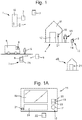
- Fig. 1 shows schematically shows a delivery system 1, also suitable in a monitoring system or method as disclosed, comprising a computer 10 and a database 2 in which data is stored about items 3 to be delivered and intended delivery addresses 4 and addressees 4A to which the items are to be delivered. For each item 3 an intended delivery address and addressee 4A is stored in the database 2.
- At least one vehicle 5, here shown as a van, by way of example only, is provided for delivering the items 3.
- the vehicle 5 and/or a delivery person 6 assigned to said vehicle 5, for example a driver, is provided with a first communication system 7.
- This first communication system 7 preferably at least comprises a hand held device and/or a vehicle mounted device 7A in which at least one and preferably a series of items 3 to be delivered and related intended delivery addresses are stored, to be communicated to the delivery person 6, for example by showing these data on a screen 8 of the first communication system 7, for example on the hand held device 7A and/or in the vehicle 5.
- the communication system 7 can further be provided with or connected to a GPS system 9 for defining a delivery route, based on the delivery addresses as stored.
- Such delivery route may be generated by the system 7 or the computer 10 or by any other suitable means in a known manner known in the art, for example using a device as provided by TomTom or Google maps.
- An intended delivery address 4 can be any private and/or commercial property, here shown as a house 11 with a front door 12.
- An addressee 4A is provided with a second communication system 13, which can provide a redirect signal, which may be or comprise an alternative delivery address 4B.
- the second communication system 13 can comprise a hand held device 14 and/or a stationary device 15.
- Such stationary device 15 can for example be mounted next to the door 12, at an outside of the house 11, such that it can be approached by a delivery person for use and/or inspection.
- the hand held device 14 can for example be a mobile telephone, a smart phone or a tablet.
- a stationary device 15 can comprise a door bell system 16 comprising a door bell 17, a doorbell control system 18 and an electronic screen 19 for presenting information.
- the control system can comprise a memory 20 and an interface 23 for presenting information from the memory 20 onto the screen 19, visible to somebody approaching the door 12.
- the doorbell system can comprise an input unit 31 for entering data into the doorbell system 16, for example via a key board or, using a communication unit 22, via a device held by the addressee 4A, such as a hand held device 14, for example a mobile phone, a smart phone or a tablet. This can be done via a wired system or, preferably, wireless, such as by Wi-Fi, Bluetooth ® or phone band, such as but not limited to GSM, or using an appropriate Internet protocol.
- a doorbell system 16 can comprise at least a beacon 21, preferably at least a beacon 21 and interface means such as e.g. at least one of interface 23, input unit 31, door bell 17, screen 19, communication unit 22, and the like.
- a system 1 can for example be used as follows.
- a route for delivery is defined for the vehicle 5, based on the intended addresses for the items 3 to be delivered. Then the vehicle will move in the direction of the first address on the route, for delivery of the first item 3.
- the intended address 4 i.e. the house 11 the delivery person will ring the doorbell 17. If the addressee 4A is in a position to accept the delivery he will open the door 12 and the item 3 can be delivered. However, if the addressee 4A is not in a position to accept the delivery, an alternative delivery address 4B can be provided to the delivery person 5.
- the alternative delivery address can have been provided by the addressee prior to the delivery, visible on the screen 19.
- the delivery person will read the alternative delivery address 4B and can add this alternative address to the route, for delivery of the item at the alternative delivery address.
- ringing the doorbell 17 can set off a timer in the doorbell system 16.
- a non-available signal may be generated by the doorbell system 16.
- the non-available signal will set off the interface 23 for presenting an alternative delivery address 4B on the screen 19.
- the non-available signal may be communicated by the communication unit to the device 14 held by the addressee 4A. This can be done after said predetermined period or may be done directly upon ringing of the doorbell 17.
- the addressee 4A can then communicate with the communication device of the doorbell system 16, in order to set off the interface 23 for presenting an alternative delivery address 4B on the screen 19.
- the alternative address 4B may then be retrieved from the memory 20 or may be entered directly into the input device by the addressee 4A, through the communication device.
- the non-available signal may be communicated to the computer 10.
- the computer 10 can then provide an alternative delivery address, for example retrieved from the database, and can communicate this to the doorbell system for presentation on the screen 19.
- the alternative delivery address 4B can be provided to the first communication system 7, for example for presentation on a screen on a hand held device 7A of the delivery person or into the GPS system.
- the alternative delivery address 4B can then be added to the route or can be used for recalculating the route in order to optimize the route, taking into consideration the alternative delivery address 4B.
- an auditive signal can be provided to the first communication system, such as the hand held device 7A, in order to inform the delivery person 6.
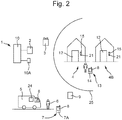
- Fig. 2 shows a system similar to that of fig. 1 .
- the vehicle 5 is provided additionally with a tracking system 24, for example coupled to the GPS system.
- the tracking system 24 can determine the position of the vehicle 5 and can provide an approach signal when the vehicle enters into a predetermined range relative to the intended delivery address.
- This range may be a range in distance or estimate time to arrival at the intended delivery address 4.
- this range has been represented as a circle 25 around the intended delivery address 4.
- the approach signal can be provided to the addressee 4A, for example by sending it to the second communication system 13, especially to the device 13 held by the addressee and/or to the stationary device 15.
- the addressee can send a non-available signal to the stationary device 15, for presenting an alternative delivery address on the screen, in any way as discussed here before with respect to fig. 1 , or can make himself available for receipt of the delivery at the intended address.
- Sending a non-available signal can be automatic or can be done actively by the addressee 4A.
- the stationary device may be set to respond to the first communication device indicating whether the addressee will be available for receipt of the delivery cq item 3 or not. In the latter case an alternative delivery address will be provided to the first communication system, especially to the delivery person, and/or to the GPS and/or tracking device for recalculating the delivery route at an early stage, i.e. well prior to the vehicle arriving at the intended delivery address. Obviously the route can also be (re)calculated by the computer.
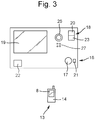
- Fig. 3 shows a doorbell system 16 system, comprising the doorbell 17 and optionally a screen 19. Also a camera 26 is provided, and a communication unit 22, suitable for communication at least with a hand held device 14, such as a mobile phone, smart phone or tablet.
- This doorbell system 16 may be similar to that as described before, and allows the user of the hand held device to get images from the camera 26 presented to him on his hand held device.
- a microphone 27 is also provided, allowing two-way communication with a person ringing the doorbell 17. If that person is for example a delivery person, again an alternative delivery address 4B may be provided to him, for example eon the screen 19 or on the first communication system, as described.
- other information may be provided to said person, audibly and/or visually and based on for example the image shown to him and/or further information provided the holder of the hand held device 14 can decide to take further action, such as remotely opening a door, gate or such closure, connecting the person at the door to another person such as for example a neighbor or informing official bodies such as the police, should such appear necessary.
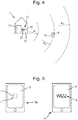
- Fig. 4 shows a further embodiment of a system, wherein schematically an intended address 4 is represented by a house 11 with a door 12, close to which a beacon 21 is provided.
- This beacon 21 may be incorporated in a stationary device 15 or doorbell system 16 as described before, or can be provided by itself.
- the beacon 21 is preferably a device which can communicate wireless with the first communication system 7 when within a communication range of said beacon 21.
- the beacon 21 can be a known wireless Wi-Fi beacon or Bluetooth ® beacon or another, preferably short range wireless beacon, communicating with a hand held device 7A of the delivery person 6 and/or a similar device in the delivery vehicle 5.
- Such beacons and communication protocols are well known in the art.
- the beacon 21 is positioned within the premises, such that it cannot reached from the outside and/or tampered with by unauthorized people.
- the beacon 21 periodically, intermittently or constantly emits a signal, preferably a coded signal indicative for the beacon 21, such as a coded Wi-Fi or Bluetooth ® signal.
- the code is unique to said beacon 21.
- the beacon 21 and the relevant code is known to the system 1, for example stored in the computer 10 or database 2.
- the first communication system 7, such as the hand held device 7A, can then be provided with software such as an app which recognizes the beacon 21 by its signal and/or the code.
- the signal can be understood as a proximity signal.
- the beacon 21 can be set for different ranges, for example but not limited to a first range up to a few meters, a second range up to 10 to 15 meters and a third range up to about 75 to 100 meters.
- an addressee 4A can set his beacon 21 for one of these ranges, depending on how soon he wants a proximity signal to be provided.
- the ranges are indicated by R1, R2 and R3 respectively.
- the proximity signal will set the software in the first communication system to show a link L on the screen 8 of the hand held device 7A and/or in the vehicle 5, which can for example represent a virtual door bell 17.
- the delivery person 6 can inform the addressee 4 of his proximity, for example through a physical bell at the intended address 4 and/or through a attention signal A, for example received on his computer of on a hand held device 14 of the second communication system 13, for example by sound, vibration and/or image, in fig. 5 represented by "WIZZ".
- the link L on the screen 8 will only be shown when the relevant device 7A of the first communication system 7 can recognize the relevant beacon 21, for example by having been paired with it through the computer 10 and database 2, this event can only occur through the first communication system 7 and thus the addressee 4A will know that the signal A received comes from a known party.
- the software such as an app of the first communication system may be set such that the identity of the device 7A communicating with the beacon 21 also becomes known to the addressee 4A.
- a communication link may be established between the first and second communication systems 7, 13, for example between the hand held devices 7A and 14 or between the hand held device 14 and the device 15 or door bell system 16.
- This can allow the addressee 4A to communicate with the delivery person 6, for example in order to provide him with instructions.
- These instructions may include an alternative delivery address 4B and/or an alternative delivery time, or a refusal of the item 3 or the like.
- the addressee can initiate that an alternative delivery address and/or time is provided to the delivery person directly, for example as such link.
- Said alternative delivery address 4B can for example be retrieved from the database 2 or the memory 23 of the fixed device 15 or door bell system 16.
- the non availability signal can be generated by the system when the addressee has indicated such in or to the system 1. For example by means of an input device 22 or via his hand held device 14. In such embodiment when the first communication system 7 communicates with the beacon 21, issuing the proximity signal, the non availability signal is generated or received by the first communication system.
- this hand held device 14 can be provided with software, for example an app with which the system can automatically detect when the hand held device 14 is outside a predetermined range of the intended delivery address 4A, which will then set the system 1 to generate said non availability signal.
- detection can for example be done through the beacon 21 or via GPS tracking of the hand held device 14 or other suitable means.
- An alternative delivery address 4B can be provided directly on the screen 8 for the delivery person 6 and/or delivery vehicle 5, for example as shown in fig. 6 on the screen 8 of hand held device 7A, in fig. 6 represented by "TEXT". This can be provided automatically on the screen 8, that is without involvement of the addressee, for example after receipt of the non-availability signal.
- a series of links L and/or alternative delivery addresses 4B can be shown, for example as pictograms on a map, as schematically shown in fig. 7 .
- a map is shown on the screen 8, showing the intended delivery address 4 as well as a series of alternative delivery addresses 4B, associated with the intended delivery address 4 and/or the addressee 4A.
- alternative delivery addresses 4B are shown within a certain range from the intended delivery address 4, for example a few hundred meters. In embodiments only alternative delivery addresses can be shown available for receiving the item 3.
- all alternative delivery addresses 4B, associated with the intended delivery address 4 and/or the addressee 4A within said range can be shown, of which for example by color differences or otherwise differentiating between such addresses available for receipt of items 3 and such addresses not available for such receipt. For example green for available and red for not available.
- the relevant pictogram will be a hyperlink to the actual address information which may show up by initiating the (hyper)link or by a "mouse over" showing the information directly on the screen 8.
- the delivery person can chose one of the alternative addresses 4B and add it to the delivery route.
- the system 1 may show to the delivery person for some or all of the alternative delivery addresses 4B the consequences of choosing that address 4B, for example for the remaining delivery route, the ETA for the items 3 to be delivered and the like information, in order to even better assess the most appropriate delivery route.
- the delivery person 6 may be able to change the range within which alternative delivery addresses may be found, for example by zooming in or out on the screen 8.
- the or each alternative address or link can be represented differently, for example on a map, by graphic images or as a list and/or as delivery alternative routes including different alternative delivery addresses
- the screen 8 is preferably a touch screen.
- a non availability signal can be sent directly by the second communication system 13 or by the computer 10, for example through the hand held device 14, to the first communication system 7, once the addressee 4 has indicated to the system 1 that he is or will not be available for receipt of an item 3 at the intended delivery address 4, at an estimated or indicated delivery time, to be processed by the computer 10 or to be shown on the hand held device 7A.
- Such non availability signal can for example be generated based on an agenda of the addressee 4A.
- a non availability signal can then for example be defined by periods in such agenda from which it follows that the addressee will not be available for such receipt of an item. Additionally or alternatively an addressee may be provided with the opportunity to indicate such periods of non availability directly in the system 1, for example through a web site associated therewith.
- the non availability signal indicating one or more periods in which the addressee will not be available for receipt of an item 3 can be set in the system 1, for example actively by the addressee or through an agenda of the addressee communicating with the system 1. This will allow the system for example to calculate a delivery route in which the relevant address can be approached at a period in which the addressee will be available for receipt, or by adding an alternative address 4B to the delivery route instead of the intended delivery address 4.
- An approach signal or proximity signal as described can inform an addressee about an estimated time of arrival (ETA), which for the proximity signal may be relatively short, for example seconds or minutes, and for the approach signal may be longer, for example minutes to tens of minutes or even longer.
- ETA estimated time of arrival
- the ETA can be communicated to the system 1, especially to the computer 10 and/or the first communication system 7, such that for example the position of the delivery person 6 and/or vehicle 5 can be assessed, that ETA's for one or more of the further addresses where deliveries have to be made in the relevant delivery route can be calculated and the route can be amended based on such ETA's and/or it can be assessed whether the addressee will be available at the intended delivery address at the ETA and, if not, an alternative delivery address or delivery time can be provided.
- a delivery person 6 and/or delivery truck may pass a series of beacons 21, some of which are not associated with items 3 to be delivered during the delivery route. Proximity and/or approach signals from and/or to such beacons 21 may nevertheless be used by the system 1. For example by tracking the time when the said signal is exchanged with such beacons 21 the position and/or progress of the vehicle and/or delivery person 6 can be calculated, allowing a periodical or constant calculation of ETA's for addresses along the delivery route.
- the data about the progress of the vehicle 5 and/or delivery person 6 during several delivery routes can be stored in the system 1, for example in the database 2, to be used during future delivery routes, in order to more accurately define ETA's.
- the system 1 can thus be self learning. Also the data from the progress and/or position of the vehicle can be combined with further information available about for example traffic and/or traffic jams along the calculated route, road works, detours and the like for further optimizing the delivery route.
- the proximity signal is provided by the beacon 21 being positioned at a delivery address 4, actively issuing a signal, to be detected by the first communication system, especially the hand held device 7A.
- the beacon 21 can also be a passive element, such as a transponder, which provides a signal only when the hand held device 7A is brought into a predetermined proximity of the transponder.
- beacon 21 Preferably there need not be a two way communication between the beacon 21 and the first communication device 7A. Moreover preferably at the premise 4 and/or in the beacon 21 there is no registration of identity, recognition codes or the like necessary of first communication devices. Registration can occur in the computer system 10.
- a link 21A for some or all of these beacons 21 may come up, which means that the delivery person 6 will have to choose the right one.
- software of the system 1 is designed such that the first communication system 7 will only provide a link for those delivery addresses and/or addressees for whom the delivery person 6 or delivery vehicle 5 is carrying an item 3 to be delivered.
- Such link may again be provided on the screen 8 of the hand held device 7A. This will significantly limit the number of links shown, even in a crowed area such as for example an apartment building. Again such links can be represented by a virtual door bell or an alternative delivery address or a communication link for establishing communication with the addressee.
- an addressee can define a network of alternative delivery addresses from which an alternative delivery address can be chosen by the system and/or the delivery person, depending on for example the further deliveries to be made, availability of people at these alternative delivery addresses and the like.
- an addressee can define a preferred order of the alternative delivery addresses.
- the availability of people at such alternative delivery addresses 4B will be known or can be made known to the system 1, similar as that of the intended addressee 4.
- the position of the delivery person 6 and/or vehicle 5 can be established using GPS type systems, with which the proximity can be further defined, as described before.
- a further example could be using a visual recognition system, such as but not limited to Layar ® or Google Glass ® , with which the position of a delivery person 6 and/or delivery vehicle 5 could be further assessed, for generating the proximity signal.
- a delivery person can periodically or constantly take in images of the environment, which will be recognized through appropriate image recognition software of the system, such that the position of the delivery person cq vehicle can be assessed.
- the software can extract an image of the intended delivery address or of one or more positions along the delivery route with a known position relative to the intended delivery address, for example from Google ® Map's street view or Layar ® .
- the software of the system 1 can then compare the images taken along the route by the delivery person and/or vehicle with these images of the intended delivery address and/or positions along the delivery route and when a match is found define the position of the delivery person and/or vehicle relative to the intended delivery address.
- an item can be provided with a delivery code, such as a bar code or a QR code or the like, which can be scanned by the delivery person, for example with the hand held device 7, for example when a door bell 16 is not answered at the intended delivery address.
- the scanned code can then provide the delivery person with an alternative delivery address or a link as discussed before, presented on the screen 8 of the hand held device 7 or vehicle 5.
- the code can be generated by the system 1 based on information presented by a person ordering an item 3, for example through a website, such that the information is scrambled in said code and the information as such will not become available to the delivery person 6, but the link will allow him to establish a connection with the addressee, for example through a mobile phone number, for communication or information or provide an alternative delivery address.
- the information may be scrambled into said code directly after entering the information into the website, such that only said code is stored in the database, wherein the software of the first communication system can translate said code into the desired link.
- a system 1 can define a delivery route for a series of items to be delivered, based on e.g. at least one of:
- the delivery route can be changed, such as optimized, and/or an alternative delivery route for the remaining items 3 to be delivered can be provided by the system 1, by recalculation, based on further information fed into the system and/or generated by the system 1, preferably real time, for example about at least one of:
- the delivery person can chose to progress with the originally calculated delivery route or follow the further alternative delivery route for the remaining items as proposed by the system.
- the addressee 4A and/or the said contact person or persons of the alternative address(es) 4B can be provided with a login code identifying him as associated with a specific item or number of items 3. This will allow tracking of the item 3, preferably real time.
- This website or app can be part of the second communication system, such that it will allow the addressee and/or said contact person to communicate with the first communication system 7 and/or other elements of the system 1, for example a communication device 7A of a or another contact person through said web site or said app.
- a pick up request requesting a delivery person 6 and/or vehicle 5 to pick up one or more items 3 at an address 4, to be referred to as a pick up address, for example an item 3 previously delivered at such address 4, to be returned to a sender and/or to be delivered to a different address.
- pick up request is entered into the system 1 it can be incorporated into a delivery route.
- pick up request is entered into the system 1 it can be processed, for example by incorporating it into a delivery route which is to be executed later, or by incorporating it into a delivery route during execution of such delivery route, which will lead to calculating an alternative deliver route or at least for a remaining part of said delivery route.
- a series of alternative delivery addresses can be provided to the delivery person and/or the delivery truck, such that the delivery person can chose one of these addresses, for example an address fitting his route best, or can try one or several of these addresses for making the delivery.
- alternative delivery addresses may be retrieved from a social network of which the addressee is a member.
- locations and/or movements of for example delivery persons, maintenance persons, service crew, health caregiver and other persons can be monitored registered and used for example for assessment of productivity, job performance, scheduling of activities and the like. Also data gathered by such monitoring system or method can be used for other purposes, such as planning, advertising, marketing and the like.
- the recognition codes registered can be used to real time or afterwards monitor the location and/or movement of a delivery person. Data gathered can then be used for future use, for example for planning routes to be followed by the delivery person, planning time necessary at different addresses, proceedings of a route followed by the delivery person and similar analyses which will be clear to the skilled person.
- data can be gathered of persons delivery papers, magazines, folders and the like during their distribution routes. For example progress of the person along the intended route can be monitored, which may provide an indication of the accuracy of delivering the papers, magazines, folders and the like. Moreover such information can be used in proof of delivery.
- a monitoring system (1) can comprise a series of wireless beacons (21), at least one mobile monitoring device (7) and a computer system (10).
- the computer system can be any computer system, such as for example but not limited to a computer system comprising or formed by a stand alone computer or a computer network, a virtual computer or a virtual computer network, such as but not limited to a cloud based system.
- Each of the series of wireless beacons (21) has a recognition code unique to the individual beacon (21), wirelessly readable by said at least one mobile device (7) when the mobile device (7) is within a wireless communication range of the beacon (21).
- Each mobile device (7) can be provided with a registering unit for registering recognition codes of said beacons (21) and with a communication unit for transferring the registered code to the computer system (10).
- the series of beacons (21) can comprise at least a series of WiFi routers. At least a series of said beacons (21) can have an SSID or BSSID number as recognition code. The beacons (21) can also use an alternative or additional recognition code based on for example Blue Tooth, Z-Wave or Zigbee or the like.
- an entity such as a person or company, having a beacon (21), such as a beacon (21) with a unique recognition code, can register said beacon (21), especially but not limited to the unique recognition code, for example with the computer system, for example through appropriate software, such as but not limited to an app.
- These registered codes can then be provided to the mobile devices (7), such that the mobile device (7) will only register codes which are recognized as recognition codes registered beforehand.
- any code picked up by a mobile device (7) complying with a predetermined configuration, such as an SSID or BSSID code could be registered by the mobile device (7) when within a wireless communication range thereof. Such embodiments would provide for even more data about the location and/or movements of the mobile device (7).
- filtering of the data can be performed, for example by filtering out any such codes which have not previously been registered with the computer system (10) as for example a member of an interest group, such as a community.
- a community can for example comprise a number of persons connected to each other, for example by social or commercial ties, of which the recognition codes may be grouped in such community.
- a person can be a member of different such communities of groups. This can have the advantage that only a limited number of codes will have to be considered at a given address, for example for showing a virtual doorbell or link, as discussed further here after.
- the system comprises mapping software with which the codes can mapped, for example along a route or defining a route followed by the mobile device.
- the mapping software is preferably suitable for mapping a route followed by the at least one mobile device (7) based on the recognition codes registered by the mobile device (7), wherein the mapping software is more preferably designed to provide information on how long the mobile device (7) is or has been within the wireless communication range of each beacon (21) it registers or has registered.
- the mobile device (7) preferably has a timing unit for time stamping a recognition code registered by the mobile device(7) and more preferably also the time frame during which the mobile device (7) is within the wireless communication range of the relevant beacon.
- the mobile device (7) can comprise a memory for temporarily storing recognition codes. Then the mobile device (7) can later on be coupled to the computer system (10) for loading the codes into the computer system (10).
- the series of beacons (21) comprise at least a series of Wi-Fi routers and/or wherein at least a series of said beacons have a SSID or BSSID number as recognition code.
- each mobile device (7) data has been stored of a route to be followed, including data of a series of addresses (4) to be approached, wherein to each address a unique recognition code has been assigned.
- the mobile device (7) comprises software for registering recognition codes of beacons (21) and comparing these with recognition codes assigned to the addresses (4) of the route stored in the mobile device (7).
- the mobile device (7) comprises a signal unit for providing a signal when a match is found between a registered recognition code and a recognition code assigned to one of the addresses (4) of the route stored in the mobile device (7).
- Such signal can for example be a virtual doorbell or a communication link as will be explained hereafter with respect to exemplary but non limiting delivery systems and methods.
- the recognition code can be registered by software, for example suitable to be run on a mobile device (7, 14), at the back ground. This can for example be an app or software integrated in an operating system of such device.
- the software can be designed to register the code, contact a data base on the computer system (10) for comparing the recognition code with known recognition codes registered in the computer system (10).
- further data can be coupled to the recognition codes, for example physical addresses (4) at which a beacon with said recognition code is located. This allows mapping of the codes as registered.
- other data connected to said recognition code can be stored in said computer system (10), such as advertisements, adds, info etc.
- a user of the system can register that his house (11) is for sale, which information will then be made available to holders of a mobile device (7) running the appropriate software for registering said recognition code and providing a link to said further data and/or presenting said further data directly on the mobile device.
- a holder (6) of the said mobile device (7) can set appropriate filters for receiving or preventing receipt of such further data, based on for example interests registered in the computer system.
- the hand held or mobile device (7) of the first communication system can store recognition codes registered at or near delivery addresses (4) or even further along the route, such as the SSID or BSSID codes of beacons (21) such as but not limited to Wi-Fi routers at or near said addresses or along the route.
- the beacons (21) can also use an alternative or additional recognition code based on for example Blue Tooth, Z-Wave or Zigbee or the like.
- the system allows the use of such recognition codes based on different systems.
- a monitoring system (1) can comprise a series of wireless beacons (21), at least one mobile monitoring device and a computer system, such as an Internet cloud server, wherein each of the series of wireless beacons (21) has a recognition code unique to the individual beacon (21) wirelessly readable by said at least one mobile device (7) when the mobile device (7) is within a wireless communication range of the beacon (21), wherein each mobile device (7) is provided with a registering unit for registering recognition codes of said beacons (21) and with a communication unit for transferring the registered code to the computer system (10).
- the communication unit can be designed for real time transfer of said recognition codes to the computer system (10), preferably wireless.
- the mobile device (7) can comprise a memory for temporarily storing recognition codes.
- the mobile device (7) can comprise a timing unit for registering the time a recognition code is registered by the mobile device (7).
- the series of beacons (21) can comprise at least a series of WiFi routers and/or wherein at least a series of said beacons have a SSID or BSSID number as recognition code.
- the computer system (10) can comprise mapping software for mapping a route followed by the at least one mobile device (7) based on the recognition codes registered by the mobile device (7), wherein the mapping software is preferably designed to provide information on how long the mobile device is or has been within the wireless communication range of each beacon it registers or has registered.
- data can be or have been stored of a route to be followed, including data of a series of addresses to be approached, wherein to each address (4) a unique recognition code has been assigned.
- the mobile device comprises software for registering recognition codes of beacons (21) and comparing these with recognition codes assigned to the addresses of the route stored in the mobile device.
- the mobile device (7) then comprises a signal unit for providing a signal when a match is found between a registered recognition code and a recognition code assigned to one of the addresses of the route stored in the mobile device.
- addresses can be selected along the route known to the system, for example for later reference.
- a mobile device can be moved along a series of wireless beacons having a recognition code unique to the individual beacon, wirelessly readable by said at least one mobile device when the mobile device is within a wireless communication range of the beacon.
- the mobile device registers the recognition codes of the beacons along which it is moved and transfers the registered codes to a computer system.
- the mobile device can transfer said recognition codes to the computer system real time, preferably wireless.
- the mobile device can temporarily store the registered recognition codes.
- the mobile device time stamps a recognition code when registered by the mobile device.
- the series of beacons can send out a SSID or BSSID number as recognition code.
- the computer system can comprise mapping software with which a route is mapped as followed by the at least one mobile device based on the recognition codes registered by the mobile device, wherein the mapping software is preferably provides information on how long the mobile device is or has been within the wireless communication range of each beacon it registers or has registered.
- each mobile device data can be stored of a route to be followed, including data of a series of addresses to be approached, wherein to each address a unique recognition code is or has been assigned, wherein the mobile device comprises software with which recognition codes of beacons are registered and are compared with recognition codes assigned to the addresses of the route stored in the mobile device, wherein the mobile device provides a signal when a match is found between a registered recognition code and a recognition code assigned to one of the addresses of the route stored in the mobile device.
- the signal preferably comprises at least one of:
- a delivery system as described can comprise or be used as or with a monitoring system according to this description and/or vice versa.
Landscapes
- Business, Economics & Management (AREA)
- Engineering & Computer Science (AREA)
- Economics (AREA)
- General Physics & Mathematics (AREA)
- Physics & Mathematics (AREA)
- Tourism & Hospitality (AREA)
- Theoretical Computer Science (AREA)
- Marketing (AREA)
- General Business, Economics & Management (AREA)
- Strategic Management (AREA)
- Human Resources & Organizations (AREA)
- Operations Research (AREA)
- Entrepreneurship & Innovation (AREA)
- Quality & Reliability (AREA)
- Development Economics (AREA)
- Radar, Positioning & Navigation (AREA)
- Remote Sensing (AREA)
- Health & Medical Sciences (AREA)
- General Health & Medical Sciences (AREA)
- Primary Health Care (AREA)
- Computer Networks & Wireless Communication (AREA)
- Management, Administration, Business Operations System, And Electronic Commerce (AREA)
- Power-Operated Mechanisms For Wings (AREA)
Claims (12)
- Zustellsystem (1), umfassend eine Datenbank (2) mit Daten, die sich auf wenigstens eine auszuführende Zustellung und wenigstens eine beabsichtigte Zustelladresse (4) für einen Adressaten (4A) für diese Zustellung und wenigstens ein Zustellfahrzeug (5) beziehen,wobei das Zustellfahrzeug (5) und/oder eine für das Fahrzeug (5) bestimmte Zustellperson (6) mit einem ersten Kommunikationssystem (7) ausgestattet ist und der wenigstens eine Adressat (4A) mit einem zweiten Kommunikationssystem (13) ausgestattet ist, wobei das Zustellsystem (1) ferner ein Computersystem (10) zum Bereitstellen von Daten aus der Datenbank (2) an das erste Kommunikationssystem (7) umfasst, das von Daten über die wenigstens eine Zustellung und die Zustelladresse (4) gebildet wird oder solche enthält, wobei das Zustellsystem (1) ferner ein Näherungsdetektionssystem umfasst, dadurch gekennzeichnet, dass das Näherungsdetektionssystem wenigstens eine Bake (21) an der Zustelladresse (4) umfasst, um drahtlos mit dem ersten Kommunikationssystem (7) zu kommunizieren, wenn sich ein Teil des ersten Kommunikationssystems innerhalb eines drahtlosen Kommunikationsbereichs der wenigstens einen Bake (21) befindet, die zum Detektieren der Nähe des ersten Kommunikationssystems (7) zu der Zustelladresse (4) ausgelegt ist;wobei die Bake (21) zum Übertragen eines Erkennungscodes ausgelegt ist, der für die einzelne Bake (21) einzigartig ist;wobei die erste Kommunikationsvorrichtung mit Software zum Registrieren und Vergleichen von Erkennungscodes, die von der Bake (21) empfangen werden, ausgestattet ist, wobei Erkennungscodes den Zustelladressen zugewiesen sind, die dem ersten Kommunikationssystem (7) bereitgestellt werden,wobei das Näherungsdetektionssystem mit einem Modul ausgestattet ist, das ein visuelles und/oder akustisches Signal auf dem erstenKommunikationssystem (7) präsentiert, wenn das Näherungsdetektionssystem die Nähe des ersten Kommunikationssystems (7) zu der Bake (21) detektiert,wobei das visuelle und/oder akustische Signal eine auf dem ersten Kommunikationssystem (7) basierend auf dem Vergleich präsentierte Verbindung (21A) umfasst, so dass das erste Kommunikationssystem (7) nur eine solche Verbindung (21A) für diese Zustelladressen und/oder Adressaten präsentiert, bei denen der Vergleich zeigt, dass die Zustellperson (6) oder das Zustellfahrzeug (5) einen zuzustellenden Gegenstand (3) befördert,wobei die Verbindung (21A) eine virtuelle Türklingel-Verbindung repräsentiert, die auf einem Bildschirm des ersten Kommunikationssystems (7) präsentiert wird, um eine Person zu kontaktieren, die in dem ersten Kommunikationssystem (7) und/oder dem Computersystem (10) als der Adresse zugeordnet registriert ist, von der durch den Vergleich eine Übereinstimmung gefunden wurde, eine alternative Zustelladresse oder eine Kommunikationsverbindung zum Aufbau einer Kommunikation zwischen dem ersten Kommunikationssystem (7) und dem Adressaten (4A), insbesondere dem zweiten Kommunikationssystem (13) des Adressaten (4A),wobei:- das zweite Kommunikationssystem (13) zur Kommunikation mit dem ersten Kommunikationssystem (7) zum Bereitstellen einer alternativen Zustelladresse (4B) für die Zustellung, insbesondere während der Zustellung des Gegenstands (3) ausgelegt ist und/oder- das Computersystem (10) zum Bereitstellen bei der Zustellung wenigstens einer alternativen Zustelladresse (4B) ausgelegt ist, wobei die alternative Zustelladresse (4B) aus der Datenbank (2) bereitgestellt wird.
- Zustellsystem (1) nach Anspruch 1, wobei das Näherungsdetektionssystem ferner wenigstens umfasst:- ein im oder für das erste Kommunikationssystem (7) vorgesehenes GPS-Modul zum Detektieren der globalen Position des Zustellfahrzeugs (5) und/oder der Zustellperson (6) relativ zur Zustelladresse (4); und- ein visuelles Detektionssystem, das zum Abbilden der Umgebung eines Zustellfahrzeugs (5) und/oder einer Zustellperson (6) und zum Vergleichen des aufgenommenen Bildes mit einem für die Zustelladresse (4) repräsentativen Bild ausgelegt ist.
- Zustellsystem (1) nach einem der vorhergehenden Ansprüche, wobei das Computersystem (10) programmiert ist, um die wenigstens eine alternative Zustelladresse (4B) an das erste Kommunikationssystem (7) bereitzustellen, wenn ein nicht verfügbares Signal von dem zweiten Kommunikationssystem (13) bereitgestellt wird und/oder,
wobei das Zustellsystem (1) dem zweiten Kommunikationssystem (13) ermöglicht, ein Umleitungssignal bereitzustellen, das wenigstens eine alternative Adresse (4B) zur Zustellung an das erste Kommunikationssystem (7) angibt, wobei vorzugsweise:- das Zustellfahrzeug (5) eine Ortungsvorrichtung zum Bestimmen der Position des Zustellfahrzeugs (5) relativ zu der beabsichtigten Zustelladresse umfasst, wobei dem Adressaten (4A) und/oder dem zweiten Kommunikationssystem ein Annäherungssignal bereitgestellt wird (13) wenn das Fahrzeug (5) einen vorbestimmten Bereich relativ zur beabsichtigten Zustelladresse (4) betritt; und/oder- das Computersystem (10) zum Berechnen einer Zustellroute für das Zustellfahrzeug (5) und zum Neuberechnen einer Route basierend auf unter anderem einer für eine Zustellung während der Zustellung bereitgestellten alternativen Zustelladresse (4B) ausgelegt ist. - Zustellsystem (1) nach einem der vorhergehenden Ansprüche, wobei das zweite Kommunikationssystem (13) wenigstens umfasst:- eine tragbare Kommunikationsvorrichtung (14), wie ein Smartphone oder Tablet; und/oder
eine stationäre Kommunikationsvorrichtung (15); und/oder wobei das System (1) eine stationäre Vorrichtung (15) umfasst, wobei die stationäre Vorrichtung (15) wenigstens einen Bildschirm (19) zum Präsentieren der wenigstens einen alternativen Zustelladresse (4B) umfasst, wobei die stationäre Vorrichtung (15) vorzugsweise ein Türklingelsystem (16) umfasst oder damit verbunden ist, und/oder wobei das zweite Kommunikationssystem (13) eine tragbare Kommunikationsvorrichtung (14) und das erste Kommunikationssystem (7) umfasst, und/oder das Näherungsdetektionssystem eine Signaleinheit umfasst, die der tragbaren Vorrichtung (14) ein Signal bereitstellt, und wobei das Zustellsystem (1) so ausgelegt ist, dass:- wenigstens eine alternative Zustelladresse (4B) und/oder andere Informationen von der tragbaren Kommunikationsvorrichtung (14) an das erste Kommunikationssystem (7) und/oder eine an der Zustelladresse (4) bereitgestellte stationäre Vorrichtung (15) gesendet werden können, um einer Zustellperson (6) auf ihrem Bildschirm präsentiert zu werden und/oder- wenigstens eine alternative Zustelladresse (4B) auf dem Bildschirm und/oder dem ersten Kommunikationssystem (7) präsentiert wird, wobei die wenigstens alternative Zustelladresse (4B) aus der Datenbank (2) abgeleitet wird oder in die zweite Kommunikationsvorrichtung (13) eingegeben wurde. - Zustellsystem (1) nach einem der vorhergehenden Ansprüche, wobei einer auszuführenden Zustellung ein Zustellcode zugeordnet ist, wobei der Zustellcode wenigstens einem Kommunikationsmittel zur Kommunikation zwischen dem ersten und dem zweiten Kommunikationssystem (7, 13) zugeordnet ist, so dass bei Aktivierung des Zustellcodes, vorzugsweise durch die Zustellperson (6), eine Kommunikation zwischen dem ersten und zweiten Kommunikationssystem (7, 13) aufgebaut wird, wobei der Zustellcode vorzugsweise einer Mobiltelefonnummer und/oder Computeradresse des dem Adressaten (4A) und/oder einer von ihm bereitgestellten Mobiltelefonnummer und/oder Computeradresse, insbesondere einer dem zweiten Kommunikationssystem (13) zugeordnete Mobiltelefonnummer oder Computeradresse zugeordnet ist.
- Verfahren zur Zustellung wenigstens eines Gegenstands (3) an wenigstens eine Zustelladresse (4) eines Adressaten (4A) des Gegenstands (3),- wobei eine beabsichtigte Zustelladresse (4) für den Gegenstand (3) in ein erstes Kommunikationssystem (7) eingegeben wird, das einer Zustellperson (6) zur Verfügung steht; und- wobei während der Zustellung des Gegenstands (3) die Nähe eines ersten Kommunikationssystems (7) einer Zustellperson (6) und/oder des der Zustellperson (6) zugeordneten Zustellfahrzeugs (5) zu der beabsichtigten Zustelladresse (4) detektiert wird; dadurch gekennzeichnet, dass die Nähe drahtlos mittels wenigstens einer Bake (21) an der Zustelladresse (4) detektiert wird, die mit dem ersten Kommunikationssystem (7) drahtlos kommuniziert, wenn ein Teil des ersten Kommunikationssystems innerhalb eines drahtlosen Kommunikationsbereichs der wenigstens einen Bake (21) gebracht wird;- wobei, wenn die Nähe innerhalb eines vorbestimmten Bereichs liegt, ein Näherungssignal an das erste Kommunikationsmittel und/oder an ein zweites Kommunikationsmittel (13) bereitgestellt werden kann, das von dem Adressaten (4A) oder einer dem Adressaten (4A) zugeordneten Person gehalten wird, so dass eine Kommunikation zwischen dem ersten und dem zweiten Kommunikationsmittel aufgebaut werden kann,wobei die Bake (21) einen Erkennungscode überträgt, der für die einzelne Bake (21) einzigartig ist;wobei die erste Kommunikationsvorrichtung mit Software zum Registrieren und Vergleichen von Erkennungscodes, die von der Bake (21) empfangen werden, ausgestattet ist, wobei Erkennungscodes den Zustelladressen zugewiesen sind, die dem ersten Kommunikationssystem (7) bereitgestellt werden,wobei das Näherungsdetektionssystem ein visuelles und/oder akustisches Signal auf dem ersten Kommunikationssystem (7) präsentiert, wenn das Näherungsdetektionssystem die Nähe des ersten Kommunikationssystems (7) zu der Bake (21) detektiert,wobei das visuelle und/oder akustische Signal eine auf dem ersten Kommunikationssystem (7) basierend auf dem Vergleich präsentierte Verbindung (21A), so dass das erste Kommunikationssystem (7) nur eine solche Verbindung (21A) für die Zustelladressen und/oder Adressen präsentiert, bei denen der Vergleich zeigt, dass die Zustellperson (6) oder das Zustellfahrzeug (5) einen zuzustellenden Gegenstand (3) befördert, wobei die Verbindung (21A) eine virtuelle Türklingel-Verbindung darstellt, die auf einem Bildschirm des ersten Kommunikationssystems (7) zum Kontaktieren einer in der ersten Kommunikationsvorrichtung und/oder dem Computersystem als der Adresse zugeordnet registrierten Person präsentiert wird, von der eine Übereinstimmung durch Vergleich gefunden wird, eine alternative Zustelladresse oder eine Kommunikationsverbindung zum Aufbau einer Kommunikation zwischen dem ersten Kommunikationssystem (7) und dem Adressaten (4A), insbesondere dem zweiten Kommunikationssystem (13) dem Adressaten (4A) umfasst,wobei das Signal vorzugsweise eine Darstellung einer virtuellen Türklingel (17) umfasst.
- Verfahren nach Anspruch 6, wobei, wenn eine Nähe innerhalb des vorbestimmten Bereichs detektiert wird, die wenigstens eine Verbindung (21A) auf dem ersten Kommunikationssystem (7) präsentiert wird, wodurch es der Zustellperson (6) ermöglicht wird, eine Kommunikation mit dem zweiten Kommunikationssystem (13) durch Aktivieren der Verbindung (21A) aufzubauen und/oder wobei der Zustellperson (6) vor oder während der Zustellung des Gegenstands (3) wenigstens eine alternative Zustelladresse (4B) für den Gegenstand (3) bereitgestellt wird, wobei die alternative Zustelladresse (4B) bereitgestellt wird:- über das zweite Kommunikationssystem (13) zum ersten Kommunikationssystem (7) der Zustellperson (6) und/oder- über ein Computersystem (10) an das erste Kommunikationssystem (7) und/oder an das zweite Kommunikationssystem (13), wobei die alternative Zustelladresse (4B) von einer mit dem Computersystem (10) verbundenen Datenbank (2) bereitgestellt wird, wobei vorzugsweise während der Zustellung ein Annäherungssignal an den Adressaten (4A), insbesondere an das zweite Kommunikationssystem (13) kommuniziert wird, wenn die Zustellperson (6) einen vorbestimmten Bereich relativ zur primären Zustelladresse (4) betritt, wobei das Annäherungssignal die Bereitstellung der alternativen Zustelladresse (4B) an die Zustellperson (6) auslöst, insbesondere wenn der Adressat (4A) ein Nichtverfügbarkeitssignal in ein wenigstens dem ersten Kommunikationssystem (7) zugeordnetes Computersystem (10) eingegeben hat.
- Verfahren nach Anspruch 6, wobei an oder in der Nähe der Zustelladresse (4) wenigstens eine alternative Zustelladresse (4B) der Zustellperson (6) durch eine Präsentationsvorrichtung, die Teil des ersten und/oder zweiten Kommunikationssystems (7, 13) ist, vorzugsweise auf einem Bildschirm (8, 19), präsentiert wird, insbesondere nachdem die Anwesenheit der Zustellperson an oder in der Nähe der Zustelladresse (4) signalisiert wurde, zum Beispiel durch Läuten einer Türklingel (17) oder basierend auf dem Näherungssignal, wobei vorzugsweise die wenigstens eine alternative Zustelladresse (4B) der Zustellperson (6) präsentiert wird, wobei:- der Adressat (4A) im Computersystem (10) vor der Zustellung ein Weiterleitungssignal festlegt, wobei das Weiterleitungssignal die Präsentation der wenigstens einen vorbestimmten alternativen Zustelladresse (4B) initiiert; und/oder- bei Empfang des Näherungssignals oder nach Initiierung einer Kommunikation zwischen dem ersten und dem zweiten Kommunikationssystem (7, 13), wonach die wenigstens eine alternative Zustelladresse (4B) der Zustellperson (6) über den Bildschirm (8, 19) präsentiert wird, und/oder wobei die wenigstens eine alternative Zustelladresse (4B) der Zustellperson (6) an oder in der Nähe der beabsichtigten Zustelladresse (4) präsentiert wird, wobei der Adressat (4A) oder das Computersystem (10) die wenigstens eine vorbestimmte alternative Zustelladresse (4B) vor der Zustellung festlegt, wobei bevorzugter eine Reihe von alternativen Zustelladressen (4B) festgelegt wird, wobei die Zustellperson (6) eine dieser alternativen Zustelladressen (4B) für die Zustellung des Gegenstands (3) auswählt und/oder eine Zustellroute der Zustellperson (6) während des Abfahrens dieser Route basierend auf der Änderung der primären Zustelladresse (4) in eine alternative Zustelladresse (4B) geändert wird.
- Verfahren zur Zustellung von Gegenständen (3) an eine Reihe von Zustelladressen (4B) von Adressaten (4A) der Gegenstände (3) nach einem der Ansprüche 6 bis 8,- wobei beabsichtigte Zustelladressen (4) für die Gegenstände (3) in ein erstes Kommunikationssystem (7) eingegeben werden, das einer Zustellperson (6) zur Verfügung steht; und- eine Zustellroute basierend auf den Zustelladressen (4) durch das System (1) definiert wird,wobei während der Ausführung der Zustellungsroute Daten bezüglich wenigstens einer der Reihe der Adressen (4) in das System (1) eingegeben werden, wobei diese Daten ein Nichtverfügbarkeitssignal von einem der Adressaten (4A) einschließen und/oder wenigstens eine alternative Zustelladresse (4B) für wenigstens eine der Reihe von Adressen (4), wobei basierend auf den weiteren Daten die Zustellroute oder wenigstens ein Rest der Zustellroute zum Zeitpunkt des Empfangs dieser Daten neu berechnet wird, um wenigstens eine solche alternative Zustelladresse (4B) einzuschließen oder die eingegebenen Zustelladressen (4) werden in einer anderen Reihenfolge neu angeordnet, wobei vorzugsweise:die Zustellroute definiert wird auf der Grundlage von wenigstens:- dem Ort der beabsichtigten Zustelladressen (4);- und/oder der angegebenen Verfügbarkeit oder Nichtverfügbarkeit der Adressaten (4A);- und/oder den Verkehrsinformationen;- und/oder den im System (1) gespeicherten Daten über frühere Zustellroute, bereitgestellte alternative Zustelladressen (4B) und andere Informationen und/oder während der Ausführung der Zustellroute wird die Zustellroute geändert basierend auf wenigstens:- einem in das System eingegebenen Nichtverfügbarkeitssignal (1):- durch den Adressaten (4A) über das zweite Kommunikationssystem (13); oder- durch das System (1) aufgrund zum Beispiel einer Änderung einer Tagesordnung eines Adressaten (4A) erzeugt; oder- aufgrund einer Änderung einer berechneten ETA;- einer alternativen Zustelladresse (4B), die vom Adressaten (4A) direkt in das System (1) eingegeben wird; und/oder- Verkehrsinformationen, die in das System (1) eingegeben werden.
- Verfahren nach einem der vorhergehenden Ansprüche 6 bis 9,
wobei bei der Zustellung des Gegenstands (3) ein Näherungssignal an den Adressaten (4A) kommuniziert wird, insbesondere an das zweite Kommunikationssystem (13), wenn die Zustellperson (6) einen vorgegebenen Bereich relativ zur primären Zustelladresse (4) betritt, wobei das Näherungssignal die Bereitstellung der alternativen Zustelladresse (4B) an die Zustellperson (6) auslöst, insbesondere wenn der Adressat (4A) ein Nichtverfügbarkeitssignal in ein Computersystem (10) eingegeben hat, das wenigstens dem ersten Kommunikationsmittel zugeordnet ist. - Verfahren nach einem der Ansprüche 6 bis 10, wobei an oder in der Nähe der Zustelladresse (4) der Zustellperson (6) wenigstens eine alternative Zustelladresse (4B) von einer Präsentationsvorrichtung präsentiert wird, die Teil des ersten und/oder zweiten Kommunikationssystems (7, 13) ist, vorzugsweise auf einem Bildschirm (8, 19), insbesondere nach Signalisierung der Anwesenheit der Zustellperson an oder in der Nähe der Zustelladresse (4), wobei die wenigstens eine alternative Zustelladresse (4B) der Zustellperson (6) präsentiert wird, wobei:- der Adressat (4A) im Computersystem (10) vor der Zustellung ein Weiterleitungssignal festlegt, wobei das Weiterleitungssignal die Präsentation der wenigstens einen vorbestimmten alternativen Zustelladresse (4B) initiiert; und/oder- beim Empfang des Näherungssignals oder nach der Initiierung einer Kommunikation zwischen dem ersten und dem zweiten Kommunikationsmittel, wonach die wenigstens eine alternative Zustelladresse (4B) der Zustellperson (6) über den Bildschirm (8, 19) präsentiert wird.
- Verfahren nach einem der Ansprüche 6 bis 11, wobei:- die wenigstens eine alternative Zustelladresse (4B) der Zustellperson (6) an oder in der Nähe der beabsichtigten Zustelladresse (4) präsentiert wird, wobei der Adressat (4A) oder das Computersystem (10) die wenigstens eine vorbestimmte abweichende Zustelladresse (4B) vor der Zustellung festlegt und/oder- eine Reihe alternativer Zustelladressen (4B) festgelegt wird, wobei die Zustellperson (6) eine dieser alternativen Zustelladressen (4B) zur Zustellung des Gegenstands (3) auswählt, wobei eine Zustellroute der Zustellperson (6) vorzugsweise während des Abfahrens der Route basierend auf der Änderung der primären Zustelladresse (4) in eine alternative Zustelladresse (4B) geändert wird.
Priority Applications (1)
| Application Number | Priority Date | Filing Date | Title |
|---|---|---|---|
| EP22150168.7A EP3998566A1 (de) | 2014-05-28 | 2015-05-28 | Liefer- und überwachungssystem und -verfahren und türklingelsystem |
Applications Claiming Priority (5)
| Application Number | Priority Date | Filing Date | Title |
|---|---|---|---|
| NL2012917A NL2012917B1 (en) | 2014-05-28 | 2014-05-28 | Delivery system and method and door bell system. |
| NL2012919A NL2012919B1 (en) | 2014-05-28 | 2014-05-28 | Delivery system and method and door bell system. |
| NL2012918A NL2012918B1 (en) | 2014-05-28 | 2014-05-28 | Delivery method and system and door bell system. |
| NL2013229A NL2013229B1 (en) | 2014-07-21 | 2014-07-21 | Monitoring system and method, delivery system and method and door bell system. |
| PCT/NL2015/050385 WO2015183093A1 (en) | 2014-05-28 | 2015-05-28 | Delivery and monitoring system and method and door bell system |
Related Child Applications (1)
| Application Number | Title | Priority Date | Filing Date |
|---|---|---|---|
| EP22150168.7A Division EP3998566A1 (de) | 2014-05-28 | 2015-05-28 | Liefer- und überwachungssystem und -verfahren und türklingelsystem |
Publications (2)
| Publication Number | Publication Date |
|---|---|
| EP3149670A1 EP3149670A1 (de) | 2017-04-05 |
| EP3149670B1 true EP3149670B1 (de) | 2022-01-05 |
Family
ID=53491666
Family Applications (2)
| Application Number | Title | Priority Date | Filing Date |
|---|---|---|---|
| EP15732479.9A Active EP3149670B1 (de) | 2014-05-28 | 2015-05-28 | Liefer- und überwachungssystem und verfahren |
| EP22150168.7A Pending EP3998566A1 (de) | 2014-05-28 | 2015-05-28 | Liefer- und überwachungssystem und -verfahren und türklingelsystem |
Family Applications After (1)
| Application Number | Title | Priority Date | Filing Date |
|---|---|---|---|
| EP22150168.7A Pending EP3998566A1 (de) | 2014-05-28 | 2015-05-28 | Liefer- und überwachungssystem und -verfahren und türklingelsystem |
Country Status (5)
| Country | Link |
|---|---|
| US (1) | US20170193442A1 (de) |
| EP (2) | EP3149670B1 (de) |
| CN (1) | CN106575389A (de) |
| ES (1) | ES2918020T3 (de) |
| WO (1) | WO2015183093A1 (de) |
Cited By (1)
| Publication number | Priority date | Publication date | Assignee | Title |
|---|---|---|---|---|
| EP4216125A1 (de) * | 2022-01-20 | 2023-07-26 | Philip Weisse | Verfahren und system zur kommunikation zwischen einer zielperson und einer paketempfangsperson |
Families Citing this family (31)
| Publication number | Priority date | Publication date | Assignee | Title |
|---|---|---|---|---|
| US9743239B1 (en) * | 2015-09-30 | 2017-08-22 | Amazon Technologies, Inc. | Determining routing points and delivery points |
| US10417603B2 (en) | 2016-03-09 | 2019-09-17 | At&T Mobility Ii Llc | Secure package delivery |
| US10089857B2 (en) * | 2016-04-07 | 2018-10-02 | Walmart Apollo, Llc | Apparatus and method for providing audio delivery notification with a doorbell |
| US20170293883A1 (en) * | 2016-04-08 | 2017-10-12 | Jianhua Li | Package Security Device |
| US11829927B2 (en) | 2016-05-04 | 2023-11-28 | United Parcel Service Of America, Inc. | Remote initiation of interaction by a computing entity |
| US11055654B2 (en) * | 2017-01-18 | 2021-07-06 | International Business Machines Corporation | Packet delivery management |
| US10924461B2 (en) * | 2017-04-27 | 2021-02-16 | Afero, Inc. | Secure two-way beacon in an internet of things (IoT) system |
| CN111768042A (zh) * | 2017-07-28 | 2020-10-13 | 株式会社日立制作所 | 一种配送车辆的配送计划生成方法、装置及系统 |
| US10672365B2 (en) * | 2017-08-17 | 2020-06-02 | JERS Tech, LLC | Address location assistance system and associated methods |
| US10872089B2 (en) | 2017-10-24 | 2020-12-22 | United Parcel Service Of America, Inc. | Automated occupant tracking systems and methods |
| CN109901565A (zh) * | 2017-12-07 | 2019-06-18 | 技嘉科技股份有限公司 | 物品递送系统及其装置 |
| JP6996275B2 (ja) * | 2017-12-18 | 2022-01-17 | トヨタ自動車株式会社 | 配達支援装置、配達支援方法、配達支援プログラム |
| US10713744B2 (en) * | 2018-10-29 | 2020-07-14 | Toyota Research Institute, Inc. | Selective arrival notification system |
| US11392130B1 (en) | 2018-12-12 | 2022-07-19 | Amazon Technologies, Inc. | Selecting delivery modes and delivery areas using autonomous ground vehicles |
| US12030527B2 (en) | 2019-03-08 | 2024-07-09 | British Telecommunications Public Limited Company | Vehicle management |
| CN109934365A (zh) * | 2019-03-11 | 2019-06-25 | 李超杰 | 上门服务方法、装置、存储介质及电子设备 |
| JP7192606B2 (ja) * | 2019-03-26 | 2022-12-20 | トヨタ自動車株式会社 | 情報処理装置、情報処理方法、及び情報処理プログラム |
| JP7192631B2 (ja) * | 2019-04-11 | 2022-12-20 | トヨタ自動車株式会社 | 情報処理システム及び情報処理方法 |
| US11260970B2 (en) | 2019-09-26 | 2022-03-01 | Amazon Technologies, Inc. | Autonomous home security devices |
| US10796562B1 (en) | 2019-09-26 | 2020-10-06 | Amazon Technologies, Inc. | Autonomous home security devices |
| US12280889B1 (en) | 2022-06-30 | 2025-04-22 | Amazon Technologies, Inc. | Indoor navigation and obstacle avoidance for unmanned aerial vehicles |
| US12346128B1 (en) | 2022-09-30 | 2025-07-01 | Amazon Technologies, Inc. | Indoor altitude determination for aerial vehicles |
| US12572153B1 (en) | 2022-12-15 | 2026-03-10 | Amazon Technologies, Inc. | Route planning for aerial vehicles in indoor spaces |
| US12479606B1 (en) | 2023-03-30 | 2025-11-25 | Amazon Technologies, Inc. | Indoor aerial vehicles with advanced safety features |
| US12202634B1 (en) | 2023-03-30 | 2025-01-21 | Amazon Technologies, Inc. | Indoor aerial vehicles with advanced safety features |
| US12205483B1 (en) * | 2023-06-26 | 2025-01-21 | Amazon Technologies, Inc. | Selecting paths for indoor obstacle avoidance by unmanned aerial vehicles |
| US12227318B1 (en) | 2023-09-28 | 2025-02-18 | Amazon Technologies, Inc. | Aerial vehicles with proximity sensors for safety |
| US12528608B1 (en) * | 2024-03-18 | 2026-01-20 | Amazon Technologies, Inc. | Docking stations for safely charging aerial vehicles |
| US12545447B1 (en) * | 2024-06-07 | 2026-02-10 | Amazon Technologies, Inc. | Aerial vehicle landing pad with sensors |
| US20260048877A1 (en) * | 2024-08-15 | 2026-02-19 | Skydio, Inc. | Base Station For An Unmanned Aerial Vehicle Including A Rotatable Roof Assembly |
| US20260048865A1 (en) * | 2024-08-15 | 2026-02-19 | Skydio, Inc. | Method of docking an unmanned aerial vehicle with a base station |
Family Cites Families (7)
| Publication number | Priority date | Publication date | Assignee | Title |
|---|---|---|---|---|
| US20030065625A1 (en) | 2001-10-01 | 2003-04-03 | Walter Rosenbaum | Overcoming null deliveries |
| US20030195814A1 (en) * | 2002-04-11 | 2003-10-16 | International Business Machines Corporation | Wireless house server and methods for doing business by communicating with the wireless house server |
| US20040229569A1 (en) * | 2003-05-13 | 2004-11-18 | Hewlett-Packard Development Company, L.P. | Door answering systems and methods |
| US8015023B1 (en) * | 2007-08-29 | 2011-09-06 | Sprint Communications Company L.P. | Package or mail delivery notice and confirmation |
| US20100171600A1 (en) | 2009-01-07 | 2010-07-08 | Ming-Yuan Wu | Remote messaging and security system |
| US20150081581A1 (en) * | 2013-09-19 | 2015-03-19 | Zzzoom, LLC | Secure delivery of packages |
| US20160063435A1 (en) * | 2014-08-27 | 2016-03-03 | Inam Shah | Systems and methods for facilitating secure ordering, payment and delivery of goods or services |
-
2015
- 2015-05-28 EP EP15732479.9A patent/EP3149670B1/de active Active
- 2015-05-28 US US15/314,190 patent/US20170193442A1/en not_active Abandoned
- 2015-05-28 EP EP22150168.7A patent/EP3998566A1/de active Pending
- 2015-05-28 ES ES15732479T patent/ES2918020T3/es active Active
- 2015-05-28 CN CN201580040386.1A patent/CN106575389A/zh active Pending
- 2015-05-28 WO PCT/NL2015/050385 patent/WO2015183093A1/en not_active Ceased
Non-Patent Citations (1)
| Title |
|---|
| ANONYMOUS: "Wi-Fi positioning system - Wikipedia", 7 May 2014 (2014-05-07), pages 1 - 2, XP055699282, Retrieved from the Internet <URL:https://en.wikipedia.org/w/index.php?title=Wi-Fi_positioning_system&oldid=607426139> [retrieved on 20200528] * |
Cited By (1)
| Publication number | Priority date | Publication date | Assignee | Title |
|---|---|---|---|---|
| EP4216125A1 (de) * | 2022-01-20 | 2023-07-26 | Philip Weisse | Verfahren und system zur kommunikation zwischen einer zielperson und einer paketempfangsperson |
Also Published As
| Publication number | Publication date |
|---|---|
| ES2918020T3 (es) | 2022-07-13 |
| US20170193442A1 (en) | 2017-07-06 |
| EP3998566A1 (de) | 2022-05-18 |
| EP3149670A1 (de) | 2017-04-05 |
| CN106575389A (zh) | 2017-04-19 |
| WO2015183093A1 (en) | 2015-12-03 |
Similar Documents
| Publication | Publication Date | Title |
|---|---|---|
| EP3149670B1 (de) | Liefer- und überwachungssystem und verfahren | |
| US12132851B2 (en) | Alert system, delivery system and method and door bell system | |
| US20210254985A1 (en) | Method of remotely identifying one of a passenger and an assigned vehicle to the other | |
| US11922807B1 (en) | Vehicle identification system and method | |
| US20170365174A1 (en) | Requesting transportation services | |
| JP2009190668A (ja) | 交通機関情報取得装置、車載装置、交通機関情報提供システム | |
| KR101661058B1 (ko) | 주차 차량 위치 안내 시스템 | |
| JP2012206842A (ja) | 宅配情報処理装置、宅配情報処理方法、およびプログラム | |
| AU2014101356A4 (en) | Vehicular Light Box And Computerised System for Monitoring One Or More Vehicles | |
| NL2014038B1 (en) | Monitoring system and method, delivery system and method. | |
| NL2013229B1 (en) | Monitoring system and method, delivery system and method and door bell system. | |
| NL2016620B1 (en) | Alert system, delivery system and method and door bell system. | |
| WO2016153348A1 (en) | Alert system, delivery system and method and door bell system | |
| NL2012917B1 (en) | Delivery system and method and door bell system. | |
| NL2012919B1 (en) | Delivery system and method and door bell system. | |
| JP2002211761A (ja) | 商品等の宅配方法 | |
| NL2012918B1 (en) | Delivery method and system and door bell system. | |
| NL2014506B1 (en) | Alert system, delivery system and method and door bell system. | |
| US10623886B2 (en) | Position management method, position management system, and position management program providing position information to server using mobile communication apparatus carried by user in vehicle | |
| KR20070044605A (ko) | 네트워크 카메라, 이를 이용한 버스 정보 안내 시스템 및방법 | |
| TWM532621U (zh) | 具震動與聲音提醒之盲人公車輔助提醒裝置 | |
| KR20170026719A (ko) | 통학 차량 관리 시스템 | |
| JP2021182197A (ja) | 店舗と顧客の接触無しのドライブスルーシステム | |
| JP2006227949A (ja) | 車両の位置情報提供システム | |
| HUP0401349A2 (en) | Method for tracking and identifying objects by using a cellular network |
Legal Events
| Date | Code | Title | Description |
|---|---|---|---|
| STAA | Information on the status of an ep patent application or granted ep patent |
Free format text: STATUS: THE INTERNATIONAL PUBLICATION HAS BEEN MADE |
|
| PUAI | Public reference made under article 153(3) epc to a published international application that has entered the european phase |
Free format text: ORIGINAL CODE: 0009012 |
|
| STAA | Information on the status of an ep patent application or granted ep patent |
Free format text: STATUS: REQUEST FOR EXAMINATION WAS MADE |
|
| 17P | Request for examination filed |
Effective date: 20161228 |
|
| AK | Designated contracting states |
Kind code of ref document: A1 Designated state(s): AL AT BE BG CH CY CZ DE DK EE ES FI FR GB GR HR HU IE IS IT LI LT LU LV MC MK MT NL NO PL PT RO RS SE SI SK SM TR |
|
| AX | Request for extension of the european patent |
Extension state: BA ME |
|
| DAV | Request for validation of the european patent (deleted) | ||
| DAX | Request for extension of the european patent (deleted) | ||
| RAP1 | Party data changed (applicant data changed or rights of an application transferred) |
Owner name: ZIPP LABS B.V. |
|
| RIN1 | Information on inventor provided before grant (corrected) |
Inventor name: LANGERAK, ALFRED Inventor name: EKKEL, FREDERIK |
|
| STAA | Information on the status of an ep patent application or granted ep patent |
Free format text: STATUS: EXAMINATION IS IN PROGRESS |
|
| 17Q | First examination report despatched |
Effective date: 20180102 |
|
| GRAP | Despatch of communication of intention to grant a patent |
Free format text: ORIGINAL CODE: EPIDOSNIGR1 |
|
| STAA | Information on the status of an ep patent application or granted ep patent |
Free format text: STATUS: GRANT OF PATENT IS INTENDED |
|
| RIC1 | Information provided on ipc code assigned before grant |
Ipc: G06Q 10/08 20120101AFI20210514BHEP Ipc: G06Q 50/28 20120101ALI20210514BHEP Ipc: G06Q 50/32 20120101ALI20210514BHEP |
|
| INTG | Intention to grant announced |
Effective date: 20210615 |
|
| GRAS | Grant fee paid |
Free format text: ORIGINAL CODE: EPIDOSNIGR3 |
|
| GRAA | (expected) grant |
Free format text: ORIGINAL CODE: 0009210 |
|
| STAA | Information on the status of an ep patent application or granted ep patent |
Free format text: STATUS: THE PATENT HAS BEEN GRANTED |
|
| AK | Designated contracting states |
Kind code of ref document: B1 Designated state(s): AL AT BE BG CH CY CZ DE DK EE ES FI FR GB GR HR HU IE IS IT LI LT LU LV MC MK MT NL NO PL PT RO RS SE SI SK SM TR |
|
| REG | Reference to a national code |
Ref country code: GB Ref legal event code: FG4D |
|
| REG | Reference to a national code |
Ref country code: CH Ref legal event code: EP |
|
| REG | Reference to a national code |
Ref country code: AT Ref legal event code: REF Ref document number: 1461232 Country of ref document: AT Kind code of ref document: T Effective date: 20220115 |
|
| REG | Reference to a national code |
Ref country code: DE Ref legal event code: R096 Ref document number: 602015076233 Country of ref document: DE |
|
| REG | Reference to a national code |
Ref country code: IE Ref legal event code: FG4D |
|
| REG | Reference to a national code |
Ref country code: NL Ref legal event code: FP |
|
| REG | Reference to a national code |
Ref country code: LT Ref legal event code: MG9D |
|
| REG | Reference to a national code |
Ref country code: AT Ref legal event code: MK05 Ref document number: 1461232 Country of ref document: AT Kind code of ref document: T Effective date: 20220105 |
|
| REG | Reference to a national code |
Ref country code: ES Ref legal event code: FG2A Ref document number: 2918020 Country of ref document: ES Kind code of ref document: T3 Effective date: 20220713 |
|
| PG25 | Lapsed in a contracting state [announced via postgrant information from national office to epo] |
Ref country code: SE Free format text: LAPSE BECAUSE OF FAILURE TO SUBMIT A TRANSLATION OF THE DESCRIPTION OR TO PAY THE FEE WITHIN THE PRESCRIBED TIME-LIMIT Effective date: 20220105 Ref country code: RS Free format text: LAPSE BECAUSE OF FAILURE TO SUBMIT A TRANSLATION OF THE DESCRIPTION OR TO PAY THE FEE WITHIN THE PRESCRIBED TIME-LIMIT Effective date: 20220105 Ref country code: PT Free format text: LAPSE BECAUSE OF FAILURE TO SUBMIT A TRANSLATION OF THE DESCRIPTION OR TO PAY THE FEE WITHIN THE PRESCRIBED TIME-LIMIT Effective date: 20220505 Ref country code: NO Free format text: LAPSE BECAUSE OF FAILURE TO SUBMIT A TRANSLATION OF THE DESCRIPTION OR TO PAY THE FEE WITHIN THE PRESCRIBED TIME-LIMIT Effective date: 20220405 Ref country code: LT Free format text: LAPSE BECAUSE OF FAILURE TO SUBMIT A TRANSLATION OF THE DESCRIPTION OR TO PAY THE FEE WITHIN THE PRESCRIBED TIME-LIMIT Effective date: 20220105 Ref country code: HR Free format text: LAPSE BECAUSE OF FAILURE TO SUBMIT A TRANSLATION OF THE DESCRIPTION OR TO PAY THE FEE WITHIN THE PRESCRIBED TIME-LIMIT Effective date: 20220105 Ref country code: BG Free format text: LAPSE BECAUSE OF FAILURE TO SUBMIT A TRANSLATION OF THE DESCRIPTION OR TO PAY THE FEE WITHIN THE PRESCRIBED TIME-LIMIT Effective date: 20220405 |
|
| PG25 | Lapsed in a contracting state [announced via postgrant information from national office to epo] |
Ref country code: PL Free format text: LAPSE BECAUSE OF FAILURE TO SUBMIT A TRANSLATION OF THE DESCRIPTION OR TO PAY THE FEE WITHIN THE PRESCRIBED TIME-LIMIT Effective date: 20220105 Ref country code: LV Free format text: LAPSE BECAUSE OF FAILURE TO SUBMIT A TRANSLATION OF THE DESCRIPTION OR TO PAY THE FEE WITHIN THE PRESCRIBED TIME-LIMIT Effective date: 20220105 Ref country code: GR Free format text: LAPSE BECAUSE OF FAILURE TO SUBMIT A TRANSLATION OF THE DESCRIPTION OR TO PAY THE FEE WITHIN THE PRESCRIBED TIME-LIMIT Effective date: 20220406 Ref country code: FI Free format text: LAPSE BECAUSE OF FAILURE TO SUBMIT A TRANSLATION OF THE DESCRIPTION OR TO PAY THE FEE WITHIN THE PRESCRIBED TIME-LIMIT Effective date: 20220105 Ref country code: AT Free format text: LAPSE BECAUSE OF FAILURE TO SUBMIT A TRANSLATION OF THE DESCRIPTION OR TO PAY THE FEE WITHIN THE PRESCRIBED TIME-LIMIT Effective date: 20220105 |
|
| PG25 | Lapsed in a contracting state [announced via postgrant information from national office to epo] |
Ref country code: IS Free format text: LAPSE BECAUSE OF FAILURE TO SUBMIT A TRANSLATION OF THE DESCRIPTION OR TO PAY THE FEE WITHIN THE PRESCRIBED TIME-LIMIT Effective date: 20220505 |
|
| REG | Reference to a national code |
Ref country code: DE Ref legal event code: R097 Ref document number: 602015076233 Country of ref document: DE |
|
| PG25 | Lapsed in a contracting state [announced via postgrant information from national office to epo] |
Ref country code: SM Free format text: LAPSE BECAUSE OF FAILURE TO SUBMIT A TRANSLATION OF THE DESCRIPTION OR TO PAY THE FEE WITHIN THE PRESCRIBED TIME-LIMIT Effective date: 20220105 Ref country code: SK Free format text: LAPSE BECAUSE OF FAILURE TO SUBMIT A TRANSLATION OF THE DESCRIPTION OR TO PAY THE FEE WITHIN THE PRESCRIBED TIME-LIMIT Effective date: 20220105 Ref country code: RO Free format text: LAPSE BECAUSE OF FAILURE TO SUBMIT A TRANSLATION OF THE DESCRIPTION OR TO PAY THE FEE WITHIN THE PRESCRIBED TIME-LIMIT Effective date: 20220105 Ref country code: EE Free format text: LAPSE BECAUSE OF FAILURE TO SUBMIT A TRANSLATION OF THE DESCRIPTION OR TO PAY THE FEE WITHIN THE PRESCRIBED TIME-LIMIT Effective date: 20220105 Ref country code: DK Free format text: LAPSE BECAUSE OF FAILURE TO SUBMIT A TRANSLATION OF THE DESCRIPTION OR TO PAY THE FEE WITHIN THE PRESCRIBED TIME-LIMIT Effective date: 20220105 Ref country code: CZ Free format text: LAPSE BECAUSE OF FAILURE TO SUBMIT A TRANSLATION OF THE DESCRIPTION OR TO PAY THE FEE WITHIN THE PRESCRIBED TIME-LIMIT Effective date: 20220105 |
|
| PLBE | No opposition filed within time limit |
Free format text: ORIGINAL CODE: 0009261 |
|
| STAA | Information on the status of an ep patent application or granted ep patent |
Free format text: STATUS: NO OPPOSITION FILED WITHIN TIME LIMIT |
|
| PG25 | Lapsed in a contracting state [announced via postgrant information from national office to epo] |
Ref country code: AL Free format text: LAPSE BECAUSE OF FAILURE TO SUBMIT A TRANSLATION OF THE DESCRIPTION OR TO PAY THE FEE WITHIN THE PRESCRIBED TIME-LIMIT Effective date: 20220105 |
|
| 26N | No opposition filed |
Effective date: 20221006 |
|
| PG25 | Lapsed in a contracting state [announced via postgrant information from national office to epo] |
Ref country code: MC Free format text: LAPSE BECAUSE OF FAILURE TO SUBMIT A TRANSLATION OF THE DESCRIPTION OR TO PAY THE FEE WITHIN THE PRESCRIBED TIME-LIMIT Effective date: 20220105 Ref country code: LU Free format text: LAPSE BECAUSE OF NON-PAYMENT OF DUE FEES Effective date: 20220528 |
|
| PG25 | Lapsed in a contracting state [announced via postgrant information from national office to epo] |
Ref country code: SI Free format text: LAPSE BECAUSE OF FAILURE TO SUBMIT A TRANSLATION OF THE DESCRIPTION OR TO PAY THE FEE WITHIN THE PRESCRIBED TIME-LIMIT Effective date: 20220105 |
|
| PG25 | Lapsed in a contracting state [announced via postgrant information from national office to epo] |
Ref country code: IE Free format text: LAPSE BECAUSE OF NON-PAYMENT OF DUE FEES Effective date: 20220528 |
|
| P01 | Opt-out of the competence of the unified patent court (upc) registered |
Effective date: 20230508 |
|
| PG25 | Lapsed in a contracting state [announced via postgrant information from national office to epo] |
Ref country code: HU Free format text: LAPSE BECAUSE OF FAILURE TO SUBMIT A TRANSLATION OF THE DESCRIPTION OR TO PAY THE FEE WITHIN THE PRESCRIBED TIME-LIMIT; INVALID AB INITIO Effective date: 20150528 |
|
| PG25 | Lapsed in a contracting state [announced via postgrant information from national office to epo] |
Ref country code: MK Free format text: LAPSE BECAUSE OF FAILURE TO SUBMIT A TRANSLATION OF THE DESCRIPTION OR TO PAY THE FEE WITHIN THE PRESCRIBED TIME-LIMIT Effective date: 20220105 Ref country code: CY Free format text: LAPSE BECAUSE OF FAILURE TO SUBMIT A TRANSLATION OF THE DESCRIPTION OR TO PAY THE FEE WITHIN THE PRESCRIBED TIME-LIMIT Effective date: 20220105 |
|
| PG25 | Lapsed in a contracting state [announced via postgrant information from national office to epo] |
Ref country code: TR Free format text: LAPSE BECAUSE OF FAILURE TO SUBMIT A TRANSLATION OF THE DESCRIPTION OR TO PAY THE FEE WITHIN THE PRESCRIBED TIME-LIMIT Effective date: 20220105 |
|
| PG25 | Lapsed in a contracting state [announced via postgrant information from national office to epo] |
Ref country code: MT Free format text: LAPSE BECAUSE OF FAILURE TO SUBMIT A TRANSLATION OF THE DESCRIPTION OR TO PAY THE FEE WITHIN THE PRESCRIBED TIME-LIMIT Effective date: 20220105 |
|
| REG | Reference to a national code |
Ref country code: CH Ref legal event code: U11 Free format text: ST27 STATUS EVENT CODE: U-0-0-U10-U11 (AS PROVIDED BY THE NATIONAL OFFICE) Effective date: 20251124 |
|
| PGFP | Annual fee paid to national office [announced via postgrant information from national office to epo] |
Ref country code: NL Payment date: 20251128 Year of fee payment: 11 |
|
| PGFP | Annual fee paid to national office [announced via postgrant information from national office to epo] |
Ref country code: DE Payment date: 20251128 Year of fee payment: 11 |
|
| PGFP | Annual fee paid to national office [announced via postgrant information from national office to epo] |
Ref country code: GB Payment date: 20251128 Year of fee payment: 11 |
|
| PGFP | Annual fee paid to national office [announced via postgrant information from national office to epo] |
Ref country code: IT Payment date: 20251128 Year of fee payment: 11 |
|
| PGFP | Annual fee paid to national office [announced via postgrant information from national office to epo] |
Ref country code: FR Payment date: 20251128 Year of fee payment: 11 |
|
| PGFP | Annual fee paid to national office [announced via postgrant information from national office to epo] |
Ref country code: BE Payment date: 20251128 Year of fee payment: 11 |
|
| PGFP | Annual fee paid to national office [announced via postgrant information from national office to epo] |
Ref country code: CH Payment date: 20251124 Year of fee payment: 11 |
|
| PGFP | Annual fee paid to national office [announced via postgrant information from national office to epo] |
Ref country code: ES Payment date: 20251210 Year of fee payment: 11 |