EP3149791B1 - Verfahren zur formation von nassen und agm-bleisäurebatterien - Google Patents
Verfahren zur formation von nassen und agm-bleisäurebatterien Download PDFInfo
- Publication number
- EP3149791B1 EP3149791B1 EP15727586.8A EP15727586A EP3149791B1 EP 3149791 B1 EP3149791 B1 EP 3149791B1 EP 15727586 A EP15727586 A EP 15727586A EP 3149791 B1 EP3149791 B1 EP 3149791B1
- Authority
- EP
- European Patent Office
- Prior art keywords
- formation
- acid
- water
- batteries
- lead acid
- Prior art date
- Legal status (The legal status is an assumption and is not a legal conclusion. Google has not performed a legal analysis and makes no representation as to the accuracy of the status listed.)
- Active
Links
Images

Classifications
-
- H—ELECTRICITY
- H01—ELECTRIC ELEMENTS
- H01M—PROCESSES OR MEANS, e.g. BATTERIES, FOR THE DIRECT CONVERSION OF CHEMICAL ENERGY INTO ELECTRICAL ENERGY
- H01M4/00—Electrodes
- H01M4/02—Electrodes composed of, or comprising, active material
- H01M4/14—Electrodes for lead-acid accumulators
- H01M4/16—Processes of manufacture
- H01M4/22—Forming of electrodes
-
- H—ELECTRICITY
- H01—ELECTRIC ELEMENTS
- H01M—PROCESSES OR MEANS, e.g. BATTERIES, FOR THE DIRECT CONVERSION OF CHEMICAL ENERGY INTO ELECTRICAL ENERGY
- H01M10/00—Secondary cells; Manufacture thereof
- H01M10/06—Lead-acid accumulators
- H01M10/12—Construction or manufacture
- H01M10/128—Processes for forming or storing electrodes in the battery container
-
- Y—GENERAL TAGGING OF NEW TECHNOLOGICAL DEVELOPMENTS; GENERAL TAGGING OF CROSS-SECTIONAL TECHNOLOGIES SPANNING OVER SEVERAL SECTIONS OF THE IPC; TECHNICAL SUBJECTS COVERED BY FORMER USPC CROSS-REFERENCE ART COLLECTIONS [XRACs] AND DIGESTS
- Y02—TECHNOLOGIES OR APPLICATIONS FOR MITIGATION OR ADAPTATION AGAINST CLIMATE CHANGE
- Y02E—REDUCTION OF GREENHOUSE GAS [GHG] EMISSIONS, RELATED TO ENERGY GENERATION, TRANSMISSION OR DISTRIBUTION
- Y02E60/00—Enabling technologies; Technologies with a potential or indirect contribution to GHG emissions mitigation
- Y02E60/10—Energy storage using batteries
-
- Y—GENERAL TAGGING OF NEW TECHNOLOGICAL DEVELOPMENTS; GENERAL TAGGING OF CROSS-SECTIONAL TECHNOLOGIES SPANNING OVER SEVERAL SECTIONS OF THE IPC; TECHNICAL SUBJECTS COVERED BY FORMER USPC CROSS-REFERENCE ART COLLECTIONS [XRACs] AND DIGESTS
- Y02—TECHNOLOGIES OR APPLICATIONS FOR MITIGATION OR ADAPTATION AGAINST CLIMATE CHANGE
- Y02P—CLIMATE CHANGE MITIGATION TECHNOLOGIES IN THE PRODUCTION OR PROCESSING OF GOODS
- Y02P70/00—Climate change mitigation technologies in the production process for final industrial or consumer products
- Y02P70/50—Manufacturing or production processes characterised by the final manufactured product
Definitions
- the present invention relates to a manufacturing step in the production of lead-acid batteries, the so-called formation.
- Formation is the conversion of electrochemically neutral matured and dried negative and positive plates, consisting of an electrode carrier, 3- or 4-basic matured masses and lead oxide, to charged electrodes.
- the positive electrodes consist after the formation of a predominantly highly porous lead dioxide crystal structure and the negative of a highly porous lead crystal structure.
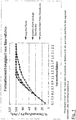
- the chemical reactions of lead sulfate to lead dioxide at the positive electrode and lead sulfate to lead at the negative electrode usually take place at different rates. With progressive formation, the electrodes have a different percentage proportion with respect to the percent conversion of basic lead sulfates to lead dioxide or lead, as in FIG. 1 shown.
- the negative electrodes can be converted from the basic lead sulfates to lead faster than the positive electrodes of lead sulfates to lead dioxide.
- the unequal conversion rate causes the excess electrons at the respective electrode to decompose water and / or other organic components, such as the spreader lead.
- this process begins as soon as the conversion rates of the negative and positive electrodes differ, and instead of the chemical transformation of the lead sulphates in the formation under constant current water and organic components are decomposed.
- the chemical reaction heat of the reaction of lead oxide with sulfuric acid and the ohmic content in the decomposition of the water leads to heating and increases so that the decomposition of the organic components, such as the spreading agent, the plastic content and the oil of the separators, in the formation under constant current.
- the formation is therefore carried out for cooling in water baths. This serves to achieve short formation times at temperatures below 60 ° C and to avoid decomposition of the organic components as far as possible.
- the electrodes and the glass mat must have a defined degree of acid filling. Both the formation with a low acid density of about 1.10 g / cm 3 and the necessary replacement at the end of the formation to the final acid density of about 1.285 g / cm 3 and the generation of a defined degree of filling of the glass fleece and the electrodes is in the acid circulation in the context of required low tolerances can not be achieved. Therefore, another way must be taken to achieve a shortening of the formation times,
- the invention provides a solution characterized in that the formation is carried out at the boiling point of the electrolyte, that the boiling point is adjusted by applying a certain pressure for each individual cell or all cells of the lead-acid battery together that the applied pressure below 500 mbar (50 kPa) and that the evaporation of the water at the boiling point, the latent heat is removed or supplied without a change in temperature.
- the invention is thus based on utilizing the latent heat at the boiling point of the water to stabilize the temperature of the battery in the formation.
- a constant temperature is ensured with heat input of up to 540 kcal / kg of water. The evaporated water cools and keeps the temperature constant.
- the boiling point depends on the pressure.
- the boiling point is at a pressure of less than 500 mbar (50 kPa) between about 50 to 60 ° C, a temperature range at which the formation is usually carried out. At lower temperatures, the chemical conversion rate is lower according to experience, so that the aforementioned range of 50-60 ° C according to the invention is of particular interest.
- the effective acid density in the electrodes is lower than in the common formation method.
- the chemical conversion in the positive electrode is higher in lower acid density, so that an advantage results from the process according to the invention.
- the vacuum avoids the presence of gases in the electrodes, thereby increasing the reactive inner surface area compared to previous formation methods. In the formation according to the invention under vacuum better conversion is achieved at the positive electrode, so that the formation can surprisingly be performed even at temperatures above 60 ° C by a visible reduction in the decomposition of organic components.
- the optimum pressure to be applied and the associated temperature depend on the type of battery.
- the vacuum chambers are advantageously made of stainless steel, but can also be made of thick PP or PE plates with superficial reinforcing ribs and / or inserted steel cores.
- cylindrical chambers are suitable, since they withstand the outer atmospheric pressure particularly well with low material usage.
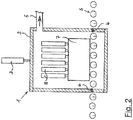
- a first technical realization with an angular, box-shaped vacuum chamber 1 is in the scheme according to FIG. 2 exemplified for a battery 7.
- a longer, a few meters long chamber 1 will be used, with similar dimensions as current Wasserbäder- or acid recirculation systems.
- Round tubular chambers 1, as exemplified in FIG. 3 are shown to be particularly suitable for saving material, since they can withstand the pressure better at lower wall thicknesses.
- At least one vacuum connection 5 which leads to a vacuum pump, not shown here.
- the vacuum connection 5 can lead to a pre-separator, also not shown here.
- the exact dimensions of the vacuum chamber 1 will result from the spatial and ergonomic conditions on site.
- One or more vacuum pumps can be used. It is worth noting that it can come by maintaining a constant low pressure to no training in flammable explosive gas mixture. Behind the vacuum pump, a dilution with air should be used to stay below the ignitable concentration.
- the chamber 1 should be protected against electrostatic discharges solely for safety reasons as Faraday cage.
- various implementations can be selected.
- the use of conductive plastic is the easiest way to use plastic chambers.
- the invention is based on the principle of using the boiling point of the water to keep the temperature within the cells constant.
- the temperature can be kept constant solely by the applied pressure.
- water vapor is generated and the relatively high latent heat of water ensures that the temperature is kept constant.
- the advantage of the method according to the invention is also that it can be used for all battery types, wet and especially AGM and GEL batteries.
- the cooling of the proposal according to the invention is more effective than in acid circulation, since the latent heat is 540 kcal / kg of water, and only 1 kcal / kg can be transferred per 1 ° C during heat exchange.
- the process can thus be controlled very efficiently and precisely.
- the withdrawn amount of water can be calculated exactly on the basis of the amp hours used, so that the required accuracy in terms of the degree of filling of electrolyte of the glass mat and the electrodes can be achieved specifically for AGM batteries. Since the partial pressure of the water is about 40 mbar (4 kPa), the system can be used up to about 40 ° C. Temperatures below 40 ° C are not of interest because of lower chemical conversion rates.
- the invention describes a very effective and very fast process for the formation of wet and AGM batteries.
- the gas is better dissipated and the internal contact area between the surface of the crystals and the electrolyte is increased. This results in a smaller amount of power needed for the formation.
- the manufacturing costs including rectifier are below those of the previous systems.
- the formation time will be slightly below that of the recirculating acid cooling in wet batteries.
Landscapes
- Engineering & Computer Science (AREA)
- Manufacturing & Machinery (AREA)
- Chemical & Material Sciences (AREA)
- Chemical Kinetics & Catalysis (AREA)
- Electrochemistry (AREA)
- General Chemical & Material Sciences (AREA)
- Battery Electrode And Active Subsutance (AREA)
- Secondary Cells (AREA)
Description
- Die vorliegende Erfindung bezieht sich auf einen Fertigungsschritt bei der Herstellung von Bleisäurebatterien, die sogenannte Formation. Unter Formation versteht man die Umwandlung von elektrochemisch neutralen gereiften und getrockneten negativen und positiven Platten, bestehend aus einem Elektrodenträger, 3- oder 4-basisch gereiften Massen sowie Bleioxid, zu geladenen Elektroden. Die positiven Elektroden bestehen nach der Formation aus einer vornehmlich hochporösen Bleidioxid-Kristallstruktur und die negativen aus einer hochporösen Blei-Kristallstruktur.
- Die chemischen Reaktionen von Bleisulfat zu Bleidioxid an der positiven Elektrode sowie Bleisulfat zu Blei an der negativen Elektrode laufen in der Regel unterschiedlich schnell ab. Die Elektroden weisen mit fortschreitender Formation hinsichtlich der prozentualen Umsetzung von basischen Bleisulfaten zu Bleidioxid bzw. Blei einen unterschiedlichen prozentualen Anteil auf, wie in
Figur 1 dargestellt. Die negativen Elektroden lassen sich von den basischen Bleisulfaten schneller zu Blei umwandeln als die positiven Elektroden von Bleisulfaten zu Bleidioxid. Die ungleiche Umwandlungsrate führt dazu, dass die überschüssigen Elektronen an der jeweiligen Elektrode zur Zersetzung von Wasser und/oder anderer organischer Bestandteile, z.B. des Spreizmittels, führen. Elektrochemisch setzt dieser Prozess ein, sobald die Umwandlungsraten bei den negativen und positiven Elektroden voneinander abweichen und statt der chemischen Umwandlung der Bleisulfate bei der Formation unter konstantem Strom Wasser sowie organische Bestandteile zersetzt werden. Die chemische Reaktionswärme der Reaktion von Bleioxid mit Schwefelsäure sowie der Ohm'sche Anteil bei der Zersetzung des Wassers führt zur Erwärmung und erhöht damit die Zersetzung der organischen Bestandteile, wie z.B. des Spreizmittels, des Kunststoffanteils und des Öles der Separatoren, bei der Formation unter konstantem Strom. Üblicherweise wird die Formation daher zur Kühlung in Wasserbädern ausgeführt. Dies dient dazu, kurze Formationszeiten bei Temperaturen unterhalb von 60°C zu erzielen und eine Zersetzung der organischen Bestandteile weitestgehend zu vermeiden. Als kritische Temperatur hat sich im Hinblick auf die Zersetzung der organischen Bestandteile bei der bisherigen Vorgehensweise eine Temperatur von etwa 60°C und darüber herausgestellt. Die positiven Elektroden lassen sich stets schlechter umwandeln als die negativen. Die Umwandlung ist bei der positive Elektrode stark von der Säuredichte des Elektrolyten abhängig. Bei der negativen Elektrode ist diese Abhängigkeit kaum zu beobachten. Bei der positiven Elektrode ist die Umwandlungsrate in niedriger Säuredichte höher als in höherer Säuredichte, wie inFigur 1 dargestellt. - Um die Temperatur konstant zu halten und sehr kurze Formationszeiten zu erzielen, wird seit einigen Jahren eine Formation mit Säurezirkulation und Kühlung eingesetzt. Dabei wird bei der Säurezirkulation zudem eine Formation bei niedriger Säuredichte ausgeführt, bei der sich die basischen Bleisulfate der positiven Elektroden leichter zu Bleidioxid umwandeln lassen. Bei diesem System ist jede Batteriezelle mit einer Zuleitung für den Zu- und Abfluss des Elektrolyten verbunden. Die rückfließende Säure wird über einen Säurekühler geleitet, bevor sie in die Batterie zurückgelangt. Die Säuredichte wird während des Prozesses der Umwandlung konstant niedrig gehalten und erst am Ende auf die Auslieferdichte eingestellt. Das Verfahren erlaubt die Formation in einigen wenigen Stunden. Ein Problem besteht bei diesem Verfahren darin, dass es sich nicht bei den AGM-Batterien mit Glasvlies-Separator einsetzen lässt. Die Abkürzung "AGM" steht für "Absorbent Glass Mat".
- Zur Verkürzung der Formationszeiten ist eine ausreichende Kühlung und Wärmeabfuhr notwendig, um die organischen Bestandteile nicht, wie zuvor beschrieben, zu zersetzen. Um die bei der Umwandlung entstehende Wärme abzuführen werden zwei Verfahren eingesetzt: (A) Die Verwendung von gekühlten Wasserbädern, bei der über die Gehäusewandungen die Wärme abgeführt wird und (B) durch Säureumwälzung und Kühlung der umgewälzten Säure. Bei beiden Verfahren ist die Kühlleistung durch die Wärmekapazität des Elektrolyten begrenzt und bei der Wasserbadkühlung ist die Kühlwirkung zudem durch die Wärmeübergänge innerhalb der Batterien und über die Wandungen an das Wasserbad begrenzt. Speziell für AGM-Batterien ist der innere Wärmetransport durch das Glasvlies sehr gehemmt und schlecht. Eine Säureumwälzung ist nicht effektiv, da nur an der Oberfläche des Plattensatzes ein Wärmeaustausch erfolgt. Ein Austausch der Säure in den Plattensätzen ist aufgrund des Glasvlieses nicht möglich, so dass die bessere Umsetzrate bei niedriger Säuredichte nicht genutzt werden kann. Es muss mit Füll-Säuredichten um die 1.20 g/cm3 und darüber anstelle von 1.10 g/cm3 bei Batterien mit PE-Separatoren, den nassen Bleisäurebatterien, gearbeitet werden. Für die ordnungsgemäße Arbeitsweise der AGM-Batterien müssen die Elektroden sowie das Glasvlies einen definierten Füllgrad an Säure aufweisen. Sowohl die Formation mit niedriger Säuredichte von ungefähr 1.10 g/cm3 und der notwendige Austausch zum Ende der Formation auf die Endsäuredichte von ungefähr 1.285 g/cm3 als auch die Erzeugung eines definierten Füllgrades des Glasvlies und der Elektroden ist bei der Säureumwälzung im Rahmen der erforderlichen geringen Toleranzen nicht erzielbar. Daher muss ein anderer Weg beschritten werden, um eine Verkürzung der Formationszeiten zu erreichen,
- Die Erfindung stellt eine Lösung vor, die dadurch gekennzeichnet ist, dass die Formation am Siedepunkt des Elektrolyten durchgeführt wird, dass der Siedepunktdurch das Anlegen eines bestimmten Drucks für jede einzelne Zelle oder alle Zellen der Bleisäurebatterie gemeinsam eingestellt wird, dass der angelegte Druck unterhalb von 500 mbar (50 kPa) liegt und dass bei der Verdampfung des Wassers am Siedepunkt die latente Wärme entnommen oder zugeführt wird, ohne eine Änderung der Temperatur zu erhalten. Die Erfindung beruht somit darauf, die latente Wärme am Siedepunkt des Wassers zur Stabilisierung der Temperatur der Batterie bei der Formation zu nutzen. Am Siedepunkt wird infolge der latenten Wärme von Wasser eine konstante Temperatur bei Wärmezufuhr von bis zu 540 kcal/kg Wasser gewährleistet. Das verdunstete Wasser kühlt und hält dabei die Temperatur konstant. In der Praxis stellt sich nun das Problem des hohen Siedepunktes von Wasser bei der Formation bei Atmosphärendruck. Bei dieser Temperatur würden die organischen Bestandteile, wie oberhalb beschrieben, zersetzt. Es ist bekannt, dass der Siedepunkt vom äußeren Druck abhängt. Diese Abhängigkeit kann erfindungsgemäß genutzt werden, um das Prinzip der Formation am Siedepunkt praktisch anzuwenden. Daher wird erfindungsgemäß vorgeschlagen, die Formation unter Unterdruck zu führen. Der Siedepunkt ist abhängig vom Druck. Der Siedepunkt liegt bei einem Druck von unter 500 mbar (50kPa) zwischen etwa 50 bis 60°C, einem Temperaturbereich, bei dem üblicherweise die Formation ausgeführt wird. Bei geringeren Temperaturen ist die chemische Umsetzrate erfahrungsgemäß geringer, so dass der zuvor genannte Bereich von 50 - 60°C erfindungsgemäß von besonderem Interesse ist. Es hat sich überraschenderweise gezeigt, dass durch das Vakuum das bei der Formation an der negativen Elektrode entstehende Gas Wasserstoff und an der positiven Elektrode entstehende Gas Sauerstoff durch Volumenvergrößerung im Vakuum umgehend entweicht und dadurch den Säureaustausch verbessert, indem die bei der Umwandlung entstehende Säure hoher Dichte mitgerissen wird. Damit ist die effektive Säuredichte in den Elektroden geringer als bei den geläufigen Formationsverfahren. Wie bereits angesprochen, ist die chemische Umwandlung bei der positiven Elektrode in niedrigerer Säuredichte höher, so dass sich durch das erfindungsgemäße Verfahren ein Vorteil ergibt. Auch wird durch das Vakuum der Verbleib von Gasen in den Elektroden vermieden, wodurch die reaktive innere Oberfläche vergrößert ist, verglichen mit den bisherigen Formationsmethoden. Bei der erfindungsgemäßen Formation unter Vakuum wird eine bessere Umsetzung an der positiven Elektrode erzielt, so dass die Formation überraschenderweise auch bei Temperaturen oberhalb 60°C durch eine sichtliche Verringerung der Zersetzung organischer Bestandteile geführt werden kann. Der optimal anzulegende Druck und die damit verbundene Temperatur sind von der Bauart der Batterie abhängig.
- Da die Kühlung durch Wasserverdunstung in der Batterie erfolgt und nicht außerhalb der Batterie durch ein Wasserbad oder bei der Säureumwälzung durch einen Wärmetauscher, kann mit niedriger Füllsäure gearbeitet werden. Dies ermöglicht auch bei AGM-Batterien eine Formation mit anfänglich niedrigerer Säuredichte. Die Formierung der positiven Elektroden wird dadurch verbessert und die elektrische Energie kann reduziert werden im Vergleich zu den derzeitigen Verfahren zur Formation von AGM-Batterien.
- Der Unterdruck kann auf verschiedene Arten angewendet werden:
- (I) Analog zur Säureumwälzung wird jede Batterie und insbesondere auch jede Zelle mit der Vakuum-Erzeugung verbunden. Dies hat jedoch den Nachteil, dass auf die Wände der Batteriegehäuse die Druckdifferenz zwischen dem angelegten Unterdruck und dem äußeren Atmosphärendruck wirkt. Im Besonderen an den Schweißstellen zwischen Deckel und Kasten treten nicht unerhebliche Kräfte auf.
- (II) Als besonders vorteilhaft hat sich herausgestellt, den Raum um die Batterie unter Unterdruck zu setzen. Als besonders vorteilhafte Realisierung werden die Batterien mit aufgesetzten Säureausgleichsbehältern in Vakuumkammern gestellt. In jedem Fall ist es von Vorteil, Säureausgleichsbehälter oberhalb der Deckel zur Vermeidung von Säureverlusten einzusetzen. Der unter (II) beschriebene Anwendungsfall vermeidet alle mechanischen Beanspruchungen, da sich außerhalb und innerhalb der Batterie der gleiche Druck befindet. Zudem entfallen alle Schlauchanschlüsse an die einzelnen Zellen, was erhebliche Vorteile bei der Umsetzung bietet, da eine manuelle oder automatisierte Kontaktierung entfällt.
- Die Vakuumkammern sind vorteilhaft aus Edelstahl gefertigt, können aber auch aus dicken PP- oder PE-Platten mit oberflächlichen Verstärkungsrippen und/oder eingesetzten Stahlkernen gefertigt sein.
- In besonderer Weise sind zylindrische Kammern geeignet, da sie bei geringem Materialeinsatz dem äußeren Atmosphärendruck besonders gut standhalten.
- Es sind aber auch Vakuumkammern aus anderen Materialien als den zuvor genannten geeignet.
- Da weder Wasserbäder noch ein Säurekühlkreislauf wie bei der Säureumwälzung benötigt werden, ist die Realisierung einfach ausführbar und kostenmäßig den bisherigen Lösungen überlegen. Im Besonderen die geringere Anzahl an Gleichrichtern, verglichen mit der Formation in Wasserbädern, bietet einen Kostenvorteil. Der Transportmechanismus und die Ausführung der Vakuumkammern stellt kein technisches Problem dar.
- Die Figuren der beigefügten Zeichnung zeigen:
- Figur 1
- ein Diagramm mit einer Darstellung der Formationsabhängigkeit von der Säuredichte über den Formationsverlauf, auf welches oben auf Seite 1 und 2 Bezug genommen wird,
- Figur 2
- eine erste Vorrichtung zur Durchführung des Verfahrens, exemplarisch für eine Batterie, und
- Figur 3
- eine zweite Vorrichtung zur Durchführung des Verfahrens, hier für mehrere Batterien.
- Eine erste technische Realisierung mit einer eckigen, kastenförmigen Vakuumkammer 1 ist im Schema gemäß
Figur 2 exemplarisch für eine Batterie 7 dargestellt. In der Praxis wird eine längere, einige Meter lange Kammer 1 zum Einsatz kommen, mit ähnlichen Maßen wie derzeitige Wasserbäder- oder Säureumwälzanlagen. - Runde rohrartige Kammern 1, wie beispielhaft in
Figur 3 gezeigt, sind besonders geeignet, um Material zu sparen, da sie bei geringeren Wandstärken dem Druck besser standhalten. - Das Zuführen der Batterien 7 in die Vakuumkammer 1 und das Abführen der Batterien 7 aus der Vakuumkammer 1 erfolgt mittels Schleusen an den Enden der Kammer über ein Transportband 6. Zur elektrischen Kontaktierung der Batterien 7 mit den Formationsgleichrichtern kann ein Bereich 2 mit einer Anhebevorrichtung 3, wie Hydraulik- oder Pneumatik-Zylinder, zweckmäßigerweise geöffnet werden, z.B. durch Anheben des Bereichs 2, wie in
Figur 2 , oder durch Verschwenken des Bereichs 2 um ein Schwenkgelenk 20, wie inFigur 3 . Im Schließzustand sind die relativ zueinander bewegbaren Teile der Vakuumkammer 1 gegeneinander mittels Dichtungen 4, wie Gummidichtungen, luftdicht abgedichtet. - Zum Erzeugen eines Vakuums in der Vakuumkammer 1 dient wenigstens ein Vakuumanschluss 5, der zu einer hier nicht dargestellten Vakuumpumpe führt. Außerdem kann der Vakuumanschluss 5 zu einem hier ebenfalls nicht dargestellten Vorabscheider führen.
- Die genauen Abmessungen der Vakuumkammer 1 werden sich aus den räumlichen sowie ergonomischen Gegebenheiten vor Ort ergeben.
- Eine oder mehrere Vakuumpumpen können eingesetzt werden. Es ist erwähnenswert, dass es durch die Aufrechterhaltung eines ständigen geringen Drucks zu keiner Ausbildung an zündfähigem Knallgasgemisch kommen kann. Hinter der Vakuumpumpe sollte eine Verdünnung mit Luft genutzt werden, um unterhalb der zündfähigen Konzentration zu bleiben.
- Darüber hinaus sollte die Kammer 1 allein aus Sicherheitsgründen als Faraday-Käfig gegen elektrostatische Entladungen abgesichert sein. Hierzu können verschiedene Realisierungen gewählt werden. Ein Einsatz von leitfähigem Kunststoff ist die einfachste Möglichkeit bei Verwendung von Kammern aus Kunststoff.
- Die Erfindung basiert auf dem Prinzip, den Siedepunkt des Wassers zu nutzen, um die Temperatur innerhalb der Zellen konstant zu halten. Die Temperatur kann allein durch den angelegten Druck konstant gehalten werden. Sobald die Temperatur der Säure lokal den Siedepunkt erreicht, wird Wasserdampf erzeugt und die relativ hohe latente Wärme von Wasser sorgt dafür, dass die Temperatur konstant gehalten wird. Der Vorteil des erfindungsgemäßen Verfahrens besteht ferner darin, dass es für alle Batterietypen, nasse und speziell AGM- und GEL-Batterien einsetzbar ist.
- Die Kühlung des erfindungsmäßigen Vorschlags ist effektiver als bei der Säureumwälzung, da die latente Wärme 540 kcal/kg Wasser beträgt, wobei bei Wärmeaustausch nur 1 kcal/kg pro 1°C übertragen werden kann. Der Prozess lässt sich damit sehr effizient und genau steuern. Die entzogene Wassermenge ist genau anhand der eingesetzten Amperestunden berechenbar, so dass die erforderliche Genauigkeit hinsichtlich des Füllgrades an Elektrolyt des Glasvlieses sowie der Elektroden speziell für AGM-Batterien erzielt werden kann. Da der Partialdruck des Wassers bei ca. 40 mbar (4 kPa) liegt, ist das System bis zu etwa 40°C einsetzbar. Temperaturen unterhalb 40°C sind aufgrund der geringeren chemischen Umsetzraten nicht von Interesse.
- Die Erfindung beschreibt einen sehr effektiven und sehr schnellen Prozess zur Formation von nassen und AGM-Batterien. Durch die Erzeugung des Vakuums wird das Gas besser abgeführt und die interne Kontaktfläche zwischen der Oberfläche der Kristalle und dem Elektrolyten wird vergrößert. Dies führt zu einer geringeren Menge an Strom, die für die Formation benötigt wird. Die Herstellkosten einschließlich Gleichrichter liegen unter denen der bisherigen Anlagen. Die Formationszeit wird bei nassen Batterien ein wenig unterhalb derjenigen der Umwälzsäurekühlung liegen.
- Im Besonderen für AGM-Batterien bietet diese Formation eine wesentliche Verbesserung. Zunächst verringert sich die Formationszeit und zum anderen wird die Qualität gleichmäßiger. Derzeit beträgt die Formationszeit von AGM-Batterien ca. 2 Tage. Bei Einsatz der Erfindung wird sie sich auf weniger als einen halben Tag reduzieren. Da nur AGM-Batterien den zukünftigen Anforderungen der Erstausrüster im Automobilbereich gerecht werden, werden sie die nassen Batterien mittelfristig ersetzen. Bei den Fahrzeugen der gehobenen Klasse ist dies bereits erfolgt, woraus sich die große kommerzieller Bedeutung der Erfindung ableiten lässt.
Bezugszeichenliste: Zeichen Bezeichnung 1 Vakuumkammer 2 anhebbarer Bereich von 1 20 Schwenkgelenk 3 Anhebevorrichtung 4 Dichtungen 5 Vakuumanschluss 6 Transportband 7 Batterien 8 Säureaufsatzbehälter
Claims (7)
- Verfahren zur Formation von nassen und Absorbent Glass Mat (AGM)-Bleisäurebatterien (7) unter Verwendung eines Elektrolyten,
dadurch gekennzeichnet,
dass die Formation am Siedepunkt des Elektrolyten durchgeführt wird, dass der Siedepunkt durch das Anlegen eines bestimmten Drucks für jede einzelne Zelle oder alle Zellen der Bleisäurebatterie (7) gemeinsam eingestellt wird,
dass der angelegte Druck unterhalb von 500 mbar (50 kPa) liegt und
dass dabei die Temperatur aufgrund der latenten Wärme durch die Verdampfung von Wasser konstant gehalten und die notwendige Wärmeabfuhr gewährleistet wird. - Verfahren nach Anspruch 1, dadurch gekennzeichnet, dass der angelegte Druck unterhalb von 200 mbar (20 kPa) liegt.
- Verfahren nach Anspruch 1 oder 2, dadurch gekennzeichnet, dass die Formation ohne Wasserbadkühlung betrieben wird.
- Verfahren nach Anspruch 1 oder 2, dadurch gekennzeichnet, dass die Formation mit Wasserbadkühlung betrieben wird.
- Verfahren nach einem der Ansprüche 1 bis 4 dadurch gekennzeichnet, dass Säureaufsatzbehälter (8) zur Vermeidung von Säureverlusten und als Ausgleichgefäß genutzt werden.
- Verfahren nach Anspruch 5 dadurch gekennzeichnet, dass Säureaufsatzbehälter (8) mit nur einer sehr kleinen, Säurenebel zurückhaltenden und nur Wasserdampf sowie Wasserstoff und Sauerstoff entweichen lassenden Öffnung in der Größenordnung von mm im oberen Bereich eingesetzt werden.
- Verfahren nach einem der Ansprüche 1 bis 6 dadurch gekennzeichnet, dass es in einer die Bleisäurebatterien (7) aufnehmenden, als Faraday-Käfig ausgeführten und vor Entzündung von Knallgas durch Funken oder elektrische Entladungen gesicherten Vakuumkammer (1) durchgeführt wird.
Priority Applications (1)
| Application Number | Priority Date | Filing Date | Title |
|---|---|---|---|
| PL15727586T PL3149791T3 (pl) | 2014-05-27 | 2015-05-22 | Sposób formacji ołowiowo-kwasowych akumulatorów mokrych i AGM |
Applications Claiming Priority (2)
| Application Number | Priority Date | Filing Date | Title |
|---|---|---|---|
| DE102014007920.1A DE102014007920A1 (de) | 2014-05-27 | 2014-05-27 | Formation von nassen und AGM Bleisäure-Batterien am Siedepunkt des Elektrolyten |
| PCT/EP2015/061367 WO2015181065A1 (de) | 2014-05-27 | 2015-05-22 | Verfahren zur formation von nassen und agm-bleisäurebatterien |
Publications (2)
| Publication Number | Publication Date |
|---|---|
| EP3149791A1 EP3149791A1 (de) | 2017-04-05 |
| EP3149791B1 true EP3149791B1 (de) | 2019-06-19 |
Family
ID=53365986
Family Applications (1)
| Application Number | Title | Priority Date | Filing Date |
|---|---|---|---|
| EP15727586.8A Active EP3149791B1 (de) | 2014-05-27 | 2015-05-22 | Verfahren zur formation von nassen und agm-bleisäurebatterien |
Country Status (4)
| Country | Link |
|---|---|
| EP (1) | EP3149791B1 (de) |
| DE (1) | DE102014007920A1 (de) |
| PL (1) | PL3149791T3 (de) |
| WO (1) | WO2015181065A1 (de) |
Families Citing this family (1)
| Publication number | Priority date | Publication date | Assignee | Title |
|---|---|---|---|---|
| CN110783654B (zh) * | 2019-11-05 | 2020-12-04 | 超威电源集团有限公司 | 一种蓄电池真空式化成系统及化成工艺 |
Family Cites Families (9)
| Publication number | Priority date | Publication date | Assignee | Title |
|---|---|---|---|---|
| DE19513343C1 (de) * | 1995-04-08 | 1996-10-10 | Europ Accumulateurs | Verfahren zur Herstellung eines Bleiakkumulators |
| US7091250B2 (en) * | 2002-12-24 | 2006-08-15 | Penox Gmbh | Additive for producing a positive active material for lead-acid storage batteries, a method for its production and a method for its use |
| ITVI20030099A1 (it) * | 2003-05-16 | 2004-11-17 | Franco Stocchiero | Metodo per la formazione di batterie al piombo -acido ed |
| US20050084762A1 (en) * | 2003-10-15 | 2005-04-21 | Vaccaro Frank J. | Hybrid gelled-electrolyte valve-regulated lead-acid battery |
| PL375336A1 (pl) * | 2005-05-24 | 2006-11-27 | Długi Roman Serwis Akpia | Zespół do formowania akumulatorów |
| DE102005024526B4 (de) * | 2005-05-28 | 2010-04-22 | Bernd Münstermann Gmbh & Co. Kg | Verfahren zur Herstellung, Reifung und Trocknung von negativen und positiven Platten für Bleiakkumulatoren |
| US8286676B2 (en) * | 2008-06-24 | 2012-10-16 | Sovema Usa, Inc. | Plant for electrochemical forming of lead-acid batteries |
| US20100239899A1 (en) * | 2009-03-23 | 2010-09-23 | Joe Brown | Gauntlet motive battery |
| ITPD20120329A1 (it) * | 2012-11-06 | 2014-05-07 | Sovema Spa | Impianto e procedimento per la formazione elettrochimica di accumulatori al piombo-acido |
-
2014
- 2014-05-27 DE DE102014007920.1A patent/DE102014007920A1/de not_active Withdrawn
-
2015
- 2015-05-22 EP EP15727586.8A patent/EP3149791B1/de active Active
- 2015-05-22 PL PL15727586T patent/PL3149791T3/pl unknown
- 2015-05-22 WO PCT/EP2015/061367 patent/WO2015181065A1/de not_active Ceased
Non-Patent Citations (1)
| Title |
|---|
| None * |
Also Published As
| Publication number | Publication date |
|---|---|
| WO2015181065A1 (de) | 2015-12-03 |
| DE102014007920A1 (de) | 2015-12-03 |
| PL3149791T3 (pl) | 2020-03-31 |
| EP3149791A1 (de) | 2017-04-05 |
Similar Documents
| Publication | Publication Date | Title |
|---|---|---|
| DE102012109032B4 (de) | Verfahren zum Befüllen elektrochemischer Zellen | |
| DE102014226929A1 (de) | Verfahren zur Herstellung einer durchgängig festen Elektrode mit einem Festelektrolyt-Konzentrationsgradienten | |
| DE2629506A1 (de) | Elektrolysezelle fuer die herstellung von alkalimetallhydroxiden und halogenen | |
| DE2611324A1 (de) | Elektrolysezelle fuer die technische darstellung von fluor | |
| DE112019005761T5 (de) | Prozesse zur Entfernung von reaktivem Lösungsmittel aus Lithium Bis(fluorosulfonyl)imid (LiFSI) unter Verwendung organischer Lösungsmittel, die stabil gegenüber Anoden in Lithium-Ionen- und Lithium-Metall-Batterien sind | |
| WO2012110195A1 (de) | Verfahren zur herstellung von elektroden | |
| DE102015217809A1 (de) | Vorlithiiertes, kohlenstoffbeschichtetes Anodenaktivmaterial | |
| DE19504632A1 (de) | Verfahren und Elektrolyseur zur Elektrolyse eines fluiden Elektrolyts | |
| DE102021214877A1 (de) | Elektrolytische Kupferfolie und Verfahren zur Herstellung der elektrolytischen Kupferfolie | |
| DE102020206447A1 (de) | Verfahren zur Steuerung einer Elektrolysevorrichtung | |
| DE102022110122A1 (de) | Elektrolyseur und Verfahren zur Temperierung eines Elektrolyse-Stacks | |
| EP3149791B1 (de) | Verfahren zur formation von nassen und agm-bleisäurebatterien | |
| DE2417860A1 (de) | Verfahren zur elektrochemischen fluorierung und elektrode zur durchfuehrung des verfahrens | |
| DE69602299T2 (de) | Verfahren zur Herstellung eines aktiven Materials für Kathoden einer nichtwässrigen Sekundärzelle | |
| DE102012000755A1 (de) | Vorrichtung zur Energieumwandlung mit reversibler Energiespeicherung | |
| DE102013206496A1 (de) | Elektrolysevorrichtung | |
| DE2719759A1 (de) | Elektrolysezelle | |
| EP1886366B1 (de) | Verfahren zur herstellung, reifung und trocknung von negativen und positiven platten für bleiakkumulatoren | |
| DE2725738A1 (de) | Verfahren zur halogen-speicherung bei einem halogenid-akku und dafuer geeigneter akkumulator | |
| WO2024200100A1 (de) | Verfahren zur herstellung einer lithiumhaltigen elektrode und elektrochemische zelle | |
| DE102022133259A1 (de) | Verfahren zur Herstellung einer Batteriezelle | |
| DE102020103404A1 (de) | Passivierende Deckschicht auf einer Elektrode einer elektrochemischen Zelle | |
| EP1575117B1 (de) | Wartungsfreier Akkumulator und Verfahren zu dessen Herstellung | |
| DE102014112059A1 (de) | Brennstoffzellensystem-Reaktionsgasbehälter mit optimierter Raumausnutzung | |
| DE102014005755A1 (de) | Verfahren zur elektrolytischen Herstellung von hochreinem Kupfer mit sehr niedrigen Schwefelgehalten |
Legal Events
| Date | Code | Title | Description |
|---|---|---|---|
| STAA | Information on the status of an ep patent application or granted ep patent |
Free format text: STATUS: THE INTERNATIONAL PUBLICATION HAS BEEN MADE |
|
| PUAI | Public reference made under article 153(3) epc to a published international application that has entered the european phase |
Free format text: ORIGINAL CODE: 0009012 |
|
| STAA | Information on the status of an ep patent application or granted ep patent |
Free format text: STATUS: REQUEST FOR EXAMINATION WAS MADE |
|
| 17P | Request for examination filed |
Effective date: 20161116 |
|
| AK | Designated contracting states |
Kind code of ref document: A1 Designated state(s): AL AT BE BG CH CY CZ DE DK EE ES FI FR GB GR HR HU IE IS IT LI LT LU LV MC MK MT NL NO PL PT RO RS SE SI SK SM TR |
|
| AX | Request for extension of the european patent |
Extension state: BA ME |
|
| DAV | Request for validation of the european patent (deleted) | ||
| DAX | Request for extension of the european patent (deleted) | ||
| STAA | Information on the status of an ep patent application or granted ep patent |
Free format text: STATUS: EXAMINATION IS IN PROGRESS |
|
| 17Q | First examination report despatched |
Effective date: 20180227 |
|
| RAP1 | Party data changed (applicant data changed or rights of an application transferred) |
Owner name: BERND MUENSTERMANN GMBH & CO. KG Owner name: NITSCHE, WERNER |
|
| RIN1 | Information on inventor provided before grant (corrected) |
Inventor name: BERND MUENSTERMANN GMBH & CO. KG Inventor name: NITSCHE, WERNER |
|
| GRAP | Despatch of communication of intention to grant a patent |
Free format text: ORIGINAL CODE: EPIDOSNIGR1 |
|
| STAA | Information on the status of an ep patent application or granted ep patent |
Free format text: STATUS: GRANT OF PATENT IS INTENDED |
|
| GRAJ | Information related to disapproval of communication of intention to grant by the applicant or resumption of examination proceedings by the epo deleted |
Free format text: ORIGINAL CODE: EPIDOSDIGR1 |
|
| STAA | Information on the status of an ep patent application or granted ep patent |
Free format text: STATUS: EXAMINATION IS IN PROGRESS |
|
| INTG | Intention to grant announced |
Effective date: 20181116 |
|
| INTC | Intention to grant announced (deleted) | ||
| RIN1 | Information on inventor provided before grant (corrected) |
Inventor name: NITSCHE, WERNER |
|
| GRAP | Despatch of communication of intention to grant a patent |
Free format text: ORIGINAL CODE: EPIDOSNIGR1 |
|
| STAA | Information on the status of an ep patent application or granted ep patent |
Free format text: STATUS: GRANT OF PATENT IS INTENDED |
|
| INTG | Intention to grant announced |
Effective date: 20190109 |
|
| GRAS | Grant fee paid |
Free format text: ORIGINAL CODE: EPIDOSNIGR3 |
|
| GRAA | (expected) grant |
Free format text: ORIGINAL CODE: 0009210 |
|
| STAA | Information on the status of an ep patent application or granted ep patent |
Free format text: STATUS: THE PATENT HAS BEEN GRANTED |
|
| AK | Designated contracting states |
Kind code of ref document: B1 Designated state(s): AL AT BE BG CH CY CZ DE DK EE ES FI FR GB GR HR HU IE IS IT LI LT LU LV MC MK MT NL NO PL PT RO RS SE SI SK SM TR |
|
| REG | Reference to a national code |
Ref country code: GB Ref legal event code: FG4D Free format text: NOT ENGLISH |
|
| REG | Reference to a national code |
Ref country code: CH Ref legal event code: EP |
|
| REG | Reference to a national code |
Ref country code: IE Ref legal event code: FG4D Free format text: LANGUAGE OF EP DOCUMENT: GERMAN |
|
| REG | Reference to a national code |
Ref country code: DE Ref legal event code: R096 Ref document number: 502015009385 Country of ref document: DE |
|
| REG | Reference to a national code |
Ref country code: AT Ref legal event code: REF Ref document number: 1146651 Country of ref document: AT Kind code of ref document: T Effective date: 20190715 |
|
| REG | Reference to a national code |
Ref country code: RO Ref legal event code: EPE |
|
| REG | Reference to a national code |
Ref country code: NL Ref legal event code: MP Effective date: 20190619 |
|
| PG25 | Lapsed in a contracting state [announced via postgrant information from national office to epo] |
Ref country code: AL Free format text: LAPSE BECAUSE OF FAILURE TO SUBMIT A TRANSLATION OF THE DESCRIPTION OR TO PAY THE FEE WITHIN THE PRESCRIBED TIME-LIMIT Effective date: 20190619 Ref country code: LT Free format text: LAPSE BECAUSE OF FAILURE TO SUBMIT A TRANSLATION OF THE DESCRIPTION OR TO PAY THE FEE WITHIN THE PRESCRIBED TIME-LIMIT Effective date: 20190619 Ref country code: SE Free format text: LAPSE BECAUSE OF FAILURE TO SUBMIT A TRANSLATION OF THE DESCRIPTION OR TO PAY THE FEE WITHIN THE PRESCRIBED TIME-LIMIT Effective date: 20190619 Ref country code: FI Free format text: LAPSE BECAUSE OF FAILURE TO SUBMIT A TRANSLATION OF THE DESCRIPTION OR TO PAY THE FEE WITHIN THE PRESCRIBED TIME-LIMIT Effective date: 20190619 Ref country code: NO Free format text: LAPSE BECAUSE OF FAILURE TO SUBMIT A TRANSLATION OF THE DESCRIPTION OR TO PAY THE FEE WITHIN THE PRESCRIBED TIME-LIMIT Effective date: 20190919 Ref country code: HR Free format text: LAPSE BECAUSE OF FAILURE TO SUBMIT A TRANSLATION OF THE DESCRIPTION OR TO PAY THE FEE WITHIN THE PRESCRIBED TIME-LIMIT Effective date: 20190619 |
|
| REG | Reference to a national code |
Ref country code: LT Ref legal event code: MG4D |
|
| PG25 | Lapsed in a contracting state [announced via postgrant information from national office to epo] |
Ref country code: LV Free format text: LAPSE BECAUSE OF FAILURE TO SUBMIT A TRANSLATION OF THE DESCRIPTION OR TO PAY THE FEE WITHIN THE PRESCRIBED TIME-LIMIT Effective date: 20190619 Ref country code: GR Free format text: LAPSE BECAUSE OF FAILURE TO SUBMIT A TRANSLATION OF THE DESCRIPTION OR TO PAY THE FEE WITHIN THE PRESCRIBED TIME-LIMIT Effective date: 20190920 Ref country code: RS Free format text: LAPSE BECAUSE OF FAILURE TO SUBMIT A TRANSLATION OF THE DESCRIPTION OR TO PAY THE FEE WITHIN THE PRESCRIBED TIME-LIMIT Effective date: 20190619 |
|
| PG25 | Lapsed in a contracting state [announced via postgrant information from national office to epo] |
Ref country code: NL Free format text: LAPSE BECAUSE OF FAILURE TO SUBMIT A TRANSLATION OF THE DESCRIPTION OR TO PAY THE FEE WITHIN THE PRESCRIBED TIME-LIMIT Effective date: 20190619 Ref country code: CZ Free format text: LAPSE BECAUSE OF FAILURE TO SUBMIT A TRANSLATION OF THE DESCRIPTION OR TO PAY THE FEE WITHIN THE PRESCRIBED TIME-LIMIT Effective date: 20190619 Ref country code: EE Free format text: LAPSE BECAUSE OF FAILURE TO SUBMIT A TRANSLATION OF THE DESCRIPTION OR TO PAY THE FEE WITHIN THE PRESCRIBED TIME-LIMIT Effective date: 20190619 Ref country code: PT Free format text: LAPSE BECAUSE OF FAILURE TO SUBMIT A TRANSLATION OF THE DESCRIPTION OR TO PAY THE FEE WITHIN THE PRESCRIBED TIME-LIMIT Effective date: 20191021 Ref country code: SK Free format text: LAPSE BECAUSE OF FAILURE TO SUBMIT A TRANSLATION OF THE DESCRIPTION OR TO PAY THE FEE WITHIN THE PRESCRIBED TIME-LIMIT Effective date: 20190619 |
|
| PG25 | Lapsed in a contracting state [announced via postgrant information from national office to epo] |
Ref country code: IS Free format text: LAPSE BECAUSE OF FAILURE TO SUBMIT A TRANSLATION OF THE DESCRIPTION OR TO PAY THE FEE WITHIN THE PRESCRIBED TIME-LIMIT Effective date: 20191019 Ref country code: SM Free format text: LAPSE BECAUSE OF FAILURE TO SUBMIT A TRANSLATION OF THE DESCRIPTION OR TO PAY THE FEE WITHIN THE PRESCRIBED TIME-LIMIT Effective date: 20190619 |
|
| PG25 | Lapsed in a contracting state [announced via postgrant information from national office to epo] |
Ref country code: DK Free format text: LAPSE BECAUSE OF FAILURE TO SUBMIT A TRANSLATION OF THE DESCRIPTION OR TO PAY THE FEE WITHIN THE PRESCRIBED TIME-LIMIT Effective date: 20190619 |
|
| PG25 | Lapsed in a contracting state [announced via postgrant information from national office to epo] |
Ref country code: IS Free format text: LAPSE BECAUSE OF FAILURE TO SUBMIT A TRANSLATION OF THE DESCRIPTION OR TO PAY THE FEE WITHIN THE PRESCRIBED TIME-LIMIT Effective date: 20200224 |
|
| REG | Reference to a national code |
Ref country code: DE Ref legal event code: R097 Ref document number: 502015009385 Country of ref document: DE |
|
| PLBE | No opposition filed within time limit |
Free format text: ORIGINAL CODE: 0009261 |
|
| STAA | Information on the status of an ep patent application or granted ep patent |
Free format text: STATUS: NO OPPOSITION FILED WITHIN TIME LIMIT |
|
| PG2D | Information on lapse in contracting state deleted |
Ref country code: IS |
|
| 26N | No opposition filed |
Effective date: 20200603 |
|
| PG25 | Lapsed in a contracting state [announced via postgrant information from national office to epo] |
Ref country code: SI Free format text: LAPSE BECAUSE OF FAILURE TO SUBMIT A TRANSLATION OF THE DESCRIPTION OR TO PAY THE FEE WITHIN THE PRESCRIBED TIME-LIMIT Effective date: 20190619 |
|
| PG25 | Lapsed in a contracting state [announced via postgrant information from national office to epo] |
Ref country code: ES Free format text: LAPSE BECAUSE OF FAILURE TO SUBMIT A TRANSLATION OF THE DESCRIPTION OR TO PAY THE FEE WITHIN THE PRESCRIBED TIME-LIMIT Effective date: 20190619 |
|
| PG25 | Lapsed in a contracting state [announced via postgrant information from national office to epo] |
Ref country code: LI Free format text: LAPSE BECAUSE OF NON-PAYMENT OF DUE FEES Effective date: 20200531 Ref country code: CH Free format text: LAPSE BECAUSE OF NON-PAYMENT OF DUE FEES Effective date: 20200531 Ref country code: MC Free format text: LAPSE BECAUSE OF FAILURE TO SUBMIT A TRANSLATION OF THE DESCRIPTION OR TO PAY THE FEE WITHIN THE PRESCRIBED TIME-LIMIT Effective date: 20190619 |
|
| REG | Reference to a national code |
Ref country code: BE Ref legal event code: MM Effective date: 20200531 |
|
| GBPC | Gb: european patent ceased through non-payment of renewal fee |
Effective date: 20200522 |
|
| PG25 | Lapsed in a contracting state [announced via postgrant information from national office to epo] |
Ref country code: LU Free format text: LAPSE BECAUSE OF NON-PAYMENT OF DUE FEES Effective date: 20200522 |
|
| PG25 | Lapsed in a contracting state [announced via postgrant information from national office to epo] |
Ref country code: GB Free format text: LAPSE BECAUSE OF NON-PAYMENT OF DUE FEES Effective date: 20200522 Ref country code: IE Free format text: LAPSE BECAUSE OF NON-PAYMENT OF DUE FEES Effective date: 20200522 Ref country code: FR Free format text: LAPSE BECAUSE OF NON-PAYMENT OF DUE FEES Effective date: 20200531 |
|
| PG25 | Lapsed in a contracting state [announced via postgrant information from national office to epo] |
Ref country code: BE Free format text: LAPSE BECAUSE OF NON-PAYMENT OF DUE FEES Effective date: 20200531 |
|
| PGFP | Annual fee paid to national office [announced via postgrant information from national office to epo] |
Ref country code: RO Payment date: 20210507 Year of fee payment: 7 |
|
| PGFP | Annual fee paid to national office [announced via postgrant information from national office to epo] |
Ref country code: AT Payment date: 20210510 Year of fee payment: 7 Ref country code: TR Payment date: 20210518 Year of fee payment: 7 Ref country code: BG Payment date: 20210528 Year of fee payment: 7 Ref country code: PL Payment date: 20210513 Year of fee payment: 7 |
|
| PG25 | Lapsed in a contracting state [announced via postgrant information from national office to epo] |
Ref country code: MT Free format text: LAPSE BECAUSE OF FAILURE TO SUBMIT A TRANSLATION OF THE DESCRIPTION OR TO PAY THE FEE WITHIN THE PRESCRIBED TIME-LIMIT Effective date: 20190619 Ref country code: CY Free format text: LAPSE BECAUSE OF FAILURE TO SUBMIT A TRANSLATION OF THE DESCRIPTION OR TO PAY THE FEE WITHIN THE PRESCRIBED TIME-LIMIT Effective date: 20190619 |
|
| PG25 | Lapsed in a contracting state [announced via postgrant information from national office to epo] |
Ref country code: MK Free format text: LAPSE BECAUSE OF FAILURE TO SUBMIT A TRANSLATION OF THE DESCRIPTION OR TO PAY THE FEE WITHIN THE PRESCRIBED TIME-LIMIT Effective date: 20190619 |
|
| REG | Reference to a national code |
Ref country code: AT Ref legal event code: MM01 Ref document number: 1146651 Country of ref document: AT Kind code of ref document: T Effective date: 20220522 |
|
| PG25 | Lapsed in a contracting state [announced via postgrant information from national office to epo] |
Ref country code: RO Free format text: LAPSE BECAUSE OF NON-PAYMENT OF DUE FEES Effective date: 20220522 Ref country code: AT Free format text: LAPSE BECAUSE OF NON-PAYMENT OF DUE FEES Effective date: 20220522 |
|
| PG25 | Lapsed in a contracting state [announced via postgrant information from national office to epo] |
Ref country code: PL Free format text: LAPSE BECAUSE OF NON-PAYMENT OF DUE FEES Effective date: 20220522 |
|
| PGFP | Annual fee paid to national office [announced via postgrant information from national office to epo] |
Ref country code: DE Payment date: 20230705 Year of fee payment: 9 |
|
| REG | Reference to a national code |
Ref country code: DE Ref legal event code: R082 Ref document number: 502015009385 Country of ref document: DE Representative=s name: SCHULZE HORN, KATHRIN, DE |
|
| PG25 | Lapsed in a contracting state [announced via postgrant information from national office to epo] |
Ref country code: BG Free format text: LAPSE BECAUSE OF NON-PAYMENT OF DUE FEES Effective date: 20220522 |
|
| PGFP | Annual fee paid to national office [announced via postgrant information from national office to epo] |
Ref country code: IT Payment date: 20240513 Year of fee payment: 10 |
|
| REG | Reference to a national code |
Ref country code: DE Ref legal event code: R119 Ref document number: 502015009385 Country of ref document: DE |
|
| PG25 | Lapsed in a contracting state [announced via postgrant information from national office to epo] |
Ref country code: DE Free format text: LAPSE BECAUSE OF NON-PAYMENT OF DUE FEES Effective date: 20241203 |
|
| PG25 | Lapsed in a contracting state [announced via postgrant information from national office to epo] |
Ref country code: IT Free format text: LAPSE BECAUSE OF NON-PAYMENT OF DUE FEES Effective date: 20250522 |