EP3149869B1 - Softpufferverarbeitungsverfahren und -vorrichtung - Google Patents
Softpufferverarbeitungsverfahren und -vorrichtung Download PDFInfo
- Publication number
- EP3149869B1 EP3149869B1 EP15799073.0A EP15799073A EP3149869B1 EP 3149869 B1 EP3149869 B1 EP 3149869B1 EP 15799073 A EP15799073 A EP 15799073A EP 3149869 B1 EP3149869 B1 EP 3149869B1
- Authority
- EP
- European Patent Office
- Prior art keywords
- data
- soft buffer
- soft
- harq
- size
- Prior art date
- Legal status (The legal status is an assumption and is not a legal conclusion. Google has not performed a legal analysis and makes no representation as to the accuracy of the status listed.)
- Active
Links
Images
Classifications
-
- H—ELECTRICITY
- H04—ELECTRIC COMMUNICATION TECHNIQUE
- H04W—WIRELESS COMMUNICATION NETWORKS
- H04W72/00—Local resource management
- H04W72/04—Wireless resource allocation
- H04W72/044—Wireless resource allocation based on the type of the allocated resource
- H04W72/0446—Resources in time domain, e.g. slots or frames
-
- H—ELECTRICITY
- H04—ELECTRIC COMMUNICATION TECHNIQUE
- H04L—TRANSMISSION OF DIGITAL INFORMATION, e.g. TELEGRAPHIC COMMUNICATION
- H04L1/00—Arrangements for detecting or preventing errors in the information received
- H04L1/12—Arrangements for detecting or preventing errors in the information received by using return channel
- H04L1/16—Arrangements for detecting or preventing errors in the information received by using return channel in which the return channel carries supervisory signals, e.g. repetition request signals
- H04L1/18—Automatic repetition systems, e.g. Van Duuren systems
-
- H—ELECTRICITY
- H04—ELECTRIC COMMUNICATION TECHNIQUE
- H04L—TRANSMISSION OF DIGITAL INFORMATION, e.g. TELEGRAPHIC COMMUNICATION
- H04L1/00—Arrangements for detecting or preventing errors in the information received
- H04L1/12—Arrangements for detecting or preventing errors in the information received by using return channel
- H04L1/16—Arrangements for detecting or preventing errors in the information received by using return channel in which the return channel carries supervisory signals, e.g. repetition request signals
- H04L1/18—Automatic repetition systems, e.g. Van Duuren systems
- H04L1/1822—Automatic repetition systems, e.g. Van Duuren systems involving configuration of automatic repeat request [ARQ] with parallel processes
-
- H—ELECTRICITY
- H04—ELECTRIC COMMUNICATION TECHNIQUE
- H04L—TRANSMISSION OF DIGITAL INFORMATION, e.g. TELEGRAPHIC COMMUNICATION
- H04L1/00—Arrangements for detecting or preventing errors in the information received
- H04L1/12—Arrangements for detecting or preventing errors in the information received by using return channel
- H04L1/16—Arrangements for detecting or preventing errors in the information received by using return channel in which the return channel carries supervisory signals, e.g. repetition request signals
- H04L1/18—Automatic repetition systems, e.g. Van Duuren systems
- H04L1/1829—Arrangements specially adapted for the receiver end
- H04L1/1835—Buffer management
- H04L1/1845—Combining techniques, e.g. code combining
-
- H—ELECTRICITY
- H04—ELECTRIC COMMUNICATION TECHNIQUE
- H04L—TRANSMISSION OF DIGITAL INFORMATION, e.g. TELEGRAPHIC COMMUNICATION
- H04L1/00—Arrangements for detecting or preventing errors in the information received
- H04L1/12—Arrangements for detecting or preventing errors in the information received by using return channel
- H04L1/16—Arrangements for detecting or preventing errors in the information received by using return channel in which the return channel carries supervisory signals, e.g. repetition request signals
- H04L1/18—Automatic repetition systems, e.g. Van Duuren systems
- H04L1/1829—Arrangements specially adapted for the receiver end
- H04L1/1864—ARQ related signaling
-
- H—ELECTRICITY
- H04—ELECTRIC COMMUNICATION TECHNIQUE
- H04W—WIRELESS COMMUNICATION NETWORKS
- H04W72/00—Local resource management
- H04W72/20—Control channels or signalling for resource management
- H04W72/23—Control channels or signalling for resource management in the downlink direction of a wireless link, i.e. towards a terminal
-
- H—ELECTRICITY
- H04—ELECTRIC COMMUNICATION TECHNIQUE
- H04W—WIRELESS COMMUNICATION NETWORKS
- H04W72/00—Local resource management
- H04W72/50—Allocation or scheduling criteria for wireless resources
- H04W72/56—Allocation or scheduling criteria for wireless resources based on priority criteria
-
- H—ELECTRICITY
- H04—ELECTRIC COMMUNICATION TECHNIQUE
- H04W—WIRELESS COMMUNICATION NETWORKS
- H04W76/00—Connection management
- H04W76/10—Connection setup
- H04W76/14—Direct-mode setup
Definitions
- the present invention relates to the field of mobile communications, and particularly to a soft buffer processing method and apparatus.
- a Long Term Evolution (LTE) system supports two working modes, i.e., Time Division Duplex (TDD) and Frequency Division Duplex (FDD).
- TDD Time Division Duplex
- FDD Frequency Division Duplex
- Fig. 1 a frame structure of a TDD system is shown. Each wireless frame is 10ms in length and is bisected into two half-frames each 5ms in length. Each half-frame contains 8 time slots each 0.5ms in length and 3 special fields, i.e., a Downlink Pilot Time Slot (DwPTS), a Guard Period (GP) and an Uplink Pilot Time Slot (UpPTS). The sum of the length of the 3 special fields is 1ms.
- DwPTS Downlink Pilot Time Slot
- GP Guard Period
- UpPTS Uplink Pilot Time Slot
- Each subframe is formed of two continuous time slots, that is, the kth subframe contains a time slot 2k and a time slot 2k+1.
- the TDD system supports 7 uplink/downlink configurations, as shown in Table 1.
- D is a downlink subframe
- U is an uplink subframe
- S is a special subframe containing the above 3 special fields.
- Table 1 Uplink/downlink configurations of LTE TDD Configuration No. Cycle of conversion points Sub frame No.
- a Physical Downlink Control Channel schedules a Physical Downlink Shared Channel (PDSCH) within a current subframe.
- the HARQ-ACK information of PDSCHs in 0, 1 or more downlink subframes or HARQ-ACK information corresponding to PDCCHs indicating downlink Semi-Persistent Scheduling release (SPS release) may be fed back.
- the indexes of these downlink subframes are n-k, where k belongs to a set K, and the set K is determined by the TDD uplink/downlink configuration and an uplink subframe n, as shown in Table 2.
- Table 2 Index set K Uplink/downlink configuration
- the maximum number of downlink HARQ processes corresponding to the above 7 TDD uplink/downlink configurations is different.
- the maximum number of downlink HARQ processes of each TDD uplink/downlink configuration is specified.
- a correspondence between the TDD uplink/downlink configuration and the maximum number of downlink HARQ processes is shown in Table 3.
- the maximum number of downlink HARQ processes is 8.
- Table 3 Correspondence between the TDD uplink/downlink configuration and the maximum number of downlink HARQ processes Uplink/downlink configuration The maximum number of downlink HARQ processes 0 4 1 7 2 10 3 9 4 12 5 15 6 6
- the soft buffer is used for storing the received soft bits when UE fails to correctly decode data sent by a base station.
- the soft bits in the soft buffer may be softly merged during HARQ retransmission, so that the link performance is improved.
- the soft buffer processing will influence the rate matching (RM) of downlink data.
- the size of a soft buffer for the UE is described as N soft , and the specific value of N soft is related to the capability of the UE.
- rate matching is performed according to the condition that the UE only configures the current one carrier.
- the processing result is that the hypothetical HARQ soft buffer for one code block in rate matching may be greater than the soft buffer capacity that the UE can support.
- the UE In Release 10 of LTE TDD, it is assumed that the UE equally divides its soft buffer to a plurality of cells. In order to better support HARQ Incremental Redundancy (IR), the base station needs to know which soft bits the UE stores when the UE fails to correctly decode one code block. Therefore, the number of the carriers configured by the UE is described as N cells DL , and for each cell and at least K MIMO ⁇ min( M DL_HARQ , M limit ) transport blocks, when one code block of one transport block fails to be decoded, it is stipulated in the LTE-A that the UE needs to store soft bits w k w k +1, ...
- n SB min N cb ⁇ N soft C ⁇ N cells DL ⁇ K MIMO ⁇ min M DL _ HARQ M limit ⁇ ; is one soft bit received by the UE, and k is the smallest index among indexes of the soft bits received by the UE.
- a present LET system if UE is in connection with a cellular network, the UE needs to receive PDSCH data sent by a base station and also D2D (Device-to-Device) signals or channels.
- D2D Device-to-Device
- the D2D communication under the coverage of an LTE cell occupies uplink resources, i.e., an uplink carrier of an FDD cell or an uplink subframe of a TDD cell.
- the UE needs to receive PDSCH data sent by a base station and also D2D data.
- the received soft bits are stored, and the soft bits may be softly merged during HARQ retransmission, so that the link performance is improved.
- the received soft bits are stored, and the soft bits may be softly merged between multiple times of transmission of the D2D data, so that the D2D link performance is improved.
- the soft buffer for the UE is used for storing soft bits of PDSCH data, but a soft buffer is also required to store soft bits of D2D data.
- D2D includes D2D discovery and D2D communication, where D2D communication in turn includes Scheduling Assignment (SA) for scheduling D2D communication and D2D communication data.
- SA Scheduling Assignment
- the D2D data as described in this application includes D2D discovery information, SA and D2D communication data, all of these data are transmitted for many times and many times of transmission are combined and then decoded.
- the number of bits of the D2D discovery information is constant, i.e., 232 bits, occupying two physical resource blocks for transmission; the number of bits of SA is related to the bandwidth of the carrier, and the number of bits of the SA is small, even smaller than that of the D2D discovery information.
- WO 2014/007580 A1 and US 2015/180616 A1 disclose a terminal that sets a partial region of a soft buffer, such that D2D HARQ data and eNB2D HARQ data share the partial region of a soft buffer based on a predefined rule.
- the number of bits of the D2D communication data is large, may occupy the whole system bandwidth for transmission, and is equivalent to the bits of information transmitted over normal cellular communications.
- An objective of the present invention is to solve at least one of the above technical defects, so that the soft buffer processing may be performed in a WAN system configured with D2D receiving subframes, and the problem of soft buffer processing required for receiving D2D data and PDSCH data is solved.
- the present application provides a soft buffer processing method of a terminal in a wireless communication system according to the appended claims.
- the present application further provides a terminal of processing a soft buffer in a wireless communication system according to the appended claims.
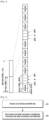
- the present application provides a soft buffer processing method. As shown in Fig. 2 , the method includes the following steps: Step 201: D2D data and PDSCH data are received by UE.
- the UE may acquire distribution information of D2D subframes, so as to know which subframes are used for D2D transmission and reception.
- Step 202 Soft buffer processing is performed on both the D2D data and the PDSCH data by the UE.
- the UE When a part of subframes in uplink subframes of a TDD or FDD serving cell where the UE is located are configured as D2D subframes, the UE currently has D2D processes of retransmission mode in one or more of the D2D subframes, and the newly transmitted data and the retransmitted data may be merged (for example, redundant incremental merging or chase merging, etc.), the soft bits of both the PDSCH data and the D2D data need to be specially processed.
- the D2D processes of retransmission mode refer to transmission of the D2D processes in hybrid retransmission (including hybrid retransmission with ACK feedback and hybrid retransmission without ACK feedback) modes.
- the PDSCH soft buffer processing method and the D2D soft buffer processing method will be specifically described as below by specific embodiments.
- Embodiment 1 (not part of the presently claimed invention):
- the UE uses an additional soft buffer to store soft bit information of the D2D transmission. That is, the UE does not use a soft buffer currently used for receiving PDSCH data to store soft bits of the D2D data.
- the UE capability information of UE supporting D2D includes information about the size of a soft buffer for the D2D. For example, the information about the size may be a level of size, and different levels of size are corresponding to different sizes of soft buffers Nsoft_D2D.
- the Nsoft_D2D is indicated by the UE capability information, and different UE capabilities are corresponding to different values of Nsoft_D2D.
- the UE which transmits D2D data, may be unaware of the level of size of a D2D soft buffer of the UE which receives the D2D data. Therefore, in a protocol, it is required to determine a value of Nsoft_D2D for the UE supporting D2D. For example, according to the maximum value of broadcast communication data blocks possibly to be transmitted, the value of the size of a minimum D2D soft buffer of receiving UE may be determined via a protocol.
- One processing method is: D2D processes of one or more retransmission modes configured within a D2D data merging cycle share a D2D soft buffer of a size of Nsoft_D2D; and
- Nsoft_D2D is the size of a soft buffer available for every D2D process of retransmission mode.
- rate matching is performed according to the condition that the UE only configures the current one carrier.
- the processing result is that the hypothetical HARQ soft buffer for one code block in rate matching may be greater than the soft buffer capacity that the UE can support.
- a base station needs to know which soft bits the UE stores when the UE fails to correctly decode one code block.
- Embodiment 2 (not part of the presently claimed invention):
- D2D data and PDSCH data share an existing soft buffer.
- a D2D soft buffer processing method is as follows: UE receives the size Nsoft_D2D of a D2D soft buffer configured by high-level signaling from a base station, and one or more D2D processes of retransmission mode configured within a D2D data merging cycle share this D2D soft buffer of the size Nsoft_D2D.
- Another D2D soft buffer processing method is as follows: the UE receives the size Nsoft_D2D of a D2D soft buffer configured by high-level signaling from the base station.
- Nsoft_D2D is the size of a soft buffer available for every D2D process of retransmission mode.
- the soft buffer processing mode of D2D data is the same as Embodiment 1, and will not be repeated here.
- the soft buffer processing method of PDSCH is as follows: the size of a soft buffer for the UE available for PDSCH transmission is N soft -Nsoft_D2D.
- N soft the size of the soft buffer for the UE is recoded as N soft .
- the present application provides two preferred methods for determining N IR .
- N IR ⁇ N soft ⁇ N soft _ D 2 D K c ⁇ K MIMO ⁇ min M DL_HARQ , M limit ⁇ .
- This method can ensure that the size of a soft buffer reserved by a sending terminal for each code block is more approximate to the actual needs, and the division of the soft buffer is superior.
- N IR ⁇ N soft K C ⁇ K MIMO ⁇ min M DL_HARQ M limit ⁇ ;
- the result of the above processing is the hypothetical HARQ soft buffer for one code block in rate matching may be greater than the soft buffer capacity that the UE can support.
- this method has low implementation complexity.
- rate matching is performed according to the condition that the UE only configures the current one carrier.
- the processing result is that the hypothetical HARQ soft buffer for one code block in rate matching may be greater than the soft buffer capacity that the UE can support.
- the UE In Release 10 of the LTE TDD, it is assumed that the UE equally divides its soft buffer to a plurality of cells.
- HARQ Incremental Redundancy IR
- a base station needs to know which soft bits the UE stores when the UE fails to correctly decode one code block.
- the soft buffer processing method of PDSCH is as follows: the UE subtracts the size of a D2D soft buffer from the size of a soft buffer indicated by the existing capability, where the size of the D2D soft buffer is equal to a product of multiplying the size of the soft buffer for each D2D process of retransmission mode by the number of D2D processes of retransmission mode configured within a D2D data merging cycle, i.e., L ⁇ Nsoft_D2D.
- This method can ensure that the size of a soft buffer reserved by a sending terminal for each code block is more approximate to the actual needs, and the division of the soft buffer is superior.
- N IR ⁇ N soft K C ⁇ K MIMO ⁇ min M DL_HARQ , M limit ⁇ .
- the result of the above processing is the hypothetical HARQ soft buffer for one code block in rate matching may be greater than the soft buffer capacity that the UE can support.
- this method has low implementation complexity.
- rate matching is performed according to the condition that the UE only configures the current one carrier.
- the processing result is that the hypothetical HARQ soft buffer for one code block in rate matching may be greater than the soft buffer capacity that the UE can support.
- the UE In Release 10 of the LTE TDD, it is assumed that the UE equally divides its soft buffer to a plurality of cells.
- HARQ Incremental Redundancy IR
- a base station needs to know which soft bits the UE stores when the UE fails to correctly decode one code block.
- the number of the carriers configured by the UE is described as N cells DL , and for each cell and at least K MIMO ⁇ min( M DL_HARQ , M limit ) transport blocks, when one code block of one transport block fails to be decoded, the UE needs to store soft bits W k W k +1 , ...
- n SB min N cb ⁇ N soft ⁇ L * N soft _ D 2 D C ⁇ N cells DL ⁇ K MIMO ⁇ min M DL _ HARQ M limit ⁇ ;
- W k is one soft bit received by the UE, and k is the smallest index among indexes of the soft bits received by the UE;
- L is the number of D2D subframes configured within one D2D data merging cycle. For example, if it is assumed that a serving cell has a TDD uplink/downlink configuration 1, subframe 3 and subframe 8 in each radio frame are configured as D2D subframes, and the D2D subframes have D2D processes of retransmission mode, the D2D data within a merging cycle may be retransmitted and merged.
- Embodiment 3 (not part of the presently claimed invention):
- D2D data and PDSCH data share an existing soft buffer.
- This embodiment differs from Embodiment in that: in this embodiment, the size of a soft buffer is divided uniformly for D2D processes of retransmission mode and downlink HARQ processes. That is, the two retransmission processes are not treated differently.
- rate matching is performed according to the condition that the UE only configures the current one carrier.
- the processing result is that the hypothetical HARQ soft buffer for one code block in rate matching may be greater than the soft buffer capacity that the UE can support.
- the UE equally divides its soft buffer to a plurality of cells.
- a base station needs to know which soft bits the UE stores when the UE fails to correctly decode one code block. Therefore, the number of the carriers configured by the UE is described as N cells DL , and for each cell and at least K MIMO ⁇ min( M DL_HARQ , M limit ) transport blocks, when one code block of one transport block fails to be decoded, the UE needs to store soft bits W k W k +1 , ...
- n SB min N cb ⁇ N soft C ⁇ N cells DL ⁇ K MIMO ⁇ min M DL _ HARQ M limit ⁇ ;
- soft buffer processing may be performed on the D2D data.
- Embodiment 4 (not part of the presently claimed invention): In this embodiment, D2D data and PDSCH data share an existing soft buffer, and the D2D transmission is processed as a separate cell.
- rate matching is performed according to the condition that the UE only configures the current one carrier.
- the processing result is that the hypothetical HARQ soft buffer for one code block in rate matching may be greater than the soft buffer capacity that the UE can support.
- the UE In Release 10 of the LTE TDD, it is assumed that the UE equally divides its soft buffer to a plurality of cells.
- the base station In order to better support HARQ Incremental Redundancy (IR), the base station needs to know which soft bits the UE stores when the UE fails to correctly decode one code block. Therefore, the number of the carriers configured by the UE is described as N cells DL , and the number of cells configured with D2D subframes is recorded as N D 2 D .
- the downlink carriers of the FDD are regarded as one cell, and the uplink carriers of the FDD are regarded as one cell; and, when the subframes of uplink carriers of one FDD cell are not configured as D2D subframes, the downlink carriers of the FDD are regarded as one cell, while the uplink carriers of the FDD are not regarded as one cell.
- the TDD is regarded as one cell or downlink subframes of the TDD are regarded as one cell, while subframes configured as D2D subframes in the TDD are regarded as another cell.
- n SB min N cb ⁇ N soft C ⁇ N cells ′ DL ⁇ K MIMO ⁇ min M DL _ HARQ M limit ⁇ ;
- the D2D discovery information, the SA for scheduling D2D communication, the D2D communication data and PDSCH data share an existing soft buffer.
- rate matching is performed according to the condition that the UE only configures the current one carrier.
- the processing result is that the hypothetical HARQ soft buffer for one code block in rate matching may be greater than the soft buffer capacity that the UE can support.
- LTE it is assumed that the UE equally divides its soft buffer to a plurality of cells.
- IR Incremental Redundancy
- the base station needs to know which soft bits the UE stores when the UE fails to correctly decode one code block.
- a priority of storage of soft bits is determined for each of the D2D discovery information, the SA for scheduling D2D communication, D2D communication data of public safety, D2D communication data of non-public safety and PDSCH data, as shown below from the highest priority to the lowest:
- the UE does not need to compare the priority of the data that does not exist. That is, in this case, the UE just needs to compare the priorities of the data types received at the present moment and already existed in the soft buffer.
- the present application provides the following processing methods: the UE preferably stores the soft bits of the high-priority data until the soft bits of the high-priority data to be stored are stored, and then the soft bits of the low-priority data.
- the soft bits stored in the soft buffer are released from the lowest priority to the highest until there is no soft bit of data in the soft buffer with a priority lower than that of the data to be stored or until the unoccupied soft buffer is larger than or equal to the soft bits of the data to be stored.
- the UE preferably saves the soft bits corresponding to a transport block with a largest success ratio of decoding.
- the UE may receive D2D discovery information sent by a plurality of other UE, now D2D discovery information sent by at most fifty other UE, and the D2D discovery information of each D2D discovery has 232 bits in total, hence, the soft buffer is first divided into units of equal size according to the requirement of the PDSCH data, with the size of each unit being ⁇ N soft N cells DL ⁇ K MIMO ⁇ min M DL_HARQ M limit ⁇ .
- M DL_HARQ 8
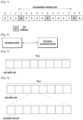
- the assignment of the soft buffer is as shown in Fig. 5 .
- the number of bits of the D2D communication data may be equivalent to that of the PDSCH data; hence, one D2D transport block may occupy one soft buffer unit.
- one obtained soft buffer unit may be further divided into soft buffer sub-units of equal size.
- One soft buffer unit is divided into n soft buffer sub-units of equal size, and each soft buffer sub-unit is used for storing the soft bits of the D2D discovery information.
- Each piece of D2D discovery information has 232 bits, plus 24 bits of CRC, 256 bits in total, and is then 1/3 decoded to obtain the number of bits of 256*3.
- the assignment of the soft buffer sub-units is as shown in Fig. 6 .
- one method is that one SA data block occupies one soft buffer sub-unit of a size the same as that for D2D discovery information; and another method is one soft buffer unit of a size of ⁇ N soft N cells DL ⁇ K MIMO ⁇ min M DL_HARQ M limit ⁇ is divided into M soft buffer sub-units of a size of N SA bits, with each SA data block occupying one soft buffer sub-unit, where N SA is determined upon the bandwidth of the carrier for the D2D data.
- the UE does not receive PDSCH data.
- the UE may use an additional soft buffer to store soft bit information of the D2D transmission, or use a soft buffer currently used for storing PDSCH data to store soft bits of D2D data.
- the capability information of UE supporting D2D includes information about the size of a soft buffer for the D2D.
- the information about the size may be a level of size, and different levels of size are corresponding to different sizes of soft buffers Nsoft_D2D.
- the Nsoft_D2D is indicated by the UE capability information, and different UE capabilities are corresponding to different values of Nsoft_D2D.
- the UE which transmits D2D data, may be unaware of the level of size of a D2D soft buffer of the UE which receives the D2D data. Therefore, in a protocol, it is required to determine a value of Nsoft_D2D for the UE supporting D2D. For example, according to the maximum value of broadcast communication data blocks possibly to be transmitted, the value of the size of a minimum D2D soft buffer of receiving UE may be determined via a protocol.
- D2D and PDSCH share an existing soft buffer, and different soft buffer processing is performed according to the duplex mode of a cell and the type of D2D.
- Method 1 The UE determines whether the D2D is D2D discovery or D2D communication by receiving high-level signaling.
- Method 2 The UE determines the D2D is D2D discovery or D2D communication by receiving a resource position of the D2D, because the D2D discovery and the D2D communication use different resources, respectively.
- rate matching is performed according to the condition that the UE only configures the current one carrier.
- the processing result is that the hypothetical HARQ soft buffer for one code block in rate matching may be greater than the soft buffer capacity that the UE can support.
- the UE divides its soft buffer to a plurality of cells.
- IR Incremental Redundancy
- the base station needs to know which soft bits the UE stores when the UE fails to correctly decode one code block. Therefore, the number of the carriers configured by the UE is described as N cells DL , and the number of cells configured with D2D subframes is recorded as N D 2 D .
- N ′ cells DL N cells DL + N D 2 D .
- n SB min N cb ⁇ N soft C ⁇ N ′ cells DL ⁇ K MIMO ⁇ min M DL_HARQ , M limit ⁇ ;
- n SB min N cb ⁇ N soft C ⁇ N ′ cells DL ⁇ K MIMO ⁇ min M DL_HARQ , M limit ⁇ ;
- rate matching is performed according to the condition that the UE only configures the current one carrier.
- the processing result is that the hypothetical HARQ soft buffer for one code block in rate matching may be greater than the soft buffer capacity that the UE can support. It is assumed that the UE equally divides its soft buffer to a plurality of cells.
- IR Incremental Redundancy
- a base station needs to know which soft bits the UE stores when the UE fails to correctly decode one code block.. Therefore, the number of the carriers configured by the UE is described as N cells DL .
- n SB min N cb ⁇ N soft C ⁇ N cells DL ⁇ K MIMO ⁇ min M DL_HARQ M limit ⁇ ;
- rate matching is performed according to the condition that the UE only configures the current one carrier.
- the processing result is that the hypothetical HARQ soft buffer for one code block in rate matching may be greater than the soft buffer capacity that the UE can support. It is assumed that the UE equally divides its soft buffer to a plurality of cells.
- a base station In order to better support HARQ Incremental Redundancy (IR), a base station needs to know which soft bits the UE stores when the UE fails to correctly decode one code block. Therefore, the number of the carriers configured by the UE is described as N cells DL .
- n SB min N cb ⁇ N soft C ⁇ N cells DL ⁇ K MIMO ⁇ min M DL _ HARQ M limit ⁇
- the present application further provides a soft buffer processing apparatus.
- the apparatus includes:
- the problem of soft buffer processing of dada in the HARQ downlink transmission of PDSCH data and the problem on soft buffer processing of D2D data can be reasonably handled, when receiving D2D data and PDSCH data.
- the soft buffer processing of the D2D data may be ensured, while having small influence to the PDSCH soft buffer processing and keeping the requirements on the functionality of the UE unchanged.
Landscapes
- Engineering & Computer Science (AREA)
- Computer Networks & Wireless Communication (AREA)
- Signal Processing (AREA)
- Mobile Radio Communication Systems (AREA)
Claims (6)
- Verfahren zur Verarbeitung eines Soft-Puffers, der von einem Endgerät in einem 3rd-Generation-Partnership-Project-3GPP-Drahtloskommunikationssystem ausgeführt wird, wobei das Verfahren Folgendes umfasst:Empfangen (201) von ersten Daten einer Vorrichtung-zu-Vorrichtung-D2D-Kommunikation und zweiten Daten einer Downlink-Übertragung auf einem gemeinsam genutzten physikalischen Downlink-Kanal, PDSCH, wobei die ersten Daten mindestens eines von Folgendem enthalten: D2D-Ermittlungsinformationen, eine Planungszuweisung, SA, für die D2D-Kommunikation, D2D-Daten der öffentlichen Sicherheit und D2D-Daten der nichtöffentlichen Sicherheit;Identifizieren (202), ob zu speichernde Softbits der ersten Daten und der zweiten Daten eine Größe eines Soft-Puffers des Endgeräts überschreiten; undSpeichern (202) der ersten Daten und der zweiten Daten in dem Soft-Puffer auf der Grundlage einer bestimmten Priorität,wobei die Priorität von einer höchsten Priorität zu einer niedrigsten Priorität als folgende Reihenfolge bestimmt wird: die D2D-Daten der öffentlichen Sicherheit, die zweiten Daten, die SA für D2D-Kommunikation, die D2D-Daten der nicht-öffentlichen Sicherheit, die D2D-Ermittlungsinformationen, undwobei der Soft-Puffer beginnend mit Daten niedrigster Priorität bis zu Daten höchster Priorität freigegeben wird, bis kein Softbit von Daten im Soft-Puffer mit einer niedrigeren Priorität als eine Priorität der zu speichernden Daten vorhanden ist oder bis der Soft-Puffer, der nicht belegt ist, größer als oder gleich einem zu speichernden Soft-Bit ist.
- Verfahren nach Anspruch 1, ferner umfassend:Empfangen einer Signalisierung von einer Basisstation; undErfassen von Informationen über die Größe des Soft-Puffers aus der Signalisierung.
- Verfahren nach Anspruch 1, wobei die zweiten Daten, die D2D-Daten der öffentlichen Sicherheit und die D2D-Daten der nicht-öffentlichen Sicherheit in mindestens einer der Soft-Puffer-Einheiten gespeichert werden, die vom Soft-Puffer unterteilt sind, wobei eine Größe jeder Soft-Puffer-Einheit
 wobei Nsoft die Größe des Soft-Puffers ist,wobei
 wobei für einen Übertragungsmodus mit mehreren Eingängen und mehreren Ausgängen, MIMO, K MIMO =2 ist, während für einen Nicht-MIMO-Übertragungsmodus K MIMO =1 ist,wobei für eine Zeitduplexteilung, TDD, bedienende Zelle M DL_HARQ eine maximale Anzahl von hybriden automatischen Wiederholungsanforderungs-HARQ-Downlink-Prozessen ist, die gemäß einer TDD-Uplink-/Downlink-Konfiguration des Endgeräts bestimmt wird,wobei für eine Frequenzduplexteilung, FDD, bedienende Zelle, MDL_HARQ gleich 8 ist,wobei M limit eine Konstante von 8 ist,wobei die D2D-Ermittlungsinformationen in einer Soft-Puffer-Untereinheit eines ersten Typs gespeichert werden, die von der Soft-Puffer-Einheit unterteilt ist, wobei eine Größe der Soft-Puffer-Untereinheit des ersten Typs 256*t Bits beträgt, undwobei die SA für D2D-Kommunikation in einer Soft-Puffer-Untereinheit eines zweiten Typs gespeichert wird, die von der Soft-Puffer-Einheit unterteilt ist, wobei eine Größe der Soft-Puffer-Untereinheit des zweiten Typs auf der Grundlage einer Bandbreite eines Trägers bestimmt wird, der die ersten Daten überträgt.
 - Endgerät, das einen Soft-Puffer verarbeitet, der so konfiguriert ist, dass er in einem 3rd-Generation-Partnership-Project-3GPP-Drahtloskommunikationssystem betrieben wird, wobei das Endgerät umfasst:ein Empfangsmodul, das für den Empfang eines Signals konfiguriert ist; undein Soft-Puffer-Verarbeitungsmodul, das mit dem Empfangsmodul gekoppelt und konfiguriert ist zum:Empfangen (201) von ersten Daten einer Vorrichtung-zu-Vorrichtung-D2D-Kommunikation und von zweiten Daten einer Downlink-Übertragung auf einem gemeinsam genutzten physikalischen Downlink-Kanal, PDSCH, wobei die ersten Daten mindestens eines von Folgendem enthalten: D2D-Ermittlungsinformationen, eine Planungszuweisung, SA, für die D2D-Kommunikation, D2D-Daten der öffentlichen Sicherheit und D2D-Daten der nichtöffentlichen Sicherheit,Identifizieren (202), ob zu speichernde Softbits der ersten Daten und der zweiten Daten eine Größe eines Soft-Puffers des Endgeräts überschreiten, undSpeichern (202) der ersten Daten und der zweiten Daten in dem Soft-Puffer auf der Grundlage einer bestimmten Priorität,wobei die Priorität von einer höchsten Priorität zu einer niedrigsten Priorität als folgende Reihenfolge bestimmt wird: die D2D-Daten der öffentlichen Sicherheit, die zweiten Daten, die SA für D2D-Kommunikation, die D2D-Daten der nicht-öffentlichen Sicherheit, die D2D-Ermittlungsinformationen, undwobei der Soft-Puffer beginnend mit Daten niedrigster Priorität bis zu Daten höchster Priorität freigegeben wird, bis kein Softbit von Daten im Soft-Puffer mit einer niedrigeren Priorität als eine Priorität der zu speichernden Daten vorhanden ist oder bis der Soft-Puffer, der nicht belegt ist, größer als oder gleich einem zu speichernden Soft-Bit ist.
- Endgerät nach Anspruch 4,
wobei das Soft-Puffer-Verarbeitungsmodul ferner konfiguriert ist, um:eine Signalisierung von einer Basisstation zu empfangen, undInformationen über die Größe des Soft-Puffers von der Signalisierung zu erfassen. - Endgerät nach Anspruch 4, wobei die zweiten Daten, die D2D-Daten der öffentlichen Sicherheit und die D2D-Daten der nicht-öffentlichen Sicherheit in mindestens einer von Soft-Puffer-Einheiten gespeichert werden, die vom Soft-Puffer unterteilt sind, wobei eine Größe jeder Soft-Puffer-Einheit
 wobei Nsoft die Größe des Soft-Puffers ist,wobei
 wobei für einen Übertragungsmodus mit mehreren Eingängen und mehreren Ausgängen ,MIMO, K MIMO =2 ist, während für einen Nicht-MIMO-Übertragungsmodus K MIMO =1 ist,wobei für eine Zeitduplexteilung, TDD, bedienende Zelle MDL_HARQ eine maximale Anzahl von hybriden automatischen Wiederholungsanforderungs-HARQ-Downlink-Prozessen ist, die gemäß einer TDD-Uplink-/Downlink-Konfiguration des Endgeräts bestimmt wird,wobei für eine Frequenzduplexteilung, FDD, bedienende Zelle, MDL_HARQ gleich 8 ist,,wobei M limit eine Konstante von 8 ist,wobei die D2D-Ermittlungsinformationen in einer Soft-Puffer-Untereinheit eines ersten Typs gespeichert werden, die von der Soft-Puffer-Einheit unterteilt ist, wobei eine Größe der Soft-Puffer-Untereinheit des ersten Typs 256*t Bits beträgt, undwobei die SA für D2D-Kommunikation in einer Soft-Puffer-Untereinheit eines zweiten Typs gespeichert wird, die von der Soft-Puffer-Einheit unterteilt ist, wobei eine Größe der Soft-Puffer-Untereinheit des zweiten Typs auf der Grundlage einer Bandbreite eines Trägers bestimmt wird, der die ersten Daten überträgt.
Applications Claiming Priority (5)
| Application Number | Priority Date | Filing Date | Title |
|---|---|---|---|
| CN201410234093 | 2014-05-29 | ||
| CN201410250589 | 2014-06-06 | ||
| CN201410379734 | 2014-08-04 | ||
| CN201510109150.0A CN105141398B (zh) | 2014-05-29 | 2015-03-12 | 软缓存处理方法及设备 |
| PCT/KR2015/005445 WO2015183051A1 (en) | 2014-05-29 | 2015-05-29 | Soft buffer processing method and apparatus |
Publications (3)
| Publication Number | Publication Date |
|---|---|
| EP3149869A1 EP3149869A1 (de) | 2017-04-05 |
| EP3149869A4 EP3149869A4 (de) | 2018-01-24 |
| EP3149869B1 true EP3149869B1 (de) | 2023-07-26 |
Family
ID=54699309
Family Applications (1)
| Application Number | Title | Priority Date | Filing Date |
|---|---|---|---|
| EP15799073.0A Active EP3149869B1 (de) | 2014-05-29 | 2015-05-29 | Softpufferverarbeitungsverfahren und -vorrichtung |
Country Status (5)
| Country | Link |
|---|---|
| US (1) | US10070438B2 (de) |
| EP (1) | EP3149869B1 (de) |
| KR (1) | KR102325651B1 (de) |
| CN (1) | CN105141398B (de) |
| WO (1) | WO2015183051A1 (de) |
Families Citing this family (10)
| Publication number | Priority date | Publication date | Assignee | Title |
|---|---|---|---|---|
| WO2016048037A1 (ko) * | 2014-09-23 | 2016-03-31 | 엘지전자 주식회사 | 무선 통신 시스템에서 장치 대 장치 단말의 디스커버리 신호 전송 방법 및 장치 |
| JP6571213B6 (ja) * | 2015-11-06 | 2019-11-27 | オッポ広東移動通信有限公司 | データ記憶方法、端末装置及び基地局 |
| CN108809534B (zh) * | 2017-05-05 | 2022-07-01 | 北京三星通信技术研究有限公司 | 调度方法、harq-ack反馈方法和相应设备 |
| WO2019022587A1 (en) * | 2017-07-28 | 2019-01-31 | Lg Electronics Inc. | METHOD AND APPARATUS FOR DOUBLE CONNECTIVITY SOFTWARE BUFFER SIZE MANAGEMENT IN A WIRELESS COMMUNICATION SYSTEM |
| CN109802766B (zh) * | 2017-11-16 | 2021-07-06 | 维沃移动通信有限公司 | 一种双连接下软缓存处理方法、终端及网络设备 |
| KR102642585B1 (ko) * | 2018-04-27 | 2024-02-29 | 한국전자통신연구원 | 통신 시스템에서 harq 기반의 송수신 방법 및 장치 |
| CN112055375B (zh) | 2019-06-06 | 2022-05-13 | 大唐移动通信设备有限公司 | 一种数据传输的方法及设备 |
| CN115516954B (zh) * | 2020-03-26 | 2025-09-19 | 上海诺基亚贝尔股份有限公司 | 调度释放反馈 |
| CN111884775B (zh) * | 2020-07-15 | 2024-02-27 | 太仓市同维电子有限公司 | 一种基于共享缓存的harq传输装置和方法 |
| CN114640637B (zh) * | 2022-05-17 | 2023-02-28 | 深圳传音控股股份有限公司 | 处理方法、通信设备及存储介质 |
Family Cites Families (8)
| Publication number | Priority date | Publication date | Assignee | Title |
|---|---|---|---|---|
| EP2636174B1 (de) * | 2010-11-05 | 2018-10-17 | BlackBerry Limited | Harq soft bit puffer partitionierung für träger aggregation |
| US8797957B2 (en) | 2010-11-12 | 2014-08-05 | Telefonaktiebolaget Lm Ericsson (Publ) | Terminal, network node, system and methods for soft buffer handling in carrier aggregation |
| CN103024820B (zh) * | 2011-09-20 | 2018-03-23 | 北京三星通信技术研究有限公司 | 软缓存处理的方法及设备 |
| US20130121216A1 (en) * | 2011-11-11 | 2013-05-16 | Qualcomm Incorporated | Method and apparatus for soft buffer management for harq operation |
| US9763272B2 (en) * | 2012-02-27 | 2017-09-12 | Futurewei Technologies, Inc. | System and method for time resource allocation for device-to-device communication overlaid on a cellular network |
| CN103384189A (zh) * | 2012-05-04 | 2013-11-06 | 北京三星通信技术研究有限公司 | 一种pdsch的harq-ack信息传输方法和设备 |
| US9705644B2 (en) | 2012-07-05 | 2017-07-11 | Lg Electronics Inc. | Method for operating buffer for device-to-device (D2D) communication in wireless communication system, and apparatus for same |
| CN104365139B (zh) * | 2012-07-18 | 2018-02-06 | 太阳专利信托公司 | 终端装置和缓冲区划分方法 |
-
2015
- 2015-03-12 CN CN201510109150.0A patent/CN105141398B/zh not_active Expired - Fee Related
- 2015-05-29 WO PCT/KR2015/005445 patent/WO2015183051A1/en not_active Ceased
- 2015-05-29 EP EP15799073.0A patent/EP3149869B1/de active Active
- 2015-05-29 KR KR1020167036441A patent/KR102325651B1/ko not_active Expired - Fee Related
- 2015-05-29 US US15/314,920 patent/US10070438B2/en active Active
Also Published As
| Publication number | Publication date |
|---|---|
| WO2015183051A1 (en) | 2015-12-03 |
| US20170201984A1 (en) | 2017-07-13 |
| US10070438B2 (en) | 2018-09-04 |
| CN105141398A (zh) | 2015-12-09 |
| KR102325651B1 (ko) | 2021-11-15 |
| KR20170013920A (ko) | 2017-02-07 |
| CN105141398B (zh) | 2020-02-11 |
| EP3149869A4 (de) | 2018-01-24 |
| EP3149869A1 (de) | 2017-04-05 |
Similar Documents
| Publication | Publication Date | Title |
|---|---|---|
| EP3149869B1 (de) | Softpufferverarbeitungsverfahren und -vorrichtung | |
| EP2837124B1 (de) | Verarbeitungsverfahren und -vorrichtung für einen weichpufferspeicher in tdd-systemen | |
| US10638500B2 (en) | Method and apparatus for sending uplink/downlink scheduling information, and method and apparatus for receiving uplink/downlink scheduling information | |
| EP3567773B1 (de) | Datenübertragungsverfahren und -vorrichtung | |
| EP3324565B1 (de) | Verfahren und vorrichtung zur uplink-steuerinformationsübertragung | |
| EP3238361B1 (de) | Übertragung von uplink-steuerinformationen in einer trägeraggregation mit einer grossen anzahl von zellen | |
| US9112686B2 (en) | HARQ ACK/NACK for dynamic PDSCH | |
| US9172520B1 (en) | Terminal, network node, system and methods for soft buffer handling in carrier aggregation | |
| US8891466B2 (en) | Method of handling soft buffer for carrier aggregation and related communication device | |
| EP3047592B1 (de) | Verfahren und system für harq-betrieb und zeitplanung in einer hybriden tdd- und fdd-trägeraggregation | |
| US8477682B2 (en) | Base station, terminal and wireless communication system | |
| EP3134977B1 (de) | Verfahren und vorrichtung zur übertragung von daten in einem physischen geteilten downlink-kanal | |
| EP3331305B1 (de) | Verfahren und vorrichtung zur uplink-datenübertragung | |
| WO2014110725A1 (en) | Method and apparatus for performing tti bundling in a tdd system | |
| CN117083885A (zh) | 用于针对半持久性调度发射的harq-ack反馈的方法及设备 | |
| CN116846518A (zh) | 用于半静态harq-ack码本确定的方法及设备 | |
| AU2016362088A1 (en) | Method and apparatus for decoupling uplink latency using common uplink burst in TDD subframe structure | |
| CN119545533A (zh) | 无线通信中同时上行传输方案 | |
| US20250150211A1 (en) | Method and apparatus for receiving ptp-based retransmission for multicast | |
| CN116964969A (zh) | 用于基于仅nack的harq-ack反馈复用的方法及设备 | |
| CN106533635A (zh) | 数据处理方法和装置 | |
| US11337237B2 (en) | Methods and devices for transmitting/receiving scheduling commands |
Legal Events
| Date | Code | Title | Description |
|---|---|---|---|
| STAA | Information on the status of an ep patent application or granted ep patent |
Free format text: STATUS: THE INTERNATIONAL PUBLICATION HAS BEEN MADE |
|
| PUAI | Public reference made under article 153(3) epc to a published international application that has entered the european phase |
Free format text: ORIGINAL CODE: 0009012 |
|
| STAA | Information on the status of an ep patent application or granted ep patent |
Free format text: STATUS: REQUEST FOR EXAMINATION WAS MADE |
|
| 17P | Request for examination filed |
Effective date: 20161222 |
|
| AK | Designated contracting states |
Kind code of ref document: A1 Designated state(s): AL AT BE BG CH CY CZ DE DK EE ES FI FR GB GR HR HU IE IS IT LI LT LU LV MC MK MT NL NO PL PT RO RS SE SI SK SM TR |
|
| AX | Request for extension of the european patent |
Extension state: BA ME |
|
| DAV | Request for validation of the european patent (deleted) | ||
| DAX | Request for extension of the european patent (deleted) | ||
| A4 | Supplementary search report drawn up and despatched |
Effective date: 20180102 |
|
| RIC1 | Information provided on ipc code assigned before grant |
Ipc: H04B 7/26 20060101ALN20171219BHEP Ipc: H04W 72/10 20090101ALN20171219BHEP Ipc: H04W 72/04 20090101ALN20171219BHEP Ipc: H04W 72/06 20090101ALN20171219BHEP Ipc: H04L 1/18 20060101AFI20171219BHEP Ipc: H04W 76/02 00000000ALN20171219BHEP |
|
| STAA | Information on the status of an ep patent application or granted ep patent |
Free format text: STATUS: EXAMINATION IS IN PROGRESS |
|
| RIC1 | Information provided on ipc code assigned before grant |
Ipc: H04W 72/04 20090101ALN20171219BHEP Ipc: H04W 72/10 20090101ALN20171219BHEP Ipc: H04L 1/18 20060101AFI20171219BHEP Ipc: H04B 7/26 20060101ALN20171219BHEP Ipc: H04W 76/02 20090101ALN20171219BHEP Ipc: H04W 72/06 20090101ALN20171219BHEP |
|
| 17Q | First examination report despatched |
Effective date: 20190129 |
|
| REG | Reference to a national code |
Ref country code: DE Ref legal event code: R079 Free format text: PREVIOUS MAIN CLASS: H04B0007260000 Ipc: H04L0001180000 Ref country code: DE Ref legal event code: R079 Ref document number: 602015084794 Country of ref document: DE Free format text: PREVIOUS MAIN CLASS: H04B0007260000 Ipc: H04L0001180000 |
|
| GRAP | Despatch of communication of intention to grant a patent |
Free format text: ORIGINAL CODE: EPIDOSNIGR1 |
|
| STAA | Information on the status of an ep patent application or granted ep patent |
Free format text: STATUS: GRANT OF PATENT IS INTENDED |
|
| RIC1 | Information provided on ipc code assigned before grant |
Ipc: H04W 76/14 20180101ALN20230123BHEP Ipc: H04W 72/04 20090101ALN20230123BHEP Ipc: H04B 7/26 20060101ALN20230123BHEP Ipc: H04L 1/1829 20230101ALI20230123BHEP Ipc: H04L 1/1822 20230101ALI20230123BHEP Ipc: H04L 1/18 20060101AFI20230123BHEP |
|
| RIC1 | Information provided on ipc code assigned before grant |
Ipc: H04W 76/14 20180101ALN20230208BHEP Ipc: H04W 72/04 20090101ALN20230208BHEP Ipc: H04B 7/26 20060101ALN20230208BHEP Ipc: H04L 1/1829 20230101ALI20230208BHEP Ipc: H04L 1/1822 20230101ALI20230208BHEP Ipc: H04L 1/18 20060101AFI20230208BHEP |
|
| INTG | Intention to grant announced |
Effective date: 20230222 |
|
| GRAS | Grant fee paid |
Free format text: ORIGINAL CODE: EPIDOSNIGR3 |
|
| GRAA | (expected) grant |
Free format text: ORIGINAL CODE: 0009210 |
|
| STAA | Information on the status of an ep patent application or granted ep patent |
Free format text: STATUS: THE PATENT HAS BEEN GRANTED |
|
| AK | Designated contracting states |
Kind code of ref document: B1 Designated state(s): AL AT BE BG CH CY CZ DE DK EE ES FI FR GB GR HR HU IE IS IT LI LT LU LV MC MK MT NL NO PL PT RO RS SE SI SK SM TR |
|
| REG | Reference to a national code |
Ref country code: GB Ref legal event code: FG4D |
|
| REG | Reference to a national code |
Ref country code: CH Ref legal event code: EP |
|
| REG | Reference to a national code |
Ref country code: IE Ref legal event code: FG4D |
|
| REG | Reference to a national code |
Ref country code: DE Ref legal event code: R096 Ref document number: 602015084794 Country of ref document: DE |
|
| REG | Reference to a national code |
Ref country code: LT Ref legal event code: MG9D |
|
| REG | Reference to a national code |
Ref country code: NL Ref legal event code: MP Effective date: 20230726 |
|
| REG | Reference to a national code |
Ref country code: AT Ref legal event code: MK05 Ref document number: 1593193 Country of ref document: AT Kind code of ref document: T Effective date: 20230726 |
|
| PG25 | Lapsed in a contracting state [announced via postgrant information from national office to epo] |
Ref country code: NL Free format text: LAPSE BECAUSE OF FAILURE TO SUBMIT A TRANSLATION OF THE DESCRIPTION OR TO PAY THE FEE WITHIN THE PRESCRIBED TIME-LIMIT Effective date: 20230726 |
|
| PG25 | Lapsed in a contracting state [announced via postgrant information from national office to epo] |
Ref country code: GR Free format text: LAPSE BECAUSE OF FAILURE TO SUBMIT A TRANSLATION OF THE DESCRIPTION OR TO PAY THE FEE WITHIN THE PRESCRIBED TIME-LIMIT Effective date: 20231027 |
|
| PG25 | Lapsed in a contracting state [announced via postgrant information from national office to epo] |
Ref country code: IS Free format text: LAPSE BECAUSE OF FAILURE TO SUBMIT A TRANSLATION OF THE DESCRIPTION OR TO PAY THE FEE WITHIN THE PRESCRIBED TIME-LIMIT Effective date: 20231126 |
|
| PG25 | Lapsed in a contracting state [announced via postgrant information from national office to epo] |
Ref country code: SE Free format text: LAPSE BECAUSE OF FAILURE TO SUBMIT A TRANSLATION OF THE DESCRIPTION OR TO PAY THE FEE WITHIN THE PRESCRIBED TIME-LIMIT Effective date: 20230726 Ref country code: RS Free format text: LAPSE BECAUSE OF FAILURE TO SUBMIT A TRANSLATION OF THE DESCRIPTION OR TO PAY THE FEE WITHIN THE PRESCRIBED TIME-LIMIT Effective date: 20230726 Ref country code: PT Free format text: LAPSE BECAUSE OF FAILURE TO SUBMIT A TRANSLATION OF THE DESCRIPTION OR TO PAY THE FEE WITHIN THE PRESCRIBED TIME-LIMIT Effective date: 20231127 Ref country code: NO Free format text: LAPSE BECAUSE OF FAILURE TO SUBMIT A TRANSLATION OF THE DESCRIPTION OR TO PAY THE FEE WITHIN THE PRESCRIBED TIME-LIMIT Effective date: 20231026 Ref country code: LV Free format text: LAPSE BECAUSE OF FAILURE TO SUBMIT A TRANSLATION OF THE DESCRIPTION OR TO PAY THE FEE WITHIN THE PRESCRIBED TIME-LIMIT Effective date: 20230726 Ref country code: LT Free format text: LAPSE BECAUSE OF FAILURE TO SUBMIT A TRANSLATION OF THE DESCRIPTION OR TO PAY THE FEE WITHIN THE PRESCRIBED TIME-LIMIT Effective date: 20230726 Ref country code: IS Free format text: LAPSE BECAUSE OF FAILURE TO SUBMIT A TRANSLATION OF THE DESCRIPTION OR TO PAY THE FEE WITHIN THE PRESCRIBED TIME-LIMIT Effective date: 20231126 Ref country code: HR Free format text: LAPSE BECAUSE OF FAILURE TO SUBMIT A TRANSLATION OF THE DESCRIPTION OR TO PAY THE FEE WITHIN THE PRESCRIBED TIME-LIMIT Effective date: 20230726 Ref country code: GR Free format text: LAPSE BECAUSE OF FAILURE TO SUBMIT A TRANSLATION OF THE DESCRIPTION OR TO PAY THE FEE WITHIN THE PRESCRIBED TIME-LIMIT Effective date: 20231027 Ref country code: FI Free format text: LAPSE BECAUSE OF FAILURE TO SUBMIT A TRANSLATION OF THE DESCRIPTION OR TO PAY THE FEE WITHIN THE PRESCRIBED TIME-LIMIT Effective date: 20230726 Ref country code: AT Free format text: LAPSE BECAUSE OF FAILURE TO SUBMIT A TRANSLATION OF THE DESCRIPTION OR TO PAY THE FEE WITHIN THE PRESCRIBED TIME-LIMIT Effective date: 20230726 |
|
| PG25 | Lapsed in a contracting state [announced via postgrant information from national office to epo] |
Ref country code: PL Free format text: LAPSE BECAUSE OF FAILURE TO SUBMIT A TRANSLATION OF THE DESCRIPTION OR TO PAY THE FEE WITHIN THE PRESCRIBED TIME-LIMIT Effective date: 20230726 |
|
| PG25 | Lapsed in a contracting state [announced via postgrant information from national office to epo] |
Ref country code: ES Free format text: LAPSE BECAUSE OF FAILURE TO SUBMIT A TRANSLATION OF THE DESCRIPTION OR TO PAY THE FEE WITHIN THE PRESCRIBED TIME-LIMIT Effective date: 20230726 |
|
| REG | Reference to a national code |
Ref country code: DE Ref legal event code: R097 Ref document number: 602015084794 Country of ref document: DE |
|
| PG25 | Lapsed in a contracting state [announced via postgrant information from national office to epo] |
Ref country code: SM Free format text: LAPSE BECAUSE OF FAILURE TO SUBMIT A TRANSLATION OF THE DESCRIPTION OR TO PAY THE FEE WITHIN THE PRESCRIBED TIME-LIMIT Effective date: 20230726 Ref country code: RO Free format text: LAPSE BECAUSE OF FAILURE TO SUBMIT A TRANSLATION OF THE DESCRIPTION OR TO PAY THE FEE WITHIN THE PRESCRIBED TIME-LIMIT Effective date: 20230726 Ref country code: ES Free format text: LAPSE BECAUSE OF FAILURE TO SUBMIT A TRANSLATION OF THE DESCRIPTION OR TO PAY THE FEE WITHIN THE PRESCRIBED TIME-LIMIT Effective date: 20230726 Ref country code: EE Free format text: LAPSE BECAUSE OF FAILURE TO SUBMIT A TRANSLATION OF THE DESCRIPTION OR TO PAY THE FEE WITHIN THE PRESCRIBED TIME-LIMIT Effective date: 20230726 Ref country code: DK Free format text: LAPSE BECAUSE OF FAILURE TO SUBMIT A TRANSLATION OF THE DESCRIPTION OR TO PAY THE FEE WITHIN THE PRESCRIBED TIME-LIMIT Effective date: 20230726 Ref country code: CZ Free format text: LAPSE BECAUSE OF FAILURE TO SUBMIT A TRANSLATION OF THE DESCRIPTION OR TO PAY THE FEE WITHIN THE PRESCRIBED TIME-LIMIT Effective date: 20230726 Ref country code: SK Free format text: LAPSE BECAUSE OF FAILURE TO SUBMIT A TRANSLATION OF THE DESCRIPTION OR TO PAY THE FEE WITHIN THE PRESCRIBED TIME-LIMIT Effective date: 20230726 |
|
| PG25 | Lapsed in a contracting state [announced via postgrant information from national office to epo] |
Ref country code: IT Free format text: LAPSE BECAUSE OF FAILURE TO SUBMIT A TRANSLATION OF THE DESCRIPTION OR TO PAY THE FEE WITHIN THE PRESCRIBED TIME-LIMIT Effective date: 20230726 |
|
| PLBE | No opposition filed within time limit |
Free format text: ORIGINAL CODE: 0009261 |
|
| STAA | Information on the status of an ep patent application or granted ep patent |
Free format text: STATUS: NO OPPOSITION FILED WITHIN TIME LIMIT |
|
| 26N | No opposition filed |
Effective date: 20240429 |
|
| PG25 | Lapsed in a contracting state [announced via postgrant information from national office to epo] |
Ref country code: SI Free format text: LAPSE BECAUSE OF FAILURE TO SUBMIT A TRANSLATION OF THE DESCRIPTION OR TO PAY THE FEE WITHIN THE PRESCRIBED TIME-LIMIT Effective date: 20230726 |
|
| PG25 | Lapsed in a contracting state [announced via postgrant information from national office to epo] |
Ref country code: BG Free format text: LAPSE BECAUSE OF FAILURE TO SUBMIT A TRANSLATION OF THE DESCRIPTION OR TO PAY THE FEE WITHIN THE PRESCRIBED TIME-LIMIT Effective date: 20230726 |
|
| PG25 | Lapsed in a contracting state [announced via postgrant information from national office to epo] |
Ref country code: BG Free format text: LAPSE BECAUSE OF FAILURE TO SUBMIT A TRANSLATION OF THE DESCRIPTION OR TO PAY THE FEE WITHIN THE PRESCRIBED TIME-LIMIT Effective date: 20230726 |
|
| REG | Reference to a national code |
Ref country code: DE Ref legal event code: R119 Ref document number: 602015084794 Country of ref document: DE |
|
| REG | Reference to a national code |
Ref country code: CH Ref legal event code: PL |
|
| PG25 | Lapsed in a contracting state [announced via postgrant information from national office to epo] |
Ref country code: MC Free format text: LAPSE BECAUSE OF FAILURE TO SUBMIT A TRANSLATION OF THE DESCRIPTION OR TO PAY THE FEE WITHIN THE PRESCRIBED TIME-LIMIT Effective date: 20230726 |
|
| PG25 | Lapsed in a contracting state [announced via postgrant information from national office to epo] |
Ref country code: LU Free format text: LAPSE BECAUSE OF NON-PAYMENT OF DUE FEES Effective date: 20240529 |
|
| GBPC | Gb: european patent ceased through non-payment of renewal fee |
Effective date: 20240529 |
|
| PG25 | Lapsed in a contracting state [announced via postgrant information from national office to epo] |
Ref country code: MC Free format text: LAPSE BECAUSE OF FAILURE TO SUBMIT A TRANSLATION OF THE DESCRIPTION OR TO PAY THE FEE WITHIN THE PRESCRIBED TIME-LIMIT Effective date: 20230726 Ref country code: LU Free format text: LAPSE BECAUSE OF NON-PAYMENT OF DUE FEES Effective date: 20240529 Ref country code: CH Free format text: LAPSE BECAUSE OF NON-PAYMENT OF DUE FEES Effective date: 20240531 |
|
| REG | Reference to a national code |
Ref country code: BE Ref legal event code: MM Effective date: 20240531 |
|
| PG25 | Lapsed in a contracting state [announced via postgrant information from national office to epo] |
Ref country code: DE Free format text: LAPSE BECAUSE OF NON-PAYMENT OF DUE FEES Effective date: 20241203 |
|
| PG25 | Lapsed in a contracting state [announced via postgrant information from national office to epo] |
Ref country code: IE Free format text: LAPSE BECAUSE OF NON-PAYMENT OF DUE FEES Effective date: 20240529 |
|
| PG25 | Lapsed in a contracting state [announced via postgrant information from national office to epo] |
Ref country code: BE Free format text: LAPSE BECAUSE OF NON-PAYMENT OF DUE FEES Effective date: 20240531 |
|
| PG25 | Lapsed in a contracting state [announced via postgrant information from national office to epo] |
Ref country code: FR Free format text: LAPSE BECAUSE OF NON-PAYMENT OF DUE FEES Effective date: 20240531 |
|
| PG25 | Lapsed in a contracting state [announced via postgrant information from national office to epo] |
Ref country code: GB Free format text: LAPSE BECAUSE OF NON-PAYMENT OF DUE FEES Effective date: 20240529 |
|
| PG25 | Lapsed in a contracting state [announced via postgrant information from national office to epo] |
Ref country code: CY Free format text: LAPSE BECAUSE OF FAILURE TO SUBMIT A TRANSLATION OF THE DESCRIPTION OR TO PAY THE FEE WITHIN THE PRESCRIBED TIME-LIMIT; INVALID AB INITIO Effective date: 20150529 |
|
| PG25 | Lapsed in a contracting state [announced via postgrant information from national office to epo] |
Ref country code: HU Free format text: LAPSE BECAUSE OF FAILURE TO SUBMIT A TRANSLATION OF THE DESCRIPTION OR TO PAY THE FEE WITHIN THE PRESCRIBED TIME-LIMIT; INVALID AB INITIO Effective date: 20150529 |