EP3149948B1 - Accélération d'un codage arithmétique binaire adapté au contexte (codage cabac) dans des codeurs-décodeurs vidéo - Google Patents
Accélération d'un codage arithmétique binaire adapté au contexte (codage cabac) dans des codeurs-décodeurs vidéo Download PDFInfo
- Publication number
- EP3149948B1 EP3149948B1 EP15729986.8A EP15729986A EP3149948B1 EP 3149948 B1 EP3149948 B1 EP 3149948B1 EP 15729986 A EP15729986 A EP 15729986A EP 3149948 B1 EP3149948 B1 EP 3149948B1
- Authority
- EP
- European Patent Office
- Prior art keywords
- context
- index
- blocks
- syntax element
- bin
- Prior art date
- Legal status (The legal status is an assumption and is not a legal conclusion. Google has not performed a legal analysis and makes no representation as to the accuracy of the status listed.)
- Active
Links
Images




Classifications
-
- H—ELECTRICITY
- H04—ELECTRIC COMMUNICATION TECHNIQUE
- H04N—PICTORIAL COMMUNICATION, e.g. TELEVISION
- H04N19/00—Methods or arrangements for coding, decoding, compressing or decompressing digital video signals
- H04N19/90—Methods or arrangements for coding, decoding, compressing or decompressing digital video signals using coding techniques not provided for in groups H04N19/10-H04N19/85, e.g. fractals
- H04N19/91—Entropy coding, e.g. variable length coding [VLC] or arithmetic coding
-
- H—ELECTRICITY
- H04—ELECTRIC COMMUNICATION TECHNIQUE
- H04N—PICTORIAL COMMUNICATION, e.g. TELEVISION
- H04N19/00—Methods or arrangements for coding, decoding, compressing or decompressing digital video signals
- H04N19/10—Methods or arrangements for coding, decoding, compressing or decompressing digital video signals using adaptive coding
- H04N19/102—Methods or arrangements for coding, decoding, compressing or decompressing digital video signals using adaptive coding characterised by the element, parameter or selection affected or controlled by the adaptive coding
- H04N19/13—Adaptive entropy coding, e.g. adaptive variable length coding [AVLC] or context adaptive binary arithmetic coding [CABAC]
-
- H—ELECTRICITY
- H04—ELECTRIC COMMUNICATION TECHNIQUE
- H04N—PICTORIAL COMMUNICATION, e.g. TELEVISION
- H04N19/00—Methods or arrangements for coding, decoding, compressing or decompressing digital video signals
- H04N19/70—Methods or arrangements for coding, decoding, compressing or decompressing digital video signals characterised by syntax aspects related to video coding, e.g. related to compression standards
Definitions
- CABAC Context Adaptive Binary Arithmetic Coding
- H.264 and HEVC High Efficiency Video Coding
- HEVC High Efficiency Video Coding
- CABAC is an entropy coding method used in video standards such as H.264 and HEVC. This is the last stage of the video encoding process where a lossless coding technique is applied to the various syntax elements.
- CABAC is based on binary arithmetic coding. It uses multiple probability models for different syntax elements and adaptively selects the probability model during coding. This is a more efficient technique than CAVLC, which was used in earlier standards and in the baseline profile of H.264. However it is also highly complex and sequential, and hence forms one of most CPU intensive module in the decoder.
- CABAC decoding is also sequential in nature and hence exploiting the capabilities of multi-core processors is also difficult.
- D. MARPE ET AL "Context-based adaptive binary arithmetic coding in the H.264/AVC video compression standard", IEEE TRANSACTIONS ON CIRCUITS AND SYSTEMS FOR VIDEO TECHNOLOGY, (20030701), vol. 13, no. 7, doi: 10.1109/TCSVT.2003.815173, ISSN 1051-8215, pages 620 - 636 discloses a method of context-based adaptive binary arithmetic coding in the H.264/AVC video compression standard.
- US 2009/141804 A1 discloses an entropy coding module for use in a video encoder that encodes a video input signal based on a plurality of macroblocks derived from the video input signal.
- WEIYI XIA ET AL "Implementation strategies for CABAC decoder of H.264 for HD resolution video", COMPUTER ENGINEERING AND TECHNOLOGY (ICCET), 2010 2ND INTERNATIONAL CONFERENCE ON, IEEE, PISCATAWAY, NJ, USA, (20100416), ISBN 978-1-4244-6347-3, pages V2 - 596 discloses various methods relating to a CABAC decoder of H.264 for HD resolution video.
- WO 2013/063982 A1 discloses a buffering apparatus for buffering context arrays of a multi-tile encoded picture having a plurality of tiles includes a first buffer and a second buffer.
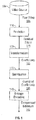
- FIG. 1 is a high-level flow chart illustrating a method of encoding video data using an implementation of an H.264 video encoder according to one embodiment.
- an H.264/HEVC encoder receives raw video data 105 from a video source module 100 and performs the steps of prediction 110, transformation 120, quantization 130, and entropy encoding 140.
- the video source module 100 may comprise a computer hard drive, computer memory, flash memory card, or any other means of storing digital video data.
- the video source module 100 may be local to the H.264 video encoder, or may be external and accessible over a network.
- the modules performing prediction 110, transformation 120, quantization 130 and entropy encoding 140 as well as the video source 100 may be implemented in a single module or device, or may be implemented in multiple modules or devices.
- the functionalities of these modules may be implemented in fewer or additional modules than the ones shown in FIG. 1 . Additional functionalities not shown may also be implemented in an H.264 encoder.
- Raw video data 105 is transmitted from the video source 100 to a prediction module 110.
- Raw video data 105 may be video data is any format, whether uncompressed, previously compressed, or otherwise.
- the raw video data 105 may comprise information describing the video's general display characteristics (such as the video's size, length, resolution, or screen proportions), information describing the video's frame-specific display characteristics (such as pixel color information, pixel location information, brightness, opacity, block and macroblock dimensions and frame location, or any other pixel-domain information), or meta-data describing the video (such as the video title, publisher, publishing date, or keywords describing categorical characterizations of the video content).
- Raw video data 105 may be in frame format, comprising one or more plurality of still images each composed of pixel information, which when displayed consecutively form motion video.
- Prediction module 110 receives one or more frames of raw video data 105 and produces one or more residual frames 115.
- the process of prediction typically comprises receiving an input frame of video, determining a prediction image similar to the input frame of video, and subtracting the prediction image from the input frame of video to produce a residual frame of video.
- the residual frame of video typically comprises less data than the input frame of video and thus is easier to encode and compress.
- Subtracting a prediction image from an input image typically comprises subtracting the pixel information of the prediction image from the pixel information of the input image, resulting in a residual image composed of pixel information representing the difference of the subtraction.
- Either the received input frame or the produced residual frame 115 may be comprised of macroblocks, which in one embodiment may comprise 16-by-16 squares of pixels.
- Prediction module 110 may utilize spatial prediction (identifying objects, shapes, curves, lines, or any other characteristic of a single image similar to a prediction image), temporal prediction (identifying characteristics of precedent or subsequent frames, such as the motion of an object), or any other suitable method to determine a prediction image for a raw video data 105 image.
- the prediction image may come from a dictionary or library of reference images available to both the encoder and decoder. Alternatively, the prediction image may come from a previously encoded frame, or a frame which will be encoded in the future.
- Each prediction image may be comprised of one or more than one prediction sub-images. For instance, prediction module 100 may determine a first prediction image for the background of an input image and a second prediction image for an object in the foreground of the input image. The term "prediction image” thus may encompass the combination of all prediction sub-images into a single image. Prediction module 100 then subtracts the prediction image from the raw video data 105 image and outputs residual frame 115.
- Transformation module 120 receives residual image 115 in pixel form, processes the residual image 115 and outputs residual image coefficients 125 (the residual image in the transform domain). Transformation module 120 may apply a discrete cosine transform (DCT), a wavelet transform, or any other Fourier-related transform to the received residual image 115. In one embodiment, transformation module 120 processes one macroblock of residual frame at a time, producing one set of coefficients for each processed macroblock. In embodiment, one coefficient is produced for each pixel of residual image 115.
- DCT discrete cosine transform
- wavelet transform any other Fourier-related transform
- Quantization module 130 receives coefficients 125, quantizes the coefficients 125 and outputs quantized coefficients 135.
- the quantization of coefficients 125 typically results in many higher frequency coefficients being rounded to zero, reducing the storage space required to maintain the coefficients.
- Quantization module 130 may compress the range of received coefficients 125 to a single quantum value to produce quantized coefficients 135.
- quantization module 130 divides the received coefficients by a selected quantization matrix, and the resulting quotients are rounded to the nearest integer to produced quantized coefficients 135.
- Entropy encoding module 140 receives quantized coefficients 135, compresses the coefficients, and outputs compressed bitstream 145.
- Entropy encoding module 140 utilizes a lossless compression method, such as CAVLC or CABAC.
- Entropy encoding module 140 may perform incremental encoding, outputting one or more bits at a time as the received quantized coefficients 135 are being compressed.
- entropy encoding module 140 may compress any syntax element.
- Syntax elements comprise (in addition to quantized coefficients 135), information which enables a decoder to re-create the prediction, information about the structure of the compressed data, information about the encoded video sequence, information about the compression tools used during encoding, or any other information which describes the video or the encoding and compression process.
- the compressed bitstream 145 may be transmitted to a decoder for decoding and playback.
- CABAC Context-adaptive binary arithmetic coding
- H.264/MPEG-4 AVC and HEVC video Standard It is capable of lossless compression in itself.
- CABAC based coding is adaptive in that the CABAC adapts the contexts upon coding symbols, where the context identifies the set of symbols coded in the past and used for adaptation. The past symbols may be located in adjacent blocks and also may refer to symbol values of neighboring blocks.
- CABAC encoding may be conceptualized as operating in accordance with three primary steps: binarization, context modeling and binary arithmetic coding.
- the first step, binarization maps input symbols to "bins" or a string of binary symbols.
- the input symbol could be a non-binary valued symbol that is binarized.
- context modeling a model probability distribution is assigned to a given bin.
- the probability model depends on 'context', which is a function of local and pre- observed statistics; the local statistics corresponds to coded bins in the past.
- the binary arithmetic encoder uses this context model for encoding the bin. Based on the actual encoded bin value the context model is updated thus making it adaptive.
- the context models are indexed using a context-index.
- the encoding of the bins is performed using either a 'regular coding method' or a 'bypass coding method'.
- the bins can be coded into bits (of the coded bit- stream) using either a 'regular coding method' or 'bypass coding method'.
- a probability model needs to be selected and used for arithmetic coding bin(s) corresponding to input symbols.
- CABAC decoding reverses some of the processing methods used by an encoder.
- the bits (of a coded bitstream) are converted into bins, using either the 'regular decoding method' or 'bypass decoding method' based on which method the encoder used to code the bit(s).
- the processing involved in 'regular decoding method' or 'bypass decoding method' and de-binarization at the decoder are inverse processes of the corresponding methods used by an encoder.
- the processing involved in context model selection and context model updating remains the same as in encoder.
- the de-binarization step in CABAC converts the bins to the transmitted symbol value. The symbol is used for the remaining processes involved in the video decoding.
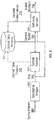
- FIG. 2 a high-level block diagram illustrating one example of an H.264 CABAC encoder.
- the CABAC encoder may be implemented by the entropy encoding module 140 in the H.264 video encoding process described in FIG. 1 .
- the primary components of the exemplary CABAC encoder are the binarization module 305, the context lookup module 315, the arithmetic encoder module 325 and the context table memory 335. Additional or fewer modules may be used to implement CABAC encoding functionality.
- the CABAC encoder will be described in the context of a single encoding cycle for the purposes of clarity; multiple cycles of encoding may be performed by the CABAC encoding, such as in a pipelined implementation of the CABAC encoder.
- the binarization module 305 receives a syntax element 300, performs binarization by converting the syntax element 300 into ordered binary bits, referred to as "bins" 310, and outputs the bins 310.
- the syntax element 300 comprises a quantized coefficient, or any of the video information or encoding information discussed above.
- the syntax element 300 may additionally comprise a syntax element identifier ("syntax element ID") that identifies the syntax element. For instance, the syntax element ID may identify which macroblock a quantized coefficient syntax element 300 belongs to, which portion of the encoded video a quantized coefficient syntax element 300 appears in, or which type of quantization was performed in encoding a video. In one embodiment, the order of the bins of the binarized syntax element must be maintained.
- the arithmetic encoder 325 may be required to encode the bins in the order that they are outputted by binarization module 305 in order for a decoder to decode the encoded binarized syntax element.
- the syntax element 300 may comprise a context model index, identifying a context model to be used in arithmetic encoding.
- Bins 310 are individual binary bits representing a received syntax element 300 and may comprise a syntax element ID, identifying the syntax element each bin represents. Alternatively, each bin 310 may include a context model index which identifies a context model associated with each bin 310. The context index may be derived from the syntax element ID, or may be independently derived or received.
- the binarization module 305 transforms the received syntax element 300 into binary form. For instance, the syntax element 300 may be received in integer form, and the binarization module converts the syntax element 300 to binary bins 310.
- Context lookup module 315 receives the bins 310 and transmits a context table request 340 to context table memory 335.
- the context table request 340 may identify the syntax element associated with a received bin 310.
- a received bin 310 includes a syntax element ID, and the context lookup module 315 parses this syntax element ID and transmits it with the context table request 340.
- the context table request 340 may comprise a context model index which may identify a specific context model within context table memory 335, or a specific location within context table memory 335 containing a specific context model.
- Context lookup module 315 may request a context model from context table memory 335 once for each syntax element, or may request the same context model multiple times for a given syntax element, such as once per received bin.
- context model may refer to a singular context model, multiple context models, or a context model word comprising multiple context models stored together.
- Context table memory 335 receives the context table request 340 and outputs context model 320 based on the request 340.
- the context table memory 335 may comprise one or more memory locations and may contain one or more context models per memory location. For instance, each context table memory location may store a context model word comprising 32 context models.
- context table memory 335 indexes context models by context model index.
- the context model index may comprise a memory location and a specific context model stored at that memory location. For example, in one exemplary embodiment, the context model index for context model "14" at memory address "E41C" is "E41C14".
- context indices in the range from 0 to 72 are related to syntax elements of macroblock type, sub-macroblock type and prediction modes of spatial and of temporal type as well as slice-based and macroblock-based control information.
- a corresponding context index can be calculated from the sum of a context index offset, which is defined as the lowest value in the range, and a context index increment of a given syntax element.
- context indices in the range from 85-104 are related to the syntax element coded_block_flag, while the context indexes from 73-398 are related to the coding of residual data.
- the stored context models may comprise a probability that a received bin will be a specific bit, and may comprise any form sufficient to allow arithmetic encoder 325 to encode bins 310.
- the stored context models may comprise 7-bit words made up of a 1-bit most probable bit (MPB) and a 6-bit binary probability that a received bin is identical to the MPB.
- the context models may instead comprise the least probable bit (LPB), the probability that a received bin is identical to the LPB, or any combination of an identified bit and a probability of receiving the identified bit or its inverse.
- the context models may be stored in more or fewer than 7 bits in context table memory 335, and probabilities may comprise more or fewer than 6 bits.
- context table memory 335 stores an index for each context model and computes the probability component of a context model when that context model is requested.
- the context table memory 335 accesses and outputs the requested context model 320 identified by context table request 340.
- the context model 320 may be transmitted to context lookup module 315 for subsequent transmission to arithmetic encoder 325, or may be transmitted directly to arithmetic encoder 325.
- Arithmetic encoder 325 receives a context model 320 and a bin 310, and produces an updated context model 330 and a coded bitstream 345.
- only one context model 320 is used to encode bins of the same syntax element; alternatively, more than one context model 320 may be used to encode the bins of a given syntax element.
- the arithmetic encoder 325 adaptively updates context model 320 depending on the content of received bins 310. In some cases the arithmetic encoder 325 updates context model 320 each time a bin 310 is received. While encoding the received bins 310 of a syntax element, arithmetic encoder 325 may maintain updated context model 330 internally, using updated context model 330 to encode each subsequent bin of a syntax element, updating the context model after encoding each subsequent bin.
- the context models may be updated according to the probability state index transition rules defined in H.264, or may be updated using any suitable adaptive method.
- the updated context model 330 may be transmitted to context table memory 335 each time the context model is updated, or after an entire syntax element is encoded.
- the context table memory 335 may write the updated context model 330 to the memory location of the original context model 320, overwriting the original context model 320.
- Arithmetic encoder 325 uses context model 320 to encode each of received bins 310 based on bin value, type and the corresponding context model of the bin. Arithmetic encoder 325 may encode received bins 310 into a single fractional number n, where n is greater than or equal to 0 and less than 1. To encode received bins 310, encoder 325 may maintain a numerical interval representing the probability of receiving previously received bins 310. The numerical interval may be have an upper interval limit and a lower interval limit, and may be represented by range R, comprising the difference between the upper interval limit and the lower interval limit. In one embodiment, the numerical interval is initialized to the interval [0, 1] and is updated for each received bin 310. In one embodiment, the maintained interval has an upper interval limit, R U , and lower interval limit, R L , which are updated when encoding a received bin.
- One aspect of the subject matter described herein pertains to the reduction in the number of operations used in the calculation of context-indexes during CABAC processing.
- This aspect can be used by any video encoder or decoder that employs CABAC, examples of which are the H.264 or HEVC codecs.
- this reduction is accomplished by broadcasting the current context indexes to neighboring blocks.
- SE syntax elements coded by CABAC require the selection of a context at every sample location in a picture based on the value of the syntax elements in the neighboring blocks.
- the neighboring blocks are usually the block to the top and the block to the left or the previous block previous in the decoding order.
- One conventional technique employed in H.264 and HEVC for context determination referred to herein as the direct method, requires access to multiple syntax elements of the neighboring macroblocks (MB) plus a variety of logical operations and conditional checks.
- MB neighboring macroblocks
- the present disclosure employs an alternate technique aimed at reducing the computation time for context determination.
- the contexts corresponding to the downstream neighboring blocks e.g., the next block in the coding order or the blocks to the bottom and right of the current block
- the determination may be performed based on information already available concerning the current MB being processed.
- illustrative syntax elements that depend on information from neighboring blocks and thus may benefit from this technique include mb_type, mb_skip_flag, transform_size_8x8_flag, mb_qp_delta, mb_field_decoding_flag, intra_chroma_pred_mode, mvd (horizontal)_l0, mvd (vertical)_l0, mvd (horizontal)_l1, mvd (vertical)_l1, ref_idx_l0, ref_idx_l1, coded_block_pattern and coded_block_flag.
- illustrative syntax elements that may benefit from this technique include split_cu_flag, cu_skip_flag and sig_coeff_flag.
- FIG. 3 shows a frame or picture 200 that is divided into blocks 210 (e.g., macroblocks in H.264 and coded tree blocks (CTBs) in HEVC).
- blocks C, B and A represents the current block, top neighboring block and left neighboring block, respectively.
- C coded tree blocks
- FIG. 4 shows a frame or picture 400 that is divided into blocks 410 (e.g., macroblocks in H.264 and coded tree blocks (CTBs) in HEVC).
- blocks 410 e.g., macroblocks in H.264 and coded tree blocks (CTBs) in HEVC.
- blocks C, D and E represent the current block, the bottom neighboring block and the right neighboring block, respectively.
- the bin in block C is decoded based on the context for the bin and block characteristics of block C.
- the context index for the corresponding bin in neighboring blocks D and E are computed and updated if needed (depending on specific conditions that will be described below).
- the context index for decoding the corresponding bins in blocks D and E is now readily available. This eliminates the need for accessing the syntax element values from neighboring blocks.
- all contexts are initialized to a default value (which can be chosen as the context-index associated with the first context available for every set of context-indices for a syntax element) and updated as and when needed.
- a default value which can be chosen as the context-index associated with the first context available for every set of context-indices for a syntax element
- the lowest or first context index is 73.
- two rows of context-indexes for the luma CBP bins of all the 8x8 blocks in the current and subsequent row of macroblocks in the picture may be initialized to this value.
- CBP syntax element luma coded block pattern
- a coded block pattern indicates which of the four 8x8 luma blocks and associated chroma blocks of a 16x16 MB may contain non-zero transform coefficients.
- the CBP is a six bit value (range 0 to 47) with the two MSBs indicating CBP values for chroma blocks and the remaining four least significant bits indicating CBP values for four 8x8 luma blocks (luma CBP).
- the luma CBP is coded for macroblocks (MBs) that are not PCM or Skip MBs.
- MBs macroblocks
- the CBP is not coded explicitly, but is embedded as part of the mb_type syntax element.
- H.264 defines a set of 4 contexts that could be used for coding each bin of luma CBP. These contexts are indexed by using a context-index value. The context selection for coding each bin is determined based on the information from the 8x8 blocks neighboring (top and left) the current 8x8 block. The selected context and bin value at its position is used to generate a coded bit at the encoder. The selected context and encoded bit is used to get back the bin value at decoder. The coded value is further used to update the context.
- step 1 the context-index is initialized to the Context-Index-Offset (i.e., 73).
- step 2 if the current MB is a PCM or a Skip or Intra 16x16, do not code the CBP and go to step 9 discussed below. (If the current MB is Intra_16x16 MBs, the CBP is not coded explicitly, but is embedded as part of the mb_type syntax element).
- the syntax element values mb_type and the corresponding luma CBP bin are read from the neighbors A (left neighbor) or B (top neighbor) in step 3. If neighbors A or B are to be obtained from the neighboring MB, the following conditions are checked in step 4:
- Else (A or B belongs to the current MB). If the prior coded bin of the CBP for the corresponding neighbor is equal to 0, increment the context-index by 1 if it is left neighbor and by 2 if it is the top neighbor, else continue with following steps.
- step 5 step 3 is repeated for the second neighbor (A or B).
- step 6 the bin is coded using the context associated with the updated context-index and stored in step 7.
- step 8 the process is then repeated from step for all the remaining luma CBP bins. Finally, in step 9, the next syntax element is coded.
- the neighboring blocks are assumed to be from different MBs.
- Four read operations mb_type and CBP of two neighbors
- conditional checks are required, 8 for the mb_type and 2 for the CBP, as indicated in step 4 above.
- 1 write operation of the coded bin is required, as indicated in step 7 above.
- one neighboring block is assumed to belong to the current MB and the other neighboring block is assumed to belong to a different MB.
- Three read operations mb_type and CBP of one neighbor and only CBP of the other neighbor
- up to 6 conditional checks, 4 for the mb_type and 2 for the CBP, are performed, as indicated in step 4 above.
- 1 write operation of coded bin is performed, as indicated in step 7 above.
- both neighboring blocks are assumed to belong to the current MB.
- Two read operations (the CBP bin of two neighbors) are performed, as indicated in step 3 above.
- Up to two conditional checks are performed for the CBP, as indicated in step 4 above.
- 1 write operation of the coded bin is performed, as indicated in step 7 above.
- the average values over all three cases for the read, check and write operations for determining the context index for each bin is 3 reads, 6 checks and 1 write. This average is obtained based on the deterministic knowledge that out of four 8x8 blocks in an MB, one block will likely have both its neighbors in different MB, two blocks will likely have one of their neighbors in different MBs and one block will likely have both its neighbors in the same MB.
- the above computational data may be extrapolated to a frame of 1080p content, with 32,400 8x8 blocks for each frame.
- 25% of the blocks (8,100 blocks) will have both neighbors in different MBs
- 50% of the blocks (16,200 blocks) will have one neighbor in different MBs
- 25% of the blocks (8,100 blocks) will have both neighbors in the same MB.
- the number of computations needed for determining the context index will be 97,200 read operations, 1,094,400 check operations and 32,400 write operations.
- the broadcasting method for context determination in accordance with the subject matter disclosed herein will be described once again for the syntax element "luma coded block pattern.”
- the blocks C, D and E represent the current block, the bottom neighbor block and the right neighbor block, respectively.
- the following steps are performed to derive the context-index using the broadcasting method.
- an initialization step is performed whereby the luma CBP context-indices for all blocks are initialized to the syntax element luma CBP's lowest or first context-index, which is 73.
- two rows of context-indices for the luma CBP bins of all the macroblocks in the current and subsequent rows of the picture are initialized.
- the luma CBP bin of block C is coded using the initialized or updated value of the context index. Based on the coded bin values and the characteristics of block C, the context index of the corresponding bin in neighboring blocks D and E are updated if they are different from the initialized value.
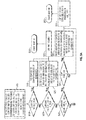
- FIG. 5 is flowchart showing one example of the steps involved in the derivation of the context-indices using the broadcasting method.
- two rows of the context index are initialized to the first context index value (i.e., 73).
- the luma CBP bin of block C is coded using the initialized or updated value of the context-index.
- the context-index of the corresponding bin in neighboring blocks D and E are updated if they are different from the initialized value.
- the process begins at step 505 when a context-index-offset is initialized. Specifically, two rows of context-index values are initialized, which correspond to 4 bins of the luma CBP. This step may be performed a single time for all the macroblocks in the row.
- step 510 if the current MB is I-PCM, then as indicated at steps 515 and 530, respectively, no changes are made to the context-indexes of the neighboring MBs and the CBP is not coded. At this point the coding of the next syntax element is performed, as indicated at step 535.
- step 520 the current MB is not I-PCM, but is a Skip MB
- the context-index is incremented by 1 for the right neighboring MBs and by 2 for bottom neighboring MBs in step 525. If the current MB is not I-PCM nor a skip MB, the process continues to step 540. If at step 540 the current MB is an Intra_16x16 MB and if at step 545 the CBP bin value is equal to 0, the context-index is incremented by 1 for right neighboring MBs and by 2 for bottom neighboring MBs at step 550. The process then continues with the coding of the next syntax element at step 560.
- step 540 if the current MB is not an Intra_16x16 MB, then the process proceeds to step 565, where the context-index for the bin corresponding to the current block, regardless of type (excepting I-PCM, skip and Intra_16x16 blocks), is read and subsequently coded in step 570. If the coded bin value is determined to be equal to 0 at step 575, then at step 580 the context-index is incremented by 1 for the right neighboring MB and by 2 for bottom neighboring MB. At step 585 it is determined if all 4 luma CBP bins are coded. If not, then the process returns to step 565 for the remaining luma CBP bins Once all 4 luma CBP bins of the current MB are coded, the process begins to code the next syntax element at step 590.
- Context-indexes at blocks E and D are now readily available. As soon as the bin values for samples D and E are available, subsequent context-indexes 'fanned-out' by blocks D and E can be updated.
- the computational requirements for determining the context index for coding each bin is as follows.
- the computation complexity reduces to 1 conditional check (as indicated in steps 525 and 550) and up to 2 write operations (as indicated in steps 525 and 550. Note that 2 write operations is the worst-case.
- a write operation is performed only if the context is different from the initialization value. The initialization works well statistically, reducing the number of writes, as explained later.
- the computation complexity will be the same regardless of whether the neighboring block belongs to same MB or a different MB.
- the above computational data requirements may be extrapolated to each frame of 1080p content as follows. For 32,400 bins of luma CBP that are coded, the computations needed for context index determination will be: 32,400 checks, 6,480 write operations (for a typical high bit-rate content) or 16,200 write operations (for a typical low bit-rate content). Table 1 compares the computational data requirements between the conventional direct method and the broadcasting method for context determination in accordance with the subject matter disclosed herein for each frame of 1080p content. Table 1 For each frame of 1080p Direct method Broadcasting method Reads 97,200 0 Checks 1,94,400 32,400 Writes 32,400 6,480 Writes (for typical high bit-rate content) or 16,200 Writes (for typical low bit-rate content)
- the broadcasting method has the context-indexes initialized to the first of the set of context-indexes available for each syntax element.
- the updates to context-indexes occur when the increment to the context-index is non-zero, which in turn happens when the luma CBP bin is 0 under certain conditions for the mb type.
- This turns out to be advantageous in high bit-rate cases, where the number of 0s in the CBP was found to be relatively few. For instance, out of a total of 19800 luma CBP bins for the CABA1_Sony_D stream, only 4130 updates to context-indexes are required, which accounts for 10.4% of the worst case number of write operations for the broadcasting method.
- the context-indexes are initialized to the highest possible context-index available for each syntax element.
- the context-index is decremented when the CBP is 1 under certain conditions for the mb type. This turns out to be advantageous for low bit-rate cases, where the number of 1s in the CBP was found to be relatively few. For instance, out of a total of 95768 luma CBP bins for the CABACI3_Sony_B stream, only 46214 updates to context-indexes are required, which accounts for 24% of the worst case number of write operations.
- the two cases may be summarized as follows for the example of the luma CBP syntax element.
- CBP bins having 1s are high, in which case fewer write operations/increments will be incurred.
- Table 2 summarizes the updates made to neighbors based on the coded bin and mb_type of the coded block. Increments and decrements are by 1 for right neighboring MBs and by 2 for bottom neighboring MBs.
- Table 3 shows the computations requirements based on the distribution of the MBs and CBP bins.
- Case 1 Using Case 1 with high bit rate content, a savings of about 88% in the number of computation cycles may be achieved when updating the context-index in comparison to Case 2. So Case 1 favors high bit-rate content since the number of CBP bins which have a value of one is more than the number CBP bins which have a value of zero.
- Case 2 Using Case 2 with low bit rate content, a savings of about 83.7% is achieved in the number of computation cycles when updating the context-index in comparison to Case 1. So Case 2 favors low bit-rate content since the number of CBP bins which have a value of zero are more than the number of CBP bins which have a value of one.
- Table 5 High bit-rate content: (CABA1_Sony_D) Direct Case1 (increment) Case2 (decrement) Reads 55452 Checks 110904 19800 19800 Increments / Decrements 4130 4130 35470 Writes (store) 18484 4130 35470 Total computations 188970 28060 90740 Operational savings compared to direct method 85.15% 51.98% Table 6 Low bit-rate content: (CABACI3_Sony_ B) Direct Case1 Case2 Reads 564048 Checks 494952 95768 95768 Increments / decrements 227726 283514 46214 Writes (store) 94008 283514 46214 Total computations 1380734 662796 188196 Operational savings compared to direct method 51.99% 86.36%
- the value of the luma quantization parameter (QPy) used for coding residual data is sent in the slice header.
- the syntax element mb_qp_delta is used to signal any changes to this parameter at the MB layer.
- the syntax element mb_qp_delta is not sent for the macroblocks of type I_PCM, Skip, and for Intra16x16 having a CBP value of zero. For all the other MBs this syntax element is sent.
- H.264 specifies two different contexts for decoding the first bin of the mb_qp_delta syntax element.
- the specific context is selected based on the information from the neighboring macroblock.
- the neighboring MB is the block previous in the coding order to the current block.
- step 1 the context-index is initialized to Context-Index-Offset.
- step 2 the syntax elements mb_qp_delta are not sent for the macroblocks of type I_PCM and Skip and for non Intra16x16 macroblock having a CBP value of zero. Rather, the process goes to step 9, discussed below.
- step 3 the syntax element is sent for all the other macroblocks not specified in step 2.
- the syntax elements CBP, mb_type, mb_qp_delta of the previous MB are then read in step 4.
- the following conditional checks are performed in step 5 on the values read from the previous MB:
- step 6 increment the context-index by 1.
- step 7 the context associated with the updated context-index is used for coding the first bin ofmb_qp_delta. The other bins are coded and the coded mb_qp_delta value is stored in step 8. Finally, the next next syntax element is coded in step 9.
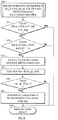
- FIG. 6 is a flowchart showing one example of a process that may be performed to derive the context-index using the broadcasting method described herein.
- a row of context indices are initialized to a default value (the context-index-offset).
- the context-indices that are initialized are those which correspond to the first bin (bin_0) of mb_qp_delta for all macroblocks in the row.
- the syntax element mb_qp_delta is not sent and the process proceeds to step 640, where the next syntax element is coded.
- step 610 If on the other hand the current MB is not of type I_PCM or Skip at step 610, the process proceeds to step 615, if the current MB if of type Intra_16x16 and the CBP is equal to zero. If not, then once again the syntax element mb_qp_delta is not sent and the process proceeds to step 640, where the next syntax element is coded.
- step 615 it is determined that the current MB if of type Intra 16x16 and the CBP is equal to zero, then at step 620 the first bin (bin_0) of mb_qp_delta is coded using the context associated with the initialized or updated context-index. Next, at step 625 all the other bins of mb_qp_delta are coded. The process continues to step 630, where it is determined if mb_qp_delta has a value greater than 0. If so, then at step 635 the context-index of the next MB in the coding order is incremented by 1, after which the process begins to code the next syntax element in step 640.
- the computational needs for decoding the first bin of mb_qp_delta involve 1 conditional check (as indicated in step 630) and up to 1 write operation (as indicated in step 635) Extrapolating these computational needs for a frame of 1080p content, with each frame having 8100 macroblocks, yields 8100 checks and up to 8100 write operations.
- Table 7 compares the computational data requirements between the direct method and the broadcasting method for each frame of 1080p content. Table 7 for each frame of 1080p Direct method Broadcasting method Reads 24,300 0 Checks 48,600 8,100 Writes 8,100 8,100
- FIG. 7 is a flowchart illustrating one example of this process.
- the context-index is initialized to the first context available for this syntax element bin.
- the context associated with the initialized or updated value of context index is used to decode the bin.
- determine in decision step 730 if any update to the context index of the neighboring bins is needed. If yes, then the process proceeds to step 740 in which the context index of the neighboring bins is updated. If no, the process continues to step 750 in which the next bin is decoded.
- the techniques described herein achieve a significant time savings by reducing the number of read operations, conditional checks and write cycles.
- the context-index values for the bin of neighboring MBs are updated after decoding the bin in the current block.
- An optimal design for storing and updating these context indices would be to maintain two rows (when updating two neighboring MB) or one row (when updating only one neighbor MB) of context-index values corresponding to the bins of the current and next row of macroblocks.
- the elements in the current row and the following row are initialized to a default value (e.g., the context-index associated with the first context available for the syntax element) and updated as and when needed.
- the next row becomes the current row and the previous current row becomes the next row, and the next row is then re-initialized to the default value.
- binarization As previously discussed, all syntax elements, including those that have non-binary values, are first represented in binary as a sequence of bins before CABAC encoding is performed. This is process is known as binarization. There are four basic types of binarization schemes that are used in H.264 and HEVC: the unary code, the truncated unary code, the kth order Exp-Golomb code, and the fixed-length code. In some cases concatenated codes using these basic types have been used. Some syntax elements have codes that are pre-defined in the standard. The mb_type (I, P, B) and sub_mb_type syntax elements, for instance, fall in this category.
- the bins are decoded in the order in which they arrive and the received bins are de-binarized. For each syntax element, a string of decoded bins is maintained. After decoding each bin of the syntax element, the bin string for the current syntax element being decoded is updated. Once a valid syntax element has been received, the process of de-binarization for the current syntax element is terminated and one for the next syntax element is initiated. The process of terminating the de-binarization process depends on the binarization scheme that is used. For example, if a unary code has been used for a given syntax element, the de-binarization process is terminated once a 0 has been received.
- the standards define a table of all possible values of the syntax element. After decoding each bin value in a bin string, the de-binarization procedure defined in the standard and in legacy implementations compares the partially decoded bin string against all the entries in the table.
- One aspect of the subject matter disclosed herein relates to a more optimal method for de-binarization of these tabulated codes for syntax elements such as mb_type and sub_mb_type.
- Table 8 which is defined in the H.264 standard, shows the bin string that corresponds to various I mb_types.
- the method described herein significantly reduces the number of entries in the table that need to be searched.
- the number of bins in each valid syntax element is noted.
- Table 8 there are have 1-bit, 2 bit, 6-bit and 7-bit bin strings for the I mb_types syntax elements.
- Table 9 shows the re-arranged entries in our invention where all the mb_types having equal number of bins are grouped together. In this example the entries are ordered from the bin strings with the least number of bits to maximum number of bits.
- the number of bins in the updated bin string is checked to see if can result in a valid syntax element. If so, only those entries in the table that contain the given number of bins are searched. Hence, in this example, after the first bin is decoded, the bin string is checked to see if its value is "0". If not, the next bin in the bin string is decoded.
- the updated bin string is compared to those entries in Table 9 which have the given number of bins in the updated bin string to check if the bin string matches the second entry in the table which is "1,1". After this step 4 more bins are decoded. At this point the binary string is matched against table entries 3-10 only. If at this point there is still no matching entry the last bin is decoded and matched against entries 11-25. At any point when a valid syntax element is found the decoding process for that syntax element is terminated.
Landscapes
- Engineering & Computer Science (AREA)
- Multimedia (AREA)
- Signal Processing (AREA)
- Compression Or Coding Systems Of Tv Signals (AREA)
Claims (10)
- Procédé de détermination d'un index par contexte lors de l'exécution d'un codage arithmétique binaire adaptable au contexte (CABAC) pour compression ou décompression vidéo, le procédé comprenant :l'initialisation à une valeur initialisée de chacun d'une pluralité d'index par contexte d'éléments de syntaxe choisis associés à des blocs donnés, les blocs donnés comprenant au moins les rangées actuelles et suivantes de blocs à coder ;la lecture de l'index par contexte des blocs voisins dépendants d'un premier bloc dans les blocs donnés avant le codage des blocs voisins, les blocs voisins dépendants étant des blocs qui ont un index par contexte qui dépend des valeurs codées d'une case courante dans le premier bloc ; etla mise à jour de l'index par contexte des blocs voisins dépendants à partir des valeurs initialisées pendant le codage du premier bloc et avant le codage des blocs voisins dépendants.
- Procédé selon la revendication 1, dans lequel les éléments de syntaxe sélectionnés sont spécifiés dans une norme H.264/MPEG 4 AVC et sont sélectionnés parmi le groupe constitué d'un mb_type, mb_skip_flag, transform_size_8x8_flag, mb_qp_delta, mb_field_decoding_flag, intra_chroma_pred_mode, mvd (horizontal)_10, mvd (vertical)_10, mvd (horizontal)_11, mvd (vertical)_11, ref_idx_10 et ref_idx_11, coded_block_pattern et coded_block_flag.
- Procédé selon la revendication 1, dans lequel les éléments de syntaxe sélectionnés sont spécifiés dans une norme HEVC et sont sélectionnés à partir du groupe constitué d'un split_cu_flag, cu_skip_flag, sig_coeff_flag si la compression ou la décompression vidéo a été effectuée à l'aide de HEVC.
- Procédé selon la revendication 1, dans lequel l'index par contexte des blocs voisins dépendants dépend uniquement du codage de la case courante lorsqu'au moins une condition spécifiée est satisfaite, l'une des conditions spécifiées étant dépendante du type de bloc.
- Procédé selon la revendication 1, dans lequel l'initialisation de la pluralité d'index par contexte comprend l'initialisation de tous les index par contexte à un index par contexte minimum possible pour l'élément de syntaxe sélectionné en cours de codage ou à un index par contexte maximum possible pour l'élément de syntaxe sélectionné en cours de codage.
- Procédé selon la revendication 5, dans lequel l'initialisation de la pluralité d'index par contexte comprend l'initialisation de tous les index par contexte à un index par contexte minimum possible pour l'élément de syntaxe sélectionné en cours de codage, et dans lequel l'initialisation et la mise à jour de l'index par contexte des blocs voisins dépendants comprennent l'incrémentation de l'index par contexte sur base du type de bloc et d'un débit binaire d'un flux vidéo en cours de compression ou de décompression.
- Procédé selon la revendication 5, dans lequel l'initialisation de la pluralité d'index par contexte comprend l'initialisation de tous les index par contexte à un index par contexte maximum possible pour l'élément de syntaxe sélectionné en cours de codage, et dans lequel l'initialisation et la mise à jour de l'index par contexte des blocs voisins dépendants comprennent la décrémentation de l'index par contexte sur base du type de bloc et d'un débit binaire d'un flux vidéo en cours de compression ou de décompression.
- Codeur CABAC, comprenant :un module de binarisation pour la conversion d'un élément de syntaxe en une séquence de cases ;un module d'index par contexte pour l'obtention d'un ou plusieurs modèles de contexte pour l'élément de syntaxe sur base de la séquence de cases, dans lequel le module d'index par contexte obtient le ou les modèles de contexte par l'initialisation d'un index par contexte de l'élément de syntaxe associé à des blocs donnés comprenant au moins les rangées de blocs actuelles et suivantes à coder et évalue l'index par contexte de blocs voisins dépendants d'un premier bloc dans les blocs donnés avant le codage des blocs voisins dépendants, les blocs voisins dépendants étant des blocs qui ont un index par contexte qui dépend du codage d'une case actuelle dans le premier bloc des blocs donnés ; etun codeur arithmétique pour la mise à jour du ou des modèles de contexte sur base de la séquence de cases et en utilisant le ou les modèles de contexte pour coder chacune des cases dans la séquence, dans lequel le codeur arithmétique met à jour le ou les modèles de contexte par la mise à jour des index par contexte des blocs voisins dépendants lors du codage du premier bloc et avant le codage des blocs voisins dépendants, lorsque leurs index par contexte changent par rapport aux valeurs initialisées.
- Codeur CABAC selon la revendication 8, dans lequel le module d'index par contexte est en outre configuré pour attribuer un modèle de contexte à chaque case de la séquence de cases.
- Codeur CABAC selon la revendication 8, dans lequel l'index par contexte des blocs voisins dépendants dépend uniquement du codage de la case courante lorsqu'au moins une condition spécifiée est satisfaite, l'une des conditions spécifiées étant dépendante du type de bloc.
Applications Claiming Priority (2)
| Application Number | Priority Date | Filing Date | Title |
|---|---|---|---|
| US201462003711P | 2014-05-28 | 2014-05-28 | |
| PCT/US2015/032835 WO2015184069A1 (fr) | 2014-05-28 | 2015-05-28 | Accélération d'un codage arithmétique binaire adapté au contexte (codage cabac) dans des codeurs-décodeurs vidéo |
Publications (2)
| Publication Number | Publication Date |
|---|---|
| EP3149948A1 EP3149948A1 (fr) | 2017-04-05 |
| EP3149948B1 true EP3149948B1 (fr) | 2021-07-07 |
Family
ID=58161038
Family Applications (1)
| Application Number | Title | Priority Date | Filing Date |
|---|---|---|---|
| EP15729986.8A Active EP3149948B1 (fr) | 2014-05-28 | 2015-05-28 | Accélération d'un codage arithmétique binaire adapté au contexte (codage cabac) dans des codeurs-décodeurs vidéo |
Country Status (1)
| Country | Link |
|---|---|
| EP (1) | EP3149948B1 (fr) |
Families Citing this family (1)
| Publication number | Priority date | Publication date | Assignee | Title |
|---|---|---|---|---|
| TW202515188A (zh) * | 2019-04-24 | 2025-04-01 | 美商松下電器(美國)知識產權公司 | 解碼裝置及非暫時性電腦可讀取媒體 |
-
2015
- 2015-05-28 EP EP15729986.8A patent/EP3149948B1/fr active Active
Non-Patent Citations (1)
| Title |
|---|
| None * |
Also Published As
| Publication number | Publication date |
|---|---|
| EP3149948A1 (fr) | 2017-04-05 |
Similar Documents
| Publication | Publication Date | Title |
|---|---|---|
| US11336921B2 (en) | Acceleration of context adaptive binary arithmetic coding (CABAC) in video codecs | |
| US12581118B2 (en) | Golomb-Rice/EG coding technique for CABAC in HEVC | |
| US8401321B2 (en) | Method and apparatus for context adaptive binary arithmetic coding and decoding | |
| US6744387B2 (en) | Method and system for symbol binarization | |
| KR101627568B1 (ko) | 동화상 부호화 장치, 동화상 부호화 방법 및 동화상 부호화용 컴퓨터 프로그램 | |
| EP3143766A1 (fr) | Codage de contenu d'écran évolué avec palette graphique améliorée et procédés de codage de cartes-index | |
| KR20070006445A (ko) | 하이브리드 엔트로피 부호화, 복호화 방법 및 장치 | |
| EP3149948A1 (fr) | Accélération d'un codage arithmétique binaire adapté au contexte (codage cabac) dans des codeurs-décodeurs vidéo | |
| US10958901B2 (en) | Methods and devices for coding and decoding a data stream representing at least one image | |
| HK1249812A1 (en) | Method for encoding and decoding a bitstream associated with transform coefficients | |
| HK1249315A1 (en) | Method for encoding and decoding a bitstream associated with transform coefficients |
Legal Events
| Date | Code | Title | Description |
|---|---|---|---|
| STAA | Information on the status of an ep patent application or granted ep patent |
Free format text: STATUS: THE INTERNATIONAL PUBLICATION HAS BEEN MADE |
|
| PUAI | Public reference made under article 153(3) epc to a published international application that has entered the european phase |
Free format text: ORIGINAL CODE: 0009012 |
|
| STAA | Information on the status of an ep patent application or granted ep patent |
Free format text: STATUS: REQUEST FOR EXAMINATION WAS MADE |
|
| 17P | Request for examination filed |
Effective date: 20161212 |
|
| AK | Designated contracting states |
Kind code of ref document: A1 Designated state(s): AL AT BE BG CH CY CZ DE DK EE ES FI FR GB GR HR HU IE IS IT LI LT LU LV MC MK MT NL NO PL PT RO RS SE SI SK SM TR |
|
| AX | Request for extension of the european patent |
Extension state: BA ME |
|
| RAP1 | Party data changed (applicant data changed or rights of an application transferred) |
Owner name: ARRIS ENTERPRISES LLC |
|
| DAV | Request for validation of the european patent (deleted) | ||
| DAX | Request for extension of the european patent (deleted) | ||
| STAA | Information on the status of an ep patent application or granted ep patent |
Free format text: STATUS: EXAMINATION IS IN PROGRESS |
|
| 17Q | First examination report despatched |
Effective date: 20190122 |
|
| GRAP | Despatch of communication of intention to grant a patent |
Free format text: ORIGINAL CODE: EPIDOSNIGR1 |
|
| STAA | Information on the status of an ep patent application or granted ep patent |
Free format text: STATUS: GRANT OF PATENT IS INTENDED |
|
| INTG | Intention to grant announced |
Effective date: 20201210 |
|
| GRAS | Grant fee paid |
Free format text: ORIGINAL CODE: EPIDOSNIGR3 |
|
| GRAA | (expected) grant |
Free format text: ORIGINAL CODE: 0009210 |
|
| STAA | Information on the status of an ep patent application or granted ep patent |
Free format text: STATUS: THE PATENT HAS BEEN GRANTED |
|
| AK | Designated contracting states |
Kind code of ref document: B1 Designated state(s): AL AT BE BG CH CY CZ DE DK EE ES FI FR GB GR HR HU IE IS IT LI LT LU LV MC MK MT NL NO PL PT RO RS SE SI SK SM TR |
|
| REG | Reference to a national code |
Ref country code: GB Ref legal event code: FG4D |
|
| REG | Reference to a national code |
Ref country code: AT Ref legal event code: REF Ref document number: 1409763 Country of ref document: AT Kind code of ref document: T Effective date: 20210715 |
|
| REG | Reference to a national code |
Ref country code: DE Ref legal event code: R096 Ref document number: 602015071088 Country of ref document: DE |
|
| REG | Reference to a national code |
Ref country code: IE Ref legal event code: FG4D |
|
| REG | Reference to a national code |
Ref country code: LT Ref legal event code: MG9D |
|
| REG | Reference to a national code |
Ref country code: NL Ref legal event code: MP Effective date: 20210707 |
|
| REG | Reference to a national code |
Ref country code: AT Ref legal event code: MK05 Ref document number: 1409763 Country of ref document: AT Kind code of ref document: T Effective date: 20210707 |
|
| PG25 | Lapsed in a contracting state [announced via postgrant information from national office to epo] |
Ref country code: BG Free format text: LAPSE BECAUSE OF FAILURE TO SUBMIT A TRANSLATION OF THE DESCRIPTION OR TO PAY THE FEE WITHIN THE PRESCRIBED TIME-LIMIT Effective date: 20211007 Ref country code: AT Free format text: LAPSE BECAUSE OF FAILURE TO SUBMIT A TRANSLATION OF THE DESCRIPTION OR TO PAY THE FEE WITHIN THE PRESCRIBED TIME-LIMIT Effective date: 20210707 Ref country code: LT Free format text: LAPSE BECAUSE OF FAILURE TO SUBMIT A TRANSLATION OF THE DESCRIPTION OR TO PAY THE FEE WITHIN THE PRESCRIBED TIME-LIMIT Effective date: 20210707 Ref country code: FI Free format text: LAPSE BECAUSE OF FAILURE TO SUBMIT A TRANSLATION OF THE DESCRIPTION OR TO PAY THE FEE WITHIN THE PRESCRIBED TIME-LIMIT Effective date: 20210707 Ref country code: ES Free format text: LAPSE BECAUSE OF FAILURE TO SUBMIT A TRANSLATION OF THE DESCRIPTION OR TO PAY THE FEE WITHIN THE PRESCRIBED TIME-LIMIT Effective date: 20210707 Ref country code: NO Free format text: LAPSE BECAUSE OF FAILURE TO SUBMIT A TRANSLATION OF THE DESCRIPTION OR TO PAY THE FEE WITHIN THE PRESCRIBED TIME-LIMIT Effective date: 20211007 Ref country code: PT Free format text: LAPSE BECAUSE OF FAILURE TO SUBMIT A TRANSLATION OF THE DESCRIPTION OR TO PAY THE FEE WITHIN THE PRESCRIBED TIME-LIMIT Effective date: 20211108 Ref country code: NL Free format text: LAPSE BECAUSE OF FAILURE TO SUBMIT A TRANSLATION OF THE DESCRIPTION OR TO PAY THE FEE WITHIN THE PRESCRIBED TIME-LIMIT Effective date: 20210707 Ref country code: HR Free format text: LAPSE BECAUSE OF FAILURE TO SUBMIT A TRANSLATION OF THE DESCRIPTION OR TO PAY THE FEE WITHIN THE PRESCRIBED TIME-LIMIT Effective date: 20210707 Ref country code: SE Free format text: LAPSE BECAUSE OF FAILURE TO SUBMIT A TRANSLATION OF THE DESCRIPTION OR TO PAY THE FEE WITHIN THE PRESCRIBED TIME-LIMIT Effective date: 20210707 Ref country code: RS Free format text: LAPSE BECAUSE OF FAILURE TO SUBMIT A TRANSLATION OF THE DESCRIPTION OR TO PAY THE FEE WITHIN THE PRESCRIBED TIME-LIMIT Effective date: 20210707 |
|
| PG25 | Lapsed in a contracting state [announced via postgrant information from national office to epo] |
Ref country code: PL Free format text: LAPSE BECAUSE OF FAILURE TO SUBMIT A TRANSLATION OF THE DESCRIPTION OR TO PAY THE FEE WITHIN THE PRESCRIBED TIME-LIMIT Effective date: 20210707 Ref country code: LV Free format text: LAPSE BECAUSE OF FAILURE TO SUBMIT A TRANSLATION OF THE DESCRIPTION OR TO PAY THE FEE WITHIN THE PRESCRIBED TIME-LIMIT Effective date: 20210707 Ref country code: GR Free format text: LAPSE BECAUSE OF FAILURE TO SUBMIT A TRANSLATION OF THE DESCRIPTION OR TO PAY THE FEE WITHIN THE PRESCRIBED TIME-LIMIT Effective date: 20211008 |
|
| REG | Reference to a national code |
Ref country code: DE Ref legal event code: R097 Ref document number: 602015071088 Country of ref document: DE |
|
| PG25 | Lapsed in a contracting state [announced via postgrant information from national office to epo] |
Ref country code: DK Free format text: LAPSE BECAUSE OF FAILURE TO SUBMIT A TRANSLATION OF THE DESCRIPTION OR TO PAY THE FEE WITHIN THE PRESCRIBED TIME-LIMIT Effective date: 20210707 |
|
| PLBE | No opposition filed within time limit |
Free format text: ORIGINAL CODE: 0009261 |
|
| STAA | Information on the status of an ep patent application or granted ep patent |
Free format text: STATUS: NO OPPOSITION FILED WITHIN TIME LIMIT |
|
| PG25 | Lapsed in a contracting state [announced via postgrant information from national office to epo] |
Ref country code: SM Free format text: LAPSE BECAUSE OF FAILURE TO SUBMIT A TRANSLATION OF THE DESCRIPTION OR TO PAY THE FEE WITHIN THE PRESCRIBED TIME-LIMIT Effective date: 20210707 Ref country code: SK Free format text: LAPSE BECAUSE OF FAILURE TO SUBMIT A TRANSLATION OF THE DESCRIPTION OR TO PAY THE FEE WITHIN THE PRESCRIBED TIME-LIMIT Effective date: 20210707 Ref country code: RO Free format text: LAPSE BECAUSE OF FAILURE TO SUBMIT A TRANSLATION OF THE DESCRIPTION OR TO PAY THE FEE WITHIN THE PRESCRIBED TIME-LIMIT Effective date: 20210707 Ref country code: EE Free format text: LAPSE BECAUSE OF FAILURE TO SUBMIT A TRANSLATION OF THE DESCRIPTION OR TO PAY THE FEE WITHIN THE PRESCRIBED TIME-LIMIT Effective date: 20210707 Ref country code: CZ Free format text: LAPSE BECAUSE OF FAILURE TO SUBMIT A TRANSLATION OF THE DESCRIPTION OR TO PAY THE FEE WITHIN THE PRESCRIBED TIME-LIMIT Effective date: 20210707 Ref country code: AL Free format text: LAPSE BECAUSE OF FAILURE TO SUBMIT A TRANSLATION OF THE DESCRIPTION OR TO PAY THE FEE WITHIN THE PRESCRIBED TIME-LIMIT Effective date: 20210707 |
|
| 26N | No opposition filed |
Effective date: 20220408 |
|
| PG25 | Lapsed in a contracting state [announced via postgrant information from national office to epo] |
Ref country code: IT Free format text: LAPSE BECAUSE OF FAILURE TO SUBMIT A TRANSLATION OF THE DESCRIPTION OR TO PAY THE FEE WITHIN THE PRESCRIBED TIME-LIMIT Effective date: 20210707 |
|
| REG | Reference to a national code |
Ref country code: GB Ref legal event code: 732E Free format text: REGISTERED BETWEEN 20220714 AND 20220720 |
|
| REG | Reference to a national code |
Ref country code: DE Ref legal event code: R119 Ref document number: 602015071088 Country of ref document: DE |
|
| REG | Reference to a national code |
Ref country code: CH Ref legal event code: PL |
|
| REG | Reference to a national code |
Ref country code: BE Ref legal event code: MM Effective date: 20220531 |
|
| PG25 | Lapsed in a contracting state [announced via postgrant information from national office to epo] |
Ref country code: MC Free format text: LAPSE BECAUSE OF FAILURE TO SUBMIT A TRANSLATION OF THE DESCRIPTION OR TO PAY THE FEE WITHIN THE PRESCRIBED TIME-LIMIT Effective date: 20210707 Ref country code: LU Free format text: LAPSE BECAUSE OF NON-PAYMENT OF DUE FEES Effective date: 20220528 Ref country code: LI Free format text: LAPSE BECAUSE OF NON-PAYMENT OF DUE FEES Effective date: 20220531 Ref country code: CH Free format text: LAPSE BECAUSE OF NON-PAYMENT OF DUE FEES Effective date: 20220531 |
|
| PG25 | Lapsed in a contracting state [announced via postgrant information from national office to epo] |
Ref country code: IE Free format text: LAPSE BECAUSE OF NON-PAYMENT OF DUE FEES Effective date: 20220528 Ref country code: FR Free format text: LAPSE BECAUSE OF NON-PAYMENT OF DUE FEES Effective date: 20220531 |
|
| PG25 | Lapsed in a contracting state [announced via postgrant information from national office to epo] |
Ref country code: DE Free format text: LAPSE BECAUSE OF NON-PAYMENT OF DUE FEES Effective date: 20221201 Ref country code: BE Free format text: LAPSE BECAUSE OF NON-PAYMENT OF DUE FEES Effective date: 20220531 |
|
| PG25 | Lapsed in a contracting state [announced via postgrant information from national office to epo] |
Ref country code: HU Free format text: LAPSE BECAUSE OF FAILURE TO SUBMIT A TRANSLATION OF THE DESCRIPTION OR TO PAY THE FEE WITHIN THE PRESCRIBED TIME-LIMIT; INVALID AB INITIO Effective date: 20150528 |
|
| PG25 | Lapsed in a contracting state [announced via postgrant information from national office to epo] |
Ref country code: MK Free format text: LAPSE BECAUSE OF FAILURE TO SUBMIT A TRANSLATION OF THE DESCRIPTION OR TO PAY THE FEE WITHIN THE PRESCRIBED TIME-LIMIT Effective date: 20210707 Ref country code: CY Free format text: LAPSE BECAUSE OF FAILURE TO SUBMIT A TRANSLATION OF THE DESCRIPTION OR TO PAY THE FEE WITHIN THE PRESCRIBED TIME-LIMIT Effective date: 20210707 |
|
| REG | Reference to a national code |
Ref country code: GB Ref legal event code: 732E Free format text: REGISTERED BETWEEN 20240418 AND 20240424 |
|
| PG25 | Lapsed in a contracting state [announced via postgrant information from national office to epo] |
Ref country code: TR Free format text: LAPSE BECAUSE OF FAILURE TO SUBMIT A TRANSLATION OF THE DESCRIPTION OR TO PAY THE FEE WITHIN THE PRESCRIBED TIME-LIMIT Effective date: 20210707 |
|
| PG25 | Lapsed in a contracting state [announced via postgrant information from national office to epo] |
Ref country code: MT Free format text: LAPSE BECAUSE OF FAILURE TO SUBMIT A TRANSLATION OF THE DESCRIPTION OR TO PAY THE FEE WITHIN THE PRESCRIBED TIME-LIMIT Effective date: 20210707 |
|
| REG | Reference to a national code |
Ref country code: GB Ref legal event code: 732E Free format text: REGISTERED BETWEEN 20250213 AND 20250219 |
|
| PGFP | Annual fee paid to national office [announced via postgrant information from national office to epo] |
Ref country code: GB Payment date: 20250527 Year of fee payment: 11 |