EP3154111B1 - Verbundmaterial, elektrode, verfahren zur herstellung des materials und elektrode und elektrochemische zelle mit der elektrode - Google Patents
Verbundmaterial, elektrode, verfahren zur herstellung des materials und elektrode und elektrochemische zelle mit der elektrode Download PDFInfo
- Publication number
- EP3154111B1 EP3154111B1 EP15188846.8A EP15188846A EP3154111B1 EP 3154111 B1 EP3154111 B1 EP 3154111B1 EP 15188846 A EP15188846 A EP 15188846A EP 3154111 B1 EP3154111 B1 EP 3154111B1
- Authority
- EP
- European Patent Office
- Prior art keywords
- composite material
- electrode
- conditioner
- regard
- group
- Prior art date
- Legal status (The legal status is an assumption and is not a legal conclusion. Google has not performed a legal analysis and makes no representation as to the accuracy of the status listed.)
- Active
Links
- 0 C*(C)c(cc1)ccc1N(c(cc1)ccc1NC(CC1(C)C)CC(C)(C)N1[O+])c(cc1)ccc1N(c(cc1)ccc1NC(CC1(C)C)CC(C)(C)N1[O+])c(cc1)ccc1NC(c1cccc(C(N*(C)C)=O)c1)=O Chemical compound C*(C)c(cc1)ccc1N(c(cc1)ccc1NC(CC1(C)C)CC(C)(C)N1[O+])c(cc1)ccc1N(c(cc1)ccc1NC(CC1(C)C)CC(C)(C)N1[O+])c(cc1)ccc1NC(c1cccc(C(N*(C)C)=O)c1)=O 0.000 description 10
Images

Classifications
-
- C—CHEMISTRY; METALLURGY
- C08—ORGANIC MACROMOLECULAR COMPOUNDS; THEIR PREPARATION OR CHEMICAL WORKING-UP; COMPOSITIONS BASED THEREON
- C08G—MACROMOLECULAR COMPOUNDS OBTAINED OTHERWISE THAN BY REACTIONS ONLY INVOLVING UNSATURATED CARBON-TO-CARBON BONDS
- C08G73/00—Macromolecular compounds obtained by reactions forming a linkage containing nitrogen with or without oxygen or carbon in the main chain of the macromolecule, not provided for in groups C08G12/00 - C08G71/00
- C08G73/02—Polyamines
- C08G73/028—Polyamidoamines
-
- H—ELECTRICITY
- H01—ELECTRIC ELEMENTS
- H01M—PROCESSES OR MEANS, e.g. BATTERIES, FOR THE DIRECT CONVERSION OF CHEMICAL ENERGY INTO ELECTRICAL ENERGY
- H01M10/00—Secondary cells; Manufacture thereof
- H01M10/05—Accumulators with non-aqueous electrolyte
- H01M10/052—Li-accumulators
- H01M10/0525—Rocking-chair batteries, i.e. batteries with lithium insertion or intercalation in both electrodes; Lithium-ion batteries
-
- H—ELECTRICITY
- H01—ELECTRIC ELEMENTS
- H01B—CABLES; CONDUCTORS; INSULATORS; SELECTION OF MATERIALS FOR THEIR CONDUCTIVE, INSULATING OR DIELECTRIC PROPERTIES
- H01B1/00—Conductors or conductive bodies characterised by the conductive materials; Selection of materials as conductors
- H01B1/06—Conductors or conductive bodies characterised by the conductive materials; Selection of materials as conductors mainly consisting of other non-metallic substances
- H01B1/12—Conductors or conductive bodies characterised by the conductive materials; Selection of materials as conductors mainly consisting of other non-metallic substances organic substances
-
- H—ELECTRICITY
- H01—ELECTRIC ELEMENTS
- H01G—CAPACITORS; CAPACITORS, RECTIFIERS, DETECTORS, SWITCHING DEVICES, LIGHT-SENSITIVE OR TEMPERATURE-SENSITIVE DEVICES OF THE ELECTROLYTIC TYPE
- H01G11/00—Hybrid capacitors, i.e. capacitors having different positive and negative electrodes; Electric double-layer [EDL] capacitors; Processes for the manufacture thereof or of parts thereof
- H01G11/04—Hybrid capacitors
- H01G11/06—Hybrid capacitors with one of the electrodes allowing ions to be reversibly doped thereinto, e.g. lithium ion capacitors [LIC]
-
- H—ELECTRICITY
- H01—ELECTRIC ELEMENTS
- H01G—CAPACITORS; CAPACITORS, RECTIFIERS, DETECTORS, SWITCHING DEVICES, LIGHT-SENSITIVE OR TEMPERATURE-SENSITIVE DEVICES OF THE ELECTROLYTIC TYPE
- H01G11/00—Hybrid capacitors, i.e. capacitors having different positive and negative electrodes; Electric double-layer [EDL] capacitors; Processes for the manufacture thereof or of parts thereof
- H01G11/22—Electrodes
- H01G11/30—Electrodes characterised by their material
- H01G11/32—Carbon-based
- H01G11/36—Nanostructures, e.g. nanofibres, nanotubes or fullerenes
-
- H—ELECTRICITY
- H01—ELECTRIC ELEMENTS
- H01G—CAPACITORS; CAPACITORS, RECTIFIERS, DETECTORS, SWITCHING DEVICES, LIGHT-SENSITIVE OR TEMPERATURE-SENSITIVE DEVICES OF THE ELECTROLYTIC TYPE
- H01G11/00—Hybrid capacitors, i.e. capacitors having different positive and negative electrodes; Electric double-layer [EDL] capacitors; Processes for the manufacture thereof or of parts thereof
- H01G11/22—Electrodes
- H01G11/30—Electrodes characterised by their material
- H01G11/32—Carbon-based
- H01G11/38—Carbon pastes or blends; Binders or additives therein
-
- H—ELECTRICITY
- H01—ELECTRIC ELEMENTS
- H01G—CAPACITORS; CAPACITORS, RECTIFIERS, DETECTORS, SWITCHING DEVICES, LIGHT-SENSITIVE OR TEMPERATURE-SENSITIVE DEVICES OF THE ELECTROLYTIC TYPE
- H01G11/00—Hybrid capacitors, i.e. capacitors having different positive and negative electrodes; Electric double-layer [EDL] capacitors; Processes for the manufacture thereof or of parts thereof
- H01G11/22—Electrodes
- H01G11/30—Electrodes characterised by their material
- H01G11/48—Conductive polymers
-
- H—ELECTRICITY
- H01—ELECTRIC ELEMENTS
- H01G—CAPACITORS; CAPACITORS, RECTIFIERS, DETECTORS, SWITCHING DEVICES, LIGHT-SENSITIVE OR TEMPERATURE-SENSITIVE DEVICES OF THE ELECTROLYTIC TYPE
- H01G11/00—Hybrid capacitors, i.e. capacitors having different positive and negative electrodes; Electric double-layer [EDL] capacitors; Processes for the manufacture thereof or of parts thereof
- H01G11/22—Electrodes
- H01G11/30—Electrodes characterised by their material
- H01G11/50—Electrodes characterised by their material specially adapted for lithium-ion capacitors, e.g. for lithium-doping or for intercalation
-
- H—ELECTRICITY
- H01—ELECTRIC ELEMENTS
- H01M—PROCESSES OR MEANS, e.g. BATTERIES, FOR THE DIRECT CONVERSION OF CHEMICAL ENERGY INTO ELECTRICAL ENERGY
- H01M4/00—Electrodes
- H01M4/02—Electrodes composed of, or comprising, active material
- H01M4/36—Selection of substances as active materials, active masses, active liquids
- H01M4/362—Composites
- H01M4/364—Composites as mixtures
-
- H—ELECTRICITY
- H01—ELECTRIC ELEMENTS
- H01M—PROCESSES OR MEANS, e.g. BATTERIES, FOR THE DIRECT CONVERSION OF CHEMICAL ENERGY INTO ELECTRICAL ENERGY
- H01M4/00—Electrodes
- H01M4/02—Electrodes composed of, or comprising, active material
- H01M4/36—Selection of substances as active materials, active masses, active liquids
- H01M4/48—Selection of substances as active materials, active masses, active liquids of inorganic oxides or hydroxides
- H01M4/50—Selection of substances as active materials, active masses, active liquids of inorganic oxides or hydroxides of manganese
- H01M4/505—Selection of substances as active materials, active masses, active liquids of inorganic oxides or hydroxides of manganese of mixed oxides or hydroxides containing manganese for inserting or intercalating light metals, e.g. LiMn2O4 or LiMn2OxFy
-
- H—ELECTRICITY
- H01—ELECTRIC ELEMENTS
- H01M—PROCESSES OR MEANS, e.g. BATTERIES, FOR THE DIRECT CONVERSION OF CHEMICAL ENERGY INTO ELECTRICAL ENERGY
- H01M4/00—Electrodes
- H01M4/02—Electrodes composed of, or comprising, active material
- H01M4/36—Selection of substances as active materials, active masses, active liquids
- H01M4/58—Selection of substances as active materials, active masses, active liquids of inorganic compounds other than oxides or hydroxides, e.g. sulfides, selenides, tellurides, halogenides or LiCoFy; of polyanionic structures, e.g. phosphates, silicates or borates
- H01M4/583—Carbonaceous material, e.g. graphite-intercalation compounds or CFx
-
- H—ELECTRICITY
- H01—ELECTRIC ELEMENTS
- H01M—PROCESSES OR MEANS, e.g. BATTERIES, FOR THE DIRECT CONVERSION OF CHEMICAL ENERGY INTO ELECTRICAL ENERGY
- H01M4/00—Electrodes
- H01M4/02—Electrodes composed of, or comprising, active material
- H01M4/36—Selection of substances as active materials, active masses, active liquids
- H01M4/60—Selection of substances as active materials, active masses, active liquids of organic compounds
- H01M4/602—Polymers
- H01M4/606—Polymers containing aromatic main chain polymers
-
- H—ELECTRICITY
- H01—ELECTRIC ELEMENTS
- H01M—PROCESSES OR MEANS, e.g. BATTERIES, FOR THE DIRECT CONVERSION OF CHEMICAL ENERGY INTO ELECTRICAL ENERGY
- H01M4/00—Electrodes
- H01M4/02—Electrodes composed of, or comprising, active material
- H01M4/62—Selection of inactive substances as ingredients for active masses, e.g. binders, fillers
- H01M4/621—Binders
- H01M4/622—Binders being polymers
- H01M4/623—Binders being polymers fluorinated polymers
-
- H—ELECTRICITY
- H01—ELECTRIC ELEMENTS
- H01M—PROCESSES OR MEANS, e.g. BATTERIES, FOR THE DIRECT CONVERSION OF CHEMICAL ENERGY INTO ELECTRICAL ENERGY
- H01M50/00—Constructional details or processes of manufacture of the non-active parts of electrochemical cells other than fuel cells, e.g. hybrid cells
- H01M50/40—Separators; Membranes; Diaphragms; Spacing elements inside cells
-
- H—ELECTRICITY
- H01—ELECTRIC ELEMENTS
- H01M—PROCESSES OR MEANS, e.g. BATTERIES, FOR THE DIRECT CONVERSION OF CHEMICAL ENERGY INTO ELECTRICAL ENERGY
- H01M10/00—Secondary cells; Manufacture thereof
- H01M10/05—Accumulators with non-aqueous electrolyte
- H01M10/052—Li-accumulators
-
- H—ELECTRICITY
- H01—ELECTRIC ELEMENTS
- H01M—PROCESSES OR MEANS, e.g. BATTERIES, FOR THE DIRECT CONVERSION OF CHEMICAL ENERGY INTO ELECTRICAL ENERGY
- H01M4/00—Electrodes
- H01M4/02—Electrodes composed of, or comprising, active material
- H01M2004/026—Electrodes composed of, or comprising, active material characterised by the polarity
- H01M2004/027—Negative electrodes
-
- H—ELECTRICITY
- H01—ELECTRIC ELEMENTS
- H01M—PROCESSES OR MEANS, e.g. BATTERIES, FOR THE DIRECT CONVERSION OF CHEMICAL ENERGY INTO ELECTRICAL ENERGY
- H01M4/00—Electrodes
- H01M4/02—Electrodes composed of, or comprising, active material
- H01M2004/026—Electrodes composed of, or comprising, active material characterised by the polarity
- H01M2004/028—Positive electrodes
-
- H—ELECTRICITY
- H01—ELECTRIC ELEMENTS
- H01M—PROCESSES OR MEANS, e.g. BATTERIES, FOR THE DIRECT CONVERSION OF CHEMICAL ENERGY INTO ELECTRICAL ENERGY
- H01M4/00—Electrodes
- H01M4/02—Electrodes composed of, or comprising, active material
- H01M4/36—Selection of substances as active materials, active masses, active liquids
- H01M4/58—Selection of substances as active materials, active masses, active liquids of inorganic compounds other than oxides or hydroxides, e.g. sulfides, selenides, tellurides, halogenides or LiCoFy; of polyanionic structures, e.g. phosphates, silicates or borates
- H01M4/5825—Oxygenated metallic salts or polyanionic structures, e.g. borates, phosphates, silicates, olivines
-
- Y—GENERAL TAGGING OF NEW TECHNOLOGICAL DEVELOPMENTS; GENERAL TAGGING OF CROSS-SECTIONAL TECHNOLOGIES SPANNING OVER SEVERAL SECTIONS OF THE IPC; TECHNICAL SUBJECTS COVERED BY FORMER USPC CROSS-REFERENCE ART COLLECTIONS [XRACs] AND DIGESTS
- Y02—TECHNOLOGIES OR APPLICATIONS FOR MITIGATION OR ADAPTATION AGAINST CLIMATE CHANGE
- Y02E—REDUCTION OF GREENHOUSE GAS [GHG] EMISSIONS, RELATED TO ENERGY GENERATION, TRANSMISSION OR DISTRIBUTION
- Y02E60/00—Enabling technologies; Technologies with a potential or indirect contribution to GHG emissions mitigation
- Y02E60/10—Energy storage using batteries
-
- Y—GENERAL TAGGING OF NEW TECHNOLOGICAL DEVELOPMENTS; GENERAL TAGGING OF CROSS-SECTIONAL TECHNOLOGIES SPANNING OVER SEVERAL SECTIONS OF THE IPC; TECHNICAL SUBJECTS COVERED BY FORMER USPC CROSS-REFERENCE ART COLLECTIONS [XRACs] AND DIGESTS
- Y02—TECHNOLOGIES OR APPLICATIONS FOR MITIGATION OR ADAPTATION AGAINST CLIMATE CHANGE
- Y02E—REDUCTION OF GREENHOUSE GAS [GHG] EMISSIONS, RELATED TO ENERGY GENERATION, TRANSMISSION OR DISTRIBUTION
- Y02E60/00—Enabling technologies; Technologies with a potential or indirect contribution to GHG emissions mitigation
- Y02E60/13—Energy storage using capacitors
Definitions
- the invention described hereinafter relates to a composite material, an electrode comprising the material, a method to produce the material and the electrode and an electrochemical cell comprising the electrode.
- battery originally meant a plurality of electrochemical cells connected in series in a housing.
- electrochemical cells even single electrochemical cells are nowadays frequently referred to as a battery.
- an energy-supplying chemical reaction made up of two electrically coupled but spatially separated part reactions takes place.
- a part reaction which takes place at a relatively low redox potential proceeds at the negative electrode and a part reaction takes place at a relatively high redox potential at the positive electrode.
- electrons are liberated by means of an oxidation process at the negative electrode, resulting in an electron current which flows via an external load to the positive electrode which takes up a corresponding quantity of electrons.
- a reduction process takes place at the positive electrode.
- an ion current corresponding to the electrode reaction flows within the cell.
- This ion current is ensured by means of an ionically conductive electrolyte.
- this discharging reaction is reversible, i.e. it is possible to reverse the transformation of chemical energy into electric energy which occurred during discharge.
- the electrodes are generally named according to their function during discharging. The negative electrode in such cells is thus the anode, and the positive electrode is the cathode.
- Each electrode comprises at least one electrode active material and electrochemically inactive components.
- An electrode active material experiences a chemical transformation during charging and discharging, in particular an oxidation or reduction (the above-mentioned oxidation and reduction processes).
- electrochemically inactive components are essentially unaffected during charging and discharging.
- Examples of electrochemically inactive components of an electrode are electrode binders, current collectors, power outlet leads and conductivity-improving additives. Electrons are supplied to or conducted away from the electrodes by power outlet leads. Electrode binders ensure the mechanical stability of the electrodes and contacting of the particles of electrochemically active material with one another and with the power outlet lead. Conductivity-improving additives contribute to an improved electric connection between the electrochemically active particles and the power outlet lead.
- Lithium-ion batteries are the most frequently used secondary batteries for portable electronic devices.
- the mechanism for charge storage is based on the intercalation / deintercalation of Liions in usually metal oxides (electrode active material on the cathode side) and carbon (electrode active material on the anode side).
- Lithium-ion batteries exhibit good energy density and cycle stability, but moderate capacities or capacity retention at higher current densities because of the slow rates of the electrode reactions, resulting in low power densities.
- double-layer capacitors can provide high pulsed currents at high power densities.
- the capacity of double-layer capacitors is limited according to the nature of a capacitor.
- double-layer capacitors have a falling voltage characteristic.
- Battery cells utilizing organic compounds as electrode active materials are capable of showing higher power densities and also higher gravimetric energy densities than Lithium-ion batteries.
- One example is the utilization of reversible oxidation / reduction - reactions of compounds containing stable radicals, such as nitroxide radicals.
- EP 2 025 689 A1 discloses the use of nitroxide radical containing polymers as electrode active materials in secondary batteries which show very good capacity retention at higher current rates (high power density) and cyclic stability.
- organic electrode materials like e.g. conducting polymers or also some poly-radicals, start to degrade when cycled to and held at higher potentials, for example at potentials close to or above 4 V vs. Li/Li+.
- pages 1667-1674 refer to electrochromic properties of aromatic polyamides containing N,N,N',N'-Tetraphenyl-p-Phenylenediamine moieties.
- aromatic polyamides are deposited on an indium-tin oxide coated glass substrate.
- CN 102903525 A refers to a positively charged solid-state energy storage material for electrical energy storage devices, containing amines and derivatives of small organic molecules.
- a composite material comprising an electrochemically active inorganic particulate material is not disclosed.
- CN 103159952 A refers to optoelectronic materials comprising a composite of graphene oxide and an amine compound. The document primarily refers to photovoltaic applications and not to batteries.
- EP 3032621 A1 refers to an electrode for an electrochemical element with an organic electrolyte, comprising a polymeric material containing or composed of subunits according to general formulae (I) and (II) below.
- a particulate composite material comprising an active inorganic particulate material in addition to said polymeric material is not disclosed.
- the present invention provides a composite material capable of storing electric energy, comprising a mixture of
- Ar 1 and Ar 4 in structures (I) and (II) independently represent a bridging aryl group of formula (III.a), (III.b) or (III.c) In these structures (III.a) to (III.c)
- R 5 represents one of the groups of formulae (VI.a) to (VI.q) wherein
- the polymeric material according to the invention is either a polyamide or a polyester or a polyurethane.
- Ar 2 and Ar 3 in structures (I) and (II) independently represent a non-bridging aryl group of formula (III) wherein
- a - is the anion derived from the electrolyte salt and may be, for example, the anion derived from LiPF 6 , LiClO 4 , LiBF 4 , LiN(SO 2 CF 3 ) or NaCl.
- the polymer compound may also carry stable nitroxide radicals.
- the underlying mechanism of energy storage is the reversible oxidation / reduction of the nitroxide radical according to scheme 2 representatively showing the redox couples of 2,2,6,6-tetramethylpiperidine-1-oxyl (TEMPO):
- a - has the same meaning as before and C + is the cation derived from the electrolyte salt and may be, for example, Li + or Na + .
- the organic material preferably has a dynamic viscosity from 2.5 mPas to 50 mPas (measured in NMP at 20 °C and a concentration of 2 wt.%).
- the organic material has an average molecular weight in the range from 200.000 g/mol to 400.000 g/mol.
- the electrochemically active inorganic particulate material is capable of storing electrical energy by means of the electrical double layer effect and/or by means of a chemical transformation.
- the inorganic particulate material comprises or consists of particles of a carbon material, a metal oxide, or a mixture comprising these particles or consisting of these particles.
- the carbon material is preferably selected from the group consisting of activated carbon, carbon nanotubes, graphene, graphene oxide and graphene derivatives.
- the composite material comprises at least one conditioner with regard to electric conductivity, preferably
- the inorganic particulate material comprises at least one of the metal oxides, preferably LiMnPO 4 , LiCoPO 4 , LiFePO 4 , LiNiPO 4 , LiMn 2 O 4 , LiAl 2 O 4 , Li-Co 2 O 4 and/or LiNi 2 O 4 , and least one of said conditioners with regard to electric conductivity, wherein the at least one conditioner is deposited on the surface of the particulate material.
- the metal oxides preferably LiMnPO 4 , LiCoPO 4 , LiFePO 4 , LiNiPO 4 , LiMn 2 O 4 , LiAl 2 O 4 , Li-Co 2 O 4 and/or LiNi 2 O 4 , and least one of said conditioners with regard to electric conductivity, wherein the at least one conditioner is deposited on the surface of the particulate material.
- the composite material may - in addition to the at least one conditioner with regard to electric conductivity or as an alternative thereto - comprise a conditioner with regard to ion conductivity, preferably with regard to the conductivity of lithium ions, in particular a suitable ceramic ion conductor.
- the composite material comprises a binder polymer, preferably a binder polymer that is soluble in an organic solvent like NMP (N-Methyl-2-pyrrolidone) or NEP (N-Ethyl-2-pyrrolidone), for example PVDF (Polyvinylidene fluoride) or PVDF-HFP (Poly(vinylidene fluoride-hexafluoropropylene)).
- NMP N-Methyl-2-pyrrolidone
- NEP N-Ethyl-2-pyrrolidone
- PVDF Polyvinylidene fluoride
- PVDF-HFP Poly(vinylidene fluoride-hexafluoropropylene)
- the composite material comprises
- the composite material is a particulate material with particles or consisting of particles having a size from 0.01 ⁇ m to 100 ⁇ m, preferably from 0.1 ⁇ m to 20 ⁇ m.
- the described electrochemically active organic material is preferably produced by polymerization in an organic solvent.
- the composite material is obtained by mixing the organic material with the inorganic particulate material.
- the composite material is produced by producing the electrochemically active organic material by polymerization in an organic solvent in a first step and by adding the inorganic particulate material and - if appropriate - the at least one conditioner with regard to electric conductivity and/or the at least one conditioner with regard to ionic conductivity and/or the at least one binder polymer in a second step into the organic solvent containing the polymerization product (the polymer), thereby forming a slurry.
- the inorganic particulate material is added into the organic solvent without any intermediate step of working up the mixture of the solvent and the polymer contained therein.
- the produced polymer is dissolved in the organic solvent and can be further processed directly to the composite material.
- organic solvent preferably a solvent like NMP, NEP, DMF (Dimethyl formamide), THF (Tetrahydrofuran), DMA (Dimethyl acetamide) und DMSO (Dimethyl sulfoxide) is chosen.
- the organic solvent is removed in a third step in order to produce the composite material.
- the electrochemically active organic material deposits on the surface of the inorganic particulate material and - if appropriate - on the surface of one of said conditioners with regard to electric conductivity - if the conditioner is present in particulate form - and/or of the at least one conditioner with regard to ionic conductivity - also if the conditioner is present in particulate form - during this step.
- the electrochemically active organic material may cover the particle surfaces of the the inorganic particulate material and - if appropriate - the surfaces of said conditioner particles, completely.
- the obtained material is ground to particles with a defined size, in particular a size from 0.01 ⁇ m to 100 ⁇ m, preferably from 0.1 ⁇ m to 20 ⁇ m.
- Any electrode comprising the described composite material is part of the present invention.
- Electrodes according to the invention are produced by processing the above described composite material
- the composite material and the organic solvent or the water form a solution or, more often, a dispersion.
- at least one of the above described conditioners with regard to electric conductivity is added into the solution or dispersion, in particular at least one carbon material selected from the group consisting of carbon black, graphite, carbon nanowires, carbon nanotubes and graphene.
- the solution or the dispersion may be coated onto a metallic current collector, for example by means of a doctor blade.
- the solution or the dispersion may also be processed by an ink jet printer.
- the binder is selected from the group consisting of cellulose based binders, polyacrylate based binder, SBR, latex and fluoroacrylate based binders.
- the electrode binder is preferably contained in the electrode in an amount in the range from 0,1 % by weight to 20 % by weight, more preferably from 0,1 % by weight to 10 % by weight, in particular from 1 % by weight to 10 % by weight. Even more preferred is an amount in the range from 1 % by weight to 7,5 % by weight.
- the at least one conditioner is preferably contained in the electrode in an amount in the range from 1 % by weight to 80 % by weight, more preferably from 1 % by weight to 10 % by weight.
- the composite material is preferably contained in the electrode in an amount in the range from 20 % by weight to 99 % by weight, more preferably from 90 % by weight to 99 % by weight.
- the electrode may comprise a current collector, in particular a current collector made of aluminium or copper.
- Each electrochemical cell with a positive and a negative electrode comprising the claimed composite material or the claimed electrode or the described electrochemically active organic material, is claimed to be part of the present invention.
- Preferred types of the claimed cell are lithium ion batteries, battery capacitors and hybrid battery capacitors.
- the electrochemical cell contains the composite material or the electrode or the described electrochemically active organic material as part of the positive electrode or as positive electrode.
- the negative electrode of the electrochemical cell comprises at least one material selected from the group consisting of metallic lithium, graphite, hard carbon, graphene, activated carbon, silicon, tin, antimony, bismuth, lithium-iron-silicide and Li 4 Ti 5 O 12 .
- the electrochemical cell comprises a separator and a mixture of a solvent and a conducting salt contained therein.
- the electrochemical element and the electrode according to the invention may contain in particular any organic electrolyte known to be suitable as electrolyte for Lithium-ion batteries or double layer capacitors.
- the electrolyte is a mixture of a solvent and a conducting salt contained therein.
- the solvent preferably comprises ethylene carbonate (EC) and/or at least one further carbonate selected from the group consisting of diethyl carbonate (DEC), dimethyl carbonate (DMC), ethyl-methyl carbonate (EMC) and propylene carbonate (PC).
- the conducting salt is preferably a lithium fluorophosphate, a lithium borate and/or a lithium alkylsulfonylimid.
- a Lithium-ion battery according to the invention comprises the described electrode or the described composite material. It is preferred, that the Lithium-ion battery is a secondary battery. Preferably the Lithium-ion battery contains the composite material or the electrode as part of the positive electrode or as positive electrode.
- the negative electrode of the Lithium-ion battery may contain metallic lithium or particles based on carbon like graphitic carbon or non graphitic carbon materials capable of intercalation of lithium. Furthermore, the negative electrode may also contain metallic and semimetallic materials which can be alloyed with lithium. Thus, for example, the elements tin, antimony and silicon are able to form intermetallic phases with lithium.
- a battery capacitor according to the invention comprises the described electrode or the described composite material or the described electrochemically active organic material in an electrode and further a counter electrode showing a double-layer capacitance.
- the counter electrode comprises or consists of activated carbon.
- Electrodes showing a double-layer capacitance are typically known as electrodes of capacitors.
- Double-layer capacitance means that electrostatic storage is achieved by separation of charge in a Helmholtz double layer at the interface between the surface of a conductive electrode and an electrolyte.
- an electrode showing a double-layer capacitance (the counter electrode) is combined with an electrode that stores electric energy by means of an electrochemical storage with electron charge-transfer, achieved by redox reactions, intercalation or electrosorption (the electrode comprising the described composite material or the described electrochemically active organic material).
- the battery capacitor contains the composite material or the electrode or the described electrochemically active organic material as part of the positive electrode or as positive electrode.
- the counter electrode is preferably the negative electrode.
- a battery capacitor according to the invention comprises as negative electrode a carbon electrode, in particular an electrode comprising or being composed of activated carbon.
- the negative electrode of the battery capacitor contains the carbon or activated carbon in an amount in the range from 10 % by weight to 100 % by weight, more preferably from 25 % by weight to 99 % by weight, in particular from 50 % by weight to 99 % by weight. Even more preferred is an amount in the range from 75 % by weight to 99 % by weight.
- the composite material or the described electrochemically active organic material is preferably contained in the positive electrode of the battery capacitor in an amount in the range from 5 % by weight to 75 % by weight, more preferably from 10 % by weight to 50 % by weight, in particular from 15 % by weight to 40 % by weight.
- a hybrid battery capacitor according to the invention comprises an electrode comprising the described composite material or the described electrochemically active organic material as a first component and activated carbon as a second component.
- Such an electrode shows a double-layer capacitance and a pseudocapacitance at the same time.
- Pseudocapacitance is the electrochemical storage of electricity in an electrochemical capacitor. This faradaic charge transfer originates by a very fast sequence of reversible faradaic redox, electrosorption or intercalation processes.
- the hybrid battery capacitor comprises as a counter electrode either an electrode showing a double-layer capacitance or another electrode showing a double-layer capacitance and a pseudocapacitance at the same time.
- the counter electrode may consist of activated carbon or of a mixture of at least one of graphite, hard carbon, graphene, silicon, tin, antimony, bismuth, lithium-iron-silicide and Li 4 Ti 5 O 12 and of activated carbon,
- the hybrid battery capacitor contains the first and the second component as part of the positive electrode or as positive electrode.
- the counter electrode is preferably the negative electrode.
- the negative electrode of the hybrid battery capacitor is an electrode showing a double-layer capacitance it is preferred that it contains the carbon or activated carbon in an amount in the range from 10 % by weight to 100 % by weight, more preferably from 25 % by weight to 99 % by weight, in particular from 50 % by weight to 99 % by weight. Even more preferred is an amount in the range from 75 % by weight to 99 % by weight.
- the negative electrode of the hybrid battery capacitor is an electrode showing a double-layer capacitance and a pseudocapacitance at the same time it is preferred that it contains the carbon or activated carbon in an amount in the range from 10 % by weight to 99 % by weight, more preferably from 15 % by weight to 95 % by weight, in particular from 50 % by weight to 85 % by weight.
- the positive electrode of the hybrid battery capacitor comprises the activated carbon in the range from 1 % by weight to 99 % by weight, more preferably from 15 % by weight to 95 % by weight, more preferably from 50 % by weight to 85 % by weight, in particular from 60 % by weight to 80 % by weight.
- the composite material or the described electrochemically active organic material is preferably contained in the positive electrode of the hybrid battery capacitor in an amount in the range from 5 % by weight to 75 % by weight, more preferably from 10 % by weight to 50 % by weight, in particular from 15 % by weight to 40 % by weight.
- the activated carbon used in in the electrodes has a BET-surface of at least 900 m 2 /g (determined according to German standard DIN ISO 9277) and/or a capacity of at least 60 F/g (determined according to German standard DIN IEC 62391).
- the positive and the negative electrode of the battery capacitor and the hybrid battery capacitor may contain one of the above mentioned electrode binders and/or one of said conditioners with regard to electric conductivity.
- the above mentioned percentages relate in each case to the total weight of the electrodes in a dry condition, that is before the electrodes are impregnated with electrolyte, without taking into account the weight of a current collector, if any. Further, the above mentioned percentages preferably sum up to 100% by weight.
- Electrode Example 1 Lithium-ion battery
- a slurry containing 20 wt-% compound 1, 60 wt-% LiMn 2 O 4 , 15 w% Super-P and 5 wt-% PVdF (polyvinylidene difluoride) binder in NMP was cast on carbon-coated aluminum foil (current collector) by doctor blading (the percentages relate in each case to the total weight of the solids in the slurry, without taking into account the weight of NMP).
- Electrodes were die cut, dried and assembled in Swagelok cells, containing Lithium as anode and reference electrode, a polyolefine membrane as a separator, ethylene carbonate/diethyl carbonate (3/7, v/v) containing 1M LiPF 6 as electrolyte.
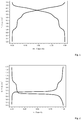
- the cell showed a good cyclability (compare fig. 1 ).
- a slurry containing 20 wt-% compound 1, 60 wt-% LiFePO 4 , 15 w% Super-P and 5 wt-% PVdF (polyvinylidene difluoride) binder in NMP was cast on carbon-coated aluminum foil (current collector) by doctor blading (the percentages relate in each case to the total weight of the solids in the slurry, without taking into account the weight of NMP).
- Electrodes were die cut, dried and assembled in Swagelok cells, containing Lithium as anode and reference electrode, a polyolefine membrane as a separator, ethylene carbonate/diethyl carbonate (3/7, v/v) containing 1M LiPF 6 as electrolyte.
- the cell showed a good cyclability (compare fig. 2 ).
- a slurry containing 20 wt-% compound 1, 60 wt-% LiCo 1/3 Mn 1/3 Ni 1/3 , 15 w% Super-P and 5 wt-% PVdF (polyvinylidene difluoride) binder in NMP was cast on carbon-coated aluminum foil (current collector) by doctor blading (the percentages relate in each case to the total weight of the solids in the slurry, without taking into account the weight of NMP).
- Electrodes were die cut, dried and assembled in Swagelok cells, containing Lithium as anode and reference electrode, a polyolefine membrane as a separator, ethylene carbonate/diethyl carbonate (3/7, v/v) containing 1M LiPF 6 as electrolyte.
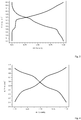
- the cell showed a good cyclability (compare fig. 3 ).
- a slurry containing 25 wt-% compound 1, 65 wt-% activated carbon, 5 w% Super-P and 5 wt-% PVdF (polyvinylidene difluoride) binder in NMP was cast on carbon-coated aluminum foil (current collector) by doctor blading (the percentages relate in each case to the total weight of the solids in the slurry, without taking into account the weight of NMP).
- Electrodes were die cut, dried and assembled in Swagelok cells, containing Lithium as anode and reference electrode, a polyolefine membrane as a separator, ethylene carbonate/diethyl carbonate (3/7, v/v) containing 1M LiPF 6 as electrolyte.
- the cell showed a good cyclability (compare fig. 4 ).
- a slurry containing 25 wt-% component 1, 65 wt-% graphite, 5 w% Super-P and 5 wt-% PVdF (polyvinylidene difluoride) binder in NMP was cast on carbon-coated aluminum foil (current collector) by doctor blading (the percentages relate in each case to the total weight of the solids in the slurry, without taking into account the weight of NMP).
- Electrodes were die cut, dried and assembled in Swagelok cells, containing Lithium as anode and reference electrode, a polyolefine membrane as a separator, ethylene carbonate/diethyl carbonate (3/7, v/v) containing 1M LiPF 6 as electrolyte.
- the cell showed a good cyclability (compare fig. 5 ).
- a slurry containing 45 wt-% component 1, 40 wt-% activated carbon, 10 w% Super-P and 5 wt-% PVdF (polyvinylidene difluoride) binder in NMP was dried at 100°C to remove the NMP (the percentages relate in each case to the total weight of the solids in the slurry, without taking into account the weight of NMP).
- the obtained composite 1 was ground to particles with a defined size by ball milling.
- a slurry containing 90 wt-% composite 1, 5 wt-% Na-CMC (binder), 5 wt-% fluoroacrylate based binder in H 2 O was cast on carbon- coated aluminum foil (current collector) by doctor blading (the percentages relate in each case to the total weight of the solids in the slurry, without taking into account the weight of H 2 O).
- Electrodes were die cut, dried and assembled in Swagelok cells, containing Lithium as anode and reference electrode, a polyolefine membrane as a separator, ethylene carbonate/diethyl carbonate (3/7, v/v) containing 1M LiPF 6 as electrolyte.
- the cell showed a good cyclability (compare fig. 6 ).
Landscapes
- Chemical & Material Sciences (AREA)
- Engineering & Computer Science (AREA)
- Power Engineering (AREA)
- Chemical Kinetics & Catalysis (AREA)
- Materials Engineering (AREA)
- Electrochemistry (AREA)
- General Chemical & Material Sciences (AREA)
- Microelectronics & Electronic Packaging (AREA)
- Composite Materials (AREA)
- Inorganic Chemistry (AREA)
- Health & Medical Sciences (AREA)
- Medicinal Chemistry (AREA)
- Polymers & Plastics (AREA)
- Organic Chemistry (AREA)
- Manufacturing & Machinery (AREA)
- Crystallography & Structural Chemistry (AREA)
- Nanotechnology (AREA)
- Physics & Mathematics (AREA)
- Spectroscopy & Molecular Physics (AREA)
- Battery Electrode And Active Subsutance (AREA)
- Secondary Cells (AREA)
Claims (14)
- Verbundwerkstoff, der zur Speicherung von elektrischer Energie befähigt ist, umfassend eine Mischung vona. Einem elektrochemisch aktiven anorganischen teilchenförmigen Material undb. Einem elektrochemisch aktiven organischen Material,wobei es sich bei dem Verbundwerkstoff um ein teilchenförmiges Material mit Teilchen mit einer Größe von 0,01 µm bis 100 µm handelt und
wobei das organische Material Untereinheiten gemäß den allgemeinen Formeln (I) und/oder (II), • n eine ganze Zahl ≥ 2, vorzugsweise ≥ 20, ist,• Y für eine Amidgruppe, nämlich -NH-CO- oder -CO-NH-, eine Estergruppe, nämlich -O-CO- oder -CO-O-, oder eine Urethangruppe, nämlich -NH-CO-O- oder -O-CO-NH-, steht,• R1, R2, R3 und R4 jeweils unabhängig für H, Alkyl, Alkoxy-, -Halogen oder -CN stehen,• Ar1 und Ar4 unabhängig für eine verbrückende Arylgruppe stehen,• Ar2 und Ar3 unabhängig für eine nichtverbrückende Arylgruppe stehen und• R5 eine verbrückende Alkyl-, Alken- oder Arylgruppe ist,wobei Ar1 und Ar4 in den Strukturen (I) und (II) unabhängig für eine verbrückende Arylgruppe der Formel (III.a), (III.b) oder (III.c)
 • * einen Anbindungspunkt markiert,• R6, R7, R8 und R9 jeweils unabhängig für H, Alkyl, Alkoxy-, -Halogen oder -CN stehen,und wobei R5 für eine der Gruppen der Formeln (VI.a) bis (VI.q)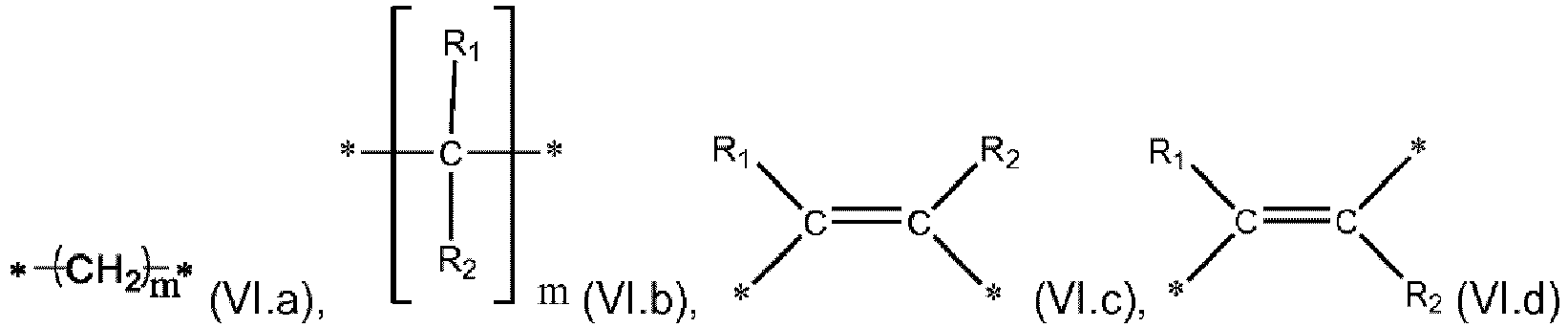


 • * einen Anbindungspunkt markiert,• m = 1 bis 20 und• R1, R2, R3, R4, R6, R7, R8, R9, Ar1, Ar2, Ar3 und Ar4 wie oben definiert sind.
 - Verbundwerkstoff nach Anspruch 1, wobei Ar2 und Ar3 in den Strukturen (I) und (II) unabhängig für eine nichtverbrückende Arylgruppe der Formel (IV)
 • R10, R11, R12, R13 und R14 jeweils unabhängig für H, Alkyl, Alkoxy-, Halogen, -CN oder eine der Gruppen (Va) und (Vb)
wobei• * einen Anbindungspunkt markiert und• X für O oder NH steht. - Verbundwerkstoff nach einem der vorhergehenden Ansprüche, gekennzeichnet durch mindestens eines der folgenden Merkmale:• Das anorganische teilchenförmige Material umfasst oder besteht aus Teilchen eines Kohlenstoffmaterials, eines Metalloxids oder einer Mischung, die diese Teilchen umfasst oder daraus besteht.• Das Kohlenstoffmaterial ist aus der Gruppe bestehend aus Aktivkohle, Kohlenstoffnanoröhren, Graphen, Graphenoxid und Graphenderivaten ausgewählt.• Das Metalloxid ist aus der Gruppe bestehend aus LiMnPO4, LiCoPO4, LiFePO4, LiNiPO4, LiMn2O4, LiAl2O4, LiCo2O4, LiNi2O4, LiNiO2, Li4Ti5O12, LiCoO2, LiNi0,5Mn1,5-xTixO4, wobei x 0-1,5 ist, LiNi0,8Co0,2O2, LiNi0,33Mn0,33Co0,33O2, LiNi0,5Mn0,5O2, LiCoMnO4, LiCo0,5Mn1,5O4, LiCr0,5Mn1,5O4 und LiNi0,5Mn1,5O4 ausgewählt.
- Verbundwerkstoff nach einem der vorhergehenden Ansprüche, dadurch gekennzeichnet, dass der Verbundwerkstoff• mindestens ein Konditionierungsmittel in Bezug auf elektrische Leitfähigkeit
und/oder• ein Konditionierungsmittel in Bezug auf Ionenleitfähigkeit
und/oder• ein Bindemittel-Polymer
umfasst. - Verbundwerkstoff nach Anspruch 4, gekennzeichnet durch mindestens eines der folgenden Merkmale:• bei dem mindestens einen Konditionierungsmittel in Bezug auf elektrische Leitfähigkeit handelt es sich um mindestens ein leitfähiges Polymer, vorzugsweise ein Polymer aus der Gruppe bestehend aus cis-/trans-Polyacetylen, Polyparaphenylen, Polythiophen, Polypyrrol, Poly(p-phenylen-vinylen) und Polyanilin;• bei dem mindestens einen Konditionierungsmittel in Bezug auf elektrische Leitfähigkeit handelt es sich um mindestens eine organische halbleitende Verbindung, vorzugsweise mindestens einen linearen kondensierten organischen Halbleiter, beispielsweise Chinacridon, Anthracen oder Derivate davon, und/oder mindestens einen eindimensionalen kondensierten organischen Halbleiter, beispielsweise Perylen und Derivate davon oder 3,4,9,10-Perylentetracarbonsäuredianhydrid;• bei dem mindestens einen Konditionierungsmittel bezüglich elektrischer Leitfähigkeit handelt es sich um mindestens ein Metall oder mindestens eine Metallegierung, vorzugweise aus der Gruppe bestehend aus Aluminium, Nickel und Gold;• bei dem mindestens einen Konditionierungsmittel bezüglich elektrischer Leitfähigkeit handelt es sich um mindestens ein Kohlenstoffmaterial, vorzugsweise aus der Gruppe bestehend aus Ruß, Graphit, Kohlenstoffnanodrähten, Kohlenstoffnanoröhren und Graphen;• bei dem Konditionierungsmittel bezüglich Ionenleitfähigkeit handelt es sich um ein Konditionierungsmittel bezüglich Leitfähigkeit von Lithiumionen, insbesondere einen keramischen Ionenleiter;• bei dem Bindemittel-Polymer handelt es sich um ein Bindemittel-Polymer, das in einem organischen Lösungsmittel wie NMP oder NEP löslich ist, beispielsweise PVDF oder PVDF-HFP.
- Verbundwerkstoff nach Anspruch 4 oder Anspruch 5, dadurch gekennzeichnet, dass das anorganische teilchenförmige Material mindestens eines der Metalloxide, vorzugsweise LiMnPO4, LiCoPO4, LiFePO4, LiNiPO4, LiMn2PO4, LiAl2O4, LiCo2O4 und/oder LiNi2O4, umfasst und dass das Konditionierungsmittel bezüglich elektrischer Leitfähigkeit auf der Oberfläche des teilchenförmigen Materials abgeschieden ist.
- Verbundwerkstoff nach einem der vorhergehenden Ansprüche, dadurch gekennzeichnet, dass der Verbundwerkstoff• das elektrochemisch aktive organische Material in einem Anteil von 1 Gew.-% bis 80 Gew.-%, bezogen auf die Gesamtmasse des Verbundwerkstoffs,• das elektrisch aktive anorganische Material in einem Anteil von 1 Gew.-% bis 80 Gew.-%, bezogen auf die Gesamtmasse des Verbundwerkstoffs,• das mindestens eine Konditionierungsmittel bezüglich elektrischer Leitfähigkeit in einem Anteil von 1 Gew.-% bis 20 Gew.-%, bezogen auf die Gesamtmasse des Verbundwerkstoffs,• das mindestens eine Konditionierungsmittel bezüglich Ionenleitfähigkeit in einem Anteil von 1 Gew.-% bis 20 Gew.-%, bezogen auf die Gesamtmasse des Verbundwerkstoffs,• das mindestens eine Bindemittel-Polymer in einem Anteil von 1 Gew.-% bis 20 Gew.-%, bezogen auf die Gesamtmasse des Verbundwerkstoffs,umfasst.
- Verfahren zur Herstellung eines Verbundwerkstoffs nach einem der Ansprüche 1 bis 7, wobei das organische Material durch Polymerisation in einem organischen Lösungsmittel hergestellt wird und das anorganische teilchenförmige Material und gegebenenfalls das mindestens eine Konditionierungsmittel bezüglich elektrischer Leitfähigkeit und/oder das mindestens eine Konditionierungsmittel bezüglich Ionenleitfähigkeit und/oder das mindestens eine Bindemittel-Polymer in das Lösungsmittel, dass das Polymer enthält, gegeben werden, was eine Aufschlämmung ergibt.
- Elektrode, umfassend einen Verbundwerkstoff nach einem der Ansprüche 1 bis 7 und gegebenenfalls ein Polymer-Bindemittel, das entweder in einem organischen Lösungsmittel wie NMP oder NEP oder in Wasser löslich ist.
- Verfahren zur Herstellung einer Elektrode nach Anspruch 9, bei dem man einen Verbundwerkstoff nach einem der Ansprüche 1 bis 7a. entweder mit einem in einem organischen lösungsmittellöslichen Bindemittelb. oder mit einem in Wasser löslichen Bindemittel verarbeitet.
- Verfahren nach Anspruch 10, dadurch gekennzeichnet, dass das Bindemittel aus der Gruppe bestehend aus auf Cellulose basierenden Bindemitteln, auf Polyacrylat basierenden Bindemitteln und auf SBR, Latex und Fluoracrylat basierenden Bindemitteln ausgewählt ist.
- Elektrochemische Zelle mit einer positiven und einer negativen Elektrode, umfassend einen Verbundwerkstoff nach Anspruch 1 bis 7 oder eine Elektrode nach Anspruch 9, vorzugsweise als Teil der positiven Elektrode oder als die positive Elektrode.
- Elektrochemische Zelle nach Anspruch 12, dadurch gekennzeichnet, dass es sich bei der Zelle um eine Lithiumionenbatterie, einen Doppelschichtkondensator oder einen Hybridbatteriekondensator handelt.
- Elektrochemische Zelle nach Anspruch 12 oder 13, umfassend einen Separator und eine Mischung aus einem Lösungsmittel und einem darin enthaltenen Leitsalz.
Priority Applications (4)
| Application Number | Priority Date | Filing Date | Title |
|---|---|---|---|
| EP15188846.8A EP3154111B1 (de) | 2015-10-07 | 2015-10-07 | Verbundmaterial, elektrode, verfahren zur herstellung des materials und elektrode und elektrochemische zelle mit der elektrode |
| US15/766,540 US10468715B2 (en) | 2015-10-07 | 2016-09-26 | Composite material, electrode, method of producing the material and the electrode and electrochemical cell |
| CN201680057853.6A CN108292744B (zh) | 2015-10-07 | 2016-09-26 | 复合材料、电极、生产该材料和该电极的方法以及包含该电极的电化学单池 |
| PCT/EP2016/072866 WO2017060115A1 (en) | 2015-10-07 | 2016-09-26 | Composite material, electrode, method to produce the material and the electrode and electrochemical cell comprising the electrode |
Applications Claiming Priority (1)
| Application Number | Priority Date | Filing Date | Title |
|---|---|---|---|
| EP15188846.8A EP3154111B1 (de) | 2015-10-07 | 2015-10-07 | Verbundmaterial, elektrode, verfahren zur herstellung des materials und elektrode und elektrochemische zelle mit der elektrode |
Publications (2)
| Publication Number | Publication Date |
|---|---|
| EP3154111A1 EP3154111A1 (de) | 2017-04-12 |
| EP3154111B1 true EP3154111B1 (de) | 2019-06-12 |
Family
ID=54288691
Family Applications (1)
| Application Number | Title | Priority Date | Filing Date |
|---|---|---|---|
| EP15188846.8A Active EP3154111B1 (de) | 2015-10-07 | 2015-10-07 | Verbundmaterial, elektrode, verfahren zur herstellung des materials und elektrode und elektrochemische zelle mit der elektrode |
Country Status (4)
| Country | Link |
|---|---|
| US (1) | US10468715B2 (de) |
| EP (1) | EP3154111B1 (de) |
| CN (1) | CN108292744B (de) |
| WO (1) | WO2017060115A1 (de) |
Families Citing this family (7)
| Publication number | Priority date | Publication date | Assignee | Title |
|---|---|---|---|---|
| US12148915B2 (en) | 2018-11-02 | 2024-11-19 | Nissan Chemical Corporation | Composition for forming an active material composite, an active material composite, and a method for producing an active material composite |
| EP3832757A1 (de) * | 2019-12-03 | 2021-06-09 | Belenos Clean Power Holding AG | Einzelionenleitende polymere für elektrochemische vorrichtungen |
| CN111082055B (zh) * | 2019-12-12 | 2020-12-29 | 华南师范大学 | 二联三苯胺-酰亚胺聚合物在锂电池正极制备中的应用 |
| CN111370678B (zh) * | 2020-05-27 | 2020-10-27 | 湖南雅城新材料有限公司 | 一种改性包覆锂电池用磷酸铁锂材料的制备方法 |
| CN112331837A (zh) * | 2020-11-24 | 2021-02-05 | 中国科学院物理研究所 | 有机-无机复合电极材料及其制备方法和应用 |
| JP7673408B2 (ja) * | 2021-01-08 | 2025-05-09 | 株式会社リコー | 非水電解液を含むリチウムイオン電池用分散剤、液体組成物、電極、及び電気化学素子、並びに電極の製造方法、及び電気化学素子の製造方法 |
| CN119852375B (zh) * | 2025-01-21 | 2025-12-09 | 四川坤天新能源科技有限公司 | 石墨复合材料及其制备方法和在锂离子电池中的应用 |
Citations (1)
| Publication number | Priority date | Publication date | Assignee | Title |
|---|---|---|---|---|
| EP3032621A1 (de) * | 2014-12-10 | 2016-06-15 | VARTA Micro Innovation GmbH | Elektrode für ein elektrochemisches Element mit einem organischen Elektrolyt, elektrochemische Elemente mit der Elektrode und Polymermaterial und dessen Verwendung als aktives Elektrodenmaterial oder als Elektrodenbinder |
Family Cites Families (5)
| Publication number | Priority date | Publication date | Assignee | Title |
|---|---|---|---|---|
| JP2001115134A (ja) * | 1999-10-14 | 2001-04-24 | Nippon Mitsubishi Oil Corp | イオン伝導性物質 |
| JP5493356B2 (ja) | 2006-06-06 | 2014-05-14 | 日本電気株式会社 | ポリラジカル化合物製造方法及び電池 |
| TWI412545B (zh) | 2010-07-21 | 2013-10-21 | Univ Nat Taiwan Science Tech | 共軛高分子、其製造方法及包含其之光電裝置 |
| CN102903525B (zh) * | 2012-10-19 | 2015-11-25 | 中国科学院化学研究所 | 一种用于全固态电储能器件的正电荷储能材料 |
| CN103159952B (zh) * | 2013-03-29 | 2015-01-21 | 黑龙江大学 | 聚酰胺与氧化石墨烯复合的光电材料的制备方法 |
-
2015
- 2015-10-07 EP EP15188846.8A patent/EP3154111B1/de active Active
-
2016
- 2016-09-26 US US15/766,540 patent/US10468715B2/en active Active
- 2016-09-26 WO PCT/EP2016/072866 patent/WO2017060115A1/en not_active Ceased
- 2016-09-26 CN CN201680057853.6A patent/CN108292744B/zh active Active
Patent Citations (1)
| Publication number | Priority date | Publication date | Assignee | Title |
|---|---|---|---|---|
| EP3032621A1 (de) * | 2014-12-10 | 2016-06-15 | VARTA Micro Innovation GmbH | Elektrode für ein elektrochemisches Element mit einem organischen Elektrolyt, elektrochemische Elemente mit der Elektrode und Polymermaterial und dessen Verwendung als aktives Elektrodenmaterial oder als Elektrodenbinder |
Also Published As
| Publication number | Publication date |
|---|---|
| US20180287192A1 (en) | 2018-10-04 |
| US10468715B2 (en) | 2019-11-05 |
| CN108292744B (zh) | 2021-05-25 |
| CN108292744A (zh) | 2018-07-17 |
| EP3154111A1 (de) | 2017-04-12 |
| WO2017060115A1 (en) | 2017-04-13 |
Similar Documents
| Publication | Publication Date | Title |
|---|---|---|
| EP3154111B1 (de) | Verbundmaterial, elektrode, verfahren zur herstellung des materials und elektrode und elektrochemische zelle mit der elektrode | |
| KR102725125B1 (ko) | 리튬 이차 전지용 양극 활물질 및 이의 제조방법 | |
| JP2018537803A (ja) | 再充電可能金属イオン電池のための改良された電解質、集電体およびバインダー | |
| KR20140127741A (ko) | 리튬전지 전해질용 첨가제, 이를 포함하는 유기전해액 및 상기 전해액을 채용한 리튬 전지 | |
| KR20160019775A (ko) | 고분자, 이를 포함하는 바인더 및 음극, 및 상기 음극을 포함하는 리튬전지 | |
| US11114694B2 (en) | Lithium battery | |
| US20150380726A1 (en) | Silicon-containing particle, negative-electrode material for use in non-aqueous electrolyte secondary battery, and non-aqueous electrolyte secondary battery | |
| KR20200033198A (ko) | 리튬 전지 | |
| EP3231029B1 (de) | Elektrode für ein elektrochemisches element mit einem organischen elektrolyt, elektrochemische elemente mit der elektrode und polymermaterial und dessen verwendung als aktives elektrodenmaterial oder als elektrodenbinder | |
| CN102694205B (zh) | 含氧酸盐锂正极活性物质用电解质溶剂及电解质溶液、以及锂离子二次电池 | |
| CN110931858B (zh) | 锂电池 | |
| JP2012204278A (ja) | リチウム二次電池用電極およびそれを用いた二次電池 | |
| JP7107195B2 (ja) | 電解液及び蓄電装置 | |
| JP2018195509A (ja) | ポリマー層で被覆されている二次電池用電極 | |
| KR101596251B1 (ko) | 리튬 이온전지용 Sn-M-P계 음극 활물질 및 그 제조 방법 | |
| CN110931859B (zh) | 锂电池 | |
| JP4029232B2 (ja) | リチウム二次電池用負極及びその製造方法 | |
| EP4191704B1 (de) | Aktives elektrodenmaterial für sekundärbatterie und herstellungsverfahren dafür | |
| CN110931856B (zh) | 锂电池 | |
| JP6859930B2 (ja) | Al含有シリコン材料 | |
| JP6984349B2 (ja) | 架橋ポリマー | |
| GB2640059A (en) | Electrode for lithium secondary battery, and lithium secondary battery comprising same | |
| EP4726796A1 (de) | Elektrode für lithiumsekundärbatterie und herstellungsverfahren dafür | |
| KR20200033203A (ko) | 리튬 전지 | |
| JP2014203690A (ja) | 被覆層を有する電極及びその製造方法 |
Legal Events
| Date | Code | Title | Description |
|---|---|---|---|
| PUAI | Public reference made under article 153(3) epc to a published international application that has entered the european phase |
Free format text: ORIGINAL CODE: 0009012 |
|
| STAA | Information on the status of an ep patent application or granted ep patent |
Free format text: STATUS: THE APPLICATION HAS BEEN PUBLISHED |
|
| AK | Designated contracting states |
Kind code of ref document: A1 Designated state(s): AL AT BE BG CH CY CZ DE DK EE ES FI FR GB GR HR HU IE IS IT LI LT LU LV MC MK MT NL NO PL PT RO RS SE SI SK SM TR |
|
| AX | Request for extension of the european patent |
Extension state: BA ME |
|
| STAA | Information on the status of an ep patent application or granted ep patent |
Free format text: STATUS: REQUEST FOR EXAMINATION WAS MADE |
|
| 17P | Request for examination filed |
Effective date: 20171012 |
|
| RBV | Designated contracting states (corrected) |
Designated state(s): AL AT BE BG CH CY CZ DE DK EE ES FI FR GB GR HR HU IE IS IT LI LT LU LV MC MK MT NL NO PL PT RO RS SE SI SK SM TR |
|
| RAP1 | Party data changed (applicant data changed or rights of an application transferred) |
Owner name: VARTA MICROBATTERY GMBH |
|
| STAA | Information on the status of an ep patent application or granted ep patent |
Free format text: STATUS: EXAMINATION IS IN PROGRESS |
|
| 17Q | First examination report despatched |
Effective date: 20180716 |
|
| GRAP | Despatch of communication of intention to grant a patent |
Free format text: ORIGINAL CODE: EPIDOSNIGR1 |
|
| STAA | Information on the status of an ep patent application or granted ep patent |
Free format text: STATUS: GRANT OF PATENT IS INTENDED |
|
| RIC1 | Information provided on ipc code assigned before grant |
Ipc: H01G 11/38 20130101ALI20190227BHEP Ipc: H01G 11/48 20130101ALI20190227BHEP Ipc: C08G 73/02 20060101ALI20190227BHEP Ipc: H01G 11/06 20130101ALI20190227BHEP Ipc: H01M 4/60 20060101ALI20190227BHEP Ipc: H01G 9/00 20060101ALI20190227BHEP Ipc: H01M 10/052 20100101ALI20190227BHEP Ipc: H01G 11/36 20130101ALI20190227BHEP Ipc: H01G 11/50 20130101ALI20190227BHEP Ipc: H01M 4/36 20060101AFI20190227BHEP Ipc: H01M 4/58 20100101ALI20190227BHEP Ipc: H01M 4/505 20100101ALI20190227BHEP Ipc: C08G 69/32 20060101ALI20190227BHEP |
|
| INTG | Intention to grant announced |
Effective date: 20190402 |
|
| GRAS | Grant fee paid |
Free format text: ORIGINAL CODE: EPIDOSNIGR3 |
|
| GRAA | (expected) grant |
Free format text: ORIGINAL CODE: 0009210 |
|
| STAA | Information on the status of an ep patent application or granted ep patent |
Free format text: STATUS: THE PATENT HAS BEEN GRANTED |
|
| AK | Designated contracting states |
Kind code of ref document: B1 Designated state(s): AL AT BE BG CH CY CZ DE DK EE ES FI FR GB GR HR HU IE IS IT LI LT LU LV MC MK MT NL NO PL PT RO RS SE SI SK SM TR |
|
| REG | Reference to a national code |
Ref country code: GB Ref legal event code: FG4D |
|
| REG | Reference to a national code |
Ref country code: CH Ref legal event code: EP |
|
| REG | Reference to a national code |
Ref country code: AT Ref legal event code: REF Ref document number: 1143776 Country of ref document: AT Kind code of ref document: T Effective date: 20190615 |
|
| REG | Reference to a national code |
Ref country code: DE Ref legal event code: R096 Ref document number: 602015031700 Country of ref document: DE |
|
| REG | Reference to a national code |
Ref country code: IE Ref legal event code: FG4D |
|
| REG | Reference to a national code |
Ref country code: NL Ref legal event code: MP Effective date: 20190612 |
|
| REG | Reference to a national code |
Ref country code: LT Ref legal event code: MG4D |
|
| PG25 | Lapsed in a contracting state [announced via postgrant information from national office to epo] |
Ref country code: AL Free format text: LAPSE BECAUSE OF FAILURE TO SUBMIT A TRANSLATION OF THE DESCRIPTION OR TO PAY THE FEE WITHIN THE PRESCRIBED TIME-LIMIT Effective date: 20190612 Ref country code: SE Free format text: LAPSE BECAUSE OF FAILURE TO SUBMIT A TRANSLATION OF THE DESCRIPTION OR TO PAY THE FEE WITHIN THE PRESCRIBED TIME-LIMIT Effective date: 20190612 Ref country code: FI Free format text: LAPSE BECAUSE OF FAILURE TO SUBMIT A TRANSLATION OF THE DESCRIPTION OR TO PAY THE FEE WITHIN THE PRESCRIBED TIME-LIMIT Effective date: 20190612 Ref country code: NO Free format text: LAPSE BECAUSE OF FAILURE TO SUBMIT A TRANSLATION OF THE DESCRIPTION OR TO PAY THE FEE WITHIN THE PRESCRIBED TIME-LIMIT Effective date: 20190912 Ref country code: LT Free format text: LAPSE BECAUSE OF FAILURE TO SUBMIT A TRANSLATION OF THE DESCRIPTION OR TO PAY THE FEE WITHIN THE PRESCRIBED TIME-LIMIT Effective date: 20190612 Ref country code: HR Free format text: LAPSE BECAUSE OF FAILURE TO SUBMIT A TRANSLATION OF THE DESCRIPTION OR TO PAY THE FEE WITHIN THE PRESCRIBED TIME-LIMIT Effective date: 20190612 |
|
| PG25 | Lapsed in a contracting state [announced via postgrant information from national office to epo] |
Ref country code: RS Free format text: LAPSE BECAUSE OF FAILURE TO SUBMIT A TRANSLATION OF THE DESCRIPTION OR TO PAY THE FEE WITHIN THE PRESCRIBED TIME-LIMIT Effective date: 20190612 Ref country code: BG Free format text: LAPSE BECAUSE OF FAILURE TO SUBMIT A TRANSLATION OF THE DESCRIPTION OR TO PAY THE FEE WITHIN THE PRESCRIBED TIME-LIMIT Effective date: 20190912 Ref country code: GR Free format text: LAPSE BECAUSE OF FAILURE TO SUBMIT A TRANSLATION OF THE DESCRIPTION OR TO PAY THE FEE WITHIN THE PRESCRIBED TIME-LIMIT Effective date: 20190913 Ref country code: LV Free format text: LAPSE BECAUSE OF FAILURE TO SUBMIT A TRANSLATION OF THE DESCRIPTION OR TO PAY THE FEE WITHIN THE PRESCRIBED TIME-LIMIT Effective date: 20190612 |
|
| REG | Reference to a national code |
Ref country code: AT Ref legal event code: MK05 Ref document number: 1143776 Country of ref document: AT Kind code of ref document: T Effective date: 20190612 |
|
| PG25 | Lapsed in a contracting state [announced via postgrant information from national office to epo] |
Ref country code: AT Free format text: LAPSE BECAUSE OF FAILURE TO SUBMIT A TRANSLATION OF THE DESCRIPTION OR TO PAY THE FEE WITHIN THE PRESCRIBED TIME-LIMIT Effective date: 20190612 Ref country code: NL Free format text: LAPSE BECAUSE OF FAILURE TO SUBMIT A TRANSLATION OF THE DESCRIPTION OR TO PAY THE FEE WITHIN THE PRESCRIBED TIME-LIMIT Effective date: 20190612 Ref country code: EE Free format text: LAPSE BECAUSE OF FAILURE TO SUBMIT A TRANSLATION OF THE DESCRIPTION OR TO PAY THE FEE WITHIN THE PRESCRIBED TIME-LIMIT Effective date: 20190612 Ref country code: RO Free format text: LAPSE BECAUSE OF FAILURE TO SUBMIT A TRANSLATION OF THE DESCRIPTION OR TO PAY THE FEE WITHIN THE PRESCRIBED TIME-LIMIT Effective date: 20190612 Ref country code: SK Free format text: LAPSE BECAUSE OF FAILURE TO SUBMIT A TRANSLATION OF THE DESCRIPTION OR TO PAY THE FEE WITHIN THE PRESCRIBED TIME-LIMIT Effective date: 20190612 Ref country code: CZ Free format text: LAPSE BECAUSE OF FAILURE TO SUBMIT A TRANSLATION OF THE DESCRIPTION OR TO PAY THE FEE WITHIN THE PRESCRIBED TIME-LIMIT Effective date: 20190612 Ref country code: PT Free format text: LAPSE BECAUSE OF FAILURE TO SUBMIT A TRANSLATION OF THE DESCRIPTION OR TO PAY THE FEE WITHIN THE PRESCRIBED TIME-LIMIT Effective date: 20191014 |
|
| PG25 | Lapsed in a contracting state [announced via postgrant information from national office to epo] |
Ref country code: SM Free format text: LAPSE BECAUSE OF FAILURE TO SUBMIT A TRANSLATION OF THE DESCRIPTION OR TO PAY THE FEE WITHIN THE PRESCRIBED TIME-LIMIT Effective date: 20190612 Ref country code: IS Free format text: LAPSE BECAUSE OF FAILURE TO SUBMIT A TRANSLATION OF THE DESCRIPTION OR TO PAY THE FEE WITHIN THE PRESCRIBED TIME-LIMIT Effective date: 20191012 Ref country code: IT Free format text: LAPSE BECAUSE OF FAILURE TO SUBMIT A TRANSLATION OF THE DESCRIPTION OR TO PAY THE FEE WITHIN THE PRESCRIBED TIME-LIMIT Effective date: 20190612 Ref country code: ES Free format text: LAPSE BECAUSE OF FAILURE TO SUBMIT A TRANSLATION OF THE DESCRIPTION OR TO PAY THE FEE WITHIN THE PRESCRIBED TIME-LIMIT Effective date: 20190612 |
|
| REG | Reference to a national code |
Ref country code: DE Ref legal event code: R097 Ref document number: 602015031700 Country of ref document: DE |
|
| PG25 | Lapsed in a contracting state [announced via postgrant information from national office to epo] |
Ref country code: TR Free format text: LAPSE BECAUSE OF FAILURE TO SUBMIT A TRANSLATION OF THE DESCRIPTION OR TO PAY THE FEE WITHIN THE PRESCRIBED TIME-LIMIT Effective date: 20190612 |
|
| PLBE | No opposition filed within time limit |
Free format text: ORIGINAL CODE: 0009261 |
|
| STAA | Information on the status of an ep patent application or granted ep patent |
Free format text: STATUS: NO OPPOSITION FILED WITHIN TIME LIMIT |
|
| PG25 | Lapsed in a contracting state [announced via postgrant information from national office to epo] |
Ref country code: DK Free format text: LAPSE BECAUSE OF FAILURE TO SUBMIT A TRANSLATION OF THE DESCRIPTION OR TO PAY THE FEE WITHIN THE PRESCRIBED TIME-LIMIT Effective date: 20190612 Ref country code: PL Free format text: LAPSE BECAUSE OF FAILURE TO SUBMIT A TRANSLATION OF THE DESCRIPTION OR TO PAY THE FEE WITHIN THE PRESCRIBED TIME-LIMIT Effective date: 20190612 |
|
| 26N | No opposition filed |
Effective date: 20200313 |
|
| PG25 | Lapsed in a contracting state [announced via postgrant information from national office to epo] |
Ref country code: MC Free format text: LAPSE BECAUSE OF FAILURE TO SUBMIT A TRANSLATION OF THE DESCRIPTION OR TO PAY THE FEE WITHIN THE PRESCRIBED TIME-LIMIT Effective date: 20190612 Ref country code: SI Free format text: LAPSE BECAUSE OF FAILURE TO SUBMIT A TRANSLATION OF THE DESCRIPTION OR TO PAY THE FEE WITHIN THE PRESCRIBED TIME-LIMIT Effective date: 20190612 Ref country code: IS Free format text: LAPSE BECAUSE OF FAILURE TO SUBMIT A TRANSLATION OF THE DESCRIPTION OR TO PAY THE FEE WITHIN THE PRESCRIBED TIME-LIMIT Effective date: 20200224 |
|
| REG | Reference to a national code |
Ref country code: CH Ref legal event code: PL |
|
| PG2D | Information on lapse in contracting state deleted |
Ref country code: IS |
|
| PG25 | Lapsed in a contracting state [announced via postgrant information from national office to epo] |
Ref country code: LU Free format text: LAPSE BECAUSE OF NON-PAYMENT OF DUE FEES Effective date: 20191007 Ref country code: LI Free format text: LAPSE BECAUSE OF NON-PAYMENT OF DUE FEES Effective date: 20191031 Ref country code: CH Free format text: LAPSE BECAUSE OF NON-PAYMENT OF DUE FEES Effective date: 20191031 |
|
| REG | Reference to a national code |
Ref country code: BE Ref legal event code: MM Effective date: 20191031 |
|
| PG25 | Lapsed in a contracting state [announced via postgrant information from national office to epo] |
Ref country code: BE Free format text: LAPSE BECAUSE OF NON-PAYMENT OF DUE FEES Effective date: 20191031 |
|
| PG25 | Lapsed in a contracting state [announced via postgrant information from national office to epo] |
Ref country code: IE Free format text: LAPSE BECAUSE OF NON-PAYMENT OF DUE FEES Effective date: 20191007 |
|
| PG25 | Lapsed in a contracting state [announced via postgrant information from national office to epo] |
Ref country code: CY Free format text: LAPSE BECAUSE OF FAILURE TO SUBMIT A TRANSLATION OF THE DESCRIPTION OR TO PAY THE FEE WITHIN THE PRESCRIBED TIME-LIMIT Effective date: 20190612 |
|
| PG25 | Lapsed in a contracting state [announced via postgrant information from national office to epo] |
Ref country code: MT Free format text: LAPSE BECAUSE OF FAILURE TO SUBMIT A TRANSLATION OF THE DESCRIPTION OR TO PAY THE FEE WITHIN THE PRESCRIBED TIME-LIMIT Effective date: 20190612 Ref country code: HU Free format text: LAPSE BECAUSE OF FAILURE TO SUBMIT A TRANSLATION OF THE DESCRIPTION OR TO PAY THE FEE WITHIN THE PRESCRIBED TIME-LIMIT; INVALID AB INITIO Effective date: 20151007 |
|
| REG | Reference to a national code |
Ref country code: DE Ref legal event code: R082 Ref document number: 602015031700 Country of ref document: DE Representative=s name: OSTERTAG & PARTNER, PATENTANWAELTE MBB, DE |
|
| PG25 | Lapsed in a contracting state [announced via postgrant information from national office to epo] |
Ref country code: MK Free format text: LAPSE BECAUSE OF FAILURE TO SUBMIT A TRANSLATION OF THE DESCRIPTION OR TO PAY THE FEE WITHIN THE PRESCRIBED TIME-LIMIT Effective date: 20190612 |
|
| P01 | Opt-out of the competence of the unified patent court (upc) registered |
Effective date: 20230526 |
|
| REG | Reference to a national code |
Ref country code: DE Ref legal event code: R082 Ref document number: 602015031700 Country of ref document: DE Ref country code: DE Ref legal event code: R081 Ref document number: 602015031700 Country of ref document: DE Owner name: DR. ING. H.C. F. PORSCHE AKTIENGESELLSCHAFT, DE Free format text: FORMER OWNER: VARTA MICROBATTERY GMBH, 73479 ELLWANGEN, DE |
|
| REG | Reference to a national code |
Ref country code: GB Ref legal event code: 732E Free format text: REGISTERED BETWEEN 20250619 AND 20250625 |
|
| PGFP | Annual fee paid to national office [announced via postgrant information from national office to epo] |
Ref country code: DE Payment date: 20251021 Year of fee payment: 11 |
|
| PGFP | Annual fee paid to national office [announced via postgrant information from national office to epo] |
Ref country code: GB Payment date: 20251022 Year of fee payment: 11 |
|
| PGFP | Annual fee paid to national office [announced via postgrant information from national office to epo] |
Ref country code: FR Payment date: 20251030 Year of fee payment: 11 |