EP3154149B1 - System und verfahren zum tiefentladungsschutz einer batterie - Google Patents
System und verfahren zum tiefentladungsschutz einer batterie Download PDFInfo
- Publication number
- EP3154149B1 EP3154149B1 EP15465549.2A EP15465549A EP3154149B1 EP 3154149 B1 EP3154149 B1 EP 3154149B1 EP 15465549 A EP15465549 A EP 15465549A EP 3154149 B1 EP3154149 B1 EP 3154149B1
- Authority
- EP
- European Patent Office
- Prior art keywords
- battery
- unit
- chargeable battery
- chargeable
- charging
- Prior art date
- Legal status (The legal status is an assumption and is not a legal conclusion. Google has not performed a legal analysis and makes no representation as to the accuracy of the status listed.)
- Active
Links
Images


Classifications
-
- H—ELECTRICITY
- H02—GENERATION; CONVERSION OR DISTRIBUTION OF ELECTRIC POWER
- H02J—ELECTRIC POWER NETWORKS; CIRCUIT ARRANGEMENTS OR SYSTEMS FOR SUPPLYING OR DISTRIBUTING ELECTRIC POWER; SYSTEMS FOR STORING ELECTRIC ENERGY
- H02J7/00—Circuit arrangements for charging or discharging batteries or for supplying loads from batteries
- H02J7/60—Circuit arrangements for charging or discharging batteries or for supplying loads from batteries including safety or protection arrangements
- H02J7/663—Circuit arrangements for charging or discharging batteries or for supplying loads from batteries including safety or protection arrangements using battery or load disconnect circuits
-
- H—ELECTRICITY
- H02—GENERATION; CONVERSION OR DISTRIBUTION OF ELECTRIC POWER
- H02J—ELECTRIC POWER NETWORKS; CIRCUIT ARRANGEMENTS OR SYSTEMS FOR SUPPLYING OR DISTRIBUTING ELECTRIC POWER; SYSTEMS FOR STORING ELECTRIC ENERGY
- H02J7/00—Circuit arrangements for charging or discharging batteries or for supplying loads from batteries
- H02J7/02—Circuit arrangements for charging or discharging batteries or for supplying loads from batteries for charging batteries from AC mains by converters
- H02J7/04—Regulation of charging current or voltage
-
- H—ELECTRICITY
- H02—GENERATION; CONVERSION OR DISTRIBUTION OF ELECTRIC POWER
- H02J—ELECTRIC POWER NETWORKS; CIRCUIT ARRANGEMENTS OR SYSTEMS FOR SUPPLYING OR DISTRIBUTING ELECTRIC POWER; SYSTEMS FOR STORING ELECTRIC ENERGY
- H02J7/00—Circuit arrangements for charging or discharging batteries or for supplying loads from batteries
- H02J7/90—Regulation of charging or discharging current or voltage
- H02J7/96—Regulation of charging or discharging current or voltage in response to battery voltage
-
- H—ELECTRICITY
- H02—GENERATION; CONVERSION OR DISTRIBUTION OF ELECTRIC POWER
- H02J—ELECTRIC POWER NETWORKS; CIRCUIT ARRANGEMENTS OR SYSTEMS FOR SUPPLYING OR DISTRIBUTING ELECTRIC POWER; SYSTEMS FOR STORING ELECTRIC ENERGY
- H02J7/00—Circuit arrangements for charging or discharging batteries or for supplying loads from batteries
- H02J7/60—Circuit arrangements for charging or discharging batteries or for supplying loads from batteries including safety or protection arrangements
- H02J7/63—Circuit arrangements for charging or discharging batteries or for supplying loads from batteries including safety or protection arrangements against overdischarge
Definitions
- the current invention refers to a system and a method for deep discharge protection of a battery, particularly of a lithium-ion battery, in an on-board unit.
- Rechargeable lithium-ion (li-ion) batteries are used for many different applications, e.g. in consumer and automotive electronics.
- a li-ion battery may be used for powering a so-called on-board unit.
- toll roads also known as turnpikes or tollways
- Different systems for collecting the toll are known, for example electronic road toll systems.
- electronic road toll systems an on-board unit is installed in the vehicle to determine the position of the vehicle and transmit position data to a central office for billing.
- Such deep discharge protection circuits generally include a switch, mostly a transistor, which disconnects the battery from the system, when the battery voltage decreases below a certain level.
- MOS metal oxide semiconductor
- the document CN 204 331 839 U discloses an on-board unit for electronic toll collection.
- the documents US 2013/229145 A1 , US 2015/022956 A1 , US 6 492 791 81 and US 2011/006736 A1 disclose devices with a battery and a deep discharge protection unit aiming among others at protecting the battery against over-discharge during transport.
- Document US 2005/127878 A1 discloses an over-discharge protection circuit for a rechargeable battery.
- the problem to be solved by the current invention is, therefore, to provide a system and a method for deep discharge protection of a battery in an on-board unit which overcomes the above disadvantages.
- a system for deep discharge protection of a chargeable battery in an on-board unit comprises a chargeable battery, which is configured to provide energy to a system, when operation of the electronic device is needed and no other energy source is available.
- the system further comprises a battery charging unit with an internal switch, wherein the battery charging unit is coupled to the chargeable battery and is configured to charge the chargeable battery.
- the system further comprises a deep discharge protection unit and a transport mode unit.
- the discharge protection unit is configured to monitor a voltage of the chargeable battery and disconnect the chargeable battery from the system, when the battery voltage is lower than a given threshold voltage and the transport mode unit is configured to trigger an opening the internal switch of the battery charging unit, wherein the chargeable battery is disconnected from the system when the at least one switch is opened.
- An opening of the internal switch is triggered after the first insertion of the chargeable battery in the electronic device at the end of the production line and before connecting the electronic device to an external energy source. As it is usually not known how long it takes from production to the first use of a device, a deep discharge during shipment of the device may be prevented.
- the deep discharge protection unit may be configured to trigger an opening of the internal switch of the battery charging unit when the battery voltage is lower than the given threshold voltage. A deep discharge of the chargeable battery may therefore be prevented during the normal operation of the electronic device.
- the on-board unit may be mounted in a vehicle and the external energy source is a vehicle battery.
- the system may comprise a controller, which is configured to enable or disable a charging of the chargeable battery.
- the controller may be configured to receive a manual input, which indicates that a disconnection of the chargeable battery from the system is desired. For example, an operator may instruct the controller at the end of the production line to disconnect the chargeable battery from the system.
- the controller may be further configured to output a transport signal, when a manual input is received, wherein the transport signal triggers an opening of the internal switch of the battery charging unit.
- the internal switch may be closed and the chargeable battery coupled to the system again, when the electronic device is coupled to the external energy source. No further command is needed to return the system from the transport mode to a running mode. A customer may resume the functionalities of the system by simply plugging it to an energy source.
- the battery may be a lithium-ion or a nickel-cadmium battery. Such batteries may be charged. They have a very high energy density compared to other batteries. Further, lithium-ion batteries may be charged up to comparably high voltages.
- a method for deep discharge protection of a chargeable battery in an on-board unit comprises charging the chargeable battery by means of a battery charging unit which is coupled to the chargeable battery and which comprises an internal switch.
- the method further comprises using the chargeable battery to provide energy to a system, when operation of the electronic device is needed and no other energy source than the chargeable battery is available, monitoring a voltage of the chargeable battery and disconnecting the chargeable battery from the system, when the battery voltage is lower than a given threshold voltage.
- An opening of the internal switch of the battery charging unit is triggered, wherein the chargeable battery is disconnected from the system when the at least one switch is opened.
- An opening of the internal switch is triggered after the first insertion of the chargeable battery in the electronic device at the end of the production line and before connecting the electronic device to an external energy source.
- An opening of the internal switch of the battery charging unit may be triggered when the battery voltage is lower than the given threshold voltage.
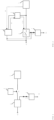
- FIG. 1 illustrates in a block diagram a battery charging circuit.
- the battery charging circuit includes a chargeable battery 1, which may be a lithium-ion (li-ion) battery. With a first output, the chargeable battery 1 is coupled to a second terminal V2 for a second potential, which may be ground, for example.
- a battery charging unit 2 is coupled between a second output of the chargeable battery 1 and a first terminal V1 for a first potential.
- the first terminal V1 may be coupled to a vehicle battery, for example. More precisely, the first terminal V1 may be coupled to what is generally known as terminal 30.
- the battery charging circuit may be integrated in an electronic device such as an on-board unit, for example.
- An on-board unit usually is configured to determine the position of a vehicle in regular intervals and provide this position data to a central office for billing. Therefore, one or more devices (e.g. controllers), which perform the functionalities of the electronic device, are further included in the battery charging circuit. Such devices are represented as the system 3, which is coupled to the battery charging unit 2. The system 3 may be powered by the vehicle battery or, if the vehicle battery is not connected, by the chargeable battery 1.
- the battery charging unit 2 is configured to provide power to the system 3, as well as to charge the chargeable battery 1, if desired. It is possible that at one point, the battery charging unit 2 only provides power to the system 3, but battery charging is disabled (e.g. when the chargeable battery is fully charged). It is, however, also possible that the battery charging unit 2 provides power to the system 3 and at the same time charges the chargeable battery 1. Further, it is possible that the battery charging unit charges the chargeable battery 1, while no power is provided to the system 3.
- the system 3 may include a controller (not illustrated in Figure 1 ), which is configured to enable the battery charging unit 2 to charge the chargeable battery 1, if charging of the chargeable battery 1 is required.
- the controller may be further configured to disable the battery charging unit 2, if charging of the chargeable battery 1 is not required.
- a deep discharge protection unit 4 is included in the battery charging circuit of Figure 1 .
- the deep discharge protection unit 4 is configured to determine a voltage of the chargeable battery 1. Every chargeable battery 1 may be charged up to a maximum voltage, e.g. 4.2V. When the chargeable battery 1 powers a system 3, the battery voltage decreases.
- the deep discharge protection unit 4 is further configured to compare the determined battery voltage to a predetermined threshold voltage. If the battery voltage falls below the threshold voltage, the chargeable battery 1 is disconnected from the system 3 by means of a switch S1.
- the switch S1 may be a power MOS-transistor, for example. When disconnected from the system 3, no more energy is provided to the system 3 and any other components and deep discharge may be prevented.
- the battery charging circuit illustrated in Figure 1 especially the switch S1, which is coupled between the system 3 and the battery charging unit 2, has several drawbacks.
- the switch S1 which is usually implemented as a transistor, needs to be a rather big and, therefore, expensive switch (e.g. power transistor) in order to sufficiently protect the chargeable battery 1 from discharging.
- the switch S1 is omitted.
- a transport mode unit 5 is coupled between the deep discharge protection unit 4 and the first terminal V1.
- the transport mode unit 5 is configured to initiate a disconnection of the chargeable battery 1 from the other components, especially from the system 3.
- the charging unit 2 when disconnecting the chargeable battery 1 from the system 3, the charging unit 2 functions as a switching device. Therefore, the charging unit 2 includes at least one internal switch S2. By opening this at least one internal switch S2, the chargeable battery 1 may be disconnected from the rest of the battery charging system.
- a internal switch S2 which may be used to disconnect the chargeable battery 1.
- the chargeable battery 1, by means of that internal switch S2, may be disconnected from the system 3 during transportation from the manufacturer of the on-board unit until its installation in a vehicle.
- the internal switch S2, however, may also be used to disconnect the chargeable battery 1 from the system 3 after installation in a vehicle, when the battery voltage falls below a certain threshold.
- the chargeable battery 1 will be inserted in the on-board unit. Usually, at this point, the chargeable battery 1 is partly or completely charged.
- the chargeable battery 1 will provide at least a small amount of power to the other components of the on-board unit (the system 3). If the on-board unit is not connected to a vehicle battery after a certain time, the chargeable battery 1 may be completely discharged and, therefore, may be damaged. Therefore, after inserting the chargeable battery in the on-board unit, the system 3 sends a first transport signal TS to the transport mode unit 5.
- the transport mode unit 5 again sends a second signal X1 to the deep discharge protection unit 4. This results in a third signal DIS being sent to the charging unit 2.
- This third signal DIS causes the charging unit 2 to decouple the chargeable battery 1 from the system 3 by opening the internal switch S2.
- the on-board unit at this moment enters a transportation mode.
- the on-board unit When the on-board unit is mounted on a vehicle and the vehicle battery is connected to the on-board unit (terminal V1 of the battery charging system will be connected to the vehicle battery), the chargeable battery 1 will again be coupled to the system 3. By connecting the vehicle battery, the on-board unit will exit the transportation mode and resume its normal operation.
- FIG. 3 illustrates one example of a charging unit 2 in greater detail.
- the charging unit 2 includes a charging IC 21 (integrated circuit).
- Charging ICs are special devices, which are configured to enable or disable the charging of a chargeable battery 1.
- Charging ICs are offered by several different semiconductor companies. Each charging IC 21 usually requires an individual wiring of the different pins. Generally some kind of protection circuitry is needed or components such as resistors and capacitors have to be connected to certain pins, in order to enable certain functionalities of the charging IC 21. The particular wiring depends on the model of the charging IC. Therefore, the circuit illustrated in Figure 3 is only an example.
- the charging unit 2 may be implemented in any other suitable way. In the circuit illustrated in Figure 3 , pins and components, which are not needed for the current invention but might be included in a charging IC 21 are omitted.
- the charging IC 21 may be coupled to the second terminal V2, which may be ground, for example, with a first pin VSS.
- the charging IC 21 may receive a signal BAT DIS.
- the second pin SYSOFF may be a system enable input, for example. If the signal BAT_DIS is provided to the second pin SYSOFF, the chargeable battery 1 is connected to the system 3. This may be the case when the vehicle battery is not available for any reason.
- the chargeable battery 1 may be connected to a third pin BAT of the charging IC 21.
- a voltage divider including resistors R2, R2 and capacitors C6, C7, C8 may be coupled between the battery 1 and the third pin. In this way, a voltage of the battery 1 may be monitored.
- the battery 1 may be disconnected from the system 3, e.g. by opening the internal switch S2 (not illustrated in Figure 3 ).
- the chargeable IC 21 may be coupled to the system 3.
- Three capacitors C3, C4 and C5 are coupled in parallel between a common node between the system 3 and the charging IC 21 and the second terminal V2 (e.g. ground). The capacitors may prevent a fluctuating voltage at the fourth pin OUT and ensure a stable operation of the charging IC 21.
- a fifth pin IN is coupled to the first terminal V1 (e.g. vehicle battery).
- Two capacitors C1 and C2 are coupled in parallel between a common node between the fifth pin IN and the first terminal V1 and the second terminal V2.
- a resistor R1 is coupled between the fifth pin IN and a sixth pin CE.
- a transistor T1 is coupled between a common node between the sixth pin CE and the resistor R1 and the second terminal V2 with its load path.
- the transistor T1 receives a signal B_STOP.
- the transistor T1 is either conducting or non-conducting.
- the transistor T1 may be conducting, when the signal B_STOP takes on a logic High level (or a logic Low level).
- the sixth pin CE is then coupled to the second terminal V2 via the transistor T1. This results in a logic High level (or a logic Low level, respectively) being received at the sixth pin CE. This will transfer the charging IC 21 to a standby mode. In standby mode, an internal switch of the charging IC 21 is opened, which disconnects the chargeable battery 1 from the system 3 and from the first terminal V1. The chargeable battery 1 will not be charged during standby mode and the system 3 will not be provided with energy.
- FIG 4 one specific example of a transport mode unit 5 is illustrated.
- the circuit illustrated in Figure 4 is only an example to further describe the general functionality of the battery charging system.
- the transport mode unit 5 may be implemented in any other suitable way. If a transport signal is received at the terminal TS, or if the transport signal takes on a certain level, e.g. logic High (or Low, respectively), the signal at terminal X1 changes its state (e.g. from logic High to logic Low or vice versa).
- the transport signal TS may be provided by the system 3, for example.
- a controller of the system 3 may generate signal TS at the end of the production line, before the on-board unit is sent to a customer for installation.
- the terminal X1 is coupled to the deep discharge protection unit 4, as will be further explained by means of Figure 5 .
- the transport mode unit 5 is both coupled to the chargeable battery 1 and the system 3.
- the circuit illustrated in Figure 4 acts as a bistable circuit.
- the circuit of Figure 4 illustrates a circuit which is easy to implement, using rather cheap and simple components. Further, the circuit has a very low quiescent current compared to other circuits.
- the circuit diagram in Figure 4 is only one example out of many of an implementation of a transport mode unit 5, the exact function of the different components will not be described in further detail.
- FIG. 5 An example for a deep discharge protection unit 4 is illustrated in Figure 5 .
- the chargeable battery 1 As long as the signal at terminal X1 (received from the transport mode unit 5) is in a fist state (e.g. High), the chargeable battery 1 is coupled to the system 3. If the signal at terminal X1 changes its state, a signal B_STOP will be output to the charging unit 2, as has been described by means of Figure 3 . The chargeable battery 1 will then be disconnected from the system, by opening an internal switch of the charging unit 2.
- the voltage monitoring unit 51 becomes conductive, if a voltage of the chargeable battery is above a certain threshold (e.g. 3.3V).
- the voltage monitoring unit 51 may include some kind of comparator, which compares the battery voltage to a predefined threshold voltage. If the voltage monitoring unit 51 is conductive, transistor T8 will be coupled to the second terminal V2. If at the same time signal X1 is low (or high, respectively, depending on which kind of transistor is used) the transistor T8 is non-conductive. Transistor T9, on the other hand, would be conductive. If signal X1 is High (or low, respectively), the transistor T10 will become conductive. If both transistors T9 and T10 are conductive, the output signal B_STOP will be low. As long as signal B_STOP is low, the charging IC 21 will provide power to the system 3 (as has been explained by means of Figure 3 ).
- FIG. 6 illustrates an example of a method for deep discharge protection.
- the chargeable battery 1 may be charged (step 601).
- the charging may be performed by a battery charging unit 2 which is coupled to the chargeable battery 1 and which includes an internal switch S2. It is, however, also possible that the charging is performed by some external charging unit and the chargeable battery 1 is already partly or completely charged when it is coupled to the internal charging unit.
- the chargeable battery 1 may then be used to provide energy to the system 3 (step 602), when no other energy source, such as a vehicle battery for example, is available and an operation of the system is needed.
- the voltage of the chargeable battery 1 is monitored (step 603). The monitoring is performed irrespective of a use of the chargeable battery 1, meaning that the monitoring is performed while the chargeable battery 1 powers the system 3, as well as while the chargeable battery 1 is not used to power the system. This is because the chargeable battery 1 also discharges steadily, even if it is not used to power the system.
- An opening of an internal switch S2 of a battery charging unit 2 may be triggered (step 604), wherein the battery charging unit 2 is coupled to the chargeable battery 1, and wherein the chargeable battery 1 is disconnected from the system 3 when the at least one internal switch S2 is opened.
- the opening of the internal switch S2 of the battery charging unit 2 may, for example, be triggered when the battery voltage falls below a predefined threshold voltage. It is, however, also possible to open the internal switch S2 of the battery charging unit 2 after the first insertion of the chargeable battery 1 in the electronic device at the end of the production line and before connecting the electronic device to an external energy source.
- the chargeable battery 1 may be a lithium-ion battery, for example, as has already been described above.
- the chargeable battery1 may be any other kind of chargeable battery, such as a nickel-cadmium battery, for example.
Landscapes
- Engineering & Computer Science (AREA)
- Power Engineering (AREA)
- Charge And Discharge Circuits For Batteries Or The Like (AREA)
Claims (8)
- Bordeinheit, die dazu ausgebildet ist, in regelmäßigen Abständen die Position eines Fahrzeugs zu bestimmen und diese Positionsdaten einer Zentrale zur Abrechnung zur Verfügung zu stellen, wobei die Bordeinheit ein System zum Tiefentladungsschutz einer aufladbaren Batterie (1) umfasst, das System umfassend:eine aufladbare Batterie (1), die dazu ausgebildet ist, ein System (3) mit Energie zu versorgen, wenn der Betrieb der Bordeinheit erforderlich ist und keine andere Energiequelle verfügbar ist;eine Batterieladeeinheit (2) mit einem internen Schalter (S2), wobei die Batterieladeeinheit (2) mit der aufladbaren Batterie (1) verbunden ist und zum Laden der aufladbaren Batterie (1) ausgebildet ist, und wobei die Batterieladeeinheit (2) zwischen einem Ausgang der aufladbaren Batterie (1) und einem ersten Anschluss (V1) für ein erstes Potential verbunden ist;eine Tiefentladungsschutzeinheit (4), die dazu ausgebildet ist, eine Spannung der aufladbaren Batterie (1) zu überwachen und die aufladbare Batterie (1) von dem System (3) zu trennen, wenn die Batteriespannung niedriger als eine bestimmte Schwellenspannung ist; undeine Transportmoduseinheit (5), die zwischen der Tiefentladungsschutzeinheit (4) und dem ersten Anschluss (V1) verbunden ist und dazu ausgebildet ist, ein Öffnen des internen Schalters (S2) der Batterieladeeinheit (2) auszulösen, wobei die aufladbare Batterie (1) beim Öffnen des mindestens einen internen Schalters (S2) von dem System (3) getrennt wird;wobei das System (3) dazu ausgebildet ist, nach dem Einsetzen der aufladbaren Batterie (1) in die Bordeinheit ein erstes Transportsignal (TS) an die Transportmoduseinheit (5) zu senden, und die Transportmoduseinheit (5) dazu ausgebildet ist, ein zweites Signal (X1) an die Tiefentladungsschutzeinheit (4) zu senden, was dazu führt, dass ein drittes Signal (DIS) von der Tiefentladungsschutzeinheit an die Ladeeinheit (2) gesendet wird, und wobei dritte Signal (DIS) bewirkt, dass die Ladeeinheit (2) die aufladbare Batterie (1) von dem System (3) abkoppelt, indem der interne Schalter (S2) geöffnet wird, wobei der interne Schalter (S2) geschlossen und die aufladbare Batterie (1) wieder mit dem System (3) verbunden wird, wenn die Bordeinheit in einem Fahrzeug montiert und der erste Anschluss (V1) mit einer Fahrzeugbatterie verbunden wird.
- Bordgerät nach Anspruch 1, wobei die Tiefentladungsschutzeinheit (4) ferner dazu ausgebildet ist, ein Öffnen des internen Schalters (S2) der Batterieladeeinheit (2) auszulösen, wenn die Batteriespannung niedriger als die angegebene Schwellenspannung ist.
- Bordgerät nach einem der Ansprüche 1 bis 2, wobei das System (3) eine Steuereinheit umfasst, die dazu ausgebildet ist, ein Laden der aufladbaren Batterie (1) zu aktivieren oder zu deaktivieren.
- Bordgerät nach Anspruch 3, wobei die Steuereinheit ferner dazu ausgebildet ist, eine manuelle Eingabe zu empfangen, die anzeigt, dass eine Trennung der aufladbaren Batterie (1) von dem System (3) gewünscht ist.
- Bordgerät nach Anspruch 4, wobei die Steuereinheit ferner dazu ausgebildet ist, das Transportsignal (TS) auszugeben, wenn eine manuelle Eingabe empfangen wird, wobei das Transportsignal (TS) ein Öffnen des internen Schalters (S2) des Batterieladegeräts (2) auslöst.
- Bordgerät nach einem der vorhergehenden Ansprüche, wobei die Batterie (1) eine Lithium-Ionen- oder eine Nickel-Cadmium-Batterie ist.
- Verfahren zum Tiefentladungsschutz einer aufladbaren Batterie (1) in einer Bordeinheit, wobei die Bordeinheit dazu ausgebildet ist, in regelmäßigen Abständen die Position eines Fahrzeugs zu bestimmten und diese Positionsdaten einer Zentrale zur Abrechnung zur Verfügung zu stellen, das Verfahren umfassend:Laden der aufladbaren Batterie (1);Verwenden der aufladbaren Batterie (1) zur Energieversorgung eines Systems (3), wenn der Betrieb der Bordeinheit erforderlich ist und keine andere Energiequelle als die aufladbare Batterie (1) verfügbar ist;Überwachen einer Spannung der aufladbaren Batterie (1) durch eine Tiefentladungsschutzeinheit (4) und Trennen der aufladbaren Batterie (1) von dem System (3), wenn die Batteriespannung niedriger als eine gegebene Schwellenspannung ist; undAuslösen eines Öffnens eines internen Schalters (S2) einer Batterieladeeinheit (2) durch eine Transportmoduseinheit (5), wobei die Batterieladeeinheit (2) mit der aufladbaren Batterie (1) verbunden ist, und wobei die aufladbare Batterie (1) von dem System (3) getrennt wird, wenn der mindestens eine interne Schalter (S2) geöffnet wird;wobei das System (3) nach dem Einsetzen der aufladbaren Batterie (1) in die Bordeinheit ein erstes Transportsignal (TS) an die Transportmoduseinheit (5) sendet und die Transportmoduseinheit (5) ein zweites Signal (X1) an die Tiefentladungsschutzeinheit (4) sendet, was dazu führt, dass ein drittes Signal (DIS) von der Tiefentladungsschutzeinheit an die Ladeeinheit (2) gesendet wird, und wobei das dritte Signal (DIS) bewirkt, dass das Ladegerät (2) die aufladbare Batterie (1) von dem System (3) abkoppelt, indem der interne Schalter (S2) geöffnet wird, und wobei der interne Schalter (S2) geschlossen und die aufladbare Batterie (1) wieder mit dem System (3) verbunden wird, wenn die Bordeinheit in einem Fahrzeug montiert und mit einer Fahrzeugbatterie verbunden wird.
- Verfahren nach Anspruch 7, wobei ein Öffnen des internen Schalters (S2) des Batterieladegeräts (2) ausgelöst wird, wenn die Batteriespannung kleiner als die vorgegebene Schwellenspannung ist.
Priority Applications (1)
| Application Number | Priority Date | Filing Date | Title |
|---|---|---|---|
| EP15465549.2A EP3154149B1 (de) | 2015-10-09 | 2015-10-09 | System und verfahren zum tiefentladungsschutz einer batterie |
Applications Claiming Priority (1)
| Application Number | Priority Date | Filing Date | Title |
|---|---|---|---|
| EP15465549.2A EP3154149B1 (de) | 2015-10-09 | 2015-10-09 | System und verfahren zum tiefentladungsschutz einer batterie |
Publications (2)
| Publication Number | Publication Date |
|---|---|
| EP3154149A1 EP3154149A1 (de) | 2017-04-12 |
| EP3154149B1 true EP3154149B1 (de) | 2023-12-06 |
Family
ID=54601725
Family Applications (1)
| Application Number | Title | Priority Date | Filing Date |
|---|---|---|---|
| EP15465549.2A Active EP3154149B1 (de) | 2015-10-09 | 2015-10-09 | System und verfahren zum tiefentladungsschutz einer batterie |
Country Status (1)
| Country | Link |
|---|---|
| EP (1) | EP3154149B1 (de) |
Families Citing this family (1)
| Publication number | Priority date | Publication date | Assignee | Title |
|---|---|---|---|---|
| DE202019102988U1 (de) * | 2019-05-27 | 2019-06-05 | Einhell Germany Ag | Umschaltung mehrerer Variablen im Transportmodus |
Citations (3)
| Publication number | Priority date | Publication date | Assignee | Title |
|---|---|---|---|---|
| US6492791B1 (en) * | 1999-03-18 | 2002-12-10 | Fujitsu Limited | Protection method, control circuit, and battery unit |
| US20050127878A1 (en) * | 2003-12-16 | 2005-06-16 | Geren Michael D. | Power fault battery protection circuit |
| US20110006736A1 (en) * | 2009-07-10 | 2011-01-13 | James Robinson | Battery and Energy Management Circuit with Temporal Storage Mode |
Family Cites Families (3)
| Publication number | Priority date | Publication date | Assignee | Title |
|---|---|---|---|---|
| ITMI20120333A1 (it) * | 2012-03-02 | 2013-09-03 | St Microelectronics Srl | Caricatore di batterie. |
| US9883603B2 (en) * | 2013-07-16 | 2018-01-30 | Texas Instruments Incorporated | Electronic pull tab for battery protection |
| CN204331839U (zh) * | 2015-01-07 | 2015-05-13 | 深圳市金溢科技股份有限公司 | 用于车载单元在线发行的手持装置 |
-
2015
- 2015-10-09 EP EP15465549.2A patent/EP3154149B1/de active Active
Patent Citations (3)
| Publication number | Priority date | Publication date | Assignee | Title |
|---|---|---|---|---|
| US6492791B1 (en) * | 1999-03-18 | 2002-12-10 | Fujitsu Limited | Protection method, control circuit, and battery unit |
| US20050127878A1 (en) * | 2003-12-16 | 2005-06-16 | Geren Michael D. | Power fault battery protection circuit |
| US20110006736A1 (en) * | 2009-07-10 | 2011-01-13 | James Robinson | Battery and Energy Management Circuit with Temporal Storage Mode |
Also Published As
| Publication number | Publication date |
|---|---|
| EP3154149A1 (de) | 2017-04-12 |
Similar Documents
| Publication | Publication Date | Title |
|---|---|---|
| KR102285228B1 (ko) | 이차전지 보호 회로, 이차전지 보호 장치, 전지 팩 및 이차전지 보호 회로의 제어 방법 | |
| US5990663A (en) | Charge/discharge control circuit and charging type power-supply unit | |
| US10622819B2 (en) | Rechargeable battery protection integrated circuit, rechargeable battery protection device, and battery pack | |
| US6172482B1 (en) | Battery protection circuit and electronic device | |
| US7667435B2 (en) | Secondary battery protection circuit with over voltage transient protection | |
| CN102983555B (zh) | 半导体集成电路、保护电路以及电池组 | |
| KR101784740B1 (ko) | 배터리 보호 회로 및 이를 포함하는 배터리 팩 | |
| JP4011349B2 (ja) | 再充電可能バッテリ用の充電/放電保護回路 | |
| KR100991634B1 (ko) | 과전압 보호 배터리 충전기 및 그에 연관된 방법 | |
| CN101055999B (zh) | 充电/放电保护电路和供电装置 | |
| US8896270B2 (en) | Semiconductor integrated circuit, protection circuit, and battery pack | |
| US8581556B2 (en) | Protection circuit and battery pack having current varying circuit to vary current flowing through power terminal | |
| CN103746347A (zh) | 电池保护芯片和电池系统 | |
| JP2003259546A (ja) | 二次電池用充放電保護回路 | |
| HK1049924A1 (zh) | 充放电控制电路和充电型电源单元 | |
| US6111388A (en) | Charge and discharge control circuit | |
| US20050237028A1 (en) | Secondary battery protection circuit with over voltage transient protection | |
| EP3154149A1 (de) | System und verfahren zum tiefentladungsschutz einer batterie | |
| CN105655987A (zh) | 一种电池保护电路、电池及移动终端 | |
| CN215990263U (zh) | 一种电池充放电保护的集成电路及系统 | |
| CN113169564A (zh) | 电池组及电气设备系统 | |
| CN215009658U (zh) | 一种电池保护电路和充电电池 | |
| KR101892964B1 (ko) | 반도체 집적 회로, 보호 회로 및 전지팩 | |
| US20260095056A1 (en) | Secondary battery protection integrated circuit and battery device | |
| JP2025160545A (ja) | 充電制御装置、及び、電池パック |
Legal Events
| Date | Code | Title | Description |
|---|---|---|---|
| PUAI | Public reference made under article 153(3) epc to a published international application that has entered the european phase |
Free format text: ORIGINAL CODE: 0009012 |
|
| STAA | Information on the status of an ep patent application or granted ep patent |
Free format text: STATUS: THE APPLICATION HAS BEEN PUBLISHED |
|
| AK | Designated contracting states |
Kind code of ref document: A1 Designated state(s): AL AT BE BG CH CY CZ DE DK EE ES FI FR GB GR HR HU IE IS IT LI LT LU LV MC MK MT NL NO PL PT RO RS SE SI SK SM TR |
|
| AX | Request for extension of the european patent |
Extension state: BA ME |
|
| STAA | Information on the status of an ep patent application or granted ep patent |
Free format text: STATUS: REQUEST FOR EXAMINATION WAS MADE |
|
| 17P | Request for examination filed |
Effective date: 20171012 |
|
| RBV | Designated contracting states (corrected) |
Designated state(s): AL AT BE BG CH CY CZ DE DK EE ES FI FR GB GR HR HU IE IS IT LI LT LU LV MC MK MT NL NO PL PT RO RS SE SI SK SM TR |
|
| RAP1 | Party data changed (applicant data changed or rights of an application transferred) |
Owner name: CONTINENTAL AUTOMOTIVE GMBH |
|
| STAA | Information on the status of an ep patent application or granted ep patent |
Free format text: STATUS: EXAMINATION IS IN PROGRESS |
|
| 17Q | First examination report despatched |
Effective date: 20210211 |
|
| RAP1 | Party data changed (applicant data changed or rights of an application transferred) |
Owner name: CONTINENTAL AUTOMOTIVE TECHNOLOGIES GMBH |
|
| GRAP | Despatch of communication of intention to grant a patent |
Free format text: ORIGINAL CODE: EPIDOSNIGR1 |
|
| STAA | Information on the status of an ep patent application or granted ep patent |
Free format text: STATUS: GRANT OF PATENT IS INTENDED |
|
| INTG | Intention to grant announced |
Effective date: 20230629 |
|
| P01 | Opt-out of the competence of the unified patent court (upc) registered |
Effective date: 20230712 |
|
| GRAS | Grant fee paid |
Free format text: ORIGINAL CODE: EPIDOSNIGR3 |
|
| GRAA | (expected) grant |
Free format text: ORIGINAL CODE: 0009210 |
|
| STAA | Information on the status of an ep patent application or granted ep patent |
Free format text: STATUS: THE PATENT HAS BEEN GRANTED |
|
| AK | Designated contracting states |
Kind code of ref document: B1 Designated state(s): AL AT BE BG CH CY CZ DE DK EE ES FI FR GB GR HR HU IE IS IT LI LT LU LV MC MK MT NL NO PL PT RO RS SE SI SK SM TR |
|
| REG | Reference to a national code |
Ref country code: GB Ref legal event code: FG4D |
|
| REG | Reference to a national code |
Ref country code: CH Ref legal event code: EP |
|
| REG | Reference to a national code |
Ref country code: DE Ref legal event code: R096 Ref document number: 602015086810 Country of ref document: DE |
|
| REG | Reference to a national code |
Ref country code: IE Ref legal event code: FG4D |
|
| REG | Reference to a national code |
Ref country code: DE Ref legal event code: R081 Ref document number: 602015086810 Country of ref document: DE Owner name: CONTINENTAL AUTOMOTIVE TECHNOLOGIES GMBH, DE Free format text: FORMER OWNER: CONTINENTAL AUTOMOTIVE TECHNOLOGIES GMBH, 30165 HANNOVER, DE Ref country code: DE Ref legal event code: R081 Ref document number: 602015086810 Country of ref document: DE Owner name: AUMOVIO GERMANY GMBH, DE Free format text: FORMER OWNER: CONTINENTAL AUTOMOTIVE TECHNOLOGIES GMBH, 30165 HANNOVER, DE |
|
| REG | Reference to a national code |
Ref country code: LT Ref legal event code: MG9D |
|
| PG25 | Lapsed in a contracting state [announced via postgrant information from national office to epo] |
Ref country code: GR Free format text: LAPSE BECAUSE OF FAILURE TO SUBMIT A TRANSLATION OF THE DESCRIPTION OR TO PAY THE FEE WITHIN THE PRESCRIBED TIME-LIMIT Effective date: 20240307 |
|
| REG | Reference to a national code |
Ref country code: NL Ref legal event code: MP Effective date: 20231206 |
|
| PG25 | Lapsed in a contracting state [announced via postgrant information from national office to epo] |
Ref country code: LT Free format text: LAPSE BECAUSE OF FAILURE TO SUBMIT A TRANSLATION OF THE DESCRIPTION OR TO PAY THE FEE WITHIN THE PRESCRIBED TIME-LIMIT Effective date: 20231206 |
|
| RAP4 | Party data changed (patent owner data changed or rights of a patent transferred) |
Owner name: CONTINENTAL AUTOMOTIVE TECHNOLOGIES GMBH |
|
| PG25 | Lapsed in a contracting state [announced via postgrant information from national office to epo] |
Ref country code: ES Free format text: LAPSE BECAUSE OF FAILURE TO SUBMIT A TRANSLATION OF THE DESCRIPTION OR TO PAY THE FEE WITHIN THE PRESCRIBED TIME-LIMIT Effective date: 20231206 |
|
| PG25 | Lapsed in a contracting state [announced via postgrant information from national office to epo] |
Ref country code: LT Free format text: LAPSE BECAUSE OF FAILURE TO SUBMIT A TRANSLATION OF THE DESCRIPTION OR TO PAY THE FEE WITHIN THE PRESCRIBED TIME-LIMIT Effective date: 20231206 Ref country code: GR Free format text: LAPSE BECAUSE OF FAILURE TO SUBMIT A TRANSLATION OF THE DESCRIPTION OR TO PAY THE FEE WITHIN THE PRESCRIBED TIME-LIMIT Effective date: 20240307 Ref country code: ES Free format text: LAPSE BECAUSE OF FAILURE TO SUBMIT A TRANSLATION OF THE DESCRIPTION OR TO PAY THE FEE WITHIN THE PRESCRIBED TIME-LIMIT Effective date: 20231206 Ref country code: BG Free format text: LAPSE BECAUSE OF FAILURE TO SUBMIT A TRANSLATION OF THE DESCRIPTION OR TO PAY THE FEE WITHIN THE PRESCRIBED TIME-LIMIT Effective date: 20240306 |
|
| REG | Reference to a national code |
Ref country code: CH Ref legal event code: PK Free format text: DIE PUBLIKATION VOM 27.03.2024 WURDE AM 24.04.2024 IRRTUEMLICHERWEISE ERNEUT PUBLIZIERT. LA PUBLICATION DU 27.03.2024 A ETE REPUBLIEE PAR ERREUR LE 24.04.2024. LA PUBBLICAZIONE DEL 27.03.2024 E STATA ERRONEAMENTE RIPUBBLICATA IL 24.04.2024. |
|
| REG | Reference to a national code |
Ref country code: AT Ref legal event code: MK05 Ref document number: 1639325 Country of ref document: AT Kind code of ref document: T Effective date: 20231206 |
|
| PG25 | Lapsed in a contracting state [announced via postgrant information from national office to epo] |
Ref country code: NL Free format text: LAPSE BECAUSE OF FAILURE TO SUBMIT A TRANSLATION OF THE DESCRIPTION OR TO PAY THE FEE WITHIN THE PRESCRIBED TIME-LIMIT Effective date: 20231206 |
|
| PG25 | Lapsed in a contracting state [announced via postgrant information from national office to epo] |
Ref country code: SE Free format text: LAPSE BECAUSE OF FAILURE TO SUBMIT A TRANSLATION OF THE DESCRIPTION OR TO PAY THE FEE WITHIN THE PRESCRIBED TIME-LIMIT Effective date: 20231206 Ref country code: RS Free format text: LAPSE BECAUSE OF FAILURE TO SUBMIT A TRANSLATION OF THE DESCRIPTION OR TO PAY THE FEE WITHIN THE PRESCRIBED TIME-LIMIT Effective date: 20231206 Ref country code: NO Free format text: LAPSE BECAUSE OF FAILURE TO SUBMIT A TRANSLATION OF THE DESCRIPTION OR TO PAY THE FEE WITHIN THE PRESCRIBED TIME-LIMIT Effective date: 20240306 Ref country code: NL Free format text: LAPSE BECAUSE OF FAILURE TO SUBMIT A TRANSLATION OF THE DESCRIPTION OR TO PAY THE FEE WITHIN THE PRESCRIBED TIME-LIMIT Effective date: 20231206 Ref country code: LV Free format text: LAPSE BECAUSE OF FAILURE TO SUBMIT A TRANSLATION OF THE DESCRIPTION OR TO PAY THE FEE WITHIN THE PRESCRIBED TIME-LIMIT Effective date: 20231206 Ref country code: HR Free format text: LAPSE BECAUSE OF FAILURE TO SUBMIT A TRANSLATION OF THE DESCRIPTION OR TO PAY THE FEE WITHIN THE PRESCRIBED TIME-LIMIT Effective date: 20231206 |
|
| PG25 | Lapsed in a contracting state [announced via postgrant information from national office to epo] |
Ref country code: IS Free format text: LAPSE BECAUSE OF FAILURE TO SUBMIT A TRANSLATION OF THE DESCRIPTION OR TO PAY THE FEE WITHIN THE PRESCRIBED TIME-LIMIT Effective date: 20240406 |
|
| PG25 | Lapsed in a contracting state [announced via postgrant information from national office to epo] |
Ref country code: AT Free format text: LAPSE BECAUSE OF FAILURE TO SUBMIT A TRANSLATION OF THE DESCRIPTION OR TO PAY THE FEE WITHIN THE PRESCRIBED TIME-LIMIT Effective date: 20231206 Ref country code: CZ Free format text: LAPSE BECAUSE OF FAILURE TO SUBMIT A TRANSLATION OF THE DESCRIPTION OR TO PAY THE FEE WITHIN THE PRESCRIBED TIME-LIMIT Effective date: 20231206 |
|
| PG25 | Lapsed in a contracting state [announced via postgrant information from national office to epo] |
Ref country code: SK Free format text: LAPSE BECAUSE OF FAILURE TO SUBMIT A TRANSLATION OF THE DESCRIPTION OR TO PAY THE FEE WITHIN THE PRESCRIBED TIME-LIMIT Effective date: 20231206 |
|
| PG25 | Lapsed in a contracting state [announced via postgrant information from national office to epo] |
Ref country code: SM Free format text: LAPSE BECAUSE OF FAILURE TO SUBMIT A TRANSLATION OF THE DESCRIPTION OR TO PAY THE FEE WITHIN THE PRESCRIBED TIME-LIMIT Effective date: 20231206 Ref country code: SK Free format text: LAPSE BECAUSE OF FAILURE TO SUBMIT A TRANSLATION OF THE DESCRIPTION OR TO PAY THE FEE WITHIN THE PRESCRIBED TIME-LIMIT Effective date: 20231206 Ref country code: RO Free format text: LAPSE BECAUSE OF FAILURE TO SUBMIT A TRANSLATION OF THE DESCRIPTION OR TO PAY THE FEE WITHIN THE PRESCRIBED TIME-LIMIT Effective date: 20231206 Ref country code: IT Free format text: LAPSE BECAUSE OF FAILURE TO SUBMIT A TRANSLATION OF THE DESCRIPTION OR TO PAY THE FEE WITHIN THE PRESCRIBED TIME-LIMIT Effective date: 20231206 Ref country code: IS Free format text: LAPSE BECAUSE OF FAILURE TO SUBMIT A TRANSLATION OF THE DESCRIPTION OR TO PAY THE FEE WITHIN THE PRESCRIBED TIME-LIMIT Effective date: 20240406 Ref country code: EE Free format text: LAPSE BECAUSE OF FAILURE TO SUBMIT A TRANSLATION OF THE DESCRIPTION OR TO PAY THE FEE WITHIN THE PRESCRIBED TIME-LIMIT Effective date: 20231206 Ref country code: CZ Free format text: LAPSE BECAUSE OF FAILURE TO SUBMIT A TRANSLATION OF THE DESCRIPTION OR TO PAY THE FEE WITHIN THE PRESCRIBED TIME-LIMIT Effective date: 20231206 Ref country code: AT Free format text: LAPSE BECAUSE OF FAILURE TO SUBMIT A TRANSLATION OF THE DESCRIPTION OR TO PAY THE FEE WITHIN THE PRESCRIBED TIME-LIMIT Effective date: 20231206 |
|
| PG25 | Lapsed in a contracting state [announced via postgrant information from national office to epo] |
Ref country code: PT Free format text: LAPSE BECAUSE OF FAILURE TO SUBMIT A TRANSLATION OF THE DESCRIPTION OR TO PAY THE FEE WITHIN THE PRESCRIBED TIME-LIMIT Effective date: 20240408 Ref country code: PL Free format text: LAPSE BECAUSE OF FAILURE TO SUBMIT A TRANSLATION OF THE DESCRIPTION OR TO PAY THE FEE WITHIN THE PRESCRIBED TIME-LIMIT Effective date: 20231206 |
|
| PG25 | Lapsed in a contracting state [announced via postgrant information from national office to epo] |
Ref country code: PT Free format text: LAPSE BECAUSE OF FAILURE TO SUBMIT A TRANSLATION OF THE DESCRIPTION OR TO PAY THE FEE WITHIN THE PRESCRIBED TIME-LIMIT Effective date: 20240408 Ref country code: PL Free format text: LAPSE BECAUSE OF FAILURE TO SUBMIT A TRANSLATION OF THE DESCRIPTION OR TO PAY THE FEE WITHIN THE PRESCRIBED TIME-LIMIT Effective date: 20231206 |
|
| REG | Reference to a national code |
Ref country code: DE Ref legal event code: R097 Ref document number: 602015086810 Country of ref document: DE |
|
| PG25 | Lapsed in a contracting state [announced via postgrant information from national office to epo] |
Ref country code: DK Free format text: LAPSE BECAUSE OF FAILURE TO SUBMIT A TRANSLATION OF THE DESCRIPTION OR TO PAY THE FEE WITHIN THE PRESCRIBED TIME-LIMIT Effective date: 20231206 |
|
| PLBE | No opposition filed within time limit |
Free format text: ORIGINAL CODE: 0009261 |
|
| STAA | Information on the status of an ep patent application or granted ep patent |
Free format text: STATUS: NO OPPOSITION FILED WITHIN TIME LIMIT |
|
| PG25 | Lapsed in a contracting state [announced via postgrant information from national office to epo] |
Ref country code: SI Free format text: LAPSE BECAUSE OF FAILURE TO SUBMIT A TRANSLATION OF THE DESCRIPTION OR TO PAY THE FEE WITHIN THE PRESCRIBED TIME-LIMIT Effective date: 20231206 |
|
| PG25 | Lapsed in a contracting state [announced via postgrant information from national office to epo] |
Ref country code: SI Free format text: LAPSE BECAUSE OF FAILURE TO SUBMIT A TRANSLATION OF THE DESCRIPTION OR TO PAY THE FEE WITHIN THE PRESCRIBED TIME-LIMIT Effective date: 20231206 Ref country code: DK Free format text: LAPSE BECAUSE OF FAILURE TO SUBMIT A TRANSLATION OF THE DESCRIPTION OR TO PAY THE FEE WITHIN THE PRESCRIBED TIME-LIMIT Effective date: 20231206 |
|
| 26N | No opposition filed |
Effective date: 20240909 |
|
| REG | Reference to a national code |
Ref country code: CH Ref legal event code: PL |
|
| GBPC | Gb: european patent ceased through non-payment of renewal fee |
Effective date: 20241009 |
|
| PG25 | Lapsed in a contracting state [announced via postgrant information from national office to epo] |
Ref country code: MC Free format text: LAPSE BECAUSE OF FAILURE TO SUBMIT A TRANSLATION OF THE DESCRIPTION OR TO PAY THE FEE WITHIN THE PRESCRIBED TIME-LIMIT Effective date: 20231206 |
|
| PG25 | Lapsed in a contracting state [announced via postgrant information from national office to epo] |
Ref country code: GB Free format text: LAPSE BECAUSE OF NON-PAYMENT OF DUE FEES Effective date: 20241009 |
|
| PG25 | Lapsed in a contracting state [announced via postgrant information from national office to epo] |
Ref country code: LU Free format text: LAPSE BECAUSE OF NON-PAYMENT OF DUE FEES Effective date: 20241009 Ref country code: BE Free format text: LAPSE BECAUSE OF NON-PAYMENT OF DUE FEES Effective date: 20241031 |
|
| PG25 | Lapsed in a contracting state [announced via postgrant information from national office to epo] |
Ref country code: FR Free format text: LAPSE BECAUSE OF NON-PAYMENT OF DUE FEES Effective date: 20241031 |
|
| PG25 | Lapsed in a contracting state [announced via postgrant information from national office to epo] |
Ref country code: CH Free format text: LAPSE BECAUSE OF NON-PAYMENT OF DUE FEES Effective date: 20241031 |
|
| REG | Reference to a national code |
Ref country code: BE Ref legal event code: MM Effective date: 20241031 |
|
| PG25 | Lapsed in a contracting state [announced via postgrant information from national office to epo] |
Ref country code: FI Free format text: LAPSE BECAUSE OF FAILURE TO SUBMIT A TRANSLATION OF THE DESCRIPTION OR TO PAY THE FEE WITHIN THE PRESCRIBED TIME-LIMIT Effective date: 20231207 |
|
| PG25 | Lapsed in a contracting state [announced via postgrant information from national office to epo] |
Ref country code: IE Free format text: LAPSE BECAUSE OF NON-PAYMENT OF DUE FEES Effective date: 20241009 |
|
| PGFP | Annual fee paid to national office [announced via postgrant information from national office to epo] |
Ref country code: DE Payment date: 20251031 Year of fee payment: 11 |
|
| REG | Reference to a national code |
Ref country code: DE Ref legal event code: R081 Ref document number: 602015086810 Country of ref document: DE Owner name: AUMOVIO GERMANY GMBH, DE Free format text: FORMER OWNER: CONTINENTAL AUTOMOTIVE TECHNOLOGIES GMBH, 30175 HANNOVER, DE |
|
| PG25 | Lapsed in a contracting state [announced via postgrant information from national office to epo] |
Ref country code: CY Free format text: LAPSE BECAUSE OF FAILURE TO SUBMIT A TRANSLATION OF THE DESCRIPTION OR TO PAY THE FEE WITHIN THE PRESCRIBED TIME-LIMIT; INVALID AB INITIO Effective date: 20151009 |
|
| PG25 | Lapsed in a contracting state [announced via postgrant information from national office to epo] |
Ref country code: HU Free format text: LAPSE BECAUSE OF FAILURE TO SUBMIT A TRANSLATION OF THE DESCRIPTION OR TO PAY THE FEE WITHIN THE PRESCRIBED TIME-LIMIT; INVALID AB INITIO Effective date: 20151009 |
|
| PG25 | Lapsed in a contracting state [announced via postgrant information from national office to epo] |
Ref country code: TR Free format text: LAPSE BECAUSE OF FAILURE TO SUBMIT A TRANSLATION OF THE DESCRIPTION OR TO PAY THE FEE WITHIN THE PRESCRIBED TIME-LIMIT Effective date: 20231206 |