EP3154285A1 - Personalisierungsdatenverwaltung für ein sicherheitselement - Google Patents
Personalisierungsdatenverwaltung für ein sicherheitselement Download PDFInfo
- Publication number
- EP3154285A1 EP3154285A1 EP15002881.9A EP15002881A EP3154285A1 EP 3154285 A1 EP3154285 A1 EP 3154285A1 EP 15002881 A EP15002881 A EP 15002881A EP 3154285 A1 EP3154285 A1 EP 3154285A1
- Authority
- EP
- European Patent Office
- Prior art keywords
- end device
- personalization
- mobile end
- data
- additional
- Prior art date
- Legal status (The legal status is an assumption and is not a legal conclusion. Google has not performed a legal analysis and makes no representation as to the accuracy of the status listed.)
- Withdrawn
Links
Images
Classifications
-
- H—ELECTRICITY
- H04—ELECTRIC COMMUNICATION TECHNIQUE
- H04W—WIRELESS COMMUNICATION NETWORKS
- H04W12/00—Security arrangements; Authentication; Protecting privacy or anonymity
- H04W12/04—Key management, e.g. using generic bootstrapping architecture [GBA]
-
- H—ELECTRICITY
- H04—ELECTRIC COMMUNICATION TECHNIQUE
- H04W—WIRELESS COMMUNICATION NETWORKS
- H04W12/00—Security arrangements; Authentication; Protecting privacy or anonymity
- H04W12/30—Security of mobile devices; Security of mobile applications
- H04W12/35—Protecting application or service provisioning, e.g. securing SIM application provisioning
-
- H—ELECTRICITY
- H04—ELECTRIC COMMUNICATION TECHNIQUE
- H04W—WIRELESS COMMUNICATION NETWORKS
- H04W12/00—Security arrangements; Authentication; Protecting privacy or anonymity
- H04W12/40—Security arrangements using identity modules
-
- H—ELECTRICITY
- H04—ELECTRIC COMMUNICATION TECHNIQUE
- H04W—WIRELESS COMMUNICATION NETWORKS
- H04W4/00—Services specially adapted for wireless communication networks; Facilities therefor
- H04W4/80—Services using short range communication, e.g. near-field communication [NFC], radio-frequency identification [RFID] or low energy communication
-
- H—ELECTRICITY
- H04—ELECTRIC COMMUNICATION TECHNIQUE
- H04W—WIRELESS COMMUNICATION NETWORKS
- H04W12/00—Security arrangements; Authentication; Protecting privacy or anonymity
- H04W12/30—Security of mobile devices; Security of mobile applications
- H04W12/33—Security of mobile devices; Security of mobile applications using wearable devices, e.g. using a smartwatch or smart-glasses
Definitions
- the present invention concerns a method for incorporating personalization data into a security element of a mobile end device.
- Subscription data defining a subscription in the security element of the mobile end device with reference to a mobile radio network can comprise the aforementioned personalization data as a core component.
- the present invention also generally concerns a method for subscription management.
- a security element of the end device for example a SIM/ UICC card of the end device, must be personalized, i.e. equipped with subscription data which allow the security element to authenticate itself toward a selected mobile radio network.
- a personalization server of a mobile communication provider on request, generates personalization data for a security element of an additional mobile end device (hereinafter also called “secondary mobile device”) and supplies them to a first mobile end device, as a rule in encrypted form.
- the first mobile end device also called “master mobile device”
- the first mobile end device then relays the personalization data received from the personalization server to the additional mobile end device, where the personalization data are decrypted and stored or installed in the security element in a secure manner.
- the object of the present invention is to further simplify such a personalization method, in particular with regard to the possibility of simply personalizing security elements of diverse and comparatively simply equipped end devices, such as so-called “smartwatches” or arbitrary electronic devices of the "Internet of Things” (IoT).
- end devices such as so-called “smartwatches” or arbitrary electronic devices of the "Internet of Things” (IoT).
- IoT Internet of Things
- the first, preferably mobile, end device which is also designated a "master mobile device”
- requests personalization data for the security element of the additional mobile end device (which is also designated a "secondary mobile device") from the personalization server of an operator of a mobile radio network.
- the first mobile end device is as a rule already registered with the personalization server, i.e. a security element of the first mobile end device already comprises a subscription of the corresponding operator of the mobile radio network. Via said subscription the first mobile end device can authenticate itself toward the personalization server.
- the personalization server thereupon generates the requested personalization data for the security element of the additional end device or draws on corresponding personalization data already present, and supplies said personalization data to the first mobile end device.
- said personalization data are encrypted in such a manner that they can only be decrypted by a personalization application in the security element of the additional mobile end device.
- a preferably contactless communication connection is provided between the first mobile end device and the additional mobile end device, for example in the form of a Bluetooth® pairing.
- the communication connection can alternatively also be established for example via NFC or related protocols.
- the personalization data intended for the security element of the additional mobile end device are transferred from the first mobile end device to the additional mobile end device.
- the personalization data are embedded into one or more standardized application data objects (of the same data object type), preferably by a personalization application installed in the first mobile end device.
- a data object is characterized in that it is provided and arranged, according to an application communication protocol, e.g. Bluetooth Profile, associated with the data object according to the standard or to a functionality associated with the data object according to the standard, to store information that is different from personalization data for a security element of a mobile end device.
- an application communication protocol e.g. Bluetooth Profile
- a standardized, conventional communication protocol is employed for transferring the personalization data embedded into the at least one data object from the first mobile end device to the additional mobile end device.
- a communication protocol is as a rule uniquely associated with the employed data object.
- a communication protocol that is supported by a vast majority of mobile end devices, that is, preferably a comparatively simple communication protocol. Therefore, the method can also be carried out for additional mobile end devices that are for example restricted for design reasons in terms of their possibilities of setting up data communication connections with other devices.
- the communication protocol employed for transferring the personalization data is also employed so as to be diverted from its intended purpose.
- the personalization data are in a way "tunneled" via the communication protocol from the first mobile end device to the additional mobile end device.
- the personalization data are preferably embedded into the data object here such that the personalization data embedded into the data object are unrecognizable as such to the communication protocol.
- the data object still remains in complete agreement with the corresponding standard after the personalization data are embedded into the data object.
- the embedding of the personalization data into the data object therefore remains transparent or "invisible" to the communication protocol employed for transferring the personalization data, i.e. the protocol "does not notice" that it is being diverted from its intended purpose for transporting the personalization data.
- Bluetooth® SAP is employed as a communication protocol for transferring the personalization data embedded into the at least one data object from the first mobile end device to the additional mobile end device a Bluetooth® profile that is different from the "Bluetooth® SIM Access Profile" (Bluetooth® SAP).
- Bluetooth® SAP is currently employed in particular for connecting a mobile telephone of a vehicle to a SIM/UICC mobile radio card of a mobile end device, for example a smartphone. Due to the fact that most current smartphones do not support Bluetooth® SAP without elaborate modification, the employment of this protocol is practically impossible within the context of a method according to the invention.
- a so-called “phone book object” PBO
- Bluetooth® Phone Book Access Profile Bluetooth® BPAP
- a phone book object serves for storing a phone book entry, in particular a telephone number and information optionally connected therewith ("alpha tagging").
- alpha tagging at least a portion of the personalization data to be transported can for example be embedded into a phone book object instead of alpha tagging.
- such a data object in the form of a phone book object into which personalization data have been embedded in the described manner is now for transferred while employing the Bluetooth® Phone Book Access Profile associated with the data object.
- This protocol unlike Bluetooth® SAP, is supported by a multiplicity of mobile end devices and thus makes it possible for personalization data to be incorporated into the security element of the additional end device in a simple manner, and without the corresponding end devices having to be elaborately modified.
- such a data object in the form of a Bluetooth® phone book object can also be transferred from the first mobile end device to the additional mobile end device in a different manner, however, for example by means of SyncML or employing AT commands. It is further possible that phone book objects are transferred between the two end devices via NFC or Wi-Fi, or that a bar code is scanned or corresponding data are inputted manually for incorporating phone book objects into the additional mobile end device.
- a data object that is diverted from its intended purpose for embedding the personalization data a "Metadata Attribute For Current Media Item" according to the "Bluetooth® Audio/Video Remote Control Profile” (Bluetooth® AVRCP).
- a data object is provided, according to the corresponding standard, to store metadata associated with an audio track or video track, such as the name of an artist, or the like.
- the stated communication protocol i.e. the Bluetooth® AVRCP
- the Bluetooth® AVRCP is then employed for transferring corresponding data objects from the first mobile end device to the additional mobile end device.
- the personalization data can be broken down into different personalization data portions and be embedded into a plurality of corresponding data objects.
- the embedding of the personalization data into a corresponding data object is carried out as a rule by a personalization application which is executed on the first mobile end device.
- the personalization data are thereby embedded into the one or more data objects according to a pre-specified encoding such that a corresponding personalization application in the additional end device or in the security element of the additional end device can recognize those data objects into which personalization data are embedded according to the invention.
- the encoding is such that the embedded personalization data can also be extracted from the data object or data objects and, where applicable, be reassembled so as to yield the original personalization data on the part of the personalization application in the additional mobile end device.
- personalization data After the personalization data have been transferred from the first mobile end device to the additional mobile end device, embedded into the described data objects and while employing one of the described communication protocols so as to divert it from its intended purpose, personalization data are extracted there from the at least one data object. This can be done through a personalization application on the additional mobile end device or a personalization application in the security element of the additional mobile end device.
- the personalization data are then decrypted in the security element of the additional mobile end device and stored or installed in the security element of the additional mobile end device in a secure manner.
- the transferring of the personalization data from the first mobile end device to the additional mobile end device is initiated by the additional mobile end device.
- a communication protocol for automatically retrieving the corresponding data objects is the hereinabove described Bluetooth® PBAP, which is arranged to automatically update entries of a phone book.
- a communication protocol according to which the additional mobile end device requests from the first mobile end device a transfer of the at least one data object into which personalization data are embedded, and the first mobile end device transmits the at least one data object to the additional end device in response to the request.
- An example of such a communication protocol is the hereinabove mentioned Bluetooth® AVRCP.
- the first mobile end device can also trigger the transfer of the personalization data to the additional mobile end device, however.
- a preferred embodiment of a mobile end device which can assume the role of the hereinabove mentioned first mobile end device is arranged to set up a preferably contactless communication connection with an additional mobile end device, for example via Bluetooth®.
- the mobile end device here comprises a first personalization application on the end-device side which is arranged to authenticate itself toward a personalization server by means of personalization data stored in a security element of the mobile end device, to request personalization data for a security element of the additional mobile end device from the personalization server, to embed personalization data received from the personalization server into one or more like-kind, standardized data objects of the kind described in detail hereinabove for the additional mobile end device according to a pre-specified encoding, and to supply the at least one data object for a transfer to the additional mobile end device.
- a preferred embodiment of a security element according to the invention for a mobile end device is arranged to be integrated into the mobile end device firmly or removably.
- the security element can be configured here for example as a conventional SIM/UICC mobile radio card.
- the security element can also be present firmly integrated in the end device as an embedded-SIM/ UICC.
- the security element comprises a personalization application on the security-element side which is arranged to receive personalization data provided for the security element from the end device or from a further mobile end device in communication with the security element, to decrypt them, where applicable, and to store or install them in the security element in a secure manner.
- a mobile end device which can play the role of the additional mobile end device described hereinabove with reference to the method comprises a hereinabove described security element and, where applicable, an additional personalization application on the end-device side.
- Said additional personalization application is arranged to extract personalization data provided for the security element from at least one data object retrieved or received from a further end device in communication with the end device, which plays the role of the first mobile end device according to the method, and to relay them to the security element or the security-element-side personalization application of the security element.
- the functionality for extracting the personalization data embedded into the at least one data object can alternatively also be supplied by the personalization application in the security element of the end device.
- a preferred embodiment of a system according to the invention comprises a personalization server, at least a first mobile end device and an additional mobile end device of the hereinabove described kind, which are respectively arranged to carry out a method according to the invention.
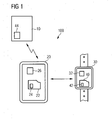
- a system 100 schematically shown in Figure 1 for personalizing a security element 40 of an additional mobile end device 30 comprises a personalization server 10, a mobile end device 20 and the aforementioned additional mobile end device 30.
- the first mobile end device 20 and the additional mobile end device 30 are arranged to set up a preferably contactless data communication connection, e.g. via Bluetooth®.
- the first mobile end device 20 comprises a security element 22, for example a SIM/ UICC mobile radio card, which comprises a subscription 24 by means of which the first mobile end device 20 can authenticate itself toward the personalization server 10.
- a security element 22 for example a SIM/ UICC mobile radio card
- a subscription 24 by means of which the first mobile end device 20 can authenticate itself toward the personalization server 10.
- a first personalization application 26 which, in the hereinafter described manner, supports a method for incorporating personalization data into the security element 40 of the additional mobile end device 30.
- the first mobile end device 20 can be configured for example as a smartphone, tablet computer, notebook, or the like. Hereinafter the first mobile end device 20 will also be designated a "master mobile device”.
- the additional mobile end device 30, which is represented in Figure 1 in the form of a so-called "smartwatch" by way of example, comprises a security element 40.
- Said security element 40 can also be present as a conventional SIM/UICC mobile radio card or as a security element integrated firmly into the end device 30, for example in the form of an embedded-SIM/ UICC.
- a personalization application 42 whose functionality will be described more precisely hereinafter with reference to Figure 2 .
- an additional personalization application 32 on the end-device side which can support portions of the hereinafter described personalization process.
- the additional mobile end device 30 can be configured in different ways and constitute for example a further smartphone, an additional device coupleable to a smartphone, or an arbitrary electronic device from the field of the "Internet of Things".
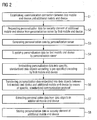
- a communication connection is then established between the first mobile end device 20 and the additional mobile end device 30.
- this is preferably effected by means of a Bluetooth® pairing according to a Bluetooth® profile stated hereinafter by way of example.
- the Bluetooth profile uses application data objects, such as multimedia data, and will be misused for personalization data of another, independent application.
- step S2 the personalization application 26 of the first mobile end device requests personalization data 44 for the security element 40 of the additional mobile end device 30 from the personalization server 10.
- Corresponding personalization data 44 can be generated by the personalization server 10, as indicated with reference to the optional step S3. Alternatively, the personalization server 10 can also draw on personalization data 44 for the security element 40 that are already present or supplied in a different manner.
- step S4 the personalization server 10 supplies the personalization data 44 for the security element of the additional mobile end device 30 to the personalization application 26 of the mobile end device 20.
- the personalization application 26 of the first mobile end device 20 now in step S5 embeds the obtained personalization data for the security element 40 of the additional mobile end device 30 into a specific data object according to a pre-specified encoding, in a manner described hereinafter in detail.
- step S6 the one or more data objects into which personalization data have been embedded in step S5 are transferred from the first mobile end device 20 to the additional mobile end device 30 according to a standardized communication protocol associated with the data object, said protocol being provided and arranged, according to the corresponding standard, for a functionality that is different from the personalization of a security element of a mobile end device.
- a standardized communication protocol associated with the data object said protocol being provided and arranged, according to the corresponding standard, for a functionality that is different from the personalization of a security element of a mobile end device.
- step S7 the additional personalization application 32 on the additional mobile end device 30 extracts the personalization data 44 embedded into the one or more data objects and relays the extracted personalization data 44 to the personalization application 42 on the security element 40.
- the step of extracting the personalization data 44 from the data objects can also be carried out through the personalization application 42 itself.
- the personalization application 42 decrypts the personalization data 44 accordingly and finally stores or installs them in the security element 40 in a secure manner in step S8.
- a process can now be triggered in which the personalization application 42 of the security element 40 of the additional end device 30 sets up a direct communication with the personalization server 10 in order to complete a loading and installing of the subscription to which the personalization data 44 belong.
- a phone book object is used in order to embed or encapsulate personalization data 44:
- the secondary mobile device 30 searches the Service Discovery Profile (SDP) record on the paired master mobile device 20 to determine whether the master mobile device 20 supports Bluetooth® PBAP. If the master mobile device 20 supports Bluetooth® PBAP, the secondary mobile device 30 assumes the Phone Book Client Equipment (PCE) role according to Bluetooth® PBAP and uses elements from the Infrared Mobile Communications (IrMC) protocol over the Object Exchange Protocol (OBEX) to retrieve vCards through a Bluetooth® connection.
- SDP Service Discovery Profile
- PCE Phone Book Client Equipment
- IrMC Infrared Mobile Communications
- OBEX Object Exchange Protocol
- the secondary mobile device 30 can use other methods of downloading a phone book.
- the secondary mobile device can e.g. try using SyncML, or use an AT command-based phone book download.
- Each vCard contains information about contacts in a phone book, and each contact is an encrypted fragment of the personalization data 44 to be transferred to the secondary mobile device 30.
- the personalization application 42 in the security element 40 of the secondary mobile device 30 can merge the entries together as soon as the full personalization data 44 are retrieved from the master mobile device 20.
- the secondary mobile device 30 When Bluetooth® PBAP is activated, the secondary mobile device 30 reads the encrypted personalization data 44 and writes the personalization data 44 into the phone book of the security element 40 of the secondary mobile device 30.
- PBAP Bluetooth® Phone Book Access Profile
- PCE PCE
- PSE Phone Book Server Equipment
- the role of the master mobile device 20 in PBAP supports automatic download, this enables a download of the complete contents of a phone book automatically when the master mobile device 20 (acting as the PSE ("Phone Book Server Equipment", the role of the master mobile device 20 in PBAP)) is first connected to the PCE.
- the secondary mobile device 30 can perform a selective, filtered download based on the special notation of the phone book object.
- the personalization application 42 on the security element 40 monitors the file change in the phone book of the security element 40 (e.g. EF-ADN file) and, upon encountering and verifying the special notation, retrieves, decrypts and installs the personalization data 44 in the security element 40 (step S8).
- file change in the phone book of the security element 40 e.g. EF-ADN file
- the secondary mobile device 30 At the end of the profile loading process, the secondary mobile device 30 will be triggered to switch to the new subscription in the security element 40, based on the personalization data 44 installed in step S8.
- the personalization server 10 On successful network registration and notification, the personalization server 10 finalizes the loading process, e.g. performs a full profile download to the security element 40. Master mobile device 20 and secondary device 30 can also perform a clean-up of their respective phone books.
- Each entry consists of a dialing number and an alpha identifier.
- the alpha tagging shall use either:
- Dialing number 20 digits (0-9)
- Alpha identifier 14 alpha characters (0-9, a-z, A-Z, etc)
- the personalization data 44 consist of IMSI and KI in the form:
- alpha identifier is used to transfer personalization data (using a three-byte prefix as the identifier "SMX" where X is the consecutive number).
- the respective AND alpha identifiers of five data objects in the form of phone book objects according to Bluetooth® PBAP might look as follows (the concatenated string representing the personalization data 44 has been subdivided into five portions, namely C1C2C3C4C5C, 6C7C8C9E1E2, E3E4E5E6E7E, 8E9EAEBECED, and EEEFE0, which have each been embedded into a separate phone book object):
- Encrypted fragments of the personalization data 44 can be spread over one or more AVRCP media attributes from one or more media (e.g. multiple songs or video clips).
- the secondary mobile device 30 can merge the entries together as soon as the full personalization data 44 are retrieved from the master mobile device 20 (step S7).
- the secondary mobile device 30 i.e. the secondary personalization application 32
- the secondary mobile device 30 can then send the extracted personalization data 44 to the security element 40 (i.e. the personalization application 42 on the security element 40).
- the secondary mobile device 30 At the end of the profile loading process, the secondary mobile device 30 will be triggered to switch to the new subscription in the security element 40, based on the just installed personalization data 44.
- the personalization server 10 On successful network registration and notification, the personalization server 10 finalizes the loading process, e.g. performs a full profile download to the security element 40.
- Embedding or encapsulating personalization data into AVRCP metadata may be done as follows:
- ID3v2 is structurally very different to ID3v1, consisting of an extensible set of "frames" located at the start of the file, each with a frame identifier (a three- or four-byte string) and one piece of data.
- frames There are 83 types of frames declared in the ID3v2.4.0 specification, and applications can also define their own types.
- standard frames of the lowest common denominator should be used in the context of the present invention in order to transport the personalization data, e.g. standard frames such as song title, artist name, and album name, etc.
- the respective data object may look as follows: Title C1C2C3C4C5C6C7C8C9E1E2E3E4E5E6E7E8E9EAEBECEDEEEFE0 Artist G&D Album Subscription Management Track 1/1 Year 2015 Genre Other
- the table hereinbelow provides the list of IDs for AVRCP media attributes. These IDs are used to uniquely identify media information. Additional information on media attributes is available in Bluetooth® Assigned Numbers.
- Title Text field representing the title, song name or content description coded per specified character set.
- Artist Name Text field representing artist(s), performer(s) or group coded per specified character set.
- Album Name Text field representing the title of the recording (source) from which the audio in the file is taken Track Number Numeric ASCII string containing the order number of the audio-file on its original recording. Total Number of Tracks Numeric ASCII string containing the total number of tracks or elements on the original recording.
- the secondary mobile device 30 can transmit the information by selecting the corresponding hexadecimal values or the equivalent. For example, the secondary mobile device 30 asks the master mobile device 20 to 'Play' song 'Hex F' from album 'Subscription Management AVRCP Coded Response' to indicate the operation was successful, etc. In this case, each song represents one hexadecimal value, 0-9 and A-F. So sixteen tracks are needed.
- Example of data message 1 Hexadecimal value, 'F' (decimal 15). Sixteen tracks needed for full range. Title Hex F Artist name G&D Album name Subscription Management AVRCP Coded Response Track Number 16 Total Number of Tracks 16 Genre Other Year 2015
Landscapes
- Engineering & Computer Science (AREA)
- Computer Security & Cryptography (AREA)
- Computer Networks & Wireless Communication (AREA)
- Signal Processing (AREA)
- Mobile Radio Communication Systems (AREA)
Priority Applications (1)
| Application Number | Priority Date | Filing Date | Title |
|---|---|---|---|
| EP15002881.9A EP3154285A1 (de) | 2015-10-08 | 2015-10-08 | Personalisierungsdatenverwaltung für ein sicherheitselement |
Applications Claiming Priority (1)
| Application Number | Priority Date | Filing Date | Title |
|---|---|---|---|
| EP15002881.9A EP3154285A1 (de) | 2015-10-08 | 2015-10-08 | Personalisierungsdatenverwaltung für ein sicherheitselement |
Publications (1)
| Publication Number | Publication Date |
|---|---|
| EP3154285A1 true EP3154285A1 (de) | 2017-04-12 |
Family
ID=54329347
Family Applications (1)
| Application Number | Title | Priority Date | Filing Date |
|---|---|---|---|
| EP15002881.9A Withdrawn EP3154285A1 (de) | 2015-10-08 | 2015-10-08 | Personalisierungsdatenverwaltung für ein sicherheitselement |
Country Status (1)
| Country | Link |
|---|---|
| EP (1) | EP3154285A1 (de) |
Cited By (1)
| Publication number | Priority date | Publication date | Assignee | Title |
|---|---|---|---|---|
| EP3662690A4 (de) * | 2017-09-18 | 2021-04-21 | T-Mobile USA, Inc. | Esim-profilbereitstellung zwischen benachbarten geräten |
Citations (5)
| Publication number | Priority date | Publication date | Assignee | Title |
|---|---|---|---|---|
| EP2326136A2 (de) * | 2009-11-18 | 2011-05-25 | Samsung Electronics Co., Ltd. | Verfahren und Vorrichtung zur Fernsteuerung von Bluetooth-Geräten |
| WO2012042300A1 (en) * | 2010-09-29 | 2012-04-05 | Nokia Corporation | Methods and apparatuses for access credential provisioning |
| US20130340059A1 (en) * | 2012-06-19 | 2013-12-19 | At&T Mobility Ii, Llc | Apparatus and methods for selecting services of mobile network operators |
| US20140057558A1 (en) * | 2012-08-22 | 2014-02-27 | Research In Motion Limited | Near field communications-based soft subscriber identity module |
| GB2522044A (en) * | 2014-01-10 | 2015-07-15 | Samsung Electronics Co Ltd | Provisioning apparatus and methods therefor |
-
2015
- 2015-10-08 EP EP15002881.9A patent/EP3154285A1/de not_active Withdrawn
Patent Citations (5)
| Publication number | Priority date | Publication date | Assignee | Title |
|---|---|---|---|---|
| EP2326136A2 (de) * | 2009-11-18 | 2011-05-25 | Samsung Electronics Co., Ltd. | Verfahren und Vorrichtung zur Fernsteuerung von Bluetooth-Geräten |
| WO2012042300A1 (en) * | 2010-09-29 | 2012-04-05 | Nokia Corporation | Methods and apparatuses for access credential provisioning |
| US20130340059A1 (en) * | 2012-06-19 | 2013-12-19 | At&T Mobility Ii, Llc | Apparatus and methods for selecting services of mobile network operators |
| US20140057558A1 (en) * | 2012-08-22 | 2014-02-27 | Research In Motion Limited | Near field communications-based soft subscriber identity module |
| GB2522044A (en) * | 2014-01-10 | 2015-07-15 | Samsung Electronics Co Ltd | Provisioning apparatus and methods therefor |
Non-Patent Citations (1)
| Title |
|---|
| 3GPP SA WG3: "3rd Generation Partnership Project; Technical Specification Group Service and System Aspects; Feasibility Study on (U)SIM Security Reuse by Peripheral Devices on Local Interfaces (Release 6) ; 3GPP TR 33.817 V6.1.0", 3RD GENERATION PARTNERSHIP PROJECT (3GPP); TECHNICAL REPORT (TR), XX, XX, vol. 33.817, no. V6.1.0, December 2004 (2004-12-01), pages 1 - 39, XP002432220 * |
Cited By (1)
| Publication number | Priority date | Publication date | Assignee | Title |
|---|---|---|---|---|
| EP3662690A4 (de) * | 2017-09-18 | 2021-04-21 | T-Mobile USA, Inc. | Esim-profilbereitstellung zwischen benachbarten geräten |
Similar Documents
| Publication | Publication Date | Title |
|---|---|---|
| CN106406846B (zh) | 显示界面的创建方法及装置 | |
| JP4451346B2 (ja) | 通信ネットワークシステムおよびその制御方法、移動体、サーバ、移動体制御プログラム、サーバ制御プログラム、ならびに該プログラムを記録した記録媒体 | |
| EP1825702B1 (de) | Sicherungssystem und verfahren in einem mobilen telekommunikationsnetzwerk | |
| CN101611578B (zh) | 构建和处理数据文件请求的方法 | |
| US20070106745A1 (en) | Content acquisition method | |
| EP3122080B1 (de) | Verfahren zur verteilung von virtuellen teilnehmeridentifikationsdaten, verfahren zur erfassung von virtuellen teilnehmeridentifikationsdaten und vorrichtung | |
| JP5803112B2 (ja) | 無線端末装置、情報処理装置、通信システムおよび無線端末装置の制御方法 | |
| US20120208597A1 (en) | Method for automatic provisioning of a sim card | |
| EP3729845B1 (de) | Adaptive esim-abgabe | |
| CN102984689B (zh) | 移动终端的验证系统和方法 | |
| CN103503036A (zh) | 用于输出和输入Javacard应用数据的方法 | |
| CN104125280B (zh) | 车载系统的用户管理方法 | |
| CN101355770B (zh) | 一种虚拟扩展用户识别模块卡容量的方法及系统 | |
| US20120102556A1 (en) | Method and System for Smart Card Migration | |
| CN101848438A (zh) | 一种远程修改锁网参数的方法 | |
| CN104737566A (zh) | 用于将用户身份数据引入到用户身份模块中的方法 | |
| CN106559427A (zh) | 一种数据存储及数据传输系统 | |
| CN104202411A (zh) | 文件传输方法和服务器 | |
| JP4719732B2 (ja) | バックアップサーバ、移動機、およびこれらを用いた通信システム、ならびにバックアップ方法 | |
| CN102510391B (zh) | 应用管理方法、装置及智能卡 | |
| CN101583204B (zh) | 一种实现通用联合电路卡多应用文件管理的方法及系统 | |
| EP3154285A1 (de) | Personalisierungsdatenverwaltung für ein sicherheitselement | |
| CN101146282A (zh) | 应用识别模块下载电子文件的方法 | |
| CN109996096B (zh) | 区域epg管理系统、分发系统及分发方法 | |
| CN101170467B (zh) | 用于将特定网络标识符存储于无线设备的装置及相关方法 |
Legal Events
| Date | Code | Title | Description |
|---|---|---|---|
| PUAI | Public reference made under article 153(3) epc to a published international application that has entered the european phase |
Free format text: ORIGINAL CODE: 0009012 |
|
| AK | Designated contracting states |
Kind code of ref document: A1 Designated state(s): AL AT BE BG CH CY CZ DE DK EE ES FI FR GB GR HR HU IE IS IT LI LT LU LV MC MK MT NL NO PL PT RO RS SE SI SK SM TR |
|
| AX | Request for extension of the european patent |
Extension state: BA ME |
|
| RAP1 | Party data changed (applicant data changed or rights of an application transferred) |
Owner name: GIESECKE+DEVRIENT MOBILE SECURITY GMBH |
|
| 17P | Request for examination filed |
Effective date: 20171012 |
|
| RBV | Designated contracting states (corrected) |
Designated state(s): AL AT BE BG CH CY CZ DE DK EE ES FI FR GB GR HR HU IE IS IT LI LT LU LV MC MK MT NL NO PL PT RO RS SE SI SK SM TR |
|
| 17Q | First examination report despatched |
Effective date: 20180917 |
|
| STAA | Information on the status of an ep patent application or granted ep patent |
Free format text: STATUS: THE APPLICATION HAS BEEN WITHDRAWN |
|
| 18W | Application withdrawn |
Effective date: 20181206 |