EP3166013B1 - Modulare exponentiation mit randomisierten additionsketten - Google Patents
Modulare exponentiation mit randomisierten additionsketten Download PDFInfo
- Publication number
- EP3166013B1 EP3166013B1 EP16195485.4A EP16195485A EP3166013B1 EP 3166013 B1 EP3166013 B1 EP 3166013B1 EP 16195485 A EP16195485 A EP 16195485A EP 3166013 B1 EP3166013 B1 EP 3166013B1
- Authority
- EP
- European Patent Office
- Prior art keywords
- addition chain
- modular exponentiation
- elements
- randomized
- code
- Prior art date
- Legal status (The legal status is an assumption and is not a legal conclusion. Google has not performed a legal analysis and makes no representation as to the accuracy of the status listed.)
- Active
Links
Images
Classifications
-
- H—ELECTRICITY
- H04—ELECTRIC COMMUNICATION TECHNIQUE
- H04L—TRANSMISSION OF DIGITAL INFORMATION, e.g. TELEGRAPHIC COMMUNICATION
- H04L9/00—Cryptographic mechanisms or cryptographic arrangements for secret or secure communications; Network security protocols
- H04L9/30—Public key, i.e. encryption algorithm being computationally infeasible to invert or user's encryption keys not requiring secrecy
- H04L9/3066—Public key, i.e. encryption algorithm being computationally infeasible to invert or user's encryption keys not requiring secrecy involving algebraic varieties, e.g. elliptic or hyper-elliptic curves
-
- H—ELECTRICITY
- H04—ELECTRIC COMMUNICATION TECHNIQUE
- H04L—TRANSMISSION OF DIGITAL INFORMATION, e.g. TELEGRAPHIC COMMUNICATION
- H04L9/00—Cryptographic mechanisms or cryptographic arrangements for secret or secure communications; Network security protocols
- H04L9/08—Key distribution or management, e.g. generation, sharing or updating, of cryptographic keys or passwords
- H04L9/0861—Generation of secret information including derivation or calculation of cryptographic keys or passwords
- H04L9/0869—Generation of secret information including derivation or calculation of cryptographic keys or passwords involving random numbers or seeds
-
- G—PHYSICS
- G06—COMPUTING OR CALCULATING; COUNTING
- G06F—ELECTRIC DIGITAL DATA PROCESSING
- G06F7/00—Methods or arrangements for processing data by operating upon the order or content of the data handled
- G06F7/60—Methods or arrangements for performing computations using a digital non-denominational number representation, i.e. number representation without radix; Computing devices using combinations of denominational and non-denominational quantity representations, e.g. using difunction pulse trains, STEELE computers, phase computers
- G06F7/72—Methods or arrangements for performing computations using a digital non-denominational number representation, i.e. number representation without radix; Computing devices using combinations of denominational and non-denominational quantity representations, e.g. using difunction pulse trains, STEELE computers, phase computers using residue arithmetic
- G06F7/723—Modular exponentiation
-
- G—PHYSICS
- G06—COMPUTING OR CALCULATING; COUNTING
- G06F—ELECTRIC DIGITAL DATA PROCESSING
- G06F2207/00—Indexing scheme relating to methods or arrangements for processing data by operating upon the order or content of the data handled
- G06F2207/72—Indexing scheme relating to groups G06F7/72 - G06F7/729
- G06F2207/7276—Additional details of aspects covered by group G06F7/723
- G06F2207/7295—Additional details of aspects covered by group G06F7/723 using an addition chain, or an addition-subtraction chain
-
- H—ELECTRICITY
- H04—ELECTRIC COMMUNICATION TECHNIQUE
- H04L—TRANSMISSION OF DIGITAL INFORMATION, e.g. TELEGRAPHIC COMMUNICATION
- H04L2209/00—Additional information or applications relating to cryptographic mechanisms or cryptographic arrangements for secret or secure communication H04L9/00
- H04L2209/34—Encoding or coding, e.g. Huffman coding or error correction
Definitions
- Various embodiments disclosed herein relate generally to cryptographic functions.
- White-box cryptography is concerned with the design and analysis of software implementations of cryptographic algorithms engineered to execute on untrusted platforms. Particularly, this is the scenario where the user of a particular device can decrypt messages (with a secret key) which are encrypted with his public key but is unable to extract or derive sufficient information to recover this secret key. Furthermore, it is assumed that the user can be the attacker: for example, an attacker may have full access to the software implementation, can pause, alter and resume the execution of the software implementation at any time.
- the white-box model was first studied in the context of symmetric cryptographic algorithms such as Advanced Encryption Standard (AES) or Data Encryption Standard (DES).
- AES Advanced Encryption Standard
- DES Data Encryption Standard
- a device for generating code which implements modular exponentiation including: a memory used to store a lookup table; and a processor in communication with the memory, the processor configured to: receive information for a generated randomized addition chain; output code for implementing the modular exponentiation based upon the generated randomized chain, which loads elements from the lookup table including intermediate results which utilize the information for a generated randomized addition chain; and output code for implementing the modular exponentiation which uses the loaded elements to compute the next element.
- Various embodiments described herein relate to a method for generating code which implements modular exponentiation, the method including: receiving information for a generated randomized addition chain; outputting code for implementing the modular exponentiation based upon the generated randomized chain, which loads elements from the lookup table including intermediate results which utilize the information for a generated randomized addition chain; and outputting code for implementing the modular exponentiation which uses the loaded elements to compute the next element.
- Embodiments described allow one to compute a modular exponentiation where the exponent is not directly revealed. This may be an important property when computing asymmetric cryptographic primitives in the white-box attack model.
- Embodiments include a tool which on input of the secret exponent d, generates source code which implements a randomized addition chain to compute the modular exponentiation c d mod N. Techniques on how to construct such random chains efficiently and how to automatically generate them are included.
- the exponent d itself is not embedded directly in this source code. Even when using the same exponent multiple times, new implementations will be generated (with possibly different countermeasures to protect the code itself).
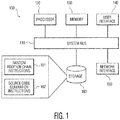
- FIG. 1 illustrates an example of a hardware system 100 for implementing the asymmetric cryptographic schemes or the lookup table generation schemes described herein.
- the hardware system 100 may correspond to virtually any device that may participate in a digital signature scheme such as, for example, a personal computer, laptop, tablet, mobile communications device, server, blade, smart card, near field communication (NFC) device, or other device.
- the hardware system may correspond to a set-top box for receiving and rendering digital content or a server for providing digital content.
- DRM digital rights management
- banking applications and generally protecting cryptographic keys in devices such as mobile phones and television set-top boxes.
- the device 100 includes a processor 120, memory 130, user interface 140, network interface 150, and storage 160 interconnected via one or more system buses 110. It will be understood that FIG. 1 constitutes, in some respects, an abstraction and that the actual organization of the components of the device 100 may be more complex than illustrated.
- the processor 120 may be any hardware device capable of executing instructions stored in the memory 130 or the storage 150.
- the processor may include a microprocessor, field programmable gate array (FPGA), application-specific integrated circuit (ASIC), or other similar devices.
- FPGA field programmable gate array
- ASIC application-specific integrated circuit
- the memory 130 may include various memories such as, for example L1, L2, or L3 cache or system memory. As such, the memory 130 may include static random access memory (SRAM), dynamic RAM (DRAM), flash memory, read only memory (ROM), or other similar memory devices.
- SRAM static random access memory
- DRAM dynamic RAM
- ROM read only memory
- the user interface 140 may include one or more devices for enabling communication with a user such as an administrator.
- the user interface 140 may include a display, a mouse, and a keyboard for receiving user commands.
- the user interface 140 may include a command line interface or graphical user interface that may be presented to a remote terminal via the network interface 150.
- the network interface 150 may include one or more devices for enabling communication with other hardware devices.
- the network interface 150 may include a network interface card (NIC) configured to communicate according to the Ethernet protocol.
- NIC network interface card
- the network interface 150 may implement a TCP/IP stack for communication according to the TCP/IP protocols.
- TCP/IP protocols Various alternative or additional hardware or configurations for the network interface 150 will be apparent.
- the storage 160 may include one or more machine-readable storage media such as read-only memory (ROM), random-access memory (RAM), magnetic disk storage media, optical storage media, flash-memory devices, or similar storage media.
- ROM read-only memory
- RAM random-access memory
- magnetic disk storage media magnetic disk storage media
- optical storage media flash-memory devices
- flash-memory devices or similar storage media.
- the storage 160 may store instructions for execution by the processor 120 or data upon with the processor 120 may operate.
- the storage 160 may include random addition chain instructions 161.
- hardware device 100 may implement source code generation instructions 162.
- the memory 130 may also be considered to constitute a “storage device” and the storage 160 may be considered a “memory.” Various other arrangements will be apparent. Further, the memory 130 and storage 160 may both be considered to be “non-transitory machine-readable media.” As used herein, the term “non-transitory” will be understood to exclude transitory signals but to include all forms of storage, including both volatile and non-volatile memories.
- the various components may be duplicated in various embodiments.
- the processor 120 may include multiple microprocessors that are configured to independently execute the methods described herein or are configured to perform steps or subroutines of the methods described herein such that the multiple processors cooperate to achieve the functionality described herein.
- the various components may be physically located in diverse machines.
- the processor 120 may include a first microprocessor in a first data center server and a second microprocessor in a second data center server.
- a first microprocessor in a first data center server and a second microprocessor in a second data center server.
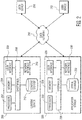
- FIG. 2 illustrates an example of a system for providing a user device secure content and a software application that processes the secure content.
- the system includes a content server 200, application server 220, user devices 250, 252, and a data network 240.
- the user devices 250, 252 may request access to secure content provided by the content server 200 via data network 240.
- the data network can be any data network providing connectivity between the user devices 250, 252 and the content server 200 and application server 220.
- the user devices 250, 252 may be one of a plurality of devices, for example, set top boxes, media streamers, digital video recorders, tablets, mobile phones, laptop computers, portable media devices, smart watches, desktop computers, media servers, etc.
- the user request for access may first require the downloading of a software application that may be used to process the secure content provided by the content server 200.
- the software application may be downloaded from the application server 220.
- the software application may be obscured using the techniques described above as well as operate as described above.
- the user devices 250, 252 install the software application, the user device may then download secure content from the content server 200 and access the secure content using the downloaded software application.
- the downloaded software application may perform decryption of encrypted content received from the content server.
- the software application may perform other secure operations, such as for example, encryption, digital signature generation and verification, etc.
- the content server 200 may control the access to the secure content provided to the user devices 250, 252. As a result when the content server 200 receives a request for secure content, the content server 200 may transmit the secure content to the requesting user device. Likewise, the application server 220 may control access to the software application provided to the user devices 250, 252. As a result when the content server 220 receives a request for the software application, the application server 220 may transmit the software application to the requesting user device.
- a user device requesting the software application or secure content may also be authenticated by the respective servers, before providing the software application or secure content to the user device.
- the content server 200 may include a processor 202, memory 204, user interface 206, network interface 210, and content storage 212 interconnected via one or more system buses 208. It will be understood that FIG. 2 constitutes, in some respects, an abstraction and that the actual organization of the components of the device 200 may be more complex than illustrated.
- the processor 202 may be any hardware device capable of executing instructions stored in memory 204 or storage 212.
- the processor may include a microprocessor, field programmable gate array (FPGA), application-specific integrated circuit (ASIC), or other similar devices.
- FPGA field programmable gate array
- ASIC application-specific integrated circuit
- the memory 204 may include various memories such as, for example L1, L2, or L3 cache or system memory. As such, the memory 204 may include static random access memory (SRAM), dynamic RAM (DRAM), flash memory, read only memory (ROM), or other similar memory devices.
- SRAM static random access memory
- DRAM dynamic RAM
- ROM read only memory
- the user interface 206 may include one or more devices for enabling communication with a user such as an administrator.
- the user interface 206 may include a display, a mouse, and a keyboard for receiving user commands.
- the network interface 210 may include one or more devices for enabling communication with other hardware devices.
- the network interface 210 may include a network interface card (NIC) configured to communicate according to the Ethernet protocol.
- the network interface 210 may implement a TCP/IP stack for communication according to the TCP/IP protocols.
- NIC network interface card
- TCP/IP protocols Various alternative or additional hardware or configurations for the network interface 210 will be apparent.
- the content storage 212 may include one or more machine-readable content storage media such as read-only memory (ROM), random-access memory (RAM), magnetic disk storage media, optical storage media, flash-memory devices, or similar storage media.
- ROM read-only memory
- RAM random-access memory
- magnetic disk storage media such as magnetic tape, magnetic disks, magnetic disks, optical disks, flash-memory devices, or similar storage media.
- the content storage 212 may store content to be provided to users.
- the application server 220 includes elements like those in the content server 200 and the description of the like elements in the content server 200 apply to the application server 220. Also, the content storage 212 is replaced by application storage 232. Further, it is noted that the content server and applications server may be implemented on a single server. Also, such servers may be implemented on distributed computer systems as well as on cloud computer systems.
- the modular exponentiation, encryption, or digital signature methods described herein may be deployed and utilized within the system of FIG. 2 or similar systems in various manners.
- the user devices 250, 252 may be provided by a manufacturer or other seller preconfigured to transmit signed messages to the content server 200 to request the provision of content.
- the user devices 250, 252 may not be fully preconfigured for such operation; instead, the application server 220 may communicate with the user devices 250, 252 to effect such configuration.
- the application server may transmit code instructions for implementing the methods described herein or data defining one or more lookup tables.
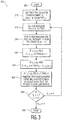
- FIG. 3 illustrates an example of a method for generating a random addition chain 300.
- the exponent d and the integer parameters (p 1 , b 1 , b 2 ), such that p 1 ⁇ b 1 and b 2 is larger than the expected length of the addition chain, may be used to construct the random addition chain using the following steps.
- the method for generating a random addition chain 300 may begin in step 305.
- Method for generating a random addition chain 300 may proceed to step 310.
- Method for generating a random addition chain 300 may proceed to step 315.
- the method may set the boolean value m to zero to mark that there is no overflow in step 315.
- Method for generating a random addition chain 300 may proceed to step 320 where the method may pick a uniform random positive integer r 1 from the range [0, b 1 - 1].
- the method for generating a random addition chain 300 may proceed to step 340.
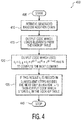
- FIG. 4 illustrates an example of a method for generating source code 400.
- the random star addition chain When the random star addition chain has been generated one can output the source code which computes the desired modular multiplication c d mod N.
- the method for generating source code 400 may begin in step 405 and proceed to step 410.
- the method for generating source code 400 may then proceed to step 415.
- the method for generating source code 400 may then proceed to step 420.
- the method may output code which uses these elements to compute the next element: C i ⁇ C i ⁇ 1 ⁇ C j ⁇ C a i ⁇ 1 ⁇ C a j ⁇ C a i ⁇ 1 + a j mod N .
- Method for generating source code 400 may then proceed to step 425.
- step 425 when this result c i is needed in subsequent steps besides the next step (iteration i + 1) then the method may output code which stores c i in the look-up table.
- the loading of the elements from the look-up table in step 420 may be computed differently.
- the two indices i - 1 and j one may use two functions f i 1 and f i 2 specific to iteration i, which use two hard-coded values ⁇ i and ⁇ i .
- the functionality of function f i 1 and f i 2 should be such that it is harder to distinguish what it is exactly computing and what is other (functional) code.
- the location where to store the result (if needed) in step 425 can be the result from (another) function f i 3 ( ⁇ i ).
- Embodiments may allow one to instantiate white-box asymmetric cryptography based on modular exponentiation.
- DRM digital right management
- banking applications as well as protecting cryptographic keys in mobile phones, television set top boxes etcetera.
- the tool which generates this source code consists of two parts.
- the first part which constructs a random addition chain for the exponent d and the second part which, given this addition chain, generates the source code (with potentially countermeasures against attackers) built-in.
- the third party who is allowed to know the secret exponent d, generates source code which implements exponentiation modulo N using a random addition chain.
- the parameters of this generator may be adjusted and present a trade-off between speed, code size and the number of random implementations which can be generated.
- various embodiments of the invention may be implemented in hardware.
- various embodiments may be implemented as instructions stored on a non-transitory machine-readable storage medium, such as a volatile or non-volatile memory, which may be read and executed by at least one processor to perform the operations described in detail herein.
- a machine-readable storage medium may include any mechanism for storing information in a form readable by a machine, such as a personal or laptop computer, a server, or other computing device.
- a non-transitory machine-readable storage medium excludes transitory signals but may include both volatile and non-volatile memories, including but not limited to read-only memory (ROM), random-access memory (RAM), magnetic disk storage media, optical storage media, flash-memory devices, and similar storage media.
- any block diagrams herein represent conceptual views of illustrative circuitry embodying the principles of the invention.
- any flow charts, flow diagrams, state transition diagrams, pseudo code, and the like represent various processes which may be substantially represented in machine readable media and so executed by a computer or processor, whether or not such computer or processor is explicitly shown.
Landscapes
- Engineering & Computer Science (AREA)
- Physics & Mathematics (AREA)
- General Physics & Mathematics (AREA)
- Theoretical Computer Science (AREA)
- Mathematical Analysis (AREA)
- Mathematical Optimization (AREA)
- Pure & Applied Mathematics (AREA)
- Computational Mathematics (AREA)
- Mathematical Physics (AREA)
- Computing Systems (AREA)
- Computer Security & Cryptography (AREA)
- Computer Networks & Wireless Communication (AREA)
- Signal Processing (AREA)
- General Engineering & Computer Science (AREA)
- Algebra (AREA)
- Storage Device Security (AREA)
Claims (10)
- Vorrichtung zum Erzeugen eines Codes, der eine modulare Potenzierung implementiert, wobei die Vorrichtung Folgendes aufweist:einen ersten Teil, der dazu konfiguriert ist, eine zufällige Additionskette von Additionskettenelementen ai zu erzeugen,einen zweiten Teil, der Folgendes aufweist:einen Speicher, der zum Speichern einer Nachschlagtabelle verwendet wird; undeinen Prozessor, der mit dem Speicher kommuniziert, wobei der Prozessor dazu konfiguriert ist:Informationen für die erzeugte, zufällige Additionskette aufzunehmen;einen Code zum Implementieren der modularen Potenzierung auf der Grundlage der erzeugten zufälligen Kette abzugeben, der Elemente für die Nachschlagtabelle einschließlich Zwischenergebnissen lädt, die die Informationen für eine erzeugte zufällige Additionskette nutzen; undeinen Code zum Implementieren der modularen Potenzierung abzugeben, der die geladenen Elemente zum Berechnen des nächsten Elementes nutzt,wobei die zufällige Additionskette durch Folgendes erzeugt wird:Initialisieren des ersten Additionskettenelements a0 = 1 und des Zählers i = 1,Festlegen eines booleschen Wertes m auf null, um zu markieren, dass kein Überlauf vorhanden ist,Herausnehmen einer einheitlichen, zufälligen positiven ganzen Zahl r1 aus dem Bereich [0, b1-1];wobei ein Exponent d und die Ganzzahlparameter (p1, b1, b2) derart eingegeben werden, dass p1 ≤ b1 und b2 größer ist als eine erwartete Länge der Additionskette, und sie zum Bilden der zufälligen Additionskette verwendet werden können,Zuweisen von m = 1, falls r1 ≤ p1 und 2 · ai-1 > d,Zuweisen von a1 = ai-1 + ai-1, falls r1 ≤ p1 und 2 · ai-1 ≤ d, undZuweisen von a1 = ai-1 + aj, wobei j zufällig ausgewählt wird, wobei 0 ≤ j ≤ i derart gilt, dass ai-1 + aj ≤ d, falls r1 > p1 oder m = 1.
- Vorrichtung gemäß Anspruch 1, wobei das Aufnehmen eine Bestimmung derart ermöglicht, dass:

- Vorrichtung gemäß einem der vorherigen Ansprüche, wobei der Prozessor des Weiteren dazu konfiguriert ist:
einen Code abzugeben, der die Elemente ci-1 = cai-1 mod N und ci = caj mod N aus der Nachschlagtabelle lädt, wobei der abgegebene Code die modulare Potenzierung gemäß cd mod N berechnet, wobei Elemente an der zufälligen Additionskette bei der modularen Potenzierung eingegeben werden, der Wert c als eine Eingabe aufgenommen wird, der Wert d fest und geheim ist, der Restwert N fest und öffentlich ist. - Vorrichtung gemäß einem der vorherigen Ansprüche, wobei der Prozessor des Weiteren dazu konfiguriert ist:
einen Code abzugeben, um das nächste Element derart zu berechnen:
- Vorrichtung gemäß einem der vorherigen Ansprüche, wobei der Prozessor des Weiteren dazu konfiguriert ist:
einen Code abzugeben, der ci in der Nachschlagtabelle speichert, falls dieses Ergebnis ci bei nachfolgenden Schritten neben dem nächsten Schritt (Iteration i + 1) benötigt wird. - Verfahren zum Erzeugen eines Codes, der eine modulare Potenzierung implementiert, wobei das Verfahren Folgendes aufweist:Aufnehmen von Informationen für eine erzeugte zufällige Additionskette von Additionskettenelementen ai,Abgeben eines Codes zum Implementieren der modularen Potenzierung auf der Grundlage der erzeugten zufälligen Kette, der Elemente für die Nachschlagtabelle einschließlich Zwischenergebnissen lädt, die die Informationen für eine erzeugte zufällige Additionskette nutzen; undAbgeben eines Codes zum Implementieren der modularen Potenzierung, der die geladenen Elemente zum Berechnen des nächsten Elementes nutzt,wobei die zufällige Additionskette durch Folgendes erzeugt wird:Initialisieren des ersten Additionskettenelements a0 = 1 und des Zählers i = 1,Festlegen eines booleschen Wertes m auf null, um zu markieren, dass kein Überlauf vorhanden ist,Herausnehmen einer einheitlichen, zufälligen positiven ganzen Zahl r1 aus dem Bereich [0, b1-1];wobei ein Exponent d und die Ganzzahlparameter (p1, b1, b2) derart eingegeben werden, dass p1 ≤ b1 und b2 größer ist als eine erwartete Länge der Additionskette, und sie zum Bilden der zufälligen Additionskette verwendet werden können,Zuweisen von m = 1, falls r1 ≤ p1 und 2 · ai-1 > d,Zuweisen von ai = ai-1 + ai-1, falls r1 ≤ p1 und 2 · ai-1 ≤ d, undZuweisen von ai = ai-1 + aj, wobei j zufällig ausgewählt wird, wobei 0 ≤ j < i derart gilt, dass ai-1 + aj ≤ d, falls r1 > p1 oder m = 1.
- Verfahren gemäß Anspruch 6, wobei das Aufnehmen eine Bestimmung derart ermöglicht, dass:

- Verfahren gemäß Anspruch 6 oder 7, wobei das Verfahren des Weiteren Folgendes aufweist:
Abgeben eines Codes, der die Elemente ci-1 = cai-1 mod N und ci = caj mod N aus der Nachschlagtabelle lädt, wobei der abgegebene Quellcode die modulare Potenzierung gemäß cd mod N berechnet, wobei Elemente an der zufälligen Additionskette bei der modularen Potenzierung eingegeben werden, der Wert c als eine Eingabe aufgenommen wird, der Wert d fest und geheim ist, der Restwert N fest und öffentlich ist. - Verfahren gemäß einem der Ansprüche 6 bis 8, wobei das Verfahren des Weiteren Folgendes aufweist:
Abgeben eines Codes zum Berechnen des nächsten Elements derart, dass:
ci = ci-1 · cj ≡ cai-1 · caj ≡ cai-1+aj mod N, wobei der abgegebene Quellcode die modulare Potenzierung gemäß cd mod N berechnet, wobei Elemente an der zufälligen Additionskette bei der modularen Potenzierung eingegeben werden, der Wert c als eine Eingabe aufgenommen wird, der Wert d fest und geheim ist, der Restwert N fest und öffentlich ist. - Verfahren gemäß einem der Ansprüche 6 bis 9, wobei das Verfahren des Weiteren Folgendes aufweist:
Abgeben eines Codes, der ci in der Nachschlagtabelle speichert, falls dieses Ergebnis ci bei nachfolgenden Schritten neben dem Schritt (Iteration i + 1) benötigt wird.
Applications Claiming Priority (1)
| Application Number | Priority Date | Filing Date | Title |
|---|---|---|---|
| US14/932,622 US9942038B2 (en) | 2015-11-04 | 2015-11-04 | Modular exponentiation using randomized addition chains |
Publications (2)
| Publication Number | Publication Date |
|---|---|
| EP3166013A1 EP3166013A1 (de) | 2017-05-10 |
| EP3166013B1 true EP3166013B1 (de) | 2019-04-24 |
Family
ID=57391750
Family Applications (1)
| Application Number | Title | Priority Date | Filing Date |
|---|---|---|---|
| EP16195485.4A Active EP3166013B1 (de) | 2015-11-04 | 2016-10-25 | Modulare exponentiation mit randomisierten additionsketten |
Country Status (3)
| Country | Link |
|---|---|
| US (1) | US9942038B2 (de) |
| EP (1) | EP3166013B1 (de) |
| CN (1) | CN107040370B (de) |
Families Citing this family (2)
| Publication number | Priority date | Publication date | Assignee | Title |
|---|---|---|---|---|
| EP3208788B1 (de) * | 2016-02-22 | 2020-06-03 | Eshard | Verfahren zum schutz einer schaltung gegen eine seitenkanalanalyse |
| GB202200991D0 (en) * | 2022-01-26 | 2022-03-09 | Nchain Licensing Ag | Elliptic curve arithmetic in script |
Family Cites Families (8)
| Publication number | Priority date | Publication date | Assignee | Title |
|---|---|---|---|---|
| US6748410B1 (en) * | 1997-05-04 | 2004-06-08 | M-Systems Flash Disk Pioneers, Ltd. | Apparatus and method for modular multiplication and exponentiation based on montgomery multiplication |
| GB0126317D0 (en) | 2001-11-02 | 2002-01-02 | Comodo Res Lab Ltd | Improvements in and relating to cryptographic methods and apparatus in which an exponentiation is used |
| US7657029B2 (en) | 2005-03-01 | 2010-02-02 | Microsoft Corporation | Systems and methods for generating random addition chains |
| CN101196964B (zh) * | 2006-12-07 | 2010-08-11 | 上海爱信诺航芯电子科技有限公司 | 一种抗旁路攻击算法的芯片 |
| CN103259523A (zh) * | 2012-02-17 | 2013-08-21 | 京微雅格(北京)科技有限公司 | 一种加法链优化的方法和采用该加法链的集成电路 |
| WO2013142980A1 (en) * | 2012-03-30 | 2013-10-03 | Irdeto Canada Corporation | Securing accessible systems using variable dependent coding |
| US9244683B2 (en) | 2013-02-26 | 2016-01-26 | Nvidia Corporation | System, method, and computer program product for implementing large integer operations on a graphics processing unit |
| CN104468100A (zh) * | 2014-12-03 | 2015-03-25 | 天津大学 | 改进的滑动窗口模幂计算方法 |
-
2015
- 2015-11-04 US US14/932,622 patent/US9942038B2/en active Active
-
2016
- 2016-10-25 EP EP16195485.4A patent/EP3166013B1/de active Active
- 2016-11-02 CN CN201610951530.3A patent/CN107040370B/zh active Active
Non-Patent Citations (1)
| Title |
|---|
| None * |
Also Published As
| Publication number | Publication date |
|---|---|
| US9942038B2 (en) | 2018-04-10 |
| CN107040370A (zh) | 2017-08-11 |
| EP3166013A1 (de) | 2017-05-10 |
| CN107040370B (zh) | 2021-07-27 |
| US20170126407A1 (en) | 2017-05-04 |
Similar Documents
| Publication | Publication Date | Title |
|---|---|---|
| EP3059894B1 (de) | Modulare multiplikation mittels nachschlagetabellen | |
| EP3091690B1 (de) | Rsa-entschlüsselung mittels multiplikativer geheimnisteilung | |
| US9590807B2 (en) | Identity based public key cryptosystem | |
| JP7091322B2 (ja) | 複合デジタル署名 | |
| US9906368B2 (en) | General encoding functions for modular exponentiation encryption schemes | |
| US11290272B2 (en) | Elliptic curve point multiplication device and method in a white-box context | |
| JP7206324B2 (ja) | 暗号アルゴリズム向けのワンタイムの中国剰余定理のべき乗のためのシステムおよび方法 | |
| JP2008252299A (ja) | 暗号処理システム及び暗号処理方法 | |
| JP2010277085A (ja) | Rsaアルゴリズムにおける素数生成の保護 | |
| JP2011530093A (ja) | 累乗法による暗号化を保護する解決策 | |
| EP3698262B1 (de) | Schutz der modularen inversionsoperation vor externen überwachungsangriffen | |
| US20160179473A1 (en) | Modular exponentiation using look- up tables | |
| WO2019207001A1 (en) | Method for generating on-board a cryptographic key using a physically unclonable function | |
| JP2017526981A5 (de) | ||
| US10361855B2 (en) | Computing a secure elliptic curve scalar multiplication using an unsecured and secure environment | |
| EP3166013B1 (de) | Modulare exponentiation mit randomisierten additionsketten | |
| US20160182236A1 (en) | Efficient smooth encodings for modular exponentiation | |
| KR100954844B1 (ko) | 오류 주입 공격에 안전한 crt-rsa 모듈러 지수승 알고리즘을 이용한 디지털 서명 방법, 그 장치 및 이를 기록한 기록매체 | |
| KR101112570B1 (ko) | 전력 분석 및 오류 주입 공격에 안전한 디지털 서명 장치, 방법 및 그 기록 매체 | |
| US20230085577A1 (en) | Secured performance of an elliptic curve cryptographic process | |
| KR20240040437A (ko) | 암호 연산 방법, 및 상기 방법을 수행하는 전자 장치 |
Legal Events
| Date | Code | Title | Description |
|---|---|---|---|
| PUAI | Public reference made under article 153(3) epc to a published international application that has entered the european phase |
Free format text: ORIGINAL CODE: 0009012 |
|
| STAA | Information on the status of an ep patent application or granted ep patent |
Free format text: STATUS: THE APPLICATION HAS BEEN PUBLISHED |
|
| AK | Designated contracting states |
Kind code of ref document: A1 Designated state(s): AL AT BE BG CH CY CZ DE DK EE ES FI FR GB GR HR HU IE IS IT LI LT LU LV MC MK MT NL NO PL PT RO RS SE SI SK SM TR |
|
| AX | Request for extension of the european patent |
Extension state: BA ME |
|
| STAA | Information on the status of an ep patent application or granted ep patent |
Free format text: STATUS: REQUEST FOR EXAMINATION WAS MADE |
|
| 17P | Request for examination filed |
Effective date: 20171110 |
|
| RBV | Designated contracting states (corrected) |
Designated state(s): AL AT BE BG CH CY CZ DE DK EE ES FI FR GB GR HR HU IE IS IT LI LT LU LV MC MK MT NL NO PL PT RO RS SE SI SK SM TR |
|
| GRAP | Despatch of communication of intention to grant a patent |
Free format text: ORIGINAL CODE: EPIDOSNIGR1 |
|
| STAA | Information on the status of an ep patent application or granted ep patent |
Free format text: STATUS: GRANT OF PATENT IS INTENDED |
|
| INTG | Intention to grant announced |
Effective date: 20190111 |
|
| GRAS | Grant fee paid |
Free format text: ORIGINAL CODE: EPIDOSNIGR3 |
|
| GRAA | (expected) grant |
Free format text: ORIGINAL CODE: 0009210 |
|
| STAA | Information on the status of an ep patent application or granted ep patent |
Free format text: STATUS: THE PATENT HAS BEEN GRANTED |
|
| AK | Designated contracting states |
Kind code of ref document: B1 Designated state(s): AL AT BE BG CH CY CZ DE DK EE ES FI FR GB GR HR HU IE IS IT LI LT LU LV MC MK MT NL NO PL PT RO RS SE SI SK SM TR |
|
| REG | Reference to a national code |
Ref country code: GB Ref legal event code: FG4D |
|
| REG | Reference to a national code |
Ref country code: CH Ref legal event code: EP |
|
| REG | Reference to a national code |
Ref country code: AT Ref legal event code: REF Ref document number: 1124926 Country of ref document: AT Kind code of ref document: T Effective date: 20190515 Ref country code: IE Ref legal event code: FG4D |
|
| REG | Reference to a national code |
Ref country code: DE Ref legal event code: R096 Ref document number: 602016012786 Country of ref document: DE |
|
| REG | Reference to a national code |
Ref country code: NL Ref legal event code: MP Effective date: 20190424 |
|
| REG | Reference to a national code |
Ref country code: LT Ref legal event code: MG4D |
|
| PG25 | Lapsed in a contracting state [announced via postgrant information from national office to epo] |
Ref country code: NL Free format text: LAPSE BECAUSE OF FAILURE TO SUBMIT A TRANSLATION OF THE DESCRIPTION OR TO PAY THE FEE WITHIN THE PRESCRIBED TIME-LIMIT Effective date: 20190424 |
|
| PG25 | Lapsed in a contracting state [announced via postgrant information from national office to epo] |
Ref country code: HR Free format text: LAPSE BECAUSE OF FAILURE TO SUBMIT A TRANSLATION OF THE DESCRIPTION OR TO PAY THE FEE WITHIN THE PRESCRIBED TIME-LIMIT Effective date: 20190424 Ref country code: NO Free format text: LAPSE BECAUSE OF FAILURE TO SUBMIT A TRANSLATION OF THE DESCRIPTION OR TO PAY THE FEE WITHIN THE PRESCRIBED TIME-LIMIT Effective date: 20190724 Ref country code: SE Free format text: LAPSE BECAUSE OF FAILURE TO SUBMIT A TRANSLATION OF THE DESCRIPTION OR TO PAY THE FEE WITHIN THE PRESCRIBED TIME-LIMIT Effective date: 20190424 Ref country code: PT Free format text: LAPSE BECAUSE OF FAILURE TO SUBMIT A TRANSLATION OF THE DESCRIPTION OR TO PAY THE FEE WITHIN THE PRESCRIBED TIME-LIMIT Effective date: 20190824 Ref country code: AL Free format text: LAPSE BECAUSE OF FAILURE TO SUBMIT A TRANSLATION OF THE DESCRIPTION OR TO PAY THE FEE WITHIN THE PRESCRIBED TIME-LIMIT Effective date: 20190424 Ref country code: FI Free format text: LAPSE BECAUSE OF FAILURE TO SUBMIT A TRANSLATION OF THE DESCRIPTION OR TO PAY THE FEE WITHIN THE PRESCRIBED TIME-LIMIT Effective date: 20190424 Ref country code: ES Free format text: LAPSE BECAUSE OF FAILURE TO SUBMIT A TRANSLATION OF THE DESCRIPTION OR TO PAY THE FEE WITHIN THE PRESCRIBED TIME-LIMIT Effective date: 20190424 Ref country code: LT Free format text: LAPSE BECAUSE OF FAILURE TO SUBMIT A TRANSLATION OF THE DESCRIPTION OR TO PAY THE FEE WITHIN THE PRESCRIBED TIME-LIMIT Effective date: 20190424 |
|
| PG25 | Lapsed in a contracting state [announced via postgrant information from national office to epo] |
Ref country code: BG Free format text: LAPSE BECAUSE OF FAILURE TO SUBMIT A TRANSLATION OF THE DESCRIPTION OR TO PAY THE FEE WITHIN THE PRESCRIBED TIME-LIMIT Effective date: 20190724 Ref country code: LV Free format text: LAPSE BECAUSE OF FAILURE TO SUBMIT A TRANSLATION OF THE DESCRIPTION OR TO PAY THE FEE WITHIN THE PRESCRIBED TIME-LIMIT Effective date: 20190424 Ref country code: RS Free format text: LAPSE BECAUSE OF FAILURE TO SUBMIT A TRANSLATION OF THE DESCRIPTION OR TO PAY THE FEE WITHIN THE PRESCRIBED TIME-LIMIT Effective date: 20190424 Ref country code: PL Free format text: LAPSE BECAUSE OF FAILURE TO SUBMIT A TRANSLATION OF THE DESCRIPTION OR TO PAY THE FEE WITHIN THE PRESCRIBED TIME-LIMIT Effective date: 20190424 Ref country code: GR Free format text: LAPSE BECAUSE OF FAILURE TO SUBMIT A TRANSLATION OF THE DESCRIPTION OR TO PAY THE FEE WITHIN THE PRESCRIBED TIME-LIMIT Effective date: 20190725 |
|
| REG | Reference to a national code |
Ref country code: AT Ref legal event code: MK05 Ref document number: 1124926 Country of ref document: AT Kind code of ref document: T Effective date: 20190424 |
|
| PG25 | Lapsed in a contracting state [announced via postgrant information from national office to epo] |
Ref country code: IS Free format text: LAPSE BECAUSE OF FAILURE TO SUBMIT A TRANSLATION OF THE DESCRIPTION OR TO PAY THE FEE WITHIN THE PRESCRIBED TIME-LIMIT Effective date: 20190824 |
|
| REG | Reference to a national code |
Ref country code: DE Ref legal event code: R097 Ref document number: 602016012786 Country of ref document: DE |
|
| PG25 | Lapsed in a contracting state [announced via postgrant information from national office to epo] |
Ref country code: RO Free format text: LAPSE BECAUSE OF FAILURE TO SUBMIT A TRANSLATION OF THE DESCRIPTION OR TO PAY THE FEE WITHIN THE PRESCRIBED TIME-LIMIT Effective date: 20190424 Ref country code: DK Free format text: LAPSE BECAUSE OF FAILURE TO SUBMIT A TRANSLATION OF THE DESCRIPTION OR TO PAY THE FEE WITHIN THE PRESCRIBED TIME-LIMIT Effective date: 20190424 Ref country code: EE Free format text: LAPSE BECAUSE OF FAILURE TO SUBMIT A TRANSLATION OF THE DESCRIPTION OR TO PAY THE FEE WITHIN THE PRESCRIBED TIME-LIMIT Effective date: 20190424 Ref country code: AT Free format text: LAPSE BECAUSE OF FAILURE TO SUBMIT A TRANSLATION OF THE DESCRIPTION OR TO PAY THE FEE WITHIN THE PRESCRIBED TIME-LIMIT Effective date: 20190424 Ref country code: CZ Free format text: LAPSE BECAUSE OF FAILURE TO SUBMIT A TRANSLATION OF THE DESCRIPTION OR TO PAY THE FEE WITHIN THE PRESCRIBED TIME-LIMIT Effective date: 20190424 Ref country code: SK Free format text: LAPSE BECAUSE OF FAILURE TO SUBMIT A TRANSLATION OF THE DESCRIPTION OR TO PAY THE FEE WITHIN THE PRESCRIBED TIME-LIMIT Effective date: 20190424 |
|
| PG25 | Lapsed in a contracting state [announced via postgrant information from national office to epo] |
Ref country code: SM Free format text: LAPSE BECAUSE OF FAILURE TO SUBMIT A TRANSLATION OF THE DESCRIPTION OR TO PAY THE FEE WITHIN THE PRESCRIBED TIME-LIMIT Effective date: 20190424 Ref country code: IT Free format text: LAPSE BECAUSE OF FAILURE TO SUBMIT A TRANSLATION OF THE DESCRIPTION OR TO PAY THE FEE WITHIN THE PRESCRIBED TIME-LIMIT Effective date: 20190424 |
|
| PLBE | No opposition filed within time limit |
Free format text: ORIGINAL CODE: 0009261 |
|
| STAA | Information on the status of an ep patent application or granted ep patent |
Free format text: STATUS: NO OPPOSITION FILED WITHIN TIME LIMIT |
|
| PG25 | Lapsed in a contracting state [announced via postgrant information from national office to epo] |
Ref country code: TR Free format text: LAPSE BECAUSE OF FAILURE TO SUBMIT A TRANSLATION OF THE DESCRIPTION OR TO PAY THE FEE WITHIN THE PRESCRIBED TIME-LIMIT Effective date: 20190424 |
|
| 26N | No opposition filed |
Effective date: 20200127 |
|
| PG25 | Lapsed in a contracting state [announced via postgrant information from national office to epo] |
Ref country code: SI Free format text: LAPSE BECAUSE OF FAILURE TO SUBMIT A TRANSLATION OF THE DESCRIPTION OR TO PAY THE FEE WITHIN THE PRESCRIBED TIME-LIMIT Effective date: 20190424 Ref country code: MC Free format text: LAPSE BECAUSE OF FAILURE TO SUBMIT A TRANSLATION OF THE DESCRIPTION OR TO PAY THE FEE WITHIN THE PRESCRIBED TIME-LIMIT Effective date: 20190424 |
|
| REG | Reference to a national code |
Ref country code: CH Ref legal event code: PL |
|
| PG25 | Lapsed in a contracting state [announced via postgrant information from national office to epo] |
Ref country code: LI Free format text: LAPSE BECAUSE OF NON-PAYMENT OF DUE FEES Effective date: 20191031 Ref country code: LU Free format text: LAPSE BECAUSE OF NON-PAYMENT OF DUE FEES Effective date: 20191025 Ref country code: CH Free format text: LAPSE BECAUSE OF NON-PAYMENT OF DUE FEES Effective date: 20191031 |
|
| REG | Reference to a national code |
Ref country code: BE Ref legal event code: MM Effective date: 20191031 |
|
| PG25 | Lapsed in a contracting state [announced via postgrant information from national office to epo] |
Ref country code: BE Free format text: LAPSE BECAUSE OF NON-PAYMENT OF DUE FEES Effective date: 20191031 |
|
| PG25 | Lapsed in a contracting state [announced via postgrant information from national office to epo] |
Ref country code: IE Free format text: LAPSE BECAUSE OF NON-PAYMENT OF DUE FEES Effective date: 20191025 |
|
| PG25 | Lapsed in a contracting state [announced via postgrant information from national office to epo] |
Ref country code: CY Free format text: LAPSE BECAUSE OF FAILURE TO SUBMIT A TRANSLATION OF THE DESCRIPTION OR TO PAY THE FEE WITHIN THE PRESCRIBED TIME-LIMIT Effective date: 20190424 |
|
| GBPC | Gb: european patent ceased through non-payment of renewal fee |
Effective date: 20201025 |
|
| PG25 | Lapsed in a contracting state [announced via postgrant information from national office to epo] |
Ref country code: MT Free format text: LAPSE BECAUSE OF FAILURE TO SUBMIT A TRANSLATION OF THE DESCRIPTION OR TO PAY THE FEE WITHIN THE PRESCRIBED TIME-LIMIT Effective date: 20190424 Ref country code: HU Free format text: LAPSE BECAUSE OF FAILURE TO SUBMIT A TRANSLATION OF THE DESCRIPTION OR TO PAY THE FEE WITHIN THE PRESCRIBED TIME-LIMIT; INVALID AB INITIO Effective date: 20161025 |
|
| PG25 | Lapsed in a contracting state [announced via postgrant information from national office to epo] |
Ref country code: GB Free format text: LAPSE BECAUSE OF NON-PAYMENT OF DUE FEES Effective date: 20201025 |
|
| PG25 | Lapsed in a contracting state [announced via postgrant information from national office to epo] |
Ref country code: MK Free format text: LAPSE BECAUSE OF FAILURE TO SUBMIT A TRANSLATION OF THE DESCRIPTION OR TO PAY THE FEE WITHIN THE PRESCRIBED TIME-LIMIT Effective date: 20190424 |
|
| P01 | Opt-out of the competence of the unified patent court (upc) registered |
Effective date: 20230725 |
|
| PGFP | Annual fee paid to national office [announced via postgrant information from national office to epo] |
Ref country code: FR Payment date: 20240919 Year of fee payment: 9 |
|
| PGFP | Annual fee paid to national office [announced via postgrant information from national office to epo] |
Ref country code: DE Payment date: 20240919 Year of fee payment: 9 |