EP3167209B1 - Stellglied, insbesondere für ein kraftfahrzeug - Google Patents
Stellglied, insbesondere für ein kraftfahrzeug Download PDFInfo
- Publication number
- EP3167209B1 EP3167209B1 EP15742196.7A EP15742196A EP3167209B1 EP 3167209 B1 EP3167209 B1 EP 3167209B1 EP 15742196 A EP15742196 A EP 15742196A EP 3167209 B1 EP3167209 B1 EP 3167209B1
- Authority
- EP
- European Patent Office
- Prior art keywords
- handle
- adjustment
- gate
- control element
- element according
- Prior art date
- Legal status (The legal status is an assumption and is not a legal conclusion. Google has not performed a legal analysis and makes no representation as to the accuracy of the status listed.)
- Active
Links
Images


Classifications
-
- G—PHYSICS
- G05—CONTROLLING; REGULATING
- G05G—CONTROL DEVICES OR SYSTEMS INSOFAR AS CHARACTERISED BY MECHANICAL FEATURES ONLY
- G05G23/00—Means for ensuring the correct positioning of parts of control mechanisms, e.g. for taking-up play
-
- F—MECHANICAL ENGINEERING; LIGHTING; HEATING; WEAPONS; BLASTING
- F16—ENGINEERING ELEMENTS AND UNITS; GENERAL MEASURES FOR PRODUCING AND MAINTAINING EFFECTIVE FUNCTIONING OF MACHINES OR INSTALLATIONS; THERMAL INSULATION IN GENERAL
- F16H—GEARING
- F16H59/00—Control inputs to control units of change-speed- or reversing-gearings for conveying rotary motion
- F16H59/02—Selector apparatus
- F16H59/0278—Constructional features of the selector lever, e.g. grip parts, mounting or manufacturing
-
- F—MECHANICAL ENGINEERING; LIGHTING; HEATING; WEAPONS; BLASTING
- F16—ENGINEERING ELEMENTS AND UNITS; GENERAL MEASURES FOR PRODUCING AND MAINTAINING EFFECTIVE FUNCTIONING OF MACHINES OR INSTALLATIONS; THERMAL INSULATION IN GENERAL
- F16H—GEARING
- F16H59/00—Control inputs to control units of change-speed- or reversing-gearings for conveying rotary motion
- F16H59/02—Selector apparatus
- F16H59/08—Range selector apparatus
- F16H59/10—Range selector apparatus comprising levers
- F16H59/105—Range selector apparatus comprising levers consisting of electrical switches or sensors
-
- F—MECHANICAL ENGINEERING; LIGHTING; HEATING; WEAPONS; BLASTING
- F16—ENGINEERING ELEMENTS AND UNITS; GENERAL MEASURES FOR PRODUCING AND MAINTAINING EFFECTIVE FUNCTIONING OF MACHINES OR INSTALLATIONS; THERMAL INSULATION IN GENERAL
- F16H—GEARING
- F16H59/00—Control inputs to control units of change-speed- or reversing-gearings for conveying rotary motion
- F16H59/02—Selector apparatus
- F16H59/04—Ratio selector apparatus
- F16H59/044—Ratio selector apparatus consisting of electrical switches or sensors
-
- F—MECHANICAL ENGINEERING; LIGHTING; HEATING; WEAPONS; BLASTING
- F16—ENGINEERING ELEMENTS AND UNITS; GENERAL MEASURES FOR PRODUCING AND MAINTAINING EFFECTIVE FUNCTIONING OF MACHINES OR INSTALLATIONS; THERMAL INSULATION IN GENERAL
- F16H—GEARING
- F16H61/00—Control functions within control units of change-speed- or reversing-gearings for conveying rotary motion ; Control of exclusively fluid gearing, friction gearing, gearings with endless flexible members or other particular types of gearing
- F16H61/24—Providing feel, e.g. to enable selection
-
- G—PHYSICS
- G05—CONTROLLING; REGULATING
- G05G—CONTROL DEVICES OR SYSTEMS INSOFAR AS CHARACTERISED BY MECHANICAL FEATURES ONLY
- G05G5/00—Means for preventing, limiting or returning the movements of parts of a control mechanism, e.g. locking controlling member
- G05G5/05—Means for returning or tending to return controlling members to an inoperative or neutral position, e.g. by providing return springs or resilient end-stops
-
- G—PHYSICS
- G05—CONTROLLING; REGULATING
- G05G—CONTROL DEVICES OR SYSTEMS INSOFAR AS CHARACTERISED BY MECHANICAL FEATURES ONLY
- G05G9/00—Manually-actuated control mechanisms provided with one single controlling member co-operating with two or more controlled members, e.g. selectively, simultaneously
- G05G9/02—Manually-actuated control mechanisms provided with one single controlling member co-operating with two or more controlled members, e.g. selectively, simultaneously the controlling member being movable in different independent ways, movement in each individual way actuating one controlled member only
- G05G9/04—Manually-actuated control mechanisms provided with one single controlling member co-operating with two or more controlled members, e.g. selectively, simultaneously the controlling member being movable in different independent ways, movement in each individual way actuating one controlled member only in which movement in two or more ways can occur simultaneously
- G05G9/047—Manually-actuated control mechanisms provided with one single controlling member co-operating with two or more controlled members, e.g. selectively, simultaneously the controlling member being movable in different independent ways, movement in each individual way actuating one controlled member only in which movement in two or more ways can occur simultaneously the controlling member being movable by hand about orthogonal axes, e.g. joysticks
-
- F—MECHANICAL ENGINEERING; LIGHTING; HEATING; WEAPONS; BLASTING
- F16—ENGINEERING ELEMENTS AND UNITS; GENERAL MEASURES FOR PRODUCING AND MAINTAINING EFFECTIVE FUNCTIONING OF MACHINES OR INSTALLATIONS; THERMAL INSULATION IN GENERAL
- F16H—GEARING
- F16H59/00—Control inputs to control units of change-speed- or reversing-gearings for conveying rotary motion
- F16H59/02—Selector apparatus
- F16H2059/0295—Selector apparatus with mechanisms to return lever to neutral or datum position, e.g. by return springs
-
- F—MECHANICAL ENGINEERING; LIGHTING; HEATING; WEAPONS; BLASTING
- F16—ENGINEERING ELEMENTS AND UNITS; GENERAL MEASURES FOR PRODUCING AND MAINTAINING EFFECTIVE FUNCTIONING OF MACHINES OR INSTALLATIONS; THERMAL INSULATION IN GENERAL
- F16H—GEARING
- F16H61/00—Control functions within control units of change-speed- or reversing-gearings for conveying rotary motion ; Control of exclusively fluid gearing, friction gearing, gearings with endless flexible members or other particular types of gearing
- F16H61/24—Providing feel, e.g. to enable selection
- F16H2061/243—Cams or detent arrays for guiding and providing feel
-
- G—PHYSICS
- G05—CONTROLLING; REGULATING
- G05G—CONTROL DEVICES OR SYSTEMS INSOFAR AS CHARACTERISED BY MECHANICAL FEATURES ONLY
- G05G1/00—Controlling members, e.g. knobs or handles; Assemblies or arrangements thereof; Indicating position of controlling members
- G05G1/04—Controlling members for hand actuation by pivoting movement, e.g. levers
-
- G—PHYSICS
- G05—CONTROLLING; REGULATING
- G05G—CONTROL DEVICES OR SYSTEMS INSOFAR AS CHARACTERISED BY MECHANICAL FEATURES ONLY
- G05G9/00—Manually-actuated control mechanisms provided with one single controlling member co-operating with two or more controlled members, e.g. selectively, simultaneously
- G05G9/02—Manually-actuated control mechanisms provided with one single controlling member co-operating with two or more controlled members, e.g. selectively, simultaneously the controlling member being movable in different independent ways, movement in each individual way actuating one controlled member only
- G05G9/04—Manually-actuated control mechanisms provided with one single controlling member co-operating with two or more controlled members, e.g. selectively, simultaneously the controlling member being movable in different independent ways, movement in each individual way actuating one controlled member only in which movement in two or more ways can occur simultaneously
- G05G9/047—Manually-actuated control mechanisms provided with one single controlling member co-operating with two or more controlled members, e.g. selectively, simultaneously the controlling member being movable in different independent ways, movement in each individual way actuating one controlled member only in which movement in two or more ways can occur simultaneously the controlling member being movable by hand about orthogonal axes, e.g. joysticks
- G05G2009/0474—Manually-actuated control mechanisms provided with one single controlling member co-operating with two or more controlled members, e.g. selectively, simultaneously the controlling member being movable in different independent ways, movement in each individual way actuating one controlled member only in which movement in two or more ways can occur simultaneously the controlling member being movable by hand about orthogonal axes, e.g. joysticks characterised by means converting mechanical movement into electric signals
- G05G2009/04755—Magnetic sensor, e.g. hall generator, pick-up coil
Definitions
- the invention relates to an actuator according to the preamble of claim 1.
- Actuators such as electrical and / or electronic switching devices designed in the manner of a joystick and / or cursor switch, are used for the manual control and / or triggering of functions in a motor vehicle.
- Such switching devices are used, inter alia, for inputting data for an electrical device by a user, for example in car radios, navigation devices, on-board computers or similar devices in motor vehicles.
- an actuator can also be used as an electronic gear selector switch for a transmission in the motor vehicle controlled by shift-by-wire.
- Such an actuator has a handle which can be designed, for example, in the manner of a selector lever.
- the handle is movably mounted on a carrier such that the handle can be manually adjusted from a neutral position in at least one direction.
- the adjustment of the handle can optionally take place up to an adjustment position.
- a pressure element guided in a slide track of a slide and acted upon by an elastic force interacts with the handle.
- a restoring force in particular acts in the direction of the neutral position on the handle when it is being adjusted. It has been found in such an actuator that the handle has a certain amount of play, particularly in the neutral position.
- Such an actuator is also from the U.S. 5,339,705 A known.
- a means acting on the handle is provided so that the handle is braced in the coulisse to reduce the play of movement of the handle and rests against a housing part.
- Another actuator in which vibrations of the handle are reduced is in the EP 1 980 771 A2 described.
- the invention is based on the object of further developing the actuator in such a way that the play of the handle, in particular in the neutral position, is further reduced.
- the user should be able to operate the handle with as little play as possible and its neutral position (zero position) should have as little play as possible.
- the means acting in a bracing manner on the handle is designed as a cam, the cam being located in the link.
- the cam is also located on a backdrop wall of the backdrop, namely opposite the slide track.
- Such an actuator advantageously offers the user particularly ergonomic operation.
- the adjustment movement can be a pivoting movement of the handle.
- the handle can be adjustable about a first and / or a second pivot axis in a first and / or a second pivot direction.
- the handle can preferably be a pivotable selector lever.
- the carrier for the handle can be designed as a universal joint, in particular in the form of a cardan joint.
- a housing can be provided to protect the actuator.
- the actuator thus forms a preassembled structural unit.
- the handle can comprise a switching shaft pivotably mounted in the carrier.
- the switching shaft can also protrude from the housing for manual operation of the handle by the user.
- the shift shaft can be movably supported in the cross and / or cardan joint by means of a bearing pin.
- the cross and / or cardan joint can in turn be movably supported in the housing by means of pins and / or bearing shells.
- the bearing points for the bearing pin and / or for the cross and / or cardan joint can expediently be designed as clearance fits in a manner that is simple in terms of manufacturing technology. Due to the interaction of the cam with the switching shaft, operation of the actuator is essentially free of play for the user.
- a guide channel for an elastic element for exerting the elastic force and for the pressure element can be located in the selector shaft.
- the elastic element can consist of a compression spring.
- the pressure element can be a pen, a button, a pin or the like.
- the backdrop can consist of thermoplastic material.
- the cam can then be advantageous for the cam to be injected onto the backdrop wall when the backdrop is manufactured by means of injection molding.
- the slide track has a 3D (three-dimensional) contour for generating a haptic for the adjustment of the handle, wherein such a backdrop, which is complex in itself, can nevertheless be produced in a simple manner by injection molding.
- a means for detecting the adjustment and / or the adjustment position can also be provided.
- the means for detecting the adjustment and / or the adjustment positions can expediently comprise a code carrier coding the adjustment and / or the adjustment positions and a sensor determining the coding.
- the code carrier can consist of a magnetic code plate, which in particular contains different, distinguishable magnetic fields
- the sensor can consist of a magnetic sensor, in particular of several Hall sensors, on which a signal reversal occurs when the code plate is shifted .
- the code carrier can be mounted on the switching shaft via a guide component so that the code carrier can be moved by means of the handle in a manner corresponding to the adjustment of the handle.
- the Hall sensors can be attached to a printed circuit board mounted in the housing.
- the aim is to create an input device with the aid of which it is possible to operate a switch in several directions with as little play as possible by means of a control lever.
- the control lever should have as little play as possible in its basic position (zero position).
- the input device can be a gear selector switch as an example.
- a link shape is created for the input device, which braces the control lever or the control shaft in the system. The following is provided for fixing the zero position of the control lever in the input device.
- the switching movement of the control lever is initiated via the switching lever.
- the shift lever sits on the shift shaft.
- the selector shaft is mounted in the universal joint via a bearing pin.
- the universal joint is in turn supported by pins and bearing shells in the lower part of the housing. This storage is used to decouple the system in order to ensure horizontal and vertical switching.
- the individual bearings are designed as clearance fits.
- the switching shaft there is a guide channel for a compression spring and a button, the button being pressed into the slide track of the slide by means of the compression spring.
- the backdrop contains a three-dimensional (3D) contour that creates the feel of the switch.
- the signals are converted by means of a code plate mounted on the selector shaft via a guide component.
- This code plate contains various magnetic fields which, when the code plate is shifted, initiate a signal reversal at various Hall sensors which are attached to a printed circuit board mounted in the lower part of the housing.
- a cam is molded onto the gate wall, which slightly braces the selector shaft against the gate and the remaining components. As a result of this tensioning, the remaining play in the individual bearing points is minimized and thus an optimization of the zero position play of the shift shaft or of the entire shift lever is achieved.
- the selector shaft cannot be deflected when a small force is applied (zero position play).
- An input device has thus been created which has a haptic link with a cam for bracing the system and an improved zero position.
- an actuator 1 can be seen which is used for the manual control of functions in a motor vehicle and is used in particular as a gear selector switch for a shift-by-wire switching device.
- the actuator 1 is provided with a movable handle 2 in the manner of a selector lever.
- the handle 2 is movable on a carrier 3 (see Fig. 2 ) stored in such a way that the handle 2 is adjustable in at least one direction, preferably in two different directions 4, 5 from a neutral position.
- the adjustment of the handle 2 can take place in associated adjustment positions, so that the user can manually adjust the handle 2 into the adjustment positions.
- the handle 2 is adjusted accordingly by the user, the respectively desired functions in the motor vehicle are triggered and / or controlled.
- the handle 2 is designed to be movable by means of pivoting, so that the handle 2 is a pivotable selector lever.
- the handle 2 as in Fig. 2 can be seen, adjustable by means of a bearing pin 6 around a first pivot axis in the first pivot direction 4 and by means of a bearing 7 in the manner of pins and / or bearing shells around a second pivot axis in the second pivot direction 5.
- the carrier 3 for the handle 2 is designed as a cardan joint or a universal joint, as shown in FIG Fig. 3 can be seen in order to allow the pivoting in the respective pivoting direction 4, 5.
- the bearing points for the bearing pin 6 and / or for the bearing 7, that is to say the bearing points for the cross and / or cardan joint 3, are designed as clearance fits.
- a pressure element 8 interacts with the handle 2, the pressure element 8 being guided in a slide track 10 of a slide 9.
- the pressure element 8 has an elastic element 11 and is consequently subjected to an elastic force. Due to the guidance of the pressure element 8 in the slide track 10 when the handle 2 is pivoted, a restoring force acts on the handle 2 in the direction of the neutral position when it is adjusted.
- the handle 2 comprises a shift shaft 12 pivotably mounted in the carrier 3, as can be seen from FIG Fig. 2 sees.
- a guide channel 13 for the elastic element 11 for exerting the elastic force and for the pressure element 8 is located in the shift shaft 12.
- the elastic element 11 in the present case consists of a compression spring.
- the pressure element 8 is a pin, a button or a pin.
- the actuator 1 has according to Fig. 1 furthermore a housing 16, the switching shaft 12 protruding from the housing 16 for manual operation of the handle 2 by the user, as can be seen from FIG Fig. 2 recognizes.
- the cross and / or cardan joint 3 is in turn movably mounted in the housing 16 by means of the bearings 7, although it is mounted in the lower part of the housing 16.
- a cam 14 is located in the backdrop 9.
- the cam 14 acts on the handle 2, more precisely on the switching shaft 12, in such a way that the handle 2 is braced in the link 9 to reduce the play of the handle 2.
- the cam 14 acts on the handle 2 or the switching shaft 12 in such a way that the handle 2 is braced in the direction of adjustment and / or in the direction of the adjustment position. Due to this action, a reduction in the play of movement of the handle 2 is achieved in the neutral position.
- the cam 14 is located on a gate wall 15 of the gate 9, wherein the gate wall 15 of the gate track 10 can be opposite.
- the gate 9 is expediently made of thermoplastic material and is produced by means of injection molding. The cam 14 is then injected onto the gate wall 15 when the gate 9 is manufactured by means of injection molding.
- the slide track 10 has according to Fig. 5 a 3D (three-dimensional) contour for generating a haptic for the adjustment of the handle 2.
- the actuator 1 also has a means for detecting the adjustment and / or the adjustment position or the adjustment positions for the handle 2.
- the means for detecting the adjustment and / or the adjustment positions includes an in which encodes the adjustment and / or the adjustment positions Fig. 4 shown, guided displaceable code carrier 17 and a sensor determining the coding.
- the code carrier 17 consists of a magnetic code plate which contains different, mutually distinguishable magnetic fields for coding the adjustment and / or the adjustment positions, for example by means of corresponding magnetic tracks.
- the sensor not shown further, consists of a magnetic sensor, namely in the present case of several Hall sensors, at which a signal reversal occurs corresponding to the displacement of the code plate 17.
- the code carrier 17 is mounted on the control shaft 12 via a guide component 18, with which the code carrier 17 can be displaced in a manner corresponding to the adjustment of the control shaft 12.
- the Hall sensors are attached to a printed circuit board 19 mounted in the housing 16.
- Such an actuator 1 can be used for a gear selector switch in motor vehicles.
- the handle 2 is the selector lever for the shift-by-wire switching device and the shift-by-wire switching device generates a corresponding position for the handle 2 Signals, the signals used to control the transmission.
- the invention is not restricted to the exemplary embodiment described and illustrated. Rather, it also includes all technical developments within the scope of the invention defined by the patent claims.
- such an actuator 1 can advantageously also be used as an input means for computers, machine tools, household appliances or the like.
Landscapes
- Engineering & Computer Science (AREA)
- General Engineering & Computer Science (AREA)
- Mechanical Engineering (AREA)
- Physics & Mathematics (AREA)
- General Physics & Mathematics (AREA)
- Automation & Control Theory (AREA)
- Mechanical Control Devices (AREA)
- Arrangement Or Mounting Of Control Devices For Change-Speed Gearing (AREA)
- Gear-Shifting Mechanisms (AREA)
- Electric Propulsion And Braking For Vehicles (AREA)
- Steering Controls (AREA)
Description
- Die Erfindung betrifft ein Stellglied nach dem Oberbegriff des Patentanspruchs 1.
- Stellglieder, wie in der Art eines Joystick- und/oder Cursor-Schalters ausgebildete elektrische und/oder elektronische Schaltvorrichtungen, dienen zur manuellen Ansteuerung und/oder Auslösung von Funktionen in einem Kraftfahrzeug. Unter anderem werden solche Schaltvorrichtungen zur Eingabe von Daten für ein elektrisches Gerät durch einen Benutzer verwendet, beispielsweise bei Autoradios, Navigationsgeräten, Bordcomputer o. dgl. Geräten im Kraftfahrzeug. Insbesondere lässt sich ein solches Stellglied auch als elektronischer Gangwahlschalter für ein durch Shift-by-Wire gesteuertes Getriebe im Kraftfahrzeug verwenden.
- Ein solches Stellglied weist eine Handhabe auf, die beispielsweise in der Art eines Wählhebels ausgebildet sein kann. Die Handhabe ist an einem Träger bewegbar gelagert, derart dass die Handhabe in wenigstens eine Richtung manuell aus einer neutralen Stellung verstellbar ist. Die Verstellung der Handhabe kann gegebenenfalls bis in eine Verstellposition erfolgen. Mit der Handhabe wirkt ein in einer Kulissenbahn einer Kulisse geführtes sowie mit einer elastischen Kraft beaufschlagtes Druckelement zusammen. Dadurch wirkt insbesondere eine Rückstellkraft in Richtung der neutralen Stellung auf die Handhabe bei deren Verstellung ein. Es hat sich bei einem solchen Stellglied herausgestellt, dass die Handhabe ein gewisses Spiel, insbesondere in der neutralen Stellung, aufweist.
- Ein solches Stellglied ist auch aus der
US 5 339 705 A bekannt. Zur Verhinderung von Anschlaggeräuschen der Handhabe am Gehäuse des Stellgliedes während des Fahrbetriebes des Fahrzeugs ist ein auf die Handhabe einwirkendes Mittel vorgesehen, derart dass die Handhabe in der Kulisse zur Verringerung des Bewegungsspiels der Handhabe verspannt ist und an einem Gehäuseteil anliegt. Ein weiteres Stellglied, bei dem Vibrationen der Handhabe verringert sind, ist in derEP 1 980 771 A2 beschrieben. - Der Erfindung liegt die Aufgabe zugrunde, das Stellglied derart weiterzuentwickeln, dass das Spiel der Handhabe, insbesondere in der neutralen Stellung, weiter verringert ist. Insbesondere soll die Handhabe vom Benutzer möglichst spielfrei zu betätigen sein sowie deren neutrale Stellung (Nulllage) soll ein möglichst kleines Spiel aufweisen.
- Diese Aufgabe wird bei einem gattungsgemäßen Stellglied durch die kennzeichnenden Merkmale des Anspruchs 1 gelöst.
- Beim erfindungsgemäßen Stellglied ist das auf die Handhabe verspannend einwirkende Mittel als eine Nocke ausgebildet, wobei die Nocke in der Kulisse befindlich ist. Die Nocke ist weiter an einer Kulissenwand der Kulisse befindlich, und zwar der Kulissenbahn gegenüberliegend. Ein solches Stellglied bietet dem Benutzer vorteilhafterweise eine besonders ergonomische Bedienung. Insbesondere bietet es sich dabei an, dass die Nocke in der neutralen Stellung zur Verringerung des Bewegungsspiels derart auf die Handhabe einwirkt, dass die Handhabe in Richtung der Verstellung und/oder zur Verstellposition verspannt ist. Weitere Ausgestaltungen der Erfindung sind Gegenstand der Unteransprüche.
- Zwecks weiterer Steigerung der Ergonomie für die Bedienung des Stellglieds durch den Benutzer kann es sich bei der Verstellbewegung um eine Schwenkbewegung der Handhabe handeln. Die Handhabe kann um eine erste und/oder eine zweite Schwenkachse in eine erste und/oder eine zweite Schwenkrichtung verstellbar sein. Bevorzugterweise kann es sich bei der Handhabe um einen schwenkbaren Wählhebel handeln. In kompakter Ausgestaltung kann der Träger für die Handhabe als ein Kreuzgelenk, insbesondere in der Art eines Kardangelenks, ausgebildet sein.
- Zum Schutz des Stellglieds kann ein Gehäuse vorgesehen sein. Das Stellglied bildet somit eine vormontierbare Baueinheit. In einfacher Art und Weise kann die Handhabe eine im Träger schwenkbar gelagerte Schaltwelle umfassen. Die Schaltwelle kann desweiteren aus dem Gehäuse zur manuellen Bedienung der Handhabe durch den Benutzer herausragen.
- In kompakter sowie funktionssicherer Ausgestaltung kann die Schaltwelle mittels eines Lagerstifts bewegbar im Kreuz- und/oder Kardangelenk gelagert sein. Das Kreuz- und/oder Kardangelenk kann wiederum mittels Zapfen und/oder Lagerschalen beweglich im Gehäuse gelagert sein. Zweckmäßigerweise können die Lagerstellen für den Lagerstift und/oder für das Kreuz- und/oder Kardangelenk in fertigungstechnisch einfacher Art und Weise als Spielpassungen ausgestaltet sein. Aufgrund des Zusammenwirkens der Nocke mit der Schaltwelle ist dennoch eine im wesentlichen spielfreie Bedienung des Stellglieds für den Benutzer gegeben.
- In kompakter Ausgestaltung kann in der Schaltwelle ein Führungskanal für ein elastisches Element zur Ausübung der elastischen Kraft sowie für das Druckelement befindlich sein. Das elastische Element kann aus einer Druckfeder bestehen. Weiterhin kann es sich bei dem Druckelement um einen Stift, einen Taster, einen Zapfen o. dgl. handeln.
- In kostengünstiger Weise kann die Kulisse aus thermoplastischem Kunststoff bestehen. Es kann sich dann zwecks einfacher Herstellung anbieten, dass die Nocke an der Kulissenwand bei Herstellung der Kulisse mittels Spritzgießen angespritzt ist. Desweiteren kann es sich anbieten, dass die Kulissenbahn eine 3D(dreidimensionale)-Kontur zur Erzeugung einer Haptik für die Verstellung der Handhabe aufweist, wobei eine solche an sich komplex gestaltete Kulisse dennoch in einfacher Art und Weise durch Spritzgießen herstellbar ist. Beim Stellglied kann weiterhin ein Mittel zur Erfassung der Verstellung und/oder der Verstellposition vorgesehen sein. Zweckmäßigerweise kann das Mittel zur Erfassung der Verstellung und/oder der Verstellpositionen einen die Verstellung und/oder die Verstellpositionen codierenden Code-Träger sowie einen die Codierung ermittelnden Sensor umfassen. In kompakter Art können dabei sämtliche Verstellpositionen mittels des einen einzigen Code-Trägers erfassbar sein. In kostengünstiger Art und Weise können der Code-Träger aus einer magnetischen Code-Platte, die insbesondere verschiedene, voneinander unterscheidbare Magnetfelder enthält, sowie der Sensor aus einem Magnetsensor, insbesondere aus mehreren Hallsensoren, an denen bei einer Verschiebung der Codeplatte eine Signalumkehrung auftritt, bestehen. In kompakter Ausgestaltung kann der Code-Träger über ein Führungsbauteil an der Schaltwelle gelagert sein, so dass der Code-Träger mittels der Handhabe korrespondierend zur Verstellung der Handhabe bewegbar ist. Der
- Einfachheit halber kann es sich anbieten, dass die Hallsensoren auf einer im Gehäuse gelagerten Leiterplatte angebracht sind.
- Für eine besonders bevorzugte Ausgestaltung der Erfindung ist nachfolgendes festzustellen.
- Es soll ein Eingabegerät geschaffen werden, mit dessen Hilfe es möglich ist, einen Schalter mittels eines Steuerhebels in mehrere Richtungen möglichst spielfrei zu betätigen. Der Steuerhebel soll in seiner Grundstellung (Nulllage) ein möglichst kleines Spiel aufweisen. Das Eingabegerät kann als Beispiel ein Gangwahlschalter sein.
- Insbesondere sollen dabei folgende Punkte konstruktiv berücksichtigt werden:
- Kostengünstige Lösung.
- Geringe Anzahl von Bauteilen.
- Entkopplung der einzelnen Mechanismen für die Betätigung des Steuerhebels.
- Hohe Verschleißfestigkeit der Haptikgebenden Elemente.
- Geringe Baugröße.
- Zu diesem Zweck ist eine Kulissenform für das Eingabegerät geschaffen, welche den Steuerhebel bzw. die Schaltwelle im System verspannt. Für die Fixierung der Nulllage des Steuerhebels im Eingabegerät ist dabei Nachfolgendes vorgesehen.
- Die Schaltbewegung des Steuerhebels wird über den Schalthebel eingeleitet. Der Schalthebel sitzt auf der Schaltwelle. Die Schaltwelle ist über einen Lagerstift in dem Kreuzgelenk gelagert. Das Kreuzgelenk ist wiederum über Zapfen und Lagerschalen im Gehäuseunterteil gelagert. Diese Lagerung dient zur Entkopplung des Systems um ein Schalten horizontal sowie vertikal zu gewährleisten. Die einzelnen Lagerstellen sind als Spielpassungen ausgelegt.
- In der Schaltwelle befindet sich ein Führungskanal für eine Druckfeder und einen Taster, wobei mittels der Druckfeder der Taster in die Kulissenbahn der Kulisse gedrückt wird. Die Kulisse enthält eine dreidimensionale(3D) Kontur, über welche die Haptik des Schalters erzeugt wird.
- Die Signalumsetzung erfolgt mittels einer über ein Führungsbauteil auf der Schaltwelle gelagerten Codeplatte. Diese Codeplatte enthält verschiedene Magnetfelder, welche bei einer Verschiebung der Codeplatte eine Signalumkehrung an verschiedenen Hallsensoren, die auf einer im Gehäuseunterteil gelagerten Leiterplatte angebracht sind, einleiten.
- An der Kulissenwand ist eine Nocke angespritzt, welche die Schaltwelle gegenüber der Kulisse und den restlichen Bauteilen leicht verspannt. Durch diese Verspannung wird das restliche Spiel in den einzelnen Lagerstellen minimiert und somit eine Optimierung des Nulllagenspiels der Schaltwelle bzw. des gesamten Schalthebels erreicht. Die Schaltwelle kann dadurch bei Einwirkung einer geringen Kraft nicht ausgelenkt werden (Nulllagenspiel).
- Geschaffen ist somit ein Eingabegerät, welches eine Haptikkulisse mit Nocke zur Verspannung des Systems sowie eine verbesserte Nulllage aufweist.
- Die mit der Erfindung erzielten Vorteile bestehen insbesondere in Folgendem:
- Durch die Verspannung mittels der Nocke wird die Schaltwelle sehr stark sowie sicher in ihrer Nulllage gehalten.
- Durch die angespritzte Nocke an einem Bauteil, welches ohnehin benötigt wird, nämlich die Kulisse, ist kein zusätzliches Bauteil erforderlich, womit es sich um eine kostengünstige Lösung handelt.
- Das Stellglied besitzt eine kompakte Bauweise, so dass es auch für einen beengten Einbauraum in einem Kraftfahrzeug geeignet ist.
- Fertigungstoleranzen der Bauteile haben keinen wesentlichen Einfluss auf das Nulllagen-Spiel des Wählhebels, was wiederum der Kostengünstigkeit für das Stellglied zugute kommt.
- Ein Ausführungsbeispiel der Erfindung mit verschiedenen Weiterbildungen und Ausgestaltungen ist in den Zeichnungen dargestellt und wird im folgenden näher beschrieben. Es zeigen
-
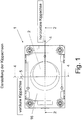
Fig. 1 ein Stellglied in Draufsicht, -
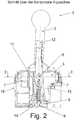
Fig. 2 einen Schnitt entlang der Linie 2-2 inFig. 1 , -
Fig. 3 einen Schnitt entlang der Linie 3-3 inFig. 2 , -
Fig. 4 einen Schnitt entlang der Linie 4-4 inFig. 1 und -
Fig. 5 einen vergrößerten Detailausschnitt ausFig. 4 . - In
Fig. 1 ist ein Stellglied 1 zu sehen, das zur manuellen Ansteuerung von Funktionen in einem Kraftfahrzeug dient und insbesondere als Gangwahlschalter für eine Shift-by-Wire-Schaltvorrichtung verwendet wird. Das Stellglied 1 ist mit einer bewegbaren Handhabe 2 in der Art eines Wählhebels versehen. Die Handhabe 2 ist beweglich an einem Träger 3 (sieheFig. 2 ) derart gelagert, dass die Handhabe 2 in wenigstens eine Richtung, bevorzugterweise in zwei verschiedenen Richtungen 4, 5 aus einer neutralen Stellung verstellbar ist. Die Verstellung der Handhabe 2 kann dabei in zugehörige Verstellpositionen erfolgen, so dass dadurch die Handhabe 2 vom Benutzer manuell in die Verstellpositionen verstellbar ist. Bei entsprechender Verstellung der Handhabe 2 durch den Benutzer werden dabei die jeweils gewünschten Funktionen im Kraftfahrzeug ausgelöst und/oder angesteuert. - Vorliegend ist die Handhabe 2 mittels Verschwenkung bewegbar ausgestaltet, so dass es sich bei der Handhabe 2 um einen schwenkbaren Wählhebel handelt. Hierzu ist die Handhabe 2, wie in
Fig. 2 zu sehen ist, mittels eines Lagerstifts 6 um eine erste Schwenkachse in die erste Schwenkrichtung 4 und mittels eines Lagers 7 in der Art von Zapfen und/oder Lagerschalen um eine zweite Schwenkachse in die zweite Schwenkrichtung 5 verstellbar. Weiter ist der Träger 3 für die Handhabe 2 als ein Kardangelenk beziehungsweise ein Kreuzgelenk ausgebildet, wie anhand derFig. 3 zu erkennen ist, um die Verschwenkung in die jeweilige Schwenkrichtung 4, 5 zu gestatten. Dabei sind die Lagerstellen für den Lagerstift 6 und/oder für das Lager 7, also die Lagerstellen für das Kreuz- und/oder Kardangelenk 3, als Spielpassungen ausgestaltet. - Wie weiter der
Fig. 2 zu entnehmen ist, wirkt mit der Handhabe 2 ein Druckelement 8 zusammen, wobei das Druckelement 8 in einer Kulissenbahn 10 einer Kulisse 9 geführt ist. Das Druckelement 8 weist ein elastisches Element 11 auf und ist folglich mit einer elastischen Kraft beaufschlagt. Aufgrund der Führung des Druckelements 8 in der Kulissenbahn 10 bei Verschwenkung der Handhabe 2 wirkt dadurch eine Rückstellkraft in Richtung der neutralen Stellung auf die Handhabe 2 bei deren Verstellung ein. - Die Handhabe 2 umfasst eine im Träger 3 schwenkbar gelagerte Schaltwelle 12, wie man anhand der
Fig. 2 sieht. In der Schaltwelle 12 ist ein Führungskanal 13 für das elastische Element 11 zur Ausübung der elastischen Kraft sowie für das Druckelement 8 befindlich. Das elastische Element 11 besteht vorliegend aus einer Druckfeder. Bei dem Druckelement 8 handelt es sich vorliegend um einen Stift, einen Taster oder einen Zapfen. Das Stellglied 1 weist gemäßFig. 1 weiterhin ein Gehäuse 16 auf, wobei die Schaltwelle 12 aus dem Gehäuse 16 zur manuellen Bedienung der Handhabe 2 durch den Benutzer herausragt, wie man anhand vonFig. 2 erkennt. Das Kreuz- und/oder Kardangelenk 3 ist wiederum mittels der Lager 7 beweglich im Gehäuse 16, in zwar im Unterteil des Gehäuses 16 gelagert. - Wie man in
Fig. 5 sieht, ist in der Kulisse 9 eine Nocke 14 befindlich. Die Nocke 14 wirkt derart auf die Handhabe 2, und zwar genauer auf die Schaltwelle 12 ein, dass die Handhabe 2 in der Kulisse 9 zur Verringerung des Bewegungsspiels der Handhabe 2 verspannt ist. Insbesondere wirkt die Nocke 14 in der neutralen Stellung derart auf die Handhabe 2 bzw. die Schaltwelle 12 ein, dass die Handhabe 2 in Richtung der Verstellung und/oder in Richtung zur Verstellposition verspannt ist. Aufgrund dieser Einwirkung wird eine Verringerung des Bewegungsspiels der Handhabe 2 in der neutralen Stellung erreicht. Die Nocke 14 ist an einer Kulissenwand 15 der Kulisse 9 befindlich, wobei die Kulissenwand 15 der Kulissenbahn 10 gegenüberliegen kann. Zweckmäßigerweise besteht die Kulisse 9 aus thermoplastischem Kunststoff und wird mittels Spritzgießen hergestellt. Die Nocke 14 ist dann an der Kulissenwand 15 bei Herstellung der Kulisse 9 mittels Spritzgießen angespritzt. Die Kulissenbahn 10 weist gemäßFig. 5 eine 3D(dreidimensionale)-Kontur zur Erzeugung einer Haptik für die Verstellung der Handhabe 2 auf. - Das Stellglied 1 weist weiterhin ein Mittel zur Erfassung der Verstellung und/oder der Verstellposition bzw. der Verstellpositionen für die Handhabe 2 auf. Das Mittel zur Erfassung der Verstellung und/oder der Verstellpositionen umfasst einen die Verstellung und/oder die Verstellpositionen codierenden, in
Fig. 4 gezeigten, geführt verschiebbaren Code-Träger 17 sowie einen die Codierung ermittelnden Sensor. Der Code-Träger 17 besteht aus einer magnetischen Codeplatte, die verschiedene, voneinander unterscheidbare Magnetfelder zur Codierung der Verstellung und/oder der Verstellpositionen beispielweise durch entsprechende Magnetspuren enthält. Der nicht weiter gezeigte Sensor besteht aus einem Magnetsensor, und zwar vorliegend aus mehreren Hallsensoren, an denen korrespondierend zur Verschiebung der Codeplatte 17 eine Signalumkehrung auftritt. Dadurch sind auch bei Vorhandensein von mehreren Verstellpositionen sämtliche Verstellpositionen der Handhabe 2 mittels des einen einzigen Code-Trägers 17 erfassbar beziehungsweise ist auch eine komplexe Bewegung der Handhabe 2 detektierbar. Der Code-Träger 17 ist über ein Führungsbauteil 18 an der Schaltwelle 12 gelagert, womit der Code-Träger 17 korrespondierend zur Verstellung der Schaltwelle 12 verschiebbar ist. Die Hallsensoren sind auf einer im Gehäuse 16 gelagerten Leiterplatte 19 angebracht. - Ein derartiges Stellglied 1 lässt sich für einen Gangwahlschalter in Kraftfahrzeugen verwenden. Bei einer solchen Shift-by-Wire-Schaltvorrichtung für das Getriebe im Kraftfahrzeug handelt es sich bei der Handhabe 2 um den Wählhebel für die Shift-by-Wire-Schaltvorrichtung und die Shift-by-Wire-Schaltvorrichtung erzeugt zur Stellung der Handhabe 2 korrespondierende Signale, wobei die Signale zur Steuerung des Getriebes dienen. Die Erfindung ist jedoch nicht auf das beschriebene und dargestellte Ausführungsbeispiel beschränkt. Sie umfasst vielmehr auch alle fachmännischen Weiterbildungen im Rahmen der durch die Patentansprüche definierten Erfindung. Neben Kraftfahrzeuganwendungen kann ein derartiges Stellglied 1 in vorteilhafter Weise auch als Eingabemittel für Computer, Werkzeugmaschinen, Haushaltsgeräte o. dgl. eingesetzt werden.
- Bezugszeichen-Liste:
- 1:
- Stellglied
- 2:
- Handhabe
- 3:
- Träger / Kreuz- und/oder Kardangelenk
- 4, 5:
- Richtung / Schwenkrichtung
- 6:
- Lagerstift
- 7:
- Lager
- 8:
- Druckelement
- 9:
- Kulisse
- 10:
- Kulissenbahn
- 11:
- elastisches Element
- 12:
- Schaltwelle
- 13:
- Führungskanal
- 14:
- Nocke
- 15:
- Kulissenwand
- 16:
- Gehäuse
- 17:
- Codeträger / Codeplatte
- 18:
- Führungsbauteil
- 19:
- Leiterplatte
Claims (9)
- Stellglied, insbesondere Schaltvorrichtung zur manuellen Ansteuerung und/oder Auslösung von Funktionen in einem Kraftfahrzeug, mit einer Handhabe (2), wobei die Handhabe (2) an einem Träger (3) derart gelagert ist, dass die Handhabe (2) in wenigstens eine Richtung (4, 5) aus einer neutralen Stellung, insbesondere in eine Verstellposition, verstellbar ist, mit einem mit der Handhabe (2) zusammenwirkenden, in einer Kulissenbahn (10) einer Kulisse (9) geführten sowie mit einer elastischen Kraft beaufschlagten Druckelement (8), insbesondere derart dass eine Rückstellkraft in Richtung der neutralen Stellung auf die Handhabe (2) bei deren Verstellung einwirkt, und mit einem derart auf die Handhabe (2) einwirkenden Mittel, dass die Handhabe (2) in der Kulisse (9) zur Verringerung des Bewegungsspiels der Handhabe (2) verspannt ist, dadurch gekennzeichnet, dass das auf die Handhabe (2) verspannend einwirkende Mittel als eine Nocke (14) ausgebildet ist, dass die Nocke (14) in der Kulisse (9) befindlich ist, und dass die Nocke (14) an einer der Kulissenbahn (10) gegenüberliegenden Kulissenwand (15) der Kulisse (9) befindlich ist.
- Stellglied nach Anspruch 1, dadurch gekennzeichnet, dass die Nocke (14) in der neutralen Stellung zur Verringerung des Bewegungsspiels auf die Handhabe (2) einwirkt, derart dass die Handhabe (2) in Richtung der Verstellung und/oder zur Verstellposition verspannt ist.
- Stellglied nach Anspruch 1 oder 2, dadurch gekennzeichnet, dass die Handhabe (2) um eine erste und/oder eine zweite Schwenkachse in eine erste und/oder eine zweite Schwenkrichtung (4, 5) verstellbar ist, dass es sich vorzugsweise bei der Handhabe (2) um einen schwenkbaren Wählhebel handelt, und dass weiter vorzugsweise der Träger (3) für die Handhabe (2) als ein Kreuz- und/oder Kardangelenk ausgebildet ist.
- Stellglied nach Anspruch 1, 2 oder 3, dadurch gekennzeichnet, dass ein Gehäuse (16) vorgesehen ist, dass vorzugsweise die Handhabe (2) eine im Träger (3) schwenkbar gelagerte Schaltwelle (12) umfasst, und dass weiter vorzugsweise die Schaltwelle (12) aus dem Gehäuse (16) zur manuellen Bedienung der Handhabe (2) durch den Benutzer herausragt.
- Stellglied nach Anspruch 4, dadurch gekennzeichnet, dass die Schaltwelle (12) mittels eines Lagerstifts (6) bewegbar im Kreuz- und/oder Kardangelenk (3) gelagert ist, dass vorzugsweise das Kreuz- und/oder Kardangelenk (3) mittels Zapfen und/oder Lagerschalen beweglich im Gehäuse (16) gelagert ist, und dass weiter vorzugsweise die Lagerstellen für den Lagerstift (6) und/oder für das Kreuz- und/oder Kardangelenk (3) als Spielpassungen ausgestaltet sind.
- Stellglied nach einem der Ansprüche 4 bis 5, dadurch gekennzeichnet, dass in der Schaltwelle (12) ein Führungskanal (13) für ein elastisches Element (11) zur Ausübung der elastischen Kraft sowie für das Druckelement (8) befindlich ist, dass vorzugsweise das elastische Element (11) aus einer Druckfeder besteht, und dass es sich weiter vorzugsweise bei dem Druckelement (8) um einen Stift oder einen Taster handelt.
- Stellglied nach einem der Ansprüche 1 bis 6, dadurch gekennzeichnet, dass die Kulisse (9) aus thermoplastischem Kunststoff besteht, dass vorzugsweise die Nocke (14) an der Kulissenwand (15) bei Herstellung der Kulisse (9) mittels Spritzgießen angespritzt ist, und dass weiter vorzugsweise die Kulissenbahn (10) eine 3D(dreidimensionale)-Kontur zur Erzeugung einer Haptik für die Verstellung der Handhabe (2) aufweist.
- Stellglied nach einem der Ansprüche 1 bis 7, dadurch gekennzeichnet, dass ein Mittel zur Erfassung der Verstellung und/oder der Verstellposition vorgesehen ist, und dass vorzugsweise das Mittel zur Erfassung der Verstellung und/oder der Verstellposition einen die Verstellung und/oder die Verstellposition codierenden Code-Träger (17) sowie einen die Codierung ermittelnden Sensor umfasst, insbesondere derart dass bei mehreren Verstellpositionen sämtliche Verstellpositionen mittels des einen Code-Trägers (17) erfassbar sind.
- Stellglied nach Anspruch 8, dadurch gekennzeichnet, dass der Code-Träger (17) aus einer magnetischen Code-Platte, die insbesondere verschiedene Magnetfelder enthält, sowie der Sensor aus einem Magnetsensor, insbesondere aus mehreren Hallsensoren, an denen bei einer Verschiebung des Code-Trägers (17) eine Signalumkehrung auftritt, bestehen, dass vorzugsweise der Code-Träger (17) über ein Führungsbauteil (18) an der Schaltwelle (12) gelagert ist, und dass weiter vorzugsweise die Hallsensoren auf einer im Gehäuse (16) gelagerten Leiterplatte (19) angebracht sind.
Applications Claiming Priority (2)
| Application Number | Priority Date | Filing Date | Title |
|---|---|---|---|
| DE102014010191 | 2014-07-10 | ||
| PCT/EP2015/065809 WO2016005554A2 (de) | 2014-07-10 | 2015-07-10 | Stellglied, insbesondere für ein kraftfahrzeug |
Publications (2)
| Publication Number | Publication Date |
|---|---|
| EP3167209A2 EP3167209A2 (de) | 2017-05-17 |
| EP3167209B1 true EP3167209B1 (de) | 2021-04-14 |
Family
ID=53758177
Family Applications (1)
| Application Number | Title | Priority Date | Filing Date |
|---|---|---|---|
| EP15742196.7A Active EP3167209B1 (de) | 2014-07-10 | 2015-07-10 | Stellglied, insbesondere für ein kraftfahrzeug |
Country Status (6)
| Country | Link |
|---|---|
| US (1) | US10865874B2 (de) |
| EP (1) | EP3167209B1 (de) |
| JP (1) | JP6605574B2 (de) |
| CN (1) | CN106687719B (de) |
| DE (1) | DE102015008517A1 (de) |
| WO (1) | WO2016005554A2 (de) |
Families Citing this family (8)
| Publication number | Priority date | Publication date | Assignee | Title |
|---|---|---|---|---|
| JP6775182B2 (ja) * | 2016-06-17 | 2020-10-28 | パナソニックIpマネジメント株式会社 | レバー操作装置 |
| KR101995308B1 (ko) * | 2018-01-16 | 2019-07-03 | 경창산업주식회사 | 전자식 변속 제어 장치 |
| CN108980329B (zh) * | 2018-08-30 | 2019-09-24 | 安徽江淮汽车集团股份有限公司 | 一种选换挡力调节结构 |
| JP7476455B2 (ja) * | 2018-11-09 | 2024-05-01 | 株式会社東海理化電機製作所 | シフト装置 |
| CN111489907B (zh) * | 2019-01-25 | 2022-06-07 | 阿尔卑斯(中国)有限公司 | 拨杆开关 |
| KR102719104B1 (ko) * | 2019-08-08 | 2024-10-16 | 현대자동차주식회사 | 차량용 변속레버 장치 |
| CN111536226B (zh) * | 2020-03-31 | 2021-09-21 | 宁波高发汽车控制系统股份有限公司 | 一种多功能汽车换挡手球 |
| CN111702788B (zh) * | 2020-06-18 | 2021-03-19 | 敬科(深圳)机器人科技有限公司 | 并联摇杆机构、使用方法及应用该摇杆机构的机器人 |
Family Cites Families (28)
| Publication number | Priority date | Publication date | Assignee | Title |
|---|---|---|---|---|
| USD289870S (en) * | 1983-10-03 | 1987-05-19 | Berchtold Rainer C F | Video information stand |
| DE3637404A1 (de) * | 1986-11-03 | 1987-11-26 | Bornemann & Haller Kg | Stellantrieb |
| DE4017696A1 (de) * | 1990-06-01 | 1991-12-05 | Bosch Gmbh Robert | Steuergeber |
| US5410931A (en) * | 1990-11-30 | 1995-05-02 | Clark Equipment Belgium, N.V. | Mechanical shifting device |
| JP3074751B2 (ja) * | 1991-03-07 | 2000-08-07 | 日産自動車株式会社 | 自動変速機のシフトデバイス装置 |
| US5339705A (en) * | 1991-03-07 | 1994-08-23 | Nissan Motor Co., Ltd. | Shift device for automatic transmission |
| US5450054A (en) * | 1992-12-08 | 1995-09-12 | Imo Industries, Inc. | Hand-actuatable controller and method for producing control signals using the same |
| DE4306577C2 (de) * | 1993-03-03 | 1998-02-12 | Nbb Nachrichtentech Gmbh | Handsteuergerät mit einem Steuerknüppel |
| JP3458592B2 (ja) | 1996-04-01 | 2003-10-20 | 三菱ふそうトラック・バス株式会社 | 変速操作装置 |
| SE517453C2 (sv) * | 1997-06-27 | 2002-06-11 | Kongsberg Automotive Ab | Manöveranordning |
| US6448670B1 (en) * | 1998-05-12 | 2002-09-10 | Alps Electric Co., Ltd. | Signal input device |
| IT1310136B1 (it) | 1999-08-18 | 2002-02-11 | Fiat Auto Spa | Dispositivo per la selezione delle marce di tipo perfezionato per ilcambio automatico di un autoveicolo. |
| EP1239192B1 (de) * | 2001-03-02 | 2010-12-29 | Toyota Jidosha Kabushiki Kaisha | Schaltvorrichtung für ein Kraftfahrzeug |
| JP2003154868A (ja) * | 2001-11-22 | 2003-05-27 | Tokai Rika Co Ltd | シフト装置 |
| DE10231015B4 (de) * | 2002-07-09 | 2006-08-31 | ZF Lemförder Metallwaren AG | Bewegungsübersetzer für eine isodistante Schaltsensorik |
| US7525036B2 (en) * | 2004-10-13 | 2009-04-28 | Sony Corporation | Groove mapping |
| US7347298B2 (en) * | 2004-11-22 | 2008-03-25 | Alvin Perry | Gear secure |
| DE102005043288A1 (de) * | 2005-09-09 | 2007-03-15 | Leopold Kostal Gmbh & Co. Kg | Elektrische Schalteinrichtung für ein Kraftfahrzeug |
| JP2008260328A (ja) * | 2007-04-10 | 2008-10-30 | Aisin Ai Co Ltd | シフトレバーのストッパー構造 |
| JP6091797B2 (ja) * | 2012-08-02 | 2017-03-08 | 株式会社東海理化電機製作所 | シフト装置 |
| CN203009803U (zh) * | 2012-11-27 | 2013-06-19 | 东风汽车有限公司 | 一种换挡杆限位减震装置 |
| US9476501B2 (en) * | 2013-05-21 | 2016-10-25 | GM Global Technology Operations LLC | Gear shifter |
| JP6126910B2 (ja) * | 2013-05-24 | 2017-05-10 | 株式会社東海理化電機製作所 | シフト装置 |
| JP6167779B2 (ja) * | 2013-09-10 | 2017-07-26 | マツダ株式会社 | 車両用シフト装置 |
| EP3074836B1 (de) * | 2013-11-29 | 2019-08-28 | Marquardt GmbH | Stellglied, insbesondere für ein kraftfahrzeug |
| JP6052214B2 (ja) * | 2014-03-24 | 2016-12-27 | マツダ株式会社 | 車両用シフト装置 |
| JP6156301B2 (ja) * | 2014-09-18 | 2017-07-05 | マツダ株式会社 | 車両用シフタ装置 |
| CN108369432B (zh) * | 2016-02-10 | 2020-01-03 | 阿尔卑斯阿尔派株式会社 | 操作装置、使用该操作装置的车辆用换档装置 |
-
2015
- 2015-07-06 DE DE102015008517.4A patent/DE102015008517A1/de not_active Withdrawn
- 2015-07-10 EP EP15742196.7A patent/EP3167209B1/de active Active
- 2015-07-10 JP JP2017501198A patent/JP6605574B2/ja active Active
- 2015-07-10 CN CN201580037476.5A patent/CN106687719B/zh active Active
- 2015-07-10 WO PCT/EP2015/065809 patent/WO2016005554A2/de not_active Ceased
-
2016
- 2016-12-28 US US15/392,146 patent/US10865874B2/en active Active
Non-Patent Citations (1)
| Title |
|---|
| None * |
Also Published As
| Publication number | Publication date |
|---|---|
| US10865874B2 (en) | 2020-12-15 |
| JP2017521790A (ja) | 2017-08-03 |
| WO2016005554A3 (de) | 2016-03-03 |
| EP3167209A2 (de) | 2017-05-17 |
| US20170146115A1 (en) | 2017-05-25 |
| CN106687719A (zh) | 2017-05-17 |
| JP6605574B2 (ja) | 2019-11-13 |
| WO2016005554A2 (de) | 2016-01-14 |
| CN106687719B (zh) | 2019-07-05 |
| DE102015008517A1 (de) | 2016-01-14 |
Similar Documents
| Publication | Publication Date | Title |
|---|---|---|
| EP3167209B1 (de) | Stellglied, insbesondere für ein kraftfahrzeug | |
| EP2099646B1 (de) | Lenkstockschalter für kraftfahrzeuge | |
| DE102010037955A1 (de) | Elektronische Schaltvorrichtung für ein Fahrzeug | |
| EP3074836B1 (de) | Stellglied, insbesondere für ein kraftfahrzeug | |
| WO2014167076A1 (de) | Vorrichtung zur bedienung mehrerer funktionen in einem kraftfahrzeug | |
| DE102019008978A1 (de) | Kraftfahrzeuggetriebe | |
| WO2014198418A1 (de) | Schaltbedienanordnung | |
| EP4102337A1 (de) | Gedichtetes daumenrad | |
| DE102009012167A1 (de) | Betätigungsvorrichtung für ein Fahrzeug | |
| WO2013178357A1 (de) | Bedienvorrichtung, insbesondere in der art eines elektrischen schalters | |
| DE102008045195A1 (de) | Überdrehschutzanordnung für ein drehbares Bedienelement in einem Kraftfahrzeug | |
| DE102012017122B4 (de) | Elektrischer Schalter | |
| DE19913835C2 (de) | Schaltvorrichtung für Kraftfahrzeuge | |
| DE102014017480A1 (de) | Stellglied, insbesondere für ein Kraftfahrzeug | |
| DE102005042462A1 (de) | Bedienelement mit zentralem Taster | |
| DE102008022544A1 (de) | Betätigungseinrichtung an einem Fahrzeuglenkrad | |
| DE102012222987A1 (de) | Schaltsteuervorrichtung für ein Automatikgetriebe | |
| DE102007030303A1 (de) | Multifunktions-Bedienelement für ein Kraftfahrzeug | |
| DE102008063238A1 (de) | Vorrichtung zum Steuern von Maschinen und Fahrzeugen | |
| EP4276572B1 (de) | Mesostrukturelle rückstelleinheit | |
| DE102013221783A1 (de) | Brems- oder Kupplungshebel an einer Lenkstange eines Kraftrades | |
| DE102012021642A1 (de) | Schiebe- und Druckschalter für ein Fahrzeug und Kraftfahrzeug | |
| DE102016201549A1 (de) | Schaltvorrichtung für ein Fahrzeug, insbesondere in einer Fahrzeugkabine | |
| DE102008022549A1 (de) | Betätigungseinrichtung an einem Fahrzeuglenkrad | |
| DE102004026243B3 (de) | Betätigungseinrichtung zum Schalten |
Legal Events
| Date | Code | Title | Description |
|---|---|---|---|
| STAA | Information on the status of an ep patent application or granted ep patent |
Free format text: STATUS: THE INTERNATIONAL PUBLICATION HAS BEEN MADE |
|
| PUAI | Public reference made under article 153(3) epc to a published international application that has entered the european phase |
Free format text: ORIGINAL CODE: 0009012 |
|
| STAA | Information on the status of an ep patent application or granted ep patent |
Free format text: STATUS: REQUEST FOR EXAMINATION WAS MADE |
|
| 17P | Request for examination filed |
Effective date: 20161121 |
|
| AK | Designated contracting states |
Kind code of ref document: A2 Designated state(s): AL AT BE BG CH CY CZ DE DK EE ES FI FR GB GR HR HU IE IS IT LI LT LU LV MC MK MT NL NO PL PT RO RS SE SI SK SM TR |
|
| AX | Request for extension of the european patent |
Extension state: BA ME |
|
| DAV | Request for validation of the european patent (deleted) | ||
| DAX | Request for extension of the european patent (deleted) | ||
| REG | Reference to a national code |
Ref country code: DE Ref legal event code: R079 Ref document number: 502015014562 Country of ref document: DE Free format text: PREVIOUS MAIN CLASS: F16H0061240000 Ipc: G05G0023000000 |
|
| GRAP | Despatch of communication of intention to grant a patent |
Free format text: ORIGINAL CODE: EPIDOSNIGR1 |
|
| STAA | Information on the status of an ep patent application or granted ep patent |
Free format text: STATUS: GRANT OF PATENT IS INTENDED |
|
| INTG | Intention to grant announced |
Effective date: 20201211 |
|
| RIC1 | Information provided on ipc code assigned before grant |
Ipc: F16H 61/24 20060101ALI20201127BHEP Ipc: F16H 59/04 20060101ALI20201127BHEP Ipc: F16H 59/10 20060101ALI20201127BHEP Ipc: G05G 23/00 20060101AFI20201127BHEP Ipc: G05G 1/04 20060101ALI20201127BHEP |
|
| GRAS | Grant fee paid |
Free format text: ORIGINAL CODE: EPIDOSNIGR3 |
|
| GRAA | (expected) grant |
Free format text: ORIGINAL CODE: 0009210 |
|
| STAA | Information on the status of an ep patent application or granted ep patent |
Free format text: STATUS: THE PATENT HAS BEEN GRANTED |
|
| AK | Designated contracting states |
Kind code of ref document: B1 Designated state(s): AL AT BE BG CH CY CZ DE DK EE ES FI FR GB GR HR HU IE IS IT LI LT LU LV MC MK MT NL NO PL PT RO RS SE SI SK SM TR |
|
| REG | Reference to a national code |
Ref country code: GB Ref legal event code: FG4D Free format text: NOT ENGLISH |
|
| REG | Reference to a national code |
Ref country code: CH Ref legal event code: EP |
|
| REG | Reference to a national code |
Ref country code: DE Ref legal event code: R096 Ref document number: 502015014562 Country of ref document: DE |
|
| REG | Reference to a national code |
Ref country code: IE Ref legal event code: FG4D Free format text: LANGUAGE OF EP DOCUMENT: GERMAN |
|
| REG | Reference to a national code |
Ref country code: AT Ref legal event code: REF Ref document number: 1383009 Country of ref document: AT Kind code of ref document: T Effective date: 20210515 |
|
| REG | Reference to a national code |
Ref country code: SE Ref legal event code: TRGR |
|
| REG | Reference to a national code |
Ref country code: RO Ref legal event code: EPE |
|
| REG | Reference to a national code |
Ref country code: NL Ref legal event code: FP |
|
| REG | Reference to a national code |
Ref country code: LT Ref legal event code: MG9D |
|
| PG25 | Lapsed in a contracting state [announced via postgrant information from national office to epo] |
Ref country code: HR Free format text: LAPSE BECAUSE OF FAILURE TO SUBMIT A TRANSLATION OF THE DESCRIPTION OR TO PAY THE FEE WITHIN THE PRESCRIBED TIME-LIMIT Effective date: 20210414 Ref country code: BG Free format text: LAPSE BECAUSE OF FAILURE TO SUBMIT A TRANSLATION OF THE DESCRIPTION OR TO PAY THE FEE WITHIN THE PRESCRIBED TIME-LIMIT Effective date: 20210714 Ref country code: LT Free format text: LAPSE BECAUSE OF FAILURE TO SUBMIT A TRANSLATION OF THE DESCRIPTION OR TO PAY THE FEE WITHIN THE PRESCRIBED TIME-LIMIT Effective date: 20210414 Ref country code: FI Free format text: LAPSE BECAUSE OF FAILURE TO SUBMIT A TRANSLATION OF THE DESCRIPTION OR TO PAY THE FEE WITHIN THE PRESCRIBED TIME-LIMIT Effective date: 20210414 |
|
| PG25 | Lapsed in a contracting state [announced via postgrant information from national office to epo] |
Ref country code: GR Free format text: LAPSE BECAUSE OF FAILURE TO SUBMIT A TRANSLATION OF THE DESCRIPTION OR TO PAY THE FEE WITHIN THE PRESCRIBED TIME-LIMIT Effective date: 20210715 Ref country code: IS Free format text: LAPSE BECAUSE OF FAILURE TO SUBMIT A TRANSLATION OF THE DESCRIPTION OR TO PAY THE FEE WITHIN THE PRESCRIBED TIME-LIMIT Effective date: 20210814 Ref country code: LV Free format text: LAPSE BECAUSE OF FAILURE TO SUBMIT A TRANSLATION OF THE DESCRIPTION OR TO PAY THE FEE WITHIN THE PRESCRIBED TIME-LIMIT Effective date: 20210414 Ref country code: ES Free format text: LAPSE BECAUSE OF FAILURE TO SUBMIT A TRANSLATION OF THE DESCRIPTION OR TO PAY THE FEE WITHIN THE PRESCRIBED TIME-LIMIT Effective date: 20210414 Ref country code: NO Free format text: LAPSE BECAUSE OF FAILURE TO SUBMIT A TRANSLATION OF THE DESCRIPTION OR TO PAY THE FEE WITHIN THE PRESCRIBED TIME-LIMIT Effective date: 20210714 Ref country code: PL Free format text: LAPSE BECAUSE OF FAILURE TO SUBMIT A TRANSLATION OF THE DESCRIPTION OR TO PAY THE FEE WITHIN THE PRESCRIBED TIME-LIMIT Effective date: 20210414 Ref country code: PT Free format text: LAPSE BECAUSE OF FAILURE TO SUBMIT A TRANSLATION OF THE DESCRIPTION OR TO PAY THE FEE WITHIN THE PRESCRIBED TIME-LIMIT Effective date: 20210816 Ref country code: RS Free format text: LAPSE BECAUSE OF FAILURE TO SUBMIT A TRANSLATION OF THE DESCRIPTION OR TO PAY THE FEE WITHIN THE PRESCRIBED TIME-LIMIT Effective date: 20210414 |
|
| REG | Reference to a national code |
Ref country code: DE Ref legal event code: R097 Ref document number: 502015014562 Country of ref document: DE |
|
| PG25 | Lapsed in a contracting state [announced via postgrant information from national office to epo] |
Ref country code: EE Free format text: LAPSE BECAUSE OF FAILURE TO SUBMIT A TRANSLATION OF THE DESCRIPTION OR TO PAY THE FEE WITHIN THE PRESCRIBED TIME-LIMIT Effective date: 20210414 Ref country code: CZ Free format text: LAPSE BECAUSE OF FAILURE TO SUBMIT A TRANSLATION OF THE DESCRIPTION OR TO PAY THE FEE WITHIN THE PRESCRIBED TIME-LIMIT Effective date: 20210414 Ref country code: DK Free format text: LAPSE BECAUSE OF FAILURE TO SUBMIT A TRANSLATION OF THE DESCRIPTION OR TO PAY THE FEE WITHIN THE PRESCRIBED TIME-LIMIT Effective date: 20210414 Ref country code: SK Free format text: LAPSE BECAUSE OF FAILURE TO SUBMIT A TRANSLATION OF THE DESCRIPTION OR TO PAY THE FEE WITHIN THE PRESCRIBED TIME-LIMIT Effective date: 20210414 Ref country code: SM Free format text: LAPSE BECAUSE OF FAILURE TO SUBMIT A TRANSLATION OF THE DESCRIPTION OR TO PAY THE FEE WITHIN THE PRESCRIBED TIME-LIMIT Effective date: 20210414 |
|
| PLBE | No opposition filed within time limit |
Free format text: ORIGINAL CODE: 0009261 |
|
| STAA | Information on the status of an ep patent application or granted ep patent |
Free format text: STATUS: NO OPPOSITION FILED WITHIN TIME LIMIT |
|
| REG | Reference to a national code |
Ref country code: CH Ref legal event code: PL |
|
| 26N | No opposition filed |
Effective date: 20220117 |
|
| PG25 | Lapsed in a contracting state [announced via postgrant information from national office to epo] |
Ref country code: MC Free format text: LAPSE BECAUSE OF FAILURE TO SUBMIT A TRANSLATION OF THE DESCRIPTION OR TO PAY THE FEE WITHIN THE PRESCRIBED TIME-LIMIT Effective date: 20210414 |
|
| REG | Reference to a national code |
Ref country code: BE Ref legal event code: MM Effective date: 20210731 |
|
| PG25 | Lapsed in a contracting state [announced via postgrant information from national office to epo] |
Ref country code: LI Free format text: LAPSE BECAUSE OF NON-PAYMENT OF DUE FEES Effective date: 20210731 Ref country code: CH Free format text: LAPSE BECAUSE OF NON-PAYMENT OF DUE FEES Effective date: 20210731 |
|
| PG25 | Lapsed in a contracting state [announced via postgrant information from national office to epo] |
Ref country code: IS Free format text: LAPSE BECAUSE OF FAILURE TO SUBMIT A TRANSLATION OF THE DESCRIPTION OR TO PAY THE FEE WITHIN THE PRESCRIBED TIME-LIMIT Effective date: 20210814 Ref country code: LU Free format text: LAPSE BECAUSE OF NON-PAYMENT OF DUE FEES Effective date: 20210710 Ref country code: AL Free format text: LAPSE BECAUSE OF FAILURE TO SUBMIT A TRANSLATION OF THE DESCRIPTION OR TO PAY THE FEE WITHIN THE PRESCRIBED TIME-LIMIT Effective date: 20210414 |
|
| PG25 | Lapsed in a contracting state [announced via postgrant information from national office to epo] |
Ref country code: IE Free format text: LAPSE BECAUSE OF NON-PAYMENT OF DUE FEES Effective date: 20210710 Ref country code: BE Free format text: LAPSE BECAUSE OF NON-PAYMENT OF DUE FEES Effective date: 20210731 |
|
| REG | Reference to a national code |
Ref country code: AT Ref legal event code: MM01 Ref document number: 1383009 Country of ref document: AT Kind code of ref document: T Effective date: 20210710 |
|
| PG25 | Lapsed in a contracting state [announced via postgrant information from national office to epo] |
Ref country code: AT Free format text: LAPSE BECAUSE OF NON-PAYMENT OF DUE FEES Effective date: 20210710 |
|
| REG | Reference to a national code |
Ref country code: DE Ref legal event code: R082 Ref document number: 502015014562 Country of ref document: DE |
|
| PG25 | Lapsed in a contracting state [announced via postgrant information from national office to epo] |
Ref country code: HU Free format text: LAPSE BECAUSE OF FAILURE TO SUBMIT A TRANSLATION OF THE DESCRIPTION OR TO PAY THE FEE WITHIN THE PRESCRIBED TIME-LIMIT; INVALID AB INITIO Effective date: 20150710 |
|
| P01 | Opt-out of the competence of the unified patent court (upc) registered |
Effective date: 20230522 |
|
| PG25 | Lapsed in a contracting state [announced via postgrant information from national office to epo] |
Ref country code: CY Free format text: LAPSE BECAUSE OF FAILURE TO SUBMIT A TRANSLATION OF THE DESCRIPTION OR TO PAY THE FEE WITHIN THE PRESCRIBED TIME-LIMIT Effective date: 20210414 |
|
| PG25 | Lapsed in a contracting state [announced via postgrant information from national office to epo] |
Ref country code: MK Free format text: LAPSE BECAUSE OF FAILURE TO SUBMIT A TRANSLATION OF THE DESCRIPTION OR TO PAY THE FEE WITHIN THE PRESCRIBED TIME-LIMIT Effective date: 20210414 |
|
| PG25 | Lapsed in a contracting state [announced via postgrant information from national office to epo] |
Ref country code: TR Free format text: LAPSE BECAUSE OF FAILURE TO SUBMIT A TRANSLATION OF THE DESCRIPTION OR TO PAY THE FEE WITHIN THE PRESCRIBED TIME-LIMIT Effective date: 20210414 |
|
| PG25 | Lapsed in a contracting state [announced via postgrant information from national office to epo] |
Ref country code: MT Free format text: LAPSE BECAUSE OF FAILURE TO SUBMIT A TRANSLATION OF THE DESCRIPTION OR TO PAY THE FEE WITHIN THE PRESCRIBED TIME-LIMIT Effective date: 20210414 |
|
| PGFP | Annual fee paid to national office [announced via postgrant information from national office to epo] |
Ref country code: NL Payment date: 20250723 Year of fee payment: 11 |
|
| PGFP | Annual fee paid to national office [announced via postgrant information from national office to epo] |
Ref country code: DE Payment date: 20250722 Year of fee payment: 11 |
|
| PGFP | Annual fee paid to national office [announced via postgrant information from national office to epo] |
Ref country code: IT Payment date: 20250731 Year of fee payment: 11 |
|
| PGFP | Annual fee paid to national office [announced via postgrant information from national office to epo] |
Ref country code: GB Payment date: 20250724 Year of fee payment: 11 |
|
| PGFP | Annual fee paid to national office [announced via postgrant information from national office to epo] |
Ref country code: FR Payment date: 20250723 Year of fee payment: 11 |
|
| PGFP | Annual fee paid to national office [announced via postgrant information from national office to epo] |
Ref country code: SE Payment date: 20250723 Year of fee payment: 11 |
|
| PGFP | Annual fee paid to national office [announced via postgrant information from national office to epo] |
Ref country code: RO Payment date: 20250709 Year of fee payment: 11 |