EP3169088B1 - Verfahren und systeme zur durchführung von geofencing mit reduziertem leistungsverbrauch - Google Patents
Verfahren und systeme zur durchführung von geofencing mit reduziertem leistungsverbrauch Download PDFInfo
- Publication number
- EP3169088B1 EP3169088B1 EP16196416.8A EP16196416A EP3169088B1 EP 3169088 B1 EP3169088 B1 EP 3169088B1 EP 16196416 A EP16196416 A EP 16196416A EP 3169088 B1 EP3169088 B1 EP 3169088B1
- Authority
- EP
- European Patent Office
- Prior art keywords
- mobile device
- time
- geofence
- building
- value
- Prior art date
- Legal status (The legal status is an assumption and is not a legal conclusion. Google has not performed a legal analysis and makes no representation as to the accuracy of the status listed.)
- Active
Links
Images


Classifications
-
- H—ELECTRICITY
- H04—ELECTRIC COMMUNICATION TECHNIQUE
- H04W—WIRELESS COMMUNICATION NETWORKS
- H04W52/00—Power management, e.g. Transmission Power Control [TPC] or power classes
- H04W52/02—Power saving arrangements
- H04W52/0209—Power saving arrangements in terminal devices
- H04W52/0261—Power saving arrangements in terminal devices managing power supply demand, e.g. depending on battery level
- H04W52/0274—Power saving arrangements in terminal devices managing power supply demand, e.g. depending on battery level by switching on or off the equipment or parts thereof
-
- H—ELECTRICITY
- H04—ELECTRIC COMMUNICATION TECHNIQUE
- H04W—WIRELESS COMMUNICATION NETWORKS
- H04W4/00—Services specially adapted for wireless communication networks; Facilities therefor
- H04W4/02—Services making use of location information
- H04W4/021—Services related to particular areas, e.g. point of interest [POI] services, venue services or geofences
-
- H—ELECTRICITY
- H04—ELECTRIC COMMUNICATION TECHNIQUE
- H04W—WIRELESS COMMUNICATION NETWORKS
- H04W4/00—Services specially adapted for wireless communication networks; Facilities therefor
- H04W4/02—Services making use of location information
- H04W4/023—Services making use of location information using mutual or relative location information between multiple location based services [LBS] targets or of distance thresholds
-
- H—ELECTRICITY
- H04—ELECTRIC COMMUNICATION TECHNIQUE
- H04W—WIRELESS COMMUNICATION NETWORKS
- H04W4/00—Services specially adapted for wireless communication networks; Facilities therefor
- H04W4/02—Services making use of location information
- H04W4/029—Location-based management or tracking services
-
- H—ELECTRICITY
- H04—ELECTRIC COMMUNICATION TECHNIQUE
- H04W—WIRELESS COMMUNICATION NETWORKS
- H04W64/00—Locating users or terminals or network equipment for network management purposes, e.g. mobility management
-
- Y—GENERAL TAGGING OF NEW TECHNOLOGICAL DEVELOPMENTS; GENERAL TAGGING OF CROSS-SECTIONAL TECHNOLOGIES SPANNING OVER SEVERAL SECTIONS OF THE IPC; TECHNICAL SUBJECTS COVERED BY FORMER USPC CROSS-REFERENCE ART COLLECTIONS [XRACs] AND DIGESTS
- Y02—TECHNOLOGIES OR APPLICATIONS FOR MITIGATION OR ADAPTATION AGAINST CLIMATE CHANGE
- Y02D—CLIMATE CHANGE MITIGATION TECHNOLOGIES IN INFORMATION AND COMMUNICATION TECHNOLOGIES [ICT], I.E. INFORMATION AND COMMUNICATION TECHNOLOGIES AIMING AT THE REDUCTION OF THEIR OWN ENERGY USE
- Y02D30/00—Reducing energy consumption in communication networks
- Y02D30/70—Reducing energy consumption in communication networks in wireless communication networks
Definitions
- the disclosure relates generally to geofencing, and more particularly to methods and systems for achieving geofencing with reduced power consumption.
- a geofence typically represents a virtual perimeter around a real-world geographic area, and the process of using a geofence is often called geofencing.
- a geofence may be a radius or the like around a building or other set location, or can be a predefined set of boundaries like school attendance zones or neighborhood boundaries.
- Geofencing can be used to identify when a tracked object crosses into or out of a defined geofence.
- the location of the tracked object may be determined using location services of a mobile device, such as a smartphone or other mobile device.
- the location services may include a cellular triangulation capability and/or a GPS capability.
- Some example geofence application may include notifying parents if their child leaves a designated area, tracking when vehicles, employees, or other assets enter or leave a designated area, enabling or disabling certain geofence enabled equipment when the equipment enters or leaves a designated area, etc.
- Patent document number WO2014/200524A2 describes reduced power location determinations for detecting geofences. Whether a computing device is in a geo-fence can be determined based on the location of the geo-fence and the location of the computing device. The location of a computing device is determined using various different location determination techniques, such as wireless networking triangulation, cellular positioning, Global Navigation Satellite System positioning, network address positioning, and so forth. Power saving techniques are implemented to determine which techniques are used and when such techniques are used to reduce power consumption in the computing device.
- Patent document number WO2013/170791A1 describes an information control system and method.
- a system and method is used to characterize a user with properties, such as location in relation to established geofences, speed of traverse, projected traveling time required for a particular distance, etc. Those properties contribute to yielding a quantitative result in the calculated lead time period prior to the user arriving at a monitored space, including but not limited to a rented room in a hotel, and a house.
- the method uses the user's arrival time to estimate the setback temperature, which is the indoor temperature of a monitored space maintained during unattended time periods.
- the method also uses the user's arrival time to estimate the heated water volume to be provided, as well as, to house watch other property management interests.
- Patent document number WO2015/047739A1 describes a method and system of optimally adjusting the environment of a predetermined location based upon the movement of a mobile communication device using location-based services.
- Geofencing may also be used in conjunction with building automation systems.
- Building automation systems are often used to control safety, security and/or comfort levels within a building or other structure.
- Illustrative but non-limiting examples of building automation systems include Heating, Ventilation and/or Air Conditioning (HVAC) systems, security systems, lighting systems, fire suppression systems and/or the like.
- HVAC Heating, Ventilation and/or Air Conditioning
- a building automation system may enter an unoccupied mode when the building is expected to be unoccupied and an occupied mode when the building is expected to be occupied.
- the building automation system includes an HVAC system
- the building automation system may set a temperature set point of the HVAC system to a more energy efficient setting when in an unoccupied mode and a more comfortable setting when in an occupied mode.
- the building automation system when the building automation system includes a security system, the building automation system may set the security system to an armed or away state when in an unoccupied mode and an unarmed or home state when in an occupied mode. It is contemplated that geofencing may be used to inform the building automation system as to when the building is expected to be occupied and unoccupied, and the building automation system may respond accordingly.
- the present disclosure pertains generally to geofencing, and in some cases, to building automation systems with geofencing capabilities.
- An example of the disclosure may be found in a method of implementing geofencing using a mobile device having a GPS capability and being configured to be operably coupled to a building controller.
- a geofence defining a region about a building may be set.
- the GPS capability of the mobile device may be turned on in order to ascertain an updated current location of the mobile device, and then be turned off to save power at the mobile device.
- a position of the mobile device relative to the geofence may be determined based on the updated current location and a time to fence value that provides an estimate of how soon an individual carrying the mobile device could cross the geofence may be calculated.
- the GPS capability may be kept turned off for a delay time period that is based at least in part on the calculated time to fence value. After the delay time period, the GPS capability of the mobile device may be turned back on and the cycle of turning on the GPS, ascertaining an updated current location and turning off the GPS may be repeated. An indication of the position of the mobile device relative to the geofence may be transmitted.
- the mobile device may include a user interface, a memory and a controller that is operably coupled to the user interface and to the memory.
- the memory may store an executable program as well as information pertaining to a geofence assigned to a building.
- the controller may be configured to temporarily turn on the GPS in order to determine an updated current location of the mobile device, and then turn the GPS off.
- the controller may compare the updated current location of the mobile device to the geofence and calculate a time to fence value that indicates a minimum time in which the mobile device could cross the geofence.
- the controller may wait a delay time period that is based at least in part on the calculated time to fence value before temporarily turning the GPS on again to determine an updated current location of the mobile device, and then turn the GPS off.
- the controller may cause the mobile device to transmit an indication of the updated current location of the mobile device relative to the geofence.
- the mobile device may include a user interface, a memory and a controller that is operably coupled to the user interface and to the memory.
- the memory may store an executable program as well as information pertaining to a geofence assigned to a building.
- the controller may be configured to turn on at least some of the location services in order to determine an updated current location of the mobile device.
- the controller may compare the updated current location to the geofence and calculate a time to fence value that indicates a minimum time in which the mobile device could cross the geofence and may then wait a delay time period that is based at least in part on the calculated time to fence value before turning on the location services on again, and then turn off the location services.
- the controller may cause the mobile device to transmit an indication of the updated current location of the mobile device relative to the geofence.
- Building automation systems are systems that control one or more operations of a building.
- Building automation systems can include HVAC systems, security systems, fire suppression systems, energy management systems and/or any other suitable systems. While HVAC systems are used as an example below, it should be recognized that the concepts disclosed herein can be applied to building control systems more generally.
- a building automation system may include a controller, computer and/or other processing equipment that is configured to control one or more features, functions, systems or sub-systems of a building. In some cases, devices that can be used by individuals to communicate with the controller, computer and/or other processing equipment. In some cases, a building automation system may include a plurality of components that, in combination, perform or otherwise provide the functionality of the building automation system. A building automation system may be fully contained within a single building, or may include components that are spread between multiple housings and/or across multiple locations. In some embodiments, a building automation system, regardless of the physical location(s) of the components within the building automation system, may control one or more building systems within a single building.
- a building automation system may control one or more building systems within a plurality of buildings, optionally in accordance with a common operating procedure and/or distinct operating procedures for each building as desired.
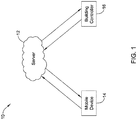
- FIG. 1 is a schematic view of an illustrative building automation system 10.
- the illustrative building automation system 10 includes a server 12 that may be configured to communicate with a mobile device 14 and with a building controller 16. It will be appreciated that for simplicity, only a single mobile device 14 is shown, while in many cases the server 12 may be configured to communicate directly or indirectly with any number of mobile devices 14. Similarly, while a single building controller 16 is illustrated, in many cases the server 12 may be configured to communicate directly or indirectly with any number of building controllers 16, located in a single building or distributed throughout a plurality of buildings.
- the server 12 is illustrated as a single, cloud-based server. In some cases, the server 12 may be a single server.
- the server 12 may generically represent two, three or more servers commonly located or spread between two or more physical locations. In some cases, the server 12 handles communication with both the mobile device 14 and the building controller 16. In some instances, as shown for example in Figure 2 , distinct servers may carry out each communications protocol if desired.
- the mobile devices 14 may communicate with the server 12 at least partially through a network such as the Internet, sometimes using a cell phone network, WiFi network and/or any other suitable network.
- the building controller 16 may communicate with the server 12 at least partially through a network such as the Internet, sometimes using a cell phone network, WiFi network and/or any other suitable network.
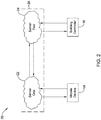
- FIG. 2 is a schematic illustration of another illustrative building automation system 20.
- the illustrative building automation system 20 includes a first server 22 that may be configured to communicate with a mobile device 14 (or multiple mobile devices 14) and a second server 24 that may be configured to communicate with a building controller 16 (or multiple building controllers 16).
- the first server 22 may be configured to receive data from the mobile device 14, process the data, and send data to the mobile device 14 and/or to the second server 24.
- the second server 24 may be configured to receive data from the building controller 16, process the data, and send data to the building controller 16 and/or to the first server 22.
- the first server 22 may be configured to permit data from the mobile device 14 to pass directly through to the building controller 16.
- the second server 24 may be configured to permit data from the building controller 16 to pass directly through to the mobile device 14.
- the first server 22 and the second server 24 may be configured to communicate with each other.
- each of the first server 22 and the second server 24 may perform a defined function.
- the first server 22 may be configured to communicate directly or indirectly with any number of mobile devices 14.
- the second server 24 may be configured to communicate directly or indirectly with any number of building controllers 16, located in a single building or distributed throughout a plurality of buildings.
- the first server 22 is illustrated as a single, cloud-based server. In some cases, the first server 22 may be a single server. In some instances, the first server 22 may generically represent two, three or more servers commonly located or spread between two or more physical locations.
- the second server 24 is illustrated as a single, cloud-based server. In some cases, the second server 24 may be a single server. In some instances, the second server 24 may generically represent two, three or more servers commonly located or spread between two or more physical locations. In some cases, the first server 22 and the second server 24 may, in combination, be considered as representing or forming a building automation server 26.
- FIG 3 is a schematic illustration of a building automation system 30 in which a building automation server 26 is configured to communicate with a plurality of buildings 32 as well as a plurality of mobile devices 34. It is contemplated that the building automation server 26 may include a single server or two or more distinct servers at one or several locations.
- the building automation system 30 may serve any desired number of buildings. As illustrated, the plurality of buildings 32 includes a Building One, labeled as 32A, a Building Two, labeled as 32B, and so on through a Building "N", labeled as 32N. It will be appreciated that the building automation system 30 may include a large number of buildings, each in communication with a central (or distributed) building automation server 26. In some cases, each building may be associated with a unique customer account, as further described below.
- each of the plurality of buildings 32 includes a building controller and one or more pieces of building equipment.
- the building equipment may, for example, be HVAC equipment, security equipment, lighting equipment, fire suppression equipment, and/or the like.
- the building 32A includes a building controller 36A and building equipment 38A
- the building 32B includes a building controller 36B and building equipment 38B
- the building 32N which includes a building controller 36N and building equipment 38N.
- each building is illustrated as having a single building controller and single building equipment controlled by the single building controller, in some cases a building may have multiple related or unrelated building controllers and/or multiple pieces of related or unrelated building equipment.
- the plurality of mobile devices 34 may be considered as being divided into a set of mobile devices each associated with a corresponding building.
- the plurality of mobile devices 34 may be considered as being divided into a set of mobile devices 40A that are associated with the building 32A, a set of mobile devices 40B that are associated with the building 32B, and so on through a set of mobile devices 40N that are associated with the building 32N.
- the set of mobile devices 40A includes a first mobile device 42A, a second mobile device 44A and a third mobile device 46A.
- the set of mobile devices 40B includes a first mobile device 42B, a second mobile device 44B and a third mobile device 46B and so on through the set of mobile devices 40N, which includes a first mobile device 42N, a second mobile device 44N and a third mobile device 46N.
- This is merely illustrative, as any number of mobile devices such as smart phones or tablets, may be associated with a particular building, as desired.
- Each user or occupant of a building may have an associated mobile device, or may have several associated mobile devices.
- a user or occupant may have a mobile device associated with several different locations such as a home, a cabin or a place of work.
- a mobile device can communicate with the building automation server 26, and may cause the building automation server 26 to provide instructions to the building controller that is associated with the particular mobile device.
- a mobile phone with location services activated can be used to inform the building automation server 26 as to the whereabouts of the user relative to a geofence defined for the associated building, and in some cases an estimate of how long before the user will arrive at the associated building.
- the building automation server 26 may send a command to the building controller of the associated building to operate the building equipment in an energy savings manner when all of the users that are associated with a particular building are determined to be away from the building (e.g.
- the building automation server 26 may send a command to the building controller of the associated building to operate the building equipment in a comfort mode when all of the users that are associated with a particular building are determined or deemed not to be away from the building (e.g. the building is occupied).
- the mobile device need not be a smart phone or tablet. Instead, the mobile device may be any GPS enabled tag or module that can be fixed to a person (e.g. building occupant, child, employee) or thing (e.g. car, truck, other equipment).
- a person e.g. building occupant, child, employee
- thing e.g. car, truck, other equipment.
- the principles disclosed herein can be used in any suitable geofence application including, but not limited to, notifying parents if their child leaves a designated area, tracking when vehicles, employees, or other assets enter or leave a designated area, enabling or disabling certain geofence enabled equipment when the equipment enters or leaves a designated area, etc.
- FIG 4 is a schematic illustration of an illustrative mobile device 50 having GPS capability, schematically illustrated as GPS 52.
- the mobile device 50 may be considered as being an example of the mobile device 14 shown in Figures 1 and 2 .
- the mobile device 50 has a user interface 54, a memory 56 and a controller 58 that is operably coupled to the user interface 54 and to the memory 56.
- the controller 58 may be considered as being operably coupled with the GPS 52 as well.
- the memory 56 may be configured to store an executable program as well as information pertaining to a geofence that is assigned to a building.
- the controller 58 may be configured to temporarily turn on the GPS 52 in order to determine an updated current location of the mobile device 50 prior to turning the GPS 52 back off in order to reduce power consumption.
- the controller 58 may be configured to compare the updated current location of the mobile device 50 to the geofence and calculate a time to fence value that indicates a minimum time in which the mobile device 50 could cross the geofence.
- the time to fence value may be calculated in any of a variety of manners.
- the controller 58 may calculate the time to fence value by estimating how soon an individual canying the mobile device 50 could cross the geofence when leaving the building.
- the controller 58 may calculate the time to fence value by estimating how soon an individual carrying the mobile device 50 could cross the geofence when returning to the building.
- the controller 58 may, for example, calculate the time to fence value by determining a straight line distance between the updated current location of the mobile device 50 and the building and subtracting a radius of the geofence, and determining the time to fence value based on a predetermined maximum speed that the user carrying the mobile device 50 may travel (e.g. 80 mph). In some instances, the controller 58 may calculate the time to fence value by determining a driving route between the updated current location of the mobile device 50 and a point on the geofence along the driving route, and determining the time to fence value based on the driving route. In some cases, the time to fence value calculations may take current traffic and/or road conditions into account, and in some cases, speed limits along the driving route.
- the controller 58 may be configured to wait a delay time period that is based at least in part on the calculated time to fence value before temporarily turning the GPS 52 on again to determine an updated current location of the mobile device 50, and then turn the GPS 52 off.
- the delay time period is linear with the calculated time to fence value, and represents a particular fraction or percent thereof.
- the delay time period may be about 80 percent of the calculated time to fence value, or perhaps about 90 percent of the calculated time to fence value.
- the delay time period may be non-linear with the calculated time to fence value.
- the delay time period may be the calculated time to fence value less a predetermined time.
- the delay time period may, for example, be ten minutes less than the calculated time to fence value is one hour or less.
- the delay time period may be five minutes less than the calculated time to fence value if the calculated time to fence value is more than one hour.
- the controller 58 may be configured to calculate a horizontal dilution of precision (HDOP) value for the current location indicated by the GPS 52.
- the HDOP provides an indication of the accuracy of the current GPS reading. For example, if the GPS 52 has locked onto many GPS satellites, the HDOP may be higher (more accuracy) that if the GPS 52 has only locked onto a few GPS satellites. In another example, the GPS 52 may have a lower HDOP (less accuracy) if the GPS 52 is inside of a building than of the GPS 52 were outside.
- the controller 58 may keep the GPS 52 turned on during the delay time period. If the HDOP improves to a level at or above a predetermined HDOP accuracy threshold, the controller 58 may turn the GPS 52 off during the next delay time period. If the HDOP does not improve, or does not improve sufficiently to reach the predetermined HDOP accuracy threshold, the controller 58 may make the determination that the mobile device 50 is currently in a region with poor GPS service.
- the delay time period may be shortened relative to the calculated time to fence value.
- the delay time period may be lengthened relative to the calculated time to fence value in order to further conserve energy at the mobile device 50.
- the controller 58 may be configured to cause the mobile device 50 to transmit an indication of the updated current location of the mobile device 50 relative to the geofence. In some cases, the controller 58 may be configured to cause the mobile device 50 to transmit an indication of the updated current location of the mobile device 50 relative to the geofence each time the location is checked and/or changed. In some instances, the controller 58 may be configured to cause the mobile device 50 to transmit the indication of the updated current location of the mobile device 50 relative to the geofence when the updated current location of the mobile device 50 indicates a geofence crossing.
- FIG 5 is a schematic illustration of an illustrative mobile device 60 having location services including GPS capability, schematically illustrated as GPS 62, and cellular triangulation capability, schematically illustrated as cellular triangulation 64.
- the mobile device 60 may be considered as being an example of the mobile device 14 shown in Figures 1 and 2 .
- the illustrative mobile device 60 has a user interface 66, a memory 68, and a controller 70 that is operably coupled to the user interface 66 and to the memory 68.
- the controller 70 may be considered as being operably coupled with the GPS 62 and the cellular triangulation 64.
- the memory 68 may be configured to store an executable program as well as information pertaining to a geofence that is assigned to a building.
- the controller 70 may be configured to temporarily turn on at least some of the location services in order to determine an updated current location of the mobile device 60.
- the controller 70 may compare the updated current location to the geofence stored in the memory 68 and calculate a time to fence value that indicates a minimum time in which the mobile device 60 could cross the geofence. In some cases, the controller 70 may wait a delay time period that is based at least in part on the calculated time to fence value before turning on the location services on again, and then turn off the location services. In some instances, the controller 58 may turn on the cellular triangulation 64 and not the GPS 62 if the calculated time to fence value is greater than a predetermined value and may turn on the GPS 62 if the calculated time to fence value is less than the predetermined value. Typically, cellular triangulation 64 has less accuracy than GPS 62, but also consumes far less power.
- the controller 70 may be configured to cause the mobile device 60 to transmit an indication of the updated current location of the mobile device relative to the geofence.
- FIG. 6 is a flow diagram showing an illustrative method for implementing geofencing using a mobile device that has a GPS capability and that is configured to be operably coupled to a building controller.
- a geofence defining a region about a building may be set.
- the GPS capability of the mobile device may be turned on, as indicated at block 82.
- an updated current location of the mobile device may be ascertained via the GPS capability and then the GPS capability may be turned off as shown at block 86.
- a position of the mobile device relative to the geofence may be determined based on the updated current location, as generally indicated at block 88.
- a time to fence value that provides an estimate of how soon an individual carrying the mobile device could cross the geofence may be calculated.
- calculating the time to fence value includes estimating how soon the individual carrying the mobile device could cross the geofence when returning to the building. In some cases, calculating the time to fence value includes estimating how soon the individual carrying the mobile device could cross the geofence when leaving the building. Calculating the time to fence value may include determining a straight line distance between the updated current location of the individual carrying the mobile device and the building and subtracting a radius defining the geofence, and determining the time to fence value based on a predetermined maximum speed value (e.g. 80 mph). In some cases, calculating the time to fence value may include determining a straight line distance between the updated current location of the individual carrying the mobile device and the closest point on the geofence.
- a predetermined maximum speed value e.g. 80 mph
- calculating the time to fence value may include determining a driving route between the updated current location of the individual carrying the mobile device and a point on the geofence along the driving route, and determining the time to fence value based on the driving route.
- the GPS may remain off for a delay time period that is based at least in part on the calculated time to fence value, as seen at block 92.
- control may pass back to block 82, and the cycle may continue.
- control may first pass from block 92 to block 94, where the mobile device transmits an indication of its position relative to the geofence.
- the indication of the position of the mobile device relative to the geofence is transmitted when the updated current location of the mobile device crosses the geofence, and the indication of the position of the mobile device relative to the geofence indicates a geofence crossing.
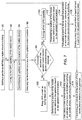
- FIG. 7 is a flow diagram showing another illustrative method for implementing geofencing using a mobile device that has a GPS capability and that is configured to be operably coupled to a building controller.
- a geofence defining a region about a building may be set.
- the GPS capability of the mobile device may be turned on, as indicated at block 82.
- an updated current location of the mobile device may be ascertained.
- the horizontal accuracy, or HDOP, of the current location may be checked as seen at block 96.
- decision block 98 a determination is made as to whether the HDOP is above a predetermined threshold. If yes, control passes to block 100 and the GPS capability is turned off.
- a position of the mobile device relative to the geofence may be determined based on the updated current location, as generally indicated at block 102. As shown at block 104, a time to fence value that provides an estimate of how soon an individual carrying the mobile device could cross the geofence may then be calculated.
- calculating the time to fence value includes estimating how soon the individual carrying the mobile device could cross the geofence when returning to the building. In some cases, calculating the time to fence value includes estimating how soon the individual carrying the mobile device could cross the geofence when leaving the building. Calculating the time to fence value may include determining a straight line distance between the updated current location of the individual carrying the mobile device and the building and subtracting a radius defining the geofence, and determining the time to fence value based on a predetermined maximum speed value (e.g. 80 mph). In some cases, calculating the time to fence value may include determining a straight line distance between the updated current location of the individual carrying the mobile device and the closest point on the geofence.
- a predetermined maximum speed value e.g. 80 mph
- calculating the time to fence value may include determining a driving route between the updated current location of the individual carrying the mobile device and a point on the geofence along the driving route, and determining the time to fence value based on the driving route.
- the GPS may remain off for a delay time period that is based at least in part on the calculated time to fence value, as seen at block 106.
- control may pass back to block 82, and the cycle may continue.
- control passes from block 106 to block 114, where the mobile device transmits an indication of its position relative to the geofence.
- the indication of the position of the mobile device relative to the geofence is transmitted when the updated current location of the mobile device crosses the geofence, and the indication of the position of the mobile device relative to the geofence indicates a geofence crossing.
- Block 108 keeps the GPS on during the subsequent delay period in an attempt to get a more accurate reading on the current location.
- a position of the mobile device relative to the geofence may then be determined based on the updated current location, as generally indicated at block 110.
- a time to fence value that provides an estimate of how soon an individual carrying the mobile device could cross the geofence may be calculated.
- control may pass back to block 84, and the cycle may continue.
- control passes from block 112 to block 114, where the mobile device transmits an indication of its position relative to the geofence.
- the indication of the position of the mobile device relative to the geofence is transmitted when the updated current location of the mobile device crosses the geofence, and the indication of the position of the mobile device relative to the geofence indicates a geofence crossing.
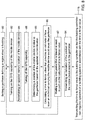
- FIG. 8 is a flow diagram showing another illustrative method for implementing geofencing using a mobile device that has a GPS capability and that is configured to be operably coupled to a building controller.
- a geofence defining a region about a building may be set.
- the GPS capability of the mobile device may be turned on, as indicated at block 82.
- an updated current location of the mobile device may be ascertained via the GPS capability and then the GPS capability may be turned off as shown at block 86.
- a position of the mobile device relative to the geofence may be determined based on the updated current location, as generally indicated at block 88.
- a time to fence value that provides an estimate of how soon an individual carrying the mobile device could cross the geofence may be calculated.
- calculating the time to fence value includes estimating how soon the individual carrying the mobile device could cross the geofence when returning to the building. In some cases, calculating the time to fence value includes estimating how soon the individual carrying the mobile device could cross the geofence when leaving the building. Calculating the time to fence value may, for example, include determining a straight line distance between the updated current location of the individual carrying the mobile device and the building and subtracting a radius defining the geofence, and determining the time to fence value based on a predetermined maximum speed value (e.g. 80 mph). In some cases, calculating the time to fence value may include determining a straight line distance between the updated current location of the individual carrying the mobile device and the closest point on the geofence.
- a predetermined maximum speed value e.g. 80 mph
- calculating the time to fence value may include determining a driving route between the updated current location of the individual carrying the mobile device and a point on the geofence along the driving route, and determining the time to fence value based on the driving route.
- the GPS may remain off for a delay time period that is based at least in part on the calculated time to fence value, as seen at block 92.
- control may pass back to block 82, and the cycle may continue.
- control may be passed from block 92 to block 94, where the mobile device transmits an indication of its position relative to the geofence.
- the indication of the position of the mobile device relative to the geofence is transmitted when the updated current location of the mobile device crosses the geofence, and the indication of the position of the mobile device relative to the geofence indicates a geofence crossing.
- the time to fence value may be transmitted to a building controller so that the building controller can regulate operation of a building system in accordance with the time to fence value as seen at block 116.
Landscapes
- Engineering & Computer Science (AREA)
- Computer Networks & Wireless Communication (AREA)
- Signal Processing (AREA)
- Telephonic Communication Services (AREA)
- Telephone Function (AREA)
Claims (13)
- Verfahren zur Implementierung von Geofencing unter Verwendung einer Mobilvorrichtung (14) mit GPS-Fähigkeit, wobei die Mobilvorrichtung konfiguriert ist, um mit einer Gebäudesteuerung (16) funktionell gekoppelt zu werden, und das Verfahren umfasst:Festlegen eines Geozauns, der einen Bereich um ein Gebäude definiert;Einschalten der GPS-Fähigkeit der Mobilvorrichtung, Ermitteln eines aktualisierten aktuellen Standorts der Mobilvorrichtung und anschließendes Ausschalten der GPS-Fähigkeit;Bestimmen einer Position der Mobilvorrichtung in Bezug auf den Geozaun basierend auf dem aktualisierten aktuellen Standort;Berechnen eines Zeit-zu-Zaun-Wertes, wobei der Zeit-zu-Zaun-Wert eine Schätzung einer Mindestlänge von Zeit ist, die ein Individuum, das die Mobilvorrichtung mitführt, zum Überschreiten des Geozauns brauchen würde;Berechnen eines Verzögerungszeitwerts, wobei der Verzögerungszeitwert wenigstens teilweise auf dem berechneten Zeit-zu-Zaun-Wert basiert und kleiner als der Zeit-zu-Zaun-Wert ist;Abwarten bei abgeschalteter GPS-Fähigkeit des Verzögerungszeitwerts und anschließend:Einschalten der GPS-Fähigkeit der Mobilvorrichtung;Ermitteln eines aktualisierten aktuellen Standorts der Mobilvorrichtung;Abschalten der GPS-Fähigkeit;Wiederholen der Schritte des Bestimmens der Position, Berechnens des Zeit-zu-Zaun-Werts, Berechnens des Verzögerungszeitwerts, Abwartens des Verzögerungszeitwerts, Einschaltens der GPS-Fähigkeit, Ermittelns eines aktualisierten aktuellen Standorts und Abschaltens der GPS-Fähigkeit; undSenden des Zeit-zu-Zaun-Wertes an die Gebäudesteuerung, so dass die Gebäudesteuerung den Betrieb eines Gebäudesystems gemäß dem Zeit-zu-Zaun-Wert regeln kann.
- Verfahren nach Anspruch 1, wobei die Angabe der Position der Mobilvorrichtung in Bezug auf den Geozaun gesendet wird, wenn der aktualisierte aktuelle Standort der Mobilvorrichtung den Geozaun überschreitet, und die Angabe der Position der Mobilvorrichtung in Bezug auf den Geozaun eine Geozaunüberschreitung angibt.
- Verfahren nach Anspruch 1 oder 2, wobei das vorübergehende Einschalten der GPS-Fähigkeit ferner ein Prüfen einer horizontalen Genauigkeit des aktualisierten aktuellen Standorts umfasst.
- Verfahren nach Anspruch 3, ferner umfassend ein Eingeschaltetlassen der GPS-Fähigkeit während des Verzögerungszeitwerts, wenn die horizontale Genauigkeit des aktualisierten aktuellen Standorts nicht über einer vorbestimmten Schwelle liegt.
- Verfahren nach einem der Ansprüche 1 bis 4, wobei das Berechnen des Zeit-zu-Zaun-Wertes ein Schätzen dessen umfasst, wie bald das die Mobilvorrichtung mitführende Individuum bei Verlassen des Gebäudes den Geozaun überschreiten könnte, und/oder das Berechnen des Zeit-zu-Zaun-Wertes ein Schätzen dessen umfasst, wie bald das die Mobilvorrichtung mitführende Individuum bei Rückkehr zum Gebäude den Geozaun überschreiten könnte.
- Verfahren nach einem der Ansprüche 1 bis 5, wobei das Berechnen des Zeit-zu-Zaun-Wertes ein Bestimmen einer geradlinigen Distanz zwischen dem aktualisierten aktuellen Standort des die Mobilvorrichtung mitführenden Individuums und dem Gebäude und Subtrahieren eines den Geozaun definierenden Radius und Bestimmen des Zeit-zu-Zaun-Wertes basierend auf einem vorbestimmten maximalen Geschwindigkeitswert umfasst, oder wobei das Berechnen des Zeit-zu-Zaun-Wertes ein Bestimmen einer Fahrstrecke zwischen dem aktualisierten aktuellen Standort und einem Punkt auf dem Geozaun und Bestimmen des Zeit-zu-Zaun-Wertes basierend auf der Fahrstrecke umfasst.
- Mobilvorrichtung (50) mit GPS, wobei die Mobilvorrichtung umfasst:eine Benutzerschnittstelle (54);einen Speicher (56) zum Speichern eines ausführbaren Programms, wobei der Speicher außerdem Informationen in Bezug auf einen Geozaun speichert, der einem Gebäude zugeordnet ist;eine Steuerung (58), die mit der Benutzerschnittstelle und dem Speicher funktionell gekoppelt ist, wobei die Steuerung so konfiguriert ist, dass sie das GPS einschaltet, um einen aktualisierten aktuellen Standort der Mobilvorrichtung zu bestimmen, und anschließend das GPS ausschaltet;die Steuerung so konfiguriert ist, dass sie den aktualisierten aktuellen Standort der Mobilvorrichtung mit dem Geozaun vergleicht und einen Zeit-zu-Zaun-Wert berechnet, der eine Mindestzeit angibt, in der die Mobilvorrichtung den Geozaun überschreiten könnte;die Steuerung so konfiguriert ist, dass sie einen Verzögerungszeitwert berechnet, der wenigstens teilweise auf dem berechneten Zeit-zu-Zaun-Wert basiert und kleiner als der Zeit-zu-Zaun-Wert ist;die Steuerung so konfiguriert ist, dass sie den Verzögerungszeitwert abwartet, bevor sie das GPS vorübergehend wieder einschaltet, um einen aktualisierten aktuellen Standort der Mobilvorrichtung zu bestimmen, und anschließend das GPS ausschaltet; unddie Steuerung so konfiguriert ist, dass sie die Mobilvorrichtung zum Senden des Zeit-zu-Zaun-Wertes an eine Gebäudesteuerung veranlasst, so dass die Gebäudesteuerung den Betrieb eines Gebäudesystems gemäß dem Zeit-zu-Zaun-Wert regeln kann.
- Mobilvorrichtung nach Anspruch 7, wobei die Steuerung so konfiguriert ist, dass sie die Mobilvorrichtung veranlasst, die Angabe des aktualisierten aktuellen Standorts der Mobilvorrichtung in Bezug auf den Geozaun zu senden, wenn der aktualisierte aktuelle Standort der Mobilvorrichtung den Geozaun überschreitet, und die Angabe des aktualisierten aktuellen Standorts der Mobilvorrichtung in Bezug auf den Geozaun eine Geozaunüberschreitung angibt.
- Mobilvorrichtung nach einem der Ansprüche 7 oder 8, wobei der Verzögerungszeitwert nichtlinear mit dem berechneten Zeit-zu-Zaun-Wert ist.
- Vorrichtung nach einem der Ansprüche 7 bis 9, wobei die Steuerung so konfiguriert ist, dass sie den Zeit-zu-Zaun-Wert durch Schätzen dessen berechnet, wie bald ein die Mobilvorrichtung mitführendes Individuum bei Verlassen des Gebäudes den Geozaun überschreiten könnte, und/oder die Steuerung so konfiguriert ist, dass sie den Zeit-zu-Zaun-Wert durch Schätzen dessen berechnet, wie bald ein die Mobilvorrichtung mitführendes Individuum bei Rückkehr zum Gebäude den Geozaun überschreiten könnte.
- Mobilvorrichtung nach einem der Ansprüche 7 bis 10, wobei die Steuerung so konfiguriert ist, dass sie den Zeit-zu-Zaun-Wert durch Bestimmen einer geradlinigen Distanz zwischen dem aktualisierten aktuellen Standort der Mobilvorrichtung und dem Gebäude und Subtrahieren eines Radius des Geozauns und Bestimmen des Zeit-zu-Zaun-Wertes basierend auf einer vorbestimmten maximalen Geschwindigkeit berechnet.
- Mobilvorrichtung nach einem der Ansprüche 7 bis 10, wobei die Steuerung so konfiguriert ist, dass sie den Zeit-zu-Zaun-Wert durch Bestimmen einer Fahrstrecke zwischen dem aktualisierten aktuellen Standort der Mobilvorrichtung und einem Punkt auf dem Geozaun und Bestimmen des Zeit-zu-Zaun-Wertes basierend auf der Fahrstrecke berechnet.
- Mobilvorrichtung (60) mit Positionsbestimmungsdiensten, die eine Funktriangulationsfähigkeit und eine GPS-Fähigkeit umfassen, wobei die Mobilvorrichtung umfasst:eine Benutzerschnittstelle (66);einen Speicher (68) zum Speichern eines ausführbaren Programms, wobei der Speicher außerdem Informationen in Bezug auf einen Geozaun speichert, der einem Gebäude zugeordnet ist;Positionsbestimmungsdienste, die eine Funktriangulationsfähigkeit und eine GPS-Fähigkeit umfassen;eine Steuerung, die mit der Benutzerschnittstelle und dem Speicher funktionell gekoppelt ist, wobei die Steuerung so konfiguriert ist, dass sie einige der Positionsbestimmungsdienste einschaltet, um einen aktualisierten aktuellen Standort der Mobilvorrichtung zu bestimmen, und anschließend die Positionsbestimmungsdienste ausschaltet;die Steuerung (70) ferner so konfiguriert ist, dass sie den aktualisierten aktuellen Standort mit dem Geozaun vergleicht und einen Zeit-zu-Zaun-Wert berechnet, wobei der Zeit-zu-Zaun-Wert eine Schätzung einer Mindestzeit ist, in der die Mobilvorrichtung den Geozaun überschreiten könnte;die Steuerung ferner so konfiguriert ist, dass sie einen Verzögerungszeitwert berechnet, der wenigstens teilweise auf dem berechneten Zeit-zu-Zaun-Wert basiert und kleiner als der Zeit-zu-Zaun-Wert ist;die Steuerung ferner so konfiguriert ist, dass sie den Verzögerungszeitwert abwartet, bevor sie die Positionsbestimmungsdienste wieder einschaltet, und anschließend die Positionsbestimmungsdienste ausschaltet; unddie Steuerung ferner so konfiguriert ist, dass sie die Mobilvorrichtung zum Senden des Zeit-zu-Zaun-Wertes an eine Gebäudesteuerung veranlasst, so dass die Gebäudesteuerung den Betrieb eines Gebäudesystems gemäß dem Zeit-zu-Zaun-Wert regeln kann;wobei die Steuerung so konfiguriert ist, dass sie nach dem Verzögerungszeitwert:die Funktriangulationsfähigkeit der Mobilvorrichtung und nicht die GPS-Fähigkeit einschaltet, wenn der berechnete Zeit-zu-Zaun-Wert größer als ein vorbestimmter Wert ist; unddie GPS-Fähigkeit der Mobilvorrichtung einschaltet, wenn der berechnete Zeit-zu-Zaun-Wert kleiner als der vorbestimmte Wert ist.
Applications Claiming Priority (1)
| Application Number | Priority Date | Filing Date | Title |
|---|---|---|---|
| US14/938,595 US9628951B1 (en) | 2015-11-11 | 2015-11-11 | Methods and systems for performing geofencing with reduced power consumption |
Publications (2)
| Publication Number | Publication Date |
|---|---|
| EP3169088A1 EP3169088A1 (de) | 2017-05-17 |
| EP3169088B1 true EP3169088B1 (de) | 2018-07-18 |
Family
ID=57421617
Family Applications (1)
| Application Number | Title | Priority Date | Filing Date |
|---|---|---|---|
| EP16196416.8A Active EP3169088B1 (de) | 2015-11-11 | 2016-10-28 | Verfahren und systeme zur durchführung von geofencing mit reduziertem leistungsverbrauch |
Country Status (2)
| Country | Link |
|---|---|
| US (2) | US9628951B1 (de) |
| EP (1) | EP3169088B1 (de) |
Families Citing this family (18)
| Publication number | Priority date | Publication date | Assignee | Title |
|---|---|---|---|---|
| US9587848B2 (en) | 2013-12-11 | 2017-03-07 | Honeywell International Inc. | Building automation controller with rear projecting light |
| US9967391B2 (en) | 2015-03-25 | 2018-05-08 | Honeywell International Inc. | Geo-fencing in a building automation system |
| US9609478B2 (en) | 2015-04-27 | 2017-03-28 | Honeywell International Inc. | Geo-fencing with diagnostic feature |
| US10802459B2 (en) | 2015-04-27 | 2020-10-13 | Ademco Inc. | Geo-fencing with advanced intelligent recovery |
| US10516965B2 (en) | 2015-11-11 | 2019-12-24 | Ademco Inc. | HVAC control using geofencing |
| US9628951B1 (en) | 2015-11-11 | 2017-04-18 | Honeywell International Inc. | Methods and systems for performing geofencing with reduced power consumption |
| US9560482B1 (en) | 2015-12-09 | 2017-01-31 | Honeywell International Inc. | User or automated selection of enhanced geo-fencing |
| US10605472B2 (en) | 2016-02-19 | 2020-03-31 | Ademco Inc. | Multiple adaptive geo-fences for a building |
| US10216944B2 (en) * | 2016-03-25 | 2019-02-26 | Getac Technology Corporation | Method for executing access control over electronic device and electronic device capable of executing access control |
| EP3424244A4 (de) * | 2016-04-07 | 2019-09-25 | Bluedot Innovations Pty Ltd. | Anwendung von datenstrukturen auf geofencing-anwendungen |
| US10317102B2 (en) | 2017-04-18 | 2019-06-11 | Ademco Inc. | Geofencing for thermostatic control |
| US10962942B2 (en) * | 2017-06-04 | 2021-03-30 | Apple Inc. | Presence triggered notifications and actions |
| CN107148004A (zh) * | 2017-07-05 | 2017-09-08 | 深圳传音通讯有限公司 | 一种基于智能终端的定位系统及定位方法 |
| US12105206B2 (en) | 2018-04-16 | 2024-10-01 | Pinpoint Ideas, LLC | GPS tracking device with extended battery life |
| US20190317223A1 (en) | 2018-04-16 | 2019-10-17 | Pinpoint Ideas, LLC | GPS Tracking Device with Extended Battery Life |
| GB201809410D0 (en) * | 2018-06-08 | 2018-07-25 | Tomtom Navigation Bv | Systems and methods for providing location-based information |
| US11703238B2 (en) * | 2020-03-12 | 2023-07-18 | Johnson Controls Tyco IP Holdings LLP | Remote access control of HVAC system |
| US20260006402A1 (en) * | 2024-06-27 | 2026-01-01 | Isharingsoft, Inc. | Enhanced geofencing |
Family Cites Families (216)
| Publication number | Priority date | Publication date | Assignee | Title |
|---|---|---|---|---|
| GB9122220D0 (en) | 1991-10-19 | 1991-12-04 | Elia Paul | Hot water storage system |
| US8095340B2 (en) | 1992-11-17 | 2012-01-10 | Health Hero Network, Inc. | Home power management system |
| US7136645B2 (en) | 1998-10-09 | 2006-11-14 | Netmotion Wireless, Inc. | Method and apparatus for providing mobile and other intermittent connectivity in a computing environment |
| US8135413B2 (en) | 1998-11-24 | 2012-03-13 | Tracbeam Llc | Platform and applications for wireless location and other complex services |
| US6356282B2 (en) | 1998-12-04 | 2002-03-12 | Sun Microsystems, Inc. | Alarm manager system for distributed network management system |
| US7127734B1 (en) | 1999-04-12 | 2006-10-24 | Texas Instruments Incorporated | System and methods for home network communications |
| US6255988B1 (en) | 1999-06-03 | 2001-07-03 | Honeywell International Inc | Industrial process field instrumentation employing satellite transmitted reference signals |
| US6529137B1 (en) | 1999-08-31 | 2003-03-04 | Compass Technologies, Inc. | Method and apparatus for displaying alarm information |
| US6400956B1 (en) | 1999-11-15 | 2002-06-04 | Lucent Technologies Inc. | Method and apparatus for a wireless telecommunication system that provides location-based action services |
| US6604023B1 (en) | 2000-04-28 | 2003-08-05 | International Business Machines Corporation | Managing an environment utilizing a portable data processing system |
| US20060097063A1 (en) | 2000-07-07 | 2006-05-11 | Zvi Zeevi | Modular HVAC control system |
| US20070037605A1 (en) | 2000-08-29 | 2007-02-15 | Logan James D | Methods and apparatus for controlling cellular and portable phones |
| JP3522686B2 (ja) | 2000-12-13 | 2004-04-26 | 松下電器産業株式会社 | 移動体端末並びに自動遠隔制御システムおよび自動遠隔制御方法 |
| US6478233B1 (en) | 2000-12-29 | 2002-11-12 | Honeywell International Inc. | Thermal comfort controller having an integral energy savings estimator |
| US20020147006A1 (en) | 2001-04-09 | 2002-10-10 | Coon Bradley S. | Proximity-based control of building functions |
| US7908211B1 (en) | 2001-04-13 | 2011-03-15 | AT&T Intellecutual Property II, L.P. | Environment customization based on location |
| US9773020B2 (en) | 2001-07-05 | 2017-09-26 | NEXRF Corp. | System and method for map based exploration |
| US6665613B2 (en) | 2001-09-25 | 2003-12-16 | Lojack Corporation | Method of and apparatus for dynamically GoeFencing movable vehicle and other equipment and the like |
| BR0308702A (pt) | 2002-03-28 | 2005-02-09 | Robertshaw Controls Co | Sistema e método de gerenciamento de suprimento de energia, dispositivo de termostato e método de desvio de pedidos de energia |
| US20040034484A1 (en) | 2002-06-24 | 2004-02-19 | Solomita Michael V. | Demand-response energy management system |
| US7327250B2 (en) | 2003-07-25 | 2008-02-05 | Qualcomm Incorporated | System for providing a virtual vehicle boundary |
| US20070043478A1 (en) | 2003-07-28 | 2007-02-22 | Ehlers Gregory A | System and method of controlling an HVAC system |
| US7083109B2 (en) | 2003-08-18 | 2006-08-01 | Honeywell International Inc. | Thermostat having modulated and non-modulated provisions |
| EP1515289B1 (de) | 2003-09-15 | 2008-03-05 | Siemens Aktiengesellschaft | Benutzerschnittstelle für eine Kontrollstation |
| DE502004010364D1 (de) | 2003-10-20 | 2009-12-24 | Volkswagen Ag | Drehknopf für ein kraftfahrzeug |
| US7155305B2 (en) | 2003-11-04 | 2006-12-26 | Universal Electronics Inc. | System and methods for home appliance identification and control in a networked environment |
| GB2408592B (en) | 2003-11-27 | 2005-11-16 | James Ian Oswald | Household energy management system |
| US7114554B2 (en) | 2003-12-01 | 2006-10-03 | Honeywell International Inc. | Controller interface with multiple day programming |
| US7225054B2 (en) | 2003-12-02 | 2007-05-29 | Honeywell International Inc. | Controller with programmable service event display mode |
| US8554374B2 (en) | 2003-12-02 | 2013-10-08 | Honeywell International Inc. | Thermostat with electronic image display |
| US8090599B2 (en) | 2003-12-30 | 2012-01-03 | Hartford Fire Insurance Company | Method and system for computerized insurance underwriting |
| KR100984810B1 (ko) | 2004-02-02 | 2010-10-01 | 삼성전자주식회사 | UPnP 디바이스가 PLC 디바이스를 컨트롤할 수있도록 브릿징하는 장치 및 방법 |
| US20050194456A1 (en) | 2004-03-02 | 2005-09-08 | Tessier Patrick C. | Wireless controller with gateway |
| US7904608B2 (en) | 2004-05-04 | 2011-03-08 | Price Robert M | System and method for updating software in electronic devices |
| US7159789B2 (en) | 2004-06-22 | 2007-01-09 | Honeywell International Inc. | Thermostat with mechanical user interface |
| US20100081375A1 (en) | 2008-09-30 | 2010-04-01 | Apple Inc. | System and method for simplified control of electronic devices |
| US20060063522A1 (en) | 2004-09-21 | 2006-03-23 | Mcfarland Norman R | Self-powering automated building control components |
| DE602005026178D1 (de) | 2004-11-09 | 2011-03-10 | Truveon Corp | Gebäudeklimatisierungssteuerungsverfahren und -system |
| US6990335B1 (en) | 2004-11-18 | 2006-01-24 | Charles G. Shamoon | Ubiquitous connectivity and control system for remote locations |
| US20060167591A1 (en) | 2005-01-26 | 2006-07-27 | Mcnally James T | Energy and cost savings calculation system |
| US7385500B2 (en) | 2005-02-16 | 2008-06-10 | Igit Enterprises, Inc. | System and method for effectuating the acquisition and distribution of tracking data on mobile assets, including shipment containers used in freight transportation |
| USD525541S1 (en) | 2005-02-28 | 2006-07-25 | Honeywell International Inc. | Thermostat housing |
| BRPI0617002A2 (pt) | 2005-09-09 | 2011-07-05 | Loc Aid Technologies Inc | sistema para o desenvolvimento de aplicações baseadas na localização, portal para permitir aplicações baseadas na localização de terceiros e método para o desenvolvimento de uma aplicação baseada na localização para ser utilizada por um dispositivo móvel |
| US7714735B2 (en) | 2005-09-13 | 2010-05-11 | Daniel Rockwell | Monitoring electrical assets for fault and efficiency correction |
| US20070099626A1 (en) | 2005-10-31 | 2007-05-03 | Honeywell International Inc. | Tracking system and method |
| US20070114295A1 (en) | 2005-11-22 | 2007-05-24 | Robertshaw Controls Company | Wireless thermostat |
| US7648077B2 (en) | 2005-12-13 | 2010-01-19 | Emerson Electric Co. | HVAC communication system |
| US8150421B2 (en) | 2005-12-30 | 2012-04-03 | Trueposition, Inc. | User plane uplink time difference of arrival (U-TDOA) |
| US7614567B2 (en) | 2006-01-10 | 2009-11-10 | Ranco Incorporated of Deleware | Rotatable thermostat |
| US20070194881A1 (en) | 2006-02-07 | 2007-08-23 | Schwarz Stanley G | Enforcing payment schedules |
| US8131401B2 (en) | 2006-07-19 | 2012-03-06 | Power Analytics Corporation | Real-time stability indexing for intelligent energy monitoring and management of electrical power network system |
| US9557723B2 (en) | 2006-07-19 | 2017-01-31 | Power Analytics Corporation | Real-time predictive systems for intelligent energy monitoring and management of electrical power networks |
| CA2644353A1 (en) | 2006-03-24 | 2007-11-29 | Rtp Controls | Method and apparatus for controlling power consumption |
| US8126685B2 (en) | 2006-04-12 | 2012-02-28 | Edsa Micro Corporation | Automatic real-time optimization and intelligent control of electrical power distribution and transmission systems |
| US20070249319A1 (en) | 2006-04-24 | 2007-10-25 | Faulkner Mark A | Power distribution communication system employing gateway including wired and wireless communication interfaces |
| US8334906B2 (en) | 2006-05-24 | 2012-12-18 | Objectvideo, Inc. | Video imagery-based sensor |
| US8305935B2 (en) | 2006-07-27 | 2012-11-06 | Mobitrum Corporation | Method and system for dynamic information exchange on location aware mesh network devices |
| US8199113B2 (en) | 2006-09-13 | 2012-06-12 | Savant Systems, Llc | Programmable on screen display and remote control |
| US20080094230A1 (en) | 2006-10-23 | 2008-04-24 | Motorola, Inc. | Using location capabilities of a mobile device to permit users to avoid potentially harmful interactions |
| US7571865B2 (en) | 2006-10-31 | 2009-08-11 | Tonerhead, Inc. | Wireless temperature control system |
| US8205244B2 (en) | 2007-02-27 | 2012-06-19 | Airdefense, Inc. | Systems and methods for generating, managing, and displaying alarms for wireless network monitoring |
| US7768393B2 (en) | 2007-04-10 | 2010-08-03 | Honeywell International Inc. | System and method for asset tracking |
| US8229722B2 (en) | 2007-05-16 | 2012-07-24 | Power Analytics Corporation | Electrical power system modeling, design, analysis, and reporting via a client-server application framework |
| US20090012704A1 (en) | 2007-07-02 | 2009-01-08 | Bruce Franco | Retail Store Product Location Service System and Method |
| US7715951B2 (en) | 2007-08-28 | 2010-05-11 | Consert, Inc. | System and method for managing consumption of power supplied by an electric utility |
| US8428867B2 (en) | 2007-08-30 | 2013-04-23 | Wirelesswerx International, Inc. | Configuring and using multi-dimensional zones |
| CN101802642A (zh) | 2007-09-14 | 2010-08-11 | 三菱电机株式会社 | 测位系统、空调系统、以及照明系统 |
| WO2009036764A2 (en) | 2007-09-20 | 2009-03-26 | Danfoss A/S | Distance regulated energy consuming devices |
| US8140279B2 (en) | 2007-09-24 | 2012-03-20 | Budderfly Ventures, Llc | Computer based energy management |
| US8406162B2 (en) | 2008-05-16 | 2013-03-26 | La Crosse Technology, Ltd. | Method and apparatus of transmitting, receiving, displaying and playing weather data |
| EP2215616B1 (de) | 2007-11-25 | 2016-08-17 | Trilliant Networks, Inc. | Kommunikations- und nachrichtenroutenoptimierung sowie nachrichtenübermittlung in einem mesh-netzwerk |
| EP2215550A1 (de) | 2007-11-25 | 2010-08-11 | Trilliant Networks, Inc. | System und verfahren zur steuerung des energieverbrauchs |
| US20090187499A1 (en) | 2008-01-21 | 2009-07-23 | David Mulder | System, Method and Computer Program Product for Providing Demand Response Functionality |
| USD580801S1 (en) | 2008-01-24 | 2008-11-18 | Honeywell International Inc. | Thermostat housing |
| US8255090B2 (en) | 2008-02-01 | 2012-08-28 | Energyhub | System and method for home energy monitor and control |
| US8065342B1 (en) | 2008-02-22 | 2011-11-22 | BorgSolutions, Inc. | Method and system for monitoring a mobile equipment fleet |
| WO2009108719A1 (en) | 2008-02-25 | 2009-09-03 | Recovery Systems Holdings, Llc | Vehicle security and monitoring system |
| US8634796B2 (en) | 2008-03-14 | 2014-01-21 | William J. Johnson | System and method for location based exchanges of data facilitating distributed location applications |
| US20090302994A1 (en) | 2008-06-10 | 2009-12-10 | Mellennial Net, Inc. | System and method for energy management |
| US8180492B2 (en) | 2008-07-14 | 2012-05-15 | Ecofactor, Inc. | System and method for using a networked electronic device as an occupancy sensor for an energy management system |
| US20100034386A1 (en) | 2008-08-06 | 2010-02-11 | Daintree Networks, Pty. Ltd. | Device manager repository |
| US20100042940A1 (en) | 2008-08-14 | 2010-02-18 | Caterpillar Inc. | Geofence system with integrated user interface |
| US20100261465A1 (en) | 2009-04-14 | 2010-10-14 | Rhoads Geoffrey B | Methods and systems for cell phone interactions |
| US8510241B2 (en) | 2008-08-29 | 2013-08-13 | Empire Technology Development Llc | Approach for solving global optimization problem |
| US7953518B2 (en) | 2008-09-08 | 2011-05-31 | Microsoft Corporation | Energy cost reduction and ad delivery |
| CA2739914A1 (en) | 2008-10-07 | 2010-04-15 | University Of South Florida | Architecture and two-layered protocol for real-time location-aware applications |
| US8412654B2 (en) | 2008-10-08 | 2013-04-02 | Rey Montalvo | Method and system for fully automated energy curtailment |
| US20100127854A1 (en) | 2008-11-21 | 2010-05-27 | Richard Eric Helvick | Method and system for controlling home appliances based on estimated time of arrival |
| US8125332B2 (en) | 2008-11-21 | 2012-02-28 | Zoombak, Inc. | Geo-fence with minimal false alarms |
| US8686841B2 (en) | 2008-12-12 | 2014-04-01 | Gordon*Howard Associates, Inc. | Methods and systems related to activating geo-fence boundaries and collecting location data |
| US8018329B2 (en) | 2008-12-12 | 2011-09-13 | Gordon * Howard Associates, Inc. | Automated geo-fence boundary configuration and activation |
| US20100156628A1 (en) | 2008-12-18 | 2010-06-24 | Robert Ainsbury | Automated Adaption Based Upon Prevailing Threat Levels in a Security System |
| US8269620B2 (en) | 2008-12-19 | 2012-09-18 | Honeywell Internatonal Inc. | Alarm trend summary display system and method |
| US8390473B2 (en) | 2008-12-19 | 2013-03-05 | Openpeak Inc. | System, method and apparatus for advanced utility control, monitoring and conservation |
| CN102273037B (zh) | 2008-12-31 | 2014-10-29 | Abb研究有限公司 | 混合配电网电力恢复控制 |
| US7973678B2 (en) | 2009-02-02 | 2011-07-05 | Robert Bosch Gmbh | Control of building systems based on the location and movement of a vehicle tracking device |
| US8554714B2 (en) | 2009-05-11 | 2013-10-08 | Honeywell International Inc. | High volume alarm management system |
| CA2762101C (en) | 2009-05-18 | 2017-07-04 | Alarm.Com Incorporated | Moving asset location tracking |
| WO2010135372A1 (en) | 2009-05-18 | 2010-11-25 | Alarm.Com Incorporated | Remote device control and energy monitoring |
| US9026261B2 (en) | 2009-06-08 | 2015-05-05 | Tendril Networks, Inc. | Methods and systems for managing energy usage in buildings |
| US8428782B2 (en) | 2009-07-20 | 2013-04-23 | Allure Energy, Inc. | Energy management system and method |
| US8626344B2 (en) | 2009-08-21 | 2014-01-07 | Allure Energy, Inc. | Energy management system and method |
| US8428550B2 (en) | 2009-07-30 | 2013-04-23 | Extenet Systems Inc. | Real-time location determination for in-building distributed antenna systems |
| US9838255B2 (en) | 2009-08-21 | 2017-12-05 | Samsung Electronics Co., Ltd. | Mobile demand response energy management system with proximity control |
| US8232877B2 (en) | 2009-10-30 | 2012-07-31 | Telenav, Inc. | Navigation system with context boundary monitoring mechanism and method of operation thereof |
| US20110153525A1 (en) | 2009-12-18 | 2011-06-23 | Alcatel-Lucent Usa Inc. | Method and system for managing power consumption using geolocation information |
| JP2011203841A (ja) | 2010-03-24 | 2011-10-13 | Toshiba Corp | 巡回車両の到着時間予測システム |
| US8412381B2 (en) | 2010-03-24 | 2013-04-02 | Mitsubishi Electric Research Laboratories, Inc. | HVAC control system |
| GB201005320D0 (en) | 2010-03-30 | 2010-05-12 | Telepure Ltd | Improvements in controllers, particularly controllers for use in heating, ventilation and air conditioning systems |
| US8556188B2 (en) | 2010-05-26 | 2013-10-15 | Ecofactor, Inc. | System and method for using a mobile electronic device to optimize an energy management system |
| US8890675B2 (en) | 2010-06-02 | 2014-11-18 | Honeywell International Inc. | Site and alarm prioritization system |
| US8874129B2 (en) | 2010-06-10 | 2014-10-28 | Qualcomm Incorporated | Pre-fetching information based on gesture and/or location |
| US8301765B2 (en) | 2010-06-22 | 2012-10-30 | Verizon Patent And Licensing, Inc. | Event detection and response using rich network content |
| US8648706B2 (en) | 2010-06-24 | 2014-02-11 | Honeywell International Inc. | Alarm management system having an escalation strategy |
| CA2804188C (en) | 2010-07-01 | 2019-06-18 | Absolute Software Corporation | Automatic creation and modification of dynamic geofences |
| US8433344B1 (en) | 2010-08-12 | 2013-04-30 | David Virga | Displaying a tier of risk in a region of a map displayed via a mobile computing device |
| US8606260B2 (en) | 2010-08-18 | 2013-12-10 | Apple Inc. | Location-based profile |
| US8918219B2 (en) | 2010-11-19 | 2014-12-23 | Google Inc. | User friendly interface for control unit |
| US8510255B2 (en) | 2010-09-14 | 2013-08-13 | Nest Labs, Inc. | Occupancy pattern detection, estimation and prediction |
| US20120065802A1 (en) | 2010-09-14 | 2012-03-15 | Joulex, Inc. | System and methods for automatic power management of remote electronic devices using a mobile device |
| US8606374B2 (en) | 2010-09-14 | 2013-12-10 | Nest Labs, Inc. | Thermodynamic modeling for enclosures |
| US9489062B2 (en) | 2010-09-14 | 2016-11-08 | Google Inc. | User interfaces for remote management and control of network-connected thermostats |
| US10109026B2 (en) | 2010-10-06 | 2018-10-23 | Tillster, Inc. | Mobile restaurant ordering system |
| JP2012109680A (ja) | 2010-11-15 | 2012-06-07 | Shimizu Corp | 機器制御システム、及び機器制御方法 |
| US8195313B1 (en) | 2010-11-19 | 2012-06-05 | Nest Labs, Inc. | Thermostat user interface |
| US9552002B2 (en) | 2010-11-19 | 2017-01-24 | Google Inc. | Graphical user interface for setpoint creation and modification |
| US20120172027A1 (en) | 2011-01-03 | 2012-07-05 | Mani Partheesh | Use of geofences for location-based activation and control of services |
| US8798804B2 (en) | 2011-01-06 | 2014-08-05 | General Electric Company | Added features of HEM/HEG using GPS technology |
| US8560127B2 (en) | 2011-01-13 | 2013-10-15 | Honeywell International Inc. | HVAC control with comfort/economy management |
| US10317858B2 (en) | 2011-04-07 | 2019-06-11 | Infosys Technologies, Ltd. | Architecture and method for centrally controlling a plurality of building automation systems |
| US20120284769A1 (en) | 2011-05-06 | 2012-11-08 | Kyle Dixon | Systems and Methods of Intelligent Policy-Based Geo-Fencing |
| US8691750B2 (en) | 2011-05-17 | 2014-04-08 | Axolabs Gmbh | Lipids and compositions for intracellular delivery of biologically active compounds |
| US8718826B2 (en) | 2011-06-01 | 2014-05-06 | Emerson Electric Co. | System for remote control of a condition at a site |
| DE102011052467B4 (de) | 2011-08-08 | 2014-12-04 | tado GmbH | Nutzer-zustand und -verhalten basiertes steuerungssystem und -verfahren für gebäudetechnische systeme und komponenten |
| WO2013028388A1 (en) | 2011-08-19 | 2013-02-28 | 30 Second Software | Geo-fence entry and exit notification system |
| US8670783B2 (en) | 2011-09-23 | 2014-03-11 | Motorola Solutions, Inc. | Apparatus and method for utilizing location capable two-way radio transceivers as geo-fence posts |
| US8810454B2 (en) | 2011-10-13 | 2014-08-19 | Microsoft Corporation | Power-aware tiered geofencing and beacon watchlists |
| US8941489B2 (en) | 2011-10-20 | 2015-01-27 | Qualcomm Incorporated | Method and/or apparatus for geofence management |
| US9103558B2 (en) | 2011-12-21 | 2015-08-11 | Lennox Industries Inc. | Method for detecting physical presence of a specific individual to control HVAC settings |
| US20130267253A1 (en) | 2012-01-12 | 2013-10-10 | Environmental Systems Research Institute, Inc. | Trigger zones and dwell time analytics |
| US20130225196A1 (en) | 2012-02-27 | 2013-08-29 | Bryan J. James | Geo-Fence Generation and Updating Based on Device Movement Patterns |
| EP2820630A4 (de) * | 2012-03-02 | 2016-03-23 | Telecomm Systems Inc | Geofence mit lokalsierungs-agent |
| US9219983B2 (en) | 2012-05-01 | 2015-12-22 | Qualcomm Incorporated | Mechanism to reduce missing breach detection in geofencing solution |
| US20130310053A1 (en) | 2012-05-15 | 2013-11-21 | QUALCOMM Atheros, Incorporated | Creating geofence assistance information |
| AU2013262189B2 (en) | 2012-05-17 | 2016-06-02 | CHAN, Hun Man Lena | Information control system |
| US9210545B2 (en) | 2012-06-05 | 2015-12-08 | Apple Inc. | Managing alerts based on context |
| US8868254B2 (en) | 2012-06-08 | 2014-10-21 | Apple Inc. | Accessory control with geo-fencing |
| US9071453B2 (en) | 2012-06-11 | 2015-06-30 | Apple Inc. | Location-based device automation |
| US9113298B2 (en) * | 2012-06-12 | 2015-08-18 | Telecommunication Systems, Inc. | Geofence with kalman filter |
| US8577392B1 (en) | 2012-06-13 | 2013-11-05 | Apple Inc. | System and method of determining location of wireless communication devices/persons for controlling/adjusting operation of devices based on the location |
| US9215560B1 (en) | 2012-07-12 | 2015-12-15 | two forty four a.m. LLC | System and method for device-centric location detection and geofencing |
| US9594384B2 (en) | 2012-07-26 | 2017-03-14 | Honeywell International Inc. | Method of associating an HVAC controller with an external web service |
| US9477239B2 (en) | 2012-07-26 | 2016-10-25 | Honeywell International Inc. | HVAC controller with wireless network based occupancy detection and control |
| US10001791B2 (en) | 2012-07-27 | 2018-06-19 | Assa Abloy Ab | Setback controls based on out-of-room presence information obtained from mobile devices |
| US9247378B2 (en) | 2012-08-07 | 2016-01-26 | Honeywell International Inc. | Method for controlling an HVAC system using a proximity aware mobile device |
| US8489119B1 (en) | 2012-08-11 | 2013-07-16 | Federico Fraccaroli | Method and apparatus for mediating among a plurality of profiles associated with users positioned in a shared location |
| US8620841B1 (en) | 2012-08-31 | 2013-12-31 | Nest Labs, Inc. | Dynamic distributed-sensor thermostat network for forecasting external events |
| US8965406B2 (en) | 2012-09-06 | 2015-02-24 | Square, Inc. | Generating geofences |
| US9046414B2 (en) | 2012-09-21 | 2015-06-02 | Google Inc. | Selectable lens button for a hazard detector and method therefor |
| US8630741B1 (en) | 2012-09-30 | 2014-01-14 | Nest Labs, Inc. | Automated presence detection and presence-related control within an intelligent controller |
| US9652525B2 (en) | 2012-10-02 | 2017-05-16 | Banjo, Inc. | Dynamic event detection system and method |
| WO2014055939A1 (en) | 2012-10-04 | 2014-04-10 | Huawei Technologies Co., Ltd. | User behavior modeling for intelligent mobile companions |
| US9635500B1 (en) | 2012-10-16 | 2017-04-25 | Intuit Inc | Adaptive geolocation of users to facilitate use of geofences |
| US20140156087A1 (en) | 2012-11-30 | 2014-06-05 | Honeywell International Inc. | Hvac controller that facilitates installer setup via a remote user interface |
| US10380636B2 (en) | 2012-12-06 | 2019-08-13 | Ebay Inc. | Systems and methods for statistical dynamic geofencing |
| US9589435B2 (en) | 2012-12-14 | 2017-03-07 | Qualcomm Incorporated | Providing alerts, vouchers, or coupons once a plurality of geo-fences have been breached a number of times |
| US9414422B2 (en) | 2013-01-08 | 2016-08-09 | Broadcom Corporation | Proximity detection for mobile communication devices using geo-fencing |
| US20140200718A1 (en) | 2013-01-16 | 2014-07-17 | Honeywell International Inc. | Systems and methods for facilitating diagnostic testing of an hvac system |
| US9311685B2 (en) | 2013-03-14 | 2016-04-12 | Bank Of America Corporation | Geolocation check-in system |
| US9495866B2 (en) | 2013-03-14 | 2016-11-15 | General Motors Llc | Communicating with residential electrical devices via a vehicle telematics unit |
| US9651673B2 (en) | 2013-03-15 | 2017-05-16 | Qualcomm Incorporated | Energy conservation apparatus for geofence applications |
| US9618227B2 (en) | 2013-03-15 | 2017-04-11 | Emerson Electric Co. | Energy management based on location |
| US9055475B2 (en) | 2013-03-15 | 2015-06-09 | Qualcomm Incorporated | Power optimizations for challenging WAN service conditions |
| US20140337123A1 (en) | 2013-03-15 | 2014-11-13 | 30 Second Software, Inc. | System and method for adaptive use of geofence parameters |
| KR101997771B1 (ko) | 2013-04-08 | 2019-07-08 | 삼성전자주식회사 | 저 전력으로 지오 펜스 서비스를 제공받는 전자 장치 및 방법 |
| CA2937578C (en) | 2013-04-17 | 2020-09-01 | Systech Corporation | Gateway device for machine-to-machine communication with dual cellular interfaces |
| CN103175287A (zh) | 2013-04-22 | 2013-06-26 | 清华大学 | 基于背景建模人物运动检测的空调节能控制方法及装置 |
| US10304319B2 (en) | 2013-04-23 | 2019-05-28 | Canary Connect, Inc. | Monitoring and security devices comprising multiple sensors |
| US10145579B2 (en) | 2013-05-01 | 2018-12-04 | Honeywell International Inc. | Devices and methods for interacting with a control system that is connected to a network |
| EP3001116B1 (de) | 2013-05-20 | 2019-07-31 | Panasonic Intellectual Property Corporation of America | Steuerungsverfahren für klimaanlage, klimaanlagensteuerungssystem |
| US9363772B2 (en) | 2013-05-21 | 2016-06-07 | Motorola Solutions, Inc. | Method and apparatus for reducing call setup delay |
| US9432807B2 (en) | 2013-05-23 | 2016-08-30 | Honeywell International Inc. | System and method with automatic radius crossing notification for global positioning system (GPS) tracker |
| US9191832B2 (en) | 2013-06-06 | 2015-11-17 | Apple Inc. | Category-based fence |
| US9820231B2 (en) | 2013-06-14 | 2017-11-14 | Microsoft Technology Licensing, Llc | Coalescing geo-fence events |
| US20140370909A1 (en) | 2013-06-14 | 2014-12-18 | Microsoft Corporation | Reduced power location determinations for detecting geo-fences |
| GB2515522A (en) * | 2013-06-26 | 2014-12-31 | Ibm | Mobile network based geofencing |
| US9363636B2 (en) | 2013-09-05 | 2016-06-07 | Google Inc. | Sending geofence-related heuristics to multiple separate hardware components of mobile devices |
| US9363638B1 (en) | 2015-06-02 | 2016-06-07 | GeoFrenzy, Inc. | Registrar mapping toolkit for geofences |
| US20150094860A1 (en) | 2013-09-27 | 2015-04-02 | Siemens Industry, Inc. | Use of a geo-fencing perimeter for energy efficient building control |
| US10452036B2 (en) | 2013-09-27 | 2019-10-22 | Siemens Industry, Inc. | System and method for deterministic calculation of recovery time for an environmental system |
| US20150141045A1 (en) | 2013-11-21 | 2015-05-21 | Telecommunication Systems, Inc. | Geofence |
| US9587848B2 (en) | 2013-12-11 | 2017-03-07 | Honeywell International Inc. | Building automation controller with rear projecting light |
| DE102013226390A1 (de) | 2013-12-18 | 2015-06-18 | BSH Hausgeräte GmbH | Verfahren zum Umschalten von Haushaltsgeräten zwischen einem Zuhause-Modus und einem Nicht-Zuhause-Modus, tragbare Bedienvorrichtung, System und Computerprogrammprodukt |
| US9167381B2 (en) | 2013-12-19 | 2015-10-20 | Motorola Solutions, Inc. | Geo-fence based alerts |
| US20150237470A1 (en) | 2014-02-14 | 2015-08-20 | Apple Inc. | Personal Geofence |
| US9313320B2 (en) | 2014-02-19 | 2016-04-12 | Qualcomm Incorporated | Automatic switching of modes and mode control capabilities on a wireless communication device |
| AU2015201441A1 (en) | 2014-03-18 | 2015-10-08 | 4Tel Pty Ltd | A Telecommunications System |
| US20150271638A1 (en) | 2014-03-20 | 2015-09-24 | Drgnfly, Inc. | Power efficient location tracking |
| US9288620B2 (en) | 2014-04-01 | 2016-03-15 | Qualcomm Incorporated | Reducing overlapping geofences |
| US9733656B2 (en) | 2014-04-16 | 2017-08-15 | Salusfin Ltd. | System and method for automated household energy management based on classification and location information |
| US10203665B2 (en) | 2014-04-24 | 2019-02-12 | Vivint, Inc. | Managing home automation system based on behavior and user input |
| US20150370272A1 (en) | 2014-06-23 | 2015-12-24 | Google Inc. | Intelligent configuration of a smart environment based on arrival time |
| US9521519B2 (en) | 2014-07-02 | 2016-12-13 | Mediatek Inc. | Mobile communication devices and context-based geofence control methods thereof |
| US10024564B2 (en) | 2014-07-15 | 2018-07-17 | Opower, Inc. | Thermostat eco-mode |
| US20160057572A1 (en) | 2014-08-20 | 2016-02-25 | Microsoft Corporation | Geo-fencing notifications subscriptions |
| US9900174B2 (en) | 2015-03-06 | 2018-02-20 | Honeywell International Inc. | Multi-user geofencing for building automation |
| US9967391B2 (en) * | 2015-03-25 | 2018-05-08 | Honeywell International Inc. | Geo-fencing in a building automation system |
| US10802459B2 (en) | 2015-04-27 | 2020-10-13 | Ademco Inc. | Geo-fencing with advanced intelligent recovery |
| US10802469B2 (en) | 2015-04-27 | 2020-10-13 | Ademco Inc. | Geo-fencing with diagnostic feature |
| US9609478B2 (en) | 2015-04-27 | 2017-03-28 | Honeywell International Inc. | Geo-fencing with diagnostic feature |
| CN105318499B (zh) | 2015-09-30 | 2018-06-01 | 广东美的制冷设备有限公司 | 用户行为自学习空调系统及其控制方法 |
| US10057110B2 (en) | 2015-11-06 | 2018-08-21 | Honeywell International Inc. | Site management system with dynamic site threat level based on geo-location data |
| US10516965B2 (en) | 2015-11-11 | 2019-12-24 | Ademco Inc. | HVAC control using geofencing |
| US9628951B1 (en) | 2015-11-11 | 2017-04-18 | Honeywell International Inc. | Methods and systems for performing geofencing with reduced power consumption |
| US9560482B1 (en) | 2015-12-09 | 2017-01-31 | Honeywell International Inc. | User or automated selection of enhanced geo-fencing |
| US9860697B2 (en) | 2015-12-09 | 2018-01-02 | Honeywell International Inc. | Methods and systems for automatic adjustment of a geofence size |
-
2015
- 2015-11-11 US US14/938,595 patent/US9628951B1/en active Active
-
2016
- 2016-10-28 EP EP16196416.8A patent/EP3169088B1/de active Active
-
2017
- 2017-03-07 US US15/452,575 patent/US10271284B2/en active Active
Non-Patent Citations (1)
| Title |
|---|
| None * |
Also Published As
| Publication number | Publication date |
|---|---|
| US20170134896A1 (en) | 2017-05-11 |
| US9628951B1 (en) | 2017-04-18 |
| US10271284B2 (en) | 2019-04-23 |
| EP3169088A1 (de) | 2017-05-17 |
| US20170181100A1 (en) | 2017-06-22 |
Similar Documents
| Publication | Publication Date | Title |
|---|---|---|
| US9628951B1 (en) | Methods and systems for performing geofencing with reduced power consumption | |
| US9560482B1 (en) | User or automated selection of enhanced geo-fencing | |
| EP2850501B1 (de) | Informationssteuerungssystem | |
| US9860697B2 (en) | Methods and systems for automatic adjustment of a geofence size | |
| US10103934B2 (en) | Setting a reminder that is triggered by a target user device | |
| US10802459B2 (en) | Geo-fencing with advanced intelligent recovery | |
| US10317102B2 (en) | Geofencing for thermostatic control | |
| EP3184918B1 (de) | Hlk-mittels geofencing | |
| US9258674B2 (en) | Tracking device and tracking device control method | |
| CA2744376A1 (en) | Geo-fence with minimal false alarms | |
| EP3270073B1 (de) | Klimatisierungssteuerungsvorrichtung | |
| US20170249007A1 (en) | Facilitating power conservation for devices based on likelihood of power usage level | |
| Hidayat et al. | Mapping of MAC Address with Moving WiFi Scanner | |
| EP3863310A1 (de) | Überprüfung des gewünschten geofence-auslösevertrauens | |
| WO2019234214A1 (en) | System and method for providing location-based information | |
| KR20170000362A (ko) | 단말의 측위를 이용한 고객 안내 방법 및 시스템 | |
| KR20220023685A (ko) | 공유 퍼스널 모빌리티 관리 장치 및 방법 | |
| KR20130083014A (ko) | Gps 내장형 무전기를 이용한 방문객 관리 시스템 | |
| HK1206825B (en) | Information control system |
Legal Events
| Date | Code | Title | Description |
|---|---|---|---|
| PUAI | Public reference made under article 153(3) epc to a published international application that has entered the european phase |
Free format text: ORIGINAL CODE: 0009012 |
|
| STAA | Information on the status of an ep patent application or granted ep patent |
Free format text: STATUS: REQUEST FOR EXAMINATION WAS MADE |
|
| 17P | Request for examination filed |
Effective date: 20161028 |
|
| AK | Designated contracting states |
Kind code of ref document: A1 Designated state(s): AL AT BE BG CH CY CZ DE DK EE ES FI FR GB GR HR HU IE IS IT LI LT LU LV MC MK MT NL NO PL PT RO RS SE SI SK SM TR |
|
| AX | Request for extension of the european patent |
Extension state: BA ME |
|
| STAA | Information on the status of an ep patent application or granted ep patent |
Free format text: STATUS: EXAMINATION IS IN PROGRESS |
|
| 17Q | First examination report despatched |
Effective date: 20170929 |
|
| REG | Reference to a national code |
Ref country code: DE Ref legal event code: R079 Ref document number: 602016004123 Country of ref document: DE Free format text: PREVIOUS MAIN CLASS: H04W0004020000 Ipc: H04W0004021000 |
|
| GRAP | Despatch of communication of intention to grant a patent |
Free format text: ORIGINAL CODE: EPIDOSNIGR1 |
|
| STAA | Information on the status of an ep patent application or granted ep patent |
Free format text: STATUS: GRANT OF PATENT IS INTENDED |
|
| RIC1 | Information provided on ipc code assigned before grant |
Ipc: H04W 4/021 20180101AFI20180212BHEP Ipc: H04W 52/02 20090101ALI20180212BHEP Ipc: H04W 4/029 20180101ALI20180212BHEP |
|
| INTG | Intention to grant announced |
Effective date: 20180226 |
|
| GRAS | Grant fee paid |
Free format text: ORIGINAL CODE: EPIDOSNIGR3 |
|
| GRAA | (expected) grant |
Free format text: ORIGINAL CODE: 0009210 |
|
| STAA | Information on the status of an ep patent application or granted ep patent |
Free format text: STATUS: THE PATENT HAS BEEN GRANTED |
|
| AK | Designated contracting states |
Kind code of ref document: B1 Designated state(s): AL AT BE BG CH CY CZ DE DK EE ES FI FR GB GR HR HU IE IS IT LI LT LU LV MC MK MT NL NO PL PT RO RS SE SI SK SM TR |
|
| REG | Reference to a national code |
Ref country code: GB Ref legal event code: FG4D |
|
| REG | Reference to a national code |
Ref country code: CH Ref legal event code: EP |
|
| REG | Reference to a national code |
Ref country code: IE Ref legal event code: FG4D |
|
| REG | Reference to a national code |
Ref country code: DE Ref legal event code: R096 Ref document number: 602016004123 Country of ref document: DE |
|
| REG | Reference to a national code |
Ref country code: AT Ref legal event code: REF Ref document number: 1020666 Country of ref document: AT Kind code of ref document: T Effective date: 20180815 |
|
| REG | Reference to a national code |
Ref country code: FR Ref legal event code: PLFP Year of fee payment: 3 |
|
| REG | Reference to a national code |
Ref country code: NL Ref legal event code: MP Effective date: 20180718 |
|
| REG | Reference to a national code |
Ref country code: LT Ref legal event code: MG4D |
|
| REG | Reference to a national code |
Ref country code: AT Ref legal event code: MK05 Ref document number: 1020666 Country of ref document: AT Kind code of ref document: T Effective date: 20180718 |
|
| PG25 | Lapsed in a contracting state [announced via postgrant information from national office to epo] |
Ref country code: NL Free format text: LAPSE BECAUSE OF FAILURE TO SUBMIT A TRANSLATION OF THE DESCRIPTION OR TO PAY THE FEE WITHIN THE PRESCRIBED TIME-LIMIT Effective date: 20180718 |
|
| PG25 | Lapsed in a contracting state [announced via postgrant information from national office to epo] |
Ref country code: PL Free format text: LAPSE BECAUSE OF FAILURE TO SUBMIT A TRANSLATION OF THE DESCRIPTION OR TO PAY THE FEE WITHIN THE PRESCRIBED TIME-LIMIT Effective date: 20180718 Ref country code: LT Free format text: LAPSE BECAUSE OF FAILURE TO SUBMIT A TRANSLATION OF THE DESCRIPTION OR TO PAY THE FEE WITHIN THE PRESCRIBED TIME-LIMIT Effective date: 20180718 Ref country code: IS Free format text: LAPSE BECAUSE OF FAILURE TO SUBMIT A TRANSLATION OF THE DESCRIPTION OR TO PAY THE FEE WITHIN THE PRESCRIBED TIME-LIMIT Effective date: 20181118 Ref country code: AT Free format text: LAPSE BECAUSE OF FAILURE TO SUBMIT A TRANSLATION OF THE DESCRIPTION OR TO PAY THE FEE WITHIN THE PRESCRIBED TIME-LIMIT Effective date: 20180718 Ref country code: SE Free format text: LAPSE BECAUSE OF FAILURE TO SUBMIT A TRANSLATION OF THE DESCRIPTION OR TO PAY THE FEE WITHIN THE PRESCRIBED TIME-LIMIT Effective date: 20180718 Ref country code: BG Free format text: LAPSE BECAUSE OF FAILURE TO SUBMIT A TRANSLATION OF THE DESCRIPTION OR TO PAY THE FEE WITHIN THE PRESCRIBED TIME-LIMIT Effective date: 20181018 Ref country code: GR Free format text: LAPSE BECAUSE OF FAILURE TO SUBMIT A TRANSLATION OF THE DESCRIPTION OR TO PAY THE FEE WITHIN THE PRESCRIBED TIME-LIMIT Effective date: 20181019 Ref country code: NO Free format text: LAPSE BECAUSE OF FAILURE TO SUBMIT A TRANSLATION OF THE DESCRIPTION OR TO PAY THE FEE WITHIN THE PRESCRIBED TIME-LIMIT Effective date: 20181018 Ref country code: FI Free format text: LAPSE BECAUSE OF FAILURE TO SUBMIT A TRANSLATION OF THE DESCRIPTION OR TO PAY THE FEE WITHIN THE PRESCRIBED TIME-LIMIT Effective date: 20180718 Ref country code: RS Free format text: LAPSE BECAUSE OF FAILURE TO SUBMIT A TRANSLATION OF THE DESCRIPTION OR TO PAY THE FEE WITHIN THE PRESCRIBED TIME-LIMIT Effective date: 20180718 |
|
| REG | Reference to a national code |
Ref country code: CH Ref legal event code: PK Free format text: BERICHTIGUNGEN |
|
| RIC2 | Information provided on ipc code assigned after grant |
Ipc: H04W 52/02 20090101ALI20180212BHEP Ipc: H04W 4/029 20180101ALI20180212BHEP Ipc: H04W 4/021 20180101AFI20180212BHEP |
|
| PG25 | Lapsed in a contracting state [announced via postgrant information from national office to epo] |
Ref country code: HR Free format text: LAPSE BECAUSE OF FAILURE TO SUBMIT A TRANSLATION OF THE DESCRIPTION OR TO PAY THE FEE WITHIN THE PRESCRIBED TIME-LIMIT Effective date: 20180718 Ref country code: LV Free format text: LAPSE BECAUSE OF FAILURE TO SUBMIT A TRANSLATION OF THE DESCRIPTION OR TO PAY THE FEE WITHIN THE PRESCRIBED TIME-LIMIT Effective date: 20180718 Ref country code: AL Free format text: LAPSE BECAUSE OF FAILURE TO SUBMIT A TRANSLATION OF THE DESCRIPTION OR TO PAY THE FEE WITHIN THE PRESCRIBED TIME-LIMIT Effective date: 20180718 |
|
| REG | Reference to a national code |
Ref country code: DE Ref legal event code: R097 Ref document number: 602016004123 Country of ref document: DE |
|
| PG25 | Lapsed in a contracting state [announced via postgrant information from national office to epo] |
Ref country code: EE Free format text: LAPSE BECAUSE OF FAILURE TO SUBMIT A TRANSLATION OF THE DESCRIPTION OR TO PAY THE FEE WITHIN THE PRESCRIBED TIME-LIMIT Effective date: 20180718 Ref country code: IT Free format text: LAPSE BECAUSE OF FAILURE TO SUBMIT A TRANSLATION OF THE DESCRIPTION OR TO PAY THE FEE WITHIN THE PRESCRIBED TIME-LIMIT Effective date: 20180718 Ref country code: CZ Free format text: LAPSE BECAUSE OF FAILURE TO SUBMIT A TRANSLATION OF THE DESCRIPTION OR TO PAY THE FEE WITHIN THE PRESCRIBED TIME-LIMIT Effective date: 20180718 Ref country code: RO Free format text: LAPSE BECAUSE OF FAILURE TO SUBMIT A TRANSLATION OF THE DESCRIPTION OR TO PAY THE FEE WITHIN THE PRESCRIBED TIME-LIMIT Effective date: 20180718 Ref country code: ES Free format text: LAPSE BECAUSE OF FAILURE TO SUBMIT A TRANSLATION OF THE DESCRIPTION OR TO PAY THE FEE WITHIN THE PRESCRIBED TIME-LIMIT Effective date: 20180718 |
|
| PLBE | No opposition filed within time limit |
Free format text: ORIGINAL CODE: 0009261 |
|
| STAA | Information on the status of an ep patent application or granted ep patent |
Free format text: STATUS: NO OPPOSITION FILED WITHIN TIME LIMIT |
|
| PG25 | Lapsed in a contracting state [announced via postgrant information from national office to epo] |
Ref country code: SM Free format text: LAPSE BECAUSE OF FAILURE TO SUBMIT A TRANSLATION OF THE DESCRIPTION OR TO PAY THE FEE WITHIN THE PRESCRIBED TIME-LIMIT Effective date: 20180718 Ref country code: SK Free format text: LAPSE BECAUSE OF FAILURE TO SUBMIT A TRANSLATION OF THE DESCRIPTION OR TO PAY THE FEE WITHIN THE PRESCRIBED TIME-LIMIT Effective date: 20180718 Ref country code: DK Free format text: LAPSE BECAUSE OF FAILURE TO SUBMIT A TRANSLATION OF THE DESCRIPTION OR TO PAY THE FEE WITHIN THE PRESCRIBED TIME-LIMIT Effective date: 20180718 |
|
| 26N | No opposition filed |
Effective date: 20190423 |
|
| REG | Reference to a national code |
Ref country code: BE Ref legal event code: MM Effective date: 20181031 |
|
| PG25 | Lapsed in a contracting state [announced via postgrant information from national office to epo] |
Ref country code: MC Free format text: LAPSE BECAUSE OF FAILURE TO SUBMIT A TRANSLATION OF THE DESCRIPTION OR TO PAY THE FEE WITHIN THE PRESCRIBED TIME-LIMIT Effective date: 20180718 Ref country code: LU Free format text: LAPSE BECAUSE OF NON-PAYMENT OF DUE FEES Effective date: 20181028 |
|
| REG | Reference to a national code |
Ref country code: IE Ref legal event code: MM4A |
|
| PG25 | Lapsed in a contracting state [announced via postgrant information from national office to epo] |
Ref country code: SI Free format text: LAPSE BECAUSE OF FAILURE TO SUBMIT A TRANSLATION OF THE DESCRIPTION OR TO PAY THE FEE WITHIN THE PRESCRIBED TIME-LIMIT Effective date: 20180718 Ref country code: BE Free format text: LAPSE BECAUSE OF NON-PAYMENT OF DUE FEES Effective date: 20181031 |
|
| PG25 | Lapsed in a contracting state [announced via postgrant information from national office to epo] |
Ref country code: IE Free format text: LAPSE BECAUSE OF NON-PAYMENT OF DUE FEES Effective date: 20181028 |
|
| PG25 | Lapsed in a contracting state [announced via postgrant information from national office to epo] |
Ref country code: MT Free format text: LAPSE BECAUSE OF NON-PAYMENT OF DUE FEES Effective date: 20181028 |
|
| PG25 | Lapsed in a contracting state [announced via postgrant information from national office to epo] |
Ref country code: TR Free format text: LAPSE BECAUSE OF FAILURE TO SUBMIT A TRANSLATION OF THE DESCRIPTION OR TO PAY THE FEE WITHIN THE PRESCRIBED TIME-LIMIT Effective date: 20180718 |
|
| PG25 | Lapsed in a contracting state [announced via postgrant information from national office to epo] |
Ref country code: PT Free format text: LAPSE BECAUSE OF FAILURE TO SUBMIT A TRANSLATION OF THE DESCRIPTION OR TO PAY THE FEE WITHIN THE PRESCRIBED TIME-LIMIT Effective date: 20180718 |
|
| REG | Reference to a national code |
Ref country code: CH Ref legal event code: PL |
|
| PG25 | Lapsed in a contracting state [announced via postgrant information from national office to epo] |
Ref country code: MK Free format text: LAPSE BECAUSE OF NON-PAYMENT OF DUE FEES Effective date: 20180718 Ref country code: HU Free format text: LAPSE BECAUSE OF FAILURE TO SUBMIT A TRANSLATION OF THE DESCRIPTION OR TO PAY THE FEE WITHIN THE PRESCRIBED TIME-LIMIT; INVALID AB INITIO Effective date: 20161028 Ref country code: CY Free format text: LAPSE BECAUSE OF FAILURE TO SUBMIT A TRANSLATION OF THE DESCRIPTION OR TO PAY THE FEE WITHIN THE PRESCRIBED TIME-LIMIT Effective date: 20180718 |
|
| PG25 | Lapsed in a contracting state [announced via postgrant information from national office to epo] |
Ref country code: LI Free format text: LAPSE BECAUSE OF NON-PAYMENT OF DUE FEES Effective date: 20191031 Ref country code: CH Free format text: LAPSE BECAUSE OF NON-PAYMENT OF DUE FEES Effective date: 20191031 |
|
| REG | Reference to a national code |
Ref country code: GB Ref legal event code: 732E Free format text: REGISTERED BETWEEN 20201126 AND 20201202 |
|
| REG | Reference to a national code |
Ref country code: DE Ref legal event code: R081 Ref document number: 602016004123 Country of ref document: DE Owner name: RESIDEO LLC, WILMINGTON, US Free format text: FORMER OWNER: HONEYWELL INTERNATIONAL INC., MORRIS PLAINS, N.J., US Ref country code: DE Ref legal event code: R081 Ref document number: 602016004123 Country of ref document: DE Owner name: ADEMCO INC., GOLDEN VALLEY, US Free format text: FORMER OWNER: HONEYWELL INTERNATIONAL INC., MORRIS PLAINS, N.J., US |
|
| P01 | Opt-out of the competence of the unified patent court (upc) registered |
Effective date: 20230601 |
|
| REG | Reference to a national code |
Ref country code: DE Ref legal event code: R081 Ref document number: 602016004123 Country of ref document: DE Owner name: RESIDEO LLC, WILMINGTON, US Free format text: FORMER OWNER: ADEMCO INC., GOLDEN VALLEY, MN, US |
|
| PGFP | Annual fee paid to national office [announced via postgrant information from national office to epo] |
Ref country code: DE Payment date: 20251126 Year of fee payment: 10 |
|
| PGFP | Annual fee paid to national office [announced via postgrant information from national office to epo] |
Ref country code: GB Payment date: 20251023 Year of fee payment: 10 |
|
| PGFP | Annual fee paid to national office [announced via postgrant information from national office to epo] |
Ref country code: FR Payment date: 20251027 Year of fee payment: 10 |