EP3170894A1 - Nouvelle élimination de cellules souches non différenciées et nouveau milieu de culture de purification et d'affinage du myocarde - Google Patents
Nouvelle élimination de cellules souches non différenciées et nouveau milieu de culture de purification et d'affinage du myocarde Download PDFInfo
- Publication number
- EP3170894A1 EP3170894A1 EP15821596.2A EP15821596A EP3170894A1 EP 3170894 A1 EP3170894 A1 EP 3170894A1 EP 15821596 A EP15821596 A EP 15821596A EP 3170894 A1 EP3170894 A1 EP 3170894A1
- Authority
- EP
- European Patent Office
- Prior art keywords
- free
- culture medium
- cell culture
- glutamine
- supplemented
- Prior art date
- Legal status (The legal status is an assumption and is not a legal conclusion. Google has not performed a legal analysis and makes no representation as to the accuracy of the status listed.)
- Granted
Links
Images




Classifications
-
- C—CHEMISTRY; METALLURGY
- C12—BIOCHEMISTRY; BEER; SPIRITS; WINE; VINEGAR; MICROBIOLOGY; ENZYMOLOGY; MUTATION OR GENETIC ENGINEERING
- C12N—MICROORGANISMS OR ENZYMES; COMPOSITIONS THEREOF; PROPAGATING, PRESERVING, OR MAINTAINING MICROORGANISMS; MUTATION OR GENETIC ENGINEERING; CULTURE MEDIA
- C12N5/00—Undifferentiated human, animal or plant cells, e.g. cell lines; Tissues; Cultivation or maintenance thereof; Culture media therefor
- C12N5/0081—Purging biological preparations of unwanted cells
- C12N5/0087—Purging against subsets of blood cells, e.g. purging alloreactive T cells
-
- C—CHEMISTRY; METALLURGY
- C12—BIOCHEMISTRY; BEER; SPIRITS; WINE; VINEGAR; MICROBIOLOGY; ENZYMOLOGY; MUTATION OR GENETIC ENGINEERING
- C12N—MICROORGANISMS OR ENZYMES; COMPOSITIONS THEREOF; PROPAGATING, PRESERVING, OR MAINTAINING MICROORGANISMS; MUTATION OR GENETIC ENGINEERING; CULTURE MEDIA
- C12N5/00—Undifferentiated human, animal or plant cells, e.g. cell lines; Tissues; Cultivation or maintenance thereof; Culture media therefor
- C12N5/06—Animal cells or tissues; Human cells or tissues
- C12N5/0602—Vertebrate cells
- C12N5/0652—Cells of skeletal and connective tissues; Mesenchyme
- C12N5/0657—Cardiomyocytes; Heart cells
-
- C—CHEMISTRY; METALLURGY
- C12—BIOCHEMISTRY; BEER; SPIRITS; WINE; VINEGAR; MICROBIOLOGY; ENZYMOLOGY; MUTATION OR GENETIC ENGINEERING
- C12N—MICROORGANISMS OR ENZYMES; COMPOSITIONS THEREOF; PROPAGATING, PRESERVING, OR MAINTAINING MICROORGANISMS; MUTATION OR GENETIC ENGINEERING; CULTURE MEDIA
- C12N5/00—Undifferentiated human, animal or plant cells, e.g. cell lines; Tissues; Cultivation or maintenance thereof; Culture media therefor
- C12N5/0018—Culture media for cell or tissue culture
-
- C—CHEMISTRY; METALLURGY
- C12—BIOCHEMISTRY; BEER; SPIRITS; WINE; VINEGAR; MICROBIOLOGY; ENZYMOLOGY; MUTATION OR GENETIC ENGINEERING
- C12N—MICROORGANISMS OR ENZYMES; COMPOSITIONS THEREOF; PROPAGATING, PRESERVING, OR MAINTAINING MICROORGANISMS; MUTATION OR GENETIC ENGINEERING; CULTURE MEDIA
- C12N5/00—Undifferentiated human, animal or plant cells, e.g. cell lines; Tissues; Cultivation or maintenance thereof; Culture media therefor
- C12N5/0068—General culture methods using substrates
-
- C—CHEMISTRY; METALLURGY
- C12—BIOCHEMISTRY; BEER; SPIRITS; WINE; VINEGAR; MICROBIOLOGY; ENZYMOLOGY; MUTATION OR GENETIC ENGINEERING
- C12N—MICROORGANISMS OR ENZYMES; COMPOSITIONS THEREOF; PROPAGATING, PRESERVING, OR MAINTAINING MICROORGANISMS; MUTATION OR GENETIC ENGINEERING; CULTURE MEDIA
- C12N5/00—Undifferentiated human, animal or plant cells, e.g. cell lines; Tissues; Cultivation or maintenance thereof; Culture media therefor
- C12N5/06—Animal cells or tissues; Human cells or tissues
- C12N5/0602—Vertebrate cells
- C12N5/0607—Non-embryonic pluripotent stem cells, e.g. MASC
-
- C—CHEMISTRY; METALLURGY
- C12—BIOCHEMISTRY; BEER; SPIRITS; WINE; VINEGAR; MICROBIOLOGY; ENZYMOLOGY; MUTATION OR GENETIC ENGINEERING
- C12N—MICROORGANISMS OR ENZYMES; COMPOSITIONS THEREOF; PROPAGATING, PRESERVING, OR MAINTAINING MICROORGANISMS; MUTATION OR GENETIC ENGINEERING; CULTURE MEDIA
- C12N5/00—Undifferentiated human, animal or plant cells, e.g. cell lines; Tissues; Cultivation or maintenance thereof; Culture media therefor
- C12N5/06—Animal cells or tissues; Human cells or tissues
- C12N5/0602—Vertebrate cells
- C12N5/0618—Cells of the nervous system
- C12N5/0623—Stem cells
-
- C—CHEMISTRY; METALLURGY
- C12—BIOCHEMISTRY; BEER; SPIRITS; WINE; VINEGAR; MICROBIOLOGY; ENZYMOLOGY; MUTATION OR GENETIC ENGINEERING
- C12Q—MEASURING OR TESTING PROCESSES INVOLVING ENZYMES, NUCLEIC ACIDS OR MICROORGANISMS; COMPOSITIONS OR TEST PAPERS THEREFOR; PROCESSES OF PREPARING SUCH COMPOSITIONS; CONDITION-RESPONSIVE CONTROL IN MICROBIOLOGICAL OR ENZYMOLOGICAL PROCESSES
- C12Q1/00—Measuring or testing processes involving enzymes, nucleic acids or microorganisms; Compositions therefor; Processes of preparing such compositions
- C12Q1/02—Measuring or testing processes involving enzymes, nucleic acids or microorganisms; Compositions therefor; Processes of preparing such compositions involving viable microorganisms
- C12Q1/04—Determining presence or kind of microorganism; Use of selective media for testing antibiotics or bacteriocides; Compositions containing a chemical indicator therefor
- C12Q1/045—Culture media therefor
-
- C—CHEMISTRY; METALLURGY
- C12—BIOCHEMISTRY; BEER; SPIRITS; WINE; VINEGAR; MICROBIOLOGY; ENZYMOLOGY; MUTATION OR GENETIC ENGINEERING
- C12N—MICROORGANISMS OR ENZYMES; COMPOSITIONS THEREOF; PROPAGATING, PRESERVING, OR MAINTAINING MICROORGANISMS; MUTATION OR GENETIC ENGINEERING; CULTURE MEDIA
- C12N2500/00—Specific components of cell culture medium
- C12N2500/30—Organic components
-
- C—CHEMISTRY; METALLURGY
- C12—BIOCHEMISTRY; BEER; SPIRITS; WINE; VINEGAR; MICROBIOLOGY; ENZYMOLOGY; MUTATION OR GENETIC ENGINEERING
- C12N—MICROORGANISMS OR ENZYMES; COMPOSITIONS THEREOF; PROPAGATING, PRESERVING, OR MAINTAINING MICROORGANISMS; MUTATION OR GENETIC ENGINEERING; CULTURE MEDIA
- C12N2500/00—Specific components of cell culture medium
- C12N2500/30—Organic components
- C12N2500/32—Amino acids
-
- C—CHEMISTRY; METALLURGY
- C12—BIOCHEMISTRY; BEER; SPIRITS; WINE; VINEGAR; MICROBIOLOGY; ENZYMOLOGY; MUTATION OR GENETIC ENGINEERING
- C12N—MICROORGANISMS OR ENZYMES; COMPOSITIONS THEREOF; PROPAGATING, PRESERVING, OR MAINTAINING MICROORGANISMS; MUTATION OR GENETIC ENGINEERING; CULTURE MEDIA
- C12N2500/00—Specific components of cell culture medium
- C12N2500/30—Organic components
- C12N2500/34—Sugars
-
- C—CHEMISTRY; METALLURGY
- C12—BIOCHEMISTRY; BEER; SPIRITS; WINE; VINEGAR; MICROBIOLOGY; ENZYMOLOGY; MUTATION OR GENETIC ENGINEERING
- C12N—MICROORGANISMS OR ENZYMES; COMPOSITIONS THEREOF; PROPAGATING, PRESERVING, OR MAINTAINING MICROORGANISMS; MUTATION OR GENETIC ENGINEERING; CULTURE MEDIA
- C12N2500/00—Specific components of cell culture medium
- C12N2500/30—Organic components
- C12N2500/38—Vitamins
-
- C—CHEMISTRY; METALLURGY
- C12—BIOCHEMISTRY; BEER; SPIRITS; WINE; VINEGAR; MICROBIOLOGY; ENZYMOLOGY; MUTATION OR GENETIC ENGINEERING
- C12N—MICROORGANISMS OR ENZYMES; COMPOSITIONS THEREOF; PROPAGATING, PRESERVING, OR MAINTAINING MICROORGANISMS; MUTATION OR GENETIC ENGINEERING; CULTURE MEDIA
- C12N2501/00—Active agents used in cell culture processes, e.g. differentation
- C12N2501/998—Proteins not provided for elsewhere
-
- C—CHEMISTRY; METALLURGY
- C12—BIOCHEMISTRY; BEER; SPIRITS; WINE; VINEGAR; MICROBIOLOGY; ENZYMOLOGY; MUTATION OR GENETIC ENGINEERING
- C12N—MICROORGANISMS OR ENZYMES; COMPOSITIONS THEREOF; PROPAGATING, PRESERVING, OR MAINTAINING MICROORGANISMS; MUTATION OR GENETIC ENGINEERING; CULTURE MEDIA
- C12N2501/00—Active agents used in cell culture processes, e.g. differentation
- C12N2501/999—Small molecules not provided for elsewhere
-
- C—CHEMISTRY; METALLURGY
- C12—BIOCHEMISTRY; BEER; SPIRITS; WINE; VINEGAR; MICROBIOLOGY; ENZYMOLOGY; MUTATION OR GENETIC ENGINEERING
- C12N—MICROORGANISMS OR ENZYMES; COMPOSITIONS THEREOF; PROPAGATING, PRESERVING, OR MAINTAINING MICROORGANISMS; MUTATION OR GENETIC ENGINEERING; CULTURE MEDIA
- C12N2506/00—Differentiation of animal cells from one lineage to another; Differentiation of pluripotent cells
- C12N2506/02—Differentiation of animal cells from one lineage to another; Differentiation of pluripotent cells from embryonic cells
-
- C—CHEMISTRY; METALLURGY
- C12—BIOCHEMISTRY; BEER; SPIRITS; WINE; VINEGAR; MICROBIOLOGY; ENZYMOLOGY; MUTATION OR GENETIC ENGINEERING
- C12N—MICROORGANISMS OR ENZYMES; COMPOSITIONS THEREOF; PROPAGATING, PRESERVING, OR MAINTAINING MICROORGANISMS; MUTATION OR GENETIC ENGINEERING; CULTURE MEDIA
- C12N2506/00—Differentiation of animal cells from one lineage to another; Differentiation of pluripotent cells
- C12N2506/45—Differentiation of animal cells from one lineage to another; Differentiation of pluripotent cells from artificially induced pluripotent stem cells
-
- C—CHEMISTRY; METALLURGY
- C12—BIOCHEMISTRY; BEER; SPIRITS; WINE; VINEGAR; MICROBIOLOGY; ENZYMOLOGY; MUTATION OR GENETIC ENGINEERING
- C12N—MICROORGANISMS OR ENZYMES; COMPOSITIONS THEREOF; PROPAGATING, PRESERVING, OR MAINTAINING MICROORGANISMS; MUTATION OR GENETIC ENGINEERING; CULTURE MEDIA
- C12N2533/00—Supports or coatings for cell culture, characterised by material
- C12N2533/50—Proteins
- C12N2533/52—Fibronectin; Laminin
-
- C—CHEMISTRY; METALLURGY
- C12—BIOCHEMISTRY; BEER; SPIRITS; WINE; VINEGAR; MICROBIOLOGY; ENZYMOLOGY; MUTATION OR GENETIC ENGINEERING
- C12N—MICROORGANISMS OR ENZYMES; COMPOSITIONS THEREOF; PROPAGATING, PRESERVING, OR MAINTAINING MICROORGANISMS; MUTATION OR GENETIC ENGINEERING; CULTURE MEDIA
- C12N2533/00—Supports or coatings for cell culture, characterised by material
- C12N2533/90—Substrates of biological origin, e.g. extracellular matrix, decellularised tissue
-
- C—CHEMISTRY; METALLURGY
- C12—BIOCHEMISTRY; BEER; SPIRITS; WINE; VINEGAR; MICROBIOLOGY; ENZYMOLOGY; MUTATION OR GENETIC ENGINEERING
- C12N—MICROORGANISMS OR ENZYMES; COMPOSITIONS THEREOF; PROPAGATING, PRESERVING, OR MAINTAINING MICROORGANISMS; MUTATION OR GENETIC ENGINEERING; CULTURE MEDIA
- C12N5/00—Undifferentiated human, animal or plant cells, e.g. cell lines; Tissues; Cultivation or maintenance thereof; Culture media therefor
Definitions
- the present invention relates to provision of culture media that can be used for elimination of undifferentiated stem cells (SCs) and purification and refinement of cardiomyocytes (CMs).
- SCs undifferentiated stem cells
- CMs cardiomyocytes
- PSCs pluripotent stem cells
- ESCs embryonic stem cells
- iPSCs induced pluripotent stem cells
- CMs cardiomyocyte differentiation under unphysiological conditions
- undifferentiated mesodermal cells are first formed and then the undifferentiated mesodermal cells differentiate -- some of them differentiate through presumptive cardiomyocytes (precardiac mesoderm) -- into CMs.
- PSCs are essentially capable of differentiating into all types of cells constituting organs. For these reasons, it is technically difficult to allow PSCs to differentiate into a single limited type of cells, i.e. CMs only, by simply inducing the differentiation of the PSCs. Also, under unphysiological conditions (i.e., in vitro conditions), it is difficult to elicit the intended differentiation of all PSCs, and some PSCs may remain undifferentiated after the induction of differentiation.
- Non-Patent Literature 1 Miura, et al., Nature Biotech., 743-745, 2009 )
- CM-containing cell masses prepared by inducing the differentiation of PSCs are difficult to transplant into the body as they are and to use for therapeutic purposes. Therefore, in order to safely conduct medical therapies with the use of CMs derived from PSCs and to obtain ideal efficacy from those therapies, it is necessary to discover a method for completely eliminating undifferentiated SCs and highly purifying CMs (i.e., a method for eliminating other types of cells than CMs).
- Non-Patent Literature 2 Ben-David, et al., Cell Stem Cell, 2013 12, pp. 167-179
- Non-Patent Literature 3 Wang, et al., Science, 325, 435-439, 2009
- Non-Patent Literature 4 Shiraki, et al., Cell Metabolism, 2014, 19, 1-15 ).
- Non-Patent Literature 2 it was found that oleate is important to maintain human undifferentiated PSCs, and that with the aid of this requirement to the contrary, human undifferentiated PSCs can be selectively eliminated by inhibiting oleate biosynthesis in human undifferentiated PSCs.
- Non-Patent Literature 3 it was found that murine ESCs can colonize in culture media individually deprived of each of other amino acids than threonine but cannot colonize in a culture medium deprived of threonine, and that murine undifferentiated ESCs can be selectively eliminated by culturing them in a culture medium deprived of threonine.
- Non-Patent Literature 4 it was found that methionine plays the same role in human PSCs as that played by threonine in murine ESCs, and that human undifferentiated SCs can be selectively eliminated in a culture medium deprived of methionine, in which undifferentiated SCs undergo cell death or differentiate.
- Non-Patent Literatures 3 and 4 eliminate the certain essential amino acids which are very important for protein synthesis, so there is a concern that the absence of those amino acids may have an influence on the intended surviving cells.
- the present inventors' study group has focused not on the essential amino acids which are very important for protein synthesis but on nonessential amino acids which may be synthesized or supplied from other sources, and have made studies with a view to efficiently eliminating not only undifferentiated SCs which remain without being induced to differentiate when PSCs are induced to differentiate into CMs, but also non-CMs which are produced as a byproduct of the induction of CM differentiation.
- the inventors' group found out different physiological characteristics which are possessed by CMs but not by other types of cells, and developed a method for selecting CMs only from non-CMs and undifferentiated SCs through the use of those physiological characteristics.
- Patent Literature 1 A method of selecting CMs from a CM-containing cell mixture without genetic alteration of the CMs on the basis of a relative content of cellular mitochondria and/or a relative mitochondrial transmembrane potential of the cell; a method of enriching CMs from a CM-containing cell mixture without genetic alteration of the CMs; a method of producing CMs without genetic alteration of CMs; and a method of evaluating ratio of CMs in a CM-containing cell mixture ( WO 2006/022377 );
- Patent Literature 2 CMs derived from ESCs can be efficiently and highly selected and purified by culturing the CMs in a culture medium under the following conditions: a low-serum-supplemented condition, a low-glucose-supplemented condition, a low-nutritional condition, a low calcium condition, a mildly-acidic pH condition, a lactate-supplemented condition, an aspartate/glutamate-supplemented condition, and/or a pyruvate-supplemented condition ( WO 2007/088874 );
- Patent Literature 3 A method of preparing cell masses of CMs derived from PSCs, characterized in that purified CMs derived from PSCs obtained by dissociating aggregated cell masses containing CMs differentiated and induced from PSCs into single cells are cultured in a culture medium under a serum-free condition whereby the purified CMs are reaggregated ( WO 2009/017254 );
- Patent Literature 4 A method for extremely efficiently inducing cell death of other cells than CMs by adding a substance that is not recognized to have physical toxicity or cell death-inducing activity to the culture conditions for PSCs or non-CMs ( WO 2010/114136 ); and
- Patent Literature 5 A method for measuring the activity potential of cultured CMs, which comprises bringing a potential-sensitive fluorochrome into contact with CMs being cultured in a culture medium, adding vitamin E and/or cholesterol to the culture medium, and measuring changes in fluorescent intensity of the potential-sensitive fluorochrome depending on potential or ionic strength changes ( WO 2011/052801 ).
- CMs are highly tolerant of culture under the conditions that are generally considered as severe cell culture conditions (e.g., a low-glucose-supplemented condition, a low-serum-supplemented condition, a mildly-acidic pH condition, a low calcium condition, a low-nutritional condition, a lactate-supplemented condition, an aspartate/glutamate-supplemented condition, and/or a pyruvate-supplemented condition), and that under such conditions, only CMs survive and other types of cells than CMs (i.e., non-CMs and undifferentiated SCs) undergo cell death, and consequently CMs can be selected.
- severe cell culture conditions e.g., a low-glucose-supplemented condition, a low-serum-supplemented condition, a mildly-acidic pH condition, a low calcium condition, a low-nutritional condition, a lactate-supplemented condition, an aspartate/glutamate-
- CMs derived from hPSCs revealed that under the low-glucose-supplemented culture condition and the lactate-supplemented culture condition, it is possible to eliminate undifferentiated SCs and pick up CMs, but that it takes time to eliminate undifferentiated SCs and that in clinical applications using hundreds of millions of cells, undifferentiated SCs are highly likely to be mixed in CMs. Accordingly, there has been a need for a system that can eliminate undifferentiated SCs more completely and in a shorter time.
- the pathways up to the production of ATP based on the catabolic reaction of glucose are known to be mainly composed of: the glycolytic system which is a process of degrading glucose incorporated in cells into pyruvate; the TCA cycle (citric acid cycle) which operates with acetyl-CoA generated by degradation of pyruvate; and the electron transport system which produces APT from NADH, NADPH, and FADH 2 generated in the glycolytic system and the TCA cycle.
- cells acquire energy based on the precondition that they take in glucose from the environment.
- the glycolytic system is activated, so that after glucose is degraded in the glycolytic system, energy is acquired through the TCA cycle (citric acid cycle) and electron transport system.
- TCA cycle citric acid cycle
- energy is needed rapidly, energy is obtained by anaerobic respiration with the full use of the glycolytic system; thus, the production of pyruvate surpasses its consumption, thereby leading to activation of the lactate fermentation pathway.
- the reverse reaction for converting lactate back to pyruvate is relatively not activated.
- a cell culture medium for use in inducing cell death of undifferentiated SCs wherein the cell culture medium is free of glutamine in the amino acid profile
- a method for inducing cell death of undifferentiated SCs by performing cell culture in said cell culture medium are provided in this application.
- a cell culture medium for use in selecting CMs wherein the cell culture medium is supplemented with a fatty acid, lactate or pyruvate, free of sugar, and free of glutamine in the amino acid profile; and also a method for selecting CMs by culturing a mixture of CMs and non-CMs in said cell culture medium.
- a cell culture medium for use in inducing cell death of undifferentiated SCs; and simply by performing cell culture using said cell culture medium, undifferentiated SCs can be easily induced to undergo cell death.
- a cell culture medium for use in selecting CMs and simply by performing cell culture using said cell culture medium, not only undifferentiated SCs, such as PSCs including human ESCs (hESCs) and human iPSCs (hiPSCs), but also other differentiated cells than CMs, and established cells, as defined below, can be easily induced to undergo cell death, and consequently, CMs can be selected.
- the glycolytic system is a fundamental system for energy acquisition which is found in most organisms, and a metabolic pathway in which glucose is anaerobically degraded into pyruvate or lactate.
- glucose is phosphorylated by the ⁇ -phosphate group of ATP, or glycogenolysis is activated, to produce glucose-6-phosphate, as a first reaction.
- the glucose-6-phosphate is successively metabolized to fructose-1,6-bisphosphate, which is cleaved to triose phosphate, and then the triose phosphate is converted to pyruvate while ATP is generated.
- the tricarboxylic acid cycle (TCA cycle or citric acid cycle) is a metabolic pathway for finally oxidizing completely the carbon skeletons of sugars, fatty acids, many amino acids and the like.
- TCA cycle or citric acid cycle
- pyruvate the final product of the glycolytic system, pyruvate
- acetyl-CoA is condensed with oxaloacetate to generate citrate.
- citrate is converted successively (via cis-aconitate) into isocitrate, which undergoes dehydrodecarboxylation to give 2-oxoglutarate.
- the 2-oxoglutarate successively undergoes dehydrodecarboxylation, CoA elimination, dehydrogenation, hydration, dehydrogenation, and other reactions to become succinyl-CoA, succinate, fumarate, malate, and finally oxaloacetate.
- the acetyl groups in acetyl-CoA are completely oxidized; and in the degradation of one molecule of acetyl-CoA, two molecules of CO 2 are released, three molecules of NADH are produced, one molecule of reduced FAD is produced, and one molecule of GTP is produced.
- the TCA cycle is not merely a degradation process but is a regulatory point for switching between the metabolic systems of sugars, amino acids and fatty acids, serving as an important starting point for assimilatory metabolism.
- the concentrations of citrate, etc. become high and acetyl-CoA carboxylase is activated, so that the operation of the TCA cycle itself is suppressed within a certain limit and that acetyl-CoA is diverted to the synthesis of fatty acids.
- oxaloacetate is transformed into aspartate.
- TCA cycle intermediates are shunt away for the biosynthesis of various organic substances, the amount of oxaloacetate produced in one turn of the TCA cycle commonly decreases. Therefore, in order to maintain smooth operation of the TCA cycle, separate systems for replenishing oxaloacetate are required; and examples of such a system include: (along with systems for degrading each of alanine, glycine, cysteine, serine, and threonine into pyruvate) a system for degrading pyruvate by pyruvate carboxylase to supply oxaloacetate; a system for transaminating aspartate by aspartate transaminase to generate oxaloacetate; a system for degrading phenylalanine and tyrosine to generate fumarate; and a system for degrading arginine, glutamine, histidine and proline into glutamate and then oxidizing glutamate by glutamate dehydrogenase
- the inventors investigated amino acids actively consumed in hPSCs by measuring the amino acid concentrations in a fresh culture medium and in a culture medium after use for cell culture. As a result, it was found that the consumptions of serine (Ser), glutamine (Gln), arginine (Arg) and cystine (Cys2) are, in general, high in hPSCs. It was also found that the consumptions of leucine (Leu), methionine (Met) and tryptophan (Trp) are relatively high ( FIG. 1 ).
- Non-Patent Literatures 3 and 4 since there is a concern that the absence of essential amino acids which are very important for protein synthesis, as in the cases of Non-Patent Literatures 3 and 4, may have an influence on the intended surviving cells, the inventors made further studies focusing on nonessential amino acids which may be synthesized or supplied from other sources.
- the present inventors found that according to the present invention, by performing cell culture in a culture medium that is free of glutamine in the amino acid profile (Gln - ), undifferentiated SCs, such as PSCs including hESCs and hiPSCs, and other differentiated cells than CMs as defined below, can be induced to undergo cell death; thus, the inventors have completed this invention.
- a culture medium that is free of glutamine in the amino acid profile (Gln - )
- undifferentiated SCs such as PSCs including hESCs and hiPSCs, and other differentiated cells than CMs as defined below, can be induced to undergo cell death; thus, the inventors have completed this invention.
- the cell culture medium of the first aspect of this invention may be further characterized by being free of serine and/or glycine (Ser - , Gly - ) and still further characterized by being free of arginine (Arg - ).
- inventive cell culture medium that can be used include, but are not limited to, the following:
- Glutamine is degraded into glutamate, which is then oxidized by glutamate dehydrogenase to 2-oxoglutarate and introduced into the TCA cycle.
- Serine and glycine are each degraded into pyruvate, which is then broken down by pyruvate carboxylase to give oxaloacetate and introduced into the TCA cycle.
- the aforementioned inventive cell culture medium of the first aspect of this invention is a culture medium free of serum or a serum alternative -- other conditions for the inventive medium, besides those of the particular amino acids (i.e., glutamine, serine and/or glycine, or arginine), can be the same as those for common cell culture media (for example, Dulbecco's modified eagle's medium (DMEM), MEM culture media (e.g., ⁇ -MEM, MEM [Hank's BSS]), RPMI culture media (e.g., RPMI 1640), F12 culture medium, StemPro34, and mTeSR1).
- DMEM Dulbecco's modified eagle's medium
- MEM culture media e.g., ⁇ -MEM, MEM [Hank's BSS]
- RPMI culture media e.g., RPMI 1640
- F12 culture medium StemPro34
- the aforementioned cell culture media having unique amino acid profiles can be used to induce cell death of undifferentiated SCs, and other differentiated cells than CMs as defined below.
- a low-glucose condition Gluc -
- Gluc - a low-glucose condition which is free of sugar can be adopted in addition to the aforementioned amino acid profile conditions.
- undifferentiated stem cells refers to stem cells having pluripotency or multipotency which are commonly used in the technical field to which the present invention belongs, and includes ESCs, all other types of PSCs (e.g., iPSCs) having similar characters to those of ESCs, and multipotent SCs as found in adult organ/tissue cells, bone marrow cells and blood cells of mammals.
- iPSCs iPSCs having similar characters to those of ESCs
- multipotent SCs as found in adult organ/tissue cells, bone marrow cells and blood cells of mammals.
- similar characters to those of ESCs can be defined by the cell biological characters specific to ESCs, such as the presence of surface (antigenic) markers specific to ESCs, the expression of ESC-specific genes, or teratoma-forming ability or chimeric mouse-forming ability.
- the undifferentiated SCs be PSCs.
- the undifferentiated SCs can also be defined by having their unique cell markers, such as OCT3/4, NANOG, TRA1-60, TRA1-81, SSEA-3 and SSEA-4.
- CMs cardiac mesoderm
- cardiac mesoderm or presumptive cardiomyocytes
- cardiomyocytes is a concept that includes all types of cells generated during induction of the differentiation of undifferentiated SCs into CMs, and covers all of undifferentiated mesoderm, cardiac mesoderm (or presumptive cardiomyocytes), and subsequent cardiomyocytes as mentioned above.
- undifferentiated mesoderm refers to cells that are observed to express Brachyury proteins specific to undifferentiated mesoderm.
- Cardiac mesoderm or presumptive cardiomyocytes refers to cells that are observed to express proteins like Mesp-1 specific to the mesoderm initiated to differentiate into the heart but are still not observed to express CM-specific proteins like Nkx2.5 and Actinin, and which have a capability of exclusively differentiating into CMs without the need for any subsequent further induction.
- cardiac mesoderm or presumptive cardiomyocytes
- cardiac mes or presumptive cardiomyocytes
- the blood fatty acid concentration is 0.1 mM or lower and the blood lactate concentration is in the range of 5-7 mM; thus, CMs use lactate as a main energy source ( Tohyama S., et al., Cell Stem Cell., 2013;12:127-137 ).
- the blood fatty acid concentration increases to 0.2-0.4 mM and the blood lactate concentration decreases to 0.5 mM; thus, CMs use fatty acids as a main energy source ( Lopaschuk G.D., et al., Am J Physiol., 1991; 261:H1698-1705 ; Werner J.C., et al.
- CMs cardiovasc Pharmacol., 2010;56:130-140 .
- CMs cardiac myocytes
- CMs used in this invention are not limited by their origin or the method for obtaining them.
- CMs include, but are not limited to: "CMs” obtained by inducing the differentiation of PSCs; "CMs” harvested from human foetuses, neonates and adults; "CMs” harvested from foetuses, neonates and adults of animals belonging to mammals; and "CMs” obtained by direct reprogramming of differentiated non-CMs.
- established cells refers to immortalized cells that are capable of self-replication under cell culture conditions.
- a cell culture medium when a cell culture medium is defined as being "free" of any of the particular amino acids (i.e., serine, glycine, glutamine, or arginine) and/or sugar, it is ultimately desirable that the culture medium be completely free of those components, but to the extent that the object of the invention can be achieved, it is not necessarily required that the culture medium be deprived of 100% of those components, and it is acceptable even if any of these amino acids is present in the culture medium in trace amounts.
- the acceptable contents of the particular amino acids or sugar can be defined based on the characteristic in that cell culture is performed under such conditions that undifferentiated SCs, non-CMs and established cells are induced to undergo cell death without proliferating.
- the cell culture medium used in this invention is the one characterized in that the contents of the particular amino acids or sugar are less than 10%, preferably less than 5%, more preferably less than 1%, of those contents in a commercially available culture medium commonly used in cell culture.
- the contents of the particular amino acids or sugar are less than 10%, preferably less than 5%, more preferably less than 1%, of those contents in a commercially available culture medium commonly used in cell culture.
- undifferentiated SCs can be induced to undergo cell death by performing cell culture in a cell culture medium which is free of glutamine in the amino acid profile, or in a cell culture medium which is free of glutamine, as well as serine and glycine, in the amino acid profile, or in a cell culture medium which is free of glutamine, serine and glycine, as well as arginine, in the amino acid profile; and as a consequence, the present inventors can disclose a method for inducing cell death of undifferentiated SCs.
- cell culture in order to induce cell death of undifferentiated SCs, is continued under any of the aforementioned conditions free of the particular amino acids for 12-360 hours, preferably 24-240 hours, more preferably 48-120 hours.
- CMs As mentioned above, when the different culture conditions for CMs as defined in Patent Literature 2 are applied to human cells, surviving non-CMs or undifferentiated SCs may be present in small numbers depending on the condition. Accordingly, the present inventors then investigated whether CMs can be picked up more efficiently by combining the findings of the culture conditions for selectively obtaining CMs as disclosed in Patent Literature 2 with the findings of the culture conditions for inducing cell death of undifferentiated SCs as found in the first aspect of the present invention.
- CMs can be picked up more efficiently by selecting, from among the different culture conditions defined in Patent Literature 2, a low-glucose condition and a condition supplemented with lactate, pyruvate or a fatty acid which can be used as an energy source for CMs, and by combining these selected conditions with the culture conditions for inducing cell death of undifferentiated SCs as disclosed above in the present description.
- the present inventors found that according to the present invention, by performing cell culture in culture media that are supplemented with a fatty acid, lactate or pyruvate, free of sugar, and free of glutamine in the amino acid profile (Lactate + , Gluc - , Gln - ; or Pyr + , Gluc - , Gln - ), undifferentiated SCs, such as PSCs including hESCs and hiPSCs, and other differentiated cells than CMs, can be induced to undergo cell death ( FIGs. 2B , 3B and 4B ), and consequently, CMs can be selectively picked up; thus, the inventors have completed this invention.
- an invention of a cell culture medium characterized by being supplemented with lactate, pyruvate or a fatty acid (Lactate + or Pyr + ), free of glucose (Gluc - ), and free of glutamine in the amino acid profile (Gln - ).
- the cell culture medium of the second aspect of this invention may be further characterized by being free of serine and/or glycine (Ser - , Gly - ) and still further characterized by being free of arginine (Arg - ).
- Specific examples of the inventive cell culture medium that can be used include, but are not limited to, the following:
- the inventive cell culture medium may be supplemented with ascorbate or albumin, or both. Supplementation with ascorbate and/or albumin does not affect the cell death-inducing activity of the cell culture medium.
- the aforementioned inventive cell culture medium of the second aspect of this invention is a culture medium free of serum or a serum alternative -- other conditions for the inventive medium, besides those of lactate, pyruvate and a fatty acid, glucose, and the particular amino acids (i.e., glutamine, serine and/or glycine, or arginine), can be the same as those for common cell culture media (for example, Dulbecco's modified eagle's medium (DMEM), MEM culture media (e.g., ⁇ -MEM, MEM [Hank's BSS]), RPMI culture media (e.g., RPMI 1940), F12 culture medium, StemPro34, and mTeSR1).
- DMEM Dulbecco's modified eagle's medium
- MEM culture media e.g., ⁇ -MEM, MEM [Hank's BSS]
- RPMI culture media e.g., RPMI 1940
- F12 culture medium Stem
- the aforementioned cell culture media having unique amino acid profiles are capable of inducing cell death of undifferentiated SCs, other differentiated cells than CMs, and established cells, but are not capable of inducing cell death of CMs.
- the cell culture medium of the second aspect of the present invention can be used to select CMs from a mixture of CMs and non-CMs.
- a cell culture medium is supplemented with lactate
- the cell culture medium to be used is supplemented with lactate to give a concentration of 0.1-10 mM.
- a cell culture medium is supplemented with pyruvate
- pyruvate pyruvic acid
- a cell culture medium is supplemented with a fatty acid
- the cell culture medium to be used is supplemented with a medium-chain fatty acid (a fatty acid having 5-12 carbon atoms) or a long-chain fatty acid (a fatty acid having more than 12 carbon atoms).
- a medium-chain fatty acid a fatty acid having 5-12 carbon atoms
- a long-chain fatty acid a fatty acid having more than 12 carbon atoms.
- oleate, linoleate, palmitate or the like can be added to give a concentration of 0.05-0.5 mM.
- a cell culture medium when a cell culture medium is defined as being "free" of any of the particular amino acids (i.e., serine, glycine, glutamine, and arginine) and/or sugar, it is ultimately desirable that the culture medium be completely free of those components, but to the extent that the object of the invention can be achieved, it is not necessarily required that the culture medium be deprived of 100% of those components.
- amino acids i.e., serine, glycine, glutamine, and arginine
- non-CMs can be induced to undergo cell death by performing cell culture in a cell culture medium that is supplemented with lactate, pyruvate or a fatty acid, free of glucose, and free of glutamine in the amino acid profile, or in a lactate/pyruvate/fatty acid-supplemented, glucose-free cell culture medium which is free of glutamine, as well as serine and glycine, in the amino acid profile, or in a lactate/pyruvate/fatty acid-supplemented, glucose-free cell culture medium which is free of glutamine, serine and glycine, as well as arginine, in the amino acid profile; and as a consequence, the present inventors can disclose a method for inducing cell death of non-CMs and thereby selecting CMs by culturing a mixture of CMs and non-CMs.
- non-cardiomyocytes includes all types of cells other than CMs and cells that are to be induced in the future to differentiate into CMs -- for example, undifferentiated SCs, differentiated non-CMs, or established cells are included in “non-cardiomyocytes (non-CMs)".
- cell culture in order to induce cell death of non-CMs, is continued under any of the aforementioned conditions free of the particular amino acids for 12-360 hours, preferably 24-240 hours, more preferably 48-120 hours.
- the inventive cell culture medium may be supplemented with ascorbate or albumin, or both. Even when ascorbate and/or albumin is/are added, this addition does not have an influence on the cell death-inducing activity or CM purification accuracy of the cell culture medium, and CMs can be cultured for at least 600 hours.
- undifferentiated SCs ESCs and iPSCs
- differentiated cells were cultured
- undifferentiated SCs were induced to differentiate into CMs.
- the human ESCs were procured from Professor Norio Nakatsuji, Stem Cell Research Center, Institute for Frontier Medical Sciences, National Universtiy Corporation Kyoto University.
- the human iPSCs were procured from Professor Shinya Yamanaka, Center for iPS Cell Research and Application, National University Corporation Kyoto University.
- the hESCs and hiPSCs were subjected to undifferentiated state-maintaining culture using Matrigel (BD Bioscience, Cat No. 354277).
- the culture medium used was mTeSR1 (STEMCELL Technologies Inc., Cat No. 11875-119).
- any other culture medium like Essential 8 (Life Technologies) or TeSR2 (STEMCELL Technologies Inc.), which is commonly used as a feeder-free medium, can also be used as a culture medium for maintaining undifferentiated state.
- any other matrix like Vitronectin (Life Technologies) or iMatrix-511 (Takara No. 892001), which is commonly used as a feeder-free matrix, can be used.
- hESC and hiPSC colonies were dissociated with CTK solution (Repro CELL) at 37°C for 5 minutes.
- CTK solution Repro CELL
- StemPro Accutase Life Technologies No. 1110501
- TrypLE Express/Select Life Technologies
- CM differentiation from undifferentiated SCs was induced using the following procedure.
- hESCs or hiPSCs were used as undifferentiated SCs and investigated to see what amino acids are required by the undifferentiated SCs under culture conditions.
- amino acid concentrations in culture medium were measured. To be specific, for each type of cells, 1.5 ⁇ 10 6 cells were cultured in a 3.5 cm dish, and then culture medium constitution was analyzed before and after cell culture.
- Amino acid analysis was performed following the system of Shimbo, et al. ( Shimbo, K., Rapid Commun. Mass Spectrom., 2009, 23, 1483-1492 ). After cell culture, the supernatants were each taken in a 1.5 mL tube and stored at -80°C until measurement. The samples were deproteinated, derivatized with an APDS reagent, and placed in the analyzer. Amino acid concentrations in the samples were determined using a calibration curve.
- the 37 amino acids analyzed are as follows: glycine (Gly), sarcosine (Sar), alanine (Ala), ⁇ -aminobutyric acid (GABA), ⁇ -isoaminobutyric acid (b-AiBA), ⁇ -aminobutyric acid (a-ABA), serine (Ser), proline (Pro), valine (Val), threonine (Thr), taurine (Tau), hydroxyproline (HyPro), isoleucine (Ile), leucine (Leu), asparagine (Asn), ornithine (Orn), aspartate (Asp), glutamine (Gln), lysine (Lys), glutamate (Glu), methionine (Met), histidine (His), ⁇ -aminoadipic acid (a-AAA), hydroxylysine (HyLys), phenylalanine (Phe), 1-methylhistidine (1MeHis), 3-methylhist
- hESCs FIG. 2
- hiPSCs FIG. 4
- ALP alkaline phosphatase
- the cells were determined for their alkaline phosphatase (ALP) activity by coloring them with StemTAGTM Alkaline Phosphatase Staining Kit (Sigma 86-R) and observing those cells stained red as viable cells.
- ALP alkaline phosphatase
- culture media used in this example on the basis of the constitution of glucose-free DMEM (Invitrogen), either with lactate (4 mM) being added thereto (Gluc - , Lactate + ) or without lactate being added thereto (Gluc - , Lactate - ), there were prepared culture media each further free of any one of the four amino acids (i.e., arginine alone, glutamine alone, serine alone, and glycine alone) ("Arg - ", "Gln - ", "Ser - “ and "Gly - “, respectively).
- hESCs undifferentiated SCs
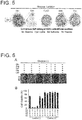
- murine neonatal CMs were cultured for about 24 hours under each of the aforementioned culture conditions, the cells were stained using a live/dead cell double staining kit (TaKaRa Bio, Inc.), imaged ( FIGs. 3A and 6A ), and counted to determine their cell survival rates ( FIGs. 3B and 6B ).
- FIG. 3 shows the results of observing the survival or death of the undifferentiated SCs (hESCs) cultured under the different conditions free of any one of the different nonessential amino acids which were highly consumed as per FIG. 1 , and on that basis, determining their cell survival rates.
- FIG. 6 shows the results obtained in the same way by observing the survival or death of the murine neonatal CMs cultured under the different conditions free of any one of the different nonessential amino acids which were highly consumed as per FIG. 1 , and on that basis, by determining their cell survival rates.
- This example was intended to clarify the procedure for inducing CM differentiation from hiPSCs.
- CMs into which hiPSCs were induced to differentiate were investigated to see what amino acids are required by the differentiated CMs under culture conditions.
- FIG. 7 shows the photos of the cells that were cultured for 3 days in a glucose-supplemented medium ( FIG. 7A ), a glucose-free, lactate-supplemented medium ( Cell Stem Cell, 2013 12:127-37 ) (Gluc - , All + , Lactate + ) ( FIG. 7B ) or a lactate-supplemented, glucose-and glutamine-free medium (Gluc - , Gln - , Lactate + ) ( FIG. 7C ), and then subjected to immunostaining.
- the cells were immobilized with 4% paraformaldehyde for 15-30 minutes, and then stained with DAPI (Invitrogen) for cell nuclei, and with Anti- ⁇ -Actinin Antibody (Sigma) and Alexa 546 Donkey Anti-Mouse IgG (Invitrogen) for striated structures, to thereby detect fluorescence emissions.
- DAPI Invitrogen
- Anti- ⁇ -Actinin Antibody Sigma
- Alexa 546 Donkey Anti-Mouse IgG Invitrogen
- CMs can be selectively picked up more efficiently and in a shorter time by culturing CMs induced from hESCs or hiPSCs (i.e., CMs in admixture with undifferentiated SCs and non-CMs) under the lactate-supplemented, glucose- and glutamine-free culture condition (Gluc - , Gln - , Lactate + ), as compared to the case of culturing the cells under the lactate-supplemented, glucose-free culture condition (with glutamine) (Gluc - , Gln + , Lactate + ) ( FIG. 7B ).
- FIG. 8 shows the CM masses that were cultured for 4 days in the lactate-supplemented, glucose- and glutamine-free medium (Gluc - , Gln - , Lactate + ), dissociated with 0.25% Trypsin EDTA, seeded on a culture dish coated with fibronectin (Sigma), and subjected to immunostaining.
- the cells were immobilized with 4% paraformaldehyde and then stained with Anti- ⁇ -Actinin Antibody (Sigma), Anti-Troponin I Antibody (Santacruz), and Anti-Tra1-60 (Millipore).
- ⁇ -Actinin and Troponin I are CM-specific markers
- Tral-60 is a PSC-specific marker.
- Example 7 Lactate Fluxome (Metabolic Flux) Analysis in CMs under Culture in Glucose- and Glutamine-free Medium
- the culture medium was switched to modified glucose-free DMEM (Invitrogen) supplemented with 4 mM [ 13 C]-labeled lactate (Isotec). After one hour, the cells were washed in 10% mannitol (Wako) and plunged into methanol containing internal standards (200 ⁇ M L-methionine sulfone for cations, and 200 ⁇ M MES for anions).
- modified glucose-free DMEM Invitrogen
- Isotec [ 13 C]-labeled lactate
- capillary electrophoresis and mass spectrometry were conducted using an Agilent capillary electrophoresis system equipped with an air pressure pump, an Agilent 1100 series mass selective detector mass spectrometer, an Agilent 1100 series isocratic high-performance liquid-chromatography pump, a G1603A Agilent capillary electrophoresis and mass spectrometry adaptor kit, and a G1607A Agilent capillary electrophoresis and mass spectrometry sprayer kit (Agilent Technologies). Values were corrected against cell numbers. In CMs, metabolites of the TCA cycle were detected in significantly large amounts ( FIGs. 10A, 10B ).
- hiPSCs were induced to differentiate into CMs.
- hiPSC-CMs For refinement and purification of the obtained cell group (hiPSC-CMs), there was prepared a lactate-supplemented, glucose- and glutamine-free medium (Gluc - , Gln - , Lac + ) on the basis of the constitution of DMEM (Invitrogen), and the cell group was cultured in the prepared medium for 5 days.
- CMs can be purified by performing cell culture under the glucose- and glutamine-free condition supplemented with lactate as an energy source for CMs (Gluc - , Gln - , Lac + ).
- hESCs used as undifferentiated SCs and murine neonatal CMs used as CMs, can survive when cultured under a pyruvate-supplemented, glutamine-free culture condition.
- Gluc - , ALL + " condition a medium containing all amino acids in the basis constitution of DMEM
- Gluc - , Gln - " condition a medium free of glutamine in the basis constitution of DMEM but supplemented with 4 mM ⁇ -ketoglutarate
- Gluc - , Gln - , DM- ⁇ KG + " a medium free of glutamine in the basis constitution of DMEM but supplemented with 2 mM pyruvate
- 2 mM pyruvate Gluc - , Gln - , Pyr + "
- hESCs were cultured for 48 hours. Then, the hESCs were determined for their alkaline phosphatase (ALP) activity by coloring them with StemTAGTM Alkaline Phosphatase Staining Kit (Sigma 86-R) and observing those cells stained red as viable cells ( FIG. 12 ).
- ALP-positive undifferentiated cell colonies were observed in large numbers in the ⁇ -ketoglutarate-supplemented medium, whereas no ALP-positive undifferentiated cell colony was present in the pyruvate-supplemented medium. This revealed that under a glutamate-free condition, undifferentiated cells undergo cell death in a short time even in the presence of pyruvate.
- CMs for the purpose of use in murine neonatal CMs, there were prepared, on the basis of the constitution of glucose-free DMEM (Invitrogen), a medium containing all amino acids in the basis constitution of DMEM (Gluc - , ALL + ), a medium free of glutamine in the basis constitution of DMEM (Gluc - , Gln - ), a medium free of glutamine in the basis constitution of DMEM but supplemented with 2 mM pyruvate (Gluc - , Gln - , Pyr + ), and a medium free of glutamine in the basis constitution of DMEM but supplemented with 4 mM lactate (Gluc - , Gln - , Lac + ).
- glucose-free DMEM Invitrogen
- Gluc - , ALL + a medium containing all amino acids in the basis constitution of DMEM
- Gluc - , ALL + a medium free of glutamine in the basis constitution of DM
- Murine neonatal CMs were cultured for 48 hours in each of the aforementioned culture media, stained with a live/dead cell double staining kit (TaKaRa Bio, Inc.), and imaged ( FIG. 13 ). Green-stained cells represent viable cells, while red-stained cells represent apoptotic cells. Under a glucose- and glutamine-free culture condition, the survival rate of the CMs cultured in the presence of lactate or pyruvate as an energy source for CMs was significantly higher than that of the CMs cultured in the absence of lactate and pyruvate. This revealed that the cell death-inducing activity of a glutamine-free medium (Gln - ) on CMs is reduced by adding pyruvate.
- Gln - glutamine-free medium
- This example investigated the detection sensitivity of another detection method for residual undifferentiated SCs using a combination of laminin-521 and Essential 8 medium ( Tano, et al., PLOS ONE, 2014 ).
- the method using mTeSR1 as a culture medium and iMatrix (produced by Nippi, Inc.) as a scaffolding material was evaluated for its sensitivity in detecting undifferentiated SCs.
- HEK293 cell groups each mixed with no hiPSCs (0%) or with 0.1%, 0.01% or 0.001% hiPSCs were imaged ( FIG. 14A ). Since hiPSCs were detected even in the cell group mixed with 0.001% hiPSCs, it was confirmed that this detection method is capable of detecting undifferentiated SCs present in a proportion as low as 0.001%.
- TRA1-60-positive cells were observed in the cell group before refinement and purification, and in the cell group refined and purified under the 4mM lactate-supplemented, glucose-free, and 4 mM glutamine-supplemented condition (Gluc - , Gln + , Lac + ). In contrast, no TRA1-60-positive cells were detected in the cell group refined and purified under the lactate-supplemented, glucose- and glutamine-free condition (Gluc - , Gln - , Lac + ).
- This example investigated the cell death-inducing activity of a glutamine-free culture medium on proliferative non-CMs.
- hESCs were cultured under the condition of DMEM (with 10% FBS, without bFGF) for 2 weeks to obtain a proliferative non-CM group not including CMs.
- This cell group includes fibroblasts and other differentiated cells than CMs.
- After the cell group was cultured for 48 hours under a glucose-free, 4 mM glutamine-supplemented culture condition (Gluc - , Gln + ) based on the constitution of DMEM (Invitrogen), viable cells were observed to be present ( FIG. 15 ).
- proliferative non-CMs can be induced to undergo cell death under the lactate-supplemented, glucose- and glutamine-free condition.
- tumor formation after cell transplantation is caused not only by undifferentiated SCs but also by immature proliferative cells ( Nori, et al., Stem Cell Report, 2015 ).
- this inventive method can induce cell death of not only undifferentiated SCs but also proliferative cells in a short time.
- Example 12 Compounds That Can be Added to Purification Media
- This example searched for a condition under which undifferentiated SCs and differentiated non-CMs do not survive but only CMs can survive for a longer time when cell culture was performed in a purification culture medium supplemented with a compound that is nutritional for CMs.
- hiPSCs were cultured in each of the prepared media. After 24 hours from the start of culture, the hiPSCs cultured in both of the media were observed to undergo cell death ( FIG. 16 ).
- hiPSCs were cultured under the condition of DMEM (with 10% FBS, without bFGF) for 2 weeks to obtain a proliferative non-CM group not including CMs.
- the obtained cell group was cultured in each of the prepared media. After 48 hours from the start of culture, the cells were observed to undergo cell death ( FIG. 17 ).
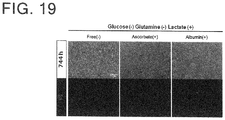
- CMs were observed to survive ( FIG. 18 ).
- CMs can be purified using each of the glucose- and glutamine-free culture media which are supplemented with lactate as an energy source for CMs and further supplemented with ascorbate or albumin. The results also showed that CMs can be allowed to survive for a longer time by using these inventive culture media.
- a cell culture medium for use in inducing cell death of undifferentiated SCs by preparing a cell culture medium that is free of glutamine in the amino acid profile.
- undifferentiated SCs can be easily induced to undergo cell death.
- a cell culture medium for use in selecting CMs by preparing a cell culture medium that is supplemented with lactate, pyruvate or a fatty acid, free of sugar (glucose), and free of glutamine in the amino acid profile.
- undifferentiated SCs such as PSCs including hESCs and hiPSCs, as well as other differentiated cells than CMs, and established cells, as defined below, can be easily induced to undergo cell death, and consequently, CMs can be selected.
Landscapes
- Health & Medical Sciences (AREA)
- Engineering & Computer Science (AREA)
- Life Sciences & Earth Sciences (AREA)
- Biomedical Technology (AREA)
- Chemical & Material Sciences (AREA)
- Biotechnology (AREA)
- Organic Chemistry (AREA)
- Wood Science & Technology (AREA)
- Zoology (AREA)
- Bioinformatics & Cheminformatics (AREA)
- Genetics & Genomics (AREA)
- General Health & Medical Sciences (AREA)
- General Engineering & Computer Science (AREA)
- Microbiology (AREA)
- Biochemistry (AREA)
- Cell Biology (AREA)
- Developmental Biology & Embryology (AREA)
- Cardiology (AREA)
- Rheumatology (AREA)
- Molecular Biology (AREA)
- Proteomics, Peptides & Aminoacids (AREA)
- Neurosurgery (AREA)
- Hematology (AREA)
- Neurology (AREA)
- Toxicology (AREA)
- Physics & Mathematics (AREA)
- Analytical Chemistry (AREA)
- Biophysics (AREA)
- Immunology (AREA)
- Micro-Organisms Or Cultivation Processes Thereof (AREA)
Applications Claiming Priority (2)
| Application Number | Priority Date | Filing Date | Title |
|---|---|---|---|
| JP2014146283 | 2014-07-16 | ||
| PCT/JP2015/071048 WO2016010165A1 (fr) | 2014-07-16 | 2015-07-16 | Nouvelle élimination de cellules souches non différenciées et nouveau milieu de culture de purification et d'affinage du myocarde |
Publications (3)
| Publication Number | Publication Date |
|---|---|
| EP3170894A1 true EP3170894A1 (fr) | 2017-05-24 |
| EP3170894A4 EP3170894A4 (fr) | 2018-01-24 |
| EP3170894B1 EP3170894B1 (fr) | 2020-04-01 |
Family
ID=55078650
Family Applications (1)
| Application Number | Title | Priority Date | Filing Date |
|---|---|---|---|
| EP15821596.2A Active EP3170894B1 (fr) | 2014-07-16 | 2015-07-16 | Nouvelle élimination de cellules souches non différenciées et nouveau milieu de culture de purification et d'affinage du myocarde |
Country Status (12)
| Country | Link |
|---|---|
| US (1) | US20170327787A1 (fr) |
| EP (1) | EP3170894B1 (fr) |
| JP (1) | JP6333378B2 (fr) |
| KR (1) | KR102241348B1 (fr) |
| CN (1) | CN107075475B (fr) |
| AU (1) | AU2015290571B2 (fr) |
| BR (1) | BR112016030723B8 (fr) |
| CA (1) | CA2954242C (fr) |
| IL (1) | IL249813B (fr) |
| RU (1) | RU2728188C2 (fr) |
| SG (1) | SG11201700023WA (fr) |
| WO (1) | WO2016010165A1 (fr) |
Families Citing this family (12)
| Publication number | Priority date | Publication date | Assignee | Title |
|---|---|---|---|---|
| WO2018074457A1 (fr) * | 2016-10-17 | 2018-04-26 | 学校法人慶應義塾 | Agent d'élimination de cellules souches indifférenciées, et procédé associé |
| JP2018093823A (ja) | 2016-12-15 | 2018-06-21 | Heartseed株式会社 | 未分化幹細胞除去剤及び未分化幹細胞除去方法 |
| CA3058306A1 (fr) * | 2017-03-28 | 2018-10-04 | Ajinomoto Co., Inc. | Additif pour milieu de maintien de dedifferenciation |
| KR101994035B1 (ko) * | 2018-02-14 | 2019-06-27 | (주) 넥셀 | 세포 분화 및 성숙을 통한 인간 전분화능 줄기세포 유래 기능성 심근세포의 제조 방법 |
| EP3868869A4 (fr) * | 2018-10-15 | 2022-08-03 | Public University Corporation Yokohama City University | Composition nutritionnelle |
| WO2021187602A1 (fr) * | 2020-03-19 | 2021-09-23 | 国立大学法人京都大学 | Procédé de purification de cardiomyocytes |
| CN111500532B (zh) * | 2020-04-14 | 2024-10-11 | 上海中医大生物科技有限公司 | 心肌细胞诱导和生长培养基 |
| CN111621470B (zh) * | 2020-06-08 | 2023-06-27 | 广东源心再生医学有限公司 | 一种高效低毒的心肌纯化培养基及方法 |
| CN114591895B (zh) * | 2022-04-12 | 2025-07-22 | 澳门大学 | 一种诱导干细胞分化为心肌细胞的方法及其培养基组合 |
| WO2024173685A1 (fr) * | 2023-02-15 | 2024-08-22 | The Board Of Trustees Of The Leland Stanford Junior University | Sélection métabolique pour cellules de stockage de glycogène in vitro |
| WO2024248109A1 (fr) | 2023-05-30 | 2024-12-05 | Heartseed株式会社 | Groupe de cardiomyocytes, composition pharmaceutique, procédé de production de groupe de cardiomyocytes et sphère myocardique |
| WO2026014432A1 (fr) * | 2024-07-09 | 2026-01-15 | 慶應義塾 | Procédé de production d'une population cellulaire sélectionnée et milieu de culture de sélection |
Family Cites Families (13)
| Publication number | Priority date | Publication date | Assignee | Title |
|---|---|---|---|---|
| JPWO2002024875A1 (ja) * | 2000-09-22 | 2004-01-29 | 北海道ティー・エル・オー株式会社 | 正常ヒト成熟肝細胞用培養液 |
| DE10226455A1 (de) * | 2002-06-13 | 2003-12-24 | Ruediger Alt | Verfahren zur Kultivierung von Säugerzellen mit verminderter Hemmstoffproduktion |
| DE602005002829T2 (de) * | 2004-03-01 | 2008-07-10 | Ares Trading S.A. | Verwendung eines serumfreien zellkulturmediums zur produktion von il-18bp in säugerzellen |
| CA2577201C (fr) | 2004-08-27 | 2016-02-09 | Daiichi Asubio Pharma Co., Ltd. | Methode de selection d'un cardiomyocyte en utilisant les mitochondries intracellulaires comme indicateur |
| KR101455144B1 (ko) * | 2006-01-31 | 2014-10-27 | 다이이찌 산쿄 가부시키가이샤 | 줄기세포 및 태아에서 유래된 심근세포 및 예정 심근세포의 제조방법 |
| RU2340177C1 (ru) * | 2007-05-14 | 2008-12-10 | Всероссийский государственный научно-исследовательский институт животноводства (ВИЖ) | Способ получения эмбрионов свиней in vitro |
| RU2467066C2 (ru) | 2007-07-31 | 2012-11-20 | Дайити Санкио Комани, Лимитед | Способ конструирования массы миокардиальных клеток и применение массы миокардиальных клеток |
| ES2695999T3 (es) * | 2007-10-12 | 2019-01-11 | Hoffmann La Roche | Expresión de proteínas a partir de múltiples ácidos nucleicos |
| CN102449139B (zh) | 2009-03-30 | 2016-08-24 | 第一三共株式会社 | 对多能性干细胞和心肌细胞以外的分化细胞诱导细胞死亡的方法 |
| WO2011019619A1 (fr) * | 2009-08-11 | 2011-02-17 | Genentech, Inc. | Production de protéines dans des milieux de culture cellulaire sans glutamine |
| KR20120085284A (ko) | 2009-10-30 | 2012-07-31 | 각고호우징 게이오기주크 | 전위 감수성 형광 색소의 형광 강도 측정 방법 |
| KR101590603B1 (ko) * | 2012-10-12 | 2016-02-01 | 서강대학교산학협력단 | 미분화 인간 유도만능줄기세포의 선택적 세포사멸 유도를 통한 테라토마 형성 억제 방법 |
| WO2015148515A1 (fr) * | 2014-03-24 | 2015-10-01 | Biogen Ma Inc. | Procédés pour pallier la carence en glutamine pendant la culture de cellules de mammifères |
-
2015
- 2015-07-16 SG SG11201700023WA patent/SG11201700023WA/en unknown
- 2015-07-16 KR KR1020177002462A patent/KR102241348B1/ko active Active
- 2015-07-16 US US15/325,980 patent/US20170327787A1/en active Pending
- 2015-07-16 RU RU2017104838A patent/RU2728188C2/ru active
- 2015-07-16 BR BR112016030723A patent/BR112016030723B8/pt active IP Right Grant
- 2015-07-16 CN CN201580040284.XA patent/CN107075475B/zh active Active
- 2015-07-16 CA CA2954242A patent/CA2954242C/fr active Active
- 2015-07-16 JP JP2016534516A patent/JP6333378B2/ja active Active
- 2015-07-16 EP EP15821596.2A patent/EP3170894B1/fr active Active
- 2015-07-16 WO PCT/JP2015/071048 patent/WO2016010165A1/fr not_active Ceased
- 2015-07-16 AU AU2015290571A patent/AU2015290571B2/en active Active
-
2016
- 2016-12-28 IL IL249813A patent/IL249813B/en active IP Right Grant
Also Published As
| Publication number | Publication date |
|---|---|
| KR20170031152A (ko) | 2017-03-20 |
| EP3170894A4 (fr) | 2018-01-24 |
| JP6333378B2 (ja) | 2018-05-30 |
| WO2016010165A1 (fr) | 2016-01-21 |
| IL249813B (en) | 2019-03-31 |
| CN107075475A (zh) | 2017-08-18 |
| US20170327787A1 (en) | 2017-11-16 |
| CA2954242C (fr) | 2024-02-13 |
| RU2017104838A (ru) | 2018-08-16 |
| BR112016030723A2 (fr) | 2017-08-22 |
| CN107075475B (zh) | 2021-04-27 |
| AU2015290571B2 (en) | 2021-03-04 |
| KR102241348B1 (ko) | 2021-04-15 |
| CA2954242A1 (fr) | 2016-01-21 |
| BR112016030723B1 (pt) | 2024-01-09 |
| EP3170894B1 (fr) | 2020-04-01 |
| IL249813A0 (en) | 2017-03-30 |
| BR112016030723B8 (pt) | 2024-02-27 |
| AU2015290571A1 (en) | 2017-01-19 |
| RU2728188C2 (ru) | 2020-07-28 |
| RU2017104838A3 (fr) | 2018-10-24 |
| SG11201700023WA (en) | 2017-02-27 |
| JPWO2016010165A1 (ja) | 2017-04-27 |
Similar Documents
| Publication | Publication Date | Title |
|---|---|---|
| EP3170894B1 (fr) | Nouvelle élimination de cellules souches non différenciées et nouveau milieu de culture de purification et d'affinage du myocarde | |
| DK2737056T3 (en) | Metabolic maturation in stem cell-derived tissue cells | |
| Pei et al. | Chemical-defined and albumin-free generation of human atrial and ventricular myocytes from human pluripotent stem cells | |
| JP5938726B2 (ja) | 多能性幹細胞の分化誘導効率を改善するための方法及び培地 | |
| Dringen et al. | Metabolism of glycine in primary astroglial cells: synthesis of creatine, serine, and glutathione | |
| EP3770250A1 (fr) | Promoteur de différenciation pour cellules souches pluripotentes | |
| CN111480080A (zh) | 通过实时谷胱甘肽测量改善治疗细胞质量的方法 | |
| Munoz et al. | Gas chromatography–mass spectrometry analysis of human mesenchymal stem cell metabolism during proliferation and osteogenic differentiation under different oxygen tensions | |
| EP3964565A1 (fr) | Procédé in vitro permettant de différencier une population humaine de cellules souches pluripotentes d'une population de cellules de cardiomyocytes | |
| Madonna et al. | Glucose metabolism, hyperosmotic stress, and reprogramming of somatic cells | |
| JP6677648B2 (ja) | 細胞の増殖及び多能性の調節 | |
| KR20180132787A (ko) | 신경 분화능을 항진시키는 신경 줄기 세포용 배지 | |
| US8759098B2 (en) | Method for cloning pluripotent stem cells | |
| Surrati et al. | Non-destructive metabolomics characterization of mesenchymal stem cell differentiation | |
| KR102198705B1 (ko) | 줄기세포의 증식 및 전능성 증진용 조성물 | |
| Okano et al. | Citrin-deficient patient-derived induced pluripotent stem cells as a pathological liver model for congenital urea cycle disorders | |
| Chung et al. | Possible fetal bovine serum-reduced boost cultivation of DF-1 by supplementation with plant peptones and yeast extracts: J. Chung et al. | |
| Hartley | The effect of in vitro culture conditions on cell metabolism | |
| Bazán et al. | Endogenous amino acid profile during in vitro differentiation of neural stem cells | |
| EP2962099A1 (fr) | Dosage permettant de déterminer le nombre de cellules dans une culture cellulaire | |
| RU2013139034A (ru) | Способ получения прогениторных клеток миокарда | |
| US20190127691A1 (en) | Metabolic Pressure for Stem Cell Differentiation and Purification |
Legal Events
| Date | Code | Title | Description |
|---|---|---|---|
| STAA | Information on the status of an ep patent application or granted ep patent |
Free format text: STATUS: THE INTERNATIONAL PUBLICATION HAS BEEN MADE |
|
| PUAI | Public reference made under article 153(3) epc to a published international application that has entered the european phase |
Free format text: ORIGINAL CODE: 0009012 |
|
| STAA | Information on the status of an ep patent application or granted ep patent |
Free format text: STATUS: REQUEST FOR EXAMINATION WAS MADE |
|
| 17P | Request for examination filed |
Effective date: 20170216 |
|
| AK | Designated contracting states |
Kind code of ref document: A1 Designated state(s): AL AT BE BG CH CY CZ DE DK EE ES FI FR GB GR HR HU IE IS IT LI LT LU LV MC MK MT NL NO PL PT RO RS SE SI SK SM TR |
|
| AX | Request for extension of the european patent |
Extension state: BA ME |
|
| DAV | Request for validation of the european patent (deleted) | ||
| DAX | Request for extension of the european patent (deleted) | ||
| A4 | Supplementary search report drawn up and despatched |
Effective date: 20180102 |
|
| RIC1 | Information provided on ipc code assigned before grant |
Ipc: C12N 5/0735 20100101ALI20171219BHEP Ipc: C12N 5/077 20100101AFI20171219BHEP |
|
| STAA | Information on the status of an ep patent application or granted ep patent |
Free format text: STATUS: EXAMINATION IS IN PROGRESS |
|
| 17Q | First examination report despatched |
Effective date: 20181204 |
|
| GRAP | Despatch of communication of intention to grant a patent |
Free format text: ORIGINAL CODE: EPIDOSNIGR1 |
|
| STAA | Information on the status of an ep patent application or granted ep patent |
Free format text: STATUS: GRANT OF PATENT IS INTENDED |
|
| INTG | Intention to grant announced |
Effective date: 20191015 |
|
| GRAS | Grant fee paid |
Free format text: ORIGINAL CODE: EPIDOSNIGR3 |
|
| GRAA | (expected) grant |
Free format text: ORIGINAL CODE: 0009210 |
|
| STAA | Information on the status of an ep patent application or granted ep patent |
Free format text: STATUS: THE PATENT HAS BEEN GRANTED |
|
| AK | Designated contracting states |
Kind code of ref document: B1 Designated state(s): AL AT BE BG CH CY CZ DE DK EE ES FI FR GB GR HR HU IE IS IT LI LT LU LV MC MK MT NL NO PL PT RO RS SE SI SK SM TR |
|
| REG | Reference to a national code |
Ref country code: GB Ref legal event code: FG4D |
|
| REG | Reference to a national code |
Ref country code: AT Ref legal event code: REF Ref document number: 1251355 Country of ref document: AT Kind code of ref document: T Effective date: 20200415 Ref country code: CH Ref legal event code: NV Representative=s name: E. BLUM AND CO. AG PATENT- UND MARKENANWAELTE , CH Ref country code: CH Ref legal event code: EP |
|
| REG | Reference to a national code |
Ref country code: DE Ref legal event code: R096 Ref document number: 602015049984 Country of ref document: DE |
|
| REG | Reference to a national code |
Ref country code: IE Ref legal event code: FG4D |
|
| REG | Reference to a national code |
Ref country code: SE Ref legal event code: TRGR |
|
| REG | Reference to a national code |
Ref country code: NL Ref legal event code: FP |
|
| PG25 | Lapsed in a contracting state [announced via postgrant information from national office to epo] |
Ref country code: BG Free format text: LAPSE BECAUSE OF FAILURE TO SUBMIT A TRANSLATION OF THE DESCRIPTION OR TO PAY THE FEE WITHIN THE PRESCRIBED TIME-LIMIT Effective date: 20200701 |
|
| REG | Reference to a national code |
Ref country code: LT Ref legal event code: MG4D |
|
| PG25 | Lapsed in a contracting state [announced via postgrant information from national office to epo] |
Ref country code: CZ Free format text: LAPSE BECAUSE OF FAILURE TO SUBMIT A TRANSLATION OF THE DESCRIPTION OR TO PAY THE FEE WITHIN THE PRESCRIBED TIME-LIMIT Effective date: 20200401 Ref country code: NO Free format text: LAPSE BECAUSE OF FAILURE TO SUBMIT A TRANSLATION OF THE DESCRIPTION OR TO PAY THE FEE WITHIN THE PRESCRIBED TIME-LIMIT Effective date: 20200701 Ref country code: GR Free format text: LAPSE BECAUSE OF FAILURE TO SUBMIT A TRANSLATION OF THE DESCRIPTION OR TO PAY THE FEE WITHIN THE PRESCRIBED TIME-LIMIT Effective date: 20200702 Ref country code: IS Free format text: LAPSE BECAUSE OF FAILURE TO SUBMIT A TRANSLATION OF THE DESCRIPTION OR TO PAY THE FEE WITHIN THE PRESCRIBED TIME-LIMIT Effective date: 20200801 Ref country code: FI Free format text: LAPSE BECAUSE OF FAILURE TO SUBMIT A TRANSLATION OF THE DESCRIPTION OR TO PAY THE FEE WITHIN THE PRESCRIBED TIME-LIMIT Effective date: 20200401 Ref country code: LT Free format text: LAPSE BECAUSE OF FAILURE TO SUBMIT A TRANSLATION OF THE DESCRIPTION OR TO PAY THE FEE WITHIN THE PRESCRIBED TIME-LIMIT Effective date: 20200401 Ref country code: PT Free format text: LAPSE BECAUSE OF FAILURE TO SUBMIT A TRANSLATION OF THE DESCRIPTION OR TO PAY THE FEE WITHIN THE PRESCRIBED TIME-LIMIT Effective date: 20200817 |
|
| REG | Reference to a national code |
Ref country code: AT Ref legal event code: MK05 Ref document number: 1251355 Country of ref document: AT Kind code of ref document: T Effective date: 20200401 |
|
| PG25 | Lapsed in a contracting state [announced via postgrant information from national office to epo] |
Ref country code: LV Free format text: LAPSE BECAUSE OF FAILURE TO SUBMIT A TRANSLATION OF THE DESCRIPTION OR TO PAY THE FEE WITHIN THE PRESCRIBED TIME-LIMIT Effective date: 20200401 Ref country code: RS Free format text: LAPSE BECAUSE OF FAILURE TO SUBMIT A TRANSLATION OF THE DESCRIPTION OR TO PAY THE FEE WITHIN THE PRESCRIBED TIME-LIMIT Effective date: 20200401 Ref country code: HR Free format text: LAPSE BECAUSE OF FAILURE TO SUBMIT A TRANSLATION OF THE DESCRIPTION OR TO PAY THE FEE WITHIN THE PRESCRIBED TIME-LIMIT Effective date: 20200401 |
|
| PG25 | Lapsed in a contracting state [announced via postgrant information from national office to epo] |
Ref country code: AL Free format text: LAPSE BECAUSE OF FAILURE TO SUBMIT A TRANSLATION OF THE DESCRIPTION OR TO PAY THE FEE WITHIN THE PRESCRIBED TIME-LIMIT Effective date: 20200401 |
|
| REG | Reference to a national code |
Ref country code: DE Ref legal event code: R097 Ref document number: 602015049984 Country of ref document: DE |
|
| PG25 | Lapsed in a contracting state [announced via postgrant information from national office to epo] |
Ref country code: RO Free format text: LAPSE BECAUSE OF FAILURE TO SUBMIT A TRANSLATION OF THE DESCRIPTION OR TO PAY THE FEE WITHIN THE PRESCRIBED TIME-LIMIT Effective date: 20200401 Ref country code: AT Free format text: LAPSE BECAUSE OF FAILURE TO SUBMIT A TRANSLATION OF THE DESCRIPTION OR TO PAY THE FEE WITHIN THE PRESCRIBED TIME-LIMIT Effective date: 20200401 Ref country code: IT Free format text: LAPSE BECAUSE OF FAILURE TO SUBMIT A TRANSLATION OF THE DESCRIPTION OR TO PAY THE FEE WITHIN THE PRESCRIBED TIME-LIMIT Effective date: 20200401 Ref country code: EE Free format text: LAPSE BECAUSE OF FAILURE TO SUBMIT A TRANSLATION OF THE DESCRIPTION OR TO PAY THE FEE WITHIN THE PRESCRIBED TIME-LIMIT Effective date: 20200401 Ref country code: SM Free format text: LAPSE BECAUSE OF FAILURE TO SUBMIT A TRANSLATION OF THE DESCRIPTION OR TO PAY THE FEE WITHIN THE PRESCRIBED TIME-LIMIT Effective date: 20200401 Ref country code: DK Free format text: LAPSE BECAUSE OF FAILURE TO SUBMIT A TRANSLATION OF THE DESCRIPTION OR TO PAY THE FEE WITHIN THE PRESCRIBED TIME-LIMIT Effective date: 20200401 Ref country code: ES Free format text: LAPSE BECAUSE OF FAILURE TO SUBMIT A TRANSLATION OF THE DESCRIPTION OR TO PAY THE FEE WITHIN THE PRESCRIBED TIME-LIMIT Effective date: 20200401 |
|
| PLBE | No opposition filed within time limit |
Free format text: ORIGINAL CODE: 0009261 |
|
| STAA | Information on the status of an ep patent application or granted ep patent |
Free format text: STATUS: NO OPPOSITION FILED WITHIN TIME LIMIT |
|
| PG25 | Lapsed in a contracting state [announced via postgrant information from national office to epo] |
Ref country code: SK Free format text: LAPSE BECAUSE OF FAILURE TO SUBMIT A TRANSLATION OF THE DESCRIPTION OR TO PAY THE FEE WITHIN THE PRESCRIBED TIME-LIMIT Effective date: 20200401 Ref country code: PL Free format text: LAPSE BECAUSE OF FAILURE TO SUBMIT A TRANSLATION OF THE DESCRIPTION OR TO PAY THE FEE WITHIN THE PRESCRIBED TIME-LIMIT Effective date: 20200401 Ref country code: MC Free format text: LAPSE BECAUSE OF FAILURE TO SUBMIT A TRANSLATION OF THE DESCRIPTION OR TO PAY THE FEE WITHIN THE PRESCRIBED TIME-LIMIT Effective date: 20200401 |
|
| 26N | No opposition filed |
Effective date: 20210112 |
|
| REG | Reference to a national code |
Ref country code: BE Ref legal event code: MM Effective date: 20200731 |
|
| PG25 | Lapsed in a contracting state [announced via postgrant information from national office to epo] |
Ref country code: LU Free format text: LAPSE BECAUSE OF NON-PAYMENT OF DUE FEES Effective date: 20200716 |
|
| PG25 | Lapsed in a contracting state [announced via postgrant information from national office to epo] |
Ref country code: SI Free format text: LAPSE BECAUSE OF FAILURE TO SUBMIT A TRANSLATION OF THE DESCRIPTION OR TO PAY THE FEE WITHIN THE PRESCRIBED TIME-LIMIT Effective date: 20200401 Ref country code: BE Free format text: LAPSE BECAUSE OF NON-PAYMENT OF DUE FEES Effective date: 20200731 |
|
| PG25 | Lapsed in a contracting state [announced via postgrant information from national office to epo] |
Ref country code: IE Free format text: LAPSE BECAUSE OF NON-PAYMENT OF DUE FEES Effective date: 20200716 |
|
| PG25 | Lapsed in a contracting state [announced via postgrant information from national office to epo] |
Ref country code: TR Free format text: LAPSE BECAUSE OF FAILURE TO SUBMIT A TRANSLATION OF THE DESCRIPTION OR TO PAY THE FEE WITHIN THE PRESCRIBED TIME-LIMIT Effective date: 20200401 Ref country code: MT Free format text: LAPSE BECAUSE OF FAILURE TO SUBMIT A TRANSLATION OF THE DESCRIPTION OR TO PAY THE FEE WITHIN THE PRESCRIBED TIME-LIMIT Effective date: 20200401 Ref country code: CY Free format text: LAPSE BECAUSE OF FAILURE TO SUBMIT A TRANSLATION OF THE DESCRIPTION OR TO PAY THE FEE WITHIN THE PRESCRIBED TIME-LIMIT Effective date: 20200401 |
|
| PG25 | Lapsed in a contracting state [announced via postgrant information from national office to epo] |
Ref country code: MK Free format text: LAPSE BECAUSE OF FAILURE TO SUBMIT A TRANSLATION OF THE DESCRIPTION OR TO PAY THE FEE WITHIN THE PRESCRIBED TIME-LIMIT Effective date: 20200401 |
|
| P01 | Opt-out of the competence of the unified patent court (upc) registered |
Effective date: 20230508 |
|
| PGFP | Annual fee paid to national office [announced via postgrant information from national office to epo] |
Ref country code: NL Payment date: 20250721 Year of fee payment: 11 |
|
| PGFP | Annual fee paid to national office [announced via postgrant information from national office to epo] |
Ref country code: DE Payment date: 20250722 Year of fee payment: 11 |
|
| PGFP | Annual fee paid to national office [announced via postgrant information from national office to epo] |
Ref country code: GB Payment date: 20250722 Year of fee payment: 11 |
|
| PGFP | Annual fee paid to national office [announced via postgrant information from national office to epo] |
Ref country code: FR Payment date: 20250725 Year of fee payment: 11 |
|
| PGFP | Annual fee paid to national office [announced via postgrant information from national office to epo] |
Ref country code: SE Payment date: 20250722 Year of fee payment: 11 Ref country code: CH Payment date: 20250801 Year of fee payment: 11 |