EP3174302B1 - System und verfahren zur dynamischen optimierung der videoqualität während der videoübertragung - Google Patents
System und verfahren zur dynamischen optimierung der videoqualität während der videoübertragung Download PDFInfo
- Publication number
- EP3174302B1 EP3174302B1 EP16154135.4A EP16154135A EP3174302B1 EP 3174302 B1 EP3174302 B1 EP 3174302B1 EP 16154135 A EP16154135 A EP 16154135A EP 3174302 B1 EP3174302 B1 EP 3174302B1
- Authority
- EP
- European Patent Office
- Prior art keywords
- video
- transmission parameters
- quality
- video transmission
- predefined
- Prior art date
- Legal status (The legal status is an assumption and is not a legal conclusion. Google has not performed a legal analysis and makes no representation as to the accuracy of the status listed.)
- Active
Links
Images




Classifications
-
- H—ELECTRICITY
- H04—ELECTRIC COMMUNICATION TECHNIQUE
- H04N—PICTORIAL COMMUNICATION, e.g. TELEVISION
- H04N21/00—Selective content distribution, e.g. interactive television or video on demand [VOD]
- H04N21/20—Servers specifically adapted for the distribution of content, e.g. VOD servers; Operations thereof
- H04N21/23—Processing of content or additional data; Elementary server operations; Server middleware
- H04N21/24—Monitoring of processes or resources, e.g. monitoring of server load, available bandwidth, upstream requests
- H04N21/2404—Monitoring of server processing errors or hardware failure
-
- H—ELECTRICITY
- H04—ELECTRIC COMMUNICATION TECHNIQUE
- H04L—TRANSMISSION OF DIGITAL INFORMATION, e.g. TELEGRAPHIC COMMUNICATION
- H04L65/00—Network arrangements, protocols or services for supporting real-time applications in data packet communication
- H04L65/80—Responding to QoS
-
- H—ELECTRICITY
- H04—ELECTRIC COMMUNICATION TECHNIQUE
- H04N—PICTORIAL COMMUNICATION, e.g. TELEVISION
- H04N17/00—Diagnosis, testing or measuring for television systems or their details
-
- H—ELECTRICITY
- H04—ELECTRIC COMMUNICATION TECHNIQUE
- H04N—PICTORIAL COMMUNICATION, e.g. TELEVISION
- H04N21/00—Selective content distribution, e.g. interactive television or video on demand [VOD]
- H04N21/20—Servers specifically adapted for the distribution of content, e.g. VOD servers; Operations thereof
- H04N21/23—Processing of content or additional data; Elementary server operations; Server middleware
- H04N21/234—Processing of video elementary streams, e.g. splicing of video streams or manipulating encoded video stream scene graphs
- H04N21/23418—Processing of video elementary streams, e.g. splicing of video streams or manipulating encoded video stream scene graphs involving operations for analysing video streams, e.g. detecting features or characteristics
-
- H—ELECTRICITY
- H04—ELECTRIC COMMUNICATION TECHNIQUE
- H04N—PICTORIAL COMMUNICATION, e.g. TELEVISION
- H04N21/00—Selective content distribution, e.g. interactive television or video on demand [VOD]
- H04N21/20—Servers specifically adapted for the distribution of content, e.g. VOD servers; Operations thereof
- H04N21/23—Processing of content or additional data; Elementary server operations; Server middleware
- H04N21/234—Processing of video elementary streams, e.g. splicing of video streams or manipulating encoded video stream scene graphs
- H04N21/2343—Processing of video elementary streams, e.g. splicing of video streams or manipulating encoded video stream scene graphs involving reformatting operations of video signals for distribution or compliance with end-user requests or end-user device requirements
- H04N21/234381—Processing of video elementary streams, e.g. splicing of video streams or manipulating encoded video stream scene graphs involving reformatting operations of video signals for distribution or compliance with end-user requests or end-user device requirements by altering the temporal resolution, e.g. decreasing the frame rate by frame skipping
-
- H—ELECTRICITY
- H04—ELECTRIC COMMUNICATION TECHNIQUE
- H04N—PICTORIAL COMMUNICATION, e.g. TELEVISION
- H04N21/00—Selective content distribution, e.g. interactive television or video on demand [VOD]
- H04N21/20—Servers specifically adapted for the distribution of content, e.g. VOD servers; Operations thereof
- H04N21/23—Processing of content or additional data; Elementary server operations; Server middleware
- H04N21/238—Interfacing the downstream path of the transmission network, e.g. adapting the transmission rate of a video stream to network bandwidth; Processing of multiplex streams
-
- H—ELECTRICITY
- H04—ELECTRIC COMMUNICATION TECHNIQUE
- H04N—PICTORIAL COMMUNICATION, e.g. TELEVISION
- H04N21/00—Selective content distribution, e.g. interactive television or video on demand [VOD]
- H04N21/20—Servers specifically adapted for the distribution of content, e.g. VOD servers; Operations thereof
- H04N21/23—Processing of content or additional data; Elementary server operations; Server middleware
- H04N21/24—Monitoring of processes or resources, e.g. monitoring of server load, available bandwidth, upstream requests
- H04N21/2402—Monitoring of the downstream path of the transmission network, e.g. bandwidth available
-
- H—ELECTRICITY
- H04—ELECTRIC COMMUNICATION TECHNIQUE
- H04N—PICTORIAL COMMUNICATION, e.g. TELEVISION
- H04N21/00—Selective content distribution, e.g. interactive television or video on demand [VOD]
- H04N21/20—Servers specifically adapted for the distribution of content, e.g. VOD servers; Operations thereof
- H04N21/23—Processing of content or additional data; Elementary server operations; Server middleware
- H04N21/24—Monitoring of processes or resources, e.g. monitoring of server load, available bandwidth, upstream requests
- H04N21/2405—Monitoring of the internal components or processes of the server, e.g. server load
-
- H—ELECTRICITY
- H04—ELECTRIC COMMUNICATION TECHNIQUE
- H04N—PICTORIAL COMMUNICATION, e.g. TELEVISION
- H04N21/00—Selective content distribution, e.g. interactive television or video on demand [VOD]
- H04N21/20—Servers specifically adapted for the distribution of content, e.g. VOD servers; Operations thereof
- H04N21/25—Management operations performed by the server for facilitating the content distribution or administrating data related to end-users or client devices, e.g. end-user or client device authentication, learning user preferences for recommending movies
- H04N21/251—Learning process for intelligent management, e.g. learning user preferences for recommending movies
-
- H—ELECTRICITY
- H04—ELECTRIC COMMUNICATION TECHNIQUE
- H04N—PICTORIAL COMMUNICATION, e.g. TELEVISION
- H04N21/00—Selective content distribution, e.g. interactive television or video on demand [VOD]
- H04N21/20—Servers specifically adapted for the distribution of content, e.g. VOD servers; Operations thereof
- H04N21/25—Management operations performed by the server for facilitating the content distribution or administrating data related to end-users or client devices, e.g. end-user or client device authentication, learning user preferences for recommending movies
- H04N21/266—Channel or content management, e.g. generation and management of keys and entitlement messages in a conditional access system, merging a VOD unicast channel into a multicast channel
- H04N21/2662—Controlling the complexity of the video stream, e.g. by scaling the resolution or bitrate of the video stream based on the client capabilities
-
- H—ELECTRICITY
- H04—ELECTRIC COMMUNICATION TECHNIQUE
- H04N—PICTORIAL COMMUNICATION, e.g. TELEVISION
- H04N21/00—Selective content distribution, e.g. interactive television or video on demand [VOD]
- H04N21/60—Network structure or processes for video distribution between server and client or between remote clients; Control signalling between clients, server and network components; Transmission of management data between server and client, e.g. sending from server to client commands for recording incoming content stream; Communication details between server and client
- H04N21/63—Control signaling related to video distribution between client, server and network components; Network processes for video distribution between server and clients or between remote clients, e.g. transmitting basic layer and enhancement layers over different transmission paths, setting up a peer-to-peer communication via Internet between remote STB's; Communication protocols; Addressing
- H04N21/647—Control signaling between network components and server or clients; Network processes for video distribution between server and clients, e.g. controlling the quality of the video stream, by dropping packets, protecting content from unauthorised alteration within the network, monitoring of network load, bridging between two different networks, e.g. between IP and wireless
- H04N21/64723—Monitoring of network processes or resources, e.g. monitoring of network load
- H04N21/64738—Monitoring network characteristics, e.g. bandwidth, congestion level
Definitions
- This disclosure relates generally to communication networks, and more particularly to a system and method for dynamically optimizing a quality of a video being transmitted over a communication network.
- Mobile digital devices such as wireless devices, including, for example, cellular telephones, smart phones, laptop computers, notebook computers, and tablet devices have become ubiquitous in recent years. With evolving lifestyles, improved technologies, and ever changing socio-economic behavior, people are increasingly using these digital devices, from where ever they are, to communicate with one another over voice and message, to consume a wide variety of digital contents, and to perform day-to-day activities. These functions have become an integral part of our daily lives. For example, in today's world, mobile devices are increasingly used for real-time image and video transmission in addition to basic voice transmission. People remain connected with their nearest and dearest ones through the video calling/video chatting facility. Additionally, it is employed for several other multimedia services such as for streaming of multimedia contents.
- spectrums or frequency band are an expensive resource, which has to be utilized efficiently to support multiple services as well as multiple users. It is a great challenge to maximize the utilization of available bandwidth supporting multiple services, without sacrificing the quality of service. Further, even though the capacity and speed of the network are constantly increasing and its associated costs are declining, the amount of data travelling on the network is also still on the rise.
- US 2009/0225170 relates to estimating a subjective video quality corresponding to set values of coding bit rate, frame rate and packet loss rate.
- a method for dynamically optimizing a quality of a video as recited by claim 1 a method for dynamically optimizing a quality of a video as recited by claim 8; and a computer-readable medium as recited by claim 9.
- Broadcast is a one-to-all communication between the source and the destinations.
- Unicast is a one-to-one communication between two devices. Each of the two devices becomes the source while transmitting and the destination while receiving the multimedia streams.
- FIGS. 1 and 2 an exemplary broadcast system 100 and an exemplary unicast system 200 are illustrated in accordance with some embodiments of the present disclosure.
- the broadcast system 100 and the unicast system 200 are adapted to dynamically optimize a quality of a video being transmitted in real-time.
- the multimedia streams are broadcasted from a source device 101 to multiple destination devices 102 over a communication device 103.
- the source device 101 may be a camera enabled device such as a video camera, a digital camera, a smartphone, a laptop, or a tablet for acquiring and transmitting raw video or any other device for transmitting raw video.
- the destination device 102 may be a monitoring station or a recording server such as a personal computer, a laptop, a smartphone, or a tablet for receiving broadcasted video.
- the multimedia streams are transmitted and received by each of the devices 201, 202 over a communication device 203.
- the devices 201, 202 may be a source device or a destination device depending on whether they are transmitting raw video or receiving transmitted video.
- the devices 201, 202 may be a video camera, a digital camera, a smartphone, a laptop, a tablet, a personal computer, or a server.
- the communication device 103, 203 may be a transceiver to facilitate various types of wireless transmission or reception technologies.
- the various types of wireless transmission or reception technologies may be 2G, 2.5G, 3G, 3.5G, or 4G communication technologies.
- the broadcast system 100 comprises a video processing unit 104 on the transmitter side for dynamically optimizing the quality of the video being transmitted in real-time.
- the video processing unit 104 receives the raw video from the source device 101, optimizes the video quality based on available bandwidth, and sends modified video to the communication device 103 for subsequent transmission through the network.
- the broadcast system 100 further comprises a network speed monitor 105 in each of the receiver module so as to constantly monitor the speed and provide the sender bit rate (SBR) feedback to the communication device 103.
- the communication device 103 provides the received SBR feedback along with the packet error rate (PER) feedback to the video processing unit 104.
- the video processing unit 104 uses the SBR and the PER feedback along with other inputs to modify the raw video.
- the unicast system 200 comprises a video processing unit 204 and a network speed monitor 205 on each side (i.e., receiver side as well as the transmitter side) as the modified video may be transmitted from both ends.
- FR frame rate
- SBR sender bit rate
- FR is defined as the number of frames or still image displayed over one second of time duration in a video playback, or in other words, the number of images photographed per second is referred to as the frame rate of the video and is measured in frames per second (fps).
- fps frames per second
- FR varies depending upon the speed of movement of the object in the motion picture. An increase in FR means that more movements are captured in a motion picture i.e.
- SBR is defined as the number of bits required to display in one second of video. A video with a bit rate of 320kbps will have less compression and better quality than a video of bit rate 150kbps. So, increase of SBR results in increase in video quality.
- An increase in FR triggers an increase in SBR.
- PER packet error rate
- All the packet loss considered in the videos are typically assumed to be random losses distributed over a uniform probability density function which means that all the packets have the same probability to be dropped. Thus, if the PER increases, then the video quality at the receiver end decreases.
- MOS mean opinion score
- PSNR peak signal to noise ratio
- the MOS is employed by the described technique so as to ensure the quality of the video to be received at the receiver end before the transmission based on FR, SBR, and PER remains within an acceptable standard i.e., within an acceptable range of MOS.
- This acceptable range of MOS may be predefined by the network operator, or the user receiving the video, or the user transmitting the video, or a third party enabling the video transmission.
- the MOS range lies between 1 (low quality) to 5 (high quality) to rate the quality of a video.
- the acceptable MOS range is between 3 and 5. Further, in some embodiments, the acceptable MOS range is between 3.5 and 4.5.
- SBR is the sender bite rate
- FR is the frame rate
- PER is the packet error rate as noted above
- a 1 , a 2 , a 3 , a 4 , and a 5 are MOS coefficients indicating the goodness of fit of the video with respect to the different video groups.
- MOS is a function of FR, SBR, and PER.
- the video processing unit 104, 204 employs a meta-heuristic harmony search algorithm to optimize the video quality i.e. an optimized MOS along with optimized SBR, FR and PER.
- a harmony search also known as a meta-heuristic harmony search algorithm
- a harmony search is a search technique to find out the maxima or minima in a given range of values of an nth order equation.
- An optimum value of bitrate and frame rate of a video to achieve the best quality may be determined by adjusting different parameters.
- An example of a meta-heuristic harmony search algorithm is described below.
- the video processing unit 104 and 204 comprises one or more processors and a computer-readable medium (e.g., a memory).
- the computer-readable medium stores instructions that, when executed by the one or more processors, cause the one or more processors to perform dynamic optimization of the video quality during real time transmission in accordance with aspects of the present disclosure.
- the video processing unit 104, 204 may reside within the transmitting device, or may reside within the communication device, or may reside independently on a separate remote device communicatively coupled to the communication device.
- FIG. 3 a functional block diagram of a video processing unit 300, analogous to the video processing unit 104 implemented by the broadcast network 100 of FIG. 1 or the video processing unit 204 implemented by the unicast network 200 of FIG. 2 , is illustrated in accordance with some embodiments of the present disclosure.
- the video processing unit 300 acquires a plurality of video transmission parameters for the video being transmitted, derives an optimum value for each of the plurality of video transmission parameters based on a predefined indicator of an acceptable quality of the video using meta-heuristic harmony search algorithm, and dynamically optimizes the quality of the video based on the optimum value for each of the plurality of video transmission parameters.
- the term "video transmission parameters" is preferably used herein to include requirements of the network for video transmission.
- the term "optimum value” is preferably used herein to refer to properties of the communications network allowing for the best possible quality of video transmission.
- the video processing unit 300 includes various logical units to optimize the video quality.
- the video processing unit 300 comprises a frame rate (FR) and video quality analyzer 301, a frame rate (FR) comparator 302, a sender bitrate (SBR) comparator 303, a harmonic memory (HM) generator 304, a harmonic memory (HM) sorting engine 305, a HMCR and PAR adjustment module 306, a new solution module 307, an improved harmonic memory (HM) identification module 308, and a video converter 309.
- the FR and video quality analyzer 301 receives raw video and extracts the FR of the raw video (i.e., initial video FR) along with indicator of quality of the raw video.
- FR and video quality analyzer 301 extracts MOS coefficients (i.e., a 1 , a 2 , a 3 , a 4 , and a 5 ) from the raw video.
- the FR comparator 302 takes initial FR as one of the inputs from FR and video quality analyzer 301 and takes optimized FR as the other input which is feedback from the optimized output.
- the FR comparator 302 compares both the inputs and directs the greater value in the FR Max probe and lesser one in the FR Min probe. As the system continues to run the difference between these two inputs iteratively decreases and as a result the difference of FR Max and FR Min (i.e. the range of FR in Harmonic Memory) also iteratively decreases. This leads to the selection of the best or optimized FR in a range of possible FRs. Similarly, the SBR comparator 303 takes initial SBR as one of the inputs from the network speed monitor and takes optimized SBR as the other input which is feedback from the optimized output.
- the SBR comparator 303 compares both the inputs and directs the greater value in the SBR Max probe and lesser one in the SBR Min probe. Again, as the system continues to run the difference between these two inputs iteratively decreases and as a result the difference of SBR Max and SBR Min (i.e. the range of SBR in Harmonic Memory) also decreases. This leads to the selection of the best or optimized SBR in a range of possible SBRs.
- an acceptable range of MOS i.e., MOS Max , and MOS Min
- MOS Max MOS Max , and MOS Min
- the acceptable range of MOS may be predefined by the network operator, or the user receiving the video, or the user transmitting the video, or a third party enabling the video transmission.
- a range of PER i.e., PER Max and PER Min
- the range of PER may be initially provided by the network operator and is subsequently updated based on feedback from the network.
- a maximum iteration count may be provided to the video processing unit 300 for video quality optimization.
- SBR Max , SBR Min , FR Max , FR Min , PER Max , PER Min , MOS Max , MOS Min , and maximum iteration count proceeds through optimizer for optimization.
- the HM generator 304 generates a harmonic memory (HM) based on plurality of above discussed video transmission parameters.
- the HM is introduced as a [5 X HMS] matrix, where HMS denotes HM Size.
- the count of 5 comes with the 4 video transmission parameters (i.e., FR, SBR, PER, MOS) and a fitness function f(x) value.
- an optimum value for SBR and FR is determined so that user experiences the best video quality while at same time channel bandwidth is optimally utilized.
- an increase in SBR and FR will increase the video quality i.e. MOS.
- the initial HM then passes through a sorting process in the HM sorting engine 305 that sorts the HM from best to worst value based on fitness function f(x) value.
- the best value implies smallest f(x) and worst value implies largest f(x).
- the sorted HM passes through a HMCR and PAR adjustment module 306 that adjusts the sorted HM by at least one of a harmony memory consideration rate (HMCR) and a pitch adjustment rate (PAR).
- HMCR is the probability of choosing one value from the historic values stored in the HM
- (1-HMCR) is the probability of randomly choosing one feasible value not limited to those stored in the HM.
- an HMCR of 0.95 indicates that the HS algorithm will choose the design variable value from historically stored values in the HM with a 95% probability and from the entire feasible range with a 5% probability. Further, every value in the HM is examined to determine whether it should be pitch-adjusted. The pitch adjusting process is performed only after a value is chosen from the HM.
- a PAR of 0.3 indicates that the algorithm will choose a neighboring value with 30%*HMCR probability.
- a random solution is picked either with a probability of HMCR and the value slightly changed with PAR probability within or with a probability of (1 -HMCR) outside of HM but within the value range of the parameters.
- the new solution module 307 finds the new solution based on the adjusted parameters from HMCR and PAR module 306. As will be appreciated, the new solution is the random solution that is picked for at least one of the HMCR and PAR adjustment.
- the improved HM identification module 308 passes the new solution through two decision blocks to check if the new solution is an improved one or not. If the new solution is smaller than the best solution, then the module 308 updates HM by replacing the best (i.e., the first) solution with the new one. In contrast, if the new solution is greater than the worst solution, then the module 308 discards the new solution and does not update HM. However, if the new solution lies between the best and worst solution then the module 308 finds the index i for which f i ⁇ 1 x ⁇ f new x ⁇ f i x and then updates HM by replacing the i th solution with the new one.
- the complete process of identifying new solution and improving the solution continues till the maximum iteration count and the best solution is produced as optimized FR, SBR, and MOS. It should be noted that as the number of iteration increases, optimum values of FR and SBR and minimum fitness value are derived. Alternatively, the process iterates till the completion of the video transmission.
- the best or the first solution from the sorted or the updated HM is the one with optimized FR, SBR, and MOS.
- the optimized FR and SBR are the feedback input to the respective comparators 302 and 303.
- the video converter 309 takes raw video and optimized parameters as input, modifies the raw video based on the optimized parameters, and sends the modified video as output for subsequent transmission.
- the video convertor 309 may be a frame rate convertor that modifies the raw video based on the optimized frame rate.
- the video processing unit 300 may be implemented in programmable hardware devices such as programmable gate arrays, programmable array logic, programmable logic devices, and so forth. Alternatively, the video processing unit 300 may be implemented in software for execution by various types of processors.
- An identified engine of executable code may, for instance, comprise one or more physical or logical blocks of computer instructions which may, for instance, be organized as an object, procedure, function, module, or other construct. Nevertheless, the executables of an identified engine need not be physically located together, but may comprise disparate instructions stored in different locations which, when joined logically together, comprise the engine and achieve the stated purpose of the engine. Indeed, an engine of executable code could be a single instruction, or many instructions, and may even be distributed over several different code segments, among different applications, and across several memory devices.
- a variety of processes may be employed for dynamically optimizing a quality of a video being transmitted over a communication network.
- the exemplary system 100, 200 and the associated video processing unit 104, 204, 300 may dynamically optimize of the video being transmitted in real-time by the processes discussed herein.
- control logic and/or automated routines for performing the techniques and steps described herein may be implemented by the system 100, 200 and the associated video processing unit 104, 204, 300, either by hardware, software, or combinations of hardware and software.
- suitable code may be accessed and executed by the one or more processors on the video processing unit 104, 204, 300 to perform some or all of the techniques described herein.
- application specific integrated circuits ASICs configured to perform some or all of the processes described herein may be included in the one or more processors on the video processing unit 104, 204, 300.
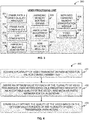
- control logic 400 for dynamically optimizing a quality of a video being transmitted over a communication network via a system, such as system 100 or 200, is depicted via a flowchart in accordance with some embodiments of the present disclosure.
- the control logic 400 includes the steps of acquiring a plurality of video transmission parameters for the video being transmitted at step 401, and deriving an optimum value for each of the plurality of video transmission parameters based on a predefined indicator of an acceptable quality of the video using meta-heuristic harmony search algorithm at step 402.
- the control logic 400 further includes the step of dynamically optimizing the quality of the video based on the optimum value for each of the plurality of video transmission parameters at step 403.
- the plurality of video transmission parameters comprises at least one of a frame rate (FR), a sender bit rate (SBR), and a packet error rate (PER) for the video being transmitted.
- deriving the optimum value for each of the plurality of video transmission parameters at step 402 comprises determining a maximum frame rate, a maximum sender bit rate, and a minimum packet error rate for the predefined indicator of the acceptable quality of the video.
- the predefined indicator of the acceptable quality of the video comprises a predefined mean opinion score (MOS).
- deriving the optimum value for each of the plurality of video transmission parameters at step 402 comprises the steps of acquiring a plurality of MOS coefficients for the video, determining a MOS of the video based on the plurality of MOS coefficients and the plurality of video transmission parameters, determining a fitness function based on the MOS of the video and the predefined MOS, and deriving the optimum value for each of the plurality of video transmission parameters based on the fitness function.
- the control logic 300 includes the step of determining a minimum value, a maximum value, and a plurality of random values between the minimum value and the maximum value for each of the plurality of video transmission parameters and for the predefined MOS.
- the control logic 300 further includes the steps of generating a harmonic memory matrix, and sorting the harmonic memory matrix based on the fitness function.
- the harmonic memory matrix comprises the minimum, the plurality of random, and the maximum values for each of the plurality of video transmission parameters; the minimum, the plurality of random, and the maximum value for the predefined MOS; and a plurality of values for the fitness function determined based on the minimum, the plurality of random, and the maximum values for each of the plurality of video transmission parameters and for the predefined MOS.
- the optimum value for each of the plurality of video transmission parameters corresponds to the fitness function having the minimum value.
- control logic 300 includes the steps of adjusting the harmonic memory matrix by at least one of a harmony memory consideration rate (HMCR) and a pitch adjustment rate (PAR), identifying a new fitness function from the adjusted harmonic memory matrix, discarding the new fitness function or updating the harmonic memory matrix based on a comparison of the new fitness function with the minimum and the maximum fitness function, and iterating the adjusting, the identifying, the discarding or the updating steps at a predefined periodic interval for a predefined number of times or till the completion of the video transmission.
- dynamically optimizing the quality of the video at step 403 comprises the step of modifying the video based on at least one of an optimum frame rate and an optimum sender bit rate.
- control logic 500 for dynamically optimizing the quality of the video being transmitted over a communication network is depicted in greater detail via a flowchart in accordance with some embodiments of the present disclosure.
- the control logic 500 includes the step of receiving the raw video and extracting initial FR and MOS coefficients from the raw video via the FR and video quality analyzer at step 501.
- the control logic 500 further includes the step of receiving the initial FR extracted above and optimized FR as feedback from the output and comparing them to determine FR Max and FR Min via the FR comparator at step 502.
- control logic 500 includes the step of receiving the initial SBR from the network speed monitor and optimized SBR as feedback from the output and comparing them to determine SBR Max and SBR Min via the SBR comparator at step 503. Additionally, the control logic 500 includes the step of receiving the MOS Max and MOS Min as well as PER Max and PER Min from the network operator. In some embodiments, the control logic 500 includes the step of receiving a maximum iteration count. The control logic 500 further includes the step of making a random adjustment within the MAX and MIN values of the video transmission parameters (e.g., FR, SBR, PER, and MOS) using a uniform random number at step 504.
- the video transmission parameters e.g., FR, SBR, PER, and MOS
- control logic 500 includes the step of generating an initial HM matrix based on the plurality of video transmission parameters and MOS coefficients via the HM generator and the fitness function calculator at step 505.
- the control logic 500 further includes the steps of sorting the initial HM based on fitness function f(x) value to generate a sorted HM via the HM sorting engine at step 506, and adjusting the sorted HM 507 by at least one of a harmony memory consideration rate (HMCR) and a pitch adjustment rate (PAR) via the HMCR and PAR adjustment module at step 508.
- the control logic 500 includes the step of finding the new solution based on the adjusted parameters at step 509.
- the control logic 500 includes the step of checking if the new solution is an improved one or not via the improved HM identification module at step 510 and 511. If the new solution is smaller than the best solution at step 510, then the control logic 500 includes the step of updating HM by replacing the best (i.e., the first) solution with the new one at step 512. In contrast, if the new solution is greater than the worst solution at step 511, then the control logic 500 includes the step of discarding the new solution and not updating HM at step 513.
- the control logic 500 includes the step of finding an index i where the new solution fits in HM at step 514 and updating the HM by replacing the i th solution with the new one at step 515.
- the control logic 500 further includes the step of determining if the maximum iteration count has reached at step 516 and if so then stopping the process at step 517. If the maximum iteration count has not reached then the process of identifying new solution and improving the solution continues till the maximum iteration count.
- control logic 500 includes the step of finding the best solution from the sorted HM and determining optimized FR, SBR, and MOS from the best solution at step 518.
- the optimized FR and SBR are then provided as feedback input to the respective comparators at step 502 and 503.
- control logic 500 includes the step of modifying the raw video based on the optimized parameters via the video convertor at step 519 and producing the modified video as output for subsequent transmission.
- the above described techniques may take the form of computer or controller implemented processes and apparatuses for practicing those processes.
- the disclosure can also be embodied in the form of computer program code containing instructions embodied in tangible media, such as floppy diskettes, CD-ROMs, hard drives, or any other computer-readable storage medium, wherein, when the computer program code is loaded into and executed by a computer or controller, the computer becomes an apparatus for practicing the invention.
- the disclosure may also be embodied in the form of computer program code or signal, for example, whether stored in a storage medium, loaded into and/or executed by a computer or controller, or transmitted over some transmission medium, such as over electrical wiring or cabling, through fiber optics, or via electromagnetic radiation, wherein, when the computer program code is loaded into and executed by a computer, the computer becomes an apparatus for practicing the invention.
- the computer program code segments configure the microprocessor to create specific logic circuits.
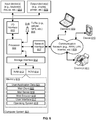
- Computer system 601 may be used for implementing system 100, 200 and video processing unit 104, 204, 300 for dynamically optimizing quality of the video being transmitted over a communication network in real-time.
- Computer system 601 may comprise a central processing unit (“CPU” or "processor") 602.
- Processor 602 may comprise at least one data processor for executing program components for executing user- or system-generated requests.
- a user may include a person, a person using a device such as such as those included in this disclosure, or such a device itself.
- the processor may include specialized processing units such as integrated system (bus) controllers, memory management control units, floating point units, graphics processing units, digital signal processing units, etc.
- the processor may include a microprocessor, such as AMD Athlon, Duron or Opteron, ARM's application, embedded or secure processors, IBM PowerPC, Intel's Core, Itanium, Xeon, Celeron or other line of processors, etc.
- the processor 602 may be implemented using mainframe, distributed processor, multi-core, parallel, grid, or other architectures. Some embodiments may utilize embedded technologies like application-specific integrated circuits (ASICs), digital signal processors (DSPs), Field Programmable Gate Arrays (FPGAs), etc.
- ASICs application-specific integrated circuits
- DSPs digital signal processors
- FPGAs Field Programmable Gate Arrays
- I/O Processor 602 may be disposed in communication with one or more input/output (I/O) devices via I/O interface 603.
- the I/O interface 603 may employ communication protocols/methods such as, without limitation, audio, analog, digital, monoaural, RCA, stereo, IEEE-1394, serial bus, universal serial bus (USB), infrared, PS/2, BNC, coaxial, component, composite, digital visual interface (DVI), high-definition multimedia interface (HDMI), RF antennas, S-Video, VGA, IEEE 802.n /b/g/n/x, Bluetooth, cellular (e.g., code-division multiple access (CDMA), high-speed packet access (HSPA+), global system for mobile communications (GSM), long-term evolution (LTE), WiMax, or the like), etc.
- CDMA code-division multiple access
- HSPA+ high-speed packet access
- GSM global system for mobile communications
- LTE long-term evolution
- WiMax wireless wide area network
- the computer system 601 may communicate with one or more I/O devices.
- the input device 604 may be an antenna, keyboard, mouse, joystick, (infrared) remote control, camera, card reader, fax machine, dongle, biometric reader, microphone, touch screen, touchpad, trackball, sensor (e.g., accelerometer, light sensor, GPS, gyroscope, proximity sensor, or the like), stylus, scanner, storage device, transceiver, video device/source, visors, etc.
- Output device 605 may be a printer, fax machine, video display (e.g., cathode ray tube (CRT), liquid crystal display (LCD), light-emitting diode (LED), plasma, or the like), audio speaker, etc.
- video display e.g., cathode ray tube (CRT), liquid crystal display (LCD), light-emitting diode (LED), plasma, or the like
- audio speaker etc.
- a transceiver 606 may be disposed in connection with the processor 602. The transceiver may facilitate various types of wireless transmission or reception.
- the transceiver may include an antenna operatively connected to a transceiver chip (e.g., Texas Instruments WiLink WL1283, Broadcom BCM4750IUB8, Infineon Technologies X-Gold 618-PMB9800, or the like), providing IEEE 802.11a/b/g/n, Bluetooth, FM, global positioning system (GPS), 2G/3G HSDPA/HSUPA communications, etc.
- a transceiver chip e.g., Texas Instruments WiLink WL1283, Broadcom BCM4750IUB8, Infineon Technologies X-Gold 618-PMB9800, or the like
- IEEE 802.11a/b/g/n e.g., Texas Instruments WiLink WL1283, Broadcom BCM4750IUB8, Infineon Technologies X-Gold 618-PMB9800, or the like
- IEEE 802.11a/b/g/n e.g., Bluetooth, FM, global positioning system (GPS), 2G/3G HSDPA/HS
- the processor 602 may be disposed in communication with a communication network 608 via a network interface 607.
- the network interface 607 may communicate with the communication network 608.
- the network interface may employ connection protocols including, without limitation, direct connect, Ethernet (e.g., twisted pair 10/100/1000 Base T), transmission control protocol/internet protocol (TCP/IP), token ring, IEEE 802.11a/b/g/n/x, etc.
- the communication network 608 may include, without limitation, a direct interconnection, local area network (LAN), wide area network (WAN), wireless network (e.g., using Wireless Application Protocol), the Internet, etc.
- the computer system 601 may communicate with devices 609, 610, and 611.
- These devices may include, without limitation, personal computer(s), server(s), fax machines, printers, scanners, various mobile devices such as cellular telephones, smartphones (e.g., Apple iPhone, Blackberry, Android-based phones, etc.), tablet computers, eBook readers (Amazon Kindle, Nook, etc.), laptop computers, notebooks, gaming consoles (Microsoft Xbox, Nintendo DS, Sony PlayStation, etc.), or the like.
- the computer system 601 may itself embody one or more of these devices.
- the processor 602 may be disposed in communication with one or more memory devices (e.g., RAM 613, ROM 614, etc.) via a storage interface 612.
- the storage interface may connect to memory devices including, without limitation, memory drives, removable disc drives, etc., employing connection protocols such as serial advanced technology attachment (SATA), integrated drive electronics (IDE), IEEE-1394, universal serial bus (USB), fiber channel, small computer systems interface (SCSI), etc.
- the memory drives may further include a drum, magnetic disc drive, magneto-optical drive, optical drive, redundant array of independent discs (RAID), solid-state memory devices, solid-state drives, etc.
- the memory devices may store a collection of program or database components, including, without limitation, an operating system 616, user interface application 617, web browser 618, mail server 619, mail client 620, user/application data 621 (e.g., any data variables or data records discussed in this disclosure), etc.
- the operating system 616 may facilitate resource management and operation of the computer system 601.
- Operating systems include, without limitation, Apple Macintosh OS X, Unix, Unix-like system distributions (e.g., Berkeley Software Distribution (BSD), FreeBSD, NetBSD, OpenBSD, etc.), Linux distributions (e.g., Red Hat, Ubuntu, Kubuntu, etc.), IBM OS/2, Microsoft Windows (XP, Vista/7/8, etc.), Apple iOS, Google Android, Blackberry OS, or the like.
- User interface 617 may facilitate display, execution, interaction, manipulation, or operation of program components through textual or graphical facilities.
- user interfaces may provide computer interaction interface elements on a display system operatively connected to the computer system 601, such as cursors, icons, check boxes, menus, scrollers, windows, widgets, etc.
- GUIs Graphical user interfaces
- GUIs may be employed, including, without limitation, Apple Macintosh operating systems' Aqua, IBM OS/2, Microsoft Windows (e.g., Aero, Metro, etc.), Unix X-Windows, web interface libraries (e.g., ActiveX, Java, Javascript, AJAX, HTML, Adobe Flash, etc.), or the like.
- the computer system 601 may implement a web browser 618 stored program component.
- the web browser may be a hypertext viewing application, such as Microsoft Internet Explorer, Google Chrome, Mozilla Firefox, Apple Safari, etc. Secure web browsing may be provided using HTTPS (secure hypertext transport protocol), secure sockets layer (SSL), Transport Layer Security (TLS), etc. Web browsers may utilize facilities such as AJAX, DHTML, Adobe Flash, JavaScript, Java, application programming interfaces (APIs), etc.
- the computer system 601 may implement a mail server 619 stored program component.
- the mail server may be an Internet mail server such as Microsoft Exchange, or the like.
- the mail server may utilize facilities such as ASP, ActiveX, ANSI C++/C#, Microsoft .NET, CGI scripts, Java, JavaScript, PERL, PHP, Python, WebObjects, etc.
- the mail server may utilize communication protocols such as internet message access protocol (IMAP), messaging application programming interface (MAPI), Microsoft Exchange, post office protocol (POP), simple mail transfer protocol (SMTP), or the like.
- IMAP internet message access protocol
- MAPI messaging application programming interface
- POP post office protocol
- SMTP simple mail transfer protocol
- the computer system 601 may implement a mail client 620 stored program component.
- the mail client may be a mail viewing application, such as Apple Mail, Microsoft Entourage, Microsoft Outlook, Mozilla Thunderbird, etc.
- computer system 601 may store user/application data 621, such as the data, variables, records, etc. (e.g., FR SBR, MOS, PER, MOS coefficients, HM, sorted HM, maximum iteration count, fitness function, optimized FR, optimized SBR, optimized MOS, and so forth) as described in this disclosure.
- databases may be implemented as fault-tolerant, relational, scalable, secure databases such as Oracle or Sybase.
- databases may be implemented using standardized data structures, such as an array, hash, linked list, struct, structured text file (e.g., XML), table, or as object-oriented databases (e.g., using ObjectStore, Poet, Zope, etc.).
- object-oriented databases e.g., using ObjectStore, Poet, Zope, etc.
- the techniques described in the various embodiments discussed above results in improvement in real-time video transmission quality and optimization of the channel bandwidth.
- the techniques provides for optimizing video quality for efficient utilization of channel bandwidth.
- the techniques employ a meta-heuristic harmony search algorithm to find the best choice of frame rate and transmission bit rate to optimize the MOS of real-time video transmission.
- the technique may provide that if a video is transmitted with 26 fps at a 1046 kbps, the user may be able to experience a good video quality (i.e., MOS > 4). This results in a significant saving of transmission bandwidth which may be utilized for providing other multimedia services.
- the techniques enable transmission of real-time video with the best possible quality in an optimized network bandwidth.
- a computer-readable storage medium refers to any type of physical memory on which information or data readable by a processor may be stored.
- a computer-readable storage medium may store instructions for execution by one or more processors, including instructions for causing the processor(s) to perform steps or stages consistent with the embodiments described herein.
- the term "computer-readable medium” should be understood to include tangible items and exclude carrier waves and transient signals, i.e., be non-transitory. Examples include random access memory (RAM), read-only memory (ROM), volatile memory, nonvolatile memory, hard drives, CD ROMs, DVDs, flash drives, disks, and any other known physical storage media.
Landscapes
- Engineering & Computer Science (AREA)
- Multimedia (AREA)
- Signal Processing (AREA)
- Databases & Information Systems (AREA)
- Computer Networks & Wireless Communication (AREA)
- Computer Security & Cryptography (AREA)
- Computing Systems (AREA)
- Health & Medical Sciences (AREA)
- Biomedical Technology (AREA)
- General Health & Medical Sciences (AREA)
- General Engineering & Computer Science (AREA)
- Two-Way Televisions, Distribution Of Moving Picture Or The Like (AREA)
Claims (9)
- Prozessor-implementiertes Verfahren zum dynamischen Optimieren einer Qualität eines Videos, das über ein Kommunikationsnetzwerk übertragen wird, umfassend:Erfassen (401) einer Vielzahl von Videoübertragungsparametern für das Video, das übertragen wird;Ableiten (402) eines optimalen Werts für jeden der Vielzahl von Videoübertragungsparametern beruhend auf einem vordefinierten Indikator einer annehmbaren Qualität des Videos, wobei der vordefinierte Indikator der annehmbaren Qualität des Videos eine vordefinierte mittlere Bewertung umfasst; unddynamisches Optimieren (403) der Qualität des Videos beruhend auf dem optimalen Wert für jeden der Vielzahl von Videoübertragungsparametern,dadurch gekennzeichnet, dass der optimale Wert für jeden der Vielzahl von Videoübertragungsparameter unter Verwendung eines metaheuristischen Harmonie-Suchalgorithmus, umfassend:Erfassen einer Vielzahl von mittleren Bewertungskoeffizienten für das Video;Bestimmen einer mittleren Bewertung des Videos beruhend auf der Vielzahl von mittleren Bewertungskoeffizienten und der Vielzahl von Videoübertragungsparametern;Bestimmen einer Eignungsfunktion beruhend auf der mittleren Bewertung des Videos und der vordefinierten mittleren Bewertung; undAbleiten des optimalen Werts für jeden der Vielzahl von Videoübertragungsparametern beruhend auf der Eignungsfunktion.
- Verfahren nach Anspruch 1, wobei ein Erfassen (401) der Vielzahl von Videoübertragungsparametern ein Erfassen von mindestens einer von einer Bildrate, einer Sender-Bitrate, und einer Paketfehlerrate für das Video, das übertragen wird, umfasst.
- Verfahren nach Anspruch 1 oder Anspruch 2, wobei ein Ableiten (402) des optimalen Werts für jeden der Vielzahl von Videoübertragungsparameter ein Bestimmen einer maximalen Bildrate, einer maximalen Sender-Bitrate und einer minimalen Paketfehlerrate für den vordefinierten Indikator der annehmbaren Qualität des Videos umfasst.
- Verfahren nach Anspruch 1, ferner umfassend ein Bestimmen eines minimalen Werts, eines maximalen Werts und einer Vielzahl von Zufallswerten zwischen dem minimalen Wert und dem maximalen Wert für jeden der Vielzahl von Videoübertragungsparameter und für die vordefinierte mittlere Bewertung.
- Verfahren nach Anspruch 4, ferner umfassend ein Erzeugen einer harmonischen Speichermatrix, umfassend:die minimalen Werte, die Vielzahl von Zufallswerten und die maximalen Werte für jeden der Vielzahl von Videoübertragungsparameter,den minimalen Wert, die Vielzahl von Zufallswerten und den maximalen Wert für die vordefinierte mittlere Bewertung, undeine Vielzahl von Werten für die Eignungsfunktion, die beruhend auf den minimalen Werten, der Vielzahl von Zufallswerten und den maximalen Werten für jeden der Vielzahl von Videoübertragungsparameter und für die vordefinierte mittlere Bewertung bestimmt werden; und Sortieren der harmonischen Speichermatrix beruhend auf der Eignungsfunktion, wobei der optimale Wert für jeden der Vielzahl von Videoübertragungsparametern der Eignungsfunktion entspricht, die den minimalen Wert aufweist.
- Verfahren nach Anspruch 5, ferner umfassend:Anpassen der harmonischen Speichermatrix durch mindestens eines von einer Harmoniespeicher-Berücksichtigungsrate und einer Pitch-Einstellrate;Identifizieren einer neuen Eignungsfunktion aus der angepassten harmonischen Speichermatrix; Verwerfen der neuen Eignungsfunktion oder Aktualisieren der harmonischen Speichermatrix beruhend auf einem Vergleich der neuen Eignungsfunktion mit der minimalen und der maximalen Eignungsfunktion; undWiederholen der Schritte Anpassen, Identifizieren, Verwerfen oder Aktualisieren in einem vordefinierten periodischen Intervall für eine vordefinierte Anzahl von Malen oder bis zur Vervollständigung der Videoübertragung.
- Verfahren nach einem vorherigen Anspruch, wobei ein dynamisches Optimieren (403) der Qualität des Videos ein Modifizieren des Videos beruhend auf der mindestens einen von einer optimalen Bildrate und einer optimalen Sender-Bitrate.
- System für ein dynamisches Optimieren einer Qualität eines Videos, das über ein Kommunikationsnetzwerk übertragen wird, umfassend:mindestens einen Prozessor; undein computerlesbares Medium, das Anweisungen speichert, die, wenn sie von dem mindestens einen Prozessor ausgeführt werden, den mindestens einen Prozessor veranlassen, das Verfahren nach einem vorherigen Anspruch auszuführen.
- Nicht-transitorisches computerlesbares Medium, das von einem Prozessor ausführbare Anweisungen zum Ausführen des Verfahrens nach einem der Ansprüche 1 bis 7 speichert.
Applications Claiming Priority (1)
| Application Number | Priority Date | Filing Date | Title |
|---|---|---|---|
| IN6390CH2015 | 2015-11-27 |
Publications (2)
| Publication Number | Publication Date |
|---|---|
| EP3174302A1 EP3174302A1 (de) | 2017-05-31 |
| EP3174302B1 true EP3174302B1 (de) | 2018-10-10 |
Family
ID=55359399
Family Applications (1)
| Application Number | Title | Priority Date | Filing Date |
|---|---|---|---|
| EP16154135.4A Active EP3174302B1 (de) | 2015-11-27 | 2016-02-03 | System und verfahren zur dynamischen optimierung der videoqualität während der videoübertragung |
Country Status (3)
| Country | Link |
|---|---|
| US (1) | US9712888B2 (de) |
| EP (1) | EP3174302B1 (de) |
| CN (1) | CN106817582B (de) |
Families Citing this family (4)
| Publication number | Priority date | Publication date | Assignee | Title |
|---|---|---|---|---|
| CN110364188A (zh) * | 2019-07-12 | 2019-10-22 | 深圳创维-Rgb电子有限公司 | 音频播放方法、装置及计算机可读存储介质 |
| CN113014969B (zh) | 2019-12-19 | 2022-06-07 | 花瓣云科技有限公司 | 视频播放的控制方法、终端设备、服务器和存储介质 |
| CN112822482B (zh) * | 2020-12-31 | 2022-11-08 | 上海掌门科技有限公司 | 一种确定音视频通话的评估得分的方法与设备 |
| CN115119010B (zh) * | 2022-06-29 | 2023-07-25 | 北京奇艺世纪科技有限公司 | 连麦方法、装置、电子设备和存储介质 |
Family Cites Families (7)
| Publication number | Priority date | Publication date | Assignee | Title |
|---|---|---|---|---|
| US8018850B2 (en) * | 2004-02-23 | 2011-09-13 | Sharp Laboratories Of America, Inc. | Wireless video transmission system |
| US7784076B2 (en) * | 2004-10-30 | 2010-08-24 | Sharp Laboratories Of America, Inc. | Sender-side bandwidth estimation for video transmission with receiver packet buffer |
| US7797723B2 (en) * | 2004-10-30 | 2010-09-14 | Sharp Laboratories Of America, Inc. | Packet scheduling for video transmission with sender queue control |
| US8356327B2 (en) * | 2004-10-30 | 2013-01-15 | Sharp Laboratories Of America, Inc. | Wireless video transmission system |
| US9544602B2 (en) * | 2005-12-30 | 2017-01-10 | Sharp Laboratories Of America, Inc. | Wireless video transmission system |
| JP4490483B2 (ja) * | 2006-05-09 | 2010-06-23 | 日本電信電話株式会社 | 映像品質推定装置、方法、およびプログラム |
| US8180906B2 (en) * | 2009-03-11 | 2012-05-15 | International Business Machines Corporation | Dynamically optimizing delivery of multimedia content over a network |
-
2016
- 2016-01-12 US US14/993,825 patent/US9712888B2/en active Active
- 2016-02-03 EP EP16154135.4A patent/EP3174302B1/de active Active
- 2016-03-29 CN CN201610186078.6A patent/CN106817582B/zh active Active
Non-Patent Citations (1)
| Title |
|---|
| None * |
Also Published As
| Publication number | Publication date |
|---|---|
| CN106817582A (zh) | 2017-06-09 |
| EP3174302A1 (de) | 2017-05-31 |
| CN106817582B (zh) | 2019-03-12 |
| US9712888B2 (en) | 2017-07-18 |
| US20170155969A1 (en) | 2017-06-01 |
Similar Documents
| Publication | Publication Date | Title |
|---|---|---|
| EP3790356B1 (de) | System und verfahren zur wartung von netzwerkscheibenvorlagen für die scheibenorchestrierung | |
| US10771807B1 (en) | System and method for compressing video using deep learning | |
| US10182098B2 (en) | Method and system for proactively selecting a content distribution network (CDN) for delivering content | |
| EP3462684B1 (de) | Verfahren und system zur adaptiven und kontextbewussten dienstfunktionsverkettung in kommunikationsnetzen | |
| US10701593B2 (en) | Method and systems for performing orchestration of services in a next generation mobile core network | |
| US10257867B2 (en) | Systems and methods for effective physical cell identifier reuse | |
| US20170264711A1 (en) | Method and system for achieving improved quality of service (qos) for content delivery in a sdn controller based communication network | |
| US10491758B2 (en) | Method and system for optimizing image data for data transmission | |
| EP3217753B1 (de) | Verfahren und systeme zur adaptiven planung von datenpaketen in einem drahtlosen breitbandnetz | |
| US11308331B2 (en) | Multimedia content summarization method and system thereof | |
| US10178587B2 (en) | System and method for traffic offloading for optimal network performance in a wireless heterogeneous broadband network | |
| EP3174302B1 (de) | System und verfahren zur dynamischen optimierung der videoqualität während der videoübertragung | |
| EP3293928A1 (de) | System und verfahren zur datenübertragung über ein kommunikationsnetzwerk | |
| US10686783B2 (en) | Method and system for establishing a secure access connection with electronic devices | |
| US20190238465A1 (en) | Method and system for intelligent link load balancing | |
| US20160234734A1 (en) | Method and system for automatically creating a neighbor list | |
| US20180219924A1 (en) | Method and System for Providing Interactive Control of Shared Content Over a Video Conference | |
| US20160183284A1 (en) | System and method for adaptive downlink scheduler for wireless networks | |
| US10917375B2 (en) | Method and device for managing messages in a communication device | |
| US9307459B2 (en) | Method and system for neighbor reporting in a mobile communication network | |
| US20190297371A1 (en) | Method and a system for network based multimedia content recording in a cloud | |
| US9917999B2 (en) | System and method for capturing multi-media of an area of interest using multi-media capturing devices | |
| EP3021610A1 (de) | Systeme und Verfahren zur wirksamen physischen Zellidentifikatorwiederverwendung | |
| US10693928B2 (en) | Method and device for adaptive streaming of multimedia data | |
| EP3029984A1 (de) | System und verfahren zur verkehrsabladung für optimale netzwerkleistung in einem heterogenen drahtlosen breitbandnetzwerk |
Legal Events
| Date | Code | Title | Description |
|---|---|---|---|
| PUAI | Public reference made under article 153(3) epc to a published international application that has entered the european phase |
Free format text: ORIGINAL CODE: 0009012 |
|
| STAA | Information on the status of an ep patent application or granted ep patent |
Free format text: STATUS: THE APPLICATION HAS BEEN PUBLISHED |
|
| AK | Designated contracting states |
Kind code of ref document: A1 Designated state(s): AL AT BE BG CH CY CZ DE DK EE ES FI FR GB GR HR HU IE IS IT LI LT LU LV MC MK MT NL NO PL PT RO RS SE SI SK SM TR |
|
| AX | Request for extension of the european patent |
Extension state: BA ME |
|
| STAA | Information on the status of an ep patent application or granted ep patent |
Free format text: STATUS: REQUEST FOR EXAMINATION WAS MADE |
|
| 17P | Request for examination filed |
Effective date: 20171130 |
|
| RBV | Designated contracting states (corrected) |
Designated state(s): AL AT BE BG CH CY CZ DE DK EE ES FI FR GB GR HR HU IE IS IT LI LT LU LV MC MK MT NL NO PL PT RO RS SE SI SK SM TR |
|
| GRAP | Despatch of communication of intention to grant a patent |
Free format text: ORIGINAL CODE: EPIDOSNIGR1 |
|
| STAA | Information on the status of an ep patent application or granted ep patent |
Free format text: STATUS: GRANT OF PATENT IS INTENDED |
|
| INTG | Intention to grant announced |
Effective date: 20180502 |
|
| GRAS | Grant fee paid |
Free format text: ORIGINAL CODE: EPIDOSNIGR3 |
|
| GRAA | (expected) grant |
Free format text: ORIGINAL CODE: 0009210 |
|
| STAA | Information on the status of an ep patent application or granted ep patent |
Free format text: STATUS: THE PATENT HAS BEEN GRANTED |
|
| AK | Designated contracting states |
Kind code of ref document: B1 Designated state(s): AL AT BE BG CH CY CZ DE DK EE ES FI FR GB GR HR HU IE IS IT LI LT LU LV MC MK MT NL NO PL PT RO RS SE SI SK SM TR |
|
| REG | Reference to a national code |
Ref country code: GB Ref legal event code: FG4D |
|
| REG | Reference to a national code |
Ref country code: CH Ref legal event code: EP Ref country code: AT Ref legal event code: REF Ref document number: 1052663 Country of ref document: AT Kind code of ref document: T Effective date: 20181015 |
|
| REG | Reference to a national code |
Ref country code: IE Ref legal event code: FG4D |
|
| REG | Reference to a national code |
Ref country code: DE Ref legal event code: R096 Ref document number: 602016006287 Country of ref document: DE |
|
| REG | Reference to a national code |
Ref country code: NL Ref legal event code: MP Effective date: 20181010 |
|
| REG | Reference to a national code |
Ref country code: LT Ref legal event code: MG4D |
|
| REG | Reference to a national code |
Ref country code: AT Ref legal event code: MK05 Ref document number: 1052663 Country of ref document: AT Kind code of ref document: T Effective date: 20181010 |
|
| PG25 | Lapsed in a contracting state [announced via postgrant information from national office to epo] |
Ref country code: NL Free format text: LAPSE BECAUSE OF FAILURE TO SUBMIT A TRANSLATION OF THE DESCRIPTION OR TO PAY THE FEE WITHIN THE PRESCRIBED TIME-LIMIT Effective date: 20181010 |
|
| PG25 | Lapsed in a contracting state [announced via postgrant information from national office to epo] |
Ref country code: ES Free format text: LAPSE BECAUSE OF FAILURE TO SUBMIT A TRANSLATION OF THE DESCRIPTION OR TO PAY THE FEE WITHIN THE PRESCRIBED TIME-LIMIT Effective date: 20181010 Ref country code: BG Free format text: LAPSE BECAUSE OF FAILURE TO SUBMIT A TRANSLATION OF THE DESCRIPTION OR TO PAY THE FEE WITHIN THE PRESCRIBED TIME-LIMIT Effective date: 20190110 Ref country code: LT Free format text: LAPSE BECAUSE OF FAILURE TO SUBMIT A TRANSLATION OF THE DESCRIPTION OR TO PAY THE FEE WITHIN THE PRESCRIBED TIME-LIMIT Effective date: 20181010 Ref country code: PL Free format text: LAPSE BECAUSE OF FAILURE TO SUBMIT A TRANSLATION OF THE DESCRIPTION OR TO PAY THE FEE WITHIN THE PRESCRIBED TIME-LIMIT Effective date: 20181010 Ref country code: HR Free format text: LAPSE BECAUSE OF FAILURE TO SUBMIT A TRANSLATION OF THE DESCRIPTION OR TO PAY THE FEE WITHIN THE PRESCRIBED TIME-LIMIT Effective date: 20181010 Ref country code: IS Free format text: LAPSE BECAUSE OF FAILURE TO SUBMIT A TRANSLATION OF THE DESCRIPTION OR TO PAY THE FEE WITHIN THE PRESCRIBED TIME-LIMIT Effective date: 20190210 Ref country code: NO Free format text: LAPSE BECAUSE OF FAILURE TO SUBMIT A TRANSLATION OF THE DESCRIPTION OR TO PAY THE FEE WITHIN THE PRESCRIBED TIME-LIMIT Effective date: 20190110 Ref country code: LV Free format text: LAPSE BECAUSE OF FAILURE TO SUBMIT A TRANSLATION OF THE DESCRIPTION OR TO PAY THE FEE WITHIN THE PRESCRIBED TIME-LIMIT Effective date: 20181010 Ref country code: AT Free format text: LAPSE BECAUSE OF FAILURE TO SUBMIT A TRANSLATION OF THE DESCRIPTION OR TO PAY THE FEE WITHIN THE PRESCRIBED TIME-LIMIT Effective date: 20181010 Ref country code: FI Free format text: LAPSE BECAUSE OF FAILURE TO SUBMIT A TRANSLATION OF THE DESCRIPTION OR TO PAY THE FEE WITHIN THE PRESCRIBED TIME-LIMIT Effective date: 20181010 |
|
| PG25 | Lapsed in a contracting state [announced via postgrant information from national office to epo] |
Ref country code: SE Free format text: LAPSE BECAUSE OF FAILURE TO SUBMIT A TRANSLATION OF THE DESCRIPTION OR TO PAY THE FEE WITHIN THE PRESCRIBED TIME-LIMIT Effective date: 20181010 Ref country code: GR Free format text: LAPSE BECAUSE OF FAILURE TO SUBMIT A TRANSLATION OF THE DESCRIPTION OR TO PAY THE FEE WITHIN THE PRESCRIBED TIME-LIMIT Effective date: 20190111 Ref country code: AL Free format text: LAPSE BECAUSE OF FAILURE TO SUBMIT A TRANSLATION OF THE DESCRIPTION OR TO PAY THE FEE WITHIN THE PRESCRIBED TIME-LIMIT Effective date: 20181010 Ref country code: RS Free format text: LAPSE BECAUSE OF FAILURE TO SUBMIT A TRANSLATION OF THE DESCRIPTION OR TO PAY THE FEE WITHIN THE PRESCRIBED TIME-LIMIT Effective date: 20181010 Ref country code: PT Free format text: LAPSE BECAUSE OF FAILURE TO SUBMIT A TRANSLATION OF THE DESCRIPTION OR TO PAY THE FEE WITHIN THE PRESCRIBED TIME-LIMIT Effective date: 20190210 |
|
| REG | Reference to a national code |
Ref country code: DE Ref legal event code: R097 Ref document number: 602016006287 Country of ref document: DE |
|
| PG25 | Lapsed in a contracting state [announced via postgrant information from national office to epo] |
Ref country code: IT Free format text: LAPSE BECAUSE OF FAILURE TO SUBMIT A TRANSLATION OF THE DESCRIPTION OR TO PAY THE FEE WITHIN THE PRESCRIBED TIME-LIMIT Effective date: 20181010 Ref country code: DK Free format text: LAPSE BECAUSE OF FAILURE TO SUBMIT A TRANSLATION OF THE DESCRIPTION OR TO PAY THE FEE WITHIN THE PRESCRIBED TIME-LIMIT Effective date: 20181010 Ref country code: CZ Free format text: LAPSE BECAUSE OF FAILURE TO SUBMIT A TRANSLATION OF THE DESCRIPTION OR TO PAY THE FEE WITHIN THE PRESCRIBED TIME-LIMIT Effective date: 20181010 |
|
| PLBE | No opposition filed within time limit |
Free format text: ORIGINAL CODE: 0009261 |
|
| STAA | Information on the status of an ep patent application or granted ep patent |
Free format text: STATUS: NO OPPOSITION FILED WITHIN TIME LIMIT |
|
| PG25 | Lapsed in a contracting state [announced via postgrant information from national office to epo] |
Ref country code: SK Free format text: LAPSE BECAUSE OF FAILURE TO SUBMIT A TRANSLATION OF THE DESCRIPTION OR TO PAY THE FEE WITHIN THE PRESCRIBED TIME-LIMIT Effective date: 20181010 Ref country code: RO Free format text: LAPSE BECAUSE OF FAILURE TO SUBMIT A TRANSLATION OF THE DESCRIPTION OR TO PAY THE FEE WITHIN THE PRESCRIBED TIME-LIMIT Effective date: 20181010 Ref country code: SM Free format text: LAPSE BECAUSE OF FAILURE TO SUBMIT A TRANSLATION OF THE DESCRIPTION OR TO PAY THE FEE WITHIN THE PRESCRIBED TIME-LIMIT Effective date: 20181010 Ref country code: EE Free format text: LAPSE BECAUSE OF FAILURE TO SUBMIT A TRANSLATION OF THE DESCRIPTION OR TO PAY THE FEE WITHIN THE PRESCRIBED TIME-LIMIT Effective date: 20181010 |
|
| 26N | No opposition filed |
Effective date: 20190711 |
|
| REG | Reference to a national code |
Ref country code: CH Ref legal event code: PL |
|
| PG25 | Lapsed in a contracting state [announced via postgrant information from national office to epo] |
Ref country code: SI Free format text: LAPSE BECAUSE OF FAILURE TO SUBMIT A TRANSLATION OF THE DESCRIPTION OR TO PAY THE FEE WITHIN THE PRESCRIBED TIME-LIMIT Effective date: 20181010 Ref country code: MC Free format text: LAPSE BECAUSE OF FAILURE TO SUBMIT A TRANSLATION OF THE DESCRIPTION OR TO PAY THE FEE WITHIN THE PRESCRIBED TIME-LIMIT Effective date: 20181010 Ref country code: LU Free format text: LAPSE BECAUSE OF NON-PAYMENT OF DUE FEES Effective date: 20190203 |
|
| REG | Reference to a national code |
Ref country code: BE Ref legal event code: MM Effective date: 20190228 |
|
| REG | Reference to a national code |
Ref country code: IE Ref legal event code: MM4A |
|
| PG25 | Lapsed in a contracting state [announced via postgrant information from national office to epo] |
Ref country code: CH Free format text: LAPSE BECAUSE OF NON-PAYMENT OF DUE FEES Effective date: 20190228 Ref country code: LI Free format text: LAPSE BECAUSE OF NON-PAYMENT OF DUE FEES Effective date: 20190228 |
|
| PG25 | Lapsed in a contracting state [announced via postgrant information from national office to epo] |
Ref country code: IE Free format text: LAPSE BECAUSE OF NON-PAYMENT OF DUE FEES Effective date: 20190203 |
|
| PG25 | Lapsed in a contracting state [announced via postgrant information from national office to epo] |
Ref country code: BE Free format text: LAPSE BECAUSE OF NON-PAYMENT OF DUE FEES Effective date: 20190228 |
|
| PG25 | Lapsed in a contracting state [announced via postgrant information from national office to epo] |
Ref country code: TR Free format text: LAPSE BECAUSE OF FAILURE TO SUBMIT A TRANSLATION OF THE DESCRIPTION OR TO PAY THE FEE WITHIN THE PRESCRIBED TIME-LIMIT Effective date: 20181010 |
|
| PG25 | Lapsed in a contracting state [announced via postgrant information from national office to epo] |
Ref country code: MT Free format text: LAPSE BECAUSE OF NON-PAYMENT OF DUE FEES Effective date: 20190203 |
|
| PG25 | Lapsed in a contracting state [announced via postgrant information from national office to epo] |
Ref country code: CY Free format text: LAPSE BECAUSE OF FAILURE TO SUBMIT A TRANSLATION OF THE DESCRIPTION OR TO PAY THE FEE WITHIN THE PRESCRIBED TIME-LIMIT Effective date: 20181010 |
|
| PG25 | Lapsed in a contracting state [announced via postgrant information from national office to epo] |
Ref country code: HU Free format text: LAPSE BECAUSE OF FAILURE TO SUBMIT A TRANSLATION OF THE DESCRIPTION OR TO PAY THE FEE WITHIN THE PRESCRIBED TIME-LIMIT; INVALID AB INITIO Effective date: 20160203 |
|
| PG25 | Lapsed in a contracting state [announced via postgrant information from national office to epo] |
Ref country code: MK Free format text: LAPSE BECAUSE OF FAILURE TO SUBMIT A TRANSLATION OF THE DESCRIPTION OR TO PAY THE FEE WITHIN THE PRESCRIBED TIME-LIMIT Effective date: 20181010 |
|
| P01 | Opt-out of the competence of the unified patent court (upc) registered |
Effective date: 20230605 |
|
| PGFP | Annual fee paid to national office [announced via postgrant information from national office to epo] |
Ref country code: GB Payment date: 20260112 Year of fee payment: 11 |
|
| PGFP | Annual fee paid to national office [announced via postgrant information from national office to epo] |
Ref country code: DE Payment date: 20260107 Year of fee payment: 11 |
|
| PGFP | Annual fee paid to national office [announced via postgrant information from national office to epo] |
Ref country code: FR Payment date: 20260108 Year of fee payment: 11 |