EP3176779A1 - Systèmes et procédés de réagencement de zone audio sensible - Google Patents
Systèmes et procédés de réagencement de zone audio sensible Download PDFInfo
- Publication number
- EP3176779A1 EP3176779A1 EP16159545.9A EP16159545A EP3176779A1 EP 3176779 A1 EP3176779 A1 EP 3176779A1 EP 16159545 A EP16159545 A EP 16159545A EP 3176779 A1 EP3176779 A1 EP 3176779A1
- Authority
- EP
- European Patent Office
- Prior art keywords
- sensitive information
- user
- speech
- transaction
- user identifier
- Prior art date
- Legal status (The legal status is an assumption and is not a legal conclusion. Google has not performed a legal analysis and makes no representation as to the accuracy of the status listed.)
- Granted
Links
Images



Classifications
-
- G—PHYSICS
- G06—COMPUTING OR CALCULATING; COUNTING
- G06F—ELECTRIC DIGITAL DATA PROCESSING
- G06F21/00—Security arrangements for protecting computers, components thereof, programs or data against unauthorised activity
- G06F21/60—Protecting data
- G06F21/62—Protecting access to data via a platform, e.g. using keys or access control rules
- G06F21/6218—Protecting access to data via a platform, e.g. using keys or access control rules to a system of files or objects, e.g. local or distributed file system or database
- G06F21/6245—Protecting personal data, e.g. for financial or medical purposes
-
- G—PHYSICS
- G06—COMPUTING OR CALCULATING; COUNTING
- G06F—ELECTRIC DIGITAL DATA PROCESSING
- G06F16/00—Information retrieval; Database structures therefor; File system structures therefor
- G06F16/20—Information retrieval; Database structures therefor; File system structures therefor of structured data, e.g. relational data
- G06F16/24—Querying
- G06F16/245—Query processing
-
- G—PHYSICS
- G06—COMPUTING OR CALCULATING; COUNTING
- G06F—ELECTRIC DIGITAL DATA PROCESSING
- G06F16/00—Information retrieval; Database structures therefor; File system structures therefor
- G06F16/60—Information retrieval; Database structures therefor; File system structures therefor of audio data
- G06F16/68—Retrieval characterised by using metadata, e.g. metadata not derived from the content or metadata generated manually
- G06F16/686—Retrieval characterised by using metadata, e.g. metadata not derived from the content or metadata generated manually using information manually generated, e.g. tags, keywords, comments, title or artist information, time, location or usage information, user ratings
-
- G—PHYSICS
- G06—COMPUTING OR CALCULATING; COUNTING
- G06F—ELECTRIC DIGITAL DATA PROCESSING
- G06F21/00—Security arrangements for protecting computers, components thereof, programs or data against unauthorised activity
- G06F21/60—Protecting data
- G06F21/602—Providing cryptographic facilities or services
-
- G—PHYSICS
- G06—COMPUTING OR CALCULATING; COUNTING
- G06Q—INFORMATION AND COMMUNICATION TECHNOLOGY [ICT] SPECIALLY ADAPTED FOR ADMINISTRATIVE, COMMERCIAL, FINANCIAL, MANAGERIAL OR SUPERVISORY PURPOSES; SYSTEMS OR METHODS SPECIALLY ADAPTED FOR ADMINISTRATIVE, COMMERCIAL, FINANCIAL, MANAGERIAL OR SUPERVISORY PURPOSES, NOT OTHERWISE PROVIDED FOR
- G06Q10/00—Administration; Management
- G06Q10/10—Office automation; Time management
- G06Q10/105—Human resources
-
- G—PHYSICS
- G06—COMPUTING OR CALCULATING; COUNTING
- G06Q—INFORMATION AND COMMUNICATION TECHNOLOGY [ICT] SPECIALLY ADAPTED FOR ADMINISTRATIVE, COMMERCIAL, FINANCIAL, MANAGERIAL OR SUPERVISORY PURPOSES; SYSTEMS OR METHODS SPECIALLY ADAPTED FOR ADMINISTRATIVE, COMMERCIAL, FINANCIAL, MANAGERIAL OR SUPERVISORY PURPOSES, NOT OTHERWISE PROVIDED FOR
- G06Q20/00—Payment architectures, schemes or protocols
- G06Q20/30—Payment architectures, schemes or protocols characterised by the use of specific devices or networks
- G06Q20/34—Payment architectures, schemes or protocols characterised by the use of specific devices or networks using cards, e.g. integrated circuit [IC] cards or magnetic cards
-
- G—PHYSICS
- G06—COMPUTING OR CALCULATING; COUNTING
- G06Q—INFORMATION AND COMMUNICATION TECHNOLOGY [ICT] SPECIALLY ADAPTED FOR ADMINISTRATIVE, COMMERCIAL, FINANCIAL, MANAGERIAL OR SUPERVISORY PURPOSES; SYSTEMS OR METHODS SPECIALLY ADAPTED FOR ADMINISTRATIVE, COMMERCIAL, FINANCIAL, MANAGERIAL OR SUPERVISORY PURPOSES, NOT OTHERWISE PROVIDED FOR
- G06Q20/00—Payment architectures, schemes or protocols
- G06Q20/38—Payment protocols; Details thereof
- G06Q20/382—Payment protocols; Details thereof insuring higher security of transaction
- G06Q20/3821—Electronic credentials
-
- G—PHYSICS
- G06—COMPUTING OR CALCULATING; COUNTING
- G06Q—INFORMATION AND COMMUNICATION TECHNOLOGY [ICT] SPECIALLY ADAPTED FOR ADMINISTRATIVE, COMMERCIAL, FINANCIAL, MANAGERIAL OR SUPERVISORY PURPOSES; SYSTEMS OR METHODS SPECIALLY ADAPTED FOR ADMINISTRATIVE, COMMERCIAL, FINANCIAL, MANAGERIAL OR SUPERVISORY PURPOSES, NOT OTHERWISE PROVIDED FOR
- G06Q20/00—Payment architectures, schemes or protocols
- G06Q20/38—Payment protocols; Details thereof
- G06Q20/40—Authorisation, e.g. identification of payer or payee, verification of customer or shop credentials; Review and approval of payers, e.g. check credit lines or negative lists
- G06Q20/401—Transaction verification
- G06Q20/4014—Identity check for transactions
-
- G—PHYSICS
- G10—MUSICAL INSTRUMENTS; ACOUSTICS
- G10L—SPEECH ANALYSIS TECHNIQUES OR SPEECH SYNTHESIS; SPEECH RECOGNITION; SPEECH OR VOICE PROCESSING TECHNIQUES; SPEECH OR AUDIO CODING OR DECODING
- G10L13/00—Speech synthesis; Text to speech systems
-
- G—PHYSICS
- G10—MUSICAL INSTRUMENTS; ACOUSTICS
- G10L—SPEECH ANALYSIS TECHNIQUES OR SPEECH SYNTHESIS; SPEECH RECOGNITION; SPEECH OR VOICE PROCESSING TECHNIQUES; SPEECH OR AUDIO CODING OR DECODING
- G10L15/00—Speech recognition
- G10L15/26—Speech to text systems
-
- H—ELECTRICITY
- H04—ELECTRIC COMMUNICATION TECHNIQUE
- H04L—TRANSMISSION OF DIGITAL INFORMATION, e.g. TELEGRAPHIC COMMUNICATION
- H04L63/00—Network architectures or network communication protocols for network security
- H04L63/04—Network architectures or network communication protocols for network security for providing a confidential data exchange among entities communicating through data packet networks
- H04L63/0428—Network architectures or network communication protocols for network security for providing a confidential data exchange among entities communicating through data packet networks wherein the data content is protected, e.g. by encrypting or encapsulating the payload
-
- H—ELECTRICITY
- H04—ELECTRIC COMMUNICATION TECHNIQUE
- H04L—TRANSMISSION OF DIGITAL INFORMATION, e.g. TELEGRAPHIC COMMUNICATION
- H04L63/00—Network architectures or network communication protocols for network security
- H04L63/06—Network architectures or network communication protocols for network security for supporting key management in a packet data network
-
- G—PHYSICS
- G06—COMPUTING OR CALCULATING; COUNTING
- G06F—ELECTRIC DIGITAL DATA PROCESSING
- G06F21/00—Security arrangements for protecting computers, components thereof, programs or data against unauthorised activity
- G06F21/30—Authentication, i.e. establishing the identity or authorisation of security principals
- G06F21/31—User authentication
- G06F21/32—User authentication using biometric data, e.g. fingerprints, iris scans or voiceprints
Definitions
- the embodiments herein generally relate to media processing systems, and, more particularly, to systems and methods for sensitive audio zone rearrangement.
- PCI Payment Card Industry
- CCR Customer Care Representative
- authentication and query processing is normally backed by a web or desktop based application, wherein additional customer details are entered, for example, date of birth or phone number, for verification purposes, or customer specific information is displayed for further processing and query answering.
- additional customer details are entered, for example, date of birth or phone number, for verification purposes, or customer specific information is displayed for further processing and query answering.
- This may lead to privacy attacks thereby resulting in targeted advertisement, personal data loss, monetary loss, and, high chance of identity theft for customer.
- the fallout of such data leakage leads to the service provider loss in reputation, customer loss and monetary losses in the form of settlements.
- an embodiment herein provides system and method for sensitive information rearrangement.
- a system for sensitive information rearrangement comprising: a memory storing instructions; a sensitive information processor coupled to the memory, wherein the sensitive information processor is configured by the instructions to: obtain, in real time, an input specific to at least one of a transaction and a query initiation from a user, wherein the input is at least one of a speech or dual tone multi frequency (DTMF) tones corresponding to an identity (e.g., an identity card) associated with the user, extract, in the real time, sensitive information specific to the identity of the user from the input, and generate in the real time, a virtual user identifier corresponding to the sensitive information, wherein the virtual user identifier is specific to at least one of the transaction being performed by the user and the query initiation in the real time.
- DTMF dual tone multi frequency
- the sensitive information processor performs a honey encryption technique on the sensitive information to generate the virtual user identifier based on a derived key obtained from a master key that is used to perform the encryption, a session identifier specific to the transaction, and cumulative energy of the user in the speech.
- the sensitive information processor is further configured by the instructions to perform a cipher block chaining message authentication code (CBCMAC) on the sensitive information to obtain a tag, and perform Format preserving encryption, operating in a counter (CTR) and CBCMAC mode, on the sensitive information to generate the virtual user identifier based on a counter value derived from cumulative energy of the user in the speech, and the tag.
- CBCMAC cipher block chaining message authentication code
- the system further comprises a speech engine that comprises a speech regeneration module configured to regenerate the virtual user identifier using a corresponding user speech model each time the user performs a transaction or initiates a query for processing.
- the speech regeneration module is further configured to extract (i) a first set of letters from the input present in the identity, and (ii) a second set of letters from the input to obtain the sensitive information, generate a remapping table based on the first set of letters and the second set of letters, and rearrange, using the remapping table, the sensitive information to generate the virtual user identifier for performing the transaction.
- the virtual user identifier is generated as at least one of a speech of the user and DTMF tones each time the user performs a transaction or initiates a query for processing.
- the sensitive information is extracted using a keyword spotting technique.
- the system further comprises a notification agent that is configured to compute a score for the speech obtained in real time, perform a comparison of the score with a corresponding user speech model, and trigger an action based on the comparison, wherein the action comprises a notification message being communicated to a communication device associated with the user.
- the user is authenticated when the score is greater than a predefined threshold.
- a method for sensitive information rearrangement comprising: obtaining, in real time, a using sensitive information processor, an input specific to at least one of a transaction and a query initiation from a user, wherein the input is at least one of a speech or dual tone multi frequency (DTMF) tones corresponding to an identity associated with the user; extracting, in the real time, sensitive information specific to the identity of the user from the input; and generating in the real time, a virtual user identifier corresponding to the sensitive information, wherein the virtual user identifier is specific to the at least one of the transaction being performed by the user and the query initiation in the real time.
- DTMF dual tone multi frequency
- the computer implemented method further comprises performing, using the sensitive information processor, a honey encryption technique on the sensitive information to generate the virtual user identifier based on a derived key obtained from a master key that is used to perform the encryption, a session identifier specific to the transaction, and cumulative energy of the user in the speech.
- the computer implemented method further comprises performing a cipher block chaining message authentication code (CBCMAC) on the sensitive information to obtain a tag; and performing format preserving encryption, operating in a counter (CTR) and CBCMAC mode, on the sensitive information to generate the virtual user identifier based on a counter value derived from cumulative energy of the user in the speech, and the tag.
- CBCMAC cipher block chaining message authentication code
- the computer implemented method further comprises regenerating, using a speech regeneration module stored in a speech engine, the virtual user identifier using a corresponding user speech model each time the user performs a transaction or initiates a query for processing.
- the computer implemented method further comprises extracting, using the speech regeneration module, (i) a first set of letters from the input present in the identity, and (ii) a second set of letters from the input to obtain the sensitive information; generating a remapping table based on the first set of letters and the second set of letters; and rearranging, using the remapping table, the sensitive information to generate the virtual user identifier for performing the transaction or for initiating the query for processing.
- the virtual user identifier is generated as at least one of a speech of the user and DTMF tones each time the user performs a transaction and/or initiates a query for processing.
- the sensitive information is extracted using a keyword spotting technique.
- the computer implemented method further comprises computing using notification agent, a score for the speech obtained in real time; performing a comparison of the score with a corresponding user speech model; and triggering an action based on the comparison, wherein the action comprises a notification message being communicated to a communication device associated with the user.
- the user is authenticated when the score is greater than a predefined threshold.
- one or more non-transitory machine readable information storage mediums comprising one or more instructions, which when executed by one or more hardware processors causes sensitive information rearrangement by obtaining, in real time, using a sensitive information processor, an input specific to at least one of a transaction and a query initiation from a user, wherein the input is at least one of a speech or dual tone multi frequency (DTMF) tones corresponding to an identity associated with the user; extracting, in the real time, sensitive information specific to the identity of the user from the input; and generating in the real time, a virtual user identifier corresponding to the sensitive information, wherein the virtual user identifier is specific to at least one of the transaction being performed by the user and the query initiation in the real time.
- DTMF dual tone multi frequency
- the one or more instructions which when executed by one or more hardware processors further causes performing, using the sensitive information processor, a honey encryption technique on the sensitive information to generate the virtual user identifier based on a derived key obtained from a master key that is used to perform the encryption, a session identifier specific to the transaction, and cumulative energy of the user in the speech.
- the one or more instructions which when executed by one or more hardware processors further causes performing a cipher block chaining message authentication code (CBCMAC) on the sensitive information to obtain a tag; and performing format preserving encryption, operating in a counter (CTR) and CBCMAC mode, on the sensitive information to generate the virtual user identifier based on a counter value derived from cumulative energy of the user in the speech, and the tag.
- CBCMAC cipher block chaining message authentication code
- the one or more instructions which when executed by one or more hardware processors further causes regenerating, using a speech regeneration module stored in a speech engine, the virtual user identifier using a corresponding user speech model each time the user performs a transaction or initiates a query for processing.
- the one or more instructions which when executed by one or more hardware processors further causes extracting, using the speech regeneration module, (i) a first set of letters from the input present in the identity, and (ii) a second set of letters from the input to obtain the sensitive information; generating a remapping table based on the first set of letters and the second set of letters; and rearranging, using the remapping table, the sensitive information to generate the virtual user identifier for performing the transaction or initiates the query for processing.
- the virtual user identifier is generated as at least one of a speech of the user and DTMF tones each time the user performs a transaction or initiates a query for processing.
- the sensitive information is extracted using a keyword spotting technique.
- the one or more instructions which when executed by one or more hardware processors further causes computing using notification agent, a score for the speech obtained in real time; performing a comparison of the score with a corresponding user speech model; and triggering an action based on the comparison, wherein the action comprises a notification message being communicated to a communication device associated with the user.
- the user is authenticated when the score is greater than a predefined threshold.
- any block diagram herein represent conceptual views of illustrative systems embodying the principles of the present subject matter.
- any flow charts, flow diagrams, state transition diagrams, pseudo code, and the like represent various processes which may be substantially represented in computer readable medium and so executed by a computing device or processor, whether or not such computing device or processor is explicitly shown.
- FIG. 1 through 5 where similar reference characters denote corresponding features consistently throughout the figures, there are shown preferred embodiments and these embodiments are described in the context of the following exemplary system and/or method.
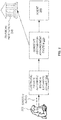
- FIG. 1 is a block diagram of a sensitive information rearrangement system 100 according to one or more embodiments of the present disclosure.
- the sensitive information rearrangement system 100 comprises a memory 102, a sensitive information processor 104, and a speech engine 106.
- the terms "sensitive information rearrangement system" and system may be interchangeably used herein.
- the memory 102 stores instructions, and optionally, one or more speeches specific to one or more users.
- the sensitive information processor 104 is coupled to the memory 102.
- the sensitive information processor 104 is configured by the instructions to obtain, in real time, an input from a user.
- the input is at least one of a speech or dual tone multi frequency (DTMF) tones corresponding to an identity (e.g., identity card) or information associated with the user.
- DTMF dual tone multi frequency
- the sensitive information processor 104 extracts, in real time, sensitive information specific to the user from the input, and further generates in real time, a virtual user identifier corresponding (or specific) to the sensitive information.
- the virtual user identifier is specific to a transaction being performed by the user in real time.
- the virtual user identifier can be utilized in query processing during the transaction.
- the sensitive information rearrangement system 100 includes a virtual audio driver (not shown in FIG. 1 ), which redirects the audio packets (e.g., speech) or the DTMF tones to the sensitive information processor 104.
- the virtual audio driver operates in a kernel space
- the sensitive information processor 104 operates in a user space where an input audio buffer (not shown in FIG. 1 ) takes the audio packets (e.g., speech) or the DTMF tones coming from the kernel space and an output audio buffer (not shown in FIG. 1 ) is responsible for routing out the processed audio to a playback device.
- the sensitive information processor 104 extracts the sensitive information from the input by performing keyword spotting technique on the input.
- the sensitive information processor 104 includes a keyword spotting module 104A that detects one or more sensitive threads (or sensitive information) in an audio. A number of approaches can be followed for detecting the sensitive information.
- the sensitive information comprises, but is not limited to, a payment card identifier such as a debit card number, an ATM card number, a credit card number, a loyalty card number, a user identifier from an identity card such as permanent account number, bank account number, national security number, driving license number, a product number, a mobile number, and the like.
- the sensitive information processor 104 implements the keyword spotting module 104A which when executed in real time filters out the incoming audio packets thereby improving the system performance.
- a payment card number e.g., a credit card number
- a service provider e.g., a financial institution
- the user enters or voices out the credit card number.
- keyword spotting could be utilized to identify (or extract) the sensitive information (e.g., the credit card number be in terms of speech or DTMF tones) which may lie between two keywords, for example, asterisk (*), and hash (#), etc.
- the keyword spotting module 104A extracts the original credit card number.
- the sensitive information e.g., the original credit card number
- the sensitive information is detected based on the length of the sensitive field and at the same time monitoring the sequence of keywords for identification, thereby maintaining a real time performance for detection.
- the sensitive information processor 104 further comprises a virtual user identifier generation module 104B that maintains the privacy and security of the system 100.
- Information like credit card number, is sensitive data for the user (e.g., a customer) and the leakage of this information will cost loss to the customer. Therefore, the virtual user identifier generation module 104B generates a virtual user identifier (e.g., a virtual credit card number) corresponding to the credit card number to safeguard the original credit card number such that the corresponding transaction or query processing is carried out smoothly without revealing original information to customer care executives.
- the virtual user identifier generation module 104B generates virtual user identifiers for other sensitive information extracted by the sensitive information rearrangement system 100.
- the sensitive information rearrangement system 100 implements one or more approaches (or techniques) as described below for generating the virtual user identifier:
- the sensitive information rearrangement system 100 implements a pseudo random number generator for generating sequence of numbers whose properties approximate the properties of sequences of random numbers. Initially, the sensitive information rearrangement system 100 requires a seed value to generate the random number which means for every different seed value a corresponding random number is generated.
- the cumulative speech energy is the total speech energy involved in the conversation before the user enters or speaks out the user identifier (e.g., a credit card number). It is to be noted, that this energy may vary (or differ) for each instance of transaction hence ensuring a good entropy.
- the sensitive information processor 104 performs a honey encryption technique on the sensitive information to generate the virtual user identifier based on a derived key obtained from a master key that is used to perform encryption, a session identifier specific to the transaction, and cumulative energy of the user in the speech.
- the sensitive information processor 104 performs the honey encryption technique to prevent an attacker from attempting to decrypt messages (or sensitive information) using incorrect key. This makes difficult for the attacker to guess the correct message.
- the sensitive information processor 104 is configured by the instructions to perform a cipher block chaining message authentication code (CBCMAC) on the sensitive information to obtain a tag, and perform Format Preserving Encryption (FPE) on the sensitive information to generate the virtual user identifier based on cumulative energy of the user in the speech, and the tag.
- the sensitive information processor 104 implements the FPE technique (or a FPE generator) to improve its performance using a CCM (Counter with CBCMAC) mode of operation for block ciphers and incorporating cumulative speech energy in order to enhance security.
- CCM Counter with CBCMAC
- Below example illustrates a pseudo code which is used by the virtual user identifier generation module 104B to generate a virtual user identifier specific to a user to perform one or more transactions, and query processing.
- the sensitive information processor 104 takes the credit card number as an input and performs a cipher block chaining message authentication code on it.
- GetKey enables to retrieve a secret key shared between the sensitive information rearrangement system 100 and a financial institution.
- the FPEGenerator takes a counter value, the credit card number, calculated tag, and the key as input to perform format preserving encryption on the original credit card in CCM mode.
- VCC virtual user identifier
- the speech engine 106 performs one or more speech analytics on speech of the user.
- the speech engine 106 comprises a speech regeneration module 106A that is configured to regenerate the virtual user identifier using a corresponding user speech model each time the user performs a transaction or initiates a query for processing.
- the corresponding user speech model may either be stored in a local memory (e.g., the memory 102), or stored in the speech engine 106.
- the corresponding user speech model may be obtained from one or more sources (e.g., from the cloud, or any external entity who is authorized by an issuing entity to store speech models of one or more users).
- the PerformMapping method is where any of the approaches can be plugged in as per the system scenario to generate virtual user identifier (e.g., a virtual credit card number).
- virtual user identifier e.g., a virtual credit card number.
- the above mentioned approaches do take into consideration that a speech synthesis model is present which is able to regenerate any letter (e.g., digit) in respective user's voice in the virtual credit card number.
- the sensitive information rearrangement system 100 considers a realization of generating the virtual user identifier based on the fact that the user speech for the original identity card (e.g., credit card number) is reused to rearrange the sensitive information (e.g., sensitive audio part each time the user visits for transaction).
- the mapping of the original credit card number to virtual credit card number is based on reutilization of digits contained in the user speech.
- the sensitive information rearrangement system 100 implements the speech regeneration module 106B that is further configured to extract (i) a first set of letters (e.g., digits in case of credit card, alphanumeric in case on PAN, and the like) from the input present in the identity card, and (ii) a second set of letters from the input to obtain the sensitive information, generate a remapping table based on the first set of letters and the second set of letters, and then further rearrange, using the remapping table, the sensitive information to generate the virtual user identifier for performing the transaction.
- a first set of letters e.g., digits in case of credit card, alphanumeric in case on PAN, and the like
- the sensitive information rearrangement system 100 Assuming that the sensitive information rearrangement system 100 initially does not hold any speech synthesis model for each and every user registered with the system 100. In such cases, the sensitive information rearrangement system 100 generates a virtual user identifier in a manner that the rearrangement of the digits in the original credit card number is done based on remapping table generated. This way the rearrangement of the sensitive information (e.g., sensitive audio zone) is achieved by reusing and rearranging speech input of the user.
- remapping table generated. This way the rearrangement of the sensitive information (e.g., sensitive audio zone) is achieved by reusing and rearranging speech input of the user.
- the speech regeneration module 106A extracts a first set of letters (e.g., digits) present in the credit card and stores them in an array.
- the speech regeneration module 106A further extracts a second set of letters (e.g., digits) not present in the credit card and stores them in another array.
- the speech regeneration module 106A then generates the remapping table to obtain the virtual credit card number using the first set of letters and/or the second set of letters.
- the remapping table is then utilized by the speech regeneration module 106A to perform the final mapping on the original credit number by performing the rearrangement based on the remapping table.
- the speech regeneration module 106A extracts letters accordingly based on the type of identity card (e.g., other than credit card such as PAN, driver license, and the like).
- Example of pseudo code for generating a remapping table is given below:
- FixDigit method ensures the mapping in such a manner that the digits not present in the original credit card number are not set for the mapping of current digit, and the current digit is not mapped to itself.
- Example of pseudo code for the FixDigit technique used herein is as below:
- the virtual user identifier (e.g., virtual credit card number) is generated as at least one of a speech of the user and DTMF tones each time the user performs a transaction.
- the sensitive information is extracted using a keyword spotting technique for the one or more approaches/techniques described above (e.g., pseudo random number generator, honey encryption, format preserving encryption, and the like) to rearrange the sensitive information and generate the virtual user identifier.
- the speech engine 106 further includes a notification agent 106B that computes a score for the speech, and performs a comparison of the score with a corresponding user speech model. Based on the comparison, the notification agent 106B triggers an action.
- the action comprises, but is not limited to, a notification message being communicated to a communication device (e.g., a mobile communication device, a personal computer, and the like) associated with the user.
- the notification message is transmitted via at least one network using one or more messaging services (e.g., email, short message service (SMS), multimedia message service (MMS), a call, an audio, a video, and the like).
- SMS short message service
- MMS multimedia message service
- the speech engine 106 authenticates the user when the score is greater than a predefined threshold stored in the speech engine 106 (or the memory 102).
- the predefined threshold may be obtained from the one or more sources (as described above).
- the notification agent 106B generates event(s) in a form of an alert code to be transmitted to the communication device of the user (e.g., the customer's registered phone number) when there is a denial in authentication.
- the user is authenticated during a transaction or while he/she initiates a query for processing.
- the notification agent 106B enables and implements a security feature by way of above authentication where thefts done by stolen identity cards can be minimized as well as mitigates masquerade attacks. This ensures that the user is registered to the sensitive information rearrangement system 100 to prevent theft(s) and malicious attack(s).
- the users' speech samples may be collected (or obtained) at the time of registration with the sensitive information rearrangement system 100 (or with a service provider issuing identity card) to create one or more user speech models. Moreover, each time the user revisits for any subsequent transactions, the user speech model is enhanced by capturing additional speech features from the corresponding successful transactions. Further, the sensitive information rearrangement system 100 performs auditing because of the session management performed at individual level, which maintains the references of the entities involved in the transaction or query processing. Thus easy detection of a malicious entity is possible.
- the possible number of remap tables for each credit card number is given by ( n -1) n . Since the remapping table is chosen randomly, the probability of generating the same remapping table is 1 n ⁇ 1 n , hence the chances of generating the same virtual credit card number is negligible.
- the keyword spotting module 104A, the virtual user identifier generation module 104B, the speech regeneration module 106A, and the notification agent 106B are implemented as at least one of a logically self-contained part of a software program, a self-contained hardware component, and/or, a self-contained hardware component, with a logically self-contained part of a software program embedded into each of the hardware component that when executed perform the above method described herein, in one embodiment.
- the sensitive information rearrangement system 100 can be implemented in other sectors/industries (or technological domains), and are not limited to, for example, Income Tax (IT) Department for query processing on, or transactions related to, IT returns, gas distribution systems, water supplying systems, utility bill payments, educational institutes, background verification of candidates/employees, and the like, where protecting sensitive information pertaining to a user is critical.
- IT Income Tax
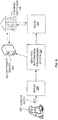
- FIG. 2 illustrates an implementation of the sensitive information rearrangement system 100 in a financial institute transaction scenario according to one or more embodiments of the present disclosure.
- FIG. 2 depicts a query processing financial institute scenario where a user 202 (e.g., a customer) initiates a call for query related to an identity card (e.g., a credit card), where the user 202 is requested to either enter user identifier (e.g., credentials such as credit card number) on keypad (DTMF tones) or speak out the credentials.
- the sensitive information rearrangement system 100 receives the credit card details through an Electronic Private Automatic Branch Exchange (EPABX) 204, and then generates a virtual credit card number.
- EPABX Electronic Private Automatic Branch Exchange
- the financial institution 208 then decrypts the VCC with shared secret key. Further, the financial institution 208 sends a confirmation to an agent 206 for transaction verification.
- the implementation of the sensitive information rearrangement system 100 in the financial institute transaction scenario enables to obfuscate the sensitive information such that the agent 206 (at the receiving end such as a customer executive representative) is unaware of confidential sensitive information (e.g., the original credit card number) and the query processing is successfully completed based on the generated information mapped to the sensitive information.
- FIG. 3 with reference to FIG. 1 and 2 , an implementation of the sensitive information rearrangement system 100 in a transaction processing scenario based on Honey Encryption according to one or more embodiments of the present disclosure.
- the sensitive information rearrangement system 100 incorporates a LookUp table (or a LookUp cache) 302 which retains the cipher text obtained from the honey encryption performed on the original user identifier (e.g., original credit card number) along with the customer ID and session ID.
- a LookUp table or a LookUp cache
- the sensitive information rearrangement system 100 can retrieve information from the LookUp table 302 and generate a corresponding virtual user identifier, and further updates the LookUp table 302 with a current session ID, wherein the virtual user identifier (e.g., the VCC) is sent to the agent 206.
- the agent 206 in order to complete the transaction sends the VCC to a corresponding financial institution (e.g., the financial institution 208) based on the information populated on a display screen pertaining to the user.
- the financial institution 208 then decrypts the VCC with shared secret key and sends a confirmation to the agent 206 for transaction verification.
- This scenario is therefore flexible enough to be deployed at any of transaction or query processing systems (e.g., at agent's desktop such as customer executive representative end or EPBAX, or at financial institution's end).
- FIG. 4 illustrates an implementation of the sensitive information rearrangement system 100 in a transaction processing scenario based on Format Preserving Encryption according to one or more embodiments of the present disclosure.
- the above scenario includes the EPBAX 204, the sensitive information rearrangement system 100, an accountability server 402, the agent 206, and the financial institution 208. As depicted in FIG. 4 , it could be deployed at EPBAX end and the agent's desktop end. This provides the flexibility to act as a third party where the secret key sharing is done for each customer between the sensitive information rearrangement system 100 and the financial institution 208 for each transaction. Hence, this discards the possibility of reusing the key therefore mitigating various attacks.
- This scenario plays vital role where transaction is taking place using credit card number and financial institution 208 being the third party.
- the sensitive information rearrangement system 100 being independent of the financial institution 208 complete the transaction without revealing the original credit card number.
- the virtual credit card number is considered as an operable data in the network keeping the original credit card number secure, thereby maintaining privacy.
- the accountability server 402 in the above scenario performs verification and authentication of the virtual credit card number generated by the sensitive information rearrangement system 100.
- a secure connection may be established between the accountability server 402 and the financial institution 208 in order to mitigate various attacks.
- the sensitive information rearrangement system 100 generates a virtual user identifier (e.g., the VCC in this case), and calculates tag/Hash of original credit card number.
- the tag is then sent along with Customer ID and Session ID to the accountability server 402, whereas the VCC is sent to the agent 206 (e.g., a customer executive representative).
- the agent 206 in order to complete the transaction sends the VCC to a corresponding financial institution (e.g., the financial institution 208) based on the information populated on a display screen pertaining to the user.
- the financial institution 208 then decrypts the VCC with shared secret key and calculates the tag.
- the tag is then verified by the accountability server 402.
- the accountability server 402 transmits a response message indicative of authentication or denial. Further, the financial institution 208 sends a confirmation to the agent 206 for transaction verification. This ensures that the transaction is completed successfully where the operable data being the VCC number.
- FIGS. 2 through 4 depict the sensitive information rearrangement system 100 between the EPBAX 204 and the agent 208, the sensitive information rearrangement system 100 can reside or be deployed on an interactive voice response (IVR), can be maintained by a financial institution, or may reside at the agent's side.
- IVR interactive voice response
- FIG. 5 is a flow diagram illustrating a sensitive information rearrangement method using the sensitive information rearrangement system 100 of FIG. 1 according to one or more embodiments of the present disclosure.
- the method includes: obtaining (502), in real time, using the sensitive information processor 104, an input specific to a transaction and/or a query initiation from a user.
- the input is at least one of a speech or dual tone multi frequency (DTMF) tones corresponding to an identity associated with the user.
- the method further includes extracting (504), in the real time, sensitive information specific to the identity of the user from the input; and generating (506), in the real time, a virtual user identifier corresponding to the sensitive information.
- the virtual user identifier is specific to the transaction being performed and/or the query initiated by the user in the real time.
- the method further includes performing, using the sensitive information processor 104, a honey encryption technique on the sensitive information to generate the virtual user identifier based on a derived key obtained from the master key used in encryption, a session identifier specific to the transaction, and cumulative energy of the user in the speech.
- the method further performing a cipher block chaining message authentication code (CBCMAC) on the sensitive information to obtain a tag; and performing format preserving encryption on the sensitive information to generate the virtual user identifier based on a counter value derived from cumulative energy of the user in the speech, and the tag.
- CBCMAC cipher block chaining message authentication code
- the method further includes regenerating, using the speech regeneration module 106A stored in the speech engine 106, the virtual user identifier using a corresponding user speech model each time the user performs a transaction and/or initiates a query for processing.
- the method further includes extracting, using the speech regeneration module 106A, (i) a first set of letters from the input present in the identity, and (ii) a second set of letters from the input to obtain the sensitive information; generating a remapping table based on the first set of letters and the second set of letters; and rearranging, using the remapping table, the sensitive information to generate the virtual user identifier for performing the transaction and/or for initiating the query for processing.
- the virtual user identifier is generated as at least one of a speech of the user and DTMF tones each time the user performs a transaction and/or initiates a query for processing.
- the sensitive information is extracted using a keyword spotting technique that is implemented using the keyword spotting module 104A.
- the method further includes computing using a notification agent 106B, a score for the speech obtained in real time; performing a comparison of the score with a corresponding user speech model; and triggering an action based on the comparison.
- the action includes a notification message that is communicated to a communication device associated with the user.
- the user is authenticated when the score is greater than a predefined threshold.
- the embodiments of the present disclosure provides a sensitive information rearrangement system and method for generating a virtual user identifier for a specific transaction or query processing associated with a user (e.g., customer).
- the sensitive information rearrangement system 100 implements the virtual user identifier generation module 104B that generates a virtual user identifier in real time specific to a transaction or query processing.
- the sensitive information rearrangement system 100 further implements the speech regeneration module 106A recreates the customer voice to playback the virtual user identifier generated by the sensitive information rearrangement system 100.
- the speech regeneration module 106A utilizes one or more speech data models of the customer (residing in the speech engine 106) for the recreation of the speech/audio corresponding to the virtual user identifier generated by the sensitive information rearrangement system 100.
- speech regeneration module 106A acts as a privacy enhancer where an agent is unaware of original sensitive information related to customer instead he/she is dealing with a pseudo information.
- the sensitive information rearrangement system 100 protects the confidential and sensitive information (e.g., credit card number of customers) during query processing and authentication, by implementing a real-time technique that can either generate or permute the actual card numbers in a privacy preserving manner. Further it rearranges the sensitive audio which can be either DTMF or speech of the customer as well as avoids data inconsistency by displaying the generated virtual information. Therefore, in terms of audio and visual feel, the suggested technique also maintain the user experience on both the ends.
- the sensitive information rearrangement system 100 keeps track of one or more entities (e.g., customer, financial institution, agent(s), and the like) in the scenario in order to trace any kind of malicious activity taking place. Moreover, the sensitive information rearrangement system 100 does not store any confidential information of the customer and it also raises notifications to the user in case of authentication denial.
- the hardware device can be any kind of device which can be programmed including e.g. any kind of computer like a server or a personal computer, or the like, or any combination thereof.
- the device may also include means which could be e.g. hardware means like e.g. an application-specific integrated circuit (ASIC), a field-programmable gate array (FPGA), or a combination of hardware and software means, e.g.
- ASIC application-specific integrated circuit
- FPGA field-programmable gate array
- the means can include both hardware means and software means.
- the method embodiments described herein could be implemented in hardware and software.
- the device may also include software means.
- the embodiments may be implemented on different hardware devices, e.g. using a plurality of CPUs.
- the embodiments herein can comprise hardware and software elements.
- the embodiments that are implemented in software include but are not limited to, firmware, resident software, microcode, etc.
- the functions performed by various modules described herein may be implemented in other modules or combinations of other modules.
- a computer-usable or computer readable medium can be any apparatus that can comprise, store, communicate, propagate, or transport the program for use by or in connection with the instruction execution system, apparatus, or device.
- the medium can be an electronic, magnetic, optical, electromagnetic, infrared, or semiconductor system (or apparatus or device) or a propagation medium.
- Examples of a computer-readable medium include a semiconductor or solid state memory, magnetic tape, a removable computer diskette, a random access memory (RAM), a read-only memory (ROM), a rigid magnetic disk and an optical disk.
- Current examples of optical disks include compact disk-read only memory (CD-ROM), compact disk-read/write (CD-R/W) and DVD.
- a data processing system suitable for storing and/or executing program code will include at least one processor coupled directly or indirectly to memory elements through a system bus.
- the memory elements can include local memory employed during actual execution of the program code, bulk storage, and cache memories which provide temporary storage of at least some program code in order to reduce the number of times code must be retrieved from bulk storage during execution.
- I/O devices can be coupled to the system either directly or through intervening I/O controllers.
- Network adapters may also be coupled to the system to enable the data processing system to become coupled to other data processing systems or remote printers or storage devices through intervening private or public networks. Modems, cable modem and Ethernet cards are just a few of the currently available types of network adapters.
- a representative hardware environment for practicing the embodiments may include a hardware configuration of an information handling/computer system in accordance with the embodiments herein.
- the system herein comprises at least one processor or central processing unit (CPU).
- the CPUs are interconnected via system bus to various devices such as a random access memory (RAM), read-only memory (ROM), and an input/output (I/O) adapter.
- RAM random access memory
- ROM read-only memory
- I/O input/output
- the I/O adapter can connect to peripheral devices, such as disk units and tape drives, or other program storage devices that are readable by the system.
- the system can read the inventive instructions on the program storage devices and follow these instructions to execute the methodology of the embodiments herein.
- the system further includes a user interface adapter that connects a keyboard, mouse, speaker, microphone, and/or other user interface devices such as a touch screen device (not shown) to the bus to gather user input.
- a communication adapter connects the bus to a data processing network
- a display adapter connects the bus to a display device which may be embodied as an output device such as a monitor, printer, or transmitter, for example.
Landscapes
- Engineering & Computer Science (AREA)
- Theoretical Computer Science (AREA)
- Business, Economics & Management (AREA)
- Physics & Mathematics (AREA)
- General Physics & Mathematics (AREA)
- Computer Security & Cryptography (AREA)
- General Engineering & Computer Science (AREA)
- Health & Medical Sciences (AREA)
- Strategic Management (AREA)
- Accounting & Taxation (AREA)
- Human Resources & Organizations (AREA)
- General Business, Economics & Management (AREA)
- Data Mining & Analysis (AREA)
- Multimedia (AREA)
- Computer Hardware Design (AREA)
- Computational Linguistics (AREA)
- Databases & Information Systems (AREA)
- General Health & Medical Sciences (AREA)
- Bioethics (AREA)
- Entrepreneurship & Innovation (AREA)
- Acoustics & Sound (AREA)
- Audiology, Speech & Language Pathology (AREA)
- Human Computer Interaction (AREA)
- Computer Networks & Wireless Communication (AREA)
- Software Systems (AREA)
- Finance (AREA)
- Computing Systems (AREA)
- Signal Processing (AREA)
- Quality & Reliability (AREA)
- Tourism & Hospitality (AREA)
- Operations Research (AREA)
- Marketing (AREA)
- Economics (AREA)
- Library & Information Science (AREA)
- Microelectronics & Electronic Packaging (AREA)
- Medical Informatics (AREA)
- Financial Or Insurance-Related Operations Such As Payment And Settlement (AREA)
Applications Claiming Priority (1)
| Application Number | Priority Date | Filing Date | Title |
|---|---|---|---|
| IN4552MU2015 | 2015-12-02 |
Publications (2)
| Publication Number | Publication Date |
|---|---|
| EP3176779A1 true EP3176779A1 (fr) | 2017-06-07 |
| EP3176779B1 EP3176779B1 (fr) | 2019-01-02 |
Family
ID=55527358
Family Applications (1)
| Application Number | Title | Priority Date | Filing Date |
|---|---|---|---|
| EP16159545.9A Active EP3176779B1 (fr) | 2015-12-02 | 2016-03-10 | Systèmes et procédés de réagencement de zone audio sensible |
Country Status (3)
| Country | Link |
|---|---|
| US (1) | US10599864B2 (fr) |
| EP (1) | EP3176779B1 (fr) |
| DK (1) | DK3176779T3 (fr) |
Cited By (1)
| Publication number | Priority date | Publication date | Assignee | Title |
|---|---|---|---|---|
| CN113724735A (zh) * | 2021-09-01 | 2021-11-30 | 广州博冠信息科技有限公司 | 语音流处理方法及装置、计算机可读存储介质、电子设备 |
Families Citing this family (8)
| Publication number | Priority date | Publication date | Assignee | Title |
|---|---|---|---|---|
| US10176472B1 (en) | 2016-12-15 | 2019-01-08 | Worldpay, Llc | Systems and methods for tone to token telecommunications platform |
| EP4064172B1 (fr) * | 2017-09-06 | 2025-12-24 | Landis+Gyr Technology, Inc. | Système de gestion d'énergie à activation vocale |
| JP7218443B2 (ja) * | 2018-10-15 | 2023-02-06 | ビザ インターナショナル サービス アソシエーション | 異種データメッセージの機密データを安全に伝達するための技術 |
| US11516197B2 (en) * | 2020-04-30 | 2022-11-29 | Capital One Services, Llc | Techniques to provide sensitive information over a voice connection |
| US12248603B2 (en) * | 2022-01-19 | 2025-03-11 | Sensory, Incorporated | Sanitizing personally identifiable information (PII) in audio and visual data |
| US12380228B2 (en) | 2022-01-19 | 2025-08-05 | Sensory, Incorporated | Sanitizing personally identifiable information (PII) in audio and visual data |
| CN115050390B (zh) * | 2022-08-12 | 2022-12-06 | 杭州海康威视数字技术股份有限公司 | 一种语音隐私保护方法、装置、电子设备及存储介质 |
| US20250141657A1 (en) * | 2023-10-31 | 2025-05-01 | Lemon Inc. | Data security for format-preserving data transforming |
Citations (3)
| Publication number | Priority date | Publication date | Assignee | Title |
|---|---|---|---|---|
| US20080144787A1 (en) * | 2006-12-15 | 2008-06-19 | Alexander Gantman | Method and device for secure phone banking |
| US20120150748A1 (en) * | 2010-12-14 | 2012-06-14 | Xtreme Mobility Inc. | System and method for authenticating transactions through a mobile device |
| US20150127538A1 (en) * | 2008-05-09 | 2015-05-07 | Semafone Limited | Signal detection and blocking for voice processing equipment |
Family Cites Families (11)
| Publication number | Priority date | Publication date | Assignee | Title |
|---|---|---|---|---|
| US7003501B2 (en) | 2000-02-11 | 2006-02-21 | Maurice Ostroff | Method for preventing fraudulent use of credit cards and credit card information, and for preventing unauthorized access to restricted physical and virtual sites |
| CN2559428Y (zh) | 2002-06-21 | 2003-07-09 | 杨恒视 | 改进的气动硅胶枪 |
| US8345851B2 (en) | 2006-05-31 | 2013-01-01 | Cisco Technology, Inc. | Randomized digit prompting for an interactive voice response system |
| US8190431B2 (en) * | 2006-09-25 | 2012-05-29 | Verizon Patent And Licensing Inc. | Method and system for providing speech recognition |
| US8958562B2 (en) * | 2007-01-16 | 2015-02-17 | Voltage Security, Inc. | Format-preserving cryptographic systems |
| GB2478916B (en) * | 2010-03-22 | 2014-06-11 | Veritape Ltd | Transaction security method and system |
| US9430286B2 (en) * | 2011-12-12 | 2016-08-30 | International Business Machines Corporation | Authorizing distributed task processing in a distributed storage network |
| US8831204B1 (en) | 2013-04-11 | 2014-09-09 | Noble Systems Corporation | Protecting sensitive information provided by a party to a contact center |
| GB201307513D0 (en) * | 2013-04-25 | 2013-06-12 | Semafone Ltd | Secure voice transactions |
| US9374221B1 (en) * | 2013-12-20 | 2016-06-21 | Emc Corporation | Distributed protection of credential stores utilizing multiple keys derived from a master key |
| US20170039568A1 (en) * | 2015-07-14 | 2017-02-09 | NXT-ID, Inc. | Personalized and Dynamic Tokenization Method and System |
-
2016
- 2016-03-10 EP EP16159545.9A patent/EP3176779B1/fr active Active
- 2016-03-10 DK DK16159545.9T patent/DK3176779T3/en active
- 2016-03-15 US US15/071,010 patent/US10599864B2/en active Active
Patent Citations (3)
| Publication number | Priority date | Publication date | Assignee | Title |
|---|---|---|---|---|
| US20080144787A1 (en) * | 2006-12-15 | 2008-06-19 | Alexander Gantman | Method and device for secure phone banking |
| US20150127538A1 (en) * | 2008-05-09 | 2015-05-07 | Semafone Limited | Signal detection and blocking for voice processing equipment |
| US20120150748A1 (en) * | 2010-12-14 | 2012-06-14 | Xtreme Mobility Inc. | System and method for authenticating transactions through a mobile device |
Cited By (1)
| Publication number | Priority date | Publication date | Assignee | Title |
|---|---|---|---|---|
| CN113724735A (zh) * | 2021-09-01 | 2021-11-30 | 广州博冠信息科技有限公司 | 语音流处理方法及装置、计算机可读存储介质、电子设备 |
Also Published As
| Publication number | Publication date |
|---|---|
| EP3176779B1 (fr) | 2019-01-02 |
| US20170161516A1 (en) | 2017-06-08 |
| DK3176779T3 (en) | 2019-04-08 |
| US10599864B2 (en) | 2020-03-24 |
Similar Documents
| Publication | Publication Date | Title |
|---|---|---|
| EP3176779B1 (fr) | Systèmes et procédés de réagencement de zone audio sensible | |
| US11727128B2 (en) | Method and apparatus for multi-channel secure communication and data transfer | |
| US8549594B2 (en) | Method of identity authentication and fraudulent phone call verification that utilizes an identification code of a communication device and a dynamic password | |
| US8312288B2 (en) | Secure PIN character retrieval and setting using PIN offset masking | |
| Sikarwar et al. | Advanced security solutions for conversational AI | |
| EP3236403A2 (fr) | Client, serveur, procédé et système de vérification d'identité | |
| US20140331331A1 (en) | Computer-Implemented System And Method for Correlating Activity Within A User Interface With Special Information | |
| US12450587B2 (en) | Systems and methods for tone to token telecommunications platform | |
| CN106027501B (zh) | 一种在移动设备中进行交易安全认证的系统和方法 | |
| CN112738322B (zh) | 通话处理方法、装置、计算机设备和存储介质 | |
| JP2002073563A (ja) | サービス・ファシリティへの安全なアクセスを提供する装置、方法およびプログラム製品 | |
| JP2001525093A (ja) | 電子取引 | |
| CN110771190A (zh) | 对数据的控制访问 | |
| CN106790208A (zh) | 一种通信加密方法及装置 | |
| US8219826B2 (en) | Secure pin character retrieval and setting | |
| CN108667801A (zh) | 一种物联网接入身份安全认证方法及系统 | |
| CN113094688B (zh) | 外派营销终端业务处理系统及方法 | |
| Nashwan et al. | Mutual chain authentication protocol for SPAN transactions in Saudi Arabian banking | |
| Awasthi | Reducing identity theft using one-time passwords and SMS | |
| KR20180129302A (ko) | 보안 키보드의 실행 방법 및 이를 수행하기 위한 장치 및 시스템 | |
| CN106446713A (zh) | 一种数据库内容加密方法及系统 | |
| CN107317679B (zh) | 一种身份证丢失后防诈骗的方法和系统 | |
| DaCorte | The Effects of the Internet on Financial Institutions' Fraud Mitigation | |
| US20150269662A1 (en) | Method and apparatus for verifying a validity of communication from a fraud detection service | |
| CN107301598A (zh) | 一种交易账号的注册方法和系统 |
Legal Events
| Date | Code | Title | Description |
|---|---|---|---|
| AK | Designated contracting states |
Kind code of ref document: A1 Designated state(s): AL AT BE BG CH CY CZ DE DK EE ES FI FR GB GR HR HU IE IS IT LI LT LU LV MC MK MT NL NO PL PT RO RS SE SI SK SM TR |
|
| AX | Request for extension of the european patent |
Extension state: BA ME |
|
| PUAI | Public reference made under article 153(3) epc to a published international application that has entered the european phase |
Free format text: ORIGINAL CODE: 0009012 |
|
| STAA | Information on the status of an ep patent application or granted ep patent |
Free format text: STATUS: THE APPLICATION HAS BEEN PUBLISHED |
|
| STAA | Information on the status of an ep patent application or granted ep patent |
Free format text: STATUS: REQUEST FOR EXAMINATION WAS MADE |
|
| 17P | Request for examination filed |
Effective date: 20171207 |
|
| RBV | Designated contracting states (corrected) |
Designated state(s): AL AT BE BG CH CY CZ DE DK EE ES FI FR GB GR HR HU IE IS IT LI LT LU LV MC MK MT NL NO PL PT RO RS SE SI SK SM TR |
|
| REG | Reference to a national code |
Ref country code: DE Ref legal event code: R079 Ref document number: 602016008831 Country of ref document: DE Free format text: PREVIOUS MAIN CLASS: G10L0015260000 Ipc: G06F0017300000 |
|
| GRAP | Despatch of communication of intention to grant a patent |
Free format text: ORIGINAL CODE: EPIDOSNIGR1 |
|
| STAA | Information on the status of an ep patent application or granted ep patent |
Free format text: STATUS: GRANT OF PATENT IS INTENDED |
|
| RIC1 | Information provided on ipc code assigned before grant |
Ipc: G06Q 10/10 20120101ALI20180131BHEP Ipc: G06F 17/30 20060101AFI20180131BHEP Ipc: G06F 21/62 20130101ALI20180131BHEP Ipc: G06Q 20/38 20120101ALI20180131BHEP Ipc: G06Q 20/34 20120101ALI20180131BHEP Ipc: G06F 21/60 20130101ALI20180131BHEP Ipc: G06F 21/32 20130101ALI20180131BHEP Ipc: G06Q 20/40 20120101ALI20180131BHEP |
|
| INTG | Intention to grant announced |
Effective date: 20180215 |
|
| GRAJ | Information related to disapproval of communication of intention to grant by the applicant or resumption of examination proceedings by the epo deleted |
Free format text: ORIGINAL CODE: EPIDOSDIGR1 |
|
| STAA | Information on the status of an ep patent application or granted ep patent |
Free format text: STATUS: REQUEST FOR EXAMINATION WAS MADE |
|
| GRAS | Grant fee paid |
Free format text: ORIGINAL CODE: EPIDOSNIGR3 |
|
| STAA | Information on the status of an ep patent application or granted ep patent |
Free format text: STATUS: GRANT OF PATENT IS INTENDED |
|
| GRAP | Despatch of communication of intention to grant a patent |
Free format text: ORIGINAL CODE: EPIDOSNIGR1 |
|
| INTC | Intention to grant announced (deleted) | ||
| RAP1 | Party data changed (applicant data changed or rights of an application transferred) |
Owner name: TATA CONSULTANCY SERVICES LIMITED |
|
| INTG | Intention to grant announced |
Effective date: 20180718 |
|
| GRAA | (expected) grant |
Free format text: ORIGINAL CODE: 0009210 |
|
| STAA | Information on the status of an ep patent application or granted ep patent |
Free format text: STATUS: THE PATENT HAS BEEN GRANTED |
|
| AK | Designated contracting states |
Kind code of ref document: B1 Designated state(s): AL AT BE BG CH CY CZ DE DK EE ES FI FR GB GR HR HU IE IS IT LI LT LU LV MC MK MT NL NO PL PT RO RS SE SI SK SM TR |
|
| REG | Reference to a national code |
Ref country code: GB Ref legal event code: FG4D |
|
| REG | Reference to a national code |
Ref country code: CH Ref legal event code: EP Ref country code: AT Ref legal event code: REF Ref document number: 1085278 Country of ref document: AT Kind code of ref document: T Effective date: 20190115 |
|
| REG | Reference to a national code |
Ref country code: IE Ref legal event code: FG4D |
|
| REG | Reference to a national code |
Ref country code: DE Ref legal event code: R096 Ref document number: 602016008831 Country of ref document: DE |
|
| REG | Reference to a national code |
Ref country code: CH Ref legal event code: NV Representative=s name: ISLER AND PEDRAZZINI AG, CH |
|
| REG | Reference to a national code |
Ref country code: SE Ref legal event code: TRGR |
|
| REG | Reference to a national code |
Ref country code: DK Ref legal event code: T3 Effective date: 20190401 |
|
| REG | Reference to a national code |
Ref country code: NL Ref legal event code: FP |
|
| REG | Reference to a national code |
Ref country code: NO Ref legal event code: T2 Effective date: 20190102 |
|
| REG | Reference to a national code |
Ref country code: LT Ref legal event code: MG4D |
|
| PG25 | Lapsed in a contracting state [announced via postgrant information from national office to epo] |
Ref country code: PL Free format text: LAPSE BECAUSE OF FAILURE TO SUBMIT A TRANSLATION OF THE DESCRIPTION OR TO PAY THE FEE WITHIN THE PRESCRIBED TIME-LIMIT Effective date: 20190102 Ref country code: LT Free format text: LAPSE BECAUSE OF FAILURE TO SUBMIT A TRANSLATION OF THE DESCRIPTION OR TO PAY THE FEE WITHIN THE PRESCRIBED TIME-LIMIT Effective date: 20190102 Ref country code: ES Free format text: LAPSE BECAUSE OF FAILURE TO SUBMIT A TRANSLATION OF THE DESCRIPTION OR TO PAY THE FEE WITHIN THE PRESCRIBED TIME-LIMIT Effective date: 20190102 Ref country code: PT Free format text: LAPSE BECAUSE OF FAILURE TO SUBMIT A TRANSLATION OF THE DESCRIPTION OR TO PAY THE FEE WITHIN THE PRESCRIBED TIME-LIMIT Effective date: 20190502 |
|
| PG25 | Lapsed in a contracting state [announced via postgrant information from national office to epo] |
Ref country code: LV Free format text: LAPSE BECAUSE OF FAILURE TO SUBMIT A TRANSLATION OF THE DESCRIPTION OR TO PAY THE FEE WITHIN THE PRESCRIBED TIME-LIMIT Effective date: 20190102 Ref country code: RS Free format text: LAPSE BECAUSE OF FAILURE TO SUBMIT A TRANSLATION OF THE DESCRIPTION OR TO PAY THE FEE WITHIN THE PRESCRIBED TIME-LIMIT Effective date: 20190102 Ref country code: BG Free format text: LAPSE BECAUSE OF FAILURE TO SUBMIT A TRANSLATION OF THE DESCRIPTION OR TO PAY THE FEE WITHIN THE PRESCRIBED TIME-LIMIT Effective date: 20190402 Ref country code: IS Free format text: LAPSE BECAUSE OF FAILURE TO SUBMIT A TRANSLATION OF THE DESCRIPTION OR TO PAY THE FEE WITHIN THE PRESCRIBED TIME-LIMIT Effective date: 20190502 Ref country code: GR Free format text: LAPSE BECAUSE OF FAILURE TO SUBMIT A TRANSLATION OF THE DESCRIPTION OR TO PAY THE FEE WITHIN THE PRESCRIBED TIME-LIMIT Effective date: 20190403 Ref country code: HR Free format text: LAPSE BECAUSE OF FAILURE TO SUBMIT A TRANSLATION OF THE DESCRIPTION OR TO PAY THE FEE WITHIN THE PRESCRIBED TIME-LIMIT Effective date: 20190102 |
|
| REG | Reference to a national code |
Ref country code: DE Ref legal event code: R097 Ref document number: 602016008831 Country of ref document: DE |
|
| PG25 | Lapsed in a contracting state [announced via postgrant information from national office to epo] |
Ref country code: AL Free format text: LAPSE BECAUSE OF FAILURE TO SUBMIT A TRANSLATION OF THE DESCRIPTION OR TO PAY THE FEE WITHIN THE PRESCRIBED TIME-LIMIT Effective date: 20190102 Ref country code: MC Free format text: LAPSE BECAUSE OF FAILURE TO SUBMIT A TRANSLATION OF THE DESCRIPTION OR TO PAY THE FEE WITHIN THE PRESCRIBED TIME-LIMIT Effective date: 20190102 Ref country code: RO Free format text: LAPSE BECAUSE OF FAILURE TO SUBMIT A TRANSLATION OF THE DESCRIPTION OR TO PAY THE FEE WITHIN THE PRESCRIBED TIME-LIMIT Effective date: 20190102 Ref country code: SK Free format text: LAPSE BECAUSE OF FAILURE TO SUBMIT A TRANSLATION OF THE DESCRIPTION OR TO PAY THE FEE WITHIN THE PRESCRIBED TIME-LIMIT Effective date: 20190102 Ref country code: CZ Free format text: LAPSE BECAUSE OF FAILURE TO SUBMIT A TRANSLATION OF THE DESCRIPTION OR TO PAY THE FEE WITHIN THE PRESCRIBED TIME-LIMIT Effective date: 20190102 Ref country code: EE Free format text: LAPSE BECAUSE OF FAILURE TO SUBMIT A TRANSLATION OF THE DESCRIPTION OR TO PAY THE FEE WITHIN THE PRESCRIBED TIME-LIMIT Effective date: 20190102 |
|
| PLBE | No opposition filed within time limit |
Free format text: ORIGINAL CODE: 0009261 |
|
| STAA | Information on the status of an ep patent application or granted ep patent |
Free format text: STATUS: NO OPPOSITION FILED WITHIN TIME LIMIT |
|
| PG25 | Lapsed in a contracting state [announced via postgrant information from national office to epo] |
Ref country code: SM Free format text: LAPSE BECAUSE OF FAILURE TO SUBMIT A TRANSLATION OF THE DESCRIPTION OR TO PAY THE FEE WITHIN THE PRESCRIBED TIME-LIMIT Effective date: 20190102 Ref country code: LU Free format text: LAPSE BECAUSE OF NON-PAYMENT OF DUE FEES Effective date: 20190310 |
|
| 26N | No opposition filed |
Effective date: 20191003 |
|
| REG | Reference to a national code |
Ref country code: BE Ref legal event code: MM Effective date: 20190331 |
|
| PG25 | Lapsed in a contracting state [announced via postgrant information from national office to epo] |
Ref country code: BE Free format text: LAPSE BECAUSE OF NON-PAYMENT OF DUE FEES Effective date: 20190331 Ref country code: SI Free format text: LAPSE BECAUSE OF FAILURE TO SUBMIT A TRANSLATION OF THE DESCRIPTION OR TO PAY THE FEE WITHIN THE PRESCRIBED TIME-LIMIT Effective date: 20190102 |
|
| PG25 | Lapsed in a contracting state [announced via postgrant information from national office to epo] |
Ref country code: TR Free format text: LAPSE BECAUSE OF FAILURE TO SUBMIT A TRANSLATION OF THE DESCRIPTION OR TO PAY THE FEE WITHIN THE PRESCRIBED TIME-LIMIT Effective date: 20190102 |
|
| PG25 | Lapsed in a contracting state [announced via postgrant information from national office to epo] |
Ref country code: MT Free format text: LAPSE BECAUSE OF NON-PAYMENT OF DUE FEES Effective date: 20190310 |
|
| PG25 | Lapsed in a contracting state [announced via postgrant information from national office to epo] |
Ref country code: CY Free format text: LAPSE BECAUSE OF FAILURE TO SUBMIT A TRANSLATION OF THE DESCRIPTION OR TO PAY THE FEE WITHIN THE PRESCRIBED TIME-LIMIT Effective date: 20190102 |
|
| PG25 | Lapsed in a contracting state [announced via postgrant information from national office to epo] |
Ref country code: HU Free format text: LAPSE BECAUSE OF FAILURE TO SUBMIT A TRANSLATION OF THE DESCRIPTION OR TO PAY THE FEE WITHIN THE PRESCRIBED TIME-LIMIT; INVALID AB INITIO Effective date: 20160310 |
|
| REG | Reference to a national code |
Ref country code: AT Ref legal event code: UEP Ref document number: 1085278 Country of ref document: AT Kind code of ref document: T Effective date: 20190102 |
|
| PG25 | Lapsed in a contracting state [announced via postgrant information from national office to epo] |
Ref country code: MK Free format text: LAPSE BECAUSE OF FAILURE TO SUBMIT A TRANSLATION OF THE DESCRIPTION OR TO PAY THE FEE WITHIN THE PRESCRIBED TIME-LIMIT Effective date: 20190102 |
|
| P01 | Opt-out of the competence of the unified patent court (upc) registered |
Effective date: 20230526 |
|
| PGFP | Annual fee paid to national office [announced via postgrant information from national office to epo] |
Ref country code: CH Payment date: 20250401 Year of fee payment: 10 |
|
| REG | Reference to a national code |
Ref country code: CH Ref legal event code: U11 Free format text: ST27 STATUS EVENT CODE: U-0-0-U10-U11 (AS PROVIDED BY THE NATIONAL OFFICE) Effective date: 20260401 |
|
| PGFP | Annual fee paid to national office [announced via postgrant information from national office to epo] |
Ref country code: SE Payment date: 20260323 Year of fee payment: 11 |
|
| PGFP | Annual fee paid to national office [announced via postgrant information from national office to epo] |
Ref country code: GB Payment date: 20260304 Year of fee payment: 11 |
|
| PGFP | Annual fee paid to national office [announced via postgrant information from national office to epo] |
Ref country code: NO Payment date: 20260318 Year of fee payment: 11 Ref country code: DE Payment date: 20260320 Year of fee payment: 11 Ref country code: IE Payment date: 20260318 Year of fee payment: 11 Ref country code: DK Payment date: 20260323 Year of fee payment: 11 |
|
| PGFP | Annual fee paid to national office [announced via postgrant information from national office to epo] |
Ref country code: AT Payment date: 20260318 Year of fee payment: 11 |
|
| PGFP | Annual fee paid to national office [announced via postgrant information from national office to epo] |
Ref country code: FI Payment date: 20260323 Year of fee payment: 11 Ref country code: IT Payment date: 20260320 Year of fee payment: 11 |
|
| PGFP | Annual fee paid to national office [announced via postgrant information from national office to epo] |
Ref country code: NL Payment date: 20260323 Year of fee payment: 11 |
|
| PGFP | Annual fee paid to national office [announced via postgrant information from national office to epo] |
Ref country code: FR Payment date: 20260323 Year of fee payment: 11 |