EP3178574A1 - Methangärungsverfahren und methangärungssystem - Google Patents
Methangärungsverfahren und methangärungssystem Download PDFInfo
- Publication number
- EP3178574A1 EP3178574A1 EP15829865.3A EP15829865A EP3178574A1 EP 3178574 A1 EP3178574 A1 EP 3178574A1 EP 15829865 A EP15829865 A EP 15829865A EP 3178574 A1 EP3178574 A1 EP 3178574A1
- Authority
- EP
- European Patent Office
- Prior art keywords
- methane fermentation
- methane
- organic substance
- digestive fluid
- bead mill
- Prior art date
- Legal status (The legal status is an assumption and is not a legal conclusion. Google has not performed a legal analysis and makes no representation as to the accuracy of the status listed.)
- Granted
Links
Images



Classifications
-
- C—CHEMISTRY; METALLURGY
- C02—TREATMENT OF WATER, WASTE WATER, SEWAGE, OR SLUDGE
- C02F—TREATMENT OF WATER, WASTE WATER, SEWAGE, OR SLUDGE
- C02F11/00—Treatment of sludge; Devices therefor
- C02F11/02—Biological treatment
- C02F11/04—Anaerobic treatment; Production of methane by such processes
-
- B—PERFORMING OPERATIONS; TRANSPORTING
- B01—PHYSICAL OR CHEMICAL PROCESSES OR APPARATUS IN GENERAL
- B01D—SEPARATION
- B01D61/00—Processes of separation using semi-permeable membranes, e.g. dialysis, osmosis or ultrafiltration; Apparatus, accessories or auxiliary operations specially adapted therefor
- B01D61/02—Reverse osmosis; Hyperfiltration ; Nanofiltration
-
- B—PERFORMING OPERATIONS; TRANSPORTING
- B01—PHYSICAL OR CHEMICAL PROCESSES OR APPARATUS IN GENERAL
- B01D—SEPARATION
- B01D61/00—Processes of separation using semi-permeable membranes, e.g. dialysis, osmosis or ultrafiltration; Apparatus, accessories or auxiliary operations specially adapted therefor
- B01D61/14—Ultrafiltration; Microfiltration
-
- B—PERFORMING OPERATIONS; TRANSPORTING
- B01—PHYSICAL OR CHEMICAL PROCESSES OR APPARATUS IN GENERAL
- B01D—SEPARATION
- B01D61/00—Processes of separation using semi-permeable membranes, e.g. dialysis, osmosis or ultrafiltration; Apparatus, accessories or auxiliary operations specially adapted therefor
- B01D61/14—Ultrafiltration; Microfiltration
- B01D61/145—Ultrafiltration
-
- B—PERFORMING OPERATIONS; TRANSPORTING
- B01—PHYSICAL OR CHEMICAL PROCESSES OR APPARATUS IN GENERAL
- B01D—SEPARATION
- B01D61/00—Processes of separation using semi-permeable membranes, e.g. dialysis, osmosis or ultrafiltration; Apparatus, accessories or auxiliary operations specially adapted therefor
- B01D61/14—Ultrafiltration; Microfiltration
- B01D61/16—Feed pretreatment
-
- B—PERFORMING OPERATIONS; TRANSPORTING
- B01—PHYSICAL OR CHEMICAL PROCESSES OR APPARATUS IN GENERAL
- B01D—SEPARATION
- B01D61/00—Processes of separation using semi-permeable membranes, e.g. dialysis, osmosis or ultrafiltration; Apparatus, accessories or auxiliary operations specially adapted therefor
- B01D61/58—Multistep processes
-
- B—PERFORMING OPERATIONS; TRANSPORTING
- B09—DISPOSAL OF SOLID WASTE; RECLAMATION OF CONTAMINATED SOIL
- B09B—DISPOSAL OF SOLID WASTE NOT OTHERWISE PROVIDED FOR
- B09B3/00—Destroying solid waste or transforming solid waste into something useful or harmless
- B09B3/30—Destroying solid waste or transforming solid waste into something useful or harmless involving mechanical treatment
- B09B3/35—Shredding, crushing or cutting
-
- B—PERFORMING OPERATIONS; TRANSPORTING
- B09—DISPOSAL OF SOLID WASTE; RECLAMATION OF CONTAMINATED SOIL
- B09B—DISPOSAL OF SOLID WASTE NOT OTHERWISE PROVIDED FOR
- B09B3/00—Destroying solid waste or transforming solid waste into something useful or harmless
- B09B3/30—Destroying solid waste or transforming solid waste into something useful or harmless involving mechanical treatment
- B09B3/38—Stirring or kneading
-
- B—PERFORMING OPERATIONS; TRANSPORTING
- B09—DISPOSAL OF SOLID WASTE; RECLAMATION OF CONTAMINATED SOIL
- B09B—DISPOSAL OF SOLID WASTE NOT OTHERWISE PROVIDED FOR
- B09B3/00—Destroying solid waste or transforming solid waste into something useful or harmless
- B09B3/60—Biochemical treatment, e.g. by using enzymes
- B09B3/65—Anaerobic treatment
-
- C—CHEMISTRY; METALLURGY
- C02—TREATMENT OF WATER, WASTE WATER, SEWAGE, OR SLUDGE
- C02F—TREATMENT OF WATER, WASTE WATER, SEWAGE, OR SLUDGE
- C02F11/00—Treatment of sludge; Devices therefor
-
- C—CHEMISTRY; METALLURGY
- C12—BIOCHEMISTRY; BEER; SPIRITS; WINE; VINEGAR; MICROBIOLOGY; ENZYMOLOGY; MUTATION OR GENETIC ENGINEERING
- C12M—APPARATUS FOR ENZYMOLOGY OR MICROBIOLOGY; APPARATUS FOR CULTURING MICROORGANISMS FOR PRODUCING BIOMASS, FOR GROWING CELLS OR FOR OBTAINING FERMENTATION OR METABOLIC PRODUCTS, i.e. BIOREACTORS OR FERMENTERS
- C12M21/00—Bioreactors or fermenters specially adapted for specific uses
- C12M21/04—Bioreactors or fermenters specially adapted for specific uses for producing gas, e.g. biogas
-
- C—CHEMISTRY; METALLURGY
- C12—BIOCHEMISTRY; BEER; SPIRITS; WINE; VINEGAR; MICROBIOLOGY; ENZYMOLOGY; MUTATION OR GENETIC ENGINEERING
- C12M—APPARATUS FOR ENZYMOLOGY OR MICROBIOLOGY; APPARATUS FOR CULTURING MICROORGANISMS FOR PRODUCING BIOMASS, FOR GROWING CELLS OR FOR OBTAINING FERMENTATION OR METABOLIC PRODUCTS, i.e. BIOREACTORS OR FERMENTERS
- C12M33/00—Means for introduction, transport, positioning, extraction, harvesting, peeling or sampling of biological material in or from the apparatus
- C12M33/14—Means for introduction, transport, positioning, extraction, harvesting, peeling or sampling of biological material in or from the apparatus with filters, sieves or membranes
-
- C—CHEMISTRY; METALLURGY
- C12—BIOCHEMISTRY; BEER; SPIRITS; WINE; VINEGAR; MICROBIOLOGY; ENZYMOLOGY; MUTATION OR GENETIC ENGINEERING
- C12M—APPARATUS FOR ENZYMOLOGY OR MICROBIOLOGY; APPARATUS FOR CULTURING MICROORGANISMS FOR PRODUCING BIOMASS, FOR GROWING CELLS OR FOR OBTAINING FERMENTATION OR METABOLIC PRODUCTS, i.e. BIOREACTORS OR FERMENTERS
- C12M45/00—Means for pre-treatment of biological substances
- C12M45/02—Means for pre-treatment of biological substances by mechanical forces; Stirring; Trituration; Comminuting
-
- C—CHEMISTRY; METALLURGY
- C12—BIOCHEMISTRY; BEER; SPIRITS; WINE; VINEGAR; MICROBIOLOGY; ENZYMOLOGY; MUTATION OR GENETIC ENGINEERING
- C12M—APPARATUS FOR ENZYMOLOGY OR MICROBIOLOGY; APPARATUS FOR CULTURING MICROORGANISMS FOR PRODUCING BIOMASS, FOR GROWING CELLS OR FOR OBTAINING FERMENTATION OR METABOLIC PRODUCTS, i.e. BIOREACTORS OR FERMENTERS
- C12M47/00—Means for after-treatment of the produced biomass or of the fermentation or metabolic products, e.g. storage of biomass
- C12M47/02—Separating microorganisms from the culture medium; Concentration of biomass
-
- C—CHEMISTRY; METALLURGY
- C12—BIOCHEMISTRY; BEER; SPIRITS; WINE; VINEGAR; MICROBIOLOGY; ENZYMOLOGY; MUTATION OR GENETIC ENGINEERING
- C12P—FERMENTATION OR ENZYME-USING PROCESSES TO SYNTHESISE A DESIRED CHEMICAL COMPOUND OR COMPOSITION OR TO SEPARATE OPTICAL ISOMERS FROM A RACEMIC MIXTURE
- C12P5/00—Preparation of hydrocarbons or halogenated hydrocarbons
- C12P5/02—Preparation of hydrocarbons or halogenated hydrocarbons acyclic
- C12P5/023—Methane
-
- B—PERFORMING OPERATIONS; TRANSPORTING
- B01—PHYSICAL OR CHEMICAL PROCESSES OR APPARATUS IN GENERAL
- B01D—SEPARATION
- B01D2311/00—Details relating to membrane separation process operations and control
- B01D2311/04—Specific process operations in the feed stream; Feed pretreatment
-
- B—PERFORMING OPERATIONS; TRANSPORTING
- B01—PHYSICAL OR CHEMICAL PROCESSES OR APPARATUS IN GENERAL
- B01D—SEPARATION
- B01D2311/00—Details relating to membrane separation process operations and control
- B01D2311/08—Specific process operations in the concentrate stream
-
- B—PERFORMING OPERATIONS; TRANSPORTING
- B01—PHYSICAL OR CHEMICAL PROCESSES OR APPARATUS IN GENERAL
- B01D—SEPARATION
- B01D2317/00—Membrane module arrangements within a plant or an apparatus
- B01D2317/02—Elements in series
- B01D2317/025—Permeate series
-
- B—PERFORMING OPERATIONS; TRANSPORTING
- B01—PHYSICAL OR CHEMICAL PROCESSES OR APPARATUS IN GENERAL
- B01D—SEPARATION
- B01D61/00—Processes of separation using semi-permeable membranes, e.g. dialysis, osmosis or ultrafiltration; Apparatus, accessories or auxiliary operations specially adapted therefor
- B01D61/02—Reverse osmosis; Hyperfiltration ; Nanofiltration
- B01D61/025—Reverse osmosis; Hyperfiltration
-
- C—CHEMISTRY; METALLURGY
- C02—TREATMENT OF WATER, WASTE WATER, SEWAGE, OR SLUDGE
- C02F—TREATMENT OF WATER, WASTE WATER, SEWAGE, OR SLUDGE
- C02F1/00—Treatment of water, waste water, or sewage
- C02F1/44—Treatment of water, waste water, or sewage by dialysis, osmosis or reverse osmosis
- C02F1/441—Treatment of water, waste water, or sewage by dialysis, osmosis or reverse osmosis by reverse osmosis
-
- C—CHEMISTRY; METALLURGY
- C02—TREATMENT OF WATER, WASTE WATER, SEWAGE, OR SLUDGE
- C02F—TREATMENT OF WATER, WASTE WATER, SEWAGE, OR SLUDGE
- C02F1/00—Treatment of water, waste water, or sewage
- C02F1/44—Treatment of water, waste water, or sewage by dialysis, osmosis or reverse osmosis
- C02F1/444—Treatment of water, waste water, or sewage by dialysis, osmosis or reverse osmosis by ultrafiltration or microfiltration
-
- C—CHEMISTRY; METALLURGY
- C02—TREATMENT OF WATER, WASTE WATER, SEWAGE, OR SLUDGE
- C02F—TREATMENT OF WATER, WASTE WATER, SEWAGE, OR SLUDGE
- C02F2303/00—Specific treatment goals
- C02F2303/26—Reducing the size of particles, liquid droplets or bubbles, e.g. by crushing, grinding, spraying, creation of microbubbles or nanobubbles
-
- C—CHEMISTRY; METALLURGY
- C02—TREATMENT OF WATER, WASTE WATER, SEWAGE, OR SLUDGE
- C02F—TREATMENT OF WATER, WASTE WATER, SEWAGE, OR SLUDGE
- C02F3/00—Biological treatment of water, waste water, or sewage
- C02F3/28—Anaerobic digestion processes
- C02F3/2853—Anaerobic digestion processes using anaerobic membrane bioreactors
-
- Y—GENERAL TAGGING OF NEW TECHNOLOGICAL DEVELOPMENTS; GENERAL TAGGING OF CROSS-SECTIONAL TECHNOLOGIES SPANNING OVER SEVERAL SECTIONS OF THE IPC; TECHNICAL SUBJECTS COVERED BY FORMER USPC CROSS-REFERENCE ART COLLECTIONS [XRACs] AND DIGESTS
- Y02—TECHNOLOGIES OR APPLICATIONS FOR MITIGATION OR ADAPTATION AGAINST CLIMATE CHANGE
- Y02E—REDUCTION OF GREENHOUSE GAS [GHG] EMISSIONS, RELATED TO ENERGY GENERATION, TRANSMISSION OR DISTRIBUTION
- Y02E50/00—Technologies for the production of fuel of non-fossil origin
- Y02E50/30—Fuel from waste, e.g. synthetic alcohol or diesel
Definitions
- the present invention relates to a methane fermentation method and a methane fermentation system for generating methane gas by decomposing organic substances with an anaerobic microorganism and thereby causing methane fermentation.
- a system for example, as a technology for generating methane gas by causing, with an anaerobic microorganism, methane fermentation on organic substances containing a large amount of solid such as food residues, livestock manure and woody raw materials, a system is known that has a configuration in which the organic substances are pulverized or crushed to be sieved into predetermined particle diameters and in which thereafter methane fermentation is caused (for example, see PTL 1).
- the present invention is made in view of the foregoing points, and an object thereof is to provide a methane fermentation method and a methane fermentation system with which it is possible to efficiently generate methane gas.
- a methane fermentation method recited in claim 1 includes: a pulverization step of finely pulverizing an organic substance in a wet bead mill; a methane fermentation step of supplying the organic substance which is finely pulverized in the pulverization step to a methane fermentation chamber and decomposing the organic substance with an anaerobic microorganism to cause methane fermentation so as to generate methane gas; a separation step of separating, with a UF membrane, a digestive fluid after the methane fermentation in the methane fermentation step into a concentrated liquid and a permeation liquid; a return step of returning the concentrated liquid separated in the separation step to the methane fermentation chamber; and an agitation step of agitating contents of the methane fermentation chamber with a water flow produced by the return of the concentrated liquid in the return step.
- a methane fermentation method recited in claim 2 is configured such that in the methane fermentation method recited in claim 1, the methane fermentation step, the separation step, the return step and the agitation step are repeated.
- a methane fermentation method recited in claim 3 is configured such that in the methane fermentation method recited in claim 1 or 2, in the pulverization step, the organic substance is finely pulverized in the wet bead mill such that a particle diameter at 50% in a cumulative distribution with respect to a volume is equal to or less than 20 ⁇ m.
- a methane fermentation method recited in claim 4 is configured such that in the methane fermentation method recited in any one of claims 1 to 3, in the pulverization step, a moisture content of the organic substance is adjusted such that a solid content is equal to or less than 10%, and the organic substance is finely pulverized in the wet bead mill.
- a methane fermentation method recited in claim 5 is configured such that in the methane fermentation method recited in any one of claims 1 to 4, in the pulverization step, the organic substance is finely pulverized in the wet bead mill for one hour or more.
- a methane fermentation method recited in claim 6 is configured such that in the methane fermentation method recited in any one of claims 1 to 5, in the separation step, the permeation liquid separated with the UF membrane is separated with an RO membrane.
- a methane fermentation method recited in claim 7 is configured such that in the methane fermentation method recited in any one of claims 1 to 6, before the digestive fluid after the methane fermentation in the methane fermentation step is separated in the separation step, a colony of an anaerobic microorganism included in the digestive fluid is crushed.
- a methane fermentation method recited in claim 8 is configured such that in the methane fermentation method recited in claim 7, the colony of the anaerobic microorganism included in the digestive fluid is crushed by mixing action of an inline mixer.
- a methane fermentation method recited in claim 9 is configured such that in the methane fermentation method recited in claim 7, the colony of the anaerobic microorganism included in the digestive fluid is crushed by homogenizing action of a homogenization pump.
- a methane fermentation method recited in claim 10 is configured such that in the methane fermentation method recited in any one of claims 1 to 9, in the pulverization step, the organic substance is finely pulverized while being cooled according to the anaerobic microorganism such that the finely pulverized organic substance has a methane fermentation temperature at which the anaerobic microorganism easily acts in the methane fermentation step, and in the methane fermentation step, the organic substance having the methane fermentation temperature is supplied to the methane fermentation chamber.
- a methane fermentation method recited in claim 11 is configured such that in the methane fermentation method recited in any one of claims 1 to 10, the digestive fluid from the methane fermentation step or the concentrated liquid from the separation step is heated by heat exchange action of a heat exchanger.
- a methane fermentation system recited in claim 12 which decomposes an organic substance with an anaerobic microorganism to cause methane fermentation so as to generate methane gas includes: a wet bead mill which finely pulverizes the organic substance; a methane fermentation chamber in which the organic substance finely pulverized in the wet bead mill is decomposed with the anaerobic microorganism to cause the methane fermentation so as to generate the methane gas; a UF membrane separator which concentrates and separates a digestive fluid after the methane fermentation in the methane fermentation chamber into a concentrated liquid and a permeation liquid; and return means which returns the concentrated liquid to the methane fermentation chamber, where contents of the methane fermentation chamber are agitated by the return of the concentrated liquid with the return means.
- a methane fermentation system recited in claim 13 is configured such that in the methane fermentation system recited in claim 12, the wet bead mill finely pulverizes the organic substance such that a particle diameter at 50% in a cumulative distribution with respect to a volume is equal to or less than 20 ⁇ m.
- a methane fermentation system recited in claim 14 is configured so as to include, in the methane fermentation system recited in claim 12 or 13, an RO membrane separator which separates the permeation liquid.
- a methane fermentation system recited in claim 15 is configured so as to include, in the methane fermentation system recited in any one of claims 12 to 14, crushing means which crushes a colony of the anaerobic microorganism included in the digestive fluid after the methane fermentation in the methane fermentation chamber.
- a methane fermentation system recited in claim 16 is configured such that in the methane fermentation system recited in claim 15, the crushing means is an inline mixer.
- a methane fermentation system recited in claim 17 is configured such that in the methane fermentation system recited in claim 15, the crushing means is a homogenization pump.
- a methane fermentation system recited in claim 18 is configured so as to include, in the methane fermentation system recited in any one of claims 12 to 17, cooling means which cools the organic substance according to the anaerobic microorganism such that the organic substance finely pulverized in the wet bead mill has a methane fermentation temperature at which the anaerobic microorganism easily acts in the methane fermentation chamber.
- a methane fermentation system recited in claim 19 is configured so as to include, in the methane fermentation system recited in any one of claims 12 to 18, a heat exchanger which heats, by heat exchange action, the digestive fluid from the methane fermentation chamber or the concentrated liquid from the UF membrane separator.
- the organic substance is finely pulverized in the wet bead mill, the decomposition caused by the anaerobic microorganism easily proceeds, and thus the methane gas can be efficiently generated.
- the organic substance finely pulverized in the wet bead mill is subjected to the methane fermentation, the pores of the UF membrane are unlikely to be blocked by the digestive fluid, and the digestive fluid is easily concentrated.
- the contents of the methane fermentation chamber are agitated with the water flow produced by the return of the concentrated liquid, the anaerobic microorganism uniformly acts on the finely pulverized organic substance, and thus the decomposition easily proceeds.
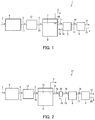
- reference sign 1 represents a methane fermentation system, and the methane fermentation system 1 decomposes an organic waste 2 containing organic substances such as food residues, livestock manure and woody raw materials with a methane bacterium which is an anaerobic microorganism and thereby causes methane fermentation so as to generate methane gas 3.
- the methane fermentation system 1 includes: a wet bead mill 4 in which the organic waste 2 is finely pulverized; and a methane fermentation chamber 6 which is filled with the methane bacterium, in which the pulverized organic substance 5 that is the organic substances finely pulverized in the wet bead mill 4 are decomposed with the methane bacterium and in which thus methane fermentation is caused to generate the methane gas 3.
- a UF membrane separator 8 and an RO membrane separator 9 in which a digestive fluid 7 after the methane fermentation is concentrated and separated are connected to the methane fermentation chamber 6.
- the wet bead mill 4 is conventionally used when for example, a metal such as a rare metal or a paint is finely pulverized, and a raw material in a slurry state in which an item to be pulverized is mixed with a liquid is supplied per predetermined amount and beads which are put thereinto are used to perform the fine pulverization.
- the organic waste 2 in a slurry state mixed with the liquid is supplied to the wet bead mill 4 per predetermined amount, and the organic waste 2 is finely pulverized into the pulverized organic substance 5.
- preprocessing crushing means may be separately provided in the preceding stage such that the organic waste 2 is easily finely pulverized in the wet bead mill 4.
- a configuration may be adopted in which the organic waste 2 is previously crushed with the preprocessing crushing means and is mixed with the liquid into a slurry state, and in which the organic waste 2 in a slurry state is finely pulverized in the wet bead mill 4.
- An organic substance storage chamber 12 is connected through a piping member 11 to the wet bead mill 4, and the pulverized organic substance 5 finely pulverized in the wet bead mill 4 is supplied through the piping member 11 to the organic substance storage chamber 12.
- the organic substance storage chamber 12 is connected through a piping member 13 to the methane fermentation chamber 6, and the pulverized organic substance 5 stored in the organic substance storage chamber 12 is supplied to the methane fermentation chamber 6 per predetermined amount.
- the methane fermentation chamber 6 is a sealed reaction chamber, and its interior is filled with the unillustrated methane bacterium and is kept under anaerobic conditions. Within the methane fermentation chamber 6, an agitator for performing the mixing is installed such that the methane bacterium uniformly acts on the pulverized organic substance 5.
- the pulverized organic substance 5 is decomposed with the methane bacterium to cause methane fermentation, and as the methane fermentation proceeds, the methane gas 3 and the digestive fluid 7 in which fertilizer components such as nitrogen and phosphorus are left by the decomposition of the methane are generated.
- the methane gas generated by the methane fermentation remains in the cavity portion of the uppermost portion, and that the digestive fluid 7 is stored in a portion below it.
- a higher concentration of the methane bacterium is generated toward a lower layer of the digestive fluid 7, and since the methane bacterium is adhered to the pulverized organic substance 5, a TS (evaporation residues) concentration is increased.
- a TS concentration is lowered, with the result that for example, the TS concentration becomes about 2 to 5%.
- the methane gas 3 remains in the cavity portion of the uppermost portion, and within the digestive fluid 7 in which the fertilizer components are left, the upper layer whose TS concentration is low and the lower layer whose TS concentration is high are present.
- the TS such as the pulverized organic substance 5 which is not decomposed with the methane bacterium and which is not digested is contained.
- the UF membrane separator 8 is connected through a piping member 14 to the methane fermentation chamber 6, and the upper layer of the digestive fluid 7 within the methane fermentation chamber 6 is supplied to the UF membrane separator 8.
- a UF membrane (ultrafiltration membrane) which includes pores having, for example, a diameter of about 0.03 ⁇ m is used, and thus the digestive fluid 7 is separated into a concentrated liquid 15 that contains the TS such as the pulverized organic substance 5 which does not pass the pores and which is formed in the shape of fine particles and a permeation liquid 16 which passes the pores.
- the RO membrane separator 9 is connected through a piping member 17 to the UF membrane separator 8, and the permeation liquid 16 is supplied from the UF membrane separator 8 to the RO membrane separator 9.
- the methane fermentation chamber 6 is connected to the UF membrane separator 8 through a piping member 18 which is a return path and which serves as return means, and the concentrated liquid 15 is returned from the UF membrane separator 8 to the methane fermentation chamber 6.
- the concentrated liquid 15 is returned from the UF membrane separator 8 to the methane fermentation chamber 6, and thus a water flow is produced within the methane fermentation chamber 6, with the result that the contents of the methane fermentation chamber 6 are agitated by this water flow.
- the piping member 14 and the piping member 18 serving as circulation lines between the methane fermentation chamber 6 and the UF membrane separator 8 are constantly kept in an anaerobic state, and thus the UF membrane is not blocked even in a state where the upper layer and the lower layer of the digestive fluid 7 are partially mixed, with the result that the action of enhancing or maintaining the overall TS concentration within the methane fermentation chamber 6 caused by returning the concentrated liquid 15 is prevented from being lowered.
- the concentrated liquid 15 is returned to the methane fermentation chamber 6, the methane fermentation in the methane fermentation chamber 6, the concentration and separation of the digestive fluid 7 in the UF membrane separator 8, the return of the concentrated liquid 15 from the UF membrane separator 8 to the methane fermentation chamber 6 and the agitation of the contents of the methane fermentation chamber 6 caused by the return are substantially repeated.
- the RO membrane separator 9 separates, with an RO membrane (reverse osmosis membrane), the permeation liquid 16 on an ion level.
- RO membrane reverse osmosis membrane
- the permeation liquid 16 is separated into concentrated water 21 containing the fertilizer components and permeation water 22 which can be drained.
- the discharged amount of concentrated water 21 obtained in the RO membrane separator 9 can be reduced to 30% or less of the input amount of organic waste 2 and can be reused as a liquid fertilizer whose concentration is higher than normal.
- the permeation water 22 obtained in the RO membrane separator 9 can be processed, as necessary, such as by being reused in an application such as for diluting the organic substances or the like or by being drained.
- the organic waste 2 serving as organic substance is decomposed with the methane bacterium and is subjected to methane fermentation so as to generate the methane gas 3, the organic waste 2 is first finely pulverized in the wet bead mill 4.
- the organic waste 2 When the organic waste 2 is finely pulverized, the organic waste 2 and water are mixed with each other so as to be brought into a slurry state.
- the preprocessing crushing means when the preprocessing crushing means is installed in the preceding stage, the organic waste 2 may be brought into a slurry state by being crushed with the preprocessing crushing means and also being mixed with water.
- the moisture content of the slurry is very important. Specifically, for example, when a metal such as a rare metal is conventionally pulverized in the wet bead mill 4, the moisture content is adjusted such that the slurry contains a solid content of 15 to 30%.
- the specific gravity of the organic waste 2 is less than 2
- is less than that of the metal and is less than that of water is slightly less than that of water or is equal to that of water, the proceeding state of the pulverization in the wet bead mill 4 differs from the metal.
- the organic waste 2 contains an amino acid, lignin, a protein and the like, as the pulverization proceeds, the viscosity thereof is increased.
- the viscosity is excessively increased, the circulation of the organic waste 2 within the wet bead mill 4 is inhibited, and thus it is difficult for the pulverization to proceed, with the result that it is impossible to pulverize the organic waste 2 into a predetermined size.
- the moisture is adjusted such that the solid content in the slurry is equal to or less than 10% (TS).
- the organic waste 2 in a slurry state whose moisture is adjusted as described above is supplied per predetermined amount to the wet bead mill 4 and is finely pulverized.
- the solid content in the organic waste 2 in a slurry state is equal to or less than 10%
- the viscosity of the organic waste 2 in a slurry state in the process of the pulverization is not achieved, and when in such a state, the bead mill 4 is rotated at a high speed, the organic waste 2 cannot be appropriately pulverized, and the size of a center vortex may be increased such that an overflow occurs.
- the pulverization is performed by rotating the bead mill at a medium speed, and after 30 minutes have elapsed since the start of the pulverization and a certain degree of viscosity is achieved, the pulverization is performed by rotating the bead mill at the maximum speed for up to two hours .
- the bead mill is rotated at a medium speed in the early stage of the pulverization, then the bead mill is rotated at a high speed and thus it is possible to appropriately and finely pulverize the organic waste 2 such that for example, the particle diameter (median diameter) at 50% in a cumulative distribution (accumulated distribution) with respect to the volume is equal to or less than 20 ⁇ m.
- the median diameter of the organic waste 2 is equal to or more than 0.8 ⁇ m and equal to or less than 10 ⁇ m.
- the pulverized organic substance 5 which is finely pulverized is temporarily stored in the organic substance storage chamber 12, and is supplied per predetermined amount to the methane fermentation chamber 6.
- the pulverized organic substance 5 is decomposed with the methane bacterium within the methane fermentation chamber 6 so as to cause methane fermentation, and thus the methane gas 3 is generated and the digestive fluid 7 in which the other fertilizer components such as nitrogen and phosphorus are left by the decomposition of the methane is generated.
- the methane gas 3 generated by the methane fermentation is collected as necessary and is utilized as, for example, an energy source for an engine generator.
- the TS concentration of the upper layer is relatively low, the TS concentration of the lower layer is relatively high and the methane fermentation proceeds in the lower layer.
- the upper layer whose TS concentration is low is supplied to the UF membrane separator 8.
- the digestive fluid 7 is separated, with the UF membrane, into the concentrated liquid 15 containing the TS and the permeation liquid 16 passing the pores of the UF membrane.
- bacteria, germs and the like cannot pass the pores (for example, a diameter of about 0.03 ⁇ m) of the UF membrane, even when the methane bacterium is contained in the digestive fluid 7, the methane bacterium is separated together with the concentrated liquid 15.
- the concentrated liquid 15 separated in the UF membrane separator 8 in this way has, as the main component, TS components containing the methane bacterium, the concentrated liquid 15 is returned to the methane fermentation chamber 6 and is utilized for reducing a decrease in the TS concentration within the methane fermentation chamber 6 whereas the permeation liquid 16 containing the fertilizer components which contain almost no TS components and which are ionized is supplied to the RO membrane separator 9.
- the concentrated liquid 15 is returned to the methane fermentation chamber 6, and thus the water flow is produced within the methane fermentation chamber 6, with the result that the contents of the methane fermentation chamber 6 are agitated by this water flow.
- the permeation liquid 16 is separated, with the RO membrane, into the concentrated water 21 containing the fertilizer components and the permeation water 22 which can be drained.
- the concentrated water 21 is reused as a liquid fertilizer, and the permeation water 22 is reused as dilution water or is drained.
- the organic waste 2 contains an organic component such as a woody or fibrous component in which it is difficult for the decomposition with the methane bacterium to proceed
- the organic waste 2 is finely pulverized in the wet bead mill 4 into such a size that it is impossible to pulverize the organic waste 2 into the size with a conventional crusher or the like
- the decomposition with the methane bacterium easily proceeds, with the result that it is possible to enhance a methane conversion rate, to reduce a decomposition time and to efficiently generate the methane gas.
- the organic waste 2 is finely pulverized in the wet bead mill 4 such that the particle diameter at 50% in the cumulative distribution with respect to the volume is equal to or less than 20 ⁇ m, and thus the decomposition of the organic waste 2 with the methane bacterium easily proceeds, with the result that it is possible to more efficiently generate the methane gas.
- the organic waste 2 is crushed with, for example, a crusher as conventionally performed, since the particle diameter of the undigested TS contained in the digestive fluid 7 is large with respect to the pore of the UF membrane, the pores are blocked when the digestive fluid 7 is separated with the membrane in the UF membrane separator 8. Specifically, when the digestive fluid 7 to be separated contains just a few percent of a substance having a diameter of 4 mm or more, the pores of the UF membrane is blocked.
- the organic waste 2 is finely pulverized in the wet bead mill 4 such that the median diameter is equal to or less than 20 ⁇ m, and thus the pores of the UF membrane are seldom blocked by the undigested pulverized organic substance 5 contained in the digestive fluid 7.
- the organic waste 2 is finely pulverized such that the median diameter is equal to or less than 20 ⁇ m, and thus when the digestive fluid 7 after the methane fermentation is concentrated in the UF membrane separator 8, the pores of the UF membrane are unlikely to be blocked by the undigested pulverized organic substance 5 left in the digestive fluid 7, with the result that it is possible to smoothly concentrate the digestive fluid 7.
- the moisture content of the organic waste 2 is adjusted such that the solid content is equal to or less than 10%, and thus it is possible to prevent the viscosity from being excessively increased in the process of the pulverization, with the result that it is possible to finely pulverize the organic waste 2 into a desired particle size, for example, a median diameter of 20 ⁇ m or less.
- the membrane separation since when membrane separation is performed, the membrane separation is normally started in a state where a moisture content is previously reduced, the membrane separation is stepwise performed so as not to block the membrane. Then, when the moisture content is normally reduced so as to increase the solid of the organic waste 2 in a slurry state, and the concentration is performed in the UF membrane separator 8 after the pulverization and the methane fermentation, the pores of the UF membrane are highly likely to be blocked.
- the moisture content of the organic waste 2 in a slurry state is adjusted before the methane fermentation (before the fine pulverization) such that the solid content is equal to or less than 10%, and thus it is possible to acquire the fluidity of the digestive fluid 7 and to prevent the UF membrane from being blocked by the fact that when the digestive fluid 7 is concentrated, the concentration of the solid in the digestive fluid 7 is increased and thus the fluidity is lowered, with the result that the digestive fluid 7 is easily concentrated.
- the moisture content of the organic waste 2 is adjusted, and thus it is possible to appropriately finely pulverize the organic waste 2, to make the methane fermentation easily proceed and to easily concentrate the digestive fluid 7 after the methane fermentation, with the result that a series of steps from the methane fermentation to the concentration and separation can be made to proceed efficiently.
- the digestive fluid 7 after the methane fermentation is concentrated and separated with the UF membrane, and thus the TS such as the pulverized organic substance 5 contained in the digestive fluid 7 can be concentrated and separated from the digestive fluid 7, and the concentrated liquid 15 containing the TS is returned to the methane fermentation chamber 6, and thus it is possible to perform the methane fermentation without waste and efficiently.
- the concentrated liquid 15 is returned from the UF membrane separator 8 to the methane fermentation chamber 6, and thus the water flow is produced within the methane fermentation chamber 6 so as to have the action of agitating the contents of the methane fermentation chamber 6, with the result that the power of the agitator installed within the methane fermentation chamber 6 can be reduced.
- the digestive fluid 7 contains a large number of ionized components, and among them, ammonia is a component which inhibits the methane fermentation when the concentration thereof is increased within the methane fermentation chamber 6 but the digestive fluid 7 is separated with the UF membrane and thus the ionized components can be separated from the digestive fluid 7 and the concentrated liquid 15, with the result that it is possible to reduce the risk of inhibiting the methane fermentation.
- the permeation liquid 16 after the concentration and separation with the UF membrane is separated with the RO membrane, and thus the permeation liquid 16 can be purified enough to be drained and can be processed easily and appropriately.
- the concentrated water 21 containing the fertilizer components such as ammonia nitrogen, phosphorus, potassium and the like which are ionized can be effectively utilized as a concentrated liquid fertilizer or the like, and the permeation water 22 can be reused or be drained without being processed.
- the concentration and separation are performed with the UF membrane and the RO membrane, and thus it is possible not only to obtain a high-concentration liquid fertilizer as the concentrated water 21 but also to reduce the volume to, for example, a fifteenth to a tenth as compared with a conventional concentrating/separating method, with the result that it is possible to cope with the problems in the transportation and the operation.
- the organic waste 2 is used, there is no limitation to such a configuration, and as long as an organic substance is contained, a raw material which is not a waste can be applied.
- the digestive fluid 7 after the methane fermentation is concentrated and separated with the UF membrane, and the concentrated and separated permeation liquid 16 is concentrated and separated with the RO membrane, there is no limitation to such a configuration, and the permeation liquid 16 may be processed such as by being concentrated and separated in another method.
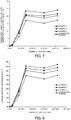
- an inline mixer 32 is connected to a methane fermentation chamber 6 in a methane fermentation system 31, and a UF membrane separator 8 and an RO membrane separator 9 in which the digestive fluid 7b after the colony is crushed is concentrated and separated are connected to the downstream side of the inline mixer 32.
- an organic substance raw material a fermentation temperature, pH, a small amount of inorganic salt metal and a fermentation inhibiting factor are controlled, and thus the balance between the growth and death of the methane bacteria is held, with the result that the growth and death are managed to be in an equilibrium state.
- the methane bacteria form a colony (bacterial colony) which is an aggregation of the grown bacteria.
- the colony which is an aggregation of the methane bacteria is not precipitated within the methane fermentation chamber 6, and in the digestive fluid 7a, the colony is floated in the shape of, for example, a biofilm (biological film) or forms an upper layer surface of the digestive fluid 7a.
- the colony of the methane bacteria described above may block the UF membrane of the UF membrane separator 8.
- the pores of the UF membrane may be clogged by the colony and thus the UF membrane may be blocked.
- the inline mixer 32 is provided, and the digestive fluid 7a passes the inline mixer 32, with the result that the colony in the digestive fluid 7a is crushed and that the methane bacteria are broken apart.
- the colony in the digestive fluid 7a is crushed.
- the digestive fluid 7a passes the inline mixer 32, thus the colony is crushed and a digestive fluid 7b whose TS concentration is low is supplied to the UF membrane separator 8.
- a concentrated liquid 15 after the concentration and separation with the UF membrane separator 8 is returned to the methane fermentation chamber 6, and thus the methane fermentation in the methane fermentation chamber 6, the crushing of the colony in the digestive fluid 7a with the inline mixer 32, the concentration and separation of the digestive fluid 7b in the UF membrane separator 8, the return of the concentrated liquid 15 from the UF membrane separator 8 to the methane fermentation chamber 6 and the agitation of the contents of the methane fermentation chamber 6 are substantially repeated.
- the colony included within the digestive fluid 7a from the methane fermentation chamber 6 is crushed with the inline mixer 32, and thus the methane bacteria are broken apart, with the result that it is possible to prevent the pores of the UF membrane from being blocked (clogged) by the colony.
- the concentrated liquid 15 concentrated in the UF membrane separator 8 is returned to the methane fermentation chamber 6 and is circulated, and thus as compared with a case where within the methane fermentation chamber 6, the methane bacteria continue to be present as the colony, it is possible to increase the surface area of the methane bacteria.
- the digesting action and the growing action of the pulverized organic substance 5 of the methane bacteria in the methane fermentation chamber 6 can be facilitated, with the result that it is possible to enhance the efficiency of the methane fermentation.
- the inline mixer 32 can be provided in the piping member 14 between the methane fermentation chamber 6 and the UF membrane separator 8, the inline mixer 32 can be easily installed, and a mixing tank or the like is not needed, with the result that the facilities are prevented from being enlarged.
- the organic waste 2 is finely pulverized in the wet bead mill 4 such that the median diameter is equal to or less than 20 ⁇ m, and the colony included in the digestive fluid 7a is crushed with the inline mixer 32, the UF membrane separator 8 is unlikely to be blocked by the organic waste 2 and the colony, with the result that the small pulverized organic substance 5 and the broken methane bacteria easily act.
- the configuration in which the organic waste 2 is finely pulverized and the configuration in which the colony included in the digestive fluid 7a is crushed it is possible to make the methane fermentation in the methane fermentation chamber 6 and the concentration and separation in the UF membrane separator 8 smoothly proceed.
- the inline mixer 32 is used as the crushing means, there is no limitation to such a configuration, and as long as the crushing means can crush the colony in the digestive fluid 7a, any configuration may be adopted.
- a homogenization pump (homogenizer) may be used as the crushing means.
- the homogenization pump In the configuration in which the homogenization pump is used as the crushing means, by the homogenizing action of the homogenization pump, the synergy of shear, crash, cavitation and the like is instantaneously produced, and thus the colony in the digestive fluid 7a is crushed.
- the homogenization pump can be utilized not only as the crushing means for crushing the colony but also as a drive source for supplying the digestive fluids 7a and 7b from the methane fermentation chamber 6 to the UF membrane separator 8, and thus it is possible to simplify the facilities.
- a UF membrane separator 8 and an RO membrane separator 9 are connected to a methane fermentation chamber 36 in a methane fermentation system 35 through a heat exchanger 37 for heating a digestive fluid 7.
- a methane bacterium differs depending on the type thereof in a temperature suitable for the synthesis of methane (methane fermentation temperature).
- a temperature suitable for the synthesis of methane methane fermentation temperature.
- a temperature of about 38°C is suitable for the synthesis of methane
- a temperature of about 55°C is suitable for the synthesis of methane.
- a digestive fluid 7 is heated to a predetermined temperature.
- the heat exchanger 37 is provided in a circulation path from the methane fermentation chamber 36 through the UF membrane separator 8, the supply of the digestive fluid 7 from the methane fermentation chamber 36 to the heat exchanger 37, the supply of the digestive fluid 7 from the heat exchanger 37 to the UF membrane separator 8 and the return of a concentrated liquid 15 from the UF membrane separator 8 to the methane fermentation chamber 36 are performed by drive of the one pump 38.
- the digestive fluid 7 from the methane fermentation chamber 36 is heated by the heat exchanger 37 and is supplied to the UF membrane separator 8, and the concentrated liquid 15 from the UF membrane separator 8 is returned to the methane fermentation chamber 36 and is circulated.
- the digestive fluid 7 is heated and circulated as described above, and thus a substantially total amount of contents of the methane fermentation chamber 36 is heated, with the result that the interior of the methane fermentation chamber 36 is heated to the methane fermentation temperature.
- the heat exchanger 37 is controlled to heat the digestive fluid 7 such that the interior of the methane fermentation chamber 36 becomes the methane fermentation temperature.
- the pulverized organic substance 5 is finely pulverized while being cooled according to the methane bacterium within the methane fermentation chamber 36 such that the pulverized organic substance 5 finely pulverized has the methane fermentation temperature at which the methane bacterium easily acts within the methane fermentation chamber 36.
- the temperature is managed by cooling the tank of the wet bead mill 39 to which the organic waste 2 is supplied such that the temperature of the finely pulverized substance within the tank becomes the methane fermentation temperature.
- the cooling of the tank is controlled such that the temperature of the finely pulverized substance within the tank of the wet bead mill 39 becomes about 38°C whereas in the case of the high-temperature fermentation methane bacterium, the cooling of the tank is controlled such that the temperature of the finely pulverized substance within the tank of the wet bead mill 39 becomes about 55°C.
- An organic substance storage chamber 12 is connected to the wet bead mill 39 through a piping member 11, and the pulverized organic substance 5 which is finely pulverized in the wet bead mill 39 is supplied through the piping member 11 to the organic substance storage chamber 12.
- the organic substance storage chamber 12 has a heat retention structure capable of retaining the temperature of the contents, and the pulverized organic substance 5 which is finely pulverized while being cooled to the methane fermentation temperature in the wet bead mill 39 is stored in the organic substance storage chamber 12 in a state where the temperature of the pulverized organic substance 5 is retained.
- the organic substance storage chamber 12 is connected through a piping member 13 to the methane fermentation chamber 36, and the pulverized organic substance 5 stored in the organic substance storage chamber 12 in the temperature-retained state is supplied to the methane fermentation chamber 36 per predetermined amount.
- the thermal energy generated by the fine pulverization is utilized for managing the temperature within the methane fermentation chamber 36, and thus the energy for heating the interior of the methane fermentation chamber 36 to the methane fermentation temperature is reduced, with the result that it is possible to make the methane fermentation proceed efficiently.
- the wet bead mill 39 is cooled according to the methane bacterium of the methane fermentation chamber 36 such that the finely pulverized organic waste 2 has the methane fermentation temperature, the methane bacterium within the methane fermentation chamber 36 is prevented from being inactivated by the heat of the pulverized organic substance 5 supplied to the methane fermentation chamber 36, and thus it is possible to make the methane fermentation with the methane bacterium appropriately proceed.
- the digestive fluid 7 after the methane fermentation in the methane fermentation chamber 36 is heated to a predetermined temperature by the heat exchange action of the heat exchanger 37 provided between the methane fermentation chamber 36 and the UF membrane separator 8 in the circulation path and is then supplied to the UF membrane separator 8, with the result that the one pump 38 can serve both as a power source for supplying the digestive fluid 7 to the heat exchanger 37 and thereby heating it and as a power source for supplying the digestive fluid 7 to the UF membrane separator 8 .
- the heat exchanger 37 for heating the interior of the methane fermentation chamber 36 is provided in the circulation path, and thus the power source for the heating does not need to be provided separately of the power source for the circulation (the concentration and separation and the return), with the result that the power cost is reduced and that it is possible to make the methane fermentation proceed efficiently.
- the heat exchanger 37 which is the means for heating the interior of the methane fermentation chamber 36 to the methane fermentation temperature is provided outside (between the methane fermentation chamber 36 and the UF membrane separator 8) the methane fermentation chamber 36, and thus it is possible to avoid the risk on the maintenance, the replacement and the like, and it is also possible to efficiently perform the operation by the utilization of the power source for the circulation as described above.
- the heat exchanger 37 for heating the interior of the methane fermentation chamber 36 to the methane fermentation temperature is provided in the circulation path.
- the one power source can serve both as the power source for the heating and the power source for the circulation
- the heat exchanger 37 is provided in the circulation path
- the configuration in which the digestive fluid 7 from the methane fermentation chamber 36 is heated between the methane fermentation step and the separation step there is no limitation to the configuration in which the digestive fluid 7 from the methane fermentation chamber 36 is heated between the methane fermentation step and the separation step, and a configuration may be adopted in which the concentrated liquid 15 is heated between the separation step and the return step.
- the inline mixer 32 which is the crushing means may be provided or instead of the pump 38 shown in Fig. 3 , the homogenization pump which is the crushing means may be provided.
- Example 1 An organic substance whose moisture content was adjusted so as to have a slurry state where a solid was about 7% was pulverized in a wet bead mill for one hour, and the pulverized sample was used for Example 1.
- the particle size distribution of the sample in Example 1 is shown in Fig. 4 .
- Example 1 the median diameter which was a particle diameter at 50% in a cumulative distribution with respect to the volume was 19.7 ⁇ m, and the arithmetic standard deviation was 31.1 ⁇ m.
- Example 2 An organic substance whose moisture content was adjusted as in Example 1 was pulverized in the wet bead mill for one and a half hours, and the pulverized sample was used for Example 2.
- the particle size distribution of the sample in Example 2 is shown in Fig. 5 .
- Example 2 the median diameter was 14.4 ⁇ m, and the arithmetic standard deviation was 17.4 ⁇ m.
- Example 3 An organic substance whose moisture content was adjusted as in Examples 1 and 2 was pulverized in the wet bead mill for two hours, and the pulverized sample was used for Example 3.
- the particle size distribution of the sample in Example 3 is shown in Fig. 6 .
- Example 3 the median diameter was 11.9 ⁇ m, and the arithmetic standard deviation was 12.6 ⁇ m.
- an organic substance was crushed, as in a conventional manner, with a crushing mixer so as to have a particle diameter of 1 to 5 mm, and the crushed sample was used for Comparative Example.
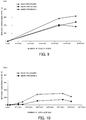
- examples 1 to 3 are compared with each other, as the time during which the organic substance was pulverized in the wet bead mill was longer, and the particle diameter was smaller, the amount of methane generated, the methane conversion rate and the proceeding speed of the methane fermentation were more satisfactory.
- Examples The samples which were obtained by finely pulverizing the organic substances in the wet bead mill to have a particle diameter of 2 to 10 ⁇ m were assumed to be nano-processed products (Examples), the samples which were likewise obtained by finely pulverizing the organic substances to have a particle diameter of 100 to 500 ⁇ m were assumed to be micro-processed products (Examples) and the sample which was obtained by processing, with the crushing mixer, the organic substance to have a particle diameter of 1 to 5 mm was assumed to be a mixer-processed product (Comparative Example).
- micro-processed products and the nano-processed products in the Examples and the mixer-processed product in the Comparative Example were dried at 110°C for two hours, thereafter the weights thereof were measured and the TS thereof were determined.
- the vial bottle (final volume of 50 ml) was sealed, was then subjected to nitrogen substitution and was placed within a constant temperature oven of 55°C.
- the present invention is, for example, utilized for decomposing, with an anaerobic microorganism, an organic waste containing organic substances such as food residues, livestock manure and woody raw materials and thereby causing methane fermentation so as to generate useful methane gas.
Landscapes
- Engineering & Computer Science (AREA)
- Chemical & Material Sciences (AREA)
- Life Sciences & Earth Sciences (AREA)
- Water Supply & Treatment (AREA)
- Health & Medical Sciences (AREA)
- Organic Chemistry (AREA)
- Chemical Kinetics & Catalysis (AREA)
- Wood Science & Technology (AREA)
- Zoology (AREA)
- Bioinformatics & Cheminformatics (AREA)
- Environmental & Geological Engineering (AREA)
- Biochemistry (AREA)
- Biotechnology (AREA)
- Molecular Biology (AREA)
- Genetics & Genomics (AREA)
- General Chemical & Material Sciences (AREA)
- General Engineering & Computer Science (AREA)
- Microbiology (AREA)
- General Health & Medical Sciences (AREA)
- Biomedical Technology (AREA)
- Sustainable Development (AREA)
- Oil, Petroleum & Natural Gas (AREA)
- Hydrology & Water Resources (AREA)
- Nanotechnology (AREA)
- Mechanical Engineering (AREA)
- Processing Of Solid Wastes (AREA)
- Treatment Of Sludge (AREA)
- Separation Using Semi-Permeable Membranes (AREA)
Applications Claiming Priority (2)
| Application Number | Priority Date | Filing Date | Title |
|---|---|---|---|
| JP2014158980A JP5705359B1 (ja) | 2014-08-04 | 2014-08-04 | メタン発酵方法およびメタン発酵システム |
| PCT/JP2015/071645 WO2016021478A1 (ja) | 2014-08-04 | 2015-07-30 | メタン発酵方法およびメタン発酵システム |
Publications (4)
| Publication Number | Publication Date |
|---|---|
| EP3178574A1 true EP3178574A1 (de) | 2017-06-14 |
| EP3178574A4 EP3178574A4 (de) | 2018-02-07 |
| EP3178574B1 EP3178574B1 (de) | 2025-12-17 |
| EP3178574C0 EP3178574C0 (de) | 2025-12-17 |
Family
ID=52986004
Family Applications (1)
| Application Number | Title | Priority Date | Filing Date |
|---|---|---|---|
| EP15829865.3A Active EP3178574B1 (de) | 2014-08-04 | 2015-07-30 | Methangärungsverfahren und methangärungssystem |
Country Status (6)
| Country | Link |
|---|---|
| US (2) | US9957183B2 (de) |
| EP (1) | EP3178574B1 (de) |
| JP (1) | JP5705359B1 (de) |
| KR (1) | KR20170038912A (de) |
| AU (1) | AU2015300228B2 (de) |
| WO (1) | WO2016021478A1 (de) |
Cited By (1)
| Publication number | Priority date | Publication date | Assignee | Title |
|---|---|---|---|---|
| EP3960843A1 (de) * | 2020-09-01 | 2022-03-02 | PlanET Biogas Group GmbH | Gärbehälteranordnung mit direktfiltration |
Families Citing this family (6)
| Publication number | Priority date | Publication date | Assignee | Title |
|---|---|---|---|---|
| JP5870342B1 (ja) * | 2015-07-21 | 2016-02-24 | 幸治 井戸 | メタン発酵方法およびメタン発酵システム |
| JP5870343B1 (ja) * | 2015-07-21 | 2016-02-24 | 幸治 井戸 | メタン発酵方法およびメタン発酵システム |
| JP7297122B2 (ja) * | 2018-04-12 | 2023-06-23 | 水ing株式会社 | 有機性廃棄物の処理方法及び有機性廃棄物の処理装置 |
| DE102019116410A1 (de) * | 2019-06-17 | 2020-12-17 | Jassen - Kunststoffzentrum Gmbh - Apparatebau, Zuschnitte Und Formung | Bioreaktor und dessen Verwendung, Verfahren zur Herstellung einer organischen Nährstofflösung und zur Kohlenstoffdioxidspeicherung und organische Nährstofflösung zur Kohlenstoffdioxidspeicherung |
| JP2021186744A (ja) * | 2020-05-29 | 2021-12-13 | 極東開発工業株式会社 | 発酵装置、液肥製造装置及び液肥製造方法 |
| JP7716877B2 (ja) * | 2021-04-16 | 2025-08-01 | 井戸 八重子 | 肥料製造方法 |
Family Cites Families (22)
| Publication number | Priority date | Publication date | Assignee | Title |
|---|---|---|---|---|
| US4985149A (en) | 1989-03-20 | 1991-01-15 | Public Works Research Institute, Ministry Of Construction | Anaerobic digestion method |
| JP2655284B2 (ja) * | 1989-07-18 | 1997-09-17 | 株式会社荏原製作所 | し尿系汚水の処理方法 |
| JPH04326994A (ja) * | 1991-04-26 | 1992-11-16 | Meidensha Corp | メタン発酵方法及びその装置 |
| WO1999042423A1 (en) | 1998-02-20 | 1999-08-26 | Bioscan A/S | Method and plant for the treatment of liquid organic waste |
| JP2001170631A (ja) | 1999-12-22 | 2001-06-26 | Kubota Corp | 膜型反応槽の攪拌方法および装置 |
| JP3636035B2 (ja) * | 2000-05-24 | 2005-04-06 | 栗田工業株式会社 | 有機性汚泥の消化方法 |
| JP2003063886A (ja) * | 2001-08-24 | 2003-03-05 | Mitsubishi Heavy Ind Ltd | 有機性廃棄物の資源化装置および資源化方法 |
| JP3600566B2 (ja) | 2001-09-19 | 2004-12-15 | 三菱重工業株式会社 | 有機性廃棄物の処理方法およびバイオガスの製造方法 |
| JP4730871B2 (ja) * | 2001-09-28 | 2011-07-20 | 株式会社フジタ | 有機性汚泥の処理方法 |
| JP2004230273A (ja) * | 2003-01-30 | 2004-08-19 | Mitsubishi Kakoki Kaisha Ltd | 有機性廃棄物の処理方法 |
| JP2004249233A (ja) * | 2003-02-21 | 2004-09-09 | Mitsubishi Kakoki Kaisha Ltd | 有機性廃棄物の処理方法 |
| JP4412538B2 (ja) * | 2004-02-26 | 2010-02-10 | Jfeエンジニアリング株式会社 | 有機性廃棄物の処理方法 |
| JP4596897B2 (ja) * | 2004-12-06 | 2010-12-15 | 日本下水道事業団 | 有機性廃棄物の嫌気性消化方法 |
| JP4667909B2 (ja) | 2005-03-04 | 2011-04-13 | 三菱重工環境・化学エンジニアリング株式会社 | 有機性廃棄物の処理方法及び処理設備 |
| JP2008253870A (ja) * | 2007-03-30 | 2008-10-23 | Mitsui Eng & Shipbuild Co Ltd | メタン発酵制御システム |
| JP2010017615A (ja) * | 2008-07-08 | 2010-01-28 | Kurita Water Ind Ltd | Dmso含有排水の処理方法及び装置 |
| JP2010017614A (ja) * | 2008-07-08 | 2010-01-28 | Kurita Water Ind Ltd | 有機性排水の処理方法及び装置 |
| JP5574398B2 (ja) | 2008-12-18 | 2014-08-20 | 鹿島建設株式会社 | 有機性固形廃棄物のメタン発酵方法及びシステム |
| JP2011230100A (ja) | 2010-04-30 | 2011-11-17 | Osaka Prefecture | メタン発酵方法およびメタン発酵装置 |
| US20110281255A1 (en) | 2010-05-11 | 2011-11-17 | Pmc Biotec Company | Biological process for converting organic by-products or wastes into renewable energy and usable products |
| US20110281341A1 (en) * | 2010-05-11 | 2011-11-17 | Pmc Biotec Company | Biological process for converting organic by-products or wastes into renewable energy and usable products |
| KR101032608B1 (ko) * | 2010-11-30 | 2011-05-06 | 현대건설주식회사 | 유기성 폐기물 처리장치 |
-
2014
- 2014-08-04 JP JP2014158980A patent/JP5705359B1/ja active Active
-
2015
- 2015-07-30 EP EP15829865.3A patent/EP3178574B1/de active Active
- 2015-07-30 WO PCT/JP2015/071645 patent/WO2016021478A1/ja not_active Ceased
- 2015-07-30 US US15/501,282 patent/US9957183B2/en active Active
- 2015-07-30 AU AU2015300228A patent/AU2015300228B2/en active Active
- 2015-07-30 KR KR1020177006050A patent/KR20170038912A/ko not_active Ceased
-
2017
- 2017-07-31 US US15/664,830 patent/US10183883B2/en active Active
Cited By (1)
| Publication number | Priority date | Publication date | Assignee | Title |
|---|---|---|---|---|
| EP3960843A1 (de) * | 2020-09-01 | 2022-03-02 | PlanET Biogas Group GmbH | Gärbehälteranordnung mit direktfiltration |
Also Published As
| Publication number | Publication date |
|---|---|
| US10183883B2 (en) | 2019-01-22 |
| AU2015300228B2 (en) | 2020-04-09 |
| JP2016034631A (ja) | 2016-03-17 |
| EP3178574B1 (de) | 2025-12-17 |
| JP5705359B1 (ja) | 2015-04-22 |
| EP3178574A4 (de) | 2018-02-07 |
| US20170217810A1 (en) | 2017-08-03 |
| WO2016021478A1 (ja) | 2016-02-11 |
| EP3178574C0 (de) | 2025-12-17 |
| AU2015300228A1 (en) | 2017-02-23 |
| KR20170038912A (ko) | 2017-04-07 |
| US9957183B2 (en) | 2018-05-01 |
| US20170327398A1 (en) | 2017-11-16 |
Similar Documents
| Publication | Publication Date | Title |
|---|---|---|
| US10183883B2 (en) | Methane fermentation system | |
| Batstone et al. | Variation of bulk properties of anaerobic granules with wastewater type | |
| Menon et al. | Effect of pretreatment techniques on food waste solubilization and biogas production during thermophilic batch anaerobic digestion | |
| Cho et al. | An innovative sewage sludge reduction by using a combined mesophilic anaerobic and thermophilic aerobic process with thermal-alkaline treatment and sludge recirculation | |
| KR101369718B1 (ko) | 음식물 탈리액을 이용한 유기탄소원 제조장치 및 그 제조방법 | |
| Li et al. | Applying low frequency ultrasound on different biological nitrogen activated sludge types: An analysis of particle size reduction, soluble chemical oxygen demand (SCOD) and ammonia release | |
| Deng et al. | Simultaneous regeneration of exhausted zeolite and nitrogen recovery using an air stripping method at alkaline pH | |
| Sanjaya et al. | The impact of calcium supplementation on methane fermentation and ammonia inhibition of fish processing wastewater | |
| JP7105136B2 (ja) | 有機性廃棄物の処理方法及び有機性廃棄物の処理システム | |
| JP5870342B1 (ja) | メタン発酵方法およびメタン発酵システム | |
| JP5367295B2 (ja) | 食品廃棄物のメタン発酵処理方法及び該システム | |
| JP5870343B1 (ja) | メタン発酵方法およびメタン発酵システム | |
| JP4488794B2 (ja) | 発酵残液およびその他の嫌気性有機化合物含有液の処理方法及び処理システム | |
| KR20140073802A (ko) | 신속한 처리를 위한 음식물쓰레기 발효처리장치 및 발효처리방법 | |
| JP3853971B2 (ja) | 余剰汚泥の好気性消化方法 | |
| KR101663082B1 (ko) | 음식물 쓰레기와 하수 슬러지를 이용한 유기질 비료 및 발효 액상 비료 제조 장치 및 이를 이용한 유기질 비료 및 발효 액상 비료 제조 방법 | |
| Fubin et al. | Performance of alkaline pretreatment on pathogens inactivation and sludge solubilization | |
| EP3510006B1 (de) | Verfahren und vorrichtung zur behandlung von dungschlamm | |
| JP5301788B2 (ja) | 共発酵方法 | |
| KR101650241B1 (ko) | 스팀공급 및 내부순환 기능을 구비한 유기성 폐기물 전처리 장치 및 방법 | |
| DE102016204375B4 (de) | Anordnung und Verfahren zur Pasteurisierung und anschließenden Feststoffabscheidung einer Trübe | |
| Tiwari et al. | Water Conservation, Reuse, and Challenges: A Case Study Performed at Amul Dairy | |
| Silva | Evaluation of Membrane Distillation for Treating Hydrothermal Carbonization Aqueous Product (HAP) from Dairy Manure | |
| Klink et al. | Filtering waste: From residues to nutrients | |
| KR20240097719A (ko) | 음식물 쓰레기를 이용한 바이오 가스 생산 방법 |
Legal Events
| Date | Code | Title | Description |
|---|---|---|---|
| STAA | Information on the status of an ep patent application or granted ep patent |
Free format text: STATUS: THE INTERNATIONAL PUBLICATION HAS BEEN MADE |
|
| PUAI | Public reference made under article 153(3) epc to a published international application that has entered the european phase |
Free format text: ORIGINAL CODE: 0009012 |
|
| STAA | Information on the status of an ep patent application or granted ep patent |
Free format text: STATUS: REQUEST FOR EXAMINATION WAS MADE |
|
| 17P | Request for examination filed |
Effective date: 20170214 |
|
| AK | Designated contracting states |
Kind code of ref document: A1 Designated state(s): AL AT BE BG CH CY CZ DE DK EE ES FI FR GB GR HR HU IE IS IT LI LT LU LV MC MK MT NL NO PL PT RO RS SE SI SK SM TR |
|
| AX | Request for extension of the european patent |
Extension state: BA ME |
|
| DAV | Request for validation of the european patent (deleted) | ||
| DAX | Request for extension of the european patent (deleted) | ||
| RIC1 | Information provided on ipc code assigned before grant |
Ipc: B09B 3/00 20060101AFI20171222BHEP Ipc: C02F 11/04 20060101ALI20171222BHEP Ipc: B01D 61/14 20060101ALI20171222BHEP Ipc: C02F 3/28 20060101ALI20171222BHEP Ipc: B01D 61/58 20060101ALI20171222BHEP Ipc: C02F 11/00 20060101ALI20171222BHEP Ipc: C02F 3/12 20060101ALI20171222BHEP Ipc: B01D 61/02 20060101ALI20171222BHEP Ipc: C02F 11/02 20060101ALI20171222BHEP |
|
| A4 | Supplementary search report drawn up and despatched |
Effective date: 20180109 |
|
| STAA | Information on the status of an ep patent application or granted ep patent |
Free format text: STATUS: EXAMINATION IS IN PROGRESS |
|
| 17Q | First examination report despatched |
Effective date: 20181109 |
|
| RAP1 | Party data changed (applicant data changed or rights of an application transferred) |
Owner name: IDO, KOJI |
|
| RIN1 | Information on inventor provided before grant (corrected) |
Inventor name: IDO, YASUMASA Inventor name: IDO, KOJI |
|
| GRAP | Despatch of communication of intention to grant a patent |
Free format text: ORIGINAL CODE: EPIDOSNIGR1 |
|
| STAA | Information on the status of an ep patent application or granted ep patent |
Free format text: STATUS: GRANT OF PATENT IS INTENDED |
|
| INTG | Intention to grant announced |
Effective date: 20250710 |
|
| GRAS | Grant fee paid |
Free format text: ORIGINAL CODE: EPIDOSNIGR3 |
|
| GRAA | (expected) grant |
Free format text: ORIGINAL CODE: 0009210 |
|
| STAA | Information on the status of an ep patent application or granted ep patent |
Free format text: STATUS: THE PATENT HAS BEEN GRANTED |
|
| AK | Designated contracting states |
Kind code of ref document: B1 Designated state(s): AL AT BE BG CH CY CZ DE DK EE ES FI FR GB GR HR HU IE IS IT LI LT LU LV MC MK MT NL NO PL PT RO RS SE SI SK SM TR |
|
| REG | Reference to a national code |
Ref country code: CH Ref legal event code: F10 Free format text: ST27 STATUS EVENT CODE: U-0-0-F10-F00 (AS PROVIDED BY THE NATIONAL OFFICE) Effective date: 20251217 Ref country code: GB Ref legal event code: FG4D |
|
| REG | Reference to a national code |
Ref country code: DE Ref legal event code: R096 Ref document number: 602015092812 Country of ref document: DE |
|
| U01 | Request for unitary effect filed |
Effective date: 20251218 |
|
| U07 | Unitary effect registered |
Designated state(s): AT BE BG DE DK EE FI FR IT LT LU LV MT NL PT RO SE SI Effective date: 20260102 |
|
| PG25 | Lapsed in a contracting state [announced via postgrant information from national office to epo] |
Ref country code: NO Free format text: LAPSE BECAUSE OF FAILURE TO SUBMIT A TRANSLATION OF THE DESCRIPTION OR TO PAY THE FEE WITHIN THE PRESCRIBED TIME-LIMIT Effective date: 20260317 |
|
| PG25 | Lapsed in a contracting state [announced via postgrant information from national office to epo] |
Ref country code: HR Free format text: LAPSE BECAUSE OF FAILURE TO SUBMIT A TRANSLATION OF THE DESCRIPTION OR TO PAY THE FEE WITHIN THE PRESCRIBED TIME-LIMIT Effective date: 20251217 |
|
| PG25 | Lapsed in a contracting state [announced via postgrant information from national office to epo] |
Ref country code: RS Free format text: LAPSE BECAUSE OF FAILURE TO SUBMIT A TRANSLATION OF THE DESCRIPTION OR TO PAY THE FEE WITHIN THE PRESCRIBED TIME-LIMIT Effective date: 20260317 |