EP3178901B1 - Hochdichte bohrlochflüssigkeiten mit niedrigen kristallisationstemperaturen - Google Patents
Hochdichte bohrlochflüssigkeiten mit niedrigen kristallisationstemperaturen Download PDFInfo
- Publication number
- EP3178901B1 EP3178901B1 EP16201599.4A EP16201599A EP3178901B1 EP 3178901 B1 EP3178901 B1 EP 3178901B1 EP 16201599 A EP16201599 A EP 16201599A EP 3178901 B1 EP3178901 B1 EP 3178901B1
- Authority
- EP
- European Patent Office
- Prior art keywords
- lithium
- weight
- sodium
- citrate
- potassium formate
- Prior art date
- Legal status (The legal status is an assumption and is not a legal conclusion. Google has not performed a legal analysis and makes no representation as to the accuracy of the status listed.)
- Active
Links
Images

Classifications
-
- C—CHEMISTRY; METALLURGY
- C09—DYES; PAINTS; POLISHES; NATURAL RESINS; ADHESIVES; COMPOSITIONS NOT OTHERWISE PROVIDED FOR; APPLICATIONS OF MATERIALS NOT OTHERWISE PROVIDED FOR
- C09K—MATERIALS FOR MISCELLANEOUS APPLICATIONS, NOT PROVIDED FOR ELSEWHERE
- C09K8/00—Compositions for drilling of boreholes or wells; Compositions for treating boreholes or wells, e.g. for completion or for remedial operations
- C09K8/02—Well-drilling compositions
- C09K8/04—Aqueous well-drilling compositions
Definitions
- the present invention describes the use of highly concentrated liquids based on organic salts for drilling and completing boreholes.
- Drilling for oil and gas requires the use of drilling fluids that have to meet a wide range of requirements. Depending on the type of rock, the required lubrication, cooling, removal of the drilled rock, pressure control to avoid so-called blow-outs, stabilization, cleaning and testing of the borehole, individual properties of the drilling fluid are required.
- Salts used mainly include halides with cations of the alkali and alkaline earth metals such as calcium chloride, calcium bromide or potassium bromide.
- Weighting agents such as barium sulfate, iron minerals or calcium carbonate are added to increase the density. Disadvantages of these additives include the toxicity of barium sulfate to aquatic organisms and the settling of these suspended particles in the borehole. It is therefore desirable to generate homogeneous liquids of higher density without the addition of heterogeneous weighting agents.
- Soles based on formats have also been used for the past decade.
- the use of formic acid salts has been able to solve many problems caused by solid weighting agents.
- maximum densities of up to 2.3 g / cm 3 based on cesium formate and up to 1.57 g / cm 3 at room temperature (20 ° C) can be achieved for solutions of potassium formate.
- Formate-based drilling fluids are environmentally friendly due to their biodegradability and low aquatic toxicity, allow higher drilling rates than other flushing solutions due to their good thermal conductivity and are characterized by high reliability and low corrosiveness.
- TCT crystallization temperature
- Aqueous solutions containing potassium formate and lithium and / or sodium salts are out US 2014/0246198 A1 known.
- the compositions described here also contain sodium formate and / or sodium citrate.
- US 2013/0210686 A1 describes aqueous solutions containing mixtures of potassium, lithium and / or sodium formate. Solutions containing mixtures of potassium and sodium formates are out US 2014/0116710 A1 known.
- US 2011/0247986 A1 there are aqueous solutions comprising potassium formate, sodium formate and sodium chloride in front.
- DE 602 12 975 T2 describes highly concentrated solutions with potassium formate and potassium bromide.
- US 5,620,947 A describes highly concentrated solutions of potassium formate and other sodium salts.
- EP 0 922 079 B1 describes an aqueous liquid for downhole treatment comprising a solution of a potassium formate, which is characterized in that the solution further comprises potassium citrate.
- WO 99/23188 describes new carboxylate-based downhole treatment agents.
- the object of the invention is the use of brines with a high density at room temperature (20 ° C) and the lowest possible crystallization temperature as a borehole or completion liquid.
- the object of the present invention is achieved by the use of an aqueous solution of potassium formate, further comprising at least one dissolved lithium and / or sodium salt, at least one or more organic or inorganic acids as a borehole or completion liquid, characterized in that the lithium salts are lithium citrate and / or lithium amido sulfonate and the sodium salts sodium citrate and / or sodium amido sulfonate comprise, with a crystallization temperature lowered compared to a liquid consisting purely of 75% by weight potassium formate and 25% by weight water, the amount of the lithium and / or sodium salt altogether up to 15% by weight, in particular 1 to 15% by weight , based on the amount of potassium formate.
- the present invention provides liquids based on potassium formate in water which, by adding dissolved lithium and / or sodium salts of organic or inorganic acids, are distinguished by a high density, a low crystallization temperature and good environmental compatibility, and thus in particular for use are suitable in boreholes.
- the basis of this invention is an aqueous liquid based on potassium formate with the addition of various lithium and / or sodium salts of organic or inorganic acids to increase the density at room temperature (20 ° C.) and to lower the crystallization temperature of the starting solution.
- the lithium salts of organic or inorganic acids used here are not classified as toxic to humans or aquatic organisms. In addition, no bioaccumulation of lithium is expected. Therefore these drilling fluids are classified as environmentally friendly.
- the borehole fluids mainly consist of a solution of potassium formate in water and are additive by the addition of lithium and / or sodium salts of organic acids. These liquids stand out due to their high densities, their low crystallization temperatures and their good environmental compatibility.
- the borehole fluids were made as follows: The required amounts of potassium hydroxide solution and alkali metal hydroxide or carbonate are presented. The desired carboxylic acid and formic acid are then added until a pH greater than 7 is reached. The corresponding concentrations are obtained by partially removing water under reduced pressure.
- a low crystallization temperature is desirable in order to work with a clear drilling fluid without precipitation even at low ambient temperatures.
- a feature of the invention is the significant lowering of the crystallization temperature by adding the lithium and / or sodium salts.
- the amount of additive can vary over a wide range and thus the crystallization temperature can be reduced to the desired extent.
- the addition of citrates and / or amidosulfonates (AMSA) is particularly suitable. Because of their good solubility, larger amounts of additive can also be introduced into the solution. According to the invention, the crystallization temperature can be reduced by up to 5 ° C.
- crystallization temperatures of the borehole fluids produced according to the invention were based on that of S. Howard et al. developed method determines ( Howard, S., Chrenowski, M .: "Formats Brines and Their Crystallization Temperatures - New Insight into Fluid Behavior and Measuring Methodology", SPE 173741-MS, 2015 ).
- Example 6 shows that an increase in the concentration up to 82.7% by weight still led to a stable solution with a density of> 1.65 g / cm 3 at room temperature (20 ° C.) and with a crystallization temperature of 6, 4 ° C was in the range of a 75% by weight potassium formate solution without additives.
- a combination of lithium and sodium salts of citrate for example in a weight ratio of 30 to 70% by weight lithium salt to 70 to 30% by weight sodium salt, combined the positive properties of both alkaline earth metal compounds, so that a significant increase in density and an adequate reduction in the crystallization temperature was obtained.
- the above weight ratio applies analogously to other salt pairs.
- alkaline earth metal sulfonates according to the invention (Examples 10 to 18) likewise led to an increase in the density with a simultaneous decrease in the crystallization temperature.
- methane and amidosulfonates of the lithium and / or sodium salts according to the invention the effect of the alkaline earth metals could be determined again: As the radius decreased and the weight fraction of the alkaline earth metal increased, the crystallization temperature was reduced.
- the combination of lithium and sodium amidosulfonate further increased the density to 1.64 g / cm 3 at room temperature (20 ° C), the crystallization temperature being below -1 ° C (see Example 18).
- Table 2 designation example % By weight potassium formate % Additive % By weight solid Kfo 75% by weight 1 75 0 75 Kfo 77.5% by weight 2nd 77.5 0 77.5 Kfo 80 wt.% - 80 0 80 Lifo 77.5% by weight 19th 74.92 2.58 77.5 Nafo 77.5% by weight 20th 74.92 2.58 77.5
Landscapes
- Chemical & Material Sciences (AREA)
- Life Sciences & Earth Sciences (AREA)
- General Life Sciences & Earth Sciences (AREA)
- Engineering & Computer Science (AREA)
- Materials Engineering (AREA)
- Organic Chemistry (AREA)
- Organic Low-Molecular-Weight Compounds And Preparation Thereof (AREA)
- Lubricants (AREA)
Description
- Die vorliegende Erfindung beschreibt die Verwendung hochkonzentrierter Flüssigkeiten auf Basis von organischen Salzen zum Bohren und Komplettieren von Bohrlöchern.
- Bohrungen nach Öl und Gas erfordern den Einsatz von Bohrflüssigkeiten, die verschiedenste Ansprüche erfüllen müssen. Je nach Art des Gesteins, erforderlicher Schmierung, Kühlung, Abtransport des herausgebohrten Gesteins, Druckkontrolle zur Vermeidung von sogenannten Blow-Outs, Stabilisierung, Reinigung und Prüfung des Bohrlochs werden individuelle Eigenschaften der Bohrflüssigkeit gefordert.
- Derzeit eingesetzte Bohrlochflüssigkeiten basieren meist auf Solen, die aufgrund ihrer hohen Dichte und ihres flüssigen Charakters ohne Schwebeteilchen besonders für diese Zwecke geeignet scheinen. Verwendete Salze umfassen hauptsächlich Halogenide mit Kationen der Alkali- und Erdalkalimetalle wie Calciumchlorid, Calciumbromid oder Kaliumbromid.
- Zur Erhöhung der Dichte werden Beschwerungsmittel wie Bariumsulfat, Eisenmineralien oder Calciumcarbonat zugesetzt. Nachteile dieser Zusätze sind unter anderem die Giftigkeit von Bariumsulfat für Wasserorganismen sowie das Absetzen dieser Schwebeteilchen im Bohrloch. Es ist daher wünschenswert homogene Flüssigkeiten höherer Dichte ohne den Zusatz heterogener Beschwerungsmittel zu generieren.
- Seit dem letzten Jahrzehnt finden auch Solen auf Basis von Formiaten Anwendung. Der Einsatz von Salzen der Ameisensäure konnte viele Probleme, die durch feste Beschwerungsmittel auftraten, lösen. Derzeit lassen sich maximale Dichten bis 2,3 g/cm3 auf Basis von Cäsiumformiat und bis 1,57 g/cm3 bei Raumtemperatur (20 °C) für Lösungen von Kaliumformiat erreichen. Formiatbasierte Bohrflüssigkeiten sind aufgrund Ihrer biologischen Abbaubarkeit und geringen aquatischen Toxizität umweltfreundlich, lassen höhere Bohrraten als andere Spüllösungen aufgrund ihrer guten Wärmeleitfähigkeit zu und zeichnen sich durch eine hohe Zuverlässigkeit und niedrige Korrosivität aus.
- Bereits im Jahr 1998 wurde untersucht, welche Möglichkeiten zur Steigerung der Dichte einer wässrigen Kaliumformiat-Lösung durch Zusatz verschiedener Additive existieren (Van Ooyen, Johannes, Adrianus, Cornelis; VERDUGT B.V, Well Servicing Fluids.
WO 98/08914. 1998 Mar 5 - Mit zunehmender Konzentration der Sole steigt deren Kristallisationstemperatur (TCT). Liegt die Umgebungstemperatur unterhalb dieser Temperatur, kann sich die Bohrflüssigkeit kristallin verfestigen und ist damit nicht mehr verwendbar. Eine kosten- und energieintensive Erwärmung der Flüssigkeit ist dann zwingend erforderlich. Eine Absenkung der Kristallisationstemperatur der Bohrflüssigkeit ist daher wünschenswert.
- Wässrige Lösungen, die Kaliumformiat und Lithium- und/oder Natriumsalze enthalten, sind aus
US 2014/0246198 A1 bekannt. Die hier beschriebenen Zusammensetzungen enthalten neben Kaliumformiat auch Natriumformiat und/oder Natriumcitrat.US 2013/0210686 A1 beschreibt wässrige Lösungen, die Mischungen von Kalium-, Lithium- und/oder Natriumformiat enthalten. Lösungen, die Mischungen aus Kalium- und Natriumformiaten enthalten, sind ausUS 2014/0116710 A1 bekannt. AusUS 2011/0247986 A1 gehen wässrige Lösungen, die Kaliumformiat, Natriumformiat und Natriumchlorid umfassen, her vor.DE 602 12 975 T2 beschreibt hochkonzentrierte Lösungen mit Kaliumformiat und Kaliumbromid.US 5,620,947 A beschreibt hochkonzentrierte Lösungen von Kaliumformiat und weiteren Natriumsalzen. -
EP 0 922 079 B1 beschreibt eine wässrige Flüssigkeit für die Bohrlochbehandlung, umfassend eine Lösung eines Kaliumformiats, die dadurch gekennzeichnet ist, dass die Lösung außerdem Kaliumcitrat umfasst. - Siv Howard et al.: "Formate Brines and their Crystallization Temperatures - New Insight into Fluid Behavior and Measuring Methodology", SPE-173741-MS, Society of Petroleum Engineers, 2015, S. 1 bis 19 beschreibt Formiatlösungen und ihre Kristallisationstemperaturen und deren Verwendung als Borlochflüssigkeiten.
-
WO 99/23188 -
US 2014/0246198 A1 beschreibt verzweigt viskoelastische Tenside für Hochtemperatur-Ansäuerung. - Dementsprechend besteht die Aufgabe der Erfindung in der Verwendung von Solen mit einer hohen Dichte bei Raumtemperatur (20 °C) und einer möglichst geringen Kristallisationstemperatur als Bohrloch- oder Komplettierungsflüssigkeit.
- Die Aufgabe der vorliegenden Erfindung wird gelöst durch die Verwendung einer wässrigen Lösung von Kaliumformiat, umfassend weiterhin wenigstens ein gelöstes Lithium- und/oder Natriumsalz, wenigstens einer oder mehrerer organischer oder anorganischer Säuren als Bohrloch- oder Komplettierungsflüssigkeit, dadurch gekennzeichnet, dass die Lithiumsalze Lithiumcitrat und/oder Lithiumamidosulfonat und die Natriumsalze Natriumcitrat und/oder Natriumamidosulfonat umfassen, mit einer gegenüber einer rein aus 75 Gew. % Kaliumformiat und 25 Gew. % Wasser bestehenden Flüssigkeit abgesenkten Kristallisationstemperatur, wobei die Menge des Lithium- und/oder Natriumsalzes insgesamt bis zu 15 Gew. %, insbesondere 1 bis 15 Gew.-%, bezogen auf die Menge an Kaliumformiat, beträgt.
- Mit der vorliegenden Erfindung werden Flüssigkeiten auf Basis von Kaliumformiat in Wasser bereitgestellt, die sich durch Zugabe von gelösten Lithium- und/oder Natriumsalzen organischer oder anorganischer Säuren durch eine hohe Dichte, eine niedrige Kristallisationstemperatur und eine gute Umweltverträglichkeit auszeichnen und damit im Besonderen für den Einsatz in Bohrlöchern geeignet sind.
- Grundlage dieser Erfindung ist eine wässrige Flüssigkeit basierend auf Kaliumformiat unter Zusatz verschiedener Lithium- und/oder Natriumsalze organischer oder anorganischer Säuren zur Steigerung der Dichte bei Raumtemperatur (20 °C) und Absenkung der Kristallisationstemperatur der Ausgangslösung.
- Die hier eingesetzten Lithiumsalze organischer oder anorganischer Säuren, insbesondere der Citronensäure oder der Amidosulfonsäure, sind weder für Menschen noch für Wasserorganismen als giftig eingestuft. Zudem wird keine Bioakkumulation von Lithium erwartet. Daher sind diese Bohrflüssigkeiten als umweltverträglich einzustufen.
- Die Bohrlochflüssigkeiten bestehen hauptsächlich aus einer Lösung von Kaliumformiat in Wasser und sind durch den Zusatz von Lithium- und/oder Natriumsalzen organischer Säuren additiviert. Diese Flüssigkeiten zeichnen sich durch ihre hohen Dichten, ihre niedrigen Kristallisationstemperaturen und ihre gute Umweltverträglichkeit aus.
- Die Bohrlochflüssigkeiten wurden wie folgt hergestellt:
Die benötigten Mengen an Kalilauge und Alkalimetall-Hydroxid bzw. -carbonat werden vorgelegt. Anschließend wird die gewünschte Carbonsäure sowie Ameisensäure hinzugefügt, bis ein pH-Wert größer 7 erreicht ist. Die entsprechenden Konzentrationen werden durch teilweise Entfernung von Wasser unter vermindertem Druck erhalten. - Eine weitere wichtige Eigenschaft von Bohrlochflüssigkeiten auf Basis von Solen ist die Kristallisationsneigung. Eine niedrige Kristallisationstemperatur ist wünschenswert, um auch bei geringen Umgebungstemperaturen mit einer klaren Bohrflüssigkeit ohne Ausfällungen zu arbeiten. Ein Merkmal der Erfindung ist die deutliche Absenkung der Kristallisationstemperatur durch Zugabe der Lithium- und/oder Natriumsalze. Die Menge an Additiv kann dabei über einen weiten Bereich variiert und damit die Kristallisationstemperatur im gewünschten Maß abgesenkt werden. Der Zusatz von Citraten und/oder Amidosulfonaten (AMSA) ist besonders geeignet. Durch deren gute Löslichkeit können auch größere Mengen an Additiv in die Lösung eingebracht werden. Erfindungsgemäß kann die Kristallisationstemperatur gegenüber einer rein aus 75 Gew. % Kaliumformiat und 25 Gew. % Wasser bestehenden Lösung um bis zu 5 °C oder mehr abgesenkt werden. Die Kristallisationstemperaturen der erfindungsgemäß hergestellten Bohrlochflüssigkeiten wurden in Anlehnung an die von S. Howard et al. entwickelte Methode bestimmt (Howard, S., Chrenowski, M.: "Formate Brines and Their Crystallization Temperatures - New Insight into Fluid Behavior and Measuring Methodology", SPE 173741-MS, 2015).
- Die vorliegende Erfindung soll durch folgendes Beispiel veranschaulicht werden:
- Ausgehend von einer wässrigen 65 bis 75 Gew. %igen Kaliumformiat-Lösung in Wasser wurden andere organische Salze (2,5 bis 15 Gew. %, bezogen auf den Feststoffgehalt) hinzugefügt und der Effekt des Additivs auf Dichte und Kristallisationstemperatur untersucht. Alle Experimente wurden bei Raumtemperatur (20 °C) durchgeführt.
- Die genaue Prozedur soll anhand von Beispiel 5 beschrieben sein: In einem 2l Kolben wurden 933,8 g 50 Gew.%ige Kalilauge vorgelegt und 60 g Lithiumhydroxid-Monohydrat unter Rühren hinzugefügt. Zu der eisgekühlten Lösung wurden portionsweise 91,5 g Citronensäure und 407,5 g 94 Gew. %ige Ameisensäure zugegeben. Die erhaltene Lösung wurde unter vermindertem Druck von Wasser befreit und die gewünschte Konzentration eingestellt.
- Die Ergebnisse sind in der folgenden Tabelle 1 zusammengefasst:
Beispiel Nr. Zusatz Gew. % Zusatz Gew. % Feststoffgehalt Dichte [g/cm3]* TCT[°C] 1 - 0 75 1,570 6,9 2 - 0 77,5 1,597 9,4 3** Natriumcitrat 5,17 77,5 1,606 5,5 4** Lithiumcitrat 5,33 80 1,627 5,3 5** 10 80 1,626 -0,5 6** 10,34 82,7 1,6537 6,4 7** 14,12 80 1,624 -8,1 8** Lithium-/ Natriumcitrat 5/5 80 1,633 1,61 9 Lithiumacetat 5,17 77,5 1,573 2,8 10 Kaliummethansulfonat 2,58 77,5 1,598 8,6 11 Lithiummethansulfonat 5,17 77,5 1,592 3,2 12 5,33 80 1,618 5,3 13 Kaliumamidosulfonat 5,17 77,5 1,6089 6,7 14** Natriumamidosulfonat 5,17 77,5 1,6098 4,0 15** Lithiumamidosulfonat 5,17 77,5 1,6044 2,4 16** 5,33 80 1,6318 4,8 17** 10 80 1,6377 -2,9 18** Lithium-/Natriumamidosulfonat 5/5 80 1,6401 -1,2 19 Lithiumformiat 2,58 77,5 1,5914 7,0 20 Natriumformiat 2,58 77,5 1,6027 8,0 * bei Raumtemperatur (20 °C)
** erfindungsgemäß - Die Zugabe von Citrat in Kombination mit einem Erdalkalimetall führte zu einer Erhöhung der Flüssigkeitsdichte. Der Zusatz von Lithiumacetat zeigte einen gegenteiligen Effekt. Weiterhin führte die erfindungsgemäße Zugabe der Lithiumsalze zu einer Senkung der Kristallisationstemperatur. Die Menge der Lithiumsalze konnte dabei über einen weiten Bereich variiert werden. Durch eine Erhöhung des Gewichtsanteils der Lithiumsalze wurde eine Absenkung der Kristallisationstemperatur, jedoch wurde keine weitere Erhöhung der Dichte erreicht.
- Beispiel 6 zeigt, dass eine Erhöhung der Konzentration bis 82,7 Gew. % immer noch zu einer stabilen Lösung mit einer Dichte von >1,65 g/cm3 bei Raumtemperatur (20 °C) führte und dabei mit einer Kristallisationstemperatur von 6,4°C im Bereich einer 75 Gew. %-igen Kaliumformiatlösung ohne Zusätze lag.
- Der Zusatz von Natriumcitrat bot die Möglichkeit, die Dichte weiter zu steigern, jedoch einhergehend mit einer geringeren Absenkung der Kristallisationstemperatur als bei dem Lithium-Äquivalent.
- Eine Kombination aus Lithium- und Natriumsalzen des Citrats, beispielsweise in einem Gewichtsverhältnis von 30 bis 70 Gew. % Lithiumsalz zu 70 bis 30 Gew. % Natriumsalz vereinte die positiven Eigenschaften beider Erdalkalimetallverbindungen, sodass eine deutliche Dichtesteigerung und eine adäquate Senkung der Kristallisationstemperatur erhalten wurde. Das obige Gewichtsverhältnis gilt analog auch für andere Salzpaare.
- Die erfindungsgemäße Zugabe von Erdalkalimetallsulfonaten (Beispiele 10 bis 18) führte ebenfalls zu einer Steigerung der Dichte bei gleichzeitiger Absenkung der Kristallisationstemperatur. Anhand der erfindungsgemäßen Methan- und Amidosulfonate der Lithium- und/oder Natriumsalze konnte der Effekt der Erdalkalimetalle erneut festgestellt werden: Mit absinkendem Radius und Zunahme des Gewichtsanteils des Erdalkalimetalls zeigten sich Erniedrigungen der Kristallisationstemperatur.
- Wie bereits beim Citratäquivalent gezeigt, steigerte die Kombination aus Lithium- und Natriumamidosulfonat die Dichte weiter auf 1,64 g/cm3 bei Raumtemperatur (20 °C), wobei die Kristallisationstemperatur unter -1°C lag (siehe Beispiel 18).
- Der Zusatz von Erdalkalisalzen der Ameisensäure in Form von Lithium- oder Natriumformiat (Beispiel 19 und 20) zeigte einen geringen Effekt auf Dichte und TCT.
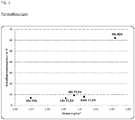
- In der
Fig. 1 sind beispielhaft die Daten einiger Lösungen aufgeführt:Tabelle 2: Bezeichnung Beispiel Gew. % Kaliumformiat Gew. % Additiv Gew. % Feststoff Kfo 75 Gew. % 1 75 0 75 Kfo 77,5 Gew. % 2 77,5 0 77,5 Kfo 80 Gew. % - 80 0 80 Lifo 77,5 Gew. % 19 74,92 2,58 77,5 Nafo 77,5 Gew. % 20 74,92 2,58 77,5 - In der
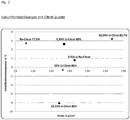
Fig. 2 sind beispielhaft weitere Daten einiger Lösungen aufgeführt:Tabelle 3: Bezeichnung Beispiel Gew. % Kaliumformiat Gew. % Additiv Gew. % Feststoff Na-Citrat 77,5 Gew. % 3 72,33 5,17 77,5 5,33% Li-Citrat 80 Gew. % 4 74,67 5,33 80 10% Li-Citrat 80 Gew. % 5 70 10 80 10,34% Li-Citrat 82,7 Gew. % 6 72,36 10,34 82,7 14,12% Li-Citrat Gew. 80% 7 65,88 14,12 80 5+5% Li-Na-Citrat 80 Gew. % 8 70 10 80 - In der
Fig. 3 sind beispielhaft weitere Daten einiger Lösungen aufgeführt:Tabelle 4: Bezeichnung Beispiel Gew. % Kaliumformiat Gew. % Additiv Gew. % Feststoff K-AMSA 77,5 Gew. % 13 72,33 5,17 77,5 Na-AMSA 77,5 Gew. % 14 72,33 5,17 77,5 5,17% Li-AMSA Gew. 77,5% 15 72,33 5,17 77,5 5,33% Li-AMSA 80 Gew. % 16 74,67 5,33 80 10% Li-AMSA 80 Gew. % 17 70 10 80 5+5% Li-Na-AMSA 80 Gew. % 18 70 10 80 -
- Gew. %
- Gewichtsprozent
- K-AMSA
- Kaliumamidosulfonat
- Kfo
- Kaliumformiat
- Li-AMSA
- Lithiumamidosulfonat
- Li-Na-AMSA
- Lithium-/Natriumamidosulfonat-Mischung
- Li-Na-Citrat
- Lithium-/Natriumcitrat-Mischung
- Li-Citrat
- Lithiumcitrat
- Lifo
- Lithiumformiat
- Na-AMSA
- Natriumamidosulfonat
- Na-Citrat
- Natriumcitrat
- Nafo
- Natriumformiat
- TCT
- True crystallization temperature (Kristallisationstempera tur)
Claims (3)
- Verwendung einer wässrigen Lösung von Kaliumformiat, umfassend weiterhin wenigstens ein gelöstes Lithium- und/oder Natriumsalz, wenigstens einer oder mehrerer organischer oder anorganischer Säuren als Bohrloch- oder Komplettierungsflüssigkeit, dadurch gekennzeichnet, dass die Lithiumsalze Lithiumcitrat und/oder Lithiumamidosulfonat und die Natriumsalze Natriumcitrat und/oder Natriumamidosulfonat umfassen, mit einer gegenüber einer rein aus 75 Gew. % Kaliumformiat und 25 Gew. % Wasser bestehenden Flüssigkeit abgesenkten Kristallisationstemperatur, wobei die Menge des Lithium- und/oder Natriumsalzes insgesamt bis zu 15 Gew. %, bezogen auf die Menge an Kaliumformiat, beträgt.
- Verwendung gemäß Anspruch 1, dadurch gekennzeichnet, dass die Menge an Lithium- und/oder Natriumsalz 1 bis 15 Gew. %, jeweils bezogen auf die Menge an Kaliumformiat beträgt.
- Verwendung gemäß Anspruch 1 oder 2, wobei die Dichte der Lösung wenigstens 1.57 g/cm3 bei Raumtemperatur (20 °C) beträgt.
Applications Claiming Priority (1)
| Application Number | Priority Date | Filing Date | Title |
|---|---|---|---|
| DE102015224469.5A DE102015224469A1 (de) | 2015-12-07 | 2015-12-07 | Hochdichte Bohrlochflüssigkeiten mit niedrigen Kristallisationstemperaturen |
Publications (2)
| Publication Number | Publication Date |
|---|---|
| EP3178901A1 EP3178901A1 (de) | 2017-06-14 |
| EP3178901B1 true EP3178901B1 (de) | 2020-03-25 |
Family
ID=57471691
Family Applications (1)
| Application Number | Title | Priority Date | Filing Date |
|---|---|---|---|
| EP16201599.4A Active EP3178901B1 (de) | 2015-12-07 | 2016-12-01 | Hochdichte bohrlochflüssigkeiten mit niedrigen kristallisationstemperaturen |
Country Status (2)
| Country | Link |
|---|---|
| EP (1) | EP3178901B1 (de) |
| DE (1) | DE102015224469A1 (de) |
Families Citing this family (2)
| Publication number | Priority date | Publication date | Assignee | Title |
|---|---|---|---|---|
| US20240167531A1 (en) * | 2019-11-14 | 2024-05-23 | Siemens Gamesa Renewable Energy A/S | Damper for a wind turbine |
| LU103163B1 (en) | 2023-06-30 | 2024-12-30 | Sampochem Gmbh | High-density, sub-zero stable clear liquid composition and the method for producing thereof |
Family Cites Families (11)
| Publication number | Priority date | Publication date | Assignee | Title |
|---|---|---|---|---|
| GB9211384D0 (en) * | 1992-05-29 | 1992-07-15 | Bp Chem Int Ltd | Aqueous brines |
| US5620947A (en) * | 1994-12-27 | 1997-04-15 | Exxon Production Research Company | Water-based high temperature well servicing composition and method of using same |
| AU719531B2 (en) | 1996-06-28 | 2000-05-11 | Novartis Ag | Pesticidal compositions |
| GB9617834D0 (en) | 1996-08-27 | 1996-10-09 | Verdugt Bv | Well servicing fluids |
| US6248700B1 (en) * | 1997-11-05 | 2001-06-19 | Great Lakes Chemical | Carboxylate-based well bore treatment fluids |
| US20020163781A1 (en) | 2001-05-01 | 2002-11-07 | Ericsson Inc. | Integrated cooling of a printed circuit board structure |
| US6746992B2 (en) * | 2001-07-25 | 2004-06-08 | M-I, L.L.C. | High density thermally stable well fluids |
| WO2009018099A1 (en) * | 2007-08-02 | 2009-02-05 | M-I Llc | Reclamation of formate brines |
| EP2718391A1 (de) * | 2011-06-13 | 2014-04-16 | Akzo Nobel Chemicals International B.V. | Behandlung von schieferformationen mit einem chelatbildner |
| US20130210686A1 (en) * | 2012-02-10 | 2013-08-15 | Halliburton Energy Services, Inc. | Treatment fluid containing a corrosion inhibitor of a weak base |
| US9359545B2 (en) * | 2013-03-04 | 2016-06-07 | Halliburton Energy Services, Inc. | Branched viscoelastic surfactant for high-temperature acidizing |
-
2015
- 2015-12-07 DE DE102015224469.5A patent/DE102015224469A1/de not_active Ceased
-
2016
- 2016-12-01 EP EP16201599.4A patent/EP3178901B1/de active Active
Non-Patent Citations (1)
| Title |
|---|
| None * |
Also Published As
| Publication number | Publication date |
|---|---|
| EP3178901A1 (de) | 2017-06-14 |
| DE102015224469A1 (de) | 2017-06-08 |
Similar Documents
| Publication | Publication Date | Title |
|---|---|---|
| EP0532570B1 (de) | Fliessfähige bohrlochbehandlungsmittel auf basis von kohlensäurediestern | |
| EP0374671B1 (de) | Verwendung ausgewählter Esteröle in Bohrspülungen insbesondere zur off-shore-Erschliessung von Erdöl- bzw. Erdgasvorkommen (l) | |
| DE4420455A1 (de) | Lineare alpha-Olefine enthaltende fließfähige Bohrlochbehandlungsmittel insbesondere entsprechende Bohrspülungen | |
| EP0535074B1 (de) | Fliessfähige bohrlochbehandlungsmittel auf basis von polycarbonsäureestern | |
| EP0472558B1 (de) | Verwendung ausgewählter oleophiler alkohole in wasser-basierten bohrspülungen vom o/w-emulsionstyp sowie entsprechende bohrspülflüssigkeiten mit verbesserter ökologischer verträglichkeit | |
| EP0382071B1 (de) | Monocarbonsäure-Methylester in Invert-Bohrspülschlämmen | |
| EP1654337B1 (de) | Bohrlochbehandlungsmittel, enthaltend ethercarbonsäuren | |
| EP0472557B1 (de) | Verwendung ausgewählter oleophiler ether in wasser-basierten bohrspülungen vom o/w-emulsionstyp sowie entsprechende bohrspülflüssigkeiten mit verbesserter ökologischer verträglichkeit | |
| DE69628066T2 (de) | Auf Wasser basierende Bohrflüssigkeit zur Verminderung der Wasserabsorption und Hydratisierung von tonartigen Gesteinen | |
| EP1137736B1 (de) | Schmiermittel für bohrspülungen | |
| EP0374672A1 (de) | Verwendung ausgewählter Esteröle in Bohrspülungen insbesondere zur off-shore-Erschliessung von Erdöl- bzw. Erdgasvorkommen (II) | |
| DE69924050T2 (de) | Invertemulsionen für Bohr- und Behandlungsflüssigkeiten | |
| WO2007137709A1 (de) | Bohrspülungen mit geringer toxizität | |
| WO2008046554A1 (de) | Propylalkylester als ölphase in bohrlochbehandlungsmitteln | |
| EP3178901B1 (de) | Hochdichte bohrlochflüssigkeiten mit niedrigen kristallisationstemperaturen | |
| DE3151736A1 (de) | Stabilisierte loesungen von modifizierter cellulose in salzsole und ihre anwendung als fluessigkeit zur fertigstellung eines bohrloches fuer den foerderbetrieb und fluessigkeit fuer ausbesserungsarbeiten | |
| DE2901222A1 (de) | Gelbildner fuer waessrige loesungen anorganischer saeuren | |
| DE602004007407T2 (de) | Ölbasierte bohrflüssigkeit mit einem umweltmässig unbedenklichen, für alle basisöle einsetzbaren und gegenüber gashydratbildung stabilen emulgiersystem | |
| DE4302462A1 (de) | Rheologisch gesteuerte fließ- und pumpfähige wäßrige Zubereitungen beispielsweise für die Verwendung als wasserbasierte Bohrschlämme | |
| EP1358298A1 (de) | Additiv für ölbasierte invert-bohrspülungen | |
| DE2556455B1 (de) | Waessrige bohrfluessigkeit | |
| DE102015200194B4 (de) | Wässrige Salzlösungen aus Kaliumformiat und Kaliummethansulfonat und deren Verwendung | |
| EP0541605B1 (de) | Verwendung oberflächenaktiver alpha-sulfofettsäure-di-salze in wasser- und öl-basierten bohrspülungen und anderen bohrlochbehandlungsmitteln | |
| DE102006029265A1 (de) | Verwendung von Dicarbonyl-Verbindungen zur Erhöhung der Temperaturstabilität von Biopolymeren bei der Erdöl- und Erdgasexploration | |
| DE102005051165A1 (de) | Verdickungsmittel für ölbasierte Bohrspülungen |
Legal Events
| Date | Code | Title | Description |
|---|---|---|---|
| PUAI | Public reference made under article 153(3) epc to a published international application that has entered the european phase |
Free format text: ORIGINAL CODE: 0009012 |
|
| STAA | Information on the status of an ep patent application or granted ep patent |
Free format text: STATUS: THE APPLICATION HAS BEEN PUBLISHED |
|
| AK | Designated contracting states |
Kind code of ref document: A1 Designated state(s): AL AT BE BG CH CY CZ DE DK EE ES FI FR GB GR HR HU IE IS IT LI LT LU LV MC MK MT NL NO PL PT RO RS SE SI SK SM TR |
|
| AX | Request for extension of the european patent |
Extension state: BA ME |
|
| STAA | Information on the status of an ep patent application or granted ep patent |
Free format text: STATUS: REQUEST FOR EXAMINATION WAS MADE |
|
| 17P | Request for examination filed |
Effective date: 20171214 |
|
| RBV | Designated contracting states (corrected) |
Designated state(s): AL AT BE BG CH CY CZ DE DK EE ES FI FR GB GR HR HU IE IS IT LI LT LU LV MC MK MT NL NO PL PT RO RS SE SI SK SM TR |
|
| GRAP | Despatch of communication of intention to grant a patent |
Free format text: ORIGINAL CODE: EPIDOSNIGR1 |
|
| STAA | Information on the status of an ep patent application or granted ep patent |
Free format text: STATUS: GRANT OF PATENT IS INTENDED |
|
| INTG | Intention to grant announced |
Effective date: 20191023 |
|
| GRAS | Grant fee paid |
Free format text: ORIGINAL CODE: EPIDOSNIGR3 |
|
| GRAA | (expected) grant |
Free format text: ORIGINAL CODE: 0009210 |
|
| STAA | Information on the status of an ep patent application or granted ep patent |
Free format text: STATUS: THE PATENT HAS BEEN GRANTED |
|
| AK | Designated contracting states |
Kind code of ref document: B1 Designated state(s): AL AT BE BG CH CY CZ DE DK EE ES FI FR GB GR HR HU IE IS IT LI LT LU LV MC MK MT NL NO PL PT RO RS SE SI SK SM TR |
|
| REG | Reference to a national code |
Ref country code: GB Ref legal event code: FG4D Free format text: NOT ENGLISH |
|
| REG | Reference to a national code |
Ref country code: AT Ref legal event code: REF Ref document number: 1248530 Country of ref document: AT Kind code of ref document: T Effective date: 20200415 Ref country code: IE Ref legal event code: FG4D Free format text: LANGUAGE OF EP DOCUMENT: GERMAN |
|
| REG | Reference to a national code |
Ref country code: DE Ref legal event code: R096 Ref document number: 502016009255 Country of ref document: DE |
|
| REG | Reference to a national code |
Ref country code: NL Ref legal event code: FP |
|
| PG25 | Lapsed in a contracting state [announced via postgrant information from national office to epo] |
Ref country code: FI Free format text: LAPSE BECAUSE OF FAILURE TO SUBMIT A TRANSLATION OF THE DESCRIPTION OR TO PAY THE FEE WITHIN THE PRESCRIBED TIME-LIMIT Effective date: 20200325 Ref country code: RS Free format text: LAPSE BECAUSE OF FAILURE TO SUBMIT A TRANSLATION OF THE DESCRIPTION OR TO PAY THE FEE WITHIN THE PRESCRIBED TIME-LIMIT Effective date: 20200325 |
|
| REG | Reference to a national code |
Ref country code: NO Ref legal event code: T2 Effective date: 20200325 |
|
| PG25 | Lapsed in a contracting state [announced via postgrant information from national office to epo] |
Ref country code: SE Free format text: LAPSE BECAUSE OF FAILURE TO SUBMIT A TRANSLATION OF THE DESCRIPTION OR TO PAY THE FEE WITHIN THE PRESCRIBED TIME-LIMIT Effective date: 20200325 Ref country code: LV Free format text: LAPSE BECAUSE OF FAILURE TO SUBMIT A TRANSLATION OF THE DESCRIPTION OR TO PAY THE FEE WITHIN THE PRESCRIBED TIME-LIMIT Effective date: 20200325 Ref country code: BG Free format text: LAPSE BECAUSE OF FAILURE TO SUBMIT A TRANSLATION OF THE DESCRIPTION OR TO PAY THE FEE WITHIN THE PRESCRIBED TIME-LIMIT Effective date: 20200625 Ref country code: GR Free format text: LAPSE BECAUSE OF FAILURE TO SUBMIT A TRANSLATION OF THE DESCRIPTION OR TO PAY THE FEE WITHIN THE PRESCRIBED TIME-LIMIT Effective date: 20200626 Ref country code: HR Free format text: LAPSE BECAUSE OF FAILURE TO SUBMIT A TRANSLATION OF THE DESCRIPTION OR TO PAY THE FEE WITHIN THE PRESCRIBED TIME-LIMIT Effective date: 20200325 |
|
| REG | Reference to a national code |
Ref country code: LT Ref legal event code: MG4D |
|
| PG25 | Lapsed in a contracting state [announced via postgrant information from national office to epo] |
Ref country code: SK Free format text: LAPSE BECAUSE OF FAILURE TO SUBMIT A TRANSLATION OF THE DESCRIPTION OR TO PAY THE FEE WITHIN THE PRESCRIBED TIME-LIMIT Effective date: 20200325 Ref country code: LT Free format text: LAPSE BECAUSE OF FAILURE TO SUBMIT A TRANSLATION OF THE DESCRIPTION OR TO PAY THE FEE WITHIN THE PRESCRIBED TIME-LIMIT Effective date: 20200325 Ref country code: PT Free format text: LAPSE BECAUSE OF FAILURE TO SUBMIT A TRANSLATION OF THE DESCRIPTION OR TO PAY THE FEE WITHIN THE PRESCRIBED TIME-LIMIT Effective date: 20200818 Ref country code: SM Free format text: LAPSE BECAUSE OF FAILURE TO SUBMIT A TRANSLATION OF THE DESCRIPTION OR TO PAY THE FEE WITHIN THE PRESCRIBED TIME-LIMIT Effective date: 20200325 Ref country code: EE Free format text: LAPSE BECAUSE OF FAILURE TO SUBMIT A TRANSLATION OF THE DESCRIPTION OR TO PAY THE FEE WITHIN THE PRESCRIBED TIME-LIMIT Effective date: 20200325 Ref country code: IS Free format text: LAPSE BECAUSE OF FAILURE TO SUBMIT A TRANSLATION OF THE DESCRIPTION OR TO PAY THE FEE WITHIN THE PRESCRIBED TIME-LIMIT Effective date: 20200725 Ref country code: RO Free format text: LAPSE BECAUSE OF FAILURE TO SUBMIT A TRANSLATION OF THE DESCRIPTION OR TO PAY THE FEE WITHIN THE PRESCRIBED TIME-LIMIT Effective date: 20200325 Ref country code: CZ Free format text: LAPSE BECAUSE OF FAILURE TO SUBMIT A TRANSLATION OF THE DESCRIPTION OR TO PAY THE FEE WITHIN THE PRESCRIBED TIME-LIMIT Effective date: 20200325 |
|
| REG | Reference to a national code |
Ref country code: DE Ref legal event code: R097 Ref document number: 502016009255 Country of ref document: DE |
|
| PG25 | Lapsed in a contracting state [announced via postgrant information from national office to epo] |
Ref country code: ES Free format text: LAPSE BECAUSE OF FAILURE TO SUBMIT A TRANSLATION OF THE DESCRIPTION OR TO PAY THE FEE WITHIN THE PRESCRIBED TIME-LIMIT Effective date: 20200325 Ref country code: DK Free format text: LAPSE BECAUSE OF FAILURE TO SUBMIT A TRANSLATION OF THE DESCRIPTION OR TO PAY THE FEE WITHIN THE PRESCRIBED TIME-LIMIT Effective date: 20200325 |
|
| PLBE | No opposition filed within time limit |
Free format text: ORIGINAL CODE: 0009261 |
|
| STAA | Information on the status of an ep patent application or granted ep patent |
Free format text: STATUS: NO OPPOSITION FILED WITHIN TIME LIMIT |
|
| PG25 | Lapsed in a contracting state [announced via postgrant information from national office to epo] |
Ref country code: PL Free format text: LAPSE BECAUSE OF FAILURE TO SUBMIT A TRANSLATION OF THE DESCRIPTION OR TO PAY THE FEE WITHIN THE PRESCRIBED TIME-LIMIT Effective date: 20200325 |
|
| REG | Reference to a national code |
Ref country code: DE Ref legal event code: R082 Ref document number: 502016009255 Country of ref document: DE Representative=s name: KNPP RECHTS- UND PATENTANWAELTE PARTGMBB, DE Ref country code: DE Ref legal event code: R082 Ref document number: 502016009255 Country of ref document: DE Representative=s name: KNPP KNIGGE NOURNEY VOELGER BOEHM HOFFMANN-VON, DE |
|
| 26N | No opposition filed |
Effective date: 20210112 |
|
| PG25 | Lapsed in a contracting state [announced via postgrant information from national office to epo] |
Ref country code: SI Free format text: LAPSE BECAUSE OF FAILURE TO SUBMIT A TRANSLATION OF THE DESCRIPTION OR TO PAY THE FEE WITHIN THE PRESCRIBED TIME-LIMIT Effective date: 20200325 |
|
| REG | Reference to a national code |
Ref country code: CH Ref legal event code: PL |
|
| REG | Reference to a national code |
Ref country code: NL Ref legal event code: MM Effective date: 20210101 |
|
| PG25 | Lapsed in a contracting state [announced via postgrant information from national office to epo] |
Ref country code: MC Free format text: LAPSE BECAUSE OF FAILURE TO SUBMIT A TRANSLATION OF THE DESCRIPTION OR TO PAY THE FEE WITHIN THE PRESCRIBED TIME-LIMIT Effective date: 20200325 |
|
| REG | Reference to a national code |
Ref country code: BE Ref legal event code: MM Effective date: 20201231 |
|
| PG25 | Lapsed in a contracting state [announced via postgrant information from national office to epo] |
Ref country code: NL Free format text: LAPSE BECAUSE OF NON-PAYMENT OF DUE FEES Effective date: 20210101 |
|
| PG25 | Lapsed in a contracting state [announced via postgrant information from national office to epo] |
Ref country code: IE Free format text: LAPSE BECAUSE OF NON-PAYMENT OF DUE FEES Effective date: 20201201 Ref country code: FR Free format text: LAPSE BECAUSE OF NON-PAYMENT OF DUE FEES Effective date: 20201231 Ref country code: LU Free format text: LAPSE BECAUSE OF NON-PAYMENT OF DUE FEES Effective date: 20201201 |
|
| PG25 | Lapsed in a contracting state [announced via postgrant information from national office to epo] |
Ref country code: CH Free format text: LAPSE BECAUSE OF NON-PAYMENT OF DUE FEES Effective date: 20201231 Ref country code: LI Free format text: LAPSE BECAUSE OF NON-PAYMENT OF DUE FEES Effective date: 20201231 |
|
| PG25 | Lapsed in a contracting state [announced via postgrant information from national office to epo] |
Ref country code: TR Free format text: LAPSE BECAUSE OF FAILURE TO SUBMIT A TRANSLATION OF THE DESCRIPTION OR TO PAY THE FEE WITHIN THE PRESCRIBED TIME-LIMIT Effective date: 20200325 Ref country code: MT Free format text: LAPSE BECAUSE OF FAILURE TO SUBMIT A TRANSLATION OF THE DESCRIPTION OR TO PAY THE FEE WITHIN THE PRESCRIBED TIME-LIMIT Effective date: 20200325 Ref country code: CY Free format text: LAPSE BECAUSE OF FAILURE TO SUBMIT A TRANSLATION OF THE DESCRIPTION OR TO PAY THE FEE WITHIN THE PRESCRIBED TIME-LIMIT Effective date: 20200325 |
|
| PG25 | Lapsed in a contracting state [announced via postgrant information from national office to epo] |
Ref country code: MK Free format text: LAPSE BECAUSE OF FAILURE TO SUBMIT A TRANSLATION OF THE DESCRIPTION OR TO PAY THE FEE WITHIN THE PRESCRIBED TIME-LIMIT Effective date: 20200325 Ref country code: AL Free format text: LAPSE BECAUSE OF FAILURE TO SUBMIT A TRANSLATION OF THE DESCRIPTION OR TO PAY THE FEE WITHIN THE PRESCRIBED TIME-LIMIT Effective date: 20200325 |
|
| PG25 | Lapsed in a contracting state [announced via postgrant information from national office to epo] |
Ref country code: BE Free format text: LAPSE BECAUSE OF NON-PAYMENT OF DUE FEES Effective date: 20201231 |
|
| REG | Reference to a national code |
Ref country code: AT Ref legal event code: MM01 Ref document number: 1248530 Country of ref document: AT Kind code of ref document: T Effective date: 20211201 |
|
| PG25 | Lapsed in a contracting state [announced via postgrant information from national office to epo] |
Ref country code: AT Free format text: LAPSE BECAUSE OF NON-PAYMENT OF DUE FEES Effective date: 20211201 |
|
| PGFP | Annual fee paid to national office [announced via postgrant information from national office to epo] |
Ref country code: GB Payment date: 20251218 Year of fee payment: 10 |
|
| PGFP | Annual fee paid to national office [announced via postgrant information from national office to epo] |
Ref country code: NO Payment date: 20251216 Year of fee payment: 10 |
|
| PGFP | Annual fee paid to national office [announced via postgrant information from national office to epo] |
Ref country code: DE Payment date: 20251222 Year of fee payment: 10 |
|
| PGFP | Annual fee paid to national office [announced via postgrant information from national office to epo] |
Ref country code: IT Payment date: 20251231 Year of fee payment: 10 |