EP3183191B1 - Adaptation de débit dynamique de manipulation de matériau - Google Patents
Adaptation de débit dynamique de manipulation de matériau Download PDFInfo
- Publication number
- EP3183191B1 EP3183191B1 EP15833332.8A EP15833332A EP3183191B1 EP 3183191 B1 EP3183191 B1 EP 3183191B1 EP 15833332 A EP15833332 A EP 15833332A EP 3183191 B1 EP3183191 B1 EP 3183191B1
- Authority
- EP
- European Patent Office
- Prior art keywords
- receptacles
- goods
- person pick
- pick station
- person
- Prior art date
- Legal status (The legal status is an assumption and is not a legal conclusion. Google has not performed a legal analysis and makes no representation as to the accuracy of the status listed.)
- Active
Links
Images

Classifications
-
- G—PHYSICS
- G06—COMPUTING OR CALCULATING; COUNTING
- G06Q—INFORMATION AND COMMUNICATION TECHNOLOGY [ICT] SPECIALLY ADAPTED FOR ADMINISTRATIVE, COMMERCIAL, FINANCIAL, MANAGERIAL OR SUPERVISORY PURPOSES; SYSTEMS OR METHODS SPECIALLY ADAPTED FOR ADMINISTRATIVE, COMMERCIAL, FINANCIAL, MANAGERIAL OR SUPERVISORY PURPOSES, NOT OTHERWISE PROVIDED FOR
- G06Q10/00—Administration; Management
- G06Q10/08—Logistics, e.g. warehousing, loading or distribution; Inventory or stock management
Definitions
- the present invention is directed to a material-handling system and method of supplying work units in such a material-handling process. While the invention is illustrated for use in an order fulfillment system, it has other applications as well.
- work units such as inventory receptacles, containing inventory items, are supplied to processing stations, such as goods-to-person stations for sorting by human operators into transport receptacles.
- the transport receptacles may represent individual orders or interim receptacles that are sent to further processing, such as at a put wall for organization into individual orders.
- the inventory receptacles are supplied under a warehouse management system from an inventory store, such as an automated warehouse system.
- An inventory receptacle transfer system transports the receptacles to a sorter which sorts inventory receptacles to the individual processing stations.
- the receptacles are allowed to accumulate at a buffer or accumulator at each processing station to allow individual operators to work at their own pace. However, when the buffer at a processing station cannot accept additional receptacles, the receptacles get recirculated in the sorter that supplies the receptacles to the processing stations. If enough receptacles are over-supplied, then the sorter gets filled with recirculation of receptacles intended for the slower operators thus preventing receptacles getting supplied to the faster operators who have an inadequate inventory receptacle at their station to process. Thus the system gets bogged down and must be operated at a slower pace to accommodate slower operators. Meanwhile the faster operators are idle.
- US 2007/129843 A1 discloses a sortation system and method of sorting product includes providing a sorter assembly and a supply system supplying product that is received by the sorter assembly. Product supplied to the sorter assembly is monitored and a parameter is determined that is indicative of the relationship between product supplied to the sorter assembly and product being sorted by the sorter assembly. The supply system is controlled as a function of a value of the parameter.
- the present invention provides a method according to claim 1 and an order fulfillment system according to claim 9 that allow the operators of goods-to-person pick stations to operate at a wide variety of rates without bogging down the system. In this manner, maximum throughput can be achieved under varied conditions and/or staffing makeup without needing to build additional capacity into the system. Further features are disclosed in the dependent claims.
- a method and apparatus for supplying inventory receptacles from an inventory store to a plurality of processing stations in an order fulfillment system includes a computer system programmed to establish a set-point for each processing station of inventory receptacles desired to be at that particular station and determine an actual measure for each goods-to-person pick station of inventory receptacles at that goods-to-person pick station.
- the computer system is programmed to perform a feedback control algorithm for each goods-to-person pick station to establish the set-point for that particular goods-to-person pick station and an error between the inventory receptacles at that goods-to-person pick station and the set-point of inventory receptacles for that goods-to-person pick station.
- the feedback control algorithm further determines a desired number of inventory receptacles that should be enroute to the goods-to-person pick station as a function of the error and causes an inventory receptacle to be delivered from the inventory store for a goods-to-person pick station if the actual number of inventory receptacles enroute to that goods-to-person pick station is fewer than the desired number of inventory receptacles that should be enroute to that goods-to-person pick station.
- the material-handling system has a transfer system that transfers inventory receptacles from the inventory store to the goods-to-person pick stations and wherein the desired number of inventory receptacles that should be enroute to the goods-to-person pick station is also a function of operation of the transfer system.
- the set-point for a goods-to-person pick station may be increased if the actual number of inventory receptacles at that processing station is below a minimum number and decreased for a processing station if the actual number of inventory receptacles at that goods-to-person pick station is above a maximum number.
- the increasing and decreasing may be proportional to a time base of the material-handling system.
- the feedback control algorithm may be a dual-loop feedback control algorithm, in which one of said dual loops controls the amount of inventory receptacles at a process station and the other one of said dual loops affects operation of the one of said dual loops as a function of overall system operation.
- Each of the goods-to-person pick stations has an inventory receptacle buffer and wherein the number of inventory receptacles at a processing station is a function of the number of inventory receptacles at the buffer.
- a sorter is provided that receives inventory receptacles from the inventory store and delivers inventory receptacles to the goods-to-person pick stations.
- the number of inventory receptacles at a processing station is a function of the number of inventory receptacles at the sorter for that processing station.
- the set-point for a processing station may be adjusted if that goods-to-person pick station has an actual number of inventory receptacles that is outside of a particular range.
- the feedback control algorithm may be repetitive according to a particular time interval.
- the feedback control algorithm may combine an integral of error values for each time interval and a scaled value of each error value. The integral of the error values may give greater weight to positive error values than to negative error values.
- a positive error value is one in which the set-point of inventory receptacles at a goods-to-person pick station is greater than the actual number of inventory receptacles at that goods-to-person pick station and a negative error value is one in which the actual number of inventory receptacles at or near a goods-to-person pick station is greater than the set-point of inventory receptacles at that goods-to-person pick station.
- the integral of error values may be restricted to a range of values in order to limit wind-up of the integral of error values.
- the inventory store may be an automated warehouse.
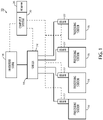
- a material-handling system 10 has an inventory store 14, a plurality of material-processing stations, such as picking stations 16, each operated by an operator, and a receptacle transfer system 18 for transferring inventory receptacles (not shown) from inventory store 14 to processing station 16 ( Fig. 1 ).
- a computer system 20, such as a warehouse management system has a program 25 that carries out a rate-matching method or process of supplying a unit of work from inventory store 14 to a buffer 22 of a processing station 16.
- Computer system 20 monitors each processing station 16 and/or receptacle transfer system 18 to instruct inventory store 14 when to release an inventory receptacle for a particular processing station 16. While the invention is illustrated for use with an order fulfillment system for delivering inventory receptacles to processing stations, such as goods-to-person pick stations, it has broad applicability to other material-handling processes in which individual units of work are paid out to individual operators.
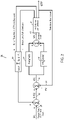
- Computer system 20 runs rate-matching program 25 that carries out a feedback control algorithm 26 illustrated in Fig. 2 .
- Feedback control algorithm 26 receives as an input, a set-point 28 that represents a number of inventory receptacles that are desired to be at or near a particular processing station 16. It should be understood that algorithm 26 is carried out with respect to each processing station 16 and a set-point that may be different for the different processing stations.
- the set-point of work units, such as inventory receptacles, that are desired at a material-processing station 16 may initially be set by a routine, such as by trial-and error, or the like.
- a set-point adjust process is performed at 30 in order to adjust the set-point for boundary conditions that is summed with the set-point to arrive at an adjusted set-point 32.
- a difference is taken between the adjusted set-point 32 and a process variable 34 which are the actual work units, such as inventory receptacles, at the particular processing station. The difference results in an error 36.
- a proportion of the error is carried out at 37 and an integral of the error is carried out at 38, the results of which are summed to arrive at a manipulated variable (MV) at 40.
- the manipulated variable is an enroute limit of a number of inventory receptacles that are to be in transfer system 18.
- a receptacle retrieval and delivery function 41 compares the number of receptacles currently being destined for the particular processing station with the enroute limit for that processing station. If the number of actual enroute receptacles exceeds the enroute limit, no action is taken. If the actual number of enroute receptacles is less than the enroute limit, retrieval and delivery function 41 causes inventory store 14 to output one inventory receptacle destined for the particular processing station 16 which will eventually result in an increase in the actual units at the processing station at 34.
- Each processing station 16 includes a buffer or accumulator 22 which accumulates inventory receptacles for processing.
- the number of inventory receptacles in each buffer 22 is monitored by computer system 20 as a representation of the number of inventory receptacles that are at the processing station.
- Receptacles transfer system 18 includes a sorter 24, such as a cross-belt sorter, or other recirculating sorter. Any inventory receptacles on sorter 24 that are designated to be diverted to a particular processing station 16 are deemed to be near that processing station.
- the process variable 34 is the number of inventory receptacles that are in the buffer 22 for a processing station or on sorter 24 and destined for that processing station.
- the number of inventory receptacles in the buffer for a processing station is supplied to set-point adjust function 30 to adjust the set-point for two boundary conditions. If the buffer is empty, adjust function 30 increases the set-point at 32. If the buffer or the discharge lane from sorter 24 is full, adjust function 30 decreases the set-point 32. Thus, the adjusted set-point should generally result in a buffer 22 that is partially full.
- the rate matching process determines an actual measure of work units at the material-processing stations using actual units 34 as the process variable (PV) and performs a feedback control algorithm 26 to establish a desired amount of work units 40 as the manipulated variable MV that should be supplied to the material-processing station as a function of an error 36 between the work units at the material-processing station and the adjusted set-point of work units 32 at the material-processing station.
- PV process variable
- Retrieval and delivery function 41 compares the desired amount of work units that should be supplied to the material-processing station 40 with the actual work units being supplied to the material-processing station, as maintained in the memory of computer system 20, and supplies an additional work unit, such as an inventory receptacle, if the desired work units that should be supplied to the material-processing station are greater than the actual work units being supplied to the material processing.
- Feedback control algorithm 26 is repetitively carried out according to a particular time interval T.
- the time interval T is a function of amount of time that work units being supplied to the material-processing station are varied. In the illustrated embodiment, that time interval is approximately every five (5) seconds but a greater or lesser amount may be used.
- Feedback control algorithm 26 has an integrating function 38 that performs an integral of error values for each interval of time and a proportional function 37 that obtains a scaled value of each error value. The proportional and integral values are summed to arrive at the manipulated variable 40.
- feedback control algorithm 26 could also use the derivative of the error value 36, such function is not performed in the illustrated embodiment because of the length of time required for each inventory receptacle, or unit of work, to be discharged from inventory store 14 and transported to the targeted processing station 16.
- derivative value can be used to provide a complete PID feedback control algorithm, if desired.
- set-point 28 and adjusted set-point 32 are established for each processing station 16.
- the set-point adjustment is scaled by a factor of 1/T where T is the time base of the delivery system.
- An actual measure for each processing station of inventory receptacles at or near that processing station 34 is provided as the process variable (PV) and feedback control algorithm 26 is performed repetitively to establish as the manipulated variable MV a desired number of inventory receptacles enroute in the receptacle transfer system from the inventory store 14 for each processing station 16 as a function of an error value 36 between the actual number of inventory receptacles 34 and the adjusted set-point of inventory receptacles 36 at each processing station 16.
- PV process variable
- Function 41 compares the desired amount of inventory receptacles that should be enroute from the inventory store 40 with the actual number of inventory receptacles enroute for each processing station, as maintained in the memory of computer system 20, and supplying an additional inventory receptacles from inventory store 14 for a processing station 16 if the inventory receptacles that should be enroute is greater than the actual number of receptacles enroute for that processing station.
- the PV for system 10 is at least the number of inventory receptacles in inventory receptacle buffer 22.
- system 10 includes a sorter 24 that receives inventory receptacles from inventory store 14. Sorter 24 sorts the inventory receptacles according to destination and delivers inventory receptacles to the processing stations.
- the PV 34 for feedback control algorithm 26 includes the number of inventory receptacles near the particular processing station as a function of the number of inventory receptacles destined for the particular processing station at sorter 24.
- Set-point adjusting function 30 functions by adjusting the set-point for a processing station if that processing station has an actual number of inventory receptacles in buffer 22 or on sorter 24 that is outside of a particular range. For example, the set-point is reduced by function 30 if the buffer and/or the divert lane of sorter 24 is full and is increased for a processing station if the buffer 22 for that processing station is empty.
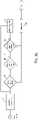
- a program 25 executed by computer system 20 starts by waiting at 43 for the passage of a particular interval of time which may be a number of seconds, such as five (5) seconds or some other chosen interval.
- Set-point adjust function 30 is carried out by determining at 44a whether the processing station is starved because its buffer is empty. If so the set-point is adjusted by twice the time interval at 45a. If not, then it is determined at 44b whether the processing station is over-supplied because its lane from sorter 24 is full. If so, the set-point is decremented by the value of the time interval at 45b.
- the adjustment set-point is set to its respective maximum or minimum value in order to keep the adjustment to the set-point within a given range.
- the initial set-point is adjusted at 50 by adding to or subtracting from initial set-point 28 scaled by 1/T according to the determination of set-point adjust function 30.
- An error value 36 is established by subtracting the process variable 34 from the adjusted set-point 32.
- the integral 38 of the error value begins at 52 by determining whether the particular error value at this time interval is positive or negative.
- a positive error value is one in which the set-point of inventory receptacles at a processing station is greater than the actual number of inventory receptacles.
- a negative error value is the opposite.
- An integrated error value is determined by summed and adjusting the sum according to a factor that is determined at 52 whether the particular error value is positive or negative. If the particular error value is positive, then the integrated error value is increased by adding a factor equal to the present error multiplied by the time interval 43. If negative, then the integrated error is made more negative by subtracting a factor equal to the error multiplied by half the time interval 43. Thus, positive integrated errors are accentuated versus negative errors.
- Integrator windup refers to a situation in a feedback controller where a large change in set-point causes an integral term to accumulate sufficient error during the windup thus overshooting.
- the feedback program is then continued in Fig. 3b where the proportional term is calculated at 37 by multiplying the error value by a gain factor K and adding the product to the integral value determined at 38 and 60 in order to determine the manipulated variable MV at 40.
- the gain factor K used in the proportion term is system dependent and relates to the time base of the system and the rate of processing of inventory receptacles at the processing stations 16.
- Gain factor K generally relates the number of inventory receptacles at processing stations 16 with the enroute limit of receptacles.
- Gain factor K may be set by using various techniques, such as a heuristic technique or by trial and error for a particular installation.
- Retrieval and delivery function 41 is then carried out by determining at 64 whether the enroute count of inventory receptacles for that processing station is greater than MV. If so, then no further receptacles are needed for that processing station and a false outcome is determined at 66 and no receptacles are added. If it is determined at 64 that the enroute count is greater than the MV, it is then determined at 68 whether the enroute count is greater than or equal to a maximum value and at 70 whether the enroute count is greater or equal to a balance target that is calculated to avoid overloading sorter 24. If either is true, meaning that no more inventory receptacles should be added to the receptacle transfer system 18, then false outcome 66 is also found.
- one inventory receptacle is ordered from inventory store 14 for that processing station.
- a delay may be built into retrieval and delivery function 41 in order to allow the program to react to the addition of another inventory receptacle before determining if another receptacle should be ordered.
- each processing station 16 is a goods-to-person station of the type described in U.S. Pat. No. 8,713,899 .
- inventory store 14 is an automated warehouse of the type described in U.S. Pat. No. 8,790,061 .
- ASRS automatic storage and retrieval systems
- receptacle transfer system 18 may be a conveyor system made up of conveyors and merge units particularly where inventory store 14 is made up of multiple rack units each with a lift assembly.
- AGV automated guided vehicles
- sorter 24 is a circulating sorter, such as a cross-belt, tilt-tray, or other circulating sorter, but a linear sorter with recirculation or other type of sorter may be used.
Landscapes
- Business, Economics & Management (AREA)
- Engineering & Computer Science (AREA)
- Economics (AREA)
- Tourism & Hospitality (AREA)
- General Business, Economics & Management (AREA)
- Human Resources & Organizations (AREA)
- Marketing (AREA)
- Operations Research (AREA)
- Quality & Reliability (AREA)
- Strategic Management (AREA)
- Development Economics (AREA)
- Physics & Mathematics (AREA)
- Entrepreneurship & Innovation (AREA)
- General Physics & Mathematics (AREA)
- Theoretical Computer Science (AREA)
- General Factory Administration (AREA)
- Warehouses Or Storage Devices (AREA)
- Multi-Process Working Machines And Systems (AREA)
- Mechanical Engineering (AREA)
- Organic Low-Molecular-Weight Compounds And Preparation Thereof (AREA)
Claims (9)
- Procédé de fourniture de réceptacle d'un magasin (14) d'inventaire à une pluralité de stations (16) d'enlèvement de biens à personne dans un système (10) de traitement de commande, dans lequel le système (10) de traitement de commande comprend un système (18) de transfert incluant un trieur (24) qui reçoit les réceptacles dudit magasin (14) d'inventaire et délivre les réceptacles aux stations (16) d'enlèvement de biens à personnes, ledit procédé étant mis en oeuvre au moyen d'un programme (25) fonctionnant sur un système informatique (20) du système (10) de traitement de commande, ledit procédé comprenant les étapes de:fixer un point de consigne initial (28) de réceptacles qui sont souhaités être situés aux station (16) d'enlèvement de biens à personne respectives, pour chacune des stations (16) d'enlèvement de biens à personne; etexécuter un algorithme (26) de commande par rétroaction de manière répétitive selon un intervalle de temps (dt) particulier pour chacune des stations (16) d'enlèvement de biens à personne pour ajuster le point de consigne initial (28) de réceptacles pour les stations (16) d'enlèvement de biens à personne respectives en utilisant une fonction (30) d'ajustement de point de consigne et pour déterminer un nombre réel (34) de réceptacles à ou à et près de la station (16) d'enlèvement de biens à personne respective et pour déterminer une valeur d'erreur (36) entre le nombre réel (34) de réceptacles à ou à et près de la station (16) d'enlèvement de biens à personne respective et le point de consigne ajusté (32) de réceptacles pour les stations (16) d'enlèvement de biens à personne respectives;ladite étape d'exécution de manière répétitive dudit algorithme (26) de commande par rétroaction pour chacune desdites stations (16) d'enlèvement de biens à personne inclut en outre une étape de détermination d'un nombre souhaité (40) de réceptacles qui devraient être en route du magasin (14) d'inventaire aux stations (16) d'enlèvement de biens à personne respectives en fonction de la valeur d'erreur (36) et de comparaison (64) du nombre souhaité (40) de réceptacles au nombre réel de réceptacles en route pour les stations (16) d'enlèvement de biens à personne respectives et de déclenchement de la livraison d'un réceptacle du magasin (14) d'inventaire à la station (16) d'enlèvement de biens à personne respective si le nombre de réceptacles en route pour la station (16) d'enlèvement de biens à personne respective est inférieur au nombre souhaité (40) de réceptacles;dans lequel ledit algorithme (26) de commande par rétroaction combine une intégrale (38) de valeurs d'erreur (36) pour chaque intervalle de temps (dt) et une valeur mise à l'échelle (37) de chaque valeur d'erreur (36) pour déterminer le nombre souhaité (40) de réceptacles qui devraient être en route pour une station (16) d'enlèvement de biens à personne particulière, dans lequel le nombre souhaité (40) de réceptacles d'inventaire qui devraient être en route pour la station (16) d'enlèvement de biens à personne respective est aussi une fonction d'opération du système (18) de transfert, des réceptacles en route étant des réceptacles qui sont entre le magasin (14) d'inventaire et au niveau du trieur (24) mais pas encore désignés pour être délivrés à une station (16) d'enlèvement de biens à personne particulière et dans lequel chacune des stations (16) d'enlèvement de biens à personne particulière a un tampon (22) de réceptacle dans lequel le nombre de réceptacles près de la station (16) d'enlèvement de biens à personne respective est une fonction du nombre de réceptacles d'inventaire destinés à la station de traitement particulière au trieur (24) et dans lequel le nombre de réceptacles à la station (16) d'enlèvement de biens à personne respective est une fonction du nombre de réceptacles au niveau dudit tampon (22) et dans lequel le point de consigne initial (28) est augmenté en utilisant la fonction (30) d'ajustement de point de consigne si le tampon (22) de la station (16) d'enlèvement de biens à personne respective est vide et est réduit en utilisant la fonction (30) d'ajustement de point de consigne si le tampon (22) ou la ligne de décharge du trieur (24) de la station (16) d'enlèvement de biens à personne est pleine.
- Le procédé selon la revendication 1, dans lequel l'ajustement de point de consigne initial (28) pour la station (16) d'enlèvement de biens à personne respective est effectué en fonction de si les réceptacles en route vers la station (16) d'enlèvement de biens à personne respective sont au-delà d'une portée particulière.
- Le procédé selon la revendication 1 dans lequel l'intégrale (38) de valeurs d'erreur (36) donne un plus grand poids aux valeurs d'erreur (36) positives qu'aux valeurs d'erreur (36) négatives, dans lequel une valeur d'erreur (36) positive est une valeur d'erreur dans laquelle le point de consigne (32) ajusté des réceptacles pour la station (16) d'enlèvement de biens à personne respective est plus grande que le nombre réel (34) de réceptacles à ou à et près de la station (16) d'enlèvement de biens à personne et dans lequel une valeur d'erreur (36) négative est une valeur d'erreur dans laquelle le nombre réel (34) de réceptacles à ou à et près de la station (16) d'enlèvement de biens à personne est plus grand que le point de consigne (32) ajusté des réceptacles pour la station (16) d'enlèvement de biens à personne respective.
- Le procédé selon la revendication 1 incluant l'étape d'augmentation du point de consigne (28) initial en utilisant le fonction (30) d'ajustement de point de consigne si le nombre réel (34) de réceptacles à la station (16) d'enlèvement de biens à personne respective est inférieur à un nombre minimum et de réduire le point de consigne (28) initial si le nombre réel (34) de réceptacles à la station (16) d'enlèvement de biens à personne respective est inférieur à un nombre maximum et dans lequel l'augmentation et réduction est proportionnelle à une base de temps (T) du système (10) de traitement de commande.
- le procédé selon la revendication 1 dans lequel ledit algorithme (26) de commande par rétroaction est un algorithme (26) de commande par rétroaction à double boucle, une desdites deux boucles contrôle le nombre réel (34) de réceptacles à ou à et près de la station (16) d'enlèvement de biens à personne respective, l'autre desdites deux boucles influe l'opération de l'une desdites deux boucles en fonction du fonctionnement global du système (10) de traitement de commande.
- Le procédé selon la revendication 1, dans lequel ledit ajustement de point de consigne initial (28) pour la station (16) d'enlèvement de biens à personne respective est effectué si la station (16) d'enlèvement de biens à personne respective a un nombre réel (34) de réceptacles à ou à et près de la station (16) d'enlèvement de biens à personne respective au-delà d'une certaine gamme.
- Le procédé selon la revendication 1, dans lequel l'intégrale (38) de valeurs d'erreur (36) est restreinte à une gammes de valeurs afin de limiter la divergence de l'intégrale (38) de valeurs d'erreur (36).
- Le procédé selon l'une quelconque des revendications 1 à 7, dans lequel ledit magasin (14) d'inventaire comprend un entrepôt automatisé.
- Un système (10) de traitement de commande, ledit système comprenant :une pluralité de stations (16) d'enlèvement de biens à personne et un magasin (14) d'inventaire fournissant des réceptacles aux stations (16) d'enlèvement de biens à personne; etune système de transfert (18) incluant un trieur (24) qui reçoit les réceptacles dudit magasin (14) d'inventaire et délivre les réceptacles à des stations (16) d'enlèvement de biens à personne individuelles;un système informatique (20) qui surveille lesdites stations (16) d'enlèvement de biens à personne et contrôle le magasin (14) d'inventaire pour transférer des réceptacles du magasin (14) d'inventaire aux stations (16) d'enlèvement de biens à personne individuelles;ledit système informatique (20) est programmé pour fixer, pour chacune desdites stations (16) d'enlèvement de biens à personne, un point de consigne initial (28) de réceptacles qui sont souhaités être situés aux station (16) d'enlèvement de biens à personne respectives; etledit système informatique (20) est programmé pour mettre en oeuvre un algorithme (26) de commande par rétroaction de manière répétitive selon un intervalle de temps (dt) particulier pour chacune des stations (16) d'enlèvement de biens à personne pour ajuster le point de consigne initial (28) de réceptacles pour les stations (16) d'enlèvement de biens à personne respectives en utilisant une fonction (30) d'ajustement de point de consigne et pour déterminer un nombre réel (34) de réceptacles à ou à et près de la station (16) d'enlèvement de biens à personne respective et pour déterminer une valeur d'erreur (36) entre le nombre réel (34) de réceptacles à ou à et près de la station (16) d'enlèvement de biens à personne respective et le point de consigne ajusté (32) de réceptacles pour les stations (16) d'enlèvement de biens à personne respectives;ledit système informatique (20) est en outre programmé pour exécuter un algorithme (26) de commande par rétroaction de manière répétitive selon un intervalle de temps (dt) particulier pour chacune des stations (16) d'enlèvement de biens à personne pour déterminer un nombre souhaité (40) de réceptacles qui devraient être en route du magasin (14) d'inventaire aux stations (16) d'enlèvement de biens à personne respectives en fonction de la valeur d'erreur (36) et comparer (64) le nombre souhaité (40) de réceptacles au nombre réel de réceptacles en route pour les stations (16) d'enlèvement de biens à personne respectives et déclencher la livraison d'un réceptacle du magasin (14) d'inventaire à la station (16) d'enlèvement de biens à personne respective si le nombre de réceptacles en route pour la station (16) d'enlèvement de biens à personne respective est inférieur aux nombre souhaité (40) de réceptacles, dans lequel ledit algorithme (26) de commande par rétroaction combine une intégrale (38) de valeurs d'erreur (36) pour chaque intervalle de temps (dt) et une valeur mise à l'échelle (37) de chaque valeur d'erreur (36) pour déterminer le nombre souhaité (40) de réceptacles qui devraient être en route pour une station (16) d'enlèvement de biens à personne particulière, dans lequel le nombre souhaité (40) de réceptacles d'inventaire qui devraient être en route pour la station (16) d'enlèvement de biens à personne respective est aussi une fonction d'opération du système (18) de transfert, des réceptacles en route étant des réceptacles qui sont entre le magasin (14) d'inventaire et au niveau du trieur (24) mais pas encore désignés pour être délivrés à une station (16) d'enlèvement de biens à personne particulière et dans lequel chacune des stations (16) d'enlèvement de biens à personne particulière a un tampon (22) de réceptacle dans lequel le nombre de réceptacles près de la station (16) d'enlèvement de biens à personne respective est une fonction du nombre de réceptacles d'inventaire destinés à la station de traitement particulière au trieur (24) et dans lequel le nombre de réceptacles à la station (16) d'enlèvement de biens à personne respective est une fonction du nombre de réceptacles au niveau dudit tampon (22) et dans lequel le point de consigne initial (28) est augmenté en utilisant la fonction (30) d'ajustement de point de consigne si le tampon (22) de la station (16) d'enlèvement de biens à personne respective est vide et est réduit en utilisant la fonction (30) d'ajustement de point de consigne si le tampon (22) ou la ligne de décharge du trieur (24) de la station (16) d'enlèvement de biens à personne est pleine.
Applications Claiming Priority (2)
| Application Number | Priority Date | Filing Date | Title |
|---|---|---|---|
| US201462039632P | 2014-08-20 | 2014-08-20 | |
| PCT/US2015/045835 WO2016028857A1 (fr) | 2014-08-20 | 2015-08-19 | Adaptation de débit dynamique de manipulation de matériau |
Publications (3)
| Publication Number | Publication Date |
|---|---|
| EP3183191A1 EP3183191A1 (fr) | 2017-06-28 |
| EP3183191A4 EP3183191A4 (fr) | 2018-03-07 |
| EP3183191B1 true EP3183191B1 (fr) | 2022-04-27 |
Family
ID=55347673
Family Applications (1)
| Application Number | Title | Priority Date | Filing Date |
|---|---|---|---|
| EP15833332.8A Active EP3183191B1 (fr) | 2014-08-20 | 2015-08-19 | Adaptation de débit dynamique de manipulation de matériau |
Country Status (9)
| Country | Link |
|---|---|
| US (1) | US10062046B2 (fr) |
| EP (1) | EP3183191B1 (fr) |
| CN (1) | CN106687395B (fr) |
| AU (1) | AU2015305584B2 (fr) |
| BR (1) | BR112017002757A2 (fr) |
| CA (1) | CA2958083C (fr) |
| ES (1) | ES2922555T3 (fr) |
| MX (1) | MX2017002158A (fr) |
| WO (1) | WO2016028857A1 (fr) |
Families Citing this family (5)
| Publication number | Priority date | Publication date | Assignee | Title |
|---|---|---|---|---|
| DE102014115579B4 (de) * | 2014-10-27 | 2025-07-03 | Ssi Schäfer Automation Gmbh | Verfahren und System zum progressiven Kommissionieren |
| AT520005A1 (de) | 2017-06-02 | 2018-12-15 | Tgw Logistics Group Gmbh | Verfahren und Warenlagersystem zum Kommissionieren von Waren mit effizient betriebenem dynamischen Puffer |
| US11292606B1 (en) * | 2018-09-13 | 2022-04-05 | Rockwell Collins, Inc. | Systems and methods of airspeed control with dynamic asymmetric airspeed reference |
| US12404107B2 (en) | 2020-10-06 | 2025-09-02 | Dematic Corp. | System and method for order fulfillment sequencing and facility management |
| EP4322042B1 (fr) * | 2022-06-27 | 2025-11-05 | Contemporary Amperex Technology (Hong Kong) Limited | Procédé et appareil de planification, système, dispositif électronique et support d'enregistrement |
Family Cites Families (11)
| Publication number | Priority date | Publication date | Assignee | Title |
|---|---|---|---|---|
| DE19752908A1 (de) * | 1997-11-28 | 1999-06-02 | Peter Nagler | Verfahren zur automatisierten Gruppierung von Objekten |
| US8417360B2 (en) * | 2001-08-10 | 2013-04-09 | Rockwell Automation Technologies, Inc. | System and method for dynamic multi-objective optimization of machine selection, integration and utilization |
| US7031801B1 (en) | 2003-09-19 | 2006-04-18 | Amazon.Com, Inc. | Continuous item picking in a distribution center using coordinated item picking periods |
| US8060245B2 (en) * | 2005-12-07 | 2011-11-15 | Dematic Corp. | High volume conveyor sortation system |
| US8249917B1 (en) * | 2005-12-07 | 2012-08-21 | Amazon Technologies, Inc. | Load balancing for a fulfillment network |
| US7877164B2 (en) * | 2007-02-16 | 2011-01-25 | Dematic Pty, Ltd. | Method and system for assembling pallets for stock orders |
| US20090020434A1 (en) * | 2007-07-02 | 2009-01-22 | Akira Susaki | Substrate processing method and substrate processing apparatus |
| JP5432917B2 (ja) | 2008-10-27 | 2014-03-05 | デマティック アカウンティング サービシーズ ゲーエムベーハー | 立体自動倉庫用の移載シャトル |
| ES2585878T3 (es) * | 2010-02-19 | 2016-10-10 | Dematic Corp. | Estación de recogida de productos a persona y método de recogida |
| US8805553B2 (en) * | 2010-04-08 | 2014-08-12 | Schreiber Foods, Inc. | Method for dynamically controlling a manufacturing process using product over-delivery |
| KR101537574B1 (ko) * | 2011-04-28 | 2015-07-17 | 무라다기카이가부시끼가이샤 | 물품 수용 시스템, 물품 수용 반출 방법 |
-
2015
- 2015-08-19 MX MX2017002158A patent/MX2017002158A/es unknown
- 2015-08-19 EP EP15833332.8A patent/EP3183191B1/fr active Active
- 2015-08-19 ES ES15833332T patent/ES2922555T3/es active Active
- 2015-08-19 US US14/830,270 patent/US10062046B2/en active Active
- 2015-08-19 AU AU2015305584A patent/AU2015305584B2/en active Active
- 2015-08-19 BR BR112017002757A patent/BR112017002757A2/pt not_active Application Discontinuation
- 2015-08-19 WO PCT/US2015/045835 patent/WO2016028857A1/fr not_active Ceased
- 2015-08-19 CA CA2958083A patent/CA2958083C/fr active Active
- 2015-08-19 CN CN201580044685.2A patent/CN106687395B/zh active Active
Also Published As
| Publication number | Publication date |
|---|---|
| ES2922555T3 (es) | 2022-09-16 |
| BR112017002757A2 (pt) | 2018-03-27 |
| CN106687395A (zh) | 2017-05-17 |
| US20160052715A1 (en) | 2016-02-25 |
| AU2015305584B2 (en) | 2019-08-08 |
| AU2015305584A1 (en) | 2017-03-09 |
| US10062046B2 (en) | 2018-08-28 |
| CA2958083A1 (fr) | 2016-02-25 |
| CA2958083C (fr) | 2022-07-19 |
| WO2016028857A1 (fr) | 2016-02-25 |
| CN106687395B (zh) | 2019-11-08 |
| EP3183191A1 (fr) | 2017-06-28 |
| EP3183191A4 (fr) | 2018-03-07 |
| MX2017002158A (es) | 2017-08-10 |
Similar Documents
| Publication | Publication Date | Title |
|---|---|---|
| CA2958083C (fr) | Adaptation de debit dynamique de manipulation de materiau | |
| US11345546B2 (en) | Warehouse automation system methods and apparatus | |
| US10775772B2 (en) | Method and a system for controlling a velocity of a conveyance path | |
| US9014843B2 (en) | Distribution warehouse and method for arranging different articles in an order-oriented manner by means of a reduced buffer | |
| KR101495020B1 (ko) | 항공 수송 유닛들의 자동 로딩을 위한 방법 및 시스템 | |
| CN115393003B (zh) | 基于相似度的面向多拣选台订单分批及拣选排序方法及系统 | |
| US8060245B2 (en) | High volume conveyor sortation system | |
| US20190322454A1 (en) | Continuous flow operation of a merge system | |
| EP3041615A1 (fr) | Procédé d'acheminement et d'isolement d'articles vers un trieur | |
| CN113537868B (zh) | 一种货物处理方法、系统、装置、存储介质及电子设备 | |
| WO2018092015A1 (fr) | Gestion optimisée de commandes autre que par vagues | |
| JP6011491B2 (ja) | 物品保管設備 | |
| TWI873522B (zh) | 物件定序系統、用於對一組物件定序之方法、及體現於一非暫時性電腦可讀媒體中之用於判定用於將一組物件裝載至一傳輸容器中之一序列的電腦程式產品 | |
| CN115034143B (zh) | 一种多资源协同的智能车间设备配置优化方法 | |
| CN117383124B (zh) | 工作站、仓储系统及工作站控制方法 | |
| TWI886433B (zh) | 用於配置一組物件以用於裝載至一傳輸容器的系統、方法及體現於一非暫時性電腦可讀媒體中之電腦程式產品 | |
| JP2021095244A (ja) | 搬送システム | |
| WO2024257047A1 (fr) | Système et procédé de pré-tri dans des installations d'exécution de commandes | |
| JP2025082851A (ja) | 制御方法、制御装置及びプログラム | |
| CN116923928B (zh) | 料箱的出库方法、装置和设备 | |
| US20240317498A1 (en) | Improved method for picking goods that come from two different subsystems, and storage and picking system therefor | |
| JP7415492B2 (ja) | 搬送システム | |
| EP1221596B1 (fr) | Dispositif de pesage combinatoire | |
| Nakashima et al. | Managing preventive maintenance on a disassembly line using multi-kanban mechanism | |
| CN112580905A (zh) | 格口均衡方法和装置 |
Legal Events
| Date | Code | Title | Description |
|---|---|---|---|
| STAA | Information on the status of an ep patent application or granted ep patent |
Free format text: STATUS: THE INTERNATIONAL PUBLICATION HAS BEEN MADE |
|
| PUAI | Public reference made under article 153(3) epc to a published international application that has entered the european phase |
Free format text: ORIGINAL CODE: 0009012 |
|
| STAA | Information on the status of an ep patent application or granted ep patent |
Free format text: STATUS: REQUEST FOR EXAMINATION WAS MADE |
|
| 17P | Request for examination filed |
Effective date: 20170217 |
|
| AK | Designated contracting states |
Kind code of ref document: A1 Designated state(s): AL AT BE BG CH CY CZ DE DK EE ES FI FR GB GR HR HU IE IS IT LI LT LU LV MC MK MT NL NO PL PT RO RS SE SI SK SM TR |
|
| AX | Request for extension of the european patent |
Extension state: BA ME |
|
| DAV | Request for validation of the european patent (deleted) | ||
| DAX | Request for extension of the european patent (deleted) | ||
| A4 | Supplementary search report drawn up and despatched |
Effective date: 20180205 |
|
| RIC1 | Information provided on ipc code assigned before grant |
Ipc: B65G 1/137 20060101AFI20180130BHEP Ipc: G05B 19/418 20060101ALI20180130BHEP Ipc: G06Q 10/06 20120101ALI20180130BHEP |
|
| STAA | Information on the status of an ep patent application or granted ep patent |
Free format text: STATUS: EXAMINATION IS IN PROGRESS |
|
| 17Q | First examination report despatched |
Effective date: 20200211 |
|
| GRAP | Despatch of communication of intention to grant a patent |
Free format text: ORIGINAL CODE: EPIDOSNIGR1 |
|
| STAA | Information on the status of an ep patent application or granted ep patent |
Free format text: STATUS: GRANT OF PATENT IS INTENDED |
|
| INTG | Intention to grant announced |
Effective date: 20211222 |
|
| GRAS | Grant fee paid |
Free format text: ORIGINAL CODE: EPIDOSNIGR3 |
|
| GRAA | (expected) grant |
Free format text: ORIGINAL CODE: 0009210 |
|
| STAA | Information on the status of an ep patent application or granted ep patent |
Free format text: STATUS: THE PATENT HAS BEEN GRANTED |
|
| AK | Designated contracting states |
Kind code of ref document: B1 Designated state(s): AL AT BE BG CH CY CZ DE DK EE ES FI FR GB GR HR HU IE IS IT LI LT LU LV MC MK MT NL NO PL PT RO RS SE SI SK SM TR |
|
| REG | Reference to a national code |
Ref country code: GB Ref legal event code: FG4D |
|
| REG | Reference to a national code |
Ref country code: CH Ref legal event code: EP |
|
| REG | Reference to a national code |
Ref country code: DE Ref legal event code: R096 Ref document number: 602015078562 Country of ref document: DE |
|
| REG | Reference to a national code |
Ref country code: AT Ref legal event code: REF Ref document number: 1486804 Country of ref document: AT Kind code of ref document: T Effective date: 20220515 |
|
| REG | Reference to a national code |
Ref country code: IE Ref legal event code: FG4D |
|
| REG | Reference to a national code |
Ref country code: NL Ref legal event code: FP |
|
| REG | Reference to a national code |
Ref country code: LT Ref legal event code: MG9D |
|
| REG | Reference to a national code |
Ref country code: ES Ref legal event code: FG2A Ref document number: 2922555 Country of ref document: ES Kind code of ref document: T3 Effective date: 20220916 |
|
| PG25 | Lapsed in a contracting state [announced via postgrant information from national office to epo] |
Ref country code: SE Free format text: LAPSE BECAUSE OF FAILURE TO SUBMIT A TRANSLATION OF THE DESCRIPTION OR TO PAY THE FEE WITHIN THE PRESCRIBED TIME-LIMIT Effective date: 20220427 Ref country code: PT Free format text: LAPSE BECAUSE OF FAILURE TO SUBMIT A TRANSLATION OF THE DESCRIPTION OR TO PAY THE FEE WITHIN THE PRESCRIBED TIME-LIMIT Effective date: 20220829 Ref country code: NO Free format text: LAPSE BECAUSE OF FAILURE TO SUBMIT A TRANSLATION OF THE DESCRIPTION OR TO PAY THE FEE WITHIN THE PRESCRIBED TIME-LIMIT Effective date: 20220727 Ref country code: LT Free format text: LAPSE BECAUSE OF FAILURE TO SUBMIT A TRANSLATION OF THE DESCRIPTION OR TO PAY THE FEE WITHIN THE PRESCRIBED TIME-LIMIT Effective date: 20220427 Ref country code: HR Free format text: LAPSE BECAUSE OF FAILURE TO SUBMIT A TRANSLATION OF THE DESCRIPTION OR TO PAY THE FEE WITHIN THE PRESCRIBED TIME-LIMIT Effective date: 20220427 Ref country code: GR Free format text: LAPSE BECAUSE OF FAILURE TO SUBMIT A TRANSLATION OF THE DESCRIPTION OR TO PAY THE FEE WITHIN THE PRESCRIBED TIME-LIMIT Effective date: 20220728 Ref country code: FI Free format text: LAPSE BECAUSE OF FAILURE TO SUBMIT A TRANSLATION OF THE DESCRIPTION OR TO PAY THE FEE WITHIN THE PRESCRIBED TIME-LIMIT Effective date: 20220427 Ref country code: BG Free format text: LAPSE BECAUSE OF FAILURE TO SUBMIT A TRANSLATION OF THE DESCRIPTION OR TO PAY THE FEE WITHIN THE PRESCRIBED TIME-LIMIT Effective date: 20220727 |
|
| PG25 | Lapsed in a contracting state [announced via postgrant information from national office to epo] |
Ref country code: RS Free format text: LAPSE BECAUSE OF FAILURE TO SUBMIT A TRANSLATION OF THE DESCRIPTION OR TO PAY THE FEE WITHIN THE PRESCRIBED TIME-LIMIT Effective date: 20220427 Ref country code: PL Free format text: LAPSE BECAUSE OF FAILURE TO SUBMIT A TRANSLATION OF THE DESCRIPTION OR TO PAY THE FEE WITHIN THE PRESCRIBED TIME-LIMIT Effective date: 20220427 Ref country code: LV Free format text: LAPSE BECAUSE OF FAILURE TO SUBMIT A TRANSLATION OF THE DESCRIPTION OR TO PAY THE FEE WITHIN THE PRESCRIBED TIME-LIMIT Effective date: 20220427 Ref country code: IS Free format text: LAPSE BECAUSE OF FAILURE TO SUBMIT A TRANSLATION OF THE DESCRIPTION OR TO PAY THE FEE WITHIN THE PRESCRIBED TIME-LIMIT Effective date: 20220827 |
|
| REG | Reference to a national code |
Ref country code: DE Ref legal event code: R097 Ref document number: 602015078562 Country of ref document: DE |
|
| PG25 | Lapsed in a contracting state [announced via postgrant information from national office to epo] |
Ref country code: SM Free format text: LAPSE BECAUSE OF FAILURE TO SUBMIT A TRANSLATION OF THE DESCRIPTION OR TO PAY THE FEE WITHIN THE PRESCRIBED TIME-LIMIT Effective date: 20220427 Ref country code: SK Free format text: LAPSE BECAUSE OF FAILURE TO SUBMIT A TRANSLATION OF THE DESCRIPTION OR TO PAY THE FEE WITHIN THE PRESCRIBED TIME-LIMIT Effective date: 20220427 Ref country code: RO Free format text: LAPSE BECAUSE OF FAILURE TO SUBMIT A TRANSLATION OF THE DESCRIPTION OR TO PAY THE FEE WITHIN THE PRESCRIBED TIME-LIMIT Effective date: 20220427 Ref country code: EE Free format text: LAPSE BECAUSE OF FAILURE TO SUBMIT A TRANSLATION OF THE DESCRIPTION OR TO PAY THE FEE WITHIN THE PRESCRIBED TIME-LIMIT Effective date: 20220427 Ref country code: DK Free format text: LAPSE BECAUSE OF FAILURE TO SUBMIT A TRANSLATION OF THE DESCRIPTION OR TO PAY THE FEE WITHIN THE PRESCRIBED TIME-LIMIT Effective date: 20220427 Ref country code: CZ Free format text: LAPSE BECAUSE OF FAILURE TO SUBMIT A TRANSLATION OF THE DESCRIPTION OR TO PAY THE FEE WITHIN THE PRESCRIBED TIME-LIMIT Effective date: 20220427 |
|
| PLBE | No opposition filed within time limit |
Free format text: ORIGINAL CODE: 0009261 |
|
| STAA | Information on the status of an ep patent application or granted ep patent |
Free format text: STATUS: NO OPPOSITION FILED WITHIN TIME LIMIT |
|
| PG25 | Lapsed in a contracting state [announced via postgrant information from national office to epo] |
Ref country code: MC Free format text: LAPSE BECAUSE OF FAILURE TO SUBMIT A TRANSLATION OF THE DESCRIPTION OR TO PAY THE FEE WITHIN THE PRESCRIBED TIME-LIMIT Effective date: 20220427 Ref country code: AL Free format text: LAPSE BECAUSE OF FAILURE TO SUBMIT A TRANSLATION OF THE DESCRIPTION OR TO PAY THE FEE WITHIN THE PRESCRIBED TIME-LIMIT Effective date: 20220427 |
|
| 26N | No opposition filed |
Effective date: 20230130 |
|
| REG | Reference to a national code |
Ref country code: AT Ref legal event code: UEP Ref document number: 1486804 Country of ref document: AT Kind code of ref document: T Effective date: 20220427 |
|
| PG25 | Lapsed in a contracting state [announced via postgrant information from national office to epo] |
Ref country code: LU Free format text: LAPSE BECAUSE OF NON-PAYMENT OF DUE FEES Effective date: 20220819 |
|
| REG | Reference to a national code |
Ref country code: BE Ref legal event code: MM Effective date: 20220831 |
|
| PG25 | Lapsed in a contracting state [announced via postgrant information from national office to epo] |
Ref country code: SI Free format text: LAPSE BECAUSE OF FAILURE TO SUBMIT A TRANSLATION OF THE DESCRIPTION OR TO PAY THE FEE WITHIN THE PRESCRIBED TIME-LIMIT Effective date: 20220427 |
|
| PG25 | Lapsed in a contracting state [announced via postgrant information from national office to epo] |
Ref country code: IE Free format text: LAPSE BECAUSE OF NON-PAYMENT OF DUE FEES Effective date: 20220819 |
|
| PG25 | Lapsed in a contracting state [announced via postgrant information from national office to epo] |
Ref country code: BE Free format text: LAPSE BECAUSE OF NON-PAYMENT OF DUE FEES Effective date: 20220831 |
|
| PG25 | Lapsed in a contracting state [announced via postgrant information from national office to epo] |
Ref country code: HU Free format text: LAPSE BECAUSE OF FAILURE TO SUBMIT A TRANSLATION OF THE DESCRIPTION OR TO PAY THE FEE WITHIN THE PRESCRIBED TIME-LIMIT; INVALID AB INITIO Effective date: 20150819 |
|
| PG25 | Lapsed in a contracting state [announced via postgrant information from national office to epo] |
Ref country code: CY Free format text: LAPSE BECAUSE OF FAILURE TO SUBMIT A TRANSLATION OF THE DESCRIPTION OR TO PAY THE FEE WITHIN THE PRESCRIBED TIME-LIMIT Effective date: 20220427 |
|
| PG25 | Lapsed in a contracting state [announced via postgrant information from national office to epo] |
Ref country code: MK Free format text: LAPSE BECAUSE OF FAILURE TO SUBMIT A TRANSLATION OF THE DESCRIPTION OR TO PAY THE FEE WITHIN THE PRESCRIBED TIME-LIMIT Effective date: 20220427 |
|
| PG25 | Lapsed in a contracting state [announced via postgrant information from national office to epo] |
Ref country code: MT Free format text: LAPSE BECAUSE OF FAILURE TO SUBMIT A TRANSLATION OF THE DESCRIPTION OR TO PAY THE FEE WITHIN THE PRESCRIBED TIME-LIMIT Effective date: 20220427 |
|
| PG25 | Lapsed in a contracting state [announced via postgrant information from national office to epo] |
Ref country code: BG Free format text: LAPSE BECAUSE OF FAILURE TO SUBMIT A TRANSLATION OF THE DESCRIPTION OR TO PAY THE FEE WITHIN THE PRESCRIBED TIME-LIMIT Effective date: 20220427 |
|
| PG25 | Lapsed in a contracting state [announced via postgrant information from national office to epo] |
Ref country code: BG Free format text: LAPSE BECAUSE OF FAILURE TO SUBMIT A TRANSLATION OF THE DESCRIPTION OR TO PAY THE FEE WITHIN THE PRESCRIBED TIME-LIMIT Effective date: 20220427 |
|
| PGFP | Annual fee paid to national office [announced via postgrant information from national office to epo] |
Ref country code: NL Payment date: 20250821 Year of fee payment: 11 |
|
| PGFP | Annual fee paid to national office [announced via postgrant information from national office to epo] |
Ref country code: ES Payment date: 20250926 Year of fee payment: 11 |
|
| PGFP | Annual fee paid to national office [announced via postgrant information from national office to epo] |
Ref country code: DE Payment date: 20250820 Year of fee payment: 11 |
|
| PGFP | Annual fee paid to national office [announced via postgrant information from national office to epo] |
Ref country code: IT Payment date: 20250825 Year of fee payment: 11 |
|
| PGFP | Annual fee paid to national office [announced via postgrant information from national office to epo] |
Ref country code: GB Payment date: 20250820 Year of fee payment: 11 |
|
| PGFP | Annual fee paid to national office [announced via postgrant information from national office to epo] |
Ref country code: AT Payment date: 20250821 Year of fee payment: 11 Ref country code: FR Payment date: 20250829 Year of fee payment: 11 |
|
| PGFP | Annual fee paid to national office [announced via postgrant information from national office to epo] |
Ref country code: CH Payment date: 20250901 Year of fee payment: 11 |
|
| PG25 | Lapsed in a contracting state [announced via postgrant information from national office to epo] |
Ref country code: TR Free format text: LAPSE BECAUSE OF FAILURE TO SUBMIT A TRANSLATION OF THE DESCRIPTION OR TO PAY THE FEE WITHIN THE PRESCRIBED TIME-LIMIT Effective date: 20220427 |