EP3185992B1 - Co2-abscheidungsverfahren und -system mit thermovibrio-ammonificans-carboanhydrase - Google Patents
Co2-abscheidungsverfahren und -system mit thermovibrio-ammonificans-carboanhydrase Download PDFInfo
- Publication number
- EP3185992B1 EP3185992B1 EP15836754.0A EP15836754A EP3185992B1 EP 3185992 B1 EP3185992 B1 EP 3185992B1 EP 15836754 A EP15836754 A EP 15836754A EP 3185992 B1 EP3185992 B1 EP 3185992B1
- Authority
- EP
- European Patent Office
- Prior art keywords
- absorption
- solution
- taca
- carbonic anhydrase
- gas
- Prior art date
- Legal status (The legal status is an assumption and is not a legal conclusion. Google has not performed a legal analysis and makes no representation as to the accuracy of the status listed.)
- Active
Links
Images







Classifications
-
- B—PERFORMING OPERATIONS; TRANSPORTING
- B01—PHYSICAL OR CHEMICAL PROCESSES OR APPARATUS IN GENERAL
- B01D—SEPARATION
- B01D53/00—Separation of gases or vapours; Recovering vapours of volatile solvents from gases; Chemical or biological purification of waste gases, e.g. engine exhaust gases, smoke, fumes, flue gases, aerosols
- B01D53/34—Chemical or biological purification of waste gases
- B01D53/74—General processes for purification of waste gases; Apparatus or devices specially adapted therefor
- B01D53/84—Biological processes
-
- B—PERFORMING OPERATIONS; TRANSPORTING
- B01—PHYSICAL OR CHEMICAL PROCESSES OR APPARATUS IN GENERAL
- B01D—SEPARATION
- B01D53/00—Separation of gases or vapours; Recovering vapours of volatile solvents from gases; Chemical or biological purification of waste gases, e.g. engine exhaust gases, smoke, fumes, flue gases, aerosols
- B01D53/14—Separation of gases or vapours; Recovering vapours of volatile solvents from gases; Chemical or biological purification of waste gases, e.g. engine exhaust gases, smoke, fumes, flue gases, aerosols by absorption
- B01D53/1425—Regeneration of liquid absorbents
-
- B—PERFORMING OPERATIONS; TRANSPORTING
- B01—PHYSICAL OR CHEMICAL PROCESSES OR APPARATUS IN GENERAL
- B01D—SEPARATION
- B01D53/00—Separation of gases or vapours; Recovering vapours of volatile solvents from gases; Chemical or biological purification of waste gases, e.g. engine exhaust gases, smoke, fumes, flue gases, aerosols
- B01D53/14—Separation of gases or vapours; Recovering vapours of volatile solvents from gases; Chemical or biological purification of waste gases, e.g. engine exhaust gases, smoke, fumes, flue gases, aerosols by absorption
- B01D53/1456—Removing acid components
- B01D53/1475—Removing carbon dioxide
-
- B—PERFORMING OPERATIONS; TRANSPORTING
- B01—PHYSICAL OR CHEMICAL PROCESSES OR APPARATUS IN GENERAL
- B01D—SEPARATION
- B01D53/00—Separation of gases or vapours; Recovering vapours of volatile solvents from gases; Chemical or biological purification of waste gases, e.g. engine exhaust gases, smoke, fumes, flue gases, aerosols
- B01D53/34—Chemical or biological purification of waste gases
- B01D53/74—General processes for purification of waste gases; Apparatus or devices specially adapted therefor
- B01D53/86—Catalytic processes
- B01D53/8671—Removing components of defined structure not provided for in B01D53/8603 - B01D53/8668
-
- C—CHEMISTRY; METALLURGY
- C12—BIOCHEMISTRY; BEER; SPIRITS; WINE; VINEGAR; MICROBIOLOGY; ENZYMOLOGY; MUTATION OR GENETIC ENGINEERING
- C12N—MICROORGANISMS OR ENZYMES; COMPOSITIONS THEREOF; PROPAGATING, PRESERVING, OR MAINTAINING MICROORGANISMS; MUTATION OR GENETIC ENGINEERING; CULTURE MEDIA
- C12N9/00—Enzymes; Proenzymes; Compositions thereof; Processes for preparing, activating, inhibiting, separating or purifying enzymes
- C12N9/88—Lyases (4.)
-
- C—CHEMISTRY; METALLURGY
- C12—BIOCHEMISTRY; BEER; SPIRITS; WINE; VINEGAR; MICROBIOLOGY; ENZYMOLOGY; MUTATION OR GENETIC ENGINEERING
- C12Y—ENZYMES
- C12Y402/00—Carbon-oxygen lyases (4.2)
- C12Y402/01—Hydro-lyases (4.2.1)
- C12Y402/01001—Carbonate dehydratase (4.2.1.1), i.e. carbonic anhydrase
-
- B—PERFORMING OPERATIONS; TRANSPORTING
- B01—PHYSICAL OR CHEMICAL PROCESSES OR APPARATUS IN GENERAL
- B01D—SEPARATION
- B01D2251/00—Reactants
- B01D2251/95—Specific microorganisms
-
- B—PERFORMING OPERATIONS; TRANSPORTING
- B01—PHYSICAL OR CHEMICAL PROCESSES OR APPARATUS IN GENERAL
- B01D—SEPARATION
- B01D2252/00—Absorbents, i.e. solvents and liquid materials for gas absorption
- B01D2252/10—Inorganic absorbents
-
- B—PERFORMING OPERATIONS; TRANSPORTING
- B01—PHYSICAL OR CHEMICAL PROCESSES OR APPARATUS IN GENERAL
- B01D—SEPARATION
- B01D2252/00—Absorbents, i.e. solvents and liquid materials for gas absorption
- B01D2252/20—Organic absorbents
- B01D2252/204—Amines
- B01D2252/20421—Primary amines
-
- B—PERFORMING OPERATIONS; TRANSPORTING
- B01—PHYSICAL OR CHEMICAL PROCESSES OR APPARATUS IN GENERAL
- B01D—SEPARATION
- B01D2252/00—Absorbents, i.e. solvents and liquid materials for gas absorption
- B01D2252/20—Organic absorbents
- B01D2252/204—Amines
- B01D2252/20426—Secondary amines
-
- B—PERFORMING OPERATIONS; TRANSPORTING
- B01—PHYSICAL OR CHEMICAL PROCESSES OR APPARATUS IN GENERAL
- B01D—SEPARATION
- B01D2252/00—Absorbents, i.e. solvents and liquid materials for gas absorption
- B01D2252/20—Organic absorbents
- B01D2252/204—Amines
- B01D2252/20431—Tertiary amines
-
- B—PERFORMING OPERATIONS; TRANSPORTING
- B01—PHYSICAL OR CHEMICAL PROCESSES OR APPARATUS IN GENERAL
- B01D—SEPARATION
- B01D2252/00—Absorbents, i.e. solvents and liquid materials for gas absorption
- B01D2252/20—Organic absorbents
- B01D2252/204—Amines
- B01D2252/20478—Alkanolamines
- B01D2252/20484—Alkanolamines with one hydroxyl group
-
- B—PERFORMING OPERATIONS; TRANSPORTING
- B01—PHYSICAL OR CHEMICAL PROCESSES OR APPARATUS IN GENERAL
- B01D—SEPARATION
- B01D2252/00—Absorbents, i.e. solvents and liquid materials for gas absorption
- B01D2252/20—Organic absorbents
- B01D2252/204—Amines
- B01D2252/20478—Alkanolamines
- B01D2252/20489—Alkanolamines with two or more hydroxyl groups
-
- B—PERFORMING OPERATIONS; TRANSPORTING
- B01—PHYSICAL OR CHEMICAL PROCESSES OR APPARATUS IN GENERAL
- B01D—SEPARATION
- B01D2252/00—Absorbents, i.e. solvents and liquid materials for gas absorption
- B01D2252/20—Organic absorbents
- B01D2252/204—Amines
- B01D2252/20494—Amino acids, their salts or derivatives
-
- B—PERFORMING OPERATIONS; TRANSPORTING
- B01—PHYSICAL OR CHEMICAL PROCESSES OR APPARATUS IN GENERAL
- B01D—SEPARATION
- B01D2252/00—Absorbents, i.e. solvents and liquid materials for gas absorption
- B01D2252/60—Additives
- B01D2252/602—Activators, promoting agents, catalytic agents or enzymes
-
- B—PERFORMING OPERATIONS; TRANSPORTING
- B01—PHYSICAL OR CHEMICAL PROCESSES OR APPARATUS IN GENERAL
- B01D—SEPARATION
- B01D2255/00—Catalysts
- B01D2255/80—Type of catalytic reaction
- B01D2255/804—Enzymatic
-
- B—PERFORMING OPERATIONS; TRANSPORTING
- B01—PHYSICAL OR CHEMICAL PROCESSES OR APPARATUS IN GENERAL
- B01D—SEPARATION
- B01D2257/00—Components to be removed
- B01D2257/50—Carbon oxides
- B01D2257/504—Carbon dioxide
-
- B—PERFORMING OPERATIONS; TRANSPORTING
- B01—PHYSICAL OR CHEMICAL PROCESSES OR APPARATUS IN GENERAL
- B01D—SEPARATION
- B01D2258/00—Sources of waste gases
- B01D2258/02—Other waste gases
- B01D2258/0283—Flue gases
-
- B—PERFORMING OPERATIONS; TRANSPORTING
- B01—PHYSICAL OR CHEMICAL PROCESSES OR APPARATUS IN GENERAL
- B01D—SEPARATION
- B01D53/00—Separation of gases or vapours; Recovering vapours of volatile solvents from gases; Chemical or biological purification of waste gases, e.g. engine exhaust gases, smoke, fumes, flue gases, aerosols
- B01D53/34—Chemical or biological purification of waste gases
- B01D53/46—Removing components of defined structure
- B01D53/62—Carbon oxides
-
- B—PERFORMING OPERATIONS; TRANSPORTING
- B01—PHYSICAL OR CHEMICAL PROCESSES OR APPARATUS IN GENERAL
- B01D—SEPARATION
- B01D53/00—Separation of gases or vapours; Recovering vapours of volatile solvents from gases; Chemical or biological purification of waste gases, e.g. engine exhaust gases, smoke, fumes, flue gases, aerosols
- B01D53/34—Chemical or biological purification of waste gases
- B01D53/74—General processes for purification of waste gases; Apparatus or devices specially adapted therefor
- B01D53/86—Catalytic processes
-
- Y—GENERAL TAGGING OF NEW TECHNOLOGICAL DEVELOPMENTS; GENERAL TAGGING OF CROSS-SECTIONAL TECHNOLOGIES SPANNING OVER SEVERAL SECTIONS OF THE IPC; TECHNICAL SUBJECTS COVERED BY FORMER USPC CROSS-REFERENCE ART COLLECTIONS [XRACs] AND DIGESTS
- Y02—TECHNOLOGIES OR APPLICATIONS FOR MITIGATION OR ADAPTATION AGAINST CLIMATE CHANGE
- Y02A—TECHNOLOGIES FOR ADAPTATION TO CLIMATE CHANGE
- Y02A50/00—TECHNOLOGIES FOR ADAPTATION TO CLIMATE CHANGE in human health protection, e.g. against extreme weather
- Y02A50/20—Air quality improvement or preservation, e.g. vehicle emission control or emission reduction by using catalytic converters
-
- Y—GENERAL TAGGING OF NEW TECHNOLOGICAL DEVELOPMENTS; GENERAL TAGGING OF CROSS-SECTIONAL TECHNOLOGIES SPANNING OVER SEVERAL SECTIONS OF THE IPC; TECHNICAL SUBJECTS COVERED BY FORMER USPC CROSS-REFERENCE ART COLLECTIONS [XRACs] AND DIGESTS
- Y02—TECHNOLOGIES OR APPLICATIONS FOR MITIGATION OR ADAPTATION AGAINST CLIMATE CHANGE
- Y02C—CAPTURE, STORAGE, SEQUESTRATION OR DISPOSAL OF GREENHOUSE GASES [GHG]
- Y02C20/00—Capture or disposal of greenhouse gases
- Y02C20/40—Capture or disposal of greenhouse gases of CO2
Definitions
- the technical field relates to CO 2 capture and the use of Thermovibrio ammonificans carbonic anhydrase (TACA) according to claim 1 and 11 and dependent thereof for catalyzing the hydration reaction of CO 2 into bicarbonate and hydrogen ions and/or catalyzing the desorption reaction to produce a CO 2 gas.
- TACA Thermovibrio ammonificans carbonic anhydrase
- GHGs man-made greenhouse gas
- the CCS process removes CO 2 from a CO 2 containing gas and involves the production of a highly concentrated CO 2 gas stream which is compressed and transported to a geologic sequestration site.
- This site may be a depleted oil field, a saline aquifer or any suitable storage site.
- Sequestration in oceans and mineral carbonation are two alternate ways to sequester CO 2 that are in the research phase.
- Captured CO 2 can also be used for enhanced oil recovery or for carbonation of alkaline waste streams for sequestration as mineral solids.
- Carbonic anhydrase is an enzyme that has been used for CO 2 absorption applications. Carbonic anhydrase is not just a single enzyme form, but a broad group of metalloproteins that exists in genetically unrelated families of isoforms, a, R, y, 15 and g. Different classes, isoforms and variants of carbonic anhydrase have been used in order to catalyze the hydration reaction of CO 2 into bicarbonate and hydrogen ions and the bicarbonate dehydration reaction into CO 2 and water, as follows: CO 2 + H 2 O ⁇ -> H + + HCO 3 - (Reaction 1)
- the catalyzed turnover rate of the hydration reaction can reach 1 ⁇ 10 6 molecules/second.
- TACA Thermovibrio ammonificans carbonic anhydrase
- the at least one absorption compound comprises a carbonate compound, preferably sodium carbonate or potassium carbonate.
- the aqueous absorption solution comprises at least one absorption compound comprising:
- the pH of the absorption solution is between 8 and 11.
- the CO 2 loading is between 0.05 and 1 mol CO 2 /mol amine or mol CO 2 /mol cation.
- the absorption is operated at a temperature between 10°C and 98°C, optionally between 25°C and 80°C, between 30°C and 70°C, or between 40°C and 50°C.
- the method of the invention may further comprise subjecting the aqueous absorption solution comprising bicarbonate and hydrogen ions to desorption to produce a regenerated absorption solution and a CO 2 gas stream, wherein at least a portion of the carbonic anhydrase catalyzes the desorption reaction.
- the desorption is operated at a temperature between 30°C and 110°C, optionally between 35°C and 90°C, or between 40°C and 70°C.
- the operating conditions comprise a temperature swing between the absorption and the desorption, wherein the temperature swing is between 25°C and 105°C, optionally between 30°C and 85°C, or between 40°C and 60°C.
- the carbonic anhydrase has at least 80%, at least 90%, at least 95%, or at least 98% identity with the sequence of SEQ ID NO 6.
- the invention discloses an enzyme-enhanced CO 2 capture system comprising:
- the enzyme-enhanced CO 2 capture system of the invention As per claim 12, the enzyme-enhanced CO 2 capture system of the invention:
- the absorption unit comprises a packed reactor, a spray reactor, a bubble column type reactor, or a process intensification (PI) reactor such as a rotating packed bed (RPB).
- PI process intensification
- the CO 2 -containing gas is biogas, raw petroleum gas, derived from natural gas combustion, or derived from coal combustion.
- TACA is a carbonic anhydrase that catalyzes the interconversion of CO 2 and water to bicarbonate and hydrogen ions or vice versa.
- TACA is obtained or derived from the thermophilic bacteria Thermovibrio ammonificans (TA) ( Giovannelli D, Ricci J, Pérez-Rodriguez I, Hiigler M, O'Brien C, Keddis R, Grosche A, Goodwin L, Bruce D, Davenport KW, Detter C, Han J, Han S, Ivanova N, Land ML, Mikhailova N, Nolan M, Pitluck S, Tapia R, Woyke T, Vetriani C.
- TA Thermovibrio ammonificans
- the TACA enzyme which was studied had at its N-terminal end a six histidines tag plus the 20-residues secretion signal.
- the N-terminal region being close to the active site, significant changes in stability and activity may have occurred.
- TACA and functional derivatives thereof are operable in the industrial process conditions of a CO 2 capture operation and can provide even greater temperature stability than reported in literature.
- TACA also provides enhanced performance of enzyme-assisted CO 2 capture compared to other CAs, such as Sulfurihydrogenibium sp. (Ssp) CA.
- Ssp Sulfurihydrogenibium sp.
- the bacteria Ssp belongs to the Aquificales order. Ssp was isolated from the Calcite Hot Springs in Yellowstone National Park (USA) and like TA, grows in 60°C to 80C temperature range (REF-SSp below). Sulfurihydrogenibium yellowstonense sp.
- Ssp grows optimally at pH 7.5, a value two order of magnitude higher than that of TA.
- Ssp genome contains a gene encoding for an alpha-class carbonic anhydrase hereafter referred as SspCA.
- SspCA alpha-class carbonic anhydrase
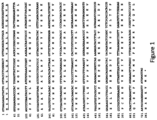
- a TACA amino acid sequence of a TACA is illustrated.
- the cleaved signal peptide is underscored and may be replaced with a methionine (SEQ ID NO:4).
- TACA variant having at least 70% identity to SEQ ID NO 6 and having residues corresponding to positions 2 to 6 of SEQ ID NO: 4 replaced by Glu-His-Glu are used in the CO 2 capture techniques described herein, wherein the first five amino acids of TACA were replaced by three other amino acids ( Fig 16 , SEQ ID 6). This change was performed in order to increase enzyme production level and have no impact on TACA stability ( Figs 3 to 6 ).
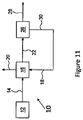
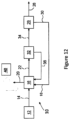
- an example of the overall CO 2 capture system 10 includes a source 12 of CO 2 containing gas 14.
- the source may be a power plant, an aluminum smelter, refinery or another type of CO 2 producing operation at high or atmospheric pressure, or may also be ambient air for some specific applications such as air fractionation or air cleaning.
- the CO 2 containing gas 14 is supplied to an absorption unit 16, which is also fed with an aqueous absorption solution 18 for contacting the CO 2 containing gas 14.
- the aqueous absorption solution 18 includes carbonic anhydrase including the TACA of the invention and an absorption compound.
- the carbonic anhydrase may be free in the aqueous absorption solution 18 as dissolved enzyme or aggregates or particles of enzymes.
- the carbonic anhydrase may be on or in particles that are present in the aqueous absorption solution 18 and flow with it through the absorption unit 16.
- the carbonic anhydrase may be immobilized with respect to the particles using any method while keeping at least some of its activity. Some immobilization techniques include covalent bonding, entrapment, encapsulation, and so on.
- the carbonic anhydrase may be immobilized with respect to supports, which may be various structures such as packing material, within the absorption unit 16 so as to remain within the absorption unit 16 as the aqueous absorption solution 18 flows through it.
- the CO 2 containing gas 14 may be a CO 2 -containing effluent from various sources that includes a proportion of CO 2 and other gases.
- the gas may include from about 0.03% to 60% (v/v) of CO 2 although the CO 2 concentration may be greater.
- the CO 2 -containing gas may also be a gas having high CO 2 content up to 100%, which may be useful for the production of compounds such as sodium bicarbonate from CO 2 gas as one of the starting materials.
- the absorption unit 16 (also referred to as an "absorber” herein) may be of various types, such as a packed reactor, a spray reactor, a bubble column type reactor, a rotating packed bed (RPB) or other type of process intensification (PI) reactor, and so on. There may be one or more reactors that may be provided in series or in parallel.
- the TACA catalyzes the hydration reaction of CO 2 into bicarbonate and hydrogen ions and thus a CO 2 depleted gas 20 and an ion-rich solution 22 are produced.
- the ion-rich solution 22 is then supplied to a desorption unit 26 (also referred to herein as a "stripper") to produce a CO 2 stream 28 and an ion depleted solution 30.
- TACA may also be present to catalyze the dehydration reaction of bicarbonate ions into CO 2 and thus a CO 2 depleted gas 20 and an ion depleted solution 30 is produced.
- the ion-rich solution 22 may be supplied to another type of regeneration step such as mineral carbonation and the like. It should be noted that the ion-rich solution 22 may be heated prior to being supplied to the desorption unit 26.
- the system 10 may also include a separation unit 32 arranged in between the absorption unit 16 and the desorption unit 26, for removing at least some and possibly all of the TACA in the event the enzyme is flowing with the ion-rich solution 22, e.g. when the enzyme is free in solution or immobilized with respect to flowing particles.
- the separation unit 32 produces an enzyme depleted stream 34 that may be supplied to the desorption unit 26 and an enzyme rich stream 36 that may be recycled, in whole or in part, to the absorption unit 16.
- the separation unit may also include one or more separators in series or parallel. The separators may be filters or other types of separators, depending on the removal characteristics for the enzymes and the form of the enzymes or particles.
- the system may also include various other treatment units for preparing the ion-rich solution 22 for the desorption unit 26 and/or for preparing the ion depleted solution 30 for recycling into the absorption unit 16. There may be pH adjustment units or various monitoring units.
- At least some TACA is provided in the desorption unit 26.
- the TACA may be provided within the input ion-rich solution and/or added separately.
- the TACA may be tailored, designed, immobilized or otherwise delivered in order to withstand the conditions in the desorption unit 26.
- TACA may catalyze the conversion of bicarbonate ion to CO 2 as described in Reaction 1 (reverse reaction).
- the system may also include a measurement device 40 for monitoring properties of various streams and adjusting operation of the absorption unit 16 to achieve desired properties. Adjusting could be done by various methods including modifying the liquid and/or gas flow rates, for example, or adjusting other operating conditions.
- the measurement device 40 can monitor the activity of the TACA cycled through the CO 2 capture system 10, and this information can be used to determine, calibrate and/or control the addition of make-up TACA into the system.
- the absorption unit 16 may be operated at conditions so as to leverage the activity and/or stability of the TACA used to catalyze the CO 2 hydration reaction.
- TACA can present high residual activity over a range of elevated temperatures in aqueous absorption solutions including sodium carbonate or potassium carbonate.
- TACA also presents high activity at lower ambient temperature to provide elevated CO 2 flux in aqueous absorption solutions including sodium carbonate, potassium carbonate or alkanolamines such as MDEA.
- the operating conditions may include an operating temperature and at least one operating absorption compound within the absorption solution.
- the operating conditions may further include pH, CO 2 loading, gas and liquid flow rates and compositions, and so on.
- the operating conditions are coordinated for maximum leverage of the TACA functionality in CO 2 capture.
- the operating conditions are provided for commercial scale CO 2 capture operations-such as relatively high pH, high ionic strength, high temperature, and so on-ad the TACA of the invention provides high performance for catalysis of the desired reaction(s) in the cyclic system.
- the operating conditions may include temperature conditions that, depending on various other parameters of the CO 2 capture operation, may provide an absorption temperature higher than 10°C and lower than 98°C, such as between 25 and 80°C, 30 and 70°C or 40 and 50°C or such as 15°C, 20°C, 25°C, 30°C, 35°C, 40°C, 45°C, 50°C, 55°C, 60°C, 65°C, 70°C, 75°C, 80°C, 85°C, 90°C, 95°C, 98°C, or any temperature in between.
- the temperature conditions in the absorption unit may vary within a certain temperature range, since the operating temperatures at different locations within the absorption unit will be different.
- the temperature of the absorption solution can substantially fluctuate throughout absorption and desorption stages that can be used in some CO 2 capture operations.
- the operating conditions may include pressure conditions that, depending on various other parameters of the CO 2 capture operation, may provide an absorption pressure higher than 1 bar and lower than 100 bar, such as 2 bars, 5 bars, 10 bars, 20 bars, 25 bars, 30 bars, 35 bars, 40 bars, 45 bars, 50 bars, 55 bars, 60 bars, 65 bars, 70 bars, 75 bars, 80 bars, 85 bars, 90 bars, 95 bars, 100 bars, or any pressure in between.
- the operating conditions may include temperature conditions that, depending on various other parameters of the CO 2 capture operation, may provide a desorption temperature higher than 10°C and lower than 110°C, such as between 30 and 1100, 35 and 90°C or 40 and 70°C or such as 15°C, 20°C, 25°C, 30°C, 35°C, 40°C, 45°C, 50°C, 55°C, 60°C, 65°C, 70°C, 75°C, 80°C, 85°C, 90°C, 95°C, 100°C, 105°C, 110°C or any temperature in between.
- the temperature conditions in the desorption unit may vary within a certain temperature range, since the operating temperatures at different locations within the desorption unit will be different.
- the temperature of the absorption solution can substantially fluctuate throughout absorption and desorption stages that can be used in some CO 2 capture operations.
- the operating conditions may include a temperature swing between the absorption unit and the desorption unit, and the temperature swing may vary between about 25°C and about 105°C, optionally between about 30°C and about 85°C, or between about 40°C and about 60°C, for example. Different temperature swings can be used depending on various operating parameters, such as type of solvent or absorption compound(s) used in the process.
- the operating conditions may include pressure conditions that, depending on various other parameters of the CO 2 capture operation, may provide a desorption pressure higher than 0.05 bar and lower than 50 bar, such as 0.1 bar, 0.2 bars, 0.3 bar, 0.4 bar, 0.5 bar, 0.6 bar, 0.7 bar, 0.8 bar, 0.9 bar, 1 bar, 2 bars, 5 bars, 10 bars, 15 bars, 20 bars, 25 bars, 30 bars, 35 bars, 40 bars, 45 bars, 50 bars or any pressure in between.
- pressure conditions that, depending on various other parameters of the CO 2 capture operation, may provide a desorption pressure higher than 0.05 bar and lower than 50 bar, such as 0.1 bar, 0.2 bars, 0.3 bar, 0.4 bar, 0.5 bar, 0.6 bar, 0.7 bar, 0.8 bar, 0.9 bar, 1 bar, 2 bars, 5 bars, 10 bars, 15 bars, 20 bars, 25 bars, 30 bars, 35 bars, 40 bars, 45 bars, 50 bars or any pressure in between.
- the operating conditions include an aqueous absorption solution including an absorption compound, which will be further discussed below.
- the enzyme is used in combination with an absorption solution that will supply the CO 2 carrying capacity for the process.
- the solution may have a composition allowing acceleration of the enzyme catalytic rate by capturing the hydrogen ion released during the hydration reaction.
- TACA allows the CO 2 capture operation to be accelerated, reducing the size of the required capture vessels and associated capital costs.
- energetically favorable absorption compounds such as tertiary and hindered amines, carbonate/bicarbonate solutions and amino acids/amino acid salts can be employed to reduce associated process energy consumption, where these absorption compounds would normally be too slow to be used efficiently without enzymatic catalysis.
- the aqueous absorption solution includes at least one absorption compound that aids in the absorption of CO 2 .
- the absorption compound may include potassium carbonate, sodium carbonate, ammonium carbonate, and/or at least one amine, which may be a primary amine, a secondary amine, a tertiary amine, a primary alkanolamine, a secondary alkanolamine, a tertiary alkanolamine, and/or an amino acid with primary, secondary or tertiary amino group(s) or a combination thereof.
- Combinations of absorption compounds include a carbonate and at least one of the amines and/or amino acids mentioned therein or herein, to produce a promoted carbonate absorption solution.
- the absorption solution can include a single absorption compound, such as potassium carbonate.
- the absorption solution can include a main absorption compound, such as potassium carbonate, and also one or more secondary compounds that may include an amine, for example.
- the absorption compound may include monoethanolamine (MEA), 2-amino-2-methyl-1-propanol (AMP), 2-(2-aminoethylamino)ethanol (AEE), 2-amino-2-hydroxymethyl-1,3-propanediol (Tris or AHPD), N-methyldiethanolamine (MDEA), dimethylmonoethanolamine (DMMEA), diethylmonoethanolamine (DEMEA), triisopropanolamine (TIPA), triethanolamine (TEA), DEA, DIPA, MMEA, TIA, TBEE, HEP, AHPD, hindered diamine (HDA), bis-(tertiarybutylaminoethoxy)-ethane (BTEE), ethoxyethoxyethanol-tertiarybutylamine (EEETB), bis-(tertiarybutylaminoethyl)ether, 1,2-bis-(tertiarybutylaminoethoxy)ethane and/or
- the absorption compound may include piperidine, piperazine, derivatives of piperidine, piperazine which are substituted by at least one alkanol group, dialkylether of polyalkylene glycols, dialkylether or dimethylether of polyethylene glycol, amino acids comprising glycine, proline, arginine, histidine, lysine, aspartic acid, glutamic acid, methionine, serine, threonine, glutamine, cysteine, asparagine, valine, leucine, isoleucine, alanine, tyrosine, tryptophan, phenylalanine, and derivatives such as taurine, N,cyclohexyl 1,3-propanediamine, N-secondary butyl glycine, N-methyl N-secondary butyl glycine, diethylglycine, dimethylglycine, sarcosine, methyl taurine, methyl- ⁇ -aminopropionic
- the absorption compound used to make up the aqueous absorption solution may be at least one of the example compounds, i.e. potassium carbonate, sodium carbonate and/or MDEA.
- the concentration of the absorption compound in the solution may be between about 0.1 M and about 10 M, depending on various factors.
- the concentration of the amine-based solution may be between about 0.1M and 8M and when the absorption compound is amino acid-based, the concentration of the amino acid-based solution may be between about 0.1M and 6M.
- the pH of the absorption solution may be between about 8 and about 12, depending for example on the absorption compound and on the CO 2 loading of the solution.
- the TACA of the invention may be dissolved in the absorption solution.
- the concentration of the TACA of the invention may be between about 0.1 and about 50 g/L, between about 0.01 and about 10 g/L or between about 0.1 and about 5 g/L.
- the amount of immobilized TACA may be similar so as to provide a similar activity as the therein mentioned concentrations of dissolved TACA.
- the TACA variant of the invention having at least 70% identity to SEQ ID NO 6 and having residues corresponding to positions 2 to 6 of SEQ ID NO: 4 replaced by Glu-His-Glu may be provided free or dissolved in the solvent, immobilized or entrapped or otherwise attached to particles that are in the absorption solution or to packing material or other structures that are fixed within the reaction chamber.
- TACA of the invention is immobilized with respect to a support material
- this may be accomplished by an immobilization technique selected from adsorption, covalent bonding, entrapment, copolymerization, cross-linking, and encapsulation, or combination thereof.
- the TACA of the invention thereof may be immobilized on a support that is in the form of particles, beads or packing. Such supports may be solid or porous with or without coating(s) on their surface.
- the TACA of the invention thereof may be covalently attached to the support and/or the coating of the support, or entrapped inside the support or the coating.
- the coating may be a porous material that entraps the TACA of the invention thereof within pores and/or immobilizes the TACA by covalent bonding to the surfaces of the support.
- the support material may be made from a compound different than the TACA of the invention.
- the support material may include nylon, cellulose, silica, silica gel, chitosan, polyacrylamide, polyurethane, alginate, polystyrene, polymethylmetacrylate, magnetic material, sepharose, titanium dioxide, zirconium dioxide and/or alumina, respective derivatives thereof, and/or other materials.
- the support material may have a density between about 0.6 g/ml and about 5 g/ml such as a density above 1g/ml, a density above 2 g/mL, a density above 3 g/mL or a density of about 4 g/m L.
- the TACA of the invention may be provided as cross-linked enzyme aggregates (CLEAs) and/or as cross-linked enzyme crystals (CLECs).
- the particles may be sized to have a diameter at or below about 17 pm, optionally about 10 pm, about 5 pm, about 4 pm, about 3 pm, about 2 pm, about 1 pm, about 0.9 pm, about 0.8 pm, about 0.7 pm, about 0.6 pm, about 0.5 pm, about 0.4 pm, about 0.3 pm, about 0.2 pm, about 0.1 pm, about 0.05 pm, or about 0.025 pm.
- the particles may also have a distribution of different sizes.
- TACA of the invention used in connection with the techniques described herein may be an isolated and/or substantially pure form.
- the TACA variant having at least 70% identity to SEQ ID NO 6 and having residues corresponding to positions 2 to 6 of SEQ ID NO: 4 replaced by Glu-His-Glu may be derived from an expression or cloning vector comprising a nucleotide sequence encoding such carbonic anhydrase, or a transgenic cell comprising such expression or cloning vector.
- the TACA variant having at least 70% identity to SEQ ID NO 6 and having residues corresponding to positions 2 to 6 of SEQ ID NO: 4 replaced by Glu-His-Glu can be used in various processes and scenarios such as those described in the following patent references that are hereby incorporated herein by reference: CA 2.291.785 ; CA 2.329.113 , CA 2.393.016 , CA 2,443,222 , US 6,908,507 ; EP 1 377 531 , US 7,514,056 , US 7,596,952 ; US 8,066,965 , US 8,277,769 , US 6,946,288 , US 7,740,689 , WO2012/103653 , US 2013/0203155 , CA 2,769,771 , US 2012/0122195 , US 8,722,391 , CA 2,554,395 , CA 2,738,061 , WO2014/066999 , CA 2,886,708 .
- polypeptide refers to any peptide or protein comprising two or more amino acids joined to each other by peptide bonds or modified peptide bonds.
- Polypeptide(s) refers to both short chains, commonly referred to as peptides, oligopeptides and oligomers, and to longer chains generally referred to as proteins.
- Polypeptides may contain amino acids other than the 20 gene-encoded amino acids, optionally polypeptides may contain glycine, proline, arginine, histidine, lysine, aspartic acid, glutamic acid, methionine, serine, threonine, glutamine, cysteine, asparagine, valine, leucine, isoleucine, alanine, tyrosine, tryptophan, phenylalanine, selenocysteine, selenomethionine, pyrrolysine.
- Polypeptide(s) include those modified either by natural processes, such as processing and other post-translational modifications, but also by chemical modification techniques.
- the expression "functional derivative” refers to a protein/peptide/polypeptide sequence that possesses a functional biological activity that is substantially similar to the biological activity of the original protein/peptide/polypeptide sequence. In other words, it refers to a polypeptide of the carbonic anhydrase as defined herein that substantially retain(s) the capacity of catalyzing the hydration of carbon dioxide.
- a functional derivative of the carbonic anhydrase protein/peptide as defined herein may or may not contain post-translational modifications such as covalently linked carbohydrates, if such modifications are not necessary for the performance of a specific function.
- the “functional derivative” may also comprise nucleic acid sequence variants encoding the protein/peptide/polypeptide of the invention.
- the carbonic anhydrase as defined herein may comprise a Tag such as a histidine Tag.
- the term “functional derivative” is meant to encompass the "variants”, the “mutants”, the “fragments” or the “chemical derivatives” of a carbonic anhydrase protein/peptide. Methods for measuring carbonic anhydrase activity are known such as stirred cell reactor assay or the method described by Chirica et al. ( Chirica et al. European Journal of Biochemistry, 1997, 244, 755-60 ).
- polynucleotide fragment refers to a polynucleotide whose sequence (e.g., cDNA) is an isolated portion of the subject nucleic acid constructed artificially (e.g., by chemical synthesis) or by cleaving a natural product into multiple pieces, using restriction endonucleases or mechanical shearing, or a portion of a nucleic acid synthesized by PCR, DNA polymerase or any other polymerizing technique well known in the art, or expressed in a host cell by recombinant nucleic acid technology well known to one of skill in the art.
- sequence e.g., cDNA
- polypeptide or fragments thereof refers to peptides, oligopeptides and proteins. This term also does not exclude post-expression modification of polypeptides. For example, polypeptides that include the covalent attachment of glycosyl groups, acetyl groups, lipid groups and the like are encompassed by the term polypeptide.
- sequence identity refers to an exact nucleotide-to-nucleotide or amino acid-to-amino acid correspondence of two polynucleotides or polypeptide sequences, respectively.
- Two or more sequences can be compared by determining their "percent identity.”
- the percent identity of two sequences, whether nucleic acid or amino acid sequences is the number of exact matches between two aligned sequences divided by the length of the shorter sequence and multiplied by 100.
- An approximate alignment for nucleic acid sequences is provided by the local homology algorithm of Smith and Waterman, Advances in Applied Mathematics 2:482-489 (1981 ). This algorithm can be applied to amino acid sequences by using the scoring matrix developed by Dayhoff, Atlas of Protein Sequences and Structure, M. O. Dayhoff ed., 5 suppl.
- polypeptide of the present invention preferably has an amino acid sequence having at least about 60%, 61%, 62%, 63%, 64%, 65%, 66%, 67%, 68%, 69%, 70%, 75%, 80%, 81%, 82%, 83%, 84% 85%, 86%, 87%, 88%, 89%, 90%, 91%, 92%, 93%, 94%, 95%, 96%, 97%, 98%, 99%, 99.5% or any other value in between to SEQ ID NO 2, SEQ ID NO 4 or SEQ ID NO 6, or functional derivatives thereof, optionally over the entire length of the peptide.
- This program compares amino acid sequences and finds the optimal alignment by inserting spaces in either sequence as appropriate. It is possible to calculate amino acid identity or homology for an optimal alignment.
- a program like BLASTp will align the longest stretch of similar sequences and assign a value to the fit. It is thus possible to obtain a comparison where several regions of similarity are found, each having a different score. Both types of identity analysis are contemplated for the present invention.
- isolated polypeptide or isolated and purified polypeptide
- This term refers primarily to a protein produced by expression of an isolated and modified polynucleotide molecule contemplated by the invention. Alternatively, this term may refer to a protein which has been sufficiently separated from other proteins with which it would naturally be associated, so as to exist in “substantially pure” form.
- substantially pure refers to a preparation comprising at least 50 % by weight of the carbonic anhydrase polypeptide or derivative thereof on total protein content. More preferably, the preparation comprises at least 75% by weight, and most preferably 90-99% by weight, of the carbonic anhydrase polypeptide or derivative thereof.
- Purity is measured by methods appropriate for the carbonic anhydrase polypeptide or derivative thereof as described herein (e.g. chromatographic methods, agarose or polyacrylamide gel electrophoresis, HPLC analysis, and the like).
- the TACA variant having at least 70% identity to SEQ ID NO 6 and having residues corresponding to positions 2 to 6 of SEQ ID NO: 4 replaced by Glu-His-Glu may also comprise amino acids substitution such that the carbonic anhydrase or TACA functional derivative thereof retains catalytic activity (i.e. the interconversion of CO 2 with HCO 3 - and H+).
- substituted amino acid is intended to include natural amino acids and non-natural amino acids. Non-natural amino acids include amino acid derivatives, analogues and mimetics.
- a "derivative" of an amino acid refers to a form of the amino acid in which one or more reactive groups on the compound have been derivatized with a substituent group.
- an "analogue” of an amino acid refers to a compound that retains chemical structures of the amino acid necessary for functional activity of the amino acid yet also contains certain chemical structures that differ from the amino acid.
- a “mimetic” of an amino acid refers to a compound in that mimics the chemical conformation of the amino acid.
- polynucleotide(s) generally refers to any polyribonucleotide or poly-deoxyribonucleotide, which may be unmodified RNA or DNA or modified RNA or DNA. This definition includes, without limitation, single- and double-stranded DNA, DNA that is a mixture of single- and double-stranded regions or single-, double- and triple-stranded regions, cDNA, single- and double-stranded RNA, and RNA that is a mixture of single- and double-stranded regions, hybrid molecules comprising DNA and RNA that may be single-stranded or, more typically, double-stranded, or triple-stranded regions, or a mixture of single- and double-stranded regions.
- polynucleotide(s) also embraces short nucleotides or fragments, often referred to as “oligonucleotides", that due to mutagenesis are not 100% identical but nevertheless code for the same amino acid
- polynucleotide of the invention has a nucleic acid sequence which encodes a polypeptide which is at least about 60%, 61%, 62%, 63%, 64%, 65%, 66%, 67%, 68%, 69%, 70%, 75%, 80%, 81%, 82%, 83%, 84% 85%, 86%, 87%, 88%, 89%, 90%, 91%, 92%, 93%, 94%, 95%, 96%, 97%, 98%, 99%, 99.5% or any other value between 60 and 99,5% identical to SEQ ID NO 2, SEQ ID NO 4 or SEQ ID 6 or functional derivative thereof.
- polynucleotide of the invention has a nucleic acid sequence which is at least about 60%, 61%, 62%, 63%, 64%, 65%, 66%, 67%, 68%, 69%, 70%, 75%, 80%, 81%, 82%, 83%, 84% 85%, 86%, 87%, 88%, 89%, 90%, 91%, 92%, 93%, 94%, 95%, 96%, 97%, 98%, 99%, 99,5% or any other value between 60 and 99.5% identical to SEQ ID NO 1, SEQ ID NO 3 or SEQ ID NO 5 or functional derivative thereof.
- isolated polynucleotide refers to a DNA molecule that is separated from sequences with which it is immediately contiguous to (in the 5' and 3' directions) in the naturally occurring genome of the organism from which it was derived.
- the "isolated polynucleotide” may comprise a DNA molecule inserted into a vector, such as a plasmid or virus vector, or integrated into the genomic DNA of a prokaryote or eukaryote.
- An “isolated polynucleotide molecule” may also comprise a cDNA molecule.
- vector refers to a polynucleotide construct designed for transduction/transfection of one or more cell types.
- Vectors may be, for example, cloning vectors which are designed for isolation, propagation and replication of inserted nucleotides, expression vectors which are designed for transcription of a nucleotide sequence in a host cell, or a viral vector which is designed to result in the production of a recombinant virus or virus-like particle, or shuttle vectors, which comprise the attributes of more than one type of vector.
- a number of vectors suitable for stable transfection of cells and bacteria are available to the public (e.g.
- plasmids adenoviruses, baculoviruses, yeast baculoviruses, plant viruses, adeno-associated viruses, retroviruses, Herpes Simplex Viruses, Alphaviruses, Lentiviruses), as are methods for constructing such cell lines. It will be understood that the present invention encompasses any type of vector comprising any of the polynucleotide molecules of the invention.
- transgenic cell refers to a genetically engineered cell
- Methods for genetically engineering a cell are known such as molecular cloning and gene targeting. These methods can include chemical-based transfection, non-chemical method, particle-based method or viral method.
- the host cell may be any type of cell such as a transiently-transfected or stably-transfected mammalian cell line, an isolated primary cell, an insect cell, a yeast ( Saccharomyces cerevisiae or Pichia pastoris ), a plant cell, a microorganism, or a bacterium (such as E. coli ).
- naturally occurring or wild-type refer to material in the form as it occurs in nature.
- a naturally occurring or wild-type polypeptide or polynucleotide sequence is a sequence present in an organism that is isolated from a source in nature and which has not been intentionally modified by human manipulation.
- Reference sequence refers to a defined sequence to which another sequence is compared.
- the reference sequence is SEQ ID NO 2 and preferably SEQ ID NO 4.
- Reference enzyme is a known enzyme, such as the TACA enzyme or the SspCA enzyme.
- the activity of the enzyme of the invention is compared to the activity of a reference enzyme.
- Coding sequence refers to the nucleic acid sequence(s) that would yield the amino acid sequence of a given protein/peptide/polypeptide.
- Non-conservative substitution refers to an amino acid, at a given position in a protein sequence that is different and not similar from the one in the reference sequence.
- deletion refers to one or several amino acid(s) at a given position in a protein sequence, that is or are absent when compared to the reference sequence.
- Insertion refers to one or several amino acid(s) at a given position in a protein sequence, that is or are in excess when compared to the reference sequence.
- Improved enzyme property refers to a property that is better in one enzyme when compared to the reference one. It can be an increase in stability toward some denaturing agent, an increase in thermostability, an increase in solvent stability, an increase in pH stability, an increase in enzyme activity, reduced inhibition by products (eg. bicarbonate and/or carbonate ions), improved stability in presence of the sodium cation, improved stability in presence of the potassium cation, improved solvent solubility, an increase in hydrophilicity, an increase in hydrophobicity or a combination thereof.
- Stability in presence of refers to the capacity of the enzyme to remain active over a period of time when in the presence of a denaturing compound. It is usually described as a percentage of remaining activity over time.
- Thermostability refers to the capacity of the enzyme to remain active over a period of time when exposed to a given temperature. It is usually described as a percentage of remaining activity over time.
- solvent stability refers to the capacity of the enzyme to remain active over a period of time when exposed to a given solvent. It is usually described as a percentage of remaining activity over time.
- pH stability refers to the capacity of the enzyme to remain active over a period of time when exposed to a given pH, such as a higher pH. It is usually described as a percentage of remaining activity over time.
- Increased enzyme activity refers to the capacity of an enzyme to catalyze more reaction, such as hydration of CO 2 and/or dehydration of the HCO 3 ion, per time unit than the reference enzyme in some given conditions, such as higher Temperature, higher pH (improved pH activity profile).
- increase hydrophilicity refers to the property of the enzyme to be more soluble in water based absorption solution.
- increase hydrophobicity refers to the property of the enzyme to be less soluble in water based absorption solution.
- the relevant value e.g. of temperature, concentration, pH, etc.
- the margin of error of the temperature may range between ⁇ 0.5°C to ⁇ 1°C
- the margin of error of the pH may be ⁇ 0.1
- the margin of error of the concentration may be ⁇ 20%.
- the TACA of the invention can be used in a CO 2 capture operation where the absorption and desorption stage are run within certain temperature conditions to leverage TACA's temperature and solvent stability.
- the absorption stage can be operated between 40°C and 60°C and the desorption stage can be opera ted between 40°C and 85°C.
- the absorption and desorption stages can also be configured such that the TACA flows through each stage and has residence times within each stage that further leverage TACA's temperature and solvent stability.
- the residence time in the absorption stage can be 1 minute to 10 minutes and the residence time in the desorption stage can be 1 minute to 10 minutes.
- the concentration of the TACA of the invention in the solution CO 2 be provided such that catalytic activity is promoted for enhanced residual activity in the CO 2 capture process.
- the TACA of the invention can be provided in sufficiently high concentration so as to maintain near 100% residual activity through at least 14 days of operation.
- TACA As the TACA of the invention has been found to have higher residual activity than all of the comparative carbonic anhydrases that were tested, as illustrated in the examples section, TACA can be used in a CO 2 capture operation with greater efficiency and performance compared to other carbonic anhydrases.
- a TACA variant with at least 70% identity to SEQ ID NO 6 and having residues corresponding to positions 2 to 6 of SEQ ID NO: 4 replaced by Glu-His-Glu has a sequence facilitating production, such that the TACA can be used for top-up and replenishing enzymatically enhanced CO 2 capture operations.
- the TACA top-up frequency and amount can be provided such that high catalysis is maintained.
- the TACA of the invention has an improved property relative to the same property of the polypeptide of SEQ ID NO 4, selected from one or more of improved stability and or activity and or solubility in presence of sodium ion; improved stability and or activity and or solubility in presence of potassium ion; improved stability and or activity and or solubility in presence of carbonate ion; improved stability and or activity and or solubility under high pH conditions; improved stability and or activity and or solubility under high temperature conditions and improved pH-activity profile.
- the TACA of the invention assessed in tests reported in the present application display enhanced stability compared to other TACAs assessed by James et al., for example.
- James et al. a mild HEPES/NaCl buffer was used and the enzyme was exposed to 90°C for one hour, resulting in complete deactivation.
- the TACA of the invention and having structural differences compared to the James et al. enzymes gave enhanced results in terms of enzyme stability.
- Example 1 Materials, methods and producing of TACA having a polypeptide sequence described in SEQ ID NO 4
- a TACA enzyme was produced without the signal peptide: the first 20 amino acids were replaced by a single methionine.
- the first 20 amino acids (signal peptide) are underlined in Fig 1 (SEQ ID NO 2).
- the enzyme was purified and characterized in CO 2 capture column and by a pH indicator-based technique.
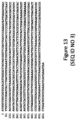
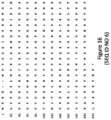
- the resulting coding nucleotide sequence is shown in Fig 13 (SEQ ID NO 3) and the encoded TACA amino acid sequence is shown at Fig 14 (SEQ ID NO 4). Amino acid residue numbering will follow that of Fig 14 (SEQ ID NO 4).
- the CO 2 capture column consists in contacting a gas containing 14% v/v CO 2 and a CO 2 -capture solvent consisting of 1.45M KHCO 3 /K 2 CO 3 pH 10 at 25'C.
- the enzyme is dissolved in the solvent at a concentration of 0.2g/L.
- the solvent flows inside a 50 cm height packed column from top to the bottom.
- the CO 2 -containing gas flows countercurrently inside the same column.
- the liquid to gas flowrate ratio is adjusted to 50 g/g.
- a gas analyzer measures the CO 2 concentration in the gas at the inlet and outlet of the column.
- the pH indicator-based technique was performed to compare the stability and activity of TACA with those of other carbonic anhydrases.
- TACA was compared with the following other carbonic anhydrases:
- Example 2 Performance of TACA in a packed column absorption unit.
- the absorption solution is an aqueous solution of potassium carbonate 1.45 M at pH 10. This absorption solution is contacted counter-currently with a gas phase with a CO 2 concentration of 130,000 ppm. Liquid flow rate was 500 g/min and gas flow rate was 10 g/min corresponding to UG of 50 g/g. Gas and absorption solution were at room temperature.
- the column has a 7.5 cm diameter and a 50 cm height. Packing material is polymeric Raschig TM rings 6 mm.
- the TACA concentration was 0.2 g/L. The results showed that CO 2 transfer rate of CO 2 removal rate increased from 4.7 mmole/sec for the solution to 40 mmole/sec when adding the enzyme to the absorption solution. TACA increased the CO 2 removal rate by 8.5 fold under these conditions.
- TACA, SspCA and 6M1 enzymes were compared.
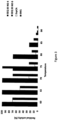
- TACA retains all its activity after one week incubation at 60°C while other teste d enzymes have lost more than 60% of their initial activity. In the same way, TACA shows 50% residual activity level after 60 hours incubation at 75°C while other enzyme returned 10% or less residual activity levels ( Fig 5 ). TACA is also the best enzyme at higher temperatures (see Figs 3 , 6 , 7 ).
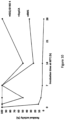
- TACA shows 100% of its initial activity after 28 days incubation at 60C ( Fig 10 ). During the same time, SspCA is inactivated while 6M1 still exhibits some activity.
- Example 4 Stability of TACA compared to that SspCA and 6M1 in the context of thermal cycling in 1.45M KHCO 3 / K 2 CO 3 (2.9M K + ) pH 10
- Example 5 Comparison of amino acid sequences between carbonic anhydrase obtained from Thermovibrio ammonificans and the most similar protein in GenBank
- the most similar carbonic anhydrase to the carbonic anhydrase obtained from Thermovibrio ammonificans is from Persephonella marina with 66% identity.
- SspCA is ranked as the 375 1h most similar protein.
- TACA The industrial relevance of TACA (SEQ ID 6) was demonstrated in a 1 tonne per day CO 2 capture pilot unit located at the University of North Dakota's Energy & Environmental Research Center (EERC).
- the CO 2 capture unit included a packed column absorber and a packed column stripper/desorber.
- the TACA enzyme was used in combination with a 1.45 M K 2 CO 3 solution to capture CO 2 from a gas effluent.
- Two types of gas effluents were tested: one from natural gas combustion and a second from coal combustion.
- CO 2 concentration in the flue gas from the natural gas combustion had a concentration of 10% (v/v) and the one coming from coal combustion had a concentration of 14% (v/v).
- flue gases included CO and NOx. SOx was also present in flue gases coming from coal combustion.
- the packed column absorber was operated at 30°C.
- the absorption solution containing potassium carbonate and TACA was fed at the top of the absorber.
- the CO 2 loaded solution was sent to a stripper where it was heated using a heating medium at a temperature of 85°C.
- the CO 2 was released from the solution as a concentrated CO 2 stream.
- the absorption solution now a CO 2 lean solution, was sent back to the absorber.
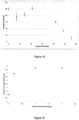
- TACA enzyme concentrations were varied from 0.2 to 2 g/L. Results are shown in Figure 19 and indicate that a small enzyme concentration of 2 grams per liter is sufficient to cause an increase in CO 2 capture performance by near five-fold under tested conditions. The enzyme was used in the pilot unit for 7 days, 24 h/day, without any activity decrease, even when contacted with gas contaminants as NOx, CO and SOx, confirming the industrial relevance of TACA for CO 2 capture operations.
Landscapes
- Engineering & Computer Science (AREA)
- Chemical & Material Sciences (AREA)
- Health & Medical Sciences (AREA)
- Environmental & Geological Engineering (AREA)
- Analytical Chemistry (AREA)
- General Chemical & Material Sciences (AREA)
- Oil, Petroleum & Natural Gas (AREA)
- Chemical Kinetics & Catalysis (AREA)
- Biomedical Technology (AREA)
- Life Sciences & Earth Sciences (AREA)
- Organic Chemistry (AREA)
- Molecular Biology (AREA)
- Bioinformatics & Cheminformatics (AREA)
- Wood Science & Technology (AREA)
- Genetics & Genomics (AREA)
- Zoology (AREA)
- General Engineering & Computer Science (AREA)
- Biochemistry (AREA)
- General Health & Medical Sciences (AREA)
- Microbiology (AREA)
- Biotechnology (AREA)
- Medicinal Chemistry (AREA)
- Gas Separation By Absorption (AREA)
- Treating Waste Gases (AREA)
- Preparation Of Compounds By Using Micro-Organisms (AREA)
- Apparatus Associated With Microorganisms And Enzymes (AREA)
- Immobilizing And Processing Of Enzymes And Microorganisms (AREA)
Claims (14)
- Verfahren zur Absorption von CO2 aus einem CO2-haltigen Gas, wobei das Verfahren umfasst:Inkontaktbringen des CO2-haltigen Gases mit einer wässrigen Absorptionslösung, um das CO2 in die wässrige Absorptionslösung bei Prozessbedingungen im kommerziellen Maßstab zu lösen; undBereitstellen einer Carboanhydrase (TACA)-Variante von Thermovibrio ammonificans mit mindestens 70% Identität zu SEQ ID NO: 6 und mit Resten, die den Positionen 2 bis 6 von SEQ ID NO: 4 entsprechen, ersetzt durch Glu-His-Glu, um die Hydratationsreaktion des gelösten CO2 in Bicarbonat- und Wasserstoffionen zu katalysieren,wobei die wässrige Absorptionslösung mindestens eine Absorptionsverbindung umfasst, undwobei die Konzentration der Carboanhydrase in der Absorptionslösung zwischen 0,1 g/L und 5 g/L liegt.
- Verfahren nach Anspruch 1, wobei die mindestens eine Absorptionsverbindung eine Carbonatverbindung, bevorzugt Natriumcarbonat oder Kaliumcarbonat, umfasst.
- Verfahren nach Anspruch 1, wobei die wässrige Absorptionslösung mindestens eine Absorptionsverbindung umfasst, umfassend:(a) ein primäres Amin, ein sekundäres Amin, ein tertiäres Amin, ein primäres Alkanolamin, ein sekundäres Alkanolamin, ein tertiäres Alkanolamin, eine primäre Aminosäure, eine sekundäre Aminosäure, eine tertiäre Aminosäure oder eine Kombination davon;(b) Dialkylether von Polyalkylenglykolen, Dialkylether oder Dimethylether von Polyethylenglykol, Aminosäure oder Derivat davon, oder eine Kombination davon;(c) Piperazin oder Derivat davon, gegebenenfalls substituiert mit mindestens einer Alkanolgruppe;(d) Monoethanolamin (MEA), 2-Amino-2-methyl-1-propanol (AMP), 2-(2-Aminoethylamino)-ethanol (AEE), 2-Amino-2-hydroxymethyl-1,3-propandiol (Tris oder AHPD), N-Methyldiethanolamin (MDEA), Dimethylmonoethanolamin (DMMEA), Diethylmonoethanolamin (DEMEA), Triisopropanolamin (TIPA), Triethanolamin (TEA), DEA, DIPA, MMEA, TIA, TBEE, HEP, AHPD, gehindertes Diamin (HDA), Bis-(tertiär-Butylaminoethoxy)-ethan (BTEE), Ethoxyethoxyethanol-tertiär-butylamin (EEETB), Bis-(tertiär-Butylaminoethyl)-ether, 1,2-Bis-(tertiär-Butylaminoethoxy)-ethan und/oder Bis-(2-isopropylaminopropyl)-ether oder(e) eine Aminosäure oder ein Derivat davon, wobei die Aminosäure oder das Derivat davon Glycin, Prolin, Arginin, Histidin, Lysin, Asparaginsäure, Glutaminsäure, Methionin, Serin, Threonin, Glutamin, Cystein, Asparagin, Valin, Leucin, Isoleucin, Alanin, Tyrosin, Tryptophan, Phenylalanin, Taurin, N,Cyclohexyl-1,3-propandiamin, N-sekundär-Butylglycin, N-Methyl-N-sekundär-butylglycin, Diethylglycin, Dimethylglycin, Sarkosin, Methyltaurin, Methyl-α-aminopropionsäure, N-(p-Ethoxy)-taurin, N-p-(Aminoethyl)-taurin, N-Methylalanin, 6-Aminohexansäure, Kalium- oder Natriumsalz der Aminosäure oder eine Kombination davon.
- Verfahren nach einem der Ansprüche 1 bis 3, wobei der pH-Wert der Absorptionslösung zwischen 8 und 11 liegt.
- Verfahren nach einem der Ansprüche 1 bis 4, wobei die CO2-Beladung zwischen 0,05 und 1 mol CO2/mol Amin oder mol CO2/mol Kation liegt.
- Verfahren nach einem der Ansprüche 1 bis 5, wobei die Absorption bei einer Temperatur zwischen 10°C und 98°C, gegebenenfalls zwischen 25°C und 80°C, zwischen 30°C und 70°C oder zwischen 40°C und 50°C betrieben wird.
- Verfahren nach einem der Ansprüche 1 bis 6, weiterhin umfassend Unterziehen der wässrigen Absorptionslösung, die Bicarbonat- und Wasserstoffionen umfasst, einer Desorption, um eine regenerierte Absorptionslösung und einen CO2-Gasstrom herzustellen, wobei mindestens ein Teil der Carboanhydrase die Desorptionsreaktion katalysiert.
- Verfahren nach Anspruch 7, wobei die Desorption bei einer Temperatur zwischen 30°C und 110°C, gegebenenfalls zwischen 35°C und 90°C oder zwischen 40°C und 70°C betrieben wird.
- Verfahren nach Anspruch 7 oder 8, wobei die Betriebsbedingungen eine Temperaturschwankung zwischen der Absorption und der Desorption umfassen, wobei die Temperaturschwankung zwischen 25°C und 105°C, gegebenenfalls zwischen 30°C und 85°C oder zwischen 40°C und 60°C liegt.
- Verfahren nach einem der Ansprüche 1 bis 9, wobei die Carboanhydrase mindestens 80%, mindestens 90%, mindestens 95% oder mindestens 98% Identität mit der Sequenz von SEQ ID NO 6 aufweist.
- Enzymverstärktes CO2-Erfassungssystem, umfassend:eine Absorptionseinheit, umfassend:einen Gaseinlass zum Aufnehmen des CO2-haltigen Gases;einen Flüssigkeitseinlass zum Aufnehmen einer wässrigen Absorptionslösung;eine Reaktionskammer zum Inkontaktbringen des CO2-haltigen Gases mit der wässrigen Absorptionslösung, um das CO2 in die wässrige Absorptionslösung zu lösen;eine Carboanhydrase (TACA)-Variante von Thermovibrio ammonificans mit mindestens 70 % Identität zu SEQ ID NO: 6 und mit Resten, die den Positionen 2 bis 6 von SEQ ID NO: 4 entsprechen, ersetzt durch Glu-His-Glu, die vorhanden ist, um die Hydratationsreaktion des gelösten CO2 in Bicarbonat- und Wasserstoffionen zu katalysieren, wodurch eine ionenreiche Lösung undein CO2-abgereichertes Gas hergestellt werden, wobei die Konzentration der Carboanhydrase in der Absorptionslösung zwischen 0,1 g/L und 5 g/L liegt;einen Flüssigkeitsauslass zum Freisetzen der ionenreichen Lösung undeinen Gasauslass zum Freisetzen des CO2-abgereicherten Gases;einen Wärmetauscher zum Erwärmen der ionenreichen Lösung, um eine erwärmte ionenreiche Lösung herzustellen;eine Stripping-Einheit, umfassend:einen Flüssigkeitseinlass zum Aufnehmen der ionenreichen Lösung;eine Stripping-Kammer, um zu ermöglichen, dass CO2 aus der ionenreichen Lösung freigesetzt wird, um einen CO2-Gasstrom und eine regenerierte Lösung herzustellen, wobei die Carboanhydrase zum Katalysieren der Dehydratisierungsreaktion vorhanden ist;einen Flüssigkeitsauslass zum Freisetzen der regenerierten Lösung und einen Gasauslass zum Freisetzen des CO2-Gasstroms undein Recycling-System zum Recyceln mindestens eines Teils der regenerierten Lösung zurück zum Flüssigkeitseinlass der Absorptionseinheit als mindestens ein Teil der wässrigen Absorptionslösung.
- Enzym-verstärktes CO2-Erfassungssystem nach Anspruch 11, wobei:(a) das System weiterhin eine hergestellte (make-up) Vorrichtung umfasst, um dem System hergestellte (make-up) Carboanhydrase bereitzustellen;(b) die Reaktionskammer Packmaterial umfasst;(c) die Stripping-Kammer Packmaterial umfasst;(d) die Carboanhydrase frei in Lösung ist, um zyklisch zwischen der Absorptionseinheit und der Stripping-Einheit zu fließen oder wobei die Carboanhydrase auf oder in Partikeln immobilisiert ist, die so bemessen, konfiguriert und in einer Konzentration bereitgestellt sind, dass sie mit der Absorptionslösung und der regenerierten Lösung fließen, so dass die Partikel zyklisch zwischen der Absorptionseinheit und der Stripping-Einheit fließen oder(e) eine beliebige Kombination von (a) bis (d).
- Enzym-verstärktes CO2-Erfassungssystem nach Anspruch 11 oder 12, wobei die Absorptionseinheit einen Festbettreaktor, einen Sprühreaktor, einen Reaktor vom Blasensäulentyp oder einen Prozessintensivierungs-(PI) -Reaktor wie zum Beispiel ein rotierendes Festbett (RPB) umfasst.
- Enzym-verstärktes CO2-Erfassungssystem nach einem der Ansprüche 11 bis 13, wobei das CO2-haltige Gas Biogas, Rohölgas, abgeleitet aus der Erdgasverbrennung oder abgeleitet aus der Kohleverbrennung ist.
Priority Applications (1)
| Application Number | Priority Date | Filing Date | Title |
|---|---|---|---|
| EP21218029.3A EP4011484B1 (de) | 2014-08-27 | 2015-08-27 | Thermovibrio-ammonificans-carboanhydrase |
Applications Claiming Priority (3)
| Application Number | Priority Date | Filing Date | Title |
|---|---|---|---|
| US201462042472P | 2014-08-27 | 2014-08-27 | |
| CA2890582A CA2890582C (en) | 2014-08-27 | 2015-05-05 | Co2 capture methods using thermovibrio ammonificans carbonic anhydrase |
| PCT/CA2015/050822 WO2016029316A1 (en) | 2014-08-27 | 2015-08-27 | Co2 capture methods using thermovibrio ammonificans carbonic anhydrase |
Related Child Applications (2)
| Application Number | Title | Priority Date | Filing Date |
|---|---|---|---|
| EP21218029.3A Division EP4011484B1 (de) | 2014-08-27 | 2015-08-27 | Thermovibrio-ammonificans-carboanhydrase |
| EP21218029.3A Division-Into EP4011484B1 (de) | 2014-08-27 | 2015-08-27 | Thermovibrio-ammonificans-carboanhydrase |
Publications (3)
| Publication Number | Publication Date |
|---|---|
| EP3185992A1 EP3185992A1 (de) | 2017-07-05 |
| EP3185992A4 EP3185992A4 (de) | 2018-05-16 |
| EP3185992B1 true EP3185992B1 (de) | 2023-03-08 |
Family
ID=55362024
Family Applications (2)
| Application Number | Title | Priority Date | Filing Date |
|---|---|---|---|
| EP15836754.0A Active EP3185992B1 (de) | 2014-08-27 | 2015-08-27 | Co2-abscheidungsverfahren und -system mit thermovibrio-ammonificans-carboanhydrase |
| EP21218029.3A Active EP4011484B1 (de) | 2014-08-27 | 2015-08-27 | Thermovibrio-ammonificans-carboanhydrase |
Family Applications After (1)
| Application Number | Title | Priority Date | Filing Date |
|---|---|---|---|
| EP21218029.3A Active EP4011484B1 (de) | 2014-08-27 | 2015-08-27 | Thermovibrio-ammonificans-carboanhydrase |
Country Status (9)
| Country | Link |
|---|---|
| US (1) | US10926220B2 (de) |
| EP (2) | EP3185992B1 (de) |
| CN (1) | CN106999842B (de) |
| CA (2) | CA2890582C (de) |
| DK (1) | DK3185992T3 (de) |
| ES (1) | ES3059257T3 (de) |
| HR (1) | HRP20251665T1 (de) |
| PL (1) | PL4011484T3 (de) |
| WO (1) | WO2016029316A1 (de) |
Families Citing this family (13)
| Publication number | Priority date | Publication date | Assignee | Title |
|---|---|---|---|---|
| CA2996077A1 (en) * | 2015-09-03 | 2017-03-09 | Co2 Solutions Inc. | Variants of thermovibrio ammonificans carbonic anhydrase and co2 capture methods using thermovibrio ammonificans carbonic anhydrase variants |
| CN113874500A (zh) | 2019-03-26 | 2021-12-31 | 塞彭公司 | 用于改善co2捕获的碳酸酐酶变体 |
| CN110777091A (zh) * | 2019-10-31 | 2020-02-11 | 天津大学 | 一种开发以碳酸氢根为纽带的高效beccs系统的方法 |
| GB202010908D0 (en) * | 2020-07-15 | 2020-08-26 | C-Capture Ltd | Rate enhancement of gas capture processes |
| EP4213969A4 (de) * | 2020-09-17 | 2024-10-02 | KC8 Capture Technologies Ltd | Lösungsmittellösung und verfahren |
| CN113648826B (zh) * | 2021-08-20 | 2022-08-26 | 山东大学 | 一种基于钙循环的协同脱除co2和no的方法 |
| CN114432809A (zh) * | 2021-12-31 | 2022-05-06 | 安徽华塑股份有限公司 | 一种石灰窑二氧化碳捕集利用系统 |
| GB2618389A (en) * | 2022-05-06 | 2023-11-08 | Cemvita Factory Inc | Process |
| JPWO2024085046A1 (de) * | 2022-10-19 | 2024-04-25 | ||
| CN117209183B (zh) * | 2023-07-31 | 2025-10-28 | 山东省科学院新材料研究所 | 用于工业烟气固碳的微生物-多源固废基骨料及制备方法 |
| NL2036288B1 (en) * | 2023-11-17 | 2025-05-27 | Opure B V | Process and apparatus for the purification of biogas |
| WO2025229230A1 (en) * | 2024-05-03 | 2025-11-06 | Novozymes A/S | Combined carbon capture and soda ash process |
| NO20240570A1 (en) * | 2024-06-03 | 2025-12-04 | Raspire As | Method for rearing and/or keeping aquatic organisms in a body of water |
Family Cites Families (23)
| Publication number | Priority date | Publication date | Assignee | Title |
|---|---|---|---|---|
| GB9711439D0 (en) | 1997-06-04 | 1997-07-30 | Rogers Peter A | Bioreactor for dioxide management |
| CA2329113C (en) | 2000-12-19 | 2008-08-05 | Co2 Solution Inc. | A treatment unit for treating a fluid and method thereof |
| DE60221373D1 (de) | 2001-04-13 | 2007-09-06 | Co2 Solution Inc | Verfahren und vorrichtung zur herstellung von zementklinker |
| CA2393016C (en) | 2001-07-13 | 2011-01-04 | Saipem S.P.A. | Triphasic bioreactor and process for gas effluent treatment |
| US6946288B2 (en) | 2002-05-31 | 2005-09-20 | Co2 Solution, Inc. | Ventilation system for an enclosure in which people live and a method thereof |
| CA2405635A1 (en) | 2002-09-27 | 2004-03-27 | C02 Solution Inc. | A process and a plant for the production of useful carbonated species and for the recycling of carbon dioxide emissions from power plants |
| US7514056B2 (en) | 2005-02-07 | 2009-04-07 | Co2 Solution Inc. | Process and installation for the fractionation of air into specific gases |
| AU2006217575B2 (en) | 2005-02-24 | 2010-12-23 | Co2 Solutions Inc. | An improved CO2 absorption solution |
| CA2554395C (en) | 2005-07-27 | 2013-10-08 | Carmen Parent | Gas purification apparatus and process using biofiltration and enzymatic reactions |
| US20110174156A1 (en) * | 2008-07-31 | 2011-07-21 | Novozymes A/S | Modular Reactor and Process for Carbon-Dioxide Extraction |
| EP2461894B1 (de) | 2009-08-04 | 2017-06-14 | CO2 Solutions Inc. | Verfahren zur co2-abscheidung mit biokatalysatorhaltigen mikropartikeln |
| EP2461893A4 (de) | 2009-08-04 | 2013-01-09 | Co2 Solution Inc | Formulierung und verfahren zur co2-abscheidung mit aminosäuren und biokatalysatoren |
| EP2490791B1 (de) * | 2009-08-04 | 2017-07-05 | CO2 Solution Inc. | Verfahren zur co2-abscheidung mit carbonaten und biokatalysatoren |
| US20130149771A1 (en) * | 2010-08-24 | 2013-06-13 | Novozymes A/S | Heat-Stable Persephonella Carbonic Anhydrases and Their Use |
| HUE050812T2 (hu) | 2010-10-29 | 2021-01-28 | Saipem Spa | Enzim által fokozott CO2-deszorpciós eljárások |
| EP2678094A4 (de) | 2011-02-03 | 2014-12-10 | Co2 Solutions Inc | Co2-behandlungen mittels entsprechend der dicke eines reaktiven flüssigfilms sortierter enzympartikel für verbesserte katalyse |
| US9410140B2 (en) * | 2011-05-10 | 2016-08-09 | Danisco Us Inc | Thermostable carbonic anhydrases and methods of use thereof |
| EP2729237A4 (de) * | 2011-06-10 | 2015-03-04 | Co2 Solutions Inc | Verstärkte enzymatische co2-abscheidungsverfahren je nach pka in der lösung, temperatur und/oder enzymeigenschaften |
| WO2014005227A1 (en) * | 2012-07-03 | 2014-01-09 | Co2 Solutions Inc. | Slag stabilization with captured carbon dioxide |
| US9968885B2 (en) * | 2012-10-29 | 2018-05-15 | Co2 Solutions Inc. | Techniques for CO2 capture using sulfurihydrogenibium sp. carbonic anhydrase |
| WO2015056858A1 (ko) | 2013-10-17 | 2015-04-23 | 포항공과대학교 산학협력단 | 고온 안정성을 갖는 탄산무수화효소 및 이를 포함하는 이산화탄소 포집제 |
| CN103638808B (zh) * | 2013-11-15 | 2016-10-05 | 华南理工大学 | 利用碳酸酐酶催化石灰乳富集糖厂烟道气中二氧化碳的方法 |
| CA3207549A1 (en) | 2015-03-30 | 2016-09-30 | Saipem S.P.A. | Intensification of biocatalytic gas absorption |
-
2015
- 2015-05-05 CA CA2890582A patent/CA2890582C/en active Active
- 2015-08-27 PL PL21218029.3T patent/PL4011484T3/pl unknown
- 2015-08-27 CN CN201580056910.4A patent/CN106999842B/zh active Active
- 2015-08-27 EP EP15836754.0A patent/EP3185992B1/de active Active
- 2015-08-27 WO PCT/CA2015/050822 patent/WO2016029316A1/en not_active Ceased
- 2015-08-27 CA CA2959079A patent/CA2959079C/en active Active
- 2015-08-27 HR HRP20251665TT patent/HRP20251665T1/hr unknown
- 2015-08-27 US US15/506,701 patent/US10926220B2/en active Active
- 2015-08-27 DK DK15836754.0T patent/DK3185992T3/da active
- 2015-08-27 ES ES21218029T patent/ES3059257T3/es active Active
- 2015-08-27 EP EP21218029.3A patent/EP4011484B1/de active Active
Also Published As
| Publication number | Publication date |
|---|---|
| ES3059257T3 (en) | 2026-03-19 |
| EP4011484A1 (de) | 2022-06-15 |
| EP4011484B1 (de) | 2025-09-24 |
| DK3185992T3 (da) | 2023-05-22 |
| EP4011484C0 (de) | 2025-09-24 |
| EP3185992A1 (de) | 2017-07-05 |
| EP3185992A4 (de) | 2018-05-16 |
| PL4011484T4 (pl) | 2026-03-23 |
| CN106999842B (zh) | 2022-01-14 |
| CA2959079A1 (en) | 2016-03-03 |
| US10926220B2 (en) | 2021-02-23 |
| PL4011484T3 (pl) | 2026-03-23 |
| HRP20251665T1 (hr) | 2026-02-27 |
| WO2016029316A1 (en) | 2016-03-03 |
| US20180221818A1 (en) | 2018-08-09 |
| CN106999842A (zh) | 2017-08-01 |
| CA2890582A1 (en) | 2016-02-27 |
| CA2959079C (en) | 2022-08-30 |
| CA2890582C (en) | 2022-07-19 |
Similar Documents
| Publication | Publication Date | Title |
|---|---|---|
| EP4011484B1 (de) | Thermovibrio-ammonificans-carboanhydrase | |
| US9044709B2 (en) | Process for biocatalytic CO2 capture using dimethylmonoethanolamine, diethylmonoethanolamine or dimethylglycine | |
| CN102712919B (zh) | 热稳定性碳酸酐酶及其用途 | |
| US10415028B2 (en) | Variants of thermovibrio ammonificans carbonic anhydrase and CO2 capture methods using thermovibrio ammonificans carbonic anhydrase variants | |
| CA2889779C (en) | Techniques for co2 capture using sulfurihydrogenibium sp. carbonic anhydrase | |
| CN113874500A (zh) | 用于改善co2捕获的碳酸酐酶变体 | |
| AU2023400641A1 (en) | Carbonic anhydrase variants and polynucleotides encoding same | |
| EP2588597A2 (de) | Für kohlenstofferfassungssysteme geeignete chemisch modifizierte kohlenstoffhaltige anhydrasen | |
| RU2846467C9 (ru) | Варианты карбоангидразы для улучшения улавливания co2 | |
| RU2846467C2 (ru) | Варианты карбоангидразы для улучшения улавливания co2 | |
| WO2024244350A1 (en) | Carbonic anhydrase variants and polynucleotides encoding same | |
| WO2026033145A1 (en) | Heat-stable and alkalistable carbonic anhydrase | |
| WO2025168806A1 (en) | Polypeptides having carbonic anhydrase activity and polynucleotides encoding same | |
| Alvizo et al. | Highly stable beta-class carbonic anhydrases useful in carbon capture systems |
Legal Events
| Date | Code | Title | Description |
|---|---|---|---|
| STAA | Information on the status of an ep patent application or granted ep patent |
Free format text: STATUS: THE INTERNATIONAL PUBLICATION HAS BEEN MADE |
|
| PUAI | Public reference made under article 153(3) epc to a published international application that has entered the european phase |
Free format text: ORIGINAL CODE: 0009012 |
|
| STAA | Information on the status of an ep patent application or granted ep patent |
Free format text: STATUS: REQUEST FOR EXAMINATION WAS MADE |
|
| 17P | Request for examination filed |
Effective date: 20170320 |
|
| AK | Designated contracting states |
Kind code of ref document: A1 Designated state(s): AL AT BE BG CH CY CZ DE DK EE ES FI FR GB GR HR HU IE IS IT LI LT LU LV MC MK MT NL NO PL PT RO RS SE SI SK SM TR |
|
| AX | Request for extension of the european patent |
Extension state: BA ME |
|
| RAP1 | Party data changed (applicant data changed or rights of an application transferred) |
Owner name: CO2 SOLUTIONS INC. |
|
| DAV | Request for validation of the european patent (deleted) | ||
| DAX | Request for extension of the european patent (deleted) | ||
| A4 | Supplementary search report drawn up and despatched |
Effective date: 20180416 |
|
| RIC1 | Information provided on ipc code assigned before grant |
Ipc: B01D 53/62 20060101AFI20180410BHEP Ipc: B01D 53/84 20060101ALI20180410BHEP Ipc: B01D 53/14 20060101ALI20180410BHEP |
|
| STAA | Information on the status of an ep patent application or granted ep patent |
Free format text: STATUS: EXAMINATION IS IN PROGRESS |
|
| 17Q | First examination report despatched |
Effective date: 20190725 |
|
| RAP1 | Party data changed (applicant data changed or rights of an application transferred) |
Owner name: SAIPEM S.P.A. |
|
| GRAP | Despatch of communication of intention to grant a patent |
Free format text: ORIGINAL CODE: EPIDOSNIGR1 |
|
| STAA | Information on the status of an ep patent application or granted ep patent |
Free format text: STATUS: GRANT OF PATENT IS INTENDED |
|
| INTG | Intention to grant announced |
Effective date: 20210114 |
|
| GRAJ | Information related to disapproval of communication of intention to grant by the applicant or resumption of examination proceedings by the epo deleted |
Free format text: ORIGINAL CODE: EPIDOSDIGR1 |
|
| STAA | Information on the status of an ep patent application or granted ep patent |
Free format text: STATUS: EXAMINATION IS IN PROGRESS |
|
| INTC | Intention to grant announced (deleted) | ||
| GRAP | Despatch of communication of intention to grant a patent |
Free format text: ORIGINAL CODE: EPIDOSNIGR1 |
|
| STAA | Information on the status of an ep patent application or granted ep patent |
Free format text: STATUS: GRANT OF PATENT IS INTENDED |
|
| INTG | Intention to grant announced |
Effective date: 20210602 |
|
| GRAJ | Information related to disapproval of communication of intention to grant by the applicant or resumption of examination proceedings by the epo deleted |
Free format text: ORIGINAL CODE: EPIDOSDIGR1 |
|
| STAA | Information on the status of an ep patent application or granted ep patent |
Free format text: STATUS: EXAMINATION IS IN PROGRESS |
|
| INTC | Intention to grant announced (deleted) | ||
| GRAP | Despatch of communication of intention to grant a patent |
Free format text: ORIGINAL CODE: EPIDOSNIGR1 |
|
| STAA | Information on the status of an ep patent application or granted ep patent |
Free format text: STATUS: GRANT OF PATENT IS INTENDED |
|
| INTG | Intention to grant announced |
Effective date: 20221031 |
|
| GRAS | Grant fee paid |
Free format text: ORIGINAL CODE: EPIDOSNIGR3 |
|
| GRAA | (expected) grant |
Free format text: ORIGINAL CODE: 0009210 |
|
| STAA | Information on the status of an ep patent application or granted ep patent |
Free format text: STATUS: THE PATENT HAS BEEN GRANTED |
|
| RAP3 | Party data changed (applicant data changed or rights of an application transferred) |
Owner name: SAIPEM S.P.A. |
|
| RIN1 | Information on inventor provided before grant (corrected) |
Inventor name: FRADETTE, SYLVIE Inventor name: MADORE, ERIC Inventor name: DAIGLE, RICHARD Inventor name: VOYER, NORMAND |
|
| AK | Designated contracting states |
Kind code of ref document: B1 Designated state(s): AL AT BE BG CH CY CZ DE DK EE ES FI FR GB GR HR HU IE IS IT LI LT LU LV MC MK MT NL NO PL PT RO RS SE SI SK SM TR |
|
| REG | Reference to a national code |
Ref country code: GB Ref legal event code: FG4D |
|
| REG | Reference to a national code |
Ref country code: CH Ref legal event code: EP Ref country code: AT Ref legal event code: REF Ref document number: 1552195 Country of ref document: AT Kind code of ref document: T Effective date: 20230315 |
|
| REG | Reference to a national code |
Ref country code: IE Ref legal event code: FG4D |
|
| REG | Reference to a national code |
Ref country code: DE Ref legal event code: R096 Ref document number: 602015082763 Country of ref document: DE |
|
| REG | Reference to a national code |
Ref country code: DK Ref legal event code: T3 Effective date: 20230516 |
|
| REG | Reference to a national code |
Ref country code: SE Ref legal event code: TRGR |
|
| REG | Reference to a national code |
Ref country code: NL Ref legal event code: FP |
|
| REG | Reference to a national code |
Ref country code: NO Ref legal event code: T2 Effective date: 20230308 |
|
| REG | Reference to a national code |
Ref country code: LT Ref legal event code: MG9D |
|
| REG | Reference to a national code |
Ref country code: GR Ref legal event code: EP Ref document number: 20230400811 Country of ref document: GR Effective date: 20230710 |
|
| PG25 | Lapsed in a contracting state [announced via postgrant information from national office to epo] |
Ref country code: RS Free format text: LAPSE BECAUSE OF FAILURE TO SUBMIT A TRANSLATION OF THE DESCRIPTION OR TO PAY THE FEE WITHIN THE PRESCRIBED TIME-LIMIT Effective date: 20230308 Ref country code: LV Free format text: LAPSE BECAUSE OF FAILURE TO SUBMIT A TRANSLATION OF THE DESCRIPTION OR TO PAY THE FEE WITHIN THE PRESCRIBED TIME-LIMIT Effective date: 20230308 Ref country code: LT Free format text: LAPSE BECAUSE OF FAILURE TO SUBMIT A TRANSLATION OF THE DESCRIPTION OR TO PAY THE FEE WITHIN THE PRESCRIBED TIME-LIMIT Effective date: 20230308 Ref country code: HR Free format text: LAPSE BECAUSE OF FAILURE TO SUBMIT A TRANSLATION OF THE DESCRIPTION OR TO PAY THE FEE WITHIN THE PRESCRIBED TIME-LIMIT Effective date: 20230308 Ref country code: ES Free format text: LAPSE BECAUSE OF FAILURE TO SUBMIT A TRANSLATION OF THE DESCRIPTION OR TO PAY THE FEE WITHIN THE PRESCRIBED TIME-LIMIT Effective date: 20230308 |
|
| REG | Reference to a national code |
Ref country code: AT Ref legal event code: MK05 Ref document number: 1552195 Country of ref document: AT Kind code of ref document: T Effective date: 20230308 |
|
| PG25 | Lapsed in a contracting state [announced via postgrant information from national office to epo] |
Ref country code: FI Free format text: LAPSE BECAUSE OF FAILURE TO SUBMIT A TRANSLATION OF THE DESCRIPTION OR TO PAY THE FEE WITHIN THE PRESCRIBED TIME-LIMIT Effective date: 20230308 |
|
| P01 | Opt-out of the competence of the unified patent court (upc) registered |
Effective date: 20230728 |
|
| PG25 | Lapsed in a contracting state [announced via postgrant information from national office to epo] |
Ref country code: SM Free format text: LAPSE BECAUSE OF FAILURE TO SUBMIT A TRANSLATION OF THE DESCRIPTION OR TO PAY THE FEE WITHIN THE PRESCRIBED TIME-LIMIT Effective date: 20230308 Ref country code: RO Free format text: LAPSE BECAUSE OF FAILURE TO SUBMIT A TRANSLATION OF THE DESCRIPTION OR TO PAY THE FEE WITHIN THE PRESCRIBED TIME-LIMIT Effective date: 20230308 Ref country code: PT Free format text: LAPSE BECAUSE OF FAILURE TO SUBMIT A TRANSLATION OF THE DESCRIPTION OR TO PAY THE FEE WITHIN THE PRESCRIBED TIME-LIMIT Effective date: 20230710 Ref country code: EE Free format text: LAPSE BECAUSE OF FAILURE TO SUBMIT A TRANSLATION OF THE DESCRIPTION OR TO PAY THE FEE WITHIN THE PRESCRIBED TIME-LIMIT Effective date: 20230308 Ref country code: CZ Free format text: LAPSE BECAUSE OF FAILURE TO SUBMIT A TRANSLATION OF THE DESCRIPTION OR TO PAY THE FEE WITHIN THE PRESCRIBED TIME-LIMIT Effective date: 20230308 Ref country code: AT Free format text: LAPSE BECAUSE OF FAILURE TO SUBMIT A TRANSLATION OF THE DESCRIPTION OR TO PAY THE FEE WITHIN THE PRESCRIBED TIME-LIMIT Effective date: 20230308 |
|
| PG25 | Lapsed in a contracting state [announced via postgrant information from national office to epo] |
Ref country code: SK Free format text: LAPSE BECAUSE OF FAILURE TO SUBMIT A TRANSLATION OF THE DESCRIPTION OR TO PAY THE FEE WITHIN THE PRESCRIBED TIME-LIMIT Effective date: 20230308 Ref country code: PL Free format text: LAPSE BECAUSE OF FAILURE TO SUBMIT A TRANSLATION OF THE DESCRIPTION OR TO PAY THE FEE WITHIN THE PRESCRIBED TIME-LIMIT Effective date: 20230308 Ref country code: IS Free format text: LAPSE BECAUSE OF FAILURE TO SUBMIT A TRANSLATION OF THE DESCRIPTION OR TO PAY THE FEE WITHIN THE PRESCRIBED TIME-LIMIT Effective date: 20230708 |
|
| REG | Reference to a national code |
Ref country code: DE Ref legal event code: R097 Ref document number: 602015082763 Country of ref document: DE |
|
| PLBE | No opposition filed within time limit |
Free format text: ORIGINAL CODE: 0009261 |
|
| STAA | Information on the status of an ep patent application or granted ep patent |
Free format text: STATUS: NO OPPOSITION FILED WITHIN TIME LIMIT |
|
| PG25 | Lapsed in a contracting state [announced via postgrant information from national office to epo] |
Ref country code: SI Free format text: LAPSE BECAUSE OF FAILURE TO SUBMIT A TRANSLATION OF THE DESCRIPTION OR TO PAY THE FEE WITHIN THE PRESCRIBED TIME-LIMIT Effective date: 20230308 |
|
| 26N | No opposition filed |
Effective date: 20231211 |
|
| PG25 | Lapsed in a contracting state [announced via postgrant information from national office to epo] |
Ref country code: MC Free format text: LAPSE BECAUSE OF FAILURE TO SUBMIT A TRANSLATION OF THE DESCRIPTION OR TO PAY THE FEE WITHIN THE PRESCRIBED TIME-LIMIT Effective date: 20230308 |
|
| REG | Reference to a national code |
Ref country code: CH Ref legal event code: PL |
|
| PG25 | Lapsed in a contracting state [announced via postgrant information from national office to epo] |
Ref country code: MC Free format text: LAPSE BECAUSE OF FAILURE TO SUBMIT A TRANSLATION OF THE DESCRIPTION OR TO PAY THE FEE WITHIN THE PRESCRIBED TIME-LIMIT Effective date: 20230308 |
|
| PG25 | Lapsed in a contracting state [announced via postgrant information from national office to epo] |
Ref country code: LU Free format text: LAPSE BECAUSE OF NON-PAYMENT OF DUE FEES Effective date: 20230827 |
|
| PG25 | Lapsed in a contracting state [announced via postgrant information from national office to epo] |
Ref country code: LU Free format text: LAPSE BECAUSE OF NON-PAYMENT OF DUE FEES Effective date: 20230827 Ref country code: CH Free format text: LAPSE BECAUSE OF NON-PAYMENT OF DUE FEES Effective date: 20230831 |
|
| REG | Reference to a national code |
Ref country code: BE Ref legal event code: MM Effective date: 20230831 |
|
| REG | Reference to a national code |
Ref country code: IE Ref legal event code: MM4A |
|
| PG25 | Lapsed in a contracting state [announced via postgrant information from national office to epo] |
Ref country code: IE Free format text: LAPSE BECAUSE OF NON-PAYMENT OF DUE FEES Effective date: 20230827 |
|
| PG25 | Lapsed in a contracting state [announced via postgrant information from national office to epo] |
Ref country code: IE Free format text: LAPSE BECAUSE OF NON-PAYMENT OF DUE FEES Effective date: 20230827 |
|
| PG25 | Lapsed in a contracting state [announced via postgrant information from national office to epo] |
Ref country code: BE Free format text: LAPSE BECAUSE OF NON-PAYMENT OF DUE FEES Effective date: 20230831 |
|
| PG25 | Lapsed in a contracting state [announced via postgrant information from national office to epo] |
Ref country code: BG Free format text: LAPSE BECAUSE OF FAILURE TO SUBMIT A TRANSLATION OF THE DESCRIPTION OR TO PAY THE FEE WITHIN THE PRESCRIBED TIME-LIMIT Effective date: 20230308 |
|
| PG25 | Lapsed in a contracting state [announced via postgrant information from national office to epo] |
Ref country code: BG Free format text: LAPSE BECAUSE OF FAILURE TO SUBMIT A TRANSLATION OF THE DESCRIPTION OR TO PAY THE FEE WITHIN THE PRESCRIBED TIME-LIMIT Effective date: 20230308 |
|
| PG25 | Lapsed in a contracting state [announced via postgrant information from national office to epo] |
Ref country code: CY Free format text: LAPSE BECAUSE OF FAILURE TO SUBMIT A TRANSLATION OF THE DESCRIPTION OR TO PAY THE FEE WITHIN THE PRESCRIBED TIME-LIMIT; INVALID AB INITIO Effective date: 20150827 |
|
| PG25 | Lapsed in a contracting state [announced via postgrant information from national office to epo] |
Ref country code: HU Free format text: LAPSE BECAUSE OF FAILURE TO SUBMIT A TRANSLATION OF THE DESCRIPTION OR TO PAY THE FEE WITHIN THE PRESCRIBED TIME-LIMIT; INVALID AB INITIO Effective date: 20150827 |
|
| PGFP | Annual fee paid to national office [announced via postgrant information from national office to epo] |
Ref country code: NL Payment date: 20250825 Year of fee payment: 11 |
|
| PGFP | Annual fee paid to national office [announced via postgrant information from national office to epo] |
Ref country code: DK Payment date: 20250825 Year of fee payment: 11 Ref country code: DE Payment date: 20250827 Year of fee payment: 11 |
|
| PGFP | Annual fee paid to national office [announced via postgrant information from national office to epo] |
Ref country code: NO Payment date: 20250819 Year of fee payment: 11 Ref country code: GR Payment date: 20250820 Year of fee payment: 11 |
|
| PGFP | Annual fee paid to national office [announced via postgrant information from national office to epo] |
Ref country code: IT Payment date: 20250825 Year of fee payment: 11 |
|
| PGFP | Annual fee paid to national office [announced via postgrant information from national office to epo] |
Ref country code: GB Payment date: 20250826 Year of fee payment: 11 |
|
| PGFP | Annual fee paid to national office [announced via postgrant information from national office to epo] |
Ref country code: FR Payment date: 20250825 Year of fee payment: 11 |
|
| PGFP | Annual fee paid to national office [announced via postgrant information from national office to epo] |
Ref country code: SE Payment date: 20250825 Year of fee payment: 11 |
|
| PG25 | Lapsed in a contracting state [announced via postgrant information from national office to epo] |
Ref country code: TR Free format text: LAPSE BECAUSE OF FAILURE TO SUBMIT A TRANSLATION OF THE DESCRIPTION OR TO PAY THE FEE WITHIN THE PRESCRIBED TIME-LIMIT Effective date: 20230308 |