EP3192910B1 - Procede de fabrication d'un lamine et lamine - Google Patents
Procede de fabrication d'un lamine et lamine Download PDFInfo
- Publication number
- EP3192910B1 EP3192910B1 EP16151573.9A EP16151573A EP3192910B1 EP 3192910 B1 EP3192910 B1 EP 3192910B1 EP 16151573 A EP16151573 A EP 16151573A EP 3192910 B1 EP3192910 B1 EP 3192910B1
- Authority
- EP
- European Patent Office
- Prior art keywords
- nonwoven
- filaments
- shrinkage
- nonwoven layer
- layer
- Prior art date
- Legal status (The legal status is an assumption and is not a legal conclusion. Google has not performed a legal analysis and makes no representation as to the accuracy of the status listed.)
- Active
Links
Images

Classifications
-
- D—TEXTILES; PAPER
- D04—BRAIDING; LACE-MAKING; KNITTING; TRIMMINGS; NON-WOVEN FABRICS
- D04H—MAKING TEXTILE FABRICS, e.g. FROM FIBRES OR FILAMENTARY MATERIAL; FABRICS MADE BY SUCH PROCESSES OR APPARATUS, e.g. FELTS, NON-WOVEN FABRICS; COTTON-WOOL; WADDING ; NON-WOVEN FABRICS FROM STAPLE FIBRES, FILAMENTS OR YARNS, BONDED WITH AT LEAST ONE WEB-LIKE MATERIAL DURING THEIR CONSOLIDATION
- D04H13/00—Other non-woven fabrics
-
- B—PERFORMING OPERATIONS; TRANSPORTING
- B32—LAYERED PRODUCTS
- B32B—LAYERED PRODUCTS, i.e. PRODUCTS BUILT-UP OF STRATA OF FLAT OR NON-FLAT, e.g. CELLULAR OR HONEYCOMB, FORM
- B32B5/00—Layered products characterised by the non- homogeneity or physical structure, i.e. comprising a fibrous, filamentary, particulate or foam layer; Layered products characterised by having a layer differing constitutionally or physically in different parts
- B32B5/14—Layered products characterised by the non- homogeneity or physical structure, i.e. comprising a fibrous, filamentary, particulate or foam layer; Layered products characterised by having a layer differing constitutionally or physically in different parts characterised by a layer differing constitutionally or physically in different parts, e.g. denser near its faces
- B32B5/145—Variation across the thickness of the layer
-
- B—PERFORMING OPERATIONS; TRANSPORTING
- B32—LAYERED PRODUCTS
- B32B—LAYERED PRODUCTS, i.e. PRODUCTS BUILT-UP OF STRATA OF FLAT OR NON-FLAT, e.g. CELLULAR OR HONEYCOMB, FORM
- B32B27/00—Layered products comprising a layer of synthetic resin
- B32B27/12—Layered products comprising a layer of synthetic resin next to a fibrous or filamentary layer
-
- B—PERFORMING OPERATIONS; TRANSPORTING
- B32—LAYERED PRODUCTS
- B32B—LAYERED PRODUCTS, i.e. PRODUCTS BUILT-UP OF STRATA OF FLAT OR NON-FLAT, e.g. CELLULAR OR HONEYCOMB, FORM
- B32B27/00—Layered products comprising a layer of synthetic resin
- B32B27/32—Layered products comprising a layer of synthetic resin comprising polyolefins
-
- B—PERFORMING OPERATIONS; TRANSPORTING
- B32—LAYERED PRODUCTS
- B32B—LAYERED PRODUCTS, i.e. PRODUCTS BUILT-UP OF STRATA OF FLAT OR NON-FLAT, e.g. CELLULAR OR HONEYCOMB, FORM
- B32B3/00—Layered products comprising a layer with external or internal discontinuities or unevennesses, or a layer of non-planar shape; Layered products comprising a layer having particular features of form
- B32B3/26—Layered products comprising a layer with external or internal discontinuities or unevennesses, or a layer of non-planar shape; Layered products comprising a layer having particular features of form characterised by a particular shape of the outline of the cross-section of a continuous layer; characterised by a layer with cavities or internal voids ; characterised by an apertured layer
- B32B3/263—Layered products comprising a layer with external or internal discontinuities or unevennesses, or a layer of non-planar shape; Layered products comprising a layer having particular features of form characterised by a particular shape of the outline of the cross-section of a continuous layer; characterised by a layer with cavities or internal voids ; characterised by an apertured layer characterised by a layer having non-uniform thickness
-
- B—PERFORMING OPERATIONS; TRANSPORTING
- B32—LAYERED PRODUCTS
- B32B—LAYERED PRODUCTS, i.e. PRODUCTS BUILT-UP OF STRATA OF FLAT OR NON-FLAT, e.g. CELLULAR OR HONEYCOMB, FORM
- B32B37/00—Methods or apparatus for laminating, e.g. by curing or by ultrasonic bonding
- B32B37/06—Methods or apparatus for laminating, e.g. by curing or by ultrasonic bonding characterised by the heating method
-
- B—PERFORMING OPERATIONS; TRANSPORTING
- B32—LAYERED PRODUCTS
- B32B—LAYERED PRODUCTS, i.e. PRODUCTS BUILT-UP OF STRATA OF FLAT OR NON-FLAT, e.g. CELLULAR OR HONEYCOMB, FORM
- B32B37/00—Methods or apparatus for laminating, e.g. by curing or by ultrasonic bonding
- B32B37/14—Methods or apparatus for laminating, e.g. by curing or by ultrasonic bonding characterised by the properties of the layers
- B32B37/144—Methods or apparatus for laminating, e.g. by curing or by ultrasonic bonding characterised by the properties of the layers using layers with different mechanical or chemical conditions or properties, e.g. layers with different thermal shrinkage, layers under tension during bonding
-
- B—PERFORMING OPERATIONS; TRANSPORTING
- B32—LAYERED PRODUCTS
- B32B—LAYERED PRODUCTS, i.e. PRODUCTS BUILT-UP OF STRATA OF FLAT OR NON-FLAT, e.g. CELLULAR OR HONEYCOMB, FORM
- B32B37/00—Methods or apparatus for laminating, e.g. by curing or by ultrasonic bonding
- B32B37/30—Partial laminating
-
- B—PERFORMING OPERATIONS; TRANSPORTING
- B32—LAYERED PRODUCTS
- B32B—LAYERED PRODUCTS, i.e. PRODUCTS BUILT-UP OF STRATA OF FLAT OR NON-FLAT, e.g. CELLULAR OR HONEYCOMB, FORM
- B32B38/00—Ancillary operations in connection with laminating processes
- B32B38/0036—Heat treatment
-
- B—PERFORMING OPERATIONS; TRANSPORTING
- B32—LAYERED PRODUCTS
- B32B—LAYERED PRODUCTS, i.e. PRODUCTS BUILT-UP OF STRATA OF FLAT OR NON-FLAT, e.g. CELLULAR OR HONEYCOMB, FORM
- B32B5/00—Layered products characterised by the non- homogeneity or physical structure, i.e. comprising a fibrous, filamentary, particulate or foam layer; Layered products characterised by having a layer differing constitutionally or physically in different parts
- B32B5/02—Layered products characterised by the non- homogeneity or physical structure, i.e. comprising a fibrous, filamentary, particulate or foam layer; Layered products characterised by having a layer differing constitutionally or physically in different parts characterised by structural features of a fibrous or filamentary layer
- B32B5/022—Non-woven fabric
-
- B—PERFORMING OPERATIONS; TRANSPORTING
- B32—LAYERED PRODUCTS
- B32B—LAYERED PRODUCTS, i.e. PRODUCTS BUILT-UP OF STRATA OF FLAT OR NON-FLAT, e.g. CELLULAR OR HONEYCOMB, FORM
- B32B5/00—Layered products characterised by the non- homogeneity or physical structure, i.e. comprising a fibrous, filamentary, particulate or foam layer; Layered products characterised by having a layer differing constitutionally or physically in different parts
- B32B5/02—Layered products characterised by the non- homogeneity or physical structure, i.e. comprising a fibrous, filamentary, particulate or foam layer; Layered products characterised by having a layer differing constitutionally or physically in different parts characterised by structural features of a fibrous or filamentary layer
- B32B5/08—Layered products characterised by the non- homogeneity or physical structure, i.e. comprising a fibrous, filamentary, particulate or foam layer; Layered products characterised by having a layer differing constitutionally or physically in different parts characterised by structural features of a fibrous or filamentary layer the fibres or filaments of a layer being of different substances, e.g. conjugate fibres, mixture of different fibres
-
- B—PERFORMING OPERATIONS; TRANSPORTING
- B32—LAYERED PRODUCTS
- B32B—LAYERED PRODUCTS, i.e. PRODUCTS BUILT-UP OF STRATA OF FLAT OR NON-FLAT, e.g. CELLULAR OR HONEYCOMB, FORM
- B32B5/00—Layered products characterised by the non- homogeneity or physical structure, i.e. comprising a fibrous, filamentary, particulate or foam layer; Layered products characterised by having a layer differing constitutionally or physically in different parts
- B32B5/02—Layered products characterised by the non- homogeneity or physical structure, i.e. comprising a fibrous, filamentary, particulate or foam layer; Layered products characterised by having a layer differing constitutionally or physically in different parts characterised by structural features of a fibrous or filamentary layer
- B32B5/12—Layered products characterised by the non- homogeneity or physical structure, i.e. comprising a fibrous, filamentary, particulate or foam layer; Layered products characterised by having a layer differing constitutionally or physically in different parts characterised by structural features of a fibrous or filamentary layer characterised by the relative arrangement of fibres or filaments of different layers, e.g. the fibres or filaments being parallel or perpendicular to each other
-
- B—PERFORMING OPERATIONS; TRANSPORTING
- B32—LAYERED PRODUCTS
- B32B—LAYERED PRODUCTS, i.e. PRODUCTS BUILT-UP OF STRATA OF FLAT OR NON-FLAT, e.g. CELLULAR OR HONEYCOMB, FORM
- B32B5/00—Layered products characterised by the non- homogeneity or physical structure, i.e. comprising a fibrous, filamentary, particulate or foam layer; Layered products characterised by having a layer differing constitutionally or physically in different parts
- B32B5/22—Layered products characterised by the non- homogeneity or physical structure, i.e. comprising a fibrous, filamentary, particulate or foam layer; Layered products characterised by having a layer differing constitutionally or physically in different parts characterised by the presence of two or more layers which are next to each other and are fibrous, filamentary, formed of particles or foamed
- B32B5/24—Layered products characterised by the non- homogeneity or physical structure, i.e. comprising a fibrous, filamentary, particulate or foam layer; Layered products characterised by having a layer differing constitutionally or physically in different parts characterised by the presence of two or more layers which are next to each other and are fibrous, filamentary, formed of particles or foamed one layer being a fibrous or filamentary layer
- B32B5/26—Layered products characterised by the non- homogeneity or physical structure, i.e. comprising a fibrous, filamentary, particulate or foam layer; Layered products characterised by having a layer differing constitutionally or physically in different parts characterised by the presence of two or more layers which are next to each other and are fibrous, filamentary, formed of particles or foamed one layer being a fibrous or filamentary layer another layer next to it also being fibrous or filamentary
-
- B—PERFORMING OPERATIONS; TRANSPORTING
- B32—LAYERED PRODUCTS
- B32B—LAYERED PRODUCTS, i.e. PRODUCTS BUILT-UP OF STRATA OF FLAT OR NON-FLAT, e.g. CELLULAR OR HONEYCOMB, FORM
- B32B7/00—Layered products characterised by the relation between layers; Layered products characterised by the relative orientation of features between layers, or by the relative values of a measurable parameter between layers, i.e. products comprising layers having different physical, chemical or physicochemical properties; Layered products characterised by the interconnection of layers
- B32B7/02—Physical, chemical or physicochemical properties
- B32B7/027—Thermal properties
- B32B7/028—Heat-shrinkability
-
- B—PERFORMING OPERATIONS; TRANSPORTING
- B32—LAYERED PRODUCTS
- B32B—LAYERED PRODUCTS, i.e. PRODUCTS BUILT-UP OF STRATA OF FLAT OR NON-FLAT, e.g. CELLULAR OR HONEYCOMB, FORM
- B32B7/00—Layered products characterised by the relation between layers; Layered products characterised by the relative orientation of features between layers, or by the relative values of a measurable parameter between layers, i.e. products comprising layers having different physical, chemical or physicochemical properties; Layered products characterised by the interconnection of layers
- B32B7/04—Interconnection of layers
-
- B—PERFORMING OPERATIONS; TRANSPORTING
- B32—LAYERED PRODUCTS
- B32B—LAYERED PRODUCTS, i.e. PRODUCTS BUILT-UP OF STRATA OF FLAT OR NON-FLAT, e.g. CELLULAR OR HONEYCOMB, FORM
- B32B7/00—Layered products characterised by the relation between layers; Layered products characterised by the relative orientation of features between layers, or by the relative values of a measurable parameter between layers, i.e. products comprising layers having different physical, chemical or physicochemical properties; Layered products characterised by the interconnection of layers
- B32B7/04—Interconnection of layers
- B32B7/05—Interconnection of layers the layers not being connected over the whole surface, e.g. discontinuous connection or patterned connection
-
- D—TEXTILES; PAPER
- D01—NATURAL OR MAN-MADE THREADS OR FIBRES; SPINNING
- D01D—MECHANICAL METHODS OR APPARATUS IN THE MANUFACTURE OF ARTIFICIAL FILAMENTS, THREADS, FIBRES, BRISTLES OR RIBBONS
- D01D5/00—Formation of filaments, threads, or the like
- D01D5/08—Melt spinning methods
- D01D5/088—Cooling filaments, threads or the like, leaving the spinnerettes
-
- D—TEXTILES; PAPER
- D04—BRAIDING; LACE-MAKING; KNITTING; TRIMMINGS; NON-WOVEN FABRICS
- D04H—MAKING TEXTILE FABRICS, e.g. FROM FIBRES OR FILAMENTARY MATERIAL; FABRICS MADE BY SUCH PROCESSES OR APPARATUS, e.g. FELTS, NON-WOVEN FABRICS; COTTON-WOOL; WADDING ; NON-WOVEN FABRICS FROM STAPLE FIBRES, FILAMENTS OR YARNS, BONDED WITH AT LEAST ONE WEB-LIKE MATERIAL DURING THEIR CONSOLIDATION
- D04H1/00—Non-woven fabrics formed wholly or mainly of staple fibres or like relatively short fibres
- D04H1/40—Non-woven fabrics formed wholly or mainly of staple fibres or like relatively short fibres from fleeces or layers composed of fibres without existing or potential cohesive properties
- D04H1/42—Non-woven fabrics formed wholly or mainly of staple fibres or like relatively short fibres from fleeces or layers composed of fibres without existing or potential cohesive properties characterised by the use of certain kinds of fibres insofar as this use has no preponderant influence on the consolidation of the fleece
- D04H1/4374—Non-woven fabrics formed wholly or mainly of staple fibres or like relatively short fibres from fleeces or layers composed of fibres without existing or potential cohesive properties characterised by the use of certain kinds of fibres insofar as this use has no preponderant influence on the consolidation of the fleece using different kinds of webs, e.g. by layering webs
-
- D—TEXTILES; PAPER
- D04—BRAIDING; LACE-MAKING; KNITTING; TRIMMINGS; NON-WOVEN FABRICS
- D04H—MAKING TEXTILE FABRICS, e.g. FROM FIBRES OR FILAMENTARY MATERIAL; FABRICS MADE BY SUCH PROCESSES OR APPARATUS, e.g. FELTS, NON-WOVEN FABRICS; COTTON-WOOL; WADDING ; NON-WOVEN FABRICS FROM STAPLE FIBRES, FILAMENTS OR YARNS, BONDED WITH AT LEAST ONE WEB-LIKE MATERIAL DURING THEIR CONSOLIDATION
- D04H3/00—Non-woven fabrics formed wholly or mainly of yarns or like filamentary material of substantial length
- D04H3/005—Synthetic yarns or filaments
- D04H3/007—Addition polymers
-
- D—TEXTILES; PAPER
- D04—BRAIDING; LACE-MAKING; KNITTING; TRIMMINGS; NON-WOVEN FABRICS
- D04H—MAKING TEXTILE FABRICS, e.g. FROM FIBRES OR FILAMENTARY MATERIAL; FABRICS MADE BY SUCH PROCESSES OR APPARATUS, e.g. FELTS, NON-WOVEN FABRICS; COTTON-WOOL; WADDING ; NON-WOVEN FABRICS FROM STAPLE FIBRES, FILAMENTS OR YARNS, BONDED WITH AT LEAST ONE WEB-LIKE MATERIAL DURING THEIR CONSOLIDATION
- D04H3/00—Non-woven fabrics formed wholly or mainly of yarns or like filamentary material of substantial length
- D04H3/018—Non-woven fabrics formed wholly or mainly of yarns or like filamentary material of substantial length characterised by the shape
-
- D—TEXTILES; PAPER
- D04—BRAIDING; LACE-MAKING; KNITTING; TRIMMINGS; NON-WOVEN FABRICS
- D04H—MAKING TEXTILE FABRICS, e.g. FROM FIBRES OR FILAMENTARY MATERIAL; FABRICS MADE BY SUCH PROCESSES OR APPARATUS, e.g. FELTS, NON-WOVEN FABRICS; COTTON-WOOL; WADDING ; NON-WOVEN FABRICS FROM STAPLE FIBRES, FILAMENTS OR YARNS, BONDED WITH AT LEAST ONE WEB-LIKE MATERIAL DURING THEIR CONSOLIDATION
- D04H3/00—Non-woven fabrics formed wholly or mainly of yarns or like filamentary material of substantial length
- D04H3/08—Non-woven fabrics formed wholly or mainly of yarns or like filamentary material of substantial length characterised by the method of strengthening or consolidating
- D04H3/14—Non-woven fabrics formed wholly or mainly of yarns or like filamentary material of substantial length characterised by the method of strengthening or consolidating with bonds between thermoplastic yarns or filaments produced by welding
- D04H3/147—Composite yarns or filaments
-
- D—TEXTILES; PAPER
- D04—BRAIDING; LACE-MAKING; KNITTING; TRIMMINGS; NON-WOVEN FABRICS
- D04H—MAKING TEXTILE FABRICS, e.g. FROM FIBRES OR FILAMENTARY MATERIAL; FABRICS MADE BY SUCH PROCESSES OR APPARATUS, e.g. FELTS, NON-WOVEN FABRICS; COTTON-WOOL; WADDING ; NON-WOVEN FABRICS FROM STAPLE FIBRES, FILAMENTS OR YARNS, BONDED WITH AT LEAST ONE WEB-LIKE MATERIAL DURING THEIR CONSOLIDATION
- D04H3/00—Non-woven fabrics formed wholly or mainly of yarns or like filamentary material of substantial length
- D04H3/08—Non-woven fabrics formed wholly or mainly of yarns or like filamentary material of substantial length characterised by the method of strengthening or consolidating
- D04H3/16—Non-woven fabrics formed wholly or mainly of yarns or like filamentary material of substantial length characterised by the method of strengthening or consolidating with bonds between thermoplastic filaments produced in association with filament formation, e.g. immediately following extrusion
-
- D—TEXTILES; PAPER
- D04—BRAIDING; LACE-MAKING; KNITTING; TRIMMINGS; NON-WOVEN FABRICS
- D04H—MAKING TEXTILE FABRICS, e.g. FROM FIBRES OR FILAMENTARY MATERIAL; FABRICS MADE BY SUCH PROCESSES OR APPARATUS, e.g. FELTS, NON-WOVEN FABRICS; COTTON-WOOL; WADDING ; NON-WOVEN FABRICS FROM STAPLE FIBRES, FILAMENTS OR YARNS, BONDED WITH AT LEAST ONE WEB-LIKE MATERIAL DURING THEIR CONSOLIDATION
- D04H5/00—Non woven fabrics formed of mixtures of relatively short fibres and yarns or like filamentary material of substantial length
- D04H5/06—Non woven fabrics formed of mixtures of relatively short fibres and yarns or like filamentary material of substantial length strengthened or consolidated by welding-together thermoplastic fibres, filaments, or yarns
-
- B—PERFORMING OPERATIONS; TRANSPORTING
- B32—LAYERED PRODUCTS
- B32B—LAYERED PRODUCTS, i.e. PRODUCTS BUILT-UP OF STRATA OF FLAT OR NON-FLAT, e.g. CELLULAR OR HONEYCOMB, FORM
- B32B2250/00—Layers arrangement
- B32B2250/02—2 layers
-
- B—PERFORMING OPERATIONS; TRANSPORTING
- B32—LAYERED PRODUCTS
- B32B—LAYERED PRODUCTS, i.e. PRODUCTS BUILT-UP OF STRATA OF FLAT OR NON-FLAT, e.g. CELLULAR OR HONEYCOMB, FORM
- B32B2250/00—Layers arrangement
- B32B2250/03—3 layers
-
- B—PERFORMING OPERATIONS; TRANSPORTING
- B32—LAYERED PRODUCTS
- B32B—LAYERED PRODUCTS, i.e. PRODUCTS BUILT-UP OF STRATA OF FLAT OR NON-FLAT, e.g. CELLULAR OR HONEYCOMB, FORM
- B32B2250/00—Layers arrangement
- B32B2250/20—All layers being fibrous or filamentary
-
- B—PERFORMING OPERATIONS; TRANSPORTING
- B32—LAYERED PRODUCTS
- B32B—LAYERED PRODUCTS, i.e. PRODUCTS BUILT-UP OF STRATA OF FLAT OR NON-FLAT, e.g. CELLULAR OR HONEYCOMB, FORM
- B32B2262/00—Composition or structural features of fibres which form a fibrous or filamentary layer or are present as additives
- B32B2262/02—Synthetic macromolecular fibres
- B32B2262/0253—Polyolefin fibres
-
- B—PERFORMING OPERATIONS; TRANSPORTING
- B32—LAYERED PRODUCTS
- B32B—LAYERED PRODUCTS, i.e. PRODUCTS BUILT-UP OF STRATA OF FLAT OR NON-FLAT, e.g. CELLULAR OR HONEYCOMB, FORM
- B32B2262/00—Composition or structural features of fibres which form a fibrous or filamentary layer or are present as additives
- B32B2262/02—Synthetic macromolecular fibres
- B32B2262/0276—Polyester fibres
- B32B2262/0284—Polyethylene terephthalate [PET] or polybutylene terephthalate [PBT]
-
- B—PERFORMING OPERATIONS; TRANSPORTING
- B32—LAYERED PRODUCTS
- B32B—LAYERED PRODUCTS, i.e. PRODUCTS BUILT-UP OF STRATA OF FLAT OR NON-FLAT, e.g. CELLULAR OR HONEYCOMB, FORM
- B32B2262/00—Composition or structural features of fibres which form a fibrous or filamentary layer or are present as additives
- B32B2262/12—Conjugate fibres, e.g. core/sheath or side-by-side
-
- B—PERFORMING OPERATIONS; TRANSPORTING
- B32—LAYERED PRODUCTS
- B32B—LAYERED PRODUCTS, i.e. PRODUCTS BUILT-UP OF STRATA OF FLAT OR NON-FLAT, e.g. CELLULAR OR HONEYCOMB, FORM
- B32B2307/00—Properties of the layers or laminate
- B32B2307/50—Properties of the layers or laminate having particular mechanical properties
- B32B2307/54—Yield strength; Tensile strength
-
- B—PERFORMING OPERATIONS; TRANSPORTING
- B32—LAYERED PRODUCTS
- B32B—LAYERED PRODUCTS, i.e. PRODUCTS BUILT-UP OF STRATA OF FLAT OR NON-FLAT, e.g. CELLULAR OR HONEYCOMB, FORM
- B32B2307/00—Properties of the layers or laminate
- B32B2307/70—Other properties
- B32B2307/732—Dimensional properties
-
- B—PERFORMING OPERATIONS; TRANSPORTING
- B32—LAYERED PRODUCTS
- B32B—LAYERED PRODUCTS, i.e. PRODUCTS BUILT-UP OF STRATA OF FLAT OR NON-FLAT, e.g. CELLULAR OR HONEYCOMB, FORM
- B32B2307/00—Properties of the layers or laminate
- B32B2307/70—Other properties
- B32B2307/732—Dimensional properties
- B32B2307/734—Dimensional stability
- B32B2307/736—Shrinkable
-
- B—PERFORMING OPERATIONS; TRANSPORTING
- B32—LAYERED PRODUCTS
- B32B—LAYERED PRODUCTS, i.e. PRODUCTS BUILT-UP OF STRATA OF FLAT OR NON-FLAT, e.g. CELLULAR OR HONEYCOMB, FORM
- B32B2323/00—Polyalkenes
- B32B2323/04—Polyethylene
-
- B—PERFORMING OPERATIONS; TRANSPORTING
- B32—LAYERED PRODUCTS
- B32B—LAYERED PRODUCTS, i.e. PRODUCTS BUILT-UP OF STRATA OF FLAT OR NON-FLAT, e.g. CELLULAR OR HONEYCOMB, FORM
- B32B2323/00—Polyalkenes
- B32B2323/10—Polypropylene
Definitions
- the invention relates to a method for producing a laminate with at least two superimposed nonwoven fabric layers of continuous filaments, in particular of continuous filaments of thermoplastic material, wherein the aggregate of at least two nonwoven fabric layers arranged on each other is solidified with the proviso that over the surface of the unit Solidification areas and solidification free areas are distributed.
- the invention further relates to a laminate having at least two superimposed nonwoven fabric layers of continuous filaments.
- nonwoven fabric layers of continuous filaments are used.
- continuous filaments differ because of their quasi-endless length of staple fibers, which have much smaller lengths of, for example, 10 mm to 60 mm.
- nonwoven webs or webs having bulky characteristics In practice, it is often desirable to produce nonwoven webs or webs having bulky characteristics. These nonwoven products should have a relatively large thickness or a relatively high volume. One possibility for this is to impose on the nonwoven fabrics or nonwoven fabric layers a "3D structure" with a pronounced structural orientation transversely or perpendicular to the surface of the nonwoven fabric (in the z direction).
- Such a "3D structure” is achieved in the measures known from the prior art, in particular by embossing a nonwoven fabric or a nonwoven aggregate.
- a nonwoven fabric or a nonwoven aggregate for example, a crimped fibers having nonwoven fabric can be used.
- the embossing of the nonwoven fabric leads on the one hand to the realization of the 3D structure.
- the thickness of the nonwoven fabric is also reduced and, moreover, are the embossing process in terms of speed and achievable product width Set limits. Especially at lower basis weights, the achievable thickness is usually not satisfactory.
- the nonwoven fabrics treated in the manner described above are generally not sufficiently pressure-stable or, after pressure loading, show insufficient recovery in the loaded areas.
- a laminate of two plies wherein a crimpable ply is bonded to a shrinkable ply.
- the crimpable layer is preferably a nonwoven fabric made of short fibers or staple fibers.
- the shrinkable layer may be formed as a knit fabric or as a nonwoven fabric or as a woven web.
- a laminate fiber web
- This laminate comprises at least one nonwoven layer and a shrunk sheet connected thereto.
- the shrunken sheet may be a woven, knitted, woven, scrim or nonwoven fabric. Only nonwovens made from staple fibers are described.
- the laminate disclosed herein leaves much to be desired in view of a good compromise between high bulkiness, high pressure stability and good repellency.
- US 2004/116024 A1 describes the production of a laminate, wherein the nonwoven fabric layers of this laminate should consist of short fibers or staple fibers.
- the invention is based on the technical problem to provide a method of the type mentioned, in which the above-described disadvantages can be avoided and with the simple and inexpensive manner a laminate can be produced, which has a high volume or a large thickness and at the same time a high pressure stability and a good Wiederaufstellhunt has.
- the invention is further based on the technical problem of specifying a corresponding laminate.
- the invention teaches a method for producing a laminate with at least two superimposed nonwoven fabric layers of continuous filaments, in particular of continuous filaments of thermoplastic material, wherein a first nonwoven fabric layer is produced, which has a higher shrinkage potential or a higher shrinkage potential in the direction of their surface area than a second nonwoven fabric layer, wherein the first nonwoven fabric layer by means of a spunbond process and / or by means of a meltblown process Multi-component filaments, in particular of bicomponent filaments is produced, wherein the second nonwoven fabric layer is produced by means of a spunbond process or by means of a meltblown process of multicomponent filaments - in particular of bicomponent filaments - and / or monocomponent filaments and preferably combined or combined with the first nonwoven fabric layer directly on the surface, particularly preferably directly is deposited on the first nonwoven layer, wherein the aggregate of the at least two or the two directly non-woven fabric layers is solidified with the proviso, that solidification regions and solidification-free
- a highly recommended embodiment of the invention is characterized in that the first nonwoven fabric layer is produced as a spunbonded fabric by means of a spunbond process.
- This embodiment of the invention has proven particularly useful.
- the multicomponent filaments or bicomponent filaments for the first nonwoven fabric layer are spun by means of a spinnerette and then preferably passed through a cooling device for cooling.
- the filaments are expediently cooled with a fluid medium, in particular with cooling air.
- the emerging from the cooling device filaments are then passed through a drawing device, by means of which the filaments are stretched.
- the first nonwoven fabric layer formed from the filaments has a higher shrinkage potential than the second nonwoven fabric layer.
- the stretched filaments are then deposited on a tray - preferably on a Ablagesiebband - to the first nonwoven fabric layer.
- at least one diffuser is interposed between the stretching device and the tray as a depositing device, through which the filaments are guided. It is within the scope of the invention that the at least one diffuser has opposite, with respect to the flow direction of the filaments diverging side walls.
- the invention is characterized in that the unit of the cooling device and the drawing device is designed as a closed system. In this closed aggregate except the supply of cooling medium or cooling air in the cooling device no further air supply from the outside. Such a closed system has proven particularly useful for the production of the first nonwoven layer in the context of the invention.
- the first nonwoven fabric layer can also be produced by means of a meltblown process.
- the second nonwoven fabric layer is produced as a spunbonded fabric by means of a spunbond process.
- the description or characteristics given above for the first nonwoven fabric layer also applies.
- the second nonwoven fabric layer is produced by means of a meltblown process.
- a spunbond process has proven particularly useful, especially for the production of the first nonwoven layer. It has been found that the inventive technical problem with the shrinkage according to the invention is particularly reliable and effectively solved when the described closed unit is used and if in addition to a particularly preferred embodiment, at least one diffuser between drawing device and storage is used. It has already been indicated that the shrinkage potential for the first nonwoven fabric layer can be set or controlled in a very targeted manner via the stretching parameters of the spunbond process.
- the ratio of the basis weights of the first (more shrinking) nonwoven layer to the second (less shrinking) nonwoven layer is 25:75 to 75:25. This preferably also applies to the ratio of two corresponding nonwoven fabric layers in a 3-layer or multilayer laminate. - Expediently, the mass of the first nonwoven fabric layer in the aggregate of the two nonwoven fabric layers is up to 70% of the total mass of the aggregate.
- a recommended embodiment of the invention is characterized in that the first nonwoven fabric layer is used as a pre-consolidated or consolidated nonwoven fabric layer.
- the first nonwoven fabric layer is preferably thermally pre-consolidated or solidified, for example thermally preconsolidated or solidified with a calender. The preconsolidation or solidification is expediently carried out with an open calender structure.
- the different shrinkage capabilities or the different shrinkage potentials of the two nonwoven fabric layers by different raw materials for the continuous filaments of the two nonwoven fabric layers and / or by different process conditions in the production or spinning of the continuous filaments for the two Nonwoven layers and / or be set by different filament cross sections of the continuous filaments of the two nonwoven fabric layers and / or by different orientations of the continuous filaments in the two nonwoven fabric layers.
- a particularly recommended embodiment of the method according to the invention is characterized in that the shrinkability or the shrinkage potential of the first nonwoven fabric layer in the machine direction (MD) is greater than the shrinkability or the shrinkage potential of this first nonwoven fabric layer transversely to the machine direction (CD).
- Machine direction means in particular the production direction or the conveying direction of the first Nonwoven fabric layer during production or during spinning of the first nonwoven fabric layer.
- the filaments for this nonwoven fabric layer are expediently deposited on a moving support and preferably on a moving deposition belt or filing belt.
- Machine direction then means in particular the conveying direction of this tray or this Ablagesiebbandes.
- Transverse to the machine direction (CD) means in particular the direction transverse to this conveying direction.
- the ratio of the shrinkage (shrinkage potential) in the machine direction (MD) to the shrinkability (shrinkage potential) transverse to the machine direction (CD) 1: 1 to 3: 1, preferably 1.1: 1 to 1.6: 1 and more preferably 1.1: 1 to 1.5: 1.
- shrinkability or shrinkage potential is mentioned, this means in particular the shrinkability or the shrinkage potential at the activation temperature to which heating or heating is effected during the thermal activation.
- Shrinkability also means the free shrinkage or free shrinkage of the first nonwoven layer without any obstruction / mechanical impediments to shrinkage.
- the shrinkage potential in the MD direction of the first nonwoven fabric layer is 10 to 60%, preferably 15 to 50%, greater than the shrinkage potential in the CD direction.
- the shrinkage potential is recommended to be measured according to the following measurement method: A square non-woven sample of 100 mm edge length (square: 100 mm x 100 mm) is heated in a hot fluid for 1 minute at the activation temperature.
- the fluid for example, air, water, silicone oil or the like fluid medium are suitable.
- MD machine direction
- CD cross machine direction
- the shrinkage is given in% against the 100 mm.
- the first nonwoven fabric layer has a shrinkage potential of 20 to 80% at the machine direction (MD) activation temperature.
- the shrinkage potential in the machine direction (MD) and / or transversely - in particular perpendicular - to the machine direction (CD) is utilized only in the range of 10 to 80%, preferably in the range of 10 to 50% of the respective total shrinkage potential.
- this nonwoven fabric layer has a final length of 75% of the original length in the machine direction, ie a length 25% shorter.
- the displacement or elevation of the solidification-free regions of the second nonwoven layer transversely, in particular perpendicular to the surface extension of the aggregate (in the z direction) is satisfactorily only with sufficient shrink potential difference between the first (more shrinking) nonwoven layer and the second (less shrinking ) Nonwoven fabric layer reached.
- the second nonwoven fabric layer at the activation temperature has a shrinkage potential of not more than 50%, preferably not more than 30% and preferably not more than 20% of the shrinkage potential of the first nonwoven fabric layer.
- the first nonwoven fabric layer has a shrinkage potential of, for example, 50%
- the second one has a shrinkage potential of, for example, 50%
- the (less shrinking) nonwoven layer preferably has a shrinkage potential of less than 10%. It is recommended that the second (less shrinking) nonwoven fabric layer at the activation temperature has a shrinkage potential of 0 to 50%, preferably from 0 to 20% and very preferably from 0 to 10%.
- a particularly recommended embodiment of the method according to the invention is characterized in that the first nonwoven fabric layer is produced from multi-component filaments, in particular from bicomponent filaments, with a core-sheath configuration.
- the difference between the melting temperature of the core component and the melting temperature of the shell component is greater than 5 ° C, according to a preferred embodiment, greater than 10 ° C.
- the core component consists of a plastic from the group "polyester, polyolefin, polylactide” or consists essentially.
- PET polyethylene terephthalate
- PP polypropylene
- the sheath component of the multi-component filaments or bicomponent filaments of the first nonwoven fabric layer consist essentially of a plastic from the group "polyolefin, polyester copolymer, polylactide copolymer (CoPLA)".
- Polyethylene (PE) is expediently used as the polyolefin
- polyethylene terephthalate copolymer (CoPET) is preferably used as the polyester copolymer.
- Preferred core / sheath combinations for the multicomponent filaments or bicomponent filaments of the first nonwoven layer are PET / PE, PET / PP, PET / CoPET, PLA / CoPLA and PLA / PP.
- the mass ratio of the core component to the sheath component is 50:50 to 90:10 in one embodiment. It is within the scope of the process according to the invention that these mass ratios of the core-shell configuration can be freely varied during production without stopping the machine.
- the second nonwoven layer is produced from multi-component filaments, in particular from bicomponent filaments, with a core-sheath configuration and / or with side-side configuration.
- the core is recommended to be made of a plastic from the group "polyester, polylactide (PLA), polyolefin".
- the polyester used is preferably polyethylene terephthalate (PET).
- PET polyethylene terephthalate
- PP polypropylene
- a plastic from the group "polyester copolymer, polylactide copolymer (CoPLA), polyolefin” is preferably used.
- polyethylene is recommended as the polyolefin.
- polyester copolymer polyethylene terephthalate copolymer (CoPET) is suitably used.
- both the core component and the sheath component are made of a polyolefin, in particular of polypropylene and / or polyethylene.
- the core component is preferably formed from a polypropylene and the sheath component suitably formed either from polyethylene or from a polypropylene which is different from the polypropylene of the core component.
- the multi-component filaments or bicomponent filaments used for the second nonwoven fabric layer may also have a side-side configuration according to one embodiment. In this embodiment, both side components are proven to consist of a polyolefin, in particular of polypropylene and / or Polyethylene.
- monocomponent filaments can also be used for the filaments of the second nonwoven fabric layer. These monocomponent filaments are then recommended to be made of a polyolefin, preferably polyethylene or polypropylene.
- First nonwoven layer Second nonwoven layer Core / shell PET / PE Core / shell PET / PE Core / shell PET / CoPET Core / shell PET / CoPET Core / shell PLA / COPLA Core / shell PLA / COPLA
- the material combinations of the bicomponent filaments of the higher shrinkage first nonwoven layer correspond to the material combinations of the second less shrinkable nonwoven layer.
- the higher shrinkability of the first nonwoven fabric layer is preferably adjusted by the spinning conditions or stretching conditions during the production of the filaments and / or by the proportions of the core or shell components and / or by differences between the individual plastics.
- the different shrinkage potential of the layers is set by the spinning conditions or drawing conditions in the production of the filaments and indeed recommended by the filament speed.
- a lower filament speed (in m / min) in the production of the filaments is characteristic of the first (higher shrinkage) nonwoven fabric layer and higher filament speed (in m / min) is characteristic of the second (less shrinkable) nonwoven fabric layer in the manufacture of the filaments.
- the filament speed in the production of the filaments of the first nonwoven fabric layer is, for example, 1000 to 3000 m / min and the filament speed in the production of the filaments of the second nonwoven fabric layer is recommended to be more than 3000 m / min.
- the different shrinkage potential of the two nonwoven fabric layers can also be adjusted in another way.
- nonwoven fabric layers of bicomponent filaments core / sheath or side / side
- nonwoven fabric layers of monocomponent filaments marked with "mono" are also listed.
- the greater shrinkability of the first nonwoven fabric layer is here set preferably by the spinning conditions or drawing conditions during the production of the bicomponent filaments and / or by the proportions of the core or sheath components and / or by the cross section of the bicomponent filaments of the nonwoven fabric layers.
- the plastics are not necessarily identical and two polyethylenes may differ from each other, for example in the melting point or the like.
- the design of the same type of plastic on the outer surface of the filaments is very particularly preferred within the scope of the invention. This will be explained in more detail below.
- the aggregate is solidified from the two layers of nonwoven fabric and solidified with the proviso that solidification regions and solidification-free regions are distributed over the surface of the aggregate.
- the solidification of the aggregate from the two nonwoven fabric layers is carried out as thermal consolidation. It is within the scope of the invention that continuous filaments of the first nonwoven fabric layer are fused with continuous filaments of the second nonwoven fabric layer during this thermal consolidation. The fusing points of the continuous filaments then form the solidification areas of the laminate.
- the solidification of the aggregate from the at least two nonwoven fabric layers or from the two nonwoven fabric layers is carried out by means of at least one calender.
- a (first) calender roll of the calender has embossing surfaces and areas free of embossing surfaces.
- the second roll (counter roll) of the calender is then expediently smooth or essentially smooth.
- the distance between adjacent embossing surfaces of the first calender roll is preferably at least 0.5 mm, preferably at least 1 mm and advantageously at most 10 mm, recommended maximum 5 mm.
- the embossed surfaces can be defined by round points, ellipses, diamonds and the like as well as continuous or broken lines.
- the embossing surfaces may be straight or curved, be arranged regularly or irregularly and / or be arranged mainly in the machine direction (MD) and / or transversely to the machine direction (CD).
- the thermal consolidation can also be done using a hot fluid, in particular with the aid of hot air.
- chemical hardening and / or mechanical hardening in particular by needling, for example by water jet needling, is also possible. It must be ensured that the solidification - as described - is not realized over the entire surface.
- the shrinkage of the first nonwoven fabric layer is thermally activated.
- the thermal activation preferably takes place with the aid of at least one hot fluid and / or by contact with a hot surface.
- the first more highly shrinkable nonwoven layer has contact with the hot surface.
- the hot surface may in particular be part of a roller. It is recommended that the thermal activation be carried out with the proviso that the shrinkage of the first nonwoven fabric layer takes place uniformly over the surface of the layer.
- the hot surface - in particular the roller with the hot surface - a colder surface - in particular a second roller with a colder surface - connected downstream.
- the second roller having the colder surface have a lower peripheral speed as compared with the first roller. In this way, the extent of shrinkage can be relatively easily controlled.
- the thermal activation can be carried out according to an embodiment in a hot air field, such as in a tenter oven. For thermal activation, the aggregate of the two nonwoven fabric layers be passed through an oven.
- the thermal activation can also be effected by means of UV light, microwave radiation and / or laser irradiation.
- thermal activation within the scope of the method according to the invention can be carried out both "in-line” immediately after the preceding method steps have been implemented, or “offline” and thus decoupled from the preceding method steps.
- the thermal activation can therefore be done “offline” at a different time and at a different location. Then the not yet thermally activated and thus not very voluminous laminate can be transported in a simple and space-saving manner to this processing location.
- the activation temperature of the thermal activation is between 80 ° C and 170 ° C, preferably between 80 ° C and 160 ° C. In one embodiment, the activation temperature is 90 ° C to 140 ° C, especially 110 ° C to 130 ° C. If according to a preferred embodiment, the first nonwoven fabric layer bicomponent filaments having a core component of polyethylene terephthalate (PET) and a shell component of a polyolefin - especially polyethylene or polypropylene -, the activation temperature is suitably 90 ° C to 140 ° C and in particular 100 ° C. up to 140 ° C.
- PET polyethylene terephthalate
- the activation temperature is suitably 90 ° C to 140 ° C and in particular 100 ° C. up to 140 ° C.
- the activation temperature is preferably 100.degree. C. to 160.degree.
- the activation temperature is expediently from 80 ° C to 130 ° C.
- a (further) solidification of the aggregate takes place from the at least two nonwoven fabric layers or from the two nonwoven fabric layers.
- this solidification can be carried out preferably as thermal solidification, for example by means of hot air or by means of microwave or IR radiation.
- the (further) solidification or the (further) thermal solidification takes place with the aid of at least one calender.
- this (further) thermal consolidation of the melting point or softening point of the plastic or plastics on the surface of the filaments of at least one nonwoven fabric layer preferably both nonwoven fabric layers is exceeded.
- the invention further teaches a laminate having at least two superposed non-woven layers of continuous filaments, in particular made of thermoplastic material, wherein a first nonwoven layer is formed as a spunbonded layer or as a meltblown layer and Multi-component filaments, in particular bicomponent filaments, wherein a second nonwoven fabric layer arranged directly on the first nonwoven fabric layer is in the form of a spunbonded layer or meltblown layer and has multi-component filaments - in particular bicomponent filaments - and / or monocomponent filaments, the first nonwoven fabric layer being due to thermal shrinkage is formed shrunk in the direction of their surface area and as a result of this shrinkage regions of the second nonwoven fabric layer transverse to the surface area are formed of the aggregate of first and second nonwoven fabric layer displaced or raised and wherein the thickness D of the laminate is less than 2 mm.
- the laminate of the two nonwoven fabric layers is flat or smooth on the outside of the first more strongly shrinking nonwoven fabric layer. Outside here means the side of the first nonwoven fabric layer which is not connected to the second nonwoven fabric layer. Said outer side of the first nonwoven fabric layer is preferably formed in a flatter or smoother manner and, in particular, significantly smoother or smoother than the outer side of the second nonwoven fabric layer.
- the aggregate of the at least two superimposed or immediately superposed nonwoven fabric layers is solidified with the proviso that are distributed over the surface of the aggregate solidification areas and solidification-free areas. Furthermore, it is within the scope of the invention that, as a result of the shrinkage of the first nonwoven fabric layer, solidification-free regions of the second nonwoven fabric layer are displaced transversely, in particular perpendicularly to the surface extension of the aggregate.
- a particularly preferred embodiment which is of particular importance in the context of the invention, is characterized in that at least one plastic component or the plastic component on the outer surface of the endless filaments of the first nonwoven layer of a plastic component or the plastic component on the outer surface of the endless filaments second nonwoven fabric layer corresponds.
- one or the plastic component on the outer surface of the continuous filaments of the first nonwoven fabric layer and one or the plastic component on the outer surface of the continuous filaments of the second nonwoven fabric layer is a polyolefin, in particular polyethylene or polypropylene.
- a plastic component on the outer surface of the continuous filaments of the first nonwoven fabric layer and a plastic component on the outer surface of the endless filaments of the second nonwoven fabric layer is a copolymer of a polyester, in particular a copolymer of polyethylene terephthalate (CoPET ) or a copolymer of a polylactide (CoPLA).
- a copolymer of a polyester in particular a copolymer of polyethylene terephthalate (CoPET ) or a copolymer of a polylactide (CoPLA).
- the melting point of one or the plastic component on the outer surface of the endless filaments of the first nonwoven layer is higher than the temperature (activation temperature) at which the shrinkage of the first nonwoven layer can be activated or thermally activated.
- the continuous filaments of the first nonwoven fabric layer are configured as multicomponent filaments with core-shell configuration, and preferably, the melting temperature of the shell component of these continuous filaments of the first nonwoven fabric layer is higher than the temperature (activation temperature) at which the shrinkage of the first nonwoven fabric -Lage is activated or thermally activated.
- a highly recommended embodiment of the invention is characterized in that the temperature (activation temperature) at which the shrinkage of the first nonwoven fabric layer is activatable or activated at least 5 ° C, preferably at least 10 ° C and more preferably at least 15 ° C below the melting temperature of the lowest melting plastic component of the shrinkage activated nonwoven layer aggregate is.
- the activation temperature is after one recommended embodiment up to 30 ° C, preferably up to 25 ° C below the melting temperature of the lowest melting plastic component of the nonwoven fabric layer aggregate. In principle, the activation temperature can also be up to 25 ° C above the melting temperature of the lowest melting plastic component of the nonwoven fabric layer aggregate.
- the aggregate of the two nonwoven fabric layers arranged on top of one another is solidified, so that solidification regions and solidification-free regions are distributed over the surface of the aggregate. It is within the scope of the invention that the average minimum distance between two solidification regions of the aggregate is more than 1 mm, preferably more than 1.5 mm and very preferably more than 2 mm.
- the thickness D of the laminate (finished laminate) is less than 2 mm, preferably less than 1.8 mm and particularly preferably less than 1.5 mm.
- a proven embodiment is characterized in that the thickness D of the laminate (finished laminate) is less than 1.3 mm, recommended less than 1 mm.
- the aggregates or laminates with these thicknesses are used in particular for hygiene purposes.
- the laminate (finished laminate) can also have thicknesses of more than 1 mm. - The thickness is measured according to the standard DIN EN 29073-2 (1992), method A with a pressure of 0.5 kPa.
- the finished laminate means, in particular, the laminate in which the shrinkage has already taken place and in which a subsequent (further) solidification of the aggregate from the nonwoven fabric layers has already been carried out.
- the shrinkage of the first nonwoven fabric layer is expediently activated at an activation temperature which is preferably at least 5 ° C, more preferably at least 10 ° C and most preferably at least 15 ° C below the melting point of the lowest melting plastic used in the aggregate.
- an activation temperature which is preferably at least 5 ° C, more preferably at least 10 ° C and most preferably at least 15 ° C below the melting point of the lowest melting plastic used in the aggregate.
- a highly recommended embodiment of the invention is characterized in that the ratio of the maximum tensile force of the laminate (finished laminate) in the machine direction (MD) to the maximum tensile force of the laminate in the cross-machine direction (CD) is 2.5: 1 to 1.2: 1.
- Laminates with maximum tensile strength ratios MD / CD in this range have proven particularly useful in the context of the invention.
- the process according to the invention for producing the laminate is expediently controlled in such a way that MD / CD ratios in this range are achieved.
- the maximum tensile force is measured according to DIN EN 29073-3 (1992).
- the laminate according to the invention has at least three nonwoven fabric layers or three nonwoven fabric layers.
- a recommended embodiment is characterized in that the laminate according to the invention is an at least three-ply laminate or a three-ply laminate with two outer shrinking or more shrinking layers and a middle non-shrinking or less shrinking layer.
- Another preferred embodiment is characterized in that the laminate is an at least three-ply laminate or a three-ply laminate with two outer non-shrinking or less shrinking layers and one middle shrinking or more shrinking layer.
- the three layers of the laminate each consist of multi-component filaments or bicomponent filaments.
- the plastic on the outer surface of the filaments of the three layers is a polyolefin, preferably the same polyolefin.
- polyethylene or polypropylene is preferably used as the polyolefin.
- the Mehrkomponentenfilêt or bicomponent filaments of all three layers are formed with core-sheath configuration and then there are recommended that the sheath components of Mehrkomponentenfilrait or bicomponent filaments of all three layers of the same plastic.
- all shell components of a polyolefin - preferably from the same polyolefin, - in particular polyethylene or polypropylene.
- a three-layer laminate for example, the following three layers can be realized: First shrinking or more shrinking nonwoven layer of bicomponent filaments with core-shell configuration PET / PE; second non-shrinking or less shrinking nonwoven layer with bicomponent filaments in core-sheath configuration PET / PE and third non-shrinking or less shrinking nonwoven layer made of bicomponent filaments with core-sheath configuration PP / PE.
- the invention is based on the finding that, in such a laminate, the shrinkage force, the rigidity and the temperature resistance of the polyethylene terephthalate are advantageously combined with the soft feel of the polyolefin layers arranged on the outside. The result is a product with optimum pressure stability.
- the invention is based on the finding that a laminate produced according to the invention can on the one hand be made relatively voluminous and thus has a relatively large thickness and, on the other hand, nonetheless has satisfactory stability or pressure stability.
- a laminate produced according to the invention can on the one hand be made relatively voluminous and thus has a relatively large thickness and, on the other hand, nonetheless has satisfactory stability or pressure stability.
- the plastic deformation of the laminate is relatively low.
- Laminate areas have excellent recovery after a load or after a compressive load. These advantageous properties can be achieved even with relatively low basis weights of the laminates.
- the laminates produced according to the invention are also sufficiently rigid and machine-accessible.
- the inventive method is further characterized by the advantage that a continuous production of the laminate at relatively high production speeds without interrupting the production process is possible in a simple manner.
- the adjustment of the parameters for the production of the individual nonwoven fabric layers is very variable or flexible during the process possible and therefore variable end products can be produced without having to interrupt the production process.
- the activation step for the shrinkage can be easily varied with respect to the parameters.
- the inventive method can be carried out in a simple manner "inline” and easily “offline” realized. Thus, the activation of the shrinkage can be decoupled from the actual laminate production without problems.
- a laminate according to the invention with a very advantageous 3D-structured surface with high volume and large thickness with satisfactory pressure stability of the laminate can be produced in a simple, inexpensive and cost-effective manner.
- various parameters of the nonwoven fabric layers or of the resulting laminate are variable and flexibly adjustable.
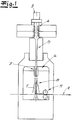
- the Fig. 1 shows an apparatus for producing nonwoven fabric layers (1, 2) in the form of spunbonded webs for the laminate according to the invention.
- continuous filaments are produced by the spunbond process and deposited to spunbonded.
- filaments 1 'or endless filaments are spun and then preferably guided and, in the exemplary embodiment, for cooling by a cooling device 4.
- the cooling device 4 is followed by a drawing device 6 with a drawing shaft 7.
- To the cooling device 4 includes preferably and in the embodiment, an intermediate channel 5, which the cooling device 4 with the stretching device 6 connects. Empfohlene866 and in the embodiment of the drawing device 6 downstream of a diffuser 8 in the flow direction of the filaments 1 '.
- the unit of the cooling device 4 and the drafting device 6 and the unit of the cooling device 4, the intermediate channel 5 and the drawing device 6 is formed as a closed system.
- this closed unit except the supply of cooling air in the cooling device 4 no further air supply from the outside.
- both nonwoven fabric layers 1, 2 of the laminate 10 according to the invention as a spunbonded nonwoven with a in Fig.1 produced device generated.
- a nonwoven fabric layer 1, 2 or both nonwoven fabric layers 1, 2 can also be produced as meltblown nonwovens by a meltblown process.
- the on the in Fig. 1 Filing screen belt 9 deposited nonwoven fabric layer 1, 2 is then fed to further processing.
- the (single) nonwoven fabric layer 1,2 is preconsolidated after being deposited, and indeed in the exemplary embodiment Fig. 1 by means of a calender 11.
- a (single) nonwoven layer 1, 2 is calendered using an open calendering structure.
- the nonwoven fabric layer 1, 2 expediently becomes combined with another nonwoven fabric layer 1,2 to form an aggregate or laminate according to the invention.
- This further nonwoven fabric layer 1,2 can also according to a preferred embodiment with a device of in Fig.
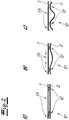
- the Fig. 2 shows an aggregate of a first nonwoven fabric layer 1 and a second nonwoven fabric layer 2.
- the first nonwoven fabric layer 1 has a higher shrinkability or a higher shrinkage potential than the second nonwoven fabric layer 2.
- the aggregate is shown before shrinkage activation.
- the aggregate of the two nonwoven fabric layers 1, 2 has already been solidified so that solidification regions 12 or solidification points and solidification-free regions 13 are present.
- the solidification was carried out as a thermal consolidation and in the solidification regions 12 and in the solidification points are endless filaments of the two nonwoven fabric layers 1,2 fused together.
- the unit of the two nonwoven fabric layers 1,2 is then thermally activated or heated to an activation temperature.
- the first nonwoven fabric layer 1 shrinks with the higher shrinkage potential. This is through the arrows in the Fig. 2 b) been hinted at. Because of this shrinkage or due to this contraction of the solidification regions 12, solidification-free regions of the second nonwoven fabric layer 2 are displaced or raised transversely, in particular perpendicular to the surface extension of the aggregate.
- the figure c) shows the final state of the unit after the thermal shrinkage. It is recognizable that due to the shrinkage activation or due to the shrinkage, a pronounced 3D structure of the aggregate or laminate 10 with a clear z-component transversely, in particular perpendicular to the surface of the laminate 10 is present.
- FIG. 3 a shows a perspective view of an aggregate of two nonwoven fabric layers 1,2 in the already solidified state with solidification areas 12 and solidification-free areas 13. Die FIG. 3 b) shows this unit after the shrinkage activation with the upwardly shifted solidification-free regions 13 of the second nonwoven fabric layer second
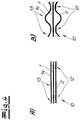
- Fig. 4 is a section through an aggregate of three nonwoven fabric layers 1, 2, 14 shown.
- the middle nonwoven fabric layer 1 in this case has a higher shrinkability or a higher shrinkage potential than the two outer nonwoven fabric layers 2 and 14.
- These two non-shrinking or less shrinking outer nonwoven fabric layers 2, 14 may be identical in the embodiment. In principle, however, it is also possible to use different nonwoven fabric layers 2, 14 as outer nonwoven fabric layers.
- the aggregate is shown before shrinkage activation.
- the aggregate of the three nonwoven fabric layers 1, 2, 14 has already been solidified, so that solidification regions 12 or solidification points and solidification-free regions 13 are present. This three-layer aggregate is then thermally activated or heated to an activation temperature.
- the average nonwoven fabric layer 1 shrinks with the higher shrinkage potential. That's like in the Fig. 2 indicated by arrows. Due to the shrinkage or due to the contraction of the solidification regions 12, solidification-free regions of the two outer nonwoven fabric layers 2, 14 are moved transversely, in particular perpendicularly to the surface extension of the aggregate or raised. In Fig. 4b ) already shows the final state of the unit after the thermal shrinkage.
Landscapes
- Engineering & Computer Science (AREA)
- Textile Engineering (AREA)
- Physics & Mathematics (AREA)
- Thermal Sciences (AREA)
- Mechanical Engineering (AREA)
- Nonwoven Fabrics (AREA)
- Laminated Bodies (AREA)
Claims (20)
- Procédé, destiné à fabriquer un laminé (10) avec au moins deux couches de non-tissé (1,2) superposées en filaments continus, notamment en filaments continus en matière thermoplastique,
lors duquel, on créé une première couche de non-tissé (1), qui fait preuve d'une rétractabilité plus élevée ou d'un potentiel de rétraction plus élevé dans la direction de son extension superficielle qu'une deuxième couche de non-tissé (2), la première couche de non-tissé (1) étant créée à l'aide d'un procédé de liage par filage et/ou à l'aide d'un procédé de fusion-soufflage à partir de filaments multicomposants, notamment de filaments bicomposants, la deuxième couche de non-tissé (2) étant créée à l'aide d'un procédé de liage par filage et/ou à l'aide d'un procédé de fusion-soufflage à partir de filaments multicomposants, (notamment de filaments bicomposants), et/ou à partir de filaments monocomposant et étant directement associée en nappe, respectivement rassemblée avec la première couche de non-tissé (1), notamment déposée directement sur la première couche de non-tissé (1),
l'ensemble des au moins deux ou des deux couches de non-tissé (1,2) étant solidifié avec le critère que sur la surface de l'ensemble, des zones solidifiées (12) et des zones non solidifiées (13) soient placées en étant distribuées,
lors duquel, à la suite de la solidification, on active la rétraction de la première couche de non-tissé (1), de sorte qu'en tant que conséquence de la rétraction de la première couche de non-tissé (1), des zones non solidifiées (13) de la deuxième couche de non-tissé (2) se déplacent ou se relèvent à la transversale, notamment à la perpendiculaire de l'extension superficielle de l'ensemble et lors duquel, on créé un laminé (10) d'une épaisseur D inférieure à 2 mm. - Procédé selon la revendication 1, les différentes rétractabilités ou les différents potentiels de rétraction de deux couches de non-tissé (1,2) étant réglées par différentes matières premières pour les filaments continus des deux couches de non-tissé (1,2) et/ou par différentes conditions de processus lors de la création des filaments continus pour les deux couches de non-tissé (1,2) et/ou par différentes sections transversales des filaments continus des deux couches de non-tissé (1,2) et/ou par différentes orientations des filaments continus dans les deux couches de non-tissé (1,2).
- Procédé selon l'une quelconque des revendications 1 ou 2, une première couche de non-tissé (1) étant utilisée pour laquelle le rapport de la rétractabilité (potentiel de rétraction) dans la direction de la machine (MD) à la rétractabilité (potentiel de rétraction) à la transversale de la direction de la machine (CD) est de 1 : 1 à 3 : 1, de préférence de 1,1 : 1 à 1,6 : 1.
- Procédé selon l'une quelconque des revendications 1 à 3, la première couche de non-tissé (1) étant créée à partir de filaments multicomposants (notamment de filaments bicomposants), avec une configuration âme/enveloppe.
- Procédé selon l'une quelconque des revendications 1 à 4, la deuxième couche de non-tissé (2) étant créée à partir de filaments multicomposants (notamment de filaments bicomposants), avec une configuration âme/enveloppe et/ou une configuration côte à côte.
- Procédé selon l'une quelconque des revendications 1 à 5, la solidification de l'ensemble des deux couches de non-tissé (1,2) étant réalisée sous la forme d'une solidification thermique et de préférence lors de cette solidification thermique, des filaments continus de la première couche de non-tissé (1) étant fusionnés avec des filaments continus de la deuxième couche de non-tissé (2).
- Procédé selon l'une quelconque des revendications 1 à 6, la solidification de l'ensemble des au moins deux couches de non-tissé (1,2), respectivement des deux couches de non-tissé étant réalisée à l'aide d'au moins une calandre (11).
- Procédé selon l'une quelconque des revendications 1 à 7, la rétraction de la première couche de non-tissé (1) étant thermiquement activée, notamment à l'aide d'au moins un fluide chaud et/ou étant thermiquement activée par contact avec une surface chaude.
- Procédé selon l'une quelconque des revendications 1 à 8, la création des au moins deux couches de non-tissé (1,2), la solidification de l'ensemble des couches de non-tissé (1,2) et la rétraction de la première couche de non-tissé (1) étant réalisées en ligne.
- Laminé, pourvu d'au moins deux couches de non-tissé (1,2) superposées en filaments continus, notamment en matière thermoplastique (fabriqué de préférence d'après un procédé selon l'une quelconque des revendications 1 à 9), une première couche de non-tissé (1) étant conçue sous la forme d'une couche filée-liée ou d'une couche soufflée en fusion et comportant des filaments multicomposants, notamment des filaments bicomposants, une deuxième couche de non-tissé (2) placée directement sur la première couche de non-tissé (1) étant conçue sous la forme d'une couche filée-liée ou d'une couche soufflée en fusion et comportant des filaments multicomposants (notamment des filaments bicomposants) et/ou des filaments monocomposant,
du fait d'une rétraction thermique dans la direction de son extension superficielle, la première couche de non-tissé (1) étant conçue en étant rétractée et en conséquence de ladite rétraction, des zones de la deuxième couche de non-tissé (2) étant conçues en étant déplacées ou relevées à la transversale, notamment à la perpendiculaire de l'extension superficielle de l'ensemble composé de la première et de la deuxième couche de non-tissé et l'épaisseur D du laminé (10) étant inférieure à 2 mm. - Laminé selon la revendication 10, l'ensemble des au moins deux ou des deux couches de non-tissé (1,2) superposées étant solidifié avec le critère que sur la surface de l'ensemble, des zones solidifiées (12) et des zones non solidifiées (13) soient placées en étant distribuées et en conséquence de la rétraction de la première couche de non-tissé (1), des zones non solidifiées de la deuxième couche de non-tissé (2) étant conçues en étant déplacées ou relevées à la transversale, notamment à la perpendiculaire de l'extension superficielle de l'ensemble, en rapport aux zones solidifiées (12).
- Laminé selon l'une quelconque des revendications 10 ou 11, au moins un composant de la matière plastique sur la surface extérieure des filaments continus de la première couche de non-tissé (1) correspondant à un composant de la matière plastique sur la surface extérieure des filaments continus de la deuxième couche de non-tissé (2) et de préférence un composant de la matière plastique sur la surface extérieure des filaments continus de la première couche de non-tissé (1) et un composant de la matière plastique sur la surface extérieure des filaments continus de la deuxième couche de non-tissé (2) étant une polyoléfine, notamment un polyéthylène ou un polypropylène.
- Laminé selon l'une quelconque des revendications 10 à 12, le point de fusion d'un composant de la matière plastique sur la surface extérieure des filaments continus de la première couche de non-tissé (1) étant supérieur à la température (température d'activation) à laquelle la rétraction de la première couche de non-tissé (1) est activable et de préférence, les filaments continus de la première couche de non-tissé (1) étant réalisés sous la forme de filaments multicomposants, notamment de filaments bicomposants avec une configuration âme/enveloppe et la température de fusion du composant de l'enveloppe desdits filaments continus étant supérieure à la température à laquelle la rétraction de la première couche de non-tissé (1) est activable.
- Laminé selon l'une quelconque des revendications 10 à 13, la température à laquelle la rétraction de la première couche de non-tissé (1) est activable, respectivement est activée (température d'activation) étant inférieure d'au moins 5°C, de préférence, d'au moins 10°C et de manière préférentielle, d'au moins 15°C à la température de fusion du composant à plus bas point de fusion de la matière plastique du laminé (10) ou de l'ensemble des couches de non-tissé exposé à l'activation de la rétraction.
- Laminé selon l'une quelconque des revendications 10 à 14, l'écart minimal moyen entre deux zones solidifiées (12) de l'ensemble étant supérieur à 1 mm, de préférence supérieur à 2 mm.
- Laminé selon l'une quelconque des revendications 10 à 15, l'épaisseur D du laminé (10) étant inférieure à 1,8 mm et de manière particulièrement préférentielle, inférieure à 1,5 mm.
- Laminé selon l'une quelconque des revendications 10 à 16, le rapport de la force de traction maximale du laminé dans la direction de la machine (MD) à la force de traction maximale du laminé à la transversale de la direction de la machine (CD) étant de 2,5 : 1 à 1,2 : 1.
- Laminé selon l'une quelconque des revendications 10 à 17, le laminé (10) comportant au moins trois couches, respectivement couches de non-tissé, une première couche de non-tissé faisant preuve d'une rétractabilité plus élevée ou d'un potentiel de rétraction plus élevé dans la direction de son extension superficielle qu'une deuxième et une troisième couches de non-tissé et/ou une première couche de non-tissé faisant preuve d'une rétractabilité moins élevée ou d'un potentiel de rétraction moins élevé dans la direction de son extension superficielle qu'une deuxième et une troisième couches de non-tissé.
- Laminé selon l'une quelconque des revendications 10 à 18, le laminé (10) comportant au moins trois couches, respectivement couches de non-tissé, deux couches, respectivement couches de non-tissé extérieures rétractables ou plus fortement rétractables, ainsi qu'une couche, respectivement couche de non-tissé centrale non rétractable ou moins rétractable étant prévues.
- Laminé selon l'une quelconque des revendications 10 à 18, le laminé (10) comportant au moins trois couches, respectivement couches de non-tissé, deux couches, respectivement couches de non-tissé extérieures non rétractables ou moins rétractables, ainsi qu'une couche, respectivement couche de non-tissé centrale rétractable ou plus fortement rétractable étant prévues.
Priority Applications (13)
| Application Number | Priority Date | Filing Date | Title |
|---|---|---|---|
| DK16151573.9T DK3192910T3 (da) | 2016-01-15 | 2016-01-15 | Fremgangsmåde til fremstilling af et laminat og laminat |
| PL16151573T PL3192910T3 (pl) | 2016-01-15 | 2016-01-15 | Sposób wytwarzania laminatu i laminat |
| EP16151573.9A EP3192910B1 (fr) | 2016-01-15 | 2016-01-15 | Procede de fabrication d'un lamine et lamine |
| ES16151573T ES2750692T3 (es) | 2016-01-15 | 2016-01-15 | Procedimiento para la producción de un laminado y laminado |
| SI201630391T SI3192910T1 (sl) | 2016-01-15 | 2016-01-15 | Postopek za proizvodnjo laminata in laminat |
| ARP170100006A AR107284A1 (es) | 2016-01-15 | 2017-01-03 | Procedimiento para la fabricación de un laminado y laminado |
| KR1020170001937A KR102022760B1 (ko) | 2016-01-15 | 2017-01-05 | 적층체 및 그 제조 방법 |
| MX2017000243A MX375369B (es) | 2016-01-15 | 2017-01-05 | Procedimiento para la fabricación de un laminado y laminado. |
| US15/401,127 US11383481B2 (en) | 2016-01-15 | 2017-01-09 | Laminate and method of making same |
| MYPI2017700088A MY172438A (en) | 2016-01-15 | 2017-01-10 | Laminate and method of making same |
| BR102017000615-8A BR102017000615B1 (pt) | 2016-01-15 | 2017-01-11 | Método de fabricação de um laminado e laminado |
| RU2017101018A RU2650377C1 (ru) | 2016-01-15 | 2017-01-13 | Способ изготовления ламината и ламинат |
| CN201710023053.9A CN106978672B (zh) | 2016-01-15 | 2017-01-13 | 用于制造层压体的方法和层压体 |
Applications Claiming Priority (1)
| Application Number | Priority Date | Filing Date | Title |
|---|---|---|---|
| EP16151573.9A EP3192910B1 (fr) | 2016-01-15 | 2016-01-15 | Procede de fabrication d'un lamine et lamine |
Publications (2)
| Publication Number | Publication Date |
|---|---|
| EP3192910A1 EP3192910A1 (fr) | 2017-07-19 |
| EP3192910B1 true EP3192910B1 (fr) | 2019-07-24 |
Family
ID=55174558
Family Applications (1)
| Application Number | Title | Priority Date | Filing Date |
|---|---|---|---|
| EP16151573.9A Active EP3192910B1 (fr) | 2016-01-15 | 2016-01-15 | Procede de fabrication d'un lamine et lamine |
Country Status (13)
| Country | Link |
|---|---|
| US (1) | US11383481B2 (fr) |
| EP (1) | EP3192910B1 (fr) |
| KR (1) | KR102022760B1 (fr) |
| CN (1) | CN106978672B (fr) |
| AR (1) | AR107284A1 (fr) |
| BR (1) | BR102017000615B1 (fr) |
| DK (1) | DK3192910T3 (fr) |
| ES (1) | ES2750692T3 (fr) |
| MX (1) | MX375369B (fr) |
| MY (1) | MY172438A (fr) |
| PL (1) | PL3192910T3 (fr) |
| RU (1) | RU2650377C1 (fr) |
| SI (1) | SI3192910T1 (fr) |
Families Citing this family (9)
| Publication number | Priority date | Publication date | Assignee | Title |
|---|---|---|---|---|
| EP3328337B1 (fr) | 2015-07-31 | 2022-08-17 | The Procter & Gamble Company | Emballage d'articles absorbants utilisant un non-tissé formé |
| EP3239378B1 (fr) | 2016-04-29 | 2019-02-13 | Reifenhäuser GmbH & Co. KG Maschinenfabrik | Procede et dispositif destines a la fabrication de tissus non-tisses a partir de filaments continus |
| HUE063199T2 (hu) | 2017-03-15 | 2023-12-28 | Samsonite Ip Holdings Sarl | Eljárás poggyászcikk elõállítására, amely során hõre lágyuló polimerbõl álló laminált filmrétegeket laminálunk |
| CZ2018647A3 (cs) * | 2018-11-23 | 2020-06-03 | Reifenhäuser GmbH & Co. KG Maschinenfabrik | Objemná netkaná textilie se zvýšenou stlačitelností a zlepšenou schopností regenerace |
| US20220235502A1 (en) * | 2019-05-10 | 2022-07-28 | Fare' S.P.A. | Process for the production of a multilayer fabric |
| DE102019208734B4 (de) * | 2019-06-14 | 2026-05-07 | Adidas Ag | Verfahren zum Herstellen eines abriebfesten Materials |
| GB2594115B (en) | 2019-12-10 | 2024-03-27 | Procter & Gamble | Nonwoven webs with visually discernible patterns and improved texture perception |
| CZ2020105A3 (cs) * | 2020-02-29 | 2021-09-08 | Pfnonwovens Holding S.R.O. | Vrstvená netkaná textilie |
| CN111411449B (zh) * | 2020-04-13 | 2021-06-11 | 苏州经结纬面料科技有限公司 | 一种褶皱熔喷面料制备装置及其制备方法 |
Family Cites Families (17)
| Publication number | Priority date | Publication date | Assignee | Title |
|---|---|---|---|---|
| US5393599A (en) * | 1992-01-24 | 1995-02-28 | Fiberweb North America, Inc. | Composite nonwoven fabrics |
| JPH07104603A (ja) * | 1993-10-05 | 1995-04-21 | Kureha Tec Kk | ロールクリーニング用フエルト |
| WO1999062447A1 (fr) * | 1998-05-29 | 1999-12-09 | Toyo Eizai Kabushiki Kaisha | Culotte jetable et procede permettant de la produire en continu |
| DE19900424B4 (de) * | 1999-01-08 | 2006-04-06 | Carl Freudenberg Kg | Dreidimensional strukturiertes Faserflächengebilde und Verfahren zur Herstellung |
| US6613704B1 (en) | 1999-10-13 | 2003-09-02 | Kimberly-Clark Worldwide, Inc. | Continuous filament composite nonwoven webs |
| DE10105784A1 (de) * | 2001-02-07 | 2002-08-08 | Fleissner Gerold | Wasservernadeltes Kompositvlies aus Stapel- und Endlosfasern und Verfahren zur Herstellung |
| DE10133772B4 (de) * | 2001-07-16 | 2007-10-25 | Carl Freudenberg Kg | Dreidimensional strukturiertes Faserflächengebilde mit hoher Flüssigkeitsaufnahme und Verfahren zu dessen Herstellung und dessen Verwendung |
| DE10135111C2 (de) * | 2001-07-19 | 2003-06-26 | Freudenberg Carl Kg | Verbundstoff, Verfahren zu dessen Herstellung und dessen Verwendung |
| US7201816B2 (en) * | 2001-12-21 | 2007-04-10 | Invista North America S.A.R.L. | High bulk composite sheets and method for preparing |
| US7005395B2 (en) * | 2002-12-12 | 2006-02-28 | Invista North America S.A.R.L. | Stretchable composite sheets and processes for making |
| US7588818B2 (en) * | 2002-12-16 | 2009-09-15 | Invista North America S.A R.L. | High bulk composite sheets |
| DE10338196A1 (de) * | 2003-08-20 | 2005-05-12 | Reifenhaeuser Masch | Verfahren zur Herstellung eines Vliesstoffes |
| US20050095943A1 (en) * | 2003-10-30 | 2005-05-05 | Kimberly-Clark Worldwide, Inc. | Cross machine direction extensible nonwoven webs |
| ATE466124T1 (de) * | 2007-03-08 | 2010-05-15 | Reifenhaeuser Gmbh & Co Kg | Verfahren und vorrichtung zur herstellung eines spinnvlieses |
| DE102007062600A1 (de) * | 2007-12-21 | 2009-06-25 | Akzenta Paneele + Profile Gmbh | Verfahren zur Herstellung eines dekorativen Laminats |
| DE102007062941B4 (de) * | 2007-12-21 | 2012-10-18 | Surface Technologies Gmbh & Co. Kg | Verfahren zur Herstellung eines Laminats |
| JP5842353B2 (ja) * | 2010-04-13 | 2016-01-13 | Jnc株式会社 | 嵩高性不織布 |
-
2016
- 2016-01-15 ES ES16151573T patent/ES2750692T3/es active Active
- 2016-01-15 SI SI201630391T patent/SI3192910T1/sl unknown
- 2016-01-15 PL PL16151573T patent/PL3192910T3/pl unknown
- 2016-01-15 DK DK16151573.9T patent/DK3192910T3/da active
- 2016-01-15 EP EP16151573.9A patent/EP3192910B1/fr active Active
-
2017
- 2017-01-03 AR ARP170100006A patent/AR107284A1/es active IP Right Grant
- 2017-01-05 KR KR1020170001937A patent/KR102022760B1/ko active Active
- 2017-01-05 MX MX2017000243A patent/MX375369B/es active IP Right Grant
- 2017-01-09 US US15/401,127 patent/US11383481B2/en active Active
- 2017-01-10 MY MYPI2017700088A patent/MY172438A/en unknown
- 2017-01-11 BR BR102017000615-8A patent/BR102017000615B1/pt active IP Right Grant
- 2017-01-13 RU RU2017101018A patent/RU2650377C1/ru active
- 2017-01-13 CN CN201710023053.9A patent/CN106978672B/zh active Active
Non-Patent Citations (1)
| Title |
|---|
| None * |
Also Published As
| Publication number | Publication date |
|---|---|
| US20170203539A1 (en) | 2017-07-20 |
| MX375369B (es) | 2025-03-06 |
| AR107284A1 (es) | 2018-04-18 |
| RU2650377C1 (ru) | 2018-04-11 |
| CN106978672B (zh) | 2020-02-21 |
| DK3192910T3 (da) | 2019-10-14 |
| EP3192910A1 (fr) | 2017-07-19 |
| PL3192910T3 (pl) | 2019-12-31 |
| US11383481B2 (en) | 2022-07-12 |
| BR102017000615B1 (pt) | 2019-04-30 |
| CN106978672A (zh) | 2017-07-25 |
| KR102022760B1 (ko) | 2019-09-18 |
| MY172438A (en) | 2019-11-25 |
| MX2017000243A (es) | 2018-07-04 |
| SI3192910T1 (sl) | 2019-10-30 |
| KR20170085961A (ko) | 2017-07-25 |
| ES2750692T3 (es) | 2020-03-26 |
| BR102017000615A2 (pt) | 2017-07-25 |
Similar Documents
| Publication | Publication Date | Title |
|---|---|---|
| EP3192910B1 (fr) | Procede de fabrication d'un lamine et lamine | |
| EP3054042B1 (fr) | Procédé de fabrication d'un laminé et laminé | |
| EP1425161B1 (fr) | Stratifie perfore | |
| EP3974572B1 (fr) | Procédé de fabrication d'un agrégat non tissé et agrégat non tissé | |
| DE69418484T2 (de) | Rippenstoffaenliche vliesstoff und verfahren zur herstellung | |
| DE69529768T2 (de) | Verfahren und herstellung zur hydroverwirrung von vliesstoffen | |
| DE69430377T2 (de) | Nachbehandlung von laminierten vliesen | |
| DE69128429T2 (de) | Textilverbundstoff mit durch verwirbelte geschmolzene, geblasene fasern fixierte endlosfäden und verfahren zur herstellung | |
| DE69725512T2 (de) | Bauschiger Vliesstoff und Verfahren zu dessen Herstellung | |
| EP3715517B1 (fr) | Procédé de fabrication d'un stratifié non-tissé et stratifié non-tissé | |
| DE69415536T2 (de) | Elastische mehrschichtige folie aus schrittweise gestrecktem faserigem vliesstoff und elastomerfilm und verfahren zu deren herstellung | |
| DE69421713T2 (de) | Gemusterte-prägung für textilvliesstoff | |
| DE10016182B4 (de) | Verfahren zur Herstellung eines plissierfähigen Filtermaterials aus einem Vliesstoff | |
| EP1159478B1 (fr) | Surface textile structuree en trois dimensions et procede permettant de la produire | |
| EP1277865B1 (fr) | Non-tissé tridimensionnel à motifs réguliers, son procédé de fabrication ainsi que ses applications | |
| DE10135111C2 (de) | Verbundstoff, Verfahren zu dessen Herstellung und dessen Verwendung | |
| DE2518532B2 (de) | Vorrichtung zum stellenweisen thermischen Binden eines Faservlieses | |
| DE19725749A1 (de) | Prägeverfahren zur Herstellung eines strukturierten, voluminösen Vlieses | |
| DE2639466B2 (de) | Verfahren und Vorrichtung zur Herstellung eines nichtgewebten Textilmaterials | |
| EP3382080B1 (fr) | Procédé et dispositif de fabrication d'un non-tissé à partir de fibres | |
| EP1277866A2 (fr) | Non-tissé tridimensionnel à motifs réguliers et à grande capacité d'absorption de liquides, son procédé de fabrication ainsi que ses applications | |
| DE102018106629A1 (de) | Kalandrieranlage und -Methode zur Erzeugung von gelochten Vliesstoffen für Mehrlagige saugfähige Produkte | |
| DE10132196B4 (de) | Verfahren zur Herstellung eines Produktes mit einer perforierten thermoplastischen Struktur und Perforierungseinrichtung zur Durchführung des Verfahrens | |
| DE102021102287B3 (de) | Spinnvlieslaminat und Verfahren zur Herstellung eines Spinnvlieslaminates | |
| EP3771556B1 (fr) | Stratifié non-tissé et procédé de fabrication d'un stratifié non-tissé |
Legal Events
| Date | Code | Title | Description |
|---|---|---|---|
| PUAI | Public reference made under article 153(3) epc to a published international application that has entered the european phase |
Free format text: ORIGINAL CODE: 0009012 |
|
| STAA | Information on the status of an ep patent application or granted ep patent |
Free format text: STATUS: REQUEST FOR EXAMINATION WAS MADE |
|
| 17P | Request for examination filed |
Effective date: 20161209 |
|
| AK | Designated contracting states |
Kind code of ref document: A1 Designated state(s): AL AT BE BG CH CY CZ DE DK EE ES FI FR GB GR HR HU IE IS IT LI LT LU LV MC MK MT NL NO PL PT RO RS SE SI SK SM TR |
|
| AX | Request for extension of the european patent |
Extension state: BA ME |
|
| STAA | Information on the status of an ep patent application or granted ep patent |
Free format text: STATUS: EXAMINATION IS IN PROGRESS |
|
| 17Q | First examination report despatched |
Effective date: 20190104 |
|
| REG | Reference to a national code |
Ref country code: DE Ref legal event code: R079 Ref document number: 502016005643 Country of ref document: DE Free format text: PREVIOUS MAIN CLASS: D04H0001437400 Ipc: B32B0005020000 |
|
| GRAP | Despatch of communication of intention to grant a patent |
Free format text: ORIGINAL CODE: EPIDOSNIGR1 |
|
| STAA | Information on the status of an ep patent application or granted ep patent |
Free format text: STATUS: GRANT OF PATENT IS INTENDED |
|
| RIC1 | Information provided on ipc code assigned before grant |
Ipc: B32B 7/04 20190101ALI20190307BHEP Ipc: B32B 38/00 20060101ALI20190307BHEP Ipc: B32B 37/14 20060101ALI20190307BHEP Ipc: B32B 7/02 20190101ALI20190307BHEP Ipc: D04H 5/06 20060101ALI20190307BHEP Ipc: D04H 3/007 20120101ALI20190307BHEP Ipc: B32B 5/26 20060101ALI20190307BHEP Ipc: B32B 5/08 20060101ALI20190307BHEP Ipc: B32B 27/12 20060101ALI20190307BHEP Ipc: B32B 5/14 20060101ALI20190307BHEP Ipc: B32B 7/05 20190101ALI20190307BHEP Ipc: D04H 3/16 20060101ALI20190307BHEP Ipc: B32B 37/06 20060101ALI20190307BHEP Ipc: D04H 1/4374 20120101ALI20190307BHEP Ipc: D01D 5/088 20060101ALI20190307BHEP Ipc: B32B 5/02 20060101AFI20190307BHEP Ipc: B32B 37/30 20060101ALI20190307BHEP Ipc: D04H 3/018 20120101ALI20190307BHEP Ipc: B32B 27/32 20060101ALI20190307BHEP Ipc: B32B 3/26 20060101ALI20190307BHEP Ipc: D04H 3/147 20120101ALI20190307BHEP |
|
| INTG | Intention to grant announced |
Effective date: 20190327 |
|
| GRAS | Grant fee paid |
Free format text: ORIGINAL CODE: EPIDOSNIGR3 |
|
| GRAA | (expected) grant |
Free format text: ORIGINAL CODE: 0009210 |
|
| STAA | Information on the status of an ep patent application or granted ep patent |
Free format text: STATUS: THE PATENT HAS BEEN GRANTED |
|
| AK | Designated contracting states |
Kind code of ref document: B1 Designated state(s): AL AT BE BG CH CY CZ DE DK EE ES FI FR GB GR HR HU IE IS IT LI LT LU LV MC MK MT NL NO PL PT RO RS SE SI SK SM TR |
|
| REG | Reference to a national code |
Ref country code: GB Ref legal event code: FG4D Free format text: NOT ENGLISH |
|
| REG | Reference to a national code |
Ref country code: CH Ref legal event code: EP |
|
| REG | Reference to a national code |
Ref country code: DE Ref legal event code: R096 Ref document number: 502016005643 Country of ref document: DE |
|
| REG | Reference to a national code |
Ref country code: AT Ref legal event code: REF Ref document number: 1157687 Country of ref document: AT Kind code of ref document: T Effective date: 20190815 |
|
| REG | Reference to a national code |
Ref country code: IE Ref legal event code: FG4D Free format text: LANGUAGE OF EP DOCUMENT: GERMAN |
|
| REG | Reference to a national code |
Ref country code: CH Ref legal event code: NV Representative=s name: KELLER AND PARTNER PATENTANWAELTE AG, CH |
|
| REG | Reference to a national code |
Ref country code: DK Ref legal event code: T3 Effective date: 20191011 |
|
| REG | Reference to a national code |
Ref country code: SE Ref legal event code: TRGR Ref country code: RO Ref legal event code: EPE |
|
| REG | Reference to a national code |
Ref country code: NL Ref legal event code: FP |
|
| REG | Reference to a national code |
Ref country code: LT Ref legal event code: MG4D |
|
| REG | Reference to a national code |
Ref country code: SK Ref legal event code: T3 Ref document number: E 32517 Country of ref document: SK |
|
| REG | Reference to a national code |
Ref country code: GR Ref legal event code: EP Ref document number: 20190402821 Country of ref document: GR Effective date: 20191128 |
|
| PG25 | Lapsed in a contracting state [announced via postgrant information from national office to epo] |
Ref country code: LT Free format text: LAPSE BECAUSE OF FAILURE TO SUBMIT A TRANSLATION OF THE DESCRIPTION OR TO PAY THE FEE WITHIN THE PRESCRIBED TIME-LIMIT Effective date: 20190724 Ref country code: FI Free format text: LAPSE BECAUSE OF FAILURE TO SUBMIT A TRANSLATION OF THE DESCRIPTION OR TO PAY THE FEE WITHIN THE PRESCRIBED TIME-LIMIT Effective date: 20190724 Ref country code: HR Free format text: LAPSE BECAUSE OF FAILURE TO SUBMIT A TRANSLATION OF THE DESCRIPTION OR TO PAY THE FEE WITHIN THE PRESCRIBED TIME-LIMIT Effective date: 20190724 Ref country code: NO Free format text: LAPSE BECAUSE OF FAILURE TO SUBMIT A TRANSLATION OF THE DESCRIPTION OR TO PAY THE FEE WITHIN THE PRESCRIBED TIME-LIMIT Effective date: 20191024 Ref country code: PT Free format text: LAPSE BECAUSE OF FAILURE TO SUBMIT A TRANSLATION OF THE DESCRIPTION OR TO PAY THE FEE WITHIN THE PRESCRIBED TIME-LIMIT Effective date: 20191125 Ref country code: BG Free format text: LAPSE BECAUSE OF FAILURE TO SUBMIT A TRANSLATION OF THE DESCRIPTION OR TO PAY THE FEE WITHIN THE PRESCRIBED TIME-LIMIT Effective date: 20191024 |
|
| PG25 | Lapsed in a contracting state [announced via postgrant information from national office to epo] |
Ref country code: AL Free format text: LAPSE BECAUSE OF FAILURE TO SUBMIT A TRANSLATION OF THE DESCRIPTION OR TO PAY THE FEE WITHIN THE PRESCRIBED TIME-LIMIT Effective date: 20190724 Ref country code: LV Free format text: LAPSE BECAUSE OF FAILURE TO SUBMIT A TRANSLATION OF THE DESCRIPTION OR TO PAY THE FEE WITHIN THE PRESCRIBED TIME-LIMIT Effective date: 20190724 Ref country code: IS Free format text: LAPSE BECAUSE OF FAILURE TO SUBMIT A TRANSLATION OF THE DESCRIPTION OR TO PAY THE FEE WITHIN THE PRESCRIBED TIME-LIMIT Effective date: 20191124 Ref country code: RS Free format text: LAPSE BECAUSE OF FAILURE TO SUBMIT A TRANSLATION OF THE DESCRIPTION OR TO PAY THE FEE WITHIN THE PRESCRIBED TIME-LIMIT Effective date: 20190724 |
|
| REG | Reference to a national code |
Ref country code: ES Ref legal event code: FG2A Ref document number: 2750692 Country of ref document: ES Kind code of ref document: T3 Effective date: 20200326 |
|
| PG25 | Lapsed in a contracting state [announced via postgrant information from national office to epo] |
Ref country code: EE Free format text: LAPSE BECAUSE OF FAILURE TO SUBMIT A TRANSLATION OF THE DESCRIPTION OR TO PAY THE FEE WITHIN THE PRESCRIBED TIME-LIMIT Effective date: 20190724 |
|
| REG | Reference to a national code |
Ref country code: DE Ref legal event code: R082 Ref document number: 502016005643 Country of ref document: DE Representative=s name: ANDREJEWSKI HONKE PATENT- UND RECHTSANWAELTE P, DE Ref country code: DE Ref legal event code: R081 Ref document number: 502016005643 Country of ref document: DE Owner name: PFNONWOVENS HOLDING S.R.O., CZ Free format text: FORMER OWNER: REIFENHAEUSER GMBH & CO. KG MASCHINENFABRIK, 53844 TROISDORF, DE Ref country code: DE Ref legal event code: R081 Ref document number: 502016005643 Country of ref document: DE Owner name: REIFENHAEUSER GMBH & CO. KG MASCHINENFABRIK, DE Free format text: FORMER OWNER: REIFENHAEUSER GMBH & CO. KG MASCHINENFABRIK, 53844 TROISDORF, DE |
|
| PG25 | Lapsed in a contracting state [announced via postgrant information from national office to epo] |
Ref country code: SM Free format text: LAPSE BECAUSE OF FAILURE TO SUBMIT A TRANSLATION OF THE DESCRIPTION OR TO PAY THE FEE WITHIN THE PRESCRIBED TIME-LIMIT Effective date: 20190724 Ref country code: IS Free format text: LAPSE BECAUSE OF FAILURE TO SUBMIT A TRANSLATION OF THE DESCRIPTION OR TO PAY THE FEE WITHIN THE PRESCRIBED TIME-LIMIT Effective date: 20200224 |
|
| REG | Reference to a national code |
Ref country code: DE Ref legal event code: R097 Ref document number: 502016005643 Country of ref document: DE |
|
| PLBE | No opposition filed within time limit |
Free format text: ORIGINAL CODE: 0009261 |
|
| STAA | Information on the status of an ep patent application or granted ep patent |
Free format text: STATUS: NO OPPOSITION FILED WITHIN TIME LIMIT |
|
| PG2D | Information on lapse in contracting state deleted |
Ref country code: IS |
|
| 26N | No opposition filed |
Effective date: 20200603 |
|
| REG | Reference to a national code |
Ref country code: CH Ref legal event code: PUEA Owner name: REIFENHAEUSER GMBH AND CO. KG MASCHINENFABRIK, CS Free format text: FORMER OWNER: REIFENHAEUSER GMBH AND CO. KG MASCHINENFABRIK, DE |
|
| REG | Reference to a national code |
Ref country code: GB Ref legal event code: 732E Free format text: REGISTERED BETWEEN 20200730 AND 20200805 |
|
| PG25 | Lapsed in a contracting state [announced via postgrant information from national office to epo] |
Ref country code: MC Free format text: LAPSE BECAUSE OF FAILURE TO SUBMIT A TRANSLATION OF THE DESCRIPTION OR TO PAY THE FEE WITHIN THE PRESCRIBED TIME-LIMIT Effective date: 20190724 |
|
| REG | Reference to a national code |
Ref country code: ES Ref legal event code: PC2A Owner name: PFNONWOVENS HOLDING S.R.O. Effective date: 20200825 |
|
| REG | Reference to a national code |
Ref country code: CH Ref legal event code: PFA Owner name: REIFENHAEUSER GMBH AND CO. KG MASCHINENFABRIK, CS Free format text: FORMER OWNER: REIFENHAEUSER GMBH AND CO. KG MASCHINENFABRIK, CS |
|
| REG | Reference to a national code |
Ref country code: SK Ref legal event code: PC4A Ref document number: E 32517 Country of ref document: SK Owner name: PFNONWOVENS HOLDING S.R.O., PRAHA, CZ Free format text: FORMER OWNER: REIFENHAEUSER GMBH & CO. KG MASCHINENFABRIK, TROISDORF, DE Effective date: 20200921 Ref country code: SK Ref legal event code: PC4A Ref document number: E 32517 Country of ref document: SK Owner name: REIFENHAEUSER GMBH & CO. KG MASCHINENFABRIK, T, DE Free format text: FORMER OWNER: REIFENHAEUSER GMBH & CO. KG MASCHINENFABRIK, TROISDORF, DE Effective date: 20200921 |
|
| REG | Reference to a national code |
Ref country code: BE Ref legal event code: PD Owner name: PFNONWOVENS HOLDING S.R.O.; CZ Free format text: DETAILS ASSIGNMENT: CHANGE OF OWNER(S), CESSION; FORMER OWNER NAME: REIFENHAEUSER GMBH & CO. KG MASCHINENFABRIK Effective date: 20200812 |
|
| REG | Reference to a national code |
Ref country code: NL Ref legal event code: PD Owner name: PFNONWOVENS HOLDING S.R.O.; CZ Free format text: DETAILS ASSIGNMENT: CHANGE OF OWNER(S), ASSIGNMENT; FORMER OWNER NAME: REIFENHAEUSER GMBH & CO. KG MASCHINENFABRIK Effective date: 20200923 |
|
| PG25 | Lapsed in a contracting state [announced via postgrant information from national office to epo] |
Ref country code: LU Free format text: LAPSE BECAUSE OF NON-PAYMENT OF DUE FEES Effective date: 20200115 |
|
| REG | Reference to a national code |
Ref country code: SI Ref legal event code: SP73 Owner name: REIFENHAEUSER GMBH & CO. KG MASCHINENFABRIK; CZ Effective date: 20200918 |
|
| REG | Reference to a national code |
Ref country code: AT Ref legal event code: PC Ref document number: 1157687 Country of ref document: AT Kind code of ref document: T Owner name: PFNONWOVENS HOLDING S.R.O., CS Effective date: 20201203 Ref country code: AT Ref legal event code: PC Ref document number: 1157687 Country of ref document: AT Kind code of ref document: T Owner name: REIFENHAEUSER GMBH & CO. KG MASCHINENFABRIK, DE Effective date: 20201203 |
|
| PG25 | Lapsed in a contracting state [announced via postgrant information from national office to epo] |
Ref country code: IE Free format text: LAPSE BECAUSE OF NON-PAYMENT OF DUE FEES Effective date: 20200115 |
|
| PG25 | Lapsed in a contracting state [announced via postgrant information from national office to epo] |
Ref country code: MT Free format text: LAPSE BECAUSE OF FAILURE TO SUBMIT A TRANSLATION OF THE DESCRIPTION OR TO PAY THE FEE WITHIN THE PRESCRIBED TIME-LIMIT Effective date: 20190724 Ref country code: CY Free format text: LAPSE BECAUSE OF FAILURE TO SUBMIT A TRANSLATION OF THE DESCRIPTION OR TO PAY THE FEE WITHIN THE PRESCRIBED TIME-LIMIT Effective date: 20190724 |
|
| PG25 | Lapsed in a contracting state [announced via postgrant information from national office to epo] |
Ref country code: MK Free format text: LAPSE BECAUSE OF FAILURE TO SUBMIT A TRANSLATION OF THE DESCRIPTION OR TO PAY THE FEE WITHIN THE PRESCRIBED TIME-LIMIT Effective date: 20190724 |
|
| PGFP | Annual fee paid to national office [announced via postgrant information from national office to epo] |
Ref country code: CZ Payment date: 20251218 Year of fee payment: 11 |
|
| PGFP | Annual fee paid to national office [announced via postgrant information from national office to epo] |
Ref country code: PL Payment date: 20251219 Year of fee payment: 11 |
|
| PGFP | Annual fee paid to national office [announced via postgrant information from national office to epo] |
Ref country code: SK Payment date: 20251219 Year of fee payment: 11 |
|
| PGFP | Annual fee paid to national office [announced via postgrant information from national office to epo] |
Ref country code: SI Payment date: 20251222 Year of fee payment: 11 |
|
| REG | Reference to a national code |
Ref country code: CH Ref legal event code: U11 Free format text: ST27 STATUS EVENT CODE: U-0-0-U10-U11 (AS PROVIDED BY THE NATIONAL OFFICE) Effective date: 20260201 |
|
| PGFP | Annual fee paid to national office [announced via postgrant information from national office to epo] |
Ref country code: NL Payment date: 20260123 Year of fee payment: 11 |
|
| PGFP | Annual fee paid to national office [announced via postgrant information from national office to epo] |
Ref country code: SE Payment date: 20260123 Year of fee payment: 11 |
|
| PGFP | Annual fee paid to national office [announced via postgrant information from national office to epo] |
Ref country code: GB Payment date: 20260121 Year of fee payment: 11 |
|
| PGFP | Annual fee paid to national office [announced via postgrant information from national office to epo] |
Ref country code: ES Payment date: 20260202 Year of fee payment: 11 |
|
| PGFP | Annual fee paid to national office [announced via postgrant information from national office to epo] |
Ref country code: DK Payment date: 20260121 Year of fee payment: 11 Ref country code: DE Payment date: 20260203 Year of fee payment: 11 |
|
| PGFP | Annual fee paid to national office [announced via postgrant information from national office to epo] |
Ref country code: AT Payment date: 20260115 Year of fee payment: 11 |
|
| PGFP | Annual fee paid to national office [announced via postgrant information from national office to epo] |
Ref country code: BE Payment date: 20260121 Year of fee payment: 11 Ref country code: RO Payment date: 20260105 Year of fee payment: 11 Ref country code: IT Payment date: 20260128 Year of fee payment: 11 |
|
| PGFP | Annual fee paid to national office [announced via postgrant information from national office to epo] |
Ref country code: FR Payment date: 20260125 Year of fee payment: 11 |
|
| PGFP | Annual fee paid to national office [announced via postgrant information from national office to epo] |
Ref country code: TR Payment date: 20260106 Year of fee payment: 11 |
|
| PGFP | Annual fee paid to national office [announced via postgrant information from national office to epo] |
Ref country code: CH Payment date: 20260201 Year of fee payment: 11 |
|
| PGFP | Annual fee paid to national office [announced via postgrant information from national office to epo] |
Ref country code: GR Payment date: 20260122 Year of fee payment: 11 |