EP3197111B1 - Dienstoptimierungsverfahren, übermittlungssteuergeräte, kundensteuergerät und system - Google Patents
Dienstoptimierungsverfahren, übermittlungssteuergeräte, kundensteuergerät und system Download PDFInfo
- Publication number
- EP3197111B1 EP3197111B1 EP14904040.4A EP14904040A EP3197111B1 EP 3197111 B1 EP3197111 B1 EP 3197111B1 EP 14904040 A EP14904040 A EP 14904040A EP 3197111 B1 EP3197111 B1 EP 3197111B1
- Authority
- EP
- European Patent Office
- Prior art keywords
- optimization
- service
- policy
- instruction
- requirement
- Prior art date
- Legal status (The legal status is an assumption and is not a legal conclusion. Google has not performed a legal analysis and makes no representation as to the accuracy of the status listed.)
- Active
Links
Images







Classifications
-
- H—ELECTRICITY
- H04—ELECTRIC COMMUNICATION TECHNIQUE
- H04L—TRANSMISSION OF DIGITAL INFORMATION, e.g. TELEGRAPHIC COMMUNICATION
- H04L45/00—Routing or path finding of packets in data switching networks
- H04L45/302—Route determination based on requested QoS
- H04L45/306—Route determination based on the nature of the carried application
-
- H—ELECTRICITY
- H04—ELECTRIC COMMUNICATION TECHNIQUE
- H04L—TRANSMISSION OF DIGITAL INFORMATION, e.g. TELEGRAPHIC COMMUNICATION
- H04L69/00—Network arrangements, protocols or services independent of the application payload and not provided for in the other groups of this subclass
- H04L69/30—Definitions, standards or architectural aspects of layered protocol stacks
- H04L69/32—Architecture of open systems interconnection [OSI] 7-layer type protocol stacks, e.g. the interfaces between the data link level and the physical level
- H04L69/322—Intralayer communication protocols among peer entities or protocol data unit [PDU] definitions
- H04L69/326—Intralayer communication protocols among peer entities or protocol data unit [PDU] definitions in the transport layer [OSI layer 4]
-
- H—ELECTRICITY
- H04—ELECTRIC COMMUNICATION TECHNIQUE
- H04L—TRANSMISSION OF DIGITAL INFORMATION, e.g. TELEGRAPHIC COMMUNICATION
- H04L41/00—Arrangements for maintenance, administration or management of data switching networks, e.g. of packet switching networks
- H04L41/08—Configuration management of networks or network elements
- H04L41/0894—Policy-based network configuration management
-
- H—ELECTRICITY
- H04—ELECTRIC COMMUNICATION TECHNIQUE
- H04L—TRANSMISSION OF DIGITAL INFORMATION, e.g. TELEGRAPHIC COMMUNICATION
- H04L41/00—Arrangements for maintenance, administration or management of data switching networks, e.g. of packet switching networks
- H04L41/12—Discovery or management of network topologies
- H04L41/122—Discovery or management of network topologies of virtualised topologies, e.g. software-defined networks [SDN] or network function virtualisation [NFV]
-
- H—ELECTRICITY
- H04—ELECTRIC COMMUNICATION TECHNIQUE
- H04W—WIRELESS COMMUNICATION NETWORKS
- H04W28/00—Network traffic management; Network resource management
- H04W28/02—Traffic management, e.g. flow control or congestion control
- H04W28/06—Optimizing the usage of the radio link, e.g. header compression, information sizing, discarding information
-
- H—ELECTRICITY
- H04—ELECTRIC COMMUNICATION TECHNIQUE
- H04W—WIRELESS COMMUNICATION NETWORKS
- H04W76/00—Connection management
- H04W76/10—Connection setup
- H04W76/12—Setup of transport tunnels
-
- H—ELECTRICITY
- H04—ELECTRIC COMMUNICATION TECHNIQUE
- H04W—WIRELESS COMMUNICATION NETWORKS
- H04W76/00—Connection management
- H04W76/20—Manipulation of established connections
- H04W76/22—Manipulation of transport tunnels
Definitions
- the present application relates to the communications field, and more specifically, to a service optimization method and an apparatus.
- a CC Client Controller, client controller
- a TC Transport Controller, transport controller
- the CC is equivalent to a tenant.
- a physical network resource is divided into a virtual network topology by the TC according to a tenant requirement, and then is provided to the tenant (CC).
- the TC maintains a physical network resource allocation status and global network topology information, and puts a resource that is not allocated to any CC into a resource pool for centralized scheduling and management.
- the CC may control and manage its own virtual network topology resources. For example, a CC1 may allocate a path 1 in the virtual network topology resource to bear a service 1, and allocate a path 2 in the virtual network topology resource to bear a service 2. A resource that is not allocated to any service is put into a resource pool of the CC for centralized scheduling and management by the CC.
- the CC needs to perform online optimization on a service, for example, a service is adjusted from an original path to another path.
- an establishment-before-disconnection manner may be used: The CC establishes, by using an available virtual resource in a resource pool managed by the CC, an optimization path to bear a service and achieve performance optimization (which includes but is not limited to a delay, a hop count, and a cost).
- performance optimization which includes but is not limited to a delay, a hop count, and a cost.
- an original service path of the service is disconnected. Therefore, the online optimization may be completed without interrupting the service.
- an available virtual network resource managed by the CC is insufficient, an establishment-before-disconnection procedure cannot be completed. Therefore, a network service cannot be optimized without interrupting a service.
- the EP 2 048 834 A1 discloses a method to establish a route in a packet-based network that connects a starting knot via intermediate knots with a target knot with an route additional to an already existent reference route for providing redundant routes so that local disturbances of a knot do not influence the packet transmission from starting knot to target knot.
- an objective of embodiments of the present invention is to provide a service optimization method, a transport controller, a client controller, and a service optimization system, so as to reduce a service interruption phenomenon in a service optimization process.
- a service optimization method including:
- the optimization policy that meets the optimization requirement of the CC is used to indicate establishment-before-disconnection.
- the optimization request further carries an interruption policy for a specific service
- the method further includes: when determining that the idle resource in the resource pool cannot meet the optimization requirement of the CC, sending, by the TC, to the CC, an answer message that carries the identification information of the service and an optimization policy that meets the interruption policy; receiving, by the TC, an optimization instruction of the CC, where the optimization instruction carries the identification information of the service and a corresponding optimization policy that meets the interruption policy; and optimizing, by the TC according to the optimization policy in the optimization instruction, the service identified in the optimization instruction.
- the optimizing, by the TC according to the optimization policy in the optimization instruction specifically includes: optimizing, by the TC, the single service according to the optimization policy in the optimization instruction.
- the optimizing, by the TC according to the optimization policy in the optimization instruction specifically includes: optimizing, by the TC, the multiple services according to the optimization policy in the optimization instruction.
- the information about the route carries node information about a node that the service passes through, and the node includes a start node and an end node; and the determining, by the TC, whether the idle resource in the resource pool can meet the optimization requirement of the CC specifically includes: determining whether an idle resource between the start node and the end node in the resource pool meets the optimization requirement of the CC.
- a service optimization method including:
- the optimizing, according to an optimization policy that meets an optimization requirement of the CC, the service identified in the optimization request includes: adjusting, by using the idle resource in the resource pool, the service identified in the optimization instruction to the to-pass-through route without service interruption.
- the optimization policy that meets the optimization requirement of the CC is used to indicate establishment- before-disconnection.
- the optimization request further carries an interruption policy for a specific service, and the method further includes: optimizing, according to an optimization policy that meets the interruption policy, the service identified in the optimization request when the TC determines that the idle resource in the resource pool cannot meet the optimization requirement of the CC.
- the optimizing, according to an optimization policy that meets the interruption policy, the service identified in the optimization request includes: interrupting, by the TC according to the interruption policy, the specific service to release a network resource; and adjusting, by the TC, an uninterrupted service to a to-pass-through route without service interruption.
- the optimizing, according to an optimization policy that meets the interruption policy, the service identified in the optimization request further includes: establishing, by the TC, a to-pass-through route for an interrupted service.
- a service optimization method including:
- the optimization request further carries an interruption policy for a specific service; and when the TC determines that the idle resource in the resource pool cannot meet the optimization requirement of the CC, both the optimization policy carried by the answer message and the optimization policy carried by the optimization instruction are optimization policies that meet the interruption policy.
- a transport controller including:
- the optimization request further carries an interruption policy for a specific service; and when the processor determines that the idle resource in the resource pool cannot meet the optimization requirement of the CC, both the optimization policy carried by the answer message and the optimization policy carried by the optimization instruction are optimization policies that meet the interruption policy.
- a transport controller including:
- a client controller including:
- a service optimization system including a transport controller TC and a client controller CC, where the CC is configured to: send an online optimization request to the TC, where the optimization request carries identification information of a service and information about a route that the service needs to pass through; receive an answer message that is of the TC and that carries the identification information of the service and an optimization policy that meets an optimization requirement of the CC; and send an optimization instruction to the TC, where the optimization instruction carries the identification information of the service and an optimization policy that meets the optimization requirement of the CC; and the TC is configured to: when determining that a resource in a resource pool can meet the optimization requirement of the CC, send the answer message to the CC; and optimize, according to the optimization policy in the optimization instruction, the service identified in the optimization instruction.
- a CC may send an optimization request to a TC to use an idle network resource in a TC resource pool.
- the TC executes an optimization policy that meets the optimization requirement of the CC to help the CC implement service optimization without service interruption, so as to reduce a service interruption phenomenon in a service optimization process.
- a CC Client Controller, client controller
- a TC Transport Controller, transport controller
- the CC is equivalent to a tenant; a physical resource is divided into a virtual network topology by the TC according to a tenant requirement, and then is provided to the tenant (CC); resources between different CCs are independent, and the CCs cannot know existence of each other.
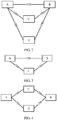
- a bandwidth of a link AB between a node A and a node B is 10M
- the node A and the node B may further be connected by using a node C and a node D
- bandwidths of a link AC, a link BC, a link AD, and a link BD are all 10M.
- a network resource that a TC allocates to a CC1 is as follows: 5M for the link AB, 5M for the link AC, and 5M for the link BC.
- a virtual network topology is shown in FIG. 3 .
- a network resource that a TC allocates to a CC2 is as follows: 2M for the link AC, 2M for the link BC, 7M for the link AD, and 7M for the link BD.
- a virtual network topology is shown in FIG. 4 .
- a CC may control and manage its own virtual network topology resources. For example, a CC1 may allocate a path A-C-B to bear a service 1, and allocate a path A-B to bear a service 2. The CC can establish/delete/change/query the virtual network topology resource of the CC. A resource that is not allocated to any service is put into a resource pool of the CC for centralized scheduling and management by the CC.
- a TC In addition to maintaining a physical network resource allocation status and global network topology information, and putting a resource that is not allocated to any CC into a resource pool for centralized scheduling and management, a TC further records a current virtual network resource allocation status of each CC. For example, the TC records that the CC1 allocates the path A-C-B to bear the service 1 and allocates the path A-B to bear the service 2; and the TC further records bandwidths respectively occupied by the service 1 and the service 2.
- a CC needs to perform online optimization on a service.
- both a service 1 and a service 2 are from a node A to a node B, the service 1 passes through a path A-B, and the service 2 passes through a path A-C-B (it is assumed that bandwidths occupied by the service 1 and the service 2 are the same and are both 10M).
- Online optimization is performed according to a user requirement, which requires the service 1 to pass through the path A-C-B, and the service 2 to pass through the path A-B.
- the service 1 passes through the path A-C-B and the service 2 passes through the path A-B by means of three times of establishment-before-disconnection.
- an existing manner may be processed as following:
- an embodiment of the present invention provides a service optimization solution, so as to reduce a service interruption phenomenon in a service optimization process.
- a core of the service optimization solution provided in this embodiment of the present invention is: a CC sends an optimization request to a TC to request a temporary resource in a TC resource pool, and a TC tries its best to allocate the temporary resource, so as to help the CC implement service optimization without service interruption.
- the service optimization solution provided in this embodiment of the present invention may be applied to the following scenario.
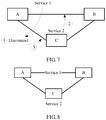
- a virtual topology of a network of a CC1 is shown in FIG. 8 , and includes three nodes (A, B, and C) and two services (a service 1 and a service 2). It is assumed that bandwidths of the two services are the same.
- Both the service 1 and the service 2 are from a node A to a node B: the service 1 passes through a path A-B, and the service 2 passes through a path A-C-B.
- the CC1 After checking all of its own virtual resources, the CC1 determines that if the CC1 needs to complete service online optimization (for example, exchange between a service 1 and a service 2) on a virtual topology, at least one service needs to be interrupted (that is, the service 1 and the service 2 cannot be adjusted, by using an available virtual resource of the CC1, to a to-pass-through path/route without service interruption).
- service optimization solution provided in this embodiment of the present invention, there may be the following interaction process between the CC1 and a TC (refer to FIG. 9 ).
- the CC1 sends an optimization request to a TC.
- the optimization request may carry identification information of a service (for example, a service ID) and information about a route that the service needs to pass through.
- the information about the route may carry node information about a node that the service passes through, and the node includes a start node (a source node) and an end node (a sink node).
- the optimization request may include the following content:
- the foregoing optimization request may include some adjusted routes in a route that a service needs to pass through.
- the TC records a current virtual network resource allocation status of each CC. Therefore, the optimization request may not include a current route (path) of a service, and the TC may learn a current route of the service identified in the optimization request by searching for a record.
- the foregoing optimization request may also include the current route (path) of the service, so that the TC does not need to search for a record.
- the TC checks a resource pool, and determines whether an idle resource in the resource pool can meet an optimization requirement of a CC.
- the resource pool may include a TC resource pool and a CC resource pool.
- the idle resource may include an idle resource (a path, and a bandwidth of a path) between the source node and the sink node. For example, if an optimization request includes "a service 1: (a route that the service 1 needs to pass through) A-C-B; and a service 2: (a route that the service 2 needs to pass through) A-B", the TC checks a path between a source node A and a sink node B and the bandwidth of the path.
- the determining whether an idle resource in the resource pool can meet an optimization requirement of a CC may specifically include: determining whether an idle resource between the start node and the end node in the resource pool meets the optimization requirement of the CC.
- the optimization requirement of the CC may specifically include: adjusting, the service identified in the optimization request to the route that the service needs to pass through without service interruption.
- the TC sends an answer message to the CC1 when finding that there is still an idle resource in a route between a source node and a sink node of a service 1, and the idle resource may be used to help the CC1 complete online optimization without service interruption (that is, the idle resource in the resource pool can meet the optimization requirement of the CC).
- the answer message may carry identification information of a service and an optimization policy that meets the optimization requirement of the CC.
- the foregoing optimization policy may include an indication of a path disconnection and establishment sequence for at least one service.
- the answer message that is sent by the TC to the CC1 may include:
- the path whose route is A-E-B is not a path in a virtual network topology of the CC1. Therefore, the path whose route is A-E-B does not need to be included in the answer message and is simply replaced by using "a TC route" (or another equivalent term).
- the CC1 After receiving the answer message, the CC1 initiates an optimization instruction to the TC.
- the optimization instruction carries the identification information of the service and an optimization policy that meets the optimization requirement of the CC.
- the optimization policy in the optimization instruction is consistent with the optimization policy in the answer message, and may indicate a path disconnection and establishment sequence for at least one service.
- the TC optimizes, according to an optimization policy in the optimization instruction, the service identified in the optimization instruction.
- the service identified in the optimization instruction is adjusted, by using the idle resource in the resource pool, to a to-pass-through route without service interruption.
- the optimization instruction received by the TC may include identification information of a single service and an optimization policy for the single service, and that "the TC optimizes, according to an optimization policy in the optimization instruction, the service identified in the optimization instruction" may specifically include: optimizing, by the TC, the single service according to the optimization policy in the optimization instruction.
- the optimization instruction received by the TC may include identification information of multiple services and an optimization policy for the multiple services, and that "the TC optimizes, according to an optimization policy in the optimization instruction, the service identified in the optimization instruction" may specifically include: optimizing, by the TC, the multiple services according to the optimization policy in the optimization instruction.
- steps S904 and S905 may further be refined into a multi-step interaction process.
- FIG. 10 is still used as an example, and an interaction process between the CC1 and the TC is as follows:
- a service 1 and a service 2 may be optimized without service interruption by means of the foregoing interaction.
- the foregoing steps S903 to S905 are performed only when the idle resource in the resource pool can meet the optimization requirement of the CC. If the idle resource in the resource pool cannot meet the optimization requirement of the CC, the TC may return an optimization failure message.
- the TC may return an optimization failure message. For a corresponding interaction process, refer to FIG. 11 .
- the foregoing optimization request may further include authorization information, and the authorization information is used to authorize a transport controller to directly complete service optimization, so that online optimization between the TC and the CC is completed without transferring an answer message or an optimization instruction.
- an authorization flag bit may be set in the foregoing optimization request, and the authorization flag bit may be set to 0 or 1 to indicate whether authorization is granted. For example, when the authorization flag bit is set to 0, it indicates that authorization is not granted, and when the authorization flag bit is set to 1, it indicates that authorization is granted; or when the authorization flag bit is set to 0, it indicates that authorization is granted, and when the authorization flag bit is set to 1, it indicates that authorization is not granted.
- optimization request includes the authorization information
- the optimization request includes the authorization information
- FIG. 12 in a service optimization solution provided in this embodiment of the present invention, there may be the following interaction process between a CC1 and a TC.
- the CC1 sends an optimization request to the TC.
- the optimization request carries a service ID, a route that the service needs to pass through, and authorization information.
- Step S1201 is similar to step S901. Details are not described herein again.
- the TC checks a resource pool, and determines whether an idle resource in the resource pool can meet an optimization requirement of a CC.
- Step S1202 is similar to step S902. Details are not described herein again.
- the foregoing "optimizing, according to an optimization policy that meets the optimization requirement of the CC, the service identified in the optimization request” may include: adjusting, by using the idle resource in the resource pool, the service identified in the optimization request to the to-pass-through route without service interruption.
- online optimization performed by the TC is as follows:
- the service 1 and the service 2 may be optimized without service interruption by means of the foregoing interaction.
- step S1203 is performed when the idle resource in the resource pool can meet the optimization requirement of the CC. If the idle resource in the resource pool cannot meet the optimization requirement of the CC, the TC may return an optimization failure message.
- a CC may send an optimization request to a TC to use an idle network resource in a TC resource pool.
- the TC executes an optimization policy that meets the optimization requirement of the CC to help the CC implement service optimization without service interruption, so as to reduce a service interruption phenomenon in a service optimization process.
- a TC if an idle resource in a resource pool cannot meet an optimization requirement of a CC, a TC returns an optimization failure message.
- an optimization request may further include an interruption policy for a specific service, where the interruption policy is used to indicate a service that is allowed to be interrupted (which may be referred to as an interruptible service) and that is in the service identified in the optimization request.
- the TC searches for again, according to the interruption policy, a service optimization solution that meets a CC request.
- the foregoing interruption policy is further used to indicate an interruption sequence for the foregoing at least two interruptible services.
- the interruption policy may further indicate an interruption sequence of D1 to D3. It is assumed that the interruption sequence is D2, D3, and D1, the TC may subsequently interrupt these three services according to a sequence of D2->D3->D1.
- the CC When the CC formulates an interruption policy, various requirements may be considered. In an example in which a common rule in the industry is considered, the CC may formulate the interruption policy according to the following principle.
- a service of a low service priority is preferably interrupted.
- a service that occupies a key path is preferably interrupted.
- a service of a highest bandwidth is preferably interrupted.
- a service that occupies a largest quantity of resources is preferably interrupted.
- an interruption priority may be used to indicate an interruption sequence. For example, if an interruption priority of D1 to D3 is D2>D3>D1, D2 is preferably interrupted.
- an interruption policy when formulated, another aspect may further be considered.
- the formulation rule of the interruption policy is not limited in the present invention.
- the following introduces how the TC searches for again, according to an interruption policy, a service optimization solution that meets the CC request when a resource in a resource pool cannot meet an optimization requirement of the CC.
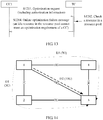
- FIG. 14 is a virtual network topology managed by a CC1.
- the D1 occupies a bandwidth of 3G
- the D2 occupies a bandwidth of 10G
- the D3 occupies a bandwidth of 7G.
- a route that the D1 and the D3 need to pass through is 1-3, and a route that the D2 needs to pass through is 1-4-3.
- the CC1 sends an optimization request to the TC.
- the optimization request carries a service ID, information about a route, authorization information, and an interruption policy.
- the service ID and a corresponding to-pass-through route carried by the optimization request include:
- An interruption priority sequence in the interruption policy is D2, D3, and D1.
- the TC optimizes, according to an optimization policy that meets the interruption policy, the service identified in the optimization request.
- a specific implementation manner of the foregoing "optimizing, according to an optimization policy that meets the interruption policy, the service identified in the optimization request” may include:
- the TC may sequentially interrupt specific services according to an interruption sequence indicated by the interruption policy till a condition for optimization without service interruption is met, or till all interruptible services are interrupted and the foregoing condition for optimization without service interruption still cannot be met.
- the foregoing condition for optimization without service interruption may include "an idle network resource in a resource pool supports that at least one service is adjusted to a to-pass-through route without service interruption”.
- a TC may preferably interrupt a service D2 according to an interruption policy. After the service D2 is interrupted, a bandwidth of 10G of a link 1-3 may be released, and an idle network resource in a resource pool of a CC1 may support that at least one service (services D1 and D3) is adjusted to a to-pass-through route without service interruption, so as to meet the foregoing condition for optimization without service interruption.
- the TC adjusts, by using an idle resource in a resource pool and in an establishment-before-disconnection manner, an uninterrupted service (that is, the service D1 and D3) to a to-pass-through route without service interruption.
- establishment-before-disconnection performed by the TC includes:
- the TC establishes, by using the resource (the service link 1-3) in the network leased by the CC, a path whose route is 1-3 for the service D1, and then the TC disconnects a path whose route is 1-4-3 of the service D3 in the network leased by the CC.
- a service optimization performed by the TC may include: establishing a to-pass-through route for the interrupted service.
- the TC disconnects the service D2
- the TC establishes a path whose route is 1-4-3 for the service D2 after establishment-before-disconnection (in this case, a path whose route is 1-4-3 is released) performed on the services D1 and D3 is completed.
- S1502 and S1503 may be concluded as follows:
- the TC optimizes, according to an optimization policy that meets the interruption policy, the service identified in the optimization request when determining that a current idle resource in a resource pool cannot meet an optimization requirement of the CC, but a condition for optimization without service interruption is met after a specific service is interrupted according to an interruption policy.
- the optimization request does not include authorization information, service interruption (disconnection), establishment-before-disconnection, reestablishment of an interrupted service, and the like between the TC and the CC1 may be completed by using an answer message and an optimization instruction.
- the optimization policy carried by the answer message is an optimization policy that meets the interruption policy.
- the answer message that is returned by the TC to the CC1 may carry the following content:
- the CC initiates a corresponding optimization instruction according to an answer packet.
- the TC may return an optimization failure message.
- the TC returns an optimization failure message when determining that a current idle resource in a resource pool cannot meet the optimization requirement of the CC, and a condition for optimization without service interruption still cannot be met after a specific service is interrupted according to the interruption policy.
- An embodiment of the present invention provides a more complex service optimization solution in the following.
- optimization without service interruption is performed on some services, and reestablishment-after-interruption is performed on other services.
- FIG. 17 is a virtual network topology managed by a CC1 in this embodiment.
- an optimization request includes an interruption policy
- a service optimization solution provided in this embodiment of the present invention, there may be the following interaction process between a CC1 and a TC.
- Step 1701. The CC1 sends an optimization request to the TC.
- the optimization request carries a service ID, information about a route, authorization information, and an interruption policy.
- an interruption sequence indicated by the interruption policy is D1, D2, D3, and D4.
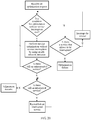
- Step 1702. The TC checks an idle resource in a resource pool, and determines whether the idle resource in the resource pool can meet an optimization requirement of a CC.
- a TC resource pool includes a 4G resource for a path 1-4-3 between a source node and a sink node and another location does not have a resource.
- this resource is referred to as a resource X in the following.
- the resource X is invisible to the CC1.
- Step 1703 The TC performs, by using the resource X as a temporary resource, online optimization on at least one service (a service D2 and a service D3) in an establishment-before-disconnection manner.
- Step 1704 The TC checks an idle resource in a resource pool, and determines whether the foregoing condition for optimization without service interruption is met.
- Step 1705 When finding that a condition for optimization without service interruption is not met, the TC interrupts, according to an interruption policy, a service to release a network resource.
- step 1703 3G of a link 1-3 is idle, 1G of a link 1-4-3 is idle, and 1G of a link 1-2-3 is idle.
- the D1 needs to occupy a bandwidth of 6G, and a D4 needs to occupy a bandwidth of 7G.
- a current idle network resource cannot support that any service is adjusted to a to-pass-through route without service interruption. Therefore, the TC interrupts, according to an interruption sequence in the interruption policy, the service D1 to release a bandwidth of 6G of the path whose route is 1-2-3.
- Step 1706 The TC checks the idle resource in the resource pool, and determines whether the foregoing condition for optimization without service interruption is met.
- Step 1707 When finding that the foregoing condition for optimization without service interruption is met, the TC performs, by using an idle network resource, online optimization on at least one service (a service D4) in an establishment-before-disconnection manner.
- D4 may be adjusted to a to-pass-through route. Then, the service D4 is adjusted to the path whose route is 1-2-3 by means of establishment-before-disconnection, and the path whose original route is 1-3 of the service D4 is released.
- the TC adjusts, by means of establishment-before-disconnection, the service D3 that is carried by using the temporary resource X to a route 1-3.
- Step 1708 For an interrupted service (the service D1), the TC establishes a corresponding to-pass-through route (establishing a route 1-3 for the service D1) for the interrupted service.
- the optimization request does not include authorization information, service interruption (disconnection), establishment-before-disconnection, reestablishment of an interrupted service, and the like between the TC and the CC1 are completed by using an answer message and an optimization instruction.
- an answer message delivered by the TC may include:
- the CC initiates a corresponding optimization instruction according to an answer packet.
- communication between a CC and a TC may be implemented based on a Protocol--PCEP (PCE Protocol, path computation element protocol) between a PCE (Path Computation Element, path computation element) and a PCC (Path Computation Client, path computation client).
- PCE Protocol path computation element protocol
- PCE Path Computation Element, path computation element
- PCC PCC
- communication between the CC and the TC may also be completed based on another communication protocol.
- Service optimization between the PCE and the PCC may be implemented in a manner similar to that used in the foregoing embodiment.
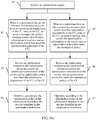
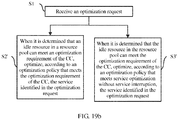
- a service optimization method performed by the TC may include the following steps: S1. Receive an optimization request.
- Sending of the optimization request may be triggered when the CC cannot adjust, by using an available virtual resource of the CC, a service to a route that the service needs to pass through without service interruption.
- the foregoing optimization request carries at least identification information of the service and a route that the service needs to pass through.
- the foregoing TC When determining that an idle resource in a resource pool can meet an optimization requirement of the foregoing CC, the foregoing TC sends an answer message to the foregoing CC, where the foregoing answer message carries the identification information of the service and an optimization policy that meets the optimization requirement of the CC.
- the foregoing TC receives an optimization instruction of the foregoing CC, where the optimization instruction carries the identification information of the service and an optimization policy that meets the optimization requirement of the CC.
- the foregoing TC optimizes, according to the optimization policy in the foregoing optimization instruction, the service identified in the foregoing optimization instruction.
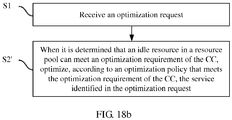
- a service optimization method performed by the TC may include the following steps: S1. Receive an optimization request.
- the foregoing optimization request carries identification information of a service, information about a route that the foregoing service needs to pass through, and authorization information.
- the authorization information is used to authorize the foregoing TC to directly complete service optimization.
- the foregoing TC optimizes, according to an optimization policy that meets the optimization requirement of the CC, the service identified in the foregoing optimization request.
- the service optimization method performed by the TC may further include: S5.
- the foregoing TC sends, to the foregoing CC, an answer message that carries the identification information of the service and an optimization policy that meets the foregoing interruption policy.
- the TC sends, to the foregoing CC, the answer message that carries the identification information of the service and the optimization policy that meets the foregoing interruption policy when determining that the idle resource in the resource pool cannot meet the optimization requirement of the foregoing CC, but a condition for optimization without service interruption may be met after the specific service is interrupted according to the interruption policy.
- the foregoing TC receives an optimization instruction of the foregoing CC, where the optimization instruction carries the identification information of the service and an optimization policy that meets the interruption policy.
- the foregoing TC optimizes, according to the optimization policy in the foregoing optimization instruction, the service identified in the foregoing optimization instruction.
- a service optimization method performed by the TC may include the following steps:
- the foregoing TC optimizes, according to an optimization policy that meets the foregoing interruption policy, the service identified in the foregoing optimization request.
- the TC optimizes, according to the optimization policy that meets the foregoing interruption policy, the service identified in the foregoing optimization request when determining that the idle resource in the resource pool cannot meet the optimization requirement of the foregoing CC, but a condition for optimization without service interruption may be met after the specific service is interrupted according to the interruption policy.
- the service identified in the foregoing optimization request may include:
- "optimizing, according to an optimization policy that meets the foregoing interruption policy, the service identified in the foregoing optimization request" in all the foregoing embodiments may further include: establishing, by the foregoing TC, a to-pass-through route for an interrupted service.
- a service optimization method performed by the TC may further include: returning an optimization failure message.
- FIG. 20 describes a process of a service optimization method from another perspective.
- a service optimization method performed by the CC may include the following steps: S211.
- the CC sends an optimization request to a TC, where the optimization request carries identification information of a service and information about a route that the service needs to pass through.
- the foregoing CC receives an answer message returned by the foregoing TC, where the foregoing answer message carries the identification information of the service and a corresponding optimization policy.
- the foregoing CC sends an optimization instruction to the foregoing TC, where the optimization instruction carries the identification information of the service and a corresponding optimization policy, and the optimization instruction is used by the foregoing TC to optimize, according to the optimization policy in the foregoing optimization instruction, the service identified in the foregoing optimization instruction.
- both the optimization policy carried by the foregoing answer message and the optimization policy carried by the foregoing optimization instruction are optimization policies that meet the optimization requirement of the CC.
- the foregoing optimization request may further carry an interruption policy for a specific service.
- the foregoing TC determines that the idle resource in the resource pool cannot meet the optimization requirement of the foregoing CC
- both the optimization policy carried by the foregoing answer message and the optimization policy carried by the foregoing optimization instruction are optimization policies that meet the foregoing interruption policy.
- both the optimization policy carried by the foregoing answer message and the optimization policy carried by the foregoing optimization instruction are optimization policies that meet the foregoing interruption policy.
- an embodiment of the present invention further claims a transport controller (TC).
- the TC may include:
- both the optimization policy carried by the foregoing answer message and the optimization policy carried by the foregoing optimization instruction are optimization policies that meet the optimization requirement of the CC.
- the optimization request in all the foregoing embodiments may further carry an interruption policy for a specific service.
- the foregoing processor 2204 determines that the idle resource in the resource pool cannot meet the optimization requirement of the foregoing CC, both the optimization policy carried by the foregoing answer message and the optimization policy carried by the foregoing optimization instruction are optimization policies that meet the foregoing interruption policy.
- both the optimization policy carried by the foregoing answer message and the optimization policy carried by the foregoing optimization instruction are optimization policies that meet the foregoing interruption policy when the processor 2204 determines that the idle resource in the resource pool cannot meet the optimization requirement of the foregoing CC, but a condition for optimization without service interruption may be met after the specific service is interrupted according to the interruption policy.
- the transport controller may include:
- the optimization request in all the foregoing embodiments may further carry an interruption policy for a specific service.
- the foregoing processor 2302 may further configured to: when determining that the idle resource in the resource pool cannot meet the optimization requirement of the foregoing CC, optimize, according to the optimization policy that meets the interruption policy, the service identified in the foregoing optimization request.
- an embodiment of the present invention further claims a client controller (CC).
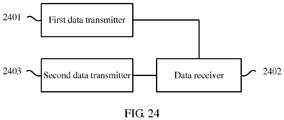
- CC may include:
- both the optimization policy carried by the foregoing answer message and the optimization policy carried by the foregoing optimization instruction are optimization policies that meet the optimization requirement of the CC.
- the optimization request in all the foregoing embodiments may further carry an interruption policy for a specific service.
- the TC determines that the idle resource in the resource pool cannot meet the optimization requirement of the foregoing CC
- both the optimization policy carried by the foregoing answer message and the optimization policy carried by the foregoing optimization instruction are optimization policies that meet the foregoing interruption policy.
- both the optimization policy carried by the foregoing answer message and the optimization policy carried by the foregoing optimization instruction are optimization policies that meet the foregoing interruption policy.
- an embodiment of the present invention further claims a service optimization system, including a transport controller (TC) and a client controller (CC).
- TC transport controller
- CC client controller
- the foregoing CC is configured to: send an online optimization request to the foregoing TC, where the optimization request carries identification information of a service and information about a route that the service needs to pass through; receive an answer message that is of the foregoing TC and that carries the identification information of the service and a corresponding optimization policy; and send an optimization instruction to the foregoing TC, where the optimization instruction carries the identification information of the service and a corresponding optimization policy.
- the foregoing TC is configured to: when determining that an idle resource in a resource pool can meet an optimization requirement of the foregoing CC, send the foregoing answer message to the foregoing CC, and optimize, according to the optimization policy in the foregoing optimization instruction, the service identified in the foregoing optimization instruction.
- both the optimization policy carried by the foregoing answer message and the optimization policy carried by the foregoing optimization instruction are optimization policies that meet the optimization requirement of the CC.
- the optimization request in all the foregoing embodiments may further carry an interruption policy for a specific service.
- the TC determines that the idle resource in the resource pool cannot meet the optimization requirement of the foregoing CC
- both the optimization policy carried by the foregoing answer message and the optimization policy carried by the foregoing optimization instruction are optimization policies that meet the foregoing interruption policy.
- both the optimization policy carried by the foregoing answer message and the optimization policy carried by the foregoing optimization instruction are optimization policies that meet the foregoing interruption policy.
- the present invention may be implemented by software plus necessary universal hardware, where the universal hardware includes a universal integrated circuit, a universal CPU, a universal memory, a universal device, and the like, and definitely may also be implemented by application-specific hardware, like an application-specific integrated circuit, an application-specific CPU, an application-specific memory, an application-specific device, and the like, but in many cases, the former one is preferred.
- the essence of the technical solutions of the present invention or the part that makes contributions to the prior art can be embodied in a software product.
- the computer software product may be stored in a readable storage medium such as a USB flash disk, a mobile hard disk, a read-only memory (ROM, Read-Only Memory), a random access memory (RAM, Random Access Memory), a magnetic disk, or an optical disc, where the storage medium incorporates several instructions causing a computer device (such as a personal computer, a server, or a network device) to perform the method specified in each embodiment of the present invention.
- a computer device such as a personal computer, a server, or a network device
Landscapes
- Engineering & Computer Science (AREA)
- Computer Networks & Wireless Communication (AREA)
- Signal Processing (AREA)
- Computer Security & Cryptography (AREA)
- Data Exchanges In Wide-Area Networks (AREA)
Claims (13)
- Dienstoptimierungsverfahren, umfassend:Empfangen (S1), durch ein Transportsteuergerät (Transport Controller, TC), einer Optimierungsanforderung von einem Kundensteuergerät (Client Controller, CC), wobei die Optimierungsanforderung eine Identifikationsinformation eines Diensts und eine Information über eine Route, die der Dienst durchlaufen muss, überträgt;Senden (S2), durch das TC, einer Antwortnachricht an das CC, wenn bestimmt wird, dass eine inaktive Ressource in einem Ressourcenpool eine Optimierungsbedingung des CC erfüllen kann, wobei die Antwortnachricht die Identifikationsinformation des Diensts und eine Optimierungsrichtlinie überträgt, welche die Optimierungsbedingung des CC erfüllt;Empfangen (S3), durch das TC, einer Optimierungsanweisung des CC, wobei die Optimierungsanweisung die Identifikationsinformation des Diensts und eine entsprechende Optimierungsrichtlinie, welche die Optimierungsbedingung des CC erfüllt, überträgt; undOptimieren (S4), durch das TC gemäß der Optimierungsrichtlinie in der Optimierungsanweisung, des in der Optimierungsanweisung identifizierten Diensts, dadurch gekennzeichnet, dass die Optimierungsrichtlinie, welche die Optimierungsbedingung des CC erfüllt, verwendet wird, um die Herstellung vor der Verbindungstrennung anzuzeigen, d. h., wenn eine optimierte Dienstverbindung erfolgreich hergestellt wird, der ursprüngliche Dienstpfad des Diensts getrennt wird.
- Verfahren nach Anspruch 1, wobei die Optimierungsanforderung ferner eine Unterbrechungsrichtlinie für einen bestimmten Dienst überträgt, und das Verfahren ferner umfasst:wenn bestimmt wird, dass die inaktive Ressource in dem Ressourcenpool die Optimierungsbedingung des CC nicht erfüllen kann, Senden, durch das TC an das CC, einer Antwortnachricht, welche die Identifikationsinformation des Diensts und die Optimierungsrichtlinie, welche die Unterbrechungsrichtlinie erfüllt, überträgt;Empfangen, durch das TC, einer Optimierungsanweisung des CC, wobei die Optimierungsanweisung die Identifikationsinformation des Diensts und eine entsprechende Optimierungsrichtlinie, welche die Unterbrechungsrichtlinie erfüllt, überträgt; undOptimieren, durch das TC gemäß der Optimierungsrichtlinie in der Optimierungsanweisung, des in der Optimierungsanweisung identifizierten Diensts.
- Dienstoptimierungsverfahren, umfassend:Empfangen (S1), durch ein Transportsteuergerät (TC), einer Optimierungsanforderung von einem Kundensteuergerät (CC), wobei die Optimierungsanforderung eine Identifikationsinformation eines Diensts und eine Information über eine Route, die der Dienst durchlaufen muss, überträgt; undOptimieren (S2'), gemäß einer Optimierungsrichtlinie, die eine Optimierungsbedingung des CC erfüllt, des in der Optimierungsanforderung identifizierten Diensts, wenn das TC bestimmt, dass eine inaktive Ressource in einem Ressourcenpool die Optimierungsbedingung des CC erfüllen kann, dadurch gekennzeichnet, dass die Optimierungsanforderung auch eine Autorisierungsinformation überträgt, und die Autorisierungsinformation verwendet wird, das TC zu autorisieren, die Dienstoptimierung direkt abzuschließen, und dass die Optimierungsrichtlinie, welche die Optimierungsbedingung des CC erfüllt, dazu verwendet wird, um die Herstellung vor der Verbindungstrennung anzuzeigen, d. h., wenn eine optimierte Dienstverbindung erfolgreich hergestellt wird, der ursprüngliche Dienstpfad des Diensts getrennt wird.
- Verfahren nach Anspruch 3, wobei das Optimieren, gemäß einer Optimierungsrichtlinie, die eine Optimierungsbedingung des CC erfüllt, des in der Optimierungsanforderung identifizierten Diensts umfasst:
Anpassen, unter Verwendung der inaktive Ressource in dem Ressourcenpool, des in der Optimierungsanweisung identifizierten Diensts an die zu durchlaufende Route ohne Dienstunterbrechung. - Dienstoptimierungsverfahren, umfassend:Senden (S211), durch ein Kundensteuergerät (CC), einer Optimierungsanforderung an ein Transportsteuergerät (TC), wobei die Optimierungsanforderung eine Identifikationsinformation eines Diensts und eine Information über eine Route, die der Dienst durchlaufen muss, überträgt;Empfangen (S212), durch das CC, einer von dem TC zurückgesendeten Antwortnachricht, wobei die Antwortnachricht die Identifikationsinformation des Diensts und eine entsprechende Optimierungsrichtlinie überträgt; undSenden (S213), durch das CC, einer Optimierungsanweisung an das TC, wobei die Optimierungsanweisung die Identifikationsinformation des Diensts und eine entsprechende Optimierungsrichtlinie überträgt und die Optimierungsanweisung von dem TC verwendet wird, um gemäß der Optimierungsrichtlinie in der Optimierungsanweisung den in der Optimierungsanweisung identifizierten Dienst zu optimieren; wobeiwenn das TC bestimmt, dass eine inaktive Ressource in einem Ressourcenpool die Optimierungsbedingung des CC erfüllen kann, sowohl die von der Antwortnachricht übertragene Optimierungsrichtlinie als auch die von der Optimierungsanweisung übertragene Optimierungsrichtlinie Optimierungsrichtlinien sind, welche die Optimierungsbedingung des CC erfüllen, dadurch gekennzeichnet, dass die Optimierungsrichtlinie, welche die Optimierungsbedingung des CC erfüllt, verwendet wird, um die Herstellung vor der Verbindungstrennung anzuzeigen, d. h., wenn eine optimierte Dienstverbindung erfolgreich hergestellt wird, der ursprüngliche Dienstpfad des Diensts getrennt wird.
- Verfahren nach Anspruch 5, wobei:die Optimierungsanforderung ferner eine Unterbrechungsrichtlinie für einen bestimmten Dienst überträgt; undwenn das TC bestimmt, dass die inaktive Ressource in dem Ressourcenpool die Optimierungsbedingung des CC nicht erfüllen kann, sowohl die von der Antwortnachricht übertragene Optimierungsrichtlinie als auch die von der Optimierungsanweisung übertragene Optimierungsrichtlinie Optimierungsrichtlinien sind, welche die Unterbrechungsrichtlinie erfüllen.
- Transportsteuergerät, umfassend:einen ersten Datenempfänger (2201), der konfiguriert ist, um eine Optimierungsanforderung von einem Kundensteuergerät (CC) zu empfangen, wobei die Optimierungsanforderung eine Identifikationsinformation eines Diensts und eine Information über eine Route, die der Dienst durchlaufen muss, überträgt;einen Datensender (2202), der konfiguriert ist, um eine Antwortnachricht an das CC zu senden, wenn ein Prozessor bestimmt, dass eine inaktive Ressource in einem Ressourcenpool eine Optimierungsbedingung des CC erfüllen kann, wobei die Antwortnachricht die Identifikationsinformation des Diensts und eine entsprechende Optimierungsrichtlinie überträgt;einen zweiten Datenempfänger (2203), der konfiguriert ist, um eine Optimierungsanweisung des CC zu empfangen, wobei die Optimierungsanweisung die Identifikationsinformation des Diensts und eine entsprechende Optimierungsrichtlinie überträgt; undeinen Prozessor (2204), der konfiguriert ist, um gemäß der Optimierungsrichtlinie in der Optimierungsanweisung den in der Optimierungsanweisung identifizierten Dienst zu optimieren; wobeiwenn der Prozessor (2204) bestimmt, dass die inaktive Ressource in dem Ressourcenpool die Optimierungsbedingung des CC erfüllen kann, sowohl die von der Antwortnachricht übertragene Optimierungsrichtlinie als auch die von der Optimierungsanweisung übertragene Optimierungsrichtlinie Optimierungsrichtlinien sind, welche die Optimierungsbedingung des CC erfüllen, dadurch gekennzeichnet, dass die Optimierungsrichtlinie, welche die Optimierungsbedingung des CC erfüllt, verwendet wird, um die Herstellung vor der Verbindungstrennung anzuzeigen, d. h., wenn eine optimierte Dienstverbindung erfolgreich hergestellt wird, der ursprüngliche Dienstpfad des Diensts getrennt wird.
- Transportsteuergerät nach Anspruch 7, wobei:die Optimierungsanforderung ferner eine Unterbrechungsrichtlinie für einen bestimmten Dienst überträgt; undwenn der Prozessor (2204) bestimmt, dass die inaktive Ressource in dem Ressourcenpool die Optimierungsbedingung des CC nicht erfüllen kann, sowohl die von der Antwortnachricht übertragene Optimierungsrichtlinie als auch die von der Optimierungsanweisung übertragene Optimierungsrichtlinie Optimierungsrichtlinien sind, welche die Unterbrechungsrichtlinie erfüllen.
- Transportsteuergerät, umfassend:einen Datenempfänger (2301), der konfiguriert ist, um eine Optimierungsanforderung von einem Kundensteuergerät (CC) zu empfangen, wobei die Optimierungsanforderung eine Identifikationsinformation eines Diensts und eine Information über eine Route, die der Dienst durchlaufen muss, überträgt; undeinen Prozessor (2302), der konfiguriert ist, um gemäß einer Optimierungsrichtlinie, die eine Optimierungsbedingung des CC erfüllt, den in der Optimierungsanforderung identifizierten Dienst zu optimieren, wenn bestimmt wird, dass eine inaktive Ressource in einem Ressourcenpool die Optimierungsbedingung des CC erfüllen kann, dadurch gekennzeichnet, dass die Optimierungsanforderung auch eine Autorisierungsinformation überträgt, und die Autorisierungsinformation verwendet wird, das TC zu autorisieren, die Dienstoptimierung direkt abzuschließen, und dass die Optimierungsrichtlinie, welche die Optimierungsbedingung des CC erfüllt, verwendet wird, um die Herstellung vor der Verbindungstrennung anzuzeigen, d. h., wenn eine optimierte Dienstverbindung erfolgreich hergestellt wird, der ursprüngliche Dienstpfad des Diensts getrennt wird.
- Transportsteuergerät nach Anspruch 9, wobei:
der Prozessor (2302) konfiguriert ist, um unter Verwendung der inaktive Ressource in dem Ressourcenpool den in der Optimierungsanweisung identifizierten Dienst an die zu durchlaufende Route ohne Dienstunterbrechung anzupassen. - Kundensteuergerät, umfassend:einen ersten Datensender (2401), der konfiguriert ist, um eine Optimierungsanforderung an ein verbundenes Transportsteuergerät (TC) zu senden, wobei die Optimierungsanforderung eine Identifikationsinformation eines Diensts und eine Information über eine Route, die der Dienst durchlaufen muss, überträgt;einen Datenempfänger (2402), der konfiguriert ist, um eine Antwortnachricht zu empfangen, die von dem TC stammt und die Identifikationsinformation des Diensts und eine Optimierungsrichtlinie überträgt; undeinen zweiten Datensender (2403), der konfiguriert ist, um eine Optimierungsanweisung an das TC zu senden, wobei die Optimierungsanweisung die Identifikationsinformation des Diensts und eine entsprechende Optimierungsrichtlinie überträgt, und die Optimierungsanweisung von dem TC verwendet wird, um gemäß der Optimierungsrichtlinie in der Optimierungsanweisung den in der Optimierungsanweisung identifizierten Dienst zu optimieren; wobeiwenn das TC bestimmt, dass eine inaktive Ressource in einem Ressourcenpool die Optimierungsbedingung des CC erfüllen kann, sowohl die von der Antwortnachricht übertragene Optimierungsrichtlinie als auch die von der Optimierungsanweisung übertragene Optimierungsrichtlinie Optimierungsrichtlinien sind, welche die Optimierungsbedingung des CC erfüllen, dadurch gekennzeichnet, dass die Optimierungsrichtlinie, welche die Optimierungsbedingung des CC erfüllt, verwendet wird, um die Herstellung vor der Verbindungstrennung anzuzeigen, d. h., wenn eine optimierte Dienstverbindung erfolgreich hergestellt wird, der ursprüngliche Dienstpfad des Diensts getrennt wird.
- Kundensteuergerät nach Anspruch 11, wobei:die Optimierungsanforderung ferner eine Unterbrechungsrichtlinie für einen bestimmten Dienst überträgt; undwenn das TC bestimmt, dass die inaktive Ressource in dem Ressourcenpool die Optimierungsbedingung des CC nicht erfüllen kann, sowohl die von der Antwortnachricht übertragene Optimierungsrichtlinie als auch die von der Optimierungsanweisung übertragene Optimierungsrichtlinie Optimierungsrichtlinien sind, welche die Unterbrechungsrichtlinie erfüllen.
- aDienstoptimierungssystem, umfassend ein Transportsteuergerät (TC) nach einem der Ansprüche 7 bis 10 und ein Kundensteuergerät (CC) nach einem der Ansprüche 11 oder 12, wobei:das CC konfiguriert ist, um: eine Online-Optimierungsanforderung an das TC zu senden (S211), wobei die Optimierungsanforderung eine Identifikationsinformation eines Diensts und eine Information über eine Route, die der Dienst durchlaufen muss, überträgt; eine Antwortnachricht zu empfangen (S212), die von dem TC stammt und die Identifikationsinformation des Diensts und eine Optimierungsrichtlinie, die eine Optimierungsbedingung des CC erfüllt, überträgt; und eine Optimierungsanweisung an das TC zu senden (S213), wobei die Optimierungsanweisung die Identifikationsinformation des Diensts und eine Optimierungsrichtlinie, welche die Optimierungsbedingung des CC erfüllt, überträgt; unddas TC konfiguriert ist, um: wenn bestimmt wird, dass eine Ressource in einem Ressourcenpool die Optimierungsanforderung des CC erfüllen kann, eine Antwortnachricht an das CC zu senden (S2);und gemäß der Optimierungsrichtlinie in der Optimierungsanweisung, den in der Optimierungsanweisung identifizierten Dienst zu optimieren (S2, S2'), dadurch gekennzeichnet, dass die Optimierungsrichtlinie, welche die Optimierungsbedingung des CC erfüllt, verwendet wird, um die Herstellung vor der Verbindungstrennung anzuzeigen, d. h., wenn eine optimierte Dienstverbindung erfolgreich hergestellt wird, der ursprüngliche Dienstpfad des Diensts getrennt wird.
Applications Claiming Priority (1)
| Application Number | Priority Date | Filing Date | Title |
|---|---|---|---|
| PCT/CN2014/088473 WO2016058118A1 (zh) | 2014-10-13 | 2014-10-13 | 业务优化方法、传输网控制器、客户控制器及系统 |
Publications (3)
| Publication Number | Publication Date |
|---|---|
| EP3197111A1 EP3197111A1 (de) | 2017-07-26 |
| EP3197111A4 EP3197111A4 (de) | 2017-10-18 |
| EP3197111B1 true EP3197111B1 (de) | 2019-05-01 |
Family
ID=55745937
Family Applications (1)
| Application Number | Title | Priority Date | Filing Date |
|---|---|---|---|
| EP14904040.4A Active EP3197111B1 (de) | 2014-10-13 | 2014-10-13 | Dienstoptimierungsverfahren, übermittlungssteuergeräte, kundensteuergerät und system |
Country Status (4)
| Country | Link |
|---|---|
| US (1) | US10715390B2 (de) |
| EP (1) | EP3197111B1 (de) |
| CN (1) | CN106464609B (de) |
| WO (1) | WO2016058118A1 (de) |
Families Citing this family (1)
| Publication number | Priority date | Publication date | Assignee | Title |
|---|---|---|---|---|
| CN110831155B (zh) * | 2018-08-07 | 2023-04-07 | 中国移动通信有限公司研究院 | 一种信息传输方法、设备及系统 |
Family Cites Families (22)
| Publication number | Priority date | Publication date | Assignee | Title |
|---|---|---|---|---|
| US8174970B2 (en) * | 2003-05-15 | 2012-05-08 | At&T Intellectual Property I, L.P. | Methods of implementing dynamic QoS and/or bandwidth provisioning and related data networks, data service providers, routing gateways, and computer program products |
| US8316130B2 (en) * | 2004-12-22 | 2012-11-20 | International Business Machines Corporation | System, method and computer program product for provisioning of resources and service environments |
| CN1802030B (zh) * | 2005-01-07 | 2010-04-28 | 华为技术有限公司 | 业务路径调整优化方法 |
| WO2007073654A1 (en) * | 2005-12-28 | 2007-07-05 | Huawei Technologies Co., Ltd. | Method for realizing mobile ip management and the network system thereof |
| EP2048834A1 (de) * | 2007-10-08 | 2009-04-15 | Siemens Aktiengesellschaft | Verfahren, Netzwerke und Netzknoten zur Auswahl einer Route |
| ATE515133T1 (de) | 2007-07-26 | 2011-07-15 | Siemens Ag | Verfahren, netzwerke und netzknoten zur auswahl einer route |
| EP2241087A1 (de) * | 2008-01-23 | 2010-10-20 | Telefonaktiebolaget L M Ericsson (publ) | Verfahren und vorrichtung zum pooling von netzbetriebsmitteln |
| US8665709B2 (en) * | 2009-06-09 | 2014-03-04 | Ciena Corporation | Use of 1:1 protection state machine for load sharing and alternative protection schemes |
| US9143813B2 (en) * | 2010-02-11 | 2015-09-22 | Beaumaris Networks Inc. | Multi-video-service bandwidth allocation |
| CN102546379B (zh) * | 2010-12-27 | 2014-12-31 | 中国移动通信集团公司 | 一种虚拟化资源调度的方法及虚拟化资源调度系统 |
| CN103124436B (zh) * | 2011-11-18 | 2015-09-09 | 华为技术有限公司 | 一种无线通讯系统、云虚拟基站和资源调度方法 |
| EP2810404B1 (de) * | 2012-01-30 | 2015-12-16 | Telefonaktiebolaget L M Ericsson (publ) | Verfahren und knoten zur verwaltung von netzwerkressourcen sowie entsprechendes system und computerprogramm |
| US9032077B1 (en) * | 2012-06-28 | 2015-05-12 | Amazon Technologies, Inc. | Client-allocatable bandwidth pools |
| JP5883743B2 (ja) * | 2012-08-20 | 2016-03-15 | 株式会社日立製作所 | パケット通信網における通信途絶時間短縮方法 |
| US9515899B2 (en) * | 2012-12-19 | 2016-12-06 | Veritas Technologies Llc | Providing optimized quality of service to prioritized virtual machines and applications based on quality of shared resources |
| CN103067298B (zh) * | 2013-01-30 | 2016-03-30 | 华为技术有限公司 | 一种网络流量分担的方法及系统 |
| CN103473117A (zh) * | 2013-09-18 | 2013-12-25 | 北京思特奇信息技术股份有限公司 | 云模式下的虚拟化方法 |
| US9491094B2 (en) * | 2013-09-25 | 2016-11-08 | Cisco Techonology, Inc. | Path optimization in distributed service chains in a network environment |
| US9760428B1 (en) * | 2013-12-19 | 2017-09-12 | Amdocs Software Systems Limited | System, method, and computer program for performing preventative maintenance in a network function virtualization (NFV) based communication network |
| US10172068B2 (en) * | 2014-01-22 | 2019-01-01 | Cisco Technology, Inc. | Service-oriented routing in software-defined MANETs |
| CN104065745A (zh) * | 2014-07-07 | 2014-09-24 | 电子科技大学 | 云计算动态资源调度系统和方法 |
| KR102438042B1 (ko) * | 2014-09-25 | 2022-08-29 | 애플 인크. | 네트워크 기능 가상화 |
-
2014
- 2014-10-13 EP EP14904040.4A patent/EP3197111B1/de active Active
- 2014-10-13 WO PCT/CN2014/088473 patent/WO2016058118A1/zh not_active Ceased
- 2014-10-13 CN CN201480077872.6A patent/CN106464609B/zh active Active
-
2017
- 2017-04-12 US US15/486,056 patent/US10715390B2/en active Active
Non-Patent Citations (1)
| Title |
|---|
| None * |
Also Published As
| Publication number | Publication date |
|---|---|
| CN106464609A (zh) | 2017-02-22 |
| EP3197111A4 (de) | 2017-10-18 |
| CN106464609B (zh) | 2019-09-13 |
| EP3197111A1 (de) | 2017-07-26 |
| US20170222879A1 (en) | 2017-08-03 |
| US10715390B2 (en) | 2020-07-14 |
| WO2016058118A1 (zh) | 2016-04-21 |
Similar Documents
| Publication | Publication Date | Title |
|---|---|---|
| US11284126B2 (en) | Method and system for streaming media live broadcast | |
| KR101887581B1 (ko) | 플로우 기반의 패킷 전송 장치 및 그것의 패킷 처리 방법 | |
| CN109417829B (zh) | 用于确定簇头的方法和设备 | |
| EP2993838A1 (de) | Verfahren zur einstellung der identität einer gateway-vorrichtung und verwaltung einer gateway-vorrichtung | |
| US20110122779A1 (en) | Self-management of mobility management entity (mme) pools | |
| US10225854B2 (en) | Enhancements to resource allocation for MBSFN transmission in an MBSFN area | |
| WO2016084114A1 (en) | Mechanism for quick connection in wireless peer to peer networks | |
| CN108370497B (zh) | 无线回传的实现方法、装置及基站 | |
| US20180184470A1 (en) | Wireless backhaul connection establishment method and apparatus | |
| WO2015132813A1 (en) | Group reformation mechanism for reducing disruption time in wireless peer to peer networks | |
| US20190356742A1 (en) | Application function control of ip address allocation | |
| CN112690014B (zh) | 操作网络管理节点的方法、网络管理节点和数据载体 | |
| US9350606B2 (en) | System and method for assigning server to terminal and efficiently delivering messages to the terminal | |
| US20180098208A1 (en) | Scheduled group reformation among multiple p2p groups following switching schedule | |
| CN103248463A (zh) | 一种传输帧信息的方法及设备 | |
| EP3197111B1 (de) | Dienstoptimierungsverfahren, übermittlungssteuergeräte, kundensteuergerät und system | |
| US11700189B2 (en) | Method for performing task processing on common service entity, common service entity, apparatus and medium for task processing | |
| Tata et al. | Efficient Priority Access to the shared commercial radio with offloading for public safety in LTE heterogeneous networks | |
| Vaishnavi et al. | Performance evaluation of mobile edge computing using 5G networks | |
| CN117650975A (zh) | 容灾均衡方法、装置、设备及存储介质 | |
| US20140140207A1 (en) | System and method for reducing loads of mobility management entity (mme) in core networks | |
| WO2016090637A1 (zh) | 基带资源管理方法及装置 | |
| Wu et al. | Maximum tolerable-delay redistribution approaches with network resource scheduling in edge-cloud elastic optical networks | |
| CN109347966B (zh) | 一种服务器集群通讯方法及终端设备及通讯服务器 | |
| EP4531372A1 (de) | Verfahren zur optimierung des routings einer nachricht und vorrichtungen dafür |
Legal Events
| Date | Code | Title | Description |
|---|---|---|---|
| STAA | Information on the status of an ep patent application or granted ep patent |
Free format text: STATUS: THE INTERNATIONAL PUBLICATION HAS BEEN MADE |
|
| PUAI | Public reference made under article 153(3) epc to a published international application that has entered the european phase |
Free format text: ORIGINAL CODE: 0009012 |
|
| STAA | Information on the status of an ep patent application or granted ep patent |
Free format text: STATUS: REQUEST FOR EXAMINATION WAS MADE |
|
| 17P | Request for examination filed |
Effective date: 20170420 |
|
| AK | Designated contracting states |
Kind code of ref document: A1 Designated state(s): AL AT BE BG CH CY CZ DE DK EE ES FI FR GB GR HR HU IE IS IT LI LT LU LV MC MK MT NL NO PL PT RO RS SE SI SK SM TR |
|
| AX | Request for extension of the european patent |
Extension state: BA ME |
|
| A4 | Supplementary search report drawn up and despatched |
Effective date: 20170914 |
|
| RIC1 | Information provided on ipc code assigned before grant |
Ipc: H04L 29/08 20060101ALI20170908BHEP Ipc: H04L 12/803 20130101ALI20170908BHEP Ipc: H04L 12/24 20060101ALI20170908BHEP Ipc: H04W 16/18 20090101ALI20170908BHEP Ipc: H04W 28/06 20090101ALI20170908BHEP Ipc: H04L 12/923 20130101AFI20170908BHEP |
|
| DAX | Request for extension of the european patent (deleted) | ||
| REG | Reference to a national code |
Ref country code: DE Ref legal event code: R079 Ref document number: 602014046057 Country of ref document: DE Free format text: PREVIOUS MAIN CLASS: H04L0012923000 Ipc: H04L0012725000 |
|
| STAA | Information on the status of an ep patent application or granted ep patent |
Free format text: STATUS: EXAMINATION IS IN PROGRESS |
|
| 17Q | First examination report despatched |
Effective date: 20180622 |
|
| RIC1 | Information provided on ipc code assigned before grant |
Ipc: H04L 12/725 20130101AFI20180618BHEP Ipc: H04L 12/923 20130101ALI20180618BHEP Ipc: H04W 16/18 20090101ALI20180618BHEP Ipc: H04L 12/803 20130101ALI20180618BHEP Ipc: H04L 12/24 20060101ALI20180618BHEP Ipc: H04L 29/08 20060101ALI20180618BHEP Ipc: H04W 28/06 20090101ALI20180618BHEP |
|
| GRAP | Despatch of communication of intention to grant a patent |
Free format text: ORIGINAL CODE: EPIDOSNIGR1 |
|
| STAA | Information on the status of an ep patent application or granted ep patent |
Free format text: STATUS: GRANT OF PATENT IS INTENDED |
|
| INTG | Intention to grant announced |
Effective date: 20181116 |
|
| GRAS | Grant fee paid |
Free format text: ORIGINAL CODE: EPIDOSNIGR3 |
|
| GRAA | (expected) grant |
Free format text: ORIGINAL CODE: 0009210 |
|
| STAA | Information on the status of an ep patent application or granted ep patent |
Free format text: STATUS: THE PATENT HAS BEEN GRANTED |
|
| AK | Designated contracting states |
Kind code of ref document: B1 Designated state(s): AL AT BE BG CH CY CZ DE DK EE ES FI FR GB GR HR HU IE IS IT LI LT LU LV MC MK MT NL NO PL PT RO RS SE SI SK SM TR |
|
| REG | Reference to a national code |
Ref country code: GB Ref legal event code: FG4D |
|
| REG | Reference to a national code |
Ref country code: CH Ref legal event code: EP Ref country code: AT Ref legal event code: REF Ref document number: 1128429 Country of ref document: AT Kind code of ref document: T Effective date: 20190515 |
|
| REG | Reference to a national code |
Ref country code: DE Ref legal event code: R096 Ref document number: 602014046057 Country of ref document: DE |
|
| REG | Reference to a national code |
Ref country code: IE Ref legal event code: FG4D |
|
| REG | Reference to a national code |
Ref country code: NL Ref legal event code: MP Effective date: 20190501 |
|
| REG | Reference to a national code |
Ref country code: LT Ref legal event code: MG4D |
|
| PG25 | Lapsed in a contracting state [announced via postgrant information from national office to epo] |
Ref country code: LT Free format text: LAPSE BECAUSE OF FAILURE TO SUBMIT A TRANSLATION OF THE DESCRIPTION OR TO PAY THE FEE WITHIN THE PRESCRIBED TIME-LIMIT Effective date: 20190501 Ref country code: NL Free format text: LAPSE BECAUSE OF FAILURE TO SUBMIT A TRANSLATION OF THE DESCRIPTION OR TO PAY THE FEE WITHIN THE PRESCRIBED TIME-LIMIT Effective date: 20190501 Ref country code: FI Free format text: LAPSE BECAUSE OF FAILURE TO SUBMIT A TRANSLATION OF THE DESCRIPTION OR TO PAY THE FEE WITHIN THE PRESCRIBED TIME-LIMIT Effective date: 20190501 Ref country code: ES Free format text: LAPSE BECAUSE OF FAILURE TO SUBMIT A TRANSLATION OF THE DESCRIPTION OR TO PAY THE FEE WITHIN THE PRESCRIBED TIME-LIMIT Effective date: 20190501 Ref country code: PT Free format text: LAPSE BECAUSE OF FAILURE TO SUBMIT A TRANSLATION OF THE DESCRIPTION OR TO PAY THE FEE WITHIN THE PRESCRIBED TIME-LIMIT Effective date: 20190901 Ref country code: NO Free format text: LAPSE BECAUSE OF FAILURE TO SUBMIT A TRANSLATION OF THE DESCRIPTION OR TO PAY THE FEE WITHIN THE PRESCRIBED TIME-LIMIT Effective date: 20190801 Ref country code: SE Free format text: LAPSE BECAUSE OF FAILURE TO SUBMIT A TRANSLATION OF THE DESCRIPTION OR TO PAY THE FEE WITHIN THE PRESCRIBED TIME-LIMIT Effective date: 20190501 Ref country code: HR Free format text: LAPSE BECAUSE OF FAILURE TO SUBMIT A TRANSLATION OF THE DESCRIPTION OR TO PAY THE FEE WITHIN THE PRESCRIBED TIME-LIMIT Effective date: 20190501 Ref country code: AL Free format text: LAPSE BECAUSE OF FAILURE TO SUBMIT A TRANSLATION OF THE DESCRIPTION OR TO PAY THE FEE WITHIN THE PRESCRIBED TIME-LIMIT Effective date: 20190501 |
|
| PG25 | Lapsed in a contracting state [announced via postgrant information from national office to epo] |
Ref country code: BG Free format text: LAPSE BECAUSE OF FAILURE TO SUBMIT A TRANSLATION OF THE DESCRIPTION OR TO PAY THE FEE WITHIN THE PRESCRIBED TIME-LIMIT Effective date: 20190801 Ref country code: GR Free format text: LAPSE BECAUSE OF FAILURE TO SUBMIT A TRANSLATION OF THE DESCRIPTION OR TO PAY THE FEE WITHIN THE PRESCRIBED TIME-LIMIT Effective date: 20190802 Ref country code: RS Free format text: LAPSE BECAUSE OF FAILURE TO SUBMIT A TRANSLATION OF THE DESCRIPTION OR TO PAY THE FEE WITHIN THE PRESCRIBED TIME-LIMIT Effective date: 20190501 Ref country code: LV Free format text: LAPSE BECAUSE OF FAILURE TO SUBMIT A TRANSLATION OF THE DESCRIPTION OR TO PAY THE FEE WITHIN THE PRESCRIBED TIME-LIMIT Effective date: 20190501 |
|
| REG | Reference to a national code |
Ref country code: AT Ref legal event code: MK05 Ref document number: 1128429 Country of ref document: AT Kind code of ref document: T Effective date: 20190501 |
|
| PG25 | Lapsed in a contracting state [announced via postgrant information from national office to epo] |
Ref country code: IS Free format text: LAPSE BECAUSE OF FAILURE TO SUBMIT A TRANSLATION OF THE DESCRIPTION OR TO PAY THE FEE WITHIN THE PRESCRIBED TIME-LIMIT Effective date: 20190901 |
|
| PG25 | Lapsed in a contracting state [announced via postgrant information from national office to epo] |
Ref country code: EE Free format text: LAPSE BECAUSE OF FAILURE TO SUBMIT A TRANSLATION OF THE DESCRIPTION OR TO PAY THE FEE WITHIN THE PRESCRIBED TIME-LIMIT Effective date: 20190501 Ref country code: DK Free format text: LAPSE BECAUSE OF FAILURE TO SUBMIT A TRANSLATION OF THE DESCRIPTION OR TO PAY THE FEE WITHIN THE PRESCRIBED TIME-LIMIT Effective date: 20190501 Ref country code: SK Free format text: LAPSE BECAUSE OF FAILURE TO SUBMIT A TRANSLATION OF THE DESCRIPTION OR TO PAY THE FEE WITHIN THE PRESCRIBED TIME-LIMIT Effective date: 20190501 Ref country code: RO Free format text: LAPSE BECAUSE OF FAILURE TO SUBMIT A TRANSLATION OF THE DESCRIPTION OR TO PAY THE FEE WITHIN THE PRESCRIBED TIME-LIMIT Effective date: 20190501 Ref country code: AT Free format text: LAPSE BECAUSE OF FAILURE TO SUBMIT A TRANSLATION OF THE DESCRIPTION OR TO PAY THE FEE WITHIN THE PRESCRIBED TIME-LIMIT Effective date: 20190501 Ref country code: CZ Free format text: LAPSE BECAUSE OF FAILURE TO SUBMIT A TRANSLATION OF THE DESCRIPTION OR TO PAY THE FEE WITHIN THE PRESCRIBED TIME-LIMIT Effective date: 20190501 |
|
| REG | Reference to a national code |
Ref country code: DE Ref legal event code: R097 Ref document number: 602014046057 Country of ref document: DE |
|
| PG25 | Lapsed in a contracting state [announced via postgrant information from national office to epo] |
Ref country code: SM Free format text: LAPSE BECAUSE OF FAILURE TO SUBMIT A TRANSLATION OF THE DESCRIPTION OR TO PAY THE FEE WITHIN THE PRESCRIBED TIME-LIMIT Effective date: 20190501 Ref country code: IT Free format text: LAPSE BECAUSE OF FAILURE TO SUBMIT A TRANSLATION OF THE DESCRIPTION OR TO PAY THE FEE WITHIN THE PRESCRIBED TIME-LIMIT Effective date: 20190501 |
|
| PLBE | No opposition filed within time limit |
Free format text: ORIGINAL CODE: 0009261 |
|
| STAA | Information on the status of an ep patent application or granted ep patent |
Free format text: STATUS: NO OPPOSITION FILED WITHIN TIME LIMIT |
|
| PG25 | Lapsed in a contracting state [announced via postgrant information from national office to epo] |
Ref country code: TR Free format text: LAPSE BECAUSE OF FAILURE TO SUBMIT A TRANSLATION OF THE DESCRIPTION OR TO PAY THE FEE WITHIN THE PRESCRIBED TIME-LIMIT Effective date: 20190501 |
|
| 26N | No opposition filed |
Effective date: 20200204 |
|
| PG25 | Lapsed in a contracting state [announced via postgrant information from national office to epo] |
Ref country code: PL Free format text: LAPSE BECAUSE OF FAILURE TO SUBMIT A TRANSLATION OF THE DESCRIPTION OR TO PAY THE FEE WITHIN THE PRESCRIBED TIME-LIMIT Effective date: 20190501 |
|
| PG25 | Lapsed in a contracting state [announced via postgrant information from national office to epo] |
Ref country code: MC Free format text: LAPSE BECAUSE OF FAILURE TO SUBMIT A TRANSLATION OF THE DESCRIPTION OR TO PAY THE FEE WITHIN THE PRESCRIBED TIME-LIMIT Effective date: 20190501 Ref country code: SI Free format text: LAPSE BECAUSE OF FAILURE TO SUBMIT A TRANSLATION OF THE DESCRIPTION OR TO PAY THE FEE WITHIN THE PRESCRIBED TIME-LIMIT Effective date: 20190501 |
|
| REG | Reference to a national code |
Ref country code: CH Ref legal event code: PL |
|
| PG25 | Lapsed in a contracting state [announced via postgrant information from national office to epo] |
Ref country code: CH Free format text: LAPSE BECAUSE OF NON-PAYMENT OF DUE FEES Effective date: 20191031 Ref country code: LU Free format text: LAPSE BECAUSE OF NON-PAYMENT OF DUE FEES Effective date: 20191013 Ref country code: LI Free format text: LAPSE BECAUSE OF NON-PAYMENT OF DUE FEES Effective date: 20191031 |
|
| REG | Reference to a national code |
Ref country code: BE Ref legal event code: MM Effective date: 20191031 |
|
| PG25 | Lapsed in a contracting state [announced via postgrant information from national office to epo] |
Ref country code: BE Free format text: LAPSE BECAUSE OF NON-PAYMENT OF DUE FEES Effective date: 20191031 |
|
| PG25 | Lapsed in a contracting state [announced via postgrant information from national office to epo] |
Ref country code: FR Free format text: LAPSE BECAUSE OF NON-PAYMENT OF DUE FEES Effective date: 20191031 Ref country code: IE Free format text: LAPSE BECAUSE OF NON-PAYMENT OF DUE FEES Effective date: 20191013 |
|
| PG25 | Lapsed in a contracting state [announced via postgrant information from national office to epo] |
Ref country code: CY Free format text: LAPSE BECAUSE OF FAILURE TO SUBMIT A TRANSLATION OF THE DESCRIPTION OR TO PAY THE FEE WITHIN THE PRESCRIBED TIME-LIMIT Effective date: 20190501 |
|
| PG25 | Lapsed in a contracting state [announced via postgrant information from national office to epo] |
Ref country code: HU Free format text: LAPSE BECAUSE OF FAILURE TO SUBMIT A TRANSLATION OF THE DESCRIPTION OR TO PAY THE FEE WITHIN THE PRESCRIBED TIME-LIMIT; INVALID AB INITIO Effective date: 20141013 Ref country code: MT Free format text: LAPSE BECAUSE OF FAILURE TO SUBMIT A TRANSLATION OF THE DESCRIPTION OR TO PAY THE FEE WITHIN THE PRESCRIBED TIME-LIMIT Effective date: 20190501 |
|
| REG | Reference to a national code |
Ref country code: DE Ref legal event code: R079 Ref document number: 602014046057 Country of ref document: DE Free format text: PREVIOUS MAIN CLASS: H04L0012725000 Ipc: H04L0045300000 |
|
| PG25 | Lapsed in a contracting state [announced via postgrant information from national office to epo] |
Ref country code: MK Free format text: LAPSE BECAUSE OF FAILURE TO SUBMIT A TRANSLATION OF THE DESCRIPTION OR TO PAY THE FEE WITHIN THE PRESCRIBED TIME-LIMIT Effective date: 20190501 |
|
| PGFP | Annual fee paid to national office [announced via postgrant information from national office to epo] |
Ref country code: GB Payment date: 20250904 Year of fee payment: 12 |
|
| PGFP | Annual fee paid to national office [announced via postgrant information from national office to epo] |
Ref country code: DE Payment date: 20250902 Year of fee payment: 12 |