EP3197233B1 - Procédé, premiere station de base et système de contrôle d'accès à un réseau sans fil - Google Patents
Procédé, premiere station de base et système de contrôle d'accès à un réseau sans fil Download PDFInfo
- Publication number
- EP3197233B1 EP3197233B1 EP15827644.4A EP15827644A EP3197233B1 EP 3197233 B1 EP3197233 B1 EP 3197233B1 EP 15827644 A EP15827644 A EP 15827644A EP 3197233 B1 EP3197233 B1 EP 3197233B1
- Authority
- EP
- European Patent Office
- Prior art keywords
- base station
- base stations
- dedicated
- centralized control
- control entity
- Prior art date
- Legal status (The legal status is an assumption and is not a legal conclusion. Google has not performed a legal analysis and makes no representation as to the accuracy of the status listed.)
- Active
Links
Images




Classifications
-
- H—ELECTRICITY
- H04—ELECTRIC COMMUNICATION TECHNIQUE
- H04W—WIRELESS COMMUNICATION NETWORKS
- H04W48/00—Access restriction; Network selection; Access point selection
- H04W48/20—Selecting an access point
-
- H—ELECTRICITY
- H04—ELECTRIC COMMUNICATION TECHNIQUE
- H04W—WIRELESS COMMUNICATION NETWORKS
- H04W76/00—Connection management
- H04W76/10—Connection setup
-
- H—ELECTRICITY
- H04—ELECTRIC COMMUNICATION TECHNIQUE
- H04W—WIRELESS COMMUNICATION NETWORKS
- H04W28/00—Network traffic management; Network resource management
- H04W28/16—Central resource management; Negotiation of resources or communication parameters, e.g. negotiating bandwidth or QoS [Quality of Service]
-
- H—ELECTRICITY
- H04—ELECTRIC COMMUNICATION TECHNIQUE
- H04W—WIRELESS COMMUNICATION NETWORKS
- H04W64/00—Locating users or terminals or network equipment for network management purposes, e.g. mobility management
- H04W64/003—Locating users or terminals or network equipment for network management purposes, e.g. mobility management locating network equipment
-
- H—ELECTRICITY
- H04—ELECTRIC COMMUNICATION TECHNIQUE
- H04W—WIRELESS COMMUNICATION NETWORKS
- H04W48/00—Access restriction; Network selection; Access point selection
- H04W48/08—Access restriction or access information delivery, e.g. discovery data delivery
Definitions
- the present disclosure relates to the field of communication technology, in particular to a wireless network access control method, a first base station and a wireless network access control system.
- Dual-connectivity architecture has been proposed by a Small Cell Enhancement technique.
- a user equipment UE is connected to, apart from a macro base station, a micro base station, so the UE may perform wireless transmission using resources of the two base stations.
- the dual-connectivity architecture it is able for the dual-connectivity architecture to enable the connection between a part of the UEs and the micro base station, but in the case that there are a large number of micro base stations, both the network efficiency and the user experience may be limited by the dual-connectivity architecture, i.e., at this time it is impossible to achieve an optimal state.
- some public control information e.g., broadcast information
- a management and control mechanism for the micro base station may not be associated with that for the macro base station.
- the efficiency of a network for the data transmission and the efficiency of the UE to access to the network may be adversely affected.
- SeNB's SI update can be autonomously configured from SeNB to the UE via dedicated RRC signaling, and SeNB can perform radio resource control at the reconfiguration case and have a DRB management.
- Patent document WO 2014/059663 discloses a switching method. Specifically, one of the uplink transmission and the downlink transmission of UE is provided with a cell service by the source base station, and the other is provided with a cell service by the target base station.
- Patent document WO 2014/015472 discloses a data distribution method. Specifically, a small node configure a transmission link between the macro base station and UE, and the macro base station performing user plane data transmission with the UE through the configured transmission link.
- Embodiments of the present disclosure provides a wireless network access control method, a first base station and a wireless network access control system which can be applied to a scene where a large number of micro base stations different from the traditional macro base station are deployed in a network, and which can control these micro base stations in a centralized manner and prevent UE from searching for and measuring the micro base stations, thereby to improve the efficiency of the UE to access to the network.
- services may be provided to the UE through these micro base stations, so as to improve the communication efficiency.
- the present disclosure provides in some embodiments a wireless network access control method, comprising:after establishing a radio resource control, RRC, connection between a first base station and a user equipment, UE, establishing (S502) a radio bearer for the UE in accordance with a service request from the UE by a first base station, allocating (S503), by the first base station for the UE, a dedicated configuration resource for enabling the UE to initiate a dedicated uplink detection signal when determining that the UE meets a requirement on communication with second base stations whose types are different from the first base station;instructing (S504), by a centralized control entity, dedicated ones of the second base stations to measure the dedicated uplink detection signal initiated by the UE, wherein the centralized control entity is an entity separated from the first base station, or is located within the first base station;allocating (S505), by the centralized control entity, at least one of the dedicated ones of the second base stations for the UE in accordance with a measurement result; and instructing
- the radio bearer may be established for the UE in accordance with the service request from the UE.
- the dedicated configuration resource for enabling the UE to initiate the dedicated uplink detection signal may be allocated for the UE.
- the dedicated second base stations may be instructed to measure the dedicated uplink detection signal initiated by the UE, and the second base station may be allocated for the UE in accordance with the measurement results.
- the UE may be instructed to perform the data transmission through the second base station allocated for the UE.
- the second base stations different from a traditional macro base station (the first base station) are deployed in a network
- it is able to control these micro base stations in a centralized manner and prevent the UE from searching for and measuring the micro base stations, thereby to improve the efficiency of the UE to access to the network.
- services may be provided to the UE through these micro base stations, so it is able to improve the communication efficiency.
- the UE meets the requirement on communication with the second base stations in the case that the following condition is met: a condition 1 where the UE supports communication with the second base stations.
- condition further includes a condition 2 where the first base station is incapable of meeting a service requirement of the UE.
- the condition further includes a condition 3 where the UE is located within service coverage of the second base stations and the second base stations whose service coverage covers the UE are provided with idle resources for the UE.
- whether the condition 3 is met is determined by: measuring, by the first base station, a position of the UE, and reporting position information of the UE to a centralized control entity; and determining, by the centralized control entity, the second base stations whose service coverage covers the UE, in accordance with service coverage of the second base stations; determining idle resources of the second base stations whose service coverage covers the UE, and determining that the condition 3 is met when the second base stations are provided with the idle resources for the UE.
- whether the condition 3 is met is determined by: measuring, by the first base station, a position of the UE, and acquiring position information of the UE; determining, by the first base station, the second base stations whose service coverage covers the UE, in accordance with the position information of the UE and the pre-stored service coverage of the second base stations, and notifying the second base stations whose service coverage covers the UE to a centralized control entity; and determining, by the centralized control entity, idle resources of the second base stations whose service coverage covers the UE, and determining that the condition 3 is met when the second base stations whose service coverage covers the UE are provided with the idle resources for the UE.
- the method further includes: notifying, by the centralized control entity, the first base station that the condition 3 is met.
- the dedicated ones of the second base stations include all the second base stations managed by the centralized control entity, or all the second base stations managed by the centralized control entity and controlled by the first base station, or second base stations which are determined to be adjacent to the UE according to a position of the UE.
- the allocating one of the dedicated ones of the second base stations for the UE in accordance with the measurement result includes: forwarding, by the first base station, the service request from the UE to the centralized control entity; allocating, by the centralized control entity, one of the dedicated ones of the second base stations for the UE in accordance with the service request from the UE and measurement results acquired by the dedicated second base stations through measuring the dedicated uplink detection signal initiated by the UE; and transmitting, by the centralized control entity, an allocation result to the first base station; and the instructing the UE to perform the data transmission through the second base station allocated for the UE includes: transmitting, by the first base station, the allocation result to the UE through dedicated signaling.
- the method further includes: collecting measurement results acquired by the dedicated ones of the second base stations through measuring the dedicated uplink detection signal initiated by the UE, and idle resources of the dedicated ones of the second base stations; and when determining, based on the measurement results, to replace one second base station that currently provides services to the UE, selecting a target second base station from the dedicated ones of the second base stations in accordance with the idle resources of the dedicated ones of the second base stations, and switching the UE to the target second base station which is taken as one second base station that currently provides the services to the UE; wherein the dedicated ones of the second base stations includes all the second base stations managed by the centralized control entity, or all the second base stations managed by the centralized control entity and controlled by the first base station, or second base stations which are determined to be adjacent to the UE according to a position of the UE.
- the second base station configured for the UE may be unable to continue to provide the services to the UE, the UE may be switched to a new second base station so that the new second base station may continue to provide the data transmission services to the UE.
- the method further includes: when the target second base station is provided with a configuration different from the second base station to be replaced, performing resource reconfiguration on the UE, and transmitting resource reconfiguration information to the UE.
- the new second base station may continue to provide the data transmission services to the UE.
- the allocating for the UE the dedicated configuration resources for enabling the UE to initiate the dedicated uplink detection signal includes: negotiating, by the first base station, with the centralized control entity to determine the dedicated configuration resources which are to be allocated for the UE for enabling the UE to initiate the dedicated uplink detection signal, and notifying, by the first base station, the dedicated configuration resource to the UE.
- the present disclosure provides a first base station according to claim 11.
- the dedicated configuration resource allocation unit determines that the UE meets the requirement on communication with the second base stations when the following condition is met: a condition 1 where the UE supports communication with the second base stations.
- condition further includes a condition 2 where the first base station is incapable of meeting a service requirement of the UE.
- the condition further includes a condition 3 where the UE is located within service coverage of the second base stations and the second base stations whose service coverage covers the UE are provided with idle resources for the UE.
- the centralized control unit is further configured to: collect the measurement results acquired by the dedicated ones of the second base stations through measuring the dedicated uplink detection signal initiated by the UE, and the idle resources of the dedicated ones of the second base stations; and when determining, based on the measurement results, to change one second base station that currently provides services to the UE, select a target second base station from the dedicated ones of the second base stations in accordance with the idle resources of the dedicated ones of the second base stations, and switch the UE to the target second base station which is taken to currently provide services to the UE; wherein the dedicated ones of the second base stations include all second base stations managed by the centralized control entity, or all second base stations managed by the centralized control entity and controlled by the first base station, or second base stations which are determined to be adjacent to the UE according to a position of the UE.
- the second base station may be unable to continue to provide the services to the UE, the UE may be switched to a new second base station so that the new second base station may continue to provide the data transmission services to the UE.
- the centralized control unit is further configured to determine whether the target second base station is provided with a configuration identical to the second base station to be replaced; the device further includes a resource reconfiguration unit configured to, when the target second base station is provided with the configuration different from the second base station to be replaced, perform resource reconfiguration on the UE, and transmit resource reconfiguration information to the UE.
- the new second base station may continue to provide the data transmission services to the UE.
- a wireless network access control system comprising: a first base station (21) configured to, after establishing a radio resource control, RRC, connection between the first base station and a user equipment, UE, establish a radio bearer for the UE in accordance with a service request from the UE; characterized in that the first base station is further configured to, when determining that the UE meets a requirement on communication with second base stations whose types are different from the first base station, allocate for the UE a dedicated configuration resource for enabling the UE to initiate a dedicated uplink detection signal, and instruct the UE to perform data transmission through the second base station allocated for the UE;and the system further comprises: a centralized control entity (22) configured to instruct dedicated ones of the second base stations to measure the dedicated uplink detection signal initiated by the UE and allocate at least one of the dedicated ones of the second base stations for the UE in accordance with measurement results; and the second base stations (23) configured to measure the dedicated uplink detection signal initiated by the UE in accordance
- any technical or scientific term used herein shall have the common meaning understood by a person of ordinary skills.
- Such words as “first” and “second” used in the specification and claims are merely used to differentiate different components rather than to represent any order, number or importance.
- such words as “one” or “one of' are merely used to represent the existence of at least one member, rather than to limit the number thereof.
- Such words as “connect” or “connected to” may include electrical connection, direct or indirect, rather than to be limited to physical or mechanical connection.
- Such words as “on”, “under”, “left” and “right” are merely used to represent relative position relationship, and when an absolute position of the object is changed, the relative position relationship will be changed too.
- the present disclosure provides in some embodiments a wireless network access control scheme in the UDN with the UE as a center, so as to meet the requirements of the future communication system on the transmission rate, the throughput date and the time delay, thereby to improve the network efficiency.
- a a wireless network access control method, a wireless network access control device and a wireless network access control system are provided so as to, in the case that a large number of micro base stations different from the typical macro base station are deployed in a network, control these micro base stations in a centralized manner and prevent a UE from searching for and measuring the micro base stations, thereby to improve the efficiency of the UE to access to the network.
- services may be provided to the UE through these micro base stations, so as to improve the communication efficiency.
- a base station may be used to maintain, in a control plane, the operation of the UE in an idle state and a connection state.
- Micro base stations also called as incompatible micro base stations
- these micro base stations are merely visible to the UEs in the connection state and having a certain version capability but invisible to the UEs in the idle state and not having the version capability.
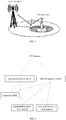
- These incompatible micro base stations are managed and controlled by a centralized control entity, which may be located within a macro base station or may be a separate network element.
- the centralized control entity is a network node independent of a traditional Evolved NodeB (eNB).
- Solid lines between the centralized control entity and the traditional eNB as well as the incompatible micro base stations represent paths in the control plane, and dotted lines between a network gateway entity and the traditional eNB as well as the incompatible micro base stations represent paths in a data plane.
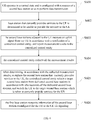
- the centralized control entity is located within the traditional eNB.
- Solid lines between the traditional eNB and the incompatible micro base stations represent paths in the control plane
- dotted lines between the network gateway entity and the traditional eNB as well as the incompatible micro base stations represent paths in the data plane.
- the centralized control entity is a logic entity, and it may also be located within any other network entities.
- the centralized control entity may be used to mainly achieve the following functions.
- the centralized control entity may be used to manage and control a large number of incompatible micro base stations, e.g., control the UE to use the resources of the incompatible micro base stations, control the UE to be switched between the incompatible micro base stations, and perform the resource coordination and the interference coordination between the incompatible micro base stations.
- the centralized control entity may also be used to perform information interaction, e.g., load balance, resource coordination and interference coordination, between the traditional eNB and the incompatible micro base stations.
- information interaction e.g., load balance, resource coordination and interference coordination
- the UEs in the idle state may reside in the traditional eNB in accordance with a known procedure, so as to perform normal cell selection/reselection, or any other operations in the idle state.
- the UEs which do not have the capability to transmit/receive data to/from the incompatible micro base stations, they perform information interaction and transmission with the traditional eNB, rather than the incompatible micro base stations, in accordance with the known procedure, regardless of being in the idle state or the connection state.
- the UE may have the following capabilities to transmit/receive data to/from the incompatible micro base stations.
- Capability 1 the UE may support, in terms of its version, various signaling procedures and special designs with respect to the incompatible micro base stations.
- the signaling procedures refer to the addition of new domains into signaling related to the incompatible micro base stations, e.g., a domain for notifying the UE that a cell is an incompatible cell, and these new domains cannot be identified by a traditional UE.
- a new signaling interaction procedure may also be provided, and it may merely be identified by the UE whose version has been upgraded or the UE in which a latest version has been installed.
- the special designs refer to designs of the incompatible micro base stations different from those of the traditional base stations in terms of a transmission mode or a physical format.
- the incompatible micro base station may not be provided with any broadcast information or public channel.
- the incompatible micro base station may be provided with a new frame format, a new subcarrier interval, a different number of subcarricrs, a new orthogonal frequency division multiplexing (OFDM) symbol duration, and new OFDM cyclic prefix (CP) length.
- OFDM orthogonal frequency division multiplexing
- CP OFDM cyclic prefix
- the UE may simultaneously support a frequency point of the traditional eNB and a frequency point of at least one of the incompatible micro base stations.
- the number of the frequency points and combinations of the frequency points at which the UE may be simultaneously operated may be set in accordance with the capability of the UE. For example, in the case that a macro eNB is operated at a frequency point of 2GHz and an incompatible micro base station is operated at a frequency point of 3.5GHz or a higher frequency point, a transceiver of the UE need to support the operation at both frequency points simultaneously.
- the UE may notify the macro base station at the network side through one-bit signaling whether or not it may support the data transmission between it and the incompatible micro base stations.
- the UE may implicitly notify the macro base station through a version of the UE or any other information (e.g., carrier aggregation (CA) capability) whether or not it may support the data transmission between it and the incompatible micro base stations.
- CA carrier aggregation
- the UE which has a version of R14 or higher and which has a CA capability for the frequency point of the incompatible micro base station may support, by default, the data transmission between it and the incompatible micro base station.
- the number of the frequency points that are supported by the UE and information about the combination of the frequency points may be reported to the macro base station at the network side in such a manner similar to the CA capability, and then informed by the macro base station to the centralized control entity, so that the centralized control entity at the network side may select the appropriate incompatible micro base station for the UE.
- an entire operation procedure may include the following steps.
- Step S401 the UE is in the idle state and resides in a traditional macro eNB (i.e., a first base station), and it may perform various operations in the idle state in accordance with a known procedure.
- a traditional macro eNB i.e., a first base station
- the UE may be switched from the idle state into the connection, so as to establish an RRC connection with the first base station.
- Step S402 the first base station may establish a Radio Bearer (RB) for the UE in accordance with a service requirement initiated by the UE.
- RB Radio Bearer
- Step S403 in the case that the first base station determines that the UE meets a requirement on the communication with the incompatible micro base station (i.e., a second base station), the first base station may transmit to the UE a dedicated configuration resource for enabling the UE to initiate a dedicated uplink detection signal.
- the incompatible micro base station i.e., a second base station
- the UE meets the requirement on the communication with the second base stations in the case that the following condition is met: a condition 1 where the UE supports the communication with the second base stations.
- condition further includes a condition 2 where the first base station is incapable of meeting a service requirement of the UE.
- the condition further includes a condition 3 where the UE is located within the coverage of one of the second base stations and the one of the second base stations is provided with sufficient idle resources for the UE.
- condition 1 is mandatory, while the conditions 2 and 3 are optional.
- the first base station may determine whether or not the UE has a capability to support the function in accordance with the capability of the UE stored in the first base station.
- the first base station may request the UE to report the related capability, and then determine whether or not the UE can support the function.
- the service requirement of the UE e.g., a requirement of the UE on a transmission rate or a Quality of Service (QoS) requirement
- QoS Quality of Service
- the first base station may preliminarily determine a position of the UE, preliminarily determine whether or not the UE is located within the coverage of some second base stations, and then determine whether or not these second base stations have sufficient idle resources for the UE. In the case that one of the second base stations has the sufficient idle resources for the UE, the first base station may determine that the UE meets the requirement on the communication with the one of the second base stations.
- Step S404 the first base station may instruct the second base stations adjacent to the UE to measure the dedicated detection signal of the UE, and allocate one of the second base stations for the UE in accordance with a measurement result.
- the second base stations adjacent to the UE are just dedicated second base stations.
- the dedicated second base stations include all the second base stations managed by the centralized control entity, or all the second base stations managed by the centralized control entity and controlled by the first base station, or second base stations adjacent to the UE.
- Step S405 the first base station may instruct the UE to perform the data transmission through the second base station allocated for the UE.
- At least one second base station may be selected for the UE.
- two or more second base stations may also be selected, so as to improve the service quality and the transmission rate.
- the above-mentioned operations for nodes at a network side may also be completed by the traditional base station and the centralized control entity jointly.
- the traditional base station mainly takes charge of transmitting control signaling to the UE
- the centralized control entity mainly takes charge of controlling the incompatible micro base stations, collecting the measurement result, and determining and allocating the resources.
- the above-mentioned determination may be performed through an interaction procedure between the macro base station and the centralized control entity, and more details will be given as follows.
- an operation procedure may include the following steps.
- Step S501 the UE may be in the idle state and reside in the traditional macro eNB (i.e., the first base station), and it may perform various operations in the idle state in accordance with the known procedure.
- the UE may be switched from the idle state into the connection state, so as to establish the RRC connection with the first base station.
- Step S502 the first base station may establish an RB for the UE in accordance with the service requirement initiated by the UE.
- Step S503 in the case that the first base station determines that the UE meets the requirement on the communication with the incompatible micro base stations (i.e., the second base stations), the first base station may allocate for the UE the dedicated configuration resource for enabling the UE to initiate the dedicated uplink detection signal.
- the step of allocating, by the first base station, for the UE the dedicated configuration resource for enabling the UE to initiate the dedicated uplink detection signal may include: negotiating, by the first base station, with the centralized control entity to determine the dedicated configuration resource needed to be allocated for the UE for enabling the UE to initiate the dedicated uplink detection signal, and notifying, by the first base station, the dedicated configuration resource to the UE.
- the UE may meet the requirement on the communication with the second base stations in the case that the following condition is met: a condition 1 where the UE supports the communication with the second base stations.
- the condition further includes a condition 2 where the first base station is incapable of meeting a service requirement of the UE.
- the condition further includes a condition 3 where the UE is located within the coverage of one of the second base stations and the one of the second base stations is provided with sufficient idle resources for the UE.
- the condition 3 may be determined in the following two modes.
- the first base station may measure a position of the UE, and report position information of the UE to the centralized control entity.
- the centralized control entity may determine the second base stations, within the coverage of which the UE is located, in accordance with the coverage of the second base stations, determine the idle resources of the second base stations, and in the case that one of the second base stations has sufficient idle resources for the UE, determine that the third condition 3 has been met. Then, the centralized control entity may notify the first base station that the condition 3 has been met.
- the first base station may measure a position of the UE, and acquire position information of the UE. Then, the first base station may determine the second base stations, within the coverage of which the UE is located, in accordance with the position information of the UE and the pre-stored coverage of the second base stations, and notify the second base stations to the centralized control entity. Next, the centralized control entity may determine the idle resources of these second base stations, and in the case that one of the second base stations has sufficient idle resources for the UE, determine that the condition 3 has been met. Then, the centralized control entity may notify the first base station that the condition 3 has been met.
- the first base station may negotiate with the centralized control entity to determine the dedicated configuration resource.
- the dedicated configuration resource may be transmitted to the UE as a final result only in the case that an agreement is achieved between the first base station and the centralized control entity.
- Step S504 the centralized control entity may instruct the second base stations adjacent to the UE to measure the dedicated uplink detection signal initiated by the UE.
- the centralized control entity may notify the dedicated second base stations to measure the dedicated uplink detection signal initiated by the UE.
- the centralized control entity may notify the dedicated second base stations in the coverage of which the UE is located and which have the sufficient idle resources for the UE, to measure the dedicated uplink detection signal initiated by the UE.
- Step S505 the centralized control entity at the network side may determine an appropriate resource configuration of the second base station for the UE in accordance with a measurement result and a service request of the UE from the first base station and transmit the resource configuration to the first base station.
- Step S506 the first base station may transmit an allocation result of the second base station allocated by the centralized control entity for the UE to the UE through dedicated signaling.
- the centralized control entity at the network side may notify the allocation result to the second base station, so that the second base station may prepare for providing services to the UE. Then, the UE may perform the data transmission on the resources of the second base station.
- this switching procedure may include the following steps.
- Step S601 the UE may be operated in a normal state and configured with the resources of the second base station, so as to perform the data transmission.
- Step S602 the second base station which currently provides services to the UE is determined to be unable to provide the services to the UE any longer due to movability of the UE or based on a network policy, e.g., based on information acquired by the centralized control entity.
- the second base station needs to be turned off for the purpose of load balance or energy-saving, it is necessary to dynamically adjust the resources of the second base stations allocated for the UE.
- the UE needs to transmit an uplink signal for measuring an uplink channel.
- the measurement of the uplink channel may be performed on the basis of uplink data transmitted continuously by the UE, or information periodically reported by the UE such as channel quality indicator (CQI), or an uplink configuration dedicated for the measurement.
- CQI channel quality indicator
- Step S603 the second base stations adjacent to the UE may measure the uplink signal from the UE in accordance with a notification from the centralized control entity, and report a measurement result to the centralized control entity.
- the reporting of the measurement result may be triggered, e.g., merely in the case that a measurement value is greater than a predetermined threshold and maintained for a certain period of time.
- the second base station that currently provides the services to the UE may also measure the uplink signal from the UE in accordance with the notification from the centralized control entity, and then report a measurement result to the centralized control entity.
- this measurement result may be reported periodically, or after a measurement value is smaller than a predetermined threshold and maintained for a certain period of time.
- Step S604 the centralized control entity may collect all the measurement results.
- the centralized control entity may also collect load conditions or remaining resource conditions of the respective second base stations, and then process the collected information.
- Step S605 in the case that the second base station which currently provides the services to the UE needs to be replaced in accordance with the collected measurement results, the centralized control entity may select a target second base station from the dedicated second base stations in accordance with the idle resources of the dedicated second base stations, and the UE is switched to the target second base station which is taken as one second base station which currently provides the services to the UE.
- the dedicated second base stations include all the second base stations managed by the centralized control entity, or all the second base stations managed by the centralized control entity and controlled by the first base station, or the second base stations adjacent to the UE.
- the centralized control entity may determine that the second base station which currently provides the services to the UE needs to be replaced when determining that the following conditions are met in accordance with the collected measurement result.
- the conditions includes:
- the above-mentioned conditions may each be set to be maintained for a certain period of time.
- the dedicated second base stations may each be provided sufficient idle resources for the UE and capable of providing the data transmission services to the UE.
- Step S606 the first base station may notify the new second base station to the UE via signaling. Then, the UE may perform the data transmission on the resources of the new second base station.
- the first base station may reconfigure the resources for the UE, and transmit information about a reconfiguration result to the UE.
- the configuration may include a public configuration and a dedicated configuration of the wireless resources.
- the public configuration is on a cell basis, and it may include an operating frequency point, an operating bandwidth, various public channel configurations, and public parameter configurations.
- the dedicated configuration is related to the UE, i.e., the UE needs to acquire operating parameters of various protocol layers from the network side, so as to perform the normal operation. These operating parameters may include dedicated parameters or dedicated configurations related to the data transmission, e.g., physical layer (PHY), media access control (MAC), radio link control (RLC), packet data convergence protocol (PDCP), data radio bearer (DRB) or logical channel.
- PHY physical layer
- MAC media access control
- RLC radio link control
- PDCP packet data convergence protocol
- DRB data radio bearer
- the UE may continue to perform the data transmission obliviously, while the data path has been switched at the network side.
- the data for the UE may be switched from the previous old serving cell to the new serving cell, so that the new serving cell may continue to provide the data transmission services to the UE with the identical configuration.
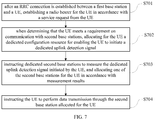
- the present disclosure provides in some embodiments a wireless network access control method, which includes the following steps.
- Step S701 is to, after an RRC connection has been established between a first base station and a UE, establish a radio bearer for the UE in accordance with a service request from the UE.
- Step S702 is to, when determining that the UE meets a requirement on communication with second base stations, allocate for the UE a dedicated configuration resource for enabling the UE to initiate a dedicated uplink detection signal.
- Step S703 is to instruct dedicated second base stations to measure the dedicated uplink detection signal initiated by the UE, and allocate one of the second base stations for the UE in accordance with a measurement result.
- Step S704 is to instruct the UE to perform data transmission through the second base station allocated for the UE.
- the radio bearer may be established for the UE in accordance with the service request from the UE.
- the dedicated configuration resource for enabling the UE to initiate the dedicated uplink detection signal may be allocated for the UE.
- the specific second base stations may be instructed to measure the dedicated uplink detection signal initiated by the UE, and one of the second base stations may be allocated for the UE in accordance with the measurement result.
- the UE may be instructed to perform the data transmission through the second base station allocated for the UE.
- the second base stations different from a traditional macro base station (the first base station) are deployed in a network
- it is able to control these micro base stations in a centralized manner and prevent the UE from searching for and measuring the micro base stations, thereby to improve the efficiency of the UE to access to the network.
- services may be provided to the UE through these micro base stations, so it is able to improve the communication efficiency.
- the UE meets the requirement on the communication with the second base stations in the case that the following condition is met: a condition 1 where the UE supports the communication with the second base stations.
- the condition further includes a condition 2 where the first base station is incapable of meeting a service requirement of the UE.
- the condition further includes a condition 3 where the UE is located within the coverage of one of the second base stations and the one of the second base stations is provided with sufficient idle resources for the UE.
- Whether or not the condition 3 has been met is determined by: measuring, by the first base station, a position of the UE, and reporting position information of the UE to a centralized control entity; determining, by the centralized control entity, the second base stations whose coverage the UE is located, in accordance with the coverage of the second base stations; determining idle resources of the second base stations whose coverage the UE is located; and in the case that one of the second base stations whose coverage the UE is located is provided with the sufficient idle resources for the UE, determining that the condition 3 has been met.
- Whether or not the condition 3 has been met is determined by: measuring, by the first base station, a position of the UE, and acquiring position information of the UE; determining, by the first base station, the second base stations whose coverage the UE is located within, in accordance with the position information of the UE and the pre-stored coverage of the second base stations, and notifying the second base stations whose coverage the UE is located within to a centralized control entity; and determining, by the centralized control entity, idle resources of the second base stations whose coverage the UE is located within, and in the case that one of the second base stations whose coverage the UE is located within is provided with the sufficient idle resources for the UE, determining that the condition 3 has been met.
- the access control method further includes: notifying, by the centralized control entity, the first base station that the condition 3 has been met.
- the step of allocating for the UE the dedicated configuration resource for enabling the UE to initiate the dedicated uplink detection signal when determining that the UE meets the requirement on the communication with the second base stations includes: when the first base station determines that the conditions 1, 2 and 3 have been met, allocating, by the first base station, for the UE the dedicated configuration resources for enabling the UE to initiate the dedicated uplink detection signal.
- the step of instructing the dedicated second base stations to measure the dedicated uplink detection signal initiated by the UE includes: instructing, by the centralized control entity, the second base stations whose coverage the UE is located within and which are provided with sufficient idle resources for the UE, to measure the dedicated uplink detection signal initiated by the UE.
- the step of allocating the second base station for the UE in accordance with the measurement result includes: forwarding, by the first base station, the service request from the UE to the centralized control entity; allocating, by the centralized control entity, one second base station for the UE in accordance with the service request from the UE and the measurement result acquired after the dedicated second base stations whose coverage the UE is located within and which are provided with sufficient idle resources for the UE have measured the dedicated uplink detection signal initiated by the UE; and transmitting, by the centralized control entity, an allocation result to the first base station.
- the step of instructing the UE to perform the data transmission through the second base station allocated for the UE includes: transmitting, by the first base station, the allocation result to the UE through dedicated signaling.
- the access control method further includes:
- the dedicated second base stations include all the second base stations managed by the centralized control entity, or all the second base stations managed by the centralized control entity and controlled by the first base station, or the second base stations adjacent to the UE.
- the second base station configured for the UE may not be able to continue to provide the services to the UE, the UE may be switched to a new second base station so that the new second base station may continue to provide the data transmission services to the UE.
- the access control method further includes: in the case that the target second base station is provided with a configuration different from the second base station to be replaced, performing resource reconfiguration on the UE, and transmitting resource reconfiguration information to the UE.
- the resource reconfiguration may be performed, so that the new second base station may continue to provide the data transmission services to the UE.
- the UE in the idle state may reside in the traditional macro base station.
- the traditional base station i.e., the first base station
- the resources of several second base stations may be configured for the UE, so as to provide the services to the UE.
- the UE may perform the data transmission at high transmission quality and a high data rate.
- each second base station may be in form an antenna head having the following characteristics:
- the second base station may be identified by the UE through a programmable communications interface (PCI) and a frequency point or a cell identifier (Cell ID) that arc currently identified by the UE.
- PCI programmable communications interface
- Cell ID cell identifier
- the second base stations operating at an identical frequency point may transmit the data using an identical PCI.
- multipath combination may be performed for the UE; and in the case of transmitting different data, the UE may receive and process the data separately.
- different PCIs may also be used.
- the second base stations operate at different frequency points, then it is similar to aggregation of a plurality of cells.
- This scheme may be used to solve the problem where there is no sufficient room for the PCI in an ultra dense state.
- the so-called "identifying” mainly refers to the differentiation among the second base stations, e.g., whether or not the UE needs to know the identifiers of two second base stations in the case that the UE is served by the two second base stations simultaneously.
- the UE it is best for the UE not to differentiate the second base stations operating at the same frequency point. For example, in the case that two or three second base stations transmit data to the UE at the same frequency point, it is unnecessary for the UE to know the number of these second base stations, and instead, it may be considered that the UE is being served by one second base station.
- This usage mode may be determined by the centralized control entity.
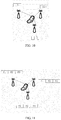
- the resource usage mode of the resources of a plurality of second base stations may be one of the following ones.
- first mode refers to identical frequency and identical PRB, which means that the plurality of second base stations may operate at an identical frequency, and an identical PRB may be allocated for an identical UE.
- This mode is equivalent to joint processing in Comp, and it may be used to improve the reception performance at low spectrum efficiency. It may also be used to transmit different data and use a pre-coding technique so as to improve the transmission efficiency.
- This mode may be applied to a small amount of UEs with bad channel quality or serial interference, or situations where full channel information has been acquired.
- second mode refers to identical frequency and different PRBs, which means that the plurality of second base stations may operate at an identical frequency point, e.g., frequency f1, but different PRBs may be allocated for the UE by the second base stations.
- the three PRBs As compared with a mode where three PRBs of an identical base station are used for the data transmission, it is able to adjust an antenna direction in the second mode in a more flexible manner.
- the three PRBs to achieve relatively high transmission efficiency, so as to improve the throughput and the spectrum efficiency, thereby to improve the joint scheduling and the beam-forming gains.
- third mode refers to different frequencies, which means that the plurality of second base stations may operate at different frequency points, e.g., frequencies f1, f2 and f3. In this mode, it is able to expand a bandwidth capable of being used by the UE, thereby to provide a high transmission rate. This is just equivalent to cross-site CA.
- the above are merely some typical examples. Of course, in the actual configuration, considering various factors and algorithm designs, there may be various combinations of the resources. For example, the above three modes may be applied simultaneously, e.g., two of the base stations may operate at an identical frequency point, and the remaining base station may operate at a different frequency point.
- a wireless network access control device may be, e.g., a base station which, as shown in Fig. 12 , may include: a radio bearer establishment unit 11 configured to, after an RRC connection has been established between a first base station and a UE, establish a radio bearer for the UE in accordance with a service request from the UE; a dedicated configuration resource allocation unit 12 configured to, when determining that the UE meets the requirement on the communication with second base stations, allocate for the UE a dedicated configuration resource for enabling the UE to initiate a dedicated uplink detection signal; a centralized control unit 13 configured to instruct dedicated second base stations to measure the dedicated uplink detection signal initiated by the UE, and allocate one of the second base stations for the UE in accordance with a measurement result; and a notification unit 14 configured to instruct the UE to perform data transmission through the second base station allocated for the UE.
- the centralized control unit 13 may be the above centralized control entity.
- the access control device may be an improvement over the conventional evolved base station in that the access control device is provided with the centralized control unit.
- micro base stations i.e., second base stations
- it is able to control these micro base stations in a centralized manner and prevent the UE from searching for and measuring the micro base stations, thereby to improve the efficiency of the UE to access to the network.
- services may be provided to the UE through these micro base stations, so it is able to improve the communication efficiency.
- the dedicated configuration resource allocation unit determines that the UE meets the requirement on the communication with the second base stations in the case that the following condition is met: a condition 1 where the UE supports the communication with the second base stations.
- the condition further includes a condition 2 where the first base station is incapable of meeting a service requirement of the UE.
- the condition further includes a condition 3 where the UE is located within the coverage of one of the second base stations and the one of the second base stations is provided with sufficient idle resources for the UE.
- the centralized control unit 13 is further configured to: collect measurement results acquired by the dedicated second base stations through measuring the dedicated uplink detection signal initiated by the UE, and the idle resources of each dedicated second base station; and when determining, based on the measurement results, that it is necessary to change one second base station that currently provides services to the UE, select a target second base station from the dedicated second base stations in accordance with the idle resources of the dedicated second base stations, and switch the UE to the target second base station which is taken as one second base station that currently provides the services to the UE.
- the dedicated second base stations include all the second base stations managed by the centralized control entity, or all the second base stations managed by the centralized control entity and controlled by the first base station, or second base stations that are determined to be adjacent to the UE according to a position of the UE.
- the UE when the UE is operated in a connection state and is configured to use resources of one second base station to perform the data transmission, as the UE moves or a resource usage condition is changed, the one second base station configured for the UE may be impossible to provide the services to the UE, the UE may be switched to a new second base station so that the new second base station may continue to provide the data transmission services to the UE.
- the centralized control unit 13 is further configured to determine whether the target second base station is provided with a configuration identical to the second base station to be replaced.
- the access control device further includes a resource reconfiguration unit 15 configured to, when the target second base station is provided with the configuration different from the second base station to be replaced, perform resource reconfiguration on the UE, and transmit resource reconfiguration information to the UE.
- a resource reconfiguration unit 15 configured to, when the target second base station is provided with the configuration different from the second base station to be replaced, perform resource reconfiguration on the UE, and transmit resource reconfiguration information to the UE.
- the resource reconfiguration may be performed, so that the new second base station may continue to provide the data transmission services to the UE.
- the above-mentioned units may be implemented through entities such as processors.
- a wireless network access control system which may include: at least one first base station 21, a centralized control entity 22, and at least one second base station 23.
- the first base station 21 is configured to, after an RRC connection has been established between the first base station and a UE, establish a radio bearer for the UE in accordance with a service request from the UE; when determining that the UE meets the requirement on the communication with second base stations, allocate for the UE a dedicated configuration resource for enabling the UE to initiate a dedicated uplink detection signal.
- the centralized control entity 22 is configured to instruct dedicated second base stations to measure the dedicated uplink detection signal initiated by the UE and allocate one of the second base stations for the UE in accordance with measurement results.
- the first base station 21 is further configured to instruct the UE to perform data transmission through the second base station allocated for the UE.
- the second base station 23 is configured to measure the dedicated uplink detection signal initiated by the UE in accordance with an instruction from the centralized control entity, report the measurement result to the centralized control entity, and perform data transmission with the UE.
- the access control system may include, apart from the macro base station (the first base station), a large number of micro base stations (the second base stations) whose types are different from the first base station and which are capable of provide the data transmission services to the UE in a connection state.
- the centralized control entity in the case that a large number of micro base stations different from the traditional macro base station are deployed in the network, it is able to control these micro base stations in a centralized manner and prevent the UE from searching for and measuring the micro base stations, thereby to improve the efficiency of the UE to access to the network.
- services may be provided to the UE through these micro base stations, so it is able to improve the communication efficiency.
- the first base station determines that the UE meets the requirement on the communication with the second base stations in the case that the following condition is met: a condition 1 where the UE supports the communication with the second base stations.
- the condition further includes a condition 2 where the first base station is incapable of meeting a service requirement of the UE.
- the condition further includes a condition 3 where the UE is located within the coverage of one of the second base stations and the one of the second base stations is provided with sufficient idle resources for the UE.
- the first base station determines whether the condition 3 has been met
- the first base station is specifically configured to measure a position of the UE, and report position information of the UE to the centralized control entity, and learn from the centralized control entity whether the condition 3 has been met.
- the centralized control entity is further configured to determine second base stations whose service coverages cover the UE in accordance with the service coverages of the second base stations, and determine idle resources of the second base stations whose service coverages cover the UE. When one of the second base stations whose service coverages cover the UE, is provided with sufficient idle resources for the UE, the centralized control entity is further configured to determine that the condition 3 has been met and inform the first base station.
- the first base station is further configured to measure a position of the UE, acquire position information of the UE, determine second base stations whose service coverage cover the UE in accordance with the position information of the UE and the pre-stored service coverage of the second base stations, notify the second base stations whose service coverage cover the UE to the centralized control entity, and be informed by the centralized control entity whether the condition 3 has been met.
- the centralized control entity is further configured to determine the idle resources of the second base stations whose service coverage cover the UE, and in the case that one of the second base stations whose service coverage cover the UE is provided with the sufficient idle resources for the UE, determine that the condition 3 has been met and notify the first base station.
- the dedicated second base stations include all the second base stations managed by the centralized control entity, or all the second base stations managed by the centralized control entity and controlled by the first base station, or second base stations that are determined to be adjacent to the UE according to a position of the UE.
- the first base station is further configured to forward the service request from the UE to the centralized control entity.
- the centralized control entity When the centralized control entity allocates one of the second base stations for the UE in accordance with measurement results, the centralized control entity is further configured to allocate one second base station for the UE in accordance with the service request from the UE and the measurement results acquired by the dedicated second base stations through measuring the dedicated uplink detection signal initiated by the UE, and transmit an allocation result to the first base station.
- the first base station When the first base station instructs the UE to perform the data transmission through the second base station allocated for the UE, the first base station is further configured to transmit the allocation result to the UE through dedicated signaling.
- the centralized control entity is further configured to: collect the measurement results acquired by the dedicated second base stations through measuring the dedicated uplink detection signal initiated by the UE, and the idle resources of each dedicated second base station; and when determining based on the measurement results that it is necessary to change one second base station that currently provides services to the UE, select a target second base station from the dedicated second base stations in accordance with the idle resources of the dedicated second base stations, and switch the UE to the target second base station which is taken as one second base station that currently provides the services to the UE.
- the dedicated second base stations include all the second base stations managed by the centralized control entity, or all the second base stations managed by the centralized control entity and controlled by the first base station, or second base stations that are determined to be adjacent to the UE according to a position of the UE.
- the UE when the UE is operated in a connection state and is configured to use resources of one second base station to perform the data transmission, as the UE moves or a resource usage condition is changed, the one second base station configured for the UE may be unable to continue to provide the services to the UE, the UE may be switched to a new second base station so that the new second base station may continue to provide the data transmission services to the UE.
- the centralized control entity is further configured to determine whether the target second base station is provided with a configuration different from the base station to be replaced.
- the first base station is further configured to, in the case that the target second base station is provided with a configuration different from the base station to be replaced, perform resource reconfiguration on the UE, and transmit resource reconfiguration information to the UE.
- the resource reconfiguration may be performed, so that the new second base station may continue to provide the data transmission services to the UE.
- the first base station When the first base station allocates for the UE the dedicated configuration resources for enabling the UE to initiate the dedicated uplink detection signal, the first base station is further configured to negotiate with the centralized control entity to determine the dedicated configuration resources which are to be allocated for the UE for enabling the UE to initiate the dedicated uplink detection signal, and notify the dedicated configuration resource to the UE.
- the centralized control entity may be used to manage the access to the incompatible micro base stations. It is impossible for the UEs in the idle state and the UEs not having the version function to sense the incompatible micro base stations, and only the UEs in the connection state and having the version function may be allowed to use the resources of the incompatible micro base stations to transmit the data. According to the wireless network access control method in the embodiments of the present disclosure, it is able to control a large number of micro base stations in a centralized manner, so as to improve the network efficiency and the user experience, thereby to prevent the UE from searching for and measuring these micro base stations.
- the incompatible micro base stations may be provided with a more effective design, an identical UE may be served by a plurality of micro base stations simultaneously, and the switching may be performed among the micro base stations obliviously.
- a computer program product may be implemented on one or more computer-readable storage mediums (including but not limited to disk memory, Compact Disc-Read Only Memory (CD-ROM) and optical memory) including computer-readable program codes.
- CD-ROM Compact Disc-Read Only Memory
- optical memory including computer-readable program codes.
- computer program instructions may be used to implement each of the work flows and/or blocks in the flow charts and/or the block diagrams, and the combination of the work flows and/or blocks in the flow charts and/or the block diagrams.
- These computer program instructions may be provided to a processor of a common computer, a dedicate computer, an embedded processor or any other programmable data processing devices to create a machine, so that instructions executable by the processor of the computer or the other programmable data processing devices may create a device to achieve the functions assigned in one or more work flows in the flow chart and/or one or more blocks in the block diagram.
- These computer program instructions may also be stored in a computer readable storage that may guide the computer or the other programmable data process devices to function in a certain way, so that the instructions stored in the computer readable storage may create a product including an instruction unit which achieves the functions assigned in one or more flows in the flow chart and/or one or more blocks in the block diagram.
- These computer program instructions may also be loaded in the computer or the other programmable data process devices, so that a series of operation steps are executed on the computer or the other programmable devices to create processes achieved by the computer. Therefore, the instructions executed in the computer or the other programmable devices provide the steps for achieving the function assigned in one or more flows in the flow chart and/or one or more blocks in the block diagram.
Landscapes
- Engineering & Computer Science (AREA)
- Computer Networks & Wireless Communication (AREA)
- Signal Processing (AREA)
- Quality & Reliability (AREA)
- Computer Security & Cryptography (AREA)
- Mobile Radio Communication Systems (AREA)
Claims (15)
- Procédé de commande d'accès à un réseau sans fil, comprenant l'étape consistant à :après avoir établi une connexion de commande de ressource radio, RRC, entre une première station de base et un équipement utilisateur, UE, établir (S502) une porteuse radio pour l'UE selon une requête de service provenant de l'UE par une première station de base,caractérisé en ce que le procédé de commande d'accès à un réseau sans fil comprend en outre les étapes consistant à :attribuer (S503), par la première station de base à l'UE, une ressource de configuration dédiée pour permettre à l'UE de déclencher un signal de détection de liaison montante dédié lorsqu'il est déterminé que l'UE satisfait à une exigence pour la communication avec des secondes stations de base dont les types sont différents de la première station de base ;ordonner (S504), par une entité de commande centralisée, à certaines dédiées des secondes stations de base, de mesurer le signal de détection de liaison montante dédié déclenché par l'UE, dans lequel l'entité de commande centralisée est une entité séparée de la première station de base, ou est située à l'intérieur de la première station de base ;attribuer (S505), par l'entité de commande centralisée, au moins une des certaines dédiées des secondes stations de base à l'UE selon un résultat de mesure ; etordonner (S506), par la première station de base, à l'UE d'effectuer une transmission de données par l'intermédiaire de la seconde station de base attribuée à l'UE.
- Procédé selon la revendication 1, dans lequel l'UE satisfait à l'exigence pour la communication avec les secondes stations de base dans le cas où la condition suivante est satisfaite :une condition 1 où l'UE supporte la communication avec les secondes stations de base ; et/ou,une condition 2 où la première station de base est incapable de satisfaire à une exigence de service de l'UE ; et/ou,une condition 3 où l'UE est située à l'intérieur d'une couverture de service des secondes stations de base et les secondes stations de base dont la couverture de service couvre l'UE sont pourvues de ressources inutilisées pour l'UE.
- Procédé selon la revendication 2, dans lequel il est déterminé que la condition 3 est satisfaite :en mesurant, par la première station de base, une position de l'UE, et en signalant des informations de position de l'UE à l'entité de commande centralisée ; eten déterminant, par l'entité de commande centralisée, les secondes stations de base dont les couvertures de service couvrent l'UE, selon les couvertures de service des secondes stations de base ; en déterminant des ressources inutilisées des secondes stations de base dont la couverture de service couvre l'UE, et en déterminant que la condition 3 est satisfaite lorsque les secondes stations de base sont pourvues des ressources inutilisées pour l'UE.
- Procédé selon la revendication 2, dans lequel il est déterminé que la condition 3 est satisfaite :en mesurant, par la première station de base, une position de l'UE, et en obtenant des informations de position de l'UE ;en déterminant, par la première station de base, les secondes stations de base dont les couvertures de service couvrent l'UE, selon les informations de position de l'UE et la couverture de service pré-stockée des secondes stations de base, et en avertissant l'entité de commande centralisée des secondes stations de base dont les couvertures de service couvrent l'UE ; eten déterminant, par l'entité de commande centralisée, des ressources inutilisées des secondes stations de base dont les couvertures de service couvrent l'UE, et en déterminant que la condition 3 est satisfaite lorsque les secondes stations de base dont les couvertures de service couvrent l'UE sont pourvues des ressources inutilisées pour l'UE.
- Procédé selon la revendication 3 ou 4, dans lequel, après la détermination, par l'entité de commande centralisée, que la condition 3 est satisfaite, le procédé comprend en outre l'étape consistant à :
avertir, par l'unité de commande centralisée, la première station de base que la condition 3 est satisfaite. - Procédé selon la revendication 1, dans lequel les certaines dédiées des secondes stations de base comprennent toutes les secondes stations de base gérées par l'entité de commande centralisée, ou toutes les secondes stations de base gérées par l'entité de commande centralisée et commandées par la première station de base, ou des secondes stations de base qui sont déterminées comme étant adjacentes à l'UE selon une position de l'UE.
- Procédé selon la revendication 6, dans lequel l'étape consistant à attribuer (S505), par l'entité de commande centralisée, au moins une des certaines dédiées des secondes stations de base pour l'UE selon le résultat de mesure comprend les étapes consistant à :transférer, par la première station de base, la requête de service depuis l'UE vers l'entité de commande centralisée ;attribuer, par l'entité de commande centralisée, au moins une des certaines dédiées des secondes stations de base à l'UE selon la requête de service depuis l'UE et des résultats de mesure obtenus par les secondes stations de base dédiées en mesurant le signal de détection de liaison montante dédié déclenché par l'UE ; ettransmettre, par l'entité de commande centralisée, un résultat d'attribution à la première station de base ; etl'étape consistant à ordonner (S506), par la première station de base, à l'UE d'effectuer la transmission de données par l'intermédiaire de la seconde station de base attribuée à l'UE comprend l'étape consistant à : transmettre, par la première station de base, le résultat d'attribution à l'UE par un signalement dédié.
- Procédé selon l'une quelconque des revendications 1 à 7, comprenant en outre les étapes consistant à :collecter (S604), par l'entité de commande centralisée, des résultats de mesure obtenus par les certaines dédiées des secondes stations de base en mesurant le signal de détection de liaison montante dédié déclenché par l'UE, et des ressources inutilisées des certaines dédiées des secondes stations de base ; etlors de la détermination, sur la base des résultats de mesure, de remplacer une seconde station de base qui fournit actuellement des services à l'UE, sélectionner (S605), par l'entité de commande centralisée, une seconde station de base cible parmi les certaines dédiées des secondes stations de base selon les ressources inutilisées des certaines dédiées des secondes stations de base, et commuter l'UE sur la seconde station de base cible qui est prise comme une seconde station de base qui fournit actuellement les services à l'UE ;dans lequel les certaines dédiées des secondes stations de base comprennent toutes les secondes stations de base gérées par l'entité de commande centralisée, ou toutes les secondes stations de base gérées par l'entité de commande centralisée et commandées par la première station de base, ou des secondes stations de base qui sont déterminées comme étant adjacentes à l'UE selon une position de l'UE.
- Procédé selon la revendication 8, comprenant en outre l'étape consistant à :
lorsque la seconde station de base cible est pourvue d'une configuration différente de la seconde station de base à remplacer, effectuer une reconfiguration de ressource sur l'UE, et transmettre des informations de reconfiguration de ressource à l'UE. - Procédé selon la revendication 1, dans lequel l'étape consistant à attribuer, par la première station de base à l'UE, les ressources de configuration dédiées pour permettre à l'UE de déclencher le signal de détection de liaison montante dédié comprend l'étape consistant à :
négocier, par la première station de base avec l'entité de commande centralisée, pour déterminer les ressources de configuration dédiées qui doivent être attribuées à l'UE pour permettre à l'UE de déclencher le signal de détection de liaison montante dédié, et avertir, par la première station de base, l'UE de la ressource de configuration dédiée. - Première station de base incluant un dispositif de commande d'accès à un réseau sans fil, comprenant :une unité d'établissement de porteuse radio (11) configurée pour, après avoir établi une connexion de commande de ressource radio, RRC, entre la première station de base et un équipement utilisateur, UE, établir une porteuse radio pour l'UE selon une requête de service provenant de l'UE,caractérisée en ce que le dispositif de commande d'accès à un réseau sans fil comprend en outre :une unité d'attribution de ressource de configuration dédiée (12) configurée pour, lorsqu'il est déterminé que l'UE satisfait à une exigence pour la communication avec des secondes stations de base dont les types sont différents de la première station de base, attribuer à l'UE une ressource de configuration dédiée pour permettre à l'UE de déclencher un signal de détection de liaison montante dédié ;une entité de commande centralisée (13) configurée pour ordonner à certaines dédiées des secondes stations de base de mesurer le signal de détection de liaison montante dédié déclenché par l'UE, et attribuer au moins une des certaines dédiées des secondes stations de base à l'UE selon des résultats de mesure ; etune unité de notification (14) configurée pour ordonner à l'UE d'effectuer une transmission de données par l'intermédiaire de la seconde station de base attribuée à l'UE.
- Première station de base selon la revendication 11, dans laquelle l'unité d'attribution de ressource de configuration dédiée (12) détermine que l'UE satisfait à l'exigence pour la communication avec les secondes stations de base lorsque la condition suivante est satisfaite :une condition 1 où l'UE supporte la communication avec les secondes stations de base ; et/ou,une condition 2 où la première station de base est incapable de satisfaire à une exigence de service de l'UE ; et/ou,une condition 3 où l'UE est située à l'intérieur d'une couverture de service des secondes stations de base et les secondes stations de base dont la couverture de service couvre l'UE sont pourvues de ressources inutilisées pour l'UE.
- Première station de base selon la revendication 11, dans laquelle l'entité de commande centralisée (13) est en outre configurée pour :collecter les résultats de mesure obtenus par les certaines dédiées des secondes stations de base en mesurant le signal de détection de liaison montante dédié déclenché par l'UE, et des ressources inutilisées des certaines dédiées des secondes stations de base ; etlors de la détermination, sur la base des résultats de mesure, de remplacer une seconde station de base qui fournit actuellement des services à l'UE, sélectionner une seconde station de base cible parmi les certaines dédiées des secondes stations de base selon les ressources inutilisées des certaines dédiées des secondes stations de base, et commuter l'UE sur la seconde station de base cible qui est prise pour fournir actuellement des services à l'UE ;dans laquelle les certaines dédiées des secondes stations de base comprennent toutes les secondes stations de base gérées par l'entité de commande centralisée, ou toutes les secondes stations de base gérées par l'entité de commande centralisée et commandées par la première station de base, ou des secondes stations de base qui sont déterminées comme étant adjacentes à l'UE selon une position de l'UE.
- Première station de base selon la revendication 13, dans laquelle l'entité de commande centralisée (13) est en outre configurée pour déterminer si la seconde station de base cible est pourvue d'une configuration identique à la seconde station de base à remplacer ;
la première station de base comprend en outre une unité de reconfiguration de ressource (15) configurée pour, lorsque la seconde station de base cible est pourvue de la configuration différente de la seconde station de base à remplacer, effectuer une reconfiguration de ressource sur l'UE, et transmettre des informations de reconfiguration de ressource à l'UE. - Système de commande d'accès à un réseau sans fil, comprenant :une première station de base (21) configurée pour, après avoir établi une connexion de commande de ressource radio, RRC, entre la première station de base et un équipement utilisateur, UE, établir une porteuse radio pour l'UE selon une requête de service provenant de l'UE ;caractérisé en ce que la première station de base est en outre configurée pour, lorsqu'il est déterminé que l'UE satisfait à une exigence pour la communication avec des secondes stations de base dont les types sont différents de la première station de base, attribuer à l'UE une ressource de configuration dédiée pour permettre à l'UE de déclencher un signal de détection de liaison montante dédié, et ordonner à l'UE d'effectuer une transmission de données par l'intermédiaire de la seconde station de base attribuée à l'UE ;et le système comprend en outre :une entité de commande centralisée (22) configurée pour ordonner à certaines dédiées des secondes stations de base de mesurer le signal de détection de liaison montante dédié déclenché par l'UE et attribuer au moins une des certaines dédiées des secondes stations de base à l'UE selon des résultats de mesure ; etles secondes stations de base (23) configurées pour mesurer le signal de détection de liaison montante dédié déclenché par l'UE selon une instruction provenant de l'entité de commande centralisée, signaler les résultats de mesure à l'entité de commande centralisée, et effectuer une transmission de données avec l'UE.
Applications Claiming Priority (2)
| Application Number | Priority Date | Filing Date | Title |
|---|---|---|---|
| CN201410377909.9A CN104168624B (zh) | 2014-08-01 | 2014-08-01 | 一种无线网络接入控制方法、设备及系统 |
| PCT/CN2015/081659 WO2016015525A1 (fr) | 2014-08-01 | 2015-06-17 | Procédé, dispositif et système de contrôle d'accès à un réseau sans fil |
Publications (3)
| Publication Number | Publication Date |
|---|---|
| EP3197233A1 EP3197233A1 (fr) | 2017-07-26 |
| EP3197233A4 EP3197233A4 (fr) | 2017-08-02 |
| EP3197233B1 true EP3197233B1 (fr) | 2021-04-28 |
Family
ID=51912210
Family Applications (1)
| Application Number | Title | Priority Date | Filing Date |
|---|---|---|---|
| EP15827644.4A Active EP3197233B1 (fr) | 2014-08-01 | 2015-06-17 | Procédé, premiere station de base et système de contrôle d'accès à un réseau sans fil |
Country Status (4)
| Country | Link |
|---|---|
| US (1) | US10555254B2 (fr) |
| EP (1) | EP3197233B1 (fr) |
| CN (1) | CN104168624B (fr) |
| WO (1) | WO2016015525A1 (fr) |
Families Citing this family (17)
| Publication number | Priority date | Publication date | Assignee | Title |
|---|---|---|---|---|
| CN104168624B (zh) | 2014-08-01 | 2018-03-27 | 电信科学技术研究院 | 一种无线网络接入控制方法、设备及系统 |
| CN105992191B (zh) * | 2015-03-05 | 2020-03-24 | 电信科学技术研究院 | 一种上行数据接收控制、接收、发送方法及装置 |
| CN106162694B (zh) * | 2015-04-09 | 2020-06-19 | 上海诺基亚贝尔股份有限公司 | 用于支持覆盖范围扩展和业务连续性的方法以及装置 |
| CN106255163B (zh) * | 2015-06-09 | 2020-07-24 | 联想(北京)有限公司 | 信息处理方法及基站 |
| CN106792950A (zh) * | 2015-11-23 | 2017-05-31 | 中兴通讯股份有限公司 | 一种超密集网络传输方法、基站、ue及网元 |
| CN105554849B (zh) * | 2015-12-14 | 2019-03-05 | 中国联合网络通信集团有限公司 | 超密集组网的接入方法及系统、控制节点及数据节点 |
| CN107040957B (zh) * | 2016-02-04 | 2019-10-15 | 工业和信息化部电信研究院 | 一种以用户终端为中心的切换方法 |
| CN107466106A (zh) * | 2016-06-06 | 2017-12-12 | 中国移动通信有限公司研究院 | 一种无线资源控制功能实体及其处理数据的方法 |
| CN105979597B (zh) * | 2016-06-27 | 2020-02-21 | 宇龙计算机通信科技(深圳)有限公司 | 通信资源的分配方法、分配装置、基站和终端 |
| CN107889098A (zh) * | 2016-09-30 | 2018-04-06 | 中兴通讯股份有限公司 | 终端能力的协调处理、协调方法及装置、终端、基站 |
| CN107979847B (zh) | 2016-10-25 | 2020-12-15 | 华为技术有限公司 | 数据传输的方法、装置、用户设备和基站 |
| WO2018126462A1 (fr) * | 2017-01-06 | 2018-07-12 | 华为技术有限公司 | Procédé de communication, dispositif associé, et système |
| CN108632925B (zh) * | 2017-03-24 | 2020-12-08 | 中国移动通信有限公司研究院 | 一种基站选择方法及系统 |
| WO2018214052A1 (fr) * | 2017-05-24 | 2018-11-29 | Qualcomm Incorporated | Transmission sens montant à l'état inactif de petites données |
| CN109803351B (zh) * | 2017-11-17 | 2021-03-16 | 维沃移动通信有限公司 | 一种资源分配的方法及设备 |
| CN111278002B (zh) * | 2019-01-18 | 2021-09-24 | 维沃移动通信有限公司 | 连接管理方法、终端及网络侧设备 |
| CN113615245B (zh) * | 2019-08-06 | 2023-09-22 | Oppo广东移动通信有限公司 | 切换控制方法、装置、设备及存储介质 |
Family Cites Families (12)
| Publication number | Priority date | Publication date | Assignee | Title |
|---|---|---|---|---|
| KR100413418B1 (ko) * | 1998-07-10 | 2004-02-14 | 엘지전자 주식회사 | 역방향링크의독립적소프트핸드오프제어방법 |
| KR100975715B1 (ko) | 2005-06-27 | 2010-08-12 | 삼성전자주식회사 | 이동통신 시스템에서의 핸드오프 결정 방법 및 이를 지원하는 시스템 |
| PL2428068T3 (pl) * | 2009-05-08 | 2013-08-30 | Ericsson Telefon Ab L M | Sposoby i urządzenia dla wspierania DTX |
| US8811935B2 (en) * | 2010-01-12 | 2014-08-19 | Blackberry Limited | Emergency services in home cells system and method |
| CN102685826B (zh) * | 2011-03-17 | 2015-03-18 | 华为技术有限公司 | 切换处理方法、装置和系统 |
| WO2014015472A1 (fr) | 2012-07-23 | 2014-01-30 | 华为技术有限公司 | Procédé de distribution de données, équipement utilisateur, station de base macro et petit nœud |
| US9750043B2 (en) * | 2012-07-26 | 2017-08-29 | Lg Electronics Inc. | Method for supporting communication using two or more radio access technologies and apparatus for same |
| JP6321643B2 (ja) * | 2012-08-02 | 2018-05-09 | テレフオンアクチーボラゲット エルエム エリクソン(パブル) | 複数の基地局に向けての端末の多重的な接続性を可能とする、ベアラのサブセットをハンドオーバさせるためのノード及び方法 |
| WO2014059663A1 (fr) | 2012-10-19 | 2014-04-24 | 华为技术有限公司 | Procédé et dispositif de commutation |
| CN103945461A (zh) | 2013-01-23 | 2014-07-23 | 中兴通讯股份有限公司 | 数据多流传输方法及装置 |
| EP2806691A1 (fr) | 2013-05-24 | 2014-11-26 | Fujitsu Limited | Activation et désactivation de cellule dans des réseaux hétérogènes |
| CN104168624B (zh) | 2014-08-01 | 2018-03-27 | 电信科学技术研究院 | 一种无线网络接入控制方法、设备及系统 |
-
2014
- 2014-08-01 CN CN201410377909.9A patent/CN104168624B/zh active Active
-
2015
- 2015-06-17 US US15/328,888 patent/US10555254B2/en active Active
- 2015-06-17 EP EP15827644.4A patent/EP3197233B1/fr active Active
- 2015-06-17 WO PCT/CN2015/081659 patent/WO2016015525A1/fr not_active Ceased
Non-Patent Citations (1)
| Title |
|---|
| None * |
Also Published As
| Publication number | Publication date |
|---|---|
| US20170223625A1 (en) | 2017-08-03 |
| WO2016015525A1 (fr) | 2016-02-04 |
| CN104168624B (zh) | 2018-03-27 |
| EP3197233A1 (fr) | 2017-07-26 |
| EP3197233A4 (fr) | 2017-08-02 |
| US10555254B2 (en) | 2020-02-04 |
| CN104168624A (zh) | 2014-11-26 |
Similar Documents
| Publication | Publication Date | Title |
|---|---|---|
| EP3197233B1 (fr) | Procédé, premiere station de base et système de contrôle d'accès à un réseau sans fil | |
| US11956707B2 (en) | Communications device, infrastructure equipment, and methods | |
| KR101864978B1 (ko) | Ran 노드들에 절전 모드 구성을 나타내기 위한 사용자 장비 및 방법들 | |
| EP3222079B1 (fr) | Appareil configuré pour rapporter des informations d'état de canal apériodiques pour une connectivité double | |
| JP6475885B2 (ja) | 無線基地局、ユーザ端末及びプロセッサ | |
| RU2682019C2 (ru) | Балансировка d2d-трафика | |
| US12219415B2 (en) | Anchor base station, slave cell and user equipment | |
| EP2884798B1 (fr) | Procédé, système et dispositif de gestion de cellule | |
| US12526719B2 (en) | Method and apparatus for carrier aggregation communication in wireless communication system | |
| JP2014530538A (ja) | Fddリソース割り当てを用いる移動通信における拡張ローカルアクセス | |
| CN102202362B (zh) | 一种增量信令配置方法和装置 | |
| EP4186272B1 (fr) | Restriction de ressources | |
| KR102490729B1 (ko) | 무선 통신 시스템에서 반송파 결합 통신 방법 및 장치 | |
| WO2023087251A1 (fr) | Communication sans fil utilisant des services de multiples tranches de réseau | |
| JP5876132B2 (ja) | 移動通信システム、基地局、及びユーザ端末 | |
| KR102225990B1 (ko) | 무선 통신 시스템에서 디스커버리 신호를 송/수신하는 방법 및 장치 | |
| KR20180137070A (ko) | Nr-lte 연동을 위한 통합 스플릿 베어러 구성 방법 및 장치 | |
| KR20150111799A (ko) | 무선 통신 시스템에서 반송파 결합 통신 방법 및 장치 |
Legal Events
| Date | Code | Title | Description |
|---|---|---|---|
| STAA | Information on the status of an ep patent application or granted ep patent |
Free format text: STATUS: THE INTERNATIONAL PUBLICATION HAS BEEN MADE |
|
| PUAI | Public reference made under article 153(3) epc to a published international application that has entered the european phase |
Free format text: ORIGINAL CODE: 0009012 |
|
| STAA | Information on the status of an ep patent application or granted ep patent |
Free format text: STATUS: REQUEST FOR EXAMINATION WAS MADE |
|
| 17P | Request for examination filed |
Effective date: 20170130 |
|
| AK | Designated contracting states |
Kind code of ref document: A1 Designated state(s): AL AT BE BG CH CY CZ DE DK EE ES FI FR GB GR HR HU IE IS IT LI LT LU LV MC MK MT NL NO PL PT RO RS SE SI SK SM TR |
|
| AX | Request for extension of the european patent |
Extension state: BA ME |
|
| A4 | Supplementary search report drawn up and despatched |
Effective date: 20170704 |
|
| RIC1 | Information provided on ipc code assigned before grant |
Ipc: H04W 76/02 20090101AFI20170627BHEP Ipc: H04W 48/08 20090101ALI20170627BHEP Ipc: H04W 28/08 20090101ALI20170627BHEP Ipc: H04W 28/16 20090101ALI20170627BHEP |
|
| DAV | Request for validation of the european patent (deleted) | ||
| DAX | Request for extension of the european patent (deleted) | ||
| STAA | Information on the status of an ep patent application or granted ep patent |
Free format text: STATUS: EXAMINATION IS IN PROGRESS |
|
| 17Q | First examination report despatched |
Effective date: 20180605 |
|
| REG | Reference to a national code |
Ref country code: DE Ref legal event code: R079 Ref document number: 602015068760 Country of ref document: DE Free format text: PREVIOUS MAIN CLASS: H04W0076020000 Ipc: H04W0028160000 |
|
| RIC1 | Information provided on ipc code assigned before grant |
Ipc: H04W 48/08 20090101ALI20201001BHEP Ipc: H04W 28/16 20090101AFI20201001BHEP Ipc: H04W 76/16 20180101ALI20201001BHEP |
|
| GRAP | Despatch of communication of intention to grant a patent |
Free format text: ORIGINAL CODE: EPIDOSNIGR1 |
|
| STAA | Information on the status of an ep patent application or granted ep patent |
Free format text: STATUS: GRANT OF PATENT IS INTENDED |
|
| INTG | Intention to grant announced |
Effective date: 20201117 |
|
| GRAS | Grant fee paid |
Free format text: ORIGINAL CODE: EPIDOSNIGR3 |
|
| GRAA | (expected) grant |
Free format text: ORIGINAL CODE: 0009210 |
|
| STAA | Information on the status of an ep patent application or granted ep patent |
Free format text: STATUS: THE PATENT HAS BEEN GRANTED |
|
| AK | Designated contracting states |
Kind code of ref document: B1 Designated state(s): AL AT BE BG CH CY CZ DE DK EE ES FI FR GB GR HR HU IE IS IT LI LT LU LV MC MK MT NL NO PL PT RO RS SE SI SK SM TR |
|
| RAP3 | Party data changed (applicant data changed or rights of an application transferred) |
Owner name: CHINA ACADEMY OF TELECOMMUNICATIONS TECHNOLOGY |
|
| REG | Reference to a national code |
Ref country code: GB Ref legal event code: FG4D |
|
| REG | Reference to a national code |
Ref country code: CH Ref legal event code: EP |
|
| REG | Reference to a national code |
Ref country code: DE Ref legal event code: R096 Ref document number: 602015068760 Country of ref document: DE |
|
| REG | Reference to a national code |
Ref country code: AT Ref legal event code: REF Ref document number: 1388531 Country of ref document: AT Kind code of ref document: T Effective date: 20210515 |
|
| REG | Reference to a national code |
Ref country code: IE Ref legal event code: FG4D |
|
| REG | Reference to a national code |
Ref country code: LT Ref legal event code: MG9D |
|
| REG | Reference to a national code |
Ref country code: AT Ref legal event code: MK05 Ref document number: 1388531 Country of ref document: AT Kind code of ref document: T Effective date: 20210428 |
|
| PG25 | Lapsed in a contracting state [announced via postgrant information from national office to epo] |
Ref country code: FI Free format text: LAPSE BECAUSE OF FAILURE TO SUBMIT A TRANSLATION OF THE DESCRIPTION OR TO PAY THE FEE WITHIN THE PRESCRIBED TIME-LIMIT Effective date: 20210428 Ref country code: LT Free format text: LAPSE BECAUSE OF FAILURE TO SUBMIT A TRANSLATION OF THE DESCRIPTION OR TO PAY THE FEE WITHIN THE PRESCRIBED TIME-LIMIT Effective date: 20210428 Ref country code: NL Free format text: LAPSE BECAUSE OF FAILURE TO SUBMIT A TRANSLATION OF THE DESCRIPTION OR TO PAY THE FEE WITHIN THE PRESCRIBED TIME-LIMIT Effective date: 20210428 Ref country code: HR Free format text: LAPSE BECAUSE OF FAILURE TO SUBMIT A TRANSLATION OF THE DESCRIPTION OR TO PAY THE FEE WITHIN THE PRESCRIBED TIME-LIMIT Effective date: 20210428 Ref country code: BG Free format text: LAPSE BECAUSE OF FAILURE TO SUBMIT A TRANSLATION OF THE DESCRIPTION OR TO PAY THE FEE WITHIN THE PRESCRIBED TIME-LIMIT Effective date: 20210728 Ref country code: AT Free format text: LAPSE BECAUSE OF FAILURE TO SUBMIT A TRANSLATION OF THE DESCRIPTION OR TO PAY THE FEE WITHIN THE PRESCRIBED TIME-LIMIT Effective date: 20210428 |
|
| PG25 | Lapsed in a contracting state [announced via postgrant information from national office to epo] |
Ref country code: PT Free format text: LAPSE BECAUSE OF FAILURE TO SUBMIT A TRANSLATION OF THE DESCRIPTION OR TO PAY THE FEE WITHIN THE PRESCRIBED TIME-LIMIT Effective date: 20210830 Ref country code: PL Free format text: LAPSE BECAUSE OF FAILURE TO SUBMIT A TRANSLATION OF THE DESCRIPTION OR TO PAY THE FEE WITHIN THE PRESCRIBED TIME-LIMIT Effective date: 20210428 Ref country code: NO Free format text: LAPSE BECAUSE OF FAILURE TO SUBMIT A TRANSLATION OF THE DESCRIPTION OR TO PAY THE FEE WITHIN THE PRESCRIBED TIME-LIMIT Effective date: 20210728 Ref country code: RS Free format text: LAPSE BECAUSE OF FAILURE TO SUBMIT A TRANSLATION OF THE DESCRIPTION OR TO PAY THE FEE WITHIN THE PRESCRIBED TIME-LIMIT Effective date: 20210428 Ref country code: SE Free format text: LAPSE BECAUSE OF FAILURE TO SUBMIT A TRANSLATION OF THE DESCRIPTION OR TO PAY THE FEE WITHIN THE PRESCRIBED TIME-LIMIT Effective date: 20210428 Ref country code: IS Free format text: LAPSE BECAUSE OF FAILURE TO SUBMIT A TRANSLATION OF THE DESCRIPTION OR TO PAY THE FEE WITHIN THE PRESCRIBED TIME-LIMIT Effective date: 20210828 Ref country code: GR Free format text: LAPSE BECAUSE OF FAILURE TO SUBMIT A TRANSLATION OF THE DESCRIPTION OR TO PAY THE FEE WITHIN THE PRESCRIBED TIME-LIMIT Effective date: 20210729 Ref country code: LV Free format text: LAPSE BECAUSE OF FAILURE TO SUBMIT A TRANSLATION OF THE DESCRIPTION OR TO PAY THE FEE WITHIN THE PRESCRIBED TIME-LIMIT Effective date: 20210428 |
|
| REG | Reference to a national code |
Ref country code: NL Ref legal event code: MP Effective date: 20210428 |
|
| REG | Reference to a national code |
Ref country code: DE Ref legal event code: R081 Ref document number: 602015068760 Country of ref document: DE Owner name: DATANG MOBILE COMMUNICATIONS EQUIPMENT CO., LT, CN Free format text: FORMER OWNER: CHINA ACADEMY OF TELECOMMUNICATIONS TECHNOLOGY, BEIJING, CN |
|
| PG25 | Lapsed in a contracting state [announced via postgrant information from national office to epo] |
Ref country code: DK Free format text: LAPSE BECAUSE OF FAILURE TO SUBMIT A TRANSLATION OF THE DESCRIPTION OR TO PAY THE FEE WITHIN THE PRESCRIBED TIME-LIMIT Effective date: 20210428 Ref country code: CZ Free format text: LAPSE BECAUSE OF FAILURE TO SUBMIT A TRANSLATION OF THE DESCRIPTION OR TO PAY THE FEE WITHIN THE PRESCRIBED TIME-LIMIT Effective date: 20210428 Ref country code: EE Free format text: LAPSE BECAUSE OF FAILURE TO SUBMIT A TRANSLATION OF THE DESCRIPTION OR TO PAY THE FEE WITHIN THE PRESCRIBED TIME-LIMIT Effective date: 20210428 Ref country code: SK Free format text: LAPSE BECAUSE OF FAILURE TO SUBMIT A TRANSLATION OF THE DESCRIPTION OR TO PAY THE FEE WITHIN THE PRESCRIBED TIME-LIMIT Effective date: 20210428 Ref country code: SM Free format text: LAPSE BECAUSE OF FAILURE TO SUBMIT A TRANSLATION OF THE DESCRIPTION OR TO PAY THE FEE WITHIN THE PRESCRIBED TIME-LIMIT Effective date: 20210428 Ref country code: MC Free format text: LAPSE BECAUSE OF FAILURE TO SUBMIT A TRANSLATION OF THE DESCRIPTION OR TO PAY THE FEE WITHIN THE PRESCRIBED TIME-LIMIT Effective date: 20210428 Ref country code: RO Free format text: LAPSE BECAUSE OF FAILURE TO SUBMIT A TRANSLATION OF THE DESCRIPTION OR TO PAY THE FEE WITHIN THE PRESCRIBED TIME-LIMIT Effective date: 20210428 Ref country code: ES Free format text: LAPSE BECAUSE OF FAILURE TO SUBMIT A TRANSLATION OF THE DESCRIPTION OR TO PAY THE FEE WITHIN THE PRESCRIBED TIME-LIMIT Effective date: 20210428 |
|
| REG | Reference to a national code |
Ref country code: DE Ref legal event code: R097 Ref document number: 602015068760 Country of ref document: DE Ref country code: CH Ref legal event code: PL |
|
| REG | Reference to a national code |
Ref country code: GB Ref legal event code: 732E Free format text: REGISTERED BETWEEN 20220113 AND 20220119 |
|
| PLBE | No opposition filed within time limit |
Free format text: ORIGINAL CODE: 0009261 |
|
| STAA | Information on the status of an ep patent application or granted ep patent |
Free format text: STATUS: NO OPPOSITION FILED WITHIN TIME LIMIT |
|
| REG | Reference to a national code |
Ref country code: BE Ref legal event code: MM Effective date: 20210630 |
|
| PG25 | Lapsed in a contracting state [announced via postgrant information from national office to epo] |
Ref country code: LU Free format text: LAPSE BECAUSE OF NON-PAYMENT OF DUE FEES Effective date: 20210617 |
|
| 26N | No opposition filed |
Effective date: 20220131 |
|
| PG25 | Lapsed in a contracting state [announced via postgrant information from national office to epo] |
Ref country code: LI Free format text: LAPSE BECAUSE OF NON-PAYMENT OF DUE FEES Effective date: 20210630 Ref country code: IE Free format text: LAPSE BECAUSE OF NON-PAYMENT OF DUE FEES Effective date: 20210617 Ref country code: CH Free format text: LAPSE BECAUSE OF NON-PAYMENT OF DUE FEES Effective date: 20210630 |
|
| PG25 | Lapsed in a contracting state [announced via postgrant information from national office to epo] |
Ref country code: IS Free format text: LAPSE BECAUSE OF FAILURE TO SUBMIT A TRANSLATION OF THE DESCRIPTION OR TO PAY THE FEE WITHIN THE PRESCRIBED TIME-LIMIT Effective date: 20210828 Ref country code: AL Free format text: LAPSE BECAUSE OF FAILURE TO SUBMIT A TRANSLATION OF THE DESCRIPTION OR TO PAY THE FEE WITHIN THE PRESCRIBED TIME-LIMIT Effective date: 20210428 |
|
| PG25 | Lapsed in a contracting state [announced via postgrant information from national office to epo] |
Ref country code: IT Free format text: LAPSE BECAUSE OF FAILURE TO SUBMIT A TRANSLATION OF THE DESCRIPTION OR TO PAY THE FEE WITHIN THE PRESCRIBED TIME-LIMIT Effective date: 20210428 Ref country code: BE Free format text: LAPSE BECAUSE OF NON-PAYMENT OF DUE FEES Effective date: 20210630 |
|
| PG25 | Lapsed in a contracting state [announced via postgrant information from national office to epo] |
Ref country code: HU Free format text: LAPSE BECAUSE OF FAILURE TO SUBMIT A TRANSLATION OF THE DESCRIPTION OR TO PAY THE FEE WITHIN THE PRESCRIBED TIME-LIMIT; INVALID AB INITIO Effective date: 20150617 |
|
| P01 | Opt-out of the competence of the unified patent court (upc) registered |
Effective date: 20230512 |
|
| PG25 | Lapsed in a contracting state [announced via postgrant information from national office to epo] |
Ref country code: CY Free format text: LAPSE BECAUSE OF FAILURE TO SUBMIT A TRANSLATION OF THE DESCRIPTION OR TO PAY THE FEE WITHIN THE PRESCRIBED TIME-LIMIT Effective date: 20210428 |
|
| PG25 | Lapsed in a contracting state [announced via postgrant information from national office to epo] |
Ref country code: MK Free format text: LAPSE BECAUSE OF FAILURE TO SUBMIT A TRANSLATION OF THE DESCRIPTION OR TO PAY THE FEE WITHIN THE PRESCRIBED TIME-LIMIT Effective date: 20210428 |
|
| PG25 | Lapsed in a contracting state [announced via postgrant information from national office to epo] |
Ref country code: TR Free format text: LAPSE BECAUSE OF FAILURE TO SUBMIT A TRANSLATION OF THE DESCRIPTION OR TO PAY THE FEE WITHIN THE PRESCRIBED TIME-LIMIT Effective date: 20210428 |
|
| PG25 | Lapsed in a contracting state [announced via postgrant information from national office to epo] |
Ref country code: MT Free format text: LAPSE BECAUSE OF FAILURE TO SUBMIT A TRANSLATION OF THE DESCRIPTION OR TO PAY THE FEE WITHIN THE PRESCRIBED TIME-LIMIT Effective date: 20210428 |
|
| REG | Reference to a national code |
Ref country code: DE Ref legal event code: R082 Ref document number: 602015068760 Country of ref document: DE Representative=s name: DENNEMEYER & ASSOCIATES RECHTSANWALTSGESELLSCH, DE |
|
| PGFP | Annual fee paid to national office [announced via postgrant information from national office to epo] |
Ref country code: DE Payment date: 20250618 Year of fee payment: 11 |
|
| PGFP | Annual fee paid to national office [announced via postgrant information from national office to epo] |
Ref country code: GB Payment date: 20250618 Year of fee payment: 11 |
|
| PGFP | Annual fee paid to national office [announced via postgrant information from national office to epo] |
Ref country code: FR Payment date: 20250625 Year of fee payment: 11 |