EP3199621B1 - Zelle zur herstellung eines influenzavirus und verfahren zur herstellung eines influenzavirus - Google Patents
Zelle zur herstellung eines influenzavirus und verfahren zur herstellung eines influenzavirus Download PDFInfo
- Publication number
- EP3199621B1 EP3199621B1 EP15844041.2A EP15844041A EP3199621B1 EP 3199621 B1 EP3199621 B1 EP 3199621B1 EP 15844041 A EP15844041 A EP 15844041A EP 3199621 B1 EP3199621 B1 EP 3199621B1
- Authority
- EP
- European Patent Office
- Prior art keywords
- cells
- gene
- influenza virus
- producing
- expression
- Prior art date
- Legal status (The legal status is an assumption and is not a legal conclusion. Google has not performed a legal analysis and makes no representation as to the accuracy of the status listed.)
- Active
Links
Images
Classifications
-
- C—CHEMISTRY; METALLURGY
- C12—BIOCHEMISTRY; BEER; SPIRITS; WINE; VINEGAR; MICROBIOLOGY; ENZYMOLOGY; MUTATION OR GENETIC ENGINEERING
- C12N—MICROORGANISMS OR ENZYMES; COMPOSITIONS THEREOF; PROPAGATING, PRESERVING, OR MAINTAINING MICROORGANISMS; MUTATION OR GENETIC ENGINEERING; CULTURE MEDIA
- C12N15/00—Mutation or genetic engineering; DNA or RNA concerning genetic engineering, vectors, e.g. plasmids, or their isolation, preparation or purification; Use of hosts therefor
- C12N15/09—Recombinant DNA-technology
- C12N15/11—DNA or RNA fragments; Modified forms thereof; Non-coding nucleic acids having a biological activity
- C12N15/111—General methods applicable to biologically active non-coding nucleic acids
-
- A—HUMAN NECESSITIES
- A61—MEDICAL OR VETERINARY SCIENCE; HYGIENE
- A61K—PREPARATIONS FOR MEDICAL, DENTAL OR TOILETRY PURPOSES
- A61K39/00—Medicinal preparations containing antigens or antibodies
- A61K39/12—Viral antigens
- A61K39/145—Orthomyxoviridae, e.g. influenza virus
-
- C—CHEMISTRY; METALLURGY
- C12—BIOCHEMISTRY; BEER; SPIRITS; WINE; VINEGAR; MICROBIOLOGY; ENZYMOLOGY; MUTATION OR GENETIC ENGINEERING
- C12N—MICROORGANISMS OR ENZYMES; COMPOSITIONS THEREOF; PROPAGATING, PRESERVING, OR MAINTAINING MICROORGANISMS; MUTATION OR GENETIC ENGINEERING; CULTURE MEDIA
- C12N15/00—Mutation or genetic engineering; DNA or RNA concerning genetic engineering, vectors, e.g. plasmids, or their isolation, preparation or purification; Use of hosts therefor
- C12N15/09—Recombinant DNA-technology
- C12N15/11—DNA or RNA fragments; Modified forms thereof; Non-coding nucleic acids having a biological activity
- C12N15/113—Non-coding nucleic acids modulating the expression of genes, e.g. antisense oligonucleotides; Antisense DNA or RNA; Triplex- forming oligonucleotides; Catalytic nucleic acids, e.g. ribozymes; Nucleic acids used in co-suppression or gene silencing
-
- C—CHEMISTRY; METALLURGY
- C12—BIOCHEMISTRY; BEER; SPIRITS; WINE; VINEGAR; MICROBIOLOGY; ENZYMOLOGY; MUTATION OR GENETIC ENGINEERING
- C12N—MICROORGANISMS OR ENZYMES; COMPOSITIONS THEREOF; PROPAGATING, PRESERVING, OR MAINTAINING MICROORGANISMS; MUTATION OR GENETIC ENGINEERING; CULTURE MEDIA
- C12N5/00—Undifferentiated human, animal or plant cells, e.g. cell lines; Tissues; Cultivation or maintenance thereof; Culture media therefor
-
- C—CHEMISTRY; METALLURGY
- C12—BIOCHEMISTRY; BEER; SPIRITS; WINE; VINEGAR; MICROBIOLOGY; ENZYMOLOGY; MUTATION OR GENETIC ENGINEERING
- C12N—MICROORGANISMS OR ENZYMES; COMPOSITIONS THEREOF; PROPAGATING, PRESERVING, OR MAINTAINING MICROORGANISMS; MUTATION OR GENETIC ENGINEERING; CULTURE MEDIA
- C12N5/00—Undifferentiated human, animal or plant cells, e.g. cell lines; Tissues; Cultivation or maintenance thereof; Culture media therefor
- C12N5/06—Animal cells or tissues; Human cells or tissues
- C12N5/0602—Vertebrate cells
- C12N5/0684—Cells of the urinary tract or kidneys
- C12N5/0686—Kidney cells
-
- C—CHEMISTRY; METALLURGY
- C12—BIOCHEMISTRY; BEER; SPIRITS; WINE; VINEGAR; MICROBIOLOGY; ENZYMOLOGY; MUTATION OR GENETIC ENGINEERING
- C12N—MICROORGANISMS OR ENZYMES; COMPOSITIONS THEREOF; PROPAGATING, PRESERVING, OR MAINTAINING MICROORGANISMS; MUTATION OR GENETIC ENGINEERING; CULTURE MEDIA
- C12N5/00—Undifferentiated human, animal or plant cells, e.g. cell lines; Tissues; Cultivation or maintenance thereof; Culture media therefor
- C12N5/10—Cells modified by introduction of foreign genetic material
-
- C—CHEMISTRY; METALLURGY
- C12—BIOCHEMISTRY; BEER; SPIRITS; WINE; VINEGAR; MICROBIOLOGY; ENZYMOLOGY; MUTATION OR GENETIC ENGINEERING
- C12N—MICROORGANISMS OR ENZYMES; COMPOSITIONS THEREOF; PROPAGATING, PRESERVING, OR MAINTAINING MICROORGANISMS; MUTATION OR GENETIC ENGINEERING; CULTURE MEDIA
- C12N7/00—Viruses; Bacteriophages; Compositions thereof; Preparation or purification thereof
-
- C—CHEMISTRY; METALLURGY
- C12—BIOCHEMISTRY; BEER; SPIRITS; WINE; VINEGAR; MICROBIOLOGY; ENZYMOLOGY; MUTATION OR GENETIC ENGINEERING
- C12N—MICROORGANISMS OR ENZYMES; COMPOSITIONS THEREOF; PROPAGATING, PRESERVING, OR MAINTAINING MICROORGANISMS; MUTATION OR GENETIC ENGINEERING; CULTURE MEDIA
- C12N7/00—Viruses; Bacteriophages; Compositions thereof; Preparation or purification thereof
- C12N7/02—Recovery or purification
-
- C—CHEMISTRY; METALLURGY
- C12—BIOCHEMISTRY; BEER; SPIRITS; WINE; VINEGAR; MICROBIOLOGY; ENZYMOLOGY; MUTATION OR GENETIC ENGINEERING
- C12N—MICROORGANISMS OR ENZYMES; COMPOSITIONS THEREOF; PROPAGATING, PRESERVING, OR MAINTAINING MICROORGANISMS; MUTATION OR GENETIC ENGINEERING; CULTURE MEDIA
- C12N7/00—Viruses; Bacteriophages; Compositions thereof; Preparation or purification thereof
- C12N7/04—Inactivation or attenuation; Producing viral sub-units
- C12N7/08—Inactivation or attenuation by serial passage of virus
-
- C—CHEMISTRY; METALLURGY
- C12—BIOCHEMISTRY; BEER; SPIRITS; WINE; VINEGAR; MICROBIOLOGY; ENZYMOLOGY; MUTATION OR GENETIC ENGINEERING
- C12N—MICROORGANISMS OR ENZYMES; COMPOSITIONS THEREOF; PROPAGATING, PRESERVING, OR MAINTAINING MICROORGANISMS; MUTATION OR GENETIC ENGINEERING; CULTURE MEDIA
- C12N2310/00—Structure or type of the nucleic acid
- C12N2310/10—Type of nucleic acid
- C12N2310/14—Type of nucleic acid interfering nucleic acids [NA]
-
- C—CHEMISTRY; METALLURGY
- C12—BIOCHEMISTRY; BEER; SPIRITS; WINE; VINEGAR; MICROBIOLOGY; ENZYMOLOGY; MUTATION OR GENETIC ENGINEERING
- C12N—MICROORGANISMS OR ENZYMES; COMPOSITIONS THEREOF; PROPAGATING, PRESERVING, OR MAINTAINING MICROORGANISMS; MUTATION OR GENETIC ENGINEERING; CULTURE MEDIA
- C12N2320/00—Applications; Uses
- C12N2320/10—Applications; Uses in screening processes
- C12N2320/12—Applications; Uses in screening processes in functional genomics, i.e. for the determination of gene function
-
- C—CHEMISTRY; METALLURGY
- C12—BIOCHEMISTRY; BEER; SPIRITS; WINE; VINEGAR; MICROBIOLOGY; ENZYMOLOGY; MUTATION OR GENETIC ENGINEERING
- C12N—MICROORGANISMS OR ENZYMES; COMPOSITIONS THEREOF; PROPAGATING, PRESERVING, OR MAINTAINING MICROORGANISMS; MUTATION OR GENETIC ENGINEERING; CULTURE MEDIA
- C12N2510/00—Genetically modified cells
-
- C—CHEMISTRY; METALLURGY
- C12—BIOCHEMISTRY; BEER; SPIRITS; WINE; VINEGAR; MICROBIOLOGY; ENZYMOLOGY; MUTATION OR GENETIC ENGINEERING
- C12N—MICROORGANISMS OR ENZYMES; COMPOSITIONS THEREOF; PROPAGATING, PRESERVING, OR MAINTAINING MICROORGANISMS; MUTATION OR GENETIC ENGINEERING; CULTURE MEDIA
- C12N2510/00—Genetically modified cells
- C12N2510/02—Cells for production
-
- C—CHEMISTRY; METALLURGY
- C12—BIOCHEMISTRY; BEER; SPIRITS; WINE; VINEGAR; MICROBIOLOGY; ENZYMOLOGY; MUTATION OR GENETIC ENGINEERING
- C12N—MICROORGANISMS OR ENZYMES; COMPOSITIONS THEREOF; PROPAGATING, PRESERVING, OR MAINTAINING MICROORGANISMS; MUTATION OR GENETIC ENGINEERING; CULTURE MEDIA
- C12N2760/00—MICROORGANISMS OR ENZYMES; COMPOSITIONS THEREOF; PROPAGATING, PRESERVING, OR MAINTAINING MICROORGANISMS; MUTATION OR GENETIC ENGINEERING; CULTURE MEDIA ssRNA viruses negative-sense
- C12N2760/00011—Details
- C12N2760/16011—Orthomyxoviridae
- C12N2760/16051—Methods of production or purification of viral material
-
- C—CHEMISTRY; METALLURGY
- C12—BIOCHEMISTRY; BEER; SPIRITS; WINE; VINEGAR; MICROBIOLOGY; ENZYMOLOGY; MUTATION OR GENETIC ENGINEERING
- C12N—MICROORGANISMS OR ENZYMES; COMPOSITIONS THEREOF; PROPAGATING, PRESERVING, OR MAINTAINING MICROORGANISMS; MUTATION OR GENETIC ENGINEERING; CULTURE MEDIA
- C12N2760/00—MICROORGANISMS OR ENZYMES; COMPOSITIONS THEREOF; PROPAGATING, PRESERVING, OR MAINTAINING MICROORGANISMS; MUTATION OR GENETIC ENGINEERING; CULTURE MEDIA ssRNA viruses negative-sense
- C12N2760/00011—Details
- C12N2760/16011—Orthomyxoviridae
- C12N2760/16111—Influenzavirus A, i.e. influenza A virus
- C12N2760/16151—Methods of production or purification of viral material
Definitions
- the present invention relates to cells which have a high ability to propagate influenza virus are suitable for use in production of an influenza virus for preparing a vaccine, and are able to be cultured in vitro, and a method for producing an influenza virus using the cells.
- Influenza viruses cause epidemic diseases every year and sometimes cause pandemic diseases taking millions of victims. Influenza infection is generally prevented by preventive inoculation with a vaccine.
- the vaccine is obtained by inactivating influenza virus particles or partially decomposed products thereof. According to preventive inoculation with influenza vaccines, it is possible to reduce the risk of serious complications such as pneumonia, hospitalization and death when a person is infected with influenza.
- vaccines are produced by inoculating embryonated chicken eggs with influenza viruses. Therefore, a large amount of embryonated chicken eggs need to be prepared for vaccine production. In addition, since production takes about six months, mass production of unexpected vaccines is difficult. In addition, allergic reactions due to egg components need to be considered.
- Cultured cells are used for vaccine production as an alternative to chicken eggs. This vaccine production has already been approved in Europe and the United States and there is demand for approval in Japan. However, since cultured cells is worse in an ability of cultured cells to propagate influenza virus than chicken eggs, the development of a system for efficiently propagating influenza virus in cultured cells is the most important task.
- the present invention provides cells which have a high ability to propagate influenza virus, are suitable for use in production of an influenza virus for preparing a vaccine, and are able to be cultured, and a method for producing an influenza virus using the cell.
- the inventors have conducted extensive studies, identified 1292 human proteins that interact with influenza virus proteins according to an immunoprecipitation method using a cell lysate of HEK293 cells derived from a human embryonic kidney, and then identified proteins in which influenza virus propagation was significantly improved without excessively impairing a proliferative ability of cells when an expression level was suppressed among these human proteins using RNA interference, and thus completed the present invention.
- cells for producing an influenza virus and a method for producing an influenza virus according to the present invention or disclosure are the following [1] to [9].
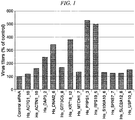
- Fig. 1 is a diagram showing results obtained by calculating virus titers (relative value (%) to a control) of Vero cells into which siRNAs are introduced in Example 2.
- Cells for producing an influenza virus according to the present invention are cells (cultured cells) that can be cultured in vitro and cells in which expression of a gene (hereinafter referred to as a "FluV propagation suppressing gene" in some cases) exhibiting an influenza virus propagation promoting effect when expression is suppressed is suppressed.
- a gene hereinafter referred to as a "FluV propagation suppressing gene” in some cases
- FluV propagation suppressing gene exhibiting an influenza virus propagation promoting effect when expression is suppressed is suppressed.
- expression of at least one type of FluV propagation suppressing gene in the chromosomes is suppressed. Therefore, it is possible to efficiently propagate an influenza virus using the cells.
- FluV propagation suppressing gene whose expression is suppressed in the cells for producing an influenza virus according to the present invention is ACTN1 gene. It is disclosed that other examples of the FluV propagation suppressing gene whose expression can be suppressed in the cells for producing an influenza virus include ACTG1 gene, ATCAY gene, CCT6A gene, COPS7B gene, DAP3 gene, ERLIN2 gene, GNAI2 gene, GTF3C5 gene, HNRPAB gene, KHSRP gene, KRT18 gene, MTCH1 gene, PPP2R1A gene, PRPS1 gene, RAB18 gene, RAB3A gene, RAP1B gene, RPS19 gene, RPS7 gene, S100A10 gene, SFRS7 gene, SLC2A12 gene, TMED2 gene, and USP10 gene.
- an ability to propagate an influenza virus is favorable and a proliferative ability of the cells themselves is not suppressed much compared to cells in which expression is not suppressed. That is, by suppressing expression of these genes in cells, an influenza virus propagation promoting effect is obtained without excessively impairing a proliferative ability of the cells themselves.
- the cells for producing an influenza virus according to the present disclosure expression of one type of FluV propagation suppressing genes may be suppressed and expression of two or more types of FluV propagation suppressing genes may be suppressed.
- cells in which expression of at least one selected from the group including ACTG1 gene, ACTN1 gene, DAP3 gene, GNAI2 gene, GTF3C5 gene, KRT18 gene, MTCH1 gene, PRPS1 gene, RPS19 gene, S100A10 gene, SFRS7 gene, SLC2A12 gene, USP10 gene, PPP2R1A gene, and TMED2 gene is suppressed are preferable. This is because an influenza virus propagation promoting effect according to suppression of expression of these FluV propagation suppressing genes is confirmed not only in human-derived cells but also in monkey-derived cells or canine-derived cells.
- cells for producing an influenza virus include cells in which an expression level of the FluV propagation suppressing gene is reduced to 50% or less of an expression level of the genes in cells of the same type before expression suppression are preferable, cells in which an expression level of the FluV propagation suppressing gene is reduced to 75% or less of an expression level of the genes in cells of the same type before expression suppression are more preferable, and cells in which an expression level of the FluV propagation suppressing gene is reduced to 80% or less of an expression level of the genes in cells of the same type before expression suppression are most preferable.
- the cells for producing an influenza virus according to the present invention are cells in which expression of one type of FluV propagation suppressing genes of cultured cell line HEK293 cells is suppressed
- the cells for producing an influenza virus according to the present invention cells in which expression of the FluV propagation suppressing gene is suppressed to an extent at which an expression level of the FluV propagation suppressing gene is reduced to 50% or less of an expression level of the FluV propagation suppressing gene in HEK293 cells are preferable.
- an amount of transcription (an expression level) of the FluV propagation suppressing gene may be reduced, the FluV propagation suppressing gene itself may be removed from chromosomes, and a mutation may be introduced into the FluV propagation suppressing gene and the gene may be disrupted.
- the FluV propagation suppressing gene is removed from the chromosomes, the full length of the gene may be removed, a region involved in expression control such as a promotor portion may be partially removed, or a coding region of the gene may be partially removed so that a protein in a portion in which a function of the gene is deleted is expressed. Reduction of a gene transcription level, gene deletion, gene disruption and the like can be performed by a general method.
- suppression of expression of the FluV propagation suppressing gene may be temporary or expression of the FluV propagation suppressing gene may be stably suppressed.
- cells in which expression of the FluV propagation suppressing gene is stably suppressed are preferable.
- RNA interference small interfering RNA (siRNA), a short hairpin RNA (shRNA) or a micro RNA (miRNA) having a double-stranded structure including a sense strand and an antisense strand of a partial region (RNA interference (RNAi) target region) of cDNA of the FluV propagation suppressing gene
- siRNA small interfering RNA
- shRNA short hairpin RNA
- miRNA micro RNA
- RNAi target region RNA interference
- an RNAi inducible vector through which siRNA and the like can be produced in cultured cells may be introduced into cultured cells.
- siRNA, shRNA, miRNA, and an RNAi inducible vector can be designed and prepared from base sequence information of cDNA of a target FluV propagation suppressing gene using a general method.
- the RNAi inducible vector can be prepared by inserting a base sequence of an RNAi target region into a base sequence of commercially available various RNAi vectors.
- siRNA, shRNA, miRNA, and an RNAi inducible vector can be introduced into cultured cells by, for example, an electroporation method, a lipofection method, and a calcium phosphate method.
- cells in which expression of the FluV propagation suppressing gene is stably suppressed can be prepared by, for example, a method of integrating siRNA, shRNA and the like into the chromosomes of cultured cells through a retroviral vector.
- a retroviral vector (a retroviral vector for siRNA expression) for integrating siRNA or shRNA into the chromosomes can be prepared by, for example, deleting structural genes gag, pol and env necessary for retrovirus replication and introducing a retroviral plasmid vector for integrating siRNA or shRNA into a packaging cell in which gag, pol and env are expressed.
- the retroviral vector for siRNA expression can be prepared using a commercially available kit such as Retrovirus Packaging Kit Eco/Ampho (code 6160/6161) (commercially available from Takara Bio Inc.).
- Retrovirus Packaging Kit Eco/Ampho code 6160/6161 (commercially available from Takara Bio Inc.).
- cells for producing an influenza virus As the cells for producing an influenza virus according to the present invention, cells (FluV propagation suppressing gene deficient cells) in which the FluV propagation suppressing gene itself is deleted (removed) from the chromosomes and cells (FluV propagation suppressing gene-disrupted cells) in which the FluV propagation suppressing gene is disrupted by introducing a mutation according to base substitution, deletion, or insertion are particularly preferable. It is undeniable that siRNA and the like integrated into the chromosomes can disappear due to subculture. However, in cells in which the FluV propagation suppressing gene itself is deleted or mutated, there is no risk of restoring an expression level of the FluV propagation suppressing gene due to subculture.
- the FluV propagation suppressing gene deficient cells and FluV propagation suppressing gene-disrupted cells can be prepared by various methods that are generally used for removal of a specific gene from the chromosomes and gene mutagenesis.
- an artificial nuclease a chimeric protein in which a domain that specifically binds to DNA and a DNA cleavage domain of a restriction enzyme FokI are linked
- FokI a restriction enzyme
- the artificial nuclease is bound to a specific region (a target sequence) in the chromosomes by the domain that specifically binds to DNA and then cuts chromosomal DNA when the DNA cleavage domain of the restriction enzyme FokI forms a dimer.
- a cleavage site is set in the gene region in the chromosomes, and two types of artificial nucleases having two adjacent partial base sequences sandwiching the cleavage site as target sequences are prepared and introduced into cultured cells.
- the artificial nuclease introduced into cultured cells binds to each adjacent target sequence in the chromosomes to form a dimer and cuts chromosomal DNA.
- a mutation base deletion, insertion, or substitution
- artificial nucleases examples include TAL effecter nuclease (TALEN) using a Transcriptional Activator-Like (TAL) effector as a DNA binding domain and Zinc Finger Nuclease (ZFN) using Zinc-Finger as a DNA binding domain.
- TALEN TAL effecter nuclease
- ZFN Zinc Finger Nuclease
- the artificial nucleases can be prepared by a general method on the basis of base sequence information of the target FluV propagation suppressing gene.
- a commercially available kit for example, GeneArt (registered trademark) Precision TALs (commercially available from Life Technologies Corporation), can be used for preparation.
- FluV propagation suppressing gene-disrupted cells can be prepared using an RNA guided endonuclease (RGEN).
- RGEN is an RNA induced artificial nuclease derived from the CRISPR/Cas system, which is an acquired immune system of bacteria, and includes a guide RNA that recognizes a target sequence to be cut in the chromosomes and Cas9 endonuclease.
- a guide RNA is designed on the basis of base sequence information of a target FluV propagation suppressing gene.
- both an expression vector for expressing a guide RNA in a cell and an expression vector for expressing Cas9 endonuclease in a cell are introduced into cultured cells.
- the guide RNA expressed in the cell binds to a target sequence in the chromosome and Cas9 endonuclease that is expressed in the cell in the same manner recognizes the bound guide RNA and cut for each chromosomal DNA.
- a mutation base deletion, insertion, or substitution
- the FluV propagation suppressing gene is disrupted.
- An expression vector for expressing an artificial nuclease and a guide RNA in a cell an expression vector for expressing Cas9 endonuclease in a cell and the like can be introduced into cultured cells by, for example, an electroporation method, a lipofection method, and a calcium phosphate method.
- cultured cells in which expression of the FluV propagation suppressing gene is suppressed are not particularly limited as long as an influenza virus can be infected into cells and can propagate in the cultured cells.
- the cultured cells can be appropriately determined from among various cultured cells.
- cultured cells derived from mammals such as humans, monkeys, mice, rats, hamsters, rabbits, pigs, horses, dogs, cats, and tigers; or birds such as chickens, ducks, quails, geese, ducks, turkeys, budgerigars, parrots, mandarin ducks, and swans can be used.
- tissues from which cultured cells are derived are not particularly limited.
- Cultured cells derived from, for example, a kidney, a lung, a liver, skin, connective tissues, an ovary, a uterus, blood cells, lymphatic tissues, a mouth, an esophagus, a stomach, a small intestine, a large intestine, and a fetus can be used.
- HEK293 cells among generally used cultured cells, HEK293 cells, MDCK (Madin-Darby canine kidney) cells, Vero cells, A549 cells, Calu-3 cells, HepG2 cells, NIH3T3 cells, 3T3-L1 cells, CHO cells, DF-1 cells, HeLa cells, HL-60 cells, Jurkat cells, Caco-2 cell and the like may be exemplified.
- HEK293 cells, MDCK cells, and Vero cells are more preferable because they have a favorable cell proliferative ability and are relatively easy to handle.
- human-derived cultured cells refer to cells obtained by artificially culturing cells collected from a human in vitro or cells sub-cultured from the cells.
- kidney-derived cells refer to cells obtained by artificially culturing cells collected from a kidney of an animal in vitro or cells sub-cultured from the cells.
- the cells for producing an influenza virus according to the present invention can be cultured under the same conditions as cultured cells before expression of the FluV propagation suppressing gene is suppressed.
- mammal-derived cultured cells can be cultured under a 5% carbon dioxide atmosphere at 37 °C.
- media used for culture include a Dulbecco's Modified Eagle's Medium (DMEM medium), an Eagle's minimum essential medium (EMEM medium), a minimum essential medium (MEM) ⁇ medium, and an RPMI-1640 medium.
- DMEM medium Dulbecco's Modified Eagle's Medium
- EMEM medium Eagle's minimum essential medium
- MEM minimum essential medium
- RPMI-1640 medium RPMI-1640
- Various additives such as a serum, antibiotics, amino acids such as L-glutamine, sodium pyruvate, vitamins, insulin, transfer, selenium, and bicarbonate sodium salt can be contained in such media as necessary.
- an influenza virus When an influenza virus is infected into the cells for producing an influenza virus according to the present invention and then cultured, the influenza virus propagates in the cells. The propagated influenza virus is secreted in the medium. Therefore, an influenza virus can be produced through an infection process in which an influenza virus is infected into cells for producing an influenza virus according to the present invention, a culture process in which the cells infected with an influenza virus are cultured in a culture medium and a virus collecting process in which a culture supernatant including the influenza virus is collected after the culture process.
- the influenza virus in the culture supernatant can be purified by a general method.
- the influenza virus to be infected into the cells for producing an influenza virus according to the present invention may have any type.
- An A-type influenza virus or a B-type influenza virus is preferable.
- An influenza virus capable of infecting a mammal or a bird is more preferable.
- An influenza virus capable of infecting a human is most preferable.
- cells for producing an influenza virus according to the present invention Since cells for producing an influenza virus according to the present invention has a sufficient proliferative ability and a favorable ability to propagate influenza virus, it is possible to efficiently propagate the influenza virus through the cells. In addition, the cells has a lower risk of mutation in an influenza virus in the propagation process than a chicken egg. Therefore, the cells for producing an influenza virus according to the present invention are suitably used for producing an influenza virus for preparing a vaccine. Specifically, the virus infected into the cells for producing an influenza virus according to the present invention is an influenza virus for preparing an influenza virus vaccine.
- HEK293 cells and Vero cells were cultured in a DMEM medium (commercially available from Sigma Aldrich) containing 10% fetal calf serum (FCS) and antibiotics under a 5% carbon dioxide atmosphere at 37 °C.
- FCS fetal calf serum
- MDCK cells were cultured in a 5% newborn calf serum (NCS)-containing EMEM medium (commercially available from GIBCO) under a 5% carbon dioxide atmosphere at 37 °C.
- NCS newborn calf serum
- Influenza viruses used in the following examples were A type influenza viruses (A/WSN/33, H1N1 subtype; WSN) unless otherwise described.
- the viruses were human-derived influenza viruses adapted to mice, prepared by a method (refer to Non Patent Literature 2) using reverse genetics, and propagated in MDCK cells.
- virus titers were measured by a plaque assay using MDCK cells (refer to Non Patent Literature 3).
- the inventors identified host proteins that interact with influenza virus proteins using an immunoprecipitation method.
- a plasmid encoding a Flag fusion protein in which Flag tag was fused to the N-terminus or the C-terminus for 11 types of influenza virus proteins (PB2, PB1, PA, HA, NP, NA, M1, M2, NS1, NS2, and PB1-F2) was transfected into HEK293 cells, respectively. Transfection was performed using a TransIT 293 reagent (commercially available from Mirus Bio Corp).
- Cells cultured for 24 hours after the transfection were mixed in a cell lysis buffer (50 mM Tris-HCl (pH 7.5), 150 mM NaCl, 1 mM EDTA, 0.5% Nonidet P-40, protease inhibitor mixture Complete Mini (Roche, Mannheim, Germany)), incubated at 4 °C for 1 hour, and lysed to obtain a lysate. A supernatant collected by centrifuging the obtained lysate was added to an affinity gel (anti-FLAG M2 Affinity Gel commercially available from Sigma Aldrich) to which anti-Flag antibodies were bound and incubated at 4 °C for 18 hours.
- a cell lysis buffer 50 mM Tris-HCl (pH 7.5), 150 mM NaCl, 1 mM EDTA, 0.5% Nonidet P-40, protease inhibitor mixture Complete Mini (Roche, Mannheim, Germany)
- the affinity gel was washed three times with a cell lysis buffer, then washed twice with an immunoprecipitation (IP) buffer (50 mM Tris-HCl (pH 7.5), 150 mM NaCl, 1 mM EDTA), and stirred with an IP buffer containing 0.5 mg/mL of FLAG peptides (F1804, commercially available from Sigma Aldrich) at 4 °C for 2 hours. Then, the affinity gel was removed through centrifugation and a supernatant was collected.
- IP immunoprecipitation
- the collected supernatant was filtrated through an Ultrafree-MC filter (commercially available from Merck Millipore Corporation), and then the contained protein was identified through nano LC-MS/MS (nanoflow liquid chromatography tandem mass spectrometry) analysis.
- Q-STAR Elite commercially available from AB SCIEX
- Dina commercially available from KYA technologies corporation
- Co-immunoprecipitated proteins of HEK293 cells were identified by comparing the obtained MS/MS signal with RefSeq (human protein database of National Center for Biotechnology Information).
- Mascot algorithm version 2.2.04; commercially available from Matrix Science
- Method variable modifications, oxidation (Met), N-acetylation; maximum missed cleavages, 2; peptide mass tolerance, 200 ppm; MS/MS tolerance, 0.5 Da.
- Protein identification required at least one MS/MS signal with a Mascot score that exceeded significantly greater the threshold value.
- RNA interference was performed on genes that encoded the 1292 host proteins identified by immunoprecipitation and it was examined whether these proteins were actually involved in influenza virus propagation.
- 2 types of siRNA were selected from genome-wide Human siRNA Libraries (FlexiTube siRNA; commercially available from Qiagen) for host genes and used.
- AllStars Negative Control siRNA commercially available from Qiagen (a control siRNA) was used as a negative control.
- siRNA (GGA UCU UAU UUC UUC GGA GUU) of NP genes of WSN virus was purchased from Sigma Aldrich.
- RNAiMAX Reagent commercially available from Invitrogen
- 25 nM final concentration: 50 nM
- Quantitative reverse transcription-PCR was performed on cells before transfection of siRNA and cells 48 hours after transfection and it was confirmed whether expression of target host genes was suppressed due to siRNA.
- siRNA was transfected into HEK293 cells and cells 48 hours after the second transfection were lysed in the cell lysis buffer to prepare a lysate.
- Total RNA was extracted from the prepared lysate using the Maxwell 16 LEV simply RNA Tissue Kit (commercially available from Promega Corporation).
- a reverse transcription reaction was performed using ReverTra Ace qPCR RT Master Mix (commercially available from Toyobo Co., Ltd.) or SuperScript III Reverse Transcriptase (commercially available from Invitrogen) using the total RNA as a template.
- a primer set specific to each host gene and THUNDERBIRD SYBR qPCR Mix (commercially available from Toyobo Co., Ltd.) were used to perform quantitative PCR.
- the relative mRNA expression levels of each host gene were calculated by the ⁇ Ct method using ⁇ -actin as internal control.
- the ratio of an mRNA expression level in cells into which each siRNA was introduced to an mRNA expression level in cells into which the control siRNA was introduced was calculated as a knockdown efficiency (%).
- siRNA was transfected into HEK293 cells, and the cells after the second transfection were infected with an influenza virus of 50 pfu (plaque-forming units).
- a culture supernatant was collected 48 hours after the viral infection and virus titers were examined through a plaque assay using MDCK cells.
- the reducing of the expression levels of the genes was performed in the same manner as in Example 1 using siRNA that was used in Example 1 except that Vero cells were used in place of HEK293 cells. Specifically, in the same manner as in ⁇ siRNA> of Example 1, siRNA was transfected into Vero cells and cells after the second transfection were infected with an influenza virus of 50 pfu. A culture supernatant was collected 48 hours after the viral infection and virus titers were examined through a plaque assay using MDCK cells.
- a value obtained by dividing a virus titer (pfu) of cells into which each siRNA was introduced by a virus titer (pfu) of cells into which the control siRNA was introduced was calculated as a virus titer (a relative value (%) to a control).
- the calculation results are shown in Fig. 1 .
- an influenza virus was infected into siRNA transfected cells and culture was performed in the same manner as in Example 1 except that MDCK cells were used in place of Vero cells and 3 types of siRNAs rather than two types were selected from genome-wide Human siRNA Libraries and used for host genes.
- An amount of change in virus titer (a value obtained by dividing a common logarithmic value of a virus titer in cells into which each siRNA was introduced by a common logarithmic value of a virus titer in cells into which the control siRNA was introduced) of a culture supernatant was examined. The measurement results are shown in Table 2.
- Table 2 Gene name Gene ID Amount of change in virus titer USP10 479625 0.7114 KRT18 477601 1.0675 PPP2R1A 484335 0.7132 TMED2 100687986 0.5397
- a guide RNA that recognized a target sequence to be cut in the chromosomes was designed based on base sequence information. Two guide RNAs were designed for one target gene.
- both an expression vector for expressing a guide RNA in a cell and an expression vector for expressing Cas9 endonuclease in a cell were introduced into MDCK cells and selection was then performed using a drug. From surviving clones according to drug selection, 0 to 20 clones for each cell in which one guide RNA was introduced were picked up as gene-disrupted cells of target genes and individually cultured. The created gene disrupted MDCK cells of the genes were cultured in a minimum essential medium (MEM) under a 5% carbon dioxide atmosphere at 37 °C in a carbon dioxide incubator.
- MEM minimum essential medium
- each clone was seeded in three wells in a 12-well plate and cultured in a carbon dioxide incubator at 37 °C for several days. The seeding of each clone in three wells was for triplicate experiments. Confluent cells were confirmed for each well and then washed with MEM. Then, the cells were infected with 0.1 mL of an influenza virus to a multiplicity of infection (MOI; the number of virus infections per cell) of about 0.001 and cultured in a carbon dioxide incubator at 37 °C for 1 hour.
- MOI multiplicity of infection
- virus solutions were removed from the wells, MEM containing 1 ⁇ g/mL trypsin was added at 1 mL/well, and culture was additionally performed in a carbon dioxide incubator at 37 °C for 2 days. Culture supernatants of the wells after the culture were collected, a plaque assay was performed on the MDCK cells and a virus titer (pfu) was measured. A value obtained by dividing a virus titer (pfu) in the gene disrupted MDCK cells by a virus titer (pfu) in control cells (MDCK cells into which an expression vector containing no guide RNA was introduced in RGEN) was calculated as a virus titer (a relative value (%) to a control).
- the calculation results are shown in Table 3.
- the virus titer (a relative value (%) to a control) of each clone in Table 3 shows an average value and an sd of results of 3 wells.
- [Table 3] Disrupted genes Clone name Virus titer (a relative value (%) to a control) average value sd KRT18 14-2 305.30 156.25 KRT18 14-7 191.67 54.65 KRT18 14-8 425.72 99.61 KRT18 14-9 463.88 161.93 KRT18 14-12 363.68 50.13 KRT18 15-1 445.39 82.05 KRT18 15-4 1121.59 991.89 KRT18 15-6 664.14 224.78 KRT18 15-8 646.34 247.63 KRT18 15-10 217.68 122.30 KRT18 15-11 160.86 64.84 KRT18 15-13 561.24 454.45 KRT18 15-14 182.83 212.97 KRT18 15-15 399.45 127
Landscapes
- Health & Medical Sciences (AREA)
- Life Sciences & Earth Sciences (AREA)
- Engineering & Computer Science (AREA)
- Genetics & Genomics (AREA)
- Chemical & Material Sciences (AREA)
- Biomedical Technology (AREA)
- Organic Chemistry (AREA)
- Bioinformatics & Cheminformatics (AREA)
- Wood Science & Technology (AREA)
- Zoology (AREA)
- Biotechnology (AREA)
- General Engineering & Computer Science (AREA)
- Microbiology (AREA)
- General Health & Medical Sciences (AREA)
- Biochemistry (AREA)
- Virology (AREA)
- Immunology (AREA)
- Medicinal Chemistry (AREA)
- Molecular Biology (AREA)
- Cell Biology (AREA)
- Urology & Nephrology (AREA)
- Physics & Mathematics (AREA)
- Biophysics (AREA)
- Plant Pathology (AREA)
- Mycology (AREA)
- Pulmonology (AREA)
- Pharmacology & Pharmacy (AREA)
- Epidemiology (AREA)
- Animal Behavior & Ethology (AREA)
- Public Health (AREA)
- Veterinary Medicine (AREA)
- Micro-Organisms Or Cultivation Processes Thereof (AREA)
- Medicines Containing Antibodies Or Antigens For Use As Internal Diagnostic Agents (AREA)
Claims (5)
- Zellen zur Herstellung eines Influenza-Virus, welche Zellen darstellen, in denen eine Expression von ACTN1 Gen in den Chromosomen unterdrückt ist und welche in vitro kultiviert werden können, wobei das Expressionsniveau von ACTN1 Gen in der Zelle um 50 % oder weniger eines Expressionsniveaus des ACTN1 Gens in Zellen desselben Typs vor Expressions-Unterdrückung reduziert ist und die Zellen zur Herstellung eines Influenza-Virus HEK293-Zellen oder Vero-Zellen sind.
- Zellen zur Herstellung eines Influenza-Virus nach Anspruch 1, wobei das Gen deletiert oder unterbrochen ist.
- Zellen zur Herstellung eines Influenza-Virus nach einem der Ansprüche 1 bis 2, wobei die Zellen zur Herstellung eines Influenza-Virus verwendet werden, um einen Influenza-Virus-Impfstoff herzustellen.
- Verfahren zur Herstellung eines Influenza-Virus, umfassend Infizieren der Zellen zur Herstellung eines Influenza-Virus nach einem der Ansprüche 1 bis 3 mit einem Influenza-Virus und dann Kultivieren.
- Verfahren zur Herstellung eines Influenza-Virus nach Anspruch 4, wobei das Influenza-Virus ein Influenza-Virus zur Herstellung eines Influenza-Virus-Impfstoffs ist.
Priority Applications (1)
| Application Number | Priority Date | Filing Date | Title |
|---|---|---|---|
| EP20167102.1A EP3708650B1 (de) | 2014-09-22 | 2015-09-18 | Zellen zur herstellung eines influenzavirus und verfahren zur herstellung eines influenzavirus |
Applications Claiming Priority (2)
| Application Number | Priority Date | Filing Date | Title |
|---|---|---|---|
| JP2014192753 | 2014-09-22 | ||
| PCT/JP2015/076681 WO2016047595A1 (ja) | 2014-09-22 | 2015-09-18 | インフルエンザウイルス産生用細胞、及びインフルエンザウイルスの産生方法 |
Related Child Applications (2)
| Application Number | Title | Priority Date | Filing Date |
|---|---|---|---|
| EP20167102.1A Division EP3708650B1 (de) | 2014-09-22 | 2015-09-18 | Zellen zur herstellung eines influenzavirus und verfahren zur herstellung eines influenzavirus |
| EP20167102.1A Division-Into EP3708650B1 (de) | 2014-09-22 | 2015-09-18 | Zellen zur herstellung eines influenzavirus und verfahren zur herstellung eines influenzavirus |
Publications (3)
| Publication Number | Publication Date |
|---|---|
| EP3199621A1 EP3199621A1 (de) | 2017-08-02 |
| EP3199621A4 EP3199621A4 (de) | 2018-05-23 |
| EP3199621B1 true EP3199621B1 (de) | 2020-05-06 |
Family
ID=55581122
Family Applications (2)
| Application Number | Title | Priority Date | Filing Date |
|---|---|---|---|
| EP15844041.2A Active EP3199621B1 (de) | 2014-09-22 | 2015-09-18 | Zelle zur herstellung eines influenzavirus und verfahren zur herstellung eines influenzavirus |
| EP20167102.1A Active EP3708650B1 (de) | 2014-09-22 | 2015-09-18 | Zellen zur herstellung eines influenzavirus und verfahren zur herstellung eines influenzavirus |
Family Applications After (1)
| Application Number | Title | Priority Date | Filing Date |
|---|---|---|---|
| EP20167102.1A Active EP3708650B1 (de) | 2014-09-22 | 2015-09-18 | Zellen zur herstellung eines influenzavirus und verfahren zur herstellung eines influenzavirus |
Country Status (4)
| Country | Link |
|---|---|
| US (2) | US10369210B2 (de) |
| EP (2) | EP3199621B1 (de) |
| JP (2) | JP6730188B2 (de) |
| WO (1) | WO2016047595A1 (de) |
Families Citing this family (3)
| Publication number | Priority date | Publication date | Assignee | Title |
|---|---|---|---|---|
| JP7695830B2 (ja) * | 2021-06-23 | 2025-06-19 | 花王株式会社 | インフルエンザウイルスの増殖方法 |
| JP2025503207A (ja) * | 2022-01-27 | 2025-01-30 | サノフィ・パスツール | 修飾されたVero細胞、及びウイルス産生にこれを使用する方法 |
| CN116942694B (zh) * | 2023-05-29 | 2025-11-21 | 中国农业大学 | 靶向mtch1的rna及其在治疗宫颈癌中的用途 |
Family Cites Families (11)
| Publication number | Priority date | Publication date | Assignee | Title |
|---|---|---|---|---|
| NZ538982A (en) * | 2002-09-27 | 2008-07-31 | Oridis Biomed Forschungs Und E | Polypeptides and nucleic acids encoding these and their use for the prevention, diagnosis or treatment of liver disorders and epithelial cancer |
| US20070287666A1 (en) * | 2006-03-21 | 2007-12-13 | Fraser Paul E | Modulator of gamma-secretase |
| AU2008306839A1 (en) * | 2007-10-04 | 2009-04-09 | Katholieke Universiteit Leuven, K.U. Leuven R & D | Extracellular targets for Alzheimer's disease |
| WO2010134939A2 (en) | 2008-12-19 | 2010-11-25 | Zirus, Inc. | Mammalian genes involved in infection |
| US20140154783A1 (en) * | 2009-07-06 | 2014-06-05 | Alnylam Pharmaceuticals, Inc. | Bioprocessing |
| WO2011072247A2 (en) * | 2009-12-11 | 2011-06-16 | The Brigham And Women's Hospital, Inc. | Pathogen restriction factors |
| CN102018965A (zh) | 2010-09-17 | 2011-04-20 | 天津医科大学 | miRNA-10a在制备抑制结肠癌的侵袭和转移药物中的应用 |
| WO2012040527A2 (en) * | 2010-09-24 | 2012-03-29 | The Regents Of The University Of Michigan | Deubiquitinase inhibitors and methods for use of the same |
| WO2013106548A1 (en) | 2012-01-10 | 2013-07-18 | The Broad Institute, Inc. | Methods and cells for the production of viral vaccines |
| BR112015018493A2 (pt) | 2013-02-05 | 2017-08-22 | Univ Georgia | Linhagens celulares para produção de vírus e métodos de uso |
| JP2014192753A (ja) | 2013-03-27 | 2014-10-06 | Dainippon Printing Co Ltd | サーバ装置、プログラム、通信システム、及び、撮像装置 |
-
2015
- 2015-09-18 EP EP15844041.2A patent/EP3199621B1/de active Active
- 2015-09-18 EP EP20167102.1A patent/EP3708650B1/de active Active
- 2015-09-18 JP JP2016550305A patent/JP6730188B2/ja active Active
- 2015-09-18 US US15/511,988 patent/US10369210B2/en active Active
- 2015-09-18 WO PCT/JP2015/076681 patent/WO2016047595A1/ja not_active Ceased
-
2019
- 2019-06-26 US US16/453,464 patent/US11964009B2/en active Active
-
2020
- 2020-07-01 JP JP2020114286A patent/JP7048998B2/ja active Active
Non-Patent Citations (1)
| Title |
|---|
| None * |
Also Published As
| Publication number | Publication date |
|---|---|
| US20180104327A1 (en) | 2018-04-19 |
| EP3708650B1 (de) | 2024-06-12 |
| JP6730188B2 (ja) | 2020-07-29 |
| EP3708650A1 (de) | 2020-09-16 |
| JP7048998B2 (ja) | 2022-04-06 |
| US20190314489A1 (en) | 2019-10-17 |
| JPWO2016047595A1 (ja) | 2017-06-29 |
| WO2016047595A1 (ja) | 2016-03-31 |
| EP3199621A4 (de) | 2018-05-23 |
| JP2020156516A (ja) | 2020-10-01 |
| EP3199621A1 (de) | 2017-08-02 |
| US11964009B2 (en) | 2024-04-23 |
| US10369210B2 (en) | 2019-08-06 |
Similar Documents
| Publication | Publication Date | Title |
|---|---|---|
| Pinto et al. | BTN3A3 evasion promotes the zoonotic potential of influenza A viruses | |
| Hudjetz et al. | Human-like PB2 627K influenza virus polymerase activity is regulated by importin-α1 and-α7 | |
| Zhao et al. | A long non-coding RNA IVRPIE promotes host antiviral immune responses through regulating interferon β1 and ISG expression | |
| JP2021524272A (ja) | ガイドrna分子および/またはガイドrna分子/rna誘導型ヌクレアーゼ複合体の無痕跡送達のための小胞およびその産生方法 | |
| JP7048998B2 (ja) | インフルエンザウイルス産生用細胞、及びインフルエンザウイルスの産生方法 | |
| WO2022120195A1 (en) | Method of treating and preventing viral infection | |
| JP2024041751A (ja) | サイトカイン産生の調節 | |
| Feng et al. | IFIT1 expression patterns induced by H9N2 virus and inactivated viral particle in human umbilical vein endothelial cells and bronchus epithelial cells | |
| Stoppani et al. | Expression of a single siRNA against a conserved region of NP gene strongly inhibits in vitro replication of different Influenza A virus strains of avian and swine origin | |
| Chen et al. | The PA-X host shutoff site 100 V exerts a contrary effect on viral fitness of the highly pathogenic H7N9 influenza A virus in mice and chickens | |
| WO2018168586A1 (ja) | ボルナウイルスベクター及びその利用 | |
| CN101275132B (zh) | 对A型流感病毒复制有抑制作用的siRNA及其编码序列 | |
| Huang et al. | Nuclear RNAi modulates influenza A virus infectivity by downregulating type-I interferon response | |
| Hao et al. | Genome-wide CRISPR/Cas9 knockout screen identifies host factors essential for Bovine Parainfluenza Virus Type 3 replication | |
| Yan et al. | Hsa_circ_0008085 acts as a miR-146a-5p sponge to suppress influenza a virus replication via modulating of TRAF6 | |
| Sajjad et al. | A chicken lncRNA is identified as a critical regulator that increases influenza virus replication by impairing innate antiviral responses | |
| CN101760457B (zh) | 对A型流感病毒复制有抑制作用的siRNA及其编码序列 | |
| CN114072417A (zh) | 重组非结构蛋白1、含此的重组流感病毒及免疫组成物及其用于制备流感病毒疫苗组成物的用途 | |
| US8747860B2 (en) | Methods and compositions to modulate antiviral and immune activity responses | |
| Hage | Regulation of DHX16-mediated Innate Immunity by Unanchored Polyubiquitin | |
| Uppala | Mechanisms Regulating Type I Interferon Signaling in Human Keratinocytes Triggered by Exogenous DNA | |
| CN108113995A (zh) | 微RNA hsa-mir-1-3p及其类似物的应用,和表达该微RNA载体的应用 | |
| Evseev | Influenza A virus interference in the mallard duck (Anas platyrhynchos) RIG-I pathway | |
| EP4683715A1 (de) | Modulation der expression und/oder aktivität von gas7 zur modulation der viralen replikation | |
| Friesen | Stable knock-in of duck RIG-I into DF-1 chicken cells via CRISPR/Cas9 homology directed repair |
Legal Events
| Date | Code | Title | Description |
|---|---|---|---|
| STAA | Information on the status of an ep patent application or granted ep patent |
Free format text: STATUS: THE INTERNATIONAL PUBLICATION HAS BEEN MADE |
|
| PUAI | Public reference made under article 153(3) epc to a published international application that has entered the european phase |
Free format text: ORIGINAL CODE: 0009012 |
|
| STAA | Information on the status of an ep patent application or granted ep patent |
Free format text: STATUS: REQUEST FOR EXAMINATION WAS MADE |
|
| 17P | Request for examination filed |
Effective date: 20170310 |
|
| AK | Designated contracting states |
Kind code of ref document: A1 Designated state(s): AL AT BE BG CH CY CZ DE DK EE ES FI FR GB GR HR HU IE IS IT LI LT LU LV MC MK MT NL NO PL PT RO RS SE SI SK SM TR |
|
| AX | Request for extension of the european patent |
Extension state: BA ME |
|
| DAV | Request for validation of the european patent (deleted) | ||
| DAX | Request for extension of the european patent (deleted) | ||
| RIC1 | Information provided on ipc code assigned before grant |
Ipc: C12N 5/10 20060101ALI20180109BHEP Ipc: C12N 5/00 20060101AFI20180109BHEP Ipc: C12N 7/02 20060101ALI20180109BHEP Ipc: C12N 15/113 20100101ALI20180109BHEP |
|
| A4 | Supplementary search report drawn up and despatched |
Effective date: 20180420 |
|
| RIC1 | Information provided on ipc code assigned before grant |
Ipc: C12N 15/113 20100101ALI20180416BHEP Ipc: C12N 5/00 20060101AFI20180416BHEP Ipc: C12N 5/10 20060101ALI20180416BHEP Ipc: C12N 7/02 20060101ALI20180416BHEP |
|
| STAA | Information on the status of an ep patent application or granted ep patent |
Free format text: STATUS: EXAMINATION IS IN PROGRESS |
|
| 17Q | First examination report despatched |
Effective date: 20190327 |
|
| GRAP | Despatch of communication of intention to grant a patent |
Free format text: ORIGINAL CODE: EPIDOSNIGR1 |
|
| STAA | Information on the status of an ep patent application or granted ep patent |
Free format text: STATUS: GRANT OF PATENT IS INTENDED |
|
| INTG | Intention to grant announced |
Effective date: 20191204 |
|
| GRAS | Grant fee paid |
Free format text: ORIGINAL CODE: EPIDOSNIGR3 |
|
| GRAA | (expected) grant |
Free format text: ORIGINAL CODE: 0009210 |
|
| STAA | Information on the status of an ep patent application or granted ep patent |
Free format text: STATUS: THE PATENT HAS BEEN GRANTED |
|
| AK | Designated contracting states |
Kind code of ref document: B1 Designated state(s): AL AT BE BG CH CY CZ DE DK EE ES FI FR GB GR HR HU IE IS IT LI LT LU LV MC MK MT NL NO PL PT RO RS SE SI SK SM TR |
|
| REG | Reference to a national code |
Ref country code: GB Ref legal event code: FG4D |
|
| REG | Reference to a national code |
Ref country code: CH Ref legal event code: EP Ref country code: AT Ref legal event code: REF Ref document number: 1266742 Country of ref document: AT Kind code of ref document: T Effective date: 20200515 |
|
| REG | Reference to a national code |
Ref country code: IE Ref legal event code: FG4D |
|
| REG | Reference to a national code |
Ref country code: DE Ref legal event code: R096 Ref document number: 602015052481 Country of ref document: DE |
|
| REG | Reference to a national code |
Ref country code: CH Ref legal event code: NV Representative=s name: VALIPAT S.A. C/O BOVARD SA NEUCHATEL, CH |
|
| REG | Reference to a national code |
Ref country code: LT Ref legal event code: MG4D |
|
| REG | Reference to a national code |
Ref country code: NL Ref legal event code: MP Effective date: 20200506 |
|
| PG25 | Lapsed in a contracting state [announced via postgrant information from national office to epo] |
Ref country code: LT Free format text: LAPSE BECAUSE OF FAILURE TO SUBMIT A TRANSLATION OF THE DESCRIPTION OR TO PAY THE FEE WITHIN THE PRESCRIBED TIME-LIMIT Effective date: 20200506 Ref country code: PT Free format text: LAPSE BECAUSE OF FAILURE TO SUBMIT A TRANSLATION OF THE DESCRIPTION OR TO PAY THE FEE WITHIN THE PRESCRIBED TIME-LIMIT Effective date: 20200907 Ref country code: FI Free format text: LAPSE BECAUSE OF FAILURE TO SUBMIT A TRANSLATION OF THE DESCRIPTION OR TO PAY THE FEE WITHIN THE PRESCRIBED TIME-LIMIT Effective date: 20200506 Ref country code: GR Free format text: LAPSE BECAUSE OF FAILURE TO SUBMIT A TRANSLATION OF THE DESCRIPTION OR TO PAY THE FEE WITHIN THE PRESCRIBED TIME-LIMIT Effective date: 20200807 Ref country code: IS Free format text: LAPSE BECAUSE OF FAILURE TO SUBMIT A TRANSLATION OF THE DESCRIPTION OR TO PAY THE FEE WITHIN THE PRESCRIBED TIME-LIMIT Effective date: 20200906 Ref country code: NO Free format text: LAPSE BECAUSE OF FAILURE TO SUBMIT A TRANSLATION OF THE DESCRIPTION OR TO PAY THE FEE WITHIN THE PRESCRIBED TIME-LIMIT Effective date: 20200806 Ref country code: SE Free format text: LAPSE BECAUSE OF FAILURE TO SUBMIT A TRANSLATION OF THE DESCRIPTION OR TO PAY THE FEE WITHIN THE PRESCRIBED TIME-LIMIT Effective date: 20200506 |
|
| PG25 | Lapsed in a contracting state [announced via postgrant information from national office to epo] |
Ref country code: HR Free format text: LAPSE BECAUSE OF FAILURE TO SUBMIT A TRANSLATION OF THE DESCRIPTION OR TO PAY THE FEE WITHIN THE PRESCRIBED TIME-LIMIT Effective date: 20200506 Ref country code: RS Free format text: LAPSE BECAUSE OF FAILURE TO SUBMIT A TRANSLATION OF THE DESCRIPTION OR TO PAY THE FEE WITHIN THE PRESCRIBED TIME-LIMIT Effective date: 20200506 Ref country code: BG Free format text: LAPSE BECAUSE OF FAILURE TO SUBMIT A TRANSLATION OF THE DESCRIPTION OR TO PAY THE FEE WITHIN THE PRESCRIBED TIME-LIMIT Effective date: 20200806 Ref country code: LV Free format text: LAPSE BECAUSE OF FAILURE TO SUBMIT A TRANSLATION OF THE DESCRIPTION OR TO PAY THE FEE WITHIN THE PRESCRIBED TIME-LIMIT Effective date: 20200506 |
|
| REG | Reference to a national code |
Ref country code: AT Ref legal event code: MK05 Ref document number: 1266742 Country of ref document: AT Kind code of ref document: T Effective date: 20200506 |
|
| PG25 | Lapsed in a contracting state [announced via postgrant information from national office to epo] |
Ref country code: AL Free format text: LAPSE BECAUSE OF FAILURE TO SUBMIT A TRANSLATION OF THE DESCRIPTION OR TO PAY THE FEE WITHIN THE PRESCRIBED TIME-LIMIT Effective date: 20200506 Ref country code: NL Free format text: LAPSE BECAUSE OF FAILURE TO SUBMIT A TRANSLATION OF THE DESCRIPTION OR TO PAY THE FEE WITHIN THE PRESCRIBED TIME-LIMIT Effective date: 20200506 |
|
| PG25 | Lapsed in a contracting state [announced via postgrant information from national office to epo] |
Ref country code: IT Free format text: LAPSE BECAUSE OF FAILURE TO SUBMIT A TRANSLATION OF THE DESCRIPTION OR TO PAY THE FEE WITHIN THE PRESCRIBED TIME-LIMIT Effective date: 20200506 Ref country code: ES Free format text: LAPSE BECAUSE OF FAILURE TO SUBMIT A TRANSLATION OF THE DESCRIPTION OR TO PAY THE FEE WITHIN THE PRESCRIBED TIME-LIMIT Effective date: 20200506 Ref country code: RO Free format text: LAPSE BECAUSE OF FAILURE TO SUBMIT A TRANSLATION OF THE DESCRIPTION OR TO PAY THE FEE WITHIN THE PRESCRIBED TIME-LIMIT Effective date: 20200506 Ref country code: CZ Free format text: LAPSE BECAUSE OF FAILURE TO SUBMIT A TRANSLATION OF THE DESCRIPTION OR TO PAY THE FEE WITHIN THE PRESCRIBED TIME-LIMIT Effective date: 20200506 Ref country code: DK Free format text: LAPSE BECAUSE OF FAILURE TO SUBMIT A TRANSLATION OF THE DESCRIPTION OR TO PAY THE FEE WITHIN THE PRESCRIBED TIME-LIMIT Effective date: 20200506 Ref country code: SM Free format text: LAPSE BECAUSE OF FAILURE TO SUBMIT A TRANSLATION OF THE DESCRIPTION OR TO PAY THE FEE WITHIN THE PRESCRIBED TIME-LIMIT Effective date: 20200506 Ref country code: EE Free format text: LAPSE BECAUSE OF FAILURE TO SUBMIT A TRANSLATION OF THE DESCRIPTION OR TO PAY THE FEE WITHIN THE PRESCRIBED TIME-LIMIT Effective date: 20200506 Ref country code: AT Free format text: LAPSE BECAUSE OF FAILURE TO SUBMIT A TRANSLATION OF THE DESCRIPTION OR TO PAY THE FEE WITHIN THE PRESCRIBED TIME-LIMIT Effective date: 20200506 |
|
| REG | Reference to a national code |
Ref country code: DE Ref legal event code: R097 Ref document number: 602015052481 Country of ref document: DE |
|
| PG25 | Lapsed in a contracting state [announced via postgrant information from national office to epo] |
Ref country code: SK Free format text: LAPSE BECAUSE OF FAILURE TO SUBMIT A TRANSLATION OF THE DESCRIPTION OR TO PAY THE FEE WITHIN THE PRESCRIBED TIME-LIMIT Effective date: 20200506 Ref country code: PL Free format text: LAPSE BECAUSE OF FAILURE TO SUBMIT A TRANSLATION OF THE DESCRIPTION OR TO PAY THE FEE WITHIN THE PRESCRIBED TIME-LIMIT Effective date: 20200506 |
|
| PLBE | No opposition filed within time limit |
Free format text: ORIGINAL CODE: 0009261 |
|
| STAA | Information on the status of an ep patent application or granted ep patent |
Free format text: STATUS: NO OPPOSITION FILED WITHIN TIME LIMIT |
|
| 26N | No opposition filed |
Effective date: 20210209 |
|
| PG25 | Lapsed in a contracting state [announced via postgrant information from national office to epo] |
Ref country code: MC Free format text: LAPSE BECAUSE OF FAILURE TO SUBMIT A TRANSLATION OF THE DESCRIPTION OR TO PAY THE FEE WITHIN THE PRESCRIBED TIME-LIMIT Effective date: 20200506 |
|
| PG25 | Lapsed in a contracting state [announced via postgrant information from national office to epo] |
Ref country code: SI Free format text: LAPSE BECAUSE OF FAILURE TO SUBMIT A TRANSLATION OF THE DESCRIPTION OR TO PAY THE FEE WITHIN THE PRESCRIBED TIME-LIMIT Effective date: 20200506 |
|
| REG | Reference to a national code |
Ref country code: BE Ref legal event code: MM Effective date: 20200930 |
|
| PG25 | Lapsed in a contracting state [announced via postgrant information from national office to epo] |
Ref country code: LU Free format text: LAPSE BECAUSE OF NON-PAYMENT OF DUE FEES Effective date: 20200918 |
|
| PG25 | Lapsed in a contracting state [announced via postgrant information from national office to epo] |
Ref country code: BE Free format text: LAPSE BECAUSE OF NON-PAYMENT OF DUE FEES Effective date: 20200930 Ref country code: IE Free format text: LAPSE BECAUSE OF NON-PAYMENT OF DUE FEES Effective date: 20200918 |
|
| PG25 | Lapsed in a contracting state [announced via postgrant information from national office to epo] |
Ref country code: TR Free format text: LAPSE BECAUSE OF FAILURE TO SUBMIT A TRANSLATION OF THE DESCRIPTION OR TO PAY THE FEE WITHIN THE PRESCRIBED TIME-LIMIT Effective date: 20200506 Ref country code: MT Free format text: LAPSE BECAUSE OF FAILURE TO SUBMIT A TRANSLATION OF THE DESCRIPTION OR TO PAY THE FEE WITHIN THE PRESCRIBED TIME-LIMIT Effective date: 20200506 Ref country code: CY Free format text: LAPSE BECAUSE OF FAILURE TO SUBMIT A TRANSLATION OF THE DESCRIPTION OR TO PAY THE FEE WITHIN THE PRESCRIBED TIME-LIMIT Effective date: 20200506 |
|
| PG25 | Lapsed in a contracting state [announced via postgrant information from national office to epo] |
Ref country code: MK Free format text: LAPSE BECAUSE OF FAILURE TO SUBMIT A TRANSLATION OF THE DESCRIPTION OR TO PAY THE FEE WITHIN THE PRESCRIBED TIME-LIMIT Effective date: 20200506 |
|
| REG | Reference to a national code |
Ref country code: CH Ref legal event code: U11 Free format text: ST27 STATUS EVENT CODE: U-0-0-U10-U11 (AS PROVIDED BY THE NATIONAL OFFICE) Effective date: 20251001 |
|
| PGFP | Annual fee paid to national office [announced via postgrant information from national office to epo] |
Ref country code: DE Payment date: 20250805 Year of fee payment: 11 |
|
| PGFP | Annual fee paid to national office [announced via postgrant information from national office to epo] |
Ref country code: GB Payment date: 20250805 Year of fee payment: 11 |
|
| PGFP | Annual fee paid to national office [announced via postgrant information from national office to epo] |
Ref country code: FR Payment date: 20250807 Year of fee payment: 11 |
|
| PGFP | Annual fee paid to national office [announced via postgrant information from national office to epo] |
Ref country code: CH Payment date: 20251001 Year of fee payment: 11 |