EP3200112B1 - Auf benutzung basierendes authentifizierungssystem - Google Patents
Auf benutzung basierendes authentifizierungssystem Download PDFInfo
- Publication number
- EP3200112B1 EP3200112B1 EP16160888.0A EP16160888A EP3200112B1 EP 3200112 B1 EP3200112 B1 EP 3200112B1 EP 16160888 A EP16160888 A EP 16160888A EP 3200112 B1 EP3200112 B1 EP 3200112B1
- Authority
- EP
- European Patent Office
- Prior art keywords
- usage
- user
- applications
- selected mobile
- mobile applications
- Prior art date
- Legal status (The legal status is an assumption and is not a legal conclusion. Google has not performed a legal analysis and makes no representation as to the accuracy of the status listed.)
- Active
Links
Images



Classifications
-
- G—PHYSICS
- G06—COMPUTING OR CALCULATING; COUNTING
- G06F—ELECTRIC DIGITAL DATA PROCESSING
- G06F21/00—Security arrangements for protecting computers, components thereof, programs or data against unauthorised activity
- G06F21/30—Authentication, i.e. establishing the identity or authorisation of security principals
- G06F21/31—User authentication
- G06F21/316—User authentication by observing the pattern of computer usage, e.g. typical user behaviour
-
- G—PHYSICS
- G06—COMPUTING OR CALCULATING; COUNTING
- G06F—ELECTRIC DIGITAL DATA PROCESSING
- G06F21/00—Security arrangements for protecting computers, components thereof, programs or data against unauthorised activity
- G06F21/30—Authentication, i.e. establishing the identity or authorisation of security principals
- G06F21/45—Structures or tools for the administration of authentication
-
- H—ELECTRICITY
- H04—ELECTRIC COMMUNICATION TECHNIQUE
- H04L—TRANSMISSION OF DIGITAL INFORMATION, e.g. TELEGRAPHIC COMMUNICATION
- H04L63/00—Network architectures or network communication protocols for network security
- H04L63/08—Network architectures or network communication protocols for network security for authentication of entities
-
- H—ELECTRICITY
- H04—ELECTRIC COMMUNICATION TECHNIQUE
- H04M—TELEPHONIC COMMUNICATION
- H04M1/00—Substation equipment, e.g. for use by subscribers
- H04M1/72—Mobile telephones; Cordless telephones, i.e. devices for establishing wireless links to base stations without route selection
- H04M1/724—User interfaces specially adapted for cordless or mobile telephones
- H04M1/72448—User interfaces specially adapted for cordless or mobile telephones with means for adapting the functionality of the device according to specific conditions
- H04M1/72463—User interfaces specially adapted for cordless or mobile telephones with means for adapting the functionality of the device according to specific conditions to restrict the functionality of the device
- H04M1/724631—User interfaces specially adapted for cordless or mobile telephones with means for adapting the functionality of the device according to specific conditions to restrict the functionality of the device by limiting the access to the user interface, e.g. locking a touch-screen or a keypad
-
- H—ELECTRICITY
- H04—ELECTRIC COMMUNICATION TECHNIQUE
- H04W—WIRELESS COMMUNICATION NETWORKS
- H04W12/00—Security arrangements; Authentication; Protecting privacy or anonymity
- H04W12/06—Authentication
Definitions
- This disclosure relates generally to enhancing authentication on a mobile device, and more particularly to methods and systems for providing an additional layer of security on the mobile device.
- the inventors here have recognized several technical problems with such conventional systems, Often several mobile software applications are downloaded on the smartphone. However, there are only certain numbers of apps that are used frequently on a daily basis. Each user has a unique pattern when it comes to usage of the applications on their smartphones and it is only known to that user.
- WO 2015/107396 A1 relates to authentication of a user of a device.
- the user is authenticated based on a challenge for authentication of the user that is generated based on information of usage of a device that is available for the device.
- the challenge is presented to the user by the device where after a response to the challenge is received. Acceptability of the response is determined based on said information of usage of the device.
- EP 2 963 856 A11 relates to a user authentication method, an authentication apparatus, and a terminal, which can reduce a memory price of a user and has a certain anti-peeping capability at the same time.
- the method includes: determining first-type authentication information and second-type authentication information that are of a terminal.
- the first-type authentication information includes specific attribute information that is in specific attribute information of an interaction object corresponding to a specific interaction behavior of the terminal and whose occurrence frequency within a preset time falls in a preset range.
- the second-type authentication information is used to interfere with selection, by the user of the terminal, of the first-type authentication information.
- the method further includes presenting an authentication challenge set to the user of the terminal; receiving an identification result obtained by identifying the authentication challenge set by the user of the terminal; and determining an authentication result according to an identification correctness rate of the first-type authentication information in the identification result.
- authentication information is dynamically generated by using information about an interaction object that is in the terminal and whose occurrence frequency within a preset time is preset, to perform authentication on a user, which reduces a memory price of memorizing the authentication information by the user, and further has an anti-peeping capability.
- WO 2015/088537 A1 relates to user authentication for mobile devices using behavioral analysis. Usage patterns of an authentic user of a mobile device are generated from data collected representing usage by the authentic user. These usage patterns may then be compared to monitored usage of the mobile device. If usage of the mobile device exceeds a threshold based on one or more of the usage patterns, access to data on the mobile device can be prevented.
- US 2015/150104 A1 relates to dynamically generating a security question for accessing a resource when a password is lost to access the resource.
- The comprises monitoring a behavior of said user during a monitoring period to identify automatically a deviation from a behavioral pattern indicative of repetitive behavior of a user, automatically generating a security question responded to by an indication of said deviation, receiving a user input inputted by a user in response to a presentation of said security question and said deviation, and authenticating, after said monitoring period, an access to a resource according to a match between said user input and said deviation
- a method for supplementary authentication by user on a mobile device Initially, the mobile device is enabled with a usage based supplementary authentication software mechanism. When the user selects to enable the supplementary authentication on the mobile, the mobile device displays the list of mobile applications and allows the user to select one or more applications. At the next step, the usage statistics of the selected mobile applications are calculated by a usage pattern computing module. These usage patterns comprise a set of calculated values stored in usage bracket matrix. At the next step, a plurality of usage patterns is generated by the usage pattern computing module. These usage patterns are stored in a memory.
- the mobile device provides a usage based authentication interface to the user, displaying the list of mobile applications that have been selected for supplementary authentication.
- the user provides the usage pattern as input in this interface.
- the usage bracket matrix stores one or more calculated values generated by the usage pattern computing module.
- a user-fed usage pattern is enabled through an I/O interface.
- the user-fed usage pattern is matched with one or more usage patterns stored in usage bracket matrix.
- the mobile device is authenticated based on successful matching of usage pattern in usage bracket matrix with one or more user-fed usage patterns as input. If the matching fails, the user will not be authenticated to the system.
- a computer implemented system for authenticating user in a mobile device includes a memory, a hardware processor, an I/O interface, and one or more computing modules.
- the computing modules further comprise an identification module, a usage authentication interface, a usage pattern commuting module and an authentication applications module.
- the identification module (112) facilitates identification of one or more mobile software applications for usage computation.
- a usage based authentication software application is enabled in the mobile device to select one or more mobile applications which are to be a part of supplementary authentication.
- the usage authentication interface displays the mobile applications installed on the device and that are configured to be a part of usage based authentication.
- the usage pattern computing module calculates usage pattern for one or more selected mobile applications.
- the usage pattern comprises a set of calculated values.
- the usage patterns are stored in a memory.
- the usage bracket matrix stores one or more calculated values generated by the usage pattern computing module.
- the I/O interface is enabled for the user to enter a usage pattern, wherein the I/O user-fed usage pattern is matched with one or more usage patterns stored in usage bracket matrix.
- the system authenticates the mobile device based on successful matching of usage pattern in usage bracket matrix with one or more user-fed usage patterns as input. If the matching fails, the user will not be authenticated to the mobile device.
- a non-transitory computer readable medium comprising thereon instructions which when executed by a processor on a system, cause the processor to perform a method comprising enabling the mobile application for usage based authentication computation by a usage authentication interface (114); calculating usage statistics for one or more selected mobile applications by a usage pattern computing module (116), wherein usage statistic comprises a set of calculated values.
- FIG. 1 illustrates a schematic block diagram of a system (100) for authenticating a user for a mobile device by utilizing the usage statistics of one or more mobile software applications according to an illustrative embodiment of the present invention.
- the system (100) comprises a memory (102), a hardware processor (104) with I/O interface (106) and one or more computing modules (110) as shown in FIG. 1 .
- the memory (102) may store instructions, any number of pieces of information, and data, used by a computer system, for example the usage based authentication system (100) to implement the functions (or embodiments) of the present disclosure.
- the memory (102) may include for example, volatile memory and/or non-volatile memory.
- the memory (102) may be configured to store instructions which when executed by the hardware processor (104) causes the usage based authentication system (100) to behave in a manner as described in various embodiments (e.g., selecting one or more mobile applications, enabling usage based authentication, calculating usage statistics, storing one or more usage patterns, matching one or more user-fed usage patterns).
- the memory (102) stores information, for example usage pattern, usage number etc. wherein the usage pattern is computed by usage pattern computation module (116).
- the hardware processor (104) may be implemented as one or more microprocessors, microcomputers, microcontrollers, digital signal processors, central processing units, state machines, logic circuitries, and/or any devices that manipulate signals based on operational instructions. Further, the hardware processor (104) may comprise a multi-core architecture. Among other capabilities, the hardware processor (104) is configured to fetch and execute computer-readable instructions or modules stored in the memory (102). The hardware processor (104) may include circuitry implementing, among others, audio and logic functions associated with the communication.
- the hardware processor (104) may include, but are not limited to, one or more digital signal processors (DSPs), one or more microprocessor, one or more special-purpose computer chips, one or more field-programmable gate arrays (FPGAs), one or more application-specific integrated circuits (ASICs), one or more computer(s), various analog to digital converters, digital to analog converters, and/or other support circuits.
- DSPs digital signal processors
- microprocessor one or more special-purpose computer chips
- FPGAs field-programmable gate arrays
- ASICs application-specific integrated circuits
- computer(s) various analog to digital converters, digital to analog converters, and/or other support circuits.
- the computing module (110) further comprises an identification module (112), a usage authentication interface (114), a usage pattern computing module (116) and an authentication applications module (118) according to an embodiment of the invention, as shown in Fig. 1 .
- the memory (102) stores instructions for software application usage in a mobile device.
- the identification module (112) facilitates identification of one or more mobile software applications for usage computation.
- the usage authentication interface (114) displays one or more mobile software applications and allows the user to select one or more of these applications for computation.
- the usage pattern computing module (116) calculates the usage statistics for one or more selected mobile software applications by user wherein the usage statistics comprise a set of calculated values.
- the usage bracket matrix stores one or more usage patterns wherein the pattern comprises a set of one or more calculated values that are computed by the usage pattern computing module (116).
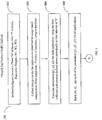
- FIG. 2 illustrates a flowchart 200 indicating the steps performed within authentication computing module (110).
- one or more mobile applications are selected by the user in the mobile device for usage based authentication computation.
- the usage authentication interface (114) displays the various mobile applications and the usage based authentication computation is enabled for the selected applications in step (202).
- usage statistics are calculated for one or more selected mobile software applications by a usage pattern computing module (116) that comprises a set of calculated values as pre-defined parameters.
- one or more usage patterns are generated for the selected mobile applications.
- the usage patterns are stored in a usage bracket matrix.
- a usage pattern is entered by the user through the I/O interface (106).
- the user-fed pattern is matched with the stored mobile application usage pattern in usage bracket matrix.
- the mobile device is authenticated based on successful matching of pattern stored in the usage bracket matrix with one or more user-fed usage patterns. If the matching fails, the user will not be authenticated to the mobile device.
- One or more components of the invention are described as module for the understanding of the specification.
- one or more mobile software applications which are downloaded on a smartphone can be configured for usage based authentication, wherein user can select and enable this application to be a part of supplementary authentication mechanism.
- the user can select a set of most used mobile software application (for example, top 10 most used mobile software applications installed in the user's mobile) as part of usage based supplementary authentication mechanism.
- the mobile device authentication process begins.
- the usage statistics of the plurality of mobile software applications are calculated based on the parameters, wherein the parameters are stored in the usage bracket matrix. When the user enters a usage pattern as input, the user input is matched with the existing statistics in the usage bracket matrix.
- a user interface screen is displayed on the mobile device after the successful primary authentication.
- the plurality of mobile software applications are displayed to the user, wherein the mobile software applications are configured for usage based authentication.
- the user input pattern is matched with the pattern stored in the usage bracket matrix.
- the usage based authentication succeeds based on the successful match. If the matching fails, the user will not be authenticated to the mobile device.
- An illustrative use of the usage pattern for plurality of mobile software applications (e.g. up to 10 applications) is shown as below: Enter Usage Pattern High Medium Low App 1 ⁇ App 2 ⁇ App 3 ⁇ App 4 ⁇ App 5 ⁇ App 6 ⁇ App 7 ⁇ App 8 ⁇ App 9 ⁇ App 10 ⁇
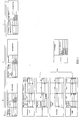
- FIG. 3 illustrates the logic for usage pattern computation.
- a usage pattern is configured to define one or more constants.
- the constraint comprises a wave "w" (in hours), time “t” (in hours), and parameter weights (W1, W2, W3).
- One or more data points are collected related to the usage of the applications identified for usage computation.
- the data points comprise total usage time of each of the mobile application, number of times one or more a mobile application is launched and the longest duration of one or more mobile application launched.
- the identified applications are referred as A1, A2,...An.
- one or more parameters are calculated for one or more mobile applications using the collected data points at a periodically at time interval of "t".
- the set of parameter comprises a usage percentage (p1).
- a longest active duration for the applications (p3) wherein p3 indicates longest duration of active applications usage in a single session.
- one or more parameters are ranked from 1 to n, wherein "n" being the application count of one or more identified mobile software applications.
- a usage number is calculated of one or more mobile applications at any point in time during a wave.
- the usage number for an identified mobile software application during the wave is calculated using a formula.
- the formula comprises one or more weights (W1, W2, W3) and one or more ranks (r1, r2, ...rn).
- W1, W2, W3 are the weights assigned to each of the parameters and r1, r2, r3 are ranks assigned to each of the parameters p1, p2, p3 for each application..
- the usage numbers for all the identified applications are stored and mapped into the usage bracket matrix.
- the usage bracket matrix comprises one or more classifications.
- the classification comprises high, medium, and low.
- the usage bracket is defined by the range of the usage numbers.
- One or more range is assigned to define the classification.
- the usage bracket for one or more applications identified is maintained in the usage bracket matrix.
- An illustrative use of the configuring one or more parameter to create usage pattern, wave "w", with respect to time "t", is shown as shown in Fig.4 .
- the present invention provides a method and system for authentication by user on a mobile device. Wherein the invention is more specific to creating an additional layer of security supplementing on a mobile device..
- a computer-readable storage medium refers to any type of physical memory on which information or data readable by a processor may be stored.
- a computer-readable storage medium may store instructions for execution by one or more processors, including instructions for causing the processor(s) to perform steps or stages consistent with the embodiments described herein.
- the term "computer-readable medium” should be understood to include tangible items and exclude carrier waves and transient signals, i.e., be non-transitory. Examples include random access memory (RAM), read-only memory (ROM), volatile memory, nonvolatile memory, hard drives, CD ROMs, DVDs, flash drives, disks, and any other known physical storage media.
Landscapes
- Engineering & Computer Science (AREA)
- Computer Security & Cryptography (AREA)
- Theoretical Computer Science (AREA)
- Computer Hardware Design (AREA)
- General Engineering & Computer Science (AREA)
- Signal Processing (AREA)
- Computer Networks & Wireless Communication (AREA)
- Physics & Mathematics (AREA)
- General Physics & Mathematics (AREA)
- Software Systems (AREA)
- Health & Medical Sciences (AREA)
- Social Psychology (AREA)
- General Health & Medical Sciences (AREA)
- Human Computer Interaction (AREA)
- Computing Systems (AREA)
- Stored Programmes (AREA)
- Telephone Function (AREA)
Claims (10)
- Computerimplementiertes Verfahren zur Authentifizierung eines Benutzers unter Verwendung einer oder mehrerer mobiler Anwendungen in einer mobilen Vorrichtung, wobei das Verfahren umfasst:Identifizieren einer oder mehrerer mobiler Anwendungen in der mobilen Vorrichtung durch einen Prozessor (104), die vom Benutzer für eine Nutzungsklassenmatrixberechnung verwendet werden, wobei eine nutzungsbasierte Authentifizierungssoftwareanwendung in der mobilen Vorrichtung aktiviert ist;Ermöglichen durch den Prozessor, dass der Benutzer eine oder mehrere mobile Anwendungen für die nutzungsbasierte Authentifizierungsberechnung über eine Nutzungsauthentifizierungsschnittstelle (114) auswählen kann;Berechnen von Nutzungsstatistiken für die eine oder die mehreren ausgewählten mobilen Anwendungen durch den Prozessor (104), wobei die Nutzungsstatistiken Nutzungszahlen (UN) für die eine oder die mehreren ausgewählten mobilen Anwendungen umfassen;Erzeugen eines oder mehrerer Nutzungsmuster für die eine oder die mehreren ausgewählten mobilen Anwendungen durch den Prozessor (104), wobei das eine oder die mehreren Nutzungsmuster der einen oder der mehreren ausgewählten mobilen Anwendungen die Nutzung der einen oder der mehreren ausgewählten mobilen Anwendungen beinhaltet, die als hoch, mittel und niedrig klassifiziert sind, basierend auf den Nutzungszahlen;Speichern des einen oder der mehreren Nutzungsmuster in der Nutzungsklassenmatrix durch den Prozessor (104), wobei die Nutzungsklassenmatrix die Nutzungszahlen speichert;Ermöglichen, durch den Prozessor (104), dass der Benutzer ein vom Benutzer eingegebenes Nutzungsmuster über eine E/A-Schnittstelle (106) eingeben kann, wobei das vom Benutzer eingegebene Nutzungsmuster mit dem einen oder den mehreren in der Nutzungsklassenmatrix gespeicherten Nutzungsmustern verglichen wird; undAuthentifizieren des Benutzers durch den Prozessor (104), um sich an der mobilen Vorrichtung anzumelden, basierend auf dem erfolgreichen Vergleich des einen oder der mehreren Nutzungsmuster in der Nutzungsklassenmatrix mit dem vom Benutzer eingegebenen Nutzungsmuster.
- Verfahren nach Anspruch 1, wobei das Erzeugen der einen oder der mehreren Nutzungsmuster umfasst:Einrichten eines oder mehrerer Parameter zum Erzeugen des einen oder der mehreren Nutzungsmuster, wobei der eine oder die mehreren Parameter eine Welle "w", eine Zeit "t" und eine oder mehrere Gewichte "W" umfassen;Sammeln eines Satzes von Datenpunkten für die eine oder die mehreren ausgewählten mobilen Anwendungen für die nutzungsbasierte Authentifizierungsberechnung, wobei der Satz von Datenpunkten eine Gesamtnutzungszeit jeder ausgewählten mobilen Anwendung, die Anzahl der Starts jeder ausgewählten mobilen Anwendung und eine längste Startdauer jeder ausgewählten mobilen Anwendung umfasst;Definieren der Konstanten für den einen oder die mehrere Parameter Welle "w" in Stunden, Zeit "t" in Stunden und Parameter Gewichte als W1, W2, W3);Berechnen eines Satzes von Nutzungsmusterparametern (p1, p2, p3) für jede ausgewählte mobile Anwendung unter Verwendung der gesammelten Daten und der definierten Konstanten periodisch in einem Zeitintervall von "t";Zuordnen von Rängen (r1, r2, r3) zum Satz der Nutzungsmusterparameter (p1, p2, p3) für jede ausgewählte mobile Anwendung;Berechnen der Nutzungszahlen der einen oder der mehreren ausgewählten mobilen Anwendungen, wobei die Nutzungszahlen unter Verwendung der Parametergewichte (W1, W2, .W3), des Satzes von Nutzungsmusterparametern (p1, p2, .p3) und der Ränge (r1, r2, r3) berechnet werden; undSpeichern und Abbilden der Nutzungszahlen auf die Nutzungsklasse, wobei die Nutzungsklasse durch einen Bereich von Nutzungszahlen definiert ist.
- Verfahren nach Anspruch 1, wobei die nutzungsbasierte Authentifizierung die eine oder die mehreren mobilen Anwendungen identifiziert, um die Nutzungshäufigkeit der einen oder der mehreren mobilen Anwendungen durch den Benutzer zu berechnen.
- Verfahren nach Anspruch 2, wobei der Schritt des Berechnens des Satzes von Nutzungsmusterparametern (p1, p2, p3) für jede ausgewählte mobile Anwendung umfasst:Berechnen eines Nutzungsprozentsatzes (p1), wobei der Nutzungsprozentsatz (p1) durch die Gesamtzeit berechnet wird, die für die eine oder die mehreren mobilen Softwareanwendungen (in Stunden) in einer Welle/w) *100 aufgewendet wird;Berechnen des Prozentsatzes der Anwendungsstarthäufigkeit (p2), wobei der Prozentsatz der Anwendungsstarthäufigkeit (p2) durch die Anzahl der Starts der einen oder der mehreren mobilen Softwareanwendungen in einer Welle/ Gesamtzahl der Starts der einen oder der mehreren mobilen Softwareanwendungen in der Welle) *100 berechnet wird; undBerechnen einer längsten aktiven Dauer (p3) für die eine oder die mehreren mobilen Softwareanwendungen, wobei die längste aktive Dauer (p3) die längste Dauer der Nutzung der einen oder der mehreren mobilen Softwareanwendungen in einer einzelnen Sitzung angibt.
- Verfahren nach Anspruch 2, wobei die Nutzungszahl für jede ausgewählte mobile Anwendung während der Welle unter Verwendung der Formel UN = (W1(r1) + W2(r2) + W3(r3)) / (W1 + W2 + W3) berechnet wird.
- Verfahren nach Anspruch 1, wobei ein Bereich der Nutzungszahlen von 5 bis 10 als niedriges Niveau definiert ist, wobei ein Bereich der Nutzungszahlen von 3 bis 5 als mittleres Niveau definiert ist und wobei ein Bereich der Nutzungszahlen von 1 bis 3 als hohes Niveau definiert ist.
- System (100) zum Authentifizieren eines Benutzers einer mobilen Vorrichtung, wobei das System umfasst:einen Speicher (102), der Anweisungen speichert;einen Prozessor (104), der mit dem Speicher (102) gekoppelt ist, wobei der Speicher ferner umfasst:ein Identifikationsmodul (112) zum Auswählen einer oder mehrerer mobiler Anwendungen in der vom Benutzer verwendeten mobilen Vorrichtung, wobei eine nutzungsbasierte Authentifizierungssoftwareanwendung in der mobilen Vorrichtung aktiviert ist;eine Nutzungsauthentifizierungsschnittstelle (114), um eine oder mehrere mobile Anwendungen anzuzeigen und es dem Benutzer zu ermöglichen, eine oder mehrere mobile Anwendungen auszuwählen, um eine nutzungsbasierte Authentifizierung zu berechnen;ein Nutzungsmusterberechnungsmodul (116), um Nutzungsstatistiken für die eine oder die mehreren ausgewählten mobilen Anwendungen zu berechnen, wobei die Nutzungsstatistik Nutzungszahlen (UN) für die eine oder die mehreren ausgewählten mobilen Anwendungen umfasst, und wobei das Nutzungsmusterberechnungsmodul (116) ein oder mehrere Nutzungsmuster für die eine oder die mehreren ausgewählten mobilen Anwendungen erzeugt, wobei das eine oder die mehreren Nutzungsmuster der einen oder der mehreren ausgewählten mobilen Anwendungen die Nutzung der einen oder der mehreren ausgewählten mobilen Anwendungen umfasst, die basierend auf den Nutzungszahlen als hoch, mittel und niedrig eingestuft sind;eine Nutzungsklassenmatrix, wobei die Nutzungsklassenmatrix das eine oder die mehreren Nutzungsmuster und die von dem Nutzungsmusterberechnungsmodul (116) erzeugten Nutzungszahlen speichert;eine E/A-Schnittstelle (106), um es dem Benutzer zu ermöglichen, ein Nutzungsmuster einzugeben, wobei das vom Benutzer eingegebene Nutzungsmuster mit dem einen oder den mehreren in der Nutzungsklassenmatrix gespeicherten Nutzungsmustern verglichen wird; undein Authentifizierungsanwendungsmodul (118), wobei das Authentifizierungsanwendungsmodul (118) es dem Benutzer ermöglicht, sich an der mobilen Vorrichtung anzumelden, basierend auf dem erfolgreichen Vergleich des einen oder der mehreren Nutzungsmuster in der Nutzungsklassenmatrix mit einem oder mehreren vom Benutzer eingegebenen Nutzungsmustern als Eingabe.
- Nichtflüchtiges, computerlesbares Medium, umfassend darauf Anweisungen, die, wenn sie von einem Besitzer auf einem System ausgeführt werden, den Prozessor veranlassen, ein Verfahren durchzuführen, das Folgendes umfasst:Identifizieren einer oder mehrerer mobiler Anwendungen in der mobilen Vorrichtung, die vom Benutzer für eine Nutzungsklassenmatrixberechnung verwendet werden, durch ein Identifikationsmodul (112), wobei eine nutzungsbasierte Authentifizierungssoftwareanwendung in der mobilen Vorrichtung aktiviert ist;Ermöglichen, dass der Benutzer eine oder mehrere mobile Anwendungen für die nutzungsbasierte Authentifizierungsberechnung durch eine nutzungsbasierte Authentifizierungsschnittstelle (114) auswählen kann;Berechnen von Nutzungsstatistiken für die eine oder die mehreren ausgewählten mobilen Anwendungen durch ein Nutzungsmusterberechnungsmodul (116), wobei die Nutzungsstatistik Nutzungszahlen für die eine oder die mehreren ausgewählten mobilen Anwendungen umfassen;Erzeugen eines oder mehrerer Nutzungsmuster für die eine oder die mehreren ausgewählten mobilen Anwendungen durch ein Nutzungsmusterberechnungsmodul (116), wobei das eine oder die mehreren Nutzungsmuster der einen oder der mehreren ausgewählten mobilen Anwendungen die Verwendung der einen oder der mehreren ausgewählten mobilen Anwendungen beinhalten, die als hoch, mittel und niedrig eingestuft sind, basierend auf den Nutzungszahlen;Speichern des einen oder der mehreren Nutzungsmuster in der Nutzungsklassenmatrix, wobei die Nutzungsklassenmatrix die von dem Nutzungsmusterberechnungsmodul (116) erzeugten Nutzungszahlen speichert;Ermöglichen, dass der Benutzer ein Nutzungsmuster durch eine E/A-Schnittstelle (106) eingeben kann, wobei das vom Benutzer eingegebene Nutzungsmuster mit dem einen oder den mehreren in der Nutzungsklassenmatrix gespeicherten Nutzungsmustern verglichen wird; undAuthentifizieren des Benutzers durch ein Authentifizierungsanwendungsmodul (118), um sich an der mobilen Vorrichtung anzumelden, basierend auf dem erfolgreichen Vergleich des Nutzungsmusters in der Nutzungsklassenmatrix mit einem oder mehreren vom Benutzer eingegebenen Nutzungsmustern als Eingabe.
- Nichtflüchtiges, computerlesbares Medium nach Anspruch 8, welches ferner Anweisungen speichert, die, wenn sie von einem Prozessor auf einem System ausgeführt werden, den Prozessor veranlassen, ein Verfahren durchzuführen, umfassend:Einrichten eines oder mehrerer Parameter zum Erzeugen des einen oder der mehreren Nutzungsmuster, wobei der eine oder die mehreren Parameter eine Welle "w", eine Zeit "t" und eine oder mehrere Gewichte "W" umfassen;Sammeln eines Satzes von Datenpunkten für die eine oder die mehreren ausgewählten mobilen Anwendungen für die nutzungsbasierte Authentifizierungsberechnung, wobei der Satz von Datenpunkten eine Gesamtnutzungszeit jeder ausgewählten mobilen Anwendung, die Anzahl der Starts jeder ausgewählten mobilen Anwendung und eine längste Startdauer jeder ausgewählten mobilen Anwendung umfasst;Definieren der Konstanten für den einen oder die mehreren Parameter Welle "w" in Stunden, Zeit "t" in Stunden und Parameter Gewichte wie (W1, W2, W3);Berechnen eines Satzes von Nutzungsmusterparametern (p1, p2, p3) für jede ausgewählte mobile Anwendung unter Verwendung der gesammelten Daten und der oben definierten Konstanten periodisch in einem Zeitintervall von "t";Zuordnen von Rängen (r1, r2, r3) zum Satz der Nutzungsmusterparameter (p1, p2, .. p3) für jede ausgewählte mobile Anwendung;Berechnen der Nutzungszahlen einer oder mehrerer ausgewählter mobiler Anwendungen, wobei die Nutzungszahl unter Verwendung der Parametergewichte (W1, W2, ..W3), des Satzes von Nutzungsmusterparametern (p1, p2, ..p3) und der Ränge (r1, r2, ..r3) berechnet werden; undSpeichern und Abbilden der Nutzungszahlen auf die Nutzungsklasse.
- Nichtflüchtiges, computerlesbares Medium nach Anspruch 9, welches ferner Anweisungen speichert, die, wenn sie von einem Besitzer auf einem System ausgeführt werden, den Prozessor veranlassen, ein Verfahren durchzuführen, das Folgendes umfasst:Berechnen eines Nutzungsprozentsatzes (p1), wobei der Nutzungsprozentsatz (p1) durch die Gesamtzeit berechnet wird, die für eine oder mehrere mobil ausgewählte mobile Softwareanwendungen (in Stunden) in einer Welle/w) *100 aufgewendet wird;Berechnen des Prozentsatzes der Anwendungsstarthäufigkeit (p2), wobei der Prozentsatz der Anwendungsstarthäufigkeit (p2) durch die Anzahl der Starts der einen oder der mehreren mobilen Softwareanwendungen in einer Welle/ Gesamtzahl der Starts der einen oder der mehreren ausgewählten mobilen Anwendungsstarts in einer Welle) *100 berechnet wird; undBerechnen einer längsten aktiven Dauer (p3) für die eine oder die mehreren ausgewählten mobilen Anwendungen, wobei die längste aktive Dauer (p3) die längste Dauer der Nutzung der einen oder der mehreren mobilen Softwareanwendungen in einer einzelnen Sitzung angibt.
Applications Claiming Priority (1)
| Application Number | Priority Date | Filing Date | Title |
|---|---|---|---|
| IN201621003562 | 2016-02-01 |
Publications (2)
| Publication Number | Publication Date |
|---|---|
| EP3200112A1 EP3200112A1 (de) | 2017-08-02 |
| EP3200112B1 true EP3200112B1 (de) | 2020-04-29 |
Family
ID=55587134
Family Applications (1)
| Application Number | Title | Priority Date | Filing Date |
|---|---|---|---|
| EP16160888.0A Active EP3200112B1 (de) | 2016-02-01 | 2016-03-17 | Auf benutzung basierendes authentifizierungssystem |
Country Status (5)
| Country | Link |
|---|---|
| US (1) | US9723132B1 (de) |
| EP (1) | EP3200112B1 (de) |
| KR (1) | KR102159853B1 (de) |
| CN (1) | CN107025392B (de) |
| SG (1) | SG10201602187WA (de) |
Families Citing this family (6)
| Publication number | Priority date | Publication date | Assignee | Title |
|---|---|---|---|---|
| CN107707731B (zh) * | 2017-08-15 | 2021-02-19 | 深圳天珑无线科技有限公司 | 一种智能终端及其控制方法和具有存储功能的装置 |
| CN109246285B (zh) * | 2018-02-25 | 2019-09-20 | 深圳市联合同创科技股份有限公司 | 一种手机智能加密和解密的方法 |
| EP3935525A1 (de) * | 2019-03-07 | 2022-01-12 | British Telecommunications public limited company | Zugangskontrolle |
| US20240095319A1 (en) * | 2022-09-21 | 2024-03-21 | International Business Machines Corporation | Use-based security challenge authentication |
| KR102739405B1 (ko) * | 2022-10-12 | 2024-12-06 | (주)유엠로직스 | 물리도메인과 논리도메인 컨텍스트 인증 시스템 및 그 방법 |
| KR102562263B1 (ko) * | 2023-04-05 | 2023-08-02 | (주)시지태테크놀러지 | 애플리케이션 사용량에 기반하여 계정에 등급을 부여하기 위한 방법 |
Family Cites Families (10)
| Publication number | Priority date | Publication date | Assignee | Title |
|---|---|---|---|---|
| JP2011141683A (ja) | 2010-01-06 | 2011-07-21 | Ricoh Co Ltd | 画像処理装置、表示装置、認証システム、表示制御方法、表示制御プログラム、及びそのプログラムを記録した記録媒体 |
| US9363786B2 (en) * | 2011-06-17 | 2016-06-07 | Telefonaktiebolaget L M Ericsson (Publ) | Tracking user terminals in a mobile communication network |
| US9317670B2 (en) | 2012-05-22 | 2016-04-19 | Verizon Patent And Licensing Inc | Security based on usage activity associated with user device |
| JP2014021750A (ja) * | 2012-07-19 | 2014-02-03 | Fuji Xerox Co Ltd | 認証装置、画像形成装置、認証システム及びプログラム |
| US9043887B2 (en) | 2012-12-31 | 2015-05-26 | Apple Inc. | Adaptive secondary authentication criteria based on account data |
| US9298898B2 (en) | 2013-07-18 | 2016-03-29 | At&T Intellectual Property I, L.P. | Event-based security challenges |
| US9444804B2 (en) * | 2013-11-25 | 2016-09-13 | Roy S. Melzer | Dynamic security question generation |
| WO2015088537A1 (en) * | 2013-12-12 | 2015-06-18 | Mcafee, Inc. | User authentication for mobile devices using behavioral analysis |
| WO2015107396A1 (en) * | 2014-01-20 | 2015-07-23 | Here Global B.V. | Authenticating a user |
| CN105099674B (zh) * | 2014-04-17 | 2018-09-07 | 华为技术有限公司 | 用户认证方法、认证装置和终端 |
-
2016
- 2016-03-17 EP EP16160888.0A patent/EP3200112B1/de active Active
- 2016-03-21 SG SG10201602187WA patent/SG10201602187WA/en unknown
- 2016-03-22 US US15/077,478 patent/US9723132B1/en active Active - Reinstated
- 2016-03-25 CN CN201610180140.0A patent/CN107025392B/zh active Active
- 2016-03-25 KR KR1020160036139A patent/KR102159853B1/ko active Active
Non-Patent Citations (1)
| Title |
|---|
| None * |
Also Published As
| Publication number | Publication date |
|---|---|
| CN107025392A (zh) | 2017-08-08 |
| KR20170091484A (ko) | 2017-08-09 |
| SG10201602187WA (en) | 2017-09-28 |
| US20170223171A1 (en) | 2017-08-03 |
| EP3200112A1 (de) | 2017-08-02 |
| KR102159853B1 (ko) | 2020-09-24 |
| US9723132B1 (en) | 2017-08-01 |
| CN107025392B (zh) | 2022-01-25 |
Similar Documents
| Publication | Publication Date | Title |
|---|---|---|
| US11637824B2 (en) | Multi-factor authentication devices | |
| EP3200112B1 (de) | Auf benutzung basierendes authentifizierungssystem | |
| Urooj et al. | Malware detection: a framework for reverse engineered android applications through machine learning algorithms | |
| CN109614816B (zh) | 数据脱敏方法、装置及存储介质 | |
| US20200320845A1 (en) | Adaptive severity functions for alerts | |
| EP3373543B1 (de) | Dienstverarbeitungsverfahren und -vorrichtung | |
| JP6876801B2 (ja) | 処理対象のトランザクションに関するリスクを識別する方法、装置、及び電子機器 | |
| US11991210B2 (en) | Machine learning-based techniques for identifying deployment environments and enhancing security thereof | |
| US11137909B2 (en) | Secure data entry via a virtual keyboard | |
| CN107870976A (zh) | 简历识别装置、方法及计算机可读存储介质 | |
| CN106845181A (zh) | 一种密码的获取方法及电子设备 | |
| CN110097170A (zh) | 信息推送对象预测模型获取方法、终端及存储介质 | |
| CN108924185A (zh) | 接口生成方法及装置 | |
| US20170032353A1 (en) | Methods and systems for financial account access management | |
| US12182249B1 (en) | Graphical event-based password system | |
| CN112650614A (zh) | 调用链监控方法、装置、电子设备及存储介质 | |
| CN113343189A (zh) | 防止恶意刷取短信验证码的方法及装置 | |
| CN105827400B (zh) | 一种设置验证码有效时间的方法、服务器及系统 | |
| CN109634560A (zh) | 随机数生成方法、装置及存储介质 | |
| CN118093383A (zh) | 一种软件接口的越权漏洞测试方法、装置和电子设备 | |
| CN119180055A (zh) | 数据处理方法、装置、设备、存储介质和程序产品 | |
| CN117688600A (zh) | 隐私数据获取方法、装置、存储介质及电子设备 | |
| CN117034244A (zh) | 账户安全认证方法、装置、计算机设备和存储介质 | |
| CN119597396A (zh) | 一种容器内异常调用的识别方法及装置 | |
| CN110704817A (zh) | 虚假实名识别方法、装置及计算机可读存储介质 |
Legal Events
| Date | Code | Title | Description |
|---|---|---|---|
| PUAI | Public reference made under article 153(3) epc to a published international application that has entered the european phase |
Free format text: ORIGINAL CODE: 0009012 |
|
| STAA | Information on the status of an ep patent application or granted ep patent |
Free format text: STATUS: THE APPLICATION HAS BEEN PUBLISHED |
|
| AK | Designated contracting states |
Kind code of ref document: A1 Designated state(s): AL AT BE BG CH CY CZ DE DK EE ES FI FR GB GR HR HU IE IS IT LI LT LU LV MC MK MT NL NO PL PT RO RS SE SI SK SM TR |
|
| AX | Request for extension of the european patent |
Extension state: BA ME |
|
| STAA | Information on the status of an ep patent application or granted ep patent |
Free format text: STATUS: REQUEST FOR EXAMINATION WAS MADE |
|
| 17P | Request for examination filed |
Effective date: 20180130 |
|
| RBV | Designated contracting states (corrected) |
Designated state(s): AL AT BE BG CH CY CZ DE DK EE ES FI FR GB GR HR HU IE IS IT LI LT LU LV MC MK MT NL NO PL PT RO RS SE SI SK SM TR |
|
| GRAP | Despatch of communication of intention to grant a patent |
Free format text: ORIGINAL CODE: EPIDOSNIGR1 |
|
| STAA | Information on the status of an ep patent application or granted ep patent |
Free format text: STATUS: GRANT OF PATENT IS INTENDED |
|
| RIC1 | Information provided on ipc code assigned before grant |
Ipc: H04M 1/725 20060101ALI20190521BHEP Ipc: H04W 12/06 20090101ALI20190521BHEP Ipc: G06F 21/31 20130101AFI20190521BHEP |
|
| INTG | Intention to grant announced |
Effective date: 20190619 |
|
| RIN1 | Information on inventor provided before grant (corrected) |
Inventor name: TOGARCHETI, SOWMYA Inventor name: SIRISILLA, NATARAJ |
|
| GRAS | Grant fee paid |
Free format text: ORIGINAL CODE: EPIDOSNIGR3 |
|
| GRAJ | Information related to disapproval of communication of intention to grant by the applicant or resumption of examination proceedings by the epo deleted |
Free format text: ORIGINAL CODE: EPIDOSDIGR1 |
|
| GRAL | Information related to payment of fee for publishing/printing deleted |
Free format text: ORIGINAL CODE: EPIDOSDIGR3 |
|
| STAA | Information on the status of an ep patent application or granted ep patent |
Free format text: STATUS: REQUEST FOR EXAMINATION WAS MADE |
|
| GRAP | Despatch of communication of intention to grant a patent |
Free format text: ORIGINAL CODE: EPIDOSNIGR1 |
|
| STAA | Information on the status of an ep patent application or granted ep patent |
Free format text: STATUS: GRANT OF PATENT IS INTENDED |
|
| INTC | Intention to grant announced (deleted) | ||
| INTG | Intention to grant announced |
Effective date: 20191125 |
|
| GRAA | (expected) grant |
Free format text: ORIGINAL CODE: 0009210 |
|
| STAA | Information on the status of an ep patent application or granted ep patent |
Free format text: STATUS: THE PATENT HAS BEEN GRANTED |
|
| AK | Designated contracting states |
Kind code of ref document: B1 Designated state(s): AL AT BE BG CH CY CZ DE DK EE ES FI FR GB GR HR HU IE IS IT LI LT LU LV MC MK MT NL NO PL PT RO RS SE SI SK SM TR |
|
| REG | Reference to a national code |
Ref country code: GB Ref legal event code: FG4D |
|
| REG | Reference to a national code |
Ref country code: CH Ref legal event code: EP |
|
| REG | Reference to a national code |
Ref country code: AT Ref legal event code: REF Ref document number: 1264391 Country of ref document: AT Kind code of ref document: T Effective date: 20200515 |
|
| REG | Reference to a national code |
Ref country code: DE Ref legal event code: R096 Ref document number: 602016034894 Country of ref document: DE |
|
| REG | Reference to a national code |
Ref country code: IE Ref legal event code: FG4D |
|
| REG | Reference to a national code |
Ref country code: FI Ref legal event code: FGE |
|
| REG | Reference to a national code |
Ref country code: SE Ref legal event code: TRGR |
|
| REG | Reference to a national code |
Ref country code: NL Ref legal event code: FP |
|
| REG | Reference to a national code |
Ref country code: LT Ref legal event code: MG4D |
|
| PG25 | Lapsed in a contracting state [announced via postgrant information from national office to epo] |
Ref country code: PT Free format text: LAPSE BECAUSE OF FAILURE TO SUBMIT A TRANSLATION OF THE DESCRIPTION OR TO PAY THE FEE WITHIN THE PRESCRIBED TIME-LIMIT Effective date: 20200831 Ref country code: GR Free format text: LAPSE BECAUSE OF FAILURE TO SUBMIT A TRANSLATION OF THE DESCRIPTION OR TO PAY THE FEE WITHIN THE PRESCRIBED TIME-LIMIT Effective date: 20200730 Ref country code: IS Free format text: LAPSE BECAUSE OF FAILURE TO SUBMIT A TRANSLATION OF THE DESCRIPTION OR TO PAY THE FEE WITHIN THE PRESCRIBED TIME-LIMIT Effective date: 20200829 Ref country code: NO Free format text: LAPSE BECAUSE OF FAILURE TO SUBMIT A TRANSLATION OF THE DESCRIPTION OR TO PAY THE FEE WITHIN THE PRESCRIBED TIME-LIMIT Effective date: 20200729 Ref country code: LT Free format text: LAPSE BECAUSE OF FAILURE TO SUBMIT A TRANSLATION OF THE DESCRIPTION OR TO PAY THE FEE WITHIN THE PRESCRIBED TIME-LIMIT Effective date: 20200429 |
|
| REG | Reference to a national code |
Ref country code: AT Ref legal event code: MK05 Ref document number: 1264391 Country of ref document: AT Kind code of ref document: T Effective date: 20200429 |
|
| PG25 | Lapsed in a contracting state [announced via postgrant information from national office to epo] |
Ref country code: LV Free format text: LAPSE BECAUSE OF FAILURE TO SUBMIT A TRANSLATION OF THE DESCRIPTION OR TO PAY THE FEE WITHIN THE PRESCRIBED TIME-LIMIT Effective date: 20200429 Ref country code: BG Free format text: LAPSE BECAUSE OF FAILURE TO SUBMIT A TRANSLATION OF THE DESCRIPTION OR TO PAY THE FEE WITHIN THE PRESCRIBED TIME-LIMIT Effective date: 20200729 Ref country code: HR Free format text: LAPSE BECAUSE OF FAILURE TO SUBMIT A TRANSLATION OF THE DESCRIPTION OR TO PAY THE FEE WITHIN THE PRESCRIBED TIME-LIMIT Effective date: 20200429 Ref country code: RS Free format text: LAPSE BECAUSE OF FAILURE TO SUBMIT A TRANSLATION OF THE DESCRIPTION OR TO PAY THE FEE WITHIN THE PRESCRIBED TIME-LIMIT Effective date: 20200429 |
|
| PG25 | Lapsed in a contracting state [announced via postgrant information from national office to epo] |
Ref country code: AL Free format text: LAPSE BECAUSE OF FAILURE TO SUBMIT A TRANSLATION OF THE DESCRIPTION OR TO PAY THE FEE WITHIN THE PRESCRIBED TIME-LIMIT Effective date: 20200429 |
|
| PG25 | Lapsed in a contracting state [announced via postgrant information from national office to epo] |
Ref country code: EE Free format text: LAPSE BECAUSE OF FAILURE TO SUBMIT A TRANSLATION OF THE DESCRIPTION OR TO PAY THE FEE WITHIN THE PRESCRIBED TIME-LIMIT Effective date: 20200429 Ref country code: SM Free format text: LAPSE BECAUSE OF FAILURE TO SUBMIT A TRANSLATION OF THE DESCRIPTION OR TO PAY THE FEE WITHIN THE PRESCRIBED TIME-LIMIT Effective date: 20200429 Ref country code: AT Free format text: LAPSE BECAUSE OF FAILURE TO SUBMIT A TRANSLATION OF THE DESCRIPTION OR TO PAY THE FEE WITHIN THE PRESCRIBED TIME-LIMIT Effective date: 20200429 Ref country code: IT Free format text: LAPSE BECAUSE OF FAILURE TO SUBMIT A TRANSLATION OF THE DESCRIPTION OR TO PAY THE FEE WITHIN THE PRESCRIBED TIME-LIMIT Effective date: 20200429 Ref country code: DK Free format text: LAPSE BECAUSE OF FAILURE TO SUBMIT A TRANSLATION OF THE DESCRIPTION OR TO PAY THE FEE WITHIN THE PRESCRIBED TIME-LIMIT Effective date: 20200429 Ref country code: RO Free format text: LAPSE BECAUSE OF FAILURE TO SUBMIT A TRANSLATION OF THE DESCRIPTION OR TO PAY THE FEE WITHIN THE PRESCRIBED TIME-LIMIT Effective date: 20200429 Ref country code: ES Free format text: LAPSE BECAUSE OF FAILURE TO SUBMIT A TRANSLATION OF THE DESCRIPTION OR TO PAY THE FEE WITHIN THE PRESCRIBED TIME-LIMIT Effective date: 20200429 Ref country code: CZ Free format text: LAPSE BECAUSE OF FAILURE TO SUBMIT A TRANSLATION OF THE DESCRIPTION OR TO PAY THE FEE WITHIN THE PRESCRIBED TIME-LIMIT Effective date: 20200429 |
|
| REG | Reference to a national code |
Ref country code: DE Ref legal event code: R097 Ref document number: 602016034894 Country of ref document: DE |
|
| PG25 | Lapsed in a contracting state [announced via postgrant information from national office to epo] |
Ref country code: PL Free format text: LAPSE BECAUSE OF FAILURE TO SUBMIT A TRANSLATION OF THE DESCRIPTION OR TO PAY THE FEE WITHIN THE PRESCRIBED TIME-LIMIT Effective date: 20200429 Ref country code: SK Free format text: LAPSE BECAUSE OF FAILURE TO SUBMIT A TRANSLATION OF THE DESCRIPTION OR TO PAY THE FEE WITHIN THE PRESCRIBED TIME-LIMIT Effective date: 20200429 |
|
| PLBE | No opposition filed within time limit |
Free format text: ORIGINAL CODE: 0009261 |
|
| STAA | Information on the status of an ep patent application or granted ep patent |
Free format text: STATUS: NO OPPOSITION FILED WITHIN TIME LIMIT |
|
| 26N | No opposition filed |
Effective date: 20210201 |
|
| PG25 | Lapsed in a contracting state [announced via postgrant information from national office to epo] |
Ref country code: SI Free format text: LAPSE BECAUSE OF FAILURE TO SUBMIT A TRANSLATION OF THE DESCRIPTION OR TO PAY THE FEE WITHIN THE PRESCRIBED TIME-LIMIT Effective date: 20200429 |
|
| PG25 | Lapsed in a contracting state [announced via postgrant information from national office to epo] |
Ref country code: MC Free format text: LAPSE BECAUSE OF FAILURE TO SUBMIT A TRANSLATION OF THE DESCRIPTION OR TO PAY THE FEE WITHIN THE PRESCRIBED TIME-LIMIT Effective date: 20200429 |
|
| REG | Reference to a national code |
Ref country code: CH Ref legal event code: PL |
|
| PG25 | Lapsed in a contracting state [announced via postgrant information from national office to epo] |
Ref country code: IE Free format text: LAPSE BECAUSE OF NON-PAYMENT OF DUE FEES Effective date: 20210317 Ref country code: CH Free format text: LAPSE BECAUSE OF NON-PAYMENT OF DUE FEES Effective date: 20210331 Ref country code: LU Free format text: LAPSE BECAUSE OF NON-PAYMENT OF DUE FEES Effective date: 20210317 Ref country code: LI Free format text: LAPSE BECAUSE OF NON-PAYMENT OF DUE FEES Effective date: 20210331 |
|
| PG25 | Lapsed in a contracting state [announced via postgrant information from national office to epo] |
Ref country code: HU Free format text: LAPSE BECAUSE OF FAILURE TO SUBMIT A TRANSLATION OF THE DESCRIPTION OR TO PAY THE FEE WITHIN THE PRESCRIBED TIME-LIMIT; INVALID AB INITIO Effective date: 20160317 |
|
| PG25 | Lapsed in a contracting state [announced via postgrant information from national office to epo] |
Ref country code: CY Free format text: LAPSE BECAUSE OF FAILURE TO SUBMIT A TRANSLATION OF THE DESCRIPTION OR TO PAY THE FEE WITHIN THE PRESCRIBED TIME-LIMIT Effective date: 20200429 |
|
| P01 | Opt-out of the competence of the unified patent court (upc) registered |
Effective date: 20230526 |
|
| PG25 | Lapsed in a contracting state [announced via postgrant information from national office to epo] |
Ref country code: MK Free format text: LAPSE BECAUSE OF FAILURE TO SUBMIT A TRANSLATION OF THE DESCRIPTION OR TO PAY THE FEE WITHIN THE PRESCRIBED TIME-LIMIT Effective date: 20200429 |
|
| PG25 | Lapsed in a contracting state [announced via postgrant information from national office to epo] |
Ref country code: MT Free format text: LAPSE BECAUSE OF FAILURE TO SUBMIT A TRANSLATION OF THE DESCRIPTION OR TO PAY THE FEE WITHIN THE PRESCRIBED TIME-LIMIT Effective date: 20200429 |
|
| PG25 | Lapsed in a contracting state [announced via postgrant information from national office to epo] |
Ref country code: TR Free format text: LAPSE BECAUSE OF FAILURE TO SUBMIT A TRANSLATION OF THE DESCRIPTION OR TO PAY THE FEE WITHIN THE PRESCRIBED TIME-LIMIT Effective date: 20200429 |
|
| PGFP | Annual fee paid to national office [announced via postgrant information from national office to epo] |
Ref country code: SE Payment date: 20260323 Year of fee payment: 11 |
|
| PGFP | Annual fee paid to national office [announced via postgrant information from national office to epo] |
Ref country code: GB Payment date: 20260304 Year of fee payment: 11 |
|
| PGFP | Annual fee paid to national office [announced via postgrant information from national office to epo] |
Ref country code: DE Payment date: 20260320 Year of fee payment: 11 |
|
| PGFP | Annual fee paid to national office [announced via postgrant information from national office to epo] |
Ref country code: BE Payment date: 20260323 Year of fee payment: 11 Ref country code: FI Payment date: 20260323 Year of fee payment: 11 |
|
| PGFP | Annual fee paid to national office [announced via postgrant information from national office to epo] |
Ref country code: NL Payment date: 20260323 Year of fee payment: 11 |
|
| PGFP | Annual fee paid to national office [announced via postgrant information from national office to epo] |
Ref country code: FR Payment date: 20260323 Year of fee payment: 11 |