EP3200376A1 - Feedbackverfahren und -vorrichtung - Google Patents
Feedbackverfahren und -vorrichtung Download PDFInfo
- Publication number
- EP3200376A1 EP3200376A1 EP15803123.7A EP15803123A EP3200376A1 EP 3200376 A1 EP3200376 A1 EP 3200376A1 EP 15803123 A EP15803123 A EP 15803123A EP 3200376 A1 EP3200376 A1 EP 3200376A1
- Authority
- EP
- European Patent Office
- Prior art keywords
- sets
- feedback information
- nack
- incorrect
- transmission node
- Prior art date
- Legal status (The legal status is an assumption and is not a legal conclusion. Google has not performed a legal analysis and makes no representation as to the accuracy of the status listed.)
- Granted
Links
Images


Classifications
-
- H—ELECTRICITY
- H04—ELECTRIC COMMUNICATION TECHNIQUE
- H04L—TRANSMISSION OF DIGITAL INFORMATION, e.g. TELEGRAPHIC COMMUNICATION
- H04L1/00—Arrangements for detecting or preventing errors in the information received
- H04L1/0078—Avoidance of errors by organising the transmitted data in a format specifically designed to deal with errors, e.g. location
- H04L1/0079—Formats for control data
- H04L1/0081—Formats specially adapted to avoid errors in the feedback channel
-
- H—ELECTRICITY
- H04—ELECTRIC COMMUNICATION TECHNIQUE
- H04W—WIRELESS COMMUNICATION NETWORKS
- H04W72/00—Local resource management
- H04W72/50—Allocation or scheduling criteria for wireless resources
- H04W72/54—Allocation or scheduling criteria for wireless resources based on quality criteria
- H04W72/541—Allocation or scheduling criteria for wireless resources based on quality criteria using the level of interference
-
- H—ELECTRICITY
- H04—ELECTRIC COMMUNICATION TECHNIQUE
- H04L—TRANSMISSION OF DIGITAL INFORMATION, e.g. TELEGRAPHIC COMMUNICATION
- H04L1/00—Arrangements for detecting or preventing errors in the information received
- H04L1/0001—Systems modifying transmission characteristics according to link quality, e.g. power backoff
- H04L1/0023—Systems modifying transmission characteristics according to link quality, e.g. power backoff characterised by the signalling
- H04L1/0026—Transmission of channel quality indication
-
- H—ELECTRICITY
- H04—ELECTRIC COMMUNICATION TECHNIQUE
- H04L—TRANSMISSION OF DIGITAL INFORMATION, e.g. TELEGRAPHIC COMMUNICATION
- H04L1/00—Arrangements for detecting or preventing errors in the information received
- H04L1/12—Arrangements for detecting or preventing errors in the information received by using return channel
- H04L1/16—Arrangements for detecting or preventing errors in the information received by using return channel in which the return channel carries supervisory signals, e.g. repetition request signals
- H04L1/1607—Details of the supervisory signal
-
- H—ELECTRICITY
- H04—ELECTRIC COMMUNICATION TECHNIQUE
- H04L—TRANSMISSION OF DIGITAL INFORMATION, e.g. TELEGRAPHIC COMMUNICATION
- H04L1/00—Arrangements for detecting or preventing errors in the information received
- H04L1/12—Arrangements for detecting or preventing errors in the information received by using return channel
- H04L1/16—Arrangements for detecting or preventing errors in the information received by using return channel in which the return channel carries supervisory signals, e.g. repetition request signals
- H04L1/1607—Details of the supervisory signal
- H04L1/1621—Group acknowledgement, i.e. the acknowledgement message defining a range of identifiers, e.g. of sequence numbers
-
- H—ELECTRICITY
- H04—ELECTRIC COMMUNICATION TECHNIQUE
- H04L—TRANSMISSION OF DIGITAL INFORMATION, e.g. TELEGRAPHIC COMMUNICATION
- H04L1/00—Arrangements for detecting or preventing errors in the information received
- H04L1/12—Arrangements for detecting or preventing errors in the information received by using return channel
- H04L1/16—Arrangements for detecting or preventing errors in the information received by using return channel in which the return channel carries supervisory signals, e.g. repetition request signals
- H04L1/1607—Details of the supervisory signal
- H04L1/1692—Physical properties of the supervisory signal, e.g. acknowledgement by energy bursts
-
- H—ELECTRICITY
- H04—ELECTRIC COMMUNICATION TECHNIQUE
- H04L—TRANSMISSION OF DIGITAL INFORMATION, e.g. TELEGRAPHIC COMMUNICATION
- H04L1/00—Arrangements for detecting or preventing errors in the information received
- H04L1/12—Arrangements for detecting or preventing errors in the information received by using return channel
- H04L1/16—Arrangements for detecting or preventing errors in the information received by using return channel in which the return channel carries supervisory signals, e.g. repetition request signals
- H04L1/18—Automatic repetition systems, e.g. Van Duuren systems
- H04L1/1812—Hybrid protocols; Hybrid automatic repeat request [HARQ]
- H04L1/1816—Hybrid protocols; Hybrid automatic repeat request [HARQ] with retransmission of the same, encoded, message
-
- H—ELECTRICITY
- H04—ELECTRIC COMMUNICATION TECHNIQUE
- H04L—TRANSMISSION OF DIGITAL INFORMATION, e.g. TELEGRAPHIC COMMUNICATION
- H04L5/00—Arrangements affording multiple use of the transmission path
- H04L5/003—Arrangements for allocating sub-channels of the transmission path
- H04L5/0053—Allocation of signalling, i.e. of overhead other than pilot signals
- H04L5/0055—Physical resource allocation for ACK/NACK
-
- H—ELECTRICITY
- H04—ELECTRIC COMMUNICATION TECHNIQUE
- H04L—TRANSMISSION OF DIGITAL INFORMATION, e.g. TELEGRAPHIC COMMUNICATION
- H04L5/00—Arrangements affording multiple use of the transmission path
- H04L5/003—Arrangements for allocating sub-channels of the transmission path
- H04L5/0058—Allocation criteria
- H04L5/0064—Rate requirement of the data, e.g. scalable bandwidth, data priority
-
- H—ELECTRICITY
- H04—ELECTRIC COMMUNICATION TECHNIQUE
- H04W—WIRELESS COMMUNICATION NETWORKS
- H04W28/00—Network traffic management; Network resource management
- H04W28/02—Traffic management, e.g. flow control or congestion control
- H04W28/04—Error control
-
- H—ELECTRICITY
- H04—ELECTRIC COMMUNICATION TECHNIQUE
- H04L—TRANSMISSION OF DIGITAL INFORMATION, e.g. TELEGRAPHIC COMMUNICATION
- H04L1/00—Arrangements for detecting or preventing errors in the information received
- H04L1/004—Arrangements for detecting or preventing errors in the information received by using forward error control
- H04L1/0056—Systems characterized by the type of code used
- H04L1/0057—Block codes
Definitions
- the disclosure relates to the technical field of information feedback, and in particular to a feedback method and device.
- a physical-layer data shared channel performs data transmission by taking a Transmission Block (TB) as a basic element.
- a receiver determines whether or not a current TB is correctly received through a Cyclic Redundancy Check (CRC) of the TB.
- CRC Cyclic Redundancy Check
- ACK Acknowledgement
- NACK Negative Acknowledgement
- the sender retransmits data to the receiver after receiving the NACK message, and retransmission is still performed by taking the TB as the element.
- the sender When a size of the TB exceeds a specified threshold, the sender is usually required to perform Code Block (CB) segmentation to segment the TB into multiple CBs, and operations of coding, rate matching, CB concatenation and the like are respectively performed on each CB for sending to the receiver.
- CB Code Block
- a CRC is added to each CB before coding, and in addition, each TB also has another CRC.
- lengths of the two CRCs are both 24bit.
- a CB CRC is used for premature termination of decoding and the CB CRC may also check correctness of a CB. When the CB CRC succeeds in checking, it is indicated that the CB is a correct CB, and when the CB CRC fails in checking, it is indicated that the CB is an incorrect CB.
- the TB CRC is used for correctness checking of a received TB.
- the TB CRC fails in checking at the receiver, it is indicated that the TB is incorrectly received, and the TB is required to be retransmitted.
- a TB includes a relatively larger number of CBs, relatively more resources are occupied by retransmission. For example, as shown in Fig. 1 , a TB includes 8 CBs, and only CB2 and CB5 are incorrectly decoded during first transmission. However, during retransmission, the other CBs without errors are also required to be retransmitted. This is because an ACK or NACK of the LTE system in the related art is fed back on a basis of a TB, there is no CB-based A or N feedback and CB-based feedback may cause extremely high uplink A or N feedback overhead.
- Packet coding is a technology for coding between data packets, i.e. a process of coding multiple source data packets to generate check data packets. As shown in Fig. 2 , a process of generating a check sequence at a position in a check data packet from an information sequence at a position in a source data packet corresponding to the position in the check data packet is packet coding. Each check data packet includes data at a corresponding position in each check sequence. There may be various packet coding methods.
- check data packets may be generated in a manner of performing an exclusive OR operation on each source data packet, the check data packets may also be generated in a Reed-Solomon coding manner, and the check data packets may further be generated in a fountain code or network coding manner.
- a coding bit sequence obtained by rate matching is required to be modulated into a digital baseband signal for transmission.
- common modulation constellation diagrams include Binary Phase Shift Keying (BPSK), Quadrature Phase Shift Keying (QPSK), 16 Quadrature Amplitude Modulation (16QAM), 64 Quadrature Amplitude Modulation (64QAM) and the like. All of these modulation constellation diagrams include some limited discrete constellation points used for representing amplitudes and phases of digital baseband signals, and geographical distances between the constellation points are called as Euclidean distances.
- the modulation constellation diagram is called as a uniform constellation diagram.
- the modulation constellation diagrams such as QPSK, 16QAM and 64QAM adopted in the LTE system are all uniform constellation diagrams.
- the constellation diagram is called as a nonuniform constellation diagram.
- the embodiments of the disclosure are intended to solve a technical problem of how to effectively reduce a retransmitted data volume and improve data retransmission efficiency during CB-based transmission.
- a feedback method may be applied to a first transmission node, and the method may include that:
- each CB set in the P CB sets includes at least one CB in the TB.
- each CB set in the P CB sets is determined according to at least one preset CB set division manner and a number P of CB sets;
- the preset CB set division manner at least includes a continuous division manner or a discontinuous division manner, wherein the continuous division manner refers to that at least two CBs at adjacent positions in the TB are divided into the same CB set; and the discontinuous division manner refers to that CBs at any two adjacent positions in the TB may not be divided into the same CB set in the P CB sets.
- the number P of the CB sets is one of m preset positive integers, and is determined by the first transmission node and sent from the first transmission node to the second transmission node, and m ⁇ 1.
- a number P of CB sets is determined according to a size of the TB.
- obtaining, by the first transmission node, the states of the P CB sets according to the signal including the TB includes: determining, by the first transmission node, the states of the P CB sets according to at least one of the following parameters: a number of incorrect or correct CB sets in the P CB sets, an incorrectness rate or correctness rate of CB sets, CB error patterns of incorrect CB sets in the P CB sets and a CB error pattern of the TB; the correct CB sets refers to that each of the CB sets include correct CBs; the incorrect CB sets refer to that each of CB sets includes at least one incorrect CB; the incorrectness rate or correctness rate of the CB sets refers to dividing a number of incorrect or correct CB sets in the P CB sets by P; the CB error patterns of the incorrect CB sets refer to positions or indexes of incorrect or correct CBs in the incorrect CB sets; and the CB error pattern of the TB refers to positions or indexes of incorrect or correct CBs in
- the feedback information set includes correctness indication information Acknowledgement (ACK) and one kind of incorrectness indication information Negative Acknowledgement (NACK)
- the correctness indication information ACK is used for indicating that the first transmission node correctly receives the TB
- the incorrectness indication information NACK is used for indicating that the first transmission node does not correctly receive the TB.
- the correctness indication information ACK is used for indicating that the first transmission node correctly receives the TB;
- the incorrectness indication information NACK 1 is used for indicating that retransmitted data at least includes part of data obtained by packet coding on M CB sets in the P CB sets, wherein M is a positive integer and 2 ⁇ M ⁇ P;
- the incorrectness indication information NACK 2 is used for indicating that the retransmitted data should at least include part of data of the TB.
- the second transmission node after sending, by the first transmission node, the determined feedback information to the second transmission node, further including: performing, by the second transmission node, packet coding on the M CB sets in the P CB sets to obtain S check CB sets, wherein a length of each check CB set in the S check CB sets is T bits, M, S and T are all positive integers and 2 ⁇ M ⁇ P; and the retransmitted data at least includes Q bits in each check CB set, wherein Q is a positive integer and 1 ⁇ Q ⁇ T.
- performing, by the second transmission node, the packet coding on the M CB sets in the P CB sets to obtain the S check CB sets includes: coding bits or symbols at the same index position of each CB set in the M CB sets to generate the S check CB sets.
- sending, by the first transmission node, the determined feedback information to the second transmission node includes: when the feedback information set at least includes the incorrectness indication information ACK and the two kinds of incorrectness indication information NACK 1 and NACK 2 , modulating the ACK, the NACK 1 and the NACK 2 by adopting a nonuniform constellation diagram.
- modulating the ACK, the NACK 1 and the NACK 2 by adopting the nonuniform constellation diagram includes: on the modulation constellation diagram, determining that a Euclidean distance between the ACK and the NACK 1 is longer than a Euclidean distance between the ACK 1 and the NACK 2 and a Euclidean distance between the ACK and the NACK 2 is also longer than the Euclidean distance between the ACK 1 and the NACK 2 .
- the feedback information set further includes a number P of CB sets; and the number P of the CB sets meets one of the following conditions: after the K CBs are divided into the P CB sets, a maximum of a number of incorrect CBs at the same index positions does not exceed a first preset threshold value G, wherein G is a positive integer and 1 ⁇ G ⁇ P; or, after the K CBs are divided into the P CB sets, a maximum of a number of incorrect CBs at the same index positions is minimum in division solutions when P adopts different values.
- the feedback information set further includes at least one CB set division manner.
- the feedback information set further includes a number Z of correct or incorrect CB sets, wherein Z is a positive integer and 1 ⁇ Z ⁇ P.
- the feedback information set further includes CB error patterns of incorrect CB sets, or a CB error pattern of the TB.
- determining, by the first transmission node, the at least one kind of feedback information in the preset feedback information set according to the states of the P CB sets includes: when the P CB sets are all correct CB sets, determining, by the first transmission node, correctness indication information ACK in the preset feedback information set as feedback information, and when at least one CB set in the P CB sets is an incorrect CB set and the feedback information set includes one kind of incorrectness indication information NACK, determining, by the first transmission node, the incorrectness indication information NACK in the preset feedback information set as the feedback information.
- determining, by the first transmission node, the at least one kind of feedback information in the preset feedback information set according to the states of the P CB sets includes: when the feedback information set at least includes incorrectness indication information NACK 1 and NACK 2 , determining, by the first transmission node, the incorrectness indication information in the preset feedback information set as feedback information according to a number of incorrect or correct CB sets in the P CB sets or according to incorrectness rate or correctness rate of the CB sets.
- determining, by the first transmission node, the incorrectness indication information sent to the second transmission node according to the number of the incorrect or correct CB sets in the P CB sets or according to the incorrectness rate or correctness rate of the CB sets includes: when the number of the incorrect CB sets or the incorrectness rate of the CB sets does not exceed a second preset threshold value, or when the number of the correct CB sets or the correctness rate of the CB sets exceeds a third preset threshold value, determining, by the first transmission node, the incorrectness indication information NACK 1 in the preset feedback information set as the feedback information; and when the number of the incorrect CB sets or the incorrectness rate of the CB sets exceeds the second preset threshold value, or when the number of the correct CB sets or the correctness rate of the CB sets does not exceed the third preset threshold value, determining, by the first transmission node, the incorrectness indication information NACK 2 in the preset feedback information set as the feedback information.
- determining, by the first transmission node, the at least one kind of feedback information in the preset feedback information set according to the states of the P CB sets includes: when the feedback information set at least includes incorrectness indication information NACK 1 and NACK 2 , determining, by the first transmission node, the incorrectness indication information in the preset feedback information set as the feedback information according to CB error patterns of incorrect CB sets.
- determining, by the first transmission node, the incorrectness indication information sent to the second transmission node according to CB error patterns of incorrect CB sets includes: when a number of the incorrect CBs at the same index positions in the incorrect CB sets does not exceed a fourth preset threshold value, sending, by the first transmission node, first incorrectness indication information NACK 1 to the second transmission node; and when the number of the incorrect CBs at the same index positions in the incorrect CB sets exceeds the fourth preset threshold value, sending, by the first transmission node, second incorrectness indication information NACK 2 to the second transmission node.
- a feedback device may be arranged in a first transmission node, including: a receiving component, a state determination component, a feedback information determination component and a sending component, wherein the receiving component is arranged to receive a signal including a Transmission Block (TB) from a second transmission node, wherein the TB includes K Code Blocks (CBs) and the K CBs are divided into P CB sets, K and P are positive integers, K ⁇ 3 and 2 ⁇ P ⁇ K; the state determination component is arranged to obtain states of the P CB sets according to the signal including the TB; the feedback information determination component is arranged to determine at least one kind of feedback information in a preset feedback information set according to the states of the P CB sets, wherein the feedback information set at least includes correctness indication information and n kinds of incorrectness indication information, n is an integer more than or equal to 1; and the sending component is arranged to send the determined feedback information to the second transmission node.
- TB Transmission Block
- CBs Code Blocks
- each CB set in the P CB sets includes at least one CB in the TB.
- each CB set in the P CB sets is determined according to at least one preset CB set division manner and a number P of CB sets;
- the preset CB set division manner at least includes a continuous division manner or a discontinuous division manner, wherein the continuous division manner refers to that at least two CBs at adjacent positions in the TB are divided into the same CB set; and the discontinuous division manner refers to that CBs at any two adjacent positions in the TB may not be divided into the same CB set in the P CB sets.
- the number P of the CB sets is one of m preset positive integers, and is determined by the first transmission node and sent from the first transmission node to the second transmission node, and m ⁇ 1.
- a number P of CB sets is determined according to a size of the TB.
- the state determination component is arranged to obtain the states of the P CB sets according to the signal including the TB according to the following manner: the state determination component is arranged to determine the states of the P CB sets according to at least one of the following parameters: a number of incorrect or correct CB sets in the P CB sets, an incorrectness rate or correctness rate of CB sets, CB error patterns of incorrect CB sets in the P CB sets and a CB error pattern of the TB; the correct CB sets refer to that each of the CB sets include correct CBs; the incorrect CB sets refer to that each of CB sets includes at least one incorrect CB; the incorrectness rate or correctness rate of the CB sets refers to dividing a number of incorrect or correct CB sets in the P CB sets by P; the CB error patterns of the incorrect CB sets refer to positions or indexes of incorrect or correct CBs in the incorrect CB sets; and the CB error pattern of the TB refers to positions or indexes of incorrect or correct CBs
- the feedback information set includes correctness indication information Acknowledgement (ACK) and one kind of incorrectness indication information Negative Acknowledgement (NACK)
- the correctness indication information ACK is used for indicating that the first transmission node correctly receives the TB
- the incorrectness indication information NACK is used for indicating that the first transmission node does not correctly receive the TB.
- the correctness indication information ACK is used for indicating that the first transmission node correctly receives the TB;
- the incorrectness indication information NACK 1 is used for indicating that retransmitted data at least includes part of data obtained by packet coding on M CB sets in the P CB sets, wherein M is a positive integer and 2 ⁇ M ⁇ P;
- the incorrectness indication information NACK 2 is used for indicating that the retransmitted data should at least include part of data of the TB.
- the feedback information set at least includes the incorrectness indication information ACK and the two kinds of incorrectness indication information NACK 1 and NACK 2
- the ACK, the NACK 1 and the NACK 2 are modulated by adopting a nonuniform constellation diagram.
- an operation that the ACK, the NACK 1 and the NACK 2 are modulated by adopting the nonuniform constellation diagram refers to that: on the modulation constellation diagram, a Euclidean distance between the ACK and the NACK 1 is longer than a Euclidean distance between the ACK 1 and the NACK 2 , and a Euclidean distance between the ACK and the NACK 2 is also longer than the Euclidean distance between the ACK 1 and the NACK 2 .
- the feedback information set further includes a number P of CB sets; and the number P of the CB sets meets one of the following conditions: after the K CBs are divided into the P CB sets, a maximum of a number of incorrect CBs at the same index positions does not exceed a first preset threshold value G, wherein G is a positive integer and 1 ⁇ G ⁇ P; or, after the K CBs are divided into the P CB sets, a maximum of a number of incorrect CBs at the same index positions is minimum in division solutions when P adopts different values.
- the feedback information set further includes at least one CB set division manner.
- the feedback information set further includes a number Z of correct or incorrect CB sets, wherein Z is a positive integer and 1 ⁇ Z ⁇ P.
- the feedback information set further includes CB error patterns of incorrect CB sets, or a CB error pattern of the TB.
- the feedback information determination component is arranged to determine the at least one kind of feedback information in the preset feedback information set according to the states of the P CB sets according to the following manner: when the P CB sets are all correct CB sets, the feedback information determination component determines correctness indication information ACK in the preset feedback information set as feedback information, and when at least one CB set in the P CB sets is an incorrect CB set and the feedback information set includes one kind of incorrectness indication information NACK, the feedback information determination component determines the incorrectness indication information NACK in the preset feedback information set as the feedback information.
- the feedback information determination component is arranged to determine the at least one kind of feedback information in the preset feedback information set according to the states of the P CB sets according to the following manner: when the feedback information set at least includes the incorrectness indication information NACK 1 and NACK 2 , the feedback information determination component determines the incorrectness indication information in the preset feedback information set as the feedback information according to a number of incorrect or correct CB sets in the P CB sets or according to incorrectness rate or correctness rate of the CB sets.
- the feedback information determination component is arranged to determine the incorrectness indication information determined as the feedback information in the preset feedback information set according to the number of the incorrect or correct CB sets in the P CB sets or according to the incorrectness rate or correctness rate of the CB sets according to the following manner: when the number of the incorrect CB sets or the incorrectness rate of the CB sets does not exceed a second preset threshold value, or when the number of the correct CB sets or the correctness rate of the CB sets exceeds a third preset threshold value, the feedback information determination component determines the incorrectness indication information NACK 1 in the preset feedback information set as the feedback information; and when the number of the incorrect CB sets or the incorrectness rate of the CB sets exceeds the second preset threshold value, or when the number of the correct CB sets or the correctness rate of the CB sets does not exceed the third preset threshold value, the feedback information determination component determines the incorrectness indication information NACK 2 in the preset feedback information set as the feedback information.
- the feedback information determination component is arranged to determine the at least one kind of feedback information in the preset feedback information set according to the states of the P CB sets according to the following manner: when the feedback information set at least includes incorrectness indication information NACK 1 and NACK 2 , the feedback information determination component determines the incorrectness indication information in the preset feedback information set as the feedback information according to CB error patterns of incorrect CB sets.
- the feedback information determination component is arranged to determine the incorrectness indication information in the preset feedback information set as the feedback information according to the CB error patterns of the incorrect CB sets according to the following manner: when a number of the incorrect CBs at the same index positions in the incorrect CB sets does not exceed a fourth preset threshold value, the feedback information determination component determines first incorrectness indication information NACK 1 in the preset feedback information set as the feedback information; and when the number of the incorrect CBs at the same index positions in the incorrect CB sets exceeds the fourth preset threshold value, the feedback information determination component determines second incorrectness indication information NACK 2 in the preset feedback information set as the feedback information.
- the disclosure discloses a feedback solution, which may effectively reduce a retransmitted data volume and improve data retransmission efficiency.
- a relatively larger TB is divided into multiple CB sets with equal sizes, each CB set consists of multiple CBs, and a receiver may perform feedback according to receiving conditions of these CB sets; and feedback information may be used for indicating a receiving state of the CB sets and simultaneously provide an important reference basis for whether or not a sender may perform data retransmission by adopting a packet coding manner.
- a feedback method is applied to a first transmission node, and the method includes that:
- the first transmission node may be, but not limited to: any network element with data receiving and signaling sending functions such as a terminal, an evolved Node B and a relay.
- the second transmission node may be, but not limited to: any network element with a signaling receiving function such as a terminal, an evolved Node B and a relay.
- each CB set in the P CB sets includes at least one CB in the TB.
- each CB set in the P CB sets may be determined according to at least one preset CB set division manner and a number P of CB sets.
- the preset CB set division manner at least includes a continuous division manner or a discontinuous division manner.
- the continuous division manner refers to that at least two CBs at adjacent positions in the TB are divided into the same CB set.
- discontinuous division manner refers to that CBs at any two adjacent positions in the TB may not be divided into the same CB set in the P CB sets.
- the number P of the CB sets may be configured by the evolved Node B.
- the number P of the CB sets is one of m preset positive integers, and is determined by the first transmission node and sent from the first transmission node to the second transmission node, and m ⁇ 1.
- the number P of the CB sets may be autonomously determined by the first transmission node and sent from the first transmission node to the second transmission node.
- the number P of the CB sets may also be determined according to a size of the TB.
- the size of the TB is divided into multiple value intervals according to a sequence from small to large, and each value interval corresponds to the number P of the CB sets; and the number of the CB sets is determined according to a value interval of the size of the TB.
- a number of CBs in each CB set may be determined according to the following method:
- a filling CB may be formed by any preset data, including, but not limited to: a CB formed by an all-1 bit sequence or an all-0 bit sequence, or any CB in the CB set.
- the step that the first transmission node obtains the states of the P CB sets according to the signal including the TB includes that:
- correct CB sets refer to that each of the CB sets includes correct CBs.
- the incorrect CB sets refer to that each of the CB sets includes at least one incorrect CB.
- the incorrectness rate (or correctness rate) of the CB sets refers to dividing the number of the incorrect (or correct) CB sets in the P CB sets by P.
- the CB error patterns of the incorrect CB sets refer to positions (indexes) of incorrect (or correct) CBs in the incorrect CB sets.
- the CB error pattern of the TB refers to positions (indexes) of incorrect (or correct) CBs in the TB.
- the correctness indication information ACK is used for indicating that the first transmission node correctly receives the TB.
- the feedback information set includes the correctness indication information ACK and the unique incorrectness indication information NACK
- the unique incorrectness indication information NACK is used for indicating that the first transmission node does not correctly receive the TB.
- the feedback information set includes the correctness indication information ACK and the one kind of the incorrectness indication information NACK
- the ACK is represented by a bit “0” and the NACK is represented by a bit “1”; or, the ACK is represented by the bit “1” and the “NACK” is represented by the bit "0".
- the correctness indication information ACK is used for indicating that the first transmission node correctly receives the TB.
- the incorrectness indication information NACK 1 is used for indicating that retransmitted data at least includes part of data obtained by packet coding on M CB sets in the P CB sets, in which M is a positive integer and 2 ⁇ M ⁇ P.
- the retransmitted data at least includes part of data obtained by packet coding on the M CB sets in the P CB sets refers to that:
- packet coding refers to that bits or symbols at the same index position of each CB set in the M CB sets are coded to generate the S check CB sets.
- a coding operation may be, but not limited to, one of the following manners: bit exclusive or (or called as modular two addition) coding, Reed-Solomon coding, Bose, Ray-Chaudhuri and Hocquenghem (BCH) coding, linear coding such as digital fountain coding, symbol superimposition coding, network coding and the like.
- the incorrectness indication information NACK 2 is used for indicating that the retransmitted data should at least include part of data of the TB.
- the feedback information set at least includes the incorrectness indication information ACK and the two kinds of incorrectness indication information NACK 1 and NACK 2
- the ACK, the NACK 1 and the NACK 2 are respectively represented by any two bits.
- the feedback information set at least includes the incorrectness indication information ACK and the two kinds of incorrectness indication information NACK 1 and NACK 2
- the ACK, the NACK 1 and the NACK 2 are modulated by adopting a nonuniform constellation diagram. That is, on the modulation constellation diagram, a Euclidean distance between the ACK and the NACK 1 is longer than a Euclidean distance between the ACK 1 and the NACK 2 , and a Euclidean distance between the ACK and the NACK 2 is also longer than the Euclidean distance between the ACK 1 and the NACK 2 .
- the feedback information set further includes the number P of the CB sets.
- the number P of the CB sets meets one of the following conditions: after the K CBs are divided into the P CB sets, a maximum of a number of incorrect CBs at the same index positions does not exceed a first preset threshold value G, in which G is a positive integer and 1 ⁇ G ⁇ P; or, the number P of the CB sets meets that: after the K CBs are divided into the P sets, the maximum of the number of the incorrect CBs at the same index positions is minimum in division solutions when P adopts different values.
- the number P of the CB sets in the feedback information set is a maximum value in the values meeting the condition.
- the feedback information set further includes at least one CB set division manner.
- the feedback information set further includes the number Z of the correct or incorrect CB sets, in which Z is a positive integer and 1 ⁇ Z ⁇ P.
- the feedback information set further includes the CB error patterns of the incorrect CB sets, or the CB error pattern of the TB.
- the step that the first transmission node determines the at least one kind of feedback information in the preset feedback information set according to the states of the P CB sets includes that:
- the other information in the preset feedback information set may further be determined as the feedback information together.
- the step that the first transmission node determines the at least one kind of feedback information in the preset feedback information set according to the state of the P CB sets includes that: when the feedback information set at least includes the incorrectness indication information NACK 1 and NACK 2 , the first transmission node determines the incorrectness indication information in the preset feedback information set as the feedback information (namely: sent to the second transmission node) according to the number of the incorrect (or correct) CB sets in the P CB sets or according to the incorrectness rate (or correctness rate) of the CB sets.
- the feedback information set at least includes the incorrectness indication information NACK 1 and NACK 2 determines the incorrectness indication information in the preset feedback information set as the feedback information (namely: sent to the second transmission node) according to the number of the incorrect (or correct) CB sets in the P CB sets or according to the incorrectness rate (or correctness rate) of the CB sets.
- the other information in the preset feedback information set may further be determined as the feedback information together.
- the step that the first transmission node determines the at least one kind of feedback information in the preset feedback information set according to the state of the P CB sets includes that: when the feedback information set at least includes the incorrectness indication information NACK 1 and NACK 2 , the first transmission node determines the incorrectness indication information in the preset feedback information set as the feedback information (namely: sent to the second transmission node) according to the CB error patterns of the incorrect CB sets.
- the feedback information set at least includes the incorrectness indication information NACK 1 and NACK 2
- the other information in the preset feedback information set may further be determined as the feedback information together.
- a feedback device is arranged in a first transmission node, and includes:
- the first transmission node may be, but not limited to: any network element with data receiving and signaling sending functions such as a terminal, an evolved Node B and a relay.
- the second transmission node may be, but not limited to: any network element with a signaling receiving function such as a terminal, an evolved Node B and a relay.
- each CB set in the P CB sets includes at least one CB in the TB.
- each CB set in the P CB sets may be determined according to at least one preset CB set division manner and a number P of the CB sets.
- the preset CB set division manner at least includes a continuous division manner or a discontinuous division manner.
- the continuous division manner refers to that at least two CBs at adjacent positions in the TB are divided into the same CB set.
- discontinuous division manner refers to that CBs at any two adjacent positions in the TB may not be divided into the same CB set in the P CB sets.
- the number P of the CB sets may be configured by the evolved Node B.
- the number P of the CB sets may be one of m preset positive integers, and is sent to a terminal by the evolved Node B through signaling, and m ⁇ 1.
- the number P of the CB sets may be autonomously determined by the first transmission node and sent from the first transmission node to the second transmission node.
- the number P of the CB sets may also be determined according to a size of the TB.
- the size of the TB is divided into multiple value intervals according to a sequence from small to large, and each value interval corresponds to a number P of the CB sets; and the number of the CB sets is determined according to a value interval of the size of the TB.
- a number of CBs in each CB set may be determined according to the following method:
- the filling CB may be formed by any preset data, including, but not limited to: a CB formed by an all-1 bit sequence or an all-0 bit sequence, or any CB in the CB set.
- the device may further include a CB set division element, arranged to divide the K CBs of the TB into the P CB sets according to the CB set division manner and the number P of the CB sets.
- a CB set division element arranged to divide the K CBs of the TB into the P CB sets according to the CB set division manner and the number P of the CB sets.
- the operation that the state determination component obtains the state of the P CB sets according to the signal including the TB refers to that:
- correct CB sets refer to that each of the CB sets includes correct CBs.
- the incorrect CB sets refer to that each of the CB sets includes at least one incorrect CB.
- the incorrectness rate (or correctness rate) of the CB sets refers to dividing the number of the incorrect (or correct) CB sets in the P CB sets by P.
- the CB error patterns of the incorrect CB sets refer to positions (indexes) of incorrect (or correct) CBs in the incorrect CB sets.
- the CB error pattern of the TB refers to positions (indexes) of incorrect (or correct) CBs in the TB.
- the correctness indication information ACK is used for indicating that the first transmission node correctly receives the TB.
- the feedback information set includes the correctness indication information ACK and the unique incorrectness indication information NACK
- the unique incorrectness indication information NACK is used for indicating that the first transmission node does not correctly receive the TB.
- the feedback information set includes the correctness indication information ACK and the unique incorrectness indication information NACK
- the ACK is represented by a bit “0” and the NACK is represented by a bit “1”; or, the ACK is represented by the bit “1” and the “NACK” is represented by the bit "0".
- the correctness indication information ACK is used for indicating that the first transmission node correctly receives the TB.
- the incorrectness indication information NACK 1 is used for indicating that retransmitted data at least includes part of data obtained by packet coding on M CB sets in the P CB sets, in which M is a positive integer and 2 ⁇ M ⁇ P.
- the retransmitted data at least includes part of data obtained by packet coding between the M CB sets in the P CB sets refers to that:
- packet coding refers to that bits or symbols at the same index positions in the M CB sets are coded to generate the S check CB sets.
- a coding operation may be, but not limited to, one of the following manners: bit exclusive or (or called as modular two additions) coding, Reed-Solomon coding, BCH coding, linear coding such as digital fountain coding, symbol superimposition coding, network coding and the like.
- the incorrectness indication information NACK 2 is used for indicating that the retransmitted data should at least include part of data of the TB.
- the feedback information set at least includes the incorrectness indication information ACK and the two kinds of incorrectness indication information NACK 1 and NACK 2
- the ACK, the NACK 1 and the NACK 2 are respectively represented by any two bits.
- the feedback information set at least includes the incorrectness indication information ACK and the two kinds of incorrectness indication information NACK 1 and NACK 2
- the ACK, the NACK 1 and the NACK 2 are modulated by adopting a nonuniform constellation diagram. That is, on the modulation constellation diagram, a Euclidean distance between the ACK and the NACK 1 is longer than a Euclidean distance between the ACK 1 and the NACK 2 , and a Euclidean distance between the ACK and the NACK 2 is also longer than the Euclidean distance between the ACK 1 and the NACK 2 .
- the feedback information set further includes the number P of the CB sets.
- the number P of the CB sets meets one of the following conditions: after the K CBs are divided into the P CB sets, a maximum of a number of incorrect CBs at the same index positions does not exceed a first preset threshold value G, wherein G is a positive integer and 1 ⁇ G ⁇ P; or, the number P of the CB sets meets that: after the K CBs are divided into the P sets, the maximum of the number of the incorrect CBs at the same index positions is minimum in division solutions when P adopts different values.
- the number P of the CB sets in the feedback information set is a maximum value in the values meeting the condition.
- the feedback information set further includes at least one CB set division manner.
- the feedback information set further includes the number Z of the correct or incorrect CB sets, in which Z is a positive integer and 1 ⁇ Z ⁇ P.
- the feedback information set further includes the CB error patterns of the incorrect CB sets, or the CB error pattern of the TB.
- the operation that the feedback information determination component determines the at least one kind of feedback information in the preset feedback information set according to the state of the P CB sets refers to that:
- the other information in the preset feedback information set may further be determined as the feedback information together.
- the operation that the feedback information determination component determines the at least one kind of feedback information in the preset feedback information set according to the state of the P CB sets refers to that:
- the other information in the preset feedback information set may further be determined as the feedback information together.
- the operation that the feedback information determination component determines the at least one kind of feedback information in the preset feedback information set according to the state of the P CB sets refers to that:
- the other information in the preset feedback information set may further be determined as the feedback information together.
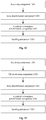
- the embodiment discloses a feedback method, which is applied to a first transmission node. As shown in Fig. 3 , the method includes the following steps.
- the first transmission node may be, but not limited to: any network element with data receiving and signaling sending functions such as a terminal, an evolved Node B and a relay.
- the second transmission node may be, but not limited to: any network element with a signaling receiving function such as a terminal, an evolved Node B and a relay.
- each CB set in the P CB sets includes at least one CB in the TB.
- each CB set in the P CB sets may be determined according to at least one preset CB set division manner and a number P of the CB sets.
- the preset CB set division manner at least includes a continuous division manner or a discontinuous division manner.
- the continuous division manner refers to that at least two CBs at adjacent positions in the TB are divided into the same CB set.
- discontinuous division manner refers to that CBs at any two adjacent positions in the TB may not be divided into the same CB set in the P CB sets.
- the number P of the CB sets may be configured by the evolved Node B.
- the number P of the CB sets is one of m preset positive integers, and is determined by the first transmission node and sent from the first transmission node to the second transmission node, and m ⁇ 1.
- the number P of the CB sets may be autonomously determined by the first transmission node and sent from the first transmission node to the second transmission node.
- the number P of the CB sets may also be determined according to a size of the TB.
- the size of the TB is divided into multiple value intervals according to a sequence from small to large, and each value interval corresponds to the number P of the CB sets; and the number of the CB sets is determined according to a value interval of the size of the TB.
- a number of CBs in each CB set may be determined according to the following method:
- a filling CB may be formed by any preset bit sequence, including, but not limited to, one of the following manners:
- the state of the P CB sets may be determined according to at least one of the following parameters: a number of incorrect (or correct) CB sets in the P CB sets, an incorrectness rate (or correctness rate) of the CB sets, CB error patterns of the incorrect CB sets in the P CB sets and a CB error pattern of the TB.
- correct CB sets refer to that each of CB sets includes correct CBs.
- the incorrect CB sets refer to that each of the CB sets includes at least one incorrect CB.
- the incorrectness rate (or correctness rate) of the CB sets refers to dividing the number of the incorrect (or correct) CB sets in the P CB sets by P.
- the CB error patterns of the incorrect CB sets refer to positions (indexes) of incorrect (or correct) CBs in the incorrect CB sets.
- the CB error pattern of the TB refers to positions (indexes) of incorrect (or correct) CBs in the TB.
- the correctness indication information ACK is used for indicating that the first transmission node correctly receives the TB.
- the feedback information set includes the correctness indication information ACK and the unique incorrectness indication information NACK
- the unique incorrectness indication information NACK is used for indicating that the first transmission node does not correctly receive the TB.
- the feedback information set includes the correctness indication information ACK and the one kind of the incorrectness indication information NACK
- the ACK is represented by a bit “0” and the NACK is represented by a bit “1”; or, the ACK is represented by the bit “1” and the “NACK” is represented by the bit "0".
- the correctness indication information ACK is used for indicating that the first transmission node correctly receives the TB.
- the incorrectness indication information NACK 1 is used for indicating that retransmitted data at least includes part of data obtained by packet coding on M CB sets in the P CB sets, in which M is a positive integer and 2 ⁇ M ⁇ P.
- the second transmission node performs packet coding on the M CB sets in the P CB sets to obtain S check CB sets, in which a length of each check CB set in the S check CB sets is T bits, M, S and T are all positive integers and 2 ⁇ M ⁇ P; and furthermore, the retransmitted data at least includes Q bits in each check CB set, in which Q is a positive integer and 1 ⁇ Q ⁇ T.
- packet coding refers to that bits or symbols at the same index position of each CB set in the M CB sets are coded to generate the S check CB sets.
- a coding operation may be, but not limited to, one of the following manners: bit exclusive or (or called as modular two additions) coding, Reed-Solomon coding, BCH coding, linear coding such as digital fountain coding, symbol superimposition coding, network coding and the like.
- the incorrectness indication information NACK 2 is used for indicating that the retransmitted data should at least include part of data of the TB.
- the feedback information set at least includes the incorrectness indication information ACK and the two kinds of incorrectness indication information NACK 1 and NACK 2
- the ACK, the NACK 1 and the NACK 2 are respectively represented by any two bits.
- the feedback information set at least includes the incorrectness indication information ACK and the two kinds of incorrectness indication information NACK 1 and NACK 2
- the ACK, the NACK 1 and the NACK 2 are modulated by adopting a nonuniform constellation diagram. That is, on the modulation constellation diagram, a Euclidean distance between the ACK and the NACK 1 is longer than a Euclidean distance between the ACK 1 and the NACK 2 , and a Euclidean distance between the ACK and the NACK 2 is also longer than the Euclidean distance between the ACK 1 and the NACK 2 .
- the feedback information set further includes the number P of the CB sets.
- the number P of the CB sets meets one of the following conditions: after the K CBs are divided into the P CB sets, a maximum of a number of incorrect CBs at the same index positions does not exceed a first preset threshold value G, in which G is a positive integer and 1 ⁇ G ⁇ P; or, the number P of the CB sets meets that: after the K CBs are divided into the P sets, the maximum of the number of the incorrect CBs at the same index positions is minimum in division solutions when P adopts different values.
- the number P of the CB sets in the feedback information set is a maximum value in the values meeting the condition.
- the feedback information set further includes at least one CB set division manner.
- the feedback information set further includes the number Z of the correct or incorrect CB sets, in which Z is a positive integer and 1 ⁇ Z ⁇ P.
- the feedback information set further includes the CB error patterns of the incorrect CB sets, or the CB error pattern of the TB.
- the first transmission node is a terminal
- the second transmission node is an evolved Node B.
- the CB set 1 is incorrectly received and the CB set 2 is correctly received, that is, at least one CB in the CB set 1 is incorrectly received while all the CBs in the CB set 2 are correctly received.
- the states of the CB sets is a number of correct or incorrect CB sets, or a function of an incorrectness rate of the CB sets, and at this moment, the number of the correct CB sets is not smaller than a preset threshold value 1, or the number of the incorrect CB sets is not larger than the preset threshold value 1, or a correctness rate of the CB sets is not lower than a preset threshold value 0.5, or the incorrectness rate of the CB sets is not higher than the preset threshold value 0.5.
- the terminal may recovery incorrect CBs (or CB sets) with a relatively higher probability by virtue of data obtained by packet coding in retransmitted data sent by the evolved Node B.
- the terminal determines to feed back the incorrectness indication information NACK 1 to the evolved Node B.
- the NACK 1 may be represented by two bits.
- the incorrectness indication information NACK 1 is used for indicating that the retransmitted data sent to the terminal by the evolved Node B should include part of data obtained by packet coding of the CB set 1 and the CB set 2.
- a CB set A is obtained by packet coding of the CB set 1 and the CB set 2.
- the information NACK 1 is used for indicating that the retransmitted data should include Q bits in the CB A.
- a difference between this example and example 1 is that: in the example, the number P of the CB set is determined according to a size of the TB.
- both the CB set 1 and the CB set 2 are incorrectly received, and at this moment, the number of the correct CB sets is smaller than the preset threshold value 1, or the number of the incorrect CB sets is larger than the preset threshold value 1, or the correctness rate of the CB sets is lower than the preset threshold value 0.5, or the incorrectness rate of the CB sets is higher than the preset threshold value 0.5.
- the terminal may recover the incorrect CBs (or CB sets) only with a relatively lower probability, and when the retransmitted data includes part of data of the TB, the probability of the terminal in recovery of the incorrect CBs (or CB sets) may be increased. Therefore, the terminal determines to feed back the incorrectness indication information NACK 2 to the evolved Node B.
- the incorrectness indication information NACK 2 is used for indicating that the retransmitted data should at least include part of data of the TB. That is, the retransmitted data should at least include Q bits in the CB set 1 or the CB set 2.
- a difference between this example and example 2 is that: in the example, the receiving state of the CB sets is determined according to CB error patterns the incorrect CB sets. It is supposed that the CB error patterns of the CB 1 and the CB set 2 in the example are shown in Fig. 6 .
- the terminal may recover the incorrect CBs (or CB sets) with a relatively higher probability by virtue of the data obtained by packet coding in the retransmitted data sent by the evolved Node B. Therefore, the terminal determines to feed back the incorrectness indication information NACK 1 to the second transmission node.
- a difference between this example and example 3 is that: in the example, the CB error patterns of the CB set 1 and the CB set 2 are shown in Fig. 7 .
- the incorrectly received CBs in the CB set 1 and the CB set 2 are represented by shaded areas
- the terminal may recover the incorrect CBs (or CB sets) only with a relatively lower probability, and when the retransmitted data includes part of data of the TB, the probability of the terminal in recovery of the incorrect CBs (or CB sets) may be increased. Therefore, the terminal determines to feed back the second incorrectness indication information NACK 2 to the second transmission node.
- the second incorrectness indication information NACK 2 is used for indicating that the retransmitted data should at least include part of data of the TB. That is, the retransmitted data should at least include Q bits in the CB set 1 or the CB set 2.
- a difference between this example and example 3 and example 4 is that: in the example, the CB error patterns are different, and in the example, the feedback information set further includes the number P of the CB sets.
- the states of the CB sets are determined according to the CB error patterns of the incorrect CB sets, and it is supposed that a CB error pattern of the TB is shown in Fig. 8 .
- third CBs in the CB set 1 and the CB set 2 are both incorrect CBs, that is, the number of the incorrect CBs at the same index position exceeds the threshold value 1.
- the CB 9 is the filling CB.
- a difference between this example and example 3 and example 4 is that: in the example, the states of the CB sets are determined according to the CB error pattern of the TB, and the feedback information set further includes the CB error pattern of the TB.
- the information fed back to the evolved Node B by the terminal includes the CB error pattern of the TB.
- a difference between this example and example 1 to example 6 is that the feedback information sent to the evolved Node B by the terminal is modulated by adopting a nonuniform constellation diagram. That is, on the modulation constellation diagram, a Euclidean distance between the ACK and the NACK 1 is longer than a Euclidean distance between the NACK 1 and the NACK 2 , and a Euclidean distance between the ACK and the NACK 2 is also longer than the Euclidean distance between the NACK 1 and the NACK 2 .
- the ACK, the NACK 1 and the NACK 2 sent to the evolved Node B by the terminal are modulated by a constellation diagram shown in Fig. 11 .
- the feedback information set in the example includes the incorrectness indication information ACK and incorrectness indication information NACK.
- the feedback information sent to the evolved Node B by the terminal includes the NACK, and the NACK is used for indicating that the terminal does not correctly receive the TB.
- the feedback information set further includes the CB set division manner.
- the continuous division manner is indicated by a bit "0”
- the discontinuous division manner is indicated by a bit "1”.
- the CB set division manner is determined according to the terminal, so that the information fed back to the evolved Node B by the terminal further includes the CB set indication manner indicated by the bit "0".
- the embodiment discloses a feedback device, which is applied to a first transmission node and includes:
- the first transmission node may be, but not limited to: any network element with data receiving and signaling sending functions such as a terminal, an evolved Node B and a relay.
- the second transmission node may be, but not limited to: any network element with a signaling receiving function such as a terminal, an evolved Node B and a relay.
- each CB set in the P CB sets includes at least one CB in the TB.
- each CB set in the P CB sets may be determined according to at least one preset CB set division manner and a number P of the CB sets.
- the preset CB set division manner at least includes a continuous division manner or a discontinuous division manner.
- the continuous division manner refers to that at least two CBs at adjacent positions in the TB are divided into the same CB set.
- discontinuous division manner refers to that CBs at any two adjacent positions in the TB may not be divided into the same CB set in the P CB sets.
- the number P of the CB sets may be configured by the evolved Node B.
- the number P of the CB sets may be one of m preset positive integers, and is sent to a terminal by the evolved Node B through signaling, and m ⁇ 1.
- the number P of the CB sets may be autonomously determined by the first transmission node and sent from the first transmission node to the second transmission node.
- the number P of the CB sets may also be determined according to a size of the TB.
- the size of the TB is divided into multiple value intervals according to a sequence from small to large, and each value interval corresponds to a number P of the CB sets; and the number of the CB sets is determined according to a value interval of the size of the TB.
- a number of CBs in each CB set may be determined according to the following method:
- the filling CB may be formed by any preset bit sequence, including, but not limited to, one of the following manners:
- the device may further include a CB set division element, arranged to divide the K CBs of the TB into the P CB sets according to the CB set division manner and the number P of the CB sets.
- a CB set division element arranged to divide the K CBs of the TB into the P CB sets according to the CB set division manner and the number P of the CB sets.
- the state of the P CB sets is determined according to at least one of the following parameters: a number of incorrect (or correct) CB sets in the P CB sets, an incorrectness rate (or correctness rate) of the CB sets, CB error patterns of the incorrect CB sets in the P CB sets and a CB error pattern of the TB.
- correct CB sets refer to that each CB sets includes correct CBs.
- the incorrect CB sets refer to that each of the CB sets includes at least one incorrect CB.
- the incorrectness rate (or correctness rate) of the CB sets refers to dividing the number of the incorrect (or correct) CB sets in the P CB sets by P.
- the CB error patterns of the incorrect CB sets refer to positions (indexes) of incorrect (or correct) CBs in the incorrect CB sets.
- the CB error pattern of the TB refers to positions (indexes) of incorrect (or correct) CBs in the TB.
- the correctness indication information ACK is used for indicating that the first transmission node correctly receives the TB.
- the feedback information set includes the correctness indication information ACK and the unique incorrectness indication information NACK
- the unique incorrectness indication information NACK is used for indicating that the first transmission node does not correctly receive the TB.
- the feedback information set includes the correctness indication information ACK and the unique incorrectness indication information NACK
- the ACK is represented by a bit “0” and the NACK is represented by a bit “1”; or, the ACK is represented by the bit “1” and the “NACK” is represented by the bit "0".
- the correctness indication information ACK is used for indicating that the first transmission node correctly receives the TB.
- the incorrectness indication information NACK 1 is used for indicating that retransmitted data at least includes part of data obtained by packet coding on M CB sets in the P CB sets, in which M is a positive integer and 2 ⁇ M ⁇ P.
- the second transmission node performs packet coding on the M CB sets in the P CB sets to obtain S check CB sets, in which a length of each check CB set is T bits, M, S and T are all positive integers and 2 ⁇ M ⁇ P; and the retransmitted data at least includes Q bits in each check CB set, in which Q is a positive integer and 1 ⁇ Q ⁇ T.
- packet coding refers to that bits or symbols at the same index positions in the M CB sets are coded to generate the S check CB sets.
- a coding operation may be, but not limited to, one of the following manners: bit exclusive or (or called as modular two additions) coding, Reed-Solomon coding, BCH coding, linear coding such as digital fountain coding, symbol superimposition coding, network coding and the like.
- the incorrectness indication information NACK 2 is used for indicating that the retransmitted data should at least include part of data of the TB.
- the feedback information set at least includes the incorrectness indication information ACK and the two kinds of incorrectness indication information NACK 1 and NACK 2
- the ACK, the NACK 1 and the NACK 2 are respectively represented by any two bits.
- the feedback information set at least includes the incorrectness indication information ACK and the two kinds of incorrectness indication information NACK 1 and NACK 2
- the ACK, the NACK 1 and the NACK 2 are modulated by adopting a nonuniform constellation diagram. That is, on the modulation constellation diagram, a Euclidean distance between the ACK and the NACK 1 is longer than a Euclidean distance between the ACK 1 and the NACK 2 , and a Euclidean distance between the ACK and the NACK 2 is also longer than the Euclidean distance between the ACK 1 and the NACK 2 .
- the feedback information set further includes the number P of the CB sets.
- the number P of the CB sets meets one of the following conditions: after the K CBs are divided into the P CB sets, a maximum of a number of incorrect CBs at the same index positions does not exceed a first preset threshold value G, wherein G is a positive integer and 1 ⁇ G ⁇ P; or, the number P of the CB sets meets that: after the K CBs are divided into the P sets, the maximum of the number of the incorrect CBs at the same index positions is minimum in division solutions when P adopts different values.
- the number P of the CB sets in the feedback information set is a maximum value in the values meeting the condition.
- the feedback information set further includes the CB set division manner.
- the feedback information set further includes the number Z of the correct or incorrect CB sets, in which Z is a positive integer and 1 ⁇ Z ⁇ P.
- the feedback information set further includes the CB error patterns of the incorrect CB sets, or the CB error pattern of the TB.
- the first transmission node sends the correctness indication information ACK to the second transmission node.
- the P CB sets are all correct CB sets is equal to one of the following conditions: the TB is a correct TB, or the K CBs are all correct CBs.
- the first transmission node sends the incorrectness indication information NACK in the preset feedback information set to the second transmission node.
- the first transmission node determines the incorrectness indication information sent to the second transmission node according to the number of the incorrect (or correct) CB sets in the P CB sets or according to the incorrectness rate (or correctness rate) of the CB sets.
- the first transmission node sends the incorrectness indication information NACK 1 to the second transmission node.
- the first transmission node sends the incorrectness indication information NACK 2 to the second transmission node.
- the first transmission node determines the incorrectness indication information sent to the second transmission node according to the CB error patterns of the incorrect CB sets.
- the first transmission node sends the first incorrectness indication information NACK 1 to the second transmission node.
- the first transmission node sends the second incorrectness indication information NACK 2 to the second transmission node.
- the first transmission node is a terminal
- the second transmission node is an evolved Node B.
- the terminal or a device arranged in the terminal includes a receiving component 1201, a state determination component 1202, a feedback information determination component 1203 and a sending component 1204, as shown in Fig. 12 .
- the feedback information determination component 1203 of the terminal determines at least one kind of feedback information in a feedback information set according to states of the 2 CB sets, and sends the feedback information to the evolved Node B through the sending component 1204, in which the feedback information set includes incorrectness indication information ACK, incorrectness indication information NACK 1 and incorrectness indication information NACK 2 .
- the CB set 1 is incorrectly received and the CB set 2 is correctly received, that is, at least one CB in the CB set 1 is incorrectly received while all the CBs in the CB set 2 are correctly received.
- the states of the CB sets is a number of correct or incorrect CB sets, or a function of an incorrectness rate of the CB sets, and at this moment, the number of the correct CB sets is not smaller than a preset threshold value 1, or the number of the incorrect CB sets is not larger than the preset threshold value 1, or a correctness rate of the CB sets is not lower than a preset threshold value 0.5, or the incorrectness rate of the CB sets is not higher than the preset threshold value 0.5.
- the terminal may recovery incorrect CBs (or CB sets) with a relatively higher probability by virtue of data obtained by packet coding in retransmitted data sent by the evolved Node B.
- the terminal determines to feed back the incorrectness indication information NACK 1 to the evolved Node B.
- the NACK 1 may be represented by two bits.
- the incorrectness indication information NACK 1 is used for indicating that the retransmitted data sent to the terminal by the evolved Node B should include part of data obtained by packet coding of the CB set 1 and the CB set 2.
- a CB set A is obtained by packet coding of the CB set 1 and the CB set 2.
- the information NACK 1 is used for indicating that the retransmitted data should include Q bits in the CB A.
- a difference between this example and example 1 is that: in the example, the number P of the CB set is determined according to a size of the TB.
- both the CB set 1 and the CB set 2 are incorrectly received in the receiving component 1201, and at this moment, the number of the correct CB sets is smaller than the preset threshold value 1, or the number of the incorrect CB sets is larger than the preset threshold value 1, or the correctness rate of the CB sets is lower than the preset threshold value 0.5, or the incorrectness rate of the CB sets is higher than the preset threshold value 0.5.
- the terminal may recover the incorrect CBs (or CB sets) only with a relatively lower probability, and when the retransmitted data includes part of data of the TB, the probability of the terminal in recovery of the incorrect CBs (or CB sets) may be increased. Therefore, the terminal determines to feed back the incorrectness indication information NACK 2 to the evolved Node B.
- the incorrectness indication information NACK 2 is used for indicating that the retransmitted data should at least include part of data of the TB. That is, the retransmitted data should at least include Q bits in the CB set 1 or the CB set 2.
- a difference between this example and example 2 is that: in the example, the receiving state of the CB sets is determined according to CB error patterns the incorrect CB sets. It is supposed that the CB error patterns of the CB 1 and the CB set 2 in the example are shown in Fig. 6 .
- the terminal may recover the incorrect CBs (or CB sets) with a relatively higher probability by virtue of the data obtained by packet coding in the retransmitted data sent by the evolved Node B. Therefore, the terminal determines to feed back the incorrectness indication information NACK 1 to the second transmission node.
- a difference between this example and example 3 is that: in the example, the CB error patterns of the CB set 1 and the CB set 2 are shown in Fig. 7 .
- the incorrectly received CBs in the CB set 1 and the CB set 2 are represented by shaded areas
- the terminal may recover the incorrect CBs (or CB sets) only with a relatively lower probability, and when the retransmitted data includes part of data of the TB, the probability of the terminal in recovery of the incorrect CBs (or CB sets) may be increased. Therefore, the terminal determines to feed back the second incorrectness indication information NACK 2 to the second transmission node.
- the second incorrectness indication information NACK 2 is used for indicating that the retransmitted data should at least include part of data of the TB. That is, the retransmitted data should at least include Q bits in the CB set 1 or the CB set 2.
- a difference between this example and example 3 and example 4 is that: in the example, the CB error patterns are different, and in the example, the feedback information set further includes the number P of the CB sets.
- the states of the CB sets are determined according to the CB error patterns of the incorrect CB sets, and it is supposed that a CB error pattern of the TB is shown in Fig. 8 .
- third CBs in the CB set 1 and the CB set 2 are both incorrect CBs, that is, the number of the incorrect CBs at the same index position exceeds the threshold value 1.
- the CB 9 is the filling CB.
- a difference between this example and example 3 and example 4 is that: in the example, the state of the CB sets is determined according to the CB error pattern of the TB, and the feedback information set further includes the CB error pattern of the TB.
- the information fed back to the evolved Node B by the terminal includes the CB error pattern of the TB.
- a difference between this example and example 1 to example 6 is that the feedback information sent to the evolved Node B by the terminal is further modulated by adopting a nonuniform constellation diagram. That is, on the modulation constellation diagram, a Euclidean distance between the ACK and the NACK 1 is longer than a Euclidean distance between the NACK 1 and the NACK 2 , and a Euclidean distance between the ACK and the NACK 2 is also longer than the Euclidean distance between the NACK 1 and the NACK 2 .
- the ACK, the NACK 1 and the NACK 2 sent to the evolved Node B by the terminal are modulated by a constellation diagram shown in Fig. 11 .
- the feedback information set in the example includes the incorrectness indication information ACK and incorrectness indication information NACK.
- the feedback information sent to the evolved Node B by the terminal includes the NACK, and the NACK is used for indicating that the terminal does not correctly receive the TB.
- the feedback information set further includes the CB set division manner.
- the continuous division manner is indicated by a bit "0”
- the discontinuous division manner is indicated by a bit "1”.
- the CB set division manner is determined according to the terminal, so that the information fed back to the evolved Node B by the terminal further includes the CB set indication manner indicated by the bit "0".
- the terminal further includes a CB set division component 1205, arranged to divide the K CBs of the TB into the P CB sets, as shown in Fig. 13 .
- the CB set division component 1205 divides the K CBs into the P CB sets according to the CB set division manner (the continuous division manner or the discontinuous division manner) and the number of the CB sets.
- the continuous division manner refers to that at least two CBs at adjacent positions in the TB are divided into the same CB set.
- the discontinuous division manner refers to that CBs at any two adjacent positions in the TB may not be divided into the same CB set in the P CB sets.
- the number P of the CB sets may be one of m preset positive integers, and is sent to the terminal by the evolved Node B through signaling; or, the number P of the CB sets may be autonomously determined by the first transmission node and sent from the first transmission node to the second transmission node; or, the number P of the CB sets may further be determined according to a size of the TB. Specifically, the TB is divided into multiple value intervals according to a sequence from small to large, and each value interval corresponds to a number P of the CB sets.
- a retransmitted data volume may be effectively reduced, and data retransmission efficiency may be improved. Therefore, the disclosure has high industrial practicability.
Landscapes
- Engineering & Computer Science (AREA)
- Signal Processing (AREA)
- Computer Networks & Wireless Communication (AREA)
- Quality & Reliability (AREA)
- Detection And Prevention Of Errors In Transmission (AREA)
- Mobile Radio Communication Systems (AREA)
- Molding Of Porous Articles (AREA)
- Electrical Discharge Machining, Electrochemical Machining, And Combined Machining (AREA)
Priority Applications (1)
| Application Number | Priority Date | Filing Date | Title |
|---|---|---|---|
| EP21193451.8A EP3937402B1 (de) | 2014-09-24 | 2015-04-03 | Feedbackverfahren und -vorrichtung |
Applications Claiming Priority (2)
| Application Number | Priority Date | Filing Date | Title |
|---|---|---|---|
| CN201410495662.0A CN105515733B (zh) | 2014-09-24 | 2014-09-24 | 一种反馈方法及装置 |
| PCT/CN2015/075891 WO2015184919A1 (zh) | 2014-09-24 | 2015-04-03 | 一种反馈方法及装置 |
Related Child Applications (2)
| Application Number | Title | Priority Date | Filing Date |
|---|---|---|---|
| EP21193451.8A Division EP3937402B1 (de) | 2014-09-24 | 2015-04-03 | Feedbackverfahren und -vorrichtung |
| EP21193451.8A Division-Into EP3937402B1 (de) | 2014-09-24 | 2015-04-03 | Feedbackverfahren und -vorrichtung |
Publications (3)
| Publication Number | Publication Date |
|---|---|
| EP3200376A1 true EP3200376A1 (de) | 2017-08-02 |
| EP3200376A4 EP3200376A4 (de) | 2018-01-31 |
| EP3200376B1 EP3200376B1 (de) | 2021-10-06 |
Family
ID=54766140
Family Applications (2)
| Application Number | Title | Priority Date | Filing Date |
|---|---|---|---|
| EP21193451.8A Active EP3937402B1 (de) | 2014-09-24 | 2015-04-03 | Feedbackverfahren und -vorrichtung |
| EP15803123.7A Active EP3200376B1 (de) | 2014-09-24 | 2015-04-03 | Feedbackverfahren und -vorrichtung |
Family Applications Before (1)
| Application Number | Title | Priority Date | Filing Date |
|---|---|---|---|
| EP21193451.8A Active EP3937402B1 (de) | 2014-09-24 | 2015-04-03 | Feedbackverfahren und -vorrichtung |
Country Status (5)
| Country | Link |
|---|---|
| US (1) | US10136445B2 (de) |
| EP (2) | EP3937402B1 (de) |
| CN (1) | CN105515733B (de) |
| FI (1) | FI3937402T3 (de) |
| WO (1) | WO2015184919A1 (de) |
Cited By (3)
| Publication number | Priority date | Publication date | Assignee | Title |
|---|---|---|---|---|
| EP3529932A4 (de) * | 2016-11-24 | 2019-11-20 | Samsung Electronics Co., Ltd. | Verfahren und vorrichtung zur teilweisen neuübertragung in einem drahtlosen zellularen kommunikationssystem |
| EP3565156A4 (de) * | 2016-12-30 | 2020-01-08 | ZTE Corporation | Verfahren und vorrichtung zur verarbeitung von bestätigungsinformationen |
| EP3579466A4 (de) * | 2017-01-15 | 2020-09-09 | LG Electronics Inc. -1- | Verfahren zum senden eines harq-ack-signals in einem drahtloskommunikationssystem und vorrichtung dafür |
Families Citing this family (31)
| Publication number | Priority date | Publication date | Assignee | Title |
|---|---|---|---|---|
| CN107733573B (zh) * | 2016-08-10 | 2022-03-01 | 中兴通讯股份有限公司 | 数据处理方法、装置及节点 |
| KR20190034661A (ko) * | 2016-08-12 | 2019-04-02 | 노키아 솔루션스 앤드 네트웍스 오와이 | 5g 통신 시스템을 위한 미세 단위 ack/nack 피드백 |
| CN107733560B (zh) * | 2016-08-12 | 2022-08-02 | 中兴通讯股份有限公司 | 数据分割方法、装置及终端 |
| CN107769887B (zh) * | 2016-08-17 | 2021-02-12 | 华为技术有限公司 | 一种数据传输、数据处理方法及装置 |
| CN107888330B (zh) * | 2016-09-30 | 2022-04-05 | 华为技术有限公司 | 一种数据传输的方法和装置 |
| EP3523898A4 (de) * | 2016-10-08 | 2020-06-17 | Nokia Technologies Oy | Codeblocksegmentierung zur codierung und decodierung in drahtloser vorrichtung |
| CN108270513B (zh) | 2016-12-30 | 2024-01-19 | 华为技术有限公司 | 发送控制信息的方法和装置及接收控制信息的方法和装置 |
| CN108289011B (zh) | 2017-01-07 | 2023-11-21 | 华为技术有限公司 | 一种数据传输的方法和装置 |
| JP2020511820A (ja) | 2017-02-22 | 2020-04-16 | オッポ広東移動通信有限公司Guangdong Oppo Mobile Telecommunications Corp., Ltd. | 情報伝送のための方法及びデバイス |
| US11012221B2 (en) | 2017-03-08 | 2021-05-18 | Lg Electronics Inc. | Method and apparatus for transmitting and receiving radio signals in a wireless communication system |
| CN108631948B (zh) * | 2017-03-21 | 2021-08-20 | 华为技术有限公司 | 一种数据重传方法、通信设备和数据重传系统 |
| CN108631950B (zh) | 2017-03-23 | 2023-11-07 | 华为技术有限公司 | 发送反馈信息的方法和设备 |
| CN108631956A (zh) * | 2017-03-23 | 2018-10-09 | 株式会社Ntt都科摩 | 反馈方法和通信设备 |
| US10484146B2 (en) * | 2017-03-23 | 2019-11-19 | Qualcomm Incorporated | Downlink retransmission under unreliable code block group (CBG) level ACK/NACK feedback |
| US11171758B2 (en) | 2017-03-24 | 2021-11-09 | Qualcomm Incorporated | Code block grouping and feedback that support efficient retransmissions |
| CN108737042B (zh) * | 2017-04-18 | 2021-01-22 | 上海诺基亚贝尔股份有限公司 | 用于无线通信网络中的数据传输的方法和设备 |
| CN108809481B (zh) * | 2017-04-28 | 2022-08-26 | 华为技术有限公司 | 数据处理方法和数据处理装置 |
| CN108809479B (zh) * | 2017-04-28 | 2022-08-19 | 华为技术有限公司 | 数据处理方法和数据处理装置 |
| CN108809533B (zh) * | 2017-05-04 | 2021-01-29 | 华为技术有限公司 | 发送编码块组的方法和装置 |
| GB2562097B (en) * | 2017-05-05 | 2021-09-22 | Tcl Communication Ltd | Methods, first and second nodes for managing ack/nack-messages |
| CN108111454B9 (zh) * | 2017-05-05 | 2022-09-23 | 中兴通讯股份有限公司 | 信息传输方法及装置、电子设备 |
| EP3621231B1 (de) * | 2017-05-05 | 2025-07-30 | Beijing Xiaomi Mobile Software Co., Ltd. | Harq-feedback-verfahren und -einrichtung, vorrichtung, und computerlesbares speichermedium |
| CN109088702B (zh) * | 2017-06-14 | 2023-04-18 | 华为技术有限公司 | 通信方法、网络设备和终端 |
| CN109150413B (zh) * | 2017-06-16 | 2021-06-15 | 华为技术有限公司 | 发送和接收反馈信息的方法和装置 |
| EP3657713B1 (de) | 2017-08-08 | 2023-07-26 | Huawei Technologies Co., Ltd. | Kommunikationsverfahren und -vorrichtung |
| CN109391440B (zh) | 2017-08-11 | 2020-12-15 | 华为技术有限公司 | 一种混合自动重传请求harq反馈方法及设备 |
| US11239953B2 (en) * | 2017-08-11 | 2022-02-01 | Lenovo (Beijing) Co. Ltd | Triggering HARQ-ACK feedback for a downlink slot set |
| CN109547169B (zh) * | 2017-09-22 | 2021-12-21 | 珠海市魅族科技有限公司 | 数据重传请求方法、请求装置、站点设备和接入点设备 |
| WO2020032768A1 (ko) * | 2018-08-10 | 2020-02-13 | 엘지전자 주식회사 | 무선 통신 시스템에서 신호를 수신하는 방법 및 단말 |
| US12308968B2 (en) * | 2022-02-10 | 2025-05-20 | Qualcomm Incorporated | Control block bundle for retransmission |
| CN117295110A (zh) * | 2022-06-15 | 2023-12-26 | 中兴通讯股份有限公司 | 信息传输方法、装置、基站、设备、存储介质及程序产品 |
Family Cites Families (10)
| Publication number | Priority date | Publication date | Assignee | Title |
|---|---|---|---|---|
| KR100762632B1 (ko) | 2001-10-17 | 2007-10-01 | 삼성전자주식회사 | 부호 분할 다중 접속 통신 시스템에서 전송 채널 다중화/역다중화 장치 및 방법 |
| CN100586052C (zh) * | 2005-12-17 | 2010-01-27 | 华为技术有限公司 | 一种数据传输方法及系统 |
| US8369860B2 (en) * | 2006-08-18 | 2013-02-05 | Interdigital Technology Corporation | Sending and reducing uplink feedback signaling for transmission of MBMS data |
| CN101615986A (zh) * | 2008-06-27 | 2009-12-30 | 华为技术有限公司 | 一种数据传输方法、装置及通信系统 |
| EP2413624A4 (de) | 2009-03-24 | 2013-04-10 | Kyocera Corp | Drahtloses kommunikationssystem, drahtloses endgerät, drahtlose basisstation, steuervorrichtung und drahtloses kommunikationsverfahren |
| EP2413627A4 (de) * | 2009-03-25 | 2015-01-21 | Fujitsu Ltd | Funkkommunikationssystem, mobilstationsvorrichtung, basisstationsvorrichtung und funkkommunikationsverfahren in dem funkkommunikationssystem |
| US8543867B2 (en) * | 2010-04-02 | 2013-09-24 | Sharp Laboratories Of America, Inc. | Transmission of acknowledgement and negative acknowledgement in a wireless communication system |
| CN102594493B (zh) * | 2011-01-17 | 2014-08-20 | 华为技术有限公司 | 一种应答信息的编码、处理方法和装置 |
| EP2663007A1 (de) | 2012-05-08 | 2013-11-13 | Alcatel Lucent | Verfahren zum Senden von ACK/NACK-Nachrichten und Netzwerkvorrichtung dafür |
| CN103312719B (zh) * | 2013-06-27 | 2016-12-28 | 华多九州科技股份有限公司 | 网络环境下基于udp的速率自适应传输方法 |
-
2014
- 2014-09-24 CN CN201410495662.0A patent/CN105515733B/zh active Active
-
2015
- 2015-04-03 FI FIEP21193451.8T patent/FI3937402T3/fi active
- 2015-04-03 WO PCT/CN2015/075891 patent/WO2015184919A1/zh not_active Ceased
- 2015-04-03 EP EP21193451.8A patent/EP3937402B1/de active Active
- 2015-04-03 EP EP15803123.7A patent/EP3200376B1/de active Active
- 2015-04-03 US US15/513,417 patent/US10136445B2/en active Active
Cited By (9)
| Publication number | Priority date | Publication date | Assignee | Title |
|---|---|---|---|---|
| EP3529932A4 (de) * | 2016-11-24 | 2019-11-20 | Samsung Electronics Co., Ltd. | Verfahren und vorrichtung zur teilweisen neuübertragung in einem drahtlosen zellularen kommunikationssystem |
| US10615922B2 (en) | 2016-11-24 | 2020-04-07 | Samsung Electronics Co., Ltd | Method and apparatus for partial retransmission in wireless cellular communication system |
| US10693599B2 (en) | 2016-11-24 | 2020-06-23 | Samsung Electronics Co., Ltd | Method and apparatus for partial retransmission in wireless cellular communication system |
| US10880048B2 (en) | 2016-11-24 | 2020-12-29 | Samsung Electronics Co., Ltd | Method and apparatus for partial retransmission in wireless cellular communication system |
| EP3955494A1 (de) * | 2016-11-24 | 2022-02-16 | Samsung Electronics Co., Ltd. | Verfahren und vorrichtung zur teilweisen neuübertragung in einem drahtlosen zellularen kommunikationssystem |
| US11539467B2 (en) | 2016-11-24 | 2022-12-27 | Samsung Electronics Co., Ltd | Method and apparatus for partial retransmission in wireless cellular communication system |
| EP3565156A4 (de) * | 2016-12-30 | 2020-01-08 | ZTE Corporation | Verfahren und vorrichtung zur verarbeitung von bestätigungsinformationen |
| EP3579466A4 (de) * | 2017-01-15 | 2020-09-09 | LG Electronics Inc. -1- | Verfahren zum senden eines harq-ack-signals in einem drahtloskommunikationssystem und vorrichtung dafür |
| US10958384B2 (en) | 2017-01-15 | 2021-03-23 | Lg Electronics Inc. | Method for transmitting HARQ-ACK signal in wireless communication system, and apparatus therefor |
Also Published As
| Publication number | Publication date |
|---|---|
| WO2015184919A1 (zh) | 2015-12-10 |
| CN105515733B (zh) | 2019-03-12 |
| FI3937402T3 (fi) | 2023-06-07 |
| EP3937402A1 (de) | 2022-01-12 |
| EP3937402B1 (de) | 2023-04-26 |
| EP3200376A4 (de) | 2018-01-31 |
| CN105515733A (zh) | 2016-04-20 |
| EP3200376B1 (de) | 2021-10-06 |
| US10136445B2 (en) | 2018-11-20 |
| US20170303284A1 (en) | 2017-10-19 |
Similar Documents
| Publication | Publication Date | Title |
|---|---|---|
| US10136445B2 (en) | Feedback method and device | |
| US10469212B2 (en) | Data transmission method and device | |
| US11146363B2 (en) | Systems and methods for HARQ retransmission using an outer code | |
| US11296821B2 (en) | Method and apparatus for communication | |
| JP2019534647A (ja) | データ送信方法及びデータ送信装置 | |
| US12425125B2 (en) | Transport block size determination | |
| CN112994844B (zh) | 一种信道编码方法、数据接收方法及相关设备 | |
| CN109474393B (zh) | 数据反馈、发送、接收方法及装置,接收设备,发送设备 | |
| CN105306166B (zh) | 码块的接收处理方法及装置 | |
| CN108075862A (zh) | 一种物理上行共享信道上ack/nack检测的方法和装置 | |
| US10749636B2 (en) | HARQ sending and receiving methods and devices, and node | |
| CN110192362B (zh) | 传输下行控制信息的方法、网络侧设备和终端设备 | |
| US20250119237A1 (en) | Device and method for supporting hybrid automatic repeat request (harq) | |
| CN112534756B (zh) | 用于支持wi-fi的harq的装置和方法 | |
| EP4521663A1 (de) | Kommunikationsverfahren und -vorrichtung | |
| US11239957B2 (en) | Data processing method and data processing apparatus | |
| CN109952709B (zh) | 一种基站、用户设备中的用于信道编码的方法和装置 | |
| CN102833056A (zh) | 一种进行信道处理的方法、基站及用户设备 | |
| CN109952726B (zh) | 一种被用于无线通信的终端、基站中的方法和装置 | |
| EP4708740A1 (de) | Verfahren, kommunikationsvorrichtung, verarbeitungsvorrichtung und speichermedium zur übertragung von informationsblöcken und verfahren | |
| JP2016184842A (ja) | Ofdm通信システム | |
| CN106656433A (zh) | 下行数据反馈方法、设备及系统 |
Legal Events
| Date | Code | Title | Description |
|---|---|---|---|
| STAA | Information on the status of an ep patent application or granted ep patent |
Free format text: STATUS: THE INTERNATIONAL PUBLICATION HAS BEEN MADE |
|
| PUAI | Public reference made under article 153(3) epc to a published international application that has entered the european phase |
Free format text: ORIGINAL CODE: 0009012 |
|
| STAA | Information on the status of an ep patent application or granted ep patent |
Free format text: STATUS: REQUEST FOR EXAMINATION WAS MADE |
|
| 17P | Request for examination filed |
Effective date: 20170323 |
|
| AK | Designated contracting states |
Kind code of ref document: A1 Designated state(s): AL AT BE BG CH CY CZ DE DK EE ES FI FR GB GR HR HU IE IS IT LI LT LU LV MC MK MT NL NO PL PT RO RS SE SI SK SM TR |
|
| AX | Request for extension of the european patent |
Extension state: BA ME |
|
| RIC1 | Information provided on ipc code assigned before grant |
Ipc: H04L 1/16 20060101AFI20170818BHEP Ipc: H04L 1/00 20060101ALI20170818BHEP |
|
| DAV | Request for validation of the european patent (deleted) | ||
| DAX | Request for extension of the european patent (deleted) | ||
| A4 | Supplementary search report drawn up and despatched |
Effective date: 20180105 |
|
| RIC1 | Information provided on ipc code assigned before grant |
Ipc: H04L 1/18 20060101ALI20171222BHEP Ipc: H04L 5/00 20060101ALI20171222BHEP Ipc: H04L 1/16 20060101AFI20171222BHEP Ipc: H04L 1/00 20060101ALI20171222BHEP |
|
| GRAP | Despatch of communication of intention to grant a patent |
Free format text: ORIGINAL CODE: EPIDOSNIGR1 |
|
| STAA | Information on the status of an ep patent application or granted ep patent |
Free format text: STATUS: GRANT OF PATENT IS INTENDED |
|
| INTG | Intention to grant announced |
Effective date: 20210528 |
|
| GRAS | Grant fee paid |
Free format text: ORIGINAL CODE: EPIDOSNIGR3 |
|
| GRAA | (expected) grant |
Free format text: ORIGINAL CODE: 0009210 |
|
| STAA | Information on the status of an ep patent application or granted ep patent |
Free format text: STATUS: THE PATENT HAS BEEN GRANTED |
|
| AK | Designated contracting states |
Kind code of ref document: B1 Designated state(s): AL AT BE BG CH CY CZ DE DK EE ES FI FR GB GR HR HU IE IS IT LI LT LU LV MC MK MT NL NO PL PT RO RS SE SI SK SM TR |
|
| REG | Reference to a national code |
Ref country code: GB Ref legal event code: FG4D |
|
| REG | Reference to a national code |
Ref country code: CH Ref legal event code: EP Ref country code: AT Ref legal event code: REF Ref document number: 1437126 Country of ref document: AT Kind code of ref document: T Effective date: 20211015 |
|
| REG | Reference to a national code |
Ref country code: IE Ref legal event code: FG4D |
|
| REG | Reference to a national code |
Ref country code: DE Ref legal event code: R096 Ref document number: 602015073950 Country of ref document: DE |
|
| REG | Reference to a national code |
Ref country code: RO Ref legal event code: EPE |
|
| REG | Reference to a national code |
Ref country code: LT Ref legal event code: MG9D |
|
| REG | Reference to a national code |
Ref country code: NL Ref legal event code: MP Effective date: 20211006 |
|
| REG | Reference to a national code |
Ref country code: AT Ref legal event code: MK05 Ref document number: 1437126 Country of ref document: AT Kind code of ref document: T Effective date: 20211006 |
|
| PG25 | Lapsed in a contracting state [announced via postgrant information from national office to epo] |
Ref country code: RS Free format text: LAPSE BECAUSE OF FAILURE TO SUBMIT A TRANSLATION OF THE DESCRIPTION OR TO PAY THE FEE WITHIN THE PRESCRIBED TIME-LIMIT Effective date: 20211006 Ref country code: LT Free format text: LAPSE BECAUSE OF FAILURE TO SUBMIT A TRANSLATION OF THE DESCRIPTION OR TO PAY THE FEE WITHIN THE PRESCRIBED TIME-LIMIT Effective date: 20211006 Ref country code: FI Free format text: LAPSE BECAUSE OF FAILURE TO SUBMIT A TRANSLATION OF THE DESCRIPTION OR TO PAY THE FEE WITHIN THE PRESCRIBED TIME-LIMIT Effective date: 20211006 Ref country code: BG Free format text: LAPSE BECAUSE OF FAILURE TO SUBMIT A TRANSLATION OF THE DESCRIPTION OR TO PAY THE FEE WITHIN THE PRESCRIBED TIME-LIMIT Effective date: 20220106 Ref country code: AT Free format text: LAPSE BECAUSE OF FAILURE TO SUBMIT A TRANSLATION OF THE DESCRIPTION OR TO PAY THE FEE WITHIN THE PRESCRIBED TIME-LIMIT Effective date: 20211006 |
|
| PG25 | Lapsed in a contracting state [announced via postgrant information from national office to epo] |
Ref country code: IS Free format text: LAPSE BECAUSE OF FAILURE TO SUBMIT A TRANSLATION OF THE DESCRIPTION OR TO PAY THE FEE WITHIN THE PRESCRIBED TIME-LIMIT Effective date: 20220206 Ref country code: SE Free format text: LAPSE BECAUSE OF FAILURE TO SUBMIT A TRANSLATION OF THE DESCRIPTION OR TO PAY THE FEE WITHIN THE PRESCRIBED TIME-LIMIT Effective date: 20211006 Ref country code: PT Free format text: LAPSE BECAUSE OF FAILURE TO SUBMIT A TRANSLATION OF THE DESCRIPTION OR TO PAY THE FEE WITHIN THE PRESCRIBED TIME-LIMIT Effective date: 20220207 Ref country code: PL Free format text: LAPSE BECAUSE OF FAILURE TO SUBMIT A TRANSLATION OF THE DESCRIPTION OR TO PAY THE FEE WITHIN THE PRESCRIBED TIME-LIMIT Effective date: 20211006 Ref country code: NO Free format text: LAPSE BECAUSE OF FAILURE TO SUBMIT A TRANSLATION OF THE DESCRIPTION OR TO PAY THE FEE WITHIN THE PRESCRIBED TIME-LIMIT Effective date: 20220106 Ref country code: NL Free format text: LAPSE BECAUSE OF FAILURE TO SUBMIT A TRANSLATION OF THE DESCRIPTION OR TO PAY THE FEE WITHIN THE PRESCRIBED TIME-LIMIT Effective date: 20211006 Ref country code: LV Free format text: LAPSE BECAUSE OF FAILURE TO SUBMIT A TRANSLATION OF THE DESCRIPTION OR TO PAY THE FEE WITHIN THE PRESCRIBED TIME-LIMIT Effective date: 20211006 Ref country code: HR Free format text: LAPSE BECAUSE OF FAILURE TO SUBMIT A TRANSLATION OF THE DESCRIPTION OR TO PAY THE FEE WITHIN THE PRESCRIBED TIME-LIMIT Effective date: 20211006 Ref country code: GR Free format text: LAPSE BECAUSE OF FAILURE TO SUBMIT A TRANSLATION OF THE DESCRIPTION OR TO PAY THE FEE WITHIN THE PRESCRIBED TIME-LIMIT Effective date: 20220107 Ref country code: ES Free format text: LAPSE BECAUSE OF FAILURE TO SUBMIT A TRANSLATION OF THE DESCRIPTION OR TO PAY THE FEE WITHIN THE PRESCRIBED TIME-LIMIT Effective date: 20211006 |
|
| REG | Reference to a national code |
Ref country code: DE Ref legal event code: R097 Ref document number: 602015073950 Country of ref document: DE |
|
| PG25 | Lapsed in a contracting state [announced via postgrant information from national office to epo] |
Ref country code: SM Free format text: LAPSE BECAUSE OF FAILURE TO SUBMIT A TRANSLATION OF THE DESCRIPTION OR TO PAY THE FEE WITHIN THE PRESCRIBED TIME-LIMIT Effective date: 20211006 Ref country code: SK Free format text: LAPSE BECAUSE OF FAILURE TO SUBMIT A TRANSLATION OF THE DESCRIPTION OR TO PAY THE FEE WITHIN THE PRESCRIBED TIME-LIMIT Effective date: 20211006 Ref country code: EE Free format text: LAPSE BECAUSE OF FAILURE TO SUBMIT A TRANSLATION OF THE DESCRIPTION OR TO PAY THE FEE WITHIN THE PRESCRIBED TIME-LIMIT Effective date: 20211006 Ref country code: DK Free format text: LAPSE BECAUSE OF FAILURE TO SUBMIT A TRANSLATION OF THE DESCRIPTION OR TO PAY THE FEE WITHIN THE PRESCRIBED TIME-LIMIT Effective date: 20211006 Ref country code: CZ Free format text: LAPSE BECAUSE OF FAILURE TO SUBMIT A TRANSLATION OF THE DESCRIPTION OR TO PAY THE FEE WITHIN THE PRESCRIBED TIME-LIMIT Effective date: 20211006 |
|
| PLBE | No opposition filed within time limit |
Free format text: ORIGINAL CODE: 0009261 |
|
| STAA | Information on the status of an ep patent application or granted ep patent |
Free format text: STATUS: NO OPPOSITION FILED WITHIN TIME LIMIT |
|
| 26N | No opposition filed |
Effective date: 20220707 |
|
| PG25 | Lapsed in a contracting state [announced via postgrant information from national office to epo] |
Ref country code: AL Free format text: LAPSE BECAUSE OF FAILURE TO SUBMIT A TRANSLATION OF THE DESCRIPTION OR TO PAY THE FEE WITHIN THE PRESCRIBED TIME-LIMIT Effective date: 20211006 |
|
| PG25 | Lapsed in a contracting state [announced via postgrant information from national office to epo] |
Ref country code: SI Free format text: LAPSE BECAUSE OF FAILURE TO SUBMIT A TRANSLATION OF THE DESCRIPTION OR TO PAY THE FEE WITHIN THE PRESCRIBED TIME-LIMIT Effective date: 20211006 |
|
| REG | Reference to a national code |
Ref country code: CH Ref legal event code: PL |
|
| REG | Reference to a national code |
Ref country code: BE Ref legal event code: MM Effective date: 20220430 |
|
| PG25 | Lapsed in a contracting state [announced via postgrant information from national office to epo] |
Ref country code: MC Free format text: LAPSE BECAUSE OF FAILURE TO SUBMIT A TRANSLATION OF THE DESCRIPTION OR TO PAY THE FEE WITHIN THE PRESCRIBED TIME-LIMIT Effective date: 20211006 Ref country code: LU Free format text: LAPSE BECAUSE OF NON-PAYMENT OF DUE FEES Effective date: 20220403 Ref country code: LI Free format text: LAPSE BECAUSE OF NON-PAYMENT OF DUE FEES Effective date: 20220430 Ref country code: CH Free format text: LAPSE BECAUSE OF NON-PAYMENT OF DUE FEES Effective date: 20220430 |
|
| PG25 | Lapsed in a contracting state [announced via postgrant information from national office to epo] |
Ref country code: BE Free format text: LAPSE BECAUSE OF NON-PAYMENT OF DUE FEES Effective date: 20220430 |
|
| PG25 | Lapsed in a contracting state [announced via postgrant information from national office to epo] |
Ref country code: IE Free format text: LAPSE BECAUSE OF NON-PAYMENT OF DUE FEES Effective date: 20220403 |
|
| PG25 | Lapsed in a contracting state [announced via postgrant information from national office to epo] |
Ref country code: IT Free format text: LAPSE BECAUSE OF FAILURE TO SUBMIT A TRANSLATION OF THE DESCRIPTION OR TO PAY THE FEE WITHIN THE PRESCRIBED TIME-LIMIT Effective date: 20211006 |
|
| P01 | Opt-out of the competence of the unified patent court (upc) registered |
Effective date: 20230530 |
|
| PG25 | Lapsed in a contracting state [announced via postgrant information from national office to epo] |
Ref country code: HU Free format text: LAPSE BECAUSE OF FAILURE TO SUBMIT A TRANSLATION OF THE DESCRIPTION OR TO PAY THE FEE WITHIN THE PRESCRIBED TIME-LIMIT; INVALID AB INITIO Effective date: 20150403 |
|
| PG25 | Lapsed in a contracting state [announced via postgrant information from national office to epo] |
Ref country code: MK Free format text: LAPSE BECAUSE OF FAILURE TO SUBMIT A TRANSLATION OF THE DESCRIPTION OR TO PAY THE FEE WITHIN THE PRESCRIBED TIME-LIMIT Effective date: 20211006 Ref country code: CY Free format text: LAPSE BECAUSE OF FAILURE TO SUBMIT A TRANSLATION OF THE DESCRIPTION OR TO PAY THE FEE WITHIN THE PRESCRIBED TIME-LIMIT Effective date: 20211006 |
|
| PG25 | Lapsed in a contracting state [announced via postgrant information from national office to epo] |
Ref country code: TR Free format text: LAPSE BECAUSE OF FAILURE TO SUBMIT A TRANSLATION OF THE DESCRIPTION OR TO PAY THE FEE WITHIN THE PRESCRIBED TIME-LIMIT Effective date: 20211006 |
|
| PG25 | Lapsed in a contracting state [announced via postgrant information from national office to epo] |
Ref country code: MT Free format text: LAPSE BECAUSE OF FAILURE TO SUBMIT A TRANSLATION OF THE DESCRIPTION OR TO PAY THE FEE WITHIN THE PRESCRIBED TIME-LIMIT Effective date: 20211006 |
|
| PGFP | Annual fee paid to national office [announced via postgrant information from national office to epo] |
Ref country code: DE Payment date: 20250305 Year of fee payment: 11 |
|
| PGFP | Annual fee paid to national office [announced via postgrant information from national office to epo] |
Ref country code: GB Payment date: 20260312 Year of fee payment: 12 |
|
| PGFP | Annual fee paid to national office [announced via postgrant information from national office to epo] |
Ref country code: RO Payment date: 20260330 Year of fee payment: 12 |
|
| PGFP | Annual fee paid to national office [announced via postgrant information from national office to epo] |
Ref country code: FR Payment date: 20260309 Year of fee payment: 12 |