EP3200421B1 - Procédé, appareil et système d'accès à un réseau local sans fil - Google Patents
Procédé, appareil et système d'accès à un réseau local sans fil Download PDFInfo
- Publication number
- EP3200421B1 EP3200421B1 EP17151620.6A EP17151620A EP3200421B1 EP 3200421 B1 EP3200421 B1 EP 3200421B1 EP 17151620 A EP17151620 A EP 17151620A EP 3200421 B1 EP3200421 B1 EP 3200421B1
- Authority
- EP
- European Patent Office
- Prior art keywords
- smart device
- protocol packet
- encryption protocol
- wireless lan
- target server
- Prior art date
- Legal status (The legal status is an assumption and is not a legal conclusion. Google has not performed a legal analysis and makes no representation as to the accuracy of the status listed.)
- Active
Links
Images





Classifications
-
- H—ELECTRICITY
- H04—ELECTRIC COMMUNICATION TECHNIQUE
- H04W—WIRELESS COMMUNICATION NETWORKS
- H04W48/00—Access restriction; Network selection; Access point selection
- H04W48/08—Access restriction or access information delivery, e.g. discovery data delivery
-
- H—ELECTRICITY
- H04—ELECTRIC COMMUNICATION TECHNIQUE
- H04L—TRANSMISSION OF DIGITAL INFORMATION, e.g. TELEGRAPHIC COMMUNICATION
- H04L63/00—Network architectures or network communication protocols for network security
- H04L63/08—Network architectures or network communication protocols for network security for authentication of entities
- H04L63/083—Network architectures or network communication protocols for network security for authentication of entities using passwords
- H04L63/0838—Network architectures or network communication protocols for network security for authentication of entities using passwords using one-time-passwords
-
- H—ELECTRICITY
- H04—ELECTRIC COMMUNICATION TECHNIQUE
- H04L—TRANSMISSION OF DIGITAL INFORMATION, e.g. TELEGRAPHIC COMMUNICATION
- H04L63/00—Network architectures or network communication protocols for network security
- H04L63/04—Network architectures or network communication protocols for network security for providing a confidential data exchange among entities communicating through data packet networks
- H04L63/0428—Network architectures or network communication protocols for network security for providing a confidential data exchange among entities communicating through data packet networks wherein the data content is protected, e.g. by encrypting or encapsulating the payload
-
- H—ELECTRICITY
- H04—ELECTRIC COMMUNICATION TECHNIQUE
- H04L—TRANSMISSION OF DIGITAL INFORMATION, e.g. TELEGRAPHIC COMMUNICATION
- H04L63/00—Network architectures or network communication protocols for network security
- H04L63/06—Network architectures or network communication protocols for network security for supporting key management in a packet data network
-
- H—ELECTRICITY
- H04—ELECTRIC COMMUNICATION TECHNIQUE
- H04L—TRANSMISSION OF DIGITAL INFORMATION, e.g. TELEGRAPHIC COMMUNICATION
- H04L63/00—Network architectures or network communication protocols for network security
- H04L63/08—Network architectures or network communication protocols for network security for authentication of entities
- H04L63/083—Network architectures or network communication protocols for network security for authentication of entities using passwords
-
- H—ELECTRICITY
- H04—ELECTRIC COMMUNICATION TECHNIQUE
- H04L—TRANSMISSION OF DIGITAL INFORMATION, e.g. TELEGRAPHIC COMMUNICATION
- H04L63/00—Network architectures or network communication protocols for network security
- H04L63/08—Network architectures or network communication protocols for network security for authentication of entities
- H04L63/0853—Network architectures or network communication protocols for network security for authentication of entities using an additional device, e.g. smartcard, SIM or a different communication terminal
-
- H—ELECTRICITY
- H04—ELECTRIC COMMUNICATION TECHNIQUE
- H04L—TRANSMISSION OF DIGITAL INFORMATION, e.g. TELEGRAPHIC COMMUNICATION
- H04L63/00—Network architectures or network communication protocols for network security
- H04L63/08—Network architectures or network communication protocols for network security for authentication of entities
- H04L63/0876—Network architectures or network communication protocols for network security for authentication of entities based on the identity of the terminal or configuration, e.g. MAC address, hardware or software configuration or device fingerprint
-
- H—ELECTRICITY
- H04—ELECTRIC COMMUNICATION TECHNIQUE
- H04L—TRANSMISSION OF DIGITAL INFORMATION, e.g. TELEGRAPHIC COMMUNICATION
- H04L63/00—Network architectures or network communication protocols for network security
- H04L63/10—Network architectures or network communication protocols for network security for controlling access to devices or network resources
- H04L63/105—Multiple levels of security
-
- H—ELECTRICITY
- H04—ELECTRIC COMMUNICATION TECHNIQUE
- H04L—TRANSMISSION OF DIGITAL INFORMATION, e.g. TELEGRAPHIC COMMUNICATION
- H04L63/00—Network architectures or network communication protocols for network security
- H04L63/10—Network architectures or network communication protocols for network security for controlling access to devices or network resources
- H04L63/107—Network architectures or network communication protocols for network security for controlling access to devices or network resources wherein the security policies are location-dependent, e.g. entities privileges depend on current location or allowing specific operations only from locally connected terminals
-
- H—ELECTRICITY
- H04—ELECTRIC COMMUNICATION TECHNIQUE
- H04W—WIRELESS COMMUNICATION NETWORKS
- H04W12/00—Security arrangements; Authentication; Protecting privacy or anonymity
- H04W12/04—Key management, e.g. using generic bootstrapping architecture [GBA]
- H04W12/043—Key management, e.g. using generic bootstrapping architecture [GBA] using a trusted network node as an anchor
- H04W12/0431—Key distribution or pre-distribution; Key agreement
-
- H—ELECTRICITY
- H04—ELECTRIC COMMUNICATION TECHNIQUE
- H04W—WIRELESS COMMUNICATION NETWORKS
- H04W12/00—Security arrangements; Authentication; Protecting privacy or anonymity
- H04W12/08—Access security
-
- H—ELECTRICITY
- H04—ELECTRIC COMMUNICATION TECHNIQUE
- H04W—WIRELESS COMMUNICATION NETWORKS
- H04W12/00—Security arrangements; Authentication; Protecting privacy or anonymity
- H04W12/50—Secure pairing of devices
-
- H—ELECTRICITY
- H04—ELECTRIC COMMUNICATION TECHNIQUE
- H04W—WIRELESS COMMUNICATION NETWORKS
- H04W48/00—Access restriction; Network selection; Access point selection
- H04W48/16—Discovering, processing access restriction or access information
-
- H—ELECTRICITY
- H04—ELECTRIC COMMUNICATION TECHNIQUE
- H04W—WIRELESS COMMUNICATION NETWORKS
- H04W84/00—Network topologies
- H04W84/02—Hierarchically pre-organised networks, e.g. paging networks, cellular networks, WLAN [Wireless Local Area Network] or WLL [Wireless Local Loop]
- H04W84/10—Small scale networks; Flat hierarchical networks
- H04W84/12—WLAN [Wireless Local Area Networks]
-
- H—ELECTRICITY
- H04—ELECTRIC COMMUNICATION TECHNIQUE
- H04W—WIRELESS COMMUNICATION NETWORKS
- H04W12/00—Security arrangements; Authentication; Protecting privacy or anonymity
- H04W12/02—Protecting privacy or anonymity, e.g. protecting personally identifiable information [PII]
-
- H—ELECTRICITY
- H04—ELECTRIC COMMUNICATION TECHNIQUE
- H04W—WIRELESS COMMUNICATION NETWORKS
- H04W12/00—Security arrangements; Authentication; Protecting privacy or anonymity
- H04W12/06—Authentication
-
- H—ELECTRICITY
- H04—ELECTRIC COMMUNICATION TECHNIQUE
- H04W—WIRELESS COMMUNICATION NETWORKS
- H04W12/00—Security arrangements; Authentication; Protecting privacy or anonymity
- H04W12/60—Context-dependent security
- H04W12/63—Location-dependent; Proximity-dependent
-
- H—ELECTRICITY
- H04—ELECTRIC COMMUNICATION TECHNIQUE
- H04W—WIRELESS COMMUNICATION NETWORKS
- H04W12/00—Security arrangements; Authentication; Protecting privacy or anonymity
- H04W12/60—Context-dependent security
- H04W12/65—Environment-dependent, e.g. using captured environmental data
-
- H—ELECTRICITY
- H04—ELECTRIC COMMUNICATION TECHNIQUE
- H04W—WIRELESS COMMUNICATION NETWORKS
- H04W12/00—Security arrangements; Authentication; Protecting privacy or anonymity
- H04W12/60—Context-dependent security
- H04W12/69—Identity-dependent
- H04W12/79—Radio fingerprint
Definitions
- the present disclosure generally relates to a communication technology field, and more particularly relates to a method, apparatus and system for accessing a wireless local area network (LAN).
- LAN wireless local area network
- a coordination of a computer is often needed when photos are exported from a camera.
- Wi-Fi wireless fidelity
- the network card of a camera is set as an access point (AP) mode when camera mobile phone is coupled to the camera via Wi-Fi.
- AP access point
- the camera may be used as a hotspot to enable the mobile phone to access the camera, such that the data in the camera may be read by the mobile phone after the mobile phone accesses a Wi-Fi generated by the camera, however, a network may not be accessed by the mobile phone.
- the camera may be set as a station mode (STA) mode, and other Wi-Fi may be coupled for accessing network in the STA mode.
- STA station mode
- US 2014/0093079 relates to a method for securely joining a secure wireless communications network wherein a temporary wireless network is established between a new joiner device and a second wireless communications device which is already a member of a secure home wireless network and used to transfer credentials of the secure home network to the new joiner device.
- US8937971 describes a dual mode WLAN device for dense user environments that may switch between a station mode and an access point mode based on a detected threshold condition.
- modules are referred to in apparatus embodiments for carrying out various steps of the described method(s) it will be understood that these modules may be implemented in hardware, in software, or a combination of the two.
- the modules When implemented in hardware, the modules may be implemented as one or more hardware modules, such as one or more application specific integrated circuits.
- the modules When implemented in software, the modules may be implemented as one or more computer programs that are executed on one or more processors.
- Fig. 1 is a schematic diagram showing an implementation environment involved in each embodiment of the present disclosure.
- the implementation environment may comprise: a smart device 100, a routing device 200 and a server 300, in which the smart device 100 may support a wireless LAN, such as a camera having a Wi-Fi module, and the Wi-Fi module may support an AP mode and a STA mode.
- the routing device 200 may be a router.
- the server 300 may be a server or a server cluster consists of several servers, or may be a cloud computing service center.
- the smart device 100 When the smart device 100 is in an AP mode, other terminals (such as a camera, a tablet PC, a smart television, a smart watch, a personal digital assistant (PDA), a portable computer, etc.) may be coupled to the smart device 100 via a wireless LAN generated by the smart device 100, and thus data (such as pictures, videos, etc.) in the smart device 100 may be read.
- the smart device 100 may access a network address of a server 300 and that of others via a wireless LAN generated by the routing device 200 when the smart device is in a STA mode.
- Fig. 2 is a flow chart showing a method for accessing a wireless LAN according to an exemplary embodiment, and the method may be applied in a smart device, in which the smart device may be a smart device 100 in the implementation environment shown in Fig. 1 . As shown in Fig. 2 , the method may comprise following steps.
- a first wireless LAN generated by a routing device is accessed when the smart device is in a station mode, and an accessing permission of the first wireless LAN is restricted such that accessing an address of a target server is permitted and accessing other addresses except for that of the target server is forbidden.
- the station mode is the STA mode. Because the smart device does not know a SSID (service set identifier) and a password of the routing device and the routing device does not know a security of the smart device, the smart device firstly accesses the first wireless LAN generated by the routing device, and the access permission of the first wireless LAN is restricted such that only accessing an address allowed by the access permission is permitted, for example, only the accessing of the address of the target server is permissible.
- the target server may be a specific server, for example, the target server and the routing device are made by a same manufacturer, and the target server is a server for providing a user with various services by the manufacturer, and therefore the target server may identify the smart device.
- step 202 an encryption protocol packet including verification information sent by the routing device is received when it is determined that the smart device is a trusted device by the routing device.
- step 203 after the target server determines that the smart device is a device meeting a predetermined condition, a decryption on the encryption protocol packet is performed according to decrypting information acquired from the target server to obtain verification information.
- step 204 a second wireless LAN is accessed according to the verification information, in which the second wireless LAN has an unlimited access permission.
- Fig. 3 is a flow chart showing another method for accessing a wireless LAN according to an exemplary embodiment, and the method may be applied in a routing device, in which the routing device may be the routing device 200 in the implementation environment shown in Fig. 1 . As shown Fig. 3 , the method may comprise following steps.
- step 301 whether a smart device is a trusted device is judged, that is to say determined, when the smart device accesses a first wireless LAN, and an accessing permission of the first wireless LAN is restricted such that accessing an address of a target server is permitted and accessing other addresses except for that of the target server is forbidden.
- step 302 if the smart device is the trusted device, an encryption protocol packet including verification information is sent to the smart device such that the smart device performs a decryption on the encryption protocol packet according to decrypting information acquired from a target server to obtain the verification information after the target server determines that the smart device is a device meeting a predetermined condition, and the smart device accesses a second wireless LAN according to the verification information, in which the second wireless LAN has an unlimited access permission.
- Fig. 4 is a flow chart showing yet another method for accessing a wireless LAN according to an exemplary embodiment, and the method may be applied in a target server, and the target server may be the server 300 in the implementation environment shown in Fig. 1 . As shown in Fig. 4 , the method may comprise following steps.
- decrypting information is acquired after a smart device receives an encryption protocol packet including verification information sent by a routing device via a first wireless LAN generated by the routing device, in which an accessing permission of the first wireless LAN is restricted such that accessing an address of a target server is permitted and accessing other addresses except for that of the target server is forbidden.
- step 402 it is judged, that is to say determined, whether the smart device is a device meeting a predetermined condition.
- step 403 if the smart device is the device meeting the predetermined condition, decrypting information is sent to the smart device such that the smart device performs a decryption on the encryption protocol packet according to the decrypting information acquired from the target server to obtain the verification information, and accesses a second wireless LAN according to the verification information, in which the second wireless LAN has an unlimited access permission.
- the first wireless LAN generated by the routing device is accessed when the smart device is in the station mode, and the access permission of the first wireless LAN is restricted such that accessing the address of the target server is permitted and accessing other addresses except for that of the target server is forbidden.
- the encryption protocol packet including verification information sent by the routing device is received when it is determined that the smart device is the trusted device by the routing device; after the target server determines that the smart device is the device meeting the predetermined condition, the smart device receives decrypting information sent by the target server, and the decryption on the encryption protocol packet is performed according to the decrypting information to obtain verification information, such that the smart device accesses the second wireless LAN according to the verification information, in which the second wireless LAN has an unlimited access permission.
- a problem of complex operations caused by requiring a password to be input every time a wireless LAN is accessed in a station mode is solved, and automatic access to a wireless LAN provided by the routing device is realized, such that a simplification effect of operation for accessing a wireless LAN is achieved.
- Fig. 5 is a flow chart showing a method for accessing a wireless LAN according to another exemplary embodiment, and the method may be applied in the implementation environment shown in Fig. 1 .
- a smart device may be the smart device 100 in the implementation environment shown in Fig. 1
- a routing device may be the routing device 200 in the implementation environment shown in Fig. 1
- a target server may be the server 300 in the implementation environment shown in Fig. 1 .
- all wireless LANs according to the embodiment may be Wi-Fi networks.
- the method may comprise following steps.
- step 501 the smart device judges, that is to say determines, whether there is other terminal coupled to the smart device by monitoring a broadcast packet when the smart device is in an access point (AP) mode.
- AP access point
- step 502 if there is no other terminal coupled to the smart device, the smart device detects whether a routing device of a target type exists.
- the routing device generally sends a signal out periodically, in which the signal may be a beacon frame for instance to inform other device of its own existence, and therefore an existence of the routing device may be determined when the smart device receives a signal sent by the routing device.
- the signal may be a beacon frame for instance to inform other device of its own existence, and therefore an existence of the routing device may be determined when the smart device receives a signal sent by the routing device.
- the routing device of the target type may be a device of a specified manufacturer. Therefore, the smart device may acquire a basic service set identifier (BSSID) of the routing device first, in which the BSSID is a media access control (MAC) address of the routing device, and then a manufacturer of the routing device is determined according to the BSSID of the routing device. Therefore, it may be judged, that is to say determined, whether the manufacturer of the routing device is the specified manufacturer, in which the specified manufacturer may be one or more predetermined manufacturers, and it may be determined that the routing device is of the target type if the manufacturer of the routing device is the specified manufacturer.
- BSSID basic service set identifier
- MAC media access control
- step 503 is performed on the routing device, otherwise, step 501 will be executed.
- step 503 the smart device judges, that is to say determines, whether a mode switching condition is satisfied according to the signal strength of the signal of the routing device.
- the routing device is of the target type determined in step 502. Exemplarily, if it is determined that the signal strength of the signal of the routing device is greater than a strength threshold value, it is determined that the mode switching condition is satisfied. If it is determined that the mode switching condition is satisfied, the smart device performs step 504. If the mode switching condition is not satisfied, step 503 will be executed.
- step 504 the smart device switches a current network card mode from the access point mode to a station (STA) mode.
- STA station
- a wireless LAN may be accessed through following steps.
- step 505 the smart device accesses a first wireless LAN generated by the routing device when the smart device is in the station mode.
- the smart device accesses a first wireless LAN generated by the routing device first, in which the first wireless LAN is a wireless LAN having no password and a hidden SSID, and the access permission of the first wireless LAN is restricted, only an accessing of an address (the address herein may be an IP address or a domain name) allowed by the access permission is permissible, for example, only an accessing of an address of the target server is permissible.
- the target server may be a specific server.
- the smart device, the target server and the routing device are made by a same manufacturer (or, at least two among the smart device, the target server and the routing device may also be devices of different manufacturers, and there is a specific authorization relationship between the different manufacturers), in which the target server is a server for providing a user with various services by the manufacturer, and therefore the target server may identify the smart device, and the smart device is allowed to access the target server.
- the target server may be a server of manufacturer A.
- step 506 the routing device determines whether the smart device is a trusted device.
- the distance between the smart device and the routing device is determined according to a signal strength of the signal of the smart device; if the distance between the smart device and the routing device is less than a predetermined distance, the smart device is determined as a trusted device.
- the predetermined distance may be 2 meters for instance, if the smart device is within 2 meters away from the routing device, the routing device regards the smart device as a trusted device. If it is determined that the smart device is a trusted device, the routing device performs step 507; if it is determined that the smart device is not a trusted device, the process ends.
- the routing device sends a first encryption protocol packet encrypted using a random code and a second encryption protocol packet encrypted using a server public key to the smart device.
- the first encryption protocol packet includes verification information
- the verification information is used for performing a verification when the second wireless LAN is accessed, and the second wireless LAN has an unlimited access permission
- the verification information may include a SSID and a password of the second wireless LAN
- the second encryption protocol packet includes a random code and device information of the smart device, the device information can used for identifying a manufacturer and a model of the smart device, etc.
- step 508 the smart device uploads the second encryption protocol packet to the target server via the first wireless LAN.
- step 509 the target server performs a decryption on the second encryption protocol packet using a server private key to obtain the random code and the device information of the smart device.
- the server private key is a secret key corresponding to the above-mentioned server public key stored in the target server, in which the two secret keys can be an encryption or a decryption to each other, in which the server public key is public, and the server private key is confidential to devices except the target server.
- step 510 the target server judges, that is to say determines, whether the smart device is a device meeting a predetermined condition according to the device information of the smart device.
- the device meeting the predetermined condition may be a device of a specified manufacturer for instance. Therefore, it may be judged, that is to say determined, whether the smart device is of the specified manufacturer according to the device information (such as a serial number of the smart device, an MAC address, etc.) of the smart device. If the smart device is of the specified manufacturer, then it is determined that the smart device is the device meeting the predetermined condition, and step 511 is performed; if the smart device is not of the specified manufacturer, then the process ends.
- the device information such as a serial number of the smart device, an MAC address, etc.
- step 511 the target server sends the random code to the smart device.
- step 512 the smart device performs a decryption on the first encryption protocol packet according to the random code to obtain verification information.
- step 513 the smart device accesses a second wireless LAN according to the verification information.
- the verification information is used for performing the verification when the second wireless LAN is accessed, and may include a SSID and a password of the second wireless LAN. Because the access permission of the second wireless LAN is not restricted, the smart device may access the internet normally after the second wireless LAN is accessed by the smart device. Thus, it can be seen that an access of the wireless LAN may be realized without inputting a password, in this way, the complexity of operation is lowered significantly.
- the smart device is a smart camera
- a wireless LAN provided by the routing device may be accessed through the above-mentioned method. Because most of the current cameras are not provided with a keyboard for inputting numbers or letters, by this method, a step of inputting a password by a smart camera may be omitted, and an operation for accessing a wireless LAN by a camera may be simplified greatly.
- the first wireless LAN generated by the routing device is accessed when the smart device is in the station mode, and the access permission of the first wireless LAN is restricted such that accessing the address of the target server is permitted and accessing other addresses except for that of the target server is forbidden.
- the encryption protocol packet including verification information sent by the routing device is received when it is determined that the smart device is a trusted device by the routing device; after the target server determines that the smart device is a device meeting a predetermined condition, the smart device receives decrypting information sent by the target server, and the decryption on the encryption protocol packet is performed according to the decrypting information to obtain verification information, such that the second wireless LAN is accessed according to the verification information, in which the second wireless LAN has an unlimited access permission.
- a problem of complex operations caused by requiring a password to be input every time a wireless LAN is accessed in a station mode is solved, and automatic access to a wireless LAN provided by the routing device is realized, such that a simplification effect of an operation for accessing a wireless LAN is achieved.
- Fig. 6A is a block diagram showing an apparatus for accessing a wireless LAN according to an exemplary embodiment.
- the apparatus 600 may be used for implementing the method shown in Fig. 2 or Fig. 5 , and the apparatus 600 may be applied in a smart device, and a part or all of the smart device may be constituted by a software or a hardware or a combination thereof, and the smart device may be the smart device 100 in the implementation environment shown in Fig. 1 .
- the apparatus 600 comprises:
- the receiving module 620 is configured to:
- Fig. 6B is a block diagram showing a decrypting module according to the embodiment shown in Fig. 6A .
- the decrypting module 630 comprises:
- FIG. 6C is a block diagram showing another apparatus for accessing a wireless LAN according to an exemplary embodiment.
- the apparatus 600 further comprises:
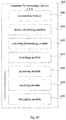
- Fig. 6D is a block diagram showing a device identifying module according to the embodiment shown in Fig. 6C .
- the device identifying module 660 comprises:
- Fig. 7A is a block diagram showing an apparatus for accessing a wireless LAN according to an exemplary embodiment.
- the apparatus 700 may be used for performing the method shown in Fig. 3 or Fig. 5 , and the apparatus 700 may be applied in a routing device, and a part or all of the routing device may be constituted by a software or a hardware or a combination thereof, the routing device may be the routing device 200 in the implementation environment shown in Fig. 1 .
- the apparatus 700 comprises:
- the sending module 720 is configured to: send a first encryption protocol packet encrypted using a random code and a second encryption protocol packet encrypted using a server public key to a smart device if the smart device is the trusted device, in which the first encryption protocol packet includes the verification information, and the second encryption protocol packet includes the random code, such that the smart device uploads the second encryption protocol packet to the target server, such that the target server performs a decryption on the second encryption protocol packet using a server private key to obtain the random code, and then the random code is sent to the smart device after it is determined that the smart device is the device meeting the predetermined condition, in which the random code is used by the smart device for performing a decryption on the first encryption protocol packet to obtain the verification information, and the second wireless LAN is accessed by the smart device according to the verification information.
- Fig. 7B is a block diagram showing a judging/determining module according to the embodiment shown in Fig. 7A .
- the judging/determining module 710 comprises:
- Fig. 8A is a block diagram showing an apparatus for accessing a wireless LAN according to an exemplary embodiment.
- the apparatus 800 may be used for performing the method shown in Fig. 4 or Fig. 5 , and the apparatus 800 may be applied in a target server, and a part or all of the target server may be constituted by a software or a hardware or a combination thereof, and the target server may be the server 300 in the implementation environment shown in Fig. 1 .
- the apparatus 800 comprises:
- Fig. 8B is a block diagram showing an acquiring module according to the embodiment shown in Fig. 8A .
- the acquiring module 810 comprises:
- Fig. 8C is a block diagram showing a judging/determining module according to the embodiment shown in Fig. 8A .
- the judging/determining module 820 may comprise:
- the communication system comprises: a smart device, a routing device, and a target server, in which the relation between the smart device, the routing device and the target server may be a relation as shown in the implementation environment shown in Fig. 1 , which will not be explained in detail herein.
- the smart device may include any one of the apparatuses 600 for accessing wireless LANs in Fig. 6A to Fig. 6D ; the routing device may include the apparatus 700 for accessing the wireless LAN in Fig. 7A or Fig. 7B ; the target server may include the apparatus 800 for accessing the wireless LAN in any one of Fig. 8A to Fig. 8C .
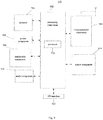
- Fig. 9 is a block diagram showing an device 900 for accessing a wireless LAN according to an exemplary embodiment.
- the device 900 may be a smart camera, a routing device, a mobile phone, a computer, a digital broadcasting terminal, a message receiving and sending equipment, a game controller, a tablet device, a medical equipment, a fitness equipment, a PDA, and so on.
- the device 900 may include one or more of the following components: a processing component 902, a memory 904, a power component 906, a multimedia component 908, an audio component 910, an input/output (I/O) interface 912, a sensor component 914, and a communication component 916.
- the processing component 902 typically controls overall operations of the device 900, such as the operations associated with display, telephone calls, data communications, camera operations, and recording operations.
- the processing component 902 may include one or more processors 920 to execute instructions so as to perform all or part of the steps in the above described methods for accessing the wireless LAN.
- the processing component 902 may include one or more modules which facilitate the interaction between the processing component 902 and other components.
- the processing component 902 may include a multimedia module to facilitate the interaction between the multimedia component 908 and the processing component 902.
- the memory 904 is configured to store various types of data to support the operation of the device 900. Examples of such data include instructions for any applications or methods operated on the device 900, contact data, phonebook data, messages, pictures, videos, etc.
- the memory 904 may be implemented using any type of volatile or non-volatile memory devices, or a combination thereof, such as a static random access memory (SRAM), an electrically erasable programmable read-only memory (EEPROM), an erasable programmable read-only memory (EPROM), a programmable read-only memory (PROM), a read-only memory (ROM), a magnetic memory, a flash memory, a magnetic or optical disk.
- SRAM static random access memory
- EEPROM electrically erasable programmable read-only memory
- EPROM erasable programmable read-only memory
- PROM programmable read-only memory
- ROM read-only memory
- magnetic memory a magnetic memory
- flash memory a flash memory
- magnetic or optical disk a magnetic
- the power component 906 provides power to various components of the device 900.
- the power component 906 may include a power management system, one or more power sources, and any other components associated with the generation, management, and distribution of power in the device 900.
- the multimedia component 908 includes a screen providing an output interface between the device 900 and the user.
- the screen may include a liquid crystal display (LCD) and a touch panel (TP). If the screen includes the touch panel, the screen may be implemented as a touch screen to receive input signals from the user.
- the touch panel includes one or more touch sensors to sense touches, swipes, and gestures on the touch panel. The touch sensors may not only sense a boundary of a touch or swipe action, but also sense a duration and a pressure associated with the touch or swipe action.
- the multimedia component 908 includes a front camera and/or a rear camera.
- the front camera and/or the rear camera may receive external multimedia data when the device 900 is in an operation mode, such as a photographing mode or a video mode.
- an operation mode such as a photographing mode or a video mode.
- Each of the front camera and the rear camera may be a fixed optical lens system, or have focus and optical zoom capability.
- the audio component 910 is configured to output and/or input an audio signal.
- the audio component 910 includes a microphone ("MIC") configured to receive an external audio signal when the device 900 is in an operation mode, such as a call mode, a recording mode, and a voice recognition mode.
- the received audio signal may be further stored in the memory 904 or transmitted via the communication component 916.
- the audio component 910 further includes a speaker to output audio signals.
- the I/O interface 912 provides an interface between the processing component 902 and a peripheral interface module, such as a keyboard, a click wheel, a button, and the like.
- a peripheral interface module such as a keyboard, a click wheel, a button, and the like.
- the button may include, but are not limited to, a home button, a volume button, a starting button, and a locking button.
- the sensor component 914 includes one or more sensors to provide status assessments of various aspects of the device 900. For instance, the sensor component 914 may detect an on/off status of the device 900, relative position of a component (e.g., the display and the keypad) of the device 900, a change in position of the device 900 or a component of the device 900, a presence or absence of user contact with the device 900, an orientation or an acceleration/deceleration of the device 900, and a change in temperature of the device 900.
- the sensor component 914 may include a proximity sensor configured to detect the presence of nearby objects without any physical contact.
- the sensor component 914 may also include a light sensor, such as a CMOS or CCD image sensor, for use in imaging applications.
- the sensor component 914 may also include an accelerometer sensor, a gyroscope sensor, a magnetic sensor, a pressure sensor, or a temperature sensor.
- the communication component 916 is configured to facilitate wired or wireless communication between the device 900 and other devices.
- the device 900 can access a wireless network based on a communication standard, such as a WIFI network, a 2G network, or a 3G network, or a combination thereof.
- the communication component 916 receives a broadcast signal or broadcast associated information from an external broadcast management system via a broadcast channel.
- the communication component 916 further includes a near field communication (NFC) module to facilitate short-range communications.
- NFC near field communication
- the NFC module may be implemented based on a technology such as a radio frequency identification (RFID) technology, an infrared data association (IrDA) technology, an ultra-wideband (UWB) technology, a Bluetooth (BT) technology, and other technologies.
- RFID radio frequency identification
- IrDA infrared data association
- UWB ultra-wideband
- BT Bluetooth
- the device 900 may be implemented with at least one device selected from a group consisting of an application specific integrated circuit (ASIC), a digital signal processor (DSP), a digital signal processing device (DSPD), a programmable logic device (PLD), a field programmable gate arrays (FPGA), a controller, a micro-controller, a microprocessor, or other electronic components, for performing the above described methods according to embodiments of the present disclosure.
- ASIC application specific integrated circuit
- DSP digital signal processor
- DSPD digital signal processing device
- PLD programmable logic device
- FPGA field programmable gate arrays
- controller a micro-controller, a microprocessor, or other electronic components, for performing the above described methods according to embodiments of the present disclosure.
- non-transitory computer-readable storage medium including instructions, such as the memory 904 including instructions, and the instructions are executable by the processor 920 of the device 900, for performing the above-described methods.
- the non-transitory computer-readable storage medium may be a ROM, a random access memory (RAM), a CD-ROM, a magnetic tape, a floppy disc, an optical data storage device, and the like.
- Fig. 10 is a block diagram showing an apparatus 1000 for accessing a wireless LAN according to an exemplary embodiment.
- apparatus 1000 may be provided as a server.
- the apparatus 1000 includes a processing component 1022, and further includes one or more processors, and a memory resource represented by the memory 1032 for storing instructions that can be executed by the processing component 1022, such as an application program.
- the application program stored in the memory 1032 may include one or more modules each corresponding to a group of instructions.
- the processing component 1022 is configured to execute the instructions to execute the above-described method for accessing the wireless LAN.
- the apparatus 1000 may further include one power supply component 1026 configured to execute the power management of the apparatus 1000; one wired or wireless network interface 1050 configured to couple the apparatus 1000 to a network; and one input/ output (I/O) interface 1058.
- the apparatus 1000 may operate operating systems stored in the memory 1032, such as Windows ServerTM, Mac OS XTM, UnixTM, LinuxTM, FreeBSDTM and so on.
- the apparatus 1 comprises:
- the apparatus 2 comprises:
- the apparatus 3 comprises:
- the communication system comprises: a smart device, a routing device and a target server, in which the relation between the smart device, the routing device and the target server may be as shown in the implementation environment shown in Fig. 1 , which will not be explained in detail herein.
- the smart device may include the above-mentioned apparatus 1 for accessing the wireless LAN;
- the routing device may include the above-mentioned apparatus 2 for accessing the wireless LAN;
- the target server may include the above-mentioned apparatus 3 for accessing the wireless LAN.
Landscapes
- Engineering & Computer Science (AREA)
- Computer Security & Cryptography (AREA)
- Computer Networks & Wireless Communication (AREA)
- Signal Processing (AREA)
- Computer Hardware Design (AREA)
- Computing Systems (AREA)
- General Engineering & Computer Science (AREA)
- Power Engineering (AREA)
- Mobile Radio Communication Systems (AREA)
Claims (11)
- Procédé d'accès à un réseau local, LAN, sans fil, appliqué dans un dispositif intelligent, comprenant :l'accès (201) à un premier LAN sans fil généré par un dispositif de routage quand le dispositif intelligent est dans un mode de station, dans lequel une permission d'accès du premier LAN sans fil est restreinte de telle sorte que l'accès à une adresse d'un serveur cible soit autorisé et que l'accès à d'autres adresses sauf celle du serveur cible soit interdit ;la réception (202) d'un premier paquet de protocole de cryptage comprenant des informations de vérification envoyées par le dispositif de routage lorsque le dispositif de routage détermine que le dispositif intelligent est un dispositif de confiance ;l'exécution (203) d'un décryptage sur le premier paquet de protocole de cryptage conformément aux informations de décryptage acquises auprès du serveur cible pour obtenir les informations de vérification, lorsque le serveur cible détermine que le dispositif intelligent est un dispositif satisfaisant une condition prédéterminée ;l'accès (204) à un second LAN sans fil conformément aux informations de vérification, le second LAN sans fil ayant une permission d'accès illimité ;dans lequel l'étape de réception du premier paquet de protocole de cryptage comprenant des informations de vérification envoyées par le dispositif de routage lorsque le dispositif de routage détermine que le dispositif intelligent est un dispositif de confiance comprend :la réception du premier paquet de protocole de cryptage crypté à l'aide d'un code aléatoire et d'un second paquet de protocole de cryptage crypté à l'aide d'une clé publique de serveur envoyée par le dispositif de routage lorsque le dispositif de routage détermine que le dispositif intelligent est un dispositif de confiance, dans lequel le premier paquet de protocole de cryptage comprend les informations de vérification, et le second paquet de protocole de cryptage comprend le code aléatoire et des informations de dispositif du dispositif intelligent qui peuvent être utilisées pour identifier un constructeur du dispositif intelligent,dans lequel l'exécution d'un décryptage sur le premier paquet de protocole de cryptage conformément aux informations de décryptage acquises auprès d'un serveur cible pour obtenir les informations de vérification comprend :le téléchargement du second paquet de protocole de cryptage dans le serveur cible par l'intermédiaire du premier LAN sans fil, de telle sorte que le serveur cible exécute un décryptage sur le second paquet de protocole de cryptage en utilisant une clé privé de serveur pour obtenir le code aléatoire ;la réception du code aléatoire envoyé par le serveur cible, lorsque le serveur cible détermine que le dispositif intelligent est le dispositif satisfaisant la condition prédéterminée ;l'exécution d'un décryptage sur le premier paquet de protocole de cryptage conformément au code aléatoire pour obtenir les informations de vérification.
- Procédé selon la revendication 1, comprenant en outre :la détermination qu'un signal du dispositif de routage existe ou non en contrôlant quand le dispositif intelligent est dans un mode de point d'accès sans aucun terminal couplé au dispositif intelligent ;la détection que le dispositif de routage est ou non d'un type cible quand il est contrôlé que le signal du dispositif de routage existe ;la détermination qu'une condition de commutation de mode est satisfaite ou non conformément à une force de signal du signal du dispositif de routage quand il est détecté que le dispositif de routage est du type cible ;la commutation d'un mode de carte de réseau courant du mode de point d'accès au mode de station mode lorsque la condition de commutation de mode est satisfaite.
- Procédé selon la revendication 2, dans lequel l'étape de détection que le dispositif de routage est ou non d'un type cible comprend :l'acquisition d'un identifiant d'ensemble de services de base (BSSID) du dispositif de routage ;la détermination d'un constructeur du dispositif de routage conformément au BSSID ;la détermination que le constructeur du dispositif de routage est ou non un constructeur spécifié ;la détermination que le dispositif de routage est du type cible si le constructeur du dispositif de routage est le constructeur spécifié.
- Appareil (600) d'accès à un LAN sans fil, l'appareil étant un dispositif intelligent, comprenant :un module d'accès (610), configuré pour accéder à un premier LAN sans fil généré par un dispositif de routage quand le dispositif intelligent est dans un mode de station, dans lequel une permission d'accès du premier LAN sans fil est restreinte de telle sorte que l'accès à une adresse d'un serveur cible soit autorisé et que l'accès à d'autres adresses sauf celle du serveur cible soit interdit ;un module de réception (620), configuré pour recevoir un premier paquet de protocole de cryptage comprenant des informations de vérification envoyées par le dispositif de routage lorsque le dispositif de routage détermine que le dispositif intelligent est un dispositif de confiance ;un module de décryptage (630), configuré pour exécuter un décryptage sur le premier paquet de protocole de cryptage conformément aux informations de décryptage acquises auprès du serveur cible lorsque le serveur cible détermine que le dispositif intelligent est un dispositif satisfaisant une condition prédéterminée pour obtenir les informations de vérification ;dans lequel le module d'accès (610) est configuré en outre pour accéder à un second LAN sans fil conformément aux informations de vérification, le second LAN sans fil ayant une permission d'accès illimité ;dans lequel le module de réception (620) est configuré pour :recevoir le premier paquet de protocole de cryptage crypté à l'aide d'un code aléatoire et un second paquet de protocole de cryptage crypté à l'aide d'une clé publique de serveur envoyée par le dispositif de routage lorsque le dispositif de routage détermine que le dispositif intelligent est un dispositif de confiance,dans lequel le premier paquet de protocole de cryptage comprend les informations de vérification, et le second paquet de protocole de cryptage comprend le code aléatoire et des informations de dispositif du dispositif intelligent qui peuvent être utilisées pour identifier un constructeur du dispositif intelligent,dans lequel le module de décryptage (630) comprend :un sous-module de téléchargement §631), configuré pour télécharger le second paquet de protocole de cryptage dans le serveur cible par l'intermédiaire du premier LAN sans fil, de telle sorte que le serveur cible exécute un décryptage sur le second paquet de protocole de cryptage en utilisant une clé privé de serveur pour obtenir le code aléatoire ;un sous-module de réception (632), configuré pour recevoir le code aléatoire envoyé par le serveur cible, lorsque le serveur cible détermine que le dispositif intelligent est le dispositif satisfaisant la condition prédéterminée ;un sous-module de décryptage (633) configuré pour exécuter un décryptage sur le premier paquet de protocole de cryptage conformément au code aléatoire pour obtenir les informations de vérification.
- Appareil selon la revendication 4, comprenant en outre :un module de contrôle (640), configuré pour déterminer qu'un signal du dispositif de routage existe ou non en contrôlant quand le dispositif intelligent est dans un mode de point d'accès sans aucun terminal couplé au dispositif intelligent ;un module d'identification de dispositif (650), configuré pour détecter que le dispositif de routage est ou non d'un type cible quand il est contrôlé que le signal du dispositif de routage existe ;un module de détermination de commutation (660), configuré pour déterminer qu'une condition de commutation de mode est satisfaite ou non conformément à une force de signal du signal du dispositif de routage quand il est détecté que le dispositif de routage est du type cible ;un module de commutation (670), configuré pour commuter un mode de carte de réseau courant du mode de point d'accès au mode de station lorsque la condition de commutation de mode est satisfaite.
- Appareil selon la revendication 5, dans lequel le module d'identification de dispositif (660) comprend :un sous-module d'acquisition d'identifiant (661), configuré pour acquérir un identifiant d'ensemble de services de base (BSSID) du dispositif de routage ;un sous-module d'identification de dispositif (662), configuré pour déterminer un constructeur du dispositif de routage conformément au BSSID ;un sous-module de détermination (663), configuré pour déterminer que le constructeur du dispositif de routage est ou non un constructeur spécifié ;un sous-module de détermination (664), configuré pour déterminer que le dispositif de routage est du type cible si le constructeur du dispositif de routage est le constructeur spécifié.
- Appareil (700) d'accès à un LAN sans fil, l'appareil étant un dispositif de routage, comprenant :un module de détermination (710), configuré pour déterminer qu'un dispositif intelligent est un dispositif de confiance lorsque le dispositif intelligent accède à un premier LAN sans fil, dans lequel une permission d'accès du premier LAN sans fil est restreinte de telle sorte que l'accès à une adresse d'un serveur cible soit autorisé et l'accès à d'autres adresses sauf celle du serveur cible soit interdit ;un module d'envoi (720), configuré pour envoyer un premier paquet de protocole de cryptage comprenant des informations de vérification au dispositif intelligent si le dispositif intelligent est le dispositif de confiance, de telle sorte que le dispositif intelligent exécute un décryptage sur le premier paquet de protocole de cryptage conformément à des informations de décryptage acquises auprès du serveur cible pour obtenir les informations de vérification lorsque le serveur cible détermine que le dispositif intelligent est un dispositif satisfaisant une condition prédéterminée, et le dispositif intelligent accède à un second LAN sans fil conformément aux informations de vérification, le second LAN sans fil ayant une permission d'accès illimité ;dans lequel le module d'envoi (720) est configuré pour ;envoyer le premier paquet de protocole de cryptage crypté à l'aide d'un code aléatoire et un second paquet de protocole de cryptage crypté à l'aide d'une clé publique de serveur au dispositif intelligent si le dispositif intelligent est le dispositif de confiance, dans lequel le premier paquet de protocole de cryptage comprend les informations de vérification, et le second paquet de protocole de cryptage comprend le code aléatoire et des informations de dispositif du dispositif intelligent qui peuvent être utilisées pour identifier un constructeur du dispositif intelligent, de telle sorte que le dispositif intelligent télécharge le second paquet de protocole de cryptage dans le serveur cible, de telle sorte que le serveur cible exécute un décryptage sur le second paquet de protocole de cryptage à l'aide d'une clé privée de serveur pour obtenir le code aléatoire, et le code aléatoire est envoyé au dispositif intelligent lorsqu'il est déterminé que le dispositif intelligent est le dispositif satisfaisant la condition prédéterminée, le code aléatoire étant utilisé par le dispositif intelligent pour exécuter un décryptage sur le premier paquet de protocole de cryptage afin d'obtenir les informations de vérification, et le dispositif intelligent accède au second LAN sans fil conformément aux informations de vérification.
- Appareil selon la revendication 7, dans lequel le module de détermination (710) comprend :un sous-module d'identification de distance (711), configuré pour déterminer une distance entre le dispositif intelligent et le dispositif de routage conformément à une force de signal du signal du dispositif intelligent ;un sous-module de détermination (712), configuré pour déterminer que le dispositif intelligent est le dispositif de confiance si la distance entre le dispositif intelligent et le dispositif de routage est inférieure à une distance prédéterminée.
- Appareil (800) d'accès à un LAN sans fil, l'appareil étant un dispositif cible, comprenant :un module d'acquisition (810), configuré pour acquérir des informations de décryptage lorsque le dispositif intelligent reçoit un premier paquet de protocole de cryptage comprenant des informations de vérification envoyées par un dispositif de routage par l'intermédiaire d'un premier LAN sans fil générées par le dispositif de routage, dans lequel une permission d'accès du premier LAN sans fil est restreinte de telle sorte que l'accès à une adresse d'un serveur cible soit autorisé et que l'accès à d'autres adresses sauf celle du serveur cible soit interdit ;un module de détermination (820), configuré pour déterminer que le dispositif intelligent est ou non un dispositif satisfaisant une condition prédéterminée ;un module d'envoi (830), configuré pour envoyer des informations de décryptage au dispositif intelligent si le dispositif intelligent est le dispositif satisfaisant la condition prédéterminée, de telle sorte que le dispositif intelligent exécute un décryptage sur le premier paquet de protocole de cryptage conformément aux informations de décryptage acquises auprès du serveur cible pour obtenir les informations de vérification, et accède à un second LAN sans fil conformément aux informations de vérification, dans lequel le second LAN sans fil a une permission d'accès illimité ;dans lequel le module d'acquisition (810) comprend :un sous-module de réception (811), configuré pour recevoir un second paquet de protocole de cryptage téléchargé par le dispositif intelligent par l'intermédiaire du premier LAN sans fil lorsque le dispositif intelligent reçoit le premier paquet de protocole de cryptage crypté à l'aide d'un code aléatoire et le second paquet de protocole de cryptage crypté à l'aide d'une clé publique de serveur qui sont envoyés par le dispositif de routage par l'intermédiaire du premier LAN sans fil ;un sous-module de décryptage (812), configuré pour exécuter un décryptage sur le second paquet de protocole de cryptage en utilisant une clé privée de serveur pour obtenir le code aléatoire,dans lequel le second paquet de protocole de cryptage comprend en outre des informations de dispositif du dispositif intelligent, et le module de détermination (820) comprend :un sous-module d'identification de dispositif (821), configuré pour déterminer un constructeur du dispositif intelligent conformément aux informations de dispositif obtenues après l'exécution du décryptage sur le second paquet de protocole de cryptage à l'aide de la clé privé de serveur ;un premier sous-module de détermination (822), configuré pour déterminer que le constructeur du dispositif intelligent est ou non un constructeur spécifié ;un second sous-module de détermination (823), configuré pour déterminer que le dispositif intelligent est le dispositif satisfaisant la condition prédéterminée si le constructeur du dispositif intelligent est le constructeur spécifié.
- Produit-programme informatique comprenant des instructions qui, à leur exécution par un ou plusieurs processeurs d'un appareil, amènent l'appareil à mettre en oeuvre le procédé selon l'une quelconque des revendications 1 à 3.
- Support de mémorisation non transitoire lisible par ordinateur sur lequel sont mémorisées des instructions qui, à leur exécution par un processeur d'un dispositif terminal, amènent le dispositif terminal à mettre en oeuvre le procédé d'accès à un réseau local LAN sans fil selon l'une quelconque des revendications 1 à 3.
Applications Claiming Priority (1)
| Application Number | Priority Date | Filing Date | Title |
|---|---|---|---|
| CN201610065643.3A CN105744595B (zh) | 2016-01-29 | 2016-01-29 | 接入无线局域网的方法、装置、系统及存储介质 |
Publications (2)
| Publication Number | Publication Date |
|---|---|
| EP3200421A1 EP3200421A1 (fr) | 2017-08-02 |
| EP3200421B1 true EP3200421B1 (fr) | 2019-06-26 |
Family
ID=56248117
Family Applications (1)
| Application Number | Title | Priority Date | Filing Date |
|---|---|---|---|
| EP17151620.6A Active EP3200421B1 (fr) | 2016-01-29 | 2017-01-16 | Procédé, appareil et système d'accès à un réseau local sans fil |
Country Status (4)
| Country | Link |
|---|---|
| US (1) | US10356615B2 (fr) |
| EP (1) | EP3200421B1 (fr) |
| CN (1) | CN105744595B (fr) |
| WO (1) | WO2017128719A1 (fr) |
Families Citing this family (10)
| Publication number | Priority date | Publication date | Assignee | Title |
|---|---|---|---|---|
| CN104765999B (zh) * | 2014-01-07 | 2020-06-30 | 腾讯科技(深圳)有限公司 | 一种对用户资源信息进行处理的方法、终端及服务器 |
| CN105744595B (zh) * | 2016-01-29 | 2018-09-04 | 北京小米移动软件有限公司 | 接入无线局域网的方法、装置、系统及存储介质 |
| CN106028286B (zh) * | 2016-07-12 | 2020-03-27 | 努比亚技术有限公司 | 无线局域网接入装置及方法 |
| FR3067546A1 (fr) * | 2017-06-19 | 2018-12-14 | Orange | Procedes d’identification operateur de trames a emettre, et de verification d’appartenance operateur, un dispositif de communication et une passerelle de communication |
| CN109462850B (zh) * | 2017-09-06 | 2022-06-17 | 九阳股份有限公司 | 一种智能设备的网络配置方法及智能设备 |
| WO2019153143A1 (fr) * | 2018-02-07 | 2019-08-15 | 华为技术有限公司 | Procédé, dispositif et système d'accès à un réseau |
| CN111212428A (zh) * | 2018-11-22 | 2020-05-29 | 九阳股份有限公司 | 一种家电设备接入无线局域网的方法以及家电设备 |
| CN112859620B (zh) * | 2019-11-12 | 2023-05-05 | 西门子(中国)有限公司 | 安全防护方法、装置、智能家居系统和计算机可读介质 |
| CN110912880B (zh) * | 2019-11-15 | 2022-04-08 | 北京小米移动软件有限公司 | 配网方法及装置、电子设备及存储介质 |
| CN115150797B (zh) * | 2022-05-16 | 2024-12-24 | 芜湖美的厨卫电器制造有限公司 | 智能设备及其网络连接方法、路由设备、存储介质 |
Family Cites Families (12)
| Publication number | Priority date | Publication date | Assignee | Title |
|---|---|---|---|---|
| EP1871065A1 (fr) * | 2006-06-19 | 2007-12-26 | Nederlandse Organisatie voor Toegepast-Natuuurwetenschappelijk Onderzoek TNO | Procédés, dispositif et système pour le contrôle d'accès à un réseau |
| US20110030039A1 (en) * | 2009-07-31 | 2011-02-03 | Eric Bilange | Device, method and apparatus for authentication on untrusted networks via trusted networks |
| CN101951691B (zh) * | 2010-09-19 | 2014-03-12 | 中兴通讯股份有限公司 | 一种无线热点共享接入方法和装置 |
| JP5325192B2 (ja) * | 2010-10-22 | 2013-10-23 | 株式会社バッファロー | 通信装置および通信装置の動作制御方法 |
| US8937971B1 (en) | 2010-10-29 | 2015-01-20 | Redpine Signals, Inc. | Dual mode WLAN device for dense user environments |
| US8478987B2 (en) * | 2011-03-14 | 2013-07-02 | Thomas F. Karl | Wireless activation of IP devices |
| US8948390B2 (en) * | 2012-09-29 | 2015-02-03 | Microsoft Corporation | Securely joining a secure wireless communications network |
| CN105900379B (zh) * | 2013-11-12 | 2020-01-31 | 鲁库斯无线公司 | 自动接入点配置 |
| US9900774B2 (en) | 2014-05-30 | 2018-02-20 | Paypal, Inc. | Shared network connection credentials on check-in at a user's home location |
| CN104243467A (zh) * | 2014-09-10 | 2014-12-24 | 珠海市君天电子科技有限公司 | 局域网终端的认证方法和装置 |
| JP2017073611A (ja) * | 2015-10-05 | 2017-04-13 | 任天堂株式会社 | 情報処理システム、無線通信チップ、周辺機器、サーバ、アプリケーションプログラム、および情報処理方法 |
| CN105744595B (zh) * | 2016-01-29 | 2018-09-04 | 北京小米移动软件有限公司 | 接入无线局域网的方法、装置、系统及存储介质 |
-
2016
- 2016-01-29 CN CN201610065643.3A patent/CN105744595B/zh active Active
- 2016-09-01 WO PCT/CN2016/097792 patent/WO2017128719A1/fr not_active Ceased
- 2016-12-28 US US15/392,096 patent/US10356615B2/en active Active
-
2017
- 2017-01-16 EP EP17151620.6A patent/EP3200421B1/fr active Active
Non-Patent Citations (1)
| Title |
|---|
| None * |
Also Published As
| Publication number | Publication date |
|---|---|
| CN105744595B (zh) | 2018-09-04 |
| EP3200421A1 (fr) | 2017-08-02 |
| CN105744595A (zh) | 2016-07-06 |
| US10356615B2 (en) | 2019-07-16 |
| US20170223532A1 (en) | 2017-08-03 |
| WO2017128719A1 (fr) | 2017-08-03 |
Similar Documents
| Publication | Publication Date | Title |
|---|---|---|
| EP3200421B1 (fr) | Procédé, appareil et système d'accès à un réseau local sans fil | |
| US10038772B2 (en) | Communication systems and methods | |
| EP2999271B1 (fr) | Procédé et appareil pour accéder à un réseau sans fil | |
| CN104869612B (zh) | 接入网络的方法及装置 | |
| US9769667B2 (en) | Methods for controlling smart device | |
| US20160295625A1 (en) | Method and apparatus for network access | |
| US20170163626A1 (en) | Method and device for network access of a smart terminal device | |
| EP3163803B1 (fr) | Procédé et dispositif pour établir une connexion | |
| US20170105237A1 (en) | Methods and apparatuses for network connection | |
| EP3229423B1 (fr) | Procédé et dispositif d'affichage d'une interface de configuration de routeur | |
| KR101713305B1 (ko) | 스마트 기기의 라우터 액세스 방법, 장치, 시스템, 프로그램 및 기록매체 | |
| CN105282158A (zh) | 智能设备联网方法、路由设备、智能设备及系统 | |
| US20170171794A1 (en) | Method and apparatus for acquiring routing information | |
| US9565554B2 (en) | Method, device, and system for transmitting information and storage medium | |
| US10123208B2 (en) | Method and device for controlling access | |
| CN108702288A (zh) | 数据传输方法、设备及系统 | |
| US9674768B2 (en) | Method and device for accessing wireless network | |
| EP3177043B1 (fr) | Procédé et appareil de gestion de dispositif de routage et de terminal mobile | |
| CN112512050A (zh) | 终端防止攻击方法、装置及存储介质 | |
| US20260082437A1 (en) | Information processing method and apparatus, and communication device and storage medium | |
| EP4510772A1 (fr) | Procédés de traitement d'informations, appareil, dispositif de communication et support de stockage | |
| US20250343695A1 (en) | Personal iot network (pin) primitive credential configuration method and apparatus, communication device, and storage medium | |
| CN117256166A (zh) | 信息处理方法及装置、通信设备及存储介质 | |
| CN104955032A (zh) | 信息提供方法、获取方法和装置 |
Legal Events
| Date | Code | Title | Description |
|---|---|---|---|
| PUAI | Public reference made under article 153(3) epc to a published international application that has entered the european phase |
Free format text: ORIGINAL CODE: 0009012 |
|
| STAA | Information on the status of an ep patent application or granted ep patent |
Free format text: STATUS: THE APPLICATION HAS BEEN PUBLISHED |
|
| AK | Designated contracting states |
Kind code of ref document: A1 Designated state(s): AL AT BE BG CH CY CZ DE DK EE ES FI FR GB GR HR HU IE IS IT LI LT LU LV MC MK MT NL NO PL PT RO RS SE SI SK SM TR |
|
| AX | Request for extension of the european patent |
Extension state: BA ME |
|
| STAA | Information on the status of an ep patent application or granted ep patent |
Free format text: STATUS: REQUEST FOR EXAMINATION WAS MADE |
|
| 17P | Request for examination filed |
Effective date: 20180124 |
|
| RBV | Designated contracting states (corrected) |
Designated state(s): AL AT BE BG CH CY CZ DE DK EE ES FI FR GB GR HR HU IE IS IT LI LT LU LV MC MK MT NL NO PL PT RO RS SE SI SK SM TR |
|
| STAA | Information on the status of an ep patent application or granted ep patent |
Free format text: STATUS: EXAMINATION IS IN PROGRESS |
|
| 17Q | First examination report despatched |
Effective date: 20180824 |
|
| REG | Reference to a national code |
Ref country code: DE Ref legal event code: R079 Ref document number: 602017004728 Country of ref document: DE Free format text: PREVIOUS MAIN CLASS: H04L0029060000 Ipc: H04W0012060000 |
|
| GRAP | Despatch of communication of intention to grant a patent |
Free format text: ORIGINAL CODE: EPIDOSNIGR1 |
|
| STAA | Information on the status of an ep patent application or granted ep patent |
Free format text: STATUS: GRANT OF PATENT IS INTENDED |
|
| RIC1 | Information provided on ipc code assigned before grant |
Ipc: H04W 12/08 20090101ALI20190402BHEP Ipc: H04W 84/12 20090101ALI20190402BHEP Ipc: H04W 12/06 20090101AFI20190402BHEP Ipc: H04L 29/06 20060101ALI20190402BHEP |
|
| GRAS | Grant fee paid |
Free format text: ORIGINAL CODE: EPIDOSNIGR3 |
|
| INTG | Intention to grant announced |
Effective date: 20190426 |
|
| GRAA | (expected) grant |
Free format text: ORIGINAL CODE: 0009210 |
|
| STAA | Information on the status of an ep patent application or granted ep patent |
Free format text: STATUS: THE PATENT HAS BEEN GRANTED |
|
| AK | Designated contracting states |
Kind code of ref document: B1 Designated state(s): AL AT BE BG CH CY CZ DE DK EE ES FI FR GB GR HR HU IE IS IT LI LT LU LV MC MK MT NL NO PL PT RO RS SE SI SK SM TR |
|
| REG | Reference to a national code |
Ref country code: GB Ref legal event code: FG4D |
|
| REG | Reference to a national code |
Ref country code: CH Ref legal event code: EP |
|
| REG | Reference to a national code |
Ref country code: AT Ref legal event code: REF Ref document number: 1149751 Country of ref document: AT Kind code of ref document: T Effective date: 20190715 |
|
| REG | Reference to a national code |
Ref country code: DE Ref legal event code: R096 Ref document number: 602017004728 Country of ref document: DE |
|
| REG | Reference to a national code |
Ref country code: IE Ref legal event code: FG4D |
|
| REG | Reference to a national code |
Ref country code: NL Ref legal event code: MP Effective date: 20190626 |
|
| PG25 | Lapsed in a contracting state [announced via postgrant information from national office to epo] |
Ref country code: HR Free format text: LAPSE BECAUSE OF FAILURE TO SUBMIT A TRANSLATION OF THE DESCRIPTION OR TO PAY THE FEE WITHIN THE PRESCRIBED TIME-LIMIT Effective date: 20190626 Ref country code: SE Free format text: LAPSE BECAUSE OF FAILURE TO SUBMIT A TRANSLATION OF THE DESCRIPTION OR TO PAY THE FEE WITHIN THE PRESCRIBED TIME-LIMIT Effective date: 20190626 Ref country code: AL Free format text: LAPSE BECAUSE OF FAILURE TO SUBMIT A TRANSLATION OF THE DESCRIPTION OR TO PAY THE FEE WITHIN THE PRESCRIBED TIME-LIMIT Effective date: 20190626 Ref country code: FI Free format text: LAPSE BECAUSE OF FAILURE TO SUBMIT A TRANSLATION OF THE DESCRIPTION OR TO PAY THE FEE WITHIN THE PRESCRIBED TIME-LIMIT Effective date: 20190626 Ref country code: NO Free format text: LAPSE BECAUSE OF FAILURE TO SUBMIT A TRANSLATION OF THE DESCRIPTION OR TO PAY THE FEE WITHIN THE PRESCRIBED TIME-LIMIT Effective date: 20190926 Ref country code: LT Free format text: LAPSE BECAUSE OF FAILURE TO SUBMIT A TRANSLATION OF THE DESCRIPTION OR TO PAY THE FEE WITHIN THE PRESCRIBED TIME-LIMIT Effective date: 20190626 |
|
| REG | Reference to a national code |
Ref country code: LT Ref legal event code: MG4D |
|
| PG25 | Lapsed in a contracting state [announced via postgrant information from national office to epo] |
Ref country code: RS Free format text: LAPSE BECAUSE OF FAILURE TO SUBMIT A TRANSLATION OF THE DESCRIPTION OR TO PAY THE FEE WITHIN THE PRESCRIBED TIME-LIMIT Effective date: 20190626 Ref country code: LV Free format text: LAPSE BECAUSE OF FAILURE TO SUBMIT A TRANSLATION OF THE DESCRIPTION OR TO PAY THE FEE WITHIN THE PRESCRIBED TIME-LIMIT Effective date: 20190626 Ref country code: BG Free format text: LAPSE BECAUSE OF FAILURE TO SUBMIT A TRANSLATION OF THE DESCRIPTION OR TO PAY THE FEE WITHIN THE PRESCRIBED TIME-LIMIT Effective date: 20190926 Ref country code: GR Free format text: LAPSE BECAUSE OF FAILURE TO SUBMIT A TRANSLATION OF THE DESCRIPTION OR TO PAY THE FEE WITHIN THE PRESCRIBED TIME-LIMIT Effective date: 20190927 |
|
| REG | Reference to a national code |
Ref country code: AT Ref legal event code: MK05 Ref document number: 1149751 Country of ref document: AT Kind code of ref document: T Effective date: 20190626 |
|
| PG25 | Lapsed in a contracting state [announced via postgrant information from national office to epo] |
Ref country code: PT Free format text: LAPSE BECAUSE OF FAILURE TO SUBMIT A TRANSLATION OF THE DESCRIPTION OR TO PAY THE FEE WITHIN THE PRESCRIBED TIME-LIMIT Effective date: 20191028 Ref country code: AT Free format text: LAPSE BECAUSE OF FAILURE TO SUBMIT A TRANSLATION OF THE DESCRIPTION OR TO PAY THE FEE WITHIN THE PRESCRIBED TIME-LIMIT Effective date: 20190626 Ref country code: EE Free format text: LAPSE BECAUSE OF FAILURE TO SUBMIT A TRANSLATION OF THE DESCRIPTION OR TO PAY THE FEE WITHIN THE PRESCRIBED TIME-LIMIT Effective date: 20190626 Ref country code: SK Free format text: LAPSE BECAUSE OF FAILURE TO SUBMIT A TRANSLATION OF THE DESCRIPTION OR TO PAY THE FEE WITHIN THE PRESCRIBED TIME-LIMIT Effective date: 20190626 Ref country code: RO Free format text: LAPSE BECAUSE OF FAILURE TO SUBMIT A TRANSLATION OF THE DESCRIPTION OR TO PAY THE FEE WITHIN THE PRESCRIBED TIME-LIMIT Effective date: 20190626 Ref country code: CZ Free format text: LAPSE BECAUSE OF FAILURE TO SUBMIT A TRANSLATION OF THE DESCRIPTION OR TO PAY THE FEE WITHIN THE PRESCRIBED TIME-LIMIT Effective date: 20190626 Ref country code: NL Free format text: LAPSE BECAUSE OF FAILURE TO SUBMIT A TRANSLATION OF THE DESCRIPTION OR TO PAY THE FEE WITHIN THE PRESCRIBED TIME-LIMIT Effective date: 20190626 |
|
| PG25 | Lapsed in a contracting state [announced via postgrant information from national office to epo] |
Ref country code: ES Free format text: LAPSE BECAUSE OF FAILURE TO SUBMIT A TRANSLATION OF THE DESCRIPTION OR TO PAY THE FEE WITHIN THE PRESCRIBED TIME-LIMIT Effective date: 20190626 Ref country code: IT Free format text: LAPSE BECAUSE OF FAILURE TO SUBMIT A TRANSLATION OF THE DESCRIPTION OR TO PAY THE FEE WITHIN THE PRESCRIBED TIME-LIMIT Effective date: 20190626 Ref country code: SM Free format text: LAPSE BECAUSE OF FAILURE TO SUBMIT A TRANSLATION OF THE DESCRIPTION OR TO PAY THE FEE WITHIN THE PRESCRIBED TIME-LIMIT Effective date: 20190626 Ref country code: IS Free format text: LAPSE BECAUSE OF FAILURE TO SUBMIT A TRANSLATION OF THE DESCRIPTION OR TO PAY THE FEE WITHIN THE PRESCRIBED TIME-LIMIT Effective date: 20191026 |
|
| PG25 | Lapsed in a contracting state [announced via postgrant information from national office to epo] |
Ref country code: TR Free format text: LAPSE BECAUSE OF FAILURE TO SUBMIT A TRANSLATION OF THE DESCRIPTION OR TO PAY THE FEE WITHIN THE PRESCRIBED TIME-LIMIT Effective date: 20190626 |
|
| PG25 | Lapsed in a contracting state [announced via postgrant information from national office to epo] |
Ref country code: PL Free format text: LAPSE BECAUSE OF FAILURE TO SUBMIT A TRANSLATION OF THE DESCRIPTION OR TO PAY THE FEE WITHIN THE PRESCRIBED TIME-LIMIT Effective date: 20190626 Ref country code: DK Free format text: LAPSE BECAUSE OF FAILURE TO SUBMIT A TRANSLATION OF THE DESCRIPTION OR TO PAY THE FEE WITHIN THE PRESCRIBED TIME-LIMIT Effective date: 20190626 |
|
| PG25 | Lapsed in a contracting state [announced via postgrant information from national office to epo] |
Ref country code: IS Free format text: LAPSE BECAUSE OF FAILURE TO SUBMIT A TRANSLATION OF THE DESCRIPTION OR TO PAY THE FEE WITHIN THE PRESCRIBED TIME-LIMIT Effective date: 20200320 |
|
| REG | Reference to a national code |
Ref country code: DE Ref legal event code: R097 Ref document number: 602017004728 Country of ref document: DE |
|
| PLBE | No opposition filed within time limit |
Free format text: ORIGINAL CODE: 0009261 |
|
| STAA | Information on the status of an ep patent application or granted ep patent |
Free format text: STATUS: NO OPPOSITION FILED WITHIN TIME LIMIT |
|
| PG2D | Information on lapse in contracting state deleted |
Ref country code: IS |
|
| 26N | No opposition filed |
Effective date: 20200603 |
|
| PG25 | Lapsed in a contracting state [announced via postgrant information from national office to epo] |
Ref country code: MC Free format text: LAPSE BECAUSE OF FAILURE TO SUBMIT A TRANSLATION OF THE DESCRIPTION OR TO PAY THE FEE WITHIN THE PRESCRIBED TIME-LIMIT Effective date: 20190626 Ref country code: SI Free format text: LAPSE BECAUSE OF FAILURE TO SUBMIT A TRANSLATION OF THE DESCRIPTION OR TO PAY THE FEE WITHIN THE PRESCRIBED TIME-LIMIT Effective date: 20190626 |
|
| REG | Reference to a national code |
Ref country code: CH Ref legal event code: PL |
|
| REG | Reference to a national code |
Ref country code: BE Ref legal event code: MM Effective date: 20200131 |
|
| PG25 | Lapsed in a contracting state [announced via postgrant information from national office to epo] |
Ref country code: LU Free format text: LAPSE BECAUSE OF NON-PAYMENT OF DUE FEES Effective date: 20200116 |
|
| PG25 | Lapsed in a contracting state [announced via postgrant information from national office to epo] |
Ref country code: CH Free format text: LAPSE BECAUSE OF NON-PAYMENT OF DUE FEES Effective date: 20200131 Ref country code: LI Free format text: LAPSE BECAUSE OF NON-PAYMENT OF DUE FEES Effective date: 20200131 Ref country code: BE Free format text: LAPSE BECAUSE OF NON-PAYMENT OF DUE FEES Effective date: 20200131 |
|
| REG | Reference to a national code |
Ref country code: DE Ref legal event code: R082 Ref document number: 602017004728 Country of ref document: DE |
|
| PG25 | Lapsed in a contracting state [announced via postgrant information from national office to epo] |
Ref country code: IE Free format text: LAPSE BECAUSE OF NON-PAYMENT OF DUE FEES Effective date: 20200116 |
|
| PG25 | Lapsed in a contracting state [announced via postgrant information from national office to epo] |
Ref country code: MT Free format text: LAPSE BECAUSE OF FAILURE TO SUBMIT A TRANSLATION OF THE DESCRIPTION OR TO PAY THE FEE WITHIN THE PRESCRIBED TIME-LIMIT Effective date: 20190626 Ref country code: CY Free format text: LAPSE BECAUSE OF FAILURE TO SUBMIT A TRANSLATION OF THE DESCRIPTION OR TO PAY THE FEE WITHIN THE PRESCRIBED TIME-LIMIT Effective date: 20190626 |
|
| PG25 | Lapsed in a contracting state [announced via postgrant information from national office to epo] |
Ref country code: MK Free format text: LAPSE BECAUSE OF FAILURE TO SUBMIT A TRANSLATION OF THE DESCRIPTION OR TO PAY THE FEE WITHIN THE PRESCRIBED TIME-LIMIT Effective date: 20190626 |
|
| P01 | Opt-out of the competence of the unified patent court (upc) registered |
Effective date: 20230523 |
|
| PGFP | Annual fee paid to national office [announced via postgrant information from national office to epo] |
Ref country code: GB Payment date: 20251127 Year of fee payment: 10 |
|
| PGFP | Annual fee paid to national office [announced via postgrant information from national office to epo] |
Ref country code: FR Payment date: 20251124 Year of fee payment: 10 |
|
| PGFP | Annual fee paid to national office [announced via postgrant information from national office to epo] |
Ref country code: DE Payment date: 20251126 Year of fee payment: 10 |