EP3200434A2 - Domain name resolution - Google Patents
Domain name resolution Download PDFInfo
- Publication number
- EP3200434A2 EP3200434A2 EP17153585.9A EP17153585A EP3200434A2 EP 3200434 A2 EP3200434 A2 EP 3200434A2 EP 17153585 A EP17153585 A EP 17153585A EP 3200434 A2 EP3200434 A2 EP 3200434A2
- Authority
- EP
- European Patent Office
- Prior art keywords
- dns
- resolution request
- agent
- dns server
- domain name
- Prior art date
- Legal status (The legal status is an assumption and is not a legal conclusion. Google has not performed a legal analysis and makes no representation as to the accuracy of the status listed.)
- Withdrawn
Links
Images


Classifications
-
- H—ELECTRICITY
- H04—ELECTRIC COMMUNICATION TECHNIQUE
- H04L—TRANSMISSION OF DIGITAL INFORMATION, e.g. TELEGRAPHIC COMMUNICATION
- H04L63/00—Network architectures or network communication protocols for network security
- H04L63/02—Network architectures or network communication protocols for network security for separating internal from external traffic, e.g. firewalls
- H04L63/0227—Filtering policies
- H04L63/0236—Filtering by address, protocol, port number or service, e.g. IP-address or URL
-
- H—ELECTRICITY
- H04—ELECTRIC COMMUNICATION TECHNIQUE
- H04L—TRANSMISSION OF DIGITAL INFORMATION, e.g. TELEGRAPHIC COMMUNICATION
- H04L61/00—Network arrangements, protocols or services for addressing or naming
- H04L61/45—Network directories; Name-to-address mapping
- H04L61/4505—Network directories; Name-to-address mapping using standardised directories; using standardised directory access protocols
- H04L61/4511—Network directories; Name-to-address mapping using standardised directories; using standardised directory access protocols using domain name system [DNS]
-
- H—ELECTRICITY
- H04—ELECTRIC COMMUNICATION TECHNIQUE
- H04L—TRANSMISSION OF DIGITAL INFORMATION, e.g. TELEGRAPHIC COMMUNICATION
- H04L63/00—Network architectures or network communication protocols for network security
- H04L63/04—Network architectures or network communication protocols for network security for providing a confidential data exchange among entities communicating through data packet networks
- H04L63/0428—Network architectures or network communication protocols for network security for providing a confidential data exchange among entities communicating through data packet networks wherein the data content is protected, e.g. by encrypting or encapsulating the payload
-
- H—ELECTRICITY
- H04—ELECTRIC COMMUNICATION TECHNIQUE
- H04L—TRANSMISSION OF DIGITAL INFORMATION, e.g. TELEGRAPHIC COMMUNICATION
- H04L63/00—Network architectures or network communication protocols for network security
- H04L63/06—Network architectures or network communication protocols for network security for supporting key management in a packet data network
-
- H—ELECTRICITY
- H04—ELECTRIC COMMUNICATION TECHNIQUE
- H04L—TRANSMISSION OF DIGITAL INFORMATION, e.g. TELEGRAPHIC COMMUNICATION
- H04L63/00—Network architectures or network communication protocols for network security
- H04L63/08—Network architectures or network communication protocols for network security for authentication of entities
-
- H—ELECTRICITY
- H04—ELECTRIC COMMUNICATION TECHNIQUE
- H04L—TRANSMISSION OF DIGITAL INFORMATION, e.g. TELEGRAPHIC COMMUNICATION
- H04L63/00—Network architectures or network communication protocols for network security
- H04L63/14—Network architectures or network communication protocols for network security for detecting or protecting against malicious traffic
- H04L63/1408—Network architectures or network communication protocols for network security for detecting or protecting against malicious traffic by monitoring network traffic
- H04L63/1416—Event detection, e.g. attack signature detection
-
- H—ELECTRICITY
- H04—ELECTRIC COMMUNICATION TECHNIQUE
- H04L—TRANSMISSION OF DIGITAL INFORMATION, e.g. TELEGRAPHIC COMMUNICATION
- H04L67/00—Network arrangements or protocols for supporting network services or applications
- H04L67/01—Protocols
- H04L67/10—Protocols in which an application is distributed across nodes in the network
Definitions
- This disclosure generally relates to Domain Name Service (DNS) resolution.
- DNS Domain Name Service
- this disclosure relates to methods and systems for DNS resolution for DNS requests and providing dependent responses.
- the DNS system utilizes a hierarchical structure to associate fully qualified domain names to a particular IP address in response to a DNS query. For example, if a user visits the website www.example.com on their computer's Internet browser, typically, the stub resolver on the computer would (1) first check its own DNS cache for a suitable response; (2) if not available in cache, query a recursive name server or possibly each level of the delegation graph from the root DNS server downward with the same information, expecting a reply. If the queried system has the information or is authoritative for the precise question, it provides a response or error. If it does not but knows who is, it provides a delegation/referral to the child that should have more precise information.
- a DNS resolver may be used between steps (1) and (2). Because a DNS resolver services many users, it typically holds a larger cache, helping to reduce the load on root servers and registry servers and often minimize response times for users because it is commonly topologically closer to the client. A DNS resolver may also act as a recursive name server, handling the multiple transactions and following delegations/referral chains between different name servers to resolve the final IP address for the resource in question, simply passing the final answer back to the user's computer. A DNS resolver may ultimately provide in its response a network layer identifier or service location id, which in some instances may be the same.
- Some DNS servers provide a firewall service that supports basic filtering of DNS queries based on the source IP address of the original querying machine. For example, some servers may compare the source IP address to whitelists or blacklists of IP addresses and allow or disallow the IP address accordingly. Other servers may use the source IP address to approximate the location (geolocation) of the query source machine, and use this location information to customize the response by returning an IP address of a resource server that is thought to be closer in proximity than another. In all of these cases, generally, once the response is allowed, the DNS response returns the IP address (or network layer identifier or service location id) of a machine that will provide access to the resource server. This IP address, the network layer identifier and service location id, is resolved regardless of the status of the user's permission to ultimately use the resource.
- DNS servers that provide a firewall service are generally accessed based on a configuration of an internal recursive server at a customer's own network.
- the client device inherits the recursive configuration from an "off-net" location, meaning a location that is off the network of the customer's network.
- the recursive configuration may not direct DNS requests to the DNS server that provides the customer's firewall service.
- the client device when a client device is not within the customer's own network, the client device cannot access an internal version of a split zone.
- Some examples describe a method, system, and computer-readable memory containing instructions which include receiving, at an agent operating on a client device, a (domain name system) DNS resolution request for a domain name; transmitting the DNS resolution request to a first DNS server, the first DNS server including a firewall service; receiving a response to the DNS resolution request from the first DNS server; transmitting the DNS resolution request to second DNS server, the second DNS server being in a local network to the client device; receiving a response to the DNS resolution request from the second DNS server; and determining, by the agent operating on the client device, how to resolve the DNS resolution request based on the response to the DNS resolution request from at least one of the first DNS server and the response to the DNS resolution request from the second DNS server.
- the response from the first DNS server includes information indicating that the domain name included in the request is a malicious site and further includes information identifying an address of a redirected domain name; the response from the second DNS server includes information identifying an address of the domain name included in the DNS request; and the agent operating on the client device resolves the DNS resolution request based on the address of the redirected domain name.
- the response from the first DNS server includes information identifying a first address of a domain name included in the DNS resolution request; the response from the second DNS server includes information identifying a second address of the domain name included in the DNS resolution request; and the agent operating on the client device resolves the DNS resolution request based on the second address of the domain name.
- the agent is configured to change a local DNS service configuration to point back to an address of the client device; the agent is further configured to monitor the local DNS service configuration; and when the local DNS service configuration is updated due to a dynamic host configuration protocol update, the agent is configured to change the updated local DNS service configuration to point back to the address of the client device.
- the method includes probing, by the agent on the client device, the local network; determining whether the first DNS server is accessible by the agent; and authenticating, by the agent via an encrypted communication channel, the agent with the firewall service when it is determined that the first DNS server is accessible by the agent.
- the method includes providing, by the agent, domain name system security extensions (DNSSEC) validation.
- DNSSEC domain name system security extensions
- transmitting the DNS resolution request to the first DNS server and transmitting the DNS resolution request to the second DNS server occur simultaneously.
- DNS servers that provide a firewall service are generally accessed based on a configuration of an internal recursive server at a customer's own network.
- the client device inherits the recursive configuration from an off-net location.
- the recursive configuration may not direct DNS requests to the DNS server that provides the customer's firewall service.
- the client device Even if the client device is configured to point to the DNS server with the firewall service, queries from the client device may not utilize the firewall service since the DNS firewall service could not recognize the source IP address of the client device. Still further, the client device would not be able to access any intranet server at the off-net location. Still further, the firewall service would not have DNS responses for servers at the off-net location, preventing the client device from accessing local resources.
- a client device may include an agent that is configured to run a local DNS service using a loopback interface of the local machine.
- the agent is configured to change a local DNS service configuration to point to the loopback/localhost address.
- the agent may further locate a DNS server including a firewall service of the client device.
- the agent may authenticate itself, for example, with the firewall service through an encrypted communication channel.
- the agent may transmit the DNS request to the DNS server including the firewall service and to a local DNS server.
- the agent may resolve the DNS request based on responses to the DNS requests to the DNS server including the firewall service and the local DNS server.
- Fig. 1 illustrates an example system environment 100 in accordance with some examples of the present disclosure.
- a client device 100 is depicted.
- Client device 102 may include DNS agent 104 that is configured to receive and process DNS requests as discussed herein.
- the client device 102 including DNS agent 104 may be implemented in software as software modules or programs on one or more computing systems.
- the functionality of the client device 102 and DNS agent 104 comprise one or more applications, which may comprise one or more computer units of computer-readable instructions which, when executed by a processor, cause one or more computers to perform steps of a method.
- the exemplary architecture in FIG 1 may support execution of program code on one or more computers to accomplish the overall method.
- Computer-readable instructions may be stored on a computer-readable medium, such as a memory or disk. Such media typically provide non-transitory storage.
- One or more of the components depicted in FIG 1 may be hardware components or combinations of hardware and software such as, for example, special purpose computers or general purpose computers.
- a computer or computer system may also comprise an internal or external database.
- the database may comprise one or more individual databases or databases configured to act together.
- the database may be implemented in a commercial, open source, or proprietary database program or may be contained in log files, flat files, or any other data storage mechanism.
- the components of a computer or computer system may, among other things, connect through a local bus interface or over a local or wide area network.
- the components depicted in FIG. 1 may be operatively connected to one another via a network, not shown, such as the Internet, an intranet, or any type of wired or wireless communication system. Connections may be implemented through a direct communication link, a local area network (LAN), a wide area network (WAN) and/or other suitable connections.
- LAN local area network
- WAN wide area network
- System environment 100 further includes a local DNS server 106 that manages DNS requests from a local network 108 in which the client device 102 is operating.
- System environment 100 further includes DNS server 108.
- DNS server 108 may further include a firewall service that the client device is a customer of.
- DNS server 108 may be implemented as a recursive DNS server.
- System environment 100 further includes a dynamic host configuration protocol (DHCP) server 112 that provides network configuration information to client device 102, including the IP address, netmask, and default gateway to the client device.
- DHCP dynamic host configuration protocol
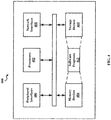
- Fig. 2 illustrates a client device 200 in accordance with some examples of the present disclosure.
- Client device 200 depicted in Fig. 2 may be implemented as client device 102 in Fig. 1 .
- client device 200 includes DNS agent 204, to which a unique identifier may be assigned, for example, a public/private key pair.
- DNS agent 204 includes a DNS service configuration 206 that includes information identifying one or more DNS servers to resolve DNS requests, for example, a local DNS server, a DNS server including a firewall service, etc.
- the DNS service configuration 206 may import the network configuration of the device, for example, from static configuration or via the DHCP server 112.
- the DNS service configuration 206 may run a local DNS service on port 53 using a loopback interface of the client device.
- the DNS service configuration 206 may change the local DNS service configuration to point to the loopback/local host address 127.0.0.1.
- DNS agent 204 further includes a monitor 208.
- Monitor 208 may monitor the configuration information stored in DNS service configuration 206 in order to determine if the DNS server information is reset, for example, via DHCP server 112. If the DNS server information is reset, the monitor 208 may revert the DNS information back to the loopback/localhost address 127.0.0.1.
- DNS agent 204 further includes probe 210.
- Probe 210 may probe the network environment to see if the agent has access to the DNS server 108 including the firewall service. If the agent has access to the DNS server 108, the probe 210 may connect to firewall service at the DNS server 108 through an encrypted communication channel, for example, an encrypted HTTPS tunnel, DNS over transport layer security (TLS), DNS over datagram transport layer security (DTLS), etc.
- the probe 210 may authenticate the agent by providing credentials to the firewall service and may further ensure that the firewall service is authentic, for example, by validating it's public key.
- the probe 210 may generate an entry in log 212.
- the probe 210 may further attempt to authenticate with the firewall service again, for example, once, on a periodic basis, until access is permitted, etc.
- all DNS requests may be forwarded to local DNS server 106, or to another local DNS server, not shown.
- DNS agent 204 may further include a log 212.
- Log 212 may be used to store all DNS queries.
- DNS agent 204 may further include a DNS query processor 214.
- DNS query processor 214 may receive DNS queries from stub resolver 218 based on the loopback to the local address of the client device and process queries based on the information stored in the DNS service configuration 206, as more fully discussed below.
- Client device 200 may further include stub resolver 218 to direct DNS requests to the local address of the client device where the DNS agent 204 processes the DNS requests as discussed herein.
- Client device 200 may further include a network interface 220 to facilitate communication between the client device 200, the local DNS server 106, and the DNS server 110 including the firewall service.
- Client device 200 may further include one or more processors 204 to facilitate the functionality as discussed herein.
- Client device 200 may further include browser 204 to facilitate transmitting to and receiving from world wide web content.
- Client device 226 may further include memory 226.
- Memory 226 may store policy information that indicates how to route and handle DNS requests.
- the policy information may include whether to enforce DNSSEC validation, whether to log DNS queries, exceptions to logging queries, directing the agent to act as a dumb proxy by merely passing all DNS requests to the local DNS server, directing the agent to route all DNS requests to the DNS server including the DNS firewall service; directing the agent to provide advanced query handing rules, etc.
- DNS agent 204 may include DNSSEC 216 for providing domain name system security extensions (DNSSEC) validation.
- DNSSSEC domain name system security extensions
- DNS agent 204 may include a local cache in order to store previous DNS requests and results.
- a network timeout occurs which may take as long as 30 seconds before the calling application is notified that the request timed out.
- the agent may route the request to the local DNS server, regardless of any response that may be received from the DNS server with the firewall service.
- DHCP options eg., mail.local.example.com
- a NOERROR answer is returned pointing to a redirected domain.
- the agent may then resolve the request based on the redirected domain.
- the agent may then compare the address received with the address received from the local DNS server. If the addresses are different, then the agent may resolve the request based on the address received from the local DNS server. This ensures that where there is a split zone, meaning an internal and external site for the same domain, the client device is capable of accessing the local domain.
- NXDOMAIN is returned.
- the agent may then rely on the result received from the local DNS server to resolve the DNS query.
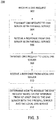
- Fig. 3 illustrates an example process 300 for processing a DNS request.
- the process depicted in Fig. 3 may be performed by agent 104 in Fig. 1 or agent 204 depicted in Fig. 2 .
- a DNS request may be received at the agent operating on the client device.
- the DNS request may be the result of a user operating a browser and visiting a website, a program running on the user's computer initiates an online transaction, or any other possible reason that a user's computer would have the need to translate a fully qualified domain name, such as www.example.com, into its corresponding IP address.
- the DNS request may be processed at a stub resolver operating on the client device.
- the stub resolver may forward the DNS request to the agent based on the configuration of a local host address.
- the DNS request is transmitted to a DNS server with a firewall service.
- the agent operating on the client device transmits the DNS request to the DNS server with the firewall service operating thereon based on the information stored in the DNS service configuration.
- a response is received from the DNS server with the firewall service.
- the DNS request is transmitted to a local DNS server.
- the agent operating on the client device transmits the DNS request to the local DNS server based on the information stored in the DNS service configuration.
- a response is received from the local DNS server.
- the agent determines how to resolve the DNS request based on the response from at least one of the DNS server with the firewall service operating thereon and the local DNS server.
- the request to the DNS server with the firewall service and the request to the local DNS server may be transmitted simultaneously or at different times.
- the agent does not wait for a response to be received from the DNS server with the firewall server before the agent transmits the DNS request to the local DNS server.
- the response from the (first) DNS server including the firewall service includes information indicating that the domain name included in the request is a malicious site and further includes information identifying an address of a redirected domain name.
- the response from the (second) local DNS server includes information identifying an address of the domain name included in the DNS request. Since the client device is authenticated with firewall service, the agent operating on the client device resolves the DNS resolution request based on the address of the redirected domain name that is received based on the information from the firewall service.
- the response from the (first) DNS server including the firewall service includes information identifying a first address of a domain name included in the DNS resolution request.
- the response from the (second) local DNS server includes information identifying a second address of the domain name included in the DNS resolution request.
- the agent operating on the client device resolves the DNS resolution request based on the second address of the domain name. In other words, where there is a split zone, the agent will resolve the DNS request based on the information from the local DNS server.
- the agent is configured to change a local DNS service configuration to point back to an address of the client device.
- the agent is further configured to monitor the local DNS service configuration.
- the agent is configured to change the updated local DNS service configuration to point back to the address of the client device. This ensures that DNS request is directed to the local host address and that the agent operating on the client device handles the DNS request.
- the agent may probe the local network. The agent may further determine whether the first DNS server is accessible by the agent. The agent, via an encrypted channel, may authenticate agent with the firewall service when it is determined that the first DNS server is accessible by the agent.
- the agent may provide domain name system security extensions (DNSSEC) validation.
- DNSSEC domain name system security extensions
- DSP digital signal processor
- ASIC application specific integrated circuit
- FPGA field programmable gate array
- a general-purpose processor can be a microprocessor, but, in the alternative, the processor can be any conventional processor, controller, microcontroller, or state machine.
- a processor can also be implemented as a combination of computing devices, e.g., a combination of a DSP and a microprocessor, a plurality of microprocessors, one or more microprocessors in conjunction with a DSP core, or any other such configuration.
- the functions described can be implemented in hardware, software, firmware, or any combination thereof.
- the techniques described herein can be implemented with modules (e.g., procedures, functions, subprograms, programs, routines, subroutines, modules, software packages, classes, and so on) that perform the functions described herein.
- a module can be coupled to another module or a hardware circuit by passing and/or receiving information, data, arguments, parameters, or memory contents.
- Information, arguments, parameters, data, or the like can be passed, forwarded, or transmitted using any suitable means including memory sharing, message passing, token passing, network transmission, and the like.
- the software codes can be stored in memory units and executed by processors.
- the memory unit can be implemented within the processor or external to the processor, in which case it can be communicatively coupled to the processor via various means as is known in the art.
- FIG. 4 illustrates an example of a hardware configuration for a computer device 400, which can be used to perform one or more of the processes described above. While FIG. 4 illustrates various components contained in the computer device 400, FIG. 4 illustrates one example of a computer device and additional components can be added and existing components can be removed. The components described in Fig. 4 may be implemented in device 102 and device 200.
- the computer device 400 can be any type of computer devices, such as desktops, laptops, servers, etc., or mobile devices, such as smart telephones, tablet computers, cellular telephones, personal digital assistants, etc. As illustrated in FIG. 4 , the computer device 400 can include one or more processors 402 of varying core configurations and clock frequencies. The computer device 400 can also include one or more memory devices 404 that serve as a main memory during the operation of the computer device 400. For example, during operation, a copy of the software that supports the DNS operations can be stored in the one or more memory devices 404. The computer device 400 can also include one or more peripheral interfaces 406, such as keyboards, mice, touchpads, computer screens, touchscreens, etc., for enabling human interaction with and manipulation of the computer device 400.
- peripheral interfaces 406 such as keyboards, mice, touchpads, computer screens, touchscreens, etc.
- the computer device 400 can also include one or more network interfaces 408 for communicating via one or more networks, such as Ethernet adapters, wireless transceivers, or serial network components, for communicating over wired or wireless media using protocols.
- the computer device 400 can also include one or more storage devices 410 of varying physical dimensions and storage capacities, such as flash drives, hard drives, random access memory, etc., for storing data, such as images, files, and program instructions for execution by the one or more processors 402.
- the computer device 400 can include one or more software programs 412 that enable the functionality described above.
- the one or more software programs 412 can include instructions that cause the one or more processors 402 to perform the processes described herein. Copies of the one or more software programs 412 can be stored in the one or more non-transitory computer-readable mediums such as memory devices 404 and/or on in the one or more storage devices 410.
- the data, for example, DNS records, utilized by one or more software programs 412 can be stored in the one or more memory devices 404 and/or on in the one or more storage devices 410.
- the computer device 400 can communicate with other devices via one or more networks.
- the other devices can be any types of devices as described above.
- the network can be any type of network, such as a local area network, a wide-area network, a virtual private network, the Internet, an intranet, an extranet, a public switched telephone network, an infrared network, a wireless network, and any combination thereof.
- the network 416 can support communications using any of a variety of commercially-available protocols, such as TCP/IP, UDP, OSI, FTP, UPnP, NFS, CIFS, and the like.
- the network 416 can be, for example, a local area network, a wide-area network, a virtual private network, the Internet, an intranet, an extranet, a public switched telephone network, an infrared network, a wireless network, and any combination thereof.
- the computer device 400 can include a variety of data stores and other memory and storage media as discussed above. These can reside in a variety of locations, such as on a storage medium local to (and/or resident in) one or more of the computers or remote from any or all of the computers across the network. In some implementations, information can reside in a storage-area network ("SAN") familiar to those skilled in the art. Similarly, any necessary files for performing the functions attributed to the computers, servers, or other network devices may be stored locally and/or remotely, as appropriate.
- SAN storage-area network
- the components of the computer device 400 as described above need not be enclosed within a single enclosure or even located in close proximity to one another.
- the above-described componentry are examples only, as the computer device 400 can include any type of hardware componentry, including any necessary accompanying firmware or software, for performing the disclosed implementations.
- the computer device 400 can also be implemented in part or in whole by electronic circuit components or processors, such as application-specific integrated circuits (ASICs) or field-programmable gate arrays (FPGAs).
- ASICs application-specific integrated circuits
- FPGAs field-programmable gate arrays
- Computer-readable media includes both tangible, non-transitory computer storage media and communication media including any medium that facilitates transfer of a computer program from one place to another.
- a storage media can be any available tangible, non-transitory media that can be accessed by a computer.
- tangible, non-transitory computer-readable media can comprise RAM, ROM, flash memory, EEPROM, CD-ROM or other optical disk storage, magnetic disk storage or other magnetic storage devices, or any other medium that can be used to carry or store desired program code in the form of instructions or data structures and that can be accessed by a computer.
- Disk and disc includes CD, laser disc, optical disc, DVD, floppy disk and Blu-ray disc where disks usually reproduce data magnetically, while discs reproduce data optically with lasers.
- any connection is properly termed a computer-readable medium.
- the software is transmitted from a website, server, or other remote source using a coaxial cable, fiber optic cable, twisted pair, digital subscriber line (DSL), or wireless technologies such as infrared, radio, and microwave
- the coaxial cable, fiber optic cable, twisted pair, DSL, or wireless technologies such as infrared, radio, and microwave are included in the definition of medium. Combinations of the above should also be included within the scope of computer-readable media.
Landscapes
- Engineering & Computer Science (AREA)
- Computer Security & Cryptography (AREA)
- Computer Networks & Wireless Communication (AREA)
- Signal Processing (AREA)
- Computer Hardware Design (AREA)
- Computing Systems (AREA)
- General Engineering & Computer Science (AREA)
- Data Exchanges In Wide-Area Networks (AREA)
Abstract
Description
- This disclosure generally relates to Domain Name Service (DNS) resolution. In particular, this disclosure relates to methods and systems for DNS resolution for DNS requests and providing dependent responses.
- The DNS system utilizes a hierarchical structure to associate fully qualified domain names to a particular IP address in response to a DNS query. For example, if a user visits the website www.example.com on their computer's Internet browser, typically, the stub resolver on the computer would (1) first check its own DNS cache for a suitable response; (2) if not available in cache, query a recursive name server or possibly each level of the delegation graph from the root DNS server downward with the same information, expecting a reply. If the queried system has the information or is authoritative for the precise question, it provides a response or error. If it does not but knows who is, it provides a delegation/referral to the child that should have more precise information. To leverage larger caching mechanisms, a DNS resolver (recursive name server) may be used between steps (1) and (2). Because a DNS resolver services many users, it typically holds a larger cache, helping to reduce the load on root servers and registry servers and often minimize response times for users because it is commonly topologically closer to the client. A DNS resolver may also act as a recursive name server, handling the multiple transactions and following delegations/referral chains between different name servers to resolve the final IP address for the resource in question, simply passing the final answer back to the user's computer. A DNS resolver may ultimately provide in its response a network layer identifier or service location id, which in some instances may be the same.
- Some DNS servers provide a firewall service that supports basic filtering of DNS queries based on the source IP address of the original querying machine. For example, some servers may compare the source IP address to whitelists or blacklists of IP addresses and allow or disallow the IP address accordingly. Other servers may use the source IP address to approximate the location (geolocation) of the query source machine, and use this location information to customize the response by returning an IP address of a resource server that is thought to be closer in proximity than another. In all of these cases, generally, once the response is allowed, the DNS response returns the IP address (or network layer identifier or service location id) of a machine that will provide access to the resource server. This IP address, the network layer identifier and service location id, is resolved regardless of the status of the user's permission to ultimately use the resource.
- These DNS servers that provide a firewall service are generally accessed based on a configuration of an internal recursive server at a customer's own network. However, when a client device is used outside of the customer's own network, then the client device inherits the recursive configuration from an "off-net" location, meaning a location that is off the network of the customer's network. When resolving DNS requests while the client device is in the off-net location, the recursive configuration may not direct DNS requests to the DNS server that provides the customer's firewall service.
- Further, when a client device is not within the customer's own network, the client device cannot access an internal version of a split zone.
- Some examples describe a method, system, and computer-readable memory containing instructions which include receiving, at an agent operating on a client device, a (domain name system) DNS resolution request for a domain name; transmitting the DNS resolution request to a first DNS server, the first DNS server including a firewall service; receiving a response to the DNS resolution request from the first DNS server; transmitting the DNS resolution request to second DNS server, the second DNS server being in a local network to the client device; receiving a response to the DNS resolution request from the second DNS server; and determining, by the agent operating on the client device, how to resolve the DNS resolution request based on the response to the DNS resolution request from at least one of the first DNS server and the response to the DNS resolution request from the second DNS server.
- According to some examples, the response from the first DNS server includes information indicating that the domain name included in the request is a malicious site and further includes information identifying an address of a redirected domain name; the response from the second DNS server includes information identifying an address of the domain name included in the DNS request; and the agent operating on the client device resolves the DNS resolution request based on the address of the redirected domain name.
- According to some examples, the response from the first DNS server includes information identifying a first address of a domain name included in the DNS resolution request; the response from the second DNS server includes information identifying a second address of the domain name included in the DNS resolution request; and the agent operating on the client device resolves the DNS resolution request based on the second address of the domain name.
- According to some examples, the agent is configured to change a local DNS service configuration to point back to an address of the client device; the agent is further configured to monitor the local DNS service configuration; and when the local DNS service configuration is updated due to a dynamic host configuration protocol update, the agent is configured to change the updated local DNS service configuration to point back to the address of the client device.
- According to some examples, the method includes probing, by the agent on the client device, the local network; determining whether the first DNS server is accessible by the agent; and authenticating, by the agent via an encrypted communication channel, the agent with the firewall service when it is determined that the first DNS server is accessible by the agent.
- According to some examples, the method includes providing, by the agent, domain name system security extensions (DNSSEC) validation.
- According to some examples, transmitting the DNS resolution request to the first DNS server and transmitting the DNS resolution request to the second DNS server occur simultaneously.
- It is to be understood that both the foregoing general description and the following detailed description are exemplary and explanatory only and are not restrictive of the application, as claimed.
- Further particular and preferred aspects of the present invention are set out in the accompanying independent and dependent claims. Features of the dependent claims may be combined with features of the independent claims as appropriate, and in combinations other than those explicitly set out in the claims.
- The accompanying drawings, which are incorporated in and constitute a part of this specification, illustrate embodiments of the application and together with the description, serve to explain the principles of the application by way of example only.
-
-
FIG. 1 illustrates a system environment, in accordance with some examples of the present disclosure; -
FIG. 2 illustrates a client device in accordance with some embodiments of the present disclosure; -
FIG. 3 illustrates an example flow diagram of a process for determining how to resolve DNS requests, in accordance with some examples of the present disclosure; and -
FIG. 4 illustrates a client device, in accordance with some examples of the present disclosure. - Reference will now be made in detail to the exemplary embodiments. Wherever possible, the same reference numbers will be used throughout the drawings to refer to the same or like parts.
- As noted above, DNS servers that provide a firewall service are generally accessed based on a configuration of an internal recursive server at a customer's own network. However, when a client device is used outside of the customer's own network, then the client device inherits the recursive configuration from an off-net location. When resolving DNS requests while the client device is in the off-net location, the recursive configuration may not direct DNS requests to the DNS server that provides the customer's firewall service.
- Even if the client device is configured to point to the DNS server with the firewall service, queries from the client device may not utilize the firewall service since the DNS firewall service could not recognize the source IP address of the client device. Still further, the client device would not be able to access any intranet server at the off-net location. Still further, the firewall service would not have DNS responses for servers at the off-net location, preventing the client device from accessing local resources.
- In order to address this problem, a client device may include an agent that is configured to run a local DNS service using a loopback interface of the local machine. The agent is configured to change a local DNS service configuration to point to the loopback/localhost address. The agent may further locate a DNS server including a firewall service of the client device. The agent may authenticate itself, for example, with the firewall service through an encrypted communication channel. Upon receiving a DNS request, the agent may transmit the DNS request to the DNS server including the firewall service and to a local DNS server. The agent may resolve the DNS request based on responses to the DNS requests to the DNS server including the firewall service and the local DNS server.
-
Fig. 1 illustrates anexample system environment 100 in accordance with some examples of the present disclosure. As shown inFig. 1 , aclient device 100 is depicted.Client device 102 may includeDNS agent 104 that is configured to receive and process DNS requests as discussed herein. - The
client device 102 includingDNS agent 104 may be implemented in software as software modules or programs on one or more computing systems. For example, the functionality of theclient device 102 andDNS agent 104 comprise one or more applications, which may comprise one or more computer units of computer-readable instructions which, when executed by a processor, cause one or more computers to perform steps of a method. In particular, the exemplary architecture inFIG 1 . may support execution of program code on one or more computers to accomplish the overall method. Computer-readable instructions may be stored on a computer-readable medium, such as a memory or disk. Such media typically provide non-transitory storage. One or more of the components depicted inFIG 1 . may be hardware components or combinations of hardware and software such as, for example, special purpose computers or general purpose computers. A computer or computer system may also comprise an internal or external database. The database may comprise one or more individual databases or databases configured to act together. The database may be implemented in a commercial, open source, or proprietary database program or may be contained in log files, flat files, or any other data storage mechanism. The components of a computer or computer system may, among other things, connect through a local bus interface or over a local or wide area network. The components depicted inFIG. 1 may be operatively connected to one another via a network, not shown, such as the Internet, an intranet, or any type of wired or wireless communication system. Connections may be implemented through a direct communication link, a local area network (LAN), a wide area network (WAN) and/or other suitable connections. -
System environment 100 further includes alocal DNS server 106 that manages DNS requests from alocal network 108 in which theclient device 102 is operating. -
System environment 100 further includesDNS server 108.DNS server 108 may further include a firewall service that the client device is a customer of. According to some embodiments,DNS server 108 may be implemented as a recursive DNS server. -
System environment 100 further includes a dynamic host configuration protocol (DHCP)server 112 that provides network configuration information toclient device 102, including the IP address, netmask, and default gateway to the client device. - It may be appreciated that additional devices may reside within
system environment 100. -
Fig. 2 illustrates aclient device 200 in accordance with some examples of the present disclosure.Client device 200 depicted inFig. 2 may be implemented asclient device 102 inFig. 1 . As shown inFig. 2 ,client device 200 includesDNS agent 204, to which a unique identifier may be assigned, for example, a public/private key pair.DNS agent 204 includes aDNS service configuration 206 that includes information identifying one or more DNS servers to resolve DNS requests, for example, a local DNS server, a DNS server including a firewall service, etc. Upon launch, theDNS service configuration 206 may import the network configuration of the device, for example, from static configuration or via theDHCP server 112. TheDNS service configuration 206 may run a local DNS service on port 53 using a loopback interface of the client device. TheDNS service configuration 206 may change the local DNS service configuration to point to the loopback/local host address 127.0.0.1. -
DNS agent 204 further includes amonitor 208.Monitor 208 may monitor the configuration information stored inDNS service configuration 206 in order to determine if the DNS server information is reset, for example, viaDHCP server 112. If the DNS server information is reset, themonitor 208 may revert the DNS information back to the loopback/localhost address 127.0.0.1. -
DNS agent 204 further includesprobe 210.Probe 210 may probe the network environment to see if the agent has access to theDNS server 108 including the firewall service. If the agent has access to theDNS server 108, theprobe 210 may connect to firewall service at theDNS server 108 through an encrypted communication channel, for example, an encrypted HTTPS tunnel, DNS over transport layer security (TLS), DNS over datagram transport layer security (DTLS), etc. Theprobe 210 may authenticate the agent by providing credentials to the firewall service and may further ensure that the firewall service is authentic, for example, by validating it's public key. - If the
probe 210 does not connect to the firewall service, for example as a result of a "captive portal", the probe may generate an entry inlog 212. Theprobe 210 may further attempt to authenticate with the firewall service again, for example, once, on a periodic basis, until access is permitted, etc. - According to some embodiments, if the
probe 210 has not authenticated with the firewall service, then all DNS requests may be forwarded tolocal DNS server 106, or to another local DNS server, not shown. -
DNS agent 204 may further include alog 212. Log 212 may be used to store all DNS queries. -
DNS agent 204 may further include aDNS query processor 214.DNS query processor 214 may receive DNS queries fromstub resolver 218 based on the loopback to the local address of the client device and process queries based on the information stored in theDNS service configuration 206, as more fully discussed below. -
Client device 200 may further includestub resolver 218 to direct DNS requests to the local address of the client device where theDNS agent 204 processes the DNS requests as discussed herein. -
Client device 200 may further include anetwork interface 220 to facilitate communication between theclient device 200, thelocal DNS server 106, and theDNS server 110 including the firewall service. -
Client device 200 may further include one ormore processors 204 to facilitate the functionality as discussed herein. -
Client device 200 may further includebrowser 204 to facilitate transmitting to and receiving from world wide web content. -
Client device 226 may further includememory 226.Memory 226 may store policy information that indicates how to route and handle DNS requests. For example, the policy information may include whether to enforce DNSSEC validation, whether to log DNS queries, exceptions to logging queries, directing the agent to act as a dumb proxy by merely passing all DNS requests to the local DNS server, directing the agent to route all DNS requests to the DNS server including the DNS firewall service; directing the agent to provide advanced query handing rules, etc. - According to some examples,
DNS agent 204 may includeDNSSEC 216 for providing domain name system security extensions (DNSSEC) validation. - According to some examples,
DNS agent 204 may include a local cache in order to store previous DNS requests and results. - When a DNS request is transmitted to a DNS server, the following responses may be received:
- NOERROR Meaning that the request was successfully resolved. In this case the stub resolver returns the response to the calling application
- NXDOMAIN - Meaning that there is no such domain/record. In this case the stub resolver returns an error to the calling application
- SERVFAIL - Meaning that the DNS server encountered an error. This can either mean that there was an internal error with the DNS server. This error code is also returned if DNSSEC validation on the recursive server determined that the record was not correctly signed. In this case the stub resolver tries to issue the query against the next DNS server it has configured. If one of the DNS servers returns a NOERROR or NXDOMAIN response then this is passed to the calling application. If all of the configured servers return SERVFAIL then an error is passed to the calling application
- Another possibility is that a network timeout occurs which may take as long as 30 seconds before the calling application is notified that the request timed out.
- When processing a DNS request, if the query name is within a domain specified as a query domain from DHCP options (eg., mail.local.example.com), then the agent may route the request to the local DNS server, regardless of any response that may be received from the DNS server with the firewall service.
- If the query name is on the blacklist as determined by the firewall service, then a NOERROR answer is returned pointing to a redirected domain. The agent may then resolve the request based on the redirected domain.
- If the query name is successfully resolved by the DNS server operating the firewall service, and is not on the blacklist than the NOERROR response is returned. The agent may then compare the address received with the address received from the local DNS server. If the addresses are different, then the agent may resolve the request based on the address received from the local DNS server. This ensures that where there is a split zone, meaning an internal and external site for the same domain, the client device is capable of accessing the local domain.
- If the query name is not found then NXDOMAIN is returned. The agent may then rely on the result received from the local DNS server to resolve the DNS query.
-
Fig. 3 illustrates anexample process 300 for processing a DNS request. The process depicted inFig. 3 may be performed byagent 104 inFig. 1 oragent 204 depicted inFig. 2 . As shown inFig. 3 , atblock 302, a DNS request may be received at the agent operating on the client device. The DNS request may be the result of a user operating a browser and visiting a website, a program running on the user's computer initiates an online transaction, or any other possible reason that a user's computer would have the need to translate a fully qualified domain name, such as www.example.com, into its corresponding IP address. - The DNS request may be processed at a stub resolver operating on the client device. The stub resolver may forward the DNS request to the agent based on the configuration of a local host address.
- At
block 304, the DNS request is transmitted to a DNS server with a firewall service. The agent operating on the client device transmits the DNS request to the DNS server with the firewall service operating thereon based on the information stored in the DNS service configuration. - At
block 306, a response is received from the DNS server with the firewall service. - At
block 308, the DNS request is transmitted to a local DNS server. The agent operating on the client device transmits the DNS request to the local DNS server based on the information stored in the DNS service configuration. - At
block 310, a response is received from the local DNS server. - At block 312, the agent determines how to resolve the DNS request based on the response from at least one of the DNS server with the firewall service operating thereon and the local DNS server.
- According to some embodiments, the request to the DNS server with the firewall service and the request to the local DNS server may be transmitted simultaneously or at different times. Thus, the agent does not wait for a response to be received from the DNS server with the firewall server before the agent transmits the DNS request to the local DNS server.
- According to some examples, the response from the (first) DNS server including the firewall service includes information indicating that the domain name included in the request is a malicious site and further includes information identifying an address of a redirected domain name. The response from the (second) local DNS server includes information identifying an address of the domain name included in the DNS request. Since the client device is authenticated with firewall service, the agent operating on the client device resolves the DNS resolution request based on the address of the redirected domain name that is received based on the information from the firewall service.
- According to some examples, the response from the (first) DNS server including the firewall service includes information identifying a first address of a domain name included in the DNS resolution request. The response from the (second) local DNS server includes information identifying a second address of the domain name included in the DNS resolution request. The agent operating on the client device resolves the DNS resolution request based on the second address of the domain name. In other words, where there is a split zone, the agent will resolve the DNS request based on the information from the local DNS server.
- According to some examples, the agent is configured to change a local DNS service configuration to point back to an address of the client device. The agent is further configured to monitor the local DNS service configuration. When the local DNS service configuration is updated due to a dynamic host configuration protocol update, the agent is configured to change the updated local DNS service configuration to point back to the address of the client device. This ensures that DNS request is directed to the local host address and that the agent operating on the client device handles the DNS request.
- According to some embodiments, the agent may probe the local network. The agent may further determine whether the first DNS server is accessible by the agent. The agent, via an encrypted channel, may authenticate agent with the firewall service when it is determined that the first DNS server is accessible by the agent.
- According to some embodiments, the agent may provide domain name system security extensions (DNSSEC) validation.
- The foregoing description is illustrative, and variations in configuration and implementation can occur to persons skilled in the art. For instance, the various illustrative logics, logical blocks, modules, and circuits described in connection with the embodiments disclosed herein can be implemented or performed with a general purpose processor, a digital signal processor (DSP), an application specific integrated circuit (ASIC), a field programmable gate array (FPGA) or other programmable logic device, discrete gate or transistor logic, discrete hardware components, or any combination thereof designed to perform the functions described herein. A general-purpose processor can be a microprocessor, but, in the alternative, the processor can be any conventional processor, controller, microcontroller, or state machine. A processor can also be implemented as a combination of computing devices, e.g., a combination of a DSP and a microprocessor, a plurality of microprocessors, one or more microprocessors in conjunction with a DSP core, or any other such configuration.
- In one or more exemplary embodiments, the functions described can be implemented in hardware, software, firmware, or any combination thereof. For a software implementation, the techniques described herein can be implemented with modules (e.g., procedures, functions, subprograms, programs, routines, subroutines, modules, software packages, classes, and so on) that perform the functions described herein. A module can be coupled to another module or a hardware circuit by passing and/or receiving information, data, arguments, parameters, or memory contents. Information, arguments, parameters, data, or the like can be passed, forwarded, or transmitted using any suitable means including memory sharing, message passing, token passing, network transmission, and the like. The software codes can be stored in memory units and executed by processors. The memory unit can be implemented within the processor or external to the processor, in which case it can be communicatively coupled to the processor via various means as is known in the art.
- For example,
FIG. 4 illustrates an example of a hardware configuration for acomputer device 400, which can be used to perform one or more of the processes described above. WhileFIG. 4 illustrates various components contained in thecomputer device 400,FIG. 4 illustrates one example of a computer device and additional components can be added and existing components can be removed. The components described inFig. 4 may be implemented indevice 102 anddevice 200. - The
computer device 400 can be any type of computer devices, such as desktops, laptops, servers, etc., or mobile devices, such as smart telephones, tablet computers, cellular telephones, personal digital assistants, etc. As illustrated inFIG. 4 , thecomputer device 400 can include one ormore processors 402 of varying core configurations and clock frequencies. Thecomputer device 400 can also include one ormore memory devices 404 that serve as a main memory during the operation of thecomputer device 400. For example, during operation, a copy of the software that supports the DNS operations can be stored in the one ormore memory devices 404. Thecomputer device 400 can also include one or moreperipheral interfaces 406, such as keyboards, mice, touchpads, computer screens, touchscreens, etc., for enabling human interaction with and manipulation of thecomputer device 400. - The
computer device 400 can also include one ormore network interfaces 408 for communicating via one or more networks, such as Ethernet adapters, wireless transceivers, or serial network components, for communicating over wired or wireless media using protocols. Thecomputer device 400 can also include one ormore storage devices 410 of varying physical dimensions and storage capacities, such as flash drives, hard drives, random access memory, etc., for storing data, such as images, files, and program instructions for execution by the one ormore processors 402. - Additionally, the
computer device 400 can include one ormore software programs 412 that enable the functionality described above. The one ormore software programs 412 can include instructions that cause the one ormore processors 402 to perform the processes described herein. Copies of the one ormore software programs 412 can be stored in the one or more non-transitory computer-readable mediums such asmemory devices 404 and/or on in the one ormore storage devices 410. Likewise, the data, for example, DNS records, utilized by one ormore software programs 412 can be stored in the one ormore memory devices 404 and/or on in the one ormore storage devices 410. - In implementations, the
computer device 400 can communicate with other devices via one or more networks. The other devices can be any types of devices as described above. The network can be any type of network, such as a local area network, a wide-area network, a virtual private network, the Internet, an intranet, an extranet, a public switched telephone network, an infrared network, a wireless network, and any combination thereof. The network 416 can support communications using any of a variety of commercially-available protocols, such as TCP/IP, UDP, OSI, FTP, UPnP, NFS, CIFS, and the like. The network 416 can be, for example, a local area network, a wide-area network, a virtual private network, the Internet, an intranet, an extranet, a public switched telephone network, an infrared network, a wireless network, and any combination thereof. - The
computer device 400 can include a variety of data stores and other memory and storage media as discussed above. These can reside in a variety of locations, such as on a storage medium local to (and/or resident in) one or more of the computers or remote from any or all of the computers across the network. In some implementations, information can reside in a storage-area network ("SAN") familiar to those skilled in the art. Similarly, any necessary files for performing the functions attributed to the computers, servers, or other network devices may be stored locally and/or remotely, as appropriate. - In implementations, the components of the
computer device 400 as described above need not be enclosed within a single enclosure or even located in close proximity to one another. Those skilled in the art will appreciate that the above-described componentry are examples only, as thecomputer device 400 can include any type of hardware componentry, including any necessary accompanying firmware or software, for performing the disclosed implementations. Thecomputer device 400 can also be implemented in part or in whole by electronic circuit components or processors, such as application-specific integrated circuits (ASICs) or field-programmable gate arrays (FPGAs). - If implemented in software, the functions can be stored on or transmitted over a computer-readable medium as one or more instructions or code. Computer-readable media includes both tangible, non-transitory computer storage media and communication media including any medium that facilitates transfer of a computer program from one place to another. A storage media can be any available tangible, non-transitory media that can be accessed by a computer. By way of example, and not limitation, such tangible, non-transitory computer-readable media can comprise RAM, ROM, flash memory, EEPROM, CD-ROM or other optical disk storage, magnetic disk storage or other magnetic storage devices, or any other medium that can be used to carry or store desired program code in the form of instructions or data structures and that can be accessed by a computer. Disk and disc, as used herein, includes CD, laser disc, optical disc, DVD, floppy disk and Blu-ray disc where disks usually reproduce data magnetically, while discs reproduce data optically with lasers. Also, any connection is properly termed a computer-readable medium. For example, if the software is transmitted from a website, server, or other remote source using a coaxial cable, fiber optic cable, twisted pair, digital subscriber line (DSL), or wireless technologies such as infrared, radio, and microwave, then the coaxial cable, fiber optic cable, twisted pair, DSL, or wireless technologies such as infrared, radio, and microwave are included in the definition of medium. Combinations of the above should also be included within the scope of computer-readable media.
- Other embodiments of the disclosure will be apparent to those skilled in the art from consideration of the specification and practice of the embodiments disclosed herein. In particular, it should be appreciated that the processes defined herein are merely exemplary, and that the steps of the processes need not necessarily be performed in the order presented. It is intended that the specification and examples be considered as exemplary only, with the true scope of the application being indicated by the following claims.
- Further, although particular embodiments have been described herein, it will be appreciated that the invention is not limited thereto and that many modifications and additions thereto may be made within the scope of the invention. For example, various combinations of the features of the following dependent claims can be made with the features of the independent claims without departing from the scope of the present invention.
Claims (15)
- A computer-implemented method, comprising:receiving, at an agent operating on a client device, a (domain name system) DNS resolution request for a domain name;transmitting the DNS resolution request to a first DNS server, the first DNS server including a firewall service;receiving a response to the DNS resolution request from the first DNS server;transmitting the DNS resolution request to second DNS server, the second DNS server being in a local network to the client device;receiving a response to the DNS resolution request from the second DNS server;
anddetermining, by the agent operating on the client device, how to resolve the DNS resolution request based on the response to the DNS resolution request from at least one of the first DNS server and the response to the DNS resolution request from the second DNS server. - The computer-implemented method of claim 1, wherein
the response from the first DNS server includes information indicating that the domain name included in the request is a malicious site and further includes information identifying an address of a redirected domain name;
the response from the second DNS server includes information identifying an address of the domain name included in the DNS request; and
the agent operating on the client device resolves the DNS resolution request based on the address of the redirected domain name. - The computer-implemented method of claim 1, wherein
the response from the first DNS server includes information identifying a first address of a domain name included in the DNS resolution request;
the response from the second DNS server includes information identifying a second address of the domain name included in the DNS resolution request; and
the agent operating on the client device resolves the DNS resolution request based on the second address of the domain name. - The computer-implemented method of any preceding claim, wherein
the agent is configured to change a local DNS service configuration to point back to an address of the client device;
the agent is further configured to monitor the local DNS service configuration;
and
when the local DNS service configuration is updated due to a dynamic host configuration protocol update, the agent is configured to change the updated local DNS service configuration to point back to the address of the client device. - The computer-implemented method of any preceding claim, the method further comprising:probing, by the agent on the client device, the local network;determining whether the first DNS server is accessible by the agent; andauthenticating, by the agent via an encrypted communication channel, the agent with the firewall service when it is determined that the first DNS server is accessible by the agent.
- The computer-implemented method of any preceding claim, further comprising:providing, by the agent, domain name system security extensions (DNSSEC) validation.
- An apparatus, comprising:at least one processor, implemented at least in part in hardware;a memory, storing a set of instructions, which, when executed by the at least one processor, perform the following operations:receive, at an agent operating on a client device, a (domain name system) DNS resolution request for a domain name;transmit the DNS resolution request to a first DNS server, the first DNS server including a firewall service;receive a response to the DNS resolution request from the first DNS server;transmit the DNS resolution request to second DNS server, the second DNS server being in a local network to the client device;receive a response to the DNS resolution request from the second DNS server;
anddetermine, by the agent operating on the client device, how to resolve the DNS resolution request based on the response to the DNS resolution request from at least one of the first DNS server and the response to the DNS resolution request from the second DNS server. - The apparatus of claim 7, wherein
the response from the first DNS server includes information indicating that the domain name included in the request is a malicious site and further includes information identifying an address of a redirected domain name;
the response from the second DNS server includes information identifying an address of the domain name included in the DNS request; and
the agent operating on the client device resolves the DNS resolution request based on the address of the redirected domain name. - The apparatus of claim 7, wherein
the response from the first DNS server includes information identifying a first address of a domain name included in the DNS resolution request;
the response from the second DNS server includes information identifying a second address of the domain name included in the DNS resolution request; and
the agent operating on the client device resolves the DNS resolution request based on the second address of the domain name. - A non-transitory computer-readable medium containing instructions, which, when executed by at least one processor, perform a method comprising:receiving, at an agent operating on a client device, a (domain name system) DNS resolution request for a domain name;transmitting the DNS resolution request to a first DNS server, the first DNS server including a firewall service;receiving a response to the DNS resolution request from the first DNS server;transmitting the DNS resolution request to second DNS server, the second DNS server being in a local network to the client device;receiving a response to the DNS resolution request from the second DNS server;
anddetermining, by the agent operating on the client device, how to resolve the DNS resolution request based on the response to the DNS resolution request from at least one of the first DNS server and the response to the DNS resolution request from the second DNS server. - The non-transitory computer-readable medium of claim 10, wherein
the response from the first DNS server includes information indicating that the domain name included in the request is a malicious site and further includes information identifying an address of a redirected domain name;
the response from the second DNS server includes information identifying an address of the domain name included in the DNS request; and
the agent operating on the client device resolves the DNS resolution request based on the address of the redirected domain name. - The non-transitory computer-readable medium of claim 10, wherein
the response from the first DNS server includes information identifying a first address of a domain name included in the DNS resolution request;
the response from the second DNS server includes information identifying a second address of the domain name included in the DNS resolution request; and
the agent operating on the client device resolves the DNS resolution request based on the second address of the domain name. - The non-transitory computer-readable medium of any of claims 10-12, wherein
the agent is configured to change a local DNS service configuration to point back to an address of the client device;
the agent is further configured to monitor the local DNS service configuration;
and
when the local DNS service configuration is updated due to a dynamic host configuration protocol update, the agent is configured to change the updated local DNS service configuration to point back to the address of the client device. - The non-transitory computer-readable medium of any of claims 10-13, the method further comprising:probing, by the agent on the client device, the local network;determining whether the first DNS server is accessible by the agent; andauthenticating, by the agent via an encrypted communication channel, the agent with the firewall service when it is determined that the first DNS server is accessible by the agent.
- The non-transitory computer-readable medium of any of claims 10-14, the
method further comprising:providing, by the agent, domain name system security extensions (DNSSEC) validation.
Applications Claiming Priority (1)
| Application Number | Priority Date | Filing Date | Title |
|---|---|---|---|
| US15/010,155 US10708226B2 (en) | 2016-01-29 | 2016-01-29 | Domain name resolution |
Publications (2)
| Publication Number | Publication Date |
|---|---|
| EP3200434A2 true EP3200434A2 (en) | 2017-08-02 |
| EP3200434A3 EP3200434A3 (en) | 2017-10-11 |
Family
ID=57956112
Family Applications (1)
| Application Number | Title | Priority Date | Filing Date |
|---|---|---|---|
| EP17153585.9A Withdrawn EP3200434A3 (en) | 2016-01-29 | 2017-01-27 | Domain name resolution |
Country Status (2)
| Country | Link |
|---|---|
| US (1) | US10708226B2 (en) |
| EP (1) | EP3200434A3 (en) |
Cited By (1)
| Publication number | Priority date | Publication date | Assignee | Title |
|---|---|---|---|---|
| CN113972986A (en) * | 2021-09-22 | 2022-01-25 | 北京邮电大学 | Blockchain-based industrial Internet identification information analysis method and related devices |
Families Citing this family (17)
| Publication number | Priority date | Publication date | Assignee | Title |
|---|---|---|---|---|
| WO2017156231A1 (en) * | 2016-03-09 | 2017-09-14 | Dynamic Network Services, Inc. | Methods and apparatus for intelligent domain name system forwarding |
| CA2983988A1 (en) * | 2016-10-31 | 2018-04-30 | Guest Tek Interactive Entertainment Ltd. | Walled garden system with cleared ips list automatically generated from dns queries |
| FR3091097A1 (en) * | 2018-12-19 | 2020-06-26 | Orange | Method for acquiring a delegation chain relating to the resolution of a domain name identifier in a communication network |
| RU2726879C2 (en) * | 2018-12-28 | 2020-07-16 | Акционерное общество "Лаборатория Касперского" | System and method of connecting secure dns resolution protocol |
| US11252126B1 (en) * | 2019-03-28 | 2022-02-15 | Amazon Technologies, Inc. | Domain name resolution in environment with interconnected virtual private clouds |
| US11368430B2 (en) * | 2019-03-29 | 2022-06-21 | Verizon Patent And Licensing Inc. | Domain name server based validation of network connections |
| CN110636150B (en) * | 2019-10-24 | 2023-04-18 | 北京小米移动软件有限公司 | Domain name resolution method, domain name resolution device, and storage medium |
| CN113067909B (en) * | 2020-01-02 | 2023-04-07 | 中国移动通信有限公司研究院 | Edge node addressing method, device, equipment and storage medium |
| US11444944B2 (en) * | 2020-02-11 | 2022-09-13 | Mcafee, Llc | Privacy and security enabled domain name system with optional zero-touch provisioning |
| US11575646B2 (en) * | 2020-03-12 | 2023-02-07 | Vmware, Inc. | Domain name service (DNS) server cache table validation |
| CN114513487A (en) * | 2020-10-28 | 2022-05-17 | 武汉斗鱼网络科技有限公司 | Method and device for accelerating domain name resolution, electronic equipment and computer readable storage medium |
| CN115604221A (en) * | 2021-06-25 | 2023-01-13 | 中兴通讯股份有限公司(Cn) | Information processing method, intermediate resolver, network device and storage medium |
| CN113821461B (en) * | 2021-09-24 | 2023-10-27 | 牙木科技股份有限公司 | Domain name resolution caching method, DNS server and computer readable storage medium |
| CN114640649A (en) * | 2022-03-16 | 2022-06-17 | Oppo广东移动通信有限公司 | Domain name resolution method, service terminal, electronic device and storage medium |
| CN114745356B (en) * | 2022-03-29 | 2024-02-23 | 深信服科技股份有限公司 | Domain name resolution method, device, equipment and readable storage medium |
| CN115361357B (en) * | 2022-07-22 | 2024-05-14 | 中国电信股份有限公司 | Network scheduling system, method and device, electronic equipment and storage medium |
| CN116684159B (en) * | 2023-06-13 | 2026-05-15 | 中国联合网络通信集团有限公司 | A method, apparatus, chip, medium, and system for obtaining abnormal device information. |
Family Cites Families (13)
| Publication number | Priority date | Publication date | Assignee | Title |
|---|---|---|---|---|
| US7099957B2 (en) * | 2001-08-23 | 2006-08-29 | The Directtv Group, Inc. | Domain name system resolution |
| US20060039352A1 (en) * | 2004-08-19 | 2006-02-23 | International Business Machines Corporation | System and method for designating a priority access order of domain name service servers |
| US7680876B1 (en) * | 2006-12-14 | 2010-03-16 | Cisco Technology, Inc. | Highly available domain name system |
| US7917616B2 (en) * | 2008-08-08 | 2011-03-29 | Microsoft Corporation | Secure resource name resolution |
| US7930428B2 (en) * | 2008-11-11 | 2011-04-19 | Barracuda Networks Inc | Verification of DNS accuracy in cache poisoning |
| US8782755B2 (en) * | 2009-03-20 | 2014-07-15 | Citrix Systems, Inc. | Systems and methods for selecting an authentication virtual server from a plurality of virtual servers |
| ES2408131B1 (en) * | 2011-05-12 | 2014-06-05 | Telefónica, S.A. | SYSTEM AND METHOD FOR INTERCONNECTION OF NETWORK OF DISTRIBUTION OF CONTENTS |
| US9467421B2 (en) | 2011-05-24 | 2016-10-11 | Palo Alto Networks, Inc. | Using DNS communications to filter domain names |
| EP2615772A1 (en) * | 2012-01-10 | 2013-07-17 | Thomson Licensing | Method and device for timestamping data and method and device for verification of a timestamp |
| US9887958B2 (en) * | 2013-09-16 | 2018-02-06 | Netflix, Inc. | Configuring DNS clients |
| US20150350154A1 (en) * | 2014-06-03 | 2015-12-03 | John Myla | Using Distributed Network Elements to Send Authoritative DNS Responses |
| US9544278B2 (en) * | 2015-01-07 | 2017-01-10 | Red Hat, Inc. | Using domain name system security extensions in a mixed-mode environment |
| US10212123B2 (en) * | 2015-11-24 | 2019-02-19 | International Business Machines Corporation | Trustworthiness-verifying DNS server for name resolution |
-
2016
- 2016-01-29 US US15/010,155 patent/US10708226B2/en active Active
-
2017
- 2017-01-27 EP EP17153585.9A patent/EP3200434A3/en not_active Withdrawn
Non-Patent Citations (1)
| Title |
|---|
| None |
Cited By (1)
| Publication number | Priority date | Publication date | Assignee | Title |
|---|---|---|---|---|
| CN113972986A (en) * | 2021-09-22 | 2022-01-25 | 北京邮电大学 | Blockchain-based industrial Internet identification information analysis method and related devices |
Also Published As
| Publication number | Publication date |
|---|---|
| US20170222974A1 (en) | 2017-08-03 |
| EP3200434A3 (en) | 2017-10-11 |
| US10708226B2 (en) | 2020-07-07 |
Similar Documents
| Publication | Publication Date | Title |
|---|---|---|
| US10708226B2 (en) | Domain name resolution | |
| US12388840B2 (en) | Strengthening integrity assurances for DNS data | |
| US9985968B2 (en) | Techniques to authenticate a client to a proxy through a domain name server intermediary | |
| US11240314B2 (en) | Systems and methods for remote management of appliances | |
| US9967290B2 (en) | Systems and methods for automating client-side discovery of public keys of external contacts that are secured by DANE using DNSSEC | |
| WO2021057889A1 (en) | Data processing method and apparatus, electronic device, and storage medium | |
| US11438306B2 (en) | System and method of connecting a DNS secure resolution protocol | |
| US20150229481A1 (en) | Supporting secure sessions in a cloud-based proxy service | |
| US10911485B2 (en) | Providing cross site request forgery protection at an edge server | |
| US12470522B2 (en) | Techniques for providing a secure web gateway through a zero trust network environment | |
| EP2973160A1 (en) | System and method for secure application communication between networked processors | |
| CN108430063B (en) | Method and equipment for monitoring ARP spoofing in wireless local area network | |
| CN119382916A (en) | System and method for file scanning between source and client in a zero-trust environment | |
| US12549518B2 (en) | System and method for client-based traffic control utilizing domain catalog | |
| CN108282786B (en) | A method and device for detecting DNS spoofing attack in wireless local area network | |
| CN108848076B (en) | Method and equipment for detecting DNS hijacking through user equipment | |
| CN112235437B (en) | Method, device, equipment and storage medium for preventing malicious addition of resolved domain name | |
| CN115550310A (en) | A domain name resolution method, device, terminal equipment and storage medium | |
| EP3675450B1 (en) | System and method of connecting a dns secure resolution protocol | |
| WO2018140728A1 (en) | Systems and methods for cloud-based control and data acquisition with abstract state | |
| HK40075613B (en) | Zero trust network access processing method, device, electronic equipment and storage medium | |
| CN121509390A (en) | Access methods, devices, gateways, and media for intranet applications | |
| CN121509391A (en) | Access methods, devices, gateways, and media for intranet applications |
Legal Events
| Date | Code | Title | Description |
|---|---|---|---|
| PUAI | Public reference made under article 153(3) epc to a published international application that has entered the european phase |
Free format text: ORIGINAL CODE: 0009012 |
|
| STAA | Information on the status of an ep patent application or granted ep patent |
Free format text: STATUS: THE APPLICATION HAS BEEN PUBLISHED |
|
| AK | Designated contracting states |
Kind code of ref document: A2 Designated state(s): AL AT BE BG CH CY CZ DE DK EE ES FI FR GB GR HR HU IE IS IT LI LT LU LV MC MK MT NL NO PL PT RO RS SE SI SK SM TR |
|
| AX | Request for extension of the european patent |
Extension state: BA ME |
|
| PUAL | Search report despatched |
Free format text: ORIGINAL CODE: 0009013 |
|
| AK | Designated contracting states |
Kind code of ref document: A3 Designated state(s): AL AT BE BG CH CY CZ DE DK EE ES FI FR GB GR HR HU IE IS IT LI LT LU LV MC MK MT NL NO PL PT RO RS SE SI SK SM TR |
|
| AX | Request for extension of the european patent |
Extension state: BA ME |
|
| RIC1 | Information provided on ipc code assigned before grant |
Ipc: H04L 29/12 20060101AFI20170904BHEP |
|
| STAA | Information on the status of an ep patent application or granted ep patent |
Free format text: STATUS: THE APPLICATION IS DEEMED TO BE WITHDRAWN |
|
| 18D | Application deemed to be withdrawn |
Effective date: 20180412 |