EP3200525B1 - Lte-u-trägerwelleninformationsübertragungsverfahren, basisstation und benutzervorrichtung - Google Patents
Lte-u-trägerwelleninformationsübertragungsverfahren, basisstation und benutzervorrichtung Download PDFInfo
- Publication number
- EP3200525B1 EP3200525B1 EP14903524.8A EP14903524A EP3200525B1 EP 3200525 B1 EP3200525 B1 EP 3200525B1 EP 14903524 A EP14903524 A EP 14903524A EP 3200525 B1 EP3200525 B1 EP 3200525B1
- Authority
- EP
- European Patent Office
- Prior art keywords
- phich
- phich group
- group
- lte
- resource
- Prior art date
- Legal status (The legal status is an assumption and is not a legal conclusion. Google has not performed a legal analysis and makes no representation as to the accuracy of the status listed.)
- Active
Links
Images


Classifications
-
- H—ELECTRICITY
- H04—ELECTRIC COMMUNICATION TECHNIQUE
- H04L—TRANSMISSION OF DIGITAL INFORMATION, e.g. TELEGRAPHIC COMMUNICATION
- H04L1/00—Arrangements for detecting or preventing errors in the information received
- H04L1/12—Arrangements for detecting or preventing errors in the information received by using return channel
- H04L1/16—Arrangements for detecting or preventing errors in the information received by using return channel in which the return channel carries supervisory signals, e.g. repetition request signals
- H04L1/18—Automatic repetition systems, e.g. Van Duuren systems
- H04L1/1829—Arrangements specially adapted for the receiver end
- H04L1/1861—Physical mapping arrangements
-
- H—ELECTRICITY
- H04—ELECTRIC COMMUNICATION TECHNIQUE
- H04W—WIRELESS COMMUNICATION NETWORKS
- H04W72/00—Local resource management
- H04W72/04—Wireless resource allocation
- H04W72/044—Wireless resource allocation based on the type of the allocated resource
- H04W72/0453—Resources in frequency domain, e.g. a carrier in FDMA
-
- H—ELECTRICITY
- H04—ELECTRIC COMMUNICATION TECHNIQUE
- H04L—TRANSMISSION OF DIGITAL INFORMATION, e.g. TELEGRAPHIC COMMUNICATION
- H04L1/00—Arrangements for detecting or preventing errors in the information received
- H04L1/12—Arrangements for detecting or preventing errors in the information received by using return channel
- H04L1/16—Arrangements for detecting or preventing errors in the information received by using return channel in which the return channel carries supervisory signals, e.g. repetition request signals
- H04L1/18—Automatic repetition systems, e.g. Van Duuren systems
-
- H—ELECTRICITY
- H04—ELECTRIC COMMUNICATION TECHNIQUE
- H04L—TRANSMISSION OF DIGITAL INFORMATION, e.g. TELEGRAPHIC COMMUNICATION
- H04L27/00—Modulated-carrier systems
- H04L27/26—Systems using multi-frequency codes
- H04L27/2601—Multicarrier modulation systems
-
- H—ELECTRICITY
- H04—ELECTRIC COMMUNICATION TECHNIQUE
- H04L—TRANSMISSION OF DIGITAL INFORMATION, e.g. TELEGRAPHIC COMMUNICATION
- H04L5/00—Arrangements affording multiple use of the transmission path
- H04L5/0001—Arrangements for dividing the transmission path
- H04L5/0003—Two-dimensional division
- H04L5/0005—Time-frequency
-
- H—ELECTRICITY
- H04—ELECTRIC COMMUNICATION TECHNIQUE
- H04L—TRANSMISSION OF DIGITAL INFORMATION, e.g. TELEGRAPHIC COMMUNICATION
- H04L5/00—Arrangements affording multiple use of the transmission path
- H04L5/003—Arrangements for allocating sub-channels of the transmission path
- H04L5/0053—Allocation of signalling, i.e. of overhead other than pilot signals
-
- H—ELECTRICITY
- H04—ELECTRIC COMMUNICATION TECHNIQUE
- H04L—TRANSMISSION OF DIGITAL INFORMATION, e.g. TELEGRAPHIC COMMUNICATION
- H04L5/00—Arrangements affording multiple use of the transmission path
- H04L5/003—Arrangements for allocating sub-channels of the transmission path
- H04L5/0053—Allocation of signalling, i.e. of overhead other than pilot signals
- H04L5/0055—Physical resource allocation for ACK/NACK
-
- H—ELECTRICITY
- H04—ELECTRIC COMMUNICATION TECHNIQUE
- H04W—WIRELESS COMMUNICATION NETWORKS
- H04W72/00—Local resource management
- H04W72/04—Wireless resource allocation
-
- H—ELECTRICITY
- H04—ELECTRIC COMMUNICATION TECHNIQUE
- H04L—TRANSMISSION OF DIGITAL INFORMATION, e.g. TELEGRAPHIC COMMUNICATION
- H04L5/00—Arrangements affording multiple use of the transmission path
- H04L5/0001—Arrangements for dividing the transmission path
- H04L5/0003—Two-dimensional division
- H04L5/0005—Time-frequency
- H04L5/0007—Time-frequency the frequencies being orthogonal, e.g. OFDM(A) or DMT
- H04L5/001—Time-frequency the frequencies being orthogonal, e.g. OFDM(A) or DMT the frequencies being arranged in component carriers
Definitions
- the present invention relates to the communications field, and more specifically, to a method for transmitting Long Term Evolution in unlicensed spectrum (English full name: Unlicensed spectrum Long Term Evolution, LTE-U for short) carrier information, a base station, and user equipment.
- LTE-U Unlicensed spectrum Long Term Evolution
- Spectra used in a prior-art wireless communications system are classified into two categories: a licensed spectrum (English: licensed spectrum) and an unlicensed spectrum (English: unlicensed spectrum). Any operator can deploy a device on an unlicensed frequency band, for example, deploying a wireless fidelity (English full name: wireless fidelity, WiFi for short) device on a 2.4 GHz frequency band and a 5 GHz frequency band.
- a licensed spectrum English: licensed spectrum
- an unlicensed spectrum English: unlicensed spectrum
- Any operator can deploy a device on an unlicensed frequency band, for example, deploying a wireless fidelity (English full name: wireless fidelity, WiFi for short) device on a 2.4 GHz frequency band and a 5 GHz frequency band.
- LTE-U carrier information is generally transmitted by using downlink control information (English full name: Downlink Control Information, DCI for short) signaling.
- DCI Downlink Control Information
- 3GPP TSG-RAN WG1 #61bis document R1-104075 relates to PHICH resource allocation in LTE-A. It analyze PHICH collision with carrier aggregation and conclude that the Release-8 PHICH allocation scheme using DM RS CS value signalled in PDCCH DCI Format 0 cannot guarantee PHICH collision avoidance in an aggregated carrier system. Additional scheduling restrictions can be used to avoid collision.
- a CC-specific offset parameter configured by higher layers allows simple and flexible PHICH resource allocation mechanism in realistic carrier aggregation scenarios.
- the Release-8 PHICH allocation scheme works for realistic SPS scenarios. No further enhancement is required for PHICH resource allocation for SPS with the introduction of CA.
- US 2014/0204854 A1 discloses systems, methods, and instrumentalities to provide feedback to a user equipment (UE).
- a UE may transmit uplink data via a supplementary cell.
- a network device such as a HeNB, eNB, etc., may receive the uplink data from the UE via the supplementary cell.
- the network device may send feedback associated with the uplink data to the UE via a physical downlink shared channel (PDSCH) when downlink data is available for transmission to the UE.
- the feedback may be physical hybrid ARQ indicator channel (PHICH) ACK/NACK information.
- the feedback sent via the PDSCH may be multiplexed with the downlink data.
- the network device may send the feedback associated with the uplink data to the UE via a physical downlink control channel (PDCCH) when downlink data is not available for transmission to the UE.
- PDSCH physical downlink control channel
- Embodiments of the present invention provide a method for transmitting LTE-U carrier information, a base station, and user equipment as defined in the attached claims that can be used to reduce an amount of signaling that needs to be processed in a wireless communications system.
- a method for transmitting Long Term Evolution in unlicensed spectrum LTE-U carrier information including: determining, by a base station, a physical hybrid automatic repeat request indicator channel PHICH resource; using, by the base station, the PHICH resource to indicate the LTE-U carrier information; and sending, by the base station to user equipment, the PHICH resource that indicates the LTE-U carrier information.
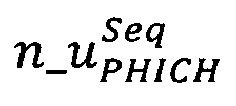
- the determining, by a base station, a PHICH resource includes: determining, by the base station, a PHICH group number n _ u PHICH group of the PHICH resource and an orthogonal sequence number n _ u PHICH seq in the PHICH group n _ u PHICH group .
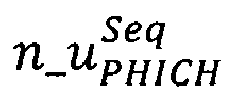
- the method further includes: sending, by the base station to the user equipment, the PHICH group number n _ u PHICH group of the PHICH resource and the orthogonal sequence number n _ u PHICH seq in the PHICH group n _ u PHICH group .
- the determining, by a base station, a PHICH resource includes: determining, by the base station, a PHICH group number n _ u PHICH group of the PHICH resource and an orthogonal sequence number n _ u PHICH seq in the PHICH group n _ u PHICH group according to an LTE-U carrier identifier.
- the method further includes: sending, by the base station, n _ u and I_u to the user equipment.
- the LTE-U carrier information includes information used to indicate a time change of an LTE-U carrier or information used to indicate whether a signal is transmitted on an LTE-U carrier.
- a method for transmitting Long Term Evolution in unlicensed spectrum LTE-U carrier information including: determining, by user equipment, a physical hybrid automatic repeat request indicator channel PHICH resource, where the PHICH resource is used to indicate the LTE-U carrier information; and obtaining, by the user equipment, the LTE-U carrier information from the PHICH resource.
- the determining, by user equipment, a PHICH resource includes: determining, by the user equipment, a PHICH group number n _ u PHICH group of the PHICH resource and an orthogonal sequence number n _ u PHICH seq in the PHICH group n _ u PHICH group .
- the method further includes: receiving, by the user equipment, a PHICH group number n _ u PHICH group of the PHICH resource and an orthogonal sequence number n _ u PHICH seq in the PHICH group n _ u PHICH group that are sent by a base station; and the determining, by user equipment, a PHICH resource includes: determining, by the user equipment, the PHICH group number n _ u PHICH group of the PHICH resource and the orthogonal sequence number n _ u PHICH seq in the PHICH group n _ u PHICH group according to the PHICH group number n _ u PHICH group of the PHICH resource and the orthogonal sequence number n _ u PHICH seq in the PHICH group n _ u PHICH group that are sent by the base station.
- the determining, by user equipment, a PHICH resource includes: determining, by the user equipment, a PHICH group number n _ u PHICH group of the PHICH resource and an orthogonal sequence number n _ u PHICH seq in the PHICH group n _ u PHICH group according to an LTE-U carrier identifier.
- the LTE-U carrier information includes information used to indicate a time change of an LTE-U carrier or information used to indicate whether a signal is transmitted on an LTE-U carrier.
- the method further includes: receiving, by the user equipment, a PHICH resource that indicates the LTE-U carrier information and that is sent by the base station.
- a base station including: a determining unit, configured to determine a physical hybrid automatic repeat request indicator channel PHICH resource; an indicating unit, configured to use the PHICH resource to indicate Long Term Evolution in unlicensed spectrum LTE-U carrier information; and a sending unit, configured to send user equipment the PHICH resource that indicates the LTE-U carrier information.
- the determining unit is specifically configured to determine a PHICH group number n _ u PHICH group of the PHICH resource and an orthogonal sequence number n _ u PHICH seq in the PHICH group n _ u PHICH group .
- the sending unit is further configured to send the user equipment the PHICH group number n _ u PHICH group of the PHICH resource and the orthogonal sequence number n _ u PHICH seq in the PHICH group n _ u PHICH group .
- the determining unit is specifically configured to determine a PHICH group number n _ u PHICH group of the PHICH resource and an orthogonal sequence number n _ u PHICH seq in the PHICH group n _ u PHICH group according to an LTE-U carrier identifier.
- the sending unit is further configured to send n _ u and I _ u to the user equipment.
- user equipment including: a determining unit, configured to determine a physical hybrid automatic repeat request indicator channel PHICH resource, where the PHICH resource is used to indicate LTE-U carrier information; and an obtaining unit, configured to obtain the LTE-U carrier information from the PHICH resource.
- the determining unit is specifically configured to determine a PHICH group number n _ u PHICH group of the PHICH resource and an orthogonal sequence number n _ u PHICH seq in the PHICH group n _ u PHICH group .
- the user equipment further includes a first receiving unit, configured to receive a PHICH group number n _ u PHICH group of the PHICH resource and an orthogonal sequence number n _ u PHICH seq in the PHICH group n _ u PHICH group that are sent by a base station, where the determining unit is specifically configured to determine the PHICH group number n _ u PHICH group of the PHICH resource and the orthogonal sequence number n _ u PHICH seq in the PHICH group n _ u PHICH group according to the PHICH group number n _ u PHICH group of the PHICH resource and the orthogonal sequence number n _ u PHICH seq in the PHICH group n _ u PHICH group that are sent by the base station.
- a first receiving unit configured to receive a PHICH group number n _ u PHICH group of the PHICH resource and an orthogonal sequence number n
- the determining unit is specifically configured to determine a PHICH group number n _ u PHICH group of the PHICH resource and an orthogonal sequence number n _ u PHICH seq in the PHICH group n _ u PHICH group according to an LTE-U carrier identifier.
- the user equipment further includes a third receiving unit, configured to receive a PHICH resource that indicates the LTE-U carrier information and that is sent by the base station.
- a broadcast channel such as a PHICH is used to indicate LTE-U carrier information. All user equipments can detect and receive the LTE-U carrier information indicated by the PHICH channel, and it is not required to send DCI signaling to each user equipment for transmitting LTE-U carrier information, thereby effectively reducing network signaling overheads.
- a Global System for Mobile Communications Global System of Mobile communication, GSM
- GSM Global System of Mobile communication
- CDMA Code Division Multiple Access
- WCDMA Wideband Code Division Multiple Access
- GPRS General Packet Radio Service
- LTE Long Term Evolution
- FDD Frequency Division Duplex
- TDD Time Division Duplex
- UMTS Universal Mobile Telecommunications System
- WiMAX Worldwide Interoperability for Microwave Access
- user equipment (English full name: User Equipment, UE for short) includes but is not limited to a mobile station (English full name: Mobile Station, MS for short), a mobile terminal (Mobile Terminal), a mobile telephone (Mobile Telephone), a handset (handset), a portable equipment (portable equipment), and the like.
- the user equipment may communicate with one or more core networks by using a radio access network (English full name: Radio Access Network, RAN for short).
- the user equipment may be a mobile telephone (or referred to as a "cellular" phone), or a computer having a wireless communication function; the user equipment may further be a portable, pocket-sized, handheld, computer built-in, or in-vehicle mobile apparatus.
- a base station may be a base station (English full name: Base Transceiver Station, BTS for short) in GSM or CDMA, or may be a base station (NodeB) in WCDMA, or may be an evolved NodeB (English full name: evolved Node B, eNB or e-NodeB for short) in LTE, which is not limited in the embodiments of the present invention.
- BTS Base Transceiver Station
- NodeB base station
- eNB evolved Node B
- e-NodeB evolved NodeB
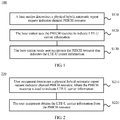
- FIG. 1 shows a method 100 for transmitting Long Term Evolution in unlicensed spectrum LTE-U carrier information.
- the method 100 may be performed by, for example, a base station.
- the method 100 includes the following steps: S110.
- the base station determines a physical hybrid automatic repeat request indicator channel PHICH resource.
- a physical hybrid automatic repeat request indicator channel (English full name: Physical Hybrid ARQ Indicator Channel, PHICH for short) is a broadcast channel, and user equipment in the wireless communications system can detect and receive information carried on the PHICH channel.
- PHICH Physical Hybrid ARQ Indicator Channel
- the base station may determine the PHICH resource by using multiple methods. This is not limited in this embodiment of the present invention.
- the base station uses the PHICH resource to indicate the LTE-U carrier information.
- the base station uses the PHICH resource to indicate LTE-U carrier information of multiple user equipments.
- the base station may use, by using multiple methods, the PHICH resource to indicate the LTE-U carrier information. This is not limited in this embodiment of the present invention.
- the base station sends user equipment the PHICH resource that indicates the LTE-U carrier information.
- the base station sends the multiple user equipments the PHICH resource that indicates the LTE-U carrier information of the multiple user equipments.
- the base station may send, by using multiple methods, the user equipment the PHICH resource that indicates the LTE-U carrier information. This is not limited in this embodiment of the present invention.
- sequence numbers of the foregoing processes do not mean execution sequences in various embodiments of the present invention.
- the execution sequences of the processes should be determined according to functions and internal logic of the processes, and should not be construed as any limitation on the implementation processes of the embodiments of the present invention.
- that the base station determines a physical hybrid automatic repeat request indicator channel PHICH resource includes: determining, by the base station, a PHICH group number n _ u PHICH group of the physical hybrid automatic repeat request indicator channel PHICH resource and an orthogonal sequence number n _ u PHICH seq in the PHICH group n _ u PHICH group .
- the base station determines the PHICH group number n _ u PHICH group of the PHICH resource and the orthogonal sequence number n _ u PHICH seq in the PHICH group n _ u PHICH group according to the PHICH group number n _ u PHICH group of the PHICH resource and the orthogonal sequence number n _ u PHICH seq in the PHICH group n _ u PHICH group that are preset or are provided by a third party.
- the user equipment may determine the PHICH group number n _ u PHICH group of the PHICH resource and the orthogonal sequence number n _ u PHICH seq in the PHICH group n _ u PHICH group according to the PHICH group number n _ u PHICH group of the PHICH resource and the orthogonal sequence number n _ u PHICH seq in the PHICH group n _ u PHICH group that are preset or are provided by the third party, without needing to receive information that is about the PHICH resource and that is sent by the base station.
- the PHICH resource is uniquely determined by an index pair (index pair) n _ u PHICH group , n _ u PHICH seq .
- the method further includes: sending, by the base station to the user equipment, the PHICH group number n _ u PHICH group of the PHICH resource and the orthogonal sequence number n _ u PHICH seq in the PHICH group n _ u PHICH group .
- the base station after determining the PHICH group number n _ u PHICH group of the PHICH resource and the orthogonal sequence number n _ u PHICH seq in the PHICH group n _ u PHICH group , the base station sends the PHICH group number n _ u PHICH group of the PHICH resource and the orthogonal sequence number n _ u PHICH seq in the PHICH group n _ u PHICH group to the user equipment.
- the user equipment determines the PHICH group number n _ u PHICH group of the PHICH resource and the orthogonal sequence number n _ u PHICH seq in the PHICH group n _ u PHICH group according to the PHICH group number n _ u PHICH group of the PHICH resource and the orthogonal sequence number n _ u PHICH seq in the PHICH group n _ u PHICH group that are determined by the base station.
- the base station determines a PHICH resource includes: determining, by the base station, a PHICH group number n _ u PHICH group of the PHICH resource and an orthogonal sequence number n _ u PHICH seq in the PHICH group n _ u PHICH group according to an LTE-U carrier identifier.
- the determining, by the base station, a PHICH group number n _ u PHICH group of the PHICH resource and an orthogonal sequence number n _ u PHICH seq in the PHICH group n _ u PHICH group according to an LTE-U carrier identifier includes:
- parameters in formulas (1) and (2) are preset or are provided by a third party.
- the user equipment may determine the PHICH group number n _ u PHICH group of the PHICH resource and the orthogonal sequence number n _ u PHICH seq in the PHICH group n _ u PHICH group according to formulas (1) and (2) by using the parameters that are preset or are provided by the third party, and therefore, does not need to receive a parameter sent by the base station.
- that the base station determines a PHICH resource includes:
- parameters in formulas (3) and (4) are preset or are provided by a third party.
- the user equipment may determine the PHICH group number n _ u PHICH group of the PHICH resource and the orthogonal sequence number n _ u PHICH seq in the PHICH group n _ u PHICH group according to formulas (3) and (4) by using the parameters that are preset or are provided by the third party, and therefore, does not need to receive a parameter sent by the base station.
- the method further includes: sending, by the base station, n_u and I_u to the user equipment, where n_u and I _ u are adjustment parameters with a value of zero or a positive integer.
- the base station after determining the PHICH group number n _ u PHICH group of the PHICH resource and the orthogonal sequence number n _ u PHICH seq in the PHICH group n _ u PHICH group according to formulas (3) and (4), the base station sends n_u and I_u to the user equipment, so that the user equipment determines the PHICH group number n _ u PHICH group of the PHICH resource and the orthogonal sequence number n _ u PHICH seq in the PHICH group n _ u PHICH group according to formulas (3) and (4) by using n_u, I _ u , and another parameter that is preset or is provided by a third party.
- the LTE-U carrier information includes information used to indicate a time change of an LTE-U carrier or information used to indicate whether a signal is transmitted on an LTE-U carrier.
- the LTE-U carrier information may include any information about the LTE-U carrier. This is not limited in this embodiment of the present invention.
- a broadcast channel such as a PHICH is used to indicate LTE-U carrier information. All user equipments can detect and receive the LTE-U carrier information indicated by the PHICH channel, and it is not required to send DCI signaling to each user equipment for transmitting LTE-U carrier information, thereby effectively reducing network signaling overheads.
- FIG. 2 shows another method 200 for transmitting LTE-U carrier information according to an embodiment of the present invention.
- the method 200 includes the following steps: S210.
- User equipment determines a physical hybrid automatic repeat request indicator channel PHICH resource, where the PHICH resource is used to indicate the LTE-U carrier information.
- the user equipment determines a PHICH resource that indicates LTE-U carrier information of the user equipment.
- the user equipment may determine the PHICH resource by using multiple methods. This is not limited in this embodiment of the present invention.
- the user equipment obtains the LTE-U carrier information from the PHICH resource.
- the user equipment may obtain the LTE-U carrier information by using multiple methods. This is not limited in this embodiment of the present invention.
- sequence numbers of the foregoing processes do not mean execution sequences in various embodiments of the present invention.
- the execution sequences of the processes should be determined according to functions and internal logic of the processes, and should not be construed as any limitation on the implementation processes of the embodiments of the present invention.
- that user equipment determines a PHICH resource includes: determining, by the user equipment, a PHICH group number n _ u PHICH group of the PHICH resource and an orthogonal sequence number n _ u PHICH seq in the PHICH group n _ u PHICH group .
- the user equipment determines the PHICH group number n _ u PHICH group of the PHICH resource and the orthogonal sequence number n _ u PHICH seq in the PHICH group n _ u PHICH group according to the PHICH group number n _ u PHICH group of the PHICH resource and the orthogonal sequence number n _ u PHICH seq in the PHICH group n _ u PHICH group that are preset or are provided by a third party, without needing to receive information that is about the PHICH resource and that is sent by a base station.
- the PHICH resource is uniquely determined by an index pair (index pair) n _ u PHICH group , n _ u PHICH seq .
- the method further includes: receiving, by the user equipment, a PHICH group number n _ u PHICH group of the PHICH resource and an orthogonal sequence number n _ u PHICH seq in the PHICH group n _ u PHICH group that are sent by a base station; and that user equipment determines a PHICH resource includes: determining, by the user equipment, the PHICH group number n _ u PHICH group of the PHICH resource and the orthogonal sequence number n _ u PHICH seq in the PHICH group n _ u PHICH group according to the PHICH group number n _ u PHICH group of the PHICH resource and the orthogonal sequence number n _ u PHICH seq in the PHICH group n _ u PHICH group that are sent by the base station.
- the user equipment determines the PHICH group number n _ u PHICH group of the PHICH resource and the orthogonal sequence number n _ u PHICH seq in the PHICH group n _ u PHICH group according to the PHICH group number n _ u PHICH group of the PHICH resource and the orthogonal sequence number n _ u PHICH seq in the PHICH group n _ u PHICH group that are determined by the base station.
- the user equipment determines a PHICH resource includes: determining, by the user equipment, a PHICH group number n _ u PHICH group of the PHICH resource and an orthogonal sequence number n _ u PHICH seq in the PHICH group n _ u PHICH group according to an LTE-U carrier identifier.
- the determining, by the user equipment, a PHICH group number n _ u PHICH group of the PHICH resource and an orthogonal sequence number n _ u PHICH seq in the PHICH group n _ u PHICH group according to an LTE-U carrier identifier includes: determining, by the user equipment, the PHICH group number n _ u PHICH group of the PHICH resource and the orthogonal sequence number n _ u PHICH seq in the PHICH group n _ u PHICH group according to formulas (1) and (2).
- parameters in formulas (1) and (2) are preset or are provided by a third party.
- the user equipment may determine the PHICH group number n _ u PHICH group of the PHICH resource and the orthogonal sequence number n _ u PHICH seq in the PHICH group n _ u PHICH group according to formulas (1) and (2) by using the parameters that are preset or are provided by the third party, and therefore, does not need to receive a parameter sent by a base station.
- that user equipment determines a PHICH resource includes: determining, by the user equipment, a PHICH group number n _ u PHICH group of the PHICH resource and an orthogonal sequence number n _ u PHICH seq in the PHICH group n _ u PHICH group according to formulas (3) and (4).
- parameters in formulas (3) and (4) are preset or are provided by a third party.
- the user equipment may determine the PHICH group number n _ u PHICH group of the PHICH resource and the orthogonal sequence number n _ u PHICH seq in the PHICH group n _ u PHICH group according to formulas (3) and (4) by using the parameters that are preset or are provided by the third party, and therefore, does not need to receive a parameter sent by a base station.
- the method further includes: receiving, by the user equipment, n _ u and I _ u sent by a base station, where n _ u and I_u are adjustment parameters with a value of zero or a positive integer; and that user equipment determines a PHICH resource includes: determining, by the user equipment, a PHICH group number n _ u PHICH group of the PHICH resource and an orthogonal sequence number n _ u PHICH seq in the PHICH group n _ u PHICH group according to formulas (3) and (4).
- the user equipment determines the PHICH group number n _ u PHICH group of the PHICH resource and the orthogonal sequence number n _ u PHICH seq in the PHICH group n _ u PHICH group according to formulas (3) and (4) by using n _ u and I _ u that are received from the base station and another parameter that is preset or is provided by a third party.
- the LTE-U carrier information includes information used to indicate a time change of an LTE-U carrier or information used to indicate whether a signal is transmitted on an LTE-U carrier.
- the LTE-U carrier information may include any information about the LTE-U carrier. This is not limited in this embodiment of the present invention.
- the method further includes: receiving, by the user equipment, a PHICH resource that indicates the LTE-U carrier information and that is sent by the base station.
- the user equipment receives the PHICH resource that indicates the LTE-U carrier information of the user equipment and that is sent by the base station.
- a broadcast channel such as a PHICH is used to indicate LTE-U carrier information. All user equipments can detect and receive the LTE-U carrier information indicated by the PHICH channel, and it is not required to send DCI signaling to each user equipment for transmitting LTE-U carrier information, thereby effectively reducing network signaling overheads.
- FIG. 3 shows a schematic block diagram of a base station 300 according to an embodiment of the present invention.
- the base station 300 includes a determining unit 310, an indicating unit 320, and a sending unit 330.
- the determining unit 310 is configured to determine a physical hybrid automatic repeat request indicator channel PHICH resource.
- a physical hybrid automatic repeat request indicator channel (English full name: Physical Hybrid ARQ Indicator Channel, PHICH for short) is a broadcast channel, and user equipment in the wireless communications system can detect and receive information carried on the PHICH channel.
- PHICH Physical Hybrid ARQ Indicator Channel
- the determining unit 310 may determine the PHICH resource by using multiple methods. This is not limited in this embodiment of the present invention.
- the indicating unit 320 is configured to use the PHICH resource to indicate Long Term Evolution in unlicensed spectrum LTE-U carrier information.
- the indicating unit 320 uses the PHICH resource to separately indicate LTE-U carrier information of multiple user equipments.
- the indicating unit 320 may use, by using multiple methods, the PHICH resource to indicate the Long Term Evolution in unlicensed spectrum LTE-U carrier information. This is not limited in the embodiments of the present invention.
- the sending unit 330 is configured to send user equipment the PHICH resource that indicates the LTE-U carrier information.
- the sending unit 330 separately sends the multiple user equipments the PHICH resource that indicates the LTE-U carrier information of the multiple user equipments.
- the sending unit 330 may send, by using multiple methods, the user equipment the PHICH resource that indicates the LTE-U carrier information. This is not limited in this embodiment of the present invention.
- the determining unit 310 is specifically configured to determine a PHICH group number n _ u PHICH group of the PHICH resource and an orthogonal sequence number n _ u PHICH seq in the PHICH group n _ u PHICH group .
- the determining unit 310 determines the PHICH group number n _ u PHICH group of the PHICH resource and the orthogonal sequence number n _ u PHICH seq in the PHICH group n _ u PHICH group according to the PHICH group number n _ u PHICH group of the PHICH resource and the orthogonal sequence number n _ u PHICH seq in the PHICH group n _ u PHICH group that are preset or are provided by a third party.
- the user equipment may determine the PHICH group number n _ u PHICH group of the PHICH resource and the orthogonal sequence number n _ u PHICH seq in the PHICH group n _ u PHICH group according to the PHICH group number n _ u PHICH group of the PHICH resource and the orthogonal sequence number n _ u PHICH seq in the PHICH group n _ u PHICH group that are preset or are provided by the third party, without needing to receive information that is about the PHICH resource and that is sent by the base station.
- the PHICH resource is uniquely determined by an index pair (index pair) n _ u PHICH group , n _ u PHICH seq .
- the sending unit 330 is further configured to send the user equipment the PHICH group number n _ u PHICH group of the PHICH resource and the orthogonal sequence number n _ u PHICH seq in the PHICH group n _ u PHICH group .
- the sending unit 330 sends the PHICH group number n _ u PHICH group of the PHICH resource and the orthogonal sequence number n _ u PHICH seq in the PHICH group n _ u PHICH group to the user equipment.
- the user equipment determines the PHICH group number n _ u PHICH group of the PHICH resource and the orthogonal sequence number n _ u PHICH seq in the PHICH group n _ u PHICH group according to the PHICH group number n _ u PHICH group of the PHICH resource and the orthogonal sequence number n _ u PHICH seq in the PHICH group n _ u PHICH group that are determined by the base station.
- the determining unit 310 is specifically configured to determine a PHICH group number n _ u PHICH group of the PHICH resource and an orthogonal sequence number n _ u PHICH seq in the PHICH group n _ u PHICH group according to an LTE-U carrier identifier.
- the determining unit 310 is specifically configured to determine a PHICH group number n _ u PHICH group of the PHICH resource and an orthogonal sequence number n _ u PHICH seq in the PHICH group n _ u PHICH group according to formulas (1) and (2).
- parameters in formulas (1) and (2) are preset or are provided by a third party.
- the user equipment may determine the PHICH group number n _ u PHICH group of the PHICH resource and the orthogonal sequence number n _ u PHICH seq in the PHICH group n _ u PHICH group according to formulas (1) and (2) by using the parameters that are preset or are provided by the third party, and therefore, does not need to receive a parameter sent by the base station.
- the determining unit 310 is specifically configured to determine a PHICH group number n _ u PHICH group of the PHICH resource and an orthogonal sequence number n _ u PHICH seq in the PHICH group n _ u PHICH group according to formulas (3) and (4).
- parameters in formulas (3) and (4) are preset or are provided by a third party.
- the user equipment may determine the PHICH group number n _ u PHICH group of the PHICH resource and the orthogonal sequence number n _ u PHICH seq in the PHICH group n _ u PHICH group according to formulas (3) and (4) by using the parameters that are preset or are provided by the third party, and therefore, does not need to receive a parameter sent by the base station.
- the sending unit 330 is further configured to send n _ u and I _ u to the user equipment, where n _ u and I _ u are adjustment parameters with a value of zero or a positive integer.
- the sending unit 330 sends n _ u and I _ u to the user equipment, so that the user equipment determines the PHICH group number n _ u PHICH group of the PHICH resource and the orthogonal sequence number n _ u PHICH seq in the PHICH group n _ u PHICH group according to formulas (3) and (4) by using n _ u , I _ u , and another parameter that is preset or is provided by a third party.
- a broadcast channel such as a PHICH is used to indicate LTE-U carrier information. All user equipments can detect and receive the LTE-U carrier information indicated by the PHICH channel, and it is not required to send DCI signaling to each user equipment for transmitting LTE-U carrier information, thereby effectively reducing network signaling overheads.
- an embodiment of the present invention further provides a base station 400.
- the base station 400 includes a processor 410, a memory 420, a bus system 430, a receiver 440, and a transmitter 450.
- the processor 410, the memory 420, the receiver 440, and the transmitter 450 are connected by using the bus system 430.
- the memory 420 is configured to store an instruction.
- the processor 410 is configured to execute the instruction stored in the memory 420, to control the receiver 440 to receive a signal, an instruction, or a message, and control the transmitter 450 to send a signal, signaling, or a message.
- the processor 410 is configured to determine a physical hybrid automatic repeat request indicator channel PHICH resource, and use the PHICH resource to indicate Long Term Evolution in unlicensed spectrum LTE-U carrier information.
- the transmitter 450 is configured to send user equipment the PHICH resource that indicates the LTE-U carrier information.
- the processor 410 is specifically configured to determine a PHICH group number n _ u PHICH group of the physical hybrid automatic repeat request indicator channel PHICH resource and an orthogonal sequence number n _ u PHICH seq in the PHICH group n _ u PHICH group .
- the processor 410 determines the PHICH group number n _ u PHICH group of the PHICH resource and the orthogonal sequence number n _ u PHICH seq in the PHICH group n _ u PHICH group according to the PHICH group number n _ u PHICH group of the PHICH resource and the orthogonal sequence number n _ u PHICH seq in the PHICH group n _ u PHICH group that are preset or are provided by a third party.
- the user equipment may determine the PHICH group number n _ u PHICH group of the PHICH resource and the orthogonal sequence number n _ u PHICH seq in the PHICH group n _ u PHICH group according to the PHICH group number n _ u PHICH group of the PHICH resource and the orthogonal sequence number n _ u PHICH seq in the PHICH group n _ u PHICH group that are preset or are provided by the third party, without needing to receive information that is about the PHICH resource and that is sent by the base station.
- the PHICH resource is uniquely determined by an index pair (index pair) n _ u PHICH group , n _ u PHICH seq .
- the transmitter 450 sends the user equipment the PHICH group number n _ u PHICH group of the PHICH resource and the orthogonal sequence number n _ u PHICH seq in the PHICH group n _ u PHICH group .
- the transmitter 450 sends the PHICH group number n _ u PHICH group of the PHICH resource and the orthogonal sequence number n _ u PHICH seq in the PHICH group n _ u PHICH group to the user equipment.
- the user equipment determines the PHICH group number n _ u PHICH group of the PHICH resource and the orthogonal sequence number n _ u PHICH seq in the PHICH group n _ u PHICH group according to the PHICH group number n _ u PHICH group of the PHICH resource and the orthogonal sequence number n _ u PHICH seq in the PHICH group n _ u PHICH group that are determined by the base station.
- the processor 410 is specifically configured to determine a PHICH group number n _ u PHICH group of the PHICH resource and an orthogonal sequence number n _ u PHICH seq in the PHICH group n _ u PHICH group according to an LTE-U carrier identifier.
- the processor 410 is specifically configured to determine a PHICH group number n _ u PHICH group of the PHICH resource and an orthogonal sequence number n _ u PHICH seq in the PHICH group n _ u PHICH group according to formulas (1) and (2).
- parameters in formulas (1) and (2) are preset or are provided by a third party.
- the user equipment may determine the PHICH group number n _ u PHICH group of the PHICH resource and the orthogonal sequence number n _ u PHICH seq in the PHICH group n _ u PHICH group according to formulas (1) and (2) by using the parameters that are preset or are provided by the third party, and therefore, does not need to receive a parameter sent by the base station.
- the processor 410 is specifically configured to determine a PHICH group number n _ u PHICH group of the PHICH resource and an orthogonal sequence number n _ u PHICH seq in the PHICH group n _ u PHICH group according to formulas (3) and (4).
- parameters in formulas (3) and (4) are preset or are provided by a third party.
- the user equipment may determine the PHICH group number n _ u PHICH group of the PHICH resource and the orthogonal sequence number n _ u PHICH seq in the PHICH group n _ u PHICH group according to formulas (3) and (4) by using the parameters that are preset or are provided by the third party, and therefore, does not need to receive a parameter sent by the base station.
- the transmitter 450 sends n _ u and I _ u to the user equipment, where n _ u and I _ u are adjustment parameters with a value of zero or a positive integer.
- the transmitter 450 sends n _ u and I _ u to the user equipment, so that the user equipment determines the PHICH group number n _ u PHICH group of the PHICH resource and the orthogonal sequence number n _ u PHICH seq in the PHICH group n _ u PHICH group according to formulas (3) and (4) by using n_u , I _ u , and another parameter that is preset or is provided by a third party.
- a broadcast channel such as a PHICH is used to indicate LTE-U carrier information. All user equipments can detect and receive the LTE-U carrier information indicated by the PHICH channel, and it is not required to send DCI signaling to each user equipment for transmitting LTE-U carrier information, thereby effectively reducing network signaling overheads.
- the processor 410 may be a central processing unit (Central Processing Unit, "CPU” for short), or the processor 410 may be another general-purpose processor, a digital signal processor (DSP), an application-specific integrated circuit (ASIC), a field programmable gate array (FPGA) or another programmable logic device, a discrete gate or a transistor logic device, a discrete hardware component, or the like.
- the general-purpose processor may be a microprocessor, or the processor may be any conventional processor or the like.
- the memory 420 may include a read-only memory and a random access memory, and provide an instruction and data to the processor 410.
- a part of the memory 420 may further include a non-volatile random access memory.
- the memory 420 may further store device type information.
- the bus system 430 may include a power bus, a control bus, and a status signal bus. However, for clear description, various buses are all marked as the bus system 430 in the figure.
- the steps of the foregoing method may be completed by using a hardware integrated logic circuit or an instruction in a form of software in the processor 410.
- the steps of the method disclosed with reference to the embodiments of the present invention may be directly embodied as being performed and completed by a hardware processor, or being performed and completed by a combination of hardware and software modules in the processor.
- the software module may be located in a mature storage medium in the art, such as a random memory, a flash memory, a read-only memory, a programmable read-only memory or an electrically erasable programmable memory, or a register.
- the storage medium is located in the memory 420, and the processor 410 reads information in the memory 420 and completes the steps of the foregoing method in combination with hardware of the processor 410. To avoid repetition, details are not described herein.
- the base station 300 and the base station 400 may correspond to the base station in the method for transmitting LTE-U carrier information according to the embodiments of the present invention.
- the foregoing and other operations and/or functions of the modules in the base station 300 and the base station 400 are separately used to implement corresponding processes of the method in FIG. 1 .
- details are not described herein.
- a computer-readable medium (or medium) is further provided, including a computer-readable instruction.
- the computer-readable instruction When executed, operations of steps S110 to S130 in the method in the foregoing embodiment are performed.
- a computer program product including the foregoing computer-readable medium.
- FIG. 5 shows a schematic block diagram of user equipment 500 according to an embodiment of the present invention.
- the user equipment 500 includes a determining unit 510 and an obtaining unit 520.
- the determining unit 510 is configured to determine a physical hybrid automatic repeat request indicator channel PHICH resource, where the PHICH resource is used to indicate LTE-U carrier information.
- the determining unit 510 determines a PHICH resource that indicates LTE-U carrier information of the user equipment.
- the determining unit 510 may determine the PHICH resource by using multiple methods. This is not limited in this embodiment of the present invention.
- the obtaining unit 520 is configured to obtain the LTE-U carrier information from the PHICH resource.
- the obtaining unit 520 may obtain the LTE-U carrier information by using multiple methods. This is not limited in this embodiment of the present invention.
- the determining unit 510 is specifically configured to determine a PHICH group number n _ u PHICH group of the PHICH resource and an orthogonal sequence number n _ u PHICH seq in the PHICH group n _ u PHICH group .
- the determining unit 510 determines the PHICH group number n _ u PHICH group of the PHICH resource and the orthogonal sequence number n _ u PHICH seq in the PHICH group n _ u PHICH group according to the PHICH group number n _ u PHICH group of the PHICH resource and the orthogonal sequence number n _ u PHICH seq in the PHICH group n _ u PHICH group that are preset or are provided by a third party, without needing to receive information that is about the PHICH resource and that is sent by a base station.
- the PHICH resource is uniquely determined by an index pair (index pair) n _ u PHICH group , n _ u PHICH seq .
- the user equipment 500 further includes a first receiving unit, configured to receive a PHICH group number n _ u PHICH group of the PHICH resource and an orthogonal sequence number n _ u PHICH seq in the PHICH group n _ u PHICH group that are sent by a base station; and the determining unit 510 is specifically configured to determine the PHICH group number n _ u PHICH group of the PHICH resource and the orthogonal sequence number n _ u PHICH seq in the PHICH group n _ u PHICH group according to the PHICH group number n _ u PHICH group of the PHICH resource and the orthogonal sequence number n _ u PHICH seq in the PHICH group n _ u PHICH group that are sent by the base station.
- a first receiving unit configured to receive a PHICH group number n _ u PHICH group of the PHICH resource and an orthogonal sequence
- the determining unit 510 determines the PHICH group number n _ u PHICH group of the PHICH resource and the orthogonal sequence number n _ u PHICH seq in the PHICH group n _ u PHICH group according to the PHICH group number n _ u PHICH group of the PHICH resource and the orthogonal sequence number n _ u PHICH seq in the PHICH group n _ u PHICH group that are determined by the base station.
- the determining unit 510 is specifically configured to determine a PHICH group number n _ u PHICH group of the PHICH resource and an orthogonal sequence number n _ u PHICH seq in the PHICH group n _ u PHICH group according to an LTE-U carrier identifier.
- the determining unit 510 is specifically configured to determine a PHICH group number n _ u PHICH group of the PHICH resource and an orthogonal sequence number n _ u PHICH seq in the PHICH group n _ u PHICH group according to formulas (1) and (2).
- parameters in formulas (1) and (2) are preset or are provided by a third party.
- the determining unit 510 may determine the PHICH group number n _ u PHICH group of the PHICH resource and the orthogonal sequence number n _ u PHICH seq in the PHICH group n _ u PHICH group according to formulas (1) and (2) by using the parameters that are preset or are provided by the third party, and therefore, does not need to receive a parameter sent by a base station.
- the determining unit 510 is specifically configured to determine a PHICH group number n _ u PHICH group of the PHICH resource and an orthogonal sequence number n _ u PHICH seq in the PHICH group n _ u PHICH group according to formulas (3) and (4).
- parameters in formulas (3) and (4) are preset or are provided by a third party.
- the determining unit 510 may determine the PHICH group number n _ u PHICH group of the PHICH resource and the orthogonal sequence number n _ u PHICH seq in the PHICH group n _ u PHICH group according to formulas (3) and (4) by using the parameters that are preset or are provided by the third party, and therefore, does not need to receive a parameter sent by a base station.
- the user equipment 500 further includes a second receiving unit, configured to receive n _ u and I _ u sent by a base station, where n _ u and I_u are adjustment parameters with a value of zero or a positive integer; and the determining unit 510 is specifically configured to determine a PHICH group number n _ u PHICH group of the PHICH resource and an orthogonal sequence number n _ u PHICH seq in the PHICH group n _ u PHICH group according to formulas (3) and (4).
- the determining unit 510 determines the PHICH group number n _ u PHICH group of the PHICH resource and the orthogonal sequence number n _ u PHICH seq in the PHICH group n _ u PHICH group according to formulas (3) and (4) by using n _ u and I _ u that are received from the base station and another parameter that is preset or is provided by a third party.
- the user equipment 500 further includes a third receiving unit, configured to receive a PHICH resource that indicates the LTE-U carrier information and that is sent by the base station.
- the third receiving unit receives the PHICH resource that indicates the LTE-U carrier information of the user equipment and that is sent by the base station.
- a broadcast channel such as a PHICH is used to indicate LTE-U carrier information. All user equipments can detect and receive the LTE-U carrier information indicated by the PHICH channel, and it is not required to send DCI signaling to each user equipment for transmitting LTE-U carrier information, thereby effectively reducing network signaling overheads.
- an embodiment of the present invention further provides user equipment 600.
- the user equipment 600 includes a processor 610, a memory 620, a bus system 630, a receiver 640, and a transmitter 650.
- the processor 610, the memory 620, the receiver 640, and the transmitter 650 are connected by using the bus system 630.
- the memory 620 is configured to store an instruction.
- the processor 610 is configured to execute the instruction stored in the memory 620, to control the receiver 640 to receive a signal, an instruction, or a message, and control the transmitter 650 to send a signal, an instruction, or a message.
- the processor 610 is configured to: determine a physical hybrid automatic repeat request indicator channel PHICH resource, where the PHICH resource is used to indicate LTE-U carrier information; and obtain the LTE-U carrier information from the PHICH resource.
- the processor 610 is specifically configured to determine a PHICH group number n _ u PHICH group of the PHICH resource and an orthogonal sequence number n _ u PHICH seq in the PHICH group n _ u PHICH group .
- the processor 610 determines the PHICH group number n _ u PHICH group of the PHICH resource and the orthogonal sequence number n _ u PHICH seq in the PHICH group n _ u PHICH group according to the PHICH group number n _ u PHICH group of the PHICH resource and the orthogonal sequence number n _ u PHICH seq in the PHICH group n _ u PHICH group that are preset or are provided by a third party, without needing to receive information that is about the PHICH resource and that is sent by a base station.
- the PHICH resource is uniquely determined by an index pair (index pair) n _ u PHICH group , n _ u PHICH seq .
- the receiver 640 receives a PHICH group number n _ u PHICH group of the PHICH resource and an orthogonal sequence number n _ u PHICH seq in the PHICH group n _ u PHICH group that are sent by a base station; and the processor 610 is specifically configured to determine the PHICH group number n _ u PHICH group of the PHICH resource and the orthogonal sequence number n _ u PHICH seq in the PHICH group n _ u PHICH group according to the PHICH group number n _ u PHICH group of the PHICH resource and the orthogonal sequence number n _ u PHICH seq in the PHICH group n _ u PHICH group that are sent by the base station.
- the processor 610 determines the PHICH group number n _ u PHICH group of the PHICH resource and the orthogonal sequence number n _ u PHICH seq in the PHICH group n _ u PHICH group according to the PHICH group number n _ u PHICH group of the PHICH resource and the orthogonal sequence number n _ u PHICH seq in the PHICH group n _ u PHICH group that are determined by the base station.
- the processor 610 is specifically configured to determine a PHICH group number n _ u PHICH group of the PHICH resource and an orthogonal sequence number n _ u PHICH seq in the PHICH group n _ u PHICH group according to an LTE-U carrier identifier.
- the processor 610 is specifically configured to determine a PHICH group number n _ u PHICH group of the PHICH resource and an orthogonal sequence number n _ u PHICH seq in the PHICH group n _ u PHICH group according to formulas (1) and (2).
- parameters in formulas (1) and (2) are preset or are provided by a third party.
- the processor 610 may determine the PHICH group number n _ u PHICH group of the PHICH resource and the orthogonal sequence number n _ u PHICH seq in the PHICH group n _ u PHICH group according to formulas (1) and (2) by using the parameters that are preset or are provided by the third party, and therefore, does not need to receive a parameter sent by a base station.
- the processor 610 is specifically configured to determine a PHICH group number n _ u PHICH group of the physical hybrid automatic repeat request indicator channel PHICH resource and an orthogonal sequence number n _ u PHICH seq in the PHICH group n _ u PHICH group according to formulas (3) and (4).
- parameters in formulas (3) and (4) are preset or are provided by a third party.
- the processor 610 may determine the PHICH group number n _ u PHICH group of the PHICH resource and the orthogonal sequence number n _ u PHICH seq in the PHICH group n _ u PHICH group according to formulas (3) and (4) by using the parameters that are preset or are provided by the third party, and therefore, does not need to receive a parameter sent by a base station.
- the receiver 640 is further configured to receive n _ u and I _ u sent by a base station, where n_u and I _ u are adjustment parameters with a value of zero or a positive integer; and the processor 610 is specifically configured to determine a PHICH group number n _ u PHICH group of the PHICH resource and an orthogonal sequence number n _ u PHICH seq in the PHICH group n _ u PHICH group according to formulas (3) and (4).
- the processor 610 determines the PHICH group number n _ u PHICH group of the PHICH resource and the orthogonal sequence number n _ u PHICH seq in the PHICH group n _ u PHICH group according to formulas (3) and (4) by using n_u and I _ u that are received from the base station and another parameter that is preset or is provided by a third party.
- the receiver 640 is further configured to receive a PHICH resource that indicates the LTE-U carrier information and that is sent by the base station.
- a broadcast channel such as a PHICH is used to indicate LTE-U carrier information. All user equipments can detect and receive the LTE-U carrier information indicated by the PHICH channel, and it is not required to send DCI signaling to each user equipment for transmitting LTE-U carrier information, thereby effectively reducing network signaling overheads.
- the processor 610 may be a central processing unit (Central Processing Unit, "CPU” for short), or the processor 610 may be another general-purpose processor, a digital signal processor (DSP), an application-specific integrated circuit (ASIC), a field programmable gate array (FPGA) or another programmable logic device, a discrete gate or a transistor logic device, a discrete hardware component, or the like.
- the general-purpose processor may be a microprocessor, or the processor may be any conventional processor or the like.
- the memory 620 may include a read-only memory and a random access memory, and provide an instruction and data to the processor 610.
- a part of the memory 620 may further include a non-volatile random access memory.
- the memory 620 may further store device type information.
- the bus system 630 may include a power bus, a control bus, and a status signal bus. However, for clear description, various buses are all marked as the bus system 630 in the figure.
- the steps of the foregoing method may be completed by using a hardware integrated logic circuit or an instruction in a form of software in the processor 610.
- the steps of the method disclosed with reference to the embodiments of the present invention may be directly embodied as being performed and completed by a hardware processor, or being performed and completed by a combination of hardware and software modules in the processor.
- the software module may be located in a mature storage medium in the art, such as a random memory, a flash memory, a read-only memory, a programmable read-only memory or an electrically erasable programmable memory, or a register.
- the storage medium is located in the memory 620, and the processor 610 reads information in the memory 620 and completes the steps of the foregoing method in combination with hardware of the processor 610. To avoid repetition, details are not described herein.
- the user equipment 500 and the user equipment 600 may correspond to the user equipment in the method for transmitting LTE-U carrier information according to the embodiments of the present invention.
- the foregoing and other operations and/or functions of the modules in the user equipment 500 and the user equipment 600 are separately used to implement corresponding processes of the method in FIG. 2 .
- details are not described herein.
- a computer-readable medium (or medium) is further provided, including a computer-readable instruction.
- the computer-readable instruction When executed, operations of steps S210 to S220 in the method in the foregoing embodiment are performed.
- a computer program product including the foregoing computer-readable medium.
- signaling mentioned in this specification includes but is not limited to an instruction, information, a signal, or a message. This is not limited herein.
- sequence numbers of the foregoing processes do not mean execution sequences in various embodiments of the present invention.
- the execution sequences of the processes should be determined according to functions and internal logic of the processes, and should not be construed as any limitation on the implementation processes of the embodiments of the present invention.
- the disclosed system, apparatus, and method may be implemented in other manners.
- the described apparatus embodiment is merely an example.
- the unit division is merely logical function division and may be other division in actual implementation.
- a plurality of units or components may be combined or integrated into another system, or some features may be ignored or not performed.
- the displayed or discussed mutual couplings or direct couplings or communication connections may be implemented by using some interfaces.
- the indirect couplings or communication connections between the apparatuses or units may be implemented in electronic, mechanical, or other forms.
- the units described as separate parts may or may not be physically separate, and parts displayed as units may or may not be physical units, may be located in one position, or may be distributed on a plurality of network units. Some or all of the units may be selected according to actual needs to achieve the objectives of the solutions of the embodiments.
- functional units in the embodiments of the present invention may be integrated into one processing unit, or each of the units may exist alone physically, or two or more units are integrated into one unit.
- the functions When the functions are implemented in the form of a software functional unit and sold or used as an independent product, the functions may be stored in a computer-readable storage medium. Based on such an understanding, the technical solutions of the present invention essentially, or the part contributing to the prior art, or some of the technical solutions may be implemented in a form of a software product.
- the software product is stored in a storage medium, and includes several instructions for instructing a computer device (which may be a personal computer, a server, or a network device) to perform all or some of the steps of the methods described in the embodiments of the present invention.
- the foregoing storage medium includes: any medium that can store program code, such as a USB flash drive, a removable hard disk, a read-only memory (ROM, Read-Only Memory), a random access memory (RAM, Random Access Memory), a magnetic disk, or an optical disc.
- program code such as a USB flash drive, a removable hard disk, a read-only memory (ROM, Read-Only Memory), a random access memory (RAM, Random Access Memory), a magnetic disk, or an optical disc.
Landscapes
- Engineering & Computer Science (AREA)
- Signal Processing (AREA)
- Computer Networks & Wireless Communication (AREA)
- Mobile Radio Communication Systems (AREA)
Claims (15)
- Verfahren (100) zum Übertragen von Trägerinformationen von LTE im unlizenzierten Spektrum (Long Term Evolution in unlicensed spectrum - LTE-U), Folgendes umfassend:Bestimmen (S110), durch eine Basisstation (300), einer Ressource eines physischen Anzeigekanals für hybride automatische Wiederholungsanforderungen (physical hybrid automatic repeat request indicator channel - PHICH);Verwenden (S120), durch die Basisstation (300), der PHICH-Ressource, um die LTE-U-Trägerinformationen anzuzeigen, wobei die LTE-U-Trägerinformationen Informationen über den LTE-U-Träger einschließen; undSenden (S130), durch die Basisstation (300), der PHICH-Ressource, die die LTE-U-Trägerinformationen anzeigt, an mehrere Benutzereinrichtungen (500), sodass die mehreren Benutzereinrichtungen (500) die LTE-U-Trägerinformationen, die auf einem PHICH-Kanal getragen werden, erfassen und empfangen können.
- Verfahren (100) nach Anspruch 1, wobei das Bestimmen (S110), durch eine Basisstation (300), einer PHICH-Ressource umfasst:
Bestimmen, durch die Basisstation (300), einer PHICH-Gruppennummer

- Verfahren (100) nach Anspruch 2, ferner umfassend:
Senden, durch die Basisstation (300), der PHICH-Gruppennummer

- Verfahren (100) nach Anspruch 1, wobei das Bestimmen (S110), durch eine Basisstation (300), einer PHICH-Ressource umfasst:
Bestimmen, durch die Basisstation (300), einer PHICH-Gruppennummer


- Verfahren (100) nach Anspruch 1, wobei das Bestimmen (S110), durch eine Basisstation (300), einer PHICH-Ressource umfasst:
Bestimmen, durch die Basisstation (300), einer PHICH-Gruppennummer


- Verfahren (100) nach Anspruch 1, wobei das Bestimmen (S110), durch eine Basisstation (300), einer PHICH-Ressource umfasst:
Bestimmen, durch die Basisstation (300), einer PHICH-Gruppennummer




- Verfahren (200) zum Übertragen von Trägerinformationen von LTE im unlizenzierten Spektrum (LTE-U), Folgendes umfassend:Bestimmen (S210), durch eine Benutzereinrichtung (500), einer Ressource eines physischen Anzeigekanals für hybride automatische Wiederholungsanforderungen (PHICH), wobei die PHICH-Ressource verwendet wird, um die LTE-U-Trägerinformationen mehreren Benutzereinrichtungen (500) anzuzeigen; undErhalten (S220), durch die Benutzereinrichtung, der LTE-U-Trägerinformationen von der PHICH-Ressource, die auf einem PHICH-Kanal getragen wird, wobei die LTE-U-Trägerinformationen Informationen über den LTE-U-Träger einschließen.
- Verfahren (200) nach Anspruch 7, ferner umfassend:Empfangen, durch die Benutzereinrichtung (500), von n_u und I_u, die von einer Basisstation (300) gesendet wurden, wobei n_u und I_u Anpassungsparameter mit einem Wert von Null oder einer positiven Ganzzahl sind; unddas Bestimmen (S210), durch die Benutzereinrichtung (500), einer PHICH-Ressource umfasst:
Bestimmen, durch die Benutzereinrichtung (500), einer PHICH-Gruppennummer


- Basisstation (300), umfassend:eine Bestimmungseinheit (310), die konfiguriert ist, um eine Ressource eines physischen Anzeigekanals für hybride automatische Wiederholungsanforderungen (PHICH) zu bestimmen;eine Anzeigeeinheit (320), die konfiguriert ist, um die PHICH-Ressource zu verwenden, um Trägerinformationen von LTE im unlizenzierten Spektrum (LTE-U) anzuzeigen, wobei die LTE-U-Trägerinformationen Informationen über den LTE-U-Träger einschließen; undeine Sendeeinheit (330), die konfiguriert ist, um die PHICH-Ressource, die die LTE-U-Trägerinformationen anzeigt, an mehrere Benutzereinrichtungen (500) zu senden, sodass die mehreren Benutzereinrichtungen (500) die LTE-U-Trägerinformationen, die auf einem PHICH-Kanal getragen werden, erfassen und empfangen können.
- Basisstation (300) nach Anspruch 9, wobei:
die Bestimmungseinheit (310) speziell konfiguriert ist, um eine PHICH-Gruppennummer


- Basisstation (300) nach Anspruch 10, wobei:
die Sendeeinheit (330) ferner konfiguriert ist, um der Benutzereinrichtung (500) die PHICH-Gruppennummer


- Basisstation (300) nach Anspruch 9, wobei:
die Bestimmungseinheit (310) speziell konfiguriert ist, um eine PHICH-Gruppennummer


- Basisstation (300) nach Anspruch 9, wobei:
die Bestimmungseinheit (310) speziell konfiguriert ist, um eine PHICH-Gruppennummer


- Basisstation (300) nach Anspruch 9, wobei die Bestimmungseinheit (310) speziell konfiguriert ist, um eine PHICH-Gruppennummer





- Benutzereinrichtung (500), umfassend:eine Bestimmungseinheit (510), die konfiguriert ist, um eine Ressource eines physischen Anzeigekanals für hybride automatische Wiederholungsanforderungen (PHICH) zu bestimmen, wobei die PHICH-Ressource verwendet wird, um Trägerinformationen von LTE im unlizenzierten Spektrum (LTE-U) mehreren Benutzereinrichtungen (500) anzuzeigen; undeine Erhaltungseinheit (520), die konfiguriert ist, um die LTE-U-Trägerinformationen von der PHICH-Ressource, die auf einem PHICH-Kanal getragen wird, zu erfassen und zu empfangen, wobei die LTE-U-Trägerinformationen Informationen über den LTE-U-Träger einschließen.
Applications Claiming Priority (1)
| Application Number | Priority Date | Filing Date | Title |
|---|---|---|---|
| PCT/CN2014/088335 WO2016054814A1 (zh) | 2014-10-11 | 2014-10-11 | Lte-u载波信息的传输方法、基站和用户设备 |
Publications (3)
| Publication Number | Publication Date |
|---|---|
| EP3200525A1 EP3200525A1 (de) | 2017-08-02 |
| EP3200525A4 EP3200525A4 (de) | 2017-10-11 |
| EP3200525B1 true EP3200525B1 (de) | 2020-01-08 |
Family
ID=55652502
Family Applications (1)
| Application Number | Title | Priority Date | Filing Date |
|---|---|---|---|
| EP14903524.8A Active EP3200525B1 (de) | 2014-10-11 | 2014-10-11 | Lte-u-trägerwelleninformationsübertragungsverfahren, basisstation und benutzervorrichtung |
Country Status (4)
| Country | Link |
|---|---|
| US (1) | US10568096B2 (de) |
| EP (1) | EP3200525B1 (de) |
| CN (1) | CN106664685B (de) |
| WO (1) | WO2016054814A1 (de) |
Families Citing this family (3)
| Publication number | Priority date | Publication date | Assignee | Title |
|---|---|---|---|---|
| CN107547179A (zh) * | 2016-06-23 | 2018-01-05 | 中兴通讯股份有限公司 | 物理层传输参数配置、获取方法及装置 |
| US10517021B2 (en) | 2016-06-30 | 2019-12-24 | Evolve Cellular Inc. | Long term evolution-primary WiFi (LTE-PW) |
| CN108964853B (zh) * | 2017-05-18 | 2023-11-17 | 华为技术有限公司 | 一种时隙的指示方法、接入网设备和用户设备 |
Family Cites Families (17)
| Publication number | Priority date | Publication date | Assignee | Title |
|---|---|---|---|---|
| WO2010011083A2 (ko) | 2008-07-22 | 2010-01-28 | 엘지전자 주식회사 | 상향링크 전송 시, 다중 코드워드 기반 단일 사용자 mimo가 사용되는 시스템에 있어서, phich 할당 및 참조 신호 생성 방법 |
| JP5075859B2 (ja) * | 2009-03-09 | 2012-11-21 | 株式会社エヌ・ティ・ティ・ドコモ | 無線基地局 |
| US8634358B2 (en) * | 2009-04-23 | 2014-01-21 | Qualcomm Incorporated | Method and apparatus for multicarrier control in a wireless communication system |
| WO2011055986A2 (en) * | 2009-11-08 | 2011-05-12 | Lg Electronics Inc. | A method and a base station for transmitting a csi-rs, and a method and a user equipment for receiving the csi-rs |
| US8824387B2 (en) * | 2010-03-19 | 2014-09-02 | Qualcomm Incorporated | Resource mapping for multicarrier operation |
| EP3742656A1 (de) | 2010-12-06 | 2020-11-25 | Interdigital Patent Holdings, Inc. | Verfahren zur aktivierung von drahtlosbetrieb in einem lizenzfreien spektrum |
| CN102740477B (zh) * | 2011-03-31 | 2016-03-02 | 华为技术有限公司 | 时分双工系统中子帧配置的方法、基站及用户设备 |
| US20120264468A1 (en) * | 2011-04-12 | 2012-10-18 | Renesas Mobile Corporation | Sensing configuration in carrier aggregation scenarios |
| EP3379755A1 (de) * | 2011-06-14 | 2018-09-26 | Interdigital Patent Holdings, Inc. | Verfahren, systeme und vorrichtung zur definition und nutzung von phich-ressourcen zur trägeraggregation |
| CN102917456B (zh) | 2011-08-02 | 2018-05-11 | 华为技术有限公司 | 一种通信方法、多模终端和基站及系统 |
| KR20130036134A (ko) * | 2011-10-01 | 2013-04-11 | 주식회사 팬택 | 송수신 포인트, 송수신 포인트의 기준 신호 설정 방법, 단말, 및 단말의 기준 신호 전송 방법 |
| CN103179665A (zh) | 2011-12-21 | 2013-06-26 | 株式会社Ntt都科摩 | 物理混合自动重传请求指示信道信息的传输方法和装置 |
| WO2013131268A1 (en) | 2012-03-08 | 2013-09-12 | Renesas Mobile Corporation | Apparatus and methods for pdcch reliability improvement to handle dl cc broken in unlicensed band |
| US9826480B2 (en) * | 2013-07-26 | 2017-11-21 | Qualcomm Incorporated | Paging a user equipment over unlicensed spectrum |
| US20150223075A1 (en) * | 2014-01-31 | 2015-08-06 | Intel IP Corporation | Systems, methods and devices for channel reservation |
| US9503918B2 (en) * | 2014-03-20 | 2016-11-22 | Intel IP Corporation | ENODEB and UE for dynamic cell on and off |
| US9917676B2 (en) * | 2014-06-11 | 2018-03-13 | Samsung Electronics Co., Ltd. | Harq procedure and frame structure for LTE cells on unlicensed spectrum |
-
2014
- 2014-10-11 WO PCT/CN2014/088335 patent/WO2016054814A1/zh not_active Ceased
- 2014-10-11 EP EP14903524.8A patent/EP3200525B1/de active Active
- 2014-10-11 US US15/518,444 patent/US10568096B2/en active Active
- 2014-10-11 CN CN201480080932.XA patent/CN106664685B/zh active Active
Non-Patent Citations (1)
| Title |
|---|
| None * |
Also Published As
| Publication number | Publication date |
|---|---|
| CN106664685A (zh) | 2017-05-10 |
| WO2016054814A1 (zh) | 2016-04-14 |
| EP3200525A1 (de) | 2017-08-02 |
| US20170318585A1 (en) | 2017-11-02 |
| US10568096B2 (en) | 2020-02-18 |
| EP3200525A4 (de) | 2017-10-11 |
| CN106664685B (zh) | 2020-06-26 |
Similar Documents
| Publication | Publication Date | Title |
|---|---|---|
| EP3264843B1 (de) | Benutzergerät, netzwerkvorrichtung und verfahren zur bestimmung von pucch-ressourcen | |
| EP3547771A1 (de) | Datenübertragungsverfahren, netzwerkvorrichtung und endgerätevorrichtung | |
| JP2021514563A (ja) | 電力制御方法、端末機器およびネットワーク機器 | |
| EP3614767B1 (de) | Verfahren zur übertragung von informationen, endgerätevorrichtung und netzwerkvorrichtung | |
| CN111194572B (zh) | 上行控制信道传输方法、终端设备和网络设备 | |
| US12185344B2 (en) | Wireless communication method and network device | |
| EP3255864B1 (de) | Datenneuübertragungsverfahren, -vorrichtung und -system | |
| US11317419B2 (en) | Wireless communication method, terminal device, and network device | |
| CN114630433B (zh) | 传输上行控制信息的方法、终端设备和网络设备 | |
| EP3200525B1 (de) | Lte-u-trägerwelleninformationsübertragungsverfahren, basisstation und benutzervorrichtung | |
| EP3550745B1 (de) | Kommunikationsverfahren, netzwerkvorrichtung und endgerätevorrichtung | |
| EP3258725B1 (de) | Verfahren, vorrichtung und system zur datenübertragung | |
| EP3579630A1 (de) | Verfahren und system zur übertragung von downlink-steuerungsinformationen | |
| CN109691213B (zh) | 信息传输方法和装置 | |
| EP3267611B1 (de) | Verfahren, vorrichtung und system zur datenneuübertragung | |
| US10608804B2 (en) | Data transmission method, device, and system | |
| KR102389979B1 (ko) | 무선 통신 방법 및 디바이스 | |
| EP3163959A1 (de) | Datenübertragungsverfahren und -benutzergerät | |
| EP3240321B1 (de) | Verfahren, vorrichtung und system zur informationsübertragung | |
| HK40002881B (zh) | 信息传输方法和装置 |
Legal Events
| Date | Code | Title | Description |
|---|---|---|---|
| STAA | Information on the status of an ep patent application or granted ep patent |
Free format text: STATUS: THE INTERNATIONAL PUBLICATION HAS BEEN MADE |
|
| PUAI | Public reference made under article 153(3) epc to a published international application that has entered the european phase |
Free format text: ORIGINAL CODE: 0009012 |
|
| STAA | Information on the status of an ep patent application or granted ep patent |
Free format text: STATUS: REQUEST FOR EXAMINATION WAS MADE |
|
| 17P | Request for examination filed |
Effective date: 20170425 |
|
| AK | Designated contracting states |
Kind code of ref document: A1 Designated state(s): AL AT BE BG CH CY CZ DE DK EE ES FI FR GB GR HR HU IE IS IT LI LT LU LV MC MK MT NL NO PL PT RO RS SE SI SK SM TR |
|
| AX | Request for extension of the european patent |
Extension state: BA ME |
|
| A4 | Supplementary search report drawn up and despatched |
Effective date: 20170908 |
|
| RIC1 | Information provided on ipc code assigned before grant |
Ipc: H04L 5/00 20060101ALI20170904BHEP Ipc: H04W 72/04 20090101ALI20170904BHEP Ipc: H04L 1/18 20060101AFI20170904BHEP |
|
| DAX | Request for extension of the european patent (deleted) | ||
| REG | Reference to a national code |
Ref country code: DE Ref legal event code: R079 Ref document number: 602014059923 Country of ref document: DE Free format text: PREVIOUS MAIN CLASS: H04W0072040000 Ipc: H04L0001180000 |
|
| GRAP | Despatch of communication of intention to grant a patent |
Free format text: ORIGINAL CODE: EPIDOSNIGR1 |
|
| STAA | Information on the status of an ep patent application or granted ep patent |
Free format text: STATUS: GRANT OF PATENT IS INTENDED |
|
| RIC1 | Information provided on ipc code assigned before grant |
Ipc: H04W 72/04 20090101ALI20190628BHEP Ipc: H04L 1/18 20060101AFI20190628BHEP Ipc: H04L 5/00 20060101ALI20190628BHEP Ipc: H04L 27/26 20060101ALI20190628BHEP |
|
| INTG | Intention to grant announced |
Effective date: 20190722 |
|
| GRAS | Grant fee paid |
Free format text: ORIGINAL CODE: EPIDOSNIGR3 |
|
| GRAA | (expected) grant |
Free format text: ORIGINAL CODE: 0009210 |
|
| STAA | Information on the status of an ep patent application or granted ep patent |
Free format text: STATUS: THE PATENT HAS BEEN GRANTED |
|
| AK | Designated contracting states |
Kind code of ref document: B1 Designated state(s): AL AT BE BG CH CY CZ DE DK EE ES FI FR GB GR HR HU IE IS IT LI LT LU LV MC MK MT NL NO PL PT RO RS SE SI SK SM TR |
|
| REG | Reference to a national code |
Ref country code: GB Ref legal event code: FG4D |
|
| REG | Reference to a national code |
Ref country code: CH Ref legal event code: EP |
|
| REG | Reference to a national code |
Ref country code: DE Ref legal event code: R096 Ref document number: 602014059923 Country of ref document: DE |
|
| REG | Reference to a national code |
Ref country code: IE Ref legal event code: FG4D |
|
| REG | Reference to a national code |
Ref country code: AT Ref legal event code: REF Ref document number: 1224004 Country of ref document: AT Kind code of ref document: T Effective date: 20200215 |
|
| REG | Reference to a national code |
Ref country code: NL Ref legal event code: MP Effective date: 20200108 |
|
| REG | Reference to a national code |
Ref country code: LT Ref legal event code: MG4D |
|
| PG25 | Lapsed in a contracting state [announced via postgrant information from national office to epo] |
Ref country code: LT Free format text: LAPSE BECAUSE OF FAILURE TO SUBMIT A TRANSLATION OF THE DESCRIPTION OR TO PAY THE FEE WITHIN THE PRESCRIBED TIME-LIMIT Effective date: 20200108 Ref country code: NL Free format text: LAPSE BECAUSE OF FAILURE TO SUBMIT A TRANSLATION OF THE DESCRIPTION OR TO PAY THE FEE WITHIN THE PRESCRIBED TIME-LIMIT Effective date: 20200108 Ref country code: NO Free format text: LAPSE BECAUSE OF FAILURE TO SUBMIT A TRANSLATION OF THE DESCRIPTION OR TO PAY THE FEE WITHIN THE PRESCRIBED TIME-LIMIT Effective date: 20200408 Ref country code: PT Free format text: LAPSE BECAUSE OF FAILURE TO SUBMIT A TRANSLATION OF THE DESCRIPTION OR TO PAY THE FEE WITHIN THE PRESCRIBED TIME-LIMIT Effective date: 20200531 Ref country code: FI Free format text: LAPSE BECAUSE OF FAILURE TO SUBMIT A TRANSLATION OF THE DESCRIPTION OR TO PAY THE FEE WITHIN THE PRESCRIBED TIME-LIMIT Effective date: 20200108 Ref country code: RS Free format text: LAPSE BECAUSE OF FAILURE TO SUBMIT A TRANSLATION OF THE DESCRIPTION OR TO PAY THE FEE WITHIN THE PRESCRIBED TIME-LIMIT Effective date: 20200108 |
|
| PG25 | Lapsed in a contracting state [announced via postgrant information from national office to epo] |
Ref country code: IS Free format text: LAPSE BECAUSE OF FAILURE TO SUBMIT A TRANSLATION OF THE DESCRIPTION OR TO PAY THE FEE WITHIN THE PRESCRIBED TIME-LIMIT Effective date: 20200508 Ref country code: GR Free format text: LAPSE BECAUSE OF FAILURE TO SUBMIT A TRANSLATION OF THE DESCRIPTION OR TO PAY THE FEE WITHIN THE PRESCRIBED TIME-LIMIT Effective date: 20200409 Ref country code: LV Free format text: LAPSE BECAUSE OF FAILURE TO SUBMIT A TRANSLATION OF THE DESCRIPTION OR TO PAY THE FEE WITHIN THE PRESCRIBED TIME-LIMIT Effective date: 20200108 Ref country code: SE Free format text: LAPSE BECAUSE OF FAILURE TO SUBMIT A TRANSLATION OF THE DESCRIPTION OR TO PAY THE FEE WITHIN THE PRESCRIBED TIME-LIMIT Effective date: 20200108 Ref country code: HR Free format text: LAPSE BECAUSE OF FAILURE TO SUBMIT A TRANSLATION OF THE DESCRIPTION OR TO PAY THE FEE WITHIN THE PRESCRIBED TIME-LIMIT Effective date: 20200108 Ref country code: BG Free format text: LAPSE BECAUSE OF FAILURE TO SUBMIT A TRANSLATION OF THE DESCRIPTION OR TO PAY THE FEE WITHIN THE PRESCRIBED TIME-LIMIT Effective date: 20200408 |
|
| REG | Reference to a national code |
Ref country code: DE Ref legal event code: R097 Ref document number: 602014059923 Country of ref document: DE |
|
| PG25 | Lapsed in a contracting state [announced via postgrant information from national office to epo] |
Ref country code: DK Free format text: LAPSE BECAUSE OF FAILURE TO SUBMIT A TRANSLATION OF THE DESCRIPTION OR TO PAY THE FEE WITHIN THE PRESCRIBED TIME-LIMIT Effective date: 20200108 Ref country code: ES Free format text: LAPSE BECAUSE OF FAILURE TO SUBMIT A TRANSLATION OF THE DESCRIPTION OR TO PAY THE FEE WITHIN THE PRESCRIBED TIME-LIMIT Effective date: 20200108 Ref country code: EE Free format text: LAPSE BECAUSE OF FAILURE TO SUBMIT A TRANSLATION OF THE DESCRIPTION OR TO PAY THE FEE WITHIN THE PRESCRIBED TIME-LIMIT Effective date: 20200108 Ref country code: SM Free format text: LAPSE BECAUSE OF FAILURE TO SUBMIT A TRANSLATION OF THE DESCRIPTION OR TO PAY THE FEE WITHIN THE PRESCRIBED TIME-LIMIT Effective date: 20200108 Ref country code: CZ Free format text: LAPSE BECAUSE OF FAILURE TO SUBMIT A TRANSLATION OF THE DESCRIPTION OR TO PAY THE FEE WITHIN THE PRESCRIBED TIME-LIMIT Effective date: 20200108 Ref country code: RO Free format text: LAPSE BECAUSE OF FAILURE TO SUBMIT A TRANSLATION OF THE DESCRIPTION OR TO PAY THE FEE WITHIN THE PRESCRIBED TIME-LIMIT Effective date: 20200108 Ref country code: SK Free format text: LAPSE BECAUSE OF FAILURE TO SUBMIT A TRANSLATION OF THE DESCRIPTION OR TO PAY THE FEE WITHIN THE PRESCRIBED TIME-LIMIT Effective date: 20200108 |
|
| PLBE | No opposition filed within time limit |
Free format text: ORIGINAL CODE: 0009261 |
|
| STAA | Information on the status of an ep patent application or granted ep patent |
Free format text: STATUS: NO OPPOSITION FILED WITHIN TIME LIMIT |
|
| REG | Reference to a national code |
Ref country code: AT Ref legal event code: MK05 Ref document number: 1224004 Country of ref document: AT Kind code of ref document: T Effective date: 20200108 |
|
| 26N | No opposition filed |
Effective date: 20201009 |
|
| PG25 | Lapsed in a contracting state [announced via postgrant information from national office to epo] |
Ref country code: IT Free format text: LAPSE BECAUSE OF FAILURE TO SUBMIT A TRANSLATION OF THE DESCRIPTION OR TO PAY THE FEE WITHIN THE PRESCRIBED TIME-LIMIT Effective date: 20200108 Ref country code: AT Free format text: LAPSE BECAUSE OF FAILURE TO SUBMIT A TRANSLATION OF THE DESCRIPTION OR TO PAY THE FEE WITHIN THE PRESCRIBED TIME-LIMIT Effective date: 20200108 |
|
| PG25 | Lapsed in a contracting state [announced via postgrant information from national office to epo] |
Ref country code: PL Free format text: LAPSE BECAUSE OF FAILURE TO SUBMIT A TRANSLATION OF THE DESCRIPTION OR TO PAY THE FEE WITHIN THE PRESCRIBED TIME-LIMIT Effective date: 20200108 Ref country code: SI Free format text: LAPSE BECAUSE OF FAILURE TO SUBMIT A TRANSLATION OF THE DESCRIPTION OR TO PAY THE FEE WITHIN THE PRESCRIBED TIME-LIMIT Effective date: 20200108 |
|
| REG | Reference to a national code |
Ref country code: CH Ref legal event code: PL |
|
| PG25 | Lapsed in a contracting state [announced via postgrant information from national office to epo] |
Ref country code: LU Free format text: LAPSE BECAUSE OF NON-PAYMENT OF DUE FEES Effective date: 20201011 Ref country code: MC Free format text: LAPSE BECAUSE OF FAILURE TO SUBMIT A TRANSLATION OF THE DESCRIPTION OR TO PAY THE FEE WITHIN THE PRESCRIBED TIME-LIMIT Effective date: 20200108 |
|
| REG | Reference to a national code |
Ref country code: BE Ref legal event code: MM Effective date: 20201031 |
|
| PG25 | Lapsed in a contracting state [announced via postgrant information from national office to epo] |
Ref country code: BE Free format text: LAPSE BECAUSE OF NON-PAYMENT OF DUE FEES Effective date: 20201031 Ref country code: CH Free format text: LAPSE BECAUSE OF NON-PAYMENT OF DUE FEES Effective date: 20201031 Ref country code: LI Free format text: LAPSE BECAUSE OF NON-PAYMENT OF DUE FEES Effective date: 20201031 |
|
| PG25 | Lapsed in a contracting state [announced via postgrant information from national office to epo] |
Ref country code: IE Free format text: LAPSE BECAUSE OF NON-PAYMENT OF DUE FEES Effective date: 20201011 |
|
| PG25 | Lapsed in a contracting state [announced via postgrant information from national office to epo] |
Ref country code: TR Free format text: LAPSE BECAUSE OF FAILURE TO SUBMIT A TRANSLATION OF THE DESCRIPTION OR TO PAY THE FEE WITHIN THE PRESCRIBED TIME-LIMIT Effective date: 20200108 Ref country code: MT Free format text: LAPSE BECAUSE OF FAILURE TO SUBMIT A TRANSLATION OF THE DESCRIPTION OR TO PAY THE FEE WITHIN THE PRESCRIBED TIME-LIMIT Effective date: 20200108 Ref country code: CY Free format text: LAPSE BECAUSE OF FAILURE TO SUBMIT A TRANSLATION OF THE DESCRIPTION OR TO PAY THE FEE WITHIN THE PRESCRIBED TIME-LIMIT Effective date: 20200108 |
|
| PG25 | Lapsed in a contracting state [announced via postgrant information from national office to epo] |
Ref country code: MK Free format text: LAPSE BECAUSE OF FAILURE TO SUBMIT A TRANSLATION OF THE DESCRIPTION OR TO PAY THE FEE WITHIN THE PRESCRIBED TIME-LIMIT Effective date: 20200108 Ref country code: AL Free format text: LAPSE BECAUSE OF FAILURE TO SUBMIT A TRANSLATION OF THE DESCRIPTION OR TO PAY THE FEE WITHIN THE PRESCRIBED TIME-LIMIT Effective date: 20200108 |
|
| PGFP | Annual fee paid to national office [announced via postgrant information from national office to epo] |
Ref country code: GB Payment date: 20250904 Year of fee payment: 12 |
|
| PGFP | Annual fee paid to national office [announced via postgrant information from national office to epo] |
Ref country code: FR Payment date: 20250908 Year of fee payment: 12 |
|
| PGFP | Annual fee paid to national office [announced via postgrant information from national office to epo] |
Ref country code: DE Payment date: 20250902 Year of fee payment: 12 |