EP3200528B1 - D2d-kommunikation verfahren und vorrichtungen - Google Patents
D2d-kommunikation verfahren und vorrichtungen Download PDFInfo
- Publication number
- EP3200528B1 EP3200528B1 EP15843120.5A EP15843120A EP3200528B1 EP 3200528 B1 EP3200528 B1 EP 3200528B1 EP 15843120 A EP15843120 A EP 15843120A EP 3200528 B1 EP3200528 B1 EP 3200528B1
- Authority
- EP
- European Patent Office
- Prior art keywords
- resource
- subframe
- data
- transmission
- overlapped
- Prior art date
- Legal status (The legal status is an assumption and is not a legal conclusion. Google has not performed a legal analysis and makes no representation as to the accuracy of the status listed.)
- Active
Links
Images

Classifications
-
- H—ELECTRICITY
- H04—ELECTRIC COMMUNICATION TECHNIQUE
- H04W—WIRELESS COMMUNICATION NETWORKS
- H04W72/00—Local resource management
- H04W72/02—Selection of wireless resources by user or terminal
-
- H—ELECTRICITY
- H04—ELECTRIC COMMUNICATION TECHNIQUE
- H04W—WIRELESS COMMUNICATION NETWORKS
- H04W72/00—Local resource management
- H04W72/50—Allocation or scheduling criteria for wireless resources
- H04W72/51—Allocation or scheduling criteria for wireless resources based on terminal or device properties
-
- H—ELECTRICITY
- H04—ELECTRIC COMMUNICATION TECHNIQUE
- H04L—TRANSMISSION OF DIGITAL INFORMATION, e.g. TELEGRAPHIC COMMUNICATION
- H04L1/00—Arrangements for detecting or preventing errors in the information received
- H04L1/08—Arrangements for detecting or preventing errors in the information received by repeating transmission, e.g. Verdan system
-
- H—ELECTRICITY
- H04—ELECTRIC COMMUNICATION TECHNIQUE
- H04L—TRANSMISSION OF DIGITAL INFORMATION, e.g. TELEGRAPHIC COMMUNICATION
- H04L5/00—Arrangements affording multiple use of the transmission path
- H04L5/003—Arrangements for allocating sub-channels of the transmission path
- H04L5/0044—Allocation of payload; Allocation of data channels, e.g. PDSCH or PUSCH
-
- H—ELECTRICITY
- H04—ELECTRIC COMMUNICATION TECHNIQUE
- H04L—TRANSMISSION OF DIGITAL INFORMATION, e.g. TELEGRAPHIC COMMUNICATION
- H04L5/00—Arrangements affording multiple use of the transmission path
- H04L5/003—Arrangements for allocating sub-channels of the transmission path
- H04L5/0053—Allocation of signalling, i.e. of overhead other than pilot signals
-
- H—ELECTRICITY
- H04—ELECTRIC COMMUNICATION TECHNIQUE
- H04L—TRANSMISSION OF DIGITAL INFORMATION, e.g. TELEGRAPHIC COMMUNICATION
- H04L5/00—Arrangements affording multiple use of the transmission path
- H04L5/14—Two-way operation using the same type of signal, i.e. duplex
-
- H—ELECTRICITY
- H04—ELECTRIC COMMUNICATION TECHNIQUE
- H04W—WIRELESS COMMUNICATION NETWORKS
- H04W72/00—Local resource management
- H04W72/04—Wireless resource allocation
- H04W72/044—Wireless resource allocation based on the type of the allocated resource
- H04W72/0446—Resources in time domain, e.g. slots or frames
-
- H—ELECTRICITY
- H04—ELECTRIC COMMUNICATION TECHNIQUE
- H04W—WIRELESS COMMUNICATION NETWORKS
- H04W72/00—Local resource management
- H04W72/04—Wireless resource allocation
- H04W72/044—Wireless resource allocation based on the type of the allocated resource
- H04W72/0453—Resources in frequency domain, e.g. a carrier in FDMA
-
- H—ELECTRICITY
- H04—ELECTRIC COMMUNICATION TECHNIQUE
- H04W—WIRELESS COMMUNICATION NETWORKS
- H04W72/00—Local resource management
- H04W72/30—Resource management for broadcast services
-
- H—ELECTRICITY
- H04—ELECTRIC COMMUNICATION TECHNIQUE
- H04W—WIRELESS COMMUNICATION NETWORKS
- H04W72/00—Local resource management
- H04W72/20—Control channels or signalling for resource management
Definitions
- the present disclosure relates to the field of communications, and in particular to Device-to-Device (D2D) communication methods and apparatuses.
- D2D Device-to-Device
- a cellular communication system in order to transmit service data between two pieces of User Equipment (UE), for example, service data from a UE1 to a UE2, first, the service data is transmitted, via an air interface, to a base station (or called a node B or an evolved Node B) of a cell in which the UE1 is located. Then the base station transmits the service data to a base station of a cell in which the UE2 is located through a core network. At last, the base station of the cell in which the UE2 is located transmits the service data to the UE2 via an air interface. The transmission of service data from the UE2 to the UE1 is based on similar processing flow.
- UE User Equipment
- D2D communication which is also called Proximity Service (ProSe) refers to the direct transmission of service data from a source UE to a target UE via an air interface, involving no base stations or core network for data forwarding.
- Proximity Service ProSe
- D2D not only saves radio spectrum resource but also reduces the workload of a core network in aspect of data transmission.
- an access device In cellular communications, an access device (normally, a base station) is generally needed to schedule the data transmission between a UE and a network. For example, a base station indicates, to a UE through a control signaling, scheduled uplink (UL) and downlink (DL) resources for data transmission. The scheduling conducted by the base station guarantees the orthogonality of the resources used by different users, thus avoiding the conflict or interference of signals.
- a sidelink between D2D UEs in view of the power level of interference, usually uses an uplink resource for transmission, for example, an uplink frequency band in a Frequency Division Duplex (FDD) system or uplink subframes in a Time Division Duplex (TDD) system.
- FDD Frequency Division Duplex
- TDD Time Division Duplex
- the scheduling of D2D links may be significantly different from the scheduling conducted in a conventional cellular communication system.
- LTE Long Term Evolution
- TDD has 7 uplink-downlink (UL-DL) configurations each of which is different in the ratio of uplink subframes to downlink subframes, which makes it more difficult to schedule D2D communication.
- D2D may need to support the communication in a partial coverage scenario or a non-coverage scenario.
- the 'partial coverage' refers to that a part of UEs participating in D2D communication may not attain signal coverage of a cellular network, for example, this part of UEs cannot detect a wireless signal sent from a base station, or the level of the wireless signal receiving power of this part of UEs is below a certain threshold, or this part of UEs cannot access a cellular network normally.
- the 'non-coverage' refers to that each UE participating in D2D communication cannot attain signal coverage of a cellular network. In this case, especially in a TDD system, the determination of a D2D communication resource by a UE is a precondition for the normal conduction of a D2D communication.
- Some embodiments of the present disclosure provide D2D communication methods or apparatuses to at least address the scheduling problem existing in the direct communication of D2D UEs on the radio resource of a cellular communication system in the related art.
- a D2D communication method is provided.
- a first resource set for transmitting D2D control information is determined according to a received D2D resource configuration parameter and/or stored radio resource pre-configuration information; a second resource for transmitting D2D data is determined; and D2D control information is sent in the first resource set and/or D2D data is sent in the second resource.
- the second resource is determined according to at least one of the following information: received D2D data transmission resource pool configuration information; received transmission resource indication information for D2D data transmission; and the stored radio resource pre-configuration information.
- a subframe in the first resource set or a subframe for transmitting the D2D control information is overlapped with a subframe in the second resource, and in the overlapped subframe, a frequency-domain resource of the first resource set or a frequency-domain resource for transmitting the D2D control information is overlapped in position with a frequency-domain resource of the second resource, only the D2D data is sent in the overlapped subframe.
- a subframe in the first resource set or a subframe for transmitting the D2D control information is overlapped with a subframe in the second resource, and in the overlapped subframe, a frequency-domain resource of the first resource set or a frequency-domain resource for transmitting the D2D control information is overlapped in position with a frequency-domain resource of the second resource, only the D2D control information is sent in the overlapped subframe.
- a subframe in the first resource set or a subframe for transmitting the D2D control information is overlapped with a subframe in the second resource, and in the overlapped subframe, a frequency-domain resource of the first resource set or a frequency-domain resource for transmitting the D2D control information is overlapped in position with a frequency-domain resource of the second resource, the D2D control information and the D2D data are both sent in the overlapped subframe, and only the D2D control information or the D2D data is sent in the overlapped frequency-domain resource.
- a subframe in the first resource set or a subframe for transmitting the D2D control information is overlapped with a subframe in the second resource, and in the overlapped subframe, a frequency-domain resource of the first resource set or a frequency-domain resource for transmitting the D2D control information is orthogonal in position to a frequency-domain resource of the second resource, the D2D control information and the D2D data are both sent in the overlapped subframe.
- sending the D2D data in the second resource includes: determining the number of transmission times of the D2D data; and sending the D2D data according to the determined number of transmission times.
- the number of transmission times of the D2D data is determined according to at least one of the following information: the UL-DL configuration of a TDD system; a service type; a received signaling indication of the number of transmission times; an index of a resource pattern for transmission of the D2D data; and a resource pattern for transmission of the D2D data.
- each TDD UL-DL configuration corresponds to one or more values for the number of transmission times.
- the method when the number of transmission times of the D2D data is determined at least according to the received signaling indication of the number of transmission times, the method further includes the following processing.
- the signaling indication of the number of transmission times which is sent from a network-side device and borne in a dedicated radio resource control message or D2D grant information or a broadcast message, is received; or, the signaling indication of the number of transmission times, which is sent from another user equipment and borne in a Physical Sidelink Broadcast Channel (PSBCH) is received.
- PSBCH Physical Sidelink Broadcast Channel
- a value for the number of transmission times is sent through the D2D control information.
- N service types which at least include two service types corresponding to different values for the number of transmission times, where N>1; and indication of the service type is sent through the D2D control information.
- the method when the number of transmission times of the D2D data is determined at least according to the index of the resource pattern for transmission of the D2D data, the method further includes the following processing.
- Subframe positions of transmission resources are represented by a resource pattern for transmission, each resource pattern for transmission corresponds to more than one index value, and different index values correspond to different values for the number of transmission times; or a plurality of resource pattern sets for transmission are predefined, each resource pattern set for transmission corresponds to one value for the number of transmission times, and resource patterns for transmission included in different resource pattern sets for transmission are indicated by different indexes.
- the index of the resource pattern for transmission is sent through the D2D control information.
- each resource pattern for transmission corresponds to one value for the number of transmission times, and each resource pattern for transmission corresponds to one index value; and an index for indicating the resource pattern for transmission is sent through the D2D control information.
- a first resource set for transmitting D2D control information is determined according to a received D2D resource configuration parameter and/or stored radio resource pre-configuration information; D2D control information is received in the first resource set, a resource allocation indication parameter for indicating a data resource is included in the D2D control information; and D2D data is received in the data source indicated by the D2D control information.
- a frequency-domain resource of the first resource set is overlapped in position with a frequency-domain resource of the data resource, only the D2D data is received in the overlapped subframe.
- a frequency-domain resource of the first resource set is overlapped in position with a frequency-domain resource of the data resource, only the D2D control information is received in the overlapped subframe.
- a subframe in the first resource set or a subframe for transmitting the D2D control information is overlapped with a subframe in the data resource, and in the overlapped subframe, a frequency-domain resource of the first resource set is orthogonal in position to a frequency-domain resource of the data resource, the D2D control information and the D2D data are both received in the overlapped subframe.
- receiving the D2D data in the data resource includes: determining the number of transmission times of the D2D data; and receiving the D2D data according to the determined number of transmission times.
- the number of transmission times of the D2D data is determined according to at least one of the following information: UL-DL configuration of a TDD system; a service type; a received signaling indication of the number of transmission times; an index of a resource pattern for transmission of the D2D data; and a resource pattern for transmission of the D2D data.
- each TDD UL-DL configuration corresponds to one or more values for the number of transmission times.
- the method further includes: receiving the signaling indication of the number of transmission times.
- the signaling indication of the number of transmission times is sent from a network-side device and borne in a dedicated radio resource control message or D2D grant information or a broadcast message.
- the signaling indication of the number of transmission times is sent from another user equipment and borne in a PSBCH.
- the signaling indication of the number of transmission times is sent from a UE which is a sending terminal of the D2D data, and is borne in the D2D control information.
- the method when the number of transmission times of the D2D data is determined at least according to the index of the resource pattern for transmission of the D2D data, the method further includes the following processing.
- the index of the resource pattern for transmission of the D2D data is received.
- subframe positions of transmission resources are represented by a resource pattern for transmission, one resource pattern for transmission corresponds to more than one index value, and different index values correspond to different values for the number of transmission times.
- the method further includes the following processing.
- a plurality of resource pattern sets for transmission are predefined.
- each resource pattern set for transmission corresponds to one value for the number of transmission times, and resource patterns for transmission included in different resource pattern sets for transmission are indicated by different indexes.
- the method when the number of transmission times of the D2D data is determined at least according to the resource pattern for transmission of the D2D data, the method further includes the following processing.
- a signaling for indicating the index of the resource pattern for transmission of the D2D data is received.
- each resource pattern for transmission corresponds to one value for the number of transmission times, and each resource pattern for transmission corresponds to one index value.
- still another D2D communication method is also provided.
- the number of transmission times of a D2D packet is determined; and a signaling indication of the number of transmission times is sent to a UE in at least one of the following ways: sending the signaling indication of the transmission times through a dedicated radio resource control message; sending the signaling indication of the transmission times through D2D grant information; and sending the signaling indication of the transmission times through a broadcast message.
- the number of transmission times of the D2D packet is determined according to at least one of the following information: UL-DL configuration of a TDD system; a service type; received buffer status report information; and a resource pool configuration for D2D communication.
- a D2D communication apparatus which includes: a first determination module and a first sending module.
- the first determination module is arranged to determine, according to a received D2D resource configuration parameter and/or stored radio resource pre-configuration information, a first resource set for transmitting D2D control information, and determine a second resource for transmitting D2D data.
- the first sending module is arranged to send D2D control information in the first resource set and/or send D2D data in the second resource.
- the second resource is determined according to at least one of the following information: received D2D data transmission resource pool configuration information; received transmission resource indication information for D2D data transmission; and the stored radio resource pre-configuration information.
- a subframe in the first resource set or a subframe for transmitting the D2D control information is overlapped with a subframe in the second resource, and in the overlapped subframe, a frequency-domain resource of the first resource set or a frequency-domain resource for transmitting the D2D control information is overlapped in position with a frequency-domain resource of the second resource, only the D2D data is sent in the overlapped subframe.
- a subframe in the first resource set or a subframe for transmitting the D2D control information is overlapped with a subframe in the second resource, and in the overlapped subframe, a frequency-domain resource of the first resource set or a frequency-domain resource for transmitting the D2D control information is overlapped in position with a frequency-domain resource of the second resource, only the D2D control information is sent in the overlapped subframe.
- a subframe in the first resource set or a subframe for transmitting the D2D control information is overlapped with a subframe in the second resource, and in the overlapped subframe, a frequency-domain resource of the first resource set or a frequency-domain resource for transmitting the D2D control information is overlapped in position with a frequency-domain resource of the second resource, the D2D control information and the D2D data are both sent in the overlapped subframe, and only the D2D control information or the D2D data is sent in the overlapped frequency-domain resource.
- a subframe in the first resource set or a subframe for transmitting the D2D control information is overlapped with a subframe in the second resource, and in the overlapped subframe, a frequency-domain resource of the first resource set or a frequency-domain resource for transmitting the D2D control information is orthogonal in position to a frequency-domain resource of the second resource, the D2D control information and the D2D data are both sent in the overlapped subframe.
- the first determination module is further arranged to determine the number of transmission times of the D2D data.
- the first sending module is further arranged to send the D2D data according to the determined number of transmission times.
- the first determination module determines the number of transmission times of the D2D data according to at least one of the following information: UL-DL configuration of a TDD system; a service type; a received signaling indication of the number of transmission times; an index of a resource pattern for transmission of the D2D data; and a resource pattern for transmission of the D2D data.
- each TDD UL-DL configuration corresponds to one or more values for the number of transmission times.
- the apparatus when the number of transmission times of the D2D data is determined at least according to the received signaling indication of the number of transmission times, the apparatus further includes a first receiving module.
- the first receiving module is arranged to receive the signaling indication of the number of transmission times, the signaling indication of the number of transmission times is sent from a network-side device and borne in a dedicated radio resource control message or D2D grant information or a broadcast message.
- the first receiving module is arranged to receive the signaling indication of the number of transmission times, the signaling indication of the number of transmission times is sent from another user equipment and borne in a PSBCH.
- a parameter indicating the number of transmission times is included in the D2D control information sent by the first sending module.
- N service types which at least include two service types corresponding to different values for the number of transmission times, where N>1; and a parameter indicating the service type is included in the D2D control information sent by the first sending module.
- subframe positions of transmission resources are represented by a resource pattern for transmission, each resource pattern for transmission corresponds to more than one index value, and different index values correspond to different values for the number of transmission times.
- a plurality of resource pattern sets for transmission are predefined, each resource pattern set for transmission corresponds to one value for the number of transmission times, and resource patterns for transmission included in different resource pattern sets for transmission are indicated by different indexes.
- the index of the resource pattern for transmission is included in the D2D control information sent by the first sending module.
- each resource pattern for transmission corresponds to one value for the number of transmission times, and each resource pattern for transmission corresponds to one index value; and an index for indicating the resource pattern for transmission is included in the D2D control information sent by the first sending module.
- another D2D communication apparatus which includes: a second determination module and a second receiving module.
- the second determination module is arranged to determine, according to a received D2D resource configuration parameter and/or stored radio resource pre-configuration information, a first resource set for transmitting D2D control information.
- the second receiving module is arranged to receive D2D control information in the first resource set, a resource allocation indication parameter for indicating a data resource is included in the D2D control information.
- the second receiving module is further arranged to receive D2D data in the data source indicated by the D2D control information.
- a frequency-domain resource of the first resource set is overlapped in position with a frequency-domain resource of the data resource, only the D2D data is received in the overlapped subframe.
- a frequency-domain resource of the first resource set is overlapped in position with a frequency-domain resource of the data resource, only the D2D control information is received in the overlapped subframe.
- a subframe in the first resource set or a subframe for transmitting the D2D control information is overlapped with a subframe in the data resource, and in the overlapped subframe, a frequency-domain resource of the first resource set is orthogonal in position to a frequency-domain resource of the data resource, the D2D control information and the D2D data are both received in the overlapped subframe.
- the second determination module is further arranged to determine the number of transmission times of the D2D data.
- the second receiving module is further arranged to receive the D2D data according to the determined number of transmission times.
- the second determination module is arranged to determine the number of transmission times of the D2D data according to at least one of the following information: UL-DL configuration of a TDD system; a service type; a received signaling indication of the number of transmission times; an index of a resource pattern for transmission of the D2D data; and a resource pattern for transmission of the D2D data.
- each TDD UL-DL configuration corresponds to one or more values for the number of transmission times.
- the second receiving module is further arranged to receive the signaling indication of the number of transmission times.
- the signaling indication of the number of transmission times is sent from a network-side device and borne in a dedicated radio resource control message or D2D grant information or a broadcast message.
- the signaling indication of the number of transmission times is sent from another user equipment and borne in a PSBCH.
- the signaling indication of the number of transmission times is sent by a UE which is a sending terminal of the D2D data, and is borne in the D2D control information.
- the second receiving module is further arranged to receive the index of the resource pattern for transmission of the D2D data, subframe positions of transmission resources are represented by a resource pattern for transmission, one resource pattern for transmission corresponds to more than one index value, and different index values correspond to different values for the number of transmission times.
- the second receiving module is further arranged to predefine a plurality of resource pattern sets for transmission, each resource pattern set for transmission corresponds to one value for the number of transmission times, and resource patterns for transmission included in different resource pattern sets for transmission are indicated by different indexes.
- the second receiving module is further arranged to receive a signaling for indicating the index of the resource pattern for transmission of the D2D data, each resource pattern for transmission corresponds to one value for the number of transmission times, and each resource pattern for transmission corresponds to one index value.
- still another D2D communication apparatus which includes a third determination module and a second sending module.
- the third determination module is arranged to determine the number of transmission times of a D2D packet.
- the second sending module is arranged to send a signaling indication of the number of transmission times to a UE in at least one of the following ways: sending the signaling indication of the transmission times through a dedicated radio resource control message; sending the signaling indication of the transmission times through D2D grant information; and sending the signaling indication of the transmission times through a broadcast message.
- the third determination module is further arranged to determine the number of transmission times of the D2D packet according to at least one of the following information: UL-DL configuration of a TDD system; a service type; received buffer status report information; and a resource pool configuration for D2D communication.
- a D2D communication method is provided.
- a synchronization signal is detected; a synchronization source type is determined according to the detected synchronization signal; a resource pool for D2D communication is determined according to the synchronization source type; or a TDD configuration is determined according to the synchronization source type, and a resource pool for D2D communication is determined according to the TDD configuration or a resource pool for D2D communication is determined according to the TDD configuration and the synchronization source type; and D2D communication is conducted in the resource pool for D2D communication.
- determining the synchronization source type according to the detected synchronization signal includes: making different synchronization source types correspond to different synchronization signal sequences.
- the synchronization source type at least includes base station and UE.
- determining the TDD configuration according to the synchronization source type includes: receiving an indication parameter for indicating the TDD configuration when the synchronization source type is base station; and/or when the synchronization source type is UE, receiving an indication parameter for indicating the TDD configuration, or acquiring pre-configured information of the TDD configuration.
- the pre-configured information is used for indicating the TDD configuration, or determining a pre-defined TDD configuration to be the TDD configuration.
- determining the resource pool for D2D communication according to the synchronization source type or according to the synchronization source type and the TDD configuration includes: receiving an indication parameter for indicating the resource pool for D2D communication when the synchronization source type is base station; receiving an indication parameter for indicating the resource pool for D2D communication when the synchronization source type is UE; determining a resource for D2D communication according to a predefined rule when the synchronization source type is UE; determining a resource for D2D communication according to the TDD configuration when the synchronization source type is UE. All uplink subframes in the TDD configuration or all uplink subframes and special subframes in the TDD configuration or a part of uplink subframes in the TDD configuration are determined as time-domain resources for the D2D communication.
- the resource pool for D2D communication includes a control resource pool for transmitting D2D control information and a data resource pool for transmitting D2D data.
- the configuration parameter includes a parameter for indicating the control resource pool and/or the data resource pool.
- the predefined rule is used for determining the control resource pool and/or the data resource pool.
- another D2D communication apparatus which includes a synchronization module, a processing module and a communication module.
- the synchronization module is arranged to detect a synchronization signal and determine a synchronization source type according to the detected synchronization signal.
- the processing module is arranged to determine a resource pool for D2D communication according to the synchronization source type; or determine a TDD configuration according to the synchronization source type and then determine a resource pool for D2D communication according to the TDD configuration or determine a resource pool for D2D communication according to the TDD configuration and the synchronization source type.
- the communication module is arranged to conduct D2D communication in the resource pool for D2D communication.
- different synchronization source types correspond to different synchronization signal sequences
- the synchronization source type at least includes base station and UE.
- the processing module includes a third receiving module.
- the third receiving module is arranged to receive an indication parameter for indicating the TDD configuration when the synchronization source type is base station, the indication parameter is borne in a PSBCH; and/or when the synchronization source type is UE, receive an indication parameter for indicating the TDD configuration.
- the processing module is arranged to determine the TDD configuration according to the indication parameter.
- the processing module is arranged to determine the TDD configuration according to pre-configured information of the TDD configuration or determine a pre-defined TDD configuration to be the TDD configuration.
- the processing module includes a fourth receiving module.
- the fourth receiving module is arranged to receive an indication parameter for indicating a resource pool for D2D communication when the synchronization source type is base station, and/or receive an indication parameter for indicating a resource pool for D2D communication when the synchronization source type is UE.
- the processing module is arranged to determine a resource for D2D communication according to a predefined rule when the synchronization source type is UE.
- the processing module is arranged to determine a resource for D2D communication according to the TDD configuration when the synchronization source type is UE. All uplink subframes in the TDD configuration or all uplink subframes and special subframes in the TDD configuration or a part of uplink subframes in the TDD configuration are determined as time-domain resources for the D2D communication.
- the resource pool for D2D communication includes a control resource pool for transmitting D2D control information and a data resource pool for transmitting D2D data.
- the configuration parameter includes a parameter for indicating the control resource pool and/or the data resource pool.
- the predefined rule is used for determining the control resource pool and/or the data resource pool.
- a first resource set for transmitting D2D control information is determined according to a received D2D resource configuration parameter and/or stored radio resource pre-configuration information, a second resource for transmitting D2D data is determined, and D2D control information is sent in the first resource set and/or D2D data is sent in the second resource.
- the technical schemes address the scheduling problem existing in the direct communication of D2D UEs on the radio resource of a cellular communication system in the related art.
- the reliability of the transmission of D2D communication control information and data information and the flexibility of D2D communication scheduling under each TDD configuration for different types of services when D2D communication can only use uplink resources can be guaranteed.
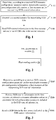
- FIG. 1 is a flowchart illustrating a D2D communication method according to an embodiment of the present disclosure. As shown in Fig. 1 , the method includes the following steps.
- a first resource set for transmitting D2D control information is determined according to a received D2D resource configuration parameter and/or stored radio resource pre-configuration information.
- a second resource for transmitting D2D data is determined.
- D2D control information is sent in the first resource set and/or D2D data is sent in the second resource.
- the embodiment realizes the sending of D2D control information and D2D data in D2D communication.
- the embodiment consequentially addresses the scheduling problem existing in the direct communication of D2D UEs on the radio resource of a cellular communication system in the related art.
- the reliability of the transmission of D2D communication control information and data information and the flexibility of D2D communication scheduling under each TDD configuration for different types of services when D2D communication can only use uplink resources can be guaranteed.
- a scheme consisting of the foregoing steps S102-S106 is especially applicable to a D2D UE which is a sending terminal.
- the received D2D resource configuration parameter and/or the stored radio resource pre-configuration information may come from an eNB or a covered UE, that is, the received D2D resource configuration parameter and/or the stored radio resource pre-configuration information may be forwarded by a PSBCH.
- the second resource may be determined according to at least one of the following information: received D2D data transmission resource pool configuration information; received transmission resource indication information for D2D data transmission; and the stored radio resource pre-configuration information.
- a subframe in the first resource set or a subframe for transmitting the D2D control information is overlapped with a subframe in the second resource, and in the overlapped subframe, a frequency-domain resource of the first resource set or a frequency-domain resource for transmitting the D2D control information is overlapped in position with a frequency-domain resource of the second resource, only the D2D data is sent in the overlapped subframe.
- a subframe in the first resource set or a subframe for transmitting the D2D control information is overlapped with a subframe in the second resource, and in the overlapped subframe, a frequency-domain resource of the first resource set or a frequency-domain resource for transmitting the D2D control information is overlapped in position with a frequency-domain resource of the second resource, only the D2D control information is sent in the overlapped subframe.
- a subframe in the first resource set or a subframe for transmitting the D2D control information is overlapped with a subframe in the second resource, and in the overlapped subframe, a frequency-domain resource of the first resource set or a frequency-domain resource for transmitting the D2D control information is overlapped in position with a frequency-domain resource of the second resource, the D2D control information and the D2D data are both sent in the overlapped subframe, and only the D2D control information or the D2D data is sent in the overlapped frequency-domain resource.
- a subframe in the first resource set or a subframe for transmitting the D2D control information is overlapped with a subframe in the second resource, and in the overlapped subframe, a frequency-domain resource of the first resource set or a frequency-domain resource for transmitting the D2D control information is orthogonal in position to a frequency-domain resource of the second resource, the D2D control information and the D2D data are both sent in the overlapped subframe.
- the D2D data may be sent in the second resource in the following manner.
- the number of transmission times of the D2D data is determined, and the D2D data is sent according to the determined number of transmission times.
- the number of transmission times refers to the number of times the same packet is transmitted when the packet is transmitted repeatedly.
- the number of transmission times of the D2D data may be determined according to at least one of the following information: UL-DL configuration of a TDD system; a service type; a received signaling indication of the number of transmission times; an index of a resource pattern for transmission (e.g., Time Resource Pattern for Transmission, short as T-RPT) of the D2D data; and a resource pattern for transmission (e.g., a T-RPT) of the D2D data.
- a resource pattern for transmission e.g., a T-RPT
- the service types at least include semi-persistently scheduled services and non-semi-persistently scheduled services; or service types at least include a Voice over IP (VoIP) service and non-VoIP services.
- the received signaling indication of the number of transmission times may be sent by a network-side device or forwarded by a UE in a partial coverage scenario or a non-coverage scenario.
- the 'partial coverage' refers to that a part of UEs participating in D2D communication are out of the coverage of a cellular network.
- the 'non-coverage' refers to that each UE participating in D2D communication is out of the coverage of a cellular network.
- the T-RPT is represented with a bitmap, for example, a bitmap 00110000 corresponds to eight subframes, and the bitmap indicates that the third subframe and the fourth subframe are used for the transmission of the D2D data.
- a bitmap may be indicated by an index.
- the bitmaps available to a certain UL-DL configuration may form a bitmap set in which each bitmap corresponds to one index.
- a sending UE indicates the index to a receiving UE, and the receiving UE can determine the positions of the subframes for transmitting the D2D data according to the index.
- each TDD UL-DL configuration corresponds to one or more values for the number of transmission times.
- the method when the number of transmission times of the D2D data is determined at least according to the received signaling indication of the number of transmission times, the method further includes the following processing.
- the signaling indication of the number of transmission times which is sent from a network-side device and borne in a dedicated radio resource control message or D2D grant information (sent in a PDCCH or an EPDCCH) or a broadcast message, is received.
- the signaling indication of the number of transmission times which is sent from another user equipment and borne in a PSBCH, is received.
- a value for the number of transmission times is sent through the D2D control information.
- N service types which at least include two service types corresponding to different values for the number of transmission times, where N>1; and indication information for indicating the service type is sent through the D2D control information.
- the method may further include the following processing.
- Subframe positions of transmission resources are represented by a resource pattern for transmission, each resource pattern for transmission corresponds to more than one index value, and different index values correspond to different values for the number of transmission times.
- a plurality of resource pattern sets for transmission are predefined, each resource pattern set for transmission corresponds to one value for the number of transmission times, and resource patterns for transmission included in different resource pattern sets for transmission are indicated by different indexes.
- the index of the resource pattern for transmission is sent through the D2D control information.
- each resource pattern for transmission corresponds to one value for the number of transmission times, and each resource pattern for transmission corresponds to one index value; and an index for indicating the resource pattern for transmission is sent through the D2D control information.
- a D2D communication apparatus corresponding to the foregoing D2D communication method is also provided in an embodiment to realize the foregoing embodiments and exemplary implementation modes, and what has been described above is not described here repeatedly.
- the term 'module' is the combination of software and/or hardware for realizing preset functions.
- the apparatuses described in the following embodiments are implemented as software preferably, the implementation of the apparatuses as hardware or the combination of software and hardware may also be devised.
- Fig. 2 is a block diagram illustrating the structure of a D2D communication apparatus according to an embodiment of the present disclosure. As shown in Fig. 2 , the apparatus includes: a first determination module 22 and a first sending module 24 both of which are described in detail below.
- the first determination module 22 is arranged to determine, according to a received D2D resource configuration parameter and/or stored radio resource pre-configuration information, a first resource set for transmitting D2D control information.
- the first determination module 22 is further arranged to determine a second resource for transmitting D2D data.
- the first sending module 24 is coupled with the first determination module 22 and arranged to send D2D control information in the first resource set and/or send D2D data in the second resource.
- the second resource may be determined according to at least one of the following information: received D2D data transmission resource pool configuration information; received transmission resource indication information for D2D data transmission; and the stored radio resource pre-configuration information.
- a subframe in the first resource set or a subframe for transmitting the D2D control information is overlapped with a subframe in the second resource, and in the overlapped subframe, a frequency-domain resource of the first resource set or a frequency-domain resource for transmitting the D2D control information is overlapped in position with a frequency-domain resource of the second resource, only the D2D data is sent in the overlapped subframe.
- a subframe in the first resource set or a subframe for transmitting the D2D control information is overlapped with a subframe in the second resource, and in the overlapped subframe, a frequency-domain resource of the first resource set or a frequency-domain resource for transmitting the D2D control information is overlapped in position with a frequency-domain resource of the second resource, only the D2D control information is sent in the overlapped subframe.
- a subframe in the first resource set or a subframe for transmitting the D2D control information is overlapped with a subframe in the second resource, and in the overlapped subframe, a frequency-domain resource of the first resource set or a frequency-domain resource for transmitting the D2D control information is overlapped in position with a frequency-domain resource of the second resource, the D2D control information and the D2D data are both sent in the overlapped subframe, and only the D2D control information or the D2D data is sent in the overlapped frequency-domain resource.
- a subframe in the first resource set or a subframe for transmitting the D2D control information is overlapped with a subframe in the second resource, and in the overlapped subframe, a frequency-domain resource of the first resource set or a frequency-domain resource for transmitting the D2D control information is orthogonal in position to a frequency-domain resource of the second resource, the D2D control information and the D2D data are both sent in the overlapped subframe.
- the first determination module 22 is further arranged to determine the number of transmission times of the D2D data.
- the first sending module 24 is further arranged to send the D2D data according to the determined number of transmission times.
- the first determination module 22 may be arranged to determine the number of transmission times of the D2D data according to at least one of the following information: UL-DL configuration of a TDD system; a service type; a received signaling indication of the number of transmission times; an index of a resource pattern for transmission of the D2D data; and a resource pattern for transmission of the D2D data.
- each TDD UL-DL configuration corresponds to one or more values for the number of transmission times.
- the apparatus when the number of transmission times of the D2D data is determined at least according to the received signaling indication of the number of transmission times, the apparatus further includes a first receiving module.
- the first receiving module is arranged to receive the signaling indication of the number of transmission times which is sent from a network-side device and borne in a dedicated radio resource control message or D2D grant information or a broadcast message.
- the first receiving module is arranged to receive the signaling indication of the number of transmission times which is sent from another user equipment and borne in a PSBCH.
- a parameter indicating the number of transmission times is included in the D2D control information sent by the first sending module.
- N service types which at least include two service types corresponding to different values for the number of transmission times, where N>1.
- a parameter indicating the service type is included in the D2D control information sent by the first sending module 24.
- subframe positions of transmission resources are represented by a resource pattern for transmission (e.g., T-RPT).
- a resource pattern for transmission corresponds to more than one index value, and different index values correspond to different values for the number of transmission times.
- a plurality of resource pattern sets for transmission are predefined, each resource pattern set for transmission corresponds to one value for the number of transmission times, and resource patterns for transmission included in different resource pattern sets for transmission are indicated by different indexes.
- the index of the resource pattern for transmission is included in the D2D control information sent by the first sending module 24.
- each resource pattern for transmission corresponds to one value for the number of transmission times, and each resource pattern for transmission corresponds to one index value; and an index for indicating the resource pattern for transmission is included in the D2D control information sent by the first sending module 24.
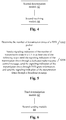
- Fig. 3 is a flowchart illustrating another D2D communication method according to an embodiment of the present disclosure. As shown in Fig. 3 , the method includes the following steps: At step S302, a first resource set for transmitting D2D control information is determined according to a received D2D resource configuration parameter and/or stored radio resource pre-configuration information.
- D2D control information is received in the first resource set.
- a resource allocation indication parameter for indicating a data resource is included in the D2D control information.
- D2D data is received in the data source indicated by the D2D control information.
- a first resource set for transmitting D2D control information is determined according to a received D2D resource configuration parameter and/or stored radio resource pre-configuration information, D2D control information in which a resource allocation indication parameter for indicating a data resource is included is received in the first resource set, and D2D data is received in the data source indicated by the D2D control information.
- the embodiment realizes the receiving of D2D control information and D2D data in D2D communication and consequentially addresses the scheduling problem existing in the direct communication of D2D UEs on the radio resource of a cellular communication system in the related art.
- the reliability of the transmission of D2D communication control information and data information and the flexibility of D2D communication scheduling under each TDD configuration for different types of services when D2D communication can only use uplink resources can be guaranteed.
- a scheme consisting of the foregoing steps S302-S306 is especially applicable to a D2D UE at a receiving side.
- the received D2D resource configuration parameter and/or the stored radio resource pre-configuration information may come from an eNB or a covered UE, that is, the received D2D resource configuration parameter and/or the stored radio resource pre-configuration information are/is forwarded by a PSBCH.
- a time-domain resource indicated by the data resource may be the positions of physical subframes, or a time-domain resource indicated by the data resource may be virtual subframes corresponding to subframes in a D2D data transmission resource pool.
- a frequency-domain resource of the first resource set is overlapped in position with a frequency-domain resource of the data resource, only the D2D data is received in the overlapped subframe.
- a frequency-domain resource of the first resource set is overlapped in position with a frequency-domain resource of the data resource, only the D2D control information is received in the overlapped subframe.
- a subframe in the first resource set or a subframe for transmitting the D2D control information is overlapped with a subframe in the data resource, and in the overlapped subframe, a frequency-domain resource of the first resource set is orthogonal in position to a frequency-domain resource of the data resource, the D2D control information and the D2D data are both received in the overlapped subframe.
- receiving the D2D data in the data resource may include the following steps.
- the number of transmission times of the D2D data is determined, and the D2D data is received according to the determined number of transmission times.
- the number of transmission times of the D2D data may be determined according to at least one of the following information: UL-DL configuration of a TDD system; a service type; a received signaling indication of the number of transmission times (may be sent from a network or a sending UE); an index of a resource pattern for transmission of the D2D data; and a resource pattern for transmission of the D2D data.
- each TDD UL-DL configuration corresponds to one or more values for the number of transmission times.
- the method further includes: receiving the signaling indication of the number of transmission times.
- the signaling indication of the number of transmission times is sent from a network-side device and borne in a dedicated radio resource control message or D2D grant information or a broadcast message.
- the signaling indication of the number of transmission times is sent from another user equipment and borne in a PSBCH.
- the signaling indication of the number of transmission times is sent by a UE which is a sending terminal of the D2D data, and is borne in the D2D control information.
- the method when the number of transmission times of the D2D data is determined at least according to the index of the resource pattern for transmission of the D2D data, the method further includes: receiving the index of the resource pattern for transmission of the D2D data.
- Subframe positions of transmission resources are represented by a resource pattern for transmission, one resource pattern for transmission corresponds to more than one index value, and different index values correspond to different values for the number of transmission times.
- the method may further include: predefining a plurality of resource pattern sets for transmission. Each resource pattern set for transmission corresponds to one value for the number of transmission times, and resource patterns for transmission included in different resource pattern sets for transmission are indicated by different indexes.
- the method when the number of transmission times of the D2D data is determined at least according to the resource pattern for transmission of the D2D data, the method further includes: receiving a signaling for indicating the index of the resource pattern for transmission of the D2D data.
- Each resource pattern for transmission corresponds to one value for the number of transmission times, and each resource pattern for transmission corresponds to one index value.
- a D2D communication apparatus corresponding to the foregoing D2D communication method is also provided in an embodiment to realize the foregoing embodiments and exemplary implementation modes, and what has been described above is not described here repeatedly.
- the term 'module' is the combination of software and/or hardware for realizing preset functions.
- the apparatuses described in the following embodiments are implemented as software preferably, the implementation of the apparatuses as hardware or the combination of software and hardware may also be devised.
- Fig. 4 is a block diagram illustrating the structure of another D2D communication apparatus according to an embodiment of the present disclosure. As shown in Fig. 4 , the apparatus includes: a second determination module 42 and a second receiving module 44 both of which are described in detail below.
- the second determination module 42 is arranged to determine, according to a received D2D resource configuration parameter and/or stored radio resource pre-configuration information, a first resource set for transmitting D2D control information.
- the second receiving module 44 is coupled with the second determination module 42 and arranged to receive D2D control information in the first resource set, a resource allocation indication parameter for indicating a data resource is included in the D2D control information.
- the second receiving module 44 is further arranged to receive D2D data in the data source indicated by the D2D control information.
- a time-domain resource indicated by the data resource is the positions of physical subframes, or a time-domain resource indicated by the data resource is virtual subframes corresponding to subframes in a D2D data transmission resource pool.
- a frequency-domain resource of the first resource set is overlapped in position with a frequency-domain resource of the data resource, only the D2D data is received in the overlapped subframe.
- a frequency-domain resource of the first resource set is overlapped in position with a frequency-domain resource of the data resource, only the D2D control information is received in the overlapped subframe.
- a subframe in the first resource set or a subframe for transmitting the D2D control information is overlapped with a subframe in the data resource, and in the overlapped subframe, a frequency-domain resource of the first resource set is orthogonal in position to a frequency-domain resource of the data resource, the D2D control information and the D2D data are both received in the overlapped subframe.
- the second determination module 42 may be arranged to determine the number of transmission times of the D2D data.
- the second receiving module 44 may also be arranged to receive the D2D data according to the determined number of transmission times.
- the second determination module 42 may be arranged to determine the number of transmission times of the D2D data according to at least one of the following information: UL-DL configuration of a TDD system; a service type; a received signaling indication of the number of transmission times; an index of a resource pattern for transmission of the D2D data; and a resource pattern for transmission of the D2D data.
- each TDD UL-DL configuration corresponds to one or more values for the number of transmission times.
- the second receiving module 44 may also be arranged to receive the signaling indication of the number of transmission times.
- the signaling indication of the number of transmission times is sent from a network-side device and borne in a dedicated radio resource control message or D2D grant information or a broadcast message.
- the signaling indication of the number of transmission times is sent from another user equipment and borne in a PSBCH.
- the signaling indication of the number of transmission times is sent by a UE which is a sending terminal of the D2D data, and is borne in the D2D control information.
- the second receiving module 44 is further arranged to receive the index of the resource pattern for transmission of the D2D data.
- Subframe positions of transmission resources are represented by a resource pattern for transmission, one resource pattern for transmission corresponds to more than one index value, and different index values correspond to different values for the number of transmission times.
- a plurality of resource pattern sets for transmission are predefined, each resource pattern set for transmission corresponds to one value for the number of transmission times. Resource patterns for transmission included in different resource pattern sets for transmission are indicated by different indexes.
- the second receiving module 44 may also be arranged to receive a signaling for indicating the index of the resource pattern for transmission of the D2D data.
- Each resource pattern for transmission corresponds to one value for the number of transmission times, and each resource pattern for transmission corresponds to one index value.
- FIG. 5 is a flowchart illustrating yet another D2D communication method according to an embodiment of the present disclosure. As shown in Fig. 5 , the method includes the following steps.
- step S502 the number of transmission times of a D2D packet is determined.
- a signaling indication of the number of transmission times is sent to a UE in at least one of the following ways: sending the signaling indication of the transmission times through a dedicated radio resource control message; sending the signaling indication of the transmission times through D2D grant information; and sending the signaling indication of the transmission times through a broadcast message.
- the number of transmission times of a D2D packet is determined and a signaling indication of the number of transmission times is sent to a UE in the foregoing way.
- the embodiment realizes the determination of the number of transmission times of a D2D packet and the sending of the D2D packet and consequentially addresses the scheduling problem existing in the direct communication of D2D UEs on the radio resource of a cellular communication system in the related art.
- the reliability of the transmission of D2D communication control information and data information and the flexibility of D2D communication scheduling under each TDD configuration for different types of services when D2D communication can only use uplink resources can be guaranteed.
- a scheme consisting of the foregoing steps S502 and S504 is especially applicable to a network side.
- the number of transmission times of the D2D packet may be determined according to at least one of the following information: UL-DL configuration of a TDD system, a service type (e.g. a semi-persistently scheduled service or VoIP service); received buffer status report information; and a resource pool configuration for D2D communication.
- a service type e.g. a semi-persistently scheduled service or VoIP service
- received buffer status report information e.g. a semi-persistently scheduled service or VoIP service
- a resource pool configuration for D2D communication e.g. a resource pool configuration for D2D communication.
- a D2D communication apparatus corresponding to the foregoing D2D communication method is also provided in an embodiment to realize the foregoing embodiments and exemplary implementation modes, and what has been described above is not described here repeatedly.
- the term 'module' is the combination of software and/or hardware for realizing preset functions.
- the apparatuses described in the following embodiments are implemented as software preferably, the implementation of the apparatuses as hardware or the combination of software and hardware may also be devised.
- Fig. 6 is a block diagram illustrating the structure of yet another D2D communication apparatus according to an embodiment of the present disclosure. As shown in Fig. 6 , the apparatus includes: a third determination module 62 and a second sending module 64 both of which are described in detail below.
- the third determination module 62 is arranged to determine the number of transmission times of a D2D packet.
- the second sending module 64 is coupled with the third determination module 62 and arranged to send a signaling indication of the number of transmission times to a UE in at least one of the following ways: sending the signaling indication of the transmission times through a dedicated radio resource control message; sending the signaling indication of the transmission times through D2D grant information; and sending the signaling indication of the transmission times through a broadcast message.
- the third determination module 62 may also be arranged to determine the number of transmission times of the D2D packet according to at least one of the following information: UL-DL configuration of a TDD system; a service type; received buffer status report information; and a resource pool configuration for D2D communication.
- the method addresses the scheduling problem existing in D2D communication.
- the ratio of uplink subframes to downlink subframes is variable, the reliability of the transmission of D2D communication control information and data information and the flexibility of D2D communication scheduling for different types of services in a TDD system can be guaranteed.
- a D2D communication method and a D2D communication apparatus are provided in the following exemplary embodiments.
- the technical solutions provided herein are applicable to a cellular wireless communication system or network.
- Common cellular wireless communication systems may be based on a Code Division Multiplexing Access (CDMA) technology, a Frequency Division Multiplexing Access (FDMA) technology, an Orthogonal-FDMA (OFDMA) technology, a Single Carrier-FDMA (SC-FDMA) technology or the like.
- CDMA Code Division Multiplexing Access
- FDMA Frequency Division Multiplexing Access
- OFDMA Orthogonal-FDMA
- SC-FDMA Single Carrier-FDMA
- the downlink (or called forward link) and the uplink (or called reverse link) of a 3rd Generation Partnership Project (3GPP) Long Term Evolution (LTE)/LTE-Advanced (LTE-A) cellular communication system are based on the OFDMA technology and the SC-FDMA technology, respectively.
- 3GPP 3rd Generation Partnership Project
- LTE Long Term Evolution
- LTE-A LTE-Advanced
- SC-FDMA SC-FDMA
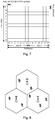
- a Radio Resource for communication is in the form of two dimensions of time and frequency.
- Fig. 7 is a schematic diagram illustrating existing structural division of a radio resource according to an exemplary embodiment of the present disclosure.
- communication resources of the uplink and the downlink are both divided into radio frames in the time domain.
- the length of each radio frame is 10ms, including 10 subframes whose length is 1ms.
- Each subframe includes two slots both of which have a length of 0.5ms.
- each slot may include 6 or 7 OFDM symbols or SC-FDM symbols.
- a resource In the frequency domain, a resource is divided into sub-carriers.
- the smallest unit for the allocation of a frequency-domain resource is Resource Block (RB) which corresponds to one Physical RB (PRB) of a physical resource.
- RB Resource Block
- PRB Physical RB
- One PRB includes 12 sub-carries in the frequency domain, corresponding to one slot in the time domain.
- Two PRBs that are included in a subframe and adjacent to each other in the time domain constitute a PRB pair.
- the resource on each OFDM/SC-FDM symbol corresponding to one sub-carrier is referred to as a Resource Element (RE), as shown in Fig. 7 .
- RE Resource Element
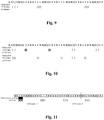
- Fig. 8 is a schematic diagram illustrating the network deployment of existing cellular wireless communication system according to an exemplary embodiment of the present disclosure.
- the system shown in Fig. 8 may be a 3GPP LTE/LTE-A system or may be based on other cellular wireless communication technology.
- network devices In the access network of a cellular wireless communication system, network devices generally include a certain number of base stations (the base station may also be called Node B or evolved Node B (eNB) or enhanced Node B (eNB)) and other network entities or network elements. These network devices may be generally and collectively referred to as a network side (Evolved Versatile Terrestrial Radio Access Network (E-UTRAN).
- E-UTRAN Evolved Versatile Terrestrial Radio Access Network
- the base station mentioned herein also includes a Low Power Node (LPN) included in a network, for example, a femto cell or a home base station (pico, relay, femto, Home eNB (HeNB), and the like).
- LPN Low Power Node
- a base station provides a certain radio signal coverage area in which terminals (or called UEs or devices) can communicate with the base station wirelessly.
- the radio signal coverage area of a base station may be divided into one or more cells or sectors, for example, three cells, according to a certain rule.
- a method for scheduling communication is as follows.
- a sending D2D UE sends a D2D control signaling (also called D2D control information) and D2D data.
- the D2D control signaling may also be referred to as a Scheduling Assignment (SA) or Sidelink Control Information (SCI).
- SA Scheduling Assignment
- SCI Sidelink Control Information
- the D2D control signaling is used for indicating the resource position of D2D data, a Modulation and Coding Scheme (MCS), parameters related to power control and parameters related to pre-coding and the like.
- MCS Modulation and Coding Scheme
- the D2D control signaling may be directly transmitted in the format of PUSCH, or a new physical channel, for example, a Physical Sidelink Control Channel (PSCCH), may be defined to bear the D2D control signaling.
- PSCCH Physical Sidelink Control Channel
- the D2D data which is D2D service data directly transmitted between D2D UEs, can be directly transmitted in the format of PUSCH
- a resource for sending SCI may be allocated by a network side (e.g. a base station) or selected by a sending UE.
- a base station indicates a resource pool for transmitting SCI through a broadcast signaling and indicates a resource in the resource pool for transmitting SCI for a sending D2D UE through a control scheduling, this D2D communication mode is called mode 1.
- the sending UE selects a resource for transmitting SCI from an SCI resource pool based on a certain rule, and this D2D communication mode is called mode 2.
- a resource may be allocated by a base station in mode 1, for example, a base station indicates the position of a resource for transmitting D2D data for a sending UE through a control signaling (e.g. the control signaling is generally borne in D2D grant information).
- a D2D data transmission resource is configured in a base station by a sending D2D UE based on a certain rule, or a D2D data transmission resource is selected from a pre-configured (or pre-defined) resource pool.
- the receiving D2D UE may detect SCI in an SCI resource pool first and then receive D2D data based on the indication of the SCI.
- the D2D data resource (e.g. subframes) indicated by the SCI may be the position of a physical resource.
- the positions of the indicated time-domain subframes are physical subframes, in this case, the receiving UE directly receives D2D data in the indicated physical subframes.
- the D2D data resource (e.g., subframes) indicated by the SCI may be the position of a virtual resource.
- D2D data is restricted to be transmitted in a D2D resource pool, and the indicated subframes correspond to subframes in the resource pool.
- Non-feedback communication a data receiving terminal feeds no Acknowledgement (ACK) or Non-Acknowledgement (NACK) information, and this communication mode is more suitable for broadcast or multi-cast communication.
- a data transmission scheme of blind retransmission can be introduced, that is, a sending terminal directly transmits a packet, for example, a Transmission Block (TB) or a Medium Access Control (MAC) Packet Data Unit (PDU), for a certain number of times.
- TB Transmission Block
- MAC Medium Access Control
- PDU Packet Data Unit
- the sending terminal retransmits a packet for three times after sending the packet for the first time, that is, sends the packet for four times.
- a receiving terminal needs to know a specific value for the number of data transmission times so as to guarantee the correct receiving of data.
- the number of retransmission times or the number of transmission times of D2D data is determined according to at least one of the following information: UL-DL configuration of a TDD system; a service type; a received signaling indication of the number of transmission times; an index of a resource pattern for transmission of the D2D data; and a resource pattern for transmission of the D2D data.
- the D2D data is sent or received according to the determined number of transmission times.
- Seven subframe configurations are defined in an LTE Release-8 TDD system.
- the uplink/downlink configurations of subframes in a TDD LTE system are shown in Table 1. As shown in Table 1, each configuration is different in the proportion of uplink subframes. If it is restricted that a D2D signal can only be transmitted on uplink subframes, then the maximum number of available D2D subframes may also be restricted by a TDD configuration. Based on this, a method provided in an embodiment to realize the transmission of D2D communication data is as follows. The number of transmission times of D2D data is determined according to a TDD UL-DL configuration.
- the number of transmission times of D2D data is 4.
- the number of transmission times of D2D data is 2 or 1.
- the restriction of the number of transmission times of D2D data to be 2 or 1 means that the number of transmission times of D2D data under this TDD configuration is restricted in the system to be 2 or that the number of transmission times of D2D data under this TDD configuration is restricted to be 1 or that the number of transmission times of D2D data under this TDD configuration is restricted to be 2 or 1.
- a specific value for the number of transmission times is determined in the way described in a related embodiment.
- a packet is generally transmitted within 20ms (millisecond), and a new packet may be waiting to be transmitted after 20ms is up.
- a method provided in an embodiment to realize the transmission of D2D communication data is as follows.
- the number of transmission times of D2D data is determined according to the service type. For example, there may be N service types that are predefined by a system, where N>1, and for each service type, there is a corresponding value for the number of D2D data transmission times.
- service type 1 may be a VoIP service
- service type 2 is non-VoIP services. It can be known from above that the service types described herein are more defined from the aspect of data transmission times but are not corresponding to conventional classification of service types.
- a method provided in an embodiment to realize the transmission of D2D communication data is as follows.
- the number of transmission times of D2D data is determined according to a TDD UL-DL configuration and a service type. For example, there may be N service types that are predefined by a system, where N>1. For each service type, there is a corresponding value for the number of D2D data transmission times under each TDD UL-DL configuration.
- service types are still the foregoing exemplified service types.
- configuration 2/4/5 it can be restricted that the number of transmission times of D2D data is 2 or 1.
- configuration 3 it can be restricted that the number of transmission times of D2D data is 4 or 2.
- configuration 6 it can be restricted that the number of transmission times of D2D data is 4.
- the foregoing service type may be indicated by a sending D2D UE to a receiving D2D UE through a signaling.
- a parameter for indicating a service type is transmitted in SCI.
- the receiving UE receives D2D data according to the indication signaling and the allocation of a D2D data resource.
- a sending UE may report the service type thereof to a base station, and the base station determines a resource allocation for D2D data transmission according to the service type or according to the service type and a TDD UL-DL configuration.
- a method provided in an embodiment to realize the transmission of D2D communication data is as follows.
- the number of transmission times of D2D data is determined according to a signaling indication of the number of transmission times.
- a base station sends a parameter for indicating the number of transmission times of D2D data, and a sending D2D UE and a receiving D2D UE send and receive D2D data according to the number of transmission times, respectively.
- a signaling indication of the number of transmission times may be sent in the form of a broadcast, for example, borne in a System Information Block (SIB).
- SIB System Information Block
- a sending UE determines the number of transmission times of D2D data and indicates the number of transmission times of D2D data to a receiving D2D UE through SCI.
- a sending UE may report the number of transmission times of D2D data to a base station, and based on the number of transmission times, the base station schedules the sending UE to conduct the transmission of D2D data.
- a parameter for indicating the number of transmission times of D2D data may be sent through a PSBCH.
- the parameter for indicating the number of transmission times may indicate the number of transmission times of D2D data directly.
- indication parameters 1, 2 and 3 (or 0, 1 and 2 or the like) indicate that the values for the number of D2D data transmission times are 1, 2 and 4, respectively.
- the parameter for indicating the number of transmission times may indicate the number of transmission times of D2D data through an index. That is, a sent signaling indication of the number of transmission times indicates an index for the number of transmission times. Different indexes correspond to different values for the number of transmission times. The same index may correspond to different values for the number of transmission times in different TDD UL-DL configurations. For example, there are two indexes 0 and 1 for indicating the number transmission times.
- the indexes 0 and 1 correspond to values 2 and 4 for the number of transmission times in TDD configuration 0 and values 1 and 2 for the number of transmission times in TDD configuration 2.
- the parameter for indicating the number of transmission times may directly represent the number of transmission times of D2D data.
- indication parameters 1, 2, 3 and 4 indicate that the values for the number of D2D data transmission times are 1, 2, 3 and 4, respectively.
- a sending D2D UE After determining the number of transmission times of D2D data, a sending D2D UE sends D2D data according to the number of transmission times. After determining the number of transmission times of D2D data, a receiving D2D UE receives D2D data according to the number of transmission times. In mode 1, after determining the number of transmission times, an eNB schedules the sending D2D UE to send the D2D data according to the number of transmission times.
- a time-domain resource for sending D2D data may be indicated by a bitmap-based T-RPT described above, and the length of the bitmap of a TDD system depends on a specific TDD UL-DL configuration.
- a bitmap for indicating a time-domain resource for sending D2D data consists of 8 bits (corresponding to 8 successive uplink subframes in mode 1 and eight successive subframes in a D2D communication data resource pool in the mode 2). If the value of the bitmap is 00110011, then four of eight subframes are scheduled to send the D2D data, and such specific value of the bitmap may also be referred to as a subframe pattern.
- FIG. 9 is a schematic diagram 1 illustrating a D2D data subframe pattern set for scheduling according to an exemplary embodiment of the present disclosure.
- the eight subframes corresponding to an 8-bit bitmap are shown in Fig. 9 .
- the scheduled D2D data subframes (subframes represented by '1') are represented by shadows in Fig. 9 . If it is determined that the number of transmission times of D2D data is 4, then the four subframes represented with shadows in Fig. 9 correspond to the four times of transmission of a D2D packet. If it is determined that the number of transmission times of D2D data is 2, then the first two of the four subframes represented with shadows in Fig. 9 are used for the two times of transmission of a D2D packet, and the last two of the four subframes are used for the two times of transmission of another D2D packet.
- subframe patterns for scheduling D2D data transmission form a subframe pattern set (e.g. in a TDD system, all the time resource patterns for transmission available under a TDD configuration form a subframe pattern set under the TDD configuration, no repeated description is given hereinafter).
- Each subframe pattern in a subframe pattern set corresponds to an index, and the number of transmission times of D2D data described herein is implicitly indicated by this index.
- a part of subframe patterns in the subframe pattern set or all of the subframe patterns in the subframe pattern set correspond to a plurality of index values which respectively correspond to a plurality of values for the number of D2D data transmission times.
- a subframe pattern in a subframe pattern set is 00110011 which corresponds to two indexes, for example, indexes i and k both represent this subframe pattern (i and k are different non-negative integers which are smaller than M, where M is a maximum subframe pattern index value), however, the number of D2D data transmission times represented by i is different from that represented by k.
- i corresponds to a value 2 for the number of D2D data transmission times
- k corresponds to a value 4 for the number of D2D data transmission times.
- subframe patterns for scheduling D2D data transmission form a plurality of subframe pattern sets (e.g. there are a plurality of subframe pattern sets under each TDD configuration).
- the subframe patterns in each subframe pattern set are used for the scheduling under a specific number of transmission times of D2D data.
- the subframe patterns included in different subframe pattern sets may be totally different or partially identical or completely identical. Indexes for indicating subframe patterns in different subframe pattern sets are different. For example, there are two subframe pattern sets 1 and 2 under a certain TDD configuration.
- the subframe patterns in the subframe pattern set 1 and the subframe patterns in the subframe pattern set 2 represent different values for the number of transmission times.
- subframe pattern set 1 corresponds to a value 1 for the number of D2D data transmission times
- subframe pattern set 2 corresponds to a value 4 for the number of D2D data transmission times
- subframe pattern sets 1 and 2 both include a subframe pattern 00110011 which corresponds to two indexes, for example, indexes i and k both represent the subframe pattern (i and k are different non-negative integers which are smaller than M, where M is a maximum subframe pattern index value), i represents a value for the number of D2D data transmission times being 2, and k represents a value for the number of D2D data transmission times being 4.
- the subframe pattern set 1 includes 10101010 and the subframe pattern set 2 includes 01010101, because the indexes of these two subframe patterns are different, a receiving terminal can determine the subframe pattern used and the number of transmission times of D2D data based on the indexes. It should be noted that the correspondence of a subframe pattern to two indexes is merely exemplary, and the number of the indexes corresponding to a subframe pattern should not be restricted to be 2.
- subframe patterns for scheduling D2D data transmission form a subframe pattern set.
- Each subframe pattern (that is, each T-RPT) in the subframe pattern set corresponds to an index.
- the number of transmission times of D2D data described herein is represented by a subframe pattern.
- a part of the subframe patterns in the subframe pattern set are used for allocating D2D data subframes if the number of transmission times of the D2D packet is 2 while another part of the subframe patterns in the subframe pattern set are used for allocating D2D data subframes if the number of transmission times of the D2D packet is 4.
- subframe patterns 01010101 and 10101010 are included in a subframe pattern set corresponding to TDD UL-DL configuration 2.
- the subframe pattern 01010101 is used if the number of transmission times of D2D data is 2, and the subframe pattern 10101010 is used if the number of transmission times of D2D data is 4.
- Fig. 10 is a schematic diagram 2 illustrating a D2D data subframe pattern set for scheduling according to an exemplary embodiment of the present disclosure.
- one or more subframes in a D2D control information resource set that are allowed to be configured may be overlapped with one or more subframes in a D2D data transmission resource set or one or more subframes scheduled for transmitting D2D data.
- a subframe in the first resource set or a subframe for transmitting the D2D control information is overlapped with a subframe in the second resource
- a frequency-domain resource of the first resource set or a frequency-domain resource for transmitting the D2D control information is overlapped in position with a frequency-domain resource of the second resource, then only the D2D data is sent in the overlapped subframe.
- a subframe in the first resource set or a subframe for transmitting the D2D control information is overlapped with a subframe in the second resource
- a frequency-domain resource of the first resource set or a frequency-domain resource for transmitting the D2D control information is overlapped in position with a frequency-domain resource of the second resource, then only the D2D control information is sent in the overlapped subframe.
- a subframe in the first resource set or a subframe for transmitting the D2D control information is overlapped with a subframe in the second resource
- a frequency-domain resource of the first resource set or a frequency-domain resource for transmitting the D2D control information is overlapped in position with a frequency-domain resource of the second resource
- the D2D control information and the D2D data are both sent in the overlapped subframe, and only the D2D control information or the D2D data is sent in the overlapped frequency-domain resource.
- a subframe in the first resource set or a subframe for transmitting the D2D control information is overlapped with a subframe in the second resource
- a frequency-domain resource of the first resource set or a frequency-domain resource for transmitting the D2D control information is orthogonal in position to a frequency-domain resource of the second resource, then the D2D control information and the D2D data are both sent in the overlapped subframe.
- Fig. 11 is a schematic diagram illustrating the positions of subframes for sending D2D control information and D2D data according to an exemplary embodiment of the present disclosure.
- the positions of the subframes used by a sending D2D UE to send D2D control information and D2D data are shown in Fig. 11 .
- the first four D2D data subframes are used to send a D2D packet 1
- the last four D2D data subframes are used to send a D2D packet 2.
- the subframes used by the D2D UE to send D2D control information are identified by, for example, a black region. That is, D2D data subframes are overlapped with D2D control information subframes.
- the sending D2D UE may only send D2D control information in the overlapped subframes, which means that the D2D packet 1 is transmitted for two times while the D2D packet 2 is transmitted for four times.
- a receiving D2D UE only receives the D2D control information sent by the sending UE in the overlapped subframes.
- RV Redundancy Version
- the selection of the RV is the same as the selection of RV used in a normal transmission (that is, a transmission causing no subframe conflict). For example, in Fig. 11 , if it is assumed that the RVs used in four transmissions of a packet are 0, 2, 3 and 1, then for the D2D packet 1, the RVs used in two transmissions of the D2D packet 1 are 3 and 1.
- FIG. 12 is a flowchart illustrating another D2D communication method according to an embodiment of the present disclosure. As shown in Fig. 12 , the method includes the following steps: As step S1202, a synchronization signal is detected.
- a synchronization source type is determined according to the detected synchronization signal.
- determining the synchronization source type according to the detected synchronization signal refers to making different synchronization source types correspond to different synchronization signal sequences.
- the synchronization source type at least includes base station and UE.
- a synchronization source refers to a node which sends a synchronization signal initially.
- a synchronization source is a base station.
- a synchronization source could at least be a base station and a UE.
- a base station sends a synchronization signal (e.g. a Primary Synchronization Signal (PSS) or a Secondary Synchronization Signal (SSS)), a UE covered by the base station can forward the synchronization signal (e.g.
- PSS Primary Synchronization Signal
- SSS Secondary Synchronization Signal
- a UE at the edge of the coverage area of the base station forwards the synchronization signal
- a UE outside of the coverage of the base station can detect the synchronization signal forwarded by the UE at the edge of the coverage area of the base station when the UE outside of the coverage of the base station cannot detect the synchronization signal sent by the base station.
- the synchronization signal forwarded by the UE at the edge of the coverage area of the base station may be same as a synchronization signal sequence sent by the base station (e.g. the resource position and/or the period of the forwarded synchronization signal are different from that or those of the synchronization signal sent by the base station, thus, even sequences are the same, the UE can still determine that the detected synchronization signal is sent by another UE).
- a UE not in coverage can determine, according to the sequence of the synchronization signal, that a synchronization source type is base station. In this case, the UE not in coverage can determine that the current scenario is a partial coverage scenario.
- a UE can send a synchronization signal when the UE cannot detect any synchronization signal, the synchronization signal sent by the UE is different from a synchronization signal sequence sent by the foregoing base station, for example, a D2D-specific synchronization signal sequence (e.g. the D2D-specific synchronization signal may include a PSS dedicated to D2D communication and an SSS dedicated to D2D communication, for these synchronization signals for a special purpose, at least one of a PSS sequence and an SSS sequence is different from a corresponding sequence of a cellular communication system, for example, a D2D-specific PSS is different from the PSS sequence of a cellular system) is defined.
- a D2D-specific synchronization signal sequence e.g. the D2D-specific synchronization signal may include a PSS dedicated to D2D communication and an SSS dedicated to D2D communication, for these synchronization signals for a special purpose, at least one of a PSS sequence and an SSS
- the synchronization signal sequence detected by a UE is a synchronization signal sequence dedicated to D2D communication
- the UE can determine that the current scenario is a non-coverage scenario.
- a TDD configuration is determined according to the synchronization source type (S1206 is an optional step, that is, S1206 may be skipped if no TDD configuration is needed in S1208).
- a UE receives an indication parameter for indicating the TDD configuration after determining that the synchronization source type is base station.
- a base station indicates the TDD configuration through a broadcast message.
- the TDD configuration may be one of the seven UL-DL configurations shown in Table 1.
- a D2D UE after determining the synchronization source type thereof to be base station, may further determine a TDD configuration through a received TDD configuration indication parameter.
- the indication parameter may be borne in a PSBCH.
- the UE After determining the synchronization source type to be UE, the UE receives an indication parameter for indicating the TDD configuration, the indication parameter may be borne in a PSBCH; or the UE acquires pre-configured information of the TDD configuration, the pre-configuration information indicates the TDD configuration.
- a resource pool (that is, a group of resources or a resource set) for the D2D communication is determined according to the synchronization source type, or the resource pool for the D2D communication is determined according to the synchronization source type and the TDD configuration, or resource pool for the D2D communication is determined according to the TDD configuration. That is, according to the synchronization source type and/or the TDD configuration.
- a resource pool for the D2D communication may be determined according to the synchronization source type in the following manner: receiving an indication parameter for indicating a resource pool for the D2D communication when the synchronization source type is base station, for example, the indication parameter is borne in a PSBCH.
- a resource pool for the D2D communication may be determined according to the synchronization source type in the following manner: receiving an indication parameter for indicating a resource pool for the D2D communication when the synchronization source type is UE, for example, the indication parameter is borne in a PSBCH.
- the indication parameter may indicate a D2D resource pool configuration directly, for example, the positions of the subframes and the frequency resource blocks of a D2D resource pool are indicated through a group of parameters.
- the indication parameter may also indicate the index of a resource pool configuration.
- a group of D2D resource pool configuration pattern sets may be predefined, and each D2D resource pool configuration in the set includes the positions of subframes for D2D communication and/or those of frequency resource blocks for D2D communication.
- Each resource pool configuration corresponds to an index through which the positions of subframes for D2D communication and/or those of frequency resource blocks for D2D communication are indicated.
- the D2D communication resource can be determined according to a predefined rule when the synchronization source type is UE.
- the predefined rule is that a subframes numbered with specific numbers are subframes for D2D communication, for example, it may be specified that subframes 2/3/4/7/8/9 are all D2D subframes (numbered from 0-9).
- a resource pool for the D2D communication is determined according to the TDD configuration, for example, all uplink subframes in the TDD configuration or all uplink subframes and special subframes in the TDD configuration or a part of uplink subframes in the TDD configuration are determined as the time-domain resource position of a resource pool for D2D communication.
- the method when determining a resource pool for D2D communication, the method at least determines the positions of the subframes of the resource pool for D2D communication in the time domain.
- the frequency position of the resource pool for D2D communication can also be appointed. For example, it may be appointed that in D2D subframes, the whole bandwidth of a system can be used for D2D communication or that a part of the whole bandwidth of a system, for example, a plurality of physical resource blocks in the central frequency band, is used for D2D communication.
- D2D communication is conducted in the resource pool for D2D communication.
- the UE conducts D2D communication in the resource pool after the resource pool for D2D communication is determined.
- a UE of a TDD system can determine a resource for D2D communication under any coverage condition, thereby conducting D2D communication.
- the resource pool for D2D communication further includes a control resource pool for transmitting D2D control information (e.g. SCI) and a data resource pool for transmitting D2D data (PSSCH).
- D2D control information e.g. SCI
- PSSCH D2D data
- the control resource pool and/or the data resource pool are indicated in the configuration parameter.
- the predefined rule synchronously defines subframes corresponding to the D2D control resource pool and those corresponding to the D2D data resource pool.
- the predefined rule is that subframes 2/3/4/7/8/9 are D2D subframes. It may be appointed that the first two subframes are subframes in the D2D control resource pool and the last four subframes are subframes in the D2D data resource pool. Alternatively, it may be appointed that the first A (A being a specific number) D2D subframes in a resource period (e.g.
- a plurality of groups of subframes numbered 2/3/4/7/8/9 are included in a resource period, or it can be understood that a plurality of radio frames are included in a resource period) are subframes of the D2D control resource pool and the rest D2D subframes in the resource period are subframes of the D2D data resource pool.
- Step 1206 is optional.
- a resource pool for D2D communication can be determined directly based on the foregoing method, that is, a resource pool for D2D communication can be determined according to a synchronization source type without determining a TDD configuration.
- the D2D communication method provided in the embodiment realizes a D2D communication in a TDD system and especially addresses the problem of the determination of a resource for D2D communication for a UE of a TDD system in a partial coverage scenario or a non-coverage scenario, thus enabling a UE of a TDD system to conduct D2D communication under any coverage condition.
- FIG. 13 is a block diagram illustrating the structure of a D2D communication apparatus according to an embodiment of the present disclosure. As shown in Fig. 13 , the apparatus includes: a synchronization module 132, a processing module 134 and a communication module 136 each of which is described in detail below.
- the synchronization module 132 is arranged to detect a synchronization signal and determine a synchronization source type according to the detected synchronization signal.
- the processing module 134 is coupled with the synchronization module 132 and arranged to determine a resource pool for D2D communication according to the synchronization source type; or determine a TDD configuration according to the synchronization source type and then determine a resource pool for D2D communication according to the TDD configuration or determine a resource pool for D2D communication according to the TDD configuration and the synchronization source type.
- the communication module 136 is coupled with the processing module 134 and arranged to conduct D2D communication in the resource pool for D2D communication.
- different synchronization source types correspond to different synchronization signal sequences
- the synchronization source type at least includes base station and UE.
- the processing module 134 includes a third receiving module.
- the third receiving module is arranged to receive an indication parameter for indicating the TDD configuration which is born, for example, in a PSBCH when the synchronization source type is base station; and/or receive an indication parameter for indicating the TDD configuration which may be born, for example, in a PSBCH when the synchronization source type is UE.
- the processing module is arranged to determine the TDD configuration according to the indication parameter or according to pre-configured information of the TDD configuration or determine a predefined TDD configuration to be the TDD configuration. For example, the use of a predefined TDD configuration in a non-coverage region or in a case where the synchronization source type is UE is appointed by a system.
- the processing module 134 includes a fourth receiving module.
- the fourth receiving module is arranged to receive an indication parameter for indicating a resource pool for D2D communication which is born, for example, in a PSBCH when the synchronization source type is base station, and/or receive an indication parameter for indicating a resource pool for D2D communication which may be borne in a PSBCH when the synchronization source type is UE.
- the indication parameter may directly indicate a D2D resource pool configuration. For example, the positions of the subframes and the frequency resource blocks of a D2D resource pool are indicated through a group of parameters. Alternatively, the indication parameter may also indicate the index of a resource pool configuration.
- each D2D resource pool configuration in the set includes the positions of subframes for D2D communication and/or those of frequency resource blocks for D2D communication.
- Each resource pool configuration corresponds to an index through which the positions of subframes for D2D communication and/or those of frequency resource blocks for D2D communication are indicated.
- the processing module is arranged to determine the D2D communication resource according to a predefined rule when the synchronization source type is UE.
- the predefined rule is that subframes 2/3/4/7/8/9 are all D2D subframes.
- the processing module is arranged to determine the D2D communication resource according to the TDD configuration when the synchronization source type is UE. All uplink subframes in the TDD configuration or all uplink subframes and special subframes in the TDD configuration or a part of uplink subframes in the TDD configuration are determined as time-domain resources for the D2D communication.
- the method when determining the resource pool for D2D communication, the method at least determines the positions of the subframes of the resource pool for D2D communication in the time domain.
- the frequency position of the resource pool for D2D communication if not indicated, can also be appointed. For example, it is appointed that in D2D subframes, the whole bandwidth of a system can be used for D2D communication or that a part of the whole bandwidth of a system, for example, a plurality of physical resource blocks in the central frequency band, is used for D2D communication.
- the resource pool for D2D communication includes a control resource pool for transmitting D2D control information and a data resource pool for transmitting D2D data.
- the configuration parameter includes a parameter for indicating the control resource pool and/or the data resource pool.
- the predefined rule is also used to determine the control resource pool and/or the data resource pool.
- the determination of the TDD configuration by the processing module is an optional operation.
- the processing module may directly determine the resource pool for D2D communication according to the synchronization source type.
- a storage medium which includes, but is not limited to: optical disk, floppy disk, hard disk and an erasable memory and on which the foregoing software is stored.
- each module or step described in the present disclosure can be realized by a universal computer and that the modules or steps may be integrated on a single computer or distributed on a network consisting of a plurality of computers, optionally, the modules or steps may be realized by executable program codes so that the modules or steps can be stored in a memory to be executed by a computer, and in some cases, the steps shown or described herein can be executed in a sequence different from this presented herein, or the modules or steps are formed into integrated circuit modules, or several of the modules or steps are formed into integrated circuit modules. Therefore, the present disclosure is not limited to the combination of specific hardware and software.
- the D2D communication method and D2D communication apparatus have the following beneficial effects.
- the methods and the apparatuses address the scheduling problem existing in the direct communication of D2D UEs on the radio resource of a cellular communication system in the related art.
- the reliability of the transmission of D2D communication control information and data information and the flexibility of D2D communication scheduling under each TDD configuration for different types of services when D2D communication can only use uplink resources can be guaranteed.
Landscapes
- Engineering & Computer Science (AREA)
- Signal Processing (AREA)
- Computer Networks & Wireless Communication (AREA)
- Mobile Radio Communication Systems (AREA)
Claims (10)
- Gerät-zu-Gerät, D2D, -Kommunikationsverfahren, das von einem D2D-UE-Sendeendgerät ausgeführt wird, umfassend:Bestimmen eines ersten Ressourcensatzes zum Übertragen von D2D-Steuerinformationen gemäß einem empfangenen D2D-Ressourcenkonfigurationsparameter und/oder gespeicherten Funkressourcen-Vorkonfigurationsinformationen, wobei ein Ressourcenzuweisungsanzeigeparameter zum Anzeigen einer Datenressource in den D2D-Steuerinformationen enthalten ist (S102);Bestimmen einer zweiten Ressource zum Übertragen von D2D-Daten (S 104); undSenden von D2D-Steuerinformationen in dem ersten Ressourcensatz und/oder Senden von D2D-Daten in der zweiten Ressource (S106);dadurch gekennzeichnet, dass Senden der D2D-Daten in der zweiten Ressource umfasst: Bestimmen der Anzahl von Übertragungszeiten der D2D-Daten; und Senden der D2D-Daten gemäß der bestimmten Anzahl von Übertragungszeiten;wobei die Anzahl von Übertragungszeiten der D2D-Daten gemäß einem Index eines Ressourcenmusters zur Übertragung der D2D-Daten oder eines Ressourcenmusters zur Übertragung der D2D-Daten bestimmt wird;wenn die Anzahl von Übertragungszeiten der D2D-Daten mindestens gemäß dem Index des Ressourcenmusters zur Übertragung der D2D-Daten bestimmt wird, das Verfahren ferner umfasst: Darstellen von Teilrahmenpositionen von Übertragungsressourcen durch ein Ressourcenmuster zur Übertragung, wobei jedes Ressourcenmuster zur Übertragung mehr als einem Indexwert entspricht, und unterschiedliche Indexwerte unterschiedlichen Werten für die Anzahl von Übertragungszeiten entsprechen; oder Vordefinieren einer Vielzahl von Ressourcenmustersätzen zur Übertragung, wobei jeder Ressourcenmustersatz zur Übertragung einem Wert für die Anzahl von Übertragungszeiten entspricht, und Ressourcenmuster zur Übertragung, die in verschiedenen Ressourcenmustersätzen zur Übertragung enthalten sind, durch unterschiedliche Indizes angezeigt werden; und Senden des Index des Ressourcenmusters zur Übertragung durch die D2D-Steuerinformationen; oder,wenn die Anzahl von Übertragungszeiten der D2D-Daten mindestens gemäß dem Ressourcenmuster zur Übertragung der D2D-Daten bestimmt wird, jedes Ressourcenmuster zur Übertragung einem Wert für die Anzahl von Übertragungszeiten entspricht, und jedes Ressourcenmuster zur Übertragung einem Indexwert entspricht; und ein Index zum Anzeigen des Ressourcenmusters zur Übertragung durch die D2D-Steuerinformationen gesendet wird.
- Verfahren nach Anspruch 1, wobei die zweite Ressource gemäß mindestens einer von den folgenden Informationen bestimmt wird:empfangene Konfigurationsinformationen für den D2D-Datenübertragungsressourcenpool;empfangene Übertragungsressourcenanzeigeinformationen für die D2D-Datenübertragung; unddie gespeicherten Funkressourcen-Vorkonfigurationsinformationen.
- Verfahren nach Anspruch 1, wobei,
wenn ein Teilrahmen im ersten Ressourcensatz oder ein Teilrahmen zum Übertragen der D2D-Steuerinformationen mit einem Teilrahmen in der zweiten Ressource überlappt wird, nur die D2D-Daten in dem überlappten Teilrahmen gesendet werden; oder,
wenn ein Teilrahmen im ersten Ressourcensatz oder ein Teilrahmen zum Übertragen der D2D-Steuerinformationen mit einem Teilrahmen in der zweiten Ressource überlappt wird, nur die D2D-Steuerinformationen in dem überlappten Teilrahmen gesendet werden; oder,
wenn ein Teilrahmen im ersten Ressourcensatz oder ein Teilrahmen zum Übertragen der D2D-Steuerinformationen mit einem Teilrahmen in der zweiten Ressource überlappt wird, und in dem überlappten Teilrahmen eine Frequenzdomänenressource des ersten Ressourcensatzes oder eine Frequenzdomänenressource zum Übertragen der D2D-Steuerinformationen in Position mit einer Frequenzdomänenressource der zweiten Ressource überlappt wird, nur die D2D-Daten in dem überlappten Teilrahmen gesendet werden; oder,
wenn ein Teilrahmen im ersten Ressourcensatz oder ein Teilrahmen zum Übertragen der D2D-Steuerinformationen mit einem Teilrahmen in der zweiten Ressource überlappt wird, und in dem überlappten Teilrahmen eine Frequenzdomänenressource des ersten Ressourcensatzes oder eine Frequenzdomänenressource zum Übertragen der D2D-Steuerinformationen in Position mit einer Frequenzdomänenressource der zweiten Ressource überlappt wird, nur die D2D-Steuerinformationen in dem überlappten Teilrahmen gesendet werden; oder,
wenn ein Teilrahmen im ersten Ressourcensatz oder ein Teilrahmen zum Übertragen der D2D-Steuerinformationen mit einem Teilrahmen in der zweiten Ressource überlappt wird, und im überlappten Teilrahmen eine Frequenzdomänenressource des ersten Ressourcensatzes oder eine Frequenzdomänenressource zum Übertragen der D2D-Steuerinformationen in Position mit einer Frequenzdomänenressource der zweiten Ressource überlappt wird, die D2D-Steuerinformationen und die D2D-Daten beide in dem überlappten Teilrahmen gesendet werden, und nur die D2D-Steuerinformationen oder nur die D2D-Daten in der überlappten Frequenzdomänenressource gesendet werden; oder,
wenn ein Teilrahmen im ersten Ressourcensatz oder ein Teilrahmen zum Übertragen der D2D-Steuerinformationen mit einem Teilrahmen in der zweiten Ressource überlappt wird, und in dem überlappten Teilrahmen eine Frequenzdomänenressource des ersten Ressourcensatzes oder eine Frequenzdomänenressource zum Übertragen der D2D-Steuerinformationen orthogonal in Position zu einer Frequenzdomänenressource der zweiten Ressource erfolgt, die D2D-Steuerinformationen und die D2D-Daten beide in dem überlappten Teilrahmen gesendet werden. - Gerät-zu-Gerät, D2D, -Kommunikationsverfahren, das von einem D2D-UE auf einer Empfangsseite ausgeführt wird, umfassend:Bestimmen eines ersten Ressourcensatzes zum Übertragen von D2D-Steuerinformationen gemäß einem empfangenen D2D-Ressourcenkonfigurationsparameter und/oder gespeicherten Funkressourcen-Vorkonfigurationsinformationen (S302);Empfangen von D2D-Steuerinformationen in dem ersten Ressourcensatz, wobei ein Ressourcenzuweisungsanzeigeparameter zum Anzeigen einer Datenressource in den D2D-Steuerinformationen enthalten ist (S304); undEmpfangen von D2D-Daten in der Datenquelle, die durch die D2D-Steuerinformationen angegeben ist (S306);dadurch gekennzeichnet, dass Empfangen der D2D-Daten in der Datenressource umfasst: Bestimmen der Anzahl von Übertragungszeiten der D2D-Daten; und Empfangen der D2D-Daten gemäß der bestimmten Anzahl von Übertragungszeiten; wobei die Anzahl von Übertragungszeiten der D2D-Daten gemäß einem Index eines Ressourcenmusters zur Übertragung der D2D-Daten oder eines Ressourcenmusters zur Übertragung der D2D-Daten bestimmt wird;wenn die Anzahl von Übertragungszeiten der D2D-Daten mindestens gemäß dem Index des Ressourcenmusters zur Übertragung der D2D-Daten bestimmt wird, das Verfahren ferner umfasst: Empfangen des Index des Ressourcenmusters zur Übertragung der D2D-Daten, wobei Teilrahmenpositionen von Übertragungsressourcen durch ein Ressourcenmuster zur Übertragung dargestellt werden, ein Ressourcenmuster zur Übertragung mehr als einem Indexwert entspricht, und unterschiedliche Indexwerte unterschiedlichen Werten für die Anzahl von Übertragungszeiten entsprechen; oder Vordefinieren einer Vielzahl von Ressourcenmustersätzen zur Übertragung, wobei jeder Ressourcenmustersatz zur Übertragung einem Wert für die Anzahl von Übertragungszeiten entspricht, und Ressourcenmuster zur Übertragung, die in verschiedenen Ressourcenmustersätzen zur Übertragung enthalten sind, durch unterschiedliche Indizes angezeigt werden, oder,wenn die Anzahl von Übertragungszeiten der D2D-Daten mindestens gemäß dem Ressourcenmuster zur Übertragung der D2D-Daten bestimmt wird, das Verfahren ferner umfasst: Empfangen einer Signalgebung zum Anzeigen des Index des Ressourcenmusters zur Übertragung der D2D-Daten, wobei jedes Ressourcenmuster zur Übertragung einem Wert für die Anzahl von Übertragungszeiten entspricht, und jedes Ressourcenmuster zur Übertragung einem Indexwert entspricht.
- Verfahren nach Anspruch 4, wobei,
wenn ein Teilrahmen im ersten Ressourcensatz oder ein Teilrahmen zum Übertragen der D2D-Steuerinformationen mit einem Teilrahmen in der Datenressource überlappt wird, nur die D2D-Daten in dem überlappten Teilrahmen empfangen werden; oder,
wenn ein Teilrahmen im ersten Ressourcensatz oder ein Teilrahmen zum Übertragen der D2D-Steuerinformationen mit einem Teilrahmen in der Datenressource überlappt wird, nur die D2D-Steuerinformationen in dem überlappten Teilrahmen empfangen werden; oder,
wenn ein Teilrahmen im ersten Ressourcensatz oder ein Teilrahmen zum Übertragen der D2D-Steuerinformationen mit einem Teilrahmen in der Datenressource überlappt wird, und in dem überlappten Teilrahmen eine Frequenzdomänenressource des ersten Ressourcensatzes in Position mit einer Frequenzdomänenressource der Datenressource überlappt wird, nur die D2D-Daten in dem überlappten Teilrahmen empfangen werden; oder,
wenn ein Teilrahmen im ersten Ressourcensatz oder ein Teilrahmen zum Übertragen der D2D-Steuerinformationen mit einem Teilrahmen in der Datenressource überlappt wird, und in dem überlappten Teilrahmen eine Frequenzdomänenressource des ersten Ressourcensatzes in Position mit einer Frequenzdomänenressource der Datenressource überlappt wird, nur die D2D-Steuerinformationen in dem überlappten Teilrahmen empfangen werden; oder,
wenn ein Teilrahmen im ersten Ressourcensatz oder ein Teilrahmen zum Übertragen der D2D-Steuerinformationen mit einem Teilrahmen in der Datenressource überlappt wird, und in dem überlappten Teilrahmen eine Frequenzdomänenressource des ersten Ressourcensatzes orthogonal in Position mit einer Frequenzdomänenressource der Datenressource überlappt wird, die D2D-Steuerinformationen und die D2D-Daten beide in dem überlappten Teilrahmen empfangen werden. - D2D-Kommunikationsvorrichtung, die in einem D2D-UE-Sendeendgerät konfiguriert ist, umfassend:ein erstes Bestimmungsmodul (22), das angeordnet ist, um einen ersten Ressourcensatz zum Übertragen von D2D-Steuerinformationen gemäß einem empfangenen D2D-Ressourcenkonfigurationsparameter und/oder gespeicherten Funkressourcen-Vorkonfigurationsinformationen zu bestimmen, wobei ein Ressourcenzuweisungsanzeigeparameter zum Anzeigen einer Datenressource in den D2D-Steuerinformationen enthalten ist;das erste Bestimmungsmodul (22) ferner angeordnet ist, um eine zweite Ressource zum Übertragen von D2D-Daten zu bestimmen; undein erstes Sendemodul (24), das angeordnet ist, um D2D-Steuerinformationen in dem ersten Ressourcensatz zu senden und/oder D2D-Daten in der zweiten Ressource zu senden;dadurch gekennzeichnet, dass das erste Bestimmungsmodul (22) ferner angeordnet ist, um die Anzahl von Übertragungszeiten der D2D-Daten zu bestimmen; und das erste Sendemodul (24) ferner angeordnet ist, um die D2D-Daten gemäß der bestimmten Anzahl von Übertragungszeiten zu senden; wobei das erste Bestimmungsmodul (22) die Anzahl von Übertragungszeiten der D2D-Daten gemäß einem Index eines Ressourcenmusters zur Übertragung der D2D-Daten oder eines Ressourcenmusters zur Übertragung der D2D-Daten bestimmt;wenn die Anzahl von Übertragungszeiten der D2D-Daten mindestens gemäß dem Index des Ressourcenmusters zur Übertragung der D2D-Daten bestimmt wird, Teilrahmenpositionen von Übertragungsressourcen durch ein Ressourcenmuster zur Übertragung dargestellt werden, wobei jedes Ressourcenmuster zur Übertragung mehr als einem Indexwert entspricht, und unterschiedliche Indexwerte unterschiedlichen Werten für die Anzahl von Übertragungszeiten entsprechen; oder eine Vielzahl von Ressourcenmustersätzen zur Übertragung vordefiniert wird, wobei jeder Ressourcenmustersatz zur Übertragung einem Wert für die Anzahl von Übertragungszeiten entspricht, und Ressourcenmuster zur Übertragung, die in verschiedenen Ressourcenmustersätzen zur Übertragung enthalten sind, durch unterschiedliche Indizes angezeigt werden; und der Index des Ressourcenmusters zur Übertragung in den D2D-Steuerinformationen enthalten ist, die durch das erste Sendemodul (24) gesendet werden; oder,wenn die Anzahl von Übertragungszeiten der D2D-Daten mindestens gemäß dem Ressourcenmuster zur Übertragung der D2D-Daten bestimmt wird, jedes Ressourcenmuster zur Übertragung einem Wert für die Anzahl von Übertragungszeiten entspricht, und jedes Ressourcenmuster zur Übertragung einem Indexwert entspricht; und ein Index zum Anzeigen des Ressourcenmusters zur Übertragung in den D2D-Steuerinformationen umfasst ist, die durch das erste Sendemodul (24) gesendet werden.
- Vorrichtung nach Anspruch 6, wobei die zweite Ressource gemäß mindestens einer von den folgenden Informationen bestimmt wird:empfangene Konfigurationsinformationen für den D2D-Datenübertragungsressourcenpool;empfangene Übertragungsressourcenanzeigeinformationen für die D2D-Datenübertragung; unddie gespeicherten Funkressourcen-Vorkonfigurationsinformationen.
- Verfahren nach Anspruch 6, wobei
wenn ein Teilrahmen im ersten Ressourcensatz oder ein Teilrahmen zum Übertragen der D2D-Steuerinformationen mit einem Teilrahmen in der zweiten Ressource überlappt wird, nur die D2D-Daten in dem überlappten Teilrahmen gesendet werden; oder,
wenn ein Teilrahmen im ersten Ressourcensatz oder ein Teilrahmen zum Übertragen der D2D-Steuerinformationen mit einem Teilrahmen in der zweiten Ressource überlappt wird, nur die D2D-Steuerinformationen in dem überlappten Teilrahmen gesendet werden; oder,
wenn ein Teilrahmen im ersten Ressourcensatz oder ein Teilrahmen zum Übertragen der D2D-Steuerinformationen mit einem Teilrahmen in der zweiten Ressource überlappt wird, und in dem überlappten Teilrahmen eine Frequenzdomänenressource des ersten Ressourcensatzes oder eine Frequenzdomänenressource zum Übertragen der D2D-Steuerinformationen in Position mit einer Frequenzdomänenressource der zweiten Ressource überlappt wird, nur die D2D-Daten in dem überlappten Teilrahmen gesendet werden; oder,
wenn ein Teilrahmen im ersten Ressourcensatz oder ein Teilrahmen zum Übertragen der D2D-Steuerinformationen mit einem Teilrahmen in der zweiten Ressource überlappt wird, und in dem überlappten Teilrahmen eine Frequenzdomänenressource des ersten Ressourcensatzes oder eine Frequenzdomänenressource zum Übertragen der D2D-Steuerinformationen in Position mit einer Frequenzdomänenressource der zweiten Ressource überlappt wird, nur die D2D-Steuerinformationen in dem überlappten Teilrahmen gesendet werden; oder,
wenn ein Teilrahmen im ersten Ressourcensatz oder ein Teilrahmen zum Übertragen der D2D-Steuerinformationen mit einem Teilrahmen in der zweiten Ressource überlappt wird, und im überlappten Teilrahmen eine Frequenzdomänenressource des ersten Ressourcensatzes oder eine Frequenzdomänenressource zum Übertragen der D2D-Steuerinformationen in Position mit einer Frequenzdomänenressource der zweiten Ressource überlappt wird, die D2D-Steuerinformationen und die D2D-Daten beide in dem überlappten Teilrahmen gesendet werden, und nur die D2D-Steuerinformationen oder nur die D2D-Daten in der überlappten Frequenzdomänenressource gesendet werden; oder,
wenn ein Teilrahmen im ersten Ressourcensatz oder ein Teilrahmen zum Übertragen der D2D-Steuerinformationen mit einem Teilrahmen in der zweiten Ressource überlappt wird, und in dem überlappten Teilrahmen eine Frequenzdomänenressource des ersten Ressourcensatzes oder eine Frequenzdomänenressource zum Übertragen der D2D-Steuerinformationen orthogonal in Position zu einer Frequenzdomänenressource der zweiten Ressource erfolgt, die D2D-Steuerinformationen und die D2D-Daten beide in dem überlappten Teilrahmen gesendet werden. - Gerät-zu-Gerät, D2D, -Kommunikationsvorrichtung, die in einem D2D-UE auf einer Empfangsseite konfiguriert ist, umfassend:ein zweites Bestimmungsmodul (42), das angeordnet ist, um einen ersten Ressourcensatz zum Übertragen von D2D-Steuerinformationen gemäß einem empfangenen D2D-Ressourcenkonfigurationsparameter und/oder gespeicherten Funkressourcen-Vorkonfigurationsinformationen zu bestimmen; undein zweites Empfangsmodul (44), das angeordnet ist, um D2D-Steuerinformationen in dem ersten Ressourcensatz zu empfangen, wobei ein Ressourcenzuweisungsanzeigeparameter zum Anzeigen einer Datenressource in den D2D-Steuerinformationen umfasst ist, wobeidas zweite Empfangsmodul (44) ferner angeordnet ist, um D2D-Daten in der Datenquelle zu empfangen, die durch die D2D-Steuerinformationen angegeben ist;dadurch gekennzeichnet, dass das zweite Bestimmungsmodul (42) ferner angeordnet ist, um die Anzahl von Übertragungszeiten der D2D-Daten zu bestimmen; unddas zweite Empfangsmodul (44) ferner angeordnet ist, um die D2D-Daten gemäß der bestimmten Anzahl von Übertragungszeiten zu empfangen,wobei das zweite Bestimmungsmodul (42) angeordnet ist, um die Anzahl von Übertragungszeiten der D2D-Daten gemäß einem Index eines Ressourcenmusters zur Übertragung der D2D-Daten oder eines Ressourcenmusters zur Übertragung der D2D-Daten zu bestimmen;wenn die Anzahl von Übertragungszeiten der D2D-Daten mindestens gemäß dem Index des Ressourcenmusters zur Übertragung der D2D-Daten bestimmt wird, das zweite Empfangsmodul (44) ferner zum Empfangen des Index des Ressourcenmusters zur Übertragung der D2D-Daten angeordnet ist, wobei Teilrahmenpositionen von Übertragungsressourcen durch ein Ressourcenmuster zur Übertragung dargestellt werden, ein Ressourcenmuster zur Übertragung mehr als einem Indexwert entspricht, und unterschiedliche Indexwerte unterschiedlichen Werten für die Anzahl von Übertragungszeiten entsprechen; oder Vordefinieren einer Vielzahl von Ressourcenmustersätzen zur Übertragung, wobei jeder Ressourcenmustersatz zur Übertragung einem Wert für die Anzahl von Übertragungszeiten entspricht, und Ressourcenmuster zur Übertragung, die in verschiedenen Ressourcenmustersätzen zur Übertragung enthalten sind, durch unterschiedliche Indizes angezeigt werden;oder,wenn die Anzahl von Übertragungszeiten der D2D-Daten mindestens gemäß dem Ressourcenmuster zur Übertragung der D2D-Daten bestimmt wird, das zweite Empfangsmodul (44) ferner zum Empfangen einer Signalgebung zum Anzeigen des Index des Ressourcenmusters zur Übertragung der D2D-Daten angeordnet ist, wobei jedes Ressourcenmuster zur Übertragung einem Wert für die Anzahl von Übertragungszeiten entspricht, und jedes Ressourcenmuster zur Übertragung einem Indexwert entspricht.
- Vorrichtung nach Anspruch 9, wobei,
wenn ein Teilrahmen im ersten Ressourcensatz oder ein Teilrahmen zum Übertragen der D2D-Steuerinformationen mit einem Teilrahmen in der Datenressource überlappt wird, nur die D2D-Daten in dem überlappten Teilrahmen empfangen werden; oder,
wenn ein Teilrahmen im ersten Ressourcensatz oder ein Teilrahmen zum Übertragen der D2D-Steuerinformationen mit einem Teilrahmen in der Datenressource überlappt wird, nur die D2D-Steuerinformationen in dem überlappten Teilrahmen empfangen werden; oder,
wenn ein Teilrahmen im ersten Ressourcensatz oder ein Teilrahmen zum Übertragen der D2D-Steuerinformationen mit einem Teilrahmen in der Datenressource überlappt wird, und in dem überlappten Teilrahmen eine Frequenzdomänenressource des ersten Ressourcensatzes in Position mit einer Frequenzdomänenressource der Datenressource überlappt wird, nur die D2D-Daten in dem überlappten Teilrahmen empfangen werden; oder,
wenn ein Teilrahmen im ersten Ressourcensatz oder ein Teilrahmen zum Übertragen der D2D-Steuerinformationen mit einem Teilrahmen in der Datenressource überlappt wird, und in dem überlappten Teilrahmen eine Frequenzdomänenressource des ersten Ressourcensatzes in Position mit einer Frequenzdomänenressource der Datenressource überlappt wird, nur die D2D-Steuerinformationen in dem überlappten Teilrahmen empfangen werden; oder,
wenn ein Teilrahmen im ersten Ressourcensatz oder ein Teilrahmen zum Übertragen der D2D-Steuerinformationen mit einem Teilrahmen in der Datenressource überlappt wird, und in dem überlappten Teilrahmen eine Frequenzdomänenressource des ersten Ressourcensatzes orthogonal in Position mit einer Frequenzdomänenressource der Datenressource überlappt wird, die D2D-Steuerinformationen und die D2D-Daten beide in dem überlappten Teilrahmen empfangen werden.
Applications Claiming Priority (2)
| Application Number | Priority Date | Filing Date | Title |
|---|---|---|---|
| CN201410499885.4A CN105451211B (zh) | 2014-09-25 | 2014-09-25 | 用于设备到设备通信的方法及装置 |
| PCT/CN2015/084953 WO2016045443A1 (zh) | 2014-09-25 | 2015-07-23 | 用于设备到设备通信的方法及装置 |
Publications (3)
| Publication Number | Publication Date |
|---|---|
| EP3200528A1 EP3200528A1 (de) | 2017-08-02 |
| EP3200528A4 EP3200528A4 (de) | 2017-10-18 |
| EP3200528B1 true EP3200528B1 (de) | 2020-10-07 |
Family
ID=55560910
Family Applications (1)
| Application Number | Title | Priority Date | Filing Date |
|---|---|---|---|
| EP15843120.5A Active EP3200528B1 (de) | 2014-09-25 | 2015-07-23 | D2d-kommunikation verfahren und vorrichtungen |
Country Status (4)
| Country | Link |
|---|---|
| US (1) | US20170230959A1 (de) |
| EP (1) | EP3200528B1 (de) |
| CN (1) | CN105451211B (de) |
| WO (1) | WO2016045443A1 (de) |
Families Citing this family (88)
| Publication number | Priority date | Publication date | Assignee | Title |
|---|---|---|---|---|
| US9980281B2 (en) * | 2014-08-06 | 2018-05-22 | Lg Electronics Inc. | Method for performing transmission power control in wireless communication system and device therefor |
| CN107534982A (zh) * | 2015-04-10 | 2018-01-02 | Lg电子株式会社 | 用于在无线通信系统中考虑优先权来发送/接收d2d信号的方法及设备 |
| WO2016197396A1 (zh) * | 2015-06-12 | 2016-12-15 | 华为技术有限公司 | 一种网络设备、终端设备及资源分配方法 |
| CN106413097B (zh) * | 2015-07-31 | 2020-06-16 | 中兴通讯股份有限公司 | 一种无线通信的方法和装置 |
| WO2017045128A1 (zh) * | 2015-09-15 | 2017-03-23 | 华为技术有限公司 | 控制信息发送或者接收方法、装置和系统 |
| WO2017132995A1 (zh) | 2016-02-05 | 2017-08-10 | 广东欧珀移动通信有限公司 | 业务传输的方法和装置 |
| WO2017171897A1 (en) * | 2016-03-31 | 2017-10-05 | Intel Corporation | Blind decoding reduction for device-to-device communication |
| CN107295681A (zh) * | 2016-04-01 | 2017-10-24 | 电信科学技术研究院 | 资源调度的指示消息的处理方法、集中调度的方法及装置 |
| CN107302797B (zh) * | 2016-04-14 | 2020-01-14 | 普天信息技术有限公司 | 一种直接通信中资源池划分的方法和装置 |
| CN105790917B (zh) * | 2016-04-15 | 2018-12-11 | 清华大学 | 一种基于资源图样的多用户上行接入方法 |
| CN107360533A (zh) * | 2016-05-09 | 2017-11-17 | 北京信威通信技术股份有限公司 | 一种通信资源分配的方法及装置 |
| KR20200096311A (ko) * | 2016-05-12 | 2020-08-11 | 후아웨이 테크놀러지 컴퍼니 리미티드 | 정보 전송 방법 및 사용자 장비 |
| CN110366254B (zh) * | 2016-05-13 | 2023-02-07 | 华为技术有限公司 | 一种资源确定方法、相关设备及系统 |
| CN109417775B (zh) * | 2016-07-29 | 2024-03-08 | 惠州Tcl移动通信有限公司 | 一种端到端通信方法、终端及基站 |
| KR102221646B1 (ko) * | 2016-08-08 | 2021-02-26 | 후아웨이 테크놀러지 컴퍼니 리미티드 | 장치 대 장치 통신 방법 및 단말 장치 |
| US10945240B2 (en) | 2016-08-09 | 2021-03-09 | Lg Electronics Inc. | Method and apparatus for terminal to transmit D2D data in wireless communication system |
| WO2018028062A1 (zh) * | 2016-08-11 | 2018-02-15 | 华为技术有限公司 | 组播业务传输方法、终端、基站和通信系统 |
| WO2018027799A1 (zh) * | 2016-08-11 | 2018-02-15 | 富士通株式会社 | 信息传输方法、装置以及通信系统 |
| WO2018027823A1 (zh) | 2016-08-11 | 2018-02-15 | 华为技术有限公司 | 资源处理方法、装置及终端 |
| JP6736761B2 (ja) * | 2016-08-12 | 2020-08-05 | エルジー エレクトロニクス インコーポレイティド | 無線通信システムにおいてカウンタを基盤として端末が自律的にリソースを再選択する方法及び装置 |
| CA3037576C (en) * | 2016-09-21 | 2023-01-03 | Guangdong Oppo Mobile Telecommunications Corp., Ltd. | Signal transmission method and apparatus based on numerology |
| CN107889158B (zh) * | 2016-09-29 | 2023-11-10 | 北京三星通信技术研究有限公司 | 传输控制和数据的方法及设备 |
| US10869329B2 (en) | 2016-09-30 | 2020-12-15 | Huawei Technologies Co., Ltd. | Resource request method and system, and device |
| US10383117B2 (en) | 2016-09-30 | 2019-08-13 | Innovative Technology Lab Co., Ltd. | Method and apparatus for determining resource pool |
| KR102781879B1 (ko) * | 2016-09-30 | 2025-03-18 | 씨스코 시스템즈, 인코포레이티드 | V2x를 위한 자원 풀 결정 방법 및 장치 |
| CN115002910A (zh) * | 2016-09-30 | 2022-09-02 | 北京三星通信技术研究有限公司 | 一种v2x通信中的发送资源确定方法和设备 |
| CN110114983B (zh) * | 2016-10-26 | 2021-01-12 | 华为技术有限公司 | 用于支持通信网络中的用户通信设备分组的设备和方法 |
| US11160040B2 (en) | 2016-11-01 | 2021-10-26 | Lg Electronics Inc. | Method and apparatus for transmitting a D2D signal by applying offset in wireless communication system |
| US10855401B2 (en) * | 2016-11-03 | 2020-12-01 | Lg Electronics Inc. | Method for determining retransmission numbers of sidelink data in wireless communication system and a device therefor |
| WO2018119687A1 (zh) * | 2016-12-27 | 2018-07-05 | 华为技术有限公司 | 一种数据发送方法、终端设备和接入网设备 |
| CN115622677B (zh) * | 2017-01-06 | 2024-05-03 | 中兴通讯股份有限公司 | 资源池的处理方法、装置、设备及介质 |
| US10264578B2 (en) * | 2017-01-31 | 2019-04-16 | Qualcomm Incorporated | Listen before transmit (LBT) communication channel for vehicle-to-vehicle communications |
| US10667239B2 (en) * | 2017-03-10 | 2020-05-26 | Futurewei Technologies, Inc. | Method for resource selection |
| CN110100496B (zh) * | 2017-03-31 | 2022-09-02 | Lg电子株式会社 | 在无线通信系统中由终端发送信号以用于v2x通信的方法以及使用该方法的设备 |
| CN109217989B (zh) * | 2017-06-30 | 2022-02-18 | 华为技术有限公司 | 数据传输的方法、接入网设备和终端设备 |
| SG11202000700UA (en) * | 2017-08-04 | 2020-02-27 | Guangdong Oppo Mobile Telecommunications Corp Ltd | Method for device-to-device communication, terminal device, and network device |
| CN109495967B (zh) * | 2017-09-11 | 2021-07-16 | 华为技术有限公司 | 一种控制信息发送方法、接收方法、发送设备和接收设备 |
| CN107484254B (zh) * | 2017-09-15 | 2021-05-25 | 中国联合网络通信集团有限公司 | 可用资源确定方法、装置和系统 |
| WO2019095226A1 (en) * | 2017-11-16 | 2019-05-23 | Lenovo (Beijing) Limited | Method and apparatus for transmission resource selection |
| CN111108799B (zh) * | 2017-11-22 | 2022-02-01 | 中兴通讯股份有限公司 | 一种高效控制信令方法及系统 |
| CN108197969A (zh) * | 2017-12-07 | 2018-06-22 | 北京交通大学 | 一种基于区块链的d2d共享奖励的系统及其实施方法 |
| EP3735080A4 (de) * | 2017-12-29 | 2020-12-23 | Beijing Xiaomi Mobile Software Co., Ltd. | Übertragungsverfahren und -vorrichtung und empfangsverfahren und -vorrichtung |
| CN110061818B (zh) * | 2018-01-18 | 2022-04-29 | 中兴通讯股份有限公司 | 信号模式的确定、信号模式的获得方法及装置、存储介质 |
| CN110392360A (zh) * | 2018-04-17 | 2019-10-29 | 普天信息技术有限公司 | 一种可用资源上报方法及装置 |
| CN112654014B (zh) * | 2018-08-07 | 2021-10-15 | 华为技术有限公司 | 一种侧行信息的资源配置方法、通信设备和网络设备 |
| US11432117B2 (en) * | 2018-08-10 | 2022-08-30 | Mediatek Inc. | Multiplexing of physical sidelink control channel (PSCCH) and physical sidelink shared channel (PSSCH) |
| EP4277428A3 (de) | 2018-09-07 | 2024-01-17 | Guangdong Oppo Mobile Telecommunications Corp., Ltd. | Verfahren zur übertragung von konfigurationsinformationen und endgerätevorrichtung |
| CN110896345B (zh) * | 2018-09-13 | 2021-07-09 | 华为技术有限公司 | 发送和接收侧行链路控制信息的方法以及装置 |
| CN113660694B (zh) * | 2018-09-18 | 2024-04-12 | 华为技术有限公司 | 传输数据的方法和装置 |
| CN110932827B (zh) * | 2018-09-19 | 2021-11-19 | 华为技术有限公司 | 一种侧行信息的传输方法、通信设备和网络设备 |
| TWI711318B (zh) * | 2018-09-28 | 2020-11-21 | 聯發科技股份有限公司 | 新無線電移動通信中v2x 的側鏈路資源分配的方法及裝置 |
| WO2020077645A1 (zh) * | 2018-10-19 | 2020-04-23 | Oppo广东移动通信有限公司 | 一种参数配置方法、终端设备及存储介质 |
| KR102284734B1 (ko) * | 2018-10-31 | 2021-08-03 | 엘지전자 주식회사 | Nr v2x에서 위치 정보를 송수신하는 방법 및 장치 |
| CN111132301B (zh) * | 2018-10-31 | 2022-03-15 | 普天信息技术有限公司 | 一种同步信息的传输方法及装置 |
| US11665673B2 (en) | 2018-11-01 | 2023-05-30 | Panasonic Intellectual Property Corporation Of America | Transmitting apparatus, receiving apparatus and wireless communication method |
| CN111130729A (zh) * | 2018-11-01 | 2020-05-08 | 夏普株式会社 | 由用户设备执行的方法以及用户设备 |
| KR102704233B1 (ko) * | 2018-11-02 | 2024-09-06 | 주식회사 아이티엘 | Nr 시스템에서 사이드링크를 위한 자원 풀 구성 방법 및 장치 |
| CN111148240B (zh) * | 2018-11-02 | 2022-04-12 | 华为技术有限公司 | 资源配置方法及装置 |
| PL3881627T3 (pl) | 2018-11-12 | 2025-06-16 | Nokia Technologies Oy | Łączność ze prekonfigurowanymi zasobami uplink |
| CN111356234A (zh) | 2018-12-21 | 2020-06-30 | 夏普株式会社 | 由用户设备执行的方法以及用户设备 |
| CN111356237A (zh) * | 2018-12-24 | 2020-06-30 | 夏普株式会社 | 由用户设备执行的方法以及用户设备 |
| CN111385765B (zh) * | 2018-12-28 | 2022-07-22 | 大唐移动通信设备有限公司 | 信息传输的方法及终端 |
| DE112019006580T5 (de) * | 2019-01-07 | 2021-12-16 | Sony Group Corporation | Kommunikationseinrichtung und kommunikationsverfahren |
| EP4407919A3 (de) * | 2019-01-11 | 2024-10-23 | Guangdong Oppo Mobile Telecommunications Corp., Ltd. | Sidelink-kommunikationsverfahren, endgerätevorrichtung und netzwerkvorrichtung |
| US11706662B2 (en) * | 2019-01-11 | 2023-07-18 | Qualcomm Incorporated | Techniques for determining a number of (re)transmissions in wireless communications |
| US11239941B2 (en) * | 2019-01-20 | 2022-02-01 | Qualcomm Incorporated | Feedback techniques for wireless communications |
| CN111629438B (zh) * | 2019-02-27 | 2023-09-26 | 华为技术有限公司 | 一种资源分配方法及装置 |
| EP3713354B1 (de) * | 2019-03-22 | 2022-05-11 | ASUSTek Computer Inc. | Verfahren und vorrichtung zur ressourcenauswahl in einer sidelink-übertragung in einem drahtloskommunikationssystem |
| CN111866791A (zh) * | 2019-04-28 | 2020-10-30 | 大唐移动通信设备有限公司 | 一种直通链路传输方法和终端 |
| CN111867095B (zh) | 2019-04-30 | 2024-04-16 | 华为技术有限公司 | 一种通信方法与终端装置 |
| WO2021007685A1 (zh) | 2019-07-12 | 2021-01-21 | Oppo广东移动通信有限公司 | 用于传输侧行数据的方法、终端设备和网络设备 |
| CN112291846A (zh) * | 2019-07-23 | 2021-01-29 | 夏普株式会社 | 由用户设备执行的方法以及用户设备 |
| WO2021022570A1 (zh) | 2019-08-08 | 2021-02-11 | Oppo广东移动通信有限公司 | 数据传输方法、终端设备及存储介质 |
| CN110536449B (zh) * | 2019-08-16 | 2025-08-05 | 中兴通讯股份有限公司 | 无线通信资源指示方法、装置和系统 |
| EP4024977B1 (de) | 2019-09-26 | 2025-07-30 | Huawei Technologies Co., Ltd. | Informationsübertragungsverfahren und -vorrichtung |
| CN112584499A (zh) * | 2019-09-27 | 2021-03-30 | 夏普株式会社 | 由用户设备执行的方法以及用户设备 |
| CN110740446B (zh) * | 2019-10-29 | 2022-10-28 | Oppo广东移动通信有限公司 | 通信配置方法及相关设备 |
| CN111107517B (zh) * | 2019-12-31 | 2022-02-11 | 北京紫光展锐通信技术有限公司 | 通信资源的配置方法、装置、终端及可读存储介质 |
| CN114902775B (zh) * | 2019-12-31 | 2024-11-15 | 华为技术有限公司 | 一种多跳传输方法及装置 |
| CN113079579B (zh) * | 2020-01-03 | 2022-12-09 | 大唐移动通信设备有限公司 | 一种直通链路控制信令资源映射方法及终端 |
| WO2021155497A1 (zh) * | 2020-02-04 | 2021-08-12 | Oppo广东移动通信有限公司 | 侧行传输资源配置方法与系统、设备及存储介质 |
| CN111294158B (zh) * | 2020-02-14 | 2021-06-15 | 惠州Tcl移动通信有限公司 | 数据传输方法、装置、存储介质及移动终端 |
| EP4096322A4 (de) * | 2020-03-26 | 2023-01-25 | Guangdong Oppo Mobile Telecommunications Corp., Ltd. | Informationskonfigurationsverfahren, -gerät und -vorrichtung sowie speichermedium |
| CN115699967B (zh) * | 2020-04-06 | 2025-12-19 | Tcl通讯(宁波)有限公司 | 数据和控制传输进行优先级排序的方法和用户设备 |
| KR102906818B1 (ko) | 2020-07-03 | 2025-12-31 | 지티이 코포레이션 | 사이드링크 통신에서 업링크 슬롯 수 동기화 방법 및 장치 |
| CN117178510B (zh) * | 2021-03-31 | 2024-07-19 | 华为技术有限公司 | 一种资源调度方法、通信装置与终端设备 |
| CN116567569A (zh) * | 2022-01-30 | 2023-08-08 | 中国移动通信有限公司研究院 | 一种直连链路定位同步方法、装置、通信设备和存储介质 |
| CN120825723A (zh) * | 2024-04-03 | 2025-10-21 | 荣耀终端股份有限公司 | 通信方法及设备 |
Family Cites Families (9)
| Publication number | Priority date | Publication date | Assignee | Title |
|---|---|---|---|---|
| US8867458B2 (en) * | 2010-04-30 | 2014-10-21 | Nokia Corporation | Network controlled device to device / machine to machine cluster operation |
| CN103209487A (zh) * | 2012-01-17 | 2013-07-17 | 中兴通讯股份有限公司 | 一种无线通信方法和通信装置及通信系统 |
| TWI620459B (zh) * | 2012-05-31 | 2018-04-01 | 內數位專利控股公司 | 在蜂巢式通訊系統中賦能直鏈通訊排程及控制方法 |
| US9516653B2 (en) * | 2012-06-22 | 2016-12-06 | Lg Electronics Inc. | Scheduling method for device-to-device communication and apparatus for same |
| US9398630B2 (en) * | 2012-08-10 | 2016-07-19 | Alcatel Lucent | Methods and apparatuses for controlling and scheduling device-to-device communications |
| CN103024911A (zh) * | 2012-11-30 | 2013-04-03 | 北京邮电大学 | 蜂窝与d2d混合网络中终端直通通信的数据传输方法 |
| WO2014092619A1 (en) * | 2012-12-14 | 2014-06-19 | Telefonaktiebolaget Lm Ericsson (Publ) | A network node, a wireless device and methods therein for enabling and performing harq transmissions in a d2d communication between wireless devices in a wireless telecommunications network |
| US9326121B2 (en) * | 2013-01-24 | 2016-04-26 | National Taiwan University | Device discovery using distributed random access for device to device communication |
| CN103828398A (zh) * | 2013-07-26 | 2014-05-28 | 华为终端有限公司 | 同步信号的承载方法和用户设备 |
-
2014
- 2014-09-25 CN CN201410499885.4A patent/CN105451211B/zh active Active
-
2015
- 2015-07-23 US US15/514,665 patent/US20170230959A1/en not_active Abandoned
- 2015-07-23 WO PCT/CN2015/084953 patent/WO2016045443A1/zh not_active Ceased
- 2015-07-23 EP EP15843120.5A patent/EP3200528B1/de active Active
Non-Patent Citations (1)
| Title |
|---|
| None * |
Also Published As
| Publication number | Publication date |
|---|---|
| CN105451211A (zh) | 2016-03-30 |
| EP3200528A1 (de) | 2017-08-02 |
| WO2016045443A1 (zh) | 2016-03-31 |
| CN105451211B (zh) | 2019-12-27 |
| US20170230959A1 (en) | 2017-08-10 |
| EP3200528A4 (de) | 2017-10-18 |
Similar Documents
| Publication | Publication Date | Title |
|---|---|---|
| EP3200528A1 (de) | Verfahren und vorrichtung zur d2d-kommunikation | |
| US20240356614A1 (en) | Method and apparatus for sidelink communication | |
| US11540210B2 (en) | Method for transmitting and receiving downlink channel for MTC terminal, and apparatus therefor | |
| US11595160B2 (en) | Method and apparatus for sidelink communication based on feedback | |
| CN109891802B (zh) | 无线通信系统中执行用于v2x通信的harq的方法及其装置 | |
| US9629139B2 (en) | Data transmission control method and system for user equipment | |
| CN107736064B (zh) | 用于在终端之间发送信号的方法及其设备 | |
| US11026251B2 (en) | Base station apparatus, terminal apparatus, and communication method therefor | |
| CN110383743B (zh) | 用于在无线通信系统中分配ack/nack资源的方法及其装置 | |
| JP2020507264A (ja) | フィードバック方法及びユーザ機器 | |
| CN110447282A (zh) | 在无线通信系统中进行ack/nack发送和接收的方法及其装置 | |
| CN105122932A (zh) | 用于设备到设备通信的方法和装置 | |
| CN105991247A (zh) | 一种设备到设备发送、接收、调度方法和相应装置 | |
| JPWO2015115454A1 (ja) | 端末装置、基地局装置、および、通信方法 | |
| CN117083885A (zh) | 用于针对半持久性调度发射的harq-ack反馈的方法及设备 | |
| CN105101431A (zh) | 一种设备到设备通信方法、装置及系统 | |
| US12022382B2 (en) | Method for transmitting and receiving downlink channel for MTC terminal, and apparatus therefor | |
| CN110268788A (zh) | 在无线通信系统中发送或接收信号的方法及其设备 | |
| KR20220050766A (ko) | 통신 시스템에서의 브로드캐스트 신호의 송수신 방법 및 장치 | |
| CN106034013A (zh) | 一种用于设备到设备通信的方法和装置 | |
| KR20210004838A (ko) | 사이드링크 통신을 위한 방법 및 장치 | |
| US20220416982A1 (en) | Dynamic Indication of Carrier and/or Bandwidth Part for Transmitting Control Information | |
| KR102233094B1 (ko) | 주파수 집적 시스템에서 기지국의 자원 할당 방법 및 장치 | |
| JP2021193840A (ja) | 装置、方法、及び集積回路 |
Legal Events
| Date | Code | Title | Description |
|---|---|---|---|
| STAA | Information on the status of an ep patent application or granted ep patent |
Free format text: STATUS: THE INTERNATIONAL PUBLICATION HAS BEEN MADE |
|
| PUAI | Public reference made under article 153(3) epc to a published international application that has entered the european phase |
Free format text: ORIGINAL CODE: 0009012 |
|
| STAA | Information on the status of an ep patent application or granted ep patent |
Free format text: STATUS: REQUEST FOR EXAMINATION WAS MADE |
|
| 17P | Request for examination filed |
Effective date: 20170331 |
|
| AK | Designated contracting states |
Kind code of ref document: A1 Designated state(s): AL AT BE BG CH CY CZ DE DK EE ES FI FR GB GR HR HU IE IS IT LI LT LU LV MC MK MT NL NO PL PT RO RS SE SI SK SM TR |
|
| AX | Request for extension of the european patent |
Extension state: BA ME |
|
| A4 | Supplementary search report drawn up and despatched |
Effective date: 20170920 |
|
| RIC1 | Information provided on ipc code assigned before grant |
Ipc: H04W 72/04 20090101ALN20170914BHEP Ipc: H04W 72/02 20090101AFI20170914BHEP |
|
| DAV | Request for validation of the european patent (deleted) | ||
| DAX | Request for extension of the european patent (deleted) | ||
| STAA | Information on the status of an ep patent application or granted ep patent |
Free format text: STATUS: EXAMINATION IS IN PROGRESS |
|
| 17Q | First examination report despatched |
Effective date: 20190401 |
|
| REG | Reference to a national code |
Ref country code: DE Ref legal event code: R079 Ref document number: 602015060284 Country of ref document: DE Free format text: PREVIOUS MAIN CLASS: H04W0072040000 Ipc: H04W0072020000 |
|
| RIC1 | Information provided on ipc code assigned before grant |
Ipc: H04L 5/00 20060101ALI20200306BHEP Ipc: H04W 72/04 20090101ALN20200306BHEP Ipc: H04L 1/08 20060101ALI20200306BHEP Ipc: H04W 72/02 20090101AFI20200306BHEP |
|
| GRAP | Despatch of communication of intention to grant a patent |
Free format text: ORIGINAL CODE: EPIDOSNIGR1 |
|
| STAA | Information on the status of an ep patent application or granted ep patent |
Free format text: STATUS: GRANT OF PATENT IS INTENDED |
|
| INTG | Intention to grant announced |
Effective date: 20200428 |
|
| GRAS | Grant fee paid |
Free format text: ORIGINAL CODE: EPIDOSNIGR3 |
|
| GRAA | (expected) grant |
Free format text: ORIGINAL CODE: 0009210 |
|
| STAA | Information on the status of an ep patent application or granted ep patent |
Free format text: STATUS: THE PATENT HAS BEEN GRANTED |
|
| AK | Designated contracting states |
Kind code of ref document: B1 Designated state(s): AL AT BE BG CH CY CZ DE DK EE ES FI FR GB GR HR HU IE IS IT LI LT LU LV MC MK MT NL NO PL PT RO RS SE SI SK SM TR |
|
| REG | Reference to a national code |
Ref country code: GB Ref legal event code: FG4D |
|
| REG | Reference to a national code |
Ref country code: CH Ref legal event code: EP Ref country code: AT Ref legal event code: REF Ref document number: 1322570 Country of ref document: AT Kind code of ref document: T Effective date: 20201015 |
|
| REG | Reference to a national code |
Ref country code: DE Ref legal event code: R096 Ref document number: 602015060284 Country of ref document: DE |
|
| REG | Reference to a national code |
Ref country code: IE Ref legal event code: FG4D |
|
| REG | Reference to a national code |
Ref country code: NL Ref legal event code: FP |
|
| REG | Reference to a national code |
Ref country code: AT Ref legal event code: MK05 Ref document number: 1322570 Country of ref document: AT Kind code of ref document: T Effective date: 20201007 |
|
| PG25 | Lapsed in a contracting state [announced via postgrant information from national office to epo] |
Ref country code: NO Free format text: LAPSE BECAUSE OF FAILURE TO SUBMIT A TRANSLATION OF THE DESCRIPTION OR TO PAY THE FEE WITHIN THE PRESCRIBED TIME-LIMIT Effective date: 20210107 Ref country code: FI Free format text: LAPSE BECAUSE OF FAILURE TO SUBMIT A TRANSLATION OF THE DESCRIPTION OR TO PAY THE FEE WITHIN THE PRESCRIBED TIME-LIMIT Effective date: 20201007 Ref country code: PT Free format text: LAPSE BECAUSE OF FAILURE TO SUBMIT A TRANSLATION OF THE DESCRIPTION OR TO PAY THE FEE WITHIN THE PRESCRIBED TIME-LIMIT Effective date: 20210208 Ref country code: RS Free format text: LAPSE BECAUSE OF FAILURE TO SUBMIT A TRANSLATION OF THE DESCRIPTION OR TO PAY THE FEE WITHIN THE PRESCRIBED TIME-LIMIT Effective date: 20201007 Ref country code: GR Free format text: LAPSE BECAUSE OF FAILURE TO SUBMIT A TRANSLATION OF THE DESCRIPTION OR TO PAY THE FEE WITHIN THE PRESCRIBED TIME-LIMIT Effective date: 20210108 |
|
| REG | Reference to a national code |
Ref country code: LT Ref legal event code: MG4D |
|
| PG25 | Lapsed in a contracting state [announced via postgrant information from national office to epo] |
Ref country code: LV Free format text: LAPSE BECAUSE OF FAILURE TO SUBMIT A TRANSLATION OF THE DESCRIPTION OR TO PAY THE FEE WITHIN THE PRESCRIBED TIME-LIMIT Effective date: 20201007 Ref country code: IS Free format text: LAPSE BECAUSE OF FAILURE TO SUBMIT A TRANSLATION OF THE DESCRIPTION OR TO PAY THE FEE WITHIN THE PRESCRIBED TIME-LIMIT Effective date: 20210207 Ref country code: PL Free format text: LAPSE BECAUSE OF FAILURE TO SUBMIT A TRANSLATION OF THE DESCRIPTION OR TO PAY THE FEE WITHIN THE PRESCRIBED TIME-LIMIT Effective date: 20201007 Ref country code: SE Free format text: LAPSE BECAUSE OF FAILURE TO SUBMIT A TRANSLATION OF THE DESCRIPTION OR TO PAY THE FEE WITHIN THE PRESCRIBED TIME-LIMIT Effective date: 20201007 Ref country code: BG Free format text: LAPSE BECAUSE OF FAILURE TO SUBMIT A TRANSLATION OF THE DESCRIPTION OR TO PAY THE FEE WITHIN THE PRESCRIBED TIME-LIMIT Effective date: 20210107 Ref country code: AT Free format text: LAPSE BECAUSE OF FAILURE TO SUBMIT A TRANSLATION OF THE DESCRIPTION OR TO PAY THE FEE WITHIN THE PRESCRIBED TIME-LIMIT Effective date: 20201007 Ref country code: ES Free format text: LAPSE BECAUSE OF FAILURE TO SUBMIT A TRANSLATION OF THE DESCRIPTION OR TO PAY THE FEE WITHIN THE PRESCRIBED TIME-LIMIT Effective date: 20201007 |
|
| PG25 | Lapsed in a contracting state [announced via postgrant information from national office to epo] |
Ref country code: HR Free format text: LAPSE BECAUSE OF FAILURE TO SUBMIT A TRANSLATION OF THE DESCRIPTION OR TO PAY THE FEE WITHIN THE PRESCRIBED TIME-LIMIT Effective date: 20201007 |
|
| REG | Reference to a national code |
Ref country code: DE Ref legal event code: R097 Ref document number: 602015060284 Country of ref document: DE |
|
| PG25 | Lapsed in a contracting state [announced via postgrant information from national office to epo] |
Ref country code: SM Free format text: LAPSE BECAUSE OF FAILURE TO SUBMIT A TRANSLATION OF THE DESCRIPTION OR TO PAY THE FEE WITHIN THE PRESCRIBED TIME-LIMIT Effective date: 20201007 Ref country code: EE Free format text: LAPSE BECAUSE OF FAILURE TO SUBMIT A TRANSLATION OF THE DESCRIPTION OR TO PAY THE FEE WITHIN THE PRESCRIBED TIME-LIMIT Effective date: 20201007 Ref country code: CZ Free format text: LAPSE BECAUSE OF FAILURE TO SUBMIT A TRANSLATION OF THE DESCRIPTION OR TO PAY THE FEE WITHIN THE PRESCRIBED TIME-LIMIT Effective date: 20201007 Ref country code: SK Free format text: LAPSE BECAUSE OF FAILURE TO SUBMIT A TRANSLATION OF THE DESCRIPTION OR TO PAY THE FEE WITHIN THE PRESCRIBED TIME-LIMIT Effective date: 20201007 Ref country code: RO Free format text: LAPSE BECAUSE OF FAILURE TO SUBMIT A TRANSLATION OF THE DESCRIPTION OR TO PAY THE FEE WITHIN THE PRESCRIBED TIME-LIMIT Effective date: 20201007 Ref country code: LT Free format text: LAPSE BECAUSE OF FAILURE TO SUBMIT A TRANSLATION OF THE DESCRIPTION OR TO PAY THE FEE WITHIN THE PRESCRIBED TIME-LIMIT Effective date: 20201007 |
|
| PLBE | No opposition filed within time limit |
Free format text: ORIGINAL CODE: 0009261 |
|
| STAA | Information on the status of an ep patent application or granted ep patent |
Free format text: STATUS: NO OPPOSITION FILED WITHIN TIME LIMIT |
|
| PG25 | Lapsed in a contracting state [announced via postgrant information from national office to epo] |
Ref country code: DK Free format text: LAPSE BECAUSE OF FAILURE TO SUBMIT A TRANSLATION OF THE DESCRIPTION OR TO PAY THE FEE WITHIN THE PRESCRIBED TIME-LIMIT Effective date: 20201007 |
|
| 26N | No opposition filed |
Effective date: 20210708 |
|
| PG25 | Lapsed in a contracting state [announced via postgrant information from national office to epo] |
Ref country code: AL Free format text: LAPSE BECAUSE OF FAILURE TO SUBMIT A TRANSLATION OF THE DESCRIPTION OR TO PAY THE FEE WITHIN THE PRESCRIBED TIME-LIMIT Effective date: 20201007 |
|
| PG25 | Lapsed in a contracting state [announced via postgrant information from national office to epo] |
Ref country code: SI Free format text: LAPSE BECAUSE OF FAILURE TO SUBMIT A TRANSLATION OF THE DESCRIPTION OR TO PAY THE FEE WITHIN THE PRESCRIBED TIME-LIMIT Effective date: 20201007 |
|
| REG | Reference to a national code |
Ref country code: CH Ref legal event code: PL |
|
| PG25 | Lapsed in a contracting state [announced via postgrant information from national office to epo] |
Ref country code: MC Free format text: LAPSE BECAUSE OF FAILURE TO SUBMIT A TRANSLATION OF THE DESCRIPTION OR TO PAY THE FEE WITHIN THE PRESCRIBED TIME-LIMIT Effective date: 20201007 |
|
| REG | Reference to a national code |
Ref country code: BE Ref legal event code: MM Effective date: 20210731 |
|
| PG25 | Lapsed in a contracting state [announced via postgrant information from national office to epo] |
Ref country code: LI Free format text: LAPSE BECAUSE OF NON-PAYMENT OF DUE FEES Effective date: 20210731 Ref country code: CH Free format text: LAPSE BECAUSE OF NON-PAYMENT OF DUE FEES Effective date: 20210731 |
|
| PG25 | Lapsed in a contracting state [announced via postgrant information from national office to epo] |
Ref country code: IS Free format text: LAPSE BECAUSE OF FAILURE TO SUBMIT A TRANSLATION OF THE DESCRIPTION OR TO PAY THE FEE WITHIN THE PRESCRIBED TIME-LIMIT Effective date: 20210207 Ref country code: LU Free format text: LAPSE BECAUSE OF NON-PAYMENT OF DUE FEES Effective date: 20210723 |
|
| PG25 | Lapsed in a contracting state [announced via postgrant information from national office to epo] |
Ref country code: IE Free format text: LAPSE BECAUSE OF NON-PAYMENT OF DUE FEES Effective date: 20210723 Ref country code: BE Free format text: LAPSE BECAUSE OF NON-PAYMENT OF DUE FEES Effective date: 20210731 |
|
| PG25 | Lapsed in a contracting state [announced via postgrant information from national office to epo] |
Ref country code: HU Free format text: LAPSE BECAUSE OF FAILURE TO SUBMIT A TRANSLATION OF THE DESCRIPTION OR TO PAY THE FEE WITHIN THE PRESCRIBED TIME-LIMIT; INVALID AB INITIO Effective date: 20150723 |
|
| PG25 | Lapsed in a contracting state [announced via postgrant information from national office to epo] |
Ref country code: CY Free format text: LAPSE BECAUSE OF FAILURE TO SUBMIT A TRANSLATION OF THE DESCRIPTION OR TO PAY THE FEE WITHIN THE PRESCRIBED TIME-LIMIT Effective date: 20201007 |
|
| PG25 | Lapsed in a contracting state [announced via postgrant information from national office to epo] |
Ref country code: MK Free format text: LAPSE BECAUSE OF FAILURE TO SUBMIT A TRANSLATION OF THE DESCRIPTION OR TO PAY THE FEE WITHIN THE PRESCRIBED TIME-LIMIT Effective date: 20201007 |
|
| PG25 | Lapsed in a contracting state [announced via postgrant information from national office to epo] |
Ref country code: MT Free format text: LAPSE BECAUSE OF FAILURE TO SUBMIT A TRANSLATION OF THE DESCRIPTION OR TO PAY THE FEE WITHIN THE PRESCRIBED TIME-LIMIT Effective date: 20201007 |
|
| PGFP | Annual fee paid to national office [announced via postgrant information from national office to epo] |
Ref country code: GB Payment date: 20250529 Year of fee payment: 11 |
|
| PGFP | Annual fee paid to national office [announced via postgrant information from national office to epo] |
Ref country code: NL Payment date: 20250613 Year of fee payment: 11 |
|
| PGFP | Annual fee paid to national office [announced via postgrant information from national office to epo] |
Ref country code: FR Payment date: 20250610 Year of fee payment: 11 |
|
| PGFP | Annual fee paid to national office [announced via postgrant information from national office to epo] |
Ref country code: DE Payment date: 20250604 Year of fee payment: 11 |
|
| PGFP | Annual fee paid to national office [announced via postgrant information from national office to epo] |
Ref country code: IT Payment date: 20250623 Year of fee payment: 11 |
|
| PG25 | Lapsed in a contracting state [announced via postgrant information from national office to epo] |
Ref country code: TR Free format text: LAPSE BECAUSE OF FAILURE TO SUBMIT A TRANSLATION OF THE DESCRIPTION OR TO PAY THE FEE WITHIN THE PRESCRIBED TIME-LIMIT Effective date: 20201007 |