EP3200770B1 - Formulation utile pour l'administration d'agent neuroprotecteur - Google Patents
Formulation utile pour l'administration d'agent neuroprotecteur Download PDFInfo
- Publication number
- EP3200770B1 EP3200770B1 EP15787314.2A EP15787314A EP3200770B1 EP 3200770 B1 EP3200770 B1 EP 3200770B1 EP 15787314 A EP15787314 A EP 15787314A EP 3200770 B1 EP3200770 B1 EP 3200770B1
- Authority
- EP
- European Patent Office
- Prior art keywords
- formulation
- stroke
- neuro
- liposomal
- film
- Prior art date
- Legal status (The legal status is an assumption and is not a legal conclusion. Google has not performed a legal analysis and makes no representation as to the accuracy of the status listed.)
- Active
Links
Images






Classifications
-
- A—HUMAN NECESSITIES
- A61—MEDICAL OR VETERINARY SCIENCE; HYGIENE
- A61K—PREPARATIONS FOR MEDICAL, DENTAL OR TOILETRY PURPOSES
- A61K9/00—Medicinal preparations characterised by special physical form
- A61K9/10—Dispersions; Emulsions
- A61K9/127—Synthetic bilayered vehicles, e.g. liposomes or liposomes with cholesterol as the only non-phosphatidyl surfactant
-
- A—HUMAN NECESSITIES
- A61—MEDICAL OR VETERINARY SCIENCE; HYGIENE
- A61K—PREPARATIONS FOR MEDICAL, DENTAL OR TOILETRY PURPOSES
- A61K36/00—Medicinal preparations of undetermined constitution containing material from algae, lichens, fungi or plants, or derivatives thereof, e.g. traditional herbal medicines
- A61K36/18—Magnoliophyta (angiosperms)
- A61K36/185—Magnoliopsida (dicotyledons)
- A61K36/81—Solanaceae (Potato family), e.g. tobacco, nightshade, tomato, belladonna, capsicum or jimsonweed
-
- A—HUMAN NECESSITIES
- A61—MEDICAL OR VETERINARY SCIENCE; HYGIENE
- A61K—PREPARATIONS FOR MEDICAL, DENTAL OR TOILETRY PURPOSES
- A61K9/00—Medicinal preparations characterised by special physical form
- A61K9/20—Pills, tablets, discs, rods
- A61K9/2004—Excipients; Inactive ingredients
- A61K9/2009—Inorganic compounds
-
- A—HUMAN NECESSITIES
- A61—MEDICAL OR VETERINARY SCIENCE; HYGIENE
- A61K—PREPARATIONS FOR MEDICAL, DENTAL OR TOILETRY PURPOSES
- A61K9/00—Medicinal preparations characterised by special physical form
- A61K9/48—Preparations in capsules, e.g. of gelatin, of chocolate
- A61K9/4841—Filling excipients; Inactive ingredients
- A61K9/485—Inorganic compounds
-
- A—HUMAN NECESSITIES
- A61—MEDICAL OR VETERINARY SCIENCE; HYGIENE
- A61P—SPECIFIC THERAPEUTIC ACTIVITY OF CHEMICAL COMPOUNDS OR MEDICINAL PREPARATIONS
- A61P9/00—Drugs for disorders of the cardiovascular system
- A61P9/10—Drugs for disorders of the cardiovascular system for treating ischaemic or atherosclerotic diseases, e.g. antianginal drugs, coronary vasodilators, drugs for myocardial infarction, retinopathy, cerebrovascula insufficiency, renal arteriosclerosis
Definitions
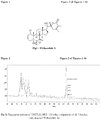
- the present invention relates to a formulation useful for delivery of neuro protecting agent. It also demonstrates and discloses a novel delivery system for an extract of a new chemotype of Withania sonmifera (NMITLI118RT+) for neuro-protection against cerebral stroke (signifies concentrated aqueous ethanolic extract of roots of NMITLI-118, a new chemotype of Withania somnifera, a variety of Ashwagandha, which is unique in having high root yield, possessing a uniform crop canopy and uniform composition with respect to its secondary metabolites-withanolides. It is phytochemically characterized by particular abundance of two withanolides i.e.
- the invention discloses potent and prudent therapeutic potential of a new formulation using standardized fraction NMITLI118RT+ of a new variety of Withania somnifera (Ashwagandha) for brain function restoration and protection from neurological failures.
- the present invention further relates to the process for the preparation of the said formulation containing Standardized NMITLI118RT+ extract, its pharmaceutical compositions, for the management of cerebral stroke.
- the present disclosure also relates to a method of treatment of cerebral stroke and comprising of administering the formulation in a predetermined doses and period.
- NMITLI118RT+ determination of its adverse effects, if any, was done by performing a single dose toxicity study.
- the test protocol for this purpose was designed to obtain information on possible health hazards likely to arise in the test species from a single exposure of test substance by oral route.
- the animals were observed for fourteen days after single exposure to NMITLI118RT+ and various parameters indicative of systemic toxic effects were examined and evaluate.
- the study was intended to provide an estimate of the dose which was likely to be free of toxic effects on single exposure through oral route.
- NMITLI118RT+ is a safe compound for drug development.
- Liposomes are used as a drug carrier for such a therapeutic strategy as they have the ability to pass through the intercellular space between vascular endothelial cells and accumulate in the tissue owing to the enhanced permeability and retention (EPR) effect; and increasing vascular permeability is a strategy of choice in the treatment of many diseases like cerebral stroke.
- EPR enhanced permeability and retention
- a blend (fill material) for solid dosage forms was formulated by liquid-solid compacting technique (overcoming the hygroscopic nature of NMITLI118RT+) with the aim that it could be used in comparison of biological activity present in the liposomal drug delivery system of NMITLI118RT+.
- Several attempts were made to prepare the required formulations most of them were found to be lacking in one or the other parameter.
- GRAS generally regarded as safe
- a stroke occurs when one of the arteries to the brain is either blocked or bursts and part of the brain does not get the blood it needs.
- a transient ischemic attack occurs when the blood supply to the brain is blocked for a short time.
- Ischemic stroke occurs when an artery in the brain is blocked.
- Embolic stroke and thrombotic stroke are the two types of ischemic stroke.
- a blood clot or plaque fragment forms, usually in the heart or the large arteries leading to the brain, and then moves through the arteries to the brain.
- the clot blocks a blood vessel and leads to a stroke.
- a thrombotic stroke is a blood clot that forms inside an artery that supplies blood to the brain. The clot interrupts blood flow and causes a stroke.
- a hemorrhagic stroke happens when a blood vessel in the brain bursts and spills blood into or around the brain.
- the intracerebral hemorrhagic stroke is caused when a burst blood vessel bleeds into brain tissue.
- a blood vessel bursts near the surface of the brain and blood leaks in between the brain and the skull. This blood may cause nearby arteries to spasm, and that reduces blood flow to the brain and causes a stroke.
- ischemic stroke representing about 80% of all strokes, decreased or absent circulating blood deprives neurons of necessary substrates.
- the effects of ischemia are fairly rapid because the brain does not store glucose, the chief energy substrate and is incapable of anaerobic metabolism.
- Non-traumatic intracerebral hemorrhage represents approximately 10% to 15% of all strokes.
- the pathophysiological changes that occur in response to stoke might be free radical production, excitotoxicity, disruption of sodium and calcium influx, enzymatic changes, stimulation of the inflammatory processes, endothelin release, activation of platelets and leukocytes, delayed coagulation and endothelial dysfunction. All these pathophysiological reactions contribute to the brain injury following onset of stroke.
- Therapeutic potential of herbal drugs in cerebral ischemia Y. K. Gupta, Seema Briyal, Anil Gulati. Indian J Physiol Pharmacol 2010; 54 (2): 99-122 ).
- Ischemia is defined as diminution of cerebral blood flow (CBF) to a critical threshold that propagates brain damage involving the entire brain or a selective region.
- Cerebral ischemia/reperfusion (I/R) injury is a secondary impairment occurring after recovery from cerebral stroke.
- The, anti-apoptotic agents are anticipated to be beneficial for treating or preventing the injury.
- Withania somnifera Dunal also known as Ashwagandha
- Indian ginseng or winder cherry is the most important plant of medicinal significance in the traditional Indian systems of medicine such as Ayurveda, Unani and Siddha for over 3000 years.
- Some important classical uses of the plant includes its use as an aphrodisiac and in liver tonic, anti-inflammatory bronchitis, asthma, ulcers, emaciation, insomnia and senile dementia.
- the significant medicinal potential of W. somnifera is mainly associated with the presence of unique classes of steroidal lactones called Withanolides.
- Ashwagandha is also said to possess antitumor, anti-stress, immunomodulatory, hemopoetic, and rejuvenating properties.
- the ethnopharmalogical properties of Withania somnifera Dunal include adaptogenic, anti-sedative and anti-convulsion activities, and then plant has been employed in the treatment of neurological disorders, geriatric debilities, arthritis and stress- and behaviour-related problems (Sch Kunststoffs et al., 1973; Ray and Gupta, 1994; Bhattacharya et al ., 1997; Kulkarni et al ., 1998; Dhuley, 2001).
- WO 01/03715 A1 discloses a high purity Withania Somnifera extract in the form of a stable, free-flowing, light yellow-to-brown herbaceous powder, for producing an enhanced cognition effect for the user and to augment the learning facility in the geriatric population when taken in a dosage of 200-800 mg/day.
- WO 2007/014334 A2 provides a method of treatment of various adaptogenic conditions such as stress in humans, comprising administering Withania somnifera plant extract.
- Liposomes are spherical particles with one or multiple concentric membranes in which a fraction of the solvent can be encapsulated. Liposomes are constructed of polar lipids. Typical compositions include phosphatidylcholines and phosphatidylethanolamines, often containing negatively charged lipids, such as phosphatidylserine and phosphatidylinositol. In addition ceramides (such as sphingomyelin), and sterols (cholesterol, ergosterol, sitosterol, etc.) are also included.
- PEGylated liposomes possess a long circulating property in the bloodstream by avoiding interaction with opsonins and the cells of the mononuclear phagocytic system PEGylated liposomes have been used to increase drug stability, safety, and bioavailability in humans. Liposomal systems can anticipatedly have better pharmacological effect of the neuro-protectant.
- Liposome encapsulation of active principles enhances their bioavailability to the brain. Hence it could be said that liposomes offer a wide range of merits and could be thought of as a suitable delivery system for the administration of neuro-protectants in the treatment of cerebral stroke.
- Liposome encapsulation of Cytidine-5 V-diphosphocholine also called CDP-choline or Citicoline (i.v.) provides more efficient delivery to the ischemic brain and thus increases brain uptake. Liposomes remain in circulation for more than 24 h thereby providing a sustained release of the drug.
- CDP-choline liposomes provide significant reduction in infarction over free CDP-choline in stroke Rao Muralikrishna Adibhatla, J.F. Hatcher, K. Tureyen Brain Research 1058 (2005) 193-197 ).
- Encapsulation of citicoline in liposomes increases its therapeutic effects in ischemia, as evident in a longitudinal MRI study of lesion volumes and edema in an animal model of stroke.
- Serial MRI study of the enhanced therapeutic effects of liposome-encapsulated citicoline in cerebral ischemia Pedro Ramos-Cabrer, Jesus Agulla, Bárbara Argibay, Maria Pérez-Mato, Jose Catillo.
- Liposomes modified with the antiapoptotic protein asialoerythropoietin were found to significantly suppress cerebral cell death and improve motor functional deficits induced by I/R injury in transient middle cerebral artery occlusion (t-MCAO) rats by increasing the accumulation of the protein in the injured region.
- t-MCAO transient middle cerebral artery occlusion
- AEPO-modified PEG-ylated liposomes as a neuro-protective agent were developed and examined for their therapeutic efficacy in model rats with transient cerebral ischemia. Suggestively it was able to cause amelioration of cerebral ischemia-reperfusion injury ( Takayuki Ishii, Tomohiro Asai, Dai Oyama, Tatsuya Fukuta, Nodoka Yasuda, Kosuke Shimizu, Tetsuo Minamino, Naoto Oku, Journal of controlled release, Vol 160 issue 130 may 2012, 81-87 )
- Liposomes encapsulating extracts possess new physicochemical characteristics and bioactivity which can enhance extract's original activity and thus with this intent the inventors designed novel delivery systems of NBMITLI118RT+ for effective treatment of cerebral stroke; which successfully reduced the dose to one-tenth of NMITLI 118RT+ extract and exhibited significant improvement against cerebral ischemic injury.
- the main object of this invention is to provide a novel delivery system of NMITLI118RT+ for neuro-protection against cerebral stroke.
- Another object of this invention is to deliver NMITLI 118RT+ in the form of a liposomal drug delivery system. Another object of this invention is to provide a pharmaceutically acceptable NMITLI118RT+ preparation without potentially toxic organic solvents.
- Yet another object of this invention is to provide a formulation of NMITLI118RT+, which can target the drug to the brain for a longer duration.
- Further object of this invention is to provide stable formulation, which can be used for the treatment of cerebral stroke.
- Further object of this invention is to protect NMITLI118RT+ from moisture to control its hygroscopic nature so that the marker compounds may be protected.
- the present invention provides a formulation useful for delivery of neuro protecting agent which comprises said neuroprotective agent in a vehicle, the vehicle being a liposome, wherein said neuro protecting agent is root extract of Withania somnifera designated as NMITLI118RT+.
- the disclosure provides a formulation wherein the ingredients ratios in the formulation for capsules and tablets is root extract of new chemotype of Withania somnifera (NMITLI118RT+) (35-55%), a filler (5-20%), a binder (2-5%), a disintegrating material (2-5%), a glidant (0.1-2%), a coating material (0.1-5%), using a mixture of a diol and primary alcoholic as vehicle-carrier system for solublising NMITLI118RT+.
- NMITLI118RT+ root extract of new chemotype of Withania somnifera
- the binder is selected from disaccharides like sucrose, lactose, polysaccharides like starches, cellulose, modified cellulose (eg microcrystalline cellulose), cellulose ethers (eg hydroxypropyl cellulose), sugar alcohols such as xylitol, sorbitol, gelatin, synthetic polymers such as polyvinylpyrrolidone (PVP), polyethylene glycol (PEG), the disintegrating material may be selected from starch, explotab, crosspovidone, the carrier material may be selected from microcrystalline cellulose granular amorphous cellulose, starch, lactose, the glidant may be selected from magnesium stearate, talc, the coating material may be selected from silica of various grades, aerosil 200, syloid 244FP, and the solvents for preparation may be selected from propylene glycol, glycerol, ethanol, 2-propanol, n-propanol and thereof.
- PVP polyvinylpyrrolidon
- the invention provides a formulation wherein the lipid is selected from the group comprising of phosphatidylcholine (egg phosphatidylcholine, soy lecithin), phosphoglycerides, sphingolipids, phosphatidylethanolamine, phosphatidylserine, synthetic phospholipids like DOPC: dioleoyl-phosphatidylcholine, DSPC: distearoyl-phosphatidylcholine.
- phosphatidylcholine egg phosphatidylcholine, soy lecithin
- phosphoglycerides phosphoglycerides
- sphingolipids phosphatidylethanolamine
- phosphatidylserine synthetic phospholipids like
- DOPC dioleoyl-phosphatidylcholine
- DSPC distearoyl-phosphatidylcholine.
- the invention provides a formulation wherein the sterol is selected from the group comprising of cholesterol, ergosterol, sitosterol, and thereof, and the solvents may be selected from ethanol, methanol, dichloromethane, distilled water.
- the invention provides a formulation wherein the concentration of the root extract of the new chemotype of Withania somnifera (NMITLI118RT+) is 0.1-5.0 mg/mL.
- the invention provides a method for preparing the formulation comprising the liposomal vehicle, comprising the steps :
- the invention provides a formulation useful for brain function restoration, protection from neurological failures, and cerebral stroke.
- the invention provides a formulation wherein the concentration of liposome is 2-48 mg.
- the binder is selected from disaccharides like sucrose, lactose, polysaccharides like starches, cellulose, modified cellulose (eg microcrystalline cellulose), cellulose ethers (eg hydroxypropyl cellulose), sugar alcohols such as xylitol, sorbitol, gelatin, synthetic polymers such as polyvinylpyrrolidone (PVP), polyethylene glycol (PEG), the disintegrating material may be selected from starch, explotab, crosspovidone, the carrier material may be selected from microcrystalline cellulose granular amorphous cellulose, starch, lactose, the glidant may be selected from magnesium stearate, talc, the coating material may be selected from silica of various grades, aerosil 200, syloid 244FP, and the solvents for preparation may be selected from propylene glycol, glycerol, ethanol, 2-propanol
- Extracts preparation of a new chemotype of Withania somnifera (NMITLI118RT+): Freshly harvested roots (average ratio of FW:DW; 100: 27) of NMITLI118 were cleaned with distilled water, de-moistened on Whatman No. 1 filter paper with tissue paper and weighed. 3 Kg of the cleaned and de-moistened roots were subjected to size-reduction and powdered in liquid N 2 . The root powder was extracted with two volumes (w/v, 2 L per Kg fresh weight) of 25 % ethanol (v/v) in water for 12 h at room temperature (25 to 30 °C). Extract was filtered through two layers of muslin cloth and the filtrate stored at 4°C.
- the residue was re-extracted for 12h with 1.5 volumes (w/v, 1.5 L per Kg fresh weight) of 25 % (v/v) ethanol in water and filtered. Filtrate was saved as above, and residue re-extracted for 12 h in one volume of 25% ethanol in water to get the extract (filtrate) as above. All the three filtrates were pooled and filtered through a Whatman No. 1 filter paper using a vacuum pump filtration system. The clarified filtrate was concentrated under reduced pressure using a rotary evaporator until the filtrate reached to slurry stage. The concentrated extract was lyophilized to dry powder stage, sealed and immediately stored at -80°C. Aliquots of the lyophilized powder were kept separately for TLC and HPLC analyses.
- the average yield of extract was 62 g per Kg fresh weight of root.
- HPLC- Chromatographic Conditions Waters HPLC (Milford, MA, USA) system used was equipped with a binary gradient pump (model 515, Waters), an auto sampler injector (Model 2707, Waters) and a diode array detector (Model 2998, Waters). Waters HPLC interface and Empower 2 software was utilized for data acquisition.
- HPLC resolution of Withanolide A was achieved on a RP-18e B Lichrosphere® column (250 X 4 mm, 5 ⁇ m, Merck, Germany) at 30 ⁇ 3° C utilizing mobile phase consisting of acetonitrile: water (1:1); flow rate being 1.0 mL/min and injection volume remained 20 ⁇ L. Column effluent was monitored at 240 nm (PDA detection).
- Standard Withanolide A solution About 1 mg of Withanolide A was accurately weighed and dissolved in 100 ⁇ L dimethyl sulfoxide and subsequently volume was made up to 10 ml with methanol to achieve a concentration of 100 ⁇ g/mL. Further dilutions in the range 2 to 50 ⁇ g/mL were made from this stock by serial dilution method.
- Test Solution of NMITLI118RT+ Test solutions of 1 mg/mL were prepared in methanol-water (1:1).
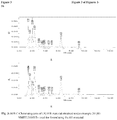
- Fingerprint profile of NMITLI118RT+ 4 batches of NMITLI118RT+ (maintained under refrigeration) were analyzed for determination of their Withanolide A content and fingerprint pattern. The fingerprint profiles were recorded ( figure2 ) and Withanolide A content (table 2) was estimated. The fingerprint pattern remained largely identical in all 4 batches, however variation in Withanolide A content was observed. A typical chromatogram for NMITLI118RT+ is shown in figure 2 . Table 2: Estimation of Withanolide A content in different batches of NMITLI118RT+ Sample specifications Withanolide A Conc. ⁇ g/mg Batch-I 4.250 Batch-II 2.211 Batch III 4.658 Batch-IV 1.219
- NMITLI118RT+ was dissolved in glycerol; which was incorporated in a blend comprising of magnesium stearate, starch and ethyl cellulose.
- the composition is as follows: Materials Parts per gram (for a 600 mg blend) NMITLI118RT+ 430mg Magnesium stearate 10 mg Starch 60 mg Ethyl Cellulose 100 mg
- NMITLI118RT+ dissolved in glycerol-ethanol mixture which was incorporated in a blend comprising of magnesium stearate, starch and ethyl cellulose.
- the composition is as follows: Materials Parts per gram (for a 600 mg blend) NMITLI118RT+ 430mg Magnesium stearate 5 mg Starch 30 mg Ethyl Cellulose 165 mg
- the vehicle was changed to propylene glycol with incorporation of aerosil in the blend formula along with lactose, magnesium stearate and starch.
- a blend was obtained by liquid-solid compacting.
- the composition is as follows: Materials Parts per gram NMITLI118RT+ 430mg Lactose 421mg Magnesium stearate 2.5 mg Starch 30mg Aerosil 116.5 mg
- Blend properties improved, however flowability was a problem.
- vehicle-carrier system propylene glycol-ethanol to dissolve NMITLI118RT+, which was incorporated in a blend comprising lactose, magnesium stearate, starch and aerosil by compacting technique.
- the composition is as follows: Materials Parts per gram NMITLI118R T+ 430mg Lactose 421mg Magnesium stearate 1mg Starch 30mg Aerosil 118 mg
- a blend for fill material to prepare solid dosage form was formulated for NMITLI118RT+ by solid liquid compacting technique utilizing Propylene glycol- ethanol as vehicle and Aerosil as coating material.
- a completely free flowing blend of uniform consistency marked with absence of any tackiness was obtained by reversing the ratio of lactose and aerosil as in the previous example and the composition per gram of fill material is as follows: Materials Parts per gram NMITLI118RT+ 430mg Lactose 118mg Magnesium stearate 1mg Starch 30mg Aerosil 421 mg
- EPC Egg phosphatidylcholine
- C Cholesterol
- 12 mg were solublised in 10 mL dichloromethane-methanol mixture (4:1).
- the contents were introduced in a round bottom flask and evaporated to dryness on a rotary evaporator at 120 rpm and 50 °C; to obtain a film.
- the film was allowed to dry for 30 mins and to prevent separation of phospholipid membrane by hydrolysis; it was rehydrated with 100 mL phosphate buffer (pH; 7.0) at 50°C. It was maintained in hydration for 1 hour.
- the liposomal dispersion was then homogenized with a probe sonicator and filtered through a 0.45 ⁇ syringe filter and evaluated for size and pdi on Malvern zeta sizer.
- Soy lecithin (S); 48 mg and Cholesterol (C); 12 mg were solublised in 5 mL dichloromethane- methanol mixture (4:1).
- the contents were introduced in a round bottom flask and evaporated to dryness on a rotary evaporator at 130 rpm and 50 °C; to obtain a film.
- the film was allowed to dry for 30 mins and to prevent separation of phospholipid membrane by hydrolysis; it was rehydrated with 10 mL phosphate buffer (pH; 7.0) at 50°C. It was maintained in hydration for 1 hour.
- the liposomal dispersion was then homogenized with a probe sonicator and filtered through a 0.45 ⁇ syringe filter and evaluated for size and pdi on Malvern zeta sizer.
- Soy lecithin (S); 25 mg and Cholesterol (C); 20 mg were solublised in 5 mL dichloromethane- methanol mixture (4:1).
- the contents were introduced in a round bottom flask and evaporated to dryness on a rotary evaporator at 130 rpm and 60 °C; to obtain a film.
- the film was allowed to dry for 30 mins and to prevent separation of phospholipid membrane by hydrolysis; it was rehydrated with 10 mL phosphate buffer (pH; 7.0) at 50°C. It was maintained in hydration for 1 hour.
- the liposomal dispersion was then homogenized with a probe sonicator and filtered through a 0.45 ⁇ syringe filter and evaluated for size and pdi on Malvern zeta sizer.
- Soy lecithin (S); 40 mg and Cholesterol (C); 5 mg were solublised in 5 mL dichloromethane- methanol mixture (4:1).
- the contents were introduced in a round bottom flask and evaporated to dryness on a rotary evaporator at 130 rpm and 50 °C; to obtain a film.
- the film was allowed to dry for 30 mins and to prevent separation of phospholipid membrane by hydrolysis; it was rehydrated with 10 mL phosphate buffer (pH; 7.0) at 50°C. It was maintained in hydration for 1 hour.
- the liposomal dispersion was then homogenized with a probe sonicator and filtered through a 0.45 ⁇ syringe filter and evaluated for size and pdi on Malvern zeta sizer.
- Soy lecithin (S); 40 mg and Cholesterol (C); 5 mg were solublised in 5 mL dichloromethane- methanol mixture (4:1).
- the contents were introduced in a round bottom flask and evaporated to dryness on a rotary evaporator at 150 rpm and 50 °C; to obtain a film.
- the film was allowed to dry for 30 mins and to prevent separation of phospholipid membrane by hydrolysis; it was rehydrated with 10 mL phosphate buffer (pH; 7.0) at 50°C. It was maintained in hydration for 1 hour.
- the liposomal dispersion was then homogenized with a probe sonicator and filtered through a 0.45 ⁇ syringe filter and evaluated for size and pdi on Malvern zeta sizer.
- Soy lecithin (S); 40 mg and Cholesterol (C); 2 mg were solublised in 5 mL dichloromethane- ethanol mixture (4:1).
- the contents were introduced in a round bottom flask and evaporated to dryness on a rotary evaporator at 140 rpm and 50 °C; to obtain a film.
- the film was allowed to dry for 30 mins and to prevent separation of phospholipid membrane by hydrolysis; it was rehydrated with 10 mL phosphate buffer (pH; 7.0) at 50°C. It was maintained in hydration for 1 hour.
- the liposomal dispersion was then homogenized with a probe sonicator and filtered through a 0.45 ⁇ syringe filter and evaluated for size and pdi on Malvern zeta sizer.
- NMITLI118RT+ 2mg, Soy lecithin (S); 40 mg and Cholesterol (C); 2 mg were solublised in 5 mL dichloromethane- methanol mixture (4:1).
- the contents were introduced in a round bottom flask and evaporated to dryness on a rotary evaporator at 140 rpm and 50 °C; to obtain a film.
- the film was allowed to dry for 30 mins and to prevent separation of phospholipid membrane by hydrolysis; it was rehydrated with 10 mL phosphate buffer (pH; 7.0) at 50°C. It was maintained in hydration for 1 hour.
- the liposomal dispersion was then homogenized with a probe sonicator and filtered through a 0.45 ⁇ syringe filter and evaluated for size and pdi on Malvern zeta sizer.
- NMITLI118RT+ 2mg was solublised in 1 mL methanol and 4 mL dichloromethane was added to it, subsequently Soy lecithin (S); 40 mg and Cholesterol (C); 2 mg were solublised in this solvent mixture.
- S Soy lecithin
- C Cholesterol
- the contents were introduced in a round bottom flask and evaporated to dryness on a rotary evaporator at 140 rpm and 50 °C; to obtain a film.
- the film was allowed to dry for 30 mins and to prevent separation of phospholipid membrane by hydrolysis; it was rehydrated with 10 mL phosphate buffer (pH; 7.0) at 50°C. It was maintained in hydration for 1 hour.
- the liposomal dispersion was then homogenized with a probe sonicator and filtered through a 0.45 ⁇ syringe filter and evaluated for size and pdi on Malvern zeta sizer.
- NMITLI118RT+ 10 mg was solublised in 1 mL ethanol and 4 mL dichloromethane was added to it, subsequently Soy lecithin (S); 40 mg and Cholesterol (C); 2 mg were solublised in this solvent mixture.
- S Soy lecithin
- C Cholesterol
- the contents were introduced in a round bottom flask and evaporated to dryness on a rotary evaporator at 140 rpm and 50 °C; to obtain a film.
- the film was allowed to dry for 30 mins and to prevent separation of phospholipid membrane by hydrolysis; it was rehydrated with 15 mL phosphate buffer (pH; 7.0) at 50°C. It was maintained in hydration for 1 hour.
- the liposomal dispersion was then homogenized with a probe sonicator and filtered through a 0.45 ⁇ syringe filter and evaluated for size and pdi on Malvern zeta sizer.
- NMITLI118RT+ 5 mg was solublised in 1 mL ethanol and 4 mL dichloromethane was added to it, subsequently Soy lecithin (S); 40 mg and Cholesterol (C); 2 mg were solublised in this solvent mixture.
- S Soy lecithin
- C Cholesterol
- the contents were introduced in a round bottom flask and evaporated to dryness on a rotary evaporator at 140 rpm and 50 °C; to obtain a film.
- the film was allowed to dry for 30 mins and to prevent separation of phospholipid membrane by hydrolysis; it was rehydrated with 5 mL phosphate buffer (pH; 7.0) at 50°C. It was maintained in hydration for 1 hour.
- the liposomal dispersion was then homogenized with a probe sonicator and filtered through a 0.45 ⁇ syringe filter and evaluated for size and pdi on Malvern zeta sizer and stored until further use. Inference: Best observed film with size and pdi in good agreement.
- the encapsulation efficiency was found to be 94.603% ⁇ 2%
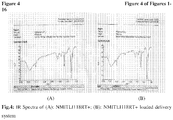
- IR Spectroscopy- Infrared (IR) spectra were measured on carefully dried samples embedded in KBr pellets. IR spectra of both 118R as well as the 118R loaded liposomal preparation were obtained. Both were similar; however an additional peak (Peak 3; % T: 27.83; 2928.49 cm -1 ) corresponding to the altered composition due to lipid entrapment was observed. ( Fig 4 )
- TEM TEM
- phosphotungstic acid as a negative stain.
- TEM was carried out to determine the surface characteristics of the optimized formulations in aqueous medium using a 3 mM forman (0.5% plastic powder in amyl acetate)-coated copper grid (300 mesh) at 60 kV using negative staining by 2% phosphotungstic acid at various magnifications. Results revealed morphologically spherical and globular particles around the Z Avr. being 200 nm. ( Fig 6 )
- Rats Male Sprague-Dawley rats (240-260 gm) were procured from the National Laboratory Animal Centre of CDRI, Lucknow, India and experiments were performed after necessary approval of the Institute Animal Ethical Committee. Rats were allowed free access to food and water
- mice were divided in the following groups (n 8) for study: Sham This group includes fresh male SD rats where all surgical procedure was carried out as in MCAo model except insertion of nylon filament. Control All surgical procedure was carried out, middle cerebral artery was blocked by insertion of filament, and only vehicle (gum accacia) was given by oral route.
- Liposomal formulation of NMITLI118RT+ treated (5 mg/kg p.o.) a Treatment was given 1 hr prior to the ischemic insult b Treatment was given after 6 hr of I/R injury.
- Fill material of NMITLI118RT+ treated 50 mg/kg p.o.
- a Treatment was given 1 hr prior to the ischemic insult b Treatment was given after 6 hr of I/R injury.
- MCAo model The middle cerebral artery occlusion (MCAO) model is the most preferred model to study cerebral stroke, because majority of human ischemic strokes results from occlusion of the middle cerebral artery, and thus MCAo model simulates the clinical situation.
- Chloral hydrate (300mg/kg i.p.) was used to anaesthetize Sprague Dawley rats (260 ⁇ 20g) and then rats were placed in a supine position over a preheated operation table to maintain the body temperature at 37°C ⁇ 0.5°C.
- CCA common carotid artery
- ICA internal carotid artery
- a (3-0) nylon monofilament suture (Ethicon, Johnsons & Johnsons Ltd, Mumbai) was introduced into the ECA lumen through a nick given in the external carotid artery.
- the intraluminal suture blocked the origin of the MCA, occluding all sources of the blood flow from the ICA, anterior cerebral artery (ACA) and posterior cerebral artery (PCA).
- the suture was pulled back after 2hrs of ischemia to reestablish the cerebral blood flow.
- MDA is a by-product of lipid peroxidation.
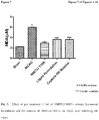
- the MDA levels were measured post 24 hour of ischemic/reperfusion injury from blood serum obtained from rat orbital plexus. A significant increase in blood MDA levels (62.83%) was observed in vehicle treated ischemic rats as compared to sham rats.
- GSH levels are markers of oxidative stress.
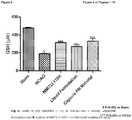
- the GSH levels were measured post 24 hour of I/R injury in the plasma of ischemic animals.
- a significant decline in GSH levels generally means an increase in oxidative stress, and was measured post 2/24hr of ischemic injury.
- a significant decline in blood GSH levels (59.67%) was observed in ischemic rats as compared to sham rats.
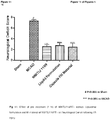
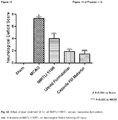
- Neurological deficit was analyzed on the basis of neurological scores obtained after 24 hr of reperfusion in all experimental groups.
- the neurological deficit score in treated group was significantly reduced when compared with control group at 2/24 hr of I/R injury.
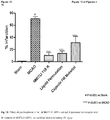
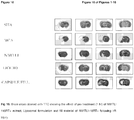
- TTC staining is widely used to assess the cerebral damage resulting from ischemic insult.
- the rats used for the assessment of ND were sacrificed and thick brain sections ( ⁇ 2mm) were made and stained with TTC to assess the infarct area.
- the TTC unstained area representing infarct was measured and presented as percentage reduction in infract area.
- Control group produced an infarct size of almost 70.74% in ipsilateral side of control rat brain, mostly comprising of striatal and some of the cortical area as well.
- NMITLI118RT+ Based on the toxicity data NMITLI118RT+ is a safe material for the drug development. It is a highly hygroscopic material and overcoming its hygroscopicity (which is responsible for degradation of one of the marker compound Withanolide A) was a major problem as far as formulation development was concerned especially when aiming at solid dosage forms (capsules/ tablets/ blends).
Landscapes
- Health & Medical Sciences (AREA)
- Chemical & Material Sciences (AREA)
- Life Sciences & Earth Sciences (AREA)
- Public Health (AREA)
- General Health & Medical Sciences (AREA)
- Medicinal Chemistry (AREA)
- Veterinary Medicine (AREA)
- Animal Behavior & Ethology (AREA)
- Pharmacology & Pharmacy (AREA)
- Natural Medicines & Medicinal Plants (AREA)
- Epidemiology (AREA)
- Engineering & Computer Science (AREA)
- Bioinformatics & Cheminformatics (AREA)
- Inorganic Chemistry (AREA)
- Dispersion Chemistry (AREA)
- Alternative & Traditional Medicine (AREA)
- Urology & Nephrology (AREA)
- Nuclear Medicine, Radiotherapy & Molecular Imaging (AREA)
- General Chemical & Material Sciences (AREA)
- Chemical Kinetics & Catalysis (AREA)
- Heart & Thoracic Surgery (AREA)
- Cardiology (AREA)
- Vascular Medicine (AREA)
- Organic Chemistry (AREA)
- Biotechnology (AREA)
- Botany (AREA)
- Medical Informatics (AREA)
- Microbiology (AREA)
- Mycology (AREA)
- Medicinal Preparation (AREA)
- Pharmaceuticals Containing Other Organic And Inorganic Compounds (AREA)
Claims (5)
- Formulation utile pour l'administration d'un agent neuroprotecteur, qui comprend ledit agent neuroprotecteur dans un véhicule, le véhicule étant un liposome, dans laquelle ledit agent neuroprotecteur est un extrait de racine de Withania somnifera appelé NMITLI118RT+.
- Formulation selon la revendication 1, dans laquelle le liposome comprend un lipide sélectionné dans le groupe constitué de la phosphatidylcholine (phosphatidylcholine d'œuf, lécithine de soja), des phosphoglycérides, des sphingolipides, de la phosphatidyléthanolamine, de la phosphatidylsérine, des phospholipides synthétiques comme DOPC : dioléoyl-phosphatidylcholine, DSPC : distéaroyl-phosphatidylcholine et un stérol est sélectionné dans le groupe constitué du cholestérol; de l'ergostérol; du sitostérol, et les solvants peuvent être sélectionnés parmi l'éthanol, le méthanol, le dichlorométhane, l'eau distillée.
- Procédé pour préparer la formulation selon la revendication 1, comprenant les étapes suivantes :a) solubiliser 5 mg d'extrait de racine du nouveau chimiotype de Withania somnifera (NMITLI118RT+) dans 1 mL d'éthanol ;b) ajouter 4 mL de dichlorométhane au mélange obtenu à l'étape a) ;c) solubiliser 40 mg de lécithine de soja (S) et 2 mg de cholestérol (C) dans le mélange de solvant obtenu à l'étape b) ;d) évaporer à sec le contenu obtenu à l'étape c) sur un évaporateur rotatif à 140 tr/min et 50 °C pendant 1 heure pour obtenir un film ;e) sécher le film obtenu à l'étape d) ;f) réhydrater le film obtenu à l'étape e) avec 5 mL de tampon phosphate (pH 7) à 50 °C pendant 1 heure pour obtenir une dispersion liposomale ;g) homogénéiser la dispersion liposomale obtenue à l'étape f) pour obtenir la formulation ; eth) purifier la dispersion liposomale obtenue à l'étape g) par lyophilisation.
- Formulation selon la revendication 1 utile pour la restauration de la fonction cérébrale, la protection contre les défaillances neurologiques et l'accident vasculaire cérébral.
- Formulation selon les revendications 1 à 4, dans laquelle la concentration de l'extrait de racine du nouveau chimiotype de Withania somnifera (NMITLI118RT+) va de 0,1 à 5,0 mg/mL.
Applications Claiming Priority (2)
| Application Number | Priority Date | Filing Date | Title |
|---|---|---|---|
| IN2773DE2014 | 2014-09-29 | ||
| PCT/IN2015/050124 WO2016051424A1 (fr) | 2014-09-29 | 2015-09-29 | Formulation utile pour l'administration d'agent neuroprotecteur |
Publications (2)
| Publication Number | Publication Date |
|---|---|
| EP3200770A1 EP3200770A1 (fr) | 2017-08-09 |
| EP3200770B1 true EP3200770B1 (fr) | 2020-09-02 |
Family
ID=55629533
Family Applications (1)
| Application Number | Title | Priority Date | Filing Date |
|---|---|---|---|
| EP15787314.2A Active EP3200770B1 (fr) | 2014-09-29 | 2015-09-29 | Formulation utile pour l'administration d'agent neuroprotecteur |
Country Status (3)
| Country | Link |
|---|---|
| EP (1) | EP3200770B1 (fr) |
| AU (1) | AU2015326378B2 (fr) |
| WO (1) | WO2016051424A1 (fr) |
Families Citing this family (5)
| Publication number | Priority date | Publication date | Assignee | Title |
|---|---|---|---|---|
| EP3364990B1 (fr) | 2015-10-22 | 2021-07-14 | Benny Antony | Procédé pour augmenter la bioactivité d'extraits d'ashwaganda |
| US12527832B2 (en) | 2015-10-22 | 2026-01-20 | Arjuna Natural Private Limited | Enriched Withania somnifera based dietary composition and a method thereof |
| US9987323B2 (en) | 2015-10-22 | 2018-06-05 | Benny Antony | Process to enhance the bioactivity of Ashwagandha extracts |
| WO2024127427A1 (fr) * | 2022-12-12 | 2024-06-20 | Polishetty Ravishankar | Composition phytothérapeutique prs-02 pour réduire les effets suivants l'encéphalopathie hypoxique afin de régénérer le cerveau |
| WO2025040951A1 (fr) * | 2023-08-22 | 2025-02-27 | Universidade Do Porto | Système d'administration à base de phytosomes pour ingrédients bioactifs, son procédé d'obtention et compositions le comprenant |
Family Cites Families (5)
| Publication number | Priority date | Publication date | Assignee | Title |
|---|---|---|---|---|
| HU223475B1 (hu) * | 1994-10-24 | 2004-07-28 | Chinoin Gyógyszer és Vegyészeti Termékek Gyára Rt. | Selegilint tartalmazó liposzoma-készítmény és eljárás ennek előállítására |
| US6153198A (en) * | 1999-07-13 | 2000-11-28 | Natreon Inc. | Withania somnifera composition |
| UY26816A1 (es) * | 2001-07-04 | 2003-04-30 | Horacio Heinzen | Una preparación liposomal de achyrocline satureioides ("marcela"), flavonoides y derivados semisintéticos, para la protección del tejido cerebral frente al dano isquémico- vascular y neurodegenerativo. |
| US20070036873A1 (en) * | 2005-07-27 | 2007-02-15 | Shibnath Ghosal | Method of treatment or management of stress |
| WO2011077100A1 (fr) * | 2009-12-24 | 2011-06-30 | Cipla Limited | Composition antirétrovirale |
-
2015
- 2015-09-29 WO PCT/IN2015/050124 patent/WO2016051424A1/fr not_active Ceased
- 2015-09-29 AU AU2015326378A patent/AU2015326378B2/en not_active Ceased
- 2015-09-29 EP EP15787314.2A patent/EP3200770B1/fr active Active
Non-Patent Citations (1)
| Title |
|---|
| None * |
Also Published As
| Publication number | Publication date |
|---|---|
| WO2016051424A4 (fr) | 2016-05-19 |
| EP3200770A1 (fr) | 2017-08-09 |
| WO2016051424A1 (fr) | 2016-04-07 |
| AU2015326378A1 (en) | 2016-08-18 |
| AU2015326378B2 (en) | 2021-01-21 |
Similar Documents
| Publication | Publication Date | Title |
|---|---|---|
| EP3200770B1 (fr) | Formulation utile pour l'administration d'agent neuroprotecteur | |
| Li et al. | A chlorogenic acid-phospholipid complex ameliorates post-myocardial infarction inflammatory response mediated by mitochondrial reactive oxygen species in SAMP8 mice | |
| Lai et al. | Nanocrystals as effective delivery systems of poorly water-soluble natural molecules | |
| EP3746054B1 (fr) | Compositions comprenant de la berbérine | |
| Xu et al. | Development and in vivo evaluation of self-microemulsion as delivery system for α-mangostin | |
| Burlec et al. | Exploring the therapeutic potential of natural compounds in psoriasis and their inclusion in nanotechnological systems | |
| EP1420802B1 (fr) | Preparations de flavonolignans a solubilite amelioree | |
| Chen et al. | Gypenoside A-loaded mPEG-PLGA nanoparticles ameliorate high-glucose-induced retinal microvasculopathy by inhibiting ferroptosis | |
| Abd El-Emam et al. | Chrysin-loaded PEGylated liposomes protect against alloxan-induced diabetic neuropathy in rats: the interplay between endoplasmic reticulum stress and autophagy | |
| El-Marasy et al. | Anti-depressant effect of Naringenin-loaded hybridized nanoparticles in diabetic rats via PPARγ/NLRP3 pathway | |
| Wu et al. | Curcumin nanoparticles and the therapeutic potential of curcumin for musculoskeletal disorders. | |
| Karalija et al. | Amentoflavone: Structure, Resources, Biosynthetic Pathway and Bioactivity and Pharmacology | |
| CN110051715B (zh) | 菊苣酸、紫锥菊提取物及相应制剂用于制备缓解铅毒性药物的用途 | |
| US20150147385A1 (en) | Intravenous synthetic curcumin (s-curcumin) for the treatment of proliferative disorders | |
| Gu et al. | Isolation of herpetin from Herpetospermum seed and hepatoprotective activity of liposomal herpetin against carbon tetrachloride-induced liver injury in mice | |
| Ahmad et al. | Enduring protection provided by NMITLI118RT+ and its preparation NMITLI118RT+ CFM against ischemia/reperfusion injury in rats | |
| Yang et al. | Micelles of Licorice chalcone A for oral administration: preparation, in vitro, in vivo, and hepatoprotective activity evaluation | |
| Barakat et al. | Corn Silk Alleviates Paclitaxel–Induced Lung Toxicity in Rats. | |
| Ansari et al. | Pre-treatment effects of walnut kernel (juglans regia) on brain edema, neuronal death and neurological scores in male rat after traumatic brain injury | |
| Arya et al. | Preparation, Characterization and Ex vivo Evaluation of Trigonellafoenumgracium seeds extract-loaded Transferosomal gel for the Treatment of Rheumatoid Arthritis | |
| RU2788599C2 (ru) | Композиции, содержащие берберин | |
| Nistane et al. | Nanoparticles of Various Herbal Drugs Extract Produce Anticancer Activity | |
| Agbortai et al. | Carbonated Herbal Alcoholic Beverage-Induced Hepatotoxicity in Wistar rats; Role of Aqueous Extracts of Stigma maydis | |
| de Macêdo et al. | Application of Drug Delivery Systems for Delivery of Phytoconstituents | |
| Huguet Casquero | Application of green nanoscience to olive polyphenols: formulation design and biological evaluation of oleuropein-loaded nanstructured lipid carriers |
Legal Events
| Date | Code | Title | Description |
|---|---|---|---|
| STAA | Information on the status of an ep patent application or granted ep patent |
Free format text: STATUS: THE INTERNATIONAL PUBLICATION HAS BEEN MADE |
|
| PUAI | Public reference made under article 153(3) epc to a published international application that has entered the european phase |
Free format text: ORIGINAL CODE: 0009012 |
|
| STAA | Information on the status of an ep patent application or granted ep patent |
Free format text: STATUS: REQUEST FOR EXAMINATION WAS MADE |
|
| 17P | Request for examination filed |
Effective date: 20160809 |
|
| AK | Designated contracting states |
Kind code of ref document: A1 Designated state(s): AL AT BE BG CH CY CZ DE DK EE ES FI FR GB GR HR HU IE IS IT LI LT LU LV MC MK MT NL NO PL PT RO RS SE SI SK SM TR |
|
| AX | Request for extension of the european patent |
Extension state: BA ME |
|
| DAV | Request for validation of the european patent (deleted) | ||
| DAX | Request for extension of the european patent (deleted) | ||
| STAA | Information on the status of an ep patent application or granted ep patent |
Free format text: STATUS: EXAMINATION IS IN PROGRESS |
|
| 17Q | First examination report despatched |
Effective date: 20181023 |
|
| GRAP | Despatch of communication of intention to grant a patent |
Free format text: ORIGINAL CODE: EPIDOSNIGR1 |
|
| STAA | Information on the status of an ep patent application or granted ep patent |
Free format text: STATUS: GRANT OF PATENT IS INTENDED |
|
| INTG | Intention to grant announced |
Effective date: 20200403 |
|
| GRAS | Grant fee paid |
Free format text: ORIGINAL CODE: EPIDOSNIGR3 |
|
| GRAA | (expected) grant |
Free format text: ORIGINAL CODE: 0009210 |
|
| STAA | Information on the status of an ep patent application or granted ep patent |
Free format text: STATUS: THE PATENT HAS BEEN GRANTED |
|
| AK | Designated contracting states |
Kind code of ref document: B1 Designated state(s): AL AT BE BG CH CY CZ DE DK EE ES FI FR GB GR HR HU IE IS IT LI LT LU LV MC MK MT NL NO PL PT RO RS SE SI SK SM TR |
|
| REG | Reference to a national code |
Ref country code: GB Ref legal event code: FG4D |
|
| REG | Reference to a national code |
Ref country code: AT Ref legal event code: REF Ref document number: 1307976 Country of ref document: AT Kind code of ref document: T Effective date: 20200915 Ref country code: CH Ref legal event code: EP |
|
| REG | Reference to a national code |
Ref country code: DE Ref legal event code: R096 Ref document number: 602015058453 Country of ref document: DE |
|
| REG | Reference to a national code |
Ref country code: IE Ref legal event code: FG4D |
|
| REG | Reference to a national code |
Ref country code: LT Ref legal event code: MG4D |
|
| PG25 | Lapsed in a contracting state [announced via postgrant information from national office to epo] |
Ref country code: HR Free format text: LAPSE BECAUSE OF FAILURE TO SUBMIT A TRANSLATION OF THE DESCRIPTION OR TO PAY THE FEE WITHIN THE PRESCRIBED TIME-LIMIT Effective date: 20200902 Ref country code: BG Free format text: LAPSE BECAUSE OF FAILURE TO SUBMIT A TRANSLATION OF THE DESCRIPTION OR TO PAY THE FEE WITHIN THE PRESCRIBED TIME-LIMIT Effective date: 20201202 Ref country code: SE Free format text: LAPSE BECAUSE OF FAILURE TO SUBMIT A TRANSLATION OF THE DESCRIPTION OR TO PAY THE FEE WITHIN THE PRESCRIBED TIME-LIMIT Effective date: 20200902 Ref country code: LT Free format text: LAPSE BECAUSE OF FAILURE TO SUBMIT A TRANSLATION OF THE DESCRIPTION OR TO PAY THE FEE WITHIN THE PRESCRIBED TIME-LIMIT Effective date: 20200902 Ref country code: FI Free format text: LAPSE BECAUSE OF FAILURE TO SUBMIT A TRANSLATION OF THE DESCRIPTION OR TO PAY THE FEE WITHIN THE PRESCRIBED TIME-LIMIT Effective date: 20200902 Ref country code: NO Free format text: LAPSE BECAUSE OF FAILURE TO SUBMIT A TRANSLATION OF THE DESCRIPTION OR TO PAY THE FEE WITHIN THE PRESCRIBED TIME-LIMIT Effective date: 20201202 Ref country code: GR Free format text: LAPSE BECAUSE OF FAILURE TO SUBMIT A TRANSLATION OF THE DESCRIPTION OR TO PAY THE FEE WITHIN THE PRESCRIBED TIME-LIMIT Effective date: 20201203 |
|
| REG | Reference to a national code |
Ref country code: NL Ref legal event code: MP Effective date: 20200902 |
|
| REG | Reference to a national code |
Ref country code: AT Ref legal event code: MK05 Ref document number: 1307976 Country of ref document: AT Kind code of ref document: T Effective date: 20200902 |
|
| PG25 | Lapsed in a contracting state [announced via postgrant information from national office to epo] |
Ref country code: LV Free format text: LAPSE BECAUSE OF FAILURE TO SUBMIT A TRANSLATION OF THE DESCRIPTION OR TO PAY THE FEE WITHIN THE PRESCRIBED TIME-LIMIT Effective date: 20200902 Ref country code: RS Free format text: LAPSE BECAUSE OF FAILURE TO SUBMIT A TRANSLATION OF THE DESCRIPTION OR TO PAY THE FEE WITHIN THE PRESCRIBED TIME-LIMIT Effective date: 20200902 Ref country code: PL Free format text: LAPSE BECAUSE OF FAILURE TO SUBMIT A TRANSLATION OF THE DESCRIPTION OR TO PAY THE FEE WITHIN THE PRESCRIBED TIME-LIMIT Effective date: 20200902 |
|
| PG25 | Lapsed in a contracting state [announced via postgrant information from national office to epo] |
Ref country code: EE Free format text: LAPSE BECAUSE OF FAILURE TO SUBMIT A TRANSLATION OF THE DESCRIPTION OR TO PAY THE FEE WITHIN THE PRESCRIBED TIME-LIMIT Effective date: 20200902 Ref country code: RO Free format text: LAPSE BECAUSE OF FAILURE TO SUBMIT A TRANSLATION OF THE DESCRIPTION OR TO PAY THE FEE WITHIN THE PRESCRIBED TIME-LIMIT Effective date: 20200902 Ref country code: PT Free format text: LAPSE BECAUSE OF FAILURE TO SUBMIT A TRANSLATION OF THE DESCRIPTION OR TO PAY THE FEE WITHIN THE PRESCRIBED TIME-LIMIT Effective date: 20210104 Ref country code: SM Free format text: LAPSE BECAUSE OF FAILURE TO SUBMIT A TRANSLATION OF THE DESCRIPTION OR TO PAY THE FEE WITHIN THE PRESCRIBED TIME-LIMIT Effective date: 20200902 Ref country code: CZ Free format text: LAPSE BECAUSE OF FAILURE TO SUBMIT A TRANSLATION OF THE DESCRIPTION OR TO PAY THE FEE WITHIN THE PRESCRIBED TIME-LIMIT Effective date: 20200902 |
|
| REG | Reference to a national code |
Ref country code: CH Ref legal event code: PL |
|
| PG25 | Lapsed in a contracting state [announced via postgrant information from national office to epo] |
Ref country code: ES Free format text: LAPSE BECAUSE OF FAILURE TO SUBMIT A TRANSLATION OF THE DESCRIPTION OR TO PAY THE FEE WITHIN THE PRESCRIBED TIME-LIMIT Effective date: 20200902 Ref country code: AT Free format text: LAPSE BECAUSE OF FAILURE TO SUBMIT A TRANSLATION OF THE DESCRIPTION OR TO PAY THE FEE WITHIN THE PRESCRIBED TIME-LIMIT Effective date: 20200902 Ref country code: AL Free format text: LAPSE BECAUSE OF FAILURE TO SUBMIT A TRANSLATION OF THE DESCRIPTION OR TO PAY THE FEE WITHIN THE PRESCRIBED TIME-LIMIT Effective date: 20200902 Ref country code: IS Free format text: LAPSE BECAUSE OF FAILURE TO SUBMIT A TRANSLATION OF THE DESCRIPTION OR TO PAY THE FEE WITHIN THE PRESCRIBED TIME-LIMIT Effective date: 20210102 |
|
| REG | Reference to a national code |
Ref country code: DE Ref legal event code: R097 Ref document number: 602015058453 Country of ref document: DE |
|
| REG | Reference to a national code |
Ref country code: BE Ref legal event code: MM Effective date: 20200930 |
|
| PG25 | Lapsed in a contracting state [announced via postgrant information from national office to epo] |
Ref country code: MC Free format text: LAPSE BECAUSE OF FAILURE TO SUBMIT A TRANSLATION OF THE DESCRIPTION OR TO PAY THE FEE WITHIN THE PRESCRIBED TIME-LIMIT Effective date: 20200902 Ref country code: LU Free format text: LAPSE BECAUSE OF NON-PAYMENT OF DUE FEES Effective date: 20200929 Ref country code: SK Free format text: LAPSE BECAUSE OF FAILURE TO SUBMIT A TRANSLATION OF THE DESCRIPTION OR TO PAY THE FEE WITHIN THE PRESCRIBED TIME-LIMIT Effective date: 20200902 |
|
| PLBE | No opposition filed within time limit |
Free format text: ORIGINAL CODE: 0009261 |
|
| STAA | Information on the status of an ep patent application or granted ep patent |
Free format text: STATUS: NO OPPOSITION FILED WITHIN TIME LIMIT |
|
| 26N | No opposition filed |
Effective date: 20210603 |
|
| PG25 | Lapsed in a contracting state [announced via postgrant information from national office to epo] |
Ref country code: DK Free format text: LAPSE BECAUSE OF FAILURE TO SUBMIT A TRANSLATION OF THE DESCRIPTION OR TO PAY THE FEE WITHIN THE PRESCRIBED TIME-LIMIT Effective date: 20200902 Ref country code: BE Free format text: LAPSE BECAUSE OF NON-PAYMENT OF DUE FEES Effective date: 20200930 Ref country code: CH Free format text: LAPSE BECAUSE OF NON-PAYMENT OF DUE FEES Effective date: 20200930 Ref country code: SI Free format text: LAPSE BECAUSE OF FAILURE TO SUBMIT A TRANSLATION OF THE DESCRIPTION OR TO PAY THE FEE WITHIN THE PRESCRIBED TIME-LIMIT Effective date: 20200902 Ref country code: LI Free format text: LAPSE BECAUSE OF NON-PAYMENT OF DUE FEES Effective date: 20200930 Ref country code: IE Free format text: LAPSE BECAUSE OF NON-PAYMENT OF DUE FEES Effective date: 20200929 |
|
| PG25 | Lapsed in a contracting state [announced via postgrant information from national office to epo] |
Ref country code: IT Free format text: LAPSE BECAUSE OF FAILURE TO SUBMIT A TRANSLATION OF THE DESCRIPTION OR TO PAY THE FEE WITHIN THE PRESCRIBED TIME-LIMIT Effective date: 20200902 |
|
| PG25 | Lapsed in a contracting state [announced via postgrant information from national office to epo] |
Ref country code: TR Free format text: LAPSE BECAUSE OF FAILURE TO SUBMIT A TRANSLATION OF THE DESCRIPTION OR TO PAY THE FEE WITHIN THE PRESCRIBED TIME-LIMIT Effective date: 20200902 Ref country code: MT Free format text: LAPSE BECAUSE OF FAILURE TO SUBMIT A TRANSLATION OF THE DESCRIPTION OR TO PAY THE FEE WITHIN THE PRESCRIBED TIME-LIMIT Effective date: 20200902 Ref country code: CY Free format text: LAPSE BECAUSE OF FAILURE TO SUBMIT A TRANSLATION OF THE DESCRIPTION OR TO PAY THE FEE WITHIN THE PRESCRIBED TIME-LIMIT Effective date: 20200902 |
|
| PG25 | Lapsed in a contracting state [announced via postgrant information from national office to epo] |
Ref country code: MK Free format text: LAPSE BECAUSE OF FAILURE TO SUBMIT A TRANSLATION OF THE DESCRIPTION OR TO PAY THE FEE WITHIN THE PRESCRIBED TIME-LIMIT Effective date: 20200902 |
|
| PG25 | Lapsed in a contracting state [announced via postgrant information from national office to epo] |
Ref country code: NL Free format text: LAPSE BECAUSE OF NON-PAYMENT OF DUE FEES Effective date: 20200923 |
|
| P01 | Opt-out of the competence of the unified patent court (upc) registered |
Effective date: 20230529 |
|
| PGFP | Annual fee paid to national office [announced via postgrant information from national office to epo] |
Ref country code: DE Payment date: 20240926 Year of fee payment: 10 |
|
| PGFP | Annual fee paid to national office [announced via postgrant information from national office to epo] |
Ref country code: GB Payment date: 20240927 Year of fee payment: 10 |
|
| PGFP | Annual fee paid to national office [announced via postgrant information from national office to epo] |
Ref country code: FR Payment date: 20240927 Year of fee payment: 10 |