EP3202172B1 - Association de multiples dispositifs à un numéro de téléphone unique - Google Patents
Association de multiples dispositifs à un numéro de téléphone unique Download PDFInfo
- Publication number
- EP3202172B1 EP3202172B1 EP15856986.3A EP15856986A EP3202172B1 EP 3202172 B1 EP3202172 B1 EP 3202172B1 EP 15856986 A EP15856986 A EP 15856986A EP 3202172 B1 EP3202172 B1 EP 3202172B1
- Authority
- EP
- European Patent Office
- Prior art keywords
- cscf node
- telephone number
- user device
- user
- common telephone
- Prior art date
- Legal status (The legal status is an assumption and is not a legal conclusion. Google has not performed a legal analysis and makes no representation as to the accuracy of the status listed.)
- Active
Links
Images




Classifications
-
- H—ELECTRICITY
- H04—ELECTRIC COMMUNICATION TECHNIQUE
- H04L—TRANSMISSION OF DIGITAL INFORMATION, e.g. TELEGRAPHIC COMMUNICATION
- H04L65/00—Network arrangements, protocols or services for supporting real-time applications in data packet communication
- H04L65/10—Architectures or entities
- H04L65/1016—IP multimedia subsystem [IMS]
-
- H—ELECTRICITY
- H04—ELECTRIC COMMUNICATION TECHNIQUE
- H04W—WIRELESS COMMUNICATION NETWORKS
- H04W8/00—Network data management
- H04W8/18—Processing of user or subscriber data, e.g. subscribed services, user preferences or user profiles; Transfer of user or subscriber data
-
- H—ELECTRICITY
- H04—ELECTRIC COMMUNICATION TECHNIQUE
- H04L—TRANSMISSION OF DIGITAL INFORMATION, e.g. TELEGRAPHIC COMMUNICATION
- H04L65/00—Network arrangements, protocols or services for supporting real-time applications in data packet communication
- H04L65/10—Architectures or entities
- H04L65/1046—Call controllers; Call servers
-
- H—ELECTRICITY
- H04—ELECTRIC COMMUNICATION TECHNIQUE
- H04L—TRANSMISSION OF DIGITAL INFORMATION, e.g. TELEGRAPHIC COMMUNICATION
- H04L65/00—Network arrangements, protocols or services for supporting real-time applications in data packet communication
- H04L65/10—Architectures or entities
- H04L65/1063—Application servers providing network services
-
- H—ELECTRICITY
- H04—ELECTRIC COMMUNICATION TECHNIQUE
- H04L—TRANSMISSION OF DIGITAL INFORMATION, e.g. TELEGRAPHIC COMMUNICATION
- H04L65/00—Network arrangements, protocols or services for supporting real-time applications in data packet communication
- H04L65/1066—Session management
- H04L65/1073—Registration or de-registration
-
- H—ELECTRICITY
- H04—ELECTRIC COMMUNICATION TECHNIQUE
- H04L—TRANSMISSION OF DIGITAL INFORMATION, e.g. TELEGRAPHIC COMMUNICATION
- H04L65/00—Network arrangements, protocols or services for supporting real-time applications in data packet communication
- H04L65/1066—Session management
- H04L65/1083—In-session procedures
- H04L65/1094—Inter-user-equipment sessions transfer or sharing
Definitions
- Mobile telecommunication devices are integral to the daily lives of most users. Originally, mobile telecommunication devices simply provided two-way voice communication between two people at different locations. For example, a voice call normally involves real-time, duplex, synchronous voice communications, in which all participants hear the other participants in real time.
- mobile telecommunication devices are also capable of providing data communication.
- data communication my include sending and receiving text and multimedia messages, access information and services provided by online service providers, as well as exchanging data with other nearby devices via short range communication.
- mobile telecommunication devices may be used to make voice calls, check email and text messages, update social media pages, stream media, browse websites, make point-of-sale payments, and/or so forth.
- Mobile telecommunication devices come in a myriad of form factors, such as tablets, feature phones, smart phones, smart watches, phablets, and/or so forth. Further, a user or the user's household often possesses multiple mobile telecommunication devices.
- US2011/075658 discloses a single IMPI being determined, allowing the progress of a terminating call that addresses a given IMPU shared by more than one IMPI of an IMS subscription.
- a number of policies are applied on a per IMPI basis on how to progress the terminating call.
- a HSS is provided where the policies are configured and, a method is disclosed including IMPU with a number of policies. Additionally, the method may also include a step of configuring at the HSS the more than one IMPI with a priority indication usable to set the order in which the more than one IMPI are checked to determine at least one for which the policies allow to progress the terminating call.
- the user devices may include Subscriber Identity Module (SIM)-equipped mobile telecommunication devices, mobile telecommunication devices that do not use SIMs, and/or other types of networked devices.
- SIM Subscriber Identity Module
- the association of the multiple user devices with a single telephone number may enable a user of the multiple user devices to initiate and receiving communications that are routed via the single telephone number.
- the communications may include voice calls, text messages, multimedia messages, web data transfers, network data transfers, and/or so forth.
- a user may use a service portal provided by the mobile telecommunication network to select user devices that are to be associated with a telephone number.
- the user devices may be selected for association via the IP Multimedia Private Identities (IMPIs) of the user devices.
- IMPIs IP Multimedia Private Identities
- the IMPI of a user device may be a device identifier that uniquely identifies the user device, such as an International Mobile Station Equipment Identity (IMEI), a Mobile Equipment Identifier (MEID), or some other electronic serial number (ESN) of the user device.
- IMEI International Mobile Station Equipment Identity
- MEID Mobile Equipment Identifier
- ESN electronic serial number
- a control function of the mobile telecommunication network such as the Call Session Control Function (CSCF) node, may register the selected user devices to use the common telephone number.
- the CSCF node may include a Serving CSCF (S-CSCF) and an interrogating CSCF (I-CSCF) in the IP Multimedia Subsystem (IMS) of the mobile telecommunication network.
- S-CSCF Serving CSCF
- I-CSCF interrogating CSCF
- IMS IP Multimedia Subsystem
- the CSCF node may identify the selected user devices based on a registry of user devices of the user, e.g., the Implicit Registration Set (IRS), stored in a user information server of the mobile telecommunication network.
- the server may be the Home Subscriber Server (HSS) of the mobile telecommunication network.
- HSS Home Subscriber Server
- the user devices that are registered by the CSCF node of the mobile telecommunication network may be able to use the common telephone number to initiate and receive communication. For example, two mobile telecommunication devices registered in this manner may both ring when there is an incoming voice call for the common telephone number. In another example, a user may use one of multiple mobile telecommunication devices registered in this manner to send an outgoing text message to a message recipient. In contrast, user devices listed in the IRS but which are not registered by the CSCF node of the mobile telecommunication network will not be able to initiate and receive communication that are routed via the common telephone number.
- the ability to associate multiple user devices with a single telephone number may enable a user to initiate and receive communication via a single telephone number from any of the multiple user devices. Such ability may provide additional convenience to the user of the multiple user devices. For example, if the user inadvertently leaves a mobile telecommunication device at home while traveling abroad, the user may simply associate another mobile telecommunication device with the same telephone number. As such, the user may still initiate and receive communication at the same telephone number using the different device without purchasing another SIM card or order another line of service from an existing mobile telecommunication carrier. In another example, a user that desires to use different user devices for different events and occasions while using the same telephone number may do so without having to seek assistance from customer care or swap a SIM card between the different user devices.
- the techniques described herein may be implemented in a number of ways. Example implementations are provided below with reference to the following FIGS. 1-6 .
- FIG. 1 illustrates an example architecture 100 for implementing multiple device association with a single telephone number such that the multiple devices may use the single telephone number to initiate and receive communications.
- the architecture 100 may include a mobile telecommunication network 102 and user devices 104(1)-104(3).
- the user device 104 may be a feature phone, a smartphone, a tablet computer, a phablet, an embedded computer system, or any other device that is capable of using the wireless communication services that are provided by the mobile telecommunication network 102.
- the mobile telecommunication network 102 may include base stations 106(1)-106(N) and a core network 108.
- the mobile telecommunication network 102 may provide telecommunication and data communication in accordance with one or more technical standards, such as Enhanced Data Rates for GSM Evolution (EDGE), Wideband Code Division Multiple Access (W-CDMA), High Speed Packed Access (HSPA), Long Term Evolution (LTE), CDMA-2000 (Code Division Multiple Access 2000), and/or so forth.
- EDGE Enhanced Data Rates for GSM Evolution
- W-CDMA Wideband Code Division Multiple Access
- HSPA High Speed Packed Access
- LTE Long Term Evolution
- CDMA-2000 Code Division Multiple Access 2000
- the base stations 106(1)-106(N) are responsible handling voice and data traffic between user devices 104(1)-104(3) and the core network 108.
- the base stations may be in the form of eNodeB nodes.
- Each eNodeB node may include a base transceiver system (BTS) that communicates via an antennae system over an air-link with one or more user devices that are within range.
- the antenna system of an eNodeB node may include multiple antennae that are mounted on a radio tower to provide a coverage area that is referred to as a "cell.”
- the BTS may send RF signals to user devices and receive radio signals from user devices.
- the core network 108 may provide telecommunication and data communication services to multiple user devices.
- the core network 108 may connect the user devices 104(1)-104(3) to other telecommunication and data communication networks, such as the Internet 110 and the public switched telephone network (PSTN).
- PSTN public switched telephone network
- packet communications via the core network 108 and the Internet may support a variety of services.
- an IMS core 112 may reside in the core network 108 of the mobile telecommunication network 102.
- the IMS core 112 may include a CSCF node 114 and the HSS 116.
- the HSS 116 may be substituted with an equivalent home subscriber information database in the form of a Home Location Register (HLR).
- HLR Home Location Register
- the CSCF node 114 may handle Session Initiation Protocol (SIP) sessions, which are communication sessions for packet-based voice and video calls, instant messaging over IP networks, and/or so forth.
- the CSCF node 114 may include a proxy CSCF (P-CSCF), an interrogating CSCF (I-CSCF), and a Serving CSCF (S-CSCF).
- P-CSCF proxy CSCF
- I-CSCF interrogating CSCF
- S-CSCF Serving CSCF
- the P-CSCF may route incoming SIP messages to an IMS registrar server.
- the P-CSCF may also safeguard the security of the IMS core 112 by handling Internet Protocol Security (IPSec) for communications that exchanged by the user devices 104(1)-104(3).
- IPSec Internet Protocol Security
- the P-CSCF may handle Remote Authentication Dial-In User Service (RADIUS) sessions.
- RADIUS Remote Authentication Dial-In User Service
- the I-CSCF may be an inbound SIP proxy server of the IMS core 112. During IMS registration of a user device, the I-CSCF may query the HSS 116 to designate an S-CSCF to service the user device. The I-CSCF may be further responsible for routing incoming IMS session requests and terminating IMS sessions requests. The S-CSCF may perform registration and redirection of user devices. The S-CSCF may route session requests that originated from user devices and are terminated by user devices.
- the HSS 116 may be a master user database that supports the functions of the IMS core 112 in handling calls and/or sessions. The HSS 116 may contain user profiles that are used to perform authentication and authorization of network subscribers and user devices.
- the HSS 116 may store the IRSs of users, such as the IRS 118 of a user 120.
- Each IRS may include an IMPU of a particular user, as well as the IMPIs of the user devices that are associated with the IMPU of the particular user.
- the IRS 118 of the user 120 may include an IMPU that is the MSISDN 122, and IMPIs may be the device identifiers (e.g., IMEIs) of the user devices 104(1)-104(3).
- the HSS 116 may also provide information about the physical locations of the network subscribers, such as the location of the user 120.
- the CSCF node 114 may communicate with a telephony application server (TAS) 124 that resides in the core network 108.
- TAS telephony application server
- the TAS 124 may route voice and/or data communications within the mobile telecommunication network 102 and with other networks, including public switch telephone networks (PSTNs).
- PSTNs public switch telephone networks
- the TAS 124 may be a SIP application server that handles IP telephony for voice over LTE (VoLTE) services.
- VoIP voice over LTE
- the IMS core 112 may be equipped with a device association data store 126 that resides on one or more servers 128.
- the user 120 may provide user input to the device association data store 126 via a service portal 130, in which the portal is accessible through a computing device 132.
- the computing device 132 may be a laptop computer, a desktop computer, a tablet computer, or any other networked computing device that exchanges data with the one or more servers 128.
- the service portal 130 may be a subscriber website that is provided by the mobile telecommunication network 102 for subscribers of the mobile telecommunication network 102 to manage network, service, and/or device settings.
- the service portal 130 may be an internal customer care web or application interface for use by authorized customer care representative of the mobile telecommunication carrier. In such an alternative scenario, the customer care representative may input data into the service portal 130 on behalf of the user 120.
- the service portal 130 may be provided by a web application or a server-side application that is hosted by the one or more servers 128.
- a user may use the service portal 130 to configure multiple user devices to initiate and receive communication via a single telephone number.
- the service portal 130 may enable a user pull up a list of multiple user devices that have been pre-registered as being associated with the user in the HSS 116.
- the service portal 130 may enable the user to register multiple user devices as being associated with the user.
- the service portal 130 may further provide a configuration interface that enables the user to designate one or more of such multiple user devices as being permitted to initiate and receive communication via a common telephone number.
- the common telephone number may be a MSISDN, such as the MSISDN 122, that is associated with a line of service subscribed to by the user.
- the service portal 130 may use a user authentication mechanism to ensure that only authorized users are permitted to set up device associations.
- the user authentication mechanism may validate a user as an authorized subscriber or authorized customer care representative of a mobile telecommunication carrier based on one or more user authentication credentials.
- the device association data store 126 may store the user inputs from each user that configured one or more user devices of the user to be associated with a corresponding telephone number. Such device association data may be stored in one or more databases, such as relational databases, object databases, object-relational databases, and/or key-value databases of the device association data store 126. For example, the device association data store 126 may store the device associate profile 134 for the user 120.
- the CSCF node 114 may access the device association data stored in the device association data store 126. In various embodiments, the CSCF node 114 may use the device association data of a user to determine whether each of multiple user devices of the user is permitted to register with the mobile telecommunication network 102 to use a common telephone number. The successful registration of a user device may enable the user device to initiate and receive communications via the common telephone number.
- the user 120 may designate through the service portal 130 that the user devices 104(1) and 104(2) are permitted to initiate and receive communications through the MSISDN 122. However, the user 120 did not designate that the user device 104(3) is able to do so. Accordingly, the CSCF node 114 may register the user devices 104(1) and 104(2) as associated with the MSISDN 122 at device power up so that they may share in the use of MSISDN 122. However, the CSCF node 114 may deny the user device 104(3) registration to use the MSISDN 122. As a result, the user 120 is able to use the user devices 104(1) and 104(2) to communicate via the MSISDN 122, but not the user device 104(3).
- the configuration of the CSCF node 114 to register multiple user devices to communicate through a common telephone number may relieve the TAS 124 from the duty of registering user devices with the core network 108 at device power up. In this way, the function of device registration with the mobile telecommunication network 102 for the purpose of serving user devices may be moved from the TAS 124 to the IMS core 112.
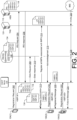
- FIG. 2 is a block diagram showing an example call flow for implementing multiple device association with a single telephone number.
- This example call flow may involve the exchange of data between the user devices 104(1)-104(3), the CSCF node 114, the device association data store 126, and the HSS 116.
- the HSS 116 may store multiple IRSs for a plurality of users, including the IRS 118 for the user 120.
- the device association data store 126 may store the device association data provided by multiple users, including the device association profile 134 of the user 120.
- the IRS 118 may store an IMPU of the user 120 in the form of the MSISDN 122, as well as IMPIs in the form of device identifiers, such as IMEIs, of the user devices 104(1)-104(3).
- the device association profile 134 may indicate that the user 120 has permitted the user devices 104(1) and 104(2), with example "IMPI #1" and "IMPI #2" respectively, to initiate and receive communications via the MSISDN 122.
- the device association profile 134 may further indicate that the user device 104(3), with the example "IMPI #3" lacks such permission.
- the user device 104(1) may power up and send a device registration request to the CSCF node 114.
- the device registration request may be a SIP instance that includes a device identifier (e.g., IMEI) of the user device 104(1).
- the device registration may be a RADIUS instance.
- the CSCF node 114 may send an IRS request for an IRS that is associated with the user device 104(1) to the HSS 116.
- the IRS request may be a network authentication request that includes the device identifier of the user device 104(1).
- the network authentication request may be a Cx Diameter request or a Simple Network Management Protocol (SNMP) request.
- the HSS 116 may locate the matching IRS 118 from among multiple stored IRSs using the device identifier of the user device 104(1).
- the HSS 116 may send the IRS 118 to the CSCF node 114 via an IRS response.
- the IRS response may be a Cx Diameter response or a SNMP response.
- the CSCF node 114 may send a data request for device association data that corresponds to the IMPU associated with the device identifier of the user device 104(1).
- the CSCF node 114 may send the data request to the device association data store 126.
- the data request may be a Hypertext Transfer Protocol (HTTP) query or a Diameter query.
- HTTP Hypertext Transfer Protocol
- a database management application of the device association data store 126 may locate the matching device association profile 134 based on the device identifier of the user device 104(1).
- the database management application of the device association data store 126 may send a data response that includes the device association profile 134 to the CSCF node 114.
- the data response may be a HTTP query or a Diameter query.
- the CSCF node 114 may examine the device association profile 134 to determine whether the user device 104(1) with the "IMPI #1" is permitted to be associated with the MSISDN 122. Since the device association profile 134 indicates that "IMPI #1" is permitted, the CSCF node 114 may register the user device 104(1) to initiate and receive communications via the MSISDN 122.
- the CSCF node 114 may send a registration confirmation to the user device 104(1).
- the registration confirmation may indicate to the user device 104(1) that it is able to use the MSISDN 122 to initiate and receive communications on the mobile telecommunication network 102.
- the CSCF node 114 may send a registration message to the TAS 124 to register all the IMPIs associated with the IMPU. In other words, the CSCF node 114 may perform a third-party register with the P-associated identities and the SIP instance.
- the TAS 124 may store a uniform resource identifier (URI) for the IMPIs that enables the TAS 124 to route communications for the MSISDN 122 through the CSCF node 114.
- URI uniform resource identifier
- the user device 104(2) may power up and send a device registration request to the CSCF node 114.
- the device registration request may be a SIP instance that includes a device identifier (e.g., IMEI) of the user device 104(2).
- the CSCF node 114 may use the device identifier of the user device 104(2) to determine that the device belongs to the IRS 118.
- the CSCF node 114 may further determine that the device association profile 134 is already available for the user device 104(2) at the node.
- the CSCF node 114 may examine the device association profile 134 that was previously obtained from the device association data store 126.
- the CSCF node 114 may determine whether the user device 104(2) with the "IMPI #2" is permitted to be associated with the MSISDN 122. Since the device association profile 134 indicates that "IMPI #2" is permitted, the CSCF node 114 may register the user device 104(2) to initiate and receive communications via the MSISDN 122. Subsequently, at step 220, the CSCF node 114 may send a registration confirmation to the user device 104(2). The registration confirmation may indicate to the user device 104(2) that it is able to use the MSISDN 122 to initiate and receive communications on the mobile telecommunication network 102.
- the user device 104(3) may power up and send a device registration request to the CSCF node 114.
- the device registration request may be a SIP instance that includes a device identifier (e.g., IMEI) of the user device 104(3).
- the CSCF node 114 may use the device identifier of the user device 104(3) to determine that the device belongs to the IRS 118.
- the CSCF node 114 may further determine that the device association profile 134 is already available for the user device 104(3) at the node.
- the CSCF node 114 may examine the device association profile 134 that was previously obtained from the device association data store 126.
- the CSCF node 114 may determine whether the user device 104(3) with the "IMPI #3" is permitted to be associated with the MSISDN 122. In this case, the device association profile 134 does not indicate that "IMPI #3" is permitted. As a result, the CSCF node 114 may deny the user device 104(3) the ability to initiate and receive communications via the MSISDN 122. Subsequently, at step 224, the CSCF node 114 may send a registration failure message to the user device 104(3). The registration failure message may indicate to the user device 104(3) that the registration of the user device 104(3) is prohibited by user configuration.
- the TAS 124 may receive an invite for an incoming communication from an IMS core.
- the IMS core may be the IMS core 112, or the IMS core of a different mobile telecommunication network.
- the incoming communication may be a voice call, a text message, a multimedia message, or so forth that originated from a sender.
- the incoming communication is directed to the IMPU of the user 120, which may be the MSISDN 122.
- the TAS 124 may pass the invite to the CSCF node 114.
- the CSCF node 114 may consult the device association profile 134 and determine that the user devices 104(1) and 104(2), but not the user device 104(3), is to be alerted of the incoming communication. In other embodiments, the CSCF node 114 may send communications that originate from registered user devices, such as the user devices 104(1) and 104(2), to the TAS 124. The TAS 124 may then route each communication to a recipient user device on the IMS core 112 or an IMS core of a different network.
- FIG. 3 is a block diagram showing various components of a call session control function (CSCF) node that implements multiple device association with a single telephone number.
- the CSCF node 114 may be provided by one or more servers 300.
- the servers 300 may include a communication interface 302, one or more processors 304, memory 306, and hardware 308.
- the communication interface 302 may include wireless and/or wired communication components that enable the servers 300 to transmit data to and receive data from other networked devices.
- the hardware 308 may include additional user interface, data communication, or data storage hardware.
- the user interfaces may include a data output device (e.g., visual display, audio speakers), and one or more data input devices.
- the data input devices may include, but are not limited to, combinations of one or more of keypads, keyboards, mouse devices, touch screens that accept gestures, microphones, voice or speech recognition devices, and any other suitable devices.
- the memory 306 may be implemented using computer-readable media, such as computer storage media.
- Computer-readable media includes, at least, two types of computer-readable media, namely computer storage media and communications media.
- Computer storage media includes volatile and non-volatile, removable and non-removable media implemented in any method or technology for storage of information such as computer-readable instructions, data structures, program modules, or other data.
- Computer storage media includes, but is not limited to, RAM, ROM, EEPROM, flash memory or other memory technology, CD-ROM, digital versatile disks (DVD), high-definition multimedia/data storage disks, or other optical storage, magnetic cassettes, magnetic tape, magnetic disk storage or other magnetic storage devices, or any other non-transmission medium that can be used to store information for access by a computing device.
- communication media may embody computer-readable instructions, data structures, program modules, or other data in a modulated data signal, such as a carrier wave, or other transmission mechanism.
- the processors 304 and the memory 306 of the servers 300 may implement the CSCF node 114.
- the CSCF node 114 may execute a registration module 310, an IRS request module 312, a data request module 314, and a TAS interface module 316.
- the modules may include routines, program instructions, objects, and/or data structures that perform particular tasks or implement particular abstract data types.
- the registration module 310 may be responsible for receiving device registration requests from user devices and either grant or deny the device registration requests of the user devices. Accordingly, the registration module 310 may send responses that indicate whether registration of each user device with the mobile telecommunication network 102 to use a telephone number succeeded or failed.
- the registration module 310 may further check device association entries and IRSs in order to determine whether a device registration request from a user device is to be granted or denied.
- the IRS request module 312 may be used by the registration module 310 to interface with the HSS 116 for the purpose of obtaining IRSs that are relevant to user devices.
- the IRS request module 312 may send IRS requests to the HSS 116, and receive IRS for user devices in return.
- the IRS request module 312 may periodically resend, or resend upon user demand, IRS requests to receive updated versions of the IRSs from the HSS 116.
- the data request module 314 may be used by the CSCF node 114 to request and obtain device association data, such as the device association profile 134, from the device association data store 126.
- the data request module 314 may send HTTP or Diameter requests, and receive the device association profiles via HTTP or Diameter responses from a database management application of the device association data store 126. In some embodiments, the data request module 314 may periodically resend, or resend upon user demand, device association data requests to receive updated versions of the device association profiles from the HSS 116.
- the TAS interface module 316 may send registration messages to the TAS 124 to register all the IMPIs associated with the IMPU of each user, such that the associated user devices of each user may initiate and receive communications through the TAS 124. In some embodiments, the TAS interface module 316 may automatically resend a registration message for an IMPU when a corresponding IRS is received by the IRS request module 312.
- the CSCF node 114 may include one or more additional CSCF modules 318 that perform other tasks that are handled by the CSCF node 114. These tasks may include typical network duties that are performed by the S-CSCF, the I-CSCF, and/or so forth.
- the CSCF node 114 may store data in a CSCF data store 320.
- the data store may include one or more databases, such as relational databases, object databases, object-relational databases, and/or key-value databases.
- the data stored in the CSCF data store 320 may include IRS 322 of multiple users as received from the HSS 116, and device association profiles 324 of multiple users as received from the device association data store 126.
- FIGS. 4-6 present illustrative processes 400-600 for implementing multiple device association with a single telephone number.
- Each of the processes 400-600 is illustrated as a collection of blocks in a logical flow chart, which represents a sequence of operations that can be implemented in hardware, software, or a combination thereof.
- the blocks represent computer-executable instructions that, when executed by one or more processors, perform the recited operations.
- computer-executable instructions may include routines, programs, objects, components, data structures, and the like that perform particular functions or implement particular abstract data types.
- the order in which the operations are described is not intended to be construed as a limitation, and any number of the described blocks can be combined in any order and/or in mirror to implement the process.
- the processes 400-600 are described with reference to the architecture 100 of FIG. 1 .
- FIG. 4 is a flow diagram of an example process 400 for selectively associating multiple devices with a single telephone number based on user configuration for accessing communication services provided by a mobile telecommunication network.
- the mobile telecommunication network 102 may receive a user input at the service portal 130 that configures multiple user devices to share in the use of a common telephone number, such as a MSISDN.
- the single telephone number may be for a line of service that enables the user to use communication services provided by the mobile telecommunication network 102.
- Each of the multiple devices may be a SIM-equipped device or a non-SIM device that are under the control of the user.
- each user device is identified by an IMPI that is associated with an IMPU that is stored in the HSS 116. Accordingly, the multiple devices may be configured by designating an IMPI of each user device as being associated with the common telephone number.
- the mobile telecommunication network 102 may store the user input as a device association profile in the device association data store 126.
- the device association data store 126 may be accessible by the CSCF node 114 of the mobile telecommunication network 102.
- the device association profile 134 that is generated for the user 120 may indicate that the user 120 configured the user devices 104(1) and 104(2) to be associated with the MSISDN 122.
- the device association profile 134 may indicate that the user device 104(3) is not associated with the MSISDN 122.
- the CSCF node 114 of the mobile telecommunication network 102 may access the device association profile from the device association data store 126. Accordingly, the CSCF node 114 may determine whether a user device of the user is eligible to use the common telephone number to access the communication services provided by the mobile telecommunication network 102 via the common telephone number. In the example described above, if the user device is the user device 104(1) or the user device 104(2), the CSCF node 114 may permit the user device to be registered for initiating and receiving communications via the MSISDN 122. However, if the user device is the user device 104(3), the CSCF node 114 may deny the registration request.
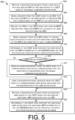
- FIG. 5 is a flow diagram of an example process 500 for selectively registering user devices with a CSCF node of the mobile telecommunication network based on a device association profile.
- the process 500 further illustrates block 406 of the process 400.
- the CSCF node 114 may receive a device registration request from a user device, in which the device registration request may include an IMPI of the user device.
- the device registration request may be initiated by the user device upon power up of the user device.
- the IMPI may be an IMEI, a MEID, or some other ESN of the user device.
- the CSCF node 114 may send an IRS request to the HSS 116 that includes the IMPI of the user device.
- the HSS 116 may locate the matching IRS 118 from among multiple IRSs using the IMPI of the user device 104(1).
- the CSCF node 114 may receive the IRS, which may list an IMPU, as well as multiple IMPIs of a plurality of user devices that are associated with the IMPU.
- the CSCF node 114 may send a request to the device association data store 126 for device association data.
- the request may include the IMPU that is associated with the user device.
- the device association data may indicate which IMPIs of the IMPU are permitted to use a common telephone number, i.e., a common MSISDN.
- the telephone number may belong to a line of service that enables the user to use communication services provided by the mobile telecommunication network 102.
- the CSCF node 114 may determine whether the user device with the IMPI is permitted to use the MSISDN based on the device association data received from the device association data store 126.
- the device association data may be in the form of a device association profile that corresponds to the IMPI.
- the device association profile may contain device association entries that indicate whether the user device is permitted to use the MSISDN.
- the process 500 may proceed to block 514.
- the CSCF node 114 may register the user device with the mobile telecommunication network 102 to initiate and receive communications via the MSISDN. Subsequently, the CSCF node 114 may send an acknowledgement to the user device acknowledging that the user device is registered with the mobile telecommunication network 102. Further, the CSCF node 114 may send a registration message to the TAS 124 to register all the IMPIs associated with the IMPU.
- the process 500 may proceed to block 516.
- the CSCF node 114 may deny the user device the registration that provides the ability to initiate and receive communications via the MSISDN. Subsequently, the CSCF node 114 may send a registration denial message to the user device indicating that the registration of the user device failed. Further, the CSCF node 114 may send a registration message to the TAS 124 to register all the IMPIs associated with the IMPU.
- the CSCF node 114 may receive a device registration request from an additional user device, in which the device registration request may include an additional IMPI that is associated with the IRS that was previously received for the user device.
- the device registration request may be initiated by the additional user device upon power up of the additional user device.
- the CSCF node 114 may determine whether the additional user device with the additional IMPI is permitted to use the MSISDN based on the previously received data, i.e., the device association profile, from the device association data store 126. Accordingly, returning to decision block 512, if the CSCF node 114 determines that the additional user device is permitted ("yes" at decision block 512), the process 500 may once again proceed to block 514. However, if the CSCF node 114 determines that the additional user device is not permitted ("no" at decision block 512), the process 500 may once again proceed to block 516.
- FIG. 6 is a flow diagram of an example process 600 for a CSCF node to direct an incoming communication to one or more user devices with registered IP multimedia private identities.
- the CSCF node 114 may receive an invite message from the TAS 124 for an incoming communication that is route to a MSISDN.
- the invite may be from IMS core 112, or the IMS core of a different mobile telecommunication network.
- the incoming communication may be a voice call, a text message, a multimedia message, or so forth.
- the CSCF node 114 may access a device association profile to ascertain at least one device that is permitted to receive the incoming communication.
- the CSCF node 114 may identify the device association profile to access by matching the MSISDN of the incoming communication to the IMPU of the device association profile.
- the device association profile may be in a data store of the CSCF node 114 or retrieved by the CSCF node 114 from the device association data store 126.
- the CSCF node 114 may direct the incoming communication to the one or more user devices that are permitted to receive the incoming communication route to the MSISDN.
- the device association profile 134 may indicate that user devices 104(1) and 104(2) are permitted to receive the incoming communication, but user device 104(3) does not have permission. Accordingly, the CSCF node 114 may route the incoming communication to the user devices 104(1) and 104(2), but not user device 104(3).
- the ability to associate multiple user devices with a single telephone number may enable a user to initiate and receive communication via a single telephone number from any of the multiple user devices. Such ability may provide additional convenience to the user of the multiple user devices. For example, if the user inadvertently leaves a mobile telecommunication device at home while traveling abroad, the user may still initiate and receive communication at the same telephone number using a different device without purchasing another SIM card or order another line of service from an existing mobile telecommunication carrier. In another example, a user that desires to use different user devices for different events and occasions while using the same telephone number may do so without having to seek assistance from customer care or swap a SIM card between the different user devices.
Landscapes
- Engineering & Computer Science (AREA)
- Multimedia (AREA)
- Computer Networks & Wireless Communication (AREA)
- Signal Processing (AREA)
- Business, Economics & Management (AREA)
- General Business, Economics & Management (AREA)
- Databases & Information Systems (AREA)
- Mobile Radio Communication Systems (AREA)
- Telephonic Communication Services (AREA)
Claims (12)
- Un procédé mis en oeuvre par ordinateur, comprenant :le fait de recevoir une entrée sur un portail de service (130) d'un réseau (102) de télécommunications mobiles, l'entrée configurant plusieurs dispositifs d'utilisateurs (104) pour partager en utilisation un numéro de téléphone commun en vue d'initier et de recevoir des communications via le réseau de télécommunications mobiles ;le fait de stocker l'entrée en tant que profil (134) d'association de dispositifs dans une mémoire (126) de données d'association de dispositifs à laquelle un noeud (114) à fonction de commande de session d'appel, en abrégé CSCF, du réseau de télécommunications mobiles est apte à accéder ;le fait de déterminer au niveau du noeud CSCF, sur la base au moins du profil d'association de dispositifs, si un dispositif d'utilisateur est éligible à l'utilisation du numéro de téléphone commun en vue d'initier et de recevoir des communications via le réseau de télécommunications mobiles ; etle fait d'envoyer, depuis le noeud CSCF, un message d'enregistrement à un serveur d'application de téléphonie, en abrégé TAS, (124) du réseau de télécommunications mobiles, l'enregistrement auprès du TAS permettant au TAS d'envoyer des communications pour le numéro de téléphone commun au noeud CSCF pour le routage vers chaque dispositif d'utilisateur qui partage le numéro de téléphone commun.
- Le procédé mis en oeuvre par ordinateur selon la revendication 1, dans lequel la détermination de savoir si le dispositif d'utilisateur est éligible à l'utilisation du numéro de téléphone commun comprend :le fait de recevoir au niveau du noeud CSCF, en provenance du dispositif d'utilisateur, une demande d'enregistrement qui inclut une identité privée multimédia IP, en abrégé IMPI, du dispositif d'utilisateur ;le fait d'envoyer une demande depuis le noeud CSCF à un serveur d'abonné domestique, en abrégé HSS, (116) du réseau de télécommunications mobiles qui inclut l'IMPI du dispositif d'utilisateur pour obtenir un ensemble d'enregistrement implicite, en abrégé IRS, qui correspond à l'IMPI du dispositif d'utilisateur ;le fait de recevoir l'IRS au niveau du noeud CSCF en provenance du HSS, l'IRS répertoriant une identité publique multimédia IP, en abrégé IMPU, et plusieurs IMPI associées d'une pluralité de dispositifs d'utilisateurs ;le fait de recevoir le profil d'association de dispositifs au niveau du noeud CSCF depuis la mémoire de données d'association de dispositifs, le profil d'association de dispositifs indiquant quelles IMPI parmi la pluralité d'IMPI associées sont autorisées à utiliser le numéro de téléphone commun ; etle fait d'enregistrer le dispositif d'utilisateur en vue d'initier et de recevoir des communications au moyen du numéro de téléphone commun via le noeud CSCF en réponse à la détermination que le profil d'association de dispositifs indique que l'IMPI du dispositif d'utilisateur est autorisée à utiliser le numéro de téléphone commun.
- Le procédé mis en oeuvre par ordinateur selon la revendication 2, comprenant en outre le fait d'envoyer au dispositif d'utilisateur, depuis le noeud CSCF, un accusé de réception d'enregistrement en réponse à la détermination que le profil d'association de dispositifs indique que l'IMPI du dispositif d'utilisateur est autorisée à utiliser le numéro de téléphone commun, ou le fait d'envoyer au dispositif d'utilisateur, depuis le noeud CSCF, un message de refus d'enregistrement en réponse à la détermination que le profil d'association de dispositifs indique que l'IMPI du dispositif d'utilisateur n'est pas autorisée à utiliser le numéro de téléphone commun.
- Le procédé mis en oeuvre par ordinateur selon les revendications 2 ou 3, dans lequel l'envoi au TAS, depuis le noeud CSCF, d'un message d'enregistrement comprend : le fait d'envoyer un message d'enregistrement au TAS pour enregistrer toutes les IMPI associées à l'IMPU.
- Le procédé mis en oeuvre par ordinateur selon l'une quelconque des revendications précédentes, comprenant en outre le fait de recevoir, au niveau du noeud CSCF, un message d'accusé de réception en provenance du TAS une fois l'enregistrement auprès du TAS terminé.
- Le procédé mis en oeuvre par ordinateur selon l'une quelconque des revendications précédentes, comprenant en outre :le fait de recevoir au niveau du noeud CSCF un message d'invitation provenant du TAS, le message d'invitation étant pour une communication entrante qui est routée vers le numéro de téléphone commun ;le fait, au niveau du noeud CSCF, d'accéder au profil d'association de dispositifs pour connaître un ou plusieurs dispositifs d'utilisateurs autorisés à recevoir la communication entrante routée vers le numéro de téléphone commun ; etle fait de diriger via le noeud CSCF la communication entrante vers lesdits un ou plusieurs dispositifs d'utilisateurs autorisés à recevoir la communication entrante routée vers le numéro de téléphone commun.
- Un ou plusieurs supports lisibles par ordinateur d'un réseau (102) de télécommunications mobiles stockant des instructions exécutables par ordinateur qui, lors de leur exécution, amènent un ou plusieurs processeurs à effectuer des actes comprenant :le fait de déterminer, au niveau d'un noeud (114) à fonction de commande de session d'appel, en abrégé CSC, sur la base d'au moins un profil (134) d'association de dispositifs, si un dispositif d'utilisateur (104) est éligible à utiliser un numéro de téléphone commun en vue d'initier et de recevoir des communications via le réseau de télécommunications mobiles, le profil d'association de dispositifs comprenant les identités de dispositifs d'une pluralité de dispositifs d'utilisateurs qui sont configurés pour partager un numéro de téléphone commun en vue d'initier et de recevoir des communications via le réseau de télécommunications mobiles ;le fait d'enregistrer le dispositif d'utilisateur via le noeud CSCF pour partager en utilisation un numéro de téléphone commun avec au moins un autre dispositif d'utilisateur en vue d'initier et de recevoir des communications via le réseau de télécommunications mobiles, en réponse à la détermination que le profil d'association de dispositifs indique que le dispositif d'utilisateur est autorisé à utiliser le numéro de téléphone commun ; etle fait d'envoyer, depuis le noeud CSCF, au dispositif d'utilisateur, un message de refus d'enregistrement en réponse à la détermination que le profil d'association de dispositifs indique que le dispositif d'utilisateur n'est pas autorisé à utiliser le numéro de téléphone commun ; etle fait d'envoyer, depuis le noeud CSCF, un message d'enregistrement à un serveur d'application de téléphonie, en abrégé TAS, (124) du réseau de télécommunications mobiles, l'enregistrement auprès du TAS permettant au TAS d'envoyer au noeud CSCF des communications pour le numéro de téléphone commun en vue d'un routage vers chaque dispositif d'utilisateur qui partage le numéro de téléphone commun.
- Le ou les supports lisibles par ordinateur selon la revendication 7, comprenant en outre :le fait de recevoir au niveau du noeud CSCF une demande d'enregistrement en provenance du dispositif d'utilisateur qui inclut une identité privée multimédia IP, en abrégé IMPI, du dispositif d'utilisateur ;le fait d'envoyer une demande depuis le noeud CSCF à une base de données domestique d'informations d'abonnés du réseau de télécommunications mobiles qui inclut l'IMPI du dispositif d'utilisateur pour obtenir un ensemble d'enregistrement implicite, en abrégé IRS, qui correspond à l'IMPI du dispositif d'utilisateur ;le fait de recevoir l'IRS au niveau du noeud CSCF, en provenance de la base de données domestique d'informations d'abonnés, l'IRS répertoriant une identité publique multimédia IP, en abrégé IMPU, et plusieurs IMPI associées d'une pluralité de dispositifs d'utilisateurs ;le fait de recevoir le profil d'association de dispositifs au niveau du noeud CSCF, en provenance d'une mémoire (126) de données d'association de dispositifs, en réponse à l'envoi par le noeud CSCF, à la mémoire de données d'association de dispositifs, d'une demande de données qui inclut l'IMPU associée au dispositif d'utilisateur ;l'envoi, depuis le noeud CSCF, d'un message d'enregistrement au TAS comprenant : le fait d'envoyer un message d'enregistrement au TAS pour enregistrer toutes les IMPI associées à l'IMPU.
- Le ou les supports lisibles par ordinateur selon la revendication 8, comprenant en outre :le fait de recevoir au niveau du noeud CSCF un message d'invitation provenant du TAS, le message d'invitation étant pour une communication entrante qui est routée vers le numéro de téléphone commun ;le fait, au niveau du noeud CSCF, d'accéder au profil d'association de dispositifs pour connaître un ou plusieurs dispositifs d'utilisateurs autorisés à recevoir la communication entrante routée vers le numéro de téléphone commun ; etle fait de diriger via le noeud CSCF la communication entrante vers lesdits un ou plusieurs dispositifs d'utilisateurs autorisés à recevoir la communication entrante routée vers le numéro de téléphone commun.
- Lesdits un ou plusieurs supports lisibles par ordinateur selon les revendications 8 ou 9, dans lesquels le profil d'association de dispositifs est stocké dans la mémoire de données d'association de dispositifs sur la base au moins d'une entrée reçue sur un portail Web fourni par le réseau de télécommunications mobiles.
- Un ou plusieurs serveurs d'un noeud (114) à fonction de commande de session d'appel, en abrégé CSCF, sur un réseau (102) de télécommunications mobiles, comprenant :un ou plusieurs processeurs, etune mémoire dans laquelle sont stockées des instructions, les instructions, lorsqu'elles sont exécutées par lesdits un ou plusieurs processeurs, amenant lesdits un ou plusieurs processeurs à mettre en oeuvre des étapes de procédé comprenant :le fait de recevoir, au niveau du noeud CSCF, un profil (134) d'association de dispositifs provenant d'une mémoire (126) de données d'association de dispositifs du réseau de télécommunications mobiles, le profil d'association de dispositifs comprenant des identités de dispositifs d'une pluralité de dispositifs d'utilisateurs (104) qui sont configurés via un portail de service (130) pour partager un numéro de téléphone commun en vue d'initier et de recevoir des communications via le réseau de télécommunications mobiles ;le fait, au niveau du noeud CSCF, sur la base au moins du profil d'association de dispositifs, de déterminer si un dispositif d'utilisateur est éligible à l'utilisation du numéro de téléphone commun en vue d'initier et de recevoir des communications via le réseau de télécommunications mobiles ;le fait d'enregistrer le dispositif d'utilisateur via le noeud CSCF pour partager l'utilisation d'un numéro de téléphone commun avec au moins un autre dispositif d'utilisateur en vue d'initier et de recevoir des communications via le réseau de télécommunications mobiles, en réponse à la détermination que le profil d'association de dispositifs indique que le dispositif d'utilisateur est autorisé à utiliser le numéro de téléphone commun, etle fait d'envoyer, depuis le noeud CSCF, un message d'enregistrement à un serveur d'application de téléphonie, en abrégé TAS, (124) du réseau de télécommunications mobiles, l'enregistrement auprès du TAS permettant au TAS d'envoyer au noeud CSCF des communications pour le numéro de téléphone commun en vue d'un routage vers chaque dispositif d'utilisateur qui partage le numéro de téléphone commun ;le fait d'envoyer au dispositif d'utilisateur, depuis le noeud CSCF, un message de refus d'enregistrement en réponse à la détermination que le profil d'association de dispositifs indique que le dispositif d'utilisateur n'est pas autorisé à utiliser le numéro de téléphone commun.
- Le ou les serveurs selon la revendication 11, dans lesquels les étapes de procédé comprennent en outre :le fait de recevoir au niveau du noeud CSCF une demande d'enregistrement en provenance du dispositif d'utilisateur, qui inclut une identité privée multimédia IP, en abrégé IMPI, du dispositif d'utilisateur ;le fait d'envoyer une demande depuis le noeud CSCF à une base de données domestique d'informations d'abonnés du réseau de télécommunications mobiles qui inclut l'IMPI du dispositif d'utilisateur pour obtenir un ensemble implicite d'enregistrement, en abrégé IRS, qui correspond à l'IMPI du dispositif d'utilisateur ;le fait de recevoir l'IRS au niveau du noeud CSCF en provenance de la base de données domestique d'informations d'abonnés, l'IRS répertoriant une identité publique multimédia IP, en abrégé IMPU, et plusieurs IMPI associées d'une pluralité de dispositifs d'utilisateurs ; etl'envoi au TAS, depuis le noeud CSCF, d'un message d'enregistrement comprenant : le fait d'envoyer un message d'enregistrement au TAS pour enregistrer toutes les IMPI associées à l'IMPU.
Applications Claiming Priority (2)
| Application Number | Priority Date | Filing Date | Title |
|---|---|---|---|
| US201462077124P | 2014-11-07 | 2014-11-07 | |
| PCT/US2015/059593 WO2016073935A1 (fr) | 2014-11-07 | 2015-11-06 | Association de multiples dispositifs à un numéro de téléphone unique |
Publications (4)
| Publication Number | Publication Date |
|---|---|
| EP3202172A1 EP3202172A1 (fr) | 2017-08-09 |
| EP3202172A4 EP3202172A4 (fr) | 2018-05-30 |
| EP3202172B1 true EP3202172B1 (fr) | 2023-06-07 |
| EP3202172C0 EP3202172C0 (fr) | 2023-06-07 |
Family
ID=59253321
Family Applications (1)
| Application Number | Title | Priority Date | Filing Date |
|---|---|---|---|
| EP15856986.3A Active EP3202172B1 (fr) | 2014-11-07 | 2015-11-06 | Association de multiples dispositifs à un numéro de téléphone unique |
Country Status (2)
| Country | Link |
|---|---|
| EP (1) | EP3202172B1 (fr) |
| CN (1) | CN107113303A (fr) |
Cited By (1)
| Publication number | Priority date | Publication date | Assignee | Title |
|---|---|---|---|---|
| US12413545B1 (en) | 2024-03-11 | 2025-09-09 | T-Mobile Usa, Inc. | Determining whether an incoming communication is a spam or valid communication |
Families Citing this family (7)
| Publication number | Priority date | Publication date | Assignee | Title |
|---|---|---|---|---|
| CN114374967B (zh) * | 2021-12-30 | 2023-12-12 | 天翼物联科技有限公司 | 一号多终端配置方法、系统及装置 |
| US12323876B2 (en) | 2022-05-09 | 2025-06-03 | T-Mobile Usa, Inc. | Categorize a location of a mobile device in relation to a cell tower of a wireless telecommunication network |
| US12432589B2 (en) | 2022-09-22 | 2025-09-30 | T-Mobile Usa, Inc. | Increasing utilization of UEs used in testing a wireless telecommunication network |
| US12388718B2 (en) | 2022-10-26 | 2025-08-12 | T-Mobile Usa, Inc. | Predicting a likelihood of a predetermined action associated with a mobile device |
| US12341909B2 (en) | 2022-10-28 | 2025-06-24 | T-Mobile Usa, Inc. | Authenticating a user interacting with a wireless telecommunication network via a non-internet connected phone |
| US12386641B2 (en) | 2023-04-28 | 2025-08-12 | T-Mobile Usa, Inc. | Virtual assistant for facilitating actions in omnichannel telecommunications environment |
| EP4518288A1 (fr) * | 2023-08-31 | 2025-03-05 | Vodafone Group Services Limited | Procédé d'enregistrement d'un dispositif sip, entité de réseau et programme informatique |
Family Cites Families (4)
| Publication number | Priority date | Publication date | Assignee | Title |
|---|---|---|---|---|
| EP2283627B1 (fr) * | 2008-05-27 | 2011-09-28 | Telefonaktiebolaget L M Ericsson (PUBL) | Prise en charge d'appels d'arrivée pour une identité d'utilisateur public partagée dans un sous-système multimédia ip |
| GB2463494A (en) * | 2008-09-15 | 2010-03-17 | Data Connection Ltd | Providing a single telephone dialling number for multiple telephony devices |
| US8788678B2 (en) * | 2008-10-15 | 2014-07-22 | Telefonaktiebolaget Lm Ericsson (Publ) | IP multimedia subsystem user identity handling |
| EP2826217A1 (fr) * | 2012-03-12 | 2015-01-21 | Telefonaktiebolaget L M Ericsson (Publ) | Procédé et n ud de fonction de contrôle de session d'appel proxy pour désenregistrer un équipement d'utilisateur d'un sous-système multimédia ip |
-
2015
- 2015-11-06 CN CN201580069994.5A patent/CN107113303A/zh active Pending
- 2015-11-06 EP EP15856986.3A patent/EP3202172B1/fr active Active
Cited By (1)
| Publication number | Priority date | Publication date | Assignee | Title |
|---|---|---|---|---|
| US12413545B1 (en) | 2024-03-11 | 2025-09-09 | T-Mobile Usa, Inc. | Determining whether an incoming communication is a spam or valid communication |
Also Published As
| Publication number | Publication date |
|---|---|
| CN107113303A (zh) | 2017-08-29 |
| EP3202172A1 (fr) | 2017-08-09 |
| EP3202172C0 (fr) | 2023-06-07 |
| EP3202172A4 (fr) | 2018-05-30 |
Similar Documents
| Publication | Publication Date | Title |
|---|---|---|
| US10117090B2 (en) | Multiple device association with a single telephone number | |
| EP3202172B1 (fr) | Association de multiples dispositifs à un numéro de téléphone unique | |
| US10715979B2 (en) | Provisioning device and/or line sharing capabilities to internet of things (IoT) devices | |
| US12052797B2 (en) | Data feeds for management of consumer eSIMs by an eSIM profile management platform utilizing integrated circuit card identifiers (ICCID) | |
| US20250317732A1 (en) | Method and apparatus for service discovery | |
| US9967723B2 (en) | Roaming LTE emergency call with call back number retrieval | |
| US11277732B2 (en) | Systems and methods for web-based communications consolidation | |
| US10567446B2 (en) | Method and system for over-the-top voice for internet of things devices | |
| CA3083213A1 (fr) | Routage de messages vers des dispositifs ayant des adresses non routables | |
| CN110324291A (zh) | 一种通信方法、及相关产品 | |
| WO2017218177A1 (fr) | Appel d'urgence lte itinérant avec récupération de numéro de rappel | |
| US9326141B2 (en) | Internet protocol multimedia subsystem (IMS) authentication for non-IMS subscribers | |
| US20160183083A1 (en) | User equipment and method for dynamic internet protocol multimedia subsystem (ims) registration | |
| EP3065369A1 (fr) | Procédé et système pour autoriser automatiquement des communications basées sur un emplacement | |
| US20210297924A1 (en) | Internet protocol (ip) multimedia subsystem (ims) routing | |
| EP4125254B1 (fr) | Rétablissement des services de longue durée | |
| WO2025171639A1 (fr) | Procédé, dispositif et système de commande d'itinérance akma dans des réseaux de communication | |
| WO2017000617A1 (fr) | Procédé et appareil de commande de fréquence de communication | |
| CN102484862A (zh) | 个人网络元素注册方法、设备和系统 |
Legal Events
| Date | Code | Title | Description |
|---|---|---|---|
| STAA | Information on the status of an ep patent application or granted ep patent |
Free format text: STATUS: THE INTERNATIONAL PUBLICATION HAS BEEN MADE |
|
| PUAI | Public reference made under article 153(3) epc to a published international application that has entered the european phase |
Free format text: ORIGINAL CODE: 0009012 |
|
| STAA | Information on the status of an ep patent application or granted ep patent |
Free format text: STATUS: REQUEST FOR EXAMINATION WAS MADE |
|
| 17P | Request for examination filed |
Effective date: 20170504 |
|
| AK | Designated contracting states |
Kind code of ref document: A1 Designated state(s): AL AT BE BG CH CY CZ DE DK EE ES FI FR GB GR HR HU IE IS IT LI LT LU LV MC MK MT NL NO PL PT RO RS SE SI SK SM TR |
|
| AX | Request for extension of the european patent |
Extension state: BA ME |
|
| DAV | Request for validation of the european patent (deleted) | ||
| DAX | Request for extension of the european patent (deleted) | ||
| A4 | Supplementary search report drawn up and despatched |
Effective date: 20180503 |
|
| RIC1 | Information provided on ipc code assigned before grant |
Ipc: H04W 4/16 20090101ALI20180425BHEP Ipc: H04W 8/02 20090101ALI20180425BHEP Ipc: H04W 8/18 20090101ALI20180425BHEP Ipc: H04W 8/28 20090101AFI20180425BHEP Ipc: H04L 29/06 20060101ALI20180425BHEP |
|
| STAA | Information on the status of an ep patent application or granted ep patent |
Free format text: STATUS: EXAMINATION IS IN PROGRESS |
|
| 17Q | First examination report despatched |
Effective date: 20190905 |
|
| REG | Reference to a national code |
Ref country code: DE Ref legal event code: R079 Ref document number: 602015084036 Country of ref document: DE Free format text: PREVIOUS MAIN CLASS: H04W0008280000 Ipc: H04L0065100000 |
|
| GRAP | Despatch of communication of intention to grant a patent |
Free format text: ORIGINAL CODE: EPIDOSNIGR1 |
|
| STAA | Information on the status of an ep patent application or granted ep patent |
Free format text: STATUS: GRANT OF PATENT IS INTENDED |
|
| RIC1 | Information provided on ipc code assigned before grant |
Ipc: H04L 65/10 20220101AFI20220927BHEP |
|
| INTG | Intention to grant announced |
Effective date: 20221017 |
|
| GRAS | Grant fee paid |
Free format text: ORIGINAL CODE: EPIDOSNIGR3 |
|
| GRAA | (expected) grant |
Free format text: ORIGINAL CODE: 0009210 |
|
| STAA | Information on the status of an ep patent application or granted ep patent |
Free format text: STATUS: THE PATENT HAS BEEN GRANTED |
|
| AK | Designated contracting states |
Kind code of ref document: B1 Designated state(s): AL AT BE BG CH CY CZ DE DK EE ES FI FR GB GR HR HU IE IS IT LI LT LU LV MC MK MT NL NO PL PT RO RS SE SI SK SM TR |
|
| REG | Reference to a national code |
Ref country code: GB Ref legal event code: FG4D |
|
| REG | Reference to a national code |
Ref country code: CH Ref legal event code: EP Ref country code: AT Ref legal event code: REF Ref document number: 1578140 Country of ref document: AT Kind code of ref document: T Effective date: 20230615 |
|
| REG | Reference to a national code |
Ref country code: DE Ref legal event code: R096 Ref document number: 602015084036 Country of ref document: DE |
|
| U01 | Request for unitary effect filed |
Effective date: 20230607 |
|
| U07 | Unitary effect registered |
Designated state(s): AT BE BG DE DK EE FI FR IT LT LU LV MT NL PT SE SI Effective date: 20230612 |
|
| REG | Reference to a national code |
Ref country code: LT Ref legal event code: MG9D |
|
| PG25 | Lapsed in a contracting state [announced via postgrant information from national office to epo] |
Ref country code: NO Free format text: LAPSE BECAUSE OF FAILURE TO SUBMIT A TRANSLATION OF THE DESCRIPTION OR TO PAY THE FEE WITHIN THE PRESCRIBED TIME-LIMIT Effective date: 20230907 Ref country code: ES Free format text: LAPSE BECAUSE OF FAILURE TO SUBMIT A TRANSLATION OF THE DESCRIPTION OR TO PAY THE FEE WITHIN THE PRESCRIBED TIME-LIMIT Effective date: 20230607 |
|
| U20 | Renewal fee for the european patent with unitary effect paid |
Year of fee payment: 9 Effective date: 20231019 |
|
| PG25 | Lapsed in a contracting state [announced via postgrant information from national office to epo] |
Ref country code: RS Free format text: LAPSE BECAUSE OF FAILURE TO SUBMIT A TRANSLATION OF THE DESCRIPTION OR TO PAY THE FEE WITHIN THE PRESCRIBED TIME-LIMIT Effective date: 20230607 Ref country code: HR Free format text: LAPSE BECAUSE OF FAILURE TO SUBMIT A TRANSLATION OF THE DESCRIPTION OR TO PAY THE FEE WITHIN THE PRESCRIBED TIME-LIMIT Effective date: 20230607 Ref country code: GR Free format text: LAPSE BECAUSE OF FAILURE TO SUBMIT A TRANSLATION OF THE DESCRIPTION OR TO PAY THE FEE WITHIN THE PRESCRIBED TIME-LIMIT Effective date: 20230908 |
|
| PG25 | Lapsed in a contracting state [announced via postgrant information from national office to epo] |
Ref country code: SK Free format text: LAPSE BECAUSE OF FAILURE TO SUBMIT A TRANSLATION OF THE DESCRIPTION OR TO PAY THE FEE WITHIN THE PRESCRIBED TIME-LIMIT Effective date: 20230607 |
|
| PG25 | Lapsed in a contracting state [announced via postgrant information from national office to epo] |
Ref country code: IS Free format text: LAPSE BECAUSE OF FAILURE TO SUBMIT A TRANSLATION OF THE DESCRIPTION OR TO PAY THE FEE WITHIN THE PRESCRIBED TIME-LIMIT Effective date: 20231007 |
|
| PG25 | Lapsed in a contracting state [announced via postgrant information from national office to epo] |
Ref country code: SM Free format text: LAPSE BECAUSE OF FAILURE TO SUBMIT A TRANSLATION OF THE DESCRIPTION OR TO PAY THE FEE WITHIN THE PRESCRIBED TIME-LIMIT Effective date: 20230607 Ref country code: SK Free format text: LAPSE BECAUSE OF FAILURE TO SUBMIT A TRANSLATION OF THE DESCRIPTION OR TO PAY THE FEE WITHIN THE PRESCRIBED TIME-LIMIT Effective date: 20230607 Ref country code: RO Free format text: LAPSE BECAUSE OF FAILURE TO SUBMIT A TRANSLATION OF THE DESCRIPTION OR TO PAY THE FEE WITHIN THE PRESCRIBED TIME-LIMIT Effective date: 20230607 Ref country code: IS Free format text: LAPSE BECAUSE OF FAILURE TO SUBMIT A TRANSLATION OF THE DESCRIPTION OR TO PAY THE FEE WITHIN THE PRESCRIBED TIME-LIMIT Effective date: 20231007 Ref country code: CZ Free format text: LAPSE BECAUSE OF FAILURE TO SUBMIT A TRANSLATION OF THE DESCRIPTION OR TO PAY THE FEE WITHIN THE PRESCRIBED TIME-LIMIT Effective date: 20230607 |
|
| PG25 | Lapsed in a contracting state [announced via postgrant information from national office to epo] |
Ref country code: PL Free format text: LAPSE BECAUSE OF FAILURE TO SUBMIT A TRANSLATION OF THE DESCRIPTION OR TO PAY THE FEE WITHIN THE PRESCRIBED TIME-LIMIT Effective date: 20230607 |
|
| REG | Reference to a national code |
Ref country code: DE Ref legal event code: R097 Ref document number: 602015084036 Country of ref document: DE |
|
| PLBE | No opposition filed within time limit |
Free format text: ORIGINAL CODE: 0009261 |
|
| STAA | Information on the status of an ep patent application or granted ep patent |
Free format text: STATUS: NO OPPOSITION FILED WITHIN TIME LIMIT |
|
| 26N | No opposition filed |
Effective date: 20240308 |
|
| REG | Reference to a national code |
Ref country code: CH Ref legal event code: PL |
|
| PG25 | Lapsed in a contracting state [announced via postgrant information from national office to epo] |
Ref country code: MC Free format text: LAPSE BECAUSE OF FAILURE TO SUBMIT A TRANSLATION OF THE DESCRIPTION OR TO PAY THE FEE WITHIN THE PRESCRIBED TIME-LIMIT Effective date: 20230607 |
|
| PG25 | Lapsed in a contracting state [announced via postgrant information from national office to epo] |
Ref country code: CH Free format text: LAPSE BECAUSE OF NON-PAYMENT OF DUE FEES Effective date: 20231130 |
|
| GBPC | Gb: european patent ceased through non-payment of renewal fee |
Effective date: 20231106 |
|
| PG25 | Lapsed in a contracting state [announced via postgrant information from national office to epo] |
Ref country code: MC Free format text: LAPSE BECAUSE OF FAILURE TO SUBMIT A TRANSLATION OF THE DESCRIPTION OR TO PAY THE FEE WITHIN THE PRESCRIBED TIME-LIMIT Effective date: 20230607 Ref country code: CH Free format text: LAPSE BECAUSE OF NON-PAYMENT OF DUE FEES Effective date: 20231130 |
|
| REG | Reference to a national code |
Ref country code: IE Ref legal event code: MM4A |
|
| PG25 | Lapsed in a contracting state [announced via postgrant information from national office to epo] |
Ref country code: IE Free format text: LAPSE BECAUSE OF NON-PAYMENT OF DUE FEES Effective date: 20231106 |
|
| PG25 | Lapsed in a contracting state [announced via postgrant information from national office to epo] |
Ref country code: GB Free format text: LAPSE BECAUSE OF NON-PAYMENT OF DUE FEES Effective date: 20231106 |
|
| PG25 | Lapsed in a contracting state [announced via postgrant information from national office to epo] |
Ref country code: IE Free format text: LAPSE BECAUSE OF NON-PAYMENT OF DUE FEES Effective date: 20231106 Ref country code: GB Free format text: LAPSE BECAUSE OF NON-PAYMENT OF DUE FEES Effective date: 20231106 |
|
| U20 | Renewal fee for the european patent with unitary effect paid |
Year of fee payment: 10 Effective date: 20241022 |
|
| PG25 | Lapsed in a contracting state [announced via postgrant information from national office to epo] |
Ref country code: CY Free format text: LAPSE BECAUSE OF FAILURE TO SUBMIT A TRANSLATION OF THE DESCRIPTION OR TO PAY THE FEE WITHIN THE PRESCRIBED TIME-LIMIT; INVALID AB INITIO Effective date: 20151106 |
|
| PG25 | Lapsed in a contracting state [announced via postgrant information from national office to epo] |
Ref country code: HU Free format text: LAPSE BECAUSE OF FAILURE TO SUBMIT A TRANSLATION OF THE DESCRIPTION OR TO PAY THE FEE WITHIN THE PRESCRIBED TIME-LIMIT; INVALID AB INITIO Effective date: 20151106 |
|
| U20 | Renewal fee for the european patent with unitary effect paid |
Year of fee payment: 11 Effective date: 20251022 |
|
| PG25 | Lapsed in a contracting state [announced via postgrant information from national office to epo] |
Ref country code: TR Free format text: LAPSE BECAUSE OF FAILURE TO SUBMIT A TRANSLATION OF THE DESCRIPTION OR TO PAY THE FEE WITHIN THE PRESCRIBED TIME-LIMIT Effective date: 20230607 |