EP3202589B1 - Feuille décorative, utilisation d'une feuille décorative et méthode de production d'un article décorative moulé en résine - Google Patents
Feuille décorative, utilisation d'une feuille décorative et méthode de production d'un article décorative moulé en résine Download PDFInfo
- Publication number
- EP3202589B1 EP3202589B1 EP15846238.2A EP15846238A EP3202589B1 EP 3202589 B1 EP3202589 B1 EP 3202589B1 EP 15846238 A EP15846238 A EP 15846238A EP 3202589 B1 EP3202589 B1 EP 3202589B1
- Authority
- EP
- European Patent Office
- Prior art keywords
- resin
- decorative
- layer
- decorative sheet
- molded article
- Prior art date
- Legal status (The legal status is an assumption and is not a legal conclusion. Google has not performed a legal analysis and makes no representation as to the accuracy of the status listed.)
- Active
Links
Images

Classifications
-
- B—PERFORMING OPERATIONS; TRANSPORTING
- B32—LAYERED PRODUCTS
- B32B—LAYERED PRODUCTS, i.e. PRODUCTS BUILT-UP OF STRATA OF FLAT OR NON-FLAT, e.g. CELLULAR OR HONEYCOMB, FORM
- B32B27/00—Layered products comprising a layer of synthetic resin
- B32B27/18—Layered products comprising a layer of synthetic resin characterised by the use of special additives
- B32B27/20—Layered products comprising a layer of synthetic resin characterised by the use of special additives using fillers, pigments, thixotroping agents
-
- B—PERFORMING OPERATIONS; TRANSPORTING
- B32—LAYERED PRODUCTS
- B32B—LAYERED PRODUCTS, i.e. PRODUCTS BUILT-UP OF STRATA OF FLAT OR NON-FLAT, e.g. CELLULAR OR HONEYCOMB, FORM
- B32B27/00—Layered products comprising a layer of synthetic resin
-
- B—PERFORMING OPERATIONS; TRANSPORTING
- B32—LAYERED PRODUCTS
- B32B—LAYERED PRODUCTS, i.e. PRODUCTS BUILT-UP OF STRATA OF FLAT OR NON-FLAT, e.g. CELLULAR OR HONEYCOMB, FORM
- B32B27/00—Layered products comprising a layer of synthetic resin
- B32B27/06—Layered products comprising a layer of synthetic resin as the main or only constituent of a layer, which is next to another layer of the same or of a different material
- B32B27/08—Layered products comprising a layer of synthetic resin as the main or only constituent of a layer, which is next to another layer of the same or of a different material of synthetic resin
-
- B—PERFORMING OPERATIONS; TRANSPORTING
- B44—DECORATIVE ARTS
- B44C—PRODUCING DECORATIVE EFFECTS; MOSAICS; TARSIA WORK; PAPERHANGING
- B44C1/00—Processes, not specifically provided for elsewhere, for producing decorative surface effects
- B44C1/16—Processes, not specifically provided for elsewhere, for producing decorative surface effects for applying transfer pictures or the like
- B44C1/165—Processes, not specifically provided for elsewhere, for producing decorative surface effects for applying transfer pictures or the like for decalcomanias; sheet material therefor
- B44C1/17—Dry transfer
-
- C—CHEMISTRY; METALLURGY
- C08—ORGANIC MACROMOLECULAR COMPOUNDS; THEIR PREPARATION OR CHEMICAL WORKING-UP; COMPOSITIONS BASED THEREON
- C08J—WORKING-UP; GENERAL PROCESSES OF COMPOUNDING; AFTER-TREATMENT NOT COVERED BY SUBCLASSES C08B, C08C, C08F, C08G or C08H
- C08J7/00—Chemical treatment or coating of shaped articles made of macromolecular substances
- C08J7/04—Coating
- C08J7/043—Improving the adhesiveness of the coatings per se, e.g. forming primers
-
- C—CHEMISTRY; METALLURGY
- C08—ORGANIC MACROMOLECULAR COMPOUNDS; THEIR PREPARATION OR CHEMICAL WORKING-UP; COMPOSITIONS BASED THEREON
- C08J—WORKING-UP; GENERAL PROCESSES OF COMPOUNDING; AFTER-TREATMENT NOT COVERED BY SUBCLASSES C08B, C08C, C08F, C08G or C08H
- C08J7/00—Chemical treatment or coating of shaped articles made of macromolecular substances
- C08J7/04—Coating
- C08J7/046—Forming abrasion-resistant coatings; Forming surface-hardening coatings
-
- C—CHEMISTRY; METALLURGY
- C09—DYES; PAINTS; POLISHES; NATURAL RESINS; ADHESIVES; COMPOSITIONS NOT OTHERWISE PROVIDED FOR; APPLICATIONS OF MATERIALS NOT OTHERWISE PROVIDED FOR
- C09D—COATING COMPOSITIONS, e.g. PAINTS, VARNISHES OR LACQUERS; FILLING PASTES; CHEMICAL PAINT OR INK REMOVERS; INKS; CORRECTING FLUIDS; WOODSTAINS; PASTES OR SOLIDS FOR COLOURING OR PRINTING; USE OF MATERIALS THEREFOR
- C09D175/00—Coating compositions based on polyureas or polyurethanes; Coating compositions based on derivatives of such polymers
- C09D175/04—Polyurethanes
-
- B—PERFORMING OPERATIONS; TRANSPORTING
- B32—LAYERED PRODUCTS
- B32B—LAYERED PRODUCTS, i.e. PRODUCTS BUILT-UP OF STRATA OF FLAT OR NON-FLAT, e.g. CELLULAR OR HONEYCOMB, FORM
- B32B2307/00—Properties of the layers or laminate
- B32B2307/40—Properties of the layers or laminate having particular optical properties
- B32B2307/402—Coloured
-
- B—PERFORMING OPERATIONS; TRANSPORTING
- B32—LAYERED PRODUCTS
- B32B—LAYERED PRODUCTS, i.e. PRODUCTS BUILT-UP OF STRATA OF FLAT OR NON-FLAT, e.g. CELLULAR OR HONEYCOMB, FORM
- B32B2451/00—Decorative or ornamental articles
-
- C—CHEMISTRY; METALLURGY
- C09—DYES; PAINTS; POLISHES; NATURAL RESINS; ADHESIVES; COMPOSITIONS NOT OTHERWISE PROVIDED FOR; APPLICATIONS OF MATERIALS NOT OTHERWISE PROVIDED FOR
- C09D—COATING COMPOSITIONS, e.g. PAINTS, VARNISHES OR LACQUERS; FILLING PASTES; CHEMICAL PAINT OR INK REMOVERS; INKS; CORRECTING FLUIDS; WOODSTAINS; PASTES OR SOLIDS FOR COLOURING OR PRINTING; USE OF MATERIALS THEREFOR
- C09D163/00—Coating compositions based on epoxy resins; Coating compositions based on derivatives of epoxy resins
-
- C—CHEMISTRY; METALLURGY
- C09—DYES; PAINTS; POLISHES; NATURAL RESINS; ADHESIVES; COMPOSITIONS NOT OTHERWISE PROVIDED FOR; APPLICATIONS OF MATERIALS NOT OTHERWISE PROVIDED FOR
- C09D—COATING COMPOSITIONS, e.g. PAINTS, VARNISHES OR LACQUERS; FILLING PASTES; CHEMICAL PAINT OR INK REMOVERS; INKS; CORRECTING FLUIDS; WOODSTAINS; PASTES OR SOLIDS FOR COLOURING OR PRINTING; USE OF MATERIALS THEREFOR
- C09D167/00—Coating compositions based on polyesters obtained by reactions forming a carboxylic ester link in the main chain; Coating compositions based on derivatives of such polymers
-
- C—CHEMISTRY; METALLURGY
- C09—DYES; PAINTS; POLISHES; NATURAL RESINS; ADHESIVES; COMPOSITIONS NOT OTHERWISE PROVIDED FOR; APPLICATIONS OF MATERIALS NOT OTHERWISE PROVIDED FOR
- C09D—COATING COMPOSITIONS, e.g. PAINTS, VARNISHES OR LACQUERS; FILLING PASTES; CHEMICAL PAINT OR INK REMOVERS; INKS; CORRECTING FLUIDS; WOODSTAINS; PASTES OR SOLIDS FOR COLOURING OR PRINTING; USE OF MATERIALS THEREFOR
- C09D5/00—Coating compositions, e.g. paints, varnishes or lacquers, characterised by their physical nature or the effects produced; Filling pastes
- C09D5/002—Priming paints
Definitions
- the present invention relates to a decorative sheet capable of vividly displaying a deep-color design such as one with raven blackness, and a decorative resin molded article obtained using the decorative sheet.
- Decorative sheets to be used in these techniques can be classified broadly into lamination-type decorative sheets and transfer-type decorative sheets.
- a surface protective layer is laminated on a support base material so as to be situated on the outermost surface, and a molded resin is laminated on the support base material side, so that the support base material is incorporated in a resin molded article.
- a surface protective layer is laminated on a support base material directly or with a release layer interposed therebetween, the release layer being provided as necessary, and a molded resin is laminated on a side opposite to the support base material, followed by separating the support base material, so that the support base material does not remain in a resin molded article.
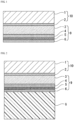
- the decorative sheet according to the present invention includes a base material, and at least a protective layer 3, a primer layer 4 and a decorative layer 5 on the base material 1.
- a surface of the base material 1 on the protective layer 3 side may be provided with a release layer 2 as necessary for the purpose of, for example, improving separability between the base material 1 and the protective layer 3.
- An adhesive layer 6 may be provided as necessary for the purpose of, for example, improving adhesion between the decorative layer 5 and the molded resin layer 8.
- Examples of the laminated structure of the decorative sheet according to the present invention include a laminated structure in which a base material, a protective layer, a primer layer and a decorative layer are laminated in this order; a laminated structure in which a base material, a release layer, a protective layer, a primer layer and a decorative layer are laminated in this order; a laminated structure in which a base material, a protective layer, a primer layer, a decorative layer and an adhesive layer are laminated in this order; and a laminated structure in which a base material, a release layer, a protective layer, a primer layer, a decorative layer and an adhesive layer are laminated in this order.
- Fig. 1 shows a schematic view of a cross section structure of one form of a decorative sheet in which a base material, a release layer, a protective layer, a primer layer, a decorative layer and an adhesive layer are laminated in this order.
- acryl-based resins polyester-based resins, polyolefin-based resins, polystyrene-based resins, copolymers of monomers that form these resins, and urethane-modified products thereof are preferable, and more specific examples include acryl-melamine-based resins alone, acryl-melamine-based resin-containing compositions, resin compositions obtained by mixing a polyester-based resin with a urethane-modified product of a copolymer of ethylene and acrylic acid, and resin compositions obtained by mixing an acryl-based resin with an emulsion of a copolymer of styrene and acryl.
- the release layer 2 be formed of an acryl-melamine-based resin alone, or a composition containing 50% by mass or more of an acryl-melamine-based resin among the above-mentioned resins.
- the "(meth)acrylic acid” means an "acrylic acid” or a “methacrylic acid”, and the same applies to other similar terms.
- the release layer 2 can be formed using an ionizing radiation curable resin composition as described in the section "Protective Layer 3" in which at least one of prepolymers, oligomers and monomers which are crosslinked and cured when irradiated with an ionizing radiation and which have a polymerizable unsaturated bond or an epoxy group in the molecule is appropriately mixed.
- the thickness of the release layer 2 is normally about 0.01 to 5 ⁇ m, preferably about 0.05 to 3 ⁇ m.
- the protective layer 3 is a layer that is provided on the decorative sheet in such a manner as to be situated on the outermost surface of the resin molded article for improving the chemical resistance, scratch resistance and the like of the decorative sheet.
- the resin for forming the protective layer 3 is not particularly limited, examples thereof include thermosetting resins, thermoplastic resins and ionizing radiation curable resins, and the resin can be appropriately selected according to a use of the decorative sheet. Among these resins, ionizing radiation curable resins are preferable for improving the scratch resistance of the decorative sheet, and imparting excellent surface characteristics.
- the protective layer 3 may include one layer, or two or more layers.
- thermosetting resin is not particularly limited, and examples thereof include epoxy resins, phenol resins, urea resins, unsaturated polyester resins, melamine resins, alkyd resins, polyimide resins, silicone resins, hydroxyl group-functional acrylic resins, carboxyl-functional acrylic resins, amide-functional copolymers and urethane resins.
- the thermoplastic resin is not particularly limited, and specific examples thereof include acrylic resins such as polymethyl (meth)acrylate and polyethyl (meth)acrylate; polyolefin-based resins such as polypropylene and polyethylene; polycarbonate resins; polyvinyl chloride-based resins; polyester resins such as polyethylene terephthalate (PET), polybutylene terephthalate (PBT) and polyethylene naphthalate (PEN); acrylonitrile-butadiene-styrene resins (ABS resins); and acrylonitrile-styrene-acrylic acid ester resins.
- acrylic resins such as polymethyl (meth)acrylate and polyethyl (meth)acrylate
- polyolefin-based resins such as polypropylene and polyethylene
- polycarbonate resins polyvinyl chloride-based resins
- polyester resins such as polyethylene terephthalate (PET), polybutylene terephthalate (P
- the ionizing radiation curable resin to be used for formation of the protective layer 3 is a resin that is crosslinked and cured when irradiated with an ionizing radiation, and specific examples thereof include those in which at least one of prepolymers, oligomers and monomers each having a polymerizable unsaturated bond or an epoxy group in the molecule is appropriately mixed.
- the ionizing radiation means an electromagnetic wave or charged particle ray having an energy quantum capable of polymerizing or crosslinking a molecule, and normally an ultraviolet (UV) ray or an electron beam (EB) is used, but the ionizing radiations also include electromagnetic waves such as an X-ray and a ⁇ -ray, and charged particle rays such as an ⁇ -ray and an ion beam.
- UV ultraviolet
- EB electron beam
- electron beam curable resins are suitably used in formation of the protective layer 3 because they can be made solventless, do not require an initiator for photopolymerization, and exhibit stable curing characteristics.
- (meth)acrylate monomers having a radical-polymerizable unsaturated group in the molecule are suitable, and among them, polyfunctional (meth)acrylate monomers are preferable.
- the polyfunctional (meth)acrylate monomer may be a (meth)acrylate monomer having two or more polymerizable unsaturated bonds in the molecule (di- or more functional), preferably three or more polymerizable unsaturated bonds in the molecule (tri- or more functional).
- polyfunctional (meth)acrylate examples include ethylene glycol di(meth)acrylate, propylene glycol di(meth)acrylate, 1,4-butanediol di(meth)acrylate, 1,6-hexanediol di(meth)acrylate, neopentyl glycol di(meth)acrylate, polyethylene glycol di(meth)acrylate, hydroxypivalic acid neopentyl glycol di(meth)acrylate, dicyclopentanyl di(meth)acrylate, caprolactone-modified dicyclopentenyl di(meth)acrylate, ethylene oxide-modified phosphoric acid di(meth)acrylate, allylated cyclohexyl di(meth)acrylate, isocyanurate di(meth)acrylate, trimethylolpropane tri(meth)acrylate, ethylene oxide-modified trimethylolpropane tri(meth)acrylate, dipentaerythri
- (meth)acrylate oligomers having a radical-polymerizable unsaturated group in the molecule are suitable, and among them, polyfunctional (meth)acrylate oligomers having two or more polymerizable unsaturated bonds in the molecule (di-or-more functional) are preferable.
- polyfunctional (meth)acrylate oligomer examples include polycarbonate (meth)acrylate, acrylic silicone (meth)acrylate, urethane (meth)acrylate, epoxy (meth)acrylate, polyester (meth)acrylate, polyether (meth)acrylate, polybutadiene (meth)acrylate, silicone (meth)acrylate, and oligomers having a cation-polymerizable functional group in the molecule (e.g. novolac-type epoxy resins, bisphenol-type epoxy resins, aliphatic vinyl ethers, aromatic vinyl ethers and so on).
- the polycarbonate (meth)acrylate is not particularly limited as long as it has a carbonate bond on the polymer main chain, and has a (meth)acrylate group at the end or side chain, and the polycarbonate (meth)acrylate can be obtained by esterifying a polycarbonate polyol with (meth)acrylic acid.
- the polycarbonate (meth)acrylate may be, for example, a polycarbonate-based urethane (meth)acrylate that is a urethane (meth)acrylate having a polycarbonate backbone.
- the urethane (meth)acrylate having a polycarbonate backbone is obtained by, for example, reacting a polycarbonate polyol, a polyvalent isocyanate compound and hydroxy (meth)acrylate.
- the acrylic silicone (meth)acrylate can be obtained by radical-copolymerizing a silicone macro-monomer with a (meth)acrylate monomer.
- the urethane (meth)acrylate can be obtained by, for example, esterifying a polyurethane oligomer with (meth)acrylic acid, the polyurethane oligomer being obtained by reaction of a polyether polyol, a polyester polyol, a caprolactone-based polyol or a polycarbonate polyol with a polyisocyanate compound.
- the epoxy (meth)acrylate can be obtained by, for example, reacting (meth)acrylic acid with an oxirane ring of a relatively low-molecular-weight bisphenol-type epoxy resin or novolac-type epoxy resin to perform esterification.
- Carboxyl-modified epoxy (meth)acrylate obtained by partially modifying the epoxy (meth)acrylate with a dibasic carboxylic anhydride can also be used.
- the polyester (meth)acrylate can be obtained by esterifying hydroxyl groups of a polyester oligomer with (meth)acrylic acid, the polyester oligomer being obtained by condensation of a polyvalent carboxylic acid and a polyhydric alcohol and having a hydroxyl group at each of both ends, or by esterifying a hydroxyl group at the end of an oligomer with (meth)acrylic acid, the oligomer being obtained by adding an alkylene oxide to a polyvalent carboxylic acid.
- the polyether (meth)acrylate can be obtained by esterifying a hydroxyl group of a polyether polyol with (meth)acrylic acid.
- the polybutadiene (meth)acrylate can be obtained by adding (meth)acrylic acid to the side chain of a polybutadiene oligomer.
- the silicone (meth)acrylate can be obtained by adding (meth)acrylic acid to the end or side chain of a silicone having a polysiloxane bond in the main chain.
- polycarbonate (meth)acrylate, urethane (meth)acrylate and the like are especially preferable as polyfunctional (meth)acrylate oligomers. These oligomers may be used alone, or may be used in combination of two or more thereof.
- polycarbonate (meth)acrylate among the above-mentioned ionizing radiation curable resins, for obtaining excellent three-dimensional moldability. More preferably, polycarbonate (meth)acrylate and urethane (meth)acrylate are used in combination for securing both three-dimensional moldability and scratch resistance.
- the ionizing radiation curable resin When a polyfunctional (meth)acrylate monomer is used as the ionizing radiation curable resin, it is preferable to use the ionizing radiation curable resin in combination with a thermoplastic resin such as an acrylic resin for obtaining excellent three-dimensional moldability, and the mass ratio of the polyfunctional (meth)acrylate monomer and the thermoplastic resin in the ionizing radiation curable resin composition is preferably 25 : 75 to 75 : 25 for securing both three-dimensional moldability and scratch resistance.
- a thermoplastic resin such as an acrylic resin for obtaining excellent three-dimensional moldability
- the mass ratio of the polyfunctional (meth)acrylate monomer and the thermoplastic resin in the ionizing radiation curable resin composition is preferably 25 : 75 to 75 : 25 for securing both three-dimensional moldability and scratch resistance.
- a caprolactone-based urethane (meth)acrylate obtained by esterifying a polyurethane oligomer, which is obtained by reaction of a caprolactone-based polyol with a polyisocyanate compound, by a (meth)acrylic acid, or the above-mentioned polycarbonate-based urethane (meth)acrylate is preferably used for securing both three-dimensional moldability and scratch resistance.
- the protective layer 3 may contain inorganic particles and/or organic particles for the purpose of, for example, improving the chemical resistance and scratch resistance of the decorative sheet, and vividly displaying a deep-color design such as one with raven blackness.
- the total content of these particles in the protective layer 3 is preferably about 30 to 60% by mass, preferably about 40 to 50% by mass.
- the average particle size of these particles contained in the protective layer 3 is preferably about 0.01 to 0.5 ⁇ m.
- the types of inorganic particles and organic particles in the protective layer 3 may be the same as those shown for the primer layer 4 described later.
- the methods for measurement and calculation of the average particle size of the particles contained in the protective layer 3 are the same as methods shown for the primer layer 4 described later.
- additives can be blended in the protective layer 3 according to desired properties to be imparted to the protective layer 3.
- the additives include weather resistance improving agents such as ultraviolet absorbers and light stabilizers, abrasion resistance improvers, polymerization inhibitors, crosslinkers, infrared absorbers, antistatic agents, bondability improvers, leveling agents, thixotropy imparting agents, coupling agents, plasticizers, antifoaming agents, fillers, solvents and colorants.
- the additives can be appropriately selected from those that are commonly used.
- the ultraviolet absorber and light stabilizer a reactive ultraviolet absorber and light stabilizer having a polymerizable group such as a (meth)acryloyl group in the molecule can also be used.
- the thickness of the protective layer 3 is not particularly limited, but it is, for example, 1 to 1000 ⁇ m, preferably 1 to 50 ⁇ m, further preferably 1 to 30 ⁇ m.
- the thickness of the protective layer 3 after drying or curing falls within the above-mentioned range, sufficient properties as a protective layer, such as scratch resistance and weather resistance, are obtained, and in the case where the protective layer 3 is formed using an ionizing radiation curable resin, the resin can be uniformly irradiated with an ionizing radiation, and therefore can be uniformly cured, thus being advantageous in terms of economy.
- the three-dimensional moldability of the decorative sheet is further improved, and therefore high followability to a complicated three-dimensional shape in automobile interior applications or the like can be obtained.
- Formation of the protective layer 3 is performed by, for example, preparing an ionizing radiation-curable resin composition containing an ionizing radiation curable resin, and applying and crosslinking/curing the ionizing radiation-curable resin composition.
- the viscosity of the ionizing radiation curable resin composition is not limited as long as an uncured resin layer can be formed on the surface of the primer layer 4 situated under the protective layer 3 by an application method as described later.
- an uncured resin layer is formed by applying a prepared application liquid onto the primer layer 4 situated under the protective layer 3 using a known method such as gravure coating, bar coating, roll coating, reverse roll coating or comma coating, preferably gravure coating in such a manner that the above-mentioned thickness is obtained.
- the uncured resin layer formed in this manner is irradiated with an ionizing radiation such as an electron beam or an ultraviolet ray to cure the uncured resin layer, so that the protective layer 3 is formed.
- an ionizing radiation such as an electron beam or an ultraviolet ray to cure the uncured resin layer, so that the protective layer 3 is formed.
- an electron beam is used as the ionizing radiation
- an accelerating voltage thereof can be appropriately selected according to a resin to be used and a thickness of the layer, but the accelerating voltage is normally about 70 to 300 kV.
- the transmission capacity increases as the accelerating voltage becomes higher, and therefore when a resin that is easily degraded by irradiation of an electron beam is used in a layer under the protective layer 3, an accelerating voltage is selected so that the transmission depth of the electron beam is substantially equal to the thickness of the protective layer 3. Accordingly, a layer situated under the protective layer 3 can be inhibited from being excessively irradiated with an electron beam, so that degradation of the layers by an excessive electron beam can be minimized.
- the amount of radiation is preferably an amount with which the crosslinking density of the protective layer 3 is saturated, and the amount of radiation is selected within a range of normally 5 to 300 kGy (0.5 to 30 Mrad), preferably 10 to 50 kGy (1 to 5 Mrad).
- the electron beam source is not particularly limited, and various kinds of electron beam accelerators can be used such as, for example, those of Cockcroft-Walton type, Van de Graaff type, tuned transformer type, insulated core transformer type, linear type, dynamitron type and high frequency type.
- the ultraviolet ray source is not particularly limited, and examples thereof include highpressure mercury lamps, low-pressure mercury lamps, metal halide lamps, carbon arc lamps and ultraviolet-ray emitting diodes (LED-UV).
- the primer layer 4 contributes to improvement of adhesion, improvement of weather resistance, improvement of strength, and so on.
- the resin A to be used for formation of the primer layer 4 is not particularly limited as long as it has a hydroxyl value of 44 mg KOH/g or less, and is an acryl-based resin.
- the resin composition for forming the primer layer 4 contains an isocyanate-based curing agent together with the resin A.
- the hydroxyl value of the resin A is preferably in the range of about 0 to 40 mg KOH/g, more preferably in the range of about 0 to 25 mg KOH/g.
- the hydroxyl value of resin is a value measured by a method specified in JIS K1557-1.
- the glass transition temperature of the resin A is preferably 50°C or higher.
- the glass transition temperature of the resin A is 50°C or higher, the transfer property of the decorative layer 5 in formation of the later-described decorative layer 5 on the primer layer 4 is improved.
- the quality of products is stabilized to favor production, and color unevenness in the decorative layer 5 hardly occurs, so that a resin molded article further excellent in design property can be provided.
- the glass transition temperature of the resin A is preferably in the range of about 50 to 140°C, more preferably in the range of about 65 to 115°C.
- the glass transition temperature (°C) means a temperature (°C) at which a peak shoulder is formed in a differential scanning calorimetry (DSC) method.
- the resin composition for forming the primer layer 4 in the present invention contains an isocyanate-based curing agent.
- the isocyanate-based curing agent is not particularly limited, but it is preferably a polyvalent isocyanate, and for example, aromatic isocyanates such as 2,4-tolylene diisocyanate, xylene diisocyanate, naphthalene diisocyanate and 4,4'-diphenylmethane diisocyanate; aliphatic isocyanates or cycloaliphatic isocyanates such as 1,6-hexamethylene diisocyanate, 2,2,4-trimethylhexamethylene diisocyanate, isophorone diisocyanate, hydrogenated tolylene diisocyanate, hydrogenated diphenylmethane diisocyanate and xylylene diisocyanate; and the like can be used.
- Adducts or multimers of these various kinds of isocyanates for example adducts of tolylene diisocyanate, trimers of tolylene diisocyanate, and the like can also be used.
- the isocyanate-based curing agents may be used alone, or may be used in combination of two or more thereof.
- isocyanate-based curing agents particularly aliphatic isocyanates such as 1,6-hexamethylene diisocyanate, cycloaliphatic isocyanates such as isophorone diisocyanate, hydrogenated tolylene diisocyanate and hydrogenated diphenylmethane diisocyanate, xylylene diisocyanate, or adducts or multimers of these isocyanates can be used.
- these isocyanate-based curing agents are called non-yellowing-type isocyanate compounds, and are capable of maintaining a state in which an original hue of a color tome of a picture etc. formed on a decorative layer while suppressing yellowing in a weather resistance test etc.
- the isocyanate-based curing agent is preferably a non-yellowing-type isocyanate compound.
- the content of the isocyanate-based curing agent in the resin composition is not particularly limited, but it is preferably about 3 to 45 parts by mass, more preferably about 3 to 25 parts by mass based on 100 parts by mass of resin components in the resin composition from the viewpoint of adhesion, and printability in lamination of the decorative layer etc.
- the resin composition for forming the primer layer 4 in the present invention may contain a binder resin in addition to the resin A.
- the binder resin is a resin that does not satisfy the above-mentioned requirement for the resin A, and has a hydroxyl value of more than 44 mg KOH/g.
- a polyurethane-based resin, a vinyl chloride-vinyl acetate-based copolymer resin, a polyester resin or the like can be used as the binder resin.
- the weight average molecular weight of a resin that can be used as the binder resin is preferably about 10,000 to 300,000, more preferably about 50,000 to 200,000.
- the primer layer 4 may contain inorganic particles and/or organic particles for further vividly displaying a deep-color design such as one with raven blackness in the decorative resin molded article after transfer.
- the total content of inorganic particles and/or organic particles in the primer layer 4 is preferably about 11 to 50% by mass, more preferably about 25 to 35% by mass.
- the average particle size of inorganic particles and organic particles is not particularly limited, but it is preferably about 0.01 to 3 ⁇ m, more preferably about 1 to 2 ⁇ m for vividly displaying a deep-color design such as one with raven blackness by interaction of the primer layer 4 with the decorative layer 5.
- the average particle size of inorganic particles and organic particles means a 50% particle size (d50: median diameter) when the particles in a solution are measured by a dynamic light scattering method, and the particle size distribution is expressed as a cumulative distribution.
- the particle size is a value measured using a Microtrac particle size analyzer (manufactured by NIKKISO CO., LTD.).
- the inorganic particles are not particularly limited, but for vividly displaying a deep-color design such as one with raven blackness by interaction of the primer layer 4 with the decorative layer 5, silica particles (colloidal silica, fumed silica, precipitated silica and so on), and metal oxide particles such as alumina particles, zirconia particles, titania particles and zinc oxide particles are preferable. Among them, silica particles and alumina particles are preferably, with silica particles being particularly preferable.
- the inorganic particles may be used alone, or may be used in combination of two or more thereof.
- the organic particles are not particularly limited, but for vividly displaying a deep-color design such as one with raven blackness by interaction of the primer layer 4 with the decorative layer 5, urethane beads, nylon beads, acrylic beads, silicone beads, styrene beads, melamine beads, urethane acryl beads, polyester beads, polyethylene beads and so on are preferable. Among them, urethane beads, nylon beads and acrylic beads are preferable.
- the organic particles may be used alone, or may be used in combination of two or more thereof.
- the shapes of the inorganic particles and organic particles are spherical, elliptical, polyhedral, scaly or the like, and the shapes of these particles are preferably uniform and well-ordered.
- the inorganic particles and organic particles commercially available products can also be used.
- the primer layer 4 may contain inorganic particles and/or organic particles, but it is preferable that the primer layer 4 contains inorganic particles.
- the primer layer 4 may contain substantially only inorganic particles.
- the thickness of the primer layer 4 is not particularly limited, but it is, for example, about 0.1 to 10 ⁇ m, preferably about 1 to 10 ⁇ m.
- the deep-color design, such as one with raven blackness, of the decorative sheet can be more vividly displayed, and breakage, rupture, whitening and the like of the protective layer 3 can be effectively suppressed.
- the primer layer 4 is formed by a normal coating method such as gravure coating, gravure reverse coating, gravure offset coating, spinner coating, roll coating, reverse roll coating, kiss coating, wheeler coating, dip coating, solid coating with a silk screen, wire bar coating, flow coating, comma coating, pour coating, blushing or spray coating, or a transfer coating method using a resin composition for forming the primer layer 4.
- the transfer coating method is a method in which a coating film of a primer layer or adhesive layer is formed on a thin sheet (film base material), and thereafter the surface of the intended layer in the decorative sheet is coated with the coating film.
- the decorative layer 5 is a layer that is provided for vividly displaying a deep-color design such as one with raven blackness in the decorative resin molded article after transfer in cooperation with the primer layer 4.
- the decorative layer 5 contains a black pigment.
- a black design from the black pigment contained in the decorative layer 5 interacts with the primer layer 4 to vividly display a deep-color design such as one with raven blackness in the decorative resin molded article after transfer.
- the decorative layer 5 may be a partially provided layer, but it is preferable that the decorative layer 5 is (a wholly solid layer that is) formed over the whole of a surface of the decorative sheet. At least a part of the decorative layer 5 may have a portion displaying a black design, with the other portion displaying a design other than a black design.
- the decorative layer 5 has at least one of a decorative picture layer and a decorative solid layer (not illustrated).
- the decorative layer 5 may have both a decorative picture layer and a decorative solid layer.
- the decorative picture layer and the decorative solid layer may be each stained with a concealing color as necessary, or may have transparency.
- the decorative sheet according to the present invention has the primer layer 4 formed using the resin A and the decorative layer 5 containing a black pigment, and therefore, for example, a resin molded article having, on at least a part of a surface on the protective layer 3 side, a black portion with a very low brightness in which the L* value is 2.5 or less is obtained.
- Such a resin molded article displays a color which is expressed as "vivid and glossy black", “piano black” or “raven black” when the resin molded article is observed through the protective layer 3.
- the decorative picture layer and the decorative solid layer are each provided with a figure, characters, a patterned picture or the like using a printing ink.
- the picture is not limited as long as it can be printed by a common printing technique. Examples of the picture include woody textures, pebble-like textures, cloth-like textures, sand-like textures, geometrical figures and characters.
- the decorative solid layer is a layer that is uniformly formed over the whole of a surface of the primer layer 4. Alternatively, the decorative solid layer is formed over the whole of a surface of the primer layer 4 which is printed with the decorative picture layer.
- the decorative solid layer is disposed on the molded article side from the decorative picture layer for setting off a picture formed on the decorative picture layer. For ensuring that the ground color of a surface of a molded article before decoration is not viewed from the protective layer 3 side, it is preferable to form a decorative picture layer and decorative solid layer having high concealment property.
- the black pigment contained in the decorative layer 5 is not particularly limited as long as it can display a black color, and examples thereof include carbon black and magnetite-type triiron tetraoxide.
- the black pigments may be used alone, or may be used in combination of two or more thereof.
- the particle size of the pigment is not particularly limited, but the average particle size of the pigment is preferably 10 nm to 100 nm, further preferably 10 nm to 40 nm.
- the content of the black pigment in the decorative layer 5 is not particularly limited, but it is preferably about 10 to 50% by mass, more preferably about 30 to 40% by mass for vividly displaying a deep-color design such as one with raven blackness by interaction of the decorative layer 5 with the primer layer 4.
- the decorative layer 5 is formed using a printing ink containing a black pigment, a binder resin, and a solvent or dispersion medium.
- the decorative layer 5 may include a colorant other than a black pigment within the bounds of not hindering the effect of the present invention.
- the other colorant is not particularly limited, and examples thereof include metallic pigments formed of scalelike foil powders of metals such as aluminum, chromium, nickel, tin, titanium, iron phosphate, copper, gold, silver and brass, alloys or metal compounds; pearly luster (pearl) pigments formed of foil powders of mica-like iron oxide, titanium dioxide-coated mica, titanium dioxide-coated bismuth oxychloride, bismuth oxychloride, titanium dioxide-coated talc, scalelike foils, colored titanium dioxide-coated mica, basic lead carbonate and the like; fluorescent pigments such as strontium aluminate, calcium aluminate, barium aluminate, zinc sulfide and calcium sulfide; white inorganic pigments such as titanium dioxide, zinc white and antimony trioxide; inorganic pigments such as zinc white, iron red,
- the binder resin in the printing ink to be used for formation of the decorative layer 5 is not particularly limited, and examples thereof include acryl-based resins, styrene-based resins, polyester-based resins, urethane-based resins, chlorinated polyolefin-based resins, vinyl chloride-vinyl acetate copolymer-based resins, polyvinyl butyral resins, alkyd-based resins, petroleum-based resins, ketone resins, epoxy-based resins, melamine-based resins, fluorine-based resins, silicone-based resins, cellulose derivatives and rubber-based resins. These binder resins may be used alone, or may be used in combination of two or more thereof.
- the decorative layer 5 may be formed of a resin composition containing the black pigment, and a binder resin composed of the same resin as the resin A.
- compatibility between the primer layer and the black decorative layer is improved, and therefore an interface is hardly generated between the primer layer and the black decorative layer, so that generation of interference fringes can be suppressed, leading to improvement of raven blackness property.
- the solvent or dispersion medium in the printing ink to be used for formation of the decorative layer 5 is not particularly limited, and examples thereof include petroleum-based organic solvents such as hexane, heptane, octane, toluene, xylene, ethylbenzene, cyclohexane and methylcyclohexane; ester-based organic solvents such as ethyl acetate, butyl acetate, acetic acid-2-methoxyethyl and acetic acid-2-ethoxyethyl; alcohol-based organic solvents such as methyl alcohol, ethyl alcohol, normal-propyl alcohol, isopropyl alcohol, isobutyl alcohol, ethylene glycol and propylene glycol; ketone-based organic solvents such as acetone, methyl ethyl ketone, methyl isobutyl ketone and cyclohexanone; ether-based organic solvents such as dieth
- the printing ink to be used for formation of the decorative layer 5 may contain an anti-settling agent, a curing catalyst, an ultraviolet absorber, an antioxidant, a leveling agent, a thickener, a defoaming agent, a lubricant and the like as necessary.
- the decorative layer 5 can be formed on the adjacent layer such as the primer layer 4 by a known printing method such as gravure printing, flexographic printing, silk screen printing or offset printing.
- the thickness of the decorative layer 5 is not particularly limited, and for example, it is about 1 to 40 ⁇ m, preferably about 3 to 30 ⁇ m.
- the adhesive layer 6 is a layer that is provided on, for example, a back surface (on the molded resin layer 8 side) of the decorative layer 5 as necessary for the purpose of, for example, improving adhesion between the decorative sheet and the molded resin layer 8.
- the resin for forming the adhesive layer 6 is not particularly limited as long as it can improve adhesion and bondability between the decorative layer and the molded resin layer, and examples thereof include thermoplastic resins and thermosetting resins.
- the thermoplastic resin include acrylic resins, acryl-modified polyolefin resins, chlorinated polyolefin resins, vinyl chloride-vinyl acetate copolymers, thermoplastic urethane resins, thermoplastic polyester resins, polyamide resins and rubber-based resins.
- the thermoplastic resins may be used alone, or may be used in combination of two or more thereof.
- the thermosetting resin include urethane resins and epoxy resins. The thermosetting resins may be used alone, or may be used in combination of two or more thereof.
- the adhesive layer 6 is not a layer that is necessarily needed, but it is preferable to provide the adhesive layer 6 when it is conceivable that the decorative sheet according to the present invention is applied to a decoration method in which the decorative sheet is bonded onto a previously provided resin molded body, such as, for example, a vacuum press-bonding method as described later.
- a vacuum press-bonding method as described later.
- the thickness of the adhesive layer 6 is not particularly limited, but it is, for example, about 0.1 to 30 ⁇ m, preferably about 0.5 to 20 ⁇ m, further preferably about 1 to 8 ⁇ m.
- the decorative resin molded article can be produced by integrating a molded resin with the decorative sheet according to the present invention, and transferring to the molded resin layer 8 the transfer layer 9 including the protective layer 3, the primer layer 4 and the decorative layer 5.
- the decorative sheet according to the present invention is used as a transfer-type decorative sheet, and the molded resin layer 8 is laminated on a side opposite to the support 10 in the decorative sheet to obtain a decorative resin molded article with a support in which at least the molded resin layer 8, the decorative layer 5, the primer layer 4, the protective layer 3 and the support 10 are laminated in this order (see, for example, Fig. 2 ).
- the support 10 is separated from the decorative resin molded article with a support to obtain the decorative resin molded article in which at least the molded resin layer 8, the decorative layer 5, the primer layer 4 and the protective layer 3 are laminated (see, for example, Fig. 3 ).
- the decorative resin molded article may be further provided with the adhesive layer 6 and so on as necessary.
- the protective layer 3, the decorative layer 5, the primer layer 4, the adhesive layer 6 and so on form the transfer layer 9, and the base material 1 and the release layer 2 form the support 10.
- the transfer layer 9 in the decorative sheet is transferred to the molded resin layer 8 to obtain a decorative resin molded article.
- the decorative resin molded article has, on at least a part of a surface on the protective layer side, a black portion in which the L* value is 2.5 or less.
- the decorative resin molded article is produced using the decorative sheet according to the present invention, and therefore can have such a black portion with a very low brightness, and excellent raven blackness can be displayed at the portion. Further, when the whole of a surface of the decorative resin molded article on the protective layer side has a black color in which the L* value is 2.5 or less, excellent raven blackness is displayed over the whole decorative resin molded article.
- the L* value of a surface of the decorative resin molded article is a value obtained by measuring the L* value in the L*a*b color system for a surface of the decorative resin molded article on the protective layer side using Spectrophotometric Colorimeter CM-2500d (light source: D65, angle: 10°) manufactured by KONICA MINOLTA, INC.
- Examples of the method for producing the decorative resin molded article using the decorative sheet for transfer include a method including the steps of (1) to (5):
- the temperature at which the decorative sheet is heated is preferably equal to or higher than a temperature in the vicinity of the glass transition temperature and lower than the melting temperature (or melting point) of the base material 1. Normally, it is more preferable to heat the decorative sheet at a temperature in the vicinity of the glass transition temperature of the transferring base material 1.
- the vicinity of the glass transition temperature refers to a range of the glass transition temperature ⁇ about 5°C, and is generally about 70 to 130°C when a polyester film suitable as the base material 1 is used.
- the step of heating the decorative sheet and the step of preliminarily molding the decorative sheet may be omitted to mold the decorative sheet in the shape of the mold by means of heat and pressure from the injected resin in the later-described step (3).
- the later-described molding resin is melted, and injected into a cavity to integrate the decorative sheet and the molding resin with each other.
- the molding resin is a thermoplastic resin
- the resin is heated and melted to be brought into a flowing state
- the molding resin is a thermosetting resin
- an uncured liquid composition is injected in a flowing state at room temperature or by appropriately heating the composition, and cooled to be solidified.
- the decorative sheet is integrally attached to the formed resin molded body to form a decorative resin molded article with a support.
- the temperature at which the injected resin is heated depends on the type of the molding resin, but is generally about 180 to 320°C.
- the thus obtained decorative resin molded article with a support is cooled and then taken out from the mold in the step (4), and thereafter, in the step (5), the support 10 is separated from the protective layer 3 to obtain a decorative resin molded article.
- the step of separating the support 10 from the protective layer 3 may be carried out concurrently with the step of taking out the decorative resin molded article from the mold.
- the step (5) may be included in the step (4).
- production of the decorative resin molded article can be performed by a vacuum press-bonding method.
- the vacuum press-bonding method first the decorative sheet of the present invention and a resin molded body are placed in a vacuum press-bonding machine including a first vacuum chamber situated on the upper side and a second vacuum chamber situated on the lower side in such a manner that the decorative sheet is on the first vacuum chamber side and the resin molded body is on the second vacuum chamber side, and that the side of the decorative sheet on which the molded resin layer 8 is laminated faces the resin molded body side.
- the two vacuum chambers are then evacuated.
- the resin molded body is placed on a lift table that is provided on the second vacuum chamber side and is capable of moving up and down.
- the first vacuum chamber is pressurized, and the molded body is abutted against the decorative sheet with the lift table, and by using a pressure difference between the two vacuum chambers, the decorative sheet is bonded to the surface of the resin molded body while being stretched.
- the two vacuum chambers are released to atmospheric pressure, the support 10 is separated, and an unnecessary portion of the decorative sheet is trimmed off as necessary, so that the decorative resin molded article can be obtained.
- the vacuum press-bonding method includes a step of heating the decorative sheet for softening the decorative sheet to improve the moldability thereof before the step of abutting the molded body against the decorative sheet.
- the vacuum press-bonding method including such a step may be referred to particularly as a vacuum heating and press-bonding method.
- the heating temperature in such a step may be appropriately selected according to a type of the resin that forms the decorative sheet, or a thickness of the decorative sheet, but when a polyester resin film or an acrylic resin film is used as, for example, the base material 1, the heating temperature may be normally about 60 to 200°C.
- a resin appropriate to an intended use may be selected to form the molded resin layer 8.
- the molding resin for forming the molded resin layer 8 may be a thermoplastic resin or may be a thermosetting resin.
- thermoplastic resin examples include polyolefin-based resins such as polyethylene and polypropylene, ABS resins, styrene resins, polycarbonate resins, acrylic resins and vinyl chloride-based resins. These thermoplastic resins may be used alone, or may be used in combination of two or more thereof.
- thermosetting resin examples include urethane resins and epoxy resins. These thermosetting resins may be used alone, or may be used in combination of two or more thereof.
- the support 10 serves as a protective sheet for the decorative resin molded article, the support 10 may be maintained as it is without being separated after production of the decorative resin molded article with a support, and may be separated at the time of use. When used in this manner, the decorative resin molded article can be prevented from being scratched by, for example, scraping during transportation.
- the decorative resin molded article vividly displays a deep-color design such as one with raven blackness. Therefore, the resin molded article can be used for, for example, interior materials or exterior materials of vehicles such as automobiles; fittings such as window frames and door frames; interior materials of buildings such as walls, floors and ceilings; housings of household electric appliances such as television receivers and air conditioners; and containers etc.
- a polyethylene terephthalate film (thickness: 50 ⁇ m) with an easily adhesive layer formed on one surface thereof was used as a base material.
- a coating solution mainly composed of a melamine-based resin was applied to a surface of the easily adhesive layer of the polyethylene terephthalate film by gravure printing to form a release layer (thickness: 1 ⁇ m).
- An ionizing radiation curable resin composition as shown in Table 1 was applied onto the release layer by a bar coater in such a manner that the thickness after curing would be 3 ⁇ m, so that a protective layer forming coating film was formed.
- the coating film was irradiated with an electron beam having an accelerating voltage of 165 kV and an amount of irradiation of 50 kGy (5 Mrad), so that the protective layer forming coating film was cured to form a protective layer.
- a resin composition containing a resin A as described in Table 1 was applied onto the protective layer by gravure printing to form a primer layer (thickness: 1.5 ⁇ m).
- a black solid decorative layer (thickness: 2 ⁇ m) was formed on the primer layer by gravure printing using a decorative layer forming black ink composition containing an acrylic resin and a vinyl chloride-vinyl acetate-based copolymer resin (50% by mass of acrylic resin and 50% by mass of vinyl chloride-vinyl acetate-based copolymer resin) as a binder resin, and 30% by mass of a black pigment (carbon black, average particle size: 13 nm).
- a black ink composition containing an acrylic resin and a vinyl chloride-vinyl acetate-based copolymer resin (50% by mass of acrylic resin and 50% by mass of vinyl chloride-vinyl acetate-based copolymer resin) as a binder resin, and 30% by mass of a black pigment (carbon black, average particle size: 13 nm).
- an adhesive layer forming resin composition containing an acryl-based resin softening temperature: 125°C
- an adhesive layer thinness: 2 ⁇ m
- Details of the ionizing radiation curable resin composition for forming the protective layer and the resin composition for forming the primer layer are as follows.
- Example 1 Resin composition containing an acryl-based resin a (glass transition temperature: 40°C, hydroxyl value: 0 mg KOH/g, weight average molecular weight: 105,000) and an isocyanate-based curing agent (XDI) at a mass ratio of 100 : 17.
- Example 2 Resin composition containing an acryl-based resin b (glass transition temperature: 50°C, hydroxyl value: 0 mg KOH/g, weight average molecular weight: 70,000) and an isocyanate-based curing agent (XDI) at a mass ratio of 100 : 22.
- Example 3 Resin composition containing an acryl-based resin c (glass transition temperature: 80°C, hydroxyl value: 0 mg KOH/g, weight average molecular weight: 65,000) and an isocyanate-based curing agent (XDI) at a mass ratio of 100 : 22.
- Example 4 Resin composition containing an acryl-based resin d (glass transition temperature: 105°C, hydroxyl value: 0 mg KOH/g, weight average molecular weight: 68,000) and an isocyanate-based curing agent (XDI) at a mass ratio of 100 : 22.
- Example 5 Resin composition containing an acryl-based resin e (glass transition temperature: 105°C, hydroxyl value: 0 mg KOH/g, weight average molecular weight: 40,000) and an isocyanate-based curing agent (XDI) at a mass ratio of 100 : 22.
- Example 6 Resin composition containing an acryl-based resin f (glass transition temperature: 135°C, hydroxyl value: 25 mg KOH/g, weight average molecular weight: 15,000) and an isocyanate-based curing agent (XDI) at a mass ratio of 100 : 17.
- Example 7 Resin composition containing an acryl-based resin g (glass transition temperature: 70°C, hydroxyl value: 35 mg KOH/g, weight average molecular weight: 50,000) and an isocyanate-based curing agent (XDI) at a mass ratio of 100 : 22.
- Example 8 Resin composition containing an acryl-based resin h (glass transition temperature: 90°C, hydroxyl value: 40 mg KOH/g, weight average molecular weight: 35,000) and an isocyanate-based curing agent (XDI) at a mass ratio of 100 : 22.
- Comparative Example 9 Resin composition containing an ester-based resin a (glass transition temperature: 65°C, hydroxyl value: 6 mg KOH/g, weight average molecular weight: 15,000) and an isocyanate-based curing agent (XDI) at a mass ratio of 100 : 17.
- Comparative Example 10 Resin composition containing an ester-based resin b (glass transition temperature: 67°C, hydroxyl value: 6 mg KOH/g, weight average molecular weight: 17,000) and an isocyanate-based curing agent (XDI) at a mass ratio of 100 : 22.
- Comparative Example 11 Resin composition containing a urethane-based resin a (glass transition temperature: 92°C, hydroxyl value: 19 mg KOH/g, weight average molecular weight: 6,000) and an isocyanate-based curing agent (XDI) at a mass ratio of 100 : 22.
- a urethane-based resin a glass transition temperature: 92°C, hydroxyl value: 19 mg KOH/g, weight average molecular weight: 6,000
- XDI isocyanate-based curing agent
- Example 12 Resin composition containing a mixed resin of the acryl-based resin d (glass transition temperature: 105°C, hydroxyl value: 0 mg KOH/g, weight average molecular weight: 68,000) and the acryl-based resin i (glass transition temperature: 90°C, hydroxyl value: 81 mg KOH/g, weight average molecular weight: 35,000) (mass ratio in terms of a solid content: 100 : 50), and an isocyanate-based curing agent (XDI) at a mass ratio of 100 : 22.
- XDI isocyanate-based curing agent
- Example 13 Resin composition containing a mixed resin of the acryl-based resin d (glass transition temperature: 105°C, hydroxyl value: 0 mg KOH/g, weight average molecular weight: 68,000) and an acryl-based resin i (glass transition temperature: 90°C, hydroxyl value: 81 mg KOH/g, weight average molecular weight: 35,000) (mass ratio in terms of a solid content: 100 : 115), and an isocyanate-based curing agent (XDI) at a mass ratio of 100 : 22.
- XDI isocyanate-based curing agent
- Example 14 Resin composition containing a mixed resin of the acryl-based resin d (glass transition temperature: 105°C, hydroxyl value: 0 mg KOH/g, weight average molecular weight: 68,000) and the acryl-based resin i (glass transition temperature: 90°C, hydroxyl value: 81 mg KOH/g, weight average molecular weight: 35,000) (mass ratio in terms of a solid content: 100 : 270), and an isocyanate-based curing agent (XDI) at a mass ratio of 100 : 22.
- XDI isocyanate-based curing agent
- Comparative Example 1 Resin composition containing an acryl-based resin i (glass transition temperature: 90°C, hydroxyl value: 81 mg KOH/g, weight average molecular weight: 35,000) and an isocyanate-based curing agent (XDI) at a mass ratio of 100 : 28.
- Comparative Example 2 Resin composition containing an acryl-based resin i (glass transition temperature: 90°C, hydroxyl value: 81 mg KOH/g, weight average molecular weight: 35,000) and an isocyanate-based curing agent (XDI) at a mass ratio of 100 : 28.
- Comparative Example 3 Resin composition containing an acryl-based resin j (glass transition temperature: 90°C, hydroxyl value: 120 mg KOH/g, weight average molecular weight: 35,000) and an isocyanate-based curing agent (XDI) at a mass ratio of 100 : 28.
- Comparative Example 4 Resin composition containing an acryl-based resin k (glass transition temperature: 45°C, hydroxyl value: 150 mg KOH/g, weight average molecular weight: 15,000) and an isocyanate-based curing agent (XDI) at a mass ratio of 100 : 27.
- the weight average molecular weight, the glass transition temperature Tg and the hydroxyl value of the resin A shown in Table 1 were measured by the following methods, respectively.
- the hydroxyl value was measured by the method specified in JIS K 1557-1.
- a temperature at which a peak shoulder was formed in a differential scanning calorimetry (DSC) method was defined as a glass transition temperature Tg (°C).
- Each decorative sheet obtained as described above was placed in a mold, heated at 350°C for 7 seconds with an infrared heater, and preliminarily molded so as to follow the shape of the inside of the mold, so that the mold was closed (maximum draw ratio: 100%). Thereafter, the injected resin was injected into the cavity of the mold to integrally mold the decorative sheet and the injected resin, the molded product was taken out from the mold, and simultaneously the support (base material and release layer) was separated and removed to obtain a decorative resin molded article.
- the decorative resin molded article obtained as described above was subjected to a checkerboard adhesion test (the article is notched so as to draw 11 lines in a longitudinal direction and 11 lines in a lateral direction at intervals of 2 mm, so that a checkerboard with 100 squares is formed, and Cellotape (registered trademark) manufactured by Nichiban Co., Ltd. is then press-bonded onto the checkerboard, and rapidly separated), and adhesion of the decorative layer and the protective layer with the primer layer interposed therebetween was evaluated in accordance with the following criteria.
- the L* value in the L*a*b color system was measured using Spectrophotometric Colorimeter CM-2500d (light source: D65, angle: 10°) manufactured by KONICA MINOLTA, INC. The results are shown in Table 1.
- a primer layer, a decorative layer and an adhesive layer were formed on a film with a release layer and a protective layer laminated in this order on a base material. At this time, occurrence of ink transfer to the printing plate, and the condition of printing streaks were visually examined in the state of a decorative sheet and in the state of a decorative resin molded article.
Landscapes
- Chemical & Material Sciences (AREA)
- Organic Chemistry (AREA)
- Health & Medical Sciences (AREA)
- Chemical Kinetics & Catalysis (AREA)
- Medicinal Chemistry (AREA)
- Polymers & Plastics (AREA)
- Life Sciences & Earth Sciences (AREA)
- Engineering & Computer Science (AREA)
- Materials Engineering (AREA)
- Wood Science & Technology (AREA)
- Laminated Bodies (AREA)
- Decoration By Transfer Pictures (AREA)
Claims (9)
- Feuille décorative comprenant un matériau de base (1), et au moins une couche de protection (3), une couche d'apprêt (4) et une couche décorative (5) laminées dans cet ordre sur le matériau de base (1),la couche décorative (5) contenant un pigment noir,la couche d'apprêt (4) étant formée à partir d'un produit durci d'une composition de résine contenant une résine A ayant une valeur hydroxyle de 44 mg KOH/g ou moins, qui est une résine à base acrylique, et d'un agent durcisseur à base d'isocyanate.
- Feuille décorative selon la revendication 1, dans laquelle la résine A présente une température de transition vitreuse dans une plage de 50 à 140 °C.
- Feuille décorative selon la revendication 1 ou 2, dans laquelle la résine A présente une valeur hydroxyle dans une plage de 0 à 25 mg KOH/g.
- Feuille décorative selon l'une quelconque des revendications 1 à 3, dans laquelle une teneur de la résine A dans la composition de résine est de 10 % en masse ou plus sur la base d'une quantité de composants de résine contenus dans la composition de résine.
- Feuille décorative selon l'une quelconque des revendications 1 à 4, dans laquelle la couche décorative (5) est formée du pigment noir, et d'une composition de résine contenant une résine liante composée de la même résine que la résine A.
- Feuille décorative selon l'une quelconque des revendications 1 à 5, dans laquelle au moins une partie de la couche décorative (5) présente une portion affichant un design noir.
- Utilisation d'une feuille décorative selon l'une quelconque des revendications 1 à 6 pour produire un article décoratif moulé en résine, dans laquelle l'article décoratif moulé en résine comprend au moins la couche de résine moulée (8), la couche décorative (5), la couche d'apprêt (4) et la couche de protection (3) dans cet ordre, et dans laquelle l'article décoratif moulé en résine présente sur au moins une partie d'une surface sur le côté couche de protection (3), une portion noire dans laquelle une valeur L* dans le système de couleurs L*a*b* est de 2,5 ou moins.
- Procédé de fabrication d'un article décoratif moulé en résine comprenant les étapes consistant à :(a) intégrer une résine moulée avec la feuille décorative selon l'une quelconque des revendications 1 à 6 en laminant la couche de résine moulée (8) sur un côté opposé au support (10) dans la feuille décorative pour obtenir un article décoratif moulé en résine avec un support dans lequel au moins la couche de résine moulée (8), la couche décorative (5), la couche d'apprêt (4), la couche de protection (3) et le support (10) sont laminés dans cet ordre ;(b) séparer le support (10) de l'article décoratif moulé en résine avec un support pour obtenir l'article décoratif moulé en résine dans lequel au moins la couche de résine moulée (8), la couche décorative (5), la couche d'apprêt (4) et la couche de protection (3) sont laminées.
- Procédé permettant de fabriquer un article décoratif moulé en résine selon la revendication 8, le procédé comprenant les étapes suivantes consistant à :1) chauffer une feuille décorative à partir du côté de la couche décorative par un plateau chauffant pendant que le côté de la couche décorative (5) de la feuille décorative est maintenu face à l'intérieur d'un moule ;2) moulage sous vide préliminaire de la feuille décorative chauffée de sorte qu'elle épouse la forme de l'intérieur du moule, amenant ainsi la feuille décorative en contact étroit avec la surface intérieure du moule pour fermer le moule ;3) injecter une résine dans le moule ;4) refroidir la résine injectée, et retirer ensuite du moule un article décoratif moulé en résine avec un support ;5) séparer le support (10) de la couche de protection de l'article décoratif moulé en résine avec un support.
Applications Claiming Priority (2)
| Application Number | Priority Date | Filing Date | Title |
|---|---|---|---|
| JP2014200482 | 2014-09-30 | ||
| PCT/JP2015/077757 WO2016052628A1 (fr) | 2014-09-30 | 2015-09-30 | Feuille décorative |
Publications (3)
| Publication Number | Publication Date |
|---|---|
| EP3202589A1 EP3202589A1 (fr) | 2017-08-09 |
| EP3202589A4 EP3202589A4 (fr) | 2018-05-16 |
| EP3202589B1 true EP3202589B1 (fr) | 2024-12-18 |
Family
ID=55630653
Family Applications (1)
| Application Number | Title | Priority Date | Filing Date |
|---|---|---|---|
| EP15846238.2A Active EP3202589B1 (fr) | 2014-09-30 | 2015-09-30 | Feuille décorative, utilisation d'une feuille décorative et méthode de production d'un article décorative moulé en résine |
Country Status (6)
| Country | Link |
|---|---|
| US (2) | US10583635B2 (fr) |
| EP (1) | EP3202589B1 (fr) |
| JP (1) | JP6747295B2 (fr) |
| KR (1) | KR102536612B1 (fr) |
| CN (1) | CN107074009B (fr) |
| WO (1) | WO2016052628A1 (fr) |
Families Citing this family (15)
| Publication number | Priority date | Publication date | Assignee | Title |
|---|---|---|---|---|
| JP6689709B2 (ja) * | 2016-08-12 | 2020-04-28 | 小島プレス工業株式会社 | 加飾樹脂成形品 |
| JP6820946B2 (ja) * | 2016-12-16 | 2021-01-27 | 富士フイルム株式会社 | 加飾フィルム、及び加飾成型体 |
| JP2019025653A (ja) * | 2017-07-25 | 2019-02-21 | 凸版印刷株式会社 | 化粧シート及び化粧板 |
| JP7268778B2 (ja) * | 2017-07-25 | 2023-05-08 | 凸版印刷株式会社 | 化粧シート及び化粧板 |
| JP7000740B2 (ja) * | 2017-08-24 | 2022-02-10 | 大日本印刷株式会社 | 外装用部材及びこれを用いた窓枠 |
| JP6962109B2 (ja) | 2017-09-27 | 2021-11-05 | 大日本印刷株式会社 | 化粧シート及びこれを用いた化粧材 |
| JP6783413B2 (ja) * | 2018-03-29 | 2020-11-11 | Nissha株式会社 | 表示パネル及びその製造方法 |
| JP7814830B2 (ja) * | 2019-09-05 | 2026-02-17 | 東洋アルミニウム株式会社 | プレススルーパック材及びそれを用いたプレススルーパック |
| JP2021160316A (ja) * | 2020-04-02 | 2021-10-11 | 凸版印刷株式会社 | 化粧シート、化粧板、転写用原版の製造方法及び化粧シートの製造方法 |
| JP7749969B2 (ja) * | 2020-09-18 | 2025-10-07 | 株式会社大阪ソーダ | 化粧シートおよび化粧板 |
| JP7792839B2 (ja) * | 2022-03-28 | 2025-12-26 | 大日本印刷株式会社 | 転写シート及び耐候性物品 |
| US20230398765A1 (en) * | 2022-06-09 | 2023-12-14 | Stek Co., Ltd. | High-gloss pattern film for vehicle and method of manufacturing the same |
| KR20240026349A (ko) * | 2022-08-18 | 2024-02-28 | 삼성전자주식회사 | 가전기기용 텍스쳐드 우레탄 분체도장 외장재 및 이를 포함하는 세탁기 |
| WO2024048786A1 (fr) * | 2022-09-02 | 2024-03-07 | 積水化学工業株式会社 | Feuille de revêtement et procédé de formation de revêtement |
| CN121843847A (zh) * | 2023-10-24 | 2026-04-10 | 株式会社发尔特克 | 车辆用外装部件 |
Citations (4)
| Publication number | Priority date | Publication date | Assignee | Title |
|---|---|---|---|---|
| JP2000071410A (ja) * | 1998-08-31 | 2000-03-07 | Dainippon Printing Co Ltd | 化粧材の製造方法 |
| JP2000246859A (ja) * | 1999-02-26 | 2000-09-12 | Dainippon Printing Co Ltd | 化粧材 |
| JP2013111943A (ja) * | 2011-11-30 | 2013-06-10 | Dainippon Printing Co Ltd | 熱転写箔およびその製造方法 |
| US20130209819A1 (en) * | 2010-09-29 | 2013-08-15 | Akihisa Noda | Decorative sheet and decorative molded product |
Family Cites Families (9)
| Publication number | Priority date | Publication date | Assignee | Title |
|---|---|---|---|---|
| JP3170617B2 (ja) * | 1992-03-04 | 2001-05-28 | 関西ペイント株式会社 | 自己架橋性樹脂 |
| JP2002292798A (ja) | 2001-03-30 | 2002-10-09 | Nissha Printing Co Ltd | 漆黒感を有する加飾用フィルムとこれを用いた漆黒感を有する加飾成形品の製造方法 |
| JP2005022359A (ja) | 2003-07-02 | 2005-01-27 | Fujicopian Co Ltd | 艶消し転写シート及び艶消し化粧材の製造方法 |
| JP4918977B2 (ja) * | 2005-10-11 | 2012-04-18 | 大日本印刷株式会社 | ホログラム転写箔 |
| JP2007261143A (ja) * | 2006-03-29 | 2007-10-11 | Dainippon Printing Co Ltd | 化粧シート |
| US8582191B2 (en) * | 2011-01-28 | 2013-11-12 | Prysm, Inc. | Positioning sensing and position servo control |
| JP6003473B2 (ja) * | 2011-09-26 | 2016-10-05 | 大日本印刷株式会社 | 加飾シート及びその製造方法、並びに加飾成形品 |
| JP5821484B2 (ja) * | 2011-09-30 | 2015-11-24 | 大日本印刷株式会社 | 加飾用フィルム及びこの加飾用フィルムを用いて製造される加飾成形品の製造方法、並びに加飾用フィルムを用いた加飾成形品 |
| WO2013046752A1 (fr) * | 2011-09-30 | 2013-04-04 | 大日本印刷株式会社 | Feuille décorative, et article décoratif moulé en résine mettant en œuvre celle-ci |
-
2015
- 2015-09-30 CN CN201580052670.0A patent/CN107074009B/zh active Active
- 2015-09-30 KR KR1020177004062A patent/KR102536612B1/ko active Active
- 2015-09-30 US US15/515,189 patent/US10583635B2/en active Active
- 2015-09-30 EP EP15846238.2A patent/EP3202589B1/fr active Active
- 2015-09-30 JP JP2016552120A patent/JP6747295B2/ja active Active
- 2015-09-30 WO PCT/JP2015/077757 patent/WO2016052628A1/fr not_active Ceased
-
2019
- 2019-12-31 US US16/731,544 patent/US11084256B2/en active Active
Patent Citations (4)
| Publication number | Priority date | Publication date | Assignee | Title |
|---|---|---|---|---|
| JP2000071410A (ja) * | 1998-08-31 | 2000-03-07 | Dainippon Printing Co Ltd | 化粧材の製造方法 |
| JP2000246859A (ja) * | 1999-02-26 | 2000-09-12 | Dainippon Printing Co Ltd | 化粧材 |
| US20130209819A1 (en) * | 2010-09-29 | 2013-08-15 | Akihisa Noda | Decorative sheet and decorative molded product |
| JP2013111943A (ja) * | 2011-11-30 | 2013-06-10 | Dainippon Printing Co Ltd | 熱転写箔およびその製造方法 |
Also Published As
| Publication number | Publication date |
|---|---|
| CN107074009B (zh) | 2021-01-12 |
| EP3202589A1 (fr) | 2017-08-09 |
| US10583635B2 (en) | 2020-03-10 |
| JP6747295B2 (ja) | 2020-08-26 |
| CN107074009A (zh) | 2017-08-18 |
| JPWO2016052628A1 (ja) | 2017-08-10 |
| US20200139683A1 (en) | 2020-05-07 |
| US11084256B2 (en) | 2021-08-10 |
| EP3202589A4 (fr) | 2018-05-16 |
| KR20170063522A (ko) | 2017-06-08 |
| US20170217136A1 (en) | 2017-08-03 |
| WO2016052628A1 (fr) | 2016-04-07 |
| KR102536612B1 (ko) | 2023-05-24 |
Similar Documents
| Publication | Publication Date | Title |
|---|---|---|
| US11084256B2 (en) | Decorative sheet | |
| EP3124238B1 (fr) | Feuille pour moulage tridimensionnel | |
| EP3124239B1 (fr) | Film de transfert pour moulage tridimensionnel | |
| US10773497B2 (en) | Decorative sheet and decorative resin molded article | |
| EP3053739B1 (fr) | Feuille décorative, article décoratif moulé en résine, et procédé de fabrication pour article décoratif moulé en résine | |
| JP6402439B2 (ja) | 加飾シート及び加飾樹脂成形品 | |
| JP6467841B2 (ja) | 転写シート | |
| JP2017065167A (ja) | 加飾シート及び加飾樹脂成形品 | |
| EP3521022B1 (fr) | Film de transfert pour moulage tridimensionnel, son procédé de fabrication, ainsi que procédé de fabrication de produit moulé en résine | |
| EP4223480A1 (fr) | Feuille de transfert et méthode de production d'un article moulé en résine l'utilisant | |
| JP2013075502A (ja) | 加飾用フィルム及びこの加飾用フィルムを用いて製造される加飾成形品の製造方法、並びに加飾用フィルムを用いた加飾成形品 | |
| JP6331546B2 (ja) | 加飾シートの製造方法 | |
| JP2021000829A (ja) | 三次元成形用転写シート及び加飾樹脂成形品の製造方法 | |
| JP6476694B2 (ja) | 転写シートの製造方法 | |
| JP2024146209A (ja) | 転写シート及びこれを利用した樹脂成形品の製造方法 | |
| JP2020052289A (ja) | 積層体及び加飾物品 | |
| JP6484978B2 (ja) | 加飾シート及び加飾樹脂成形品 | |
| JP6273954B2 (ja) | 加飾シート | |
| JP6658774B2 (ja) | 加飾シート及び加飾樹脂成形品 |
Legal Events
| Date | Code | Title | Description |
|---|---|---|---|
| STAA | Information on the status of an ep patent application or granted ep patent |
Free format text: STATUS: THE INTERNATIONAL PUBLICATION HAS BEEN MADE |
|
| PUAI | Public reference made under article 153(3) epc to a published international application that has entered the european phase |
Free format text: ORIGINAL CODE: 0009012 |
|
| STAA | Information on the status of an ep patent application or granted ep patent |
Free format text: STATUS: REQUEST FOR EXAMINATION WAS MADE |
|
| 17P | Request for examination filed |
Effective date: 20170327 |
|
| AK | Designated contracting states |
Kind code of ref document: A1 Designated state(s): AL AT BE BG CH CY CZ DE DK EE ES FI FR GB GR HR HU IE IS IT LI LT LU LV MC MK MT NL NO PL PT RO RS SE SI SK SM TR |
|
| AX | Request for extension of the european patent |
Extension state: BA ME |
|
| DAV | Request for validation of the european patent (deleted) | ||
| DAX | Request for extension of the european patent (deleted) | ||
| A4 | Supplementary search report drawn up and despatched |
Effective date: 20180418 |
|
| RIC1 | Information provided on ipc code assigned before grant |
Ipc: B32B 27/00 20060101ALI20180412BHEP Ipc: B44C 1/17 20060101AFI20180412BHEP |
|
| STAA | Information on the status of an ep patent application or granted ep patent |
Free format text: STATUS: EXAMINATION IS IN PROGRESS |
|
| 17Q | First examination report despatched |
Effective date: 20210309 |
|
| GRAP | Despatch of communication of intention to grant a patent |
Free format text: ORIGINAL CODE: EPIDOSNIGR1 |
|
| STAA | Information on the status of an ep patent application or granted ep patent |
Free format text: STATUS: GRANT OF PATENT IS INTENDED |
|
| INTG | Intention to grant announced |
Effective date: 20240729 |
|
| GRAS | Grant fee paid |
Free format text: ORIGINAL CODE: EPIDOSNIGR3 |
|
| GRAA | (expected) grant |
Free format text: ORIGINAL CODE: 0009210 |
|
| STAA | Information on the status of an ep patent application or granted ep patent |
Free format text: STATUS: THE PATENT HAS BEEN GRANTED |
|
| P01 | Opt-out of the competence of the unified patent court (upc) registered |
Free format text: CASE NUMBER: APP_59268/2024 Effective date: 20241031 |
|
| AK | Designated contracting states |
Kind code of ref document: B1 Designated state(s): AL AT BE BG CH CY CZ DE DK EE ES FI FR GB GR HR HU IE IS IT LI LT LU LV MC MK MT NL NO PL PT RO RS SE SI SK SM TR |
|
| REG | Reference to a national code |
Ref country code: GB Ref legal event code: FG4D |
|
| REG | Reference to a national code |
Ref country code: CH Ref legal event code: EP |
|
| REG | Reference to a national code |
Ref country code: DE Ref legal event code: R096 Ref document number: 602015090677 Country of ref document: DE |
|
| REG | Reference to a national code |
Ref country code: IE Ref legal event code: FG4D |
|
| REG | Reference to a national code |
Ref country code: LT Ref legal event code: MG9D |
|
| PG25 | Lapsed in a contracting state [announced via postgrant information from national office to epo] |
Ref country code: HR Free format text: LAPSE BECAUSE OF FAILURE TO SUBMIT A TRANSLATION OF THE DESCRIPTION OR TO PAY THE FEE WITHIN THE PRESCRIBED TIME-LIMIT Effective date: 20241218 |
|
| PG25 | Lapsed in a contracting state [announced via postgrant information from national office to epo] |
Ref country code: FI Free format text: LAPSE BECAUSE OF FAILURE TO SUBMIT A TRANSLATION OF THE DESCRIPTION OR TO PAY THE FEE WITHIN THE PRESCRIBED TIME-LIMIT Effective date: 20241218 |
|
| PG25 | Lapsed in a contracting state [announced via postgrant information from national office to epo] |
Ref country code: BG Free format text: LAPSE BECAUSE OF FAILURE TO SUBMIT A TRANSLATION OF THE DESCRIPTION OR TO PAY THE FEE WITHIN THE PRESCRIBED TIME-LIMIT Effective date: 20241218 |
|
| PG25 | Lapsed in a contracting state [announced via postgrant information from national office to epo] |
Ref country code: NO Free format text: LAPSE BECAUSE OF FAILURE TO SUBMIT A TRANSLATION OF THE DESCRIPTION OR TO PAY THE FEE WITHIN THE PRESCRIBED TIME-LIMIT Effective date: 20250318 |
|
| REG | Reference to a national code |
Ref country code: NL Ref legal event code: MP Effective date: 20241218 |
|
| PG25 | Lapsed in a contracting state [announced via postgrant information from national office to epo] |
Ref country code: LV Free format text: LAPSE BECAUSE OF FAILURE TO SUBMIT A TRANSLATION OF THE DESCRIPTION OR TO PAY THE FEE WITHIN THE PRESCRIBED TIME-LIMIT Effective date: 20241218 Ref country code: GR Free format text: LAPSE BECAUSE OF FAILURE TO SUBMIT A TRANSLATION OF THE DESCRIPTION OR TO PAY THE FEE WITHIN THE PRESCRIBED TIME-LIMIT Effective date: 20250319 |
|
| PG25 | Lapsed in a contracting state [announced via postgrant information from national office to epo] |
Ref country code: RS Free format text: LAPSE BECAUSE OF FAILURE TO SUBMIT A TRANSLATION OF THE DESCRIPTION OR TO PAY THE FEE WITHIN THE PRESCRIBED TIME-LIMIT Effective date: 20250318 |
|
| PG25 | Lapsed in a contracting state [announced via postgrant information from national office to epo] |
Ref country code: NL Free format text: LAPSE BECAUSE OF FAILURE TO SUBMIT A TRANSLATION OF THE DESCRIPTION OR TO PAY THE FEE WITHIN THE PRESCRIBED TIME-LIMIT Effective date: 20241218 |
|
| REG | Reference to a national code |
Ref country code: AT Ref legal event code: MK05 Ref document number: 1751983 Country of ref document: AT Kind code of ref document: T Effective date: 20241218 |
|
| PG25 | Lapsed in a contracting state [announced via postgrant information from national office to epo] |
Ref country code: SM Free format text: LAPSE BECAUSE OF FAILURE TO SUBMIT A TRANSLATION OF THE DESCRIPTION OR TO PAY THE FEE WITHIN THE PRESCRIBED TIME-LIMIT Effective date: 20241218 |
|
| PG25 | Lapsed in a contracting state [announced via postgrant information from national office to epo] |
Ref country code: PL Free format text: LAPSE BECAUSE OF FAILURE TO SUBMIT A TRANSLATION OF THE DESCRIPTION OR TO PAY THE FEE WITHIN THE PRESCRIBED TIME-LIMIT Effective date: 20241218 |
|
| PG25 | Lapsed in a contracting state [announced via postgrant information from national office to epo] |
Ref country code: ES Free format text: LAPSE BECAUSE OF FAILURE TO SUBMIT A TRANSLATION OF THE DESCRIPTION OR TO PAY THE FEE WITHIN THE PRESCRIBED TIME-LIMIT Effective date: 20241218 |
|
| PG25 | Lapsed in a contracting state [announced via postgrant information from national office to epo] |
Ref country code: IS Free format text: LAPSE BECAUSE OF FAILURE TO SUBMIT A TRANSLATION OF THE DESCRIPTION OR TO PAY THE FEE WITHIN THE PRESCRIBED TIME-LIMIT Effective date: 20250418 |
|
| PG25 | Lapsed in a contracting state [announced via postgrant information from national office to epo] |
Ref country code: PT Free format text: LAPSE BECAUSE OF FAILURE TO SUBMIT A TRANSLATION OF THE DESCRIPTION OR TO PAY THE FEE WITHIN THE PRESCRIBED TIME-LIMIT Effective date: 20250421 |
|
| PG25 | Lapsed in a contracting state [announced via postgrant information from national office to epo] |
Ref country code: EE Free format text: LAPSE BECAUSE OF FAILURE TO SUBMIT A TRANSLATION OF THE DESCRIPTION OR TO PAY THE FEE WITHIN THE PRESCRIBED TIME-LIMIT Effective date: 20241218 |
|
| PG25 | Lapsed in a contracting state [announced via postgrant information from national office to epo] |
Ref country code: RO Free format text: LAPSE BECAUSE OF FAILURE TO SUBMIT A TRANSLATION OF THE DESCRIPTION OR TO PAY THE FEE WITHIN THE PRESCRIBED TIME-LIMIT Effective date: 20241218 Ref country code: AT Free format text: LAPSE BECAUSE OF FAILURE TO SUBMIT A TRANSLATION OF THE DESCRIPTION OR TO PAY THE FEE WITHIN THE PRESCRIBED TIME-LIMIT Effective date: 20241218 |
|
| PG25 | Lapsed in a contracting state [announced via postgrant information from national office to epo] |
Ref country code: SK Free format text: LAPSE BECAUSE OF FAILURE TO SUBMIT A TRANSLATION OF THE DESCRIPTION OR TO PAY THE FEE WITHIN THE PRESCRIBED TIME-LIMIT Effective date: 20241218 |
|
| PG25 | Lapsed in a contracting state [announced via postgrant information from national office to epo] |
Ref country code: CZ Free format text: LAPSE BECAUSE OF FAILURE TO SUBMIT A TRANSLATION OF THE DESCRIPTION OR TO PAY THE FEE WITHIN THE PRESCRIBED TIME-LIMIT Effective date: 20241218 |
|
| PG25 | Lapsed in a contracting state [announced via postgrant information from national office to epo] |
Ref country code: IT Free format text: LAPSE BECAUSE OF FAILURE TO SUBMIT A TRANSLATION OF THE DESCRIPTION OR TO PAY THE FEE WITHIN THE PRESCRIBED TIME-LIMIT Effective date: 20241218 |
|
| PG25 | Lapsed in a contracting state [announced via postgrant information from national office to epo] |
Ref country code: SE Free format text: LAPSE BECAUSE OF FAILURE TO SUBMIT A TRANSLATION OF THE DESCRIPTION OR TO PAY THE FEE WITHIN THE PRESCRIBED TIME-LIMIT Effective date: 20241218 |
|
| REG | Reference to a national code |
Ref country code: DE Ref legal event code: R097 Ref document number: 602015090677 Country of ref document: DE |
|
| PG25 | Lapsed in a contracting state [announced via postgrant information from national office to epo] |
Ref country code: DK Free format text: LAPSE BECAUSE OF FAILURE TO SUBMIT A TRANSLATION OF THE DESCRIPTION OR TO PAY THE FEE WITHIN THE PRESCRIBED TIME-LIMIT Effective date: 20241218 |
|
| PGFP | Annual fee paid to national office [announced via postgrant information from national office to epo] |
Ref country code: DE Payment date: 20250919 Year of fee payment: 11 |
|
| PGFP | Annual fee paid to national office [announced via postgrant information from national office to epo] |
Ref country code: GB Payment date: 20250919 Year of fee payment: 11 |
|
| PGFP | Annual fee paid to national office [announced via postgrant information from national office to epo] |
Ref country code: FR Payment date: 20250922 Year of fee payment: 11 |
|
| PLBE | No opposition filed within time limit |
Free format text: ORIGINAL CODE: 0009261 |
|
| STAA | Information on the status of an ep patent application or granted ep patent |
Free format text: STATUS: NO OPPOSITION FILED WITHIN TIME LIMIT |
|
| REG | Reference to a national code |
Ref country code: CH Ref legal event code: L10 Free format text: ST27 STATUS EVENT CODE: U-0-0-L10-L00 (AS PROVIDED BY THE NATIONAL OFFICE) Effective date: 20251029 |
|
| 26N | No opposition filed |
Effective date: 20250919 |
|
| REG | Reference to a national code |
Ref country code: CH Ref legal event code: H13 Free format text: ST27 STATUS EVENT CODE: U-0-0-H10-H13 (AS PROVIDED BY THE NATIONAL OFFICE) Effective date: 20260504 |