EP3202821A1 - Silikonharz, dichtungsmaterialzusammensetzung für uv-led, gehärtetes produkt und dichtungsmaterial für uv-led - Google Patents
Silikonharz, dichtungsmaterialzusammensetzung für uv-led, gehärtetes produkt und dichtungsmaterial für uv-led Download PDFInfo
- Publication number
- EP3202821A1 EP3202821A1 EP15847058.3A EP15847058A EP3202821A1 EP 3202821 A1 EP3202821 A1 EP 3202821A1 EP 15847058 A EP15847058 A EP 15847058A EP 3202821 A1 EP3202821 A1 EP 3202821A1
- Authority
- EP
- European Patent Office
- Prior art keywords
- group
- silicone resin
- atom
- silane compound
- fluorine atom
- Prior art date
- Legal status (The legal status is an assumption and is not a legal conclusion. Google has not performed a legal analysis and makes no representation as to the accuracy of the status listed.)
- Withdrawn
Links
- 0 CCC(C)(C)[Si](C)(c1ccccc1)O* Chemical compound CCC(C)(C)[Si](C)(c1ccccc1)O* 0.000 description 2
- DVJNFURTZMCGGU-YSSOQSIOSA-N CCC(CC)([C@H](C1)C1C(C)=C)[N](C)(C)OC(C)=C Chemical compound CCC(CC)([C@H](C1)C1C(C)=C)[N](C)(C)OC(C)=C DVJNFURTZMCGGU-YSSOQSIOSA-N 0.000 description 1
Images

Classifications
-
- C—CHEMISTRY; METALLURGY
- C08—ORGANIC MACROMOLECULAR COMPOUNDS; THEIR PREPARATION OR CHEMICAL WORKING-UP; COMPOSITIONS BASED THEREON
- C08G—MACROMOLECULAR COMPOUNDS OBTAINED OTHERWISE THAN BY REACTIONS ONLY INVOLVING UNSATURATED CARBON-TO-CARBON BONDS
- C08G77/00—Macromolecular compounds obtained by reactions forming a linkage containing silicon with or without sulfur, nitrogen, oxygen or carbon in the main chain of the macromolecule
- C08G77/04—Polysiloxanes
- C08G77/22—Polysiloxanes containing silicon bound to organic groups containing atoms other than carbon, hydrogen and oxygen
- C08G77/24—Polysiloxanes containing silicon bound to organic groups containing atoms other than carbon, hydrogen and oxygen halogen-containing groups
-
- C—CHEMISTRY; METALLURGY
- C08—ORGANIC MACROMOLECULAR COMPOUNDS; THEIR PREPARATION OR CHEMICAL WORKING-UP; COMPOSITIONS BASED THEREON
- C08G—MACROMOLECULAR COMPOUNDS OBTAINED OTHERWISE THAN BY REACTIONS ONLY INVOLVING UNSATURATED CARBON-TO-CARBON BONDS
- C08G77/00—Macromolecular compounds obtained by reactions forming a linkage containing silicon with or without sulfur, nitrogen, oxygen or carbon in the main chain of the macromolecule
- C08G77/04—Polysiloxanes
- C08G77/06—Preparatory processes
-
- C—CHEMISTRY; METALLURGY
- C08—ORGANIC MACROMOLECULAR COMPOUNDS; THEIR PREPARATION OR CHEMICAL WORKING-UP; COMPOSITIONS BASED THEREON
- C08L—COMPOSITIONS OF MACROMOLECULAR COMPOUNDS
- C08L83/00—Compositions of macromolecular compounds obtained by reactions forming in the main chain of the macromolecule a linkage containing silicon with or without sulfur, nitrogen, oxygen or carbon only; Compositions of derivatives of such polymers
- C08L83/04—Polysiloxanes
- C08L83/08—Polysiloxanes containing silicon bound to organic groups containing atoms other than carbon, hydrogen and oxygen
-
- H—ELECTRICITY
- H10—SEMICONDUCTOR DEVICES; ELECTRIC SOLID-STATE DEVICES NOT OTHERWISE PROVIDED FOR
- H10H—INORGANIC LIGHT-EMITTING SEMICONDUCTOR DEVICES HAVING POTENTIAL BARRIERS
- H10H20/00—Individual inorganic light-emitting semiconductor devices having potential barriers, e.g. light-emitting diodes [LED]
- H10H20/80—Constructional details
- H10H20/85—Packages
- H10H20/852—Encapsulations
- H10H20/854—Encapsulations characterised by their material, e.g. epoxy or silicone resins
-
- H—ELECTRICITY
- H10—SEMICONDUCTOR DEVICES; ELECTRIC SOLID-STATE DEVICES NOT OTHERWISE PROVIDED FOR
- H10W—GENERIC PACKAGES, INTERCONNECTIONS, CONNECTORS OR OTHER CONSTRUCTIONAL DETAILS OF DEVICES COVERED BY CLASS H10
- H10W74/00—Encapsulations, e.g. protective coatings
- H10W74/40—Encapsulations, e.g. protective coatings characterised by their materials
- H10W74/47—Encapsulations, e.g. protective coatings characterised by their materials comprising organic materials, e.g. plastics or resins
-
- H—ELECTRICITY
- H10—SEMICONDUCTOR DEVICES; ELECTRIC SOLID-STATE DEVICES NOT OTHERWISE PROVIDED FOR
- H10H—INORGANIC LIGHT-EMITTING SEMICONDUCTOR DEVICES HAVING POTENTIAL BARRIERS
- H10H20/00—Individual inorganic light-emitting semiconductor devices having potential barriers, e.g. light-emitting diodes [LED]
- H10H20/80—Constructional details
- H10H20/81—Bodies
- H10H20/822—Materials of the light-emitting regions
- H10H20/824—Materials of the light-emitting regions comprising only Group III-V materials, e.g. GaP
- H10H20/825—Materials of the light-emitting regions comprising only Group III-V materials, e.g. GaP containing nitrogen, e.g. GaN
-
- H—ELECTRICITY
- H10—SEMICONDUCTOR DEVICES; ELECTRIC SOLID-STATE DEVICES NOT OTHERWISE PROVIDED FOR
- H10H—INORGANIC LIGHT-EMITTING SEMICONDUCTOR DEVICES HAVING POTENTIAL BARRIERS
- H10H20/00—Individual inorganic light-emitting semiconductor devices having potential barriers, e.g. light-emitting diodes [LED]
- H10H20/80—Constructional details
- H10H20/85—Packages
- H10H20/852—Encapsulations
- H10H20/853—Encapsulations characterised by their shape
Definitions
- the present invention relates to a silicone resin, as well as an encapsulating material composition for UV-LEDs, a cured product and an encapsulating material for UV-LEDs that use the silicone resin.
- Silicone resins exhibit excellent stability and have favorable electrical insulation properties, and are therefore widely used as protective materials for electrical and electronic equipment, optical equipment, and members used in such equipment.
- Various investigations are being undertaken to improve the properties of silicone resins by adjusting the constitutional components of the silicone resins.
- Patent Document 1 discloses a cured product of a curable composition for an optical material, prepared by adding a siloxane oligomer and/or silane having a fluoroalkyl group to a liquid addition curing type silicone rubber composition. It is disclosed that because this composition has favorable antifoaming properties during production and exhibits excellent transparency and the like, the cured product of the composition has favorable optical properties while suffering no deterioration in the refractive index and the like.
- Patent Document 1 JP-2005-36155-A
- the present invention has been developed in light of these circumstances, and has an object of providing a silicone resin for which degradation caused by oxidation reactions is satisfactorily suppressed.
- the present invention provides a silicone resin which is a condensation product of a silane compound, wherein the condensed silane compound includes a fluorine atom-containing silane compound in which a fluoroalkyl group having at least one fluorine atom is bonded to a silicon atom.
- the fluorine atom-containing silane compound is a compound represented by general formula (1) shown below, and that of the total condensed silane compound, the proportion of the fluorine atom-containing silane compound is at least 52% by mass.
- R 1 n SiX 1 4-n .... (1) In the formula, n represents 1 or 2, R 1 represents a partially fluorinated alkyl group having 1 to 20 carbon atoms, and X 1 represents an alkoxy group, a chlorine atom, a bromine atom or an iodine atom.
- the fluorine atom-containing silane compound is a compound represented by general formula (2) shown below, and that the functional number of the silicone resin is not more than 3.0.
- R 2 m SiX 2 4-m .... (2) (In the formula, m represents 1 or 2, R 2 represents a perfluoroalkyl group having 1 to 20 carbon atoms, and X 2 represents an alkoxy group, a chlorine atom, a bromine atom or an iodine atom.)
- the number of carbon atoms in the fluoroalkyl group of the fluorine atom-containing silane compound is preferably from 1 to 3.
- the present invention also provides an encapsulating material composition for a UV-LED, the encapsulating material composition containing the above silicone resin.
- the present invention also provides a cured product obtained by heating the above silicone resin.
- the present invention also provides an encapsulating material for a UV-LED, the encapsulating material obtained by heating the above silicone resin.
- the present invention includes the following aspects.
- the present invention is able to provide a silicone resin for which degradation caused by oxidation reactions is satisfactorily suppressed.
- the silicone resin that represents one embodiment of the present invention is a condensation product of a silane compound, wherein the condensation product of the silane compound contains a constitutional unit derived from a fluorine atom-containing silane compound in which a fluoroalkyl group having at least one fluorine atom is bonded to a silicon atom.
- the main chain is composed of a condensation product of the silane compound, and has a structure in which the fluoroalkyl group is bonded to some or all of the silicon atoms that constitute this main chain.
- the condensation product of the silane compound may be any condensation product containing at least the aforementioned constitutional unit derived from a fluorine atom-containing silane compound, and may be either a condensation product composed solely of constitutional units derived from the fluorine atom-containing silane compound, or a condensation product containing constitutional units derived from the fluorine atom-containing silane compound and constitutional units derived from other silane compounds.
- silane compound means a silane compound that participates in a condensation to form the silicone resin described above.
- a "constitutional unit derived from a silane compound” means a constitutional unit (also referred to as a repeating unit) in the condensation product of the silane compound that has been modified to enable condensation of the silane compound.
- the fluorine atom-containing silane compound and other silane compounds used in forming the condensation product of the silane compound may each be composed of a single compound or two or more compounds, and in the case of two or more compounds, the combination of compounds and the ratio therebetween may be set as appropriate.
- the number of fluorine atoms in the fluoroalkyl group is not particularly limited within the range determined by the number of carbon atoms in the fluoroalkyl group, and may be one or more, or two or more.
- the fluoroalkyl group may be a partially fluorinated alkyl group or a perfluoroalkyl group.
- the fluoroalkyl group is a partially fluorinated alkyl group, there are no particular limitations on the bonding position of each fluorine atom.
- a "partially fluorinated alkyl group” means a fluorinated alkyl group in which at least one hydrogen atom of the alkyl group has been substituted with a fluorine atom, but excluding perfluoroalkyl groups in which all of the hydrogen atoms have been substituted with fluorine atoms, namely a fluoroalkyl group having at least one hydrogen atom.
- the alkyl group in the fluoroalkyl group is preferably an alkyl group having a carbon number of 1 to 3, and examples include a methyl group, ethyl group and propyl group.
- the silicone resin is an organic polymer having siloxane linkages as the main chain, and the functional number of the silicone resin can be represented by the average functional number of a compound (polyorganosiloxane) represented by general compositional formula (F3) shown below.
- F3 general compositional formula (F3)
- each of R 11 to R 16 independently represents a hydrocarbon group such as an alkyl group or phenyl group, or a halogen atom.
- a hydrocarbon group such as an alkyl group or phenyl group
- a halogen atom When any of R 11 to R 16 represents a halogen atom, these atoms are considered oxygen atoms in the formula (F3) when counting the functional number.
- Each alkyl group for R 11 to R 16 is, independently, preferably an alkyl group having a carbon number of 1 to 3, and specific examples include a methyl group, ethyl group, propyl group and butyl group.
- Each halogen atom for R 11 to R 16 is, independently, preferably a fluorine atom.
- the repeating units that constitute the polyorganosiloxane represented by the above formula (F3) include monofunctional units [R 11 R 12 R 13 SiO 1/2 ] (triorganosilhemioxanes), bifunctional units [R 14 R 15 SiO 2/2 ] (diorganosiloxanes), trifunctional units [R 16 SiO 3/2 ] (organosilsesquioxanes) and tetrafunctional units [SiO 4/2 ] (silicates), and the functional number for the polyorganosiloxane is determined on the basis of the compositional ratio between these four types of repeating units.
- the average functional number for the polyorganosiloxane can be calculated by formula (F4) shown below.
- Average functional number 2 ⁇ D + 3 ⁇ T + 4 ⁇ Q / D + T + Q
- a typical bifunctional thermosetting silicone resin is a polyorganosiloxane in which all of the repeating units in the above formula (F3) are (R 14 R 15 SiO 2/2 ), namely a polyorganosiloxane composed solely of diorganosiloxane structures (-O-Si(R 14 )(R 15 )-O-), and the functional number in this case (namely, the average functional number) is 2.0.
- the weight-average molecular weight of the silicone resin is preferably from 100 to 500,000, and more preferably from 200 to 100,000.
- a value obtained by measurement by a gel permeation chromatography (GPC) method can be used as the weight-average molecular weight.
- a sample of the polymer that is to be measured is dissolved in a suitable solvent, the solution is then passed through a column using a filler having a multitude of pores together with a mobile phase solution, thereby fractionating the polymer inside the column based on the size of the molecular weight, and the fractionated products are detected using a detector such as a differential refractometer, UV meter, viscometer or light scattering detector.
- the weight-average molecular weight is generally expressed as a polystyrene-equivalent value referenced against standard polystyrenes. In this description, weight-average molecular weights are expressed as these polystyrene-equivalent values.
- the column used may be selected appropriately in accordance with the anticipated weight-average molecular weight.
- silicone resins include silicone resins in which the aforementioned constitutional unit derived from the fluorine atom-containing silane compound is a constitutional unit derived from a compound represented by general formula (1) shown below (hereinafter also abbreviated as the "fluorine atom-containing silane compound (1)"), wherein the proportion of constitutional units derived from the fluorine atom-containing silane compound (1) relative to the total mass of the condensation product containing the constitutional units derived from the silane compound is at least 52% by mass but not more than 100% by mass (in this description, this type of silicone resin is sometimes referred to as the "silicone resin (1)").
- n 1 or 2
- R 1 represents a partially fluorinated alkyl group having 1 to 20 carbon atoms
- X 1 represents an alkoxy group, a chlorine atom, a bromine atom or an iodine atom.
- R 1 represents a partially fluorinated alkyl group having 1 to 20 carbon atoms.
- the partially fluorinated alkyl group for R 1 in which some of the hydrogen atoms have each been substituted with a fluorine atom may be a linear, branched or cyclic group, and in the case of a cyclic group, may be a monocyclic or polycyclic group.
- the linear or branched alkyl group in which some of the hydrogen atoms have each been substituted with a fluorine atom has 1 to 20 carbon atoms
- examples of the alkyl group itself include a methyl group, ethyl group, n-propyl group, isopropyl group, n-butyl group, isobutyl group, sec-butyl group, tert-butyl group, n-pentyl group, isopentyl group, neopentyl group, tert-pentyl group, 1-methylbutyl group, n-hexyl group, 2-methylpentyl group, 3-methylpentyl group, 2,2-dimethylbutyl group, 2,3-dimethylbutyl group, n-heptyl group, 2-methylhexyl group, 3-methylhexyl group, 2,2-dimethylpentyl group, 2,3-dimethylpentyl group, 2,4-dimethylpent
- a methyl group, ethyl group, propyl group or butyl group is preferable.
- the cyclic alkyl group in which some of the hydrogen atoms have each been substituted with a fluorine atom has 3 to 20 carbon atoms
- examples of the alkyl group itself include a cyclopropyl group, cyclobutyl group, cyclopentyl group, cyclohexyl group, cycloheptyl group, cyclooctyl group, cyclononyl group, cyclodecyl group, norbornyl group, isobornyl group, 1-adamantyl group, 2-adamantyl group and tricyclodecyl group, as well as groups in which at least one hydrogen atom within one of the above cyclic alkyl groups has been substituted with a linear, branched or cyclic alkyl group.
- examples of the linear, branched or cyclic alkyl group that may substitute a hydrogen atom of the aforementioned cyclic alkyl group include linear or branched alkyl groups having 1 to 17 carbon atoms and cyclic alkyl groups having 3 to 17 carbon atoms from among the groups listed above for the alkyl group in which some of the hydrogen atoms have each been substituted with a fluorine atom.
- the linear or branched alkyl group itself having 1 to 17 carbon atoms is preferably a methyl group, an ethyl group or a propyl group.
- the carbon atom is preferably either the carbon atom where the partially fluorinated alkyl group is bonded to the silicon atom or a carbon atom close to this carbon atom, and is most preferably the carbon atom where the partially fluorinated alkyl group is bonded to the silicon atom.
- the carbon atom to which each fluorine atom is bonded is preferably as distant as possible from the carbon atom where the partially fluorinated alkyl group is bonded to the silicon atom, and is most preferably the carbon atom at the terminal at the opposite end to the carbon atom where the partially fluorinated alkyl group is bonded to the silicon atom.
- the partially fluorinated alkyl group for R 1 preferably has 1 to 15 carbon atoms, more preferably 1 to 10 carbon atoms, even more preferably 1 to 6 carbon atoms, and most preferably 1 to 3 carbon atoms. Specifically, a trifluoropropyl group is preferred.
- X 1 represents an alkoxy group, a chlorine atom, a bromine atom or an iodine atom.
- the alkyl group bonded to the oxygen atom may be a linear, branched or cyclic group, and in the case of a cyclic group, may be a monocyclic or polycyclic group.
- alkoxy group for X 1 examples include monovalent groups in which a linear, branched or cyclic alkyl group, such as those listed above for the alkyl group itself in the group for R 1 in which some of the hydrogen atoms have each been substituted with a fluorine atom, is bonded to an oxygen atom.
- the linear or branched alkoxy group preferably has 1 to 20 carbon atoms, and specific examples of such alkoxy groups include a methoxy group, ethoxy group, n-propoxy group, isopropoxy group, n-butoxy group, isobutoxy group, sec-butoxy group, tert-butoxy group, n-pentyloxy group, isopentyloxy group, neopentyloxy group, tert-pentyloxy group, 1-methylbutyloxy group, n-hexyloxy group, 2-methylpentyloxy group, 3-methylpentyloxy group, 2,2-dimethylbutyloxy group, 2,3-dimethylbutyloxy group, n-heptyloxy group, 2-methylhexyloxy group, 3-methylhexyloxy group, 2,2-dimethylpentyloxy group, 2,3-dimethylpentyloxy group, 2,4-dimethylpentyloxy group, 3,3-dimethyl
- the cyclic alkoxy group preferably has 3 to 20 carbon atoms, and specific examples of such alkoxy groups include a cyclopropyloxy group, cyclobutyloxy group, cyclopentyloxy group, cyclohexyloxy group, cycloheptyloxy group, cyclooctyloxy group, cyclononyloxy group, cyclodecyloxy group, norbornyloxy group, isobornyloxy group, 1-adamantyloxy group, 2-adamantyloxy group and tricyclodecyloxy group, as well as groups in which at least one hydrogen atom within one of the above cyclic alkoxy groups has been substituted with a linear, branched or cyclic alkyl group.
- a cyclohexyl group or a cyclopentyl group is preferable.
- alkyl group that may substitute a hydrogen atom of the cyclic alkoxy group examples include linear or branched alkyl groups having 1 to 17 carbon atoms and cyclic alkyl groups having 3 to 17 carbon atoms from among the groups listed above for the alkyl group itself in the group for R 1 in which some of the hydrogen atoms have each been substituted with a fluorine atom.
- the alkoxy group for X 1 preferably has 1 to 15 carbon atoms, more preferably 1 to 10 carbon atoms, even more preferably 1 to 5 carbon atoms, and most preferably 1 to 3 carbon atoms. Specifically, a methyl group or an ethyl group is preferred.
- n means the number of R 1 groups bonded to a single silicon atom (Si), and is 1 or 2.
- the number of X 1 moieties bonded to a single silicon atom (Si) is represented by "4-n", which has a value of 2 or 3.
- Examples of commercially available products that can be procured as the fluorine atom-containing silane compound (1) include trichloro(1H,1H,2H,2H-tridecafluoro-n-octyl)silane, trichloro(1H,1H,2H,2H-heptadecafluorodecyl)silane, trimethoxy(3,3,3-trifluoropropyl)silane, triethoxy-1H,1H,2H,2H-heptadecafluorodecylsilane, trimethoxy(1H,1H,2H,2H-heptadecafluorodecyl)silane, trimethoxy(1H,1H,2H,2H-nonafluorohexyl)silane and trichloro(1H,1H,2H,2H-tridecafluoro-n-octyl)silane.
- trimethoxy(3,3,3-trifluoropropyl)silane is included in a larger amount than the other fluorine-containing silanes.
- the amount of trimethoxy(3,3,3-trifluoropropyl)silane is large, the heating time required to obtain the cured product described below tends to shorten.
- the fluorine atom-containing silane compound (1) can also be obtained using conventional methods.
- the silicone resin (1) is a resin in which the proportion of constitutional units derived from the fluorine atom-containing silane compound (1) relative to the total mass of the condensation product of the silane compound is at least 52% by mass. A resin in which this proportion is at least 55% by mass is preferable, and a resin in which the proportion is 60% by mass or greater is more preferable. Ensuring that the proportion of constitutional units derived from the fluorine atom-containing silane compound (1) is at least as large as the above lower limit enhances the suppression effect on degradation caused by oxidation reactions of the silicone resin (1) and the cured product thereof.
- the proportion of constitutional units derived from the fluorine atom-containing silane compound (1) may be 100% by mass relative to the total mass of the condensation product of the silane compound, meaning all of the constitutional units derived from the condensed silane compound are constitutional units derived from the fluorine atom-containing silane compound (1).
- the silicone resin (1) is a resin in which the proportion of constitutional units derived from the fluorine atom-containing silane compound (1) relative to the total mass of the condensation product of the silane compound is at least 52% by mass but not more than 100% by mass, is preferably a resin in which this proportion is at least 55% by mass but not more than 100% by mass, and is more preferably a resin in which this proportion is at least 60% by mass but not more than 100% by mass.
- the constitutional unit derived from the fluorine atom-containing silane compound (1) is represented by general formula (1') shown below.
- R 1 n Si(-O-) 4-n .... (1') In the formula, n and R 1 have the same meanings as above.
- silicone resins include silicone resins in which the aforementioned constitutional unit derived from the fluorine atom-containing silane compound is a constitutional unit derived from a compound represented by general formula (2) shown below (hereinafter also abbreviated as the "fluorine atom-containing silane compound (2)”), wherein the average functional number of the silicone resin is not more than 3.0 (in this description, this type of silicone resin is sometimes referred to as the "silicone resin (2)").
- fluorine atom-containing silane compound (2) a constitutional unit derived from a compound represented by general formula (2) shown below
- m represents 1 or 2
- R 2 represents a perfluoroalkyl group having 1 to 20 carbon atoms
- X 2 represents an alkoxy group, a chlorine atom, a bromine atom or an iodine atom.
- R 2 represents a perfluoroalkyl group having 1 to 20 carbon atoms, which may be a linear, branched or cyclic group, and in the case of a cyclic group, may be a monocyclic or polycyclic group.
- the perfluoroalkyl group for R 2 is represented by the general formula C 1 F 21+1 (wherein 1 represents an integer of 1 to 20), and examples include groups in which all of the hydrogen atoms in the partially fluorinated alkyl groups described above for R 1 have been substituted with fluorine atoms.
- the perfluoroalkyl group for R 2 preferably has 1 to 15 carbon atoms, more preferably 1 to 10 carbon atoms, even more preferably 1 to 5 carbon atoms, and most preferably 1 to 3 carbon atoms. Specifically, a trifluoromethyl group, pentafluoroethyl group or trifluoropropyl group is preferred.
- X 2 represents an alkoxy group, a chlorine atom, a bromine atom or an iodine atom, and specific examples include the same groups and atoms as those listed above for X 1 in the fluorine atom-containing silane compound (1).
- m means the number of R 2 groups bonded to a single silicon atom (Si), and is 1 or 2.
- the number of X 2 moieties bonded to a single silicon atom (Si) is represented by "4-m", which has a value of 2 or 3.
- fluorine atom-containing silane compound (2) include fluorine atom-containing silane compounds (2) in which m represents 1, such as trifluoromethyltrichlorosilane, trifluoromethyltrimethoxysilane, trifluoromethyltriethoxysilane, perfluoroethyltrichlorosilane, perfluoroethyltrimethoxysilane, perfluoroethyltriethoxysilane, perfluoropropyltrichlorosilane, perfluoropropyltrimethoxysilane, perfluoropropyltriethoxysilane, perfluoropentyltrichlorosilane, perfluoropentyltrimethoxysilane, perfluoropentyltriethoxysilane, perfluorooctyltrichlorosilane, perfluorooctyltrichlorosilane, perfluorooctyltrichlor
- trifluoromethyltrimethoxysilane trifluoromethyltriethoxysilane, perfluoroethyltrimethoxysilane, perfluoroethyltriethoxysilane, perfluoropropyltrimethoxysilane and perfluoropropyltriethoxysilane are preferred.
- the silicone resin (2) has an average functional number of at least 2.0 but not more than 3.0, and the value calculated using the above formula (F4) is at least 2.0 but not more than 3.0.
- the fluorine atom-containing silane compound (2) can be produced in accordance with conventional methods.
- JP-H09-53022-A discloses a method for producing a fluorine atom-containing silane compound (2) using a Grignard reagent, as shown by the equation below.
- Angew. Chem. Int. Ed., 53, 5206 discloses a method for producing a fluorine atom-containing silane compound (2) using a lithium compound, as shown by the equation below.
- the production methods shown here are merely examples, and the method used for producing the fluorine atom-containing silane compound (2) is not limited to the above methods. Further, fluorine atom-containing silane compounds (2) not mentioned above may also be produced by reference to the above methods.
- silicone resin (2) resins in which the proportion of constitutional units derived from the fluorine atom-containing silane compound (2) relative to the total mass of the condensation product of the silane compound is at least 10% by mass are preferred, resins in which this proportion is at least 20% by mass are more preferred, and resins in which the proportion is at least 30% by mass are even more preferred. Ensuring that the proportion of constitutional units derived from the fluorine atom-containing silane compound (2) is at least as large as the above lower limit enhances the suppression effect on degradation caused by oxidation reactions of the silicone resin (2) and the cured product thereof.
- the proportion of constitutional units derived from the fluorine atom-containing silane compound (2) there is no particular limitation on the upper limit for the proportion of constitutional units derived from the fluorine atom-containing silane compound (2), and the proportion may be 100% by mass relative to the total mass of the condensation product of the silane compound, meaning the entire condensed silane compound is composed of constitutional units derived from the fluorine atom-containing silane compound (2).
- the silicone resin (2) is a resin in which the proportion of constitutional units derived from the fluorine atom-containing silane compound (2) relative to the total mass of the condensation product of the silane compound is at least 10% by mass but not more than 100% by mass, is preferably a resin in which this proportion is at least 20% by mass but not more than 100% by mass, and is more preferably a resin in which this proportion is at least 30% by mass but not more than 100% by mass.
- the constitutional unit derived from the fluorine atom-containing silane compound (2) is represented by general formula (2') shown below.
- R 2 m Si(-O-) 4-m .... (2') In the formula, m and R 2 have the same meanings as above.
- SiCH 2 ⁇ is generated from SiCH 3 within the silicone resin.
- SiO ⁇ is generated from this SiCH 2 ⁇ via SiCH 2 O 2 ⁇
- Si ⁇ is generated from SiCH 2 ⁇ via SiCH 2 O ⁇ . It is thought that, as shown in equation (iv), the SiO ⁇ and the Si ⁇ then react, thereby changing the structure of the main chain and causing degradation of the silicone resin.
- equations (i) to (iv) some of the bonds of the silicon atoms are omitted. SiCH 3 + O 2 ⁇ SiCH 2 ⁇ + HO 2 ⁇ ....
- degradation of the silicone resin due to oxidation reactions can be evaluated, for example, by measuring the infrared absorption spectrum of the silicone resin before and after a light resistance test, and comparing the peak intensities at 1260 to 1270 cm -1 attributable to Si-CH bonds, and the peak intensities at 950 to 1180 cm -1 attributable to Si-O-Si linkages.
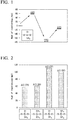
- ⁇ E1, ⁇ E2 and ⁇ E3 can be represented by the differences, in the respective reactions, between the sum of the heats of formation of the compounds after reaction and the sum of the heats of formation of the compounds before reaction.
- the results of these quantum chemical calculations are shown in FIG. 1 .
- ⁇ E1 was about 59 kcal/mol
- ⁇ E2 was about -68 kcal/mol
- ⁇ E3 was about -16 kcal/mol, meaning ⁇ E1 > ⁇ E3 > ⁇ E2.
- An example of a method for suppressing the reaction of equation (i), namely suppressing hydrogen abstraction from the carbon atom, is a method in which the hydrogen atoms are substituted in advance with fluorine atoms.
- FIG. 2 shows that ⁇ E1 (TF) > ⁇ E1 (TH), ⁇ E1 (DF) > ⁇ E1 (DH), indicating that the fluorine atoms of -CF 3 are more difficult to sever from the carbon atom than the hydrogen atoms of -CH 3 .
- the heat of reaction ⁇ E1 increases as described above, and the heat of reaction usually increases as the number of hydrogen atoms substituted with fluorine atoms increases. Accordingly, in order to increase the heat of reaction, the number of fluorine atoms in the fluorinated alkyl group bonded to the silicon atom should be at least one, but this number is preferably as high as possible, and a perfluoroalkyl group in which all of the hydrogen atoms have been substituted fluorine atoms is the most desirable.
- the most preferred group is a trifluoromethyl group (-CF 3 )
- the next most preferred group is a difluoromethyl group (-CF 2 H)
- the next most preferred group is a fluoromethyl group (-CFH 2 ).
- the carbon atom to which the fluorine atom(s) are bonded is preferably as close as possible to the silicon atom, and is more preferably the carbon atom bonded directly to (namely, adjacent to) the silicon atom.
- the most preferred group is a 1-fluoropropyl group (-CFHCH 2 CH 3 )
- the next most preferred group is a 2-fluoropropyl group (-CH 2 CFHCH 3 )
- the next most preferred group is a 3-fluoropropyl group (-CH 2 CH 2 CFH 2 ).
- the fluorinated alkyl group bonded to the silicon atom is a partially fluorinated alkyl group
- groups having the same number of fluorine atoms in the partially fluorinated alkyl group groups having more fluorine atoms bonded to carbon atoms closer to the silicon atom are preferred.
- the most preferred group is a 1,1,2-trifluoroethyl group (-CF 2 CFH 2 )
- the next most preferred group is a 1,2,2-trifluoroethyl group (-CFHCF 2 H)
- the next most preferred group is a 2,2,2-trifluoroethyl group (-CH 2 CF 3 ).
- the fluorine atom-containing silane compound (1) and the fluorine atom-containing silane compound (2) described above are both monomers that can be used favorably for the purpose of suppressing silicone resin degradation caused by oxidation reactions, and because the silicone resin (1), the silicone resin (2) and the cured products of these resins are condensation products of these types of monomers, they exhibit good suppression of degradation caused by oxidation reactions.
- examples of preferred silicone resins include resins having bonds between silicon atoms and carbon atoms (Si-C bonds), and having, among these types of Si-C bonds, at least one Si-C bond (hereinafter also referred to as a "cleavage-resistant Si-C bond") for which the heat of reaction when the Si-C bond is cleaved radically by an oxidation reaction is greater than the heat of reaction when the bond (Si-C bond) between the silicon atom and the carbon atom in SiCH 3 is cleaved radically by an oxidation reaction.
- Si-C bonds bonds between silicon atoms and carbon atoms
- Si-C bond namely, cleavage-resistant Si-C bond
- silicone resins is the bond between a fluoroalkyl group and a silicon atom
- fluoroalkyl group include the partially fluorinated alkyl groups in the aforementioned fluorine atom-containing silane compound (1) or the constitutional unit derived from the compound (1), and the perfluoroalkyl groups in the aforementioned fluorine atom-containing silane compound (2) or the constitutional unit derived from the compound (2).
- the proportion of the number of the aforementioned cleavage-resistant Si-C bonds relative to the total number of Si-C bonds is preferably at least 10% but not more than 100%, and is more preferably at least 20% but not more than 100%.
- the silicone resins described above can be produced by performing a condensation (polycondensation) reaction using either a single silane compound, or a combination of two or more silane compounds in a desired ratio, as the aforementioned silane compound that functions as the monomer for forming the resin.
- a condensation polycondensation reaction
- the specific combination of compounds and the ratio between the compounds can be set according to need.
- condensation reaction can be performed using a similar method to that used for conventional silicone resins.
- the silicone resins described above can be obtained by reacting the monomer required for forming the silicone resin (namely, the aforementioned silane compound) in the presence of an acidic aqueous solution or a basic aqueous solution, using a solvent such as 2-propanol or methyl ethyl ketone when required, preferably at a temperature of 40 to 130°C, and preferably for a period of 1 to 48 hours.
- a post-treatment such as washing may be performed as required, and the target product may then be extracted, or may be used in the intended application without extraction.
- the method for producing the silicone resins is not limited to the method outlined here.
- the silicone resins described above and the cured products thereof degradation caused by oxidation reactions is satisfactorily suppressed, and the cured products are, for example, ideal for use in applications that require resistance to oxidation reactions during ultraviolet irradiation.
- the cured products have particularly remarkable resistance to the irradiation of deep ultraviolet light in the wavelength region from at least 200 nm to not more than 300 nm.
- the above silicone resins and cured products having these types of properties are ideal for encapsulating materials for semiconductor light-emitting elements, and can be used particularly favorably for encapsulating materials for UV- (ultraviolet-) LEDs (light-emitting diodes).
- the above silicone resins can be cured by heating to obtain cured products.
- the cured product is obtained by curing a silicone resin composition containing the silicone resin and other components besides the silicone resin.
- the amount of the silicone resin in the silicone resin composition may be adjusted appropriately in accordance with the intended application for the composition, but usually, is preferably at least 60% by mass, and more preferably at least 70% by mass, relative to the total mass of the silicone resin composition.
- the silicone resin composition is a composition containing the silicone resin described above and other components besides the silicone resin, and these other components may be selected appropriately in accordance with the intended application.
- a single component may be used alone, or a combination of two or more components may be used, and when two or more components are combined, the specific combination of components and the ratio therebetween may be set as appropriate.
- Preferred examples of the other components include curing catalysts, silane coupling agents, inorganic particles, phosphors, modifying silicone compounds, antifoaming agents and solvents.
- the amount of these other components in the silicone resin composition may be adjusted appropriately in accordance with the intended application for the composition, but usually, the amount is preferably at least 5% by mass but not more than 40% by mass, and more preferably at least 10% by mass but not more than 30% by mass, relative to the total mass of the silicone resin composition.
- the curing catalyst there are no particular limitations on the curing catalyst, provided it is a curing catalyst capable of promoting the condensation reaction of the silicone resin.
- the curing catalyst examples include inorganic acids and derivatives thereof such as hydrochloric acid, sulfuric acid, nitric acid and phosphoric acid-based compounds; organic acids such as formic acid, acetic acid, oxalic acid, citric acid, propionic acid, butyric acid, lactic acid and succinic acid; alkaline compounds such as ammonium hydroxide, tetramethylammonium hydroxide and tetraethylammonium hydroxide; and organometallic compounds such as organic complexes or organic acid salts containing at least one metal selected from the group consisting of tin (Sn), zinc (Zn), iron (Fe), titanium (Ti), zirconium (Zr), bismuth (Bi), hafnium (Hf), yttrium (Y), aluminum (Al), boron (B) and gallium (Ga) as a metal component.
- inorganic acids and derivatives thereof such as hydrochloric acid, sulfuric acid, n
- the curing catalyst is preferably an aforementioned organometallic compound containing tin, titanium, zinc, zirconium, hafnium or gallium.
- organometallic compounds containing zirconium, hafnium or gallium are particularly preferred as the curing catalyst in terms of exhibiting minimal electrode corrosion or light absorption when used in light-emitting devices, having an appropriate level of catalytic activity, and being unlikely to cause unnecessary degradation arising from cleavage of the polysiloxane chain.
- organometallic compounds containing tin examples include tetraalkyl tin, dialkyl tin oxide and dialkyl tin dicarbonate.
- dialkyl tin dicarbonate the numbers of carbon atoms in the alkyl groups and the carboxylic acids are preferably from 1 to 10.
- organometallic compounds containing titanium include tetraalkoxy titanium, tetraalkoxy titanium oligomers and titanium acetylacetonate.
- the number of carbon atoms in the alkyl group of the tetraalkoxy titanium or tetraalkoxy titanium oligomer is preferably from 3 to 8.
- organometallic compounds containing zinc include zinc triacetylacetonate, zinc stearate and bis(acetylacetonato)zinc(II) (monohydrate).
- organometallic compounds containing zirconium examples include zirconium tetraacetylacetonate, zirconium dibutoxy diacetylacetonate, zirconium tetraalkoxide, zirconyl (2-ethylhexanoate) and zirconium (2-ethylhexanoate).
- the number of carbon atoms in the alkyl group of the zirconium tetraalkoxide is preferably from 3 to 8.
- organometallic compounds containing hafnium include compounds similar to the above organometallic compounds containing zirconium in which the metal has been replaced with hafnium (such as hafnium tetraacetylacetonate).
- organometallic compounds containing gallium include gallium triacetylacetonate, gallium trialkoxide, gallium octoate, gallium laurate and gallium acetate.
- the number of carbon atoms in the alkyl group of the gallium trialkoxide is preferably from 2 to 8.
- phosphoric acid-based catalysts are preferable from the viewpoints of miscibility with the silicone components and the curing promotion properties.
- Examples of the phosphoric acid-based compounds include compounds represented by general formula (Z1) or (Z2) shown below.
- M represents a counter cation
- * represents another atom or atom grouping
- z is an integer of 0 to 2.
- the plurality of M moieties may be the same or different, and when a plurality of * exists, the plurality of * moieties may be the same or different.
- An example of the above counter cation for M is a hydrogen ion.
- Examples of the other atom or atom grouping represented by * include atoms or atom groupings represented by general formula "OG” or "G” (wherein, G represents a monovalent organic group).
- Examples of the monovalent organic group include a methyl group, ethyl group, methoxy group and ethoxy group.
- phosphoric acid-based compound examples include phosphoric acid, phosphorous acid, phosphate esters and phosphite esters.
- the curing catalyst may be added to the silicone resin composition in a dilute state within an organic solvent or a silicone monomer or silicone oligomer or the like that is easily blended with the silicone resin composition.
- the silicone monomer or silicone oligomer mentioned here is different from the fluorine atom-containing silane compound (1) and the fluorine atom-containing silane compound (2) described above.
- a single curing catalyst may be used alone, or a combination of two or more curing catalysts may be used, and when two or more curing catalysts are combined, the combination of catalysts and the ratio therebetween may be set as appropriate.
- the curing catalyst may also be used in combination with a reaction promoter or a reaction inhibitor.
- the amount of the curing catalyst in the silicone resin composition may be set as appropriate with due consideration of factors such as the heating temperature during the curing reaction, the reaction time and the type of curing catalyst.
- the amount of the curing catalyst is preferably from 0.001 to 3.0% by mass, and more preferably from 0.001 to 1.5% by mass, relative to the amount of the silicone resin.
- the amount of the curing catalyst in the silicone resin composition is preferably from 0.001 to 0.5% by mass, and more preferably from 0.003 to 0.2% by mass, relative to the amount of the silicone resin.
- the amount of the organometallic compound can be measured by high-frequency inductively coupled plasma (ICP) analysis of the catalyst metal component.
- the amount of the curing catalyst in the silicone resin composition is preferably from 0.1 to 3.0% by mass, and more preferably from 0.2 to 1.5% by mass, relative to the amount of the silicone resin.
- the curing catalyst may be added to the silicone resin composition immediately prior to performing the curing reaction, or may be included in the original silicone resin composition together with the other components besides the curing catalyst.
- Silane coupling agents have the effect of improving the adhesion between the cured product and the application target object (such as a semiconductor light-emitting element or package).
- silane coupling agent examples include silane coupling agents having at least one group selected from the group consisting of an ethenyl group (vinyl group), epoxy group, styryl group, (meth)acrylic group, amino group, ureido group, mercapto group, sulfide group and isocyanate group, and of these, coupling agents having an epoxy group or a mercapto group are preferred.
- these preferred silane coupling agents include 2-(3,4-epoxycyclohexyl)ethyltrimethoxysilane, 3-glycidoxypropylmethyldimethoxysilane, 3-glycidoxypropyltrimethoxysilane, 3-glycidoxypropylmethyldiethoxysilane, 3-glycidoxypropyltriethoxysilane, 3-mercaptopropylmethyldimethoxysilane and 3-mercaptopropyltrimethoxysilane.
- (meth)acrylic group is a generic term that includes both an acrylic group and a methacrylic group.
- the amount of the silane coupling agent in the silicone resin composition is preferably from 0.0001 to 1.0 parts by mass, and more preferably from 0.001 to 0.5 parts by mass, per 100 parts by mass of the solid fraction of the silicone resin composition.
- the silane coupling agent may be used by mixing into the silicone resin composition, or may be applied in advance, by coating or an immersion treatment, to the surface of the application target object (such as a semiconductor light-emitting element or package) for the cured product of the silicone resin composition, with the silicone resin composition then being formed and cured by potting or the like.
- the application target object such as a semiconductor light-emitting element or package
- the aforementioned cured product is, for example, able to enhance the intensity of light from a light-emitting element.
- the inorganic particles have a function of scattering light inside the cured product (namely, the encapsulating material), thereby effectively exciting the phosphor, a function of preventing the phosphor from settling down through the silicone resin composition, a function of adjusting the viscosity of the silicone resin composition, and a function of improving the light scattering properties, refractive index, dimensional stability and mechanical strength of the cured product (namely, the encapsulating material).
- the inorganic particles include oxides of silicon, titanium, zirconium, aluminum, iron and zinc and the like, carbon black, barium titanate, calcium silicate and calcium carbonate.
- silicon oxides, titanium oxides and aluminum oxides are preferred as the inorganic particles, and in terms of achieving low absorption of UV light, silicon oxides and aluminum oxides are particularly preferred.
- Examples of the form of the inorganic particles include spherical, plate-like, columnar, needle-like, whisker-like and fibrous particles.
- the material for the inorganic particles may be a single material or a combination of two or more materials, and when two or more materials are combined, the specific combination of materials and the ratio between the materials can be set according to need.
- the inorganic particles preferably contain inorganic particles having two or more different particle sizes, and more preferably contain at least two types of particles including inorganic particles having a primary particle average particle size of 100 to 500 nm and inorganic particles having a primary particle average particle size of less than 100 nm.
- the efficiency of the excitation of the phosphor by scattered light in the cured product (encapsulating material) can be further improved, and the effect of the inorganic particles in preventing settling of the phosphor also improves.
- the primary particle average particle size can be determined, for example, by an imaging method or the like in which an electron microscope or the like is used to view the particles directly. Specifically, a sample prepared by placing the inorganic particles to be measured into an arbitrary solvent, performing irradiation with ultrasound or the like to thoroughly disperse the particles, and then dripping the dispersion onto a slide glass or the like and performing drying, or a sample prepared by adhering the inorganic particles directly to the adhesive surface of an adhesive tape by sprinkling the particles onto the tape, is inspected using a scanning electron microscope (SEM) or a transmission electron microscope (TEM) or the like, and the primary particle average particle size is then determined by calculating the dimensions of the particles from the particle shapes.
- SEM scanning electron microscope
- TEM transmission electron microscope
- the projected area of an inorganic particle may be determined, and the diameter of a circle corresponding with that area then calculated and recorded as the particle size.
- the particle size is determined for at least 100 particles (and preferably 100 particles), and the arithmetic mean may then be calculated and recorded as the average particle size.
- the amount of inorganic particles in the silicone resin composition is, for example, preferably from 0.01 to 10% by mass, and more preferably from 0.1 to 5% by mass, relative to the amount of the silicone resin.
- the phosphor there are no particular limitations on the phosphor, and examples include red phosphors that emit fluorescence in a wavelength range from 570 to 700 nm, green phosphors that emit fluorescence in a wavelength range from 490 to 570 nm, and blue phosphors that emit fluorescence in a wavelength range from 420 to 480 nm. Further, a plurality of phosphors may also be combined, depending on the brightness or color required.
- the amount of phosphor in the silicone resin composition there are no particular limitations on the amount of phosphor in the silicone resin composition, and the amount may be adjusted appropriately with due consideration of the properties of the application target object, such as the amount of light emitted by the light-emitting element, or the color and brightness required as a semiconductor light-emitting device.
- the inorganic particles and phosphor described above are added to the silicone resin composition, because the phosphor is prone to settling, it is preferable that the inorganic particles are added first, the phosphor is then added to complete the silicone resin composition, and the composition is then used promptly for encapsulating the application target object (such as a semiconductor light-emitting element).
- the application target object such as a semiconductor light-emitting element
- the amount of the phosphor in the silicone resin composition is preferably from 1 to 50% by mass, and more preferably from 5 to 40% by mass, relative to the amount of the silicone resin.
- modifying silicone compound examples include silicone compounds that do not correspond with the silicone resins described above, such as dimethyl silicone oils, amino silicones and epoxy silicones, and typical commercially available products may be used.
- silicone compounds that do not correspond with the silicone resins described above, such as dimethyl silicone oils, amino silicones and epoxy silicones, and typical commercially available products may be used.
- flexibility can be imparted to the cured product.
- the amount of such modifying silicone compounds in the silicone resin composition is preferably from 0.1 to 20 parts by mass (solid fraction), and more preferably from 0.5 to 10 parts by mass, per 100 parts by mass of the solid fraction of the silicone resin composition.
- the antifoaming agent suppresses gas bubble formation during mixing of the silicone resin composition.
- the amount of the antifoaming agent in the silicone resin composition is preferably from 0.01 to 3 parts by mass (solid fraction), and more preferably from 0.01 to 1 part by mass, per 100 parts by mass of the solid fraction of the silicone resin composition.
- solvent there are no particular limitations on the solvent, and any of various solvents such as organic solvents may be used.
- a single solvent may be used alone, or a combination of two or more solvents may be used, and when two or more solvents are combined, the specific combination of solvents and the ratio therebetween may be set as appropriate.
- the components other than the solvent are first dissolved in an organic solvent having high levels of volatility and dissolution, and the solvent is then substituted with another solvent.
- organic solvent P organic solvent having high volatility
- a solvent (hereinafter also referred to as the "solvent Q") having lower volatility than the organic solvent P is added, and a solvent substitution from the organic solvent P to the solvent Q can be performed by heating the solution until the concentration of the organic solvent P falls to 1% or less.
- heating may be performed with the inside of the vessel under a state of reduced pressure (for example, about 20 hPa).
- the organic solvent P is preferably an organic solvent having a boiling point of less than 100°C.
- this type of organic solvent P include ketones such as acetone and methyl ethyl ketone; alcohols such as methanol, ethanol, 1-propanol and 2-propanol; aliphatic hydrocarbons such as hexane, heptane and cyclohexane; aromatic hydrocarbons such as benzene; esters such as methyl acetate and ethyl acetate; and ethers such as dimethyl ether and tetrahydrofuran.
- ketones such as acetone and methyl ethyl ketone
- alcohols such as methanol, ethanol, 1-propanol and 2-propanol
- aliphatic hydrocarbons such as hexane, heptane and cyclohexane
- aromatic hydrocarbons such as benzene
- esters such as methyl acetate and ethy
- the solvent Q is preferably an organic solvent having a boiling point of 100°C or higher.
- examples of this type of solvent Q include glycol ethers such as ethylene glycol monomethyl ether, ethylene glycol monoethyl ether, ethylene glycol monoisopropyl ether, ethylene glycol monobutyl ether, ethylene glycol monohexyl ether, ethylene glycol monoethylhexyl ether, ethylene glycol monophenyl ether, ethylene glycol monobenzyl ether, diethylene glycol monomethyl ether, diethylene glycol monoethyl ether, diethylene glycol monoisopropyl ether, diethylene glycol monobutyl ether, diethylene glycol monohexyl ether, diethylene glycol monoethylhexyl ether, diethylene glycol monophenyl ether, diethylene glycol monobenzyl ether, propylene glycol monomethyl ether, propylene glycol monoethyl ether, propylene
- ethylene glycol monobutyl ether acetate and methyl isobutyl ketone are preferred.
- the solvent is usually selected so that the boiling point of the resulting liquid silicone resin composition is preferably from 40 to 250°C, and more preferably from 100 to 230°C.
- the amount of the solvent (for example, the solvent Q) in the silicone resin composition there are no particular limitations on the amount of the solvent (for example, the solvent Q) in the silicone resin composition, and the amount may be adjusted appropriately in accordance with the intended purpose, but usually the amount is preferably at least 10% by mass but not more than 30% by mass, relative to the total mass of the silicone resin composition.
- the resin solution obtained in the production of the aforementioned silicone resin may be used, as is, as the silicone resin composition, if necessary following a post-treatment such as washing.
- the silicone resin composition can be produced by blending the silicone resin and the other components besides the silicone resin.
- the blending method used at this time, and the sequence in which each of the components are added and the mixing method used following this addition may be adjusted as appropriate.
- the mixing method may be selected as appropriate from conventional mixing methods such as methods in which mixing is performed by rotating a stirring bar or stirring blade, mixing methods using a mixer or a beads mill or the like, and methods in which mixing is performed by ultrasonic irradiation.
- a preferred blending method for the case where the organic solvent P and solvent Q are used is as described above.
- the silicone resin composition can be used favorably for encapsulating semiconductor light-emitting elements, reflecting the properties of the silicone resin contained within the composition, and for example, is particularly ideal as an encapsulating material for UV- (ultraviolet-) LEDs (light-emitting diodes) (namely, as an encapsulating material composition for UV-LEDs).
- UV- ultraviolet-
- LEDs light-emitting diodes
- one aspect of an encapsulating material composition for UV-LEDs contains the aforementioned silicone resin, and another component besides the silicone resin, wherein the other component includes at least one component selected from the group consisting of curing catalysts, silane coupling agents, inorganic particles, phosphors, modifying silicone compounds, antifoaming agents and solvents.
- the amount of the silicone resin is preferably at least 60% by mass but not more than 95% by mass, relative to the total mass of the encapsulating material composition for UV-LEDs, and the amount of the other component is preferably at least 70% by mass but not more than 90% by mass, relative to the total mass of the encapsulating material composition for UV-LEDs, provided that the total of the amount of the silicone resin and the amount of the other component does not exceed 100% by mass.
- the aforementioned cured product can be produced by heating and curing the aforementioned silicone resin or silicone resin composition.
- the heating temperature during curing can be set, for example, to 40 to 250°C, and the heating time can be set, for example, to 1 to 24 hours, but the invention is not limited to these ranges.
- the heating temperature may be increased in a stepwise manner, thereby performing curing in a stepwise manner.
- the specific gravity of the cured product is preferably from 1.0 to 1.4, and more preferably from 1.1 to 1.3.
- the specific gravity of the cured product can generally be determined from the volume and the mass. When the shape of the cured product is irregular, the specific gravity can be measured by the Archimedes method using a commercially available specific gravity measurement device.
- One aspect of the present invention is a cured product of the aforementioned silicone resin or silicone resin composition.
- Another aspect is a cured product obtained by heating the silicone resin or silicone resin composition at a temperature of 40 to 250°C for 1 to 24 hours.
- the specific gravity of the cured product is from 1.0 to 1.4.
- the cured product has the following property. Specifically, when the transmittance of light of wavelength 400 nm and 350 nm through a cured product with a thickness of 1 mm following heating of the cured product in an oven at 200°C for 60 hours is compared with the same light transmittance prior to the heating, the change in the transmittance is not more than 10%.
- the cured product has the following property. Specifically, when the transmittance of light of wavelength 400 nm and 350 nm through a cured product with a thickness of 1 mm following irradiation of the cured product with UV light of wavelength 350 nm for 100 hours is compared with the same light transmittance prior to the irradiation, the change in the transmittance is not more than 10%.
- the cured product has the following property. Specifically, when the cured product is heated on a hotplate to 100°C and is then irradiated with UV light of wavelength 350 nm for 50 hours, the change in the value of [peak intensity in infrared absorption spectrum of peak attributable to Si-CH] / [peak intensity in infrared absorption spectrum of peak attributable to Si-O-Si] relative to the value of [peak intensity in infrared absorption spectrum of peak attributable to Si-CH] / [peak intensity in infrared absorption spectrum of peak attributable to Si-O-Si] prior to the heating and UV irradiation is not more than 10%.
- the cured product reflects the properties of the silicone resin used, and is able to satisfactorily suppress degradation caused by oxidation reactions, as well as suppressing cracking, degeneration and decomposition, and can therefore be used favorably as an encapsulating material for semiconductor light-emitting elements, and is particularly ideal as an encapsulating material for UV- (ultraviolet-) LEDs (light-emitting diodes).
- One aspect of the present invention is an encapsulating material for UV-LEDs containing a cured product of the aforementioned silicone resin or silicone resin composition.
- Another aspect of the present invention is an encapsulating material for UV-LEDs formed from a cured product obtained by heating the aforementioned silicone resin or silicone resin composition at 40 to 250°C for 1 to 24 hours.
- the specific gravity of the encapsulating material is from 1.0 to 1.4.
- An example of a semiconductor light-emitting device that uses the above cured product as an encapsulating material includes a substrate, a semiconductor light-emitting element disposed on the substrate, and an encapsulating portion provided covering the surface of the semiconductor light-emitting element, wherein the periphery of the semiconductor light-emitting element is enclosed and encapsulated by the substrate and the encapsulating portion, a material containing the aforementioned cured product may be used as the material for forming the encapsulating portion, and the material for forming the encapsulating portion is preferably composed of the cured product.
- the above semiconductor light-emitting device is preferably a device in which the semiconductor light-emitting element is encapsulated with a cured product of the silicone resin composition described above (namely, an encapsulating material composition for a semiconductor light-emitting element).
- one aspect of a semiconductor light-emitting device contains a substrate, a semiconductor light-emitting element disposed on the substrate, and an encapsulating portion for the semiconductor light-emitting element, wherein the periphery of the semiconductor light-emitting element is enclosed and encapsulated by the substrate and the encapsulating portion, and the encapsulating portion contains a cured product of the aforementioned silicone resin or a cured product of the aforementioned silicone resin composition.
- FIG. 1 is a cross-sectional view schematically illustrating one example of the above semiconductor light-emitting device.
- the semiconductor light-emitting device 100 illustrated here includes a substrate 110, a semiconductor light-emitting element 120 disposed on the substrate, and an encapsulating portion 130 that encapsulates the semiconductor light-emitting element 120.
- the material for forming the encapsulating portion 130 is an encapsulating material for a semiconductor light-emitting element composed of a cured product of the silicone resin composition described above.
- the semiconductor light-emitting element 120 is covered and encapsulated by the substrate 110 and the encapsulating portion 130, and is thus isolated from the external atmosphere.
- the encapsulating portion 130 contains a cured product of the aforementioned silicone resin or a cured product of the silicone resin composition.
- the encapsulating portion 130 has no discontinuous surfaces in the direction perpendicular to the substrate 110.
- the existence or absence of discontinuous surfaces can be ascertained, for example, by performing an X-Ray CT measurement. In an X-ray CT measurement, because the scattering intensity differs depending on the electron density, a discontinuous surface within the material is observed as a different shade in the CT image.
- the encapsulating portion 130 Because it is formed using the silicone resin described above, the encapsulating portion 130 exhibits satisfactorily superior resistance to oxidation reactions and good suppression of cracking, degeneration and decomposition and the like, and therefore the encapsulating effect on the semiconductor light-emitting element is extremely favorable.
- the encapsulating portion 130 exhibits superior light transmittance and superior light extraction efficiency, and also has satisfactory resistance to oxidation reactions, deterioration in the light transmittance and discoloration over time are also suppressed.
- a preferred example of the semiconductor light-emitting device is a UV light-emitting device.
- THF tetrahydrofuran
- the specific gravity values for the cured products of the silicone resins in the following examples and comparative examples can be calculated by the following formula, using the various measurement values obtained under the following conditions.
- trimethoxy(3,3,3-trifluoropropyl)silane (4.8 g, manufactured by Tokyo Chemical Industry Co., Ltd.), 2-propanol (7.1 g) and deionized water (1.0 g), and the resulting mixture was stirred at room temperature until a uniform solution was obtained.
- this solution (0.45 g) was placed in an aluminum cup, the cup was placed in an oven, and the temperature was raised from room temperature to 150°C at a rate of 5°C/minute and then held at 150°C for 10 hours, thus obtaining a cured product of the condensation product (polymer).
- a flask of capacity 1 L fitted with a stirrer, a reflux column, a dropping funnel and a nitrogen gas bubbling device was charged with methyl isobutyl ketone (300 g), methyltrimethoxysilane (17.0 g, 0.125 mol) and trimethoxy(3,3,3-trifluoropropyl)silane (81.8 g, 0.375 mol), and ion-exchanged water (36 g) was then added dropwise to the flask at room temperature.
- a flask of capacity 1 L fitted with a stirrer, a reflux column, a dropping funnel and a nitrogen gas bubbling device was charged with methyl isobutyl ketone (300 g), methyltrimethoxysilane (34.1 g, 0.25 mol) and trimethoxy(3,3,3-trifluoropropyl)silane (54.6 g, 0.25 mol), and ion-exchanged water (36 g) was then added dropwise to the flask at room temperature.
- a flask of capacity 1 L fitted with a stirrer, a reflux column, a dropping funnel and a nitrogen gas bubbling device was charged with methyl isobutyl ketone (300 g), methyltrimethoxysilane (51.1 g, 0.375 mol) and trimethoxy(3,3,3-trifluoropropyl)silane (27.3 g, 0.125 mol), and ion-exchanged water (36 g) was then added dropwise to the flask at room temperature.
- a flask of capacity 1 L fitted with a stirrer, a reflux column, a dropping funnel and a nitrogen gas bubbling device was charged with methyl isobutyl ketone (300 g), methyltrimethoxysilane (17.0 g, 0.125 mol) and trifluoromethyltrimethoxysilane (71.3 g, 0.375 mol), and ion-exchanged water (36 g) was then added dropwise to the flask at room temperature.
- a flask of capacity 1 L fitted with a stirrer, a reflux column, a dropping funnel and a nitrogen gas bubbling device was charged with methyl isobutyl ketone (300 g), methyltrimethoxysilane (34.1 g, 0.25 mol) and trifluoromethyltrimethoxysilane (47.5 g, 0.25 mol), and ion-exchanged water (36 g) was then added dropwise to the flask at room temperature.
- a flask of capacity 1 L fitted with a stirrer, a reflux column, a dropping funnel and a nitrogen gas bubbling device was charged with methyl isobutyl ketone (300 g), methyltrimethoxysilane (51.1 g, 0.375 mol) and trifluoromethyltrimethoxysilane (23.8 g, 0.125 mol), and ion-exchanged water (36 g) was then added dropwise to the flask at room temperature.
- a flask of capacity 1 L fitted with a stirrer, a reflux column, a dropping funnel and a nitrogen gas bubbling device was charged with methyl isobutyl ketone (300 g), di(trifluoromethyl)dimethoxysilane (57.0 g, 0.25 mol) and trifluoromethyltrimethoxysilane (47.5 g, 0.25 mol), and ion-exchanged water (36 g) was then added dropwise to the flask at room temperature.
- the weight-average molecular weight of the silicone resin X1 was 5,100 when measured under the GPC measurement conditions 1 described below. Further, the weight-average molecular weight of the silicone resin X2 was 2,100 when measured under the GPC measurement conditions 2 described below.
- the signal surface area attributable to silicon atoms having three oxygen atoms bonded to the silicon atom was calculated as 50% from the mixing ratio between the silicone resin X1 and the silicone resin X2.
- the silicone resin composition (about 5 g) was placed in an aluminum cup, the cup was placed in an oven, and the temperature was raised from room temperature to 150°C at a rate of 5°C/minute and then held at 150°C for 4 hours, thus obtaining a cured product of the silicone resin composition.
- the thus obtained cured product had a specific gravity of 1.18.
- a1, a2, a3 and a4 are integers representing the number of units of each of the repeating units.
- b1, b2, b3 and b4 are integers representing the number of units of each of the repeating units.
- the solution or composition was placed in an aluminum cup, the cup was placed in an oven, and the temperature was raised from room temperature to 150°C at a rate of 5°C/minute and then held at 150°C for 10 hours, thus obtaining a cured product of the condensation product (polymer) or the silicone resin composition.
- the thus obtained cured product was removed from the aluminum cup, and the transmittance of light of wavelength 400 nm and 350 nm through the cured product was measured.
- the cured product was subjected to a heat treatment by standing for 60 hours in an oven at 200°C, and following removal from the oven and cooling to room temperature, the transmittance of light of wavelength 400 nm and 350 nm was remeasured.
- the light transmittance and the external appearance of the cured product before and after the heat treatment were compared.
- a cured product was obtained from a solution of the condensation product (polymer) or the silicone resin composition, and the transmittance of light of wavelength 400 nm and 350 nm through the cured product was measured.
- the cured product was subjected to a light irradiation treatment by irradiating UV light (230 to 450 nm) onto the cured product for 100 hours using a UV irradiation device SP-9 manufactured by Ushio Inc., and the transmittance of light of wavelength 400 nm and 350 nm was then remeasured.
- the light transmittance and the external appearance of the cured product before and after the light irradiation treatment were compared.
- the cured products of the silicone resin compositions of the comparative examples exhibited completely different light transmittance to that observed before the heat treatment at both wavelengths of 400 nm and 350 nm, and the external appearance following the heat treatment was also very different, with the cured products being transparent before the heat treatment but suffering from yellow discoloration after the heat treatment, thus confirming inferior heat resistance.
- the cured products of the silicone resin compositions of the comparative examples exhibited completely different light transmittance to that observed before the light irradiation treatment at both wavelengths of 400 nm and 350 nm, and the external appearance following the heat treatment was also very different, with the cured products being transparent before the light irradiation treatment but suffering from yellow discoloration after the light irradiation treatment, thus confirming inferior light resistance.
- trimethoxy(3,3,3-trifluoropropyl)silane (2.5 g, manufactured by Tokyo Chemical Industry Co., Ltd.), trimethoxy(1H,1H,2H,2H-nonafluorohexyl)silane (2.5 g, manufactured by Tokyo Chemical Industry Co., Ltd.) and a mixture (0.25 g) of 15% phosphoric acid and an alkoxysilane represented by general formula (D) shown below (wherein n represents a positive number of 3 to 7), and the resulting mixture was stirred at room temperature for 5 minutes to obtain a condensation product solution.
- trimethoxy(3,3,3-trifluoropropyl)silane (2.5 g, manufactured by Tokyo Chemical Industry Co., Ltd.)
- trimethoxy(1H,1H,2H,2H-nonafluorohexyl)silane (2.5 g, manufactured by Tokyo Chemical Industry Co., Ltd.)
- a mixture (0.25 g) of 15%
- this solution (0.46 g) was placed in an aluminum cup, the cup was placed in an oven, and the temperature was raised from room temperature to 40°C at a rate of 5°C/minute, held at 40°C for 10 minutes, raised to 100°C at 3°C/minute, held at 100°C for 5 hours, raised to 150°C at 3°C/minute, and then held at 150°C for 5 hours, thus obtaining a cured product of the condensation product (polymer).
- trimethoxy(3,3,3-trifluoropropyl)silane (3.8 g, manufactured by Tokyo Chemical Industry Co., Ltd.), trimethoxy(1H,1H,2H,2H-nonafluorohexyl)sllane (1.3 g, manufactured by Tokyo Chemical Industry Co., Ltd.) and a mixture (0.25 g) of 15% phosphoric acid and an alkoxysilane represented by general formula (D) shown below (wherein n represents a positive number of 3 to 7), and the resulting mixture was stirred at room temperature for 5 minutes to obtain a condensation product solution.
- trimethoxy(3,3,3-trifluoropropyl)silane (3.8 g, manufactured by Tokyo Chemical Industry Co., Ltd.)
- trimethoxy(1H,1H,2H,2H-nonafluorohexyl)sllane (1.3 g, manufactured by Tokyo Chemical Industry Co., Ltd.)
- a mixture (0.25 g) of 15%
- this solution (0.46 g) was placed in an aluminum cup, the cup was placed in an oven, and the temperature was raised from room temperature to 40°C at a rate of 5°C/minute, held at 40°C for 10 minutes, raised to 100°C at 3°C/minute, held at 100°C for 5 hours, raised to 150°C at 3°C/minute, and then held at 150°C for 5 hours, thus obtaining a cured product of the condensation product (polymer).
- a flask placed in an oil bath was charged with 186 parts by mass of a silicone resin having the repeating structure shown below in Table 1 and 100 parts by mass of isopropyl alcohol, and the temperature was then raised under constant stirring until the liquid temperature reached 85°C to thoroughly dissolve the resin. Subsequently, 18 parts by mass of a silicone resin having the repeating structure shown below in Table 2 and 2 parts by weight of a commercially available silicone resin different from both the silicone resin of Table 1 and the silicone resin of Table 2 were added, and the resulting mixture was stirred for at least one hour to dissolve the silicone resins.
- each cured product was heated to 100°C on a hotplate and subjected to a light irradiation treatment by irradiating UV light (230 to 450 nm) onto the cured product for 50 hours using a UV irradiation device SP-9 manufactured by Ushio Inc., and the infrared absorption spectrum of the cured product was then remeasured.
- the present invention can be used in semiconductor light-emitting elements, and particularly for the encapsulating material for UV-LEDs, and is therefore extremely useful industrially.
Landscapes
- Chemical & Material Sciences (AREA)
- Health & Medical Sciences (AREA)
- Chemical Kinetics & Catalysis (AREA)
- Medicinal Chemistry (AREA)
- Polymers & Plastics (AREA)
- Organic Chemistry (AREA)
- Structures Or Materials For Encapsulating Or Coating Semiconductor Devices Or Solid State Devices (AREA)
- Silicon Polymers (AREA)
- Led Device Packages (AREA)
Applications Claiming Priority (2)
| Application Number | Priority Date | Filing Date | Title |
|---|---|---|---|
| JP2014205230 | 2014-10-03 | ||
| PCT/JP2015/077492 WO2016052495A1 (ja) | 2014-10-03 | 2015-09-29 | シリコーン樹脂、uv-led用封止材組成物、硬化物及びuv-led用封止材 |
Publications (1)
| Publication Number | Publication Date |
|---|---|
| EP3202821A1 true EP3202821A1 (de) | 2017-08-09 |
Family
ID=55630522
Family Applications (1)
| Application Number | Title | Priority Date | Filing Date |
|---|---|---|---|
| EP15847058.3A Withdrawn EP3202821A1 (de) | 2014-10-03 | 2015-09-29 | Silikonharz, dichtungsmaterialzusammensetzung für uv-led, gehärtetes produkt und dichtungsmaterial für uv-led |
Country Status (7)
| Country | Link |
|---|---|
| US (1) | US20170298187A1 (de) |
| EP (1) | EP3202821A1 (de) |
| JP (1) | JPWO2016052495A1 (de) |
| KR (1) | KR20170063676A (de) |
| CN (1) | CN106795288A (de) |
| TW (1) | TW201627356A (de) |
| WO (1) | WO2016052495A1 (de) |
Families Citing this family (12)
| Publication number | Priority date | Publication date | Assignee | Title |
|---|---|---|---|---|
| US11118716B2 (en) | 2017-03-03 | 2021-09-14 | Ina Acquisition Corp. | Curing device for curing a pipe liner |
| CN107674209A (zh) * | 2017-10-27 | 2018-02-09 | 惠州市佳的利实业有限公司 | 一种氟硅树脂及其制备方法 |
| WO2020045997A1 (ko) * | 2018-08-28 | 2020-03-05 | 주성원 | 봉지재 조성물, 봉지재, 그 제조방법 및 전자 소자 패키지 |
| JP7181035B2 (ja) * | 2018-09-25 | 2022-11-30 | シーカ・ハマタイト株式会社 | 光半導体封止用組成物、光半導体装置、オルガノポリシロキサン |
| CN109608641A (zh) * | 2018-11-26 | 2019-04-12 | 江苏艾森半导体材料股份有限公司 | 用于led封装胶的含氟梯形有机硅树脂 |
| CN110174364B (zh) * | 2019-05-20 | 2021-08-20 | 国网陕西省电力公司电力科学研究院 | 一种基于朗伯比尔定律的复合绝缘子无损检测装置及方法 |
| JP7559478B2 (ja) * | 2020-09-30 | 2024-10-02 | 住友大阪セメント株式会社 | 分散液、組成物、封止部材、発光装置、照明器具、表示装置 |
| CN113540275A (zh) * | 2021-07-16 | 2021-10-22 | 彼博股份有限公司 | 一种曲面多形态集成光伏模块及其封装方法 |
| WO2025206115A1 (ja) * | 2024-03-29 | 2025-10-02 | リンテック株式会社 | 硬化性組成物、及び半導体絶縁膜形成剤 |
| WO2025206113A1 (ja) * | 2024-03-29 | 2025-10-02 | リンテック株式会社 | 硬化性組成物、及び半導体絶縁膜形成剤 |
| WO2025206114A1 (ja) * | 2024-03-29 | 2025-10-02 | リンテック株式会社 | シラン化合物重合体の製造方法、及び半導体絶縁膜形成剤の製造方法 |
| KR20250156508A (ko) | 2024-04-25 | 2025-11-03 | 주식회사 에이치이엠씨 | 봉지재 조성물 제조방법 |
Family Cites Families (7)
| Publication number | Priority date | Publication date | Assignee | Title |
|---|---|---|---|---|
| JPH11292971A (ja) * | 1998-04-10 | 1999-10-26 | Mitsubishi Electric Corp | 高純度シリコーンラダーポリマーおよびその製造方法 |
| KR100894079B1 (ko) * | 2004-08-27 | 2009-04-21 | 샌트랄 글래스 컴퍼니 리미티드 | 활수성 피막을 얻기 위한 처리제 및 활수성 피막의 제조방법 |
| KR100981575B1 (ko) * | 2006-07-10 | 2010-09-10 | 주식회사 엘지화학 | 오염 제거가 용이한 디스플레이 반사 방지용 코팅 조성물 |
| KR101524058B1 (ko) * | 2008-02-14 | 2015-05-29 | 린텍 가부시키가이샤 | 폴리오르가노실록산 화합물로 이루어진 성형재료, 봉합재료 및 봉합 광학 장치 |
| JP5603837B2 (ja) * | 2011-06-30 | 2014-10-08 | 信越化学工業株式会社 | 付加硬化型シリコーン組成物及び光学素子 |
| CN102702532B (zh) * | 2012-05-31 | 2014-08-20 | 中科院广州化学有限公司 | 一种有机硅杂化树脂及其功率led封装材料的制备方法与应用 |
| JP6006632B2 (ja) * | 2012-12-18 | 2016-10-12 | 信越化学工業株式会社 | 付加硬化型シリコーン組成物及び光学素子 |
-
2015
- 2015-09-29 EP EP15847058.3A patent/EP3202821A1/de not_active Withdrawn
- 2015-09-29 WO PCT/JP2015/077492 patent/WO2016052495A1/ja not_active Ceased
- 2015-09-29 KR KR1020177009115A patent/KR20170063676A/ko not_active Withdrawn
- 2015-09-29 US US15/515,804 patent/US20170298187A1/en not_active Abandoned
- 2015-09-29 CN CN201580053207.8A patent/CN106795288A/zh active Pending
- 2015-09-29 JP JP2016552057A patent/JPWO2016052495A1/ja active Pending
- 2015-10-01 TW TW104132405A patent/TW201627356A/zh unknown
Also Published As
| Publication number | Publication date |
|---|---|
| US20170298187A1 (en) | 2017-10-19 |
| JPWO2016052495A1 (ja) | 2017-07-13 |
| WO2016052495A1 (ja) | 2016-04-07 |
| TW201627356A (zh) | 2016-08-01 |
| KR20170063676A (ko) | 2017-06-08 |
| CN106795288A (zh) | 2017-05-31 |
Similar Documents
| Publication | Publication Date | Title |
|---|---|---|
| EP3202821A1 (de) | Silikonharz, dichtungsmaterialzusammensetzung für uv-led, gehärtetes produkt und dichtungsmaterial für uv-led | |
| US8946369B2 (en) | Branched polysiloxanes and use of these | |
| JP6565923B2 (ja) | 表面修飾金属酸化物粒子分散液及びその製造方法、表面修飾金属酸化物粒子−シリコーン樹脂複合組成物、表面修飾金属酸化物粒子−シリコーン樹脂複合体、光学部材、及び発光装置 | |
| EP2692776B1 (de) | Organopolysiloxan, herstellungsverfahren dafür und härtbare zusammensetzung mit dem organopolysiloxan | |
| CN106661425B (zh) | 硅酮系密封材料组合物及半导体发光装置 | |
| JP2008111117A (ja) | 熱安定性アリールポリシロキサン組成物 | |
| KR101339772B1 (ko) | 광경화 투명 수지 조성물 | |
| KR20090017495A (ko) | 금속 산화물 미립자 함유 폴리실록산 조성물 및 그의 제조 방법 | |
| KR20150097783A (ko) | 금속 산화물 나노 입자와 실세스퀴옥산 중합체의 복합체 및 그의 제조 방법, 및 그 복합체를 사용하여 제조한 복합 재료 | |
| EP2623576A1 (de) | Phosphor-containing adhesive silicone composition sheet, and method of producing light emitting device using same | |
| EP2650319A1 (de) | Zusatzhärtbare metallosiloxanverbindung | |
| CN103764702A (zh) | 耐热冲击性固化物及其制造方法 | |
| KR101251553B1 (ko) | 엘이디 봉지재용 실록산 수지 조성물 | |
| JP2007270055A (ja) | 多官能ポリシロキサンおよび金属酸化物微粒子含有ポリシロキサン組成物、ならびにそれらの製造方法 | |
| JP6293433B2 (ja) | シリコーン樹脂組成物 | |
| TW201422684A (zh) | 含二氧化矽粒子之硬化性組合物與其硬化物,及使用彼等之半導體密封材 | |
| EP3098266A1 (de) | Flüssige silikonharzzusammensetzung | |
| JP6319606B2 (ja) | Led用封止材組成物 | |
| JP2015081275A (ja) | 光半導体用シリコーン樹脂組成物およびその硬化物 | |
| EP0982349A2 (de) | Adhäsionsfördernde Organosilikon-Zusammensetzungen | |
| TWI717556B (zh) | Led用封閉材組成物 | |
| JP6467492B2 (ja) | 光半導体用シリコーン樹脂組成物の製造方法およびその硬化物の製造方法 | |
| JP2007277073A (ja) | 酸化物微粒子分散体およびその製造方法 | |
| EP3176840A1 (de) | Verfahren zur herstellung eines lichtemittierenden halbleiterbauelements | |
| JP7310047B2 (ja) | 硬化性組成物、硬化物、硬化物の製造方法、及び、硬化性組成物の使用方法 |
Legal Events
| Date | Code | Title | Description |
|---|---|---|---|
| PUAI | Public reference made under article 153(3) epc to a published international application that has entered the european phase |
Free format text: ORIGINAL CODE: 0009012 |
|
| 17P | Request for examination filed |
Effective date: 20170403 |
|
| AK | Designated contracting states |
Kind code of ref document: A1 Designated state(s): AL AT BE BG CH CY CZ DE DK EE ES FI FR GB GR HR HU IE IS IT LI LT LU LV MC MK MT NL NO PL PT RO RS SE SI SK SM TR |
|
| AX | Request for extension of the european patent |
Extension state: BA ME |
|
| STAA | Information on the status of an ep patent application or granted ep patent |
Free format text: STATUS: THE APPLICATION HAS BEEN WITHDRAWN |
|
| 18W | Application withdrawn |
Effective date: 20171107 |