EP3202929A1 - Procédé de lixiviation pour déchet de batterie lithium-ion et procédé de récupération de métal à partir d'un déchet de batterie lithium-ion - Google Patents
Procédé de lixiviation pour déchet de batterie lithium-ion et procédé de récupération de métal à partir d'un déchet de batterie lithium-ion Download PDFInfo
- Publication number
- EP3202929A1 EP3202929A1 EP15847456.9A EP15847456A EP3202929A1 EP 3202929 A1 EP3202929 A1 EP 3202929A1 EP 15847456 A EP15847456 A EP 15847456A EP 3202929 A1 EP3202929 A1 EP 3202929A1
- Authority
- EP
- European Patent Office
- Prior art keywords
- manganese
- iron
- lithium ion
- scrap
- ion battery
- Prior art date
- Legal status (The legal status is an assumption and is not a legal conclusion. Google has not performed a legal analysis and makes no representation as to the accuracy of the status listed.)
- Granted
Links
Images

Classifications
-
- C—CHEMISTRY; METALLURGY
- C22—METALLURGY; FERROUS OR NON-FERROUS ALLOYS; TREATMENT OF ALLOYS OR NON-FERROUS METALS
- C22B—PRODUCTION AND REFINING OF METALS; PRETREATMENT OF RAW MATERIALS
- C22B26/00—Obtaining alkali, alkaline earth metals or magnesium
- C22B26/10—Obtaining alkali metals
- C22B26/12—Obtaining lithium
-
- C—CHEMISTRY; METALLURGY
- C22—METALLURGY; FERROUS OR NON-FERROUS ALLOYS; TREATMENT OF ALLOYS OR NON-FERROUS METALS
- C22B—PRODUCTION AND REFINING OF METALS; PRETREATMENT OF RAW MATERIALS
- C22B3/00—Extraction of metal compounds from ores or concentrates by wet processes
- C22B3/20—Treatment or purification of solutions, e.g. obtained by leaching
- C22B3/26—Treatment or purification of solutions, e.g. obtained by leaching by liquid-liquid extraction using organic compounds
-
- C—CHEMISTRY; METALLURGY
- C22—METALLURGY; FERROUS OR NON-FERROUS ALLOYS; TREATMENT OF ALLOYS OR NON-FERROUS METALS
- C22B—PRODUCTION AND REFINING OF METALS; PRETREATMENT OF RAW MATERIALS
- C22B23/00—Obtaining nickel or cobalt
- C22B23/04—Obtaining nickel or cobalt by wet processes
- C22B23/0407—Leaching processes
- C22B23/0415—Leaching processes with acids or salt solutions except ammonium salts solutions
-
- C—CHEMISTRY; METALLURGY
- C22—METALLURGY; FERROUS OR NON-FERROUS ALLOYS; TREATMENT OF ALLOYS OR NON-FERROUS METALS
- C22B—PRODUCTION AND REFINING OF METALS; PRETREATMENT OF RAW MATERIALS
- C22B23/00—Obtaining nickel or cobalt
- C22B23/04—Obtaining nickel or cobalt by wet processes
- C22B23/0453—Treatment or purification of solutions, e.g. obtained by leaching
- C22B23/0461—Treatment or purification of solutions, e.g. obtained by leaching by chemical methods
-
- C—CHEMISTRY; METALLURGY
- C22—METALLURGY; FERROUS OR NON-FERROUS ALLOYS; TREATMENT OF ALLOYS OR NON-FERROUS METALS
- C22B—PRODUCTION AND REFINING OF METALS; PRETREATMENT OF RAW MATERIALS
- C22B3/00—Extraction of metal compounds from ores or concentrates by wet processes
- C22B3/04—Extraction of metal compounds from ores or concentrates by wet processes by leaching
- C22B3/06—Extraction of metal compounds from ores or concentrates by wet processes by leaching in inorganic acid solutions, e.g. with acids generated in situ; in inorganic salt solutions other than ammonium salt solutions
- C22B3/08—Sulfuric acid, other sulfurated acids or salts thereof
-
- C—CHEMISTRY; METALLURGY
- C22—METALLURGY; FERROUS OR NON-FERROUS ALLOYS; TREATMENT OF ALLOYS OR NON-FERROUS METALS
- C22B—PRODUCTION AND REFINING OF METALS; PRETREATMENT OF RAW MATERIALS
- C22B47/00—Obtaining manganese
-
- C—CHEMISTRY; METALLURGY
- C22—METALLURGY; FERROUS OR NON-FERROUS ALLOYS; TREATMENT OF ALLOYS OR NON-FERROUS METALS
- C22B—PRODUCTION AND REFINING OF METALS; PRETREATMENT OF RAW MATERIALS
- C22B7/00—Working up raw materials other than ores, e.g. scrap, to produce non-ferrous metals and compounds thereof; Methods of a general interest or applied to the winning of more than two metals
-
- C—CHEMISTRY; METALLURGY
- C22—METALLURGY; FERROUS OR NON-FERROUS ALLOYS; TREATMENT OF ALLOYS OR NON-FERROUS METALS
- C22B—PRODUCTION AND REFINING OF METALS; PRETREATMENT OF RAW MATERIALS
- C22B7/00—Working up raw materials other than ores, e.g. scrap, to produce non-ferrous metals and compounds thereof; Methods of a general interest or applied to the winning of more than two metals
- C22B7/006—Wet processes
- C22B7/007—Wet processes by acid leaching
-
- H—ELECTRICITY
- H01—ELECTRIC ELEMENTS
- H01M—PROCESSES OR MEANS, e.g. BATTERIES, FOR THE DIRECT CONVERSION OF CHEMICAL ENERGY INTO ELECTRICAL ENERGY
- H01M10/00—Secondary cells; Manufacture thereof
- H01M10/54—Reclaiming serviceable parts of waste accumulators
-
- Y—GENERAL TAGGING OF NEW TECHNOLOGICAL DEVELOPMENTS; GENERAL TAGGING OF CROSS-SECTIONAL TECHNOLOGIES SPANNING OVER SEVERAL SECTIONS OF THE IPC; TECHNICAL SUBJECTS COVERED BY FORMER USPC CROSS-REFERENCE ART COLLECTIONS [XRACs] AND DIGESTS
- Y02—TECHNOLOGIES OR APPLICATIONS FOR MITIGATION OR ADAPTATION AGAINST CLIMATE CHANGE
- Y02P—CLIMATE CHANGE MITIGATION TECHNOLOGIES IN THE PRODUCTION OR PROCESSING OF GOODS
- Y02P10/00—Technologies related to metal processing
- Y02P10/20—Recycling
-
- Y—GENERAL TAGGING OF NEW TECHNOLOGICAL DEVELOPMENTS; GENERAL TAGGING OF CROSS-SECTIONAL TECHNOLOGIES SPANNING OVER SEVERAL SECTIONS OF THE IPC; TECHNICAL SUBJECTS COVERED BY FORMER USPC CROSS-REFERENCE ART COLLECTIONS [XRACs] AND DIGESTS
- Y02—TECHNOLOGIES OR APPLICATIONS FOR MITIGATION OR ADAPTATION AGAINST CLIMATE CHANGE
- Y02W—CLIMATE CHANGE MITIGATION TECHNOLOGIES RELATED TO WASTEWATER TREATMENT OR WASTE MANAGEMENT
- Y02W30/00—Technologies for solid waste management
- Y02W30/50—Reuse, recycling or recovery technologies
-
- Y—GENERAL TAGGING OF NEW TECHNOLOGICAL DEVELOPMENTS; GENERAL TAGGING OF CROSS-SECTIONAL TECHNOLOGIES SPANNING OVER SEVERAL SECTIONS OF THE IPC; TECHNICAL SUBJECTS COVERED BY FORMER USPC CROSS-REFERENCE ART COLLECTIONS [XRACs] AND DIGESTS
- Y02—TECHNOLOGIES OR APPLICATIONS FOR MITIGATION OR ADAPTATION AGAINST CLIMATE CHANGE
- Y02W—CLIMATE CHANGE MITIGATION TECHNOLOGIES RELATED TO WASTEWATER TREATMENT OR WASTE MANAGEMENT
- Y02W30/00—Technologies for solid waste management
- Y02W30/50—Reuse, recycling or recovery technologies
- Y02W30/84—Recycling of batteries or fuel cells
Definitions
- the present invention relates to a method for leaching lithium ion battery scrap containing nickel and/or cobalt and a method for recovering defined metals from the lithium ion battery scrap. More particularly, it proposes a technique that can contribute to reduction of costs required for treating the lithium ion battery scrap.
- Lithium ion batteries used in various industrial fields including various electronic devices employ lithium metal salts containing manganese, nickel and cobalt as positive electrode materials.
- quantities of the lithium ion batteries to be used have been increased and the range of use of the battery has been expanded, so that quantities of the lithium ion batteries to be discarded have been increased due to product lives of the batteries and defects in the manufacturing processes.
- lithium ion battery scrap for example, powdered or particulate lithium ion battery scrap obtained via steps of calcining, crushing, sieving and the like as required are first acid-leached using hydrogen peroxide water, and lithium, nickel, cobalt, manganese, iron, copper, aluminum, and the like that can be contained therein are then dissolved in a solution to provide a leached solution. Subsequently, the leached solution is subjected to a solvent extraction method to sequentially separate the respective metal elements.
- each valuable metal can be recovered by first recovering iron and aluminum, then manganese and copper, then cobalt, then nickel, and finally leaving lithium in the aqueous phase.
- Patent Documents 1 and 2 disclose "a method for recovering valuable metals from Co, Ni, Mn-containing lithium battery residue” and "a method for recovering a metal from a discarded battery", respectively.
- the addition of hydrogen peroxide water as a reducing agent is required for acid-leaching the target metals contained in the lithium ion battery scrap, in order to improve recovery rates of metals to be recovered such as lithium, manganese, nickel and cobalt.
- a positive electrode active material that may be contained in the lithium ion battery scrap is in the form of oxide of lithium and the like, a large amount of hydrogen peroxide water as the reducing agent will be also required in order to sufficiently leach the positive electrode active material. Therefore, since the hydrogen peroxide water is relatively expensive, the above treatment methods have had a problem that the treatment costs are greatly increased due to the addition of a large amount of hydrogen peroxide water.
- metals other than the expensive metals such as manganese contained in the leached solution in the above treatment methods can be recovered by the solvent extraction method in a subsequent step, as described above.
- man-hours for extracting the metals by the solvent are increased so that costs are increased, as well as depending on the form of the metal to be recovered after the solvent extraction, it cannot be reused as it is, so that further treatment is required.
- An object of the present invention is to solve such problems of the prior arts, and to provide a method for leaching lithium ion battery scrap and a method for recovering metals from the lithium ion battery scrap, which can decrease an amount of expensive hydrogen peroxide water to be added for leaching the lithium ion battery scrap, or eliminate the addition of hydrogen peroxide water, and can easily recover the metals and the like other than expensive metals to effectively reduce treatment costs.
- the present inventors have found that when leaching scrap of a lithium ion battery containing nickel and/or cobalt in an acidic solution, the leaching of nickel and/or cobalt can be effectively promoted by adding manganese and/or iron which are not contained in the scrap of the lithium ion battery to the acidic solution together with the scrap so that metal ions of manganese and/or iron dissolved in the acidic solution are contacted with nickel and/or cobalt. Further, the present inventors have found that when leaching the scrap in the acidic solution, the metal ions of manganese and/or iron dissolved in the acidic solution are precipitated and can be recovered from the leached solution by solid-liquid separation or the like.
- the present invention provides a method for leaching lithium ion battery scrap comprising leaching the scrap of the lithium ion battery containing nickel and/or cobalt in an acidic solution, the method comprising a metal leaching step of leaching nickel and/or cobalt by adding, together with the scrap, at least one of simple substances of manganese and/or iron, compounds of manganese and/or iron and a solution containing metal ions of manganese and/or iron which are not contained in the scrap, to the acidic solution so that the metal ions of manganese and/or iron are present in the acidic solution, and then contacting nickel and/or cobalt contained in the scrap with the metal ions of manganese and/or iron in the acidic solution containing the metal ions of manganese and/or iron.
- the metal ions of manganese and/or iron present in the acidic solution are precipitated as oxides by oxidation.
- a raw material of a positive electrode active material for the lithium ion battery is added together with the scrap to the acidic solution, wherein the raw material of the positive electrode active material for the lithium ion battery contains compounds of manganese and/or iron.
- the method for recovering the metals from the lithium ion battery scrap comprises the metal leaching step in any one of the above methods for leaching the lithium ion battery scrap and a separation and recovery step of separating manganese and/or iron leached in a leached solution obtained in the metal leaching step from nickel and/or cobalt by solvent extraction and recovering manganese and/or iron from the leached solution.
- the solution containing the metal ions of manganese and/or iron, or the compounds of manganese and/or iron, which are added together with the scrap to the acidic solution in the metal leaching step is/are an acidic solution resulting from inverse extraction of the solvent containing manganese and/or iron in the separation and recovery step, or compounds of manganese and/or iron produced from the acidic solution.
- the present invention it is possible to facilitate the leaching of nickel and/or cobalt without addition of a large amount of hydrogen peroxide water, by adding, in the metal leaching step, at least one of simple substances of manganese and/or iron; compounds of manganese and/or iron; and a solution containing metal ions of manganese and/or iron, together with scrap to an acidic solution, so that the metal ions of manganese and/or cobalt are present in the acidic solution and are brought into contact with nickel and/or cobalt contained in the scrap.
- manganese and/or iron can be easily recovered from the leached solution because the metal ions of manganese and/or iron added are brought into contact with nickel and/or cobalt in the acidic solution, so that manganese and/or iron are deposited/precipitated. Consequently, according to the present invention, it is possible to effectively reduce costs required for treating the lithium ion battery scrap, as compared with the conventional methods.
- One embodiment of the method for leaching the lithium ion battery scrap according to the present invention relates to a method for leaching the scrap of the lithium ion battery containing nickel and/or cobalt in an acidic solution, the method comprising a metal leaching step of adding at least one of simple substances of manganese and/or iron; compounds of manganese and/or iron and a solution containing metal ions of manganese and/or iron, which are metals that are not contained in the scrap, together with the scrap to the acidic solution, so that the metal ions of manganese and/or iron are present in the acidic solution, and then contacting nickel and/or cobalt contained in the scrap with the metal ions of manganese and/or iron in the acidic solution containing the metal ions of manganese and/or iron.
- the lithium ion battery scrap that can be used in the present invention may be so-called battery slags, positive electrode materials or positive electrode active materials with aluminum foil or at least one of these, which were discarded due to lifetimes of battery products, manufacturing defects or other reasons, or those resulting from optional calcination, chemical treatment, crushing and/or sieving of the battery slags and the like, as stated below.
- calcination, chemical treatment, crushing or sieving may not be required depending on a type of lithium ion battery scrap and the like.
- the lithium ion battery scrap may generally contain single metal oxides consisting of one or more elements selected from the group consisting of lithium, nickel, cobalt, and manganese which form the positive electrode active material, or composite metal oxides consisting of two or more of the elements, as well as aluminum, copper, iron, and the like.
- the scrap when the scrap is the positive electrode active material, the lithium ion battery scrap may generally contain the above single metal oxides or composite metal oxides.
- aluminum may be further contained in addition to the single metal oxides or composite metal oxides.
- the above lithium ion battery scrap may be optionally calcined by an already known method. This will allow unnecessary substances contained in the lithium ion battery scrap to decompose, burn or volatilize.
- a heating furnace that can be used for performing calcination includes a fixed bed furnace, an electric furnace, a heavy oil furnace, a kiln furnace, a stoker furnace, a fluidized bed furnace and the like.
- the lithium ion battery scrap crushed as described above can be sieved to remove some of aluminum and the like.
- the lithium ion battery scrap has been preferably subjected to the heat treatment or chemical treatment as stated above, in advance.
- the powdered or particulate lithium ion battery scrap obtained as described above are added to the acidic solution such as sulfuric acid, and leached out.
- the scrap is added to the acidic solution, and at the same time or after a certain period of time from the addition of the scrap, at least one of simple substances of manganese and/or iron; the compounds of manganese and/or iron and the solution containing the metal ions of manganese and/or iron is added to the acidic solution.
- Such manganese and iron are metals that are not contained in the lithium ion battery scrap.
- the simple substances of manganese and/or iron and the compounds of manganese and/or iron are dissolved in the acidic solution, and the solution containing the metal ions of manganese and/or iron are maintained in their states, so that the metal ions of manganese and/or iron are present in the acidic solution. That is, in this case, their forms of manganese and/or iron before addition are not particularly limited, as long as the metal ions of manganese and/or iron are present in the acidic solution after addition.
- the above metal ions of manganese and/or iron will be brought into contact with nickel and/or cobalt in the acidic solution, thereby facilitating the leaching of nickel and/or cobalt on the basis of an oxidation-reduction reaction of nickel and/or cobalt with the metal ions of manganese and/or iron. Consequently, the addition of a large amount of hydrogen peroxide water to the acidic solution is not required, so that the amount of expensive hydrogen peroxide water required for leaching can be decreased or eliminated and treatment costs can be effectively reduced.
- the metal to be leached may be at least one metal selected from the group consisting of nickel and cobalt that can be contained in the lithium ion battery.
- the metal to be added to the acidic solution may be at least one metal selected from the group consisting of manganese and iron.
- the compounds of manganese and/or iron may be chlorides, sulfides, hydroxides or carbonates of manganese and/or iron.
- manganese and/or iron to be added to the acidic solution together with the scrap have a lower oxidation-reduction equilibrium potential of the oxidation-reduction reaction, as compared with the oxidation-reduction equilibrium potential of nickel and/or cobalt. This will effectively promote the oxidation-reduction reaction of the metal ions of manganese and/or iron with nickel and/or cobalt, so that nickel and/or cobalt can be more efficiently leached.
- manganese and/or iron herein are metals that can have different oxidation numbers, and hence they tend to reduce nickel and/or cobalt to dissolve them, as well as oxidize themselves and precipitate as oxides.
- manganese dioxide is precipitated in the acidic solution and can be recovered in the metal leaching step.
- the raw material of the positive electrode active material for the lithium ion battery contains, for example, compounds of lithium, cobalt, nickel and/or manganese, and it may also contain compounds such as, for example, chlorides, sulfides, hydroxides or carbonates of manganese and/ iron.
- the raw material of the positive electrode active material contains the compounds of manganese and/or iron as described above is suitable because the leaching of nickel and/or cobalt can be effectively promoted under the oxidation-reduction reaction as stated above by adding the raw material of the positive electrode active material together with the scrap to the acidic solution in the metal leaching step.
- the raw material of the positive electrode active material to be added to the acidic solution together with the scrap may more preferably contain manganese (II) carbonate, among the manganese compounds.
- such a raw material of the positive electrode active material can be obtained as process scrap in the manufacturing process of the positive electrode active material, for example. If only this raw material of the positive electrode active material is subjected to the acid leaching, cobalt, nickel, manganese, lithium and the like which can be contained therein will be easily dissolved, and the precipitation reaction of dissolved manganese will not sufficiently occur, and it is necessary to treat a large amount of manganese ion in the subsequent step.
- the manganese ion dissolved from manganese (II) carbonate or the like that can be contained in the raw material of the positive electrode active material will function as a reducing agent, thereby promoting the leaching of cobalt and nickel in the scrap, while the precipitation reaction of dissolved manganese as manganese oxide will proceeds. Therefore, this case can more effectively leach lithium, cobalt, nickel and the like as well as more manganese dioxide and the like can be precipitated, as compared with the case where only the scrap or only the raw material of the positive electrode active material is acid-leached alone.
- manganese and/or iron are preferably added after 0 to 12 hours from the beginning of the leaching of the lithium ion battery scrap in terms of shortening the treatment time for the metal leaching step.
- the leaching time of the lithium ion battery scrap in the metal leaching step is preferably from 1 hour to 24 hours.
- the amounts of manganese and/or iron added in the metal leaching step are preferably 0.1 to 5 times the contents of nickel and/or cobalt in the lithium ion battery scrap to be leached. Accordingly, dissolution of nickel and/or cobalt can be effectively promoted and manganese and/or iron can be sufficiently precipitated.
- examples of the acid used in the metal leaching step may include mineral acids such as sulfuric acid and hydrochloric acid, as well as hydrogen peroxide water, and the like.
- the acidic solution is preferably stirred under a speed of from 0 rpm to 750 rpm at a temperature of 20°C to 80°C after adding manganese and/or iron to the acidic solution.
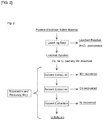
- a separation and recovery step is conducted after the metal leaching step described above. More particularly, this embodiment can include, for example, the steps illustrated in Fig. 1 or 2 , depending on the metal elements contained in the lithium ion battery scrap.
- the leached solution obtained in the metal leaching step is subjected to, for example, a common solvent extraction method or electrolytic method or the like, to recover each element including nickel and/or cobalt dissolved therein, as well as to separate manganese and/or iron from nickel and/or cobalt and recover them when manganese and/or iron remain in their dissolved forms in the leached solution.
- a common solvent extraction method or electrolytic method or the like to recover each element including nickel and/or cobalt dissolved therein, as well as to separate manganese and/or iron from nickel and/or cobalt and recover them when manganese and/or iron remain in their dissolved forms in the leached solution.
- iron and aluminum are first extracted by the solvent, among lithium, nickel, cobalt, manganese, aluminum, copper, iron and the like that are contained in the target lithium ion battery scrap and dissolved in the leached solution.
- Manganese and copper are then recovered from the solution thus obtained.
- the amount of manganese contained in the solution is decreased due to the promoting of precipitation reaction of manganese dioxide in the leaching step, as described above.
- manganese may not be contained in the solution, and in this case, any recovery of manganese is not required.
- any cost required for recovering manganese herein can be effectively reduced or eliminated.
- each of cobalt and nickel can be sequentially recovered and lithium can be finally left in the solution to recover each metal.
- the process as shown in Fig. 2 can be more easily carried out than the process as shown in Fig. 1 by sequentially recovering manganese, cobalt and nickel from the leached solution to provide a solution in which only lithium remains, because the elements contained in the lithium ion battery scrap are only lithium, nickel, cobalt, and manganese.
- such a separation and recovery step can provide an acidic solution obtained by reverse extraction from the solvent containing manganese and/or iron, and this acidic solution containing manganese and/or iron can be preferably used by adding it as the solution containing the metal ions of manganese and/or iron to the acidic solution in the metal leaching step described above.
- This acidic solution may be preferably a solution of a sulfate, a solution of a hydrochloride or a solution of a nitrate, and more preferably a solution of manganese (II) sulfate.
- Manganese (II) sulfate generally cannot be used as it is when it is separately recycled, and requires further treatments and increases costs and man-hours, so that it is effective to use this substance in this metal leaching step.
- Manganese (II) sulfate added to the acidic solution in the metal leaching step serves as a reducing agent and can effectively promote the leaching of nickel and/or cobalt.
- the concentration of manganese and/or iron in the acidic solution is preferably from 1 g/L to 50 g/L in order to effectively promote the dissolution of nickel and/or cobalt and the precipitation of manganese and/or iron.
- compounds of manganese and/or iron produced by subjecting the above acidic solution to a treatment such as carbonation, hydroxylation, crystallization and the like can be effectively used by adding them to the acidic solution in the metal leaching step.
- the compounds of manganese and/or iron thus produced include carbonates, hydroxides or sulfates or like of manganese and/or iron, among which manganese (II) carbonate is most suitable for use as an additive in the metal leaching step.
Landscapes
- Chemical & Material Sciences (AREA)
- Engineering & Computer Science (AREA)
- Materials Engineering (AREA)
- Manufacturing & Machinery (AREA)
- Organic Chemistry (AREA)
- Metallurgy (AREA)
- Mechanical Engineering (AREA)
- Geology (AREA)
- Life Sciences & Earth Sciences (AREA)
- General Life Sciences & Earth Sciences (AREA)
- Environmental & Geological Engineering (AREA)
- Geochemistry & Mineralogy (AREA)
- Chemical Kinetics & Catalysis (AREA)
- General Chemical & Material Sciences (AREA)
- Electrochemistry (AREA)
- Inorganic Chemistry (AREA)
- Manufacture And Refinement Of Metals (AREA)
- Processing Of Solid Wastes (AREA)
- Secondary Cells (AREA)
Applications Claiming Priority (2)
| Application Number | Priority Date | Filing Date | Title |
|---|---|---|---|
| JP2014202053 | 2014-09-30 | ||
| PCT/JP2015/077620 WO2016052568A1 (fr) | 2014-09-30 | 2015-09-29 | Procédé de lixiviation pour déchet de batterie lithium-ion et procédé de récupération de métal à partir d'un déchet de batterie lithium-ion |
Publications (3)
| Publication Number | Publication Date |
|---|---|
| EP3202929A1 true EP3202929A1 (fr) | 2017-08-09 |
| EP3202929A4 EP3202929A4 (fr) | 2018-06-06 |
| EP3202929B1 EP3202929B1 (fr) | 2021-12-22 |
Family
ID=55630593
Family Applications (1)
| Application Number | Title | Priority Date | Filing Date |
|---|---|---|---|
| EP15847456.9A Active EP3202929B1 (fr) | 2014-09-30 | 2015-09-29 | Procédé de lixiviation pour déchet de batterie lithium-ion et procédé de récupération de métal à partir d'un déchet de batterie lithium-ion |
Country Status (6)
| Country | Link |
|---|---|
| EP (1) | EP3202929B1 (fr) |
| JP (1) | JP6363578B2 (fr) |
| KR (1) | KR101919724B1 (fr) |
| CN (1) | CN107002171A (fr) |
| TW (2) | TWI656220B (fr) |
| WO (1) | WO2016052568A1 (fr) |
Cited By (5)
| Publication number | Priority date | Publication date | Assignee | Title |
|---|---|---|---|---|
| EP3670686A1 (fr) * | 2018-12-21 | 2020-06-24 | A.C.N. 630 589 507 Pty Ltd | Procédé de recyclage de batterie |
| US20210108286A1 (en) * | 2017-03-31 | 2021-04-15 | Jx Nippon Mining & Metals Corporation | Lithium recovery method |
| EP3903951A4 (fr) * | 2018-12-27 | 2022-09-28 | JX Nippon Mining & Metals Corporation | Procédé de récupération de métal de valeur |
| WO2022208015A1 (fr) * | 2021-03-30 | 2022-10-06 | Commissariat A L'energie Atomique Et Aux Energies Alternatives | Procede de dissolution d'un materiau d'electrode positive |
| WO2025132783A1 (fr) * | 2023-12-19 | 2025-06-26 | Basf Se | Récupération de métal de valeur dans des solutions aqueuses |
Families Citing this family (14)
| Publication number | Priority date | Publication date | Assignee | Title |
|---|---|---|---|---|
| JP6571123B2 (ja) * | 2017-03-01 | 2019-09-04 | Jx金属株式会社 | リチウムイオン電池スクラップの浸出方法および、リチウムイオン電池スクラップからの金属の回収方法 |
| JP6798918B2 (ja) * | 2017-03-30 | 2020-12-09 | Jx金属株式会社 | リチウムイオン電池スクラップの処理方法 |
| KR102412404B1 (ko) | 2017-05-30 | 2022-06-23 | 리-싸이클 코포레이션 | 배터리로부터 물질을 회수하기 위한 방법, 장치 및 시스템 |
| JP7217612B2 (ja) * | 2018-10-31 | 2023-02-03 | Jx金属株式会社 | リチウムイオン二次電池の正極活物質廃棄物の処理方法 |
| JP7175756B2 (ja) * | 2018-12-27 | 2022-11-21 | Jx金属株式会社 | 有価金属の回収方法 |
| KR20220057136A (ko) | 2020-10-29 | 2022-05-09 | 코스모화학 주식회사 | 폐리튬 이차전지의 삼원계 양극활물질로부터 전구체제조용 혼합용액 회수방법 |
| US20240213562A1 (en) * | 2021-04-14 | 2024-06-27 | Metso Finland Oy | Extraction of metals from lithium-ion battery material |
| KR20230172482A (ko) * | 2021-04-14 | 2023-12-22 | 메트소 핀란드 오이 | 리튬 이온 배터리 재료로부터 금속의 추출 |
| WO2023282106A1 (fr) * | 2021-07-09 | 2023-01-12 | 株式会社スリーボンド | Composition durcissable, film durci et article |
| WO2023054618A1 (fr) * | 2021-09-30 | 2023-04-06 | 株式会社アサカ理研 | Procédé de dissolution de poudre de batterie dans de l'acide chlorhydrique |
| WO2023105904A1 (fr) * | 2021-12-09 | 2023-06-15 | Jx金属株式会社 | Procédé de lixiviation de métaux |
| CN115652098A (zh) * | 2022-11-29 | 2023-01-31 | 湘潭大学 | 一种废锂离子电池极粉混料的绿色还原浸出方法 |
| DE102023113281A1 (de) | 2023-05-22 | 2024-11-28 | Bayerische Motoren Werke Aktiengesellschaft | Verfahren zum Recyclen einer Elektrodenbeschichtung einer Batterie |
| KR102772835B1 (ko) * | 2024-09-04 | 2025-02-26 | 성일하이텍 주식회사 | 폐이차전지로부터 유가금속의 고순도 회수방법 |
Family Cites Families (15)
| Publication number | Priority date | Publication date | Assignee | Title |
|---|---|---|---|---|
| US3761566A (en) * | 1971-09-13 | 1973-09-25 | American Metal Climax Inc | Leaching of nickel lateritic ores with waste iron sulfate solutions |
| TWI231063B (en) * | 2003-11-14 | 2005-04-11 | Ind Tech Res Inst | Process of recovering valuable metals from waste secondary batteries |
| KR101089519B1 (ko) * | 2009-11-30 | 2011-12-05 | 한국지질자원연구원 | 리튬이온전지 및 3원계 양극활물질로부터 cmb 촉매 제조방법 |
| JP2012001750A (ja) * | 2010-06-15 | 2012-01-05 | Mitsui Mining & Smelting Co Ltd | Co含有溶液の製造方法 |
| CN101871048B (zh) * | 2010-06-25 | 2012-05-23 | 浙江华友钴业股份有限公司 | 一种从废旧锂电池中回收钴、镍和锰的方法 |
| JP5577926B2 (ja) * | 2010-08-03 | 2014-08-27 | 住友金属鉱山株式会社 | ニッケル及びコバルトの浸出方法、及びリチウムイオン電池からの有価金属の回収方法 |
| JP5533700B2 (ja) * | 2011-01-27 | 2014-06-25 | 住友金属鉱山株式会社 | 有価金属の浸出方法及びこの浸出方法を用いた有価金属の回収方法 |
| KR101325176B1 (ko) * | 2011-03-23 | 2013-11-07 | 한국지질자원연구원 | 삼원계 양극활물질로부터 화학이산화망간의 제조방법, 그 제조방법에 의하여 제조된 화학이산화망간 및 화학이산화망간을 포함하는 이차전지 |
| JP5541336B2 (ja) * | 2011-10-24 | 2014-07-09 | 住友金属鉱山株式会社 | 高純度硫酸コバルト水溶液の製造方法 |
| JP2013112859A (ja) * | 2011-11-29 | 2013-06-10 | Jx Nippon Mining & Metals Corp | 硫酸マンガンの製造方法 |
| JP5514844B2 (ja) * | 2012-01-25 | 2014-06-04 | Jx日鉱日石金属株式会社 | 廃二次電池からの有価金属の分離方法及びそれを用いた有価金属の回収方法 |
| CN102703705A (zh) * | 2012-05-28 | 2012-10-03 | 南昌航空大学 | 一种高效强化浸出废弃锂离子电池中金属的方法 |
| JP2013181247A (ja) * | 2012-12-13 | 2013-09-12 | Jx Nippon Mining & Metals Corp | 金属の混合溶液の分離方法 |
| JP5902601B2 (ja) * | 2012-12-13 | 2016-04-13 | Jx金属株式会社 | 金属混合溶液中の金属の分離方法 |
| JP5706457B2 (ja) * | 2013-02-27 | 2015-04-22 | Jx日鉱日石金属株式会社 | 金属混合溶液からの金属の分離回収方法 |
-
2015
- 2015-09-29 EP EP15847456.9A patent/EP3202929B1/fr active Active
- 2015-09-29 KR KR1020177010871A patent/KR101919724B1/ko active Active
- 2015-09-29 CN CN201580052894.1A patent/CN107002171A/zh active Pending
- 2015-09-29 WO PCT/JP2015/077620 patent/WO2016052568A1/fr not_active Ceased
- 2015-09-29 JP JP2015192199A patent/JP6363578B2/ja active Active
- 2015-09-30 TW TW104132068A patent/TWI656220B/zh active
- 2015-09-30 TW TW106143575A patent/TW201812030A/zh unknown
Cited By (10)
| Publication number | Priority date | Publication date | Assignee | Title |
|---|---|---|---|---|
| US20210108286A1 (en) * | 2017-03-31 | 2021-04-15 | Jx Nippon Mining & Metals Corporation | Lithium recovery method |
| US11702719B2 (en) * | 2017-03-31 | 2023-07-18 | Jx Nippon Mining & Metals Corporation | Method for recovering lithium from lithium ion battery scrap |
| EP3670686A1 (fr) * | 2018-12-21 | 2020-06-24 | A.C.N. 630 589 507 Pty Ltd | Procédé de recyclage de batterie |
| WO2020124130A1 (fr) | 2018-12-21 | 2020-06-25 | A.C.N. 630 589 507 Pty Ltd | Procédé de recyclage de batteries |
| EP3899071A4 (fr) * | 2018-12-21 | 2023-12-06 | A.C.N. 630 589 507 Pty Ltd | Procédé de recyclage de batteries |
| EP3903951A4 (fr) * | 2018-12-27 | 2022-09-28 | JX Nippon Mining & Metals Corporation | Procédé de récupération de métal de valeur |
| US12084742B2 (en) | 2018-12-27 | 2024-09-10 | Jx Metals Circular Solutions Co., Ltd. | Method for recovering valuable metal |
| WO2022208015A1 (fr) * | 2021-03-30 | 2022-10-06 | Commissariat A L'energie Atomique Et Aux Energies Alternatives | Procede de dissolution d'un materiau d'electrode positive |
| FR3121551A1 (fr) * | 2021-03-30 | 2022-10-07 | Commissariat A L'energie Atomique Et Aux Energies Alternatives | Procede de dissolution d’un materiau d’electrode positive |
| WO2025132783A1 (fr) * | 2023-12-19 | 2025-06-26 | Basf Se | Récupération de métal de valeur dans des solutions aqueuses |
Also Published As
| Publication number | Publication date |
|---|---|
| JP2016069733A (ja) | 2016-05-09 |
| EP3202929A4 (fr) | 2018-06-06 |
| TW201812030A (zh) | 2018-04-01 |
| WO2016052568A1 (fr) | 2016-04-07 |
| TWI656220B (zh) | 2019-04-11 |
| CN107002171A (zh) | 2017-08-01 |
| KR20170057417A (ko) | 2017-05-24 |
| KR101919724B1 (ko) | 2018-11-16 |
| EP3202929B1 (fr) | 2021-12-22 |
| TW201629235A (zh) | 2016-08-16 |
| JP6363578B2 (ja) | 2018-07-25 |
Similar Documents
| Publication | Publication Date | Title |
|---|---|---|
| EP3202929A1 (fr) | Procédé de lixiviation pour déchet de batterie lithium-ion et procédé de récupération de métal à partir d'un déchet de batterie lithium-ion | |
| EP3202928B1 (fr) | Procédé de lixiviation pour déchet de batterie lithium-ion et procédé de récupération de métal à partir d'un déchet de batterie lithium-ion | |
| JP6334450B2 (ja) | リチウムイオン電池リサイクル原料からの金属の回収方法 | |
| JP6352846B2 (ja) | リチウムイオン電池リサイクル原料からの金属の回収方法 | |
| JP6835821B2 (ja) | リチウムイオン電池スクラップの処理方法 | |
| CN110475879B (zh) | 锂离子电池废料的处理方法 | |
| CN109072335B (zh) | 锂离子电池废料的处理方法 | |
| CN107429313B (zh) | 从锂离子电池废料除去铜的方法和回收金属的方法 | |
| JP7348130B2 (ja) | 金属含有溶液中のマグネシウムイオン除去方法及び、金属回収方法 | |
| JP2018040035A (ja) | リチウムイオン電池スクラップの処理方法 | |
| JP6289411B2 (ja) | 鉄含有溶液からの鉄の除去方法及び、有価金属の回収方法 | |
| CN115087622A (zh) | 混合金属盐的制造方法 | |
| JP6298002B2 (ja) | リチウムイオン電池スクラップの浸出方法及び、有価金属の回収方法 | |
| JP6397111B2 (ja) | リチウムイオン電池スクラップの浸出方法及び、有価金属の回収方法 |
Legal Events
| Date | Code | Title | Description |
|---|---|---|---|
| STAA | Information on the status of an ep patent application or granted ep patent |
Free format text: STATUS: THE INTERNATIONAL PUBLICATION HAS BEEN MADE |
|
| PUAI | Public reference made under article 153(3) epc to a published international application that has entered the european phase |
Free format text: ORIGINAL CODE: 0009012 |
|
| STAA | Information on the status of an ep patent application or granted ep patent |
Free format text: STATUS: REQUEST FOR EXAMINATION WAS MADE |
|
| 17P | Request for examination filed |
Effective date: 20170426 |
|
| AK | Designated contracting states |
Kind code of ref document: A1 Designated state(s): AL AT BE BG CH CY CZ DE DK EE ES FI FR GB GR HR HU IE IS IT LI LT LU LV MC MK MT NL NO PL PT RO RS SE SI SK SM TR |
|
| AX | Request for extension of the european patent |
Extension state: BA ME |
|
| DAV | Request for validation of the european patent (deleted) | ||
| DAX | Request for extension of the european patent (deleted) | ||
| A4 | Supplementary search report drawn up and despatched |
Effective date: 20180509 |
|
| RIC1 | Information provided on ipc code assigned before grant |
Ipc: C22B 7/00 20060101AFI20180503BHEP Ipc: C22B 3/06 20060101ALI20180503BHEP Ipc: C22B 3/00 20060101ALI20180503BHEP Ipc: C22B 23/00 20060101ALI20180503BHEP Ipc: C22B 3/26 20060101ALI20180503BHEP Ipc: C22B 26/12 20060101ALI20180503BHEP Ipc: H01M 10/54 20060101ALI20180503BHEP |
|
| STAA | Information on the status of an ep patent application or granted ep patent |
Free format text: STATUS: EXAMINATION IS IN PROGRESS |
|
| 17Q | First examination report despatched |
Effective date: 20200220 |
|
| REG | Reference to a national code |
Ref country code: DE Ref legal event code: R079 Ref document number: 602015075978 Country of ref document: DE Free format text: PREVIOUS MAIN CLASS: C22B0007000000 Ipc: C22B0026120000 |
|
| RIC1 | Information provided on ipc code assigned before grant |
Ipc: C22B 26/12 20060101AFI20210618BHEP Ipc: H01M 10/54 20060101ALI20210618BHEP Ipc: C22B 3/26 20060101ALI20210618BHEP Ipc: C22B 3/00 20060101ALI20210618BHEP Ipc: C22B 7/00 20060101ALI20210618BHEP |
|
| GRAP | Despatch of communication of intention to grant a patent |
Free format text: ORIGINAL CODE: EPIDOSNIGR1 |
|
| STAA | Information on the status of an ep patent application or granted ep patent |
Free format text: STATUS: GRANT OF PATENT IS INTENDED |
|
| INTG | Intention to grant announced |
Effective date: 20210812 |
|
| RAP3 | Party data changed (applicant data changed or rights of an application transferred) |
Owner name: JX NIPPON MINING & METALS CORPORATION |
|
| GRAS | Grant fee paid |
Free format text: ORIGINAL CODE: EPIDOSNIGR3 |
|
| GRAA | (expected) grant |
Free format text: ORIGINAL CODE: 0009210 |
|
| STAA | Information on the status of an ep patent application or granted ep patent |
Free format text: STATUS: THE PATENT HAS BEEN GRANTED |
|
| AK | Designated contracting states |
Kind code of ref document: B1 Designated state(s): AL AT BE BG CH CY CZ DE DK EE ES FI FR GB GR HR HU IE IS IT LI LT LU LV MC MK MT NL NO PL PT RO RS SE SI SK SM TR |
|
| REG | Reference to a national code |
Ref country code: GB Ref legal event code: FG4D |
|
| REG | Reference to a national code |
Ref country code: CH Ref legal event code: EP |
|
| REG | Reference to a national code |
Ref country code: DE Ref legal event code: R096 Ref document number: 602015075978 Country of ref document: DE |
|
| REG | Reference to a national code |
Ref country code: AT Ref legal event code: REF Ref document number: 1457126 Country of ref document: AT Kind code of ref document: T Effective date: 20220115 |
|
| REG | Reference to a national code |
Ref country code: IE Ref legal event code: FG4D |
|
| REG | Reference to a national code |
Ref country code: SE Ref legal event code: TRGR |
|
| REG | Reference to a national code |
Ref country code: LT Ref legal event code: MG9D |
|
| PG25 | Lapsed in a contracting state [announced via postgrant information from national office to epo] |
Ref country code: RS Free format text: LAPSE BECAUSE OF FAILURE TO SUBMIT A TRANSLATION OF THE DESCRIPTION OR TO PAY THE FEE WITHIN THE PRESCRIBED TIME-LIMIT Effective date: 20211222 Ref country code: LT Free format text: LAPSE BECAUSE OF FAILURE TO SUBMIT A TRANSLATION OF THE DESCRIPTION OR TO PAY THE FEE WITHIN THE PRESCRIBED TIME-LIMIT Effective date: 20211222 Ref country code: FI Free format text: LAPSE BECAUSE OF FAILURE TO SUBMIT A TRANSLATION OF THE DESCRIPTION OR TO PAY THE FEE WITHIN THE PRESCRIBED TIME-LIMIT Effective date: 20211222 Ref country code: BG Free format text: LAPSE BECAUSE OF FAILURE TO SUBMIT A TRANSLATION OF THE DESCRIPTION OR TO PAY THE FEE WITHIN THE PRESCRIBED TIME-LIMIT Effective date: 20220322 |
|
| REG | Reference to a national code |
Ref country code: NL Ref legal event code: MP Effective date: 20211222 |
|
| REG | Reference to a national code |
Ref country code: AT Ref legal event code: MK05 Ref document number: 1457126 Country of ref document: AT Kind code of ref document: T Effective date: 20211222 |
|
| PG25 | Lapsed in a contracting state [announced via postgrant information from national office to epo] |
Ref country code: LV Free format text: LAPSE BECAUSE OF FAILURE TO SUBMIT A TRANSLATION OF THE DESCRIPTION OR TO PAY THE FEE WITHIN THE PRESCRIBED TIME-LIMIT Effective date: 20211222 Ref country code: HR Free format text: LAPSE BECAUSE OF FAILURE TO SUBMIT A TRANSLATION OF THE DESCRIPTION OR TO PAY THE FEE WITHIN THE PRESCRIBED TIME-LIMIT Effective date: 20211222 Ref country code: GR Free format text: LAPSE BECAUSE OF FAILURE TO SUBMIT A TRANSLATION OF THE DESCRIPTION OR TO PAY THE FEE WITHIN THE PRESCRIBED TIME-LIMIT Effective date: 20220323 Ref country code: NO Free format text: LAPSE BECAUSE OF FAILURE TO SUBMIT A TRANSLATION OF THE DESCRIPTION OR TO PAY THE FEE WITHIN THE PRESCRIBED TIME-LIMIT Effective date: 20220322 |
|
| PG25 | Lapsed in a contracting state [announced via postgrant information from national office to epo] |
Ref country code: NL Free format text: LAPSE BECAUSE OF FAILURE TO SUBMIT A TRANSLATION OF THE DESCRIPTION OR TO PAY THE FEE WITHIN THE PRESCRIBED TIME-LIMIT Effective date: 20211222 |
|
| PG25 | Lapsed in a contracting state [announced via postgrant information from national office to epo] |
Ref country code: SM Free format text: LAPSE BECAUSE OF FAILURE TO SUBMIT A TRANSLATION OF THE DESCRIPTION OR TO PAY THE FEE WITHIN THE PRESCRIBED TIME-LIMIT Effective date: 20211222 Ref country code: SK Free format text: LAPSE BECAUSE OF FAILURE TO SUBMIT A TRANSLATION OF THE DESCRIPTION OR TO PAY THE FEE WITHIN THE PRESCRIBED TIME-LIMIT Effective date: 20211222 Ref country code: RO Free format text: LAPSE BECAUSE OF FAILURE TO SUBMIT A TRANSLATION OF THE DESCRIPTION OR TO PAY THE FEE WITHIN THE PRESCRIBED TIME-LIMIT Effective date: 20211222 Ref country code: PT Free format text: LAPSE BECAUSE OF FAILURE TO SUBMIT A TRANSLATION OF THE DESCRIPTION OR TO PAY THE FEE WITHIN THE PRESCRIBED TIME-LIMIT Effective date: 20220422 Ref country code: ES Free format text: LAPSE BECAUSE OF FAILURE TO SUBMIT A TRANSLATION OF THE DESCRIPTION OR TO PAY THE FEE WITHIN THE PRESCRIBED TIME-LIMIT Effective date: 20211222 Ref country code: EE Free format text: LAPSE BECAUSE OF FAILURE TO SUBMIT A TRANSLATION OF THE DESCRIPTION OR TO PAY THE FEE WITHIN THE PRESCRIBED TIME-LIMIT Effective date: 20211222 Ref country code: CZ Free format text: LAPSE BECAUSE OF FAILURE TO SUBMIT A TRANSLATION OF THE DESCRIPTION OR TO PAY THE FEE WITHIN THE PRESCRIBED TIME-LIMIT Effective date: 20211222 |
|
| PG25 | Lapsed in a contracting state [announced via postgrant information from national office to epo] |
Ref country code: PL Free format text: LAPSE BECAUSE OF FAILURE TO SUBMIT A TRANSLATION OF THE DESCRIPTION OR TO PAY THE FEE WITHIN THE PRESCRIBED TIME-LIMIT Effective date: 20211222 Ref country code: AT Free format text: LAPSE BECAUSE OF FAILURE TO SUBMIT A TRANSLATION OF THE DESCRIPTION OR TO PAY THE FEE WITHIN THE PRESCRIBED TIME-LIMIT Effective date: 20211222 |
|
| REG | Reference to a national code |
Ref country code: DE Ref legal event code: R097 Ref document number: 602015075978 Country of ref document: DE |
|
| PG25 | Lapsed in a contracting state [announced via postgrant information from national office to epo] |
Ref country code: IS Free format text: LAPSE BECAUSE OF FAILURE TO SUBMIT A TRANSLATION OF THE DESCRIPTION OR TO PAY THE FEE WITHIN THE PRESCRIBED TIME-LIMIT Effective date: 20220422 |
|
| PLBE | No opposition filed within time limit |
Free format text: ORIGINAL CODE: 0009261 |
|
| STAA | Information on the status of an ep patent application or granted ep patent |
Free format text: STATUS: NO OPPOSITION FILED WITHIN TIME LIMIT |
|
| PG25 | Lapsed in a contracting state [announced via postgrant information from national office to epo] |
Ref country code: DK Free format text: LAPSE BECAUSE OF FAILURE TO SUBMIT A TRANSLATION OF THE DESCRIPTION OR TO PAY THE FEE WITHIN THE PRESCRIBED TIME-LIMIT Effective date: 20211222 Ref country code: AL Free format text: LAPSE BECAUSE OF FAILURE TO SUBMIT A TRANSLATION OF THE DESCRIPTION OR TO PAY THE FEE WITHIN THE PRESCRIBED TIME-LIMIT Effective date: 20211222 |
|
| 26N | No opposition filed |
Effective date: 20220923 |
|
| PG25 | Lapsed in a contracting state [announced via postgrant information from national office to epo] |
Ref country code: SI Free format text: LAPSE BECAUSE OF FAILURE TO SUBMIT A TRANSLATION OF THE DESCRIPTION OR TO PAY THE FEE WITHIN THE PRESCRIBED TIME-LIMIT Effective date: 20211222 |
|
| PG25 | Lapsed in a contracting state [announced via postgrant information from national office to epo] |
Ref country code: MC Free format text: LAPSE BECAUSE OF FAILURE TO SUBMIT A TRANSLATION OF THE DESCRIPTION OR TO PAY THE FEE WITHIN THE PRESCRIBED TIME-LIMIT Effective date: 20211222 |
|
| REG | Reference to a national code |
Ref country code: CH Ref legal event code: PL |
|
| REG | Reference to a national code |
Ref country code: BE Ref legal event code: MM Effective date: 20220930 |
|
| PG25 | Lapsed in a contracting state [announced via postgrant information from national office to epo] |
Ref country code: IT Free format text: LAPSE BECAUSE OF FAILURE TO SUBMIT A TRANSLATION OF THE DESCRIPTION OR TO PAY THE FEE WITHIN THE PRESCRIBED TIME-LIMIT Effective date: 20211222 |
|
| P01 | Opt-out of the competence of the unified patent court (upc) registered |
Effective date: 20230517 |
|
| PG25 | Lapsed in a contracting state [announced via postgrant information from national office to epo] |
Ref country code: LU Free format text: LAPSE BECAUSE OF NON-PAYMENT OF DUE FEES Effective date: 20220929 |
|
| PG25 | Lapsed in a contracting state [announced via postgrant information from national office to epo] |
Ref country code: LI Free format text: LAPSE BECAUSE OF NON-PAYMENT OF DUE FEES Effective date: 20220930 Ref country code: IE Free format text: LAPSE BECAUSE OF NON-PAYMENT OF DUE FEES Effective date: 20220929 Ref country code: CH Free format text: LAPSE BECAUSE OF NON-PAYMENT OF DUE FEES Effective date: 20220930 |
|
| PG25 | Lapsed in a contracting state [announced via postgrant information from national office to epo] |
Ref country code: BE Free format text: LAPSE BECAUSE OF NON-PAYMENT OF DUE FEES Effective date: 20220930 |
|
| PG25 | Lapsed in a contracting state [announced via postgrant information from national office to epo] |
Ref country code: HU Free format text: LAPSE BECAUSE OF FAILURE TO SUBMIT A TRANSLATION OF THE DESCRIPTION OR TO PAY THE FEE WITHIN THE PRESCRIBED TIME-LIMIT; INVALID AB INITIO Effective date: 20150929 |
|
| PG25 | Lapsed in a contracting state [announced via postgrant information from national office to epo] |
Ref country code: CY Free format text: LAPSE BECAUSE OF FAILURE TO SUBMIT A TRANSLATION OF THE DESCRIPTION OR TO PAY THE FEE WITHIN THE PRESCRIBED TIME-LIMIT Effective date: 20211222 |
|
| PG25 | Lapsed in a contracting state [announced via postgrant information from national office to epo] |
Ref country code: MK Free format text: LAPSE BECAUSE OF FAILURE TO SUBMIT A TRANSLATION OF THE DESCRIPTION OR TO PAY THE FEE WITHIN THE PRESCRIBED TIME-LIMIT Effective date: 20211222 |
|
| REG | Reference to a national code |
Ref country code: GB Ref legal event code: 732E Free format text: REGISTERED BETWEEN 20240822 AND 20240828 |
|
| PG25 | Lapsed in a contracting state [announced via postgrant information from national office to epo] |
Ref country code: MT Free format text: LAPSE BECAUSE OF FAILURE TO SUBMIT A TRANSLATION OF THE DESCRIPTION OR TO PAY THE FEE WITHIN THE PRESCRIBED TIME-LIMIT Effective date: 20211222 |
|
| REG | Reference to a national code |
Ref country code: DE Ref legal event code: R081 Ref document number: 602015075978 Country of ref document: DE Owner name: JX METALS CIRCULAR SOLUTIONS CO., LTD., JP Free format text: FORMER OWNER: JX NIPPON MINING & METALS CORPORATION, TOKYO, JP |
|
| PGFP | Annual fee paid to national office [announced via postgrant information from national office to epo] |
Ref country code: DE Payment date: 20250805 Year of fee payment: 11 |
|
| PGFP | Annual fee paid to national office [announced via postgrant information from national office to epo] |
Ref country code: GB Payment date: 20250807 Year of fee payment: 11 |
|
| PGFP | Annual fee paid to national office [announced via postgrant information from national office to epo] |
Ref country code: FR Payment date: 20250808 Year of fee payment: 11 |
|
| PGFP | Annual fee paid to national office [announced via postgrant information from national office to epo] |
Ref country code: SE Payment date: 20250812 Year of fee payment: 11 |
|
| PG25 | Lapsed in a contracting state [announced via postgrant information from national office to epo] |
Ref country code: TR Free format text: LAPSE BECAUSE OF FAILURE TO SUBMIT A TRANSLATION OF THE DESCRIPTION OR TO PAY THE FEE WITHIN THE PRESCRIBED TIME-LIMIT Effective date: 20211222 |