EP3203237A1 - Aus urin abgeleitete epithelzelllinien zur diagnose und therapie einer immunantwort auf bk-virus oder einer transplantat-abstossungsreaktion - Google Patents
Aus urin abgeleitete epithelzelllinien zur diagnose und therapie einer immunantwort auf bk-virus oder einer transplantat-abstossungsreaktion Download PDFInfo
- Publication number
- EP3203237A1 EP3203237A1 EP16181112.0A EP16181112A EP3203237A1 EP 3203237 A1 EP3203237 A1 EP 3203237A1 EP 16181112 A EP16181112 A EP 16181112A EP 3203237 A1 EP3203237 A1 EP 3203237A1
- Authority
- EP
- European Patent Office
- Prior art keywords
- cells
- reactive
- cell
- epithelial cells
- virus
- Prior art date
- Legal status (The legal status is an assumption and is not a legal conclusion. Google has not performed a legal analysis and makes no representation as to the accuracy of the status listed.)
- Granted
Links
Images




Classifications
-
- G—PHYSICS
- G01—MEASURING; TESTING
- G01N—INVESTIGATING OR ANALYSING MATERIALS BY DETERMINING THEIR CHEMICAL OR PHYSICAL PROPERTIES
- G01N33/00—Investigating or analysing materials by specific methods not covered by groups G01N1/00 - G01N31/00
- G01N33/48—Biological material, e.g. blood, urine; Haemocytometers
- G01N33/50—Chemical analysis of biological material, e.g. blood, urine; Testing involving biospecific ligand binding methods; Immunological testing
- G01N33/53—Immunoassay; Biospecific binding assay; Materials therefor
- G01N33/569—Immunoassay; Biospecific binding assay; Materials therefor for microorganisms, e.g. protozoa, bacteria, viruses
- G01N33/56966—Animal cells
- G01N33/56972—White blood cells
-
- G—PHYSICS
- G01—MEASURING; TESTING
- G01N—INVESTIGATING OR ANALYSING MATERIALS BY DETERMINING THEIR CHEMICAL OR PHYSICAL PROPERTIES
- G01N2333/00—Assays involving biological materials from specific organisms or of a specific nature
- G01N2333/005—Assays involving biological materials from specific organisms or of a specific nature from viruses
- G01N2333/01—DNA viruses
- G01N2333/025—Papovaviridae, e.g. papillomavirus, polyomavirus, SV40, BK virus, JC virus
-
- G—PHYSICS
- G01—MEASURING; TESTING
- G01N—INVESTIGATING OR ANALYSING MATERIALS BY DETERMINING THEIR CHEMICAL OR PHYSICAL PROPERTIES
- G01N2333/00—Assays involving biological materials from specific organisms or of a specific nature
- G01N2333/435—Assays involving biological materials from specific organisms or of a specific nature from animals; from humans
- G01N2333/705—Assays involving receptors, cell surface antigens or cell surface determinants
- G01N2333/70503—Immunoglobulin superfamily, e.g. VCAMs, PECAM, LFA-3
- G01N2333/7051—T-cell receptor (TcR)-CD3 complex
-
- Y—GENERAL TAGGING OF NEW TECHNOLOGICAL DEVELOPMENTS; GENERAL TAGGING OF CROSS-SECTIONAL TECHNOLOGIES SPANNING OVER SEVERAL SECTIONS OF THE IPC; TECHNICAL SUBJECTS COVERED BY FORMER USPC CROSS-REFERENCE ART COLLECTIONS [XRACs] AND DIGESTS
- Y02—TECHNOLOGIES OR APPLICATIONS FOR MITIGATION OR ADAPTATION AGAINST CLIMATE CHANGE
- Y02A—TECHNOLOGIES FOR ADAPTATION TO CLIMATE CHANGE
- Y02A50/00—TECHNOLOGIES FOR ADAPTATION TO CLIMATE CHANGE in human health protection, e.g. against extreme weather
- Y02A50/30—Against vector-borne diseases, e.g. mosquito-borne, fly-borne, tick-borne or waterborne diseases whose impact is exacerbated by climate change
Definitions
- BKVAN BK-virus associated nephropathy
- BK-virus associated nephropathy is the result of a BK-virus infection of the transplanted kidney.
- replication of the BK-virus is efficiently controlled by the immune system and does not cause any symptoms.
- BK-virus infection can cause BKVAN, which can result in the loss of the kidney transplant.
- An increase in alloreactive T-cells makes it necessary to increase the dosage of the immunosuppressive therapy whereas the presence of BK-virus infection is indicative of a dosage reduction.
- a known method to monitor BK-virus specific T-cells is the use of so-called overlapping peptide pools (OVP) for specific BK-virus proteins. These peptide pools theoretically contain every possible epitope of the respective proteins.
- OVP overlapping peptide pools
- Such BK-virus specific OVP libraries can be presented by antigen presenting cells and reactivity of immune cells of the graft-recipient against BKV can be determined.
- a limitation of this currently applied method is that the antigen presenting cells (APCs) are not donor cells. This is important because each individual has a specific set of major histocompatibility complex (MHC) proteins that present the antigenic peptides to immune cells. Different sets of MHC proteins present different epitopes to the immune cells.
- MHC major histocompatibility complex
- recipient APCs will present different peptides (as compared to donor APC, unless recipient and donor have a perfectly matched genetic background) and subsequently may miss T-cells reactive against BK-virus antigens presented by the set of donor-MHC molecules.
- epithelial cells isolated from urine of patients after kidney transplantation can be used to monitor immune responses of the patient against BK-virus infection as well as against the donor tissue itself.
- the first aspect of the invention relates to a method for detecting an immune response in a patient after kidney transplantation.
- the method comprises the following steps:
- T-cells particularly comprised within the sample obtained from the patient, that are activated by the BKV-infected epithelial cells is indicative of an immune response.
- the T-cell determination step comprises a direct reactive T-cell determination comprising:
- the T-cell determination step comprises an indirect reactive T-cell determination comprising:
- Non-limiting examples of methods suitable for determining and isolating T-cells are methods such as flow cytometry, fluorescence activated cell sorting (FACS) or magnetic bead associated cell sorting (MACS). Those methods can be used to measure markers expressed on or within the T-cells and to separate the targeted T-cells.
- FACS fluorescence activated cell sorting
- MCS magnetic bead associated cell sorting
- overlapping peptide pool refers to a collection of antigens or single antigens.
- An OVP specific for BK-virus refers to a collection of antigens characteristic for BKV.
- a BKV specific peptide pool consists of 15-mer peptides overlapped by 11 amino acids representing antigens specific for BKV.
- the OVP can be presented by antigen-presenting cells in an MHC I or MHC II context to activate the respective immune-cells.
- antigen-presenting cells In the context of the present specification the term antigen-presenting cells (APC) is used in its meaning known in the art of immunology; it refers to a cell being able to display antigens in complex with the major histocompatibility complex (MHC) on the cell surface. Such a representation of an antigen makes them accessible for T-cells.
- MHC major histocompatibility complex
- the type of T-cell being able to recognize the antigen depends on the type of MHC molecule presenting the antigen.
- MHC class I molecules are for example able to interact with CD8 + T-cells whereas MHC class II molecules are able to interact with CD4 + cells.
- Non-limiting examples of APCs are dendritic cells, macrophages.
- the epithelial cells of the present invention are one example of a suitable APC in the context of the present invention.
- a loaded antigen-presenting cell refers to an APC that has been exposed to antigenic molecules in such a way that these antigens are processed by the APC and presented in a MHC context.
- PBMCs isolated from blood of the same patient are provided instead of said sample of whole blood. These PBMCs are used instead of the sample of whole blood in all subsequent steps.
- the method additionally comprises:
- the presence of reactive T-cells is indicative of an immune response, wherein BK-reactive T-cells are indicative of an anti-BK-virus immune response and graft reactive T-cells are indicative of an anti-graft immune response.
- allograft-reactive T-cells refers to T-cells that are able to specifically recognize cells of the tissue graft and are activated by binding those allograft cells.
- the method comprises the following steps:
- BK-reactive T-cells are indicative of an anti-BK-virus immune response and graft reactive T-cells are indicative of an anti-graft immune response.
- the method comprises the following steps:
- BK-reactive T-cells are indicative of an anti-BK-virus immune response and allograft reactive T-cells are indicative of an anti-graft immune response.
- the method comprises the following steps:
- BKV-reactive T-cells is indicative of an anti-BK-virus immune response and the presence of allograft reactive T-cells is indicative of an anti-graft immune response.
- the BKV-reactive T-cell number is higher than 0.001% of the number of all analysed T-cells (after background subtraction) to be considered present.
- the allograft reactive T-cell number is higher than 0.001% of the number of all analysed T-cells (after background subtraction) to be considered present.
- the method comprises a direct reactive T-cell determination step and an indirect reactive T-cell determination step.
- the epithelial cells isolated from urine in the cell isolation step :
- Isolation of epithelial cells originating from the renal tissue can be achieved by standard methods such as flow cytometry, magnetic bead associated cell sorting (MACS) and/or selection of cell clones. Therefore the cells isolated from urine would be separated according to the presence or absence of certain biomarkers specific for the graft-tissue or the graft-recipients tissue; specific biomarkers present on the surface of the cell are preferable.
- single cell clones are selected from the urine derived cells and are cultivated. Those cell clones are used in certain embodiments to establish immortalised cell lines.
- the T-cells are CD4 positive or CD8 positive T-cells.
- a diagnostic method for monitoring immunosuppressive therapy in a patient after kidney transplantation comprises determination of allograft-reactive T-cells and BKV-reactive T-cells according to the first aspect of the invention.
- the presence of allograft-reactive T-cells is indicative of a necessary increase in immunosuppressive therapy.
- the presence of BKV-reactive T-cells in combination with the detection of a BK-virus infection in the patient is indicative of a necessary reduction in immunosuppressive therapy in the patient.
- the absence of allograft-reactive T-cells in a patient is advantageous to prevent graft rejection.
- the presence of allograft-reactive T-cells is indicative for an increased risk of cellular rejection and an increase in immunosuppressive therapy to prevent graft-rejection is warranted.
- the presence of BKV-reactive T-cells is advantageous to combat the BK-virus infection.
- the absence of BKV-reactive T-cells in a patient with a BK-virus infection would therefore be indicative of a necessary decrease in immunosuppressive therapy to allow an immune response against BK-virus.
- allograft reactive T-cells are considered to be present if the allograft-reactive T-cell number is higher than 0.001 % of the number of all analysed T-cells.
- BKV-reactive T-cells are considered to be present if the BKV-reactive T-cell number is higher than 0.001 % of the number of all analysed T-cells.
- the allograft-reactive T-cell number and the BKV-reactive T-cell number are determined at a first and a second time point, wherein
- the time between the first and the second time point is at least three days.
- an in vitro method for obtaining a T-cell from a patient after kidney transplantation wherein the T-cell is reactive against antigens derived from BK-virus or kidney graft tissue.
- the method comprises the following steps:
- the reactive T-cell stimulation step comprises an indirect reactive T-cell stimulation comprising the steps of:
- the reactive T-cell stimulation step comprises a direct reactive T-cell stimulation and an indirect reactive T-cell stimulation.
- the obtained T-cell comprises the surface markers selected from:
- the obtained T-cell is used for the generation of T-cell lines.
- any sample comprising T cells obtained from the patient may be used instead of the sample of whole blood in the method according to any one of the above aspects or embodiments of the invention.
- Example 1 Detection of a BK-virus immune response
- the inventors made the finding that epithelial cells isolated from urine of patients after kidney transplantation can be used to monitor immune responses of the patient against BK-virus infection.
- Urine samples of patients having received a kidney transplantation were collected and centrifuged at 400g, for 10 minutes at room temperature to pellet all cells comprised in the urine sample ( figure 2 ). Next, the resulting pellet was washed with phosphate buffered saline supplemented with antibiotics (e.g. peniciliin/streptomycin).
- antibiotics e.g. peniciliin/streptomycin
- the cell pellet was resuspended in primary growth medium containing DMEM/Ham's F12 1:1 (Hyclone), 10 % of fetal bovine serum (FBS; PAA), SingleQuot Kit CC-4127 REGM (Lonza), amphotericin B and penicillin/streptomycin and seeded in gelatin coated multiwell plates.
- primary growth medium containing DMEM/Ham's F12 1:1 (Hyclone), 10 % of fetal bovine serum (FBS; PAA), SingleQuot Kit CC-4127 REGM (Lonza), amphotericin B and penicillin/streptomycin and seeded in gelatin coated multiwell plates.
- FBS fetal bovine serum
- SingleQuot Kit CC-4127 REGM SingleQuot Kit CC-4127 REGM
- Cultivated renal epithelial cells were then infected with BK-virus.
- PBMCs Peripheral blood mononuclear cells
- BK-virus infected epithelial cells or BKV-OVP loaded epithelial cells in a short term stimulation (16h).
- the response of CD4 + and CD8 + T-cells against CD3-depleted autologous PBMCs and allogenic or autologous epithelial cells (RPTECs) presenting BK-virus specific peptides was measured by FACS analysis. Epithelial cells only treated with vehicle (DMSO) and not infected with BK-virus were used as negative control. Staphylococcal enterotoxin B (SEB) was used as a positive control to assess polyclonal reactivity of T-cells.
- SEB Staphylococcal enterotoxin B
- the inventors made the finding that epithelial cells isolated from urine of patients after kidney transplantation can also be used to monitor immune responses of the patient against the donor graft tissue itself.
- This method can be used by itself to detect an anti-graft immune response and combined with the above mentioned method for the detection of BK-virus reactive T-cells to achieve information for the adjustment of an immunosuppressive therapy as claimed in the second aspect of the invention, or to provide differential diagnosis acute rejection vs. BKV associated nephropathy.
- the isolation procedure of the epithelial cells from the urine of a patient having received a kidney transplant is identical with the method described above with the exception that the epithelial cells are not infected with BK-virus.
- the activation by direct response to epithelial cells or APCs presenting peptides of the epithelial cells is performed as described below:
- PBMCs Peripheral blood mononuclear cells
- CFDA-labelled PBMCs (1x10 5 cells) were co-cultured with epithelial cells for seven days to test the direct graft-reactive response of T-cells comprised within the PBMCs against donor tissue ( figure 3 ).
- the MHC molecules can be indirectly presented on the recipient APC.
- epithelial cells will be lysed and loaded on the recipient APC.
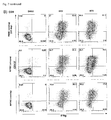
- T-cells reactive against the graft tissue are shown. Specifically, the negative control (absence of epithelial cells (UC)) showed 0% activation of T-cells, whereas treatment with SEB (positive control) showed 38.3% activation of T-cells.
- Co-culture of autologous PBMCs with epithelial cells (UC) resulted in activation of 25.4% of T-cells, if PBMCs and UCs were present in equal proportions and only 13.1% of T-cells were activated, if PBMCs and UCs were present 5:1.
- Indirect presentation of graft-tissue peptides by APCs resulted in activation of 10.5% of the T-cells ( figure 4 ).
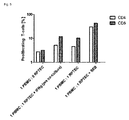
- proliferating CD4 + and CD8 + T-cells were measured in response to co-cultivation of PBMCs and epithelial cells (RPTEC) in equal proportions.
- PBMCs peripheral blood mononuclear cells
- RPTEC epithelial cells
- Proliferation of CD4 + and CD8 + cells after co-cultivation of PBMCs with epithelial cells was measured with and without preincubation of RPTEC with interferon-gamma (IFNg).
- IFNg interferon-gamma
- FIG 6 A) the frequency of graft-reactive regulatory T-cells were measured in response to 16 h of co-cultivation of epithelial cells (RPTEC) and PBMCs. The expression of CD25 and FoxP3 was determined as markers of activated regulatory T-cells.
- Figure 6 B) shows the proliferation of Th17 cells after co-cultivation of epithelial cells (RPTEC) and PBMCs. As negative control PBMCs were incubated without epithelial cells (1 PBMC : 0 RPTEC) and as a positive control PBMCs were cultivated with RPTECs in the presence of staphylococcal enterotoxin B (1 PBMC : 1 RPTEC + SEB). Proliferation of Th17 cells after co-cultivation of PBMCs with epithelial cells was measured with and without preincubation of RPTEC with interferon-gamma (IFNg).
- IFNg interferon-gamma
- Example 3 Diagnostic method for monitoring immunosuppressive therapy in a patient after kidney transplantation.
- kidney-grafts The transplantation of kidney-grafts is in many cases the only available treatment option for patients experiencing kidney failure.
- the patient In order to avoid graft-rejection the patient has to be treated with immunosuppressive drugs to limit the immune response against the donor tissue.
- the immunosuppressive therapy has to be monitored closely and adjusted regularly to avoid other complications.
- a very common and serious side effect of immunosuppressive therapy after kidney transplantation is a BK-virus infection of the transplanted kidney. While BK-virus infection is efficiently controlled by the immune system of immunocompetent individuals and usually is without any noticeable symptoms, in immunosuppressed kidney transplant patient BK-virus infection can result in BK-virus associated nephropathy (BKVAN).
- BKVAN BK-virus associated nephropathy
- BKVAN can also lead to the loss of the kidney transplant and therefore immunosuppressive therapy has to be finely adjusted to find a balance between suppression of graft-rejection and control of BK-virus infection. Therefore, the immune response of the patient against the donor tissue and the occurrence of BK-virus infection within the donor tissue have to be monitored closely.
- the above mentioned methods of this invention provides the means to detect an immune response directed against BK-virus infection of the donor tissue as well as an immune response against the donor tissue itself. An increase in alloreactive T-cells would make it necessary to increase the dosage of the immunosuppressive therapy whereas the presence of BK-virus infection and the lack of BKV-specific T-cells would be indicative of a dosage reduction.
- Example 1 or 2 can also be used to generate different subtypes of T-cells being specific for antigens derived from BK-virus or graft tissue.
- the inventors isolated and cultivated epithelial cells as explained above. In order to obtain T-cells specific for BK-virus antigens the cultivated cells were infected with BK-virus and to obtain T-cells specific for graft tissue cultivated epithelial cells were used for the next step.
- BKV-specific T-cells can be isolated using activation induced IFN ⁇ -secretion or activation induced surface-markers and expanded for 2-5 weeks in a cell-culture medium containing II-2, IL-7 and/or IL-15 at concentrations of 50U/mL, 10ng/mL and 10ng/mL.
- the generated BKV-specific T-cell lines can be directly used for the adaptive T-cell therapy in patients with lack of BKV-specific T-cell immunity or frozen and stored in liquid nitrogen for a later usage.
- Allograft-reactive regulatory T-cells can be isolated using surface markers CD25, CD127 CD137 and CD154 and expanded for 2-5 weeks in a cell-culture medium containing Interleukin 2 and Rapamycin at concentrations of 500U/mL and 100ng/mL, respectively.
- the generated allograft-reactive T-cell lines can be directly used for the adaptive T-cell therapy in patients with increased risk of allograft rejection or frozen and stored in liquid nitrogen for a later usage.
- T-cells specific for BK-virus derived antigens presented in a MHC class I context were obtained by incubation of the BK-virus infected epithelial cells in the presence of a whole blood sample from the same patient.
- the epithelial cells derived from urine as explained above express MHC class I and MHC class II molecules and are therefore suitable for the stimulation in context of MHC class I and II molecules. They are advantageous over other antigen presenting cells derived from the patient, because they are derived from the tissue graft and therefore present antigens in the context of the donor specific MHC molecules.
- T-cells comprised in the blood sample that are specific for BK-virus derived antigens were stimulated by those antigens presented on the cell surface of the BK-virus infected donor- derived epithelial cells. Stimulation of the T-cells with the specific antigen initiated proliferation of these T-cells. Thereby the proliferating T-cells in the following expansion step were mainly T-cells stimulated by their respective antigen.
- T-cells specific for the kidney graft tissue In order to obtain T-cells specific for the kidney graft tissue the same procedure as detailed above for BK-virus derived antigens was used with the exception of using cultivated epithelial cells as described in the examples above without infection with BK-virus.
- T-cells specific for kidney graft tissue derived antigens presented in a MHC class II context of recipient are obtained. Therefore antigen-presenting cells (APCs) expressing MHC class II molecules are isolated from a patient.
- APCs antigen-presenting cells
- lysed epithelial cells derived from urine of the patient are of donor origin and can be used to be presented in context of recipient APCs. Therefore isolated recipient APCs are incubated with lysed epithelial cells, resulting in the uptake of lysed donor-derived antigens by the APCs.
- Such antigens are processed by the APCs and are presented in a MHC class II context. Incubating these antigen presenting cells with blood samples comprising T-cells, initiated proliferation of the T-cells recognizing their respective antigen.
- T-cells directly or indirectly stimulated are expanded under suitable conditions.
Landscapes
- Life Sciences & Earth Sciences (AREA)
- Health & Medical Sciences (AREA)
- Cell Biology (AREA)
- Hematology (AREA)
- Immunology (AREA)
- Engineering & Computer Science (AREA)
- Molecular Biology (AREA)
- Chemical & Material Sciences (AREA)
- Urology & Nephrology (AREA)
- Biomedical Technology (AREA)
- Virology (AREA)
- Physics & Mathematics (AREA)
- Biotechnology (AREA)
- Tropical Medicine & Parasitology (AREA)
- Zoology (AREA)
- Food Science & Technology (AREA)
- Medicinal Chemistry (AREA)
- Microbiology (AREA)
- Analytical Chemistry (AREA)
- Biochemistry (AREA)
- General Health & Medical Sciences (AREA)
- General Physics & Mathematics (AREA)
- Pathology (AREA)
- Micro-Organisms Or Cultivation Processes Thereof (AREA)
- Measuring Or Testing Involving Enzymes Or Micro-Organisms (AREA)
Applications Claiming Priority (1)
| Application Number | Priority Date | Filing Date | Title |
|---|---|---|---|
| EP16154152 | 2016-02-03 |
Publications (3)
| Publication Number | Publication Date |
|---|---|
| EP3203237A1 true EP3203237A1 (de) | 2017-08-09 |
| EP3203237C0 EP3203237C0 (de) | 2023-07-05 |
| EP3203237B1 EP3203237B1 (de) | 2023-07-05 |
Family
ID=55310706
Family Applications (1)
| Application Number | Title | Priority Date | Filing Date |
|---|---|---|---|
| EP16181112.0A Active EP3203237B1 (de) | 2016-02-03 | 2016-07-25 | Aus urin abgeleitete epithelzelllinien zur diagnose und therapie einer immunantwort auf bk-virus oder einer transplantat-abstossungsreaktion |
Country Status (1)
| Country | Link |
|---|---|
| EP (1) | EP3203237B1 (de) |
Cited By (4)
| Publication number | Priority date | Publication date | Assignee | Title |
|---|---|---|---|---|
| CN110396560A (zh) * | 2019-06-20 | 2019-11-01 | 上海奥根诊断技术有限公司 | 用于检测ddcfDNA的产品在制备检测BKVAN产品中的用途及方法 |
| CN112955743A (zh) * | 2018-06-18 | 2021-06-11 | 巴黎-萨克雷大学 | 用于肾脏移植后bk病毒性肾病风险分层的方法 |
| WO2022084998A1 (en) * | 2020-10-19 | 2022-04-28 | Tel Hashomer Medical Research Infrastructure And Services Ltd. | Urine-derived epithelial cell cultures, nephrospheroids derived therefrom and methods of producing and using same |
| CN115932242A (zh) * | 2021-08-26 | 2023-04-07 | 上海奥根诊断技术有限公司 | 一种免疫磁珠及其在肾小管上皮细胞分离中的应用 |
Citations (3)
| Publication number | Priority date | Publication date | Assignee | Title |
|---|---|---|---|---|
| US20040106159A1 (en) | 2000-02-22 | 2004-06-03 | Florian Kern | Method for antigen-specific stimulation of t-lymphocytes with synthetic peptide libraries |
| WO2011134989A1 (en) * | 2010-04-30 | 2011-11-03 | Universität Für Bodenkultur Wien | Panels of immortalized mammalian cells and their use |
| WO2016073595A1 (en) * | 2014-11-05 | 2016-05-12 | The United States Of America, As Represented By The Secretary, Department Of Health & Human Services | T cells and dendritic cells for polyomavirus therapy |
-
2016
- 2016-07-25 EP EP16181112.0A patent/EP3203237B1/de active Active
Patent Citations (3)
| Publication number | Priority date | Publication date | Assignee | Title |
|---|---|---|---|---|
| US20040106159A1 (en) | 2000-02-22 | 2004-06-03 | Florian Kern | Method for antigen-specific stimulation of t-lymphocytes with synthetic peptide libraries |
| WO2011134989A1 (en) * | 2010-04-30 | 2011-11-03 | Universität Für Bodenkultur Wien | Panels of immortalized mammalian cells and their use |
| WO2016073595A1 (en) * | 2014-11-05 | 2016-05-12 | The United States Of America, As Represented By The Secretary, Department Of Health & Human Services | T cells and dendritic cells for polyomavirus therapy |
Non-Patent Citations (5)
| Title |
|---|
| B. J. D. WEIST ET AL: "The role of CD4+ T cells in BKV-specific T cell immunity", MEDICAL MICROBIOLOGY AND IMMUNOLOGY, vol. 203, no. 6, 23 July 2014 (2014-07-23), DE, pages 395 - 408, XP055338999, ISSN: 0300-8584, DOI: 10.1007/s00430-014-0348-z * |
| EMILY BLYTH ET AL: "BK Virus-Specific T Cells for Use in Cellular Therapy Show Specificity to Multiple Antigens and Polyfunctional Cytokine Responses", TRANSPLANTATION, vol. 92, no. 10, 1 November 2011 (2011-11-01), pages 1077 - 1084, XP055034458, ISSN: 0041-1337, DOI: 10.1097/TP.0b013e31823328c0 * |
| GIOVANNI B FOGAZZI ET AL: "Images in Nephrology: "Decoy cells" in the urine due to polyomavirus BK infection: easily seen by phase-contrast microscopy", NEPHROL DIAL TRANSPLANT, vol. 16, no. 7, 1 July 2001 (2001-07-01), pages 1496 - 1498, XP055342638 * |
| HOWARD E COREY: "Practical pediatric nephrology Urine cytology: an underused method to diagnose acute renal allograft rejection", PEDIATRIC NEPHROLOGY, vol. 11, no. 2, 1 April 1997 (1997-04-01), pages 226 - 230, XP055343707 * |
| P. COMOLI: "Dendritic Cells Pulsed with Polyomavirus BK Antigen Induce Ex Vivo Polyoma BK Virus-Specific Cytotoxic T-Cell Lines in Seropositive Healthy Individuals and Renal Transplant Recipients", JOURNAL OF THE AMERICAN SOCIETY OF NEPHROLOGY., vol. 14, no. 12, 1 December 2003 (2003-12-01), US, pages 3197 - 3204, XP055255878, ISSN: 1046-6673, DOI: 10.1097/01.ASN.0000096374.08473.E3 * |
Cited By (5)
| Publication number | Priority date | Publication date | Assignee | Title |
|---|---|---|---|---|
| CN112955743A (zh) * | 2018-06-18 | 2021-06-11 | 巴黎-萨克雷大学 | 用于肾脏移植后bk病毒性肾病风险分层的方法 |
| CN110396560A (zh) * | 2019-06-20 | 2019-11-01 | 上海奥根诊断技术有限公司 | 用于检测ddcfDNA的产品在制备检测BKVAN产品中的用途及方法 |
| WO2022084998A1 (en) * | 2020-10-19 | 2022-04-28 | Tel Hashomer Medical Research Infrastructure And Services Ltd. | Urine-derived epithelial cell cultures, nephrospheroids derived therefrom and methods of producing and using same |
| CN115932242A (zh) * | 2021-08-26 | 2023-04-07 | 上海奥根诊断技术有限公司 | 一种免疫磁珠及其在肾小管上皮细胞分离中的应用 |
| CN115932242B (zh) * | 2021-08-26 | 2025-08-01 | 上海奥根诊断技术有限公司 | 一种免疫磁珠及其在肾小管上皮细胞分离中的应用 |
Also Published As
| Publication number | Publication date |
|---|---|
| EP3203237C0 (de) | 2023-07-05 |
| EP3203237B1 (de) | 2023-07-05 |
Similar Documents
| Publication | Publication Date | Title |
|---|---|---|
| US7994096B2 (en) | Method for antigen-specific stimulation of T lymphocytes with synthetic peptide libraries | |
| US8426146B2 (en) | Multiparameteric method for assessing immune system status | |
| WO2007117602A2 (en) | Isolation and use of human regulatory t cells | |
| EP3203237B1 (de) | Aus urin abgeleitete epithelzelllinien zur diagnose und therapie einer immunantwort auf bk-virus oder einer transplantat-abstossungsreaktion | |
| EP2558857B1 (de) | Neues verfahren zur isolierung von tr1-zellen | |
| US20130101568A1 (en) | Il-13 producing tr1-like cells and use thereof | |
| Kos et al. | Flow cytometry-based isolation of tumor-associated regulatory T cells and assessment of their suppressive potential | |
| Bresatz et al. | Isolation, propagation and characterization of cord blood derived CD4+ CD25+ regulatory T cells | |
| Schneider et al. | Simultaneous cytometric analysis of (auto) antigen-reactive T and B cell proliferation | |
| CN106119193B (zh) | 一种兼有nk细胞特质的抗原特异性t细胞的制备方法 | |
| US20060263343A1 (en) | Molecular dissection of cellular responses to alloantigen or autoantigen in graft rejection and autoimmune disease | |
| CN110468106A (zh) | Ny-eso-1特异的tcr及其制备方法 | |
| WO2024123180A1 (en) | Identification and/or isolation of t cell-comprising cell-cell complexes and use thereof. | |
| Kos | 2.1 Preparation of single-cell suspensions from freshly | |
| CN118620838A (zh) | 一种体外nk细胞培养制备方法及其应用 | |
| Gigante et al. | Phenotypical and Functional Characterization of Cytotoxic Unconventional T-Cells | |
| Lacalle et al. | Generation of human and murine exhausted CD8+ T cells in vitro | |
| Delhez | 2.1 PBMC isolation from whole blood | |
| US9638689B2 (en) | Indirect antigen-specific T cell recognition assay | |
| EP2191269A1 (de) | Verfahren und zusammensetzungen zum testen regulatorischer t-zellen | |
| Danielzik | Wilms' tumor 1 (WT1) specific immune cells as a tool for cellular immunotherapy in acute myeloid leukemia | |
| Alcyomics et al. | Assessing the safety and Graft versus Host Disease (GvHD) reactivity of ATMPs | |
| Khurana et al. | Modern Techniques for Analyzing Immunological Responses |
Legal Events
| Date | Code | Title | Description |
|---|---|---|---|
| PUAI | Public reference made under article 153(3) epc to a published international application that has entered the european phase |
Free format text: ORIGINAL CODE: 0009012 |
|
| STAA | Information on the status of an ep patent application or granted ep patent |
Free format text: STATUS: THE APPLICATION HAS BEEN PUBLISHED |
|
| AK | Designated contracting states |
Kind code of ref document: A1 Designated state(s): AL AT BE BG CH CY CZ DE DK EE ES FI FR GB GR HR HU IE IS IT LI LT LU LV MC MK MT NL NO PL PT RO RS SE SI SK SM TR |
|
| AX | Request for extension of the european patent |
Extension state: BA ME |
|
| STAA | Information on the status of an ep patent application or granted ep patent |
Free format text: STATUS: REQUEST FOR EXAMINATION WAS MADE |
|
| 17P | Request for examination filed |
Effective date: 20180202 |
|
| RBV | Designated contracting states (corrected) |
Designated state(s): AL AT BE BG CH CY CZ DE DK EE ES FI FR GB GR HR HU IE IS IT LI LT LU LV MC MK MT NL NO PL PT RO RS SE SI SK SM TR |
|
| STAA | Information on the status of an ep patent application or granted ep patent |
Free format text: STATUS: EXAMINATION IS IN PROGRESS |
|
| 17Q | First examination report despatched |
Effective date: 20201014 |
|
| GRAP | Despatch of communication of intention to grant a patent |
Free format text: ORIGINAL CODE: EPIDOSNIGR1 |
|
| STAA | Information on the status of an ep patent application or granted ep patent |
Free format text: STATUS: GRANT OF PATENT IS INTENDED |
|
| INTG | Intention to grant announced |
Effective date: 20230127 |
|
| GRAS | Grant fee paid |
Free format text: ORIGINAL CODE: EPIDOSNIGR3 |
|
| GRAA | (expected) grant |
Free format text: ORIGINAL CODE: 0009210 |
|
| STAA | Information on the status of an ep patent application or granted ep patent |
Free format text: STATUS: THE PATENT HAS BEEN GRANTED |
|
| AK | Designated contracting states |
Kind code of ref document: B1 Designated state(s): AL AT BE BG CH CY CZ DE DK EE ES FI FR GB GR HR HU IE IS IT LI LT LU LV MC MK MT NL NO PL PT RO RS SE SI SK SM TR |
|
| REG | Reference to a national code |
Ref country code: CH Ref legal event code: EP |
|
| REG | Reference to a national code |
Ref country code: AT Ref legal event code: REF Ref document number: 1585303 Country of ref document: AT Kind code of ref document: T Effective date: 20230715 |
|
| REG | Reference to a national code |
Ref country code: DE Ref legal event code: R096 Ref document number: 602016080763 Country of ref document: DE |
|
| REG | Reference to a national code |
Ref country code: IE Ref legal event code: FG4D |
|
| U01 | Request for unitary effect filed |
Effective date: 20230804 |
|
| U07 | Unitary effect registered |
Designated state(s): AT BE BG DE DK EE FI FR IT LT LU LV MT NL PT SE SI Effective date: 20230810 |
|
| REG | Reference to a national code |
Ref country code: LT Ref legal event code: MG9D |
|
| U20 | Renewal fee for the european patent with unitary effect paid |
Year of fee payment: 8 Effective date: 20231020 |
|
| PG25 | Lapsed in a contracting state [announced via postgrant information from national office to epo] |
Ref country code: GR Free format text: LAPSE BECAUSE OF FAILURE TO SUBMIT A TRANSLATION OF THE DESCRIPTION OR TO PAY THE FEE WITHIN THE PRESCRIBED TIME-LIMIT Effective date: 20231006 |
|
| PG25 | Lapsed in a contracting state [announced via postgrant information from national office to epo] |
Ref country code: ES Free format text: LAPSE BECAUSE OF FAILURE TO SUBMIT A TRANSLATION OF THE DESCRIPTION OR TO PAY THE FEE WITHIN THE PRESCRIBED TIME-LIMIT Effective date: 20230705 |
|
| PG25 | Lapsed in a contracting state [announced via postgrant information from national office to epo] |
Ref country code: IS Free format text: LAPSE BECAUSE OF FAILURE TO SUBMIT A TRANSLATION OF THE DESCRIPTION OR TO PAY THE FEE WITHIN THE PRESCRIBED TIME-LIMIT Effective date: 20231105 |
|
| PG25 | Lapsed in a contracting state [announced via postgrant information from national office to epo] |
Ref country code: RS Free format text: LAPSE BECAUSE OF FAILURE TO SUBMIT A TRANSLATION OF THE DESCRIPTION OR TO PAY THE FEE WITHIN THE PRESCRIBED TIME-LIMIT Effective date: 20230705 Ref country code: NO Free format text: LAPSE BECAUSE OF FAILURE TO SUBMIT A TRANSLATION OF THE DESCRIPTION OR TO PAY THE FEE WITHIN THE PRESCRIBED TIME-LIMIT Effective date: 20231005 Ref country code: IS Free format text: LAPSE BECAUSE OF FAILURE TO SUBMIT A TRANSLATION OF THE DESCRIPTION OR TO PAY THE FEE WITHIN THE PRESCRIBED TIME-LIMIT Effective date: 20231105 Ref country code: HR Free format text: LAPSE BECAUSE OF FAILURE TO SUBMIT A TRANSLATION OF THE DESCRIPTION OR TO PAY THE FEE WITHIN THE PRESCRIBED TIME-LIMIT Effective date: 20230705 Ref country code: GR Free format text: LAPSE BECAUSE OF FAILURE TO SUBMIT A TRANSLATION OF THE DESCRIPTION OR TO PAY THE FEE WITHIN THE PRESCRIBED TIME-LIMIT Effective date: 20231006 Ref country code: ES Free format text: LAPSE BECAUSE OF FAILURE TO SUBMIT A TRANSLATION OF THE DESCRIPTION OR TO PAY THE FEE WITHIN THE PRESCRIBED TIME-LIMIT Effective date: 20230705 |
|
| PG25 | Lapsed in a contracting state [announced via postgrant information from national office to epo] |
Ref country code: PL Free format text: LAPSE BECAUSE OF FAILURE TO SUBMIT A TRANSLATION OF THE DESCRIPTION OR TO PAY THE FEE WITHIN THE PRESCRIBED TIME-LIMIT Effective date: 20230705 |
|
| REG | Reference to a national code |
Ref country code: CH Ref legal event code: PL |
|
| REG | Reference to a national code |
Ref country code: DE Ref legal event code: R097 Ref document number: 602016080763 Country of ref document: DE |
|
| REG | Reference to a national code |
Ref country code: IE Ref legal event code: MM4A |
|
| PG25 | Lapsed in a contracting state [announced via postgrant information from national office to epo] |
Ref country code: SM Free format text: LAPSE BECAUSE OF FAILURE TO SUBMIT A TRANSLATION OF THE DESCRIPTION OR TO PAY THE FEE WITHIN THE PRESCRIBED TIME-LIMIT Effective date: 20230705 Ref country code: RO Free format text: LAPSE BECAUSE OF FAILURE TO SUBMIT A TRANSLATION OF THE DESCRIPTION OR TO PAY THE FEE WITHIN THE PRESCRIBED TIME-LIMIT Effective date: 20230705 Ref country code: CZ Free format text: LAPSE BECAUSE OF FAILURE TO SUBMIT A TRANSLATION OF THE DESCRIPTION OR TO PAY THE FEE WITHIN THE PRESCRIBED TIME-LIMIT Effective date: 20230705 Ref country code: CH Free format text: LAPSE BECAUSE OF NON-PAYMENT OF DUE FEES Effective date: 20230731 Ref country code: SK Free format text: LAPSE BECAUSE OF FAILURE TO SUBMIT A TRANSLATION OF THE DESCRIPTION OR TO PAY THE FEE WITHIN THE PRESCRIBED TIME-LIMIT Effective date: 20230705 Ref country code: MC Free format text: LAPSE BECAUSE OF FAILURE TO SUBMIT A TRANSLATION OF THE DESCRIPTION OR TO PAY THE FEE WITHIN THE PRESCRIBED TIME-LIMIT Effective date: 20230705 |
|
| PLBE | No opposition filed within time limit |
Free format text: ORIGINAL CODE: 0009261 |
|
| STAA | Information on the status of an ep patent application or granted ep patent |
Free format text: STATUS: NO OPPOSITION FILED WITHIN TIME LIMIT |
|
| 26N | No opposition filed |
Effective date: 20240408 |
|
| GBPC | Gb: european patent ceased through non-payment of renewal fee |
Effective date: 20231005 |
|
| PG25 | Lapsed in a contracting state [announced via postgrant information from national office to epo] |
Ref country code: IE Free format text: LAPSE BECAUSE OF NON-PAYMENT OF DUE FEES Effective date: 20230725 |
|
| PG25 | Lapsed in a contracting state [announced via postgrant information from national office to epo] |
Ref country code: GB Free format text: LAPSE BECAUSE OF NON-PAYMENT OF DUE FEES Effective date: 20231005 |
|
| PG25 | Lapsed in a contracting state [announced via postgrant information from national office to epo] |
Ref country code: IE Free format text: LAPSE BECAUSE OF NON-PAYMENT OF DUE FEES Effective date: 20230725 Ref country code: GB Free format text: LAPSE BECAUSE OF NON-PAYMENT OF DUE FEES Effective date: 20231005 |
|
| U21 | Renewal fee for the european patent with unitary effect paid with additional fee |
Year of fee payment: 9 Effective date: 20250121 |
|
| PG25 | Lapsed in a contracting state [announced via postgrant information from national office to epo] |
Ref country code: CY Free format text: LAPSE BECAUSE OF FAILURE TO SUBMIT A TRANSLATION OF THE DESCRIPTION OR TO PAY THE FEE WITHIN THE PRESCRIBED TIME-LIMIT; INVALID AB INITIO Effective date: 20160725 |
|
| U1K | Transfer of rights of the unitary patent after the registration of the unitary effect |
Owner name: CHARITE - UNIVERSITAETSMEDIZIN BERLINKOERPERSCHAFT DES OEFFENTLICHEN RECHTS; DE |
|
| PG25 | Lapsed in a contracting state [announced via postgrant information from national office to epo] |
Ref country code: HU Free format text: LAPSE BECAUSE OF FAILURE TO SUBMIT A TRANSLATION OF THE DESCRIPTION OR TO PAY THE FEE WITHIN THE PRESCRIBED TIME-LIMIT; INVALID AB INITIO Effective date: 20160725 |
|
| U20 | Renewal fee for the european patent with unitary effect paid |
Year of fee payment: 10 Effective date: 20250729 |
|
| PG25 | Lapsed in a contracting state [announced via postgrant information from national office to epo] |
Ref country code: TR Free format text: LAPSE BECAUSE OF FAILURE TO SUBMIT A TRANSLATION OF THE DESCRIPTION OR TO PAY THE FEE WITHIN THE PRESCRIBED TIME-LIMIT Effective date: 20230705 |