EP3203406A1 - Sicherheitsschutzverfahren und -vorrichtung für vertrauliche informationen - Google Patents
Sicherheitsschutzverfahren und -vorrichtung für vertrauliche informationen Download PDFInfo
- Publication number
- EP3203406A1 EP3203406A1 EP15857551.4A EP15857551A EP3203406A1 EP 3203406 A1 EP3203406 A1 EP 3203406A1 EP 15857551 A EP15857551 A EP 15857551A EP 3203406 A1 EP3203406 A1 EP 3203406A1
- Authority
- EP
- European Patent Office
- Prior art keywords
- target application
- sensitive information
- dynamic link
- link library
- data
- Prior art date
- Legal status (The legal status is an assumption and is not a legal conclusion. Google has not performed a legal analysis and makes no representation as to the accuracy of the status listed.)
- Withdrawn
Links
Images




Classifications
-
- G—PHYSICS
- G06—COMPUTING OR CALCULATING; COUNTING
- G06F—ELECTRIC DIGITAL DATA PROCESSING
- G06F21/00—Security arrangements for protecting computers, components thereof, programs or data against unauthorised activity
- G06F21/50—Monitoring users, programs or devices to maintain the integrity of platforms, e.g. of processors, firmware or operating systems
- G06F21/52—Monitoring users, programs or devices to maintain the integrity of platforms, e.g. of processors, firmware or operating systems during program execution, e.g. stack integrity ; Preventing unwanted data erasure; Buffer overflow
- G06F21/54—Monitoring users, programs or devices to maintain the integrity of platforms, e.g. of processors, firmware or operating systems during program execution, e.g. stack integrity ; Preventing unwanted data erasure; Buffer overflow by adding security routines or objects to programs
-
- G—PHYSICS
- G06—COMPUTING OR CALCULATING; COUNTING
- G06F—ELECTRIC DIGITAL DATA PROCESSING
- G06F21/00—Security arrangements for protecting computers, components thereof, programs or data against unauthorised activity
- G06F21/50—Monitoring users, programs or devices to maintain the integrity of platforms, e.g. of processors, firmware or operating systems
- G06F21/55—Detecting local intrusion or implementing counter-measures
- G06F21/56—Computer malware detection or handling, e.g. anti-virus arrangements
-
- G—PHYSICS
- G06—COMPUTING OR CALCULATING; COUNTING
- G06F—ELECTRIC DIGITAL DATA PROCESSING
- G06F21/00—Security arrangements for protecting computers, components thereof, programs or data against unauthorised activity
- G06F21/50—Monitoring users, programs or devices to maintain the integrity of platforms, e.g. of processors, firmware or operating systems
- G06F21/52—Monitoring users, programs or devices to maintain the integrity of platforms, e.g. of processors, firmware or operating systems during program execution, e.g. stack integrity ; Preventing unwanted data erasure; Buffer overflow
- G06F21/53—Monitoring users, programs or devices to maintain the integrity of platforms, e.g. of processors, firmware or operating systems during program execution, e.g. stack integrity ; Preventing unwanted data erasure; Buffer overflow by executing in a restricted environment, e.g. sandbox or secure virtual machine
Definitions
- the present disclosure relates to the field of information security, and particularly to a sensitive information security protection method and apparatus.
- Usage extent and usage rate of a smart terminal are steadily improved. With gradually strong computing power, transmitting-receiving capability and communication capability of a mobile platform, more and more applications are developed and installed on the smart terminal by a user. However, with the rapid development of the smart terminal, occurrence rate of malicious applications on the smart terminal and malicious behaviors in the applications are also getting higher and higher.
- Embodiments of the present disclosure mainly aim to provide a sensitive information security protection method and apparatus, which are intended to prevent a malicious application from acquiring and leaking sensitive information in a smart terminal and realize the protection of the sensitive information of a user of the smart terminal.
- an embodiment of the present disclosure provides a sensitive information security protection method, including the following steps:
- the method before monitoring whether there exists the process under the target application, the method further includes: acquiring a control permission on a started target application so as to monitor the target application.
- the step of injecting a preset dynamic link library into the process of the application when it is monitored that there exists the process under the target application includes:
- the step of running the functional data packet to disguise sensitive information to be accessed by the target application so as to generate disguised data includes:
- the sensitive information security protection method further includes:
- An embodiment of the present disclosure further provides a sensitive information security protection apparatus, including:
- the sensitive information security protection apparatus further includes:
- the injection module includes:
- the disguising module includes:
- the sensitive information security protection apparatus further includes:
- the embodiment of the present disclosure mainly adopts a core concept of data disguising to disguise related sensitive information required to be acquired by the application.
- a disguising strategy makes the application obtain a wrong data or obtain no data, and on the other hand, it is guaranteed that such a disguising strategy cannot be easily anti-monitored by the application, and therefore, accurate sensitive information can be effectively prevented from being acquired by a malicious application.
- a core concept of embodiments of the present disclosure is to perform data disguising on sensitive information. That is, when an application tries to open these sensitive information resources, the data disguising is performed on the sensitive information by the disclosure, so that disguised data is provided to the application, for example, opening a null file or providing wrong data and non-relevant data directly. Therefore, the application cannot obtain correct sensitive information when accessing the sensitive information.
- returned by the embodiment of the present disclosure is a coordinate that appears to be cate a location, rather than a true coordinate where the device is located, and is completely irrelevant location coordinate.
- an application wants to acquire information data of the device, such as a mobile phone number and a device ID, a preset fake mobile phone number and a preset fake device ID formed by a random combination of numbers and letters are returned by the present disclosure.
- Such disguised data appears to be almost identical to a real data in format, and the application cannot explore a data disguising strategy of the present disclosure.
- a content provider database in the system is modified by the present disclosure, so that the data returned by the query of the application is null.
- the core concept of the present disclosure is applicable to any operating system in the smart terminal, and the embodiments of the present disclosure are specifically exemplified with an Android operating system.
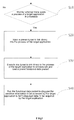
- FIG. 1 is a schematic flow diagram of a first embodiment of a sensitive information security protection method of the present disclosure.
- the sensitive information security protection method includes the following steps.
- a preset dynamic link library is injected into the process of the target application.
- the preset dynamic link library is loaded into a running target process space, so that a function in the dynamic link library has a corresponding address in the target process space and the function in the dynamic link library may be called in the target process by the address later.
- the target application is subjected to a process injection and sensitive information disguising process according to an application selected by the user.
- a Ptrace function is called in S20 to inject the preset dynamic link library into the process of the target application. Since it is impossible to inject a larger data packet directly into the process, the Ptrace function is required to firstly inject a small segment of code for calling a dlopen function into the process of the target application, and then call the dlopen function to load the dynamic link library, so that the preset dynamic link library is injected into the process of the target application.
- the Ptrace function is a very powerful Android system function.
- the Ptrace function enables the parent process to monitor and control other processes, and can also change registers and kernel images in a child process, thereby achieving breakpoint debugging of the process and tracking system call.
- the Ptrace function can also be used to intercept and modify system calls at a user layer.
- the dlopen function is also one of Android system functions, it is mainly used to load and open the dynamic link library, and return a handle to the call process.
- the dynamic link library is a library including codes and data that can be used by multiple programs simultaneously, and the dynamic link library is not an executable file.
- the dynamic link library provides a method of enabling the process to call a function that does not belong to executable code of the process.
- the executable code of the function is located in a dynamic link library file, which is a non-executable binary program file, and allows programs to share the code and other resources necessary to perform special tasks.
- the dynamic link library in the process of the target application is executed to encapsulate and load a preset functional data packet.
- the dynamic link library has been injected into the process of the target application in S20, thus the function in the dynamic link library may be executed by the process of the target application.
- the Ptrace calls a static method in the dynamic link library to encapsulate a function method in the functional data packet, and then loads the preset functional data packet to disguise the sensitive information.
- the functional data packet is run to disguise the sensitive information to be accessed by the target application, so as to form disguised data to be acquired by the target application.
- the functional data packet has been loaded into the process of the target application in S30, thus the process of the target application can also execute the function method in the functional data packet.
- the functional data packet intercepts an access request of the target application and confirms the intention thereof firstly, that is, determines whether the target application wants to access preset sensitive information.
- the functional data packet will perform corresponding disguising on the sensitive information according to a type of the sensitive information to be accessed by the target application to form disguised data, and return the disguised data in response to the access request of the target application.
- the functional data packet is injected into the process of the target application through loading at the first time before the target application sends the access request, so that the target application is prevented from accessing the sensitive information.
- the monitoring procedure begins when the application is started, and ends when the application is closed and exited.
- the system function (Ptrace function) is called to inject the preset dynamic link library into the process of the target application. Therefore, the process of the target application can execute the dynamic link library, and the preset functional data packet is encapsulated and loaded by executing the dynamic link library in the process of the target application.
- the functional data packet is run to disguise the sensitive information to be accessed by the target application, so as to form the disguised data to be acquired by the target application. Therefore, the target application cannot acquire the correct sensitive information data, so that the purpose of protecting the security of the sensitive information of the user is achieved.
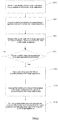
- FIG. 2 is a schematic flow diagram of a second embodiment of a sensitive information security protection method of the present disclosure. Based on the first embodiment of the above sensitive information security protection method of the present disclosure, before S10, the sensitive information security protection method of the present embodiment further includes the following step.
- each application is assigned a user identity when being started, and the user identity is used to manage a permission on the application. If the applications are required to be mutually called, they should have the same user identity, each application cannot be free to get data of other applications.
- the Ptrace function is called to intercept and reset the user identity of the application so as to acquire the control permission on the application and realize dynamic monitoring of the process of the target application through the control permission.
- the control permission on the target application is acquired by modifying the user identity of the target application firstly, and then the target application can be dynamically monitored.
- the target application will not access the sensitive information in the case that the target application is not monitored and a sensitive information protection measure is not implemented, so that the target application is dynamically prevented from acquiring the sensitive information in real time.
- FIG. 3 is a schematic flow diagram of a third embodiment of a sensitive information security protection method of the present disclosure. Based on the above second embodiment of the sensitive information security protection method of the present disclosure, the sensitive information security protection method of the present embodiment further includes the following steps.
- step S03 a file system path of the target application is backuped to a preset isolation region so as to protect data of the target application.
- the file system path of the target application is copied into the isolation region under the present disclosure, so that other applications cannot access and modify the data of the target application so as to protect the security of the data of the target application.
- the Ptrace function may be called to track a startup procedure of the target application and reset the user identity assigned, by the system, to the target application, so as to acquire the control permission on the target application.
- the data of the target application is regarded as the sensitive information, that is, the target application is regarded as a protected object
- data information of the target application is also required to be protected when other applications want to access the target application. That is to say, the present disclosure can also be used to protect the data of the target application from being accessed by other applications by acquiring the control permission on the target application.
- the file system path of the target application is copied into the isolation region under the present disclosure, so that other applications cannot access and modify the data of the target application so as to protect the security of the data of the target application.
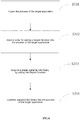
- FIG. 4 is a schematic flow diagram showing the process injection of the sensitive information security protection method of the present disclosure.
- S20 of FIG. 3 when it is monitored that there exists the process under the target application, the preset dynamic link library is injected into the process of the application.
- S20 is an important implementation of the present disclosure, through which the process of the target application may be used to execute the functional data packet of the present disclosure, so as to intercept the access request of the target application and disguise the sensitive information to be accessed, and ultimately protect the security of the sensitive information of the user.
- S20 specifically includes the following steps.
- Hijacking the process of the target application occurs in a procedure of generating the process of the target application, and is used for preventing an access intention of the target application at the first time.
- the Ptrace function may be used to hijack the process of the target application, so as to suspend the process and perform S202.
- a small segment of code injected by the Ptrace function is an assembly code, which contains a call manner of the dlopen function and a loading path of the dynamic link library.
- the assembly code is short, occupies less memory and is high in execution speed, and thus can complete the calling of the dynamic link library more simple and rapidly.
- the preset dynamic link library is acquired by calling the dlopen function.
- the preset dynamic link library is acquired when there exists the process under the target application.
- the process of the target application calls the dlopen function by executing the injected assembly code while informing the dlopen function of the loading path of the dynamic link library.
- the dynamic link library is loaded into the process of the target application.
- the dynamic link library is loaded into the process of the target application, so that the function in the dynamic link library can be executed by the process of the target application.
- the dlopen function loads the dynamic link library into the process of the target application by the acquired loading path of the dynamic link library, and opens a specified dynamic link library file in a specified pattern. Since the function in the dynamic link library file is executed in the process of the target application, the function in the dynamic link library file can modify any memory of a space of the process of the target application, and certainly, a hook may be added as well so as to change a working mechanism of the process of the target application.
- FIG. 5 is a schematic flow diagram showing sensitive information disguising of a sensitive information security protection method of the present disclosure.
- S40 the functional data packet is run to disguise the sensitive information to be accessed by the target application, so as to form disguised data to be acquired by the target application.
- S40 specifically further includes the following steps.
- the process of the target application (also referred as a target application process) runs the function method in the functional data packet by executing the function in the dynamic link library.
- the dynamic link library provides a static call method that allows the process to call a function that does not belong to an executable code of the process.
- the static call method of the dynamic link library loads the functional data packet into the process of the target application and encapsulates the functional data packet.
- a data access request of the target application is monitored by running the functional data packet.
- the functional data packet intercepts the process of the target application and performs corresponding disguising according to the type of the sensitive information to be accessed while returning the generated disguised data in response to the access request of the application process.
- the process of the target application runs the functional data packet that has been loaded into the process, the functional data packet monitors the process of the target application and determines whether the data access request of the target application has an intention of accessing the sensitive information. If the data access request of the target application has an intention of accessing the sensitive information, an Android management service program interface intercepts the data access request of the target application, performs targeted data disguising according to the type of the sensitive information accessed by it to form the disguised data, and returns the disguised data in response to the data access request of the target application. If the data access request of the target application does not have an intention of accessing the sensitive information, the data access request of the target application is continuously monitored.
- FIG. 6 is a diagram showing an example of accessing sensitive information resources by an application in the Android system.
- the access to system resources by the application is managed by various management service program interfaces.
- the management service program interfaces of the Android system include a location service management type (LocationManager), a process service management type (ProcessManager), an account service manager type (AccountManger), a telephony service manager type (TelephonyManager) and the like.
- the application will send an access request information to the management service program interface, and the management service program interface will confirm whether the application has an access permission on corresponding sensitive information after receiving the access request information sent by the application. If the application has the access permission on corresponding sensitive information, the management service program interface will send an access request to the sensitive information resource, and the sensitive information resource returns the relevant sensitive information to the management service program interface after receiving the access request. Finally, the management service program interface returns the sensitive information to be accessed by the application to the application.
- FIG. 7 is a schematic diagram of accessing sensitive information resources by a target application program in an Android system according to the present disclosure.
- the only difference between accessing the sensitive information resources by the target application according to the present disclosure and accessing the sensitive information resources by the application under normal circumstances lies in: the access request of the target application is intervened in the present disclosure, thus a communication of accessing the sensitive information by the target application only occurs between the application and the management service interface. Therefore, it is guaranteed fundamentally that the application cannot access the sensitive information.
- the application in order to prevent the application from obtaining no return value and generating a program exception when accessing the sensitive information or prevent from being anti-monitored by the application, there is a need for disguising the sensitive information to be accessed by the application, and returning the generated disguised data to the application. Accordingly, the application is prevented from obtaining no return value and generating the program exception when accessing the sensitive information or being anti-monitored by the application on one hand, and the sensitive information is prevented from being leaked on the other hand.
- the sensitive data information in the smart terminal described in the embodiments of the disclosure is mainly classified into two types: the first type is sensitive information related to the terminal equipment per se, for example, an international mobile equipment identity (referred to as IMEI) and a device identification number object (device id); and the second type is sensitive information related to an Android system database (Content Provider database), for example, a location information object (location) and an address book information object (contacts).
- IMEI international mobile equipment identity
- device id device identification number object
- Android system database Content Provider database
- the definition and the setting of the sensitive data information in the smart terminal can be predefined and set by the user.
- the user has set a security protection for the sensitive information with respect to a certain application, meanwhile, merely wants to obtain real data information of a certain piece of sensitive information or one type of sensitive information, he or she can obtain the real data information of this piece of sensitive information or this type of sensitive information after presetting.
- the target application wants to acquire the first type of sensitive information such as IMEI or device id, it is necessary for the target application to declare a permission on acquiring the first type of sensitive information of a mobile phone in a manifest.xml file of the Android system.
- the target application wants to acquire the second type of sensitive information such as the location information or address book information, it is also necessary for the target application to declare that a permission on acquiring the second type of sensitive information of the mobile phone in the manifest.xml file of the Android system. Therefore, an intention of the data access request of the target application is determined by the permission declaration of the target application in the manifest.xml file of the Android system. If the access to the sensitive information is involved in the permission declaration, the functional data packet will confirm that the target application wants to access the sensitive information, and the functional data packet needs to intercept the data access request of the target application at this moment.
- the functional data packet When the target application wants to access the sensitive information, the functional data packet will call the management service program interface in the Android system to intercept the access request of the target application while disguising the sensitive information to be accessed by the target application, and then returns the generated disguised data in response to the data access request of the target application, thereby protecting the sensitive information.
- the present disclosure performs data disguising with respect to each target application accessing the preset sensitive information.
- the first type is sensitive information related to information of the Android mobile phone.
- the Android system provides a telephony management service, one function of this service is to read, for example, IMEI information.
- the telephony management service can be divided into many layers, where a layer involving reading the information of the mobile phone is a Telephony framework layer.
- a core TelephonyManager type in the Telephony framework layer provides a series of methods for accessing statuses and information related to the communication of the mobile phone.
- the statuses and the information related to the communication of the mobile phone include a status and information of a subscriber identity module (SIM) of the mobile phone, as well as a status of a telecommunications network and information of a mobile phone user.
- SIM subscriber identity module
- Related methods of TelephonyManager type are certainly required to acquire the IMEI information.
- the TM When the application queries the status of the mobile phone through the TelephonyManager (hereinafter referred to as TM), the TM will send this request to a system service to acquire IMEI number.
- TelephonyManager.java is analyzed, so that a getDeviceld method in the TM can return an IMEI value.
- This method is defined in an IphoneSubinfo service.
- the IphoneSubinfo service is a proxy object for registering a system service in the TM.
- the IphoneSubinfo service is obtained in a getSubscriberInfo interface, and a software version, a device ID, a SIM card international mobile equipment identity and other mobile phone information can be obtained through the IphoneSubinfo service.
- the IphoneSubinfo service is obtained through a getService method of the ServiceManager, and the getService method can substantially be regarded as a query procedure of Android services.
- the getService will query whether the service exists in a scache firstly, each queried service is stored in a cache hash table. If the IphoneSubinfo service is queried for the first time, the IphoneSubinfo service does not exist in the cache hash table, hence this service may be added and registered by other functions; and if the service exists in the cache hash table, the service is directly returned.
- an intercepting function is realized in the present disclosure by modifying an ibinder object of the IphoneSubinfo service type in the query of the sCache.
- "Return service” in the getService is changed to "return false" by a manner of process injection, that is, the sensitive information such as IMEI of the status of the mobile phone, which is desired to be acquired by the target application, may be changed to null.
- the second type is sensitive information related to the Content Provider.
- a data sharing function provided to the application by the Content Provider database is provided in the Android system, where the data provided by the application is organized in a table form by the Content Provider database in the mobile phone.
- the functions provided by the Content Provider database include query (), insert (), update (), delete () and the like.
- the most used is query (), which is used by the application to query data in the database.
- the return value of a Cursor in query () is directly set to be null by analyzing query () in the function of the functional data packet, so that it can be ensured that the service queried by the target application cannot return the sensitive information desired by the target application.
- An embodiment of the present disclosure further provides a sensitive information security protection apparatus.
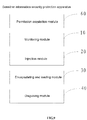
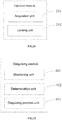
- FIG. 8 is a schematic diagram showing functional modules of a first embodiment of a sensitive information security protection apparatus of the present disclosure.
- the sensitive information security protection apparatus includes the modules described below.
- a monitoring module 10 is arranged to monitor whether there exists a process of a target application in processes.
- the injection module 20 is arranged to inject a preset dynamic link library into the process of the target application when it is monitored that there exists the process of the target application in the processes.
- a Ptrace function in the Android system is called by the injection module 20 to inject the preset dynamic link library into the process of the target application.
- a small segment of code for calling a dlopen function is injected into the process of the target application by the Ptrace function, and then the dlopen function is called to load the dynamic link library, thereby injecting the preset dynamic link library into the process of the target application.
- An encapsulating and loading module 30 is arranged to execute the dynamic link library in the process of the target application to encapsulate and load a preset functional data packet.
- the dynamic link library has been injected into the process of the target application by the injection module 20, and therefore, in the encapsulating and loading module 30, the process of the target application may execute the function in the dynamic link library.
- the Ptrace function calls a static method in the dynamic link library to encapsulate a function method in the functional data packet, and then loads the preset functional data packet to disguise the sensitive information.
- a disguising module 40 is arranged to run the functional data packet to disguise sensitive information to be accessed by the target application, so as to generate disguised data to be acquired by the target application.
- the functional data packet has been loaded into the process of the target application by the encapsulating and loading module 30, thus the process of the target application can also execute the function method in the functional data packet.
- the functional data packet firstly intercepts an access request of the target application and confirms the intention of the target application, that is, determines whether the target application wants to access the preset sensitive information.
- the functional data packet will perform corresponding disguising on the sensitive information according to a type of the sensitive information to be accessed by the target application to generate disguised data, and return the disguised data in response to the access request of the target application.
- the monitoring module 10 it is dynamically monitored by the monitoring module 10 whether there exists the process of the target application in the processes, so as to inject the functional data packet into the process of the target application by loading at the first time before the target application sends the access request, thereby preventing the target application from accessing the sensitive information.
- the Ptrace function system function
- the injection module 20 to inject the preset dynamic link library into the process of the target application. Therefore, the process of the target application can execute the dynamic link library.
- the preset functional data packet is encapsulated and loaded by executing the dynamic link library in the process of the target application.
- the functional data packet is run to disguise the sensitive information to be accessed by the target application to generate the disguised data to be acquired by the target application. Therefore, the target application cannot acquire the correct sensitive information data, thereby protecting the security of the sensitive information of the user.
- FIG. 9 is a schematic diagram showing functional modules of a second embodiment of a sensitive information security protection apparatus of the present disclosure. Based on the above first embodiment of sensitive information security protection apparatus of the present disclosure, the sensitive information security protection apparatus of the present embodiment further includes:
- a user identity is assigned to each application when the application is started, and the user identity is used to manage a permission on the application. If the applications are required to be mutually called, they should have the same user identity, and each application cannot casually obtain data of other applications.
- the Ptrace function is called by the permission acquisition module 60 to intercept and modify the user identity of the application, so as to acquire the control permission on the application and dynamic monitor the process of the target application through the control permission.
- the user identity of the target application is modified by the permission acquisition module 60 to acquire the control permission on the target application, and then the target application is dynamically monitored by the monitoring module 10.
- the target application is dynamically monitored by the monitoring module 10.
- the system function (Ptrace function) is called by the injection module 20 to inject the preset dynamic link library into the process of the target application.
- the preset functional data packet is encapsulated and loaded by executing the dynamic link library in the process of the target application.
- the functional data packet is run to disguise the sensitive information to be accessed by the target application to generate disguised data to be acquired by the target application. Therefore, the target application will not acquire correct sensitive information data, thereby protecting the security of the sensitive information of the user.
- FIG. 10 is a schematic diagram showing functional modules of a third embodiment of a sensitive information security protection apparatus of the present disclosure.
- the sensitive information security protection apparatus of the present embodiment further includes the modules described below.
- a resetting module 50 is arranged to reset a user identity of the target application in a procedure of starting the target application.
- each application will be assigned a user identity by the system in the starting procedure, for managing the permission on the application.
- it is required to reset the user identity of the target application.
- the user identity of the target application is reset by the resetting module 50, so as to obtain the control permission on the target application.
- a backup module 70 is arranged to backup a file system path of the target application to a preset isolation region to protect the data of the target application.
- the resetting module 50 when the target application selected by the user is started, the resetting module 50 will call the Ptrace function to track the starting procedure of the target application and reset the user identity assigned to the target application by the system, so as to acquire the control permission on the target application.
- the data of the target application is also taken as a protected object, and the file system path of the target application is backuped to the preset isolation region by the backup module 70, thereby preventing other applications from accessing the data of the target application.
- FIG. 11 is a schematic diagram showing functional modules of the injection module of the sensitive information security apparatus according to embodiments of the present disclosure.
- the injection module 20 includes the units described below.
- An acquisition unit 201 is arranged to acquire a preset dynamic link library when there exists a process under the target application.
- the injection module 70 can perform any operation on the target application.
- the acquisition unit 201 calls the Ptrace function to hijack the process of the target application so that the process is suspended, and then the Ptrace function injects a small segment of code being an assembly language code into the process of the target application, where the small segment of code includes a calling manner of the dlopen function and a loading path of the dynamic link library.
- the acquisition unit 201 executes the injected assembly code by the process of the target application to acquire the relevant information of the dynamic link library.
- a loading unit 202 is arranged to load the dynamic link library into the process of the target application so that a function in the dynamic link library is executed by the process of the target application.
- the loading unit 202 by calling the dlopen function, loads the dynamic link library into the process of the target application through the acquired loading path of the dynamic link library.
- the acquisition unit 201 injects a segment of assembly code information into the process of the target application by calling the Ptrace function and executes the injected assembly code by the process of the target application, thereby acquiring the relevant information of the dynamic link library.
- the loading unit 202 loads the dynamic link library by calling the dlopen function, and the dlopen function loads the dynamic link library into the process of the target application through the acquired loading path of the dynamic link library, and a specified dynamic link library file is opened in a specified pattern for execution by the process of the target application.
- FIG. 12 is a schematic diagram showing functional modules of a disguising module of a sensitive information security protection apparatus according to an embodiment of the present disclosure.
- the disguising module 40 includes the units described below.
- a monitoring unit 401 is arranged to run the functional data packet by executing the function in the dynamic link library through the process of the target application, so as to monitor a data access request of the target application.
- the function in the functional data packet can be executed by the process of the target application, so that the functional data packet can monitor the data access request of the target application.
- the data access request of the target application can be dynamically learned by the monitoring unit 401 in real time, and thus a sensitive data access request can be intercepted before being sent by the target application.
- a determination unit 402 is arranged to intercept the data access request of the target application and determine whether the data to be accessed by the data access request of the target application program is preset sensitive information.
- the interception and determination unit 402 intercepts the data access request of the target application and determines whether the intercepted data access request of the target application is a request of accessing the preset sensitive information. If the data access request of the target application is a request of accessing the preset sensitive information, the disguising unit 403 is followed. Otherwise, the interception of the data access request of the target application is terminated.
- a disguising process unit 403 is arranged to, through the functional data packet, disguise the sensitive information to be accessed by the application and generate disguised data.
- the disguising process unit 403 When the interception and determination unit 402 intercepts and determines that the target application has an intention to access the sensitive information, the disguising process unit 403 starts to operate.
- the disguising process unit 403 disguises the sensitive information to be accessed by the target application according to the type of the sensitive information to be accessed by the target application, and returns the formed disguised data in response to the access request of the target application.
- the monitoring unit 401 monitors the data access request of the target application to realize real-time dynamic monitoring of the data access request of the target application.
- the interception and determination unit 402 intercepts the data access request of the target application and determines whether the data access request of the target application program is a request of accessing the preset sensitive information. If the data access request of the target application program is a request of accessing the preset sensitive information, the disguising process unit 403 performs corresponding disguising process on the sensitive information to be accessed by the target application according to the type of the sensitive information to be accessed by the target application, and returns the formed disguised data in response to the data access request of the target application. Otherwise, the monitoring unit 401 continues to monitor the data access request of the target application.
Landscapes
- Engineering & Computer Science (AREA)
- Computer Security & Cryptography (AREA)
- Software Systems (AREA)
- Theoretical Computer Science (AREA)
- Computer Hardware Design (AREA)
- General Engineering & Computer Science (AREA)
- General Physics & Mathematics (AREA)
- Physics & Mathematics (AREA)
- Virology (AREA)
- Health & Medical Sciences (AREA)
- General Health & Medical Sciences (AREA)
- Telephone Function (AREA)
- Telephonic Communication Services (AREA)
Applications Claiming Priority (2)
| Application Number | Priority Date | Filing Date | Title |
|---|---|---|---|
| CN201410618086.4A CN105631326A (zh) | 2014-11-05 | 2014-11-05 | 敏感信息安全保护方法和装置 |
| PCT/CN2015/081277 WO2016070623A1 (zh) | 2014-11-05 | 2015-06-11 | 敏感信息安全保护方法和装置 |
Publications (2)
| Publication Number | Publication Date |
|---|---|
| EP3203406A1 true EP3203406A1 (de) | 2017-08-09 |
| EP3203406A4 EP3203406A4 (de) | 2018-06-13 |
Family
ID=55908510
Family Applications (1)
| Application Number | Title | Priority Date | Filing Date |
|---|---|---|---|
| EP15857551.4A Withdrawn EP3203406A4 (de) | 2014-11-05 | 2015-06-11 | Sicherheitsschutzverfahren und -vorrichtung für vertrauliche informationen |
Country Status (3)
| Country | Link |
|---|---|
| EP (1) | EP3203406A4 (de) |
| CN (1) | CN105631326A (de) |
| WO (1) | WO2016070623A1 (de) |
Cited By (1)
| Publication number | Priority date | Publication date | Assignee | Title |
|---|---|---|---|---|
| CN109144616A (zh) * | 2018-09-30 | 2019-01-04 | 珠海市君天电子科技有限公司 | 一种检测反射式动态链接库文件的方法及装置 |
Families Citing this family (13)
| Publication number | Priority date | Publication date | Assignee | Title |
|---|---|---|---|---|
| CN106201633B (zh) * | 2016-07-29 | 2018-02-27 | 腾讯科技(深圳)有限公司 | 一种注入dll文件的方法及装置 |
| CN106503540B (zh) * | 2016-10-11 | 2020-01-14 | 天脉聚源(北京)传媒科技有限公司 | 一种程序安装包的安装及运行方法及系统 |
| CN106789893A (zh) * | 2016-11-22 | 2017-05-31 | 北京奇虎科技有限公司 | 一种用于对信息项进行安全处理的系统及方法 |
| CN107220538A (zh) * | 2017-06-27 | 2017-09-29 | 广东欧珀移动通信有限公司 | 支付类应用程序管理方法、装置及移动终端 |
| CN110062001B (zh) * | 2019-04-26 | 2023-01-24 | 深圳前海微众银行股份有限公司 | 数据投放方法、装置、设备及计算机可读存储介质 |
| CN111190833B (zh) * | 2019-11-26 | 2023-03-24 | 腾讯云计算(北京)有限责任公司 | 敏感数据检测方法、装置、存储介质及设备 |
| CN111212420A (zh) * | 2019-12-31 | 2020-05-29 | 北京指掌易科技有限公司 | 一种通过vsa技术伪装设备信息的方法 |
| CN112231699B (zh) * | 2020-10-15 | 2025-01-03 | 北京明略昭辉科技有限公司 | 读取函数的拦截方法、装置、电子设备和计算机可读介质 |
| CN112668021A (zh) * | 2020-12-25 | 2021-04-16 | 深圳市中易通安全芯科技有限公司 | 一种移动终端的信息伪装方法及系统 |
| CN115002269B (zh) * | 2021-03-01 | 2023-03-24 | 华为技术有限公司 | 读取通讯录的方法、装置、系统及计算机可读存储介质 |
| CN112988424B (zh) * | 2021-03-22 | 2024-02-27 | 广州虎牙科技有限公司 | 独立进程接入实现方法、装置、电子设备和可读存储介质 |
| TWI801855B (zh) * | 2021-04-30 | 2023-05-11 | 精品科技股份有限公司 | 基於根節點之應用程式控管系統及方法 |
| CN116049821A (zh) * | 2022-11-03 | 2023-05-02 | 中科九度(北京)空间信息技术有限责任公司 | 恶意软件检测方法 |
Family Cites Families (7)
| Publication number | Priority date | Publication date | Assignee | Title |
|---|---|---|---|---|
| CN101227630A (zh) * | 2008-01-29 | 2008-07-23 | 中兴通讯股份有限公司 | 一种基于窗口平台的应用程序监控方法 |
| CN101373501B (zh) * | 2008-05-12 | 2010-06-02 | 公安部第三研究所 | 针对计算机病毒的动态行为捕获方法 |
| CN103379481B (zh) * | 2012-04-26 | 2015-05-06 | 腾讯科技(深圳)有限公司 | 一种实现安全防护的方法 |
| CN102693395B (zh) * | 2012-06-07 | 2015-02-11 | 北京奇虎科技有限公司 | 一种用于拦截应用程序对服务的调用的方法和装置 |
| US8893222B2 (en) * | 2012-11-13 | 2014-11-18 | Auckland Uniservices Ltd. | Security system and method for the android operating system |
| CN103778368A (zh) * | 2014-01-23 | 2014-05-07 | 重庆邮电大学 | 一种基于系统虚拟化技术的进程安全隔离方法 |
| CN104102358A (zh) * | 2014-07-18 | 2014-10-15 | 北京奇虎科技有限公司 | 隐私信息保护的方法及隐私信息保护装置 |
-
2014
- 2014-11-05 CN CN201410618086.4A patent/CN105631326A/zh not_active Withdrawn
-
2015
- 2015-06-11 WO PCT/CN2015/081277 patent/WO2016070623A1/zh not_active Ceased
- 2015-06-11 EP EP15857551.4A patent/EP3203406A4/de not_active Withdrawn
Cited By (1)
| Publication number | Priority date | Publication date | Assignee | Title |
|---|---|---|---|---|
| CN109144616A (zh) * | 2018-09-30 | 2019-01-04 | 珠海市君天电子科技有限公司 | 一种检测反射式动态链接库文件的方法及装置 |
Also Published As
| Publication number | Publication date |
|---|---|
| CN105631326A (zh) | 2016-06-01 |
| WO2016070623A1 (zh) | 2016-05-12 |
| EP3203406A4 (de) | 2018-06-13 |
Similar Documents
| Publication | Publication Date | Title |
|---|---|---|
| EP3203406A1 (de) | Sicherheitsschutzverfahren und -vorrichtung für vertrauliche informationen | |
| US8893222B2 (en) | Security system and method for the android operating system | |
| US8510805B2 (en) | Safe and efficient access control mechanisms for computing environments | |
| US8626125B2 (en) | Apparatus and method for securing mobile terminal | |
| CN105427096B (zh) | 支付安全沙箱实现方法及系统与应用程序监控方法及系统 | |
| CN105956474B (zh) | Android平台软件异常行为检测系统 | |
| CN103593605B (zh) | 一种基于权限使用行为的安卓平台应用程序动态分析系统 | |
| US10623417B1 (en) | Software development kit (SDK) fraud prevention and detection | |
| Zhang et al. | Permission use analysis for vetting undesirable behaviors in android apps | |
| WO2016033966A1 (zh) | 应用数据的保护方法及装置 | |
| You et al. | Reference hijacking: Patching, protecting and analyzing on unmodified and non-rooted android devices | |
| CN110968400B (zh) | 应用程序的执行方法、装置、计算机设备和存储介质 | |
| Hammad et al. | Determination and enforcement of least-privilege architecture in android | |
| CN113569246A (zh) | 漏洞检测方法、装置、计算机设备和存储介质 | |
| CN114595462B (zh) | 一种数据处理的方法和装置 | |
| CN113836529B (zh) | 进程检测方法、装置、存储介质以及计算机设备 | |
| CN112699034B (zh) | 虚拟登录用户构建方法、装置、设备及存储介质 | |
| Ascia et al. | Making android apps data-leak-safe by data flow analysis and code injection | |
| CN111090880B (zh) | 一种拦截利用摄像头漏洞窃取用户隐私行为的方法及系统 | |
| Bousquet et al. | Mandatory access control for the android dalvik virtual machine | |
| CN112417533A (zh) | 防截屏方法、装置、计算机设备和存储介质 | |
| CN114706662B (zh) | 基于jvm沙箱实现动态模拟业务操作和数据的方法及系统 | |
| Yang et al. | Risk analysis of exposed methods to javascript in hybrid apps | |
| Cui et al. | Container‐Based Privacy Preserving Scheme for Android Applications | |
| Jeong et al. | Intent-aware fuzzing for android hardened application |
Legal Events
| Date | Code | Title | Description |
|---|---|---|---|
| PUAI | Public reference made under article 153(3) epc to a published international application that has entered the european phase |
Free format text: ORIGINAL CODE: 0009012 |
|
| 17P | Request for examination filed |
Effective date: 20170503 |
|
| AK | Designated contracting states |
Kind code of ref document: A1 Designated state(s): AL AT BE BG CH CY CZ DE DK EE ES FI FR GB GR HR HU IE IS IT LI LT LU LV MC MK MT NL NO PL PT RO RS SE SI SK SM TR |
|
| AX | Request for extension of the european patent |
Extension state: BA ME |
|
| DAV | Request for validation of the european patent (deleted) | ||
| DAX | Request for extension of the european patent (deleted) | ||
| A4 | Supplementary search report drawn up and despatched |
Effective date: 20180511 |
|
| RIC1 | Information provided on ipc code assigned before grant |
Ipc: G06F 21/56 20130101AFI20180504BHEP Ipc: G06F 21/53 20130101ALI20180504BHEP Ipc: G06F 21/54 20130101ALI20180504BHEP |
|
| STAA | Information on the status of an ep patent application or granted ep patent |
Free format text: STATUS: THE APPLICATION HAS BEEN WITHDRAWN |
|
| 18W | Application withdrawn |
Effective date: 20181129 |