EP3203664B1 - Dispositif de transmission radio et procédé de transmission radio - Google Patents
Dispositif de transmission radio et procédé de transmission radio Download PDFInfo
- Publication number
- EP3203664B1 EP3203664B1 EP17162994.2A EP17162994A EP3203664B1 EP 3203664 B1 EP3203664 B1 EP 3203664B1 EP 17162994 A EP17162994 A EP 17162994A EP 3203664 B1 EP3203664 B1 EP 3203664B1
- Authority
- EP
- European Patent Office
- Prior art keywords
- signal
- cqi
- section
- phase
- acknowledgement
- Prior art date
- Legal status (The legal status is an assumption and is not a legal conclusion. Google has not performed a legal analysis and makes no representation as to the accuracy of the status listed.)
- Active
Links
Images






Classifications
-
- H—ELECTRICITY
- H04—ELECTRIC COMMUNICATION TECHNIQUE
- H04L—TRANSMISSION OF DIGITAL INFORMATION, e.g. TELEGRAPHIC COMMUNICATION
- H04L5/00—Arrangements affording multiple use of the transmission path
- H04L5/003—Arrangements for allocating sub-channels of the transmission path
- H04L5/0053—Allocation of signalling, i.e. of overhead other than pilot signals
- H04L5/0057—Physical resource allocation for CQI
-
- H—ELECTRICITY
- H04—ELECTRIC COMMUNICATION TECHNIQUE
- H04J—MULTIPLEX COMMUNICATION
- H04J13/00—Code division multiplex systems
- H04J13/0007—Code type
- H04J13/004—Orthogonal
-
- H—ELECTRICITY
- H04—ELECTRIC COMMUNICATION TECHNIQUE
- H04B—TRANSMISSION
- H04B1/00—Details of transmission systems, not covered by a single one of groups H04B3/00 - H04B13/00; Details of transmission systems not characterised by the medium used for transmission
- H04B1/69—Spread spectrum techniques
- H04B1/707—Spread spectrum techniques using direct sequence modulation
- H04B1/7073—Synchronisation aspects
- H04B1/7075—Synchronisation aspects with code phase acquisition
-
- H—ELECTRICITY
- H04—ELECTRIC COMMUNICATION TECHNIQUE
- H04J—MULTIPLEX COMMUNICATION
- H04J11/00—Orthogonal multiplex systems, e.g. using WALSH codes
- H04J11/0023—Interference mitigation or co-ordination
-
- H—ELECTRICITY
- H04—ELECTRIC COMMUNICATION TECHNIQUE
- H04J—MULTIPLEX COMMUNICATION
- H04J13/00—Code division multiplex systems
- H04J13/0074—Code shifting or hopping
-
- H—ELECTRICITY
- H04—ELECTRIC COMMUNICATION TECHNIQUE
- H04L—TRANSMISSION OF DIGITAL INFORMATION, e.g. TELEGRAPHIC COMMUNICATION
- H04L1/00—Arrangements for detecting or preventing errors in the information received
- H04L1/0001—Systems modifying transmission characteristics according to link quality, e.g. power backoff
- H04L1/0023—Systems modifying transmission characteristics according to link quality, e.g. power backoff characterised by the signalling
- H04L1/0027—Scheduling of signalling, e.g. occurrence thereof
-
- H—ELECTRICITY
- H04—ELECTRIC COMMUNICATION TECHNIQUE
- H04L—TRANSMISSION OF DIGITAL INFORMATION, e.g. TELEGRAPHIC COMMUNICATION
- H04L1/00—Arrangements for detecting or preventing errors in the information received
- H04L1/0001—Systems modifying transmission characteristics according to link quality, e.g. power backoff
- H04L1/0023—Systems modifying transmission characteristics according to link quality, e.g. power backoff characterised by the signalling
- H04L1/0028—Formatting
-
- H—ELECTRICITY
- H04—ELECTRIC COMMUNICATION TECHNIQUE
- H04L—TRANSMISSION OF DIGITAL INFORMATION, e.g. TELEGRAPHIC COMMUNICATION
- H04L1/00—Arrangements for detecting or preventing errors in the information received
- H04L1/12—Arrangements for detecting or preventing errors in the information received by using return channel
- H04L1/16—Arrangements for detecting or preventing errors in the information received by using return channel in which the return channel carries supervisory signals, e.g. repetition request signals
- H04L1/1607—Details of the supervisory signal
-
- H—ELECTRICITY
- H04—ELECTRIC COMMUNICATION TECHNIQUE
- H04L—TRANSMISSION OF DIGITAL INFORMATION, e.g. TELEGRAPHIC COMMUNICATION
- H04L27/00—Modulated-carrier systems
-
- H—ELECTRICITY
- H04—ELECTRIC COMMUNICATION TECHNIQUE
- H04L—TRANSMISSION OF DIGITAL INFORMATION, e.g. TELEGRAPHIC COMMUNICATION
- H04L5/00—Arrangements affording multiple use of the transmission path
- H04L5/0001—Arrangements for dividing the transmission path
- H04L5/0014—Three-dimensional division
- H04L5/0016—Time-frequency-code
-
- H—ELECTRICITY
- H04—ELECTRIC COMMUNICATION TECHNIQUE
- H04L—TRANSMISSION OF DIGITAL INFORMATION, e.g. TELEGRAPHIC COMMUNICATION
- H04L5/00—Arrangements affording multiple use of the transmission path
- H04L5/003—Arrangements for allocating sub-channels of the transmission path
- H04L5/0048—Allocation of pilot signals, i.e. of signals known to the receiver
- H04L5/0051—Allocation of pilot signals, i.e. of signals known to the receiver of dedicated pilots, i.e. pilots destined for a single user or terminal
-
- H—ELECTRICITY
- H04—ELECTRIC COMMUNICATION TECHNIQUE
- H04L—TRANSMISSION OF DIGITAL INFORMATION, e.g. TELEGRAPHIC COMMUNICATION
- H04L5/00—Arrangements affording multiple use of the transmission path
- H04L5/003—Arrangements for allocating sub-channels of the transmission path
- H04L5/0053—Allocation of signalling, i.e. of overhead other than pilot signals
-
- H—ELECTRICITY
- H04—ELECTRIC COMMUNICATION TECHNIQUE
- H04L—TRANSMISSION OF DIGITAL INFORMATION, e.g. TELEGRAPHIC COMMUNICATION
- H04L5/00—Arrangements affording multiple use of the transmission path
- H04L5/003—Arrangements for allocating sub-channels of the transmission path
- H04L5/0053—Allocation of signalling, i.e. of overhead other than pilot signals
- H04L5/0055—Physical resource allocation for ACK/NACK
-
- H—ELECTRICITY
- H04—ELECTRIC COMMUNICATION TECHNIQUE
- H04W—WIRELESS COMMUNICATION NETWORKS
- H04W24/00—Supervisory, monitoring or testing arrangements
- H04W24/02—Arrangements for optimising operational condition
-
- H—ELECTRICITY
- H04—ELECTRIC COMMUNICATION TECHNIQUE
- H04W—WIRELESS COMMUNICATION NETWORKS
- H04W72/00—Local resource management
- H04W72/04—Wireless resource allocation
- H04W72/044—Wireless resource allocation based on the type of the allocated resource
- H04W72/0446—Resources in time domain, e.g. slots or frames
-
- H—ELECTRICITY
- H04—ELECTRIC COMMUNICATION TECHNIQUE
- H04W—WIRELESS COMMUNICATION NETWORKS
- H04W72/00—Local resource management
- H04W72/20—Control channels or signalling for resource management
- H04W72/21—Control channels or signalling for resource management in the uplink direction of a wireless link, i.e. towards the network
-
- H—ELECTRICITY
- H04—ELECTRIC COMMUNICATION TECHNIQUE
- H04W—WIRELESS COMMUNICATION NETWORKS
- H04W88/00—Devices specially adapted for wireless communication networks, e.g. terminals, base stations or access point devices
- H04W88/08—Access point devices
-
- H—ELECTRICITY
- H04—ELECTRIC COMMUNICATION TECHNIQUE
- H04J—MULTIPLEX COMMUNICATION
- H04J13/00—Code division multiplex systems
- H04J13/0007—Code type
- H04J13/0055—ZCZ [zero correlation zone]
- H04J13/0059—CAZAC [constant-amplitude and zero auto-correlation]
- H04J13/0062—Zadoff-Chu
-
- H—ELECTRICITY
- H04—ELECTRIC COMMUNICATION TECHNIQUE
- H04L—TRANSMISSION OF DIGITAL INFORMATION, e.g. TELEGRAPHIC COMMUNICATION
- H04L1/00—Arrangements for detecting or preventing errors in the information received
- H04L1/0001—Systems modifying transmission characteristics according to link quality, e.g. power backoff
- H04L1/0023—Systems modifying transmission characteristics according to link quality, e.g. power backoff characterised by the signalling
- H04L1/0026—Transmission of channel quality indication
-
- H—ELECTRICITY
- H04—ELECTRIC COMMUNICATION TECHNIQUE
- H04L—TRANSMISSION OF DIGITAL INFORMATION, e.g. TELEGRAPHIC COMMUNICATION
- H04L5/00—Arrangements affording multiple use of the transmission path
- H04L5/0001—Arrangements for dividing the transmission path
- H04L5/0003—Two-dimensional division
- H04L5/0005—Time-frequency
- H04L5/0007—Time-frequency the frequencies being orthogonal, e.g. OFDM(A) or DMT
Definitions
- the present invention relates to a radio transmitting apparatus and radio transmitting method.
- Mobile communication applies ARQ (Automatic Repeat reQuest) to downlink data from a wireless communication base station apparatus (hereinafter abbreviated as “base station”) to a wireless communication mobile station apparatus (hereinafter abbreviated as "mobile station). That is, the mobile station feeds back an ACK/NACK signal showing an error detection result of downlink data to the base station.
- This ACK/NACK signal is transmitted to the base station using an uplink control channel such as a PUCCH (Physical Uplink Control Channel).
- PUCCH Physical Uplink Control Channel
- the base station transmits control information for indicating a downlink data resource allocation result, to the mobile station.
- This control information is transmitted to the mobile station using a downlink control channel such as L1/L2CCHs (L1/L2 Control Channels).
- L1/L2CCHs L1/L2 Control Channels
- Each L1/L2CCH occupies one or a plurality of CCEs (Control Channel Elements). In case where one L1/L2CCH occupies a plurality of CCEs, one L1/L2CCH occupies a plurality of consecutive CCEs.
- the base station allocates one of a plurality of L1/L2CCHs, to each mobile station, and maps control information on the physical resources associated with the CCEs occupied by each L1/L2CCH and transmits control information.
- each mobile station can decide the PUCCH number to use to transmit an ACK/NACK signal from each mobile station, based on the CCE number associated with the physical resources in which that control information for that mobile station is mapped.
- Non-Patent Document 1 to code-multiplex a plurality of ACK/NACK signals from a plurality of mobile stations by spreading using ZC (Zadoff-Chu) sequences and Walsh sequences (see Non-Patent Document 1) is being studied.
- the sequence length of a pure ZC sequence is a prime number, and therefore a pseudo ZC sequence of a sequence length of 12 is generated by cyclically extending part of the ZC sequence of a sequence length of 11.
- a pseudo ZC sequence will also be referred to as a "ZC sequence” below for ease of explanation.
- (Wo, W 1 , W 2 and W 3 ) represents a Walsh sequence of a sequence length of 4.
- a mobile station first performs first spreading of an ACK or NACK in an SC-FDMA symbol using a ZC sequence (having a sequence length of 12) in the frequency domain.
- the ACK/NACK signal after the first spreading is subjected to an IFFT (Inverse Fast Fourier Transform) according to W 0 to W 3 .
- the ACK/NACK signal spread using a ZC sequence of a sequence length of 12 in the frequency domain is transformed into a ZC sequence of a sequence length of 12 in the time domain by this IFFT.
- the signal after the IFFT is further subjected to second spreading using the Walsh sequence (having a sequence length of 4). That is, one ACK/NACK signal is mapped over four SC-FDMA symbols.
- other mobile stations spread ACK/NACK signals using ZC sequences and Walsh sequences.
- the sequence length of the ZC sequence in the time domain is 12, so that it is possible to use twelve ZC sequences with cyclic shift amounts of 0 to 11 generated from the same ZC sequence.
- the sequence length of a Walsh sequence is 4, so that it is possible to use four different Walsh sequences. Consequently, it is possible to code-multiplex ACK/NACK signals from maximum 48 (12 ⁇ 4) mobile stations in the ideal communication environment.
- ACK/NACK signals from other mobile stations are spread using ZC sequences of different cyclic shift amounts or different Walsh sequences, so that the base station can separate ACK/NACK signals from mobile stations by performing despreading using a Walsh sequence and correlation processing of ZC sequences.
- block spreading codes of a sequence length of 3 is used for RSs (Reference Signals). That is, RSs from different mobile stations are code-multiplexed using second spreading sequences of a sequence length of 3. By this means, RS components are transmitted over three SC-FDMA symbols.
- cyclic shift amount differences i.e. cyclic shift intervals
- ZC sequences ZC sequences of six cyclic shift amounts of 0, 2, 4, 6, 8 and 10 in twelve cyclic shift amounts of 0 to 11 are used for first spreading of ACK/NACK signals.
- Non-Patent Document 1 " Multiplexing capability of CQIs and ACK/NACKs form different UEs," 3GPP TSG RAN WG1 Meeting #49, R1-072315, Kobe, Japan, May 7-11, 2007 Further, WO 2009/011523 , which is Article 54(3) EPC prior art, discloses A method and apparatus for multiplexing positive or negative acknowledgement signals and channel quality indication signals from a user equipment to a serving base station during a CQI transmission time interval in a single-carrier frequency division multiple access communication system. The UE does not have simultaneous data transmission.
- the multiplexing of acknowledgement signals is implicitly achieved by the UE applying different orthogonal covers on the reference signal symbols transmitted in the CQI TTI, depending on whether the UE sends ACK or NACK.
- the detection of ACK or NACK is based on the accumulated RS energy, after removing each of the possible orthogonal covers applied at the UE transmitter. For robust system performance, absence of ACK/NACK and NACK are mapped onto the same orthogonal cover.
- ACK/NACK signals While an ACK/NACK signal is one symbol of information as shown in FIG.1 , a CQI signal is five symbols of information.
- a mobile station spreads a CQI signal using a ZC sequence of a sequence length of 12 and a cyclic shift amount of P, and performs an IFFT of the spread CQI signal and transmits the CQI signal. In this way, Walsh sequences are not applicable to CQI signals and therefore the Walsh sequences cannot be used to separate an ACK/NACK signal and CQI signal.
- the base station can separate the ACK/NACK signal and the CQI signal with little inter-code interference.
- a base station can separate an ACK/NACK signal and CQI signal using ZC sequences, cases might occur depending on, for example, the condition of delay on channels as described above where the orthogonality of cyclic shift sequences breaks and a CQI signal is interfered from an ACK/NACK signal. Further, when despreading is performed using ZC sequences to separate a CQI signal from an ACK/NACK signal, a little inter-code interference from the ACK/NACK signal remains.
- an ACK/NACK signal and CQI signal employ different signal formats and their RSs are defined in different positions (that is, the positions of these RS are optimized independently in case where only an ACK/NACK signal is received and in case where only a CQI signal is received). Therefore, there is a problem that the amount of interference from an ACK/NACK signal to RSs of a CQI signal varies depending on the content of data of the ACK/NACK signal or the phases of W 1 and W 2 used for the ACK/NACK signal. That is to say, even though RSs are important portions for receiving a CQI signal, there is a possibility that the amount of interference in these RSs cannot be predicted, thereby deteriorating CQI receiving performance.
- the radio transmitting apparatus employs a configuration which includes: an acknowledgement/negative acknowledgement signal transmission processing section that spreads an acknowledgement/negative acknowledgement signal using an orthogonal sequence; a reference signal phase adding section that adds a phase according to part of the orthogonal sequence, to a reference signal of a channel quality indicator multiplexed with the acknowledgement/negative acknowledgement spread using the orthogonal sequence; and a transmitting section that transmits a channel quality indicator signal including the reference signal to which the phase is added.
- the radio transmitting method includes: an acknowledgement/negative acknowledgement signal transmission processing step of spreading an acknowledgement/negative acknowledgement signal using an orthogonal sequence; a reference signal phase adding step of adding a phase according to part of the orthogonal sequence, to a reference signal of a channel quality indicator multiplexed with the acknowledgement/negative acknowledgement signal spread using the orthogonal sequence; and a transmitting step of transmitting a channel quality indicator signal including the reference signal to which the phase is added.
- the present invention it is possible to improve CQI receiving performance when a delay, for example, occurs on a channel, when transmission timing lags occur or when residual interference occurs between different cyclic shift amounts of ZC sequences.
- FIG.6 shows a configuration of base station 100 according to Embodiment 1 of the present invention
- FIG.7 shows a configuration of mobile station 200 according to Embodiment 1 of the present invention.
- FIG.6 shows components that are related to transmission of downlink data and reception of an ACK/NACK signal in response to this downlink data in uplink that are closely related to the present invention, and the components related to reception of uplink data will not be shown or explained.
- FIG.7 shows components that are related to reception of downlink data and transmission of an ACK/NACK signal in response to this downlink data in uplink that are closely related to the present invention, and components related to transmission of uplink data will not be shown or explained.
- a ZC sequence is used for first spreading and a Walsh sequence is used for second spreading.
- sequences that can be separated based on different cyclic shift amounts may be used for first spreading.
- orthogonal sequences other than Walsh sequences may be used for second spreading.
- ZC #0 to ZC #11 twelve ZC sequences of cyclic shift amounts of 0 to 11 are represented as ZC #0 to ZC #11, and four Walsh sequences of sequence numbers 0 to 3 are represented as W #0 to W #3.
- L1/L2CCH #1 occupies CCE#1
- L1/L2CCH #2 occupies CCE#2
- L1/L2CCH #3 occupies CCE#3
- L1/L2CCH #4 occupies CCE#4 and CCE#5
- L1/L2CCH #5 occupies CCE#6 and CCE#7
- L1/L2CCH #6 occupies CCE#8 to CCE#11.
- CCE#1 corresponds to PUCCH #1
- CCE#2 corresponds to PUCCH #2
- CCE#3 corresponds to PUCCH #3 and ....
- a downlink data resource allocation result is inputted to uplink RS phase determining section 101, control information generating section 102 and mapping section 108.
- Control information generating section 102 generates control information for reporting a resource allocation result and the RS phases received as input from RS phase determining section 101, for each mobile station, and outputs the control information to encoding section 103.
- the control information for each mobile station includes mobile station ID information showing to which mobile station the control information is addressed.
- the control information includes CRC that is masked by an ID number of a mobile station to which control information is reported as mobile ID information.
- the control information for each mobile station is encoded in encoding section 103, modulated in modulating section 104 and received as input in mapping section 108.
- control information generating section 102 allocates one of a plurality of L1/L2CCHs to each mobile station and outputs a CCE number associated with the allocated L1/L2CCH, to mapping section 108. For example, in case where the number of CCEs required to report control information to mobile station #1 is one and therefore L1/L2CCH #1 is allocated to mobile station #1, control information generating section 102 outputs CCE number #1 to mapping section 108. Further, in case where the number of CCEs required to report control information to mobile station #1 is four and therefore L1/L2CCH #6 is allocated to mobile station #1, control information generating section 102 outputs CCE numbers #8 to #11 to mapping section 108.
- Encoding section 105 encodes transmission data (i.e. downlink data) for each mobile station, and outputs the transmission data to retransmission controlling section 106.
- retransmission controlling section 106 Upon first transmission, retransmission controlling section 106 holds encoded transmission data per mobile station, and outputs transmission data to modulating section 107. Retransmission controlling section 106 holds transmission data until an ACK from each mobile station is received as input from deciding section 118. Further, when a NACK from each mobile station is received as input from deciding section 118, that is, when retransmission is performed, retransmission controlling section 106 outputs the transmission data matching this NACK, to modulating section 107.
- Modulating section 107 modulates the encoded transmission data received as input from retransmission controlling section 106, and outputs the transmission data to mapping section 108.
- mapping section 108 maps control information received as input from modulating section 104, on physical resources according to the CCE number received as input from control information generating section 102, and outputs the control information to IFFT section 109. That is, mapping section 108 maps control information for each mobile station, on a subcarrier associated with a CCE number in a plurality of subcarriers forming an OFDM symbol.
- mapping section 108 maps the transmission data for each mobile station, on the physical resources according to the resource allocation result, and outputs the transmission data to IFFT section 109. That is, mapping section 108 maps transmission data for each mobile station, on one of a plurality of subcarriers forming an OFDM symbol according to the resource allocation result.
- IFFT section 109 generates an OFDM symbol by performing an IFFT of a plurality of subcarriers on which control information or transmission data is mapped, and outputs the OFDM symbol to CP (Cyclic Prefix) adding section 110.
- CP adding section 110 adds the same signal as the rear portion of the OFDM symbol as a CP to the head of that OFDM symbol.
- Radio transmitting section 111 performs transmission processing such as D/A conversion, amplification and up-conversion with respect to the OFDM symbol to which a CP is added, and transmits the OFDM symbol from antenna 112 to mobile station 200 ( FIG.7 ).
- radio receiving section 113 receives the signal transmitted from mobile station 200 through antenna 112, and performs receiving processing such as down-conversion and A/D conversion with respect to the received signal. Note that, in a received signal, an ACK/NACK signal transmitted from a given mobile station and CQI signals transmitted from other mobile stations are code-multiplexed.
- CP removing section 114 removes the CP added to the signal after receiving processing.
- Correlation processing section 115 finds a correlation value between the signal received as input from CP removing section 114 and the ZC sequence used for first spreading in mobile station 200. That is, a correlation value determined using the ZC sequence associated with the cyclic shift amount allocated to an ACK/NACK signal and a correlation value determined using ZC sequence associated with the cyclic shift amount allocated to a CQI signal are outputted to separating section 116.
- Separating section 116 outputs the ACK/NACK signal to despreading section 117 and the CQI signal to RS combining section 119 based on the correlation values received as input from correlation processing section 115.
- Despreading section 117 despreads the ACK/NACK signal received as input from despreading section 116 using a Walsh sequence used for second spreading in mobile station 200, and outputs the despread signal to deciding section 118.
- Deciding section 118 detects the ACK/NACK signal of each mobile station by detecting a correlation peak of each mobile station using the detection window set for each mobile station in the time domain. For example, in case where a correlation peak is detected in detection window #1 for mobile station #1, deciding section 118 detects the ACK/NACK signal from mobile station #1. Then, deciding section 118 decides whether the detected ACK/NACK signal is an ACK or NACK, and outputs an ACK or NACK from each mobile station, to retransmission controlling section 106.
- RS combining section 119 coordinates and combines the phases of a plurality of RSs of CQI received as input from separating section 116, and estimates a channel using the combined RS.
- the estimated channel information and the CQI signals received as input from separating section 116 are outputted to demodulating section 120.
- Demodulating section 120 demodulates the CQI signal received as input from RS combining section 119 using channel information, and decoding section 121 decodes the demodulated CQI signal and outputs the CQI signal.
- radio receiving section 202 receives through antenna 201 an OFDM symbol transmitted from base station 100, and performs receiving processing such as down-conversion and A/D conversion with respect to the OFDM symbol.
- CP removing section 203 removes the CP added to the OFDM symbol after receiving processing.
- FFT Fast Fourier Transform
- extracting section 205 extracts the control information from a plurality of subcarriers, and outputs the control information to demodulating section 206.
- This control information is demodulated in demodulating section 206, decoded in decoding section 207 and received as input in deciding section 208.
- extracting section 205 extracts the downlink data addressed to mobile station 200 from a plurality of subcarriers according to the resource allocation result received as input from deciding section 208, and outputs the downlink data to demodulating section 210.
- This downlink data is demodulated in demodulating section 210, decoded in decoding section 211 and received as input in CRC section 212.
- control information is mapped on the subcarrier associated with CCE#1, and therefore deciding section 208 of mobile station 200, to which above L1/L2CCH #1 is allocated, decides that PUCCH #1 associated with CCE#1 is the PUCCH for mobile station 200. Further, control information is mapped on subcarriers associated with CCE#8 to CCE#11, and therefore deciding section 208 of mobile station 200, to which above L1/L2CCH #6 is allocated, decides that PUCCH #8 associated with CCE#8 of the smallest number among CCE#8 to CCE#11, is the PUCCH for mobile station 200. Furthermore, deciding section 208 extracts the RS phases included in the control information received as input from decoding section 207, and outputs the RS phases to controlling section 209.
- controlling section 209 controls a cyclic shift amount of a ZC sequence used for first spreading in spreading section 214 and spreading section 219, and a Walsh sequence used for second spreading in spreading section 217. That is, controlling section 209 sets the ZC sequence of a cyclic shift amount associated with the PUCCH number received as input from deciding section 208 in spreading section 214 and spreading section 219, and sets a Walsh sequence associated with the PUCCH number received as input from deciding section 208, in spreading section 217. Further, controlling section 209 controls RS phase adding section 222 according to the RS phases received as input from deciding section 208.
- Modulating section 213 modulates the ACK/NACK signal received as input from CRC section 212, and outputs the ACK/NACK signal to spreading section 214.
- Spreading section 214 performs first spreading of the ACK/NACK signal using the ZC sequence set in controlling section 209, and outputs the ACK/NACK signal after first spreading, to IFFT section 215.
- IFFT section 215 performs an IFFT with respect to the ACK/NACK signal after first spreading, and outputs the ACK/NACK signal after the IFFT, to CP adding section 216.
- CP adding section 216 adds the same signal as the rear portion of the ACK/NACK signal after the IFFT, to the head of the ACK/NACK signal as a CP.
- Spreading section 217 performs second spreading of the ACK/NACK signal to which the CP is added, using a Walsh sequence set in controlling section 209, and outputs the ACK/NACK signal after second spreading, to transmission signal selecting section 223. Further, modulating section 213, spreading section 214, IFFT section 215, CP adding section 216 and spreading section 217 function as an ACK/NACK signal transmission processing means.
- Modulating section 218 modulates a CQI signal and outputs the CQI signal to spreading section 219.
- Spreading section 219 spreads the CQI signal using the ZC sequence set in controlling section 209, and outputs the spread CQI signal to IFFT section 220.
- IFFT section 220 performs an IFFT with respect to the spread CQI signal, and outputs the CQI signal after the IFFT, to CP adding section 221.
- CP adding section 221 adds the same signal as the rear portion of the CQI signal after the IFFT, to the head of that CQI signal as a CP.
- RS phase adding section 222 adds the phases set in controlling section 209, to the CQI signal received as input from CP adding section 221, and outputs the CQI signal to which the phases are added, to transmission signal selecting section 223.
- transmission signal selecting section 223 selects one of the ACK/NACK signal received as input from spreading section 217 and the CQI signal received as input from RS phase adding section 222, and outputs the selected signal to radio transmitting section 224 as a transmission signal.
- Radio transmitting section 224 performs transmission processing such as D/A conversion, amplification and up-conversion with respect to the transmission signal received as input from transmission signal selecting section 223, and transmits the transmission signal from antenna 201 to base station 100 ( FIG.6 ).
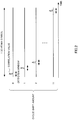
- Walsh sequence W #1 is applied to the data (corresponding to the outlined portion in the figure) of an ACK/NACK signal.
- "+” is added to an RS of CQI as the RS phase of the second symbol
- "-" is added to an RS of CQI as the RS phase of the sixth symbol.
- subsequences (W 1 and W 2 ) of the Walsh sequence multiplexed with RSs of CQI and applied to the second symbol and sixth symbol of the ACK/NACK signal show (+, +) or (-, -)
- RS combining section 119 of base station 100 coordinates and combines the phases of RSs of CQI (by inverting the reception result in the sixth symbol), thereby inverting in the second symbol and sixth symbol the phases of the signal spread using Walsh sequences, so that the phases cancel each other and interference from an ACK/NACK signal to RSs of CQI can be reduced.
- the Walsh sequence and the selection result of RS phases of CQI in given base station 100 are broadcast from base station 100 at regular intervals.
- Embodiment 1 by making RSs of CQI transmitted from a mobile station orthogonal to second spreading codes of an ACK/NACK signal multiplexed in the same positions as these RSs and coordinating and averaging RS phases of CQI in the base station, the influence of noise can be reduced and interference received from ACK/NACK signals transmitted from other mobile stations can be reduced, so that it is possible to improve the accuracy of channel estimation in CQI and improve the accuracy of receiving CQI signals. Further, an ACK/NACK signal is despread when the ACK/NACK signals are received and therefore reverse phases of RS portions of CQI are added, so that it is possible to reduce interference signals from RS portions of CQI to an ACK/NACK signal. That is, it is possible to improve the accuracy of receiving ACK/NACK signals.
- the base station broadcasts to all mobile stations that each mobile station must transmit CQI using the phases orthogonal to subsequences (W 1 and W 2 ) of the Walsh sequence that is frequently used.
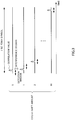
- the amount of interference to RSs of CQI increases depending on the number of mobile stations using Walsh sequences that are not orthogonal to RSs of CQI, and, by making the RS phases of CQI and Walsh sequences that are frequently used orthogonal to each other, it is possible to reduce the total amount of interference to RSs of CQI. This situation is shown in FIG.9 .
- mobile stations may designate RS phases of CQI every time according to the timings to transmit CQI.
- the base station has learned in advance which Walsh sequence is more frequently used in a frame for transmitting CQI, and, consequently, can adaptively command mobile stations to transmit RSs of CQI by making the RSs of CQI and the Walsh sequence (W 1 and W 2 ) that is more frequently used orthogonal to each other.
- W 1 and W 2 the Walsh sequence
- the second and third codes in the second spread sequence used in the base station are in-phase sequences or reverse phase sequences checked, and, if a greater number of sequences in which the second and third symbols are in-phases are used, (+, -) may be used as the RS phases and, if a greater number of sequences in which the second and third symbols are reverse phases are used, (+, +) may be used as the RS phases.
- Embodiment 2 of the present invention The configurations of a base station and mobile station according to Embodiment 2 of the present invention are the same as the configurations shown in FIG.6 and FIG.7 of Embodiment 1, and therefore will be explained employing FIG.6 and FIG.7 .
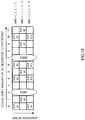
- FIG.12 How an ACK/NACK signal and CQI signal are multiplexed (i.e. resource allocation) according to Embodiment 2 of the present invention is shown in FIG.12 .
- the base station performs resource allocation shown in FIG.12 .
- the horizontal axis represents the cyclic shift amount and the vertical axis represents the Walsh sequence.
- RSs of CQI are mainly interfered from ACK/NACK signals spread using ZC sequences associated with adjacent cyclic shift amounts.
- RSs of CQI receive significant interference from nearby ACK/NACK signals of a small cyclic shift amount, and apply great interference to nearby ACK/NACK signals of a high cyclic shift amount.
- the mobile station that transmits CQI #1 spreads and transmits a CQI signal using the ZC sequence associated with a cyclic shift amount of 2.
- the RS phases of CQI are determined focusing on Walsh codes of an ACK/NACK signal that actually receives significant interference, so that it is possible to effectively reduce the amount of interference in RSs.
- uplink RS phase determining section 101 of base station 100 determines (+, -) as the RS phases of CQI #2.
- the RS phases of CQI may be set such that ACK/NACK quality further increases. That is, as described above, by making the RS phases of CQI and W 1 and W 2 of an ACK/NACK signal orthogonal to each other, it is possible to reduce interference to CQI as well as interference from CQI to the ACK/NACK signal. Therefore, in the case shown in FIG.13 , the RS phases are set to reduce the influence upon ACK #9, which is interfered from CQI #1, and ACK #11, which are interfered from CQI #2. That is, ACK #9 and ACK #11 both use W #2 and therefore the RS phases set both in CQI #1 and CQI #2 are (+, +), respectively.
- Embodiment 3 of the present invention where a CQI signal and a response signal (i.e. ACK/NACK signal) are transmitted at the same time. That is, although the base station specifies with respect to a mobile station the timing to transmit a CQI signal, cases occur depending on the timing to allocate the downlink data signal of the base station where a given mobile station transmits a CQI signal and a response signal (i.e. an ACK or NACK) in response to a downlink data signal at the same time.
- a CQI signal and a response signal i.e. an ACK or NACK
- CQI + response signal the CQI signal and response signal that are transmitted at the same time are collectively represented as "CQI + response signal.”
- CQI + response signal is represented as "CQI + NACK signal” in case where the response signal is a NACK and is represented as "CQI + ACK signal” in case where the response signal is an ACK.
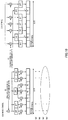
- FIG.14 shows a configuration of base station 150 according to Embodiment 3 of the present invention. Note that FIG.14 differs from FIG.6 in changing uplink RS phase determining section 101 to RS phase determining section 151 and changing RS combining section 119 to RS combining section 152.
- Uplink RS phase determining section 151 determines whether the RS phases (i.e. the phase of the second symbol and the phase of the sixth symbol) of a CQI + response signal transmitted from a mobile station defines that (+, -) is CQI+ACK and (+, +) is CQI+NACK, or defines that (+, +) is CQI+ACK and (+, -) is CQI+NACK, and outputs the determined definition of the RS phases to control information generating section 102 and RS combining section 152.
- uplink RS phase determining section 151 allocates (+, -) that is orthogonal to both Walsh codes as RS phases and then determines to define that (+, +) is CQI+ACK and define that (+, -) is CQI+NACK.
- RS combining section 152 coordinates and combines the phases of a plurality of RSs of CQI received as input from separating section 116, and estimates a channel using the combined RS.
- the estimated channel information and the CQI signal received as input from separating section 116 are outputted to demodulating section 120.
- RS combining section 152 decides whether power of a plurality of RSs of CQI received as input from separating section 116 is greater either in case where the RS phases are coordinated assuming (+, +) or in case where the RS phases are coordinated assuming (+, -), and decides that the phases of greater power are the RS phases of CQI. Using this decision result of the RS phases and the definition of the RS phases received as input from uplink RS phase determining section 151, whether the response signal transmitted at the same time with CQI is an ACK or NACK is decided.
- RS combining section 152 provide two correlators having coefficients of (+, +) and coefficients of (+, -) of RS signals, and decides whether the signal transmitted at the same time with CQI is an ACK or NACK using the outputs from these correlators. This decision result is outputted to retransmission controlling section 106. Further, based on this decision result, the RSs obtained by coordinating and combining these phases are used to estimate a channel for decoding the data part of CQI. The estimated channel information and the CQI signal received as input from separating section 116 are outputted to demodulating section 120.
- FIG.15 shows the configuration of mobile station 250 according to Embodiment 3 of the present invention. Note that FIG.15 differs from FIG.7 in changing controlling section 209 to controlling section 251.
- controlling section 251 controls the cyclic shift amount of the ZC sequence used for first spreading in spreading section 214 and spreading section 219, and the Walsh sequence used for second spreading in spreading section 217. That is, controlling section 251 sets the ZC sequence of the cyclic shift amount associated with the PUCCH number received as input from deciding section 208, in spreading section 214 and spreading section 219, and sets the Walsh sequence associated with the PUCCH number received as input from deciding section 208, in spreading section 217. Further, controlling section 251 controls RS phase adding section 222 according to the RS phases received as input from deciding section 208.
- a CQI signal that is, transmission of an output from RS phase adding section 222, if base station 150 commands transmission of CQI in advance
- controlling section 251 determines the RS phases for RS phase adding section 222, according to the RS phases designated by base station 150 and the signal from CRC section 212. For example, in case where base station 150 designates in advance that (+, +) is CQI+ACK and (+, -) is CQI+NACK as the definition of the RS phases, and CQI and a NACK signal are transmitted at the same time, base station 150 commands RS phase adding section 222 to use the (+, -) phases.
- RS phase adding section 222 of mobile station 250 in FIG.15 that transmits a CQI + response signal adds the RS phases of CQI.
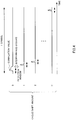
- ACK/NACK signal and CQI signal are generated is as shown in FIG.16 .
- Walsh sequence W #1 is applied to data (corresponding to the outlined portion in the figure) of an ACK/NACK signal.
- “+” is added to RSs of a CQI + NACK signal as the RS phase of the second symbol
- "-" is added to RSs of a CQI + NACK signal as the RS phase of the sixth symbol.
- subsequences (W 1 and W 2 ) of the Walsh sequence applied to the second symbol and sixth symbol of the ACK/NACK signal multiplexed with the RSs of CQI show (+, +) or (-, -)
- the ACK/NACK signal does not produce interference to the result that is outputted by coordinating the phases (by inverting the reception result in the sixth symbol) assuming that the coefficients are (+, -) when RS combining section 152 of base station 150 decides the RSs of CQI.
- correlation processing used to receive a CQI + NACK signal inverts the phases of the second symbol and sixth symbol of a signal spread using the Walsh sequence and the phases cancel each other, so that it is possible to reduce interference from the ACK/NACK signal to RSs of the CQI + NACK signal. That is, it is possible to reduce interference from surrounding individual ACK/NACK signals to CQI + NACK signals.
- Embodiment 3 by making RSs of a CQI + NACK signal transmitted from a mobile station orthogonal to second spreading codes of an ACK/NACK signal multiplexed in the same positions as these RSs and by, in base station 150, coordinating and averaging the RS phases of the CQI + NACK signal, the influence of noise can be reduced and interference from ACK/NACK signals transmitted from other mobile stations can be reduced, so that it is possible to improve the accuracy of deciding NACK signals when CQI + NACK signals are received.
- the base station In case where the base station fails to receive an ACK signal, the base station transmits a downlink signal again even though data has reached a terminal. However, in this case, only a little downlink resources are wasted, which does not influence the system significantly. However, in case where the base station fails to receive a NACK signal, the base station learns that the mobile station has successfully received data and does not retransmit data. Accordingly, in this case, required data does not reach the mobile station. In case where a mechanism is introduced to check the content of data in an upper layer and request data that has not reached the terminal, from the base station again, although the problem that data does not arrive does not occur, significant delay in data transmission occurs in case where the base station fails to receive a NACK signal. Therefore, according to the present embodiment, the efficiency of the system improves by improving the accuracy of deciding NACK signals when CQI + NACK signals are received.
- Base station 150 broadcasts to all mobile stations 250 that each mobile station 250 must define the phases orthogonal to subsequences (W 1 and W 2 ) of the Walsh sequence that is frequently used, as CQI+NACK.
- the amount of interference to RSs of CQI+NACK increases depending on the number of mobile stations that use Walsh sequences that are not orthogonal to RSs of a CQI + NACK signal, it is possible to reduce the total amount of interference to the RSs of the CQI + NACK signal by making Walsh sequences that are frequently used and the RS phases of the CQI + NACK signals orthogonal to each other.
- mobile station 250 may designate the definition of the RS phases of CQI + response signals every time depending on the timings to transmit CQI + response signals.
- base station 150 has learned in advance which Walsh sequence is frequently used in a frame for transmitting a CQI + response signal, and, consequently, can command mobile stations to transmit RSs of CQI + NACK signals by making the RSs of the CQI + NACK signals and the Walsh sequence (W 1 and W 2 ) that is frequently used orthogonal to each other. By this means, it is possible to reduce the total amount of interference to the RSs of CQI + NACK signals.
- Embodiment 4 of the present invention are the same as the configurations shown in FIG.14 and FIG.15 according to Embodiment 3, and therefore will be explained employing FIG.14 and FIG.15 .
- FIG.17 How an ACK/NACK signal and CQI + response signal are multiplexed (i.e. resource allocation) according to Embodiment 4 of the present invention is shown in FIG.17 .
- base station 150 has performed resource allocation shown in FIG.17 .
- the horizontal axis represents the cyclic shift amount and the vertical axis represents the Walsh sequence.
- the RSs of a CQI + response signal are mainly interfered from ACK/NACK signals spread using ZC sequences associated with consecutive cyclic shift amounts.
- RSs of a CQI + response signal receive significant interference from a nearby ACK/NACK signal of a small cyclic shift amount, and apply significant interference to a nearby ACK/NACK signal of a high cyclic shift amount.
- mobile station 250 that transmits CQI+NACK #1 spreads and transmits CQI+NACK #1 using the ZC sequence associated with cyclic shift amount of 2.
- CQI+ACK #2 is focused.
- base station 150 performs despreading when ACK #7 is received and therefore reverse phases of RS portions of a CQI + ACK signal are added, so that it is possible to reduce interference signals from the RS portions of the CQI + AKC signal to ACK #7.
- the RS phases of a CQI + response signal are determined focusing on Walsh codes of an ACK/NACK signal that actually receives and applies significant interference, so that it is possible to reduce the amount of interference that RSs of a CQI + response signal receives and the amount of interference that RSs of the CQI + response signal applies.
- one base station forms one cell and the base station performs the same RS code control and ACK/NACK resource control in its managing area
- the present invention is also applicable to a case where, for example, one base station forms a plurality of cells by means of directional antennas, manages a plurality of cells and controls these cells independently.
- Each function block employed in the description of each of the aforementioned embodiments may typically be implemented as an LSI constituted by an integrated circuit. These may be individual chips or partially or totally contained on a single chip. "LSI” is adopted here but this may also be referred to as “IC,” “system LSI,” “super LSI,” or “ultra LSI” depending on differing extents of integration.
- circuit integration is not limited to LSI's, and implementation using dedicated circuitry or general purpose processors is also possible.
- LSI manufacture utilization of a programmable FPGA (Field Programmable Gate Array) or a reconfigurable processor where connections and settings of circuit cells within an LSI can be reconfigured is also possible.
- FPGA Field Programmable Gate Array
- a radio transmitting apparatus which comprises an acknowledgement/negative acknowledgement signal transmission processing section that spreads an acknowledgement/negative acknowledgement signal using an orthogonal sequence, a reference signal phase adding section that adds a phase according to part of the orthogonal sequence, to a reference signal of a channel quality indicator multiplexed with the acknowledgement/negative acknowledgement spread using the orthogonal sequence, and a transmitting section that transmits a channel quality indicator signal including the reference signal to which the phase is added.
- the radio transmitting apparatus according to the previous example, wherein the reference signal phase adding section adds to the reference signal the phase according to part of the orthogonal sequence of higher priority in the orthogonal sequence to which priority of use is assigned.
- the radio transmitting apparatus adds the phase to the reference signal according to a number of radio transmitting apparatuses that use a pair of orthogonal sequences in which part of codes for spreading the acknowledgement/negative acknowledgement signal multiplexed with the reference signal is an in-phase, and a number of radio transmitting apparatuses that use a pair of orthogonal sequences in which part of codes for spreading the acknowledgement/negative acknowledgement signal multiplexed with reference signal is a reverse phase.
- the reference signal phase adding section adds to the reference signal the phase according to part of codes used to perform second spreading of an acknowledgement/negative acknowledgement signal which is multiplexed with the reference signal and which is subjected to first spreading using a Zadoff-Chu sequence which is adjacent to a Zadoff-Chu sequence used to spread a channel quality indicator and which is associated with a smaller cyclic shift amount than a cyclic shift amount of the Zadoff-Chu sequence used to spread the channel quality indicator.
- the radio transmitting apparatus wherein orthogonal sequences are used to perform second spreading of the acknowledgement/negative acknowledgement signal that is subjected to first spreading using a Zadoff-Chu sequence associated with a cyclic shift amount which is consecutive to a cyclic shift amount of the Zadoff-Chu sequence used to spread the channel quality indicator; and the reference signal phase adding section adds the phase to the reference signal according to a number of radio transmitting apparatuses using the orthogonal sequence in which part of codes used to perform second spreading of the acknowledgement/negative acknowledgement signal multiplexed with the reference signal is an in-phase and a number of radio transmitting apparatuses that use the orthogonal sequence in which part of codes used to perform second spreading of the acknowledgement/negative acknowledgement signal multiplexed with the reference signal is a reverse phase.
- the radio transmitting apparatus according to a previous example, wherein, in a case where a signal superimposing the acknowledgement/negative acknowledgement signal on the channel quality indicator has a phase orthogonal to part of an orthogonal sequence used by an acknowledgement signal that applies the greatest interference to the signal, the reference signal phase adding section makes the acknowledgement/negative acknowledgement signal to be superimposed on the channel quality indicator a negative acknowledgement signal.
- the radio transmitting apparatus according to a previous example, wherein, in a case where a signal superimposing the acknowledgement/negative acknowledgement signal on the channel quality indicator has a phase orthogonal to part of an orthogonal sequence used by an acknowledgement signal that applies the greatest interference to the signal, the reference signal phase adding section makes the acknowledgement/negative acknowledgement signal to be superimposed on the channel quality indicator an acknowledgement signal.
- the radio transmitting apparatus according to a previous example, wherein the reference signal phase adding section adds to the reference signal of the superimposed signal a phase according to part of the orthogonal sequence of higher priority in the orthogonal sequence to which priority of use is assigned.
- a radio transmitting method comprising an acknowledgement/negative acknowledgement signal transmission processing step of spreading an acknowledgement/negative acknowledgement signal using an orthogonal sequence, a reference signal phase adding step of adding a phase according to part of the orthogonal sequence, to a reference signal of a channel quality indicator multiplexed with the acknowledgement/negative acknowledgement signal spread using the orthogonal sequence, and a transmitting step of transmitting a channel quality indicator signal including the reference signal to which the phase is added.
- the radio transmitting apparatus and radio transmitting method according to the present invention can improve CQI receiving performance, and are applicable to, for example, a wireless communication base station apparatus and wireless communication mobile station apparatus in, for example, a mobile communication system.
Landscapes
- Engineering & Computer Science (AREA)
- Signal Processing (AREA)
- Computer Networks & Wireless Communication (AREA)
- Quality & Reliability (AREA)
- Power Engineering (AREA)
- Mobile Radio Communication Systems (AREA)
- Detection And Prevention Of Errors In Transmission (AREA)
- Digital Transmission Methods That Use Modulated Carrier Waves (AREA)
Claims (9)
- Dispositif de transmission radio (200) comprenant :une section de traitement de transmission de signal d'accusé de réception / accusé de réception négatif (213, 214) qui est conçue pour étaler un signal d'accusé de réception / accusé de réception négatif en utilisant une séquence orthogonale provenant d'une pluralité de séquences orthogonales,une section d'addition de phase de signal de référence (222) qui est conçue pour additionner une phase, en fonction d'une première sous séquence, avec des signaux de référence pour des informations de qualité de voie, la première sous séquence étant déterminée à partir de la pluralité de séquences orthogonales de sorte à ce que la sous séquence soit orthogonale à une seconde sous séquence de la séquence orthogonale utilisée pour étaler le signal d'accusé de réception / accusé de réception négatif, ladite seconde sous séquence étant appliquée dans les mêmes positions de symboles que les signaux de référence, les signaux de référence étant transmis avec une synchronisation de transmission définie pour un signal d'accusé de réception / accusé de réception négatif, etune section de transmission (224) qui est conçue pour transmettre un signal d'informations de qualité de voie incluant les signaux de référence auxquels la phase est additionnée.
- Appareil de transmission radio selon la revendication 1, dans lequel la section d'addition de phase de signal de référence (222) est conçue pour additionner aux signaux de référence la phase en fonction de la première sous séquence d'une séquence de priorité supérieure dans les séquences orthogonales auxquelles est assignée une priorité d'utilisation.
- Appareil de transmission radio selon la revendication 1, dans lequel la section d'addition de phase de signal de référence (222) est conçue pour additionner la phase aux signaux de référence en fonction du nombre d'appareils de transmission radio qui utilisent une paire de séquences orthogonales dans lesquelles une partie des codes d'étalement du signal d'accusé de réception / accusé de réception négatif est en phase, et du nombre d'appareils de transmission radio qui utilisent une paire de séquences orthogonales dans lesquelles une partie des codes d'étalement du signal d'accusé de réception / accusé de réception négatif est de phase opposée.
- Appareil de transmission radio selon la revendication 1, dans lequel la section d'addition de phase de signal de référence (222) est conçue pour additionner aux signaux de référence la phase conforme à des parties de codes utilisées pour effectuer un second étalement d'un signal d'accusé de réception / accusé de réception négatif qui est soumis au premier étalement utilisant une séquence de Zadoff-Chu, la séquence de Zadoff-Chu étant adjacente à une séquence de Zadoff-Chu utilisée pour étaler des informations de qualité de voie, et étant associée à une valeur de décalage cyclique plus petite que la valeur de décalage cyclique de la séquence de Zadoff-Chu utilisée pour étaler les informations de qualité de voie.
- Appareil de transmission radio selon la revendication 1, dans lequel :des séquences orthogonales sont utilisées pour effectuer un second étalement du signal d'accusé de réception / accusé de réception négatif qui est soumis à un premier étalement utilisant une séquence de Zadoff-Chu associée à une valeur de décalage cyclique qui est consécutive à la valeur de décalage cyclique de la séquence de Zadoff-Chu utilisée pour étaler les informations de qualité de voie, etla section d'addition de phase de signal de référence (222) est conçue pour additionner la phase aux signaux de référence en fonction du nombre d'appareils de transmission radio utilisant la séquence orthogonale dans laquelle une partie des codes utilisés pour effectuer un second étalement du signal d'accusé de réception / accusé de réception négatif est en phase et du nombre d'appareils de transmission radio qui utilisent la séquence orthogonale dans laquelle une partie des codes utilisés pour effectuer le second étalement du signal d'accusé de réception / accusé de réception négatif est de phase opposée.
- Appareil de transmission radio selon la revendication 1, dans lequel, dans le cas où un signal superposant le signal d'accusé de réception / accusé de réception négatif sur les informations de qualité de voie présente une phase orthogonale à une partie d'une séquence orthogonale utilisée par un signal d'accusé de réception qui applique l'interférence la plus grande au signal, la section d'addition de phase de signal de référence (222) est conçue pour superposer le signal d'accusé de réception / accusé de réception négatif sur les informations de qualité de voie à un signal d'accusé de réception négatif.
- Appareil de transmission radio selon la revendication 1, dans lequel, dans le cas où un signal superposant le signal d'accusé de réception / accusé de réception négatif sur les informations de qualité de voie présente une phase orthogonale à une partie d'une séquence orthogonale utilisée par un signal d'accusé de réception qui applique l'interférence la plus grande au signal, la section d'addition de phase de signal de référence (222) est conçue pour superposer le signal d'accusé de réception / accusé de réception négatif sur les informations de qualité de voie à un signal d'accusé de réception.
- Appareil de transmission radio selon la revendication 6, dans lequel la section d'addition de phase de signal de référence (222) est conçue pour additionner aux signaux de référence du signal superposé une phase conforme à la partie des séquences orthogonales de priorité supérieure dans les séquences orthogonales auxquelles est assignée une priorité d'utilisation.
- Procédé de transmission radio comprenant :l'étalement d'un signal d'accusé de réception / accusé de réception négatif en utilisant une séquence orthogonale provenant d'une pluralité de séquences orthogonales,l'addition d'une phase, en fonction d'une première sous séquence, avec des signaux de référence pour des informations de qualité de voie, la première sous séquence étant déterminée à partir de la pluralité de séquences orthogonales de sorte à ce que la sous séquence soit orthogonale à une seconde sous séquence de la séquence orthogonale utilisée pour étaler le signal d'accusé de réception / accusé de réception négatif, ladite seconde sous séquence étant appliquée dans les mêmes positions de symboles que les signaux de référence, les signaux de référence étant transmis avec une synchronisation de transmission définie pour un signal d'accusé de réception / accusé de réception négatif, etla transmission d'un signal d'informations de qualité de voie incluant les signaux de référence auxquels la phase est additionnée.
Priority Applications (3)
| Application Number | Priority Date | Filing Date | Title |
|---|---|---|---|
| EP19151444.7A EP3496305A1 (fr) | 2007-08-13 | 2008-08-12 | Dispositif de transmission radio et procédé de transmission radio |
| EP19196354.5A EP3598670A1 (fr) | 2007-08-13 | 2008-08-12 | Dispositif de transmission radio et procédé de transmission radio |
| EP20182941.3A EP3739776B1 (fr) | 2007-08-13 | 2008-08-12 | Dispositif de transmission radio et procédé de transmission radio |
Applications Claiming Priority (5)
| Application Number | Priority Date | Filing Date | Title |
|---|---|---|---|
| JP2007211101 | 2007-08-13 | ||
| JP2007280797 | 2007-10-29 | ||
| EP13150132.2A EP2579492B1 (fr) | 2007-08-13 | 2008-08-12 | Dispositif de transmission radio et procédé de transmission radio |
| PCT/JP2008/002197 WO2009022464A1 (fr) | 2007-08-13 | 2008-08-12 | Dispositif de transmission radio et procédé de transmission radio |
| EP08790445A EP2187548B1 (fr) | 2007-08-13 | 2008-08-12 | Dispositif de transmission radio et procédé de transmission radio |
Related Parent Applications (2)
| Application Number | Title | Priority Date | Filing Date |
|---|---|---|---|
| EP13150132.2A Division EP2579492B1 (fr) | 2007-08-13 | 2008-08-12 | Dispositif de transmission radio et procédé de transmission radio |
| EP08790445A Division EP2187548B1 (fr) | 2007-08-13 | 2008-08-12 | Dispositif de transmission radio et procédé de transmission radio |
Related Child Applications (4)
| Application Number | Title | Priority Date | Filing Date |
|---|---|---|---|
| EP19196354.5A Division EP3598670A1 (fr) | 2007-08-13 | 2008-08-12 | Dispositif de transmission radio et procédé de transmission radio |
| EP19151444.7A Division EP3496305A1 (fr) | 2007-08-13 | 2008-08-12 | Dispositif de transmission radio et procédé de transmission radio |
| EP19151444.7A Division-Into EP3496305A1 (fr) | 2007-08-13 | 2008-08-12 | Dispositif de transmission radio et procédé de transmission radio |
| EP20182941.3A Division EP3739776B1 (fr) | 2007-08-13 | 2008-08-12 | Dispositif de transmission radio et procédé de transmission radio |
Publications (2)
| Publication Number | Publication Date |
|---|---|
| EP3203664A1 EP3203664A1 (fr) | 2017-08-09 |
| EP3203664B1 true EP3203664B1 (fr) | 2019-03-06 |
Family
ID=40350522
Family Applications (7)
| Application Number | Title | Priority Date | Filing Date |
|---|---|---|---|
| EP19151444.7A Withdrawn EP3496305A1 (fr) | 2007-08-13 | 2008-08-12 | Dispositif de transmission radio et procédé de transmission radio |
| EP20182941.3A Active EP3739776B1 (fr) | 2007-08-13 | 2008-08-12 | Dispositif de transmission radio et procédé de transmission radio |
| EP19196354.5A Withdrawn EP3598670A1 (fr) | 2007-08-13 | 2008-08-12 | Dispositif de transmission radio et procédé de transmission radio |
| EP17162994.2A Active EP3203664B1 (fr) | 2007-08-13 | 2008-08-12 | Dispositif de transmission radio et procédé de transmission radio |
| EP13150133.0A Active EP2579493B1 (fr) | 2007-08-13 | 2008-08-12 | Dispositif de transmission radio et procédé de transmission radio |
| EP13150132.2A Active EP2579492B1 (fr) | 2007-08-13 | 2008-08-12 | Dispositif de transmission radio et procédé de transmission radio |
| EP08790445A Active EP2187548B1 (fr) | 2007-08-13 | 2008-08-12 | Dispositif de transmission radio et procédé de transmission radio |
Family Applications Before (3)
| Application Number | Title | Priority Date | Filing Date |
|---|---|---|---|
| EP19151444.7A Withdrawn EP3496305A1 (fr) | 2007-08-13 | 2008-08-12 | Dispositif de transmission radio et procédé de transmission radio |
| EP20182941.3A Active EP3739776B1 (fr) | 2007-08-13 | 2008-08-12 | Dispositif de transmission radio et procédé de transmission radio |
| EP19196354.5A Withdrawn EP3598670A1 (fr) | 2007-08-13 | 2008-08-12 | Dispositif de transmission radio et procédé de transmission radio |
Family Applications After (3)
| Application Number | Title | Priority Date | Filing Date |
|---|---|---|---|
| EP13150133.0A Active EP2579493B1 (fr) | 2007-08-13 | 2008-08-12 | Dispositif de transmission radio et procédé de transmission radio |
| EP13150132.2A Active EP2579492B1 (fr) | 2007-08-13 | 2008-08-12 | Dispositif de transmission radio et procédé de transmission radio |
| EP08790445A Active EP2187548B1 (fr) | 2007-08-13 | 2008-08-12 | Dispositif de transmission radio et procédé de transmission radio |
Country Status (11)
| Country | Link |
|---|---|
| US (8) | US8351538B2 (fr) |
| EP (7) | EP3496305A1 (fr) |
| JP (5) | JP4776725B2 (fr) |
| KR (2) | KR101493990B1 (fr) |
| CN (3) | CN103138893B (fr) |
| BR (2) | BR122019026256B1 (fr) |
| CA (2) | CA2924923C (fr) |
| ES (3) | ES2624999T3 (fr) |
| MY (2) | MY174942A (fr) |
| RU (3) | RU2451401C2 (fr) |
| WO (1) | WO2009022464A1 (fr) |
Families Citing this family (21)
| Publication number | Priority date | Publication date | Assignee | Title |
|---|---|---|---|---|
| KR20070106913A (ko) * | 2006-05-01 | 2007-11-06 | 엘지전자 주식회사 | 통신 시스템에서의 코드 시퀀스 생성 방법 및 송신 장치 |
| MY174942A (en) | 2007-08-13 | 2020-05-27 | Godo Kaisha Ip Bridge 1 | Radio transmission device and radio transmission method |
| WO2009087741A1 (fr) | 2008-01-04 | 2009-07-16 | Panasonic Corporation | Dispositif de terminal de communication radio et procédé de transmission radio |
| US8743863B2 (en) * | 2008-08-20 | 2014-06-03 | Qualcomm Incorporated | Method for ranging devices using code sequences in WLANs |
| CN102246447A (zh) | 2008-12-10 | 2011-11-16 | 松下电器产业株式会社 | 无线通信终端装置、无线通信基站装置及信号扩频方法 |
| JP5222765B2 (ja) * | 2009-03-25 | 2013-06-26 | 株式会社エヌ・ティ・ティ・ドコモ | 無線基地局及び移動通信方法 |
| JP5164903B2 (ja) * | 2009-03-25 | 2013-03-21 | 株式会社エヌ・ティ・ティ・ドコモ | 無線基地局及び移動通信方法 |
| WO2011028079A2 (fr) * | 2009-09-07 | 2011-03-10 | 엘지전자 주식회사 | Procédé et appareil de transmission/réception de signal de référence dans un système de communications sans fil |
| US8730898B2 (en) * | 2009-10-08 | 2014-05-20 | Lg Electronics Inc. | Method and apparatus for transmitting an uplink control signal in a wireless communication system |
| US8923206B2 (en) | 2010-04-30 | 2014-12-30 | Panasonic Intellectual Property Corporation Of America | Wireless communication apparatus and wireless communication method |
| EP2606588B1 (fr) * | 2010-08-16 | 2018-10-17 | Nokia Solutions and Networks Oy | Randomisation de signaux étalés de bloc |
| JP5210441B1 (ja) * | 2012-01-10 | 2013-06-12 | 株式会社エヌ・ティ・ティ・ドコモ | 無線リソースの管理方法および管理装置 |
| KR101950776B1 (ko) * | 2013-01-31 | 2019-02-21 | 삼성전자주식회사 | 장치 간 통신을 지원하는 무선 통신 시스템에서 링크 품질을 측정하기 위한 방법 및 장치 |
| US20150092825A1 (en) * | 2013-09-27 | 2015-04-02 | Qualcomm Incorporated | Self-test using internal feedback for transmit signal quality estimation |
| KR102171502B1 (ko) * | 2014-02-27 | 2020-10-29 | 삼성전자 주식회사 | 이동 통신 시스템에서 신호 송수신을 위한 변조 방법 및 장치 |
| WO2018126650A1 (fr) * | 2017-01-06 | 2018-07-12 | 华为技术有限公司 | Procédé d'envoi de signal de liaison montante et terminal |
| CN109150464B (zh) | 2017-06-16 | 2020-09-29 | 华为技术有限公司 | 无线通信方法和无线通信装置 |
| CA3082970C (fr) * | 2017-11-16 | 2023-01-03 | Guangdong Oppo Mobile Telecommunications Corp., Ltd. | Procede de transmission d'informations de commande, dispositif de reseau, et dispositif terminal |
| CN114556975B (zh) * | 2019-08-14 | 2024-08-06 | 弗劳恩霍夫应用研究促进协会 | 高效组播 |
| EP4292440A1 (fr) | 2022-06-14 | 2023-12-20 | Upside Foods, Inc. | Formulation à base de suspension du produit à base de poulet |
| IL325324A (en) | 2023-09-01 | 2026-02-01 | Upside Foods Inc | Transposon system and methods of using it |
Family Cites Families (45)
| Publication number | Priority date | Publication date | Assignee | Title |
|---|---|---|---|---|
| US6301288B1 (en) | 1997-03-19 | 2001-10-09 | Infineon Technologies Ag | Method of chip interleaving in direct sequence spread spectrum communications |
| KR100299148B1 (ko) * | 1998-03-14 | 2001-09-26 | 윤종용 | 부호분할다중접속 통신시스템에서 서로 다른 프레임 길이를갖는메시지를 인터믹스하여 송수신하는 장치 및 방법 |
| CA2380039C (fr) | 2001-04-03 | 2008-12-23 | Samsung Electronics Co., Ltd. | Methode de transmission de donnees de commande dans un systeme de communication mobile amrc |
| WO2003030407A1 (fr) * | 2001-09-29 | 2003-04-10 | Lg Electronics Inc. | Procede de transfert et/ou reception de donnees dans un systeme de telecommunications et appareil associe |
| US7272110B2 (en) * | 2001-09-29 | 2007-09-18 | Lg Electronics Inc. | Method of allocating walsh code resource |
| CN1623290B (zh) * | 2002-02-28 | 2011-10-26 | 富士通株式会社 | 用于cdma中的通信装置 |
| KR100876765B1 (ko) * | 2002-05-10 | 2009-01-07 | 삼성전자주식회사 | 이동 통신 시스템에서 데이터 재전송 장치 및 방법 |
| JP3471785B1 (ja) * | 2002-07-31 | 2003-12-02 | 松下電器産業株式会社 | 通信装置及びデータの再送制御方法 |
| US6996763B2 (en) * | 2003-01-10 | 2006-02-07 | Qualcomm Incorporated | Operation of a forward link acknowledgement channel for the reverse link data |
| RU2369017C2 (ru) * | 2003-02-18 | 2009-09-27 | Квэлкомм Инкорпорейтед | Команды мультиплексирования с кодовым разделением в мультиплексном канале с кодовым разделением |
| RU2368106C2 (ru) * | 2003-02-18 | 2009-09-20 | Квэлкомм Инкорпорейтед | Планируемая и автономная передача и подтверждение приема |
| DE60301270T2 (de) * | 2003-03-27 | 2006-07-20 | Nnt Docomo, Inc. | Vorrichtung und verfahren zur schätzung einer mehrzahl von kanälen |
| JP2004363721A (ja) * | 2003-06-02 | 2004-12-24 | Matsushita Electric Ind Co Ltd | 無線通信システム及び無線通信方法 |
| EP1646163B1 (fr) | 2003-08-06 | 2013-04-24 | Panasonic Corporation | Dispositif et procede de radiocommunication |
| US7957263B2 (en) | 2003-09-08 | 2011-06-07 | Qualcomm Corporation | Method and apparatus for acknowledging reverse link transmissions in a communications system |
| EP1564923A1 (fr) | 2004-02-12 | 2005-08-17 | Samsung Electronics Co., Ltd. | Appareil et procédé pour la transmission d'informations de contrôle dans un système de communication mobile |
| US7668078B2 (en) * | 2004-03-05 | 2010-02-23 | Telefonaktiebolaget Lm Ericsson (Publ) | Allocation of walsh codes to support calls in wireless communication networks |
| US8693383B2 (en) * | 2005-03-29 | 2014-04-08 | Qualcomm Incorporated | Method and apparatus for high rate data transmission in wireless communication |
| JP4884722B2 (ja) | 2005-03-31 | 2012-02-29 | 株式会社エヌ・ティ・ティ・ドコモ | 無線通信装置及び無線通信方法 |
| JP4724180B2 (ja) * | 2005-06-17 | 2011-07-13 | 富士通株式会社 | 無線アクセス方法並びに無線基地局装置及び無線端末装置 |
| US8638771B2 (en) * | 2005-08-12 | 2014-01-28 | Qualcomm Incorporated | Transmission structure supporting multi-user scheduling and MIMO transmission |
| EP1906570A1 (fr) | 2005-08-19 | 2008-04-02 | Matsushita Electric Industrial Co., Ltd. | Appareil de communication sans fil et méthode de communication sans fil |
| JP4767700B2 (ja) * | 2006-01-17 | 2011-09-07 | 株式会社エヌ・ティ・ティ・ドコモ | 基地局および下りリンクチャネル送信方法 |
| CN101005326B (zh) * | 2006-01-18 | 2014-05-07 | 华为技术有限公司 | 一种上行资源分配方法和无线通信系统 |
| WO2007087602A2 (fr) * | 2006-01-25 | 2007-08-02 | Texas Instruments Incorporated | Procédé et dispositif permettant d'augmenter le nombre de signaux orthogonaux utilisant l'étalement de blocs |
| JP4659633B2 (ja) | 2006-02-08 | 2011-03-30 | 東芝テック株式会社 | 光硬化型インクの硬化方法およびインクジェット記録方法 |
| JP4933818B2 (ja) | 2006-04-07 | 2012-05-16 | Jx日鉱日石エネルギー株式会社 | 固体酸化物形燃料電池システムの運転方法 |
| US8571120B2 (en) * | 2006-09-22 | 2013-10-29 | Texas Instruments Incorporated | Transmission of acknowledge/not acknowledge (ACK/NACK) bits and their embedding in the reference signal |
| JP4819129B2 (ja) * | 2006-10-27 | 2011-11-24 | 三菱電機株式会社 | データ通信方法、通信システム及び移動端末 |
| US8761145B2 (en) * | 2006-10-31 | 2014-06-24 | Kddi Corporation | Wireless terminal apparatus and wireless base station apparatus |
| EP2119081A2 (fr) * | 2007-01-08 | 2009-11-18 | Nokia Corporation | Procédé et appareil permettant une signalisation de contrôle |
| EP2103017B1 (fr) * | 2007-03-29 | 2014-01-08 | LG Electronics Inc. | Procédé d'envoi d'un signal de référence dans un système de communication sans fil |
| US8059735B2 (en) | 2007-06-04 | 2011-11-15 | Texas Instruments Incorporated | Allocation of block spreading sequences |
| KR100956494B1 (ko) * | 2007-06-14 | 2010-05-07 | 엘지전자 주식회사 | 제어신호 전송 방법 |
| US8036166B2 (en) * | 2007-06-18 | 2011-10-11 | Nokia Corporation | Signaling of implicit ACK/NACK resources |
| US9357564B2 (en) * | 2007-06-19 | 2016-05-31 | Texas Instruments Incorporated | Signaling of random access preamble parameters in wireless networks |
| US8169950B2 (en) * | 2007-06-21 | 2012-05-01 | Texas Instruments Incorporated | Selection of orthogonal covering sequences and phase ramped sequences |
| RU2433541C2 (ru) * | 2007-07-16 | 2011-11-10 | Самсунг Электроникс Ко., Лтд. | Устройство и способ для передачи сигналов индикатора качества канала и подтверждения приема в системах связи sc-fdma |
| EP2176965B1 (fr) * | 2007-07-16 | 2018-09-05 | Samsung Electronics Co., Ltd. | Appareil et procédé de transmission d'un indicateur de qualité de canal et de signaux d'acquittement dans des systèmes de communication sc-fdma |
| EP2026521B1 (fr) * | 2007-07-30 | 2015-11-18 | Samsung Electronics Co., Ltd. | Appareil et procédé de transmission et réception de différents types de signaux dans un système de communication |
| KR20090015778A (ko) | 2007-08-08 | 2009-02-12 | 엘지전자 주식회사 | 스케줄링 요청 신호 전송 방법 |
| MY174942A (en) | 2007-08-13 | 2020-05-27 | Godo Kaisha Ip Bridge 1 | Radio transmission device and radio transmission method |
| CN102365837B (zh) * | 2009-03-29 | 2014-05-14 | Lg电子株式会社 | 在无线通信系统中发送控制信息的方法及其装置 |
| US8374136B2 (en) * | 2009-10-02 | 2013-02-12 | Sharp Laboratories Of America, Inc. | Transmission diversity scheme on physical uplink control channel (PUCCH) with ACK/NACK differentiation |
| US8553627B2 (en) * | 2009-10-02 | 2013-10-08 | Sharp Laboratories Of America, Inc. | Transmission diversity scheme on physical uplink control channel (PUCCH) with ACK/NACK differentiation |
-
2008
- 2008-08-12 MY MYPI2015001729A patent/MY174942A/en unknown
- 2008-08-12 KR KR1020107002647A patent/KR101493990B1/ko active Active
- 2008-08-12 ES ES13150133.0T patent/ES2624999T3/es active Active
- 2008-08-12 EP EP19151444.7A patent/EP3496305A1/fr not_active Withdrawn
- 2008-08-12 MY MYPI2010000499A patent/MY154142A/en unknown
- 2008-08-12 EP EP20182941.3A patent/EP3739776B1/fr active Active
- 2008-08-12 BR BR122019026256-0A patent/BR122019026256B1/pt active IP Right Grant
- 2008-08-12 JP JP2009528030A patent/JP4776725B2/ja active Active
- 2008-08-12 EP EP19196354.5A patent/EP3598670A1/fr not_active Withdrawn
- 2008-08-12 EP EP17162994.2A patent/EP3203664B1/fr active Active
- 2008-08-12 ES ES13150132.2T patent/ES2624836T3/es active Active
- 2008-08-12 ES ES08790445T patent/ES2400827T3/es active Active
- 2008-08-12 CA CA2924923A patent/CA2924923C/fr active Active
- 2008-08-12 US US12/673,000 patent/US8351538B2/en active Active
- 2008-08-12 CN CN201310085060.3A patent/CN103138893B/zh active Active
- 2008-08-12 WO PCT/JP2008/002197 patent/WO2009022464A1/fr not_active Ceased
- 2008-08-12 EP EP13150133.0A patent/EP2579493B1/fr active Active
- 2008-08-12 CA CA2695149A patent/CA2695149C/fr active Active
- 2008-08-12 CN CN2008801025418A patent/CN101785224B/zh active Active
- 2008-08-12 EP EP13150132.2A patent/EP2579492B1/fr active Active
- 2008-08-12 KR KR1020117011195A patent/KR101525233B1/ko active Active
- 2008-08-12 EP EP08790445A patent/EP2187548B1/fr active Active
- 2008-08-12 RU RU2010105058/07A patent/RU2451401C2/ru active
- 2008-08-12 CN CN201310085057.1A patent/CN103199967B/zh active Active
- 2008-08-12 BR BRPI0815406-6A patent/BRPI0815406B1/pt active IP Right Grant
-
2011
- 2011-05-13 JP JP2011108368A patent/JP5391232B2/ja active Active
-
2012
- 2012-03-21 RU RU2012110820/07A patent/RU2499358C1/ru active
- 2012-11-30 US US13/691,459 patent/US8526546B2/en active Active
-
2013
- 2013-08-01 US US13/957,203 patent/US9392470B2/en active Active
- 2013-08-14 RU RU2013138111A patent/RU2628768C2/ru active
- 2013-08-30 JP JP2013179688A patent/JP5634578B2/ja active Active
-
2014
- 2014-10-10 JP JP2014208913A patent/JP5865978B2/ja active Active
-
2015
- 2015-12-28 JP JP2015257009A patent/JP6041972B2/ja active Active
-
2016
- 2016-05-26 US US15/165,950 patent/US9584289B2/en active Active
-
2017
- 2017-01-13 US US15/406,517 patent/US10158475B2/en active Active
-
2018
- 2018-11-16 US US16/194,021 patent/US10826669B2/en active Active
-
2020
- 2020-09-29 US US17/037,347 patent/US11444739B2/en active Active
-
2022
- 2022-08-04 US US17/881,503 patent/US20220376875A1/en not_active Abandoned
Non-Patent Citations (1)
| Title |
|---|
| None * |
Also Published As
Similar Documents
| Publication | Publication Date | Title |
|---|---|---|
| US20220376875A1 (en) | Radio transmission device and radio transmission method | |
| US8345729B2 (en) | Radio communication device and response signal diffusion method |
Legal Events
| Date | Code | Title | Description |
|---|---|---|---|
| PUAI | Public reference made under article 153(3) epc to a published international application that has entered the european phase |
Free format text: ORIGINAL CODE: 0009012 |
|
| STAA | Information on the status of an ep patent application or granted ep patent |
Free format text: STATUS: REQUEST FOR EXAMINATION WAS MADE |
|
| 17P | Request for examination filed |
Effective date: 20170327 |
|
| AC | Divisional application: reference to earlier application |
Ref document number: 2579492 Country of ref document: EP Kind code of ref document: P Ref document number: 2187548 Country of ref document: EP Kind code of ref document: P |
|
| AK | Designated contracting states |
Kind code of ref document: A1 Designated state(s): AT BE BG CH CY CZ DE DK EE ES FI FR GB GR HR HU IE IS IT LI LT LU LV MC MT NL NO PL PT RO SE SI SK TR |
|
| GRAP | Despatch of communication of intention to grant a patent |
Free format text: ORIGINAL CODE: EPIDOSNIGR1 |
|
| STAA | Information on the status of an ep patent application or granted ep patent |
Free format text: STATUS: GRANT OF PATENT IS INTENDED |
|
| RIC1 | Information provided on ipc code assigned before grant |
Ipc: H04L 1/16 20060101ALI20180329BHEP Ipc: H04J 1/00 20060101ALI20180329BHEP Ipc: H04W 72/04 20090101ALI20180329BHEP Ipc: H04B 1/7075 20110101ALI20180329BHEP Ipc: H04B 1/707 20110101ALI20180329BHEP Ipc: H04L 1/00 20060101ALI20180329BHEP Ipc: H04J 11/00 20060101ALI20180329BHEP Ipc: H04L 5/00 20060101ALI20180329BHEP Ipc: H04J 13/00 20110101AFI20180329BHEP Ipc: H04L 27/00 20060101ALI20180329BHEP Ipc: H04W 24/02 20090101ALI20180329BHEP |
|
| INTG | Intention to grant announced |
Effective date: 20180502 |
|
| GRAJ | Information related to disapproval of communication of intention to grant by the applicant or resumption of examination proceedings by the epo deleted |
Free format text: ORIGINAL CODE: EPIDOSDIGR1 |
|
| STAA | Information on the status of an ep patent application or granted ep patent |
Free format text: STATUS: REQUEST FOR EXAMINATION WAS MADE |
|
| INTC | Intention to grant announced (deleted) | ||
| GRAP | Despatch of communication of intention to grant a patent |
Free format text: ORIGINAL CODE: EPIDOSNIGR1 |
|
| STAA | Information on the status of an ep patent application or granted ep patent |
Free format text: STATUS: GRANT OF PATENT IS INTENDED |
|
| INTG | Intention to grant announced |
Effective date: 20180917 |
|
| GRAS | Grant fee paid |
Free format text: ORIGINAL CODE: EPIDOSNIGR3 |
|
| GRAA | (expected) grant |
Free format text: ORIGINAL CODE: 0009210 |
|
| STAA | Information on the status of an ep patent application or granted ep patent |
Free format text: STATUS: THE PATENT HAS BEEN GRANTED |
|
| AC | Divisional application: reference to earlier application |
Ref document number: 2187548 Country of ref document: EP Kind code of ref document: P Ref document number: 2579492 Country of ref document: EP Kind code of ref document: P |
|
| AK | Designated contracting states |
Kind code of ref document: B1 Designated state(s): AT BE BG CH CY CZ DE DK EE ES FI FR GB GR HR HU IE IS IT LI LT LU LV MC MT NL NO PL PT RO SE SI SK TR |
|
| REG | Reference to a national code |
Ref country code: GB Ref legal event code: FG4D |
|
| REG | Reference to a national code |
Ref country code: AT Ref legal event code: REF Ref document number: 1105996 Country of ref document: AT Kind code of ref document: T Effective date: 20190315 Ref country code: CH Ref legal event code: EP |
|
| REG | Reference to a national code |
Ref country code: DE Ref legal event code: R096 Ref document number: 602008059306 Country of ref document: DE |
|
| REG | Reference to a national code |
Ref country code: IE Ref legal event code: FG4D |
|
| REG | Reference to a national code |
Ref country code: NL Ref legal event code: FP |
|
| REG | Reference to a national code |
Ref country code: LT Ref legal event code: MG4D |
|
| PG25 | Lapsed in a contracting state [announced via postgrant information from national office to epo] |
Ref country code: SE Free format text: LAPSE BECAUSE OF FAILURE TO SUBMIT A TRANSLATION OF THE DESCRIPTION OR TO PAY THE FEE WITHIN THE PRESCRIBED TIME-LIMIT Effective date: 20190306 Ref country code: NO Free format text: LAPSE BECAUSE OF FAILURE TO SUBMIT A TRANSLATION OF THE DESCRIPTION OR TO PAY THE FEE WITHIN THE PRESCRIBED TIME-LIMIT Effective date: 20190606 Ref country code: FI Free format text: LAPSE BECAUSE OF FAILURE TO SUBMIT A TRANSLATION OF THE DESCRIPTION OR TO PAY THE FEE WITHIN THE PRESCRIBED TIME-LIMIT Effective date: 20190306 Ref country code: LT Free format text: LAPSE BECAUSE OF FAILURE TO SUBMIT A TRANSLATION OF THE DESCRIPTION OR TO PAY THE FEE WITHIN THE PRESCRIBED TIME-LIMIT Effective date: 20190306 |
|
| PG25 | Lapsed in a contracting state [announced via postgrant information from national office to epo] |
Ref country code: LV Free format text: LAPSE BECAUSE OF FAILURE TO SUBMIT A TRANSLATION OF THE DESCRIPTION OR TO PAY THE FEE WITHIN THE PRESCRIBED TIME-LIMIT Effective date: 20190306 Ref country code: HR Free format text: LAPSE BECAUSE OF FAILURE TO SUBMIT A TRANSLATION OF THE DESCRIPTION OR TO PAY THE FEE WITHIN THE PRESCRIBED TIME-LIMIT Effective date: 20190306 Ref country code: BG Free format text: LAPSE BECAUSE OF FAILURE TO SUBMIT A TRANSLATION OF THE DESCRIPTION OR TO PAY THE FEE WITHIN THE PRESCRIBED TIME-LIMIT Effective date: 20190606 Ref country code: GR Free format text: LAPSE BECAUSE OF FAILURE TO SUBMIT A TRANSLATION OF THE DESCRIPTION OR TO PAY THE FEE WITHIN THE PRESCRIBED TIME-LIMIT Effective date: 20190607 |
|
| REG | Reference to a national code |
Ref country code: AT Ref legal event code: MK05 Ref document number: 1105996 Country of ref document: AT Kind code of ref document: T Effective date: 20190306 |
|
| PG25 | Lapsed in a contracting state [announced via postgrant information from national office to epo] |
Ref country code: IT Free format text: LAPSE BECAUSE OF FAILURE TO SUBMIT A TRANSLATION OF THE DESCRIPTION OR TO PAY THE FEE WITHIN THE PRESCRIBED TIME-LIMIT Effective date: 20190306 Ref country code: EE Free format text: LAPSE BECAUSE OF FAILURE TO SUBMIT A TRANSLATION OF THE DESCRIPTION OR TO PAY THE FEE WITHIN THE PRESCRIBED TIME-LIMIT Effective date: 20190306 Ref country code: PT Free format text: LAPSE BECAUSE OF FAILURE TO SUBMIT A TRANSLATION OF THE DESCRIPTION OR TO PAY THE FEE WITHIN THE PRESCRIBED TIME-LIMIT Effective date: 20190706 Ref country code: ES Free format text: LAPSE BECAUSE OF FAILURE TO SUBMIT A TRANSLATION OF THE DESCRIPTION OR TO PAY THE FEE WITHIN THE PRESCRIBED TIME-LIMIT Effective date: 20190306 Ref country code: RO Free format text: LAPSE BECAUSE OF FAILURE TO SUBMIT A TRANSLATION OF THE DESCRIPTION OR TO PAY THE FEE WITHIN THE PRESCRIBED TIME-LIMIT Effective date: 20190306 Ref country code: CZ Free format text: LAPSE BECAUSE OF FAILURE TO SUBMIT A TRANSLATION OF THE DESCRIPTION OR TO PAY THE FEE WITHIN THE PRESCRIBED TIME-LIMIT Effective date: 20190306 Ref country code: SK Free format text: LAPSE BECAUSE OF FAILURE TO SUBMIT A TRANSLATION OF THE DESCRIPTION OR TO PAY THE FEE WITHIN THE PRESCRIBED TIME-LIMIT Effective date: 20190306 |
|
| PG25 | Lapsed in a contracting state [announced via postgrant information from national office to epo] |
Ref country code: PL Free format text: LAPSE BECAUSE OF FAILURE TO SUBMIT A TRANSLATION OF THE DESCRIPTION OR TO PAY THE FEE WITHIN THE PRESCRIBED TIME-LIMIT Effective date: 20190306 |
|
| REG | Reference to a national code |
Ref country code: DE Ref legal event code: R097 Ref document number: 602008059306 Country of ref document: DE |
|
| PG25 | Lapsed in a contracting state [announced via postgrant information from national office to epo] |
Ref country code: AT Free format text: LAPSE BECAUSE OF FAILURE TO SUBMIT A TRANSLATION OF THE DESCRIPTION OR TO PAY THE FEE WITHIN THE PRESCRIBED TIME-LIMIT Effective date: 20190306 Ref country code: IS Free format text: LAPSE BECAUSE OF FAILURE TO SUBMIT A TRANSLATION OF THE DESCRIPTION OR TO PAY THE FEE WITHIN THE PRESCRIBED TIME-LIMIT Effective date: 20190706 |
|
| PLBE | No opposition filed within time limit |
Free format text: ORIGINAL CODE: 0009261 |
|
| STAA | Information on the status of an ep patent application or granted ep patent |
Free format text: STATUS: NO OPPOSITION FILED WITHIN TIME LIMIT |
|
| PG25 | Lapsed in a contracting state [announced via postgrant information from national office to epo] |
Ref country code: DK Free format text: LAPSE BECAUSE OF FAILURE TO SUBMIT A TRANSLATION OF THE DESCRIPTION OR TO PAY THE FEE WITHIN THE PRESCRIBED TIME-LIMIT Effective date: 20190306 |
|
| 26N | No opposition filed |
Effective date: 20191209 |
|
| PG25 | Lapsed in a contracting state [announced via postgrant information from national office to epo] |
Ref country code: SI Free format text: LAPSE BECAUSE OF FAILURE TO SUBMIT A TRANSLATION OF THE DESCRIPTION OR TO PAY THE FEE WITHIN THE PRESCRIBED TIME-LIMIT Effective date: 20190306 |
|
| PG25 | Lapsed in a contracting state [announced via postgrant information from national office to epo] |
Ref country code: TR Free format text: LAPSE BECAUSE OF FAILURE TO SUBMIT A TRANSLATION OF THE DESCRIPTION OR TO PAY THE FEE WITHIN THE PRESCRIBED TIME-LIMIT Effective date: 20190306 |
|
| PG25 | Lapsed in a contracting state [announced via postgrant information from national office to epo] |
Ref country code: LU Free format text: LAPSE BECAUSE OF NON-PAYMENT OF DUE FEES Effective date: 20190812 Ref country code: MC Free format text: LAPSE BECAUSE OF FAILURE TO SUBMIT A TRANSLATION OF THE DESCRIPTION OR TO PAY THE FEE WITHIN THE PRESCRIBED TIME-LIMIT Effective date: 20190306 Ref country code: CH Free format text: LAPSE BECAUSE OF NON-PAYMENT OF DUE FEES Effective date: 20190831 Ref country code: LI Free format text: LAPSE BECAUSE OF NON-PAYMENT OF DUE FEES Effective date: 20190831 |
|
| REG | Reference to a national code |
Ref country code: BE Ref legal event code: MM Effective date: 20190831 |
|
| PG25 | Lapsed in a contracting state [announced via postgrant information from national office to epo] |
Ref country code: IE Free format text: LAPSE BECAUSE OF NON-PAYMENT OF DUE FEES Effective date: 20190812 |
|
| PG25 | Lapsed in a contracting state [announced via postgrant information from national office to epo] |
Ref country code: BE Free format text: LAPSE BECAUSE OF NON-PAYMENT OF DUE FEES Effective date: 20190831 |
|
| PG25 | Lapsed in a contracting state [announced via postgrant information from national office to epo] |
Ref country code: CY Free format text: LAPSE BECAUSE OF FAILURE TO SUBMIT A TRANSLATION OF THE DESCRIPTION OR TO PAY THE FEE WITHIN THE PRESCRIBED TIME-LIMIT Effective date: 20190306 |
|
| PG25 | Lapsed in a contracting state [announced via postgrant information from national office to epo] |
Ref country code: MT Free format text: LAPSE BECAUSE OF FAILURE TO SUBMIT A TRANSLATION OF THE DESCRIPTION OR TO PAY THE FEE WITHIN THE PRESCRIBED TIME-LIMIT Effective date: 20190306 Ref country code: HU Free format text: LAPSE BECAUSE OF FAILURE TO SUBMIT A TRANSLATION OF THE DESCRIPTION OR TO PAY THE FEE WITHIN THE PRESCRIBED TIME-LIMIT; INVALID AB INITIO Effective date: 20080812 |
|
| PGFP | Annual fee paid to national office [announced via postgrant information from national office to epo] |
Ref country code: NL Payment date: 20250821 Year of fee payment: 18 |
|
| PGFP | Annual fee paid to national office [announced via postgrant information from national office to epo] |
Ref country code: DE Payment date: 20250820 Year of fee payment: 18 |
|
| PGFP | Annual fee paid to national office [announced via postgrant information from national office to epo] |
Ref country code: GB Payment date: 20250821 Year of fee payment: 18 |
|
| PGFP | Annual fee paid to national office [announced via postgrant information from national office to epo] |
Ref country code: FR Payment date: 20250829 Year of fee payment: 18 |