EP3203671A1 - Vorrichtung und verfahren zur uplink-übertragungshandhabung - Google Patents
Vorrichtung und verfahren zur uplink-übertragungshandhabung Download PDFInfo
- Publication number
- EP3203671A1 EP3203671A1 EP17154400.0A EP17154400A EP3203671A1 EP 3203671 A1 EP3203671 A1 EP 3203671A1 EP 17154400 A EP17154400 A EP 17154400A EP 3203671 A1 EP3203671 A1 EP 3203671A1
- Authority
- EP
- European Patent Office
- Prior art keywords
- transmission
- network
- communication device
- mcs
- resource
- Prior art date
- Legal status (The legal status is an assumption and is not a legal conclusion. Google has not performed a legal analysis and makes no representation as to the accuracy of the status listed.)
- Granted
Links
Images

Classifications
-
- H—ELECTRICITY
- H04—ELECTRIC COMMUNICATION TECHNIQUE
- H04W—WIRELESS COMMUNICATION NETWORKS
- H04W72/00—Local resource management
- H04W72/20—Control channels or signalling for resource management
- H04W72/23—Control channels or signalling for resource management in the downlink direction of a wireless link, i.e. towards a terminal
-
- H—ELECTRICITY
- H04—ELECTRIC COMMUNICATION TECHNIQUE
- H04L—TRANSMISSION OF DIGITAL INFORMATION, e.g. TELEGRAPHIC COMMUNICATION
- H04L1/00—Arrangements for detecting or preventing errors in the information received
- H04L1/0001—Systems modifying transmission characteristics according to link quality, e.g. power backoff
- H04L1/0023—Systems modifying transmission characteristics according to link quality, e.g. power backoff characterised by the signalling
- H04L1/0025—Transmission of mode-switching indication
-
- H—ELECTRICITY
- H04—ELECTRIC COMMUNICATION TECHNIQUE
- H04L—TRANSMISSION OF DIGITAL INFORMATION, e.g. TELEGRAPHIC COMMUNICATION
- H04L1/00—Arrangements for detecting or preventing errors in the information received
- H04L1/004—Arrangements for detecting or preventing errors in the information received by using forward error control
- H04L1/0056—Systems characterized by the type of code used
-
- H—ELECTRICITY
- H04—ELECTRIC COMMUNICATION TECHNIQUE
- H04L—TRANSMISSION OF DIGITAL INFORMATION, e.g. TELEGRAPHIC COMMUNICATION
- H04L1/00—Arrangements for detecting or preventing errors in the information received
- H04L1/12—Arrangements for detecting or preventing errors in the information received by using return channel
- H04L1/16—Arrangements for detecting or preventing errors in the information received by using return channel in which the return channel carries supervisory signals, e.g. repetition request signals
- H04L1/18—Automatic repetition systems, e.g. Van Duuren systems
- H04L1/1812—Hybrid protocols; Hybrid automatic repeat request [HARQ]
-
- H—ELECTRICITY
- H04—ELECTRIC COMMUNICATION TECHNIQUE
- H04L—TRANSMISSION OF DIGITAL INFORMATION, e.g. TELEGRAPHIC COMMUNICATION
- H04L1/00—Arrangements for detecting or preventing errors in the information received
- H04L1/12—Arrangements for detecting or preventing errors in the information received by using return channel
- H04L1/16—Arrangements for detecting or preventing errors in the information received by using return channel in which the return channel carries supervisory signals, e.g. repetition request signals
- H04L1/18—Automatic repetition systems, e.g. Van Duuren systems
- H04L1/1812—Hybrid protocols; Hybrid automatic repeat request [HARQ]
- H04L1/1819—Hybrid protocols; Hybrid automatic repeat request [HARQ] with retransmission of additional or different redundancy
-
- H—ELECTRICITY
- H04—ELECTRIC COMMUNICATION TECHNIQUE
- H04L—TRANSMISSION OF DIGITAL INFORMATION, e.g. TELEGRAPHIC COMMUNICATION
- H04L1/00—Arrangements for detecting or preventing errors in the information received
- H04L1/12—Arrangements for detecting or preventing errors in the information received by using return channel
- H04L1/16—Arrangements for detecting or preventing errors in the information received by using return channel in which the return channel carries supervisory signals, e.g. repetition request signals
- H04L1/18—Automatic repetition systems, e.g. Van Duuren systems
- H04L1/1829—Arrangements specially adapted for the receiver end
- H04L1/1854—Scheduling and prioritising arrangements
-
- H—ELECTRICITY
- H04—ELECTRIC COMMUNICATION TECHNIQUE
- H04L—TRANSMISSION OF DIGITAL INFORMATION, e.g. TELEGRAPHIC COMMUNICATION
- H04L1/00—Arrangements for detecting or preventing errors in the information received
- H04L1/12—Arrangements for detecting or preventing errors in the information received by using return channel
- H04L1/16—Arrangements for detecting or preventing errors in the information received by using return channel in which the return channel carries supervisory signals, e.g. repetition request signals
- H04L1/18—Automatic repetition systems, e.g. Van Duuren systems
- H04L1/1829—Arrangements specially adapted for the receiver end
- H04L1/1864—ARQ related signaling
-
- H—ELECTRICITY
- H04—ELECTRIC COMMUNICATION TECHNIQUE
- H04L—TRANSMISSION OF DIGITAL INFORMATION, e.g. TELEGRAPHIC COMMUNICATION
- H04L1/00—Arrangements for detecting or preventing errors in the information received
- H04L1/12—Arrangements for detecting or preventing errors in the information received by using return channel
- H04L1/16—Arrangements for detecting or preventing errors in the information received by using return channel in which the return channel carries supervisory signals, e.g. repetition request signals
- H04L1/18—Automatic repetition systems, e.g. Van Duuren systems
- H04L1/1867—Arrangements specially adapted for the transmitter end
- H04L1/1896—ARQ related signaling
-
- H—ELECTRICITY
- H04—ELECTRIC COMMUNICATION TECHNIQUE
- H04L—TRANSMISSION OF DIGITAL INFORMATION, e.g. TELEGRAPHIC COMMUNICATION
- H04L1/00—Arrangements for detecting or preventing errors in the information received
- H04L1/0001—Systems modifying transmission characteristics according to link quality, e.g. power backoff
- H04L1/0023—Systems modifying transmission characteristics according to link quality, e.g. power backoff characterised by the signalling
-
- H—ELECTRICITY
- H04—ELECTRIC COMMUNICATION TECHNIQUE
- H04L—TRANSMISSION OF DIGITAL INFORMATION, e.g. TELEGRAPHIC COMMUNICATION
- H04L1/00—Arrangements for detecting or preventing errors in the information received
- H04L1/004—Arrangements for detecting or preventing errors in the information received by using forward error control
- H04L1/0075—Transmission of coding parameters to receiver
Definitions
- the present invention relates to a communication device and a method used in a wireless communication system, and more particularly, to a communication device and method of handling uplink transmission in a wireless communication system.
- a user equipment has to transmit a scheduling request to a network for requesting uplink (UL) resource(s) and the network has to transmit a UL grant to the UE for assigning the UL resource(s), before the UE performs UL transmission.
- a latency of the UL transmission can be expected, because a plurality of operation need to be performed before the UL transmission being performed. The latency can be reduced by that the network transmits the UL grant to the UE periodically, such that the UE can perform the UL transmission via the UL resource(s) assigned in the UL grant whenever necessary.
- the UE has to perform the UL transmission once the UE receives the UL grant, even if the UE does not have UL data for transmission.
- a UL transmission skipping mechanism which allows the UE skipping the UL transmission if the UE does not have the UL data for transmission, is proposed for improving power consumption of the UE.
- the network cannot distinguish a failed UL transmission from a skipped UL transmission, when the UL transmission skipping mechanism is operated by the UE.
- the network cannot decode the UL transmission properly.
- throughput of decoding and the benefit of the power saving of the UL transmission skipping mechanism are degraded.
- the present invention therefore provides a method and related communication device for handling uplink transmission to solve the abovementioned problem.
- a network of handling uplink (UL) transmission comprises a storage unit for storing instructions and a processing circuit coupled to the storage unit.
- the processing circuit is configured to execute the instructions stored in the storage unit.
- the instructions comprise configuring a maximum retransmission attempt to a communication device; configuring a UL transmission skipping mechanism to the communication device; transmitting a UL grant comprising a first modulation and coding scheme (MCS) and an allocation of a first resource to the communication device for performing the UL transmission; receiving the UL transmission generated according to the first MCS in the first resource according to the UL transmission skipping mechanism; decoding the UL transmission for a plurality of times according to an error control coding (ECC) scheme, wherein the UL transmission is a first redundant version (RV) corresponding to a new transmission with a first RV index or a second RV corresponding to a retransmission with a second RV index; and transmitting an acknowledgment indicating whether the UL transmission is decoded successfully to the communication device.
- MCS modul
- a communication device of handling uplink (UL) transmission comprises a storage unit for storing instructions and a processing circuit coupled to the storage unit.
- the processing circuit is configured to execute the instructions stored in the storage unit.
- the instructions comprise receiving a first configuration configuring a maximum retransmission attempt from a network; receiving a second configuration configuring a UL transmission skipping mechanism from the network; receiving a first UL grant comprising a first modulation and coding scheme (MCS) and an allocation of a first resource from the network; encoding a transport block according to an error control coding (ECC) scheme; transmitting a first redundant version (RV) of the transport block according to a plurality of RV indices, the first MCS, the allocation of the first resource and the UL transmission skipping mechanism to the network; transmitting a first new data indicator (NDI) indicating that the first RV is a new transmission to the network; receiving a first acknowledgment indicating whether the first RV is decoded successfully from the network; receiving a second UL grant comprising
- a network of handling uplink (UL) transmission comprises a storage unit for storing instructions and a processing circuit coupled to the storage unit.
- the processing circuit is configured to execute the instructions stored in the storage unit.
- the instructions comprise configuring a maximum retransmission attempt to a communication device; configuring a UL transmission skipping mechanism to the communication device; transmitting a UL grant comprising a first modulation and coding scheme (MCS) and an allocation of a first resource to the communication device for performing the UL transmission; receiving the UL transmission generated according to the first MCS in the first resource according to the UL transmission skipping mechanism; receiving a new data indicator (NDI) indicating that the UL transmission is a new transmission or a retransmission; decoding the UL transmission as a first redundant version (RV) corresponding to the new transmission with a first RV index according to an error control coding (ECC) scheme, if the NDI indicating that the UL transmission is the new transmission; or decoding the UL transmission as a second RV corresponding to
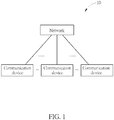
- Fig. 1 is a schematic diagram of a wireless communication system 10 according to an example of the present invention.
- the wireless communication system 10 is briefly composed of a network and a plurality of communication devices.
- the network and the communication devices are simply utilized for illustrating the structure of the wireless communication system 10.
- the network may be an evolved Node-B (eNB) in an evolved universal terrestrial radio access network (UTRAN) (E-UTRAN) of a long term evolution (LTE) system, or a fifth generation (5G) BS employing orthogonal frequency-division multiplexing (OFDM) and/or non-OFDM for communicating with the communication devices (e.g., transmitting/receiving a physical downlink (DL) control channel (PDCCH) and/or an enhanced PDCCH (EPDCCH), and encoding/decoding DL/uplink (UL) data according to an error control coding (ECC) scheme) in a system bandwidth (e.g., 20MHz) and/or a transmission time interval (TTI) (e.g., 1 ms).
- DL physical downlink
- EPDCCH enhanced PDCCH
- ECC error control coding
- TTI transmission time interval
- the communication device may be a user equipment (UE), a mobile phone, a laptop, a tablet computer, an electronic book, a portable computer system, a vehicle or an aircraft.
- UE user equipment
- the network and the communication device can be seen as a transmitter or a receiver according to transmission direction, e.g., for a UL, the communication device is the transmitter and the network is the receiver, and for a DL, the network is the transmitter and the communication device is the receiver.
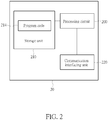
- Fig. 2 is a schematic diagram of a communication device 20 according to an example of the present invention.
- the communication device 20 may be the communication device or the network shown in Fig. 1 , but is not limited herein.
- the communication device 20 may include a processing circuit 200 such as a microprocessor or Application Specific Integrated Circuit (ASIC), a storage unit 210 and a communication interfacing unit 220.
- the storage unit 210 may be any data storage device that may store a program code 214, accessed and executed by the processing circuit 200.
- Examples of the storage unit 210 include but are not limited to a subscriber identity module (SIM), read-only memory (ROM), flash memory, random-access memory (RAM), Compact Disc Read-Only Memory (CD-ROM), digital versatile disc-ROM (DVD-ROM), Blu-ray Disc-ROM (BD-ROM), magnetic tape, hard disk, optical data storage device, non-volatile storage unit, non-transitory computer-readable medium (e.g., tangible media), etc.
- SIM subscriber identity module
- ROM read-only memory
- flash memory random-access memory
- RAM Compact Disc Read-Only Memory
- DVD-ROM digital versatile disc-ROM
- BD-ROM Blu-ray Disc-ROM
- a UE is used to represent the communication device in Fig. 1 , to simplify the illustration of the embodiments.
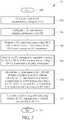
- Fig. 3 is a flowchart of a process 30 according to an example of the present invention.
- the process 30 may be utilized in a network, to handle UL transmission in a wireless communication system.
- the process 30 includes the following steps:
- the network may configure a maximum retransmission attempt and a UL transmission skipping mechanism to the UE. Then, the network may transmit a UL grant including a first MCS and an allocation of a first resource (e.g., resource block (RB)) to the UE for performing the UL transmission (e.g., hybrid automatic repeat request (HARQ) transmission). Further, the network may receive the UL transmission generated according to the first MCS in the first resource according to the UL transmission skipping mechanism.
- a first resource e.g., resource block (RB)
- HARQ hybrid automatic repeat request
- the network may decode the UL transmission for a plurality of times according to (e.g., by using) an ECC scheme, wherein the UL transmission may be a first RV corresponding to a new transmission with a first RV index (e.g., of a transport block) or a second RV corresponding to a retransmission with a second RV index (e.g., of the transport block).
- the network may transmit an acknowledgment (e.g., "ACK" or "NACK”) indicating whether the UL transmission is decoded successfully to the UE. That is, the network decodes the UL transmission according to (e.g., by using) a blind decoding scheme.
- the network can decode the UL transmission properly no matter whether the UL transmission is the new transmission or the retransmission. As a result, throughput of decoding is improved and the benefit of the power saving of the UL transmission skipping mechanism is preserved.
- Realization of the process 30 is not limited to the above description. The following examples may be applied for realizing the process 30.
- the maximum retransmission attempt, N may be a positive integer.
- the plurality of times, K may be a positive integer smaller than (or equal to) (N+1).
- the network may decode the UL transmission at most 3 times, if N is assumed as 2.
- the retransmission may be the nth retransmission, wherein n is a positive integer smaller than (or equal to) N.
- the network may jointly decode (e.g., by using soft combining) the retransmission with n previously received UL transmission (i.e., the new transmission, the first retransmission,..., the n-1 retransmission), if the retransmission is the nth retransmission.
- the network may transmit a preconfigured semi-persistent scheduling (SPS) configuration in a second resource (e.g., time/frequency resource) to the UE according to (e.g., by using) a second MCS.
- SPS configuration may be used for configuring (e.g., granting) indefinite opportunities (e.g., time/frequency resources) to the UE periodically (e.g., in a periodic fashion) to perform the UL transmission.
- the ECC scheme may include at least one of a turbo coding scheme and a tail-biting convolutional coding (TBCC) scheme.
- the ECC scheme may include at least one of a low density parity check (LDPC) code scheme and a polar code scheme, and is not limited herein.
- the ECC scheme may be predetermined and specified (e.g., newly defined) in the 3GPP standard, e.g., explicitly.
- the ECC scheme may be already known by the network and the UE, e.g., implicitly.
- the ECC scheme may be configured (e.g., higher layer signaled) by the network, e.g., explicitly.
- the first RV index and the second RV index may be predetermined and specified (e.g., newly defined) in the 3GPP standard, e.g., explicitly.
- the first RV index and the second RV index may be already known by the network and the UE, e.g., implicitly.
- the first RV index and the second RV index may be determined according to at least one of a subframe index of a subframe used in the UL transmission and a cell radio network temporary identifier (C-RNTI) of the UE, e.g., implicitly.
- the network may receive the first RV index and the second RV index determined by the UE (e.g., autonomously) from the UE.
- the first RV index may be transmitted according to (e.g., by using) a third MCS and a third allocation of a third resource
- the second RV index may be transmitted according to (e.g., by using) a fourth MCS and a fourth allocation of a fourth resource.
- the first RV index and the second RV index may be encoded, modulated and mapped to different resources (e.g., time/frequency resource) separately. Accordingly, the first RV index and the second RV index may be received in the UL transmission separately.
- the third MCS and the third allocation of the third, and the fourth MCS and the fourth allocation of the fourth resource may be predetermined and specified (e.g., newly defined) in the 3GPP standard, e.g., explicitly.
- the third MCS and the third allocation of the third, and the fourth MCS and the fourth allocation of the fourth resource may be already known by the network and the UE, e.g., implicitly.
- the third MCS and the third allocation of the third, and the fourth MCS and the fourth allocation of the fourth resource may be configured (e.g., assigned) by the network, e.g., explicitly.
- the first RV index and/or the second RV index may be transmitted according to a puncturing scheme. That is, a plurality of parity bits of the transport block are overwritten for allocating the first RV index and/or the second RV index.
- the first RV index and/or the second RV index may be transmitted according to a rate matching scheme. That is, at least one resource unit (e.g., RB, near an UL reference signal (RS)) of the transport block which is not completely filled is used for allocating the first RV index and/or the second RV index. Examples of transmitting the first RV index and/or the second RV index are not limited herein.
- the network may store the UL transmission in a soft buffer.
- the soft buffer may be used for storing a plurality of UL transmission.
- the network may store (e.g., overwrite) a newly received UL transmission by removing (e.g., clearing) an oldest (e.g., stored for the longest time) UL transmission in the soft buffer.
- a HARQ process for the UL transmission may be disabled (e.g., not in use), if the maximum retransmission attempt is configured as 0.
- the network may not receive any retransmission from the UE.
- the UL transmission includes a plurality of OFDM-based signals. Accordingly, the UL transmission may be received as the OFDM-based signals.
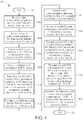
- Fig. 4 is a flowchart of a process 40 according to an example of the present invention.
- the process 40 may be utilized in a UE, to handle UL transmission in a wireless communication system.
- the process 40 includes the following steps:
- the UE may receive a first configuration configuring a maximum retransmission, a second configuration configuring a UL transmission skipping mechanism, and a first UL grant including a first MCS and an allocation of a first resource (e.g. RB) from the network. Then, the UE may encode a transport block (e.g., as a codeword) according to (e.g., by using) an ECC scheme. Further, The UE may transmit a first RV of the transport block according to a plurality of RV indices, the first MCS, the allocation of the first resource and the UL transmission skipping mechanism to the network. The UE may transmit a first NDI indicating that the first RV is a new transmission to the network.
- a transport block e.g., as a codeword
- the UE may receive a first acknowledgment (e.g., "ACK” or "NACK”) indicating whether the first RV is decoded successfully from the network.
- the UE may receive a second UL grant including a second MCS and an allocation of a second resource (e.g. RB) from the network.
- the UE may transmit a second RV of the transport block according to the plurality of RV indices, the second MCS, the allocation of second resource and the UL transmission skipping mechanism to the network.
- the UE may transmit a second NDI indicating that the second RV is a retransmission to the network, if the maximum retransmission attempt is larger than 0 and the first acknowledgment includes an "NACK".
- the UE may repeat the last four steps (i.e., Steps 414 - 420), until a second acknowledgment including an "ACK" is received from the network or the maximum retransmission attempt is achieved. That is, the UE transmits additional indicator(s) (i.e., the first NDI and/or the second NDI) to inform the network that the UL transmission (i.e., the first RV and/or the second RV) is the new transmission or the retransmission.
- the network can decode the UL transmission properly according to the additional indicator(s). As a result, throughput of decoding is improved and the benefit of the power saving of the UL transmission skipping mechanism is preserved.
- Step 422 is performed by repeating Steps 414 - 420. That is, following Step 422, the UE may start from Step 414 again, until at least one of the conditions in Step 422 is satisfied.
- Realization of the process 40 is not limited to the above description. The following examples may be applied for realizing the process 40.
- the UE may skip another UL transmission after receiving a third UL grant configuring the UE to perform the other transmission, if the UE does not have UL data for transmitting.
- the UE may receive a SPS configuration in a third resource (e.g., time/frequency resource) from the network according to (e.g., by using) a third MCS.
- the SPS configuration may be used for configuring (e.g., granting) indefinite opportunities (e.g., time/frequency resources) to the UE periodically (e.g., in a periodic fashion) to perform the UL transmission.
- the ECC scheme may include at least one of a turbo coding scheme and a TBCC scheme.
- the ECC scheme may include at least one of a LDPC code scheme and a polar code scheme, and is not limited herein.
- the ECC scheme may be predetermined and specified (e.g., newly defined) in the 3GPP standard, e.g., explicitly.
- the ECC scheme may be already known by the network and the UE, e.g., implicitly.
- the ECC scheme may be configured (e.g., higher layer signaled) by the network, e.g., explicitly.
- the first NDI and the second NDI may be absolute values (e.g., 1) indicating that the UL transmission (i.e., the first RV and/or the second RV) is the new transmission.
- the first NDI and the second NDI may be absolute values (e.g., 0) indicating that the UL transmission is the retransmission.
- the first NDI and the second NDI may be toggled values (i.e., a changed value changed from 0 to 1 or 1 to 0) indicating that the UL transmission is the new transmission.
- the first NDI and the second NDI may be toggled values (e.g., an unchanged value) indicating that the UL transmission is the retransmission.
- a MCS, a mapping scheme and at least one resource used by the first NDI and/or the second NDI may be predetermined and specified (e.g., newly defined) in the 3GPP standard, e.g., explicitly.
- the MCS, the mapping scheme and the at least one resource used by the first NDI and/or the second NDI may be already known by the network and the UE, e.g., implicitly.
- the MCS, the mapping scheme and the at least one resource used by the first NDI and/or the second NDI may be configured (e.g., assigned) by the network, e.g., explicitly.
- the first NDI and/or the second NDI may be transmitted according to a puncturing scheme. That is, a plurality of parity bits of the transport block are overwritten for allocating the first NDI and/or the second NDI.
- the first NDI and/or the second NDI may be transmitted according to a rate matching scheme. That is, at least one resource unit (e.g., RB, near an UL reference signal (RS)) of the transport block which is not completely filled is used for allocating the first NDI and/or the second NDI. Examples of transmitting the first NDI and/or the second NDI are not limited herein.
- the plurality of RV indices may be predetermined and specified (e.g., newly defined) in the 3GPP standard, e.g., explicitly.
- the ECC scheme may be already known by the network and the UE, e.g., implicitly.
- the plurality of RV indices may be determined according to at least one of a subframe index of a subframe used in the UL transmission and a C-RNTI of the UE, e.g., implicitly.
- the plurality of RV indices may be determined by the UE (e.g., autonomously), and may be transmitted to the network.
- a MCS, a mapping scheme and at least one resource used by the plurality of RV indices may be predetermined and specified (e.g., newly defined) in the 3GPP standard, e.g., explicitly.
- the MCS, the mapping scheme and the at least one resource used by the plurality of RV indices may be already known by the network and the UE, e.g., implicitly.
- the MCS, the mapping scheme and the at least one resource used by the plurality of RV indices may be configured (e.g., assigned) by the network, e.g., explicitly.
- the plurality of RV indices may be transmitted according to a puncturing scheme.
- the plurality of RV indices may be transmitted according to a rate matching scheme. That is, at least one resource unit (e.g., RB, near an UL RS) of the transport block which is not completely filled is used for allocating the plurality of RV indices. Examples of transmitting the plurality of RV indices are not limited herein.
- a HARQ process for the UL transmission may be disabled (e.g., not in use), if the maximum retransmission attempt is configured as 0. Thus, the UE may not perform any retransmission.
- the first RV and the second RV may be transmitted via a plurality of OFDM-based signals. Accordingly, the UL transmission may include a plurality of OFDM-based signals.
- a size of the transport block may be determined by the UE according to at least one of the first MCS and the allocation of the first resource (e.g., RB).
- the UE may ignore the first RV and the first MCS in a first field of the first UL grant, because the first RV and the first MCS are already determined by the UE.
- the UE may ignore the second RV and the second MCS in a second field of the second UL grant, because the second RV and the second MCS are already determined by the UE.
- Fig. 5 is a flowchart of a process 50 according to an example of the present invention.
- the process 50 may be utilized in a network, to handle UL transmission in a wireless communication system.
- the process 50 includes the following steps:
- the network may decode the UL transmission as a first RV corresponding to the new transmission with a first RV index (e.g., of a transport block) according to (e.g., by using) an ECC scheme, if the NDI indicating that the UL transmission is the new transmission; or may decode the UL transmission as a second RV corresponding to the mth retransmission with a second RV index (e.g., of the transport block) according to the ECC scheme, if the NDI indicating that the UL transmission is the retransmission.
- the network may transmit an acknowledgment (e.g., "ACK" or "NACK”) indicating whether the UL transmission is decoded successfully to the UE.
- an acknowledgment e.g., "ACK" or "NACK
- the network receives an additional indicator (i.e., the NDI) informing that the UL transmission is the new transmission or the retransmission from the UE.
- the network can decode the UL transmission properly according to the additional indicator.
- throughput of decoding is improved and the benefit of the power saving of the UL transmission skipping mechanism is preserved.
- Realization of the process 50 is not limited to the above description. The following examples may be applied for realizing the process 50.
- the maximum retransmission attempt may be a positive integer.
- m may be smaller than (or equal to) the maximum retransmission attempt.
- m may be determined according to the number of at least one (e.g., consecutively) received NDI indicating that the UL transmission is the retransmission.
- the network may transmit a SPS configuration in a second resource (e.g., time/frequency resource) to the UE according to (e.g., by using) a second MCS.
- the SPS configuration may be used for configuring (e.g., granting) indefinite opportunities (e.g., time/frequency resources) to the UE periodically (e.g., in a periodic fashion) to perform the UL transmission.
- the ECC scheme may include at least one of a turbo coding scheme and a TBCC scheme.
- the ECC scheme may include at least one of a LDPC code scheme and a polar code scheme, and is not limited herein.
- the ECC scheme may be predetermined and specified (e.g., newly defined) in the 3GPP standard, e.g., explicitly.
- the ECC scheme may be already known by the network and the UE, e.g., implicitly.
- the ECC scheme may be configured (e.g., higher layer signaled) by the network, e.g., explicitly.
- the NDI may be an absolute value (e.g., 1) indicating that the UL transmission is the new transmission. In on example, the NDI may be an absolute value (e.g., 0) indicating that the UL transmission is the retransmission. In one example, the NDI may be a toggled value (e.g., a changed value changed from 0 to 1 or 1 to 0) indicating that the UL transmission is the new transmission. In one example, the NDI may be a toggled value (e.g., an unchanged value) indicating that the UL transmission is the retransmission.
- the UL transmission may be transmitted according to (e.g., by using) the first MCS and the first allocation of the first resource
- the NDI may be transmitted according to (e.g., by using) a third MCS, a mapping scheme and a third resource.
- the NDI and the UL transmission may be encoded, modulated and mapped to different resources (e.g., time/frequency resources) separately by the UE. Accordingly, the NDI and the UL transmission may be received separately. That is, the NDI is received separately from the UL transmission.
- the third MCS, the mapping scheme and the third resource used by the NDI may be predetermined and specified (e.g., newly defined) in the 3GPP standard, e.g., explicitly.
- the third MCS, the mapping scheme and the third resource used by the NDI may be already known by the network and the UE, e.g., implicitly.
- the third MCS, the mapping scheme and the third resource used by the NDI may be configured (e.g., assigned) by the network, e.g., explicitly.
- the NDI may be transmitted according to a puncturing scheme. That is, a plurality of parity bits of the transport block are overwritten for allocating the NDI.
- the NDI may be transmitted according to a rate matching scheme. That is, at least one resource unit (e.g., RB, near an UL reference signal (RS)) of the transport block which is not completely filled is used for allocating the NDI. Examples of transmitting the NDI are not limited herein.
- the network may skip decoding the UL transmission, if m is larger than the maximum retransmission attempt. In on example, the network may skip transmitting the acknowledgment, if m is larger than the maximum retransmission attempt.
- the first RV index and the second RV index may be predetermined and specified (e.g., newly defined) in the 3GPP standard, e.g., explicitly.
- the first RV index and the second RV index may be already known by the network and the UE, e.g., implicitly.
- the first RV index and the second RV index may be determined according to at least one of a subframe index of a subframe used in the UL transmission and a C-RNTI of the UE, e.g., implicitly.
- the network may receive the first RV index and the second RV index determined by the UE (e.g., autonomously) from the UE.
- the first RV index (and/or the second RV index) and the UL transmission may be encoded, modulated and mapped to different resources (e.g., time/frequency resources) separately by the UE. Accordingly, the first RV index (and/or the second RV index) and the UL transmission may be received separately. That is, the first RV index (and/or the second RV index) is received separately from the UL transmission.
- a MCS, a mapping scheme and a resource used by the first RV index (and/or the second RV index) may be predetermined and specified (e.g., newly defined) in the 3GPP standard, e.g., explicitly.
- the fourth MCS, the second mapping scheme and the fourth resource used by the first RV index (and/or the second RV index) may be already known by the network and the UE, e.g., implicitly.
- the fourth MCS, the second mapping scheme and the fourth resource used by the first RV index (and/or the second RV index) may be configured (e.g., assigned) by the network, e.g., explicitly.
- the first RV index (and/or the second RV index) may be transmitted according to a puncturing scheme. That is, a plurality of parity bits of the transport block are overwritten for allocating the first RV index (and/or the second RV index).
- the first RV index (and/or the second RV index) may be transmitted according to a rate matching scheme. That is, at least one resource block (e.g., near an UL reference signal (RS)) of the transport block (and/or the second RV) which is not completely filled is used for allocating the first RV index (and/or the second RV index). Examples of transmitting the first RV index (and/or the second RV index) are not limited herein.
- RS UL reference signal
- a HARQ process for the UL transmission may be disabled (e.g., not in use), if the maximum retransmission attempt is configured as 0.
- the network may not receive any retransmission from the UE.
- the UL transmission includes a plurality of OFDM-based signals. Accordingly, the UL transmission may be received as the OFDM-based signals.
- a network configures a maximum retransmission attempt as 1, and configures a UL transmission skipping mechanism to a UE. Then, the network assigns a first resource (e.g., time/frequency resource) to the UE, and transmits a first UL grant to the UE. The UE receives the first UL grant. Then, the UE encodes a UL data by using a turbo coding scheme, and prepares 2 RVs, e.g., RV0 and RV1 for the UL data. The UE transmits the RV0 and a first NDI indicating a new transmission via (e.g., at) the first resource.
- a first resource e.g., time/frequency resource
- the network receives the RV0 and the first NDI via the first resource.
- the network transmits an "ACK" to the UE if the RV0 is decoded successfully, and transmits a "NACK” to the UE if the RV0 is decoded unsuccessfully. It is assumed that the RV0 is decoded unsuccessfully, and, the "NACK" is transmitted to the UE.
- the network assigns a second resource (e.g., time/frequency resource) to the UE, and transmits a second UL grant to the UE.
- the UE receives the second UL grant.
- the UE transmits the RV1 and a second NDI indicating a retransmission to the network via (e.g., at) the second resource.
- the network performs a joint decoding by soft combining the RV1 with previously received RV (i.e., the RV0).
- the network transmits an "ACK” to the UE if the RV1 is decoded successfully, and transmits a "NACK” to the UE if the RV1 is decoded unsuccessfully. It is assumed that the RV1 is decoded successfully, and the "ACK" is transmitted to the UE.
- any of the abovementioned processes may be compiled into the program code 214.
- the abovementioned description, steps and/or processes including suggested steps can be realized by means that could be hardware, software, firmware (known as a combination of a hardware device and computer instructions and data that reside as read-only software on the hardware device), an electronic system, or combination thereof.
- An example of the means be the communication device 20.
- the present invention provides a method and related communication device for handling the UL transmission performed with the UL transmission skipping mechanism.
- the network can decode the UL transmission properly according to the blind decoding scheme or the additional indicator(s).
- throughput of decoding can be improved and the benefit of the power saving of the UL transmission skipping mechanism can be preserved.
Landscapes
- Engineering & Computer Science (AREA)
- Computer Networks & Wireless Communication (AREA)
- Signal Processing (AREA)
- Quality & Reliability (AREA)
- Mobile Radio Communication Systems (AREA)
- Detection And Prevention Of Errors In Transmission (AREA)
Applications Claiming Priority (1)
| Application Number | Priority Date | Filing Date | Title |
|---|---|---|---|
| US201662291898P | 2016-02-05 | 2016-02-05 |
Publications (2)
| Publication Number | Publication Date |
|---|---|
| EP3203671A1 true EP3203671A1 (de) | 2017-08-09 |
| EP3203671B1 EP3203671B1 (de) | 2020-05-27 |
Family
ID=58043849
Family Applications (1)
| Application Number | Title | Priority Date | Filing Date |
|---|---|---|---|
| EP17154400.0A Active EP3203671B1 (de) | 2016-02-05 | 2017-02-02 | Vorrichtung und verfahren zur uplink-übertragungshandhabung |
Country Status (2)
| Country | Link |
|---|---|
| US (1) | US10165595B2 (de) |
| EP (1) | EP3203671B1 (de) |
Cited By (2)
| Publication number | Priority date | Publication date | Assignee | Title |
|---|---|---|---|---|
| WO2020220253A1 (zh) * | 2019-04-30 | 2020-11-05 | 华为技术有限公司 | 一种信息传输方法和通信设备 |
| CN113922920A (zh) * | 2020-07-08 | 2022-01-11 | 阿里巴巴集团控股有限公司 | 一种数据传输方法和装置 |
Families Citing this family (3)
| Publication number | Priority date | Publication date | Assignee | Title |
|---|---|---|---|---|
| CN109600840B (zh) * | 2017-09-30 | 2021-06-22 | 华为技术有限公司 | 一种指示方法及装置 |
| WO2019158123A1 (en) * | 2018-02-16 | 2019-08-22 | Telefonaktiebolaget Lm Ericsson (Publ) | Method and system for scheduled uplink transmission to resolve channel interference in a wireless network using a coordination indicator |
| EP4416875A1 (de) * | 2021-10-14 | 2024-08-21 | Nokia Technologies Oy | Parallele uplink-übertragungen in einem drahtloskommunikationsnetzwerk |
Citations (4)
| Publication number | Priority date | Publication date | Assignee | Title |
|---|---|---|---|---|
| US20120257559A1 (en) * | 2011-04-05 | 2012-10-11 | Samsung Electronics Co. Ltd. | Battery consumption control method of user equipment in mobile communication system |
| US20130250924A1 (en) * | 2012-03-23 | 2013-09-26 | Qualcomm Incorporated | Systems and methods for signaling and determining transmission time interval bundling parameters |
| US20140313997A1 (en) * | 2013-04-17 | 2014-10-23 | Qualcomm Incorporated | Utilizing unused uplink sequence shifts for signaling |
| WO2015142066A1 (ko) * | 2014-03-20 | 2015-09-24 | 엘지전자(주) | 무선 통신 시스템에서 신호를 송수신하기 위한 방법 및 이를 위한 장치 |
Family Cites Families (1)
| Publication number | Priority date | Publication date | Assignee | Title |
|---|---|---|---|---|
| TWI620431B (zh) * | 2012-03-16 | 2018-04-01 | 內數位專利控股公司 | 以fdd模式操作的網路中支援hd-fdd操作的方法及裝置 |
-
2017
- 2017-02-02 EP EP17154400.0A patent/EP3203671B1/de active Active
- 2017-02-03 US US15/423,599 patent/US10165595B2/en active Active
Patent Citations (5)
| Publication number | Priority date | Publication date | Assignee | Title |
|---|---|---|---|---|
| US20120257559A1 (en) * | 2011-04-05 | 2012-10-11 | Samsung Electronics Co. Ltd. | Battery consumption control method of user equipment in mobile communication system |
| US20130250924A1 (en) * | 2012-03-23 | 2013-09-26 | Qualcomm Incorporated | Systems and methods for signaling and determining transmission time interval bundling parameters |
| US20140313997A1 (en) * | 2013-04-17 | 2014-10-23 | Qualcomm Incorporated | Utilizing unused uplink sequence shifts for signaling |
| WO2015142066A1 (ko) * | 2014-03-20 | 2015-09-24 | 엘지전자(주) | 무선 통신 시스템에서 신호를 송수신하기 위한 방법 및 이를 위한 장치 |
| US20160381666A1 (en) * | 2014-03-20 | 2016-12-29 | Seoul National University R&Db Foundation | Method for transmitting and receiving signal in wireless communication system and device therefor |
Cited By (3)
| Publication number | Priority date | Publication date | Assignee | Title |
|---|---|---|---|---|
| WO2020220253A1 (zh) * | 2019-04-30 | 2020-11-05 | 华为技术有限公司 | 一种信息传输方法和通信设备 |
| US12101192B2 (en) | 2019-04-30 | 2024-09-24 | Huawei Technologies Co., Ltd. | Information transmission method and communications device |
| CN113922920A (zh) * | 2020-07-08 | 2022-01-11 | 阿里巴巴集团控股有限公司 | 一种数据传输方法和装置 |
Also Published As
| Publication number | Publication date |
|---|---|
| US20170230998A1 (en) | 2017-08-10 |
| US10165595B2 (en) | 2018-12-25 |
| EP3203671B1 (de) | 2020-05-27 |
Similar Documents
| Publication | Publication Date | Title |
|---|---|---|
| US11277231B2 (en) | Redundancy version design solution in communication systems | |
| KR102559502B1 (ko) | 통신 또는 방송 시스템에서 전송블록 크기 결정 방법 및 장치 | |
| KR102288231B1 (ko) | 무선 통신 시스템에서 harq-ack 응답 코드북의 결정 | |
| US8730889B2 (en) | Method or HARQ acknowledgement transmission and transport block retransmission in a wireless communication system | |
| CN108365922B (zh) | 用于反馈的方法、设备和系统 | |
| CN108390741B (zh) | 数据传输方法和设备 | |
| CN107888330B (zh) | 一种数据传输的方法和装置 | |
| EP3203671B1 (de) | Vorrichtung und verfahren zur uplink-übertragungshandhabung | |
| CN103378936A (zh) | 数据传输方法及装置 | |
| CN106559878A (zh) | 上行控制信息uci发送、获取方法及装置 | |
| CN108886436B (zh) | 无线电网络节点、无线设备以及其中执行的方法 | |
| US8780789B2 (en) | Methods and nodes related to coding of channel status information (CSI) payload | |
| WO2019157669A1 (zh) | 通信方法及装置 | |
| US20250039808A1 (en) | Method and apparatus for data transmission in wireless cellular communication system | |
| CN112640335A (zh) | 极化编码系统的增量冗余混合自动重传请求传输 | |
| CN107135046B (zh) | 一种信息传输方法及装置 | |
| US20170222759A1 (en) | Device and Method of Handling Data Transmission | |
| US11751148B2 (en) | Method and apparatus for data transmission in wireless cellular communication system | |
| CN109309958B (zh) | 一种信息传输方法、装置、基站及存储介质 | |
| CN102013948B (zh) | 一种指示方法及用户设备 | |
| WO2018137584A1 (zh) | 用于反馈的方法、设备和系统 | |
| CN111405659A (zh) | 传输数据的方法、网络设备和终端设备 |
Legal Events
| Date | Code | Title | Description |
|---|---|---|---|
| PUAI | Public reference made under article 153(3) epc to a published international application that has entered the european phase |
Free format text: ORIGINAL CODE: 0009012 |
|
| STAA | Information on the status of an ep patent application or granted ep patent |
Free format text: STATUS: REQUEST FOR EXAMINATION WAS MADE |
|
| 17P | Request for examination filed |
Effective date: 20170202 |
|
| AK | Designated contracting states |
Kind code of ref document: A1 Designated state(s): AL AT BE BG CH CY CZ DE DK EE ES FI FR GB GR HR HU IE IS IT LI LT LU LV MC MK MT NL NO PL PT RO RS SE SI SK SM TR |
|
| AX | Request for extension of the european patent |
Extension state: BA ME |
|
| RBV | Designated contracting states (corrected) |
Designated state(s): AL AT BE BG CH CY CZ DE DK EE ES FI FR GB GR HR HU IE IS IT LI LT LU LV MC MK MT NL NO PL PT RO RS SE SI SK SM TR |
|
| GRAP | Despatch of communication of intention to grant a patent |
Free format text: ORIGINAL CODE: EPIDOSNIGR1 |
|
| STAA | Information on the status of an ep patent application or granted ep patent |
Free format text: STATUS: GRANT OF PATENT IS INTENDED |
|
| INTG | Intention to grant announced |
Effective date: 20191205 |
|
| GRAS | Grant fee paid |
Free format text: ORIGINAL CODE: EPIDOSNIGR3 |
|
| GRAJ | Information related to disapproval of communication of intention to grant by the applicant or resumption of examination proceedings by the epo deleted |
Free format text: ORIGINAL CODE: EPIDOSDIGR1 |
|
| GRAL | Information related to payment of fee for publishing/printing deleted |
Free format text: ORIGINAL CODE: EPIDOSDIGR3 |
|
| STAA | Information on the status of an ep patent application or granted ep patent |
Free format text: STATUS: REQUEST FOR EXAMINATION WAS MADE |
|
| GRAR | Information related to intention to grant a patent recorded |
Free format text: ORIGINAL CODE: EPIDOSNIGR71 |
|
| STAA | Information on the status of an ep patent application or granted ep patent |
Free format text: STATUS: GRANT OF PATENT IS INTENDED |
|
| GRAA | (expected) grant |
Free format text: ORIGINAL CODE: 0009210 |
|
| STAA | Information on the status of an ep patent application or granted ep patent |
Free format text: STATUS: THE PATENT HAS BEEN GRANTED |
|
| AK | Designated contracting states |
Kind code of ref document: B1 Designated state(s): AL AT BE BG CH CY CZ DE DK EE ES FI FR GB GR HR HU IE IS IT LI LT LU LV MC MK MT NL NO PL PT RO RS SE SI SK SM TR |
|
| INTG | Intention to grant announced |
Effective date: 20200422 |
|
| REG | Reference to a national code |
Ref country code: GB Ref legal event code: FG4D |
|
| REG | Reference to a national code |
Ref country code: CH Ref legal event code: EP |
|
| REG | Reference to a national code |
Ref country code: DE Ref legal event code: R096 Ref document number: 602017017147 Country of ref document: DE |
|
| REG | Reference to a national code |
Ref country code: AT Ref legal event code: REF Ref document number: 1275678 Country of ref document: AT Kind code of ref document: T Effective date: 20200615 |
|
| REG | Reference to a national code |
Ref country code: LT Ref legal event code: MG4D |
|
| PG25 | Lapsed in a contracting state [announced via postgrant information from national office to epo] |
Ref country code: PT Free format text: LAPSE BECAUSE OF FAILURE TO SUBMIT A TRANSLATION OF THE DESCRIPTION OR TO PAY THE FEE WITHIN THE PRESCRIBED TIME-LIMIT Effective date: 20200928 Ref country code: NO Free format text: LAPSE BECAUSE OF FAILURE TO SUBMIT A TRANSLATION OF THE DESCRIPTION OR TO PAY THE FEE WITHIN THE PRESCRIBED TIME-LIMIT Effective date: 20200827 Ref country code: GR Free format text: LAPSE BECAUSE OF FAILURE TO SUBMIT A TRANSLATION OF THE DESCRIPTION OR TO PAY THE FEE WITHIN THE PRESCRIBED TIME-LIMIT Effective date: 20200828 Ref country code: FI Free format text: LAPSE BECAUSE OF FAILURE TO SUBMIT A TRANSLATION OF THE DESCRIPTION OR TO PAY THE FEE WITHIN THE PRESCRIBED TIME-LIMIT Effective date: 20200527 Ref country code: LT Free format text: LAPSE BECAUSE OF FAILURE TO SUBMIT A TRANSLATION OF THE DESCRIPTION OR TO PAY THE FEE WITHIN THE PRESCRIBED TIME-LIMIT Effective date: 20200527 Ref country code: SE Free format text: LAPSE BECAUSE OF FAILURE TO SUBMIT A TRANSLATION OF THE DESCRIPTION OR TO PAY THE FEE WITHIN THE PRESCRIBED TIME-LIMIT Effective date: 20200527 Ref country code: IS Free format text: LAPSE BECAUSE OF FAILURE TO SUBMIT A TRANSLATION OF THE DESCRIPTION OR TO PAY THE FEE WITHIN THE PRESCRIBED TIME-LIMIT Effective date: 20200927 |
|
| REG | Reference to a national code |
Ref country code: NL Ref legal event code: MP Effective date: 20200527 |
|
| PG25 | Lapsed in a contracting state [announced via postgrant information from national office to epo] |
Ref country code: BG Free format text: LAPSE BECAUSE OF FAILURE TO SUBMIT A TRANSLATION OF THE DESCRIPTION OR TO PAY THE FEE WITHIN THE PRESCRIBED TIME-LIMIT Effective date: 20200827 Ref country code: LV Free format text: LAPSE BECAUSE OF FAILURE TO SUBMIT A TRANSLATION OF THE DESCRIPTION OR TO PAY THE FEE WITHIN THE PRESCRIBED TIME-LIMIT Effective date: 20200527 Ref country code: RS Free format text: LAPSE BECAUSE OF FAILURE TO SUBMIT A TRANSLATION OF THE DESCRIPTION OR TO PAY THE FEE WITHIN THE PRESCRIBED TIME-LIMIT Effective date: 20200527 Ref country code: HR Free format text: LAPSE BECAUSE OF FAILURE TO SUBMIT A TRANSLATION OF THE DESCRIPTION OR TO PAY THE FEE WITHIN THE PRESCRIBED TIME-LIMIT Effective date: 20200527 |
|
| REG | Reference to a national code |
Ref country code: AT Ref legal event code: MK05 Ref document number: 1275678 Country of ref document: AT Kind code of ref document: T Effective date: 20200527 |
|
| PG25 | Lapsed in a contracting state [announced via postgrant information from national office to epo] |
Ref country code: NL Free format text: LAPSE BECAUSE OF FAILURE TO SUBMIT A TRANSLATION OF THE DESCRIPTION OR TO PAY THE FEE WITHIN THE PRESCRIBED TIME-LIMIT Effective date: 20200527 Ref country code: AL Free format text: LAPSE BECAUSE OF FAILURE TO SUBMIT A TRANSLATION OF THE DESCRIPTION OR TO PAY THE FEE WITHIN THE PRESCRIBED TIME-LIMIT Effective date: 20200527 |
|
| PG25 | Lapsed in a contracting state [announced via postgrant information from national office to epo] |
Ref country code: SM Free format text: LAPSE BECAUSE OF FAILURE TO SUBMIT A TRANSLATION OF THE DESCRIPTION OR TO PAY THE FEE WITHIN THE PRESCRIBED TIME-LIMIT Effective date: 20200527 Ref country code: AT Free format text: LAPSE BECAUSE OF FAILURE TO SUBMIT A TRANSLATION OF THE DESCRIPTION OR TO PAY THE FEE WITHIN THE PRESCRIBED TIME-LIMIT Effective date: 20200527 Ref country code: EE Free format text: LAPSE BECAUSE OF FAILURE TO SUBMIT A TRANSLATION OF THE DESCRIPTION OR TO PAY THE FEE WITHIN THE PRESCRIBED TIME-LIMIT Effective date: 20200527 Ref country code: DK Free format text: LAPSE BECAUSE OF FAILURE TO SUBMIT A TRANSLATION OF THE DESCRIPTION OR TO PAY THE FEE WITHIN THE PRESCRIBED TIME-LIMIT Effective date: 20200527 Ref country code: RO Free format text: LAPSE BECAUSE OF FAILURE TO SUBMIT A TRANSLATION OF THE DESCRIPTION OR TO PAY THE FEE WITHIN THE PRESCRIBED TIME-LIMIT Effective date: 20200527 Ref country code: IT Free format text: LAPSE BECAUSE OF FAILURE TO SUBMIT A TRANSLATION OF THE DESCRIPTION OR TO PAY THE FEE WITHIN THE PRESCRIBED TIME-LIMIT Effective date: 20200527 Ref country code: CZ Free format text: LAPSE BECAUSE OF FAILURE TO SUBMIT A TRANSLATION OF THE DESCRIPTION OR TO PAY THE FEE WITHIN THE PRESCRIBED TIME-LIMIT Effective date: 20200527 Ref country code: ES Free format text: LAPSE BECAUSE OF FAILURE TO SUBMIT A TRANSLATION OF THE DESCRIPTION OR TO PAY THE FEE WITHIN THE PRESCRIBED TIME-LIMIT Effective date: 20200527 |
|
| PG25 | Lapsed in a contracting state [announced via postgrant information from national office to epo] |
Ref country code: SK Free format text: LAPSE BECAUSE OF FAILURE TO SUBMIT A TRANSLATION OF THE DESCRIPTION OR TO PAY THE FEE WITHIN THE PRESCRIBED TIME-LIMIT Effective date: 20200527 Ref country code: PL Free format text: LAPSE BECAUSE OF FAILURE TO SUBMIT A TRANSLATION OF THE DESCRIPTION OR TO PAY THE FEE WITHIN THE PRESCRIBED TIME-LIMIT Effective date: 20200527 |
|
| REG | Reference to a national code |
Ref country code: DE Ref legal event code: R097 Ref document number: 602017017147 Country of ref document: DE |
|
| PLBE | No opposition filed within time limit |
Free format text: ORIGINAL CODE: 0009261 |
|
| STAA | Information on the status of an ep patent application or granted ep patent |
Free format text: STATUS: NO OPPOSITION FILED WITHIN TIME LIMIT |
|
| 26N | No opposition filed |
Effective date: 20210302 |
|
| PG25 | Lapsed in a contracting state [announced via postgrant information from national office to epo] |
Ref country code: SI Free format text: LAPSE BECAUSE OF FAILURE TO SUBMIT A TRANSLATION OF THE DESCRIPTION OR TO PAY THE FEE WITHIN THE PRESCRIBED TIME-LIMIT Effective date: 20200527 |
|
| PG25 | Lapsed in a contracting state [announced via postgrant information from national office to epo] |
Ref country code: MC Free format text: LAPSE BECAUSE OF FAILURE TO SUBMIT A TRANSLATION OF THE DESCRIPTION OR TO PAY THE FEE WITHIN THE PRESCRIBED TIME-LIMIT Effective date: 20200527 |
|
| REG | Reference to a national code |
Ref country code: BE Ref legal event code: MM Effective date: 20210228 |
|
| PG25 | Lapsed in a contracting state [announced via postgrant information from national office to epo] |
Ref country code: LI Free format text: LAPSE BECAUSE OF NON-PAYMENT OF DUE FEES Effective date: 20210228 Ref country code: LU Free format text: LAPSE BECAUSE OF NON-PAYMENT OF DUE FEES Effective date: 20210202 Ref country code: CH Free format text: LAPSE BECAUSE OF NON-PAYMENT OF DUE FEES Effective date: 20210228 |
|
| PG25 | Lapsed in a contracting state [announced via postgrant information from national office to epo] |
Ref country code: FR Free format text: LAPSE BECAUSE OF NON-PAYMENT OF DUE FEES Effective date: 20210228 Ref country code: IE Free format text: LAPSE BECAUSE OF NON-PAYMENT OF DUE FEES Effective date: 20210202 |
|
| PG25 | Lapsed in a contracting state [announced via postgrant information from national office to epo] |
Ref country code: BE Free format text: LAPSE BECAUSE OF NON-PAYMENT OF DUE FEES Effective date: 20210228 |
|
| REG | Reference to a national code |
Ref country code: DE Ref legal event code: R082 Ref document number: 602017017147 Country of ref document: DE Representative=s name: WAGNER & GEYER PARTNERSCHAFT MBB PATENT- UND R, DE |
|
| PG25 | Lapsed in a contracting state [announced via postgrant information from national office to epo] |
Ref country code: HU Free format text: LAPSE BECAUSE OF FAILURE TO SUBMIT A TRANSLATION OF THE DESCRIPTION OR TO PAY THE FEE WITHIN THE PRESCRIBED TIME-LIMIT; INVALID AB INITIO Effective date: 20170202 |
|
| PG25 | Lapsed in a contracting state [announced via postgrant information from national office to epo] |
Ref country code: CY Free format text: LAPSE BECAUSE OF FAILURE TO SUBMIT A TRANSLATION OF THE DESCRIPTION OR TO PAY THE FEE WITHIN THE PRESCRIBED TIME-LIMIT Effective date: 20200527 |
|
| P01 | Opt-out of the competence of the unified patent court (upc) registered |
Effective date: 20230602 |
|
| PG25 | Lapsed in a contracting state [announced via postgrant information from national office to epo] |
Ref country code: MK Free format text: LAPSE BECAUSE OF FAILURE TO SUBMIT A TRANSLATION OF THE DESCRIPTION OR TO PAY THE FEE WITHIN THE PRESCRIBED TIME-LIMIT Effective date: 20200527 |
|
| PG25 | Lapsed in a contracting state [announced via postgrant information from national office to epo] |
Ref country code: MT Free format text: LAPSE BECAUSE OF FAILURE TO SUBMIT A TRANSLATION OF THE DESCRIPTION OR TO PAY THE FEE WITHIN THE PRESCRIBED TIME-LIMIT Effective date: 20200527 |
|
| PGFP | Annual fee paid to national office [announced via postgrant information from national office to epo] |
Ref country code: GB Payment date: 20241212 Year of fee payment: 9 |
|
| PGFP | Annual fee paid to national office [announced via postgrant information from national office to epo] |
Ref country code: DE Payment date: 20241210 Year of fee payment: 9 |
|
| PG25 | Lapsed in a contracting state [announced via postgrant information from national office to epo] |
Ref country code: TR Free format text: LAPSE BECAUSE OF FAILURE TO SUBMIT A TRANSLATION OF THE DESCRIPTION OR TO PAY THE FEE WITHIN THE PRESCRIBED TIME-LIMIT Effective date: 20200527 |