EP3204366B1 - Procédé de préparation de gamma-valérolactone par hydrogénation catalytique de l'acide lévulinique à l'aide de catalyseurs à base de ru - Google Patents
Procédé de préparation de gamma-valérolactone par hydrogénation catalytique de l'acide lévulinique à l'aide de catalyseurs à base de ru Download PDFInfo
- Publication number
- EP3204366B1 EP3204366B1 EP15801505.7A EP15801505A EP3204366B1 EP 3204366 B1 EP3204366 B1 EP 3204366B1 EP 15801505 A EP15801505 A EP 15801505A EP 3204366 B1 EP3204366 B1 EP 3204366B1
- Authority
- EP
- European Patent Office
- Prior art keywords
- hro
- catalyst
- gvl
- reactor vessel
- range
- Prior art date
- Legal status (The legal status is an assumption and is not a legal conclusion. Google has not performed a legal analysis and makes no representation as to the accuracy of the status listed.)
- Active
Links
Images

Classifications
-
- C—CHEMISTRY; METALLURGY
- C07—ORGANIC CHEMISTRY
- C07D—HETEROCYCLIC COMPOUNDS
- C07D307/00—Heterocyclic compounds containing five-membered rings having one oxygen atom as the only ring hetero atom
- C07D307/02—Heterocyclic compounds containing five-membered rings having one oxygen atom as the only ring hetero atom not condensed with other rings
- C07D307/26—Heterocyclic compounds containing five-membered rings having one oxygen atom as the only ring hetero atom not condensed with other rings having one double bond between ring members or between a ring member and a non-ring member
- C07D307/30—Heterocyclic compounds containing five-membered rings having one oxygen atom as the only ring hetero atom not condensed with other rings having one double bond between ring members or between a ring member and a non-ring member with hetero atoms or with carbon atoms having three bonds to hetero atoms with at the most one bond to halogen, e.g. ester or nitrile radicals, directly attached to ring carbon atoms
- C07D307/32—Oxygen atoms
- C07D307/33—Oxygen atoms in position 2, the oxygen atom being in its keto or unsubstituted enol form
-
- B—PERFORMING OPERATIONS; TRANSPORTING
- B01—PHYSICAL OR CHEMICAL PROCESSES OR APPARATUS IN GENERAL
- B01J—CHEMICAL OR PHYSICAL PROCESSES, e.g. CATALYSIS OR COLLOID CHEMISTRY; THEIR RELEVANT APPARATUS
- B01J23/00—Catalysts comprising metals or metal oxides or hydroxides, not provided for in group B01J21/00
- B01J23/38—Catalysts comprising metals or metal oxides or hydroxides, not provided for in group B01J21/00 of noble metals
- B01J23/40—Catalysts comprising metals or metal oxides or hydroxides, not provided for in group B01J21/00 of noble metals of the platinum group metals
- B01J23/46—Ruthenium, rhodium, osmium or iridium
- B01J23/462—Ruthenium
-
- B—PERFORMING OPERATIONS; TRANSPORTING
- B01—PHYSICAL OR CHEMICAL PROCESSES OR APPARATUS IN GENERAL
- B01J—CHEMICAL OR PHYSICAL PROCESSES, e.g. CATALYSIS OR COLLOID CHEMISTRY; THEIR RELEVANT APPARATUS
- B01J37/00—Processes, in general, for preparing catalysts; Processes, in general, for activation of catalysts
- B01J37/02—Impregnation, coating or precipitation
- B01J37/0201—Impregnation
-
- B—PERFORMING OPERATIONS; TRANSPORTING
- B01—PHYSICAL OR CHEMICAL PROCESSES OR APPARATUS IN GENERAL
- B01J—CHEMICAL OR PHYSICAL PROCESSES, e.g. CATALYSIS OR COLLOID CHEMISTRY; THEIR RELEVANT APPARATUS
- B01J37/00—Processes, in general, for preparing catalysts; Processes, in general, for activation of catalysts
- B01J37/02—Impregnation, coating or precipitation
- B01J37/0236—Drying, e.g. preparing a suspension, adding a soluble salt and drying
-
- B—PERFORMING OPERATIONS; TRANSPORTING
- B01—PHYSICAL OR CHEMICAL PROCESSES OR APPARATUS IN GENERAL
- B01J—CHEMICAL OR PHYSICAL PROCESSES, e.g. CATALYSIS OR COLLOID CHEMISTRY; THEIR RELEVANT APPARATUS
- B01J37/00—Processes, in general, for preparing catalysts; Processes, in general, for activation of catalysts
- B01J37/02—Impregnation, coating or precipitation
- B01J37/03—Precipitation; Co-precipitation
- B01J37/031—Precipitation
- B01J37/035—Precipitation on carriers
Definitions
- the present invention relates to a process for the preparation of ⁇ -valerolactone (Gvl) by catalytic hydrogenation of levulinic acid (LA) using Ru-based catalysts.
- the present invention relates to preparation of ⁇ -valerolactone (Gvl) by catalytic hydrogenation of biomass-derived levulinic acid (LA) and its esters using ruthenium-based heterogeneous catalysts.
- the invention relates to preparation of ⁇ -valerolactone under near ambient conditions in short reaction time with high yield.
- the active Ru-based heterogeneous catalysts are efficiently recyclable.
- Biomass is the one of the viable and renewable alternatives in particular for the production of chemicals and polymers as it is the only renewable source that has carbon.
- plant biomass is the valuable feedstock for chemical industry as it contains oils, carbohydrates, lignin, proteins, waxes, and secondary metabolites.
- Nature produces large amounts of plant biomass through the process of photosynthesis, in which carbohydrates are most abundant.
- Carbohydrates derived oxygenated chemical platforms have the potential opportunity through diverse synthetic protocols in making energy and chemicals sustainably, necessary for the future generation.
- LA Levulinic acid
- HMF 5-hydroxymethylfurfural
- LA is a precursor for the preparation of various value added products, among which ⁇ -valerolactone (Gvl) is an important product obtained through selective hydrogenation.
- Gvl ⁇ -valerolactone
- Catalytic hydrogenation of LA to Gvl is an important step in bio refinery because it has several industrial applications such as in biofuels (valeric and liquid alkanes for transportation fuels), additive in biofuel, and as eco-friendly high boiling solvent in particular for biomass conversions and in many organic transformations.
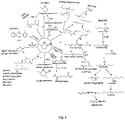
- Gvl is a raw material in the production of various chemicals (aromatic hydrocarbons and ⁇ -hydroxy-amides), and polymers (nylon intermediates such as adipic acid, dimethyl adipate and caprolactam). The applications of Gvl are shown in Fig. 1 .
- heterogeneous catalysts were also used for this reaction.
- L.E. Manzer in US Patent 6617464 B2 disclosed the preparation of Gvl from LA in presence of optionally supported metal catalysts which are preferably selected from the group consisting of Ir, Pd, Pt, Re, Rh, and Ru supported on various supports like carbon, silica and alumina, and the combination of metal and support thereof. He found that Ru on carbon as the more active catalyst at 140 to 160 °C, pressure 55 bar H 2 in 2 h than other metal and/or supports.
- the drawbacks of the process are high reaction temperature, high pressure, and necessity of prior reduction of catalyst that require additional energy and raw material.
- the main objective of the present invention is to provide a process for the preparation of y-valerolactone (Gvl) by catalytic hydrogenation of levulinic acid (LA) or its esters using Ru-based catalysts
- Another object of the present invention is to provide an improved fast and selective process for the preparation of ⁇ -valerolactone (Gvl) by catalytic hydrogenation of levulinic acid (LA) and its esters using Ru-based solid catalysts which obviates the drawbacks mentioned above.
- Another object of the present invention is to use Ru-based catalysts having lesser amount of ruthenium with respect to LA.
- Another object of the present invention is to selectively prepare Gvl at near room temperature.
- Another object of the present invention is to use nearly stoichiometric quantity of hydrogen. Still another object of the present invention is to prepare Gvl in shorter reaction time. Another object of the present invention is to use catalysts without any prior reduction.
- Yet another object of the present invention is to efficiently recycle the catalysts.
- Still another object of the present invention is to demonstrate the process on larger scale to affirm industrial attractiveness.
- the present invention is to provide a process for the selective preparation of ⁇ -valerolactone (Gvl) from levulinic acid (LA) and its esters in excellent yields (100%) using Ru-based heterogeneous catalysts chosen from the group consisting of Ru/ NaY, Ru/MgAl-LDH and hydrous ruthenium oxide (HRO) and their supported forms.
- the process was performed in water as solvent, at a temperature in the range of 25-200 °C and with a hydrogen pressure in the range of 3-50 bar and comprises the following steps:
- supports including commercial supports, for loading HRO are selected from cellulose, TiO 2 , Na- ⁇ zeolite, H- ⁇ zeolite, carbon, MCM-41, MgAl-LDH, preferable supports are Na- ⁇ , H- ⁇ and MCM-41.
- the temperature of the reaction medium varied in the range 50 to 200 °C and more preferably 50 to 100 °C.
- the pressure of hydrogen varied in the range of 3-30 bar, more preferably in the range of 3-15 bar.
- the amount of ruthenium in the catalyst used varied in the range 0.05 wt.% to 1 wt.% with respect to LA, preferably 0.1 wt.% to 0.5 wt.%.
- LA concentration varied in the range 1 to 50 wt.%, preferably in the range of 2.5 to 25 wt.%.
- the reaction time varied in the range of 2 min. to 60 min., more preferably in the range 2 min. to 30 min.
- the solvent used to carry out the reaction is water.
- the substrates used are levulinc acid (LA), and its esters such as methyl levulinate (MeL), ethyl levulinate (EtL) and butyl levulinate (BuL).
- LA levulinc acid
- MeL methyl levulinate
- EtL ethyl levulinate
- BuL butyl levulinate
- the preferred catalysts recycled with same activity.
- the catalysts used are without any prior reduction wherein the active catalyst (Ru(0)) is generated via in situ reduction under the reaction conditions (in other words catalyst used are actually 'precursors' that turn into active catalysts under reaction conditions and for simplicity we used the term 'catalysts').
- the present invention discloses a fast, mild and selective process for the preparation of ⁇ -valerolactone (Gvl) by catalytic hydrogenation of biomass-derived levulinic acid (LA) using recyclable Ru-based heterogeneous catalysts in aqueous medium with maximum yield of Gvl (100%) while operating under mild reaction conditions.
- Gvl ⁇ -valerolactone
- selective hydrogenation of LA to Gvl is achieved in excellent yield (100%) under mild reaction conditions in short reaction time in aqueous medium using recyclable Ru-based heterogeneous catalysts, in particular, hydrous ruthenium oxide (HRO) or its supported forms that does not require prior reduction and with lesser amount of Ru (with respect to LA), using nearly stoichiometrically required amount of H 2 .
- Ru-based heterogeneous catalysts in particular, hydrous ruthenium oxide (HRO) or its supported forms that does not require prior reduction and with lesser amount of Ru (with respect to LA), using nearly stoichiometrically required amount of H 2 .
- HRO hydrous ruthenium oxide
- the disclosed catalysts have improved activity, less energy demanding, conserving optimal utility of raw materials, needs shorter time and thus industrially more attractive.
- the reactor was loaded with substrate (LA and LA esters), solvent, and catalysts at one time.
- the reaction was conducted at desired temperature and H 2 pressure for a specified period of time.
- reactor was cooled to room temperature and unconsumed hydrogen was released.
- the solid catalyst was separated by centrifugation and used for next cycle without any treatment.
- the liquid product mixture was quantified using ultra high-performance liquid chromatography (UHPLC).
- UHPLC ultra high-performance liquid chromatography
- the catalysts used in the invention are hydrous ruthenium oxide (HRO-C, HRO-N and HRO-SA), supported HRO-C, Ru/MgAl-LDH and Ru/NaY.
- HRO catalyst was prepared by using conventional precipitation method using NaOH or through a modified method using CaCO 3 .
- a commercially available HRO catalyst was also purchased from M/s Sigma-Aldrich and used.
- Supported Ru catalysts Ru/MgAl-LDH and Ru/NaY were prepared by impregnation method using dilute RuCl 3 solution (0.001 M).
- Supported HRO-C catalysts (supports used are cellulose, TiO 2 , Na- ⁇ zeolite, H- ⁇ zeolite, MCM-41, SBA-15, MgAl-LDH, and carbon) were prepared by precipitation followed by impregnation using dilute RuCl 3 solution (0.001 M) and CaCO 3 as precipitating agent.
- the Ru-based catalysts used in this invention were characterized by using various analytical techniques in particular by using powder X-ray diffraction (PXRD), thermogravimetric analysis (TGA), Fourier-transformed infrared (FT-IR) spectroscopy, and transmission electron microscopy (TEM).
- PXRD powder X-ray diffraction
- TGA thermogravimetric analysis
- FT-IR Fourier-transformed infrared
- TEM transmission electron microscopy
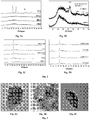
- the PXRD of HRO (HRO-C, HRO-N and HRO-SA) material did not show any diffraction peaks ( Fig. 2A ) suggests amorphous characteristic of this material.
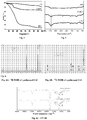
- the TGA of HRO-C material showed weight loss in range of 150-350 °C ( Fig. 4 ), attributed to weight loss of strongly adsorbed H 2 O molecules.
- H 2 O molecules in HRO-C catalyst was also confirmed by FT-IR which showed broad band centred at 3440 cm -1 ( Fig. 5 ) ascribed to O-H stretching.
- the particles of Ru in HRO-C catalyst are agglomerated as observed by TEM ( Fig. 3A ) probably due to both bonding and non-bonding (hydrogen bonding) interactions through oxygen atoms.
- the present invention provides hydrogenation of LA to Gvl using Ru-based catalysts in presence of solvent selected from water, alcohols (methanol, ethanol and isopropanol), tetrahydrofuran (THF), and 1,4-dioxane either alone or in combination thereof.
- solvent selected from water, alcohols (methanol, ethanol and isopropanol), tetrahydrofuran (THF), and 1,4-dioxane either alone or in combination thereof.
- solvent selected from water, alcohols (methanol, ethanol and isopropanol), tetrahydrofuran (THF), and 1,4-dioxane either alone or in combination thereof.
- solvent selected from water, alcohols (methanol, ethanol and isopropanol), tetrahydrofuran (THF), and 1,4-dioxane either alone or in combination thereof.
- the invention concludes water alone as an excellent medium for the reaction (eco-friendly medium) that provided 100% yield of
- the reaction was performed at a temperature in the range of 25-200 °C and with a hydrogen pressure in the range of 3-50 bar, the ruthenium loading in the range of 0.05-1 wt.% with respect to LA, the concentration of LA is in the range of 1-50 wt.% with respect to solvent.
- the reaction progress was monitored at different time intervals in the range of 2 min to 12 h.
- the reactions were performed at temperature in the range of 25-200 °C and with a hydrogen pressure in the range of 3-10 bar, the ruthenium loading in the range of 0.1-0.5 wt.% with respect to LA, the concentration of LA is in the range of 1-25 wt.% with respect to solvent and the reactions were monitored in the time interval in the range of 2 min to 1 h.
- the selective preparation of Gvl was also observed in presence of HRO-C, supported HRO-C and Ru/MgAl-LDH catalyst using various levulinic esters namely methyl levulinate (MeL), ethyl levulinate (EtL) and butyl levulinate (BuL).
- levulinic esters namely methyl levulinate (MeL), ethyl levulinate (EtL) and butyl levulinate (BuL).
- the reactions were carried out under similar conditions that are used for LA.
- the hydrogenation of LA esters to Gvl were also carried out in presence of solvents selected from water, alcohols, THF, and 1,4-dioxane either alone or in combination thereof and preferably in water.
- the active catalyst was impregnated on different supports to widen the scope of the reaction window by varying parameters such as metal loading, temperature, pressure and time, besides easier recovery of the catalyst.
- the preferred supports for HRO-C with maximum dispersion are MCM-41, Na- ⁇ , and H- ⁇ , and more preferred support is Na- ⁇ or H- ⁇ (in terms of cost).
- the active catalyst (HRO-C/H- ⁇ ) was recycled and reused up to five reaction cycles without drop in its catalysts activity.
- the catalyst was recovered from the product mixture by simple centrifugation, the obtained solid was washed with water and dried at room temperature and used for the next cycle and the same procedure was repeated for five cycles and observed 100% yield of Gvl in all cases.
- the catalytic activity of HRO-C was compared with other conventionally used catalysts such as RuCl 3 and 5% Ru/Al 2 O 3 for this reaction.
- a set of the reactions were carried out at 100°C, 10 bar H 2 , and using 0.35 wt.% of Ru metal (with respect to LA) for 15 min.
- the HRO-C catalyst showed better catalytic activity (100% yield of Gvl) than conventional catalysts RuCl 3 (10% LA conversion, 7% yield of Gvl) and 5% Ru/Al 2 O 3 (30% LA conversion, 30% yield of Gvl).
- the reaction was scaled up for 20 g using 12.5 wt.% LA in water that showed 100% yield of Gvl demonstrates the scalability of the process.
- the product mixture was extracted with dichloromethane (DCM) for three times and observed that, the entire Gvl was extracted into DCM from the aqueous reaction mixture.
- the DCM was rotary evaporated to separate Gvl and the collected DCM was reused for subsequent product mixture extraction.
- a maximum recovery of Gvl was realized (>95%) which is more energy efficient than distilling out water from the aqueous product mixture.
- the purity of Gvl as ascertained through HR-MS ( Fig. 6D ) and UHPLC was better than 99%.
- HRO catalyst used in the reaction is as such without any prior reduction and identified the occurrence of in situ reduction during the reaction.
- the in situ reduction of HRO catalyst during the reaction was confirmed by various analytical techniques namely PXRD, TEM, FT-IR and TGA.
- HRO being an amorphous material (+3 and +4 oxidation state) did not show any diffraction peaks in PXRD while after the reaction the material showed an intense peak at 43.7° (101 plane; Fig. 2B ) that can be indexed to hexagonal closed-packed (hcp) structure of ruthenium(0) (JCPDS: 06-0663).
- HRO - Hydrous ruthenium oxide (HRO) catalyst was prepared by both conventional precipitation method using NaOH (designated as HRO-N) and a modified precipitation method using CaCO 3 as precipitating agent (designated as HRO-C).
- HRO-C 500 ml 0.001M of RuCl 3 solution was added to CaCO 3 solution (100 mg in 2L) and allowed to stand for 10 min with stirring at 25 °C. The obtained precipitate was washed with water and dried at 100 °C for 6 h. The dried material was characterised by PXRD ( Fig. 2A ), FT-IR ( Fig. 5 ) and TGA ( Fig. 4 ).
- HRO-C / H- ⁇ - HRO-C supported on H- ⁇ zeolite was prepared using precipitation followed by impregnation method. 500 ml solution of 0.001M of RuCl 3 was added to precipitating agent which is 100 mg of CaCO 3 solution (2L) and 1 g of commercial Na- ⁇ zeolite, and the resulting mixture was stirred for 12 h at 25 °C. The obtained precipitate was washed with water and dried at 100 °C temperature for 6 h. The PXRD profile of the dried material is given in Fig. 2C .
- RuO 2 - 20 mg of HRO-C (obtained from Example 1) was calcined at 550 °C for 3 h in a muffle furnace at a heating rate of 10 °C/min.
- Ru / MgAl-LDH or Ru / NaY - Ru supported MgAl-LDH (LDH-layered double hydroxide) and NaY catalysts were prepared by impregnation method.
- 1g of support material MgAl-LDH and NaY was added and stirred at 25 °C for 6 h.
- the solid obtained was collected by filtration and dried at 100 °C temperature for 6 h.
- the resulting material had 1 wt.% loading of Ru.
- methyl levulinate (MeL) was taken in 40 ml of H 2 O (2.5 wt. % of MeL) in a 100 ml reactor vessel at 27 °C. To that, 3.5 mg of prepared HRO-C catalyst was added. The reactor vessel was pressurized with 10 bar H 2 and heated at 100 °C for 15 min. After completion of the reaction, the catalyst was separated by centrifugation and the obtained clear product mixture was analyzed by UHPLC. The yield of Gvl obtained was 50% with 100% conversion of MeL.
Landscapes
- Chemical & Material Sciences (AREA)
- Organic Chemistry (AREA)
- Engineering & Computer Science (AREA)
- Materials Engineering (AREA)
- Chemical Kinetics & Catalysis (AREA)
- Catalysts (AREA)
- Organic Low-Molecular-Weight Compounds And Preparation Thereof (AREA)
Claims (6)
- Procédé destiné à la préparation de γ-valérolactone (Gvl) par l'hydrogénation catalytique de l'acide lévulinique (LA) et de ses esters en utilisant des catalyseurs hétérogènes à base de ruthénium sans réduction préalable et générés par l'intermédiaire d'une réduction in situ à Ru(0) dans des conditions de réaction choisies dans le groupe constitué de Ru/NaY, de Ru/MgAl-LDH et de l'oxyde de ruthénium hydraté (HRO) et ses formes supportées dans l'eau à une plage de températures allant de 25 à 200 °C à une pression dans la plage allant de 3 à 50 bars comprenant les étapes suivantes :(i) le mélange d'acide lévulinique ou de ses esters avec de l'eau dans une cuve de réacteur de type Hastealloy® à une température dans la plage allant de 24 à 28 °C afin de former une solution ;(ii) l'ajout d'un catalyseur à la solution obtenue dans l'étape (i) afin d'obtenir un mélange et trois fois la purge de H2 dans le mélange entre 1 et 2 bars après la fermeture hermétique de la cuve de réacteur avec l'ensemble de tête du réacteur ;(iii) la pressurisation de la cuve de réacteur à une pression comprise dans la plage allant de 3 à 50 bars ;(iv) le chauffage de la cuve de réacteur après obtention de la pression spécifiée à une plage de températures comprise entre 25 et 200 °C et l'agitation du mélange réactionnel après obtention de la température spécifiée pendant une durée comprise entre 2 minutes et 12 heures ;(v) le refroidissement de la cuve de réacteur et la libération du H2 qui n'a pas réagi et la séparation du catalyseur afin d'obtenir le mélange de produits ;(vi) la séparation de la Gvl du mélange de produits obtenu dans l'étape (v) par extraction avec du dichlorométhane (DCM) et l'élimination du DCM par évaporation rotative qui peut être réutilisé.
- Procédé selon la revendication 1, dans lequel les supports pour le HRO préparé selon un procédé de précipitation en utilisant du RuCl3 avec du CaCO3, sont choisis dans le groupe constitué de la cellulose, du TiO2, du Na-β, du H-β, du MCM-41, du SBA-15, du MgAl-LDH, et du carbone, de préférence du Na-β and du H-β.
- Procédé selon la revendication 1, dans lequel la teneur en ruthénium utilisé par rapport au LA est comprise entre 0,05 % en poids et 1 % en poids, de préférence comprise entre 0,1 % en poids et 0,5 % en poids.
- Procédé selon la revendication 1, dans lequel la concentration de LA varie dans la plage allant de 1 à 50 % en poids, de préférence dans la page allant de 2,5 à 25 % en poids.
- Procédé selon la revendication 1, dans lequel les esters de l'acide lévulinique sont choisis parmi le lévulinate de méthyle (MeL), le lévulinate d'éthyle (EtL) et le lévulinate de butyle (BuL).
- Procédé selon la revendication 1, dans lequel le catalyseur au HRO et au HRO supporté peuvent être réutilisés avec une activité similaire.
Applications Claiming Priority (2)
| Application Number | Priority Date | Filing Date | Title |
|---|---|---|---|
| IN2866DE2014 | 2014-10-08 | ||
| PCT/IN2015/050130 WO2016056030A1 (fr) | 2014-10-08 | 2015-10-08 | Procédé de préparation de gamma-valérolactone par hydrogénation catalytique de l'acide lévulinique à l'aide de catalyseurs à base de ru |
Publications (2)
| Publication Number | Publication Date |
|---|---|
| EP3204366A1 EP3204366A1 (fr) | 2017-08-16 |
| EP3204366B1 true EP3204366B1 (fr) | 2020-01-08 |
Family
ID=54705670
Family Applications (1)
| Application Number | Title | Priority Date | Filing Date |
|---|---|---|---|
| EP15801505.7A Active EP3204366B1 (fr) | 2014-10-08 | 2015-10-08 | Procédé de préparation de gamma-valérolactone par hydrogénation catalytique de l'acide lévulinique à l'aide de catalyseurs à base de ru |
Country Status (3)
| Country | Link |
|---|---|
| US (1) | US10221149B2 (fr) |
| EP (1) | EP3204366B1 (fr) |
| WO (1) | WO2016056030A1 (fr) |
Families Citing this family (8)
| Publication number | Priority date | Publication date | Assignee | Title |
|---|---|---|---|---|
| WO2017060922A1 (fr) | 2015-10-07 | 2017-04-13 | Council Of Scientific & Industrial Research | Procédé respectueux de l'environnement d'hydrogénation et/ou hydrodésoxygénation de composé organique à l'aide d'un catalyseur à oxyde de ruthénium hydraté |
| CN106866589B (zh) * | 2017-01-17 | 2019-02-26 | 浙江大学 | 一种γ-戊内酯的制备方法 |
| CN109395723B (zh) * | 2018-12-10 | 2021-08-31 | 郑州师范学院 | 一种乙酰丙酸加氢制γ-戊内酯Ru-Al催化体系及其制备方法和应用 |
| CN111116524A (zh) * | 2020-01-06 | 2020-05-08 | 上海海洋大学 | 伽马戊内酯及利用乙酰丙酸酯制备伽马戊内酯的方法 |
| CN113441143B (zh) * | 2021-07-14 | 2022-12-09 | 厦门大学 | 一种镍钴铝三元金属复合型催化剂及其制备方法和应用 |
| CN115282959B (zh) * | 2022-07-26 | 2024-02-27 | 万华化学集团股份有限公司 | 一种碳纳米管负载的Ru-Nb-Ce三金属催化剂、方法及其在制备椰子醛中的应用 |
| CN115845841A (zh) * | 2022-11-22 | 2023-03-28 | 安徽工业大学 | 一种萘加氢制十氢萘催化剂及其制备方法和应用 |
| CN117225406A (zh) * | 2023-09-04 | 2023-12-15 | 北京化工大学 | 一种具有多级氢溢流效应的负载型催化剂及其制备方法 |
Family Cites Families (5)
| Publication number | Priority date | Publication date | Assignee | Title |
|---|---|---|---|---|
| WO2002074760A1 (fr) | 2001-03-16 | 2002-09-26 | E.I. Dupont De Nemours And Company | Production de 5-methylbutyrolactone a partir de l'acide levulinique |
| US8148553B2 (en) * | 2009-06-23 | 2012-04-03 | Wisconsin Alumni Research Foundation | Catalytic conversion of cellulose to liquid hydrocarbon fuels by progressive removal of oxygen to facilitate separation processes and achieve high selectivities |
| CN101733096B (zh) | 2009-12-07 | 2012-08-22 | 中国科学院山西煤炭化学研究所 | 一种制备γ-戊内酯的耐酸催化剂及制法和应用 |
| CN102558108B (zh) | 2011-12-22 | 2014-07-16 | 南开大学 | 用铱-钳形配体络合物催化剂制备γ-戊内酯的方法 |
| IN2012DE00662A (fr) | 2012-03-07 | 2015-08-21 | Council Scient Ind Res |
-
2015
- 2015-10-08 US US15/518,217 patent/US10221149B2/en active Active
- 2015-10-08 EP EP15801505.7A patent/EP3204366B1/fr active Active
- 2015-10-08 WO PCT/IN2015/050130 patent/WO2016056030A1/fr not_active Ceased
Non-Patent Citations (1)
| Title |
|---|
| None * |
Also Published As
| Publication number | Publication date |
|---|---|
| US10221149B2 (en) | 2019-03-05 |
| EP3204366A1 (fr) | 2017-08-16 |
| WO2016056030A1 (fr) | 2016-04-14 |
| US20170298038A1 (en) | 2017-10-19 |
Similar Documents
| Publication | Publication Date | Title |
|---|---|---|
| EP3204366B1 (fr) | Procédé de préparation de gamma-valérolactone par hydrogénation catalytique de l'acide lévulinique à l'aide de catalyseurs à base de ru | |
| Ferraz et al. | Influence of support basic sites in green oxidation of biobased substrates using Au-promoted catalysts | |
| Fulignati et al. | Insight into the hydrogenation of pure and crude HMF to furan diols using Ru/C as catalyst | |
| Gundekari et al. | Hydrous ruthenium oxide: a new generation remarkable catalyst precursor for energy efficient and sustainable production of γ-valerolactone from levulinic acid in aqueous medium | |
| Xianlong et al. | Catalytic conversion of biomass-derived levulinic acid into γ-valerolactone using iridium nanoparticles supported on carbon nanotubes | |
| Wright et al. | Development of heterogeneous catalysts for the conversion of levulinic acid to γ‐valerolactone | |
| Liu et al. | Formic acid: A versatile renewable reagent for green and sustainable chemical synthesis | |
| Hu et al. | Highly efficient production of 2, 5-dihydroxymethylfuran from biomass-derived 5-hydroxymethylfurfural over an amorphous and mesoporous zirconium phosphonate catalyst | |
| EP3154927B1 (fr) | Procédé de production d'acides muconiques et de furanes à partir d'acides aldariques | |
| Gundekari et al. | Preparation of cyclohexanol from lignin-based phenolic concoction using controlled hydrogen delivery tool over in-situ Ru catalyst | |
| JP6194020B2 (ja) | 乳酸メチルの製造方法 | |
| Ma et al. | Selective liquid-phase hydrogenation of maleic anhydride to succinic anhydride on biosynthesized Ru-based catalysts | |
| Almeida et al. | Highly selective hydrogenation of levulinic acid catalyzed by Ru on TiO2-SiO2 hybrid support | |
| WO2017060922A1 (fr) | Procédé respectueux de l'environnement d'hydrogénation et/ou hydrodésoxygénation de composé organique à l'aide d'un catalyseur à oxyde de ruthénium hydraté | |
| Liu et al. | Atmospheric reductive catalytic fractionation of lignocellulose integrated with one-pot catalytic conversion of carbohydrate yielding valuable lignin monomers and platform chemicals from corn straw | |
| US10597344B2 (en) | Method for preparing 1,3-cyclohexanedimethanol | |
| Xing et al. | Conversion of lignin to cyclohexanol via mild catalytic depolymerization coupled with hydrogenation | |
| CN104549254B (zh) | 己二酸直接还原制1,6‑己二醇的催化剂 | |
| CN104307558B (zh) | 一种催化丙糖异构化为乳酸和乳酸酯的催化剂及其制备方法和应用 | |
| Vasanthakumar et al. | Mixed-metal MOFs as efficient catalysts for transfer hydrogenation of furfural, levulinic acid and other carbonyl compounds | |
| WO2014099433A1 (fr) | Production de biocarburants à partir d'esters d'acides carboxyliques bio-dérivés | |
| CN106946668A (zh) | 一种苯酚加氢制备环己酮的方法 | |
| CN119504670B (zh) | D-木糖一锅法氢解制备γ-戊内酯的方法 | |
| Tayebi et al. | Pilot-Scale Biobased Adipic Acid Synthesis from Glucaric Acid Using a Bifunctional Pd–K–ReOx/AC Catalyst | |
| CN117003655A (zh) | 一种氨甲环酸的合成方法 |
Legal Events
| Date | Code | Title | Description |
|---|---|---|---|
| STAA | Information on the status of an ep patent application or granted ep patent |
Free format text: STATUS: THE INTERNATIONAL PUBLICATION HAS BEEN MADE |
|
| PUAI | Public reference made under article 153(3) epc to a published international application that has entered the european phase |
Free format text: ORIGINAL CODE: 0009012 |
|
| STAA | Information on the status of an ep patent application or granted ep patent |
Free format text: STATUS: REQUEST FOR EXAMINATION WAS MADE |
|
| 17P | Request for examination filed |
Effective date: 20170502 |
|
| AK | Designated contracting states |
Kind code of ref document: A1 Designated state(s): AL AT BE BG CH CY CZ DE DK EE ES FI FR GB GR HR HU IE IS IT LI LT LU LV MC MK MT NL NO PL PT RO RS SE SI SK SM TR |
|
| AX | Request for extension of the european patent |
Extension state: BA ME |
|
| DAV | Request for validation of the european patent (deleted) | ||
| DAX | Request for extension of the european patent (deleted) | ||
| STAA | Information on the status of an ep patent application or granted ep patent |
Free format text: STATUS: EXAMINATION IS IN PROGRESS |
|
| 17Q | First examination report despatched |
Effective date: 20180410 |
|
| GRAP | Despatch of communication of intention to grant a patent |
Free format text: ORIGINAL CODE: EPIDOSNIGR1 |
|
| STAA | Information on the status of an ep patent application or granted ep patent |
Free format text: STATUS: GRANT OF PATENT IS INTENDED |
|
| INTG | Intention to grant announced |
Effective date: 20190731 |
|
| GRAS | Grant fee paid |
Free format text: ORIGINAL CODE: EPIDOSNIGR3 |
|
| GRAA | (expected) grant |
Free format text: ORIGINAL CODE: 0009210 |
|
| STAA | Information on the status of an ep patent application or granted ep patent |
Free format text: STATUS: THE PATENT HAS BEEN GRANTED |
|
| AK | Designated contracting states |
Kind code of ref document: B1 Designated state(s): AL AT BE BG CH CY CZ DE DK EE ES FI FR GB GR HR HU IE IS IT LI LT LU LV MC MK MT NL NO PL PT RO RS SE SI SK SM TR |
|
| REG | Reference to a national code |
Ref country code: GB Ref legal event code: FG4D |
|
| REG | Reference to a national code |
Ref country code: CH Ref legal event code: EP |
|
| REG | Reference to a national code |
Ref country code: DE Ref legal event code: R096 Ref document number: 602015045266 Country of ref document: DE |
|
| REG | Reference to a national code |
Ref country code: IE Ref legal event code: FG4D |
|
| REG | Reference to a national code |
Ref country code: AT Ref legal event code: REF Ref document number: 1222549 Country of ref document: AT Kind code of ref document: T Effective date: 20200215 |
|
| REG | Reference to a national code |
Ref country code: NL Ref legal event code: FP |
|
| REG | Reference to a national code |
Ref country code: LT Ref legal event code: MG4D |
|
| PG25 | Lapsed in a contracting state [announced via postgrant information from national office to epo] |
Ref country code: PT Free format text: LAPSE BECAUSE OF FAILURE TO SUBMIT A TRANSLATION OF THE DESCRIPTION OR TO PAY THE FEE WITHIN THE PRESCRIBED TIME-LIMIT Effective date: 20200531 Ref country code: RS Free format text: LAPSE BECAUSE OF FAILURE TO SUBMIT A TRANSLATION OF THE DESCRIPTION OR TO PAY THE FEE WITHIN THE PRESCRIBED TIME-LIMIT Effective date: 20200108 Ref country code: NO Free format text: LAPSE BECAUSE OF FAILURE TO SUBMIT A TRANSLATION OF THE DESCRIPTION OR TO PAY THE FEE WITHIN THE PRESCRIBED TIME-LIMIT Effective date: 20200408 Ref country code: LT Free format text: LAPSE BECAUSE OF FAILURE TO SUBMIT A TRANSLATION OF THE DESCRIPTION OR TO PAY THE FEE WITHIN THE PRESCRIBED TIME-LIMIT Effective date: 20200108 Ref country code: FI Free format text: LAPSE BECAUSE OF FAILURE TO SUBMIT A TRANSLATION OF THE DESCRIPTION OR TO PAY THE FEE WITHIN THE PRESCRIBED TIME-LIMIT Effective date: 20200108 |
|
| PG25 | Lapsed in a contracting state [announced via postgrant information from national office to epo] |
Ref country code: BG Free format text: LAPSE BECAUSE OF FAILURE TO SUBMIT A TRANSLATION OF THE DESCRIPTION OR TO PAY THE FEE WITHIN THE PRESCRIBED TIME-LIMIT Effective date: 20200408 Ref country code: LV Free format text: LAPSE BECAUSE OF FAILURE TO SUBMIT A TRANSLATION OF THE DESCRIPTION OR TO PAY THE FEE WITHIN THE PRESCRIBED TIME-LIMIT Effective date: 20200108 Ref country code: IS Free format text: LAPSE BECAUSE OF FAILURE TO SUBMIT A TRANSLATION OF THE DESCRIPTION OR TO PAY THE FEE WITHIN THE PRESCRIBED TIME-LIMIT Effective date: 20200508 Ref country code: SE Free format text: LAPSE BECAUSE OF FAILURE TO SUBMIT A TRANSLATION OF THE DESCRIPTION OR TO PAY THE FEE WITHIN THE PRESCRIBED TIME-LIMIT Effective date: 20200108 Ref country code: HR Free format text: LAPSE BECAUSE OF FAILURE TO SUBMIT A TRANSLATION OF THE DESCRIPTION OR TO PAY THE FEE WITHIN THE PRESCRIBED TIME-LIMIT Effective date: 20200108 Ref country code: GR Free format text: LAPSE BECAUSE OF FAILURE TO SUBMIT A TRANSLATION OF THE DESCRIPTION OR TO PAY THE FEE WITHIN THE PRESCRIBED TIME-LIMIT Effective date: 20200409 |
|
| REG | Reference to a national code |
Ref country code: DE Ref legal event code: R097 Ref document number: 602015045266 Country of ref document: DE |
|
| PG25 | Lapsed in a contracting state [announced via postgrant information from national office to epo] |
Ref country code: EE Free format text: LAPSE BECAUSE OF FAILURE TO SUBMIT A TRANSLATION OF THE DESCRIPTION OR TO PAY THE FEE WITHIN THE PRESCRIBED TIME-LIMIT Effective date: 20200108 Ref country code: SM Free format text: LAPSE BECAUSE OF FAILURE TO SUBMIT A TRANSLATION OF THE DESCRIPTION OR TO PAY THE FEE WITHIN THE PRESCRIBED TIME-LIMIT Effective date: 20200108 Ref country code: SK Free format text: LAPSE BECAUSE OF FAILURE TO SUBMIT A TRANSLATION OF THE DESCRIPTION OR TO PAY THE FEE WITHIN THE PRESCRIBED TIME-LIMIT Effective date: 20200108 Ref country code: DK Free format text: LAPSE BECAUSE OF FAILURE TO SUBMIT A TRANSLATION OF THE DESCRIPTION OR TO PAY THE FEE WITHIN THE PRESCRIBED TIME-LIMIT Effective date: 20200108 Ref country code: CZ Free format text: LAPSE BECAUSE OF FAILURE TO SUBMIT A TRANSLATION OF THE DESCRIPTION OR TO PAY THE FEE WITHIN THE PRESCRIBED TIME-LIMIT Effective date: 20200108 Ref country code: RO Free format text: LAPSE BECAUSE OF FAILURE TO SUBMIT A TRANSLATION OF THE DESCRIPTION OR TO PAY THE FEE WITHIN THE PRESCRIBED TIME-LIMIT Effective date: 20200108 Ref country code: ES Free format text: LAPSE BECAUSE OF FAILURE TO SUBMIT A TRANSLATION OF THE DESCRIPTION OR TO PAY THE FEE WITHIN THE PRESCRIBED TIME-LIMIT Effective date: 20200108 |
|
| PLBE | No opposition filed within time limit |
Free format text: ORIGINAL CODE: 0009261 |
|
| STAA | Information on the status of an ep patent application or granted ep patent |
Free format text: STATUS: NO OPPOSITION FILED WITHIN TIME LIMIT |
|
| REG | Reference to a national code |
Ref country code: AT Ref legal event code: MK05 Ref document number: 1222549 Country of ref document: AT Kind code of ref document: T Effective date: 20200108 |
|
| 26N | No opposition filed |
Effective date: 20201009 |
|
| PG25 | Lapsed in a contracting state [announced via postgrant information from national office to epo] |
Ref country code: AT Free format text: LAPSE BECAUSE OF FAILURE TO SUBMIT A TRANSLATION OF THE DESCRIPTION OR TO PAY THE FEE WITHIN THE PRESCRIBED TIME-LIMIT Effective date: 20200108 |
|
| PG25 | Lapsed in a contracting state [announced via postgrant information from national office to epo] |
Ref country code: SI Free format text: LAPSE BECAUSE OF FAILURE TO SUBMIT A TRANSLATION OF THE DESCRIPTION OR TO PAY THE FEE WITHIN THE PRESCRIBED TIME-LIMIT Effective date: 20200108 Ref country code: PL Free format text: LAPSE BECAUSE OF FAILURE TO SUBMIT A TRANSLATION OF THE DESCRIPTION OR TO PAY THE FEE WITHIN THE PRESCRIBED TIME-LIMIT Effective date: 20200108 |
|
| REG | Reference to a national code |
Ref country code: DE Ref legal event code: R119 Ref document number: 602015045266 Country of ref document: DE |
|
| REG | Reference to a national code |
Ref country code: CH Ref legal event code: PL |
|
| GBPC | Gb: european patent ceased through non-payment of renewal fee |
Effective date: 20201008 |
|
| PG25 | Lapsed in a contracting state [announced via postgrant information from national office to epo] |
Ref country code: MC Free format text: LAPSE BECAUSE OF FAILURE TO SUBMIT A TRANSLATION OF THE DESCRIPTION OR TO PAY THE FEE WITHIN THE PRESCRIBED TIME-LIMIT Effective date: 20200108 Ref country code: LU Free format text: LAPSE BECAUSE OF NON-PAYMENT OF DUE FEES Effective date: 20201008 |
|
| REG | Reference to a national code |
Ref country code: BE Ref legal event code: MM Effective date: 20201031 |
|
| PG25 | Lapsed in a contracting state [announced via postgrant information from national office to epo] |
Ref country code: FR Free format text: LAPSE BECAUSE OF NON-PAYMENT OF DUE FEES Effective date: 20201031 Ref country code: DE Free format text: LAPSE BECAUSE OF NON-PAYMENT OF DUE FEES Effective date: 20210501 |
|
| PG25 | Lapsed in a contracting state [announced via postgrant information from national office to epo] |
Ref country code: LI Free format text: LAPSE BECAUSE OF NON-PAYMENT OF DUE FEES Effective date: 20201031 Ref country code: GB Free format text: LAPSE BECAUSE OF NON-PAYMENT OF DUE FEES Effective date: 20201008 Ref country code: BE Free format text: LAPSE BECAUSE OF NON-PAYMENT OF DUE FEES Effective date: 20201031 Ref country code: CH Free format text: LAPSE BECAUSE OF NON-PAYMENT OF DUE FEES Effective date: 20201031 |
|
| PG25 | Lapsed in a contracting state [announced via postgrant information from national office to epo] |
Ref country code: IE Free format text: LAPSE BECAUSE OF NON-PAYMENT OF DUE FEES Effective date: 20201008 |
|
| PG25 | Lapsed in a contracting state [announced via postgrant information from national office to epo] |
Ref country code: TR Free format text: LAPSE BECAUSE OF FAILURE TO SUBMIT A TRANSLATION OF THE DESCRIPTION OR TO PAY THE FEE WITHIN THE PRESCRIBED TIME-LIMIT Effective date: 20200108 Ref country code: MT Free format text: LAPSE BECAUSE OF FAILURE TO SUBMIT A TRANSLATION OF THE DESCRIPTION OR TO PAY THE FEE WITHIN THE PRESCRIBED TIME-LIMIT Effective date: 20200108 Ref country code: CY Free format text: LAPSE BECAUSE OF FAILURE TO SUBMIT A TRANSLATION OF THE DESCRIPTION OR TO PAY THE FEE WITHIN THE PRESCRIBED TIME-LIMIT Effective date: 20200108 |
|
| PG25 | Lapsed in a contracting state [announced via postgrant information from national office to epo] |
Ref country code: MK Free format text: LAPSE BECAUSE OF FAILURE TO SUBMIT A TRANSLATION OF THE DESCRIPTION OR TO PAY THE FEE WITHIN THE PRESCRIBED TIME-LIMIT Effective date: 20200108 Ref country code: AL Free format text: LAPSE BECAUSE OF FAILURE TO SUBMIT A TRANSLATION OF THE DESCRIPTION OR TO PAY THE FEE WITHIN THE PRESCRIBED TIME-LIMIT Effective date: 20200108 |
|
| P01 | Opt-out of the competence of the unified patent court (upc) registered |
Effective date: 20230529 |
|
| PGFP | Annual fee paid to national office [announced via postgrant information from national office to epo] |
Ref country code: IT Payment date: 20241028 Year of fee payment: 10 |
|
| PGFP | Annual fee paid to national office [announced via postgrant information from national office to epo] |
Ref country code: NL Payment date: 20251021 Year of fee payment: 11 |