EP3205148B1 - Mobilité dans des réseaux denses - Google Patents
Mobilité dans des réseaux denses Download PDFInfo
- Publication number
- EP3205148B1 EP3205148B1 EP14781200.2A EP14781200A EP3205148B1 EP 3205148 B1 EP3205148 B1 EP 3205148B1 EP 14781200 A EP14781200 A EP 14781200A EP 3205148 B1 EP3205148 B1 EP 3205148B1
- Authority
- EP
- European Patent Office
- Prior art keywords
- scell
- current
- subsequent
- event
- predicted
- Prior art date
- Legal status (The legal status is an assumption and is not a legal conclusion. Google has not performed a legal analysis and makes no representation as to the accuracy of the status listed.)
- Active
Links
Images


Classifications
-
- H—ELECTRICITY
- H04—ELECTRIC COMMUNICATION TECHNIQUE
- H04W—WIRELESS COMMUNICATION NETWORKS
- H04W36/00—Hand-off or reselection arrangements
- H04W36/0005—Control or signalling for completing the hand-off
- H04W36/0055—Transmission or use of information for re-establishing the radio link
- H04W36/0069—Transmission or use of information for re-establishing the radio link in case of dual connectivity, e.g. decoupled uplink/downlink
- H04W36/00692—Transmission or use of information for re-establishing the radio link in case of dual connectivity, e.g. decoupled uplink/downlink using simultaneous multiple data streams, e.g. cooperative multipoint [CoMP], carrier aggregation [CA] or multiple input multiple output [MIMO]
-
- H—ELECTRICITY
- H04—ELECTRIC COMMUNICATION TECHNIQUE
- H04W—WIRELESS COMMUNICATION NETWORKS
- H04W36/00—Hand-off or reselection arrangements
- H04W36/0005—Control or signalling for completing the hand-off
- H04W36/0083—Determination of parameters used for hand-off, e.g. generation or modification of neighbour cell lists
- H04W36/00837—Determination of triggering parameters for hand-off
-
- H—ELECTRICITY
- H04—ELECTRIC COMMUNICATION TECHNIQUE
- H04W—WIRELESS COMMUNICATION NETWORKS
- H04W36/00—Hand-off or reselection arrangements
- H04W36/08—Reselecting an access point
-
- H—ELECTRICITY
- H04—ELECTRIC COMMUNICATION TECHNIQUE
- H04W—WIRELESS COMMUNICATION NETWORKS
- H04W36/00—Hand-off or reselection arrangements
- H04W36/24—Reselection being triggered by specific parameters
- H04W36/32—Reselection being triggered by specific parameters by location or mobility data, e.g. speed data
- H04W36/324—Reselection being triggered by specific parameters by location or mobility data, e.g. speed data by mobility data, e.g. speed data
-
- H—ELECTRICITY
- H04—ELECTRIC COMMUNICATION TECHNIQUE
- H04W—WIRELESS COMMUNICATION NETWORKS
- H04W4/00—Services specially adapted for wireless communication networks; Facilities therefor
- H04W4/02—Services making use of location information
- H04W4/029—Location-based management or tracking services
-
- H—ELECTRICITY
- H04—ELECTRIC COMMUNICATION TECHNIQUE
- H04W—WIRELESS COMMUNICATION NETWORKS
- H04W36/00—Hand-off or reselection arrangements
- H04W36/0005—Control or signalling for completing the hand-off
- H04W36/0083—Determination of parameters used for hand-off, e.g. generation or modification of neighbour cell lists
- H04W36/00837—Determination of triggering parameters for hand-off
- H04W36/008375—Determination of triggering parameters for hand-off based on historical data
-
- H—ELECTRICITY
- H04—ELECTRIC COMMUNICATION TECHNIQUE
- H04W—WIRELESS COMMUNICATION NETWORKS
- H04W84/00—Network topologies
- H04W84/02—Hierarchically pre-organised networks, e.g. paging networks, cellular networks, WLAN [Wireless Local Area Network] or WLL [Wireless Local Loop]
- H04W84/04—Large scale networks; Deep hierarchical networks
- H04W84/042—Public Land Mobile systems, e.g. cellular systems
- H04W84/045—Public Land Mobile systems, e.g. cellular systems using private Base Stations, e.g. femto Base Stations, home Node B
Definitions
- Embodiments herein relate to a wireless communication system, and more specifically to controlling connections between a user equipment and secondary cells in a wireless communication system that provides carrier aggregation.
- Wireless communication systems i.e. systems that provide communication services to wireless communication devices such as mobile phones, smartphones etc. (often denoted by UE that is short for user equipment), have evolved during the last decade into systems that must utilize the radio spectrum in the most efficient manner possible.
- UE wireless communication devices
- a reason for this is the ever increasing demand for high speed data communication capabilities in terms of, e.g., bitrate and to provide these capabilities at any given time and at any geographical location.
- Carrier aggregation was introduced in Release 10 of the Evolved Universal Terrestrial Radio Access Network, E-UTRAN, standard as a means for qualifying E-UTRAN to meet the requirements for the fourth generation of mobile telecommunications technology, 4G, (specifying, e.g. 1000 Mbit/s data communication rate) as well as for allowing network operators with small (less than 20 MHz) scattered spectrum allocations to provide a good user experience by aggregating the scattered carrier allocations into e.g. 10, 20 MHz or more.
- E-UTRAN Evolved Universal Terrestrial Radio Access Network
- 4G mobile telecommunications technology
- the UE When utilizing CA, the UE is connected to a serving cell termed Primary Cell, PCell, on what is referred to as the Primary Component Carrier, PCC. Mobility is catered for on this carrier.
- PCell Primary Cell
- PCC Primary Component Carrier
- Mobility is catered for on this carrier.
- the network may activate one or more additional serving cells, each termed Secondary Cell, SCell, on what is referred to as Secondary Component Carrier(s), SCC.
- SCell Secondary Cell
- the activation by the network may happen before or after the SCell has been detected by the UE.
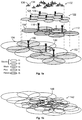
- carrier aggregation scenarios are considered in the 3GPP work. These include intra-band contiguous aggregation, inter-band aggregation, intra-band non-contiguous aggregation and inter-node carrier aggregation. It can be foreseen that future application of CA will involve all of these types. For example, referring briefly to figures 1a and 1b , at a given location of the UE, there may be multiple layers of cells/carriers, overlapping each other at least partially and there will be a more or less complex mix of large and small cells i.e.
- macro cell radius >2000 m
- micro cell radius 200-2000 m
- pico cell radius 10-200 m
- femto cells cell radius 0-10 m
- EP 2696624 describes a procedure of handover of a UE between pico base stations.
- EP2696624 discloses a mechanism for controlling an autonomous mobility procedure of a user equipment.
- a list of candidate communication cells usable as target cells for the autonomous mobility procedure conducted by the UE is transmitted by the network to the UE. Furthermore, when the list is sent to the communication element, preparation information is sent to the candidate communication cells contained in the list sent to the user equipment for preparing the candidate communication cells for a potential autonomous mobility procedure conducted by the user equipment.
- the user equipment uses the list to determine whether the detected cell is a candidate cell for the autonomous mobility procedure.
- the cell receives an access request, it uses the preparation information for determining that the requesting UE is conducting an autonomous mobility procedure, and obtains configuration data for immediately providing service to the user equipment.
- US2009088156 discloses methods and systems for reserving a cellular resource.
- a change in location is determined for a preferred cellular device. Whether the preferred cellular device will be handed off from a first cell to a second cell is predicted based on the change in location for the preferred mobile cellular device.
- a cellular resource in the second cell is reserved for the preferred cellular device.
- an object of the present disclosure is to overcome or at least mitigate at least some of the drawbacks related to dense and ultra-dense deployment of cells.
- a method performed by a network node in a wireless communication system.
- the wireless communication system provides carrier aggregation for a UE, and the UE is located in and connected to a PCell.
- the method comprises transmitting, to the UE, initial configuration data that comprises information regarding at least one secondary cell, SCell, one of which is a current SCell to which the UE is to be connected, and at least one event triggering condition that defines radio signal measurement conditions for use by the UE when switching connection between a current SCell and a subsequent SCell.
- initial configuration data that comprises information regarding at least one secondary cell, SCell, one of which is a current SCell to which the UE is to be connected, and at least one event triggering condition that defines radio signal measurement conditions for use by the UE when switching connection between a current SCell and a subsequent SCell.
- a method performed by a UE.
- the UE is located in and connected to a PCell in a wireless communication system that provides carrier aggregation.
- the method comprises receiving, from a network node, initial configuration data that comprises information regarding at least one SCell, one of which is a current SCell to which the UE is to be connected, and at least one event triggering condition that defines radio signal measurement conditions for use by the UE when switching connection between a current SCell and a subsequent SCell.
- the UE connects to the current SCell and the following steps are repeated:
- a network node comprising input/output circuitry, a processor and a memory.
- the memory contains instructions executable by the processor whereby the network node is operative to:
- a UE comprising radio frequency, RF, circuitry, a processor and a memory.
- the memory contains instructions executable by the processor whereby the UE is operative to:
- a network node may predict, from UE attributes and/or state, likely target SCells and pre-configures the UE with information about those SCells and prepare the predicted likely target SCells, allowing quick deactivation and activation when the UE reports one of the predicted target SCells as being better than then the existing current SCell.
- a respective computer program comprising instructions which, when executed on at least one processor in a node or a UE, cause the node or UE to carry out the respective methods as summarized above in connection with the first and second aspects and the various embodiments of these aspects.
- a respective carrier comprising a computer program according to the summarized aspects above, wherein the respective carrier is one of an electronic signal, an optical signal, a radio signal and a computer readable storage medium.
- FIG. 1a schematically illustrates a scenario where a UE 148 is at a location where multiple layers 102, 112, 122, 132 of coverage by carriers/cells of base stations.
- Macro cells 104 are served by wide area, WA, base stations 106 (also known as high power nodes, HPN) by carriers f1 and f2.
- Micro cells 114 are served by micro nodes (also known as medium range, MR, base stations) by carrier f3.
- Pico cells 124 are served by pico nodes 126 (also known as local area, LA, base stations) by carrier f4, and femto cells 134 are served by femto nodes 136 (also known as home base station, HBS, relay nodes etc.) by carrier f5.
- the dotted areas 142 represent the cell coverage experienced by the UE 148, illustrating the problems discussed above regarding the challenges of providing mobility with dense and ultra-dense deployment of cells, many of which cells have small cell radii.
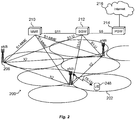
- FIG 2 is an example of a wireless communication system 200 in which these methods may be realized.
- the wireless communication system 200 comprises a number of base stations (for example in the form of evolved Node B's, eNB), 206 that provide carriers/cells 202 to a UE 248.
- the base stations 206 may correspond to any of the nodes/base stations 106, 116, 126, 136 described above in connection with figure 1 .
- the base stations 206 are all connected to a mobile management entity, MME, 210 and a serving gateway, SGW, 212.
- MME mobile management entity
- SGW serving gateway
- Packet data connection for example internet protocol, IP
- IP internet protocol
- PGW packet data network gateway
- Packet data connection to the Internet 216 is provided to the UE 248 via a packet data network gateway, PGW, 214 connected to the SGW 212.
- the base stations 206 may communicate with each other via the X2 interface, with the MME 210 via the S1-MME interface and with the SGW 212 via the S1-U interface.
- the MME 210 and the SGW 212 may communicate via the S11 interface and the SGW 212 may communicate with the PGW 214 via the S5 interface.
- the UE 248 may communicate with the base stations 206 via a long term evolution, LTE, Uu interface.
- any of the layers 102,112,122,132 of cells and base stations 106,116,126,136 may correspond to similar entities in the wireless communication system 200 in figure 2 .
- the embodiments of a method may be realized in any of the base stations 106,116,126,136,206 and the MME 210. It is assumed that the UE is already connected to a PCell. For example, referring to figure 1 , the UE may be connected to a PCell of base station 106.
- the network node that performs the actions of the embodiments of the method may be a base station of the PCell and it may be another node in the system, such as a MME.
- the embodiments of the method will be described in terms of a number of steps or actions. Some of the actions are optional, which is illustrated in figure 3 by the dashed lines.
- Initial configuration data is transmitted to the UE.
- the configuration data comprises information regarding at least one secondary cell, SCell, one of which is a current SCell to which the UE is to be connected, and at least one event triggering condition that defines radio signal measurement conditions for use by the UE when switching connection between a current SCell and a subsequent SCell.
- this may entail the network node configuring the UE with a serving (current) SCell, and event-triggered reporting (e.g. Event A6 as will be exemplified below) and further with event-triggered SCell activation.
- event-triggered reporting e.g. Event A6 as will be exemplified below
- Monitoring data associated with the UE is obtained, where the monitoring data comprises spatial information regarding movement of the UE in relation to the at least one SCell.
- the network node may keep track of the UE trail, i.e., where the UE came from, and attributes (state) such as UE velocity, reported capabilities etc.
- the network node may predict the most likely SCell(s) that the UE will enter next.
- the prediction may be based on collected history of UE trails and attributes, and may also be influenced by other information such as calendar and external input from geographical information systems, GIS, etc.
- the network node preconfigures the UE with the most likely next SCell or SCells.
- Preparation information that comprises information for the at least one subsequent predicted SCell that it is to operate as a SCell in relation to the UE is provided to the at least one subsequent predicted SCell.
- the network node prepares the SCcell or SCells for potential transfer of the UE.
- a determination may be made whether or not the UE has switched from being connected to the current SCell to being connected to one specific SCell among the at least one subsequent predicted SCell.
- this determination may include reception and analysis of event triggered reports from the UE that comprises information associated with radio measurements made by the UE.
- the monitoring data is updated with information that comprises spatial movement of the UE into the specific SCell, whereby the specific SCell becomes the current SCell.
- the network monitors whether the UE (autonomously for example) has activated a preconfigured SCell, as indicated by, e.g., an event-triggered indication. If so, the network node updates information about the UE trail, UE attributes (state), calendar information (time of day, date (workday, weekend, public holiday)), etc. for further refinement of future predictions. Continuation is then in action 303.
- the network node determines whether or not the UE has sent an event-triggered measurement report (or other kind of report) suggesting a non-preconfigured SCell to be better than the current SCell and preconfigured SCell(s). If it is found in this determination that this is not the case, the network node waits for any of those events to occur by returning to action 311.
- the network node may reconfigure the UE with the non-preconfigured SCell, e.g. by following an appropriate legacy procedure.
- the decision to do so may be influenced by history information; that is, the network node may be aware of that the UE just occasionally may come within coverage of the non-preconfigured SCell but anyway prefer it to go to a preconfigured SCell, e.g. to avoid ping-pong between SCells, and may therefore prefer the UE to stay in the current SCell until a preconfigured SCell has become better.
- the network node After reconfiguring the UE in action 315, the network node prepares the target SCell for transfer. This may be done by providing suitable data (cf. action 309) to the target SCell, i.e. the better non-preconfigured SCell that has been identified in action 315.
- the network node sends a message, e.g. in the form of a medium access control, MAC, command, to the UE that deactivates the current SCell and activates the newly configured SCell, i.e. the better non-preconfigured SCell that has been identified in action 315.
- the monitoring data is then updated in action 321, as already described above, whereupon the iteration of actions 303 to 321 is continued.
- Initial configuration data is received from a network node, where the initial configuration data comprises information regarding at least one secondary cell, SCell, one of which is a current SCell to which the UE is to be connected, and at least one event triggering condition that defines radio signal measurement conditions for use by the UE when switching connection between a current SCell and a subsequent SCell.
- SCell secondary cell
- the initial configuration data comprises information regarding at least one secondary cell, SCell, one of which is a current SCell to which the UE is to be connected, and at least one event triggering condition that defines radio signal measurement conditions for use by the UE when switching connection between a current SCell and a subsequent SCell.
- This action may entail configuring the UE with an SCell and preconfigured with SCell(s) for potential transfer when leaving the coverage of the current SCell. Further, the UE is configured with event-triggered reporting (e.g. Event A6) and event-triggered SCell activation.
- event-triggered reporting e.g. Event A6
- event-triggered SCell activation e.g. Event A6
- the UE connects to the current SCell by way of an appropriate connection procedure.
- an iteration commences in that information that specifies at least one predicted subsequent SCell may be received from the network node.
- Measuring takes place of radio signals associated with the current SCell and radio signals associated with said at least one SCell.
- the determination action 409 finds that the event indicates that a specific SCell among the at least one predicted SCell is better than the current SCell, then the current SCell is deactivated and the specific SCell that is better than the current SCell is activated whereby the specific SCell becomes the current SCell.
- a report is provided to the network node, where the report comprises information regarding the determined event and information regarding the activation of the specific SCell that is better than the current SCell.
- the UE provides an indication to the network that a preconfigured SCell has been activated.
- an event-triggered measurement report is transmitted to the network node.
- action 415 If, in action 415, it is found that no specific SCell that is not among the at least one predicted SCell is better than the current SCell, then the iteration of actions returns to action 405.
- the network node may use one or more of the following set of information to predict or determine one or more SCells in which the UE is expected to enter at a future time:
- UE mobility attributes are characterized by at least the UE speed. But they may also be characterized by one or more additional characteristics such as UE location, UE direction of motion, UE acceleration, UE trajectory etc. One or more of these attributes can be estimated by the UE and/or by the network node.
- the above stated UE mobility attributes can be obtained by measuring signals transmitted by the UE in which case the corresponding measurements are performed in the network node, e.g. in the serving network node such as the PCell.
- the UE mobility attributes can also be obtained by using measurements done by the UE and reported to the network node, e.g. transmitted by the UE as part of action 413 or action 417 and received by the network node as part of action 303. More specifically these different attributes may be determined as follows:
- the UE may transmit one or more of these mobility attributes to the network node if they are determined by the UE and used by the network node for preconfiguring one or more SCells. This is illustrated in figure 4 by action 430 and the corresponding reception in the network node is then included in action 303 where monitoring data is obtained.
- the network node may transmit (e.g. in the transmission of the prediction in action 307) one or more of these determined attributes to the UE if they are determined by the network node and are required by the UE for recommending the pre-configuration of one or more SCells. For example if UE has information about deployment of cells (e.g. preconfigured maps for UE based positioning such as for fingerprinting) then the UE can use this information and the UE mobility attributes to identify one or more cells for pre-configuration as SCell(s), for example in a calculation step 431 illustrated in figure 4 . The UE can send this information to the network node (e.g.
- one of more attributes may also be determined by both UE and the network node, and the UE or network node can obtain the final value based on the values determined by both UE and network node. This could be done based on a function of values determined by the UE and the network node; examples of functions are average, maximum, minimum, percentile etc.
- one or more new events may be introduced:
- the reports of the events may take place during action 413 or action 417.
- the network node can configure UE with event X1, or events X2 and X3, or all the three events. As described above, this configuration may take place in action 301 in the network node and corresponding action 401 in the UE.
- both the network node e.g. an evolved NodeB, eNB
- eNB evolved NodeB
- the typical UE action is to send a measurement report but for these special events the UE can do more than that.
- the UE can also be more selective since only preconfigured SCells will trigger the events.
- the UE may for instance indicate to the network node that the current SCell is deactivated by sending an event-triggered channel quality indicator, CQI, report where the new SCell is included. Before having calculated a valid CQI in the new SCell, the UE may for instance use CQI value 0, similar to how it is done for regular SCell activation (see 3GPP TS 36.133 V12.3.0 section 7.7). The previous SCell may for instance be omitted in the report, and the network node interprets this as the UE having autonomously changed SCell.
- CQI channel quality indicator
- This event may be configured together with e.g. Event A6 to allow the UE also to indicate to the network node that another cell than the already configured SCell caused the event.
- the UE may transmit a capability information to the network node to inform the network node whether the UE is capable of being preconfigured with one or more SCells, which are to be used as SCell(s) at a future time when one or more condition is met (as described above). More specifically, the UE may indicate in a capability information message (actions 420 in the UE and action 300 in the network node) that it is capable of performing the methods as described above.
- the capability information may be transmitted via higher layer signaling (e.g. RRC signaling) to the network node.
- the information may be sent during an initial call setup or after cell change (e.g. handover etc) or during the session or call.
- the UE capability information may also contain additional or more specific information such as:
- the acquired UE capability information may be used by the network node for performing one or more radio operation tasks or network management tasks:
- the source PCell may forward information on the UE trail and/or UE attributes (state) to the neighboring PCell.
- the UE trail includes at least the last used SCell on concerned carriers in the border area between the PCells. This information allows the target PCell to prepare for quick activation of the most likely SCell(s) immediately after the completed handover without waiting for a first measurement report from the UE.
- the network node handling the source PCell may alternatively or additionally indicate the physical cell identities, PCI, of suitable target SCell, to further prepare the network node handling the target PCell.
- PCI physical cell identities
- Both the target and the source network nodes may have acquired such information e.g. by analyzing measurement reports from UEs following that trail in the past.
- a UE 505 is moving in an indoor environment of a shopping mall 503 comprising a plurality of stores (denoted Store A, Store B etc. in figure 5 ).
- the UE 505 communicates with a network node (not shown in figure 5 ) and the UE is connected to a PCell (not illustrated in figure 5 ), such as a macro cell in a macro layer (e.g. layer 102 in figure 1 ).
- the areas of the stores in the shopping mall is covered by a plurality of SCells 501 that are denoted cell1, cell2 etc. in figure 5 .
- the possible trails or paths of movement of the UE 505 are illustrated by black arrows 507 in figure 5 .
- the network node may find that 40% of the UEs that are entering Cell 2 from Cell 1 continue to Cell 3, and another 50% to Cell 5. Further the network node may find that 90% of UEs that are entering Cell 5 enter Cell 7 or 8 with same probability.
- the information about the cells (e.g. cell 1-8) where the UE is operating can be determined by the network node based on, for example, the pre-determined information about the deployment (as described above).
- Some UEs will turn back to where they came from, and some UEs will enter other cells, e.g. UEs carried by customers to Store B will leave Cell 2 and go to Cell 4, but the majority of the UEs will follow predictable trails due to physical obstacles such as walls along the corridors, etc.
- the network node may configure already beforehand the most likely SCell the UE 505 will continue to next.
- the network node configures Cell 2 as SCell, along current configurations of serving Cell 1 and previous Cell 0.
- the network node may send a MAC command to the UE 505 to activate Cell 2 and deactivate Cell 1. It may then configure Cells 3 and 5 as SCells, and release Cell 0 which no longer is a likely next cell, for example via a RRCConnectionReconfiguration message (see 3GPP TS 36.331 V12.1.0 section 6.2.2).
- the network node may upon finding that Cell 4 is better than Cell 2, deactivating Cell 2, reconfiguring Cell 4 as SCell, releasing Cell 1 (no longer a next cell), and then some time later activate the Cell 4.
- the benefit from this approach is that the majority of users of the UE 505 at any given time will have an almost seamless mobility with high throughput as long as they follow a route in the shopping mall 503 that a majority of UEs have done historically. Occasionally, when diverting from the most likely route, a user of the UE 505 will experience a short-lived degradation due to the network node falling back to legacy procedure for transferring the UE 505 from one SCell to another.
- a further benefit is that by preconfiguring the next SCell the usable time of the cell can be prolonged for the cases when the UE 505 is moving at a relatively high velocity compared to the cell radius. Without preconfiguring the next SCell the RRC signaling will add to the interruption time and may lead to that the usable time in the cell is too short for making sense to activate it for the UE.
- the network node may also identify some cells where it does not make sense to predict the next cell, since there would be too many option and call for too many potential next cells to be configured. For such cells the network node may simply use a legacy procedure for transferring the UE between the SCells.
- a UE 605 illustrates movement in an outdoor environment in traffic.
- Traffic paths in the scenario indicate how traffic going along a freeway 602 moves at a relatively high speed 610, traffic along a local road 604 moves at a relatively low speed 612 and traffic along a railway 606 moves at a very high speed 614.
- the UE 605 communicates with a network node (not shown in figure 6 ) and the UE 605 is connected to a PCell (not illustrated in figure 6 ), such as a macro cell in a macro layer (e.g. layer 102 in figure 1 ).
- the different traffic paths are covered by a plurality of SCells 601 that are denoted cell1, cell2 etc. in figure 6 .
- the network node takes speed into account to determine or refine the prediction (i.e. in action 305) of the next cell for the UE 605 to enter.
- the UE 605 enters cell 6 from cell 4 at high speed is likely to continue on the freeway, and hence the likely next SCell is cell 8.
- a UE entering cell 8 from ell 9 is most likely either traveling along the railway 606 or along the local road 604.
- the trains are passing at considerably higher speed than the speed limit of the local road 604.
- the network node can decide whether to preconfigure cell 7 (continue along the railway) or cell 5 (follow the local road).
- the network node can decide whether to preconfigure cell 3 (traveling along the local road 604) or cell 4 (traveling on the freeway 602).
- the same principle can be used to distinguish between UEs traveling along a road by car, and UEs traveling nearby to the road on e.g. cycle paths (lower velocity), or to distinguish pedestrians on a sidewalk from cyclists on a cycle path.
- the network node does not have to know anything about the presence of roads, railways etc, nor does it have to know where such infrastructure crosses the cells, or even the exact location and coverage of the cells. It builds and refines its knowledge based on observed UE behavior (as obtained in action 303). Additional information may of course be provided e.g. manually, from other network nodes (UE trail in previous PCell(s) before entering the current one, etc.), and from servers in a cloud (e.g. carrying information about layout of infrastructure, e.g. a GIS server.
- the network node when predicting (action 305) the most likely next cell, also may take into account time-dependent traffic patterns, e.g. commuting, with heavy traffic along particular routes at particular time of day and particular days of a week.
- time-dependent traffic patterns e.g. commuting
- additional information may be used to enhance the prediction further, e.g. calendar information about working days, public holidays, weekends, etc., for instance provided via a server in a cloud. For instance, at rush hour the network node may identify that the traffic is running very slow due to traffic jams, while at the same time there are many users in the cells.
- the network node may configure the UE with several SCells, to cover more than one outcome (e.g., while UE 605 is in cell 6 preconfiguring both cell 8 and cell 9).
- Figure 7 schematically illustrates a network node 700 comprising input/output circuitry 706, a processor 702 and a memory 704.
- the memory 704 contains instructions executable by the processor 702 whereby the node 700 is operative to:
- the network node 700 is operative to determine whether or not the UE has switched from being connected to the current SCell to being connected to one specific SCell among the at least one subsequent predicted SCell, and, if so:
- the network node 700 is operative such that the at least one event triggering condition is configured for triggering any event of:
- the network node 700 is operative such that the obtaining of monitoring data comprises receiving mobility attributes associated with the UE, and configured such that:
- the network node 700 is operative such that the obtaining of monitoring data comprises determining mobility attributes associated with the UE, and configured such that:
- the network node 700 is operative to:
- the network node 700 is operative to determine that a handover to a subsequent PCell is in progress, and in response to this determination, provide information regarding to the subsequent PCell, said information comprising any of UE movement and mobility attributes associated with the UE.
- the instructions that are executable by the processor 702 may be software in the form of a computer program 741.
- the computer program 741 may be contained in or by a carrier 742, which may provide the computer program 741 to the memory 704 and processor 702.
- the carrier 742 may be in any suitable form including an electronic signal, an optical signal, a radio signal or a computer readable storage medium.
- FIG. 8 schematically illustrates a user equipment, UE, 800.
- the UE comprises radio frequency, RF, circuitry 806, a processor 802 and a memory 804.
- the memory 804 contains instructions executable by the processor 802 whereby the UE 800 is operative to:
- the UE 800 is operative such that the at least one event triggering condition is configured for triggering any event of:
- the UE 800 is operative to:
- the UE 800 is operative to:
- the UE 800 is operative to:
- the UE 800 is operative to:
- the instructions that are executable by the processor 802 may be software in the form of a computer program 841.
- the computer program 841 may be contained in or by a carrier 842, which may provide the computer program 841 to the memory 804 and processor 802.
- the carrier 842 may be in any suitable form including an electronic signal, an optical signal, a radio signal or a computer readable storage medium.
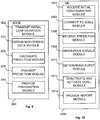
- Figure 9 illustrates schematically a network node 900 that comprises:
- the node 900 may comprise further modules that are configured to perform in a similar manner as, e.g., the node 700 described above in connection with figure 7 .
- Figure 10 illustrates schematically a UE that comprises:
- the UE 1000 may comprise further modules that are configured to perform in a similar manner as, e.g., the UE 800 described above in connection with figure 8 .
- processing module may refer to a processing circuit, a processing unit, a processor, an Application Specific integrated Circuit (ASIC), a Field-Programmable Gate Array (FPGA) or the like.
- ASIC Application Specific integrated Circuit
- FPGA Field-Programmable Gate Array
- a processor, an ASIC, an FPGA or the like may comprise one or more processor kernels.
- the processing module may be embodied by a software module or hardware module. Any such module may be a determining means, estimating means, capturing means, associating means, comparing means, identification means, selecting means, receiving means, transmitting means or the like as disclosed herein.
- the expression “means” may be a module, such as a determining module, selecting module, etc.
- the expression “configured to” may mean that a processing circuit is configured to, or adapted to, by means of software configuration and/or hardware configuration, perform one or more of the actions described herein.
- memory may refer to a hard disk, a magnetic storage medium, a portable computer diskette or disc, flash memory, random access memory (RAM) or the like. Furthermore, the term “memory” may refer to an internal register memory of a processor or the like.
- the term "computer readable medium” may be a Universal Serial Bus (USB) memory, a DVD-disc, a Blu-ray disc, a software module that is received as a stream of data, a Flash memory, a hard drive, a memory card, such as a MemoryStick, a Multimedia Card (MMC), etc.
- USB Universal Serial Bus
- DVD-disc DVD-disc
- Blu-ray disc Blu-ray disc
- a software module that is received as a stream of data
- Flash memory such as a MemoryStick, a Multimedia Card (MMC), etc.
- MMC Multimedia Card
- computer readable code units may be text of a computer program, parts of or an entire binary file representing a computer program in a compiled format or anything there between.
- number may be any kind of digit, such as binary, real, imaginary or rational number or the like. Moreover, “number”, “value” may be one or more characters, such as a letter or a string of letters. “number”, “value” may also be represented by a bit string.
Landscapes
- Engineering & Computer Science (AREA)
- Computer Networks & Wireless Communication (AREA)
- Signal Processing (AREA)
- Mobile Radio Communication Systems (AREA)
Claims (18)
- Procédé, mis en oeuvre par un noeud de réseau dans un système de communication sans fil, dans lequel ledit système de communication sans fil fournit une agrégation de porteuse, CA, pour un équipement d'utilisateur, UE, ledit équipement UE étant situé dans et étant connecté à une cellule principale, « PCell », le procédé comprenant les étapes ci-dessous consistant à :- transmettre (301), à l'équipement UE, des données de configuration initiale qui comprennent des informations concernant au moins une cellule secondaire, « SCell », dont l'une est une cellule SCell en cours à laquelle l'équipement UE doit être connecté, et au moins une condition de déclenchement d'événement qui définit des conditions de mesures de signaux radio destinées à être utilisées par l'équipement UE dans le cadre d'une commutation de connexion entre la cellule SCell en cours et une cellule SCell subséquente, et répéter les étapes ci-dessous consistant à :- obtenir (303) des données de surveillance associées à l'équipement UE, lesdites données de surveillance comprenant des informations spatiales concernant un déplacement de l'équipement UE par rapport à ladite au moins une cellule SCell ;- calculer (305), sur la base des données de surveillance, au moins une prédiction d'au moins une cellule SCell prédite subséquente dans laquelle l'équipement UE s'apprête à entrer ;- transmettre (307), à l'équipement UE, des informations qui spécifient ladite au moins une cellule SCell subséquente prédite ;- fournir (309), à ladite au moins une cellule SCell prédite subséquente, des informations de préparation qui comprennent des informations indiquant, en ce qui concerne ladite au moins une cellule SCell prédite subséquente, qu'elle doit opérer en tant qu'une cellule SCell relativement à l'équipement UE.
- Procédé selon la revendication 1, comprenant les étapes ci-dessous consistant à :- déterminer (311) si l'équipement UE a commuté ou non d'une connexion à la cellule SCell en cours à une connexion à une cellule SCell spécifique parmi ladite au moins une cellule SCell prédite subséquente, et, le cas échéant :- mettre à jour (321) les données de surveillance avec des informations qui comprennent un déplacement spatial de l'équipement UE dans la cellule SCell spécifique, moyennant quoi la cellule SCell spécifique devient la cellule SCell en cours.
- Procédé selon la revendication 1 ou 2, dans lequel ladite au moins une condition de déclenchement d'événement est configurée de manière à déclencher un événement quelconque parmi :- un événement « X1 » déclenché par l'équipement UE sur la base d'un résultat d'une comparaison de mesures de signaux mises en oeuvre sur la cellule SCell en cours et sur ladite au moins une cellule SCell subséquente prédite, par l'équipement UE ;- un événement « X2 » déclenché par l'équipement UE sur la base d'un résultat d'une comparaison d'une mesure de signal mise en oeuvre par l'équipement UE, en comparant la mesure de signal de ladite au moins une cellule SCell subséquente prédite à un seuil ; et- un événement « X3 » déclenché sur la base d'un résultat d'une comparaison d'une mesure de signal mise en oeuvre par l'équipement UE sur la cellule SCell en cours à un seuil.
- Procédé selon l'une quelconque des revendications 1 à 3, dans lequel l'étape d'obtention de données de surveillance comprend l'étape consistant à recevoir des attributs de mobilité associés à l'équipement UE, et dans lequel :- l'étape de calcul (305) d'au moins une prédiction d'au moins une cellule SCell prédite subséquente dans laquelle l'équipement UE s'apprête à entrer comprend l'étape consistant à utiliser des attributs de mobilité reçus.
- Procédé selon l'une quelconque des revendications 1 à 4, dans lequel l'étape d'obtention de données de surveillance comprend l'étape consistant à déterminer des attributs de mobilité associés à l'équipement UE, et dans lequel :- l'étape de transmission (307) d'informations spécifiant ladite au moins une cellule SCell subséquente prédite consiste à transmettre lesdits attributs de mobilité ; et- l'étape de calcul (305) d'au moins une prédiction d'au moins une cellule SCell prédite subséquente dans laquelle l'équipement UE s'apprête à entrer comprend l'étape consistant à utiliser des attributs de mobilité reçus.
- Procédé selon l'une quelconque des revendications 1 à 5, comprenant l'étape ci-dessous consistant à :- recevoir (300), en provenance de l'équipement UE, des informations concernant la capacité propre à l'équipement UE d'être préconfiguré avec une ou plusieurs cellules SCell à des fins d'utilisation future en tant qu'une ou plusieurs cellules SCell, et dans lequel les données de configuration initiale comprennent au moins une partie desdites informations concernant la capacité d'équipement UE.
- Procédé selon l'une quelconque des revendications 1 à 6, comprenant l'étape consistant à déterminer qu'un transfert intercellulaire vers une cellule PCell subséquente est en cours, et en réponse à cette détermination, l'étape consistant à fournir des informations concernant la cellule PCell subséquente, lesdites informations comprenant l'un quelconque parmi des attributs de mobilité et de déplacement d'équipement UE associés à l'équipement UE.
- Procédé, mis en oeuvre par un équipement d'utilisateur, UE, ledit équipement UE étant situé dans et connecté à une cellule principale, « PCell », dans un système de communication sans fil, ledit système de communication sans fil fournissant une agrégation de porteuse, CA, le procédé comprenant les étapes ci-dessous consistant à :- recevoir (401), en provenance d'un noeud de réseau, des données de configuration initiale qui comprennent des informations concernant au moins une cellule secondaire, « SCell », dont l'une est une cellule SCell en cours à laquelle l'équipement UE doit être connecté, et au moins une condition de déclenchement d'événement qui définit des conditions de mesures de signaux radio destinées à être utilisées par l'équipement UE dans le cadre d'une commutation de connexion entre la cellule SCell en cours et une cellule SCell subséquente ;- se connecter (403) à la cellule SCell en cours, et répéter les étapes ci-dessous consistant à :- recevoir (405), en provenance du noeud de réseau, des informations qui spécifient au moins une cellule SCell subséquente prédite ;- mesurer (407) des signaux radio associés à la cellule SCell en cours et des signaux radio associés à ladite au moins une cellule SCell ;- déterminer (409), sur la base de l'étape de mesure de signaux radio, un événement, selon ladite au moins une condition de déclenchement d'événement et, si ledit événement indique qu'une cellule SCell spécifique parmi ladite au moins une cellule SCell subséquente prédite est meilleure que la cellule SCell en cours :- désactiver (411) la cellule SCell en cours, et activer la cellule SCell spécifique qui est meilleure que la cellule SCell en cours, moyennant quoi la cellule SCell spécifique devient la cellule SCell en cours ; et- fournir (413), au noeud de réseau, un rapport qui comprend des informations concernant l'événement déterminé et des informations concernant l'activation de la cellule SCell spécifique qui est meilleure que la cellule SCell en cours.
- Procédé selon la revendication 8, dans lequel ladite au moins une condition de déclenchement d'événement est configurée de manière à déclencher un événement quelconque parmi :- un événement « X1 » déclenché par l'équipement UE sur la base d'un résultat d'une comparaison de mesures de signaux mises en oeuvre sur la cellule SCell en cours et sur ladite au moins une cellule SCell subséquente prédite, par l'équipement UE ;- un événement « X2 » déclenché par l'équipement UE sur la base d'un résultat d'une comparaison d'une mesure de signal mise en oeuvre par l'équipement UE, en comparant la mesure de signal de ladite au moins une cellule SCell subséquente prédite à un seuil ; et- un événement « X3 » déclenché sur la base d'un résultat d'une comparaison d'une mesure de signal mise en oeuvre par l'équipement UE sur la cellule SCell en cours à un seuil.
- Procédé selon la revendication 8 ou 9, comprenant les étapes ci-dessous consistant à :- déterminer (415), si aucun événement qui indique qu'une cellule SCell spécifique parmi au moins une cellule SCell prédite subséquente est meilleure que la cellule SCell en cours n'est déterminé, un événement qui indique si une cellule SCell spécifique qui ne figure pas parmi ladite au moins une cellule SCell prédite est meilleure ou non que la cellule SCell en cours, et si ledit événement indique qu'une cellule SCell spécifique qui ne figure pas parmi ladite au moins une cellule SCell prédite est meilleure que la cellule SCell en cours :- fournir (417), au noeud de réseau, un rapport qui comprend des informations concernant l'événement déterminé et des informations concernant l'activation de la cellule SCell spécifique qui ne figure pas parmi ladite au moins une cellule SCell prédite et qui est plus optimale que la cellule SCell en cours.
- Procédé selon la revendication 10, comprenant l'étape ci-dessous consistant à :- obtenir (430) des attributs de mobilité associés à l'équipement UE, et dans lequel l'étape de fourniture d'un rapport au noeud de réseau consiste à fournir lesdits attributs de mobilité.
- Procédé selon la revendication 11, comprenant en outre l'étape ci-dessous consistant à :- calculer (431), sur la base des données de surveillance, au moins une prédiction d'au moins une cellule SCell prédite subséquente dans laquelle l'équipement UE s'apprête à entrer, et dans lequel l'étape de fourniture d'un rapport au noeud de réseau consiste à fournir ladite prédiction d'au moins une cellule SCell prédite subséquente.
- Procédé selon l'une quelconque des revendications 8 à 12, comprenant l'étape ci-dessous consistant à :- transmettre (420), au noeud de réseau, des informations concernant la capacité propre à l'équipement UE d'être préconfiguré avec une ou plusieurs cellules SCell à des fins d'utilisation future en tant qu'une ou plusieurs cellules SCell.
- Noeud de réseau (106, 206, 116, 126, 136, 700) dans un système de communication sans fil, ledit système de communication sans fil fournissant une agrégation de porteuse, CA, pour un équipement d'utilisateur, UE, ledit équipement UE étant situé dans et connecté à une cellule principale, « PCell », ledit noeud comprenant un montage de circuits d'entrée/sortie (706), un processeur (702) et une mémoire (704), ladite mémoire contenant des instructions exécutables par ledit processeur, moyennant quoi ledit noeud est exploitable de manière à :- transmettre, à l'équipement d'utilisateur, UE, (148, 505, 605, 800), des données de configuration initiale qui comprennent des informations concernant au moins une cellule secondaire, « SCell », dont l'une est une cellule SCell en cours à laquelle l'équipement UE doit être connecté, et au moins une condition de déclenchement d'événement qui définit des conditions de mesures de signaux radio destinées à être utilisées par l'équipement UE dans le cadre d'une commutation de connexion entre la cellule SCell en cours et une cellule SCell subséquente, et répéter les étapes ci-dessous consistant à :- obtenir des données de surveillance associées à l'équipement UE, lesdites données de surveillance comprenant des informations spatiales concernant un déplacement de l'équipement UE par rapport à ladite au moins une cellule SCell ;- calculer, sur la base des données de surveillance, au moins une prédiction d'au moins une cellule SCell prédite subséquente dans laquelle l'équipement UE s'apprête à entrer ;- transmettre, à l'équipement UE, des informations qui spécifient ladite au moins une cellule SCell subséquente prédite ;- fournir, à ladite au moins une cellule SCell prédite subséquente, des informations de préparation qui comprennent des informations indiquant, en ce qui concerne ladite au moins une cellule SCell prédite subséquente, qu'elle doit opérer en tant qu'une cellule SCell relativement à l'équipement UE.
- Équipement d'utilisateur (148, 505, 605, 800), UE, ledit équipement UE étant situé dans et connecté à une cellule principale, « PCell », dans un système de communication sans fil, ledit système de communication sans fil fournissant une agrégation de porteuse, CA, ledit équipement UE comprenant un montage de circuits radiofréquence (806), un processeur (802) et une mémoire (804), ladite mémoire contenant des instructions exécutables par ledit processeur, moyennant quoi ledit équipement UE est exploitable de manière à :- recevoir, en provenance d'un noeud de réseau (106, 206, 116, 126, 136, 700), des données de configuration initiale qui comprennent des informations concernant au moins une cellule secondaire, « SCell », dont l'une est une cellule SCell en cours à laquelle l'équipement UE doit être connecté, et au moins une condition de déclenchement d'événement qui définit des conditions de mesures de signaux radio destinées à être utilisées par l'équipement UE dans le cadre d'une commutation de connexion entre la cellule SCell en cours et une cellule SCell subséquente ;- se connecter à la cellule SCell en cours, et répéter les étapes ci-dessous consistant à :- recevoir, en provenance du noeud de réseau, des informations qui spécifient au moins une cellule SCell subséquente prédite ;- mesurer des signaux radio associés à la cellule SCell en cours et des signaux radio associés à ladite au moins une cellule SCell ;- déterminer, sur la base de l'étape de mesure de signaux radio, un événement, selon ladite au moins une condition de déclenchement d'événement et, si ledit événement indique qu'une cellule SCell spécifique parmi ladite au moins une cellule SCell subséquente prédite est meilleure que la cellule SCell en cours :- désactiver la cellule SCell en cours, et activer la cellule SCell spécifique qui est meilleure que la cellule SCell en cours, moyennant quoi la cellule SCell spécifique devient la cellule SCell en cours ; et- fournir, au noeud de réseau, un rapport qui comprend des informations concernant l'événement déterminé et des informations concernant l'activation de la cellule SCell spécifique qui est plus optimale que la cellule SCell en cours.
- Programme informatique (741) comprenant des instructions qui, lorsqu'elles sont exécutées sur au moins un processeur (702) dans un noeud de réseau (106, 206, 116, 126, 136, 700), amènent le noeud de réseau à mettre en oeuvre le procédé selon l'une quelconque des revendications 1 à 7.
- Programme informatique (841) comprenant des instructions qui, lorsqu'elles sont exécutées sur au moins un processeur (802) dans un équipement d'utilisateur, UE, (148, 505, 605, 800), amènent l'équipement UE à mettre en oeuvre le procédé selon l'une quelconque des revendications 8 à 13.
- Porteuse (742, 842) comprenant le programme informatique selon la revendication 16 ou 17, dans laquelle la porteuse correspond à l'un parmi un signal électronique, un signal optique, un signal radio et un support de stockage lisible par ordinateur.
Applications Claiming Priority (1)
| Application Number | Priority Date | Filing Date | Title |
|---|---|---|---|
| PCT/EP2014/071423 WO2016055095A1 (fr) | 2014-10-07 | 2014-10-07 | Mobilité dans des réseaux denses |
Publications (2)
| Publication Number | Publication Date |
|---|---|
| EP3205148A1 EP3205148A1 (fr) | 2017-08-16 |
| EP3205148B1 true EP3205148B1 (fr) | 2019-01-30 |
Family
ID=51662113
Family Applications (1)
| Application Number | Title | Priority Date | Filing Date |
|---|---|---|---|
| EP14781200.2A Active EP3205148B1 (fr) | 2014-10-07 | 2014-10-07 | Mobilité dans des réseaux denses |
Country Status (6)
| Country | Link |
|---|---|
| US (1) | US11026141B2 (fr) |
| EP (1) | EP3205148B1 (fr) |
| CN (1) | CN106797536B (fr) |
| BR (1) | BR112017006813A2 (fr) |
| RU (1) | RU2657249C1 (fr) |
| WO (1) | WO2016055095A1 (fr) |
Families Citing this family (29)
| Publication number | Priority date | Publication date | Assignee | Title |
|---|---|---|---|---|
| WO2016119873A1 (fr) | 2015-01-30 | 2016-08-04 | Telefonaktiebolaget Lm Ericsson (Publ) | Agencement de cellules radio dans un scénario à grande vitesse |
| EP3251406B1 (fr) | 2015-01-30 | 2020-01-15 | Telefonaktiebolaget LM Ericsson (publ) | Transfert dans un scenario à grande vitesse |
| US10341926B2 (en) | 2016-05-24 | 2019-07-02 | Telefonaktiebolaget Lm Ericsson (Publ) | Handover in high speed scenario |
| EP3691174B1 (fr) * | 2016-08-12 | 2023-10-04 | Telefonaktiebolaget LM Ericsson (publ) | Configuration de signaux de référence de mobilité à deux niveaux |
| WO2018063062A1 (fr) * | 2016-09-30 | 2018-04-05 | Telefonaktiebolaget Lm Ericsson (Publ) | Procédés et appareils d'adaptation d'interruption de cellule de desserte sur la base d'une numérologie |
| US11483119B2 (en) * | 2017-07-28 | 2022-10-25 | Qualcomm Incorporated | Secondary cell configuration signaling and activation field |
| CN113840344A (zh) * | 2017-08-01 | 2021-12-24 | 上海朗帛通信技术有限公司 | 一种被用于无线通信的用户、基站中的方法和装置 |
| CN109391399B (zh) * | 2017-08-10 | 2022-04-19 | 中兴通讯股份有限公司 | 辅小区的管理方法、装置及设备 |
| EP3711362B1 (fr) * | 2017-12-12 | 2023-01-25 | Huawei Technologies Co., Ltd. | Procédés de réduction de latence de mobilité dans une architecture nr hiérarchique |
| US10673546B2 (en) | 2018-09-27 | 2020-06-02 | Nokia Solutions And Networks Oy | Scell selection and optimization for telecommunication systems |
| CN111148148A (zh) | 2018-11-02 | 2020-05-12 | 华为技术有限公司 | 一种通信方法及装置 |
| US11924704B2 (en) | 2018-12-18 | 2024-03-05 | Telefonaktiebolaget Lm Ericsson (Publ) | Conditional mobility selection |
| KR102558686B1 (ko) * | 2018-12-24 | 2023-07-24 | 베이징 시아오미 모바일 소프트웨어 컴퍼니 리미티드 | 측정 제어에 관한 배치 정보 전송 방법 및 장치 |
| PH12021551645A1 (en) | 2019-02-05 | 2022-05-02 | Ericsson Telefon Ab L M | Handling of measurement configuration upon conditional mobility execution |
| WO2020164070A1 (fr) * | 2019-02-14 | 2020-08-20 | Nokia Shanghai Bell Co., Ltd. | Changement de cellule primaire |
| EP3931996A1 (fr) * | 2019-02-25 | 2022-01-05 | Nokia Technologies Oy | Communication multi-porteuse |
| GB201905222D0 (en) | 2019-04-12 | 2019-05-29 | Airspan Networks Inc | Air-to-ground (ATG) communication technologies |
| US11601880B2 (en) * | 2019-05-01 | 2023-03-07 | Qualcomm Incorporated | Power management for a user equipment in a multi-radio connectivity mode or carrier aggregation mode |
| CN112868251A (zh) | 2019-07-10 | 2021-05-28 | Oppo广东移动通信有限公司 | 一种条件切换的方法和装置 |
| CN118695313A (zh) * | 2019-07-12 | 2024-09-24 | 诺基亚技术有限公司 | 用于多小区目标条件切换的方法和系统 |
| CN112584304A (zh) * | 2019-09-27 | 2021-03-30 | 维沃移动通信有限公司 | 小区管理方法和设备 |
| US20240107429A1 (en) * | 2019-11-04 | 2024-03-28 | Telefonaktiebolaget Lm Ericsson (Publ) | Machine Learning Non-Standalone Air-Interface |
| EP4074097A4 (fr) | 2019-12-10 | 2022-12-28 | Telefonaktiebolaget Lm Ericsson (Publ) | Procédés, ue et premier n?ud de réseau pour gérer des informations de mobilité dans un réseau de communication |
| WO2021232397A1 (fr) * | 2020-05-22 | 2021-11-25 | Qualcomm Incorporated | Attribution de groupe de cellules secondaires |
| CN114080063A (zh) * | 2020-08-19 | 2022-02-22 | 中国移动通信有限公司研究院 | 辅节点或辅小区的激活或去激活方法、装置、设备 |
| CN112188467B (zh) * | 2020-09-29 | 2022-05-03 | 重庆邮电大学 | 一种基于用户属性的终端发现方法 |
| US12342207B2 (en) | 2022-04-14 | 2025-06-24 | Samsung Electronics Co., Ltd | Secondary cell discovery in energy saving network |
| CN120937282A (zh) * | 2023-03-24 | 2025-11-11 | 诺基亚技术有限公司 | 网络控制的用户设备发起的小区激活 |
| EP4694464A1 (fr) * | 2023-06-12 | 2026-02-11 | Kyocera Corporation | Équipement utilisateur, noeud, et procédé de communication |
Family Cites Families (22)
| Publication number | Priority date | Publication date | Assignee | Title |
|---|---|---|---|---|
| US8078172B2 (en) | 2007-09-28 | 2011-12-13 | At&T Intellectual Property I, Lp | Methods, systems, and computer-readable media for reserving a cellular resource |
| CN101635968A (zh) * | 2008-07-22 | 2010-01-27 | 株式会社Ntt都科摩 | 切换处理方法、基站及网络通信系统 |
| CN101365242A (zh) * | 2008-08-29 | 2009-02-11 | 同济大学 | 基于移动预测的群体切换方法及系统 |
| US20100069070A1 (en) * | 2008-09-17 | 2010-03-18 | Qualcomm Incorporated | Location-assisted network entry, scan and handover |
| CN101932045B (zh) * | 2009-06-24 | 2014-11-05 | 中兴通讯股份有限公司 | 载波聚合中测量结果的上报方法及用户设备 |
| CN102026309B (zh) * | 2009-09-10 | 2013-07-31 | 电信科学技术研究院 | 一种终端移动状态的检测方法、系统和设备 |
| CN102281556A (zh) * | 2010-06-13 | 2011-12-14 | 中兴通讯股份有限公司 | 多载波通信系统以及载波聚合中启动测量任务的方法 |
| US8619654B2 (en) * | 2010-08-13 | 2013-12-31 | Intel Corporation | Base station selection method for heterogeneous overlay networks |
| US20120106511A1 (en) * | 2010-11-03 | 2012-05-03 | Chih-Hsiang Wu | Method of Handling Primary Serving Cell Change |
| CN102083154A (zh) * | 2010-11-05 | 2011-06-01 | 大唐移动通信设备有限公司 | 一种切换时辅小区配置的处理方法及其装置 |
| CN102083131B (zh) * | 2010-11-05 | 2013-11-06 | 大唐移动通信设备有限公司 | 可配置的终端载波最大传输功率的上报方法和设备 |
| US9291715B2 (en) * | 2011-05-16 | 2016-03-22 | Furuno Electric Co., Ltd. | Interference wave signal removing device, GNSS reception apparatus, mobile terminal, interference wave signal removing program and interference wave removing method |
| EP2724577A1 (fr) * | 2011-06-21 | 2014-04-30 | Telefonaktiebolaget LM Ericsson (PUBL) | Procédé et appareils pour la prise en compte des informations de changement de cellule |
| US9220041B2 (en) * | 2011-09-30 | 2015-12-22 | Nokia Technologies Oy | Mobility enhancement for fast moving user equipment in a heterogenous network environment |
| CN102624482B (zh) * | 2012-01-12 | 2015-07-08 | 北京邮电大学 | 一种多点协作传输场景下的有限反馈方法及系统 |
| US9414409B2 (en) * | 2012-02-06 | 2016-08-09 | Samsung Electronics Co., Ltd. | Method and apparatus for transmitting/receiving data on multiple carriers in mobile communication system |
| CN103582126B (zh) * | 2012-07-31 | 2018-11-16 | 北京三星通信技术研究有限公司 | 在跨eNB载波聚合系统中配置和激活SCell的方法及终端 |
| US9204339B2 (en) * | 2012-08-07 | 2015-12-01 | Nokia Solutions And Networks Oy | Control mechanism for autonomous mobility of terminal device |
| EP2696624B1 (fr) * | 2012-08-07 | 2015-10-28 | Nokia Solutions and Networks Oy | Mécanisme de commande pour mobilité autonome d'un dispositif de terminal |
| WO2014032261A1 (fr) * | 2012-08-30 | 2014-03-06 | Broadcom Corporation | Indicateur de signal transitoire pour agrégation de porteuses |
| EP2739107B1 (fr) * | 2012-11-28 | 2019-01-02 | Samsung Electronics Co., Ltd | Procédé et appareil pour réaliser des communications dans un système de communications sans fil |
| WO2014146272A1 (fr) * | 2013-03-21 | 2014-09-25 | Nokia Corporation | Procédé et appareil de commande de mobilité dans un réseau hétérogène |
-
2014
- 2014-10-07 CN CN201480082519.7A patent/CN106797536B/zh active Active
- 2014-10-07 EP EP14781200.2A patent/EP3205148B1/fr active Active
- 2014-10-07 US US14/780,530 patent/US11026141B2/en active Active
- 2014-10-07 RU RU2017115801A patent/RU2657249C1/ru not_active IP Right Cessation
- 2014-10-07 WO PCT/EP2014/071423 patent/WO2016055095A1/fr not_active Ceased
- 2014-10-07 BR BR112017006813A patent/BR112017006813A2/pt not_active IP Right Cessation
Non-Patent Citations (1)
| Title |
|---|
| None * |
Also Published As
| Publication number | Publication date |
|---|---|
| CN106797536B (zh) | 2020-11-10 |
| EP3205148A1 (fr) | 2017-08-16 |
| CN106797536A (zh) | 2017-05-31 |
| WO2016055095A1 (fr) | 2016-04-14 |
| US11026141B2 (en) | 2021-06-01 |
| RU2657249C1 (ru) | 2018-06-09 |
| US20160262065A1 (en) | 2016-09-08 |
| BR112017006813A2 (pt) | 2018-01-09 |
Similar Documents
| Publication | Publication Date | Title |
|---|---|---|
| EP3205148B1 (fr) | Mobilité dans des réseaux denses | |
| US20250294517A1 (en) | Methods, ue and first network node for handling mobility information in a communications network | |
| US11523311B2 (en) | Cell ID disambiguation | |
| US20240040461A1 (en) | Ue, network node and methods for handling mobility information in a communications network | |
| CN113875175A (zh) | 用于处置信号质量变化的网络节点、用户设备和方法 | |
| CN110268745B (zh) | 无线设备切换 | |
| EP2891364A2 (fr) | Procédé de réduction de messages de signalisation et de transferts intercellulaires dans des réseaux sans fil | |
| US20210250822A1 (en) | Neighbor Relations for Moving Cells | |
| JP7268139B2 (ja) | 基地局、通信システム、通信方法、及びプログラム | |
| JP7285918B2 (ja) | 端末装置、通信システム、通信方法、及びプログラム | |
| JP7144599B2 (ja) | 端末装置、通信システム、通信方法、及びプログラム | |
| US20210029598A1 (en) | Radio link setup signaling in cellular system | |
| JP2019204298A (ja) | 交通流推定装置及び交通流推定システム | |
| CN104113874B (zh) | 一种进行测量上报的方法及装置 | |
| JP2016189545A (ja) | 通信装置及び通信制御方法 | |
| JP6418395B2 (ja) | 通信装置、基地局及び通信制御方法 | |
| JP7143511B2 (ja) | 基地局、通信システム、通信方法、及びプログラム | |
| Ray et al. | A Reliable Target Evolved Node B Selection Scheme in LTE-Advanced Handover | |
| EP3016434A1 (fr) | Appareils, émetteur-récepteur mobile, station de base, procédés et programmes informatiques permettant de fournir des informations relatives à un état de canal prédit d'un émetteur-récepteur mobile | |
| JP6601789B2 (ja) | 通信装置及びセル選択方法 | |
| Al Harthi et al. | Hybrid Cell Selection Mechanism for V2X Handover | |
| WO2024165252A1 (fr) | Sélection de l'équipement terminal du dispositif d'ancrage pour positionnement de liaison latérale | |
| WO2025210845A1 (fr) | Terminal, station de base sans fil et procédé de communication sans fil |
Legal Events
| Date | Code | Title | Description |
|---|---|---|---|
| STAA | Information on the status of an ep patent application or granted ep patent |
Free format text: STATUS: THE INTERNATIONAL PUBLICATION HAS BEEN MADE |
|
| PUAI | Public reference made under article 153(3) epc to a published international application that has entered the european phase |
Free format text: ORIGINAL CODE: 0009012 |
|
| STAA | Information on the status of an ep patent application or granted ep patent |
Free format text: STATUS: REQUEST FOR EXAMINATION WAS MADE |
|
| 17P | Request for examination filed |
Effective date: 20170421 |
|
| AK | Designated contracting states |
Kind code of ref document: A1 Designated state(s): AL AT BE BG CH CY CZ DE DK EE ES FI FR GB GR HR HU IE IS IT LI LT LU LV MC MK MT NL NO PL PT RO RS SE SI SK SM TR |
|
| AX | Request for extension of the european patent |
Extension state: BA ME |
|
| DAX | Request for extension of the european patent (deleted) | ||
| RIC1 | Information provided on ipc code assigned before grant |
Ipc: H04W 36/32 20090101AFI20180709BHEP Ipc: H04W 84/04 20090101ALN20180709BHEP Ipc: H04W 36/00 20090101ALN20180709BHEP Ipc: H04W 36/24 20090101ALN20180709BHEP Ipc: H04W 36/36 20090101ALN20180709BHEP |
|
| GRAP | Despatch of communication of intention to grant a patent |
Free format text: ORIGINAL CODE: EPIDOSNIGR1 |
|
| STAA | Information on the status of an ep patent application or granted ep patent |
Free format text: STATUS: GRANT OF PATENT IS INTENDED |
|
| INTG | Intention to grant announced |
Effective date: 20180914 |
|
| GRAS | Grant fee paid |
Free format text: ORIGINAL CODE: EPIDOSNIGR3 |
|
| GRAA | (expected) grant |
Free format text: ORIGINAL CODE: 0009210 |
|
| STAA | Information on the status of an ep patent application or granted ep patent |
Free format text: STATUS: THE PATENT HAS BEEN GRANTED |
|
| RIN1 | Information on inventor provided before grant (corrected) |
Inventor name: AXMON, JOAKIM Inventor name: MUELLER, WALTER Inventor name: KAZMI, MUHAMMAD |
|
| AK | Designated contracting states |
Kind code of ref document: B1 Designated state(s): AL AT BE BG CH CY CZ DE DK EE ES FI FR GB GR HR HU IE IS IT LI LT LU LV MC MK MT NL NO PL PT RO RS SE SI SK SM TR |
|
| REG | Reference to a national code |
Ref country code: GB Ref legal event code: FG4D |
|
| REG | Reference to a national code |
Ref country code: CH Ref legal event code: EP |
|
| REG | Reference to a national code |
Ref country code: AT Ref legal event code: REF Ref document number: 1094210 Country of ref document: AT Kind code of ref document: T Effective date: 20190215 |
|
| REG | Reference to a national code |
Ref country code: IE Ref legal event code: FG4D |
|
| REG | Reference to a national code |
Ref country code: DE Ref legal event code: R096 Ref document number: 602014040421 Country of ref document: DE |
|
| REG | Reference to a national code |
Ref country code: NL Ref legal event code: FP |
|
| REG | Reference to a national code |
Ref country code: LT Ref legal event code: MG4D |
|
| PG25 | Lapsed in a contracting state [announced via postgrant information from national office to epo] |
Ref country code: NO Free format text: LAPSE BECAUSE OF FAILURE TO SUBMIT A TRANSLATION OF THE DESCRIPTION OR TO PAY THE FEE WITHIN THE PRESCRIBED TIME-LIMIT Effective date: 20190430 Ref country code: FI Free format text: LAPSE BECAUSE OF FAILURE TO SUBMIT A TRANSLATION OF THE DESCRIPTION OR TO PAY THE FEE WITHIN THE PRESCRIBED TIME-LIMIT Effective date: 20190130 Ref country code: SE Free format text: LAPSE BECAUSE OF FAILURE TO SUBMIT A TRANSLATION OF THE DESCRIPTION OR TO PAY THE FEE WITHIN THE PRESCRIBED TIME-LIMIT Effective date: 20190130 Ref country code: PT Free format text: LAPSE BECAUSE OF FAILURE TO SUBMIT A TRANSLATION OF THE DESCRIPTION OR TO PAY THE FEE WITHIN THE PRESCRIBED TIME-LIMIT Effective date: 20190530 Ref country code: PL Free format text: LAPSE BECAUSE OF FAILURE TO SUBMIT A TRANSLATION OF THE DESCRIPTION OR TO PAY THE FEE WITHIN THE PRESCRIBED TIME-LIMIT Effective date: 20190130 Ref country code: LT Free format text: LAPSE BECAUSE OF FAILURE TO SUBMIT A TRANSLATION OF THE DESCRIPTION OR TO PAY THE FEE WITHIN THE PRESCRIBED TIME-LIMIT Effective date: 20190130 Ref country code: ES Free format text: LAPSE BECAUSE OF FAILURE TO SUBMIT A TRANSLATION OF THE DESCRIPTION OR TO PAY THE FEE WITHIN THE PRESCRIBED TIME-LIMIT Effective date: 20190130 |
|
| REG | Reference to a national code |
Ref country code: AT Ref legal event code: MK05 Ref document number: 1094210 Country of ref document: AT Kind code of ref document: T Effective date: 20190130 |
|
| PG25 | Lapsed in a contracting state [announced via postgrant information from national office to epo] |
Ref country code: HR Free format text: LAPSE BECAUSE OF FAILURE TO SUBMIT A TRANSLATION OF THE DESCRIPTION OR TO PAY THE FEE WITHIN THE PRESCRIBED TIME-LIMIT Effective date: 20190130 Ref country code: GR Free format text: LAPSE BECAUSE OF FAILURE TO SUBMIT A TRANSLATION OF THE DESCRIPTION OR TO PAY THE FEE WITHIN THE PRESCRIBED TIME-LIMIT Effective date: 20190501 Ref country code: LV Free format text: LAPSE BECAUSE OF FAILURE TO SUBMIT A TRANSLATION OF THE DESCRIPTION OR TO PAY THE FEE WITHIN THE PRESCRIBED TIME-LIMIT Effective date: 20190130 Ref country code: IS Free format text: LAPSE BECAUSE OF FAILURE TO SUBMIT A TRANSLATION OF THE DESCRIPTION OR TO PAY THE FEE WITHIN THE PRESCRIBED TIME-LIMIT Effective date: 20190530 Ref country code: BG Free format text: LAPSE BECAUSE OF FAILURE TO SUBMIT A TRANSLATION OF THE DESCRIPTION OR TO PAY THE FEE WITHIN THE PRESCRIBED TIME-LIMIT Effective date: 20190430 Ref country code: RS Free format text: LAPSE BECAUSE OF FAILURE TO SUBMIT A TRANSLATION OF THE DESCRIPTION OR TO PAY THE FEE WITHIN THE PRESCRIBED TIME-LIMIT Effective date: 20190130 |
|
| PG25 | Lapsed in a contracting state [announced via postgrant information from national office to epo] |
Ref country code: SK Free format text: LAPSE BECAUSE OF FAILURE TO SUBMIT A TRANSLATION OF THE DESCRIPTION OR TO PAY THE FEE WITHIN THE PRESCRIBED TIME-LIMIT Effective date: 20190130 Ref country code: RO Free format text: LAPSE BECAUSE OF FAILURE TO SUBMIT A TRANSLATION OF THE DESCRIPTION OR TO PAY THE FEE WITHIN THE PRESCRIBED TIME-LIMIT Effective date: 20190130 Ref country code: DK Free format text: LAPSE BECAUSE OF FAILURE TO SUBMIT A TRANSLATION OF THE DESCRIPTION OR TO PAY THE FEE WITHIN THE PRESCRIBED TIME-LIMIT Effective date: 20190130 Ref country code: EE Free format text: LAPSE BECAUSE OF FAILURE TO SUBMIT A TRANSLATION OF THE DESCRIPTION OR TO PAY THE FEE WITHIN THE PRESCRIBED TIME-LIMIT Effective date: 20190130 Ref country code: IT Free format text: LAPSE BECAUSE OF FAILURE TO SUBMIT A TRANSLATION OF THE DESCRIPTION OR TO PAY THE FEE WITHIN THE PRESCRIBED TIME-LIMIT Effective date: 20190130 Ref country code: AL Free format text: LAPSE BECAUSE OF FAILURE TO SUBMIT A TRANSLATION OF THE DESCRIPTION OR TO PAY THE FEE WITHIN THE PRESCRIBED TIME-LIMIT Effective date: 20190130 Ref country code: CZ Free format text: LAPSE BECAUSE OF FAILURE TO SUBMIT A TRANSLATION OF THE DESCRIPTION OR TO PAY THE FEE WITHIN THE PRESCRIBED TIME-LIMIT Effective date: 20190130 |
|
| REG | Reference to a national code |
Ref country code: DE Ref legal event code: R097 Ref document number: 602014040421 Country of ref document: DE |
|
| PG25 | Lapsed in a contracting state [announced via postgrant information from national office to epo] |
Ref country code: SM Free format text: LAPSE BECAUSE OF FAILURE TO SUBMIT A TRANSLATION OF THE DESCRIPTION OR TO PAY THE FEE WITHIN THE PRESCRIBED TIME-LIMIT Effective date: 20190130 |
|
| PLBE | No opposition filed within time limit |
Free format text: ORIGINAL CODE: 0009261 |
|
| STAA | Information on the status of an ep patent application or granted ep patent |
Free format text: STATUS: NO OPPOSITION FILED WITHIN TIME LIMIT |
|
| PG25 | Lapsed in a contracting state [announced via postgrant information from national office to epo] |
Ref country code: AT Free format text: LAPSE BECAUSE OF FAILURE TO SUBMIT A TRANSLATION OF THE DESCRIPTION OR TO PAY THE FEE WITHIN THE PRESCRIBED TIME-LIMIT Effective date: 20190130 |
|
| 26N | No opposition filed |
Effective date: 20191031 |
|
| PG25 | Lapsed in a contracting state [announced via postgrant information from national office to epo] |
Ref country code: SI Free format text: LAPSE BECAUSE OF FAILURE TO SUBMIT A TRANSLATION OF THE DESCRIPTION OR TO PAY THE FEE WITHIN THE PRESCRIBED TIME-LIMIT Effective date: 20190130 |
|
| PG25 | Lapsed in a contracting state [announced via postgrant information from national office to epo] |
Ref country code: TR Free format text: LAPSE BECAUSE OF FAILURE TO SUBMIT A TRANSLATION OF THE DESCRIPTION OR TO PAY THE FEE WITHIN THE PRESCRIBED TIME-LIMIT Effective date: 20190130 |
|
| PG25 | Lapsed in a contracting state [announced via postgrant information from national office to epo] |
Ref country code: MC Free format text: LAPSE BECAUSE OF FAILURE TO SUBMIT A TRANSLATION OF THE DESCRIPTION OR TO PAY THE FEE WITHIN THE PRESCRIBED TIME-LIMIT Effective date: 20190130 |
|
| REG | Reference to a national code |
Ref country code: CH Ref legal event code: PL |
|
| PG25 | Lapsed in a contracting state [announced via postgrant information from national office to epo] |
Ref country code: CH Free format text: LAPSE BECAUSE OF NON-PAYMENT OF DUE FEES Effective date: 20191031 Ref country code: LI Free format text: LAPSE BECAUSE OF NON-PAYMENT OF DUE FEES Effective date: 20191031 Ref country code: LU Free format text: LAPSE BECAUSE OF NON-PAYMENT OF DUE FEES Effective date: 20191007 |
|
| REG | Reference to a national code |
Ref country code: BE Ref legal event code: MM Effective date: 20191031 |
|
| PG25 | Lapsed in a contracting state [announced via postgrant information from national office to epo] |
Ref country code: BE Free format text: LAPSE BECAUSE OF NON-PAYMENT OF DUE FEES Effective date: 20191031 |
|
| PG25 | Lapsed in a contracting state [announced via postgrant information from national office to epo] |
Ref country code: FR Free format text: LAPSE BECAUSE OF NON-PAYMENT OF DUE FEES Effective date: 20191031 Ref country code: IE Free format text: LAPSE BECAUSE OF NON-PAYMENT OF DUE FEES Effective date: 20191007 |
|
| PG25 | Lapsed in a contracting state [announced via postgrant information from national office to epo] |
Ref country code: CY Free format text: LAPSE BECAUSE OF FAILURE TO SUBMIT A TRANSLATION OF THE DESCRIPTION OR TO PAY THE FEE WITHIN THE PRESCRIBED TIME-LIMIT Effective date: 20190130 |
|
| PG25 | Lapsed in a contracting state [announced via postgrant information from national office to epo] |
Ref country code: HU Free format text: LAPSE BECAUSE OF FAILURE TO SUBMIT A TRANSLATION OF THE DESCRIPTION OR TO PAY THE FEE WITHIN THE PRESCRIBED TIME-LIMIT; INVALID AB INITIO Effective date: 20141007 Ref country code: MT Free format text: LAPSE BECAUSE OF FAILURE TO SUBMIT A TRANSLATION OF THE DESCRIPTION OR TO PAY THE FEE WITHIN THE PRESCRIBED TIME-LIMIT Effective date: 20190130 |
|
| PG25 | Lapsed in a contracting state [announced via postgrant information from national office to epo] |
Ref country code: MK Free format text: LAPSE BECAUSE OF FAILURE TO SUBMIT A TRANSLATION OF THE DESCRIPTION OR TO PAY THE FEE WITHIN THE PRESCRIBED TIME-LIMIT Effective date: 20190130 |
|
| P01 | Opt-out of the competence of the unified patent court (upc) registered |
Effective date: 20230523 |
|
| PGFP | Annual fee paid to national office [announced via postgrant information from national office to epo] |
Ref country code: NL Payment date: 20251026 Year of fee payment: 12 |
|
| PGFP | Annual fee paid to national office [announced via postgrant information from national office to epo] |
Ref country code: DE Payment date: 20251029 Year of fee payment: 12 |
|
| PGFP | Annual fee paid to national office [announced via postgrant information from national office to epo] |
Ref country code: GB Payment date: 20251027 Year of fee payment: 12 |